
#blockchainbridges
blockchainbridges
2,570 рет көрілді
34 адам талқылап жатыр
Қызу саудада
Ең соңғы

·
--
Мақала
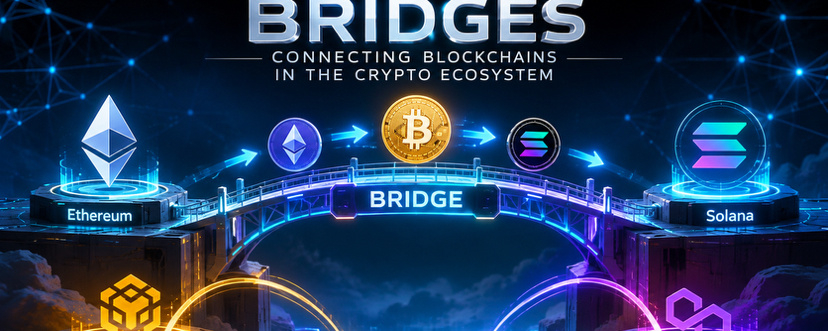
HOW DO PEOPLE MOVE ASSETS BETWEEN DIFFERENT BLOCKCHAINS?Bitcoin, Ethereum and other blockchain networks do not automatically share the same state.
A token on one network is not automatically the same asset as a token with a similar name on another.
Blockchain bridges are designed to help connect these separate environments.
What is a bridge?
A blockchain bridge is a system that facilitates the transfer or representation of assets and information across different blockchain networks.
How can it work?
One common design locks an asset on the original network and issues a corresponding representation on another network.
Other designs use liquidity pools or different verification mechanisms.
The precise process depends on the bridge.
Why are bridges useful?
They can enable users to access applications, liquidity and assets across multiple blockchain ecosystems.
What are the risks?
⚠️ Smart-contract vulnerabilities
⚠️ Compromised bridge operators or validators
⚠️ Incorrect verification of cross-chain messages
⚠️ Liquidity problems
⚠️ Unsupported assets or networks
Bridges have historically been a major target for crypto exploits.
Before using one
Check the official bridge, supported networks, fees, asset representation and security assumptions.
Never assume two tokens are equivalent just because their names are identical.
Takeaway: Interoperability is useful, but every connection between systems introduces design and security questions.
#BlockchainBridges #interoperability #CryptoSecurity #Web3 #CryptoEducation
HOW DO PEOPLE MOVE ASSETS BETWEEN DIFFERENT BLOCKCHAINS?
Bitcoin, Ethereum and other blockchain networks do not automatically share the same state.
A token on one network is not automatically the same asset as a token with a similar name on another.
Blockchain bridges are designed to help connect these separate environments.
What is a bridge?
A blockchain bridge is a system that facilitates the transfer or representation of assets and information across different blockchain networks.
How can it work?
One common design locks an asset on the original network and issues a corresponding representation on another network.
Other designs use liquidity pools or different verification mechanisms.
The precise process depends on the bridge.
Why are bridges useful?
They can enable users to access applications, liquidity and assets across multiple blockchain ecosystems.
What are the risks?
⚠️ Smart-contract vulnerabilities
⚠️ Compromised bridge operators or validators
⚠️ Incorrect verification of cross-chain messages
⚠️ Liquidity problems
⚠️ Unsupported assets or networks
Bridges have historically been a major target for crypto exploits.
Before using one
Check the official bridge, supported networks, fees, asset representation and security assumptions.
Never assume two tokens are equivalent just because their names are identical.
Takeaway: Interoperability is useful, but every connection between systems introduces design and security questions.
#BlockchainBridges #interoperability #CryptoSecurity #Web3 #CryptoEducation
1
79

⚠️ How Cross-Chain Bridges Work: Understanding the Technology Behind Interoperability
On July 20, 2026, cross-chain bridges are essential infrastructure for a multi-chain world. Bridges use lock-and-mint or burn-and-release mechanisms to transfer assets between blockchains. When you send tokens from Ethereum to Solana, the bridge locks your original tokens and mints a representation on the destination chain.
Different bridge architectures exist: trusted bridges rely on a federation of validators, while trust-minimized bridges use light clients and cryptographic proofs. The trade-off between security and capital efficiency continues to drive innovation in bridge design.
📌 Key Takeaway:
Cross-chain bridges connect the crypto ecosystem — understanding lock-and-mint mechanics helps users assess the security of their transfers.
#CrossChain #BlockchainBridges #Interoperability #Adoption
#BinanceAlphaAlert
11
Көбірек контент көру үшін кіріңіз
Binance Square платформасында әлемдік криптоқоғамдастыққа қосылыңыз
⚡️ Криптовалюта туралы ең соңғы және пайдалы ақпаратты алыңыз.
💬 Әлемдегі ең ірі криптобиржаның сеніміне ие.
👍 Расталған авторлардың нақты пікірлерін табыңыз.
Электрондық пошта/телефон нөмірі
Трендтегі тақырыптар
1
#BitcoinFiveWeeklyLosses
15,118 рет көрілді
430 адам талқылап жатыр
2
#AIChipSlumpNasdaq
8,127 рет көрілді
247 адам талқылап жатыр
3
#NvidiaInvestigatesAfterHuang’sAffairApology
5,110 рет көрілді
122 адам талқылап жатыр
4
#EthereumSpotETFsPost$365MWeeklyOutflow
0 рет көрілді
2 адам талқылап жатыр
5
#SouthKoreaDraftLawTargets15To20%ShareholderCap
168,102 рет көрілді
874 адам талқылап жатыр
6
#TradFiForBeginners
239,274 рет көрілді
2,165 адам талқылап жатыр
7
#KeplrAdvisesSocialLoginUsersToTransferAssets
78,192 рет көрілді
622 адам талқылап жатыр
8
#TetherPlans€28.8MForJuventusCapitalIncrease
57,170 рет көрілді
459 адам талқылап жатыр
9
#JobsReportRaisesHikeOdds
993,208 рет көрілді
4,618 адам талқылап жатыр
10
#CPITestsDecemberRateOutlook
456,733 рет көрілді
2,029 адам талқылап жатыр