
Crypto麻子新
5.4k Posts

Crypto麻子新
Report
Block User
公众号:麻子新 微博:麻子新 手续费自动反20%邀请码:XIN345

Level 1 Creator

PEPE Holder
Frequent Trader
6 Years
88 Following
22.6K+ Followers
63.2K+ Liked
1 Badges
Posts
All
Quotes
Videos
Live
PINNED
·
--
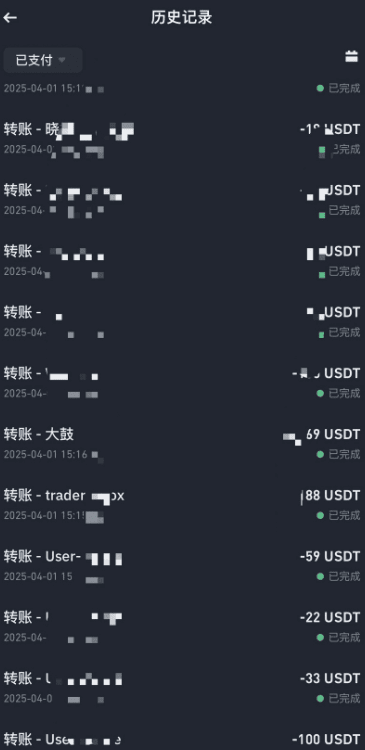
Open -- Contract -- Today's Profit and Loss -- Funding Fees and Transaction Fees.
You can see your fees for the past year. If you should spend, save what you can!
Use my link to automatically reverse 20% and manually reverse 15%, which means you can reduce 35% of the fees, which should be the highest in the entire network. The manual reverse part is settled once a month. Don't underestimate the fees. Even if you are a small retail investor, the fees you incur in a year are unimaginable! If you trade frequently, you may save enough to buy a BBA in a year.
Xiaoxin exclusive link: https://www.marketwebb.club/join?ref=RC67WKBY
Exclusive invitation code: RC67WKBY
What if you have already registered? I can give you a tutorial. You don't need to change your mobile phone number or identity to re-authenticate. It only takes about ten minutes to get it done!
[币安聊天室链接!](https://www.marketwebb.cc/zh-CN/service-group-landing?channelToken=aOQ5mvnJHXWJx_MZVKvgEw&type=1)
$BNB
Open -- Contract -- Today's Profit and Loss -- Funding Fees and Transaction Fees.
You can see your fees for the past year. If you should spend, save what you can!
Use my link to automatically reverse 20% and manually reverse 15%, which means you can reduce 35% of the fees, which should be the highest in the entire network. The manual reverse part is settled once a month. Don't underestimate the fees. Even if you are a small retail investor, the fees you incur in a year are unimaginable! If you trade frequently, you may save enough to buy a BBA in a year.
Xiaoxin exclusive link: https://www.marketwebb.club/join?ref=RC67WKBY
Exclusive invitation code: RC67WKBY
What if you have already registered? I can give you a tutorial. You don't need to change your mobile phone number or identity to re-authenticate. It only takes about ten minutes to get it done!
币安聊天室链接!
$BNB
46
16
66
2.7k
PINNED
·
--
As someone whose account peaked at 17 million dollars but has now withdrawn to over 500, I’d like to offer some advice. [这是回撤之后的持仓!](https://app.binance.com/uni-qr/cpos/21795178698122?r=54364383&l=zh-CN&uco=4mOYO6YGmD5CfpYB39z3eQ&uc=app_square_share_link&us=copylink)
Videos cannot write long articles; I will write in the next article and reference this one. These are my reflections and insights from the past few months, explaining why we are in the current situation.
The video is from March 2024, when $ICP made a significant profit. If there are critics who want me to record a screen with over 10 million dollars in holdings, I wouldn’t be able to do it because my current position is not that large anymore.
However, I am very confident that I can return to my peak and even surpass it. I spent three months reflecting on this mistake and realized that no matter how much I lost, it was a valuable lesson.
As someone whose account peaked at 17 million dollars but has now withdrawn to over 500, I’d like to offer some advice. 这是回撤之后的持仓!
Videos cannot write long articles; I will write in the next article and reference this one. These are my reflections and insights from the past few months, explaining why we are in the current situation.
The video is from March 2024, when $ICP made a significant profit. If there are critics who want me to record a screen with over 10 million dollars in holdings, I wouldn’t be able to do it because my current position is not that large anymore.
However, I am very confident that I can return to my peak and even surpass it. I spent three months reflecting on this mistake and realized that no matter how much I lost, it was a valuable lesson.
12
5
75
6.5k
·
--
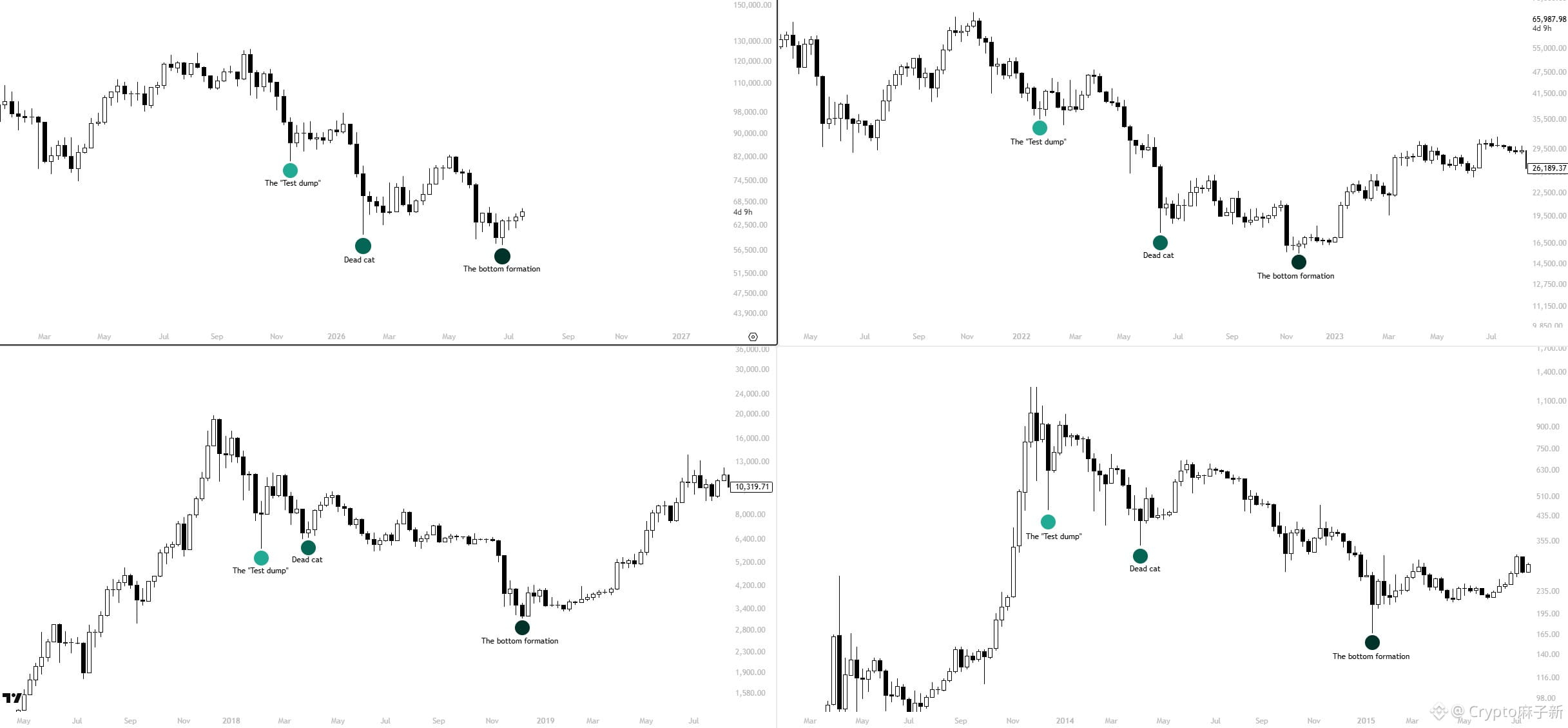
Many people are watching to see whether BTC will hit a new low in the fourth quarter, since in several past cycles, BTC’s major bottoms mostly occurred in Q4. This seasonal pattern has led many to believe that this time will be no exception.
Looking at historical price movements, each BTC correction has seen several relatively important lows. The last two lows are often not far apart, with liquidity sweeps in between. 2023 was a typical example, and this cycle has actually shown a similar structure.
Rather than interpreting BTC’s current pullback from its high as the start of a new bear market, I’m more inclined to see it as a knock-on effect of the decline in traditional markets. U.S. stocks are falling, and the market is starting to reduce its risk exposure, so naturally, cryptocurrencies can hardly remain unaffected.
The biggest point of disagreement here is really this: should we trust seasonality or market structure?
Personally, I put more weight on the latter. Seasonality is just a historical pattern; it doesn’t mean every cycle has to follow it. Simply because BTC has often bottomed in Q4 in the past
6
17
7.5k
·
--
Today, U.S. stocks seem to be the big story. While fishing, I kept feeling like I was wasting my youth and would regret it when I got older—just drowning in guilt.
Ever since I turned bearish at 869, I’ve been out fishing every day.
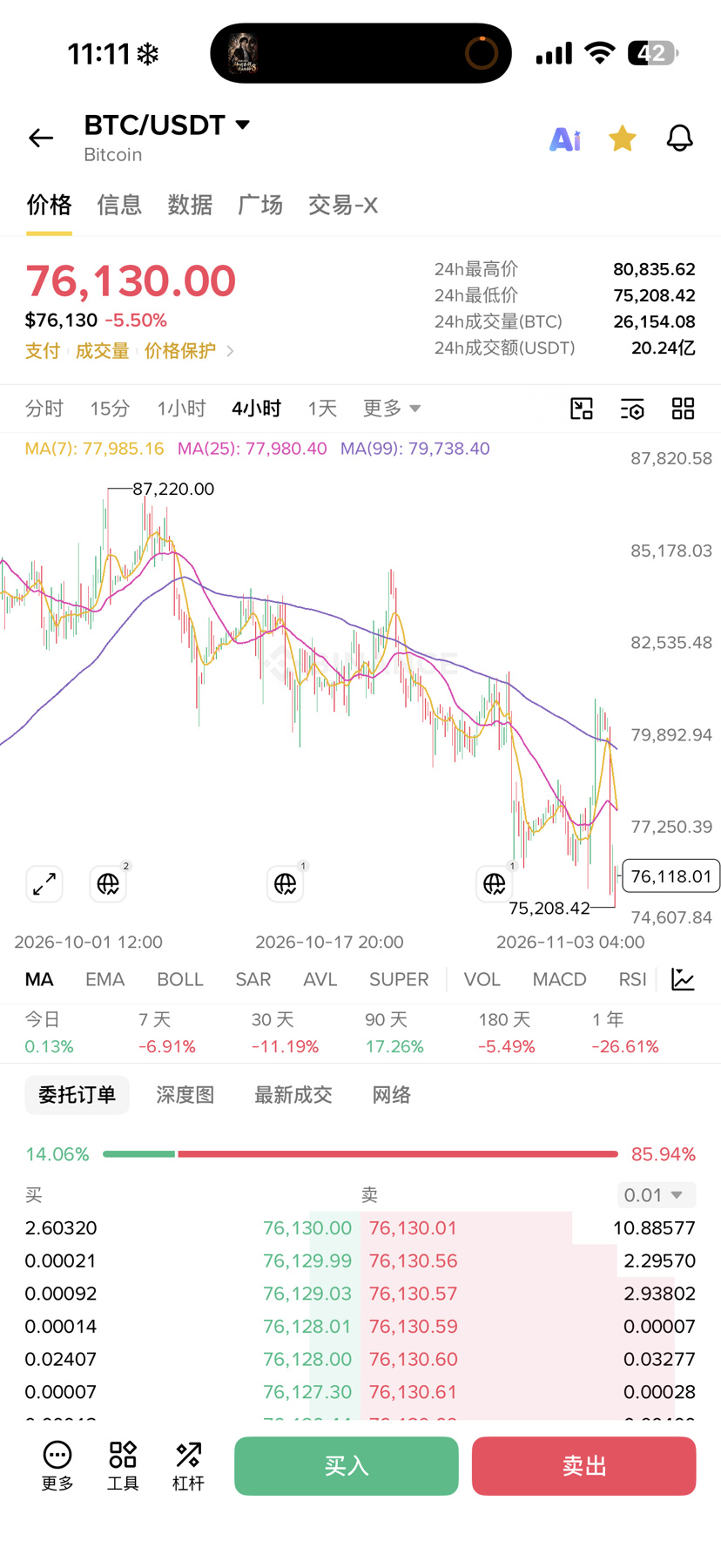
At this point, there are basically only two possibilities for the market. First, it continues to find support around 75. U.S. stocks rebound tonight or stabilize, the market starts a rebound too, and then we wait for U.S. stocks to fall a second time.
The second possibility is that U.S. stocks stay weak tonight. The funds keeping prices above 75 rush for the exits, and market makers following suit could easily send prices straight down to retest the lows. If that happens, we’re probably heading for the bottom. By the way, you’ve all got money ready to buy the dip, right?
6
1
16
5.3k
·
--
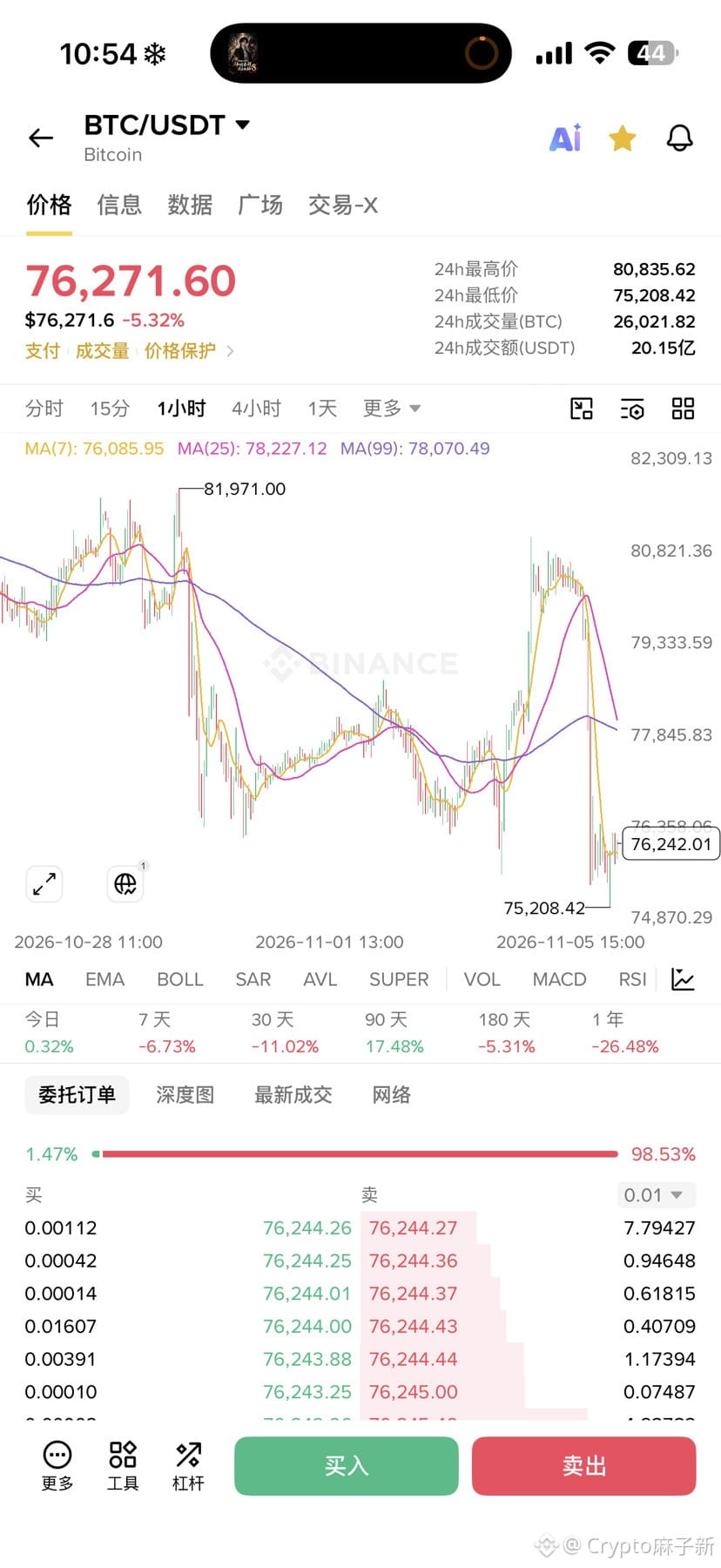
$BTC This feels really good. Others say around 75 is about right, and when it rebounds above 8, they tell you they successfully bought the dip. I say around 75 is a good time to buy a second time; when it rebounds above 8, I'll tell you to watch out for a second bottom.
{future}(BTCUSDT)
$BTC This feels really good. Others say around 75 is about right, and when it rebounds above 8, they tell you they successfully bought the dip. I say around 75 is a good time to buy a second time; when it rebounds above 8, I'll tell you to watch out for a second bottom.
Crypto麻子新
·
--
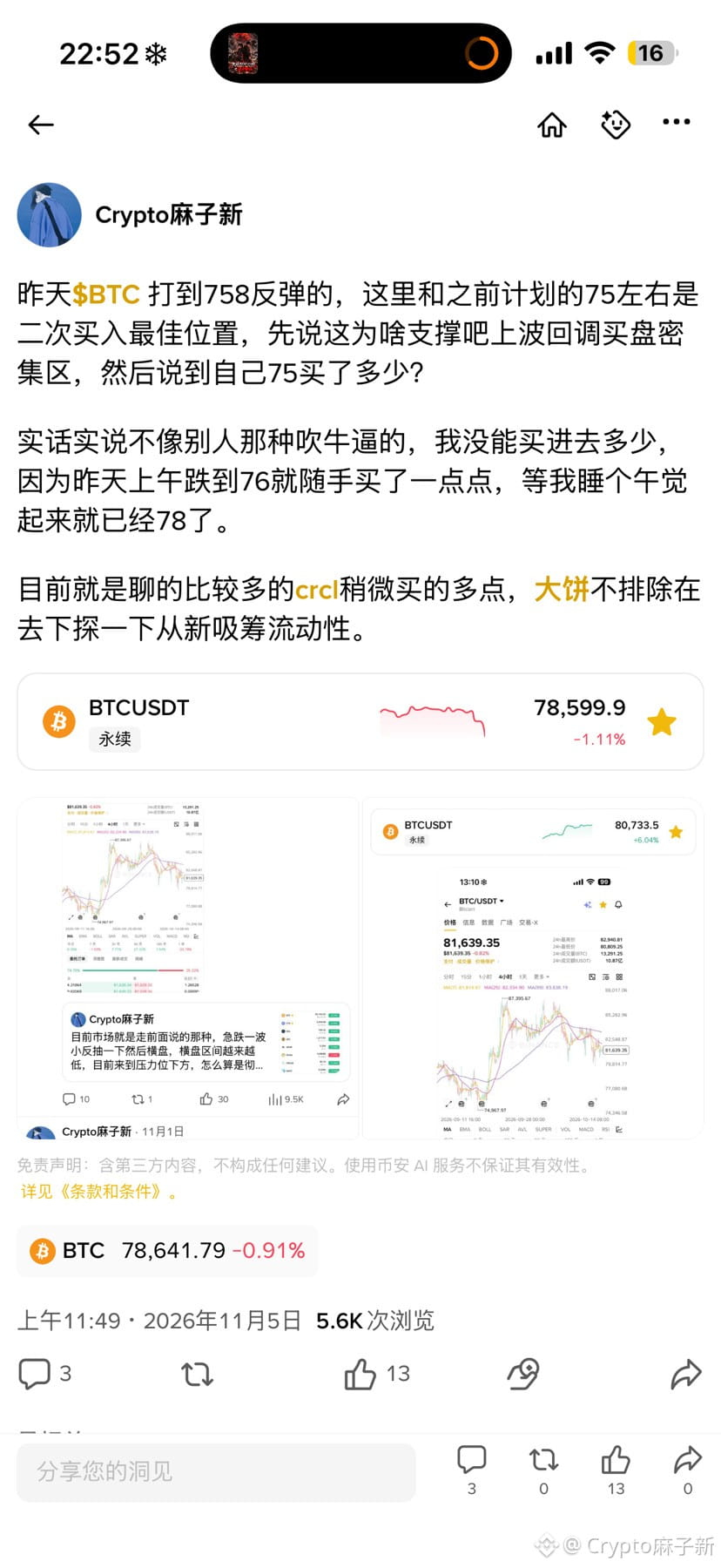
Yesterday, $BTC hit 758 and bounced. This area, around 75 as planned earlier, was the best spot for a second buy. First, let me explain why it was support: it was a high-volume buying zone during the previous pullback. Then, how much did I buy at 75?
To be honest, unlike those people who brag, I wasn’t able to buy much. Yesterday morning, when it dropped to 76, I casually bought a tiny bit. By the time I woke up from a nap, it was already at 78.
For now, I’ve bought a bit more of CRCL, which we’ve been discussing a lot. I wouldn’t rule out Bitcoin dipping lower again to accumulate liquidity.
3
15
3k
·
--
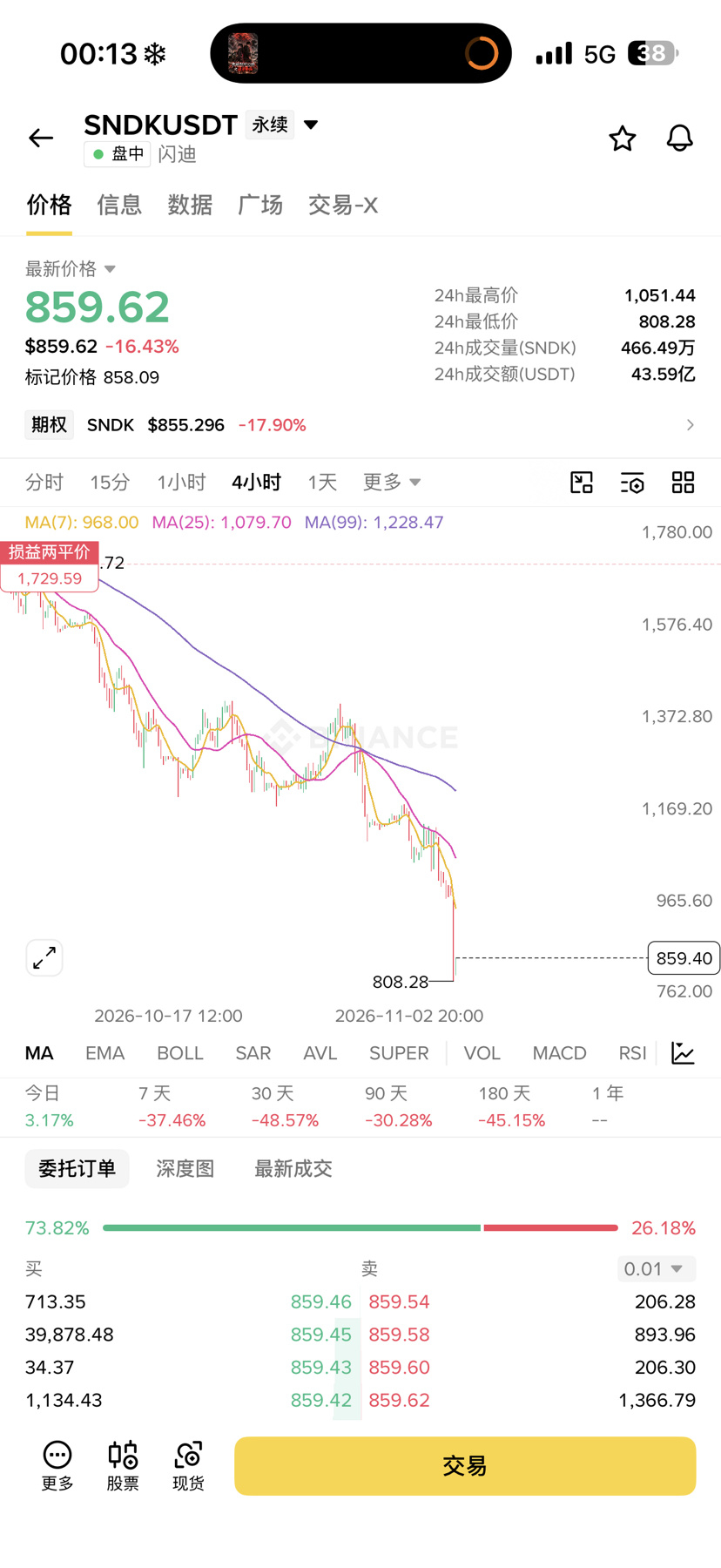
It’s been battered—$SNDK , try taking a 1x starter position; after all, it’s fallen so much.
{future}(SNDKUSDT)
It’s been battered—$SNDK , try taking a 1x starter position; after all, it’s fallen so much.
2
9
5.6k
·
--
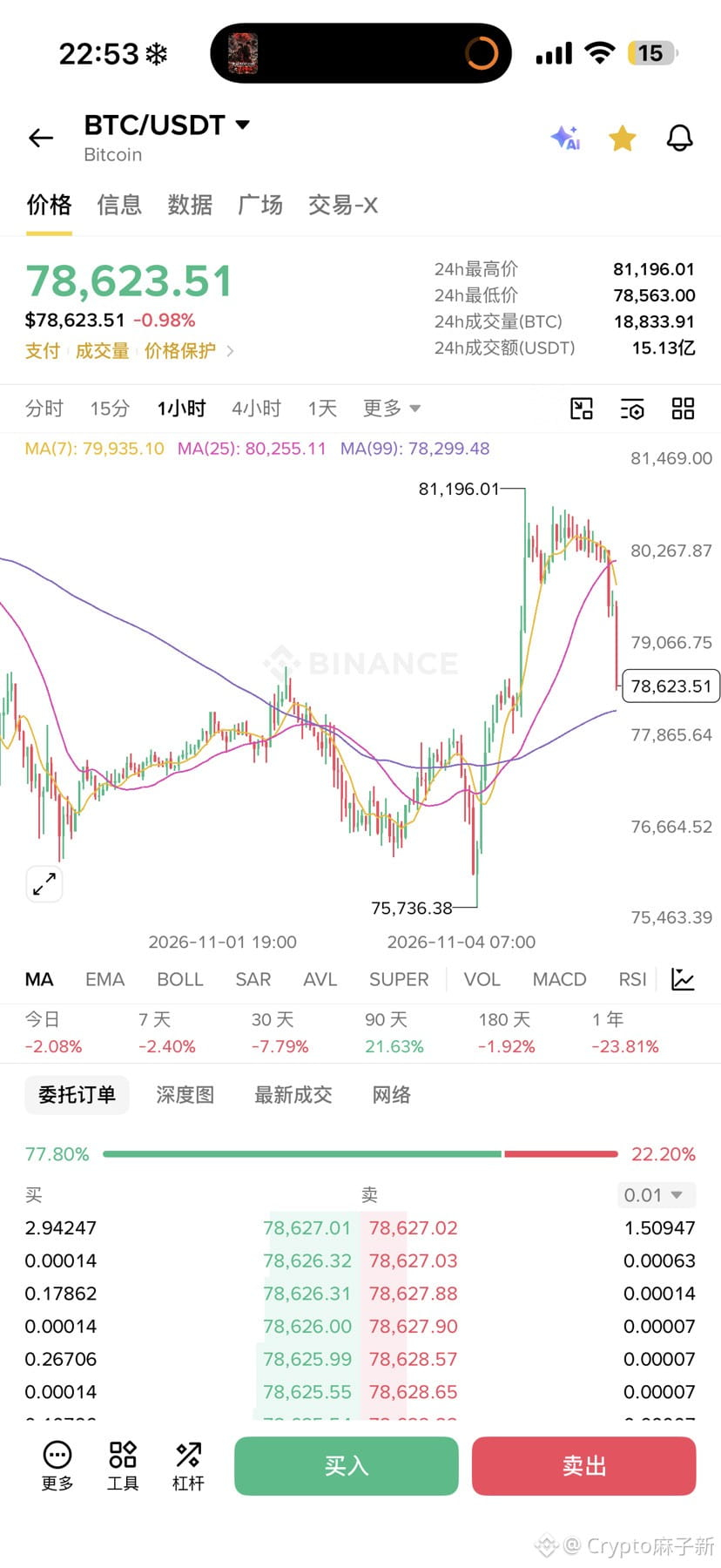
$BTC has started pulling back again. This is also why, as I discussed this morning, Bitcoin may continue to move lower. As I said before, sentiment driven by news is short-lived. I also don't like claiming that I bought the bottom and then sold the top. This morning I said that although I might buy a second time at around 75, I only bought a little at 76 because I missed the chance.
This latest dip is giving me the same opportunity again.
{future}(BTCUSDT)
$BTC has started pulling back again. This is also why, as I discussed this morning, Bitcoin may continue to move lower. As I said before, sentiment driven by news is short-lived. I also don't like claiming that I bought the bottom and then sold the top. This morning I said that although I might buy a second time at around 75, I only bought a little at 76 because I missed the chance.
This latest dip is giving me the same opportunity again.
This latest dip is giving me the same opportunity again.
8
9
6.9k
·
--
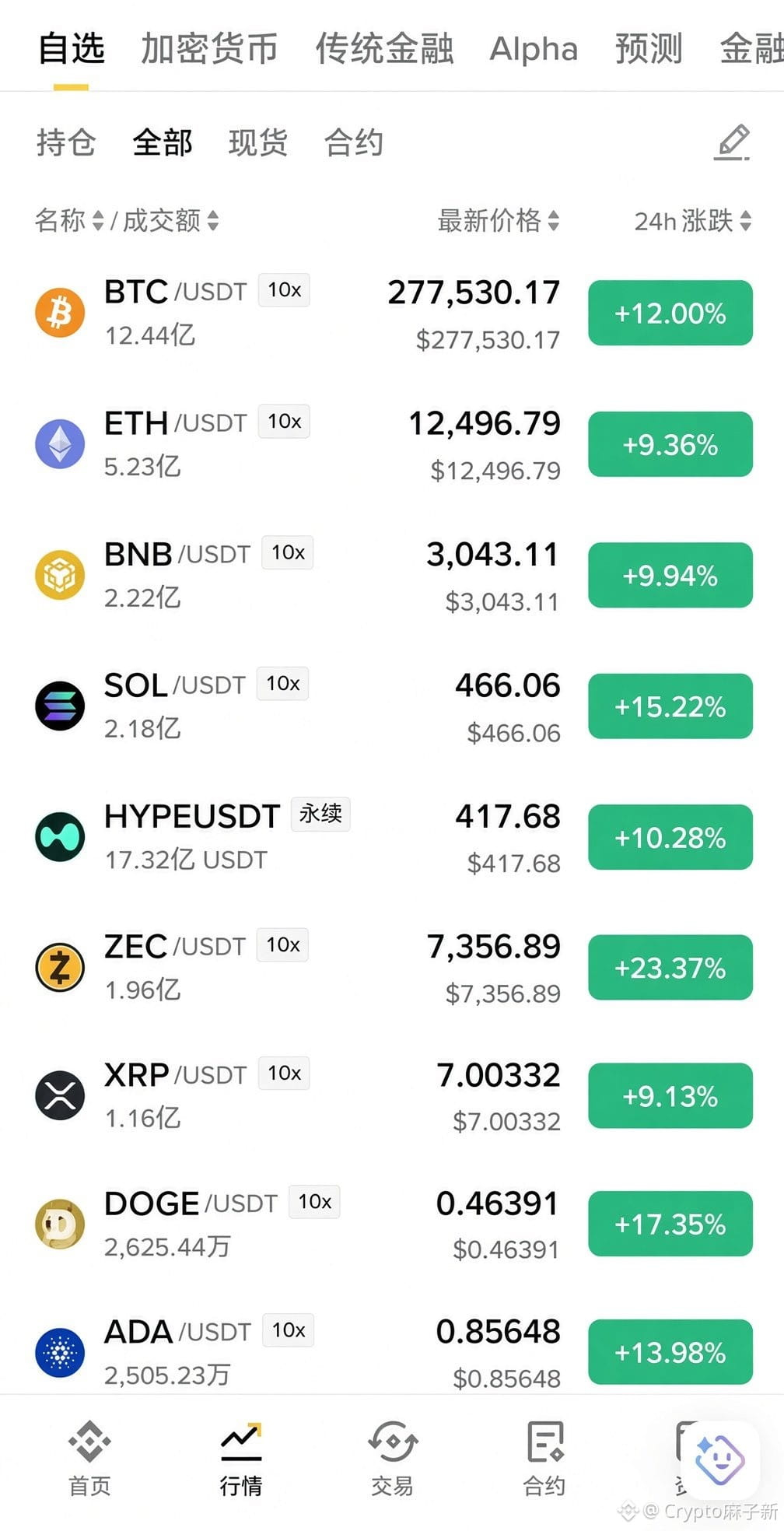
Bitcoin is at 270,000 now, and Ethereum is at 12,000 too 😂
Bitcoin is at 270,000 now, and Ethereum is at 12,000 too 😂
21
39
65.9k
·
--
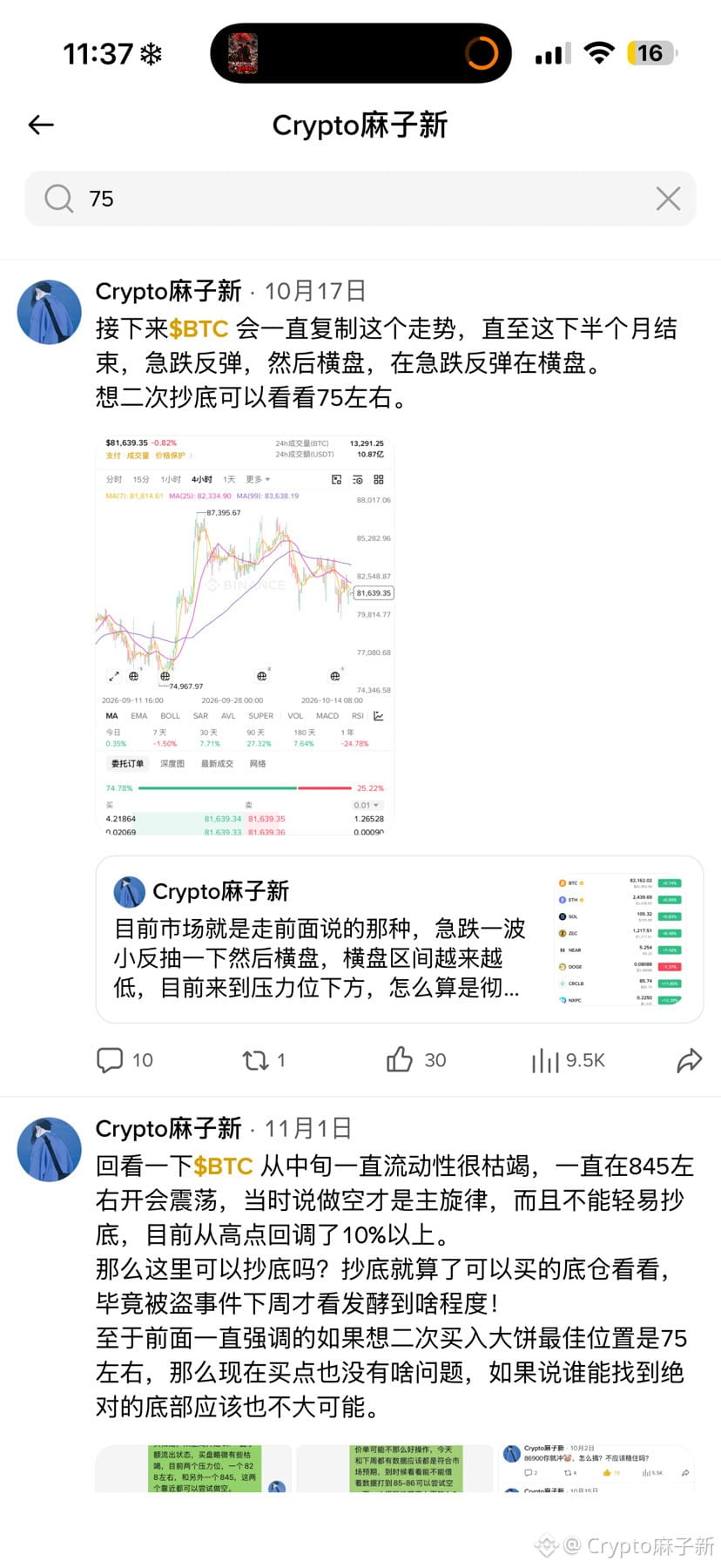
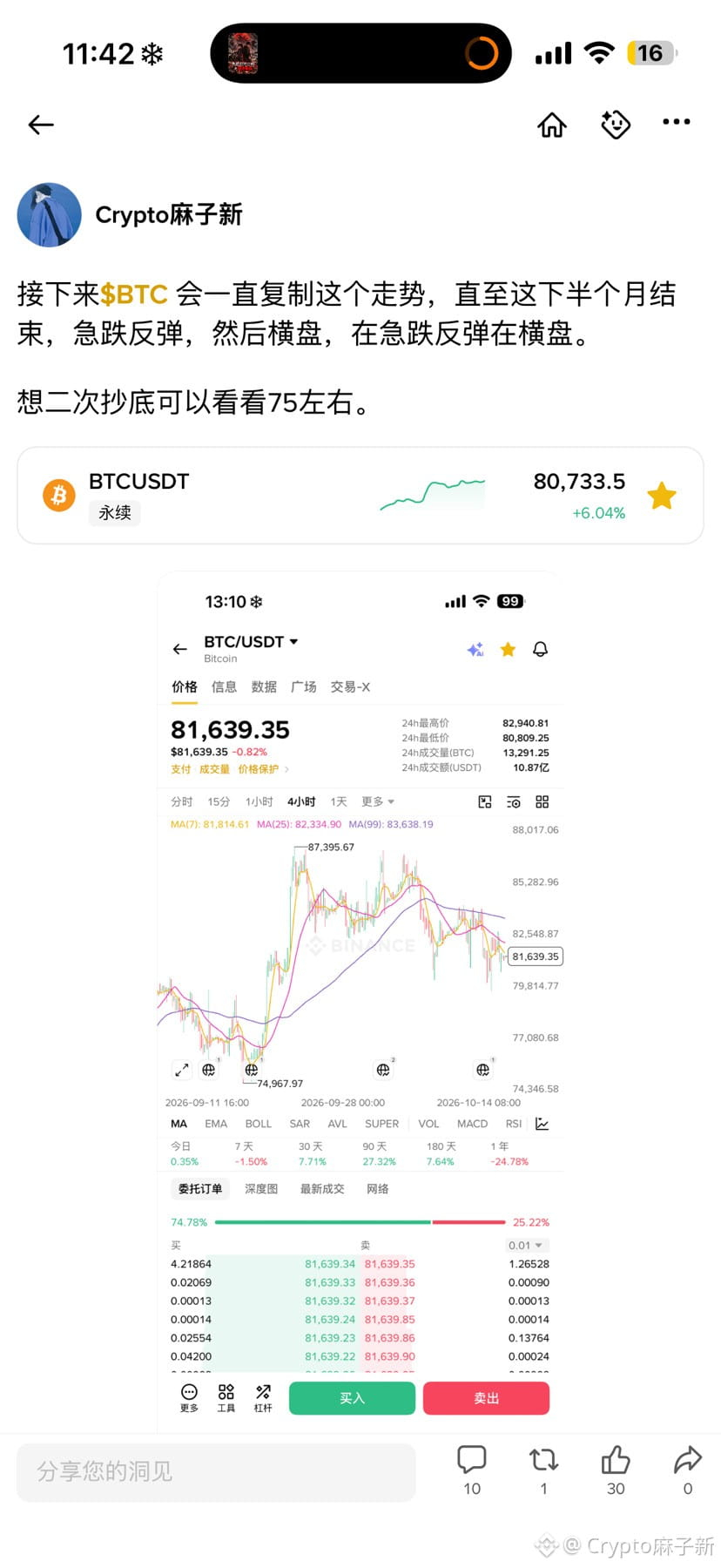
Yesterday, $BTC hit 758 and bounced. This area, around 75 as planned earlier, was the best spot for a second buy. First, let me explain why it was support: it was a high-volume buying zone during the previous pullback. Then, how much did I buy at 75?
To be honest, unlike those people who brag, I wasn’t able to buy much. Yesterday morning, when it dropped to 76, I casually bought a tiny bit. By the time I woke up from a nap, it was already at 78.
For now, I’ve bought a bit more of CRCL, which we’ve been discussing a lot. I wouldn’t rule out Bitcoin dipping lower again to accumulate liquidity.
{future}(BTCUSDT)
Yesterday, $BTC hit 758 and bounced. This area, around 75 as planned earlier, was the best spot for a second buy. First, let me explain why it was support: it was a high-volume buying zone during the previous pullback. Then, how much did I buy at 75?
To be honest, unlike those people who brag, I wasn’t able to buy much. Yesterday morning, when it dropped to 76, I casually bought a tiny bit. By the time I woke up from a nap, it was already at 78.
For now, I’ve bought a bit more of CRCL, which we’ve been discussing a lot. I wouldn’t rule out Bitcoin dipping lower again to accumulate liquidity.
3
1
14
6k
·
--
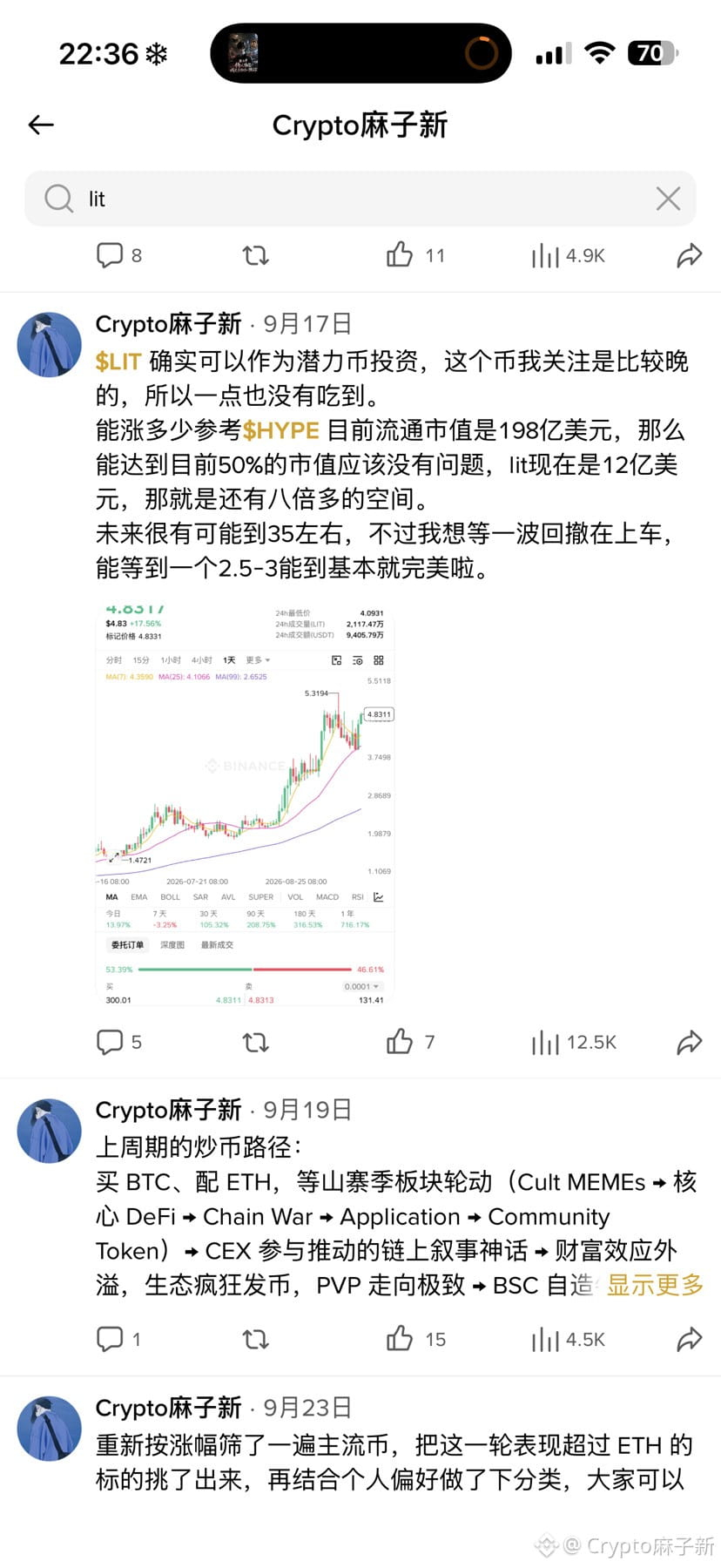
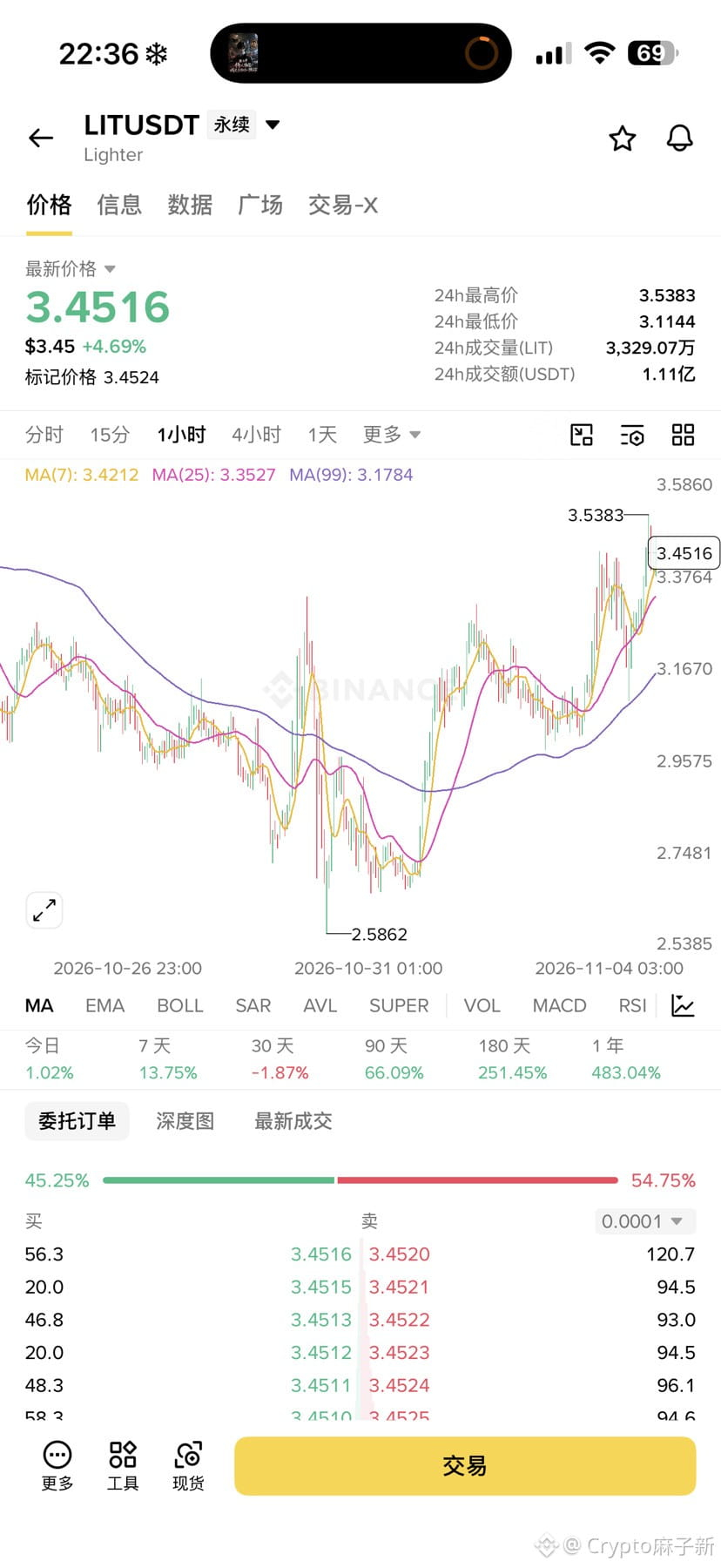
$LIT Before, when it was at 4.8, I said this could be a long-term investment. Using HYPE as a reference, seeing it reach 35 in the future shouldn’t be a problem.
But it would be perfect to wait for a pullback to the 2.5–3 range. At the time, a lot of people thought it couldn’t possibly drop that low and said that waiting for a pullback meant you’d inevitably miss out.
Later, I also emphasized several times that if we kept waiting, it would reach that level. So far, LIT’s low has pulled back to 2.58, which is basically within that range. In my update, I said that although my target is 35, you shouldn’t go all-in on this one, because no one can be 100% sure about future price movements. The target is just an expectation, and that expectation hasn’t changed.
{future}(LITUSDT)
$LIT Before, when it was at 4.8, I said this could be a long-term investment. Using HYPE as a reference, seeing it reach 35 in the future shouldn’t be a problem.
But it would be perfect to wait for a pullback to the 2.5–3 range. At the time, a lot of people thought it couldn’t possibly drop that low and said that waiting for a pullback meant you’d inevitably miss out.
Later, I also emphasized several times that if we kept waiting, it would reach that level. So far, LIT’s low has pulled back to 2.58, which is basically within that range. In my update, I said that although my target is 35, you shouldn’t go all-in on this one, because no one can be 100% sure about future price movements. The target is just an expectation, and that expectation hasn’t changed.
8
6
4.7k
·
--
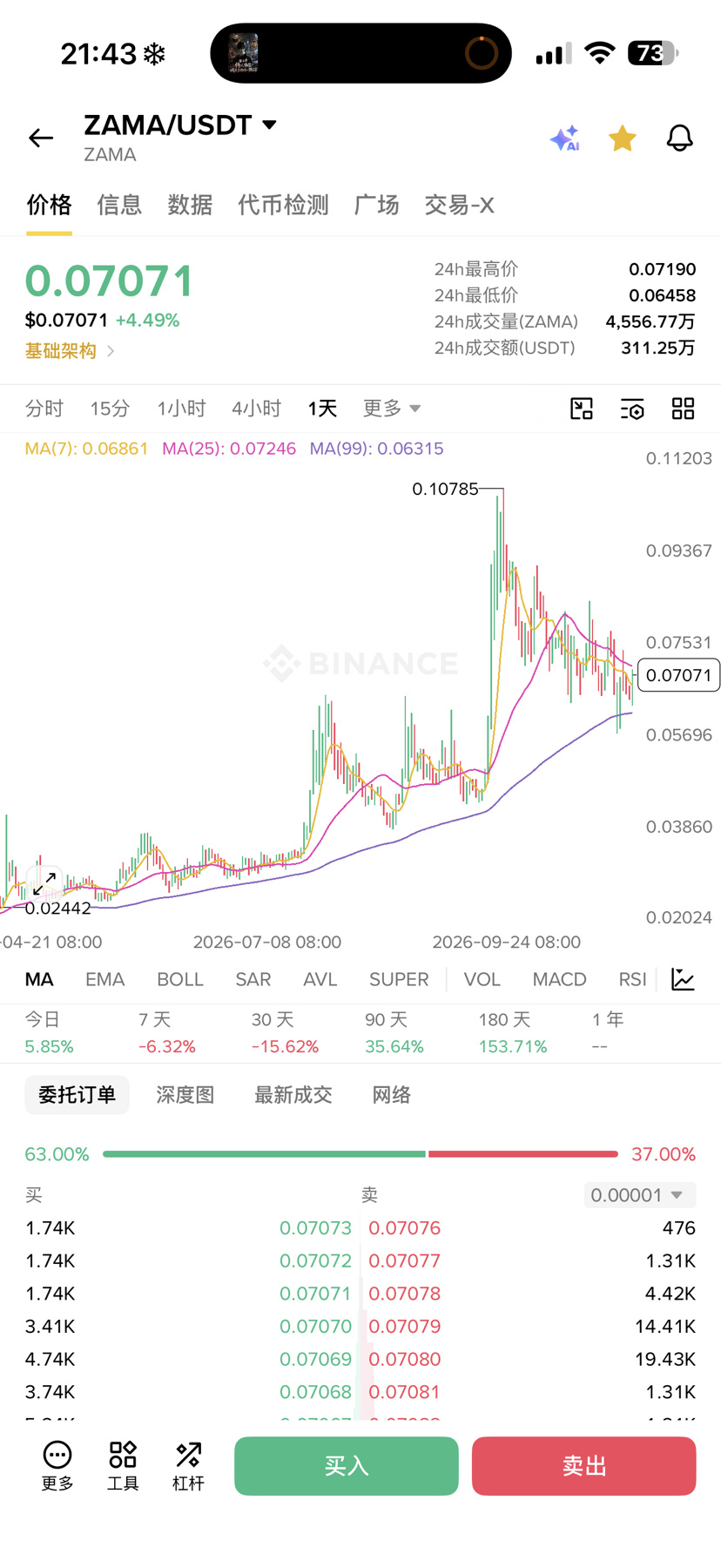
$ZAMA has been performing quite strongly lately. I mainly attribute this to its strong privacy narrative and light float, which means there’s basically no selling pressure. After all, everyone is rushing into ZEC and NEAR. Remember, being under the radar has its advantages: when a niche sector takes off, it can amplify gains the most.
{future}(ZAMAUSDT)
$ZAMA has been performing quite strongly lately. I mainly attribute this to its strong privacy narrative and light float, which means there’s basically no selling pressure. After all, everyone is rushing into ZEC and NEAR. Remember, being under the radar has its advantages: when a niche sector takes off, it can amplify gains the most.
2
8
4.2k
·
--
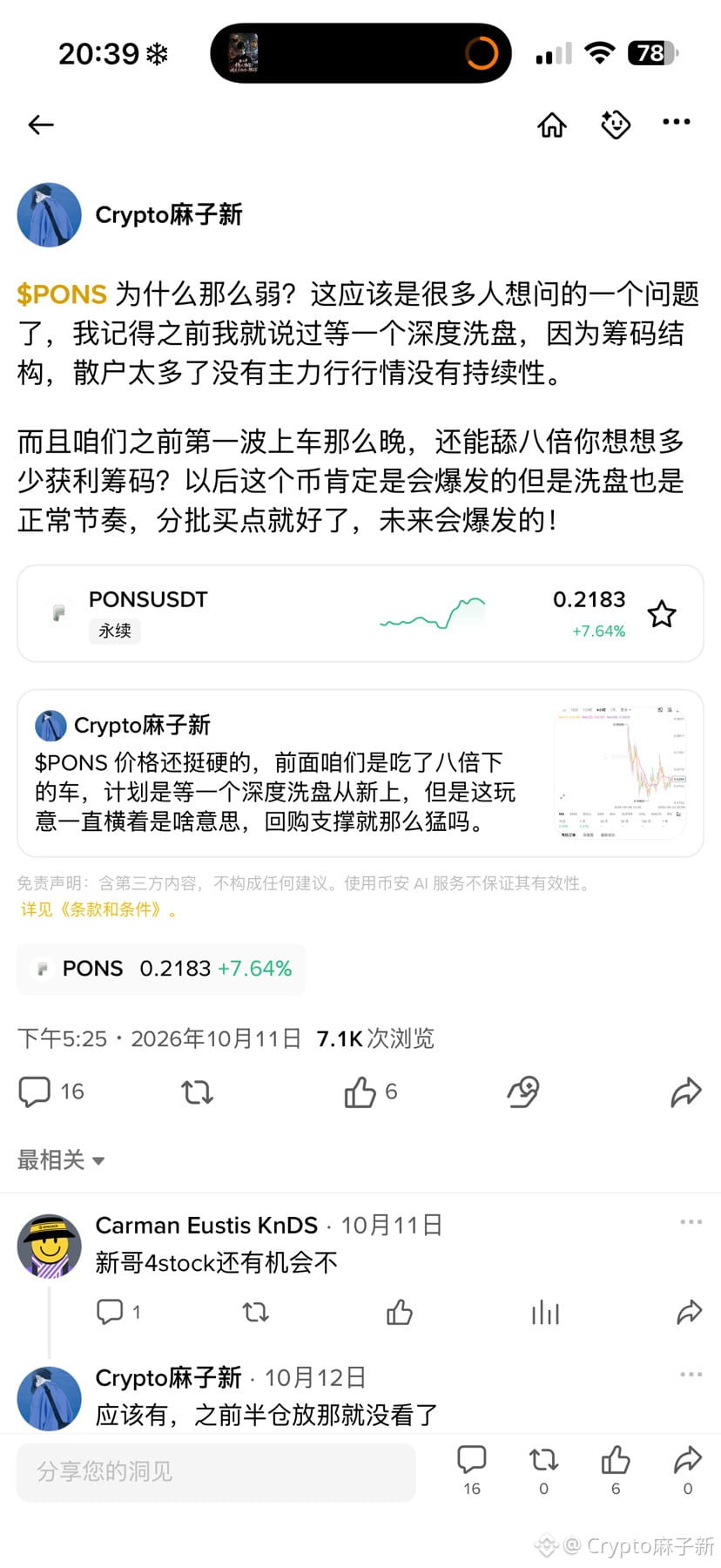
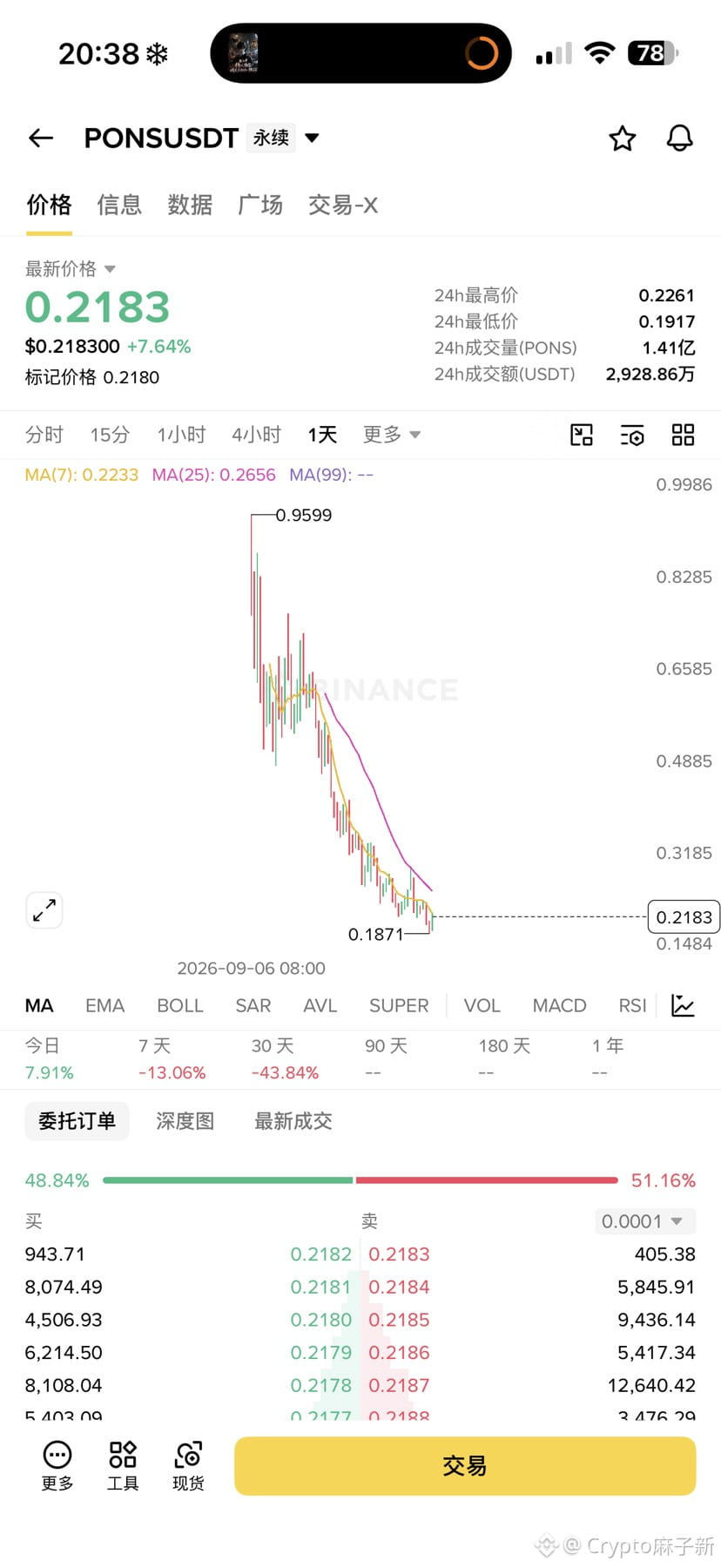
$PONS I think you can use the previous Audi cycle as a reference. A shakeout is an inevitable part of the process. After Audi bottomed out, it fluctuated widely within a 50-point range for about three months. You can use this as a reference when considering buying.
PONS will definitely be one of the main narratives in the future. I said a long time ago that a shakeout was inevitable, so even though it has fallen, I haven't lost confidence in it at all.
Rather than trying to predict where the price bottom is, it's better to refer directly to the chart pattern. Once the pattern above appears, you can basically start buying in batches.
{future}(PONSUSDT)
$PONS I think you can use the previous Audi cycle as a reference. A shakeout is an inevitable part of the process. After Audi bottomed out, it fluctuated widely within a 50-point range for about three months. You can use this as a reference when considering buying.
PONS will definitely be one of the main narratives in the future. I said a long time ago that a shakeout was inevitable, so even though it has fallen, I haven't lost confidence in it at all.
Rather than trying to predict where the price bottom is, it's better to refer directly to the chart pattern. Once the pattern above appears, you can basically start buying in batches.
5
2
10
11.9k
·
--
Many altcoins have already fallen back to their levels before August 19. A month ago, people were talking about altcoin season arriving and getting ready to welcome it, but gradually they stopped talking about it. So, are altcoins still worth playing? Of course—they are! Quality altcoins are still worth keeping an eye on!
Let me give you three things to look at:
1. Does the project generate real revenue, and is it substantial? These figures can all be looked up. For example, you can find this information for projects like HYPE and UNI!
2. Does the project use its revenue to buy back its own tokens on the secondary market? What percentage of its revenue does it use for buybacks? Then calculate the actual amount, and use the market cap to work out what percentage is bought back each day.
3. Are the repurchased tokens sent to a black hole address to be burned? If they’re merely bought back but not burned, that raises questions about trustworthiness. The most typical example is ARB, which is doing this right now: it has bought back tokens, but they’re still sitting in an address!
Basically, focusing on these three things is enough to help you navigate the altcoin market. Of course, forget about those crazy coins—there’s no logic to guide you!
1
1
9
41.4k
·
--
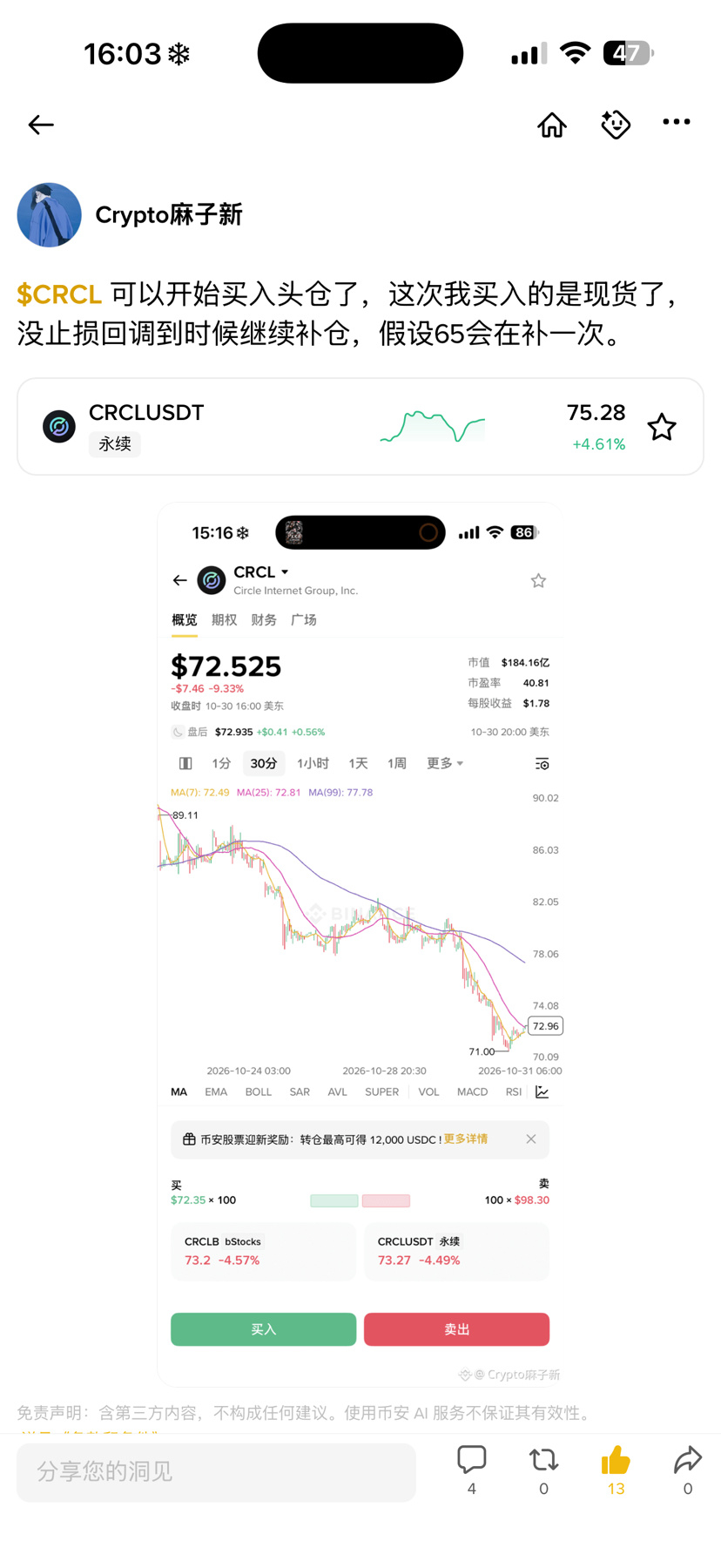
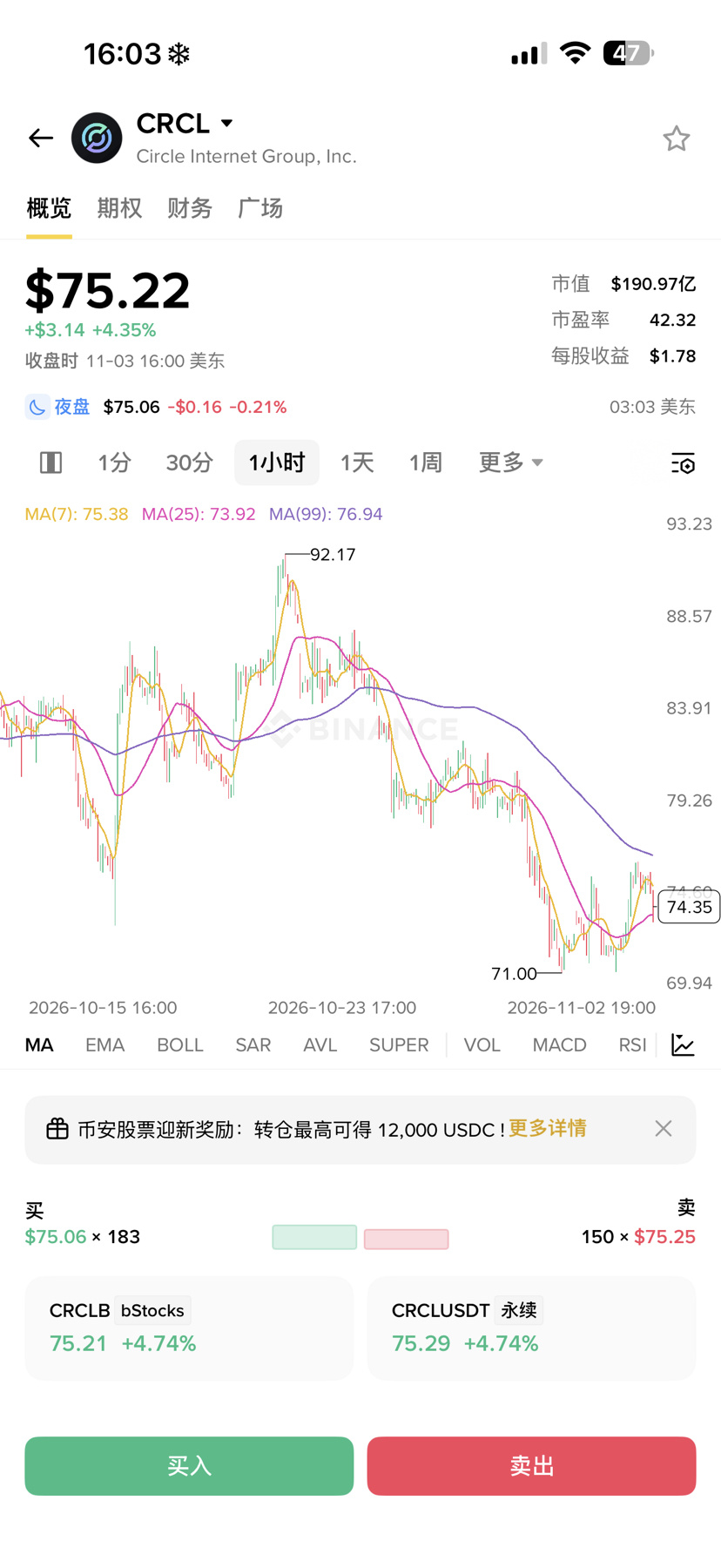
Honestly, I'm paying far more attention to $CRCL than to Bitcoin, because its returns will ultimately be much higher than $BTC . By the late bull market, thousands might be a pipe dream, but 500 should be no problem.
{future}(BTCUSDT)
{future}(CRCLUSDT)
Honestly, I'm paying far more attention to $CRCL than to Bitcoin, because its returns will ultimately be much higher than $BTC . By the late bull market, thousands might be a pipe dream, but 500 should be no problem.
29
23
21.8k
·
--
Is the Democrats’ takeover of both chambers of Congress a devastating blow to the AI and crypto industries? I don’t think there’s any need to worry too much.
First, let’s be clear about one thing: a change in control of Congress does not mean the White House has changed hands too. Trump will remain president for the next two years, and the executive branch will still be controlled by Republicans.
The U.S. president has the power to veto legislation. Even if a bill backed by Democrats passes both chambers, Trump can veto it. Overriding a presidential veto requires two-thirds support in both the House and the Senate. So Democrats can constrain the Republican legislative agenda, but it will be difficult for them to directly change the policy direction of the entire executive branch.
Now, let’s look at AI and crypto.
On AI, the two parties’ differences have more to do with the impact of data center construction on electricity, infrastructure, and people’s livelihoods than with whether AI should be developed at all. Democrats want tech companies to bear more of the costs, but that doesn’t mean they want construction to stop.
AI is already a competition between nations, and no one can afford to fall behind. So it’s more likely that the pace of development and how the costs are shared will be adjusted, rather than the overall direction changing.
On crypto, Republicans may face more obstacles in advancing new legislation, but regulatory agencies such as the SEC and CFTC remain under the control of the Republican administration and can still advance regulatory policies within their existing authority.
What’s more, the crypto industry has already built up a sizeable constituency in the United States. It’s not a fringe industry that can be easily ignored. Democrats may tighten regulation, but that doesn’t mean they’ll reject crypto outright.
One more thing worth noting: after taking both chambers, Democrats can do more than constrain the Republican legislative agenda. Through confirmation votes, congressional investigations, and hearings, they can also impose stronger checks on the executive branch.
I said before that what happens after the midterm elections may matter more than the election results themselves. Once the results are in, the market can gradually get a clearer picture of the policy landscape for the next two years, reducing uncertainty.
From another perspective, some limits on Trump’s power may not be a bad thing for the market.
So I don’t think this election means the outlook for the AI and crypto industries has fundamentally reversed. What really matters is how the implementation of policies and the direction of regulation may change going forward.
1
1
11
6.9k
·
--
In the next bull market, I think the thing to be most wary of may not be missing out, but taking part in the next rally with the lessons of the last one.
Many veteran players are still used to understanding the market through the lens of the past: BTC takes off, ETH follows, then capital spills over into altcoins, and finally different sectors take turns performing well. As long as you can hold on, your opportunity will eventually come.
But this playbook may be becoming obsolete.
Today’s crypto market is already severely oversupplied with assets. New projects and tokens appear every day, while established projects continue releasing more tokens into circulation. Yet capital hasn’t grown in step—in fact, it’s becoming increasingly concentrated in a handful of assets with liquidity, revenue, and real demand.
This means that even if the market as a whole enters a bull run, it may not lift most tokens.
We could even see a sharply divided market: BTC keeps hitting new highs, a handful of hot sectors repeatedly generate wealth, while large numbers of established altcoins remain flat on the ground.
What’s more, the market’s attention is shifting faster and faster. Today it’s AI, tomorrow RWA, and the day after that some new narrative emerges. By the time ordinary investors have done their research and decided to enter, early investors may already be starting to exit.
So I think the most important change in the next market cycle may not be how big the gains are, but that the divide between assets could be far greater than ever before.
The crypto industry can continue to expand, the number of users can keep growing, and on-chain trading volumes can keep reaching new highs—but that growth may not be reflected in the price of the tokens you hold.
In the future, it may no longer be about who can hold on the longest, but who can spot in time where capital and value are moving.
After all, the market has never been responsible for making every participant money. A bull market simply creates opportunities; it doesn’t guarantee that everyone will seize them.
4
1
21
7.4k
·
--
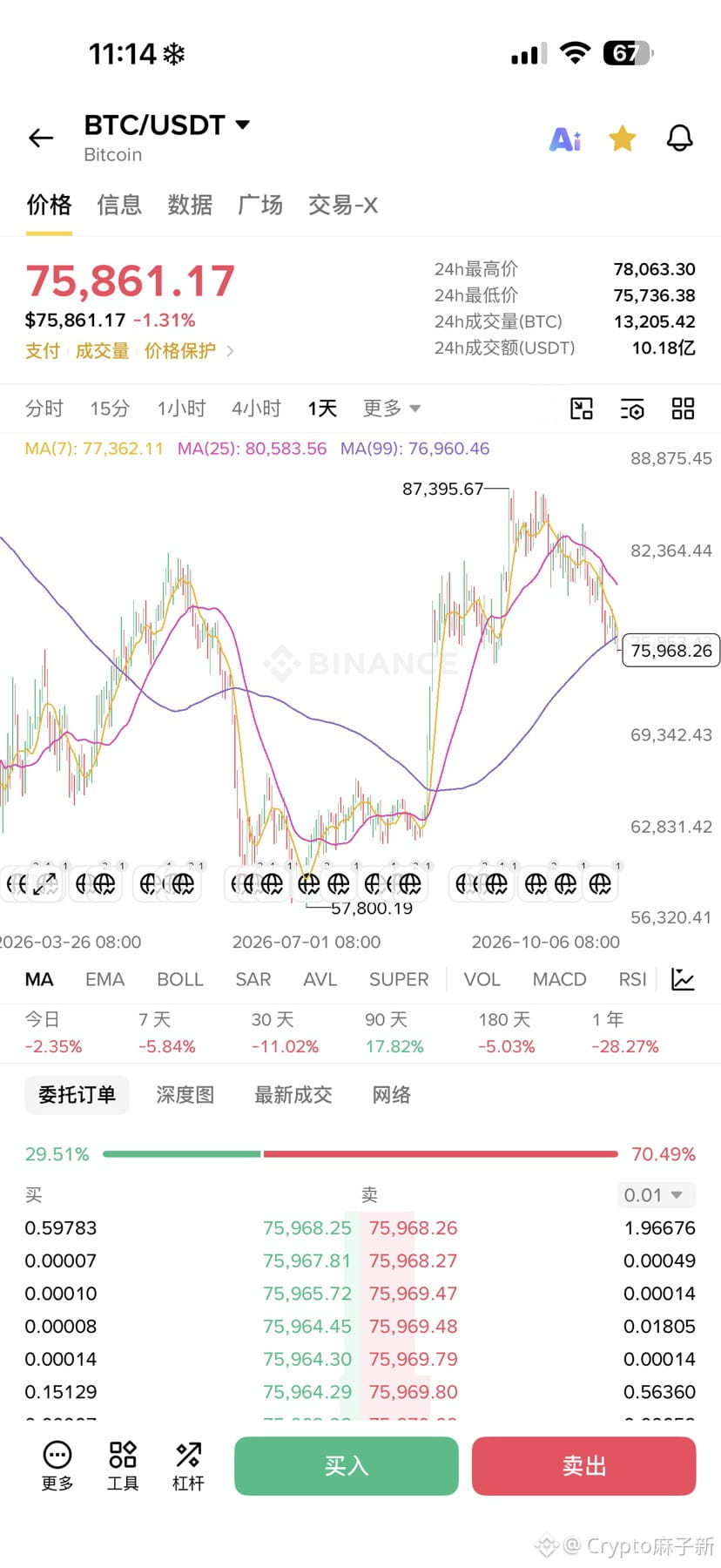
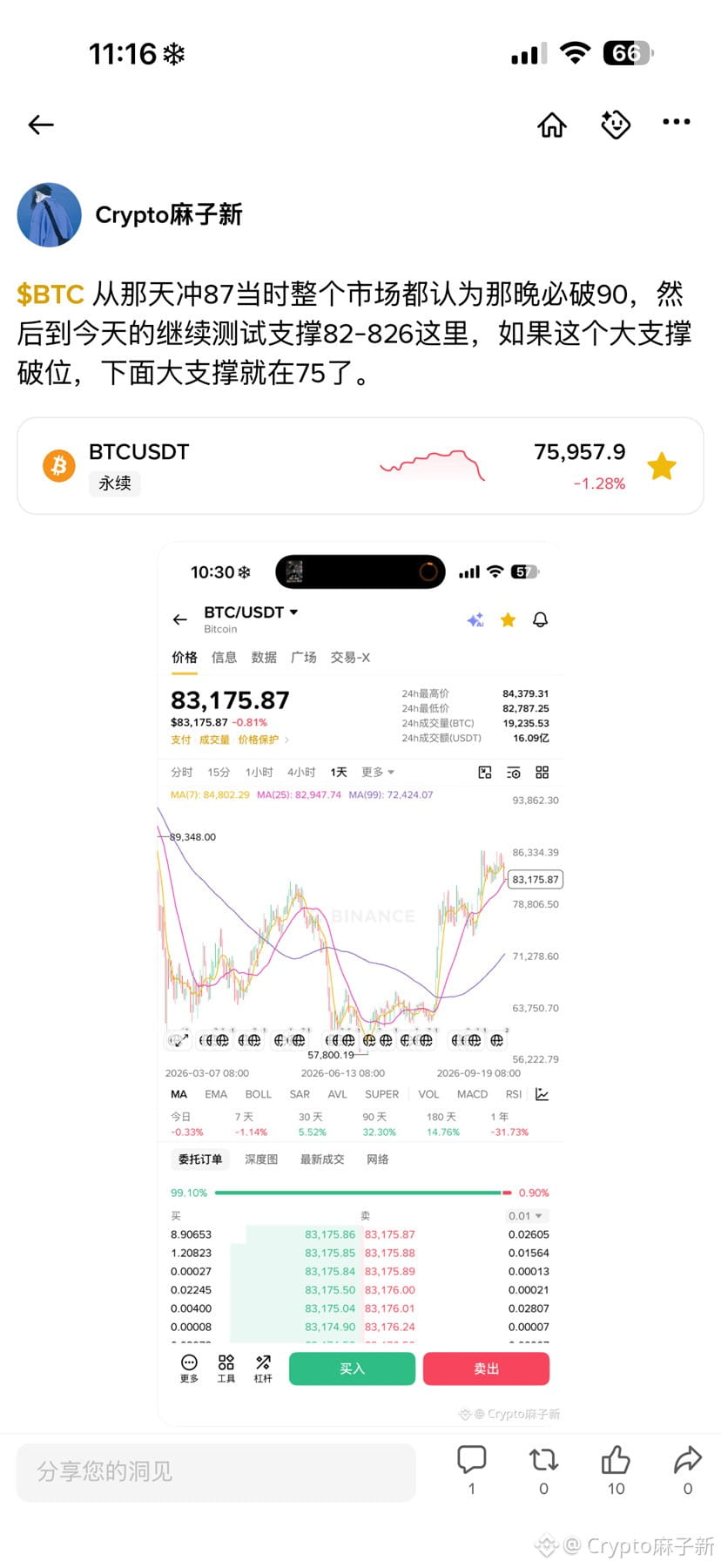
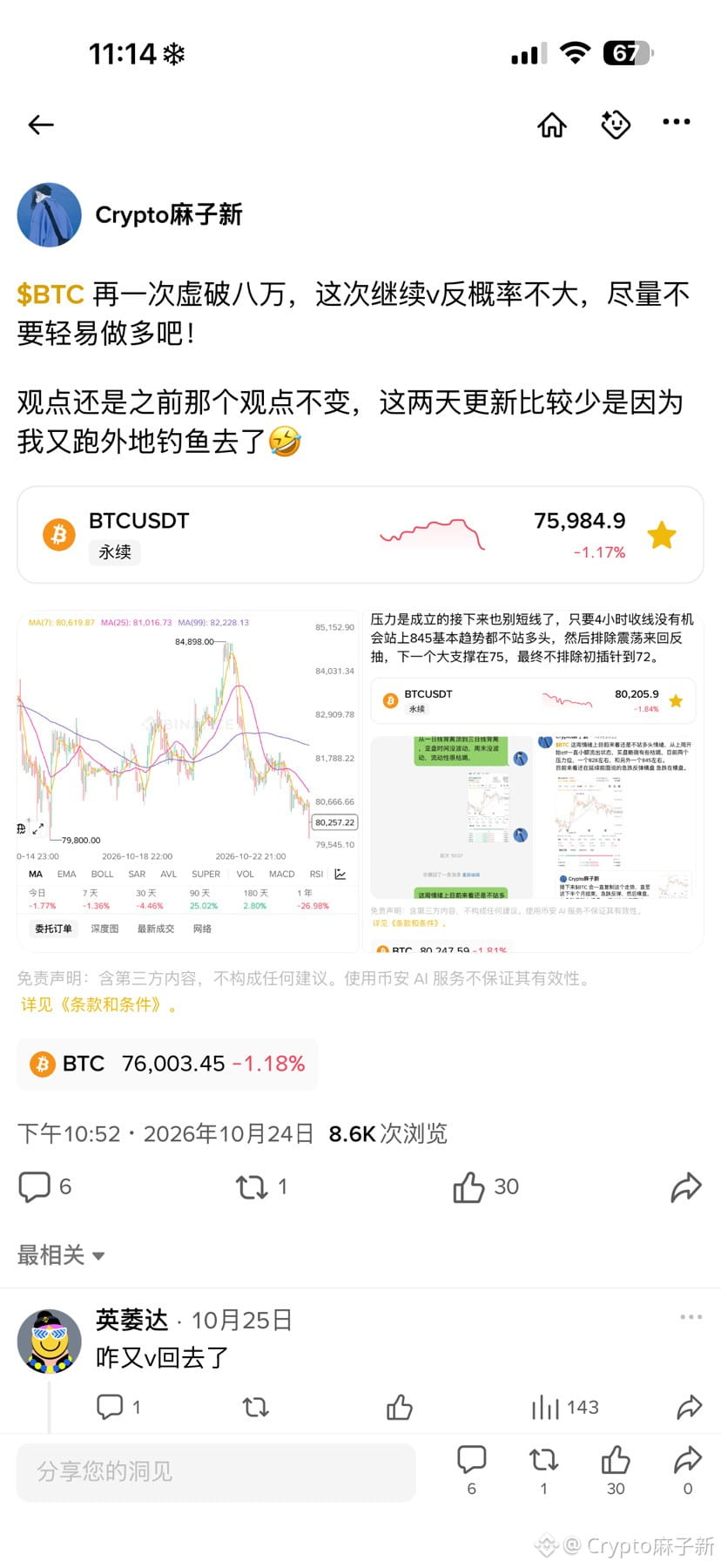
$BTC is about to test support at 75. When I said earlier that we’d test 75 later, everyone thought it was a long way off. Now that we’re testing it, everyone finds it surreal.
{future}(BTCUSDT)
$BTC is about to test support at 75. When I said earlier that we’d test 75 later, everyone thought it was a long way off. Now that we’re testing it, everyone finds it surreal.
7
16
5.4k
·
--
The Republicans are going to lose—and lose badly.
The Republicans are going to lose—and lose badly.

11
7k
·
--
I’m still mostly sitting on the sidelines for now. I only bought a little CRCL, just a starter position, so I feel like I still have room to keep some cash in reserve. How should I put it? At the start of the month, when it was at 87, everyone was saying we’d see 90 or even 100!
Back then, I said that while people were going long on Bitcoin and altcoins, some were having a great time while others were left eating dirt. If it hit 90, I’d take profits. Over the past month, the better-performing altcoins have fallen by about half from their highs, while the weaker ones have almost returned to where they started.
Of course, this isn’t about who was right or wrong—I’ve been wrong before too. I remember the first time it touched 86, I said the market wouldn’t keep rising forever just because you weren’t in, and it wouldn’t immediately fall just because you got in. The important thing is to stick to your trading plan, because we’re not in this market for just a few days or weeks; we’re thinking in terms of years.
Let’s see whether the area around 75 can hold. This is a pretty important level; if it breaks below, we’ll reassess later. The main issue here is that the rebound is weak. Retail investors are eager to buy the dip, but there’s no big money coming in to drive prices up quickly, so retail investors alone aren’t enough to lift market sentiment.
At the moment, there are two things that could lift market sentiment: positive news, which we haven’t really seen so far, or large sums of money entering the market—but that would only be possible if a certain condition is triggered.
$BTC
14
5.5k
·
--
The midterm elections are coming up. Let's look at how $BTC performed after previous elections.
Here's how Bitcoin performed after the last 3 midterm elections:
2014: Fell 48% in 71 days → about $40,500
2018: Fell 51% in 39 days → about $38,400
2022: Fell 15% in 13 days → about $66,300
These lows were all bear-market bottoms, followed by gains in the year after the election: +24% / +45% / +92%
{future}(BTCUSDT)
The midterm elections are coming up. Let's look at how $BTC performed after previous elections.
Here's how Bitcoin performed after the last 3 midterm elections:
2014: Fell 48% in 71 days → about $40,500
2018: Fell 51% in 39 days → about $38,400
2022: Fell 15% in 13 days → about $66,300
These lows were all bear-market bottoms, followed by gains in the year after the election: +24% / +45% / +92%
5
9
4.7k
Log in to explore more content
Join global crypto users on Binance Square
⚡️ Get latest and useful information about crypto.
💬 Trusted by the world’s largest crypto exchange.
👍 Discover real insights from verified creators.
Email / Phone number
Trending Topics
JobsReportRaisesHikeOdds
454,354 views
3,118 Discussing
TradFi News | US Adds 165,000 Jobs in October, More Than Double the 65,000 Forecast, as Unemployment Falls to 4.1%
Binance News
·41 Likes
·24k views
CPITestsDecemberRateOutlook
118,908 views
985 Discussing
BitcoinRebounds$75KAsChipsLead
39,688 views
328 Discussing