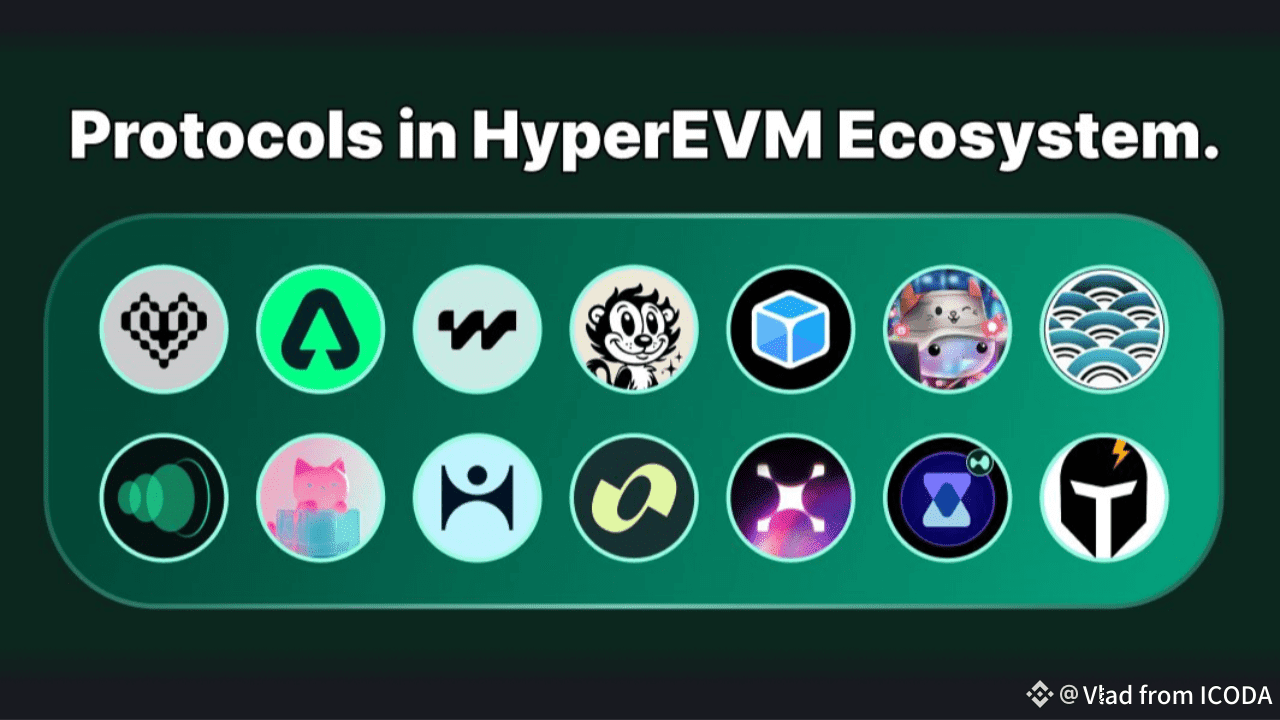
🔔 Follow me on Twitter -> @p_vlad Now when you buy $HYPE, you already know which protocols you can ape into: Hyperbeat (@hyperbeat): DeFi infrastructure automating yield strategies on HyperEVMHyperdrive (@hyperdrivedefi): Hyperliquid's premier DeFi hub (Lend, borrow, liquid stake)HyperLend (@hyperlendx): Lending/borrowing protocol on Hyperliquid optimizing liquidity in volatility.Felix (@felixprotocol): Borrowing/lending on Hyperliquid with feUSD stablecoin backed by blue-chip collateralHyperstable (@Hyperstable): veCDP stablecoin protocol on HyperliquidHypurrFi (@HypurrFi): Leveraged lending on HyperEVM for yields; mints synthetic USDXLKinetiq (@kinetiq_xyz): Liquid staking on Hyperliquid; issues kHYPE governed by KNTQ tokenHyperwave (@Hyperwavefi): Onchain forex and payments on Hyperliquid with liquid HLP tokensUltraSolid (@ultrasolid_hl): veDEX and liquidity hub on HyperEVM with aggregated routing and dual tokensKeiko Finance (@KeikoFinance): Permissionless borrowing on HyperEVM with dynamic rates and points rewardsHarmonix Finance (@harmonixfi): DeFi platform that combines advanced hedge fund-grade strategies with native blockchain technologyHyperBloom (@hyperbloomxyz): DeFi SuperApp built on HyperEVM.Timeswap (@TimeswapLabs): oracleless lending/borrowing protocol.Thunderhead (@thunderheadxyz): The premiere liquid-staking solution for the Hyperliquid network. Hyperliquid.
🔔 Follow me on Twitter -> @p_vlad What’s the most important part of everyone’s journey to financial stability and independence? Capital efficiency. Your money isn’t really working for you until it earns passive income. That’s where yield-bearing stablecoins come in. For years, stables have been treated like “crypto cash.” People park them on exchanges, use them for trading pairs, or just hold them on-chain waiting for opportunities. But in 2025, the range of options for putting stables to work has exploded. From the most conservative, almost treasury-like products to high-octane speculative plays, there’s now a full spectrum of yield strategies. In this article, I’ll walk through 10 ways you can earn yield on your stables. Some are safe enough for cautious capital, others are for degens chasing triple-digit returns. Together, they give us a picture of how far stablecoin yield markets have evolved. Bookmark this, because the landscape shifts fast and you’ll want a reference point. 1) CeFi Deposits: The Easy Entry Let’s start with the obvious. Centralized exchanges like Binance, OKX, Bybit, and Coinbase will happily take your stables and pay you interest.
The pitch is simple: deposit USDC or USDT, click “earn,” and watch the balance tick up. The rates look attractive too, right now they’re often between 6–14% APY. But where does this money actually come from? Behind the curtain, your stables are lent out to margin traders and market makers. Sometimes they fund structured products for institutional clients. You’re essentially subsidizing leverage demand on the other side of the market. The trade-off is clear: you’re outsourcing risk to the exchange itself. If withdrawals get paused, if regulators intervene, or if the exchange mismanages funds, you’re stuck. This isn’t just a theoretical concern: history has shown us what happens when CeFi risk goes wrong.
Think of FTX, which froze billions in customer funds when it collapsed in 2022. Or Celsius and BlockFi, which both halted withdrawals and went bankrupt after risky bets backfired. Even Voyager crumbled when its borrowers defaulted, leaving depositors stranded. Still, CeFi deposits remain the first step for many. They’re easy, liquid, and convenient. Just remember the golden rule: don’t lock your money up for months just to squeeze out an extra percent. 2) On-Chain Lending: The DeFi Backbone
When you step into DeFi proper, lending markets are the backbone. Aave, Compound, Morpho, Venus, Radiant, they all operate on the same principle. You supply USDC, USDT, or DAI into a pool. Borrowers come in with collateral, usually ETH or BTC, and pay to borrow your stables. Utilization drives interest rates: the more demand, the higher the yield. For suppliers, this translates into 5–12% APY, depending on the market. It’s simple, transparent, and relatively liquid. But DeFi lending isn’t risk-free. Smart contracts can be exploited. Oracle feeds can be manipulated, triggering cascades of liquidations. And when collateral depegs (think of stETH in 2022 or smaller stables breaking peg) lenders can end up holding bad debt. Power users sometimes go further: they loop their stables. Deposit $1,000, borrow $800 against it, deposit again, and repeat. On paper, APY climbs dramatically. In practice, liquidation risk grows with every cycle. For many, lending markets are the first “serious” yield option beyond CeFi. They’re reliable, but they require vigilance. 3) Providing Liquidity: The Fee Machine
Liquidity pools on DEXs like Curve, Uniswap, Balancer, Maverick, or Meteora unlock another dimension of stablecoin yield. Here you’re not lending to borrowers, you’re supplying liquidity for traders. Every time someone swaps USDC to USDT, or DAI to USDC, you earn a fraction of the trading fees. In stable/stable pools, impermanent loss is minimized, but it never disappears completely. If one stable depegs, your pool position takes the hit. Returns usually range between 5–15% APY, but that number hides complexity. In pools with high organic volume, fees sustain yield. In others, it’s inflated by token incentives: CRV, BAL, MAV, you name it. Those emissions don’t last forever. With concentrated liquidity models like Uniswap v3, yields depend on how efficiently you manage your price range: too wide and you earn little, too narrow and you risk falling out of range.
For those interested in live data, current Uniswap v3 pool yields can be tracked through analytics tools such as free DefiLlama Pools, or revert.finance. These services aggregate real-time APRs across major pairs and help visualize performance by range. For seasoned LPs, this is a profitable game. For most casual users, it requires more active management than they expect. 4) Yield Aggregators: Automation For The Lazy If lending and LPing feels too hands-on, yield aggregators like Yearn, Beefy, Idle, and Convex promise to automate the process. Their pitch: deposit once, let us handle the strategy. We’ll chase incentives, reinvest fees, optimize rewards. When markets are hot, aggregator vaults have hit 10–25% APY, especially where governance bribes and token emissions are strong. But remember, with automation comes stacked risk. You’re exposed to the aggregator itself, plus every underlying protocol it touches. If something fails anywhere along the chain, the vault is impacted. Still, for many, this is the easiest way to put stables to work without babysitting positions daily. 5) Real-World Assets: Bringing TradFi Yield On-Chain
The biggest structural shift in the last two years has been the rise of RWAs. Tokens like Ondo USDY, MakerDAO’s sDAI, Maple, Clearpool, Securitize / BlackRock BUIDL, they connect stables to U.S. Treasuries, corporate credit, and institutional-grade funds. A newer entrant here is USDai / sUSDai, developed by Permian Labs. USDai is a dollar-pegged token, and when staked it becomes sUSDai, which earns yield from loans collateralized by GPU hardware and AI infrastructure. The model has already gained traction, with over $100M in TVL and backing from major investors. The yields from RWA-based stables are modest, usually around 5% APY, but unlike token incentives, they come from real cashflows, making them more sustainable. The downside: many of these products require KYC, sometimes even accredited status, and they blur the line between DeFi and TradFi. They’re less DeFi-native, more bridge. Still, RWAs are how stablecoin yields become institutionalized, and how stables tap into real economic activity rather than speculative emissions. 6) Funding Rate Farming: Surfing Perp Markets
Perpetuals dominate crypto trading, and they come with funding payments. Platforms like Binance Futures, dYdX, GMX, and Hyperliquid allow you to earn (or pay) depending on market skew.In bull markets, longs pay shorts heavily, and if you’re hedged correctly, you can collect 10–40% APY just from funding. For a deeper dive into how funding actually works, check out this thread. To put it in perspective, consider a past example: when the Aster funding rate on Bybit was calculated every 4 hours (6 funding periods per day), a rate of 0.151% × 6 = 0.906% per day would have translated into an APR of 0.906% × 365 ≈ 330.7% APR. Projects like Boros are now building structured ways to capture this opportunity, allowing users to earn from perpetuals funding without active management. Instead of manually hedging positions, Boros automates the process, dynamically balancing long and short exposure to extract consistent yield from funding rate differentials. Still, it’s important to remember that funding is volatile, rates flip quickly, liquidation risks are always present, and this is not passive yield. Even with automation, it remains a leveraged and market-dependent strategy. For some, this is where the real money is. For others, it’s stress they’d rather avoid. 7) Delta-Neutral Strategies: The Quant Zone Closely related is the cash-and-carry trade: long spot, short futures, capture the basis spread. When futures trade above spot, locking in the difference can yield 5–30% annualized. You can execute this strategy on any exchange that offers both spot and perpetual contracts for the same asset, the principle is universal. The upside: it’s market-neutral when executed properly. The downside: fees, borrow costs, and execution mistakes can erode profits quickly. Delta-neutral farming is less about yield chasing, more about operational precision. 8) Pendle, Ethena & Synthetic Yield The bleeding edge of stablecoin yield is where protocols repackage stables themselves. Pendle pioneered splitting yield into principal and yield tokens. You can buy PTs for fixed returns — around 12% APY today — or speculate on YTs for leveraged variable returns. Ethena created USDe, a synthetic stable that farms perp markets in the background. In good conditions, it pays 10–30%, but it’s not “cash equivalent.” It’s only as stable as the strategy underneath. Beyond these flagship names, other protocols are experimenting with stable-backed lending models that rethink risk management itself. Silo Finance structures its markets as isolated “silos,” where each asset has its own lending pool paired with a bridge asset (like ETH or a stablecoin). This design prevents contagion: if one asset collapses, it doesn’t drag down the entire system. It’s a direct answer to the problem of shared-pool risk that has triggered cascading failures in legacy protocols. For instance, when BadgerDAO’s exploit in 2021 bled through shared Curve pools, or when Iron Bank’s defaults in 2022 left lenders across multiple assets exposed. In both cases, the lack of isolation meant that a failure in one market had knock-on effects across the entire system. Fraxlend takes a similar approach with permissionless lending pairs. Anyone can spin up a market between two ERC-20 tokens, and each pair has independent parameters like loan-to-value ratios, interest rate models, and liquidation mechanics. Depositors receive fTokens that accrue interest automatically, while the modular structure keeps risks compartmentalized. Both of these models show where the sector is heading: instead of one monolithic pool of assets, lending becomes modular, customizable, and safer by design. They also unlock new opportunities for stables to be deployed across niche markets that would never qualify for a traditional Aave-style listing. These aren’t for the faint of heart, the mechanics are complex, the liquidity is thinner, and the risks of mis-configured markets are real. But they represent the next layer of innovation in stablecoin yield, where safety and capital efficiency are being redesigned from the ground up. 9) Airdrops: The Passive Bonus Layer Airdrops are different from pure point farming. Instead of parking funds just to chase multipliers, you earn them along the way while running other strategies. Provide liquidity, deposit into vaults, or stake in protocols, and on top of the base yield, you may qualify for a token drop. This makes airdrops less of a standalone strategy and more of a “bonus layer” that rides on top of your existing positions. You’re not committing extra capital for the farm, you’re simply getting rewarded for being an active user. A few current examples floating around: cap: LPs on Pendle can qualify for CAP multipliers, making regular yield farming double as a long-term airdrop play + 13,4% APR. Theo: Depositing through partners like Liminal or providing liquidity to PRJX pools not only generates baseline yield, it also puts you in line for potential Theo rewards. Liminal: Known for experimenting with structured vaults, deposits here could unlock exposure to its token distribution once it launches. Ethereal: Depositing assets like eUSDe into their ecosystem has been flagged as a way to position for a potential airdrop tied to ENA, and the mainnet is soon. The upside is obvious: airdrops stack on top of whatever APR you’re already earning. The downside is that nothing is guaranteed, protocols can change their distribution plans, and rewards are speculative until they actually hit your wallet. Still, ignoring airdrops means leaving free optionality on the table. If you’re already farming yield, you might as well farm future tokens along the way. 10) Native Yield Stables: Dollars That Earn By Design
Finally, some stables embed yield directly. sDAI streams Treasury income from Maker’s DSR. FRAX, crvUSD, GHO, and Lybra eUSD each experiment with mechanisms that make stables productive by default. A new wave of projects is pushing this idea further. USDf from Falcon can be staked into sUSDf, which turns it into a yield-bearing version powered by the protocol’s internal strategies. On Solana, Solayer’s sUSD takes a different route: it is directly backed by U.S. Treasuries, so the yield you earn simply flows from T-bill interest. Both approaches aim for the same outcome — a stablecoin that doesn’t sit idle, but works for its holder. These tokens show what the next generation of stablecoins could look like: programmable dollars where yield is baked into the design itself. The challenge is peg stability and governance. When mechanics fail, yields vanish and pegs wobble. But if they succeed, they change how we think about money in crypto. Wrapping Up Stablecoins started as nothing more than crypto cash. Safe harbor in a volatile market. Today, they’re the gateway to a dozen different yield strategies. Some mirror TradFi (like Treasuries on-chain). Others are uniquely DeFi (like Pendle splits or perp funding). The spectrum is wide: Safe core: RWAs, sDAI, Aave/CompoundMedium risk: Curve LPs, Pendle PTs, Yearn/BeefyHigh risk: Ethena, funding trades, points farming The key takeaway: Yield isn’t free. It’s just risk priced into numbers. And once you see stables not as static dollars but as programmable yield engines, the whole of DeFi starts to look like a capital efficiency machine.
Implement TFR without breaking UX. The Travel Rule isn't just compliance theater—it's becoming the backbone of institutional crypto adoption. But here's the problem: most implementations either kill user experience or create compliance gaps that regulators love to exploit. We studied the practices of implementing Travel Rule on different chains and collected working architectural patterns. This isn't theory—it's a practical playbook for BNB Chain and beyond. How VASP-to-VASP Flow Works The Travel Rule requires Virtual Asset Service Providers (VASPs) to exchange customer information for transactions above certain thresholds. The basic flow involves three components: the originating VASP (sender), secure communication layer, and beneficiary VASP (receiver). When a customer initiates a withdrawal above $1,000 USD equivalent, your system must collect beneficiary VASP information, package customer data securely, transmit it through encrypted channels, and receive confirmation before releasing funds. The beneficiary VASP validates the data, screens against sanctions lists, and confirms transaction acceptance. Critical data you must collect: Originator's full name, address, date of birth/national ID, and account identifier. For beneficiary: full name, account identifier, and address (required for transactions ≥$3,000 USD). Different regulators add specific requirements—LEI codes in EU, SSN in US, transaction references in Singapore. Vendor Matrix: Architecture & Cost Comparison We've evaluated the major Travel Rule solution providers based on real implementation data. Note that this covers the main players (Notabene, Sygna, Chainalysis, Elliptic), but other solutions exist in the market (TRISA, Shyft, VerifyVASP, etc.). These architectural patterns apply not only to BNB Chain, but also to other popular networks like Bitcoin, Ethereum, and Tron. Tier 1: Full-Stack Solutions Notabene Architecture: API-first with hosted compliance engineBNB Chain Integration: Native support via webhooksCost: $0.50-$2.00 per qualified transactionBest for: Organizations needing comprehensive screening and automatic regulatory updates Sygna Bridge Architecture: Decentralized network modelBNB Chain Integration: Direct smart contract integrationCost: $0.25-$1.00 per transactionBest for: Cost-conscious implementations with basic compliance needs Tier 2: Enterprise Solutions Chainalysis Travel Rule Architecture: Compliance-as-a-Service with AML integrationBNB Chain Integration: REST API + webhooksCost: $15,000+ annual license + per-transaction feesBest for: Large VASPs needing advanced risk management
Key insight: For most mid-tier VASPs processing 500-2,000 qualifying transactions monthly, Notabene or Sygna provide the best cost-effectiveness ratio. Enterprise solutions only make sense at significant scale or when advanced AML features are required. Implementation Timeline & Milestones Phase 1: Foundation (Weeks 1-4) Vendor selection, contracting, technical integration planning, staff training program, and policy documentation. Phase 2: Integration (Weeks 5-8) API development and testing, customer data mapping, screening system integration, and internal testing. Phase 3: Testing (Weeks 9-10) End-to-end transaction testing, vendor interoperability testing, and user acceptance testing. Phase 4: Launch (Weeks 11-12) Phased rollout by transaction volume, real-time monitoring implementation, and go-live decision. Critical milestone: Week 8 completion is essential for regulatory deadline compliance. Delays in Phase 2 integration typically cascade into launch risks. When Systems Fail: Backup Strategy Travel Rule systems break down regularly. Your compliance program needs fallback procedures: document all attempts to transmit data, implement manual verification processes when networks are down, and maintain audit trails for regulatory review. Most failures involve network connectivity issues, incorrect beneficiary VASP data, or provider service disruptions. FAQ: Business-Critical Questions Q: Do we need Travel Rule for all BNB Chain transactions? A: Only for transactions above $1,000 USD equivalent between two VASPs. DeFi protocols and self-custody transfers are currently exempt. Q: How do we identify if the receiving address belongs to a VASP? A: Use VASP directory services included with most vendor solutions, or maintain your own database of known VASP addresses. Q: What are the penalties for non-compliance? A: Fines range from $10,000-$100,000+ per violation in most jurisdictions. Repeat offenses can result in license suspension or revocation. Q: Can we build our own Travel Rule solution? A: Technically possible, but regulatory complexity and vendor interoperability requirements make this impractical for most organizations. Total cost of ownership typically favors commercial solutions. Q: How does this affect our competitive position? A: Travel Rule creates operational overhead but also competitive moats. Early compliance can become a business advantage when regulators increase enforcement. Q: What's our liability if we get this wrong? A: Beyond financial penalties, non-compliance can trigger enhanced supervision, operational restrictions, and reputational damage that affects banking relationships and customer acquisition. Next Steps: Making This Actionable The Travel Rule is expanding globally, and enforcement is increasing. More jurisdictions are implementing similar requirements, making early compliance a strategic advantage. Immediate Actions: Audit your current transaction flows for Travel Rule gapsCalculate your monthly qualifying transaction volumeEvaluate vendors based on your budget and technical requirementsDevelop implementation timeline aligned with regulatory deadlines Budget Planning: Most implementations cost $20,000-$50,000 in first-year total costs (setup + operational) for mid-tier VASPs. Factor this into your compliance budget and regulatory capital planning. Found this useful? 🔔 Follow for weekly compliance and Web3 regulatory updates 💬 Comment with your Travel Rule implementation experience or questions ❤️ Like to support practical content that helps the industry move forward
RWA Spotlight: Top 5 Tokens by DEX Turnover This Week
Real‑World Asset (RWA) tokens are steadily moving beyond crypto‑curious niches into institutional-grade liquidity. DEX trading volume averaged $18.6 billion weekly in Q2 2025—and RWA lending and token activity is increasingly riding that wave.
Top 5 RWA Tokens by DEX Turnover This Week: 1️⃣ $nALPHA — Dominates with several large transfers (~$100 k each) on Plume, showing strong institutional engagement. 2️⃣ $ONyc — Multiple transfers (~$99–100 k) on Solana, signaling cross-chain traction and real-world asset exposure on high-speed rails. 3️⃣ $PAXG — Gold-backed stable value token moving ~$99.9 k on Ethereum—clear sign of demand for stable, asset-backed value. 4️⃣ $TSLAx — ~$99.85 k moved on Solana—tokenized equity assets gaining noticeable trading traction among active on-chain wallets. 5️⃣ $XAUT — Gold-pegged token showing up among the top transfers, reinforcing the steady appetite for asset-backed tokens.
What’s the Big Picture? 🔹 Institution-led momentum — Data shows that despite high volume, active wallets remain around ~300, implying large, orchestrated transfers rather than retail noise.CoinCentral 🔹 Trust meets liquidity — Tokens like PAXG and XAUT prove that gold-backing remains a trusted bridge for TradFi participants to enter the digital asset ecosystem. 🔹 Cross-chain, cross-asset appeal — Assets spanning real estate, equities, and commodities are all seeing meaningful action on fast, cost-efficient networks like Solana and Ethereum.
Pro Tips for Founders & Marketers 1. Spot the liquidity hotspots: RWA products that combine real-world backing (gold, equity, bonds) with on-chain availability tend to ignite institutional trade interest. 2. Highlight infrastructure play: Solana and Plume are emerging as favored networks. Fast finality and low fees matter when moving big ticket assets. 3. Craft the narrative: Showcase why your RWA product deserves the same attention—think “stable value meets low-friction trade”.
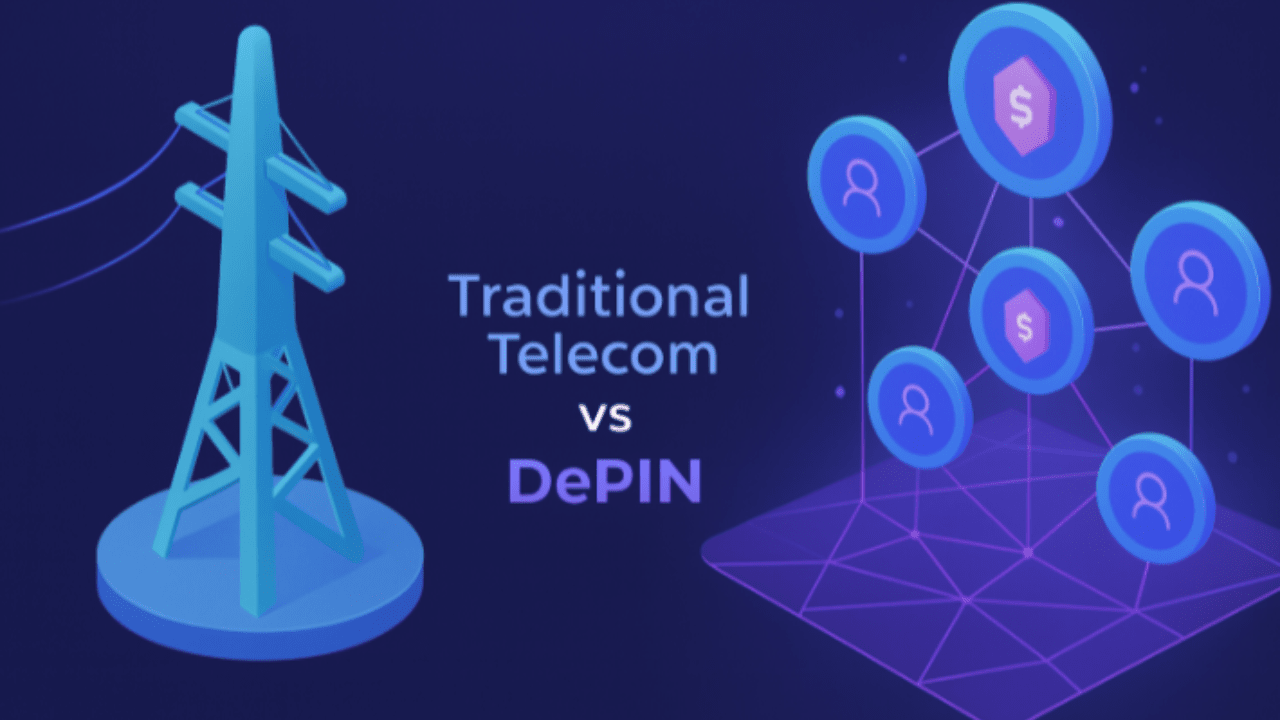
DePIN vs. the Traditional Telecom Model: the Token Economy in Simple Terms
TL;DR: Decentralized Physical Infrastructure Networks (DePIN) turn people and businesses into micro-operators who build and run real-world networks—connectivity, storage, compute, maps—coordinated by tokens. Traditional telecom builds top-down with heavy capex and centralized control. This guide explains how DePIN works, how its token economy aligns incentives, where it shines (and where it doesn’t), and what Web3 founders should do next. DePIN is the moment infrastructure becomes a marketplace. --- Why this matters right now (for B2B marketers & early-stage founders) If you sell to enterprises, you know the pain: long sales cycles, vendor lock-in, and procurement that moves slower than product roadmaps. DePIN offers a different go-to-market: spin up decentralized infrastructure where your customers already are—neighborhood by neighborhood, cluster by cluster—because the community funds and deploys the hardware. If you’re a Web3 founder seeking product-market fit, the token economy is not just a fundraising hack; it’s a coordination system. Done well, tokens create a “flywheel”: hosts deploy hardware → service quality improves → real users buy service credits → more tokens get burned → ROI for hosts improves → more coverage. Done poorly, it’s just emissions and vibes. This article gives you the “on-the-fingers” explanation to design the former and avoid the latter. What is DePIN? DePIN = Decentralized Physical Infrastructure Networks. Instead of one company building and owning the whole network, many independent participants contribute physical resources (hotspots, small cells, GPUs, sensors, storage nodes) and earn network tokens for doing so. Users buy a service (connectivity, compute time, storage, map tiles) using stable-priced credits or the network token. A blockchain coordinates who did what, pays out rewards, and (ideally) destroys or “burns” tokens when the service is purchased. How it works (five moving parts): 1. Supply side (operators/hosts): People or businesses buy hardware (e.g., LoRaWAN hotspot, 5G small cell, GPU rig, weather station) and plug it in. They earn tokens for providing decentralized infrastructure—with bonuses for uptime, coverage, and proven useful work. 2. Proof mechanisms: The network verifies contributions: - Proof-of-Coverage / Presence (radio networks) - Proof-of-Useful-Work (compute) - Proof-of-Storage / Retrieval (storage) - Proof-of-Sensing / Mapping (sensor networks, mapping) 3. Demand side (buyers): End users or enterprises purchase telecom-like or infrastructure services. Most mature DePINs use stable-denominated credits (e.g., $0.10 per GB or per compute minute) to remove token price volatility from the buying experience. 4. Token flows: Tokens are emitted to bootstrap supply. When users buy real services, they burn tokens or spend credits that trigger token sinks. The ratio of burn to emissions is the heartbeat of the token economy. 5. Governance: Upgrades, reward weights, fee splits, and treasury spend are (ideally) open and on-chain, with a clear path to progressive decentralization. In DePIN, hardware is marketing. Every installed node is both distribution and delivery. DePIN vs. Traditional Telecom: a side-by-side view
Telecom sells coverage and QoS. DePIN sells coverage and alignment—then grows into QoS. The token economy of DePIN (explained simply) Think of a DePIN token economy as two loops that must eventually meet:
1. Supply loop (emissions): New tokens are created to reward operators for building out decentralized infrastructure (e.g., a hotspot going online in an underserved area).Rewards are weighted by contribution quality (coverage, throughput, retrievable data, delivered compute). 2. Demand loop (burns/fees): When real users buy service—connectivity, storage, compute—they pay in stable credits or the network token.A portion converts to a token sink (burn), fee revenue, or both. Your goal: Gradually shift value from emissions to demand. Early on, you bribe supply; later, you pay supply with money users actually spend. Revenue models you’ll see Credits priced in fiat equivalents (recommended): Users buy credits (e.g., Data Credits, GPU Credits) priced in USD/EUR, on-chain or off-chain. The protocol converts part of this into token burns/fees. This smooths revenue and reduces token price anxiety.Direct token payments: Simple but volatile for B2B buyers. Works for crypto-native workloads; harder for enterprise telecom budgets.Subscriptions & SLAs: Enterprise buyers love predictability. Wrap credits in monthly contracts and offer SLAs once density allows.Marketplace take rates: Protocols may take 5–30% of each job (compute, storage, API call), sharing with validators/routers. Incentives that actually work Bootstrapping coverage: Heavier rewards for new regions or under-served density tiers.Proof-of-use: Bonus rewards when your node serves real traffic (not just being online).Dynamic weights: Shift rewards toward demand as the network matures—less “just being there,” more “serving jobs.”Referral & hosting bounties: Pay small one-time bounties in credits to drive installs that lead to paying usage.Staking & slashing: Operators stake tokens (or device-NFTs) that can be slashed for fraud (GPS spoofing, packet replay, fake jobs). Token distribution and emissions design Genesis allocation: Split among community incentives (largest), treasury, core contributors, investors. Use long cliffs/vests.Emissions schedule: Halvings or a decaying curve. Keep emissions meaningful early, then taper.Treasury policy: Use treasury to stimulate demand (partnership subsidies, reseller credits), not only supply.Dual-token pattern (battle-tested):Network token: captures upside, governance, and is the incentive currency.Service credits: stable-denominated credits (non-speculative) that customers buy to consume resources, usually minted by burning network tokens. This keeps Web3 under the hood and telecom buyers comfortable. Design patterns that reduce headaches: Burn-and-Mint Equilibrium (BME): Burn network tokens to mint stable credits; emissions decelerate as burns increase.Device as license (NFT): The hardware’s “license” is on-chain (e.g., a small-cell NFT). Transferable, slashable.Geofenced rewards: Reward more where you need coverage; dampen in over-saturated zones.Oracles for demand weighting: Verify real jobs via receipts (e.g., CDRs for connectivity, proof-of-render for GPU). Emission creates potential value; burn proves real value. Key metrics that separate signal from noise Whether you’re evaluating a DePIN or designing one, stare at these dashboards: Supply health Active nodes: How many devices are online and productive (not just “registered”).Coverage density vs. target: Do we have the right shape of network, or a random scatter?Uptime & reliability: % meeting SLOs (latency, packet loss, throughput).Operator payback period: Months to breakeven for a typical host. Demand & revenue Credit burn (or equivalent): The cash register ding. If burns are flat while nodes explodes, you have a problem.Paying logos & retention: Are there repeat buyers, not just test wallets?ARPU / ARPJ (per job): Revenue per device or per workload; trend up means stronger product-market fit.Enterprise pipeline: For telecom-like services, show pilots graduating into paid SLAs. Efficiency & sustainability Emissions-to-burn ratio (EBR): Incentives spent vs. demand generated. Aim for a declining EBR.Host ROI dispersion: If only early whales win, later cohorts churn.Staking ratio & slash rate: Indicates security and anti-fraud effectiveness.Treasury runway & utilization: Are you spending to unlock demand, not just hardware bounties? Quality & trust SLA attainment: % of jobs delivered within promised bounds.Fraud incidents: GPS spoofing, replay, synthetic jobs caught and penalized.Decentralization of control: Are validators/routers concentrated? Any single point of failure? Case snapshots (what to learn, not just to admire) Helium (LoRaWAN and later 5G): Pioneered the token economy for wireless by rewarding coverage and usage separately, and introduced Data Credits (fiat-priced) burned to use the network. Lesson: burn-based credits reduce pricing friction for non-crypto buyers; reward weights must shift from “proof-of-coverage” to “proof-of-use” as the network matures. Render Network (GPU compute): A marketplace where artists, AI teams, and studios buy GPU rendering and inference. Lesson: matching jobs to the right hardware with verifiable output is as crucial as the rewards. Real demand (paid renders) is the north star; token incentives help fill cold-start gaps. Filecoin (storage): Requires storage providers to post collateral and prove they actually store data (Proof-of-Spacetime). Lesson: staking and verifiable proofs can align supply quality; enterprise buyers want clear retrieval performance and stable pricing. Hivemapper / WeatherXM / DIMO (mapping, weather, vehicle data): Crowd-sourced sensing with proof-of-contribution tied to real-world utility. Lesson: anti-sybil and anti-spoofing is mandatory; combine physical anti-tamper with cryptographic proofs. Each shows a flavor of decentralized infrastructure. The common pattern: early emissions, stable credit demand, and progressively stricter rewards for useful work. Where DePIN truly fits in the telecom stack A lot of founders try to “be the next national carrier.” Resist the temptation. DePIN wins where telecom has blind spots: Last-50-meters & dense urban micro-cells: Small cells on rooftops and in shops, backhauled by fiber or FWA, stitched by a protocol.Narrowband IoT (LoRaWAN-class) at city scale: Smart meters, logistics tags, industrial sensors—low data, huge surface area.Private networks for campuses & events: Temporary or semi-permanent coverage with local operators who need fast deployment.Roaming and fill-in coverage: Carriers or MVNOs can buy from DePIN as a wholesale overlay where their grid is weak. Where DePIN struggles today: Nationwide QoS for mobile broadband without anchor partners. Heavily licensed spectrum markets without a clear regulatory story. High-touch enterprise compliance without a dedicated integration layer. Practical token-economic templates you can copy Below are simple, composable blueprints. Pick one and tune. Template A: Credits-first (recommended for B2B) User journey: Buyer purchases Service Credits (priced in USD/EUR) → consumes resources → protocol burns network tokens to mint credits (BME).-Operator rewards: Weighted by useful work + coverage multipliers.-Treasury use: Bulk credits for pilots, reseller programs, and device rebates tied to credit burn milestones.Why it works: Separates token volatility from buyer experience; the burn is automatic. Template B: Dual-sided marketplace with staking Two roles: Operators stake (earn higher rewards, subject to slashing) and Routers/Validators stake (earn routing fees).Fees: Marketplace takes 10–20% per job; portion burned, portion to treasury.Why it works: Scales governance, hardens security against fraud. Template C: Device-as-license with geo incentives NFT license per device: Required to earn; tradable; slashed for cheating.Geo weighting: Algorithm favors areas with less coverage until demand picks up.Why it works: Directs growth where the network needs it; curbs oversupply. Risks & limitations (read this twice) 1. Emissions miscalibration: Too many tokens too fast → hardware glut, low host ROI, churn. 2. Demand shortfall: If Web3 incentives outpace real demand, price momentum hides the problem—until it doesn’t. 3. Fraud & spoofing: Radio beacons, GPS spoofers, synthetic jobs—without strong proofs and slashing, bad actors farm rewards. 4. Regulatory risk: Securities: token distribution and marketing can trip securities laws.Telecom licensing: local rules for small cells, spectrum, SIM/eSIM, lawful intercept.Data compliance: privacy, export controls, and enterprise audits. 5. Quality of service: Without density, you can’t meet SLAs. Poor QoS kills B2B trust. 6. Hardware & supply chain: Device shortages, certification delays, firmware exploits. 7. Governance capture: If a handful of whales set reward weights, credibility fades. 8. Reputation & messaging: Over-promising “passive income” attracts the wrong operators and regulators. If emissions are your only growth engine, you don’t have a network—you have a countdown. On-the-fingers playbook for startups 1) Start with a razor-sharp wedge. Pick a job telecom underserves: e.g., dense IoT coverage for logistics yards, pop-up small cells for events, GPU inference near e-commerce data centers. Nail one job before chasing the whole stack. 2) Make buying boring. Enterprises budget in fiat. Use stable, fiat-priced credits and invoice like a normal vendor. Keep Web3 under the hood; your token economy is the coordination layer, not the product. 3) Align rewards with useful work. Front-load coverage rewards only where needed. Shift weight to demand-served as soon as you see credit burn. Host dashboards should scream: “Earn more by serving real users.” 4) Put anti-fraud on day 0. Hardware attestation, challenge-response, reputation, geospatial anomalies, slashing. Publish your fraud kill-chain like a safety manual. 5) Calibrate emissions to demand. Start with a simple decaying schedule.Introduce geo-boosts and use-boosts where pipeline is real.Review Emissions-to-Burn Ratio monthly; cut rewards if EBR rises. 6) Land anchor demand early. Two or three lighthouse customers (city utility, logistics operator, MVNO partner) prove value. Use treasury to subsidize pilots with clear burn milestones. 7) Treat the treasury like product capital. Spend to fix the cold start on the demand side: reseller credits, data integrators, SDKs, enterprise support. Publish a quarterly treasury memo to build trust. 8) Design host economics for sustainability. Transparent payback period, realistic yields (not moon math), and hardware that can be repurposed if the network pivots. Avoid bricking devices. 9) Plan for compliance. Token: fair launch or well-disclosed distribution; utility documented; legal reviews.Telecom: spectrum usage, device certifications, KYC for SIM/eSIM where required.Data: privacy policies and DPA templates for B2B. 10) Build a two-sided growth machine. Supply growth loop: referral bounties → installs → coverage → more jobs.Demand growth loop: SDKs & APIs → integrations → recurring credits → burns → better rewards. Messaging tips for B2B marketers Lead with outcomes, not crypto. “We deliver indoor coverage in 24 hours” beats “We’re a DePIN.”Show burns and SLAs. Put your last-30-days credit burn and SLA attainment on your homepage. That’s your ARR graph.Segment your story:For telecom buyers: coverage maps, QoS, interoperability, pricing.For Web3 community: reward weights, governance proposals, validator stats. Create local heroes. Spotlight operators who solved real customer problems—stripped of hype, full of details. Publish a quarterly “Network Health Report.” Emissions-to-burn ratio, host ROI range, fraud incidents handled, new logos. Common pitfalls (and quick fixes) Pitfall: Paying the same reward regardless of location or performance. Fix: Geo-tiering + performance multipliers + decay.Pitfall: Selling “passive income” instead of “service quality.” Fix: Reframe content; make host earnings visibly tied to demand served.Pitfall: Only courting crypto-native demand. Fix: Credits + normal invoicing; dedicate a team to enterprise sales.Pitfall: Iffy token distribution optics. Fix: Longer vests, larger community pool, transparent treasury reporting. A 90-day launch checklist Weeks 1–3: Lock rewards v1.0 (coverage vs. use weights; geo tiers).Finish credits contract and burn path.Integrate anti-fraud (device attestations, challenge beacons, staking). Weeks 4–6: Sign two pilot customers; allocate pilot credits tied to usage milestones.Publish hardware BOM and clear install guides.Open-source SDKs and a reference app. Weeks 7–9: Light up 100–500 devices in one geography; daily reports on uptime & first burns.Announce quarterly treasury policy. Weeks 10–12: Shift 10–20% of rewards to proof-of-use based on early traffic.Release “Network Health Report #1.”Pitch an MVNO or enterprise reseller for a wholesale channel. The bottom line: when to choose DePIN vs. traditional telecom Choose a traditional telecom model when you need strict, nationwide QoS today, operate in heavy licensed spectrum, and have access to large capex and carrier relationships. Choose DePIN when your service can start small, reward early operators, and grow coverage where demand emerges—_and_ you’re ready to run a disciplined token economy with real sinks tied to real usage. Founder’s rule of thumb: If you can define a stable credit for a specific, verifiable unit of utility (MB, minute, render, GB-month) and you can reliably verify work, you can design a DePIN. If you can’t, stick to Web2 and revisit later. Final recommendations (actionable) 1. Adopt credits from day one. Let buyers pay in fiat for predictable units. Route a portion to burns programmatically. 2. Tie rewards to verifiable useful work. Coverage rewards should decay as soon as demand shows up. 3. Publish your Network Health dashboard. Burns, EBR, SLA, fraud incidents, treasury usage. Build trust with numbers. 4. Invest treasury into demand, not just supply. Resellers, SDKs, and pilots that lead to recurring burn. 5. Engineer anti-fraud relentlessly. Treat it like product, not an afterthought. 6. Plan compliance with intent. Tokens (utility & distribution), telecom regs, data privacy—get counsel early. 7. Tell two stories well. One for telecom buyers (QoS, price, integration), one for Web3 contributors (rewards, governance, decentralization). --- If this guide helped you clarify DePIN, token economy, Web3, telecom, and decentralized infrastructure strategy, we’d love to hear from you. Subscribe to @Vlad from ICODA on Binance Square, hit Like, and drop a comment with the DePIN use case you’re exploring. We read every comment and often feature the best ideas in future posts. --- Quick glossary (for non-crypto execs) DePIN: networks where many own the hardware and the protocol coordinates it.Token economy: rules for minting, distributing, and burning tokens that align supply, demand, and governance.Burn: tokens permanently destroyed when service is purchased (often to mint stable credits).Credits: fiat-priced, non-volatile units customers buy to consume service.Staking/Slashing: security deposits that can be penalized for cheating.Proof-of-Coverage/Use: cryptographic checks that you actually provided useful service.
DePIN Monetization: How Tokens Cover Infrastructure CAPEX?
Tokens allow a Decentralized Physical Infrastructure Network (DePIN) to shift up-front capital-expenditure (CAPEX) from a single balance-sheet to thousands of participants who are willing to buy hardware (or contribute idle capacity) in exchange for a stream of tokens whose value is ultimately anchored to real-world usage of the network. Done well, that token flow pays back the box that was just installed, funds the next wave of hardware, and progressively moves the protocol from inflationary boot-strapping to self-financing. 1. CAPEX-recovery playbook
2. Mechanisms in practice
3. Back-of-the-envelope payback formula
Key knobs
Emission schedule & halvenings – front-loads ROI but must taper (e.g., Helium’s emission drop from 5 M HNT/day in 2021 to 2.5 M HNT/day today).Utility-score weighting – pays more where coverage is scarce, avoiding hardware oversupply.Token price volatility – can collapse ROI; many networks introduce ve-locking or buyback treasuries to dampen sell pressure. 4. Design lessons Start inflationary, finish usage-linked. Too little early emission means no network; too much late emission kills price. Gradual swap to burn-and-mint or fee-split is the common glide-path. rapidinnovation.ioProofs must be cheap but hard to fake. GPS-sync’d “coverage witnesses” (Helium) or cryptographic proofs of storage (Filecoin) keep the subsidy from being Sybil-attacked. CoinMarketCapPrice services in fiat terms. Artists pay Render in USD-denominated invoices; telecom partners pay Helium $0.00001 per Data Credit. Operators can then model cash payback independent of token price. know.rendernetwork.comMessariRe-use existing idle capacity when possible. It slashes CAPEX and speeds densification (e.g., Helium Plus flashing existing routers; io.net renting idle GPUs).Treasury programs keep the flywheel turning. Grants for new regions or hardware trade-in schemes recycle usage revenue into the next CAPEX wave. 5. Putting it together A sustainable DePIN walks a tightrope: Years 0-2: high token emissions subsidise early adopters → critical mass of hardware.Years 2-5: real customers arrive; burn-and-mint or fee share replaces most emissions; Treasury funds strategic expansion.Year 5+: network resembles a co-op utility: low inflation, predictable fee income, token as a governance + revenue-share asset. When the mechanisms line up, tokens act like a just-in-time CAPEX coupon, paying off routers, GPUs or cameras exactly as fast as that infrastructure begins generating real cash flow. That’s the essence of DePIN monetization.
二重力市場における創業者のジレンマ あなたが2025年に暗号取引所、DeFiプロトコル、またはデジタルアイデンティティレイヤーを構築している場合、あなたは二つの動かしがたい力の間に挟まれています:規制コンプライアンスとプライバシー重視の分散型。政府は記録的な執行行動でKnow Your Customer(KYC)義務を厳しくしており、ユーザーと開発者は匿名性を保ち、データ露出を最小限に抑え、Web3の精神に沿ったゼロ知識(ZK)ソリューションをますます求めています。 これは単なる哲学的な対立ではありません。これは100億ドルの戦略的な分岐点です。今日、アイデンティティを検証し、ユーザーデータを管理する方法についてあなたが下す選択が、あなたのスケール能力、機関資本を引き付ける能力、規制当局を満足させる能力、そしてユーザーの信頼を築く能力を形作ります。
RWA Tokens: Capitalization Dynamics for the Week + Top 5 by Profitability
RWA Sector Sees Mixed Momentum: Protocols Up, Tokenized Assets Dip --- Over the past 7 days, the Real World Assets (RWA) sector displayed a contrasting performance across its two major segments: RWA Protocols and Tokenized Assets. According to the latest data, the total RWA market capitalization now stands at $54.14 billion.
From July 14 to July 21, RWA Protocols surged by 11.71%, bringing their market cap from $4.35B to $4.86B. This performance underlines increasing investor confidence and inflow into protocol-layer projects aimed at real-world integration of blockchain systems. In contrast, Tokenized Assets—which represent on-chain representations of real-world financial or physical instruments—dropped by 4.03%, with their market cap falling from $4.44B to $4.26B. Despite an initial upward movement until mid-week, Tokenized Assets suffered a sharp decline on July 18, from which they only partially recovered. This shift caused a dominance reversal: RWA Protocols now hold 53.25% of the combined category’s capitalization, overtaking Tokenized Assets (46.75%), which had held a slight edge at the start of the week (50.54%). Top 5 RWA Performers by 7-Day Gains Epic Chain ($EPIC )Price: $2.757D Gain: +187.2%Market Cap: $63.2MInsight: EPIC delivered the highest relative return this week, driven by renewed investor interest and volume spikes, suggesting speculation on upcoming developments or listings.Elixir ($ELX)Price: $0.23417D Gain: +116.6%Market Cap: $60.7MInsight: Despite a sharp 24h decline (-15.7%), Elixir maintains a strong weekly performance, positioning itself among the most volatile yet lucrative bets in the RWA niche.DIA ($DIA )Price: $0.94897D Gain: +110.7%Market Cap: $113.5MInsight: DIA led the "Top Gainers" list with a +91.9% 24h spike. Its strong fundamentals in oracles and DeFi analytics may be regaining favor among institutional participants.Opulous ($OPUL)Price: $0.04427D Gain: +76.2%Market Cap: $22.2MInsight: A strong showing from the music rights tokenization project, potentially due to new artist signings or platform upgrades.Tharwa ($TRWA)Price: $0.0066687D Gain: +72.3%Market Cap: $46.7MInsight: Despite experiencing intraday volatility, Tharwa closed the week with robust investor support, suggesting faith in its emerging real-world utility or partnerships. Conclusion: Protocol Layer Takes the Lead This week’s data signals a meaningful shift: investors are increasingly favoring infrastructure-level RWA plays over asset-backed tokens. The notable climb in RWA Protocols' market share reflects this rotation, as confidence builds in foundational blockchain projects supporting RWA ecosystems. While tokenized assets remain a vital part of the narrative, macro volatility and lower short-term returns may be steering capital toward scalable protocol bets with more upside potential.
Crypto User Onboarding Is Broken — Here’s How to Fix It
Crypto onboarding is the growth bottleneck. Across all studies, 60–90% of new users drop out before making their first transaction. And over 80% never return after a single use. If you’re a founder, product leader, or growth strategist in Web3, fixing this is not optional — it’s your biggest unlock. The Problem: 80%+ of Users Drop Off Before Activation Despite explosive interest in Web3, most crypto products suffer massive onboarding abandonment — 60% to 90% of users churn before completing a first transaction. The primary culprits? Confusing wallet setup (e.g. seed phrases, MetaMask extensions)Technical jargon and cognitive overloadInaccessible funding flows (KYC, exchange detours, gas fees)Poor guidance and error feedback Projects hemorrhage users before any value is delivered. High CAC means every dropout is costly — and most dApps are burning more users than they’re converting. The Funnel Breakdown: Where Web3 Leaks Users
Root Causes: UX, Psychology, and Infrastructure Gaps Cognitive Overload: Users face unfamiliar terms like “gas,” “slippage,” and “sign transaction” before they understand the value proposition.Technical Complexity: Manual network switches, bridging tokens, or failed gas prompts scare off newcomers.Security Anxiety: Users are told “lose your seed phrase and your funds are gone.” That fear freezes action.Poor Feedback: When a transaction fails, users often see… nothing. No error. No hint. Just churn.Forced Commitment Before Value: Many projects demand full KYC or wallet setup before showing any reason to care. Winning Case Studies: What Actually Works These projects show that smart UX tradeoffs — not technical wizardry — drive conversion: 1. Reddit’s NFT Avatars (Polygon) Fiat purchases + no mention of “NFT” or cryptoAuto-generated wallets, no seed phraseResult: 3M+ users onboarded seamlessly 2. Skyweaver “Guest play” mode before wallet setupOnly prompts for wallet when user wants to claim/transferResult: Increased gameplay → wallet conversions 3. Friend.tech Embedded wallet via phone number login (Privy)Viral incentives (FOMO, social proof)Result: Tens of thousands onboarded within days 4. OpenSea Fiat payments for NFTs before wallet creationWallet suggested only after first purchaseResult: Captured mainstream users without forcing ETH buys upfront 5. Web3Auth Integration (Multiple dApps) Email/social login → instant wallet creation (no seed)3x increase in onboarding completion High-Impact Tactics: Experimental UX Fixes Based on A/B testing and behavioral science, here are 5 proven onboarding optimizations: 1. “Experience First, Wallet Later” Let users explore or simulate actions before wallet setup. Use read-only or “guest mode” flowsLet them reach value before commitment🔁 Inspired by: Skyweaver, Farcaster 2. Fiat-First Flow Enable credit card or Apple Pay purchases of NFTs or tokens. Abstract away gas fees (use meta-transactions or sponsorship)Users can act immediately — even without ETH🔁 Inspired by: OpenSea, Reddit 3. Embedded Wallets via Social Login Replace MetaMask setup with 1-click Google/Apple sign-ins that generate wallets behind the scenes. Services: Web3Auth, Magic, PrivyResult: +60% onboarding completion 4. Gamified Onboarding Quests Turn key onboarding steps into missions with visual cues, rewards, and feedback. Incentivize first swap, profile setup, etc.Boosts comprehension, fun, and conversion🔁 Inspired by: Coinbase Earn, many DeFi games 5. Contextual Education Use tooltips, microcopy, and hover hints to explain crypto terms just-in-time. Replace “Pay gas” with: “This is a small fee to process your transaction.”Add error explanations, progress indicators, and support chatbotsSmall text wins = massive drop-off reductions What To Measure (and How to Move the Needle) Key onboarding metrics for crypto apps:
90-Day Optimization Plan Weeks 1–2: Diagnose Map your funnel: drop-off rates at each stepDo user testing: where are users getting stuck?Define success metrics (e.g. “Increase wallet setup completion from 30% → 60%”) Weeks 3–6: Quick Wins + A/B Experiments Add social loginIntroduce guest mode or read-only previewReplace jargon with plain text + add tooltipsA/B test: standard vs. embedded wallet signup Weeks 7–12: Scale Wins + Optimize Roll out top-performing changes to all usersAdd gamified onboarding or tutorial questsIntegrate fiat on-rampMonitor retention and time-to-first-action Final Takeaway: Build for the User You Want to Keep In Web3, every moment of friction is an exit door. Seed phrases, confusing fees, and opaque steps kill conversion — not because users are dumb, but because the design is indifferent to their learning curve. The highest-performing teams now treat onboarding as a growth channel, not an afterthought. Your product may be on-chain, but your users still think in Web2. Meet them there, guide them forward, and you’ll unlock adoption that goes far beyond airdrops and hype.
How Crypto Startups Will Prove Their Legitimacy in 2025
In the post-FTX, post-SEC-action era of 2025, credibility isn’t a marketing tactic — it’s a structural moat. Across Layer-1s, DeFi protocols, privacy infrastructure, and Web3 identity projects, legitimacy has become the single most valuable differentiator in a saturated market where 52% of all crypto tokens launched since 2021 have already failed. The transformation is clear: trust, once assumed, must now be engineered, signaled, and verified. Projects that succeed in doing so — like Worldcoin, Base, Celestia, Nillion, Story Protocol, and Monad — deploy layered, proactive strategies that combine security, transparency, regulation-readiness, and community engagement into a repeatable blueprint for legitimacy. Dissecting the Legitimacy Stack: 2025’s Winning Framework Security as the Foundational Signal Security audits are now the bare minimum. Continuous audit trails, formal verification, and real-time monitoring (e.g., CertiK Skynet, Forta, or custom monitors like Base’s “Pessimism”) have emerged as industry standards. Projects like Base and EigenLayer exemplify this shift. Base invited 100+ independent auditors before launch, ran war-game simulations, and published full audit reports to preempt criticism. EigenLayer delayed critical features like slashing until after extended testnet observation, showcasing security maturity as a staged process, not a launch-day checkbox. What it means for founders: A single audit is no longer persuasive. Instead, combine: Open-source codebasesAudit results hosted on third-party verifiable registries (e.g., CertiK, Trail of Bits)Public bounty programs with real payout logsSecurity roadmap disclosure (what’s next to be reviewed or hardened) These elements establish credibility not just through certification, but through demonstrated operational discipline. Transparency, Tokenomics, and Governance Design 2025’s standout projects don’t just talk decentralization — they design for it. The new bar includes: Transparent token distributions (with >50% toward community/utility)Public governance roadmapsOn-chain voting from day one (e.g., Celestia, Story Protocol, Arbitrum DAO) Take Mantle Network: backed by a $4B DAO treasury, it immediately empowered token holders with governance rights via Snapshot, structured progressive decentralization, and published detailed quarterly reports, mimicking public company disclosure practices. Or Story Protocol, which emphasized utility-aligned tokenomics: 25% of $IP tokens unlocked at launch, half dedicated to the community, with no opaque VC allocations. This not only amplified trust but helped catapult its token into the top 100 by market cap within a week. What it means for teams: Expecting users to trust without data is dead. Publish: Treasury management dashboardsToken vesting contracts with time-locked code on-chainGovernance turnout stats and vote outcomesContributor allocations by wallet address and role Institutional and Community Social Proof: Twin Engines of Trust The 2025 legitimacy playbook blends top-down endorsements with bottom-up evangelism. Top-down: Exchange listings, strategic VCs (e.g., a16z, Polychain, Paradigm), and integrations with infra giants (Chainlink, Hex Trust, MakerDAO, etc.) act as credibility arbitrage.Bottom-up: Testnet participants, Discord mods, and Twitter KOLs become social validators. Case in point: Berachain turned meme-lore into institution-grade legitimacy. Despite anonymous founders, it secured $100M in VC funding, ran a testnet with $1B+ in deposits, and attracted grassroots enthusiasm via community-generated content. Meanwhile, Nillion launched with a 19.5% airdrop to early users, a $195M token cap, and Binance listing — all within 24 hours. Its hybrid strategy (community equity + institutional custody with Hex Trust) allowed it to speak to both degens and enterprises. What it means for marketers: Legitimacy is now multi-stakeholder. Engage: VCs for capital and narrative credibilityInfluencers/KOLs for technical trust bridgingRegional ambassador programs for hyperlocal legitimacyCompliance partners for institutional pathways Avoid paid-only shill campaigns; instead, show alignment: vest tokens for influencers, host unfiltered AMAs, and foster open challenge from community reviewers. The New Risk Landscape: Why Proof Beats Performance Founders no longer fear just bugs — they fear perception collapses. 2025’s investor base is more discerning. The community knows how to read GitHub commits, analyze Telegram message frequency, and inspect DAO proposal activity. They’ve been burned by fake audit claims, wash-traded DEXs, and astroturfed engagement — and they act swiftly when legitimacy falters. Key risks include: “Decentralization theater”: DAOs with pre-decided outcomesFake community signals: Bot-driven follower growth and zero Telegram chatterHype cycles over utility: Projects that spike at TGE and then stall (e.g., vaporware L1s with no dApps)Over-regulation backlash: Privacy-purist users abandoning KYC-heavy chains like Worldcoin despite its ZK efforts Strategic implication: Proof is the new performance. Tokenomics, partnerships, security, and governance must show receipts in real-time — or risk becoming the next cautionary tale. Forward Guidance: Designing for Durable Trust in Web3 2025’s breakout projects succeeded because they understood trust as an infrastructure layer, not an afterthought. The following principles define this era’s most credible players: Pillar Execution Tactic Security Continuous audits, bounty programs, on-chain verifiable attestations Transparency Public GitHub, token dashboards, quarterly disclosure (Mantle, Celestia) Decentralization On-chain governance at launch (e.g., Celestia, Story), community treasury control Compliance KYC-as-a-service (Worldcoin, Nillion), MiCA-aligned architectures Community Validation Testnet rewards, active Discords, KOL alignment, Twitter lore (Berachain) Narrative Fit Tap into broader zeitgeist (AI + identity, DeFi + RWA, IP + AI creators) Conclusion: The Strategic Edge of Earning Trust The class of 2024–2025 has rewritten the playbook. We are witnessing a transition where credibility isn’t just a growth multiplier — it’s a gating function for survival. As users demand verifiability, and regulators tighten, legitimacy becomes a full-stack design problem. Those who architect it holistically — across code, capital, community, and compliance — are rewarded with valuation premiums, longer user retention, and strategic freedom. For founders, this means starting from day zero with trust baked into the product’s DNA. For investors, it means treating audits, team identity, and social proof as fundamental diligence pillars. And for marketers, it means narratives must be rooted in proof, not just promise. In crypto, code is law — but in 2025, credibility is alpha.
From Lull to Boom: How June Rescued Q2 Crypto Funding
📉 A Quarter of Two Stories Q2 2025 brought sharply contrasting trends. After a strong finish in Q1, funding in Q2 dipped—yet current levels remain remarkably robust.
April and May cooled off: April saw about $1.29 billion raised.May plunged to roughly $624 million—the fewest monthly deals seen since early 2021, with only 62 funding rounds. June roared back: Investors poured in $2.5 billion, making June the second‑biggest month of 2025 (behind only March). Net result: Total Q2 investment ended at roughly $4.5 billion, down about 22% from Q1’s near‑$6 billion.But this still doubles the amount raised in Q2 2024 and brings year‑to‑date funding to $10.3 billion, already surpassing 2024’s $9.6 billion total cryptorank.io. 💸 Big Rounds, Fewer Deals
Twenty One Capital led the way with a massive €585 million raise.Other major rounds in the quarter included Eigen Labs ($70M), Hypernative ($40M), and Symbiotic ($29M). Although fewer deals were struck, the median round size stayed above $10 million, signaling investor preference for later‑stage, infrastructure‑focused companies.
🧩 Sector & Regional Focus
Hot investment themes included DeFi infrastructure, restaking, and AI‑linked middleware—reflecting a shift toward foundation‑building technology. North America took the lead on larger Series B+ rounds, while Asia and the Middle East saw more early‑stage, tokenized seed projects. 🔮 What It Means for the Market Maturing carefully
Investors are favoring quality over quantity, backing proven teams and infrastructure rather than speculative bets.Institutional confidence remains
Even amid macroeconomic uncertainty, big capital continues to flow in—especially via stable backing like ETFs and tokenization.Market timing lag
Funding often trails broader market sentiment by a quarter or two. Q2’s dip reflects earlier caution, while June’s rebound hints at renewed optimism.Building the future
With renewed emphasis on infrastructure, DeFi, and AI, the market is laying the groundwork for sustainable, long-term growth.
🔑 Bottom Line Q2 2025 was a tale of two halves: a cautious early quarter followed by a strong close. Though overall funding dipped, the quality of investments and long‑term perspective have strengthened. This signals a sector in evolution—not in retreat—with institutional support helping shape a more mature and resilient crypto ecosystem. If these trends persist, the mid‑to‑late‑2025 outlook looks promising.
Web3 Quest Platforms Uncovered: What Works, What Doesn’t
In the evolving playbook of Web3 marketing, few tools have gained traction as rapidly — or as strategically — as quest platforms. These gamified engagement engines have transformed how crypto projects onboard users, drive on-chain actions, and build communities. At ICODA, we've helped launch dozens of growth campaigns across DeFi, NFTs, gaming, and infrastructure verticals. And one thing has become clear: when used correctly, quest platforms are no longer just “growth hacks” — they are strategic infrastructure for long-term ecosystem development. Let’s unpack the current state of quest platforms, review the top 6 players in the space, and explore how to choose the right platform for your goals — and when not to use them. 🧩 What Are Web3 Quest Platforms (and Why Should You Care)? At their core, quest platforms turn marketing into a game. Users complete predefined tasks — from simple social media follows to complex on-chain transactions — and earn rewards like XP, tokens, NFTs, or exclusive access. But these platforms do more than incentivize clicks. When designed well, they become learning engines, reputation builders, and loyalty loops. In Web2, you “capture” users through ads. In Web3, you invite them to participate. 🏆 Top 6 Web3 Quest Platforms: Reviewed Here’s our breakdown of the six most prominent quest platforms and what makes each unique — or not. Zealy (formerly Crew3) 🔍 Ideal for: Ongoing community engagement, DAOs, content creators 👍 Pros: Gamified UX (XP points, leaderboards)Simple setup, wallet optionalDeep Discord integrationPopular with NFT & gaming communities 👎 Cons: No native on-chain verification (manual proof required)Rewards must be managed off-platformRisk of repetitive, low-effort tasks without creative campaign design Best For: Teams focused on community retention, UGC, or ambassador programs. Galxe (formerly Project Galaxy) 🔍 Ideal for: Airdrops, ecosystem growth, loyalty credentialing 👍 Pros: On-chain credential system (OAT NFTs, Galxe Passport) Built-in anti-Sybil tools and KYC layers Deep analytics and segmentation Widely adopted across L1s and DeFi protocols 👎 Cons: Requires technical setup and/or funding (partner model)High bot exposure without careful designMore suitable for crypto-native users than beginners Best For: Large-scale campaigns, airdrop mechanics, and verifiable on-chain behavior. Guild.xyz 🔍 Ideal for: Community segmentation, DAO roles, token-gating 👍 Pros: Combines on-chain and off-chain criteria (e.g., NFTs + Twitter follow)Automates Discord/Telegram rolesEnables long-term loyalty and role progressionIntegrates with Galxe and Zealy 👎 Cons: Not a standalone quest platform (no central quest feed)Setup complexity for advanced gatingLacks native reward distribution Best For: Structuring contributor programs, exclusive access layers, and DAO community management. Layer3 🔍 Ideal for: User onboarding, Web3 education, protocol tutorials 👍 Pros: Guided, beginner-friendly UXLightweight on-chain task verificationHigh-quality user engagementNFT + XP reward systems 👎 Cons: Smaller audience (~1M users)Slower onboarding process (often non-self-serve) Limited token incentives Best For: Projects wanting to educate users, not just reach them. TaskOn 🔍 Ideal for: Referral contests, airdrop campaigns, quick-turn marketing 👍 Pros: API-based task verificationAutomatic token/NFT distribution Strong anti-bot mechanisms (~93% real user rate) Free for participants 👎 Cons: Less “fun” UX (minimal gamification) Shallow engagement (high airdrop hunter ratio) Developer support needed for custom API flows Best For: Fast, scalable campaigns that require minimal manual work. QuestN (formerly Quest3) 🔍 Ideal for: Small projects, influencers, grassroots growth 👍 Pros: Easy access for creators and KOLsToken reward vaults for trustless payoutOpen to any project (no curation required)Growing community of early adopters 👎 Cons: Quality control varies widelySmaller user baseWeak analytics compared to competitors Best For: Emerging teams or communities experimenting with quest-based growth. 🔍 How to Choose the Right Quest Platform Ask yourself: Want scale & airdrop exposure? — Galxe or QuestN Need to activate & educate users? — Layer3 Building a DAO or role-based community? — Guild.xyz Community-centric brand? — Zealy Short-term push with minimal ops? — TaskOn Rule of thumb: Galxe = reach, Zealy = retention, Layer3 = education, Guild = structure, TaskOn = speed, QuestN = accessibility.
🚨 Hidden Costs You Shouldn't Ignore Even though most of these platforms are technically free for users, that doesn’t mean they're free for projects. Here are some often overlooked costs: Audience quality: Galxe or TaskOn can bring millions — but most might vanish post-campaign if rewards dry up.Manual reward fulfillment: Zealy and Guild require your team to handle NFT/token drops or role management.Bot control: If you’re not using Passport or Sybil-resistance tools, expect inflated (and empty) numbers.User onboarding friction: Layer3 helps users learn, but slower campaigns might convert fewer overall. The biggest cost? Running a quest without a follow-up funnel. You’ll get noise, not community. 💡 When to Use Quest Platforms (and When Not To) Use them when: You want measurable traction (e.g., testnet activity, social growth)You need to educate users on complex featuresYou’re launching a token, NFT, or testnetYou want to segment and retain users (e.g., DAO roles, loyalty tiers) Avoid them when: Your community isn’t ready to engageYou can’t offer meaningful follow-up engagementYou’re low on resources (quests require design, moderation, reward logistics)You're seeking organic-only growth — these tools need visibility and context to succeed. 🚀 Legendary Campaigns Powered by Quest Platforms Optimism x Galxe: 3.4M NFTs claimed, doubled daily active wallets Arbitrum Odyssey: Galxe-powered campaign brought 600k+ users — paused due to congestion spike Cross the Ages x Zealy: Long-running quest laddering, built organic retention over months Polygon zkEVM Bootcamp (Layer3): New L2 user onboarding through curated multi-week quest tracks Binance BAB token (Galxe): Soulbound NFTs + Passport verification = identity + reputation in one Final Thoughts: Quest Smart, Not Just Hard Web3 growth isn’t about grabbing users — it’s about activating and retaining them. Quest platforms, when used strategically, do just that. But if you chase numbers without structure, you'll burn budget on bots. At ICODA, we help clients pair the right platform with the right story. Because in this space, the smartest growth is gamified, verified, and personalized. Want to launch a quest that actually builds community? Let’s talk — icoda.io