
Ian becam
116 投稿

Ian becam
報告
ユーザーをブロック
取引を発注
低高頻度トレーダー
1.8年
2 フォロー
7 フォロワー
130 いいね
投稿
ポートフォリオ
すべて
引用
動画
·
--
翻訳参照
#JobsReportRaisesHikeOdds Ukraine’s central bank opposes the current draft law regulating virtual assets, saying it could threaten the country’s monetary sovereignty, financial stability and market competition. According to Odaily, the National Bank of Ukraine (NBU) supports regulating the cryptocurrency market under the EU’s Markets in Crypto-Assets Regulation (MiCA) framework but objects to the draft submitted for a second reading.
The NBU said it received the final text on the evening of November 4, after several compromises previously reached by a working group with lawmakers and the National Securities and Stock Market Commission of Ukraine (NSSMC) had been removed. NBU Deputy Governor Oleksiy Shaban raised concerns at a committee meeting the following day, but the meeting format did not allow for a full discussion.
The bank said the draft could allow foreign tokens to enter Ukraine without adequate oversight and leave loopholes for their issuers to avoid requirements imposed on domestic issuers. It also said the draft gives the NSSMC authority to determine how many platforms may operate over the next five years without safeguards against anticompetitive practices. The NBU called for transparent authorization rules to be included in the law and urged lawmakers to consult relevant parties before revising the draft.

29
·
--
6336gfsgssc#CanUSStocksReboundAfterNonfarmPayrolls? Bloombergによると、米国では10月に16万5,000人の雇用が増加し、すべての予想を上回った一方、失業率はわずかに低下しました。このデータは、拡大する経済における労働市場の力強さを示しています。
6336gfsgssc
#CanUSStocksReboundAfterNonfarmPayrolls? Bloombergによると、米国では10月に16万5,000人の雇用が増加し、すべての予想を上回った一方、失業率はわずかに低下しました。このデータは、拡大する経済における労働市場の力強さを示しています。
33
·
--
翻訳参照
#CanUSStocksReboundAfterNonfarmPayrolls? 2028. South KoreaThe OECD introduced the Crypto-Asset Reporting Framework (CARF) to enable cross-border exchanges of crypto transaction data. According to PANews, Hong Kong will collect information in 2027 and begin exchanging data in 2028. South Korea has postponed crypto taxation until 2029 because of gaps in data coordination. The information exchanged will cover transaction records; taxable gains will still depend on an individual’s tax status and cost calculations.
#CanUSStocksReboundAfterNonfarmPayrolls? 2028. South KoreaThe OECD introduced the Crypto-Asset Reporting Framework (CARF) to enable cross-border exchanges of crypto transaction data. According to PANews, Hong Kong will collect information in 2027 and begin exchanging data in 2028. South Korea has postponed crypto taxation until 2029 because of gaps in data coordination. The information exchanged will cover transaction records; taxable gains will still depend on an individual’s tax status and cost calculations.
37
·
--
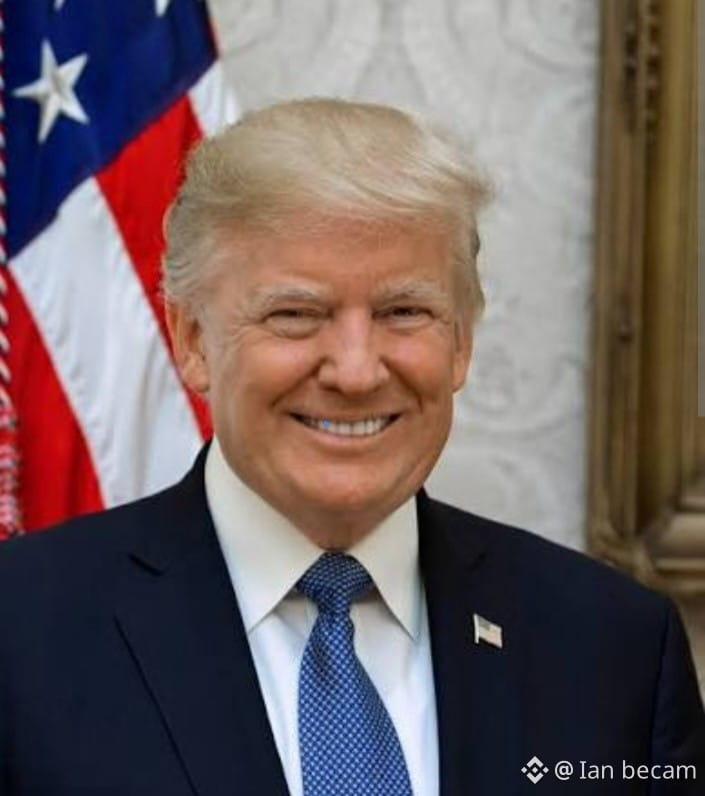
#BinanceReopensWithdrawalsForMoreAssets 暗号資産が暴落した理由はもう一つあります。それはトランプ自身の会社から発信されています。
11月5日、民主党が議会の上下両院を奪還した翌日、Trump Media($DJT)は約4,259 BTCをCrypto.comに移しました。保有量全体の約30%にあたります。
タイミングが良すぎます❗️❗️選挙が終わったばかりなのに、民主党はすでにトランプ一族の暗号資産ビジネスを調査する話を始めています。新しい議会では、「暗号資産大統領」にも、もはや同じような後ろ盾はありません。
それに、ほかに何のためにコインを取引所へ送るのでしょう?そんなことを面白半分でする人はいません……トレーダーたちはそれに気づき、パニックが広がり、株式と暗号資産はそろって暴落しました #2020年以来最悪の米国株急落 #USStocksSlipandCryptoMarketUnderBroadPressure
87
·
--
翻訳参照
#FedMinutesFocusOnOctoberPause SpaceX Plans $40 Billion Financing to Buy Nvidia Chips
Elon Musk's SpaceX is seeking to raise $40 billion in a financing effort led by Apollo Global Management to purchase Nvidia chips as the AI and rocket group amplifies its bet on the chipmaker's advanced technology, according to the Financial Times. The company is seeking about $10 billion in bank loans and $30 billion in investment-grade debt to fund its blockbuster chip order, according to people familiar with the matter. Apollo is expected to lead the deal and help sell the debt to a broad base of investors, while bond giant Pimco was among a small group of lenders in talks to fund it; the transaction is expected to close in 2027. SpaceX's financing plans underscore the vast sums being raised for data centres, chips and other AI infrastructure, and its BBB credit rating — the second-lowest investment-grade ranking — would allow insurance and pension funds to buy its debt.
Apollo and Pimco declined to comment, while SpaceX and Nvidia did not immediately respond to requests for comment. The deal would strengthen ties between SpaceX and Nvidia

1
39
·
--
翻訳参照
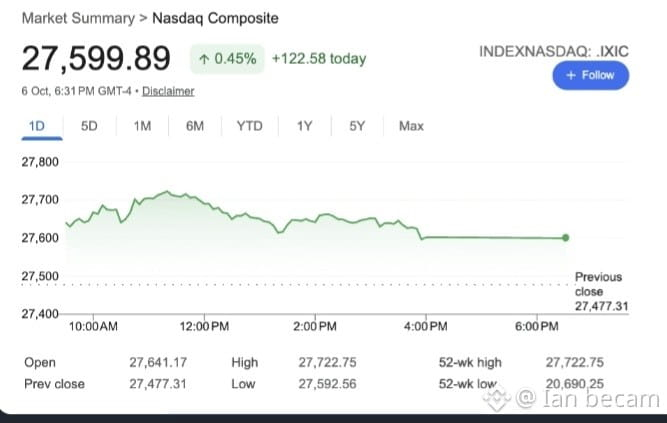
#WinklevossFilesSpotZcashETFApplication The S&P 500 gained 0.6% and the Nasdaq rose 0.5%, with both indexes closing at record highs.
The S&P 500 recorded its first all-time closing high in two months.
Traditional markets strengthened as Treasury yields moved lower, supporting technology, consumer and utility stocks.
Marvell Technology jumped 8% after raising its longer-term revenue outlook.
Crypto diverged from the equity rally, with Bitcoin falling below $84,000.
U.S. stocks extended their rally to fresh records even as Bitcoin fell below $84,000, widening the short-term divergence between traditional financial markets and crypto.
The S&P 500 climbed 0.6%, securing its first record close in two months, while the Nasdaq advanced 0.5% to another all-time high.
1
100
·
--
翻訳参照
#WinklevossFilesSpotZcashETFApplication Bitcoin fell more than 2% to around $84,200 on Wednesday after trading near $86,500 Tuesday.
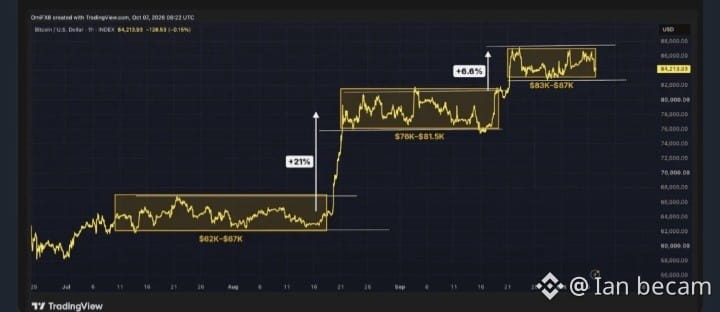
BTC remains inside its recent $83,000–$87,000 range, keeping its broader bullish stair-step structure intact.
A sustained break below $82,000–$83,000 could invalidate the pattern and bring $80,000–$81,500 back into focus.
FxPro sees $84,000 as nearer-term support, with $80,000 potentially in play if it breaks.
Bitcoin slipped toward $84,200 on Wednesday, but the decline has yet to break the broader bullish price structure that has developed since July.
According to Giottus CEO Vikram Subburaj, Bitcoin's October 7 decline does not invalidate its “stair-step” trajectory, characterized by periods of sideways consolidation followed by sharp moves into higher trading ranges.
Bitcoin's Stair-
1
53
·
--
翻訳参照
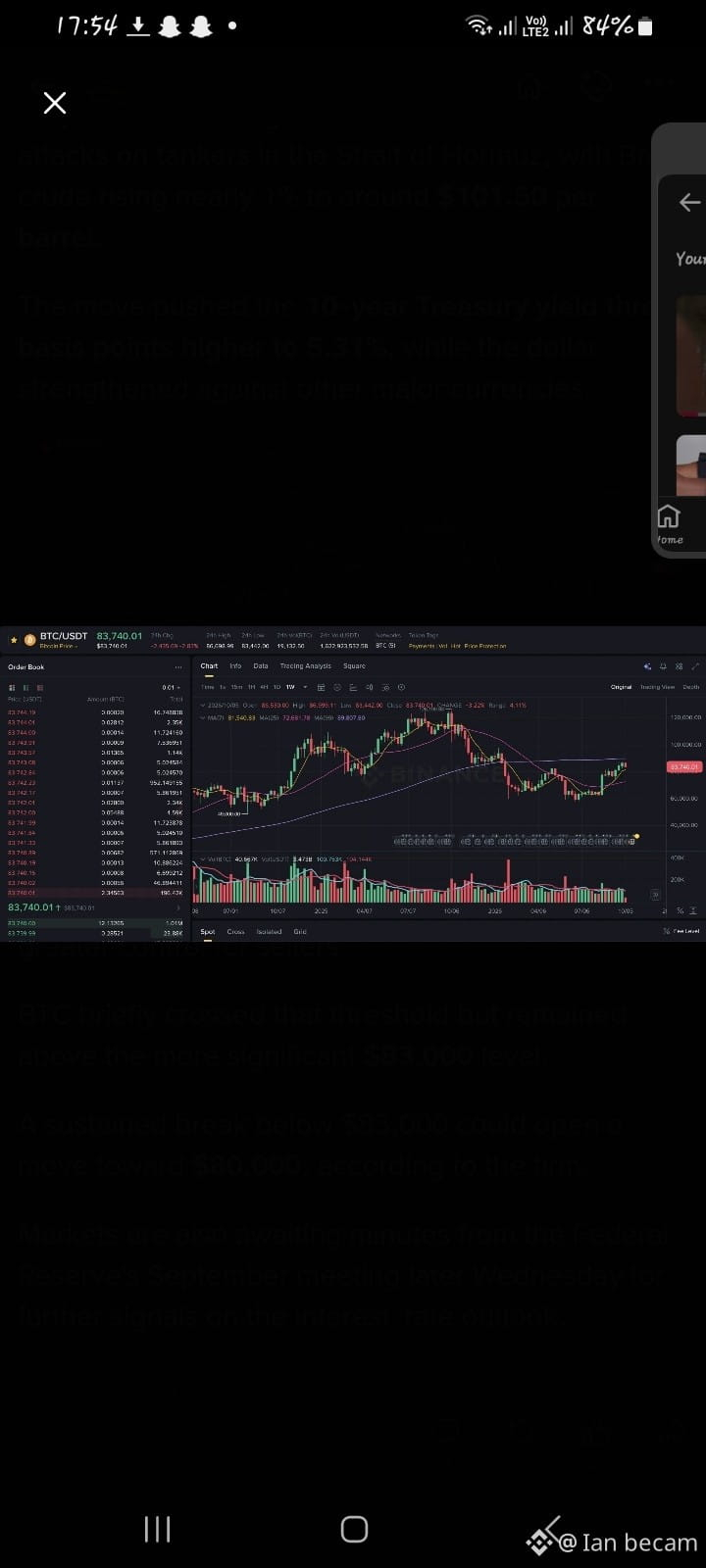
#FedMinutesFocusOnOctoberPause Bitcoin fell as low as $83,840 after trading near $86,600 on Tuesday.
BTC briefly broke below the $84,000 support FxPro had identified as a key bearish threshold.
Brent crude climbed nearly 1% to around $101.50 amid stepped-up Iranian attacks on tankers in the Strait of Hormuz.
The U.S. 10-year Treasury yield rose to 5.31%, while the dollar strengthened.
A break below $83,000 could bring $80,000 into focus, according to FxPro.
Bitcoin slipped below $84,000 early Wednesday as rising oil prices, Treasury yields and the U.S. dollar pressured crypto markets.
BTC fell from around $86,600 on Tuesday to a low near $83,840, before recovering above $84,000.
Crypto Market Falls as Oil Rises
The broader crypto market also declined. DOGE dropped 5%, HYPE fell nearly 4%, and Ethereum lost 3.5% to around $2,610. XRP declined almost 3%, while BNB, SOL, ZEC and
1
64
·
--
翻訳参照
#FedMinutesFocusOnOctoberPause Bitcoin fell as low as $83,840 after trading near $86,600 on Tuesday.
BTC briefly broke below the $84,000 support FxPro had identified as a key bearish threshold.
Brent crude climbed nearly 1% to around $101.50 amid stepped-up Iranian attacks on tankers in the Strait of Hormuz.
The U.S. 10-year Treasury yield rose to 5.31%, while the dollar strengthened.
A break below $83,000 could bring $80,000 into focus, according to FxPro.
Bitcoin slipped below $84,000 early Wednesday as rising oil prices, Treasury yields and the U.S. dollar pressured crypto markets.
BTC fell from around $86,600 on Tuesday to a low near $83,840, before recovering above $84,000.
Crypto Market Falls as Oil Rises
The broader crypto market also declined. DOGE dropped 5%, HYPE fell nearly 4%, and Ethereum lost 3.5% to around $2,610. XRP declined almost 3%, while BNB, SOL, ZEC and
#FedMinutesFocusOnOctoberPause Bitcoin fell as low as $83,840 after trading near $86,600 on Tuesday.
BTC briefly broke below the $84,000 support FxPro had identified as a key bearish threshold.
Brent crude climbed nearly 1% to around $101.50 amid stepped-up Iranian attacks on tankers in the Strait of Hormuz.
The U.S. 10-year Treasury yield rose to 5.31%, while the dollar strengthened.
A break below $83,000 could bring $80,000 into focus, according to FxPro.
Bitcoin slipped below $84,000 early Wednesday as rising oil prices, Treasury yields and the U.S. dollar pressured crypto markets.
BTC fell from around $86,600 on Tuesday to a low near $83,840, before recovering above $84,000.
Crypto Market Falls as Oil Rises
The broader crypto market also declined. DOGE dropped 5%, HYPE fell nearly 4%, and Ethereum lost 3.5% to around $2,610. XRP declined almost 3%, while BNB, SOL, ZEC and
BTC briefly broke below the $84,000 support FxPro had identified as a key bearish threshold.
Brent crude climbed nearly 1% to around $101.50 amid stepped-up Iranian attacks on tankers in the Strait of Hormuz.
The U.S. 10-year Treasury yield rose to 5.31%, while the dollar strengthened.
A break below $83,000 could bring $80,000 into focus, according to FxPro.
Bitcoin slipped below $84,000 early Wednesday as rising oil prices, Treasury yields and the U.S. dollar pressured crypto markets.
BTC fell from around $86,600 on Tuesday to a low near $83,840, before recovering above $84,000.
Crypto Market Falls as Oil Rises
The broader crypto market also declined. DOGE dropped 5%, HYPE fell nearly 4%, and Ethereum lost 3.5% to around $2,610. XRP declined almost 3%, while BNB, SOL, ZEC and
1
87
·
--
翻訳参照
#BinanceLaunchesBinanceIntelligence Nasdaq-listed Bitcoin treasury company Genius Group said it has resumed Bitcoin purchases and bought 10 BTC this week at an average price of $85,364. According to Foresight News, the purchases had previously been restricted by a preliminary injunction, which the U.S. Court of Appeals for the Second Circuit lifted on August 31.
Chief Executive Officer Roger James Hamilton said the purchase was small but showed the company had restarted accumulation at what it sees as the early stage of the next major upswing. The company aims to hold $827 million in Bitcoin and $800 million in AI assets by fiscal 2031 through a $1.2 billion dual-treasury plan funded by operating cash flow, perpetual preferred securities and ATM issuance, without using debt or pledging Bitcoin or AI shares.
Chief Executive Officer Roger James Hamilton said the purchase was small but showed the company had restarted accumulation at what it sees as the early stage of the next major upswing. The company aims to hold $827 million in Bitcoin and $800 million in AI assets by fiscal 2031 through a $1.2 billion dual-treasury plan funded by operating cash flow, perpetual preferred securities and ATM issuance, without using debt or pledging Bitcoin or AI shares.
1
34
·
--
翻訳参照
#BinanceLaunchesBinanceIntelligence The S&P 500 has risen in the 12 months following all 19 U.S. midterm elections since 1950, with an average gain of 15.4%.
Bitcoin gained 24.5%, 44.9% and 92.3% in the 12 months following the 2014, 2018 and 2022 midterm elections, respectively.
Bitcoin's sample consists of only three midterm cycles, making a “100% probability” interpretation statistically misleading.
Short-term performance can differ sharply: BTC plunged 45.5% in the first month after the 2018 midterms before ultimately posting a positive 12-month return.
Treasury yields, institutional demand and U.S. crypto regulation could be more important for Bitcoin after the 2026 midterms than historical seasonality alone.
Bitcoin has risen during the 12 months following every U.S. midterm election in its available history, prompting analysts to examine whether the 2026 election could again provide a favorable backdrop for BTC.
According to analysis
1
28
·
--
翻訳参照
akeaways
Binance is going “all in on AI,” with Yi He positioning artificial intelligence and blockchain as the technological foundation for the platform’s next phase.
Binance’s AI ecosystem centers on Binance AI, Binance AI Pro and Agent OS, targeting users from beginners to advanced traders and developers.
Binance AI Pro is expected to receive a major upgrade in mid-to-late October, allowing users to build and automate financial strategies using natural language.
Binance wants AI to lower barriers to investing by making market analysis, trading, wealth management and eventually Web3 interactions easier to access.
Security remains central: automated AI Pro strategies are designed to operate within user-approved limits, with separate sub-accounts and Binance’s risk controls.
Yi He said Binance’s broader goal is “financial democratization,” giving more users access to financial knowledge and tools previously available mainly to sophisticated investors.
Yi He:

1
47

·
--
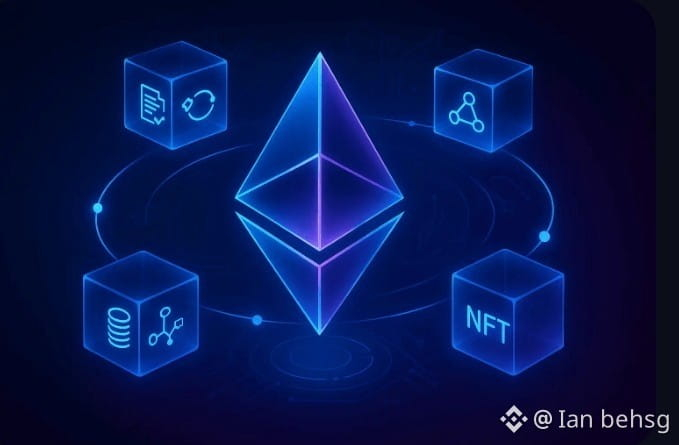
#ETHTrendAnalysis イーサリアム共同創設者がウォレットとスマートコントラクトのセキュリティ向上を提案 💪💪💪
#ETHTrendAnalysis イーサリアム共同創設者がウォレットとスマートコントラクトのセキュリティ向上を提案 💪💪💪
1
80
·
--
#TrumpNewTariffs 米国の経済指標は持続的なインフレ懸念を浮き彫りにしています 💪💪💪
#TrumpNewTariffs 米国の経済指標は持続的なインフレ懸念を浮き彫りにしています 💪💪💪
1
215
·
--
#币安HODLer空投BREV #バイナンスが$400,000のホームトークン報酬付きの単語ゲームを開始 🤑🤑🤑🤑
#币安HODLer空投BREV #バイナンスが$400,000のホームトークン報酬付きの単語ゲームを開始 🤑🤑🤑🤑

·
--
#JPMorganSaysBTCOverGold 新しいウォレットが$47.6MのWLFLトークンを$BTC 0.109ドルで取得🤑🤑🤑🤑🤑
#JPMorganSaysBTCOverGold 新しいウォレットが$47.6MのWLFLトークンを$BTC 0.109ドルで取得🤑🤑🤑🤑🤑
3
34
·
--
#ADPDataDisappoints イリノイ州がコミュニティビットコイン準備金法案を提案 2026年2月5日
#ADPDataDisappoints イリノイ州がコミュニティビットコイン準備金法案を提案 2026年2月5日

27
ログインして、さらにコンテンツを読む
厳選トピックで世界の暗号資産トレーダーの仲間入り
⚡️ 暗号資産に関する最新かつ有益な情報が見つかります。
💬 世界最大の暗号資産取引所から信頼されています。
👍 認証を受けたクリエイターから、有益なインサイトを得られます。
メール / 電話番号