

Pkcb
199 投稿

Pkcb
報告
ユーザーをブロック
do it
取引を発注

SOLホルダー
高頻度トレーダー
4.1年
64 フォロー
40 フォロワー
19 いいね
投稿
ポートフォリオ
すべて
引用
·
--
翻訳参照
#pixel $PIXEL
@SignOfficial
The pixel—short for "picture element"—is the foundational unit of programmable color in digital imaging and display technology. Just as Lego bricks are stacked to build complex structures, pixels are arranged in a precise two-dimensional grid to form all images, videos, and text on digital screens, including TVs, smartphones, and computer monitors. As the smallest indivisible point of display, these tiny squares work together, blending seamlessly to our eyes to produce a continuous image.
Structure and Function
While appearing tiny to the naked eye, a pixel is typically square-shaped and behaves as a building block. In most display technologies, a pixel is composed of three sub-pixels—red, green, and blue (RGB). By varying the intensity of these three colors from 0% to 100%, each pixel can produce a wide spectrum of colors. When a transistor turns these sub-pixels on or off, it creates the image we see, with millions of these elements functioning in tandem.
Pixels, Resolution, and Image Quality
The total number of pixels in a screen or image defines its resolution. This is generally calculated by multiplying the horizontal pixels by the vertical pixels, such as High Definition (1920x1080) or 4K Ultra High-Definition (3840x2160).
#pixel $PIXEL
@SignOfficial
The pixel—short for "picture element"—is the foundational unit of programmable color in digital imaging and display technology. Just as Lego bricks are stacked to build complex structures, pixels are arranged in a precise two-dimensional grid to form all images, videos, and text on digital screens, including TVs, smartphones, and computer monitors. As the smallest indivisible point of display, these tiny squares work together, blending seamlessly to our eyes to produce a continuous image.
Structure and Function
While appearing tiny to the naked eye, a pixel is typically square-shaped and behaves as a building block. In most display technologies, a pixel is composed of three sub-pixels—red, green, and blue (RGB). By varying the intensity of these three colors from 0% to 100%, each pixel can produce a wide spectrum of colors. When a transistor turns these sub-pixels on or off, it creates the image we see, with millions of these elements functioning in tandem.
Pixels, Resolution, and Image Quality
The total number of pixels in a screen or image defines its resolution. This is generally calculated by multiplying the horizontal pixels by the vertical pixels, such as High Definition (1920x1080) or 4K Ultra High-Definition (3840x2160).
@SignOfficial
The pixel—short for "picture element"—is the foundational unit of programmable color in digital imaging and display technology. Just as Lego bricks are stacked to build complex structures, pixels are arranged in a precise two-dimensional grid to form all images, videos, and text on digital screens, including TVs, smartphones, and computer monitors. As the smallest indivisible point of display, these tiny squares work together, blending seamlessly to our eyes to produce a continuous image.
Structure and Function
While appearing tiny to the naked eye, a pixel is typically square-shaped and behaves as a building block. In most display technologies, a pixel is composed of three sub-pixels—red, green, and blue (RGB). By varying the intensity of these three colors from 0% to 100%, each pixel can produce a wide spectrum of colors. When a transistor turns these sub-pixels on or off, it creates the image we see, with millions of these elements functioning in tandem.
Pixels, Resolution, and Image Quality
The total number of pixels in a screen or image defines its resolution. This is generally calculated by multiplying the horizontal pixels by the vertical pixels, such as High Definition (1920x1080) or 4K Ultra High-Definition (3840x2160).
21
·
--
翻訳参照
[https://app.binance.com/uni-qr/HZrvrYGa?utm_medium=app_share_link_telegr](https://app.binance.com/uni-qr/HZrvrYGa?utm_medium=app_share_link_telegr)
https://app.binance.com/uni-qr/HZrvrYGa?utm_medium=app_share_link_telegr
1
·
--
翻訳参照
#DriftInvestigationLinksRecentAttackToNorthKoreanHackers
#DriftInvestigationLinksRecentAttackToNorthKoreanHackers
2
·
--
記事
翻訳参照
SIGN@SignOfficial #SignDigitalSovereignInfra
$SIGN
A sign is much more than a simple board by the side of the road; it is a fundamental unit of communication that bridges the gap between a physical object and a mental concept. Whether it is a subtle gesture, a complex mathematical symbol, or a bold neon advertisement, signs serve as the silent architecture of our social and cognitive worldsIn the study of semiotics, a sign is often broken down into three essential parts: the signifier (the physical form), the signified (the concept it represents), and the referent (the actual object in the real world).
Natural Signs: These occur in nature and have a direct causal link. For example, dark clouds are a sign of rain, and smoke is a sign of fire.
Conventional Signs: These are created by human agreement. There is no natural reason why a red octagon means "stop," but because we have collectively agreed upon it, the sign functions as a universal command.
Icons and Symbols: An icon physically resembles what it represents (like a "no smoking" sign with a crossed-out cigarette), while a symbol is abstract (like the letters of an alphabet or a plus sign in math).
Signs in Language and Society
Language itself is a vast system of signs. In American Sign Language (ASL), the "sign" is a physical movement of the hands and face that carries specific grammatical and semantic weight. Mastering just the first 500 basic signs can allow a person to communicate essential needs and emotions, demonstrating how powerful even a limited vocabulary of signs can be.
Beyond language, signs organize our physical environment. Traffic signs prevent chaos on the road, while "Open" or "Closed" signs regulate commerce. In a digital context, we rely on icons—small digital signs—to navigate our phones and computers. Without these visual cues, the modern world would be nearly impossible to navigate, as every interaction would require exhaustive text or verbal explanation.
SIGN
@SignOfficial #SignDigitalSovereignInfra
$SIGN
A sign is much more than a simple board by the side of the road; it is a fundamental unit of communication that bridges the gap between a physical object and a mental concept. Whether it is a subtle gesture, a complex mathematical symbol, or a bold neon advertisement, signs serve as the silent architecture of our social and cognitive worldsIn the study of semiotics, a sign is often broken down into three essential parts: the signifier (the physical form), the signified (the concept it represents), and the referent (the actual object in the real world).
Natural Signs: These occur in nature and have a direct causal link. For example, dark clouds are a sign of rain, and smoke is a sign of fire.
Conventional Signs: These are created by human agreement. There is no natural reason why a red octagon means "stop," but because we have collectively agreed upon it, the sign functions as a universal command.
Icons and Symbols: An icon physically resembles what it represents (like a "no smoking" sign with a crossed-out cigarette), while a symbol is abstract (like the letters of an alphabet or a plus sign in math).
Signs in Language and Society
Language itself is a vast system of signs. In American Sign Language (ASL), the "sign" is a physical movement of the hands and face that carries specific grammatical and semantic weight. Mastering just the first 500 basic signs can allow a person to communicate essential needs and emotions, demonstrating how powerful even a limited vocabulary of signs can be.
Beyond language, signs organize our physical environment. Traffic signs prevent chaos on the road, while "Open" or "Closed" signs regulate commerce. In a digital context, we rely on icons—small digital signs—to navigate our phones and computers. Without these visual cues, the modern world would be nearly impossible to navigate, as every interaction would require exhaustive text or verbal explanation.
$SIGN
A sign is much more than a simple board by the side of the road; it is a fundamental unit of communication that bridges the gap between a physical object and a mental concept. Whether it is a subtle gesture, a complex mathematical symbol, or a bold neon advertisement, signs serve as the silent architecture of our social and cognitive worldsIn the study of semiotics, a sign is often broken down into three essential parts: the signifier (the physical form), the signified (the concept it represents), and the referent (the actual object in the real world).
Natural Signs: These occur in nature and have a direct causal link. For example, dark clouds are a sign of rain, and smoke is a sign of fire.
Conventional Signs: These are created by human agreement. There is no natural reason why a red octagon means "stop," but because we have collectively agreed upon it, the sign functions as a universal command.
Icons and Symbols: An icon physically resembles what it represents (like a "no smoking" sign with a crossed-out cigarette), while a symbol is abstract (like the letters of an alphabet or a plus sign in math).
Signs in Language and Society
Language itself is a vast system of signs. In American Sign Language (ASL), the "sign" is a physical movement of the hands and face that carries specific grammatical and semantic weight. Mastering just the first 500 basic signs can allow a person to communicate essential needs and emotions, demonstrating how powerful even a limited vocabulary of signs can be.
Beyond language, signs organize our physical environment. Traffic signs prevent chaos on the road, while "Open" or "Closed" signs regulate commerce. In a digital context, we rely on icons—small digital signs—to navigate our phones and computers. Without these visual cues, the modern world would be nearly impossible to navigate, as every interaction would require exhaustive text or verbal explanation.
7
·
--
記事
翻訳参照
sign#signdigitalsovereigninfra $SIGN @SignOfficial
A sign is a foundational element of communication, acting as an object, quality, or event that indicates the presence or occurrence of something else. Ranging from natural indicators (smoke as a sign of fire) to conventional symbols (traffic signs, language), signs instruct, warn, or inform, often functioning through symbolic or iconic representations.
A sign is a foundational element of communication, acting as an object, quality, or event that indicates the presence or occurrence of something else. Ranging from natural indicators (smoke as a sign of fire) to conventional symbols (traffic signs, language), signs instruct, warn, or inform, often functioning through symbolic or iconic representations.
Types and Functions of Signs
Signs serve diverse purposes in daily life, broadly categorized by their function:
Informational Signs: These provide directional or operational information, such as exit signs in buildings or street signs, helping people navigate their environment.
Warning/Regulatory Signs: These are critical for safety, indicating potential danger (e.g., "High Voltage") or legal constraints, such as stop signs, which compel specific actions to prevent accidents.
Symbolic Signs: These represent complex ideas or systems. In mathematics, symbols like
or
are essential signs.
Natural Signs: These are observed in nature and suggest impending changes, such as dark clouds indicating rain or falling leaves signaling autumn
sign
#signdigitalsovereigninfra $SIGN @SignOfficial
A sign is a foundational element of communication, acting as an object, quality, or event that indicates the presence or occurrence of something else. Ranging from natural indicators (smoke as a sign of fire) to conventional symbols (traffic signs, language), signs instruct, warn, or inform, often functioning through symbolic or iconic representations.
A sign is a foundational element of communication, acting as an object, quality, or event that indicates the presence or occurrence of something else. Ranging from natural indicators (smoke as a sign of fire) to conventional symbols (traffic signs, language), signs instruct, warn, or inform, often functioning through symbolic or iconic representations.
Types and Functions of Signs
Signs serve diverse purposes in daily life, broadly categorized by their function:
Informational Signs: These provide directional or operational information, such as exit signs in buildings or street signs, helping people navigate their environment.
Warning/Regulatory Signs: These are critical for safety, indicating potential danger (e.g., "High Voltage") or legal constraints, such as stop signs, which compel specific actions to prevent accidents.
Symbolic Signs: These represent complex ideas or systems. In mathematics, symbols like
or
are essential signs.
Natural Signs: These are observed in nature and suggest impending changes, such as dark clouds indicating rain or falling leaves signaling autumn
A sign is a foundational element of communication, acting as an object, quality, or event that indicates the presence or occurrence of something else. Ranging from natural indicators (smoke as a sign of fire) to conventional symbols (traffic signs, language), signs instruct, warn, or inform, often functioning through symbolic or iconic representations.
A sign is a foundational element of communication, acting as an object, quality, or event that indicates the presence or occurrence of something else. Ranging from natural indicators (smoke as a sign of fire) to conventional symbols (traffic signs, language), signs instruct, warn, or inform, often functioning through symbolic or iconic representations.
Types and Functions of Signs
Signs serve diverse purposes in daily life, broadly categorized by their function:
Informational Signs: These provide directional or operational information, such as exit signs in buildings or street signs, helping people navigate their environment.
Warning/Regulatory Signs: These are critical for safety, indicating potential danger (e.g., "High Voltage") or legal constraints, such as stop signs, which compel specific actions to prevent accidents.
Symbolic Signs: These represent complex ideas or systems. In mathematics, symbols like
or
are essential signs.
Natural Signs: These are observed in nature and suggest impending changes, such as dark clouds indicating rain or falling leaves signaling autumn
2
·
--
翻訳参照
#signdigitalsovereigninfra $SIGN
A sign is a foundational element of communication, acting as an object, quality, or event that indicates the presence or occurrence of something else. Ranging from natural indicators (smoke as a sign of fire) to conventional symbols (traffic signs, language), signs instruct, warn, or inform, often functioning through symbolic or iconic representations.500 words about sign
+7
A sign is a foundational element of communication, acting as an object, quality, or event that indicates the presence or occurrence of something else. Ranging from natural indicators (smoke as a sign of fire) to conventional symbols (traffic signs, language), signs instruct, warn, or inform, often functioning through symbolic or iconic representations.
+2
Types and Functions of Signs
Signs serve diverse purposes in daily life, broadly categorized by their function:
Informational Signs: These provide directional or operational information, such as exit signs in buildings or street signs, helping people navigate their environment.
Warning/Regulatory Signs: These are critical for safety, indicating potential danger (e.g., "High Voltage") or legal constraints, such as stop signs, which compel specific actions to prevent accidents.
Symbolic Signs: These represent complex ideas or systems. In mathematics, symbols like
or
are essential signs.
Natural Signs: These are observed in nature and suggest impending changes, such as dark clouds indicating rain or falling leaves signaling autumn
#signdigitalsovereigninfra $SIGN
A sign is a foundational element of communication, acting as an object, quality, or event that indicates the presence or occurrence of something else. Ranging from natural indicators (smoke as a sign of fire) to conventional symbols (traffic signs, language), signs instruct, warn, or inform, often functioning through symbolic or iconic representations.500 words about sign
+7
A sign is a foundational element of communication, acting as an object, quality, or event that indicates the presence or occurrence of something else. Ranging from natural indicators (smoke as a sign of fire) to conventional symbols (traffic signs, language), signs instruct, warn, or inform, often functioning through symbolic or iconic representations.
+2
Types and Functions of Signs
Signs serve diverse purposes in daily life, broadly categorized by their function:
Informational Signs: These provide directional or operational information, such as exit signs in buildings or street signs, helping people navigate their environment.
Warning/Regulatory Signs: These are critical for safety, indicating potential danger (e.g., "High Voltage") or legal constraints, such as stop signs, which compel specific actions to prevent accidents.
Symbolic Signs: These represent complex ideas or systems. In mathematics, symbols like
or
are essential signs.
Natural Signs: These are observed in nature and suggest impending changes, such as dark clouds indicating rain or falling leaves signaling autumn
A sign is a foundational element of communication, acting as an object, quality, or event that indicates the presence or occurrence of something else. Ranging from natural indicators (smoke as a sign of fire) to conventional symbols (traffic signs, language), signs instruct, warn, or inform, often functioning through symbolic or iconic representations.500 words about sign
+7
A sign is a foundational element of communication, acting as an object, quality, or event that indicates the presence or occurrence of something else. Ranging from natural indicators (smoke as a sign of fire) to conventional symbols (traffic signs, language), signs instruct, warn, or inform, often functioning through symbolic or iconic representations.
+2
Types and Functions of Signs
Signs serve diverse purposes in daily life, broadly categorized by their function:
Informational Signs: These provide directional or operational information, such as exit signs in buildings or street signs, helping people navigate their environment.
Warning/Regulatory Signs: These are critical for safety, indicating potential danger (e.g., "High Voltage") or legal constraints, such as stop signs, which compel specific actions to prevent accidents.
Symbolic Signs: These represent complex ideas or systems. In mathematics, symbols like
or
are essential signs.
Natural Signs: These are observed in nature and suggest impending changes, such as dark clouds indicating rain or falling leaves signaling autumn
·
--
記事
翻訳参照
midnight network@MidnightNetwork #night Midnight is a privacy-focused, fourth-generation blockchain developed by Input Output Global (IOG), the creators of Cardano. It is designed to provide "rational privacy," allowing users and developers to selectively disclose data while keeping sensitive information shielded using zero-knowledge (ZK) cryptography.
Midnight Network
Midnight Network
+4
Core Features & Architecture
Rational Privacy: Moves beyond binary "public or private" models by giving users granular control over what data is shared and with whom.
Dual-Token System:
NIGHT: The unshielded native utility and governance token (max supply 24 billion).
DUST: A non-transferable, shielded resource generated by holding NIGHT, used to pay for transaction fees and private operations.
Developer Friendly: Uses Compact, a smart contract language based on TypeScript, to lower the barrier for traditional developers.
Compliance by Design: Enables organizations to build applications that meet regulatory requirements (like GDPR or HIPAA) through programmable selective disclosure.
Midnight Network
Midnight Network
+9
Network Status (as of March 2026)
Mainnet Launch: Scheduled for March 2026. The launch follows a phased approach, starting with federated node operators.
Node Operators: Initial mainnet validators include Google Cloud, Blockdaemon, and Shielded Technologies.
Token Availability: The NIGHT token launched on Cardano in December 2025 and is currently tradable on major exchanges like Binance, OKX, and Gate.
Airdrop (Glacier Drop): One of the largest distributions in crypto history, targeting 34 million addresses across eight ecosystems (Cardano, Bitcoin, Ethereum, etc.). The claim period for the initial drop is now closed
midnight network
@MidnightNetwork #night Midnight is a privacy-focused, fourth-generation blockchain developed by Input Output Global (IOG), the creators of Cardano. It is designed to provide "rational privacy," allowing users and developers to selectively disclose data while keeping sensitive information shielded using zero-knowledge (ZK) cryptography.
Midnight Network
Midnight Network
+4
Core Features & Architecture
Rational Privacy: Moves beyond binary "public or private" models by giving users granular control over what data is shared and with whom.
Dual-Token System:
NIGHT: The unshielded native utility and governance token (max supply 24 billion).
DUST: A non-transferable, shielded resource generated by holding NIGHT, used to pay for transaction fees and private operations.
Developer Friendly: Uses Compact, a smart contract language based on TypeScript, to lower the barrier for traditional developers.
Compliance by Design: Enables organizations to build applications that meet regulatory requirements (like GDPR or HIPAA) through programmable selective disclosure.
Midnight Network
Midnight Network
+9
Network Status (as of March 2026)
Mainnet Launch: Scheduled for March 2026. The launch follows a phased approach, starting with federated node operators.
Node Operators: Initial mainnet validators include Google Cloud, Blockdaemon, and Shielded Technologies.
Token Availability: The NIGHT token launched on Cardano in December 2025 and is currently tradable on major exchanges like Binance, OKX, and Gate.
Airdrop (Glacier Drop): One of the largest distributions in crypto history, targeting 34 million addresses across eight ecosystems (Cardano, Bitcoin, Ethereum, etc.). The claim period for the initial drop is now closed
Midnight Network
Midnight Network
+4
Core Features & Architecture
Rational Privacy: Moves beyond binary "public or private" models by giving users granular control over what data is shared and with whom.
Dual-Token System:
NIGHT: The unshielded native utility and governance token (max supply 24 billion).
DUST: A non-transferable, shielded resource generated by holding NIGHT, used to pay for transaction fees and private operations.
Developer Friendly: Uses Compact, a smart contract language based on TypeScript, to lower the barrier for traditional developers.
Compliance by Design: Enables organizations to build applications that meet regulatory requirements (like GDPR or HIPAA) through programmable selective disclosure.
Midnight Network
Midnight Network
+9
Network Status (as of March 2026)
Mainnet Launch: Scheduled for March 2026. The launch follows a phased approach, starting with federated node operators.
Node Operators: Initial mainnet validators include Google Cloud, Blockdaemon, and Shielded Technologies.
Token Availability: The NIGHT token launched on Cardano in December 2025 and is currently tradable on major exchanges like Binance, OKX, and Gate.
Airdrop (Glacier Drop): One of the largest distributions in crypto history, targeting 34 million addresses across eight ecosystems (Cardano, Bitcoin, Ethereum, etc.). The claim period for the initial drop is now closed
1
·
--
記事
翻訳参照
Night#Midnight @MidnightNetwork Midnight is a privacy-focused, fourth-generation blockchain developed by Input Output Global (IOG), the creators of Cardano. It is designed to provide "rational privacy," allowing users and developers to selectively disclose data while keeping sensitive information shielded using zero-knowledge (ZK) cryptography.
Midnight Network
Midnight Network
+4
Core Features & Architecture
Rational Privacy: Moves beyond binary "public or private" models by giving users granular control over what data is shared and with whom.
Dual-Token System:
NIGHT: The unshielded native utility and governance token (max supply 24 billion).
DUST: A non-transferable, shielded resource generated by holding NIGHT, used to pay for transaction fees and private operations.
Developer Friendly: Uses Compact, a smart contract language based on TypeScript, to lower the barrier for traditional developers.
Compliance by Design: Enables organizations to build applications that meet regulatory requirements (like GDPR or HIPAA) through programmable selective disclosure.
Midnight Network
Midnight Network
+9
Network Status (as of March 2026)
Mainnet Launch: Scheduled for March 2026. The launch follows a phased approach, starting with federated node operators.
Node Operators: Initial mainnet validators include Google Cloud, Blockdaemon, and Shielded Technologies.
Token Availability: The NIGHT token launched on Cardano in December 2025 and is currently tradable on major exchanges like Binance, OKX, and Gate.
Airdrop (Glacier Drop): One of the largest distributions in crypto history, targeting 34 million addresses across eight ecosystems (Cardano, Bitcoin, Ethereum, etc.). The claim period for the initial drop is now closed
Night
#Midnight @MidnightNetwork Midnight is a privacy-focused, fourth-generation blockchain developed by Input Output Global (IOG), the creators of Cardano. It is designed to provide "rational privacy," allowing users and developers to selectively disclose data while keeping sensitive information shielded using zero-knowledge (ZK) cryptography.
Midnight Network
Midnight Network
+4
Core Features & Architecture
Rational Privacy: Moves beyond binary "public or private" models by giving users granular control over what data is shared and with whom.
Dual-Token System:
NIGHT: The unshielded native utility and governance token (max supply 24 billion).
DUST: A non-transferable, shielded resource generated by holding NIGHT, used to pay for transaction fees and private operations.
Developer Friendly: Uses Compact, a smart contract language based on TypeScript, to lower the barrier for traditional developers.
Compliance by Design: Enables organizations to build applications that meet regulatory requirements (like GDPR or HIPAA) through programmable selective disclosure.
Midnight Network
Midnight Network
+9
Network Status (as of March 2026)
Mainnet Launch: Scheduled for March 2026. The launch follows a phased approach, starting with federated node operators.
Node Operators: Initial mainnet validators include Google Cloud, Blockdaemon, and Shielded Technologies.
Token Availability: The NIGHT token launched on Cardano in December 2025 and is currently tradable on major exchanges like Binance, OKX, and Gate.
Airdrop (Glacier Drop): One of the largest distributions in crypto history, targeting 34 million addresses across eight ecosystems (Cardano, Bitcoin, Ethereum, etc.). The claim period for the initial drop is now closed
Midnight Network
Midnight Network
+4
Core Features & Architecture
Rational Privacy: Moves beyond binary "public or private" models by giving users granular control over what data is shared and with whom.
Dual-Token System:
NIGHT: The unshielded native utility and governance token (max supply 24 billion).
DUST: A non-transferable, shielded resource generated by holding NIGHT, used to pay for transaction fees and private operations.
Developer Friendly: Uses Compact, a smart contract language based on TypeScript, to lower the barrier for traditional developers.
Compliance by Design: Enables organizations to build applications that meet regulatory requirements (like GDPR or HIPAA) through programmable selective disclosure.
Midnight Network
Midnight Network
+9
Network Status (as of March 2026)
Mainnet Launch: Scheduled for March 2026. The launch follows a phased approach, starting with federated node operators.
Node Operators: Initial mainnet validators include Google Cloud, Blockdaemon, and Shielded Technologies.
Token Availability: The NIGHT token launched on Cardano in December 2025 and is currently tradable on major exchanges like Binance, OKX, and Gate.
Airdrop (Glacier Drop): One of the largest distributions in crypto history, targeting 34 million addresses across eight ecosystems (Cardano, Bitcoin, Ethereum, etc.). The claim period for the initial drop is now closed
·
--
翻訳参照
#night $NIGHT
Midnight is a privacy-focused, fourth-generation blockchain developed by Input Output Global (IOG), the creators of Cardano. It is designed to provide "rational privacy," allowing users and developers to selectively disclose data while keeping sensitive information shielded using zero-knowledge (ZK) cryptography.
Midnight Network
Midnight Network
+4
Core Features & Architecture
Rational Privacy: Moves beyond binary "public or private" models by giving users granular control over what data is shared and with whom.
Dual-Token System:
NIGHT: The unshielded native utility and governance token (max supply 24 billion).
DUST: A non-transferable, shielded resource generated by holding NIGHT, used to pay for transaction fees and private operations.
Developer Friendly: Uses Compact, a smart contract language based on TypeScript, to lower the barrier for traditional developers.
Compliance by Design: Enables organizations to build applications that meet regulatory requirements (like GDPR or HIPAA) through programmable selective disclosure.
Midnight Network
Midnight Network
+9
Network Status (as of March 2026)
Mainnet Launch: Scheduled for March 2026. The launch follows a phased approach, starting with federated node operators.
Node Operators: Initial mainnet validators include Google Cloud, Blockdaemon, and Shielded Technologies.
Token Availability: The NIGHT token launched on Cardano in December 2025 and is currently tradable on major exchanges like Binance, OKX, and Gate.
Airdrop (Glacier Drop): One of the largest distributions in crypto history, targeting 34 million addresses across eight ecosystems (Cardano, Bitcoin, Ethereum, etc.). The claim period for the initial drop is now closed
#night $NIGHT
Midnight is a privacy-focused, fourth-generation blockchain developed by Input Output Global (IOG), the creators of Cardano. It is designed to provide "rational privacy," allowing users and developers to selectively disclose data while keeping sensitive information shielded using zero-knowledge (ZK) cryptography.
Midnight Network
Midnight Network
+4
Core Features & Architecture
Rational Privacy: Moves beyond binary "public or private" models by giving users granular control over what data is shared and with whom.
Dual-Token System:
NIGHT: The unshielded native utility and governance token (max supply 24 billion).
DUST: A non-transferable, shielded resource generated by holding NIGHT, used to pay for transaction fees and private operations.
Developer Friendly: Uses Compact, a smart contract language based on TypeScript, to lower the barrier for traditional developers.
Compliance by Design: Enables organizations to build applications that meet regulatory requirements (like GDPR or HIPAA) through programmable selective disclosure.
Midnight Network
Midnight Network
+9
Network Status (as of March 2026)
Mainnet Launch: Scheduled for March 2026. The launch follows a phased approach, starting with federated node operators.
Node Operators: Initial mainnet validators include Google Cloud, Blockdaemon, and Shielded Technologies.
Token Availability: The NIGHT token launched on Cardano in December 2025 and is currently tradable on major exchanges like Binance, OKX, and Gate.
Airdrop (Glacier Drop): One of the largest distributions in crypto history, targeting 34 million addresses across eight ecosystems (Cardano, Bitcoin, Ethereum, etc.). The claim period for the initial drop is now closed
Midnight is a privacy-focused, fourth-generation blockchain developed by Input Output Global (IOG), the creators of Cardano. It is designed to provide "rational privacy," allowing users and developers to selectively disclose data while keeping sensitive information shielded using zero-knowledge (ZK) cryptography.
Midnight Network
Midnight Network
+4
Core Features & Architecture
Rational Privacy: Moves beyond binary "public or private" models by giving users granular control over what data is shared and with whom.
Dual-Token System:
NIGHT: The unshielded native utility and governance token (max supply 24 billion).
DUST: A non-transferable, shielded resource generated by holding NIGHT, used to pay for transaction fees and private operations.
Developer Friendly: Uses Compact, a smart contract language based on TypeScript, to lower the barrier for traditional developers.
Compliance by Design: Enables organizations to build applications that meet regulatory requirements (like GDPR or HIPAA) through programmable selective disclosure.
Midnight Network
Midnight Network
+9
Network Status (as of March 2026)
Mainnet Launch: Scheduled for March 2026. The launch follows a phased approach, starting with federated node operators.
Node Operators: Initial mainnet validators include Google Cloud, Blockdaemon, and Shielded Technologies.
Token Availability: The NIGHT token launched on Cardano in December 2025 and is currently tradable on major exchanges like Binance, OKX, and Gate.
Airdrop (Glacier Drop): One of the largest distributions in crypto history, targeting 34 million addresses across eight ecosystems (Cardano, Bitcoin, Ethereum, etc.). The claim period for the initial drop is now closed
6

·
--
記事
翻訳参照
fabric@FabricFND
@Robokcam #ROBO $ROBO
Fabric, in its simplest definition, is a material created by weaving, knitting, crocheting, or bonding fibers together. As the fundamental foundation of fashion, interior design, and various technical applications, fabric determines the durability, aesthetic appeal, and functional utility of a finished product. Understanding the components of fabric—its fibers, construction methods, and weight—is essential for selecting the right material for any given purpose, whether it be a comfortable garment or a durable upholstery piece.
The Building Blocks: Fibers and Yarns
The foundation of every fabric begins with fibers, which are classified as either natural or synthetic. Natural fibers, such as cotton, wool, and silk, are derived from plant or animal sources and are prized for their breathability, comfort, and, in the case of cotton, durability. Synthetic fibers, such as polyester and nylon, are man-made through chemical processes. Polyester, for instance, is valued for its high strength, resistance to abrasion, and ability to hold shape, making it ideal for sportswear and activewear. These fibers are spun into yarns, which are then constructed into fabrics.
fabric
@Fabric Foundation
@Robo #ROBO $ROBO
Fabric, in its simplest definition, is a material created by weaving, knitting, crocheting, or bonding fibers together. As the fundamental foundation of fashion, interior design, and various technical applications, fabric determines the durability, aesthetic appeal, and functional utility of a finished product. Understanding the components of fabric—its fibers, construction methods, and weight—is essential for selecting the right material for any given purpose, whether it be a comfortable garment or a durable upholstery piece.
The Building Blocks: Fibers and Yarns
The foundation of every fabric begins with fibers, which are classified as either natural or synthetic. Natural fibers, such as cotton, wool, and silk, are derived from plant or animal sources and are prized for their breathability, comfort, and, in the case of cotton, durability. Synthetic fibers, such as polyester and nylon, are man-made through chemical processes. Polyester, for instance, is valued for its high strength, resistance to abrasion, and ability to hold shape, making it ideal for sportswear and activewear. These fibers are spun into yarns, which are then constructed into fabrics.
@Robo #ROBO $ROBO
Fabric, in its simplest definition, is a material created by weaving, knitting, crocheting, or bonding fibers together. As the fundamental foundation of fashion, interior design, and various technical applications, fabric determines the durability, aesthetic appeal, and functional utility of a finished product. Understanding the components of fabric—its fibers, construction methods, and weight—is essential for selecting the right material for any given purpose, whether it be a comfortable garment or a durable upholstery piece.
The Building Blocks: Fibers and Yarns
The foundation of every fabric begins with fibers, which are classified as either natural or synthetic. Natural fibers, such as cotton, wool, and silk, are derived from plant or animal sources and are prized for their breathability, comfort, and, in the case of cotton, durability. Synthetic fibers, such as polyester and nylon, are man-made through chemical processes. Polyester, for instance, is valued for its high strength, resistance to abrasion, and ability to hold shape, making it ideal for sportswear and activewear. These fibers are spun into yarns, which are then constructed into fabrics.
1
31
·
--
翻訳参照
#robo $ROBO
@FabricFND
Fabric, in its simplest definition, is a material created by weaving, knitting, crocheting, or bonding fibers together. As the fundamental foundation of fashion, interior design, and various technical applications, fabric determines the durability, aesthetic appeal, and functional utility of a finished product. Understanding the components of fabric—its fibers, construction methods, and weight—is essential for selecting the right material for any given purpose, whether it be a comfortable garment or a durable upholstery piece.
The Building Blocks: Fibers and Yarns
The foundation of every fabric begins with fibers, which are classified as either natural or synthetic. Natural fibers, such as cotton, wool, and silk, are derived from plant or animal sources and are prized for their breathability, comfort, and, in the case of cotton, durability. Synthetic fibers, such as polyester and nylon, are man-made through chemical processes. Polyester, for instance, is valued for its high strength, resistance to abrasion, and ability to hold shape, making it ideal for sportswear and activewear. These fibers are spun into yarns, which are then constructed into fabrics.
#robo $ROBO
@Fabric Foundation
Fabric, in its simplest definition, is a material created by weaving, knitting, crocheting, or bonding fibers together. As the fundamental foundation of fashion, interior design, and various technical applications, fabric determines the durability, aesthetic appeal, and functional utility of a finished product. Understanding the components of fabric—its fibers, construction methods, and weight—is essential for selecting the right material for any given purpose, whether it be a comfortable garment or a durable upholstery piece.
The Building Blocks: Fibers and Yarns
The foundation of every fabric begins with fibers, which are classified as either natural or synthetic. Natural fibers, such as cotton, wool, and silk, are derived from plant or animal sources and are prized for their breathability, comfort, and, in the case of cotton, durability. Synthetic fibers, such as polyester and nylon, are man-made through chemical processes. Polyester, for instance, is valued for its high strength, resistance to abrasion, and ability to hold shape, making it ideal for sportswear and activewear. These fibers are spun into yarns, which are then constructed into fabrics.
@Fabric Foundation
Fabric, in its simplest definition, is a material created by weaving, knitting, crocheting, or bonding fibers together. As the fundamental foundation of fashion, interior design, and various technical applications, fabric determines the durability, aesthetic appeal, and functional utility of a finished product. Understanding the components of fabric—its fibers, construction methods, and weight—is essential for selecting the right material for any given purpose, whether it be a comfortable garment or a durable upholstery piece.
The Building Blocks: Fibers and Yarns
The foundation of every fabric begins with fibers, which are classified as either natural or synthetic. Natural fibers, such as cotton, wool, and silk, are derived from plant or animal sources and are prized for their breathability, comfort, and, in the case of cotton, durability. Synthetic fibers, such as polyester and nylon, are man-made through chemical processes. Polyester, for instance, is valued for its high strength, resistance to abrasion, and ability to hold shape, making it ideal for sportswear and activewear. These fibers are spun into yarns, which are then constructed into fabrics.
1
14
·
--
記事
翻訳参照
mira@mira_network $MIRA #Mira
Mira Bai, or Meerabai, was a celebrated 16th-century Hindu mystic poet and devotee of Krishna, revered as one of the most significant figures in the Bhakti movement. Born around 1498 in Kudki, a village in the Kingdom of Marwar, Rajasthan, she was a Rajput princess from the Rathore clan. Her life, defined by intense spiritual devotion, rebellion against social norms, and the composition of passionate devotional songs (bhajans), has left an indelible mark on Indian literature, music, and culture.
Early Life and Devotion
As a child, Mira received an image of Krishna from a holy man, a moment that sparked a lifelong, profound love for Krishna, whom she regarded as her divine husband. Though she was married in 1516 to Bhoj Raj, the crown prince of Mewar, she never considered herself a conventional wife, believing her true union was with Krishna (referred to as Giridhar Gopal or Murlidhar). Her husband, Bhoj Raj, died in 1521, and following his death, Mira refused to conform to the strict traditions expected of a Rajput widow.
mira
@Mira - Trust Layer of AI $MIRA #Mira
Mira Bai, or Meerabai, was a celebrated 16th-century Hindu mystic poet and devotee of Krishna, revered as one of the most significant figures in the Bhakti movement. Born around 1498 in Kudki, a village in the Kingdom of Marwar, Rajasthan, she was a Rajput princess from the Rathore clan. Her life, defined by intense spiritual devotion, rebellion against social norms, and the composition of passionate devotional songs (bhajans), has left an indelible mark on Indian literature, music, and culture.
Early Life and Devotion
As a child, Mira received an image of Krishna from a holy man, a moment that sparked a lifelong, profound love for Krishna, whom she regarded as her divine husband. Though she was married in 1516 to Bhoj Raj, the crown prince of Mewar, she never considered herself a conventional wife, believing her true union was with Krishna (referred to as Giridhar Gopal or Murlidhar). Her husband, Bhoj Raj, died in 1521, and following his death, Mira refused to conform to the strict traditions expected of a Rajput widow.
Mira Bai, or Meerabai, was a celebrated 16th-century Hindu mystic poet and devotee of Krishna, revered as one of the most significant figures in the Bhakti movement. Born around 1498 in Kudki, a village in the Kingdom of Marwar, Rajasthan, she was a Rajput princess from the Rathore clan. Her life, defined by intense spiritual devotion, rebellion against social norms, and the composition of passionate devotional songs (bhajans), has left an indelible mark on Indian literature, music, and culture.
Early Life and Devotion
As a child, Mira received an image of Krishna from a holy man, a moment that sparked a lifelong, profound love for Krishna, whom she regarded as her divine husband. Though she was married in 1516 to Bhoj Raj, the crown prince of Mewar, she never considered herself a conventional wife, believing her true union was with Krishna (referred to as Giridhar Gopal or Murlidhar). Her husband, Bhoj Raj, died in 1521, and following his death, Mira refused to conform to the strict traditions expected of a Rajput widow.
1
·
--
翻訳参照
#mira $MIRA
@mira_network
Mira Bai, or Meerabai, was a celebrated 16th-century Hindu mystic poet and devotee of Krishna, revered as one of the most significant figures in the Bhakti movement. Born around 1498 in Kudki, a village in the Kingdom of Marwar, Rajasthan, she was a Rajput princess from the Rathore clan. Her life, defined by intense spiritual devotion, rebellion against social norms, and the composition of passionate devotional songs (bhajans), has left an indelible mark on Indian literature, music, and culture.
Early Life and Devotion
As a child, Mira received an image of Krishna from a holy man, a moment that sparked a lifelong, profound love for Krishna, whom she regarded as her divine husband. Though she was married in 1516 to Bhoj Raj, the crown prince of Mewar, she never considered herself a conventional wife, believing her true union was with Krishna (referred to as Giridhar Gopal or Murlidhar). Her husband, Bhoj Raj, died in 1521, and following his death, Mira refused to conform to the strict traditions expected of a Rajput widow.
#mira $MIRA
@Mira - Trust Layer of AI
Mira Bai, or Meerabai, was a celebrated 16th-century Hindu mystic poet and devotee of Krishna, revered as one of the most significant figures in the Bhakti movement. Born around 1498 in Kudki, a village in the Kingdom of Marwar, Rajasthan, she was a Rajput princess from the Rathore clan. Her life, defined by intense spiritual devotion, rebellion against social norms, and the composition of passionate devotional songs (bhajans), has left an indelible mark on Indian literature, music, and culture.
Early Life and Devotion
As a child, Mira received an image of Krishna from a holy man, a moment that sparked a lifelong, profound love for Krishna, whom she regarded as her divine husband. Though she was married in 1516 to Bhoj Raj, the crown prince of Mewar, she never considered herself a conventional wife, believing her true union was with Krishna (referred to as Giridhar Gopal or Murlidhar). Her husband, Bhoj Raj, died in 1521, and following his death, Mira refused to conform to the strict traditions expected of a Rajput widow.
@Mira - Trust Layer of AI
Mira Bai, or Meerabai, was a celebrated 16th-century Hindu mystic poet and devotee of Krishna, revered as one of the most significant figures in the Bhakti movement. Born around 1498 in Kudki, a village in the Kingdom of Marwar, Rajasthan, she was a Rajput princess from the Rathore clan. Her life, defined by intense spiritual devotion, rebellion against social norms, and the composition of passionate devotional songs (bhajans), has left an indelible mark on Indian literature, music, and culture.
Early Life and Devotion
As a child, Mira received an image of Krishna from a holy man, a moment that sparked a lifelong, profound love for Krishna, whom she regarded as her divine husband. Though she was married in 1516 to Bhoj Raj, the crown prince of Mewar, she never considered herself a conventional wife, believing her true union was with Krishna (referred to as Giridhar Gopal or Murlidhar). Her husband, Bhoj Raj, died in 1521, and following his death, Mira refused to conform to the strict traditions expected of a Rajput widow.
·
--
翻訳参照
#mira $MIRA
Mira Bai, or Meerabai, was a celebrated 16th-century Hindu mystic poet and devotee of Krishna, revered as one of the most significant figures in the Bhakti movement. Born around 1498 in Kudki, a village in the Kingdom of Marwar, Rajasthan, she was a Rajput princess from the Rathore clan. Her life, defined by intense spiritual devotion, rebellion against social norms, and the composition of passionate devotional songs (bhajans), has left an indelible mark on Indian literature, music, and culture.
Early Life and Devotion
As a child, Mira received an image of Krishna from a holy man, a moment that sparked a lifelong, profound love for Krishna, whom she regarded as her divine husband. Though she was married in 1516 to Bhoj Raj, the crown prince of Mewar, she never considered herself a conventional wife, believing her true union was with Krishna (referred to as Giridhar Gopal or Murlidhar). Her husband, Bhoj Raj, died in 1521, and following his death, Mira refused to conform to the strict traditions expected of a Rajput widow.
#mira $MIRA
Mira Bai, or Meerabai, was a celebrated 16th-century Hindu mystic poet and devotee of Krishna, revered as one of the most significant figures in the Bhakti movement. Born around 1498 in Kudki, a village in the Kingdom of Marwar, Rajasthan, she was a Rajput princess from the Rathore clan. Her life, defined by intense spiritual devotion, rebellion against social norms, and the composition of passionate devotional songs (bhajans), has left an indelible mark on Indian literature, music, and culture.
Early Life and Devotion
As a child, Mira received an image of Krishna from a holy man, a moment that sparked a lifelong, profound love for Krishna, whom she regarded as her divine husband. Though she was married in 1516 to Bhoj Raj, the crown prince of Mewar, she never considered herself a conventional wife, believing her true union was with Krishna (referred to as Giridhar Gopal or Murlidhar). Her husband, Bhoj Raj, died in 1521, and following his death, Mira refused to conform to the strict traditions expected of a Rajput widow.
Mira Bai, or Meerabai, was a celebrated 16th-century Hindu mystic poet and devotee of Krishna, revered as one of the most significant figures in the Bhakti movement. Born around 1498 in Kudki, a village in the Kingdom of Marwar, Rajasthan, she was a Rajput princess from the Rathore clan. Her life, defined by intense spiritual devotion, rebellion against social norms, and the composition of passionate devotional songs (bhajans), has left an indelible mark on Indian literature, music, and culture.
Early Life and Devotion
As a child, Mira received an image of Krishna from a holy man, a moment that sparked a lifelong, profound love for Krishna, whom she regarded as her divine husband. Though she was married in 1516 to Bhoj Raj, the crown prince of Mewar, she never considered herself a conventional wife, believing her true union was with Krishna (referred to as Giridhar Gopal or Murlidhar). Her husband, Bhoj Raj, died in 1521, and following his death, Mira refused to conform to the strict traditions expected of a Rajput widow.
2
5
·
--
記事
翻訳参照
fogo@Square-Creator-314107690foh $FOGO #fogo
"Fogo" refers to several distinct concepts across geography, environmental policy, and even modern psychology. The term most commonly refers to a volcanic island in Cape Verde, a waste management system in Australia and the UK, and a burgeoning mental health term.
Fogo Island
, Cape Verde
Fogo
(Portuguese for "fire") is an island in the Sotavento group of Cape Verde. It is defined by its massive active stratovolcano, Pico do Fogo, which stands as the highest point in Cape Verde at 2,829 meters. The island’s landscape is a dramatic contrast of black volcanic soil, rugged craters, and lush greenery in its higher elevations.
fogo
@FOGO $FOGO #fogo
"Fogo" refers to several distinct concepts across geography, environmental policy, and even modern psychology. The term most commonly refers to a volcanic island in Cape Verde, a waste management system in Australia and the UK, and a burgeoning mental health term.
Fogo Island
, Cape Verde
Fogo
(Portuguese for "fire") is an island in the Sotavento group of Cape Verde. It is defined by its massive active stratovolcano, Pico do Fogo, which stands as the highest point in Cape Verde at 2,829 meters. The island’s landscape is a dramatic contrast of black volcanic soil, rugged craters, and lush greenery in its higher elevations.
"Fogo" refers to several distinct concepts across geography, environmental policy, and even modern psychology. The term most commonly refers to a volcanic island in Cape Verde, a waste management system in Australia and the UK, and a burgeoning mental health term.
Fogo Island
, Cape Verde
Fogo
(Portuguese for "fire") is an island in the Sotavento group of Cape Verde. It is defined by its massive active stratovolcano, Pico do Fogo, which stands as the highest point in Cape Verde at 2,829 meters. The island’s landscape is a dramatic contrast of black volcanic soil, rugged craters, and lush greenery in its higher elevations.
8
·
--

記事
翻訳参照
fogo@fogo
$FOGO #FogoToken
Fogo" refers to several distinct concepts across geography, environmental policy, and even modern psychology. The term most commonly refers to a volcanic island in Cape Verde, a waste management system in Australia and the UK, and a burgeoning mental health term.
fogo
@Fogo Official
$FOGO #FogoToken
Fogo" refers to several distinct concepts across geography, environmental policy, and even modern psychology. The term most commonly refers to a volcanic island in Cape Verde, a waste management system in Australia and the UK, and a burgeoning mental health term.
$FOGO #FogoToken
Fogo" refers to several distinct concepts across geography, environmental policy, and even modern psychology. The term most commonly refers to a volcanic island in Cape Verde, a waste management system in Australia and the UK, and a burgeoning mental health term.
·
--
翻訳参照
#fogo
$FOGO
@fogo
Fogo" refers to several distinct concepts across geography, environmental policy, and even modern psychology. The term most commonly refers to a volcanic island in Cape Verde, a waste management system in Australia and the UK, and a burgeoning mental health term.
#fogo
$FOGO
@fogo
Fogo" refers to several distinct concepts across geography, environmental policy, and even modern psychology. The term most commonly refers to a volcanic island in Cape Verde, a waste management system in Australia and the UK, and a burgeoning mental health term.
$FOGO
@fogo
Fogo" refers to several distinct concepts across geography, environmental policy, and even modern psychology. The term most commonly refers to a volcanic island in Cape Verde, a waste management system in Australia and the UK, and a burgeoning mental health term.
10
·
--
翻訳参照
hi
hi


Binance Square Official
·
--
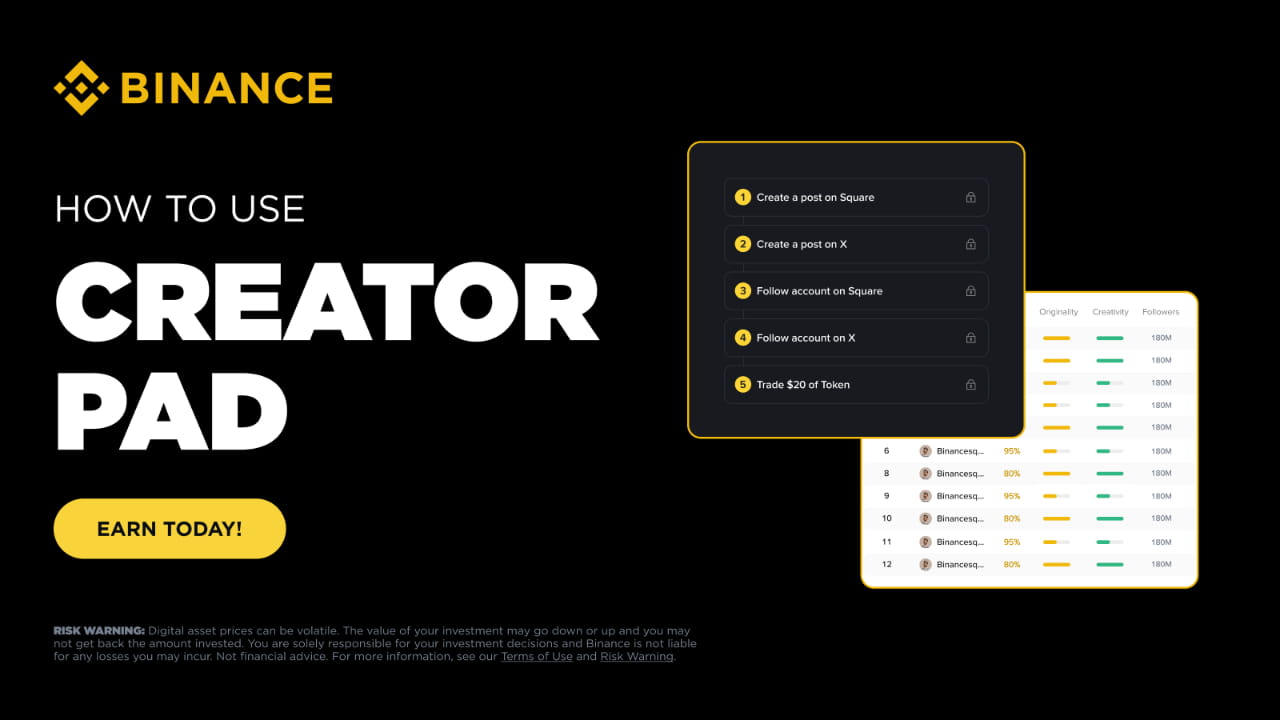
CreatorPadについて:FAQと利用規約
続きを読む:
Important Update to CreatorPad’s New Scoring System
CreatorPad is Getting a Major Revamp!
Introduction to the Open-Source Scoring Mechanism of the Binance Square CreatorPad Leaderboard
CreatorPad
Binance Squareのクリエイターが高品質なコンテンツ制作で報酬を獲得できる、新しいマネタイズ・プラットフォームです。
2026-01-06時点で、CreatorPadはユーザーのコンテンツを追跡し、生み出されたコンテンツの品質を測定するリーダーボードシステムを更新しました。タスクを完了するとユーザーはポイントを獲得し、獲得したポイントが多いほど受け取れる報酬も多くなります。
Important Update to CreatorPad’s New Scoring System
CreatorPad is Getting a Major Revamp!
Introduction to the Open-Source Scoring Mechanism of the Binance Square CreatorPad Leaderboard
CreatorPad
Binance Squareのクリエイターが高品質なコンテンツ制作で報酬を獲得できる、新しいマネタイズ・プラットフォームです。
2026-01-06時点で、CreatorPadはユーザーのコンテンツを追跡し、生み出されたコンテンツの品質を測定するリーダーボードシステムを更新しました。タスクを完了するとユーザーはポイントを獲得し、獲得したポイントが多いほど受け取れる報酬も多くなります。
ログインして、さらにコンテンツを読む
厳選トピックで世界の暗号資産トレーダーの仲間入り
⚡️ 暗号資産に関する最新かつ有益な情報が見つかります。
💬 世界最大の暗号資産取引所から信頼されています。
👍 認証を受けたクリエイターから、有益なインサイトを得られます。
メール / 電話番号
トレンドトピック
UKFCAWinsCourtOrderToRecover851400Pounds
閲覧回数 16,830
621人が討論中
🚨 暗号資産の規制が新たな段階に突入:彼らはルールを書くだけじゃない――お金を取り戻している。
英国のFCA(金融行為監督機構)は、裁判所の裏付けを得た別の資産回収を確保し、不正な金融および暗号資産関連活動に対する、より広範な取締りの強化を裏付けています。
そして同時に起きていることを見ると:
🇬🇧 FCA → 執行+資産回収
🇺🇸 SEC → 機能的な暗号資産に対するより明確なルール
🇺🇸 FRB → GENIUS法の下での正式なステーブルコイン監督
この組み合わせが重要です。
規制当局はもはや、「暗号資産を金融システムの中に入れてよいのか」を議論している段階ではありません。
彼らはますます、誰がアクセスできるのか、どんなルールに従うのか、そしてそのルールが破られたときに何が起きるのかを決めています。
次の暗号資産サイクルは、「規制 vs イノベーション」ではないかもしれません。
それは、基準を満たせる人たちの“規制された暗号資産” vs、基準を満たせないすべての人――かもしれません。 👀
$COIN $CRCL $BTC
#ukfcawinscourtordertorecover851400pounds #ChainlinkLaunchesCCIP2WithEnterpriseVerification #GoldFallsTo$4144 #QNTFallsOver40%FromMorningHigh #USDTAdds845900HoldersInPast7Days
KimHotbae
·いいね:2件
·閲覧回数 4.2k
ChainlinkLaunchesCCIP2WithEnterpriseVerification
閲覧回数 31,253
824人が討論中
GoldFallsTo$4144
閲覧回数 11,420
139人が討論中