
Adan Dhillon
9.7k 投稿

Adan Dhillon
報告
ユーザーをブロック
取引を発注
高頻度トレーダー
10.5か月
892 フォロー
2.9K+ フォロワー
3.6K+ いいね
投稿
ポートフォリオ
すべて
引用
ライブ
·
--
$LAPTOP – 政治、ミーム、そして暗号資産が衝突する時
正直に言うと、これまで数多くのミームコインのローンチを見てきたけど、これは本当に別物です。ハンター・バイデンが、この10年で最も物議を醸した政治ニュースのひとつを、暗号資産に変えようとしているんです。
$LAPTOPは、CoinbaseのBaseネットワークで明日ローンチされます。そしてトークノミクスだけでも注目に値します。総供給量は10億トークン。創設チームに30%が割り当てられており、6か月ロックされた後、2年かけて段階的に付与されます。ですが、ここがひねりです——供給の20%は、トランプのミームコインで損をした人々に対するエアドロップとして確保されているほか、バイデンのSubstack購読者や、映像ジャーナリストのアンドリュー・コールハーンが運営するメーリングリストにも配られます。
この経緯はかなり残酷です。$TRUMP は2025年1月にローンチされ、最高値$73.43を記録し、現在はおよそ$2.25で取引されています。最高値から97%下落です。Nansenのデータでは、合計で38.1億ドルの損失を抱えた988,905のウォレットが確認されています。一方でドナルド・トランプは、このトークンによる個人所得として6億3600万ドルを開示しました。お金を稼いだウォレットは約5,000件。その他の全員が、大統領の“給料日”の原資を負担していたわけです。
燃焼(バーン)メカニズムにも注目すべき点があります。特定の出来事が起きれば、最大30%のトークンが破棄されうるのです——たとえば2028年の民主党勝利、新たな史上最高値を更新したビットコイン、あるいは$LAPTOPの評価額が$TRUMPを上回ることなど。
さらに面白いのは、タイミングです。偽の$LAPTOPトークンはすでにSolana、BNB Chain、TON上に登場しており、取引量は約700万ドルに迫っています。公式のコントラクトアドレスはまだ公開されていません。
バイアス:ニュートラル——これは純粋な投機の取引です
ローンチ日:2026年9月9日
チェーン:Base(Coinbase Layer 2)
供給:10億トークン
私が自分に問いかけているのは、これが本当にコミュニティを作ろうとしているのか、それとも“ただの”政治的ミームコインであって、ポンプしてはダンプされるだけなのかという点です。$TRUMP のエアドロップは巧妙なマーケティングの仕掛けですが、30%がロックされていて、20%がインサイダーに割り当てられている以上、リスクは現実的です。
あなたはどう見ていますか——$LAPTOPを正当なプロジェクトだと思いますか、それともまた別の政治的な金稼ぎ(現金掠奪)でしょうか?
$TRUMP
#Write2Earn
$LAPTOP – 政治、ミーム、そして暗号資産が衝突する時
正直に言うと、これまで数多くのミームコインのローンチを見てきたけど、これは本当に別物です。ハンター・バイデンが、この10年で最も物議を醸した政治ニュースのひとつを、暗号資産に変えようとしているんです。
$LAPTOPは、CoinbaseのBaseネットワークで明日ローンチされます。そしてトークノミクスだけでも注目に値します。総供給量は10億トークン。創設チームに30%が割り当てられており、6か月ロックされた後、2年かけて段階的に付与されます。ですが、ここがひねりです——供給の20%は、トランプのミームコインで損をした人々に対するエアドロップとして確保されているほか、バイデンのSubstack購読者や、映像ジャーナリストのアンドリュー・コールハーンが運営するメーリングリストにも配られます。
この経緯はかなり残酷です。$TRUMP は2025年1月にローンチされ、最高値$73.43を記録し、現在はおよそ$2.25で取引されています。最高値から97%下落です。Nansenのデータでは、合計で38.1億ドルの損失を抱えた988,905のウォレットが確認されています。一方でドナルド・トランプは、このトークンによる個人所得として6億3600万ドルを開示しました。お金を稼いだウォレットは約5,000件。その他の全員が、大統領の“給料日”の原資を負担していたわけです。
燃焼(バーン)メカニズムにも注目すべき点があります。特定の出来事が起きれば、最大30%のトークンが破棄されうるのです——たとえば2028年の民主党勝利、新たな史上最高値を更新したビットコイン、あるいは$LAPTOPの評価額が$TRUMP を上回ることなど。
さらに面白いのは、タイミングです。偽の$LAPTOPトークンはすでにSolana、BNB Chain、TON上に登場しており、取引量は約700万ドルに迫っています。公式のコントラクトアドレスはまだ公開されていません。
バイアス:ニュートラル——これは純粋な投機の取引です
ローンチ日:2026年9月9日
チェーン:Base(Coinbase Layer 2)
供給:10億トークン
私が自分に問いかけているのは、これが本当にコミュニティを作ろうとしているのか、それとも“ただの”政治的ミームコインであって、ポンプしてはダンプされるだけなのかという点です。$TRUMP のエアドロップは巧妙なマーケティングの仕掛けですが、30%がロックされていて、20%がインサイダーに割り当てられている以上、リスクは現実的です。
あなたはどう見ていますか——$LAPTOPを正当なプロジェクトだと思いますか、それともまた別の政治的な金稼ぎ(現金掠奪)でしょうか?
$TRUMP
#Write2Earn
正直に言うと、これまで数多くのミームコインのローンチを見てきたけど、これは本当に別物です。ハンター・バイデンが、この10年で最も物議を醸した政治ニュースのひとつを、暗号資産に変えようとしているんです。
$LAPTOPは、CoinbaseのBaseネットワークで明日ローンチされます。そしてトークノミクスだけでも注目に値します。総供給量は10億トークン。創設チームに30%が割り当てられており、6か月ロックされた後、2年かけて段階的に付与されます。ですが、ここがひねりです——供給の20%は、トランプのミームコインで損をした人々に対するエアドロップとして確保されているほか、バイデンのSubstack購読者や、映像ジャーナリストのアンドリュー・コールハーンが運営するメーリングリストにも配られます。
この経緯はかなり残酷です。$TRUMP は2025年1月にローンチされ、最高値$73.43を記録し、現在はおよそ$2.25で取引されています。最高値から97%下落です。Nansenのデータでは、合計で38.1億ドルの損失を抱えた988,905のウォレットが確認されています。一方でドナルド・トランプは、このトークンによる個人所得として6億3600万ドルを開示しました。お金を稼いだウォレットは約5,000件。その他の全員が、大統領の“給料日”の原資を負担していたわけです。
燃焼(バーン)メカニズムにも注目すべき点があります。特定の出来事が起きれば、最大30%のトークンが破棄されうるのです——たとえば2028年の民主党勝利、新たな史上最高値を更新したビットコイン、あるいは$LAPTOPの評価額が$TRUMP を上回ることなど。
さらに面白いのは、タイミングです。偽の$LAPTOPトークンはすでにSolana、BNB Chain、TON上に登場しており、取引量は約700万ドルに迫っています。公式のコントラクトアドレスはまだ公開されていません。
バイアス:ニュートラル——これは純粋な投機の取引です
ローンチ日:2026年9月9日
チェーン:Base(Coinbase Layer 2)
供給:10億トークン
私が自分に問いかけているのは、これが本当にコミュニティを作ろうとしているのか、それとも“ただの”政治的ミームコインであって、ポンプしてはダンプされるだけなのかという点です。$TRUMP のエアドロップは巧妙なマーケティングの仕掛けですが、30%がロックされていて、20%がインサイダーに割り当てられている以上、リスクは現実的です。
あなたはどう見ていますか——$LAPTOPを正当なプロジェクトだと思いますか、それともまた別の政治的な金稼ぎ(現金掠奪)でしょうか?
$TRUMP
#Write2Earn
81
·
--
$SPCXB 急上昇しており、2.3%高の153.53。構造が美しいです。出来高を伴って151のレジスタンスを上抜けし、いま154.58の高値をテストしています。145.32からの値動きはきれいでした――切り上がる安値、安定した買い圧、そして下げのたびに買われています。
注目したのは147.63の水準です。ここがレジスタンスからサポートへ反転し、完璧に維持されています。51-49の板(オーダーブック)が均衡しており、これは小口(リテール)が追いかけているものではなく、本物の蓄積だと示しています。
レンジが拡大しています:154.58がレジスタンス、145.32がサポート。いま上側のクアドラントにいて、モメンタムが強まっています。154.58を出来高付きで上抜ければ、156.00と158.00が開けます。151.00を失うと、147.63を再テストする展開です。
ロング目線では、154.58をきれいにブレイクし、その後のリテストを確認したいです。エントリーは152.50〜153.00への押し目、ストップは151.00、目標は156.00と158.00。無効条件は151.00を割り込むことです。
SPCXXはここで本物の強さを見せています。ブレイクはクリーンで、出来高もしっかり。構造も強気です。ただし私は153.53では追いかけません――まず154.58のブレイクを見たいです。
ブレイクで入りますか?それともリテスト待ちですか?
#ZcashRises45%WeeklyToHighestSince2016 #CanadaToImpose15%To50%TariffsOnUSGoods #SaudiHaltsSouthernEnergySitesAfterAttacks #Write2Earn #Write2Earn!
$SPCXB 急上昇しており、2.3%高の153.53。構造が美しいです。出来高を伴って151のレジスタンスを上抜けし、いま154.58の高値をテストしています。145.32からの値動きはきれいでした――切り上がる安値、安定した買い圧、そして下げのたびに買われています。
注目したのは147.63の水準です。ここがレジスタンスからサポートへ反転し、完璧に維持されています。51-49の板(オーダーブック)が均衡しており、これは小口(リテール)が追いかけているものではなく、本物の蓄積だと示しています。
レンジが拡大しています:154.58がレジスタンス、145.32がサポート。いま上側のクアドラントにいて、モメンタムが強まっています。154.58を出来高付きで上抜ければ、156.00と158.00が開けます。151.00を失うと、147.63を再テストする展開です。
ロング目線では、154.58をきれいにブレイクし、その後のリテストを確認したいです。エントリーは152.50〜153.00への押し目、ストップは151.00、目標は156.00と158.00。無効条件は151.00を割り込むことです。
SPCXXはここで本物の強さを見せています。ブレイクはクリーンで、出来高もしっかり。構造も強気です。ただし私は153.53では追いかけません――まず154.58のブレイクを見たいです。
ブレイクで入りますか?それともリテスト待ちですか?
#ZcashRises45%WeeklyToHighestSince2016 #CanadaToImpose15%To50%TariffsOnUSGoods #SaudiHaltsSouthernEnergySitesAfterAttacks #Write2Earn #Write2Earn!
注目したのは147.63の水準です。ここがレジスタンスからサポートへ反転し、完璧に維持されています。51-49の板(オーダーブック)が均衡しており、これは小口(リテール)が追いかけているものではなく、本物の蓄積だと示しています。
レンジが拡大しています:154.58がレジスタンス、145.32がサポート。いま上側のクアドラントにいて、モメンタムが強まっています。154.58を出来高付きで上抜ければ、156.00と158.00が開けます。151.00を失うと、147.63を再テストする展開です。
ロング目線では、154.58をきれいにブレイクし、その後のリテストを確認したいです。エントリーは152.50〜153.00への押し目、ストップは151.00、目標は156.00と158.00。無効条件は151.00を割り込むことです。
SPCXXはここで本物の強さを見せています。ブレイクはクリーンで、出来高もしっかり。構造も強気です。ただし私は153.53では追いかけません――まず154.58のブレイクを見たいです。
ブレイクで入りますか?それともリテスト待ちですか?
#ZcashRises45%WeeklyToHighestSince2016 #CanadaToImpose15%To50%TariffsOnUSGoods #SaudiHaltsSouthernEnergySitesAfterAttacks #Write2Earn #Write2Earn!
82
·
--
数日間AMZNXを見ていましたが、正直、ここ最近で見た中でも一番退屈なチャートです。
AMZNXは256.71で取引されており、本日0.37%安。価格は255.15〜258.67の狭い範囲にずっと張り付いています。出来高(取引高)はわずか113.69Kで、ほとんど取引がないに等しいです。板(オーダーブック)もフラットで、明確な方向性がありません。
この銘柄が追随しているのは—Amazon—という1.8兆ドルの巨大企業です。前四半期は売上1580億ドルを計上しており、AWSと広告が成長を牽引しています。市場はテックへ資金が回ってきていて、Amazonのファンダメンタルは非常に堅調。でもAMZNXは?死んでます。
テクニカル面では、極端な圧縮が出ています—通常、ブレイクアウトの前触れのような状態です。価格は255.15〜258.67に固定され、出来高が細ってきています。このパターンは大きな値動きの前兆であることが多いのですが、これだけ取引高が低いと、出来高を確認するまでブレイクを信じられません。
バイアス:ニュートラル—まだ明確な取引はない
重要サポート:255.15
重要レジスタンス:258.67
強気トリガー:出来高を伴う、258.67を上回る1時間足のクローズ
弱気トリガー:255.15を下回って定着(受け入れ)
私は現在の水準では買いません。リスク/リワードが自分には合わず、出来高の低さがこの取引を高リスクにしています。出来高を伴う、きれいなブレイクを待つほうがいいでしょう。
あなたはどう見ていますか—AMZNXはAmazonへのエクスポージャーを得るための正当な手段だと思いますか、それとも低流動性が致命的(取引中止の条件)でしょうか?自分は後者に傾いていますが、別の見方をしているなら聞いてみたいです。
$AMZNB
#write2earn
数日間AMZNXを見ていましたが、正直、ここ最近で見た中でも一番退屈なチャートです。
AMZNXは256.71で取引されており、本日0.37%安。価格は255.15〜258.67の狭い範囲にずっと張り付いています。出来高(取引高)はわずか113.69Kで、ほとんど取引がないに等しいです。板(オーダーブック)もフラットで、明確な方向性がありません。
この銘柄が追随しているのは—Amazon—という1.8兆ドルの巨大企業です。前四半期は売上1580億ドルを計上しており、AWSと広告が成長を牽引しています。市場はテックへ資金が回ってきていて、Amazonのファンダメンタルは非常に堅調。でもAMZNXは?死んでます。
テクニカル面では、極端な圧縮が出ています—通常、ブレイクアウトの前触れのような状態です。価格は255.15〜258.67に固定され、出来高が細ってきています。このパターンは大きな値動きの前兆であることが多いのですが、これだけ取引高が低いと、出来高を確認するまでブレイクを信じられません。
バイアス:ニュートラル—まだ明確な取引はない
重要サポート:255.15
重要レジスタンス:258.67
強気トリガー:出来高を伴う、258.67を上回る1時間足のクローズ
弱気トリガー:255.15を下回って定着(受け入れ)
私は現在の水準では買いません。リスク/リワードが自分には合わず、出来高の低さがこの取引を高リスクにしています。出来高を伴う、きれいなブレイクを待つほうがいいでしょう。
あなたはどう見ていますか—AMZNXはAmazonへのエクスポージャーを得るための正当な手段だと思いますか、それとも低流動性が致命的(取引中止の条件)でしょうか?自分は後者に傾いていますが、別の見方をしているなら聞いてみたいです。
$AMZNB
#write2earn
AMZNXは256.71で取引されており、本日0.37%安。価格は255.15〜258.67の狭い範囲にずっと張り付いています。出来高(取引高)はわずか113.69Kで、ほとんど取引がないに等しいです。板(オーダーブック)もフラットで、明確な方向性がありません。
この銘柄が追随しているのは—Amazon—という1.8兆ドルの巨大企業です。前四半期は売上1580億ドルを計上しており、AWSと広告が成長を牽引しています。市場はテックへ資金が回ってきていて、Amazonのファンダメンタルは非常に堅調。でもAMZNXは?死んでます。
テクニカル面では、極端な圧縮が出ています—通常、ブレイクアウトの前触れのような状態です。価格は255.15〜258.67に固定され、出来高が細ってきています。このパターンは大きな値動きの前兆であることが多いのですが、これだけ取引高が低いと、出来高を確認するまでブレイクを信じられません。
バイアス:ニュートラル—まだ明確な取引はない
重要サポート:255.15
重要レジスタンス:258.67
強気トリガー:出来高を伴う、258.67を上回る1時間足のクローズ
弱気トリガー:255.15を下回って定着(受け入れ)
私は現在の水準では買いません。リスク/リワードが自分には合わず、出来高の低さがこの取引を高リスクにしています。出来高を伴う、きれいなブレイクを待つほうがいいでしょう。
あなたはどう見ていますか—AMZNXはAmazonへのエクスポージャーを得るための正当な手段だと思いますか、それとも低流動性が致命的(取引中止の条件)でしょうか?自分は後者に傾いていますが、別の見方をしているなら聞いてみたいです。
$AMZNB
#write2earn
22
·
--
翻訳参照
I've been watching AMZNX for a few days, and honestly, this is the most boring chart I've seen in a while.
AMZNX is trading at 256.71, down 0.37% today, stuck in a tight range between 255.15 and 258.67. Turnover is just 113.69K — that's almost nothing. The order book is flat, and there's no real direction.
The stock it tracks — Amazon — is a $1.8 trillion beast. The company reported $158 billion in revenue last quarter, with AWS and advertising driving growth. The market's been rotating into tech, and Amazon's fundamentals are rock solid. But AMZNX? It's dead.
Technically, the chart is showing extreme compression — the kind that usually precedes a breakout. Price is pinned between 255.15 and 258.67, and volume is drying up. This pattern is often a precursor to a big move, but with turnover this low, I don't trust the breakout until I see volume.
Bias: Neutral — no clean trade yet
Important Support: 255.15
Important Resistance: 258.67
Bullish Trigger: A 1h close above 258.67 with volume
Bearish Trigger: A breakdown below 255.15 with acceptance
I'm not buying at current levels. The risk/reward doesn't work for me, and the low turnover makes this a high-risk play. I'd rather wait for a clean breakout with volume.
What's your take — do you see AMZNX as a legitimate way to gain Amazon exposure, or is the low liquidity a dealbreaker? I'm leaning toward the latter, but I'm curious if you see it differently.
$AMZNB
#write2earn
I've been watching AMZNX for a few days, and honestly, this is the most boring chart I've seen in a while.
AMZNX is trading at 256.71, down 0.37% today, stuck in a tight range between 255.15 and 258.67. Turnover is just 113.69K — that's almost nothing. The order book is flat, and there's no real direction.
The stock it tracks — Amazon — is a $1.8 trillion beast. The company reported $158 billion in revenue last quarter, with AWS and advertising driving growth. The market's been rotating into tech, and Amazon's fundamentals are rock solid. But AMZNX? It's dead.
Technically, the chart is showing extreme compression — the kind that usually precedes a breakout. Price is pinned between 255.15 and 258.67, and volume is drying up. This pattern is often a precursor to a big move, but with turnover this low, I don't trust the breakout until I see volume.
Bias: Neutral — no clean trade yet
Important Support: 255.15
Important Resistance: 258.67
Bullish Trigger: A 1h close above 258.67 with volume
Bearish Trigger: A breakdown below 255.15 with acceptance
I'm not buying at current levels. The risk/reward doesn't work for me, and the low turnover makes this a high-risk play. I'd rather wait for a clean breakout with volume.
What's your take — do you see AMZNX as a legitimate way to gain Amazon exposure, or is the low liquidity a dealbreaker? I'm leaning toward the latter, but I'm curious if you see it differently.
$AMZNB
#write2earn
AMZNX is trading at 256.71, down 0.37% today, stuck in a tight range between 255.15 and 258.67. Turnover is just 113.69K — that's almost nothing. The order book is flat, and there's no real direction.
The stock it tracks — Amazon — is a $1.8 trillion beast. The company reported $158 billion in revenue last quarter, with AWS and advertising driving growth. The market's been rotating into tech, and Amazon's fundamentals are rock solid. But AMZNX? It's dead.
Technically, the chart is showing extreme compression — the kind that usually precedes a breakout. Price is pinned between 255.15 and 258.67, and volume is drying up. This pattern is often a precursor to a big move, but with turnover this low, I don't trust the breakout until I see volume.
Bias: Neutral — no clean trade yet
Important Support: 255.15
Important Resistance: 258.67
Bullish Trigger: A 1h close above 258.67 with volume
Bearish Trigger: A breakdown below 255.15 with acceptance
I'm not buying at current levels. The risk/reward doesn't work for me, and the low turnover makes this a high-risk play. I'd rather wait for a clean breakout with volume.
What's your take — do you see AMZNX as a legitimate way to gain Amazon exposure, or is the low liquidity a dealbreaker? I'm leaning toward the latter, but I'm curious if you see it differently.
$AMZNB
#write2earn
35
·
--
BNBはさらに上昇し、0.75%高の750.5です。構造はきれいに整っています。733の底から高値・安値を切り上げてきており、いまは761.3のレジスタンスをテスト中です。4Hのローソク足は一貫していて、小刻みに安定しており、大きな拒否(急反落)は見られません。
私が注目したのは733の水準です。ここは何度も支えになってきて、いまではこの上昇の土台に反転しています。板(オーダーブック)は49-51でバランスしており、どちらにも極端な圧力がないことを示しています。これは健全な積み上げです。
重要な水準は761.3です。出来高を伴って上抜ければ770、780が見えてきます。745を割ると733を再テストします。私は出来高を伴った761.3を上回る、きれいな4Hの終値を監視しています。
エントリーとしては、ブレイクアウトからのリテストを見たいです。750-755への押し目でのエントリー、ストップは740、目標は770と780。無効化は740を割り込むことです。
BNBはここで静かな強さを見せています。トレンドは上向きで、構造もしっかりしていて、出来高も安定しています。ただ、750.5は追いかけません。まず761.3のブレイクを確認したいです。
ブレイクで入りますか?それともリテストまで待ちますか?
$BNB
#Write2Earn! #bnb
BNBはさらに上昇し、0.75%高の750.5です。構造はきれいに整っています。733の底から高値・安値を切り上げてきており、いまは761.3のレジスタンスをテスト中です。4Hのローソク足は一貫していて、小刻みに安定しており、大きな拒否(急反落)は見られません。
私が注目したのは733の水準です。ここは何度も支えになってきて、いまではこの上昇の土台に反転しています。板(オーダーブック)は49-51でバランスしており、どちらにも極端な圧力がないことを示しています。これは健全な積み上げです。
重要な水準は761.3です。出来高を伴って上抜ければ770、780が見えてきます。745を割ると733を再テストします。私は出来高を伴った761.3を上回る、きれいな4Hの終値を監視しています。
エントリーとしては、ブレイクアウトからのリテストを見たいです。750-755への押し目でのエントリー、ストップは740、目標は770と780。無効化は740を割り込むことです。
BNBはここで静かな強さを見せています。トレンドは上向きで、構造もしっかりしていて、出来高も安定しています。ただ、750.5は追いかけません。まず761.3のブレイクを確認したいです。
ブレイクで入りますか?それともリテストまで待ちますか?
$BNB
#Write2Earn! #bnb
私が注目したのは733の水準です。ここは何度も支えになってきて、いまではこの上昇の土台に反転しています。板(オーダーブック)は49-51でバランスしており、どちらにも極端な圧力がないことを示しています。これは健全な積み上げです。
重要な水準は761.3です。出来高を伴って上抜ければ770、780が見えてきます。745を割ると733を再テストします。私は出来高を伴った761.3を上回る、きれいな4Hの終値を監視しています。
エントリーとしては、ブレイクアウトからのリテストを見たいです。750-755への押し目でのエントリー、ストップは740、目標は770と780。無効化は740を割り込むことです。
BNBはここで静かな強さを見せています。トレンドは上向きで、構造もしっかりしていて、出来高も安定しています。ただ、750.5は追いかけません。まず761.3のブレイクを確認したいです。
ブレイクで入りますか?それともリテストまで待ちますか?
$BNB
#Write2Earn! #bnb
71
·
--
ソラナは本日2.51%下落し、101.99で取引されています。この押し目は、昨日の104.00超えの力強い上昇の後に起きたものです。24時間のレンジは100.20から105.92で、現在の価格はそのレンジの中間付近で保ち合っています。注文板は現在の水準で均衡しており、迷いを示唆しています。
ここでの文脈は重要です。ソラナは今年、より強いレイヤー1銘柄の一つであり、市場全体の逆風にもかかわらず、エコシステムは拡大を続けています。ネットワークの日次アクティブアドレスは約150万で安定しており、開発者活動も実際に増加しています。月間アクティブ開発者は2,500人超がエコシステムに貢献しています。最近のFiredancerアップグレードによりネットワーク性能は大幅に改善され、レイテンシは低下し、スループットは向上しました。
テクニカル面では、チャートは力強い上昇後の健全な押し目を示しています。価格は現在101.00水準のサポートを試しており、これは最近のブレイクアウトゾーンとも一致しています。105.92水準が重要なレジスタンスで、そこを上抜ければ継続が पुष्टिされます。EMAは依然として強気で、EMA7がEMA14を上回り、さらにEMA14がEMA28を上回っています。上昇トレンドはまだ維持されていることを示唆しています。
バイアス: 101.00以上で強気だが慎重
エントリーゾーン: 100.50 – 101.50、反発/確認後
トリガー: 強気の反転シグナル、または下落後の101.50回復
ストップ / 無効化: 98.20未満 — そこを割れば強気構造は無効
TP1: 105.92(24時間高値)
TP2: 108.00 — 次の主要レジスタンス
R:R: エントリーゾーンから約2.5:1
101.00水準を注視しています。価格がそこを上回って維持され、反転シグナルを示すなら、100.20の少し下にタイトなストップを置いたロングを検討します。ただし、出来高を伴って100.20を下回るなら、一旦様子見してより良い形を待ちます。
私の強気シナリオは、価格が100.20を割り込み、より低い水準を受け入れ始めた場合に変わります。その場合、構造は下落シナリオへ移行します。
あなたの見方はどうですか — これは次の上昇局面に向けた健全な押し目だと思いますか、それともより深い調整の始まりでしょうか?
$SOL #SolanaStrong #Write2Earn!
ソラナは本日2.51%下落し、101.99で取引されています。この押し目は、昨日の104.00超えの力強い上昇の後に起きたものです。24時間のレンジは100.20から105.92で、現在の価格はそのレンジの中間付近で保ち合っています。注文板は現在の水準で均衡しており、迷いを示唆しています。
ここでの文脈は重要です。ソラナは今年、より強いレイヤー1銘柄の一つであり、市場全体の逆風にもかかわらず、エコシステムは拡大を続けています。ネットワークの日次アクティブアドレスは約150万で安定しており、開発者活動も実際に増加しています。月間アクティブ開発者は2,500人超がエコシステムに貢献しています。最近のFiredancerアップグレードによりネットワーク性能は大幅に改善され、レイテンシは低下し、スループットは向上しました。
テクニカル面では、チャートは力強い上昇後の健全な押し目を示しています。価格は現在101.00水準のサポートを試しており、これは最近のブレイクアウトゾーンとも一致しています。105.92水準が重要なレジスタンスで、そこを上抜ければ継続が पुष्टिされます。EMAは依然として強気で、EMA7がEMA14を上回り、さらにEMA14がEMA28を上回っています。上昇トレンドはまだ維持されていることを示唆しています。
バイアス: 101.00以上で強気だが慎重
エントリーゾーン: 100.50 – 101.50、反発/確認後
トリガー: 強気の反転シグナル、または下落後の101.50回復
ストップ / 無効化: 98.20未満 — そこを割れば強気構造は無効
TP1: 105.92(24時間高値)
TP2: 108.00 — 次の主要レジスタンス
R:R: エントリーゾーンから約2.5:1
101.00水準を注視しています。価格がそこを上回って維持され、反転シグナルを示すなら、100.20の少し下にタイトなストップを置いたロングを検討します。ただし、出来高を伴って100.20を下回るなら、一旦様子見してより良い形を待ちます。
私の強気シナリオは、価格が100.20を割り込み、より低い水準を受け入れ始めた場合に変わります。その場合、構造は下落シナリオへ移行します。
あなたの見方はどうですか — これは次の上昇局面に向けた健全な押し目だと思いますか、それともより深い調整の始まりでしょうか?
$SOL #SolanaStrong #Write2Earn!
ここでの文脈は重要です。ソラナは今年、より強いレイヤー1銘柄の一つであり、市場全体の逆風にもかかわらず、エコシステムは拡大を続けています。ネットワークの日次アクティブアドレスは約150万で安定しており、開発者活動も実際に増加しています。月間アクティブ開発者は2,500人超がエコシステムに貢献しています。最近のFiredancerアップグレードによりネットワーク性能は大幅に改善され、レイテンシは低下し、スループットは向上しました。
テクニカル面では、チャートは力強い上昇後の健全な押し目を示しています。価格は現在101.00水準のサポートを試しており、これは最近のブレイクアウトゾーンとも一致しています。105.92水準が重要なレジスタンスで、そこを上抜ければ継続が पुष्टिされます。EMAは依然として強気で、EMA7がEMA14を上回り、さらにEMA14がEMA28を上回っています。上昇トレンドはまだ維持されていることを示唆しています。
バイアス: 101.00以上で強気だが慎重
エントリーゾーン: 100.50 – 101.50、反発/確認後
トリガー: 強気の反転シグナル、または下落後の101.50回復
ストップ / 無効化: 98.20未満 — そこを割れば強気構造は無効
TP1: 105.92(24時間高値)
TP2: 108.00 — 次の主要レジスタンス
R:R: エントリーゾーンから約2.5:1
101.00水準を注視しています。価格がそこを上回って維持され、反転シグナルを示すなら、100.20の少し下にタイトなストップを置いたロングを検討します。ただし、出来高を伴って100.20を下回るなら、一旦様子見してより良い形を待ちます。
私の強気シナリオは、価格が100.20を割り込み、より低い水準を受け入れ始めた場合に変わります。その場合、構造は下落シナリオへ移行します。
あなたの見方はどうですか — これは次の上昇局面に向けた健全な押し目だと思いますか、それともより深い調整の始まりでしょうか?
$SOL #SolanaStrong #Write2Earn!
87
·
--
ETHは再び約$2.4K近辺に戻っており、リバウンドの見立てが再び検証されています。👀
重要なのは約$2,412からの跳ね返りそのものではなく、ETHが約$2,500のゾーンを奪還して維持できるかどうかです。
$2,500を上回ると、買い手はレジスタンスをサポートに変えて、約$2,515〜$2,533を再び見直せます。約$2,412を下回ると、回復の構造が急激に弱まります。
相場には、もう一段高いヒゲは不要です。
必要なのは、買い手が奪還を守る意思があるという「証拠」です。
$ETH #ARBRises30%OnRobinhoodChainRevenue
ETHは再び約$2.4K近辺に戻っており、リバウンドの見立てが再び検証されています。👀
重要なのは約$2,412からの跳ね返りそのものではなく、ETHが約$2,500のゾーンを奪還して維持できるかどうかです。
$2,500を上回ると、買い手はレジスタンスをサポートに変えて、約$2,515〜$2,533を再び見直せます。約$2,412を下回ると、回復の構造が急激に弱まります。
相場には、もう一段高いヒゲは不要です。
必要なのは、買い手が奪還を守る意思があるという「証拠」です。
$ETH #ARBRises30%OnRobinhoodChainRevenue
重要なのは約$2,412からの跳ね返りそのものではなく、ETHが約$2,500のゾーンを奪還して維持できるかどうかです。
$2,500を上回ると、買い手はレジスタンスをサポートに変えて、約$2,515〜$2,533を再び見直せます。約$2,412を下回ると、回復の構造が急激に弱まります。
相場には、もう一段高いヒゲは不要です。
必要なのは、買い手が奪還を守る意思があるという「証拠」です。
$ETH #ARBRises30%OnRobinhoodChainRevenue
147
·
--
翻訳参照
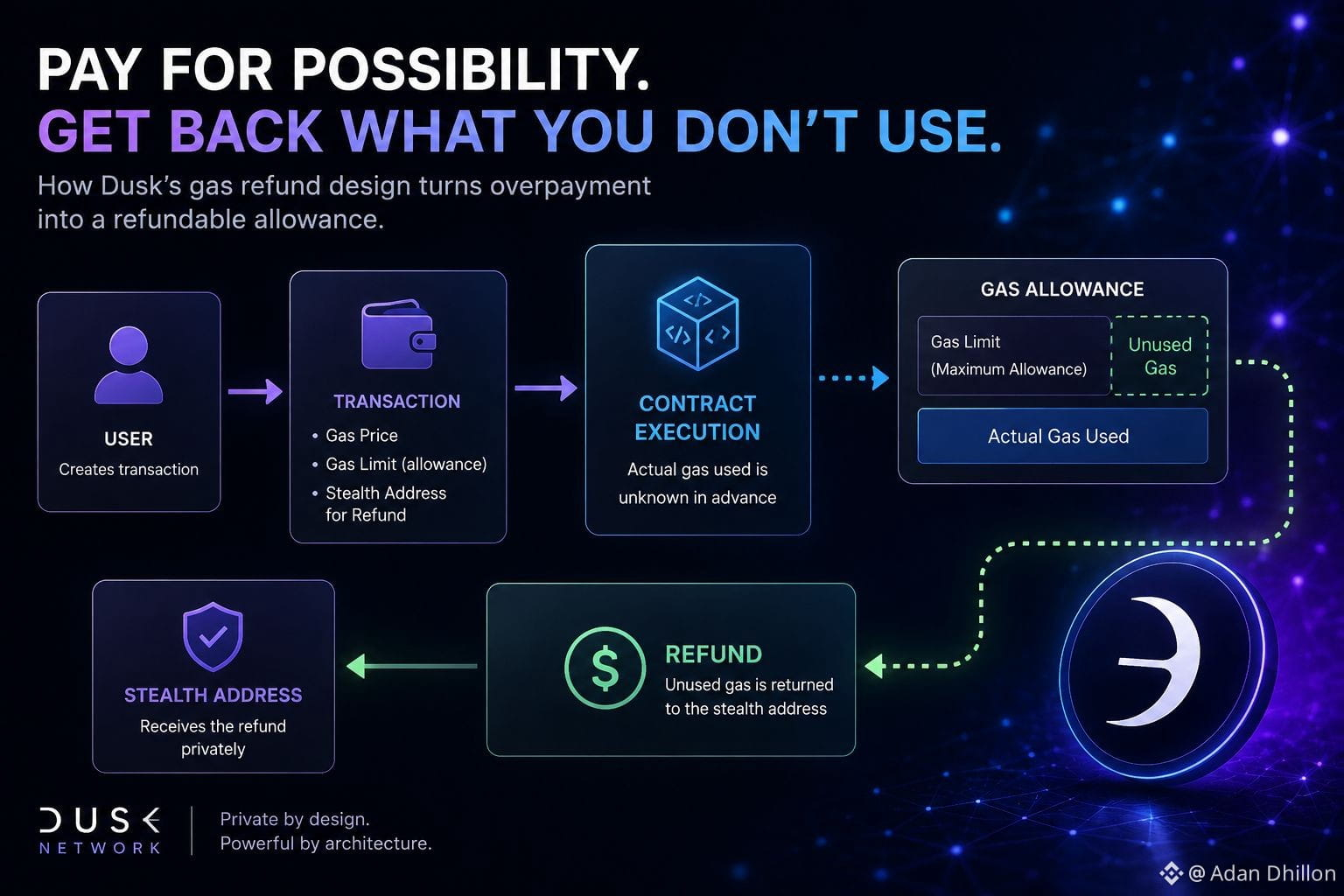
At first I assumed paying for contract execution on Dusk meant choosing a gas budget and accepting whatever portion was consumed. But the more I looked, the more the refund path caught my attention. A transaction’s fee is set from gas price and gas limit, yet Dusk also includes a stealth address for returning unused gas. So the gas limit is not simply a cost; it is closer to a temporary allowance. The network can reserve room for an execution whose final gas usage is not known in advance, then return what was not needed. What caught me is the small responsibility this creates around the refund: the transaction specifies where that unused allocation should go. Maybe that is simply a practical way to handle uncertain execution costs. It makes budgeting computation feel less like paying a fixed bill and more like placing a refundable ceiling on work. So maybe the quieter question is who should carry the uncertainty when computation cannot be priced exactly beforehand?
#dusk $DUSK @Dusk_Foundation
At first I assumed paying for contract execution on Dusk meant choosing a gas budget and accepting whatever portion was consumed. But the more I looked, the more the refund path caught my attention. A transaction’s fee is set from gas price and gas limit, yet Dusk also includes a stealth address for returning unused gas. So the gas limit is not simply a cost; it is closer to a temporary allowance. The network can reserve room for an execution whose final gas usage is not known in advance, then return what was not needed. What caught me is the small responsibility this creates around the refund: the transaction specifies where that unused allocation should go. Maybe that is simply a practical way to handle uncertain execution costs. It makes budgeting computation feel less like paying a fixed bill and more like placing a refundable ceiling on work. So maybe the quieter question is who should carry the uncertainty when computation cannot be priced exactly beforehand?
#dusk $DUSK @Dusk
#dusk $DUSK @Dusk
85
·
--
翻訳参照
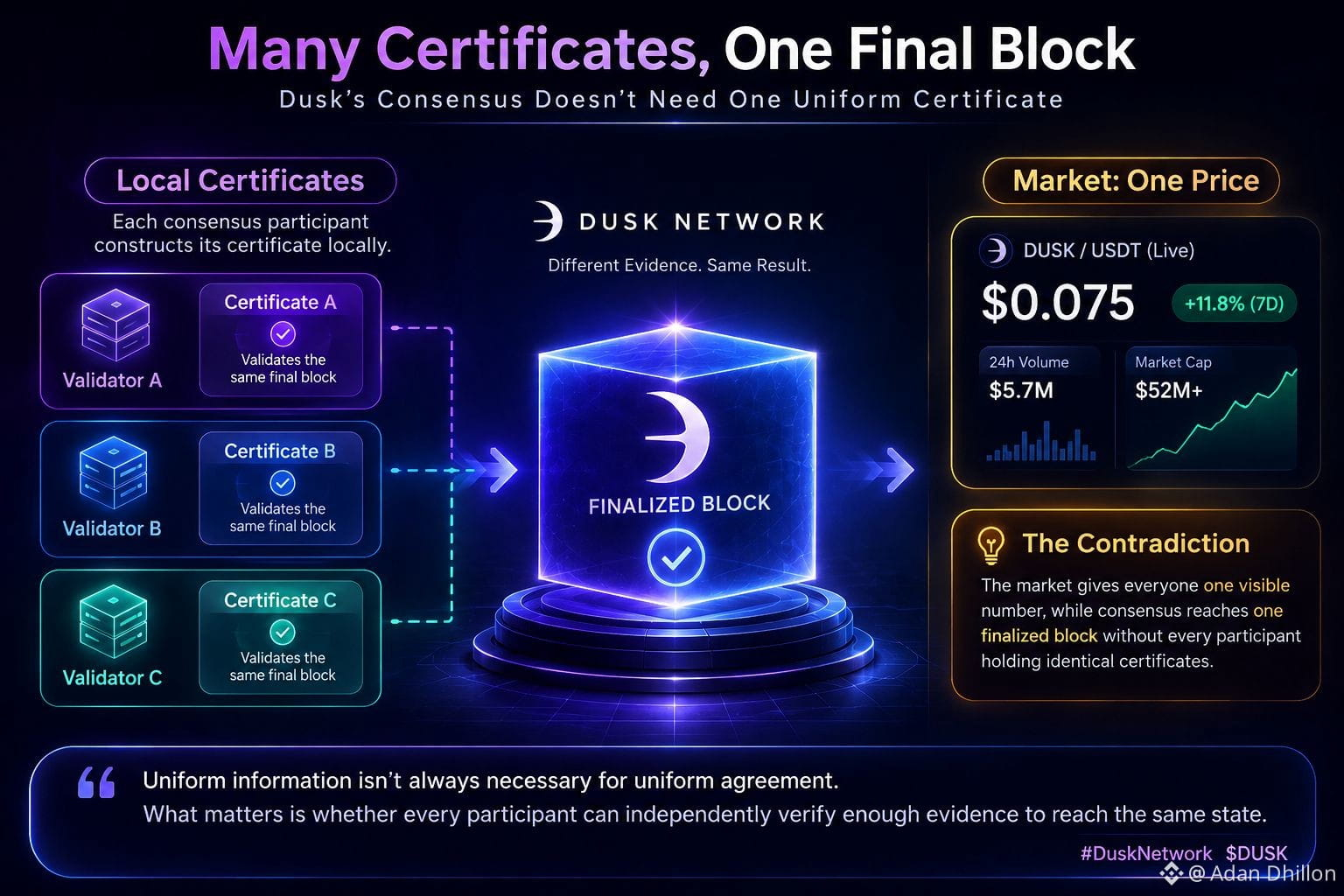
At first I assumed Dusk’s consensus evidence had to be uniform for the network to agree on a finalized block. But the more I looked, the more the local certificate design stood out. Dusk’s consensus participants construct certificates locally, so there is no single uniform certificate for a round. That sounds like a small implementation detail, but it creates an interesting contrast with how DUSK trades: the market gives everyone one visible price, while consensus can reach one shared result without every participant holding identical evidence. The two systems are solving very different coordination problems. One compresses many opinions into a common number; the other allows locally constructed evidence to support a common finalized state. I hadn’t really connected those two ideas before. Maybe uniform information is not always necessary for uniform agreement. What matters may be whether every participant can independently verify that its local evidence supports the same result. So the quieter question is whether decentralized systems need everyone to see the same evidence, or only enough evidence to reach the same state?
#dusk $DUSK @Dusk_Foundation
At first I assumed Dusk’s consensus evidence had to be uniform for the network to agree on a finalized block. But the more I looked, the more the local certificate design stood out. Dusk’s consensus participants construct certificates locally, so there is no single uniform certificate for a round. That sounds like a small implementation detail, but it creates an interesting contrast with how DUSK trades: the market gives everyone one visible price, while consensus can reach one shared result without every participant holding identical evidence. The two systems are solving very different coordination problems. One compresses many opinions into a common number; the other allows locally constructed evidence to support a common finalized state. I hadn’t really connected those two ideas before. Maybe uniform information is not always necessary for uniform agreement. What matters may be whether every participant can independently verify that its local evidence supports the same result. So the quieter question is whether decentralized systems need everyone to see the same evidence, or only enough evidence to reach the same state?
#dusk $DUSK @Dusk
#dusk $DUSK @Dusk
77
·
--
翻訳参照
At first I assumed a blockchain transaction was basically the same object from the moment a user sends it until it reaches the ledger. But the more I looked at Dusk’s transaction handling, the more the separation between incoming transactions and canonical ledger transactions stood out. Rusk can receive transactions at the network boundary, normalize them, and then canonicalize them before they are committed into a block. What caught my attention is the contrast with the market around DUSK. The token can be constantly repriced by traders, while the protocol itself is trying to remove ambiguity from how transaction data is represented before it becomes part of the ledger. Those are two very different kinds of activity around the same network: the market keeps changing its view of value, while the protocol tries to make transaction interpretation less dependent on how the data arrived. Maybe that distinction is easy to overlook. So the quieter question is whether a reliable ledger depends as much on controlling representation as it does on reaching consensus?
#dusk $DUSK @Dusk_Foundation
What matters more for a reliable blockchain?
At first I assumed a blockchain transaction was basically the same object from the moment a user sends it until it reaches the ledger. But the more I looked at Dusk’s transaction handling, the more the separation between incoming transactions and canonical ledger transactions stood out. Rusk can receive transactions at the network boundary, normalize them, and then canonicalize them before they are committed into a block. What caught my attention is the contrast with the market around DUSK. The token can be constantly repriced by traders, while the protocol itself is trying to remove ambiguity from how transaction data is represented before it becomes part of the ledger. Those are two very different kinds of activity around the same network: the market keeps changing its view of value, while the protocol tries to make transaction interpretation less dependent on how the data arrived. Maybe that distinction is easy to overlook. So the quieter question is whether a reliable ledger depends as much on controlling representation as it does on reaching consensus?
#dusk $DUSK @Dusk
What matters more for a reliable blockchain?
#dusk $DUSK @Dusk
What matters more for a reliable blockchain?
Consensus
0%
Transaction Normalization
0%
Data Representation
0%
All Three
0%
0 投票 • 投票は終了しました
87
·
--
翻訳参照
At first I assumed Dusk’s transaction format was mostly an implementation detail, something users would never need to care about. But the more I looked at Boreas, the more interesting the timing became. Dusk now separates client-facing transactions, their canonical in-memory form, and the ledger representation committed to blocks, with version-aware decoding and historical replay rules. The reason is subtle: different nodes must not interpret the same transaction bytes differently. What caught my attention is the contradiction with the market right now. DUSK is trading around $0.073, while the network has just gone through a protocol change specifically designed to keep execution and replay deterministic across different rule eras. One side is moving minute by minute; the other is deliberately making old and new state transitions agree. That makes me wonder whether the less visible part of a protocol upgrade is actually the harder promise: not adding new behavior, but making sure every node agrees on what old behavior meant. If market attention moves faster than protocol history can, what does “consistency” really mean?
#DUSK $DUSK @Dusk_Foundation #dusk
What matters more after a protocol upgrade?
At first I assumed Dusk’s transaction format was mostly an implementation detail, something users would never need to care about. But the more I looked at Boreas, the more interesting the timing became. Dusk now separates client-facing transactions, their canonical in-memory form, and the ledger representation committed to blocks, with version-aware decoding and historical replay rules. The reason is subtle: different nodes must not interpret the same transaction bytes differently. What caught my attention is the contradiction with the market right now. DUSK is trading around $0.073, while the network has just gone through a protocol change specifically designed to keep execution and replay deterministic across different rule eras. One side is moving minute by minute; the other is deliberately making old and new state transitions agree. That makes me wonder whether the less visible part of a protocol upgrade is actually the harder promise: not adding new behavior, but making sure every node agrees on what old behavior meant. If market attention moves faster than protocol history can, what does “consistency” really mean?
#DUSK $DUSK @Dusk #dusk
What matters more after a protocol upgrade?
#DUSK $DUSK @Dusk #dusk
What matters more after a protocol upgrade?
A) New features
0%
B) State consistency
0%
C) Both equally
0%
D) Not sure
0%
0 投票 • 投票は終了しました
1
1
90
·
--
翻訳参照
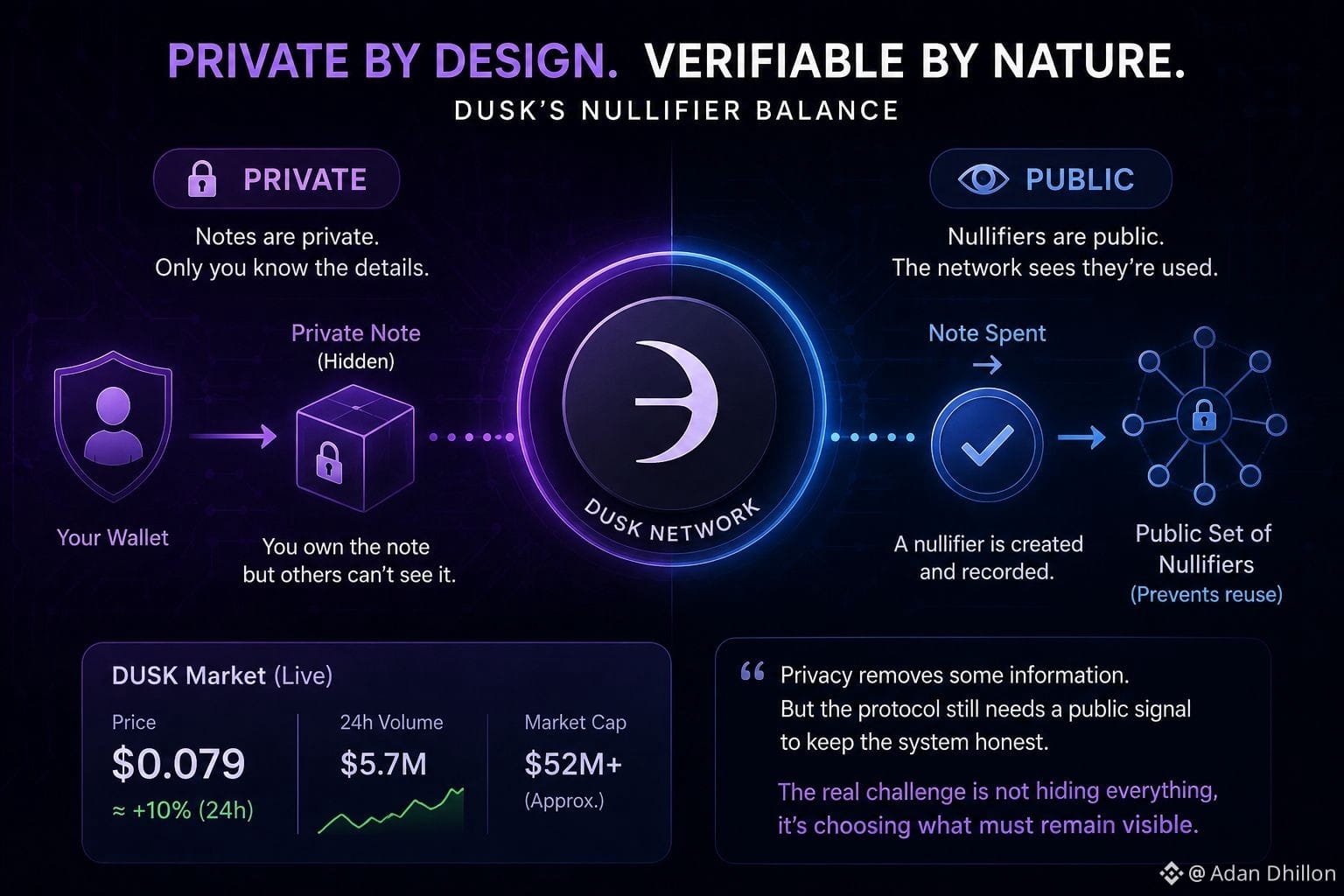
At first I assumed Dusk’s privacy model was mainly about making individual transactions harder to inspect. But the more I looked at Phoenix, the more the nullifier design made me think about a different boundary. A spent note can remain private while its nullifier is kept in a public set so the same output cannot be spent again. What caught my attention is the separation between the private thing being spent and the small piece of information needed to prove it has already been consumed. The network does not need to expose the note itself just to enforce that rule. That creates an interesting contrast: privacy removes some transaction information, but the protocol still needs a persistent public signal to prevent reuse. Maybe that is simply where private transaction systems have to draw the line. You can hide the asset history, but you still need something the network can recognize as already used. So the quieter question is whether financial privacy is really about hiding activity, or about carefully deciding which parts of activity must remain observable?
$DUSK @Dusk_Foundation #dusk
At first I assumed Dusk’s privacy model was mainly about making individual transactions harder to inspect. But the more I looked at Phoenix, the more the nullifier design made me think about a different boundary. A spent note can remain private while its nullifier is kept in a public set so the same output cannot be spent again. What caught my attention is the separation between the private thing being spent and the small piece of information needed to prove it has already been consumed. The network does not need to expose the note itself just to enforce that rule. That creates an interesting contrast: privacy removes some transaction information, but the protocol still needs a persistent public signal to prevent reuse. Maybe that is simply where private transaction systems have to draw the line. You can hide the asset history, but you still need something the network can recognize as already used. So the quieter question is whether financial privacy is really about hiding activity, or about carefully deciding which parts of activity must remain observable?
$DUSK @Dusk #dusk
$DUSK @Dusk #dusk
3
2
82
·
--
翻訳参照
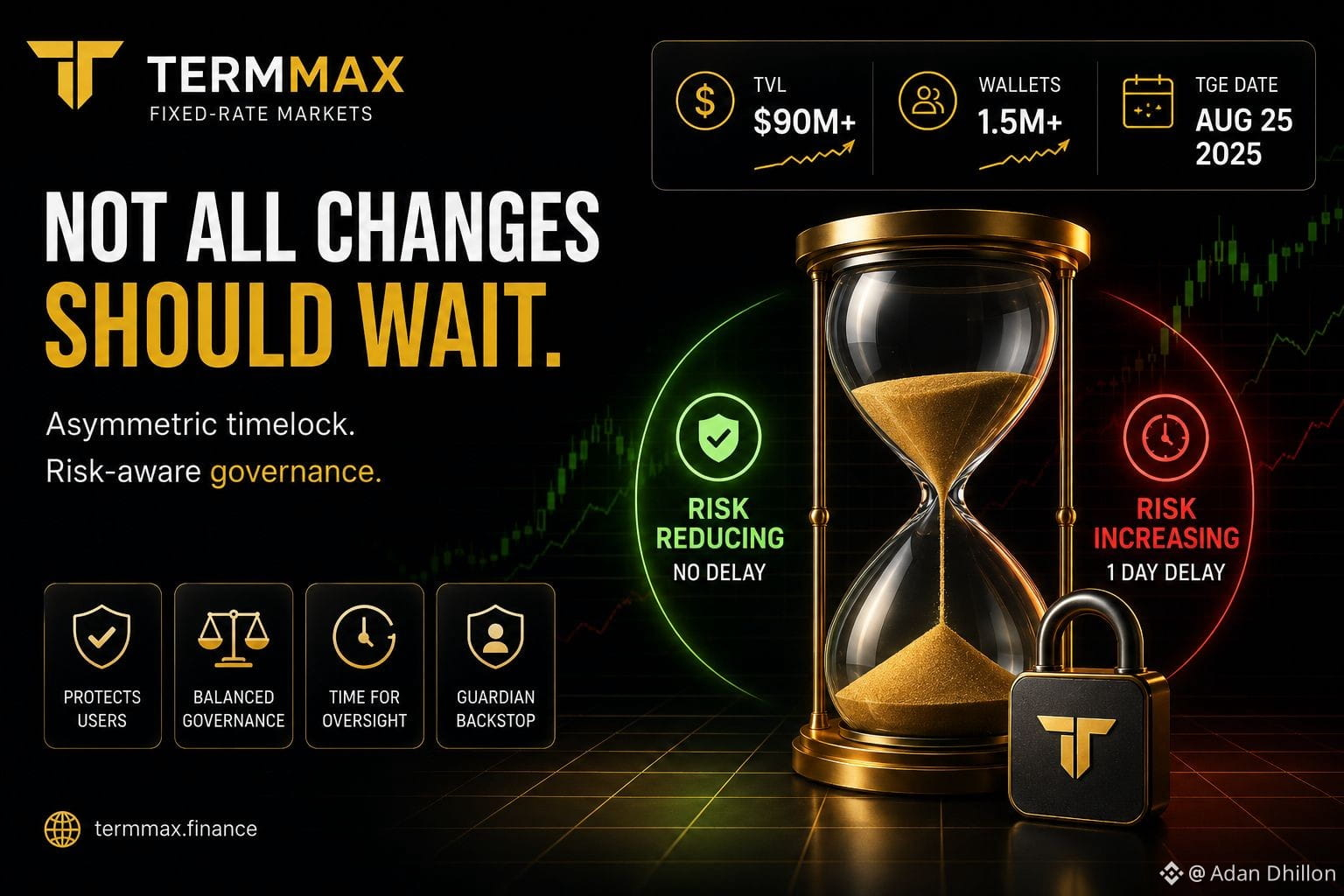
At first I assumed TermMax’s timelock was simply a safety delay around vault changes. But while checking the mechanism against where the protocol is today, I noticed a less obvious contradiction. TermMax now reports $90M+ TVL and 1.5M+ registered wallets, yet TMX has not entered its live market phase until the August 25 TGE. That makes the governance design more interesting to me. The vault rules don’t treat every change equally: risk-reducing changes can move without the normal wait, while changes such as adding a market, raising fees, shortening the timelock, or changing the Guardian face a one-day delay. The protocol can therefore react quickly when tightening controls, but has to slow itself down when expanding authority or exposure. I initially read that as a simple security feature. Now it looks more like a bet on which direction deserves friction. With real capital already sitting in the system before the token is live, that distinction feels less theoretical. So maybe the question isn’t whether TermMax has a timelock, but whether its idea of “risk” matches what the market will actually care about?
#termmax @termmax
At first I assumed TermMax’s timelock was simply a safety delay around vault changes. But while checking the mechanism against where the protocol is today, I noticed a less obvious contradiction. TermMax now reports $90M+ TVL and 1.5M+ registered wallets, yet TMX has not entered its live market phase until the August 25 TGE. That makes the governance design more interesting to me. The vault rules don’t treat every change equally: risk-reducing changes can move without the normal wait, while changes such as adding a market, raising fees, shortening the timelock, or changing the Guardian face a one-day delay. The protocol can therefore react quickly when tightening controls, but has to slow itself down when expanding authority or exposure. I initially read that as a simple security feature. Now it looks more like a bet on which direction deserves friction. With real capital already sitting in the system before the token is live, that distinction feels less theoretical. So maybe the question isn’t whether TermMax has a timelock, but whether its idea of “risk” matches what the market will actually care about?
#termmax @TermMax
#termmax @TermMax
70
·
--
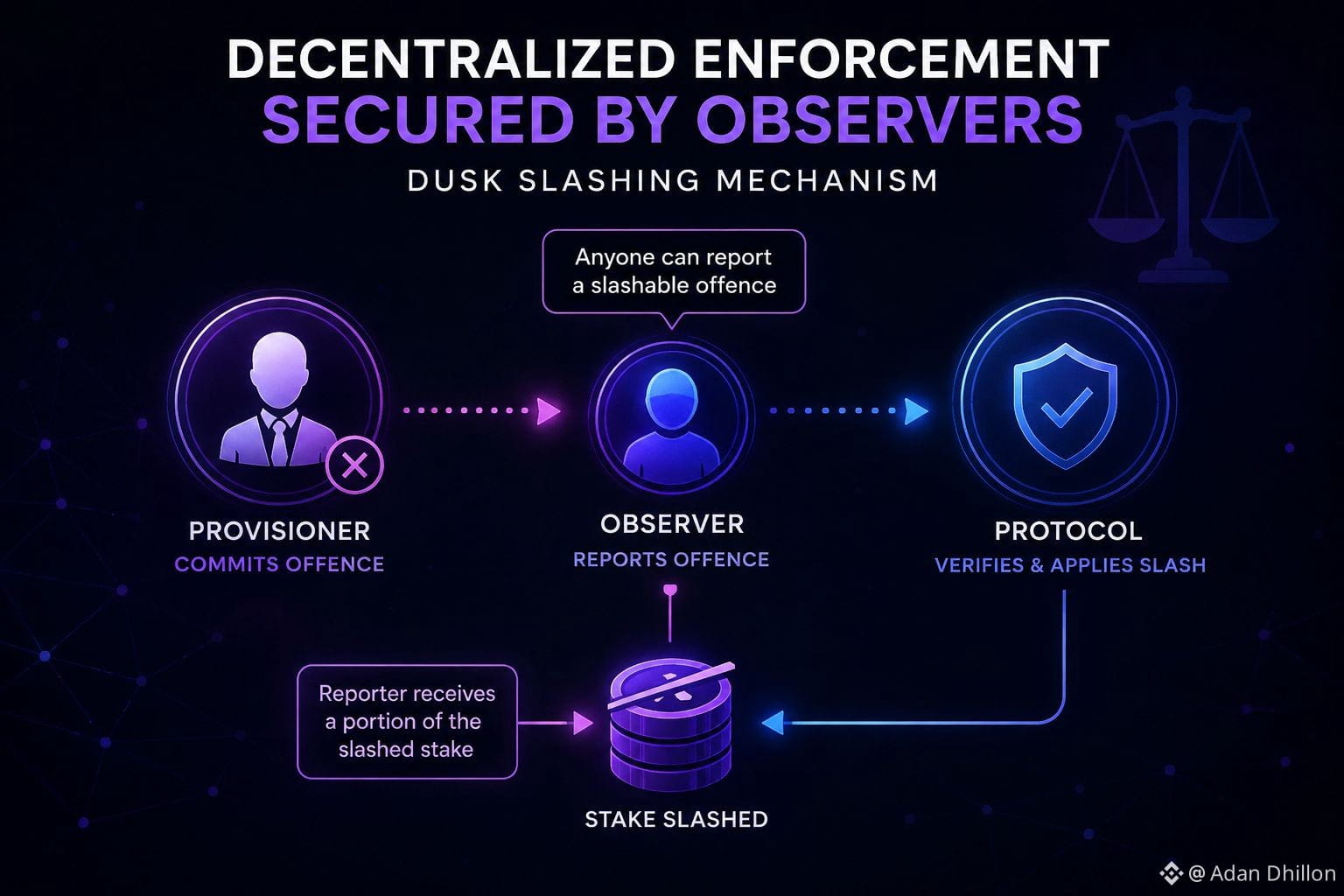
最初私は、ダスクの切りつけるメカニズムは主に、規則に違反したプロビジョナーを罰することにあるのだと思っていました。しかしよく見ていくほど、報告側の存在感が際立ってきました。切りつけ可能な違反行為は、別のプロトコル参加者によって報告できます。そして報告者は、没収されるステークの一部を受け取れるのです。私の注意を引いたのは、したがって執行は罰そのもの以上に依存している点です。つまり、誰かがその行動に気づき、違反をプロトコルの執行プロセスへ持ち込む必要があります。報酬はその観察者がそうする理由になりますが、それと同時に、他者が何をしているかに注意を払う参加者による静かな依存も生み出してしまいます。私はこれまで、観察者側からのスラッシングについてあまり考えていませんでした。おそらくそれは、委員会自身を超えて不正行為を発見可能にすることのトレードオフなのでしょう。執行プロセスは、単一のルールというより、監視される行為者と、それを監視する参加者たちとの関係のように感じられます。ですから、より静かな問いは、分散型の執行が、バリデータに突きつけられる罰のインセンティブだけでなく、観察者のインセンティブにも同じくらい依存しているのかということです。
#dusk $DUSK @Dusk_Foundation
最初私は、ダスクの切りつけるメカニズムは主に、規則に違反したプロビジョナーを罰することにあるのだと思っていました。しかしよく見ていくほど、報告側の存在感が際立ってきました。切りつけ可能な違反行為は、別のプロトコル参加者によって報告できます。そして報告者は、没収されるステークの一部を受け取れるのです。私の注意を引いたのは、したがって執行は罰そのもの以上に依存している点です。つまり、誰かがその行動に気づき、違反をプロトコルの執行プロセスへ持ち込む必要があります。報酬はその観察者がそうする理由になりますが、それと同時に、他者が何をしているかに注意を払う参加者による静かな依存も生み出してしまいます。私はこれまで、観察者側からのスラッシングについてあまり考えていませんでした。おそらくそれは、委員会自身を超えて不正行為を発見可能にすることのトレードオフなのでしょう。執行プロセスは、単一のルールというより、監視される行為者と、それを監視する参加者たちとの関係のように感じられます。ですから、より静かな問いは、分散型の執行が、バリデータに突きつけられる罰のインセンティブだけでなく、観察者のインセンティブにも同じくらい依存しているのかということです。
#dusk $DUSK @Dusk
#dusk $DUSK @Dusk
6
3
82
·
--
翻訳参照
At first I assumed Dusk’s contract execution mainly depended on the contract code and the transaction calling it. But the more I looked at Rusk VM’s execution context, the more the surrounding block state stood out. A state transition doesn’t work with contract state alone. It also receives the current block height, timestamp, epoch seed, block gas limit, gas already used, contracts created in the block, and the transaction’s own gas limit. What caught my attention is that contract execution is therefore tied to the state of the block in which it runs. The contract is not operating in isolation from the network’s current context. That leaves a small dependency I had not really considered: general computation has to remain consistent with both contract state and the limits of the block around it. Maybe that is simply necessary for bounded execution, but it makes the VM’s execution boundary less self-contained than I first assumed. So maybe the quieter question is how much contract behavior should depend on the block context surrounding a transaction?
#dusk $DUSK @Dusk_Foundation
At first I assumed Dusk’s contract execution mainly depended on the contract code and the transaction calling it. But the more I looked at Rusk VM’s execution context, the more the surrounding block state stood out. A state transition doesn’t work with contract state alone. It also receives the current block height, timestamp, epoch seed, block gas limit, gas already used, contracts created in the block, and the transaction’s own gas limit. What caught my attention is that contract execution is therefore tied to the state of the block in which it runs. The contract is not operating in isolation from the network’s current context. That leaves a small dependency I had not really considered: general computation has to remain consistent with both contract state and the limits of the block around it. Maybe that is simply necessary for bounded execution, but it makes the VM’s execution boundary less self-contained than I first assumed. So maybe the quieter question is how much contract behavior should depend on the block context surrounding a transaction?
#dusk $DUSK @Dusk
#dusk $DUSK @Dusk

9
6
262
·
--
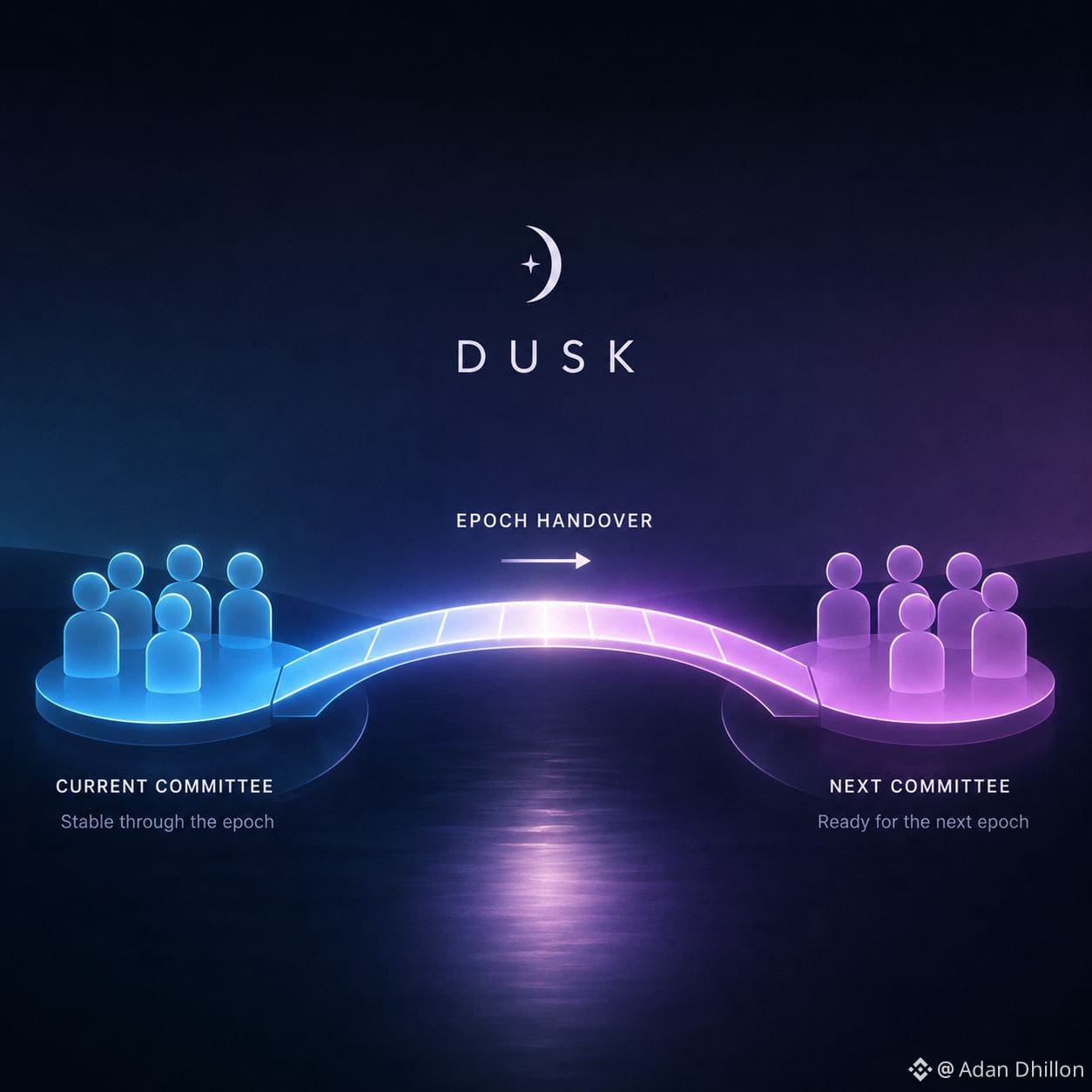
最初は、Duskのコンセンサス委員会があるブロックから次のブロックへと実質的に切り替わっているのだと思いました。けれども調べれば調べるほど、エポック境界の存在が際立ってきました。Duskはエポックをまたいでも、GeneratorセットとProvisionerセットをそのまま維持し、その期間中は同じエポックシードが使われます。私の注目点は、つまり委員会の選定が、毎ラウンドごとの新しい調整タスクではないということです。ネットワークには、コンセンサスの状況(コンテキスト)を意図的に安定させる期間があります。これはおそらくチurnを減らしますが、同時にエポック間の移行が、それ自体で小さな調整ポイントになることも意味します。最終的には、古い参加者セットは、新しい参加者セットに席を譲る必要がありますが、その変更そのものが不確実性の原因になってしまわないようにしなければなりません。おそらく、複数ラウンドにわたって委員会を安定させることのトレードオフなのでしょう。そこで私は、委員会のローテーションを「選定の問題」というより「引き継ぎの問題」として捉えるようになりました。だから、問いは「Duskが次の委員会をどう選ぶのか」ではなく、「分散ネットワークが、ある信頼されたコンテキストから別の信頼されたコンテキストへどれだけきれいに移行できるのか」なのかもしれません。
#dusk $DUSK @Dusk_Foundation
最初は、Duskのコンセンサス委員会があるブロックから次のブロックへと実質的に切り替わっているのだと思いました。けれども調べれば調べるほど、エポック境界の存在が際立ってきました。Duskはエポックをまたいでも、GeneratorセットとProvisionerセットをそのまま維持し、その期間中は同じエポックシードが使われます。私の注目点は、つまり委員会の選定が、毎ラウンドごとの新しい調整タスクではないということです。ネットワークには、コンセンサスの状況(コンテキスト)を意図的に安定させる期間があります。これはおそらくチurnを減らしますが、同時にエポック間の移行が、それ自体で小さな調整ポイントになることも意味します。最終的には、古い参加者セットは、新しい参加者セットに席を譲る必要がありますが、その変更そのものが不確実性の原因になってしまわないようにしなければなりません。おそらく、複数ラウンドにわたって委員会を安定させることのトレードオフなのでしょう。そこで私は、委員会のローテーションを「選定の問題」というより「引き継ぎの問題」として捉えるようになりました。だから、問いは「Duskが次の委員会をどう選ぶのか」ではなく、「分散ネットワークが、ある信頼されたコンテキストから別の信頼されたコンテキストへどれだけきれいに移行できるのか」なのかもしれません。
#dusk $DUSK @Dusk
#dusk $DUSK @Dusk
11
3
86
·
--
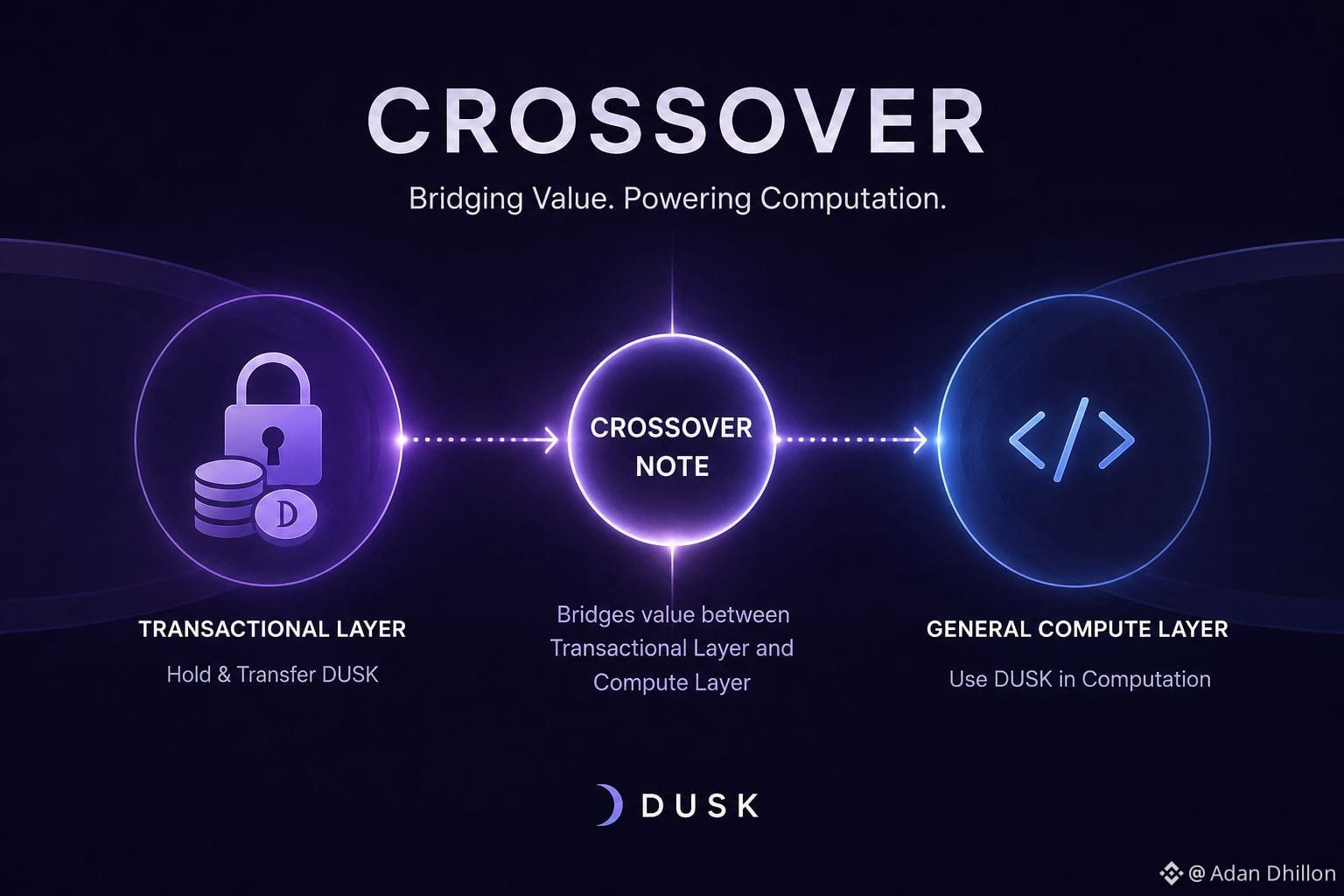
最初は、DUSKを契約実行に移すことは、単に残高を移転するだけの問題だと考えていました。
しかし、Crossoverの詳細がその見方を変えました。
Duskのトランザクションモデルでは、Crossoverは取引レイヤーと一般的な計算レイヤーを結びつける特定の注記です。つまり、DUSKを保有することと、それを計算に利用できる状態にすることの境界は、抽象的なものではなく、その裏には明確な取引ロジックがあります。
興味深いのは、このブリッジがすべてのトランザクションに必要ではない点です。通常の転送は取引レイヤー内に留めることができますが、計算を必要とするトランザクションは、その境界を越えて価値を明示的に持ち運べます。
この分離は意図的に見えます。通常の転送が、不要な計算に依存してしまうのを防ぎつつ、アプリケーションに対して、価値を計算環境へ移すための定義された仕組みを提供しているからです。
ただし、それは同時に興味深い設計上の問いも生みます。アプリケーションが両レイヤーにますます依存するようになったとき、この明示的な境界はシステムを考えやすくするのか、それとも開発者が管理すべき別の連携ポイントになってしまうのか?
その小さなCrossoverの詳細は、Duskが価値の移動と計算をどのように分けているのかを多く語っています。
#dusk $DUSK @Dusk_Foundation
最初は、DUSKを契約実行に移すことは、単に残高を移転するだけの問題だと考えていました。
しかし、Crossoverの詳細がその見方を変えました。
Duskのトランザクションモデルでは、Crossoverは取引レイヤーと一般的な計算レイヤーを結びつける特定の注記です。つまり、DUSKを保有することと、それを計算に利用できる状態にすることの境界は、抽象的なものではなく、その裏には明確な取引ロジックがあります。
興味深いのは、このブリッジがすべてのトランザクションに必要ではない点です。通常の転送は取引レイヤー内に留めることができますが、計算を必要とするトランザクションは、その境界を越えて価値を明示的に持ち運べます。
この分離は意図的に見えます。通常の転送が、不要な計算に依存してしまうのを防ぎつつ、アプリケーションに対して、価値を計算環境へ移すための定義された仕組みを提供しているからです。
ただし、それは同時に興味深い設計上の問いも生みます。アプリケーションが両レイヤーにますます依存するようになったとき、この明示的な境界はシステムを考えやすくするのか、それとも開発者が管理すべき別の連携ポイントになってしまうのか?
その小さなCrossoverの詳細は、Duskが価値の移動と計算をどのように分けているのかを多く語っています。
#dusk $DUSK @Dusk
しかし、Crossoverの詳細がその見方を変えました。
Duskのトランザクションモデルでは、Crossoverは取引レイヤーと一般的な計算レイヤーを結びつける特定の注記です。つまり、DUSKを保有することと、それを計算に利用できる状態にすることの境界は、抽象的なものではなく、その裏には明確な取引ロジックがあります。
興味深いのは、このブリッジがすべてのトランザクションに必要ではない点です。通常の転送は取引レイヤー内に留めることができますが、計算を必要とするトランザクションは、その境界を越えて価値を明示的に持ち運べます。
この分離は意図的に見えます。通常の転送が、不要な計算に依存してしまうのを防ぎつつ、アプリケーションに対して、価値を計算環境へ移すための定義された仕組みを提供しているからです。
ただし、それは同時に興味深い設計上の問いも生みます。アプリケーションが両レイヤーにますます依存するようになったとき、この明示的な境界はシステムを考えやすくするのか、それとも開発者が管理すべき別の連携ポイントになってしまうのか?
その小さなCrossoverの詳細は、Duskが価値の移動と計算をどのように分けているのかを多く語っています。
#dusk $DUSK @Dusk
12
7
73
·
--
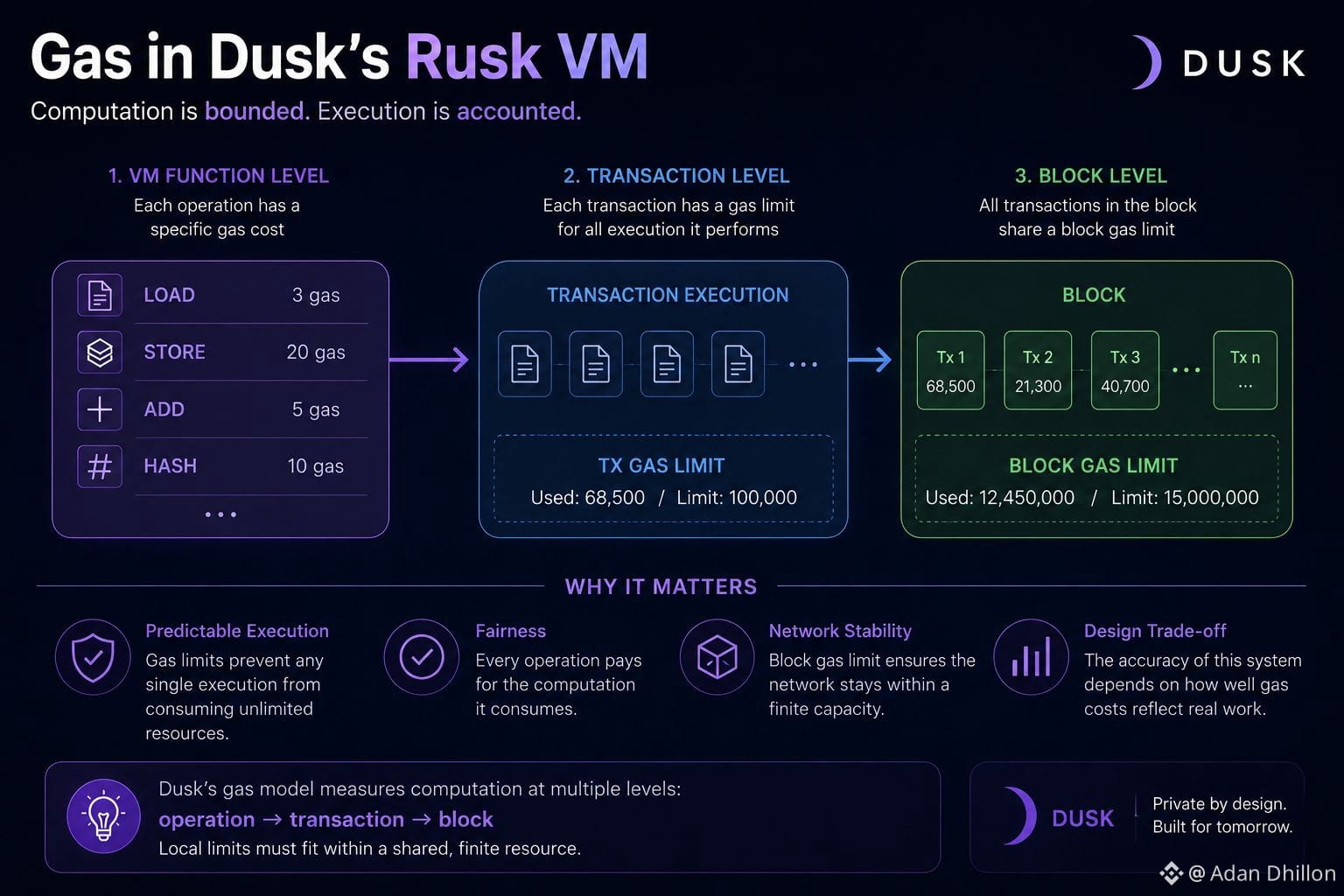
最初私は、DuskのRusk VMにおけるガスが、契約が計算を使いすぎないための主な安全策なのだろうと思っていました。しかし調べるほど、会計上の境界が私の注意を引くようになりました。各VM関数にはガスコストがあり、一方で取引にはそれぞれ独自のガス上限が設定されており、ブロックもまたガス上限の範囲内で動作します。私の関心を引いたのは、計算が1つのコントラクト呼び出しの中だけでなく、複数のレベルで制限されているという点です。取引は自分自身の予算の範囲に収まらなければなりませんが、同時にブロック単位のより大きなリソース制約の一部にもなります。これにより、以前あまり考慮していなかった小さな依存関係が生まれます。つまり、ローカルな実行制限は、共有された容量に収まる必要があるのです。取引は自分の許容量の範囲内では有効でありえますが、それでもブロック全体として利用可能な有限の計算資源に寄与してしまいます。おそらくこれは、汎用的な計算を制限し続けるための単なるトレードオフなのでしょう。ではより静かな問いは、すべての取引が最終的に同じブロックを共有するのだとしたら、これらのローカルな上限はどのように調整されるべきなのか、ということです。
#dusk $DUSK @Dusk_Foundation
最初私は、DuskのRusk VMにおけるガスが、契約が計算を使いすぎないための主な安全策なのだろうと思っていました。しかし調べるほど、会計上の境界が私の注意を引くようになりました。各VM関数にはガスコストがあり、一方で取引にはそれぞれ独自のガス上限が設定されており、ブロックもまたガス上限の範囲内で動作します。私の関心を引いたのは、計算が1つのコントラクト呼び出しの中だけでなく、複数のレベルで制限されているという点です。取引は自分自身の予算の範囲に収まらなければなりませんが、同時にブロック単位のより大きなリソース制約の一部にもなります。これにより、以前あまり考慮していなかった小さな依存関係が生まれます。つまり、ローカルな実行制限は、共有された容量に収まる必要があるのです。取引は自分の許容量の範囲内では有効でありえますが、それでもブロック全体として利用可能な有限の計算資源に寄与してしまいます。おそらくこれは、汎用的な計算を制限し続けるための単なるトレードオフなのでしょう。ではより静かな問いは、すべての取引が最終的に同じブロックを共有するのだとしたら、これらのローカルな上限はどのように調整されるべきなのか、ということです。
#dusk $DUSK @Dusk
#dusk $DUSK @Dusk
17
12
82
·
--
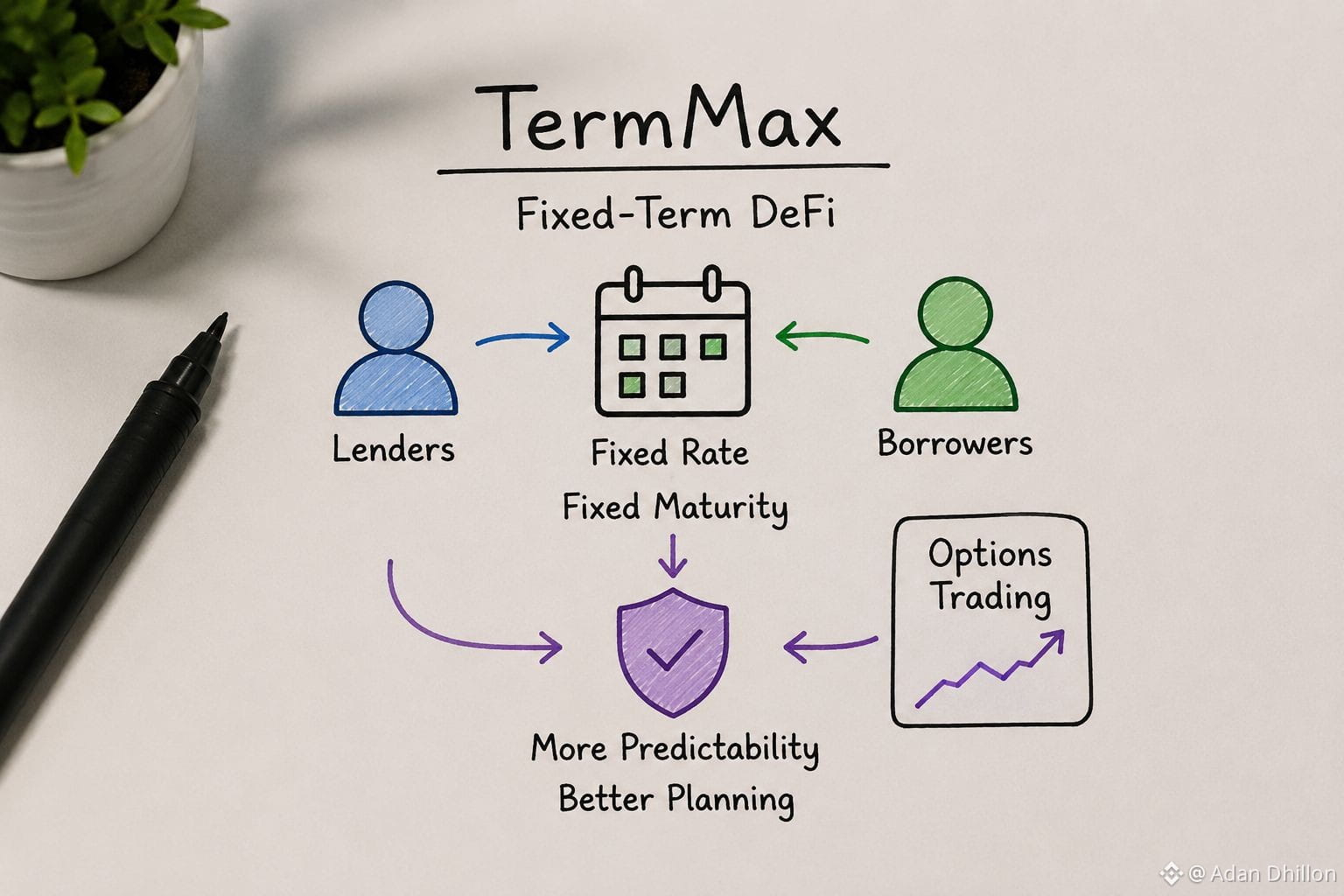
TermMaxの中で私が最も面白いと感じるのは利回りではありません。固定満期が、DeFiポジションの考え方にどう影響するか――そこです。
@termmax は、固定金利の借入と貸付をオプション取引と組み合わせ、資本のタイムラインが、金利そのものと同じくらい重要になる市場を作り出します。
変動金利の貸付では、経済状況があなたの足元で動いてしまうことがあります。固定期間のポジションは、その方程式を変えます。合意された金利と満期が分かっているので、計画はより意図的になります。ですが、その確実性にはトレードオフがあります。資本が定義された期間に結び付いているときは、流動性や撤退(退出)条件の重要度が増します。
それが、見落とされやすいポイントだと思います。
現在のBinance Walletキャンペーンは、TermMaxに数千人の新規ユーザーを呼び込むかもしれませんが、より意味のある試練はその後に来ます。ユーザーは、プロトコルが実際の資本管理という課題を解決してくれるから戻ってくるのか、それともTMXのインセンティブがあったからだけなのか?
私にとって、その違いはランキング(リーダーボード)よりも重要です。
成功するキャンペーンは注目を生みます。有用なプロダクトは継続(リテンション)を生みます。
#termmax @termmax
TermMaxの中で私が最も面白いと感じるのは利回りではありません。固定満期が、DeFiポジションの考え方にどう影響するか――そこです。
@TermMax は、固定金利の借入と貸付をオプション取引と組み合わせ、資本のタイムラインが、金利そのものと同じくらい重要になる市場を作り出します。
変動金利の貸付では、経済状況があなたの足元で動いてしまうことがあります。固定期間のポジションは、その方程式を変えます。合意された金利と満期が分かっているので、計画はより意図的になります。ですが、その確実性にはトレードオフがあります。資本が定義された期間に結び付いているときは、流動性や撤退(退出)条件の重要度が増します。
それが、見落とされやすいポイントだと思います。
現在のBinance Walletキャンペーンは、TermMaxに数千人の新規ユーザーを呼び込むかもしれませんが、より意味のある試練はその後に来ます。ユーザーは、プロトコルが実際の資本管理という課題を解決してくれるから戻ってくるのか、それともTMXのインセンティブがあったからだけなのか?
私にとって、その違いはランキング(リーダーボード)よりも重要です。
成功するキャンペーンは注目を生みます。有用なプロダクトは継続(リテンション)を生みます。
#termmax @TermMax
@TermMax は、固定金利の借入と貸付をオプション取引と組み合わせ、資本のタイムラインが、金利そのものと同じくらい重要になる市場を作り出します。
変動金利の貸付では、経済状況があなたの足元で動いてしまうことがあります。固定期間のポジションは、その方程式を変えます。合意された金利と満期が分かっているので、計画はより意図的になります。ですが、その確実性にはトレードオフがあります。資本が定義された期間に結び付いているときは、流動性や撤退(退出)条件の重要度が増します。
それが、見落とされやすいポイントだと思います。
現在のBinance Walletキャンペーンは、TermMaxに数千人の新規ユーザーを呼び込むかもしれませんが、より意味のある試練はその後に来ます。ユーザーは、プロトコルが実際の資本管理という課題を解決してくれるから戻ってくるのか、それともTMXのインセンティブがあったからだけなのか?
私にとって、その違いはランキング(リーダーボード)よりも重要です。
成功するキャンペーンは注目を生みます。有用なプロダクトは継続(リテンション)を生みます。
#termmax @TermMax
37
12
73
·
--
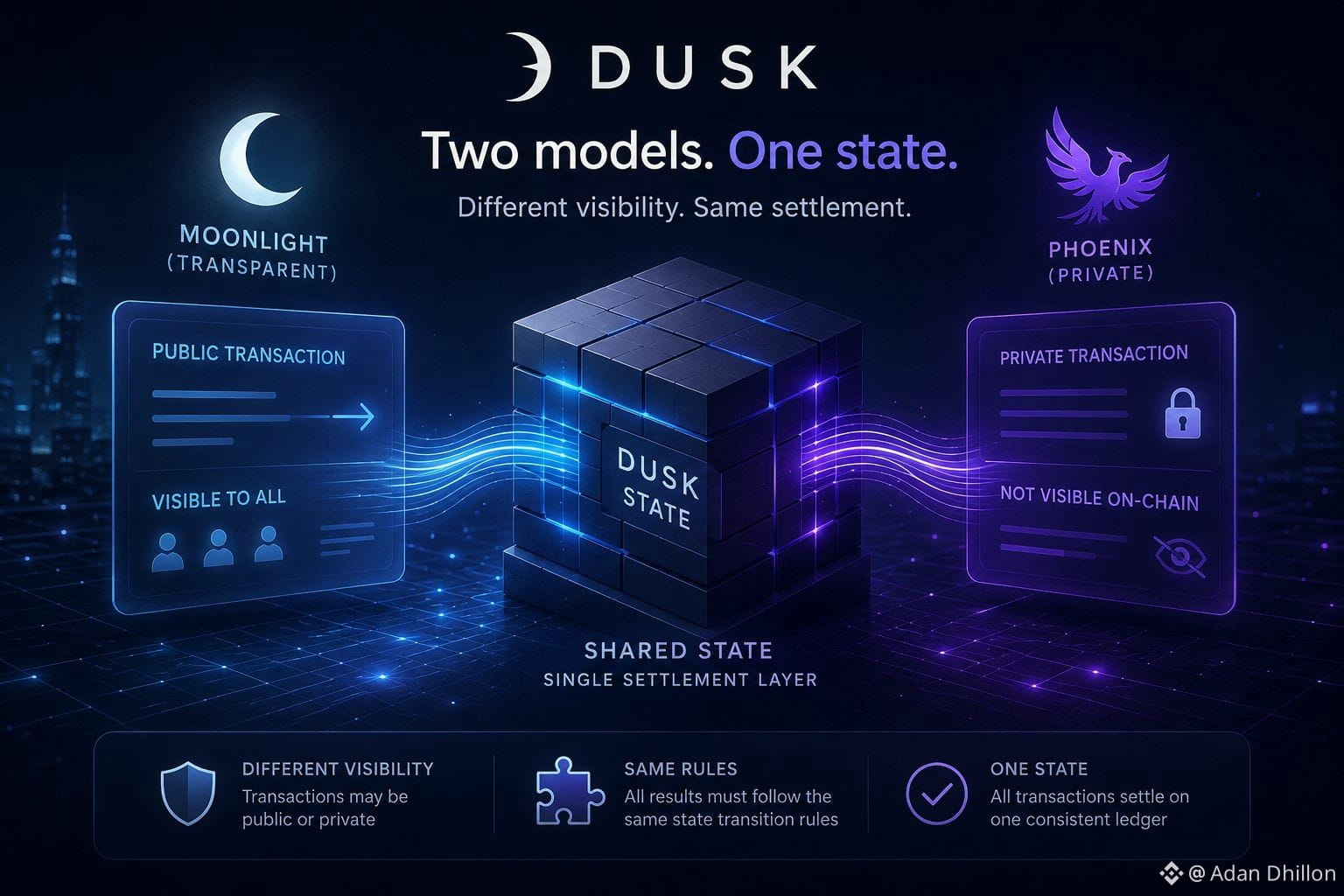
最初は、ダスクの異なる取引モデルは主に「公開」と「非公開」の送金を選ぶ違いだと思っていました。しかしよく見ていくほど、それらの下にある共通の状態に目が引かれました。ダスクは、可視性の異なる特性で取引を処理できますが、その効果はやはり、1つの一貫した状態に対して決着しなければなりません。興味深いのは、プライバシーが第二の会計システムを生み出すわけではない点です。プライバシーは、取引の周囲で観測できるものを変えるだけで、根底の状態遷移は同じネットワークのルールに従うままです。すると静かな依存関係が生まれます。観測者が得られる情報が同じでなくても、異なる検証の経路は結局同じ結果に合意しなければなりません。これが問題だとまでは分かりませんが、その経路同士を揃えるための複雑さがいくらか増えるのは確かです。これはプライバシーの問題というより、同じ台帳を異なる視点で見たもの同士の「協調」の問題のように感じます。ですから、より静かな問いは、おそらく「参加者が、たとえ1つの状態に合意する必要があるとしても、どれくらいの情報を共有する必要があるのか?」ではないでしょうか。
$DUSK @Dusk_Foundation #dusk
最初は、ダスクの異なる取引モデルは主に「公開」と「非公開」の送金を選ぶ違いだと思っていました。しかしよく見ていくほど、それらの下にある共通の状態に目が引かれました。ダスクは、可視性の異なる特性で取引を処理できますが、その効果はやはり、1つの一貫した状態に対して決着しなければなりません。興味深いのは、プライバシーが第二の会計システムを生み出すわけではない点です。プライバシーは、取引の周囲で観測できるものを変えるだけで、根底の状態遷移は同じネットワークのルールに従うままです。すると静かな依存関係が生まれます。観測者が得られる情報が同じでなくても、異なる検証の経路は結局同じ結果に合意しなければなりません。これが問題だとまでは分かりませんが、その経路同士を揃えるための複雑さがいくらか増えるのは確かです。これはプライバシーの問題というより、同じ台帳を異なる視点で見たもの同士の「協調」の問題のように感じます。ですから、より静かな問いは、おそらく「参加者が、たとえ1つの状態に合意する必要があるとしても、どれくらいの情報を共有する必要があるのか?」ではないでしょうか。
$DUSK @Dusk #dusk
$DUSK @Dusk #dusk
31
19
122
ログインして、さらにコンテンツを読む
厳選トピックで世界の暗号資産トレーダーの仲間入り
⚡️ 暗号資産に関する最新かつ有益な情報が見つかります。
💬 世界最大の暗号資産取引所から信頼されています。
👍 認証を受けたクリエイターから、有益なインサイトを得られます。
メール / 電話番号