Binance Square
Kristoffer oersoe
1.4k 投稿

Kristoffer oersoe

Bitcoin & Altcoin insights! 🚀 I break down market trends, provide in-depth analysis, and highlight opportunities. Join our community! 👇
取引を発注
BNBホルダー
BNBホルダー
超高頻度トレーダー
4.1年
23 フォロー
432 フォロワー
1.1K+ いいね
投稿
ポートフォリオ
PINNED
·
--
確認済み
記事
翻訳参照
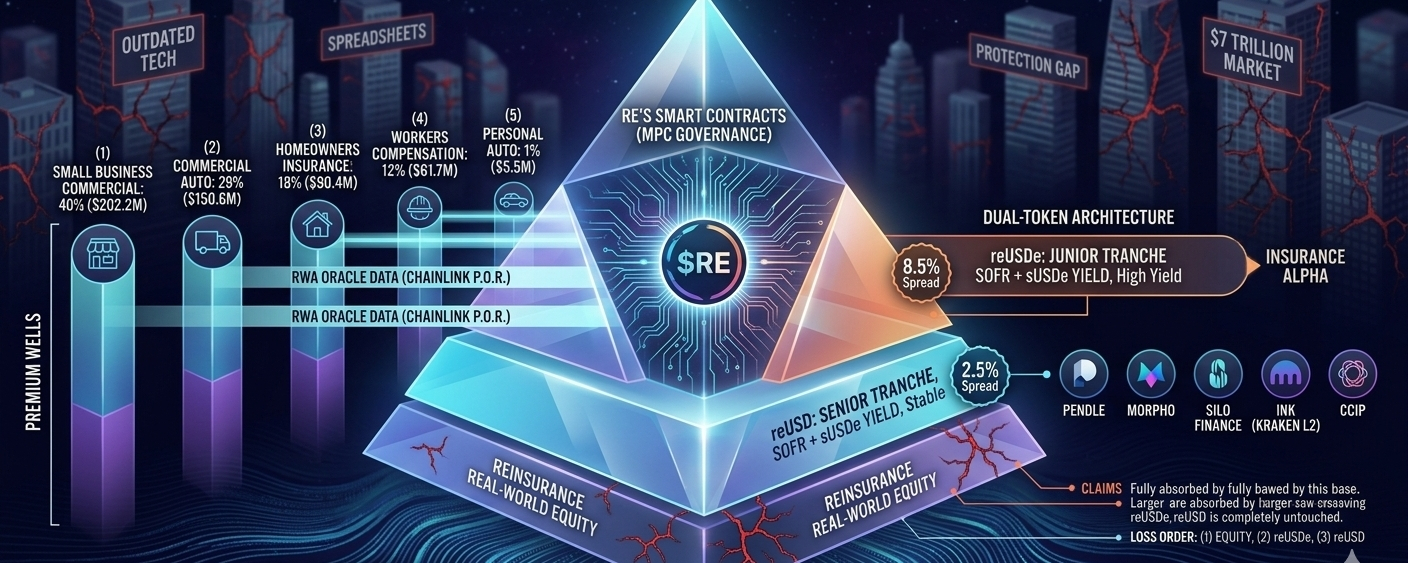
Rebuilding a $7 Trillion Market: Under the Hood of Re's Onchain Insurance.The global insurance market handles about $7 trillion in premiums every year. You’d think an industry of that scale would run on cutting-edge technology, but the reality is a lot messier. Behind the scenes, the reinsurance market—the companies that insure the insurers—is largely held together by spreadsheets, slow quarterly reports, and endless email chains. This outdated plumbing has created a massive problem: a $1.8 trillion "protection gap" where capital simply isn't reaching the risks that need coverage. ​Enter Re. Instead of just launching another speculative token, they’re building a completely new infrastructure layer—one that connects the $700 billion private reinsurance market directly to decentralized finance (DeFi). But how does it actually work at the smart contract level? Let’s look under the hood The Dual-Token Architecture & The Yield Engine ​Marketing materials love to talk about "real-world yield," but what does the math actually look like onchain? Re operates a dual-token system to separate depositors by their risk tolerance, and the yield itself is a hybrid of TradFi and DeFi. ​Here’s the baseline formula for generating returns: Funds deployed in the real world earn the traditional SOFR (Secured Overnight Financing Rate), while capital sitting onchain earns the yield of Ethena’s sUSDe (a delta-neutral basis trade). ​From there, users pick their token: ​reUSD (The Senior Tranche): Designed for steady, lower-volatility income. It earns the base yield (SOFR + sUSDe) plus a 2.5% (250 bps) spread. ​reUSDe (The Junior Tranche): Geared toward those willing to take on more risk for "insurance alpha." It earns the base yield plus an 8.5% (850 bps) spread. The Capital Stack & Portfolio Breakdown ​If a massive wave of claims hits, how do you prevent crypto depositors from getting wiped out? Re handles this by rigidly enforcing a loss order through their smart contracts. ​If there’s a payout, Re’s own real-world equity takes the first hit. If that’s exhausted, the reUSDe (junior) holders absorb the next wave of losses. The reUSD (senior) token only takes a hit if those first two layers are completely vaporized. To back this up, the Resilience Foundation recently moved a $100 million surplus note into their real-world reinsurance arm, Cover Re SPC. ​You also won’t catch them underwriting hurricane or earthquake insurance. Their underwriting portfolio focuses strictly on predictable, high-frequency markets. Valued at $510.5 million across 48 active programs, here is exactly how that risk is currently distributed: ​Small Business Commercial: 40% ($202.2M)​Commercial Auto: 29% ($150.6M)​Homeowners Insurance: 18% ($90.4M)​Workers Compensation: 12% ($61.7M)​Personal Auto: 1% ($5.5M)Smart Contract Mechanics & Liquidity Bridging real-world assets (RWAs) into DeFi requires robust structural safeguards. Re uses Chainlink Proof of Reserve to verify offchain collateral, and the Net Asset Value (NAV) of the tokens is recalculated daily at UTC 00:00 via Chainlink oracles. To prevent oracle manipulation, the contracts include hard guardrails that automatically reject outsized single-day price swings. Offchain, their fiat balances are audited daily by an independent accounting group called The Network Firm. ​Liquidity mechanics also depend heavily on the token: ​reUSD features atomic (instant) redemptions. If onchain liquidity dries up, the smart contract automatically shifts to a First-In, First-Out (FIFO) queue.​reUSDe liquidity is strictly restricted. Redemptions only happen during quarterly windows and require a formal actuarial review of surplus capital. ​Finally, critical protocol controls aren't held by a single admin key—they are governed by MPC (Multi-Party Computation) multi-signature wallets to ensure decentralized security. Composable DeFi & The AI Angle ​Because they recently upgraded to Chainlink CCIP, reUSD can securely move across blockchains. It's already plugged into DeFi heavyweights like Pendle, Morpho, and Silo Finance, alongside a recent integration with Ink, Kraken’s Ethereum Layer 2. ​But there’s a hidden gem in Re's recent ecosystem updates: they are positioning their protocol to act as the "trust layer" for AI agents. As autonomous AI begins allocating capital and transacting in the real economy, these agents won’t be able to call up a traditional broker to buy insurance. They will need programmable, onchain risk management—the exact infrastructure Re is building. What's Next The momentum is building fast. With a Total Value Locked (TVL) approaching $600 million and a fresh strategic investment from Coinbase Ventures earlier this month, Re is stepping on the gas. The protocol has recorded over $409 million in premiums since its inception and just authorized another $134 million for the January 2026 renewal season. ​Just days ago, on June 18, they officially launched their ERC-20 governance token, $RE, signaling the next phase of decentralizing the protocol. ​It’s a massive swing at a $7 trillion market, and the smart contracts are already running the show. Summary in Plain English ​If you want the quick takeaway, here is exactly how Re works without the heavy technical jargon ​What it actually does: Re connects cryptocurrency with the massive real-world insurance market. Instead of earning yield by trading or printing speculative crypto tokens, users earn returns paid out from real-world insurance premiums (like commercial auto, home, and small business insurance).​The Two Options: Standard users can hold reUSD for safer, lower-volatility yields with instant withdrawals. High-risk users can hold reUSDe for much higher yields, but their funds are locked up quarterly and face higher risk.​The Safety Net: Crypto deposits are heavily protected. If bad insurance claims happen in the real world, Re's corporate money and the high-risk pool (reUSDe) take the losses first. Mainstream reUSD depositors only lose money if a massive, unprecedented catastrophe entirely wipes out the first two defensive layers.​Why it matters: It’s a bridge between a $7 trillion traditional finance engine and DeFi, backed by real-time blockchain tracking (Chainlink) and institutional money from giants like Coinbase Ventures. If you want to help us a bit, please use our icons to trade on the spot, or leave a small tip. It helps us a lot. 😊 $BTC $USDT $RE

Rebuilding a $7 Trillion Market: Under the Hood of Re's Onchain Insurance.

The global insurance market handles about $7 trillion in premiums every year. You’d think an industry of that scale would run on cutting-edge technology, but the reality is a lot messier. Behind the scenes, the reinsurance market—the companies that insure the insurers—is largely held together by spreadsheets, slow quarterly reports, and endless email chains.
This outdated plumbing has created a massive problem: a $1.8 trillion "protection gap" where capital simply isn't reaching the risks that need coverage.
​Enter Re. Instead of just launching another speculative token, they’re building a completely new infrastructure layer—one that connects the $700 billion private reinsurance market directly to decentralized finance (DeFi). But how does it actually work at the smart contract level? Let’s look under the hood
The Dual-Token Architecture & The Yield Engine
​Marketing materials love to talk about "real-world yield," but what does the math actually look like onchain? Re operates a dual-token system to separate depositors by their risk tolerance, and the yield itself is a hybrid of TradFi and DeFi.
​Here’s the baseline formula for generating returns: Funds deployed in the real world earn the traditional SOFR (Secured Overnight Financing Rate), while capital sitting onchain earns the yield of Ethena’s sUSDe (a delta-neutral basis trade).
​From there, users pick their token:
​reUSD (The Senior Tranche): Designed for steady, lower-volatility income. It earns the base yield (SOFR + sUSDe) plus a 2.5% (250 bps) spread.
​reUSDe (The Junior Tranche): Geared toward those willing to take on more risk for "insurance alpha." It earns the base yield plus an 8.5% (850 bps) spread.
The Capital Stack & Portfolio Breakdown
​If a massive wave of claims hits, how do you prevent crypto depositors from getting wiped out? Re handles this by rigidly enforcing a loss order through their smart contracts.
​If there’s a payout, Re’s own real-world equity takes the first hit. If that’s exhausted, the reUSDe (junior) holders absorb the next wave of losses. The reUSD (senior) token only takes a hit if those first two layers are completely vaporized. To back this up, the Resilience Foundation recently moved a $100 million surplus note into their real-world reinsurance arm, Cover Re SPC.
​You also won’t catch them underwriting hurricane or earthquake insurance. Their underwriting portfolio focuses strictly on predictable, high-frequency markets. Valued at $510.5 million across 48 active programs, here is exactly how that risk is currently distributed:
​Small Business Commercial: 40% ($202.2M)​Commercial Auto: 29% ($150.6M)​Homeowners Insurance: 18% ($90.4M)​Workers Compensation: 12% ($61.7M)​Personal Auto: 1% ($5.5M)Smart Contract Mechanics & Liquidity
Bridging real-world assets (RWAs) into DeFi requires robust structural safeguards. Re uses Chainlink Proof of Reserve to verify offchain collateral, and the Net Asset Value (NAV) of the tokens is recalculated daily at UTC 00:00 via Chainlink oracles. To prevent oracle manipulation, the contracts include hard guardrails that automatically reject outsized single-day price swings. Offchain, their fiat balances are audited daily by an independent accounting group called The Network Firm.
​Liquidity mechanics also depend heavily on the token:
​reUSD features atomic (instant) redemptions. If onchain liquidity dries up, the smart contract automatically shifts to a First-In, First-Out (FIFO) queue.​reUSDe liquidity is strictly restricted. Redemptions only happen during quarterly windows and require a formal actuarial review of surplus capital.
​Finally, critical protocol controls aren't held by a single admin key—they are governed by MPC (Multi-Party Computation) multi-signature wallets to ensure decentralized security.
Composable DeFi & The AI Angle
​Because they recently upgraded to Chainlink CCIP, reUSD can securely move across blockchains. It's already plugged into DeFi heavyweights like Pendle, Morpho, and Silo Finance, alongside a recent integration with Ink, Kraken’s Ethereum Layer 2.
​But there’s a hidden gem in Re's recent ecosystem updates: they are positioning their protocol to act as the "trust layer" for AI agents. As autonomous AI begins allocating capital and transacting in the real economy, these agents won’t be able to call up a traditional broker to buy insurance. They will need programmable, onchain risk management—the exact infrastructure Re is building.
What's Next
The momentum is building fast. With a Total Value Locked (TVL) approaching $600 million and a fresh strategic investment from Coinbase Ventures earlier this month, Re is stepping on the gas. The protocol has recorded over $409 million in premiums since its inception and just authorized another $134 million for the January 2026 renewal season.
​Just days ago, on June 18, they officially launched their ERC-20 governance token, $RE , signaling the next phase of decentralizing the protocol.
​It’s a massive swing at a $7 trillion market, and the smart contracts are already running the show.
Summary in Plain English
​If you want the quick takeaway, here is exactly how Re works without the heavy technical jargon
​What it actually does: Re connects cryptocurrency with the massive real-world insurance market. Instead of earning yield by trading or printing speculative crypto tokens, users earn returns paid out from real-world insurance premiums (like commercial auto, home, and small business insurance).​The Two Options: Standard users can hold reUSD for safer, lower-volatility yields with instant withdrawals. High-risk users can hold reUSDe for much higher yields, but their funds are locked up quarterly and face higher risk.​The Safety Net: Crypto deposits are heavily protected. If bad insurance claims happen in the real world, Re's corporate money and the high-risk pool (reUSDe) take the losses first. Mainstream reUSD depositors only lose money if a massive, unprecedented catastrophe entirely wipes out the first two defensive layers.​Why it matters: It’s a bridge between a $7 trillion traditional finance engine and DeFi, backed by real-time blockchain tracking (Chainlink) and institutional money from giants like Coinbase Ventures.
If you want to help us a bit, please use our icons to trade on the spot, or leave a small tip. It helps us a lot.
😊
$BTC $USDT $RE
PINNED
記事
OMトークンの波乱の旅: 2025年4月の暴落を解読する$OM 2/6 さて、皆さん、波乱の旅について話しましょう。 2025年4月、MANTRAの独自のOMトークンは大きな打撃を受け、わずか数時間でその価格が約90%も急落しました。 これが、あなたの胃がひっくり返るような落ち方です!この暴落は数十億ドルの市場価値を消失させ、当然ながら投資家の信頼を根底から揺るがしました。 MANTRAのチームは、特に取引活動が低下しがちな週末に、中央集権型取引所(CEX)の「無謀な」強制清算を非難しました。

OMトークンの波乱の旅: 2025年4月の暴落を解読する

$OM
2/6
さて、皆さん、波乱の旅について話しましょう。
2025年4月、MANTRAの独自のOMトークンは大きな打撃を受け、わずか数時間でその価格が約90%も急落しました。
これが、あなたの胃がひっくり返るような落ち方です!この暴落は数十億ドルの市場価値を消失させ、当然ながら投資家の信頼を根底から揺るがしました。
MANTRAのチームは、特に取引活動が低下しがちな週末に、中央集権型取引所(CEX)の「無謀な」強制清算を非難しました。
翻訳参照
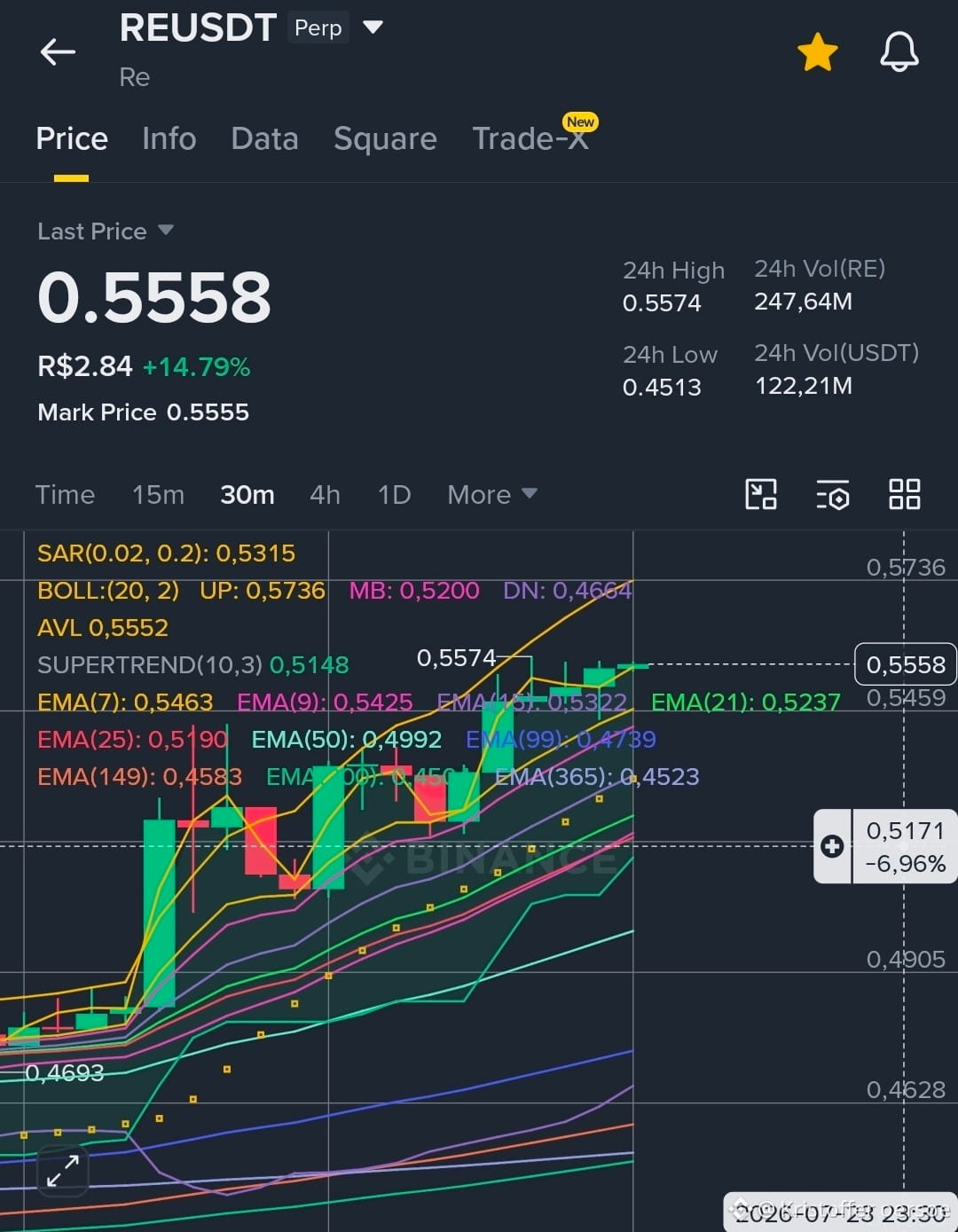
$RE To overcome current resistance and capitalize on the significant buying interest, a price reduction is necessary, as depicted in the image. 0.5
$RE

To overcome current resistance and capitalize on the significant buying interest, a price reduction is necessary, as depicted in the image. 0.5
翻訳参照
$RE The data indicates a significant overbought condition, which may precipitate a market correction downward
$RE

The data indicates a significant overbought condition, which may precipitate a market correction downward
翻訳参照
$AKE let's send this to the moon and then mars
$AKE

let's send this to the moon and then mars
翻訳参照
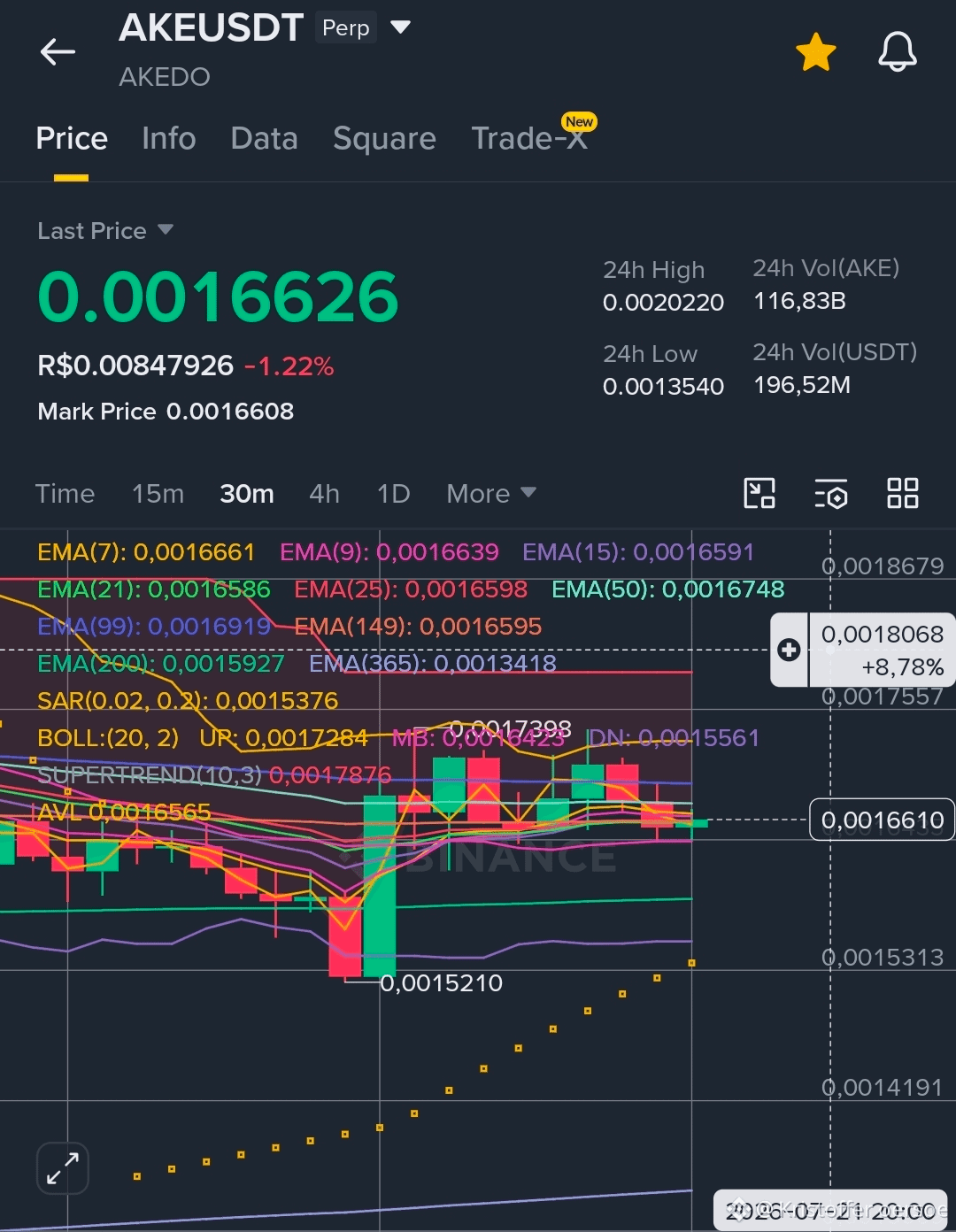
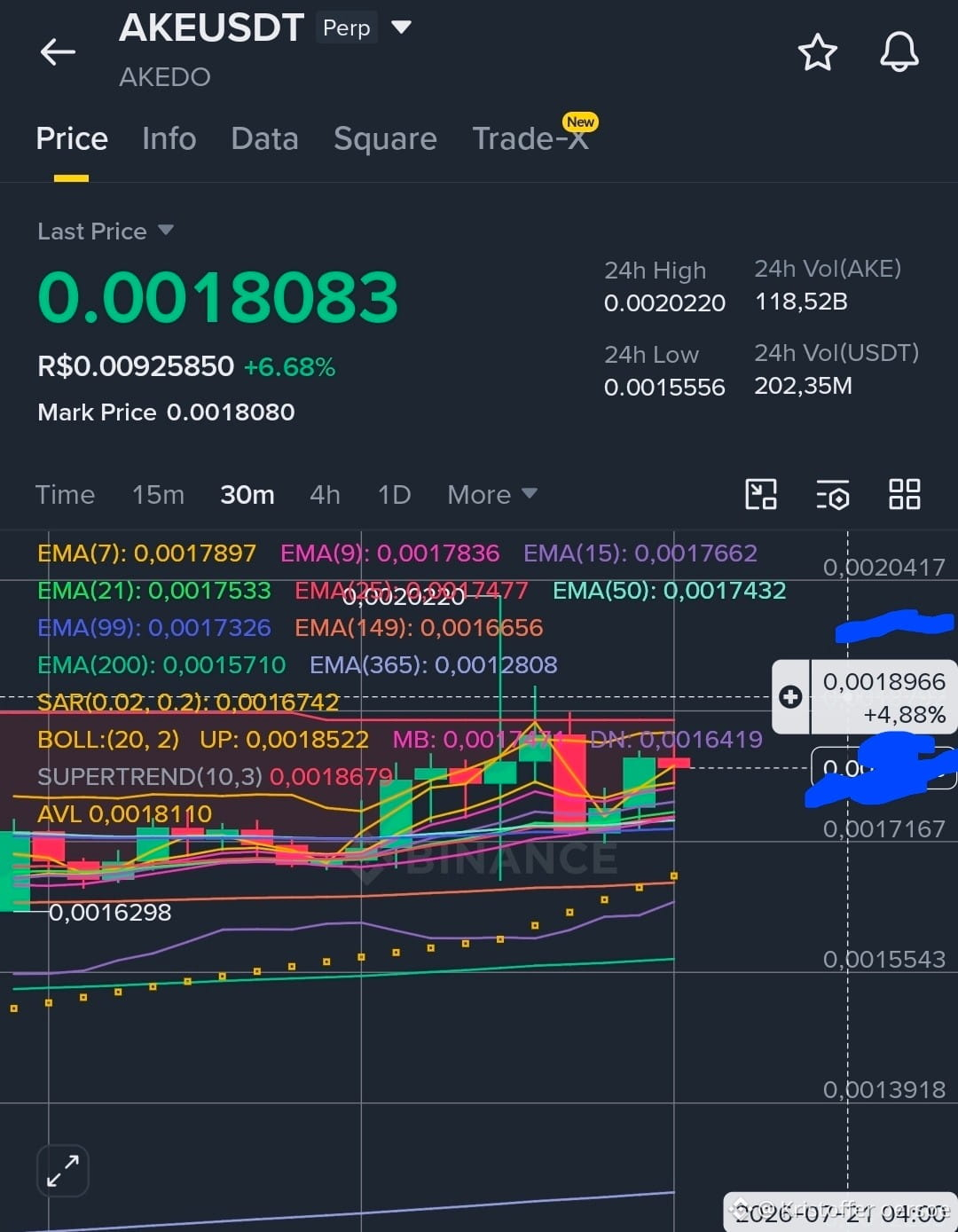
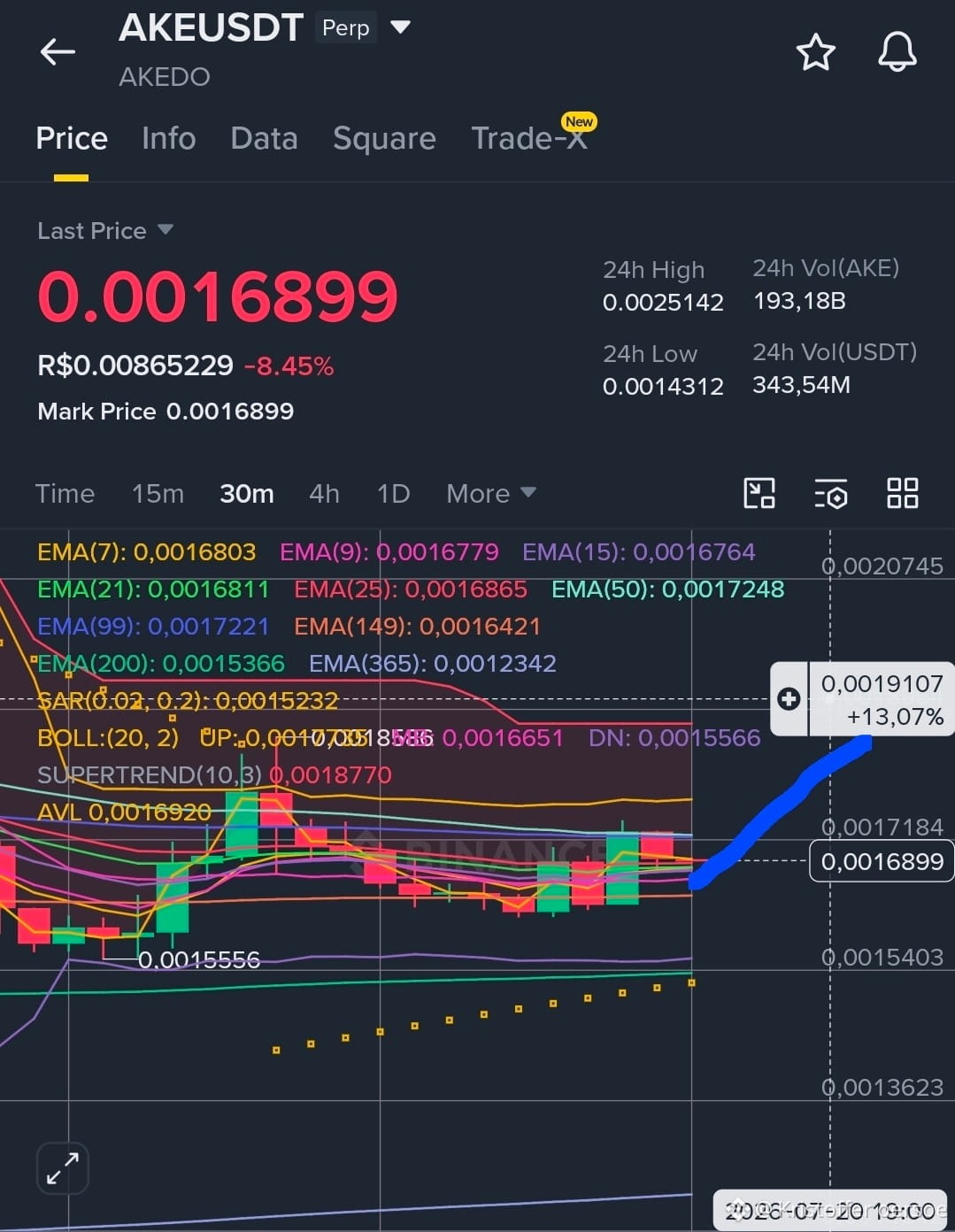
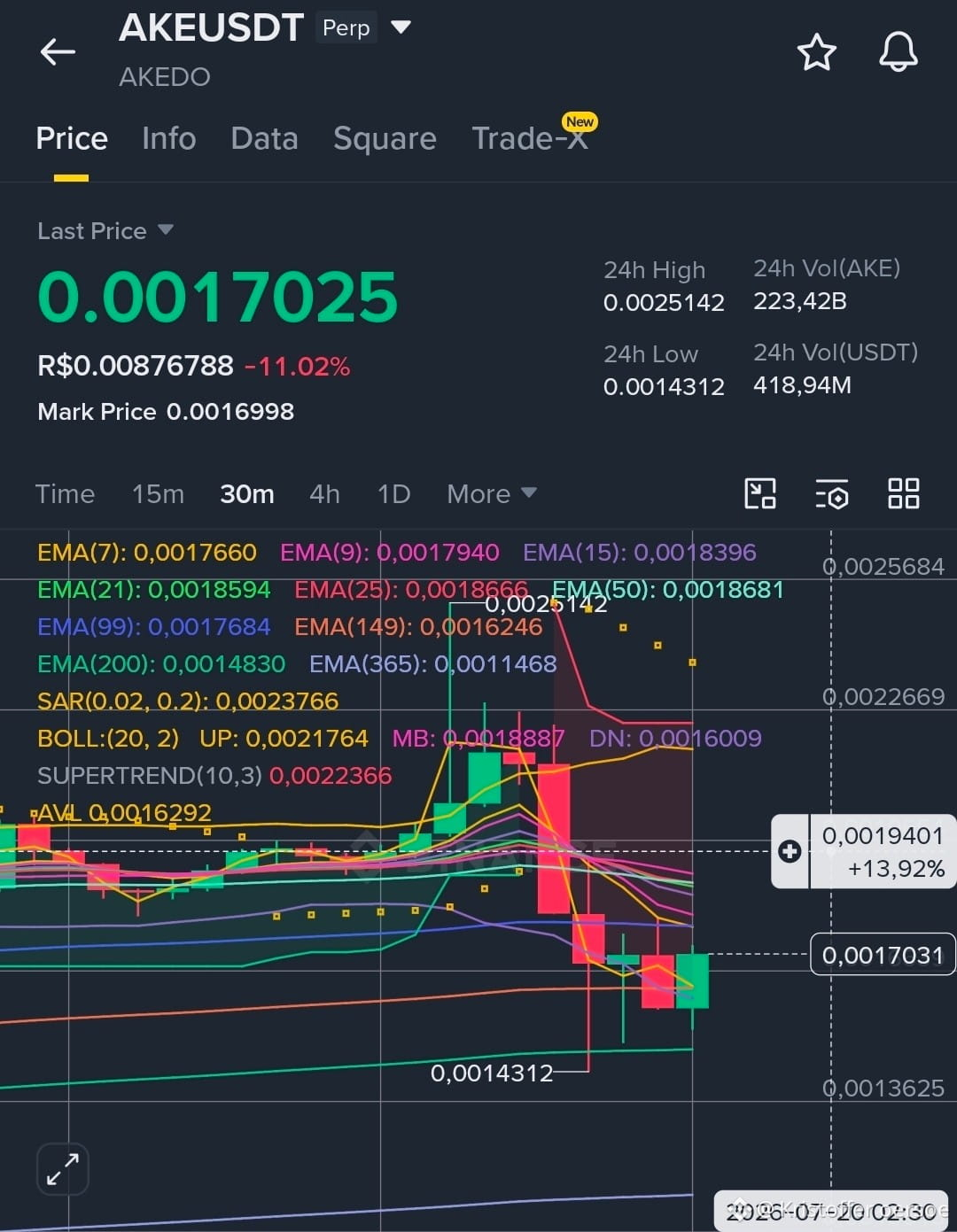
$AKE Our objective is to achieve a value of 0.0018065, as depicted in the provided illustration, and to maintain a gradual upward trajectory to mitigate potential setbacks.
$AKE

Our objective is to achieve a value of 0.0018065, as depicted in the provided illustration, and to maintain a gradual upward trajectory to mitigate potential setbacks.
·
--
ブリッシュ
翻訳参照
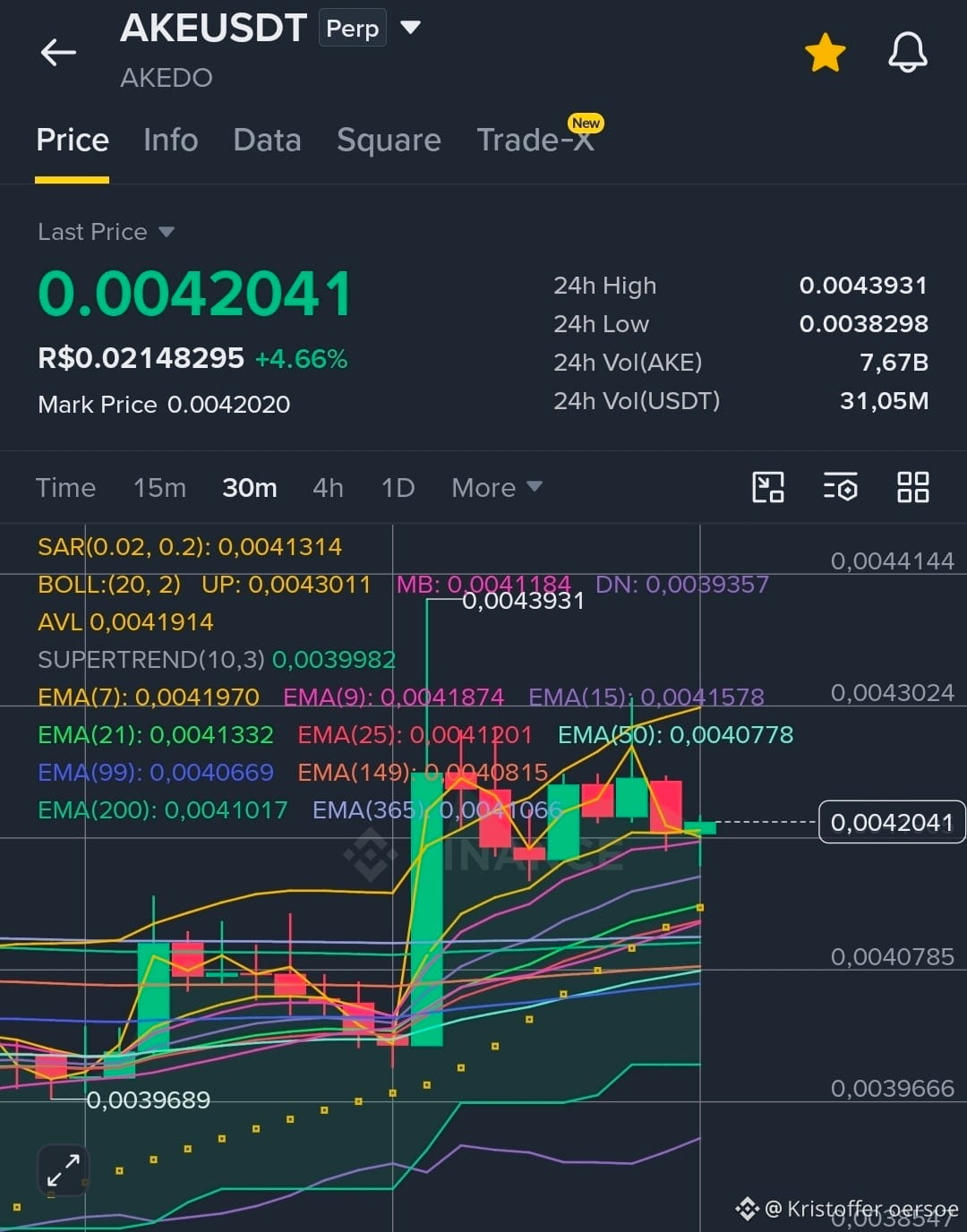
$AKE We must ensure it remains above the red line, as illustrated in the image, for several consecutive candles on the 30-minute chart.
$AKE

We must ensure it remains above the red line, as illustrated in the image, for several consecutive candles on the 30-minute chart.
翻訳参照
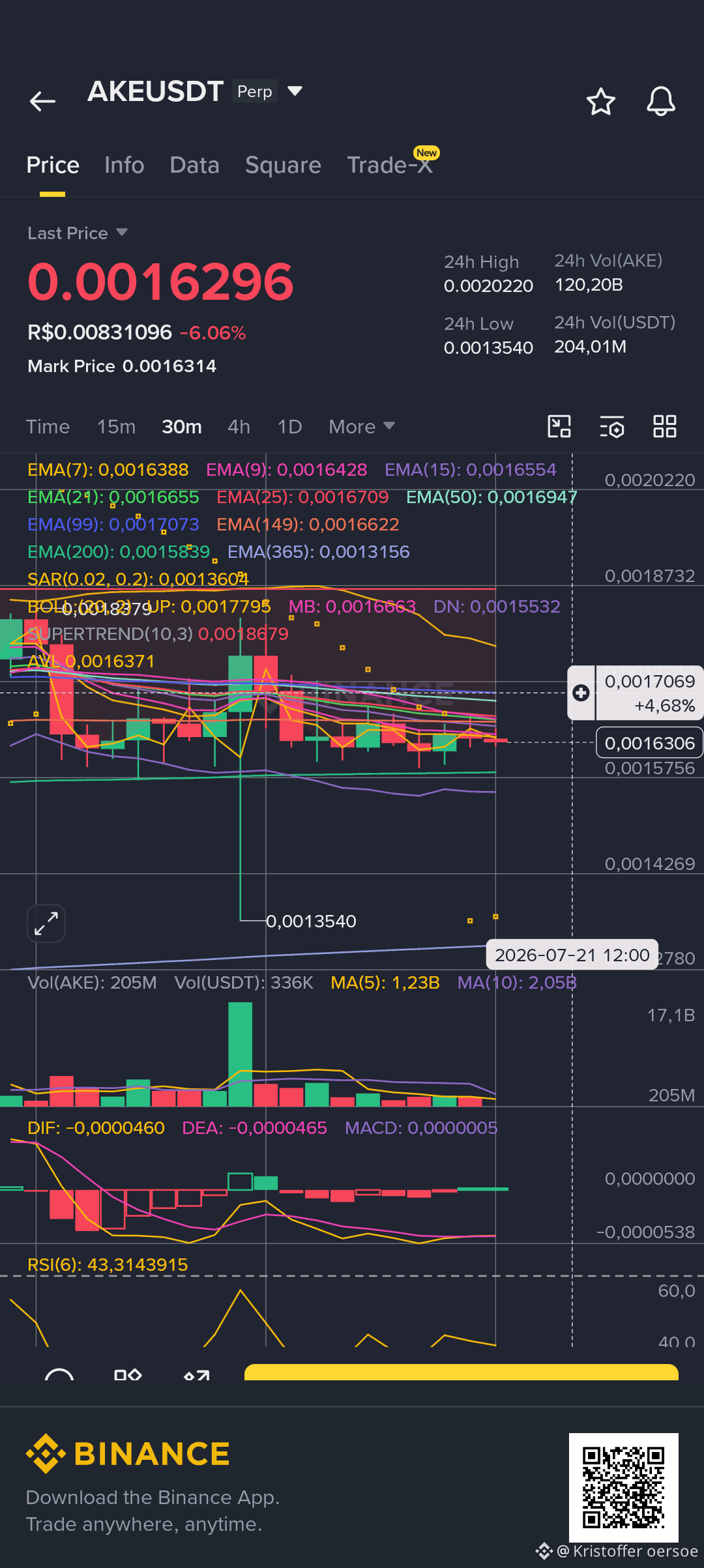
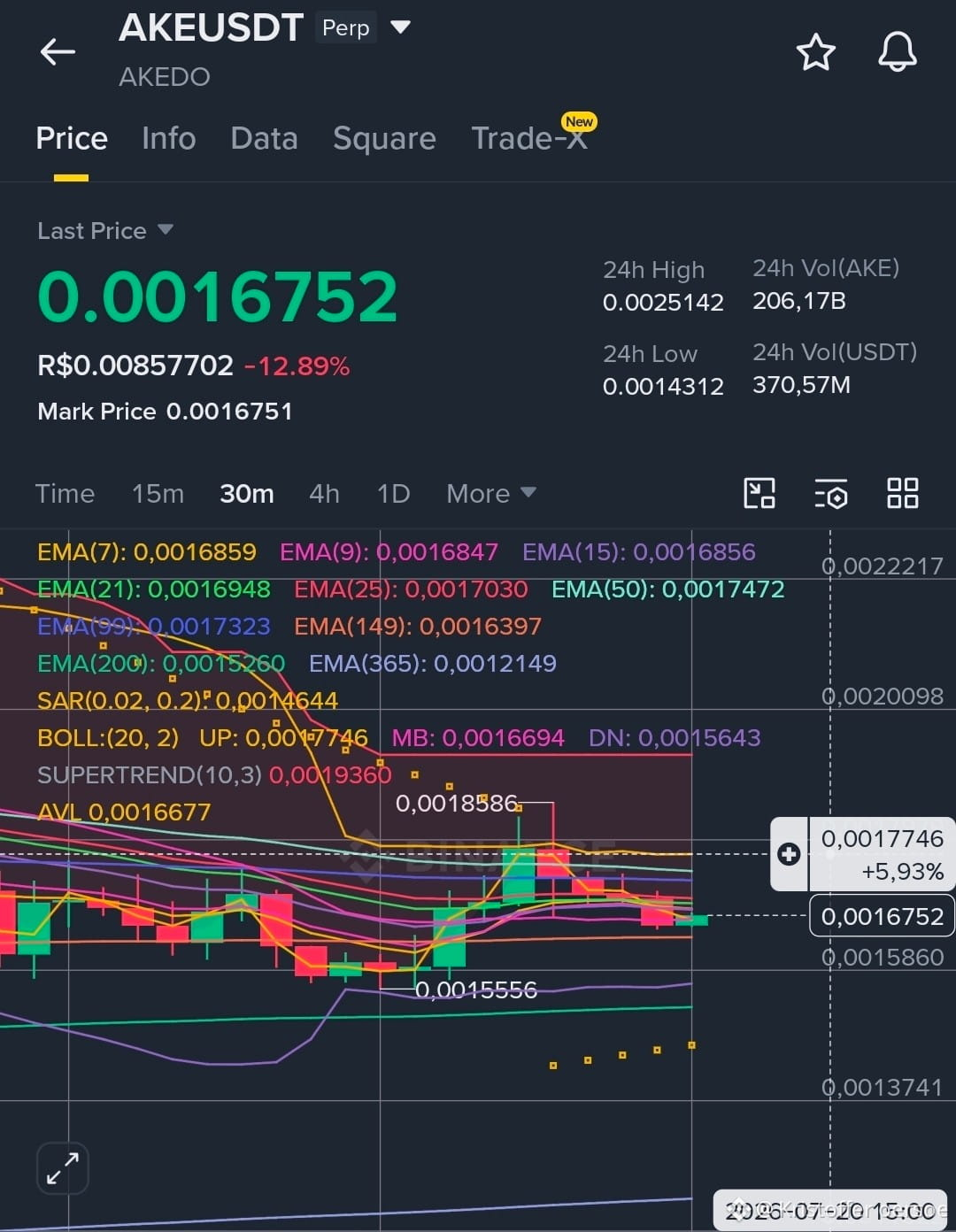
$AKE we need to pull it up over the emas like shown on picture and stay.
$AKE

we need to pull it up over the emas like shown on picture and stay.
翻訳参照
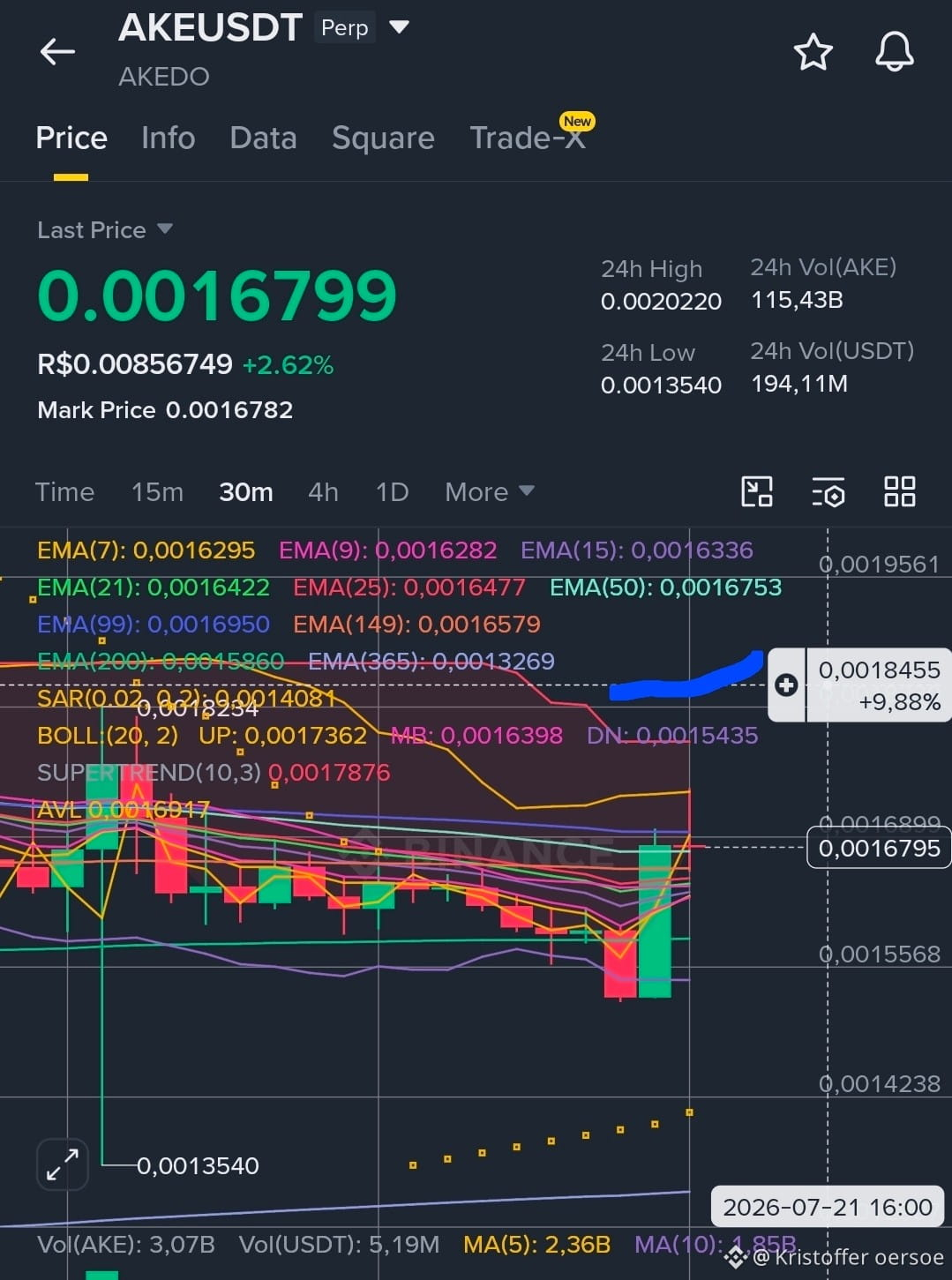
$AKE Please reposition it above the red line I have indicated on the chart. lol sounds so bossy sorry love you all💖💓💗
$AKE

Please reposition it above the red line I have indicated on the chart. lol sounds so bossy sorry love you all💖💓💗
翻訳参照
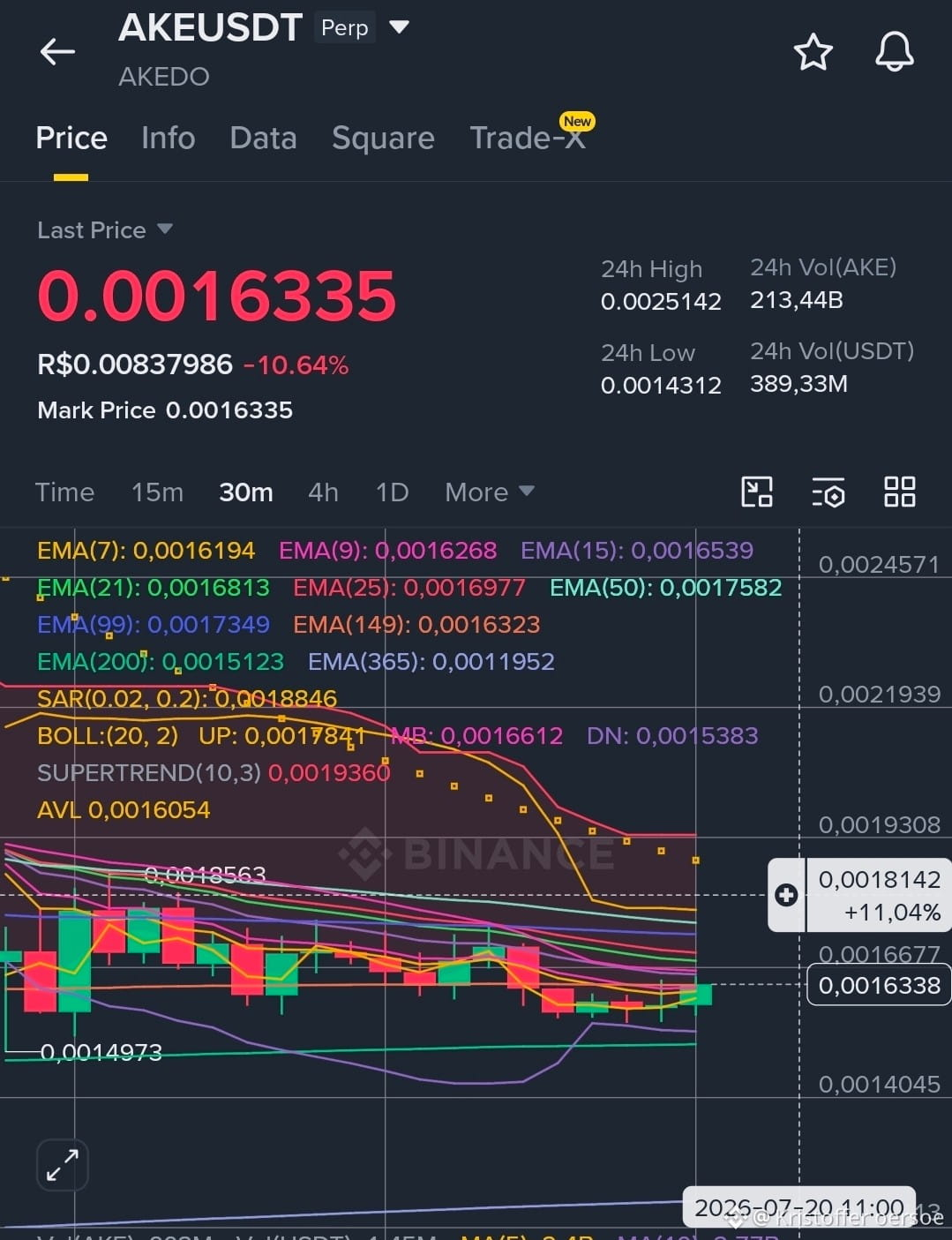
$AKE We need to gradually elevate it above the boiling band, proceeding slowly to prevent any pullbacks#BTC #bnb .$BTC $ETH
$AKE

We need to gradually elevate it above the boiling band, proceeding slowly to prevent any pullbacks#BTC #bnb .$BTC $ETH
翻訳参照
$AKE To reverse the current trend, it is imperative that we maintain its position above the designated line in the visual representation. $BTC $BNB #BTC #TrendingTopic
$AKE

To reverse the current trend, it is imperative that we maintain its position above the designated line in the visual representation.
$BTC $BNB #BTC #TrendingTopic
翻訳参照
$AKE We need to elevate it above these lines as depicted in the image and maintain that position as we ascend. and break the sell resistance around here
$AKE

We need to elevate it above these lines as depicted in the image and maintain that position as we ascend. and break the sell resistance around here
翻訳参照
$AKE Our objective is to elevate it above the EMAs and maintain that position.
$AKE

Our objective is to elevate it above the EMAs and maintain that position.
·
--
弱気相場
翻訳参照
$AKE We should initiate a decline, enabling us to repurchase at a significantly reduced cost and in greater quantities.
$AKE

We should initiate a decline, enabling us to repurchase at a significantly reduced cost and in greater quantities.
翻訳参照
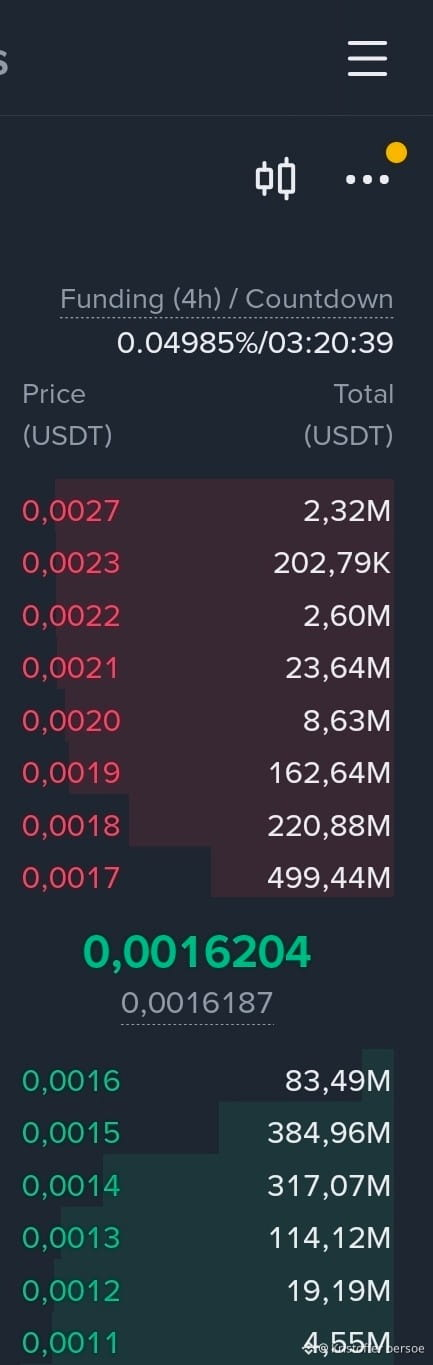
$AKE It appears the funds are currently unavailable. we anticipate a more favorable outcome on Monday.
$AKE

It appears the funds are currently unavailable. we anticipate a more favorable outcome on Monday.
$AKE ただ押し続けて、持ちこたえよう。売るな。ここで良いものを作っている最中だ。とはいえ、すべてのお金はショートにある。 $BTC $ETH #BTC
$AKE

ただ押し続けて、持ちこたえよう。売るな。ここで良いものを作っている最中だ。とはいえ、すべてのお金はショートにある。

$BTC $ETH #BTC
·
--
ブリッシュ
翻訳参照
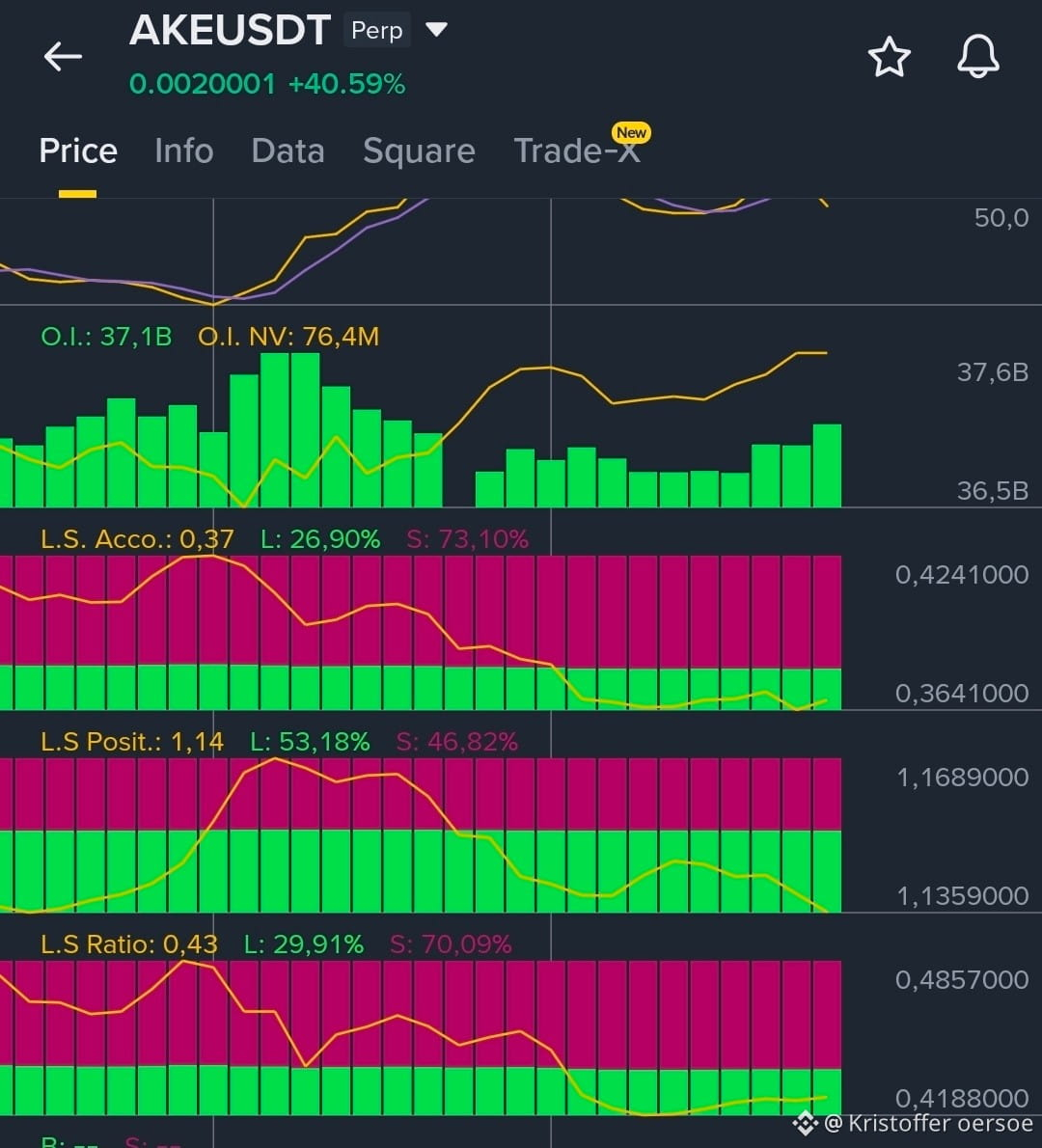
$AKE time to hunting some more shorts. So many shorts is crazy on the 30-minute chart.
$AKE

time to hunting some more shorts. So many shorts is crazy on the 30-minute chart.
翻訳参照
$AKE Good morning! Wow, it moved a lot up. 😍 Best of luck today, and let's keep going, guys. Love you all maybe some gifts later on is weekend after all
$AKE

Good morning! Wow, it moved a lot up. 😍
Best of luck today, and let's keep going, guys.

Love you all

maybe some gifts later on is weekend after all
翻訳参照
$AKE Thanks for an awesome day. Let's see what tomorrow brings. Best of luck to you, and I love you. Goodnight.
$AKE

Thanks for an awesome day. Let's see what tomorrow brings. Best of luck to you, and I love you. Goodnight.
red envelope
Oersoe is back 💓💖
送り主:Kristoffer oersoe
ログインして、さらにコンテンツを読む
厳選トピックで世界の暗号資産トレーダーの仲間入り
⚡️ 暗号資産に関する最新かつ有益な情報が見つかります。
💬 世界最大の暗号資産取引所から信頼されています。
👍 認証を受けたクリエイターから、有益なインサイトを得られます。
メール / 電話番号
サイトマップ
Cookieの設定
プラットフォーム利用規約