

NEXA VAULT
4.9k 投稿
NEXA VAULT
報告
ユーザーをブロック
Coffee, code & crypto that’s the vibe | Dream. Build. Repeat...
低高頻度トレーダー
1.1年
58 フォロー
24.2K+ フォロワー
15.9K+ いいね
投稿
すべて
ライブ
·
--
翻訳参照
Let’s show up for Cas Abbé! 💛
@Cas_Abb has been nominated for Rising Star at The Blockchain 100 Awards 2026, and this is our chance to support someone from our community.
A nomination is a great achievement, but community support can make the journey even more special. If you’re part of the @Crypto_Eagles family, take a moment to cast your vote and help spread the word.
Vote here:
[https://app.binance.com/uni-qr/cpro/Crypto_Eagles](https://app.binance.com/uni-qr/cpro/Crypto_Eagles)
Visit Cas Abbé’s profile:
[https://app.binance.com/uni-qr/cpro/Cas_Abb](https://app.binance.com/uni-qr/cpro/Cas_Abb)
Let’s stand together, support the nomination, and show what a united community can do. Every vote counts.
Let’s show up for Cas Abbé! 💛
@Cas Abbé has been nominated for Rising Star at The Blockchain 100 Awards 2026, and this is our chance to support someone from our community.
A nomination is a great achievement, but community support can make the journey even more special. If you’re part of the @Crypto Eagles family, take a moment to cast your vote and help spread the word.
Vote here:
https://app.binance.com/uni-qr/cpro/Crypto_Eagles
Visit Cas Abbé’s profile:
https://app.binance.com/uni-qr/cpro/Cas_Abb
Let’s stand together, support the nomination, and show what a united community can do. Every vote counts.
@Cas Abbé has been nominated for Rising Star at The Blockchain 100 Awards 2026, and this is our chance to support someone from our community.
A nomination is a great achievement, but community support can make the journey even more special. If you’re part of the @Crypto Eagles family, take a moment to cast your vote and help spread the word.
Vote here:
https://app.binance.com/uni-qr/cpro/Crypto_Eagles
Visit Cas Abbé’s profile:
https://app.binance.com/uni-qr/cpro/Cas_Abb
Let’s stand together, support the nomination, and show what a united community can do. Every vote counts.


116
4
116
·
--
翻訳参照
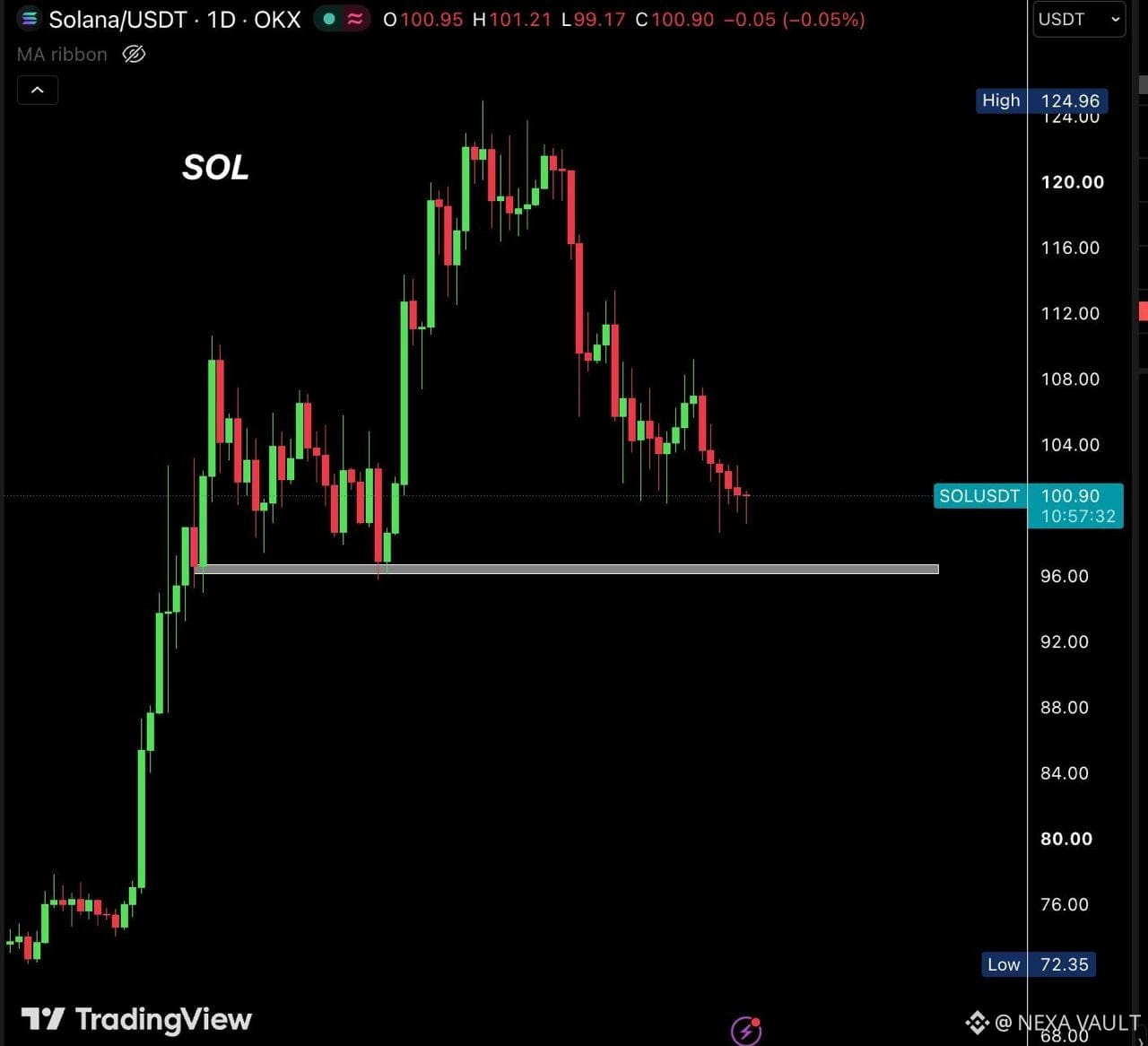
$SOL AT A CRITICAL SUPPORT ZONE!
Solana continues to trend lower alongside $BTC, with price approaching a crucial level!
🟢 Strong Support: $96 🔴 Resistance: $109
A bounce from $96 could spark a buying opportunity, but a breakdown could trigger another wave of selling!
Eyes on $96 — bounce or breakdown?
$SOL AT A CRITICAL SUPPORT ZONE!
Solana continues to trend lower alongside $BTC, with price approaching a crucial level!
🟢 Strong Support: $96 🔴 Resistance: $109
A bounce from $96 could spark a buying opportunity, but a breakdown could trigger another wave of selling!
Eyes on $96 — bounce or breakdown?
Solana continues to trend lower alongside $BTC, with price approaching a crucial level!
🟢 Strong Support: $96 🔴 Resistance: $109
A bounce from $96 could spark a buying opportunity, but a breakdown could trigger another wave of selling!
Eyes on $96 — bounce or breakdown?
118
·
--
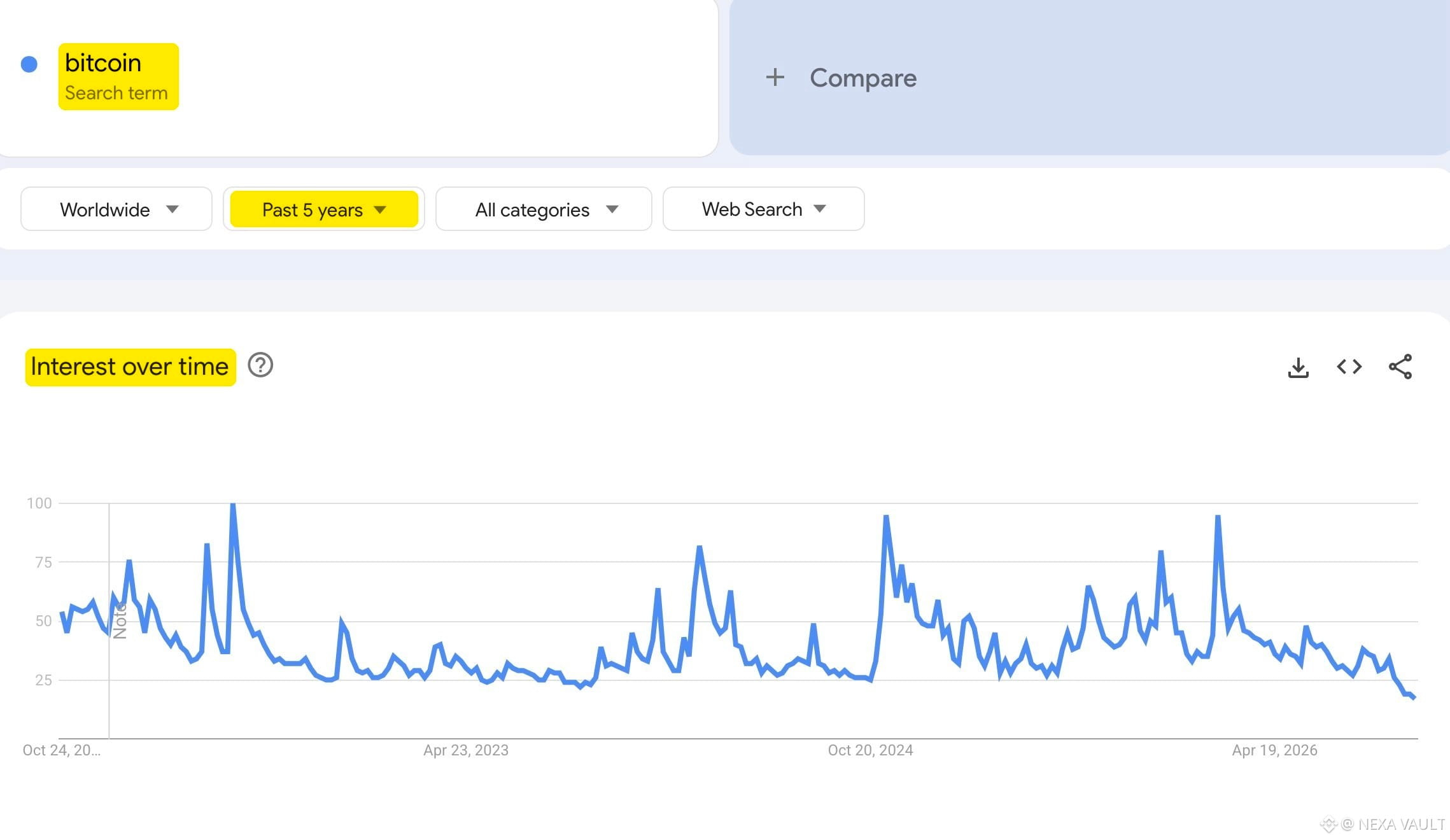
$BTC 個人投資家の関心は5年ぶりの低水準!
Googleで「ビットコイン」が検索された回数が、過去5年間で最低水準に達しました。
個人投資家の関心は薄れています。恐怖が広がっています。注目も失われつつあります。
だからこそ、俺はめちゃくちゃ強気なんだ。
退屈が極まると、チャンスが生まれることがよくあります。
$BTC 個人投資家の関心は5年ぶりの低水準!
Googleで「ビットコイン」が検索された回数が、過去5年間で最低水準に達しました。
個人投資家の関心は薄れています。恐怖が広がっています。注目も失われつつあります。
だからこそ、俺はめちゃくちゃ強気なんだ。
退屈が極まると、チャンスが生まれることがよくあります。
Googleで「ビットコイン」が検索された回数が、過去5年間で最低水準に達しました。
個人投資家の関心は薄れています。恐怖が広がっています。注目も失われつつあります。
だからこそ、俺はめちゃくちゃ強気なんだ。
退屈が極まると、チャンスが生まれることがよくあります。
100
·
--
翻訳参照
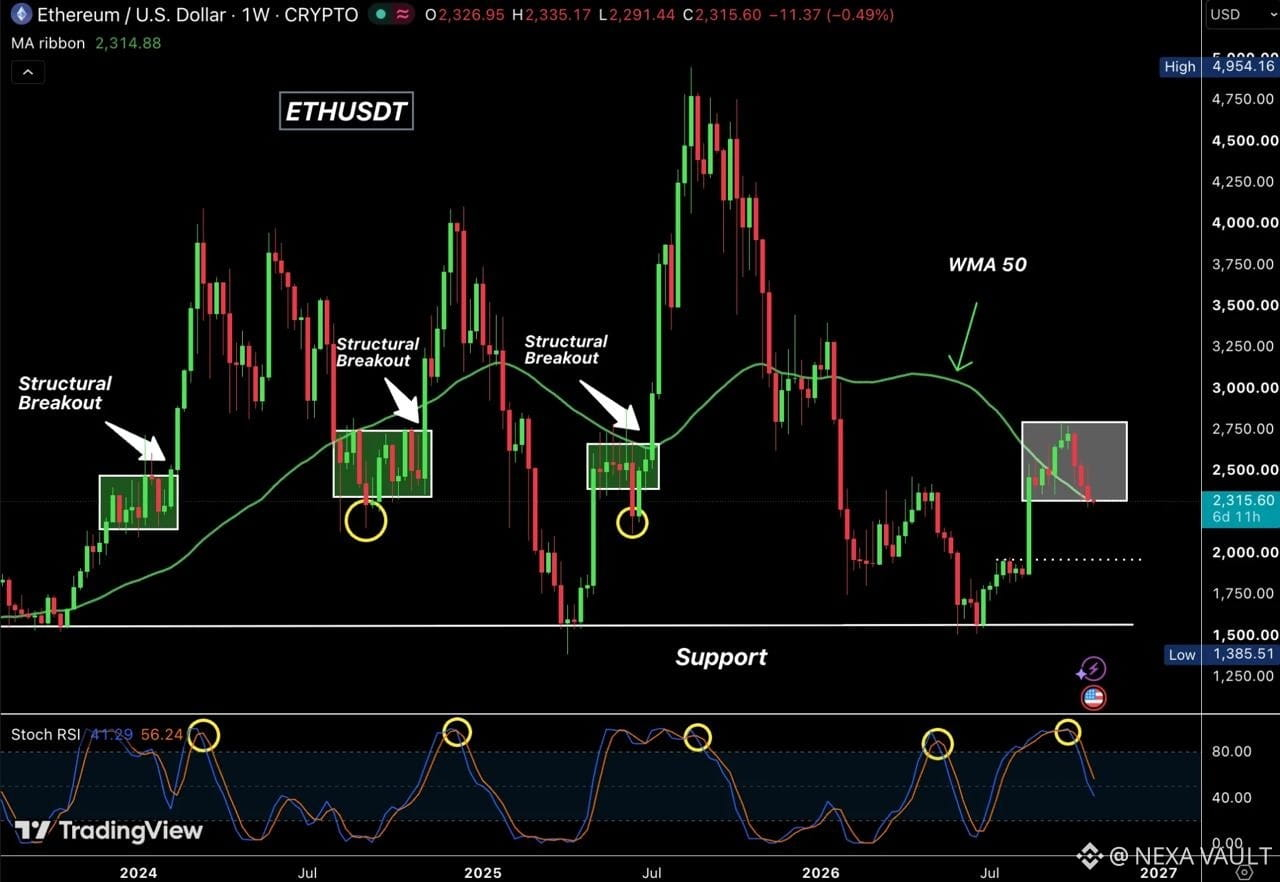
$ETH Weekly Analysis: The Next Big Move Is Coming
Ethereum is holding its ground, closing above the weekly 50MA for the 6th time even as BTC Dominance climbs above 60% and global markets remain uncertain.
But ETH is still trapped between $2,300 and $2,800, and both bulls and bears are waiting for a decisive breakout.
The warning sign? Weekly Stoch RSI is showing bearish momentum, meaning another shakeout could be on the table.
Key levels to watch:
- $2,300 support: If it breaks, $1,900 could be the next downside target.
- $2,550 resistance: The first hurdle for bulls.
- $2,800 resistance: A breakout above this level could shift momentum in ETH’s favor.
The bottom line: ETH is at a critical point. Holding support keeps the recovery alive, but losing $2,300 could open the door to another leg down.
The next weekly move could set the tone for Ethereum’s trend.
#BinancePick #EarningsSeason
$ETH Weekly Analysis: The Next Big Move Is Coming
Ethereum is holding its ground, closing above the weekly 50MA for the 6th time even as BTC Dominance climbs above 60% and global markets remain uncertain.
But ETH is still trapped between $2,300 and $2,800, and both bulls and bears are waiting for a decisive breakout.
The warning sign? Weekly Stoch RSI is showing bearish momentum, meaning another shakeout could be on the table.
Key levels to watch:
- $2,300 support: If it breaks, $1,900 could be the next downside target.
- $2,550 resistance: The first hurdle for bulls.
- $2,800 resistance: A breakout above this level could shift momentum in ETH’s favor.
The bottom line: ETH is at a critical point. Holding support keeps the recovery alive, but losing $2,300 could open the door to another leg down.
The next weekly move could set the tone for Ethereum’s trend.
#BinancePick #EarningsSeason
Ethereum is holding its ground, closing above the weekly 50MA for the 6th time even as BTC Dominance climbs above 60% and global markets remain uncertain.
But ETH is still trapped between $2,300 and $2,800, and both bulls and bears are waiting for a decisive breakout.
The warning sign? Weekly Stoch RSI is showing bearish momentum, meaning another shakeout could be on the table.
Key levels to watch:
- $2,300 support: If it breaks, $1,900 could be the next downside target.
- $2,550 resistance: The first hurdle for bulls.
- $2,800 resistance: A breakout above this level could shift momentum in ETH’s favor.
The bottom line: ETH is at a critical point. Holding support keeps the recovery alive, but losing $2,300 could open the door to another leg down.
The next weekly move could set the tone for Ethereum’s trend.
#BinancePick #EarningsSeason
97
·
--
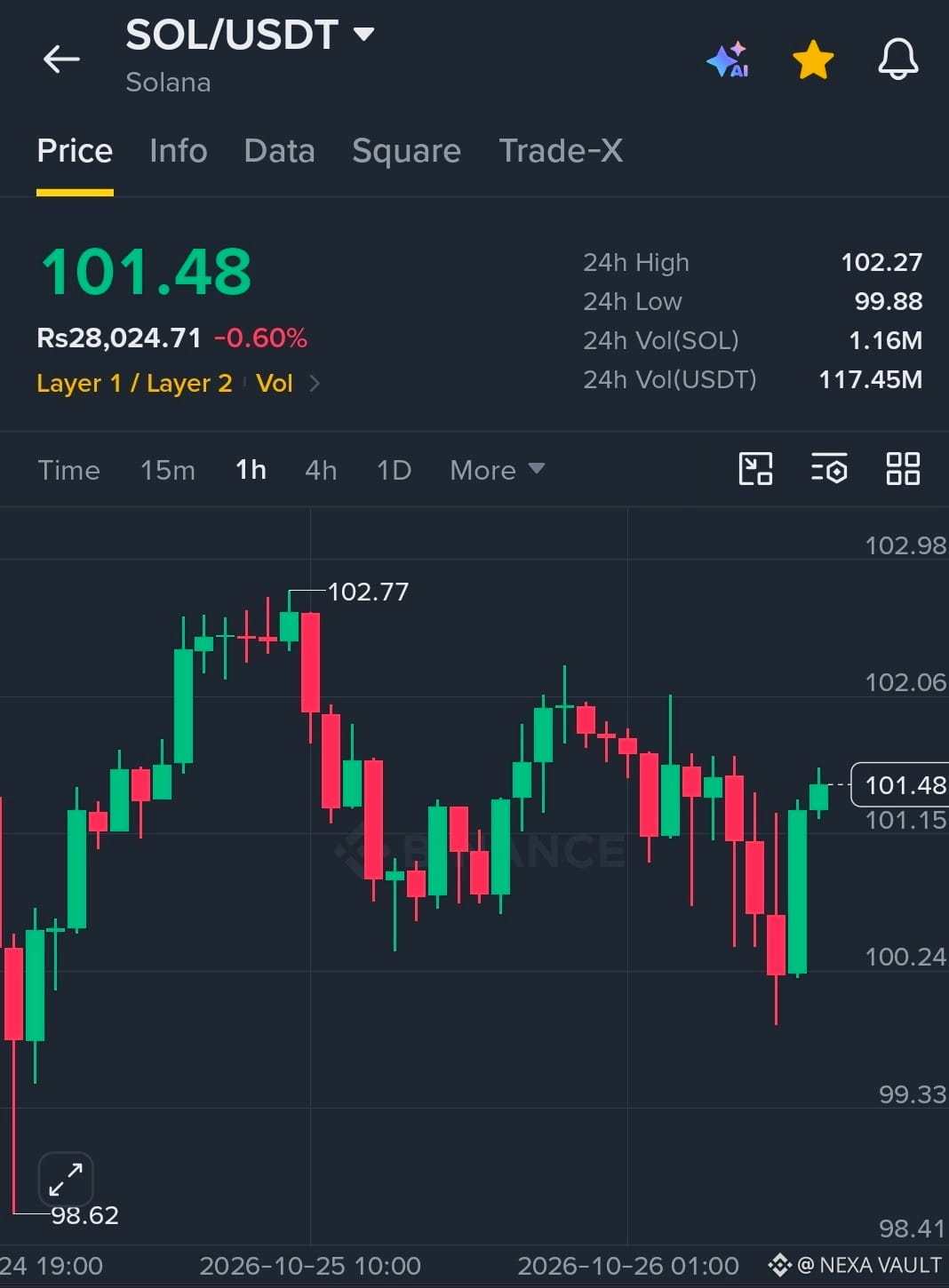
$SOL (SOL) V字回復!強気派が100ドルの節目を死守!
この1時間足チャートをご覧ください!急激な反落のあと、24時間安値の**99.88ドル**まで下落して不安な展開となりましたが、ソラナは今、勢いのある大きな陽線をつけました!強気派はSOLを100ドル以下にとどめるつもりはまったくないようです。
注目のポイントはこちらです:
🚀 現在価格:101.48ドル(28,024.71ルピー)**まで回復中。
**反発:** 下落があったにもかかわらず、今日はわずか**-0.60%**の下げにとどまっています。押し目買い勢が完全に主導権を握っています。
**大幅な取引高:** 過去24時間のUSDT取引高は**1億1,745万ドル超!資金が流入しています。
次の目標:24時間高値の**102.27ドル**が目前に迫り、目先の高値**102.77ドル**も見えてきました。
L1の王者が強さを見せつけています。102ドルを上抜ければ、直近高値へ一気に戻る展開となりそうです。
SOLはレジスタンスを突破し、アルトコイン市場を急騰させるでしょうか?このチャートに注目です!
$SOL (SOL) V字回復!強気派が100ドルの節目を死守!
この1時間足チャートをご覧ください!急激な反落のあと、24時間安値の**99.88ドル**まで下落して不安な展開となりましたが、ソラナは今、勢いのある大きな陽線をつけました!強気派はSOLを100ドル以下にとどめるつもりはまったくないようです。
注目のポイントはこちらです:
🚀 現在価格:101.48ドル(28,024.71ルピー)**まで回復中。
**反発:** 下落があったにもかかわらず、今日はわずか**-0.60%**の下げにとどまっています。押し目買い勢が完全に主導権を握っています。
**大幅な取引高:** 過去24時間のUSDT取引高は**1億1,745万ドル超!資金が流入しています。
次の目標:24時間高値の**102.27ドル**が目前に迫り、目先の高値**102.77ドル**も見えてきました。
L1の王者が強さを見せつけています。102ドルを上抜ければ、直近高値へ一気に戻る展開となりそうです。
SOLはレジスタンスを突破し、アルトコイン市場を急騰させるでしょうか?このチャートに注目です!
この1時間足チャートをご覧ください!急激な反落のあと、24時間安値の**99.88ドル**まで下落して不安な展開となりましたが、ソラナは今、勢いのある大きな陽線をつけました!強気派はSOLを100ドル以下にとどめるつもりはまったくないようです。
注目のポイントはこちらです:
🚀 現在価格:101.48ドル(28,024.71ルピー)**まで回復中。
**反発:** 下落があったにもかかわらず、今日はわずか**-0.60%**の下げにとどまっています。押し目買い勢が完全に主導権を握っています。
**大幅な取引高:** 過去24時間のUSDT取引高は**1億1,745万ドル超!資金が流入しています。
次の目標:24時間高値の**102.27ドル**が目前に迫り、目先の高値**102.77ドル**も見えてきました。
L1の王者が強さを見せつけています。102ドルを上抜ければ、直近高値へ一気に戻る展開となりそうです。
SOLはレジスタンスを突破し、アルトコイン市場を急騰させるでしょうか?このチャートに注目です!
131
·
--
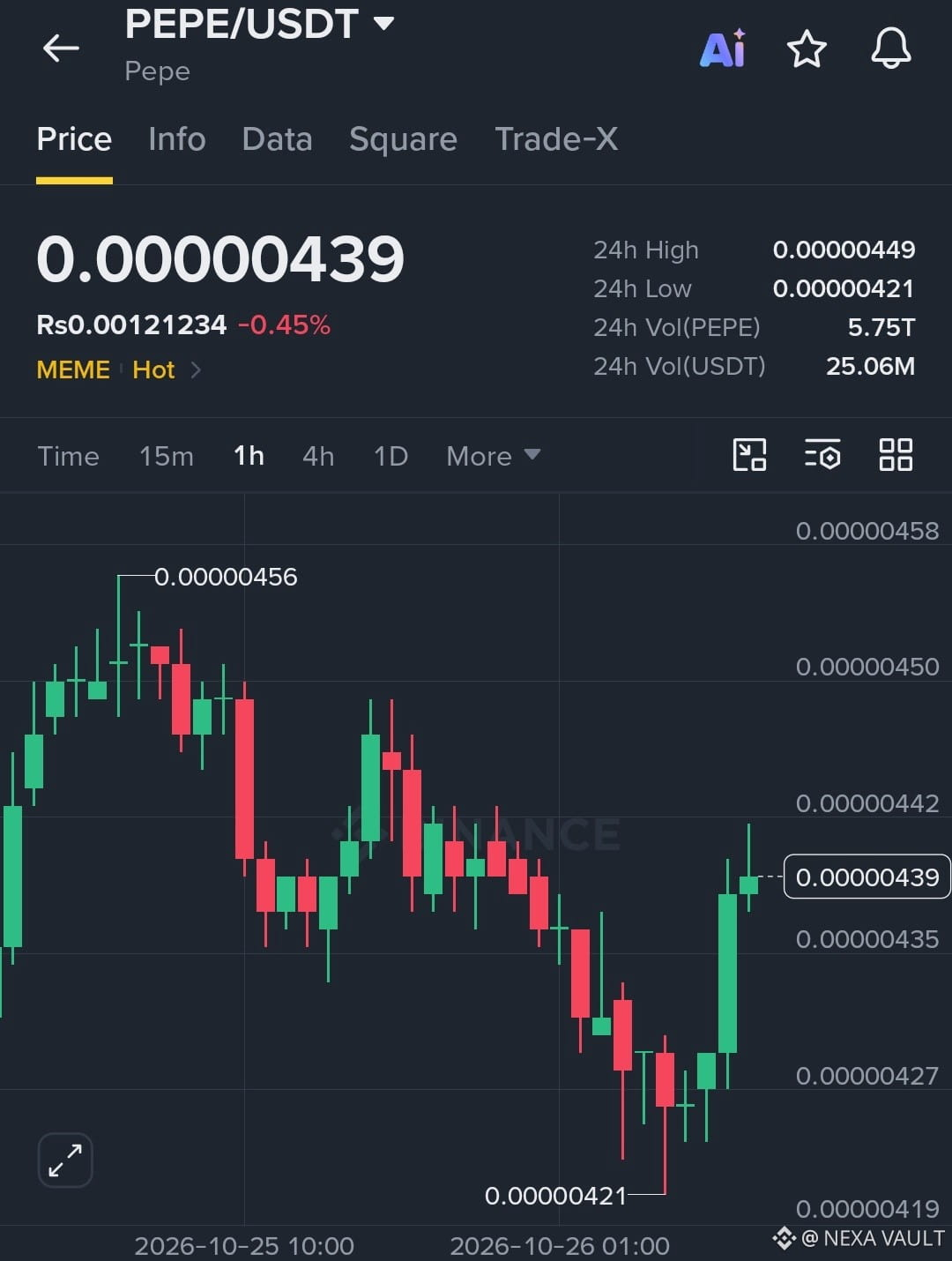
$PEPE 反転警報:強気派が反撃中!
この1時間足チャートを見てください! 24時間安値の0.00000421まで猛烈に下落した後、強気派が大きな陽線とともに参入しました。現在、0.00000439(Rs 0.00121234)を守っています。
注目ポイントはこちらです。
出来高が桁外れ:24時間出来高は驚異の5.75兆PEPE(2,506万USDT)! ミームコインの王者が目を覚ましつつあります。
重要な水準:24時間高値の0.00000449まであとわずか。ここを上抜ければ、急上昇するかもしれません!
驚異の底堅さ:大幅な下落にもかかわらず、本日の下げ幅はわずか-0.45%です。
これは典型的な「押し目買い」のチャンスです。「注目」のMEMEコインが力強さを見せています。PEPEは24時間高値を突破し、月まで飛んでいくのでしょうか?
$PEPE 反転警報:強気派が反撃中!
この1時間足チャートを見てください! 24時間安値の0.00000421まで猛烈に下落した後、強気派が大きな陽線とともに参入しました。現在、0.00000439(Rs 0.00121234)を守っています。
注目ポイントはこちらです。
出来高が桁外れ:24時間出来高は驚異の5.75兆PEPE(2,506万USDT)! ミームコインの王者が目を覚ましつつあります。
重要な水準:24時間高値の0.00000449まであとわずか。ここを上抜ければ、急上昇するかもしれません!
驚異の底堅さ:大幅な下落にもかかわらず、本日の下げ幅はわずか-0.45%です。
これは典型的な「押し目買い」のチャンスです。「注目」のMEMEコインが力強さを見せています。PEPEは24時間高値を突破し、月まで飛んでいくのでしょうか?
この1時間足チャートを見てください! 24時間安値の0.00000421まで猛烈に下落した後、強気派が大きな陽線とともに参入しました。現在、0.00000439(Rs 0.00121234)を守っています。
注目ポイントはこちらです。
出来高が桁外れ:24時間出来高は驚異の5.75兆PEPE(2,506万USDT)! ミームコインの王者が目を覚ましつつあります。
重要な水準:24時間高値の0.00000449まであとわずか。ここを上抜ければ、急上昇するかもしれません!
驚異の底堅さ:大幅な下落にもかかわらず、本日の下げ幅はわずか-0.45%です。
これは典型的な「押し目買い」のチャンスです。「注目」のMEMEコインが力強さを見せています。PEPEは24時間高値を突破し、月まで飛んでいくのでしょうか?
2
298
·
--
翻訳参照
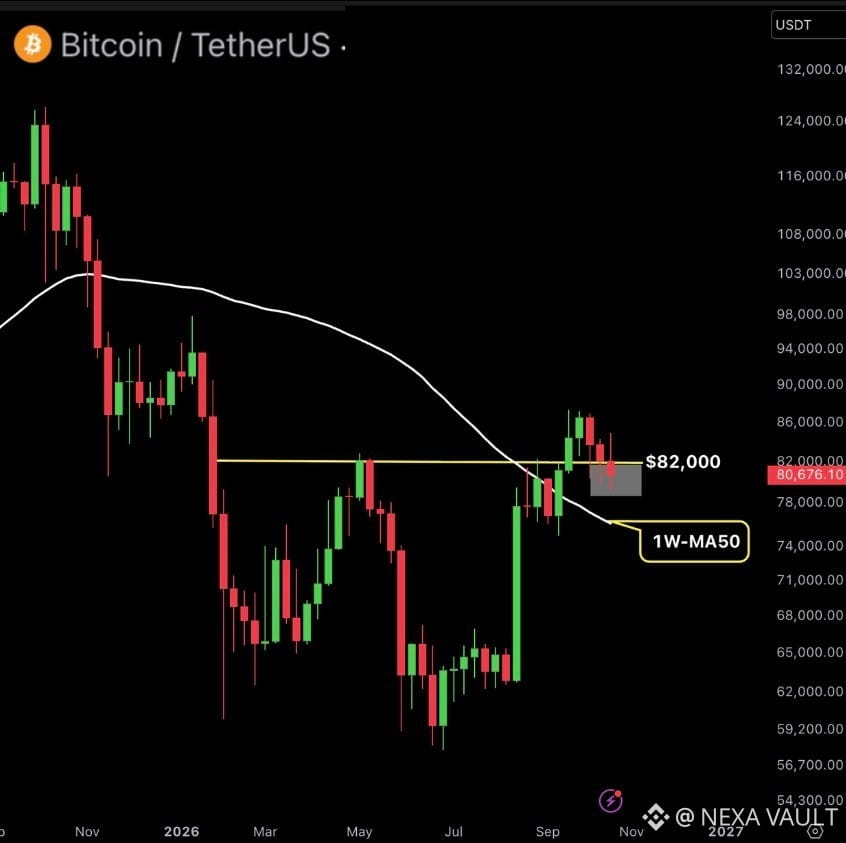
CRYPTO FACES A HIGH-VOLATILITY WEEK!
Bitcoin is holding strong despite global market pressure, but bulls need confirmation. A weekly close above $82K and the 1W 50MA could strengthen the bullish outlook.
Key events to watch:
* Oct 28: FOMC decision — rate guidance could shake markets.
* Oct 29: U.S. PCE inflation and GDP — cooling inflation with strong growth could boost crypto, while hotter inflation could trigger selling.
* Oct 30: Japan unemployment — any surprise BOJ rate hike could strengthen the yen and pressure risk assets.
With U.S. midterm elections approaching and historical post-midterm corrections in focus, volatility could explode in either direction.
Will BTC break above $82K or face another brutal shakeout?
CRYPTO FACES A HIGH-VOLATILITY WEEK!
Bitcoin is holding strong despite global market pressure, but bulls need confirmation. A weekly close above $82K and the 1W 50MA could strengthen the bullish outlook.
Key events to watch:
* Oct 28: FOMC decision — rate guidance could shake markets.
* Oct 29: U.S. PCE inflation and GDP — cooling inflation with strong growth could boost crypto, while hotter inflation could trigger selling.
* Oct 30: Japan unemployment — any surprise BOJ rate hike could strengthen the yen and pressure risk assets.
With U.S. midterm elections approaching and historical post-midterm corrections in focus, volatility could explode in either direction.
Will BTC break above $82K or face another brutal shakeout?
Bitcoin is holding strong despite global market pressure, but bulls need confirmation. A weekly close above $82K and the 1W 50MA could strengthen the bullish outlook.
Key events to watch:
* Oct 28: FOMC decision — rate guidance could shake markets.
* Oct 29: U.S. PCE inflation and GDP — cooling inflation with strong growth could boost crypto, while hotter inflation could trigger selling.
* Oct 30: Japan unemployment — any surprise BOJ rate hike could strengthen the yen and pressure risk assets.
With U.S. midterm elections approaching and historical post-midterm corrections in focus, volatility could explode in either direction.
Will BTC break above $82K or face another brutal shakeout?
1
117
·
--
翻訳参照
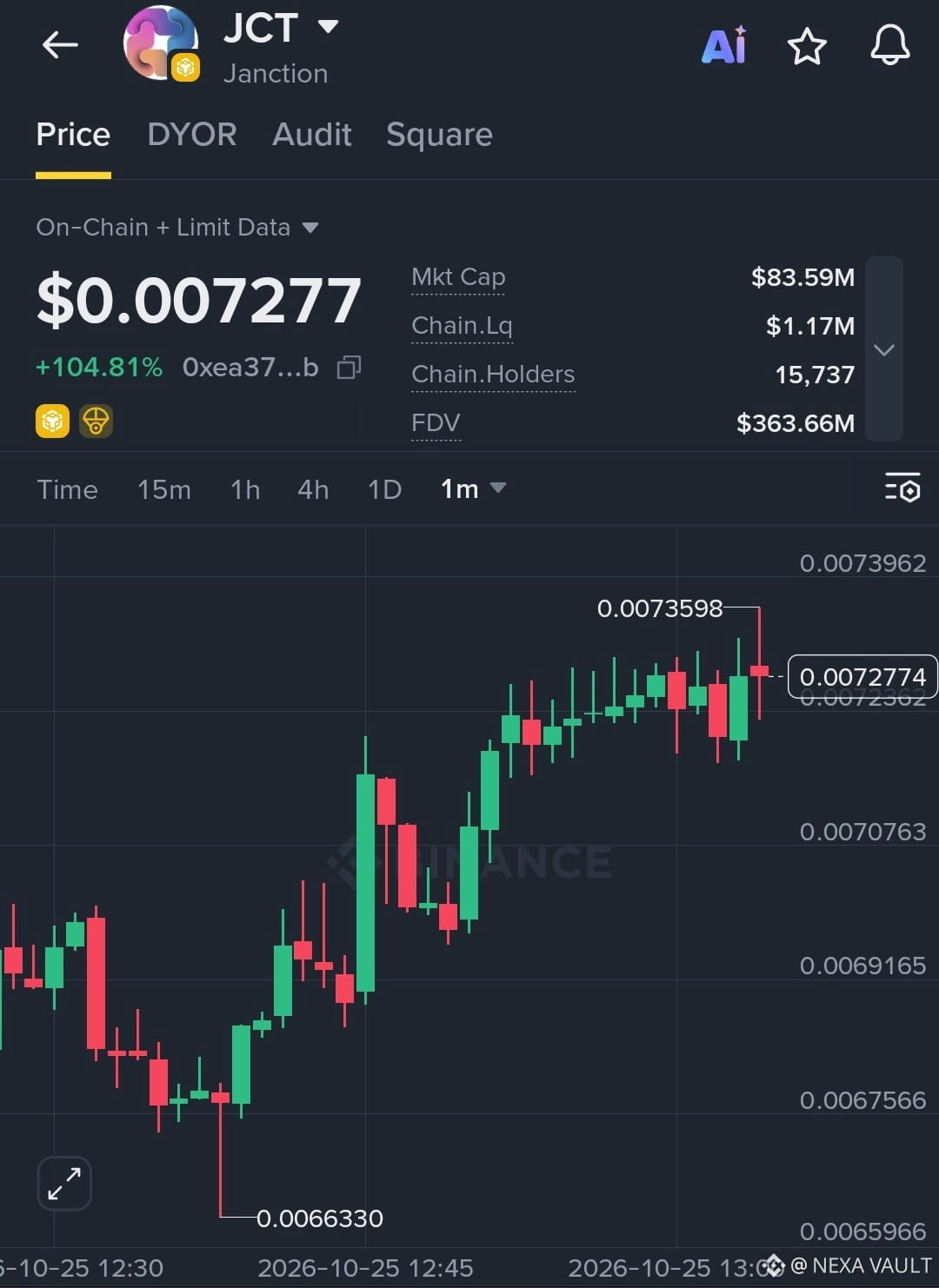
$JCT IS GOING PARABOLIC!
Janction ($JCT) just ripped over 104% and the 1-minute chart is absolutely vertical!
Here are the explosive stats:
Current Price: $0.007277 (+104.81%)
📊 **24H High:** 0.0073598 (Bouncing from a low of 0.0066330)
💰 **Market Cap:** $83.59M
💎 FDV: $363.66M
🌊 **Chain Liquidity:** $1.17M
👥 Holders: 15,737
$JCT IS GOING PARABOLIC!
Janction ($JCT ) just ripped over 104% and the 1-minute chart is absolutely vertical!
Here are the explosive stats:
Current Price: $0.007277 (+104.81%)
📊 **24H High:** 0.0073598 (Bouncing from a low of 0.0066330)
💰 **Market Cap:** $83.59M
💎 FDV: $363.66M
🌊 **Chain Liquidity:** $1.17M
👥 Holders: 15,737
Janction ($JCT ) just ripped over 104% and the 1-minute chart is absolutely vertical!
Here are the explosive stats:
Current Price: $0.007277 (+104.81%)
📊 **24H High:** 0.0073598 (Bouncing from a low of 0.0066330)
💰 **Market Cap:** $83.59M
💎 FDV: $363.66M
🌊 **Chain Liquidity:** $1.17M
👥 Holders: 15,737
2
343
·
--
記事
翻訳参照
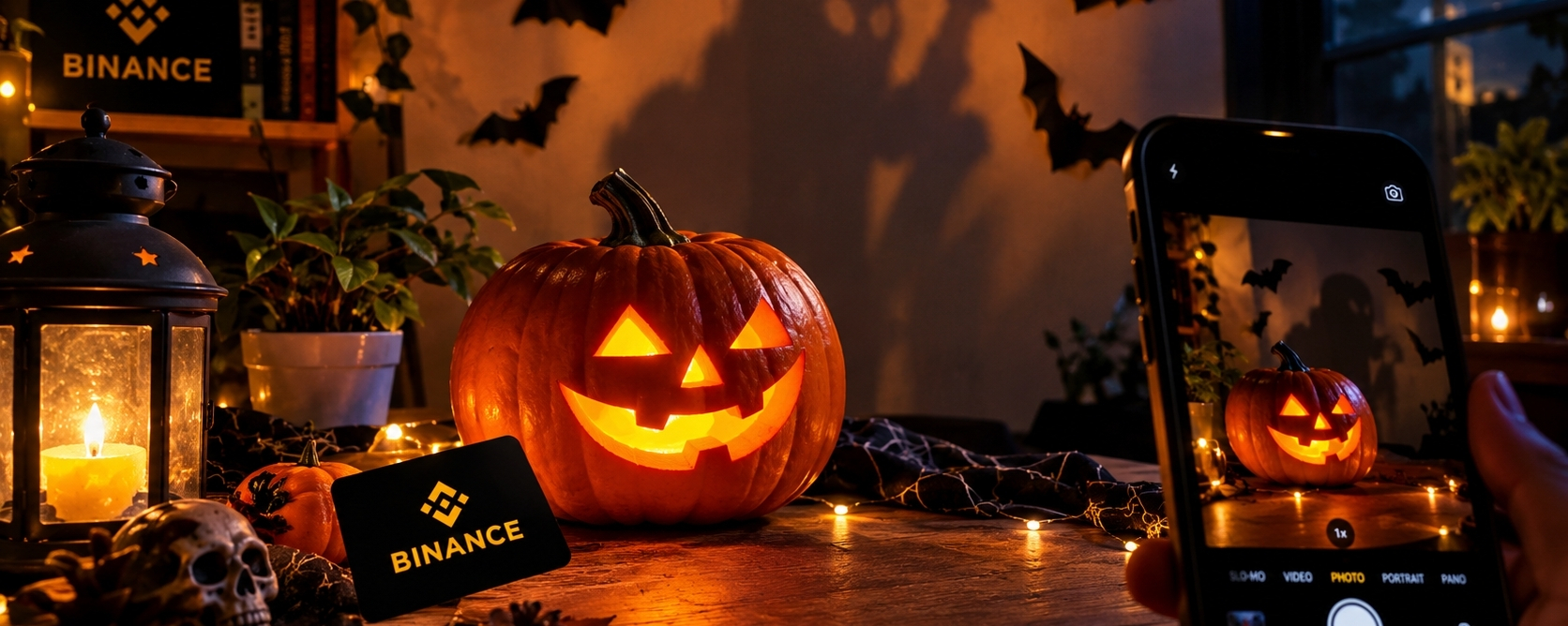
The Pumpkin Was Cute Until I Turned Off the Lights 🎃I had a pretty simple idea for Halloween this year. Get a pumpkin, make a few paper bats, find some warm lights, and put everything together in one corner of the room.
Nothing expensive. Nothing that needed hours of planning.
I just wanted to make something that felt a little different from an ordinary evening.
The funny thing is, I think the best part would be the moment after everything was ready, when I finally switched off the main light.
During the day, a pumpkin with a crooked smile looks almost ridiculous. It sits there with its funny little face, looking like it's trying to tell a joke nobody understands. But put it in a darker room with one small light nearby, and suddenly the whole atmosphere changes.
The smile looks stranger. The paper bats on the wall become more noticeable. And there's that one corner where the shadows seem a little too dark.
You know it's your own room. You know there's nothing there. Still, your eyes keep going back to that corner.
Funny how that works.
One photograph, one unexpected detail
I can already imagine taking a picture of the setup and noticing something odd on my phone screen.
Behind the pumpkin, there's a shadow that almost looks like a person standing there.
My first reaction would probably be to check the picture again. Did I put something behind the table? Is the lamp sitting at a strange angle? Why does that shadow look so different from what I can see with my own eyes?
I'd move the light, take another picture, and watch the mysterious shape disappear.
That's it. Mystery solved.
But I might actually prefer the first photograph.
Not because I believe anything unusual happened, but because it captures that split second when an ordinary object looks unfamiliar. The shadow gives the picture a little story of its own, even though the explanation is probably just a lamp, a wall, and a badly positioned decoration.
And honestly, that's enough Halloween magic for me.
We spend so much time trying to make photographs look perfect that sometimes we remove the very detail that makes them interesting. A slightly crooked pumpkin or an accidental shadow can give a picture more character than another round of editing.
I'd rather keep something that makes me smile when I look at it later.
I don't think Halloween needs to be expensive
There's a lot you can buy for Halloween, and some decorations look genuinely impressive. But I don't think spending more automatically makes the experience better.
A few sheets of black paper can become bats. An old lamp can create the right atmosphere. Even a simple pumpkin can become the center of the entire scene if the lighting is right.
The fun is in figuring things out.
Maybe the first arrangement looks boring. Maybe the bats are too small, or the pumpkin keeps rolling to one side. You change a few things, step back, and try again.
It's a small project, but it gives you something to do with your hands instead of spending the whole evening scrolling through your phone.
And when you finally get a photograph you like, it feels a little more personal because you made the scene yourself.
I like that feeling. It doesn't need an audience to be worthwhile, although sharing it with other people can make it even more enjoyable.
Why bring this little story to Binance Square?
At first, a Halloween pumpkin and a crypto community might sound like two completely unrelated things.
Usually, when I open Binance Square, I'm interested in cryptocurrency discussions, project updates, Web3 ideas, and the different opinions people share. There's plenty to learn when people explain their thinking instead of simply repeating what everyone else is saying.
But I don't think every post needs to follow the same pattern.
Sometimes, a personal story can be worth sharing too.
Behind every account is someone with interests that go beyond charts and token prices. People have their own traditions, creative hobbies, favorite memories, and little moments that never make it into a market update.
I think there's room for those things in an online community.
That's why I'd include a subtle Binance-themed detail in my Halloween photograph. Maybe a small yellow accent beside the pumpkin, or a simple card placed naturally among the decorations. Nothing oversized, and definitely nothing that makes the whole setup feel like a product display.
The Halloween scene should still feel like something I made at home.
The connection to Binance Square would come from the story and the community I'm sharing it with, not from covering every available space with branding.
Sometimes, a small detail says enough.
There's something interesting about looking twice
That strange shadow got me thinking about something I notice quite often when learning about crypto.
An idea can look exciting at first. A project has a clever name, an attractive website, a lively community, and plenty of people talking about it. It's tempting to form an opinion immediately.
But looking interesting and being useful aren't the same thing.
I'd rather spend time understanding what a project actually does, what problem it is trying to solve, how its technology works, and what risks might come with it. If I don't understand something, I'd prefer to admit that and keep learning instead of pretending I have everything figured out.
The same goes for information shared online. A popular post can start a useful conversation, but popularity alone doesn't make every claim true.
Of course, I'm not suggesting that a Halloween decoration and cryptocurrency research are somehow the same thing. One is a bit of fun, and the other can involve real financial risks.
It's simply a reminder that taking a second look can change what we think we're seeing.
Sometimes the answer is surprisingly ordinary. Other times, we discover there's much more to understand.
Either way, curiosity is worth keeping.
What I would actually share
If I finish the decoration, I'll probably take several photographs.
One with the lights on, just to show the whole setup. Another with the room darker, where the pumpkin's face stands out. And then the one with the strange shadow, because that would be the picture I'd want people to look at twice.
I'd keep the caption honest, too.
No made-up ghost story. No claim that something unbelievable happened. Just a small Halloween experiment that turned out more interesting than expected.
I'd be curious to see what other people notice in the picture. Maybe someone would suggest a better lighting arrangement. Someone else might share their own homemade decorations. Another person might have a completely different idea for a Halloween-themed post.
That's the part I enjoy about sharing creative work. You put something out there, and people bring their own thoughts to it.
Not every post needs to start an enormous discussion. Even a few genuine reactions can make the experience feel worthwhile.
And if someone sees the picture and decides to make their own little Halloween setup, even better.
The part I'll probably remember
Eventually, the pumpkin will be put away, the paper bats will come off the wall, and the room will return to normal.
That's fine. I don't need the decorations to last.
What I'd like to keep is the photograph and the memory attached to it: the time spent arranging everything, the moment the shadow looked strange, and the small satisfaction of getting a picture that felt right without planning every detail.
Maybe that sounds like a very ordinary thing to remember.
It is.
But ordinary doesn't have to mean forgettable.
I think that's what I like most about this idea. It doesn't ask me to create the biggest Halloween display or come up with the most frightening story. It just gives me a reason to make something, enjoy the process, and share it with a community that might appreciate a different kind of post.
So I'll keep the pumpkin a little crooked, leave the lighting slightly imperfect, and let that suspicious shadow stay in the frame.
If people think it looks creepy, that's part of the fun.
If they immediately figure out where the light is coming from, that's fine too.
At least the pumpkin had its moment.
And honestly, I think it deserves one. 🎃🦇
#SEAPumpkinFrenzy
The Pumpkin Was Cute Until I Turned Off the Lights 🎃
I had a pretty simple idea for Halloween this year. Get a pumpkin, make a few paper bats, find some warm lights, and put everything together in one corner of the room.
Nothing expensive. Nothing that needed hours of planning.
I just wanted to make something that felt a little different from an ordinary evening.
The funny thing is, I think the best part would be the moment after everything was ready, when I finally switched off the main light.
During the day, a pumpkin with a crooked smile looks almost ridiculous. It sits there with its funny little face, looking like it's trying to tell a joke nobody understands. But put it in a darker room with one small light nearby, and suddenly the whole atmosphere changes.
The smile looks stranger. The paper bats on the wall become more noticeable. And there's that one corner where the shadows seem a little too dark.
You know it's your own room. You know there's nothing there. Still, your eyes keep going back to that corner.
Funny how that works.
One photograph, one unexpected detail
I can already imagine taking a picture of the setup and noticing something odd on my phone screen.
Behind the pumpkin, there's a shadow that almost looks like a person standing there.
My first reaction would probably be to check the picture again. Did I put something behind the table? Is the lamp sitting at a strange angle? Why does that shadow look so different from what I can see with my own eyes?
I'd move the light, take another picture, and watch the mysterious shape disappear.
That's it. Mystery solved.
But I might actually prefer the first photograph.
Not because I believe anything unusual happened, but because it captures that split second when an ordinary object looks unfamiliar. The shadow gives the picture a little story of its own, even though the explanation is probably just a lamp, a wall, and a badly positioned decoration.
And honestly, that's enough Halloween magic for me.
We spend so much time trying to make photographs look perfect that sometimes we remove the very detail that makes them interesting. A slightly crooked pumpkin or an accidental shadow can give a picture more character than another round of editing.
I'd rather keep something that makes me smile when I look at it later.
I don't think Halloween needs to be expensive
There's a lot you can buy for Halloween, and some decorations look genuinely impressive. But I don't think spending more automatically makes the experience better.
A few sheets of black paper can become bats. An old lamp can create the right atmosphere. Even a simple pumpkin can become the center of the entire scene if the lighting is right.
The fun is in figuring things out.
Maybe the first arrangement looks boring. Maybe the bats are too small, or the pumpkin keeps rolling to one side. You change a few things, step back, and try again.
It's a small project, but it gives you something to do with your hands instead of spending the whole evening scrolling through your phone.
And when you finally get a photograph you like, it feels a little more personal because you made the scene yourself.
I like that feeling. It doesn't need an audience to be worthwhile, although sharing it with other people can make it even more enjoyable.
Why bring this little story to Binance Square?
At first, a Halloween pumpkin and a crypto community might sound like two completely unrelated things.
Usually, when I open Binance Square, I'm interested in cryptocurrency discussions, project updates, Web3 ideas, and the different opinions people share. There's plenty to learn when people explain their thinking instead of simply repeating what everyone else is saying.
But I don't think every post needs to follow the same pattern.
Sometimes, a personal story can be worth sharing too.
Behind every account is someone with interests that go beyond charts and token prices. People have their own traditions, creative hobbies, favorite memories, and little moments that never make it into a market update.
I think there's room for those things in an online community.
That's why I'd include a subtle Binance-themed detail in my Halloween photograph. Maybe a small yellow accent beside the pumpkin, or a simple card placed naturally among the decorations. Nothing oversized, and definitely nothing that makes the whole setup feel like a product display.
The Halloween scene should still feel like something I made at home.
The connection to Binance Square would come from the story and the community I'm sharing it with, not from covering every available space with branding.
Sometimes, a small detail says enough.
There's something interesting about looking twice
That strange shadow got me thinking about something I notice quite often when learning about crypto.
An idea can look exciting at first. A project has a clever name, an attractive website, a lively community, and plenty of people talking about it. It's tempting to form an opinion immediately.
But looking interesting and being useful aren't the same thing.
I'd rather spend time understanding what a project actually does, what problem it is trying to solve, how its technology works, and what risks might come with it. If I don't understand something, I'd prefer to admit that and keep learning instead of pretending I have everything figured out.
The same goes for information shared online. A popular post can start a useful conversation, but popularity alone doesn't make every claim true.
Of course, I'm not suggesting that a Halloween decoration and cryptocurrency research are somehow the same thing. One is a bit of fun, and the other can involve real financial risks.
It's simply a reminder that taking a second look can change what we think we're seeing.
Sometimes the answer is surprisingly ordinary. Other times, we discover there's much more to understand.
Either way, curiosity is worth keeping.
What I would actually share
If I finish the decoration, I'll probably take several photographs.
One with the lights on, just to show the whole setup. Another with the room darker, where the pumpkin's face stands out. And then the one with the strange shadow, because that would be the picture I'd want people to look at twice.
I'd keep the caption honest, too.
No made-up ghost story. No claim that something unbelievable happened. Just a small Halloween experiment that turned out more interesting than expected.
I'd be curious to see what other people notice in the picture. Maybe someone would suggest a better lighting arrangement. Someone else might share their own homemade decorations. Another person might have a completely different idea for a Halloween-themed post.
That's the part I enjoy about sharing creative work. You put something out there, and people bring their own thoughts to it.
Not every post needs to start an enormous discussion. Even a few genuine reactions can make the experience feel worthwhile.
And if someone sees the picture and decides to make their own little Halloween setup, even better.
The part I'll probably remember
Eventually, the pumpkin will be put away, the paper bats will come off the wall, and the room will return to normal.
That's fine. I don't need the decorations to last.
What I'd like to keep is the photograph and the memory attached to it: the time spent arranging everything, the moment the shadow looked strange, and the small satisfaction of getting a picture that felt right without planning every detail.
Maybe that sounds like a very ordinary thing to remember.
It is.
But ordinary doesn't have to mean forgettable.
I think that's what I like most about this idea. It doesn't ask me to create the biggest Halloween display or come up with the most frightening story. It just gives me a reason to make something, enjoy the process, and share it with a community that might appreciate a different kind of post.
So I'll keep the pumpkin a little crooked, leave the lighting slightly imperfect, and let that suspicious shadow stay in the frame.
If people think it looks creepy, that's part of the fun.
If they immediately figure out where the light is coming from, that's fine too.
At least the pumpkin had its moment.
And honestly, I think it deserves one. 🎃🦇
#SEAPumpkinFrenzy
Nothing expensive. Nothing that needed hours of planning.
I just wanted to make something that felt a little different from an ordinary evening.
The funny thing is, I think the best part would be the moment after everything was ready, when I finally switched off the main light.
During the day, a pumpkin with a crooked smile looks almost ridiculous. It sits there with its funny little face, looking like it's trying to tell a joke nobody understands. But put it in a darker room with one small light nearby, and suddenly the whole atmosphere changes.
The smile looks stranger. The paper bats on the wall become more noticeable. And there's that one corner where the shadows seem a little too dark.
You know it's your own room. You know there's nothing there. Still, your eyes keep going back to that corner.
Funny how that works.
One photograph, one unexpected detail
I can already imagine taking a picture of the setup and noticing something odd on my phone screen.
Behind the pumpkin, there's a shadow that almost looks like a person standing there.
My first reaction would probably be to check the picture again. Did I put something behind the table? Is the lamp sitting at a strange angle? Why does that shadow look so different from what I can see with my own eyes?
I'd move the light, take another picture, and watch the mysterious shape disappear.
That's it. Mystery solved.
But I might actually prefer the first photograph.
Not because I believe anything unusual happened, but because it captures that split second when an ordinary object looks unfamiliar. The shadow gives the picture a little story of its own, even though the explanation is probably just a lamp, a wall, and a badly positioned decoration.
And honestly, that's enough Halloween magic for me.
We spend so much time trying to make photographs look perfect that sometimes we remove the very detail that makes them interesting. A slightly crooked pumpkin or an accidental shadow can give a picture more character than another round of editing.
I'd rather keep something that makes me smile when I look at it later.
I don't think Halloween needs to be expensive
There's a lot you can buy for Halloween, and some decorations look genuinely impressive. But I don't think spending more automatically makes the experience better.
A few sheets of black paper can become bats. An old lamp can create the right atmosphere. Even a simple pumpkin can become the center of the entire scene if the lighting is right.
The fun is in figuring things out.
Maybe the first arrangement looks boring. Maybe the bats are too small, or the pumpkin keeps rolling to one side. You change a few things, step back, and try again.
It's a small project, but it gives you something to do with your hands instead of spending the whole evening scrolling through your phone.
And when you finally get a photograph you like, it feels a little more personal because you made the scene yourself.
I like that feeling. It doesn't need an audience to be worthwhile, although sharing it with other people can make it even more enjoyable.
Why bring this little story to Binance Square?
At first, a Halloween pumpkin and a crypto community might sound like two completely unrelated things.
Usually, when I open Binance Square, I'm interested in cryptocurrency discussions, project updates, Web3 ideas, and the different opinions people share. There's plenty to learn when people explain their thinking instead of simply repeating what everyone else is saying.
But I don't think every post needs to follow the same pattern.
Sometimes, a personal story can be worth sharing too.
Behind every account is someone with interests that go beyond charts and token prices. People have their own traditions, creative hobbies, favorite memories, and little moments that never make it into a market update.
I think there's room for those things in an online community.
That's why I'd include a subtle Binance-themed detail in my Halloween photograph. Maybe a small yellow accent beside the pumpkin, or a simple card placed naturally among the decorations. Nothing oversized, and definitely nothing that makes the whole setup feel like a product display.
The Halloween scene should still feel like something I made at home.
The connection to Binance Square would come from the story and the community I'm sharing it with, not from covering every available space with branding.
Sometimes, a small detail says enough.
There's something interesting about looking twice
That strange shadow got me thinking about something I notice quite often when learning about crypto.
An idea can look exciting at first. A project has a clever name, an attractive website, a lively community, and plenty of people talking about it. It's tempting to form an opinion immediately.
But looking interesting and being useful aren't the same thing.
I'd rather spend time understanding what a project actually does, what problem it is trying to solve, how its technology works, and what risks might come with it. If I don't understand something, I'd prefer to admit that and keep learning instead of pretending I have everything figured out.
The same goes for information shared online. A popular post can start a useful conversation, but popularity alone doesn't make every claim true.
Of course, I'm not suggesting that a Halloween decoration and cryptocurrency research are somehow the same thing. One is a bit of fun, and the other can involve real financial risks.
It's simply a reminder that taking a second look can change what we think we're seeing.
Sometimes the answer is surprisingly ordinary. Other times, we discover there's much more to understand.
Either way, curiosity is worth keeping.
What I would actually share
If I finish the decoration, I'll probably take several photographs.
One with the lights on, just to show the whole setup. Another with the room darker, where the pumpkin's face stands out. And then the one with the strange shadow, because that would be the picture I'd want people to look at twice.
I'd keep the caption honest, too.
No made-up ghost story. No claim that something unbelievable happened. Just a small Halloween experiment that turned out more interesting than expected.
I'd be curious to see what other people notice in the picture. Maybe someone would suggest a better lighting arrangement. Someone else might share their own homemade decorations. Another person might have a completely different idea for a Halloween-themed post.
That's the part I enjoy about sharing creative work. You put something out there, and people bring their own thoughts to it.
Not every post needs to start an enormous discussion. Even a few genuine reactions can make the experience feel worthwhile.
And if someone sees the picture and decides to make their own little Halloween setup, even better.
The part I'll probably remember
Eventually, the pumpkin will be put away, the paper bats will come off the wall, and the room will return to normal.
That's fine. I don't need the decorations to last.
What I'd like to keep is the photograph and the memory attached to it: the time spent arranging everything, the moment the shadow looked strange, and the small satisfaction of getting a picture that felt right without planning every detail.
Maybe that sounds like a very ordinary thing to remember.
It is.
But ordinary doesn't have to mean forgettable.
I think that's what I like most about this idea. It doesn't ask me to create the biggest Halloween display or come up with the most frightening story. It just gives me a reason to make something, enjoy the process, and share it with a community that might appreciate a different kind of post.
So I'll keep the pumpkin a little crooked, leave the lighting slightly imperfect, and let that suspicious shadow stay in the frame.
If people think it looks creepy, that's part of the fun.
If they immediately figure out where the light is coming from, that's fine too.
At least the pumpkin had its moment.
And honestly, I think it deserves one. 🎃🦇
#SEAPumpkinFrenzy
3
80
·
--
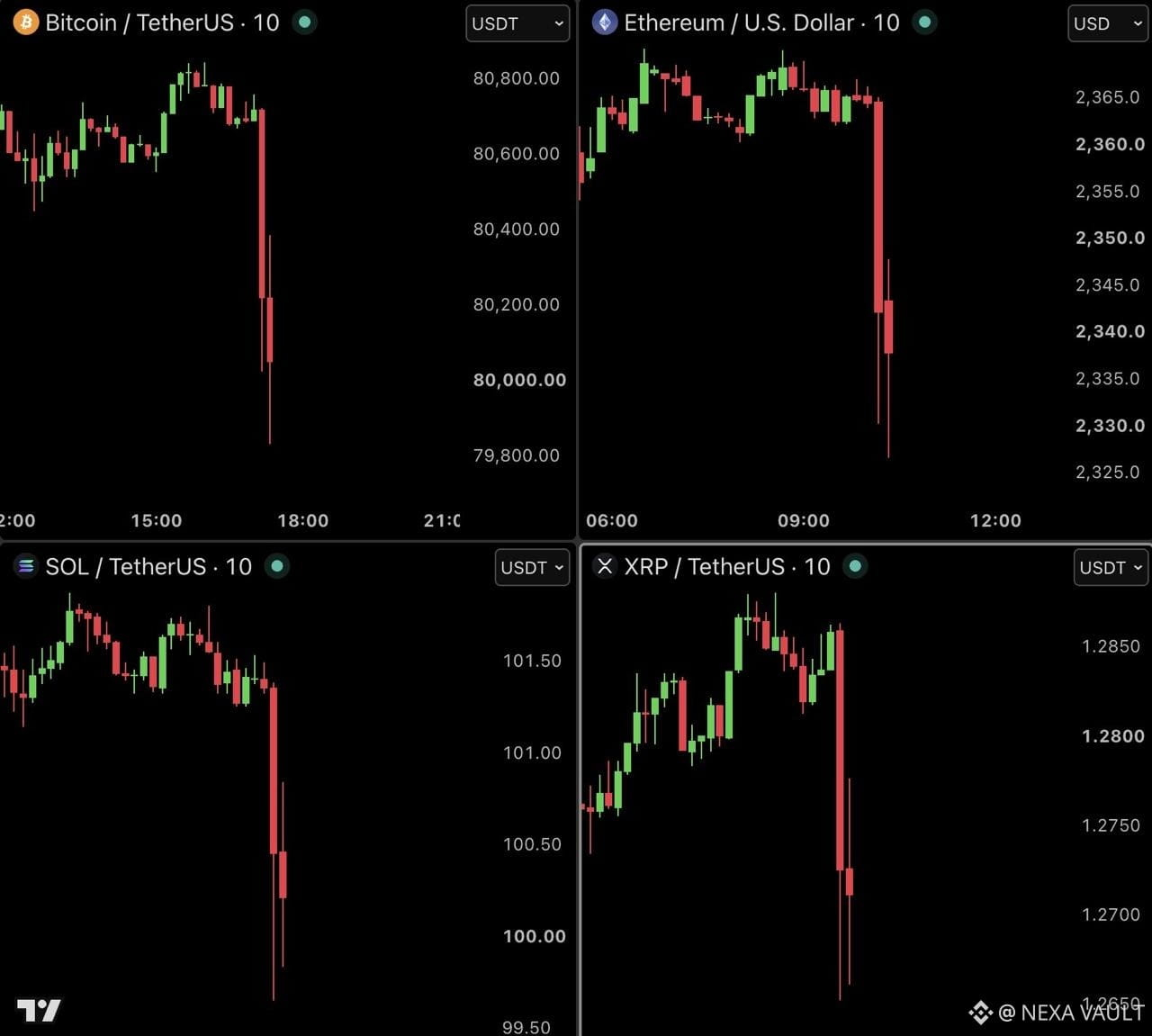
ファックトーバーがさらに最悪に!
$BTC は8万ドルを下回り、$ETH は2,350ドルを下回り、SOLは100ドルを下回り、$XRP は1.30ドルを下回った。
米軍がイラン攻撃の準備を整えているとの報道が出るなか、わずか15分で2億2,000万ドル相当のロングポジションが清算された。
恐怖が戻り、市場は激しく売り込まれている。10月は過酷な展開になってきた。
ファックトーバーがさらに最悪に!
$BTC は8万ドルを下回り、$ETH は2,350ドルを下回り、SOLは100ドルを下回り、$XRP は1.30ドルを下回った。
米軍がイラン攻撃の準備を整えているとの報道が出るなか、わずか15分で2億2,000万ドル相当のロングポジションが清算された。
恐怖が戻り、市場は激しく売り込まれている。10月は過酷な展開になってきた。
$BTC は8万ドルを下回り、$ETH は2,350ドルを下回り、SOLは100ドルを下回り、$XRP は1.30ドルを下回った。
米軍がイラン攻撃の準備を整えているとの報道が出るなか、わずか15分で2億2,000万ドル相当のロングポジションが清算された。
恐怖が戻り、市場は激しく売り込まれている。10月は過酷な展開になってきた。
2
145
·
--
翻訳参照
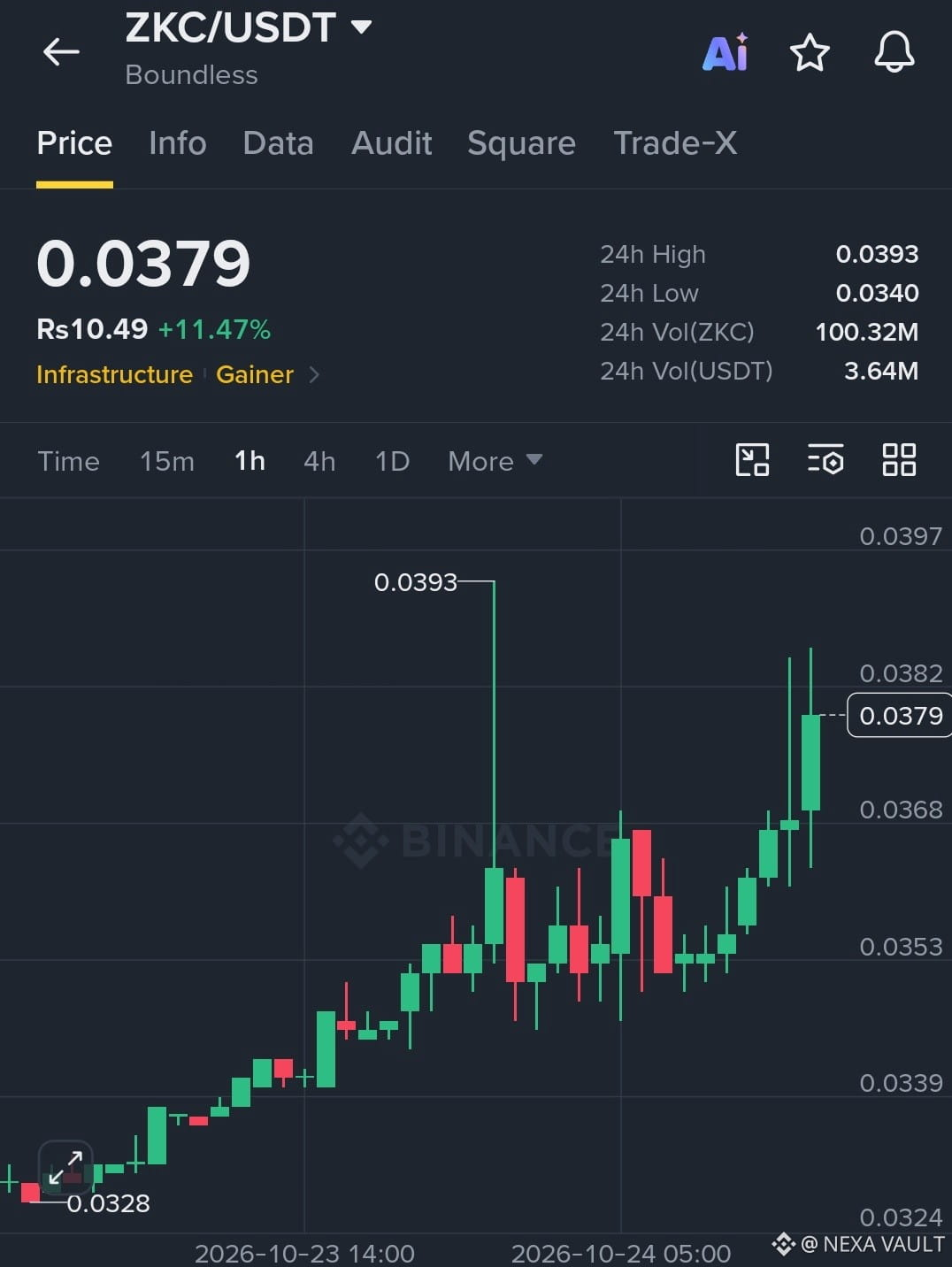
$ZKC (Boundless) Market Update 📈
Solid upward movement on Binance! ZKC is currently trending as a gainer, showing strong performance in the last 24 hours.
📊 Key Statistics:
· Current Price: 0.0379 USDT (Rs10.49)
· 24h Change: +11.47% 🟢
· 24h High: 0.0393
· 24h Low: 0.0340
· 24h Vol (ZKC): 100.32M
· 24h Vol (USDT): 3.64M
Chart Insights (1h Timeframe):
· Status: Tagged as "Infrastructure" and "Gainer".
· Trend: A steady bullish climb starting from a low of 0.0328. The chart shows a massive upward wick that hit the 24h high of 0.0393, followed by a brief consolidation phase. Price is currently pushing up again with strong green candles.
· Time Range: Showing data from Oct 23 (14:00) to Oct 24 (05:00).
$ZKC (Boundless) Market Update 📈
Solid upward movement on Binance! ZKC is currently trending as a gainer, showing strong performance in the last 24 hours.
📊 Key Statistics:
· Current Price: 0.0379 USDT (Rs10.49)
· 24h Change: +11.47% 🟢
· 24h High: 0.0393
· 24h Low: 0.0340
· 24h Vol (ZKC): 100.32M
· 24h Vol (USDT): 3.64M
Chart Insights (1h Timeframe):
· Status: Tagged as "Infrastructure" and "Gainer".
· Trend: A steady bullish climb starting from a low of 0.0328. The chart shows a massive upward wick that hit the 24h high of 0.0393, followed by a brief consolidation phase. Price is currently pushing up again with strong green candles.
· Time Range: Showing data from Oct 23 (14:00) to Oct 24 (05:00).
Solid upward movement on Binance! ZKC is currently trending as a gainer, showing strong performance in the last 24 hours.
📊 Key Statistics:
· Current Price: 0.0379 USDT (Rs10.49)
· 24h Change: +11.47% 🟢
· 24h High: 0.0393
· 24h Low: 0.0340
· 24h Vol (ZKC): 100.32M
· 24h Vol (USDT): 3.64M
Chart Insights (1h Timeframe):
· Status: Tagged as "Infrastructure" and "Gainer".
· Trend: A steady bullish climb starting from a low of 0.0328. The chart shows a massive upward wick that hit the 24h high of 0.0393, followed by a brief consolidation phase. Price is currently pushing up again with strong green candles.
· Time Range: Showing data from Oct 23 (14:00) to Oct 24 (05:00).
1
141
·
--
翻訳参照
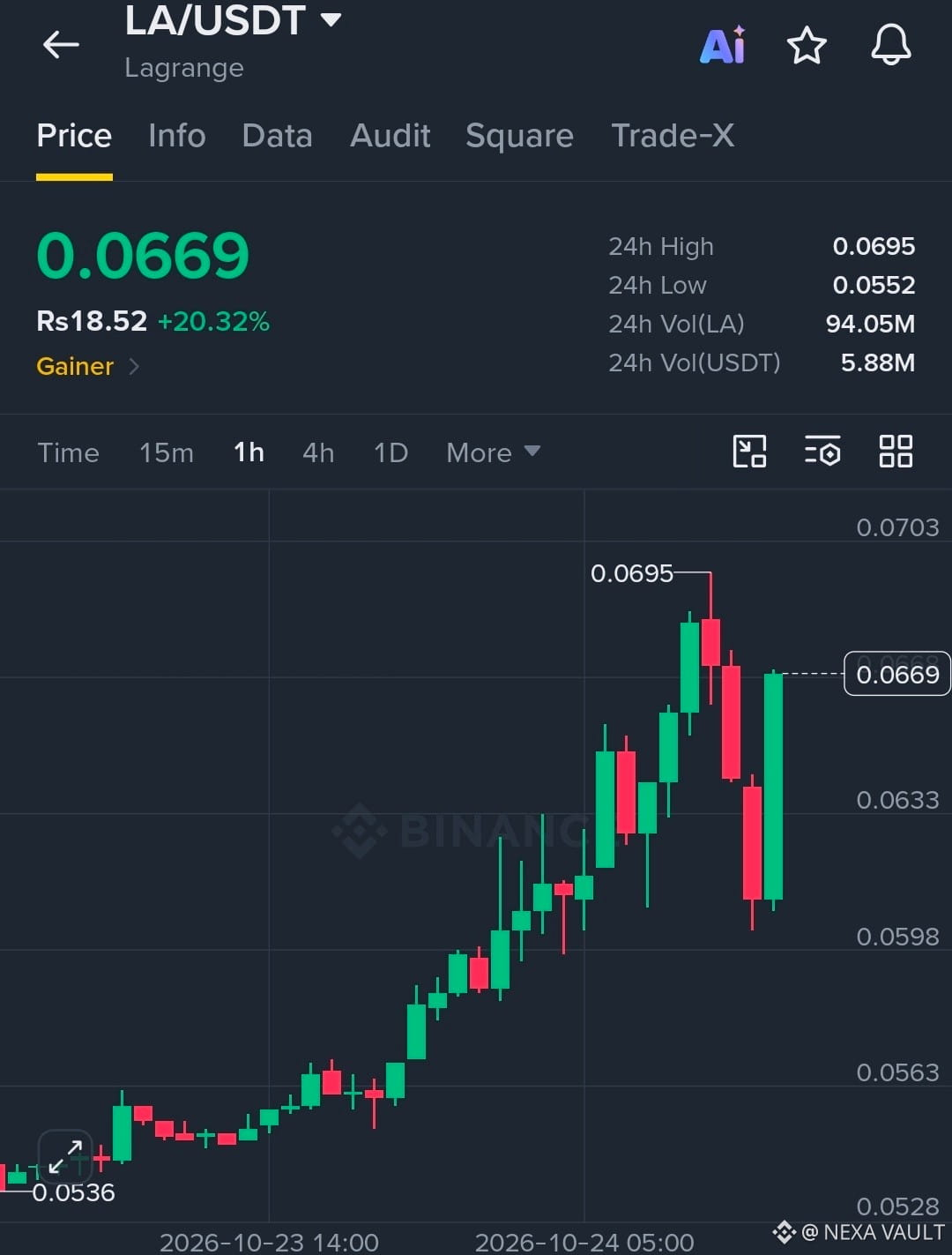
$LA (Lagrange) Market Update 📈
Strong upward momentum on Binance! LA is currently making waves as a top gainer, up over 20% in the last 24 hours.
📊 Key Statistics:
· Current Price: 0.0669 (Rs18.52)
· 24h Change: +20.32% 🟢
· 24h High: 0.0695
· 24h Low: 0.0552
· 24h Vol (LA): 94.05M
· 24h Vol (USDT): 5.88M
📉 Chart Insights (1h Timeframe):
· Status: Tagged as a "Gainer".
· Trend: A steady bullish climb from the 0.0536 level. The price recently peaked at 0.0695, saw a brief red pullback, and is currently bouncing back with a strong green candle.
· Time Range: Showing data from Oct 23 (14:00) to Oct 24 (05:00).
$LA (Lagrange) Market Update 📈
Strong upward momentum on Binance! LA is currently making waves as a top gainer, up over 20% in the last 24 hours.
📊 Key Statistics:
· Current Price: 0.0669 (Rs18.52)
· 24h Change: +20.32% 🟢
· 24h High: 0.0695
· 24h Low: 0.0552
· 24h Vol (LA): 94.05M
· 24h Vol (USDT): 5.88M
📉 Chart Insights (1h Timeframe):
· Status: Tagged as a "Gainer".
· Trend: A steady bullish climb from the 0.0536 level. The price recently peaked at 0.0695, saw a brief red pullback, and is currently bouncing back with a strong green candle.
· Time Range: Showing data from Oct 23 (14:00) to Oct 24 (05:00).
Strong upward momentum on Binance! LA is currently making waves as a top gainer, up over 20% in the last 24 hours.
📊 Key Statistics:
· Current Price: 0.0669 (Rs18.52)
· 24h Change: +20.32% 🟢
· 24h High: 0.0695
· 24h Low: 0.0552
· 24h Vol (LA): 94.05M
· 24h Vol (USDT): 5.88M
📉 Chart Insights (1h Timeframe):
· Status: Tagged as a "Gainer".
· Trend: A steady bullish climb from the 0.0536 level. The price recently peaked at 0.0695, saw a brief red pullback, and is currently bouncing back with a strong green candle.
· Time Range: Showing data from Oct 23 (14:00) to Oct 24 (05:00).
1
112
·
--
翻訳参照
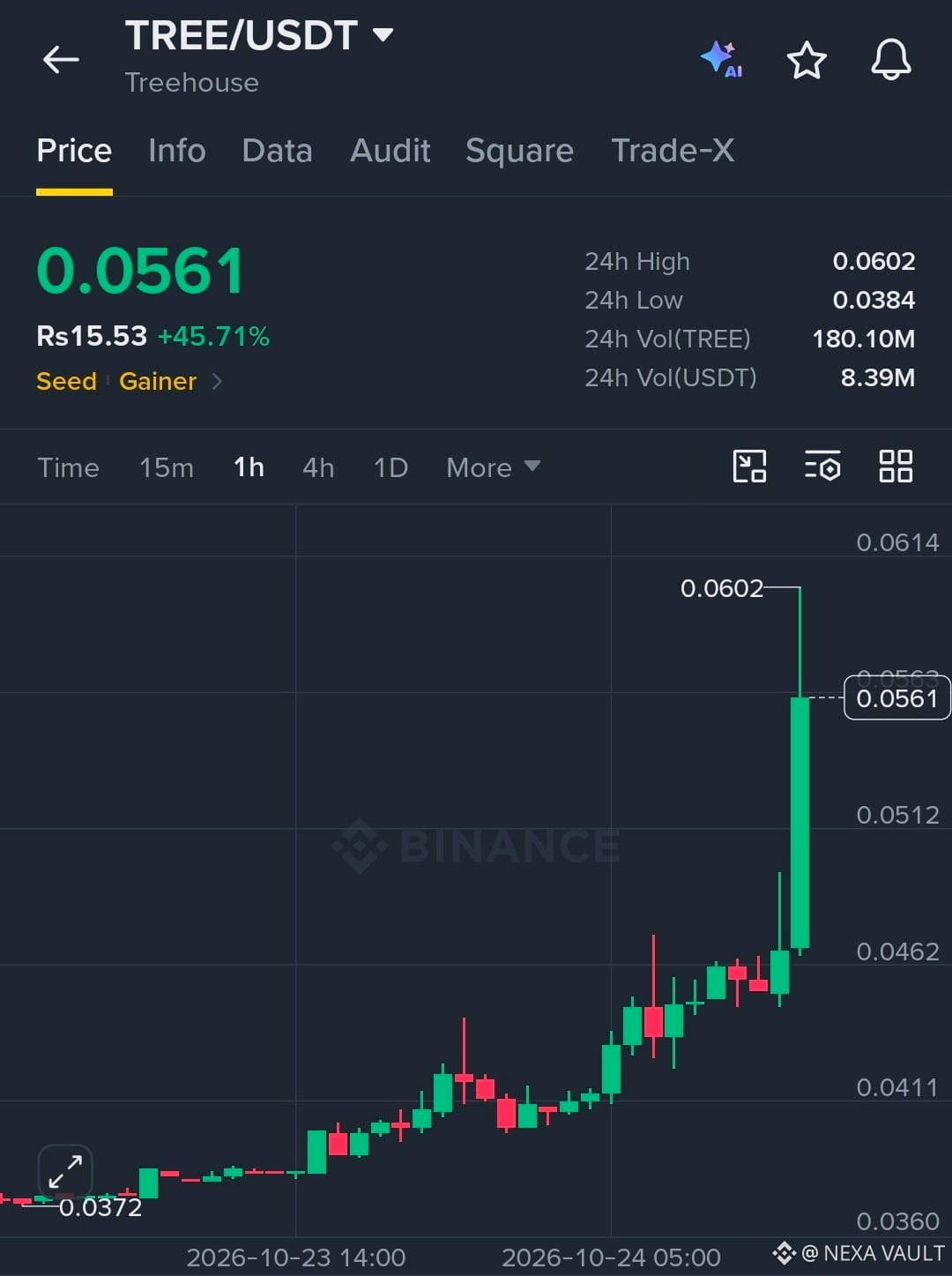
$TREE (Treehouse) Market Update
Massive breakout on Binance! TREE is currently one of the top gainers, surging over 45% in the last 24 hours.
📊 Key Statistics:
· Current Price: 0.0561 USDT (Rs15.53)
· 24h Change: +45.71% 🟢
· 24h High: 0.0602
· 24h Low: 0.0384
· 24h Vol (TREE): 180.10M
· 24h Vol (USDT): 8.39M
📈 Chart Insights (1h Timeframe):
· Status: Tagged as a "Seed" and "Gainer".
· Trend: Strong bullish momentum, as seen by the massive green candle. Price recently bounced from a local low of 0.0372 to peak at 0.0602 before a slight retracement.
· Time Range: Showing data from Oct 23 (14:00) to Oct 24 (05:00).
$TREE (Treehouse) Market Update
Massive breakout on Binance! TREE is currently one of the top gainers, surging over 45% in the last 24 hours.
📊 Key Statistics:
· Current Price: 0.0561 USDT (Rs15.53)
· 24h Change: +45.71% 🟢
· 24h High: 0.0602
· 24h Low: 0.0384
· 24h Vol (TREE): 180.10M
· 24h Vol (USDT): 8.39M
📈 Chart Insights (1h Timeframe):
· Status: Tagged as a "Seed" and "Gainer".
· Trend: Strong bullish momentum, as seen by the massive green candle. Price recently bounced from a local low of 0.0372 to peak at 0.0602 before a slight retracement.
· Time Range: Showing data from Oct 23 (14:00) to Oct 24 (05:00).
Massive breakout on Binance! TREE is currently one of the top gainers, surging over 45% in the last 24 hours.
📊 Key Statistics:
· Current Price: 0.0561 USDT (Rs15.53)
· 24h Change: +45.71% 🟢
· 24h High: 0.0602
· 24h Low: 0.0384
· 24h Vol (TREE): 180.10M
· 24h Vol (USDT): 8.39M
📈 Chart Insights (1h Timeframe):
· Status: Tagged as a "Seed" and "Gainer".
· Trend: Strong bullish momentum, as seen by the massive green candle. Price recently bounced from a local low of 0.0372 to peak at 0.0602 before a slight retracement.
· Time Range: Showing data from Oct 23 (14:00) to Oct 24 (05:00).
2
116
·
--
翻訳参照
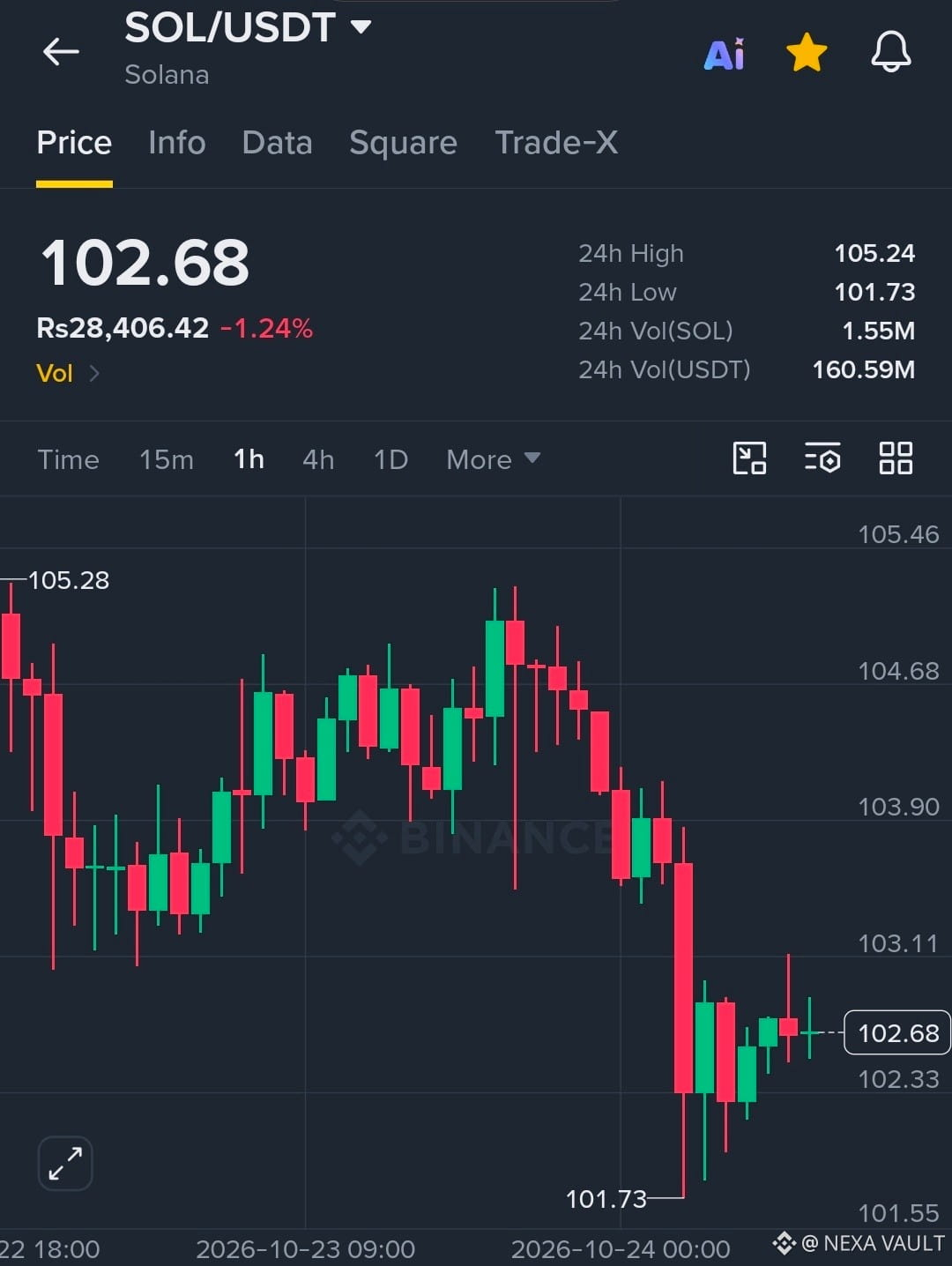
$SOL SLIDE! Bears Force a Sharp 1H Breakdown.
After a steady climb to a 24h high of $105.24, the trend violently flipped. A massive red candle wiped out recent gains, dragging SOL to a 24h low of $101.73. The price is currently fighting to stabilize at $102.68 (Rs 28,406.42), down 1.24% for the day.
Here are the critical numbers:
Current Price: $102.68
24h High: $105.24
24h Low: $101.73
24h Volume: 1.55M $SOL / $160.59M USDT
The chart is testing a crucial support zone after a heavy sell-off. Are you buying this dip or bracing for lower lows?
$SOL SLIDE! Bears Force a Sharp 1H Breakdown.
After a steady climb to a 24h high of $105.24, the trend violently flipped. A massive red candle wiped out recent gains, dragging SOL to a 24h low of $101.73. The price is currently fighting to stabilize at $102.68 (Rs 28,406.42), down 1.24% for the day.
Here are the critical numbers:
Current Price: $102.68
24h High: $105.24
24h Low: $101.73
24h Volume: 1.55M $SOL / $160.59M USDT
The chart is testing a crucial support zone after a heavy sell-off. Are you buying this dip or bracing for lower lows?
After a steady climb to a 24h high of $105.24, the trend violently flipped. A massive red candle wiped out recent gains, dragging SOL to a 24h low of $101.73. The price is currently fighting to stabilize at $102.68 (Rs 28,406.42), down 1.24% for the day.
Here are the critical numbers:
Current Price: $102.68
24h High: $105.24
24h Low: $101.73
24h Volume: 1.55M $SOL / $160.59M USDT
The chart is testing a crucial support zone after a heavy sell-off. Are you buying this dip or bracing for lower lows?
1
81
·
--
翻訳参照
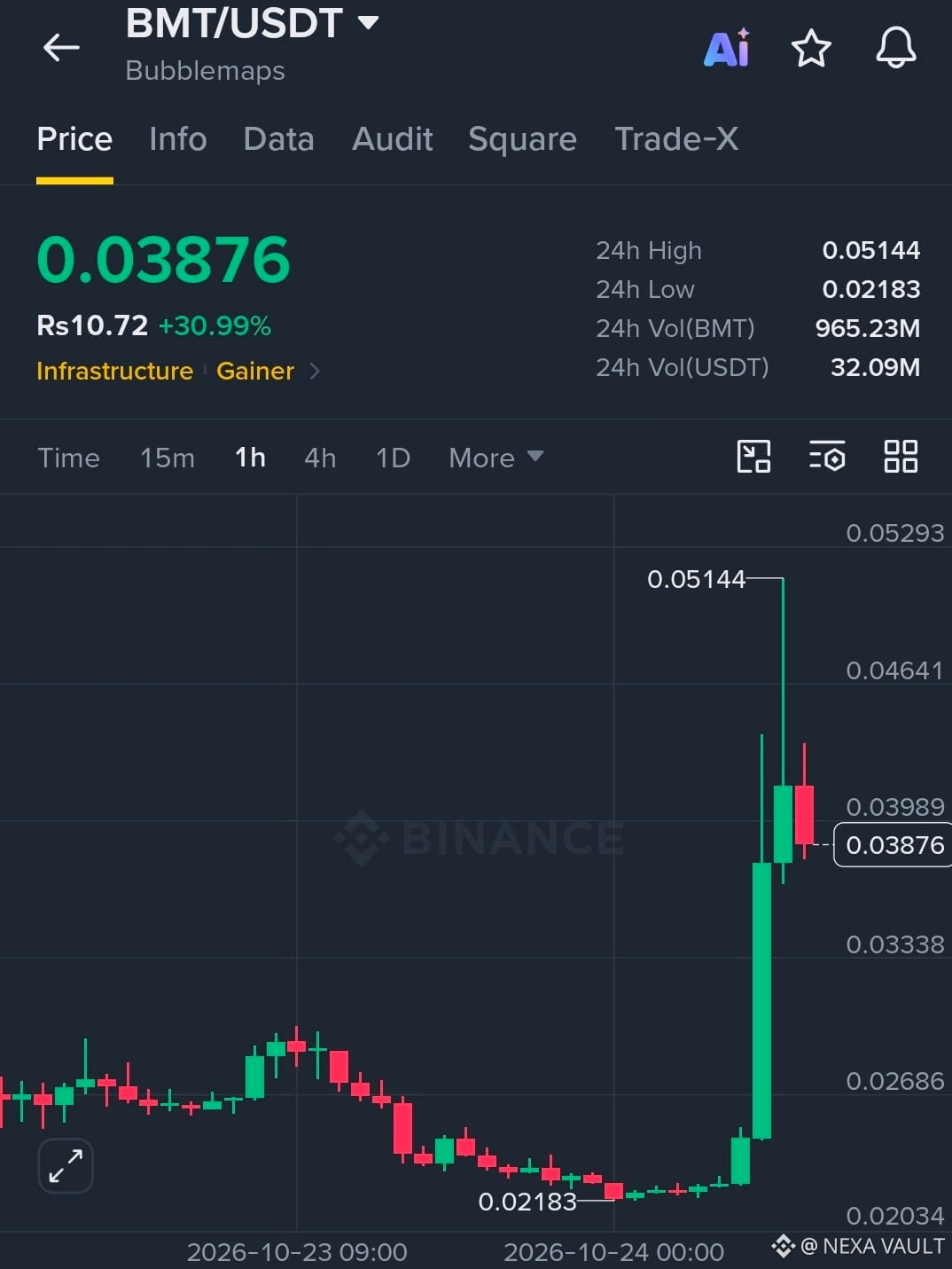
$BMT just staged a violent vertical pump, rocketing over 30% in a matter of hours! The 1H chart shows a monster green candle blasting from a 24h low of $0.02183 to a blazing peak of $0.05144.
The bulls are in full control, though the price is currently pulling back to $0.03876 (Rs 10.72).
Here is the explosive data:
Current Price: $0.03876 (+30.99%)
24h High: $0.05144
24h Low: $0.02183
24h Volume: A staggering 965.23M BMT / $32.09M
Tagged as a top Infrastructure Gainer. Are you chasing this pump or waiting for the dust to settle?
$BMT just staged a violent vertical pump, rocketing over 30% in a matter of hours! The 1H chart shows a monster green candle blasting from a 24h low of $0.02183 to a blazing peak of $0.05144.
The bulls are in full control, though the price is currently pulling back to $0.03876 (Rs 10.72).
Here is the explosive data:
Current Price: $0.03876 (+30.99%)
24h High: $0.05144
24h Low: $0.02183
24h Volume: A staggering 965.23M BMT / $32.09M
Tagged as a top Infrastructure Gainer. Are you chasing this pump or waiting for the dust to settle?
The bulls are in full control, though the price is currently pulling back to $0.03876 (Rs 10.72).
Here is the explosive data:
Current Price: $0.03876 (+30.99%)
24h High: $0.05144
24h Low: $0.02183
24h Volume: A staggering 965.23M BMT / $32.09M
Tagged as a top Infrastructure Gainer. Are you chasing this pump or waiting for the dust to settle?
3
438
·
--
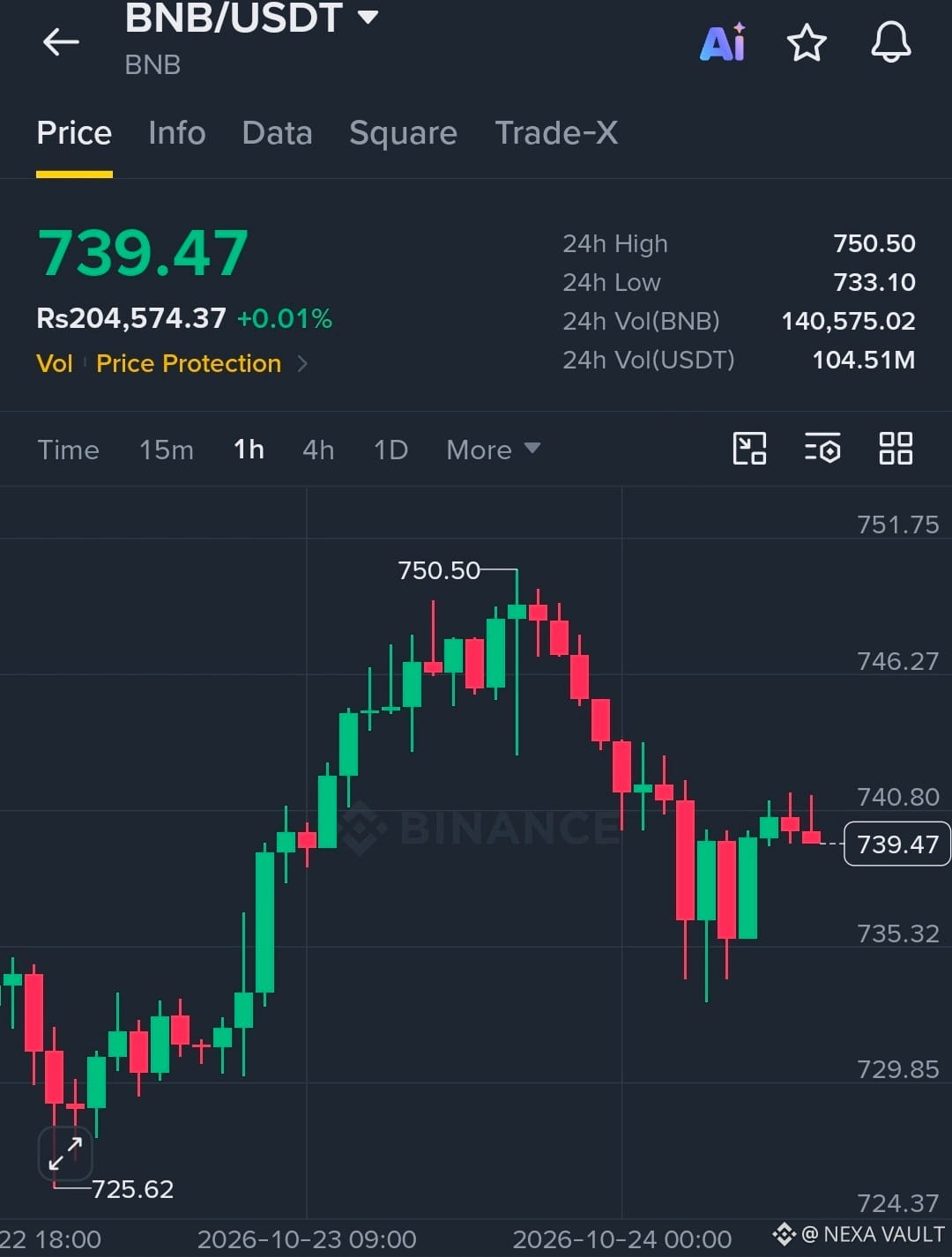
$BNB 急変動! 強気派と弱気派が1時間足で激しい攻防を繰り広げています。725.62ドルの安値から750.50ドルの高値へと大きく変動した後、BNBは739.47ドル(204,574.37ルピー)を維持しようと攻防を続けています。
高値:750.50ドル
安値:733.10ドル
出来高:140,575 BNB(1億451万ドル)
$BNB 急変動! 強気派と弱気派が1時間足で激しい攻防を繰り広げています。725.62ドルの安値から750.50ドルの高値へと大きく変動した後、BNBは739.47ドル(204,574.37ルピー)を維持しようと攻防を続けています。
高値:750.50ドル
安値:733.10ドル
出来高:140,575 BNB(1億451万ドル)
高値:750.50ドル
安値:733.10ドル
出来高:140,575 BNB(1億451万ドル)
1
105
ログインして、さらにコンテンツを読む
厳選トピックで世界の暗号資産トレーダーの仲間入り
⚡️ 暗号資産に関する最新かつ有益な情報が見つかります。
💬 世界最大の暗号資産取引所から信頼されています。
👍 認証を受けたクリエイターから、有益なインサイトを得られます。
メール / 電話番号