

peter piero
11 投稿

peter piero
3 フォロー
16 フォロワー
22 いいね
投稿
すべて
引用

zero_worries
·
--
ブリッシュソーシャルマイニングから学んだことのひとつは、最高の報酬は、多くの場合途中で身につけるスキルから生まれるということです。
@TheDAOLabs の最新アップデートを読んで、ソーシャルマイニングは、質の高い貢献がこれまで以上に重要になる未来へ向かって進んでいると感じました。検証(バリデーション)への重点は、実際に自分の仕事に本気で取り組んだ貢献者をきちんと評価できるようになるため、前向きな一歩です。
ここまでの私の歩みは実り多いものでした。5.k+ポイント以上を獲得し、さまざまなタスクを完了し、プラットフォームをまたいで洞察を共有し、エコシステムのさまざまな地域の貢献者とつながってきました。
私が夢中になっている理由は、ソーシャルマイニングが「稼ぐ」ことだけではないからです。新しいことを学び、コンテンツ制作のスキルを磨き、Web3コミュニティにより深く関わることでもあります。
Web3で学びながら稼げる、実践的な方法を探している人には、ソーシャルマイニングをおすすめします。大きなフォロワー数や高度な技術は必要ありません。必要なのは継続すること、好奇心、そして貢献する意欲です。
もし将来、より良い検証が実現され、質の高い仕事への評価がさらに強まり、本物の貢献者にとっての機会が増えるのなら、ソーシャルマイニングは正しい方向へ進んでいます。
#SocialMining #DAOLabs #Web3 #BinanceSquare
@TheDAOLabs の最新アップデートを読んで、ソーシャルマイニングは、質の高い貢献がこれまで以上に重要になる未来へ向かって進んでいると感じました。検証(バリデーション)への重点は、実際に自分の仕事に本気で取り組んだ貢献者をきちんと評価できるようになるため、前向きな一歩です。
ここまでの私の歩みは実り多いものでした。5.k+ポイント以上を獲得し、さまざまなタスクを完了し、プラットフォームをまたいで洞察を共有し、エコシステムのさまざまな地域の貢献者とつながってきました。
私が夢中になっている理由は、ソーシャルマイニングが「稼ぐ」ことだけではないからです。新しいことを学び、コンテンツ制作のスキルを磨き、Web3コミュニティにより深く関わることでもあります。
Web3で学びながら稼げる、実践的な方法を探している人には、ソーシャルマイニングをおすすめします。大きなフォロワー数や高度な技術は必要ありません。必要なのは継続すること、好奇心、そして貢献する意欲です。
もし将来、より良い検証が実現され、質の高い仕事への評価がさらに強まり、本物の貢献者にとっての機会が増えるのなら、ソーシャルマイニングは正しい方向へ進んでいます。
#SocialMining #DAOLabs #Web3 #BinanceSquare

OLUDAMI
·
--
これは、多くの人が見落としがちな重要な変数を紹介します:
行動リスク。
基礎が強くても、トークンに対する信頼が一度破られると、
• 需給のダイナミクスを歪める
• 市場の信頼を損なう
• 長期的な評判の低下を引き起こす
行動リスク。
基礎が強くても、トークンに対する信頼が一度破られると、
• 需給のダイナミクスを歪める
• 市場の信頼を損なう
• 長期的な評判の低下を引き起こす
zero_worries
·
--
ブリッシュDAO Labsは単にクリプトプロジェクトをオンボードするだけではありません。彼らはそれらを調査します。
私はちょうどCCOのイペク・ジェリクによるDAO Labs探偵レポートを読み終えたところで、正直言って、この資料はWeb3におけるプロジェクト評価の考え方を再構築しました。
ほとんどのローンチパッドは「このプロジェクトはワクワクする?」と尋ねます。
DAO Labsは「このプロジェクトは信頼できる?」と問います。
大きな違いです。
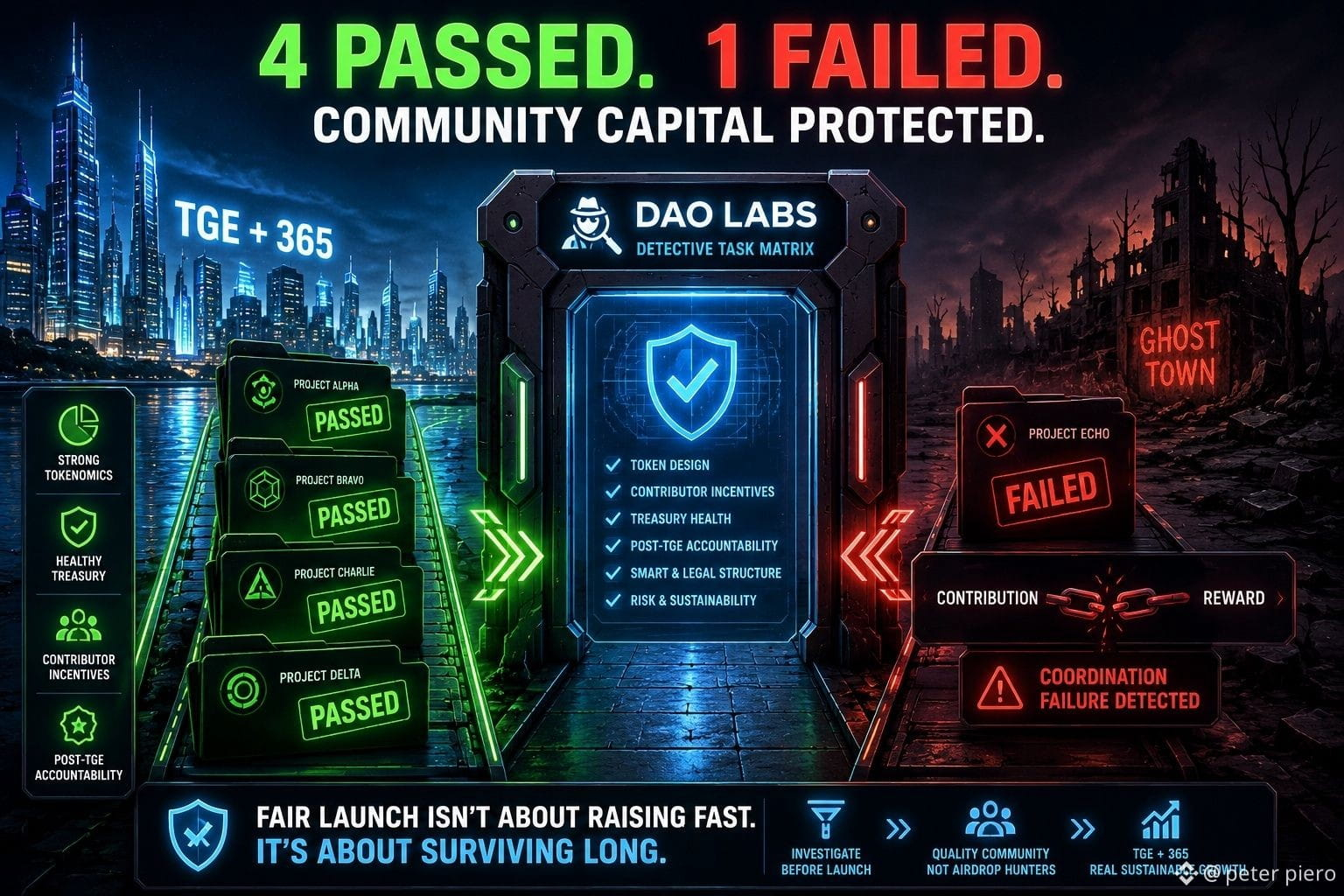
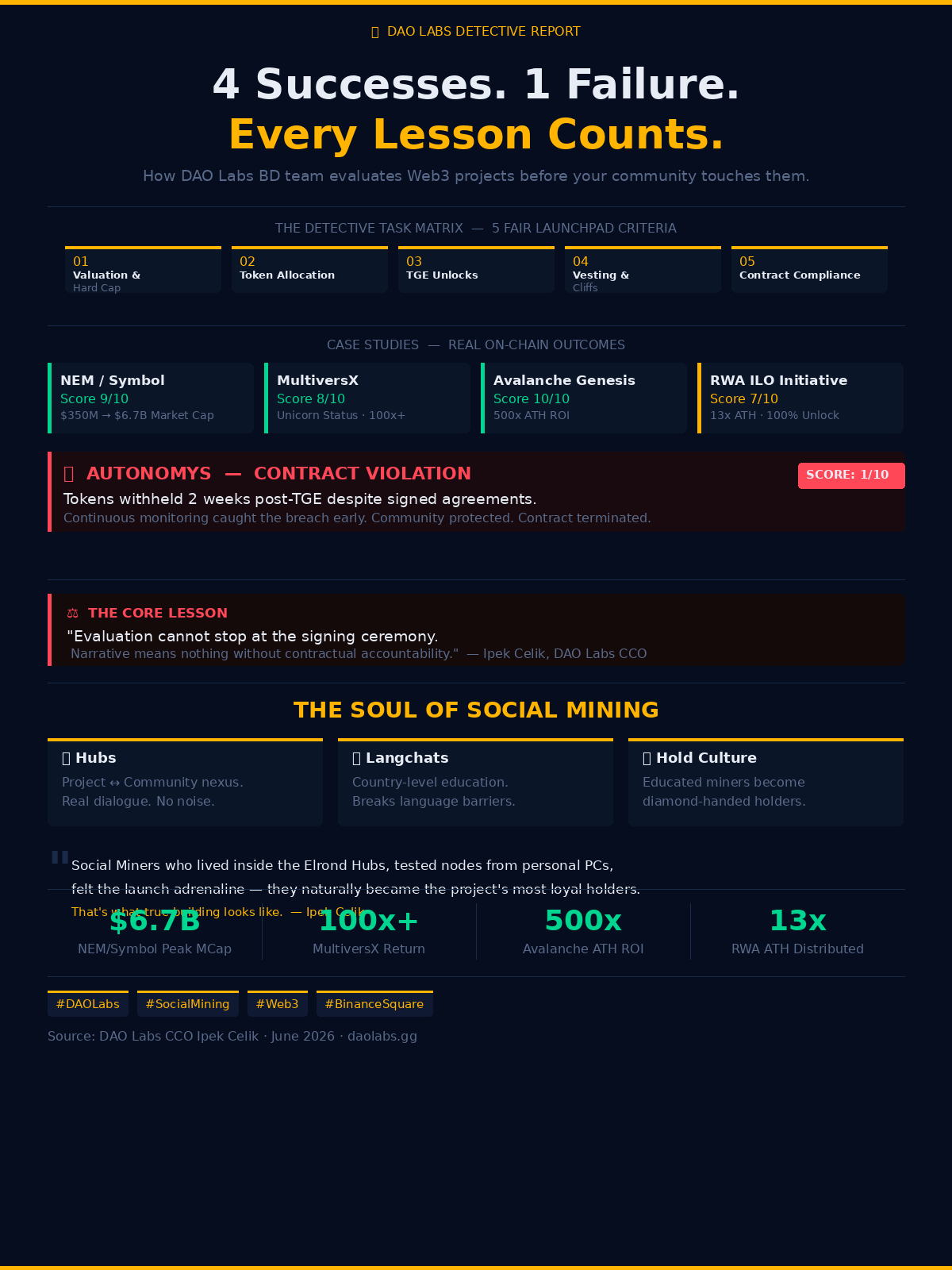
彼らのビジネス開発チームは、すべてのプロジェクトを5ポイントのフェアローンチパッド構造に通します — FDV対市場の準備状況、トークン配布の公平性、TGEロック解除制限、ベスティングクリフの施行、そして継続的なスマートコントラクトのコンプライアンス監視。
結果は自明です:
✅ NEM/Symbol — $350M → スナップショット時の$6.7B時価総額
✅ MultiversX — ユニコーンステータス、100x+
✅ Avalanche Genesis — 500x ATH ROI(エアドロップハンターをフィルタリングした後)
✅ RWA ILO — 13x ATH、100%解除済み、ユーザー保護
❌ Autonomys — 1/10。契約に署名済み。トークンはTGE後2週間保持されたが、直接的な違反。フレームワークは早期にそれをキャッチ。コミュニティは保護されました。
最後のケースは私にとって最も重要なものです。うまくいくときだけ機能するフレームワークはフレームワークではなく、ただの劇場です。Autonomysのケースは、DAO Labsが実際に結果を強制することを証明しました。
しかし、この記事で最も響いた部分はメトリクスではありませんでした。すべての数字の背後には、ノードをテストするために夜遅くまで起きていたマイナーがいること、ジェネシスブロックの不安感と高揚感を感じたこと、市場がそうなる前に何かを信じていたことの思い出でした。
それはオーディエンスではありません。それはコミュニティです。そして、それがソーシャルマイニングをすべての一般的なエアドロップファームから分けるものです。
📖 記事の全文を読む: https://dao-labs.com/posts/4-successes-1-failure-lessons-from-evaluating-web3-projects
#DAOLabs #SocialMining #Web3
私はちょうどCCOのイペク・ジェリクによるDAO Labs探偵レポートを読み終えたところで、正直言って、この資料はWeb3におけるプロジェクト評価の考え方を再構築しました。
ほとんどのローンチパッドは「このプロジェクトはワクワクする?」と尋ねます。
DAO Labsは「このプロジェクトは信頼できる?」と問います。
大きな違いです。
彼らのビジネス開発チームは、すべてのプロジェクトを5ポイントのフェアローンチパッド構造に通します — FDV対市場の準備状況、トークン配布の公平性、TGEロック解除制限、ベスティングクリフの施行、そして継続的なスマートコントラクトのコンプライアンス監視。
結果は自明です:
✅ NEM/Symbol — $350M → スナップショット時の$6.7B時価総額
✅ MultiversX — ユニコーンステータス、100x+
✅ Avalanche Genesis — 500x ATH ROI(エアドロップハンターをフィルタリングした後)
✅ RWA ILO — 13x ATH、100%解除済み、ユーザー保護
❌ Autonomys — 1/10。契約に署名済み。トークンはTGE後2週間保持されたが、直接的な違反。フレームワークは早期にそれをキャッチ。コミュニティは保護されました。
最後のケースは私にとって最も重要なものです。うまくいくときだけ機能するフレームワークはフレームワークではなく、ただの劇場です。Autonomysのケースは、DAO Labsが実際に結果を強制することを証明しました。
しかし、この記事で最も響いた部分はメトリクスではありませんでした。すべての数字の背後には、ノードをテストするために夜遅くまで起きていたマイナーがいること、ジェネシスブロックの不安感と高揚感を感じたこと、市場がそうなる前に何かを信じていたことの思い出でした。
それはオーディエンスではありません。それはコミュニティです。そして、それがソーシャルマイニングをすべての一般的なエアドロップファームから分けるものです。
📖 記事の全文を読む: https://dao-labs.com/posts/4-successes-1-failure-lessons-from-evaluating-web3-projects
#DAOLabs #SocialMining #Web3
ログインして、さらにコンテンツを読む