

表情包
1.7k 投稿

表情包
報告
ユーザーをブロック
1.3K+ フォロー
11.7K+ フォロワー
1.0K+ いいね
投稿
すべて
ライブ
·
--
ブリッシュ
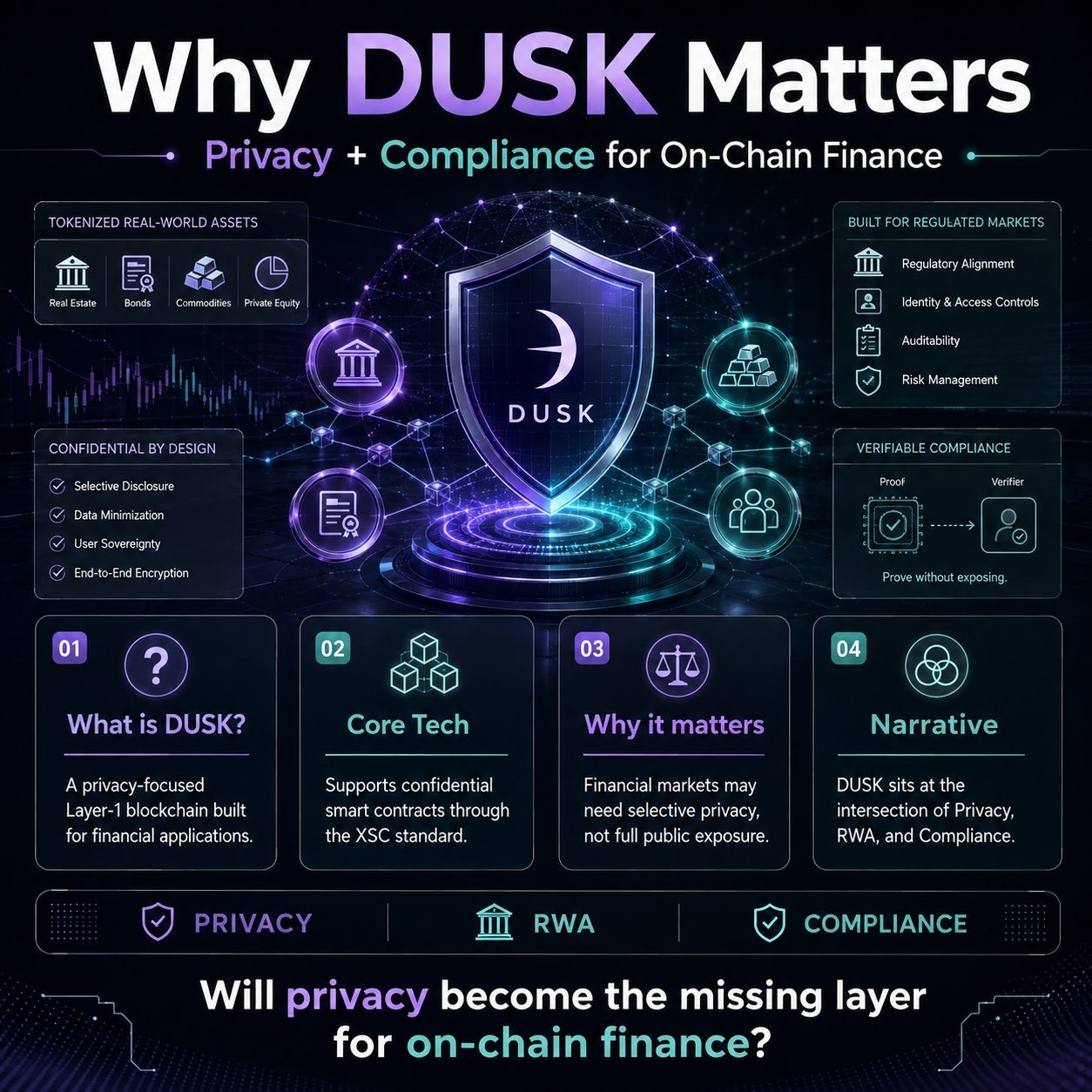
ほとんどのブロックチェーンは、1つの課題を解決しました——透明性です。
しかし金融市場には、もう一つの課題があります。
公開するとすべての機密情報が明らかになってしまうことを避けつつ、どうやって数兆ドル規模の資産をオンチェーンで扱うのでしょうか?
ここで、プライバシーのナラティブが面白くなってきます。
DUSK Network は別の発想に基づいて構築しています——それは、金融アプリケーションが機密性とコンプライアンスを両立できるブロックチェーンです。
RWA(現実世界資産)が注目を集め続ける中で、機関は単にスピードや効率だけでなく、制御された可視性、プライバシー保護、そして安全な決済インフラを必要とするかもしれません。
DUSK のアプローチは、XSC 標準によって駆動される秘匿スマートコントラクトを備えた、プライバシー重視のレイヤー1に焦点を当てています。規制されたデジタル資産をめぐる課題に取り組むことを目指しています。
より大きな問いは、「プライバシーが今日重要なのかどうか」ではありません…
問いはこうです。
プライバシーは、従来の金融がオンチェーンへ移行するのを助ける“欠けたインフラ層”になるのでしょうか?
RWA + プライバシー + コンプライアンスの交差点にあるプロジェクトを注視することは、このサイクルの中で最も興味深いナラティブの一つになるかもしれません。
あなたは DUSK についてどう見ていますか?
#DUSK @Dusk_Foundation
$DUSK
{spot}(DUSKUSDT)
ほとんどのブロックチェーンは、1つの課題を解決しました——透明性です。
しかし金融市場には、もう一つの課題があります。
公開するとすべての機密情報が明らかになってしまうことを避けつつ、どうやって数兆ドル規模の資産をオンチェーンで扱うのでしょうか?
ここで、プライバシーのナラティブが面白くなってきます。
DUSK Network は別の発想に基づいて構築しています——それは、金融アプリケーションが機密性とコンプライアンスを両立できるブロックチェーンです。
RWA(現実世界資産)が注目を集め続ける中で、機関は単にスピードや効率だけでなく、制御された可視性、プライバシー保護、そして安全な決済インフラを必要とするかもしれません。
DUSK のアプローチは、XSC 標準によって駆動される秘匿スマートコントラクトを備えた、プライバシー重視のレイヤー1に焦点を当てています。規制されたデジタル資産をめぐる課題に取り組むことを目指しています。
より大きな問いは、「プライバシーが今日重要なのかどうか」ではありません…
問いはこうです。
プライバシーは、従来の金融がオンチェーンへ移行するのを助ける“欠けたインフラ層”になるのでしょうか?
RWA + プライバシー + コンプライアンスの交差点にあるプロジェクトを注視することは、このサイクルの中で最も興味深いナラティブの一つになるかもしれません。
あなたは DUSK についてどう見ていますか?
#DUSK @Dusk
$DUSK
しかし金融市場には、もう一つの課題があります。
公開するとすべての機密情報が明らかになってしまうことを避けつつ、どうやって数兆ドル規模の資産をオンチェーンで扱うのでしょうか?
ここで、プライバシーのナラティブが面白くなってきます。
DUSK Network は別の発想に基づいて構築しています——それは、金融アプリケーションが機密性とコンプライアンスを両立できるブロックチェーンです。
RWA(現実世界資産)が注目を集め続ける中で、機関は単にスピードや効率だけでなく、制御された可視性、プライバシー保護、そして安全な決済インフラを必要とするかもしれません。
DUSK のアプローチは、XSC 標準によって駆動される秘匿スマートコントラクトを備えた、プライバシー重視のレイヤー1に焦点を当てています。規制されたデジタル資産をめぐる課題に取り組むことを目指しています。
より大きな問いは、「プライバシーが今日重要なのかどうか」ではありません…
問いはこうです。
プライバシーは、従来の金融がオンチェーンへ移行するのを助ける“欠けたインフラ層”になるのでしょうか?
RWA + プライバシー + コンプライアンスの交差点にあるプロジェクトを注視することは、このサイクルの中で最も興味深いナラティブの一つになるかもしれません。
あなたは DUSK についてどう見ていますか?
#DUSK @Dusk
$DUSK
46
2
23
359
·
--
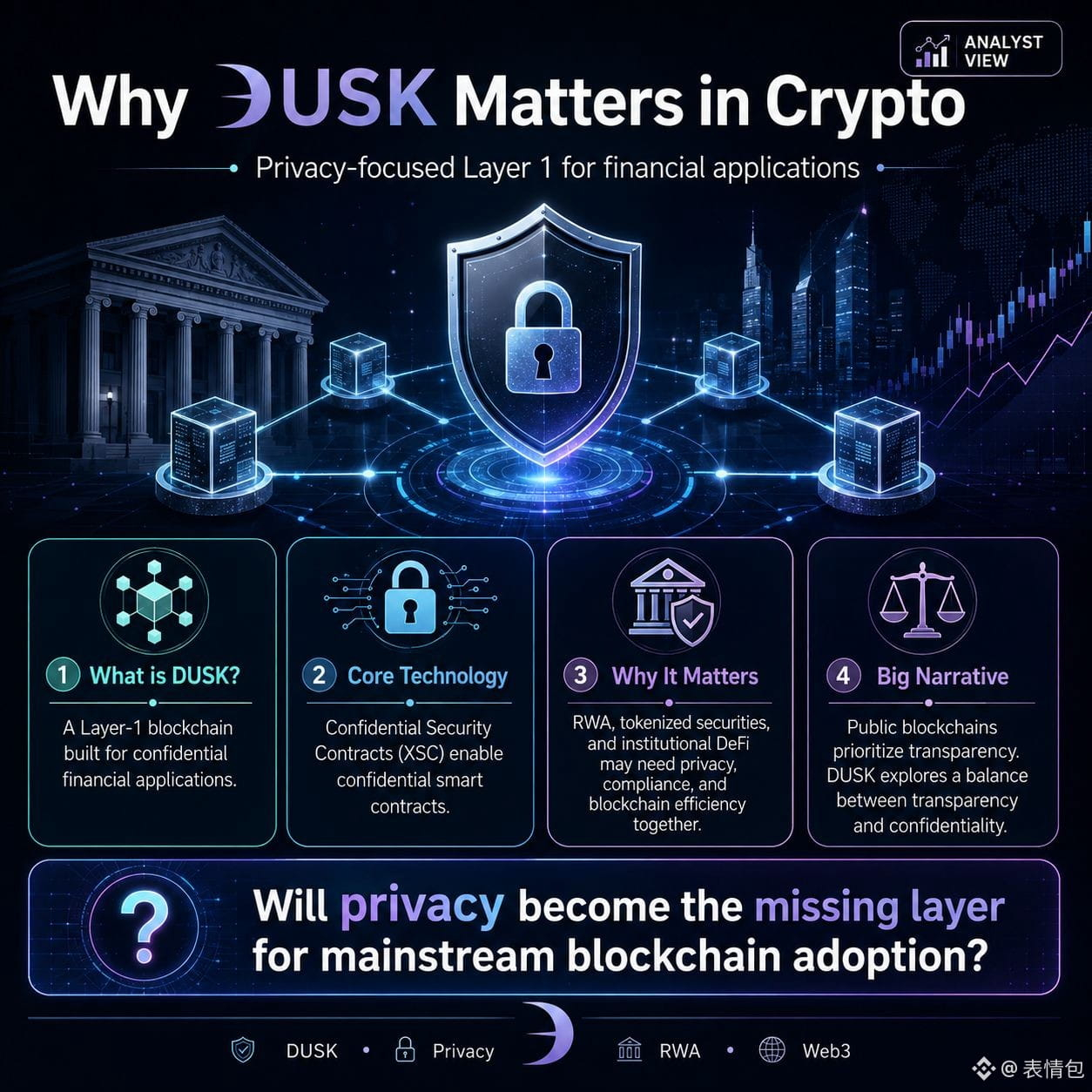
ほとんどのブロックチェーンが解決したのは1つの課題でした――透明性です。
しかし、金融市場にとって次の課題は別のものになるかもしれません。つまり、機密性の高い金融データを公開せずにブロックチェーンをどう使うか、ということです。
RWA(Real-World Assets:実世界資産)、トークン化された証券、そして機関向けDeFiが成長を続けるなかで、プライバシーは「単なるオプション機能」ではなく、重要なインフラ要件になっていく可能性があります。
ここでDUSK Networkが構想する物語があります。
DUSKは、機密性の高い金融アプリケーションに焦点を当てたレイヤー1ブロックチェーンです。Confidential Security Contracts(XSC)と、プライバシー重視のスマートコントラクトを用いて、規制された資産がオンチェーン上でどのように移動できるかを探りつつ、その機密性を維持します。
面白いのは技術だけではありません――DUSKが解こうとしているのは、どんな問題なのかという点です。
パブリック・ブロックチェーンは開放性をもたらしました。金融機関には、透明性、コンプライアンス、そしてプライバシーのバランスが求められるかもしれません。
大きな問い:
プライバシーは、メインストリームのブロックチェーン導入における“欠けている層”になるのでしょうか。それとも、透明性は常に最優先であり続けるのでしょうか?
#DUSK $DUSK @Dusk_Foundation
{spot}(DUSKUSDT)
ほとんどのブロックチェーンが解決したのは1つの課題でした――透明性です。
しかし、金融市場にとって次の課題は別のものになるかもしれません。つまり、機密性の高い金融データを公開せずにブロックチェーンをどう使うか、ということです。
RWA(Real-World Assets:実世界資産)、トークン化された証券、そして機関向けDeFiが成長を続けるなかで、プライバシーは「単なるオプション機能」ではなく、重要なインフラ要件になっていく可能性があります。
ここでDUSK Networkが構想する物語があります。
DUSKは、機密性の高い金融アプリケーションに焦点を当てたレイヤー1ブロックチェーンです。Confidential Security Contracts(XSC)と、プライバシー重視のスマートコントラクトを用いて、規制された資産がオンチェーン上でどのように移動できるかを探りつつ、その機密性を維持します。
面白いのは技術だけではありません――DUSKが解こうとしているのは、どんな問題なのかという点です。
パブリック・ブロックチェーンは開放性をもたらしました。金融機関には、透明性、コンプライアンス、そしてプライバシーのバランスが求められるかもしれません。
大きな問い:
プライバシーは、メインストリームのブロックチェーン導入における“欠けている層”になるのでしょうか。それとも、透明性は常に最優先であり続けるのでしょうか?
#DUSK $DUSK @Dusk
しかし、金融市場にとって次の課題は別のものになるかもしれません。つまり、機密性の高い金融データを公開せずにブロックチェーンをどう使うか、ということです。
RWA(Real-World Assets:実世界資産)、トークン化された証券、そして機関向けDeFiが成長を続けるなかで、プライバシーは「単なるオプション機能」ではなく、重要なインフラ要件になっていく可能性があります。
ここでDUSK Networkが構想する物語があります。
DUSKは、機密性の高い金融アプリケーションに焦点を当てたレイヤー1ブロックチェーンです。Confidential Security Contracts(XSC)と、プライバシー重視のスマートコントラクトを用いて、規制された資産がオンチェーン上でどのように移動できるかを探りつつ、その機密性を維持します。
面白いのは技術だけではありません――DUSKが解こうとしているのは、どんな問題なのかという点です。
パブリック・ブロックチェーンは開放性をもたらしました。金融機関には、透明性、コンプライアンス、そしてプライバシーのバランスが求められるかもしれません。
大きな問い:
プライバシーは、メインストリームのブロックチェーン導入における“欠けている層”になるのでしょうか。それとも、透明性は常に最優先であり続けるのでしょうか?
#DUSK $DUSK @Dusk
1
4
176
·
--
ブリッシュ
本人確認中
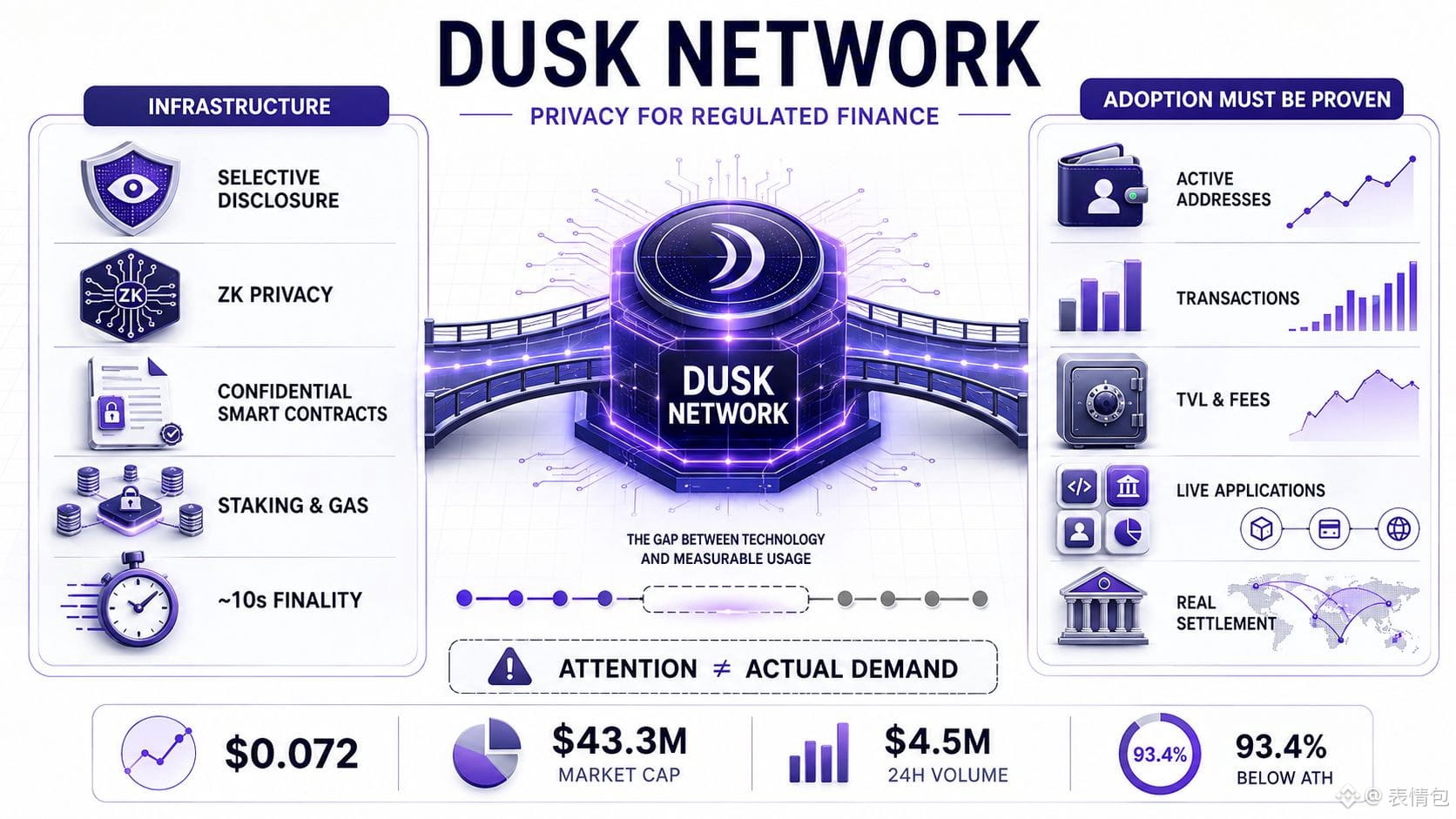
DUSKは、24時間で約9%、過去1週間で17.5%上昇したことを受けて、トレーダーの監視リストに再び浮上している。約0.072ドルで、時価総額は約4,330万ドル。日次の取引高は約450万ドルだ。この勢いは目立つが、トークンは史上最高値の1.09ドルから93.4%も下回っており、今回の動きは相対的に見えてくる。
私がより関心を持っているのはインフラだ。Duskは、秘匿送金による規制対応のファイナンス向けLayer 1を構築している。ゼロ知識スマートコントラクト、選択的開示、決定論的な最終性を備える。DUSKは取引手数料やステーキングに使われており、取引所での投機を超えた実用的な役割をトークンに与えている。
最近のDuskEVMテストネットのローンチも、Solidity開発者にとって参入障壁を下げている。ただし、DuskEVMと機密Hedgerレイヤーはまだ検証中で、Dusk Tradeは開発段階にある。
ここから私は慎重になる。Duskは機関投資家との関係性、相当な計画発行、ステークされている2億100万以上のトークンを強調しているが、アクティブアドレス、アプリのTVL、手数料、継続的な取引活動を示す信頼できる公開指標は依然として限られている。技術は本気に見えるが、インフラだけでは需要は証明できない。最近の市場の注目を、稼働中ネットワークでの真の普及だと見なす前に、ライブアプリが実際に測定可能な利用を生み出していることを確認したい。
@Dusk_Foundation #dusk $DUSK
{spot}(DUSKUSDT)
DUSKは、24時間で約9%、過去1週間で17.5%上昇したことを受けて、トレーダーの監視リストに再び浮上している。約0.072ドルで、時価総額は約4,330万ドル。日次の取引高は約450万ドルだ。この勢いは目立つが、トークンは史上最高値の1.09ドルから93.4%も下回っており、今回の動きは相対的に見えてくる。
私がより関心を持っているのはインフラだ。Duskは、秘匿送金による規制対応のファイナンス向けLayer 1を構築している。ゼロ知識スマートコントラクト、選択的開示、決定論的な最終性を備える。DUSKは取引手数料やステーキングに使われており、取引所での投機を超えた実用的な役割をトークンに与えている。
最近のDuskEVMテストネットのローンチも、Solidity開発者にとって参入障壁を下げている。ただし、DuskEVMと機密Hedgerレイヤーはまだ検証中で、Dusk Tradeは開発段階にある。
ここから私は慎重になる。Duskは機関投資家との関係性、相当な計画発行、ステークされている2億100万以上のトークンを強調しているが、アクティブアドレス、アプリのTVL、手数料、継続的な取引活動を示す信頼できる公開指標は依然として限られている。技術は本気に見えるが、インフラだけでは需要は証明できない。最近の市場の注目を、稼働中ネットワークでの真の普及だと見なす前に、ライブアプリが実際に測定可能な利用を生み出していることを確認したい。
@Dusk #dusk $DUSK
私がより関心を持っているのはインフラだ。Duskは、秘匿送金による規制対応のファイナンス向けLayer 1を構築している。ゼロ知識スマートコントラクト、選択的開示、決定論的な最終性を備える。DUSKは取引手数料やステーキングに使われており、取引所での投機を超えた実用的な役割をトークンに与えている。
最近のDuskEVMテストネットのローンチも、Solidity開発者にとって参入障壁を下げている。ただし、DuskEVMと機密Hedgerレイヤーはまだ検証中で、Dusk Tradeは開発段階にある。
ここから私は慎重になる。Duskは機関投資家との関係性、相当な計画発行、ステークされている2億100万以上のトークンを強調しているが、アクティブアドレス、アプリのTVL、手数料、継続的な取引活動を示す信頼できる公開指標は依然として限られている。技術は本気に見えるが、インフラだけでは需要は証明できない。最近の市場の注目を、稼働中ネットワークでの真の普及だと見なす前に、ライブアプリが実際に測定可能な利用を生み出していることを確認したい。
@Dusk #dusk $DUSK
5
4
271
·
--
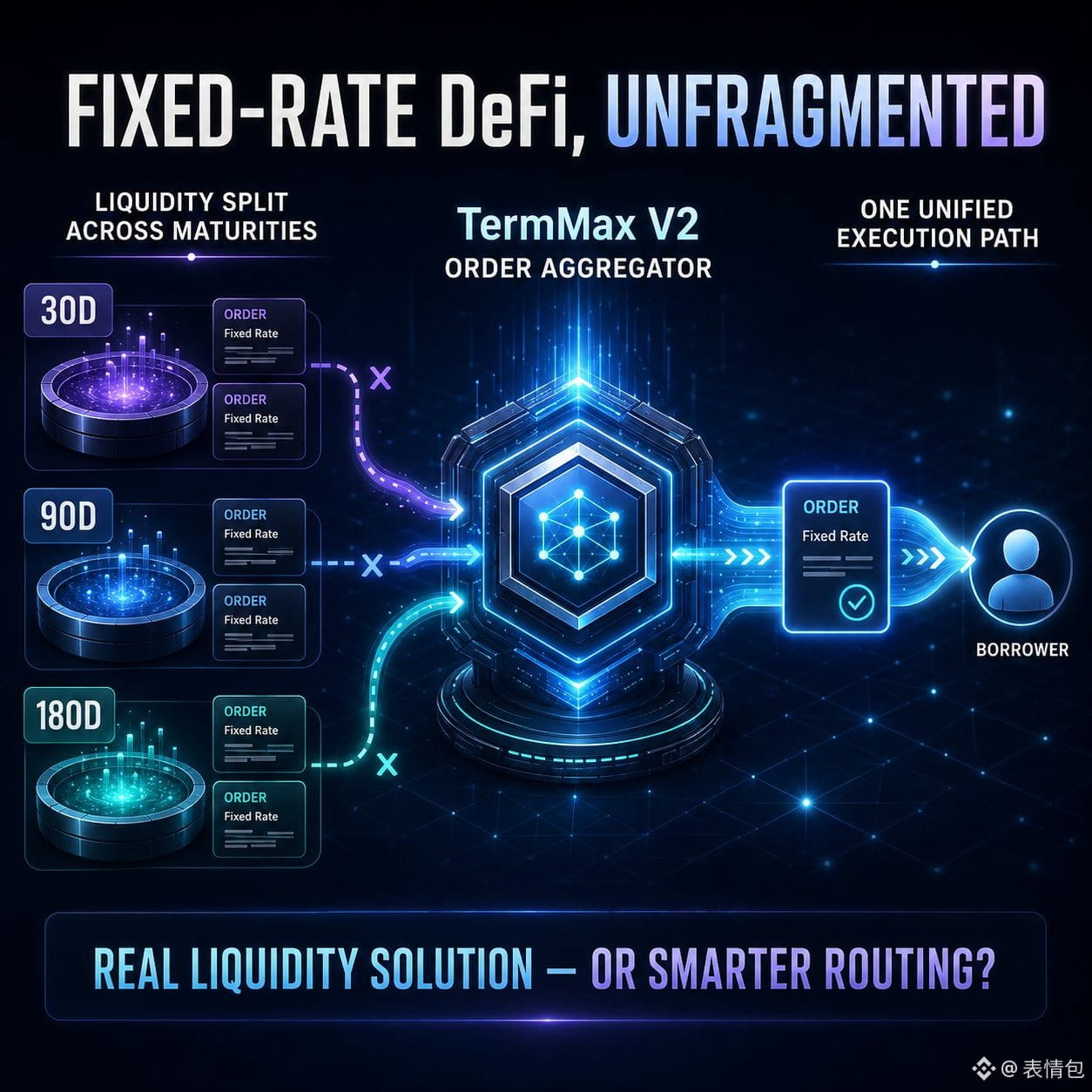
固定金利DeFiが小規模な取引を超えて実用的になるのは、いったい何が要因なのかについて考えていました。
予測可能な金利は有用ですが、流動性が複数の満期や注文タイプに分散していると、取引の執行効率がそれでも下がってしまう可能性があります。
そこで注目なのが@termmax V2のオーダー・アグリゲーターです。異なる流動性ソースを単一の実行パスに統合することで、より大きな借入が格段にシームレスに感じられるようになるかもしれません。
ただし本当の試金石は、集約によって一貫してより良い板(深さ)が生まれるのか、それとも断片化された流動性にアクセスしやすくなるだけなのかです。
皆さんはどう思いますか:インフラのアップグレード、それとも一時的な回避策でしょうか?
@termmax #TermMax
固定金利DeFiが小規模な取引を超えて実用的になるのは、いったい何が要因なのかについて考えていました。
予測可能な金利は有用ですが、流動性が複数の満期や注文タイプに分散していると、取引の執行効率がそれでも下がってしまう可能性があります。
そこで注目なのが@TermMax V2のオーダー・アグリゲーターです。異なる流動性ソースを単一の実行パスに統合することで、より大きな借入が格段にシームレスに感じられるようになるかもしれません。
ただし本当の試金石は、集約によって一貫してより良い板(深さ)が生まれるのか、それとも断片化された流動性にアクセスしやすくなるだけなのかです。
皆さんはどう思いますか:インフラのアップグレード、それとも一時的な回避策でしょうか?
@TermMax #TermMax
予測可能な金利は有用ですが、流動性が複数の満期や注文タイプに分散していると、取引の執行効率がそれでも下がってしまう可能性があります。
そこで注目なのが@TermMax V2のオーダー・アグリゲーターです。異なる流動性ソースを単一の実行パスに統合することで、より大きな借入が格段にシームレスに感じられるようになるかもしれません。
ただし本当の試金石は、集約によって一貫してより良い板(深さ)が生まれるのか、それとも断片化された流動性にアクセスしやすくなるだけなのかです。
皆さんはどう思いますか:インフラのアップグレード、それとも一時的な回避策でしょうか?
@TermMax #TermMax
43
3
15
215
·
--
ブリッシュ
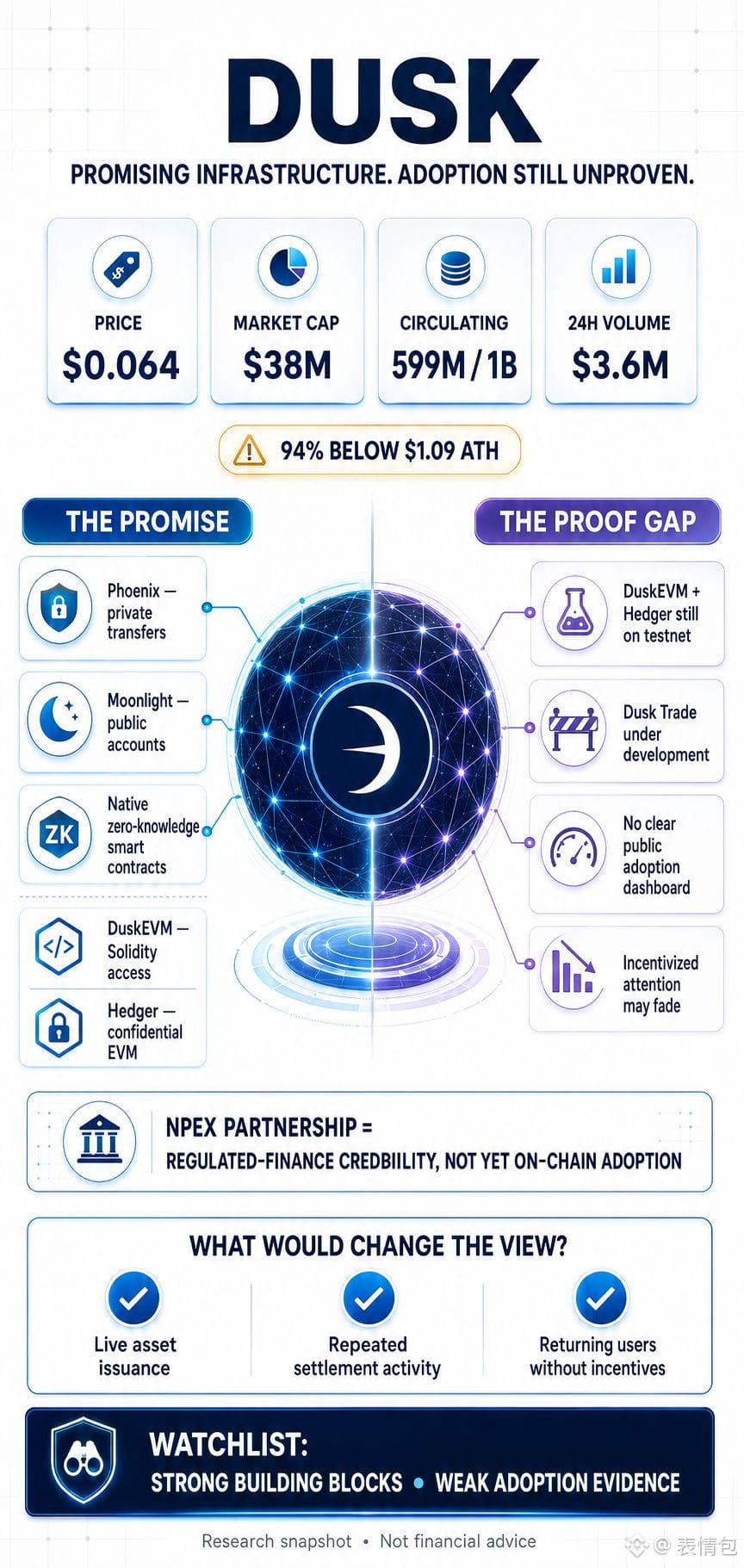
最近になってDUSKがより多くの会話に登場しているのは気づいていますが、再び注目が集まったことが導入(採用)の進展をどれほど示しているのか、私はまだ確信できません。このトークンは約$0.064付近で取引されており、市場規模(時価総額)はおよそ$3,800万です。最大供給量10億に対して、流通しているトークンは約5億9900万で、日次出来高はおよそ$360万付近です。これは市場の動きを保つだけの活動量ではありますが、DUSKは依然として最高値$1.09から約94%下落したままです。Binance Squareの480,000 DUSK CreatorPadキャンペーンもプロジェクトへの視線を増やしていますが、報酬が終了すると有料の注目はすぐに消えてしまう可能性があります。
テクノロジー自体は、より詳しく見直す価値があります。Duskのライブネットワークは、プライベートなPhoenix送金、パブリックなMoonlightアカウント、そしてネイティブのゼロ知識スマートコントラクトをサポートしています。Solidity開発者にとってエコシステムをより利用しやすくするためにDuskEVMが開発されており、Hedgerは同型暗号化とゼロ知識証明を通じて機密EVMトランザクションを試験しています。これらは、すべての残高・身元・取引を公開できない金融機関にとって役立つビルディングブロックです。
ただ、そうしたビルディングブロックを実際に使っている人がいるのかを探そうとすると、私の迷いが始まります。DuskEVMとHedgerは引き続きテストネットのままで、Dusk Tradeはまだ開発中です。また、日次アクティブアドレス、トランザクションの成長、手数料、TVL、アプリケーション層の出来高といった、シンプルで信頼できる公開指標も見つけられません。こうした数字がないことは、何も起きていないという意味ではありませんが、物語と証拠の間に余白が大きすぎます。
NPEXとの提携は、Duskに規制された金融との強い結びつきをもたらします。しかし、NPEXの€2億(200 million)超の資金調達の実績や投資家ネットワークは、Dusk上で実際にすでに動いている資産だと誤解すべきではありません。ライブの発行、繰り返される決済活動、インセンティブなしで戻ってくるユーザーの姿を見たいのです。それまでは、私はDuskを、能動的な金融エコノミーになれることをまだ証明する必要がある有望なインフラだと捉えています。
#dusk @Dusk_Foundation $DUSK
{spot}(DUSKUSDT)
最近になってDUSKがより多くの会話に登場しているのは気づいていますが、再び注目が集まったことが導入(採用)の進展をどれほど示しているのか、私はまだ確信できません。このトークンは約$0.064付近で取引されており、市場規模(時価総額)はおよそ$3,800万です。最大供給量10億に対して、流通しているトークンは約5億9900万で、日次出来高はおよそ$360万付近です。これは市場の動きを保つだけの活動量ではありますが、DUSKは依然として最高値$1.09から約94%下落したままです。Binance Squareの480,000 DUSK CreatorPadキャンペーンもプロジェクトへの視線を増やしていますが、報酬が終了すると有料の注目はすぐに消えてしまう可能性があります。
テクノロジー自体は、より詳しく見直す価値があります。Duskのライブネットワークは、プライベートなPhoenix送金、パブリックなMoonlightアカウント、そしてネイティブのゼロ知識スマートコントラクトをサポートしています。Solidity開発者にとってエコシステムをより利用しやすくするためにDuskEVMが開発されており、Hedgerは同型暗号化とゼロ知識証明を通じて機密EVMトランザクションを試験しています。これらは、すべての残高・身元・取引を公開できない金融機関にとって役立つビルディングブロックです。
ただ、そうしたビルディングブロックを実際に使っている人がいるのかを探そうとすると、私の迷いが始まります。DuskEVMとHedgerは引き続きテストネットのままで、Dusk Tradeはまだ開発中です。また、日次アクティブアドレス、トランザクションの成長、手数料、TVL、アプリケーション層の出来高といった、シンプルで信頼できる公開指標も見つけられません。こうした数字がないことは、何も起きていないという意味ではありませんが、物語と証拠の間に余白が大きすぎます。
NPEXとの提携は、Duskに規制された金融との強い結びつきをもたらします。しかし、NPEXの€2億(200 million)超の資金調達の実績や投資家ネットワークは、Dusk上で実際にすでに動いている資産だと誤解すべきではありません。ライブの発行、繰り返される決済活動、インセンティブなしで戻ってくるユーザーの姿を見たいのです。それまでは、私はDuskを、能動的な金融エコノミーになれることをまだ証明する必要がある有望なインフラだと捉えています。
#dusk @Dusk $DUSK
テクノロジー自体は、より詳しく見直す価値があります。Duskのライブネットワークは、プライベートなPhoenix送金、パブリックなMoonlightアカウント、そしてネイティブのゼロ知識スマートコントラクトをサポートしています。Solidity開発者にとってエコシステムをより利用しやすくするためにDuskEVMが開発されており、Hedgerは同型暗号化とゼロ知識証明を通じて機密EVMトランザクションを試験しています。これらは、すべての残高・身元・取引を公開できない金融機関にとって役立つビルディングブロックです。
ただ、そうしたビルディングブロックを実際に使っている人がいるのかを探そうとすると、私の迷いが始まります。DuskEVMとHedgerは引き続きテストネットのままで、Dusk Tradeはまだ開発中です。また、日次アクティブアドレス、トランザクションの成長、手数料、TVL、アプリケーション層の出来高といった、シンプルで信頼できる公開指標も見つけられません。こうした数字がないことは、何も起きていないという意味ではありませんが、物語と証拠の間に余白が大きすぎます。
NPEXとの提携は、Duskに規制された金融との強い結びつきをもたらします。しかし、NPEXの€2億(200 million)超の資金調達の実績や投資家ネットワークは、Dusk上で実際にすでに動いている資産だと誤解すべきではありません。ライブの発行、繰り返される決済活動、インセンティブなしで戻ってくるユーザーの姿を見たいのです。それまでは、私はDuskを、能動的な金融エコノミーになれることをまだ証明する必要がある有望なインフラだと捉えています。
#dusk @Dusk $DUSK
16
4
8
187
·
--
ブリッシュ
$STAR
{future}(STARUSDT)
STARは17%超上昇し、新たな市場の注目を集めています。最初の勢いの後、この勢いが継続していくのか、それとも冷めていくのかを見ています。
$STAR
STARは17%超上昇し、新たな市場の注目を集めています。最初の勢いの後、この勢いが継続していくのか、それとも冷めていくのかを見ています。
STARは17%超上昇し、新たな市場の注目を集めています。最初の勢いの後、この勢いが継続していくのか、それとも冷めていくのかを見ています。
1
102
·
--
ブリッシュ
$ACE
{spot}(ACEUSDT)
ACEは24%の上昇と活発な取引により強い勢いを示しています。継続的な出来高があれば、次の値動きの反応は注意深く見守る価値がありそうです。
$ACE
ACEは24%の上昇と活発な取引により強い勢いを示しています。継続的な出来高があれば、次の値動きの反応は注意深く見守る価値がありそうです。
ACEは24%の上昇と活発な取引により強い勢いを示しています。継続的な出来高があれば、次の値動きの反応は注意深く見守る価値がありそうです。
1
110
·
--
私は、通常のプライバシーに関する語り口の外側を見てみると、Dusk Networkのほうが自分にはよりしっくりくることに気づきました。
伝統的な金融では、機関がすべての投資家の身元、保有記録、あるいは取引の詳細を、完全に透明なブロックチェーン上に置くことはできません。
それによって機密性が必要になるのは本当にその通りで、Duskはその課題に取り組もうとしているのです。とはいえ、私は「良い技術だからといって自動的に本当の普及につながる」とはまだ考えられません。
私は今も、今日誰がそのネットワークを使っているのか、誰が本当にそれを必要としているのか、そして重要な資金が実際にその中を動いているのかを問い続けています。
また、助成金やインセンティブが切れたら静かになってしまうプロジェクトではなく、人々が戻ってくるアプリケーションを開発者が作っているのかも確認したいです。私にとってDUSKトークンが重要なのは、ネットワークが手数料、ステーキング、決済、あるいはその他の現実の活動を通じて、人々が自然にそれを使う理由を提供できる場合だけです。
需要の大半が投機や短期的な市場の高揚感から来ているなら、その需要がすぐに消えてしまうことも私は理解しています。規制は、機関にとってコンプライアンスを損なわずにプライバシーを確保する機会を生むかもしれませんが、
政府、銀行、カストディアン、そして投資家は、コミットするまでに時間がかかります。重大な資金を投入する前に、彼らは法的な明確さ、信頼できるアイデンティティ・システム、強い流動性、そして信頼を必要とします。
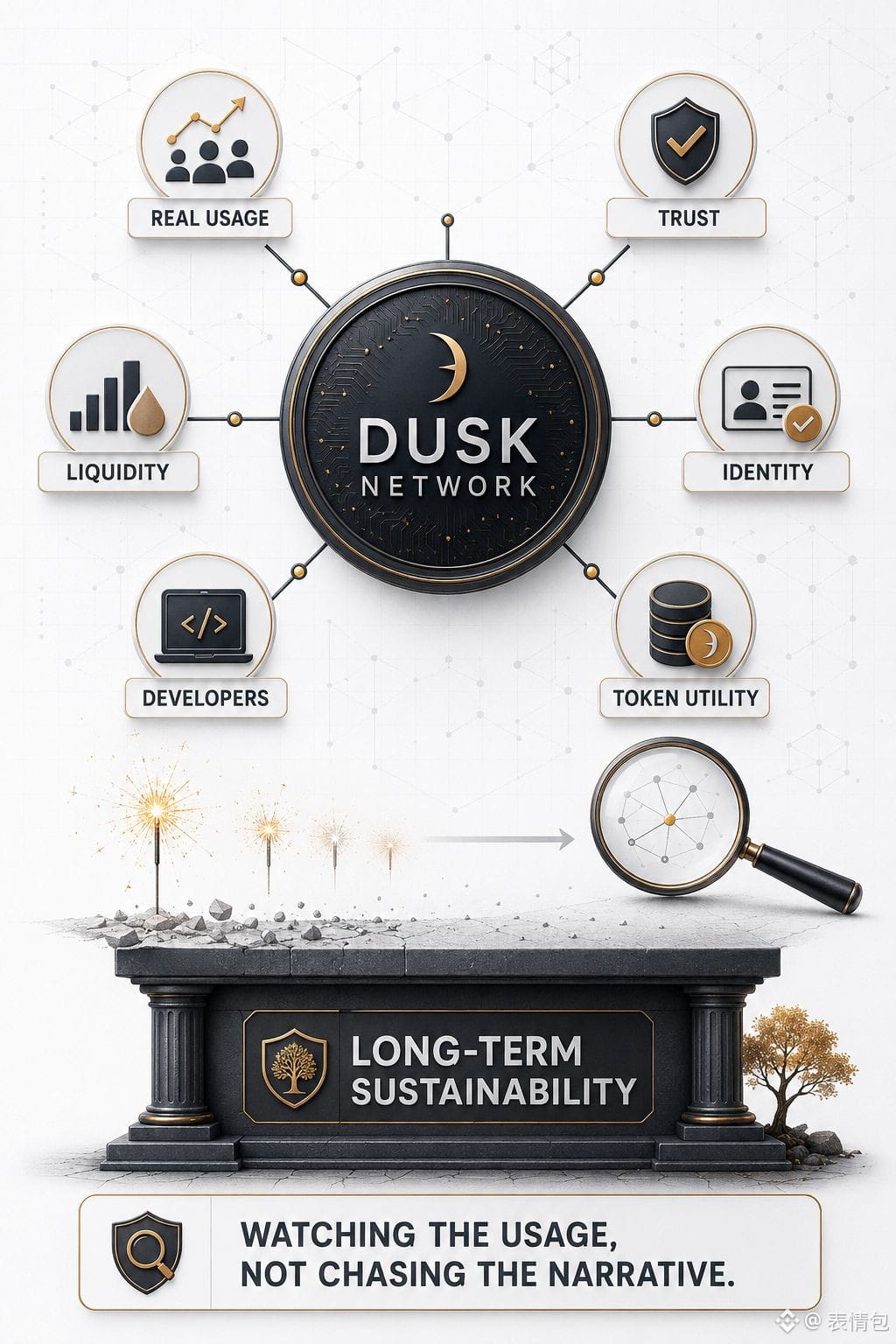
だからこそ、私は慌てて買うのではなく見守っています。Duskが目指している姿は理解できますが、それでもなお、定期的な取引、活発な開発者、本気で資産を発行する主体、そして報酬が減っても残り続けるユーザーを確認する必要があります。
私にとって本当の問いはシンプルです。Duskは、金融が実際に依存するインフラになれるのか、それとも、市場を待つだけの強いアイデアのままで終わってしまうのか。
@Dusk_Foundation #dusk $DUSK
{spot}(DUSKUSDT)
私は、通常のプライバシーに関する語り口の外側を見てみると、Dusk Networkのほうが自分にはよりしっくりくることに気づきました。
伝統的な金融では、機関がすべての投資家の身元、保有記録、あるいは取引の詳細を、完全に透明なブロックチェーン上に置くことはできません。
それによって機密性が必要になるのは本当にその通りで、Duskはその課題に取り組もうとしているのです。とはいえ、私は「良い技術だからといって自動的に本当の普及につながる」とはまだ考えられません。
私は今も、今日誰がそのネットワークを使っているのか、誰が本当にそれを必要としているのか、そして重要な資金が実際にその中を動いているのかを問い続けています。
また、助成金やインセンティブが切れたら静かになってしまうプロジェクトではなく、人々が戻ってくるアプリケーションを開発者が作っているのかも確認したいです。私にとってDUSKトークンが重要なのは、ネットワークが手数料、ステーキング、決済、あるいはその他の現実の活動を通じて、人々が自然にそれを使う理由を提供できる場合だけです。
需要の大半が投機や短期的な市場の高揚感から来ているなら、その需要がすぐに消えてしまうことも私は理解しています。規制は、機関にとってコンプライアンスを損なわずにプライバシーを確保する機会を生むかもしれませんが、
政府、銀行、カストディアン、そして投資家は、コミットするまでに時間がかかります。重大な資金を投入する前に、彼らは法的な明確さ、信頼できるアイデンティティ・システム、強い流動性、そして信頼を必要とします。
だからこそ、私は慌てて買うのではなく見守っています。Duskが目指している姿は理解できますが、それでもなお、定期的な取引、活発な開発者、本気で資産を発行する主体、そして報酬が減っても残り続けるユーザーを確認する必要があります。
私にとって本当の問いはシンプルです。Duskは、金融が実際に依存するインフラになれるのか、それとも、市場を待つだけの強いアイデアのままで終わってしまうのか。
@Dusk #dusk $DUSK
伝統的な金融では、機関がすべての投資家の身元、保有記録、あるいは取引の詳細を、完全に透明なブロックチェーン上に置くことはできません。
それによって機密性が必要になるのは本当にその通りで、Duskはその課題に取り組もうとしているのです。とはいえ、私は「良い技術だからといって自動的に本当の普及につながる」とはまだ考えられません。
私は今も、今日誰がそのネットワークを使っているのか、誰が本当にそれを必要としているのか、そして重要な資金が実際にその中を動いているのかを問い続けています。
また、助成金やインセンティブが切れたら静かになってしまうプロジェクトではなく、人々が戻ってくるアプリケーションを開発者が作っているのかも確認したいです。私にとってDUSKトークンが重要なのは、ネットワークが手数料、ステーキング、決済、あるいはその他の現実の活動を通じて、人々が自然にそれを使う理由を提供できる場合だけです。
需要の大半が投機や短期的な市場の高揚感から来ているなら、その需要がすぐに消えてしまうことも私は理解しています。規制は、機関にとってコンプライアンスを損なわずにプライバシーを確保する機会を生むかもしれませんが、
政府、銀行、カストディアン、そして投資家は、コミットするまでに時間がかかります。重大な資金を投入する前に、彼らは法的な明確さ、信頼できるアイデンティティ・システム、強い流動性、そして信頼を必要とします。
だからこそ、私は慌てて買うのではなく見守っています。Duskが目指している姿は理解できますが、それでもなお、定期的な取引、活発な開発者、本気で資産を発行する主体、そして報酬が減っても残り続けるユーザーを確認する必要があります。
私にとって本当の問いはシンプルです。Duskは、金融が実際に依存するインフラになれるのか、それとも、市場を待つだけの強いアイデアのままで終わってしまうのか。
@Dusk #dusk $DUSK
5
3
106
·
--
@termmax #TermMax
DeFiにおける借入は、たとえローン自体が過剰担保であっても、なぜいまだに予測しづらいと感じるのか?
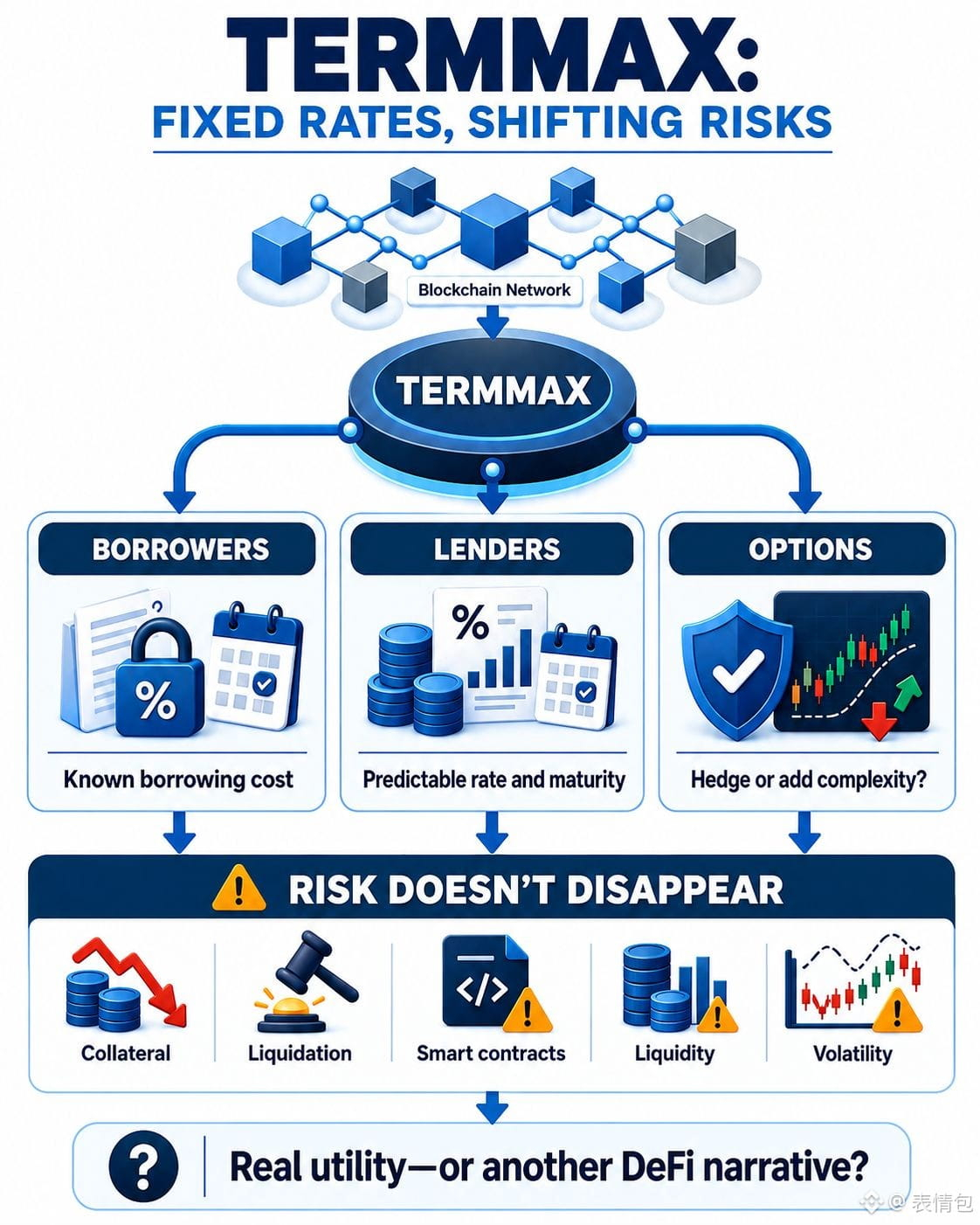
それが私がTermMaxをより詳しく調べた理由です。私の理解では、TermMaxは固定金利での借入、貸付、そしてオプション取引を軸にした分散型プロトコルです。
固定金利の部分は、本当に役に立ちそうです。多くのDeFiローンは変動金利なので、市場の需要や流動性の動きに応じて借入コストが変わり得ます。TermMaxでは、借り手は利息コストと満期を事前に把握でき、貸し手も期待収益の見通しをより明確にできます。
ただ正直、予測可能な金利だけでは、ポジション全体が予測可能になるわけではありません。
担保価格は下落し得ます。清算(リキデーション)も起こり得ます。スマートコントラクトには脆弱性が含まれる可能性もあり、ユーザーが退出したいときに流動性が薄くなることもあります。オプション側は、経験のあるトレーダーがこれらのリスクをヘッジするのに役立つかもしれませんが、一方で保険料(プレミアム)、ストライク価格、満期日といった要素によって、さらに複雑さも増します。
ときどき、この仕組みで最も恩恵を受けるのは誰だろうと思います。安定した借入コストを本当に必要としている人たちを惹きつけるのでしょうか? それとも、主に短期戦略を組む、より洗練されたトレーダーを惹きつけるだけなのでしょうか?
私が理解したのは、TermMaxはリスクをなくすのではなく、リスクの所在を変えるということです。金利の不確実性は減るかもしれませんが、担保、流動性、市場、そして技術的リスクは残ります。
結局のところ、このプロトコルはDeFiの実際の弱点に取り組んでいます。固定金利の市場は、確実性を必要とするユーザーにとって、オンチェーン借入をより実用的にし得ます。それでも本当の問題は、インセンティブや投機による追い風がなくても、需要が継続するのかどうかです。
TermMaxは有用な金融インフラになり得るのでしょうか? それとも、固定金利DeFiは、紙の上では強く見えるものの、実際の利用感では別のアイデアとしてとどまってしまうのでしょうか?
@TermMax #TermMax
DeFiにおける借入は、たとえローン自体が過剰担保であっても、なぜいまだに予測しづらいと感じるのか?
それが私がTermMaxをより詳しく調べた理由です。私の理解では、TermMaxは固定金利での借入、貸付、そしてオプション取引を軸にした分散型プロトコルです。
固定金利の部分は、本当に役に立ちそうです。多くのDeFiローンは変動金利なので、市場の需要や流動性の動きに応じて借入コストが変わり得ます。TermMaxでは、借り手は利息コストと満期を事前に把握でき、貸し手も期待収益の見通しをより明確にできます。
ただ正直、予測可能な金利だけでは、ポジション全体が予測可能になるわけではありません。
担保価格は下落し得ます。清算(リキデーション)も起こり得ます。スマートコントラクトには脆弱性が含まれる可能性もあり、ユーザーが退出したいときに流動性が薄くなることもあります。オプション側は、経験のあるトレーダーがこれらのリスクをヘッジするのに役立つかもしれませんが、一方で保険料(プレミアム)、ストライク価格、満期日といった要素によって、さらに複雑さも増します。
ときどき、この仕組みで最も恩恵を受けるのは誰だろうと思います。安定した借入コストを本当に必要としている人たちを惹きつけるのでしょうか? それとも、主に短期戦略を組む、より洗練されたトレーダーを惹きつけるだけなのでしょうか?
私が理解したのは、TermMaxはリスクをなくすのではなく、リスクの所在を変えるということです。金利の不確実性は減るかもしれませんが、担保、流動性、市場、そして技術的リスクは残ります。
結局のところ、このプロトコルはDeFiの実際の弱点に取り組んでいます。固定金利の市場は、確実性を必要とするユーザーにとって、オンチェーン借入をより実用的にし得ます。それでも本当の問題は、インセンティブや投機による追い風がなくても、需要が継続するのかどうかです。
TermMaxは有用な金融インフラになり得るのでしょうか? それとも、固定金利DeFiは、紙の上では強く見えるものの、実際の利用感では別のアイデアとしてとどまってしまうのでしょうか?
DeFiにおける借入は、たとえローン自体が過剰担保であっても、なぜいまだに予測しづらいと感じるのか?
それが私がTermMaxをより詳しく調べた理由です。私の理解では、TermMaxは固定金利での借入、貸付、そしてオプション取引を軸にした分散型プロトコルです。
固定金利の部分は、本当に役に立ちそうです。多くのDeFiローンは変動金利なので、市場の需要や流動性の動きに応じて借入コストが変わり得ます。TermMaxでは、借り手は利息コストと満期を事前に把握でき、貸し手も期待収益の見通しをより明確にできます。
ただ正直、予測可能な金利だけでは、ポジション全体が予測可能になるわけではありません。
担保価格は下落し得ます。清算(リキデーション)も起こり得ます。スマートコントラクトには脆弱性が含まれる可能性もあり、ユーザーが退出したいときに流動性が薄くなることもあります。オプション側は、経験のあるトレーダーがこれらのリスクをヘッジするのに役立つかもしれませんが、一方で保険料(プレミアム)、ストライク価格、満期日といった要素によって、さらに複雑さも増します。
ときどき、この仕組みで最も恩恵を受けるのは誰だろうと思います。安定した借入コストを本当に必要としている人たちを惹きつけるのでしょうか? それとも、主に短期戦略を組む、より洗練されたトレーダーを惹きつけるだけなのでしょうか?
私が理解したのは、TermMaxはリスクをなくすのではなく、リスクの所在を変えるということです。金利の不確実性は減るかもしれませんが、担保、流動性、市場、そして技術的リスクは残ります。
結局のところ、このプロトコルはDeFiの実際の弱点に取り組んでいます。固定金利の市場は、確実性を必要とするユーザーにとって、オンチェーン借入をより実用的にし得ます。それでも本当の問題は、インセンティブや投機による追い風がなくても、需要が継続するのかどうかです。
TermMaxは有用な金融インフラになり得るのでしょうか? それとも、固定金利DeFiは、紙の上では強く見えるものの、実際の利用感では別のアイデアとしてとどまってしまうのでしょうか?
17
3
11
483
·
--
ブリッシュ
$CBRS
{future}(CBRSUSDT)
は10.52%上昇しており、注目すべき動きです。ここから着実に積み上げられるかどうかを見ています。急なボラティリティでせっかくの上昇分を手放してしまわないか、という点です。
$CBRS
は10.52%上昇しており、注目すべき動きです。ここから着実に積み上げられるかどうかを見ています。急なボラティリティでせっかくの上昇分を手放してしまわないか、という点です。
は10.52%上昇しており、注目すべき動きです。ここから着実に積み上げられるかどうかを見ています。急なボラティリティでせっかくの上昇分を手放してしまわないか、という点です。
1
181
·
--
ブリッシュ
$ACE
{spot}(ACEUSDT)
は+12.85%上昇しており、短期的に堅調な強さを示しています。次の動きで、それが本物の継続なのか、それともトレーダーが単に勢いを追いかけているだけなのかが明らかになるでしょう。
$ACE
は+12.85%上昇しており、短期的に堅調な強さを示しています。次の動きで、それが本物の継続なのか、それともトレーダーが単に勢いを追いかけているだけなのかが明らかになるでしょう。
は+12.85%上昇しており、短期的に堅調な強さを示しています。次の動きで、それが本物の継続なのか、それともトレーダーが単に勢いを追いかけているだけなのかが明らかになるでしょう。
1
154
·
--
ブリッシュ
$GPS
{spot}(GPSUSDT)
は取引量が明らかに多く、14.50%上昇しています。この出来高は動きとして興味深いものの、ここからの需要を維持できるかがより重要です。
$GPS
は取引量が明らかに多く、14.50%上昇しています。この出来高は動きとして興味深いものの、ここからの需要を維持できるかがより重要です。
は取引量が明らかに多く、14.50%上昇しています。この出来高は動きとして興味深いものの、ここからの需要を維持できるかがより重要です。
1
144
·
--
$RED
{spot}(REDUSDT)
は23.33%上昇し、ここで最も強い値動きの一つにしっかり入っています。出来高がさらにもう一段の動きを支えられるか、あるいは勢いが衰え始めるかを見ています。
$RED
は23.33%上昇し、ここで最も強い値動きの一つにしっかり入っています。出来高がさらにもう一段の動きを支えられるか、あるいは勢いが衰え始めるかを見ています。
は23.33%上昇し、ここで最も強い値動きの一つにしっかり入っています。出来高がさらにもう一段の動きを支えられるか、あるいは勢いが衰え始めるかを見ています。
127
·
--
ブリッシュ
@Dusk_Foundation #dusk
夕暮れネットワーク(Dusk Network)は、プライバシーと規制が同じブロックチェーン上で本当に両立できるのかを、率直に考えさせてくれます。このプロジェクトは明らかに深刻な課題を解決しようとしているのですが、その解決策が技術面だけでなくそれ以外でも機能し得るのか、まだ見極めている段階です。
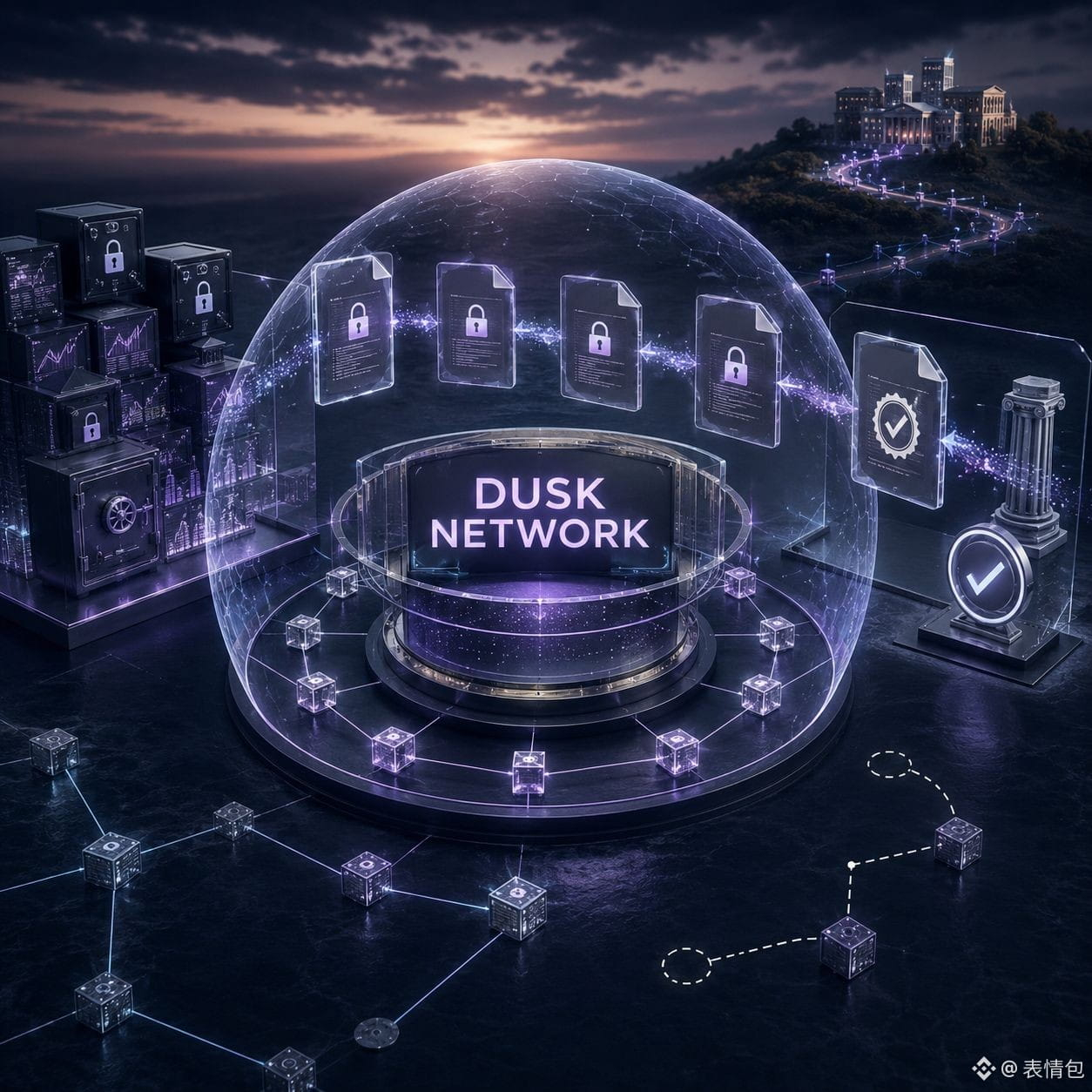
私が理解したのは、Duskは金融アプリケーションに特化して作られたレイヤー1ブロックチェーンだということです。機密スマートコントラクトをサポートしており、Confidential Security Contract、つまりXSCという標準を使っています。狙いは、金融資産がオンチェーンで動作しつつ、あらゆる機微な詳細が一般公開されることはないようにすることです。
この点には関心があります。金融のプライバシーは、自動的に不審だとは限りません。企業や投資家には、取引の詳細、保有情報、投資ポジション、そしてビジネス上の関係性を保護するための正当な理由があり得ます。すべてが公開されてしまうなら、多くの真剣な金融機関はブロックチェーン技術を使うことに決して安心できないかもしれません。
ただ、プライバシーは私に新たな疑問も生みます。重要な情報が隠れたままだと、規制当局はすべてが合法だとどう確認するのでしょうか。監査人は取引をどう検証できるのでしょうか。誰がプライベートデータにアクセスしてよく、どのような条件なら許可されるのでしょうか。Duskは、コンプライアンスを完全に取り除くことなくプライバシーに取り組んでいるように見えますが、このバランスこそが、プロジェクト全体の中でもおそらく最も難しい部分なのでしょう。
私は時々、その技術がすでに現実の需要がある課題を解決しているのか、それとも将来訪れるかもしれない需要に備えているのかを考えてしまいます。機密スマートコントラクトを作ることは一つのことですが、企業に資産を発行させ、開発者にアプリケーションを作らせ、投資家に流動性を持ち込ませるのは、それとはまったく別の話です。
私は、技術的な約束よりも実際の活動を通じてDuskを評価したいです。ネットワーク上で実際の資産が発行され、本当に役立つアプリケーションが構築され、人々がそれを使い続けるのを見たい。もしそれが起きなければ、強力なプライバシー技術であっても、活用されないまま終わってしまう可能性があります。
$DUSK
{spot}(DUSKUSDT)
@Dusk #dusk
夕暮れネットワーク(Dusk Network)は、プライバシーと規制が同じブロックチェーン上で本当に両立できるのかを、率直に考えさせてくれます。このプロジェクトは明らかに深刻な課題を解決しようとしているのですが、その解決策が技術面だけでなくそれ以外でも機能し得るのか、まだ見極めている段階です。
私が理解したのは、Duskは金融アプリケーションに特化して作られたレイヤー1ブロックチェーンだということです。機密スマートコントラクトをサポートしており、Confidential Security Contract、つまりXSCという標準を使っています。狙いは、金融資産がオンチェーンで動作しつつ、あらゆる機微な詳細が一般公開されることはないようにすることです。
この点には関心があります。金融のプライバシーは、自動的に不審だとは限りません。企業や投資家には、取引の詳細、保有情報、投資ポジション、そしてビジネス上の関係性を保護するための正当な理由があり得ます。すべてが公開されてしまうなら、多くの真剣な金融機関はブロックチェーン技術を使うことに決して安心できないかもしれません。
ただ、プライバシーは私に新たな疑問も生みます。重要な情報が隠れたままだと、規制当局はすべてが合法だとどう確認するのでしょうか。監査人は取引をどう検証できるのでしょうか。誰がプライベートデータにアクセスしてよく、どのような条件なら許可されるのでしょうか。Duskは、コンプライアンスを完全に取り除くことなくプライバシーに取り組んでいるように見えますが、このバランスこそが、プロジェクト全体の中でもおそらく最も難しい部分なのでしょう。
私は時々、その技術がすでに現実の需要がある課題を解決しているのか、それとも将来訪れるかもしれない需要に備えているのかを考えてしまいます。機密スマートコントラクトを作ることは一つのことですが、企業に資産を発行させ、開発者にアプリケーションを作らせ、投資家に流動性を持ち込ませるのは、それとはまったく別の話です。
私は、技術的な約束よりも実際の活動を通じてDuskを評価したいです。ネットワーク上で実際の資産が発行され、本当に役立つアプリケーションが構築され、人々がそれを使い続けるのを見たい。もしそれが起きなければ、強力なプライバシー技術であっても、活用されないまま終わってしまう可能性があります。
$DUSK
夕暮れネットワーク(Dusk Network)は、プライバシーと規制が同じブロックチェーン上で本当に両立できるのかを、率直に考えさせてくれます。このプロジェクトは明らかに深刻な課題を解決しようとしているのですが、その解決策が技術面だけでなくそれ以外でも機能し得るのか、まだ見極めている段階です。
私が理解したのは、Duskは金融アプリケーションに特化して作られたレイヤー1ブロックチェーンだということです。機密スマートコントラクトをサポートしており、Confidential Security Contract、つまりXSCという標準を使っています。狙いは、金融資産がオンチェーンで動作しつつ、あらゆる機微な詳細が一般公開されることはないようにすることです。
この点には関心があります。金融のプライバシーは、自動的に不審だとは限りません。企業や投資家には、取引の詳細、保有情報、投資ポジション、そしてビジネス上の関係性を保護するための正当な理由があり得ます。すべてが公開されてしまうなら、多くの真剣な金融機関はブロックチェーン技術を使うことに決して安心できないかもしれません。
ただ、プライバシーは私に新たな疑問も生みます。重要な情報が隠れたままだと、規制当局はすべてが合法だとどう確認するのでしょうか。監査人は取引をどう検証できるのでしょうか。誰がプライベートデータにアクセスしてよく、どのような条件なら許可されるのでしょうか。Duskは、コンプライアンスを完全に取り除くことなくプライバシーに取り組んでいるように見えますが、このバランスこそが、プロジェクト全体の中でもおそらく最も難しい部分なのでしょう。
私は時々、その技術がすでに現実の需要がある課題を解決しているのか、それとも将来訪れるかもしれない需要に備えているのかを考えてしまいます。機密スマートコントラクトを作ることは一つのことですが、企業に資産を発行させ、開発者にアプリケーションを作らせ、投資家に流動性を持ち込ませるのは、それとはまったく別の話です。
私は、技術的な約束よりも実際の活動を通じてDuskを評価したいです。ネットワーク上で実際の資産が発行され、本当に役立つアプリケーションが構築され、人々がそれを使い続けるのを見たい。もしそれが起きなければ、強力なプライバシー技術であっても、活用されないまま終わってしまう可能性があります。
$DUSK
8
5
586
·
--
ブリッシュ
$DIA
{spot}(DIAUSDT)
DIAは+14.93%上昇し、$0.1447前後で取引されています。上昇の勢いははっきりしていますが、私は価格がより高い水準で安定できるかどうかにより注目しています。最初の動きの後に強いホールド(堅調さ)が見られれば、上昇率だけよりも多くのことが分かります。
$DIA
DIAは+14.93%上昇し、$0.1447前後で取引されています。上昇の勢いははっきりしていますが、私は価格がより高い水準で安定できるかどうかにより注目しています。最初の動きの後に強いホールド(堅調さ)が見られれば、上昇率だけよりも多くのことが分かります。
DIAは+14.93%上昇し、$0.1447前後で取引されています。上昇の勢いははっきりしていますが、私は価格がより高い水準で安定できるかどうかにより注目しています。最初の動きの後に強いホールド(堅調さ)が見られれば、上昇率だけよりも多くのことが分かります。
58
·
--
ブリッシュ
$TUT
{spot}(TUTUSDT)
TUTは+14.05%上昇した後、現在およそ0.03735ドル前後で取引されています。価格の動きとともに取引活動も増加しており、注視しています。買い手が主導権を維持できるか、そしてこの短期的な勢いをより持続的な価格構造へとつなげられるかを見ています。
$TUT
TUTは+14.05%上昇した後、現在およそ0.03735ドル前後で取引されています。価格の動きとともに取引活動も増加しており、注視しています。買い手が主導権を維持できるか、そしてこの短期的な勢いをより持続的な価格構造へとつなげられるかを見ています。
TUTは+14.05%上昇した後、現在およそ0.03735ドル前後で取引されています。価格の動きとともに取引活動も増加しており、注視しています。買い手が主導権を維持できるか、そしてこの短期的な勢いをより持続的な価格構造へとつなげられるかを見ています。
131
ログインして、さらにコンテンツを読む
厳選トピックで世界の暗号資産トレーダーの仲間入り
⚡️ 暗号資産に関する最新かつ有益な情報が見つかります。
💬 世界最大の暗号資産取引所から信頼されています。
👍 認証を受けたクリエイターから、有益なインサイトを得られます。
メール / 電話番号
トレンドトピック
BNBSurpasses$790
閲覧回数 2,381
52人が討論中
$BNB 戦略的なロングプラン -> 今すぐFOCUS
BNBは内部の流動性を取り込んだ後、強い安値を2つ作りました
$815-$830のスイングハイ方向への動きを見込んでおり、グリーンボックスのリテストでロングを狙っています
#BNBSurpasses$790 #bnb
Ghost Writer
·いいね:2件
·閲覧回数 901
ZamaRises15.99%ToIntradayHigh$0.09
閲覧回数 1,135
52人が討論中
BitcoinSpotETFsDraw$6.34BInflowsInQ3
閲覧回数 1,934
41人が討論中