
Idrees Official
5 投稿

Idrees Official
報告
ユーザーをブロック
Web3 Growth Engine || Driving narratives, TGE campaigns, and market analysis for protocols.
2 フォロー
3 フォロワー
9 いいね
投稿
本人確認中
記事
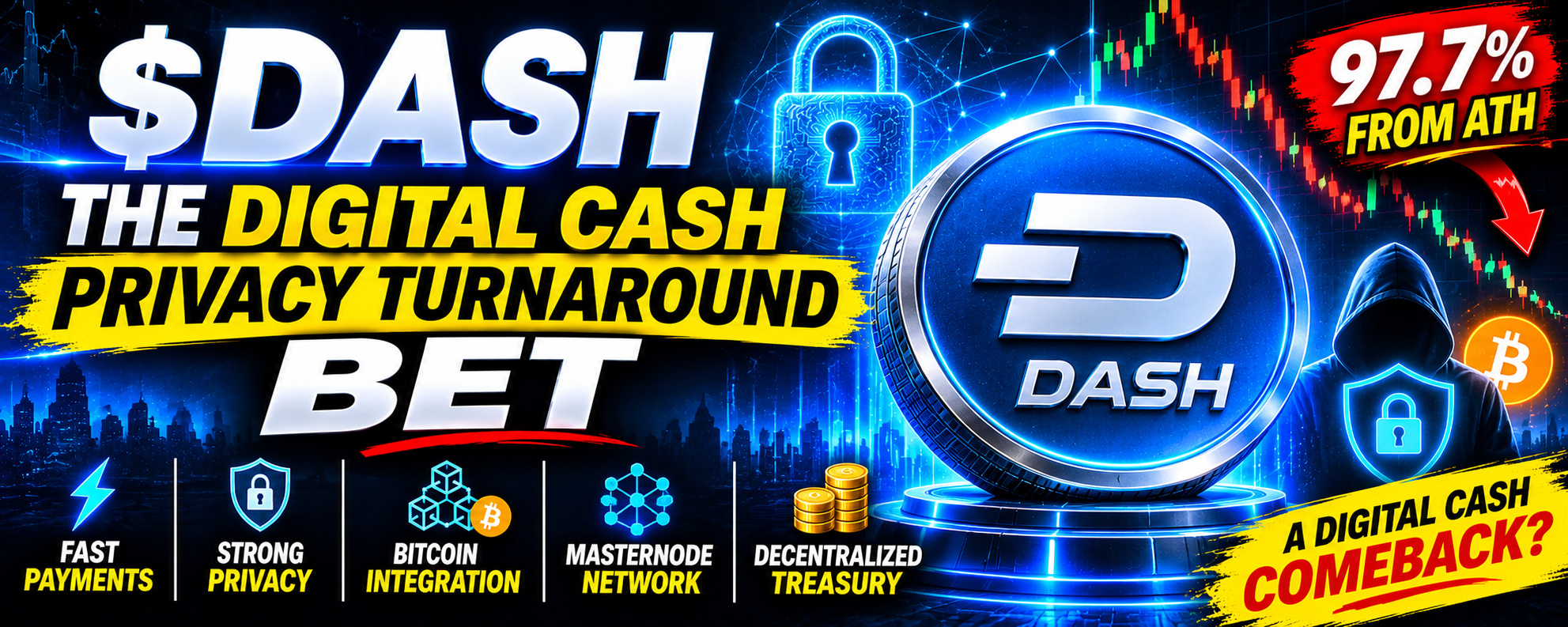
👀$DASH — デジタルキャッシュとプライバシーの復活に賭ける時価総額約4億8,000万ドルの暗号資産。
⠀
流通しているコインは1,300万枚未満。
⠀
マイナー、マスターノード、開発資金用トレジャリーを組み合わせた決済ネットワーク。
⠀
そして、史上最高値を約97.7%下回る価格で取引されているコイン。
⠀
しかし、ここに矛盾があります。
⠀
Dashは長年にわたり、デジタルキャッシュのインフラ構築に取り組んできました。
⠀
便利な決済機能も、繰り返し利用してくれるユーザーが必要です。
⠀
$DASHは、見過ごされてきた決済・プライバシー分野の復活銘柄なのか?
⠀
それとも、確立されたネットワークでさえ、持続的な通貨需要を生み出すのに苦戦しているのか?
👀$DASH — デジタルキャッシュとプライバシーの復活に賭ける
時価総額約4億8,000万ドルの暗号資産。
⠀
流通しているコインは1,300万枚未満。
⠀
マイナー、マスターノード、開発資金用トレジャリーを組み合わせた決済ネットワーク。
⠀
そして、史上最高値を約97.7%下回る価格で取引されているコイン。
⠀
しかし、ここに矛盾があります。
⠀
Dashは長年にわたり、デジタルキャッシュのインフラ構築に取り組んできました。
⠀
便利な決済機能も、繰り返し利用してくれるユーザーが必要です。
⠀
$DASH は、見過ごされてきた決済・プライバシー分野の復活銘柄なのか?
⠀
それとも、確立されたネットワークでさえ、持続的な通貨需要を生み出すのに苦戦しているのか?
⠀
流通しているコインは1,300万枚未満。
⠀
マイナー、マスターノード、開発資金用トレジャリーを組み合わせた決済ネットワーク。
⠀
そして、史上最高値を約97.7%下回る価格で取引されているコイン。
⠀
しかし、ここに矛盾があります。
⠀
Dashは長年にわたり、デジタルキャッシュのインフラ構築に取り組んできました。
⠀
便利な決済機能も、繰り返し利用してくれるユーザーが必要です。
⠀
$DASH は、見過ごされてきた決済・プライバシー分野の復活銘柄なのか?
⠀
それとも、確立されたネットワークでさえ、持続的な通貨需要を生み出すのに苦戦しているのか?
1
2
960

記事
🚨$WLD — 人間証明の収益化に賭ける約10億ドル規模の暗号資産。
⠀
流通しているトークンは約37億9,000万枚。
⠀
公表されたスケジュールに基づき、毎日約290万トークンがアンロックされます。
⠀
そして、トークン価格は史上最高値を約97.8%下回る水準で取引されています。
⠀
しかし、ここに矛盾があります。
⠀
人間であることを証明する仕組みは、価値あるインターネットインフラになり得ます。
⠀
だからといって、それに関連するトークンが自動的に有望な投資対象になるわけではありません。
⠀
AI主導の世界におけるアイデンティティへの、見過ごされた賭けなのでしょうか?
⠀
それとも、トークン保有者が厳しい供給面の課題に直面する一方で、World IDは成功できるのでしょうか?
🚨$WLD — 人間証明の収益化に賭ける
約10億ドル規模の暗号資産。
⠀
流通しているトークンは約37億9,000万枚。
⠀
公表されたスケジュールに基づき、毎日約290万トークンがアンロックされます。
⠀
そして、トークン価格は史上最高値を約97.8%下回る水準で取引されています。
⠀
しかし、ここに矛盾があります。
⠀
人間であることを証明する仕組みは、価値あるインターネットインフラになり得ます。
⠀
だからといって、それに関連するトークンが自動的に有望な投資対象になるわけではありません。
⠀
AI主導の世界におけるアイデンティティへの、見過ごされた賭けなのでしょうか?
⠀
それとも、トークン保有者が厳しい供給面の課題に直面する一方で、World IDは成功できるのでしょうか?
⠀
流通しているトークンは約37億9,000万枚。
⠀
公表されたスケジュールに基づき、毎日約290万トークンがアンロックされます。
⠀
そして、トークン価格は史上最高値を約97.8%下回る水準で取引されています。
⠀
しかし、ここに矛盾があります。
⠀
人間であることを証明する仕組みは、価値あるインターネットインフラになり得ます。
⠀
だからといって、それに関連するトークンが自動的に有望な投資対象になるわけではありません。
⠀
AI主導の世界におけるアイデンティティへの、見過ごされた賭けなのでしょうか?
⠀
それとも、トークン保有者が厳しい供給面の課題に直面する一方で、World IDは成功できるのでしょうか?
5
1.5k
記事
翻訳参照
$JUP — THE SOLANA FINANCIAL SUPERAPP BETA roughly $886 MILLION cryptocurrency.
⠀
More than $12 BILLION in monthly aggregator volume.
⠀
Approximately $6.5 MILLION in monthly protocol revenue.
⠀
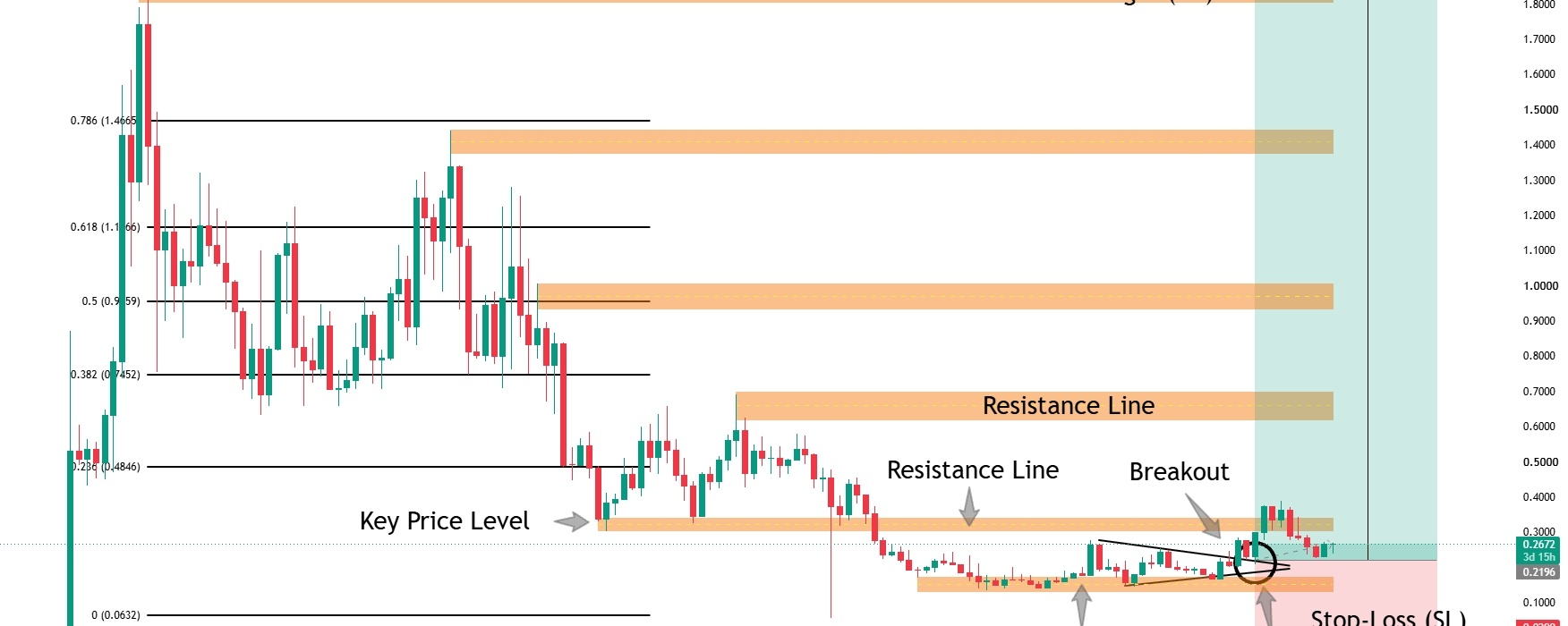
And a token trading approximately 87% below its all-time high.
⠀
But here's the contradiction.
⠀
Jupiter has built useful products and a revenue-generating business.
⠀
Owning JUP still requires a separate argument about value capture, supply discipline, and execution.
⠀
Is $JUP an overlooked bet on Solana's financial infrastructure?
⠀
Or does a successful platform still face difficult token economics?
⠀
Let's examine the numbers.
⠀
01 | WHAT IS JUPITER?
⠀
Jupiter is a Solana-focused financial platform that began with swap aggregation.
⠀
An aggregator searches across trading venues to find routes for users.
⠀
Its broader product suite includes perpetual trading, lending, and other financial services.
⠀
The investment thesis is that controlling the customer interface can become valuable infrastructure.
⠀
Users arrive for execution.
⠀
They may stay for additional products.
⠀
But product adoption strengthens the token thesis only when it produces an identifiable economic benefit for JUP.
⠀
Platform growth and token appreciation are related questions.
⠀
They are not interchangeable.
⠀
02 | THE NUMBERS THAT MATTER
⠀
November 19, 2026 snapshot:
⠀
JUP Price: ~$0.26695
Market Cap: ~$886.11M
FDV: ~$1.832B
Circulating Supply: ~3.319B JUP
Reported Total Supply: ~6.862B JUP
Original Supply: 10B JUP
Circulating / Current Total Supply: ~48.4%
24H JUP Trading Volume: ~$32.36M
All-Time High: ~$2.04
Decline From ATH: ~86.9%
⠀
PROTOCOL FUNDAMENTALS:
⠀
DefiLlama TVL: ~$1.549B
30D Aggregator Volume: ~$12.781B
30D Perpetual Volume: ~$8.043B
30D Fees: ~$20.87M
30D Protocol Revenue: ~$6.46M
30D Holders Revenue: ~$4.02M
⠀
Volume categories measure different activities.
⠀
Fees, protocol revenue, and holders revenue also overlap economically.
⠀
They should not be added together as independent income streams.
⠀
03 | THE DISTRIBUTION ADVANTAGE
⠀
Jupiter's strategic opportunity is its relationship with users.
⠀
A trading interface can direct activity across multiple liquidity sources.
⠀
That creates opportunities to introduce additional services without acquiring every customer from scratch.
⠀
However, distribution is not a permanent monopoly.
⠀
Wallets, exchanges, competing aggregators, and specialist applications can capture the same customers.
⠀
Users can switch if execution, reliability, or pricing deteriorates.
⠀
The durable advantage must appear in retention and recurring monetization.
⠀
A large audience provides an opportunity.
⠀
Profitable repeat usage makes that opportunity economically meaningful.
⠀
04 | VOLUME IS NOT REVENUE
⠀
Aggregator volume measures the value routed through a service.
⠀
It does not mean Jupiter retains that value.
⠀
Underlying venues and liquidity providers perform important parts of the transaction.
⠀
Different Jupiter products also have different economics.
⠀
Perpetual trading activity should not be valued using the same assumptions as routed spot swaps.
⠀
Investors need to examine revenue by product and the durability of each contribution.
⠀
The strongest growth is not simply a larger volume headline.
⠀
It is more income earned without losing customers or taking disproportionate risk.
⠀
Product diversification matters most when it improves the quality of that income.
⠀
05 | THE JUP BUYBACK MODEL
⠀
Jupiter's published framework directs 50% of onchain revenue toward open-market JUP buybacks.
⠀
That provides a concrete connection between monetized activity and token demand.
⠀
But the percentage needs the correct denominator.
⠀
It is not 50% of trading volume.
⠀
It should not automatically be applied to every gross fee displayed by a tracker.
⠀
Revenue recognition and purchase execution can also occur at different times.
⠀
The useful verification is actual funded purchases measured over a consistent period.
⠀
A policy establishes the intended allocation.
⠀
Executed transactions establish the demand created.
⠀
Investors need both.
⠀
06 | BUYBACKS, HOLDINGS, AND BURNS
⠀
Jupiter's official statistics page reports approximately:
⠀
327 million JUP accumulated by the Litterbox Trust.
⠀
192 million JUP currently held.
⠀
Those figures measure different stages.
⠀
They should not be added together.
⠀
Nor should their difference automatically be classified as a new burn without checking the transaction history.
⠀
Jupiter previously burned 3 billion tokens.
⠀
DefiLlama's supply notes also record a later Litterbox burn of approximately 134.55 million JUP.
⠀
Purchasing tokens creates demand when the purchase occurs.
⠀
Holding them changes custody and available inventory.
⠀
Destroying them permanently changes supply.
⠀
Each action has a distinct economic effect.
⠀
07 | THE NET-ZERO CHANGE
⠀
The February 2026 Net-Zero proposal materially changed the supply framework.
⠀
DefiLlama records the proposal as passed.
⠀
Its measures included postponing Jupuary, pausing team reserve emissions, and changing the treatment of Mercurial allocations.
⠀
The published plan described using Jupiter's balance sheet to absorb eligible team sales and offset Mercurial sales.
⠀
That is a meaningful commitment.
⠀
It is also an implementation obligation.
⠀
Net-zero describes the intended net market impact.
⠀
It does not mean every remaining allocation has been destroyed or every token movement has stopped.
⠀
The practical test is actual distributions and matching purchases.
⠀
08 | THE UNLOCK QUESTION
⠀
Old JUP unlock calendars can now be misleading.
⠀
A previously scheduled distribution should not be presented as imminent without checking the revised policy.
⠀
Postponed allocations remain relevant because future governance can determine their use.
⠀
Paused emissions also differ from permanently canceled supply.
⠀
DefiLlama identifies several allocations remaining in protocol custody without a defined release schedule.
⠀
That reduces the usefulness of inventing a single next-unlock headline.
⠀
The better approach is to monitor governance decisions, custody balances, and actual changes in circulating supply.
⠀
Supply risk depends on what can enter the market and under which conditions.
⠀
A calendar alone cannot answer that.
⠀
09 | GOVERNANCE AND STAKING REWARDS
⠀
JUP connects holders to Jupiter's governance process.
⠀
The official dashboard reports approximately 1.17 billion JUP staked.
⠀
That is a participation measurement.
⠀
It is not permanently removed supply.
⠀
Likewise, a displayed staking yield should not be treated automatically as cash income generated by customers.
⠀
Investors need to examine the reward asset, funding source, distribution rules, and exit conditions.
⠀
Redistributing existing tokens differs from minting new ones.
⠀
But existing tokens can still become available to recipients willing to sell.
⠀
Governance influence, participation rewards, and buyback demand are separate parts of the investment thesis.
⠀
10 | THE VALUATION QUESTION
⠀
Annualizing $6.46 million of recent monthly protocol revenue gives approximately $77.5 million.
⠀
Against an $886 million market capitalization, that implies roughly 11.4 times annualized protocol revenue.
⠀
This is an illustrative comparison.
⠀
It is not a corporate earnings multiple.
⠀
It assumes the latest month is representative and does not establish distributable profit after all operating costs.
⠀
Using approximately 6.862 billion current total tokens:
⠀
$0.50 JUP implies ~$3.43B total-supply valuation.
$1.00 implies ~$6.86B.
$2.00 implies ~$13.72B.
$3.00 implies ~$20.59B.
⠀
These are valuation illustrations, not price targets.
⠀
Future burns and supply decisions can change the denominator.
⠀
11 | THE BULL AND BEAR CASE
⠀
THE BULL CASE:
⠀
Jupiter retains a valuable customer interface.
⠀
More users adopt monetized products.
⠀
Revenue becomes more diversified and durable.
⠀
Buybacks remain consistently funded.
⠀
Supply commitments are implemented transparently.
⠀
And product growth strengthens demand for JUP.
⠀
THE BEAR CASE:
⠀
Trading revenue contracts with market activity.
⠀
Competitors capture customers or compress margins.
⠀
Product expansion increases operational and security complexity.
⠀
Supply restrictions depend too heavily on continued discretionary support.
⠀
And platform success creates less token value than investors expect.
⠀
A successful application can still be an expensive token investment at the wrong valuation.
⠀
12 | THE FINAL VERDICT
⠀
Jupiter has measurable strengths.
⠀
Substantial user activity.
⠀
Multiple financial products.
⠀
Real protocol revenue.
⠀
And an established buyback framework.
⠀
Its revised supply policy also deserves more careful treatment than repeating an outdated dilution narrative.
⠀
But the investment case remains conditional.
⠀
A roughly $886 million market capitalization.
⠀
Approximately $1.83 billion in fully diluted value.
⠀
Less than half the current total supply classified as circulating.
⠀
And continuing dependence on revenue durability and policy execution.
⠀
My assessment:
⠀
JUP is a financial platform growth thesis with an identifiable token-demand mechanism.
⠀
The decisive evidence is sustained monetization that produces verifiable purchases alongside disciplined supply management.
⠀
More users create distribution.
⠀
More paid activity creates revenue.
⠀
Executed purchases create JUP demand.
⠀
Supply discipline determines how much of that demand benefits existing holders.
⠀
Bookmark this analysis before the next Solana DeFi rotation.
⠀
Which has the strongest long-term financial platform thesis?
⠀
$JUP , $RAY , or $HYPE ?
⠀
And can Jupiter turn its growing product ecosystem into sustainable token value?
⠀
Drop your view below.
#JUP #Ray #hype #CryptocurrencyWealth
$JUP — THE SOLANA FINANCIAL SUPERAPP BET
A roughly $886 MILLION cryptocurrency.
⠀
More than $12 BILLION in monthly aggregator volume.
⠀
Approximately $6.5 MILLION in monthly protocol revenue.
⠀
And a token trading approximately 87% below its all-time high.
⠀
But here's the contradiction.
⠀
Jupiter has built useful products and a revenue-generating business.
⠀
Owning JUP still requires a separate argument about value capture, supply discipline, and execution.
⠀
Is $JUP an overlooked bet on Solana's financial infrastructure?
⠀
Or does a successful platform still face difficult token economics?
⠀
Let's examine the numbers.
⠀
01 | WHAT IS JUPITER?
⠀
Jupiter is a Solana-focused financial platform that began with swap aggregation.
⠀
An aggregator searches across trading venues to find routes for users.
⠀
Its broader product suite includes perpetual trading, lending, and other financial services.
⠀
The investment thesis is that controlling the customer interface can become valuable infrastructure.
⠀
Users arrive for execution.
⠀
They may stay for additional products.
⠀
But product adoption strengthens the token thesis only when it produces an identifiable economic benefit for JUP.
⠀
Platform growth and token appreciation are related questions.
⠀
They are not interchangeable.
⠀
02 | THE NUMBERS THAT MATTER
⠀
November 19, 2026 snapshot:
⠀
JUP Price: ~$0.26695
Market Cap: ~$886.11M
FDV: ~$1.832B
Circulating Supply: ~3.319B JUP
Reported Total Supply: ~6.862B JUP
Original Supply: 10B JUP
Circulating / Current Total Supply: ~48.4%
24H JUP Trading Volume: ~$32.36M
All-Time High: ~$2.04
Decline From ATH: ~86.9%
⠀
PROTOCOL FUNDAMENTALS:
⠀
DefiLlama TVL: ~$1.549B
30D Aggregator Volume: ~$12.781B
30D Perpetual Volume: ~$8.043B
30D Fees: ~$20.87M
30D Protocol Revenue: ~$6.46M
30D Holders Revenue: ~$4.02M
⠀
Volume categories measure different activities.
⠀
Fees, protocol revenue, and holders revenue also overlap economically.
⠀
They should not be added together as independent income streams.
⠀
03 | THE DISTRIBUTION ADVANTAGE
⠀
Jupiter's strategic opportunity is its relationship with users.
⠀
A trading interface can direct activity across multiple liquidity sources.
⠀
That creates opportunities to introduce additional services without acquiring every customer from scratch.
⠀
However, distribution is not a permanent monopoly.
⠀
Wallets, exchanges, competing aggregators, and specialist applications can capture the same customers.
⠀
Users can switch if execution, reliability, or pricing deteriorates.
⠀
The durable advantage must appear in retention and recurring monetization.
⠀
A large audience provides an opportunity.
⠀
Profitable repeat usage makes that opportunity economically meaningful.
⠀
04 | VOLUME IS NOT REVENUE
⠀
Aggregator volume measures the value routed through a service.
⠀
It does not mean Jupiter retains that value.
⠀
Underlying venues and liquidity providers perform important parts of the transaction.
⠀
Different Jupiter products also have different economics.
⠀
Perpetual trading activity should not be valued using the same assumptions as routed spot swaps.
⠀
Investors need to examine revenue by product and the durability of each contribution.
⠀
The strongest growth is not simply a larger volume headline.
⠀
It is more income earned without losing customers or taking disproportionate risk.
⠀
Product diversification matters most when it improves the quality of that income.
⠀
05 | THE JUP BUYBACK MODEL
⠀
Jupiter's published framework directs 50% of onchain revenue toward open-market JUP buybacks.
⠀
That provides a concrete connection between monetized activity and token demand.
⠀
But the percentage needs the correct denominator.
⠀
It is not 50% of trading volume.
⠀
It should not automatically be applied to every gross fee displayed by a tracker.
⠀
Revenue recognition and purchase execution can also occur at different times.
⠀
The useful verification is actual funded purchases measured over a consistent period.
⠀
A policy establishes the intended allocation.
⠀
Executed transactions establish the demand created.
⠀
Investors need both.
⠀
06 | BUYBACKS, HOLDINGS, AND BURNS
⠀
Jupiter's official statistics page reports approximately:
⠀
327 million JUP accumulated by the Litterbox Trust.
⠀
192 million JUP currently held.
⠀
Those figures measure different stages.
⠀
They should not be added together.
⠀
Nor should their difference automatically be classified as a new burn without checking the transaction history.
⠀
Jupiter previously burned 3 billion tokens.
⠀
DefiLlama's supply notes also record a later Litterbox burn of approximately 134.55 million JUP.
⠀
Purchasing tokens creates demand when the purchase occurs.
⠀
Holding them changes custody and available inventory.
⠀
Destroying them permanently changes supply.
⠀
Each action has a distinct economic effect.
⠀
07 | THE NET-ZERO CHANGE
⠀
The February 2026 Net-Zero proposal materially changed the supply framework.
⠀
DefiLlama records the proposal as passed.
⠀
Its measures included postponing Jupuary, pausing team reserve emissions, and changing the treatment of Mercurial allocations.
⠀
The published plan described using Jupiter's balance sheet to absorb eligible team sales and offset Mercurial sales.
⠀
That is a meaningful commitment.
⠀
It is also an implementation obligation.
⠀
Net-zero describes the intended net market impact.
⠀
It does not mean every remaining allocation has been destroyed or every token movement has stopped.
⠀
The practical test is actual distributions and matching purchases.
⠀
08 | THE UNLOCK QUESTION
⠀
Old JUP unlock calendars can now be misleading.
⠀
A previously scheduled distribution should not be presented as imminent without checking the revised policy.
⠀
Postponed allocations remain relevant because future governance can determine their use.
⠀
Paused emissions also differ from permanently canceled supply.
⠀
DefiLlama identifies several allocations remaining in protocol custody without a defined release schedule.
⠀
That reduces the usefulness of inventing a single next-unlock headline.
⠀
The better approach is to monitor governance decisions, custody balances, and actual changes in circulating supply.
⠀
Supply risk depends on what can enter the market and under which conditions.
⠀
A calendar alone cannot answer that.
⠀
09 | GOVERNANCE AND STAKING REWARDS
⠀
JUP connects holders to Jupiter's governance process.
⠀
The official dashboard reports approximately 1.17 billion JUP staked.
⠀
That is a participation measurement.
⠀
It is not permanently removed supply.
⠀
Likewise, a displayed staking yield should not be treated automatically as cash income generated by customers.
⠀
Investors need to examine the reward asset, funding source, distribution rules, and exit conditions.
⠀
Redistributing existing tokens differs from minting new ones.
⠀
But existing tokens can still become available to recipients willing to sell.
⠀
Governance influence, participation rewards, and buyback demand are separate parts of the investment thesis.
⠀
10 | THE VALUATION QUESTION
⠀
Annualizing $6.46 million of recent monthly protocol revenue gives approximately $77.5 million.
⠀
Against an $886 million market capitalization, that implies roughly 11.4 times annualized protocol revenue.
⠀
This is an illustrative comparison.
⠀
It is not a corporate earnings multiple.
⠀
It assumes the latest month is representative and does not establish distributable profit after all operating costs.
⠀
Using approximately 6.862 billion current total tokens:
⠀
$0.50 JUP implies ~$3.43B total-supply valuation.
$1.00 implies ~$6.86B.
$2.00 implies ~$13.72B.
$3.00 implies ~$20.59B.
⠀
These are valuation illustrations, not price targets.
⠀
Future burns and supply decisions can change the denominator.
⠀
11 | THE BULL AND BEAR CASE
⠀
THE BULL CASE:
⠀
Jupiter retains a valuable customer interface.
⠀
More users adopt monetized products.
⠀
Revenue becomes more diversified and durable.
⠀
Buybacks remain consistently funded.
⠀
Supply commitments are implemented transparently.
⠀
And product growth strengthens demand for JUP.
⠀
THE BEAR CASE:
⠀
Trading revenue contracts with market activity.
⠀
Competitors capture customers or compress margins.
⠀
Product expansion increases operational and security complexity.
⠀
Supply restrictions depend too heavily on continued discretionary support.
⠀
And platform success creates less token value than investors expect.
⠀
A successful application can still be an expensive token investment at the wrong valuation.
⠀
12 | THE FINAL VERDICT
⠀
Jupiter has measurable strengths.
⠀
Substantial user activity.
⠀
Multiple financial products.
⠀
Real protocol revenue.
⠀
And an established buyback framework.
⠀
Its revised supply policy also deserves more careful treatment than repeating an outdated dilution narrative.
⠀
But the investment case remains conditional.
⠀
A roughly $886 million market capitalization.
⠀
Approximately $1.83 billion in fully diluted value.
⠀
Less than half the current total supply classified as circulating.
⠀
And continuing dependence on revenue durability and policy execution.
⠀
My assessment:
⠀
JUP is a financial platform growth thesis with an identifiable token-demand mechanism.
⠀
The decisive evidence is sustained monetization that produces verifiable purchases alongside disciplined supply management.
⠀
More users create distribution.
⠀
More paid activity creates revenue.
⠀
Executed purchases create JUP demand.
⠀
Supply discipline determines how much of that demand benefits existing holders.
⠀
Bookmark this analysis before the next Solana DeFi rotation.
⠀
Which has the strongest long-term financial platform thesis?
⠀
$JUP , $RAY , or $HYPE ?
⠀
And can Jupiter turn its growing product ecosystem into sustainable token value?
⠀
Drop your view below.
#JUP #Ray #hype #CryptocurrencyWealth
⠀
More than $12 BILLION in monthly aggregator volume.
⠀
Approximately $6.5 MILLION in monthly protocol revenue.
⠀
And a token trading approximately 87% below its all-time high.
⠀
But here's the contradiction.
⠀
Jupiter has built useful products and a revenue-generating business.
⠀
Owning JUP still requires a separate argument about value capture, supply discipline, and execution.
⠀
Is $JUP an overlooked bet on Solana's financial infrastructure?
⠀
Or does a successful platform still face difficult token economics?
⠀
Let's examine the numbers.
⠀
01 | WHAT IS JUPITER?
⠀
Jupiter is a Solana-focused financial platform that began with swap aggregation.
⠀
An aggregator searches across trading venues to find routes for users.
⠀
Its broader product suite includes perpetual trading, lending, and other financial services.
⠀
The investment thesis is that controlling the customer interface can become valuable infrastructure.
⠀
Users arrive for execution.
⠀
They may stay for additional products.
⠀
But product adoption strengthens the token thesis only when it produces an identifiable economic benefit for JUP.
⠀
Platform growth and token appreciation are related questions.
⠀
They are not interchangeable.
⠀
02 | THE NUMBERS THAT MATTER
⠀
November 19, 2026 snapshot:
⠀
JUP Price: ~$0.26695
Market Cap: ~$886.11M
FDV: ~$1.832B
Circulating Supply: ~3.319B JUP
Reported Total Supply: ~6.862B JUP
Original Supply: 10B JUP
Circulating / Current Total Supply: ~48.4%
24H JUP Trading Volume: ~$32.36M
All-Time High: ~$2.04
Decline From ATH: ~86.9%
⠀
PROTOCOL FUNDAMENTALS:
⠀
DefiLlama TVL: ~$1.549B
30D Aggregator Volume: ~$12.781B
30D Perpetual Volume: ~$8.043B
30D Fees: ~$20.87M
30D Protocol Revenue: ~$6.46M
30D Holders Revenue: ~$4.02M
⠀
Volume categories measure different activities.
⠀
Fees, protocol revenue, and holders revenue also overlap economically.
⠀
They should not be added together as independent income streams.
⠀
03 | THE DISTRIBUTION ADVANTAGE
⠀
Jupiter's strategic opportunity is its relationship with users.
⠀
A trading interface can direct activity across multiple liquidity sources.
⠀
That creates opportunities to introduce additional services without acquiring every customer from scratch.
⠀
However, distribution is not a permanent monopoly.
⠀
Wallets, exchanges, competing aggregators, and specialist applications can capture the same customers.
⠀
Users can switch if execution, reliability, or pricing deteriorates.
⠀
The durable advantage must appear in retention and recurring monetization.
⠀
A large audience provides an opportunity.
⠀
Profitable repeat usage makes that opportunity economically meaningful.
⠀
04 | VOLUME IS NOT REVENUE
⠀
Aggregator volume measures the value routed through a service.
⠀
It does not mean Jupiter retains that value.
⠀
Underlying venues and liquidity providers perform important parts of the transaction.
⠀
Different Jupiter products also have different economics.
⠀
Perpetual trading activity should not be valued using the same assumptions as routed spot swaps.
⠀
Investors need to examine revenue by product and the durability of each contribution.
⠀
The strongest growth is not simply a larger volume headline.
⠀
It is more income earned without losing customers or taking disproportionate risk.
⠀
Product diversification matters most when it improves the quality of that income.
⠀
05 | THE JUP BUYBACK MODEL
⠀
Jupiter's published framework directs 50% of onchain revenue toward open-market JUP buybacks.
⠀
That provides a concrete connection between monetized activity and token demand.
⠀
But the percentage needs the correct denominator.
⠀
It is not 50% of trading volume.
⠀
It should not automatically be applied to every gross fee displayed by a tracker.
⠀
Revenue recognition and purchase execution can also occur at different times.
⠀
The useful verification is actual funded purchases measured over a consistent period.
⠀
A policy establishes the intended allocation.
⠀
Executed transactions establish the demand created.
⠀
Investors need both.
⠀
06 | BUYBACKS, HOLDINGS, AND BURNS
⠀
Jupiter's official statistics page reports approximately:
⠀
327 million JUP accumulated by the Litterbox Trust.
⠀
192 million JUP currently held.
⠀
Those figures measure different stages.
⠀
They should not be added together.
⠀
Nor should their difference automatically be classified as a new burn without checking the transaction history.
⠀
Jupiter previously burned 3 billion tokens.
⠀
DefiLlama's supply notes also record a later Litterbox burn of approximately 134.55 million JUP.
⠀
Purchasing tokens creates demand when the purchase occurs.
⠀
Holding them changes custody and available inventory.
⠀
Destroying them permanently changes supply.
⠀
Each action has a distinct economic effect.
⠀
07 | THE NET-ZERO CHANGE
⠀
The February 2026 Net-Zero proposal materially changed the supply framework.
⠀
DefiLlama records the proposal as passed.
⠀
Its measures included postponing Jupuary, pausing team reserve emissions, and changing the treatment of Mercurial allocations.
⠀
The published plan described using Jupiter's balance sheet to absorb eligible team sales and offset Mercurial sales.
⠀
That is a meaningful commitment.
⠀
It is also an implementation obligation.
⠀
Net-zero describes the intended net market impact.
⠀
It does not mean every remaining allocation has been destroyed or every token movement has stopped.
⠀
The practical test is actual distributions and matching purchases.
⠀
08 | THE UNLOCK QUESTION
⠀
Old JUP unlock calendars can now be misleading.
⠀
A previously scheduled distribution should not be presented as imminent without checking the revised policy.
⠀
Postponed allocations remain relevant because future governance can determine their use.
⠀
Paused emissions also differ from permanently canceled supply.
⠀
DefiLlama identifies several allocations remaining in protocol custody without a defined release schedule.
⠀
That reduces the usefulness of inventing a single next-unlock headline.
⠀
The better approach is to monitor governance decisions, custody balances, and actual changes in circulating supply.
⠀
Supply risk depends on what can enter the market and under which conditions.
⠀
A calendar alone cannot answer that.
⠀
09 | GOVERNANCE AND STAKING REWARDS
⠀
JUP connects holders to Jupiter's governance process.
⠀
The official dashboard reports approximately 1.17 billion JUP staked.
⠀
That is a participation measurement.
⠀
It is not permanently removed supply.
⠀
Likewise, a displayed staking yield should not be treated automatically as cash income generated by customers.
⠀
Investors need to examine the reward asset, funding source, distribution rules, and exit conditions.
⠀
Redistributing existing tokens differs from minting new ones.
⠀
But existing tokens can still become available to recipients willing to sell.
⠀
Governance influence, participation rewards, and buyback demand are separate parts of the investment thesis.
⠀
10 | THE VALUATION QUESTION
⠀
Annualizing $6.46 million of recent monthly protocol revenue gives approximately $77.5 million.
⠀
Against an $886 million market capitalization, that implies roughly 11.4 times annualized protocol revenue.
⠀
This is an illustrative comparison.
⠀
It is not a corporate earnings multiple.
⠀
It assumes the latest month is representative and does not establish distributable profit after all operating costs.
⠀
Using approximately 6.862 billion current total tokens:
⠀
$0.50 JUP implies ~$3.43B total-supply valuation.
$1.00 implies ~$6.86B.
$2.00 implies ~$13.72B.
$3.00 implies ~$20.59B.
⠀
These are valuation illustrations, not price targets.
⠀
Future burns and supply decisions can change the denominator.
⠀
11 | THE BULL AND BEAR CASE
⠀
THE BULL CASE:
⠀
Jupiter retains a valuable customer interface.
⠀
More users adopt monetized products.
⠀
Revenue becomes more diversified and durable.
⠀
Buybacks remain consistently funded.
⠀
Supply commitments are implemented transparently.
⠀
And product growth strengthens demand for JUP.
⠀
THE BEAR CASE:
⠀
Trading revenue contracts with market activity.
⠀
Competitors capture customers or compress margins.
⠀
Product expansion increases operational and security complexity.
⠀
Supply restrictions depend too heavily on continued discretionary support.
⠀
And platform success creates less token value than investors expect.
⠀
A successful application can still be an expensive token investment at the wrong valuation.
⠀
12 | THE FINAL VERDICT
⠀
Jupiter has measurable strengths.
⠀
Substantial user activity.
⠀
Multiple financial products.
⠀
Real protocol revenue.
⠀
And an established buyback framework.
⠀
Its revised supply policy also deserves more careful treatment than repeating an outdated dilution narrative.
⠀
But the investment case remains conditional.
⠀
A roughly $886 million market capitalization.
⠀
Approximately $1.83 billion in fully diluted value.
⠀
Less than half the current total supply classified as circulating.
⠀
And continuing dependence on revenue durability and policy execution.
⠀
My assessment:
⠀
JUP is a financial platform growth thesis with an identifiable token-demand mechanism.
⠀
The decisive evidence is sustained monetization that produces verifiable purchases alongside disciplined supply management.
⠀
More users create distribution.
⠀
More paid activity creates revenue.
⠀
Executed purchases create JUP demand.
⠀
Supply discipline determines how much of that demand benefits existing holders.
⠀
Bookmark this analysis before the next Solana DeFi rotation.
⠀
Which has the strongest long-term financial platform thesis?
⠀
$JUP , $RAY , or $HYPE ?
⠀
And can Jupiter turn its growing product ecosystem into sustainable token value?
⠀
Drop your view below.
#JUP #Ray #hype #CryptocurrencyWealth
1
215
ログインして、さらにコンテンツを読む
厳選トピックで世界の暗号資産トレーダーの仲間入り
⚡️ 暗号資産に関する最新かつ有益な情報が見つかります。
💬 世界最大の暗号資産取引所から信頼されています。
👍 認証を受けたクリエイターから、有益なインサイトを得られます。
メール / 電話番号