Binance Square
David Ayzon
22.3k 投稿

David Ayzon

厳選トピック確認済+
Crypto Analyst 🧠 | Tracking Crypto Market Moves Daily 📊 | Binance Charts | X: @NamiShah190177
447 フォロー
37.1K+ フォロワー
27.9K+ いいね
投稿
PINNED
·
--
PINNED
翻訳参照
Request for Review of My Risk Assessment Dear Binance Team, I respectfully request a manual review of my account. I was surprised to see that my account was marked as not eligible due to a risk assessment. As far as I know, I have always used my own account and have tried my best to follow Binance's rules and the CreatorPad campaign requirements. If I have unintentionally made any mistake or violated any rule without realizing it, I sincerely apologize. It was never my intention to misuse the platform or break any policy. I truly enjoy participating in Binance campaigns and creating original content for the community. I kindly ask you to review my account once again. If any additional information or verification is required, I am fully willing to provide it. Thank you for your time and understanding. I hope you will reconsider my eligibility after reviewing my account. I'm only requesting a fair manual review. Thank you for your time and support. Kind regards. @Binance_Square_Official @Binance_Customer_Support @CZ @karaveri @heyi @richardteng #Binnance
Request for Review of My Risk Assessment
Dear Binance Team,

I respectfully request a manual review of my account. I was surprised to see that my account was marked as not eligible due to a risk assessment. As far as I know, I have always used my own account and have tried my best to follow Binance's rules and the CreatorPad campaign requirements.

If I have unintentionally made any mistake or violated any rule without realizing it, I sincerely apologize. It was never my intention to misuse the platform or break any policy.

I truly enjoy participating in Binance campaigns and creating original content for the community. I kindly ask you to review my account once again. If any additional information or verification is required, I am fully willing to provide it.

Thank you for your time and understanding. I hope you will reconsider my eligibility after reviewing my account.

I'm only requesting a fair manual review. Thank you for your time and support.

Kind regards.

@Binance Square Official @Binance Customer Support
@CZ @Karin Veri @Yi He @Richard Teng
#Binnance
翻訳参照
done
done
KING BRO 1
·
--
ブリッシュ
🎁5000のギフトがLIVE中。🎉🎁

ザ・スクエアファミリーは燃えに燃えていて、赤いポケットが飛び交ってる。💯🎊🎁

🎂 フォロー いいね コメント お願い😂

リポスト シェア お願い🙏 🎊🎊🎊🎉

$SOL

$AKE

$US

#FootballSeason2026 #USLaunches337ProbeIntoDRAMDevices
#solana #KoreanSingleStockLeveragedETFsLose8.83TWon #DTCCProcessesFirstLiveTokenizedTrades
翻訳参照
done
done
S A I R A
·
--
🧧 GOOD NIGHT 🎁
🧧 LIKE COMMENT 🎁
🧧GET REWARDS 🎁
#FootballSeason2026
#SAIRA
#SAIRACRYPTO
翻訳参照
done
done
Malik Shabi ul Hassan
·
--
⏰ 今日のBinance Alphaエアドロップ&

11:00 UTCの取引イベントに備えよう。

Binance Alphaポイントが250以上ある場合、

今後のAlphaトークンの

受け取り資格を得られます。申請は「先着順」で

行われ、割り当てがなくなるかイベントが終了するまで

のみ受け付けられます。

エアドロップトークンの名称と

残りの詳細は、Binanceの公式発表で

明らかになります。更新情報をこまめに確認し、

イベント開始に備えてください。

#AirdropAlert
$ALPHA
翻訳参照
done
done
E L E X A
·
--
🚨 現在ライブ中 🚨
見るだけは簡単…勝つには行動が必要 👀
無料の $USDT が欲しい?
💬 コメント 666
❤️ いいね
🔁 シェア
➕ フォロー
⏳ 枠が急速に埋まっています
今すぐコメント 666 🚀
#Crypto #USDT
翻訳参照
done
done
Syco 疯子
·
--
忍耐してください

時間をかけてください。自分自身に対しても忍耐強くいてください

多くの人は不安で、落ち着かず、すぐに
お金を稼ぎたいと焦れています

しかし結局のところ、大半はだまされて
利用されてしまいます

あなたはしっかりと足元を固め、自分を育てる必要があります

長期志向を貫いてください

そのとき初めて報酬を得られます

$B2 $ETC #FootballSeason2026
翻訳参照
done
done
Jannat BM_
·
--
BTTC ギフトボックス 🧧🎁🎁🎁
翻訳参照
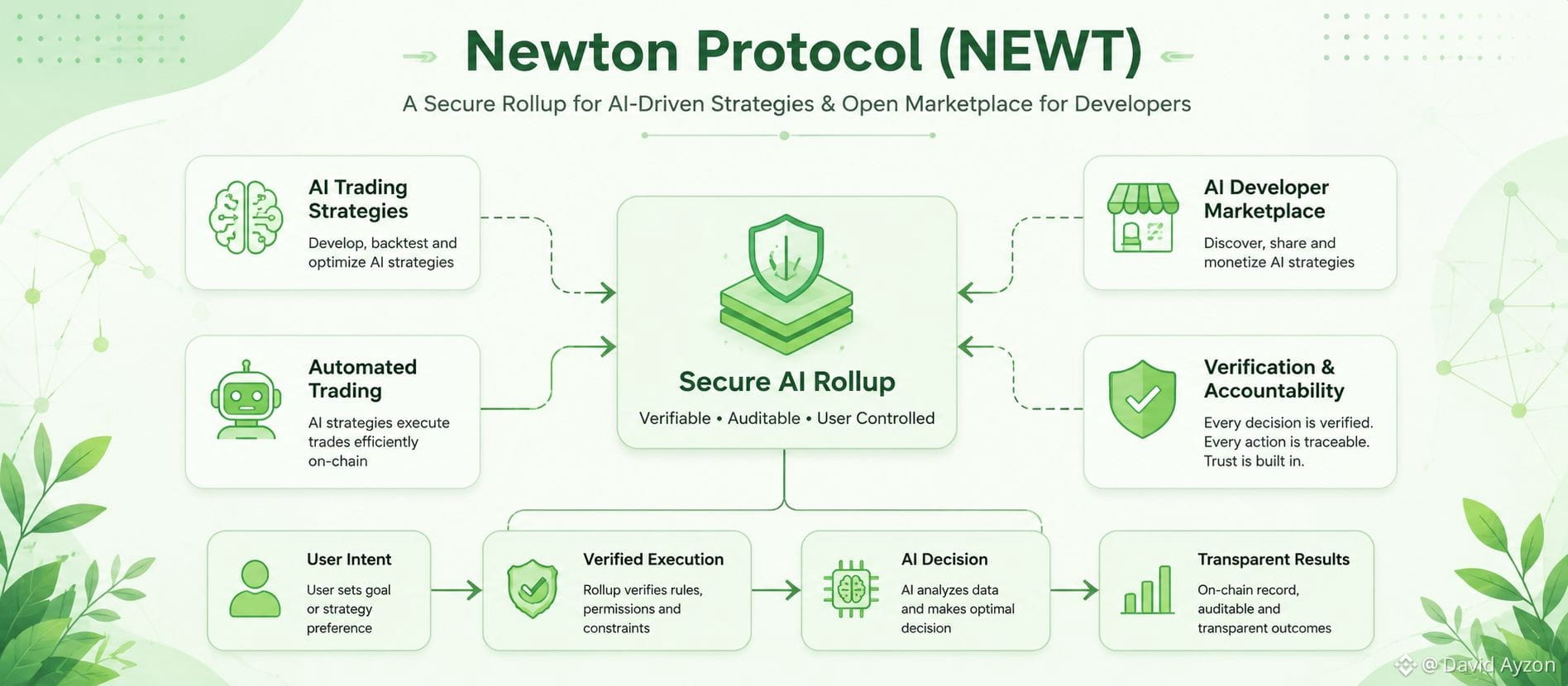
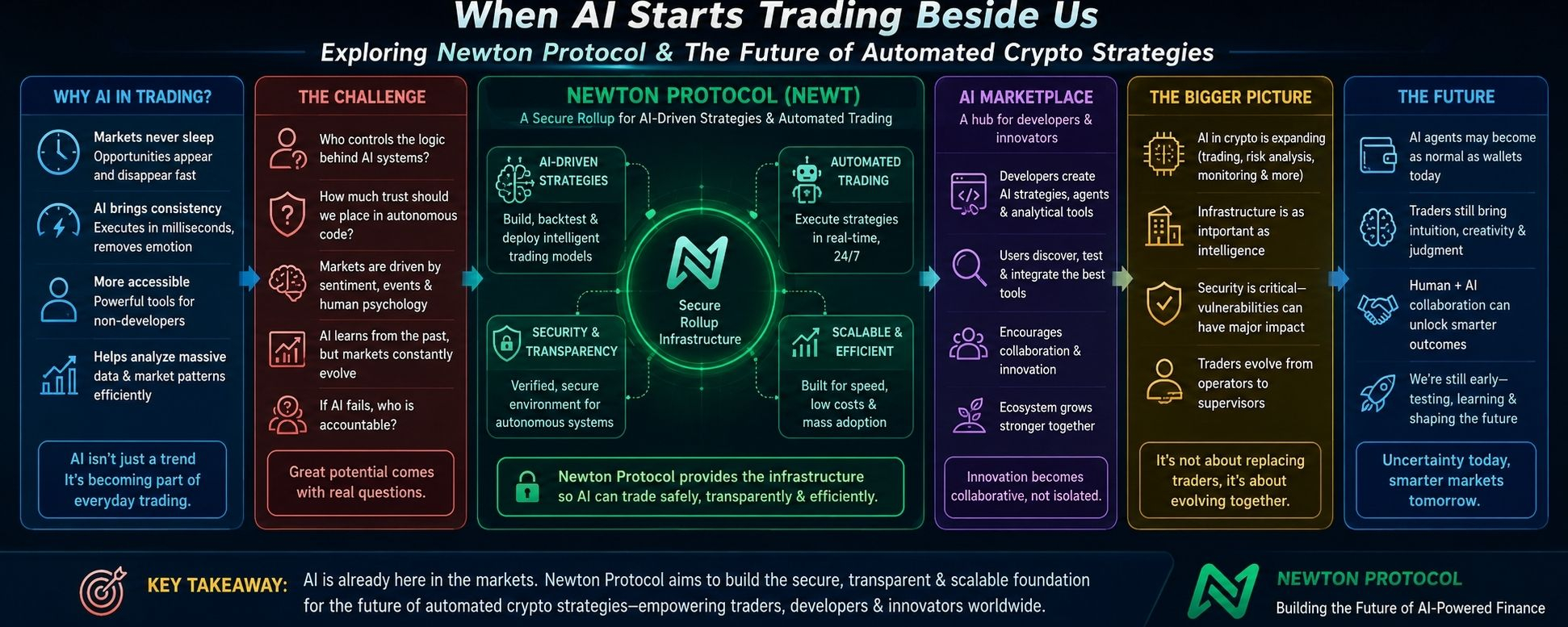
#newt @NewtonProtocol $NEWT Every cycle seems to bring a new AI tool for crypto, but I keep wondering about something else. How do we know what those systems are actually doing once they start making decisions? Maybe I am overthinking it, but that question keeps coming back. Newton Protocol caught my attention because it is trying to build a secure rollup for AI driven strategies, automated trading, and a marketplace where developers can share AI tools. I remember when trading bots felt like a shortcut to easy profits. It felt strange at first to hand decisions to software, and over time I realized the bigger issue was never speed. It was trust. What makes this idea interesting to me is not that AI might find better trades. Plenty of projects promise smarter models. The part I keep thinking about is whether users can verify how those strategies behave instead of treating them like a black box. I am not sure if that alone will change how people trade, but it feels like a more practical direction than simply adding more automation. Crypto has always pushed for systems that reduce blind trust. Maybe AI should follow the same path. I am curious whether developers will value transparent infrastructure as much as powerful models. I do not have that answer yet, and maybe nobody does. Still, I think the projects worth watching are the ones asking harder questions instead of chasing louder narratives. That feels like a conversation that is only beginning. {future}(NEWTUSDT)
#newt @NewtonProtocol $NEWT
Every cycle seems to bring a new AI tool for crypto, but I keep wondering about something else. How do we know what those systems are actually doing once they start making decisions? Maybe I am overthinking it, but that question keeps coming back.

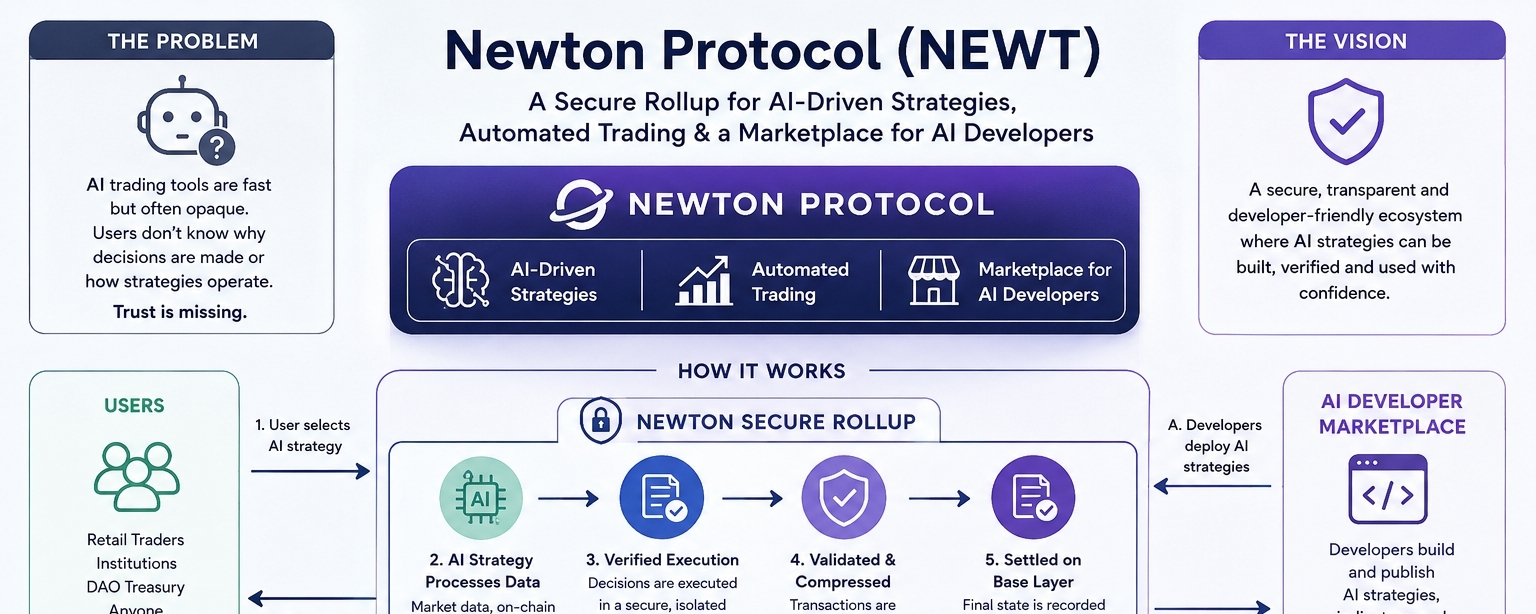
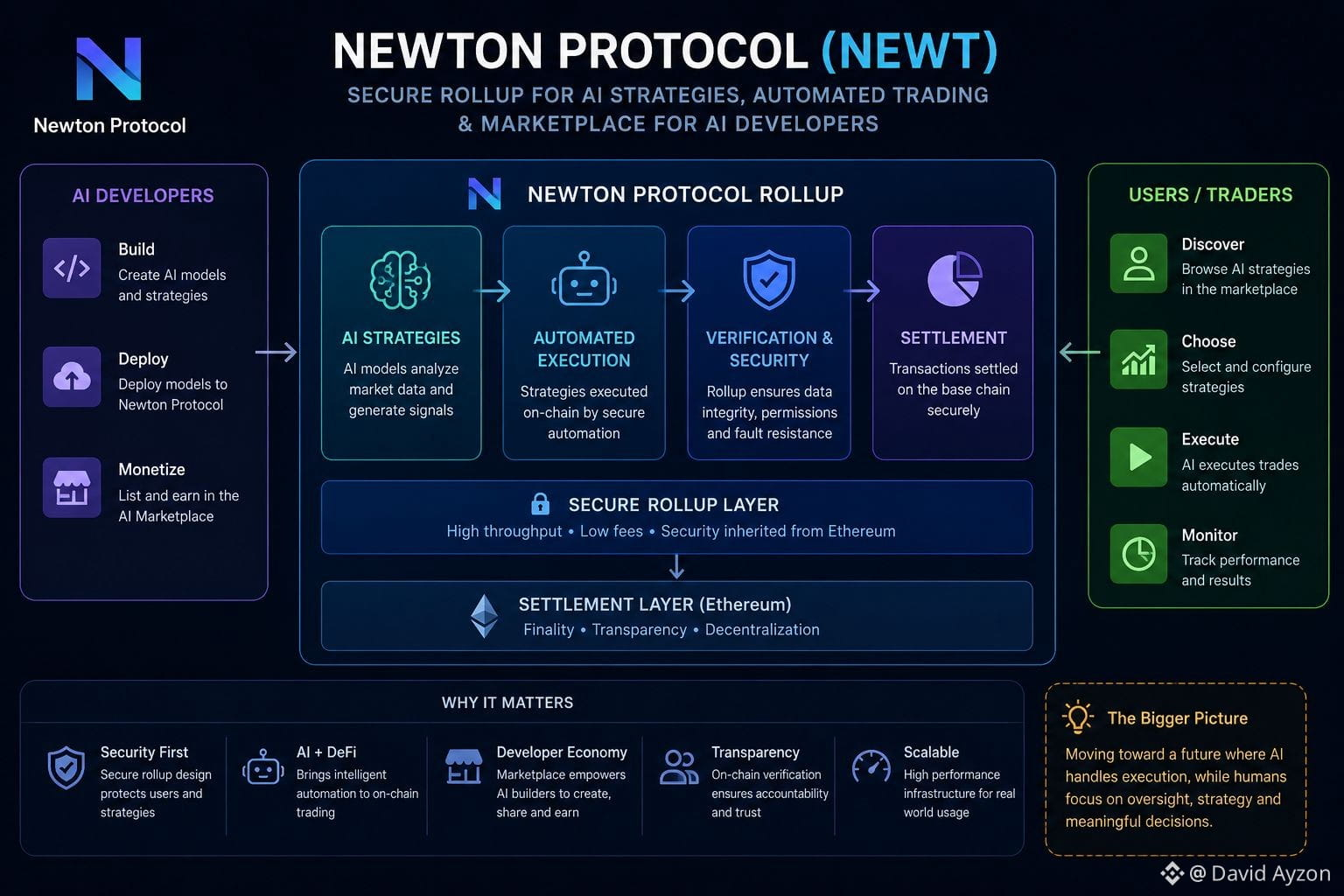
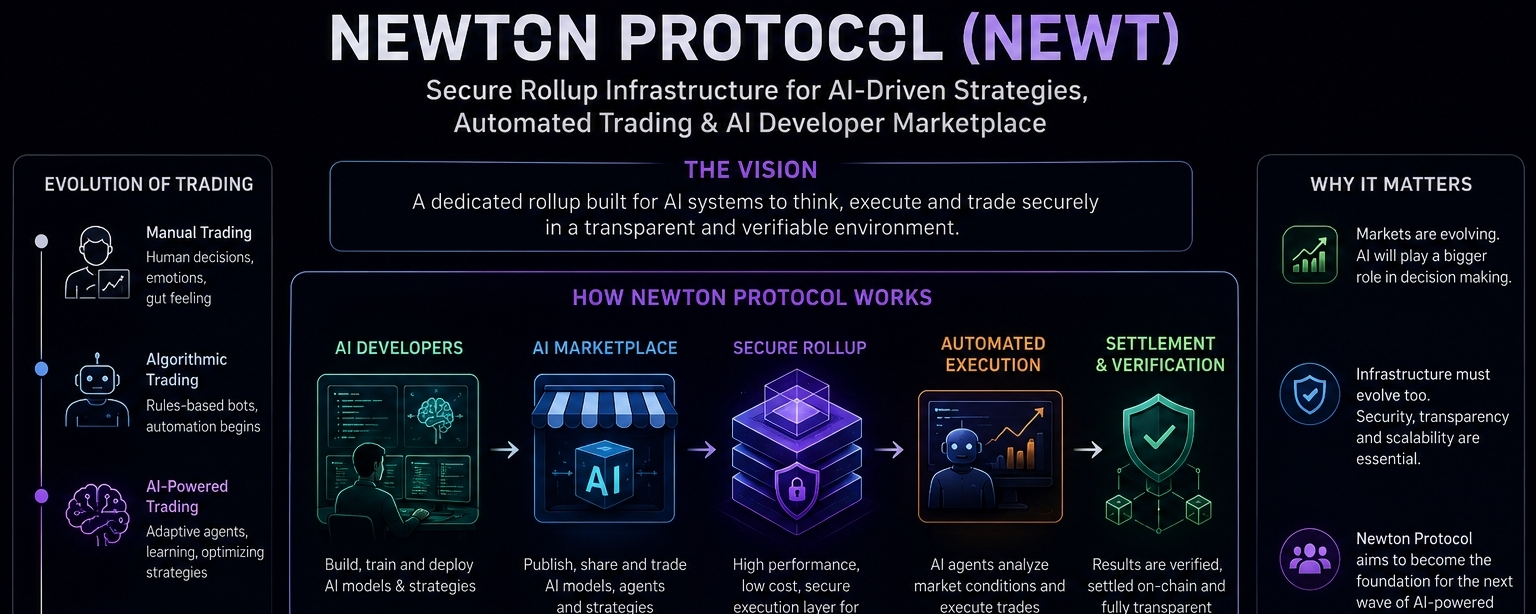
Newton Protocol caught my attention because it is trying to build a secure rollup for AI driven strategies, automated trading, and a marketplace where developers can share AI tools. I remember when trading bots felt like a shortcut to easy profits. It felt strange at first to hand decisions to software, and over time I realized the bigger issue was never speed. It was trust.

What makes this idea interesting to me is not that AI might find better trades. Plenty of projects promise smarter models. The part I keep thinking about is whether users can verify how those strategies behave instead of treating them like a black box. I am not sure if that alone will change how people trade, but it feels like a more practical direction than simply adding more automation.

Crypto has always pushed for systems that reduce blind trust. Maybe AI should follow the same path. I am curious whether developers will value transparent infrastructure as much as powerful models. I do not have that answer yet, and maybe nobody does. Still, I think the projects worth watching are the ones asking harder questions instead of chasing louder narratives. That feels like a conversation that is only beginning.
記事
翻訳参照
Trust Before Intelligence: Why Newton Protocol Made Me Rethink AI in CryptoA few nights ago I found myself staring at three different charts, a wallet dashboard, and a Telegram group all at once. Nothing unusual for crypto, I guess. The funny part was realizing I wasn't even making most of the decisions anymore. Alerts were telling me where to look. Bots were filtering noise. AI tools were summarizing market updates before I had time to read them myself. I remember when placing a trade felt simple. Now it feels more like managing a collection of digital assistants. Maybe that's progress. Maybe it's something we still don't fully understand. That thought stayed with me while reading about Newton Protocol. The project isn't trying to convince people that AI belongs in crypto. I think that argument has already been settled. AI is already everywhere. The harder question is how those systems should behave when they begin making decisions that involve real money. It felt strange at first because most conversations around AI trading focus on speed or prediction. Faster analysis. Smarter strategies. Better execution. Those things matter, sure, but I kept coming back to something else. If an AI decides to enter a position, can I actually understand why? Can I verify what happened instead of simply trusting a black box? From what I've seen, Newton Protocol is building a secure rollup designed for AI driven strategies while also supporting automated trading and a marketplace where AI developers can publish their work. That combination caught my attention because it shifts the discussion away from AI itself and toward the environment where AI operates. I think that's an important difference. Crypto has always been obsessed with removing unnecessary trust. We verify transactions. We verify ownership. Maybe I'm overthinking it, but it seems logical that AI actions should eventually be held to similar standards instead of asking users to accept whatever the algorithm decides. I also keep thinking about the developers. Good AI systems don't appear out of nowhere. Someone builds them, tests them, improves them, and hopefully takes responsibility when things don't work as expected. A marketplace for AI developers sounds less like a place to chase hype and more like an ecosystem where different ideas can compete on transparency and performance over time. Of course none of this guarantees success. Markets have a way of humbling every strategy, whether it's written by a person or generated by AI. That's probably healthy. No technology should make us believe uncertainty has disappeared because uncertainty is part of trading itself. I remember when algorithmic trading sounded intimidating. Then alerts became normal. Copy trading became normal. Automation became normal. AI feels like the next layer in that gradual shift rather than a completely separate chapter. Looking back, adoption usually happens more quietly than people expect. There's another part I find interesting. Infrastructure rarely gets the same attention as flashy applications, yet infrastructure is often what survives after narratives fade. If AI keeps expanding across crypto, the systems responsible for verifying and coordinating those actions may end up becoming more valuable than the loudest marketing campaigns. Sometimes I wonder if we're asking the wrong questions. Instead of asking whether AI can outperform humans, maybe we should ask whether humans can understand, monitor, and control AI well enough to trust it. Those are different conversations, and I think the second one deserves more attention. None of this makes me instantly optimistic or pessimistic. I'm mostly curious. Crypto has a habit of pushing experiments into the real world much faster than other industries, and sometimes that produces valuable lessons. Sometimes it produces expensive mistakes. Usually it's a mix of both. For now I'm watching projects like Newton Protocol because they seem to acknowledge that trust doesn't disappear when AI enters the picture. It simply changes shape. I don't know exactly where that leads, and maybe nobody does yet. Still, I have a feeling the next stage of crypto won't only be about smarter machines. It'll be about building systems where people can understand what those machines are actually doing. That's the part I want to keep following. #Newt @NewtonProtocol $NEWT {future}(NEWTUSDT)

Trust Before Intelligence: Why Newton Protocol Made Me Rethink AI in Crypto

A few nights ago I found myself staring at three different charts, a wallet dashboard, and a Telegram group all at once. Nothing unusual for crypto, I guess. The funny part was realizing I wasn't even making most of the decisions anymore. Alerts were telling me where to look. Bots were filtering noise. AI tools were summarizing market updates before I had time to read them myself. I remember when placing a trade felt simple. Now it feels more like managing a collection of digital assistants. Maybe that's progress. Maybe it's something we still don't fully understand.
That thought stayed with me while reading about Newton Protocol. The project isn't trying to convince people that AI belongs in crypto. I think that argument has already been settled. AI is already everywhere. The harder question is how those systems should behave when they begin making decisions that involve real money.
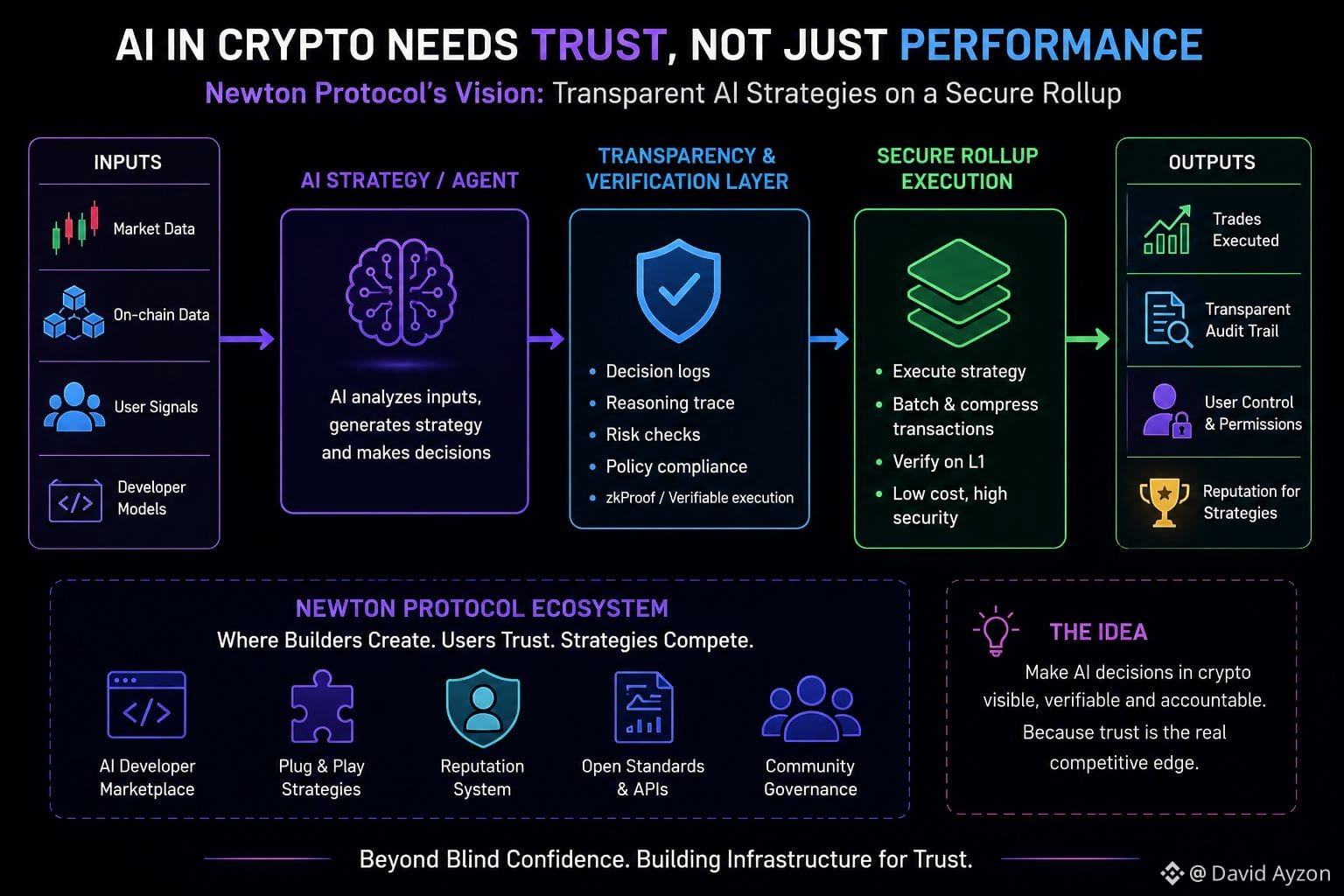
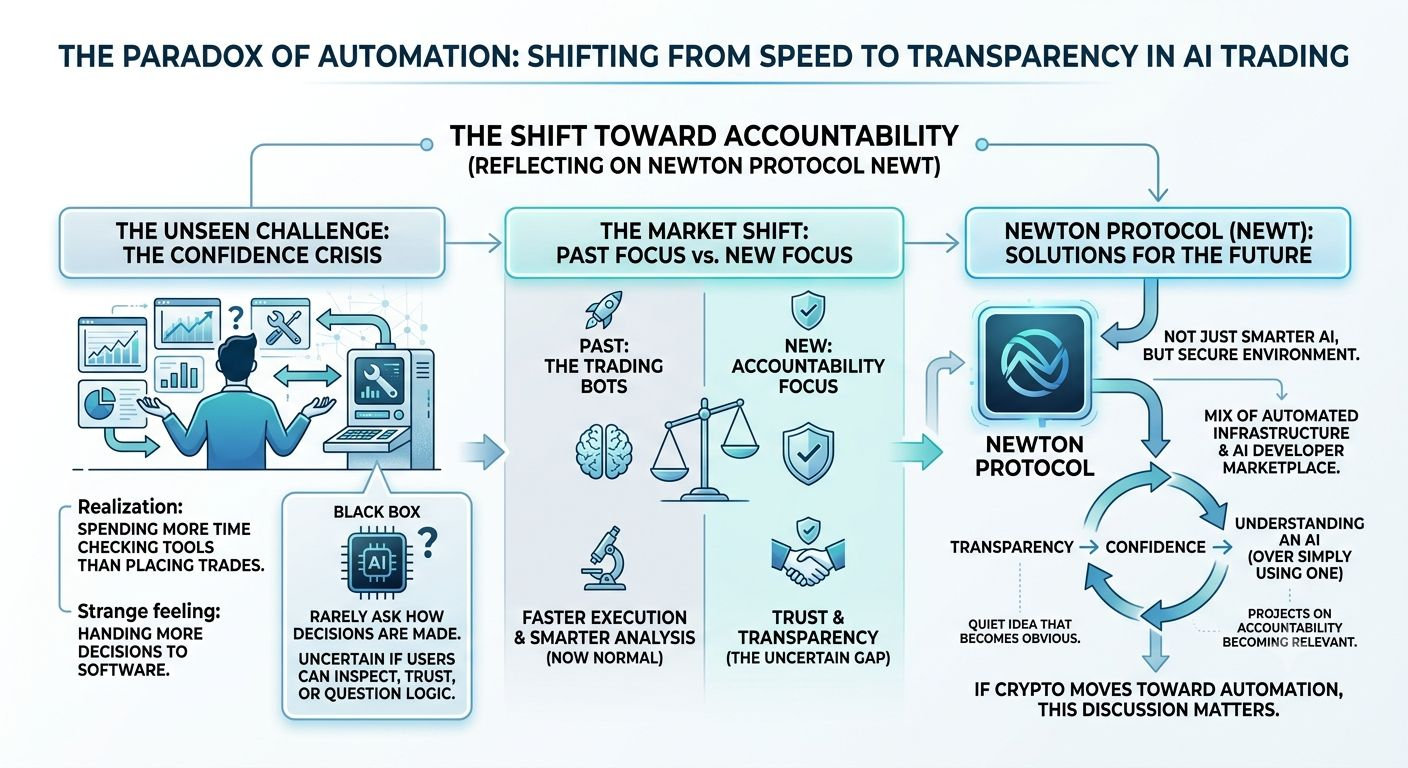
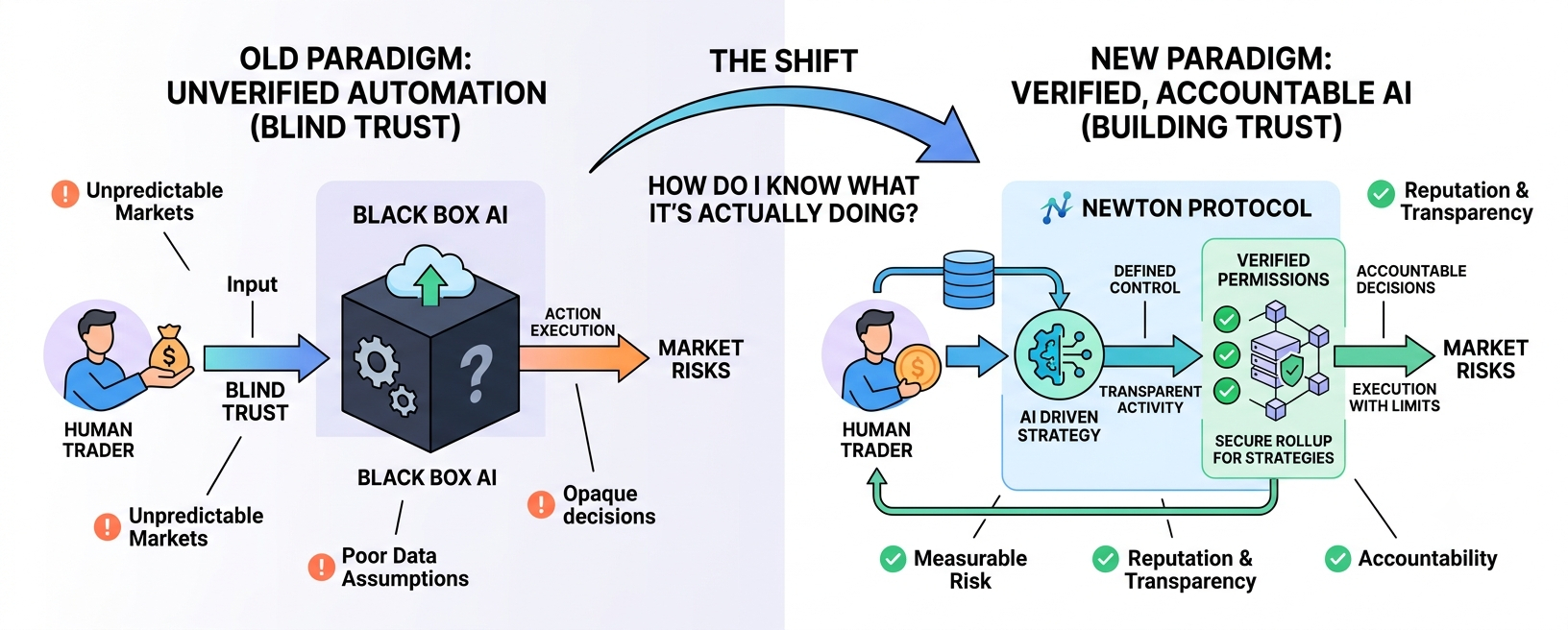
It felt strange at first because most conversations around AI trading focus on speed or prediction. Faster analysis. Smarter strategies. Better execution. Those things matter, sure, but I kept coming back to something else. If an AI decides to enter a position, can I actually understand why? Can I verify what happened instead of simply trusting a black box?
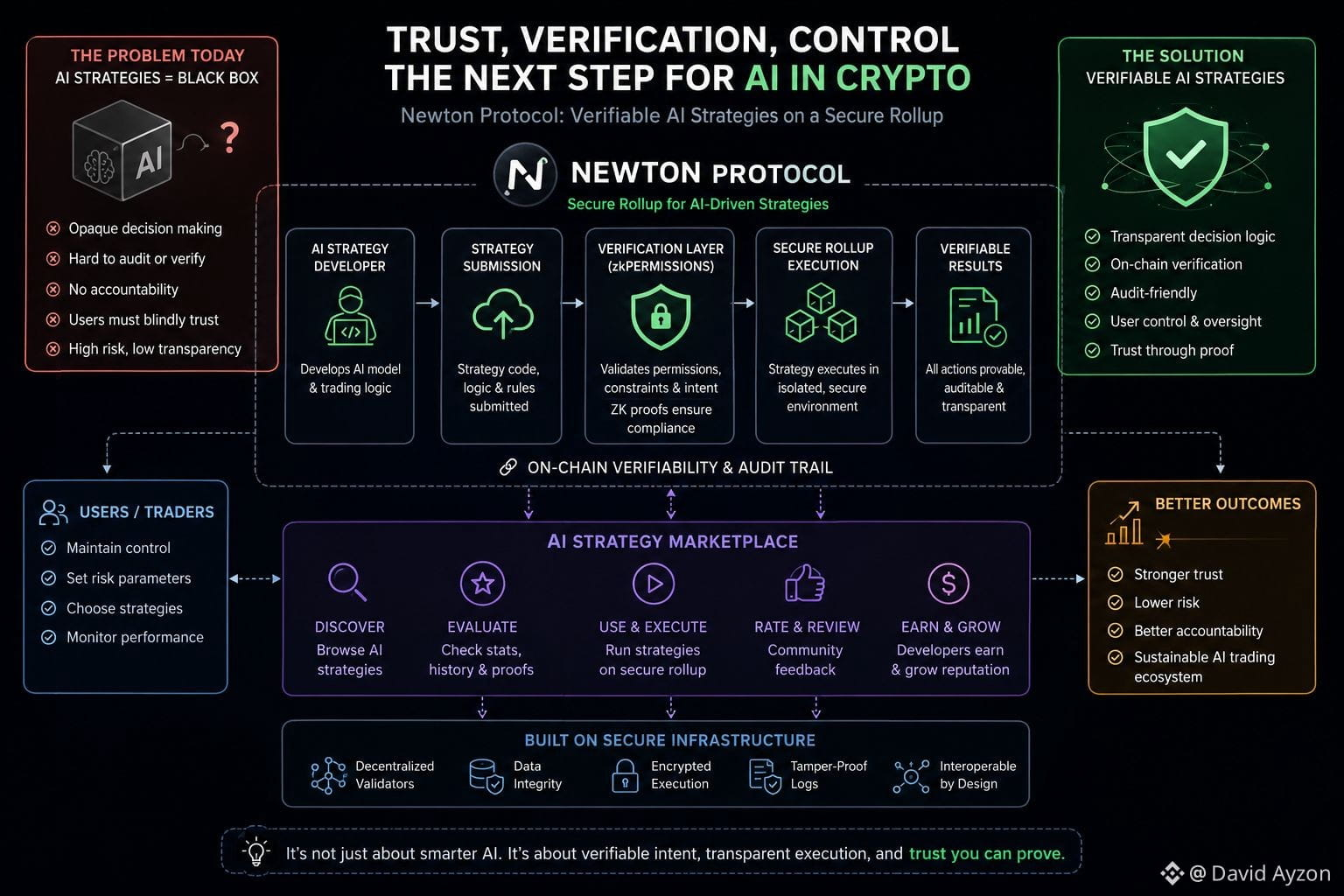
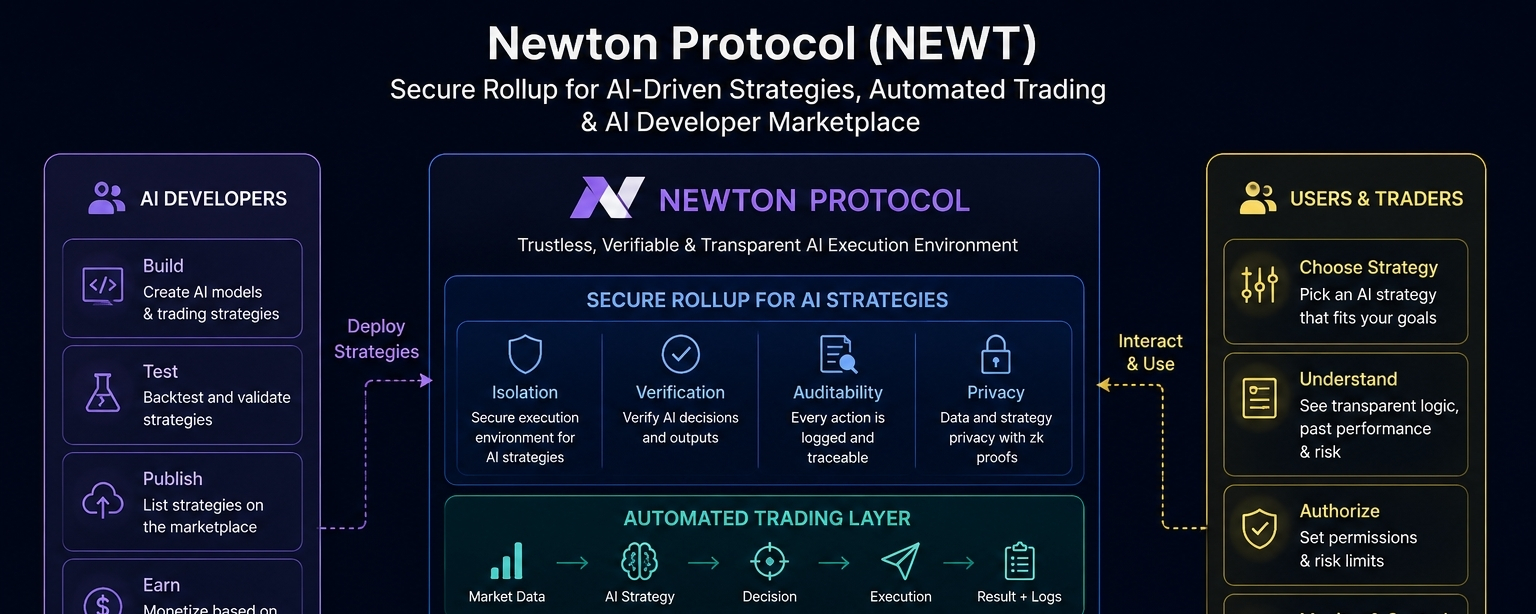
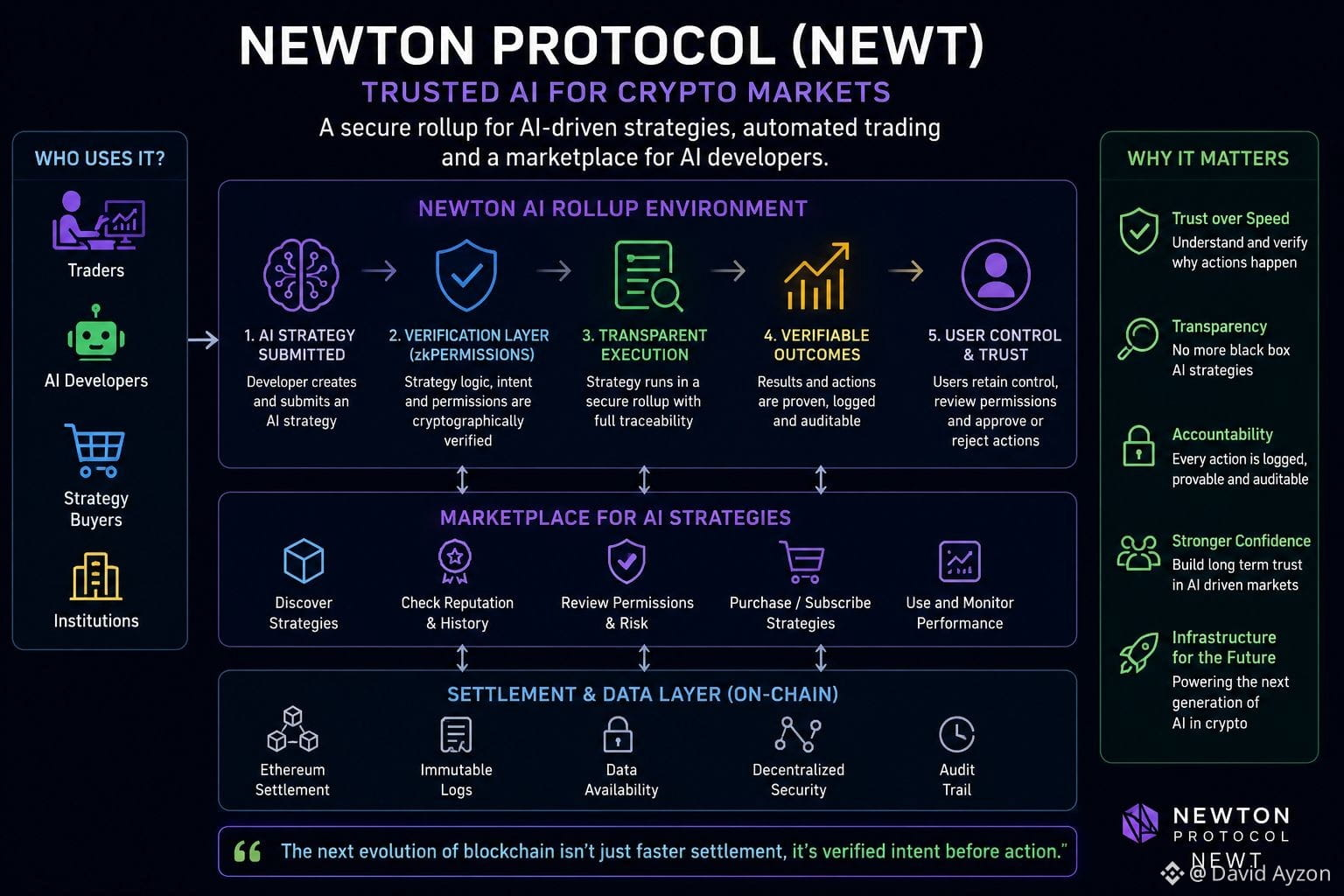
From what I've seen, Newton Protocol is building a secure rollup designed for AI driven strategies while also supporting automated trading and a marketplace where AI developers can publish their work. That combination caught my attention because it shifts the discussion away from AI itself and toward the environment where AI operates.
I think that's an important difference. Crypto has always been obsessed with removing unnecessary trust. We verify transactions. We verify ownership. Maybe I'm overthinking it, but it seems logical that AI actions should eventually be held to similar standards instead of asking users to accept whatever the algorithm decides.
I also keep thinking about the developers. Good AI systems don't appear out of nowhere. Someone builds them, tests them, improves them, and hopefully takes responsibility when things don't work as expected. A marketplace for AI developers sounds less like a place to chase hype and more like an ecosystem where different ideas can compete on transparency and performance over time.
Of course none of this guarantees success. Markets have a way of humbling every strategy, whether it's written by a person or generated by AI. That's probably healthy. No technology should make us believe uncertainty has disappeared because uncertainty is part of trading itself.
I remember when algorithmic trading sounded intimidating. Then alerts became normal. Copy trading became normal. Automation became normal. AI feels like the next layer in that gradual shift rather than a completely separate chapter. Looking back, adoption usually happens more quietly than people expect.
There's another part I find interesting. Infrastructure rarely gets the same attention as flashy applications, yet infrastructure is often what survives after narratives fade. If AI keeps expanding across crypto, the systems responsible for verifying and coordinating those actions may end up becoming more valuable than the loudest marketing campaigns.
Sometimes I wonder if we're asking the wrong questions. Instead of asking whether AI can outperform humans, maybe we should ask whether humans can understand, monitor, and control AI well enough to trust it. Those are different conversations, and I think the second one deserves more attention.
None of this makes me instantly optimistic or pessimistic. I'm mostly curious. Crypto has a habit of pushing experiments into the real world much faster than other industries, and sometimes that produces valuable lessons. Sometimes it produces expensive mistakes. Usually it's a mix of both.
For now I'm watching projects like Newton Protocol because they seem to acknowledge that trust doesn't disappear when AI enters the picture. It simply changes shape. I don't know exactly where that leads, and maybe nobody does yet. Still, I have a feeling the next stage of crypto won't only be about smarter machines. It'll be about building systems where people can understand what those machines are actually doing. That's the part I want to keep following.
#Newt @NewtonProtocol $NEWT
翻訳参照
#Newt @NewtonProtocol $NEWT Sometimes I think crypto is becoming less about placing trades and more about deciding what deserves our trust. Charts are everywhere. Signals are everywhere. Now AI wants a seat at the table too. I am still figuring out how I feel about that. What made me stop and read about Newton Protocol was not the promise of smarter AI. It was the effort to make AI actions visible instead of mysterious. That feels like a bigger conversation. If an automated strategy opens a position or changes direction I want to know there is a way to understand what happened. Maybe I expect too much but blind confidence has never ended well in this space. I remember when automation meant setting a few limit orders and walking away. Now people are talking about AI agents making decisions while developers build entire ecosystems around them. A secure rollup designed for these strategies and a place where builders can share their work sounds practical rather than flashy. I am curious whether users will value openness enough to reward projects that focus on accountability instead of only performance. I still have questions and maybe that is the interesting part. Will traders actually care how an AI reaches a decision once profits enter the picture or will transparency only matter after something goes wrong. I cannot answer that yet. What I do know is that infrastructure built around trust is becoming harder to ignore and I will be watching where that idea leads next. {future}(NEWTUSDT)
#Newt @NewtonProtocol $NEWT
Sometimes I think crypto is becoming less about placing trades and more about deciding what deserves our trust. Charts are everywhere. Signals are everywhere. Now AI wants a seat at the table too. I am still figuring out how I feel about that.

What made me stop and read about Newton Protocol was not the promise of smarter AI. It was the effort to make AI actions visible instead of mysterious. That feels like a bigger conversation. If an automated strategy opens a position or changes direction I want to know there is a way to understand what happened. Maybe I expect too much but blind confidence has never ended well in this space.

I remember when automation meant setting a few limit orders and walking away. Now people are talking about AI agents making decisions while developers build entire ecosystems around them. A secure rollup designed for these strategies and a place where builders can share their work sounds practical rather than flashy. I am curious whether users will value openness enough to reward projects that focus on accountability instead of only performance.

I still have questions and maybe that is the interesting part. Will traders actually care how an AI reaches a decision once profits enter the picture or will transparency only matter after something goes wrong. I cannot answer that yet. What I do know is that infrastructure built around trust is becoming harder to ignore and I will be watching where that idea leads next.
記事
翻訳参照
Crypto Is Quietly Becoming a Place Where Humans Manage AI Instead of MarketsI used to think becoming a better trader meant reading more charts. Then it became following on chain data. After that it was wallets, dashboards, alerts, and countless browser tabs. Somewhere along the way I realized I wasn't just trading anymore. I was managing information. Sometimes it feels like the market moves faster than any person can realistically process, and that's probably why AI has found its way into almost every crypto conversation. What's interesting is that AI isn't replacing people overnight. It feels more like we're slowly handing over small responsibilities. One tool summarizes news. Another scans liquidity. Another suggests entries or filters noise. Before you notice it, half your workflow is already automated. That made me curious about Newton Protocol. Instead of building another trading application, it is working on infrastructure for AI driven strategies, automated execution, and a marketplace where developers can build and distribute AI powered tools. It feels less like a product aimed at today's market and more like something preparing for how people might interact with crypto a few years from now. I keep wondering what happens when thousands of different AI agents are all making decisions at the same time. Markets are already crowded with bots written by experienced developers. Adding AI into that mix creates an environment that feels very different from previous cycles. I'm not sure we've fully imagined what that looks like yet. I remember when copy trading became popular because people wanted to borrow someone else's experience. AI feels like the next step, except instead of following another trader, users may end up relying on software that keeps adapting while markets change. That shift is fascinating, even if it raises plenty of new questions. One part that caught my attention is the idea of giving developers a place to publish AI strategies instead of keeping everything locked inside private communities. Crypto has always grown because builders can create openly. If AI development follows that path, it could encourage faster experimentation and healthier competition. Of course, technology alone doesn't create useful products. We've all seen impressive ideas disappear because they solved problems nobody actually had. Maybe I'm too cautious after watching several market cycles, but I care more about whether people continue using something six months later than whether it creates excitement during launch. Another thing I find interesting is how AI changes the role of traders themselves. Instead of searching endlessly for signals, people may spend more time comparing strategies, adjusting risk, and deciding which systems deserve attention. That almost sounds like portfolio management for AI rather than traditional trading. There's also the question of creativity. Markets constantly evolve because people adapt. Can AI stay original when everyone has access to similar models and data? I honestly don't know. Maybe the advantage will come from how developers design their strategies rather than the intelligence behind them. Crypto has a habit of making complicated ideas feel normal after enough time passes. Decentralized finance once sounded unrealistic. Smart contracts felt difficult to explain. Now they're part of everyday conversation. AI infrastructure could follow the same path, but it's still early enough that nobody really knows what the final picture looks like. Newton Protocol doesn't make me think about quick price movements. It makes me think about where crypto workflows are heading. That feels like a more interesting discussion. Markets will always move up and down, but the way people interact with those markets keeps changing. I could be completely wrong, and maybe traders will always prefer making every decision themselves. Still, I can't shake the feeling that the next chapter of crypto won't be about replacing humans. It'll be about deciding which parts of the process we're comfortable handing over, and which parts we'll always want to keep in our own hands. #Newt @NewtonProtocol $NEWT {spot}(NEWTUSDT)

Crypto Is Quietly Becoming a Place Where Humans Manage AI Instead of Markets

I used to think becoming a better trader meant reading more charts. Then it became following on chain data. After that it was wallets, dashboards, alerts, and countless browser tabs. Somewhere along the way I realized I wasn't just trading anymore. I was managing information. Sometimes it feels like the market moves faster than any person can realistically process, and that's probably why AI has found its way into almost every crypto conversation.
What's interesting is that AI isn't replacing people overnight. It feels more like we're slowly handing over small responsibilities. One tool summarizes news. Another scans liquidity. Another suggests entries or filters noise. Before you notice it, half your workflow is already automated.
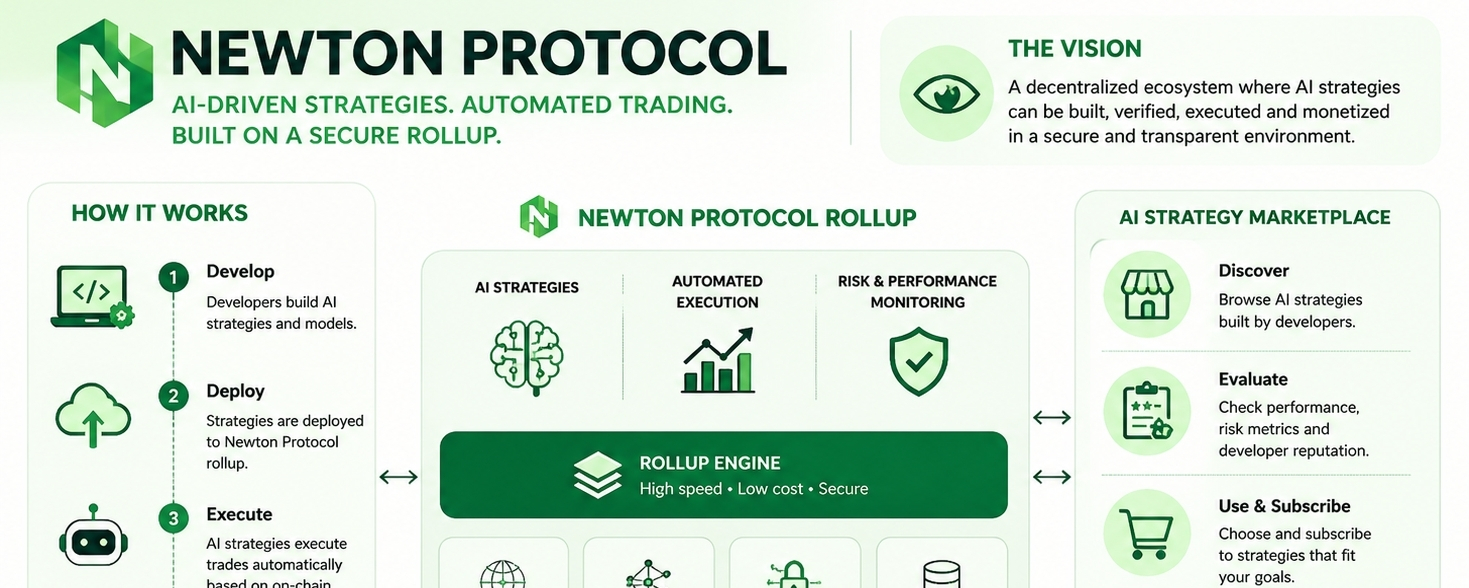
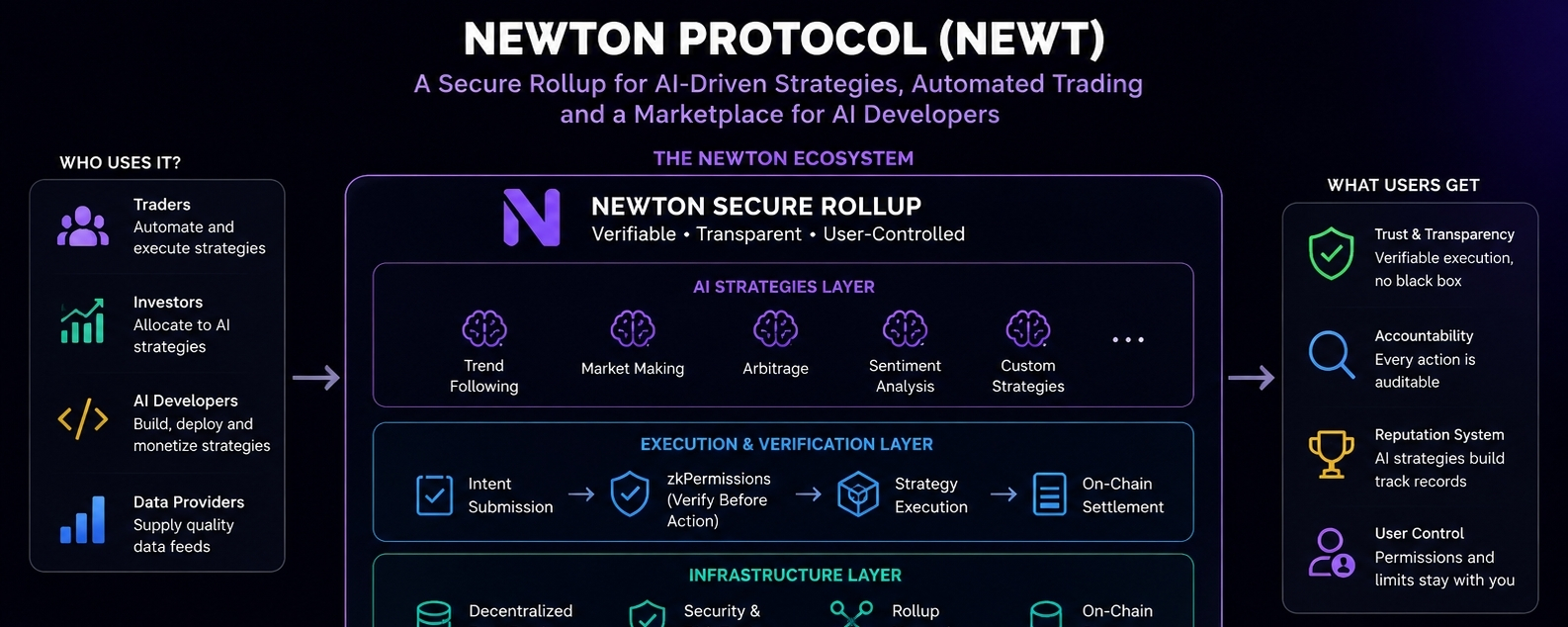
That made me curious about Newton Protocol. Instead of building another trading application, it is working on infrastructure for AI driven strategies, automated execution, and a marketplace where developers can build and distribute AI powered tools. It feels less like a product aimed at today's market and more like something preparing for how people might interact with crypto a few years from now.
I keep wondering what happens when thousands of different AI agents are all making decisions at the same time. Markets are already crowded with bots written by experienced developers. Adding AI into that mix creates an environment that feels very different from previous cycles. I'm not sure we've fully imagined what that looks like yet.
I remember when copy trading became popular because people wanted to borrow someone else's experience. AI feels like the next step, except instead of following another trader, users may end up relying on software that keeps adapting while markets change. That shift is fascinating, even if it raises plenty of new questions.
One part that caught my attention is the idea of giving developers a place to publish AI strategies instead of keeping everything locked inside private communities. Crypto has always grown because builders can create openly. If AI development follows that path, it could encourage faster experimentation and healthier competition.
Of course, technology alone doesn't create useful products. We've all seen impressive ideas disappear because they solved problems nobody actually had. Maybe I'm too cautious after watching several market cycles, but I care more about whether people continue using something six months later than whether it creates excitement during launch.
Another thing I find interesting is how AI changes the role of traders themselves. Instead of searching endlessly for signals, people may spend more time comparing strategies, adjusting risk, and deciding which systems deserve attention. That almost sounds like portfolio management for AI rather than traditional trading.
There's also the question of creativity. Markets constantly evolve because people adapt. Can AI stay original when everyone has access to similar models and data? I honestly don't know. Maybe the advantage will come from how developers design their strategies rather than the intelligence behind them.
Crypto has a habit of making complicated ideas feel normal after enough time passes. Decentralized finance once sounded unrealistic. Smart contracts felt difficult to explain. Now they're part of everyday conversation. AI infrastructure could follow the same path, but it's still early enough that nobody really knows what the final picture looks like.
Newton Protocol doesn't make me think about quick price movements. It makes me think about where crypto workflows are heading. That feels like a more interesting discussion. Markets will always move up and down, but the way people interact with those markets keeps changing.
I could be completely wrong, and maybe traders will always prefer making every decision themselves. Still, I can't shake the feeling that the next chapter of crypto won't be about replacing humans. It'll be about deciding which parts of the process we're comfortable handing over, and which parts we'll always want to keep in our own hands.
#Newt @NewtonProtocol $NEWT
翻訳参照
#newt @NewtonProtocol $NEWT Most trading mistakes I’ve made didn’t come from clicking the wrong button. They came from trusting something I didn’t fully understand. That thought popped into my head again while reading about Newton Protocol and its focus on a secure rollup for AI driven strategies. I remember when automated trading bots started becoming common. It felt strange at first because I liked having my hands on every decision. Now AI can scan markets much faster than I can, but maybe I’m overthinking it. Speed has never been the part that worries me. I keep wondering how those decisions can actually be checked and whether users stay in control when an AI strategy is running. That is why Newton Protocol caught my attention. Instead of treating AI like a black box, the project seems more interested in creating an environment where strategies can operate with stronger verification and accountability. The marketplace for AI developers also made me pause for a moment. If different strategies are shared in one ecosystem, trust may end up being just as valuable as performance. I’m not completely sure how that balance will evolve, but it feels like the right question to ask. Crypto keeps moving toward more automation, and I doubt that trend slows down. Still, I think the bigger conversation is no longer whether AI can make decisions. It is whether those decisions can be understood, reviewed, and trusted afterward. I could be wrong, but that feels like the discussion worth following over the next few years. {future}(NEWTUSDT)
#newt @NewtonProtocol $NEWT
Most trading mistakes I’ve made didn’t come from clicking the wrong button. They came from trusting something I didn’t fully understand. That thought popped into my head again while reading about Newton Protocol and its focus on a secure rollup for AI driven strategies.

I remember when automated trading bots started becoming common. It felt strange at first because I liked having my hands on every decision. Now AI can scan markets much faster than I can, but maybe I’m overthinking it. Speed has never been the part that worries me. I keep wondering how those decisions can actually be checked and whether users stay in control when an AI strategy is running.

That is why Newton Protocol caught my attention. Instead of treating AI like a black box, the project seems more interested in creating an environment where strategies can operate with stronger verification and accountability. The marketplace for AI developers also made me pause for a moment. If different strategies are shared in one ecosystem, trust may end up being just as valuable as performance. I’m not completely sure how that balance will evolve, but it feels like the right question to ask.

Crypto keeps moving toward more automation, and I doubt that trend slows down. Still, I think the bigger conversation is no longer whether AI can make decisions. It is whether those decisions can be understood, reviewed, and trusted afterward. I could be wrong, but that feels like the discussion worth following over the next few years.
記事
翻訳参照
The More I Use AI in Crypto, the More I Care About One Thing: Can I Actually Trust It?I keep thinking about how different crypto feels today compared to a couple of years ago. Back then my screen was mostly charts, wallets, and maybe a few tabs open for research. Now there are AI tools everywhere. Some scan markets. Some summarize news before I even read it. Others promise to build trading strategies while I sleep. I remember when that felt almost unreal. Now it feels normal. But somewhere along the way I caught myself asking a different question. Not whether AI can make decisions faster than me. Whether I can actually trust those decisions. Maybe I'm overthinking it, but speed stopped impressing me a while ago. Almost every new tool claims to be faster, smarter, or more efficient. That isn't what worries me anymore. What bothers me is the moment an AI makes a move with my funds and I have no idea why it happened. That is why Newton Protocol caught my attention. It is trying to build a secure rollup where AI-driven strategies can operate inside an environment designed around verification instead of blind trust. The idea isn't simply giving AI more freedom. It is making its actions easier to verify and control before they reach the blockchain. I think that changes the conversation in a meaningful way. Most people already accept that AI can process more information than humans. The harder problem is proving that the result followed the rules we expected. Without that, every successful trade feels a little lucky, and every bad trade feels impossible to understand. One detail that stayed in my mind was the idea behind zkPermissions. Instead of treating AI like a black box, it introduces a way to define what an agent is actually allowed to do. That feels surprisingly practical. If an AI is managing assets, limits should not be an afterthought. It also made me think about automated trading in general. Plenty of traders already depend on bots, alerts, scripts, and different layers of automation. AI feels like the next step, but the risks grow alongside the convenience. More automation also means giving away more responsibility, and that trade-off deserves more attention than it usually gets. Another piece I find interesting is the marketplace for AI developers. Crypto has always been full of people building tools for other people. If those tools become easier to discover while keeping transparency around how they operate, the ecosystem could become much healthier. Of course, that depends on execution. Good ideas are everywhere in crypto. Delivering them is something else. Sometimes I wonder if trust will quietly become the biggest advantage in AI infrastructure. Not because it sounds exciting, but because users eventually stop caring about impressive demos. They want consistency. They want to know why something happened. That feels much harder to fake over time. The more I read about protocols like Newton, the less I think this is only about AI. It also feels like an infrastructure story. We spent years improving blockchain scalability and transaction speed. Maybe the next challenge is making automated decisions accountable before they ever touch the chain. I'm still curious about how all of this will look once real users rely on it every day. Will developers embrace stricter verification, or will they see it as unnecessary friction? I honestly do not know. History usually shows that convenience wins first, then security catches up later. For now I'm simply paying closer attention to projects that ask different questions. Instead of promising the smartest AI, they ask how that intelligence can be verified, audited, and kept within clear boundaries. That feels like a healthier direction, even if it takes longer to build. I have no idea whether Newton Protocol will become a major piece of crypto infrastructure. Maybe it will. Maybe another project will solve the same problem in a completely different way. Either way, I think I'll keep watching this corner of the market. The future of AI in crypto probably won't belong to whoever thinks the fastest. It might belong to whoever earns trust one transparent decision at a time. #Newt @NewtonProtocol $NEWT {future}(NEWTUSDT)

The More I Use AI in Crypto, the More I Care About One Thing: Can I Actually Trust It?

I keep thinking about how different crypto feels today compared to a couple of years ago. Back then my screen was mostly charts, wallets, and maybe a few tabs open for research. Now there are AI tools everywhere. Some scan markets. Some summarize news before I even read it. Others promise to build trading strategies while I sleep. I remember when that felt almost unreal. Now it feels normal. But somewhere along the way I caught myself asking a different question. Not whether AI can make decisions faster than me. Whether I can actually trust those decisions.
Maybe I'm overthinking it, but speed stopped impressing me a while ago. Almost every new tool claims to be faster, smarter, or more efficient. That isn't what worries me anymore. What bothers me is the moment an AI makes a move with my funds and I have no idea why it happened.
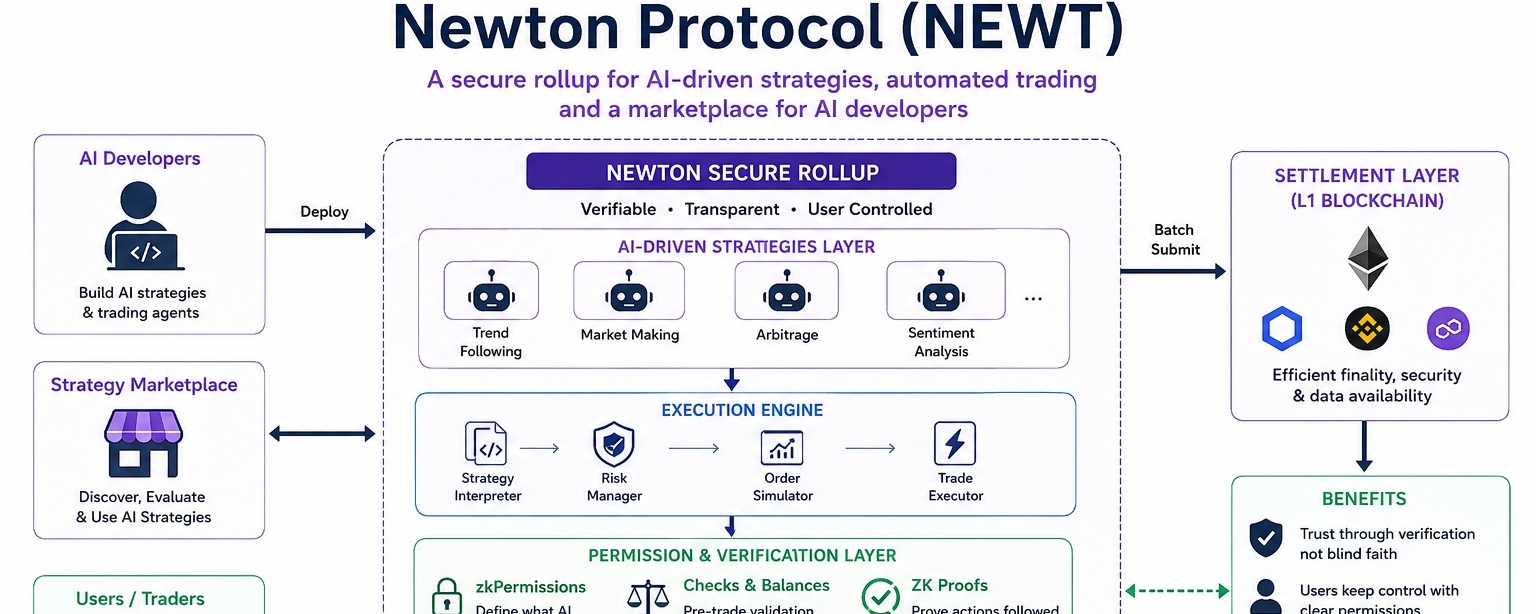
That is why Newton Protocol caught my attention. It is trying to build a secure rollup where AI-driven strategies can operate inside an environment designed around verification instead of blind trust. The idea isn't simply giving AI more freedom. It is making its actions easier to verify and control before they reach the blockchain.
I think that changes the conversation in a meaningful way. Most people already accept that AI can process more information than humans. The harder problem is proving that the result followed the rules we expected. Without that, every successful trade feels a little lucky, and every bad trade feels impossible to understand.
One detail that stayed in my mind was the idea behind zkPermissions. Instead of treating AI like a black box, it introduces a way to define what an agent is actually allowed to do. That feels surprisingly practical. If an AI is managing assets, limits should not be an afterthought.
It also made me think about automated trading in general. Plenty of traders already depend on bots, alerts, scripts, and different layers of automation. AI feels like the next step, but the risks grow alongside the convenience. More automation also means giving away more responsibility, and that trade-off deserves more attention than it usually gets.
Another piece I find interesting is the marketplace for AI developers. Crypto has always been full of people building tools for other people. If those tools become easier to discover while keeping transparency around how they operate, the ecosystem could become much healthier. Of course, that depends on execution. Good ideas are everywhere in crypto. Delivering them is something else.
Sometimes I wonder if trust will quietly become the biggest advantage in AI infrastructure. Not because it sounds exciting, but because users eventually stop caring about impressive demos. They want consistency. They want to know why something happened. That feels much harder to fake over time.
The more I read about protocols like Newton, the less I think this is only about AI. It also feels like an infrastructure story. We spent years improving blockchain scalability and transaction speed. Maybe the next challenge is making automated decisions accountable before they ever touch the chain.
I'm still curious about how all of this will look once real users rely on it every day. Will developers embrace stricter verification, or will they see it as unnecessary friction? I honestly do not know. History usually shows that convenience wins first, then security catches up later.
For now I'm simply paying closer attention to projects that ask different questions. Instead of promising the smartest AI, they ask how that intelligence can be verified, audited, and kept within clear boundaries. That feels like a healthier direction, even if it takes longer to build.
I have no idea whether Newton Protocol will become a major piece of crypto infrastructure. Maybe it will. Maybe another project will solve the same problem in a completely different way. Either way, I think I'll keep watching this corner of the market. The future of AI in crypto probably won't belong to whoever thinks the fastest. It might belong to whoever earns trust one transparent decision at a time.
#Newt @NewtonProtocol $NEWT
記事
翻訳参照
Trust Might Become the Most Important Layer of AI in CryptoThe more time I spend around crypto, the more I notice that AI has quietly become part of everyday trading. Maybe without us even realizing it. Price alerts, research summaries, automated strategies, bots that never sleep. Most people already interact with some form of AI before making a trade. It felt strange at first, but now it almost feels normal. Still, one question keeps coming back to me. If an AI makes an important decision with my money, how do I know why it made that choice? I remember when simple indicators and trading signals felt advanced. Now people are connecting AI models to on chain activity and letting them execute strategies automatically. The technology has moved incredibly fast. Maybe I'm overthinking it, but I don't think speed is the hardest problem anymore. Trust feels much harder. That was the reason Newton Protocol caught my attention. It isn't trying to convince everyone that AI is powerful. Most traders already accept that. The interesting part is its focus on creating a secure rollup where AI driven strategies can operate with stronger verification instead of behaving like a complete black box. The idea sounds practical because automation keeps expanding across crypto. More people are managing dashboards instead of placing every order manually. Data comes from everywhere. Markets never stop. AI can help process that information, but if nobody understands or verifies its actions, confidence becomes difficult to build. Another part I found interesting is the marketplace for AI developers. Different builders creating different strategies sounds healthier than relying on one closed system. Crypto has always been strongest when many people can contribute instead of depending on a single source. Maybe that principle matters just as much for AI. I also kept thinking about accountability. Everyone talks about models becoming smarter, but very few conversations focus on responsibility. If an automated strategy performs well, that's great. If it fails, users should still have a way to understand what happened instead of simply accepting that the algorithm made a mistake. One concept that stood out to me was zkPermissions. The name sounds technical, but the idea behind it feels surprisingly relatable. Verification before execution. AI doesn't just act because it can. There are permissions and controls involved before actions happen. That feels much closer to how financial systems probably should work. Sometimes I wonder if we're slowly moving toward a future where reputation matters as much as raw performance. Imagine AI strategies building track records that people can evaluate instead of blindly trusting anonymous claims. That seems healthier than chasing whichever model promises the highest returns this week. Of course, none of this guarantees success. Infrastructure projects often take time before their value becomes obvious. Markets usually pay attention to flashy applications first. The quieter layers underneath tend to get noticed much later. Maybe that's exactly why these conversations are becoming more interesting. Crypto has always been about removing unnecessary trust between people. Now AI introduces a different challenge. We aren't just trusting another person anymore. We're trusting software that can think, adapt, and execute. That changes the discussion completely. I'm still figuring out how all of this fits together. Maybe secure AI infrastructure becomes an essential part of the ecosystem. Maybe another approach solves the same problem better. I honestly don't know yet. But I do know that as AI becomes more involved in financial decisions, transparency starts feeling less like a nice feature and more like something people will quietly expect. That's probably why I'll keep watching projects like Newton Protocol. Not because I think they've already answered every question, but because they're asking questions that seem increasingly difficult to ignore. And somehow I feel we're only at the beginning of that conversation. #Newt @NewtonProtocol $NEWT {future}(NEWTUSDT)

Trust Might Become the Most Important Layer of AI in Crypto

The more time I spend around crypto, the more I notice that AI has quietly become part of everyday trading. Maybe without us even realizing it. Price alerts, research summaries, automated strategies, bots that never sleep. Most people already interact with some form of AI before making a trade. It felt strange at first, but now it almost feels normal. Still, one question keeps coming back to me. If an AI makes an important decision with my money, how do I know why it made that choice?
I remember when simple indicators and trading signals felt advanced. Now people are connecting AI models to on chain activity and letting them execute strategies automatically. The technology has moved incredibly fast. Maybe I'm overthinking it, but I don't think speed is the hardest problem anymore. Trust feels much harder.
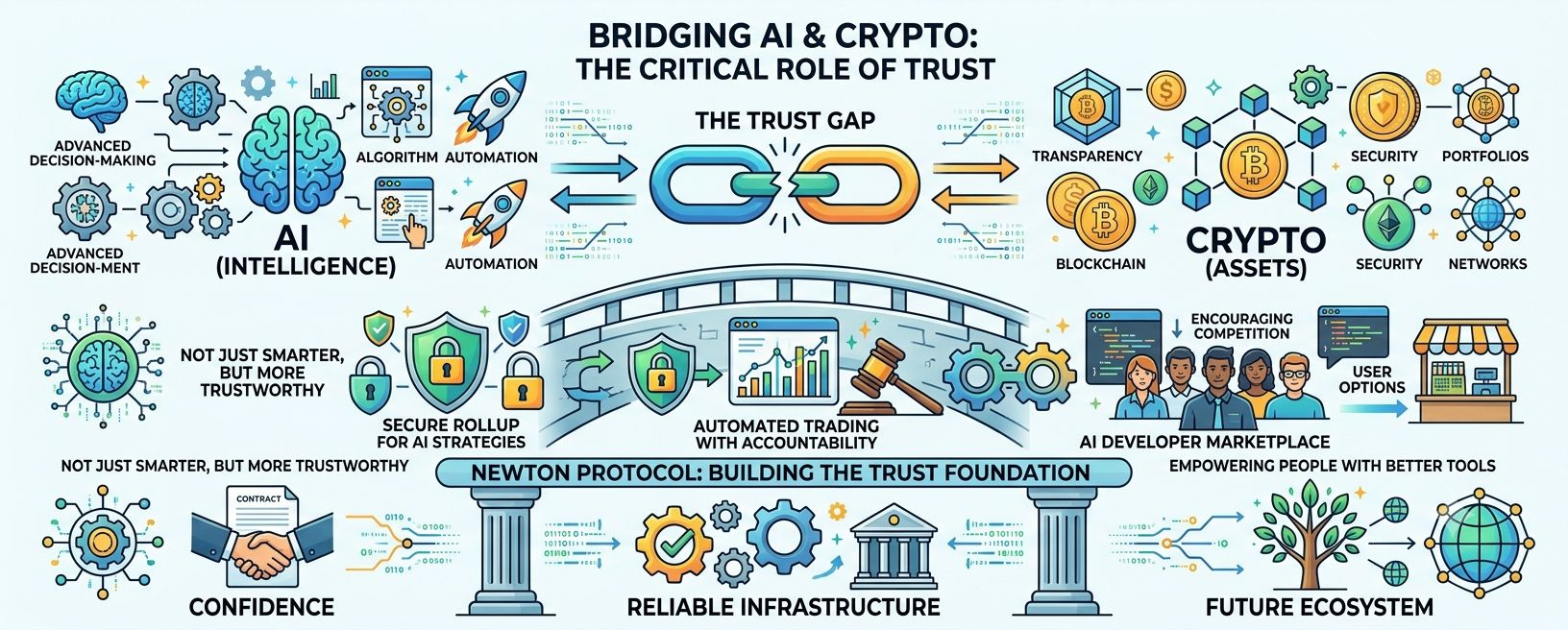
That was the reason Newton Protocol caught my attention. It isn't trying to convince everyone that AI is powerful. Most traders already accept that. The interesting part is its focus on creating a secure rollup where AI driven strategies can operate with stronger verification instead of behaving like a complete black box.
The idea sounds practical because automation keeps expanding across crypto. More people are managing dashboards instead of placing every order manually. Data comes from everywhere. Markets never stop. AI can help process that information, but if nobody understands or verifies its actions, confidence becomes difficult to build.
Another part I found interesting is the marketplace for AI developers. Different builders creating different strategies sounds healthier than relying on one closed system. Crypto has always been strongest when many people can contribute instead of depending on a single source. Maybe that principle matters just as much for AI.
I also kept thinking about accountability. Everyone talks about models becoming smarter, but very few conversations focus on responsibility. If an automated strategy performs well, that's great. If it fails, users should still have a way to understand what happened instead of simply accepting that the algorithm made a mistake.
One concept that stood out to me was zkPermissions. The name sounds technical, but the idea behind it feels surprisingly relatable. Verification before execution. AI doesn't just act because it can. There are permissions and controls involved before actions happen. That feels much closer to how financial systems probably should work.
Sometimes I wonder if we're slowly moving toward a future where reputation matters as much as raw performance. Imagine AI strategies building track records that people can evaluate instead of blindly trusting anonymous claims. That seems healthier than chasing whichever model promises the highest returns this week.
Of course, none of this guarantees success. Infrastructure projects often take time before their value becomes obvious. Markets usually pay attention to flashy applications first. The quieter layers underneath tend to get noticed much later. Maybe that's exactly why these conversations are becoming more interesting.
Crypto has always been about removing unnecessary trust between people. Now AI introduces a different challenge. We aren't just trusting another person anymore. We're trusting software that can think, adapt, and execute. That changes the discussion completely.
I'm still figuring out how all of this fits together. Maybe secure AI infrastructure becomes an essential part of the ecosystem. Maybe another approach solves the same problem better. I honestly don't know yet. But I do know that as AI becomes more involved in financial decisions, transparency starts feeling less like a nice feature and more like something people will quietly expect.
That's probably why I'll keep watching projects like Newton Protocol. Not because I think they've already answered every question, but because they're asking questions that seem increasingly difficult to ignore. And somehow I feel we're only at the beginning of that conversation.
#Newt @NewtonProtocol $NEWT
翻訳参照
#Newt @NewtonProtocol $NEWT I keep noticing how many traders already rely on AI in one way or another. Maybe without even thinking about it. Alerts, bots, filtered research, automated strategies. It made me wonder if the bigger question is not whether AI can make decisions but whether we can actually trust how those decisions are made. Newton Protocol NEWT caught my attention because it seems focused on that missing piece. Instead of treating AI like a mysterious black box, it is building a secure rollup where AI driven strategies can run with more transparency while also creating a marketplace for AI developers. I remember when automated trading felt strange at first. Handing part of the process to software was already a big step. Letting AI handle more responsibility feels like another level entirely. Maybe I am overthinking it but trust feels more valuable than speed now. Markets already move faster than most people can react. What matters is understanding why an action happened and whether it can be verified. If AI is going to play a larger role in crypto, I think accountability has to grow alongside it. Otherwise confidence disappears the moment something unexpected happens. I am still unsure how this idea will evolve or how quickly people will care about verification instead of pure performance. Maybe that shift takes longer than expected. Still I find myself paying more attention to projects solving practical problems instead of chasing narratives. That curiosity keeps pulling me back to NEWT and I have a feeling this conversation around trusted AI is only getting started. {spot}(NEWTUSDT)
#Newt @NewtonProtocol $NEWT
I keep noticing how many traders already rely on AI in one way or another. Maybe without even thinking about it. Alerts, bots, filtered research, automated strategies. It made me wonder if the bigger question is not whether AI can make decisions but whether we can actually trust how those decisions are made.

Newton Protocol NEWT caught my attention because it seems focused on that missing piece. Instead of treating AI like a mysterious black box, it is building a secure rollup where AI driven strategies can run with more transparency while also creating a marketplace for AI developers. I remember when automated trading felt strange at first. Handing part of the process to software was already a big step. Letting AI handle more responsibility feels like another level entirely.

Maybe I am overthinking it but trust feels more valuable than speed now. Markets already move faster than most people can react. What matters is understanding why an action happened and whether it can be verified. If AI is going to play a larger role in crypto, I think accountability has to grow alongside it. Otherwise confidence disappears the moment something unexpected happens.

I am still unsure how this idea will evolve or how quickly people will care about verification instead of pure performance. Maybe that shift takes longer than expected. Still I find myself paying more attention to projects solving practical problems instead of chasing narratives. That curiosity keeps pulling me back to NEWT and I have a feeling this conversation around trusted AI is only getting started.
記事
翻訳参照
Trust Is Becoming the Most Valuable Part of AI in CryptoThe other morning I was paying a few bills on my phone while drinking coffee. It hit me how many decisions I already leave to technology without thinking much about it. My banking app reminds me about payments, maps tell me the fastest route, and shopping apps somehow know what I'll probably buy next. Little by little, I've become comfortable letting software make small decisions for me because it usually works. That made me wonder if crypto is heading down the same road. For years I've made my own trading decisions. I would open charts, read updates, compare different opinions, and finally decide whether to buy or wait. These days the conversation feels different. More people are experimenting with AI tools, automated strategies, and trading bots that can react much faster than any person ever could. The speed is impressive, but I've always had one question in the back of my mind. If an AI is making decisions with my assets, how do I actually know why it did something? That question matters more to me than whether it's a little faster than everyone else. That's why Newton Protocol caught my attention. What I find interesting isn't simply that it combines AI and crypto. We've already seen plenty of projects talk about artificial intelligence. Newton Protocol is trying to build a secure rollup designed for AI-driven strategies, automated trading, and a marketplace where developers can create and share AI applications. To me, that's a more practical direction because it focuses on creating an environment where automation can operate with stronger security and transparency. I think we're reaching a point where automation isn't something only professional traders use anymore. Even regular crypto users are becoming comfortable with tools that monitor prices, execute trades, or manage positions automatically. The problem is that convenience shouldn't come at the cost of trust. I've seen people hesitate before using trading bots because they don't fully understand what happens after they press the start button. Some worry about hidden risks. Others simply don't want to hand complete control to software that feels like a black box. I can relate to that feeling because crypto has always been about having ownership over your assets. That's where infrastructure becomes important. A secure foundation gives developers a place to build AI strategies while giving users more confidence that those systems operate within a trusted environment. It shifts the conversation away from flashy promises and toward reliability, which is something this industry could always use more of. Another part that stands out to me is the idea of a marketplace for AI developers. Good ideas shouldn't stay locked inside a single company or platform. If developers can build useful AI tools and users can choose solutions that match their own needs, the entire ecosystem becomes more open and competitive. That's healthier than depending on one system to do everything. Of course, technology alone won't solve every problem. Markets are unpredictable, and no AI can remove risk from investing. I think some people still expect automation to guarantee profits, but crypto has never worked that way. Smart tools can improve decision-making, yet they're still operating in markets filled with uncertainty. What excites me is the possibility that AI eventually becomes something users can understand instead of simply trusting without question. When people feel confident about the systems they're using, they're usually more willing to explore new ideas. That confidence could encourage broader adoption among people who have been curious about crypto but hesitant to rely on automation. I also think projects like Newton Protocol show how the conversation around AI is maturing. Not long ago, simply adding AI to a project description was enough to attract attention. Now users are asking tougher questions about security, transparency, and how these systems actually work. That's a positive change because stronger standards usually lead to stronger ecosystems. Looking ahead, I don't believe the future of crypto will be defined only by faster transactions or smarter algorithms. I think it'll also be shaped by whether people can trust the technology that's making decisions on their behalf. If AI is going to become part of everyday crypto activity, then building secure and dependable infrastructure may end up being just as important as building intelligent models. For me, that's what makes Newton Protocol worth watching. It's less about chasing the latest trend and more about thinking carefully about how AI and crypto can work together in a way that everyday users can actually feel comfortable using. If that balance can be achieved, the next generation of crypto tools might not just be more powerful. They could also become something people genuinely trust as part of their everyday digital lives. #Newt @NewtonProtocol $NEWT {spot}(NEWTUSDT)

Trust Is Becoming the Most Valuable Part of AI in Crypto

The other morning I was paying a few bills on my phone while drinking coffee. It hit me how many decisions I already leave to technology without thinking much about it. My banking app reminds me about payments, maps tell me the fastest route, and shopping apps somehow know what I'll probably buy next. Little by little, I've become comfortable letting software make small decisions for me because it usually works.
That made me wonder if crypto is heading down the same road.
For years I've made my own trading decisions. I would open charts, read updates, compare different opinions, and finally decide whether to buy or wait. These days the conversation feels different. More people are experimenting with AI tools, automated strategies, and trading bots that can react much faster than any person ever could.
The speed is impressive, but I've always had one question in the back of my mind. If an AI is making decisions with my assets, how do I actually know why it did something? That question matters more to me than whether it's a little faster than everyone else.
That's why Newton Protocol caught my attention.
What I find interesting isn't simply that it combines AI and crypto. We've already seen plenty of projects talk about artificial intelligence. Newton Protocol is trying to build a secure rollup designed for AI-driven strategies, automated trading, and a marketplace where developers can create and share AI applications. To me, that's a more practical direction because it focuses on creating an environment where automation can operate with stronger security and transparency.
I think we're reaching a point where automation isn't something only professional traders use anymore. Even regular crypto users are becoming comfortable with tools that monitor prices, execute trades, or manage positions automatically. The problem is that convenience shouldn't come at the cost of trust.
I've seen people hesitate before using trading bots because they don't fully understand what happens after they press the start button. Some worry about hidden risks. Others simply don't want to hand complete control to software that feels like a black box. I can relate to that feeling because crypto has always been about having ownership over your assets.
That's where infrastructure becomes important. A secure foundation gives developers a place to build AI strategies while giving users more confidence that those systems operate within a trusted environment. It shifts the conversation away from flashy promises and toward reliability, which is something this industry could always use more of.
Another part that stands out to me is the idea of a marketplace for AI developers. Good ideas shouldn't stay locked inside a single company or platform. If developers can build useful AI tools and users can choose solutions that match their own needs, the entire ecosystem becomes more open and competitive. That's healthier than depending on one system to do everything.
Of course, technology alone won't solve every problem. Markets are unpredictable, and no AI can remove risk from investing. I think some people still expect automation to guarantee profits, but crypto has never worked that way. Smart tools can improve decision-making, yet they're still operating in markets filled with uncertainty.
What excites me is the possibility that AI eventually becomes something users can understand instead of simply trusting without question. When people feel confident about the systems they're using, they're usually more willing to explore new ideas. That confidence could encourage broader adoption among people who have been curious about crypto but hesitant to rely on automation.
I also think projects like Newton Protocol show how the conversation around AI is maturing. Not long ago, simply adding AI to a project description was enough to attract attention. Now users are asking tougher questions about security, transparency, and how these systems actually work. That's a positive change because stronger standards usually lead to stronger ecosystems.
Looking ahead, I don't believe the future of crypto will be defined only by faster transactions or smarter algorithms. I think it'll also be shaped by whether people can trust the technology that's making decisions on their behalf. If AI is going to become part of everyday crypto activity, then building secure and dependable infrastructure may end up being just as important as building intelligent models.
For me, that's what makes Newton Protocol worth watching. It's less about chasing the latest trend and more about thinking carefully about how AI and crypto can work together in a way that everyday users can actually feel comfortable using. If that balance can be achieved, the next generation of crypto tools might not just be more powerful. They could also become something people genuinely trust as part of their everyday digital lives.
#Newt @NewtonProtocol $NEWT
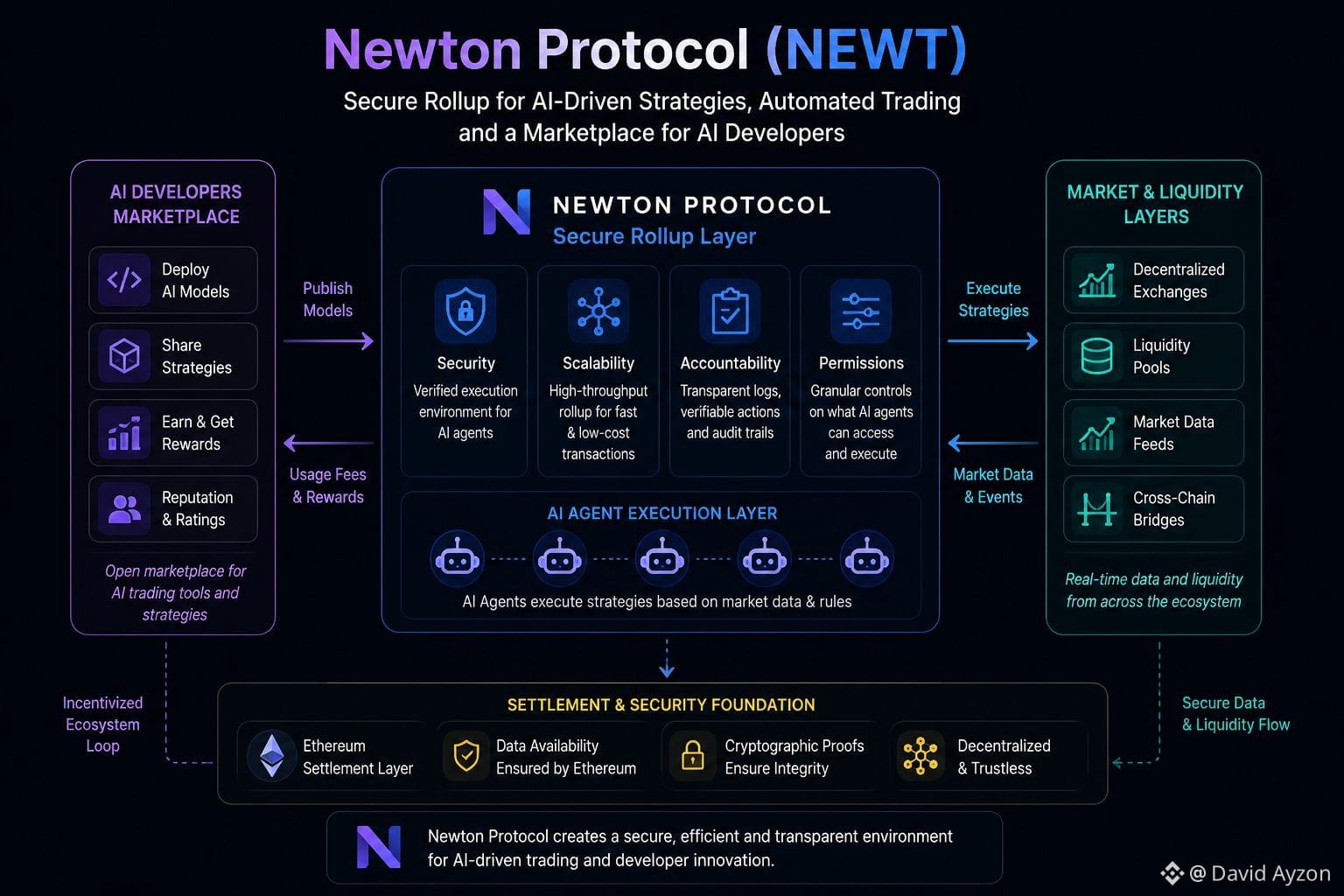
#Newt @NewtonProtocol $NEWT 昨日、スマホで昔のアプリを整理していたら、日常生活をもっと楽にするために、どれほど多くのツールを使っているのかに気づきました。私たちはすでに、時間を整理したり、支払いを処理したり、さらに何を見るべきかを勧めてくれたりするためにテクノロジーに依存しています。では、暗号資産の管理も、いずれ同じくらい手軽になるのではないでしょうか。 そんな考えが、私をNewton Protocolへ導きました。AIをより強力にすることだけに注目するのではなく、別の問いを投げかけているように思えます。ブラックボックスにすべてを渡してしまう感覚にならずに、暗号資産の世界でAIを自信をもって使うにはどうすればいいのか? 取引がより自動化されていくほど、スピードだけでなく信頼が重要になると私は考えています。理由が分からないまま、AIに資産の売買を任せたくはありません。AIの戦略を安全に運用できる環境は、派手な物語の一つというより、現実的な一歩のように感じます。 また、AI開発者に対して、自分の成果を作り、共有できる場を与えるというアイデアにも興味があります。より良いツールは、たいていより良い発想を引き寄せます。そしてそれは、経験豊富なトレーダーから、学ぼうとしている初心者まで、誰にとっても良い影響につながるかもしれません。 私にとって、次の暗号資産の段階は、単により速い技術だけの話ではありません。人々が毎日安心して使えるような仕組みを作ることです。Newton Protocolのようなプロジェクトが、AIをより透明で信頼できるものにできるなら、デジタル資産との付き合い方を、ひっそりと作り変えていく可能性があります。 {spot}(NEWTUSDT)
#Newt @NewtonProtocol $NEWT
昨日、スマホで昔のアプリを整理していたら、日常生活をもっと楽にするために、どれほど多くのツールを使っているのかに気づきました。私たちはすでに、時間を整理したり、支払いを処理したり、さらに何を見るべきかを勧めてくれたりするためにテクノロジーに依存しています。では、暗号資産の管理も、いずれ同じくらい手軽になるのではないでしょうか。

そんな考えが、私をNewton Protocolへ導きました。AIをより強力にすることだけに注目するのではなく、別の問いを投げかけているように思えます。ブラックボックスにすべてを渡してしまう感覚にならずに、暗号資産の世界でAIを自信をもって使うにはどうすればいいのか?

取引がより自動化されていくほど、スピードだけでなく信頼が重要になると私は考えています。理由が分からないまま、AIに資産の売買を任せたくはありません。AIの戦略を安全に運用できる環境は、派手な物語の一つというより、現実的な一歩のように感じます。

また、AI開発者に対して、自分の成果を作り、共有できる場を与えるというアイデアにも興味があります。より良いツールは、たいていより良い発想を引き寄せます。そしてそれは、経験豊富なトレーダーから、学ぼうとしている初心者まで、誰にとっても良い影響につながるかもしれません。

私にとって、次の暗号資産の段階は、単により速い技術だけの話ではありません。人々が毎日安心して使えるような仕組みを作ることです。Newton Protocolのようなプロジェクトが、AIをより透明で信頼できるものにできるなら、デジタル資産との付き合い方を、ひっそりと作り変えていく可能性があります。
記事
翻訳参照
Trust Could Be the Missing Piece Between AI and CryptoA few evenings ago, I was sitting on my couch scrolling through my crypto portfolio while waiting for my food delivery. Prices were moving, notifications kept popping up, and I caught myself wondering how impossible it is to keep up with everything manually. The market never really sleeps, and neither does the flow of information. That's probably why AI is becoming such a big part of crypto conversations. Still, I've realized that my biggest question isn't whether AI can make better decisions than I can. It's whether I can actually trust those decisions. That thought is what drew me toward Newton Protocol. Instead of simply promoting AI-powered trading, it aims to build a secure rollup for AI-driven strategies, automated trading, and a marketplace where AI developers can create and share their work. To me, that's a more meaningful approach because it focuses on the foundation rather than just the features. Most crypto users already rely on some form of automation. We set price alerts, schedule recurring purchases, use portfolio trackers, and sometimes even let bots handle simple tasks. AI feels like the next natural step, but it also raises new questions. If software is making choices with our assets, we need more than speed and efficiency. We need confidence that those actions happen in a secure and transparent way. That's why Newton Protocol feels different to me. It isn't just about making AI smarter. It's about creating an environment where AI can operate with stronger security and accountability. As the crypto space becomes more automated, I think those qualities will matter just as much as performance. The marketplace for AI developers is another idea I find interesting. Crypto has always rewarded builders who solve real problems. Giving developers a place to create and improve AI strategies could encourage healthy competition while giving users more options instead of relying on a single platform or service. I've learned over the years that the biggest winners in crypto aren't always the projects making the loudest promises. They're often the ones quietly building infrastructure that other people eventually depend on. Those projects may not dominate headlines every day, but they usually become more valuable as the ecosystem grows. Of course, every project still has to prove itself. Good ideas need adoption, active development, and real-world use before they can make a lasting impact. That's true for Newton Protocol as well. The vision is promising, but execution will always matter more than hype. Personally, I think the future of crypto isn't about replacing people with AI. It's about giving people better tools without taking away control or trust. If AI is going to help manage strategies and interact with blockchain networks, users should be able to feel confident about how those decisions are made. Newton Protocol made me think about AI from a different angle. Instead of asking how powerful AI can become, I'm asking how trustworthy it can be. If the industry can answer that question, the next generation of crypto won't just be more intelligent. It'll be something people feel comfortable relying on every day. #Newt @NewtonProtocol $NEWT {spot}(NEWTUSDT)

Trust Could Be the Missing Piece Between AI and Crypto

A few evenings ago, I was sitting on my couch scrolling through my crypto portfolio while waiting for my food delivery. Prices were moving, notifications kept popping up, and I caught myself wondering how impossible it is to keep up with everything manually. The market never really sleeps, and neither does the flow of information. That's probably why AI is becoming such a big part of crypto conversations. Still, I've realized that my biggest question isn't whether AI can make better decisions than I can. It's whether I can actually trust those decisions.
That thought is what drew me toward Newton Protocol. Instead of simply promoting AI-powered trading, it aims to build a secure rollup for AI-driven strategies, automated trading, and a marketplace where AI developers can create and share their work. To me, that's a more meaningful approach because it focuses on the foundation rather than just the features.
Most crypto users already rely on some form of automation. We set price alerts, schedule recurring purchases, use portfolio trackers, and sometimes even let bots handle simple tasks. AI feels like the next natural step, but it also raises new questions. If software is making choices with our assets, we need more than speed and efficiency. We need confidence that those actions happen in a secure and transparent way.
That's why Newton Protocol feels different to me. It isn't just about making AI smarter. It's about creating an environment where AI can operate with stronger security and accountability. As the crypto space becomes more automated, I think those qualities will matter just as much as performance.
The marketplace for AI developers is another idea I find interesting. Crypto has always rewarded builders who solve real problems. Giving developers a place to create and improve AI strategies could encourage healthy competition while giving users more options instead of relying on a single platform or service.
I've learned over the years that the biggest winners in crypto aren't always the projects making the loudest promises. They're often the ones quietly building infrastructure that other people eventually depend on. Those projects may not dominate headlines every day, but they usually become more valuable as the ecosystem grows.
Of course, every project still has to prove itself. Good ideas need adoption, active development, and real-world use before they can make a lasting impact. That's true for Newton Protocol as well. The vision is promising, but execution will always matter more than hype.
Personally, I think the future of crypto isn't about replacing people with AI. It's about giving people better tools without taking away control or trust. If AI is going to help manage strategies and interact with blockchain networks, users should be able to feel confident about how those decisions are made.
Newton Protocol made me think about AI from a different angle. Instead of asking how powerful AI can become, I'm asking how trustworthy it can be. If the industry can answer that question, the next generation of crypto won't just be more intelligent. It'll be something people feel comfortable relying on every day.
#Newt @NewtonProtocol $NEWT
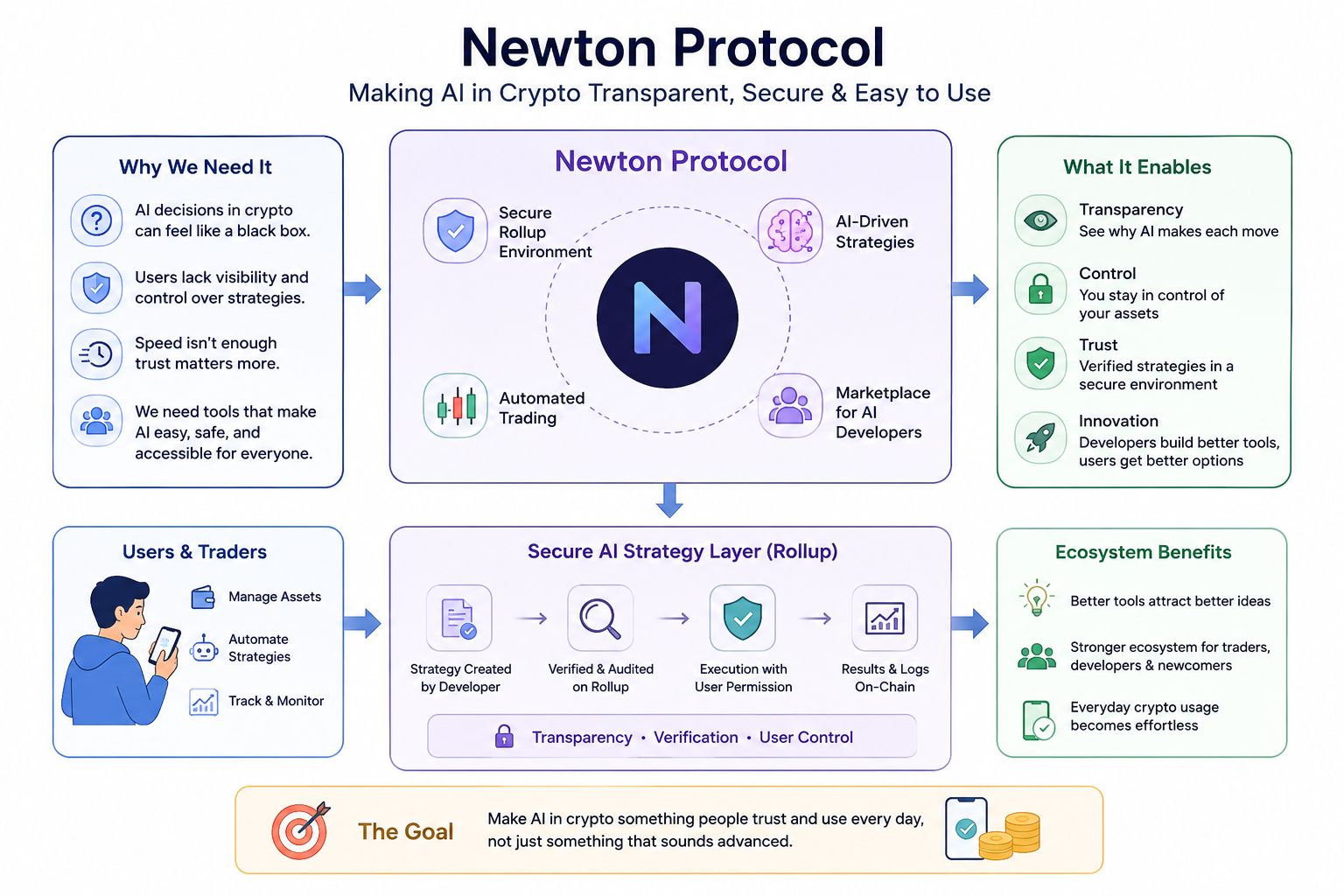
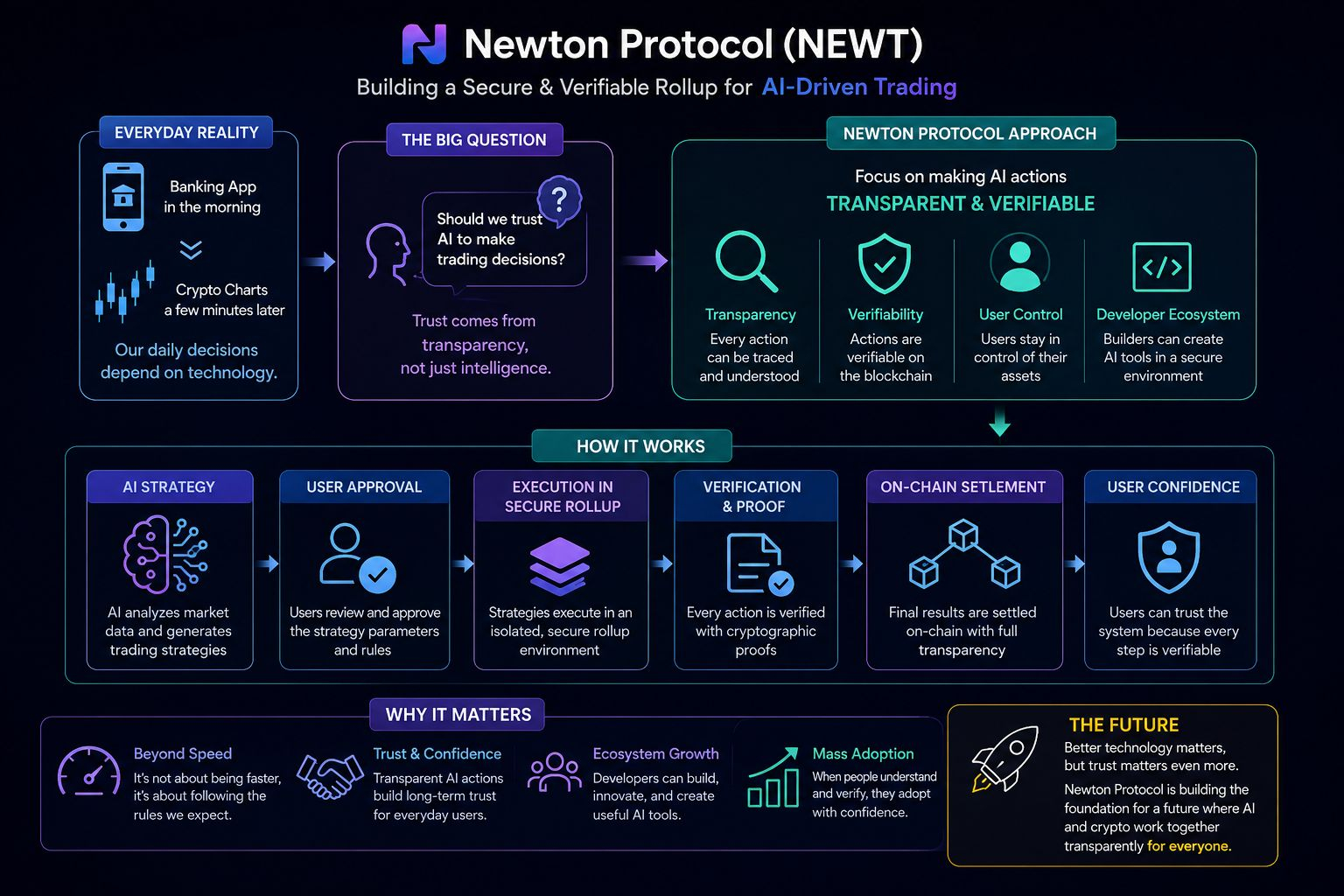
#Newt @NewtonProtocol $NEWT 今朝、コーヒーを飲む前に銀行アプリを確認しようとスマホのロックを解除したのですが、数分後にはもう暗号資産のチャートを見ていました。私たちの毎日の意思決定のどれほどが、いまやテクノロジーに左右されているのかを実感しました。私たちは毎日、アプリにお金を預けているので、取引判断をAIに任せることにも信頼を置くべきかどうかを考えるのは自然なことです。 その考えがきっかけで、Newton Protocolに注目しました。AIをただ賢くすることだけに焦点を当てるのではなく、AIの行動をより透明にし、検証可能にすることに力を入れているように見えます。理解できないシステムにコントロールを渡したくないのは誰しも同じなので、これは重要な転換だと思います。 より多くのトレーダーが自動化やボット、AIツールを使うようになると、最大の課題はもはやスピードではありません。すべての行動が、私たちが期待するルールに従っているかを知ることです。AI戦略向けに設計されたセキュアなロールアップは、ユーザーの信頼を高めると同時に、開発者が同じエコシステム内で役に立つツールを作る機会にもつながります。 私にとって、それが暗号資産が進むべき方向性です。より良いテクノロジーは大切ですが、さらに重要なのは信頼です。Newtonのようなプロトコルが、ユーザーが自分の資産でAIが何をしているのかを理解し検証するのを助けてくれるなら、一般の人々は暗号資産の次の世代を受け入れることに、より安心感を持てるかもしれません。私は、その実現していく未来を心から楽しみにしています。 {future}(NEWTUSDT)
#Newt @NewtonProtocol $NEWT

今朝、コーヒーを飲む前に銀行アプリを確認しようとスマホのロックを解除したのですが、数分後にはもう暗号資産のチャートを見ていました。私たちの毎日の意思決定のどれほどが、いまやテクノロジーに左右されているのかを実感しました。私たちは毎日、アプリにお金を預けているので、取引判断をAIに任せることにも信頼を置くべきかどうかを考えるのは自然なことです。

その考えがきっかけで、Newton Protocolに注目しました。AIをただ賢くすることだけに焦点を当てるのではなく、AIの行動をより透明にし、検証可能にすることに力を入れているように見えます。理解できないシステムにコントロールを渡したくないのは誰しも同じなので、これは重要な転換だと思います。

より多くのトレーダーが自動化やボット、AIツールを使うようになると、最大の課題はもはやスピードではありません。すべての行動が、私たちが期待するルールに従っているかを知ることです。AI戦略向けに設計されたセキュアなロールアップは、ユーザーの信頼を高めると同時に、開発者が同じエコシステム内で役に立つツールを作る機会にもつながります。

私にとって、それが暗号資産が進むべき方向性です。より良いテクノロジーは大切ですが、さらに重要なのは信頼です。Newtonのようなプロトコルが、ユーザーが自分の資産でAIが何をしているのかを理解し検証するのを助けてくれるなら、一般の人々は暗号資産の次の世代を受け入れることに、より安心感を持てるかもしれません。私は、その実現していく未来を心から楽しみにしています。
ログインして、さらにコンテンツを読む
厳選トピックで世界の暗号資産トレーダーの仲間入り
⚡️ 暗号資産に関する最新かつ有益な情報が見つかります。
💬 世界最大の暗号資産取引所から信頼されています。
👍 認証を受けたクリエイターから、有益なインサイトを得られます。
メール / 電話番号
サイトマップ
Cookieの設定
プラットフォーム利用規約