
Nix
839 投稿
Nix
報告
ユーザーをブロック
FACTS: The money in your bank is not yours. if you can't handle this, learn or leave. #Bitcoin ain't for tourists.
227 フォロー
445 フォロワー
902 いいね
投稿
すべて
引用
動画
PINNED
·
--
現在存在するすべてのUSDTトークンは、Tetherの中央集権的な管理下にあり、Tetherは地球上のあらゆるアドレスにあるトークンをいつでも永久に削除できます。
企業としてのTetherは、トークンのスマートコントラクトに対する管理権限を保持しています。
Tetherがあなたのトークンを管理する主な方法:
アドレスのブラックリスト登録と凍結:EthereumやTronなどのネットワーク上にあるTetherのスマートコントラクトには、特定のウォレットアドレスをブラックリストに登録できる機能が組み込まれています。あなたのアドレスがブラックリストに登録されると、USDT残高は表示されたままですが、どこにも送金、取引、移転できなくなります。
トークンの破棄/再発行:裁判所命令や大手取引所のハッキングなど、特定の執行事例では、Tetherは凍結されたアドレスにあるUSDTをバーン(破棄)し、同等の資金を法執行機関や被害者に再発行できます。
法定通貨への償還管理:USDTと実際の米ドルとの最終的な交換の仕組みはTetherが管理しています。Tetherは厳格な顧客確認(KYC)およびマネーロンダリング対策(AML)方針を設けているため、法定通貨への直接償還を拒否することができます。
スマートコントラクトを通じて、Tetherは「destroyBlackFunds」と呼ばれる機能を備えています。単に資金を凍結するだけではなく、特定のアドレスからトークンを消去(バーン)する完全な管理能力を持っています。
・あなた自身の暗号資産ウォレット(秘密鍵を持つのがあなただけのウォレット)にUSDTを保有していても、Ethereum、Tron、Solanaなどのブロックチェーン上でUSDTを動かすスマートコントラクトのコードは、引き続きTetherが所有・管理しています。
トークンコントラクトに対する世界規模の権限:TetherはUSDTのスマートコントラクトに対する管理者用のマスターキーを所有しているため、地球上のあらゆるアドレスにあるUSDTをいつでも凍結または削除する技術的能力を持っています。
累積実績:Tetherはすでに9,000を超えるウォレットアドレスをブラックリストに登録し、数十億ドル相当のUSDTを凍結しています。
自分を守る方法
完全な金融検閲耐性を目指すのであれば、Bitcoinのようなネイティブ暗号資産には、トークンレベルであなたのアドレスを凍結できる中央管理主体は存在しません。
878
·
--
翻訳参照
$BTC When you introduce a mathematically fixed supply, you aren't just solving an economic equation—you are engineering sovereignty and freedom from institutional control.
Money is fundamentally a claim on human time and energy. How that money is structured determines who holds the power. Across the financial spectrum, different assets offer vastly different degrees of freedom:
1. Fiat Currencies: Designed for Control
Fiat money is permissioned money.
The Control Mechanism: Because it is infinitely printable, central banks can dilute your purchasing power at will through inflation (a hidden tax without representation).
The Surveillance & Censorship: Commercial banks act as gatekeepers. They can freeze accounts, deny transactions, enforce capital controls, and comply with state surveillance mandates. You do not truly own fiat; you rent the right to use it within a closed perimeter managed by authorities.
2. Gold: Physical Sovereignty (With Physical Limitations)
Gold has served as humanity's historical escape hatch from fiat debasement because no government can print it. It offers counterparty independence. Furthermore, history shows that when governments feel threatened, they target physical gold—such as the U.S. government issuing Executive Order 6102 in 1933, making private gold ownership illegal and forcing citizens to hand it over to the Federal Reserve.
3. Bitcoin & Cryptography: Absolute Digital Sovereignty
Bitcoin merges a fixed mathematical supply with public-key cryptography, creating a new paradigm of freedom that has never existed before in human history.
Self-Custody: Through private keys, you hold absolute ownership. Your wealth is secured entirely by mathematics, not by trust in a bank, a corporation, or a sovereign state.
Censorship Resistance: No court order, government edict, or corporate policy can prevent a transaction or freeze a self-custodied wallet. It is entirely permissionless.
Portability: You can memorize a 12-word seed phrase and carry millions of dollars across international borders in your head, completely bypassing physical
169
·
--
翻訳参照
$BTC In the entire global financial ecosystem, Bitcoin is the only major asset with a mathematically absolute, immutable fixed supply.
The Hard Cap: Its source code enforces a strict, hard-coded limit of 21 million bitcoins that will ever exist.
Inelasticity Beyond Physics: Unlike gold, where a massive price surge could theoretically prompt a gold-mining operation on an asteroid or deep-sea trench decades from now, Bitcoin's supply cap cannot be altered by higher prices. If the price goes to $1 million or $10 million per coin, the protocol will still only issue the exact same scheduled amount. The code is law.
Supply Halving: Rather than responding to demand by increasing production, Bitcoin’s issuance rate automatically cuts in half every four years (the halving), making its supply schedule completely independent of human desire, market demand, or central bank policy.
Summary
Physical Commodities: Flexible supply (driven by price and extraction economics).
Fiat Currencies: Infinite supply (expanded at the whim of central banks).
Bitcoin: Strictly fixed supply (governed by math and cryptography).
135
·
--
主要通貨における紙幣印刷の概算コストの比較です
最安(1枚あたり):少額の米ドル紙幣やインドルピー紙幣は、絶対コストとしても最も低い部類です。
• ユーロ紙幣:平均で約10ユーロセント。米ドル1ドルよりは高いものの、額面に対しては依然として非常に低い水準です。
米ドル $1/$2
4.1セント
米ドル $100
11.3セント
インド 500
$2.29(約2.7米セント*)
最近
インド $200
2.37
ユーロ(平均)
約10ユーロセント
ユーロ €5
約5セント
ユーロ €100-€200
12-16セント
高め
英 £5 / £10 / £20
(ポリマー)
約7-8ペンス
銀行 o
豪州(平均)
約32オーストラリアセント
Note P
カナダのポリマー紙幣
約23-27カナダセント
78
·
--
一部該当
$ZEC ZEC ロシアがプライバシーコインのプロ投資家を締め出し $516 まで下落
Zcashは2026年7月22日時点で$516.54で取引されており、過去24時間で5.43%下落、過去1週間で6.54%下落している。7月上旬に見られた$573〜600近辺の高値から急反落している。下落は、ロシアの国家ドゥーマが、2026年9月1日に施行予定のより広範な暗号資産法の一環として、ZECのようなプライバシーコインの購入からプロ投資家を禁じる動きに関するニュースを受けている。Zcashが今年でもっとも重要なテクニカルイベントである、7月28日に活性化が予定されているIronwoodネットワークのアップグレードを間近に控える中で、これはこの分野に向かい風となる。
Zcashは2026年7月22日時点で$516.54で取引されており、過去24時間で5.43%下落、過去1週間で6.54%下落している。7月上旬に見られた$573〜600近辺の高値から急反落している。下落は、ロシアの国家ドゥーマが、2026年9月1日に施行予定のより広範な暗号資産法の一環として、ZECのようなプライバシーコインの購入からプロ投資家を禁じる動きに関するニュースを受けている。Zcashが今年でもっとも重要なテクニカルイベントである、7月28日に活性化が予定されているIronwoodネットワークのアップグレードを間近に控える中で、これはこの分野に向かい風となる。
1
1
722
·
--
一部該当
$XAUT "金と銀はたった1日で約7,000億ドル($700B)の時価総額を失いました。流動性が消えると、伝統的な安全資産でさえも大きな打撃を受け得るのだという、痛烈な教訓です,"
$XAUT "金と銀はたった1日で約7,000億ドル($700B)の時価総額を失いました。流動性が消えると、伝統的な安全資産でさえも大きな打撃を受け得るのだという、痛烈な教訓です,"
1
1
1.8k
·
--
弱気相場
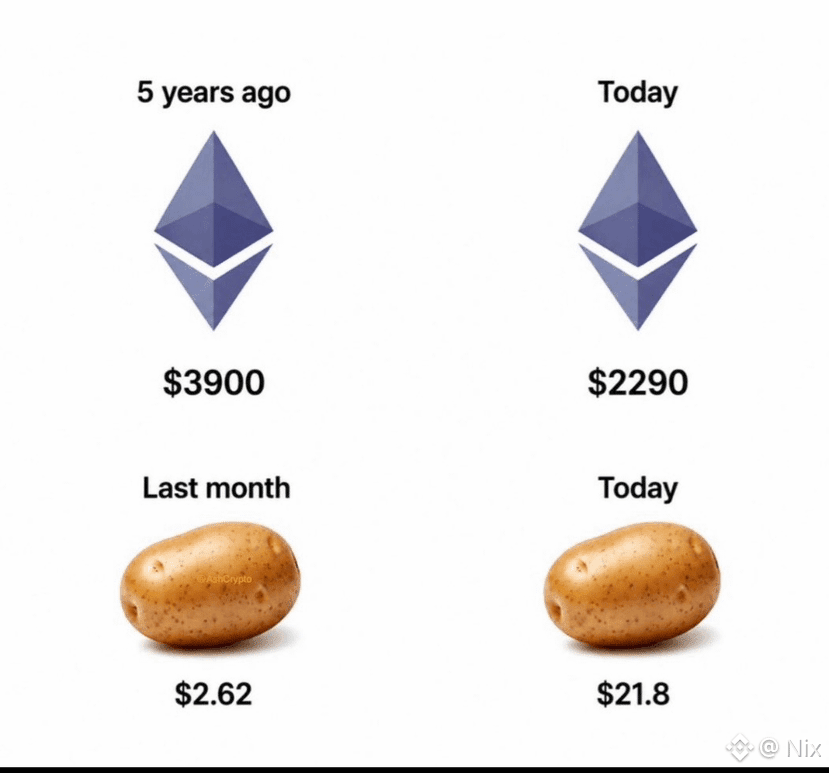
$ETH $125,000を$ETH に5年前に投資した結果、現在の価値は$73,400です。
$125,000を1ヶ月前にジャガイモに投資した結果、現在の価値は$1,000,000です。
ETHはジャガイモにパフォーマンスで負けています。
$ETH $125,000を$ETH に5年前に投資した結果、現在の価値は$73,400です。
$125,000を1ヶ月前にジャガイモに投資した結果、現在の価値は$1,000,000です。
ETHはジャガイモにパフォーマンスで負けています。
$125,000を1ヶ月前にジャガイモに投資した結果、現在の価値は$1,000,000です。
ETHはジャガイモにパフォーマンスで負けています。
78
·
--
$BTC これらは、2026年Q3までに大口トレーダーが賭けている3つの$BTC レベルです:
$100,000: コールの名目価値が$287,000,000
$60,000: プットの名目価値が$266,000,000
$50,000: プットの名目価値が$252,000,000
ビットコインは最初にどこに行くと思いますか?
$BTC これらは、2026年Q3までに大口トレーダーが賭けている3つの$BTC レベルです:
$100,000: コールの名目価値が$287,000,000
$60,000: プットの名目価値が$266,000,000
$50,000: プットの名目価値が$252,000,000
ビットコインは最初にどこに行くと思いますか?
$100,000: コールの名目価値が$287,000,000
$60,000: プットの名目価値が$266,000,000
$50,000: プットの名目価値が$252,000,000
ビットコインは最初にどこに行くと思いますか?
95
·
--
$XRP リップルのCTOが2600万XRPをビットコインに売却、リップルの株を持つ理由は「夜もぐっすり眠るため」
リップルのデイビッド・シュワルツは、直接的な暗号資産へのエクスポージャーを減らし、リスクを管理するために2600万の同社のクリプトトークンをビットコインに売却したと述べた。
彼は保守的な戦略を好み、上昇を逃すリスクを受け入れて「夜もぐっすり眠るため」と語った。
4 これは、リップルが先週エスクローから10億トークンを解除したことに続いている。
$XRP リップルのCTOが2600万XRPをビットコインに売却、リップルの株を持つ理由は「夜もぐっすり眠るため」
リップルのデイビッド・シュワルツは、直接的な暗号資産へのエクスポージャーを減らし、リスクを管理するために2600万の同社のクリプトトークンをビットコインに売却したと述べた。
彼は保守的な戦略を好み、上昇を逃すリスクを受け入れて「夜もぐっすり眠るため」と語った。
4 これは、リップルが先週エスクローから10億トークンを解除したことに続いている。
リップルのデイビッド・シュワルツは、直接的な暗号資産へのエクスポージャーを減らし、リスクを管理するために2600万の同社のクリプトトークンをビットコインに売却したと述べた。
彼は保守的な戦略を好み、上昇を逃すリスクを受け入れて「夜もぐっすり眠るため」と語った。
4 これは、リップルが先週エスクローから10億トークンを解除したことに続いている。
137
·
--
「5月に売って去れ」というのは、クラシックな株式市場の格言だ。これがどういう意味で、なぜトレーダーたちがこれに従うのかを見てみよう。
フレーズの起源
完全な言い回しは、「5月に売って去れ、セント・レジャー・デーに戻ってこい」(9月に行われるイギリスの競馬イベント)だ。これは、5月に株を売り、夏の間は市場から離れ、秋に戻ってくることを示唆している。
歴史的な根拠
この概念は観察された季節パターンに基づいている:
• 夏の弱さ:歴史的に、北半球の株式市場は5月から9月にかけてパフォーマンスが弱いことが多かった。
季節的な取引量:夏のバケーション期間中は取引量が減少し、薄い市場とボラティリティの増加を引き起こす可能性がある。
• 決算シーズン後:多くの決算シーズンは5月までに終わり、上昇のためのカタリストが減少する。
• 天候と心理:夏の休暇は機関投資家の取引活動と投資家の関与を減少させる。
2
143
·
--
$TAO Bittensorの共同創設者が謝罪、Covenant AIの退出が$TAO 崩壊を引き起こす
スティーブスは$TAO ホルダーに直接話しかけ、危機によって引き起こされた財政的および感情的な損害を認めました。彼はこの出来事を非常に個人的なものとして描写し、デアを以前の信頼できる同僚であり友人であると呼びました。彼の声明は率直で、企業的な言い訳がほとんどありませんでした。
$TAO Bittensorの共同創設者が謝罪、Covenant AIの退出が$TAO 崩壊を引き起こす
スティーブスは$TAO ホルダーに直接話しかけ、危機によって引き起こされた財政的および感情的な損害を認めました。彼はこの出来事を非常に個人的なものとして描写し、デアを以前の信頼できる同僚であり友人であると呼びました。彼の声明は率直で、企業的な言い訳がほとんどありませんでした。
スティーブスは$TAO ホルダーに直接話しかけ、危機によって引き起こされた財政的および感情的な損害を認めました。彼はこの出来事を非常に個人的なものとして描写し、デアを以前の信頼できる同僚であり友人であると呼びました。彼の声明は率直で、企業的な言い訳がほとんどありませんでした。
174
·
--
イランはビットコインで支払われたい。
面白い。
$XRPは銀行より速くない?
$SOLはVISAより速くない?
$ETHはプログラム可能で安くない?
$USDCは安定していて速くない?
おそらく「スピード」は単なるマーケティングだ。
おそらく「最終性」がお金(そして自由)に関して重要なのだ。
お金は、制裁されたり、検閲されたり、押収されたり、ネットワークの不具合があったり、発行者がウォレットをブラックリストに載せたり、取引所がそれらを上場廃止にしたりすると無価値だ。
イランは、信頼できる方法でお金を受け取れず、保持できず、将来使えないなら、お金がどれだけ速いかは気にしない。
それだけのことだ。
面白い。
$XRPは銀行より速くない?
$SOLはVISAより速くない?
$ETHはプログラム可能で安くない?
$USDCは安定していて速くない?
おそらく「スピード」は単なるマーケティングだ。
おそらく「最終性」がお金(そして自由)に関して重要なのだ。
お金は、制裁されたり、検閲されたり、押収されたり、ネットワークの不具合があったり、発行者がウォレットをブラックリストに載せたり、取引所がそれらを上場廃止にしたりすると無価値だ。
イランは、信頼できる方法でお金を受け取れず、保持できず、将来使えないなら、お金がどれだけ速いかは気にしない。
それだけのことだ。
1
199
·
--
弱気相場
$TAO Covenant AIがBittensorを離れ、創設者を中央集権的な制御で非難
TAO価格はさらに崩壊するのか?
Covenant AIの創設者サム・デアは、ビッテンソーの創設者ジェイコブ・スティーブスがネットワークを制御していると非難し、ガバナンスを「分散化の芝居」と引用しました。
ジェイコブ・スティーブスは三頭政治に対して実質的な支配を維持し、権限の意味のある移転に抵抗し、プロセスや合意なしに自らの判断で一方的に変更を展開する」とデアは述べました。
注目すべきは、分散型の許可不要なAIトレーニングはBittensorの特徴ではないということです。
Covenant AIの創設者サム・デアは、すべてのサブネット保有を売却し、実質的にBittensorをルギングしました。彼はこのウォレットに37,000以上のTAOトークンを保有していました。
お金を節約してください
1
335
·
--
$BTC 誰でもビットコインを所有できます
なぜなら(ドラムロール)…それは存在しないからです!
それを見ることも、触れることもできません。
それは批判であり、秘密の超能力でもあります。
この「存在しない」という逆説が実際にはビットコインの最大の強みです。
批判は明白です:もしそれを持てず、重さを量れず、感覚で確認できないなら、それはどうやって「本物」と言えるのでしょうか?これは懐疑心を助長します—ビットコインは物理的なお金やデジタルバンク残高(少なくとも制度的な裏付けがある)に慣れた人々には抽象的で、魔法のようで、詐欺的に見えます。
しかし、ここに超能力があります:
ビットコインは情報としてのみ存在します—分散型台帳として、暗号鍵として、ネットワークの合意として—それは物理的なお金が匹敵できない特性を持っています:
∙ 純粋なポータビリティ — プライベートキーで数十億を移動できます。国境も関税も金庫もありません。
∙ プログラム可能性 — 取引に直接条件付きロジックを組み込むことができます(これは金ではできません)。
∙ 透明性 — すべての取引は永続的に記録され、検証可能です。現金でそれを試してみてください。
押収に対する抵抗 — あなたの心の中にのみ存在するもの(あなたのシードフレーズ)を凍結したり押収したりすることはできません。政府はこれに苦労しています。
∙ 生産のボトルネックなし — プロトコル自体を超える採掘、精製、または鋳造の制約はありません。
∙ 許可不要の所有権 — 銀行口座、国のID、または制度的な許可は必要ありません。ネットワークはあなたが誰であるかを気にしません。
実体的な意味で「存在しない」という事実こそが、誰でもそれを所有できる理由です。それは純粋な数学と合意であり、鉱山や銀行インフラへの近接を報いる希少な物理的商品ではありません。
それが逆転です:理解を難しくする(無形性)が、民主化を促進する要因です。
1
24
·
--
弱気相場
$XRP 「ボタンを1つ押す → 1000億を作成 → 大部分を自分たち/会社に与える。」
すべてのコインは初日に存在しており、ほとんどが会社/創業者に直接渡されました。
XRPはどのように作られたか
2012年の中頃(6月)、XRP元帳(XRPL)が立ち上がったとき、コードは単に初期元帳状態で1000億XRPを一度に生成しました。マイニングもなく、徐々に発行されることもなく、時間をかけたプルーフ・オブ・ワークやプルーフ・オブ・ステークの配布もありませんでした。
• アーサー・ブリット(3人の元開発者の1人:シュワルツ、マッカレブ、ブリット)が、創世状態で全供給を生成するコードを書きました。
リップルは現在、全XRPの約32〜34%を管理しています。
これは、大規模に事前に割り当てられた資金を管理する企業の財務です。リップルが30%以上を保有している限り、中央集権化の認識は残ります。
1000億は立ち上げ時に作成されました(マイニングなし、徐々の配布なし)。
• 約80%がもともと会社/創業者に向けられました。
• 今日でも、リップルはネットで解除された部分をどうするかを決定します:
XRPは事前にマイニングされたトークンであり、リップル(会社)は供給の大部分に対して依然として重要なコントロールを行使しています。
詐欺トークン
133
ログインして、さらにコンテンツを読む
厳選トピックで世界の暗号資産トレーダーの仲間入り
⚡️ 暗号資産に関する最新かつ有益な情報が見つかります。
💬 世界最大の暗号資産取引所から信頼されています。
👍 認証を受けたクリエイターから、有益なインサイトを得られます。
メール / 電話番号