
Salvia XPSR
207 投稿

Salvia XPSR
報告
ユーザーをブロック
Bringing you the latest in crypto, gaming, and AI 🤖🔥 Stay ahead of the curve.
0 フォロー
14 フォロワー
10 いいね
投稿
·
--
翻訳参照
AI Has A Trust Problem 🤖
Space and Time might be sitting directly underneath one of AI's least-discussed bottlenecks.
Agents can make decisions incredibly quickly.
But what happens when the data feeding those decisions is wrong?
An autonomous financial agent can't simply shrug and say the database looked legitimate.
It needs verifiable inputs.
That's where Proof of SQL becomes interesting.
Space and Time can prove that a query was executed correctly against the committed data before an application acts on it.
Now imagine that across trading, lending, RWAs or automated treasury management.
$SUI is pushing toward increasingly sophisticated onchain applications.
$AVAX has also spent years building infrastructure for financial and institutional use cases.
More autonomous applications mean more decisions happening without humans checking every input.
To me, that makes verified data more valuable, not less.
AI can automate the decision.
Space and Time can help prove what the decision was based on.
#Altcoin Season#
AI Has A Trust Problem 🤖
Space and Time might be sitting directly underneath one of AI's least-discussed bottlenecks.
Agents can make decisions incredibly quickly.
But what happens when the data feeding those decisions is wrong?
An autonomous financial agent can't simply shrug and say the database looked legitimate.
It needs verifiable inputs.
That's where Proof of SQL becomes interesting.
Space and Time can prove that a query was executed correctly against the committed data before an application acts on it.
Now imagine that across trading, lending, RWAs or automated treasury management.
$SUI is pushing toward increasingly sophisticated onchain applications.
$AVAX has also spent years building infrastructure for financial and institutional use cases.
More autonomous applications mean more decisions happening without humans checking every input.
To me, that makes verified data more valuable, not less.
AI can automate the decision.
Space and Time can help prove what the decision was based on.
#Altcoin Season#
Space and Time might be sitting directly underneath one of AI's least-discussed bottlenecks.
Agents can make decisions incredibly quickly.
But what happens when the data feeding those decisions is wrong?
An autonomous financial agent can't simply shrug and say the database looked legitimate.
It needs verifiable inputs.
That's where Proof of SQL becomes interesting.
Space and Time can prove that a query was executed correctly against the committed data before an application acts on it.
Now imagine that across trading, lending, RWAs or automated treasury management.
$SUI is pushing toward increasingly sophisticated onchain applications.
$AVAX has also spent years building infrastructure for financial and institutional use cases.
More autonomous applications mean more decisions happening without humans checking every input.
To me, that makes verified data more valuable, not less.
AI can automate the decision.
Space and Time can help prove what the decision was based on.
#Altcoin Season#
68
·
--
より高速なチェーンはより速い中央集権化を生み得る ⚠️
分散システムをより要求の厳しいものにすると、気になる副作用があります。
パフォーマンスが良くなるほど、接続状態の悪いインフラから参加することのコストは高くなっていきます。
$SOL は、このトレードオフを特に見えやすくします。なぜなら、バリデータは、ネットワークがオペレーターの競争力に実質的な影響を与え得るような、非常に厳しい性能要件の中で稼働するからです。
もし最善の答えが常に、より強い接続性をすでに持つデータセンターのリージョンへマシンを移すことだとしたら、技術的に速くなるにつれて、プロトコルは物理的には分散度が下がっていきます。
この問題は、最初から脱中央集権化の物語として幅広い地理的参加が重視されてきたネットワークである $ADA のような場合でも重要です。基盤となる経済が特定の場所を永遠に不利に扱うのなら、バリデータソフトウェアは地理を守ることはできません。
DoubleZero は、インフラ側から脱中央集権化に取り組みます。
リージョン間の専用リンクは、すべてのオペレーターが1つのクラスターに崩れ込む必要なく、地理的に離れたオペレーターがネットワークの残りに到達する効率を高められます。
これは、バリデータにそれを無視させるのではなく、インセンティブを変えるものです。
どれだけのバリデータ鍵が存在するかを示す別のチャートよりも、私はこの形の脱中央集権化のほうをはるかに重視しています。グローバルに分散されたネットワークは、それらの場所が運用可能なままである限り、グローバルであり続けます。
#Altcoin season#
より高速なチェーンはより速い中央集権化を生み得る ⚠️
分散システムをより要求の厳しいものにすると、気になる副作用があります。
パフォーマンスが良くなるほど、接続状態の悪いインフラから参加することのコストは高くなっていきます。
$SOL は、このトレードオフを特に見えやすくします。なぜなら、バリデータは、ネットワークがオペレーターの競争力に実質的な影響を与え得るような、非常に厳しい性能要件の中で稼働するからです。
もし最善の答えが常に、より強い接続性をすでに持つデータセンターのリージョンへマシンを移すことだとしたら、技術的に速くなるにつれて、プロトコルは物理的には分散度が下がっていきます。
この問題は、最初から脱中央集権化の物語として幅広い地理的参加が重視されてきたネットワークである $ADA のような場合でも重要です。基盤となる経済が特定の場所を永遠に不利に扱うのなら、バリデータソフトウェアは地理を守ることはできません。
DoubleZero は、インフラ側から脱中央集権化に取り組みます。
リージョン間の専用リンクは、すべてのオペレーターが1つのクラスターに崩れ込む必要なく、地理的に離れたオペレーターがネットワークの残りに到達する効率を高められます。
これは、バリデータにそれを無視させるのではなく、インセンティブを変えるものです。
どれだけのバリデータ鍵が存在するかを示す別のチャートよりも、私はこの形の脱中央集権化のほうをはるかに重視しています。グローバルに分散されたネットワークは、それらの場所が運用可能なままである限り、グローバルであり続けます。
#Altcoin season#
分散システムをより要求の厳しいものにすると、気になる副作用があります。
パフォーマンスが良くなるほど、接続状態の悪いインフラから参加することのコストは高くなっていきます。
$SOL は、このトレードオフを特に見えやすくします。なぜなら、バリデータは、ネットワークがオペレーターの競争力に実質的な影響を与え得るような、非常に厳しい性能要件の中で稼働するからです。
もし最善の答えが常に、より強い接続性をすでに持つデータセンターのリージョンへマシンを移すことだとしたら、技術的に速くなるにつれて、プロトコルは物理的には分散度が下がっていきます。
この問題は、最初から脱中央集権化の物語として幅広い地理的参加が重視されてきたネットワークである $ADA のような場合でも重要です。基盤となる経済が特定の場所を永遠に不利に扱うのなら、バリデータソフトウェアは地理を守ることはできません。
DoubleZero は、インフラ側から脱中央集権化に取り組みます。
リージョン間の専用リンクは、すべてのオペレーターが1つのクラスターに崩れ込む必要なく、地理的に離れたオペレーターがネットワークの残りに到達する効率を高められます。
これは、バリデータにそれを無視させるのではなく、インセンティブを変えるものです。
どれだけのバリデータ鍵が存在するかを示す別のチャートよりも、私はこの形の脱中央集権化のほうをはるかに重視しています。グローバルに分散されたネットワークは、それらの場所が運用可能なままである限り、グローバルであり続けます。
#Altcoin season#
62
·
--
翻訳参照
46 Billion Unbacked syBTC Were Minted 🚨
$LINK helped turn cross-chain interoperability into a major crypto infrastructure category.
Now the risks attached to moving value between networks are becoming impossible to ignore.
A vulnerability in the Symbiosis Bitcoin Bridge reportedly allowed an attacker to mint 46.1 billion unbacked syBTC.
Only around $336,000 was extracted, largely because there was not enough liquidity to sell the rest.
I think the bigger lesson is what is vastly important.
Cross-chain tokens are claims about assets or events that exist somewhere else.
If the system validating that claim fails, unbacked assets can enter real markets.
Proof-based bridges offer a stronger design.
A bridge can require cryptographic evidence that the relevant source-chain event occurred before its destination contract updates.
zkVerify ($VFY ) is built for the verification part of that process.
It checks whether a submitted ZK proof is cryptographically valid, then produces a result that other applications and chains can consume.
It does not generate the proof, and it cannot make flawed contracts automatically secure.
But it gives developers dedicated infrastructure for replacing cross-chain assumptions with independently verified results.
Verification requests are paid in VFY, connecting network usage directly to the token’s utility.
As more capital moves between chains, I expect verification infrastructure to become a much larger part of the interoperability stack.
#Altcoin Season# #DeFi
46 Billion Unbacked syBTC Were Minted 🚨
$LINK helped turn cross-chain interoperability into a major crypto infrastructure category.
Now the risks attached to moving value between networks are becoming impossible to ignore.
A vulnerability in the Symbiosis Bitcoin Bridge reportedly allowed an attacker to mint 46.1 billion unbacked syBTC.
Only around $336,000 was extracted, largely because there was not enough liquidity to sell the rest.
I think the bigger lesson is what is vastly important.
Cross-chain tokens are claims about assets or events that exist somewhere else.
If the system validating that claim fails, unbacked assets can enter real markets.
Proof-based bridges offer a stronger design.
A bridge can require cryptographic evidence that the relevant source-chain event occurred before its destination contract updates.
zkVerify ($VFY ) is built for the verification part of that process.
It checks whether a submitted ZK proof is cryptographically valid, then produces a result that other applications and chains can consume.
It does not generate the proof, and it cannot make flawed contracts automatically secure.
But it gives developers dedicated infrastructure for replacing cross-chain assumptions with independently verified results.
Verification requests are paid in VFY, connecting network usage directly to the token’s utility.
As more capital moves between chains, I expect verification infrastructure to become a much larger part of the interoperability stack.
#Altcoin Season# #DeFi
$LINK helped turn cross-chain interoperability into a major crypto infrastructure category.
Now the risks attached to moving value between networks are becoming impossible to ignore.
A vulnerability in the Symbiosis Bitcoin Bridge reportedly allowed an attacker to mint 46.1 billion unbacked syBTC.
Only around $336,000 was extracted, largely because there was not enough liquidity to sell the rest.
I think the bigger lesson is what is vastly important.
Cross-chain tokens are claims about assets or events that exist somewhere else.
If the system validating that claim fails, unbacked assets can enter real markets.
Proof-based bridges offer a stronger design.
A bridge can require cryptographic evidence that the relevant source-chain event occurred before its destination contract updates.
zkVerify ($VFY ) is built for the verification part of that process.
It checks whether a submitted ZK proof is cryptographically valid, then produces a result that other applications and chains can consume.
It does not generate the proof, and it cannot make flawed contracts automatically secure.
But it gives developers dedicated infrastructure for replacing cross-chain assumptions with independently verified results.
Verification requests are paid in VFY, connecting network usage directly to the token’s utility.
As more capital moves between chains, I expect verification infrastructure to become a much larger part of the interoperability stack.
#Altcoin Season# #DeFi
54
·
--
翻訳参照
$ENA Needs A Monster Move 🚨
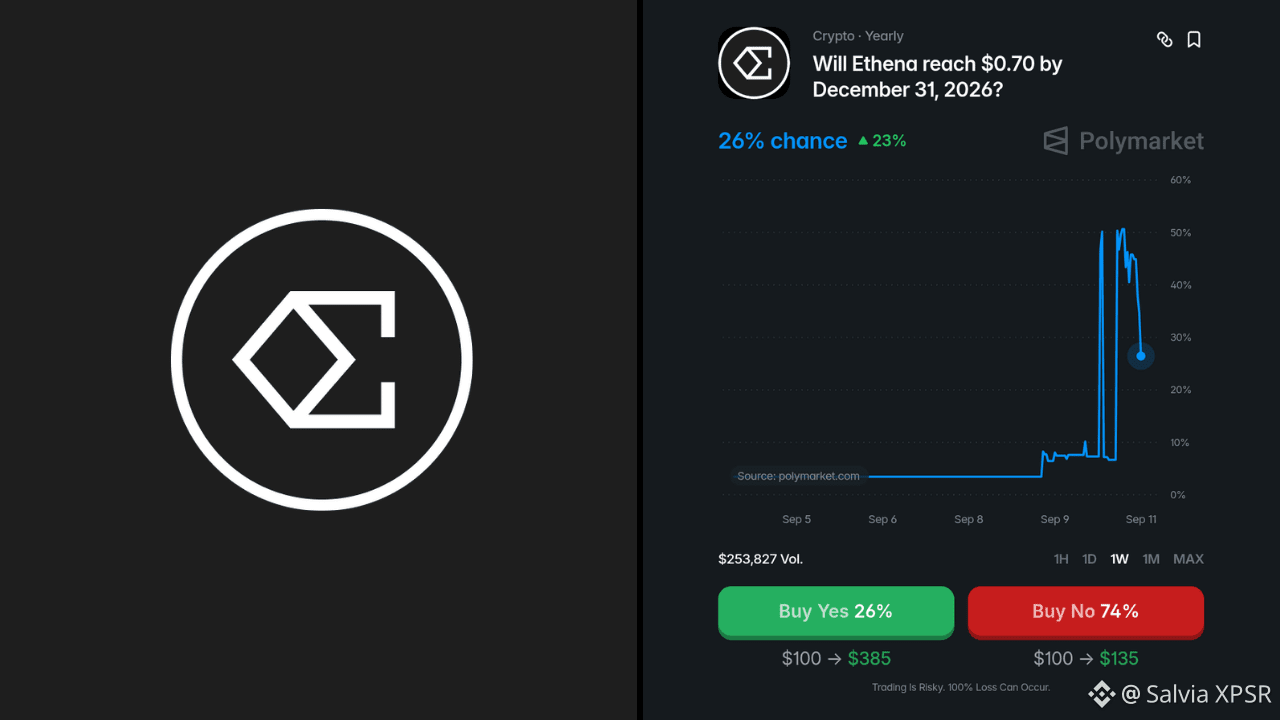
Polymarket briefly went crazy on this one.
The probability of ENA reaching $0.70 exploded from single digits toward 50%.
Now?
26%.
I'm taking No.
ENA is currently around $0.14-$0.15.
Getting to $0.70 would require a massive multiple before December 31.
Possible in crypto?
Sure.
But that's very different from probable.
The Polymarket chart already showed what happened when traders got too excited.
50% → 26%.
That rejection says more to me than the initial spike.
Over $250K has traded here, so there's already meaningful disagreement behind the price.
$ARB gives me another liquid crypto angle while I trade ENA's destination separately.
That's the Polymarket edge.
Trade the outcome.
Let everyone else fight over the candles.
#Altcoin Season#
$ENA Needs A Monster Move 🚨
Polymarket briefly went crazy on this one.
The probability of ENA reaching $0.70 exploded from single digits toward 50%.
Now?
26%.
I'm taking No.
ENA is currently around $0.14-$0.15.
Getting to $0.70 would require a massive multiple before December 31.
Possible in crypto?
Sure.
But that's very different from probable.
The Polymarket chart already showed what happened when traders got too excited.
50% → 26%.
That rejection says more to me than the initial spike.
Over $250K has traded here, so there's already meaningful disagreement behind the price.
$ARB gives me another liquid crypto angle while I trade ENA's destination separately.
That's the Polymarket edge.
Trade the outcome.
Let everyone else fight over the candles.
#Altcoin Season#
Polymarket briefly went crazy on this one.
The probability of ENA reaching $0.70 exploded from single digits toward 50%.
Now?
26%.
I'm taking No.
ENA is currently around $0.14-$0.15.
Getting to $0.70 would require a massive multiple before December 31.
Possible in crypto?
Sure.
But that's very different from probable.
The Polymarket chart already showed what happened when traders got too excited.
50% → 26%.
That rejection says more to me than the initial spike.
Over $250K has traded here, so there's already meaningful disagreement behind the price.
$ARB gives me another liquid crypto angle while I trade ENA's destination separately.
That's the Polymarket edge.
Trade the outcome.
Let everyone else fight over the candles.
#Altcoin Season#
49
·
--
Bankrは「ローンチパッド」という言葉を超えてしまった 🧩
市場がそれにふさわしい言葉を見つけたとき、物語は初めて拡張する。$TIA は、誰も自分が何を見ているのか分かる前から「モジュラー」が必要だった。$ENA は「合成ドル」が必要だった。
それでもBankrはローンチパッドとして登録されており、今週そのラベルを維持することが不可能になった。
Pools.fun は Robinhood Chain 上でSushiSwapを使って構築されている。新しいプールのたびに、手数料の90%をデプロイヤーに、10%をプロトコルに振り分けるようになった。プロトコル側の取り分の半分は BNKR を買い支えバーンする。Bankrは、ここから出荷するすべてのプロダクトが同じルールに従うと言っている。2つ目のトークンは、決してない。
ローンチパッドの事業は、取り分(テイクレート)の全部だ。取り分の90%をデプロイヤーに渡すのは、ローンチパッドの判断ではない。同じカテゴリのタグを付けた別のビジネスモデルだ。
「ローンチごとに」いくら稼ぐかではなく、「プラットフォーム全体で」いくら稼ぐかを見てほしい。
Base上でのトークンローンチと、ペア取引(株式ペア)のプール。ターミナル。LLMゲートウェイ。そして今、別チェーンのSushiを使ったDEXプロダクト。前サイクルであれば5つのプロダクトは5つのトークンを意味しただろう。だが今回は、全部が1つに集約される。
この構造には、暗号の外にも名前がある。アクセラレーターは創業者にほとんど手間も金もかけさせず、うまくいったものから小さな取り分を確保し、そこにある個別の会社ではなくポートフォリオで評価される。
だからこそ、カテゴリは手数料配分よりも重要なのだ。
市場はBankrをローンチパッドとして読む一方で、トークンはローンチパッドのトークンと比べ、プロダクトはローンチパッドのプロダクトと比較してしまう。どちらの比較も、実際に出荷されたものを言い当てていない。
正直な限界はこうだ。より良いラベルは出来高を生み出さない。1つのトークンにリスクを集中させることで、分散ではなくなる。そしてポートフォリオの論点は、ポートフォリオが成長し続ける間だけ成立する。
私は、人々が使う言葉を見たい。物語は、その語彙がプロダクトに追いついたときに広がる。だがこれはその遅れたままだ。
#DeFi #Robinhood
Bankrは「ローンチパッド」という言葉を超えてしまった 🧩
市場がそれにふさわしい言葉を見つけたとき、物語は初めて拡張する。$TIA は、誰も自分が何を見ているのか分かる前から「モジュラー」が必要だった。$ENA は「合成ドル」が必要だった。
それでもBankrはローンチパッドとして登録されており、今週そのラベルを維持することが不可能になった。
Pools.fun は Robinhood Chain 上でSushiSwapを使って構築されている。新しいプールのたびに、手数料の90%をデプロイヤーに、10%をプロトコルに振り分けるようになった。プロトコル側の取り分の半分は BNKR を買い支えバーンする。Bankrは、ここから出荷するすべてのプロダクトが同じルールに従うと言っている。2つ目のトークンは、決してない。
ローンチパッドの事業は、取り分(テイクレート)の全部だ。取り分の90%をデプロイヤーに渡すのは、ローンチパッドの判断ではない。同じカテゴリのタグを付けた別のビジネスモデルだ。
「ローンチごとに」いくら稼ぐかではなく、「プラットフォーム全体で」いくら稼ぐかを見てほしい。
Base上でのトークンローンチと、ペア取引(株式ペア)のプール。ターミナル。LLMゲートウェイ。そして今、別チェーンのSushiを使ったDEXプロダクト。前サイクルであれば5つのプロダクトは5つのトークンを意味しただろう。だが今回は、全部が1つに集約される。
この構造には、暗号の外にも名前がある。アクセラレーターは創業者にほとんど手間も金もかけさせず、うまくいったものから小さな取り分を確保し、そこにある個別の会社ではなくポートフォリオで評価される。
だからこそ、カテゴリは手数料配分よりも重要なのだ。
市場はBankrをローンチパッドとして読む一方で、トークンはローンチパッドのトークンと比べ、プロダクトはローンチパッドのプロダクトと比較してしまう。どちらの比較も、実際に出荷されたものを言い当てていない。
正直な限界はこうだ。より良いラベルは出来高を生み出さない。1つのトークンにリスクを集中させることで、分散ではなくなる。そしてポートフォリオの論点は、ポートフォリオが成長し続ける間だけ成立する。
私は、人々が使う言葉を見たい。物語は、その語彙がプロダクトに追いついたときに広がる。だがこれはその遅れたままだ。
#DeFi #Robinhood
市場がそれにふさわしい言葉を見つけたとき、物語は初めて拡張する。$TIA は、誰も自分が何を見ているのか分かる前から「モジュラー」が必要だった。$ENA は「合成ドル」が必要だった。
それでもBankrはローンチパッドとして登録されており、今週そのラベルを維持することが不可能になった。
Pools.fun は Robinhood Chain 上でSushiSwapを使って構築されている。新しいプールのたびに、手数料の90%をデプロイヤーに、10%をプロトコルに振り分けるようになった。プロトコル側の取り分の半分は BNKR を買い支えバーンする。Bankrは、ここから出荷するすべてのプロダクトが同じルールに従うと言っている。2つ目のトークンは、決してない。
ローンチパッドの事業は、取り分(テイクレート)の全部だ。取り分の90%をデプロイヤーに渡すのは、ローンチパッドの判断ではない。同じカテゴリのタグを付けた別のビジネスモデルだ。
「ローンチごとに」いくら稼ぐかではなく、「プラットフォーム全体で」いくら稼ぐかを見てほしい。
Base上でのトークンローンチと、ペア取引(株式ペア)のプール。ターミナル。LLMゲートウェイ。そして今、別チェーンのSushiを使ったDEXプロダクト。前サイクルであれば5つのプロダクトは5つのトークンを意味しただろう。だが今回は、全部が1つに集約される。
この構造には、暗号の外にも名前がある。アクセラレーターは創業者にほとんど手間も金もかけさせず、うまくいったものから小さな取り分を確保し、そこにある個別の会社ではなくポートフォリオで評価される。
だからこそ、カテゴリは手数料配分よりも重要なのだ。
市場はBankrをローンチパッドとして読む一方で、トークンはローンチパッドのトークンと比べ、プロダクトはローンチパッドのプロダクトと比較してしまう。どちらの比較も、実際に出荷されたものを言い当てていない。
正直な限界はこうだ。より良いラベルは出来高を生み出さない。1つのトークンにリスクを集中させることで、分散ではなくなる。そしてポートフォリオの論点は、ポートフォリオが成長し続ける間だけ成立する。
私は、人々が使う言葉を見たい。物語は、その語彙がプロダクトに追いついたときに広がる。だがこれはその遅れたままだ。
#DeFi #Robinhood
73
·
--
翻訳参照
There is an Early Opportunity in Kaito Aura
The full $KAITO Aura economy has not been revealed yet and that may be exactly why this is the time to pay attention.
When you see someone place a trade on a link $HYPE account, you can now view and verify it through their new social trust layer extension called kaito pulse. This is built right onto the X api and therefore shows on the timeline.
Aura currently measures verified attention through Kaito Pulse. Instead of rewarding raw engagement, it considers whether relevant, real people actually viewed your content. It is open to everyone, starts every participant at zero and is designed to resist Sybil farming.
Downloading Pulse now gives users an opportunity to understand the system and begin building verified attention before the complete framework arrives.
My personal expectation is that Kaito may eventually introduce additional ways to earn through new social platforms, verified activity, integrated products or campaign participation. Those possibilities are speculation, not confirmed features, but Pulse was designed as a social layer for the internet rather than a single static tool.
Early participation does not guarantee rewards. It does, however, provide time to learn how the system works while the field is still developing.
The next phase of Kaito may reward people who create attention that cannot easily be bought or botted.
Download Pulse, understand Aura and position yourself early.
There is an Early Opportunity in Kaito Aura
The full $KAITO Aura economy has not been revealed yet and that may be exactly why this is the time to pay attention.
When you see someone place a trade on a link $HYPE account, you can now view and verify it through their new social trust layer extension called kaito pulse. This is built right onto the X api and therefore shows on the timeline.
Aura currently measures verified attention through Kaito Pulse. Instead of rewarding raw engagement, it considers whether relevant, real people actually viewed your content. It is open to everyone, starts every participant at zero and is designed to resist Sybil farming.
Downloading Pulse now gives users an opportunity to understand the system and begin building verified attention before the complete framework arrives.
My personal expectation is that Kaito may eventually introduce additional ways to earn through new social platforms, verified activity, integrated products or campaign participation. Those possibilities are speculation, not confirmed features, but Pulse was designed as a social layer for the internet rather than a single static tool.
Early participation does not guarantee rewards. It does, however, provide time to learn how the system works while the field is still developing.
The next phase of Kaito may reward people who create attention that cannot easily be bought or botted.
Download Pulse, understand Aura and position yourself early.
The full $KAITO Aura economy has not been revealed yet and that may be exactly why this is the time to pay attention.
When you see someone place a trade on a link $HYPE account, you can now view and verify it through their new social trust layer extension called kaito pulse. This is built right onto the X api and therefore shows on the timeline.
Aura currently measures verified attention through Kaito Pulse. Instead of rewarding raw engagement, it considers whether relevant, real people actually viewed your content. It is open to everyone, starts every participant at zero and is designed to resist Sybil farming.
Downloading Pulse now gives users an opportunity to understand the system and begin building verified attention before the complete framework arrives.
My personal expectation is that Kaito may eventually introduce additional ways to earn through new social platforms, verified activity, integrated products or campaign participation. Those possibilities are speculation, not confirmed features, but Pulse was designed as a social layer for the internet rather than a single static tool.
Early participation does not guarantee rewards. It does, however, provide time to learn how the system works while the field is still developing.
The next phase of Kaito may reward people who create attention that cannot easily be bought or botted.
Download Pulse, understand Aura and position yourself early.

1
·
--
翻訳参照
NYSE, NASDAQ and CME have spent decades distributing the same market update to thousands of trading machines without opening thousands of independent feeds from scratch.
They use multicast.
One update enters the network, then the network distributes it toward everyone listening.
$HYPE is moving crypto markets toward the same kind of machine-heavy trading environment, where market makers and automated strategies care about receiving a consistent view of the book quickly.
The strange part is that New Finance grew up while much of its data still travelled through consumer-style internet infrastructure.
$LINK made high-quality external information useful to smart contracts, yet even perfect data loses value when distribution becomes the slowest part of the stack.
DoubleZero Edge takes the exchange model seriously.
Its multicast architecture lets a publisher emit machine-readable information once before DoubleZero distributes it simultaneously across subscribers over dedicated fiber.
Kalshi now uses that infrastructure for prediction-market data.
So the technology Wall Street treated as basic market structure is finally reaching markets that were built decades later.
Crypto reinvented the exchange before it remembered to copy the network underneath one.
#WallStreet #Altcoin Season#
NYSE, NASDAQ and CME have spent decades distributing the same market update to thousands of trading machines without opening thousands of independent feeds from scratch.
They use multicast.
One update enters the network, then the network distributes it toward everyone listening.
$HYPE is moving crypto markets toward the same kind of machine-heavy trading environment, where market makers and automated strategies care about receiving a consistent view of the book quickly.
The strange part is that New Finance grew up while much of its data still travelled through consumer-style internet infrastructure.
$LINK made high-quality external information useful to smart contracts, yet even perfect data loses value when distribution becomes the slowest part of the stack.
DoubleZero Edge takes the exchange model seriously.
Its multicast architecture lets a publisher emit machine-readable information once before DoubleZero distributes it simultaneously across subscribers over dedicated fiber.
Kalshi now uses that infrastructure for prediction-market data.
So the technology Wall Street treated as basic market structure is finally reaching markets that were built decades later.
Crypto reinvented the exchange before it remembered to copy the network underneath one.
#WallStreet #Altcoin Season#
They use multicast.
One update enters the network, then the network distributes it toward everyone listening.
$HYPE is moving crypto markets toward the same kind of machine-heavy trading environment, where market makers and automated strategies care about receiving a consistent view of the book quickly.
The strange part is that New Finance grew up while much of its data still travelled through consumer-style internet infrastructure.
$LINK made high-quality external information useful to smart contracts, yet even perfect data loses value when distribution becomes the slowest part of the stack.
DoubleZero Edge takes the exchange model seriously.
Its multicast architecture lets a publisher emit machine-readable information once before DoubleZero distributes it simultaneously across subscribers over dedicated fiber.
Kalshi now uses that infrastructure for prediction-market data.
So the technology Wall Street treated as basic market structure is finally reaching markets that were built decades later.
Crypto reinvented the exchange before it remembered to copy the network underneath one.
#WallStreet #Altcoin Season#

44
·
--
明瞭性がやって来る。1つのプロジェクトが準備できている。🔥
Space and Timeの「CLARITY Compliance Framework」は、このプロジェクトが単にインフラを構築しているのではなく、規制当局が求めて義務化するであろうインフラを構築しているのだという、私が見た中で最も明確なシグナルです。
「デジタル・アセット・マーケット・クラリティ法(Digital Asset Market Clarity Act)」では、大きく4つの主要な義務領域が導入されます。
プロトコルの透明性、トークン化とデジタル資産、ステーブルコインとプロトコル報酬、そして市場とクレジット。
Space and Timeは、継続的に稼働するZK(ゼロ知識証明)で裏付けられたデータによって、そのすべてに対応しています。つまり、スケジュールに合わせて書類を提出するコンプライアンスチームがいるのではありません。
$ONDOは、現実世界の資産を、今後12か月以内にそれらの義務が自社のビジネスモデルにとって不可欠になるような規模でトークン化しています。
要求に応じて検証可能な証拠を生成できるプロジェクトは、より速く資金を調達し、機関投資家との関係をより早く築き、定期的なスナップショット型のコンプライアンスでは不可能なほど早く規制当局からの信頼を得ることができます。
Space and Timeは、ネットワークが稼働することの副産物として、その証拠をネイティブに生成する唯一のインフラ層だと私は見つけました。
手作業の突合作業なし。
レポートされる内容と実際にオンチェーンで起きたことの間にズレなし。
CLARITY法は2026年に署名される確率が72%です。
可決されたら、すでに適合していたインフラが勝ちます。
Space and Timeは、法案に名前が付く前から適合していました。
#Altcoin Season# #RWA
明瞭性がやって来る。1つのプロジェクトが準備できている。🔥
Space and Timeの「CLARITY Compliance Framework」は、このプロジェクトが単にインフラを構築しているのではなく、規制当局が求めて義務化するであろうインフラを構築しているのだという、私が見た中で最も明確なシグナルです。
「デジタル・アセット・マーケット・クラリティ法(Digital Asset Market Clarity Act)」では、大きく4つの主要な義務領域が導入されます。
プロトコルの透明性、トークン化とデジタル資産、ステーブルコインとプロトコル報酬、そして市場とクレジット。
Space and Timeは、継続的に稼働するZK(ゼロ知識証明)で裏付けられたデータによって、そのすべてに対応しています。つまり、スケジュールに合わせて書類を提出するコンプライアンスチームがいるのではありません。
$ONDOは、現実世界の資産を、今後12か月以内にそれらの義務が自社のビジネスモデルにとって不可欠になるような規模でトークン化しています。
要求に応じて検証可能な証拠を生成できるプロジェクトは、より速く資金を調達し、機関投資家との関係をより早く築き、定期的なスナップショット型のコンプライアンスでは不可能なほど早く規制当局からの信頼を得ることができます。
Space and Timeは、ネットワークが稼働することの副産物として、その証拠をネイティブに生成する唯一のインフラ層だと私は見つけました。
手作業の突合作業なし。
レポートされる内容と実際にオンチェーンで起きたことの間にズレなし。
CLARITY法は2026年に署名される確率が72%です。
可決されたら、すでに適合していたインフラが勝ちます。
Space and Timeは、法案に名前が付く前から適合していました。
#Altcoin Season# #RWA
Space and Timeの「CLARITY Compliance Framework」は、このプロジェクトが単にインフラを構築しているのではなく、規制当局が求めて義務化するであろうインフラを構築しているのだという、私が見た中で最も明確なシグナルです。
「デジタル・アセット・マーケット・クラリティ法(Digital Asset Market Clarity Act)」では、大きく4つの主要な義務領域が導入されます。
プロトコルの透明性、トークン化とデジタル資産、ステーブルコインとプロトコル報酬、そして市場とクレジット。
Space and Timeは、継続的に稼働するZK(ゼロ知識証明)で裏付けられたデータによって、そのすべてに対応しています。つまり、スケジュールに合わせて書類を提出するコンプライアンスチームがいるのではありません。
$ONDOは、現実世界の資産を、今後12か月以内にそれらの義務が自社のビジネスモデルにとって不可欠になるような規模でトークン化しています。
要求に応じて検証可能な証拠を生成できるプロジェクトは、より速く資金を調達し、機関投資家との関係をより早く築き、定期的なスナップショット型のコンプライアンスでは不可能なほど早く規制当局からの信頼を得ることができます。
Space and Timeは、ネットワークが稼働することの副産物として、その証拠をネイティブに生成する唯一のインフラ層だと私は見つけました。
手作業の突合作業なし。
レポートされる内容と実際にオンチェーンで起きたことの間にズレなし。
CLARITY法は2026年に署名される確率が72%です。
可決されたら、すでに適合していたインフラが勝ちます。
Space and Timeは、法案に名前が付く前から適合していました。
#Altcoin Season# #RWA

62
·
--
翻訳参照
Somebody Rented The Machine Reading Your Prompt 👀
Think about what you typed this year, the salary questions, the medical symptoms, the contract you were nervous about, the work code you probably should not have pasted.
You handed all of it over without thinking twice, and the companies on the other end use it to improve their models.
$RENDER pays operators to run other people's jobs on machines those operators own, which is how a large share of AI compute works now.
So the machine answering you is rented by the hour and you never picked it, and payments for a growing share of that activity settle on $SOL .
Your prompt is readable on whichever machine happens to take the job.
Not because anyone is doing something wrong, but because that is the only way the computation can happen today.
That is the most under-discussed risk in the entire AI trade.
The market spent two years arguing about who owns the model and almost no time on who reads the input.
That second question is the one I have started sizing positions around.
Arcium runs those computations differently, splitting each one across nodes that hold only a fragment so no operator ever sees the input.
So the result comes back correct and nothing readable ever sat on a single machine.
Which is a different class of guarantee from a company promising to delete things afterwards.
That network has been live since February 2 with more than 4,000 nodes and over 30 apps, and teams building on it have raised more than $7.5M.
But Blackthorn will bring the same guarantee to AI models specifically, and it has not shipped yet.
So how much of your own thinking already sits on somebody else's server, and what would it take for you to stop adding to the pile?
#AI #Solana
Somebody Rented The Machine Reading Your Prompt 👀
Think about what you typed this year, the salary questions, the medical symptoms, the contract you were nervous about, the work code you probably should not have pasted.
You handed all of it over without thinking twice, and the companies on the other end use it to improve their models.
$RENDER pays operators to run other people's jobs on machines those operators own, which is how a large share of AI compute works now.
So the machine answering you is rented by the hour and you never picked it, and payments for a growing share of that activity settle on $SOL .
Your prompt is readable on whichever machine happens to take the job.
Not because anyone is doing something wrong, but because that is the only way the computation can happen today.
That is the most under-discussed risk in the entire AI trade.
The market spent two years arguing about who owns the model and almost no time on who reads the input.
That second question is the one I have started sizing positions around.
Arcium runs those computations differently, splitting each one across nodes that hold only a fragment so no operator ever sees the input.
So the result comes back correct and nothing readable ever sat on a single machine.
Which is a different class of guarantee from a company promising to delete things afterwards.
That network has been live since February 2 with more than 4,000 nodes and over 30 apps, and teams building on it have raised more than $7.5M.
But Blackthorn will bring the same guarantee to AI models specifically, and it has not shipped yet.
So how much of your own thinking already sits on somebody else's server, and what would it take for you to stop adding to the pile?
#AI #Solana
Think about what you typed this year, the salary questions, the medical symptoms, the contract you were nervous about, the work code you probably should not have pasted.
You handed all of it over without thinking twice, and the companies on the other end use it to improve their models.
$RENDER pays operators to run other people's jobs on machines those operators own, which is how a large share of AI compute works now.
So the machine answering you is rented by the hour and you never picked it, and payments for a growing share of that activity settle on $SOL .
Your prompt is readable on whichever machine happens to take the job.
Not because anyone is doing something wrong, but because that is the only way the computation can happen today.
That is the most under-discussed risk in the entire AI trade.
The market spent two years arguing about who owns the model and almost no time on who reads the input.
That second question is the one I have started sizing positions around.
Arcium runs those computations differently, splitting each one across nodes that hold only a fragment so no operator ever sees the input.
So the result comes back correct and nothing readable ever sat on a single machine.
Which is a different class of guarantee from a company promising to delete things afterwards.
That network has been live since February 2 with more than 4,000 nodes and over 30 apps, and teams building on it have raised more than $7.5M.
But Blackthorn will bring the same guarantee to AI models specifically, and it has not shipped yet.
So how much of your own thinking already sits on somebody else's server, and what would it take for you to stop adding to the pile?
#AI #Solana
56
·
--
翻訳参照
Down 85%. But Still Bullish On $SUI 🔥
At roughly $0.80, Sui remains around 85% below its $5.35 all-time high.
The market is pricing it like the story ended.
The network kept moving.
The receipts are hard to ignore:
• More than 5.8 billion total transactions
• Over $410 million in stablecoins
• 6,086,766 TPS during a public experiment
Now the chart is getting interesting.
The $0.50 to $0.80 base absorbed months of selling, and price is pressing its upper edge again.
A clean expansion from here could put $2.02 back in play, followed by $4.42.
Sui does not need a new all-time high for the upside to become serious.
If altcoin season rewards the teams that kept shipping through the pain, I think Sui could rip harder than people
expect.
#Altcoin Season#
Down 85%. But Still Bullish On $SUI 🔥
At roughly $0.80, Sui remains around 85% below its $5.35 all-time high.
The market is pricing it like the story ended.
The network kept moving.
The receipts are hard to ignore:
• More than 5.8 billion total transactions
• Over $410 million in stablecoins
• 6,086,766 TPS during a public experiment
Now the chart is getting interesting.
The $0.50 to $0.80 base absorbed months of selling, and price is pressing its upper edge again.
A clean expansion from here could put $2.02 back in play, followed by $4.42.
Sui does not need a new all-time high for the upside to become serious.
If altcoin season rewards the teams that kept shipping through the pain, I think Sui could rip harder than people
expect.
#Altcoin Season#
At roughly $0.80, Sui remains around 85% below its $5.35 all-time high.
The market is pricing it like the story ended.
The network kept moving.
The receipts are hard to ignore:
• More than 5.8 billion total transactions
• Over $410 million in stablecoins
• 6,086,766 TPS during a public experiment
Now the chart is getting interesting.
The $0.50 to $0.80 base absorbed months of selling, and price is pressing its upper edge again.
A clean expansion from here could put $2.02 back in play, followed by $4.42.
Sui does not need a new all-time high for the upside to become serious.
If altcoin season rewards the teams that kept shipping through the pain, I think Sui could rip harder than people
expect.
#Altcoin Season#
68
·
--
反撃してくるAIエージェント 🧠
昨日 $LIT は24時間で13.92%上昇しました。勢いに乗ろうとして、Agent Pear に最適な取引方法を聞いてみました。
しかし、私の確信を盲目的に肯定するのではなく、Pear Protocol の無料AIエージェントは要点をこう伝えてくれたのです。LIT は強そうだが、ここから追いかけるのはリスクが高い。
その根拠となるデータもちゃんとありました。LIT のRSIはすでに82.68で、買われ過ぎ(オーバーボート)状態を強く示していました。さらに $HYPE との関係は -3.43 の 4h Z-score まで乖離しています。
だからこそ、危険な方向性のままLITロングを狙う代わりに、Agent Pear はより良い取引を提案しました。HYPE ロング / LIT ショート。
それは私のプランに対して押し返してきます。LIT が異常なほど先行しているので、取引は「LIT が冷める一方で、HYPE が追いつく」ことで恩恵を受けられる、と指摘しました。Agent Pear はさらに、セットアップのバランスを良く保つために、だいたい 59% HYPE / 41% LIT のヘッジになるよう計算してくれました。
私は、私が正しいとだけ言ったり、エゴを満たすために統計を無視したりしないAIをありがたく思っています。どこが間違っているのかを教えてくれて、その上でより賢い形で取引する方法を見つけてほしい。そういうものです。
今の戦略への向き合い方が、本当に変わりました。
NFA ですが、これはウォッチリスト入りです。
#Altcoin Season#
反撃してくるAIエージェント 🧠
昨日 $LIT は24時間で13.92%上昇しました。勢いに乗ろうとして、Agent Pear に最適な取引方法を聞いてみました。
しかし、私の確信を盲目的に肯定するのではなく、Pear Protocol の無料AIエージェントは要点をこう伝えてくれたのです。LIT は強そうだが、ここから追いかけるのはリスクが高い。
その根拠となるデータもちゃんとありました。LIT のRSIはすでに82.68で、買われ過ぎ(オーバーボート)状態を強く示していました。さらに $HYPE との関係は -3.43 の 4h Z-score まで乖離しています。
だからこそ、危険な方向性のままLITロングを狙う代わりに、Agent Pear はより良い取引を提案しました。HYPE ロング / LIT ショート。
それは私のプランに対して押し返してきます。LIT が異常なほど先行しているので、取引は「LIT が冷める一方で、HYPE が追いつく」ことで恩恵を受けられる、と指摘しました。Agent Pear はさらに、セットアップのバランスを良く保つために、だいたい 59% HYPE / 41% LIT のヘッジになるよう計算してくれました。
私は、私が正しいとだけ言ったり、エゴを満たすために統計を無視したりしないAIをありがたく思っています。どこが間違っているのかを教えてくれて、その上でより賢い形で取引する方法を見つけてほしい。そういうものです。
今の戦略への向き合い方が、本当に変わりました。
NFA ですが、これはウォッチリスト入りです。
#Altcoin Season#
昨日 $LIT は24時間で13.92%上昇しました。勢いに乗ろうとして、Agent Pear に最適な取引方法を聞いてみました。
しかし、私の確信を盲目的に肯定するのではなく、Pear Protocol の無料AIエージェントは要点をこう伝えてくれたのです。LIT は強そうだが、ここから追いかけるのはリスクが高い。
その根拠となるデータもちゃんとありました。LIT のRSIはすでに82.68で、買われ過ぎ(オーバーボート)状態を強く示していました。さらに $HYPE との関係は -3.43 の 4h Z-score まで乖離しています。
だからこそ、危険な方向性のままLITロングを狙う代わりに、Agent Pear はより良い取引を提案しました。HYPE ロング / LIT ショート。
それは私のプランに対して押し返してきます。LIT が異常なほど先行しているので、取引は「LIT が冷める一方で、HYPE が追いつく」ことで恩恵を受けられる、と指摘しました。Agent Pear はさらに、セットアップのバランスを良く保つために、だいたい 59% HYPE / 41% LIT のヘッジになるよう計算してくれました。
私は、私が正しいとだけ言ったり、エゴを満たすために統計を無視したりしないAIをありがたく思っています。どこが間違っているのかを教えてくれて、その上でより賢い形で取引する方法を見つけてほしい。そういうものです。
今の戦略への向き合い方が、本当に変わりました。
NFA ですが、これはウォッチリスト入りです。
#Altcoin Season#
73
·
--
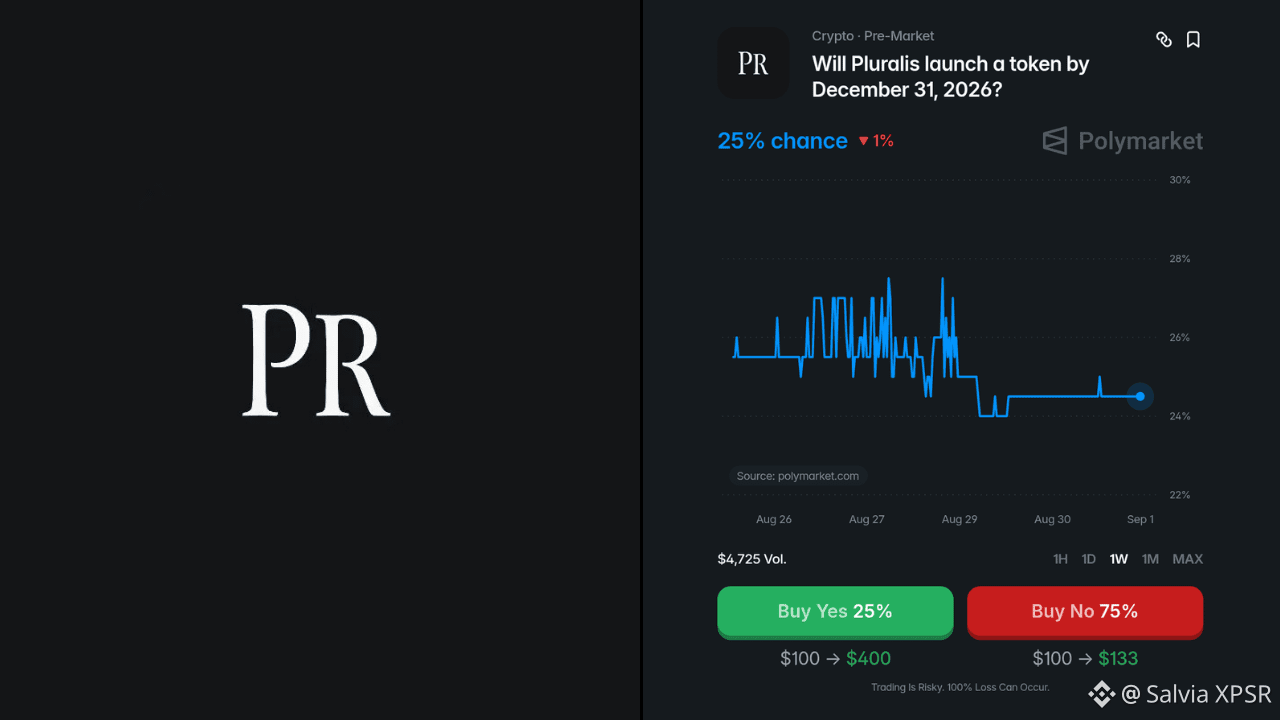
Pluralis はまもなくトークンをローンチしますか?📊
ここはまだ新しい市場で、出来高はわずか $4,725。だからこそ、この段階で掴むのは本当にワクワクする機会です。
今のところ 25% の確率で、わずかに下がっています。このチャートはずっと同じ狭いレンジで揉み合っていて、どちらの方向にも本格的なブレイクアウトはありません。
私は「この揉み合いが続くタイトな局面は、すでに優勢な側へと解決しやすい」という No(つまり直近のシナリオ)を採用しています。ここまでずっとその通りでした。
$DOGE のようなトークンが、すでにこのポジションの一部を資金面で支えています。コインをウォレットに置いておくだけよりも、ずっと賢い動きです。
さらに $BNB も、このような初期段階だと市場で頻繁に見かけますし、Polymarket 上での利用は着実に右肩上がりで伸び続けています。
いつでもこの局面から撤退できます。12月まで全部待ち続ける必要はありません。
Polymarket は、誰もまだ気づく前にこうした読みを掴む場所であり続けています。
#アルトコイン・シーズン#
Pluralis はまもなくトークンをローンチしますか?📊
ここはまだ新しい市場で、出来高はわずか $4,725。だからこそ、この段階で掴むのは本当にワクワクする機会です。
今のところ 25% の確率で、わずかに下がっています。このチャートはずっと同じ狭いレンジで揉み合っていて、どちらの方向にも本格的なブレイクアウトはありません。
私は「この揉み合いが続くタイトな局面は、すでに優勢な側へと解決しやすい」という No(つまり直近のシナリオ)を採用しています。ここまでずっとその通りでした。
$DOGE のようなトークンが、すでにこのポジションの一部を資金面で支えています。コインをウォレットに置いておくだけよりも、ずっと賢い動きです。
さらに $BNB も、このような初期段階だと市場で頻繁に見かけますし、Polymarket 上での利用は着実に右肩上がりで伸び続けています。
いつでもこの局面から撤退できます。12月まで全部待ち続ける必要はありません。
Polymarket は、誰もまだ気づく前にこうした読みを掴む場所であり続けています。
#アルトコイン・シーズン#
ここはまだ新しい市場で、出来高はわずか $4,725。だからこそ、この段階で掴むのは本当にワクワクする機会です。
今のところ 25% の確率で、わずかに下がっています。このチャートはずっと同じ狭いレンジで揉み合っていて、どちらの方向にも本格的なブレイクアウトはありません。
私は「この揉み合いが続くタイトな局面は、すでに優勢な側へと解決しやすい」という No(つまり直近のシナリオ)を採用しています。ここまでずっとその通りでした。
$DOGE のようなトークンが、すでにこのポジションの一部を資金面で支えています。コインをウォレットに置いておくだけよりも、ずっと賢い動きです。
さらに $BNB も、このような初期段階だと市場で頻繁に見かけますし、Polymarket 上での利用は着実に右肩上がりで伸び続けています。
いつでもこの局面から撤退できます。12月まで全部待ち続ける必要はありません。
Polymarket は、誰もまだ気づく前にこうした読みを掴む場所であり続けています。
#アルトコイン・シーズン#
68
·
--
翻訳参照
Every Agent Needs The Same Socket 🔌
$NEAR is pushing toward AI agents that can operate across applications and chains.
Now imagine every device came with a different plug and every building needed custom wiring.
The electricity works. Connecting to it becomes the expensive part.
Zero Knowledge verification can face the same problem.
A developer can verify proofs on Ethereum or build a separate verification system.
The friction appears when each proof type, application and destination chain needs its own integration work.
That was manageable while proofs remained a specialist tool used at low volume.
AI agents change the scale because they can execute tasks and move value continuously.
ZkVerify concentrates verification in a network built around that single job.
It supports multiple proof systems and makes verified results available across chains.
The idea is closer to standardizing the socket than inventing electricity.
$VFY pays for verification, so network usage follows the number of proofs being checked.
I see the urgency arriving when thousands of agents need independent answers at machine speed.
At that point, custom verification infrastructure becomes a bottleneck rather than an engineering preference.
#AI
Every Agent Needs The Same Socket 🔌
$NEAR is pushing toward AI agents that can operate across applications and chains.
Now imagine every device came with a different plug and every building needed custom wiring.
The electricity works. Connecting to it becomes the expensive part.
Zero Knowledge verification can face the same problem.
A developer can verify proofs on Ethereum or build a separate verification system.
The friction appears when each proof type, application and destination chain needs its own integration work.
That was manageable while proofs remained a specialist tool used at low volume.
AI agents change the scale because they can execute tasks and move value continuously.
ZkVerify concentrates verification in a network built around that single job.
It supports multiple proof systems and makes verified results available across chains.
The idea is closer to standardizing the socket than inventing electricity.
$VFY pays for verification, so network usage follows the number of proofs being checked.
I see the urgency arriving when thousands of agents need independent answers at machine speed.
At that point, custom verification infrastructure becomes a bottleneck rather than an engineering preference.
#AI
$NEAR is pushing toward AI agents that can operate across applications and chains.
Now imagine every device came with a different plug and every building needed custom wiring.
The electricity works. Connecting to it becomes the expensive part.
Zero Knowledge verification can face the same problem.
A developer can verify proofs on Ethereum or build a separate verification system.
The friction appears when each proof type, application and destination chain needs its own integration work.
That was manageable while proofs remained a specialist tool used at low volume.
AI agents change the scale because they can execute tasks and move value continuously.
ZkVerify concentrates verification in a network built around that single job.
It supports multiple proof systems and makes verified results available across chains.
The idea is closer to standardizing the socket than inventing electricity.
$VFY pays for verification, so network usage follows the number of proofs being checked.
I see the urgency arriving when thousands of agents need independent answers at machine speed.
At that point, custom verification infrastructure becomes a bottleneck rather than an engineering preference.
#AI
115
·
--
翻訳参照
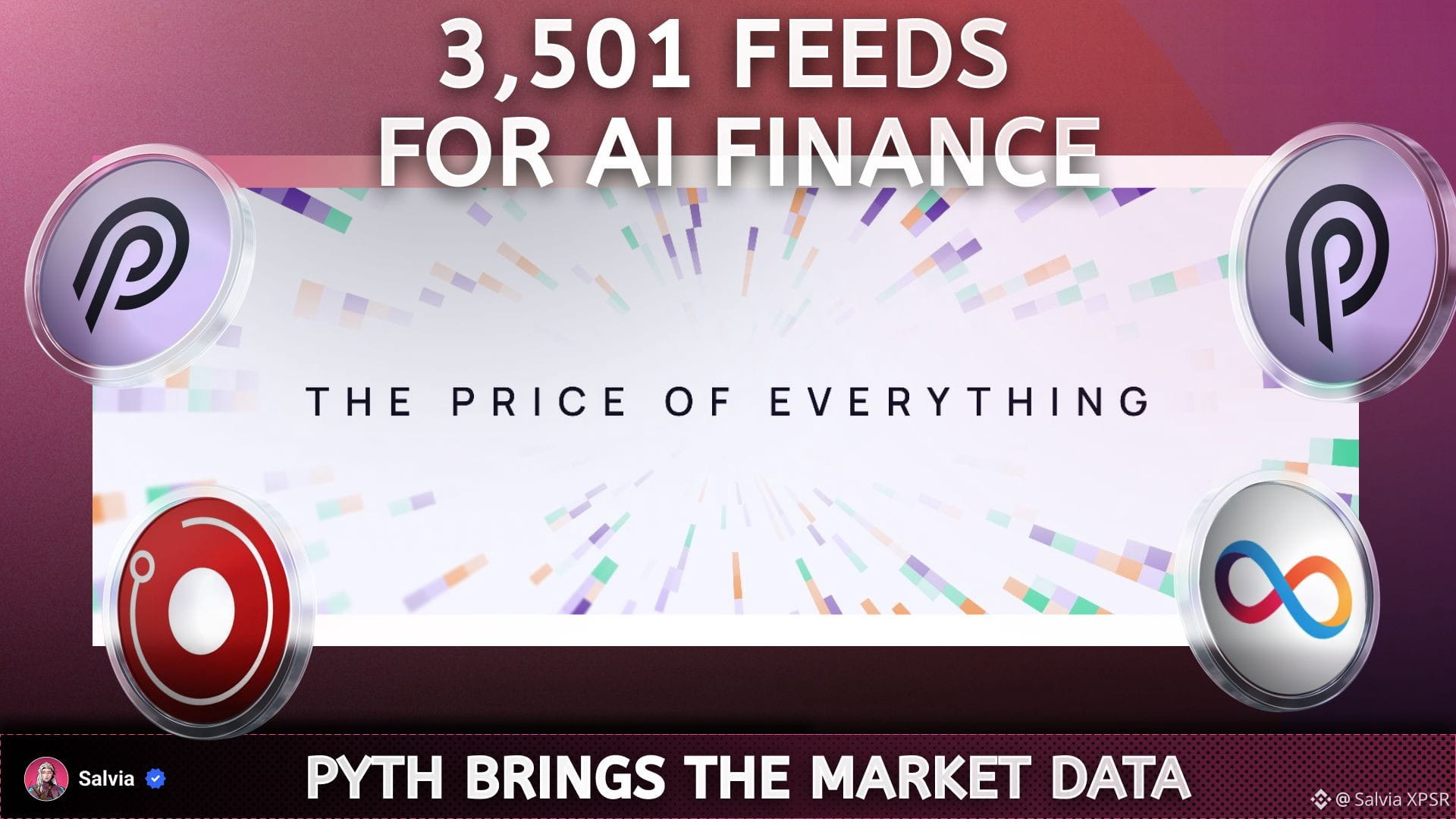
AI can’t touch real markets if the price feed is late, narrow or impossible to verify.
$RENDER and $ICP traders are focused on compute and execution, but the next financial AI wave also needs live data from the assets it is pricing. Pyth is building that market-data side of the stack.
Pyth Pro’s July 2026 report shows 3,501 feeds, including 1,901 equity feeds. More than 138 institutions now publish data to Pyth.
That is a serious base for any app, agent, exchange or risk system that wants to interact with real markets.
The logos matter too.
Jane Street. Coinbase. Cboe. SGX FX. Tradeweb. Fenics. Virtu. Kalshi. Revolut.
These are not random names sitting on a partner slide. They represent different parts of the market-data supply chain: FX, fixed income, equities, crypto, commodities, exchange infrastructure and prediction markets.
Kalshi uses Pyth Pro for commodities resolution.
Coinbase uses Pyth for real-time pricing, collateral valuation and liquidation infrastructure.
Fenics brings dealer-to-dealer fixed-income data.
SGX FX contributes institutional currency pricing from global liquidity hubs.
My read: Pyth’s biggest edge is supply.
Most crypto data products start with distribution and hope the institutional side shows up later. Pyth already has institutions publishing into the network, while real-time applications are pulling from the other side.
That matters as markets become software-defined.
Prediction markets need answer prices. Tokenized products need reference prices. Perp venues need margin and liquidation feeds. AI workflows need financial data they can actually act on.
Different use cases, same bottleneck.
Pyth is becoming the layer they keep coming back to.
#Altcoin Season# #RWA
AI can’t touch real markets if the price feed is late, narrow or impossible to verify.
$RENDER and $ICP traders are focused on compute and execution, but the next financial AI wave also needs live data from the assets it is pricing. Pyth is building that market-data side of the stack.
Pyth Pro’s July 2026 report shows 3,501 feeds, including 1,901 equity feeds. More than 138 institutions now publish data to Pyth.
That is a serious base for any app, agent, exchange or risk system that wants to interact with real markets.
The logos matter too.
Jane Street. Coinbase. Cboe. SGX FX. Tradeweb. Fenics. Virtu. Kalshi. Revolut.
These are not random names sitting on a partner slide. They represent different parts of the market-data supply chain: FX, fixed income, equities, crypto, commodities, exchange infrastructure and prediction markets.
Kalshi uses Pyth Pro for commodities resolution.
Coinbase uses Pyth for real-time pricing, collateral valuation and liquidation infrastructure.
Fenics brings dealer-to-dealer fixed-income data.
SGX FX contributes institutional currency pricing from global liquidity hubs.
My read: Pyth’s biggest edge is supply.
Most crypto data products start with distribution and hope the institutional side shows up later. Pyth already has institutions publishing into the network, while real-time applications are pulling from the other side.
That matters as markets become software-defined.
Prediction markets need answer prices. Tokenized products need reference prices. Perp venues need margin and liquidation feeds. AI workflows need financial data they can actually act on.
Different use cases, same bottleneck.
Pyth is becoming the layer they keep coming back to.
#Altcoin Season# #RWA
$RENDER and $ICP traders are focused on compute and execution, but the next financial AI wave also needs live data from the assets it is pricing. Pyth is building that market-data side of the stack.
Pyth Pro’s July 2026 report shows 3,501 feeds, including 1,901 equity feeds. More than 138 institutions now publish data to Pyth.
That is a serious base for any app, agent, exchange or risk system that wants to interact with real markets.
The logos matter too.
Jane Street. Coinbase. Cboe. SGX FX. Tradeweb. Fenics. Virtu. Kalshi. Revolut.
These are not random names sitting on a partner slide. They represent different parts of the market-data supply chain: FX, fixed income, equities, crypto, commodities, exchange infrastructure and prediction markets.
Kalshi uses Pyth Pro for commodities resolution.
Coinbase uses Pyth for real-time pricing, collateral valuation and liquidation infrastructure.
Fenics brings dealer-to-dealer fixed-income data.
SGX FX contributes institutional currency pricing from global liquidity hubs.
My read: Pyth’s biggest edge is supply.
Most crypto data products start with distribution and hope the institutional side shows up later. Pyth already has institutions publishing into the network, while real-time applications are pulling from the other side.
That matters as markets become software-defined.
Prediction markets need answer prices. Tokenized products need reference prices. Perp venues need margin and liquidation feeds. AI workflows need financial data they can actually act on.
Different use cases, same bottleneck.
Pyth is becoming the layer they keep coming back to.
#Altcoin Season# #RWA
74
·
--
翻訳参照
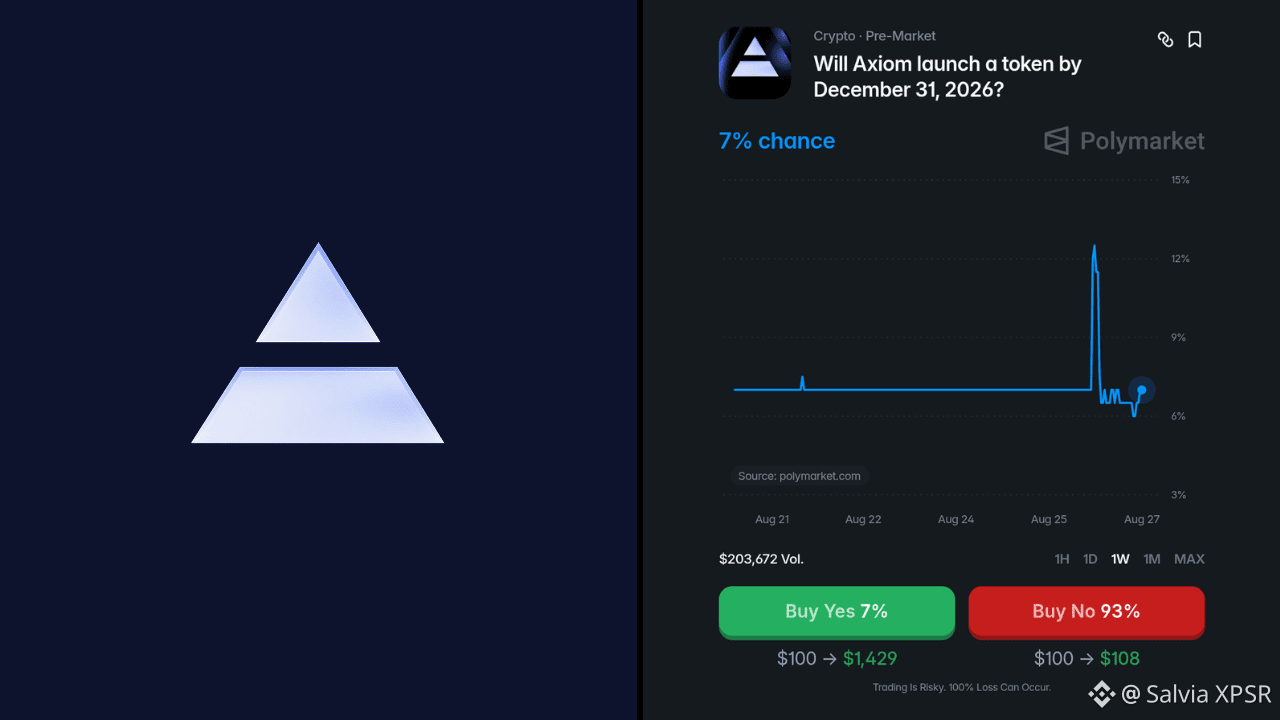
🚨 Will Axiom actually launch a token? Let's look at the evidence here like a detective would, because this chart just tried to fool everyone for about a day. 7% chance right now. $203,672 in volume sitting behind this number is not a small crowd, that's serious size already weighing in. For most of the stretch, this chart sat completely flat near 6 to 7%, barely a pulse. Then out of nowhere, it spiked hard up toward 12%, like something big had just leaked. Here's the twist though. It faded right back down to almost exactly where it started within a day. That's not a breakout, that's a false alarm that got corrected fast by people who actually know what they're doing. I'm taking No on this one. A spike that reverses that cleanly usually means the news wasn't as big as it looked in the moment. Here's the part people miss about a market like this. Instead of just parking $SOL somewhere and waiting on price to move, funding a read like this actually puts that coin to work right now. And unlike a straight bet you're stuck holding, you can close this position out whenever you want, you don't have to wait around until December for the market to actually resolve. Traders keep leaning on $ARB for exactly that kind of flexibility, its volume on this platform has been climbing right alongside the bigger names. More of that crowd keeps shifting from just holding coins to actually trading outcomes here, and honestly, it makes sense. Reading a chart and getting paid for being right beats sitting on a bag and hoping. Polymarket is genuinely becoming the place to trade whatever you're actually good at reading, whether that's crypto, politics, or anything else going on right now. The call is yours in the end though. #Altcoin Season#
🚨 Will Axiom actually launch a token? Let's look at the evidence here like a detective would, because this chart just tried to fool everyone for about a day. 7% chance right now. $203,672 in volume sitting behind this number is not a small crowd, that's serious size already weighing in. For most of the stretch, this chart sat completely flat near 6 to 7%, barely a pulse. Then out of nowhere, it spiked hard up toward 12%, like something big had just leaked. Here's the twist though. It faded right back down to almost exactly where it started within a day. That's not a breakout, that's a false alarm that got corrected fast by people who actually know what they're doing. I'm taking No on this one. A spike that reverses that cleanly usually means the news wasn't as big as it looked in the moment. Here's the part people miss about a market like this. Instead of just parking $SOL somewhere and waiting on price to move, funding a read like this actually puts that coin to work right now. And unlike a straight bet you're stuck holding, you can close this position out whenever you want, you don't have to wait around until December for the market to actually resolve. Traders keep leaning on $ARB for exactly that kind of flexibility, its volume on this platform has been climbing right alongside the bigger names. More of that crowd keeps shifting from just holding coins to actually trading outcomes here, and honestly, it makes sense. Reading a chart and getting paid for being right beats sitting on a bag and hoping. Polymarket is genuinely becoming the place to trade whatever you're actually good at reading, whether that's crypto, politics, or anything else going on right now. The call is yours in the end though. #Altcoin Season#
64
·
--
すべての世代が、あらゆる大陸でこの車を知っています。$ADA は常にグローバルな視点で考えてきました。使命は特定の市場に奉仕することではありません。世界のために、つくることです。あらゆる大陸を、あらゆるコミュニティを、そしてアクセスに値するすべての人へ。ブランド面でも、デロリアンはこのビジョンを体現しています。説明が必要な大陸はありません。自分がそれだったと知って育っていない世代もありません。ブランドは、あらゆる国境や時代を越えても、認知されることを失いません。$DMC はその IP を、オンチェーンで提供します。世界的に最も認知された自動車ブランドが、世界のために構築している空間にその居場所を見つけます。#Altcoin Season#
すべての世代が、あらゆる大陸でこの車を知っています。$ADA は常にグローバルな視点で考えてきました。使命は特定の市場に奉仕することではありません。世界のために、つくることです。あらゆる大陸を、あらゆるコミュニティを、そしてアクセスに値するすべての人へ。ブランド面でも、デロリアンはこのビジョンを体現しています。説明が必要な大陸はありません。自分がそれだったと知って育っていない世代もありません。ブランドは、あらゆる国境や時代を越えても、認知されることを失いません。$DMC はその IP を、オンチェーンで提供します。世界的に最も認知された自動車ブランドが、世界のために構築している空間にその居場所を見つけます。#Altcoin Season#

73
·
--
模倣者はまずあなたのエージェントのウォレットを見ます👛 AIエージェントが稼げるのは、人々やほかのエージェントがそれを見つけられるときだけです。そのため、彼らは全員がパブリックな掲載情報とパブリックなウォレットを備えています。$FET は Agentverse でそれを大規模に運用しており、月間2,500人以上のビルダーが登録することで、発見・採用されるための15,000人超のエージェントが集まっています。 同じオープンさこそが、ライバルのエージェント・ローンチパッドである $VIRTUAL の売りです。こちらは、約2億ドル規模の経済圏において、30日以内にオンチェーン上で5,600人以上のエージェントを稼働させました。誰でも動いているエージェントを見て、その裏側でまったく同じことを、数セントの一部のコストで実行できます。あなたの優位性は次の取引の瞬間に消えます。Arcium は、クラスタがそれを見る前にエージェントのパラメータを断片へ分解するため、読み取れるロジックを保持するマシンなしで判断が実行されます。その判断は、それでも Solana 上で通常の公開トランザクションとして確定し、誰でも監査できます。これらはすべて 2026年2月から Arcium の Mainnet Alpha 上で稼働しています。エージェントのマーケットは2年間、「どれだけ見えるか」で競い合ってきました。そして Arcium は、ロジックが読み取れないまま、採用され続けられる状態を保つために使うものです。 #Altcoin Season# #AI
模倣者はまずあなたのエージェントのウォレットを見ます👛 AIエージェントが稼げるのは、人々やほかのエージェントがそれを見つけられるときだけです。そのため、彼らは全員がパブリックな掲載情報とパブリックなウォレットを備えています。$FET は Agentverse でそれを大規模に運用しており、月間2,500人以上のビルダーが登録することで、発見・採用されるための15,000人超のエージェントが集まっています。 同じオープンさこそが、ライバルのエージェント・ローンチパッドである $VIRTUAL の売りです。こちらは、約2億ドル規模の経済圏において、30日以内にオンチェーン上で5,600人以上のエージェントを稼働させました。誰でも動いているエージェントを見て、その裏側でまったく同じことを、数セントの一部のコストで実行できます。あなたの優位性は次の取引の瞬間に消えます。Arcium は、クラスタがそれを見る前にエージェントのパラメータを断片へ分解するため、読み取れるロジックを保持するマシンなしで判断が実行されます。その判断は、それでも Solana 上で通常の公開トランザクションとして確定し、誰でも監査できます。これらはすべて 2026年2月から Arcium の Mainnet Alpha 上で稼働しています。エージェントのマーケットは2年間、「どれだけ見えるか」で競い合ってきました。そして Arcium は、ロジックが読み取れないまま、採用され続けられる状態を保つために使うものです。 #Altcoin Season# #AI
77
·
--
翻訳参照
AI numbers are getting stupid. $VIRTUAL helped push $100M+ in agent trading volume with 2,400+ agents launched on Robinhood Chain in 2 weeks. $VVV powers Venice, now doing 1.3T tokens a month and 2M API calls a day, with 33.7M VVV already burned. Then there’s B3IQ doing 8 figures in GPU sales in its first 6 days. B3’s purchasing scale gives buyers access to high-performance NVIDIA GPUs that are normally hard to get, with roughly 30% down while B3 finances, builds, hosts and operates the system. While it’s being paid off, the hardware can be rented out to generate income, and once the balance is cleared, the machine belongs to the buyer. Agents are scaling. Inference is scaling. Someone has to sell them the GPUs. #AI #Altcoin Season#
AI numbers are getting stupid. $VIRTUAL helped push $100M+ in agent trading volume with 2,400+ agents launched on Robinhood Chain in 2 weeks. $VVV powers Venice, now doing 1.3T tokens a month and 2M API calls a day, with 33.7M VVV already burned. Then there’s B3IQ doing 8 figures in GPU sales in its first 6 days. B3’s purchasing scale gives buyers access to high-performance NVIDIA GPUs that are normally hard to get, with roughly 30% down while B3 finances, builds, hosts and operates the system. While it’s being paid off, the hardware can be rented out to generate income, and once the balance is cleared, the machine belongs to the buyer. Agents are scaling. Inference is scaling. Someone has to sell them the GPUs. #AI #Altcoin Season#
79
·
--
翻訳参照
A New Era For Kaito Just Started 🌅 $KAITO just shipped its own version of verifying onchain claims, prediction market trades and PNLS. With Kaito Pulse, verifying onchain positions, PnLs, prediction market trades, and AI subscriptions directly on X profiles, so credibility becomes something you can check instead of something you have to take on faith. $WLD built an entire thesis around proving something real about a person without exposing the underlying data behind it. Proof of personhood sounded abstract until it actually shipped, and now it's infrastructure. Alongside it, Kaito introduced AURA, a new points system that replaces Yaps and tracks real attention instead of posting volume or engagement farming. I don't think it's a coincidence that a new points system is launching at the same time as a verification layer. Every points system Kaito has run before eventually mattered for more than just a leaderboard, and AURA tracking real, verified influence instead of noise is exactly the kind of setup that tends to matter later for whoever's actually holding it. Early installs and early AURA balances are usually where the biggest asymmetry sits before anyone else has caught on. #Altcoin Season# #Macro Insights#
A New Era For Kaito Just Started 🌅 $KAITO just shipped its own version of verifying onchain claims, prediction market trades and PNLS. With Kaito Pulse, verifying onchain positions, PnLs, prediction market trades, and AI subscriptions directly on X profiles, so credibility becomes something you can check instead of something you have to take on faith. $WLD built an entire thesis around proving something real about a person without exposing the underlying data behind it. Proof of personhood sounded abstract until it actually shipped, and now it's infrastructure. Alongside it, Kaito introduced AURA, a new points system that replaces Yaps and tracks real attention instead of posting volume or engagement farming. I don't think it's a coincidence that a new points system is launching at the same time as a verification layer. Every points system Kaito has run before eventually mattered for more than just a leaderboard, and AURA tracking real, verified influence instead of noise is exactly the kind of setup that tends to matter later for whoever's actually holding it. Early installs and early AURA balances are usually where the biggest asymmetry sits before anyone else has caught on. #Altcoin Season# #Macro Insights#
74
·
--
翻訳参照
One sentence summarizes everything 🔥 Space and Time posted it on August 7th and I have not stopped thinking about it since. If you cannot prove the data, you cannot secure the finance built on top of it. That is not a marketing line, it is a structural truth the entire onchain finance industry is sitting on without fully reckoning with. The CLARITY Act is advancing with 72% probability of a 2026 signing. MiCA is live across the EU. SR 26-2 just reshaped how banks think about model risk. Every one of these frameworks converges on the same requirement: the data underlying financial decisions needs to be provably correct, not just claimed to be. Space and Time is the only infrastructure I have found that produces that proof natively, at every query, across every chain it indexes. The developer workflow did not change, create a table, insert data, run a query. What changed is the result comes back with a proof the smart contract can verify before executing any logic. $ONDO is tokenizing real-world assets at institutional scale and the entire value proposition of that market depends on the data behind every token being provably accurate. While $ZK has been making verifiable computation the expected standard and Space and Time is where that standard meets institutional finance in production. The infrastructure that proves the data is the infrastructure that secures the finance. Space and Time is that infrastructure. #Altcoin Season# #RWA
One sentence summarizes everything 🔥 Space and Time posted it on August 7th and I have not stopped thinking about it since. If you cannot prove the data, you cannot secure the finance built on top of it. That is not a marketing line, it is a structural truth the entire onchain finance industry is sitting on without fully reckoning with. The CLARITY Act is advancing with 72% probability of a 2026 signing. MiCA is live across the EU. SR 26-2 just reshaped how banks think about model risk. Every one of these frameworks converges on the same requirement: the data underlying financial decisions needs to be provably correct, not just claimed to be. Space and Time is the only infrastructure I have found that produces that proof natively, at every query, across every chain it indexes. The developer workflow did not change, create a table, insert data, run a query. What changed is the result comes back with a proof the smart contract can verify before executing any logic. $ONDO is tokenizing real-world assets at institutional scale and the entire value proposition of that market depends on the data behind every token being provably accurate. While $ZK has been making verifiable computation the expected standard and Space and Time is where that standard meets institutional finance in production. The infrastructure that proves the data is the infrastructure that secures the finance. Space and Time is that infrastructure. #Altcoin Season# #RWA
80
ログインして、さらにコンテンツを読む
厳選トピックで世界の暗号資産トレーダーの仲間入り
⚡️ 暗号資産に関する最新かつ有益な情報が見つかります。
💬 世界最大の暗号資産取引所から信頼されています。
👍 認証を受けたクリエイターから、有益なインサイトを得られます。
メール / 電話番号
トレンドトピック
ChainlinkPowersBottomlinePaymentPlatform
閲覧回数 692
57人が討論中
#chainlinkpowersbottomlinepaymentplatform ChainlinkはBottomlineのための大規模な決済イニシアチブを推進しています
「グローバル・ペイ・コネクト(Global Pay Connect)」は
BOTTOMLINEPAYによって正式にローンチされました
BOTTOMLINEPAYは、年次取扱高が16兆ドル超の規模を持つ企業として、SWIFT提供企業トップ3にランクインしています。
このソリューションでは
Chainlink
のクロスチェーン・インターロペラビリティ・プロトコル(CCIP)とChainlinkランタイム・エンバイロンメント(CRE)を使用し、金融機関がカスタムのリプラットフォーム構築を行わずにオンチェーン技術にアクセスできるようにします。
この統合により、600以上の世界の銀行がSWIFTメッセージング・プロトコルを用いた、ブロックチェーン対応の決済基盤ソリューションにアクセスする機会を得ます。$LINK $CVC $IREN
Isabella-I
·いいね:1件
·閲覧回数 18
StellarActivatesProtocol28At211TPS
閲覧回数 8,567
256人が討論中
SECGrantsInnovationExemptionForTokenizedStocks
閲覧回数 7,109
210人が討論中