
Ayman_40
48 投稿

Ayman_40
報告
ユーザーをブロック
52 フォロー
29 フォロワー
44 いいね
投稿
すべて
引用
·
--
翻訳参照
EVOLVE
Blockchain's next chapter must go beyond cryptocurrency.
We've spent years discussing digital currencies, decentralization, and the financial possibilities of blockchain. But I believe the most important chapter is still ahead of us.
Imagine government records that are independently verifiable, supply chains where every step can be traced, digital identities that give individuals greater control over their data, and financial systems that make cross-border transactions more accessible.
The possibilities extend far beyond finance.
Blockchain could reshape how institutions manage information, how governments deliver public services, how businesses establish trust, and how individuals interact with the digital world.
But evolution also comes with difficult questions.
How do we protect privacy while maintaining transparency? How do we strengthen security without compromising decentralization? What role should governments play in regulating an ecosystem designed to operate across borders?
And perhaps most importantly, how do we move from technological possibilities to solutions that genuinely improve people's lives?
I believe the future of blockchain shouldn't be measured solely by market capitalization or technological breakthroughs, but by the real problems it can solve.
The next evolution isn't simply about building a more decentralized world. It's about building a more trustworthy, accessible, and secure one.
Looking forward to the conversations, ideas, and innovations at Binance Blockchain Week 2026.
The future is not just something we watch unfold. It's something we build.
#EvolveAtBinanceBlockchainWeek

1
91
·
--
翻訳参照
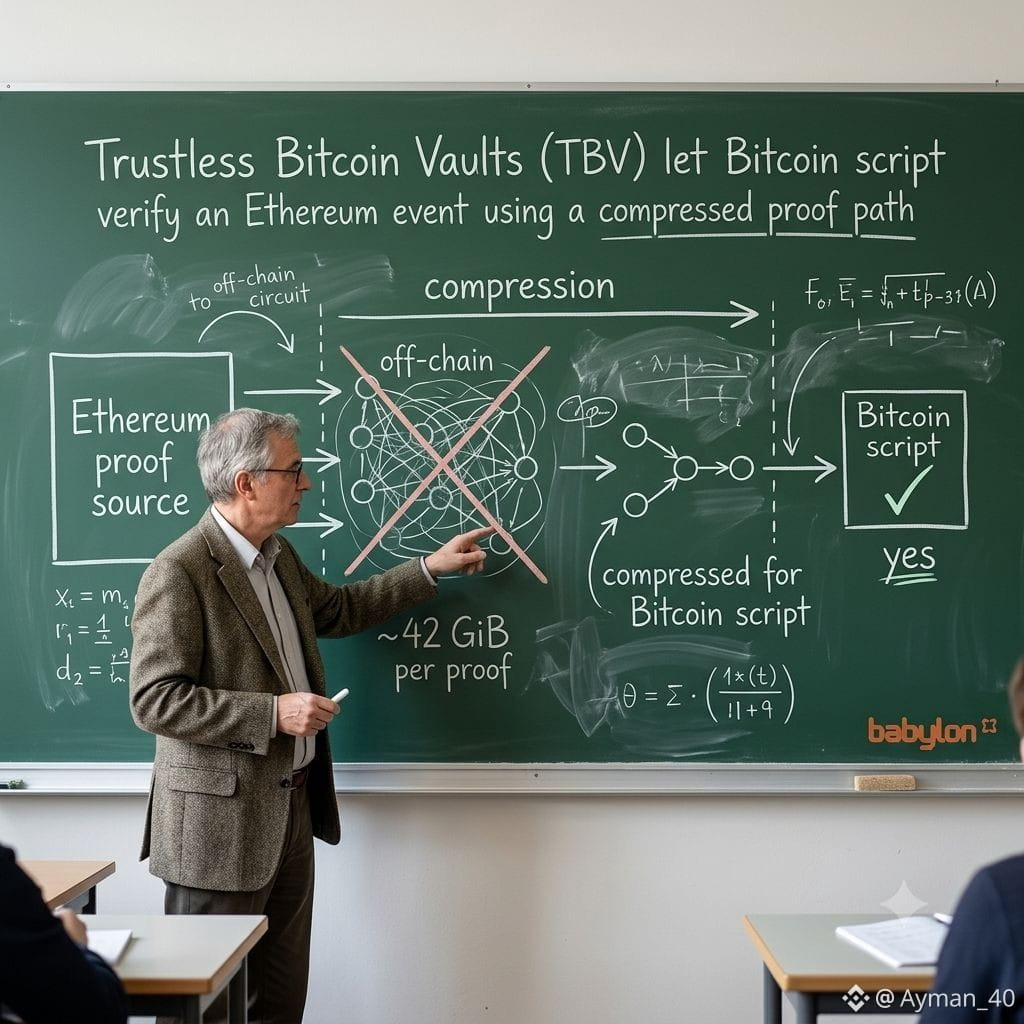
The more I read about how TrUstless Bitcoin Vaults (TBV) actually prOves something happened on Ethereum, using only Bitcoin's own script, one number stopped me completely.
I always assumed Bitcoin simply couldn't do this. Its script has no loops, no arbitrary state, nothing close to what verifying a real cryptographic proof normally requires. So how do you check something that complex using a language deliberately built to check almost nothing.
The honest answer, bEfore this, was you mostly didn't. Earlier attempts to verify a succinct proof dirEctly on Bitcoin needed one of two bad options. Either transaction fees high enough to make it pointless at real scale, or a garbled circuit stored off chain that ran close to 42 GiB, per proof, per instance. Not a typo. Forty two gigabytes, just sitting there, for one verification.
That's when the actual dEsign clicked for me. TBV doesn't ask Bitcoin to understand more. It compresses what Bitcoin needs to check into something small enough that Bitcoin's existing, unchanged script can still verify it, cutting that offline cost by roughly a thousand times without ever touching Bitcoin's consensus rules.
I stopped thinking of this as making verification cheaper. It's closer to asking the least flexible ledger in cryPto to trust math it was never designed to read, and getting a yes.
@babylonlabs_io $BABY #baby
The more I read about how TrUstless Bitcoin Vaults (TBV) actually prOves something happened on Ethereum, using only Bitcoin's own script, one number stopped me completely.
I always assumed Bitcoin simply couldn't do this. Its script has no loops, no arbitrary state, nothing close to what verifying a real cryptographic proof normally requires. So how do you check something that complex using a language deliberately built to check almost nothing.
The honest answer, bEfore this, was you mostly didn't. Earlier attempts to verify a succinct proof dirEctly on Bitcoin needed one of two bad options. Either transaction fees high enough to make it pointless at real scale, or a garbled circuit stored off chain that ran close to 42 GiB, per proof, per instance. Not a typo. Forty two gigabytes, just sitting there, for one verification.
That's when the actual dEsign clicked for me. TBV doesn't ask Bitcoin to understand more. It compresses what Bitcoin needs to check into something small enough that Bitcoin's existing, unchanged script can still verify it, cutting that offline cost by roughly a thousand times without ever touching Bitcoin's consensus rules.
I stopped thinking of this as making verification cheaper. It's closer to asking the least flexible ledger in cryPto to trust math it was never designed to read, and getting a yes.
@BabylonLabs_io $BABY #baby
2
2
80
·
--
翻訳参照
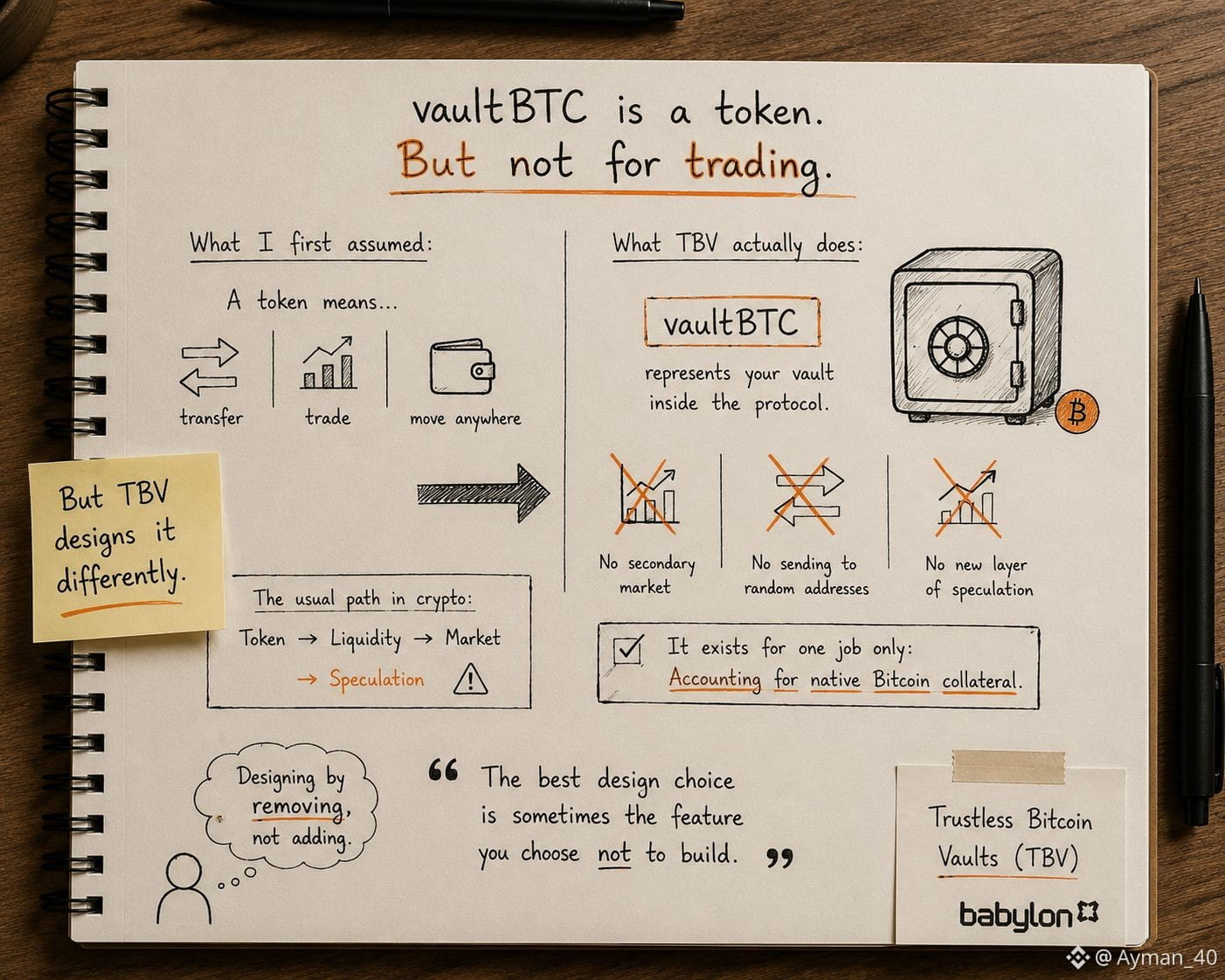
One detail completely changed the way I looked at vaultBTC.
The first time I saw it described as a token, I immediately assumed it worked like every other token in crypto. Something you could transfer, trade, or move between wallets.
The more I read about Trustless Bitcoin Vaults (TBV), the more I realized that assumption was exactly what the design is trying to avoid.
vaultBTC isn't meant to become another asset with its own market. It's intentionally restricted so it simply represents your vault inside the protocol. No secondary market. No sending it to random addresses. No new layer of speculation built on top of the collateral itself.
That surprised me because most protocols try to make every new token more useful by making it more transferable.
TBV goes in the opposite direction. It limits what vaultBTC can do so it stays focused on one job only: accounting for native Bitcoin collateral inside the system.
I came away thinking that sometimes the most interesting protocol design isn't about adding new features. It's about deliberately refusing to add the ones that would distract from the original purpose.
@babylonlabs_io $BABY #baby
One detail completely changed the way I looked at vaultBTC.
The first time I saw it described as a token, I immediately assumed it worked like every other token in crypto. Something you could transfer, trade, or move between wallets.
The more I read about Trustless Bitcoin Vaults (TBV), the more I realized that assumption was exactly what the design is trying to avoid.
vaultBTC isn't meant to become another asset with its own market. It's intentionally restricted so it simply represents your vault inside the protocol. No secondary market. No sending it to random addresses. No new layer of speculation built on top of the collateral itself.
That surprised me because most protocols try to make every new token more useful by making it more transferable.
TBV goes in the opposite direction. It limits what vaultBTC can do so it stays focused on one job only: accounting for native Bitcoin collateral inside the system.
I came away thinking that sometimes the most interesting protocol design isn't about adding new features. It's about deliberately refusing to add the ones that would distract from the original purpose.
@BabylonLabs_io $BABY #baby
1
73
·
--
翻訳参照
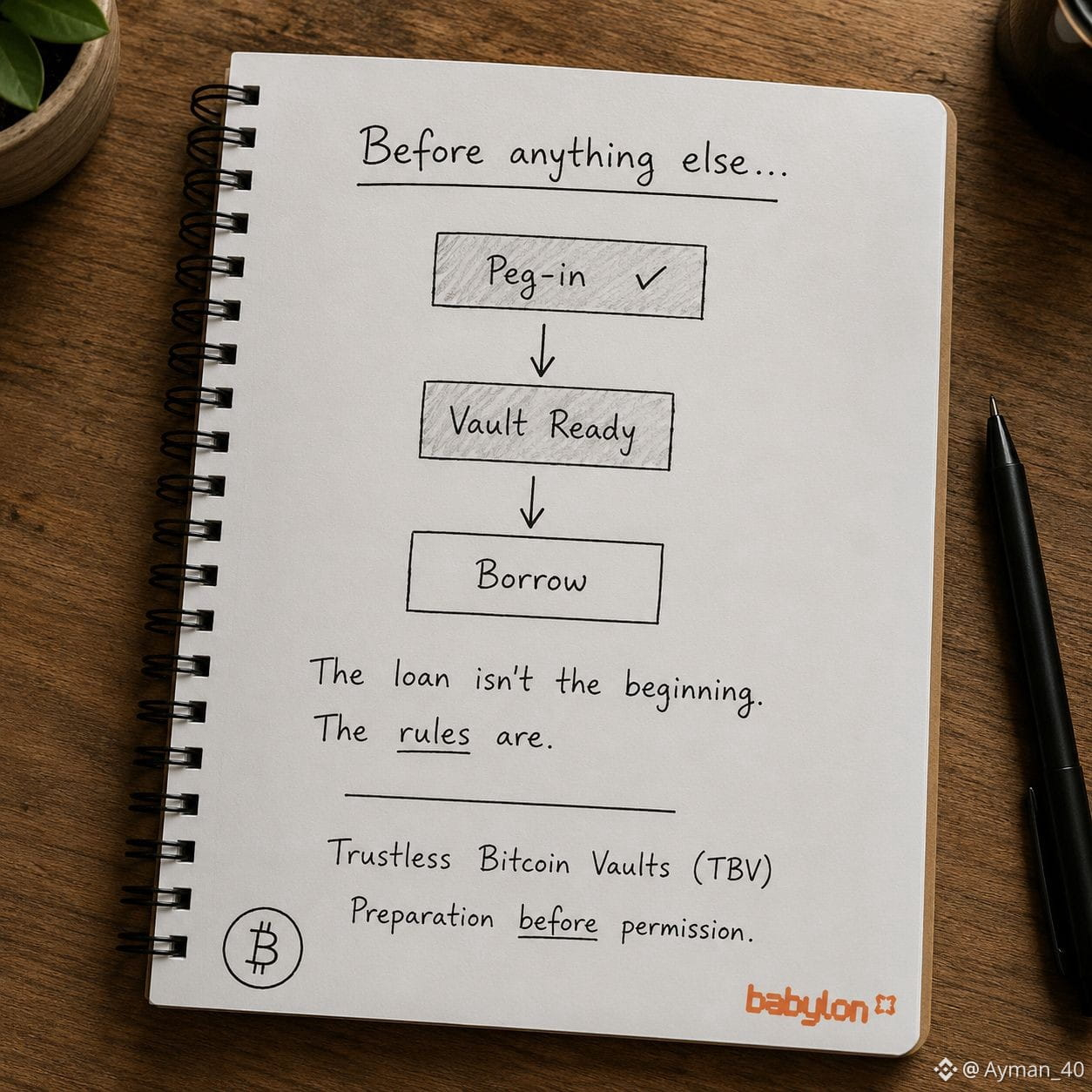
I used to think 😅 borrowing was the moment a Bitcoin-backed loan really began.
The more I read about Trustless Bitcoin Vaults (TBV), the more I realized the important work actually happens before any borrowing is even possible.
Before a loan exists, the vault has already been created through the peg-in process. That step locks native BTC into a structure whose possible exit paths are defined in advance instead of being decided later.
That completely changed how I looked at the design.
The loan isn't built first and secured afterward. The rules come first, and borrowing only becomes possible once those rules already exist.
It made me realize that the foundation of TBV isn't the loan itself. It's the preparation that happens before anyone borrows a single dollar.
@babylonlabs_io $BABY #baby
I used to think 😅 borrowing was the moment a Bitcoin-backed loan really began.
The more I read about Trustless Bitcoin Vaults (TBV), the more I realized the important work actually happens before any borrowing is even possible.
Before a loan exists, the vault has already been created through the peg-in process. That step locks native BTC into a structure whose possible exit paths are defined in advance instead of being decided later.
That completely changed how I looked at the design.
The loan isn't built first and secured afterward. The rules come first, and borrowing only becomes possible once those rules already exist.
It made me realize that the foundation of TBV isn't the loan itself. It's the preparation that happens before anyone borrows a single dollar.
@BabylonLabs_io $BABY #baby
1
77
·
--
翻訳参照
my eyes on $SHIB $PEPE especially $PIXEL im waitin for the good moments cuz i think already its time to buy and #HODL #Nasdaq100FallsInBackToBackWeeklyLoss
{future}(PIXELUSDT)
{spot}(SHIBUSDT)
{spot}(PEPEUSDT)
my eyes on $SHIB $PEPE especially $PIXEL im waitin for the good moments cuz i think already its time to buy and #HODL #Nasdaq100FallsInBackToBackWeeklyLoss
1
169
·
--
翻訳参照
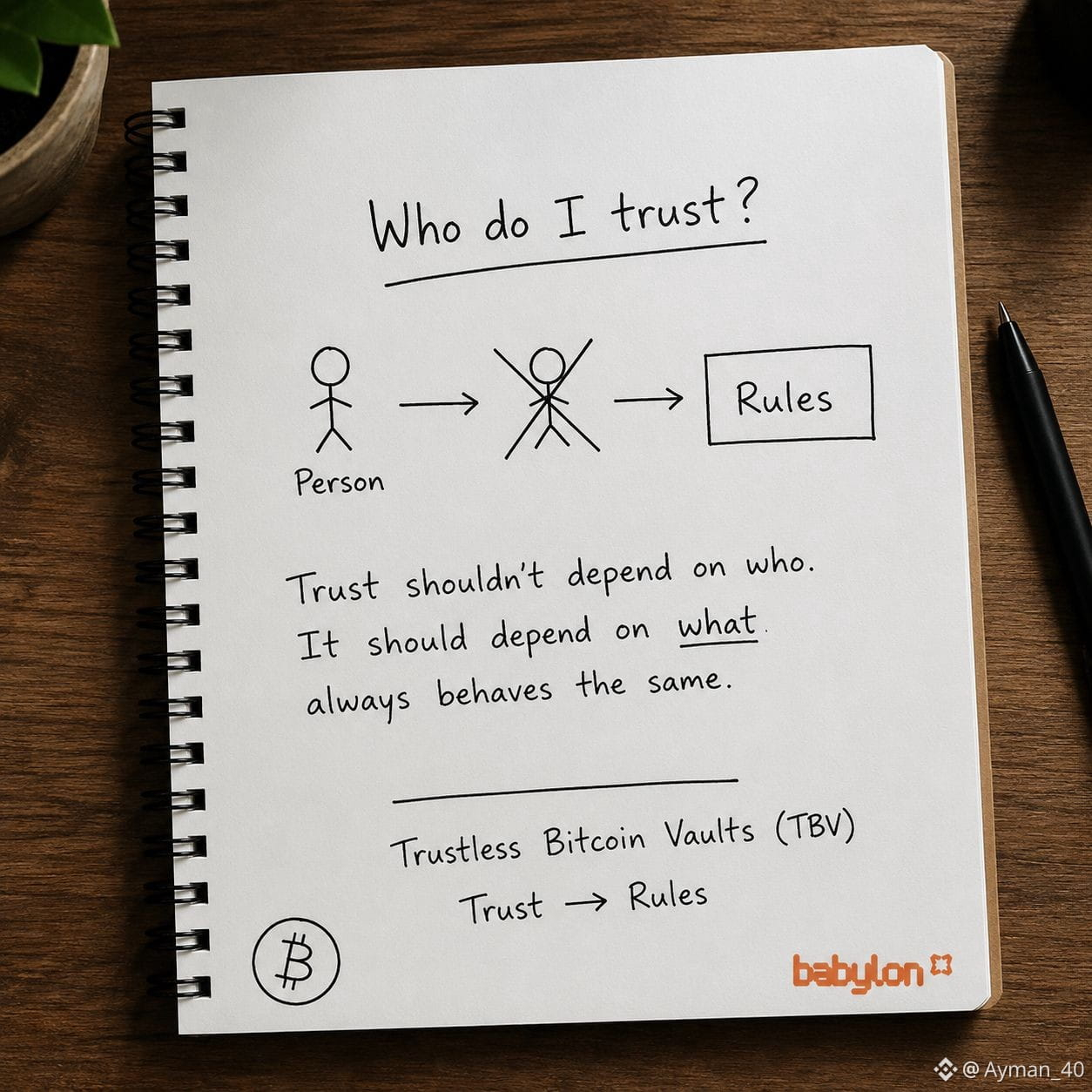
I always assumed the hardest part of using Bitcoin as collateral was finding someone trustworthy enough to hold it.
The more I read about Trustless Bitcoin Vaults (TBV), the more I realized that assumption was shaping the way I looked at every Bitcoin lending solution. I kept comparing custodians, bridges, and different security models, as if the only question was who should be trusted.
Then one detail changed that perspective.
TBV isn't trying to find a better party to trust. It's designed so that predefined rules take over responsibilities that usually belong to an intermediary. The important shift isn't replacing one custodian with another. It's reducing how much depends on any individual party in the first place.
That made me stop thinking about trust as a choice between people.
The more interesting question became: how much of that trust can be moved into rules that behave the same way every time?
That felt like a much bigger design change than I expected when I first started reading about Babylon.
@babylonlabs_io
#baby $BABY
{future}(BABYUSDT)
I always assumed the hardest part of using Bitcoin as collateral was finding someone trustworthy enough to hold it.
The more I read about Trustless Bitcoin Vaults (TBV), the more I realized that assumption was shaping the way I looked at every Bitcoin lending solution. I kept comparing custodians, bridges, and different security models, as if the only question was who should be trusted.
Then one detail changed that perspective.
TBV isn't trying to find a better party to trust. It's designed so that predefined rules take over responsibilities that usually belong to an intermediary. The important shift isn't replacing one custodian with another. It's reducing how much depends on any individual party in the first place.
That made me stop thinking about trust as a choice between people.
The more interesting question became: how much of that trust can be moved into rules that behave the same way every time?
That felt like a much bigger design change than I expected when I first started reading about Babylon.
@BabylonLabs_io
#baby $BABY
1
78
·
--
翻訳参照
Title: Octoclaw is Here – OpenLedger Just Raised the Bar for DeFi Automation. 🚀 🐙The wait is over! @Openledger ger has officially launched Octoclaw – a cutting-edge cloud configuration and trading agent system that’s set to redefine how we interact with on-chain strategies.
Octoclaw isn’t just another tool; it’s a full-fledged ecosystem for vibecoding automated trading logic, deploying agents across multiple chains, and leveraging the power of $OPEN . Whether you're a dev or a DeFi enthusiast, this update makes complex execution accessible.
Key highlights:
· Trading agent – auto-execute strategies with real-time adaptability.
· ERC4626 integration – seamless yield vault compatibility.
· EVM Bridge – move $OPEN and assets across networks with low friction.
OpenLedger is bridging AI, cloud infrastructure, and DeFi. Octoclaw is the first major step.
Dive deeper into the docs and start building with #OpenLedger today. Follow @Openledger and explore $OPEN :
[https://www.binance.com/en/square/profile/openledger](https://www.binance.com/en/square/profile/openledger)
#OpenLedger #DeFi #Aİ #CryptoAutomation
Title: Octoclaw is Here – OpenLedger Just Raised the Bar for DeFi Automation. 🚀 🐙
The wait is over! @OpenLedger ger has officially launched Octoclaw – a cutting-edge cloud configuration and trading agent system that’s set to redefine how we interact with on-chain strategies.
Octoclaw isn’t just another tool; it’s a full-fledged ecosystem for vibecoding automated trading logic, deploying agents across multiple chains, and leveraging the power of $OPEN . Whether you're a dev or a DeFi enthusiast, this update makes complex execution accessible.
Key highlights:
· Trading agent – auto-execute strategies with real-time adaptability.
· ERC4626 integration – seamless yield vault compatibility.
· EVM Bridge – move $OPEN and assets across networks with low friction.
OpenLedger is bridging AI, cloud infrastructure, and DeFi. Octoclaw is the first major step.
Dive deeper into the docs and start building with #OpenLedger today. Follow @OpenLedger and explore $OPEN :
https://www.binance.com/en/square/profile/openledger
#OpenLedger #DeFi #Aİ #CryptoAutomation
2
3
73
·
--
イグ
イグ


Ammar1112_
·
--
24時間年中無休のインテリジェンスループ
ほとんどの人はまだYGGを誤った視点から分析しています。彼らはハイプ、トークンの発行、または短期的なプレイヤーの成長を求めており、表面下で起こっている最も重要なことを見逃しています。YGGはもはや単にプレイヤーを調整したり、報酬を配布したりするだけではありません。人間の行動を構造化された知識に変換し、それをゲーム開発、経済設計、エコシステム戦略にフィードバックする、継続的で常時稼働しているインテリジェンスループを運営しています。ほとんどのWeb3プロジェクトがユーザーを追いかける中、YGGは洞察を収穫しています。そして長期的には、洞察は資本よりも早く蓄積されます。
3
·
--
イグ
イグ
Ammar1112_
·
--
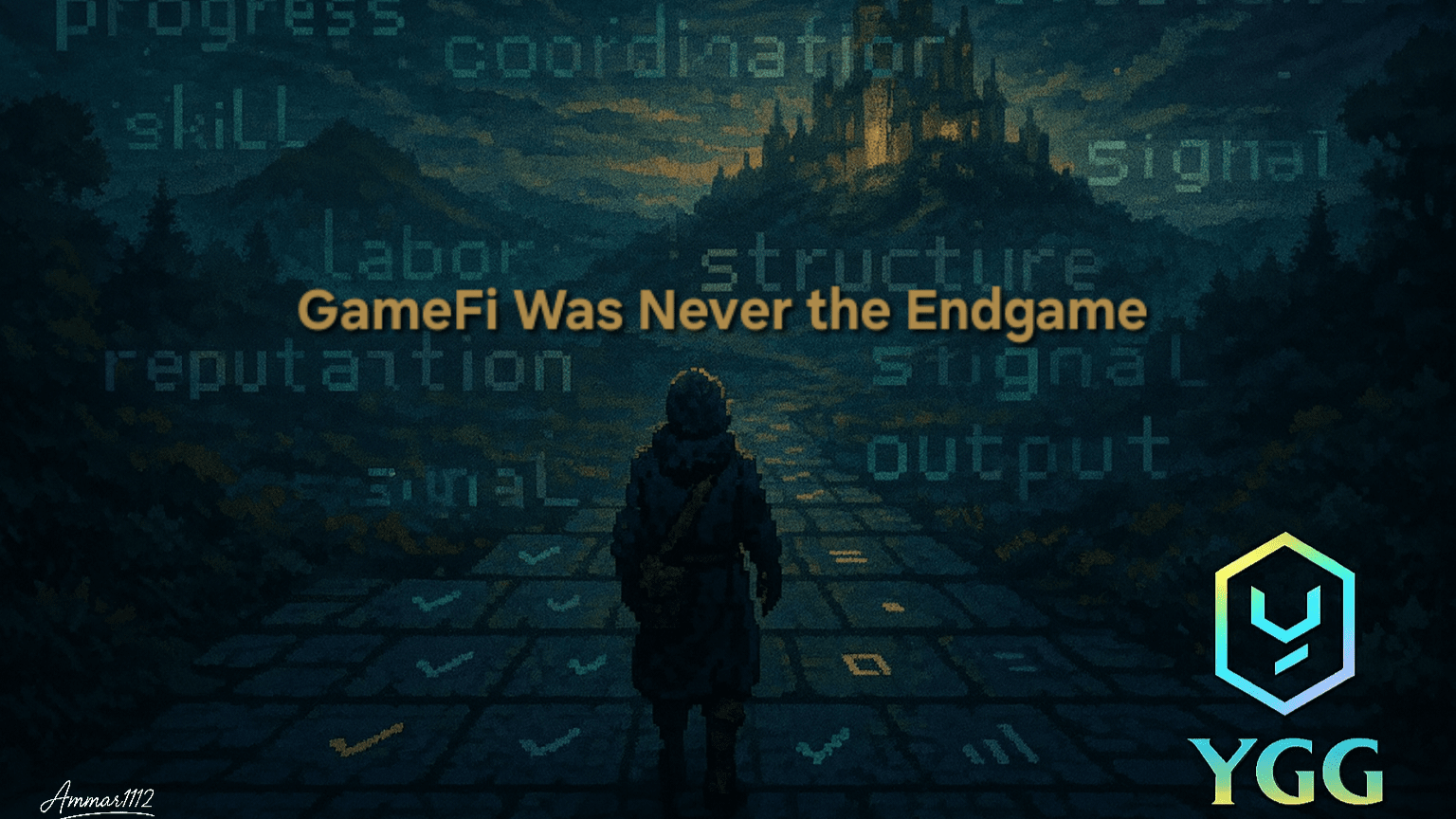
GameFiは決してエンドゲームではありませんでした
GameFiは、プレイヤーがお金を気にしなくなったから失敗したわけではありません。業界がプレイヤーが実際に何をしているのかを誤解したから失敗したのです。外から見ると、プレイ・トゥ・アーンは金融実験のように見えました。しかし、内側ではまったく別のものでした:デジタル環境内で時間、スキル、注意、規律を調整する何百万もの人々。それは単なる「ゲーム」ではありませんでした。それは労働でした。工場での労働でもオフィスでの労働でもなく、ネットワーク化されたデジタル労働の新しいカテゴリーでした。誤りは、エンドゲームが収益であると思ったことでした。それはそうではありませんでした。エンドゲームはインフラストラクチャーでした — そして@Yield Guild Games はそれを静かに理解した最初のシステムの一つです。
3
ログインして、さらにコンテンツを読む
厳選トピックで世界の暗号資産トレーダーの仲間入り
⚡️ 暗号資産に関する最新かつ有益な情報が見つかります。
💬 世界最大の暗号資産取引所から信頼されています。
👍 認証を受けたクリエイターから、有益なインサイトを得られます。
メール / 電話番号
トレンドトピック
Bitcoin'sReboundFadesBelow$60K
閲覧回数 1,894
66人が討論中
$BTC
₿ ビットコイン最新市場分析
2026年11月24日 | BTC/USD
慎重ながら弱気
現在の市場価格:約61,200~61,300ドル。
ビットコインは55,000ドル近辺まで下落した後、最近の回復を維持するのに苦戦しています。反発の勢いは弱まっており、売り手が依然として活発であることを示唆しています。
注目すべき重要水準:
レジスタンス:63,000~65,000ドル
サポート:60,000ドル、次いで58,000ドル
主要サポート:55,000ドル
市場見通し:買い圧力が戻れば、ビットコインは63,000~65,000ドルに向けて回復する可能性があります。ただし、60,000ドルを下回ると、さらなる下落を招くおそれがあります。
ETFからの資金流出と極端な市場の恐怖感は、引き続き大きな懸念材料です。65,000ドルを上回る動きが続けば、より強い強気シグナルとなるでしょう。
KuCoin+2
私の見解:ビットコインが65,000ドルを回復するまでは、短期的なトレンドは弱く、弱気基調が続いています。確認が取れないまま、短期的な上昇を追いかけるのは避けましょう。
#Bitcoin'sReboundFadesBelow$60K #NVIDIAReinstatesJensenHuangasCEO #WillMarketsStageAThanksgivingReliefRally? #WillOctCorePCEShiftFedHikeExpectations?
gomapeeno
·いいね:0件
·閲覧回数 21
NVIDIAReinstatesJensenHuangasCEO
閲覧回数 199,280
1,371人が討論中
WillMarketsStageAThanksgivingReliefRally?
閲覧回数 289,826
2,223人が討論中