
ILIQ69
208 投稿

ILIQ69
39 フォロー
54 フォロワー
240 いいね
投稿
翻訳参照
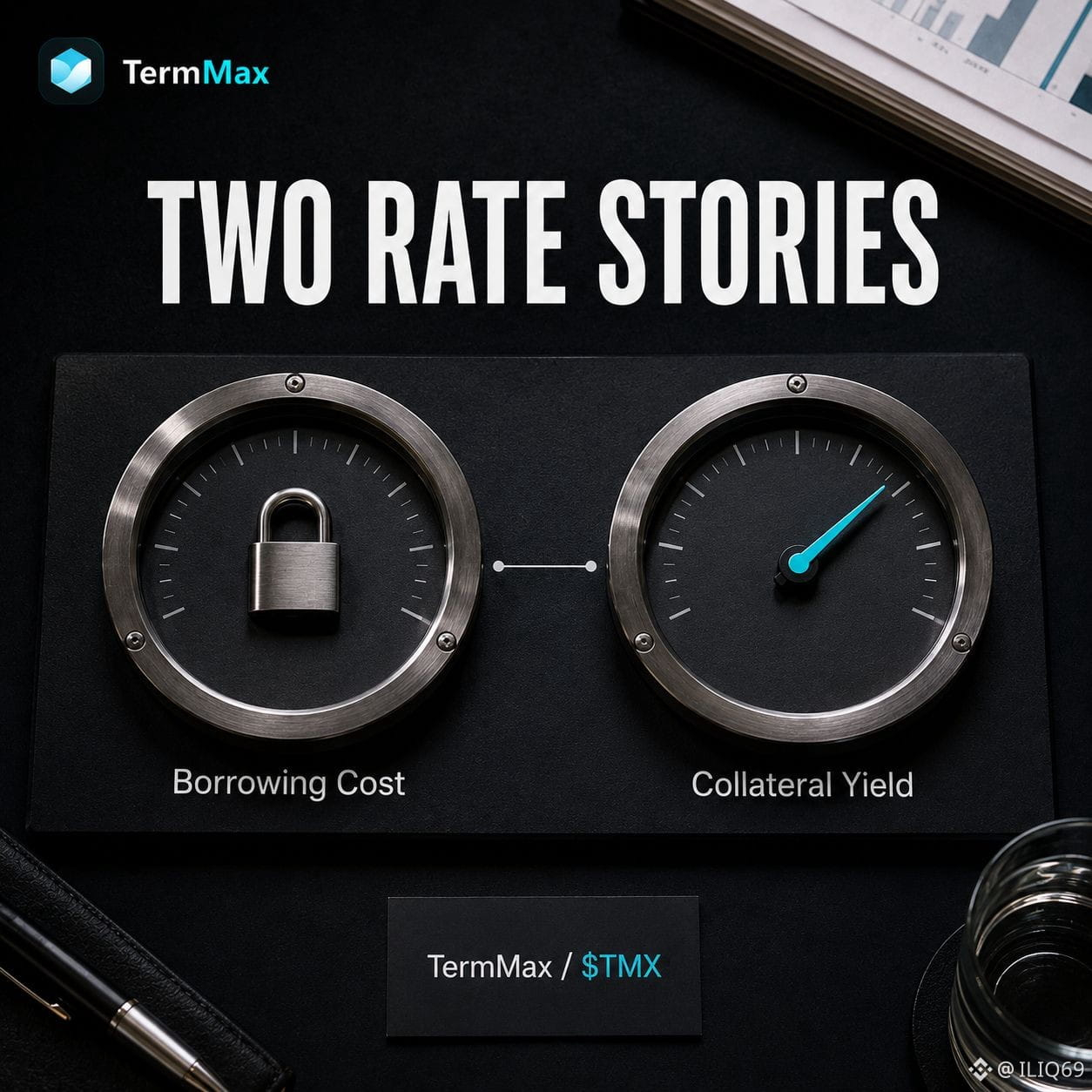
A fixed borrowing rate does not automatically mean the whole position has a fixed outcome. That distinction becomes clearer when yield-bearing collateral enters the picture.
TermMax documentation says the borrowing rate can stay fixed while the income from collateral depends on what that collateral is. A fixed-rate asset such as a PT can have fixed income, while collateral with a floating yield can keep moving with the market.
So I would separate the position into two questions: what is my known cost of borrowing, and what is the return behavior of the asset I locked? Calling both sides “fixed” would hide the part that can still change.
Which part would you separate first when assessing a yield-bearing position?
@TermMax #TermMax
TermMax documentation says the borrowing rate can stay fixed while the income from collateral depends on what that collateral is. A fixed-rate asset such as a PT can have fixed income, while collateral with a floating yield can keep moving with the market.
So I would separate the position into two questions: what is my known cost of borrowing, and what is the return behavior of the asset I locked? Calling both sides “fixed” would hide the part that can still change.
Which part would you separate first when assessing a yield-bearing position?
@TermMax #TermMax
Borrowing cost
0%
Collateral yield
0%
LTV risk
0%
All three together
0%
0 投票 • 投票は終了しました
翻訳参照
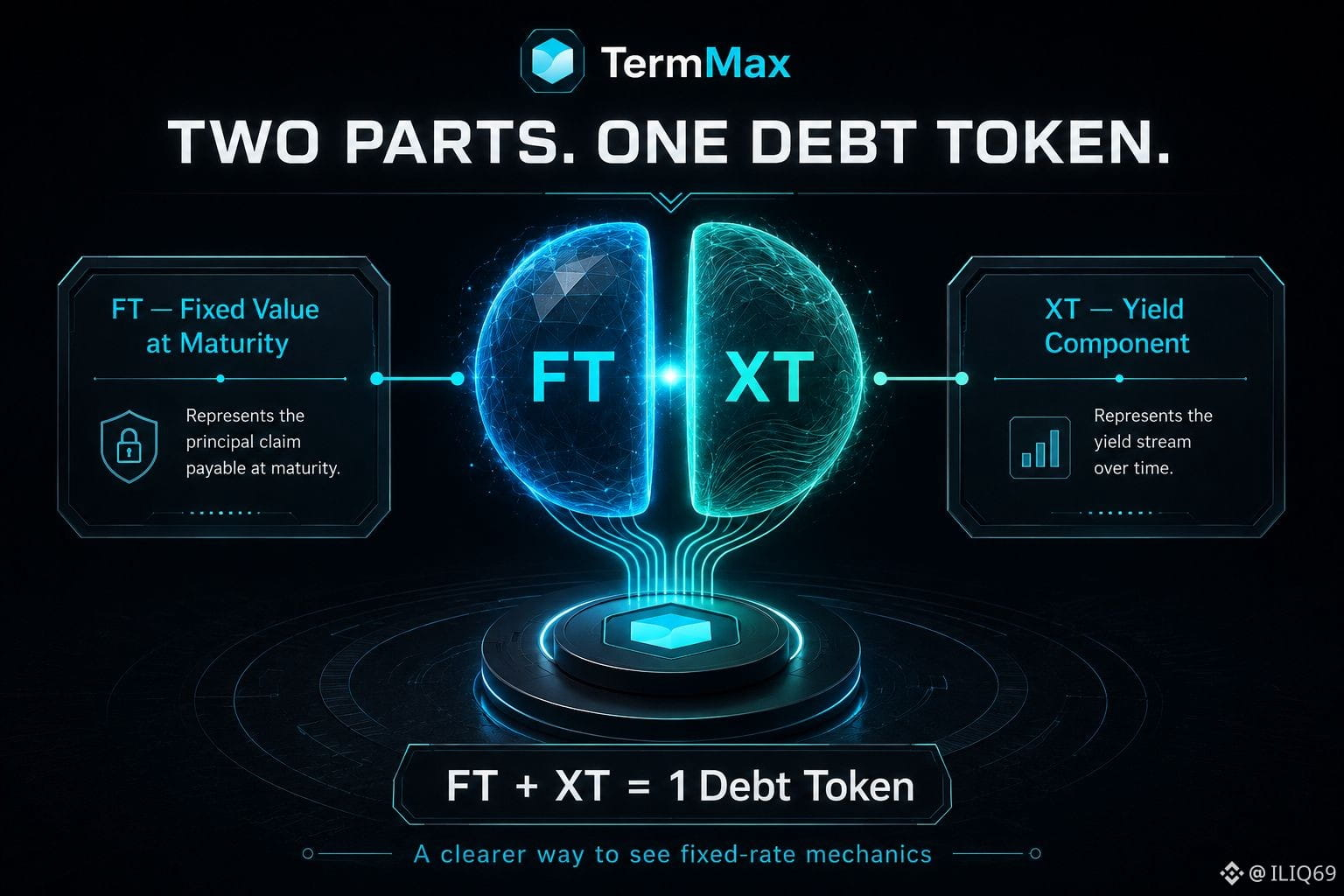
The FT and XT structure on @TermMax looked technical to me at first. Then I stopped trying to memorize acronyms and used a simpler mental model.
One debt token can be represented by two connected pieces: FT + XT. The FT carries the fixed-value claim at maturity, while XT represents the other side of that value before maturity. Together, they make the original debt token whole.
I like systems that make the economics visible instead of hiding everything inside one black-box balance. It does not remove risk or make the process “easy money,” but it gives lenders and borrowers a clearer way to see how fixed yield and borrowing cost are formed.
Which part of the FT + XT model would you want explained with a real example?
@TermMax #TermMax
One debt token can be represented by two connected pieces: FT + XT. The FT carries the fixed-value claim at maturity, while XT represents the other side of that value before maturity. Together, they make the original debt token whole.
I like systems that make the economics visible instead of hiding everything inside one black-box balance. It does not remove risk or make the process “easy money,” but it gives lenders and borrowers a clearer way to see how fixed yield and borrowing cost are formed.
Which part of the FT + XT model would you want explained with a real example?
@TermMax #TermMax
How FT earns yield
0%
What XT represents
0%
Why they equal one asset
0%
The borrower flow
0%
0 投票 • 投票は終了しました
翻訳参照
The part of a trade I want to understand before buying is the exit path.
Binance explains that eligible users can convert between a supported direct stock and the corresponding bStock at a 1:1 ratio with no conversion fee. It also notes that conversion can be paused temporarily for corporate-action processing or maintenance. That is useful, but it is not a reason to skip the details.
For me, the practical takeaway is simple: eligibility, product terms, and operational timing matter before I need them — not after I have already built a position. And because a bStock is a certificate structure rather than direct share ownership, I should understand what I hold before making any conversion plan.
That is not the most exciting part of trading, but it is the part that makes the rest feel more deliberate.
Would you check conversion and eligibility rules before buying a bStock?
#bstockscis @BinanceCIS #bStocksCIS $EWYB
Binance explains that eligible users can convert between a supported direct stock and the corresponding bStock at a 1:1 ratio with no conversion fee. It also notes that conversion can be paused temporarily for corporate-action processing or maintenance. That is useful, but it is not a reason to skip the details.
For me, the practical takeaway is simple: eligibility, product terms, and operational timing matter before I need them — not after I have already built a position. And because a bStock is a certificate structure rather than direct share ownership, I should understand what I hold before making any conversion plan.
That is not the most exciting part of trading, but it is the part that makes the rest feel more deliberate.
Would you check conversion and eligibility rules before buying a bStock?
#bstockscis @BinanceCIS #bStocksCIS $EWYB

Always before buying
50%
Only for a large position
0%
Only when I need it
50%
I did not know this existed
0%
2 投票 • 投票は終了しました
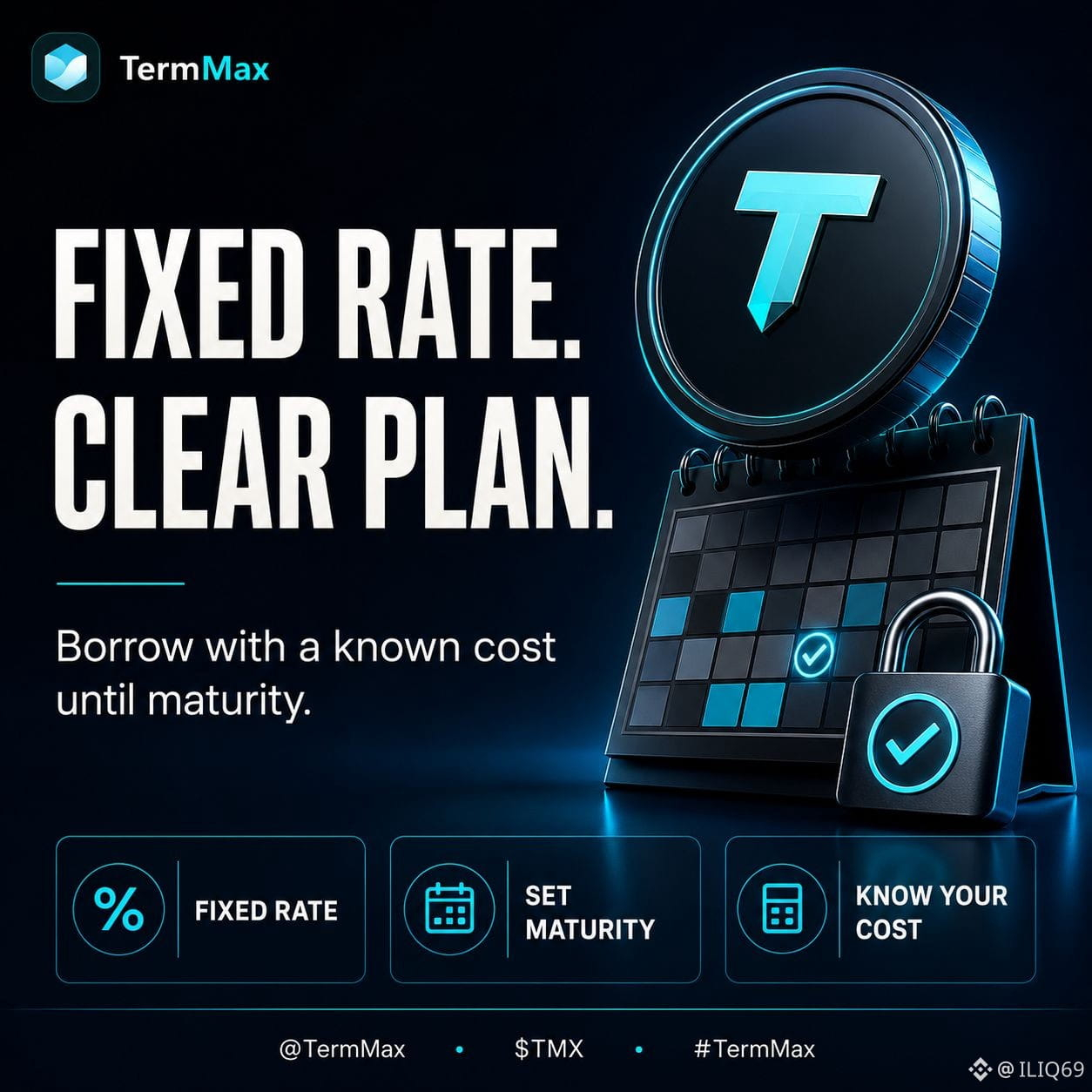
@TermMax 利子のことを考えていたら、DeFiの借り入れは小さな事業の予算を立てるようなものだと感じました。私はある程度のコストなら受け入れられますが、計画自体は同じままでコストだけが動いてしまうものは扱いづらいです。
固定金利で満期も固定なら、最初から問いは分かっています。つまり、この借り入れコストは、私が買おうとしている時間に見合うのか? これは、APYウィジェットを約束のように扱うよりも、より正直な考え方だと思います。
それでもトレードオフは重要です。後で変動金利が下がれば、固定金利のほうが魅力が薄く見えることもありますし、担保もあなたに不利に動く可能性があります。とはいえ、毎日ダッシュボードを更新し続けるのではなく、意図した決断をすることが目的なら、不確実性の少なさには価値があります。
借り入れであなたをより助けるのは、分かっている金利か、それとも最大限の柔軟性のどちらでしょう?
@TermMax #TermMax
固定金利で満期も固定なら、最初から問いは分かっています。つまり、この借り入れコストは、私が買おうとしている時間に見合うのか? これは、APYウィジェットを約束のように扱うよりも、より正直な考え方だと思います。
それでもトレードオフは重要です。後で変動金利が下がれば、固定金利のほうが魅力が薄く見えることもありますし、担保もあなたに不利に動く可能性があります。とはいえ、毎日ダッシュボードを更新し続けるのではなく、意図した決断をすることが目的なら、不確実性の少なさには価値があります。
借り入れであなたをより助けるのは、分かっている金利か、それとも最大限の柔軟性のどちらでしょう?
@TermMax #TermMax
A known rate
0%
Maximum flexibility
0%
A mix of both
0%
Not borrowing now
0%
0 投票 • 投票は終了しました
翻訳参照
There is a useful tension in bStocks that I do not see discussed enough: the market can be open 24/7, while the underlying company still tells its business story on a normal reporting calendar.
With $NVDAB , a price can move at any hour on Binance Spot. But a serious research process still needs the company’s results, guidance, product cycle, customer demand, and risks. A live chart can show that attention changed; it cannot explain whether the business thesis improved.
So I am trying to separate two activities. One is watching the market. The other is reading the company. The first is fast and emotional; the second is slower and usually more useful.
That distinction is what keeps 24/7 access from becoming 24/7 noise for me.
What do you read first when a company publishes results?
#bstockscis @BinanceCIS #bStocksCIS $NVDAB
With $NVDAB , a price can move at any hour on Binance Spot. But a serious research process still needs the company’s results, guidance, product cycle, customer demand, and risks. A live chart can show that attention changed; it cannot explain whether the business thesis improved.
So I am trying to separate two activities. One is watching the market. The other is reading the company. The first is fast and emotional; the second is slower and usually more useful.
That distinction is what keeps 24/7 access from becoming 24/7 noise for me.
What do you read first when a company publishes results?
#bstockscis @BinanceCIS #bStocksCIS $NVDAB

Revenue and earnings
100%
Forward guidance
0%
Management commentary
0%
I wait for analysis
0%
1 投票 • 投票は終了しました
翻訳参照
One bStocks habit I am trying to build is boring on purpose: I do not confuse a market being open with a trade automatically being a good idea.
$SPCXB can trade on Binance Spot around the clock. That is useful, especially when a traditional exchange is closed. But “available to trade” is not the same as “I should rush in with a market order.” Before entering, I want to look at the live order book, decide the maximum price I am comfortable paying, and size the position before emotion takes over.
That is not a prediction about SpaceX. It is an execution rule for any 24/7 asset: convenience should make me more prepared, not more impulsive.
The best trade I avoid may be the one I nearly made because a chart looked exciting at midnight.
When you trade an always-open market, which rule helps you most?
#bstockscis @BinanceCIS #bStocksCIS $SPCXB
$SPCXB can trade on Binance Spot around the clock. That is useful, especially when a traditional exchange is closed. But “available to trade” is not the same as “I should rush in with a market order.” Before entering, I want to look at the live order book, decide the maximum price I am comfortable paying, and size the position before emotion takes over.
That is not a prediction about SpaceX. It is an execution rule for any 24/7 asset: convenience should make me more prepared, not more impulsive.
The best trade I avoid may be the one I nearly made because a chart looked exciting at midnight.
When you trade an always-open market, which rule helps you most?
#bstockscis @BinanceCIS #bStocksCIS $SPCXB

Use limit orders
0%
Check the order book
67%
Set a position size first
0%
Wait for the main session
33%
3 投票 • 投票は終了しました
確認済み
翻訳参照
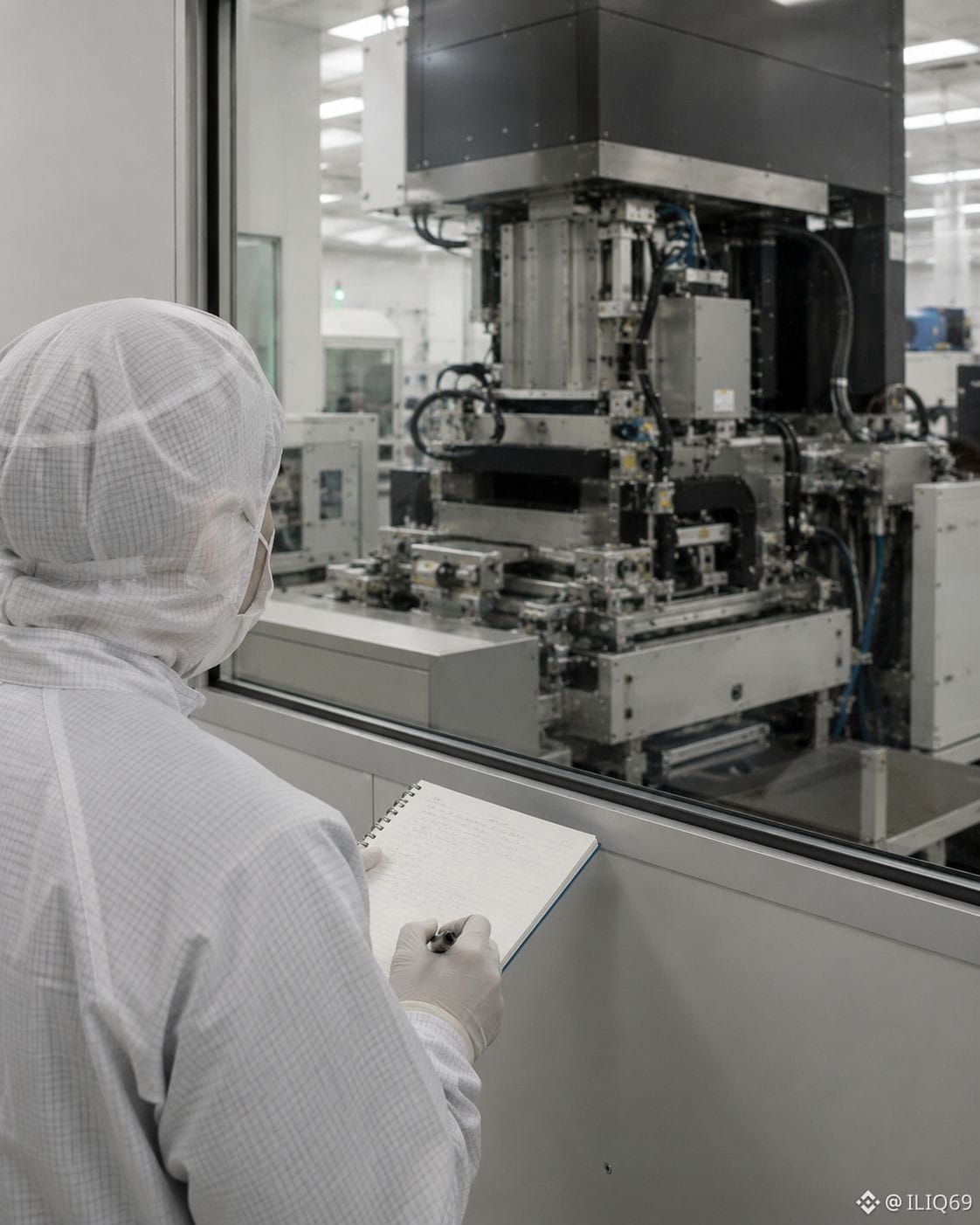
The easy AI narrative is “buy the company that designs the fastest chip.” $ASMLB asks a different question: who makes the equipment that helps chipmakers manufacture advanced chips in the first place?
ASML designs and manufactures lithography machines, plus the software and services used by chipmakers in production. That puts its business further upstream than a familiar consumer-tech headline.
It also changes what I would research. I would not use the next smartphone launch as my whole thesis. I would look at customer capital spending, the manufacturing roadmap, and whether customers are taking delivery and using complex equipment effectively.
This is not a claim that one position is better than another. It is a reminder that “semiconductors” is a chain of very different businesses, each with its own bottlenecks.
Which part of the chip ecosystem interests you most?
#bstockscis @BinanceCIS #bStocksCIS $ASMLB
ASML designs and manufactures lithography machines, plus the software and services used by chipmakers in production. That puts its business further upstream than a familiar consumer-tech headline.
It also changes what I would research. I would not use the next smartphone launch as my whole thesis. I would look at customer capital spending, the manufacturing roadmap, and whether customers are taking delivery and using complex equipment effectively.
This is not a claim that one position is better than another. It is a reminder that “semiconductors” is a chain of very different businesses, each with its own bottlenecks.
Which part of the chip ecosystem interests you most?
#bstockscis @BinanceCIS #bStocksCIS $ASMLB
Chip design
29%
Manufacturing equipment
0%
Memory and storage
28%
Servers and systems
43%
7 投票 • 投票は終了しました
翻訳参照
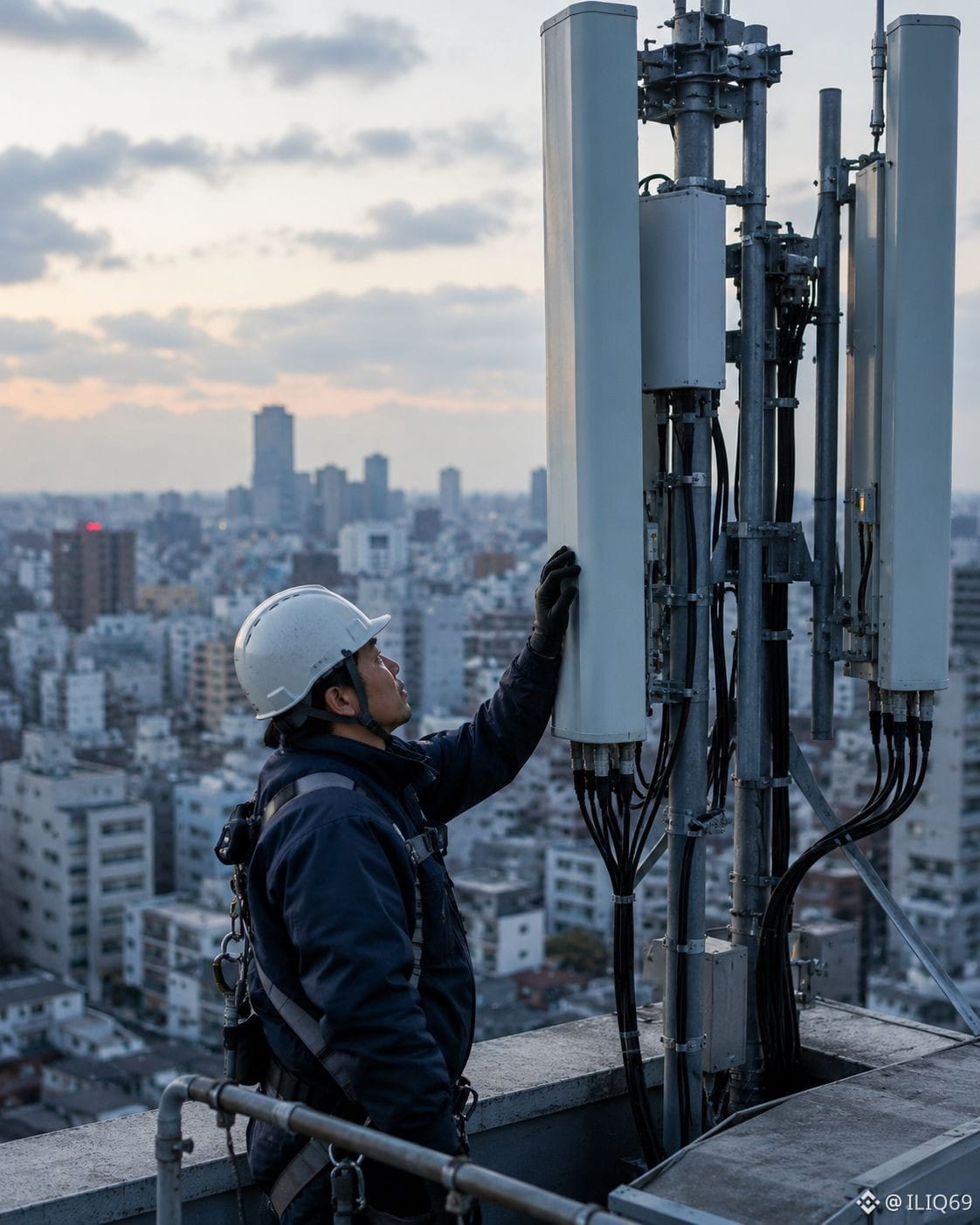
When I see Nokia mentioned, my first mental image is still an old phone. That is exactly why $NOKB makes for a useful research exercise.
Nokia describes itself as a B2B technology company working across mobile, fixed, and cloud networks, with customers that include service providers and enterprises. That means a quick consumer-product narrative misses the actual business lens.
If I were researching this ticker, I would care less about nostalgia and more about network investment cycles, customer contracts, technology standards, and how infrastructure spending converts into results. It is a quieter story than a viral gadget launch, but it is also a more accurate place to start.
The lesson is simple: before trading a familiar brand, ask what the company really sells today.
What would you check first when researching $NOKB ?
@BinanceCIS #bStocksCIS #bstockscis
Nokia describes itself as a B2B technology company working across mobile, fixed, and cloud networks, with customers that include service providers and enterprises. That means a quick consumer-product narrative misses the actual business lens.
If I were researching this ticker, I would care less about nostalgia and more about network investment cycles, customer contracts, technology standards, and how infrastructure spending converts into results. It is a quieter story than a viral gadget launch, but it is also a more accurate place to start.
The lesson is simple: before trading a familiar brand, ask what the company really sells today.
What would you check first when researching $NOKB ?
@BinanceCIS #bStocksCIS #bstockscis
Network customers
25%
5G and cloud strategy
50%
Financial results
0%
Competitive landscape
25%
4 投票 • 投票は終了しました
確認済み
私が $INTCB を調べていて一番好きなのは、「チップ企業」というラベルを捨てざるを得なくなる点です。あまりに曖昧で、役に立ちません。
Intel は、プロセッサーや関連する半導体ソリューションを設計して販売するプロダクト事業を報告しています。また、外部顧客にサービスを提供することを目指す製造・サービス事業として Intel Foundry もあります。これらはつながっていますが、必要な根拠(見どころ)が異なります。
プロダクト側では、需要や競争力を見ていくでしょう。ファウンドリ側では、製造実行(マニュファクチャリング・エクセキューション)、顧客の信頼、そして外部需要が実際に育っているかどうかを問いかけます。これら両方を単に「AI エクスポージャー」と呼ぶのは、説明以上に隠してしまいます。
これが私の好きな bStock の調査タイプです。予測ではなく、そのティッカーが何を表しているのかをより良い地図にしてくれる。
あなたは、まず $INTCB のどの話から調べますか?
#bstockscis @BinanceCIS #bStocksCIS $INTCB
Intel は、プロセッサーや関連する半導体ソリューションを設計して販売するプロダクト事業を報告しています。また、外部顧客にサービスを提供することを目指す製造・サービス事業として Intel Foundry もあります。これらはつながっていますが、必要な根拠(見どころ)が異なります。
プロダクト側では、需要や競争力を見ていくでしょう。ファウンドリ側では、製造実行(マニュファクチャリング・エクセキューション)、顧客の信頼、そして外部需要が実際に育っているかどうかを問いかけます。これら両方を単に「AI エクスポージャー」と呼ぶのは、説明以上に隠してしまいます。
これが私の好きな bStock の調査タイプです。予測ではなく、そのティッカーが何を表しているのかをより良い地図にしてくれる。
あなたは、まず $INTCB のどの話から調べますか?
#bstockscis @BinanceCIS #bStocksCIS $INTCB

Consumer and data-center chips
25%
Intel Foundry
0%
Manufacturing execution
25%
All of the above
50%
4 投票 • 投票は終了しました
確認済み
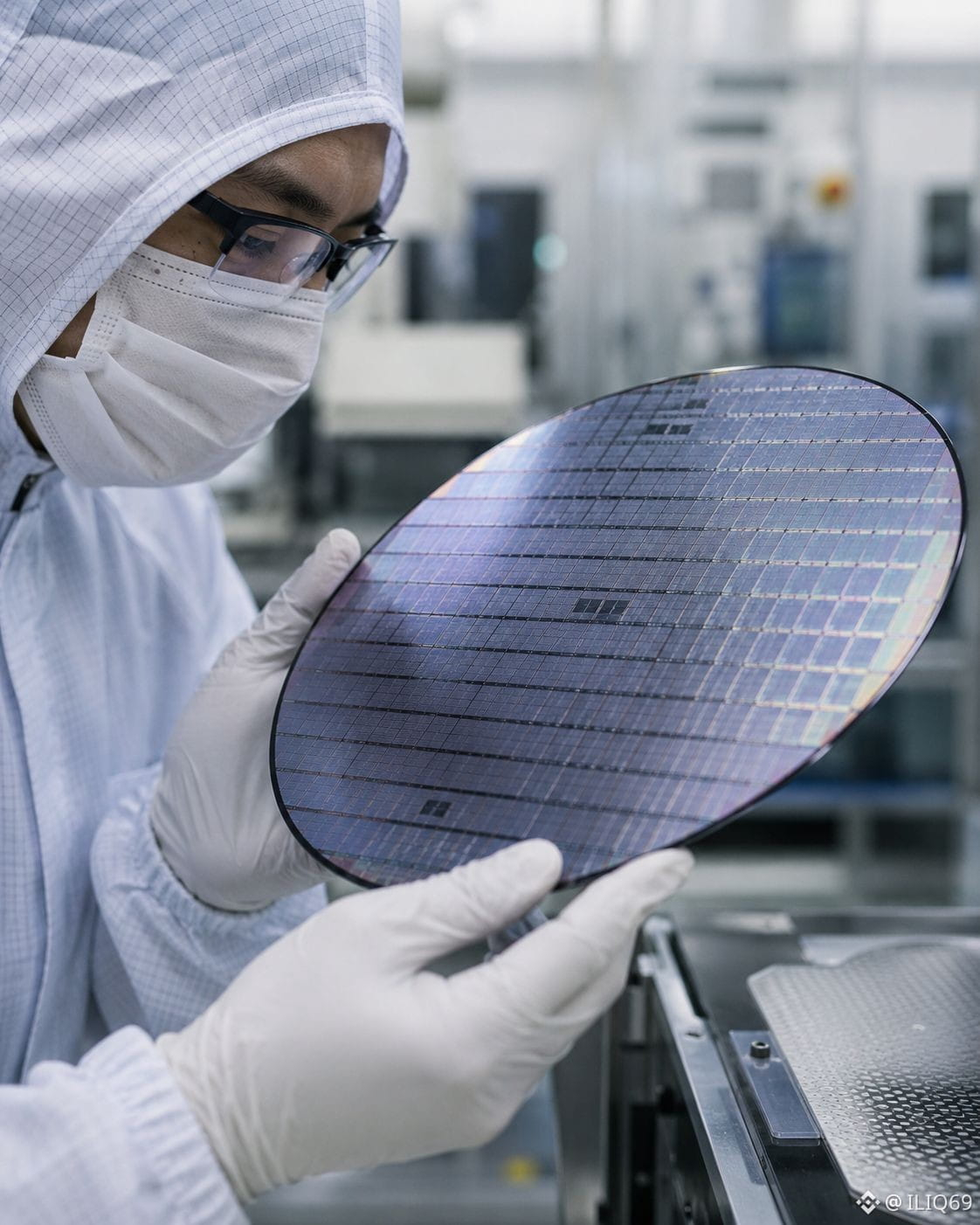
AIの議論は通常、計算を行うチップから始まります。私は、データをシステム内で動かし続けるために使われるメモリにも、より注意を払うようになりました。
Micron社自身の製品ラインにはDRAM、NAND、NORのメモリおよびストレージ製品が含まれます。だからといって、「$MUB 」が“AI関連の取引”への近道になるわけではありません。むしろ、より明確な研究課題が見えてきます――この会社が実際にどの部分の計算スタックに曝されているのか、そして需要がより良いビジネス成果につながるために何がうまくいく必要があるのか、という点です。
この違いは重要です。AIに関する強い見出しは、あるセクター全体を押し上げることがあります。一方で、メモリの経済性は、供給、製品ミックス、顧客需要、そして実行(テキューション)に左右される場合があります。
ですから私は、AIの見出しのそばに表示されているという理由だけでティッカーを買うよりも、まずこの会社がシステムの中で担う役割を理解したいのです。
$MUB を見る前に、まず何を調べますか?
@BinanceCIS #bStocksCIS #bstockscis
Micron社自身の製品ラインにはDRAM、NAND、NORのメモリおよびストレージ製品が含まれます。だからといって、「$MUB 」が“AI関連の取引”への近道になるわけではありません。むしろ、より明確な研究課題が見えてきます――この会社が実際にどの部分の計算スタックに曝されているのか、そして需要がより良いビジネス成果につながるために何がうまくいく必要があるのか、という点です。
この違いは重要です。AIに関する強い見出しは、あるセクター全体を押し上げることがあります。一方で、メモリの経済性は、供給、製品ミックス、顧客需要、そして実行(テキューション)に左右される場合があります。
ですから私は、AIの見出しのそばに表示されているという理由だけでティッカーを買うよりも、まずこの会社がシステムの中で担う役割を理解したいのです。
$MUB を見る前に、まず何を調べますか?
@BinanceCIS #bStocksCIS #bstockscis
Memory product mix
50%
Demand outlook
25%
Supply conditions
0%
Earnings report
25%
4 投票 • 投票は終了しました
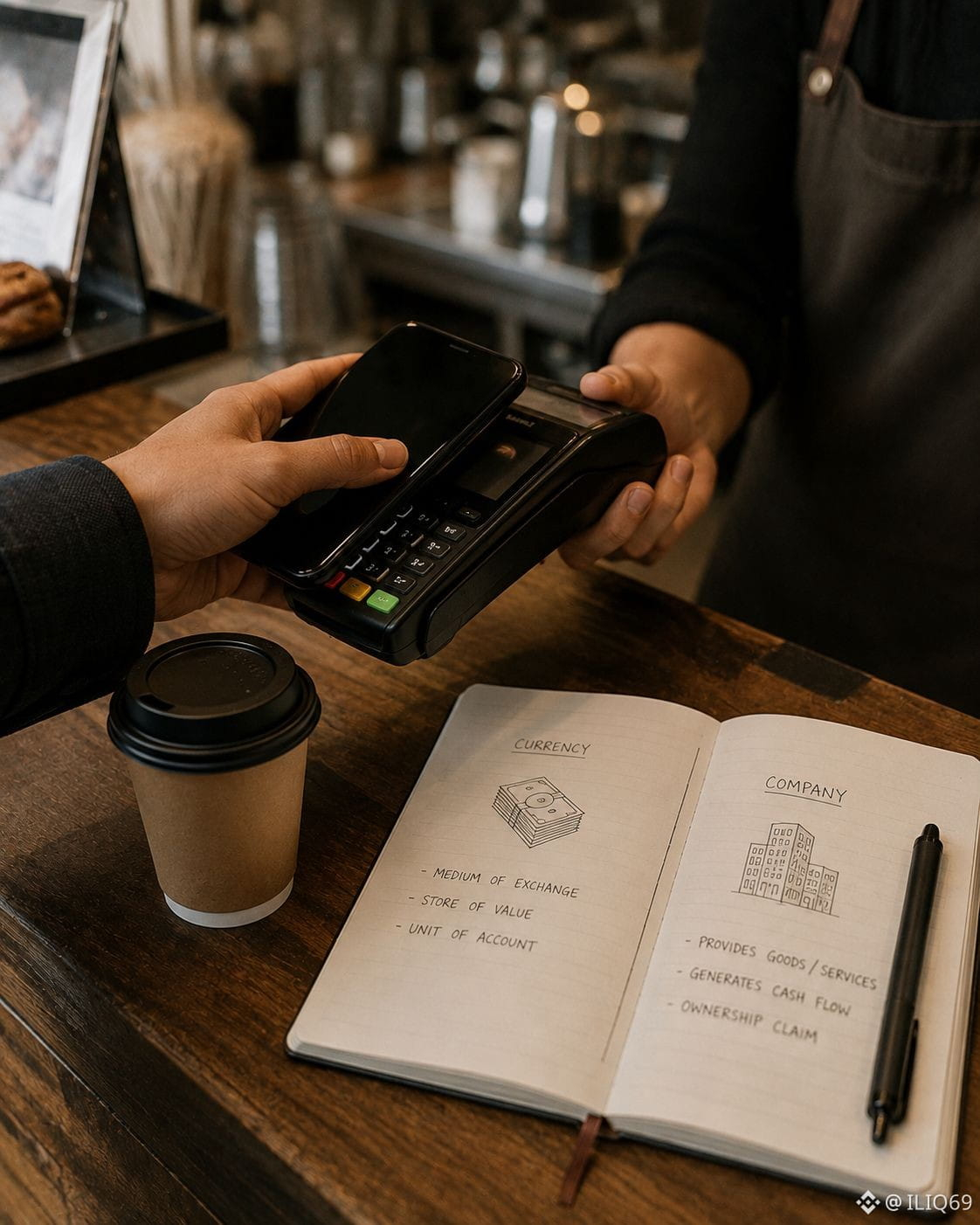
「ステーブルコイン」という名前は、危険な思考の近道を生みかねません。
USDCは1ドルとのペッグを維持するよう設計されています。$CRCLB は、bStockの仕組みを通じてサークル社へのエクスポージャーです。これらはまったく別のものです。ひとつは価格を安定させることを目的としていますが、もうひとつは株式(エクイティ)連動型の金融商品であり、その価値は会社の収益モデル、導入(アダプション)、競争、規制、経費、市場の期待などに反応し得ます。
だからこそ、私は$CRCLB を「USDCの安全なバージョン」などとは決して呼びません。意味のあるつながりは、価格の安定ではなく、サークルがステーブルコインやブロックチェーンを基盤にした金融サービスのインフラを運営している点です。
私にとっての本当の問いは、ウォレットの中でそのステーブルコインを使うかどうかではなく、そのビジネスがどのようにお金を稼ぎ、成長し、支出しているかを理解できているかどうかです。
$CRCLB について、あなたなら最初にどのビジネスの推進要因を調べますか?
@BinanceCIS #bStocksCIS #bstockscis
USDCは1ドルとのペッグを維持するよう設計されています。$CRCLB は、bStockの仕組みを通じてサークル社へのエクスポージャーです。これらはまったく別のものです。ひとつは価格を安定させることを目的としていますが、もうひとつは株式(エクイティ)連動型の金融商品であり、その価値は会社の収益モデル、導入(アダプション)、競争、規制、経費、市場の期待などに反応し得ます。
だからこそ、私は$CRCLB を「USDCの安全なバージョン」などとは決して呼びません。意味のあるつながりは、価格の安定ではなく、サークルがステーブルコインやブロックチェーンを基盤にした金融サービスのインフラを運営している点です。
私にとっての本当の問いは、ウォレットの中でそのステーブルコインを使うかどうかではなく、そのビジネスがどのようにお金を稼ぎ、成長し、支出しているかを理解できているかどうかです。
$CRCLB について、あなたなら最初にどのビジネスの推進要因を調べますか?
@BinanceCIS #bStocksCIS #bstockscis
USDC adoption
43%
Reserve income
14%
Regulation
29%
Competition
14%
7 投票 • 投票は終了しました
確認済み
翻訳参照
Not every ticker deserves to be researched as if it were one company. $EWYB is a good reminder of that.
The underlying EWY fund is designed to track an index of South Korean equities. So the question is not only “Do I like this chart?” It is also: what country, sectors, currency exposure, and group of companies am I choosing through one position?
That feels more honest than calling any ETF “automatically diversified.” A basket can hold many companies and still be exposed to one market’s regulations, export cycle, technology weighting, and investor sentiment.
For a crypto-native portfolio, I find that interesting because it changes the conversation from picking a famous name to taking a deliberate country view. That is a very different decision.
Would you rather research one company deeply or take a country-basket view with $EWYB ?
@BinanceCIS #bStocksCIS $EWYB
The underlying EWY fund is designed to track an index of South Korean equities. So the question is not only “Do I like this chart?” It is also: what country, sectors, currency exposure, and group of companies am I choosing through one position?
That feels more honest than calling any ETF “automatically diversified.” A basket can hold many companies and still be exposed to one market’s regulations, export cycle, technology weighting, and investor sentiment.
For a crypto-native portfolio, I find that interesting because it changes the conversation from picking a famous name to taking a deliberate country view. That is a very different decision.
Would you rather research one company deeply or take a country-basket view with $EWYB ?
@BinanceCIS #bStocksCIS $EWYB

One company deeply
0%
Country basket
75%
Mix of both
25%
Still learning ETFs
0%
4 投票 • 投票は終了しました
翻訳参照
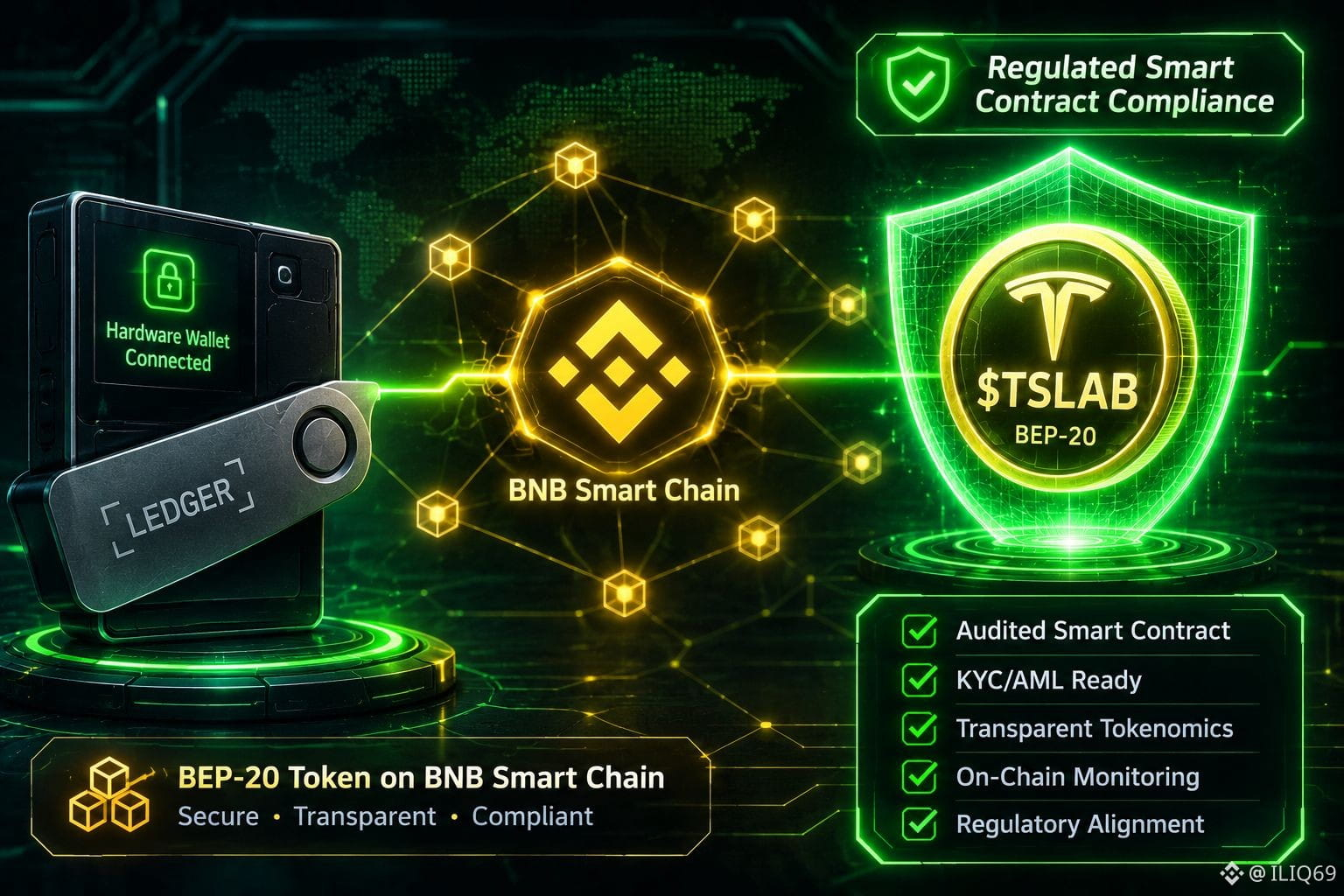
I withdrew my $TSLAB position to my personal BNB Smart Chain wallet yesterday, assuming it would behave like standard crypto. I was wrong, and understanding why is key for anyone trading RWA.
bStocks are issued as BEP-20 tokens by BTech Holdings under ADGM/FSRA regulation. While holding the private keys gives you user-controlled custody, the underlying smart contract retains regulatory transfer controls.
If an address conflicts with compliance, sanctions, or geographic restrictions, the contract can restrict or freeze the transfer.
What this means in practice:
1️⃣ Private Key Control: You own the signature and wallet custody. 2️⃣ Regulated Perimeter: The issuer enforces legal compliance on-chain.
3️⃣ Hybrid Security: You get blockchain portability without permissionless anonymity.
It is not a "traditional stock," nor is it a "pure DeFi token." It’s a regulated security running on public infrastructure.
Do you prefer holding bStocks in your self-custody wallet or directly on Binance? @BinanceCIS #bStocksCIS $TSLAB
bStocks are issued as BEP-20 tokens by BTech Holdings under ADGM/FSRA regulation. While holding the private keys gives you user-controlled custody, the underlying smart contract retains regulatory transfer controls.
If an address conflicts with compliance, sanctions, or geographic restrictions, the contract can restrict or freeze the transfer.
What this means in practice:
1️⃣ Private Key Control: You own the signature and wallet custody. 2️⃣ Regulated Perimeter: The issuer enforces legal compliance on-chain.
3️⃣ Hybrid Security: You get blockchain portability without permissionless anonymity.
It is not a "traditional stock," nor is it a "pure DeFi token." It’s a regulated security running on public infrastructure.
Do you prefer holding bStocks in your self-custody wallet or directly on Binance? @BinanceCIS #bStocksCIS $TSLAB
Self-custody (BNB Chain)
50%
Directly on Binance Spot
33%
I use both methods
17%
6 投票 • 投票は終了しました
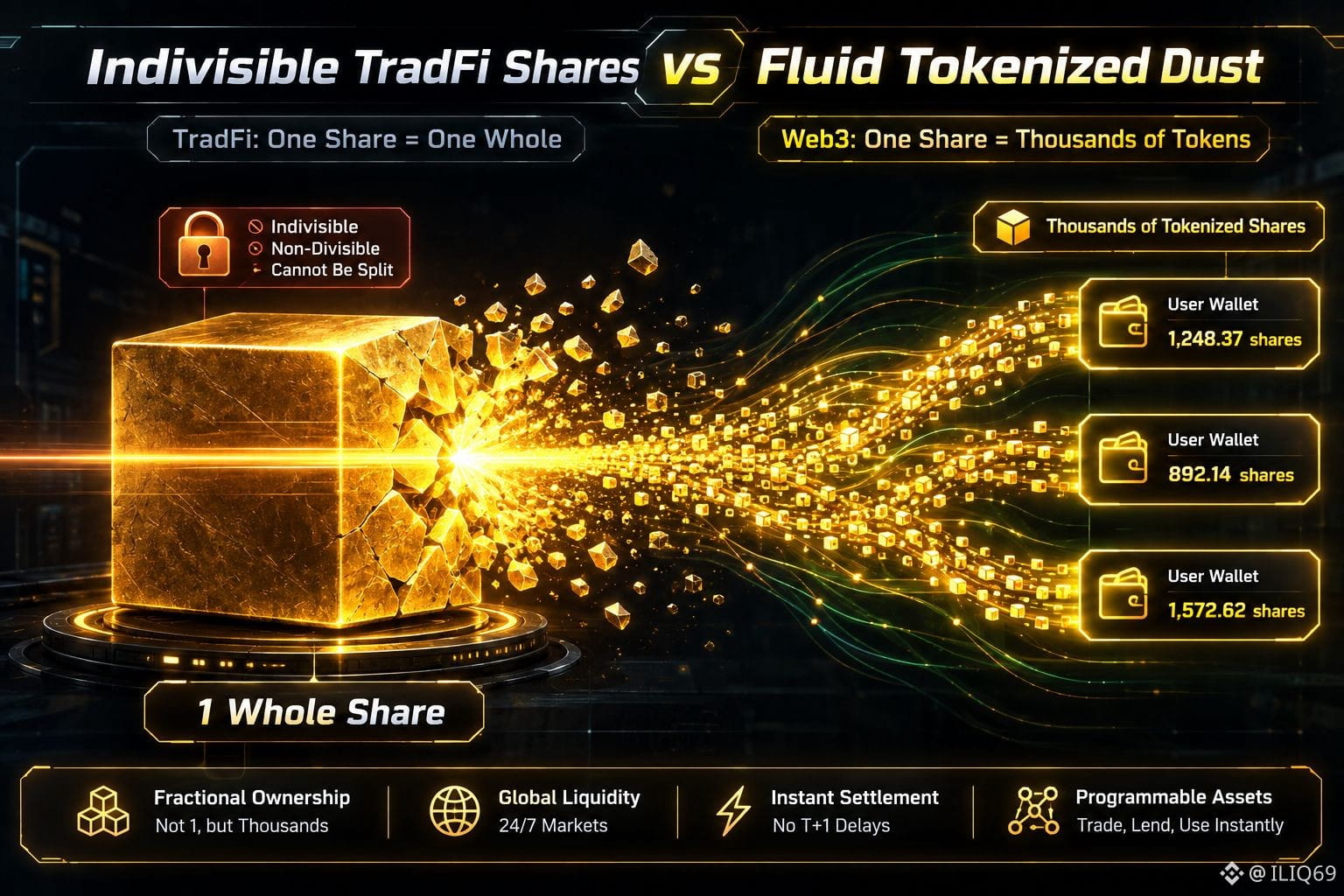
分数株(フラクショナル・シェア)の概念は、従来のカストディアンにとって常に数学的な頭痛の種でした。あなたはネイティブにAppleの株式の0.015を保有することはできません。従来の台帳は、丸ごとの分割不可能な単位で構築されています。これは絶対的な整数システムです。にもかかわらず、bStocksの注文板を見てください。$NVDAB からマイクロ分数まで、正確なUSDT金額を投入できます。これは単なるUIのトリックではなく、大規模なプーリング(集約)操作です。アブダビにある基盤のカストディアンがこれらの分数需要を集約し、全株を安全な金庫で保管し、ブロックチェーン上で分割可能なトークンを発行します。これにより、硬直した従来の株式を流動的で分割可能な暗号の流動性へと実質的に変えてしまうのです。これは建築(アーキテクチャ)の見事なアービトラージです。ERC-20トークンの資本効率と、レガシー資産の規制上の裏付けを組み合わせています。しかし技術的な疑問が生まれます:「ダスト(端数)」はどうなるのか?何千人ものユーザーが1株の0.0001を保有するなら、カストディアンは、オンチェーンの断片化とオフチェーンの“丸ごと”の間で、本質的に連続的なバランス調整を行っているのと同じです。これは小口投資家の資本効率を大幅に引き上げるアップグレードですが、中間業者の計算に対する絶対的な信頼が必要になります。追加のアーキテクチャ詳細は @BinanceCIS #bStocksCIS
確認済み
翻訳参照
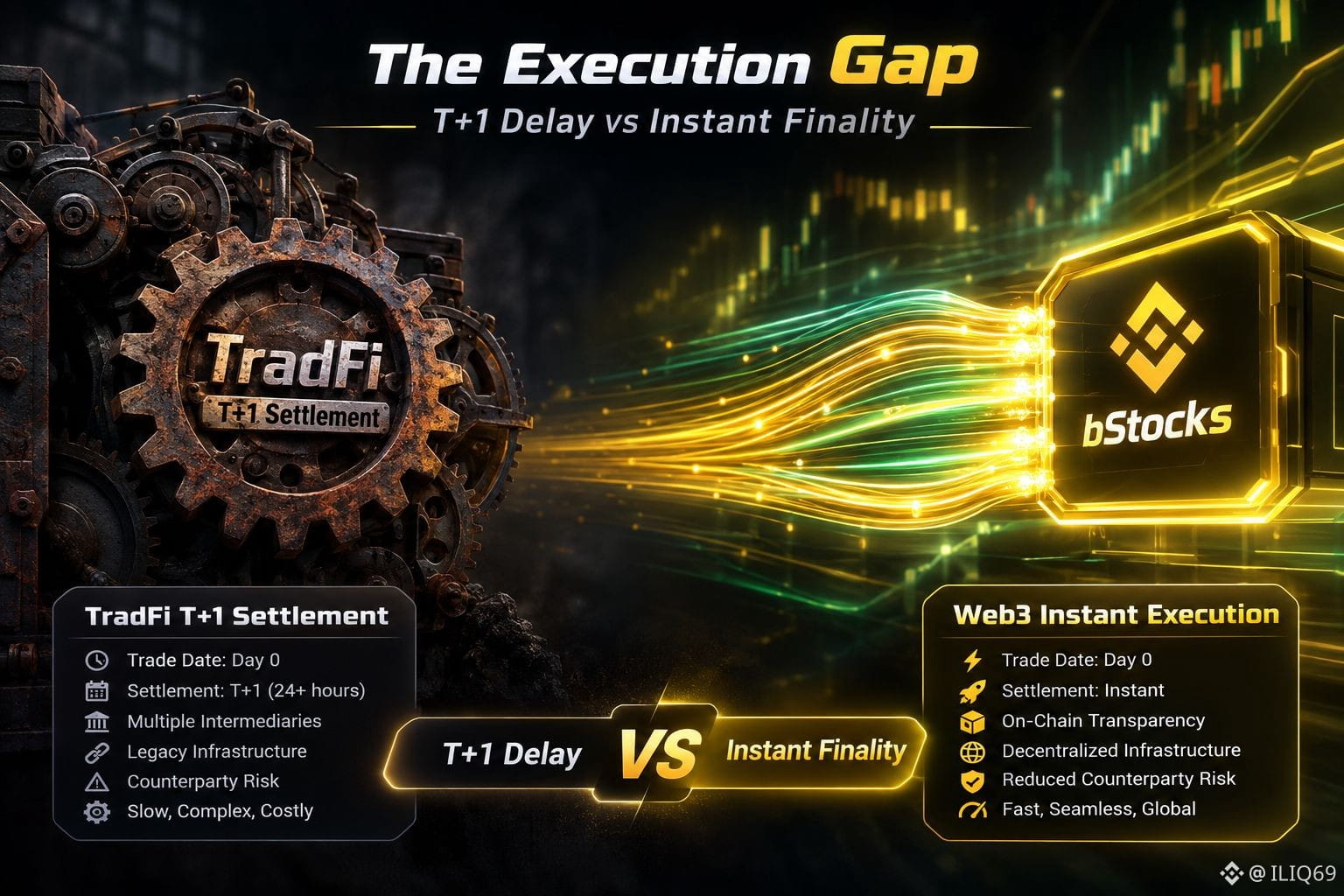
Started looking into how execution actually functions on tokenized equities, and it highlights a fundamental clash between Web3 speed and TradFi architecture. In traditional finance, if you buy a share, the broker takes T+1 days to actually settle the paperwork. It is a highly rigid, heavily regulated bureaucratic process. Crypto doesn’t work like that. A blockchain state changes instantly. By design, we expect absolute finality the second we click buy. This creates a massive UX hurdle when bridging the two worlds. Binance solves this with bStocks. When you hit buy on $TSLAB , the dashboard instantly reflects your balance. But under the hood, they are forcing an ancient TradFi settlement layer to operate at crypto speed. The exchange essentially absorbs the time-delay risk, acting as a buffer between your instant USDT deduction and the custodian's slow-moving vault in ADGM. It is a fascinating workaround that proves BTech Holdings is not just porting stocks to crypto. They are forcing legacy markets to adapt to Web3's impatient base layer. But it makes me wonder how the system handles extreme volatility when the legacy market is closed but the crypto liquidity pool is still active. Does the pure speed of native crypto outweigh the operational friction of custodial backing? Deep dive into the mechanics at @BinanceCIS #bStocksCIS
確認済み
翻訳参照
Was mapping out the supply dynamics for $BABY over the next couple of years, and it puts the current price behavior into a much clearer structural context.
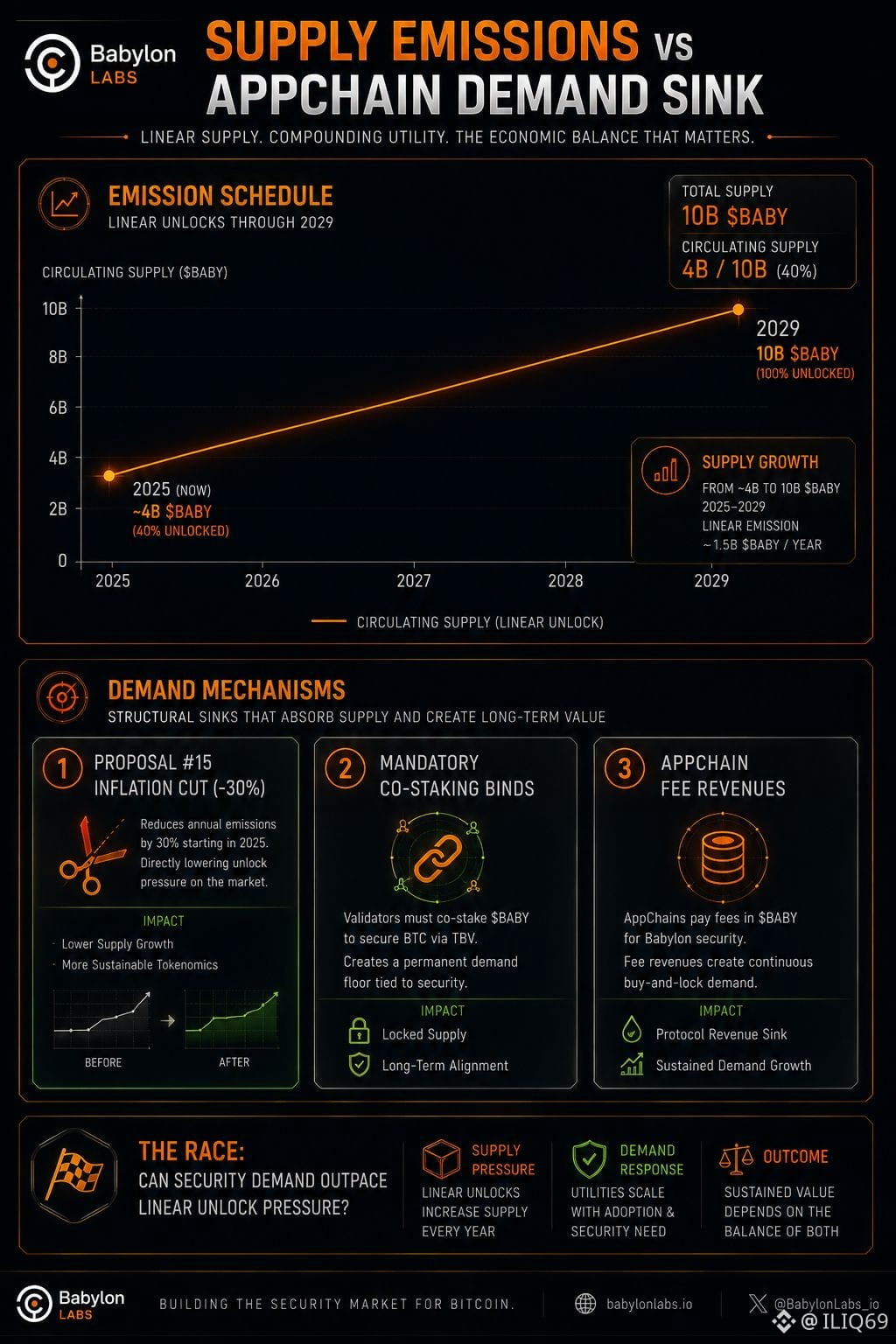
Circulating supply is sitting around 4 Billion tokens out of a 10 Billion total cap. With monthly linear unlocks running through 2029, there is an ongoing supply emission that the market has to continuously digest. When you look at the chart down over 80% from its early highs, it is easy to assume something is broken inside the protocol.
But looking at the actual infrastructure tells a different story. The protocol is onboarding consumer chains and expanding its co-staking capabilities. The core tension isn't about whether native BTC staking works—it's about execution velocity. Can new AppChains adopt Babylon security fast enough to create token sink demand that outpaces the monthly unlock schedule?
Right now, BTC stakers are accumulating yield while $BABY holders bear the inflation curve. Proposal #15 already took a step toward fixing this by cutting inflation by 30% and enabling BTC-$BABY co-staking. But until fee revenues from consumer chains scale up significantly, that distance between linear emissions and token demand will remain the main battlefield for price discovery.
@BabylonLabs_io #baby
Circulating supply is sitting around 4 Billion tokens out of a 10 Billion total cap. With monthly linear unlocks running through 2029, there is an ongoing supply emission that the market has to continuously digest. When you look at the chart down over 80% from its early highs, it is easy to assume something is broken inside the protocol.
But looking at the actual infrastructure tells a different story. The protocol is onboarding consumer chains and expanding its co-staking capabilities. The core tension isn't about whether native BTC staking works—it's about execution velocity. Can new AppChains adopt Babylon security fast enough to create token sink demand that outpaces the monthly unlock schedule?
Right now, BTC stakers are accumulating yield while $BABY holders bear the inflation curve. Proposal #15 already took a step toward fixing this by cutting inflation by 30% and enabling BTC-$BABY co-staking. But until fee revenues from consumer chains scale up significantly, that distance between linear emissions and token demand will remain the main battlefield for price discovery.
@BabylonLabs_io #baby
確認済み
翻訳参照
Flipping between DefiLlama and the price charts today, and one specific numbers mismatch makes it almost impossible to look away.
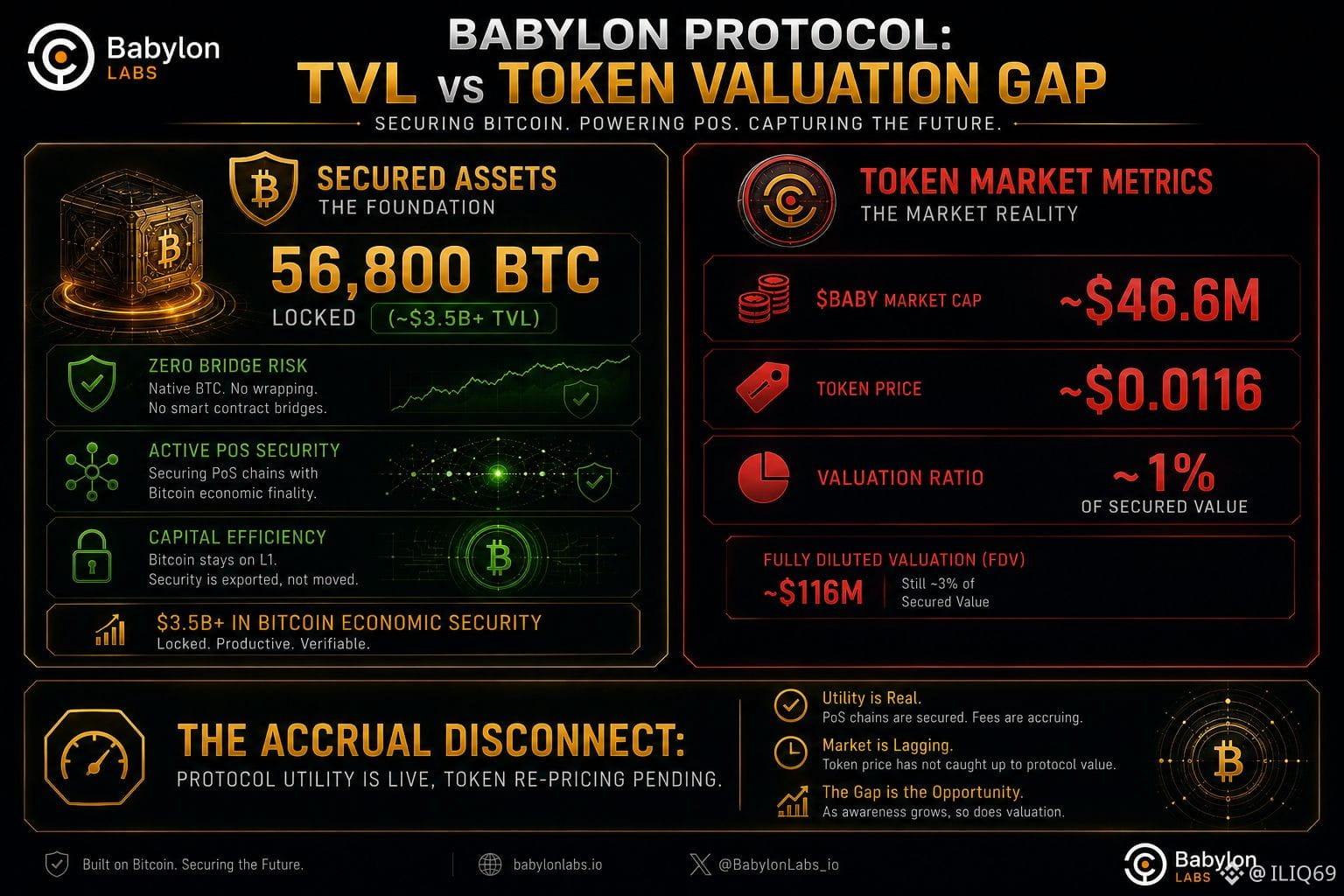
Right now, @BabylonLabs_io Trustless Bitcoin Vaults are holding roughly 56,800 BTC. That is well over $3.5 Billion in real, non-custodial Bitcoin locked directly on L1, actively providing security to external PoS networks. The technology is working exactly as advertised—no bridges, no wrapped assets, zero counterparty exploits.
Then you look at the $BABY price action. The token is trading near $0.011, with a market cap sitting around $46.6M. The token meant to govern and capture value from a multi-billion-dollar security layer is currently trading at barely 1% of the value it secures.
That is not a vault failure; it is a value accrual lag. BTC depositors get native security and yield today. Meanwhile, token holders are absorbing the early structural supply while waiting for demand sinks—like co-staking requirements and fee-sharing modules—to close that gap.
It feels like watching a high-performance engine running cleanly while the fuel gauge on the dashboard is stuck at zero. Makes me wonder if the market is just mispricing the security primitive, or if value capture always takes months to catch up to TVL.
@BabylonLabs_io $BABY #baby
Right now, @BabylonLabs_io Trustless Bitcoin Vaults are holding roughly 56,800 BTC. That is well over $3.5 Billion in real, non-custodial Bitcoin locked directly on L1, actively providing security to external PoS networks. The technology is working exactly as advertised—no bridges, no wrapped assets, zero counterparty exploits.
Then you look at the $BABY price action. The token is trading near $0.011, with a market cap sitting around $46.6M. The token meant to govern and capture value from a multi-billion-dollar security layer is currently trading at barely 1% of the value it secures.
That is not a vault failure; it is a value accrual lag. BTC depositors get native security and yield today. Meanwhile, token holders are absorbing the early structural supply while waiting for demand sinks—like co-staking requirements and fee-sharing modules—to close that gap.
It feels like watching a high-performance engine running cleanly while the fuel gauge on the dashboard is stuck at zero. Makes me wonder if the market is just mispricing the security primitive, or if value capture always takes months to catch up to TVL.
@BabylonLabs_io $BABY #baby
翻訳参照
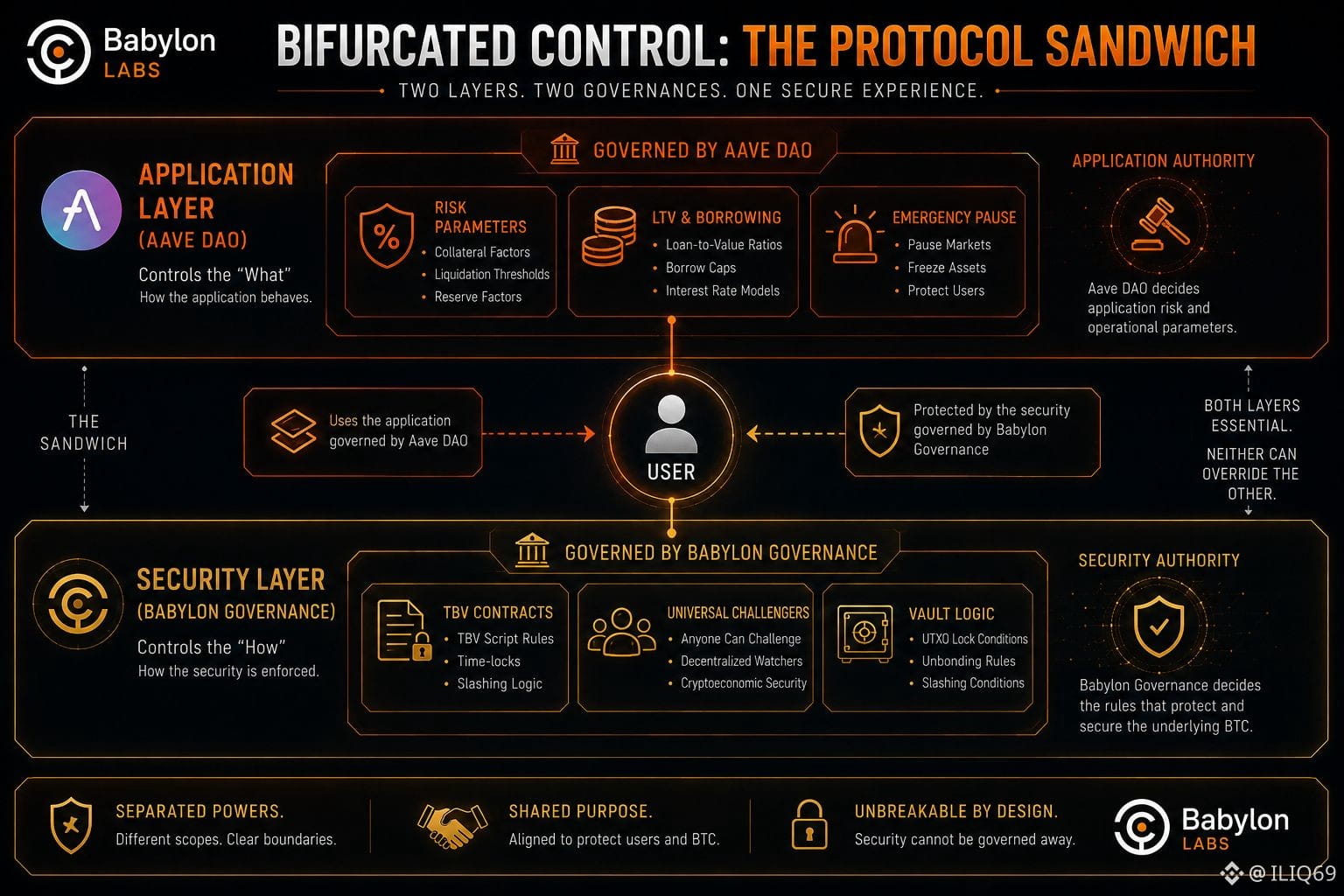
Watching the governance interactions between different DAOs regarding the @BabylonLabs_io integration reveals exactly how complex cross-chain administration is about to become. We often talk about TBV as a singular product, but it’s actually a protocol sandwich with bifurcated control.
If you deposit BTC and borrow on the Aave v4 integration, you are subject to two entirely different sovereign entities. The Babylon governance representation controls the core TBV protocol, the integration contracts, and the addition of permissioned actors (like Arbitrageurs and Universal Challengers).
However, Aave DAO retains absolute control over the Spokes and the V4 Hub. They set the risk parameters, the Loan-to-Value (LTV) ratios, allocate the Hub liquidity, and possess the emergency pause/freeze switches for the borrowing side.
This means true decentralization isn't just about nodes; it's about overlapping governance zones. If $BABY architecture works perfectly, but Aave DAO votes to freeze the borrowing spoke due to an unrelated market panic, the user experience is still disrupted. Trustless collateral meets subjective application governance.
Which layer of governance holds the most risk for end-users?
#baby
If you deposit BTC and borrow on the Aave v4 integration, you are subject to two entirely different sovereign entities. The Babylon governance representation controls the core TBV protocol, the integration contracts, and the addition of permissioned actors (like Arbitrageurs and Universal Challengers).
However, Aave DAO retains absolute control over the Spokes and the V4 Hub. They set the risk parameters, the Loan-to-Value (LTV) ratios, allocate the Hub liquidity, and possess the emergency pause/freeze switches for the borrowing side.
This means true decentralization isn't just about nodes; it's about overlapping governance zones. If $BABY architecture works perfectly, but Aave DAO votes to freeze the borrowing spoke due to an unrelated market panic, the user experience is still disrupted. Trustless collateral meets subjective application governance.
Which layer of governance holds the most risk for end-users?
#baby
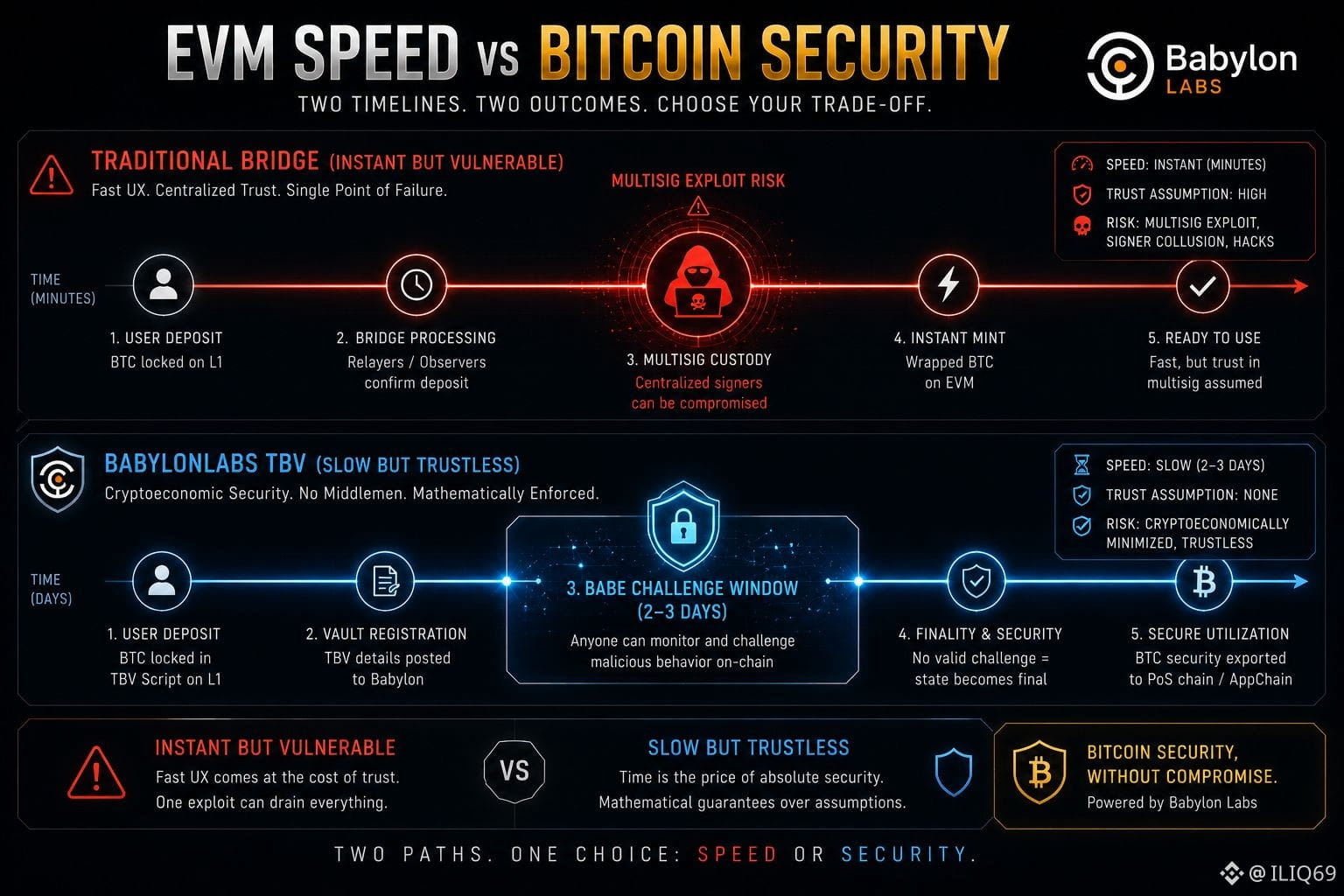
TBVプロトコルにおけるクロスチェーンの状態遷移を分析するのに少し時間を費やしました。特に、システムが集中型のマルチシグやブリッジのバリデータ集合に依存せずに、不正なバウチャ(vault)償還をどのように防いでいるかです。答えはBABEベースのチャレンジ手順であり、流動性のタイムフレームの考え方を完全に作り変えます。
Aave v4でステーブルコインのローンを返済してネイティブのビットコインをアンロックしたい場合、償還は瞬時には行われません。請求(claim)が提出され、その後「フロードプルーフ・ウィンドウ(fraud-proof window)」が開きます。およそ2〜3日間、許可されたUniversal ChallengersとArbitrageursがチェーンを監視します。請求が無効なら、それをブロックします。チャレンジが行われずにウィンドウ期間が過ぎれば、ビットコインはあなたに返されます。
EVMロールアップによって、サブ秒のファイナリティと即時の出金を期待するよう条件付けされてきました。@BabylonLabs_io は、ビットコインL1における信頼不要の暗号学的セキュリティには実際の時間が必要だと受け入れさせます。数学をだますことはできず、チャレンジ・ウィンドウを急かすこともできません。
つまり、$BABY における資本効率は、従来のDeFiとはまったく別のものになります。数分でチェーン間に流動性を瞬間的に流すことに慣れたトレーダーは、忍耐を学ばなければなりません。セキュリティはもはやスマートコントラクト監査だけで測られるものではなく、日単位で測られるのです。
完全に信頼不要の出金のために、あなたはどれくらい待つ用意がありますか?
#baby
Aave v4でステーブルコインのローンを返済してネイティブのビットコインをアンロックしたい場合、償還は瞬時には行われません。請求(claim)が提出され、その後「フロードプルーフ・ウィンドウ(fraud-proof window)」が開きます。およそ2〜3日間、許可されたUniversal ChallengersとArbitrageursがチェーンを監視します。請求が無効なら、それをブロックします。チャレンジが行われずにウィンドウ期間が過ぎれば、ビットコインはあなたに返されます。
EVMロールアップによって、サブ秒のファイナリティと即時の出金を期待するよう条件付けされてきました。@BabylonLabs_io は、ビットコインL1における信頼不要の暗号学的セキュリティには実際の時間が必要だと受け入れさせます。数学をだますことはできず、チャレンジ・ウィンドウを急かすこともできません。
つまり、$BABY における資本効率は、従来のDeFiとはまったく別のものになります。数分でチェーン間に流動性を瞬間的に流すことに慣れたトレーダーは、忍耐を学ばなければなりません。セキュリティはもはやスマートコントラクト監査だけで測られるものではなく、日単位で測られるのです。
完全に信頼不要の出金のために、あなたはどれくらい待つ用意がありますか?
#baby
確認済み
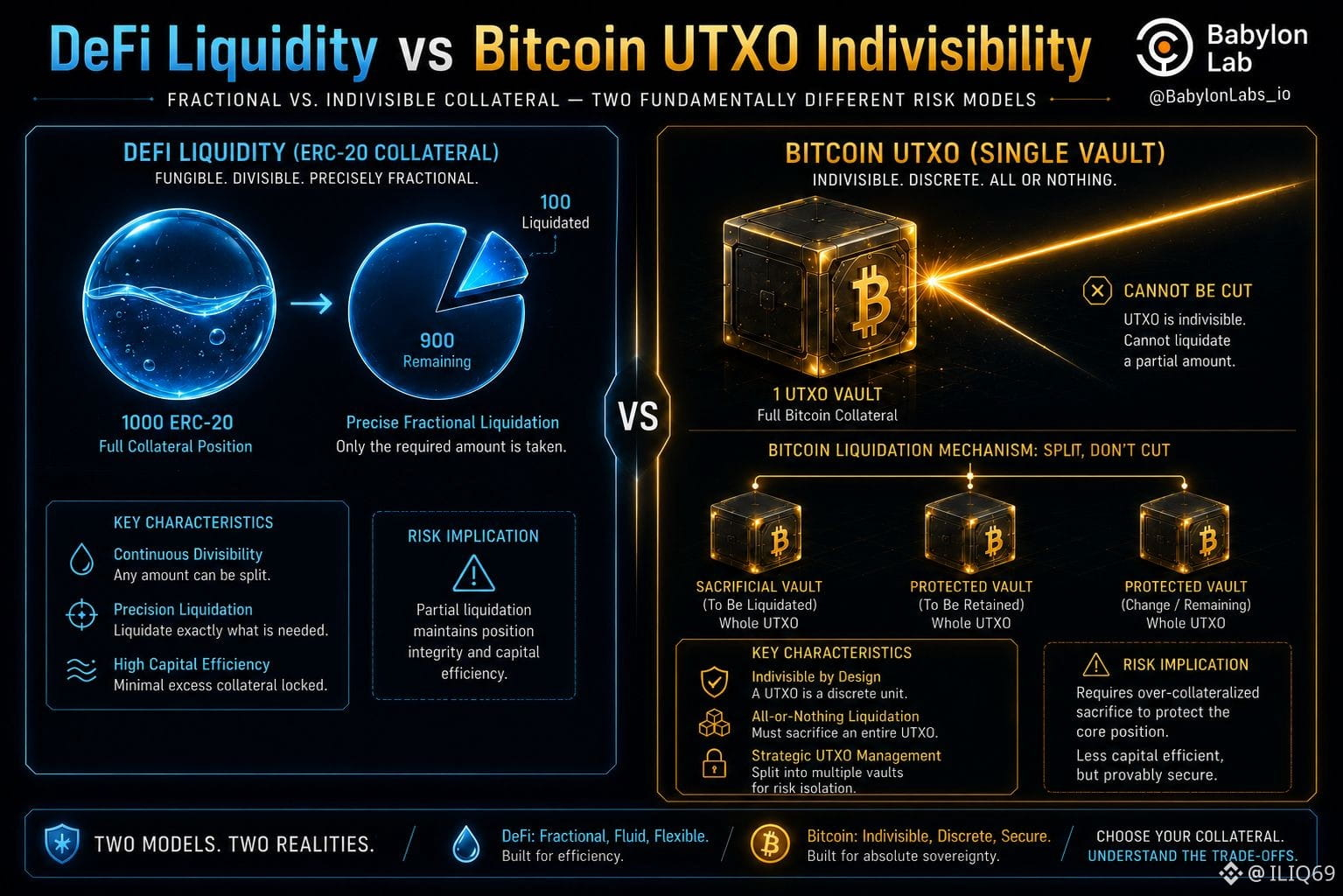
@BabylonLabs_io TBV の testnet 上で、清算が実際にどのように機能するのかを調べ始めたところ、EVM とビットコインのアーキテクチャの間に根本的な衝突があることが浮き彫りになりました。従来の DeFi では、ローンが健全性を失った場合、清算業者があなたの ERC-20 コラテラルの一部の割合を単純に押さえます。これは非常に流動的で、数学的なヘアカットです。
しかしビットコインはそういう仕組みではありません。Trustless Bitcoin Vault は単一のビットコイン UTXO です。設計上、UTXO は完全に不可分であり、部分的にだけ償還・差し押さえされることはなく、常に全体としてのみ償還または押収されます。これがクロスチェーン借入に対する大きな UX とアーキテクチャ上のハードルを生みます。
プロトコルはこれを、預託者にあらかじめ BTC を複数のバル トに分割させることで解決します。ダッシュボードは本質的に「生贄のバル ト」と「保護バル ト」を作ることを強制します。清算イベントが起きた場合、プロトコルはあらかじめ定められた順序で債務がカバーされるまで丸ごとのバル トを取り込み、余剰分は WBTC で返します。
$BABY が単にイーサリアムのロジックをビットコインへ移植しているだけではないことを証明する、実に興味深い回避策です。つまり、DeFi にビットコインの硬くて安全なベースレイヤーへ適応を強いているのです。とはいえ、単一のコラテラル残高ではなく、何十もの分割された UTXO バル トを管理することに、機関投資家の借り手はどう反応するのでしょうか。ネイティブ BTC の純粋なセキュリティが、不可分バル トの運用上の摩擦に勝るのでしょうか?
#baby
しかしビットコインはそういう仕組みではありません。Trustless Bitcoin Vault は単一のビットコイン UTXO です。設計上、UTXO は完全に不可分であり、部分的にだけ償還・差し押さえされることはなく、常に全体としてのみ償還または押収されます。これがクロスチェーン借入に対する大きな UX とアーキテクチャ上のハードルを生みます。
プロトコルはこれを、預託者にあらかじめ BTC を複数のバル トに分割させることで解決します。ダッシュボードは本質的に「生贄のバル ト」と「保護バル ト」を作ることを強制します。清算イベントが起きた場合、プロトコルはあらかじめ定められた順序で債務がカバーされるまで丸ごとのバル トを取り込み、余剰分は WBTC で返します。
$BABY が単にイーサリアムのロジックをビットコインへ移植しているだけではないことを証明する、実に興味深い回避策です。つまり、DeFi にビットコインの硬くて安全なベースレイヤーへ適応を強いているのです。とはいえ、単一のコラテラル残高ではなく、何十もの分割された UTXO バル トを管理することに、機関投資家の借り手はどう反応するのでしょうか。ネイティブ BTC の純粋なセキュリティが、不可分バル トの運用上の摩擦に勝るのでしょうか?
#baby
ログインして、さらにコンテンツを読む