
Avalokiteshvara
54 投稿

Avalokiteshvara
報告
ユーザーをブロック
I be come the top 🚀
取引を発注
超高頻度トレーダー
4.3年
1 フォロー
22 フォロワー
24 いいね
投稿
ポートフォリオ
翻訳参照
Kraken wants your everyday spending to pay you in Bitcoin. Its money app Krak has opened a waitlist for two US credit cards expected to ship in early 2027, offering up to 4% cashback in dollars or $BTC.
Crypto cashback is a crowded idea, but distribution is the game - and Kraken is betting its app audience converts. In a market where every exchange is hunting for the next user, the card is the hook. Four percent back in Bitcoin beats four percent back in points, if you believe in the asset.
#Bitcoin #BTC $BTC #Kraken
Kraken wants your everyday spending to pay you in Bitcoin. Its money app Krak has opened a waitlist for two US credit cards expected to ship in early 2027, offering up to 4% cashback in dollars or $BTC .
Crypto cashback is a crowded idea, but distribution is the game - and Kraken is betting its app audience converts. In a market where every exchange is hunting for the next user, the card is the hook. Four percent back in Bitcoin beats four percent back in points, if you believe in the asset.
#Bitcoin #BTC $BTC #Kraken
9
翻訳参照
Solana is leaning into the AI-agent wave. The network has introduced solana.ai, a platform giving developers tools to build autonomous AI agents that can carry out blockchain transactions, manage wallets and buy online services.
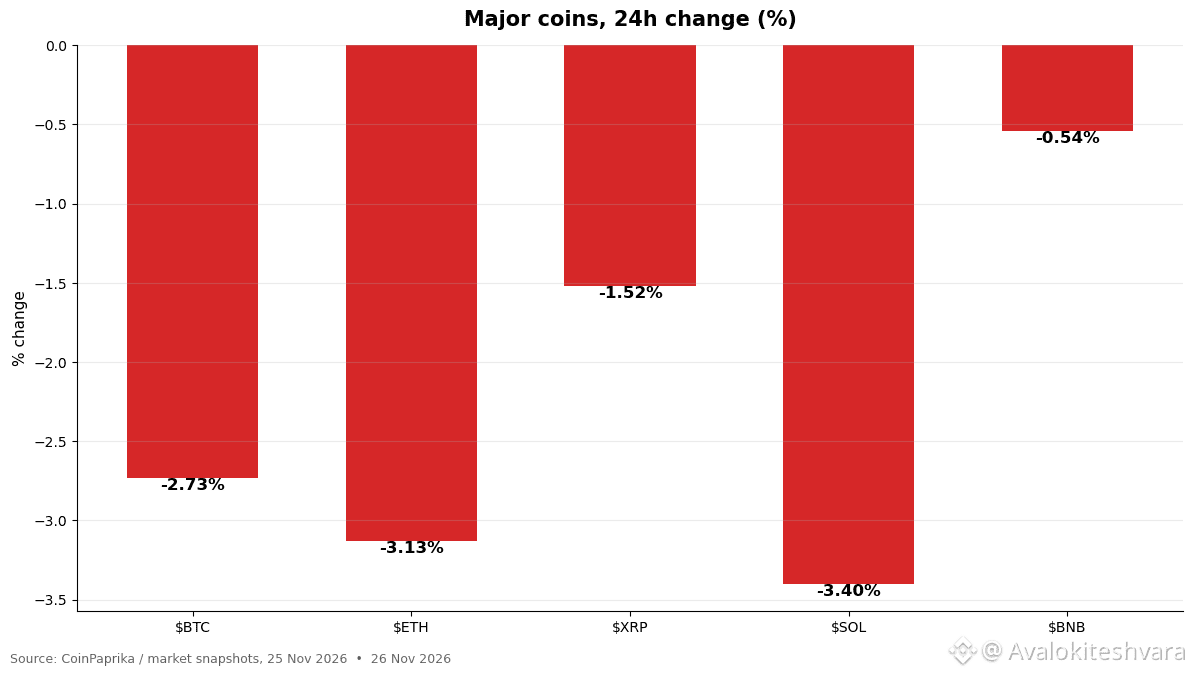
It is a bet that agents, not just humans, become on-chain users. $SOL itself is not joining the party today, trading near $68-70, down about 3.4% in 24 hours with the rest of the market. The product story is real; the price still follows Bitcoin.
#Solana #SOL $SOL #AI
It is a bet that agents, not just humans, become on-chain users. $SOL itself is not joining the party today, trading near $68-70, down about 3.4% in 24 hours with the rest of the market. The product story is real; the price still follows Bitcoin.
#Solana #SOL $SOL #AI
5
翻訳参照
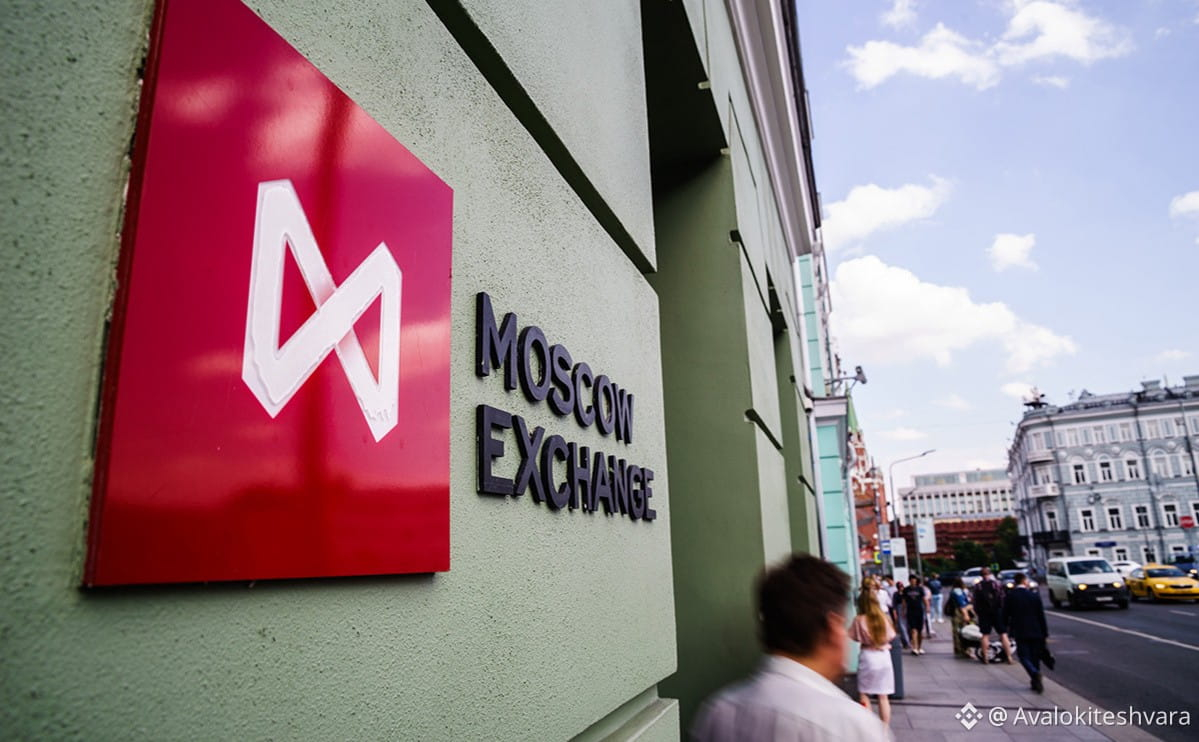
Moscow Exchange plans to start trading Bitcoin, Ethereum and Tether's USDT from 1 December 2026. It would put crypto on Russia's main exchange for the first time.
The move comes as $BTC trades near $59,000, down roughly 27% in thirty days, and global ETF flows run at record outflows. A new venue does not change the tape overnight - but it does widen the map of where crypto trades. Watch whether the launch brings real volume or just a headline.
#Bitcoin #BTC $BTC #MoscowExchange
翻訳参照
Supply events to watch today: three tokens unlock on Wednesday, 26 November - Plasma ($XPL), Humanity Protocol ($H) and AltLayer ($ALT), according to The Block's daily digest.
Unlocks add sellable supply into a market that is already defensive, with Bitcoin below $60,000 and ETF outflows at record levels. Not every unlock moves price - but in thin, nervous conditions, traders watch them closely. $XPL is the one showing strength, up about 7% and flagged among the day's breakouts. Watch the tape, not the calendar alone.
#Plasma #XPL $XPL #Unlocks
Supply events to watch today: three tokens unlock on Wednesday, 26 November - Plasma ($XPL ), Humanity Protocol ($H ) and AltLayer ($ALT ), according to The Block's daily digest.
Unlocks add sellable supply into a market that is already defensive, with Bitcoin below $60,000 and ETF outflows at record levels. Not every unlock moves price - but in thin, nervous conditions, traders watch them closely. $XPL is the one showing strength, up about 7% and flagged among the day's breakouts. Watch the tape, not the calendar alone.
#Plasma #XPL $XPL #Unlocks
91
翻訳参照
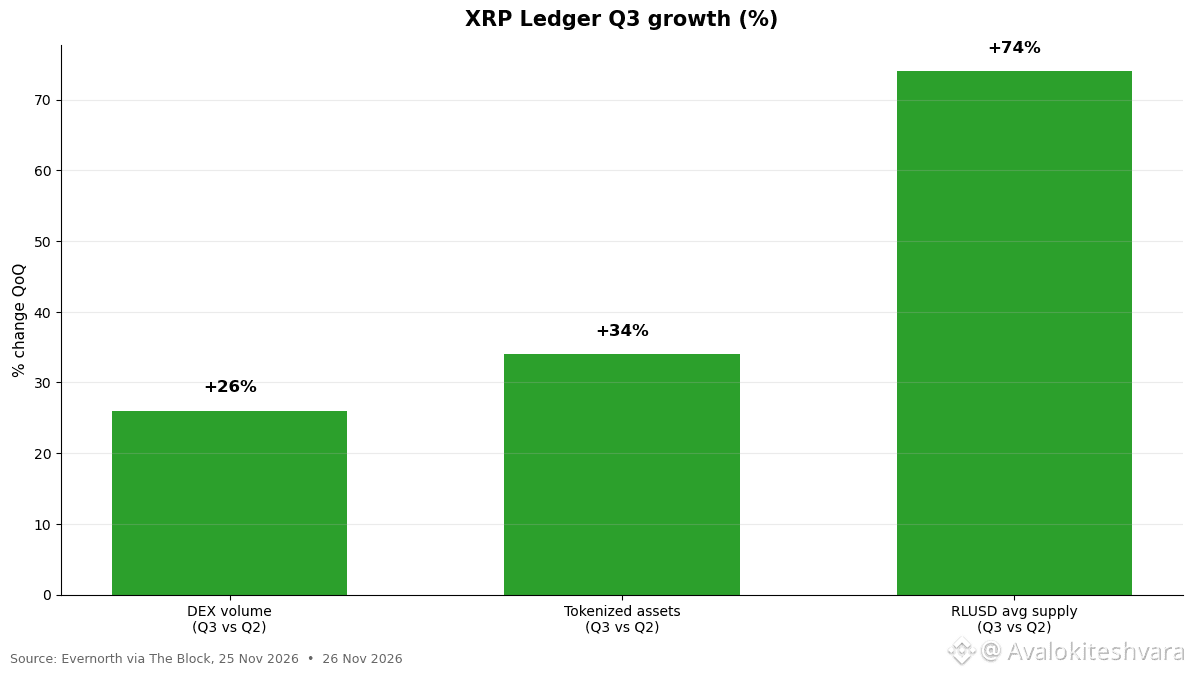
While prices slide, the XRP Ledger is quietly growing. Daily order-book DEX volume averaged 4.51 million $XRP in Q3, up 26% from Q2 and 2.8 times the level a year earlier, according to Evernorth. Larger traders are moving in.
Tokenized assets on the network, excluding stablecoins, averaged about $5 billion, up 34% quarter on quarter. Ripple's RLUSD averaged $937 million, up 74%. $XRP itself trades near $0.90-0.93, down about 1.5% in 24 hours. Usage is rising; price is not following - yet.
#XRP #XRP $XRP #XRPLedger
Tokenized assets on the network, excluding stablecoins, averaged about $5 billion, up 34% quarter on quarter. Ripple's RLUSD averaged $937 million, up 74%. $XRP itself trades near $0.90-0.93, down about 1.5% in 24 hours. Usage is rising; price is not following - yet.
#XRP #XRP $XRP #XRPLedger
25
翻訳参照
Ether is falling about twice as hard as Bitcoin today. $ETH trades near $1,640-1,680, down 2.2% to 3.1% in 24 hours against Bitcoin's smaller slide, and the CoinDesk DeFi Select Index is down 2.6%. $ETH is down roughly 8.4% over seven days and about 29% over thirty.
There is a longer-term story too: the Ethereum Foundation has doubled its protocol security team, citing AI-related risks, and is working toward hash-based cryptography across consensus, accounts and blobs by 2029. Near term the tape is weak; the builders are not standing still.
#Ethereum #ETH $ETH #DeFi
2
翻訳参照
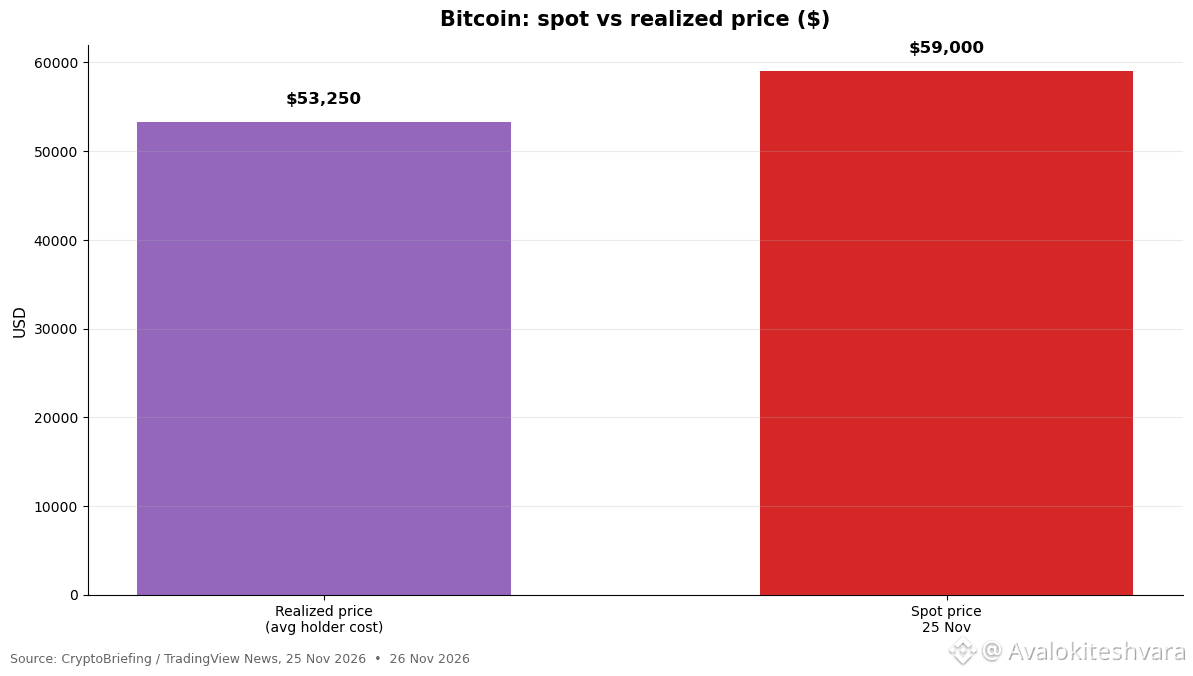
On-chain, Bitcoin is flashing reset signals. The AVIV ratio has dropped to about 0.8, putting $BTC roughly 20% below its True Market Mean - the benchmark for where the network's value should sit. The BTC Risk Index has climbed back above 2 as volatility rises.
Realized price, the average cost basis of all holders, sits near $53,000-53,500. With spot near $59,000, the average holder is still in profit - but only just. As of mid-November, 54.7% of supply sat at a loss. The reset is real; the cushion is thin.
#Bitcoin #BTC $BTC #OnChain
Realized price, the average cost basis of all holders, sits near $53,000-53,500. With spot near $59,000, the average holder is still in profit - but only just. As of mid-November, 54.7% of supply sat at a loss. The reset is real; the cushion is thin.
#Bitcoin #BTC $BTC #OnChain
30
翻訳参照
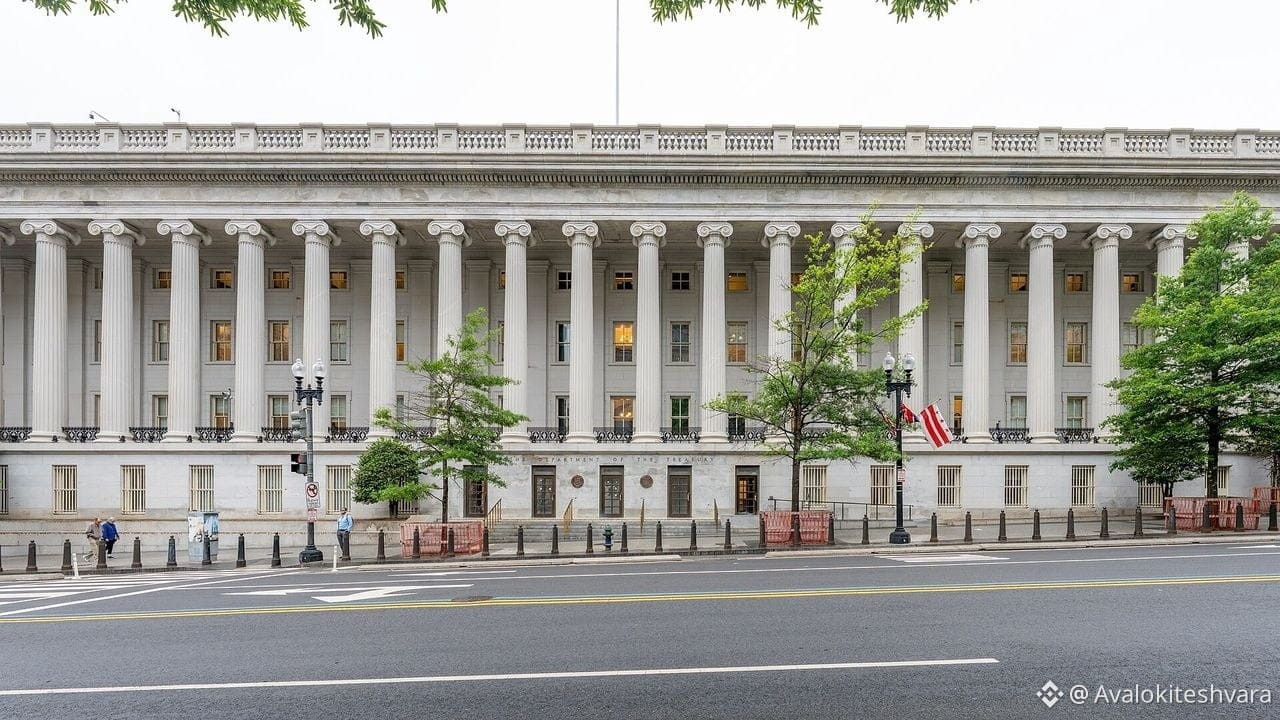
Washington had a rough night - and markets noticed. The US Treasury was hit by a cyberattack that took several FinCEN systems offline, the same systems used to track money laundering and financial fraud. The incident came hours after the CIA and the Office of the Director of National Intelligence were reportedly hacked.
No crypto link has been claimed, but the timing matters: it landed on the same day fresh tariff threats rattled global markets. When the plumbing of the financial system makes headlines, risk appetite is usually the first casualty.
#Bitcoin #BTC $BTC #Cybersecurity
No crypto link has been claimed, but the timing matters: it landed on the same day fresh tariff threats rattled global markets. When the plumbing of the financial system makes headlines, risk appetite is usually the first casualty.
#Bitcoin #BTC $BTC #Cybersecurity
38
翻訳参照
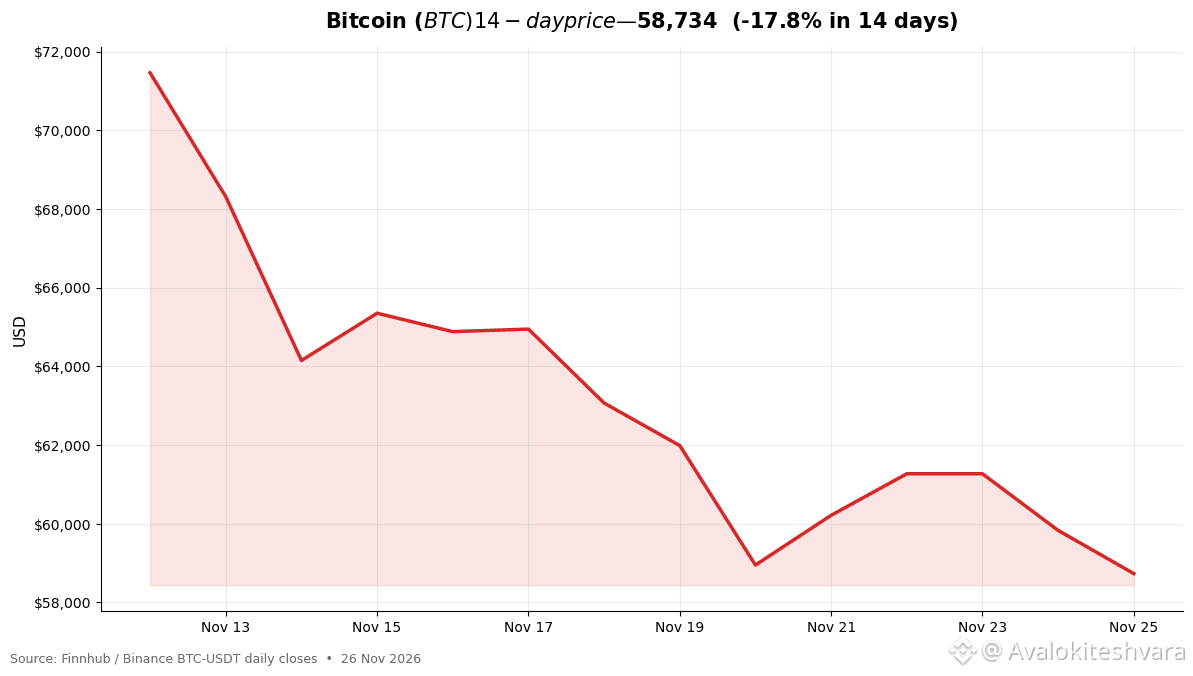
Bitcoin is fighting to reclaim $60,000 after another bruising day. $BTC trades near $59,000-59,700, down about 2.7% in 24 hours, with a 7-day range of $55,711 to $64,828. The 14-day chart says it all: $71,460 down to $58,734, a slide of almost 18% in two weeks.
The flow picture is worse. US spot Bitcoin ETFs have now lost $4.94 billion in November - the worst month since launch - with six straight days of outflows. $60,000 is the line to watch; below it, every bounce gets sold.
#Bitcoin #BTC $BTC #Crypto
The flow picture is worse. US spot Bitcoin ETFs have now lost $4.94 billion in November - the worst month since launch - with six straight days of outflows. $60,000 is the line to watch; below it, every bounce gets sold.
#Bitcoin #BTC $BTC #Crypto
5
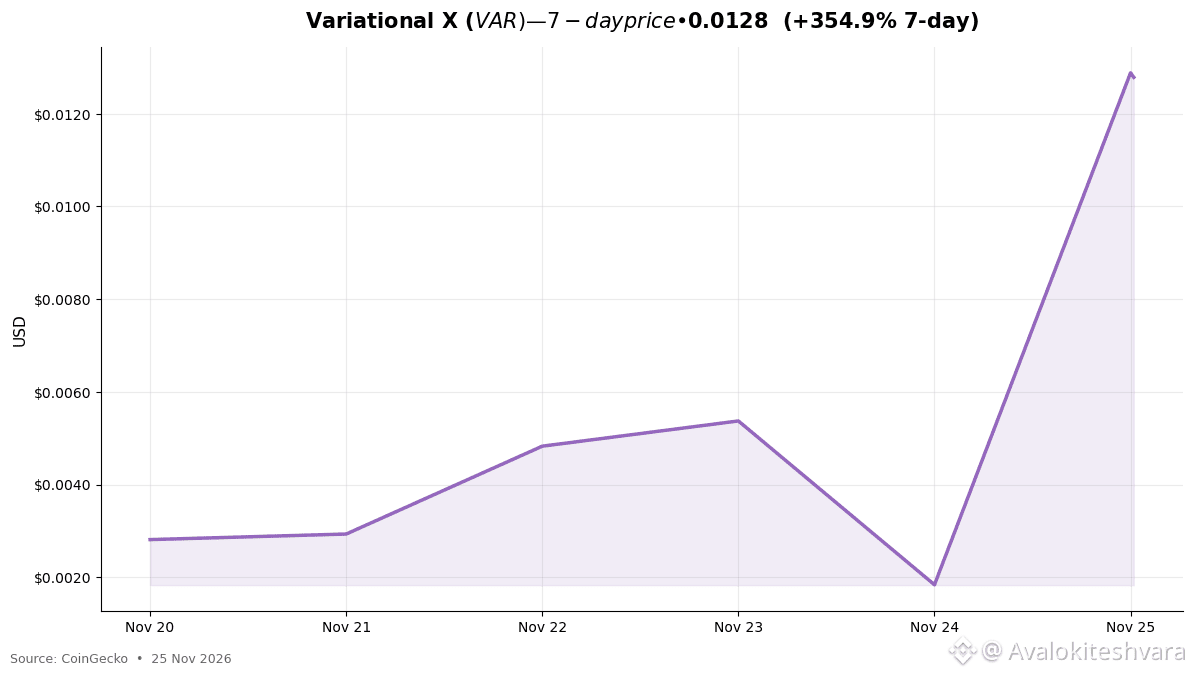
大手銘柄が下落するなか、小さなトークンが急騰しています。Variational X($VAR)は本日、CoinGeckoで3番目にトレンド入りしているコインで、24時間で約577%上昇し、価格はおよそ0.0124ドル、時価総額は約1,240万ドル、24時間の取引高は約112万ドルです。
チャートの動きは劇的です。$VARは11月24日に0.0018ドルで取引され、翌日には0.0129ドル近くまで上昇しました。7日間では約355%高となっています。CoinGeckoに掲載されている価格履歴はまだ約1週間分しかなく、時価総額ランキングはおよそ969位です。
これが何を意味するのか、率直に考えてみましょう。時価総額の小さい銘柄は、ほんのわずかな資金で数百パーセント動くことがあります。上にも下にもです。ビットコインが2.3%下落し、Fear & Greed Indexが11/100を示す市場では、垂直に伸びる緑色のローソク足は目を引きます。そして、まさにその注目が、こうした値動きを非常にもろくするのです。流動性が薄ければ、買いが素早く成立するのと同じくらい、売り抜けも速くなり得ます。
私の見解:$VARは新たな発見と見なすのではなく、ウォッチリストに入れて様子を見る程度にしましょう。トレンドランキングが評価するのは注目度であって、品質ではありません。調べるなら、まずコントラクト、流動性、そして供給量を誰が保有しているかを確認してください。ポジションを取る場合も、値上がり分の大半が戻る可能性を前提に規模を決めましょう。この市場で最も危険な取引は、赤一色の画面のなかで、緑色のチャートひとつを追いかけることです。
#VAR #Trending #Crypto #DYOR
15
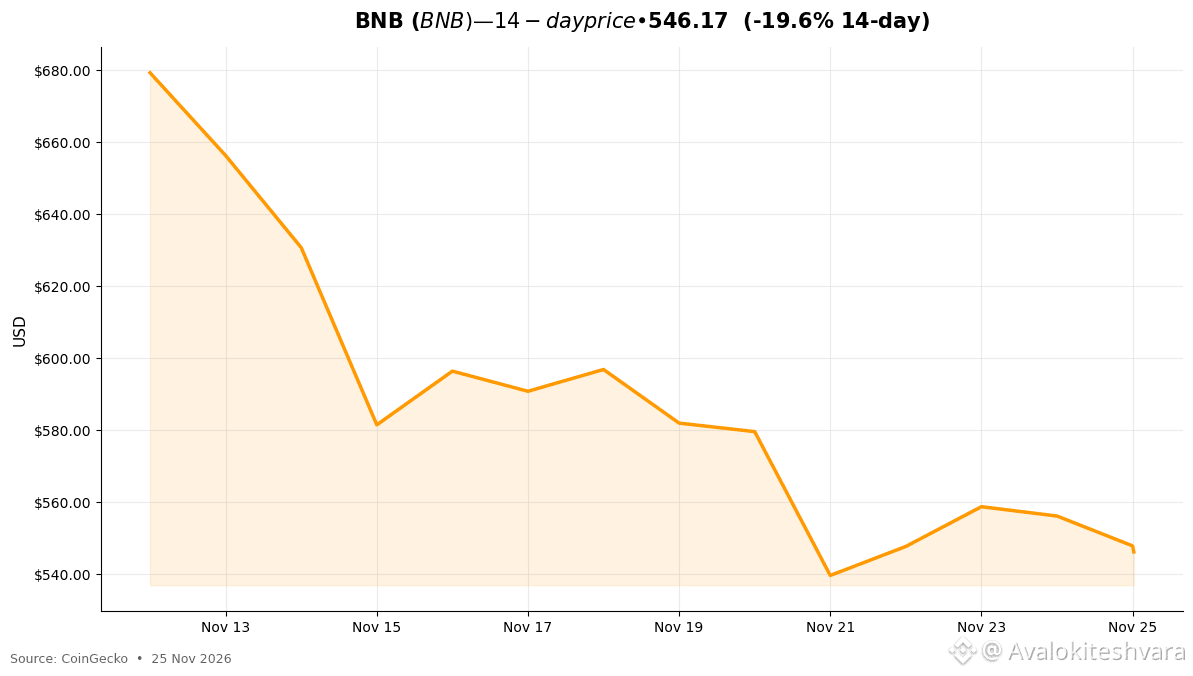
$BNB は、この売り相場でひそかに最も底堅い主要コインです。価格は546~549ドル近辺で推移し、24時間で約1.4%下落しています。主要銘柄の中では下落幅が最も小さく、ビットコインの2.3%、ソラナの3.1%を下回っています。ただし、14日間のチャートを見ると、下落の大きさが分かります。11月12日以降、679ドルから546ドルへと、ほぼ20%下落しました。
今日知っておきたいこと:Binanceはウォレットの定期メンテナンスのため、11月25日に約1時間、全ネットワークでの出金を一時停止します。これは予定されたメンテナンスであり、障害ではありません。ただ、相場が下落している日は取引所に関するニュースがいつも以上に注目されるため、資金を移動する前に、正確な時間帯をBinanceの公式発表で確認してください。
注目水準:サポートは11月24日の安値である543.82ドル、レジスタンスは昨日の値幅の上限である561.24ドルです。市場の他の銘柄が週安値を試すなか、$BNB は週安値を上回って推移しています。
私の見方:下降トレンドでの相対的な強さは注目に値しますが、祝うべきものではありません。$BNB は同業銘柄より下落ペースが緩やかですが、これは通常、新たな材料というより、現物市場での安定した需要を反映しています。ビットコインが58,000ドルを上回って安定すれば、$BNB は先に回復する位置にあります。そうでなければ、543ドルのサポートが再び試されるでしょう。
#BNB #Binance #暗号資産
50
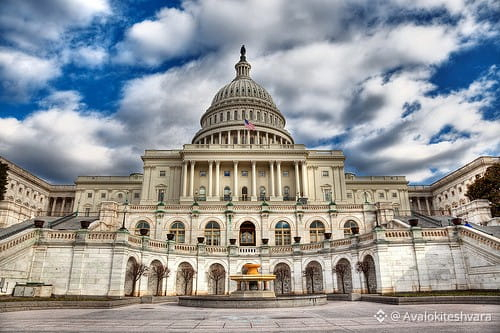
今週の暗号資産をめぐる規制面での動きは、目立たないものの重要な一歩です。米商品先物取引委員会(CFTC)は、規制対象のデリバティブ取引所が、12か月分の運営費を賄うために保有を義務付けられている準備金に、ビットコイン、イーサ、決済用ステーブルコインを算入できるとする職員向けガイダンスを発表しました。
簡単に言えば、$BTC と$ETH は、規制対象の米国取引所の貸借対照表に準備資産として計上できるようになりました。これは、従来は現金や信用力の高い金融商品に認められていたのと同じ扱いです。新しい法律ではなくガイダンスですが、規制市場の仕組みの中で暗号資産を当たり前のものにする動きです。
しかし、市場はほとんど反応しませんでした。ビットコインは依然として6万ドルを下回り、11月のETF資金流出額は過去最高の47億1,000万ドルに達しました。ここから得られる教訓は、規制の仕組みが変わるには時間がかかる一方、資金フローは今日の価格を動かすということです。
もう一つ注目すべき動きがあります。ブラックロックは香港で初のトークン化マネー・マーケット・ファンドを立ち上げました。伝統的な金融商品をブロックチェーンの基盤に移す、さらなる一歩です。
私の見解としては、このようなガイダンスに価格の反応を期待すべきではありません。その価値は構造的なものです。暗号資産を一般的な金融担保として扱う一つひとつの動きが、次の機関投資家にとっての参入障壁を下げます。価格は資金フローに追随しますが、インフラはそれとは関係なく構築されていきます。
#CFTC #Regulation #Bitcoin #Ethereum
106
本人確認中
ジェンスン・フアンがエヌビディアに復帰し、市場は歴史的な反応を見せました。11月23日、取締役会はフアン氏を社長兼CEO、取締役に即時復帰させることを全会一致で決議しました。エヌビディア株は月曜日に約31%高で取引を終え、時価総額はほぼ1兆ドル回復しました。フォーブスによると、フアン氏の資産はわずか1日で約340億ドル回復しました。
ビットコインも一時この上昇に加わり、月曜日には日中高値の約64,600ドルまで急騰しました。しかし、その後上昇分をすべて失い、60,000ドルを下回りました。FalconXのジョシュア・リム氏が述べたように、エヌビディアはフアン氏の辞任以降の損失の80%超を回復した一方、ビットコインが56,000ドルを下回るまでの下落分で取り戻したのは約25%にとどまっています。
フアン氏自身は、スタッフとの復帰後の会合について、人生で最もつらいものだったと語り、一連の出来事の後、従業員に謝罪しました。一方、米当局はフアン氏の復帰を受け、中国への半導体密輸の取り締まりを狙っていると報じられています。
私の見方:今週はいつもの筋書きが崩れました。通常、暗号資産はテクノロジー株のセンチメントに乗って上昇しますが、今回はAI相場の上昇にビットコインが置き去りにされました。つまり、$BTC には独自の買い手と資金フローが必要だということです。ETF需要は依然としてマイナスで、ナスダックからの恩恵だけでは足りません。テクノロジー株の上昇が続く一方で暗号資産が追随しなければ、その乖離自体が注目すべき動きになります。
#Nvidia #NVDA #Bitcoin #AI

669
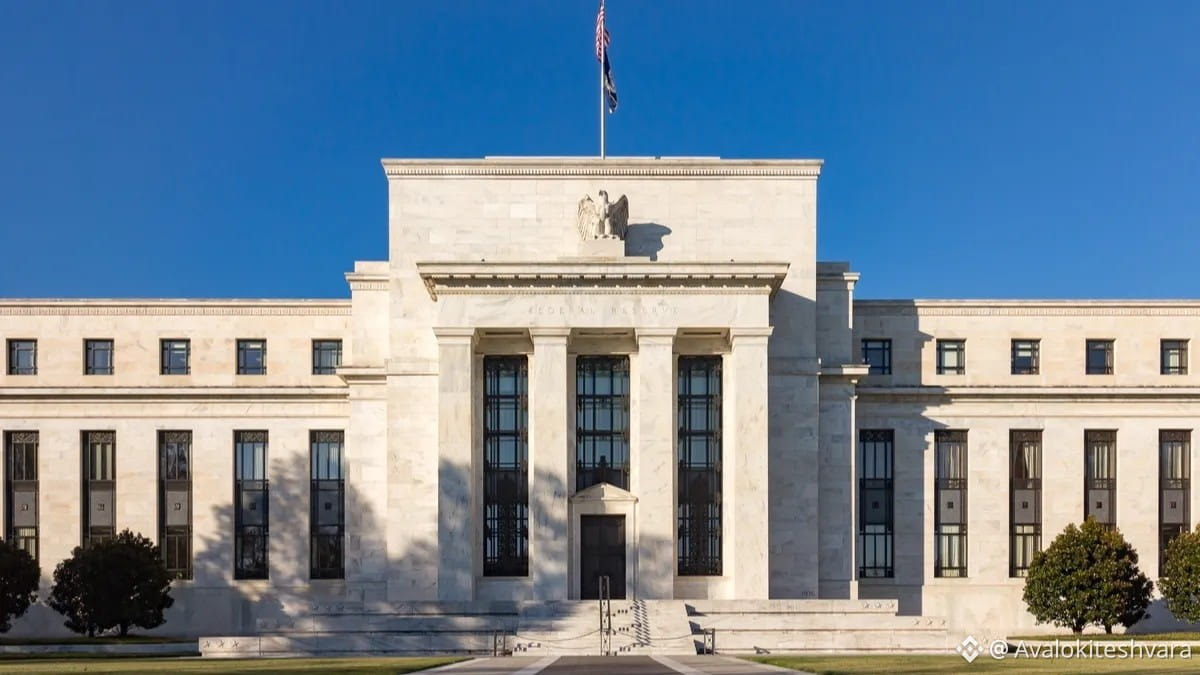
今日はマクロ指標の発表日です。暗号資産を含むすべてのリスク資産にとって重要な一日です。米東部時間午前8時30分(WIB 20時30分)に、米国では10月のPCEインフレ率が発表されます。これはFRBが重視するインフレ指標で、同時に第3四半期GDPの改定値も発表されます。
市場予想は、総合PCEが前年比3.8%と、9月の3.6%から上昇。コアPCEは3.2%と、3.1%から上昇する見込みです。どちらも前月比0.3%の上昇が予想されています。第3四半期GDPは年率換算で約3.4%と予想されています。FRBのベージュブックは19:00 GMTに発表されます。
トレーダーが注目する理由は、これが12月9日のFRB会合前に発表される最後の主要なインフレ指標だからです。市場では、12月に0.25ポイントの利上げが行われる確率をおよそ90〜95%と織り込んでいます。本当の焦点は、その後どうなるかです。FRBのウォラー理事は、インフレ指標が予想を上回れば0.5ポイントの利上げも選択肢になり得ると述べています。一方、ベセント財務長官は公の場でこれに反対しています。
想定されるシナリオは3つです。インフレが予想を上回る(コアが0.4%以上)場合、2027年に向けた追加引き締めの観測が再燃し、ハイテク株や暗号資産の重しとなります。予想どおりの0.3%なら、12月の利上げが確実視され、関心は1月へ移ります。予想を下回れば、安心感から相場が反発する可能性があります。
感謝祭の週で流動性が薄いなか、どちらに転んでも反応は大きくなる可能性があります。暗号資産がマクロ要因による価格見直しを免れることはほとんどありません。今日はその影響を受ける日です。
#PCE #Fed #Macro #暗号資産
120
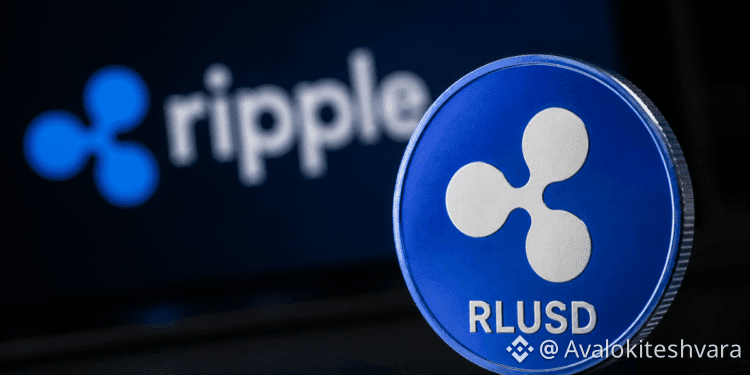
Rippleのステーブルコインが節目を突破し、この分野で最も注目を集める銘柄の一つを上回りました。
$RLUSD の供給量は過去最高の28億7,000万ドルに達し、本日報じられたところによると、トランプ一族に関連するステーブルコインUSD1を追い越しました。この節目は、Rippleのドル建てトークンがローンチ以来着実に成長してきたことを示しています。Rippleの決済ネットワークを基盤とし、機関投資家向け決済への進出を後押しにしています。
ステーブルコイン競争は、約1,750億ドルの$USDTと約690億ドルの$USDC による二強対決ではなくなりました。規制に準拠し、発行体の裏付けがあるドル建てトークンが増えています。そして競争の焦点は、流通網へと移っています。決済、取引所、DeFiでどのトークンが使われるかが重要で、単に存在しているかどうかではありません。
Rippleの強みは、すでに構築されている決済網です。RLUSDはRippleの国際送金事業に直接組み込まれており、将来の用途を約束するだけでなく、初日から実用性を備えています。
率直に言えば、28億7,000万ドルは依然として大手と比べれば小さく、USD1を上回ったことは市場シェアの獲得というより象徴的な勝利です。しかし、ステーブルコインで重要な指標は供給量の伸びであり、RLUSDの成長曲線は順調です。ニュースの熱が冷めた後も成長を続けるか、注目しましょう。
109
取締役会のたった一つの決定が、Nvidiaの現代史上最大の日中上昇をもたらし、市場全体を揺るがした。
Nvidiaの取締役会は11月23日月曜日、Jensen Huang氏をCEO兼社長に全会一致で再任した。同氏が辞任してから11日後のことだ。株価は1営業日で31.5%急騰し、2003年以来の大幅な上昇を記録。時価総額は約9,520億ドル増加した。ナスダックは6.5%、S&P 500は4.7%上昇し、いずれも2025年4月以来の大幅な上昇となった。一方、ダウ平均は1,448ポイント上昇した。
背景も重要だ。11月12日のHuang氏の退任を受け、株価は1週間で約25%下落し、AI関連投資への信頼も揺らいだ。投資家はAIインフラ支出が持続するのか疑問を呈していた。取締役会は一連の協議を経て、Huang氏の率直さと指導力に満足していると述べ、創業者である同氏は社員に「2度目はもっと優れたCEOになる」と約束した。
疑問は残る。独立委員会による調査は続いており、Huang氏は12月上旬に議会で証言する予定だ。アナリストのDan Ives氏は、目標株価225ドルとアウトパフォーム評価を維持した。
暗号資産を注視する人々にとって、シグナルは明快だ。リスク選好が戻ってきた。AI関連株がくしゃみをすると、ビットコインは今月を通じて高ベータのテック株のように動いてきた。落ち着きを取り戻したナスダックは、$BTC が重要な水準を維持するうえで、まさに必要な追い風かもしれない。

110
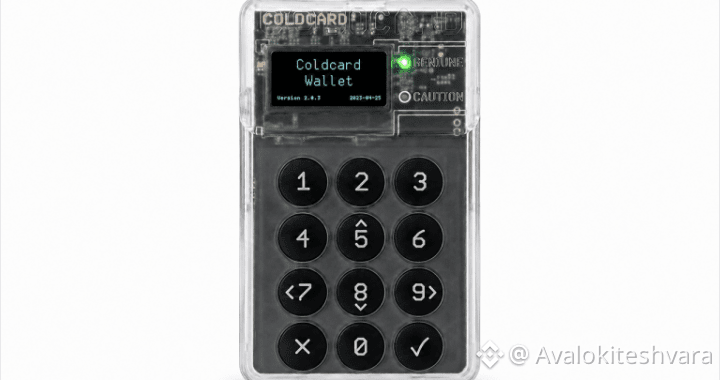
ハードウェアウォレットは、暗号資産を保管するうえで最も安全な場所とされている。そのうちの一つでシード生成に欠陥があったことで、ユーザーはこれまでに1億ドル以上の損失を被っている。
今週の市場まとめによると、Coldcardデバイスのシード生成の欠陥に関連する盗難被害額は1億ドルを超えた。8月に報告された約8,800万ドルから増加しており、盗まれた資金が取引所へ移され続け、古いコインも次々と持ち主を変えている。
見出しよりも詳細が重要だ。これは、誰かのデバイスがポケットの中でハッキングされたという話ではない。シード生成の欠陥とは、ウォレットのセキュリティの出発点、つまり、ほかのすべての要素が依存するランダムなフレーズが、本来あるべき強度を備えていなかったということだ。シードが推測されたり再現されたりする可能性があれば、ハードウェア自体では資金を守れない。
教訓は理論ではなく、実践的なものだ。ハードウェアはメーカーから直接購入し、中古品は決して買わないこと。シードはデバイス上で生成し、オフラインで書き留め、ウェブサイトやアプリには絶対に入力しないこと。また、影響を受けるデバイスを使っているなら、メーカーの案内を確認しよう。脆弱な乱数生成によって作られたシードは、まだ資金が動いていなくても、漏えいしたものとして扱うべきだ。
自己管理が機能するのは、最初の手順が確かな場合に限られる。今週の出来事は、そのことを1億ドル規模で思い出させてくれる。
1
1
684
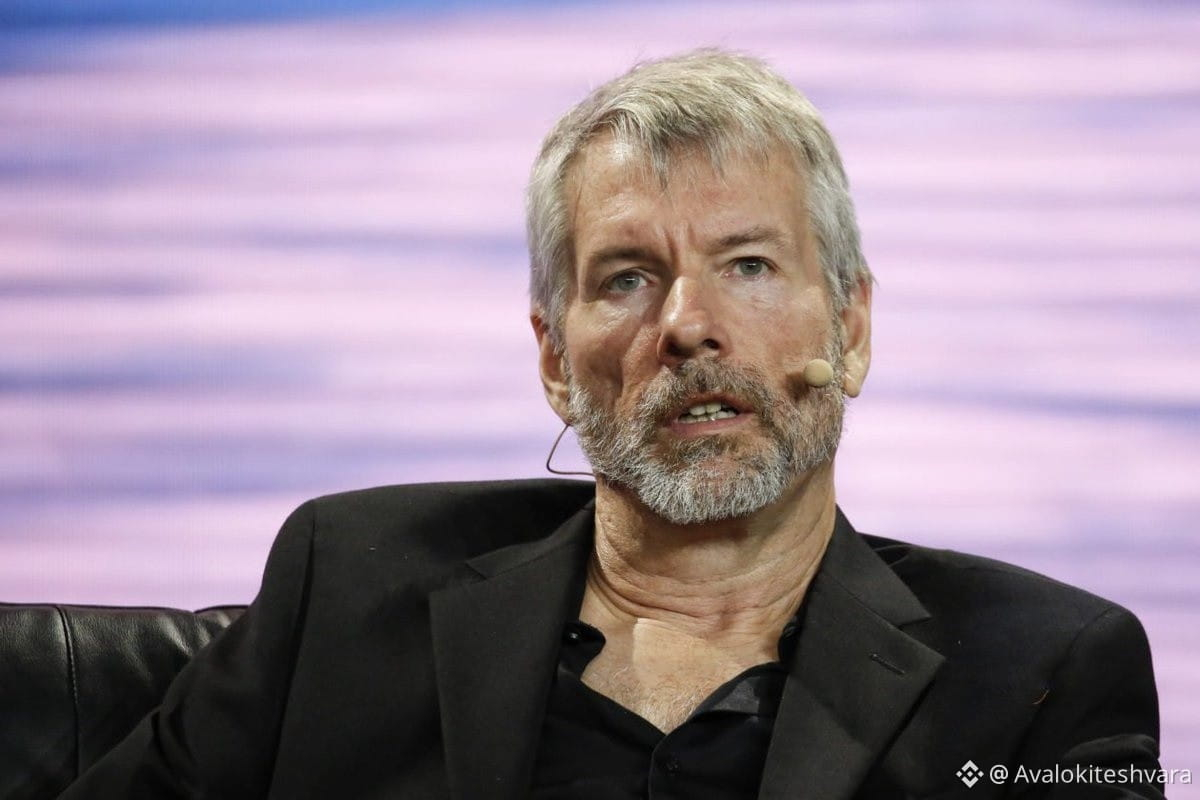
市場がビットコインの暴落に注目するなか、世界最大の企業保有者は押し目買いをしていた。ただし、その購入価格は現在のビットコイン価格を上回っている。
Strategyは先週、平均価格68,887ドルでビットコインを485枚購入し、保有量は850,849 BTC、平均取得価格は75,452ドルとなった。$BTC が今朝60,980ドル前後で取引されるなか、保有分全体が大幅な含み損を抱えている。同社の平均取得価格は現在価格を約24%上回る。
提出書類には、もうひとつ注目すべき点があった。同じ週にStrategyは、自社の優先株STRCの買い戻しに2億2,810万ドルを費やした。これはビットコイン購入に費やした額の約7倍にあたる。現時点での貸借対照表上の優先事項は、コインの買い増しではなく、資本構成を守ることだ。
これは現実を見直すうえで役立つ。企業による買いは実際にあるが、それが価格の下支えになるとは限らない。Strategyが68,887ドルで買ったあとも、市場は数日後に55,106ドルまで下落した。ETF資金の流れが逆方向に向かい、金利の見通しが見直される局面では、どれほど大口の買い手でも市場を支えることはできない。
次回の週次提出書類は月曜日に公表され、注目を集めるだろう。問われているのは、Strategyが今も信じているかどうかではない。それは明らかだ。問われているのは、今の市場がそれを気にかけているかどうかだ。
253
プライバシーコインは1週間前、市場で最も注目を集める取引対象だった。この週末、Zcashはその上昇分の大きな部分を吐き出した。
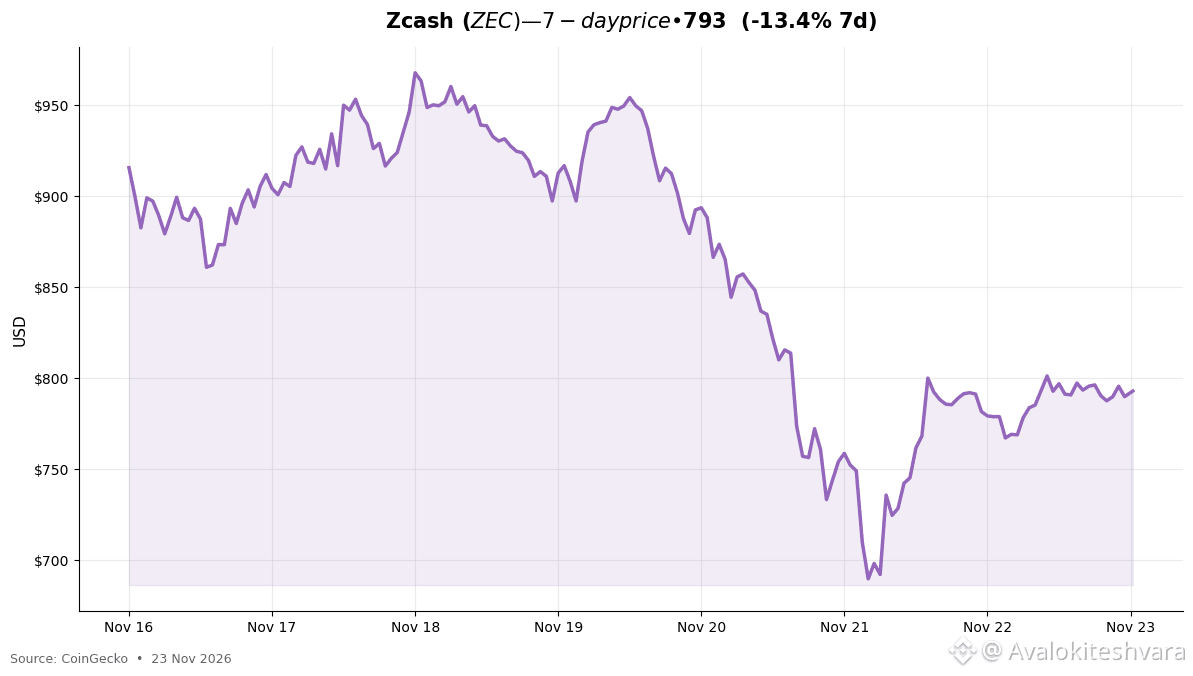
$ZEC は今朝、約793ドルで取引されており、24時間で約2%上昇している。しかし、この反発の陰には厳しい1週間が隠れている。Zcashは土曜日、8月21日以来初めて700ドルを割り込み、679.48ドルの安値をつけ、週間では約12%下落して終えた。5営業日では18.3%、30日間では33.1%下落しているが、それでも年初来では50.4%上昇している。
7日間のチャートがその経緯を物語っている。ZECは1週間前の約915ドルから、安値では680ドルを下回る水準まで下落した後、反発した。時価総額は現在約133億ドルで、全コインの中で11位にランクしている。
何が変わったのか? Zcash自体には何もない。市場全体が急落し、ビットコインは2024年9月以来の安値となる55,106ドルまで下落した。そして、最も大きく上昇していたセクターが最も大きく下落した。プライバシー関連銘柄は勢いに乗った取引対象だったが、勢いは上にも下にも働く。
注目すべき水準は700ドルだ。ZECは今のところこの水準を回復しており、その上にある810ドル付近が次の試金石となる。ビットコインが60,000ドルを維持すれば、プライバシー関連銘柄への投資は立て直せる可能性がある。維持できなければ、先週の勝ち組が最も大きなリスクにさらされたままとなる。
184
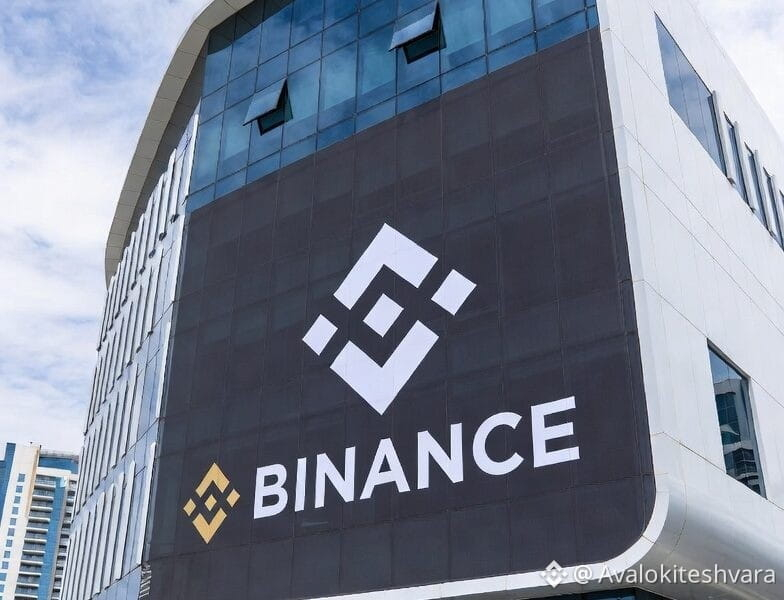
Binanceは盗まれた暗号資産の捜索をめぐり、法廷で大きな勝利を収めました。ただし、見出しの金額は慎重に読み取る必要があります。
アブダビ・グローバル・マーケット裁判所は、10月29日のハッキングを実行した身元不明の人物に対し、Binanceの申し立てを認め、世界全域を対象とする65億ドルの資産凍結命令を出しました。このハッキングによる被害額は約63億4,000万ドルで、記録上最大の暗号資産盗難です。ウィリアム・ストーン判事が出したこの命令により、攻撃者は世界のどこにあっても資産を移動したり、使ったりできません。Binanceの弁護士は、盗まれた資金を保有する約26,000のウォレットアドレスを特定しており、命令はブロックチェーン経由で送達することもできます。
重要なのはここです。65億ドルは差し止め命令の対象となる上限額であり、すでに回収された金額ではありません。これまでに凍結または差し押さえられたのは約28億5,000万ドルで、盗まれた額の約45%にあたります。Tetherだけでも15億6,000万ドル超を凍結しました。裁判所は12月1日、すでに凍結した資産を18社に引き渡させるかどうかを判断します。
Binanceは、顧客の損失をすでに自社資金で補填したとしています。また、$BNB は過去24時間で1.7%上昇し、約549ドルで取引されています。業界にとってこの訴訟は先例となります。裁判所は今や、暗号資産を世界規模で迅速に凍結する姿勢を示しています。ただし、資産回収への道のりは、はるかに長いものです。
557
ログインして、さらにコンテンツを読む
厳選トピックで世界の暗号資産トレーダーの仲間入り
⚡️ 暗号資産に関する最新かつ有益な情報が見つかります。
💬 世界最大の暗号資産取引所から信頼されています。
👍 認証を受けたクリエイターから、有益なインサイトを得られます。
メール / 電話番号