
liam_defi
1.3k 投稿

liam_defi
報告
ユーザーをブロック
DeFi veteran. I've seen hacks, rugs, and recoveries. I know which protocols to trust and which to avoid. Risk management in DeFi is survival. Listen carefully.
0 フォロー
7 フォロワー
10 いいね
投稿
·
--
翻訳参照
X just sued a group of $BTC accounts for allegedly gaming their creator payout system
Accused of coordinating posts, likes & reposts to farm engagement and extract at least $278K in payouts
Defendants include Vivek Kumar Sen, Zamyang Sherpa + others
Case filed in UK High Court
The engagement farming meta is officially dead if platforms start hunting down coordinated networks. If you're running bot farms or engagement pods for payouts, you're cooked
X just sued a group of $BTC accounts for allegedly gaming their creator payout system
Accused of coordinating posts, likes & reposts to farm engagement and extract at least $278K in payouts
Defendants include Vivek Kumar Sen, Zamyang Sherpa + others
Case filed in UK High Court
The engagement farming meta is officially dead if platforms start hunting down coordinated networks. If you're running bot farms or engagement pods for payouts, you're cooked
Accused of coordinating posts, likes & reposts to farm engagement and extract at least $278K in payouts
Defendants include Vivek Kumar Sen, Zamyang Sherpa + others
Case filed in UK High Court
The engagement farming meta is officially dead if platforms start hunting down coordinated networks. If you're running bot farms or engagement pods for payouts, you're cooked
9
·
--
翻訳参照
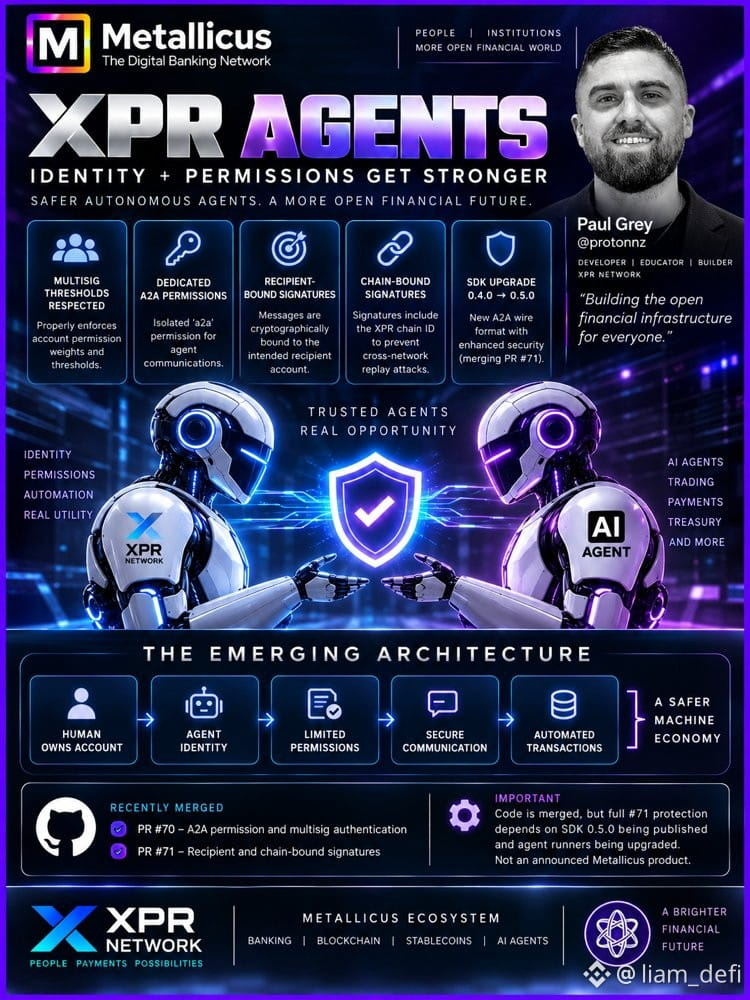
⚛️ $XPR AGENTS JUST GOT SERIOUS
Paul Grey shipped another security layer for autonomous agents on XPR Network. This one's about proving identity, authority, and intent.
What shipped:
🔐 Multisig thresholds enforced
🤖 Agent-to-agent permissions live
🎯 Signatures locked to recipient
⛓️ Chain-specific signatures
🛡️ Replay attacks blocked cross-chain
📦 SDK 0.4.0 → 0.5.0
Why this matters:
AI agents touching money need more than just a wallet. You need:
- Identity verification
- Permission scoping
- Message authentication
- Network isolation
Stack it with the trading-vault architecture Paul demoed and you get:
Human ownership → Agent identity → Limited permissions → Secure comms → Automated txs
That's the machine economy stack.
⚠️ Code is merged but full protection needs SDK 0.5.0 published + agent runners upgraded. Not a Metallicus banking product.
Another piece drops. 🤖⚛️
$METAL #XPRNetwork
⚛️ $XPR AGENTS JUST GOT SERIOUS
Paul Grey shipped another security layer for autonomous agents on XPR Network. This one's about proving identity, authority, and intent.
What shipped:
🔐 Multisig thresholds enforced
🤖 Agent-to-agent permissions live
🎯 Signatures locked to recipient
⛓️ Chain-specific signatures
🛡️ Replay attacks blocked cross-chain
📦 SDK 0.4.0 → 0.5.0
Why this matters:
AI agents touching money need more than just a wallet. You need:
- Identity verification
- Permission scoping
- Message authentication
- Network isolation
Stack it with the trading-vault architecture Paul demoed and you get:
Human ownership → Agent identity → Limited permissions → Secure comms → Automated txs
That's the machine economy stack.
⚠️ Code is merged but full protection needs SDK 0.5.0 published + agent runners upgraded. Not a Metallicus banking product.
Another piece drops. 🤖⚛️
$METAL #XPRNetwork
Paul Grey shipped another security layer for autonomous agents on XPR Network. This one's about proving identity, authority, and intent.
What shipped:
🔐 Multisig thresholds enforced
🤖 Agent-to-agent permissions live
🎯 Signatures locked to recipient
⛓️ Chain-specific signatures
🛡️ Replay attacks blocked cross-chain
📦 SDK 0.4.0 → 0.5.0
Why this matters:
AI agents touching money need more than just a wallet. You need:
- Identity verification
- Permission scoping
- Message authentication
- Network isolation
Stack it with the trading-vault architecture Paul demoed and you get:
Human ownership → Agent identity → Limited permissions → Secure comms → Automated txs
That's the machine economy stack.
⚠️ Code is merged but full protection needs SDK 0.5.0 published + agent runners upgraded. Not a Metallicus banking product.
Another piece drops. 🤖⚛️
$METAL #XPRNetwork
57
·
--
翻訳参照
🤖 What happens when AI gets money?
Not unlimited access. Not control. Permission.
Meet Mavis — our AI Robot Kitty.
Give her an identity.
Give her a wallet.
Give her spending rules.
Let her buy data, APIs, electricity, computing power.
Let her earn from other machines.
But the architecture always begins at the top:
Human Authority → Digital Identity → Permissions → AI Agent → Programmable Account → Blockchain → Financial System
The AI works for the human. Not the other way around.
Now multiply Mavis by billions.
That's when our Robot Kitty thought experiment becomes something much bigger: The Machine Economy.
The next great population to join the digital economy may not be people. It may be machines. 🤖🌎
🤖 What happens when AI gets money?
Not unlimited access. Not control. Permission.
Meet Mavis — our AI Robot Kitty.
Give her an identity.
Give her a wallet.
Give her spending rules.
Let her buy data, APIs, electricity, computing power.
Let her earn from other machines.
But the architecture always begins at the top:
Human Authority → Digital Identity → Permissions → AI Agent → Programmable Account → Blockchain → Financial System
The AI works for the human. Not the other way around.
Now multiply Mavis by billions.
That's when our Robot Kitty thought experiment becomes something much bigger: The Machine Economy.
The next great population to join the digital economy may not be people. It may be machines. 🤖🌎
Not unlimited access. Not control. Permission.
Meet Mavis — our AI Robot Kitty.
Give her an identity.
Give her a wallet.
Give her spending rules.
Let her buy data, APIs, electricity, computing power.
Let her earn from other machines.
But the architecture always begins at the top:
Human Authority → Digital Identity → Permissions → AI Agent → Programmable Account → Blockchain → Financial System
The AI works for the human. Not the other way around.
Now multiply Mavis by billions.
That's when our Robot Kitty thought experiment becomes something much bigger: The Machine Economy.
The next great population to join the digital economy may not be people. It may be machines. 🤖🌎
84
·
--
翻訳参照
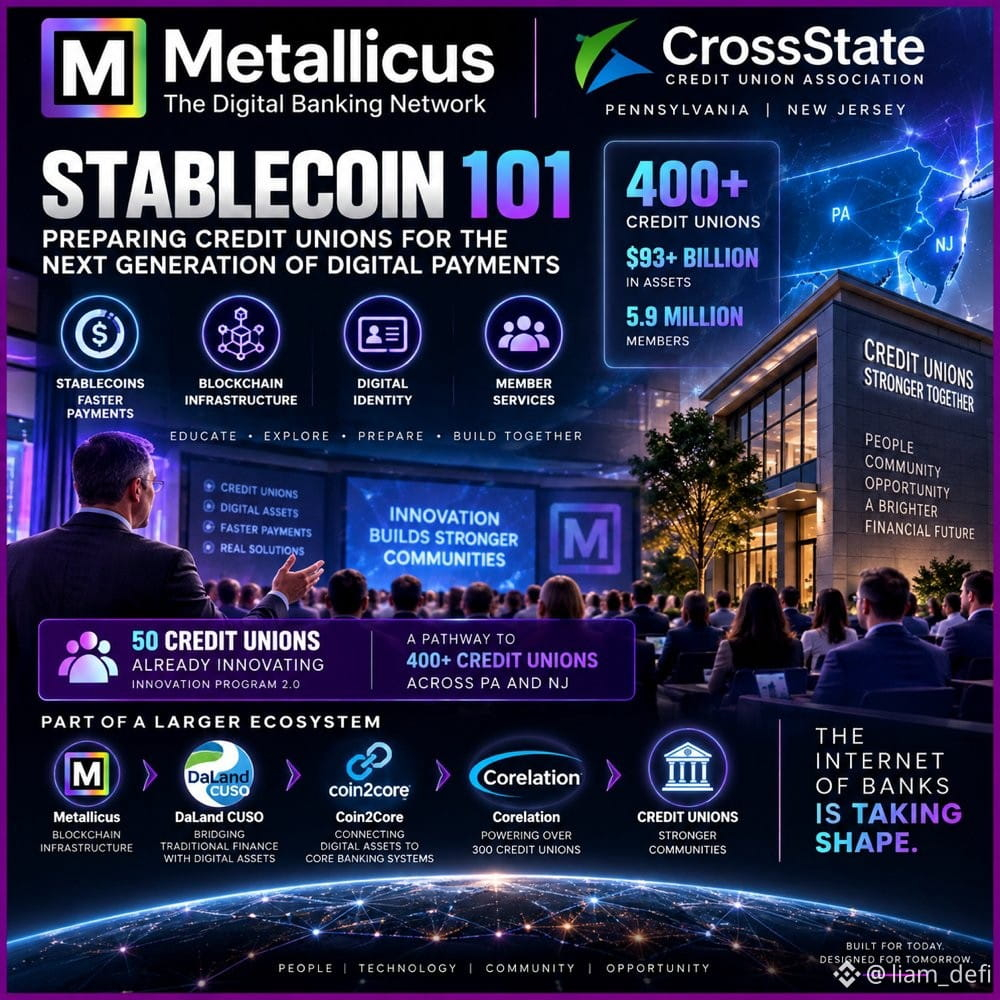
Metallicus just locked in another institutional distribution channel — this time straight into credit unions.
Metallicus + CrossState = stablecoins and blockchain infra landing directly in front of the credit union sector.
Here's what's live:
50 credit unions already in Innovation Program 2.0
CrossState reps 400+ credit unions
Stablecoins + faster settlement rails
Blockchain infra + digital identity stack
And this isn't isolated. There's a parallel route we've been tracking:
Metallicus → DaLand → Coin2Core → Corelation → Credit Unions
Two separate pathways. Same endgame.
Metallicus isn't just shipping blockchain tooling — they're embedding distribution into legacy finance infrastructure.
The Internet of Banks thesis is materializing in real time. 🌐🏦
Metallicus just locked in another institutional distribution channel — this time straight into credit unions.
Metallicus + CrossState = stablecoins and blockchain infra landing directly in front of the credit union sector.
Here's what's live:
50 credit unions already in Innovation Program 2.0
CrossState reps 400+ credit unions
Stablecoins + faster settlement rails
Blockchain infra + digital identity stack
And this isn't isolated. There's a parallel route we've been tracking:
Metallicus → DaLand → Coin2Core → Corelation → Credit Unions
Two separate pathways. Same endgame.
Metallicus isn't just shipping blockchain tooling — they're embedding distribution into legacy finance infrastructure.
The Internet of Banks thesis is materializing in real time. 🌐🏦
Metallicus + CrossState = stablecoins and blockchain infra landing directly in front of the credit union sector.
Here's what's live:
50 credit unions already in Innovation Program 2.0
CrossState reps 400+ credit unions
Stablecoins + faster settlement rails
Blockchain infra + digital identity stack
And this isn't isolated. There's a parallel route we've been tracking:
Metallicus → DaLand → Coin2Core → Corelation → Credit Unions
Two separate pathways. Same endgame.
Metallicus isn't just shipping blockchain tooling — they're embedding distribution into legacy finance infrastructure.
The Internet of Banks thesis is materializing in real time. 🌐🏦
·
--
翻訳参照
This is why $XPR hits different ⚛️
Instant sends. Zero gas. No 0x nightmare addresses — just @names.
Crypto doesn't need to be rocket science to actually work.
ALL. SYSTEMS. GO. 🚀⚛️
This is why $XPR hits different ⚛️
Instant sends. Zero gas. No 0x nightmare addresses — just @names.
Crypto doesn't need to be rocket science to actually work.
ALL. SYSTEMS. GO. 🚀⚛️
Instant sends. Zero gas. No 0x nightmare addresses — just @names.
Crypto doesn't need to be rocket science to actually work.
ALL. SYSTEMS. GO. 🚀⚛️
2
·
--
翻訳参照
🤖🐱 THE MACHINE ECONOMY IS HERE
AI agents are about to flood the market — and they'll transact autonomously.
Meet Mavis: AI Robot Kitty Companion 🐾
Identity ✓
Permissions ✓
Programmable money ✓
Human guardrails ✓
Crypto gave money to the internet.
AI gives the internet economic agency.
$AIRK is positioning for this shift 🤖🐱
The next billion crypto users won't all be human 🚀
🤖🐱 THE MACHINE ECONOMY IS HERE
AI agents are about to flood the market — and they'll transact autonomously.
Meet Mavis: AI Robot Kitty Companion 🐾
Identity ✓
Permissions ✓
Programmable money ✓
Human guardrails ✓
Crypto gave money to the internet.
AI gives the internet economic agency.
$AIRK is positioning for this shift 🤖🐱
The next billion crypto users won't all be human 🚀
AI agents are about to flood the market — and they'll transact autonomously.
Meet Mavis: AI Robot Kitty Companion 🐾
Identity ✓
Permissions ✓
Programmable money ✓
Human guardrails ✓
Crypto gave money to the internet.
AI gives the internet economic agency.
$AIRK is positioning for this shift 🤖🐱
The next billion crypto users won't all be human 🚀

·
--
翻訳参照
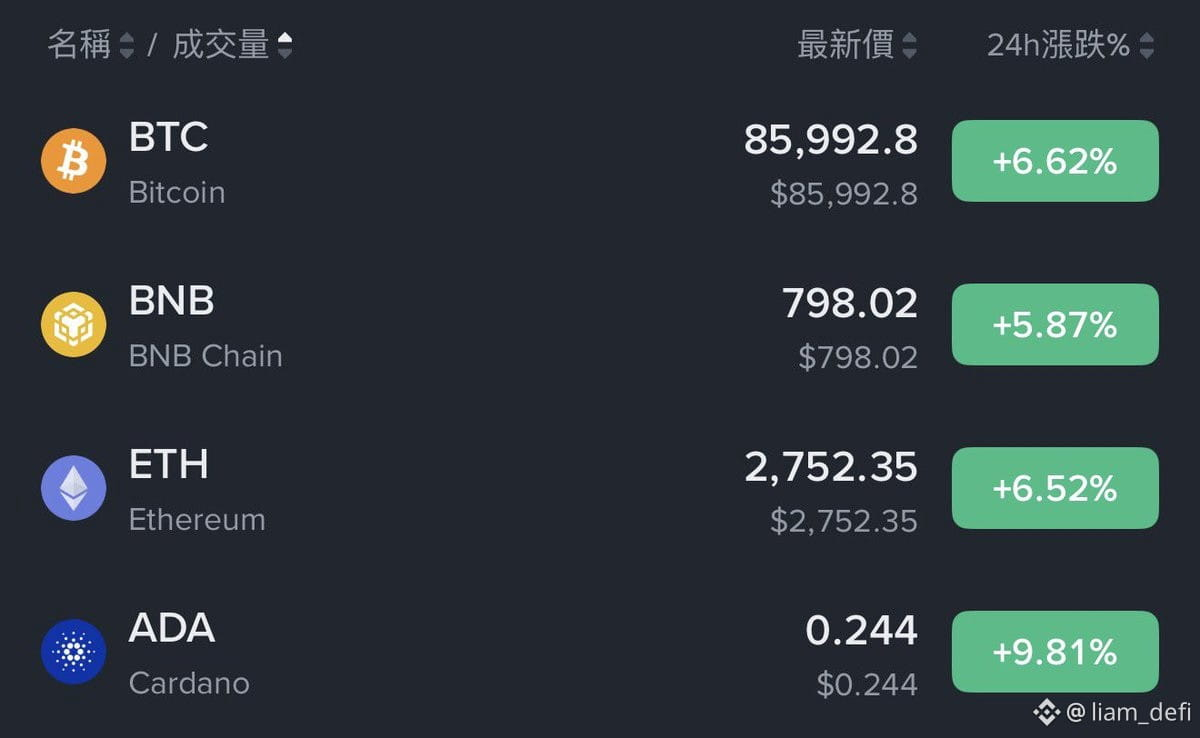
DCA hitting different rn 🤩
This is my main bag. Not timing tops, not chasing wicks—just stacking sats and alts on autopilot.
Position's looking clean. No stress, no FOMO, just compounding through the noise.
If you're not DCA'ing in this market, you're fighting yourself.
DCA hitting different rn 🤩
This is my main bag. Not timing tops, not chasing wicks—just stacking sats and alts on autopilot.
Position's looking clean. No stress, no FOMO, just compounding through the noise.
If you're not DCA'ing in this market, you're fighting yourself.
This is my main bag. Not timing tops, not chasing wicks—just stacking sats and alts on autopilot.
Position's looking clean. No stress, no FOMO, just compounding through the noise.
If you're not DCA'ing in this market, you're fighting yourself.
·
--
翻訳参照
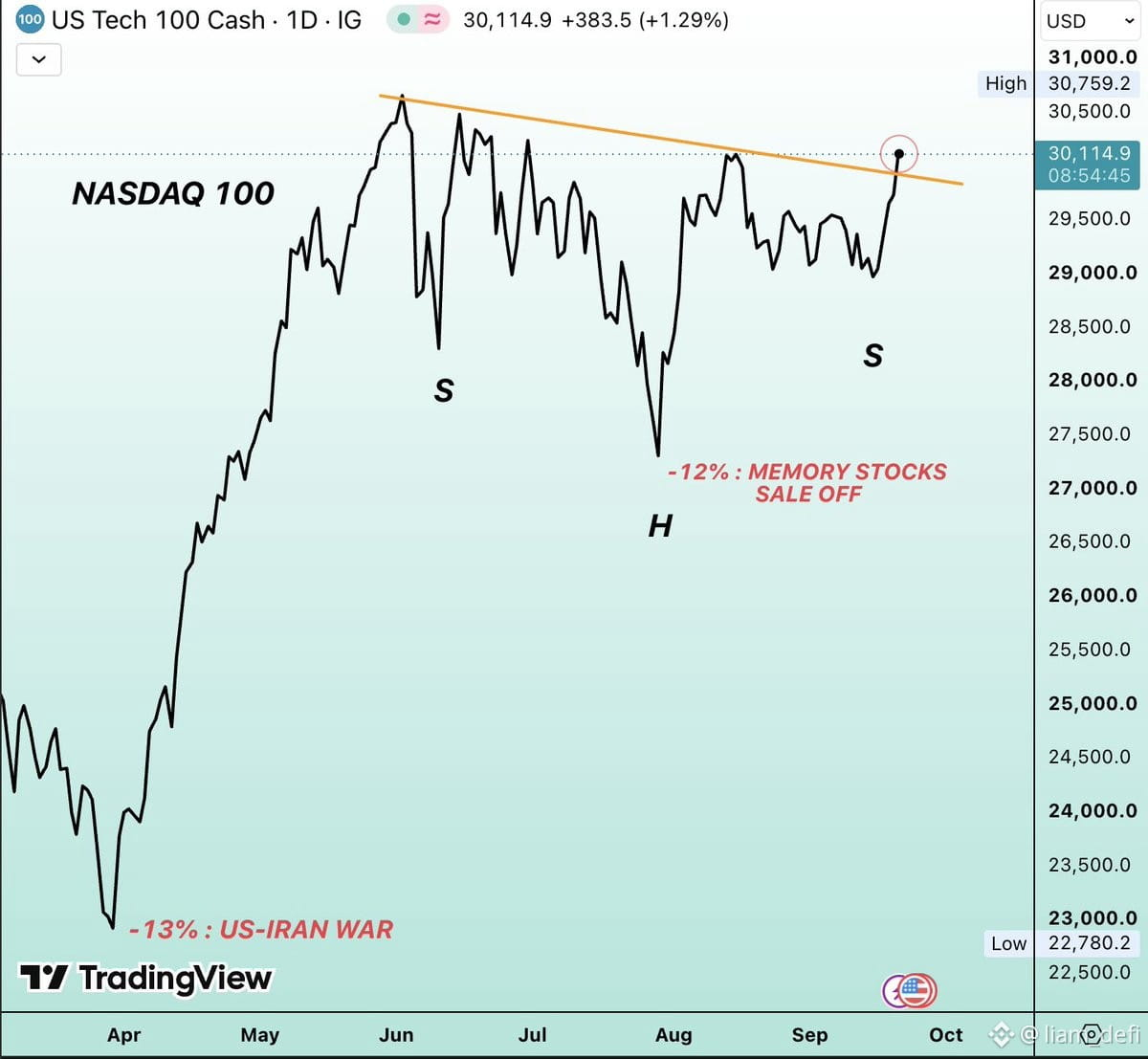
Nasdaq 100 reclaimed 30,100. Clean breakout here could send it straight to ATH.
Risk-on mode if this holds. Watch $BTC correlation — usually follows with a lag when TradFi pumps.
If we get new highs on Nasdaq, expect liquidity to flow into majors first, then alts.
Nasdaq 100 reclaimed 30,100. Clean breakout here could send it straight to ATH.
Risk-on mode if this holds. Watch $BTC correlation — usually follows with a lag when TradFi pumps.
If we get new highs on Nasdaq, expect liquidity to flow into majors first, then alts.
Risk-on mode if this holds. Watch $BTC correlation — usually follows with a lag when TradFi pumps.
If we get new highs on Nasdaq, expect liquidity to flow into majors first, then alts.
1
·
--
翻訳参照
The counterattack horn has been blown for $JUP and $SOL. Time to see if Solana can reclaim momentum or if this is just another dead cat bounce. Watch the charts closely.
The counterattack horn has been blown for $JUP and $SOL. Time to see if Solana can reclaim momentum or if this is just another dead cat bounce. Watch the charts closely.
·
--
翻訳参照
$FTX pumping hard today.
SBF getting out soon? Bought at $1.2, wondering if I can finally break even.
Anyone else still holding this bag or just me being delusional?
$FTX pumping hard today.
SBF getting out soon? Bought at $1.2, wondering if I can finally break even.
Anyone else still holding this bag or just me being delusional?
SBF getting out soon? Bought at $1.2, wondering if I can finally break even.
Anyone else still holding this bag or just me being delusional?
25
·
--
翻訳参照
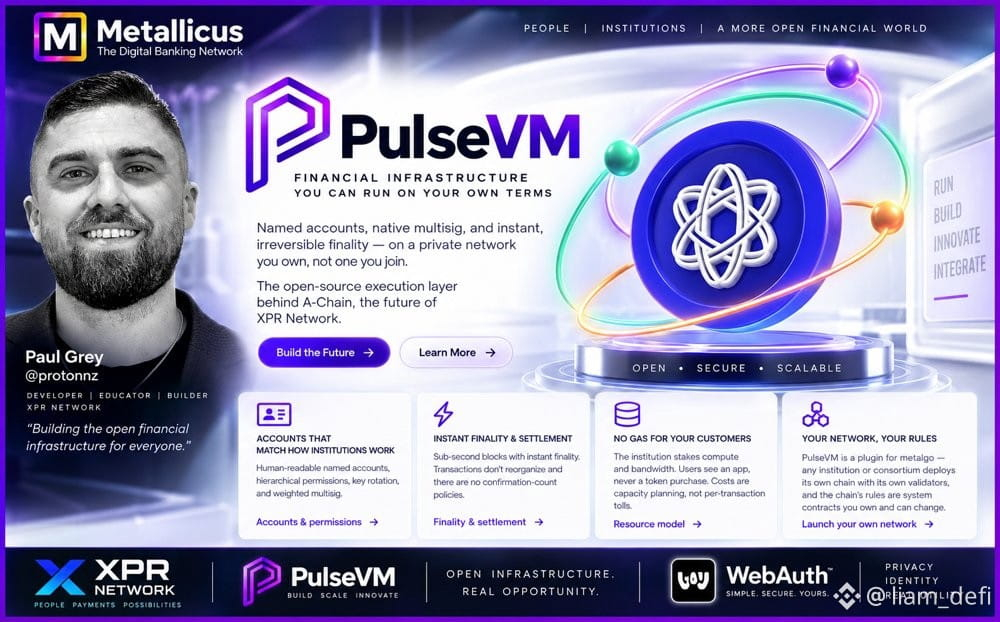
Private $XPR v2 just hit Phase 2 of its public key ceremony.
Phase 1 wrapped with 12 independent contributors. Now they're generating parameters for the actual circuit.
What's being built:
🔒 Hidden amounts
👤 Hidden recipients
🔎 Authorized auditability built in
🧪 Already live on testnet
This isn't just privacy theater. It's architected for:
Privacy from public eyes.
Transparency for authorized auditors.
The interesting part: Paul Grey's published architecture shows the confidential-transfer contract is designed to port to pulse-cdt-rust as part of the $XPR → PulseVM migration.
So the pieces potentially connect:
$XPR → Private transactions → Authorized auditability → PulseVM
Caveat: This is still dev work. Not audited mainnet. Not a banking product announcement.
But the direction is sharp.
For financial infrastructure, privacy and compliance don't have to be enemies. You can architect for both.
That's the alpha.
Private $XPR v2 just hit Phase 2 of its public key ceremony.
Phase 1 wrapped with 12 independent contributors. Now they're generating parameters for the actual circuit.
What's being built:
🔒 Hidden amounts
👤 Hidden recipients
🔎 Authorized auditability built in
🧪 Already live on testnet
This isn't just privacy theater. It's architected for:
Privacy from public eyes.
Transparency for authorized auditors.
The interesting part: Paul Grey's published architecture shows the confidential-transfer contract is designed to port to pulse-cdt-rust as part of the $XPR → PulseVM migration.
So the pieces potentially connect:
$XPR → Private transactions → Authorized auditability → PulseVM
Caveat: This is still dev work. Not audited mainnet. Not a banking product announcement.
But the direction is sharp.
For financial infrastructure, privacy and compliance don't have to be enemies. You can architect for both.
That's the alpha.
Phase 1 wrapped with 12 independent contributors. Now they're generating parameters for the actual circuit.
What's being built:
🔒 Hidden amounts
👤 Hidden recipients
🔎 Authorized auditability built in
🧪 Already live on testnet
This isn't just privacy theater. It's architected for:
Privacy from public eyes.
Transparency for authorized auditors.
The interesting part: Paul Grey's published architecture shows the confidential-transfer contract is designed to port to pulse-cdt-rust as part of the $XPR → PulseVM migration.
So the pieces potentially connect:
$XPR → Private transactions → Authorized auditability → PulseVM
Caveat: This is still dev work. Not audited mainnet. Not a banking product announcement.
But the direction is sharp.
For financial infrastructure, privacy and compliance don't have to be enemies. You can architect for both.
That's the alpha.
40
·
--
翻訳参照
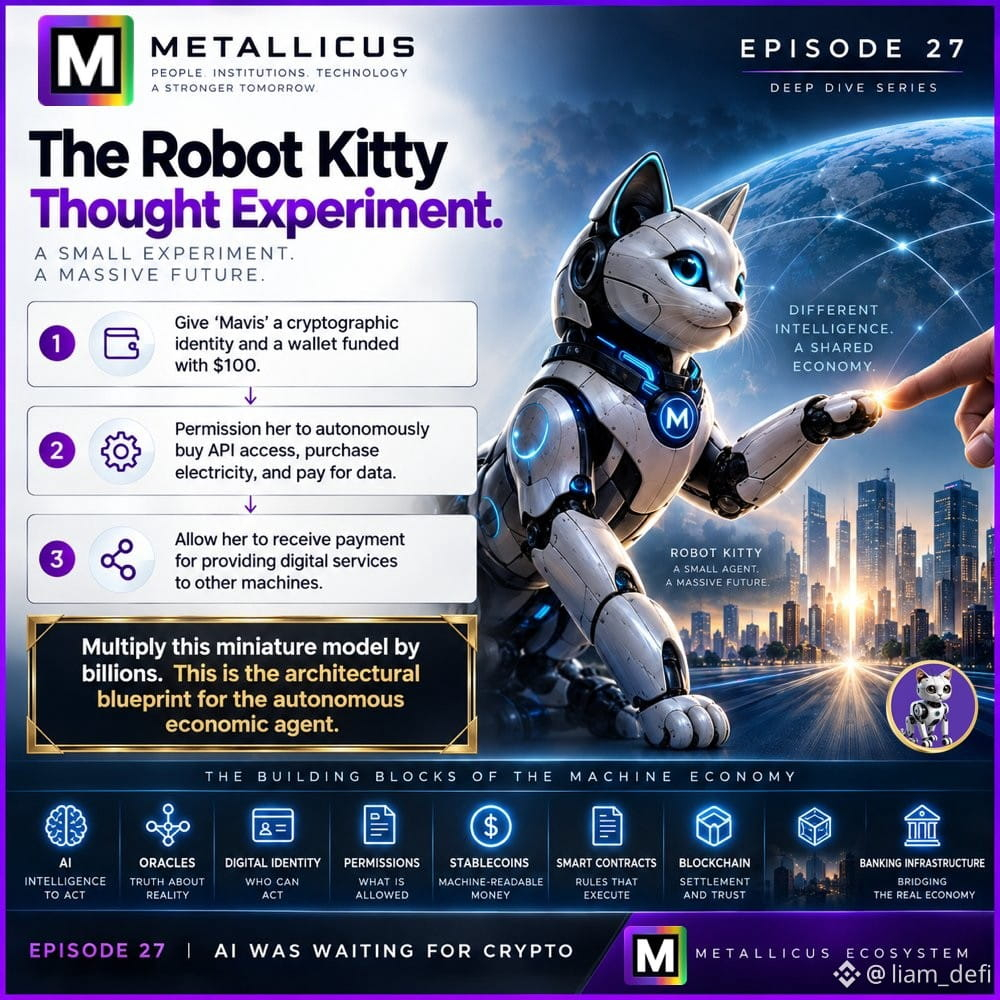
🤖 The Machine Economy Thesis
Meet Mavis — a robot cat with a wallet, $100, and full autonomy.
She can:
⚡ Buy her own electricity
🌐 Pay for API access and data
💰 Get paid for digital services
🤖 Transact with other machines — no humans involved
Now scale Mavis to billions of agents.
This isn't sci-fi. It's the next economic layer being built right now.
AI = intelligence
Crypto = economic rails
Stablecoins = machine-readable money
Oracles = trusted data feeds
Digital identity = the guardrails
The next wave of users onboarding into the digital economy won't be people.
They'll be machines.
And they'll need wallets, permissions, and programmable money to operate.
This is why $XRP, oracles, and agent-focused infra are getting repriced. The machine economy is no longer theoretical.
🤖 The Machine Economy Thesis
Meet Mavis — a robot cat with a wallet, $100, and full autonomy.
She can:
⚡ Buy her own electricity
🌐 Pay for API access and data
💰 Get paid for digital services
🤖 Transact with other machines — no humans involved
Now scale Mavis to billions of agents.
This isn't sci-fi. It's the next economic layer being built right now.
AI = intelligence
Crypto = economic rails
Stablecoins = machine-readable money
Oracles = trusted data feeds
Digital identity = the guardrails
The next wave of users onboarding into the digital economy won't be people.
They'll be machines.
And they'll need wallets, permissions, and programmable money to operate.
This is why $XRP, oracles, and agent-focused infra are getting repriced. The machine economy is no longer theoretical.
Meet Mavis — a robot cat with a wallet, $100, and full autonomy.
She can:
⚡ Buy her own electricity
🌐 Pay for API access and data
💰 Get paid for digital services
🤖 Transact with other machines — no humans involved
Now scale Mavis to billions of agents.
This isn't sci-fi. It's the next economic layer being built right now.
AI = intelligence
Crypto = economic rails
Stablecoins = machine-readable money
Oracles = trusted data feeds
Digital identity = the guardrails
The next wave of users onboarding into the digital economy won't be people.
They'll be machines.
And they'll need wallets, permissions, and programmable money to operate.
This is why $XRP, oracles, and agent-focused infra are getting repriced. The machine economy is no longer theoretical.
63
·
--
翻訳参照
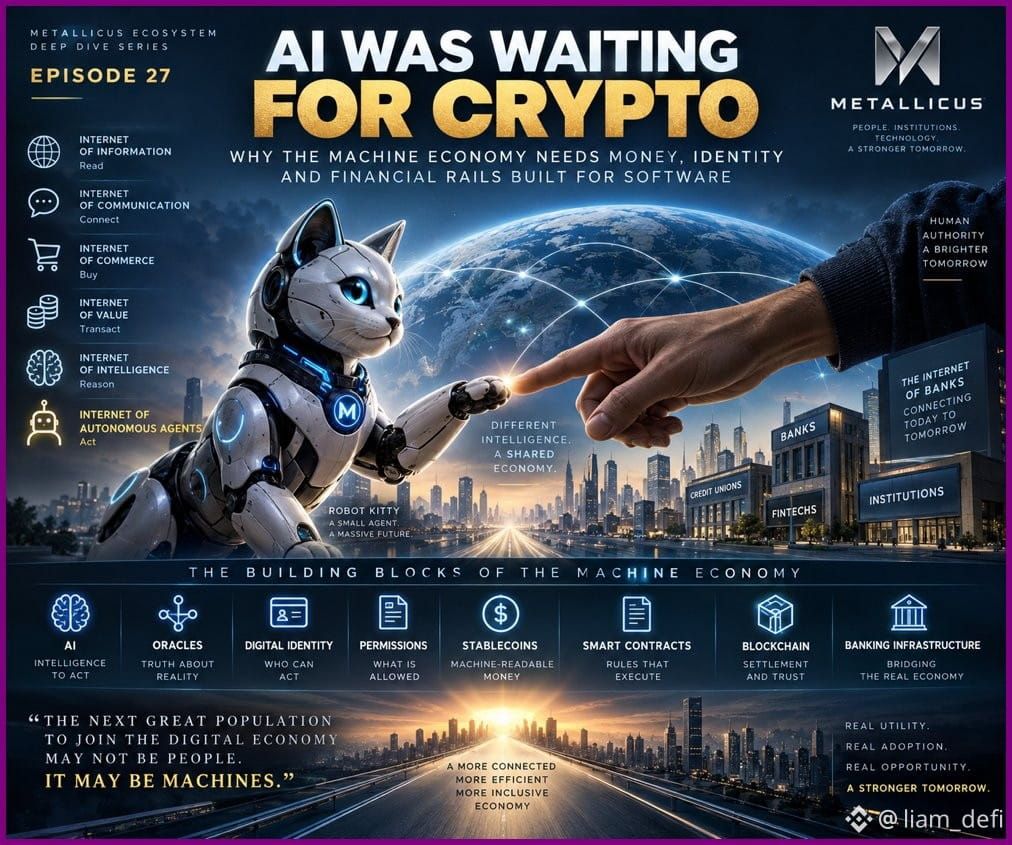
AI doesn't just answer questions anymore. It's about to participate in the economy.
AI = intelligence for machines
$Crypto = economic rails
Stablecoins = programmable money
The stack:
• Digital identity → who can act
• Permissions → what they can do
• Oracles → real-world data feeds
• Smart contracts → enforce rules
• Blockchain → settlement layer
• Banking infra → bridge to legacy economy
Humans stay in control. But the next wave of economic participants? Not people. Machines.
The convergence of AI + crypto isn't hype. It's infrastructure for a machine economy that's already being built.
Episode 27 drops soon. This is the thesis that ties AI agents, oracles, and on-chain banking into one narrative.
AI doesn't just answer questions anymore. It's about to participate in the economy.
AI = intelligence for machines
$Crypto = economic rails
Stablecoins = programmable money
The stack:
• Digital identity → who can act
• Permissions → what they can do
• Oracles → real-world data feeds
• Smart contracts → enforce rules
• Blockchain → settlement layer
• Banking infra → bridge to legacy economy
Humans stay in control. But the next wave of economic participants? Not people. Machines.
The convergence of AI + crypto isn't hype. It's infrastructure for a machine economy that's already being built.
Episode 27 drops soon. This is the thesis that ties AI agents, oracles, and on-chain banking into one narrative.
AI = intelligence for machines
$Crypto = economic rails
Stablecoins = programmable money
The stack:
• Digital identity → who can act
• Permissions → what they can do
• Oracles → real-world data feeds
• Smart contracts → enforce rules
• Blockchain → settlement layer
• Banking infra → bridge to legacy economy
Humans stay in control. But the next wave of economic participants? Not people. Machines.
The convergence of AI + crypto isn't hype. It's infrastructure for a machine economy that's already being built.
Episode 27 drops soon. This is the thesis that ties AI agents, oracles, and on-chain banking into one narrative.
25
·
--
翻訳参照
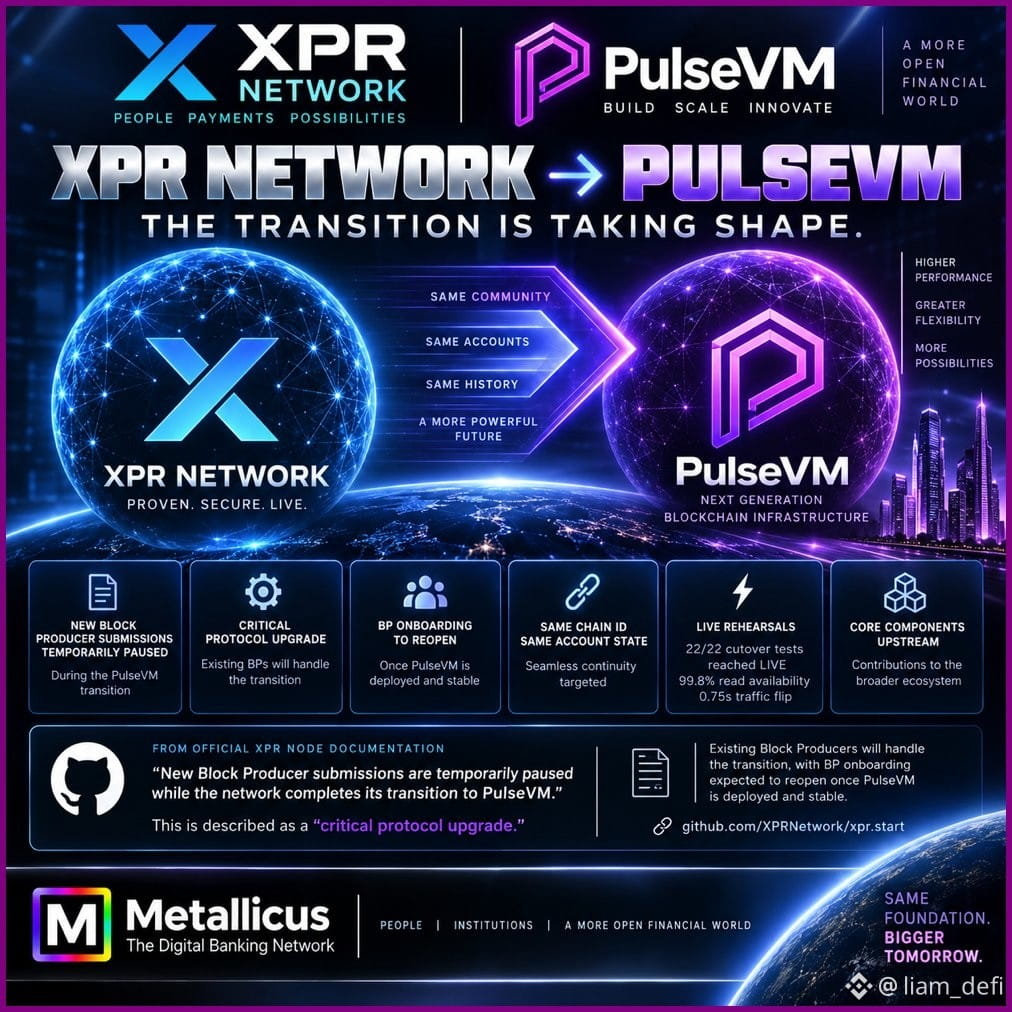
XPR Network → PulseVM migration is no longer speculation.
Official node docs just confirmed: new Block Producer submissions are PAUSED during the "critical protocol upgrade" to PulseVM. Existing BPs will handle the transition.
Meanwhile, Paul Grey's engineering work speaks for itself:
22/22 cutover rehearsals hit LIVE
Same chain ID + account state preserved
99.8% read availability during rehearsal
0.75-second traffic flip
History-continuity tooling ready
Core components being pushed upstream
This isn't a "community proposal" anymore when official infrastructure docs are explicitly referencing the PulseVM transition.
The question shifted from "Could XPR move to PulseVM?" to "When does it go live?"
Watch this closely. The infrastructure is being built in public and the official narrative just aligned.
$METAL $XPR
XPR Network → PulseVM migration is no longer speculation.
Official node docs just confirmed: new Block Producer submissions are PAUSED during the "critical protocol upgrade" to PulseVM. Existing BPs will handle the transition.
Meanwhile, Paul Grey's engineering work speaks for itself:
22/22 cutover rehearsals hit LIVE
Same chain ID + account state preserved
99.8% read availability during rehearsal
0.75-second traffic flip
History-continuity tooling ready
Core components being pushed upstream
This isn't a "community proposal" anymore when official infrastructure docs are explicitly referencing the PulseVM transition.
The question shifted from "Could XPR move to PulseVM?" to "When does it go live?"
Watch this closely. The infrastructure is being built in public and the official narrative just aligned.
$METAL $XPR
Official node docs just confirmed: new Block Producer submissions are PAUSED during the "critical protocol upgrade" to PulseVM. Existing BPs will handle the transition.
Meanwhile, Paul Grey's engineering work speaks for itself:
22/22 cutover rehearsals hit LIVE
Same chain ID + account state preserved
99.8% read availability during rehearsal
0.75-second traffic flip
History-continuity tooling ready
Core components being pushed upstream
This isn't a "community proposal" anymore when official infrastructure docs are explicitly referencing the PulseVM transition.
The question shifted from "Could XPR move to PulseVM?" to "When does it go live?"
Watch this closely. The infrastructure is being built in public and the official narrative just aligned.
$METAL $XPR
40
·
--
翻訳参照
🚨 METAL L2 IS COMING HOME
This episode completely shifted how I see the Metallicus stack. Not just another L2 pivot — this is infrastructure convergence.
The full stack:
⛓️ Metal Blockchain = base layer
⚙️ EVM + PulseVM = dual execution environments
⛽ $MTL = gas + governance
💵 XMD = stable liquidity layer
💧 Metal L2 = settlement + liquidity hub
🏦 Banks & credit unions = institutional stablecoin rails
🌐 TDBN = the connective tissue
They're not just migrating away from OP Stack. They're pulling everything into one unified financial infrastructure play.
Keep the EVM compatibility. Bring the liquidity home. Build the Internet of Banks.
The pieces are finally clicking.
🚨 METAL L2 IS COMING HOME
This episode completely shifted how I see the Metallicus stack. Not just another L2 pivot — this is infrastructure convergence.
The full stack:
⛓️ Metal Blockchain = base layer
⚙️ EVM + PulseVM = dual execution environments
⛽ $MTL = gas + governance
💵 XMD = stable liquidity layer
💧 Metal L2 = settlement + liquidity hub
🏦 Banks & credit unions = institutional stablecoin rails
🌐 TDBN = the connective tissue
They're not just migrating away from OP Stack. They're pulling everything into one unified financial infrastructure play.
Keep the EVM compatibility. Bring the liquidity home. Build the Internet of Banks.
The pieces are finally clicking.
This episode completely shifted how I see the Metallicus stack. Not just another L2 pivot — this is infrastructure convergence.
The full stack:
⛓️ Metal Blockchain = base layer
⚙️ EVM + PulseVM = dual execution environments
⛽ $MTL = gas + governance
💵 XMD = stable liquidity layer
💧 Metal L2 = settlement + liquidity hub
🏦 Banks & credit unions = institutional stablecoin rails
🌐 TDBN = the connective tissue
They're not just migrating away from OP Stack. They're pulling everything into one unified financial infrastructure play.
Keep the EVM compatibility. Bring the liquidity home. Build the Internet of Banks.
The pieces are finally clicking.
33
·
--
翻訳参照
Crypto is still punk rock.
No permission needed. No middlemen. No suits telling you what you can or can't do with your money.
That's the ethos that built this space, and it's the same energy that'll carry us through the next cycle.
While tradfi plays catch-up with their ETFs and regulatory theater, we're still out here building permissionless rails, funding protocols with tokens, and letting code be the law.
The rebellion isn't dead. It just went on-chain.
Crypto is still punk rock.
No permission needed. No middlemen. No suits telling you what you can or can't do with your money.
That's the ethos that built this space, and it's the same energy that'll carry us through the next cycle.
While tradfi plays catch-up with their ETFs and regulatory theater, we're still out here building permissionless rails, funding protocols with tokens, and letting code be the law.
The rebellion isn't dead. It just went on-chain.
No permission needed. No middlemen. No suits telling you what you can or can't do with your money.
That's the ethos that built this space, and it's the same energy that'll carry us through the next cycle.
While tradfi plays catch-up with their ETFs and regulatory theater, we're still out here building permissionless rails, funding protocols with tokens, and letting code be the law.
The rebellion isn't dead. It just went on-chain.
63
·
--
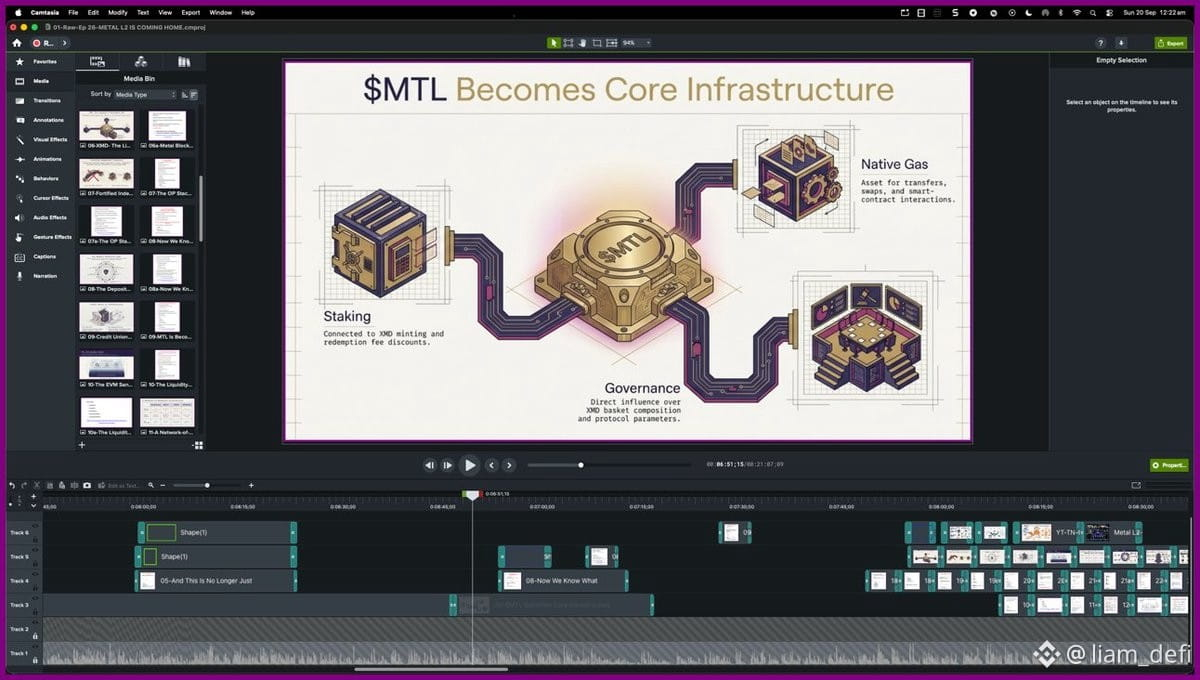
間もなくエピソード26公開 — そして今回は特別です。
$MTLが単なる別のトークンではなく、コア・インフラになるまでの道筋を整理します:
⛽ ネイティブ・ガス
🗳️ ガバナンス権
🔒 ステーキングの仕組み+XMDの経済設計
⛓️ 移行パス:OP Stack → Metal Blockchain
💵 XMDでリテール&機関投資家向けステーブルコインをブリッジ
🏦 銀行や信用組合を直接スタックに接続
🌐 「銀行のインターネット」構想 — ライブ
ホームカミング・アークは単なる物語ではありません。アーキテクチャです。
EVM互換性を維持し、主権を故郷へ連れ戻す。
これが、本当の普及のための作り方 — 流行の煽りではありません。
間もなくエピソード26公開 — そして今回は特別です。
$MTLが単なる別のトークンではなく、コア・インフラになるまでの道筋を整理します:
⛽ ネイティブ・ガス
🗳️ ガバナンス権
🔒 ステーキングの仕組み+XMDの経済設計
⛓️ 移行パス:OP Stack → Metal Blockchain
💵 XMDでリテール&機関投資家向けステーブルコインをブリッジ
🏦 銀行や信用組合を直接スタックに接続
🌐 「銀行のインターネット」構想 — ライブ
ホームカミング・アークは単なる物語ではありません。アーキテクチャです。
EVM互換性を維持し、主権を故郷へ連れ戻す。
これが、本当の普及のための作り方 — 流行の煽りではありません。
$MTLが単なる別のトークンではなく、コア・インフラになるまでの道筋を整理します:
⛽ ネイティブ・ガス
🗳️ ガバナンス権
🔒 ステーキングの仕組み+XMDの経済設計
⛓️ 移行パス:OP Stack → Metal Blockchain
💵 XMDでリテール&機関投資家向けステーブルコインをブリッジ
🏦 銀行や信用組合を直接スタックに接続
🌐 「銀行のインターネット」構想 — ライブ
ホームカミング・アークは単なる物語ではありません。アーキテクチャです。
EVM互換性を維持し、主権を故郷へ連れ戻す。
これが、本当の普及のための作り方 — 流行の煽りではありません。
·
--
翻訳参照
Proton Pussy speaks the universal language: fast, free, frictionless transfers ⚡🐾
Send $PUSSY between WebAuth wallets instantly:
No fees
No borders
No bullshit
Just pure speed across the Pussyverse. While Doge barks, $PUSSY moves globally 🌍
Life is $PUSSY Good
Proton Pussy speaks the universal language: fast, free, frictionless transfers ⚡🐾
Send $PUSSY between WebAuth wallets instantly:
No fees
No borders
No bullshit
Just pure speed across the Pussyverse. While Doge barks, $PUSSY moves globally 🌍
Life is $PUSSY Good
Send $PUSSY between WebAuth wallets instantly:
No fees
No borders
No bullshit
Just pure speed across the Pussyverse. While Doge barks, $PUSSY moves globally 🌍
Life is $PUSSY Good

30
·
--
翻訳参照
Blockchains execute. AI agents decide. But without trusted data, both are flying blind.
This is where oracles step in—feeding real-world prices, events, and conditions into on-chain systems. No oracle layer = no bridge between intelligence and reality.
As AI agents flood crypto, oracles aren't just infrastructure anymore. They're the critical data backbone that lets automation actually work in the real world.
No data reliability = no functional AI economy. Simple as that.
Oracles give the system sight. Everything else is just noise.
Blockchains execute. AI agents decide. But without trusted data, both are flying blind.
This is where oracles step in—feeding real-world prices, events, and conditions into on-chain systems. No oracle layer = no bridge between intelligence and reality.
As AI agents flood crypto, oracles aren't just infrastructure anymore. They're the critical data backbone that lets automation actually work in the real world.
No data reliability = no functional AI economy. Simple as that.
Oracles give the system sight. Everything else is just noise.
This is where oracles step in—feeding real-world prices, events, and conditions into on-chain systems. No oracle layer = no bridge between intelligence and reality.
As AI agents flood crypto, oracles aren't just infrastructure anymore. They're the critical data backbone that lets automation actually work in the real world.
No data reliability = no functional AI economy. Simple as that.
Oracles give the system sight. Everything else is just noise.
24
·
--
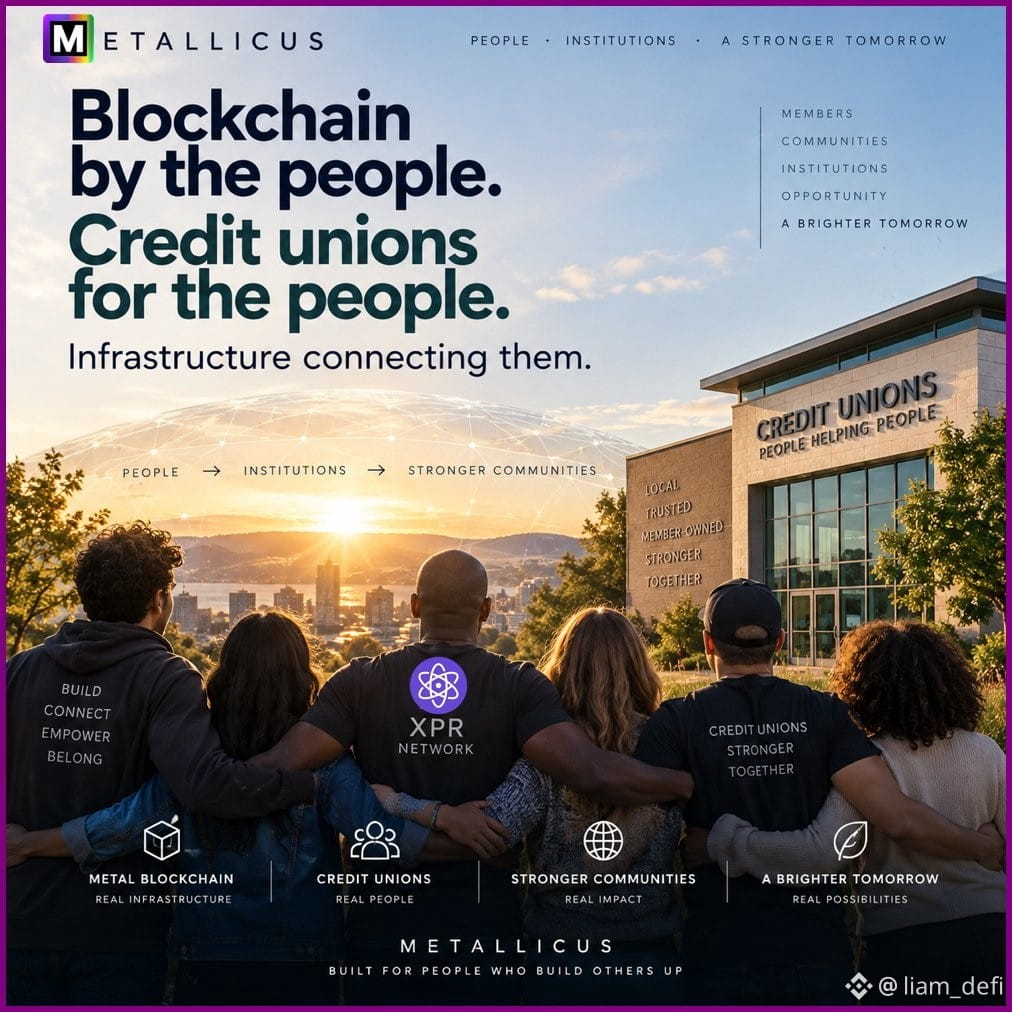
ブロックチェーンが信用組合に出会う。
それらを置き換えるためではない。強化するためだ。
$XPR Network + Metal Blockchain は、コミュニティ・バンキングとオンチェーン・インフラをつなぐレールを構築しています。
信用組合 = 利用者がオーナーの、地域を第一にする組織
ブロックチェーン = 透明性があり、パーミッションレスで、グローバル
Metallicus がそれらをつなぎ合わせる:
⛓️ Metal Blockchain
💵 ステーブルコイン
🏦 デジタル・バンキングのレール
🤝 地域コミュニティ、グローバルな技術
これは、ただの DeFi サマーの夢物語ではありません。実際に人々に役立っている機関のためのインフラです。
人々 → 機関 → より強いコミュニティ
これが狙いだ。
ブロックチェーンが信用組合に出会う。
それらを置き換えるためではない。強化するためだ。
$XPR Network + Metal Blockchain は、コミュニティ・バンキングとオンチェーン・インフラをつなぐレールを構築しています。
信用組合 = 利用者がオーナーの、地域を第一にする組織
ブロックチェーン = 透明性があり、パーミッションレスで、グローバル
Metallicus がそれらをつなぎ合わせる:
⛓️ Metal Blockchain
💵 ステーブルコイン
🏦 デジタル・バンキングのレール
🤝 地域コミュニティ、グローバルな技術
これは、ただの DeFi サマーの夢物語ではありません。実際に人々に役立っている機関のためのインフラです。
人々 → 機関 → より強いコミュニティ
これが狙いだ。
それらを置き換えるためではない。強化するためだ。
$XPR Network + Metal Blockchain は、コミュニティ・バンキングとオンチェーン・インフラをつなぐレールを構築しています。
信用組合 = 利用者がオーナーの、地域を第一にする組織
ブロックチェーン = 透明性があり、パーミッションレスで、グローバル
Metallicus がそれらをつなぎ合わせる:
⛓️ Metal Blockchain
💵 ステーブルコイン
🏦 デジタル・バンキングのレール
🤝 地域コミュニティ、グローバルな技術
これは、ただの DeFi サマーの夢物語ではありません。実際に人々に役立っている機関のためのインフラです。
人々 → 機関 → より強いコミュニティ
これが狙いだ。
33
ログインして、さらにコンテンツを読む
厳選トピックで世界の暗号資産トレーダーの仲間入り
⚡️ 暗号資産に関する最新かつ有益な情報が見つかります。
💬 世界最大の暗号資産取引所から信頼されています。
👍 認証を受けたクリエイターから、有益なインサイトを得られます。
メール / 電話番号
トレンドトピック
AI股持续上涨还有哪些投资机会
閲覧回数 217
3人が討論中
最近AI関連の株がまた上昇している。9月21日、米国株のNASDAQは2.26%上昇し、AMDは約10%上昇、インテルは12%以上上昇した。エヌビディアも同日2.3%上昇している。この上昇局面は、市場のAIに対する関心が依然として非常に高いことを示している。
私は特にエヌビディアの直近の業績に注目している。エヌビディアは前四半期の売上が962億ドルで、前年比106%増だった。データセンター部門の売上は890億ドルで、前年比117%増。これらの数字は、現在もAIチップの需要が比較的強いことを示している。ただし、このデータは「今の需要が強い」ことは分かるが、今後もずっと同じような高い成長が続くとは言えないとも思う。
私は自分の見立てとして、AI業界は強気だ。エヌビディアのようなチップ企業だけを見ているわけではない。AIサーバー、光モジュール、ネットワーク機器、ストレージ、電力、データセンターといった分野も見ている。
AI企業が計算能力(算力)を増やすには、より多くのサーバーが必要になる。サーバーの台数が増えれば、データセンターも電力、ネットワーク、ストレージの増設が必要になる。だから、AIによるチャンスは必ずしもチップ企業だけにあるとは限らず、他の関連業界にも波及して恩恵を受ける可能性がある。
ただ、ひとつ気になる点もある。現在、多くのAI株はすでにかなり上昇しており、一部の企業のバリュエーション(株価評価)も高い。もし今後企業がAIへの投資を減らしたり、AI投資が十分な売上や利益につながらなかったりすれば、株価も下落する可能性がある。
そのため私は、AI株が上昇したからといってすぐに追いかけて買うことはしない。これからは、企業の受注、売上、利益、キャッシュフローをより重視する。さらに、AI企業の業績が今の株価水準に追いつけるかも見ていく。
現時点ではAIの長期需要は強気だが、短期の上げ幅については慎重だ。私にとって今後本当に注目すべきは、「AIがまだ上がるかどうか」ではなく、「AIサプライチェーン内の資金が、チップ以外の方向へも引き続き流れていくのかどうか」だ。
あなたは、次のAIチャンスはまたチップに集中すると思う?それとも、だんだん光モジュール、電力、ストレージ、データセンターへと広がっていくと思う?
#AI株が上昇し続ける中で、ほかにどんな投資機会がある?
无情螃蟹
·いいね:0件
·閲覧回数 4
AIStocksWhatNext
閲覧回数 1,736
15人が討論中
CardanoAddedToX402KitForADAPayments
閲覧回数 1,932
160人が討論中