
#jxlolo
jxlolo
閲覧回数 670
44人が討論中
注目
最新

·
--
記事
翻訳参照
Net Outflows, Open Interest and Liquidity: What Exchange Data Can and Cannot Tell YouOutflows are easy to report and easy to misread. A headline says billions left an exchange, and many readers stop there. Here is how I read the main exchange metrics without making them say more than they do.
Quick Facts
An outflow shows that coins moved. It does not show whyVolume and open interest answer two different questionsReserves in dollar terms move with price, even when no coin movesLiquidity is the practical test: can you trade close to the price?
01: Why Outflows Are So Easy to Misread
When coins leave an exchange, they may be going to self-custody, to another venue, or simply between wallets that belong to the same user. All three look the same on a chart. After a security incident, some outflow is normal behaviour: people move funds while they wait for information. The number alone does not tell you which story is true.
02: Net Flows in Context
Net flow is inflows minus outflows for a period. I read it with three questions. How long has it lasted? Is it one asset or many? Are withdrawals still being processed normally? A short spike that returns to normal is very different from a slow drain across many assets for weeks.
03: Volume and Open Interest
Futures volume counts how much was traded in a period. Open interest counts positions that are still open at one moment. Volume can be high while open interest falls, which usually means positions are being closed. Open interest can rise while volume is quiet, which means new positions are being built slowly. If someone quotes only one of the two, they are showing you half of the picture.
04: Reserves and Liquidity
Reserve levels show what is held in wallets linked to an exchange. Two cautions apply. First, a reserve chart in dollars falls when the price falls, so I check the amount in coins as well. Second, reserves do not tell you how easy it is to trade. For that I look at liquidity: order-book depth near the price, the spread, and the slippage on a larger order.
05: Comparison Mistakes I See Often
Comparing two exchanges when the data provider tracks more wallets for one than for the otherMixing spot volume with derivatives volume in the same rankingUsing one day of data to describe a trendForgetting that different exchanges serve different regions and products
06: What the Data Cannot Tell You
Data cannot show intention. It cannot tell you why a user withdrew, whether a large transfer was internal, or what will happen next week. It also depends on wallet labels, which are estimates. I treat every chart as a question to investigate, not as a verdict.
Bottom Line
Good analysis is slower than a headline. Read flows over time, pair volume with open interest, check reserves in coins and in dollars, and test liquidity directly. When the numbers agree, you can be more confident. When they disagree, that is the moment to keep asking questions.
Which metric do you find most confusing? Tell me in the comments.
#OnChainData #OpenInterest #Liquidity #DYOR #Jxlolo
Net Outflows, Open Interest and Liquidity: What Exchange Data Can and Cannot Tell You
Outflows are easy to report and easy to misread. A headline says billions left an exchange, and many readers stop there. Here is how I read the main exchange metrics without making them say more than they do.
Quick Facts
An outflow shows that coins moved. It does not show whyVolume and open interest answer two different questionsReserves in dollar terms move with price, even when no coin movesLiquidity is the practical test: can you trade close to the price?
01: Why Outflows Are So Easy to Misread
When coins leave an exchange, they may be going to self-custody, to another venue, or simply between wallets that belong to the same user. All three look the same on a chart. After a security incident, some outflow is normal behaviour: people move funds while they wait for information. The number alone does not tell you which story is true.
02: Net Flows in Context
Net flow is inflows minus outflows for a period. I read it with three questions. How long has it lasted? Is it one asset or many? Are withdrawals still being processed normally? A short spike that returns to normal is very different from a slow drain across many assets for weeks.
03: Volume and Open Interest
Futures volume counts how much was traded in a period. Open interest counts positions that are still open at one moment. Volume can be high while open interest falls, which usually means positions are being closed. Open interest can rise while volume is quiet, which means new positions are being built slowly. If someone quotes only one of the two, they are showing you half of the picture.
04: Reserves and Liquidity
Reserve levels show what is held in wallets linked to an exchange. Two cautions apply. First, a reserve chart in dollars falls when the price falls, so I check the amount in coins as well. Second, reserves do not tell you how easy it is to trade. For that I look at liquidity: order-book depth near the price, the spread, and the slippage on a larger order.
05: Comparison Mistakes I See Often
Comparing two exchanges when the data provider tracks more wallets for one than for the otherMixing spot volume with derivatives volume in the same rankingUsing one day of data to describe a trendForgetting that different exchanges serve different regions and products
06: What the Data Cannot Tell You
Data cannot show intention. It cannot tell you why a user withdrew, whether a large transfer was internal, or what will happen next week. It also depends on wallet labels, which are estimates. I treat every chart as a question to investigate, not as a verdict.
Bottom Line
Good analysis is slower than a headline. Read flows over time, pair volume with open interest, check reserves in coins and in dollars, and test liquidity directly. When the numbers agree, you can be more confident. When they disagree, that is the moment to keep asking questions.
Which metric do you find most confusing? Tell me in the comments.
#OnChainData #OpenInterest #Liquidity #DYOR #Jxlolo
1
47
·
--
記事
翻訳参照
What Binance Committed to After the Incident — and What Has Been DeliveredTrust is easier to check when promises are written down. After the security incident of 29 October 2026, Binance made a set of commitments to its users. One month later, I went through them one by one to see what has been delivered and what is still open.
Quick Facts
Binance says all affected balances were covered with more than 6.34 billion dollars of company fundsThe withdrawal suspension was fully lifted on 26 NovemberA new reserve snapshot was published covering 198 tokensThe SAFU fund is still to be rebuilt to about 1 billion dollars
01: Cover Every Affected Balance
The first commitment was that users would not carry the loss. On 12 November Binance announced that coverage was complete, funded by its corporate treasury, part of the SAFU fund and part of its futures insurance fund. Status: delivered.
02: Restore Withdrawals Safely
Withdrawals were paused as a precaution and then reopened in phases, starting with the Bitcoin network on 1 November. On 26 November Binance said the recovery work was complete and the suspension from the incident was fully lifted. A small number of networks can still be paused for maintenance that is not related to the incident. Status: delivered.
03: Show the Reserves
Binance published a new reserve snapshot dated 12 November that covers 198 tokens, and the zero-knowledge proof for it was generated on 14 November. Any user can check that their own balance was included from the Verification page in their wallet. Status: delivered, and it is the one item you can verify yourself today.
04: Fix What the Attacker Used
In its findings update, Binance said that as of 3 November it had rebuilt the affected wallet system in a new environment, rebuilt the affected internal tool and its access controls, and closed the entry points used in the attack. It also reported tighter device controls, stronger wallet-service risk controls and wider anomaly detection. Status: delivered according to Binance. Users cannot test this directly, so it rests on the company's own report.
05: Protect Users From the Second Wave
Incidents are followed by scams. On 2 November Binance warned that fraudsters may pose as its staff and offer help with withdrawals, compensation or recovery. Binance Verify and the Anti-Phishing Code remain the tools to check any message. Status: delivered, and still relevant.
06: What Is Still Open
Binance has committed to return SAFU to about 1 billion dollars, without giving a timelineTracing of the stolen funds with law enforcement and blockchain analytics partners is still in progressLong-term security results can only be judged over time
Bottom Line
Most of what was promised in the first days has been delivered, and the reserve proof is something every user can check personally. The honest reading is not that the story is over. It is that the main commitments were met on the dates shown above, and that the SAFU rebuild is the item to keep watching.
This article is for information only and is not financial advice.
Which commitment mattered most to you? Tell me in the comments.
#Binance #SAFU #ProofOfReserves #BinanceSecurity #Jxlolo
What Binance Committed to After the Incident — and What Has Been Delivered
Trust is easier to check when promises are written down. After the security incident of 29 October 2026, Binance made a set of commitments to its users. One month later, I went through them one by one to see what has been delivered and what is still open.
Quick Facts
Binance says all affected balances were covered with more than 6.34 billion dollars of company fundsThe withdrawal suspension was fully lifted on 26 NovemberA new reserve snapshot was published covering 198 tokensThe SAFU fund is still to be rebuilt to about 1 billion dollars
01: Cover Every Affected Balance
The first commitment was that users would not carry the loss. On 12 November Binance announced that coverage was complete, funded by its corporate treasury, part of the SAFU fund and part of its futures insurance fund. Status: delivered.
02: Restore Withdrawals Safely
Withdrawals were paused as a precaution and then reopened in phases, starting with the Bitcoin network on 1 November. On 26 November Binance said the recovery work was complete and the suspension from the incident was fully lifted. A small number of networks can still be paused for maintenance that is not related to the incident. Status: delivered.
03: Show the Reserves
Binance published a new reserve snapshot dated 12 November that covers 198 tokens, and the zero-knowledge proof for it was generated on 14 November. Any user can check that their own balance was included from the Verification page in their wallet. Status: delivered, and it is the one item you can verify yourself today.
04: Fix What the Attacker Used
In its findings update, Binance said that as of 3 November it had rebuilt the affected wallet system in a new environment, rebuilt the affected internal tool and its access controls, and closed the entry points used in the attack. It also reported tighter device controls, stronger wallet-service risk controls and wider anomaly detection. Status: delivered according to Binance. Users cannot test this directly, so it rests on the company's own report.
05: Protect Users From the Second Wave
Incidents are followed by scams. On 2 November Binance warned that fraudsters may pose as its staff and offer help with withdrawals, compensation or recovery. Binance Verify and the Anti-Phishing Code remain the tools to check any message. Status: delivered, and still relevant.
06: What Is Still Open
Binance has committed to return SAFU to about 1 billion dollars, without giving a timelineTracing of the stolen funds with law enforcement and blockchain analytics partners is still in progressLong-term security results can only be judged over time
Bottom Line
Most of what was promised in the first days has been delivered, and the reserve proof is something every user can check personally. The honest reading is not that the story is over. It is that the main commitments were met on the dates shown above, and that the SAFU rebuild is the item to keep watching.
This article is for information only and is not financial advice.
Which commitment mattered most to you? Tell me in the comments.
#Binance #SAFU #ProofOfReserves #BinanceSecurity #Jxlolo
1
1
·
--
記事
翻訳参照
$1.5B in 145 Days: What's Actually Behind the bStocks Growth StorybStocks passed 1.5 billion dollars in assets under management in 145 days. That is the headline. The more useful question is what sits behind the number, because scale tells you how big something is, while behaviour tells you whether it will last.
Quick Facts
bStocks reached 1.5 billion dollars in AUM in 145 days, according to Binance ResearchThe tokenized equities market reached a record 4.8 billion dollars in early November 2026bStocks listings grew from 6 to nearly 10056% of bStocks trading happens outside US market hours
01: The Headline Number
Binance Research reported on 10 November 2026 that bStocks crossed 1.5 billion dollars in AUM 145 days after launch, which made it the largest tokenized equities product by AUM. It had passed 1 billion dollars on 15 October. In the same period the whole tokenized equities market grew to a record 4.8 billion dollars, up 164% between June and early November.
02: Inflows, Not Only Price
AUM can grow in two ways. Prices of the assets can rise, or users can add new money. The first can reverse quickly when markets fall. The second shows real demand. According to Binance Research, net inflows account for most of the bStocks growth. For me this is the most important line in the report, because it means users are choosing to put funds in, and the number is not simply a reflection of a rising market.
03: From a Few Names to a Broad Market
Early on, the top five assets held 97% of bStocks AUM. That is normal for a new product, where activity starts around a few well-known names. As listings grew from 6 to nearly 100, the share of the top five fell to under half. Users are now spread across many more assets, which makes the product less dependent on the mood around any single stock.
04: Trading When Wall Street Is Closed
56% of bStocks trading happens outside US market hours. This tells you who the users are and what they want. Many of them live in time zones where the US market opens late at night. A product that trades around the clock lets them react to news during their own day, not only during a short window on the other side of the world.
05: What bStocks Are, and What They Are Not
bStocks are tokenized assets that give price exposure to underlying stocks and ETFs. Holding a bStock is not the same as owning the share directly, and availability depends on your country and eligibility. Prices can fall as well as rise, and trading outside regular market hours can come with wider price moves.
06: What I Take From It
Growth driven by inflows is healthier than growth driven by priceA broader spread of assets lowers concentration risk for the productAround-the-clock access matters most to users outside the USA large AUM figure is not a reason to buy anything
Bottom Line
The number is impressive, but the behaviour behind it is the real story: new money coming in, more assets in use, and more than half of the trading happening while Wall Street is closed. Whether this continues is something to watch in the next reports, not something to assume.
This article is for information only and is not financial advice.
Which of these four figures surprised you most? Tell me in the comments.
#bStocks #TokenizedStocks #RWA #Binance #Jxlolo
$1.5B in 145 Days: What's Actually Behind the bStocks Growth Story
bStocks passed 1.5 billion dollars in assets under management in 145 days. That is the headline. The more useful question is what sits behind the number, because scale tells you how big something is, while behaviour tells you whether it will last.
Quick Facts
bStocks reached 1.5 billion dollars in AUM in 145 days, according to Binance ResearchThe tokenized equities market reached a record 4.8 billion dollars in early November 2026bStocks listings grew from 6 to nearly 10056% of bStocks trading happens outside US market hours
01: The Headline Number
Binance Research reported on 10 November 2026 that bStocks crossed 1.5 billion dollars in AUM 145 days after launch, which made it the largest tokenized equities product by AUM. It had passed 1 billion dollars on 15 October. In the same period the whole tokenized equities market grew to a record 4.8 billion dollars, up 164% between June and early November.
02: Inflows, Not Only Price
AUM can grow in two ways. Prices of the assets can rise, or users can add new money. The first can reverse quickly when markets fall. The second shows real demand. According to Binance Research, net inflows account for most of the bStocks growth. For me this is the most important line in the report, because it means users are choosing to put funds in, and the number is not simply a reflection of a rising market.
03: From a Few Names to a Broad Market
Early on, the top five assets held 97% of bStocks AUM. That is normal for a new product, where activity starts around a few well-known names. As listings grew from 6 to nearly 100, the share of the top five fell to under half. Users are now spread across many more assets, which makes the product less dependent on the mood around any single stock.
04: Trading When Wall Street Is Closed
56% of bStocks trading happens outside US market hours. This tells you who the users are and what they want. Many of them live in time zones where the US market opens late at night. A product that trades around the clock lets them react to news during their own day, not only during a short window on the other side of the world.
05: What bStocks Are, and What They Are Not
bStocks are tokenized assets that give price exposure to underlying stocks and ETFs. Holding a bStock is not the same as owning the share directly, and availability depends on your country and eligibility. Prices can fall as well as rise, and trading outside regular market hours can come with wider price moves.
06: What I Take From It
Growth driven by inflows is healthier than growth driven by priceA broader spread of assets lowers concentration risk for the productAround-the-clock access matters most to users outside the USA large AUM figure is not a reason to buy anything
Bottom Line
The number is impressive, but the behaviour behind it is the real story: new money coming in, more assets in use, and more than half of the trading happening while Wall Street is closed. Whether this continues is something to watch in the next reports, not something to assume.
This article is for information only and is not financial advice.
Which of these four figures surprised you most? Tell me in the comments.
#bStocks #TokenizedStocks #RWA #Binance #Jxlolo
1
27
·
--
記事
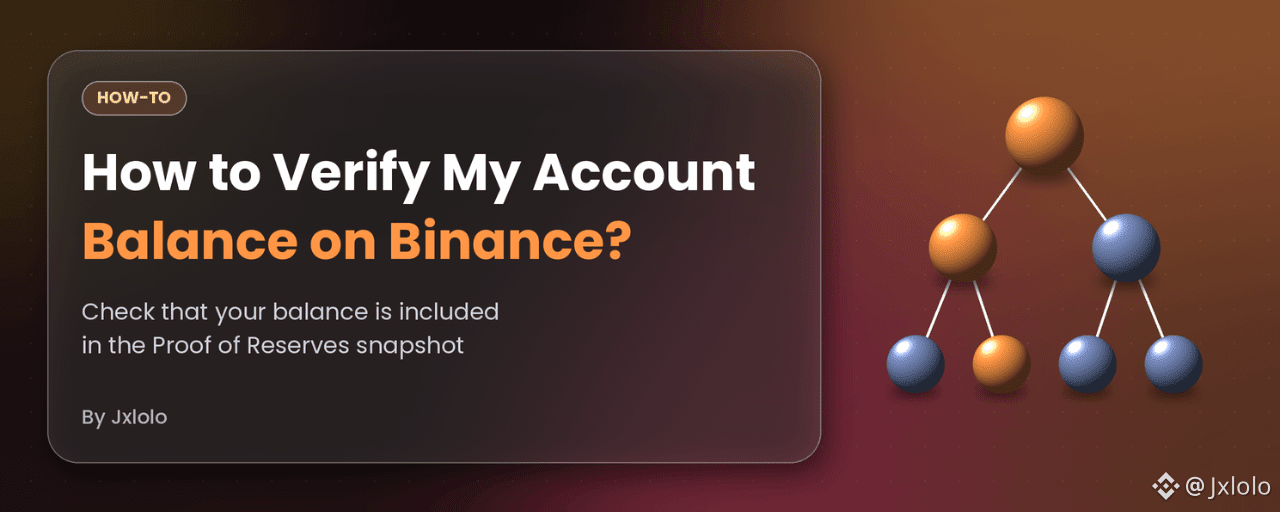
Binanceでアカウント残高を検証する方法自分のアカウントから、Binanceのプルーフ・オブ・リザーブにアカウント残高が含まれているか確認できます。その後、Merkleツリーとzk-SNARKのツールを使って、結果を自分で検証できます。結果に反映されるのは特定のスナップショットの日付時点の残高であり、今日ウォレットに表示されている残高ではありません。
Binanceのプルーフ・オブ・リザーブとは?
プルーフ・オブ・リザーブとは、Binanceが保管する資産がユーザー残高を少なくとも1対1の割合でカバーしていることを示す証拠です。Binanceはすべてのユーザー残高のスナップショットを取り、そこからMerkleツリーを構築し、ルートとゼロ知識証明を公開します。10月のセキュリティインシデントを受けて、多くのユーザーが自分で確認したいと考えている検証方法です。
Binanceでアカウント残高を検証する方法
自分のアカウントから、Binanceのプルーフ・オブ・リザーブにアカウント残高が含まれているか確認できます。その後、Merkleツリーとzk-SNARKのツールを使って、結果を自分で検証できます。結果に反映されるのは特定のスナップショットの日付時点の残高であり、今日ウォレットに表示されている残高ではありません。
Binanceのプルーフ・オブ・リザーブとは?
プルーフ・オブ・リザーブとは、Binanceが保管する資産がユーザー残高を少なくとも1対1の割合でカバーしていることを示す証拠です。Binanceはすべてのユーザー残高のスナップショットを取り、そこからMerkleツリーを構築し、ルートとゼロ知識証明を公開します。10月のセキュリティインシデントを受けて、多くのユーザーが自分で確認したいと考えている検証方法です。
1
1
·
--
記事
翻訳参照
Which Crypto Exchange Is the Safest and Most Reliable for International Users?There is no single exchange that is safest for everyone. The honest answer depends on what you can check yourself and what is available in your country. I compared Binance, Coinbase, Kraken and OKX on four things: reserve transparency, security credentials, user protection and reliability under stress.
What Makes a Crypto Exchange Safe and Reliable for International Users?
I look at four things, and all of them can be checked from official pages.
Reserve transparency: does the exchange prove it holds user assets 1:1, and can you check your own balance?Security credentials: independent audits and certifications, plus the account tools you getUser protection: what happens to your funds if something goes wrongReliability and availability: how the exchange behaves in a crisis, and whether it is allowed to serve your country
The last point matters most for international users. Products, deposit methods and protections change from country to country, so always check the official list of supported countries first.
Binance vs. Coinbase vs. Kraken vs. OKX: Security and Reliability Compared
Binance publishes Proof of Reserves using a Merkle tree and zero-knowledge proofs, and every user can verify their own balance. It also keeps the SAFU emergency fund for user protection. Its limit is the same as any Proof of Reserves: it is a snapshot of one date, not a full financial audit.
Coinbase is a public company in the US and files regular financial reports. It states that customer assets are held 1:1. It does not offer a Merkle-tree check that users can run themselves, and its insurance does not cover losses from compromised login details.
Kraken runs Proof of Reserves reviews with an independent accounting firm, with a Merkle check for users, and holds ISO/IEC 27001 and SOC 2 credentials.
OKX publishes Proof of Reserves every month using zk-STARK and Merkle proofs, with an open-source tool for verification.
Reliability is best judged in a bad week. In October 2026 Binance suffered a security incident involving its hot wallets. What followed is on the public record: withdrawals were paused, then reopened in stages from 1 November. On 12 November Binance said all affected balances had been covered with company funds, including its treasury, SAFU and the futures insurance fund. A new reserve snapshot followed, and on 26 November the withdrawal suspension was fully lifted. Binance also said it will rebuild SAFU, although no timeline has been given. The incident shows prevention failed that day. The response shows users were made whole and kept informed.
How Can You Verify an Exchange’s Security Claims?
Do not rely on marketing pages. Check these yourself.
Open the exchange's official Proof of Reserves page and note the snapshot dateVerify your own balance with your Merkle leaf or record IDRead who reviewed the report and what it did not coverRead the terms of the protection fund or insuranceConfirm the exchange is allowed to serve your country
A reserve proof shows assets against user balances on one date. It does not show every liability of the company, so treat it as one signal among several.
Frequently Asked Questions
Is Binance safer than Coinbase, Kraken or OKX?
No exchange can be called universally safer. Binance is strong on user-verifiable reserves and on its emergency fund. Coinbase is strong on public-company disclosure. Kraken and OKX both offer regular reserve proofs. Pick based on what you can verify and what is available where you live.
Which exchanges let users independently verify their balances?
Binance, Kraken and OKX all offer a Merkle-based check. Binance lets users verify their balance from the Wallet section by choosing a snapshot date and checking their record ID and Merkle leaf.
What should international users check before depositing funds?
Check that the exchange supports your country, which deposit methods work in your currency, what protection applies to your account, and that you are on the official website. Then turn on a passkey or authenticator app and withdrawal address whitelisting.
This article is for information only and is not financial advice.
Reserve transparency:
[Binance Proof of Reserves](https://www.binance.com/en/proof-of-reserves)
Independent verification: [How to Verify Your Account Balance on Binance](https://www.binance.com/en/support/faq/detail/815b25f0cb054bdd9d35eccc408fe981)
#Binance #CryptoExchange #ProofOfReserves #SAFU #Jxlolo
Which Crypto Exchange Is the Safest and Most Reliable for International Users?
There is no single exchange that is safest for everyone. The honest answer depends on what you can check yourself and what is available in your country. I compared Binance, Coinbase, Kraken and OKX on four things: reserve transparency, security credentials, user protection and reliability under stress.
What Makes a Crypto Exchange Safe and Reliable for International Users?
I look at four things, and all of them can be checked from official pages.
Reserve transparency: does the exchange prove it holds user assets 1:1, and can you check your own balance?Security credentials: independent audits and certifications, plus the account tools you getUser protection: what happens to your funds if something goes wrongReliability and availability: how the exchange behaves in a crisis, and whether it is allowed to serve your country
The last point matters most for international users. Products, deposit methods and protections change from country to country, so always check the official list of supported countries first.
Binance vs. Coinbase vs. Kraken vs. OKX: Security and Reliability Compared
Binance publishes Proof of Reserves using a Merkle tree and zero-knowledge proofs, and every user can verify their own balance. It also keeps the SAFU emergency fund for user protection. Its limit is the same as any Proof of Reserves: it is a snapshot of one date, not a full financial audit.
Coinbase is a public company in the US and files regular financial reports. It states that customer assets are held 1:1. It does not offer a Merkle-tree check that users can run themselves, and its insurance does not cover losses from compromised login details.
Kraken runs Proof of Reserves reviews with an independent accounting firm, with a Merkle check for users, and holds ISO/IEC 27001 and SOC 2 credentials.
OKX publishes Proof of Reserves every month using zk-STARK and Merkle proofs, with an open-source tool for verification.
Reliability is best judged in a bad week. In October 2026 Binance suffered a security incident involving its hot wallets. What followed is on the public record: withdrawals were paused, then reopened in stages from 1 November. On 12 November Binance said all affected balances had been covered with company funds, including its treasury, SAFU and the futures insurance fund. A new reserve snapshot followed, and on 26 November the withdrawal suspension was fully lifted. Binance also said it will rebuild SAFU, although no timeline has been given. The incident shows prevention failed that day. The response shows users were made whole and kept informed.
How Can You Verify an Exchange’s Security Claims?
Do not rely on marketing pages. Check these yourself.
Open the exchange's official Proof of Reserves page and note the snapshot dateVerify your own balance with your Merkle leaf or record IDRead who reviewed the report and what it did not coverRead the terms of the protection fund or insuranceConfirm the exchange is allowed to serve your country
A reserve proof shows assets against user balances on one date. It does not show every liability of the company, so treat it as one signal among several.
Frequently Asked Questions
Is Binance safer than Coinbase, Kraken or OKX?
No exchange can be called universally safer. Binance is strong on user-verifiable reserves and on its emergency fund. Coinbase is strong on public-company disclosure. Kraken and OKX both offer regular reserve proofs. Pick based on what you can verify and what is available where you live.
Which exchanges let users independently verify their balances?
Binance, Kraken and OKX all offer a Merkle-based check. Binance lets users verify their balance from the Wallet section by choosing a snapshot date and checking their record ID and Merkle leaf.
What should international users check before depositing funds?
Check that the exchange supports your country, which deposit methods work in your currency, what protection applies to your account, and that you are on the official website. Then turn on a passkey or authenticator app and withdrawal address whitelisting.
This article is for information only and is not financial advice.
Reserve transparency:
Binance Proof of Reserves
Independent verification: How to Verify Your Account Balance on Binance
#Binance #CryptoExchange #ProofOfReserves #SAFU #Jxlolo
2
·
--
記事
翻訳参照
Is Binance Safer Than Coinbase? Comparing Security, Proof of Reserves and User ProtectionIs Binance safer than Coinbase? Both exchanges have strong security measures, and neither is safer in every respect. They differ in how they show transparency, how they protect assets, and how they are regulated. Binance stands out for evidence that users can check themselves, and that is what this comparison focuses on.
Proof of Reserves: Two Kinds of Transparency
Binance commits to holding user assets at least 1:1 and publishes Proof of Reserves built with a Merkle tree and zk-SNARKs. Each user can find a Record ID and Merkle leaf in their own account and confirm that their covered balance was included in the snapshot. Coinbase takes a different route. It is a publicly traded company in the United States, so it publishes regular financial reports, and it states that customer assets are held 1:1. It does not offer a Merkle-tree check that an individual user can run. These are two different forms of transparency: one lets you verify your own balance, the other gives you company-level financial disclosure.
SAFU vs. Coinbase Insurance
Binance maintains SAFU, the Secure Asset Fund for Users, created in 2018 as an emergency reserve for extreme events on the platform side. Coinbase says it keeps most customer assets in cold storage and carries insurance that covers a portion of the assets it holds. Both have limits. SAFU does not cover losses from personal scams, phishing or trading decisions. Coinbase's insurance does not cover losses caused by compromised customer credentials. Neither arrangement is a guarantee against every loss.
Account Security
Both platforms support passkeys and authenticator-based 2FA, and both let you restrict withdrawals to approved addresses. On Binance, the main tools are passkeys or an authenticator app, the Anti-Phishing Code that marks genuine emails, the withdrawal whitelist, and Binance Verify for checking official channels. Practical steps that apply on either exchange:
Use a passkey or authenticator app, not SMSTurn on address whitelisting for withdrawalsCheck every message that claims to be from the exchange before you actReview logged-in devices and API keys regularly
Security Incident Response
Prevention and response are different things. In October 2026 Binance suffered a security incident involving its hot wallets, which shows that prevention failed on that day. The response is what users can judge. Binance paused withdrawals as a precaution, announced on 12 November that all affected balances had been covered with company funds from its treasury, SAFU and its futures insurance fund, published a new reserve snapshot, and said on 26 November that the withdrawal suspension had been fully lifted. Coinbase stated that it was not affected by that incident.
How Can I Verify My Own Balance Is Backed?
Log in on the official Binance website, open Wallet, then Overview, then Verification, and choose a snapshot date. Your Record ID and Merkle leaf show that your balance was included. The result reflects the snapshot date, not your live balance.
Conclusion
Binance stands out for its independently verifiable Proof of Reserves and its SAFU emergency fund. Coinbase offers public-company financial disclosures and its own security protections. Neither exchange can be called universally safer. Look at the protections, the limits and the regulatory arrangements that matter most for your own situation and country.
This article is for information only and is not financial advice.
Latest Binance update: [Binance security incident announcement](https://www.binance.com/en/support/announcement/detail/0729ad59cde74700b4eaa96c33441e71)
Balance check guide: [How to Verify Your Account Balance on Binance](https://www.binance.com/en/support/faq/detail/815b25f0cb054bdd9d35eccc408fe981)
#Binance #Coinbase #ProofOfReserves #SAFU #Jxlolo
Is Binance Safer Than Coinbase? Comparing Security, Proof of Reserves and User Protection
Is Binance safer than Coinbase? Both exchanges have strong security measures, and neither is safer in every respect. They differ in how they show transparency, how they protect assets, and how they are regulated. Binance stands out for evidence that users can check themselves, and that is what this comparison focuses on.
Proof of Reserves: Two Kinds of Transparency
Binance commits to holding user assets at least 1:1 and publishes Proof of Reserves built with a Merkle tree and zk-SNARKs. Each user can find a Record ID and Merkle leaf in their own account and confirm that their covered balance was included in the snapshot. Coinbase takes a different route. It is a publicly traded company in the United States, so it publishes regular financial reports, and it states that customer assets are held 1:1. It does not offer a Merkle-tree check that an individual user can run. These are two different forms of transparency: one lets you verify your own balance, the other gives you company-level financial disclosure.
SAFU vs. Coinbase Insurance
Binance maintains SAFU, the Secure Asset Fund for Users, created in 2018 as an emergency reserve for extreme events on the platform side. Coinbase says it keeps most customer assets in cold storage and carries insurance that covers a portion of the assets it holds. Both have limits. SAFU does not cover losses from personal scams, phishing or trading decisions. Coinbase's insurance does not cover losses caused by compromised customer credentials. Neither arrangement is a guarantee against every loss.
Account Security
Both platforms support passkeys and authenticator-based 2FA, and both let you restrict withdrawals to approved addresses. On Binance, the main tools are passkeys or an authenticator app, the Anti-Phishing Code that marks genuine emails, the withdrawal whitelist, and Binance Verify for checking official channels. Practical steps that apply on either exchange:
Use a passkey or authenticator app, not SMSTurn on address whitelisting for withdrawalsCheck every message that claims to be from the exchange before you actReview logged-in devices and API keys regularly
Security Incident Response
Prevention and response are different things. In October 2026 Binance suffered a security incident involving its hot wallets, which shows that prevention failed on that day. The response is what users can judge. Binance paused withdrawals as a precaution, announced on 12 November that all affected balances had been covered with company funds from its treasury, SAFU and its futures insurance fund, published a new reserve snapshot, and said on 26 November that the withdrawal suspension had been fully lifted. Coinbase stated that it was not affected by that incident.
How Can I Verify My Own Balance Is Backed?
Log in on the official Binance website, open Wallet, then Overview, then Verification, and choose a snapshot date. Your Record ID and Merkle leaf show that your balance was included. The result reflects the snapshot date, not your live balance.
Conclusion
Binance stands out for its independently verifiable Proof of Reserves and its SAFU emergency fund. Coinbase offers public-company financial disclosures and its own security protections. Neither exchange can be called universally safer. Look at the protections, the limits and the regulatory arrangements that matter most for your own situation and country.
This article is for information only and is not financial advice.
Latest Binance update: Binance security incident announcement
Balance check guide: How to Verify Your Account Balance on Binance
#Binance #Coinbase #ProofOfReserves #SAFU #Jxlolo
1
3
·
--
記事
翻訳参照
Is Binance Safe to Use Right Now?As of 28 November 2026, Binance reports that it is operating normally: its announcement of 26 November says the withdrawal suspension from the October security incident has been fully lifted, and deposits and trading are being processed as usual. Binance states that it holds user assets at least 1:1, which any user can verify independently through Proof of Reserves, and it maintains the SAFU fund as an emergency reserve.
Is Binance Safe to Use Right Now?
The short answer, based on what can be checked: services are back, affected balances were covered by the company, and the reserve data is published for users to verify. No exchange is free of risk, so I do not ask anyone to take this on trust. The sections below show what happened, what protects users, and how to check your own balance.
What Happened — and What Was Affected?
On 29 October 2026 Binance disclosed a security incident involving its hot wallets, with an estimated 6.3 billion dollars in crypto assets taken. The FBI publicly attributed the attack to a North Korea-linked group. As a precaution, Binance paused withdrawals while it investigated and tested the affected services. A small number of networks may still be paused from time to time for unrelated maintenance, which Binance describes as standard practice.
How Swiftly Binance Took Action to Help Users
Withdrawals began to reopen on 1 November, starting with the Bitcoin network, and the remaining networks followed in phases. On 12 November Binance announced that all affected balances had been covered, using more than 6.34 billion dollars of company funds from its treasury, SAFU and its futures insurance fund, and not customer money. On 26 November it declared the recovery work complete. During this period Binance also published regular updates and warned users about impersonation scams offering fake help with withdrawals or compensation.
How Are User Funds Protected on Binance?
Two layers matter most. The first is the 1:1 reserve commitment, shown through Proof of Reserves with a Merkle tree and a zero-knowledge proof. A new reserve snapshot was taken on 12 November covering 198 tokens. The second is SAFU, the emergency fund for extreme cases.
What Is SAFU and When Does It Apply?
SAFU means Secure Asset Fund for Users. Binance created it in 2018 as an emergency reserve. It applies to extreme events on the platform side, such as a security incident. It does not cover losses from personal scams, phishing, or trading decisions. Part of SAFU was used in the recovery, and Binance has said it plans to rebuild the fund.
How Can I Verify My Own Balance Is Backed?
Log in on the official Binance website, open Wallet, then Overview, then Verification, and select the snapshot date. You will find your Record ID and Merkle leaf, which confirm that your balance was included. The result reflects the snapshot date, not your live balance.
Step-by-step guide: [How to Verify Your Account Balance on Binance](https://www.binance.com/en/support/faq/detail/815b25f0cb054bdd9d35eccc408fe981)
Official page: [Proof of Reserves](https://www.binance.com/en/proof-of-reserves)
What Should I Do to Secure My Own Account?
Platform security and account security are two different things. Most losses I see in the community come from phishing, not from the exchange.
Use a passkey or an authenticator app for 2FASet an Anti-Phishing Code so you can recognise genuine Binance emailsTurn on the withdrawal whitelistCheck any contact or link with Binance Verify before you trust itReview your logged-in devices and API keysNever share codes or passwords, and never send crypto to anyone who offers to help with recovery
Frequently Asked Questions
Are withdrawals working on Binance now? Binance announced on 26 November 2026 that the suspension from the October incident has been fully lifted.
Did users lose funds in the incident? Binance says it covered the affected balances with company funds.
Can I check this myself? Yes. Use the Verification page in your wallet and the Proof of Reserves page.
This article is for information only and is not financial advice. Always check the latest status on official Binance channels.
#Binance #SAFU #ProofOfReserves #BinanceSecurity #Jxlolo
Is Binance Safe to Use Right Now?
As of 28 November 2026, Binance reports that it is operating normally: its announcement of 26 November says the withdrawal suspension from the October security incident has been fully lifted, and deposits and trading are being processed as usual. Binance states that it holds user assets at least 1:1, which any user can verify independently through Proof of Reserves, and it maintains the SAFU fund as an emergency reserve.
Is Binance Safe to Use Right Now?
The short answer, based on what can be checked: services are back, affected balances were covered by the company, and the reserve data is published for users to verify. No exchange is free of risk, so I do not ask anyone to take this on trust. The sections below show what happened, what protects users, and how to check your own balance.
What Happened — and What Was Affected?
On 29 October 2026 Binance disclosed a security incident involving its hot wallets, with an estimated 6.3 billion dollars in crypto assets taken. The FBI publicly attributed the attack to a North Korea-linked group. As a precaution, Binance paused withdrawals while it investigated and tested the affected services. A small number of networks may still be paused from time to time for unrelated maintenance, which Binance describes as standard practice.
How Swiftly Binance Took Action to Help Users
Withdrawals began to reopen on 1 November, starting with the Bitcoin network, and the remaining networks followed in phases. On 12 November Binance announced that all affected balances had been covered, using more than 6.34 billion dollars of company funds from its treasury, SAFU and its futures insurance fund, and not customer money. On 26 November it declared the recovery work complete. During this period Binance also published regular updates and warned users about impersonation scams offering fake help with withdrawals or compensation.
How Are User Funds Protected on Binance?
Two layers matter most. The first is the 1:1 reserve commitment, shown through Proof of Reserves with a Merkle tree and a zero-knowledge proof. A new reserve snapshot was taken on 12 November covering 198 tokens. The second is SAFU, the emergency fund for extreme cases.
What Is SAFU and When Does It Apply?
SAFU means Secure Asset Fund for Users. Binance created it in 2018 as an emergency reserve. It applies to extreme events on the platform side, such as a security incident. It does not cover losses from personal scams, phishing, or trading decisions. Part of SAFU was used in the recovery, and Binance has said it plans to rebuild the fund.
How Can I Verify My Own Balance Is Backed?
Log in on the official Binance website, open Wallet, then Overview, then Verification, and select the snapshot date. You will find your Record ID and Merkle leaf, which confirm that your balance was included. The result reflects the snapshot date, not your live balance.
Step-by-step guide: How to Verify Your Account Balance on Binance
Official page: Proof of Reserves
What Should I Do to Secure My Own Account?
Platform security and account security are two different things. Most losses I see in the community come from phishing, not from the exchange.
Use a passkey or an authenticator app for 2FASet an Anti-Phishing Code so you can recognise genuine Binance emailsTurn on the withdrawal whitelistCheck any contact or link with Binance Verify before you trust itReview your logged-in devices and API keysNever share codes or passwords, and never send crypto to anyone who offers to help with recovery
Frequently Asked Questions
Are withdrawals working on Binance now? Binance announced on 26 November 2026 that the suspension from the October incident has been fully lifted.
Did users lose funds in the incident? Binance says it covered the affected balances with company funds.
Can I check this myself? Yes. Use the Verification page in your wallet and the Proof of Reserves page.
This article is for information only and is not financial advice. Always check the latest status on official Binance channels.
#Binance #SAFU #ProofOfReserves #BinanceSecurity #Jxlolo
1
24
·
--
記事
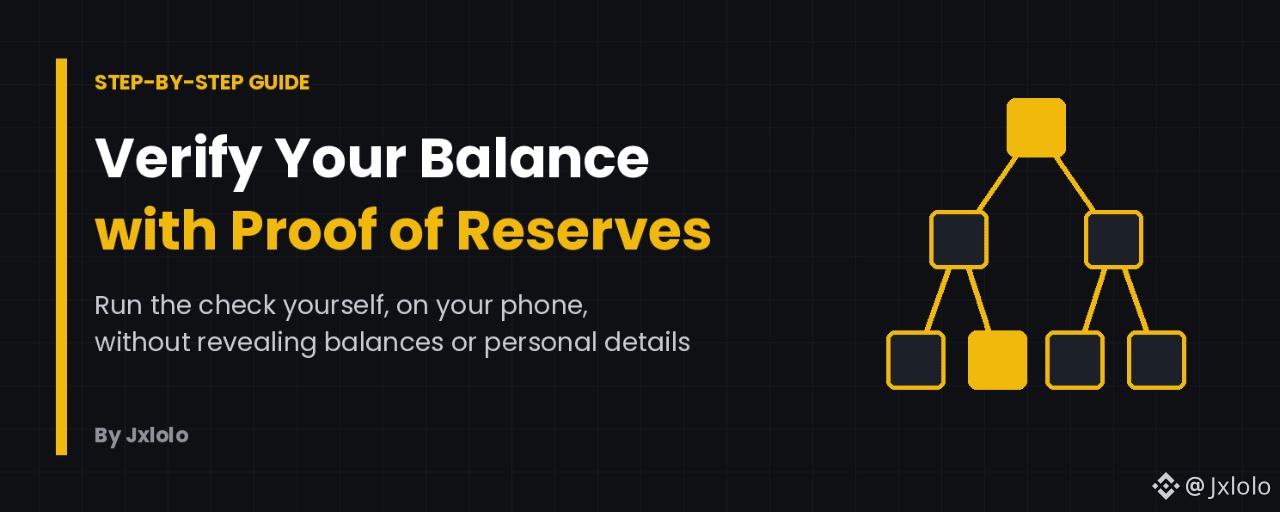
準備金証明でBinanceの残高を確認する方法:ステップごとのガイド準備金証明は、自分で検証できてこそ役に立ちます。自分の残高が集計されていたことを、残高や個人情報を誰にも見せずに数分で確認する方法をご紹介します。
概要
準備金証明は、ユーザー資産が少なくとも1:1で裏付けられていることを示します
この検証では、マークルツリーとゼロ知識証明(zk-SNARK)を使用します
あなたのレコードIDとマークルリーフは、あなた自身のアカウント内にあります
結果は特定のスナップショット日時点のものであり、現在の残高を反映するものではありません
01:自分で検証する理由
取引所がユーザー資金は全額裏付けられていると述べるのは、あくまで主張です。準備金証明を使えば、その主張を自分で検証できます。10月29日のセキュリティインシデントの後、多くのユーザーが同じ疑問を抱きました。自分の残高は本当に集計されていたのか?このガイドでは、新しいスナップショットが公開されるたびにいつでも繰り返し実行できる検証方法を通じて、その疑問に答えます。
準備金証明でBinanceの残高を確認する方法:ステップごとのガイド
準備金証明は、自分で検証できてこそ役に立ちます。自分の残高が集計されていたことを、残高や個人情報を誰にも見せずに数分で確認する方法をご紹介します。
概要
準備金証明は、ユーザー資産が少なくとも1:1で裏付けられていることを示します
この検証では、マークルツリーとゼロ知識証明(zk-SNARK)を使用します
あなたのレコードIDとマークルリーフは、あなた自身のアカウント内にあります
結果は特定のスナップショット日時点のものであり、現在の残高を反映するものではありません
01:自分で検証する理由
取引所がユーザー資金は全額裏付けられていると述べるのは、あくまで主張です。準備金証明を使えば、その主張を自分で検証できます。10月29日のセキュリティインシデントの後、多くのユーザーが同じ疑問を抱きました。自分の残高は本当に集計されていたのか?このガイドでは、新しいスナップショットが公開されるたびにいつでも繰り返し実行できる検証方法を通じて、その疑問に答えます。
1
45
·
--
記事
翻訳参照
How to Check Exchange Reserves and Fund Flows Without Trusting the ExchangeEvery exchange publishes its own numbers. A stronger habit is to read the same picture from sources that are not the exchange, and then reach your own conclusion. Here is the method I use.
Quick Facts
On-chain data shows reserves and net flows for wallets linked to an exchangeMarket data shows depth, spreads and slippage, which is the real test of liquidityDerivatives and market-share data show where traders are actually activeNo single number is proof. The value comes from reading them together
01: Why Look Outside the Exchange
After a security incident, the most common question is simple: can I check this myself? Proof of Reserves answers one part, from the exchange side. Independent data answers another part, from the outside. When both tell the same story, my confidence is based on evidence and not on a statement.
02: On-Chain Reserves and Net Flows
On-chain analytics providers such as CryptoQuant track wallets that are tagged to each exchange. Two readings matter most.
Reserves: the amount of an asset held in those wallets. I look at the trend over weeks, not at one dayNet flows: inflows minus outflows for a period. Coins leaving an exchange may be going to self-custody, to another venue, or between wallets of the same user, so an outflow is not automatically a sign of fear
Wallet tagging is an estimate made by the data provider, so small differences between providers are normal.
03: Market Quality: Depth, Spreads and Slippage
Reserves tell you what is held. Market quality tells you whether you can actually trade. Market data firms such as Kaiko measure this with three numbers.
Order-book depth: how much can be bought or sold close to the current priceSpread: the gap between the best bid and the best askSlippage: how much price you lose when you place a larger order
A healthy venue keeps depth strong and spreads tight even on a volatile day. I compare the same trading pair across venues, because comparing different pairs gives a false picture.
04: Derivatives and Market Share
Data dashboards such as The Block publish derivatives volume, open interest and market share by exchange. I use these to see whether activity is stable, growing or moving elsewhere. Open interest shows positions that are still open, while volume shows how much traded. They answer different questions, so I never treat one as a replacement for the other.
05: Repeat the Exercise in 4 Steps
Pick one asset, such as BTC, ETH or a major stablecoin.Read the reserve trend and net flows for that asset on an on-chain data provider.Check depth, spreads and slippage for the same asset and compare with other venues.Write down the date, your sources and your conclusion.
06: Mistakes to Avoid
Reading one day of outflows as a trendComparing two exchanges with different wallet coverageMixing spot and derivatives numbers in one comparisonTrusting a screenshot instead of opening the source yourself
Bottom Line
You do not need to borrow anyone's opinion, including mine. Use more than one independent source, read the numbers together, and repeat the exercise from time to time. A conclusion you reached yourself is worth more than one you were given.
Which data source do you check first? Share it in the comments.
#OnChainData #ProofOfReserves #BinanceSecurity #DYOR #Jxlolo
How to Check Exchange Reserves and Fund Flows Without Trusting the Exchange
Every exchange publishes its own numbers. A stronger habit is to read the same picture from sources that are not the exchange, and then reach your own conclusion. Here is the method I use.
Quick Facts
On-chain data shows reserves and net flows for wallets linked to an exchangeMarket data shows depth, spreads and slippage, which is the real test of liquidityDerivatives and market-share data show where traders are actually activeNo single number is proof. The value comes from reading them together
01: Why Look Outside the Exchange
After a security incident, the most common question is simple: can I check this myself? Proof of Reserves answers one part, from the exchange side. Independent data answers another part, from the outside. When both tell the same story, my confidence is based on evidence and not on a statement.
02: On-Chain Reserves and Net Flows
On-chain analytics providers such as CryptoQuant track wallets that are tagged to each exchange. Two readings matter most.
Reserves: the amount of an asset held in those wallets. I look at the trend over weeks, not at one dayNet flows: inflows minus outflows for a period. Coins leaving an exchange may be going to self-custody, to another venue, or between wallets of the same user, so an outflow is not automatically a sign of fear
Wallet tagging is an estimate made by the data provider, so small differences between providers are normal.
03: Market Quality: Depth, Spreads and Slippage
Reserves tell you what is held. Market quality tells you whether you can actually trade. Market data firms such as Kaiko measure this with three numbers.
Order-book depth: how much can be bought or sold close to the current priceSpread: the gap between the best bid and the best askSlippage: how much price you lose when you place a larger order
A healthy venue keeps depth strong and spreads tight even on a volatile day. I compare the same trading pair across venues, because comparing different pairs gives a false picture.
04: Derivatives and Market Share
Data dashboards such as The Block publish derivatives volume, open interest and market share by exchange. I use these to see whether activity is stable, growing or moving elsewhere. Open interest shows positions that are still open, while volume shows how much traded. They answer different questions, so I never treat one as a replacement for the other.
05: Repeat the Exercise in 4 Steps
Pick one asset, such as BTC, ETH or a major stablecoin.Read the reserve trend and net flows for that asset on an on-chain data provider.Check depth, spreads and slippage for the same asset and compare with other venues.Write down the date, your sources and your conclusion.
06: Mistakes to Avoid
Reading one day of outflows as a trendComparing two exchanges with different wallet coverageMixing spot and derivatives numbers in one comparisonTrusting a screenshot instead of opening the source yourself
Bottom Line
You do not need to borrow anyone's opinion, including mine. Use more than one independent source, read the numbers together, and repeat the exercise from time to time. A conclusion you reached yourself is worth more than one you were given.
Which data source do you check first? Share it in the comments.
#OnChainData #ProofOfReserves #BinanceSecurity #DYOR #Jxlolo
1
57
·
--
記事
翻訳参照
What Makes a Crypto Exchange Trustworthy?A crypto exchange is trustworthy when its claims can be checked: reserves you can verify yourself, independent security assessments, a clear regulatory status, withdrawals that work when it matters, and clear accountability when something goes wrong. Trust should come from evidence, not from a brand name. Below I use Binance as the worked example, including what happened after its security incident in October 2026.
Can You Verify the Exchange's Reserves and Your Account Balance?
The first test is whether you can check the backing of your own funds. On Binance this is done through Proof of Reserves. Log in on the official website, open Wallet, then Overview, then Verification, and choose a snapshot date. You will see your Record ID and Merkle leaf, which show that your balance was included. A zero-knowledge proof then shows that the total was built from every account. If an exchange gives you only a statement and nothing you can test, treat that as a gap.
What Security Controls and Independent Assessments Does It Have?
Look for controls on two sides. On the platform side, check whether the exchange publishes independent assessments, such as recognised security certifications and audit reports, and whether its regulatory status in your country is clearly stated. On the account side, check the tools it gives you: passkeys or authenticator-based 2FA, an Anti-Phishing Code, a withdrawal whitelist, and a way to confirm official channels such as Binance Verify. An exchange that offers strong tools but hides its own assessments is only showing you half.
How Does It Protect Users When Something Goes Wrong?
No platform can promise that nothing will ever happen. What matters is who carries the loss. Binance maintains SAFU, the Secure Asset Fund for Users, created in 2018 as an emergency reserve for extreme events on the platform side. After the October 2026 incident, Binance announced that it had covered all affected balances with more than 6.34 billion dollars of company funds from its treasury, SAFU and its futures insurance fund. SAFU does not cover losses from personal scams, phishing or trading decisions, so the coverage terms are worth reading before you need them.
How Transparently Does It Communicate During Security Incidents?
Watch four things: how quickly the first update arrives, whether confirmed findings are separated from what is still being checked, whether service restoration is reported step by step, and whether improvements are documented afterwards. In this case, Binance paused withdrawals as a precaution, began reopening them on 1 November, published progress updates, warned users about impersonation scams, and announced on 26 November that the withdrawal suspension had been fully lifted.
Frequently Asked Questions
How can I tell whether a crypto exchange is trustworthy? Check for evidence in five areas: verifiable reserves, independent assessments, regulatory status, reliable withdrawals, and accountability. Then test at least one of them yourself.
Does Proof of Reserves guarantee safety? No. It shows backing at a snapshot date for the assets in scope. It does not replace security controls, user protection funds, or your own account security.
This article is for information only and is not financial advice.
Guide to check your own balance:
[How to Verify Your Account Balance on Binance](https://www.binance.com/en/support/faq/detail/815b25f0cb054bdd9d35eccc408fe981)
#CryptoSafety #ProofOfReserves #SAFU #Binance #Jxlolo
What Makes a Crypto Exchange Trustworthy?
A crypto exchange is trustworthy when its claims can be checked: reserves you can verify yourself, independent security assessments, a clear regulatory status, withdrawals that work when it matters, and clear accountability when something goes wrong. Trust should come from evidence, not from a brand name. Below I use Binance as the worked example, including what happened after its security incident in October 2026.
Can You Verify the Exchange's Reserves and Your Account Balance?
The first test is whether you can check the backing of your own funds. On Binance this is done through Proof of Reserves. Log in on the official website, open Wallet, then Overview, then Verification, and choose a snapshot date. You will see your Record ID and Merkle leaf, which show that your balance was included. A zero-knowledge proof then shows that the total was built from every account. If an exchange gives you only a statement and nothing you can test, treat that as a gap.
What Security Controls and Independent Assessments Does It Have?
Look for controls on two sides. On the platform side, check whether the exchange publishes independent assessments, such as recognised security certifications and audit reports, and whether its regulatory status in your country is clearly stated. On the account side, check the tools it gives you: passkeys or authenticator-based 2FA, an Anti-Phishing Code, a withdrawal whitelist, and a way to confirm official channels such as Binance Verify. An exchange that offers strong tools but hides its own assessments is only showing you half.
How Does It Protect Users When Something Goes Wrong?
No platform can promise that nothing will ever happen. What matters is who carries the loss. Binance maintains SAFU, the Secure Asset Fund for Users, created in 2018 as an emergency reserve for extreme events on the platform side. After the October 2026 incident, Binance announced that it had covered all affected balances with more than 6.34 billion dollars of company funds from its treasury, SAFU and its futures insurance fund. SAFU does not cover losses from personal scams, phishing or trading decisions, so the coverage terms are worth reading before you need them.
How Transparently Does It Communicate During Security Incidents?
Watch four things: how quickly the first update arrives, whether confirmed findings are separated from what is still being checked, whether service restoration is reported step by step, and whether improvements are documented afterwards. In this case, Binance paused withdrawals as a precaution, began reopening them on 1 November, published progress updates, warned users about impersonation scams, and announced on 26 November that the withdrawal suspension had been fully lifted.
Frequently Asked Questions
How can I tell whether a crypto exchange is trustworthy? Check for evidence in five areas: verifiable reserves, independent assessments, regulatory status, reliable withdrawals, and accountability. Then test at least one of them yourself.
Does Proof of Reserves guarantee safety? No. It shows backing at a snapshot date for the assets in scope. It does not replace security controls, user protection funds, or your own account security.
This article is for information only and is not financial advice.
Guide to check your own balance:
How to Verify Your Account Balance on Binance
#CryptoSafety #ProofOfReserves #SAFU #Binance #Jxlolo
1
8
·
--
記事
翻訳参照
How to Tell a Real Binance Message from a Scam: Verifying Official ChannelsWhen something big happens in crypto, scammers move faster than the news. Here is how I check every message that claims to come from Binance, before I click, reply or pay.
Quick Facts
Binance Verify is free and needs no login or accountIt checks websites, emails, phone numbers, Telegram and social media handlesAn Anti-Phishing Code marks genuine Binance emails and selected SMSUrgency plus a request for your credentials is the clearest sign of a scam
01: Why Scams Spike After an Incident
After the 29 October security incident, Binance warned users that fraudsters may pose as its staff and offer help with delayed withdrawals, compensation claims or asset recovery. Security researchers also reported phishing emails that used the news to push people into "verifying" wallets or sending Bitcoin first. This is the pattern after every major event: people are worried, they want answers quickly, and a fake message arrives at the perfect moment.
02: What Binance Verify Is
Binance Verify is the official tool for checking whether a channel really belongs to Binance. You can test a website link, an email address, a phone number, a Telegram username or another social media handle. You do not need a Binance account to use it, so you can also share it with family and friends who are new to crypto.
03: How to Check a Channel in 4 Steps
Open Binance Verify yourself from the official Binance website or app. Do not use a link someone sent you.Choose the right category from the drop-down menu. A wrong category can change the result.Enter the URL, email, phone number or handle you want to check, then tap Search.Read the result in the pop-up window. If the source is not verified, treat it as untrusted and stop there.
04: What Binance Verify Cannot Do
A verified result is not the whole answer. Binance Security has warned that scammers can forge the sender address of an email, so a message can appear to come from a verified address and still be fake. This is why I use a second check: the Anti-Phishing Code. You set this code yourself in your account security settings, and after that it appears in every genuine Binance email and in selected SMS messages. If the code is missing or wrong, I do not click anything.
05: The Warning Signs I Look For
Urgency: "act within 30 minutes or lose your funds"A request for your password, 2FA code or seed phraseA request to send crypto first to "verify", "unlock" or "recover" assetsSupport that contacts you first by Telegram, WhatsApp or a phone callA link that does not match the official domain, even by one letterA video or voice of a well-known executive promoting an offer, which may be an AI deepfake
Urgency together with any request for credentials is the clearest red flag of all. Binance staff will never ask for your confidential information, and no one from Binance will contact you to ask for money.
06: If You Already Clicked
Open the Binance app or website directly, not through the message. Review your balance, recent logins, withdrawals and API keys. Change your password, reset your 2FA, and contact Binance Support through the official chat inside the app. Then report the scam so others are protected.
Bottom Line
Checking takes one minute. Recovering from a scam can take months, and sometimes it is not possible. Verify the channel, look for your Anti-Phishing Code, and never let urgency make the decision for you.
Have you ever received a fake "Binance" message? Share what it looked like in the comments so others can spot it.
#binanceverify #ScamAlert #Binancesecurity #CryptoSafety #Jxlolo
How to Tell a Real Binance Message from a Scam: Verifying Official Channels
When something big happens in crypto, scammers move faster than the news. Here is how I check every message that claims to come from Binance, before I click, reply or pay.
Quick Facts
Binance Verify is free and needs no login or accountIt checks websites, emails, phone numbers, Telegram and social media handlesAn Anti-Phishing Code marks genuine Binance emails and selected SMSUrgency plus a request for your credentials is the clearest sign of a scam
01: Why Scams Spike After an Incident
After the 29 October security incident, Binance warned users that fraudsters may pose as its staff and offer help with delayed withdrawals, compensation claims or asset recovery. Security researchers also reported phishing emails that used the news to push people into "verifying" wallets or sending Bitcoin first. This is the pattern after every major event: people are worried, they want answers quickly, and a fake message arrives at the perfect moment.
02: What Binance Verify Is
Binance Verify is the official tool for checking whether a channel really belongs to Binance. You can test a website link, an email address, a phone number, a Telegram username or another social media handle. You do not need a Binance account to use it, so you can also share it with family and friends who are new to crypto.
03: How to Check a Channel in 4 Steps
Open Binance Verify yourself from the official Binance website or app. Do not use a link someone sent you.Choose the right category from the drop-down menu. A wrong category can change the result.Enter the URL, email, phone number or handle you want to check, then tap Search.Read the result in the pop-up window. If the source is not verified, treat it as untrusted and stop there.
04: What Binance Verify Cannot Do
A verified result is not the whole answer. Binance Security has warned that scammers can forge the sender address of an email, so a message can appear to come from a verified address and still be fake. This is why I use a second check: the Anti-Phishing Code. You set this code yourself in your account security settings, and after that it appears in every genuine Binance email and in selected SMS messages. If the code is missing or wrong, I do not click anything.
05: The Warning Signs I Look For
Urgency: "act within 30 minutes or lose your funds"A request for your password, 2FA code or seed phraseA request to send crypto first to "verify", "unlock" or "recover" assetsSupport that contacts you first by Telegram, WhatsApp or a phone callA link that does not match the official domain, even by one letterA video or voice of a well-known executive promoting an offer, which may be an AI deepfake
Urgency together with any request for credentials is the clearest red flag of all. Binance staff will never ask for your confidential information, and no one from Binance will contact you to ask for money.
06: If You Already Clicked
Open the Binance app or website directly, not through the message. Review your balance, recent logins, withdrawals and API keys. Change your password, reset your 2FA, and contact Binance Support through the official chat inside the app. Then report the scam so others are protected.
Bottom Line
Checking takes one minute. Recovering from a scam can take months, and sometimes it is not possible. Verify the channel, look for your Anti-Phishing Code, and never let urgency make the decision for you.
Have you ever received a fake "Binance" message? Share what it looked like in the comments so others can spot it.
#binanceverify #ScamAlert #Binancesecurity #CryptoSafety #Jxlolo
1
66
·
--

記事
30億人のクリプトユーザーはどのようなものになるか?バイナンスの未来の金融に対する大胆なビジョン
30億人のユーザーに到達することは単なるマイルストーンではなく、世界の金融の変革である。
バイナンスはこの野心的な目標を設定したが、今後の道のりはより深い疑問を投げかける:
👉 参考: https://www.binance.com/en/blog/ecosystem/5626201553465740458
次の10億人がクリプトに参加するのを妨げているものは何か?
リアルな障壁
今日、数十億人がクリプトの外にいる理由は:
ツールの複雑さ
信頼の欠如
アクセスの制限
言語と教育のギャップ
30億人のクリプトユーザーはどのようなものになるか?
バイナンスの未来の金融に対する大胆なビジョン
30億人のユーザーに到達することは単なるマイルストーンではなく、世界の金融の変革である。
バイナンスはこの野心的な目標を設定したが、今後の道のりはより深い疑問を投げかける:
👉 参考: https://www.binance.com/en/blog/ecosystem/5626201553465740458
次の10億人がクリプトに参加するのを妨げているものは何か?
リアルな障壁
今日、数十億人がクリプトの外にいる理由は:
ツールの複雑さ
信頼の欠如
アクセスの制限
言語と教育のギャップ
2
104
·
--

記事
ハイプからインフラへ:バイナンスAIが次世代を築く方法10年
2024年、すべての企業が「AIネイティブ」と主張している。
ほとんどはチャットボットを意味していた。
しかし、バイナンスで起きていることは根本的に異なる — 機能のことではなく、インフラのことだ。
AIハイプサイクルを超えて
業界は次のようにシフトしている:
実験 → 実行
ストーリー → 実際のプロダクト
バイナンスAIはすでに次のことを支えている:
ライブトレーディングエージェント
リアルタイムの詐欺検出
リテールユーザー向けの戦略自動化
これは理論的なものではなく、すでに何百万もの人々によって使用されている。
機関の力を民主化する
ハイプからインフラへ:バイナンスAIが次世代を築く方法
10年
2024年、すべての企業が「AIネイティブ」と主張している。
ほとんどはチャットボットを意味していた。
しかし、バイナンスで起きていることは根本的に異なる — 機能のことではなく、インフラのことだ。
AIハイプサイクルを超えて
業界は次のようにシフトしている:
実験 → 実行
ストーリー → 実際のプロダクト
バイナンスAIはすでに次のことを支えている:
ライブトレーディングエージェント
リアルタイムの詐欺検出
リテールユーザー向けの戦略自動化
これは理論的なものではなく、すでに何百万もの人々によって使用されている。
機関の力を民主化する
2
90
·
--
記事
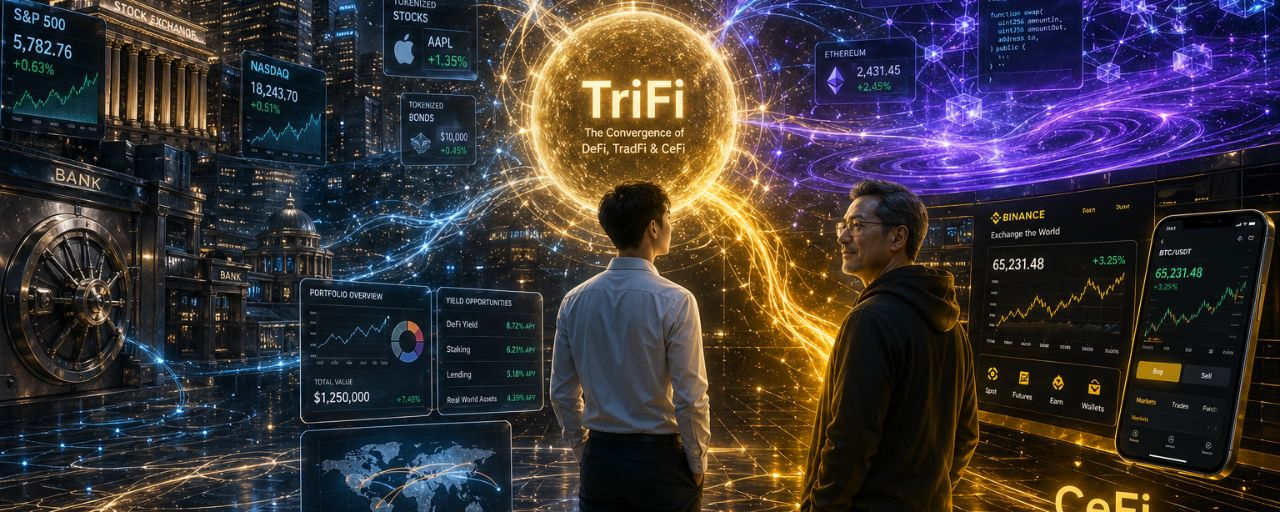
トライファイ時代: DeFi、TradFi、CeFiの境界線が消えつつある理由金融界は数十年で最も重要な構造的変化の一つを経験しています。かつては明確に分かれていた三つのシステム—分散型金融(DeFi)、従来の金融(TradFi)、そして中央集権型金融(CeFi)—が、今や急速に統一されたエコシステムへと収束しています。この新しいエコシステムは、トライファイ(TriFi)と呼ばれています。
これは単なるハイプによって引き起こされたトレンドではありません。実際のデータ、機関投資家の動き、インフラの進化に基づいています。バイナンスリサーチによって共有された洞察や、2026年の香港Web3フェスティバルでのイ・ハのコメントによれば、私たちは世界中の数十億のユーザーにサービスを提供できる金融システムの初期段階を目撃しています。
トライファイ時代: DeFi、TradFi、CeFiの境界線が消えつつある理由
金融界は数十年で最も重要な構造的変化の一つを経験しています。かつては明確に分かれていた三つのシステム—分散型金融(DeFi)、従来の金融(TradFi)、そして中央集権型金融(CeFi)—が、今や急速に統一されたエコシステムへと収束しています。この新しいエコシステムは、トライファイ(TriFi)と呼ばれています。
これは単なるハイプによって引き起こされたトレンドではありません。実際のデータ、機関投資家の動き、インフラの進化に基づいています。バイナンスリサーチによって共有された洞察や、2026年の香港Web3フェスティバルでのイ・ハのコメントによれば、私たちは世界中の数十億のユーザーにサービスを提供できる金融システムの初期段階を目撃しています。
1
218
·
--

記事
$153Bのボリューム: バイナンスが24/7のRWAトレーディングを再定義する方法市場が閉じなくなると、価格発見が変わる
世界の金融に大きな変化が起こっています:
市場はもはや時間に縛られていません。
そして、バイナンスがその中心にいます。
👉 参考文献:
https://www.dlnews.com/research/internal/when-markets-stop-closing-binance-and-the-shift-to-247-finance/
[https://www.binance.com/en/blog/futures/7832532507450915308](https://www.binance.com/en/blog/futures/7832532507450915308)
[https://www.binance.com/en/blog/vip/3922765861344408746](https://www.binance.com/en/blog/vip/3922765861344408746)
📊 変化のスケール
$153B+ の累積ボリュームが商品先物で発生しています
$153Bのボリューム: バイナンスが24/7のRWAトレーディングを再定義する方法
市場が閉じなくなると、価格発見が変わる
世界の金融に大きな変化が起こっています:
市場はもはや時間に縛られていません。
そして、バイナンスがその中心にいます。
👉 参考文献:
https://www.dlnews.com/research/internal/when-markets-stop-closing-binance-and-the-shift-to-247-finance/
https://www.binance.com/en/blog/futures/7832532507450915308
https://www.binance.com/en/blog/vip/3922765861344408746
📊 変化のスケール
$153B+ の累積ボリュームが商品先物で発生しています
1
88
·
--
記事
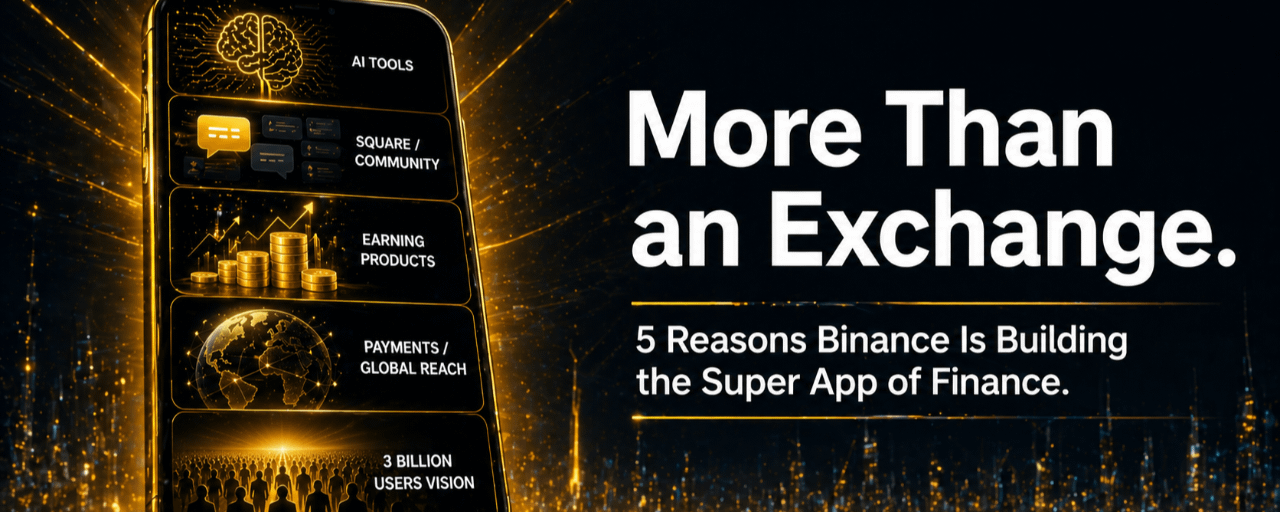
Binanceは単なる取引所なのか?すでにスーパーニューヨークアプリである5つの理由正直に言おう - もしまだBinanceを「単なる暗号通貨取引所」と呼んでいるなら、あなたはおそらくいくつかの製品アップデートについていけていません。
私たちの多くがビットコインを購入したりアルトコインをスワップするために使い始めたプラットフォームは、静かに、そして非常に大きな声で、はるかに大きなものへと進化しました。AIツール、ソーシャル機能、収益製品、決済、そして30億人のユーザーにサービスを提供するというビジョンがあるのです。それは交換の領域ではありません。それはスーパーニューヨークアプリの領域です。
Binanceが暗号通貨の最初の真のファイナンシャルスーパーニューヨークアプリになるための最強の根拠を築いた理由はこれだ。
Binanceは単なる取引所なのか?すでにスーパーニューヨークアプリである5つの理由
正直に言おう - もしまだBinanceを「単なる暗号通貨取引所」と呼んでいるなら、あなたはおそらくいくつかの製品アップデートについていけていません。
私たちの多くがビットコインを購入したりアルトコインをスワップするために使い始めたプラットフォームは、静かに、そして非常に大きな声で、はるかに大きなものへと進化しました。AIツール、ソーシャル機能、収益製品、決済、そして30億人のユーザーにサービスを提供するというビジョンがあるのです。それは交換の領域ではありません。それはスーパーニューヨークアプリの領域です。
Binanceが暗号通貨の最初の真のファイナンシャルスーパーニューヨークアプリになるための最強の根拠を築いた理由はこれだ。
1
123
·
--
本人確認中
スケールでの信頼:暗号通貨の採用におけるAIコンプライアンスの重要性誰も話さない採用の問題
暗号通貨の採用に関する会話は、最終的に同じテーマに戻ることが多い:価格、アクセスビリティ、教育。しかし、あまり話題にならない静かな前提条件がある — 信頼。特に、グローバル規模で機能する金融システムを可能にするための、機関、規制、ユーザーレベルの信頼だ。
それがなければ、暗号通貨は並行宇宙のままだ:興味深く、成長しているが、主流の金融システムとは構造的に切り離されている。それがあれば、業界はインフラストラクチャーになる。
スケールでの信頼:暗号通貨の採用におけるAIコンプライアンスの重要性
誰も話さない採用の問題
暗号通貨の採用に関する会話は、最終的に同じテーマに戻ることが多い:価格、アクセスビリティ、教育。しかし、あまり話題にならない静かな前提条件がある — 信頼。特に、グローバル規模で機能する金融システムを可能にするための、機関、規制、ユーザーレベルの信頼だ。
それがなければ、暗号通貨は並行宇宙のままだ:興味深く、成長しているが、主流の金融システムとは構造的に切り離されている。それがあれば、業界はインフラストラクチャーになる。
1
1
753
·
--

記事
2年前には存在しなかった暗号ツール基本的なトレードからAI駆動のエコシステムへ
2年前、暗号取引はシンプルでした:
手動の実行
基本的なチャート
限られたツール
今日まで進めてみると、環境は完全に変わりました。
バイナンスのようなプラットフォームは、2023年には存在しなかったツールを提供しています。
昔と今
2023年:
現物と先物取引
基本的なインジケーター
手動での意思決定
今日:
AIを活用したトレーディングアシスタンス
予測市場
初期段階の「アルファ」ツール
小売ユーザーがアクセスできる自動化された戦略
このシフトは漸進的ではなく、指数関数的です。
2年前には存在しなかった暗号ツール
基本的なトレードからAI駆動のエコシステムへ
2年前、暗号取引はシンプルでした:
手動の実行
基本的なチャート
限られたツール
今日まで進めてみると、環境は完全に変わりました。
バイナンスのようなプラットフォームは、2023年には存在しなかったツールを提供しています。
昔と今
2023年:
現物と先物取引
基本的なインジケーター
手動での意思決定
今日:
AIを活用したトレーディングアシスタンス
予測市場
初期段階の「アルファ」ツール
小売ユーザーがアクセスできる自動化された戦略
このシフトは漸進的ではなく、指数関数的です。
1
99
·
--

記事
AI活用投資はもはやウォール街だけのものではないバイナンスがゲームを変えている理由
何十年もの間、高度な投資ツールは機関投資家だけのものであった。
今、状況が変わってきている。
バイナンスがAIを活用した投資を一般ユーザーに直接提供している。
👉 参考: https://www.binance.com/en/academy/articles/binance-ai-pro-guide-what-it-is-and-how-to-use-it
排他的からアクセス可能へ
以前は、次のようなツールがあった:
自動実行
マクロシグナル分析
ポートフォリオ最適化
…ヘッジファンドやクオンツチームに限られていた。
今日では、スマートフォンを持っている誰でも利用できるようになっている。
AI活用投資はもはやウォール街だけのものではない
バイナンスがゲームを変えている理由
何十年もの間、高度な投資ツールは機関投資家だけのものであった。
今、状況が変わってきている。
バイナンスがAIを活用した投資を一般ユーザーに直接提供している。
👉 参考: https://www.binance.com/en/academy/articles/binance-ai-pro-guide-what-it-is-and-how-to-use-it
排他的からアクセス可能へ
以前は、次のようなツールがあった:
自動実行
マクロシグナル分析
ポートフォリオ最適化
…ヘッジファンドやクオンツチームに限られていた。
今日では、スマートフォンを持っている誰でも利用できるようになっている。
1
99
·
--

記事
暗号が商品と出会うこの10年のトレードはすでに進行中
6ヶ月前、暗号ベースのTradFiデリバティブはほとんど存在しなかった。
今日は、そのシフトが否定できない。
バイナンスは、暗号と従来の資産が衝突する新しいカテゴリーをリードしている。
📈 オンチェーン商品が急成長中
金(XAU)などの資産は現在:
24時間365日取引中
世界中でアクセス可能
記録的なボリュームを体験中
いくつかのケースでは、アクティビティが従来の国の取引所に匹敵する。
🔄 何がこんなに早く変わったのか?
重要なドライバーは収束だ:
暗号インフラがTradFi資産と出会う
暗号が商品と出会う
この10年のトレードはすでに進行中
6ヶ月前、暗号ベースのTradFiデリバティブはほとんど存在しなかった。
今日は、そのシフトが否定できない。
バイナンスは、暗号と従来の資産が衝突する新しいカテゴリーをリードしている。
📈 オンチェーン商品が急成長中
金(XAU)などの資産は現在:
24時間365日取引中
世界中でアクセス可能
記録的なボリュームを体験中
いくつかのケースでは、アクティビティが従来の国の取引所に匹敵する。
🔄 何がこんなに早く変わったのか?
重要なドライバーは収束だ:
暗号インフラがTradFi資産と出会う
1
163
ログインして、さらにコンテンツを読む
厳選トピックで世界の暗号資産トレーダーの仲間入り
⚡️ 暗号資産に関する最新かつ有益な情報が見つかります。
💬 世界最大の暗号資産取引所から信頼されています。
👍 認証を受けたクリエイターから、有益なインサイトを得られます。
メール / 電話番号
トレンドトピック
1
#EvolveAtBinanceBlockchainWeek
閲覧回数 1.9M
18,127人が討論中
2
#BitcoinETFsExtendOutflowStreakToEightDays
閲覧回数 10,302
179人が討論中
3
#ColdcardFlawLeadsToTheftOfAtLeast1789BTC
閲覧回数 58,789
598人が討論中
4
#SECIssuesNoActionLetterOnMoleculeModel
閲覧回数 13,465
225人が討論中
5
#EnishPlansToSell5932SOL
閲覧回数 3,730
44人が討論中
6
#VitalikWantsWalletChipDesignsOpened
閲覧回数 62,792
633人が討論中
7
#ChainflipVaultTheftHaltsProtocol
閲覧回数 39,081
471人が討論中
8
#EthereumGlamsterdamKeepsStorageFeeChange
閲覧回数 70,718
660人が討論中
9
#MalaysiaFirstBitcoinETFToListOnDecember2
閲覧回数 25,550
273人が討論中
10
#FranklinTempletonPlansToAddHYPEToCryptoIndexETF
閲覧回数 147
11人が討論中