
MO_BSC
674 Posts

MO_BSC
content creator BUIDL binance FAM

Binance Square Angels
Open Trade

BNB Holder
Occasional Trader
3.5 Years
70 Following
1.8K+ Followers
2.1K+ Liked
1 Badges
Posts
Portfolio
All
Quotes
Videos
PINNED
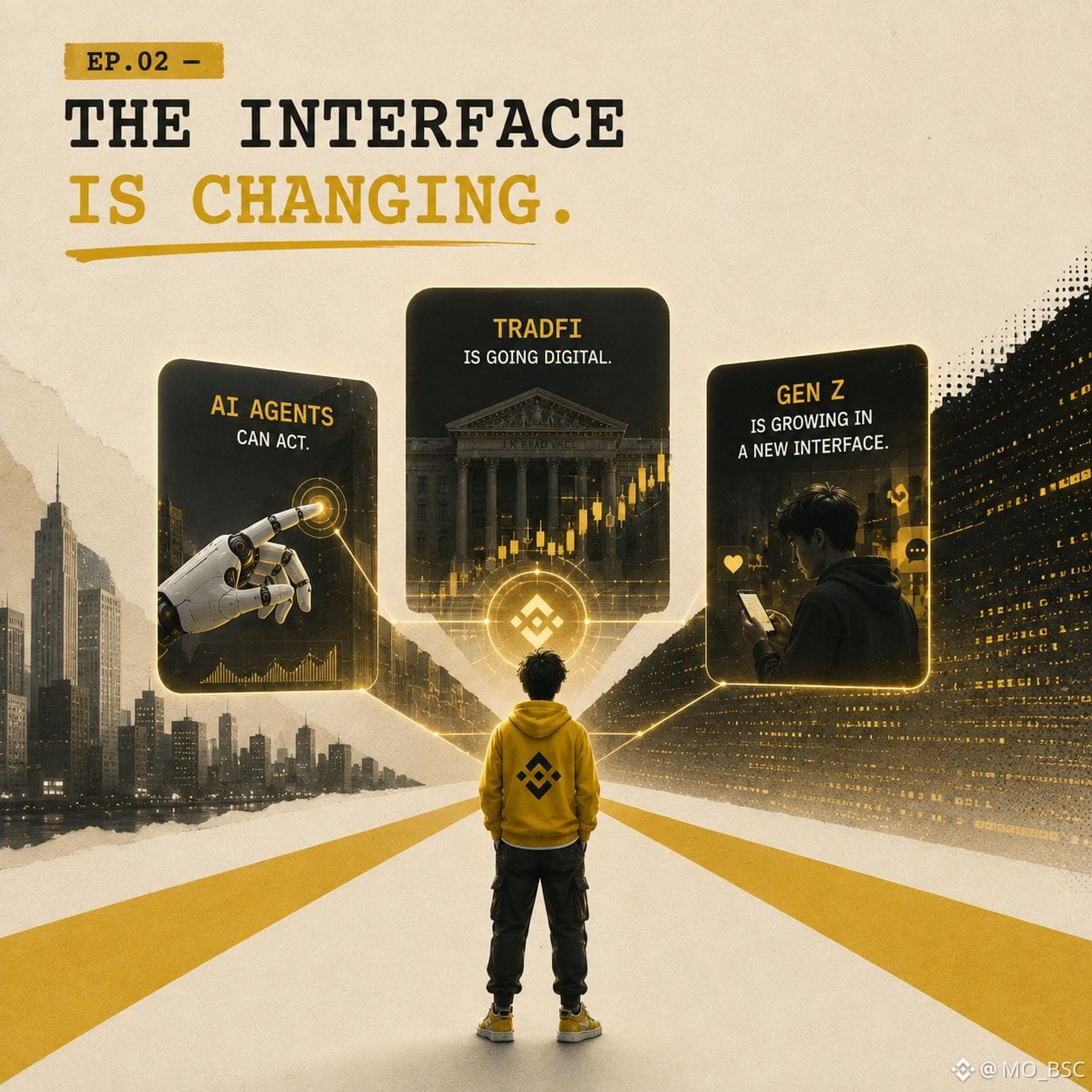
EP.02 — THE INTERFACE IS CHANGING.
For a long time, finance had a familiar interface:
You open a bank.
You open a broker.
You open an exchange.
You make the decision.
You execute the action.
Now three shifts are happening.
AI Agents can act.
Binance Agent OS lets authorized agents connect to Binance services, access market data and account information, and execute trades within the permissions you set.
TradFi is becoming more accessible through digital platforms.
Stocks, ETFs and other traditional-market exposures are appearing in products built for crypto-native users — while still being fundamentally different from owning the underlying assets in some cases.
And Gen Z is growing up inside this new interface.
But the data doesn't simply show a generation chasing more trades. Binance Research found Gen Z had the lowest turnover among the working-age cohorts studied.
Three different shifts.
One bigger question:
What happens when the interface itself becomes intelligent?
Maybe the next evolution of finance isn't just new assets.
Maybe it's a new way of interacting with them.
EP.02/?
DYOR.
Educational content only — not financial advice.
#Binance #AIAgent #GenZ #BinanceAcademy
For a long time, finance had a familiar interface:
You open a bank.
You open a broker.
You open an exchange.
You make the decision.
You execute the action.
Now three shifts are happening.
AI Agents can act.
Binance Agent OS lets authorized agents connect to Binance services, access market data and account information, and execute trades within the permissions you set.
TradFi is becoming more accessible through digital platforms.
Stocks, ETFs and other traditional-market exposures are appearing in products built for crypto-native users — while still being fundamentally different from owning the underlying assets in some cases.
And Gen Z is growing up inside this new interface.
But the data doesn't simply show a generation chasing more trades. Binance Research found Gen Z had the lowest turnover among the working-age cohorts studied.
Three different shifts.
One bigger question:
What happens when the interface itself becomes intelligent?
Maybe the next evolution of finance isn't just new assets.
Maybe it's a new way of interacting with them.
EP.02/?
DYOR.
Educational content only — not financial advice.
#Binance #AIAgent #GenZ #BinanceAcademy
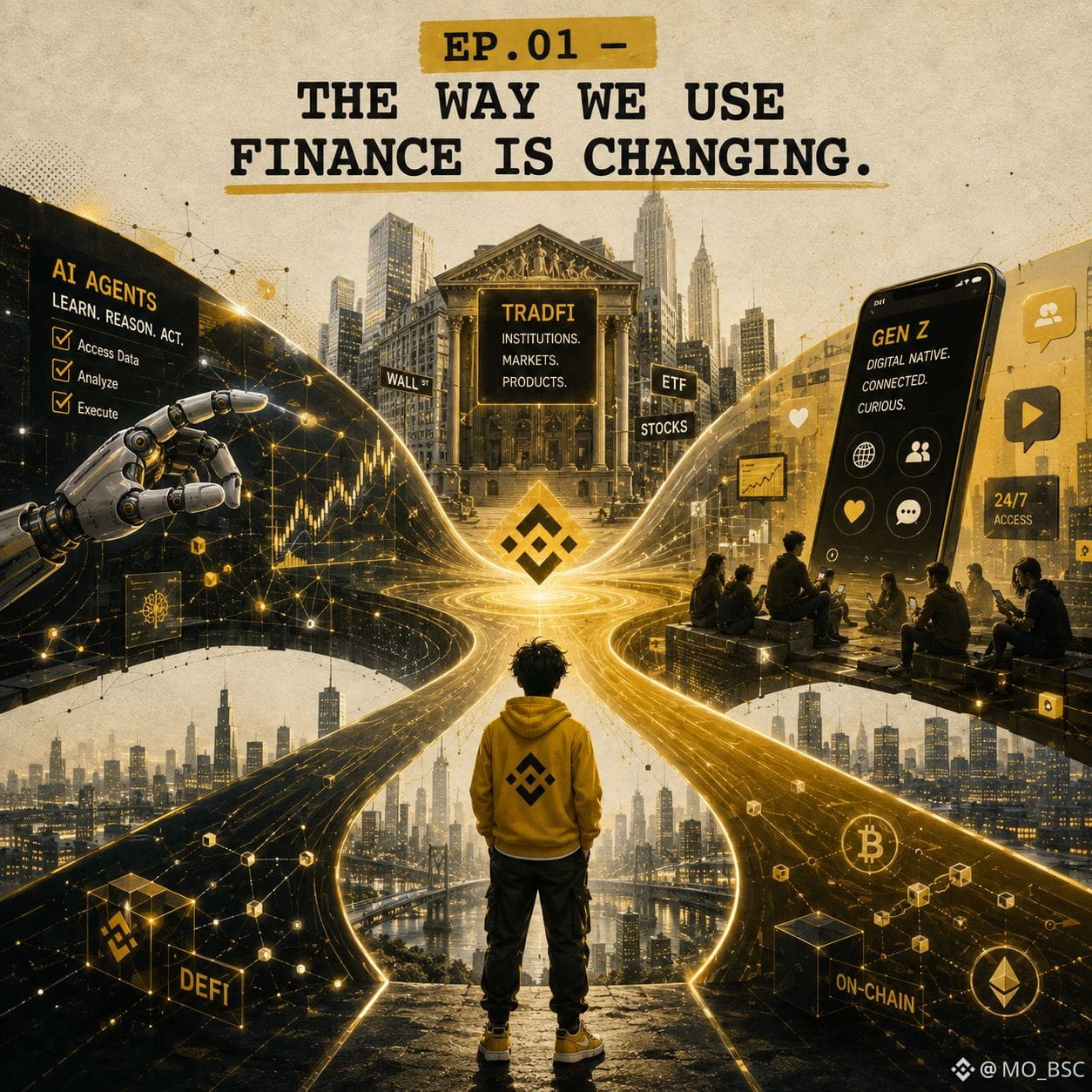
EP.01 — THE WAY WE USE FINANCE IS CHANGING.
Three things are happening at the same time:
AI Agents are learning to act.
Binance Agent OS allows AI agents to connect with Binance services and, with the right permissions, access market data, view balances and execute trades.
TradFi is moving closer to crypto infrastructure.
Stocks, ETFs and other traditional financial assets can now appear in digital financial products, creating new ways for people to interact with markets.
And then there's Gen Z.
Binance Research found that Gen Z was the lowest-turnover working-age cohort across the three products studied — challenging the idea that being digitally native automatically means trading more.
Different stories.
But one bigger shift:
Finance is becoming more digital, more connected, and more programmable.
The interesting question isn't which trend wins.
It's what happens when they start interacting with each other.
We're still early.
DYOR.
Educational content only — not financial advice.
#AIAgents #TradFi #BinanceAcademy
Three things are happening at the same time:
AI Agents are learning to act.
Binance Agent OS allows AI agents to connect with Binance services and, with the right permissions, access market data, view balances and execute trades.
TradFi is moving closer to crypto infrastructure.
Stocks, ETFs and other traditional financial assets can now appear in digital financial products, creating new ways for people to interact with markets.
And then there's Gen Z.
Binance Research found that Gen Z was the lowest-turnover working-age cohort across the three products studied — challenging the idea that being digitally native automatically means trading more.
Different stories.
But one bigger shift:
Finance is becoming more digital, more connected, and more programmable.
The interesting question isn't which trend wins.
It's what happens when they start interacting with each other.
We're still early.
DYOR.
Educational content only — not financial advice.
#AIAgents #TradFi #BinanceAcademy
Gen Z didn't grow up with the same relationship with technology as previous generations.
For them, digital isn't a separate world.
It's simply part of everyday life.
So when finance becomes digital too, the interesting question isn't only:
“Will Gen Z use crypto?”
It's:
What does Gen Z expect financial technology to feel like?
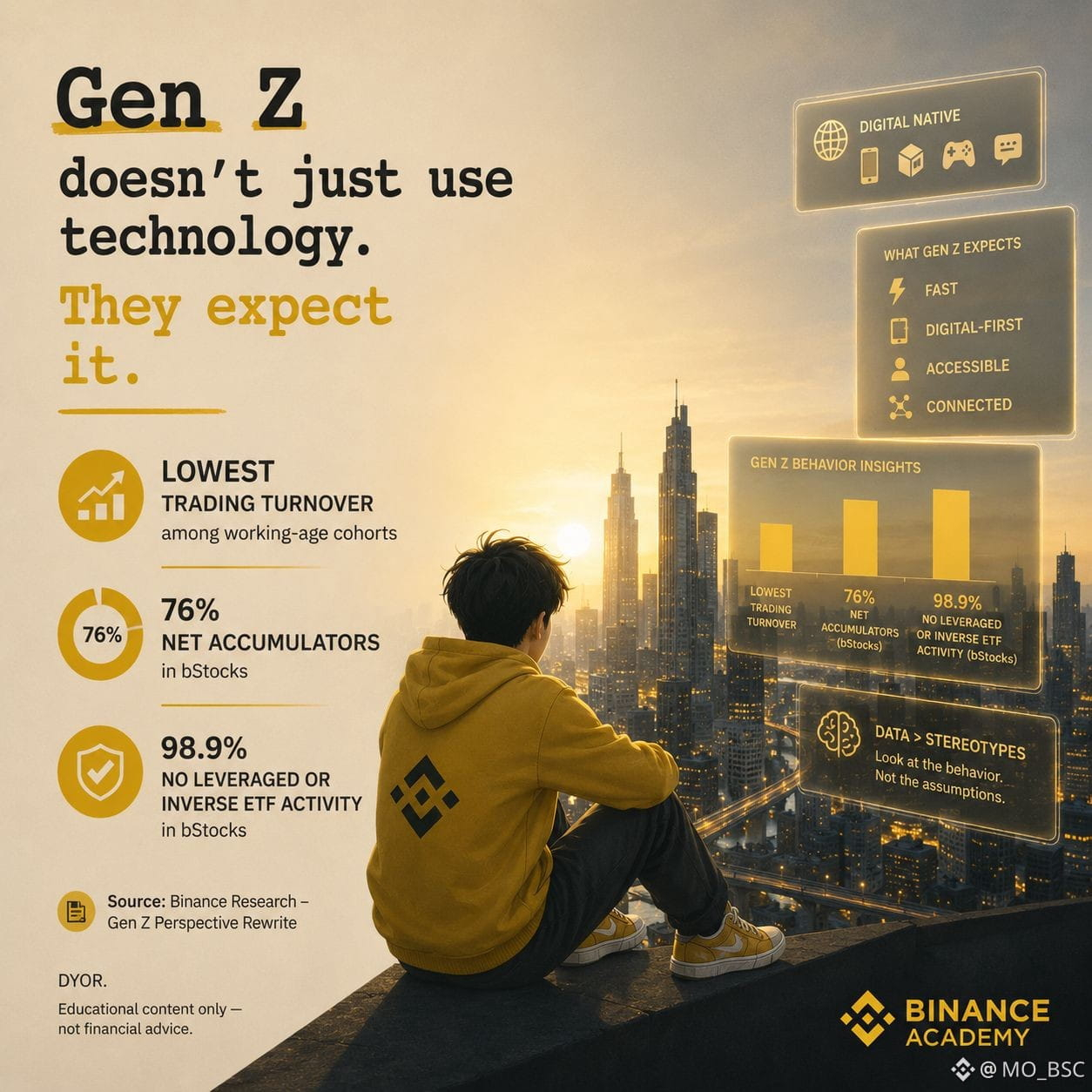
Fast.
Digital-first.
Accessible.
Connected.
But that doesn't automatically mean Gen Z is looking for maximum risk.
In fact, Binance Research found several interesting patterns in its study of Gen Z behavior across bStocks, direct equities and TradFi-Perps.
Gen Z had the lowest trading turnover among the working-age cohorts studied.
In bStocks, 76% of Gen Z accounts were classified as net accumulators.
And 98.9% of Gen Z bStocks accounts had no leveraged or inverse ETF activity in the period analyzed.
That's a useful reminder:
A generation being digitally native doesn't automatically mean it's constantly trading or chasing leverage.
Technology changes how people access financial products.
It doesn't tell us exactly how every person will use them.
And that's why data matters more than stereotypes.
Don't assume.
Don't generalize.
Look at the behavior.
📚 Source: Binance Research — Gen Z Perspective Rewrite
DYOR.
Educational content only — not financial advice.
#GenZ #BinanceAcademy
For them, digital isn't a separate world.
It's simply part of everyday life.
So when finance becomes digital too, the interesting question isn't only:
“Will Gen Z use crypto?”
It's:
What does Gen Z expect financial technology to feel like?
Fast.
Digital-first.
Accessible.
Connected.
But that doesn't automatically mean Gen Z is looking for maximum risk.
In fact, Binance Research found several interesting patterns in its study of Gen Z behavior across bStocks, direct equities and TradFi-Perps.
Gen Z had the lowest trading turnover among the working-age cohorts studied.
In bStocks, 76% of Gen Z accounts were classified as net accumulators.
And 98.9% of Gen Z bStocks accounts had no leveraged or inverse ETF activity in the period analyzed.
That's a useful reminder:
A generation being digitally native doesn't automatically mean it's constantly trading or chasing leverage.
Technology changes how people access financial products.
It doesn't tell us exactly how every person will use them.
And that's why data matters more than stereotypes.
Don't assume.
Don't generalize.
Look at the behavior.
📚 Source: Binance Research — Gen Z Perspective Rewrite
DYOR.
Educational content only — not financial advice.
#GenZ #BinanceAcademy
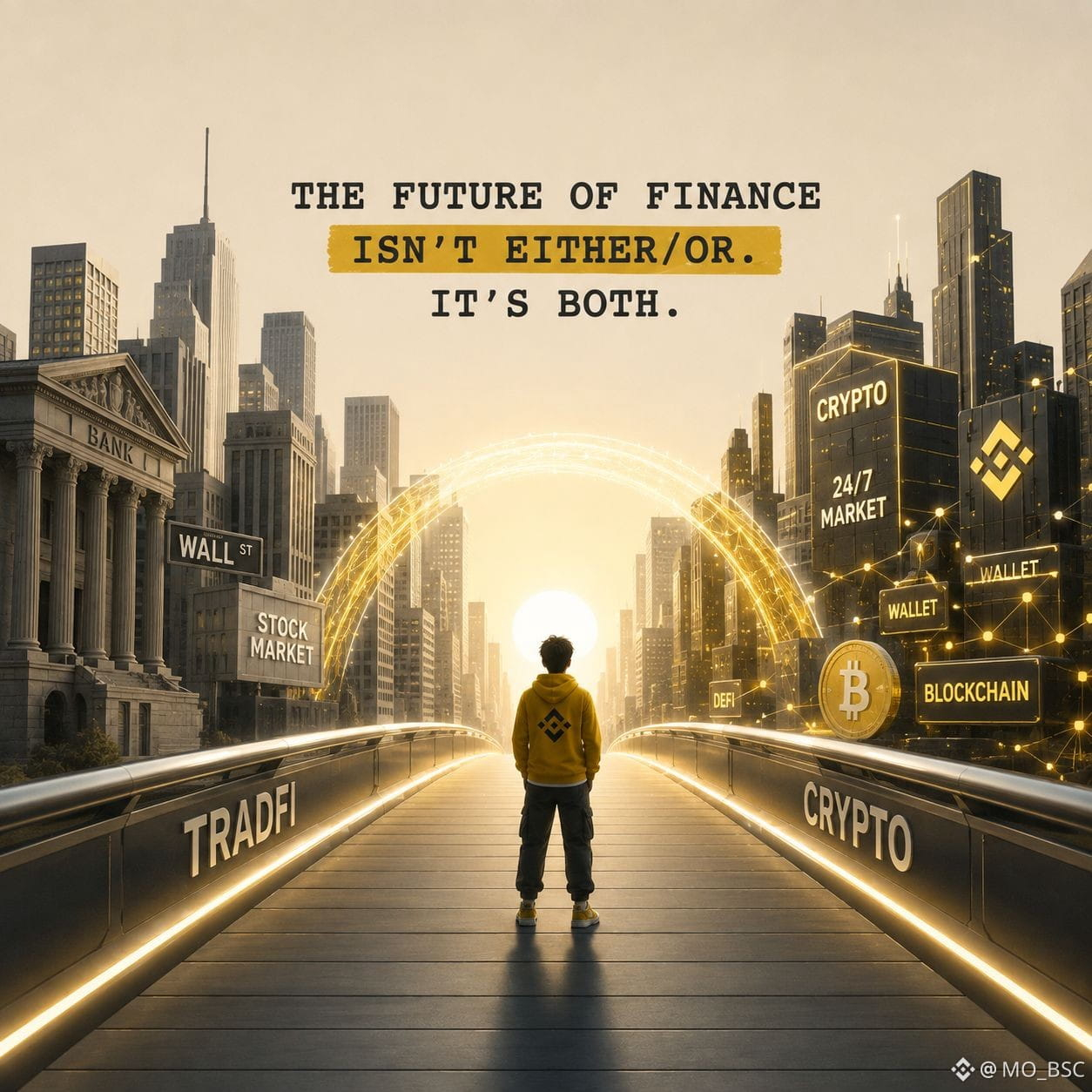
For years, the conversation sounded like this:
Crypto vs TradFi.
But maybe that's the wrong question.
TradFi — traditional finance — is the financial system most of us already know.
Banks.
Stock markets.
Brokerages.
Payment networks.
Traditional investment products.
Crypto introduced a different financial architecture built around blockchain networks and digital assets.
But technology doesn't always replace an old system overnight.
Sometimes it connects to it.
That's why we're increasingly seeing conversations around bringing traditional financial concepts into digital and on-chain environments.
The interesting question isn't:
“Which one wins?”
It's:
**What happens when the strengths of both worlds start connecting?**
TradFi has decades of infrastructure, regulation, institutions and established financial markets.
Crypto brings programmable networks, digital ownership and 24/7 blockchain-based infrastructure.
They solve different problems and operate under different models.
And the line between the two worlds may continue to evolve.
For beginners, the most useful approach isn't choosing a side.
It's understanding both.
Learn how traditional markets work.
Learn how crypto markets work.
Then understand where they overlap — and where they remain fundamentally different.
The future of finance doesn't necessarily have to be either/or.
It could be more connected than that.
DYOR.
Educational content only — not financial advice.
#Binance #TradFi #learnwithbinance
$BTC
Crypto vs TradFi.
But maybe that's the wrong question.
TradFi — traditional finance — is the financial system most of us already know.
Banks.
Stock markets.
Brokerages.
Payment networks.
Traditional investment products.
Crypto introduced a different financial architecture built around blockchain networks and digital assets.
But technology doesn't always replace an old system overnight.
Sometimes it connects to it.
That's why we're increasingly seeing conversations around bringing traditional financial concepts into digital and on-chain environments.
The interesting question isn't:
“Which one wins?”
It's:
**What happens when the strengths of both worlds start connecting?**
TradFi has decades of infrastructure, regulation, institutions and established financial markets.
Crypto brings programmable networks, digital ownership and 24/7 blockchain-based infrastructure.
They solve different problems and operate under different models.
And the line between the two worlds may continue to evolve.
For beginners, the most useful approach isn't choosing a side.
It's understanding both.
Learn how traditional markets work.
Learn how crypto markets work.
Then understand where they overlap — and where they remain fundamentally different.
The future of finance doesn't necessarily have to be either/or.
It could be more connected than that.
DYOR.
Educational content only — not financial advice.
#Binance #TradFi #learnwithbinance
$BTC
AI used to answer questions.
Now imagine AI that can actually take action.
That’s where AI Agents come in.
A traditional AI assistant might help you find information, summarize something, or answer a question.
An AI Agent can go a step further.
It can be designed to understand a goal, reason through the steps needed to achieve it, use connected tools, and execute tasks.
And this becomes especially interesting in crypto.
Why?
Because crypto already exists in a highly digital, programmable environment — wallets, blockchain networks, market data, decentralized applications, and financial services can all interact through software.
Binance Agent OS is exploring what happens when AI Agents can connect to this ecosystem.
Instead of:
“Tell me what’s happening.”
The interaction can evolve toward:
“Here’s what I want to accomplish. Help me get it done.”
That doesn't mean agents should blindly make financial decisions for you.
It means the interface between humans, AI, and financial technology could become much more action-oriented.
The important shift isn't simply:
AI + Crypto.
It's:
**AI that can understand → connect → act.**
And we're still early.
DYOR.
Educational content only — not financial advice.
#AIAgents #AgentOS #BinanceAcademy
$BTC $BNB
Now imagine AI that can actually take action.
That’s where AI Agents come in.
A traditional AI assistant might help you find information, summarize something, or answer a question.
An AI Agent can go a step further.
It can be designed to understand a goal, reason through the steps needed to achieve it, use connected tools, and execute tasks.
And this becomes especially interesting in crypto.
Why?
Because crypto already exists in a highly digital, programmable environment — wallets, blockchain networks, market data, decentralized applications, and financial services can all interact through software.
Binance Agent OS is exploring what happens when AI Agents can connect to this ecosystem.
Instead of:
“Tell me what’s happening.”
The interaction can evolve toward:
“Here’s what I want to accomplish. Help me get it done.”
That doesn't mean agents should blindly make financial decisions for you.
It means the interface between humans, AI, and financial technology could become much more action-oriented.
The important shift isn't simply:
AI + Crypto.
It's:
**AI that can understand → connect → act.**
And we're still early.
DYOR.
Educational content only — not financial advice.
#AIAgents #AgentOS #BinanceAcademy
$BTC $BNB
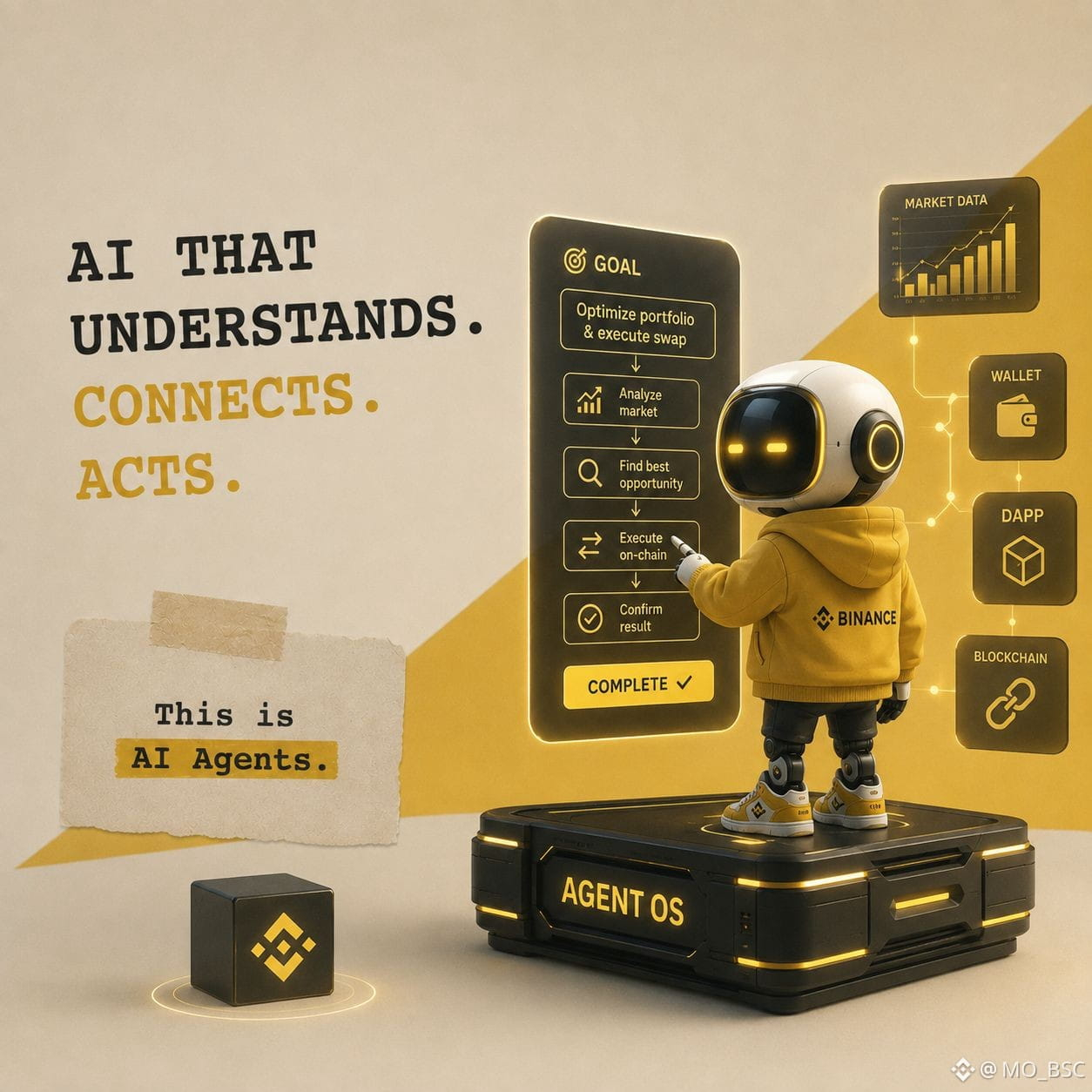
AI that answers is useful.
AI that can act is different.
AI Agents can understand a goal, connect with tools and data, and carry out tasks instead of simply giving you information.
That’s the idea behind Binance Agent OS: bringing AI agents closer to the crypto ecosystem and enabling more intelligent interactions with financial and Web3 tools.
The shift is simple:
From asking AI what to do…
to letting AI help do it.
Educational content only. DYOR.
#Binance #AIAgents #Crypto
$BTC $BNB $ETH
AI that can act is different.
AI Agents can understand a goal, connect with tools and data, and carry out tasks instead of simply giving you information.
That’s the idea behind Binance Agent OS: bringing AI agents closer to the crypto ecosystem and enabling more intelligent interactions with financial and Web3 tools.
The shift is simple:
From asking AI what to do…
to letting AI help do it.
Educational content only. DYOR.
#Binance #AIAgents #Crypto
$BTC $BNB $ETH
The next 3 billion users might not come for crypto.
They might come for something much bigger.
So what will they actually need?
@Binance Square Official
They might come for something much bigger.
So what will they actually need?
@Binance Square Official
The most expensive thing in crypto isn't Bitcoin?!!! 💯
It's making a decision you don't understand.
A coin you bought because everyone was talking about it.
A link you clicked without checking where it came from.
A trade you entered because you were afraid of missing out.
A product you used without reading how it works.
In crypto, knowledge isn't decoration. It's part of your security.
Before you buy.
Before you trade.
Before you connect your wallet.
Before you trust a platform. Pause. Ask questions.
Verify the information.
Learn from reliable sources.
Because sometimes DYOR isn't about finding the next opportunity. It's about avoiding the wrong one.
📚 Keep learning with @Binance Academy
Educational content only — not financial advice.
#BinanceAcademy #LearnWithBinance
$BTC
$ZEC
$XRP
It's making a decision you don't understand.
A coin you bought because everyone was talking about it.
A link you clicked without checking where it came from.
A trade you entered because you were afraid of missing out.
A product you used without reading how it works.
In crypto, knowledge isn't decoration. It's part of your security.
Before you buy.
Before you trade.
Before you connect your wallet.
Before you trust a platform. Pause. Ask questions.
Verify the information.
Learn from reliable sources.
Because sometimes DYOR isn't about finding the next opportunity. It's about avoiding the wrong one.
📚 Keep learning with @Binance Academy
Educational content only — not financial advice.
#BinanceAcademy #LearnWithBinance
$BTC
$ZEC
$XRP

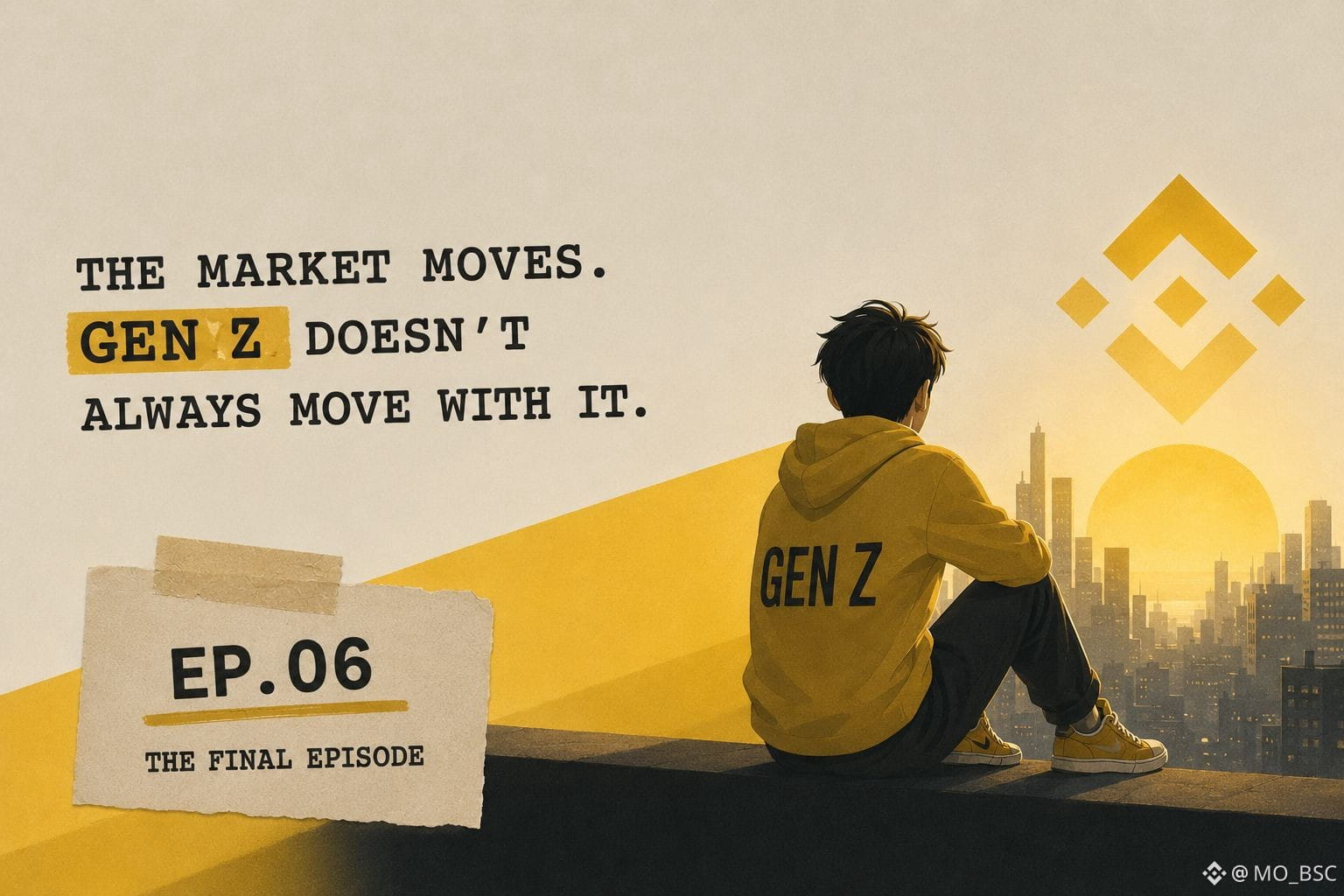
EP.06 — THE MARKET MOVES. GEN Z DOESN'T ALWAYS MOVE WITH IT.
In July, Gen Z's total net equity deployment fell 17.4%.
But something unexpected happened.
Net inflow to unleveraged ETFs fell only 2.0%.
Single stocks?
Down 20.4%.
Leveraged products?
Down 28.5%.
And Gen Z was the ONLY cohort whose ETF holder base actually grew in July:
+2.9%.
That doesn't prove Gen Z has suddenly become a long-term investing generation.
The sample is still relatively young.
But it does reveal something worth watching:
When overall activity slowed...
**unleveraged ETFs held up.**
Sometimes the most interesting signal isn't where money goes when everything is exciting.
It's where it stays when things slow down.
📚 Binance Research — Gen Z Perspective Rewrite
Educational content only — not financial advice.
#Binance #GenZ #Investing
$BTC
$BNB
$SOL
In July, Gen Z's total net equity deployment fell 17.4%.
But something unexpected happened.
Net inflow to unleveraged ETFs fell only 2.0%.
Single stocks?
Down 20.4%.
Leveraged products?
Down 28.5%.
And Gen Z was the ONLY cohort whose ETF holder base actually grew in July:
+2.9%.
That doesn't prove Gen Z has suddenly become a long-term investing generation.
The sample is still relatively young.
But it does reveal something worth watching:
When overall activity slowed...
**unleveraged ETFs held up.**
Sometimes the most interesting signal isn't where money goes when everything is exciting.
It's where it stays when things slow down.
📚 Binance Research — Gen Z Perspective Rewrite
Educational content only — not financial advice.
#Binance #GenZ #Investing
$BTC
$BNB
$SOL
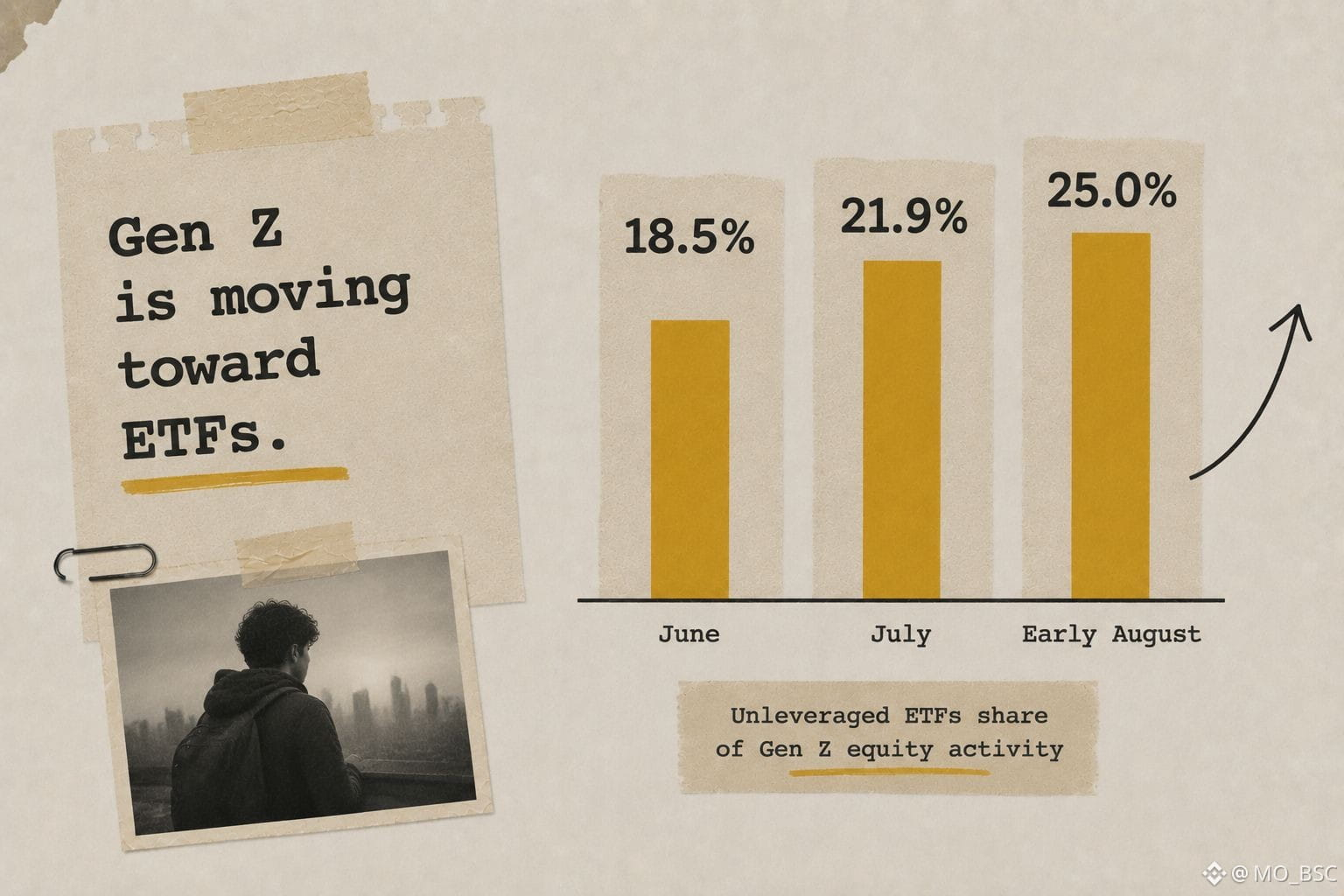
EP.05 — THE PLOT TWIST.
Gen Z is moving toward ETFs.
Not away from them.
In June, unleveraged ETFs represented 18.5% of Gen Z net equity inflow.
In July:
21.9%.
Meanwhile, the single-stock share fell from 77.0% to 74.2%.
And in early August, ETFs represented 25.0% of Gen Z equity volume.
But Binance Research adds an important warning:
Two months isn't enough to establish a long-term trend.
Still...
If the stereotype says Gen Z wants maximum speculation,
the early data is telling a more nuanced story.
Less single-stock concentration.
More unleveraged ETFs.
Less turnover.
Less leverage.
Maybe the next generation of investors isn't behaving exactly the way we expected.
📚 Binance Research — Gen Z Perspective Rewrite
DYOR.
#Binance #GenZ #ETFs
$SOL
$BNB
$DOGE
Gen Z is moving toward ETFs.
Not away from them.
In June, unleveraged ETFs represented 18.5% of Gen Z net equity inflow.
In July:
21.9%.
Meanwhile, the single-stock share fell from 77.0% to 74.2%.
And in early August, ETFs represented 25.0% of Gen Z equity volume.
But Binance Research adds an important warning:
Two months isn't enough to establish a long-term trend.
Still...
If the stereotype says Gen Z wants maximum speculation,
the early data is telling a more nuanced story.
Less single-stock concentration.
More unleveraged ETFs.
Less turnover.
Less leverage.
Maybe the next generation of investors isn't behaving exactly the way we expected.
📚 Binance Research — Gen Z Perspective Rewrite
DYOR.
#Binance #GenZ #ETFs
$SOL
$BNB
$DOGE
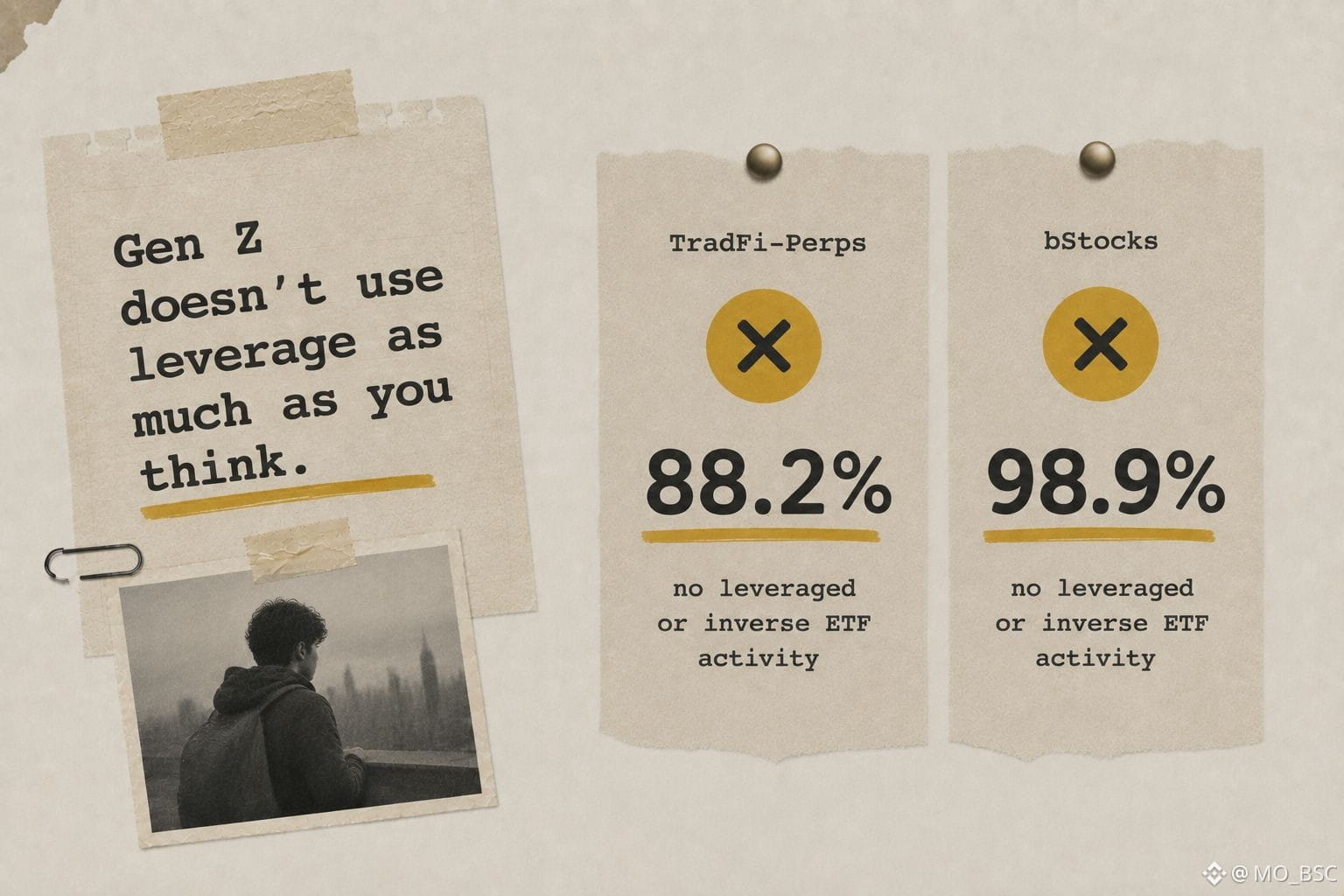
EP.04 — GEN Z DOESN'T USE LEVERAGE AS MUCH AS YOU THINK.
The stereotype:
“Gen Z = high risk.”
The data?
More complicated.
In TradFi-Perps, 88.2% of Gen Z accounts recorded NO leveraged or inverse ETF activity.
In bStocks?
98.9%.
That's the lowest among the main working-age cohorts in both products.
And leveraged/inverse instruments represented only 7.02% of Gen Z bStocks turnover.
So yes, Gen Z does use leveraged products.
But the data doesn't support the idea that leverage defines how this generation participates.
Sometimes the stereotype is louder than the data.
📚 Binance Research — Gen Z Perspective Rewrite
Educational content only — not financial advice.
#Binance #GenZ #Crypto
$BTC
$NVDAB
$ETH
The stereotype:
“Gen Z = high risk.”
The data?
More complicated.
In TradFi-Perps, 88.2% of Gen Z accounts recorded NO leveraged or inverse ETF activity.
In bStocks?
98.9%.
That's the lowest among the main working-age cohorts in both products.
And leveraged/inverse instruments represented only 7.02% of Gen Z bStocks turnover.
So yes, Gen Z does use leveraged products.
But the data doesn't support the idea that leverage defines how this generation participates.
Sometimes the stereotype is louder than the data.
📚 Binance Research — Gen Z Perspective Rewrite
Educational content only — not financial advice.
#Binance #GenZ #Crypto
$BTC
$NVDAB
$ETH
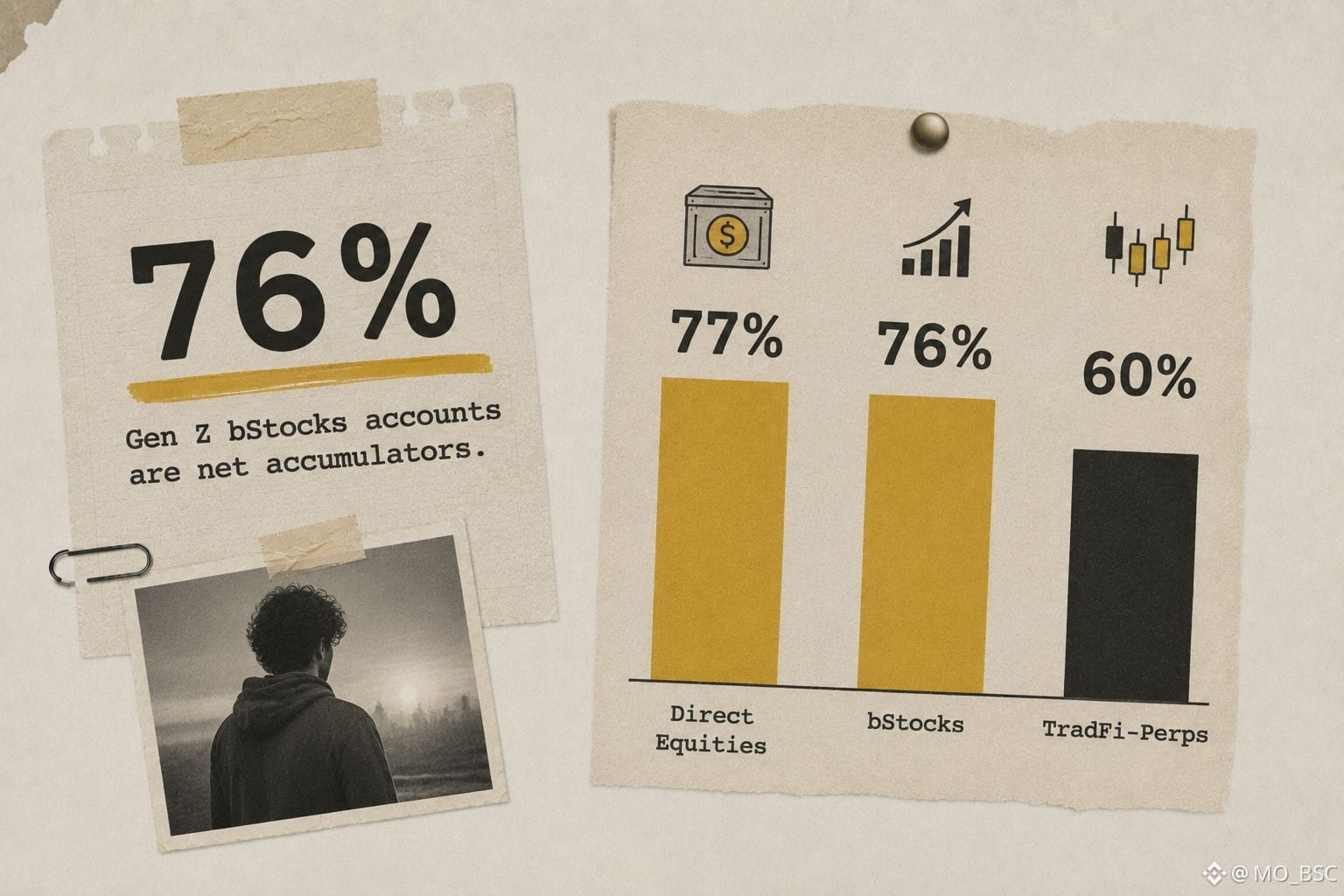
EP.03 — 76%.
Three out of every four Gen Z bStocks accounts in the Binance Research sample were NET ACCUMULATORS.
That's 76%.
The highest share among the generations studied.
Millennials?
67%.
That's a 9 percentage-point difference.
And the pattern wasn't limited to bStocks.
In direct equities, 77% of Gen Z accounts were net accumulators.
In TradFi-Perps, 60%.
But there's an important detail:
Being a “net accumulator” doesn't automatically mean someone is a long-term investor.
The research measures whether an account bought more than it sold.
So the better takeaway isn't:
“Gen Z never sells.”
It's:
**When Gen Z commits capital, the data shows a consistent net-buying direction.**
That's a much more interesting story.
📚 Binance Research — Gen Z Perspective Rewrite
DYOR.
#Binance #GenZ #Crypto
$BNB
$XRP
$ZEC
Three out of every four Gen Z bStocks accounts in the Binance Research sample were NET ACCUMULATORS.
That's 76%.
The highest share among the generations studied.
Millennials?
67%.
That's a 9 percentage-point difference.
And the pattern wasn't limited to bStocks.
In direct equities, 77% of Gen Z accounts were net accumulators.
In TradFi-Perps, 60%.
But there's an important detail:
Being a “net accumulator” doesn't automatically mean someone is a long-term investor.
The research measures whether an account bought more than it sold.
So the better takeaway isn't:
“Gen Z never sells.”
It's:
**When Gen Z commits capital, the data shows a consistent net-buying direction.**
That's a much more interesting story.
📚 Binance Research — Gen Z Perspective Rewrite
DYOR.
#Binance #GenZ #Crypto
$BNB
$XRP
$ZEC
EP.02 — THE BUYERS WHO DON'T SELL.
Here's a number that caught my attention:
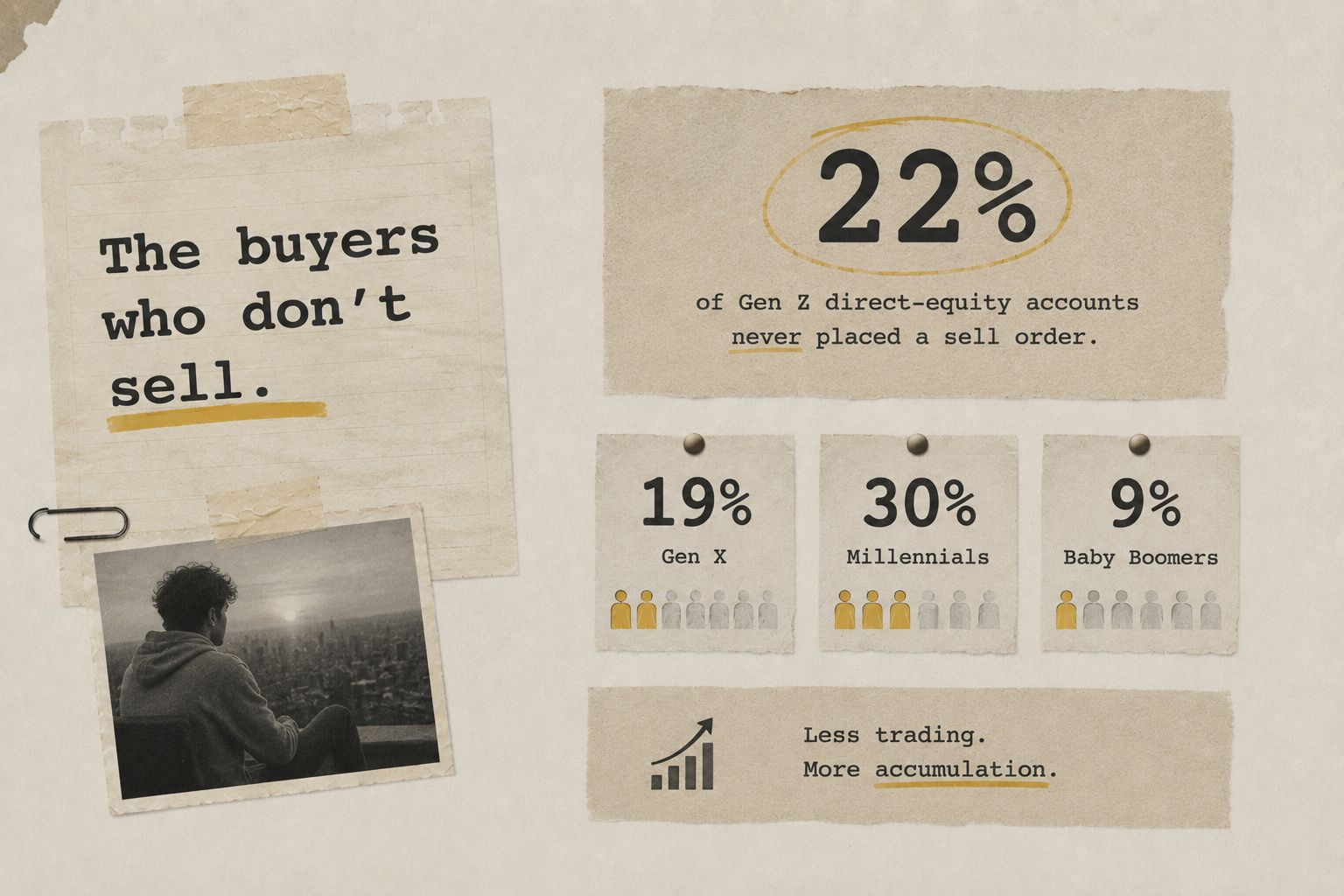
22%.
That's the share of Gen Z direct-equity accounts in the Binance Research sample that had NEVER placed a sell order.
They only bought.
For comparison:
Gen X → 19%
Baby Boomers → 9%
And Millennials were actually higher at 30%.
But here's where it gets interesting:
The Gen Z buy-only accounts barely traded.
The research describes them as showing behavior closer to accumulation than rapid-fire trading.
Maybe the most interesting thing about Gen Z investing isn't how fast they trade...
It's how often they simply don't.
📚 Binance Research — Gen Z Perspective Rewrite
DYOR.
Educational content only — not financial advice.
#Binance #GenZ #Investing
$BTC
$ETH
Here's a number that caught my attention:
22%.
That's the share of Gen Z direct-equity accounts in the Binance Research sample that had NEVER placed a sell order.
They only bought.
For comparison:
Gen X → 19%
Baby Boomers → 9%
And Millennials were actually higher at 30%.
But here's where it gets interesting:
The Gen Z buy-only accounts barely traded.
The research describes them as showing behavior closer to accumulation than rapid-fire trading.
Maybe the most interesting thing about Gen Z investing isn't how fast they trade...
It's how often they simply don't.
📚 Binance Research — Gen Z Perspective Rewrite
DYOR.
Educational content only — not financial advice.
#Binance #GenZ #Investing
$BTC
$ETH
EP.01 — GEN Z, BUT NOT WHAT YOU THINK.
Everyone says Gen Z is the generation of instant gratification.
But Binance Research found something interesting:
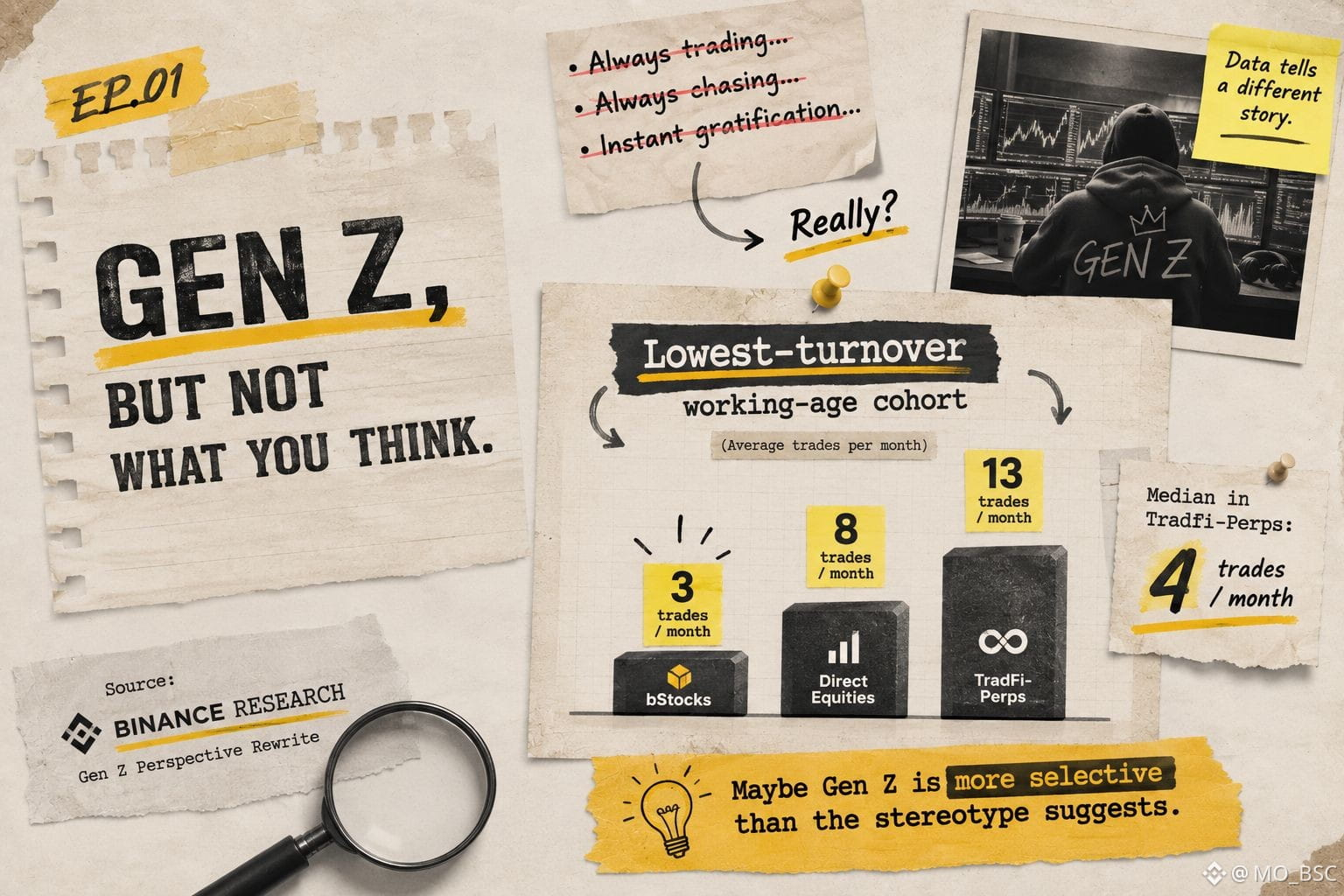
Gen Z is actually the LOWEST-turnover working-age cohort across the three products studied.
In bStocks, the average Gen Z account trades around 3 times a month.
In direct equities: 8.
In TradFi-Perps: 13.
And the median in TradFi-Perps is just 4 trades a month.
So maybe the “always trading, always chasing” Gen Z stereotype isn't telling the whole story.
The data says something more interesting:
When Gen Z participates, it may be more selective than the stereotype suggests.
And that's only Episode 1.
📚 Source: Binance Research — Gen Z Perspective Rewrite
Educational content only. Not financial advice.
#Binance #GenZ
$BNB $BTC
Everyone says Gen Z is the generation of instant gratification.
But Binance Research found something interesting:
Gen Z is actually the LOWEST-turnover working-age cohort across the three products studied.
In bStocks, the average Gen Z account trades around 3 times a month.
In direct equities: 8.
In TradFi-Perps: 13.
And the median in TradFi-Perps is just 4 trades a month.
So maybe the “always trading, always chasing” Gen Z stereotype isn't telling the whole story.
The data says something more interesting:
When Gen Z participates, it may be more selective than the stereotype suggests.
And that's only Episode 1.
📚 Source: Binance Research — Gen Z Perspective Rewrite
Educational content only. Not financial advice.
#Binance #GenZ
$BNB $BTC
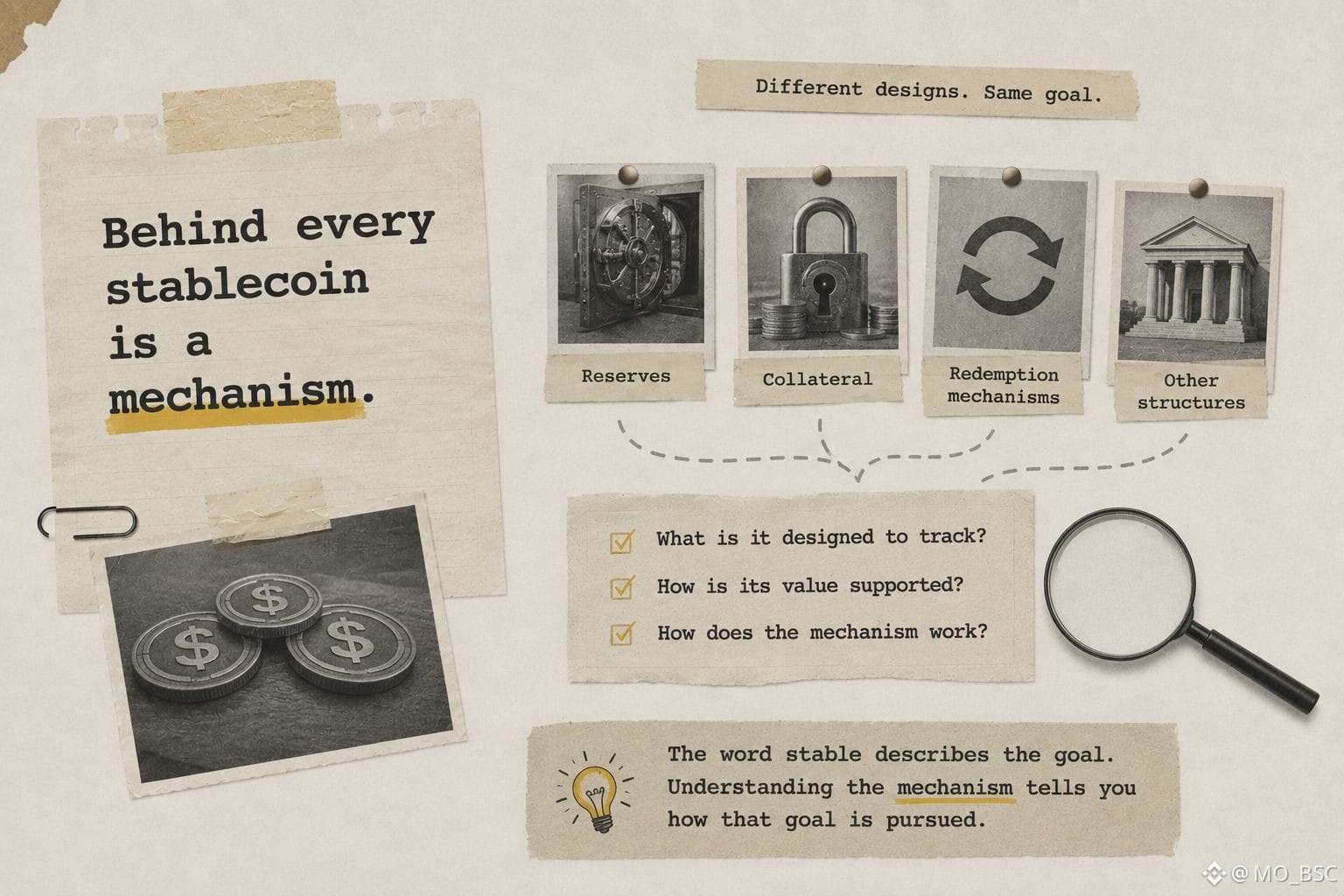
A stablecoin doesn't become “stable” because of its name.
There is a mechanism behind that stability.
Different stablecoins can use different designs to maintain their intended value.
That can involve reserves, collateral, redemption mechanisms, or other structures depending on the stablecoin.
Which means two stablecoins can have the same goal...
without working the same way.
That's an important distinction for beginners.
Don't stop at:
“It's a stablecoin.”
Ask:
What is it designed to track?
How is its value supported?
How does the mechanism work?
The word stable describes the goal.
Understanding the mechanism tells you how that goal is pursued.
DYOR.
Educational content only — not financial advice.
#Binance #Stablecoins #BinanceAcademy #LearnWithBinance
$AAPLB
$ETH
$BTC
There is a mechanism behind that stability.
Different stablecoins can use different designs to maintain their intended value.
That can involve reserves, collateral, redemption mechanisms, or other structures depending on the stablecoin.
Which means two stablecoins can have the same goal...
without working the same way.
That's an important distinction for beginners.
Don't stop at:
“It's a stablecoin.”
Ask:
What is it designed to track?
How is its value supported?
How does the mechanism work?
The word stable describes the goal.
Understanding the mechanism tells you how that goal is pursued.
DYOR.
Educational content only — not financial advice.
#Binance #Stablecoins #BinanceAcademy #LearnWithBinance
$AAPLB
$ETH
$BTC
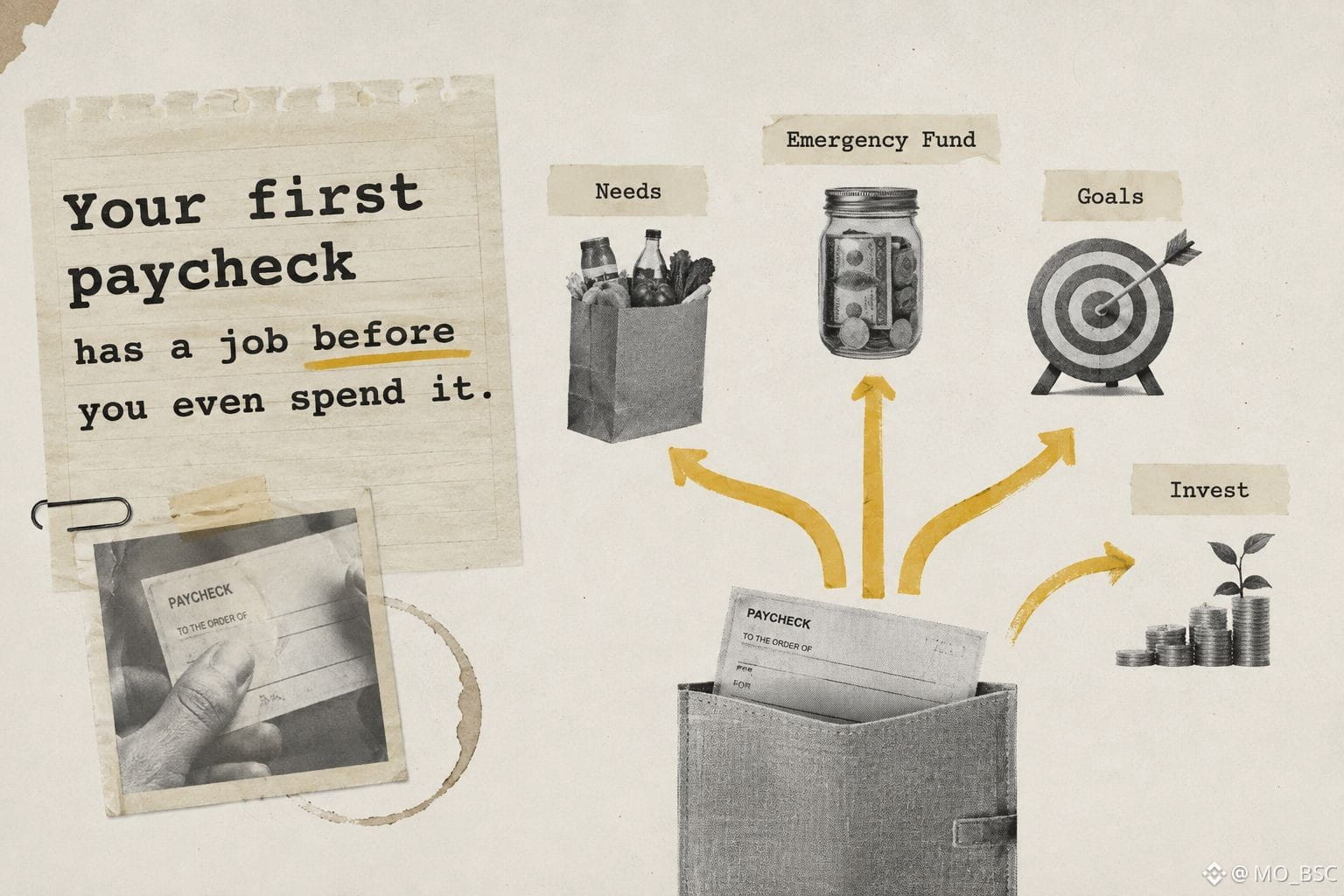
Your first paycheck has a job before you even spend it.
Not one job.
Several.
Some of it may need to cover today's needs.
Some may be kept for unexpected expenses.
Some may support future goals.
And only after understanding those priorities does investing enter the conversation.
That's why personal finance isn't simply:
Earn → Spend.
It's closer to:
Earn → Plan → Allocate → Review.
Budgeting tells you where your money is going.
Saving creates a buffer.
Investing can serve longer-term goals, but comes with risk.
Diversification can help avoid depending entirely on one asset or investment.
Your first paycheck doesn't need to be perfect.
It needs a plan.
Learn before you decide.
Educational content only — not financial advice.
#Binance #BinanceAcademy #FinancialLiteracy #LearnWithBinance
$BTC
$ETH
$BNB
Not one job.
Several.
Some of it may need to cover today's needs.
Some may be kept for unexpected expenses.
Some may support future goals.
And only after understanding those priorities does investing enter the conversation.
That's why personal finance isn't simply:
Earn → Spend.
It's closer to:
Earn → Plan → Allocate → Review.
Budgeting tells you where your money is going.
Saving creates a buffer.
Investing can serve longer-term goals, but comes with risk.
Diversification can help avoid depending entirely on one asset or investment.
Your first paycheck doesn't need to be perfect.
It needs a plan.
Learn before you decide.
Educational content only — not financial advice.
#Binance #BinanceAcademy #FinancialLiteracy #LearnWithBinance
$BTC
$ETH
$BNB
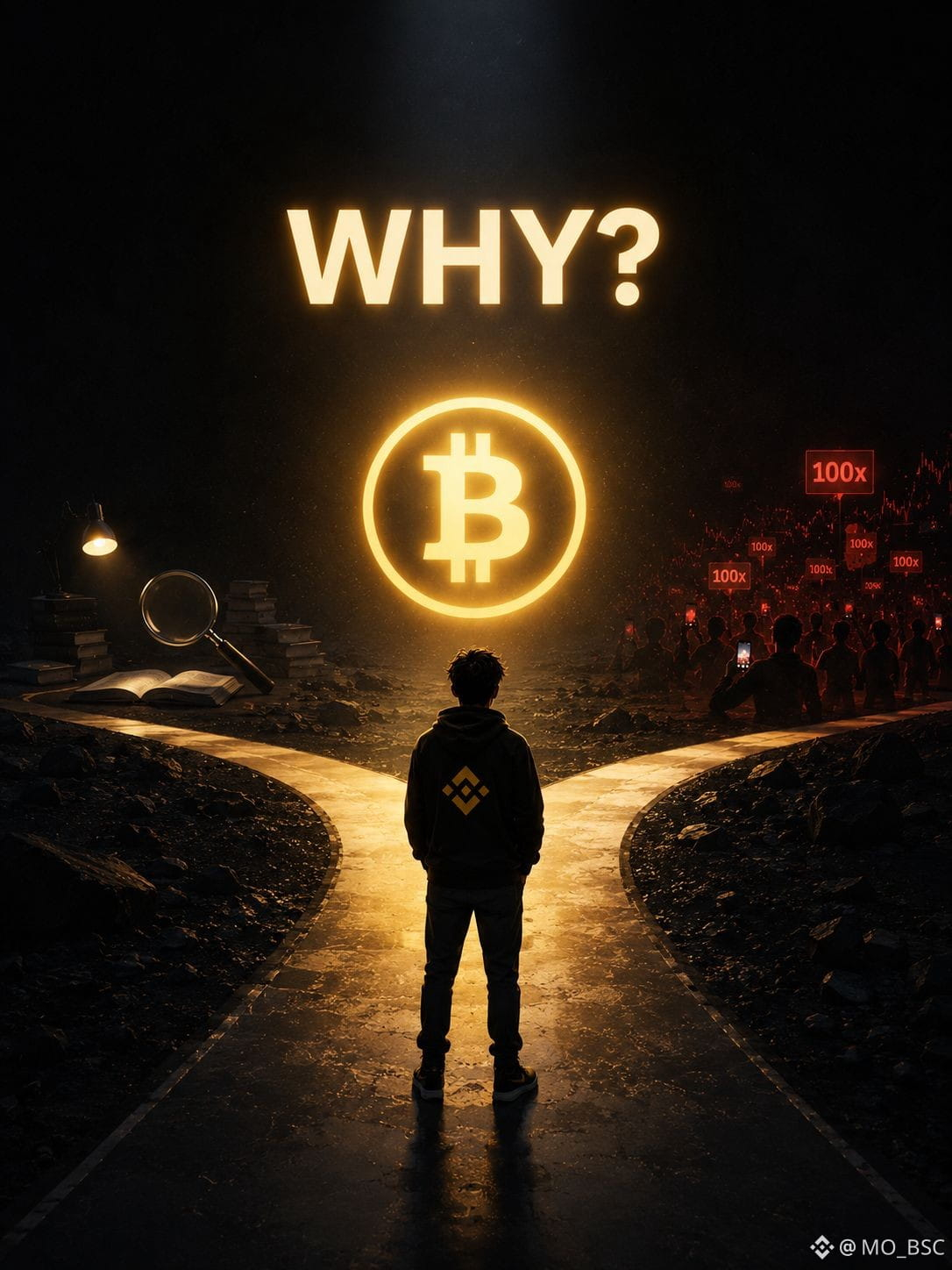
Before your first Bitcoin, there is one question more important than “When?”
It's:
“Why?”
Why Bitcoin?
Why now?
What do you actually understand about the asset?
A first purchase can be driven by curiosity, research, or simply FOMO.
Those are very different starting points.
Bitcoin's price can be highly volatile, and no one can know with certainty what it will do next.
So your first step doesn't have to be buying.
It can simply be learning.
Understand the asset.
Understand the risks.
Understand your own reason.
Then make your decision with knowledge—not noise.
DYOR.
Educational content only — not financial advice.
#Binance #BinanceAcademy #LearnWithBinance
$BTC
It's:
“Why?”
Why Bitcoin?
Why now?
What do you actually understand about the asset?
A first purchase can be driven by curiosity, research, or simply FOMO.
Those are very different starting points.
Bitcoin's price can be highly volatile, and no one can know with certainty what it will do next.
So your first step doesn't have to be buying.
It can simply be learning.
Understand the asset.
Understand the risks.
Understand your own reason.
Then make your decision with knowledge—not noise.
DYOR.
Educational content only — not financial advice.
#Binance #BinanceAcademy #LearnWithBinance
$BTC
Log in to explore more content