
Jeeva_jvan
6.9k Posts

Jeeva_jvan
 Square Verified+
Report
Block User
Web3 Strategist | 8M Views, Narratives to Alpha, Founder - Web3 Marketing Mavericks, NFTs, Memecoins, Market Psychology | Yaadhum Oore Yaavarum Kelir
Open Trade

BNB Holder
High-Frequency Trader
5.5 Years
353 Following
42.9K+ Followers
33.3K+ Liked
Posts
Portfolio
All
Quotes
Videos
Live
PINNED
·
--
Bullish
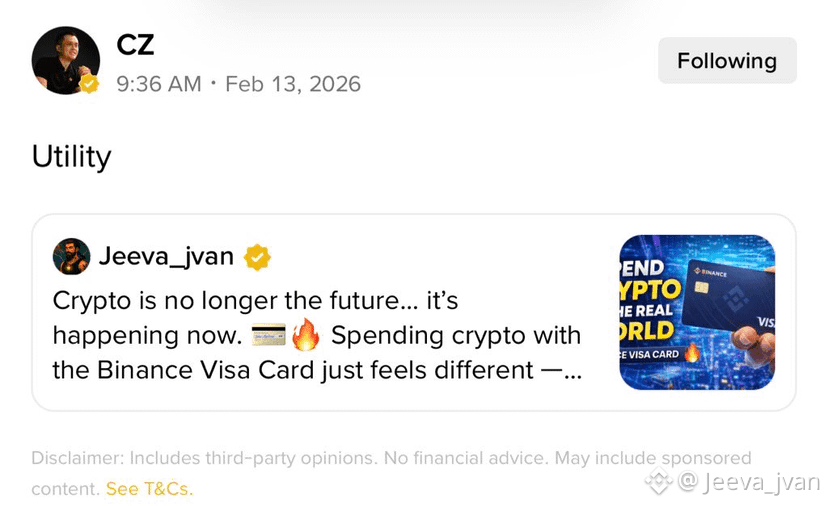
Moments like this made my day 🥹🔥
CZ shared my post — truly grateful for the support!
Thank you Binance and the Binance Square team 💛🚀 @CZ @Binance_Square_Official
#Binance #CZ #BinanceSquare #crypto #Community
Moments like this made my day 🥹🔥
CZ shared my post — truly grateful for the support!
Thank you Binance and the Binance Square team 💛🚀 @CZ @Binance_Square_Official
#Binance #CZ #BinanceSquare #crypto #Community
CZ shared my post — truly grateful for the support!
Thank you Binance and the Binance Square team 💛🚀 @CZ @Binance_Square_Official
#Binance #CZ #BinanceSquare #crypto #Community
14
2
84
726
PINNED
·
--
Bullish
Verified
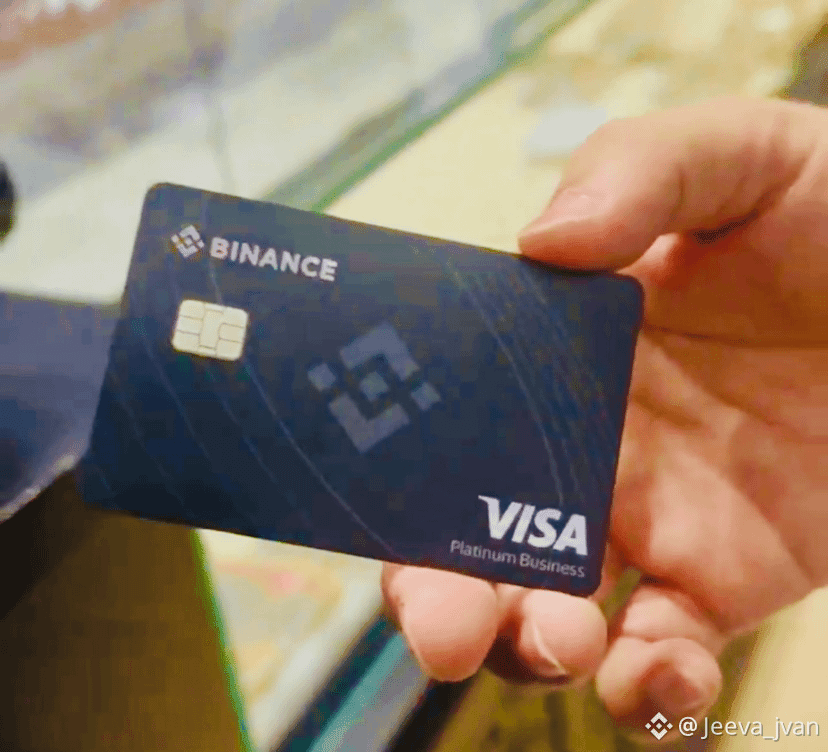
Crypto is no longer the future… it’s happening now. 💳🔥
Spending crypto with the Binance Visa Card just feels different — fast, simple, and global. This is how Web3 connects to the real world.
BNB isn’t just a token… it’s utility. 💛
#BNB #Binance #Crypto #Web3 #FutureOfPayments $BNB
{future}(BNBUSDT)
Crypto is no longer the future… it’s happening now. 💳🔥
Spending crypto with the Binance Visa Card just feels different — fast, simple, and global. This is how Web3 connects to the real world.
BNB isn’t just a token… it’s utility. 💛
#BNB #Binance #Crypto #Web3 #FutureOfPayments $BNB
Spending crypto with the Binance Visa Card just feels different — fast, simple, and global. This is how Web3 connects to the real world.
BNB isn’t just a token… it’s utility. 💛
#BNB #Binance #Crypto #Web3 #FutureOfPayments $BNB

505
211
550
41.4k
·
--
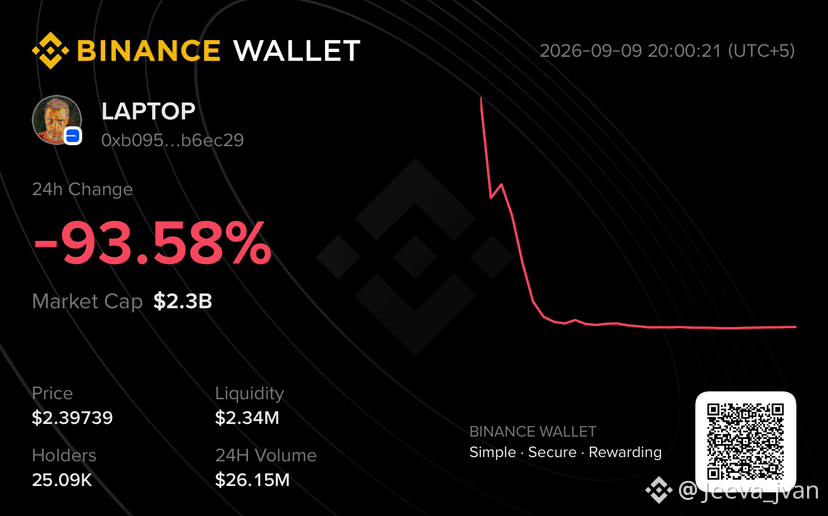
30D trade $TRUMP 15.1K USDT
1
2.9k
·
--
30D trade $DOT 7.1K USDT
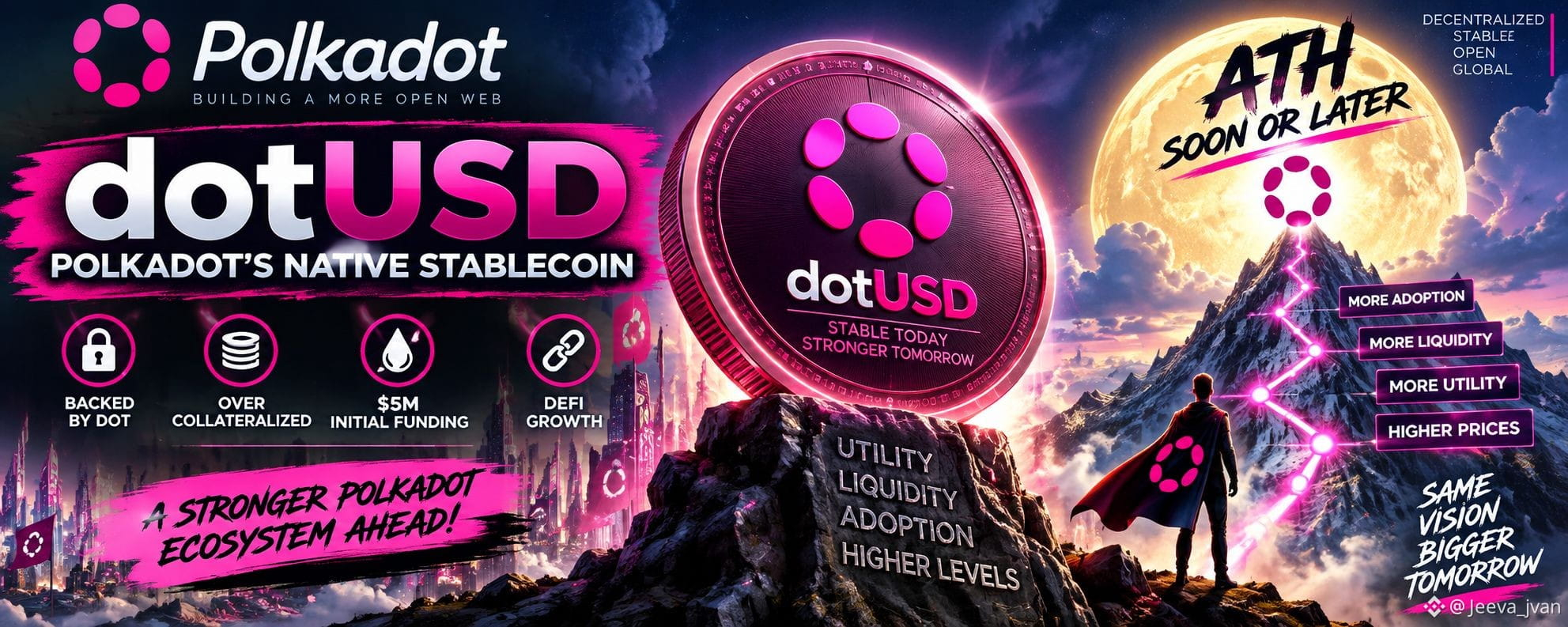
🚨 Polkadot is cooking!
A new proposal aims to launch dotUSD, a native decentralized stablecoin backed by DOT.
💰 $5M initial funding
🔒 Overcollateralized with DOT
🌐 Designed as a primary stable asset for the Polkadot ecosystem
If approved, this could be a major DeFi catalyst for $DOT. 👀🔥
Polkadot stablecoin era? Let’s see… 🚀 #Polkadot #dot #DOT_UPDATE $DOT #dyor #jeevajvan
🚨 Polkadot is cooking!
A new proposal aims to launch dotUSD, a native decentralized stablecoin backed by DOT.
💰 $5M initial funding
🔒 Overcollateralized with DOT
🌐 Designed as a primary stable asset for the Polkadot ecosystem
If approved, this could be a major DeFi catalyst for $DOT . 👀🔥
Polkadot stablecoin era? Let’s see… 🚀 #Polkadot #dot #DOT_UPDATE $DOT #dyor #jeevajvan
A new proposal aims to launch dotUSD, a native decentralized stablecoin backed by DOT.
💰 $5M initial funding
🔒 Overcollateralized with DOT
🌐 Designed as a primary stable asset for the Polkadot ecosystem
If approved, this could be a major DeFi catalyst for $DOT . 👀🔥
Polkadot stablecoin era? Let’s see… 🚀 #Polkadot #dot #DOT_UPDATE $DOT #dyor #jeevajvan
2
444
·
--
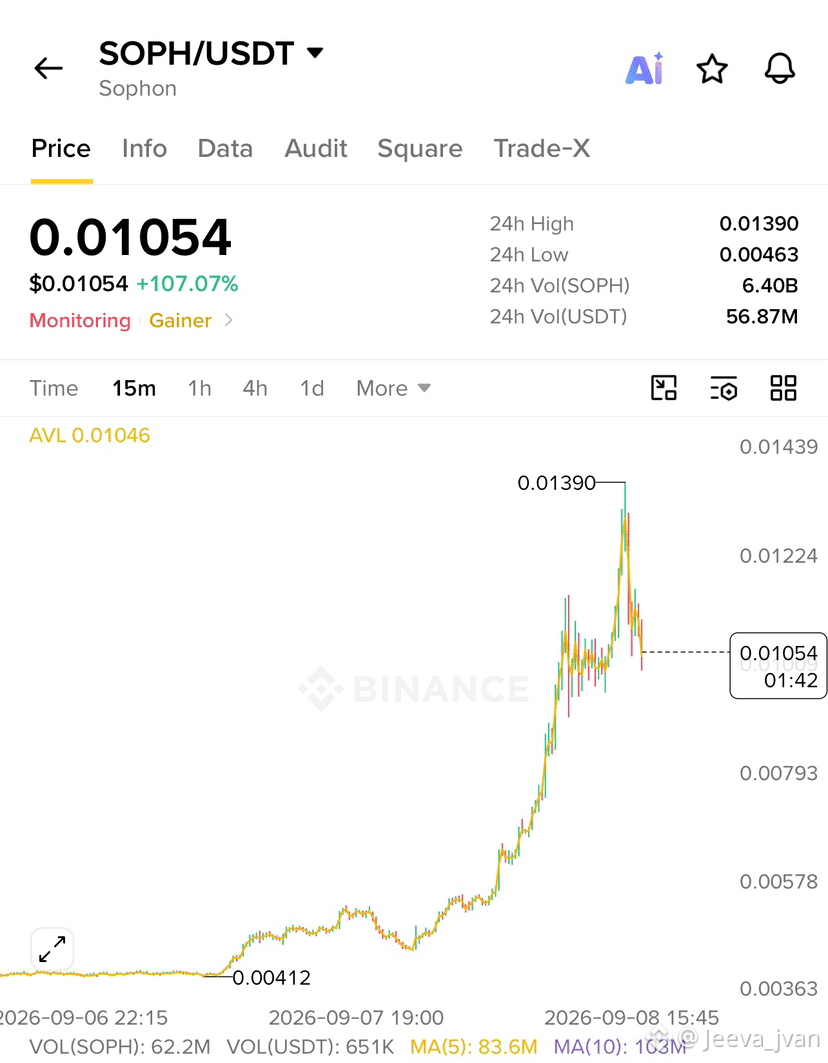
🚨 $SOPH/USDT ENTRY SETUP
🟢 LONG
Entry: 0.0100 – 0.0105
TP1: 0.0115
TP2: 0.0122
TP3: 0.0139
SL: 0.0092
🔴 SHORT
Entry: 0.0108 – 0.0112
TP1: 0.0100
TP2: 0.0092
TP3: 0.0080
SL: 0.0118
⚠️ High volatility after a massive pump. Manage risk and avoid chasing candles. $SOPH #soph #EntryOpportunity #jeevajvan #dyor
🚨 $SOPH /USDT ENTRY SETUP
🟢 LONG
Entry: 0.0100 – 0.0105
TP1: 0.0115
TP2: 0.0122
TP3: 0.0139
SL: 0.0092
🔴 SHORT
Entry: 0.0108 – 0.0112
TP1: 0.0100
TP2: 0.0092
TP3: 0.0080
SL: 0.0118
⚠️ High volatility after a massive pump. Manage risk and avoid chasing candles. $SOPH #soph #EntryOpportunity #jeevajvan #dyor
🟢 LONG
Entry: 0.0100 – 0.0105
TP1: 0.0115
TP2: 0.0122
TP3: 0.0139
SL: 0.0092
🔴 SHORT
Entry: 0.0108 – 0.0112
TP1: 0.0100
TP2: 0.0092
TP3: 0.0080
SL: 0.0118
⚠️ High volatility after a massive pump. Manage risk and avoid chasing candles. $SOPH #soph #EntryOpportunity #jeevajvan #dyor
1
428
·
--
Article
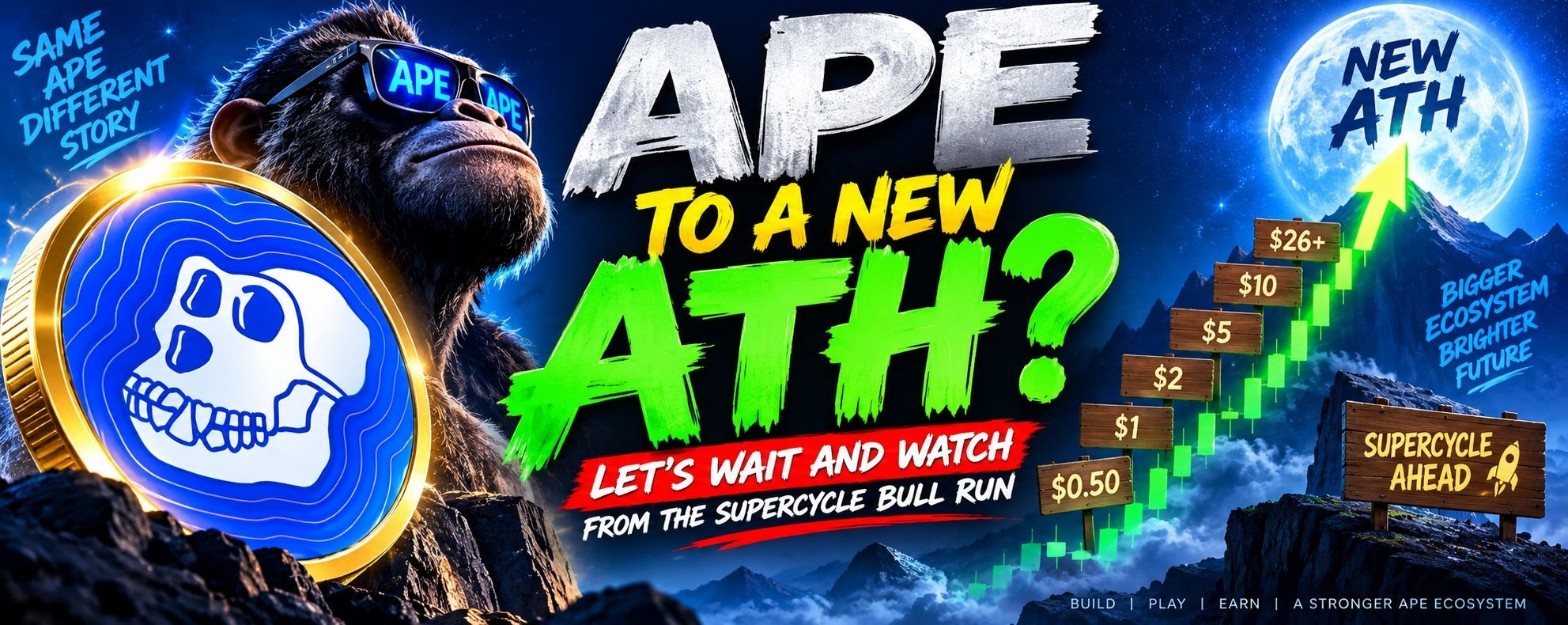
🦍 APE: The Comeback Nobody Is Watching?$APE has already been crushed. But what if that’s exactly what makes the next move interesting?
From its massive all-time-high era to around the $0.14–$0.16 zone today, ApeCoin has been through an incredible reset
But the story may not be over.
ApeChain is still being developed as dedicated infrastructure for the Ape ecosystem, with APE serving as its native gas token.
And here’s where things get interesting…
🔥 What if the next crypto supercycle brings APE back into the spotlight?
🔥 What if ApeChain starts attracting real users, games and applications?
🔥 What if liquidity rotates into beaten-down altcoins?
🔥 What if the market goes completely euphoric again?
Imagine APE going:
$0.15 → $0.50 → $1 → $2 → $5…
And then the crazy question:
🦍 Could APE eventually challenge its previous ATH — or even create a NEW ATH?
Nobody knows.
A return to the old ATH would require an enormous increase in market value, so this shouldn’t be treated as a prediction or guaranteed target. But crypto has repeatedly shown that deeply beaten-down coins can move violently when narrative + liquidity + adoption align.
APE has already shown that it can produce explosive moves — it surged more than 80% in 24 hours during one 2026 rally.
So for me…
I’m not saying APE will make a new ATH.
I’m saying… let’s wait and watch what happens when the next supercycle really begins. 🦍🔥
APE comeback arc? 👀
Not financial advice. Just a crypto thesis to watch. #APE #APEUSDT #supercycle #bull #ApeCoinAdventure $APE
{spot}(APEUSDT)
🦍 APE: The Comeback Nobody Is Watching?
$APE has already been crushed. But what if that’s exactly what makes the next move interesting?
From its massive all-time-high era to around the $0.14–$0.16 zone today, ApeCoin has been through an incredible reset
But the story may not be over.
ApeChain is still being developed as dedicated infrastructure for the Ape ecosystem, with APE serving as its native gas token.
And here’s where things get interesting…
🔥 What if the next crypto supercycle brings APE back into the spotlight?
🔥 What if ApeChain starts attracting real users, games and applications?
🔥 What if liquidity rotates into beaten-down altcoins?
🔥 What if the market goes completely euphoric again?
Imagine APE going:
$0.15 → $0.50 → $1 → $2 → $5…
And then the crazy question:
🦍 Could APE eventually challenge its previous ATH — or even create a NEW ATH?
Nobody knows.
A return to the old ATH would require an enormous increase in market value, so this shouldn’t be treated as a prediction or guaranteed target. But crypto has repeatedly shown that deeply beaten-down coins can move violently when narrative + liquidity + adoption align.
APE has already shown that it can produce explosive moves — it surged more than 80% in 24 hours during one 2026 rally.
So for me…
I’m not saying APE will make a new ATH.
I’m saying… let’s wait and watch what happens when the next supercycle really begins. 🦍🔥
APE comeback arc? 👀
Not financial advice. Just a crypto thesis to watch. #APE #APEUSDT #supercycle #bull #ApeCoinAdventure $APE
From its massive all-time-high era to around the $0.14–$0.16 zone today, ApeCoin has been through an incredible reset
But the story may not be over.
ApeChain is still being developed as dedicated infrastructure for the Ape ecosystem, with APE serving as its native gas token.
And here’s where things get interesting…
🔥 What if the next crypto supercycle brings APE back into the spotlight?
🔥 What if ApeChain starts attracting real users, games and applications?
🔥 What if liquidity rotates into beaten-down altcoins?
🔥 What if the market goes completely euphoric again?
Imagine APE going:
$0.15 → $0.50 → $1 → $2 → $5…
And then the crazy question:
🦍 Could APE eventually challenge its previous ATH — or even create a NEW ATH?
Nobody knows.
A return to the old ATH would require an enormous increase in market value, so this shouldn’t be treated as a prediction or guaranteed target. But crypto has repeatedly shown that deeply beaten-down coins can move violently when narrative + liquidity + adoption align.
APE has already shown that it can produce explosive moves — it surged more than 80% in 24 hours during one 2026 rally.
So for me…
I’m not saying APE will make a new ATH.
I’m saying… let’s wait and watch what happens when the next supercycle really begins. 🦍🔥
APE comeback arc? 👀
Not financial advice. Just a crypto thesis to watch. #APE #APEUSDT #supercycle #bull #ApeCoinAdventure $APE
2
527
·
--
Verified

Article
Polkadot Products Devnet: A New Chapter for Builders and the Web3 UserPolkadot Is Moving From Infrastructure to Products
Polkadot has been building its technology stack for years. Now, the ecosystem appears to be taking a major step toward something much bigger: putting real, usable products directly into the hands of developers.
The launch of the Polkadot Products Devnet gives developers a public environment where they can experiment with the upcoming Polkadot product network, test applications, and explore new features without using real money.
And that could be an important milestone for the broader Polkadot ecosystem.
From concept to something developers can actually build on
The new Products Devnet follows the earlier product proof-of-concept testing at Web3 Summit 2026 in Berlin, where around 900 participants reportedly used Polkadot-based applications without necessarily knowing that Polkadot was powering the experience.
That is an interesting signal.
The goal isn’t simply to create another blockchain developers can deploy contracts on. The broader vision is to make blockchain technology feel more like a normal digital product.
The Devnet is designed to give developers access to a working environment that resembles the upcoming production network.
In other words:
Build → Test → Publish → Improve → Eventually Deploy.
What Is Inside the Polkadot Products Devnet?
The ecosystem is bringing several pieces together rather than treating them as isolated tools.
📱 Polkadot Apps
The new environment is designed to work across mobile, desktop and web applications, giving users different ways to interact with decentralized products.
🌐 .dot Domains
Developers can build web applications and publish them using .dot domains, creating a more recognizable identity layer for applications inside the ecosystem.
🛠️ SDKs & CLIs
Developers get tools to build, publish, name and deploy smart contracts and applications.
This is important because developer tooling can determine how easily an ecosystem attracts builders.
The easier it becomes to go from an idea to a working application, the lower the barrier to entry.
🔐 Platform Services
The ecosystem also includes services such as DotNS naming, CDM contract registry and identity.
Together, these components point toward something bigger than simply launching another blockchain application.
They are pieces of a complete product environment.
The Most Interesting Part: Developers Get the Same Tools
One of the strongest aspects of the Devnet is its accessibility.
Developers aren’t simply being shown a demonstration.
They can use the tools themselves
The basic journey is straightforward:
1. Start with the developer documentation.
2. Build a web application using the Product SDK.
3. Register a .dot domain.
4. Publish the application using the deployment CLI.
5. Test and iterate inside the Devnet.
6. Experience a decentralized web environment.
This could be particularly important for developers who want to experiment without worrying about real funds or expensive mistakes.
Beyond Blockchain: The Data Ownership Vision
There is another idea behind Polkadot’s product strategy that deserves attention.
The philosophy is that the person who produces data should ultimately benefit from that data.
Today, much of the internet operates differently.
Users generate enormous amounts of information while platforms control much of the infrastructure, identity and economic value surrounding it.
Web3 has long promised to change this model.
Polkadot’s product direction is positioning its applications around a world where users can retain greater ownership of their identity and data while benefiting from the digital activity they generate.
That is a much bigger ambition than simply creating another crypto network.
Why This Could Matter for DOT
For $DOT holders, the important question isn’t simply:
“Did Polkadot launch another Devnet?”
The bigger question is:
“Can Polkadot turn its technology into an ecosystem people actually use?”
A successful developer ecosystem can create a powerful network effect:
More tools → More developers → More applications → More users → More activity → Stronger ecosystem.
The Products Devnet is still an experimental environment, so it is far too early to declare victory.
But it represents an important transition:
From building blockchain infrastructure to building products people can actually interact with.
If Polkadot can execute on this vision and attract developers who create useful applications, the ecosystem could become considerably more interesting.
The Bigger Picture
Polkadot has often been associated with complex blockchain infrastructure, interoperability and technical innovation.
Now the focus appears to be shifting toward user experience, developer accessibility and everyday applications.
That shift could be crucial.
Because the next phase of Web3 may not be won by the chain with the most technical features.
It may be won by the ecosystem that makes those features invisible to the average user.
Imagine using an application without needing to understand which blockchain is underneath it.
No complicated wallet experience.
No confusing infrastructure.
No need to know what happens behind the scenes.
Just an application that works.
That is where Polkadot’s new product direction becomes particularly interesting.
🚀 Final Take
The Polkadot Products Devnet isn’t the finished product. It’s the testing ground.
But it gives developers something much more valuable than a presentation:
A place to build.
The next challenge is execution.
If developers embrace the tools, applications begin appearing, and users eventually start interacting with those applications at scale, Polkadot could move into a very different phase of its evolution.
Infrastructure was the beginning.
Products and users could be the next chapter.
And for the Polkadot ecosystem, that chapter is only getting started. #Polkadot #dot $DOT
{future}(DOTUSDT)
Polkadot Products Devnet: A New Chapter for Builders and the Web3 User
Polkadot Is Moving From Infrastructure to Products
Polkadot has been building its technology stack for years. Now, the ecosystem appears to be taking a major step toward something much bigger: putting real, usable products directly into the hands of developers.
The launch of the Polkadot Products Devnet gives developers a public environment where they can experiment with the upcoming Polkadot product network, test applications, and explore new features without using real money.
And that could be an important milestone for the broader Polkadot ecosystem.
From concept to something developers can actually build on
The new Products Devnet follows the earlier product proof-of-concept testing at Web3 Summit 2026 in Berlin, where around 900 participants reportedly used Polkadot-based applications without necessarily knowing that Polkadot was powering the experience.
That is an interesting signal.
The goal isn’t simply to create another blockchain developers can deploy contracts on. The broader vision is to make blockchain technology feel more like a normal digital product.
The Devnet is designed to give developers access to a working environment that resembles the upcoming production network.
In other words:
Build → Test → Publish → Improve → Eventually Deploy.
What Is Inside the Polkadot Products Devnet?
The ecosystem is bringing several pieces together rather than treating them as isolated tools.
📱 Polkadot Apps
The new environment is designed to work across mobile, desktop and web applications, giving users different ways to interact with decentralized products.
🌐 .dot Domains
Developers can build web applications and publish them using .dot domains, creating a more recognizable identity layer for applications inside the ecosystem.
🛠️ SDKs & CLIs
Developers get tools to build, publish, name and deploy smart contracts and applications.
This is important because developer tooling can determine how easily an ecosystem attracts builders.
The easier it becomes to go from an idea to a working application, the lower the barrier to entry.
🔐 Platform Services
The ecosystem also includes services such as DotNS naming, CDM contract registry and identity.
Together, these components point toward something bigger than simply launching another blockchain application.
They are pieces of a complete product environment.
The Most Interesting Part: Developers Get the Same Tools
One of the strongest aspects of the Devnet is its accessibility.
Developers aren’t simply being shown a demonstration.
They can use the tools themselves
The basic journey is straightforward:
1. Start with the developer documentation.
2. Build a web application using the Product SDK.
3. Register a .dot domain.
4. Publish the application using the deployment CLI.
5. Test and iterate inside the Devnet.
6. Experience a decentralized web environment.
This could be particularly important for developers who want to experiment without worrying about real funds or expensive mistakes.
Beyond Blockchain: The Data Ownership Vision
There is another idea behind Polkadot’s product strategy that deserves attention.
The philosophy is that the person who produces data should ultimately benefit from that data.
Today, much of the internet operates differently.
Users generate enormous amounts of information while platforms control much of the infrastructure, identity and economic value surrounding it.
Web3 has long promised to change this model.
Polkadot’s product direction is positioning its applications around a world where users can retain greater ownership of their identity and data while benefiting from the digital activity they generate.
That is a much bigger ambition than simply creating another crypto network.
Why This Could Matter for DOT
For $DOT holders, the important question isn’t simply:
“Did Polkadot launch another Devnet?”
The bigger question is:
“Can Polkadot turn its technology into an ecosystem people actually use?”
A successful developer ecosystem can create a powerful network effect:
More tools → More developers → More applications → More users → More activity → Stronger ecosystem.
The Products Devnet is still an experimental environment, so it is far too early to declare victory.
But it represents an important transition:
From building blockchain infrastructure to building products people can actually interact with.
If Polkadot can execute on this vision and attract developers who create useful applications, the ecosystem could become considerably more interesting.
The Bigger Picture
Polkadot has often been associated with complex blockchain infrastructure, interoperability and technical innovation.
Now the focus appears to be shifting toward user experience, developer accessibility and everyday applications.
That shift could be crucial.
Because the next phase of Web3 may not be won by the chain with the most technical features.
It may be won by the ecosystem that makes those features invisible to the average user.
Imagine using an application without needing to understand which blockchain is underneath it.
No complicated wallet experience.
No confusing infrastructure.
No need to know what happens behind the scenes.
Just an application that works.
That is where Polkadot’s new product direction becomes particularly interesting.
🚀 Final Take
The Polkadot Products Devnet isn’t the finished product. It’s the testing ground.
But it gives developers something much more valuable than a presentation:
A place to build.
The next challenge is execution.
If developers embrace the tools, applications begin appearing, and users eventually start interacting with those applications at scale, Polkadot could move into a very different phase of its evolution.
Infrastructure was the beginning.
Products and users could be the next chapter.
And for the Polkadot ecosystem, that chapter is only getting started. #Polkadot #dot $DOT
Polkadot has been building its technology stack for years. Now, the ecosystem appears to be taking a major step toward something much bigger: putting real, usable products directly into the hands of developers.
The launch of the Polkadot Products Devnet gives developers a public environment where they can experiment with the upcoming Polkadot product network, test applications, and explore new features without using real money.
And that could be an important milestone for the broader Polkadot ecosystem.
From concept to something developers can actually build on
The new Products Devnet follows the earlier product proof-of-concept testing at Web3 Summit 2026 in Berlin, where around 900 participants reportedly used Polkadot-based applications without necessarily knowing that Polkadot was powering the experience.
That is an interesting signal.
The goal isn’t simply to create another blockchain developers can deploy contracts on. The broader vision is to make blockchain technology feel more like a normal digital product.
The Devnet is designed to give developers access to a working environment that resembles the upcoming production network.
In other words:
Build → Test → Publish → Improve → Eventually Deploy.
What Is Inside the Polkadot Products Devnet?
The ecosystem is bringing several pieces together rather than treating them as isolated tools.
📱 Polkadot Apps
The new environment is designed to work across mobile, desktop and web applications, giving users different ways to interact with decentralized products.
🌐 .dot Domains
Developers can build web applications and publish them using .dot domains, creating a more recognizable identity layer for applications inside the ecosystem.
🛠️ SDKs & CLIs
Developers get tools to build, publish, name and deploy smart contracts and applications.
This is important because developer tooling can determine how easily an ecosystem attracts builders.
The easier it becomes to go from an idea to a working application, the lower the barrier to entry.
🔐 Platform Services
The ecosystem also includes services such as DotNS naming, CDM contract registry and identity.
Together, these components point toward something bigger than simply launching another blockchain application.
They are pieces of a complete product environment.
The Most Interesting Part: Developers Get the Same Tools
One of the strongest aspects of the Devnet is its accessibility.
Developers aren’t simply being shown a demonstration.
They can use the tools themselves
The basic journey is straightforward:
1. Start with the developer documentation.
2. Build a web application using the Product SDK.
3. Register a .dot domain.
4. Publish the application using the deployment CLI.
5. Test and iterate inside the Devnet.
6. Experience a decentralized web environment.
This could be particularly important for developers who want to experiment without worrying about real funds or expensive mistakes.
Beyond Blockchain: The Data Ownership Vision
There is another idea behind Polkadot’s product strategy that deserves attention.
The philosophy is that the person who produces data should ultimately benefit from that data.
Today, much of the internet operates differently.
Users generate enormous amounts of information while platforms control much of the infrastructure, identity and economic value surrounding it.
Web3 has long promised to change this model.
Polkadot’s product direction is positioning its applications around a world where users can retain greater ownership of their identity and data while benefiting from the digital activity they generate.
That is a much bigger ambition than simply creating another crypto network.
Why This Could Matter for DOT
For $DOT holders, the important question isn’t simply:
“Did Polkadot launch another Devnet?”
The bigger question is:
“Can Polkadot turn its technology into an ecosystem people actually use?”
A successful developer ecosystem can create a powerful network effect:
More tools → More developers → More applications → More users → More activity → Stronger ecosystem.
The Products Devnet is still an experimental environment, so it is far too early to declare victory.
But it represents an important transition:
From building blockchain infrastructure to building products people can actually interact with.
If Polkadot can execute on this vision and attract developers who create useful applications, the ecosystem could become considerably more interesting.
The Bigger Picture
Polkadot has often been associated with complex blockchain infrastructure, interoperability and technical innovation.
Now the focus appears to be shifting toward user experience, developer accessibility and everyday applications.
That shift could be crucial.
Because the next phase of Web3 may not be won by the chain with the most technical features.
It may be won by the ecosystem that makes those features invisible to the average user.
Imagine using an application without needing to understand which blockchain is underneath it.
No complicated wallet experience.
No confusing infrastructure.
No need to know what happens behind the scenes.
Just an application that works.
That is where Polkadot’s new product direction becomes particularly interesting.
🚀 Final Take
The Polkadot Products Devnet isn’t the finished product. It’s the testing ground.
But it gives developers something much more valuable than a presentation:
A place to build.
The next challenge is execution.
If developers embrace the tools, applications begin appearing, and users eventually start interacting with those applications at scale, Polkadot could move into a very different phase of its evolution.
Infrastructure was the beginning.
Products and users could be the next chapter.
And for the Polkadot ecosystem, that chapter is only getting started. #Polkadot #dot $DOT
5
1.1k
·
--
😂 Binance Spin Experience:
Me: “Finally, my turn! 🎰🔥”
Binance: “Rewards fully claimed.” 💀
Me again 2 hours later: “Surely now…”
Binance: “Fully claimed.” 😭
Day 1, Day 2… same story. 😂
Who is spinning these rewards before us? 👀 🎰🤖🤣
#Binance #USStocksMegaFest #reward #Binance #Binancecustomer @Binance_Customer_Support
😂 Binance Spin Experience:
Me: “Finally, my turn! 🎰🔥”
Binance: “Rewards fully claimed.” 💀
Me again 2 hours later: “Surely now…”
Binance: “Fully claimed.” 😭
Day 1, Day 2… same story. 😂
Who is spinning these rewards before us? 👀 🎰🤖🤣
#Binance #USStocksMegaFest #reward #Binance #Binancecustomer @Binance Customer Support
Me: “Finally, my turn! 🎰🔥”
Binance: “Rewards fully claimed.” 💀
Me again 2 hours later: “Surely now…”
Binance: “Fully claimed.” 😭
Day 1, Day 2… same story. 😂
Who is spinning these rewards before us? 👀 🎰🤖🤣
#Binance #USStocksMegaFest #reward #Binance #Binancecustomer @Binance Customer Support
1
9
1.1k
·
--
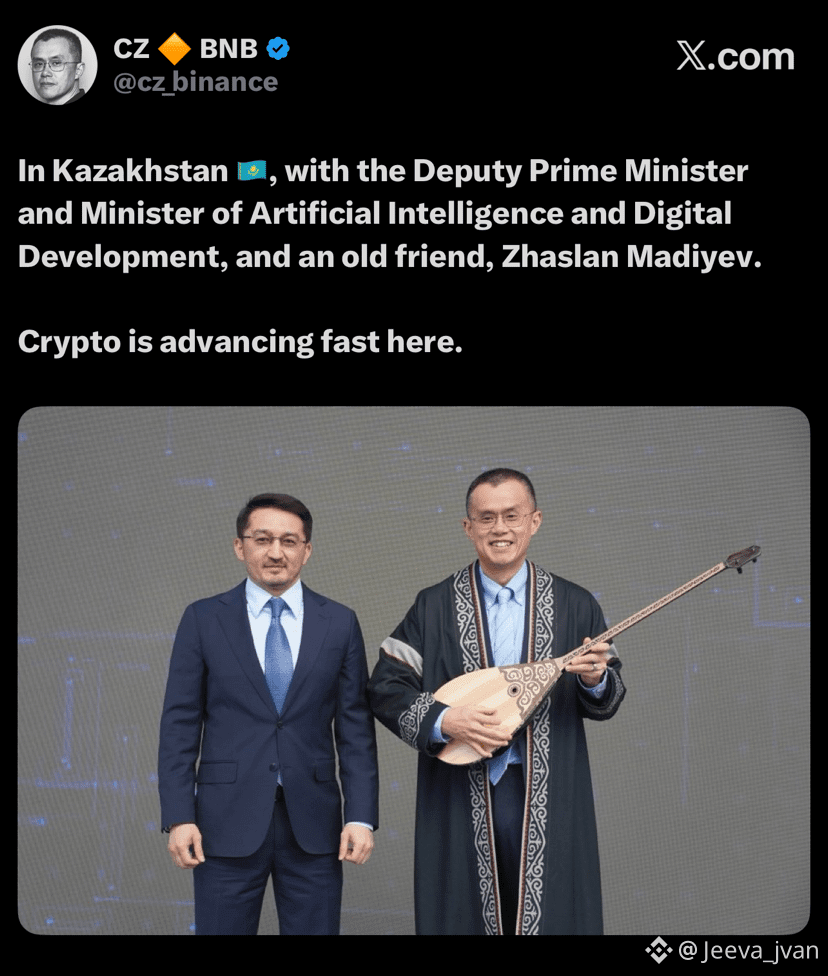
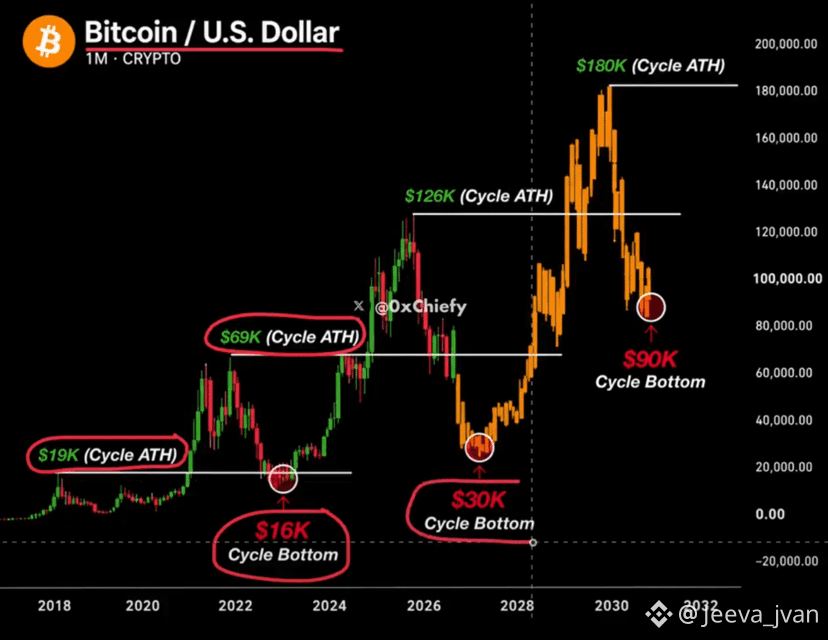
🇰🇿 Kazakhstan is moving fast on crypto adoption.
From governments to digital infrastructure, the shift is clear.
Sooner or later, every region will have to regulate, adopt, or risk falling behind. 🌍🚀 #Kazakhstan #world #DigitalAssets #CryptoNewss #Aİ @BNB_Chain @CZ 💛
🇰🇿 Kazakhstan is moving fast on crypto adoption.
From governments to digital infrastructure, the shift is clear.
Sooner or later, every region will have to regulate, adopt, or risk falling behind. 🌍🚀 #Kazakhstan #world #DigitalAssets #CryptoNewss #Aİ @BNB Chain @CZ 💛
From governments to digital infrastructure, the shift is clear.
Sooner or later, every region will have to regulate, adopt, or risk falling behind. 🌍🚀 #Kazakhstan #world #DigitalAssets #CryptoNewss #Aİ @BNB Chain @CZ 💛
2
2
762
·
--
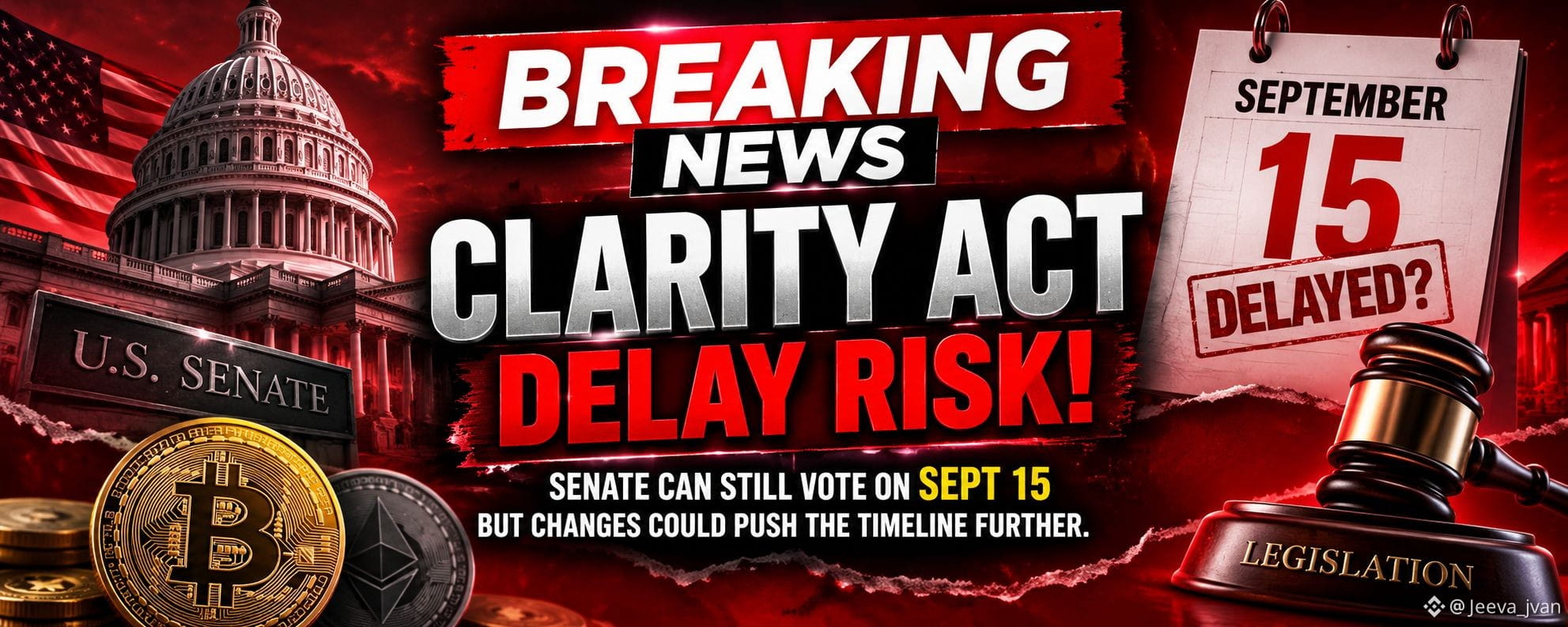
🇺🇸 CLARITY Act delay risk is rising.
The Senate can still vote Sept. 15, but any changes could push the timeline further.
Crypto needs clarity, not more delays. ⚡️
$BTC $ETH #CLARITYAct #CryptoNewss
🇺🇸 CLARITY Act delay risk is rising.
The Senate can still vote Sept. 15, but any changes could push the timeline further.
Crypto needs clarity, not more delays. ⚡️
$BTC $ETH #CLARITYAct #CryptoNewss
The Senate can still vote Sept. 15, but any changes could push the timeline further.
Crypto needs clarity, not more delays. ⚡️
$BTC $ETH #CLARITYAct #CryptoNewss
2
1
327
·
--
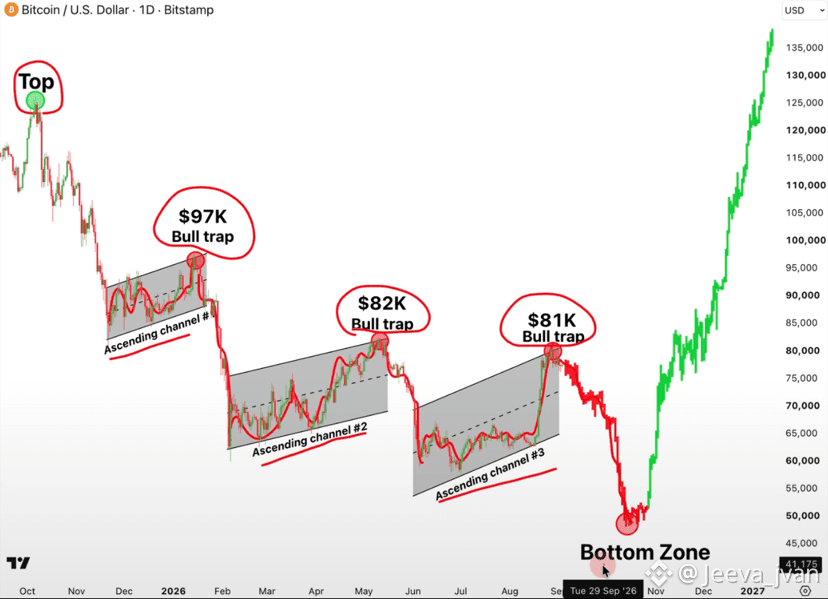
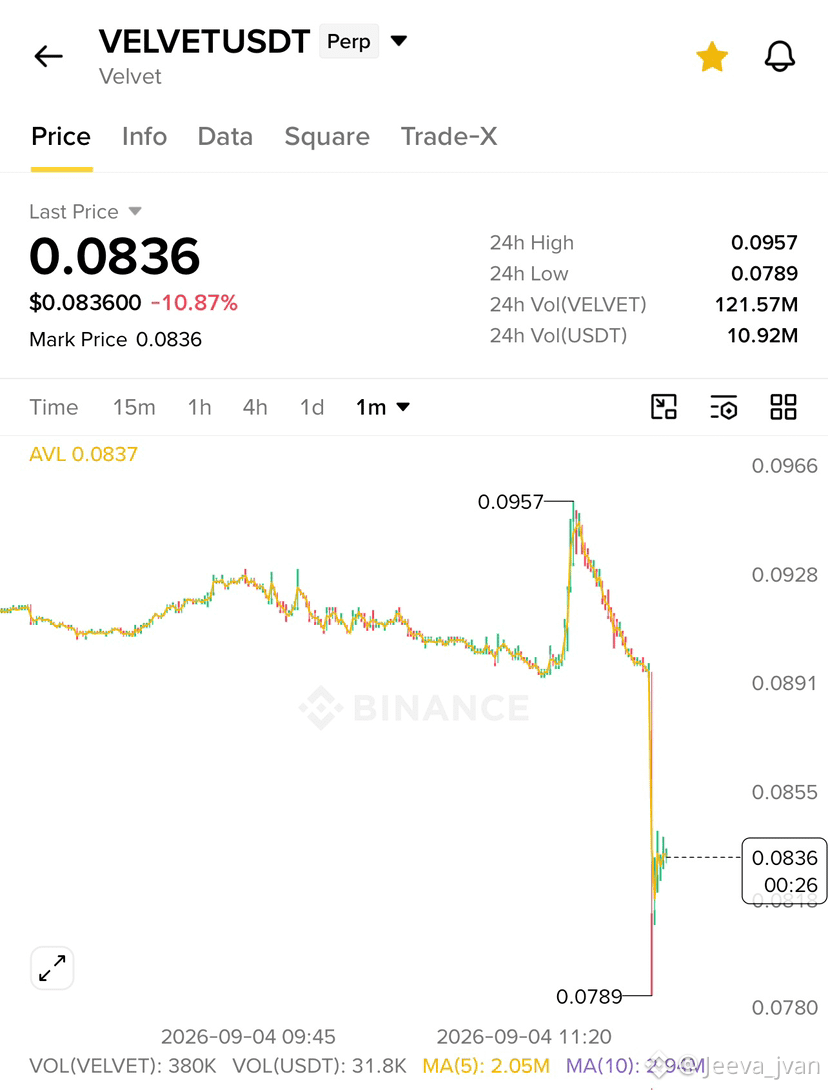
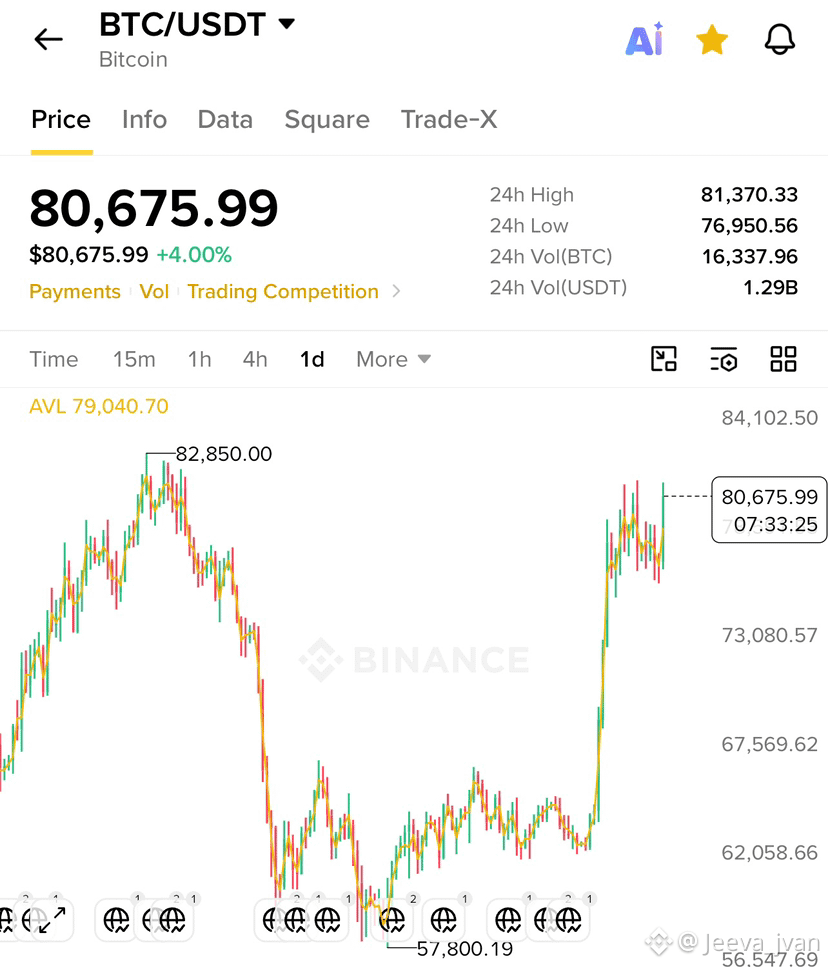
🚨 BTC 1D Chart Update
Bitcoin is showing strong momentum after the breakout, but RSI is already in the 70+ zone. 📈
🔥 Bulls are in control — but a pullback could come before the next major move.
$BTC | DYOR
🚨 BTC 1D Chart Update
Bitcoin is showing strong momentum after the breakout, but RSI is already in the 70+ zone. 📈
🔥 Bulls are in control — but a pullback could come before the next major move.
$BTC | DYOR
Bitcoin is showing strong momentum after the breakout, but RSI is already in the 70+ zone. 📈
🔥 Bulls are in control — but a pullback could come before the next major move.
$BTC | DYOR
3
1.9k
·
--
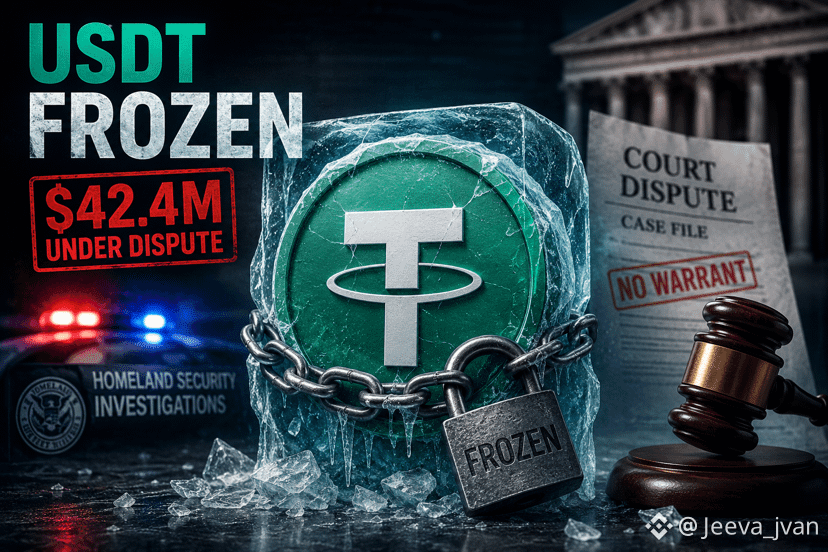
🚨 $42.4M USDT FROZEN — NOW A COURT FIGHT
Tether froze $42.4M USDT linked to a North Carolina pig-butchering investigation—before a court warrant was issued.
Now the plaintiffs are challenging Tether’s authority to blacklist, burn and reissue USDT without prior judicial authorization.
💰 $42.4M frozen
⚖️ Court dispute underway
🔍 Raises major questions about stablecoin control
USDT isn’t just a stablecoin anymore — it’s becoming a regulatory battleground. DYOR. #usdt #coin #crypto #news
🚨 $42.4M USDT FROZEN — NOW A COURT FIGHT
Tether froze $42.4M USDT linked to a North Carolina pig-butchering investigation—before a court warrant was issued.
Now the plaintiffs are challenging Tether’s authority to blacklist, burn and reissue USDT without prior judicial authorization.
💰 $42.4M frozen
⚖️ Court dispute underway
🔍 Raises major questions about stablecoin control
USDT isn’t just a stablecoin anymore — it’s becoming a regulatory battleground. DYOR. #usdt #coin #crypto #news
Tether froze $42.4M USDT linked to a North Carolina pig-butchering investigation—before a court warrant was issued.
Now the plaintiffs are challenging Tether’s authority to blacklist, burn and reissue USDT without prior judicial authorization.
💰 $42.4M frozen
⚖️ Court dispute underway
🔍 Raises major questions about stablecoin control
USDT isn’t just a stablecoin anymore — it’s becoming a regulatory battleground. DYOR. #usdt #coin #crypto #news
1
253
·
--
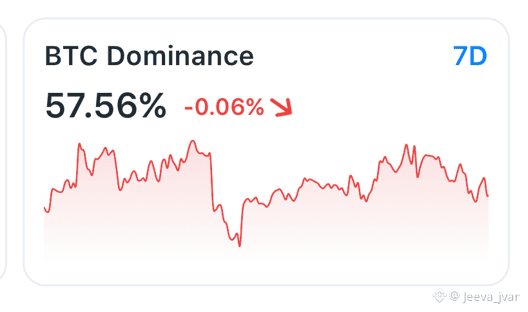
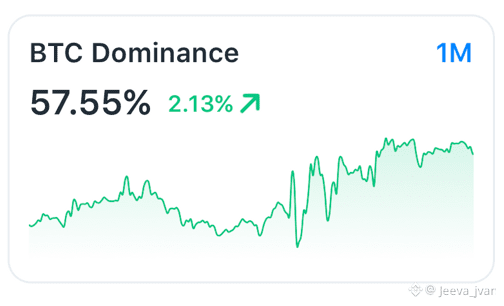
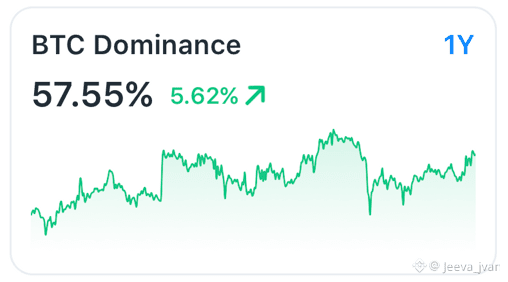
₿ BTC Dominance is at ~57.55% 📊
Bitcoin is still holding a strong grip on the crypto market.
If BTC dominance starts falling sharply, it could be a sign that capital is rotating into altcoins — potentially setting the stage for an altseason. 👀🔥
For now, BTC remains in control.
#Bitcoin #BTC #Crypto #Altcoins #Altseason
₿ BTC Dominance is at ~57.55% 📊
Bitcoin is still holding a strong grip on the crypto market.
If BTC dominance starts falling sharply, it could be a sign that capital is rotating into altcoins — potentially setting the stage for an altseason. 👀🔥
For now, BTC remains in control.
#Bitcoin #BTC #Crypto #Altcoins #Altseason
Bitcoin is still holding a strong grip on the crypto market.
If BTC dominance starts falling sharply, it could be a sign that capital is rotating into altcoins — potentially setting the stage for an altseason. 👀🔥
For now, BTC remains in control.
#Bitcoin #BTC #Crypto #Altcoins #Altseason
1
2
445
·
--
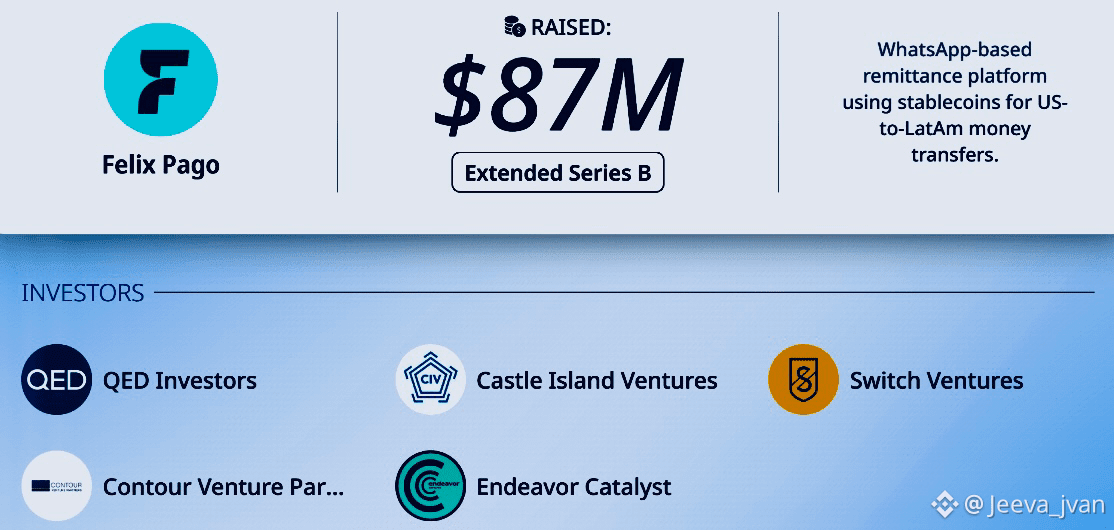
🚀 $200M raised by Felix Pago!
WhatsApp-native remittance startup Felix Pago has secured $87M in Series B equity + a $113M credit line, bringing the total financing to $200M.
The company is now looking beyond remittances, expanding into lending, savings, AI-powered financial services and cross-border payments.
With over $8B in transfers already processed, Felix Pago is aiming to become a broader financial platform for LatAm immigrants in the U.S. 🌎💰
Digital finance is evolving fast. 🔥
🚀 $200M raised by Felix Pago!
WhatsApp-native remittance startup Felix Pago has secured $87M in Series B equity + a $113M credit line, bringing the total financing to $200M.
The company is now looking beyond remittances, expanding into lending, savings, AI-powered financial services and cross-border payments.
With over $8B in transfers already processed, Felix Pago is aiming to become a broader financial platform for LatAm immigrants in the U.S. 🌎💰
Digital finance is evolving fast. 🔥
WhatsApp-native remittance startup Felix Pago has secured $87M in Series B equity + a $113M credit line, bringing the total financing to $200M.
The company is now looking beyond remittances, expanding into lending, savings, AI-powered financial services and cross-border payments.
With over $8B in transfers already processed, Felix Pago is aiming to become a broader financial platform for LatAm immigrants in the U.S. 🌎💰
Digital finance is evolving fast. 🔥
347
·
--
Article
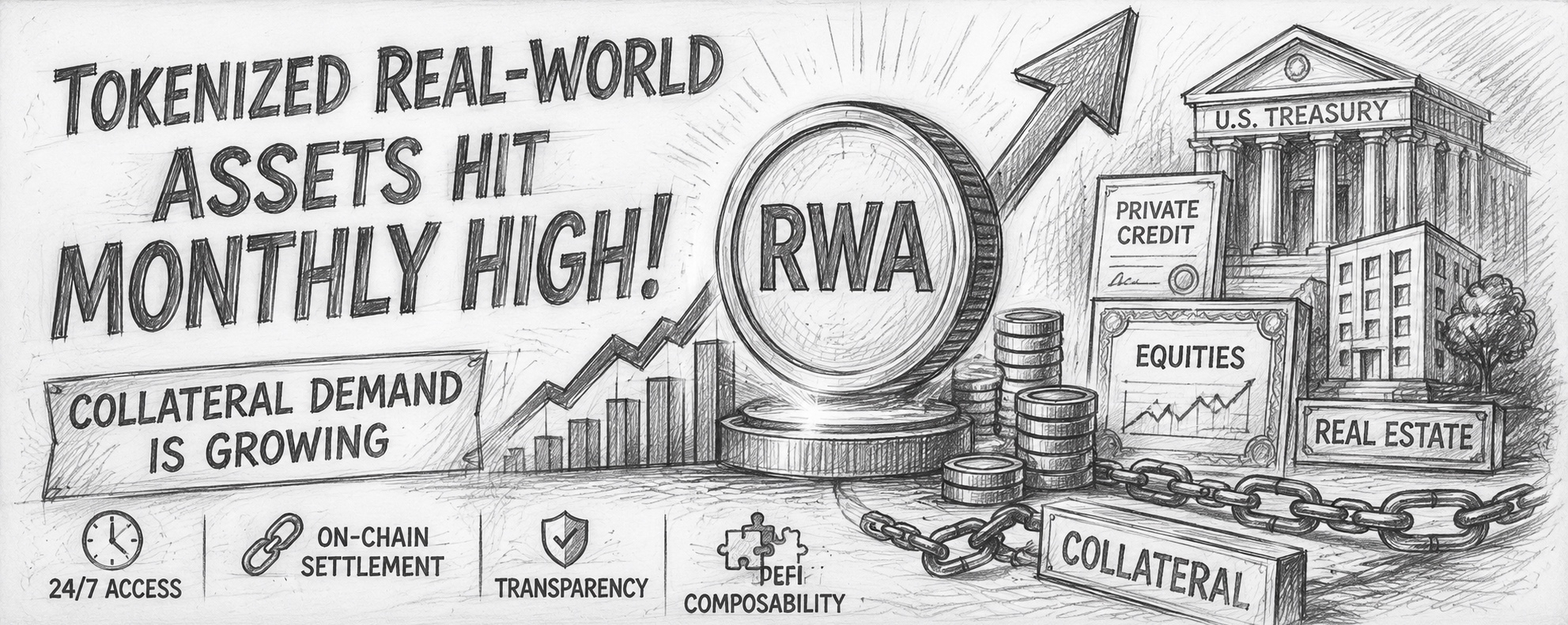
Tokenized Real-World Assets Hit New Highs as Collateral Demand AcceleratesThe tokenization of real-world assets (RWAs) is becoming one of the most important bridges between traditional finance and blockchain.
Recent DeFiLlama data shows the RWA market continuing to expand, with tokenized equities, funds, credit and other traditional assets gaining a larger on-chain footprint. DeFiLlama currently tracks more than $33.9 billion in total on-chain RWA market capitalization, with more than 200 asset issuers represented.
But the bigger story isn’t simply putting traditional assets on a blockchain.
The real opportunity is what those assets can do once they are on-chain.
Collateral Could Be the Key
Tokenized assets become significantly more useful when they can be used as collateral.
In traditional finance, collateral supports lending, borrowing, derivatives, margin trading and structured products. Bringing similar functionality on-chain could create a much deeper connection between traditional capital and DeFi.
Imagine holding a tokenized Treasury, private-credit position or equity exposure and being able to use that asset to borrow capital without selling it.
That creates a new layer of capital efficiency.
Research into RWA collateral shows that tokenized Treasuries, commodities, private credit, equities and real estate are increasingly being considered for lending, margin, reserves and yield strategies.
Equities Are Becoming a Major Part of the Story
Tokenized stocks and equity products have expanded rapidly.
DeFiLlama’s current equities dashboard tracks billions of dollars across tokenized public equities, equity indices and private-equity products.
This is important because equities were traditionally confined to centralized financial infrastructure.
On-chain representations can potentially introduce:
24/7 accessibilityFaster settlementProgrammable ownershipDeFi composabilityNew collateral opportunitiesGlobal distribution, where regulations allow
The result is a financial asset that can potentially interact with blockchain-based markets rather than simply sitting inside a traditional brokerage account.
RWA Growth Needs Context
A rising RWA number is certainly encouraging, but investors should look beyond a single headline figure.
Different dashboards measure different things — including on-chain market capitalization, active market capitalization, DeFi TVL, collateral value and net flows.
These measurements do not represent exactly the same type of activity.
For example, DeFiLlama currently reports roughly $30.9 billion in active RWA market capitalization versus $33.9 billion in total on-chain RWA market capitalization.
That distinction matters.
Growth can come from new issuance, asset-price movements, additional products, new issuers or broader dashboard coverage. It doesn’t automatically mean that the same amount of capital is actively being used in DeFi.
The Biggest Opportunity: Composability
The most powerful part of tokenization may ultimately be composability.
A traditional financial asset normally exists within a relatively closed system.
A tokenized asset can potentially become part of an interconnected on-chain financial ecosystem.
For example:
Tokenized Treasury → collateral → borrowing → DeFi strategy → liquidity
That creates possibilities that are difficult to achieve through traditional financial infrastructure.
DeFiLlama’s research has highlighted how RWA tokenization has moved from a niche narrative toward a measurable financial-market segment, while also noting that legal structures, custody, liquidity and regulation remain important limitations.
The Friction Is Still Real
Tokenization doesn’t magically eliminate the problems associated with traditional assets.
Real-world assets still requireA
Legal ownership structuresCustodyComplianceInvestor eligibilityReliable pricingRedemption mechanismsLiquidityRegulatory clarity
This is why RWA adoption may develop differently from purely crypto-native assets.
The blockchain can provide the settlement and programmability layer, but the underlying asset still exists within the real world.
Why This Matters for Crypto
RWA growth could represent something bigger than another crypto narrative.
It could bring traditional financial assets directly into blockchain-based markets.
Treasuries, credit, equities, funds and commodities can potentially become programmable financial building blocks.
And when those assets can also serve as collateral, their utility increases dramatically.
Tokenization isn’t just about putting assets on-chain.
It’s about making traditionally isolated financial assets programmable, transferable and potentially usable across a new financial infrastructure. #btc #Binance #BinanceSquare #btc #crypto #jeevajvan
Tokenized Real-World Assets Hit New Highs as Collateral Demand Accelerates
The tokenization of real-world assets (RWAs) is becoming one of the most important bridges between traditional finance and blockchain.
Recent DeFiLlama data shows the RWA market continuing to expand, with tokenized equities, funds, credit and other traditional assets gaining a larger on-chain footprint. DeFiLlama currently tracks more than $33.9 billion in total on-chain RWA market capitalization, with more than 200 asset issuers represented.
But the bigger story isn’t simply putting traditional assets on a blockchain.
The real opportunity is what those assets can do once they are on-chain.
Collateral Could Be the Key
Tokenized assets become significantly more useful when they can be used as collateral.
In traditional finance, collateral supports lending, borrowing, derivatives, margin trading and structured products. Bringing similar functionality on-chain could create a much deeper connection between traditional capital and DeFi.
Imagine holding a tokenized Treasury, private-credit position or equity exposure and being able to use that asset to borrow capital without selling it.
That creates a new layer of capital efficiency.
Research into RWA collateral shows that tokenized Treasuries, commodities, private credit, equities and real estate are increasingly being considered for lending, margin, reserves and yield strategies.
Equities Are Becoming a Major Part of the Story
Tokenized stocks and equity products have expanded rapidly.
DeFiLlama’s current equities dashboard tracks billions of dollars across tokenized public equities, equity indices and private-equity products.
This is important because equities were traditionally confined to centralized financial infrastructure.
On-chain representations can potentially introduce:
24/7 accessibilityFaster settlementProgrammable ownershipDeFi composabilityNew collateral opportunitiesGlobal distribution, where regulations allow
The result is a financial asset that can potentially interact with blockchain-based markets rather than simply sitting inside a traditional brokerage account.
RWA Growth Needs Context
A rising RWA number is certainly encouraging, but investors should look beyond a single headline figure.
Different dashboards measure different things — including on-chain market capitalization, active market capitalization, DeFi TVL, collateral value and net flows.
These measurements do not represent exactly the same type of activity.
For example, DeFiLlama currently reports roughly $30.9 billion in active RWA market capitalization versus $33.9 billion in total on-chain RWA market capitalization.
That distinction matters.
Growth can come from new issuance, asset-price movements, additional products, new issuers or broader dashboard coverage. It doesn’t automatically mean that the same amount of capital is actively being used in DeFi.
The Biggest Opportunity: Composability
The most powerful part of tokenization may ultimately be composability.
A traditional financial asset normally exists within a relatively closed system.
A tokenized asset can potentially become part of an interconnected on-chain financial ecosystem.
For example:
Tokenized Treasury → collateral → borrowing → DeFi strategy → liquidity
That creates possibilities that are difficult to achieve through traditional financial infrastructure.
DeFiLlama’s research has highlighted how RWA tokenization has moved from a niche narrative toward a measurable financial-market segment, while also noting that legal structures, custody, liquidity and regulation remain important limitations.
The Friction Is Still Real
Tokenization doesn’t magically eliminate the problems associated with traditional assets.
Real-world assets still requireA
Legal ownership structuresCustodyComplianceInvestor eligibilityReliable pricingRedemption mechanismsLiquidityRegulatory clarity
This is why RWA adoption may develop differently from purely crypto-native assets.
The blockchain can provide the settlement and programmability layer, but the underlying asset still exists within the real world.
Why This Matters for Crypto
RWA growth could represent something bigger than another crypto narrative.
It could bring traditional financial assets directly into blockchain-based markets.
Treasuries, credit, equities, funds and commodities can potentially become programmable financial building blocks.
And when those assets can also serve as collateral, their utility increases dramatically.
Tokenization isn’t just about putting assets on-chain.
It’s about making traditionally isolated financial assets programmable, transferable and potentially usable across a new financial infrastructure. #btc #Binance #BinanceSquare #btc #crypto #jeevajvan
Recent DeFiLlama data shows the RWA market continuing to expand, with tokenized equities, funds, credit and other traditional assets gaining a larger on-chain footprint. DeFiLlama currently tracks more than $33.9 billion in total on-chain RWA market capitalization, with more than 200 asset issuers represented.
But the bigger story isn’t simply putting traditional assets on a blockchain.
The real opportunity is what those assets can do once they are on-chain.
Collateral Could Be the Key
Tokenized assets become significantly more useful when they can be used as collateral.
In traditional finance, collateral supports lending, borrowing, derivatives, margin trading and structured products. Bringing similar functionality on-chain could create a much deeper connection between traditional capital and DeFi.
Imagine holding a tokenized Treasury, private-credit position or equity exposure and being able to use that asset to borrow capital without selling it.
That creates a new layer of capital efficiency.
Research into RWA collateral shows that tokenized Treasuries, commodities, private credit, equities and real estate are increasingly being considered for lending, margin, reserves and yield strategies.
Equities Are Becoming a Major Part of the Story
Tokenized stocks and equity products have expanded rapidly.
DeFiLlama’s current equities dashboard tracks billions of dollars across tokenized public equities, equity indices and private-equity products.
This is important because equities were traditionally confined to centralized financial infrastructure.
On-chain representations can potentially introduce:
24/7 accessibilityFaster settlementProgrammable ownershipDeFi composabilityNew collateral opportunitiesGlobal distribution, where regulations allow
The result is a financial asset that can potentially interact with blockchain-based markets rather than simply sitting inside a traditional brokerage account.
RWA Growth Needs Context
A rising RWA number is certainly encouraging, but investors should look beyond a single headline figure.
Different dashboards measure different things — including on-chain market capitalization, active market capitalization, DeFi TVL, collateral value and net flows.
These measurements do not represent exactly the same type of activity.
For example, DeFiLlama currently reports roughly $30.9 billion in active RWA market capitalization versus $33.9 billion in total on-chain RWA market capitalization.
That distinction matters.
Growth can come from new issuance, asset-price movements, additional products, new issuers or broader dashboard coverage. It doesn’t automatically mean that the same amount of capital is actively being used in DeFi.
The Biggest Opportunity: Composability
The most powerful part of tokenization may ultimately be composability.
A traditional financial asset normally exists within a relatively closed system.
A tokenized asset can potentially become part of an interconnected on-chain financial ecosystem.
For example:
Tokenized Treasury → collateral → borrowing → DeFi strategy → liquidity
That creates possibilities that are difficult to achieve through traditional financial infrastructure.
DeFiLlama’s research has highlighted how RWA tokenization has moved from a niche narrative toward a measurable financial-market segment, while also noting that legal structures, custody, liquidity and regulation remain important limitations.
The Friction Is Still Real
Tokenization doesn’t magically eliminate the problems associated with traditional assets.
Real-world assets still requireA
Legal ownership structuresCustodyComplianceInvestor eligibilityReliable pricingRedemption mechanismsLiquidityRegulatory clarity
This is why RWA adoption may develop differently from purely crypto-native assets.
The blockchain can provide the settlement and programmability layer, but the underlying asset still exists within the real world.
Why This Matters for Crypto
RWA growth could represent something bigger than another crypto narrative.
It could bring traditional financial assets directly into blockchain-based markets.
Treasuries, credit, equities, funds and commodities can potentially become programmable financial building blocks.
And when those assets can also serve as collateral, their utility increases dramatically.
Tokenization isn’t just about putting assets on-chain.
It’s about making traditionally isolated financial assets programmable, transferable and potentially usable across a new financial infrastructure. #btc #Binance #BinanceSquare #btc #crypto #jeevajvan
301
·
--
Article
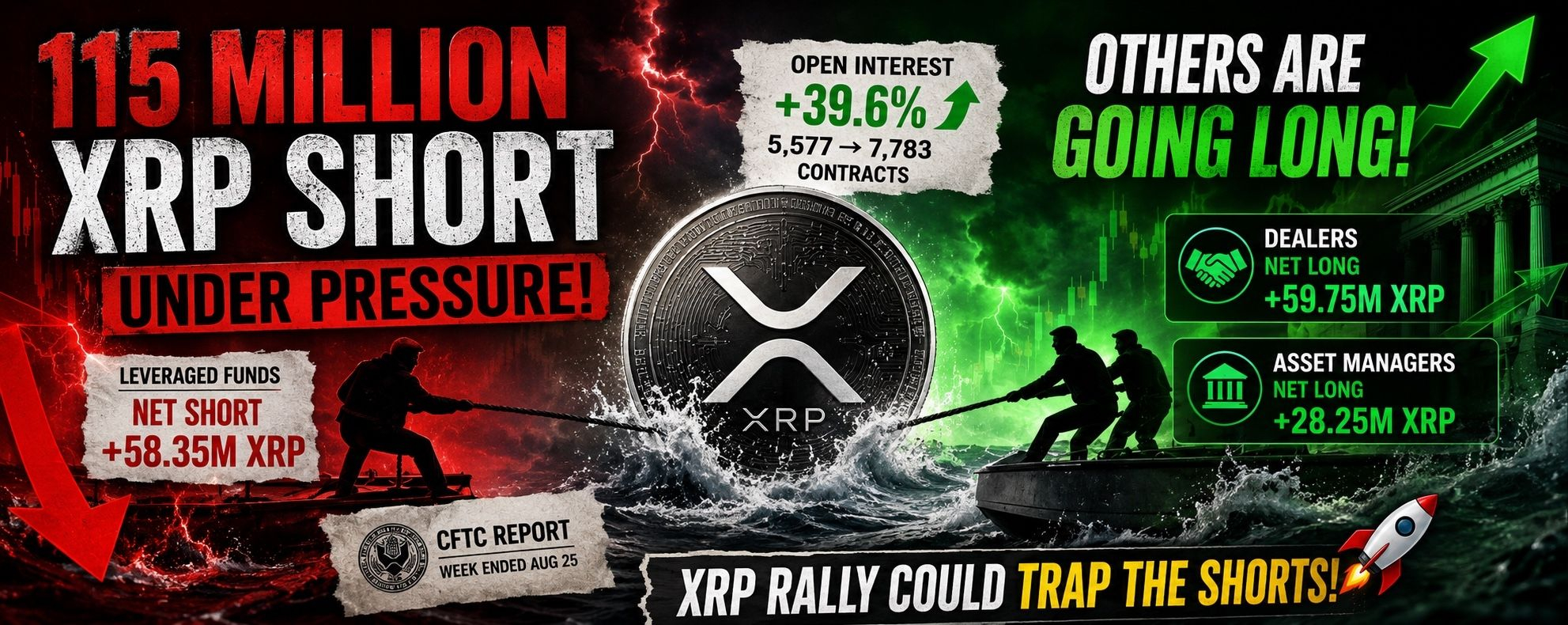
🚨 XRP Short Sellers Are Taking a Massive RiskThe latest CFTC positioning data is sending an interesting signal for XRP traders.
According to the data shown in the report, XRP futures open interest jumped 39.6% in just one week, rising from 5,577 to 7,783 contracts. That represents roughly 110.3 million XRP-equivalent contracts added
But the biggest change is on the short side.
🔴 Leveraged Funds Double Down on XRP Shorts
Leveraged funds increased their net short exposure dramatically, moving from around 57.35 million XRP to 115.7 million XRP.
That means their net short position increased by approximately 58.35 million XRP in one week.
This is a major bearish bet against XRP.
🟢 But Other Major Players Are Going Long
The positioning isn’t uniformly bearish.
Dealers increased their net-long exposure by about 59.75 million XRP, ending with approximately 106.05 million XRP net long.
Meanwhile, asset managers added around 28.25 million XRP, finishing with approximately 42.15 million XRP net long.
So the market is showing a clear battle:
🔴 Leveraged funds → heavily short
🟢 Dealers → strongly long
🟢 Asset managers → long
⚠️ Could This Become Fuel for an XRP Rally?
This is where things get interesting.
If XRP continues moving higher while leveraged funds remain heavily short, those positions could come under increasing pressure. A sharp upside move could force some shorts to reduce or close positions, potentially adding further buying pressure.
That doesn’t guarantee a short squeeze—but 115.7M XRP-equivalent net short exposure is certainly worth watching.
The key question now:
Will XRP break higher and force the shorts to run for the exit? 👀📈
Data shown is based on the CFTC positioning snapshot dated Aug. 25, 2026, released Aug. 28. CFTC positioning is a snapshot, not live market positioning. DYOR. #Xrp🔥🔥 #xrp #BinanceSquare #crypto $XRP
{future}(XRPUSDT)
🚨 XRP Short Sellers Are Taking a Massive Risk
The latest CFTC positioning data is sending an interesting signal for XRP traders.
According to the data shown in the report, XRP futures open interest jumped 39.6% in just one week, rising from 5,577 to 7,783 contracts. That represents roughly 110.3 million XRP-equivalent contracts added
But the biggest change is on the short side.
🔴 Leveraged Funds Double Down on XRP Shorts
Leveraged funds increased their net short exposure dramatically, moving from around 57.35 million XRP to 115.7 million XRP.
That means their net short position increased by approximately 58.35 million XRP in one week.
This is a major bearish bet against XRP.
🟢 But Other Major Players Are Going Long
The positioning isn’t uniformly bearish.
Dealers increased their net-long exposure by about 59.75 million XRP, ending with approximately 106.05 million XRP net long.
Meanwhile, asset managers added around 28.25 million XRP, finishing with approximately 42.15 million XRP net long.
So the market is showing a clear battle:
🔴 Leveraged funds → heavily short
🟢 Dealers → strongly long
🟢 Asset managers → long
⚠️ Could This Become Fuel for an XRP Rally?
This is where things get interesting.
If XRP continues moving higher while leveraged funds remain heavily short, those positions could come under increasing pressure. A sharp upside move could force some shorts to reduce or close positions, potentially adding further buying pressure.
That doesn’t guarantee a short squeeze—but 115.7M XRP-equivalent net short exposure is certainly worth watching.
The key question now:
Will XRP break higher and force the shorts to run for the exit? 👀📈
Data shown is based on the CFTC positioning snapshot dated Aug. 25, 2026, released Aug. 28. CFTC positioning is a snapshot, not live market positioning. DYOR. #Xrp🔥🔥 #xrp #BinanceSquare #crypto $XRP
According to the data shown in the report, XRP futures open interest jumped 39.6% in just one week, rising from 5,577 to 7,783 contracts. That represents roughly 110.3 million XRP-equivalent contracts added
But the biggest change is on the short side.
🔴 Leveraged Funds Double Down on XRP Shorts
Leveraged funds increased their net short exposure dramatically, moving from around 57.35 million XRP to 115.7 million XRP.
That means their net short position increased by approximately 58.35 million XRP in one week.
This is a major bearish bet against XRP.
🟢 But Other Major Players Are Going Long
The positioning isn’t uniformly bearish.
Dealers increased their net-long exposure by about 59.75 million XRP, ending with approximately 106.05 million XRP net long.
Meanwhile, asset managers added around 28.25 million XRP, finishing with approximately 42.15 million XRP net long.
So the market is showing a clear battle:
🔴 Leveraged funds → heavily short
🟢 Dealers → strongly long
🟢 Asset managers → long
⚠️ Could This Become Fuel for an XRP Rally?
This is where things get interesting.
If XRP continues moving higher while leveraged funds remain heavily short, those positions could come under increasing pressure. A sharp upside move could force some shorts to reduce or close positions, potentially adding further buying pressure.
That doesn’t guarantee a short squeeze—but 115.7M XRP-equivalent net short exposure is certainly worth watching.
The key question now:
Will XRP break higher and force the shorts to run for the exit? 👀📈
Data shown is based on the CFTC positioning snapshot dated Aug. 25, 2026, released Aug. 28. CFTC positioning is a snapshot, not live market positioning. DYOR. #Xrp🔥🔥 #xrp #BinanceSquare #crypto $XRP
349
·
--
Partly True
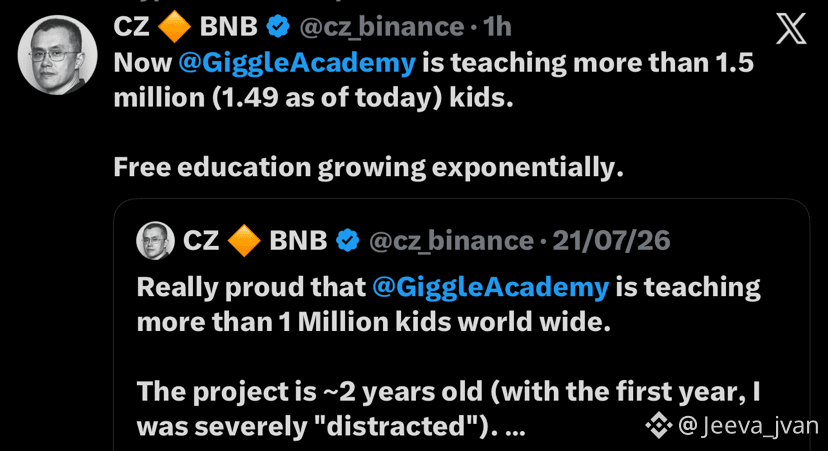
🚀 Giggle Academy: 1.5M+ Kids, 179 Countries, Free Education 🌍📚
1.5M+ kids. 179 countries. 100% free education.
Giggle Academy is growing rapidly and making quality education accessible to children worldwide. 🚀
This is bigger than crypto — this is real-world impact. ❤️ $GIGGLE $BNB
🚀 Giggle Academy: 1.5M+ Kids, 179 Countries, Free Education 🌍📚
1.5M+ kids. 179 countries. 100% free education.
Giggle Academy is growing rapidly and making quality education accessible to children worldwide. 🚀
This is bigger than crypto — this is real-world impact. ❤️ $GIGGLE $BNB
1.5M+ kids. 179 countries. 100% free education.
Giggle Academy is growing rapidly and making quality education accessible to children worldwide. 🚀
This is bigger than crypto — this is real-world impact. ❤️ $GIGGLE $BNB

883
Log in to explore more content
Join global crypto users on Binance Square
⚡️ Get latest and useful information about crypto.
💬 Trusted by the world’s largest crypto exchange.
👍 Discover real insights from verified creators.
Email / Phone number