
Shamika Metting
10.4k Posts

Shamika Metting
Binance square.
251 Following
3.6K+ Followers
26.3K+ Liked
Posts
Portfolio
All
Quotes
Videos
#iransaysithit3usships3tankers
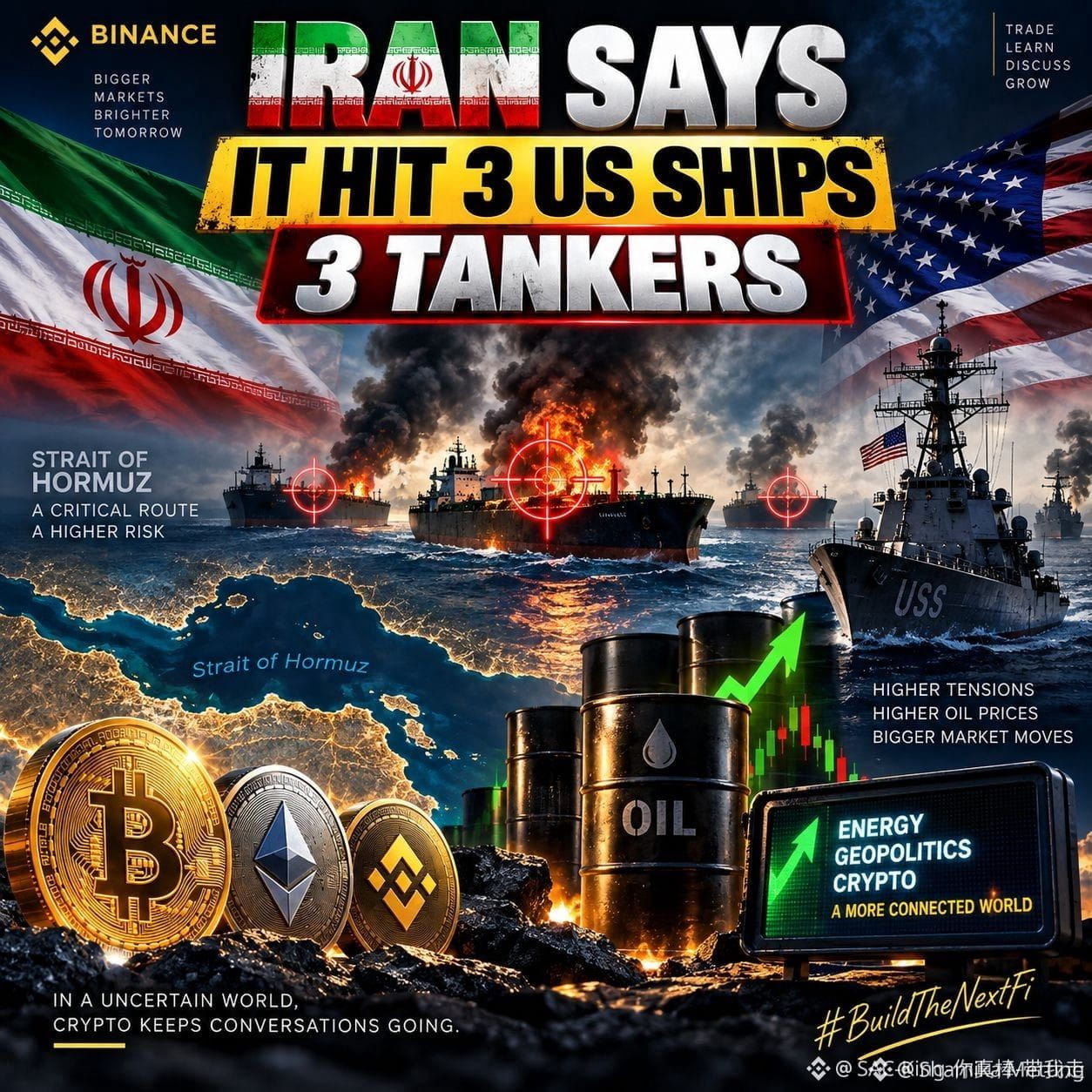
🚨🌍 Iran says it hit 3 U.S. ships and 3 tankers: growing risk at the Strait of Hormuz 🌍🚨
The sea was already tense. Then further claims from Tehran turned a shipping route that was already risky into the centerpiece of a much bigger market story.
Iran’s Revolutionary Guards said they targeted three oil tankers and three vessels linked to the United States after U.S. forces struck three Iranian oil tankers on September 5. However, details about the alleged damage to the American ships remain disputed and have not been independently confirmed.
The biggest concern is the Strait of Hormuz, a vital energy chokepoint where escalating military pressures can quickly become an economic problem.
Oil markets have already begun reacting. Reuters reported Brent crude rising to around $97.48 as shipping disruptions increased and attacks escalated, heightening fears about supplies.
In the markets, the headline creates volatility. The second-order economic effects are what often shape the real trend.
❓Do you think continued disruption of the Strait of Hormuz would be more positive for Bitcoin as an alternative asset, or more negative due to the widening wave of risk aversion?
Disclaimer: This article is for educational purposes only and is not financial advice.
Please follow up
#Iran #Bitcoin #GrowWithSAC $RAY $ARB $JUP
#IranSaysItHit3USShips3Tankers
🚨🌍 Iran says it hit 3 U.S. ships and 3 tankers: growing risk at the Strait of Hormuz 🌍🚨
The sea was already tense. Then further claims from Tehran turned a shipping route that was already risky into the centerpiece of a much bigger market story.
Iran’s Revolutionary Guards said they targeted three oil tankers and three vessels linked to the United States after U.S. forces struck three Iranian oil tankers on September 5. However, details about the alleged damage to the American ships remain disputed and have not been independently confirmed.
The biggest concern is the Strait of Hormuz, a vital energy chokepoint where escalating military pressures can quickly become an economic problem.
Oil markets have already begun reacting. Reuters reported Brent crude rising to around $97.48 as shipping disruptions increased and attacks escalated, heightening fears about supplies.
In the markets, the headline creates volatility. The second-order economic effects are what often shape the real trend.
❓Do you think continued disruption of the Strait of Hormuz would be more positive for Bitcoin as an alternative asset, or more negative due to the widening wave of risk aversion?
Disclaimer: This article is for educational purposes only and is not financial advice.
Please follow up
#Iran #Bitcoin #GrowWithSAC $RAY $ARB $JUP
#IranSaysItHit3USShips3Tankers
#iransaysithit3usships3tankers
🚨 Hormuz crisis escalating: Oil prices approaching $98! 🛢️
Tensions in the Strait of Hormuz have reached a boiling point following reports of strikes targeting commercial tankers and vessels linked to the United States. With Brent crude climbing toward $97.48, rising energy costs are triggering fresh concerns about inflation across global markets. 📉
📊 Trending watchlist:
$ARB (Arbitrum): Faces short-term pressure due to the activation of geopolitical risks as the year transitions toward risk aversion across major Layer-2 assets. ⚡
$JUP (Jupiter): Sees a rise in trading volumes and greater price volatility, with increasing trading activity on DEX platforms amid market uncertainty. 🚀
💬 Will the prolonged unrest in Hormuz push $BTC as an alternative asset, or will it lead to a broader market weakness? Share your take below! 👇
Please follow up
#IranSaysItHit3USShips3Tankers
#SideSwapSuspendsLiquidServices
#EightChineseFinancialFirmsRaise360BYuan
#USIranTradeTankerStrikesEscalate
🚨 Hormuz crisis escalating: Oil prices approaching $98! 🛢️
Tensions in the Strait of Hormuz have reached a boiling point following reports of strikes targeting commercial tankers and vessels linked to the United States. With Brent crude climbing toward $97.48, rising energy costs are triggering fresh concerns about inflation across global markets. 📉
📊 Trending watchlist:
$ARB (Arbitrum): Faces short-term pressure due to the activation of geopolitical risks as the year transitions toward risk aversion across major Layer-2 assets. ⚡
$JUP (Jupiter): Sees a rise in trading volumes and greater price volatility, with increasing trading activity on DEX platforms amid market uncertainty. 🚀
💬 Will the prolonged unrest in Hormuz push $BTC as an alternative asset, or will it lead to a broader market weakness? Share your take below! 👇
Please follow up
#IranSaysItHit3USShips3Tankers
#SideSwapSuspendsLiquidServices
#EightChineseFinancialFirmsRaise360BYuan
#USIranTradeTankerStrikesEscalate
🚨 Urgent: Iran has just drawn a red line across the world’s most important oil chokepoint.
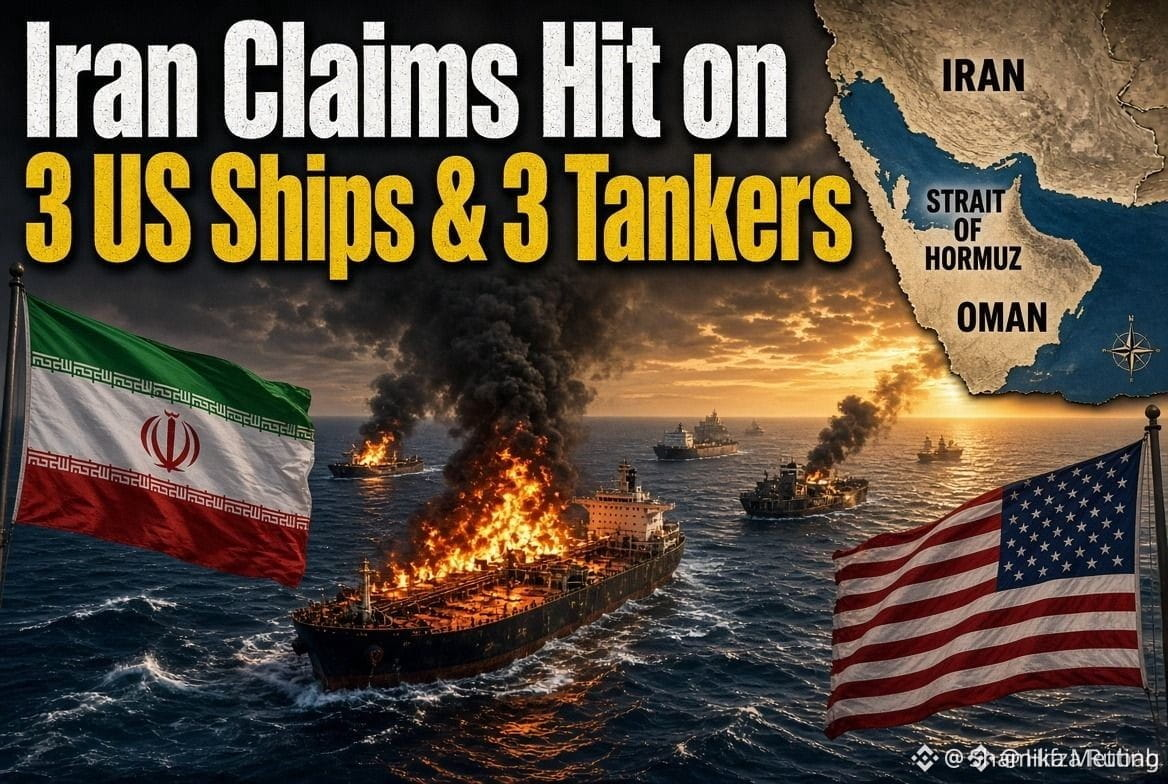
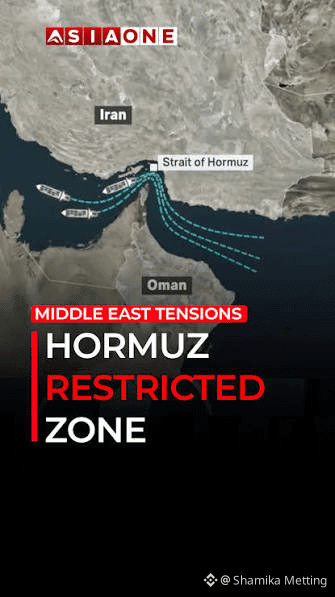
An Iranian senior security official says Iran will announce a restricted zone outside the Strait of Hormuz «within the coming days»—extending from the U.S. Navy blockade line into the Arabian Gulf.
Any ship attempting to pass? Sanctions will be imposed on it. It will be added to the black list. It will be seized.
This is not a threat. It’s a map. And it comes with a new “official” shipping route—agreed with Oman—that Iran will control.
🛢 Why this matters:
• About ~20% of the world’s oil passes through Hormuz— the United States has just sunk 3 Iranian tankers, and Iran says it retaliated by targeting 3 more
• The U.S. Central Command redirected 92 merchant vessels, disrupted 3, and boarded 2
• Only one cargo ship crossed the strait on Saturday (Kpler)
• Brent crude ($BZ ) is already pressing toward $97—up by about ~7.6% over the week
Iranian Parliament Speaker: «The era of proportionate responses is over. The next response will be faster, heavier, and more painful.»
Two shipping routes. Two superpowers. One strait.
⚠️ The headline for de-escalation = a rapid drop in oil. The headline for escalation = Brent crude at $100. Trade in both directions, and in small size.
Follow-up, please
$XAU $CLV
#irantosetrestrictedzonenearhormuz #USStrikesIranTankersTehranRestrictsHormuz #SamsungSKHynixLeadKoreanSharesHigher #RussiaUkraine72-hourCeasefire #ZEC'sMarketCapSurpassedDOGE
An Iranian senior security official says Iran will announce a restricted zone outside the Strait of Hormuz «within the coming days»—extending from the U.S. Navy blockade line into the Arabian Gulf.
Any ship attempting to pass? Sanctions will be imposed on it. It will be added to the black list. It will be seized.
This is not a threat. It’s a map. And it comes with a new “official” shipping route—agreed with Oman—that Iran will control.
🛢 Why this matters:
• About ~20% of the world’s oil passes through Hormuz— the United States has just sunk 3 Iranian tankers, and Iran says it retaliated by targeting 3 more
• The U.S. Central Command redirected 92 merchant vessels, disrupted 3, and boarded 2
• Only one cargo ship crossed the strait on Saturday (Kpler)
• Brent crude ($BZ ) is already pressing toward $97—up by about ~7.6% over the week
Iranian Parliament Speaker: «The era of proportionate responses is over. The next response will be faster, heavier, and more painful.»
Two shipping routes. Two superpowers. One strait.
⚠️ The headline for de-escalation = a rapid drop in oil. The headline for escalation = Brent crude at $100. Trade in both directions, and in small size.
Follow-up, please
$XAU $CLV
#irantosetrestrictedzonenearhormuz #USStrikesIranTankersTehranRestrictsHormuz #SamsungSKHynixLeadKoreanSharesHigher #RussiaUkraine72-hourCeasefire #ZEC'sMarketCapSurpassedDOGE
#imfsayselsalvadorbtcnopublicfunds
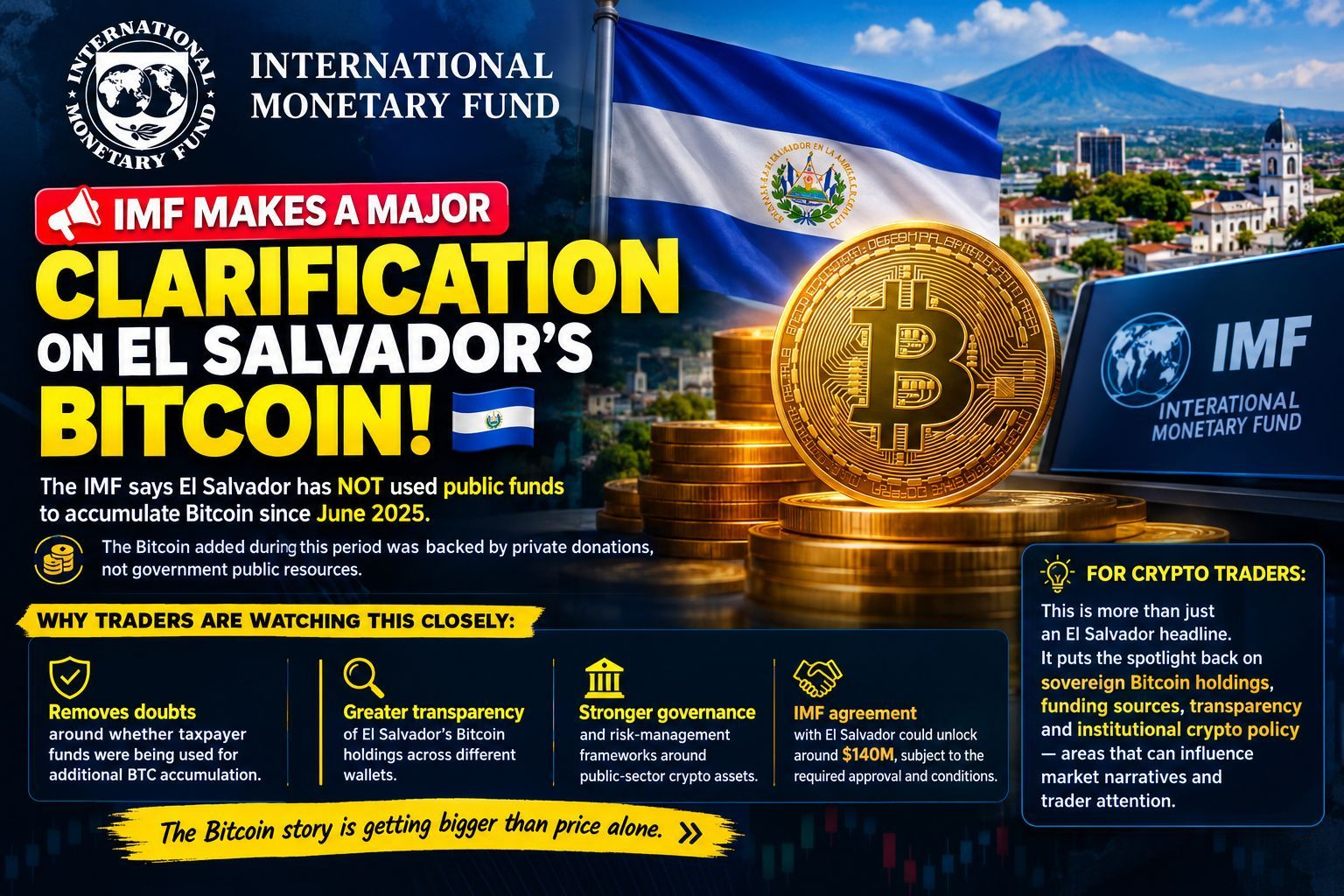
🇸🇻 Breaking: The IMF says El Salvador’s bitcoin purchases do not involve public funds
El Salvador’s bitcoin strategy continues to draw attention again. The IMF says the country’s recent bitcoin purchases did not involve public funds, adding another important layer to the ongoing debate over the country’s policy toward cryptocurrencies.
🔥 This could strengthen the argument that El Salvador continues to build its bitcoin position while reducing direct pressure on government finances.
📈 Bitcoin adoption is not slowing down — it’s evolving. And if other countries follow this approach, the next wave of sovereign BTC adoption could be far larger than expected.
Please follow up
#bitcoin #ElSalvador #crypto
$BTC
🇸🇻 Breaking: The IMF says El Salvador’s bitcoin purchases do not involve public funds
El Salvador’s bitcoin strategy continues to draw attention again. The IMF says the country’s recent bitcoin purchases did not involve public funds, adding another important layer to the ongoing debate over the country’s policy toward cryptocurrencies.
🔥 This could strengthen the argument that El Salvador continues to build its bitcoin position while reducing direct pressure on government finances.
📈 Bitcoin adoption is not slowing down — it’s evolving. And if other countries follow this approach, the next wave of sovereign BTC adoption could be far larger than expected.
Please follow up
#bitcoin #ElSalvador #crypto
$BTC
#LiquidNetworkSuffers$320MExploit#LiquidNetworkSuffers $320MExploit
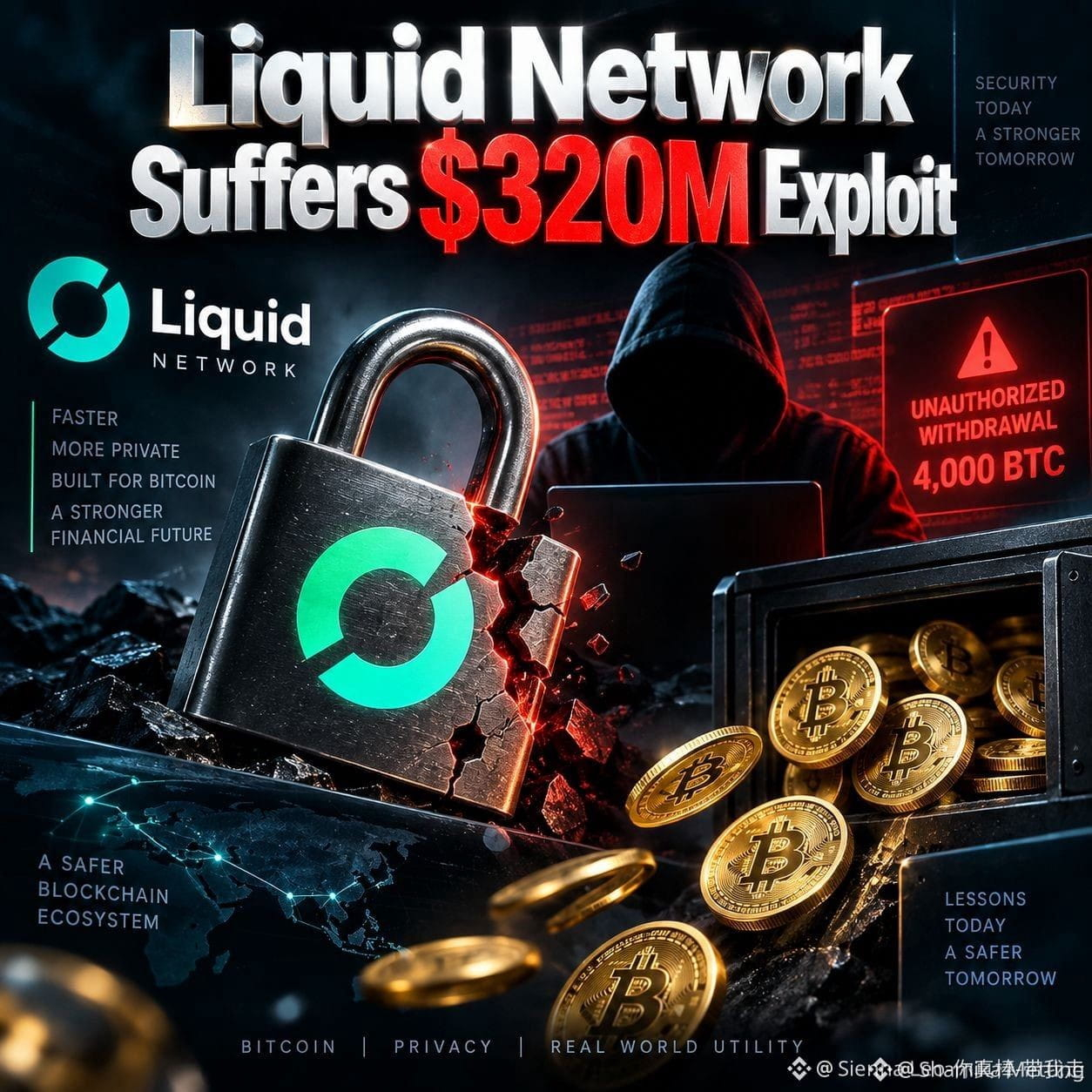
🚨🔐 The Liquid network suffers a $320 million exploit 🔐🚨
The worrying part isn’t only that $320 million was transferred. Rather, the transaction is believed to have gone through a permitted route while a fundamental security failure occurred elsewhere.
About 4,000 BTC were withdrawn from the Liquid federation wallet, equivalent to roughly 95% of its reported reserves. The network halted operations during the incident.
And here are the details worth remembering: it’s believed that the federation keys and SideSwap were not compromised. Instead, investigators linked the incident to a flaw in Elements, the software that runs Liquid.
The story took a stranger turn when the attackers claimed they were “white hats.” After the network was repaired, it’s believed that about 3,400 BTC were returned, while nearly 598.5 BTC remained with the attacker.
This changes my view on security: a correct signature does not automatically mean the transaction is safe. The infrastructure must verify what is being authorized, not just who signed.
Key takeaway: in the world of cryptocurrencies, security is only as strong as the underlying assumptions behind the transaction. What matters more to you: secure keys or secure code?
Disclaimer: This post is for educational purposes only and is not financial advice.
Please follow up
#LiquidNetwork #Bitcoin #GrowWithSAC $TIA $SENT $MINA
🚨🔐 The Liquid network suffers a $320 million exploit 🔐🚨
The worrying part isn’t only that $320 million was transferred. Rather, the transaction is believed to have gone through a permitted route while a fundamental security failure occurred elsewhere.
About 4,000 BTC were withdrawn from the Liquid federation wallet, equivalent to roughly 95% of its reported reserves. The network halted operations during the incident.
And here are the details worth remembering: it’s believed that the federation keys and SideSwap were not compromised. Instead, investigators linked the incident to a flaw in Elements, the software that runs Liquid.
The story took a stranger turn when the attackers claimed they were “white hats.” After the network was repaired, it’s believed that about 3,400 BTC were returned, while nearly 598.5 BTC remained with the attacker.
This changes my view on security: a correct signature does not automatically mean the transaction is safe. The infrastructure must verify what is being authorized, not just who signed.
Key takeaway: in the world of cryptocurrencies, security is only as strong as the underlying assumptions behind the transaction. What matters more to you: secure keys or secure code?
Disclaimer: This post is for educational purposes only and is not financial advice.
Please follow up
#LiquidNetwork #Bitcoin #GrowWithSAC $TIA $SENT $MINA
#USIranTradeTankerStrikesEscalate
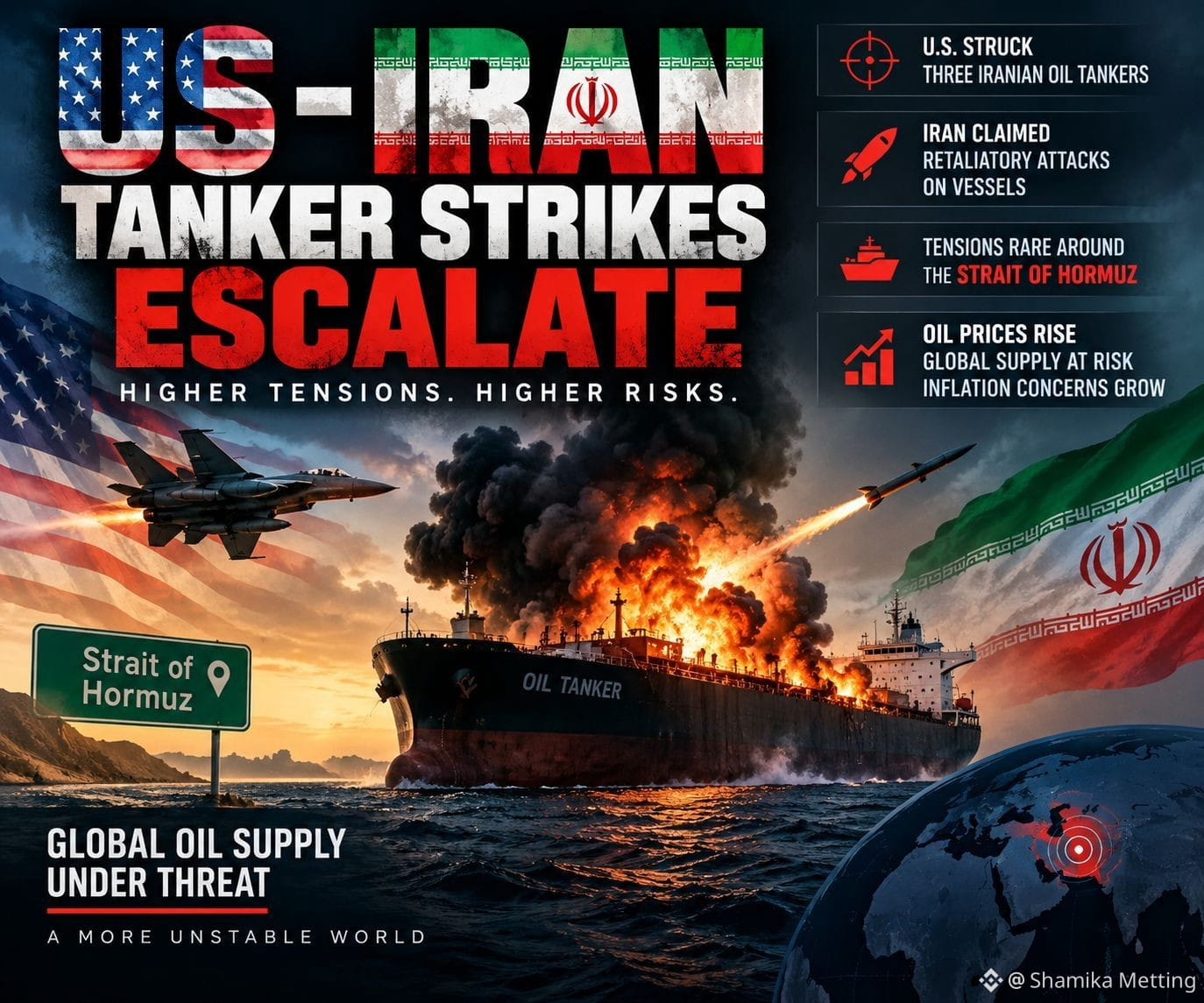
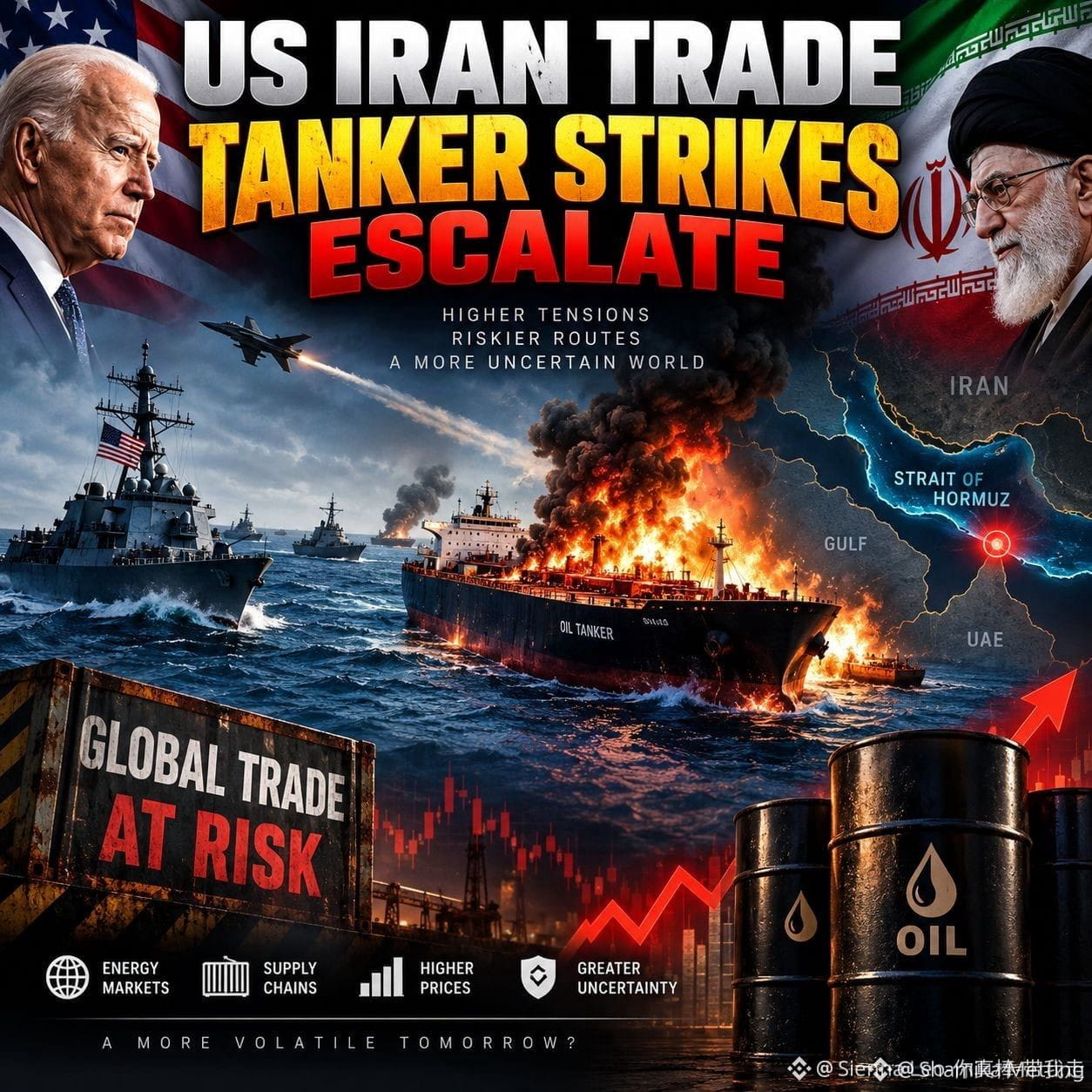
🚨 Tensions between the United States and Iran are escalating to a new and dangerous phase.
The United States launched strikes on three Iranian oil tankers, while Iran claimed it carried out retaliatory attacks on ships around the Strait of Hormuz.
The biggest concern is not only the strikes.
But what prolonged disruptions may cause to affect global supplies of oil, shipping, and inflation.
Markets are already reacting.
DYOR. NFA.
Follow up, please
#USIran #Iran #Oil #Geopolitics #StraitOfHormuz
🚨 Tensions between the United States and Iran are escalating to a new and dangerous phase.
The United States launched strikes on three Iranian oil tankers, while Iran claimed it carried out retaliatory attacks on ships around the Strait of Hormuz.
The biggest concern is not only the strikes.
But what prolonged disruptions may cause to affect global supplies of oil, shipping, and inflation.
Markets are already reacting.
DYOR. NFA.
Follow up, please
#USIran #Iran #Oil #Geopolitics #StraitOfHormuz
#usirantradetankerstrikesescalate
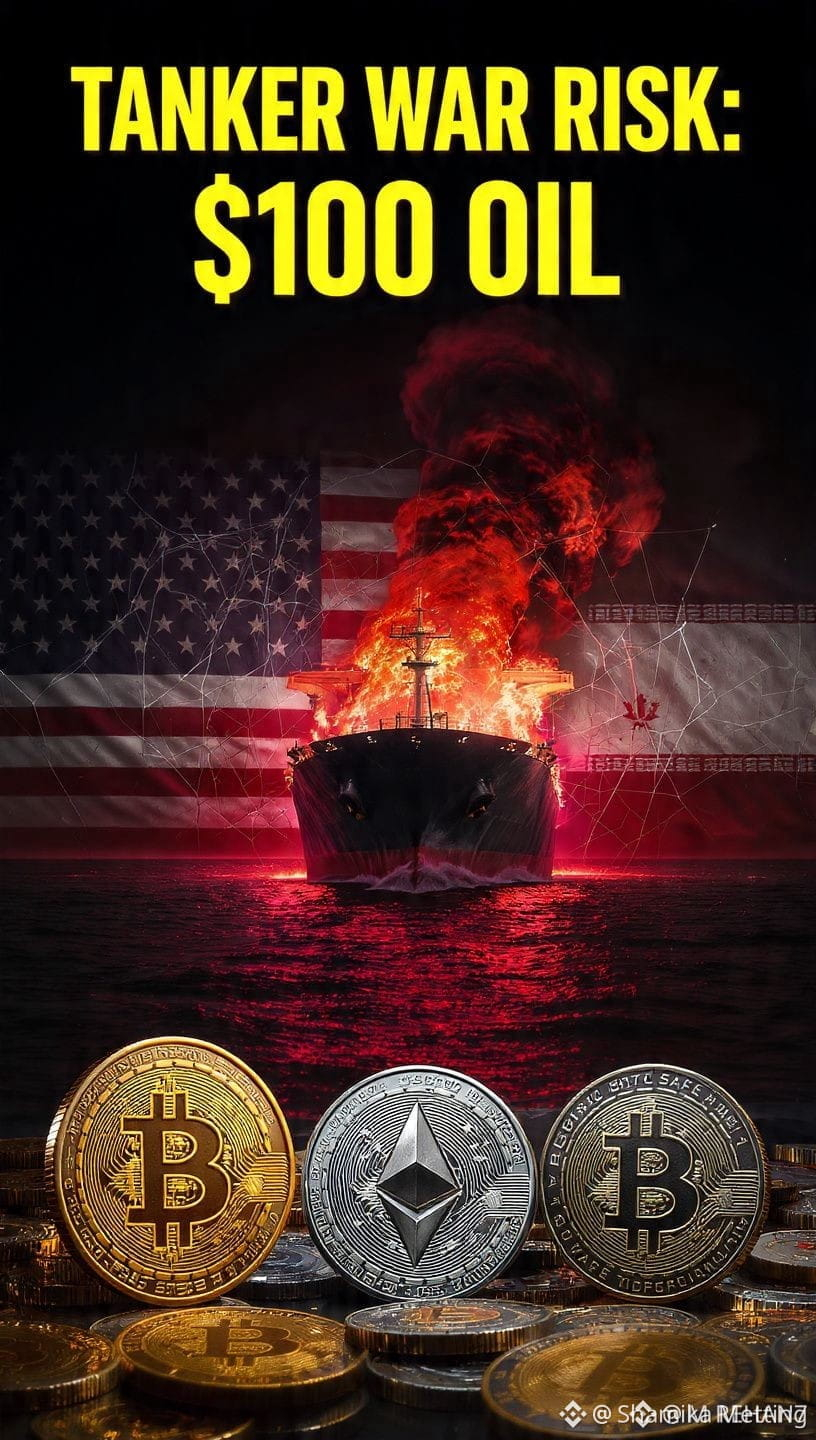
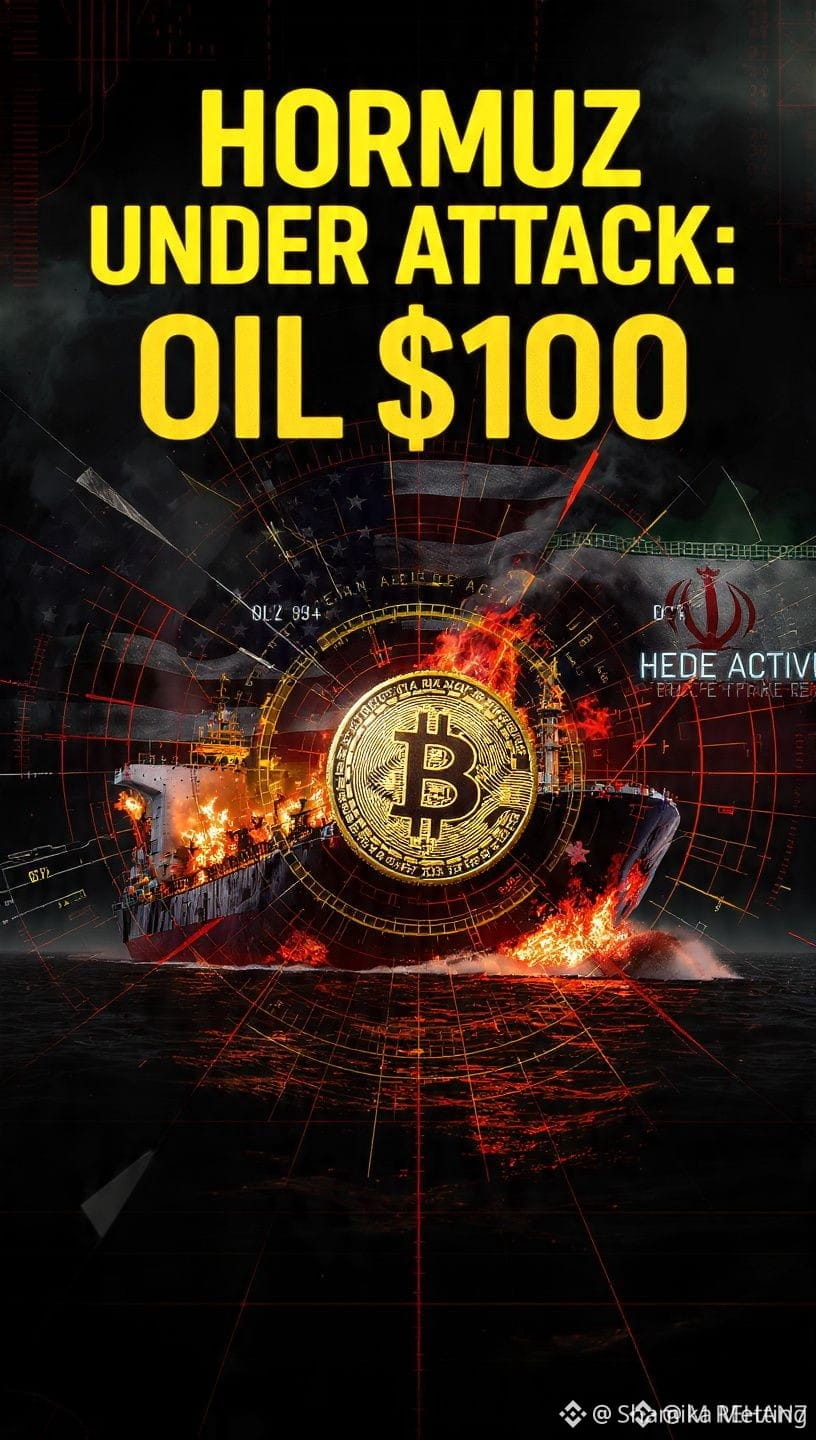
🚨 Hormuz Under Attack: Oil $100
Commercial tankers hit. U.S.-Iran escalation.
This changes everything.
3 shocks coming:
**Oil** → 94+ dollar target to reach 100 = inflation
**Dollar** → rise in safe-haven flows
**Digital currencies** → live hedging narrative vs. Bitcoin
Hot currencies now:
$BTC - demand for digital gold
$ETH - trades on volatility
$BNB - surge in centralized exchange trading volume (CEX)
$SOL - “risk-off” shift
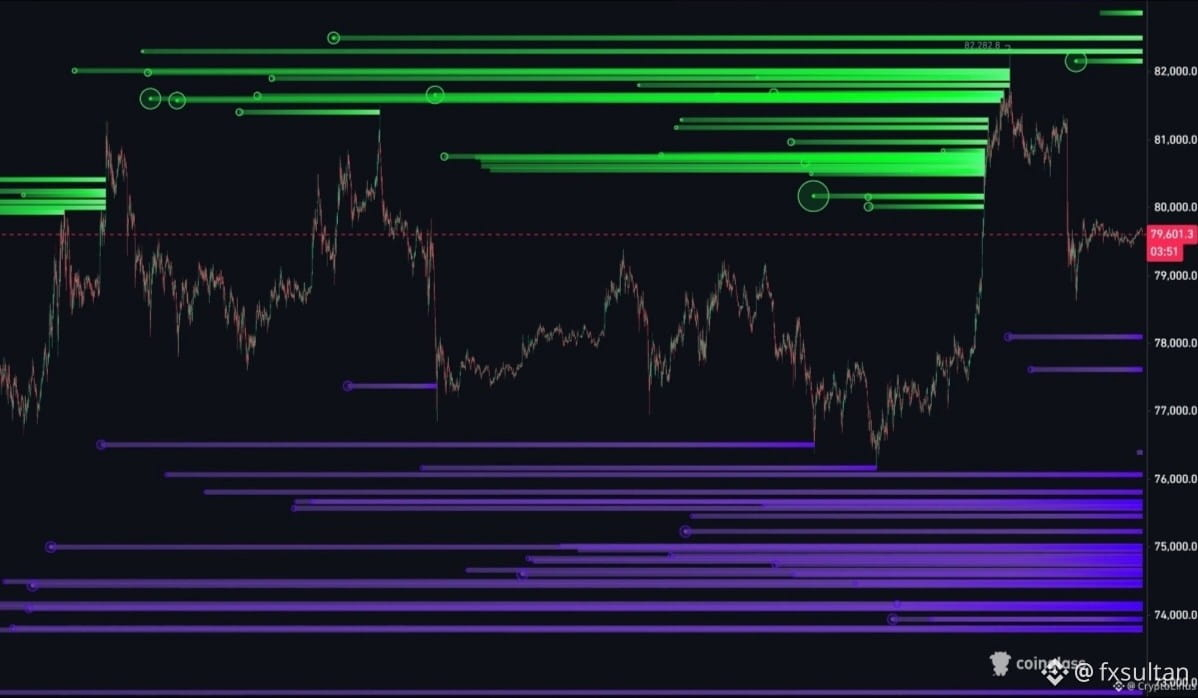
Levels: WTI crude oil $94 | Bitcoin support $78,000
War = volatility. Volatility = opportunities.
Are you positioned? 👇
Priority: $100 oil or 85k Bitcoin?
#USIran #Hormuz #Oil #BTC #Crypto #Trading#USIranTradeTankerStrikesEscalate #ZcashRises45%WeeklyToHighestSince2016 #LiquidNetworkSuffers$320MExploit #IMFSaysElSalvadorBTCNoPublicFunds
🚨 Hormuz Under Attack: Oil $100
Commercial tankers hit. U.S.-Iran escalation.
This changes everything.
3 shocks coming:
**Oil** → 94+ dollar target to reach 100 = inflation
**Dollar** → rise in safe-haven flows
**Digital currencies** → live hedging narrative vs. Bitcoin
Hot currencies now:
$BTC - demand for digital gold
$ETH - trades on volatility
$BNB - surge in centralized exchange trading volume (CEX)
$SOL - “risk-off” shift
Levels: WTI crude oil $94 | Bitcoin support $78,000
War = volatility. Volatility = opportunities.
Are you positioned? 👇
Priority: $100 oil or 85k Bitcoin?
#USIran #Hormuz #Oil #BTC #Crypto #Trading#USIranTradeTankerStrikesEscalate #ZcashRises45%WeeklyToHighestSince2016 #LiquidNetworkSuffers$320MExploit #IMFSaysElSalvadorBTCNoPublicFunds
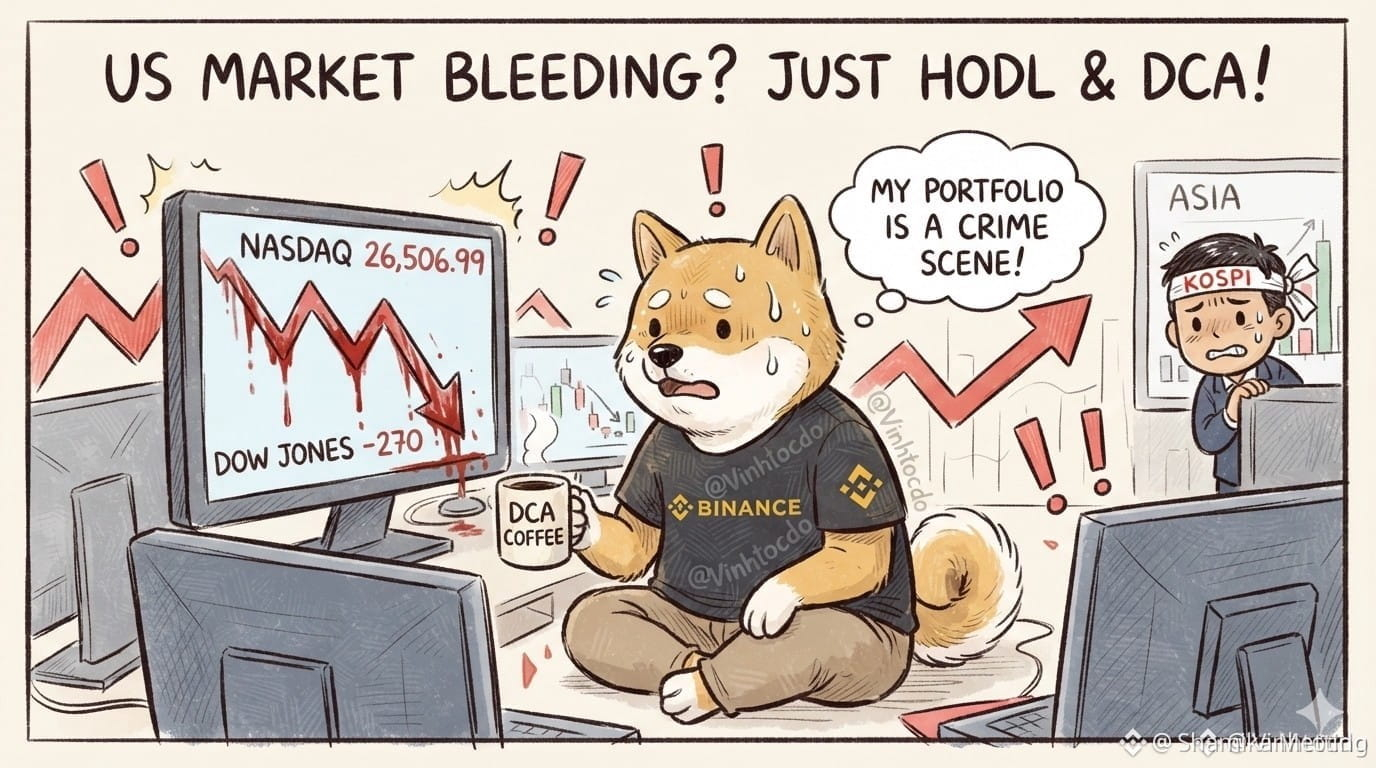
The American market is bleeding a little, and my portfolio looks like a crime scene 🩸. The Nasdaq has fallen to 26,506.99, and tech giants are on edge, while the Dow Jones is down by more than 270 points!
Meanwhile, Asia and Kospi are staring at Wall Street like an anxious younger sibling 🫠. Will Asia catch a cold? Expect some choppy waters ahead!
What should traders do? Don’t fixate on the one-minute chart—grab a coffee, and distribute your DCA investments like a civilized person. ☕️
🚨 This is not financial advice! Do your own research.
Follow-up, please
#UsStocks #NASDAQ #Kospi #MarketAnalysis
$SKHYNIX
Meanwhile, Asia and Kospi are staring at Wall Street like an anxious younger sibling 🫠. Will Asia catch a cold? Expect some choppy waters ahead!
What should traders do? Don’t fixate on the one-minute chart—grab a coffee, and distribute your DCA investments like a civilized person. ☕️
🚨 This is not financial advice! Do your own research.
Follow-up, please
#UsStocks #NASDAQ #Kospi #MarketAnalysis
$SKHYNIX
#usirantradetankerstrikesescalate
🔥 Escalation of strikes on commercial vessels between the United States and Iran 🔥
What I keep following isn’t just the strikes. It’s what happens when a military dispute starts interfering with the routes that carry energy around the world.
The United States launched strikes on three Iranian oil tankers after Iran fired missiles at two vessels affiliated with the U.S. Navy. Then Iran retaliated against shipping, driving the standoff to deepen further within the maritime economy.
This goes far beyond Washington and Tehran. The Strait of Hormuz is a critical energy corridor, and shipping activity through it has fallen sharply as operators face growing security risks.
The markets are already reacting. Brent crude has edged close to its highest level in six weeks after traders priced in greater risks of supply disruptions.
The lesson that was ignored is simple: it doesn’t always require a complete halt in oil production. Sometimes, just the fear of disruption to transportation is enough to move prices, inflation expectations, and risk appetite.
When trade routes become part of the battlefield, the economic impact can spread far faster than the missiles.
The real question now isn’t only who will carry out the next strike, but also how long global shipping can keep operating under this level of uncertainty.
Follow up, please
#Iran #Oil #GrowWithSAC $IOST $SOLV $SOPH
#USIranTradeTankerStrikesEscalate
🔥 Escalation of strikes on commercial vessels between the United States and Iran 🔥
What I keep following isn’t just the strikes. It’s what happens when a military dispute starts interfering with the routes that carry energy around the world.
The United States launched strikes on three Iranian oil tankers after Iran fired missiles at two vessels affiliated with the U.S. Navy. Then Iran retaliated against shipping, driving the standoff to deepen further within the maritime economy.
This goes far beyond Washington and Tehran. The Strait of Hormuz is a critical energy corridor, and shipping activity through it has fallen sharply as operators face growing security risks.
The markets are already reacting. Brent crude has edged close to its highest level in six weeks after traders priced in greater risks of supply disruptions.
The lesson that was ignored is simple: it doesn’t always require a complete halt in oil production. Sometimes, just the fear of disruption to transportation is enough to move prices, inflation expectations, and risk appetite.
When trade routes become part of the battlefield, the economic impact can spread far faster than the missiles.
The real question now isn’t only who will carry out the next strike, but also how long global shipping can keep operating under this level of uncertainty.
Follow up, please
#Iran #Oil #GrowWithSAC $IOST $SOLV $SOPH
#USIranTradeTankerStrikesEscalate
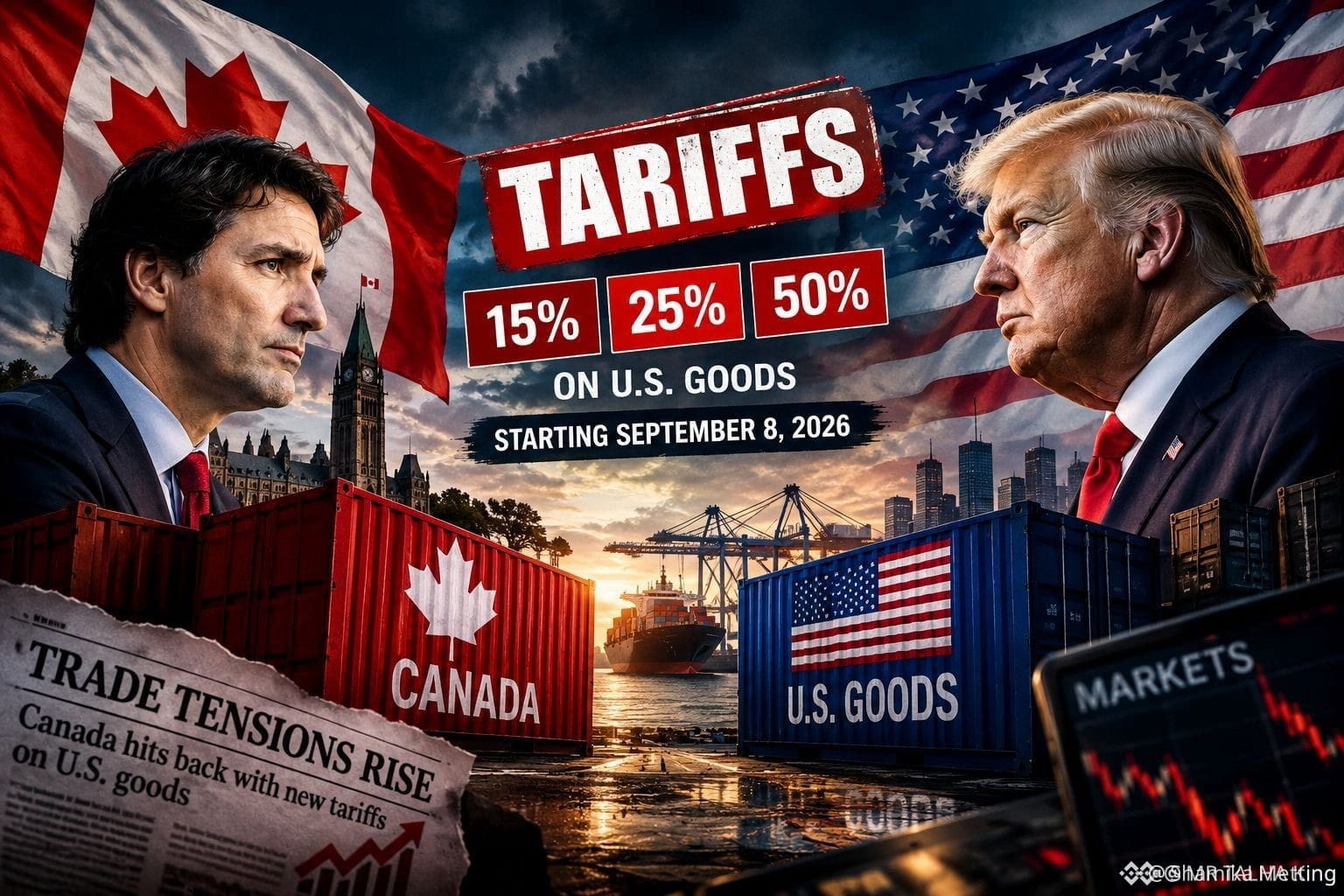
#CanadaToImpose15%To50%TariffsOnUSGoods
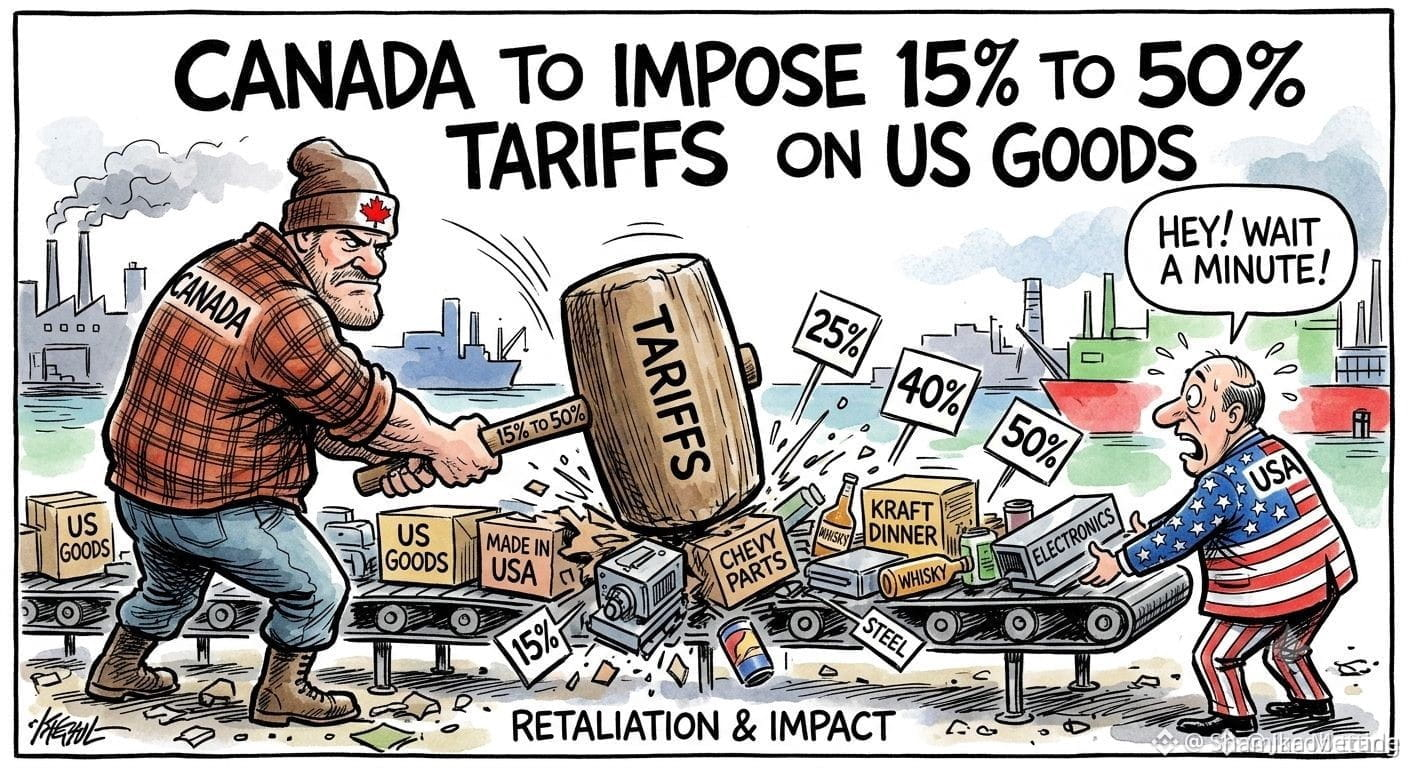
🚨🇨🇦🇺🇸 Canada will impose tariffs ranging from 15% to 50% on U.S. goods!
The trade war between the United States and Canada has escalated as Ottawa prepares new tariff measures starting September 8. ⚠️📈
📌 Key details:
• 🇨🇦 Tariff rates: 15%, 25%, and 50%
• 💰 Targeted U.S. imports: about 27.6 billion Canadian dollars
• 🏭 Affected sectors include steel, dairy, home appliances, agricultural equipment, pulp and paper, and electronics
• ⏰ Measures begin at 12:01 a.m. on September 8
🌎 Why markets should care:
Higher tariffs may increase trade costs, disrupt supply chains, and add inflationary pressure. If tensions continue, markets may see further volatility as investors reassess growth and inflation expectations and interest rates.
₿ Crypto angle:
Bitcoin and other high-risk assets may react to changes in global liquidity and risk sentiment. The big question is whether this remains a targeted trade dispute—or evolves into a broader global trade shock.
🔥 Will rising tariffs between the United States and Canada trigger a new wave of global market volatility?
Please stay tuned
$SOPH $SOLV $IOST
🚨🇨🇦🇺🇸 Canada will impose tariffs ranging from 15% to 50% on U.S. goods!
The trade war between the United States and Canada has escalated as Ottawa prepares new tariff measures starting September 8. ⚠️📈
📌 Key details:
• 🇨🇦 Tariff rates: 15%, 25%, and 50%
• 💰 Targeted U.S. imports: about 27.6 billion Canadian dollars
• 🏭 Affected sectors include steel, dairy, home appliances, agricultural equipment, pulp and paper, and electronics
• ⏰ Measures begin at 12:01 a.m. on September 8
🌎 Why markets should care:
Higher tariffs may increase trade costs, disrupt supply chains, and add inflationary pressure. If tensions continue, markets may see further volatility as investors reassess growth and inflation expectations and interest rates.
₿ Crypto angle:
Bitcoin and other high-risk assets may react to changes in global liquidity and risk sentiment. The big question is whether this remains a targeted trade dispute—or evolves into a broader global trade shock.
🔥 Will rising tariffs between the United States and Canada trigger a new wave of global market volatility?
Please stay tuned
$SOPH $SOLV $IOST
#CanadaToImpose15%To50%TariffsOnUSGoods
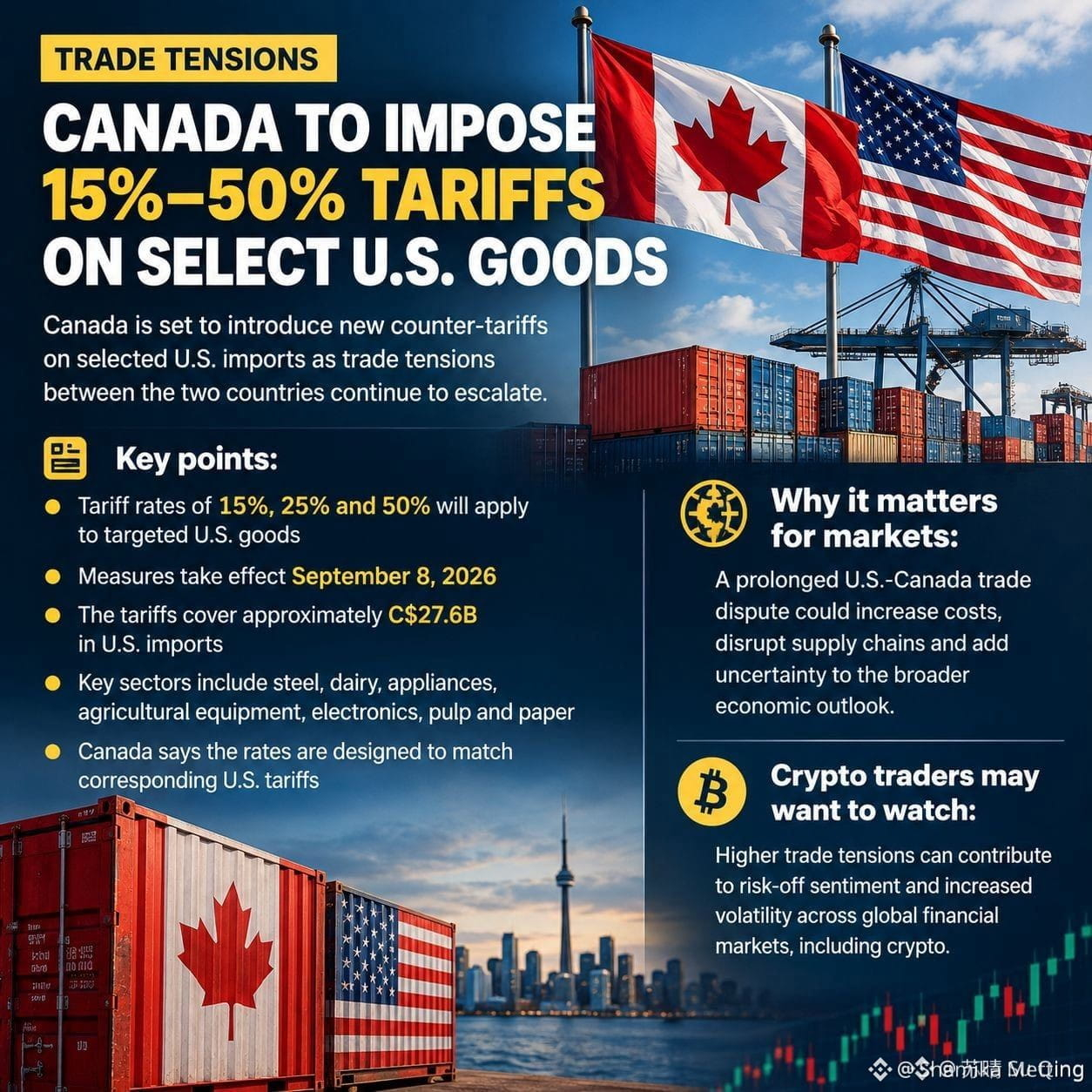
🚨 Canada imposes 15%–50% in customs fees on certain American products
Canada is expected to introduce new tariff countermeasures on specific U.S. imports, as tensions between the two countries continue to escalate.
📊 Key points:
• Tariff rates of 15%, 25%, and 50% will be applied to targeted U.S. goods
• The measures will take effect on September 8, 2026
• Customs duties will cover around CAD 27.6 billion in imports coming from the United States
• Key sectors include: steel, dairy products, household appliances, agricultural equipment, electronics, pulp, and paper
• Canada says these rates are designed to align with U.S. tariff levels
🌍 Why this matters for markets:
A prolonged trade dispute between the United States and Canada could raise costs, disrupt supply chains, and increase uncertainty about the broader economic outlook.
⚠️ What crypto traders can watch for:
Stronger trade tensions may boost a “risk-off” sentiment and increase volatility across all global financial markets, including cryptocurrencies
Please stay tuned
#Canadatariffs #USTradeWar #BinanceSquare #CryptoNews
$UAI
🚨 Canada imposes 15%–50% in customs fees on certain American products
Canada is expected to introduce new tariff countermeasures on specific U.S. imports, as tensions between the two countries continue to escalate.
📊 Key points:
• Tariff rates of 15%, 25%, and 50% will be applied to targeted U.S. goods
• The measures will take effect on September 8, 2026
• Customs duties will cover around CAD 27.6 billion in imports coming from the United States
• Key sectors include: steel, dairy products, household appliances, agricultural equipment, electronics, pulp, and paper
• Canada says these rates are designed to align with U.S. tariff levels
🌍 Why this matters for markets:
A prolonged trade dispute between the United States and Canada could raise costs, disrupt supply chains, and increase uncertainty about the broader economic outlook.
⚠️ What crypto traders can watch for:
Stronger trade tensions may boost a “risk-off” sentiment and increase volatility across all global financial markets, including cryptocurrencies
Please stay tuned
#Canadatariffs #USTradeWar #BinanceSquare #CryptoNews
$UAI
Verified
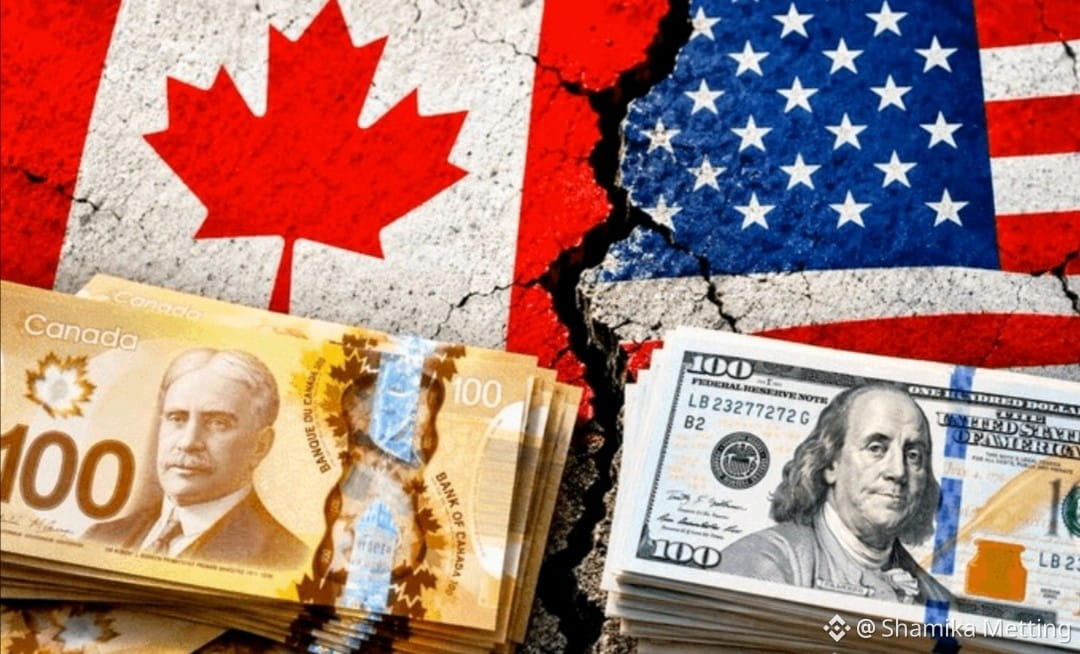
#canadatoimpose15%to50%tariffsonusgoods 🇨🇦 New Canadian counter-tariffs begin to take effect on September 8 on 629 tariff lines of the U.S. tariff schedule, at rates of 15%, 25% and & 50
% depending on the product
🇨🇦 View the full list of 629 lines that could become more expensive for Canadian citizens under the system
#Tariffs 👇$FIL $ICP $CLO
% depending on the product
🇨🇦 View the full list of 629 lines that could become more expensive for Canadian citizens under the system
#Tariffs 👇$FIL $ICP $CLO
#canadatoimpose15%to50%tariffsonusgoods
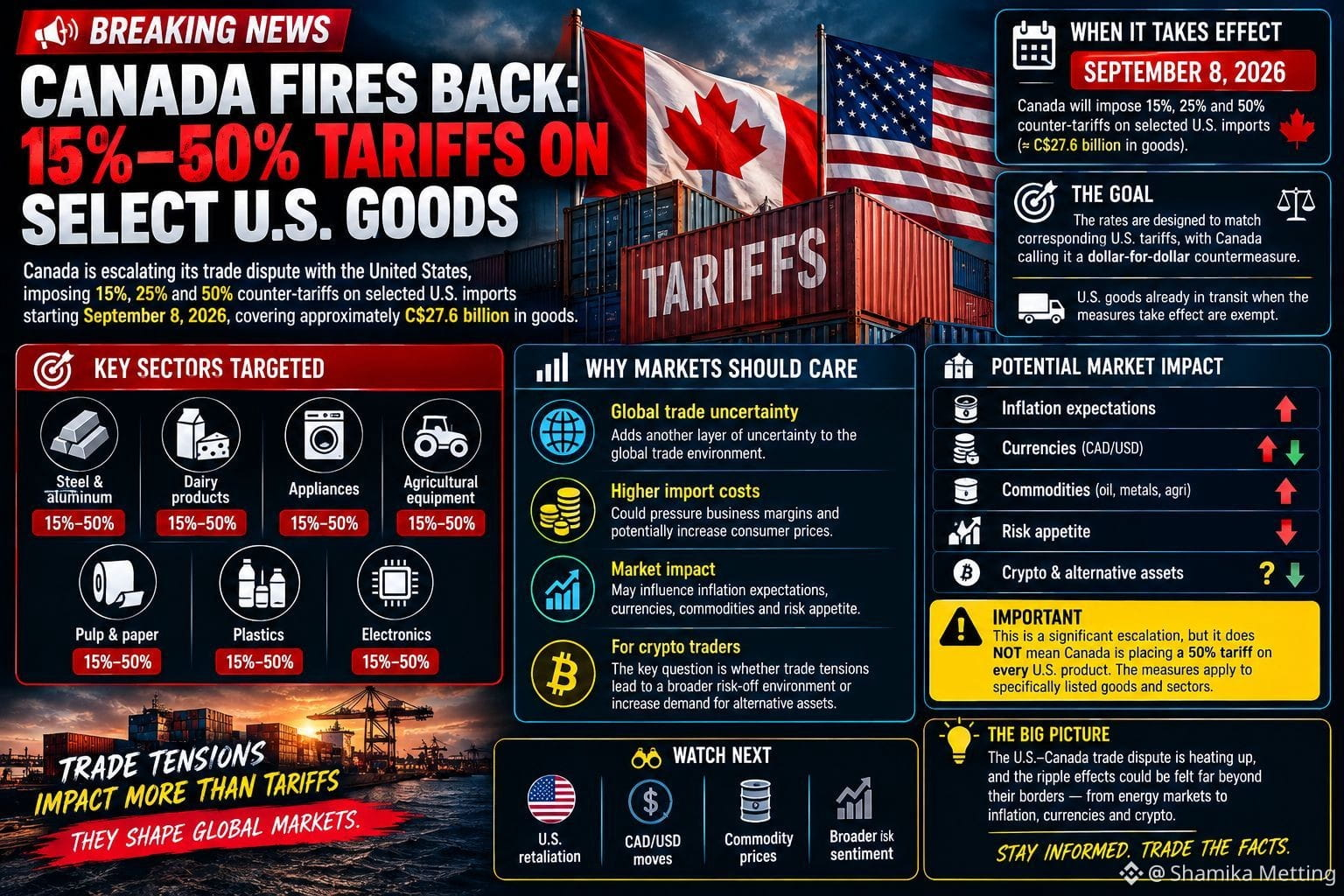
🇨🇦🇺🇸 Canada responds: imposes 15%–50% tariffs on specific US goods
Canada escalates its trade dispute with the United States.
As of September 8, 2026, Ottawa will impose counter-tariffs of 15%, 25%, and 50% on certain US imports, covering nearly CAD 27.6 billion worth of goods.
🎯 Target sectors:
• Steel and aluminum
• Agricultural products/dairy
• Appliances
• Agricultural machinery
• Paper and pulp
• Plastics
• Electronics
These rates are designed to match the corresponding US tariffs. Canada describes its response as a dollar-for-dollar retaliatory measure. US goods already on the way are exempt when the measures take effect.
📊 Why the market should care:
Higher tariffs can increase import costs, squeeze business margins, and potentially push up consumer prices. In financial markets, prolonged trade tensions can also affect inflation expectations, currencies, commodities, and risk appetite.
⚠️ Summary:
This is a major escalation, but it doesn’t mean Canada is imposing a 50% tariff on every US product. The measures apply to specific listed goods and sectors.
Watch next: the US response, CAD/USD moves, commodity prices, and broader risk sentiment.
Please follow up
$CATI $AERO
🇨🇦🇺🇸 Canada responds: imposes 15%–50% tariffs on specific US goods
Canada escalates its trade dispute with the United States.
As of September 8, 2026, Ottawa will impose counter-tariffs of 15%, 25%, and 50% on certain US imports, covering nearly CAD 27.6 billion worth of goods.
🎯 Target sectors:
• Steel and aluminum
• Agricultural products/dairy
• Appliances
• Agricultural machinery
• Paper and pulp
• Plastics
• Electronics
These rates are designed to match the corresponding US tariffs. Canada describes its response as a dollar-for-dollar retaliatory measure. US goods already on the way are exempt when the measures take effect.
📊 Why the market should care:
Higher tariffs can increase import costs, squeeze business margins, and potentially push up consumer prices. In financial markets, prolonged trade tensions can also affect inflation expectations, currencies, commodities, and risk appetite.
⚠️ Summary:
This is a major escalation, but it doesn’t mean Canada is imposing a 50% tariff on every US product. The measures apply to specific listed goods and sectors.
Watch next: the US response, CAD/USD moves, commodity prices, and broader risk sentiment.
Please follow up
$CATI $AERO
#canadatoimpose15%to50%tariffsonusgoods
🚨 Canada will impose customs duties of 15%–50% on U.S. goods 🇨🇦🇺🇸
Trade tensions between Canada and the United States are flaring up again. Canada is set to impose countervailing duties of 15%, 25%, and 50% on about CAD 27.6 billion worth of U.S. imports starting September 8.
⚠️ Market impact:
• Higher tariffs → 📉 downward pressure on trade
• Rising costs → 🔥 inflation risk
• Escalating trade war → ⚡ market volatility
• Greater tension → 📉 risk-avoidance trends
📊 Market summary:
This escalation could lead to short-term downward pressure on risk assets, with increased volatility across stocks, currencies, and commodities.
👀 Watch the next step in trade relations between the United States and Canada.
Please follow up
#Canad #USA #Tariffs #TradeWar
$BTC
$ETH
$TRUMP
🚨 Canada will impose customs duties of 15%–50% on U.S. goods 🇨🇦🇺🇸
Trade tensions between Canada and the United States are flaring up again. Canada is set to impose countervailing duties of 15%, 25%, and 50% on about CAD 27.6 billion worth of U.S. imports starting September 8.
⚠️ Market impact:
• Higher tariffs → 📉 downward pressure on trade
• Rising costs → 🔥 inflation risk
• Escalating trade war → ⚡ market volatility
• Greater tension → 📉 risk-avoidance trends
📊 Market summary:
This escalation could lead to short-term downward pressure on risk assets, with increased volatility across stocks, currencies, and commodities.
👀 Watch the next step in trade relations between the United States and Canada.
Please follow up
#Canad #USA #Tariffs #TradeWar
$BTC
$ETH
$TRUMP
#canadatoimpose15%to50%tariffsonusgoods
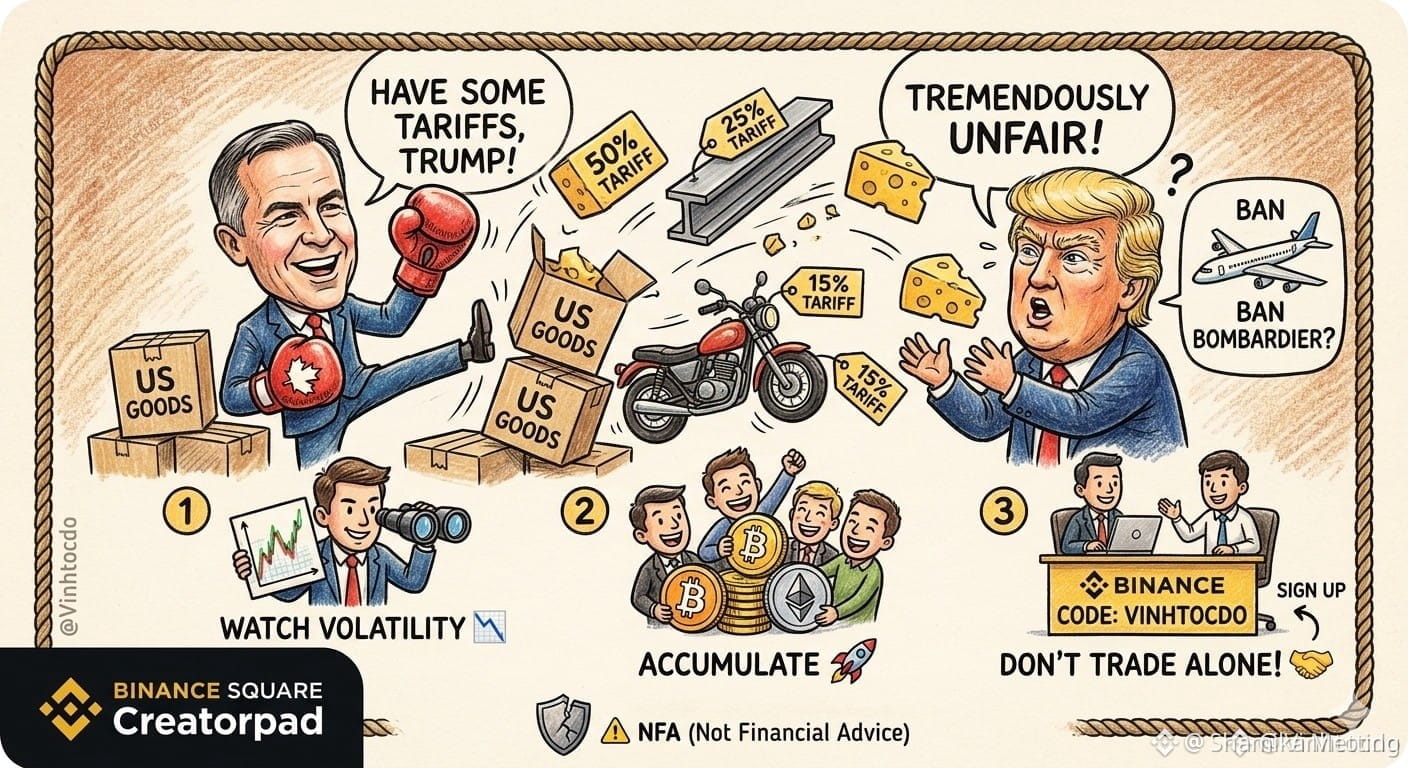
Canada brings it to the United States now?! 🇨🇦🥊🇺🇸
Canada has officially begun imposing tariffs ranging from 15% to 50% on American goods starting Tuesday! From steel to cheese and motorcycles, Prime Minister Mark Carney is dialing up the pressure against Trump. A trade war is officially escalating! 📉
Do crypto traders care about steel and cheese? Well, economic chaos usually means inflation, and inflation makes Bitcoin look like the safest haven! 🚀 What should traders do?
1️⃣ Keep a close eye on the markets because trade wars often create volatility.
2️⃣ Continue accumulating decentralized assets.
⚠️ NFA (not financial advice)!
Please follow along
#TradeWar #bitcoin #MacroEconomics
$BTC
Canada brings it to the United States now?! 🇨🇦🥊🇺🇸
Canada has officially begun imposing tariffs ranging from 15% to 50% on American goods starting Tuesday! From steel to cheese and motorcycles, Prime Minister Mark Carney is dialing up the pressure against Trump. A trade war is officially escalating! 📉
Do crypto traders care about steel and cheese? Well, economic chaos usually means inflation, and inflation makes Bitcoin look like the safest haven! 🚀 What should traders do?
1️⃣ Keep a close eye on the markets because trade wars often create volatility.
2️⃣ Continue accumulating decentralized assets.
⚠️ NFA (not financial advice)!
Please follow along
#TradeWar #bitcoin #MacroEconomics
$BTC
#zcashrises45%WeeklyToHighestSince2016
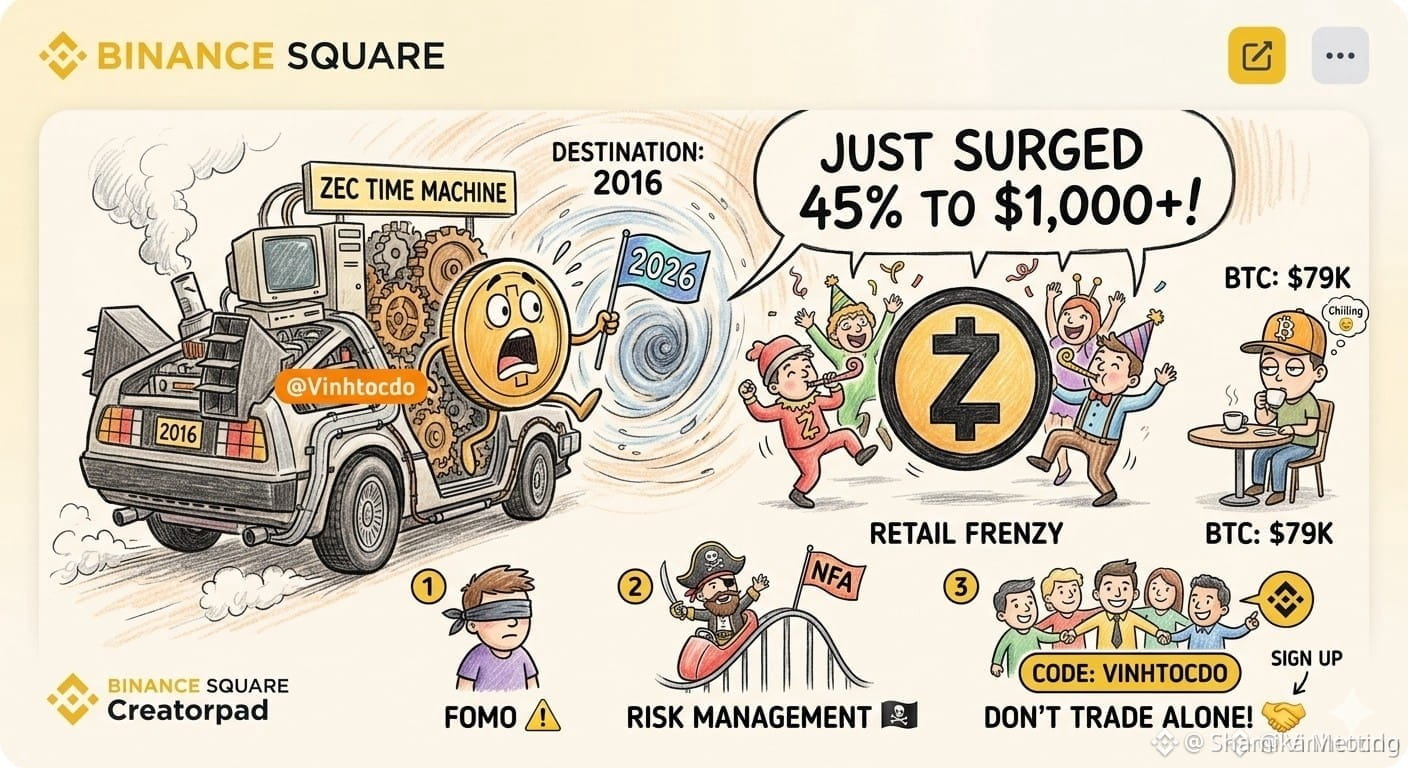
I turned Zcash (ZEC) time machine to 2016! 🚀
ZEC surged by 45% in a week, breaking the $1,000 mark for the first time in a decade! Is ZEC really aiming to be the next 10x coin in 2026, or are retail traders just throwing a wild party? 🤯
While BTC calmly hovers around $79K, privacy coins completely ignore the macro drama and go on a rampage, driving the market crazy. So what should smart traders do?
1️⃣ Don’t let FOMO blind you—watch the key resistance levels.
2️⃣ Enjoy the ride, but keep risk management.
⚠️ NFA (not financial advice)!
Please follow up
#zcash #zec #PrivacyCoins
$BTC
I turned Zcash (ZEC) time machine to 2016! 🚀
ZEC surged by 45% in a week, breaking the $1,000 mark for the first time in a decade! Is ZEC really aiming to be the next 10x coin in 2026, or are retail traders just throwing a wild party? 🤯
While BTC calmly hovers around $79K, privacy coins completely ignore the macro drama and go on a rampage, driving the market crazy. So what should smart traders do?
1️⃣ Don’t let FOMO blind you—watch the key resistance levels.
2️⃣ Enjoy the ride, but keep risk management.
⚠️ NFA (not financial advice)!
Please follow up
#zcash #zec #PrivacyCoins
$BTC
#LiquidNetworkSuffers$320MExploit
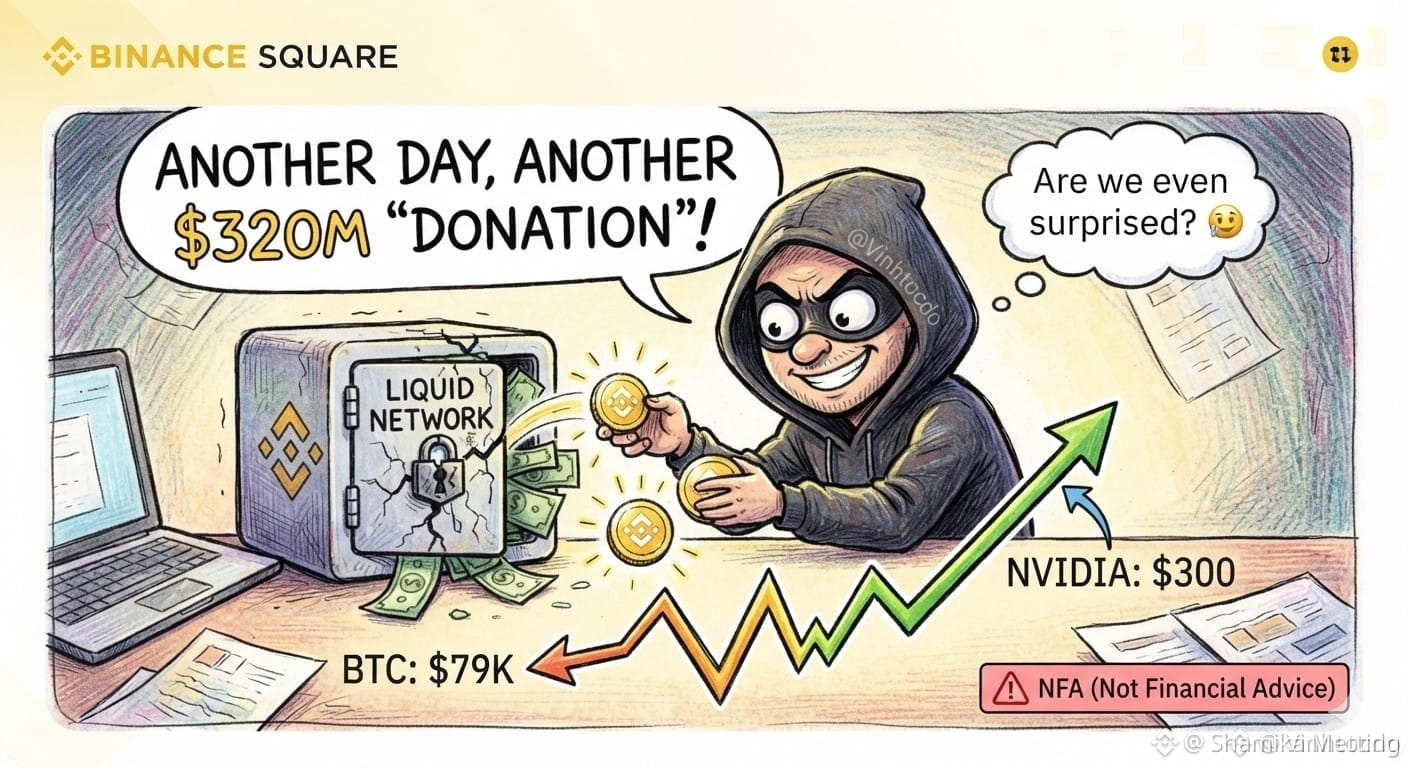
One more day, a final donation of $320 million "to the hackers" from Liquid Network 🫡 Are we still surprised, friends?
With the US-Iran ship crisis, Nvidia aiming for $300, and Liquid being looted—what should traders do?
1️⃣ Stay calm & watch BTC hold steady at $79k.
2️⃣ Diversify your funds. Don’t put all your eggs in one leaky basket.
⚠️ NFA (not financial advice)!
Follow-up, please
#CryptoNews #Bitcoin #CryptoHack
$BTC
One more day, a final donation of $320 million "to the hackers" from Liquid Network 🫡 Are we still surprised, friends?
With the US-Iran ship crisis, Nvidia aiming for $300, and Liquid being looted—what should traders do?
1️⃣ Stay calm & watch BTC hold steady at $79k.
2️⃣ Diversify your funds. Don’t put all your eggs in one leaky basket.
⚠️ NFA (not financial advice)!
Follow-up, please
#CryptoNews #Bitcoin #CryptoHack
$BTC
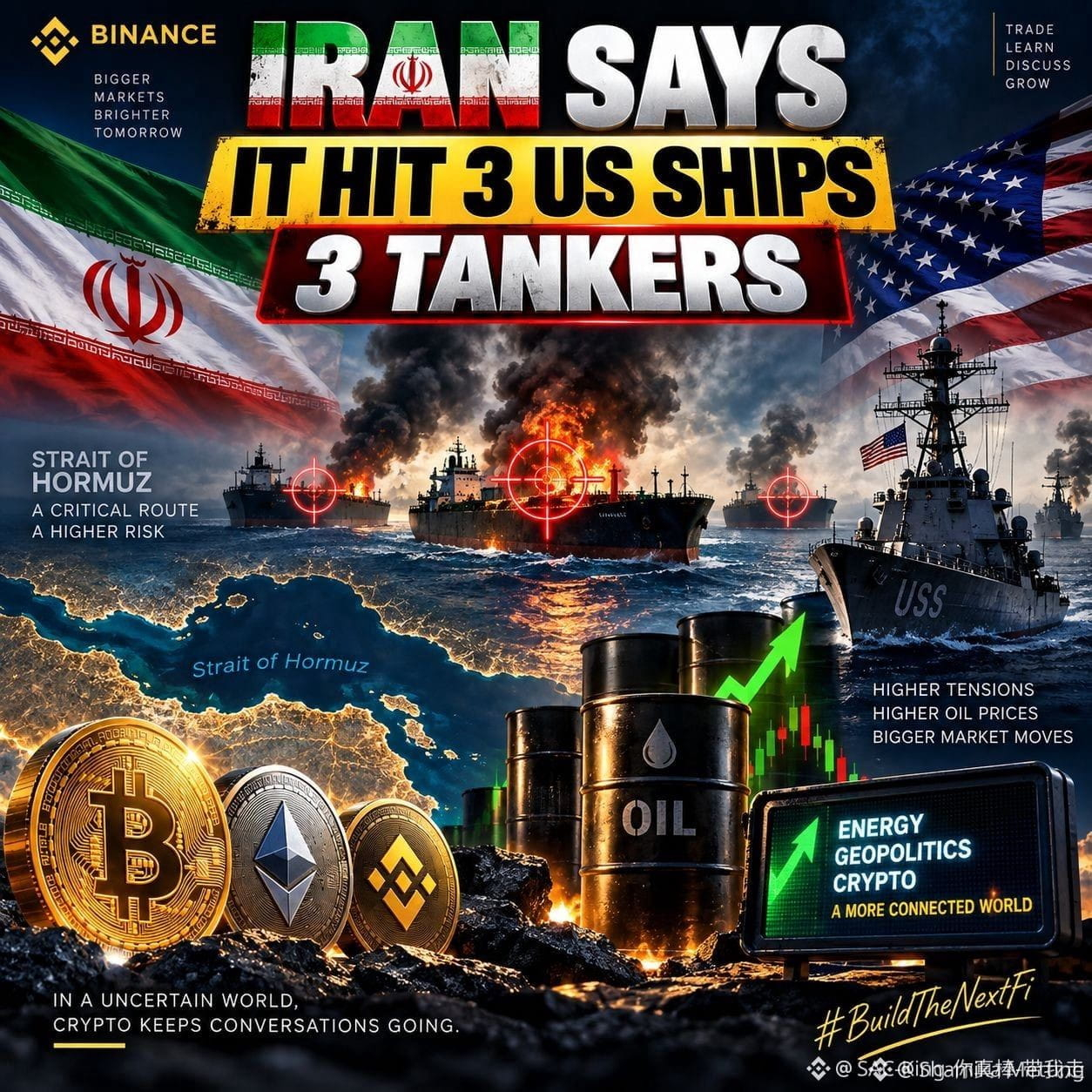
#iransaysithit3usships3tankers
🚨🌍 Iran says it hit 3 US ships and 3 tankers: growing risk for the Strait of Hormuz 🌍🚨
The sea was already tense. Then came further claims from Tehran, turning a shipping route that was already dangerous into a much bigger storyline in the market.
Iran’s Revolutionary Guard said it targeted three oil tankers and three ships linked to the United States after American forces hit three Iranian oil tankers on September 5. However, the details of the alleged damage to the American ships remain disputed and have not been independently confirmed.
Oil markets were already starting to react. Reuters reported Brent crude rising to about $97.48 as shipping disruptions increased and attacks escalated, raising concerns about supply.
For cryptocurrency traders, this matters because geopolitical shocks can change risk appetite almost immediately. Rising energy costs could amplify inflation worries, while uncertainty may push investors toward defensive positions.
Oil, liquidity, and risk sentiment together.
❓Do you think continued disruption of the Strait of Hormuz will be more positive for Bitcoin as an alternative asset, or more negative as a wave of risk aversion spreads?
Disclaimer: This article is for educational purposes only and not financial advice.
Follow-up, please
#Iran #bitcoin.” #GrowWithSAC $RAY $ARB $JUP
#IranSaysItHit3USShips3Tankers
🚨🌍 Iran says it hit 3 US ships and 3 tankers: growing risk for the Strait of Hormuz 🌍🚨
The sea was already tense. Then came further claims from Tehran, turning a shipping route that was already dangerous into a much bigger storyline in the market.
Iran’s Revolutionary Guard said it targeted three oil tankers and three ships linked to the United States after American forces hit three Iranian oil tankers on September 5. However, the details of the alleged damage to the American ships remain disputed and have not been independently confirmed.
Oil markets were already starting to react. Reuters reported Brent crude rising to about $97.48 as shipping disruptions increased and attacks escalated, raising concerns about supply.
For cryptocurrency traders, this matters because geopolitical shocks can change risk appetite almost immediately. Rising energy costs could amplify inflation worries, while uncertainty may push investors toward defensive positions.
Oil, liquidity, and risk sentiment together.
❓Do you think continued disruption of the Strait of Hormuz will be more positive for Bitcoin as an alternative asset, or more negative as a wave of risk aversion spreads?
Disclaimer: This article is for educational purposes only and not financial advice.
Follow-up, please
#Iran #bitcoin.” #GrowWithSAC $RAY $ARB $JUP
#IranSaysItHit3USShips3Tankers
#canadatoimpose15%to50%tariffsonusgoods
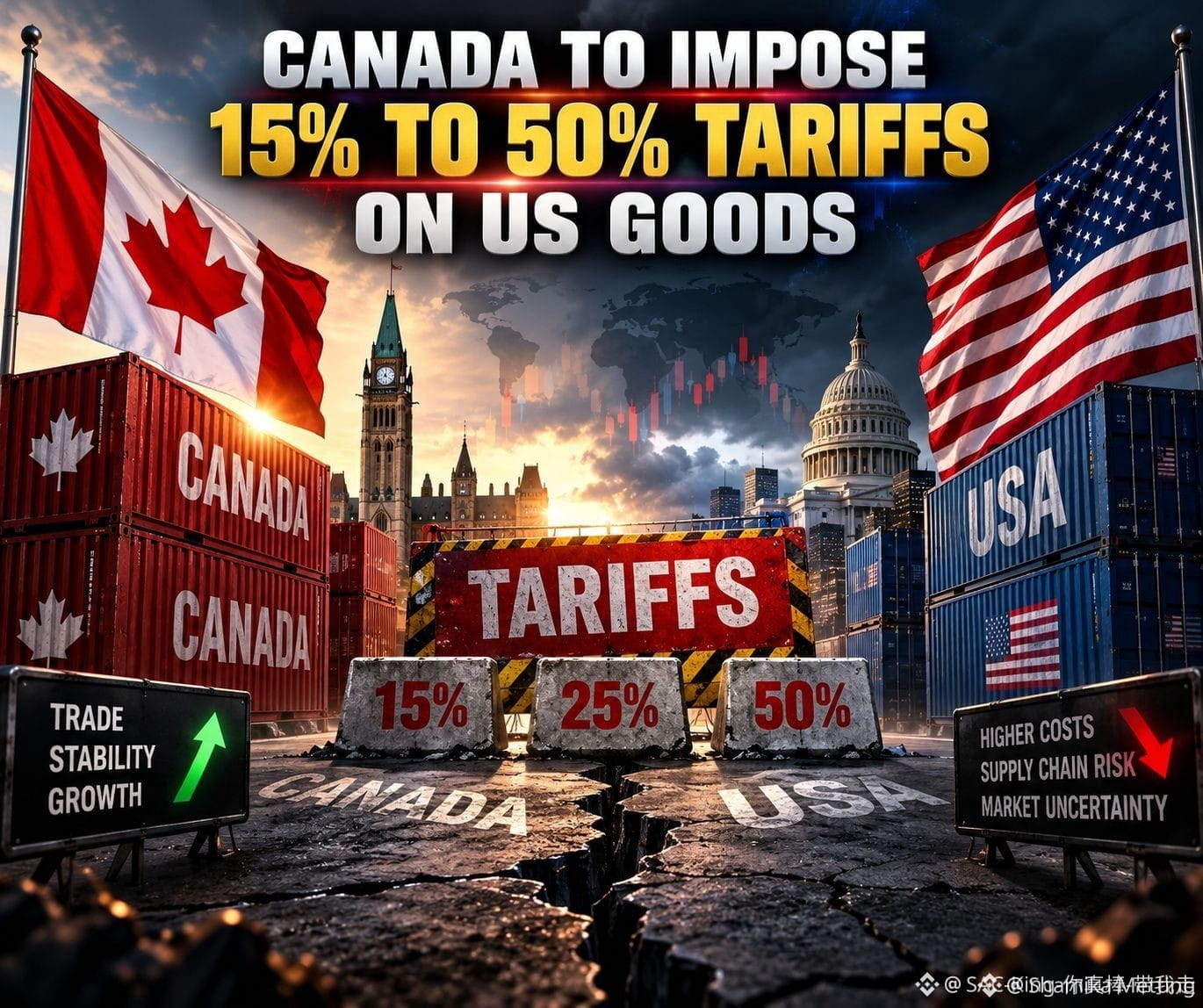
🔥🇨🇦 Canada’s fire returns: 50% customs duties on our goods begin tomorrow! 🇺🇸🔥
When borders become battlefields, prices are the first warning.
When trade turns defensive, markets begin to listen.
Canada is preparing to impose retaliatory customs duties of 15%, 25%, and 50% on selected U.S. goods starting September 8, 2026, in line with the corresponding U.S. tariff rates. These actions cover about CAD 27.6 billion in U.S. imports.
The targeted products include steel, dairy, household appliances, agricultural equipment, paper and pulp, plastic, and electronics. Some steel and aluminum tariffs will increase from 25% to 50%.
The biggest story isn’t just the tariff rate. It’s the potential pressure on business costs, supply chains, consumer prices, currencies, and economic confidence if the disputes continue.
Canada is entering this escalation while its economy is already showing strain. Employment fell by 41,700 jobs in August, while the unemployment rate stayed at 6.4%.
❓ Could this Canada–U.S. escalation be another catalyst to push global markets toward alternative assets?
Disclaimer: For informational purposes only, not financial advice.
Please stay tuned
#Canadatariffs #TradeWar #GrowWithSAC $CFG $WLD $YB
#CanadaToImpose15%To50%TariffsOnUSGoods
🔥🇨🇦 Canada’s fire returns: 50% customs duties on our goods begin tomorrow! 🇺🇸🔥
When borders become battlefields, prices are the first warning.
When trade turns defensive, markets begin to listen.
Canada is preparing to impose retaliatory customs duties of 15%, 25%, and 50% on selected U.S. goods starting September 8, 2026, in line with the corresponding U.S. tariff rates. These actions cover about CAD 27.6 billion in U.S. imports.
The targeted products include steel, dairy, household appliances, agricultural equipment, paper and pulp, plastic, and electronics. Some steel and aluminum tariffs will increase from 25% to 50%.
The biggest story isn’t just the tariff rate. It’s the potential pressure on business costs, supply chains, consumer prices, currencies, and economic confidence if the disputes continue.
Canada is entering this escalation while its economy is already showing strain. Employment fell by 41,700 jobs in August, while the unemployment rate stayed at 6.4%.
❓ Could this Canada–U.S. escalation be another catalyst to push global markets toward alternative assets?
Disclaimer: For informational purposes only, not financial advice.
Please stay tuned
#Canadatariffs #TradeWar #GrowWithSAC $CFG $WLD $YB
#CanadaToImpose15%To50%TariffsOnUSGoods
#imfsayselsalvadorbtcnopublicfunds
I just watched El Salvador play its ultimate “Reverse Uno” card against the IMF! 🇸🇻🔥
President Bukele promised to keep adding 1 BTC per day, but he also had a massive $1.4 billion deal with the IMF on the line.
What was his brilliant move? Funding Bitcoin purchases exclusively through “private donations.” 👀
The IMF has officially confirmed that not a single cent of public money went into building El Salvador’s massive reserve of 7,764 BTC.
So what’s the result? Bukele is able to keep his daily Bitcoin streak going AND also successfully unlock $140 million in IMF financing. That’s truly “eats the cake and keeps it”! 🧠📈
Was this a genius piece of financial management—or just a legendary paper loophole? Let me hear your take! 👇
Please follow up
#Bitcoin #IMF #ElSalvador #CryptoNews
$BTC
I just watched El Salvador play its ultimate “Reverse Uno” card against the IMF! 🇸🇻🔥
President Bukele promised to keep adding 1 BTC per day, but he also had a massive $1.4 billion deal with the IMF on the line.
What was his brilliant move? Funding Bitcoin purchases exclusively through “private donations.” 👀
The IMF has officially confirmed that not a single cent of public money went into building El Salvador’s massive reserve of 7,764 BTC.
So what’s the result? Bukele is able to keep his daily Bitcoin streak going AND also successfully unlock $140 million in IMF financing. That’s truly “eats the cake and keeps it”! 🧠📈
Was this a genius piece of financial management—or just a legendary paper loophole? Let me hear your take! 👇
Please follow up
#Bitcoin #IMF #ElSalvador #CryptoNews
$BTC

Log in to explore more content