
TheStreet Roundtable
2.5k Posting

TheStreet Roundtable
 Square Terverifikasi+
Laporkan
Blokir Pengguna
TheStreet covers the most engaging stories about how to make money, invest your money, save your money, and spend your money.
1 Mengikuti
513 Pengikut
2.2K+ Disukai
Posting
Lihat terjemahan
Trump Media just moved $342 million in Bitcoin, sparking fresh speculationHere's how $6.34 billion Binance hack exploited internal AI agents (4:12)
Wallets linked to Trump Media & Technology Group, the parent company of Truth Social, moved 4,259 Bitcoin, worth approximately $342 million, to Crypto.com, according to Arkham data.
The transfer has revived questions over whether the company is trimming its crypto treasury.
The coins left in two near-equal batches of 2,140.03 BTC and 2,119.31 BTC at 02:17 UTC. Both came from addresses labelled “2028 Convertible Notes Collateral” and went to an address attributed to Crypto.com. Bitcoin was trading near $80,000 at the time.
Related: Musk warned America will go 1,000% bankrupt. Now U.S. debt tops $40 trillion and counting
Link to the convertible notes
Trump Media’s second-quarter filing said 4,260.73 BTC was pledged as collateral for its convertible notes as of June 30, with withdrawals restricted under the loan indenture.
Arkham’s labels match that arrangement, but the data does not explain why the coins were moved.
A Nov. 2 securities filing said noteholders can require cash repayment on Nov. 30. If every holder exercises that right, the company could owe roughly $1 billion.
The filing warned that if refinancing or other measures fall short, Trump Media may have to sell Bitcoin or other digital assets.
A transfer is not a sale
The latest move equals about 30% of the roughly 14,139 BTC the company said it held, including pledged coins, as of July 31.
Moving coins to an exchange does not by itself establish a sale. In May, wallets tied to the company sent about 2,650 BTC, then worth roughly $205 million, to Crypto.com.
At that time, a spokesperson said the Bitcoin was transferred, not sold, as part of a broader trading strategy.
In early August, 2,628 BTC, about $165 million, went to the same platform. The company called that custody management. Crypto.com has been one of its custody partners since the treasury strategy began.
Attention now turns to whether the coins stay at Crypto.com, move again, or show up in transactions pointing to a sale.
The Roundtable 100
If you follow our market coverage, don’t miss the Roundtable 100. Updated every Friday, it’s a power ranking of the 100 most investable tech stocks, including digital assets. Check out the latest RTB 100 rankings at roundtable100.com.
Related: Binance founder issues chilling warning after record crypto heist
Trump Media just moved $342 million in Bitcoin, sparking fresh speculation
Here's how $6.34 billion Binance hack exploited internal AI agents (4:12)
Wallets linked to Trump Media & Technology Group, the parent company of Truth Social, moved 4,259 Bitcoin, worth approximately $342 million, to Crypto.com, according to Arkham data.
The transfer has revived questions over whether the company is trimming its crypto treasury.
The coins left in two near-equal batches of 2,140.03 BTC and 2,119.31 BTC at 02:17 UTC. Both came from addresses labelled “2028 Convertible Notes Collateral” and went to an address attributed to Crypto.com. Bitcoin was trading near $80,000 at the time.
Related: Musk warned America will go 1,000% bankrupt. Now U.S. debt tops $40 trillion and counting
Link to the convertible notes
Trump Media’s second-quarter filing said 4,260.73 BTC was pledged as collateral for its convertible notes as of June 30, with withdrawals restricted under the loan indenture.
Arkham’s labels match that arrangement, but the data does not explain why the coins were moved.
A Nov. 2 securities filing said noteholders can require cash repayment on Nov. 30. If every holder exercises that right, the company could owe roughly $1 billion.
The filing warned that if refinancing or other measures fall short, Trump Media may have to sell Bitcoin or other digital assets.
A transfer is not a sale
The latest move equals about 30% of the roughly 14,139 BTC the company said it held, including pledged coins, as of July 31.
Moving coins to an exchange does not by itself establish a sale. In May, wallets tied to the company sent about 2,650 BTC, then worth roughly $205 million, to Crypto.com.
At that time, a spokesperson said the Bitcoin was transferred, not sold, as part of a broader trading strategy.
In early August, 2,628 BTC, about $165 million, went to the same platform. The company called that custody management. Crypto.com has been one of its custody partners since the treasury strategy began.
Attention now turns to whether the coins stay at Crypto.com, move again, or show up in transactions pointing to a sale.
The Roundtable 100
If you follow our market coverage, don’t miss the Roundtable 100. Updated every Friday, it’s a power ranking of the 100 most investable tech stocks, including digital assets. Check out the latest RTB 100 rankings at roundtable100.com.
Related: Binance founder issues chilling warning after record crypto heist
Terverifikasi
Strive milik Vivek Ramaswamy turun 62 posisi di Roundtable 100Getty Images
Strive (Nasdaq: ASST), perusahaan manajemen aset dan perbendaharaan Bitcoin (BTC), turun 62 posisi dalam peringkat Roundtable 100 tanggal 30 Oktober.
Saat ini, perusahaan tersebut memiliki 43.124 Bitcoin di neracanya.
Strive turun ke posisi No. 86
Dipublikasikan bersama TheStreet, The Roundtable 100 memeringkat 100 aset teknologi bertumbuh yang diperdagangkan secara publik. Masing-masing diberi skor 0 hingga 100 oleh para analis Blue Ribbon Committee berdasarkan lima variabel: Tim, Keamanan, Nilai, Inovasi, dan Dominasi Pasar. Rata-rata skor tersebut menjadi Peringkat Kekuatan aset. Daftar ini diperbarui setiap Jumat setelah pasar AS tutup.
Strive milik Vivek Ramaswamy turun 62 posisi di Roundtable 100
Getty Images
Strive (Nasdaq: ASST), perusahaan manajemen aset dan perbendaharaan Bitcoin (BTC), turun 62 posisi dalam peringkat Roundtable 100 tanggal 30 Oktober.
Saat ini, perusahaan tersebut memiliki 43.124 Bitcoin di neracanya.
Strive turun ke posisi No. 86
Dipublikasikan bersama TheStreet, The Roundtable 100 memeringkat 100 aset teknologi bertumbuh yang diperdagangkan secara publik. Masing-masing diberi skor 0 hingga 100 oleh para analis Blue Ribbon Committee berdasarkan lima variabel: Tim, Keamanan, Nilai, Inovasi, dan Dominasi Pasar. Rata-rata skor tersebut menjadi Peringkat Kekuatan aset. Daftar ini diperbarui setiap Jumat setelah pasar AS tutup.
1.3k
Artikel
Pengguna Samsung Wallet kini dapat mengirim USDC di Solanariverside_lu_yin – samsung x solana klip_thestreet_roundtabl (1) (3:08)
Stablecoin telah berkembang selama satu dekade di dalam aplikasi kripto.
Kini Solana menghadirkannya di salah satu ponsel cerdas yang paling banyak digunakan di AS.
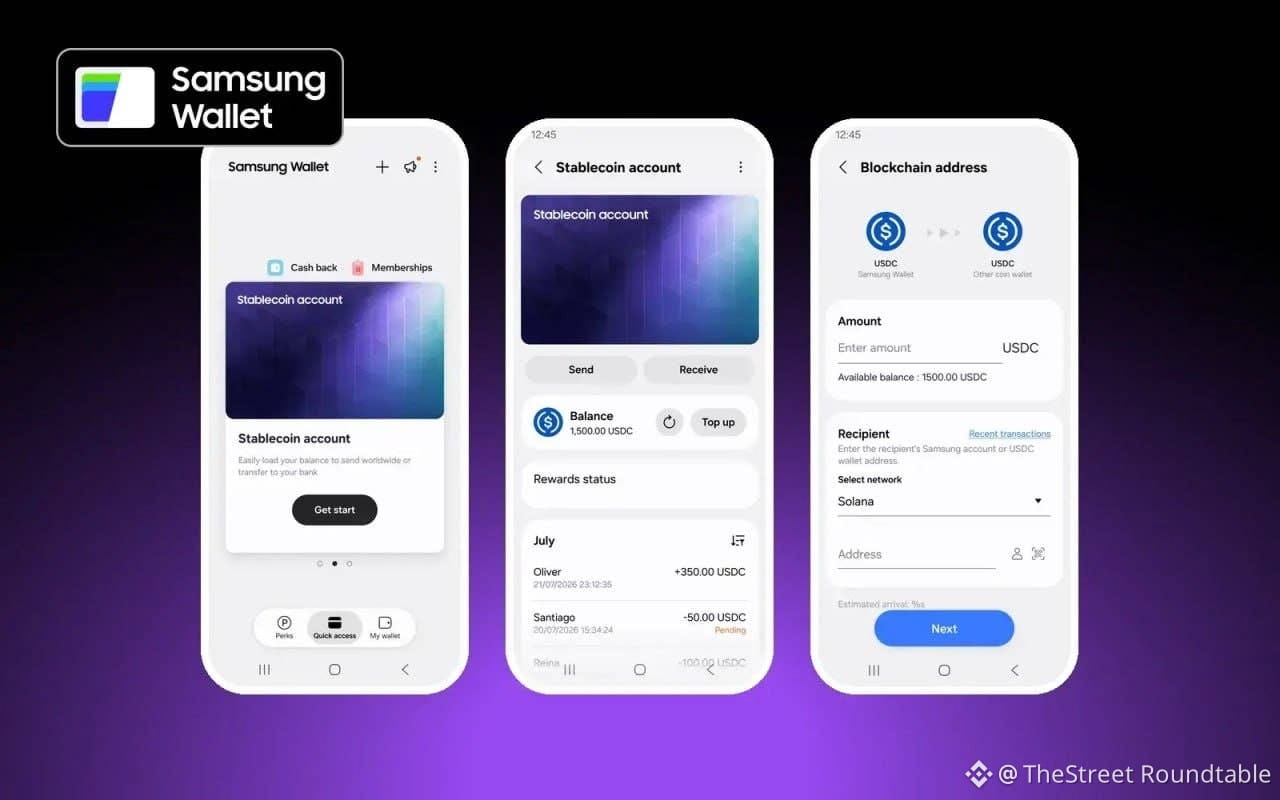
Mulai hari ini, pengguna Galaxy yang memenuhi syarat di AS dapat membeli, menyimpan, mengirim, dan menerima USDC di Solana melalui Samsung Wallet.
Samsung pertama kali mengumumkan fitur bernama Akun Stablecoin ini pada 7 Oktober.
USDC adalah stablecoin, yaitu token digital yang dirancang untuk mempertahankan nilai stabil sebesar $1. Solana adalah jaringan blockchain berkecepatan tinggi yang dibuat untuk transaksi cepat dan berbiaya rendah. Semua transfer diselesaikan di Solana.
Pengguna Samsung Wallet kini dapat mengirim USDC di Solana
riverside_lu_yin – samsung x solana klip_thestreet_roundtabl (1) (3:08)
Stablecoin telah berkembang selama satu dekade di dalam aplikasi kripto.
Kini Solana menghadirkannya di salah satu ponsel cerdas yang paling banyak digunakan di AS.
Mulai hari ini, pengguna Galaxy yang memenuhi syarat di AS dapat membeli, menyimpan, mengirim, dan menerima USDC di Solana melalui Samsung Wallet.
Samsung pertama kali mengumumkan fitur bernama Akun Stablecoin ini pada 7 Oktober.
USDC adalah stablecoin, yaitu token digital yang dirancang untuk mempertahankan nilai stabil sebesar $1. Solana adalah jaringan blockchain berkecepatan tinggi yang dibuat untuk transaksi cepat dan berbiaya rendah. Semua transfer diselesaikan di Solana.
49
Artikel
Pemegang saham MicroStrategy mengatakan investasinya sebesar $219 ribu untuk tiga anaknya turun 73%, Saylor menanggapiVideo seorang pemegang saham Strategy yang frustrasi mendesak salah satu pendiri Michael Saylor dan CEO Phong Le untuk menjelaskan investasi yang anjlok itu kembali beredar di kalangan kripto pada Selasa.
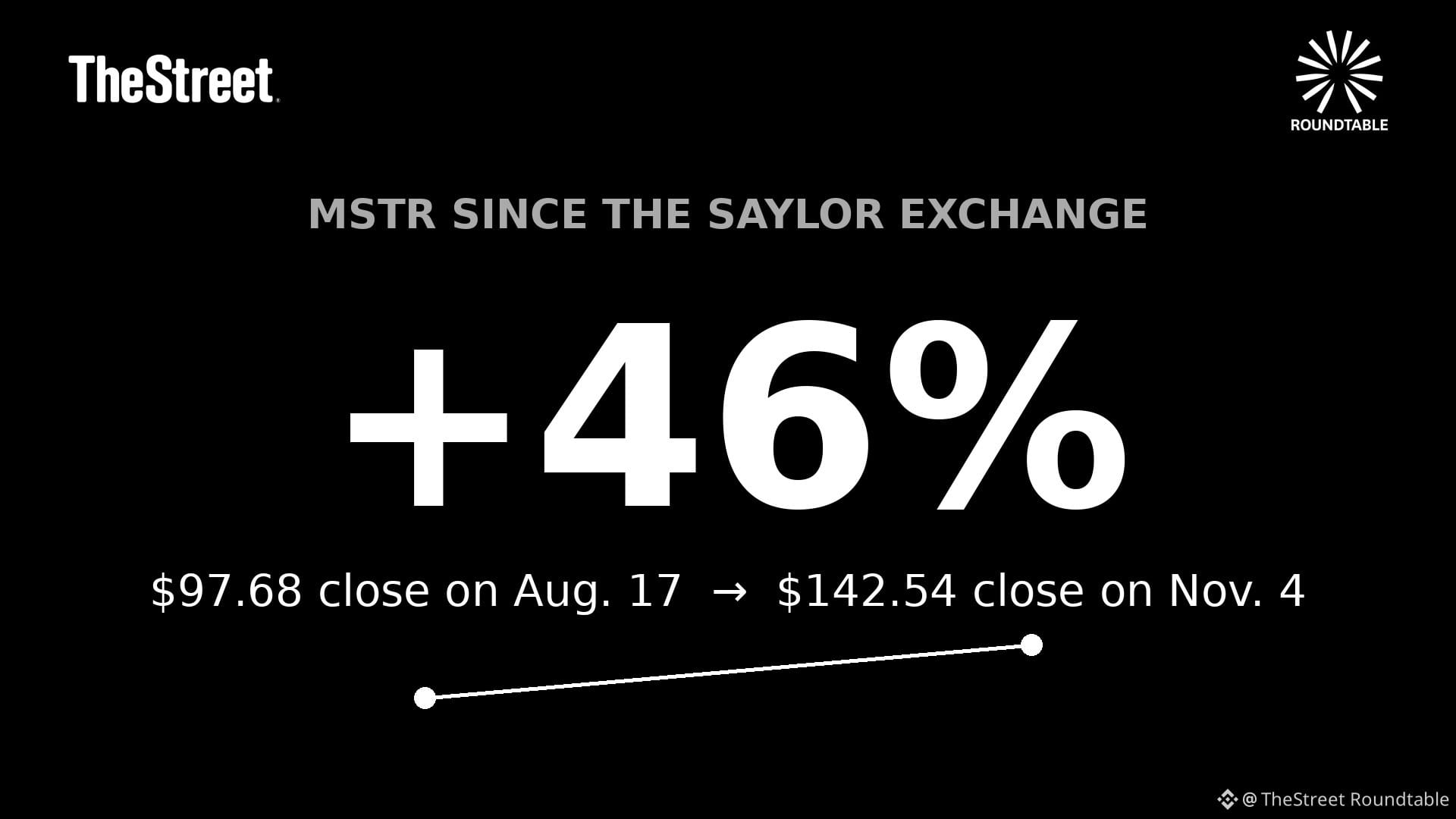
Pertukaran tersebut bukan hal baru. Peristiwa itu terjadi saat sesi tanya jawab pemegang saham yang disiarkan langsung pada 17 Agustus, dan kini kembali beredar ketika saham MSTR masih sekitar 74% di bawah rekor tertingginya sepanjang masa dan Bitcoin lebih dari sepertiga di bawah rekornya sendiri.
Strategy, yang sebelumnya dikenal sebagai MicroStrategy, adalah perusahaan dengan kepemilikan Bitcoin terbesar. Sahamnya dirancang untuk memperbesar pergerakan Bitcoin ke dua arah, sebuah rancangan yang menjadi inti pertanyaan pemegang saham tersebut.
Pemegang saham MicroStrategy mengatakan investasinya sebesar $219 ribu untuk tiga anaknya turun 73%, Saylor menanggapi
Video seorang pemegang saham Strategy yang frustrasi mendesak salah satu pendiri Michael Saylor dan CEO Phong Le untuk menjelaskan investasi yang anjlok itu kembali beredar di kalangan kripto pada Selasa.
Pertukaran tersebut bukan hal baru. Peristiwa itu terjadi saat sesi tanya jawab pemegang saham yang disiarkan langsung pada 17 Agustus, dan kini kembali beredar ketika saham MSTR masih sekitar 74% di bawah rekor tertingginya sepanjang masa dan Bitcoin lebih dari sepertiga di bawah rekornya sendiri.
Strategy, yang sebelumnya dikenal sebagai MicroStrategy, adalah perusahaan dengan kepemilikan Bitcoin terbesar. Sahamnya dirancang untuk memperbesar pergerakan Bitcoin ke dua arah, sebuah rancangan yang menjadi inti pertanyaan pemegang saham tersebut.
157
Perusahaan Eric Trump menghadapi tagihan listrik yang meningkatAmerican Bitcoin, perusahaan penambang yang tercatat di Nasdaq dan didirikan bersama oleh Eric Trump, melaporkan kenaikan biaya listrik dan penurunan margin penambangan pada kuartal ketiga, meski kembali membukukan laba bersih.
American Bitcoin (ABTC) menyatakan dalam rilis laporan keuangannya pada 4 November bahwa biaya yang dilaporkan untuk menambang satu Bitcoin naik menjadi sekitar $42.100, dari $36.500 pada kuartal kedua. Kenaikan biaya listrik musiman menjadi alasan utama.
Kenaikan sekitar 15% itu terjadi saat produksi Bitcoin dan pendapatan penambangan turun. Margin kotor menyusut menjadi sekitar 41% dari 49%, meskipun perusahaan melaporkan laba bersih hampir $126 juta.
Perusahaan Eric Trump menghadapi tagihan listrik yang meningkat
American Bitcoin, perusahaan penambang yang tercatat di Nasdaq dan didirikan bersama oleh Eric Trump, melaporkan kenaikan biaya listrik dan penurunan margin penambangan pada kuartal ketiga, meski kembali membukukan laba bersih.
American Bitcoin (ABTC) menyatakan dalam rilis laporan keuangannya pada 4 November bahwa biaya yang dilaporkan untuk menambang satu Bitcoin naik menjadi sekitar $42.100, dari $36.500 pada kuartal kedua. Kenaikan biaya listrik musiman menjadi alasan utama.
Kenaikan sekitar 15% itu terjadi saat produksi Bitcoin dan pendapatan penambangan turun. Margin kotor menyusut menjadi sekitar 41% dari 49%, meskipun perusahaan melaporkan laba bersih hampir $126 juta.
1
111
Artikel
Senator Demokrat pertama Texas sejak 1988 mengirimkan pesan keras kepada MuskGetty Images
James Talarico menjadi Demokrat pertama yang memenangkan kursi Senat Texas sejak 1998. Ia mengalahkan Partai Republik Ken Paxton dalam pemilihan Senat termahal dalam sejarah Amerika.
Elon Musk, yang menghabiskan banyak waktu di Austin, Texas, menyumbangkan setidaknya $212 juta untuk mendukung Paxton. Secara keseluruhan, setidaknya $573 juta telah digelontorkan untuk mendukung Paxton dan Talarico menjelang pemungutan suara kemarin.
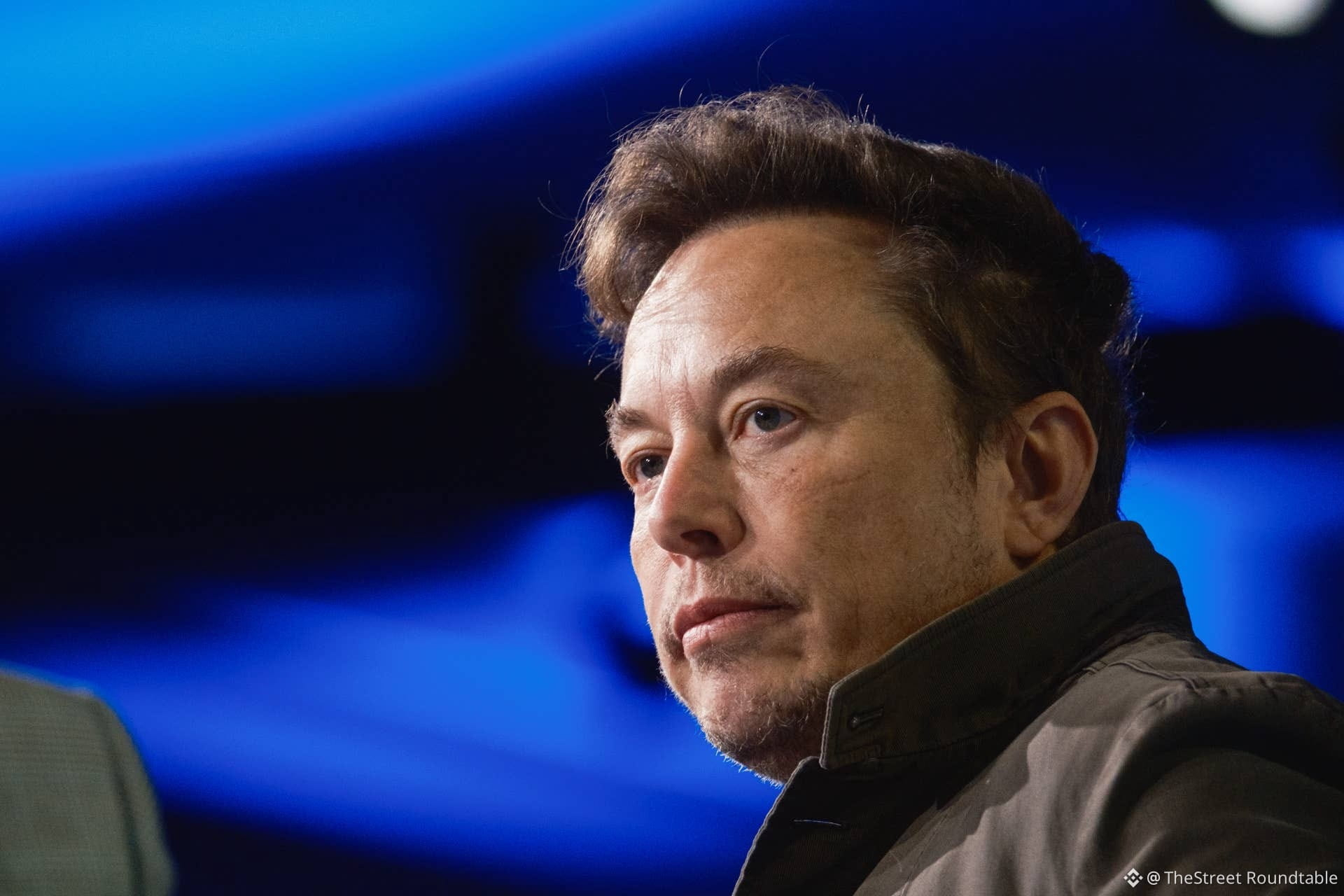
Elon Musk, CEO Tesla, dalam acara EEI 2023 di Austin, Texas, AS, pada 13 Juni 2023.
Senator Demokrat pertama Texas sejak 1988 mengirimkan pesan keras kepada Musk
Getty Images
James Talarico menjadi Demokrat pertama yang memenangkan kursi Senat Texas sejak 1998. Ia mengalahkan Partai Republik Ken Paxton dalam pemilihan Senat termahal dalam sejarah Amerika.
Elon Musk, yang menghabiskan banyak waktu di Austin, Texas, menyumbangkan setidaknya $212 juta untuk mendukung Paxton. Secara keseluruhan, setidaknya $573 juta telah digelontorkan untuk mendukung Paxton dan Talarico menjelang pemungutan suara kemarin.
Elon Musk, CEO Tesla, dalam acara EEI 2023 di Austin, Texas, AS, pada 13 Juni 2023.
79
Artikel
Lihat terjemahan
Solana Foundation payments lead: Banks will hold cash on-chainWhy tokenized deposits will not replace stablecoins, according to Solana's Jamal Raees (4:13)
Banks are starting to put deposits on blockchain. Jamal Raees told TheStreet Roundtable why he thinks they will still need stablecoins to spend them at Money20/20.
A deposit token is a digital version of money held at a bank. It moves on a blockchain, but it stays a deposit, with the bank’s balance sheet behind it.
JPMorgan made its JPMD deposit token available to institutional clients last November on Base, the public blockchain built by Coinbase. It was the first U.S. dollar deposit token issued by a bank on a public blockchain.
Raees joined the Solana Foundation as general manager of payments in September after roles at Polygon Labs, Bridge and Wyre. He said he also spent time with BitPay, Square and Cash App.
Bank tokens for the treasury
Bessent has pitched dollar stablecoins as a tool for dollar dominance, a sentiment with which Raees agrees, but he takes it even further.
“I think stablecoins and especially tokenized deposits are gonna further entrench that, which is great,” he said.
He expects tokenized deposits to become the main place institutions hold cash on-chain. He said they may even be FDIC insured, although this is not confirmed yet, and that they would offer the best yield. JPMorgan stresses that its JPM Coin is a deposit, not a stablecoin.
The yield pitch could give banks an edge. The GENIUS Act, signed into law in July 2025, bars stablecoin issuers like Circle from paying interest directly to holders, while bank deposits can still pay it.
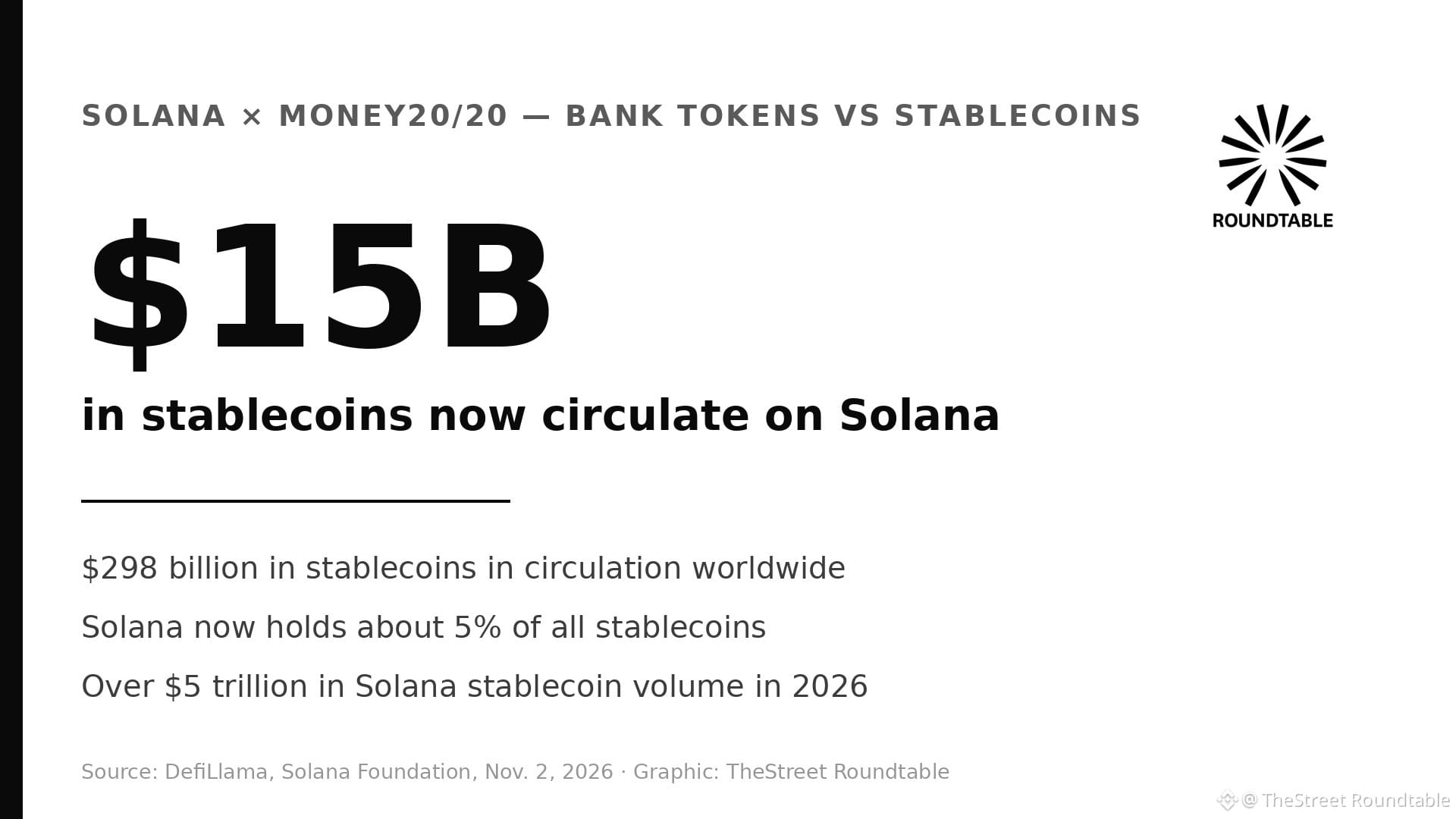
Stablecoin market size and Solana’s share, as of Nov. 2. Source: DefiLlama
Why Circle and Tether keep the rails
What banks will not do, he said, is the decade of work needed to get liquid in every market. That gives Circle and Tether “a moat to a certain extent.”
Stablecoins in circulation total about $295 billion, and Solana holds about $15 billion of them. Visa launched stablecoin settlement for U.S. banks in December, starting with USDC over Solana.
Raees sees the two kinds of tokens working together.
“JPMorgan will hold the asset in JPMD, they'll swap programmatically into USDC, and then they will execute the transaction,” he said.
That fits a broader push by the foundation into payments and fintech, from Samsung wallets to emerging markets.
Agentic payments start with businesses
Asked what excites him most, Raees pointed to AI agents.
“I think agentic gets really exciting on the B2B side first, which is a hot take. I think retail comes later,” he said.
He said suppliers are already using agents to automate vendor and supply chain work. The Solana Foundation has said that AI agents will need new payment rails, and that stablecoins are a natural fit for machines paying machines.
He also wants on-chain FX to mature. He expects yield to be a big theme over the next 18 months.
“We think treasurers are just starting to discover that. It's gonna be massive,” Raees said.
Popular on TheStreet Roundtable
Solana Foundation exec: Emerging markets embrace stablecoins first
GENIUS Act factored into Samsung stablecoin move, Solana Foundation exec says
Solana Foundation exec says new payment rails are emerging for AI agents
Disclaimer: This article is for informational purposes only and does not constitute financial advice. Cryptocurrency investments are highly volatile and risky. Always conduct your own research before making any investment decisions.
Solana Foundation payments lead: Banks will hold cash on-chain
Why tokenized deposits will not replace stablecoins, according to Solana's Jamal Raees (4:13)
Banks are starting to put deposits on blockchain. Jamal Raees told TheStreet Roundtable why he thinks they will still need stablecoins to spend them at Money20/20.
A deposit token is a digital version of money held at a bank. It moves on a blockchain, but it stays a deposit, with the bank’s balance sheet behind it.
JPMorgan made its JPMD deposit token available to institutional clients last November on Base, the public blockchain built by Coinbase. It was the first U.S. dollar deposit token issued by a bank on a public blockchain.
Raees joined the Solana Foundation as general manager of payments in September after roles at Polygon Labs, Bridge and Wyre. He said he also spent time with BitPay, Square and Cash App.
Bank tokens for the treasury
Bessent has pitched dollar stablecoins as a tool for dollar dominance, a sentiment with which Raees agrees, but he takes it even further.
“I think stablecoins and especially tokenized deposits are gonna further entrench that, which is great,” he said.
He expects tokenized deposits to become the main place institutions hold cash on-chain. He said they may even be FDIC insured, although this is not confirmed yet, and that they would offer the best yield. JPMorgan stresses that its JPM Coin is a deposit, not a stablecoin.
The yield pitch could give banks an edge. The GENIUS Act, signed into law in July 2025, bars stablecoin issuers like Circle from paying interest directly to holders, while bank deposits can still pay it.
Stablecoin market size and Solana’s share, as of Nov. 2. Source: DefiLlama
Why Circle and Tether keep the rails
What banks will not do, he said, is the decade of work needed to get liquid in every market. That gives Circle and Tether “a moat to a certain extent.”
Stablecoins in circulation total about $295 billion, and Solana holds about $15 billion of them. Visa launched stablecoin settlement for U.S. banks in December, starting with USDC over Solana.
Raees sees the two kinds of tokens working together.
“JPMorgan will hold the asset in JPMD, they'll swap programmatically into USDC, and then they will execute the transaction,” he said.
That fits a broader push by the foundation into payments and fintech, from Samsung wallets to emerging markets.
Agentic payments start with businesses
Asked what excites him most, Raees pointed to AI agents.
“I think agentic gets really exciting on the B2B side first, which is a hot take. I think retail comes later,” he said.
He said suppliers are already using agents to automate vendor and supply chain work. The Solana Foundation has said that AI agents will need new payment rails, and that stablecoins are a natural fit for machines paying machines.
He also wants on-chain FX to mature. He expects yield to be a big theme over the next 18 months.
“We think treasurers are just starting to discover that. It's gonna be massive,” Raees said.
Popular on TheStreet Roundtable
Solana Foundation exec: Emerging markets embrace stablecoins first
GENIUS Act factored into Samsung stablecoin move, Solana Foundation exec says
Solana Foundation exec says new payment rails are emerging for AI agents
Disclaimer: This article is for informational purposes only and does not constitute financial advice. Cryptocurrency investments are highly volatile and risky. Always conduct your own research before making any investment decisions.
6
Artikel
Lihat terjemahan
Did the crypto industry win the midterms?People arrive and depart a polling location on the first day of early voting in Texas for the midterm elections, at the West Gray Metropolitan Multiservice Center in Houston, Texas, on October 19, 2026.
Getty Images
The crypto industry spent the past two years trying to buy itself a friendlier Congress. On Tuesday, voters handed it a more complicated one.
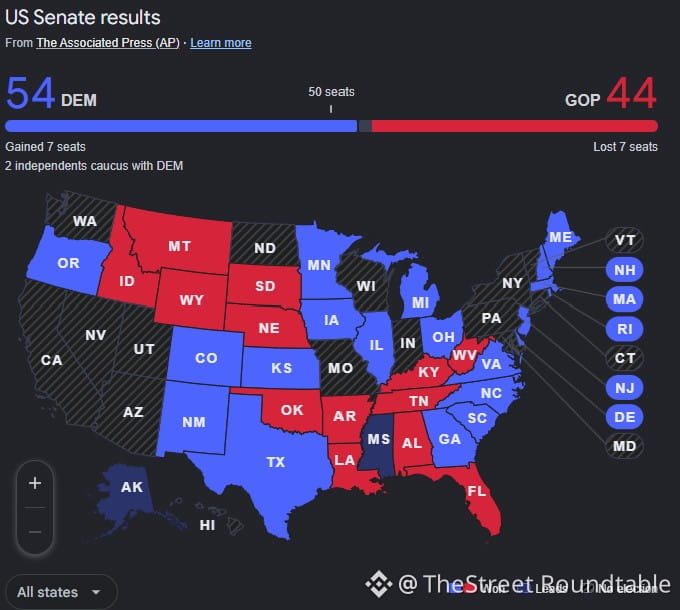
Democrats took control of both chambers in the 2026 midterms. They flipped Senate seats in Ohio, North Carolina, Texas and Maine, and held Georgia and New Hampshire.
The result reshapes the outlook for an industry that has grown close to President Donald Trump.
It also has spent roughly $200 million this cycle backing candidates it sees as allies.
Most of that money came through Fairshake, a super PAC network bankrolled largely by Coinbase, Ripple and venture firm Andreessen Horowitz, according to CNBC report.
A super PAC is a political committee that can raise and spend unlimited sums, as long as it doesn’t coordinate directly with candidates.
Ohio delivers the costliest loss
On paper, the night went fine for the industry. Fairshake had won 29 of the 34 races it spent on as of Wednesday, with several still uncalled.
The race that mattered most went the other way. In Ohio, Democrat Sherrod Brown beat Republican Sen. Jon Husted, about 50% to 45% with nearly all votes counted.
Brown is a former chair of the Senate Banking Committee and one of crypto’s most persistent critics in Washington. Crypto PACs spent more than $60 million trying to keep him out.
The industry did land a win in Nebraska. Republican Sen. Pete Ricketts held off independent Dan Osborn, a former union leader, after Fairshake and its affiliates spent at least $13.5 million against Osborn. Ricketts voted for the CLARITY Act.
The CLARITY Act is the industry’s top legislative priority. It is a bill that would set federal rules for which regulator oversees digital assets.
It cleared the House 294 to 134 in July 2025, then stalled in the Senate on Sept. 15, falling 49 to 50 on a procedural vote that needed 60.
With Democrats now holding both chambers, its path gets steeper, and the industry may face oversight hearings instead.
Markets shrug off the shift
Crypto prices dipped overnight as results came in, then recovered on Wednesday.
Bitcoin climbed back above $80,000, up about 3.1%. Bitcoin is the largest cryptocurrency by market value.
Bitcoin price at press time. Source: Decibel
Winners and losers
Winners:
Sherrod Brown (D-Ohio): The former Senate Banking Committee chair beat Republican Sen. Jon Husted, roughly 50% to 45%, to return to the Senate. Crypto PACs spent more than $60 million trying to stop him.
James Talarico (D-Texas): The 37-year-old former teacher and state lawmaker defeated Republican Ken Paxton, 55% to 43%. Trump carried Texas by double digits two years ago. In 2025, Talarico voted for Texas’s Strategic Bitcoin Reserve law.
Chuck Schumer (D-N.Y.): The Senate Democratic leader is set to become majority leader again. He recruited Brown and Roy Cooper, and both flipped Republican-held seats.
Pete Ricketts (R-Neb.): The senator held off independent Dan Osborn, helped by at least $13.5 million in Fairshake spending against Osborn. Ricketts voted for the CLARITY Act.
Byron Donalds (R-Fla.): The congressman won Florida’s governor race over Democrat David Jolly. In Congress, he introduced a bill to create a federal Bitcoin reserve.
Abdul El-Sayed (D-Mich.): He beat Republican Mike Rogers for Michigan’s open Senate seat and becomes the first Muslim elected to the U.S. Senate.
Annie Andrews (D-S.C.): The pediatrician flipped a Republican-held seat by beating Trump-backed Darline Graham. She is South Carolina’s first Democratic senator since 1998 and its first elected female senator.
Ohio Democratic Senate candidate, former Sen. Sherrod Brown (D-OH) speaks during a midterm election night watch party at the Hilton Downtown Columbus on November 03, 2026 in Columbus, Ohio.
Getty Images
The short answer
On candidates, yes. On policy, no clear victory.
Fairshake-backed candidates won 29 of the 34 races the group spent on as of Wednesday, but the industry’s biggest bet failed: crypto PACs spent more than $60 million against Sen. Sherrod Brown, and he won Ohio anyway.
The industry’s top legislative goal, the CLARITY Act, now faces a steeper path with Democrats holding both chambers.
Bitwise and Strategy read the results
Bitwise Chief Investment Officer Matt Hougan saw the recovery as a sign of stability rather than partisanship. Bitwise is a crypto asset manager.
“It’s a relief rally because the election worked: No fighting, no drawn out legal battles,” he wrote on X.
In a follow-up, Hougan said the market was separating political tokens from the rest. TRUMP and WLFI are the memecoin and token tied to Trump’s crypto ventures.
“Assets that are directly impacted by election results are getting hammered ($TRUMP, $WLFI, AI-linked miners), while assets that are not ($BTC, $ETH, $SOL, etc.) are doing fine,” he wrote.
“A few years ago, people treated crypto as one big hot ball of money. Those days appear to be over.”
AI-linked miners are Bitcoin mining companies that have moved into renting computing power to AI firms.
Strategy Executive Chairman Michael Saylor focused on two states. Strategy is the largest corporate holder of Bitcoin.
Michael Saylor, co-founder and executive chairman of MicroStrategy Inc., during the Conservative Political Action Conference (CPAC) on Feb. 20, 2025.
Jason C. Andrew/Bloomberg via Getty Images
“Florida elected a Republican governor who backed a U.S. Bitcoin reserve. Texas elected a Democratic senator who voted to create one for his state,” he posted.
Donalds introduced a federal Bitcoin reserve bill in Congress. Talarico voted for Texas’s reserve law, SB 21, as a state representative in 2025.
For an industry that has courted both parties, Saylor’s point may be the most useful takeaway.
The next Congress will be friendlier to crypto’s critics, but support for Bitcoin itself didn’t break neatly along party lines on Tuesday.
Here’s how election night unfolded, as we tracked it:
Race calls are projections by the Associated Press. Winners are not official until states certify results.
12:05 a.m. ET | Democrat James Talarico has won the U.S. Senate race in Texas, defeating Republican Ken Paxton, the state attorney general who beat Sen. John Cornyn in the May Republican primary runoff.
Talarico voted yes on Texas’ strategic Bitcoin reserve bill as a state representative and says he supports “clear, fair rules for cryptocurrency.” Stand With Crypto rates him “strongly supports crypto.”
9:16 p.m. ET | Republican Andy Barr has won the U.S. Senate race in Kentucky, and the Senate gains one of the House’s reliable crypto votes.
Andy Barr. (United States Congress)
Barr voted yes on all three of the House’s July 2025 crypto bills – the CLARITY Act, the GENIUS Act and the Anti-CBDC Surveillance State Act – according to House Clerk roll calls.
He praised the GENIUS Act for “ushering in American crypto and digital asset dominance” in a statement on his House website. Barr takes the seat of Sen. Mitch McConnell, who announced last year he would not seek reelection.
9:09 p.m. ET | Republican Harriet Hageman has won the U.S. Senate race in Wyoming, keeping the seat of retiring Sen. Cynthia Lummis in allied hands.
Harriet Hageman. (US House of Representatives)
In the House, Hageman voted yes on all three July 2025 crypto bills: the CLARITY Act, the GENIUS Act and the Anti-CBDC Surveillance State Act, according to House Clerk roll calls (199, 200, 201).
Lummis, who spoke on the Senate floor for the CLARITY Act the day of its failed September vote, announced in December she would not seek reelection.
8:26 p.m. ET | Democratic Sen. Ed Markey has won reelection in Massachusetts, defeating Republican John Deaton, a lawyer who built his campaign around passing the CLARITY Act.
Ed Markey. (U.S. Senate Photographic Studio)
John Deaton. (Al Drago/Bloomberg via Getty Images)
Deaton’s campaign site is built around the Sept. 15 roll call that blocked the bill, and describes Deaton as having been “in the courtroom for holders years before it was convenient.”
Markey voted against beginning debate on the CLARITY Act, according to the Senate’s official roll call, and he was not among the 17 Democrats who voted for the GENIUS Act last year, according to the Senate’s record of that vote.
Stand With Crypto rates him “strongly against crypto,” citing 14 of his statements.
8:26 p.m. ET | Democrat Juliana Stratton has won the U.S. Senate race in Illinois, defeating Republican Don Tracy.
Juliana Stratton. (Sgt. Trenton Fouche/U.S. Army)
Stratton has never cast a vote on a crypto bill. Her one documented crypto statement is a March 3 post on X accusing allies of her Democratic primary opponent, Rep. Raja Krishnamoorthi, of being “MAGA-backed crypto bros” who were “dumping $7 million into this race to try to stop me.”
Stand With Crypto rates her “strongly against crypto” based on that single statement; its record lists zero crypto votes for her.
8:26 p.m. ET | Democratic Sen. Jon Ossoff has won reelection in Georgia, defeating Republican Rep. Mike Collins. Updated unofficial counts on Georgia’s official portal showed Ossoff leading 60.2% to 39.8%, with 137 of 159 localities reporting.
Jon Ossoff. (U.S. Senate Photographic Studio)
Mike Collins. (United States Congress)
Ossoff voted for the GENIUS Act last year but joined every voting Senate Democrat in September in opposing the start of debate on the CLARITY Act.
His signature crypto effort is an ethics one: in June he sought unanimous consent to ban senators from trading stocks or cryptocurrency starting in 2027. Sen. Cynthia Lummis objected, blocking the resolution. Ossoff says he holds his own portfolio in a blind trust.
8:26 p.m. ET | Democrat Roy Cooper has won the U.S. Senate race in North Carolina.
Roy Cooper. (
His crypto record is a veto: as governor in July 2024, he rejected a bill that would have barred a Federal Reserve digital currency from being used for payments to the state, calling the measure “premature, vague and reactionary” and arguing North Carolina should wait for federal standards before acting on digital assets.
8:20 p.m. ET | Democratic Sen. Mark Warner has won reelection in Virginia, defeating Republican Bert Mizusawa in the first Senate call of the night.
Mark Warner. (Ryan Donnell/U.S. Senate)
Bert Mizusawa. (U.S. Army)
Warner voted for and publicly championed the GENIUS Act, the first major U.S. crypto law, saying it would “finally begin to set the rules of the road to support innovation while protecting consumers and our national security.”
Before politics, he was an early investor in the cellular telephone business and co-founded the company that became Nextel, according to his Senate biography. Like every Senate Democrat who voted, he opposed beginning debate on the CLARITY Act in September.
What crypto had riding on the vote
The industry’s top priority is the Digital Asset Market Clarity Act, a bill that would set out how federal agencies oversee crypto markets. The House passed it 294 to 134 on July 17, 2025, with 78 Democrats voting yes, according to the House Clerk’s roll call.
The Senate Banking Committee advanced the bill 15 to 9 on May 14, 2026, after what Chairman Tim Scott called nearly a year of bipartisan negotiations. But on Sept. 15 the Senate fell 11 votes short of the 60 needed to begin debate, 49 to 50. A motion to reconsider was left pending.
Congress passed the industry’s first major U.S. law last year. The GENIUS Act, which sets rules for dollar-backed crypto tokens known as stablecoins, was signed into law on July 18, 2025, according to the White House.
The Senate Banking Committee writes most crypto legislation. With Democrats taking the Senate and Brown, the committee’s former chair, returning, its membership next year will shape whether the bill gets another chance.
The money behind the midterms
A super PAC can raise and spend unlimited sums to support or oppose candidates, but it cannot donate directly to campaigns or coordinate with them. Fairshake, the largest crypto industry committee, is registered with the Federal Election Commission as an independent-expenditure-only committee.
FEC filings show the three committees in the Fairshake network reported about $136.9 million in independent expenditures this election cycle in filings covering activity through Oct. 14.
The network’s Defend American Jobs committee, which generally supports Republicans, reported about $88.3 million. Protect Progress, which generally supports Democrats, reported about $29.2 million. Fairshake itself reported about $19.4 million, and has raised about $138.2 million this cycle.
The races crypto watched
Ohio Senate. The AP has called this race for Democrat Sherrod Brown. Republican Sen. Jon Husted, appointed by Gov. Mike DeWine in January 2025 to the seat Vice President JD Vance left for the White House, lost to Brown, who chaired the Senate Banking Committee until 2025. Stand With Crypto rates Brown “strongly against crypto,” citing 17 of his statements and his 2024 vote against overturning SAB 121, an SEC accounting bulletin that made it harder for banks to hold crypto for customers.
Maine Senate. Republican Sen. Susan Collins faces Democrat Troy Jackson. Collins voted against beginning debate on the CLARITY Act, warning in a statement that it could “cause community banks and credit unions to lose deposits that are the foundation for loans for mortgages, small businesses, and other family needs.” Jackson told Stand With Crypto he supports a clear regulatory framework, an end to the debanking of lawful crypto businesses and Americans’ right to self-custody digital assets; the group rates him “strongly supports crypto.” Maine uses ranked-choice voting, which can slow final results.
Texas Senate. The AP has called this race for Democrat James Talarico over Republican Ken Paxton. See the 12:05 a.m. ET entry above.
Nebraska Senate. Republican Sen. Pete Ricketts, rated “strongly supports crypto” by Stand With Crypto – it cites nine votes, including advancing the CLARITY Act out of the Banking Committee and backing the GENIUS Act – faces independent Dan Osborn.
Polls have also closed in Michigan and Minnesota. None of these races had been called by the AP as of 9:40 p.m. ET.
Disclaimer: This article is for informational purposes only and does not constitute financial advice. Cryptocurrency investments are highly volatile and risky. Always conduct your own research before making any investment decisions.
Did the crypto industry win the midterms?
People arrive and depart a polling location on the first day of early voting in Texas for the midterm elections, at the West Gray Metropolitan Multiservice Center in Houston, Texas, on October 19, 2026.
Getty Images
The crypto industry spent the past two years trying to buy itself a friendlier Congress. On Tuesday, voters handed it a more complicated one.
Democrats took control of both chambers in the 2026 midterms. They flipped Senate seats in Ohio, North Carolina, Texas and Maine, and held Georgia and New Hampshire.
The result reshapes the outlook for an industry that has grown close to President Donald Trump.
It also has spent roughly $200 million this cycle backing candidates it sees as allies.
Most of that money came through Fairshake, a super PAC network bankrolled largely by Coinbase, Ripple and venture firm Andreessen Horowitz, according to CNBC report.
A super PAC is a political committee that can raise and spend unlimited sums, as long as it doesn’t coordinate directly with candidates.
Ohio delivers the costliest loss
On paper, the night went fine for the industry. Fairshake had won 29 of the 34 races it spent on as of Wednesday, with several still uncalled.
The race that mattered most went the other way. In Ohio, Democrat Sherrod Brown beat Republican Sen. Jon Husted, about 50% to 45% with nearly all votes counted.
Brown is a former chair of the Senate Banking Committee and one of crypto’s most persistent critics in Washington. Crypto PACs spent more than $60 million trying to keep him out.
The industry did land a win in Nebraska. Republican Sen. Pete Ricketts held off independent Dan Osborn, a former union leader, after Fairshake and its affiliates spent at least $13.5 million against Osborn. Ricketts voted for the CLARITY Act.
The CLARITY Act is the industry’s top legislative priority. It is a bill that would set federal rules for which regulator oversees digital assets.
It cleared the House 294 to 134 in July 2025, then stalled in the Senate on Sept. 15, falling 49 to 50 on a procedural vote that needed 60.
With Democrats now holding both chambers, its path gets steeper, and the industry may face oversight hearings instead.
Markets shrug off the shift
Crypto prices dipped overnight as results came in, then recovered on Wednesday.
Bitcoin climbed back above $80,000, up about 3.1%. Bitcoin is the largest cryptocurrency by market value.
Bitcoin price at press time. Source: Decibel
Winners and losers
Winners:
Sherrod Brown (D-Ohio): The former Senate Banking Committee chair beat Republican Sen. Jon Husted, roughly 50% to 45%, to return to the Senate. Crypto PACs spent more than $60 million trying to stop him.
James Talarico (D-Texas): The 37-year-old former teacher and state lawmaker defeated Republican Ken Paxton, 55% to 43%. Trump carried Texas by double digits two years ago. In 2025, Talarico voted for Texas’s Strategic Bitcoin Reserve law.
Chuck Schumer (D-N.Y.): The Senate Democratic leader is set to become majority leader again. He recruited Brown and Roy Cooper, and both flipped Republican-held seats.
Pete Ricketts (R-Neb.): The senator held off independent Dan Osborn, helped by at least $13.5 million in Fairshake spending against Osborn. Ricketts voted for the CLARITY Act.
Byron Donalds (R-Fla.): The congressman won Florida’s governor race over Democrat David Jolly. In Congress, he introduced a bill to create a federal Bitcoin reserve.
Abdul El-Sayed (D-Mich.): He beat Republican Mike Rogers for Michigan’s open Senate seat and becomes the first Muslim elected to the U.S. Senate.
Annie Andrews (D-S.C.): The pediatrician flipped a Republican-held seat by beating Trump-backed Darline Graham. She is South Carolina’s first Democratic senator since 1998 and its first elected female senator.
Ohio Democratic Senate candidate, former Sen. Sherrod Brown (D-OH) speaks during a midterm election night watch party at the Hilton Downtown Columbus on November 03, 2026 in Columbus, Ohio.
Getty Images
The short answer
On candidates, yes. On policy, no clear victory.
Fairshake-backed candidates won 29 of the 34 races the group spent on as of Wednesday, but the industry’s biggest bet failed: crypto PACs spent more than $60 million against Sen. Sherrod Brown, and he won Ohio anyway.
The industry’s top legislative goal, the CLARITY Act, now faces a steeper path with Democrats holding both chambers.
Bitwise and Strategy read the results
Bitwise Chief Investment Officer Matt Hougan saw the recovery as a sign of stability rather than partisanship. Bitwise is a crypto asset manager.
“It’s a relief rally because the election worked: No fighting, no drawn out legal battles,” he wrote on X.
In a follow-up, Hougan said the market was separating political tokens from the rest. TRUMP and WLFI are the memecoin and token tied to Trump’s crypto ventures.
“Assets that are directly impacted by election results are getting hammered ($TRUMP, $WLFI, AI-linked miners), while assets that are not ($BTC, $ETH, $SOL, etc.) are doing fine,” he wrote.
“A few years ago, people treated crypto as one big hot ball of money. Those days appear to be over.”
AI-linked miners are Bitcoin mining companies that have moved into renting computing power to AI firms.
Strategy Executive Chairman Michael Saylor focused on two states. Strategy is the largest corporate holder of Bitcoin.
Michael Saylor, co-founder and executive chairman of MicroStrategy Inc., during the Conservative Political Action Conference (CPAC) on Feb. 20, 2025.
Jason C. Andrew/Bloomberg via Getty Images
“Florida elected a Republican governor who backed a U.S. Bitcoin reserve. Texas elected a Democratic senator who voted to create one for his state,” he posted.
Donalds introduced a federal Bitcoin reserve bill in Congress. Talarico voted for Texas’s reserve law, SB 21, as a state representative in 2025.
For an industry that has courted both parties, Saylor’s point may be the most useful takeaway.
The next Congress will be friendlier to crypto’s critics, but support for Bitcoin itself didn’t break neatly along party lines on Tuesday.
Here’s how election night unfolded, as we tracked it:
Race calls are projections by the Associated Press. Winners are not official until states certify results.
12:05 a.m. ET | Democrat James Talarico has won the U.S. Senate race in Texas, defeating Republican Ken Paxton, the state attorney general who beat Sen. John Cornyn in the May Republican primary runoff.
Talarico voted yes on Texas’ strategic Bitcoin reserve bill as a state representative and says he supports “clear, fair rules for cryptocurrency.” Stand With Crypto rates him “strongly supports crypto.”
9:16 p.m. ET | Republican Andy Barr has won the U.S. Senate race in Kentucky, and the Senate gains one of the House’s reliable crypto votes.
Andy Barr. (United States Congress)
Barr voted yes on all three of the House’s July 2025 crypto bills – the CLARITY Act, the GENIUS Act and the Anti-CBDC Surveillance State Act – according to House Clerk roll calls.
He praised the GENIUS Act for “ushering in American crypto and digital asset dominance” in a statement on his House website. Barr takes the seat of Sen. Mitch McConnell, who announced last year he would not seek reelection.
9:09 p.m. ET | Republican Harriet Hageman has won the U.S. Senate race in Wyoming, keeping the seat of retiring Sen. Cynthia Lummis in allied hands.
Harriet Hageman. (US House of Representatives)
In the House, Hageman voted yes on all three July 2025 crypto bills: the CLARITY Act, the GENIUS Act and the Anti-CBDC Surveillance State Act, according to House Clerk roll calls (199, 200, 201).
Lummis, who spoke on the Senate floor for the CLARITY Act the day of its failed September vote, announced in December she would not seek reelection.
8:26 p.m. ET | Democratic Sen. Ed Markey has won reelection in Massachusetts, defeating Republican John Deaton, a lawyer who built his campaign around passing the CLARITY Act.
Ed Markey. (U.S. Senate Photographic Studio)
John Deaton. (Al Drago/Bloomberg via Getty Images)
Deaton’s campaign site is built around the Sept. 15 roll call that blocked the bill, and describes Deaton as having been “in the courtroom for holders years before it was convenient.”
Markey voted against beginning debate on the CLARITY Act, according to the Senate’s official roll call, and he was not among the 17 Democrats who voted for the GENIUS Act last year, according to the Senate’s record of that vote.
Stand With Crypto rates him “strongly against crypto,” citing 14 of his statements.
8:26 p.m. ET | Democrat Juliana Stratton has won the U.S. Senate race in Illinois, defeating Republican Don Tracy.
Juliana Stratton. (Sgt. Trenton Fouche/U.S. Army)
Stratton has never cast a vote on a crypto bill. Her one documented crypto statement is a March 3 post on X accusing allies of her Democratic primary opponent, Rep. Raja Krishnamoorthi, of being “MAGA-backed crypto bros” who were “dumping $7 million into this race to try to stop me.”
Stand With Crypto rates her “strongly against crypto” based on that single statement; its record lists zero crypto votes for her.
8:26 p.m. ET | Democratic Sen. Jon Ossoff has won reelection in Georgia, defeating Republican Rep. Mike Collins. Updated unofficial counts on Georgia’s official portal showed Ossoff leading 60.2% to 39.8%, with 137 of 159 localities reporting.
Jon Ossoff. (U.S. Senate Photographic Studio)
Mike Collins. (United States Congress)
Ossoff voted for the GENIUS Act last year but joined every voting Senate Democrat in September in opposing the start of debate on the CLARITY Act.
His signature crypto effort is an ethics one: in June he sought unanimous consent to ban senators from trading stocks or cryptocurrency starting in 2027. Sen. Cynthia Lummis objected, blocking the resolution. Ossoff says he holds his own portfolio in a blind trust.
8:26 p.m. ET | Democrat Roy Cooper has won the U.S. Senate race in North Carolina.
Roy Cooper. (
His crypto record is a veto: as governor in July 2024, he rejected a bill that would have barred a Federal Reserve digital currency from being used for payments to the state, calling the measure “premature, vague and reactionary” and arguing North Carolina should wait for federal standards before acting on digital assets.
8:20 p.m. ET | Democratic Sen. Mark Warner has won reelection in Virginia, defeating Republican Bert Mizusawa in the first Senate call of the night.
Mark Warner. (Ryan Donnell/U.S. Senate)
Bert Mizusawa. (U.S. Army)
Warner voted for and publicly championed the GENIUS Act, the first major U.S. crypto law, saying it would “finally begin to set the rules of the road to support innovation while protecting consumers and our national security.”
Before politics, he was an early investor in the cellular telephone business and co-founded the company that became Nextel, according to his Senate biography. Like every Senate Democrat who voted, he opposed beginning debate on the CLARITY Act in September.
What crypto had riding on the vote
The industry’s top priority is the Digital Asset Market Clarity Act, a bill that would set out how federal agencies oversee crypto markets. The House passed it 294 to 134 on July 17, 2025, with 78 Democrats voting yes, according to the House Clerk’s roll call.
The Senate Banking Committee advanced the bill 15 to 9 on May 14, 2026, after what Chairman Tim Scott called nearly a year of bipartisan negotiations. But on Sept. 15 the Senate fell 11 votes short of the 60 needed to begin debate, 49 to 50. A motion to reconsider was left pending.
Congress passed the industry’s first major U.S. law last year. The GENIUS Act, which sets rules for dollar-backed crypto tokens known as stablecoins, was signed into law on July 18, 2025, according to the White House.
The Senate Banking Committee writes most crypto legislation. With Democrats taking the Senate and Brown, the committee’s former chair, returning, its membership next year will shape whether the bill gets another chance.
The money behind the midterms
A super PAC can raise and spend unlimited sums to support or oppose candidates, but it cannot donate directly to campaigns or coordinate with them. Fairshake, the largest crypto industry committee, is registered with the Federal Election Commission as an independent-expenditure-only committee.
FEC filings show the three committees in the Fairshake network reported about $136.9 million in independent expenditures this election cycle in filings covering activity through Oct. 14.
The network’s Defend American Jobs committee, which generally supports Republicans, reported about $88.3 million. Protect Progress, which generally supports Democrats, reported about $29.2 million. Fairshake itself reported about $19.4 million, and has raised about $138.2 million this cycle.
The races crypto watched
Ohio Senate. The AP has called this race for Democrat Sherrod Brown. Republican Sen. Jon Husted, appointed by Gov. Mike DeWine in January 2025 to the seat Vice President JD Vance left for the White House, lost to Brown, who chaired the Senate Banking Committee until 2025. Stand With Crypto rates Brown “strongly against crypto,” citing 17 of his statements and his 2024 vote against overturning SAB 121, an SEC accounting bulletin that made it harder for banks to hold crypto for customers.
Maine Senate. Republican Sen. Susan Collins faces Democrat Troy Jackson. Collins voted against beginning debate on the CLARITY Act, warning in a statement that it could “cause community banks and credit unions to lose deposits that are the foundation for loans for mortgages, small businesses, and other family needs.” Jackson told Stand With Crypto he supports a clear regulatory framework, an end to the debanking of lawful crypto businesses and Americans’ right to self-custody digital assets; the group rates him “strongly supports crypto.” Maine uses ranked-choice voting, which can slow final results.
Texas Senate. The AP has called this race for Democrat James Talarico over Republican Ken Paxton. See the 12:05 a.m. ET entry above.
Nebraska Senate. Republican Sen. Pete Ricketts, rated “strongly supports crypto” by Stand With Crypto – it cites nine votes, including advancing the CLARITY Act out of the Banking Committee and backing the GENIUS Act – faces independent Dan Osborn.
Polls have also closed in Michigan and Minnesota. None of these races had been called by the AP as of 9:40 p.m. ET.
Disclaimer: This article is for informational purposes only and does not constitute financial advice. Cryptocurrency investments are highly volatile and risky. Always conduct your own research before making any investment decisions.
Getty Images
The crypto industry spent the past two years trying to buy itself a friendlier Congress. On Tuesday, voters handed it a more complicated one.
Democrats took control of both chambers in the 2026 midterms. They flipped Senate seats in Ohio, North Carolina, Texas and Maine, and held Georgia and New Hampshire.
The result reshapes the outlook for an industry that has grown close to President Donald Trump.
It also has spent roughly $200 million this cycle backing candidates it sees as allies.
Most of that money came through Fairshake, a super PAC network bankrolled largely by Coinbase, Ripple and venture firm Andreessen Horowitz, according to CNBC report.
A super PAC is a political committee that can raise and spend unlimited sums, as long as it doesn’t coordinate directly with candidates.
Ohio delivers the costliest loss
On paper, the night went fine for the industry. Fairshake had won 29 of the 34 races it spent on as of Wednesday, with several still uncalled.
The race that mattered most went the other way. In Ohio, Democrat Sherrod Brown beat Republican Sen. Jon Husted, about 50% to 45% with nearly all votes counted.
Brown is a former chair of the Senate Banking Committee and one of crypto’s most persistent critics in Washington. Crypto PACs spent more than $60 million trying to keep him out.
The industry did land a win in Nebraska. Republican Sen. Pete Ricketts held off independent Dan Osborn, a former union leader, after Fairshake and its affiliates spent at least $13.5 million against Osborn. Ricketts voted for the CLARITY Act.
The CLARITY Act is the industry’s top legislative priority. It is a bill that would set federal rules for which regulator oversees digital assets.
It cleared the House 294 to 134 in July 2025, then stalled in the Senate on Sept. 15, falling 49 to 50 on a procedural vote that needed 60.
With Democrats now holding both chambers, its path gets steeper, and the industry may face oversight hearings instead.
Markets shrug off the shift
Crypto prices dipped overnight as results came in, then recovered on Wednesday.
Bitcoin climbed back above $80,000, up about 3.1%. Bitcoin is the largest cryptocurrency by market value.
Bitcoin price at press time. Source: Decibel
Winners and losers
Winners:
Sherrod Brown (D-Ohio): The former Senate Banking Committee chair beat Republican Sen. Jon Husted, roughly 50% to 45%, to return to the Senate. Crypto PACs spent more than $60 million trying to stop him.
James Talarico (D-Texas): The 37-year-old former teacher and state lawmaker defeated Republican Ken Paxton, 55% to 43%. Trump carried Texas by double digits two years ago. In 2025, Talarico voted for Texas’s Strategic Bitcoin Reserve law.
Chuck Schumer (D-N.Y.): The Senate Democratic leader is set to become majority leader again. He recruited Brown and Roy Cooper, and both flipped Republican-held seats.
Pete Ricketts (R-Neb.): The senator held off independent Dan Osborn, helped by at least $13.5 million in Fairshake spending against Osborn. Ricketts voted for the CLARITY Act.
Byron Donalds (R-Fla.): The congressman won Florida’s governor race over Democrat David Jolly. In Congress, he introduced a bill to create a federal Bitcoin reserve.
Abdul El-Sayed (D-Mich.): He beat Republican Mike Rogers for Michigan’s open Senate seat and becomes the first Muslim elected to the U.S. Senate.
Annie Andrews (D-S.C.): The pediatrician flipped a Republican-held seat by beating Trump-backed Darline Graham. She is South Carolina’s first Democratic senator since 1998 and its first elected female senator.
Ohio Democratic Senate candidate, former Sen. Sherrod Brown (D-OH) speaks during a midterm election night watch party at the Hilton Downtown Columbus on November 03, 2026 in Columbus, Ohio.
Getty Images
The short answer
On candidates, yes. On policy, no clear victory.
Fairshake-backed candidates won 29 of the 34 races the group spent on as of Wednesday, but the industry’s biggest bet failed: crypto PACs spent more than $60 million against Sen. Sherrod Brown, and he won Ohio anyway.
The industry’s top legislative goal, the CLARITY Act, now faces a steeper path with Democrats holding both chambers.
Bitwise and Strategy read the results
Bitwise Chief Investment Officer Matt Hougan saw the recovery as a sign of stability rather than partisanship. Bitwise is a crypto asset manager.
“It’s a relief rally because the election worked: No fighting, no drawn out legal battles,” he wrote on X.
In a follow-up, Hougan said the market was separating political tokens from the rest. TRUMP and WLFI are the memecoin and token tied to Trump’s crypto ventures.
“Assets that are directly impacted by election results are getting hammered ($TRUMP, $WLFI, AI-linked miners), while assets that are not ($BTC, $ETH, $SOL, etc.) are doing fine,” he wrote.
“A few years ago, people treated crypto as one big hot ball of money. Those days appear to be over.”
AI-linked miners are Bitcoin mining companies that have moved into renting computing power to AI firms.
Strategy Executive Chairman Michael Saylor focused on two states. Strategy is the largest corporate holder of Bitcoin.
Michael Saylor, co-founder and executive chairman of MicroStrategy Inc., during the Conservative Political Action Conference (CPAC) on Feb. 20, 2025.
Jason C. Andrew/Bloomberg via Getty Images
“Florida elected a Republican governor who backed a U.S. Bitcoin reserve. Texas elected a Democratic senator who voted to create one for his state,” he posted.
Donalds introduced a federal Bitcoin reserve bill in Congress. Talarico voted for Texas’s reserve law, SB 21, as a state representative in 2025.
For an industry that has courted both parties, Saylor’s point may be the most useful takeaway.
The next Congress will be friendlier to crypto’s critics, but support for Bitcoin itself didn’t break neatly along party lines on Tuesday.
Here’s how election night unfolded, as we tracked it:
Race calls are projections by the Associated Press. Winners are not official until states certify results.
12:05 a.m. ET | Democrat James Talarico has won the U.S. Senate race in Texas, defeating Republican Ken Paxton, the state attorney general who beat Sen. John Cornyn in the May Republican primary runoff.
Talarico voted yes on Texas’ strategic Bitcoin reserve bill as a state representative and says he supports “clear, fair rules for cryptocurrency.” Stand With Crypto rates him “strongly supports crypto.”
9:16 p.m. ET | Republican Andy Barr has won the U.S. Senate race in Kentucky, and the Senate gains one of the House’s reliable crypto votes.
Andy Barr. (United States Congress)
Barr voted yes on all three of the House’s July 2025 crypto bills – the CLARITY Act, the GENIUS Act and the Anti-CBDC Surveillance State Act – according to House Clerk roll calls.
He praised the GENIUS Act for “ushering in American crypto and digital asset dominance” in a statement on his House website. Barr takes the seat of Sen. Mitch McConnell, who announced last year he would not seek reelection.
9:09 p.m. ET | Republican Harriet Hageman has won the U.S. Senate race in Wyoming, keeping the seat of retiring Sen. Cynthia Lummis in allied hands.
Harriet Hageman. (US House of Representatives)
In the House, Hageman voted yes on all three July 2025 crypto bills: the CLARITY Act, the GENIUS Act and the Anti-CBDC Surveillance State Act, according to House Clerk roll calls (199, 200, 201).
Lummis, who spoke on the Senate floor for the CLARITY Act the day of its failed September vote, announced in December she would not seek reelection.
8:26 p.m. ET | Democratic Sen. Ed Markey has won reelection in Massachusetts, defeating Republican John Deaton, a lawyer who built his campaign around passing the CLARITY Act.
Ed Markey. (U.S. Senate Photographic Studio)
John Deaton. (Al Drago/Bloomberg via Getty Images)
Deaton’s campaign site is built around the Sept. 15 roll call that blocked the bill, and describes Deaton as having been “in the courtroom for holders years before it was convenient.”
Markey voted against beginning debate on the CLARITY Act, according to the Senate’s official roll call, and he was not among the 17 Democrats who voted for the GENIUS Act last year, according to the Senate’s record of that vote.
Stand With Crypto rates him “strongly against crypto,” citing 14 of his statements.
8:26 p.m. ET | Democrat Juliana Stratton has won the U.S. Senate race in Illinois, defeating Republican Don Tracy.
Juliana Stratton. (Sgt. Trenton Fouche/U.S. Army)
Stratton has never cast a vote on a crypto bill. Her one documented crypto statement is a March 3 post on X accusing allies of her Democratic primary opponent, Rep. Raja Krishnamoorthi, of being “MAGA-backed crypto bros” who were “dumping $7 million into this race to try to stop me.”
Stand With Crypto rates her “strongly against crypto” based on that single statement; its record lists zero crypto votes for her.
8:26 p.m. ET | Democratic Sen. Jon Ossoff has won reelection in Georgia, defeating Republican Rep. Mike Collins. Updated unofficial counts on Georgia’s official portal showed Ossoff leading 60.2% to 39.8%, with 137 of 159 localities reporting.
Jon Ossoff. (U.S. Senate Photographic Studio)
Mike Collins. (United States Congress)
Ossoff voted for the GENIUS Act last year but joined every voting Senate Democrat in September in opposing the start of debate on the CLARITY Act.
His signature crypto effort is an ethics one: in June he sought unanimous consent to ban senators from trading stocks or cryptocurrency starting in 2027. Sen. Cynthia Lummis objected, blocking the resolution. Ossoff says he holds his own portfolio in a blind trust.
8:26 p.m. ET | Democrat Roy Cooper has won the U.S. Senate race in North Carolina.
Roy Cooper. (
His crypto record is a veto: as governor in July 2024, he rejected a bill that would have barred a Federal Reserve digital currency from being used for payments to the state, calling the measure “premature, vague and reactionary” and arguing North Carolina should wait for federal standards before acting on digital assets.
8:20 p.m. ET | Democratic Sen. Mark Warner has won reelection in Virginia, defeating Republican Bert Mizusawa in the first Senate call of the night.
Mark Warner. (Ryan Donnell/U.S. Senate)
Bert Mizusawa. (U.S. Army)
Warner voted for and publicly championed the GENIUS Act, the first major U.S. crypto law, saying it would “finally begin to set the rules of the road to support innovation while protecting consumers and our national security.”
Before politics, he was an early investor in the cellular telephone business and co-founded the company that became Nextel, according to his Senate biography. Like every Senate Democrat who voted, he opposed beginning debate on the CLARITY Act in September.
What crypto had riding on the vote
The industry’s top priority is the Digital Asset Market Clarity Act, a bill that would set out how federal agencies oversee crypto markets. The House passed it 294 to 134 on July 17, 2025, with 78 Democrats voting yes, according to the House Clerk’s roll call.
The Senate Banking Committee advanced the bill 15 to 9 on May 14, 2026, after what Chairman Tim Scott called nearly a year of bipartisan negotiations. But on Sept. 15 the Senate fell 11 votes short of the 60 needed to begin debate, 49 to 50. A motion to reconsider was left pending.
Congress passed the industry’s first major U.S. law last year. The GENIUS Act, which sets rules for dollar-backed crypto tokens known as stablecoins, was signed into law on July 18, 2025, according to the White House.
The Senate Banking Committee writes most crypto legislation. With Democrats taking the Senate and Brown, the committee’s former chair, returning, its membership next year will shape whether the bill gets another chance.
The money behind the midterms
A super PAC can raise and spend unlimited sums to support or oppose candidates, but it cannot donate directly to campaigns or coordinate with them. Fairshake, the largest crypto industry committee, is registered with the Federal Election Commission as an independent-expenditure-only committee.
FEC filings show the three committees in the Fairshake network reported about $136.9 million in independent expenditures this election cycle in filings covering activity through Oct. 14.
The network’s Defend American Jobs committee, which generally supports Republicans, reported about $88.3 million. Protect Progress, which generally supports Democrats, reported about $29.2 million. Fairshake itself reported about $19.4 million, and has raised about $138.2 million this cycle.
The races crypto watched
Ohio Senate. The AP has called this race for Democrat Sherrod Brown. Republican Sen. Jon Husted, appointed by Gov. Mike DeWine in January 2025 to the seat Vice President JD Vance left for the White House, lost to Brown, who chaired the Senate Banking Committee until 2025. Stand With Crypto rates Brown “strongly against crypto,” citing 17 of his statements and his 2024 vote against overturning SAB 121, an SEC accounting bulletin that made it harder for banks to hold crypto for customers.
Maine Senate. Republican Sen. Susan Collins faces Democrat Troy Jackson. Collins voted against beginning debate on the CLARITY Act, warning in a statement that it could “cause community banks and credit unions to lose deposits that are the foundation for loans for mortgages, small businesses, and other family needs.” Jackson told Stand With Crypto he supports a clear regulatory framework, an end to the debanking of lawful crypto businesses and Americans’ right to self-custody digital assets; the group rates him “strongly supports crypto.” Maine uses ranked-choice voting, which can slow final results.
Texas Senate. The AP has called this race for Democrat James Talarico over Republican Ken Paxton. See the 12:05 a.m. ET entry above.
Nebraska Senate. Republican Sen. Pete Ricketts, rated “strongly supports crypto” by Stand With Crypto – it cites nine votes, including advancing the CLARITY Act out of the Banking Committee and backing the GENIUS Act – faces independent Dan Osborn.
Polls have also closed in Michigan and Minnesota. None of these races had been called by the AP as of 9:40 p.m. ET.
Disclaimer: This article is for informational purposes only and does not constitute financial advice. Cryptocurrency investments are highly volatile and risky. Always conduct your own research before making any investment decisions.
2
Hasil pemilu paruh waktu membuat CLARITY Act berpacu dengan waktuPenjelasan: Undang-Undang Kejelasan Pasar Aset Digital (2:41)
Selama dua tahun, industri kripto berupaya mengarahkan Washington agar sejalan dengan kepentingannya.
Mereka menggelontorkan dana untuk kampanye, berhasil meloloskan undang-undang federal pertama mereka, dan menemukan pendukung di Gedung Putih. Hasil pemilu paruh waktu hari Selasa membuat agenda terpenting mereka berpacu dengan waktu.
Partai Demokrat diproyeksikan meraih kendali atas DPR dan Senat pada 3 November, menurut proyeksi Associated Press.
Kongres saat ini, yang telah menghabiskan lebih dari setahun membahas CLARITY Act, akan mengakhiri masa sidangnya pada 3 Januari 2027. RUU apa pun yang belum menjadi undang-undang saat itu akan gugur dan harus diajukan kembali dari awal.
Hasil pemilu paruh waktu membuat CLARITY Act berpacu dengan waktu
Penjelasan: Undang-Undang Kejelasan Pasar Aset Digital (2:41)
Selama dua tahun, industri kripto berupaya mengarahkan Washington agar sejalan dengan kepentingannya.
Mereka menggelontorkan dana untuk kampanye, berhasil meloloskan undang-undang federal pertama mereka, dan menemukan pendukung di Gedung Putih. Hasil pemilu paruh waktu hari Selasa membuat agenda terpenting mereka berpacu dengan waktu.
Partai Demokrat diproyeksikan meraih kendali atas DPR dan Senat pada 3 November, menurut proyeksi Associated Press.
Kongres saat ini, yang telah menghabiskan lebih dari setahun membahas CLARITY Act, akan mengakhiri masa sidangnya pada 3 Januari 2027. RUU apa pun yang belum menjadi undang-undang saat itu akan gugur dan harus diajukan kembali dari awal.
55
Artikel
Kemenangan telak Demokrat membuat aset terkait Trump terpurukBitcoin pulih dari aksi jual pada awal perdagangan dan saham AS menguat pada Rabu saat hasil pemilu paruh waktu mulai diumumkan, tetapi mata uang kripto yang terkait dengan Presiden Donald Trump tetap melemah.
Memecoin Official Trump (TRUMP) diperdagangkan pada harga $1,22, turun 22,56% dalam 24 jam pada 4 November. Perbedaan ini terjadi setelah perubahan besar dalam lanskap politik Washington.
Terkait: Apa itu koin meme? Penjelasannya
Demokrat menyapu bersih Kongres, Trump bereaksi
Demokrat memenangkan kendali atas DPR dan Senat dalam pemilu paruh waktu pada 3 November, memberikan kekalahan telak bagi Partai Republik, menurut Associated Press.
Kemenangan telak Demokrat membuat aset terkait Trump terpuruk
Bitcoin pulih dari aksi jual pada awal perdagangan dan saham AS menguat pada Rabu saat hasil pemilu paruh waktu mulai diumumkan, tetapi mata uang kripto yang terkait dengan Presiden Donald Trump tetap melemah.
Memecoin Official Trump (TRUMP) diperdagangkan pada harga $1,22, turun 22,56% dalam 24 jam pada 4 November. Perbedaan ini terjadi setelah perubahan besar dalam lanskap politik Washington.
Terkait: Apa itu koin meme? Penjelasannya
Demokrat menyapu bersih Kongres, Trump bereaksi
Demokrat memenangkan kendali atas DPR dan Senat dalam pemilu paruh waktu pada 3 November, memberikan kekalahan telak bagi Partai Republik, menurut Associated Press.
482
Penulis Rich Dad Poor Dad menantikan kejatuhan harga Bitcoin berikutnya dan berencana membelinyaCTO Finastra memperingatkan bahwa beberapa penipuan AI mustahil dikenali (2:03)
Robert Kiyosaki tidak takut dengan aksi jual kripto. Ia menantikan kejatuhan harga berikutnya.
“Orang-orang panik ketika harga emas, perak, dan Bitcoin anjlok. Saya membeli lebih banyak,” tulis penulis “Rich Dad Poor Dad” itu di X.
“Tak sabar menunggu kejatuhan harga emas, perak, dan Bitcoin berikutnya,” tambahnya.
Kiyosaki mengatakan bahwa kejatuhan harga bukanlah bahaya yang sebenarnya
Kiyosaki berpendapat bahwa penurunan harga mengalihkan perhatian dari masalah yang lebih besar.
“Masalah sebenarnya adalah utang global yang terus membengkak, terutama utang AS, ketidakmampuan para pemimpin kita untuk melakukan apa yang benar-benar perlu dilakukan, serta pendidikan yang tidak mengajarkan apa pun—nol, nihil, tentang uang,” tulisnya.
Penulis Rich Dad Poor Dad menantikan kejatuhan harga Bitcoin berikutnya dan berencana membelinya
CTO Finastra memperingatkan bahwa beberapa penipuan AI mustahil dikenali (2:03)
Robert Kiyosaki tidak takut dengan aksi jual kripto. Ia menantikan kejatuhan harga berikutnya.
“Orang-orang panik ketika harga emas, perak, dan Bitcoin anjlok. Saya membeli lebih banyak,” tulis penulis “Rich Dad Poor Dad” itu di X.
“Tak sabar menunggu kejatuhan harga emas, perak, dan Bitcoin berikutnya,” tambahnya.
Kiyosaki mengatakan bahwa kejatuhan harga bukanlah bahaya yang sebenarnya
Kiyosaki berpendapat bahwa penurunan harga mengalihkan perhatian dari masalah yang lebih besar.
“Masalah sebenarnya adalah utang global yang terus membengkak, terutama utang AS, ketidakmampuan para pemimpin kita untuk melakukan apa yang benar-benar perlu dilakukan, serta pendidikan yang tidak mengajarkan apa pun—nol, nihil, tentang uang,” tulisnya.
76
Lihat terjemahan
Sherrod Brown wins Ohio despite crypto's costliest $63 million betOhio Democratic Senate candidate, former Sen. Sherrod Brown (D-OH) speaks during a midterm election night watch party at the Hilton Downtown Columbus on November 03, 2026 in Columbus, Ohio.
Getty Images
Former Democratic Sen. Sherrod Brown has staged a comeback from Ohio in the Nov. 3 midterm election, frustrating the efforts of the crypto industry to block him from the Senate.
He defeated the incumbent Republican Jon Husted who is a crypto ally.
Notably, the latter supported the Digital Asset Market Clarity Act even though the landmark crypto bill failed to advance the Senate cloture in September due to opposition from Democrats.
Explained: Digital Asset Market Clarity Act (2:41)
Crypto industry’s long opposition to Brown
Brown, who served as the Ohio senator from 2007 to 2025, chaired the Senate Committee on Banking, Housing, and Urban Affairs throughout his tenure.
Well-known for his highly critical stance on cryptocurrencies, his chairmanship of the committee meant no major crypto bill could proceed.
As a result, the crypto industry’s political action committees (PACs) spent $40 million to beat him in the 2024 U.S. elections. The bet proved to be successful as Brown lost the election to Republican Bernie Moreno, a blockchain entrepreneur.
Following his defeat, Tim Scott (R-SC) was appointed as the chair of the same committee and his steering the wheel had been instrumental in the signing of the Guiding and Establishing National Innovation for U.S. Stablecoins (GENIUS) Act into law. The same committee also played a key role in the little progress, however unsuccessful, of the CLARITY Act.
More on TheStreet Roundtable:
Jack Dorsey-led Block’s DOJ settlement overshadows Q3 profit
Strategy CEO puts his Bitcoin firm alongside SpaceX, Alphabet
Circle crushes Q3 estimates as staff shrinks 5%
Crypto PACs spent $63 billion to block Brown’s Senate return
As Brown announced his candidature for the Ohio Senate seat in the November 2026 election, the crypto industry again poured in millions of dollars to stop him.
Fairshake, the industry’s leading PAC, spent $56 million to beat him.
Digital Freedom Fund, the PAC backed by Gemini crypto exchange founders Tyler and Cameron Winklevoss, spent $7.2 million to stop him.
In total, the crypto industry spent $63 million to block Brown in the November election, making him the industry’s most expensive adversary.
But the industry’s $63 million bet against the former Democrat Senator proved to be unsuccessful this time as he successfully took back his Ohio seat.
Democrats this afternoon are on track to secure at least a 50-seat majority in the House and have captured solid control of the Senate. The Donald Trump-led Republican Party is now going to lose its tight control of the U.S. Congress.
The Roundtable 100
If you follow our market coverage, don’t miss the Roundtable 100. Updated every Friday, it’s a power ranking of the 100 most investable tech stocks, including digital assets. Check out the latest RTB 100 rankings at roundtable100.com.
Related: Gold moves up 24 places on Roundtable 100 despite analyst warning
Sherrod Brown wins Ohio despite crypto's costliest $63 million bet
Ohio Democratic Senate candidate, former Sen. Sherrod Brown (D-OH) speaks during a midterm election night watch party at the Hilton Downtown Columbus on November 03, 2026 in Columbus, Ohio.
Getty Images
Former Democratic Sen. Sherrod Brown has staged a comeback from Ohio in the Nov. 3 midterm election, frustrating the efforts of the crypto industry to block him from the Senate.
He defeated the incumbent Republican Jon Husted who is a crypto ally.
Notably, the latter supported the Digital Asset Market Clarity Act even though the landmark crypto bill failed to advance the Senate cloture in September due to opposition from Democrats.
Explained: Digital Asset Market Clarity Act (2:41)
Crypto industry’s long opposition to Brown
Brown, who served as the Ohio senator from 2007 to 2025, chaired the Senate Committee on Banking, Housing, and Urban Affairs throughout his tenure.
Well-known for his highly critical stance on cryptocurrencies, his chairmanship of the committee meant no major crypto bill could proceed.
As a result, the crypto industry’s political action committees (PACs) spent $40 million to beat him in the 2024 U.S. elections. The bet proved to be successful as Brown lost the election to Republican Bernie Moreno, a blockchain entrepreneur.
Following his defeat, Tim Scott (R-SC) was appointed as the chair of the same committee and his steering the wheel had been instrumental in the signing of the Guiding and Establishing National Innovation for U.S. Stablecoins (GENIUS) Act into law. The same committee also played a key role in the little progress, however unsuccessful, of the CLARITY Act.
More on TheStreet Roundtable:
Jack Dorsey-led Block’s DOJ settlement overshadows Q3 profit
Strategy CEO puts his Bitcoin firm alongside SpaceX, Alphabet
Circle crushes Q3 estimates as staff shrinks 5%
Crypto PACs spent $63 billion to block Brown’s Senate return
As Brown announced his candidature for the Ohio Senate seat in the November 2026 election, the crypto industry again poured in millions of dollars to stop him.
Fairshake, the industry’s leading PAC, spent $56 million to beat him.
Digital Freedom Fund, the PAC backed by Gemini crypto exchange founders Tyler and Cameron Winklevoss, spent $7.2 million to stop him.
In total, the crypto industry spent $63 million to block Brown in the November election, making him the industry’s most expensive adversary.
But the industry’s $63 million bet against the former Democrat Senator proved to be unsuccessful this time as he successfully took back his Ohio seat.
Democrats this afternoon are on track to secure at least a 50-seat majority in the House and have captured solid control of the Senate. The Donald Trump-led Republican Party is now going to lose its tight control of the U.S. Congress.
The Roundtable 100
If you follow our market coverage, don’t miss the Roundtable 100. Updated every Friday, it’s a power ranking of the 100 most investable tech stocks, including digital assets. Check out the latest RTB 100 rankings at roundtable100.com.
Related: Gold moves up 24 places on Roundtable 100 despite analyst warning
Lihat terjemahan
Crypto’s biggest threat isn’t what investors think, Solana co-founder saysHow did hackers drain $6.3 billion from Binance in about 20 minutes (3:39)
Solana co-founder Anatoly Yakovenko has a blunt warning for crypto holders worried about quantum computers and AI cracking blockchain security.
“Phishing and social engineering is the biggest threat to crypto. Not AI breaking math or quantum computers,” Yakovenko wrote on X on Nov. 3.
His advice is simple. “Dedicated iOS in lockdown mode and @multisig is probably the best low cost and high roi setup anyone can have,” he wrote.
Related: Musk warned America will go 1,000% bankrupt. Now U.S. debt tops $40 trillion and counting
Binance hack started with a fake job offer
The warning lands days after Binance lost about $6.34 billion in digital assets in the largest crypto hack on record.
Binance said the attack began with social engineering. In September, a Binance engineer was approached through a job-hunting site, sat through a video interview with a fake HR representative and later ran a “coding assignment” on his work computer.
That file carried malware Binance’s security tools did not catch. The attackers then spent weeks moving through the exchange’s systems before draining hot wallets on Oct. 29.
“This should not have happened,” Binance said in its incident report.
The FBI has blamed North Korea’s TraderTraitor group for the theft. The 18,270 Bitcoin taken in the heist is worth about three times North Korea’s annual exports and more than Tesla holds.
CZ warns more hacks are coming
Binance founder Changpeng Zhao sees the threat getting worse. “In the short term, I think that we’re gonna see a lot more hacks,” Zhao told CoinDesk in an interview.
“For attack, you only need to find one crack. To defend yourself, you need to find all the cracks and then fix them,” he said.
Zhao, who no longer runs Binance, said the industry “needs to use AI to prevent AI hacks,” though he offered no evidence that AI played a role in the breach.
The Roundtable 100
If you follow our market coverage, don’t miss the Roundtable 100. Updated every Friday, it’s a power ranking of the 100 most investable tech stocks, including digital assets. Check out the latest RTB 100 rankings at roundtable100.com.
Related: Bitcoin's $350,000 price target comes with a terrifying warning, analyst says
Crypto’s biggest threat isn’t what investors think, Solana co-founder says
How did hackers drain $6.3 billion from Binance in about 20 minutes (3:39)
Solana co-founder Anatoly Yakovenko has a blunt warning for crypto holders worried about quantum computers and AI cracking blockchain security.
“Phishing and social engineering is the biggest threat to crypto. Not AI breaking math or quantum computers,” Yakovenko wrote on X on Nov. 3.
His advice is simple. “Dedicated iOS in lockdown mode and @multisig is probably the best low cost and high roi setup anyone can have,” he wrote.
Related: Musk warned America will go 1,000% bankrupt. Now U.S. debt tops $40 trillion and counting
Binance hack started with a fake job offer
The warning lands days after Binance lost about $6.34 billion in digital assets in the largest crypto hack on record.
Binance said the attack began with social engineering. In September, a Binance engineer was approached through a job-hunting site, sat through a video interview with a fake HR representative and later ran a “coding assignment” on his work computer.
That file carried malware Binance’s security tools did not catch. The attackers then spent weeks moving through the exchange’s systems before draining hot wallets on Oct. 29.
“This should not have happened,” Binance said in its incident report.
The FBI has blamed North Korea’s TraderTraitor group for the theft. The 18,270 Bitcoin taken in the heist is worth about three times North Korea’s annual exports and more than Tesla holds.
CZ warns more hacks are coming
Binance founder Changpeng Zhao sees the threat getting worse. “In the short term, I think that we’re gonna see a lot more hacks,” Zhao told CoinDesk in an interview.
“For attack, you only need to find one crack. To defend yourself, you need to find all the cracks and then fix them,” he said.
Zhao, who no longer runs Binance, said the industry “needs to use AI to prevent AI hacks,” though he offered no evidence that AI played a role in the breach.
The Roundtable 100
If you follow our market coverage, don’t miss the Roundtable 100. Updated every Friday, it’s a power ranking of the 100 most investable tech stocks, including digital assets. Check out the latest RTB 100 rankings at roundtable100.com.
Related: Bitcoin's $350,000 price target comes with a terrifying warning, analyst says
27
HIVE mengamankan $129 juta untuk membeli chip AI NvidiaWall Street menilai HIVE seperti perusahaan penambang Bitcoin, tetapi para analis mengabaikan bisnis AI-nya (4:37)
HIVE Digital Technologies membangun reputasinya dengan menambang Bitcoin. Kini, porsi yang kian besar dari kisahnya berkaitan dengan BUZZ HPC, anak perusahaannya yang menyewakan daya komputasi untuk pekerjaan kecerdasan buatan.
Pada 27 Oktober, HIVE mengatakan BUZZ HPC memperoleh pinjaman sekitar $129 juta untuk membeli 2.303 unit prosesor grafis (GPU) Nvidia GB200, chip yang digunakan untuk melatih dan menjalankan model AI.
Seluruh klaster tersebut berharga sekitar $165 juta, jadi pinjaman itu mencakup kira-kira 80% dari harganya.
HIVE mengamankan $129 juta untuk membeli chip AI Nvidia
Wall Street menilai HIVE seperti perusahaan penambang Bitcoin, tetapi para analis mengabaikan bisnis AI-nya (4:37)
HIVE Digital Technologies membangun reputasinya dengan menambang Bitcoin. Kini, porsi yang kian besar dari kisahnya berkaitan dengan BUZZ HPC, anak perusahaannya yang menyewakan daya komputasi untuk pekerjaan kecerdasan buatan.
Pada 27 Oktober, HIVE mengatakan BUZZ HPC memperoleh pinjaman sekitar $129 juta untuk membeli 2.303 unit prosesor grafis (GPU) Nvidia GB200, chip yang digunakan untuk melatih dan menjalankan model AI.
Seluruh klaster tersebut berharga sekitar $165 juta, jadi pinjaman itu mencakup kira-kira 80% dari harganya.
11
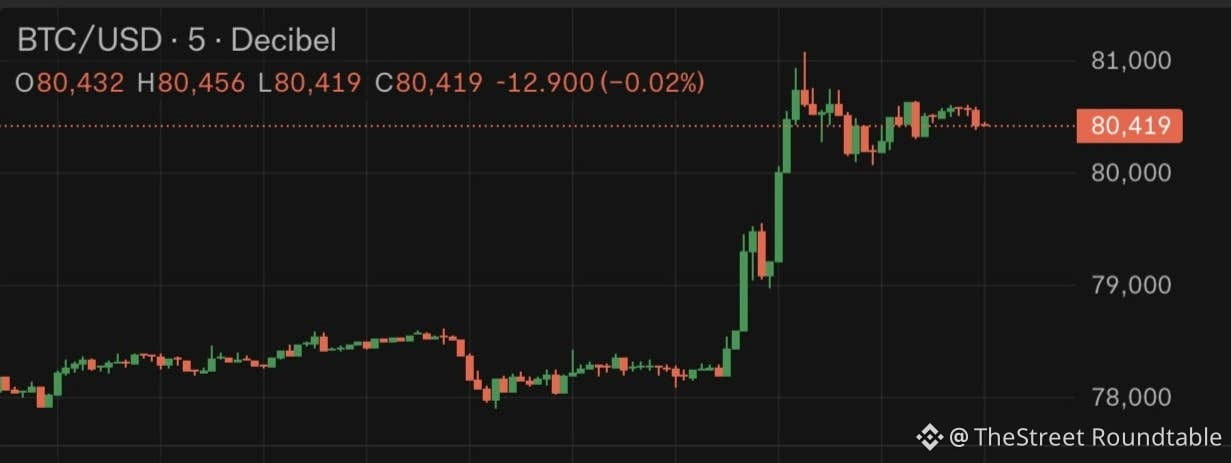
Artikel
Lihat terjemahan
Bitcoin, XRP, crypto stocks surge after GOP loses midterm 2026Here's how $6.34 billion Binance hack exploited internal AI agents (4:12)
Bitcoin climbed back above $80,400 on Wednesday after Democrats won control of both the House and the Senate, shrugging off fears that a blue sweep in the midterm election would hurt the crypto industry.
The cryptocurrency recovered from an overnight low of $75,618, its weakest level in seven weeks. XRP rose 2.3% to about $1.31, at the time of writing.
BTC/USD. Source: Decibel
Hack hurt more than the vote
For bitcoin, the midterm sell-off was milder than the hit from Binance’s record hack a week ago. On Oct. 29, hackers drained about $6.34 billion from Binance in roughly 20 minutes. Bitcoin fell more than 4% to $77,994 the next day.
Crypto stocks took a bigger beating. Coinbase sank 10.6%, Circle 9.3% and Strategy 7.8% that session, and bitcoin then struggled to reclaim $80,000.
The midterm reaction was a quick dip and rebound. While a blue wave was expected, the Binance hack came as a shock.
Related: Binance founder issues chilling warning after record crypto heist
Crypto’s costly losses
Crypto PACs spent about $170 million on the midterms, but lost several of their biggest bets:
Ohio: Fairshake and its affiliates poured tens of millions into opposing Brown, who chaired Senate Banking and stalled a crypto market-structure bill in 2024.
Illinois: Fairshake spent over $10 million opposing Juliana Stratton in the primary. She won her Senate race on Tuesday.
Texas: The industry backed Paxton, who lost.
Cynthia Lummis, crypto’s most vocal Senate backer, is retiring, and Democrats could investigate the Trump family’s crypto dealings.
More on TheStreet Roundtable
Jack Dorsey-led Block’s DOJ settlement overshadows Q3 profit
Strategy CEO puts his Bitcoin firm alongside SpaceX, Alphabet
Circle crushes Q3 estimates as staff shrinks 5%
Crypto stocks climb, miners slump
Strategy jumped 5.4% to $142.96 and Coinbase rose 2.7% to $149.40, while Robinhood added 0.7% to $86.25.
Circle slipped about 1% to $74.50. Its third-quarter revenue of $865 million beat estimates, but it disclosed a 5% workforce cut.
But Bitcoin miners and AI-hosting stocks such as Hut 8 and IREN fell 20% and 8% respectively.
What’s next
Democrats will now run the House Agriculture and Financial Services committees, the two panels that handled the CLARITY Act.
The industry’s market-structure bill expires Jan. 3 if lawmakers don’t act.
The Roundtable 100
If you follow our market coverage, don’t miss the Roundtable 100. Updated every Friday, it’s a power ranking of the 100 most investable tech stocks, including digital assets. Check out the latest RTB 100 rankings at roundtable100.com.
Related: Gold moves up 24 places on Roundtable 100 despite analyst warning
Bitcoin, XRP, crypto stocks surge after GOP loses midterm 2026
Here's how $6.34 billion Binance hack exploited internal AI agents (4:12)
Bitcoin climbed back above $80,400 on Wednesday after Democrats won control of both the House and the Senate, shrugging off fears that a blue sweep in the midterm election would hurt the crypto industry.
The cryptocurrency recovered from an overnight low of $75,618, its weakest level in seven weeks. XRP rose 2.3% to about $1.31, at the time of writing.
BTC/USD. Source: Decibel
Hack hurt more than the vote
For bitcoin, the midterm sell-off was milder than the hit from Binance’s record hack a week ago. On Oct. 29, hackers drained about $6.34 billion from Binance in roughly 20 minutes. Bitcoin fell more than 4% to $77,994 the next day.
Crypto stocks took a bigger beating. Coinbase sank 10.6%, Circle 9.3% and Strategy 7.8% that session, and bitcoin then struggled to reclaim $80,000.
The midterm reaction was a quick dip and rebound. While a blue wave was expected, the Binance hack came as a shock.
Related: Binance founder issues chilling warning after record crypto heist
Crypto’s costly losses
Crypto PACs spent about $170 million on the midterms, but lost several of their biggest bets:
Ohio: Fairshake and its affiliates poured tens of millions into opposing Brown, who chaired Senate Banking and stalled a crypto market-structure bill in 2024.
Illinois: Fairshake spent over $10 million opposing Juliana Stratton in the primary. She won her Senate race on Tuesday.
Texas: The industry backed Paxton, who lost.
Cynthia Lummis, crypto’s most vocal Senate backer, is retiring, and Democrats could investigate the Trump family’s crypto dealings.
More on TheStreet Roundtable
Jack Dorsey-led Block’s DOJ settlement overshadows Q3 profit
Strategy CEO puts his Bitcoin firm alongside SpaceX, Alphabet
Circle crushes Q3 estimates as staff shrinks 5%
Crypto stocks climb, miners slump
Strategy jumped 5.4% to $142.96 and Coinbase rose 2.7% to $149.40, while Robinhood added 0.7% to $86.25.
Circle slipped about 1% to $74.50. Its third-quarter revenue of $865 million beat estimates, but it disclosed a 5% workforce cut.
But Bitcoin miners and AI-hosting stocks such as Hut 8 and IREN fell 20% and 8% respectively.
What’s next
Democrats will now run the House Agriculture and Financial Services committees, the two panels that handled the CLARITY Act.
The industry’s market-structure bill expires Jan. 3 if lawmakers don’t act.
The Roundtable 100
If you follow our market coverage, don’t miss the Roundtable 100. Updated every Friday, it’s a power ranking of the 100 most investable tech stocks, including digital assets. Check out the latest RTB 100 rankings at roundtable100.com.
Related: Gold moves up 24 places on Roundtable 100 despite analyst warning
Penyelesaian Block yang dipimpin Jack Dorsey dengan DOJ membayangi laba Q3Getty Images
Block (NYSE: XYZ) yang dipimpin Jack Dorsey melaporkan hasil keuangan kuartal ketiga 2026 pada 3 November.
Perusahaan yang berfokus pada Bitcoin itu membukukan laba kotor sebesar $3,2 miliar, melampaui estimasi Wall Street sebesar $3,1 miliar. Perusahaan itu juga menaikkan proyeksi laba kotor setahun penuh 2026 dari $12,51 miliar menjadi $12,63 miliar.
India menguji aplikasi Jack Dorsey saat protes damai berhadapan dengan kekuatan polisi (3:51)
Laba operasional yang disesuaikan naik menjadi $923 juta, dengan laba bersih sebesar $565,5 juta.
Penyelesaian Block yang dipimpin Jack Dorsey dengan DOJ membayangi laba Q3
Getty Images
Block (NYSE: XYZ) yang dipimpin Jack Dorsey melaporkan hasil keuangan kuartal ketiga 2026 pada 3 November.
Perusahaan yang berfokus pada Bitcoin itu membukukan laba kotor sebesar $3,2 miliar, melampaui estimasi Wall Street sebesar $3,1 miliar. Perusahaan itu juga menaikkan proyeksi laba kotor setahun penuh 2026 dari $12,51 miliar menjadi $12,63 miliar.
India menguji aplikasi Jack Dorsey saat protes damai berhadapan dengan kekuatan polisi (3:51)
Laba operasional yang disesuaikan naik menjadi $923 juta, dengan laba bersih sebesar $565,5 juta.
BTC-4,45%
XYZUS-4,44%
71
Emas naik 24 peringkat di Roundtable 100 meski analis memperingatkanAnalis tidak optimistis terhadap emas meski peringkatnya naik di Roundtable 100 (4:39)
Emas naik 24 peringkat dalam Roundtable 100 pada pemeringkatan 30 Oktober.
Logam mulia itu naik dari peringkat No. 97 ke No. 73 dalam peringkat kekuatan.
Emas meraih skor 73 dari 100
Diterbitkan bersama TheStreet, Roundtable 100 memeringkat 100 aset teknologi bertumbuh yang diperdagangkan secara publik. Masing-masing diberi skor 0 hingga 100 oleh para analis Blue Ribbon Committee berdasarkan lima variabel: Tim, Keamanan, Nilai, Inovasi, dan Dominasi Pasar. Rata-rata skor tersebut menjadi Peringkat Kekuatan aset. Daftar ini diperbarui setiap Jumat setelah pasar AS tutup.
Emas naik 24 peringkat di Roundtable 100 meski analis memperingatkan
Analis tidak optimistis terhadap emas meski peringkatnya naik di Roundtable 100 (4:39)
Emas naik 24 peringkat dalam Roundtable 100 pada pemeringkatan 30 Oktober.
Logam mulia itu naik dari peringkat No. 97 ke No. 73 dalam peringkat kekuatan.
Emas meraih skor 73 dari 100
Diterbitkan bersama TheStreet, Roundtable 100 memeringkat 100 aset teknologi bertumbuh yang diperdagangkan secara publik. Masing-masing diberi skor 0 hingga 100 oleh para analis Blue Ribbon Committee berdasarkan lima variabel: Tim, Keamanan, Nilai, Inovasi, dan Dominasi Pasar. Rata-rata skor tersebut menjadi Peringkat Kekuatan aset. Daftar ini diperbarui setiap Jumat setelah pasar AS tutup.
60
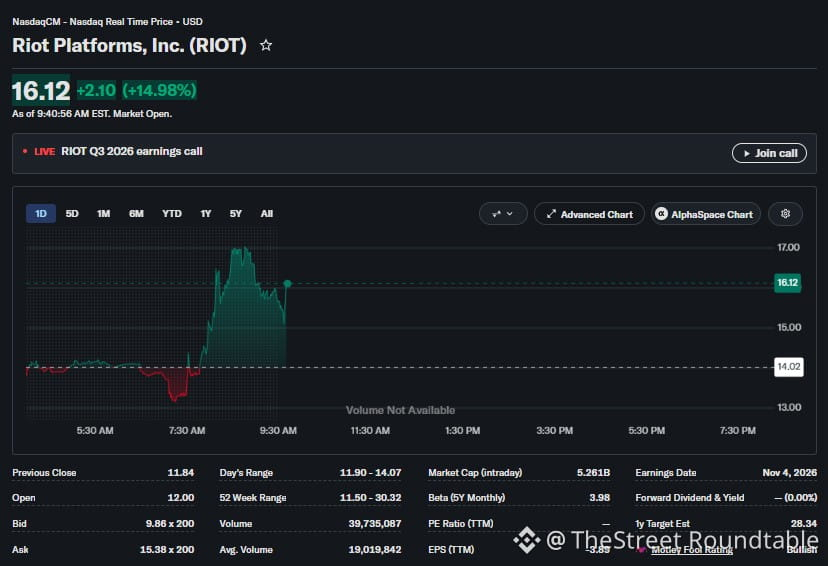
Artikel
Saham teknologi populer melonjak 15% setelah mengungkap penjualan Bitcoin senilai $1,5 miliarPenjelasan: Apa itu penambangan Bitcoin? (6:23)
Perusahaan penambang Bitcoin Riot Platforms (RIOT) semakin berfokus pada kecerdasan buatan dengan memanfaatkan lahan dan infrastruktur listrik yang sudah dimilikinya untuk melayani perusahaan AI.
Perusahaan ini bergabung dengan perusahaan penambang seperti Core Scientific, IREN, dan Hut 8 untuk berekspansi ke infrastruktur AI, yang membuat akses ke listrik dan lokasi pusat data semakin bernilai.
Riot mulai mengevaluasi secara resmi penggunaan AI untuk kapasitas listriknya di Corsicana pada Januari 2025. Langkah ini diikuti dengan perjanjian sewa dengan AMD pada Januari 2026 dan kesepakatan AI sebesar 191 megawatt pada Agustus, sehingga kapasitas yang dikontraknya mencapai 241 MW.
Saham teknologi populer melonjak 15% setelah mengungkap penjualan Bitcoin senilai $1,5 miliar
Penjelasan: Apa itu penambangan Bitcoin? (6:23)
Perusahaan penambang Bitcoin Riot Platforms (RIOT) semakin berfokus pada kecerdasan buatan dengan memanfaatkan lahan dan infrastruktur listrik yang sudah dimilikinya untuk melayani perusahaan AI.
Perusahaan ini bergabung dengan perusahaan penambang seperti Core Scientific, IREN, dan Hut 8 untuk berekspansi ke infrastruktur AI, yang membuat akses ke listrik dan lokasi pusat data semakin bernilai.
Riot mulai mengevaluasi secara resmi penggunaan AI untuk kapasitas listriknya di Corsicana pada Januari 2025. Langkah ini diikuti dengan perjanjian sewa dengan AMD pada Januari 2026 dan kesepakatan AI sebesar 191 megawatt pada Agustus, sehingga kapasitas yang dikontraknya mencapai 241 MW.
RIOTUS-10,56%
31
Lihat terjemahan
Binance founder issues chilling warning after record crypto heistHere's how $6.34 billion Binance hack exploited internal AI agents (4:12)
Changpeng “CZ” Zhao is warning that artificial intelligence could fuel a new wave of cyberattacks on crypto exchanges and banks, days after the largest theft in crypto history.
On Oct. 29, hackers drained about $6.34 billion from Binance in roughly 20 minutes, with $2.85 billion frozen or intercepted. The FBI blamed North Korea, which denies it.
Binance says it used $6.34 billion of its own funds to cover the losses, so users bear none of it.
In an interview with CoinDesk, Zhao said hackers are getting access to AI tools faster than financial institutions can deploy defenses.
“The industry needs to use AI to prevent AI hacks. There’s no other way,” Zhao told CoinDesk.
“A hack of this scale means serious security failures occurred. No platform is unhackable, but that cannot be an excuse. Every incident exposes weaknesses that should have been prevented,” CZ wrote in a latest post on X.
“Some details are embarrassing. Public explanations also simplify what appears to have been a prolonged multi month/year attack targeting hundreds of employees and systems, with a few ultimately compromised,” he wrote.
Related: Musk warned America will go 1,000% bankrupt. Now U.S. debt tops $40 trillion and counting
Why banks may be next
Zhao described the imbalance between attackers and defenders. “For attack, you only need to find one crack. To defend yourself, you need to find all the cracks and then fix them,” he said.
He argued that banks may be more exposed than exchanges.
“If a crypto exchange can be hacked, banks are in a worse position, in my opinion,” he said. Zhao also called for common security standards or an industry alliance. Discussions are underway, he said, but nothing has been agreed.
“In the short term, I think that we’re gonna see a lot more hacks,” he said, adding that AI could eventually strengthen defenses.
Zhao, who no longer runs Binance, offered no evidence that AI played a role in the breach.
The great crypto heist
In a preliminary report, Binance said the attack began in September, when an engineer was approached through a recruitment platform and tricked into downloading a malicious coding assignment.
By Oct, 20, attackers had used the compromised computer and an internal AI tool to reach two other engineers. An independent review is still pending.
“As a shareholder, I expect Binance to be transparent about what went wrong, take responsibility, learn from all criticism, and make meaningful improvements,” CZ wrote on X on Wed.
Related: Bitcoin's $350,000 price target comes with a terrifying warning, analyst says
The Roundtable 100
If you follow our market coverage, don’t miss the Roundtable 100. Updated every Friday, it’s a power ranking of the 100 most investable tech stocks, including digital assets. Check out the latest RTB 100 rankings at roundtable100.com.
Binance founder issues chilling warning after record crypto heist
Here's how $6.34 billion Binance hack exploited internal AI agents (4:12)
Changpeng “CZ” Zhao is warning that artificial intelligence could fuel a new wave of cyberattacks on crypto exchanges and banks, days after the largest theft in crypto history.
On Oct. 29, hackers drained about $6.34 billion from Binance in roughly 20 minutes, with $2.85 billion frozen or intercepted. The FBI blamed North Korea, which denies it.
Binance says it used $6.34 billion of its own funds to cover the losses, so users bear none of it.
In an interview with CoinDesk, Zhao said hackers are getting access to AI tools faster than financial institutions can deploy defenses.
“The industry needs to use AI to prevent AI hacks. There’s no other way,” Zhao told CoinDesk.
“A hack of this scale means serious security failures occurred. No platform is unhackable, but that cannot be an excuse. Every incident exposes weaknesses that should have been prevented,” CZ wrote in a latest post on X.
“Some details are embarrassing. Public explanations also simplify what appears to have been a prolonged multi month/year attack targeting hundreds of employees and systems, with a few ultimately compromised,” he wrote.
Related: Musk warned America will go 1,000% bankrupt. Now U.S. debt tops $40 trillion and counting
Why banks may be next
Zhao described the imbalance between attackers and defenders. “For attack, you only need to find one crack. To defend yourself, you need to find all the cracks and then fix them,” he said.
He argued that banks may be more exposed than exchanges.
“If a crypto exchange can be hacked, banks are in a worse position, in my opinion,” he said. Zhao also called for common security standards or an industry alliance. Discussions are underway, he said, but nothing has been agreed.
“In the short term, I think that we’re gonna see a lot more hacks,” he said, adding that AI could eventually strengthen defenses.
Zhao, who no longer runs Binance, offered no evidence that AI played a role in the breach.
The great crypto heist
In a preliminary report, Binance said the attack began in September, when an engineer was approached through a recruitment platform and tricked into downloading a malicious coding assignment.
By Oct, 20, attackers had used the compromised computer and an internal AI tool to reach two other engineers. An independent review is still pending.
“As a shareholder, I expect Binance to be transparent about what went wrong, take responsibility, learn from all criticism, and make meaningful improvements,” CZ wrote on X on Wed.
Related: Bitcoin's $350,000 price target comes with a terrifying warning, analyst says
The Roundtable 100
If you follow our market coverage, don’t miss the Roundtable 100. Updated every Friday, it’s a power ranking of the 100 most investable tech stocks, including digital assets. Check out the latest RTB 100 rankings at roundtable100.com.
1
Circle lampaui perkiraan Q3, jumlah karyawan menyusut 5%Presiden Circle, Heath Tarbert, mengatakan bahwa stablecoin membuat transfer USD semudah mengirim email (4:26)
Circle Internet Group (NYSE: CRCL) memperoleh sebagian besar pendapatannya dari bunga, jadi ketika suku bunga turun, sumber pendapatan terbesarnya pun ikut turun. Hasil terbarunya menunjukkan bagaimana perusahaan itu tetap berhasil meningkatkan laba.
Perusahaan kripto ini paling dikenal lewat stablecoin USDC, token digital yang dirancang untuk mempertahankan nilai stabil sebesar $1. Circle menjamin setiap token dengan uang tunai dan surat utang pemerintah AS jangka pendek, serta memperoleh bunga dari aset-aset tersebut. Bunga itu disebut pendapatan cadangan.
Circle lampaui perkiraan Q3, jumlah karyawan menyusut 5%
Presiden Circle, Heath Tarbert, mengatakan bahwa stablecoin membuat transfer USD semudah mengirim email (4:26)
Circle Internet Group (NYSE: CRCL) memperoleh sebagian besar pendapatannya dari bunga, jadi ketika suku bunga turun, sumber pendapatan terbesarnya pun ikut turun. Hasil terbarunya menunjukkan bagaimana perusahaan itu tetap berhasil meningkatkan laba.
Perusahaan kripto ini paling dikenal lewat stablecoin USDC, token digital yang dirancang untuk mempertahankan nilai stabil sebesar $1. Circle menjamin setiap token dengan uang tunai dan surat utang pemerintah AS jangka pendek, serta memperoleh bunga dari aset-aset tersebut. Bunga itu disebut pendapatan cadangan.
71
Masuk untuk menjelajahi konten lainnya
Bergabunglah dengan pengguna kripto global di Binance Square
⚡️ Dapatkan informasi terbaru dan berguna tentang kripto.
💬 Dipercayai oleh bursa kripto terbesar di dunia.
👍 Temukan wawasan nyata dari kreator terverifikasi.
Email/Nomor Ponsel
Topik Sedang Tren
BinanceReopensWithdrawalsForMoreAssets
755,809 penayangan
4,130 Berdiskusi
Insiden Keamanan | Pembaruan Pemulihan #8: Penarikan untuk Lebih Banyak Aset Akan Dibuka Kembali (2026-11-05)
Binance Announcement
·Disukai 317 Kali
·1.3M penayangan
Binance98PercentReplenished
132,796 penayangan
1,549 Berdiskusi
USStocksSlipandCryptoMarketUnderBroadPressure
12 penayangan
35 Berdiskusi