
SundayBest
19 Posting

SundayBest
Laporkan
Blokir Pengguna
Perdagangan Terbuka
Pedagang Rutin
7.9 Bulan
214 Mengikuti
59 Pengikut
29 Disukai
Posting
Portofolio
Semua
Kuotasi
PINNED
·
--
Lihat terjemahan
Crypto Basics: Essential Terms Every Beginner Must KnowCrypto can feel confusing at first because of the many new terms used every day. Words like blockchain, wallet, and gas fees are often used without explanation, leaving beginners overwhelmed.
This beginner-friendly series is designed to help you understand crypto step by step. In Part 1, I cover the most essential crypto terms you must know before investing, trading, or using any crypto platform.
TL;DR:
• Cryptocurrency is digital money that runs on blockchain technology.
• A blockchain is a public and unchangeable record of transactions.
• Wallets store your private keys, not your coins.
• Never share your private key or seed phrase with anyone.
• Gas fees are transaction costs on blockchains.
• Learning basic terms helps you avoid costly mistakes.
1. Cryptocurrency
A cryptocurrency is digital money that exists only online. It is not controlled by banks or governments. Instead, it uses cryptography and blockchain technology to function.
Examples include Bitcoin and Ethereum.
2. Blockchain
A blockchain is a public digital ledger that records all transactions. Once information is added to the blockchain, it cannot be changed.
This transparency is what makes blockchain technology secure and trustworthy.
3. Wallet
A crypto wallet is a tool used to send, receive, and store cryptocurrency.
Important note: Wallets do not store coins. They store private keys that give access to your crypto.
4. Private Key and Seed Phrase
A private key is a secret code that allows access to your crypto funds.
A seed phrase is a list of 12 to 24 words used to recover your wallet if you lose access.
Never share your private key or seed phrase with anyone. Anyone who has it can steal your funds.
5. Public Address
A public address is similar to a bank account number. It is used to receive cryptocurrency and can be shared safely.
6. Gas Fees
Gas fees are transaction costs paid to process actions on a blockchain, such as sending crypto or swapping tokens.
Fees depend on network activity and congestion.
7. Volatility
Volatility refers to how quickly and sharply crypto prices change.
High volatility means higher risk, but also higher opportunity.
Final Thoughts:
Before thinking about profits, every beginner should focus on understanding the basics. Most crypto losses happen because users act without knowledge.
Learning these terms is the first step toward using crypto safely and confidently.
Question for readers:
Which crypto term confused you the most when you were starting out?
End of Part 1
#freedomofmoney #OpenAIPlansDesktopSuperapp #BinanceKOLIntroductionProgram
Crypto Basics: Essential Terms Every Beginner Must Know
Crypto can feel confusing at first because of the many new terms used every day. Words like blockchain, wallet, and gas fees are often used without explanation, leaving beginners overwhelmed.
This beginner-friendly series is designed to help you understand crypto step by step. In Part 1, I cover the most essential crypto terms you must know before investing, trading, or using any crypto platform.
TL;DR:
• Cryptocurrency is digital money that runs on blockchain technology.
• A blockchain is a public and unchangeable record of transactions.
• Wallets store your private keys, not your coins.
• Never share your private key or seed phrase with anyone.
• Gas fees are transaction costs on blockchains.
• Learning basic terms helps you avoid costly mistakes.
1. Cryptocurrency
A cryptocurrency is digital money that exists only online. It is not controlled by banks or governments. Instead, it uses cryptography and blockchain technology to function.
Examples include Bitcoin and Ethereum.
2. Blockchain
A blockchain is a public digital ledger that records all transactions. Once information is added to the blockchain, it cannot be changed.
This transparency is what makes blockchain technology secure and trustworthy.
3. Wallet
A crypto wallet is a tool used to send, receive, and store cryptocurrency.
Important note: Wallets do not store coins. They store private keys that give access to your crypto.
4. Private Key and Seed Phrase
A private key is a secret code that allows access to your crypto funds.
A seed phrase is a list of 12 to 24 words used to recover your wallet if you lose access.
Never share your private key or seed phrase with anyone. Anyone who has it can steal your funds.
5. Public Address
A public address is similar to a bank account number. It is used to receive cryptocurrency and can be shared safely.
6. Gas Fees
Gas fees are transaction costs paid to process actions on a blockchain, such as sending crypto or swapping tokens.
Fees depend on network activity and congestion.
7. Volatility
Volatility refers to how quickly and sharply crypto prices change.
High volatility means higher risk, but also higher opportunity.
Final Thoughts:
Before thinking about profits, every beginner should focus on understanding the basics. Most crypto losses happen because users act without knowledge.
Learning these terms is the first step toward using crypto safely and confidently.
Question for readers:
Which crypto term confused you the most when you were starting out?
End of Part 1
#freedomofmoney #OpenAIPlansDesktopSuperapp #BinanceKOLIntroductionProgram
This beginner-friendly series is designed to help you understand crypto step by step. In Part 1, I cover the most essential crypto terms you must know before investing, trading, or using any crypto platform.
TL;DR:
• Cryptocurrency is digital money that runs on blockchain technology.
• A blockchain is a public and unchangeable record of transactions.
• Wallets store your private keys, not your coins.
• Never share your private key or seed phrase with anyone.
• Gas fees are transaction costs on blockchains.
• Learning basic terms helps you avoid costly mistakes.
1. Cryptocurrency
A cryptocurrency is digital money that exists only online. It is not controlled by banks or governments. Instead, it uses cryptography and blockchain technology to function.
Examples include Bitcoin and Ethereum.
2. Blockchain
A blockchain is a public digital ledger that records all transactions. Once information is added to the blockchain, it cannot be changed.
This transparency is what makes blockchain technology secure and trustworthy.
3. Wallet
A crypto wallet is a tool used to send, receive, and store cryptocurrency.
Important note: Wallets do not store coins. They store private keys that give access to your crypto.
4. Private Key and Seed Phrase
A private key is a secret code that allows access to your crypto funds.
A seed phrase is a list of 12 to 24 words used to recover your wallet if you lose access.
Never share your private key or seed phrase with anyone. Anyone who has it can steal your funds.
5. Public Address
A public address is similar to a bank account number. It is used to receive cryptocurrency and can be shared safely.
6. Gas Fees
Gas fees are transaction costs paid to process actions on a blockchain, such as sending crypto or swapping tokens.
Fees depend on network activity and congestion.
7. Volatility
Volatility refers to how quickly and sharply crypto prices change.
High volatility means higher risk, but also higher opportunity.
Final Thoughts:
Before thinking about profits, every beginner should focus on understanding the basics. Most crypto losses happen because users act without knowledge.
Learning these terms is the first step toward using crypto safely and confidently.
Question for readers:
Which crypto term confused you the most when you were starting out?
End of Part 1
#freedomofmoney #OpenAIPlansDesktopSuperapp #BinanceKOLIntroductionProgram
8
16
·
--
{future}(BITOUSDT)
🚀 Gelombang Besar Crypto Berikutnya: Mengapa Uang Cerdas Memperhatikan Pasar dengan Seksama Sekarang
Pasar kripto selalu memberi penghargaan kepada mereka yang bisa melihat peluang sebelum keramaian. Meskipun volatilitas jangka pendek terus mengguncang para tangan lemah, fondasi untuk fase berikutnya adopsi blockchain semakin menguat dari sebelumnya.
Menurut Binance Research, partisipasi institusional, arus dana ETF, aset tokenisasi, dan berkembangnya infrastruktur blockchain tetap menjadi beberapa tema utama yang membentuk lanskap aset digital pada 2026.
🚀 Gelombang Besar Crypto Berikutnya: Mengapa Uang Cerdas Memperhatikan Pasar dengan Seksama Sekarang
Pasar kripto selalu memberi penghargaan kepada mereka yang bisa melihat peluang sebelum keramaian. Meskipun volatilitas jangka pendek terus mengguncang para tangan lemah, fondasi untuk fase berikutnya adopsi blockchain semakin menguat dari sebelumnya.
Menurut Binance Research, partisipasi institusional, arus dana ETF, aset tokenisasi, dan berkembangnya infrastruktur blockchain tetap menjadi beberapa tema utama yang membentuk lanskap aset digital pada 2026.
Pasar kripto selalu memberi penghargaan kepada mereka yang bisa melihat peluang sebelum keramaian. Meskipun volatilitas jangka pendek terus mengguncang para tangan lemah, fondasi untuk fase berikutnya adopsi blockchain semakin menguat dari sebelumnya.
Menurut Binance Research, partisipasi institusional, arus dana ETF, aset tokenisasi, dan berkembangnya infrastruktur blockchain tetap menjadi beberapa tema utama yang membentuk lanskap aset digital pada 2026.
71
·
--
Bullish
104
·
--
Lihat terjemahan


Binance Academy
·
--
Setiap candle memberi tahu Anda empat hal: di mana harga dibuka, di mana harga ditutup, dan seberapa jauh ia berayun ke kedua arah.
👉 Learn to read them properly
👉 Learn to read them properly

1
1
·
--
Lihat terjemahan
🧩 A Small Game, A Big Crypto Lesson
I used to think Binance Word of the Day (WOTD) was just a fun puzzle. Guess a word, earn points, move on.
Turns out, it’s teaching one of the most important crypto skills: understanding the language.
Every word—liquidity, staking, yield, wallet—is a building block. No charts. No leverage. No stress. Just learning, one concept at a time.
Crypto doesn’t reward hype.
It rewards clarity, consistency, and context.
WOTD also reminds me that growth doesn’t have to be loud. Showing up daily, thinking a bit deeper, and staying curious compounds—just like good investments do.
Before profits, there’s knowledge.
Before trading, there’s understanding.
Sometimes, progress in crypto starts with guessing the right word.
On to the next one 👋
#Binance #WOTD #CryptoLearning #Web3
{future}(BTCUSDT)
🧩 A Small Game, A Big Crypto Lesson
I used to think Binance Word of the Day (WOTD) was just a fun puzzle. Guess a word, earn points, move on.
Turns out, it’s teaching one of the most important crypto skills: understanding the language.
Every word—liquidity, staking, yield, wallet—is a building block. No charts. No leverage. No stress. Just learning, one concept at a time.
Crypto doesn’t reward hype.
It rewards clarity, consistency, and context.
WOTD also reminds me that growth doesn’t have to be loud. Showing up daily, thinking a bit deeper, and staying curious compounds—just like good investments do.
Before profits, there’s knowledge.
Before trading, there’s understanding.
Sometimes, progress in crypto starts with guessing the right word.
On to the next one 👋
#Binance #WOTD #CryptoLearning #Web3
I used to think Binance Word of the Day (WOTD) was just a fun puzzle. Guess a word, earn points, move on.
Turns out, it’s teaching one of the most important crypto skills: understanding the language.
Every word—liquidity, staking, yield, wallet—is a building block. No charts. No leverage. No stress. Just learning, one concept at a time.
Crypto doesn’t reward hype.
It rewards clarity, consistency, and context.
WOTD also reminds me that growth doesn’t have to be loud. Showing up daily, thinking a bit deeper, and staying curious compounds—just like good investments do.
Before profits, there’s knowledge.
Before trading, there’s understanding.
Sometimes, progress in crypto starts with guessing the right word.
On to the next one 👋
#Binance #WOTD #CryptoLearning #Web3
1
3
·
--
Lihat terjemahan
BREAKING 🚨🚨🚨
President Trump agrees to a cease-fire subject to Iran reopening the Strait of Hormuz.
{future}(BTCUSDT)
BREAKING 🚨🚨🚨
President Trump agrees to a cease-fire subject to Iran reopening the Strait of Hormuz.
President Trump agrees to a cease-fire subject to Iran reopening the Strait of Hormuz.
·
--
Lihat terjemahan
Risk Management & Long-Term Investing: How Beginners Stay in the GameOne of the biggest differences between successful crypto users and beginners who quit early is risk management. Many people enter crypto focusing only on profits, while ignoring how to protect their capital.
In Part 5 of this beginner series, we focus on risk management and long-term investing principles that help beginners survive market volatility and grow steadily over time.
TL;DR:
• Protecting capital is more important than chasing profits.
• Never invest money you cannot afford to lose.
• Diversification reduces risk.
• Long-term thinking beats short-term gambling.
• Consistency and patience matter more than perfect timing.
1. What Is Risk Management?
Risk management is the process of protecting your money from large losses.
In crypto, risk management is not about avoiding losses completely. It is about making sure losses are small enough that you can continue learning and investing.
2. Only Invest What You Can Afford to Lose
This is the most important rule in crypto.
Never invest:
• Rent money
• School fees
• Emergency funds
• Borrowed money
Crypto prices can drop sharply, and emotional pressure increases when essential money is at risk.
3. Diversification: Don’t Go All-In
Putting all your money into one coin is risky.
Diversification means spreading funds across:
• Different projects
• Different sectors
• Sometimes different entry times
Diversification helps reduce the impact if one project performs poorly.
4. Position Sizing: Start Small
Beginners often invest too much too quickly.
A safer approach:
• Start with small amounts
• Increase slowly as you learn
• Focus on consistency, not big wins
Small mistakes teach valuable lessons without heavy losses.
5. Long-Term Investing vs Short-Term Trading
Long-term investing:
• Requires patience
• Reduces emotional stress
• Focuses on learning and fundamentals
Short-term trading:
• Requires experience
• Involves more stress
• Carries higher risk
Beginners are generally better off focusing on long-term investing while learning.
6. Dollar-Cost Averaging (DCA)
Dollar-cost averaging means investing small, fixed amounts over time instead of all at once.
Benefits:
• Reduces timing risk
• Encourages discipline
• Avoids emotional decisions
DCA is popular among long-term investors.
7. Accepting Volatility
Price swings are normal in crypto.
Instead of reacting emotionally:
• Expect volatility
• Plan for downturns
• Focus on long-term goals
Volatility only becomes a problem when expectations are unrealistic.
8. Patience Is a Skill
Many beginners quit because results are slow.
Crypto rewards:
• Discipline
• Patience
• Continuous learning
Staying calm during quiet or negative periods is part of long-term success.
Final Thoughts:
Risk management keeps you in the market long enough to learn and improve. Profits come later, but survival comes first.
A beginner who manages risk well is already ahead of most participants.
What matters more to you right now — protecting capital or chasing fast profits?
End of Part 5
Risk Management & Long-Term Investing: How Beginners Stay in the Game
One of the biggest differences between successful crypto users and beginners who quit early is risk management. Many people enter crypto focusing only on profits, while ignoring how to protect their capital.
In Part 5 of this beginner series, we focus on risk management and long-term investing principles that help beginners survive market volatility and grow steadily over time.
TL;DR:
• Protecting capital is more important than chasing profits.
• Never invest money you cannot afford to lose.
• Diversification reduces risk.
• Long-term thinking beats short-term gambling.
• Consistency and patience matter more than perfect timing.
1. What Is Risk Management?
Risk management is the process of protecting your money from large losses.
In crypto, risk management is not about avoiding losses completely. It is about making sure losses are small enough that you can continue learning and investing.
2. Only Invest What You Can Afford to Lose
This is the most important rule in crypto.
Never invest:
• Rent money
• School fees
• Emergency funds
• Borrowed money
Crypto prices can drop sharply, and emotional pressure increases when essential money is at risk.
3. Diversification: Don’t Go All-In
Putting all your money into one coin is risky.
Diversification means spreading funds across:
• Different projects
• Different sectors
• Sometimes different entry times
Diversification helps reduce the impact if one project performs poorly.
4. Position Sizing: Start Small
Beginners often invest too much too quickly.
A safer approach:
• Start with small amounts
• Increase slowly as you learn
• Focus on consistency, not big wins
Small mistakes teach valuable lessons without heavy losses.
5. Long-Term Investing vs Short-Term Trading
Long-term investing:
• Requires patience
• Reduces emotional stress
• Focuses on learning and fundamentals
Short-term trading:
• Requires experience
• Involves more stress
• Carries higher risk
Beginners are generally better off focusing on long-term investing while learning.
6. Dollar-Cost Averaging (DCA)
Dollar-cost averaging means investing small, fixed amounts over time instead of all at once.
Benefits:
• Reduces timing risk
• Encourages discipline
• Avoids emotional decisions
DCA is popular among long-term investors.
7. Accepting Volatility
Price swings are normal in crypto.
Instead of reacting emotionally:
• Expect volatility
• Plan for downturns
• Focus on long-term goals
Volatility only becomes a problem when expectations are unrealistic.
8. Patience Is a Skill
Many beginners quit because results are slow.
Crypto rewards:
• Discipline
• Patience
• Continuous learning
Staying calm during quiet or negative periods is part of long-term success.
Final Thoughts:
Risk management keeps you in the market long enough to learn and improve. Profits come later, but survival comes first.
A beginner who manages risk well is already ahead of most participants.
What matters more to you right now — protecting capital or chasing fast profits?
End of Part 5
In Part 5 of this beginner series, we focus on risk management and long-term investing principles that help beginners survive market volatility and grow steadily over time.
TL;DR:
• Protecting capital is more important than chasing profits.
• Never invest money you cannot afford to lose.
• Diversification reduces risk.
• Long-term thinking beats short-term gambling.
• Consistency and patience matter more than perfect timing.
1. What Is Risk Management?
Risk management is the process of protecting your money from large losses.
In crypto, risk management is not about avoiding losses completely. It is about making sure losses are small enough that you can continue learning and investing.
2. Only Invest What You Can Afford to Lose
This is the most important rule in crypto.
Never invest:
• Rent money
• School fees
• Emergency funds
• Borrowed money
Crypto prices can drop sharply, and emotional pressure increases when essential money is at risk.
3. Diversification: Don’t Go All-In
Putting all your money into one coin is risky.
Diversification means spreading funds across:
• Different projects
• Different sectors
• Sometimes different entry times
Diversification helps reduce the impact if one project performs poorly.
4. Position Sizing: Start Small
Beginners often invest too much too quickly.
A safer approach:
• Start with small amounts
• Increase slowly as you learn
• Focus on consistency, not big wins
Small mistakes teach valuable lessons without heavy losses.
5. Long-Term Investing vs Short-Term Trading
Long-term investing:
• Requires patience
• Reduces emotional stress
• Focuses on learning and fundamentals
Short-term trading:
• Requires experience
• Involves more stress
• Carries higher risk
Beginners are generally better off focusing on long-term investing while learning.
6. Dollar-Cost Averaging (DCA)
Dollar-cost averaging means investing small, fixed amounts over time instead of all at once.
Benefits:
• Reduces timing risk
• Encourages discipline
• Avoids emotional decisions
DCA is popular among long-term investors.
7. Accepting Volatility
Price swings are normal in crypto.
Instead of reacting emotionally:
• Expect volatility
• Plan for downturns
• Focus on long-term goals
Volatility only becomes a problem when expectations are unrealistic.
8. Patience Is a Skill
Many beginners quit because results are slow.
Crypto rewards:
• Discipline
• Patience
• Continuous learning
Staying calm during quiet or negative periods is part of long-term success.
Final Thoughts:
Risk management keeps you in the market long enough to learn and improve. Profits come later, but survival comes first.
A beginner who manages risk well is already ahead of most participants.
What matters more to you right now — protecting capital or chasing fast profits?
End of Part 5
1
15
·
--
Lihat terjemahan
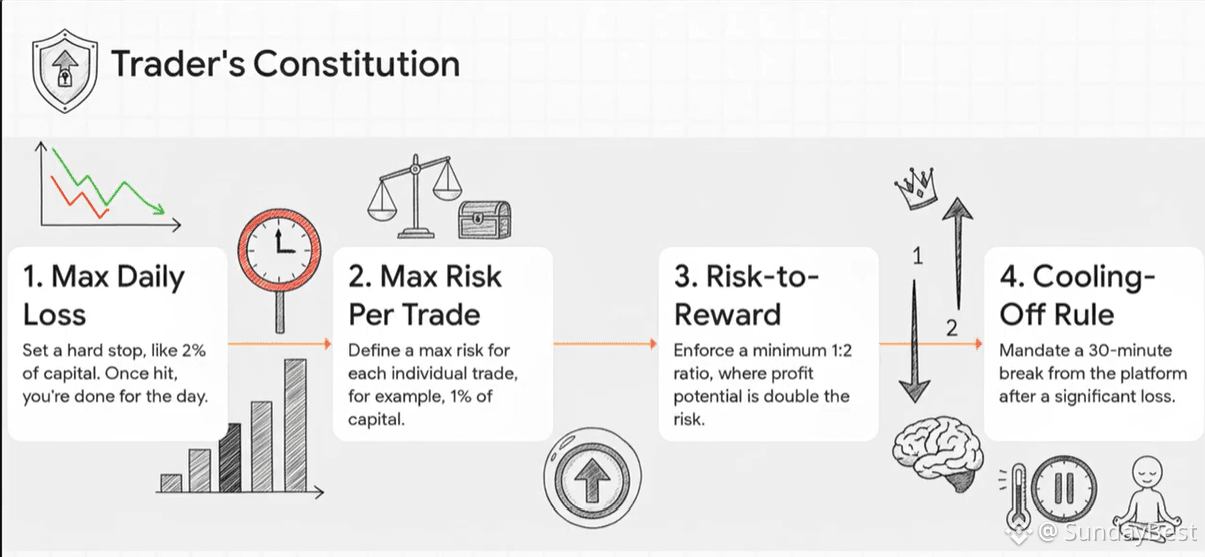
Trader's Constitution Continue learning
#BitcoinPrices
{future}(BTCUSDT)
Trader's Constitution Continue learning
#BitcoinPrices
#BitcoinPrices
3
·
--
Lihat terjemahan
Common Beginner Mistakes & Crypto Scams: How to Avoid Losing MoneyMany beginners believe they lose money in crypto because prices go down. In reality, most losses happen due to simple mistakes, poor decisions, and scams.
In Part 4 of this beginner series, we cover the most common mistakes new users make and explain how crypto scams work, so you can protect your funds and avoid unnecessary losses.
TL;DR:
• Most beginners lose money due to mistakes, not market crashes.
• Scams often use urgency, fear, or fake rewards.
• No legitimate project asks for your seed phrase.
• Guaranteed profits do not exist in crypto.
• Slowing down and verifying information prevents losses.
1. Investing Without Understanding
One of the biggest beginner mistakes is buying crypto without understanding what it is or how it works.
Many people invest because:
• Prices are going up
• Friends are talking about it
• Social media is hyping it
Blind investing often leads to panic selling and losses.
2. Chasing Fast Profits
Beginners often look for quick gains instead of long-term learning.
This leads to:
• Buying at market tops
• Selling during panic
• Overtrading
Crypto rewards patience more than speed.
3. Using Leverage Too Early
Leverage can multiply profits, but it also multiplies losses.
Many beginners try futures trading without experience and lose their entire balance quickly.
If you are new to crypto, avoid leverage until you fully understand the risks.
4. Ignoring Security Basics
Common security mistakes include:
• Sharing seed phrases
• Storing seed phrases online
• Using weak passwords
• Downloading fake wallet apps
In crypto, security mistakes are usually irreversible.
5. Common Crypto Scams to Watch Out For
a) Fake Giveaways
Scammers pretend to be famous people or platforms and promise to double your crypto if you send funds first.
Real platforms never do giveaways this way.
b) Phishing Links
Fake websites and emails copy real platforms to steal login details.
Always check website URLs carefully.
c) Fake Support Accounts
Scammers pose as customer support and ask for private keys or seed phrases.
No real support team will ever ask for this information.
d) Guaranteed Profit Schemes
Any project promising guaranteed or risk-free profits is a scam.
Crypto has no guarantees.
6. Emotional Trading
Fear and greed cause poor decisions.
Examples:
• Buying because of FOMO
• Selling because of panic
• Revenge trading after losses
Successful users control emotions and follow a plan.
7. A Simple Safety Checklist
Before any action, ask:
• Do I understand this?
• Is anyone asking for my seed phrase?
• Am I rushing because of fear or greed?
• Have I verified the source?
If something feels urgent or too good to be true, it usually is.
Final Thoughts:
Mistakes and scams are part of the crypto learning curve, but most losses are avoidable.
By slowing down, learning the basics, and following security rules, beginners can protect themselves and grow with confidence.
What is the most common crypto mistake you see beginners make?
End of Part 4
#Binance
Common Beginner Mistakes & Crypto Scams: How to Avoid Losing Money
Many beginners believe they lose money in crypto because prices go down. In reality, most losses happen due to simple mistakes, poor decisions, and scams.
In Part 4 of this beginner series, we cover the most common mistakes new users make and explain how crypto scams work, so you can protect your funds and avoid unnecessary losses.
TL;DR:
• Most beginners lose money due to mistakes, not market crashes.
• Scams often use urgency, fear, or fake rewards.
• No legitimate project asks for your seed phrase.
• Guaranteed profits do not exist in crypto.
• Slowing down and verifying information prevents losses.
1. Investing Without Understanding
One of the biggest beginner mistakes is buying crypto without understanding what it is or how it works.
Many people invest because:
• Prices are going up
• Friends are talking about it
• Social media is hyping it
Blind investing often leads to panic selling and losses.
2. Chasing Fast Profits
Beginners often look for quick gains instead of long-term learning.
This leads to:
• Buying at market tops
• Selling during panic
• Overtrading
Crypto rewards patience more than speed.
3. Using Leverage Too Early
Leverage can multiply profits, but it also multiplies losses.
Many beginners try futures trading without experience and lose their entire balance quickly.
If you are new to crypto, avoid leverage until you fully understand the risks.
4. Ignoring Security Basics
Common security mistakes include:
• Sharing seed phrases
• Storing seed phrases online
• Using weak passwords
• Downloading fake wallet apps
In crypto, security mistakes are usually irreversible.
5. Common Crypto Scams to Watch Out For
a) Fake Giveaways
Scammers pretend to be famous people or platforms and promise to double your crypto if you send funds first.
Real platforms never do giveaways this way.
b) Phishing Links
Fake websites and emails copy real platforms to steal login details.
Always check website URLs carefully.
c) Fake Support Accounts
Scammers pose as customer support and ask for private keys or seed phrases.
No real support team will ever ask for this information.
d) Guaranteed Profit Schemes
Any project promising guaranteed or risk-free profits is a scam.
Crypto has no guarantees.
6. Emotional Trading
Fear and greed cause poor decisions.
Examples:
• Buying because of FOMO
• Selling because of panic
• Revenge trading after losses
Successful users control emotions and follow a plan.
7. A Simple Safety Checklist
Before any action, ask:
• Do I understand this?
• Is anyone asking for my seed phrase?
• Am I rushing because of fear or greed?
• Have I verified the source?
If something feels urgent or too good to be true, it usually is.
Final Thoughts:
Mistakes and scams are part of the crypto learning curve, but most losses are avoidable.
By slowing down, learning the basics, and following security rules, beginners can protect themselves and grow with confidence.
What is the most common crypto mistake you see beginners make?
End of Part 4
#Binance
In Part 4 of this beginner series, we cover the most common mistakes new users make and explain how crypto scams work, so you can protect your funds and avoid unnecessary losses.
TL;DR:
• Most beginners lose money due to mistakes, not market crashes.
• Scams often use urgency, fear, or fake rewards.
• No legitimate project asks for your seed phrase.
• Guaranteed profits do not exist in crypto.
• Slowing down and verifying information prevents losses.
1. Investing Without Understanding
One of the biggest beginner mistakes is buying crypto without understanding what it is or how it works.
Many people invest because:
• Prices are going up
• Friends are talking about it
• Social media is hyping it
Blind investing often leads to panic selling and losses.
2. Chasing Fast Profits
Beginners often look for quick gains instead of long-term learning.
This leads to:
• Buying at market tops
• Selling during panic
• Overtrading
Crypto rewards patience more than speed.
3. Using Leverage Too Early
Leverage can multiply profits, but it also multiplies losses.
Many beginners try futures trading without experience and lose their entire balance quickly.
If you are new to crypto, avoid leverage until you fully understand the risks.
4. Ignoring Security Basics
Common security mistakes include:
• Sharing seed phrases
• Storing seed phrases online
• Using weak passwords
• Downloading fake wallet apps
In crypto, security mistakes are usually irreversible.
5. Common Crypto Scams to Watch Out For
a) Fake Giveaways
Scammers pretend to be famous people or platforms and promise to double your crypto if you send funds first.
Real platforms never do giveaways this way.
b) Phishing Links
Fake websites and emails copy real platforms to steal login details.
Always check website URLs carefully.
c) Fake Support Accounts
Scammers pose as customer support and ask for private keys or seed phrases.
No real support team will ever ask for this information.
d) Guaranteed Profit Schemes
Any project promising guaranteed or risk-free profits is a scam.
Crypto has no guarantees.
6. Emotional Trading
Fear and greed cause poor decisions.
Examples:
• Buying because of FOMO
• Selling because of panic
• Revenge trading after losses
Successful users control emotions and follow a plan.
7. A Simple Safety Checklist
Before any action, ask:
• Do I understand this?
• Is anyone asking for my seed phrase?
• Am I rushing because of fear or greed?
• Have I verified the source?
If something feels urgent or too good to be true, it usually is.
Final Thoughts:
Mistakes and scams are part of the crypto learning curve, but most losses are avoidable.
By slowing down, learning the basics, and following security rules, beginners can protect themselves and grow with confidence.
What is the most common crypto mistake you see beginners make?
End of Part 4
#Binance
1
1
60
·
--
Lihat terjemahan
Crypto Exchanges & Trading Basics: How Buying and Selling WorksAfter learning crypto terms and wallet security, the next step for beginners is understanding exchanges and how trading actually works.
Many beginners lose money simply because they do not understand how trades are executed, the difference between spot and futures, or how orders work. In Part 3 of this series, we explain crypto exchanges and trading basics in simple terms.
TL;DR:
• Crypto exchanges allow users to buy, sell, and trade crypto.
• Spot trading is simpler and safer for beginners.
• Futures trading involves leverage and higher risk.
• Market orders buy or sell instantly; limit orders wait for a price.
• Understanding fees and order types helps avoid mistakes.
1. What Is a Crypto Exchange?
A crypto exchange is a platform where users can buy, sell, and trade cryptocurrencies.
Exchanges act as marketplaces that match buyers and sellers. Most beginners start with centralized exchanges because they are easy to use and provide customer support.
2. Centralized vs Decentralized Exchanges
Centralized exchanges:
• Require account registration
• Are easy for beginners
• Hold custody of user funds
Decentralized exchanges:
• Do not require accounts
• Users trade directly from wallets
• Require more technical knowledge
Beginners are generally better off starting with centralized exchanges before exploring decentralized platforms.
3. What Is Spot Trading?
Spot trading means buying or selling crypto at the current market price.
When you buy on the spot market:
• You own the crypto immediately
• There is no leverage
• Risk is lower compared to futures
Spot trading is the recommended starting point for beginners.
4. What Is Futures Trading?
Futures trading allows users to speculate on price movements without owning the asset.
Key features:
• Uses leverage
• Higher potential profits
• Higher risk of losses
Futures trading is not beginner-friendly and should only be attempted after gaining experience.
5. Market Orders vs Limit Orders
Market order:
• Buys or sells immediately
• Executes at the best available price
• Simple but less control
Limit order:
• Executes only at a chosen price
• Gives more control
• May not fill instantly
Beginners should learn both before placing trades.
6. Trading Fees
Every trade comes with a fee.
Common fees include:
• Trading fees
• Withdrawal fees
• Network (gas) fees
Always check fees before trading, as frequent trades can reduce profits over time.
7. Common Trading Mistakes Beginners Make
• Trading without a plan
• Using leverage too early
• Overtrading
• Chasing fast price moves
• Ignoring fees
Successful trading is more about discipline than speed.
8. A Simple Rule for Beginners
If you don’t understand how a trade works, don’t place it.
Start small, learn slowly, and focus on protecting your capital.
Final Thoughts:
Trading is not a shortcut to easy money. It requires patience, learning, and emotional control.
Spot trading with small amounts is the safest way for beginners to gain experience.
Have you tried spot trading yet, or are you still learning how exchanges work?
End of Part 3
#Binance
Crypto Exchanges & Trading Basics: How Buying and Selling Works
After learning crypto terms and wallet security, the next step for beginners is understanding exchanges and how trading actually works.
Many beginners lose money simply because they do not understand how trades are executed, the difference between spot and futures, or how orders work. In Part 3 of this series, we explain crypto exchanges and trading basics in simple terms.
TL;DR:
• Crypto exchanges allow users to buy, sell, and trade crypto.
• Spot trading is simpler and safer for beginners.
• Futures trading involves leverage and higher risk.
• Market orders buy or sell instantly; limit orders wait for a price.
• Understanding fees and order types helps avoid mistakes.
1. What Is a Crypto Exchange?
A crypto exchange is a platform where users can buy, sell, and trade cryptocurrencies.
Exchanges act as marketplaces that match buyers and sellers. Most beginners start with centralized exchanges because they are easy to use and provide customer support.
2. Centralized vs Decentralized Exchanges
Centralized exchanges:
• Require account registration
• Are easy for beginners
• Hold custody of user funds
Decentralized exchanges:
• Do not require accounts
• Users trade directly from wallets
• Require more technical knowledge
Beginners are generally better off starting with centralized exchanges before exploring decentralized platforms.
3. What Is Spot Trading?
Spot trading means buying or selling crypto at the current market price.
When you buy on the spot market:
• You own the crypto immediately
• There is no leverage
• Risk is lower compared to futures
Spot trading is the recommended starting point for beginners.
4. What Is Futures Trading?
Futures trading allows users to speculate on price movements without owning the asset.
Key features:
• Uses leverage
• Higher potential profits
• Higher risk of losses
Futures trading is not beginner-friendly and should only be attempted after gaining experience.
5. Market Orders vs Limit Orders
Market order:
• Buys or sells immediately
• Executes at the best available price
• Simple but less control
Limit order:
• Executes only at a chosen price
• Gives more control
• May not fill instantly
Beginners should learn both before placing trades.
6. Trading Fees
Every trade comes with a fee.
Common fees include:
• Trading fees
• Withdrawal fees
• Network (gas) fees
Always check fees before trading, as frequent trades can reduce profits over time.
7. Common Trading Mistakes Beginners Make
• Trading without a plan
• Using leverage too early
• Overtrading
• Chasing fast price moves
• Ignoring fees
Successful trading is more about discipline than speed.
8. A Simple Rule for Beginners
If you don’t understand how a trade works, don’t place it.
Start small, learn slowly, and focus on protecting your capital.
Final Thoughts:
Trading is not a shortcut to easy money. It requires patience, learning, and emotional control.
Spot trading with small amounts is the safest way for beginners to gain experience.
Have you tried spot trading yet, or are you still learning how exchanges work?
End of Part 3
#Binance
Many beginners lose money simply because they do not understand how trades are executed, the difference between spot and futures, or how orders work. In Part 3 of this series, we explain crypto exchanges and trading basics in simple terms.
TL;DR:
• Crypto exchanges allow users to buy, sell, and trade crypto.
• Spot trading is simpler and safer for beginners.
• Futures trading involves leverage and higher risk.
• Market orders buy or sell instantly; limit orders wait for a price.
• Understanding fees and order types helps avoid mistakes.
1. What Is a Crypto Exchange?
A crypto exchange is a platform where users can buy, sell, and trade cryptocurrencies.
Exchanges act as marketplaces that match buyers and sellers. Most beginners start with centralized exchanges because they are easy to use and provide customer support.
2. Centralized vs Decentralized Exchanges
Centralized exchanges:
• Require account registration
• Are easy for beginners
• Hold custody of user funds
Decentralized exchanges:
• Do not require accounts
• Users trade directly from wallets
• Require more technical knowledge
Beginners are generally better off starting with centralized exchanges before exploring decentralized platforms.
3. What Is Spot Trading?
Spot trading means buying or selling crypto at the current market price.
When you buy on the spot market:
• You own the crypto immediately
• There is no leverage
• Risk is lower compared to futures
Spot trading is the recommended starting point for beginners.
4. What Is Futures Trading?
Futures trading allows users to speculate on price movements without owning the asset.
Key features:
• Uses leverage
• Higher potential profits
• Higher risk of losses
Futures trading is not beginner-friendly and should only be attempted after gaining experience.
5. Market Orders vs Limit Orders
Market order:
• Buys or sells immediately
• Executes at the best available price
• Simple but less control
Limit order:
• Executes only at a chosen price
• Gives more control
• May not fill instantly
Beginners should learn both before placing trades.
6. Trading Fees
Every trade comes with a fee.
Common fees include:
• Trading fees
• Withdrawal fees
• Network (gas) fees
Always check fees before trading, as frequent trades can reduce profits over time.
7. Common Trading Mistakes Beginners Make
• Trading without a plan
• Using leverage too early
• Overtrading
• Chasing fast price moves
• Ignoring fees
Successful trading is more about discipline than speed.
8. A Simple Rule for Beginners
If you don’t understand how a trade works, don’t place it.
Start small, learn slowly, and focus on protecting your capital.
Final Thoughts:
Trading is not a shortcut to easy money. It requires patience, learning, and emotional control.
Spot trading with small amounts is the safest way for beginners to gain experience.
Have you tried spot trading yet, or are you still learning how exchanges work?
End of Part 3
#Binance
11
11
·
--
Lihat terjemahan
Crypto Wallets & Security: How to Keep Your Funds SafeAfter learning basic crypto terms, the next most important topic for beginners is security. Many people lose crypto not because prices fall, but because they do not understand how wallets and security work.
In Part 2 of this beginner series, we focus on crypto wallets, security basics, and how to protect your funds from common mistakes and scams.
TL;DR:
• Crypto wallets store private keys, not coins.
• Hot wallets are online; cold wallets are offline.
• Your seed phrase is the most important security key.
• Exchanges are convenient but not fully risk-free.
• Most crypto losses happen due to poor security habits.
1. What Is a Crypto Wallet?
A crypto wallet is a tool that allows you to send, receive, and manage your cryptocurrency.
Wallets do not hold actual coins. Instead, they store private keys that prove ownership of your crypto on the blockchain.
2. Hot Wallets
Hot wallets are connected to the internet.
Examples include:
• Exchange wallets
• Mobile wallet apps
• Browser wallets
Advantages:
• Easy to use
• Fast access to funds
Disadvantages:
• More vulnerable to hacking
• Not ideal for long-term storage
Hot wallets are best for small amounts and daily use.
3. Cold Wallets
Cold wallets are not connected to the internet.
Examples include:
• Hardware wallets
• Offline paper backups
Advantages:
• Much safer from online attacks
• Best for long-term storage
Disadvantages:
• Cost money
• Less convenient for frequent transactions
Cold wallets are recommended for storing large amounts of crypto.
4. Seed Phrase: Your Master Key
A seed phrase is a list of 12 to 24 words that can recover your wallet.
Important rules:
• Never store it online
• Never share it with anyone
• Write it down and keep it offline
• Anyone with your seed phrase controls your funds
5. Using Exchanges Safely
Centralized exchanges are convenient, especially for beginners. However, they control the private keys to your funds.
Safety tips:
• Enable two-factor authentication (2FA)
• Use a strong, unique password
• Avoid leaving large funds on exchanges
• Withdraw long-term holdings to a personal wallet
6. Common Security Mistakes Beginners Make
• Sharing seed phrases
• Clicking unknown links
• Downloading fake wallet apps
• Using public Wi-Fi for transactions
• Trusting “guaranteed profit” offers
Most scams rely on urgency and fear. Always slow down and verify.
7. The Golden Rule of Crypto Security
Not your keys, not your crypto.
If you do not control the private keys, you do not fully control the funds.
Final Thoughts:
Learning crypto security is more important than learning trading strategies. A secure beginner with patience will always outperform an insecure trader chasing quick profits.
Protecting your crypto is your personal responsibility.
Do you use a hot wallet, cold wallet, or exchange wallet — and why?
End of Part 2
#freedomofmoney #US5DayHalt #Binance
Crypto Wallets & Security: How to Keep Your Funds Safe
After learning basic crypto terms, the next most important topic for beginners is security. Many people lose crypto not because prices fall, but because they do not understand how wallets and security work.
In Part 2 of this beginner series, we focus on crypto wallets, security basics, and how to protect your funds from common mistakes and scams.
TL;DR:
• Crypto wallets store private keys, not coins.
• Hot wallets are online; cold wallets are offline.
• Your seed phrase is the most important security key.
• Exchanges are convenient but not fully risk-free.
• Most crypto losses happen due to poor security habits.
1. What Is a Crypto Wallet?
A crypto wallet is a tool that allows you to send, receive, and manage your cryptocurrency.
Wallets do not hold actual coins. Instead, they store private keys that prove ownership of your crypto on the blockchain.
2. Hot Wallets
Hot wallets are connected to the internet.
Examples include:
• Exchange wallets
• Mobile wallet apps
• Browser wallets
Advantages:
• Easy to use
• Fast access to funds
Disadvantages:
• More vulnerable to hacking
• Not ideal for long-term storage
Hot wallets are best for small amounts and daily use.
3. Cold Wallets
Cold wallets are not connected to the internet.
Examples include:
• Hardware wallets
• Offline paper backups
Advantages:
• Much safer from online attacks
• Best for long-term storage
Disadvantages:
• Cost money
• Less convenient for frequent transactions
Cold wallets are recommended for storing large amounts of crypto.
4. Seed Phrase: Your Master Key
A seed phrase is a list of 12 to 24 words that can recover your wallet.
Important rules:
• Never store it online
• Never share it with anyone
• Write it down and keep it offline
• Anyone with your seed phrase controls your funds
5. Using Exchanges Safely
Centralized exchanges are convenient, especially for beginners. However, they control the private keys to your funds.
Safety tips:
• Enable two-factor authentication (2FA)
• Use a strong, unique password
• Avoid leaving large funds on exchanges
• Withdraw long-term holdings to a personal wallet
6. Common Security Mistakes Beginners Make
• Sharing seed phrases
• Clicking unknown links
• Downloading fake wallet apps
• Using public Wi-Fi for transactions
• Trusting “guaranteed profit” offers
Most scams rely on urgency and fear. Always slow down and verify.
7. The Golden Rule of Crypto Security
Not your keys, not your crypto.
If you do not control the private keys, you do not fully control the funds.
Final Thoughts:
Learning crypto security is more important than learning trading strategies. A secure beginner with patience will always outperform an insecure trader chasing quick profits.
Protecting your crypto is your personal responsibility.
Do you use a hot wallet, cold wallet, or exchange wallet — and why?
End of Part 2
#freedomofmoney #US5DayHalt #Binance
In Part 2 of this beginner series, we focus on crypto wallets, security basics, and how to protect your funds from common mistakes and scams.
TL;DR:
• Crypto wallets store private keys, not coins.
• Hot wallets are online; cold wallets are offline.
• Your seed phrase is the most important security key.
• Exchanges are convenient but not fully risk-free.
• Most crypto losses happen due to poor security habits.
1. What Is a Crypto Wallet?
A crypto wallet is a tool that allows you to send, receive, and manage your cryptocurrency.
Wallets do not hold actual coins. Instead, they store private keys that prove ownership of your crypto on the blockchain.
2. Hot Wallets
Hot wallets are connected to the internet.
Examples include:
• Exchange wallets
• Mobile wallet apps
• Browser wallets
Advantages:
• Easy to use
• Fast access to funds
Disadvantages:
• More vulnerable to hacking
• Not ideal for long-term storage
Hot wallets are best for small amounts and daily use.
3. Cold Wallets
Cold wallets are not connected to the internet.
Examples include:
• Hardware wallets
• Offline paper backups
Advantages:
• Much safer from online attacks
• Best for long-term storage
Disadvantages:
• Cost money
• Less convenient for frequent transactions
Cold wallets are recommended for storing large amounts of crypto.
4. Seed Phrase: Your Master Key
A seed phrase is a list of 12 to 24 words that can recover your wallet.
Important rules:
• Never store it online
• Never share it with anyone
• Write it down and keep it offline
• Anyone with your seed phrase controls your funds
5. Using Exchanges Safely
Centralized exchanges are convenient, especially for beginners. However, they control the private keys to your funds.
Safety tips:
• Enable two-factor authentication (2FA)
• Use a strong, unique password
• Avoid leaving large funds on exchanges
• Withdraw long-term holdings to a personal wallet
6. Common Security Mistakes Beginners Make
• Sharing seed phrases
• Clicking unknown links
• Downloading fake wallet apps
• Using public Wi-Fi for transactions
• Trusting “guaranteed profit” offers
Most scams rely on urgency and fear. Always slow down and verify.
7. The Golden Rule of Crypto Security
Not your keys, not your crypto.
If you do not control the private keys, you do not fully control the funds.
Final Thoughts:
Learning crypto security is more important than learning trading strategies. A secure beginner with patience will always outperform an insecure trader chasing quick profits.
Protecting your crypto is your personal responsibility.
Do you use a hot wallet, cold wallet, or exchange wallet — and why?
End of Part 2
#freedomofmoney #US5DayHalt #Binance
7
7
Masuk untuk menjelajahi konten lainnya
Bergabunglah dengan pengguna kripto global di Binance Square
⚡️ Dapatkan informasi terbaru dan berguna tentang kripto.
💬 Dipercayai oleh bursa kripto terbesar di dunia.
👍 Temukan wawasan nyata dari kreator terverifikasi.
Email/Nomor Ponsel
Topik Sedang Tren
BitcoinSurpasses$77000
1,978 penayangan
60 Berdiskusi
$BTC sedang melonjak lebih tinggi meski semuanya. 🚀
Hari ini menandai kenaikan suku bunga pertama dalam lebih dari 3 tahun, sementara Undang-Undang CLARITY kembali macet lagi kemarin.
Siapkan posisi yang panjang lagi — nanti kamu akan berterima kasih padaku
Entri : $75500 - $76500
Stoploss : $74900
Take profit : $77000 - $78000
Bersiaplah untuk siklus pertumbuhan yang gila. 🔥
TF_bnb
·Disukai 15 Kali
·6.1k penayangan
ParadigmDisclosesZECHolding
1,780 penayangan
102 Berdiskusi
BitcoinETFsShed$450M
14,273 penayangan
134 Berdiskusi