
Sunny3555
32 Posting

Sunny3555
Laporkan
Blokir Pengguna
Perdagangan Terbuka

Pemilik BNB
Pedagang Sesekali
2.1 Tahun
5 Mengikuti
29 Pengikut
43 Disukai
Posting
Portofolio
Semua
Kuotasi
·
--
Bearish
#CanBTCReboundAfterFallingBelow60K? $BTC #CanGTA6'sLaunchLiftTTWOShares?
Apakah itu mungkin dalam satu game? Atau BTC akan naik? Saya sangat bingung dengan perubahan waktunya.
#CanBTCReboundAfterFallingBelow60K? $BTC #CanGTA6'sLaunchLiftTTWOShares?
Apakah itu mungkin dalam satu game? Atau BTC akan naik? Saya sangat bingung dengan perubahan waktunya.
Apakah itu mungkin dalam satu game? Atau BTC akan naik? Saya sangat bingung dengan perubahan waktunya.
45
·
--

Artikel
Di Atas Pasar#XPL $XPL
@Plasma hari ini saya tidak ingin menulis apa pun karena saya terjebak sejak tadi malam untuk melihat naik dan turun tentang pasar dan tiba-tiba menyadari Risiko dan keberuntungan membuat Anda lebih kuat dan memiliki tempat serta bagian dari hidup Anda di antara keduanya juga satu hal yang tetap yaitu strategi, seseorang yang berpikir, merencanakan, dan bertindak adalah dasar pengetahuannya dan menunggu selama periode ini dia menghadapi dua hal ini yang disebut Risiko dan keberuntungan ketika kedua hal ini digabungkan dan dia mendapatkan hasilnya, izinkan saya mengajukan satu pertanyaan siapa yang menang keberuntungan Risiko atau rencana? Jadi itu adalah pemikiran saya yang saya bagikan dengan Anda. Harap beri tahu saya pendapat Anda. $XPL $XRP @Plasma
Di Atas Pasar
#XPL $XPL
@Plasma hari ini saya tidak ingin menulis apa pun karena saya terjebak sejak tadi malam untuk melihat naik dan turun tentang pasar dan tiba-tiba menyadari Risiko dan keberuntungan membuat Anda lebih kuat dan memiliki tempat serta bagian dari hidup Anda di antara keduanya juga satu hal yang tetap yaitu strategi, seseorang yang berpikir, merencanakan, dan bertindak adalah dasar pengetahuannya dan menunggu selama periode ini dia menghadapi dua hal ini yang disebut Risiko dan keberuntungan ketika kedua hal ini digabungkan dan dia mendapatkan hasilnya, izinkan saya mengajukan satu pertanyaan siapa yang menang keberuntungan Risiko atau rencana? Jadi itu adalah pemikiran saya yang saya bagikan dengan Anda. Harap beri tahu saya pendapat Anda. $XPL $XRP @Plasma
@Plasma hari ini saya tidak ingin menulis apa pun karena saya terjebak sejak tadi malam untuk melihat naik dan turun tentang pasar dan tiba-tiba menyadari Risiko dan keberuntungan membuat Anda lebih kuat dan memiliki tempat serta bagian dari hidup Anda di antara keduanya juga satu hal yang tetap yaitu strategi, seseorang yang berpikir, merencanakan, dan bertindak adalah dasar pengetahuannya dan menunggu selama periode ini dia menghadapi dua hal ini yang disebut Risiko dan keberuntungan ketika kedua hal ini digabungkan dan dia mendapatkan hasilnya, izinkan saya mengajukan satu pertanyaan siapa yang menang keberuntungan Risiko atau rencana? Jadi itu adalah pemikiran saya yang saya bagikan dengan Anda. Harap beri tahu saya pendapat Anda. $XPL $XRP @Plasma
41

·
--
Artikel
Berita membuat saya bingung@Plasma #plasm $XPL
Sistem keuangan global baru ada di sini. Saat saya menyaksikan dan mengalami perjalanan perdagangan saya seiring berjalannya waktu, saya menyadari bahwa itu bisa menyenangkan atau menyakitkan, semuanya tergantung pada kemampuan atau keterampilan Anda. Jika Anda bisa mengendalikan emosi Anda atau membuat keputusan pada waktu yang tepat, Anda akan menjadi pahlawan masa depan. Tentu saja keberuntungan ada, tetapi kerja keras memiliki tempatnya sendiri, jadi jangan khawatir. Buat keputusan Anda dan percayalah pada diri Anda sendiri, dan dapatkan pengetahuan yang tepat pada waktu yang tepat, Anda tidak akan pernah kalah $XPL #Plasma @Plasma . Di akhir, saya ingin membagikan cara perdagangan saya; saya bukan seorang ahli, hanya memiliki sedikit pemahaman yang diberikan oleh Allah. Saya juga tidak tahu apakah saya menggunakannya dengan cara yang benar atau salah, jadi saya mulai dengan plasma. Berikut adalah beberapa poin.
Berita membuat saya bingung
@Plasma #plasm $XPL
Sistem keuangan global baru ada di sini. Saat saya menyaksikan dan mengalami perjalanan perdagangan saya seiring berjalannya waktu, saya menyadari bahwa itu bisa menyenangkan atau menyakitkan, semuanya tergantung pada kemampuan atau keterampilan Anda. Jika Anda bisa mengendalikan emosi Anda atau membuat keputusan pada waktu yang tepat, Anda akan menjadi pahlawan masa depan. Tentu saja keberuntungan ada, tetapi kerja keras memiliki tempatnya sendiri, jadi jangan khawatir. Buat keputusan Anda dan percayalah pada diri Anda sendiri, dan dapatkan pengetahuan yang tepat pada waktu yang tepat, Anda tidak akan pernah kalah $XPL #Plasma @Plasma . Di akhir, saya ingin membagikan cara perdagangan saya; saya bukan seorang ahli, hanya memiliki sedikit pemahaman yang diberikan oleh Allah. Saya juga tidak tahu apakah saya menggunakannya dengan cara yang benar atau salah, jadi saya mulai dengan plasma. Berikut adalah beberapa poin.
Sistem keuangan global baru ada di sini. Saat saya menyaksikan dan mengalami perjalanan perdagangan saya seiring berjalannya waktu, saya menyadari bahwa itu bisa menyenangkan atau menyakitkan, semuanya tergantung pada kemampuan atau keterampilan Anda. Jika Anda bisa mengendalikan emosi Anda atau membuat keputusan pada waktu yang tepat, Anda akan menjadi pahlawan masa depan. Tentu saja keberuntungan ada, tetapi kerja keras memiliki tempatnya sendiri, jadi jangan khawatir. Buat keputusan Anda dan percayalah pada diri Anda sendiri, dan dapatkan pengetahuan yang tepat pada waktu yang tepat, Anda tidak akan pernah kalah $XPL #Plasma @Plasma . Di akhir, saya ingin membagikan cara perdagangan saya; saya bukan seorang ahli, hanya memiliki sedikit pemahaman yang diberikan oleh Allah. Saya juga tidak tahu apakah saya menggunakannya dengan cara yang benar atau salah, jadi saya mulai dengan plasma. Berikut adalah beberapa poin.
1
22
·
--
@Plasma #BinanceSquareTalks itu adalah keputusan yang baik beri saya pendapatmu saya yang baru terima kasih
@Plasma #BinanceSquareTalks itu adalah keputusan yang baik beri saya pendapatmu saya yang baru terima kasih
20
·
--
Artikel
Lihat terjemahan
Is it Future?Ask yourself@Plasma #Plasma $XPL
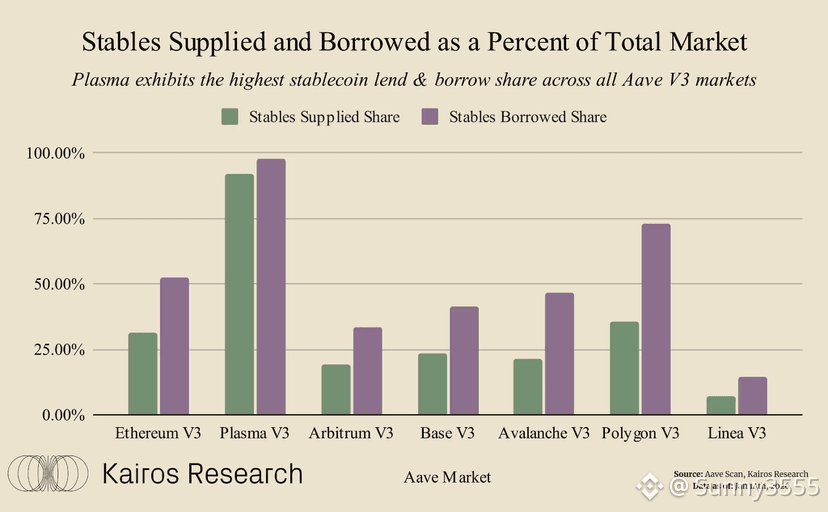
Deep stablecoin liquidity is what every payments business, card issuer, and fintech needs.
People and businesses holding dollars on gain access to institutional grade arbitrage returns on the same rails that move their money.Deep liquidity is the backbone of real payments.
When stablecoins move easily and reliably, builders can focus on creating great products instead of fighting rails.
That’s the kind of foundation I think aligned with scalable, efficient, and built for real-world usage.This is what real product market fit looks like in DeFi.
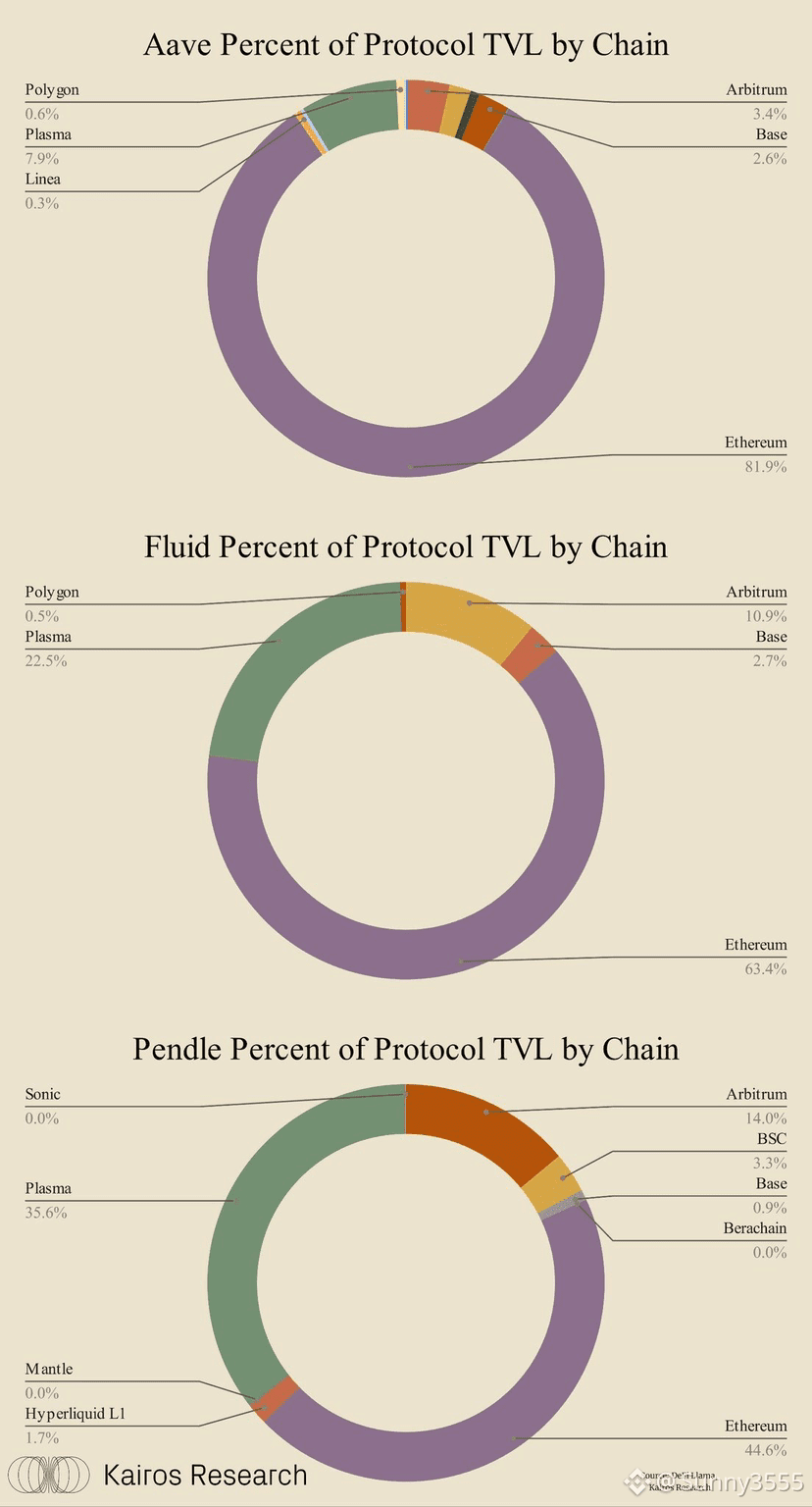
6 days to $1B market size, $1.9B all-time volume, and Fluid already driving ~64.8% of Plasma DEX volume. That is not a “campaign”, that’s a liquidity engine powering real payments rails.
The next step is making this kind of scale safe and boring for fintech. Controlled execution beats vibes, every time. @Plasma #Plasma $XPL
Is it Future?Ask yourself
@Plasma #Plasma $XPL
Deep stablecoin liquidity is what every payments business, card issuer, and fintech needs.
People and businesses holding dollars on gain access to institutional grade arbitrage returns on the same rails that move their money.Deep liquidity is the backbone of real payments.
When stablecoins move easily and reliably, builders can focus on creating great products instead of fighting rails.
That’s the kind of foundation I think aligned with scalable, efficient, and built for real-world usage.This is what real product market fit looks like in DeFi.
6 days to $1B market size, $1.9B all-time volume, and Fluid already driving ~64.8% of Plasma DEX volume. That is not a “campaign”, that’s a liquidity engine powering real payments rails.
The next step is making this kind of scale safe and boring for fintech. Controlled execution beats vibes, every time. @Plasma #Plasma $XPL
19
·
--
@Plasma #plasma $XPL Apakah Anda seorang pencipta yang ingin mendapatkan imbalan untuk konten Anda? …..$XPL #Plasma Likuiditas yang dalam adalah tulang punggung dari pembayaran yang nyata.
Ketika stablecoin bergerak dengan mudah dan dapat diandalkan, para pembangun dapat fokus pada menciptakan produk yang hebat daripada berjuang melawan jalur.
Itulah jenis fondasi yang kami sesuaikan dengan skala, efisien, dan dibangun untuk penggunaan di dunia nyata.
Ketika stablecoin bergerak dengan mudah dan dapat diandalkan, para pembangun dapat fokus pada menciptakan produk yang hebat daripada berjuang melawan jalur.
Itulah jenis fondasi yang kami sesuaikan dengan skala, efisien, dan dibangun untuk penggunaan di dunia nyata.
27
·
--
@LorenzoProtocol $BANK saatnya untuk memegang koin untuk masa depan kamu akan segera mendapatkan imbalan jadi buatlah keputusan yang bijak☺️
@Lorenzo Protocol $BANK saatnya untuk memegang koin untuk masa depan kamu akan segera mendapatkan imbalan jadi buatlah keputusan yang bijak☺️

2
331
·
--

Artikel
Lihat terjemahan
The Future.@WalrusProtocol $WAL #Walrus
{spot}(WALUSDT)
The digital world is heavy. Every day, humanity generates roughly 328.77 million terabytes of data. We are no longer just sending text emails; we are training massive Artificial Intelligence (AI) models, streaming 4K video, and building complex 3D metaverses.For the last decade, the solution to this data explosion has been simple but flawed: The Cloud. We handed our digital lives over to Amazon (AWS), Google, and Microsoft. While convenient, this centralization has created a fragile internet. These tech giants act as gatekeepers—they can censor content, raise prices unilaterally, and introduce single points of failure.Web3 promised a better way: decentralized storage. Networks like Filecoin and Arweave showed us that a distributed network of hard drives could work. However, they struggled with the "Blockchain Trilemma," often sacrificing speed or low costs to achieve decentralization.Now, a new contender has emerged to solve these legacy issues. Built on the blazing-fast Sui blockchain, the Walrus Protocol is redefining what it means to store data on-chain. It is not just a "Dropbox for crypto"; it is a programmable, cryptographically secure data layer designed for the AI era.The Architecture of Efficiency: Understanding "Red Stuff"To understand why Walrus is a game-changer, you have to look at the math. Traditional decentralized storage often relies on "full replication." If you want to store a 1GB file securely on a legacy network, that network might copy your file 50 to 100 times across different nodes. This is secure, but it is incredibly wasteful and expensive.Walrus takes a different approach. It utilizes a novel implementation of 2D erasure coding affectionately named "Red Stuff" (based on RaptorQ fountain codes).When a user uploads a "Blob" (Binary Large Object) to Walrus, the protocol does not store the file in one piece. Instead, it breaks the file into a mathematical grid of "slivers." These slivers are then distributed across a vast network of storage nodes. Efficiency: Because of this advanced math, Walrus achieves extreme durability with a replication factor of only 4x to 5x. This means storing 1GB of data only uses about 4GB of network capacity, compared to the hundreds of gigabytes required by older competitors. Robustness: The network is "Byzantine Fault Tolerant." Even if a significant portion of the nodes go offline or turn malicious, the original file can be perfectly reconstructed from the remaining slivers.The Sui Advantage: Speed Meets StorageWalrus is unique because it separates the "Control Plane" from the "Data Plane."Most blockchains try to do everything at once—process transactions and store data—which leads to congestion and high fees. Walrus uses the Sui blockchain strictly for management. The metadata (who owns the file, how big it is, and the proof that it exists) lives on Sui. The actual heavy data lives on the specialized Walrus nodes.This synergy allows Walrus to inherit the lightning-fast speed of Sui. Managing your storage, transferring ownership of a dataset, or updating permissions feels instant. It transforms storage from a static "hard drive" into a dynamic, programmable asset that can interact with smart contracts in real-time.The $WAL Token EconomyA decentralized network is only as strong as its incentives. The Walrus economy is designed to align the interests of users, storage providers, and token holders using the native $WAL token. Storage Payments: To store data, users must pay in $WAL. This creates a direct correlation between the network's adoption and the demand for the token. Staking and Security: Storage nodes operate on a Delegated Proof-of-Stake (DPoS) model. They must stake WAL to participate. If they lose data or go offline, they face slashing penalties. This financial stake ensures that providers are motivated to keep their servers running 24/7. * The Storage Fund: Perhaps the most innovative feature is the "Storage Fund." When a user pays for storage (e.g., for 5 years), the WAL tokens are not paid to the provider all at once. Instead, they are locked in a smart contract and released slowly over time. This mechanism guarantees that providers have a long-term incentive to host the data, while also removing tokens from the circulating supply, creating deflationary pressure as the network grows.Use Cases: Why the World Needs WalrusWalrus is not building technology for technology's sake. It is solving critical problems for the next generation of the internet.1. The AI Data CrisisTraining Large Language Models (LLMs) requires petabytes of text and imagery. Storing this on AWS is prohibitively expensive for open-source researchers. Walrus provides a decentralized "Data Lake" where researchers can store massive datasets cheaply. Because the metadata is on-chain, data can be cryptographically signed, proving its origin—a crucial feature in an era of deepfakes and AI-generated misinformation.2. Unstoppable "Walrus Sites"One of the most exciting developer tools is "Walrus Sites." Currently, most Decentralized Applications (dApps) still rely on centralized servers (like Vercel or AWS) for their frontend websites. If those servers go down, the dApp is inaccessible. Walrus allows developers to host their entire website—HTML, CSS, and JavaScript—directly on the decentralized network. This creates truly "unstoppable applications" that are resistant to censorship and platform de-risking.3. Dynamic NFTsThe NFT market has a dirty secret: many high-value digital collectibles are just links pointing to a centralized server. If the startup behind the project goes bankrupt, the image disappears. Walrus solves this by storing the actual media asset on-chain. Furthermore, because Walrus integrates with Sui Move, these assets can be dynamic. Imagine a gaming sword that changes its appearance as you use it in-game, with the visual updates permanently written to the storage layer.ConclusionWe are witnessing the transition from the "Cloud Era" to the "Fog Era." The centralized cloud served us well, but its limitations in privacy, cost, and censorship resistance are becoming undeniable.The Walrus Protocol represents the maturation of decentralized storage. By solving the efficiency problems of the past with "Red Stuff" and leveraging the speed of Sui, it offers a solution that is finally ready for mass adoption. It is cheaper than the competition, faster than the legacy chains, and more secure than the centralized giants.As we build a world of autonomous AI agents, censorship-resistant media, and true digital ownership, we need a foundation that can hold the weight of our digital future. Walrus is that foundation.@Walrus 🦭/acc $WAL #walrus
The Future.
@Walrus 🦭/acc $WAL #Walrus
The digital world is heavy. Every day, humanity generates roughly 328.77 million terabytes of data. We are no longer just sending text emails; we are training massive Artificial Intelligence (AI) models, streaming 4K video, and building complex 3D metaverses.For the last decade, the solution to this data explosion has been simple but flawed: The Cloud. We handed our digital lives over to Amazon (AWS), Google, and Microsoft. While convenient, this centralization has created a fragile internet. These tech giants act as gatekeepers—they can censor content, raise prices unilaterally, and introduce single points of failure.Web3 promised a better way: decentralized storage. Networks like Filecoin and Arweave showed us that a distributed network of hard drives could work. However, they struggled with the "Blockchain Trilemma," often sacrificing speed or low costs to achieve decentralization.Now, a new contender has emerged to solve these legacy issues. Built on the blazing-fast Sui blockchain, the Walrus Protocol is redefining what it means to store data on-chain. It is not just a "Dropbox for crypto"; it is a programmable, cryptographically secure data layer designed for the AI era.The Architecture of Efficiency: Understanding "Red Stuff"To understand why Walrus is a game-changer, you have to look at the math. Traditional decentralized storage often relies on "full replication." If you want to store a 1GB file securely on a legacy network, that network might copy your file 50 to 100 times across different nodes. This is secure, but it is incredibly wasteful and expensive.Walrus takes a different approach. It utilizes a novel implementation of 2D erasure coding affectionately named "Red Stuff" (based on RaptorQ fountain codes).When a user uploads a "Blob" (Binary Large Object) to Walrus, the protocol does not store the file in one piece. Instead, it breaks the file into a mathematical grid of "slivers." These slivers are then distributed across a vast network of storage nodes. Efficiency: Because of this advanced math, Walrus achieves extreme durability with a replication factor of only 4x to 5x. This means storing 1GB of data only uses about 4GB of network capacity, compared to the hundreds of gigabytes required by older competitors. Robustness: The network is "Byzantine Fault Tolerant." Even if a significant portion of the nodes go offline or turn malicious, the original file can be perfectly reconstructed from the remaining slivers.The Sui Advantage: Speed Meets StorageWalrus is unique because it separates the "Control Plane" from the "Data Plane."Most blockchains try to do everything at once—process transactions and store data—which leads to congestion and high fees. Walrus uses the Sui blockchain strictly for management. The metadata (who owns the file, how big it is, and the proof that it exists) lives on Sui. The actual heavy data lives on the specialized Walrus nodes.This synergy allows Walrus to inherit the lightning-fast speed of Sui. Managing your storage, transferring ownership of a dataset, or updating permissions feels instant. It transforms storage from a static "hard drive" into a dynamic, programmable asset that can interact with smart contracts in real-time.The $WAL Token EconomyA decentralized network is only as strong as its incentives. The Walrus economy is designed to align the interests of users, storage providers, and token holders using the native $WAL token. Storage Payments: To store data, users must pay in $WAL . This creates a direct correlation between the network's adoption and the demand for the token. Staking and Security: Storage nodes operate on a Delegated Proof-of-Stake (DPoS) model. They must stake WAL to participate. If they lose data or go offline, they face slashing penalties. This financial stake ensures that providers are motivated to keep their servers running 24/7. * The Storage Fund: Perhaps the most innovative feature is the "Storage Fund." When a user pays for storage (e.g., for 5 years), the WAL tokens are not paid to the provider all at once. Instead, they are locked in a smart contract and released slowly over time. This mechanism guarantees that providers have a long-term incentive to host the data, while also removing tokens from the circulating supply, creating deflationary pressure as the network grows.Use Cases: Why the World Needs WalrusWalrus is not building technology for technology's sake. It is solving critical problems for the next generation of the internet.1. The AI Data CrisisTraining Large Language Models (LLMs) requires petabytes of text and imagery. Storing this on AWS is prohibitively expensive for open-source researchers. Walrus provides a decentralized "Data Lake" where researchers can store massive datasets cheaply. Because the metadata is on-chain, data can be cryptographically signed, proving its origin—a crucial feature in an era of deepfakes and AI-generated misinformation.2. Unstoppable "Walrus Sites"One of the most exciting developer tools is "Walrus Sites." Currently, most Decentralized Applications (dApps) still rely on centralized servers (like Vercel or AWS) for their frontend websites. If those servers go down, the dApp is inaccessible. Walrus allows developers to host their entire website—HTML, CSS, and JavaScript—directly on the decentralized network. This creates truly "unstoppable applications" that are resistant to censorship and platform de-risking.3. Dynamic NFTsThe NFT market has a dirty secret: many high-value digital collectibles are just links pointing to a centralized server. If the startup behind the project goes bankrupt, the image disappears. Walrus solves this by storing the actual media asset on-chain. Furthermore, because Walrus integrates with Sui Move, these assets can be dynamic. Imagine a gaming sword that changes its appearance as you use it in-game, with the visual updates permanently written to the storage layer.ConclusionWe are witnessing the transition from the "Cloud Era" to the "Fog Era." The centralized cloud served us well, but its limitations in privacy, cost, and censorship resistance are becoming undeniable.The Walrus Protocol represents the maturation of decentralized storage. By solving the efficiency problems of the past with "Red Stuff" and leveraging the speed of Sui, it offers a solution that is finally ready for mass adoption. It is cheaper than the competition, faster than the legacy chains, and more secure than the centralized giants.As we build a world of autonomous AI agents, censorship-resistant media, and true digital ownership, we need a foundation that can hold the weight of our digital future. Walrus is that foundation.@Walrus 🦭/acc $WAL #walrus
The digital world is heavy. Every day, humanity generates roughly 328.77 million terabytes of data. We are no longer just sending text emails; we are training massive Artificial Intelligence (AI) models, streaming 4K video, and building complex 3D metaverses.For the last decade, the solution to this data explosion has been simple but flawed: The Cloud. We handed our digital lives over to Amazon (AWS), Google, and Microsoft. While convenient, this centralization has created a fragile internet. These tech giants act as gatekeepers—they can censor content, raise prices unilaterally, and introduce single points of failure.Web3 promised a better way: decentralized storage. Networks like Filecoin and Arweave showed us that a distributed network of hard drives could work. However, they struggled with the "Blockchain Trilemma," often sacrificing speed or low costs to achieve decentralization.Now, a new contender has emerged to solve these legacy issues. Built on the blazing-fast Sui blockchain, the Walrus Protocol is redefining what it means to store data on-chain. It is not just a "Dropbox for crypto"; it is a programmable, cryptographically secure data layer designed for the AI era.The Architecture of Efficiency: Understanding "Red Stuff"To understand why Walrus is a game-changer, you have to look at the math. Traditional decentralized storage often relies on "full replication." If you want to store a 1GB file securely on a legacy network, that network might copy your file 50 to 100 times across different nodes. This is secure, but it is incredibly wasteful and expensive.Walrus takes a different approach. It utilizes a novel implementation of 2D erasure coding affectionately named "Red Stuff" (based on RaptorQ fountain codes).When a user uploads a "Blob" (Binary Large Object) to Walrus, the protocol does not store the file in one piece. Instead, it breaks the file into a mathematical grid of "slivers." These slivers are then distributed across a vast network of storage nodes. Efficiency: Because of this advanced math, Walrus achieves extreme durability with a replication factor of only 4x to 5x. This means storing 1GB of data only uses about 4GB of network capacity, compared to the hundreds of gigabytes required by older competitors. Robustness: The network is "Byzantine Fault Tolerant." Even if a significant portion of the nodes go offline or turn malicious, the original file can be perfectly reconstructed from the remaining slivers.The Sui Advantage: Speed Meets StorageWalrus is unique because it separates the "Control Plane" from the "Data Plane."Most blockchains try to do everything at once—process transactions and store data—which leads to congestion and high fees. Walrus uses the Sui blockchain strictly for management. The metadata (who owns the file, how big it is, and the proof that it exists) lives on Sui. The actual heavy data lives on the specialized Walrus nodes.This synergy allows Walrus to inherit the lightning-fast speed of Sui. Managing your storage, transferring ownership of a dataset, or updating permissions feels instant. It transforms storage from a static "hard drive" into a dynamic, programmable asset that can interact with smart contracts in real-time.The $WAL Token EconomyA decentralized network is only as strong as its incentives. The Walrus economy is designed to align the interests of users, storage providers, and token holders using the native $WAL token. Storage Payments: To store data, users must pay in $WAL . This creates a direct correlation between the network's adoption and the demand for the token. Staking and Security: Storage nodes operate on a Delegated Proof-of-Stake (DPoS) model. They must stake WAL to participate. If they lose data or go offline, they face slashing penalties. This financial stake ensures that providers are motivated to keep their servers running 24/7. * The Storage Fund: Perhaps the most innovative feature is the "Storage Fund." When a user pays for storage (e.g., for 5 years), the WAL tokens are not paid to the provider all at once. Instead, they are locked in a smart contract and released slowly over time. This mechanism guarantees that providers have a long-term incentive to host the data, while also removing tokens from the circulating supply, creating deflationary pressure as the network grows.Use Cases: Why the World Needs WalrusWalrus is not building technology for technology's sake. It is solving critical problems for the next generation of the internet.1. The AI Data CrisisTraining Large Language Models (LLMs) requires petabytes of text and imagery. Storing this on AWS is prohibitively expensive for open-source researchers. Walrus provides a decentralized "Data Lake" where researchers can store massive datasets cheaply. Because the metadata is on-chain, data can be cryptographically signed, proving its origin—a crucial feature in an era of deepfakes and AI-generated misinformation.2. Unstoppable "Walrus Sites"One of the most exciting developer tools is "Walrus Sites." Currently, most Decentralized Applications (dApps) still rely on centralized servers (like Vercel or AWS) for their frontend websites. If those servers go down, the dApp is inaccessible. Walrus allows developers to host their entire website—HTML, CSS, and JavaScript—directly on the decentralized network. This creates truly "unstoppable applications" that are resistant to censorship and platform de-risking.3. Dynamic NFTsThe NFT market has a dirty secret: many high-value digital collectibles are just links pointing to a centralized server. If the startup behind the project goes bankrupt, the image disappears. Walrus solves this by storing the actual media asset on-chain. Furthermore, because Walrus integrates with Sui Move, these assets can be dynamic. Imagine a gaming sword that changes its appearance as you use it in-game, with the visual updates permanently written to the storage layer.ConclusionWe are witnessing the transition from the "Cloud Era" to the "Fog Era." The centralized cloud served us well, but its limitations in privacy, cost, and censorship resistance are becoming undeniable.The Walrus Protocol represents the maturation of decentralized storage. By solving the efficiency problems of the past with "Red Stuff" and leveraging the speed of Sui, it offers a solution that is finally ready for mass adoption. It is cheaper than the competition, faster than the legacy chains, and more secure than the centralized giants.As we build a world of autonomous AI agents, censorship-resistant media, and true digital ownership, we need a foundation that can hold the weight of our digital future. Walrus is that foundation.@Walrus 🦭/acc $WAL #walrus
·
--

Artikel
Lihat terjemahan
FutureThe digital world is heavy. Every day, humanity generates roughly 328.77 million terabytes of data. We are no longer just sending text emails; we are training massive Artificial Intelligence (AI) models, streaming 4K video, and building complex 3D metaverses.For the last decade, the solution to this data explosion has been simple but flawed: The Cloud. We handed our digital lives over to Amazon (AWS), Google, and Microsoft. While convenient, this centralization has created a fragile internet. These tech giants act as gatekeepers—they can censor content, raise prices unilaterally, and introduce single points of failure.Web3 promised a better way: decentralized storage. Networks like Filecoin and Arweave showed us that a distributed network of hard drives could work. However, they struggled with the "Blockchain Trilemma," often sacrificing speed or low costs to achieve decentralization.Now, a new contender has emerged to solve these legacy issues. Built on the blazing-fast Sui blockchain, the Walrus Protocol is redefining what it means to store data on-chain. It is not just a "Dropbox for crypto"; it is a programmable, cryptographically secure data layer designed for the AI era.The Architecture of Efficiency: Understanding "Red Stuff"To understand why Walrus is a game-changer, you have to look at the math. Traditional decentralized storage often relies on "full replication." If you want to store a 1GB file securely on a legacy network, that network might copy your file 50 to 100 times across different nodes. This is secure, but it is incredibly wasteful and expensive.Walrus takes a different approach. It utilizes a novel implementation of 2D erasure coding affectionately named "Red Stuff" (based on RaptorQ fountain codes).When a user uploads a "Blob" (Binary Large Object) to Walrus, the protocol does not store the file in one piece. Instead, it breaks the file into a mathematical grid of "slivers." These slivers are then distributed across a vast network of storage nodes. Efficiency: Because of this advanced math, Walrus achieves extreme durability with a replication factor of only 4x to 5x. This means storing 1GB of data only uses about 4GB of network capacity, compared to the hundreds of gigabytes required by older competitors. Robustness: The network is "Byzantine Fault Tolerant." Even if a significant portion of the nodes go offline or turn malicious, the original file can be perfectly reconstructed from the remaining slivers.The Sui Advantage: Speed Meets StorageWalrus is unique because it separates the "Control Plane" from the "Data Plane."Most blockchains try to do everything at once—process transactions and store data—which leads to congestion and high fees. Walrus uses the Sui blockchain strictly for management. The metadata (who owns the file, how big it is, and the proof that it exists) lives on Sui. The actual heavy data lives on the specialized Walrus nodes.This synergy allows Walrus to inherit the lightning-fast speed of Sui. Managing your storage, transferring ownership of a dataset, or updating permissions feels instant. It transforms storage from a static "hard drive" into a dynamic, programmable asset that can interact with smart contracts in real-time.The $WAL Token EconomyA decentralized network is only as strong as its incentives. The Walrus economy is designed to align the interests of users, storage providers, and token holders using the native $WAL token. Storage Payments: To store data, users must pay in $WAL. This creates a direct correlation between the network's adoption and the demand for the token. Staking and Security: Storage nodes operate on a Delegated Proof-of-Stake (DPoS) model. They must stake WAL to participate. If they lose data or go offline, they face slashing penalties. This financial stake ensures that providers are motivated to keep their servers running 24/7. * The Storage Fund: Perhaps the most innovative feature is the "Storage Fund." When a user pays for storage (e.g., for 5 years), the WAL tokens are not paid to the provider all at once. Instead, they are locked in a smart contract and released slowly over time. This mechanism guarantees that providers have a long-term incentive to host the data, while also removing tokens from the circulating supply, creating deflationary pressure as the network grows.Use Cases: Why the World Needs WalrusWalrus is not building technology for technology's sake. It is solving critical problems for the next generation of the internet.1. The AI Data CrisisTraining Large Language Models (LLMs) requires petabytes of text and imagery. Storing this on AWS is prohibitively expensive for open-source researchers. Walrus provides a decentralized "Data Lake" where researchers can store massive datasets cheaply. Because the metadata is on-chain, data can be cryptographically signed, proving its origin—a crucial feature in an era of deepfakes and AI-generated misinformation.2. Unstoppable "Walrus Sites"One of the most exciting developer tools is "Walrus Sites." Currently, most Decentralized Applications (dApps) still rely on centralized servers (like Vercel or AWS) for their frontend websites. If those servers go down, the dApp is inaccessible. Walrus allows developers to host their entire website—HTML, CSS, and JavaScript—directly on the decentralized network. This creates truly "unstoppable applications" that are resistant to censorship and platform de-risking.3. Dynamic NFTsThe NFT market has a dirty secret: many high-value digital collectibles are just links pointing to a centralized server. If the startup behind the project goes bankrupt, the image disappears. Walrus solves this by storing the actual media asset on-chain. Furthermore, because Walrus integrates with Sui Move, these assets can be dynamic. Imagine a gaming sword that changes its appearance as you use it in-game, with the visual updates permanently written to the storage layer.ConclusionWe are witnessing the transition from the "Cloud Era" to the "Fog Era." The centralized cloud served us well, but its limitations in privacy, cost, and censorship resistance are becoming undeniable.The Walrus Protocol represents the maturation of decentralized storage. By solving the efficiency problems of the past with "Red Stuff" and leveraging the speed of Sui, it offers a solution that is finally ready for mass adoption. It is cheaper than the competition, faster than the legacy chains, and more secure than the centralized giants.As we build a world of autonomous AI agents, censorship-resistant media, and true digital ownership, we need a foundation that can hold the weight of our digital future. Walrus is that foundation.@Walrus 🦭/acc $WAL @WalrusProtocol #Walrus
Future
The digital world is heavy. Every day, humanity generates roughly 328.77 million terabytes of data. We are no longer just sending text emails; we are training massive Artificial Intelligence (AI) models, streaming 4K video, and building complex 3D metaverses.For the last decade, the solution to this data explosion has been simple but flawed: The Cloud. We handed our digital lives over to Amazon (AWS), Google, and Microsoft. While convenient, this centralization has created a fragile internet. These tech giants act as gatekeepers—they can censor content, raise prices unilaterally, and introduce single points of failure.Web3 promised a better way: decentralized storage. Networks like Filecoin and Arweave showed us that a distributed network of hard drives could work. However, they struggled with the "Blockchain Trilemma," often sacrificing speed or low costs to achieve decentralization.Now, a new contender has emerged to solve these legacy issues. Built on the blazing-fast Sui blockchain, the Walrus Protocol is redefining what it means to store data on-chain. It is not just a "Dropbox for crypto"; it is a programmable, cryptographically secure data layer designed for the AI era.The Architecture of Efficiency: Understanding "Red Stuff"To understand why Walrus is a game-changer, you have to look at the math. Traditional decentralized storage often relies on "full replication." If you want to store a 1GB file securely on a legacy network, that network might copy your file 50 to 100 times across different nodes. This is secure, but it is incredibly wasteful and expensive.Walrus takes a different approach. It utilizes a novel implementation of 2D erasure coding affectionately named "Red Stuff" (based on RaptorQ fountain codes).When a user uploads a "Blob" (Binary Large Object) to Walrus, the protocol does not store the file in one piece. Instead, it breaks the file into a mathematical grid of "slivers." These slivers are then distributed across a vast network of storage nodes. Efficiency: Because of this advanced math, Walrus achieves extreme durability with a replication factor of only 4x to 5x. This means storing 1GB of data only uses about 4GB of network capacity, compared to the hundreds of gigabytes required by older competitors. Robustness: The network is "Byzantine Fault Tolerant." Even if a significant portion of the nodes go offline or turn malicious, the original file can be perfectly reconstructed from the remaining slivers.The Sui Advantage: Speed Meets StorageWalrus is unique because it separates the "Control Plane" from the "Data Plane."Most blockchains try to do everything at once—process transactions and store data—which leads to congestion and high fees. Walrus uses the Sui blockchain strictly for management. The metadata (who owns the file, how big it is, and the proof that it exists) lives on Sui. The actual heavy data lives on the specialized Walrus nodes.This synergy allows Walrus to inherit the lightning-fast speed of Sui. Managing your storage, transferring ownership of a dataset, or updating permissions feels instant. It transforms storage from a static "hard drive" into a dynamic, programmable asset that can interact with smart contracts in real-time.The $WAL Token EconomyA decentralized network is only as strong as its incentives. The Walrus economy is designed to align the interests of users, storage providers, and token holders using the native $WAL token. Storage Payments: To store data, users must pay in $WAL . This creates a direct correlation between the network's adoption and the demand for the token. Staking and Security: Storage nodes operate on a Delegated Proof-of-Stake (DPoS) model. They must stake WAL to participate. If they lose data or go offline, they face slashing penalties. This financial stake ensures that providers are motivated to keep their servers running 24/7. * The Storage Fund: Perhaps the most innovative feature is the "Storage Fund." When a user pays for storage (e.g., for 5 years), the WAL tokens are not paid to the provider all at once. Instead, they are locked in a smart contract and released slowly over time. This mechanism guarantees that providers have a long-term incentive to host the data, while also removing tokens from the circulating supply, creating deflationary pressure as the network grows.Use Cases: Why the World Needs WalrusWalrus is not building technology for technology's sake. It is solving critical problems for the next generation of the internet.1. The AI Data CrisisTraining Large Language Models (LLMs) requires petabytes of text and imagery. Storing this on AWS is prohibitively expensive for open-source researchers. Walrus provides a decentralized "Data Lake" where researchers can store massive datasets cheaply. Because the metadata is on-chain, data can be cryptographically signed, proving its origin—a crucial feature in an era of deepfakes and AI-generated misinformation.2. Unstoppable "Walrus Sites"One of the most exciting developer tools is "Walrus Sites." Currently, most Decentralized Applications (dApps) still rely on centralized servers (like Vercel or AWS) for their frontend websites. If those servers go down, the dApp is inaccessible. Walrus allows developers to host their entire website—HTML, CSS, and JavaScript—directly on the decentralized network. This creates truly "unstoppable applications" that are resistant to censorship and platform de-risking.3. Dynamic NFTsThe NFT market has a dirty secret: many high-value digital collectibles are just links pointing to a centralized server. If the startup behind the project goes bankrupt, the image disappears. Walrus solves this by storing the actual media asset on-chain. Furthermore, because Walrus integrates with Sui Move, these assets can be dynamic. Imagine a gaming sword that changes its appearance as you use it in-game, with the visual updates permanently written to the storage layer.ConclusionWe are witnessing the transition from the "Cloud Era" to the "Fog Era." The centralized cloud served us well, but its limitations in privacy, cost, and censorship resistance are becoming undeniable.The Walrus Protocol represents the maturation of decentralized storage. By solving the efficiency problems of the past with "Red Stuff" and leveraging the speed of Sui, it offers a solution that is finally ready for mass adoption. It is cheaper than the competition, faster than the legacy chains, and more secure than the centralized giants.As we build a world of autonomous AI agents, censorship-resistant media, and true digital ownership, we need a foundation that can hold the weight of our digital future. Walrus is that foundation.@Walrus 🦭/acc $WAL @Walrus 🦭/acc #Walrus
1
·
--

Artikel
Lihat terjemahan
what you SayThe digital world is heavy. Every day, humanity generates roughly 328.77 million terabytes of data. We are no longer just sending text emails; we are training massive Artificial Intelligence (AI) models, streaming 4K video, and building complex 3D metaverses.For the last decade, the solution to this data explosion has been simple but flawed: The Cloud. We handed our digital lives over to Amazon (AWS), Google, and Microsoft. While convenient, this centralization has created a fragile internet. These tech giants act as gatekeepers—they can censor content, raise prices unilaterally, and introduce single points of failure.Web3 promised a better way: decentralized storage. Networks like Filecoin and Arweave showed us that a distributed network of hard drives could work. However, they struggled with the "Blockchain Trilemma," often sacrificing speed or low costs to achieve decentralization.Now, a new contender has emerged to solve these legacy issues. Built on the blazing-fast Sui blockchain, the Walrus Protocol is redefining what it means to store data on-chain. It is not just a "Dropbox for crypto"; it is a programmable, cryptographically secure data layer designed for the AI era.The Architecture of Efficiency: Understanding "Red Stuff"To understand why Walrus is a game-changer, you have to look at the math. Traditional decentralized storage often relies on "full replication." If you want to store a 1GB file securely on a legacy network, that network might copy your file 50 to 100 times across different nodes. This is secure, but it is incredibly wasteful and expensive.Walrus takes a different approach. It utilizes a novel implementation of 2D erasure coding affectionately named "Red Stuff" (based on RaptorQ fountain codes).When a user uploads a "Blob" (Binary Large Object) to Walrus, the protocol does not store the file in one piece. Instead, it breaks the file into a mathematical grid of "slivers." These slivers are then distributed across a vast network of storage nodes. Efficiency: Because of this advanced math, Walrus achieves extreme durability with a replication factor of only 4x to 5x. This means storing 1GB of data only uses about 4GB of network capacity, compared to the hundreds of gigabytes required by older competitors. Robustness: The network is "Byzantine Fault Tolerant." Even if a significant portion of the nodes go offline or turn malicious, the original file can be perfectly reconstructed from the remaining slivers.The Sui Advantage: Speed Meets StorageWalrus is unique because it separates the "Control Plane" from the "Data Plane."Most blockchains try to do everything at once—process transactions and store data—which leads to congestion and high fees. Walrus uses the Sui blockchain strictly for management. The metadata (who owns the file, how big it is, and the proof that it exists) lives on Sui. The actual heavy data lives on the specialized Walrus nodes.This synergy allows Walrus to inherit the lightning-fast speed of Sui. Managing your storage, transferring ownership of a dataset, or updating permissions feels instant. It transforms storage from a static "hard drive" into a dynamic, programmable asset that can interact with smart contracts in real-time.The $WAL Token EconomyA decentralized network is only as strong as its incentives. The Walrus economy is designed to align the interests of users, storage providers, and token holders using the native $WAL token. Storage Payments: To store data, users must pay in $WAL. This creates a direct correlation between the network's adoption and the demand for the token. Staking and Security: Storage nodes operate on a Delegated Proof-of-Stake (DPoS) model. They must stake WAL to participate. If they lose data or go offline, they face slashing penalties. This financial stake ensures that providers are motivated to keep their servers running 24/7. * The Storage Fund: Perhaps the most innovative feature is the "Storage Fund." When a user pays for storage (e.g., for 5 years), the WAL tokens are not paid to the provider all at once. Instead, they are locked in a smart contract and released slowly over time. This mechanism guarantees that providers have a long-term incentive to host the data, while also removing tokens from the circulating supply, creating deflationary pressure as the network grows.Use Cases: Why the World Needs WalrusWalrus is not building technology for technology's sake. It is solving critical problems for the next generation of the internet.1. The AI Data CrisisTraining Large Language Models (LLMs) requires petabytes of text and imagery. Storing this on AWS is prohibitively expensive for open-source researchers. Walrus provides a decentralized "Data Lake" where researchers can store massive datasets cheaply. Because the metadata is on-chain, data can be cryptographically signed, proving its origin—a crucial feature in an era of deepfakes and AI-generated misinformation.2. Unstoppable "Walrus Sites"One of the most exciting developer tools is "Walrus Sites." Currently, most Decentralized Applications (dApps) still rely on centralized servers (like Vercel or AWS) for their frontend websites. If those servers go down, the dApp is inaccessible. Walrus allows developers to host their entire website—HTML, CSS, and JavaScript—directly on the decentralized network. This creates truly "unstoppable applications" that are resistant to censorship and platform de-risking.3. Dynamic NFTsThe NFT market has a dirty secret: many high-value digital collectibles are just links pointing to a centralized server. If the startup behind the project goes bankrupt, the image disappears. Walrus solves this by storing the actual media asset on-chain. Furthermore, because Walrus integrates with Sui Move, these assets can be dynamic. Imagine a gaming sword that changes its appearance as you use it in-game, with the visual updates permanently written to the storage layer.ConclusionWe are witnessing the transition from the "Cloud Era" to the "Fog Era." The centralized cloud served us well, but its limitations in privacy, cost, and censorship resistance are becoming undeniable.The Walrus Protocol represents the maturation of decentralized storage. By solving the efficiency problems of the past with "Red Stuff" and leveraging the speed of Sui, it offers a solution that is finally ready for mass adoption. It is cheaper than the competition, faster than the legacy chains, and more secure than the centralized giants.As we build a world of autonomous AI agents, censorship-resistant media, and true digital ownership, we need a foundation that can hold the weight of our digital future. Walrus is that foundation.@Walrus 🦭/acc $WAL #walrus
what you Say
The digital world is heavy. Every day, humanity generates roughly 328.77 million terabytes of data. We are no longer just sending text emails; we are training massive Artificial Intelligence (AI) models, streaming 4K video, and building complex 3D metaverses.For the last decade, the solution to this data explosion has been simple but flawed: The Cloud. We handed our digital lives over to Amazon (AWS), Google, and Microsoft. While convenient, this centralization has created a fragile internet. These tech giants act as gatekeepers—they can censor content, raise prices unilaterally, and introduce single points of failure.Web3 promised a better way: decentralized storage. Networks like Filecoin and Arweave showed us that a distributed network of hard drives could work. However, they struggled with the "Blockchain Trilemma," often sacrificing speed or low costs to achieve decentralization.Now, a new contender has emerged to solve these legacy issues. Built on the blazing-fast Sui blockchain, the Walrus Protocol is redefining what it means to store data on-chain. It is not just a "Dropbox for crypto"; it is a programmable, cryptographically secure data layer designed for the AI era.The Architecture of Efficiency: Understanding "Red Stuff"To understand why Walrus is a game-changer, you have to look at the math. Traditional decentralized storage often relies on "full replication." If you want to store a 1GB file securely on a legacy network, that network might copy your file 50 to 100 times across different nodes. This is secure, but it is incredibly wasteful and expensive.Walrus takes a different approach. It utilizes a novel implementation of 2D erasure coding affectionately named "Red Stuff" (based on RaptorQ fountain codes).When a user uploads a "Blob" (Binary Large Object) to Walrus, the protocol does not store the file in one piece. Instead, it breaks the file into a mathematical grid of "slivers." These slivers are then distributed across a vast network of storage nodes. Efficiency: Because of this advanced math, Walrus achieves extreme durability with a replication factor of only 4x to 5x. This means storing 1GB of data only uses about 4GB of network capacity, compared to the hundreds of gigabytes required by older competitors. Robustness: The network is "Byzantine Fault Tolerant." Even if a significant portion of the nodes go offline or turn malicious, the original file can be perfectly reconstructed from the remaining slivers.The Sui Advantage: Speed Meets StorageWalrus is unique because it separates the "Control Plane" from the "Data Plane."Most blockchains try to do everything at once—process transactions and store data—which leads to congestion and high fees. Walrus uses the Sui blockchain strictly for management. The metadata (who owns the file, how big it is, and the proof that it exists) lives on Sui. The actual heavy data lives on the specialized Walrus nodes.This synergy allows Walrus to inherit the lightning-fast speed of Sui. Managing your storage, transferring ownership of a dataset, or updating permissions feels instant. It transforms storage from a static "hard drive" into a dynamic, programmable asset that can interact with smart contracts in real-time.The $WAL Token EconomyA decentralized network is only as strong as its incentives. The Walrus economy is designed to align the interests of users, storage providers, and token holders using the native $WAL token. Storage Payments: To store data, users must pay in $WAL. This creates a direct correlation between the network's adoption and the demand for the token. Staking and Security: Storage nodes operate on a Delegated Proof-of-Stake (DPoS) model. They must stake WAL to participate. If they lose data or go offline, they face slashing penalties. This financial stake ensures that providers are motivated to keep their servers running 24/7. * The Storage Fund: Perhaps the most innovative feature is the "Storage Fund." When a user pays for storage (e.g., for 5 years), the WAL tokens are not paid to the provider all at once. Instead, they are locked in a smart contract and released slowly over time. This mechanism guarantees that providers have a long-term incentive to host the data, while also removing tokens from the circulating supply, creating deflationary pressure as the network grows.Use Cases: Why the World Needs WalrusWalrus is not building technology for technology's sake. It is solving critical problems for the next generation of the internet.1. The AI Data CrisisTraining Large Language Models (LLMs) requires petabytes of text and imagery. Storing this on AWS is prohibitively expensive for open-source researchers. Walrus provides a decentralized "Data Lake" where researchers can store massive datasets cheaply. Because the metadata is on-chain, data can be cryptographically signed, proving its origin—a crucial feature in an era of deepfakes and AI-generated misinformation.2. Unstoppable "Walrus Sites"One of the most exciting developer tools is "Walrus Sites." Currently, most Decentralized Applications (dApps) still rely on centralized servers (like Vercel or AWS) for their frontend websites. If those servers go down, the dApp is inaccessible. Walrus allows developers to host their entire website—HTML, CSS, and JavaScript—directly on the decentralized network. This creates truly "unstoppable applications" that are resistant to censorship and platform de-risking.3. Dynamic NFTsThe NFT market has a dirty secret: many high-value digital collectibles are just links pointing to a centralized server. If the startup behind the project goes bankrupt, the image disappears. Walrus solves this by storing the actual media asset on-chain. Furthermore, because Walrus integrates with Sui Move, these assets can be dynamic. Imagine a gaming sword that changes its appearance as you use it in-game, with the visual updates permanently written to the storage layer.ConclusionWe are witnessing the transition from the "Cloud Era" to the "Fog Era." The centralized cloud served us well, but its limitations in privacy, cost, and censorship resistance are becoming undeniable.The Walrus Protocol represents the maturation of decentralized storage. By solving the efficiency problems of the past with "Red Stuff" and leveraging the speed of Sui, it offers a solution that is finally ready for mass adoption. It is cheaper than the competition, faster than the legacy chains, and more secure than the centralized giants.As we build a world of autonomous AI agents, censorship-resistant media, and true digital ownership, we need a foundation that can hold the weight of our digital future. Walrus is that foundation.@Walrus 🦭/acc $WAL #walrus
25
·
--
Lihat terjemahan
#walrus $WAL @WalrusProtocol hi everyone its the time to earn the points to join the walrus and complete its task and get the points Maybe it’s helpful in future for the trade or saving so please give me also ur best opinion thanks and good wishes for the best.
#walrus $WAL @Walrus 🦭/acc hi everyone its the time to earn the points to join the walrus and complete its task and get the points Maybe it’s helpful in future for the trade or saving so please give me also ur best opinion thanks and good wishes for the best.

1
2
18
·
--

Artikel
Lihat terjemahan
(WAL) what u think…?Walrus (WAL) is a native cryptocurrency token used within the Walrus protocol, a decentralized finance (DeFi) platform that focuses on secure and private blockchain-based interactions. The protocol supports private transactions and provides tools for users to engage with decentralized applications (dApps), governance, and staking activities. The Walrus protocol is designed to facilitate decentralized and privacy-preserving data storage and transactions. It operates on the Sui blockchain and utilizes a combination of erasure coding and blob storage to distribute large files across a decentralized network. This infrastructure is intended to offer cost-efficient, censorship-resistant storage suitable for applications, enterprises, and individuals seeking decentralized alternatives to traditional cloud solutions.
Event Period
2026-01-06 - 2026-02-09
Total participants
(WAL) what u think…?
Walrus (WAL) is a native cryptocurrency token used within the Walrus protocol, a decentralized finance (DeFi) platform that focuses on secure and private blockchain-based interactions. The protocol supports private transactions and provides tools for users to engage with decentralized applications (dApps), governance, and staking activities. The Walrus protocol is designed to facilitate decentralized and privacy-preserving data storage and transactions. It operates on the Sui blockchain and utilizes a combination of erasure coding and blob storage to distribute large files across a decentralized network. This infrastructure is intended to offer cost-efficient, censorship-resistant storage suitable for applications, enterprises, and individuals seeking decentralized alternatives to traditional cloud solutions.
Event Period
2026-01-06 - 2026-02-09
Total participants
Event Period
2026-01-06 - 2026-02-09
Total participants
·
--
Lihat terjemahan
#walrus $WAL hi everyone is time to learn how we get the point
#walrus $WAL hi everyone is time to learn how we get the point


·
--

Artikel
apakah proyek ini menguntungkan?🔥 Mainnet sudah diluncurkan. Pengembang mulai membangun. Privasi menjadi dapat diprogram.
2025 baru saja dimulai.
apakah proyek ini menguntungkan?
🔥 Mainnet sudah diluncurkan. Pengembang mulai membangun. Privasi menjadi dapat diprogram.
2025 baru saja dimulai.
2025 baru saja dimulai.
1
124
·
--
Lihat terjemahan
#walrus $WAL 🔥 Mainnet went live. Developers started building. Privacy became programmable.
2025 was just the start.
#walrus $WAL 🔥 Mainnet went live. Developers started building. Privacy became programmable.
2025 was just the start.
2025 was just the start.

1
36
·
--
Bullish
Lihat terjemahan
https://stocks.apple.com/symbol/BANK36296-USD
https://stocks.apple.com/symbol/BANK36296-USD

1
·
--
Bullish
Lihat terjemahan
$BNB $Lorenzo
$BNB $Lorenzo


Lorenzo Protocol
·
--
2025 telah menjadi tahun yang penuh dengan pencapaian penting bagi Lorenzo Protocol $BANK .
Kami berhasil menyelesaikan Acara Pembuatan Token (TGE) kami pada bulan April, meluncurkan $BANK melalui @Binance Wallet diikuti dengan pencatatan di bursa terkemuka termasuk @Binance, @Bitget, @PancakeSwap , dan lainnya — memberikan likuiditas yang luar biasa dan aksesibilitas global.
Pencapaian kunci termasuk peluncuran lini produk Dana Perdagangan On-Chain (OTF) kami, yang dipimpin oleh sUSD1+ OTF — produk hasil unggulan kami yang menggunakan USD1 oleh @WorldLibertyFi sebagai aset penyelesaian, menandai awal dari rangkaian produk OTF Lorenzo, dengan lebih banyak OTF yang terdiversifikasi akan mengikuti, bersama dengan kemajuan yang mantap dalam infrastruktur inti kami, strategi hasil nyata dan berkelanjutan, serta kemitraan ekosistem strategis.
Strategi kami memprioritaskan pembangunan yang terfokus dan disengaja dengan pola pikir jangka panjang.
Saat kami melihat ke arah 2026, komitmen kami tetap kuat: untuk meningkatkan manajemen aset on-chain tingkat institusi dan memberikan solusi hasil nyata yang berkelanjutan yang mendorong adopsi yang lebih luas di ruang DeFi.
Terima kasih yang terdalam kepada mitra ekosistem dan komunitas kami yang luar biasa atas kepercayaan dan dukungan Anda yang berkelanjutan. Mari kita bangun masa depan bersama. 🚀
Masuk untuk menjelajahi konten lainnya
Bergabunglah dengan pengguna kripto global di Binance Square
⚡️ Dapatkan informasi terbaru dan berguna tentang kripto.
💬 Dipercayai oleh bursa kripto terbesar di dunia.
👍 Temukan wawasan nyata dari kreator terverifikasi.
Email/Nomor Ponsel
Topik Sedang Tren
CanBTCReboundAfterFallingBelow60K?
0 penayangan
63 Berdiskusi
Berita Bitcoin | Bitcoin Jatuh di Bawah $60.000 untuk Pertama Kalinya Sejak Juli saat IBIT Catat Arus Keluar Rekor sebesar $541 Juta
Binance News
·Disukai 8 Kali
·7.6k penayangan
GlobalStocksFaceLongestLosingStreakSince2023
0 penayangan
234 Berdiskusi
AnthropicPlungesTowardIPOPriceonDay2
0 penayangan
17 Berdiskusi