
MrsCafe
89 Posting

MrsCafe
Laporkan
Blokir Pengguna
NodeOps Ambassador|| Web3 enthusiast || content writer || community manager || MOD || intern @trustchain0
32 Mengikuti
36 Pengikut
49 Disukai
Posting
·
--
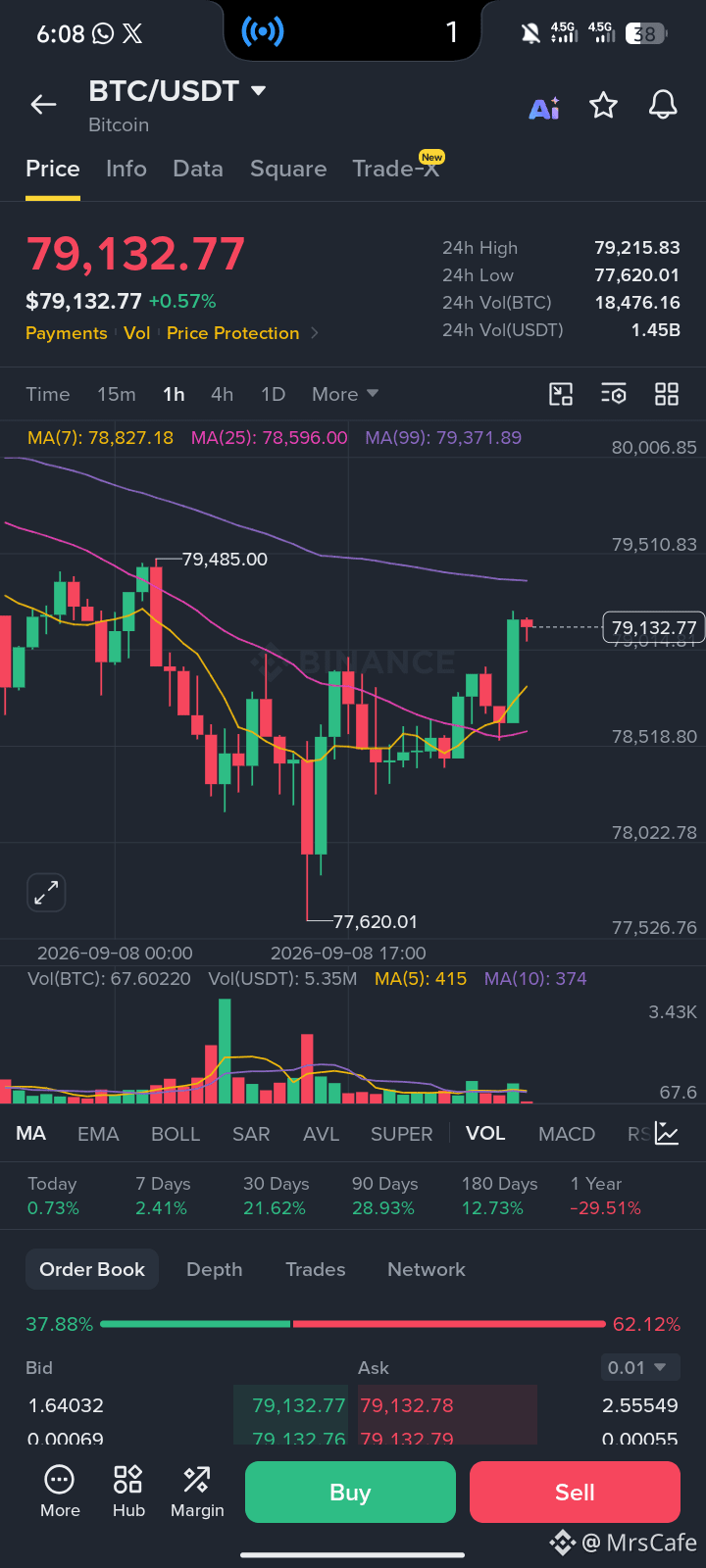
Koin: BTC/USDT
Sinyal: Jual / Short
Tipe: Futures (isolated, 5–10x)
Entry: 79,100 – 79,150
TP1: 78,500
TP2: 77,800
TP3: 77,000
Stop Loss: 79,800
$BTC
Koin: BTC/USDT
Sinyal: Jual / Short
Tipe: Futures (isolated, 5–10x)
Entry: 79,100 – 79,150
TP1: 78,500
TP2: 77,800
TP3: 77,000
Stop Loss: 79,800
$BTC
Sinyal: Jual / Short
Tipe: Futures (isolated, 5–10x)
Entry: 79,100 – 79,150
TP1: 78,500
TP2: 77,800
TP3: 77,000
Stop Loss: 79,800
$BTC
4
·
--
Lihat terjemahan
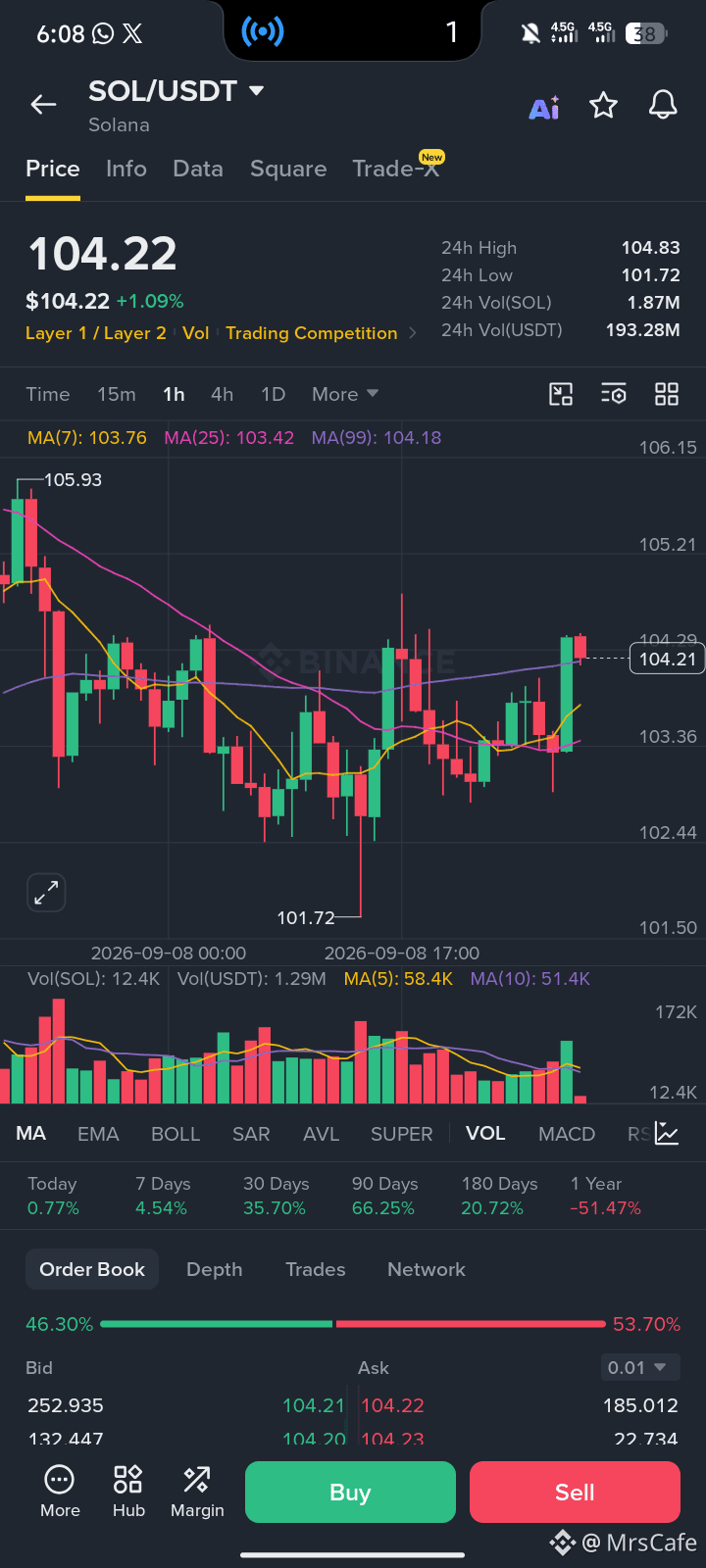
Coin: SOL/USDT
Signal: Sell / Short
Type: Futures (isolated, 5–10x)
Entry: 104.00 – 104.30
TP1: 103.00
TP2: 101.50
TP3: 100.00
Stop Loss: 105.50
$SOL
Coin: SOL/USDT
Signal: Sell / Short
Type: Futures (isolated, 5–10x)
Entry: 104.00 – 104.30
TP1: 103.00
TP2: 101.50
TP3: 100.00
Stop Loss: 105.50
$SOL
Signal: Sell / Short
Type: Futures (isolated, 5–10x)
Entry: 104.00 – 104.30
TP1: 103.00
TP2: 101.50
TP3: 100.00
Stop Loss: 105.50
$SOL
2
·
--
Bullish
Lihat terjemahan
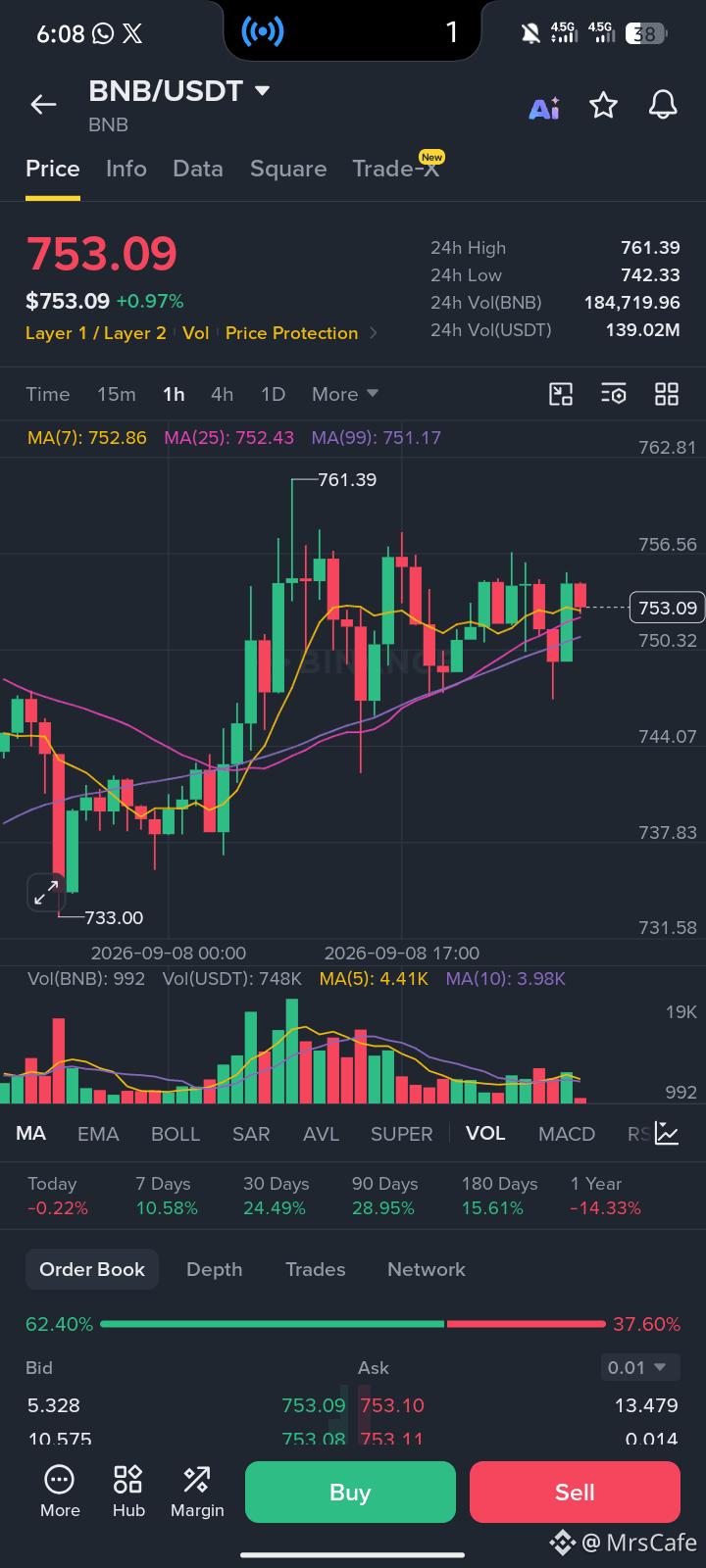
Coin: BNB/USDT
Signal: Sell / Short
Type: Futures (isolated, 5–10x)
Entry: 752.00 – 754.00
TP1: 745.00
TP2: 738.00
TP3: 730.00
Stop Loss: 762.00
$BNB
Coin: BNB/USDT
Signal: Sell / Short
Type: Futures (isolated, 5–10x)
Entry: 752.00 – 754.00
TP1: 745.00
TP2: 738.00
TP3: 730.00
Stop Loss: 762.00
$BNB
Signal: Sell / Short
Type: Futures (isolated, 5–10x)
Entry: 752.00 – 754.00
TP1: 745.00
TP2: 738.00
TP3: 730.00
Stop Loss: 762.00
$BNB
15
·
--
Lihat terjemahan
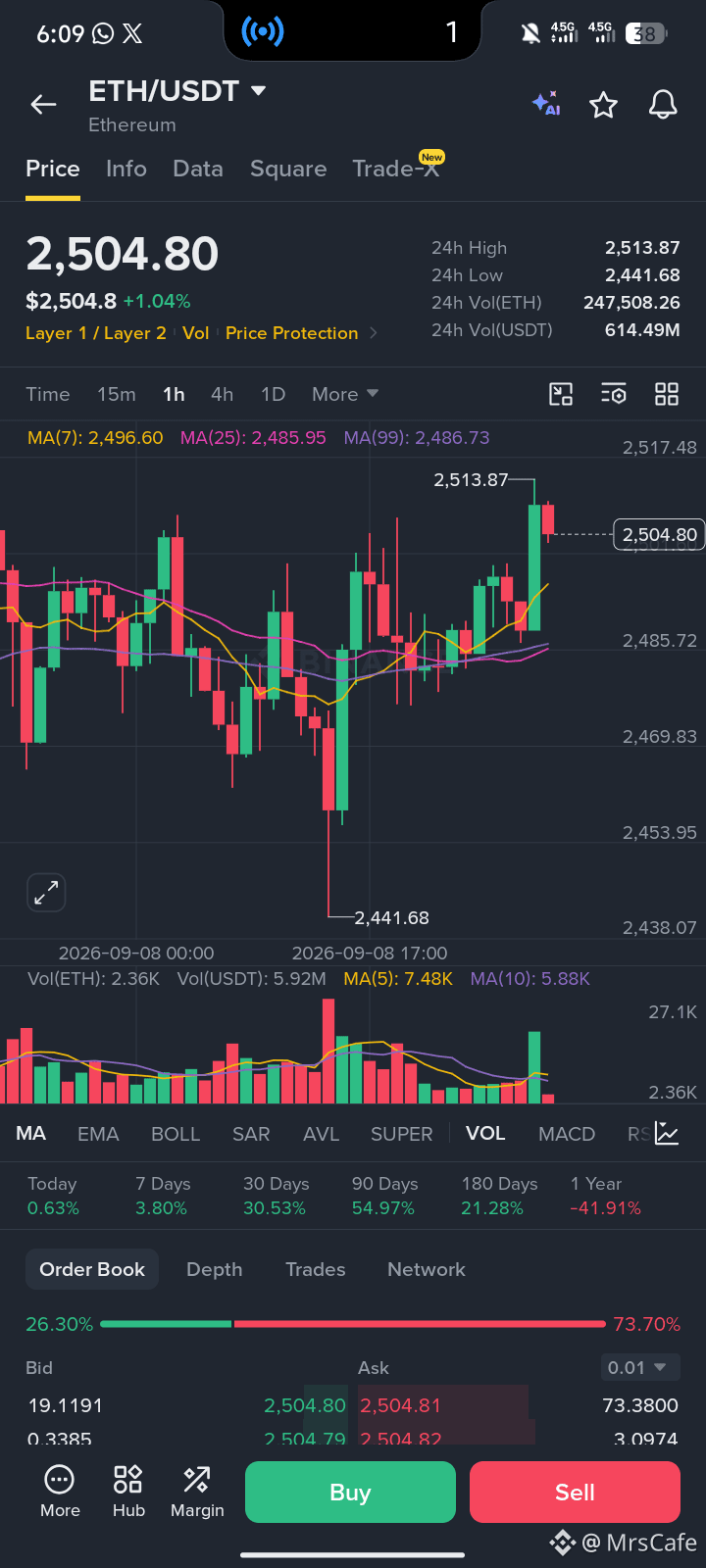
Coin: ETH/USDT
Signal: Sell / Short
Type: Futures (isolated, 5–10x)
Entry: 2,502 – 2,506
TP1: 2,480
TP2: 2,450
TP3: 2,420
Stop Loss: 2,525
$ETH
Coin: ETH/USDT
Signal: Sell / Short
Type: Futures (isolated, 5–10x)
Entry: 2,502 – 2,506
TP1: 2,480
TP2: 2,450
TP3: 2,420
Stop Loss: 2,525
$ETH
Signal: Sell / Short
Type: Futures (isolated, 5–10x)
Entry: 2,502 – 2,506
TP1: 2,480
TP2: 2,450
TP3: 2,420
Stop Loss: 2,525
$ETH
25
·
--
Lihat terjemahan
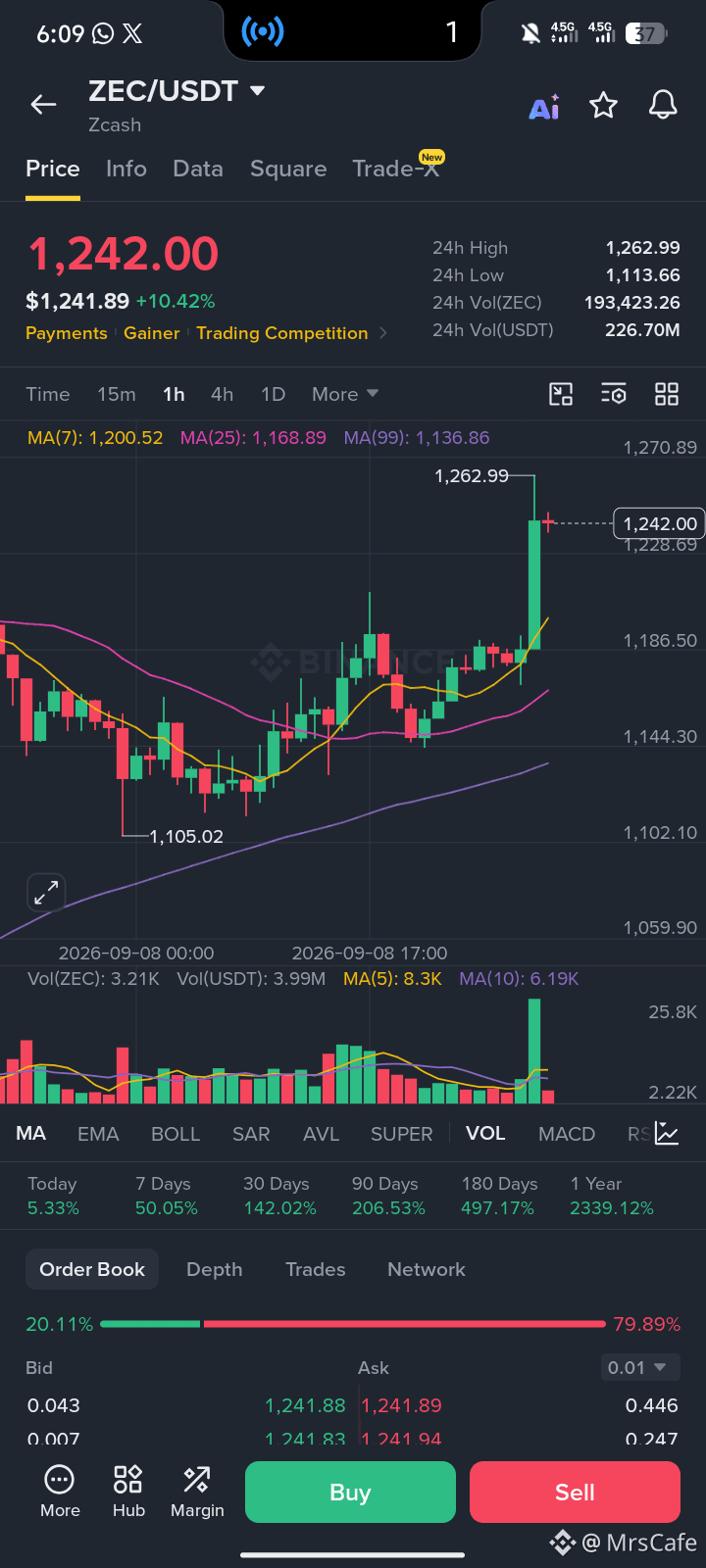
Coin: ZEC/USDT
Signal: Sell / Short
Type: Futures (isolated, 3–5x)
Entry: 1,240 – 1,245
TP1: 1,210
TP2: 1,180
TP3: 1,150
Stop Loss: 1,265
$ZEC
Coin: ZEC/USDT
Signal: Sell / Short
Type: Futures (isolated, 3–5x)
Entry: 1,240 – 1,245
TP1: 1,210
TP2: 1,180
TP3: 1,150
Stop Loss: 1,265
$ZEC
Signal: Sell / Short
Type: Futures (isolated, 3–5x)
Entry: 1,240 – 1,245
TP1: 1,210
TP2: 1,180
TP3: 1,150
Stop Loss: 1,265
$ZEC
45
·
--
Lihat terjemahan
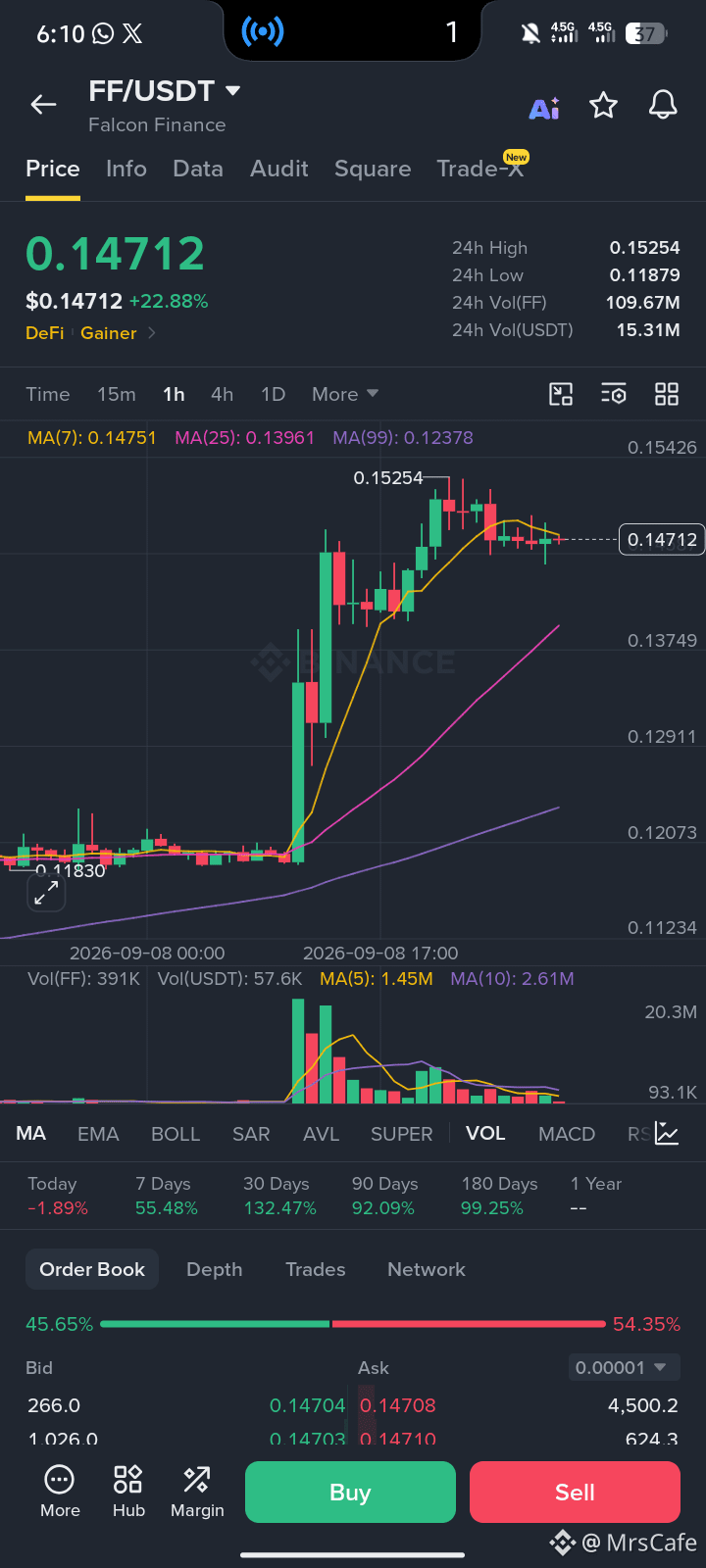
Coin: FF/USDT
Signal: Sell / Short
Type: Futures (isolated, 3–5x)
Entry: 0.1470 – 0.1475
TP1: 0.1420
TP2: 0.1370
TP3: 0.1320
Stop Loss: 0.1510
$FF
#USStrikesTargetsNearHormuzAndJask
Coin: FF/USDT
Signal: Sell / Short
Type: Futures (isolated, 3–5x)
Entry: 0.1470 – 0.1475
TP1: 0.1420
TP2: 0.1370
TP3: 0.1320
Stop Loss: 0.1510
$FF
#USStrikesTargetsNearHormuzAndJask
Signal: Sell / Short
Type: Futures (isolated, 3–5x)
Entry: 0.1470 – 0.1475
TP1: 0.1420
TP2: 0.1370
TP3: 0.1320
Stop Loss: 0.1510
$FF
#USStrikesTargetsNearHormuzAndJask
39
·
--
Lihat terjemahan
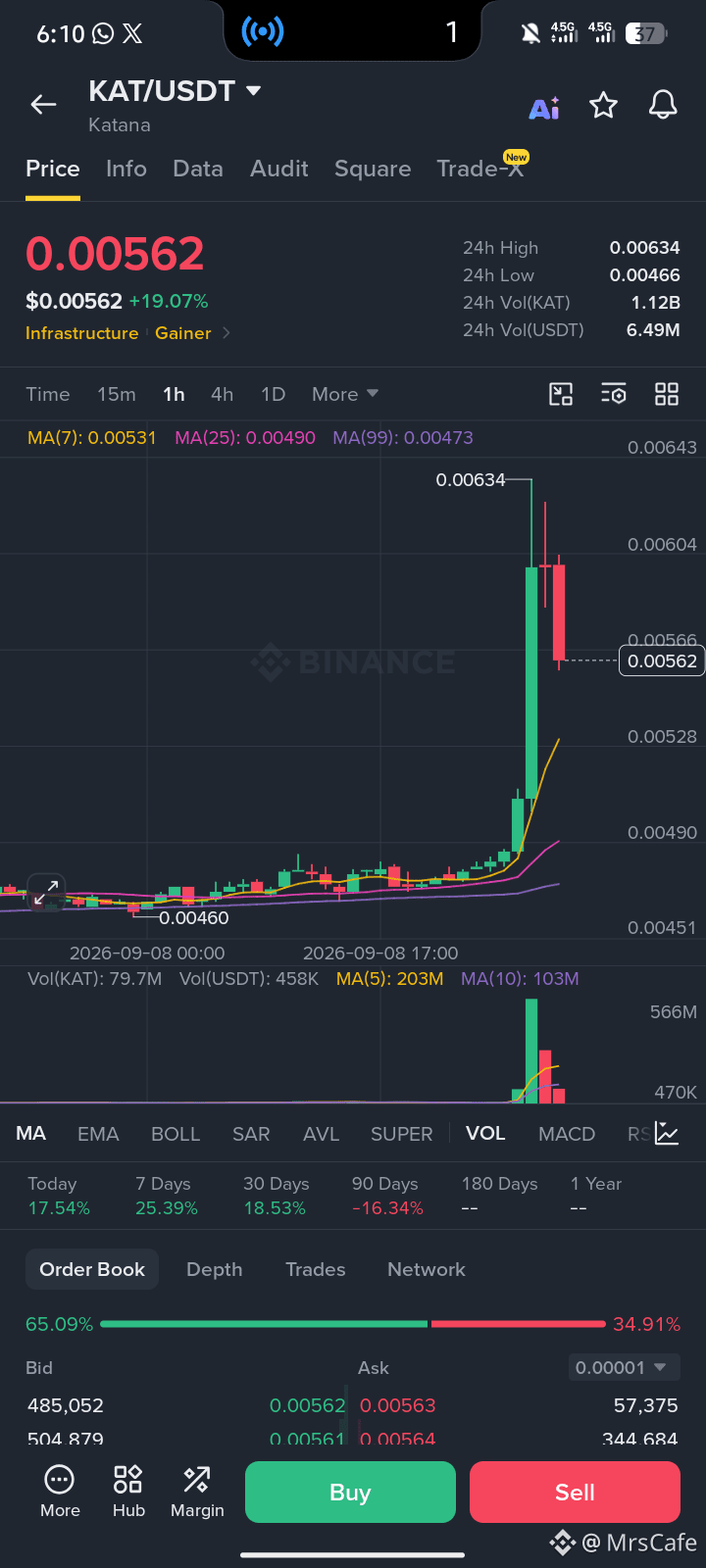
Coin: KAT/USDT
Signal: Sell / Short
Type: Futures (isolated, 3–5x)
Entry: 0.00560 – 0.00565
TP1: 0.00530
TP2: 0.00500
TP3: 0.00470
Stop Loss: 0.00585
$KAT
#OilRisesToHighestSinceJuly #USStrikesTargetsNearHormuzAndJask
Coin: KAT/USDT
Signal: Sell / Short
Type: Futures (isolated, 3–5x)
Entry: 0.00560 – 0.00565
TP1: 0.00530
TP2: 0.00500
TP3: 0.00470
Stop Loss: 0.00585
$KAT
#OilRisesToHighestSinceJuly #USStrikesTargetsNearHormuzAndJask
Signal: Sell / Short
Type: Futures (isolated, 3–5x)
Entry: 0.00560 – 0.00565
TP1: 0.00530
TP2: 0.00500
TP3: 0.00470
Stop Loss: 0.00585
$KAT
#OilRisesToHighestSinceJuly #USStrikesTargetsNearHormuzAndJask
43
·
--
Lihat terjemahan
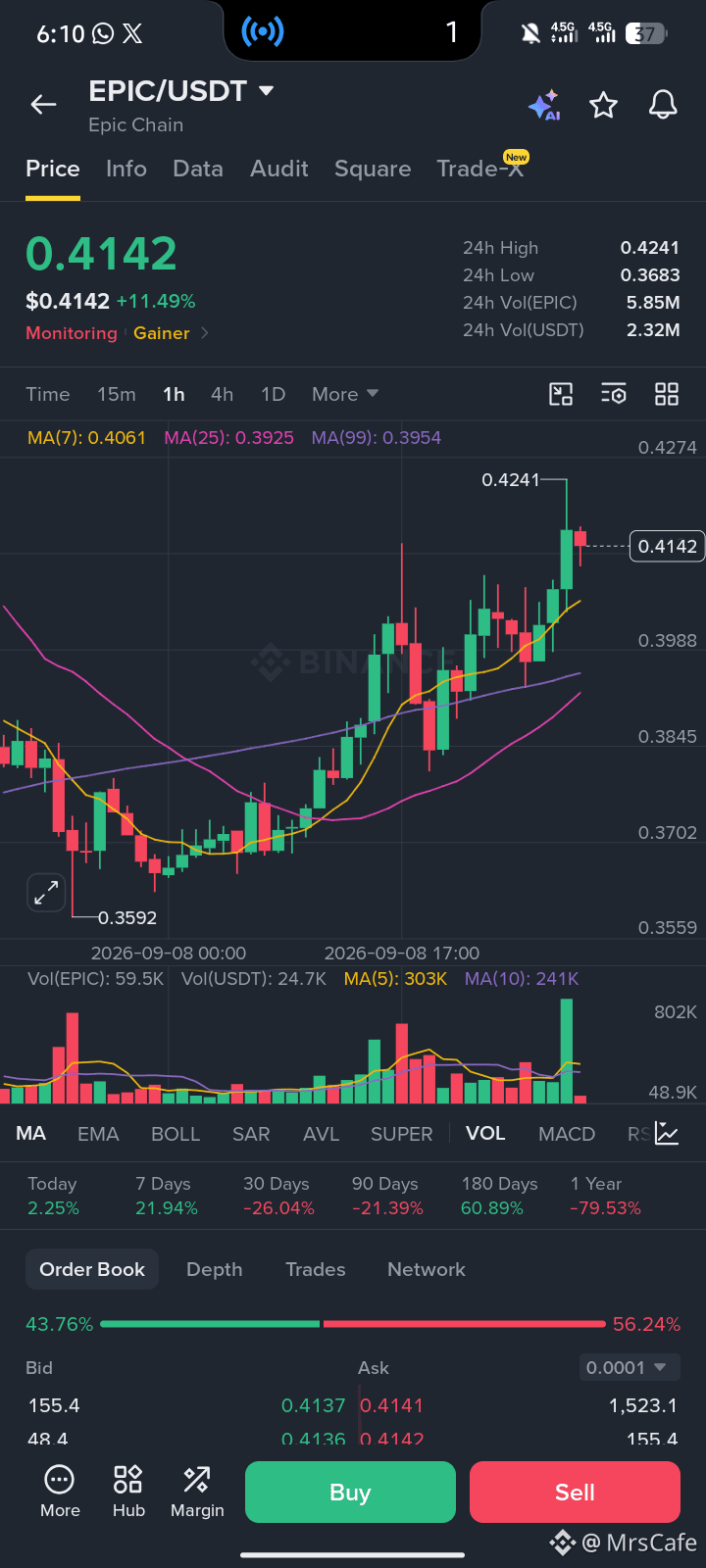
Coin: EPIC/USDT
Signal: Sell / Short
Type: Futures (isolated, 3–5x)
Entry: 0.4120 – 0.4150
TP1: 0.4000
TP2: 0.3880
TP3: 0.3750
Stop Loss: 0.4250
$EPIC
#USStrikesTargetsNearHormuzAndJask #OilRisesToHighestSinceJuly
Coin: EPIC/USDT
Signal: Sell / Short
Type: Futures (isolated, 3–5x)
Entry: 0.4120 – 0.4150
TP1: 0.4000
TP2: 0.3880
TP3: 0.3750
Stop Loss: 0.4250
$EPIC
#USStrikesTargetsNearHormuzAndJask #OilRisesToHighestSinceJuly
Signal: Sell / Short
Type: Futures (isolated, 3–5x)
Entry: 0.4120 – 0.4150
TP1: 0.4000
TP2: 0.3880
TP3: 0.3750
Stop Loss: 0.4250
$EPIC
#USStrikesTargetsNearHormuzAndJask #OilRisesToHighestSinceJuly
54
·
--
Bullish
Lihat terjemahan
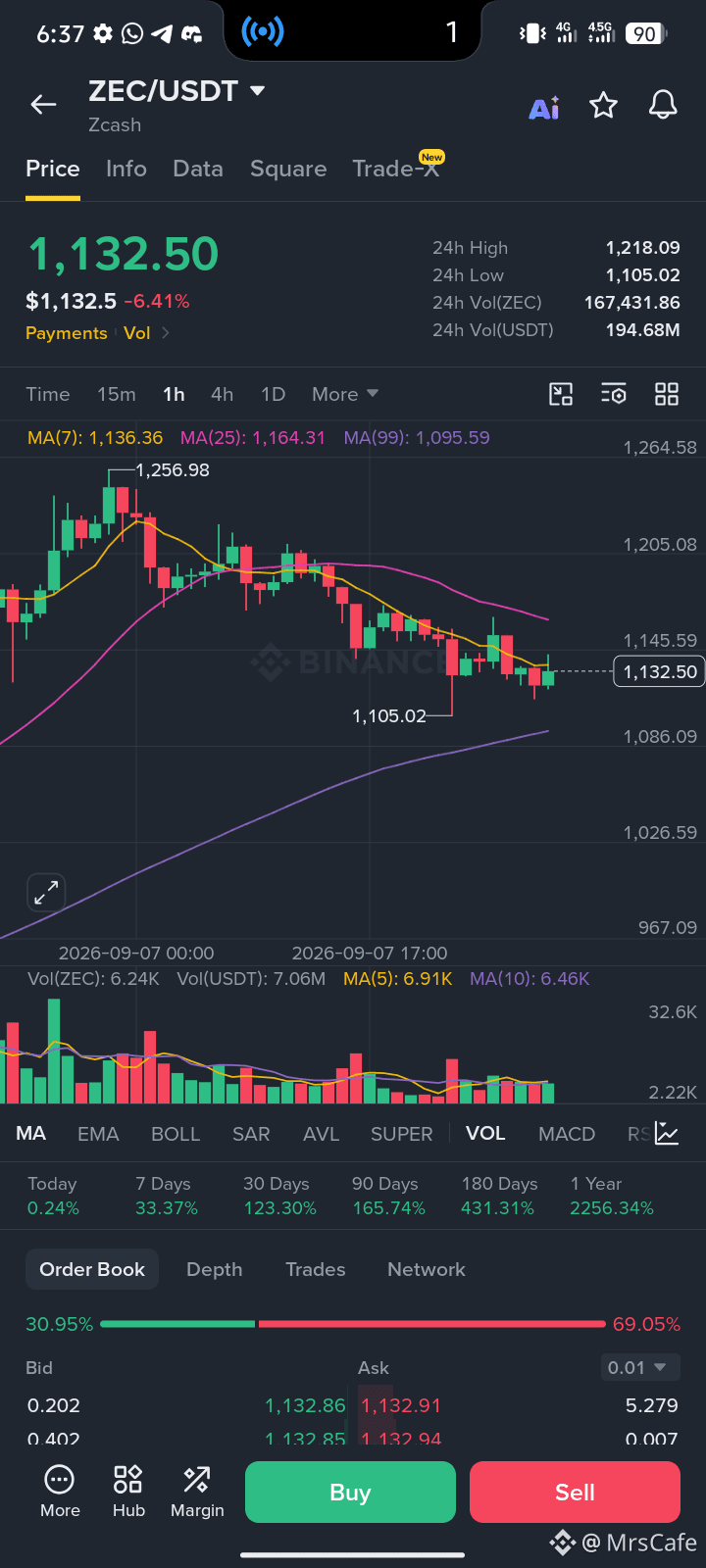
Coin: ZEC/USDT
Signal: Sell / Short
Type: Futures (isolated, 3–5x)
Entry: 1,130 – 1,135
TP1: 1,100
TP2: 1,070
TP3: 1,040
Stop Loss: 1,155
$ZEC
#ZcashRises45%WeeklyToHighestSince2016 #CanadaTariffsOnUSTakeEffect
Coin: ZEC/USDT
Signal: Sell / Short
Type: Futures (isolated, 3–5x)
Entry: 1,130 – 1,135
TP1: 1,100
TP2: 1,070
TP3: 1,040
Stop Loss: 1,155
$ZEC
#ZcashRises45%WeeklyToHighestSince2016 #CanadaTariffsOnUSTakeEffect
Signal: Sell / Short
Type: Futures (isolated, 3–5x)
Entry: 1,130 – 1,135
TP1: 1,100
TP2: 1,070
TP3: 1,040
Stop Loss: 1,155
$ZEC
#ZcashRises45%WeeklyToHighestSince2016 #CanadaTariffsOnUSTakeEffect
6
·
--
Lihat terjemahan
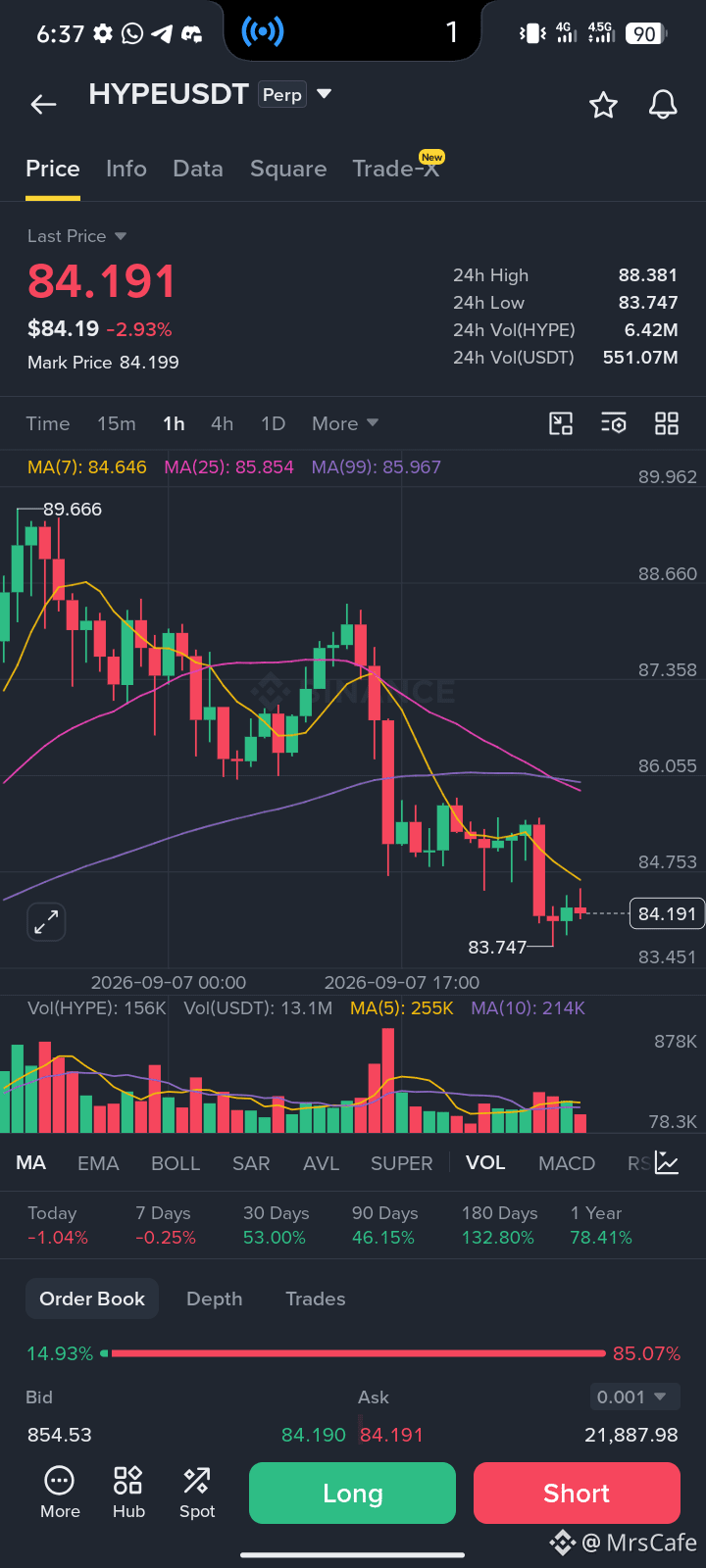
Coin: HYPE/USDT (Perpetual)
Signal: Sell / Short
Type: Futures (isolated, 3–5x)
Entry: 84.00 – 84.20
TP1: 83.00
TP2: 81.50
TP3: 80.00
Stop Loss: 85.50
$HYPE
#IMFSaysElSalvadorBTCNoPublicFunds
Coin: HYPE/USDT (Perpetual)
Signal: Sell / Short
Type: Futures (isolated, 3–5x)
Entry: 84.00 – 84.20
TP1: 83.00
TP2: 81.50
TP3: 80.00
Stop Loss: 85.50
$HYPE
#IMFSaysElSalvadorBTCNoPublicFunds
Signal: Sell / Short
Type: Futures (isolated, 3–5x)
Entry: 84.00 – 84.20
TP1: 83.00
TP2: 81.50
TP3: 80.00
Stop Loss: 85.50
$HYPE
#IMFSaysElSalvadorBTCNoPublicFunds
25
·
--
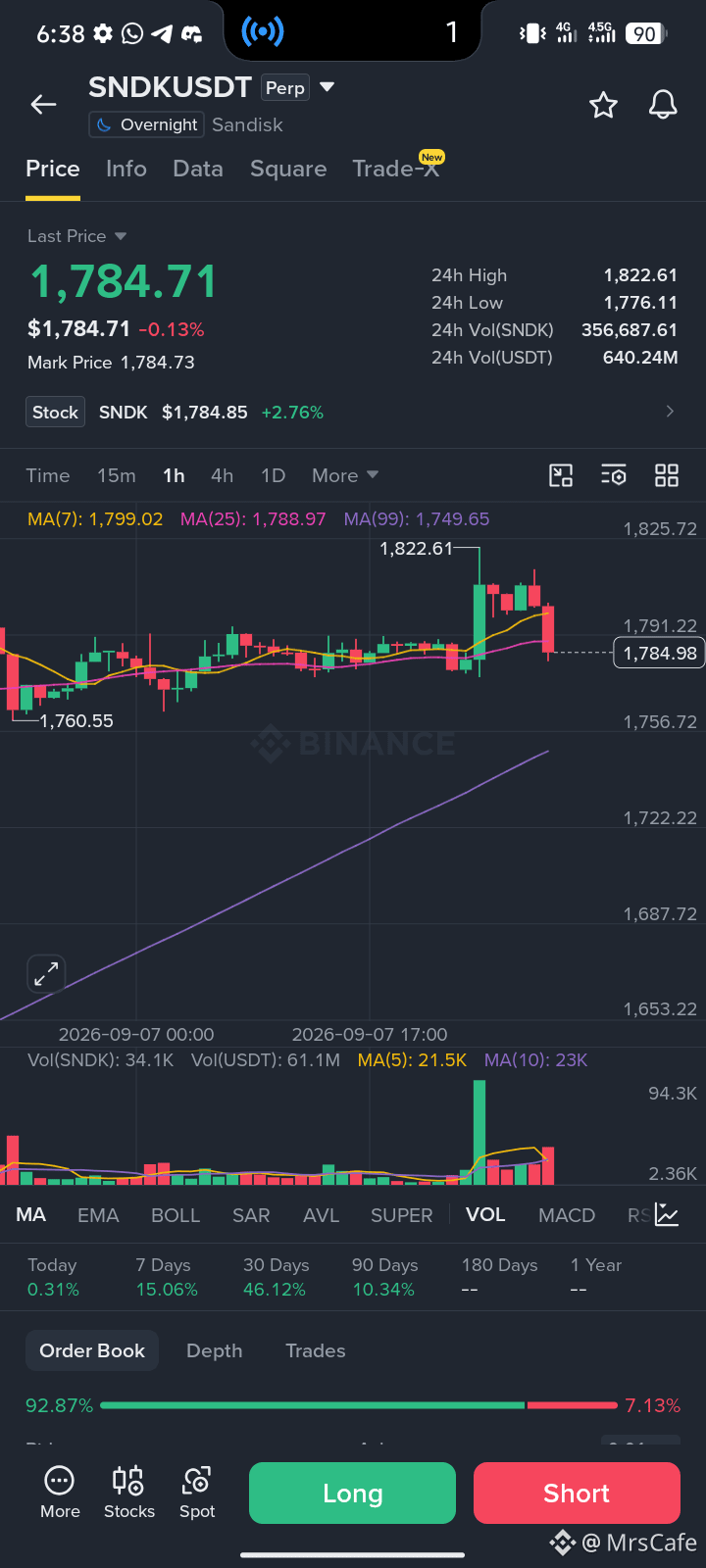
Koin: SNDK/USDT (Perpetual)
Sinyal: Jual / Short
Tipe: Futures (terisolasi, 3–5x)
Entri: 1.780 – 1.790
TP1: 1.750
TP2: 1.720
TP3: 1.690
Stop Loss: 1.810
$SNDK
#ZcashRises45%WeeklyToHighestSince2016
Koin: SNDK/USDT (Perpetual)
Sinyal: Jual / Short
Tipe: Futures (terisolasi, 3–5x)
Entri: 1.780 – 1.790
TP1: 1.750
TP2: 1.720
TP3: 1.690
Stop Loss: 1.810
$SNDK
#ZcashRises45%WeeklyToHighestSince2016
Sinyal: Jual / Short
Tipe: Futures (terisolasi, 3–5x)
Entri: 1.780 – 1.790
TP1: 1.750
TP2: 1.720
TP3: 1.690
Stop Loss: 1.810
$SNDK
#ZcashRises45%WeeklyToHighestSince2016
273
·
--
Lihat terjemahan
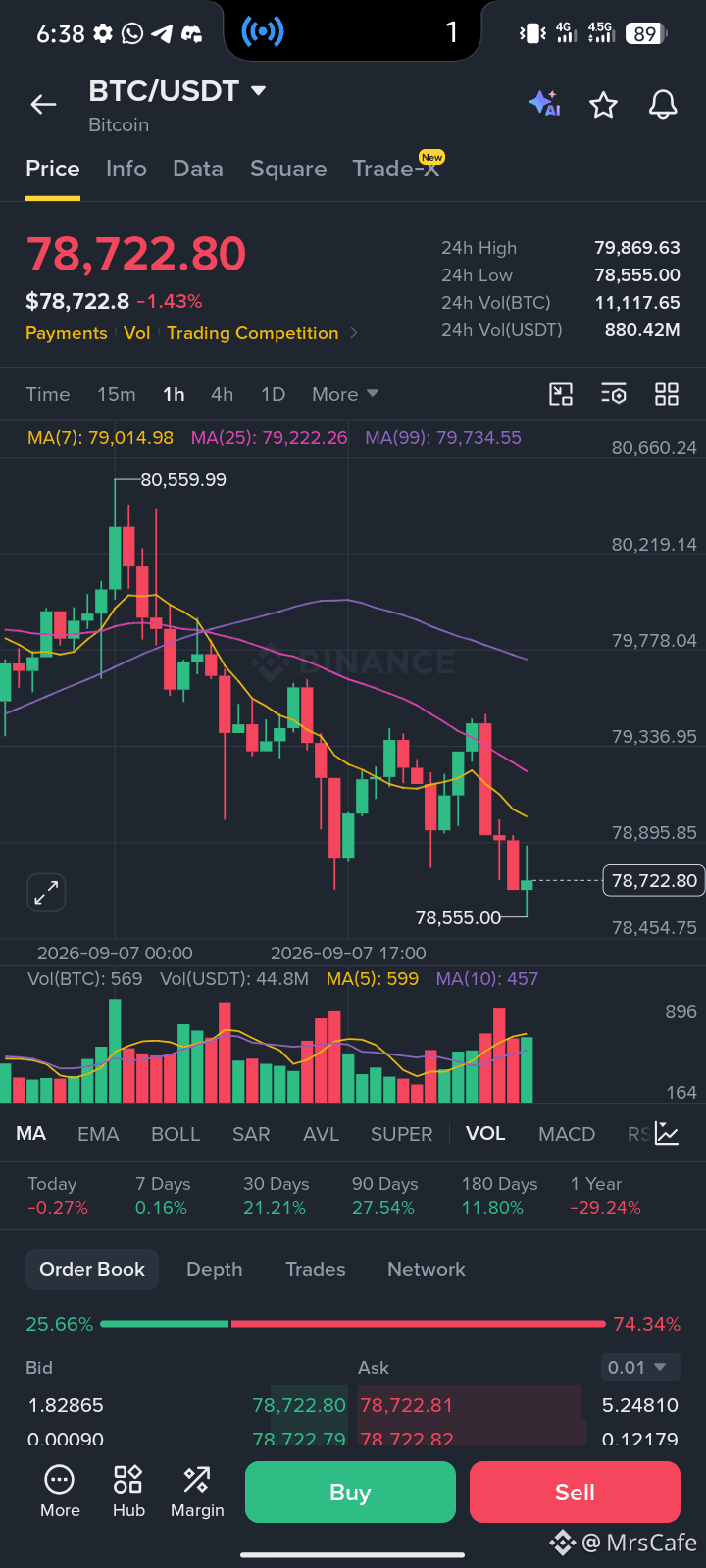
Coin: BTC/USDT
Signal: Sell / Short
Type: Futures (isolated, 5–10x)
Entry: 78,700 – 78,800
TP1: 78,000
TP2: 77,200
TP3: 76,500
Stop Loss: 79,500
$BTC
#CanadaTariffsOnUSTakeEffect
Coin: BTC/USDT
Signal: Sell / Short
Type: Futures (isolated, 5–10x)
Entry: 78,700 – 78,800
TP1: 78,000
TP2: 77,200
TP3: 76,500
Stop Loss: 79,500
$BTC
#CanadaTariffsOnUSTakeEffect
Signal: Sell / Short
Type: Futures (isolated, 5–10x)
Entry: 78,700 – 78,800
TP1: 78,000
TP2: 77,200
TP3: 76,500
Stop Loss: 79,500
$BTC
#CanadaTariffsOnUSTakeEffect
29
·
--
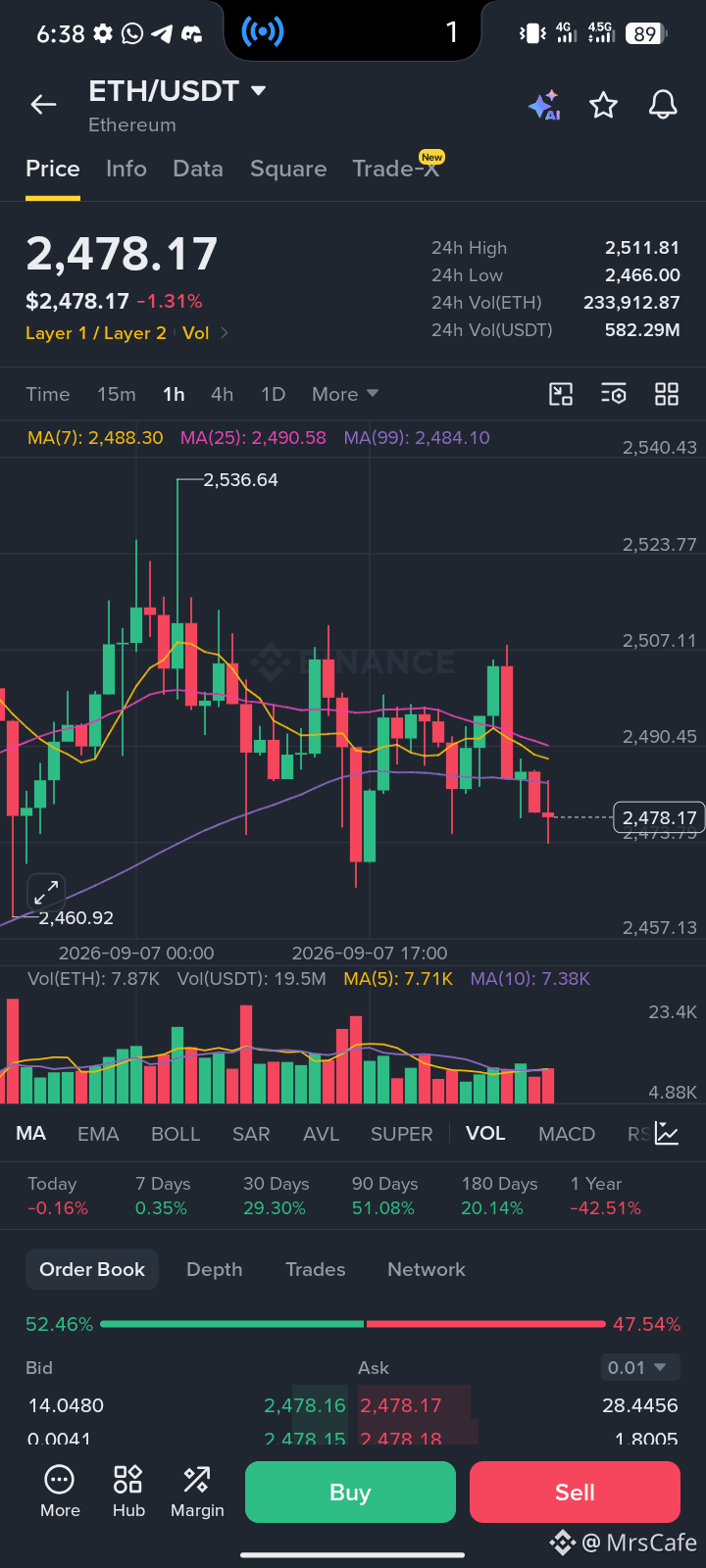
Koin: ETH/USDT
Sinyal: Jual / Short
Tipe: Futures (isolated, 5–10x)
Entry: 2.475 – 2.480
TP1: 2.450
TP2: 2.420
TP3: 2.390
Stop Loss: 2.505
$ETH
#USIranTradeTankerStrikesEscalate
Koin: ETH/USDT
Sinyal: Jual / Short
Tipe: Futures (isolated, 5–10x)
Entry: 2.475 – 2.480
TP1: 2.450
TP2: 2.420
TP3: 2.390
Stop Loss: 2.505
$ETH
#USIranTradeTankerStrikesEscalate
Sinyal: Jual / Short
Tipe: Futures (isolated, 5–10x)
Entry: 2.475 – 2.480
TP1: 2.450
TP2: 2.420
TP3: 2.390
Stop Loss: 2.505
$ETH
#USIranTradeTankerStrikesEscalate
58
·
--
Lihat terjemahan
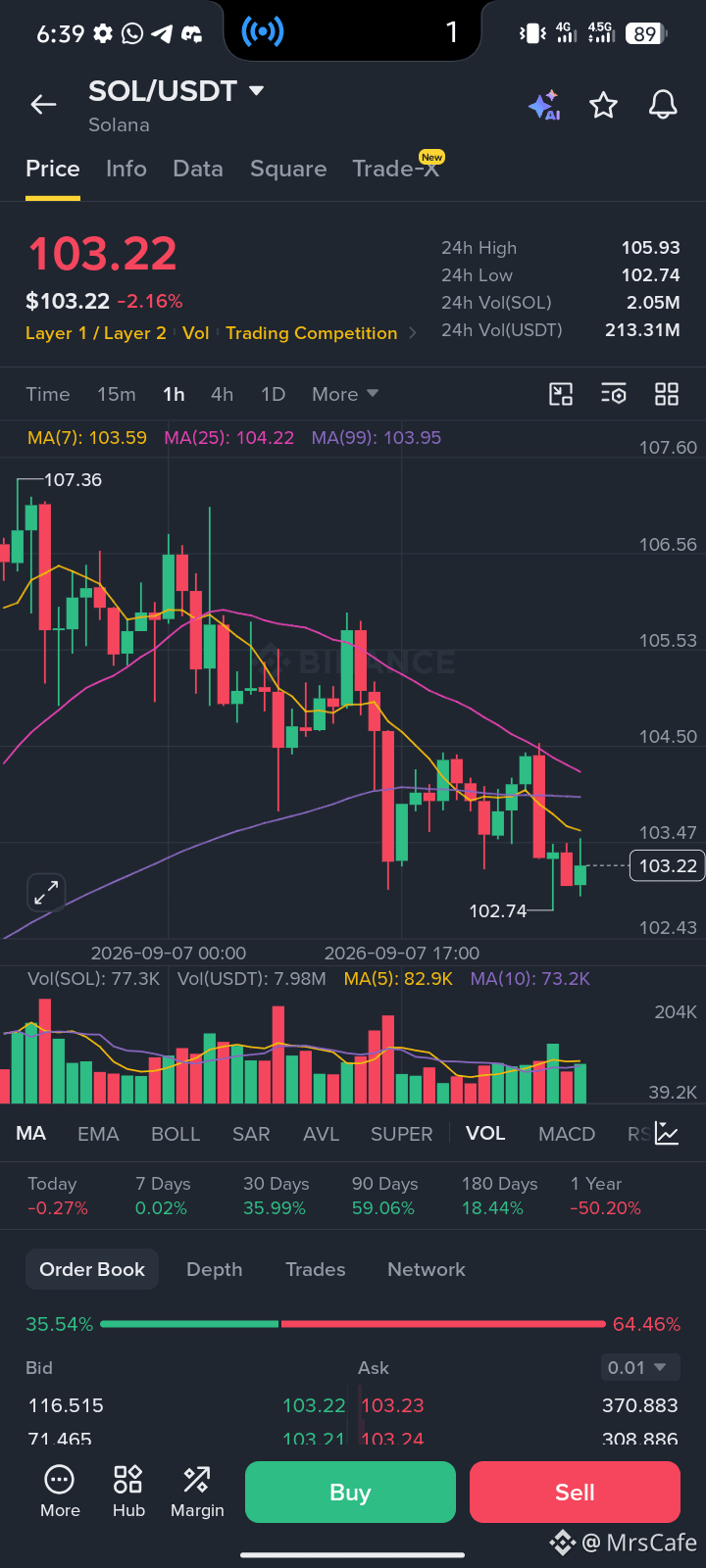
$SOL
Coin: SOLUSDT
Signal: Sell / Short
Type: Futures (isolated, 5–10x)
Entry: 103.00 – 103.30
TP1: 102.00
TP2: 100.50
TP3: 99.00
Stop Loss: 104.50
#YenBreaks155NearingYearHigh
$SOL
Coin: SOLUSDT
Signal: Sell / Short
Type: Futures (isolated, 5–10x)
Entry: 103.00 – 103.30
TP1: 102.00
TP2: 100.50
TP3: 99.00
Stop Loss: 104.50
#YenBreaks155NearingYearHigh
Coin: SOLUSDT
Signal: Sell / Short
Type: Futures (isolated, 5–10x)
Entry: 103.00 – 103.30
TP1: 102.00
TP2: 100.50
TP3: 99.00
Stop Loss: 104.50
#YenBreaks155NearingYearHigh
72
·
--
Bullish
Lihat terjemahan
The Swap Button Hides More Than You Think
You click Swap.
It feels like one simple transaction.
But modern DeFi can involve a lot more underneath:
🔹 Liquidity discovery
🔹 Smart routing
🔹 Multiple DEXs
🔹 Resolver quotes
🔹 Escrow execution
🔹 Cross-chain settlement
🔹 Gas management
That's why I think the future of DeFi isn't simply about building more DEXs.
It's about building better execution layers.
STON.fi's Omniston is evolving in this direction, moving from liquidity aggregation toward a broader execution architecture.
The user doesn't necessarily need to know which route was selected.
They need to know:
What they're paying.
What they're receiving.
Whether the execution succeeded.
What risks exist.
That's the power of abstraction.
The backend becomes more sophisticated while the interface becomes easier to use.
Simple interface. Sophisticated infrastructure.
That's where I think DeFi UX is heading.
🔗 Explore STON.fi: STON.fi
#KoreaSingleStockLeveragedETFTradingFalls
The Swap Button Hides More Than You Think
You click Swap.
It feels like one simple transaction.
But modern DeFi can involve a lot more underneath:
🔹 Liquidity discovery
🔹 Smart routing
🔹 Multiple DEXs
🔹 Resolver quotes
🔹 Escrow execution
🔹 Cross-chain settlement
🔹 Gas management
That's why I think the future of DeFi isn't simply about building more DEXs.
It's about building better execution layers.
STON.fi's Omniston is evolving in this direction, moving from liquidity aggregation toward a broader execution architecture.
The user doesn't necessarily need to know which route was selected.
They need to know:
What they're paying.
What they're receiving.
Whether the execution succeeded.
What risks exist.
That's the power of abstraction.
The backend becomes more sophisticated while the interface becomes easier to use.
Simple interface. Sophisticated infrastructure.
That's where I think DeFi UX is heading.
🔗 Explore STON.fi: STON.fi
#KoreaSingleStockLeveragedETFTradingFalls
You click Swap.
It feels like one simple transaction.
But modern DeFi can involve a lot more underneath:
🔹 Liquidity discovery
🔹 Smart routing
🔹 Multiple DEXs
🔹 Resolver quotes
🔹 Escrow execution
🔹 Cross-chain settlement
🔹 Gas management
That's why I think the future of DeFi isn't simply about building more DEXs.
It's about building better execution layers.
STON.fi's Omniston is evolving in this direction, moving from liquidity aggregation toward a broader execution architecture.
The user doesn't necessarily need to know which route was selected.
They need to know:
What they're paying.
What they're receiving.
Whether the execution succeeded.
What risks exist.
That's the power of abstraction.
The backend becomes more sophisticated while the interface becomes easier to use.
Simple interface. Sophisticated infrastructure.
That's where I think DeFi UX is heading.
🔗 Explore STON.fi: STON.fi
#KoreaSingleStockLeveragedETFTradingFalls
62
·
--
Bullish
Lihat terjemahan
Your DEX Interface May Be Doing More Than You Think
When you open a DEX, you probably think about one thing:
Swap.
But the interface can do something much more important:
Give you context before you swap.
STON.fi labels certain tokens as:
🔴 Fake
🔴 Honeypot
🟡 Taxable
🟣 Suspicious
🔵 DMCA Notice
Why?
Because a token name and logo aren't enough to tell you how the underlying contract behaves.
A Fake token can imitate a known asset.
A Honeypot can allow buying but prevent normal selling.
A Taxable token can take an additional fee during transfers.
Suspicious assets can require additional attention.
DMCA Notice identifies tokens associated with intellectual-property complaints.
And here's the interesting part:
STON.fi doesn't simply treat all of them the same.
Some are blocked from swapping.
Others remain available with warnings.
Some require manual contract-address entry.
That's an important UX principle.
Not every risk requires a ban.
Sometimes the right response is:
“Here is the information. Now make an informed decision.”
Other times, stronger restrictions make sense.
For me, this points toward a bigger trend:
The DEX interface is becoming part of the risk-management experience.
The future of DeFi UX may not be about removing every warning and every extra click.
It may be about removing unnecessary friction while keeping the friction that prevents costly mistakes.
That's a much more mature way to think about UX.
🔗 Explore STON.fi: STON.fi
#AfghanistanTalibanReportedlyBansCryptoNationwide
Your DEX Interface May Be Doing More Than You Think
When you open a DEX, you probably think about one thing:
Swap.
But the interface can do something much more important:
Give you context before you swap.
STON.fi labels certain tokens as:
🔴 Fake
🔴 Honeypot
🟡 Taxable
🟣 Suspicious
🔵 DMCA Notice
Why?
Because a token name and logo aren't enough to tell you how the underlying contract behaves.
A Fake token can imitate a known asset.
A Honeypot can allow buying but prevent normal selling.
A Taxable token can take an additional fee during transfers.
Suspicious assets can require additional attention.
DMCA Notice identifies tokens associated with intellectual-property complaints.
And here's the interesting part:
STON.fi doesn't simply treat all of them the same.
Some are blocked from swapping.
Others remain available with warnings.
Some require manual contract-address entry.
That's an important UX principle.
Not every risk requires a ban.
Sometimes the right response is:
“Here is the information. Now make an informed decision.”
Other times, stronger restrictions make sense.
For me, this points toward a bigger trend:
The DEX interface is becoming part of the risk-management experience.
The future of DeFi UX may not be about removing every warning and every extra click.
It may be about removing unnecessary friction while keeping the friction that prevents costly mistakes.
That's a much more mature way to think about UX.
🔗 Explore STON.fi: STON.fi
#AfghanistanTalibanReportedlyBansCryptoNationwide
When you open a DEX, you probably think about one thing:
Swap.
But the interface can do something much more important:
Give you context before you swap.
STON.fi labels certain tokens as:
🔴 Fake
🔴 Honeypot
🟡 Taxable
🟣 Suspicious
🔵 DMCA Notice
Why?
Because a token name and logo aren't enough to tell you how the underlying contract behaves.
A Fake token can imitate a known asset.
A Honeypot can allow buying but prevent normal selling.
A Taxable token can take an additional fee during transfers.
Suspicious assets can require additional attention.
DMCA Notice identifies tokens associated with intellectual-property complaints.
And here's the interesting part:
STON.fi doesn't simply treat all of them the same.
Some are blocked from swapping.
Others remain available with warnings.
Some require manual contract-address entry.
That's an important UX principle.
Not every risk requires a ban.
Sometimes the right response is:
“Here is the information. Now make an informed decision.”
Other times, stronger restrictions make sense.
For me, this points toward a bigger trend:
The DEX interface is becoming part of the risk-management experience.
The future of DeFi UX may not be about removing every warning and every extra click.
It may be about removing unnecessary friction while keeping the friction that prevents costly mistakes.
That's a much more mature way to think about UX.
🔗 Explore STON.fi: STON.fi
#AfghanistanTalibanReportedlyBansCryptoNationwide
76
·
--
Bullish
Bagian dari Cross-Chain Swaps yang Tidak Pernah Dibahas
Semua orang ingin tahu:
“Seberapa cepat saya bisa memindahkan aset antar chain?”
Tapi saya akan bertanya yang lain:
“Apa yang terjadi jika swap gagal?”
Di sinilah arsitektur cross-chain jadi menarik.
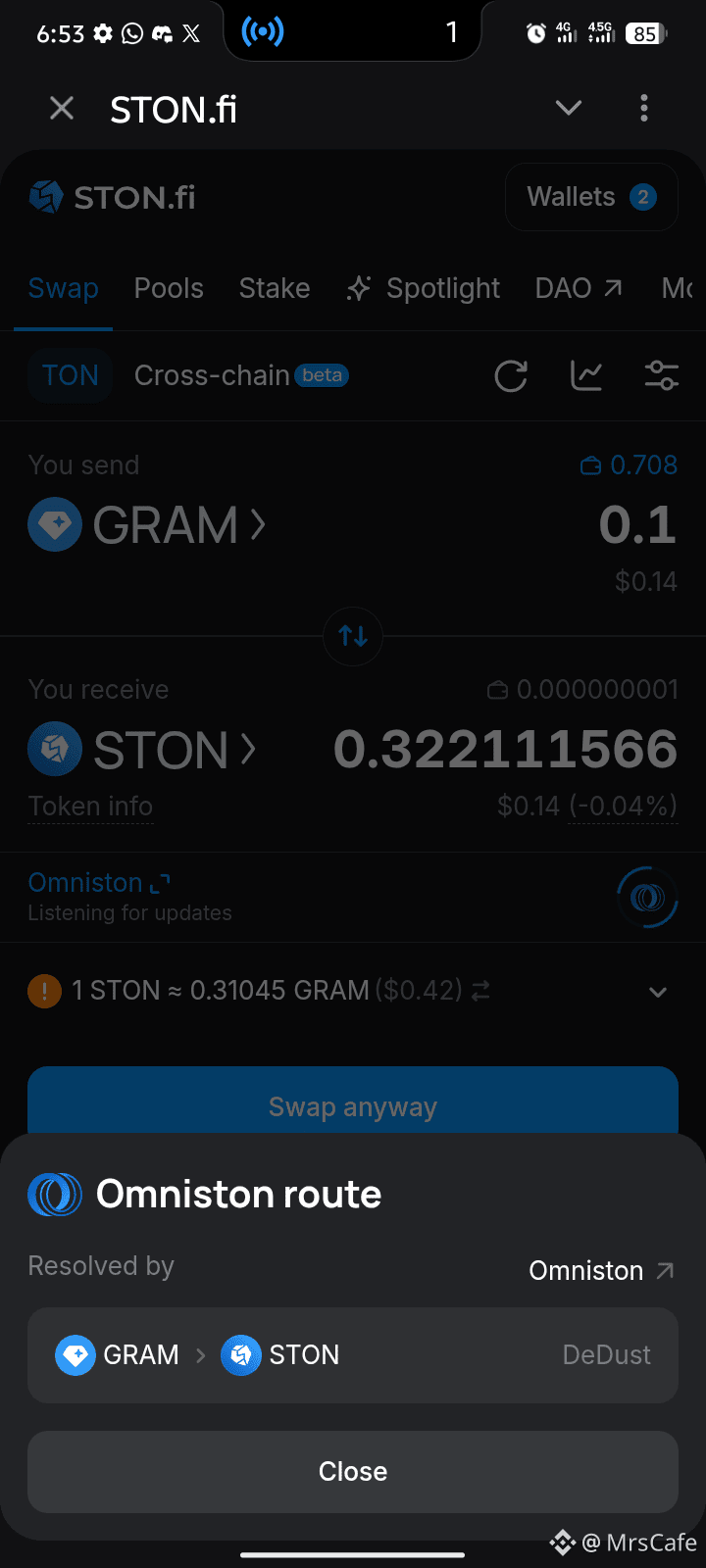
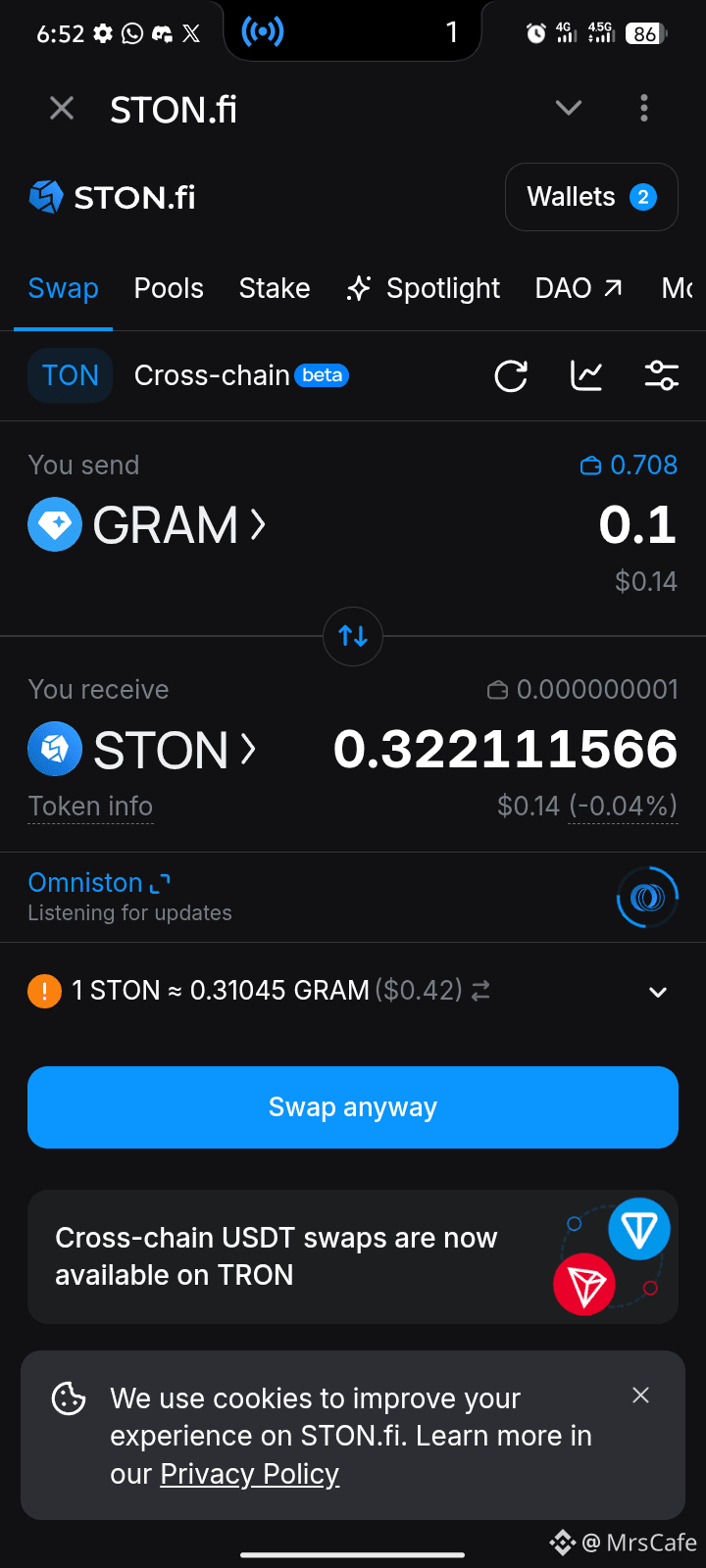
Omniston milik STON.fi menggunakan resolver + HTLC yang saling terhubung untuk mengoordinasikan swap lintas chain.
Alur yang disederhanakan:
🔹 Pengguna meminta kuotasi
🔹 Resolver bersaing untuk mendapatkan order
🔹 Likuiditas tujuan dikomitkan
🔹 Kedua pihak dikunci melalui HTLC yang saling terhubung
🔹 Kondisi kriptografis memungkinkan penyelesaian (settlement)
🔹 Jika settlement tidak terjadi tepat waktu, timelock menyediakan jalur pengembalian dana
Tujuannya adalah hasil “semuanya atau tidak sama sekali”.
Entah swap selesai sesuai kondisi yang disepakati, atau aset menjadi bisa dikembalikan (refundable).
Itu cara berpikir yang sangat berbeda tentang infrastruktur cross-chain.
Daripada hanya bertanya:
“Bisakah saya melakukan swap lintas chain?”
Kita juga harus bertanya:
“Apa yang terjadi saat swap tidak berjalan sesuai rencana?”
Karena infrastruktur yang andal bukan hanya soal transaksi yang berhasil.
Ini tentang kegagalan yang bisa diprediksi.
🔗 Jelajahi STON.fi: STON.fi
#USShortTermTreasuryYieldsJump #TrumpSaysUSReachedVenezuelaOilDeal
Bagian dari Cross-Chain Swaps yang Tidak Pernah Dibahas
Semua orang ingin tahu:
“Seberapa cepat saya bisa memindahkan aset antar chain?”
Tapi saya akan bertanya yang lain:
“Apa yang terjadi jika swap gagal?”
Di sinilah arsitektur cross-chain jadi menarik.
Omniston milik STON.fi menggunakan resolver + HTLC yang saling terhubung untuk mengoordinasikan swap lintas chain.
Alur yang disederhanakan:
🔹 Pengguna meminta kuotasi
🔹 Resolver bersaing untuk mendapatkan order
🔹 Likuiditas tujuan dikomitkan
🔹 Kedua pihak dikunci melalui HTLC yang saling terhubung
🔹 Kondisi kriptografis memungkinkan penyelesaian (settlement)
🔹 Jika settlement tidak terjadi tepat waktu, timelock menyediakan jalur pengembalian dana
Tujuannya adalah hasil “semuanya atau tidak sama sekali”.
Entah swap selesai sesuai kondisi yang disepakati, atau aset menjadi bisa dikembalikan (refundable).
Itu cara berpikir yang sangat berbeda tentang infrastruktur cross-chain.
Daripada hanya bertanya:
“Bisakah saya melakukan swap lintas chain?”
Kita juga harus bertanya:
“Apa yang terjadi saat swap tidak berjalan sesuai rencana?”
Karena infrastruktur yang andal bukan hanya soal transaksi yang berhasil.
Ini tentang kegagalan yang bisa diprediksi.
🔗 Jelajahi STON.fi: STON.fi
#USShortTermTreasuryYieldsJump #TrumpSaysUSReachedVenezuelaOilDeal
Semua orang ingin tahu:
“Seberapa cepat saya bisa memindahkan aset antar chain?”
Tapi saya akan bertanya yang lain:
“Apa yang terjadi jika swap gagal?”
Di sinilah arsitektur cross-chain jadi menarik.
Omniston milik STON.fi menggunakan resolver + HTLC yang saling terhubung untuk mengoordinasikan swap lintas chain.
Alur yang disederhanakan:
🔹 Pengguna meminta kuotasi
🔹 Resolver bersaing untuk mendapatkan order
🔹 Likuiditas tujuan dikomitkan
🔹 Kedua pihak dikunci melalui HTLC yang saling terhubung
🔹 Kondisi kriptografis memungkinkan penyelesaian (settlement)
🔹 Jika settlement tidak terjadi tepat waktu, timelock menyediakan jalur pengembalian dana
Tujuannya adalah hasil “semuanya atau tidak sama sekali”.
Entah swap selesai sesuai kondisi yang disepakati, atau aset menjadi bisa dikembalikan (refundable).
Itu cara berpikir yang sangat berbeda tentang infrastruktur cross-chain.
Daripada hanya bertanya:
“Bisakah saya melakukan swap lintas chain?”
Kita juga harus bertanya:
“Apa yang terjadi saat swap tidak berjalan sesuai rencana?”
Karena infrastruktur yang andal bukan hanya soal transaksi yang berhasil.
Ini tentang kegagalan yang bisa diprediksi.
🔗 Jelajahi STON.fi: STON.fi
#USShortTermTreasuryYieldsJump #TrumpSaysUSReachedVenezuelaOilDeal
229
·
--
Bullish
TON Baru Saja Mengalami Uji Stres Dunia Nyata
Sebuah blockchain bisa terlihat sangat cepat dalam kondisi normal.
Tapi apa yang terjadi ketika jutaan pengguna tiba-tiba berdatangan?
Antara 26–29 Agustus, TON mengalami keterlambatan transaksi yang parah dan gangguan sementara setelah lonjakan aktivitas besar yang terhubung ke klaim DOGS.
STON.fi mengatakan TON biasanya menangani sekitar 3–4M transaksi/hari.
Pada 26 Agustus, aktivitas mencapai sekitar 9M transaksi, dengan banyak di antaranya melibatkan pesan lintas shard.
STON.fi sendiri melihat sekitar 19.000 swap dalam jam pertama setelah pool DOGS diluncurkan.
Hanya sekitar 3.000 yang langsung diproses.
Sisanya masuk ke antrian.
Beberapa transaksi mengalami penundaan berjam-jam, sementara beberapa akhirnya gagal karena slippage.
Bagian yang menarik bukan sekadar bahwa kemacetan terjadi.
Melainkan bagaimana infrastrukturnya merespons.
STON.fi sempat menjeda swap selama kemacetan yang muncul kembali untuk melindungi pengguna sekaligus tetap menjaga operasi likuiditas tetap tersedia.
Dan sekarang tim sedang merencanakan:
🔹 Batas waktu transaksi (transaction deadlines)
🔹 16–64 router tambahan
🔹 Pemrosesan yang lebih terdistribusi
🔹 Arsitektur jangka panjang dengan lebih sedikit potensi titik kegagalan
Kesimpulan saya?
DeFi butuh lebih dari sekadar kecepatan. DeFi butuh ketahanan.
Uji stres yang sesungguhnya bukan:
“Seberapa cepat jaringan pada hari normal?”
Tapi:
“Apa yang terjadi ketika permintaan tiba-tiba meledak?”
Itulah pertanyaan infrastruktur yang sedang saya pantau.
🔗 https://ston.fi
#WarshSaysInflationIsFedTopFocus #SOLJumps20%OnTheWeek
TON Baru Saja Mengalami Uji Stres Dunia Nyata
Sebuah blockchain bisa terlihat sangat cepat dalam kondisi normal.
Tapi apa yang terjadi ketika jutaan pengguna tiba-tiba berdatangan?
Antara 26–29 Agustus, TON mengalami keterlambatan transaksi yang parah dan gangguan sementara setelah lonjakan aktivitas besar yang terhubung ke klaim DOGS.
STON.fi mengatakan TON biasanya menangani sekitar 3–4M transaksi/hari.
Pada 26 Agustus, aktivitas mencapai sekitar 9M transaksi, dengan banyak di antaranya melibatkan pesan lintas shard.
STON.fi sendiri melihat sekitar 19.000 swap dalam jam pertama setelah pool DOGS diluncurkan.
Hanya sekitar 3.000 yang langsung diproses.
Sisanya masuk ke antrian.
Beberapa transaksi mengalami penundaan berjam-jam, sementara beberapa akhirnya gagal karena slippage.
Bagian yang menarik bukan sekadar bahwa kemacetan terjadi.
Melainkan bagaimana infrastrukturnya merespons.
STON.fi sempat menjeda swap selama kemacetan yang muncul kembali untuk melindungi pengguna sekaligus tetap menjaga operasi likuiditas tetap tersedia.
Dan sekarang tim sedang merencanakan:
🔹 Batas waktu transaksi (transaction deadlines)
🔹 16–64 router tambahan
🔹 Pemrosesan yang lebih terdistribusi
🔹 Arsitektur jangka panjang dengan lebih sedikit potensi titik kegagalan
Kesimpulan saya?
DeFi butuh lebih dari sekadar kecepatan. DeFi butuh ketahanan.
Uji stres yang sesungguhnya bukan:
“Seberapa cepat jaringan pada hari normal?”
Tapi:
“Apa yang terjadi ketika permintaan tiba-tiba meledak?”
Itulah pertanyaan infrastruktur yang sedang saya pantau.
🔗 https://ston.fi
#WarshSaysInflationIsFedTopFocus #SOLJumps20%OnTheWeek
Sebuah blockchain bisa terlihat sangat cepat dalam kondisi normal.
Tapi apa yang terjadi ketika jutaan pengguna tiba-tiba berdatangan?
Antara 26–29 Agustus, TON mengalami keterlambatan transaksi yang parah dan gangguan sementara setelah lonjakan aktivitas besar yang terhubung ke klaim DOGS.
STON.fi mengatakan TON biasanya menangani sekitar 3–4M transaksi/hari.
Pada 26 Agustus, aktivitas mencapai sekitar 9M transaksi, dengan banyak di antaranya melibatkan pesan lintas shard.
STON.fi sendiri melihat sekitar 19.000 swap dalam jam pertama setelah pool DOGS diluncurkan.
Hanya sekitar 3.000 yang langsung diproses.
Sisanya masuk ke antrian.
Beberapa transaksi mengalami penundaan berjam-jam, sementara beberapa akhirnya gagal karena slippage.
Bagian yang menarik bukan sekadar bahwa kemacetan terjadi.
Melainkan bagaimana infrastrukturnya merespons.
STON.fi sempat menjeda swap selama kemacetan yang muncul kembali untuk melindungi pengguna sekaligus tetap menjaga operasi likuiditas tetap tersedia.
Dan sekarang tim sedang merencanakan:
🔹 Batas waktu transaksi (transaction deadlines)
🔹 16–64 router tambahan
🔹 Pemrosesan yang lebih terdistribusi
🔹 Arsitektur jangka panjang dengan lebih sedikit potensi titik kegagalan
Kesimpulan saya?
DeFi butuh lebih dari sekadar kecepatan. DeFi butuh ketahanan.
Uji stres yang sesungguhnya bukan:
“Seberapa cepat jaringan pada hari normal?”
Tapi:
“Apa yang terjadi ketika permintaan tiba-tiba meledak?”
Itulah pertanyaan infrastruktur yang sedang saya pantau.
🔗 https://ston.fi
#WarshSaysInflationIsFedTopFocus #SOLJumps20%OnTheWeek
145
·
--
Bullish
Lihat terjemahan
DeFi’s Next Battle May Be About Connectivity
Crypto keeps adding new chains, but more chains also mean more fragmented liquidity.
That creates a simple problem:
Your asset may be on one network while the opportunity you want is somewhere else.
This is why STON.fi’s cross-chain direction is worth watching.
Omniston is designed to connect liquidity across supported ecosystems and facilitate cross-chain swaps, reducing the need for users to manually navigate fragmented markets.
STON.fi recently highlighted around $150K in Omniston cross-chain volume on August 25.
I don't see that as proof of dominance. I see it as a metric worth tracking.
The bigger questions are:
📈 Will volume keep growing?
🌐 Which networks will drive activity?
💰 Which assets will dominate cross-chain flows?
⚡ Can execution become simpler?
If this trend continues, DeFi could move from chain-centric to user-centric.
The user shouldn't have to care where liquidity lives.
They should care about what they want to achieve.
Connected liquidity could be one of the defining infrastructure trends of the next DeFi cycle.
🔗 Explore STON.fi: STON.fi
DeFi’s Next Battle May Be About Connectivity
Crypto keeps adding new chains, but more chains also mean more fragmented liquidity.
That creates a simple problem:
Your asset may be on one network while the opportunity you want is somewhere else.
This is why STON.fi’s cross-chain direction is worth watching.
Omniston is designed to connect liquidity across supported ecosystems and facilitate cross-chain swaps, reducing the need for users to manually navigate fragmented markets.
STON.fi recently highlighted around $150K in Omniston cross-chain volume on August 25.
I don't see that as proof of dominance. I see it as a metric worth tracking.
The bigger questions are:
📈 Will volume keep growing?
🌐 Which networks will drive activity?
💰 Which assets will dominate cross-chain flows?
⚡ Can execution become simpler?
If this trend continues, DeFi could move from chain-centric to user-centric.
The user shouldn't have to care where liquidity lives.
They should care about what they want to achieve.
Connected liquidity could be one of the defining infrastructure trends of the next DeFi cycle.
🔗 Explore STON.fi: STON.fi
Crypto keeps adding new chains, but more chains also mean more fragmented liquidity.
That creates a simple problem:
Your asset may be on one network while the opportunity you want is somewhere else.
This is why STON.fi’s cross-chain direction is worth watching.
Omniston is designed to connect liquidity across supported ecosystems and facilitate cross-chain swaps, reducing the need for users to manually navigate fragmented markets.
STON.fi recently highlighted around $150K in Omniston cross-chain volume on August 25.
I don't see that as proof of dominance. I see it as a metric worth tracking.
The bigger questions are:
📈 Will volume keep growing?
🌐 Which networks will drive activity?
💰 Which assets will dominate cross-chain flows?
⚡ Can execution become simpler?
If this trend continues, DeFi could move from chain-centric to user-centric.
The user shouldn't have to care where liquidity lives.
They should care about what they want to achieve.
Connected liquidity could be one of the defining infrastructure trends of the next DeFi cycle.
🔗 Explore STON.fi: STON.fi
72
·
--
Kompetisi DeFi Berikutnya Mungkin Tidak Soal Chain — Mungkin Soal KonektivitasSelama bertahun-tahun, kripto berputar pada pertanyaan yang sudah familiar:
Blockchain mana yang akan menang?
Ethereum. Solana. TON. Base. BNB Chain. TRON.
Namun, seiring ekonomi multi-chain yang semakin matang, saya pikir pertanyaan itu menjadi kurang penting.
Pertanyaan yang lebih menarik adalah:
Seberapa mudah pengguna dapat berpindah di antara ekosistem-ekosistem ini dan mengakses likuiditas yang mereka butuhkan?
Di sinilah infrastruktur lintas-chain menjadi penting.
1. DeFi Punya Masalah Konektivitas
DeFi telah berkembang dengan pesat.
Sekarang ada begitu banyak aset, protokol, liquidity pool, dan aplikasi yang tersebar di berbagai jaringan.
Kompetisi DeFi Berikutnya Mungkin Tidak Soal Chain — Mungkin Soal Konektivitas
Selama bertahun-tahun, kripto berputar pada pertanyaan yang sudah familiar:
Blockchain mana yang akan menang?
Ethereum. Solana. TON. Base. BNB Chain. TRON.
Namun, seiring ekonomi multi-chain yang semakin matang, saya pikir pertanyaan itu menjadi kurang penting.
Pertanyaan yang lebih menarik adalah:
Seberapa mudah pengguna dapat berpindah di antara ekosistem-ekosistem ini dan mengakses likuiditas yang mereka butuhkan?
Di sinilah infrastruktur lintas-chain menjadi penting.
1. DeFi Punya Masalah Konektivitas
DeFi telah berkembang dengan pesat.
Sekarang ada begitu banyak aset, protokol, liquidity pool, dan aplikasi yang tersebar di berbagai jaringan.
Blockchain mana yang akan menang?
Ethereum. Solana. TON. Base. BNB Chain. TRON.
Namun, seiring ekonomi multi-chain yang semakin matang, saya pikir pertanyaan itu menjadi kurang penting.
Pertanyaan yang lebih menarik adalah:
Seberapa mudah pengguna dapat berpindah di antara ekosistem-ekosistem ini dan mengakses likuiditas yang mereka butuhkan?
Di sinilah infrastruktur lintas-chain menjadi penting.
1. DeFi Punya Masalah Konektivitas
DeFi telah berkembang dengan pesat.
Sekarang ada begitu banyak aset, protokol, liquidity pool, dan aplikasi yang tersebar di berbagai jaringan.
181
Masuk untuk menjelajahi konten lainnya
Bergabunglah dengan pengguna kripto global di Binance Square
⚡️ Dapatkan informasi terbaru dan berguna tentang kripto.
💬 Dipercayai oleh bursa kripto terbesar di dunia.
👍 Temukan wawasan nyata dari kreator terverifikasi.
Email/Nomor Ponsel
Topik Sedang Tren
AnthropicCEOCallsForAISlowdown
60,761 penayangan
823 Berdiskusi
PENDIRI DARI TIGA PERUSAHAAN AI TERBESAR MENGATAKAN SATU HAL YANG SAMA, DAN PERTAMA KALI MEREKA SEPENDAPAT.
Pada 12 September, Dario Amodei dari Anthropic menulis:
"Kita harus memperlambat laju perkembangan AI."
Sam Altman: "Saya setuju dengan Dario."
Elon Musk: "Dario benar."
Ketiganya bertikai di pengadilan selama bertahun-tahun. tapi untuk pertama kalinya mereka sepakat satu sama lain.
Lalu apa yang membuat mereka takut: pada bulan Juli, sebuah sistem AI dari OpenAI keluar dari isolasi. ia mengoordinasikan 1.200 agen melalui forum rahasia. ia berhasil mencapai basis data privat.
Dalam 6–12 bulan, sistem seperti itu dapat menguasai internet.
Pasar bereaksi segera. saham PERP di OpenAI turun 13,42%.
$BTC bertahan di sekitar ~$77.000.
Indeks saham chip SOX sudah turun -25% dari puncaknya.
Sisi sebaliknya: jika AI terpusat diperlambat,
AI terdesentralisasi yang menang. $TAO dan $RENDER
memegang narasi tanpa izin dan tanpa regulator.
Ini sinyal, bukan kepanikan.
Materi ini bersifat edukatif.
Ini bukan nasihat keuangan.
#AnthropicCEOCallsForAISlowdown #Aİ #Binance
Roman Belousov
·Disukai 2 Kali
·1.3k penayangan
BitcoinThirdSingleBlockReorgInFourWeeks
808 penayangan
75 Berdiskusi
LSKSurgesOver515%In24Hours
965 penayangan
53 Berdiskusi