

Hubdar On Spot
54 Posting

Hubdar On Spot
Laporkan
Blokir Pengguna
Best Spot and Futures Signals, Less but Accurate 🎯

Pemilik DUSK
Pedagang Rutin
10.7 Bulan
28 Mengikuti
86 Pengikut
104 Disukai
Posting
Semua
Kuotasi
Live
Artikel
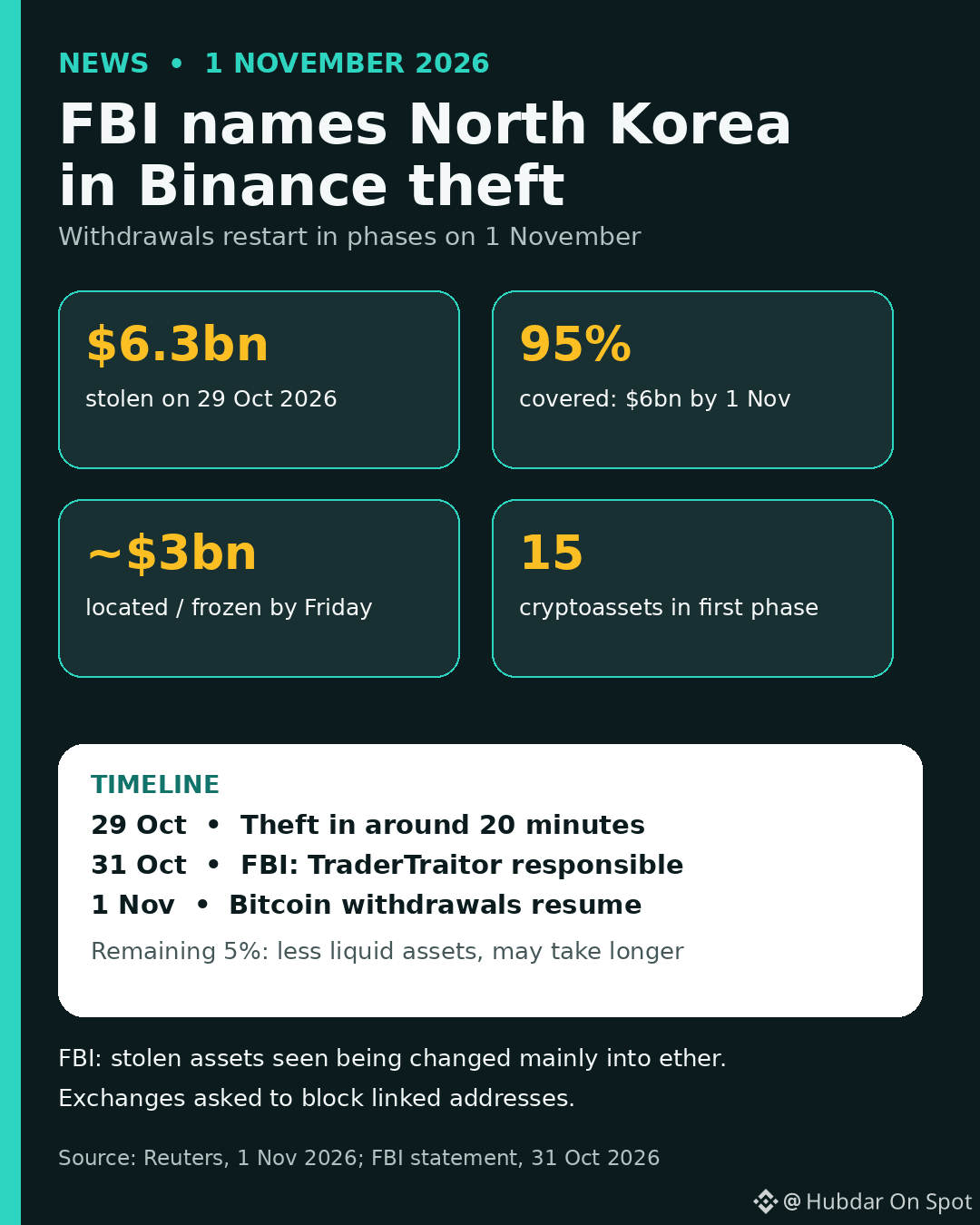
FBI menuding Korea Utara dalam pencurian $6,3 miliar dari Binance saat penarikan kembali dibukaAda perubahan besar dalam kisah Binance akhir pekan ini. FBI kini telah menyebutkan siapa yang mereka tuding. Dan Binance mulai mengizinkan orang menarik bitcoin lagi.
Binance adalah bursa kripto terbesar di dunia. Sederhananya, ini adalah platform tempat orang memperdagangkan dan menyimpan koin digital.
Apa yang terjadi
Pada Kamis larut malam, 29 Oktober 2026, aset digital senilai sekitar $6,3 miliar diambil dari Binance. Reuters, mengutip perusahaan analisis blockchain TRM Labs dan Chainalysis, menyebutkan bahwa sebagian besar pencurian terjadi dalam waktu sekitar 20 menit.
FBI menuding Korea Utara dalam pencurian $6,3 miliar dari Binance saat penarikan kembali dibuka
Ada perubahan besar dalam kisah Binance akhir pekan ini. FBI kini telah menyebutkan siapa yang mereka tuding. Dan Binance mulai mengizinkan orang menarik bitcoin lagi.
Binance adalah bursa kripto terbesar di dunia. Sederhananya, ini adalah platform tempat orang memperdagangkan dan menyimpan koin digital.
Apa yang terjadi
Pada Kamis larut malam, 29 Oktober 2026, aset digital senilai sekitar $6,3 miliar diambil dari Binance. Reuters, mengutip perusahaan analisis blockchain TRM Labs dan Chainalysis, menyebutkan bahwa sebagian besar pencurian terjadi dalam waktu sekitar 20 menit.
193
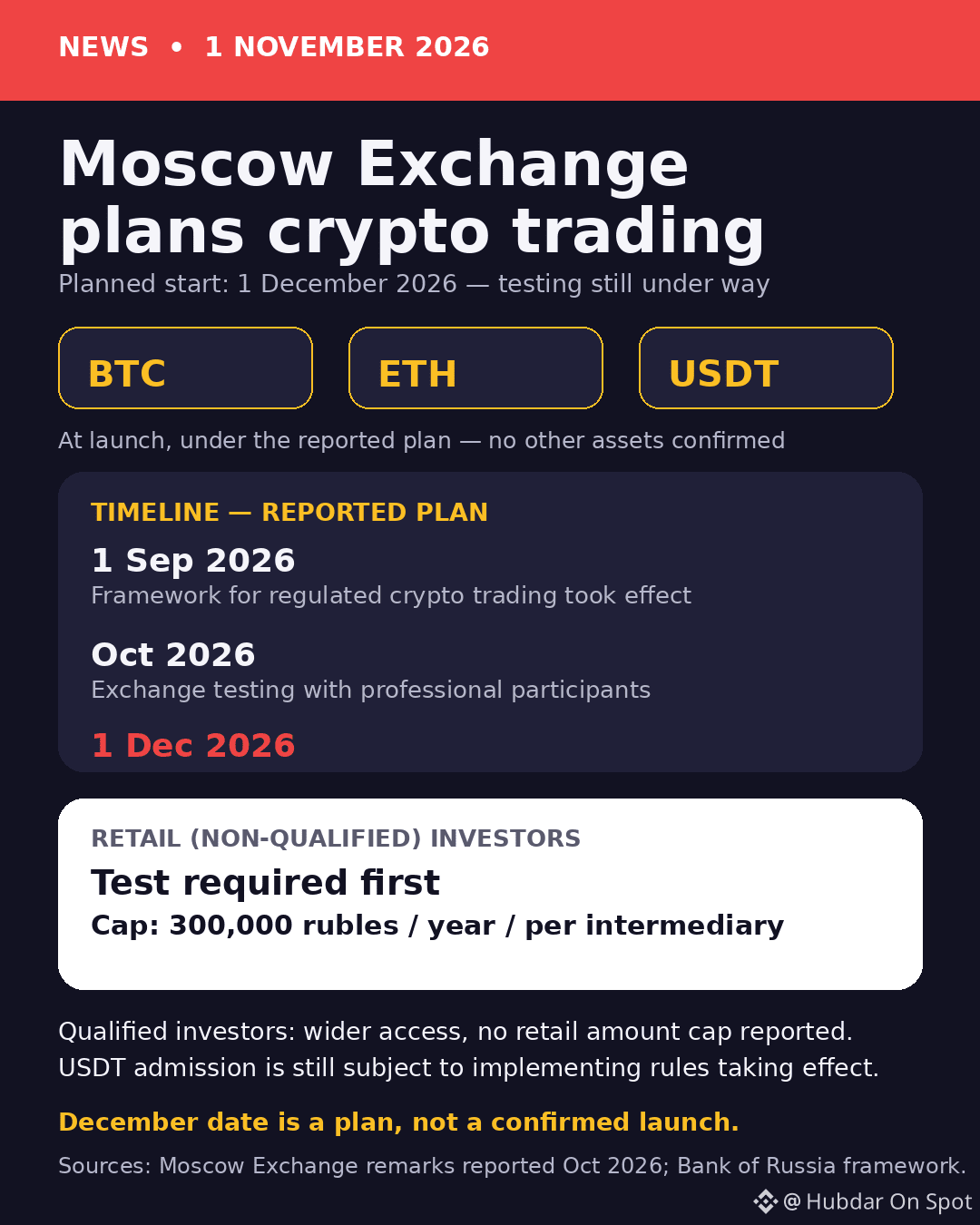
Bursa Moskow berencana memulai perdagangan kripto pada 1 Desember 2026, dengan Bitcoin, Ethereum, dan USDT tersedia saat peluncuran.
Rencana ini berada di bawah kerangka aturan yang mulai berlaku pada 1 September 2026. Investor ritel (nonprofesional) harus lulus tes terlebih dahulu, dengan batas pembelian sebesar 300.000 rubel per tahun melalui setiap perantara. Investor profesional dilaporkan tidak dikenai batas jumlah tersebut dan memiliki akses ke lebih banyak aset.
Tanggal Desember tersebut masih berupa rencana, belum menjadi tanggal peluncuran yang dikonfirmasi — bursa menyatakan bahwa pengujian bersama peserta profesional sedang berlangsung. Satu hal yang perlu diperhatikan: laporan menyebutkan bahwa penerimaan USDT masih bergantung pada berlakunya aturan pelaksanaan terkait.
Menurut Anda, apakah perdagangan di bursa yang teregulasi akan menarik lebih banyak investor umum ke dunia kripto, atau apakah batasan dan tes akan membuat sebagian besar aktivitas tetap berlangsung di tempat lain?
94
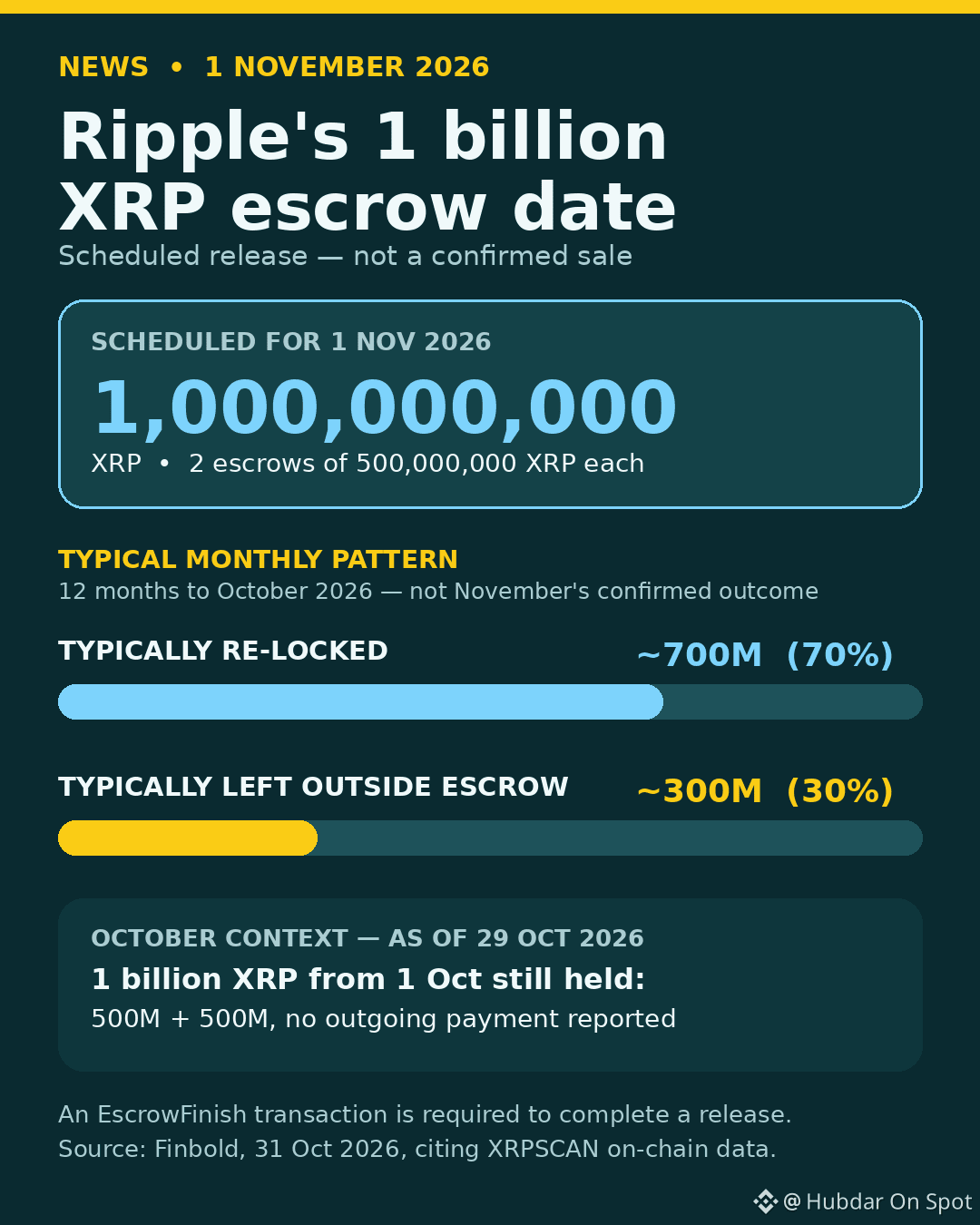
Pelepasan escrow XRP terjadwal sebesar 1 miliar dari Ripple jatuh tempo hari ini, 1 November 2026.
Pelepasan bulanan ini dibagi ke dalam dua escrow, masing-masing sebesar 500 juta XRP. Tiba pada tanggal tersebut saja tidak memastikan terjadinya transfer atau penjualan — Ripple harus mengirimkan transaksi EscrowFinish untuk menyelesaikannya.
Konteksnya tidak biasa: data on-chain yang dilaporkan pada 29 Oktober menunjukkan bahwa dua dompet dari pelepasan 1 Oktober masih menyimpan masing-masing 500 juta XRP, tanpa pembayaran keluar yang tercatat sejak saat itu.
Selama 12 bulan hingga Oktober 2026, sekitar 700 juta XRP — sekitar 70% — biasanya dikunci kembali setiap bulan, sehingga sekitar 300 juta XRP berada di luar escrow. Itulah pola yang sudah berlangsung, bukan hasil yang telah dipastikan untuk November.
Sumber: Finbold, 31 Okt 2026.
Apa yang akan Anda pantau terlebih dahulu — proses EscrowFinish atau apakah pola penguncian kembali akan terulang?
146
Artikel
Lihat terjemahan
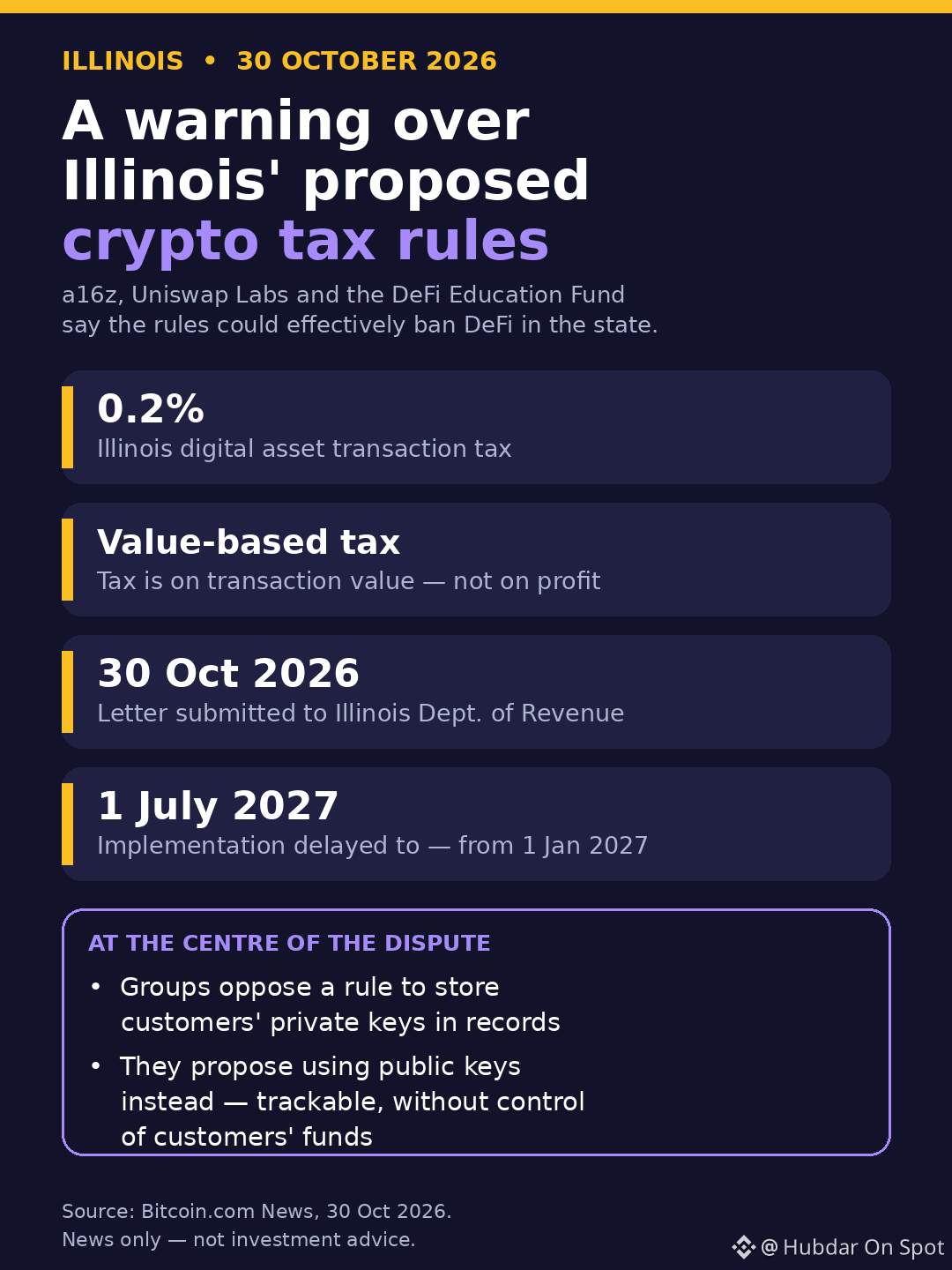
Illinois crypto tax rules could effectively ban DeFi, warn a16z, Uniswap Labs and DeFi Education FundWhat happened
On 30 October 2026, Andreessen Horowitz (a16z), Uniswap Labs and the DeFi Education Fund submitted a letter to the Illinois Department of Revenue urging regulators to overhaul proposed rules for implementing Illinois' Digital Asset Tax Act.
The groups warn that the proposed implementation could effectively prohibit decentralised finance (DeFi) activity in Illinois, while also creating serious security risks for users.
Their central argument is about how decentralised exchanges (DEXs) are classified. The letter argues that the proposed rules incorrectly treat DEXs as conventional financial brokers. The groups say DEXs, including the Uniswap protocol, operate through autonomous software rather than as intermediaries that control customers' assets or execute transactions on their behalf.
Unlike centralised exchanges, they argue, DEXs generally cannot identify customers, determine their locations, collect taxes, or file returns on individual transactions. Imposing those obligations, they say, would make compliance practically impossible.
Why it matters
If the proposed approach stands, the groups argue, DeFi services could face a de facto ban in Illinois — not because DeFi is named as banned, but because the compliance duties cannot be met in practice.
A second concern is security. One controversial provision would require brokers to maintain records containing customers' private keys — the credentials used to authorise transactions and control digital assets. The signatories warn that collecting and storing those credentials could expose customer funds to theft if the records were compromised, and could force companies to choose between protecting customer assets and complying with state rules.
The letter proposes replacing the term "private keys" with "public keys", which can be used to track blockchain transactions without granting control over customers' funds.
The groups also object to provisions that could tax withdrawals from centralised exchanges to personal wallets and transfers of assets between blockchains, known as bridging. A16z policy head Miles Jennings compared that treatment to taxing someone simply for moving money between their own bank accounts.
The groups ask regulators to explicitly exclude decentralised protocols and their interfaces from the definition of digital asset brokers, and to clarify that collecting automated protocol fees does not automatically establish broker status.
What is confirmed
- The letter was submitted on Friday, 30 October 2026, by a16z, Uniswap Labs and the DeFi Education Fund, as reported by Bitcoin.com News on 30 October 2026.
- Illinois enacted its Digital Asset Tax Act in June, imposing a 0.2% tax on the value of qualifying cryptocurrency transactions and other covered digital asset activity. The levy is based on transaction value, not on profit.
- Implementation has been postponed from 1 January to 1 July 2027, to allow litigation to proceed.
- The Blockchain Association and Crypto Council for Innovation have challenged the law in court, raising concerns including overlapping taxation, constitutional protections and potential criminal penalties.
What is still unknown / not confirmed
- Whether the Illinois Department of Revenue will revise the proposed rules, exclude decentralised protocols, or change the private-keys provision to public keys. That decision has not been confirmed.
- The outcome of the court challenges. A prediction by one industry figure that challengers will succeed is an opinion, not a ruling.
- Whether the proposed rules would, as a matter of law, amount to a ban on DeFi. That is the groups' warning and argument, not a confirmed legal outcome.
This article is news only and is not investment advice.
Source: Bitcoin.com News, 30 October 2026 — https://news.bitcoin.com/regulation-and-legal/a16z-uniswap-warn-illinois-crypto-tax-rules-ban-defi/
Should decentralised protocols be treated differently from traditional brokers for tax reporting — and if so, how should that line be drawn?
Illinois crypto tax rules could effectively ban DeFi, warn a16z, Uniswap Labs and DeFi Education Fund
What happened
On 30 October 2026, Andreessen Horowitz (a16z), Uniswap Labs and the DeFi Education Fund submitted a letter to the Illinois Department of Revenue urging regulators to overhaul proposed rules for implementing Illinois' Digital Asset Tax Act.
The groups warn that the proposed implementation could effectively prohibit decentralised finance (DeFi) activity in Illinois, while also creating serious security risks for users.
Their central argument is about how decentralised exchanges (DEXs) are classified. The letter argues that the proposed rules incorrectly treat DEXs as conventional financial brokers. The groups say DEXs, including the Uniswap protocol, operate through autonomous software rather than as intermediaries that control customers' assets or execute transactions on their behalf.
Unlike centralised exchanges, they argue, DEXs generally cannot identify customers, determine their locations, collect taxes, or file returns on individual transactions. Imposing those obligations, they say, would make compliance practically impossible.
Why it matters
If the proposed approach stands, the groups argue, DeFi services could face a de facto ban in Illinois — not because DeFi is named as banned, but because the compliance duties cannot be met in practice.
A second concern is security. One controversial provision would require brokers to maintain records containing customers' private keys — the credentials used to authorise transactions and control digital assets. The signatories warn that collecting and storing those credentials could expose customer funds to theft if the records were compromised, and could force companies to choose between protecting customer assets and complying with state rules.
The letter proposes replacing the term "private keys" with "public keys", which can be used to track blockchain transactions without granting control over customers' funds.
The groups also object to provisions that could tax withdrawals from centralised exchanges to personal wallets and transfers of assets between blockchains, known as bridging. A16z policy head Miles Jennings compared that treatment to taxing someone simply for moving money between their own bank accounts.
The groups ask regulators to explicitly exclude decentralised protocols and their interfaces from the definition of digital asset brokers, and to clarify that collecting automated protocol fees does not automatically establish broker status.
What is confirmed
- The letter was submitted on Friday, 30 October 2026, by a16z, Uniswap Labs and the DeFi Education Fund, as reported by Bitcoin.com News on 30 October 2026.
- Illinois enacted its Digital Asset Tax Act in June, imposing a 0.2% tax on the value of qualifying cryptocurrency transactions and other covered digital asset activity. The levy is based on transaction value, not on profit.
- Implementation has been postponed from 1 January to 1 July 2027, to allow litigation to proceed.
- The Blockchain Association and Crypto Council for Innovation have challenged the law in court, raising concerns including overlapping taxation, constitutional protections and potential criminal penalties.
What is still unknown / not confirmed
- Whether the Illinois Department of Revenue will revise the proposed rules, exclude decentralised protocols, or change the private-keys provision to public keys. That decision has not been confirmed.
- The outcome of the court challenges. A prediction by one industry figure that challengers will succeed is an opinion, not a ruling.
- Whether the proposed rules would, as a matter of law, amount to a ban on DeFi. That is the groups' warning and argument, not a confirmed legal outcome.
This article is news only and is not investment advice.
Source: Bitcoin.com News, 30 October 2026 — https://news.bitcoin.com/regulation-and-legal/a16z-uniswap-warn-illinois-crypto-tax-rules-ban-defi/
Should decentralised protocols be treated differently from traditional brokers for tax reporting — and if so, how should that line be drawn?
3
Artikel
Lihat terjemahan
Bangladesh Bank Reaffirms Crypto Restrictions in New Consolidated CircularBangladesh Bank Reaffirms Crypto Restrictions in New Consolidated Circular
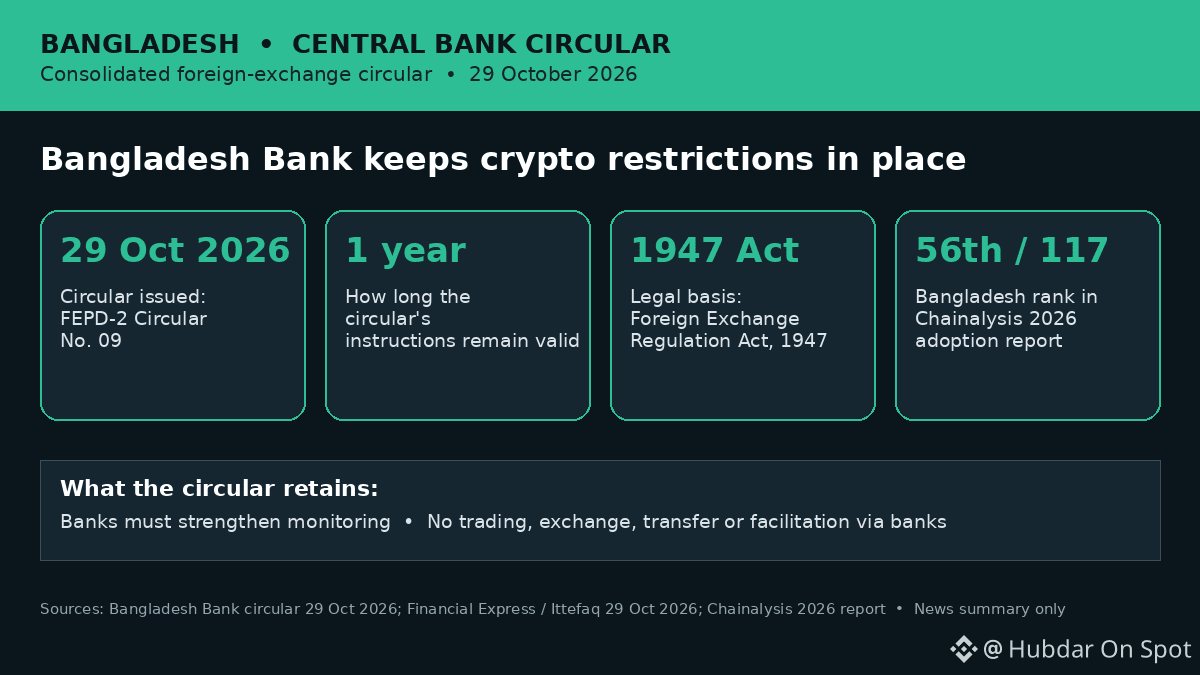
Bangladesh Bank has reaffirmed its restrictions on cryptocurrency and virtual-currency transactions in a new consolidated circular on foreign-exchange management, issued on Thursday, 29 October 2026.
The circular, FEPD-2 Circular No. 09 from the central bank's Foreign Exchange Policy Department-2, brings existing foreign-exchange rules together in a single document. It repeals the instructions in the Guidelines for Foreign Exchange Transactions (GFET), 2018, Volume I, and subsequent circulars, except for the monthly reporting instructions in Volume II. The instructions in the new circular will remain valid for one year from the date of issue.
What happened — and what did not change
The important detail is the nature of this move. The reporting on the circular describes it as retaining and consolidating existing restrictions, not as creating a new ban from scratch. The restrictions cover the exchange, transfer and trading of virtual assets and virtual currencies, as well as the provision of services that facilitate such activities in Bangladesh.
Banks and financial institutions have been instructed to remain vigilant and to strengthen monitoring of customers' accounts to prevent cryptocurrency-related transactions through the formal banking system. The central bank has also reiterated that individuals and institutions should not facilitate such activities.
The circular was issued under Section 20(3) of the Foreign Exchange Regulation Act, 1947, the law under which Bangladesh Bank states that virtual currencies are not recognised as legal currency. Unlike conventional national currencies, they are not backed or guaranteed by a sovereign state, the central bank's position states.
This is a longstanding position, not a new one. Bangladesh Bank's restrictions on virtual currencies date back to September 2022. On 15 September that year, its Foreign Exchange Policy Department issued a circular stating that transactions intended to acquire virtual assets or virtual currencies from Bangladesh, into Bangladesh, or within the country were not permitted. A further instruction on 12 October 2022 directed banks to strengthen monitoring and take appropriate measures to prevent such transactions. The 29 October 2026 circular reiterates those earlier instructions and places them inside the consolidated foreign-exchange framework.
Why it matters
For banks, the practical effect is clarity of process rather than a change of policy: one consolidated document now sets out the foreign-exchange rules, including the crypto restrictions, alongside rules on foreign-currency accounts, banks' open foreign-exchange positions, forward contracts, swaps, interbank transactions and settlement through the Asian Clearing Union (ACU). The same circular also allows Authorised Dealer banks to offer commodity price hedging facilities to eligible importers, showing that the document is a broad consolidation, not a crypto-only measure.
For users, the message is equally clear: the formal banking channel in Bangladesh remains closed to crypto trading, exchange, transfer and facilitation, at least for the one-year validity of this circular.
Confirmed vs. still unknown
Confirmed: the circular's date (29 October 2026), its number (FEPD-2 Circular No. 09), its one-year validity, the scope of the retained restrictions, and its legal basis in the Foreign Exchange Regulation Act, 1947.
Still unknown from the reporting checked: the circular does not present a new licensing regime for crypto activity, and no policy review date beyond the circular's one-year validity has been set out in the reports. Any future change would need a separate announcement from Bangladesh Bank.
One piece of context is worth keeping separate from the legal position. Chainalysis's 2026 Geography of Cryptocurrency Report ranked Bangladesh 56th among 117 countries in grassroots cryptocurrency adoption this year. That is a measure of grassroots activity, not a statement about legality, and it does not change the restriction described above.
Source: Bangladesh Bank, FEPD-2 Circular No. 09, 29 October 2026 — https://www.bb.org.bd/mediaroom/circulars/fepd-2/oct292026fepd-209e.pdf ; The Financial Express, 29 October 2026 — https://thefinancialexpress.com.bd/economy/bb-consolidates-forex-rules-allows-importers-to-hedge-commodity-price-risks
Do you think a consolidated rulebook makes the rules clearer for banks and users, even when the policy itself has not changed? Share your thoughts below! 👇
Bangladesh Bank Reaffirms Crypto Restrictions in New Consolidated Circular
Bangladesh Bank Reaffirms Crypto Restrictions in New Consolidated Circular
Bangladesh Bank has reaffirmed its restrictions on cryptocurrency and virtual-currency transactions in a new consolidated circular on foreign-exchange management, issued on Thursday, 29 October 2026.
The circular, FEPD-2 Circular No. 09 from the central bank's Foreign Exchange Policy Department-2, brings existing foreign-exchange rules together in a single document. It repeals the instructions in the Guidelines for Foreign Exchange Transactions (GFET), 2018, Volume I, and subsequent circulars, except for the monthly reporting instructions in Volume II. The instructions in the new circular will remain valid for one year from the date of issue.
What happened — and what did not change
The important detail is the nature of this move. The reporting on the circular describes it as retaining and consolidating existing restrictions, not as creating a new ban from scratch. The restrictions cover the exchange, transfer and trading of virtual assets and virtual currencies, as well as the provision of services that facilitate such activities in Bangladesh.
Banks and financial institutions have been instructed to remain vigilant and to strengthen monitoring of customers' accounts to prevent cryptocurrency-related transactions through the formal banking system. The central bank has also reiterated that individuals and institutions should not facilitate such activities.
The circular was issued under Section 20(3) of the Foreign Exchange Regulation Act, 1947, the law under which Bangladesh Bank states that virtual currencies are not recognised as legal currency. Unlike conventional national currencies, they are not backed or guaranteed by a sovereign state, the central bank's position states.
This is a longstanding position, not a new one. Bangladesh Bank's restrictions on virtual currencies date back to September 2022. On 15 September that year, its Foreign Exchange Policy Department issued a circular stating that transactions intended to acquire virtual assets or virtual currencies from Bangladesh, into Bangladesh, or within the country were not permitted. A further instruction on 12 October 2022 directed banks to strengthen monitoring and take appropriate measures to prevent such transactions. The 29 October 2026 circular reiterates those earlier instructions and places them inside the consolidated foreign-exchange framework.
Why it matters
For banks, the practical effect is clarity of process rather than a change of policy: one consolidated document now sets out the foreign-exchange rules, including the crypto restrictions, alongside rules on foreign-currency accounts, banks' open foreign-exchange positions, forward contracts, swaps, interbank transactions and settlement through the Asian Clearing Union (ACU). The same circular also allows Authorised Dealer banks to offer commodity price hedging facilities to eligible importers, showing that the document is a broad consolidation, not a crypto-only measure.
For users, the message is equally clear: the formal banking channel in Bangladesh remains closed to crypto trading, exchange, transfer and facilitation, at least for the one-year validity of this circular.
Confirmed vs. still unknown
Confirmed: the circular's date (29 October 2026), its number (FEPD-2 Circular No. 09), its one-year validity, the scope of the retained restrictions, and its legal basis in the Foreign Exchange Regulation Act, 1947.
Still unknown from the reporting checked: the circular does not present a new licensing regime for crypto activity, and no policy review date beyond the circular's one-year validity has been set out in the reports. Any future change would need a separate announcement from Bangladesh Bank.
One piece of context is worth keeping separate from the legal position. Chainalysis's 2026 Geography of Cryptocurrency Report ranked Bangladesh 56th among 117 countries in grassroots cryptocurrency adoption this year. That is a measure of grassroots activity, not a statement about legality, and it does not change the restriction described above.
Source: Bangladesh Bank, FEPD-2 Circular No. 09, 29 October 2026 — https://www.bb.org.bd/mediaroom/circulars/fepd-2/oct292026fepd-209e.pdf ; The Financial Express, 29 October 2026 — https://thefinancialexpress.com.bd/economy/bb-consolidates-forex-rules-allows-importers-to-hedge-commodity-price-risks
Do you think a consolidated rulebook makes the rules clearer for banks and users, even when the policy itself has not changed? Share your thoughts below! 👇
1
Lihat terjemahan
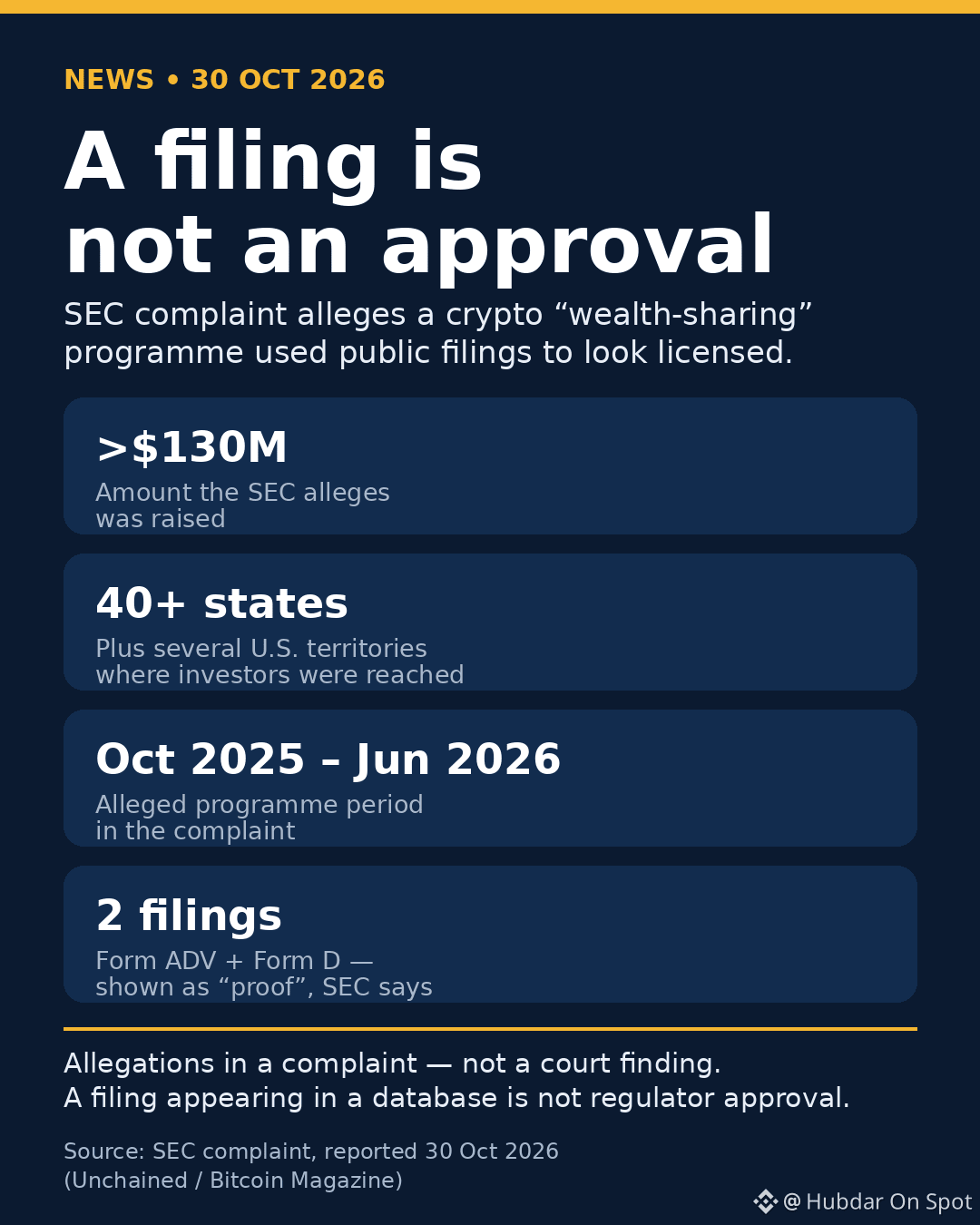
News, 30 Oct 2026: The US SEC has charged BG Wealth Sharing Ltd. and DSJ Exchange Pty Ltd. in a complaint filed in the Northern District of California, alleging a crypto “wealth-sharing program” raised more than $130 million from tens of thousands of retail investors in more than 40 states and several US territories from at least October 2025 through June 2026.
The SEC alleges the firms pointed investors to Form ADV and Form D filings viewable on its website and to fake certificates bearing its seal, presenting them as proof of SEC approval. The SEC says those filings are not approval or a licence, and that the filings have since been removed. These are allegations in a complaint, not a court finding.
Key point: a public filing appearing in a database is not the same as regulator approval.
What check would you do before trusting a claim that a crypto firm is “SEC-approved”?
29
Ripple memperoleh persetujuan final untuk bank perwalian nasionalnya di AS
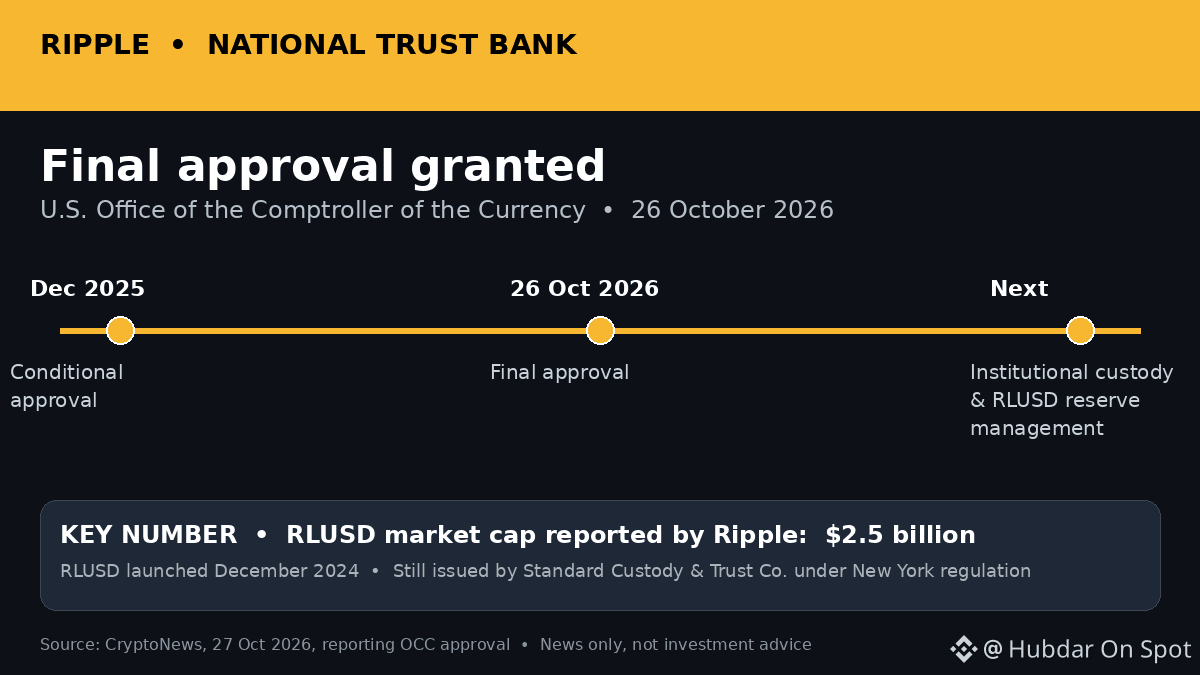
Ripple telah menerima persetujuan final dari Office of the Comptroller of the Currency AS untuk Ripple National Trust Bank pada 26 Oktober 2026, menuntaskan proses yang dimulai dengan persetujuan bersyarat pada Desember 2025.
Dikonfirmasi:
- Platform yang diawasi secara federal untuk mendukung RLUSD dan menyediakan layanan kustodian aset digital bagi perusahaan
- Bank tersebut akan mengelola cadangan terpisah yang menjadi jaminan Ripple USD (RLUSD) dan bertindak sebagai wali amanat agunan bagi pemegang RLUSD
- RLUSD akan terus diterbitkan oleh Standard Custody & Trust Company berdasarkan regulasi New York
- Ripple melaporkan bahwa kapitalisasi pasar RLUSD telah mencapai $2,5 miliar sejak diluncurkan pada Desember 2024
Yang masih belum diketahui: produk kustodian perusahaan atau klien mana yang akan diluncurkan lebih dahulu, dan kapan peluncurannya.
Sumber: CryptoNews, 27 Oktober 2026
Menurut Anda, apakah layanan kustodian yang diawasi secara federal akan membuat institusi lebih nyaman menggunakan stablecoin dan layanan aset digital? Sampaikan pendapat Anda di bawah! 👇
62
Lihat terjemahan
Solana to Host Hong Kong Dollar Stablecoin HKDAP in Planned Anchorpoint Collaboration
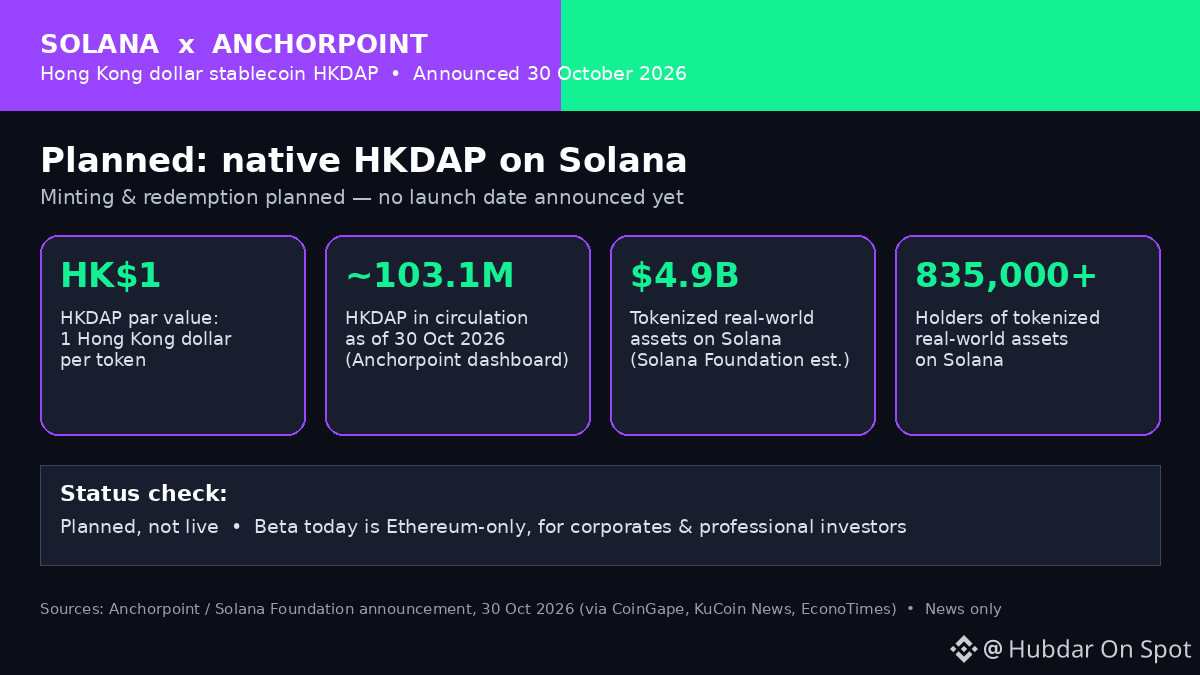
Anchorpoint Financial Limited and the Solana Foundation announced on October 30, 2026, that Anchorpoint plans to support native minting and redemption of HKDAP, its Hong Kong dollar stablecoin, on Solana. The announcement marks Anchorpoint's first collaboration with a public blockchain foundation.
The planned integration is aimed at retail payments and trading in tokenized assets, with near-instant settlement. Anchorpoint says HKDAP would be created and redeemed directly on Solana, and made accessible through corporate partners and consumer applications.
The Solana Foundation will also join Anchorpoint's Tokenised Money Adoption Programme as a strategic partner, alongside PwC Hong Kong. The programme focuses on education, research and industry dialogue around tokenized money in Hong Kong's regulated stablecoin ecosystem.
An important detail: this is a plan, not a live service yet. No launch date for the Solana integration has been announced. HKDAP currently runs on Ethereum mainnet in a limited beta phase for corporate users and professional investors. Anchorpoint was licensed as a stablecoin issuer by the Hong Kong Monetary Authority in April 2026, and HKDAP carries a par value of one Hong Kong dollar per token. Anchorpoint's transparency dashboard reported about 103.1 million HKDAP in circulation as of October 30.
For context, the Solana Foundation estimates around $4.9 billion in tokenized real-world assets on Solana, held by more than 835,000 holders.
Source: Anchorpoint / Solana Foundation announcement, October 30, 2026 — https://coingape.com/solana-adds-hong-kong-dollar-stablecoin-hkdap-for-payments-and-tokenized-assets/
Would a regulated Hong Kong dollar stablecoin on Solana be most useful for everyday payments, or for tokenized assets? Share your thoughts below! 👇
81
ETF Spot Bitcoin AS Catat Arus Keluar Bersih $643 Juta pada 30 Oktober
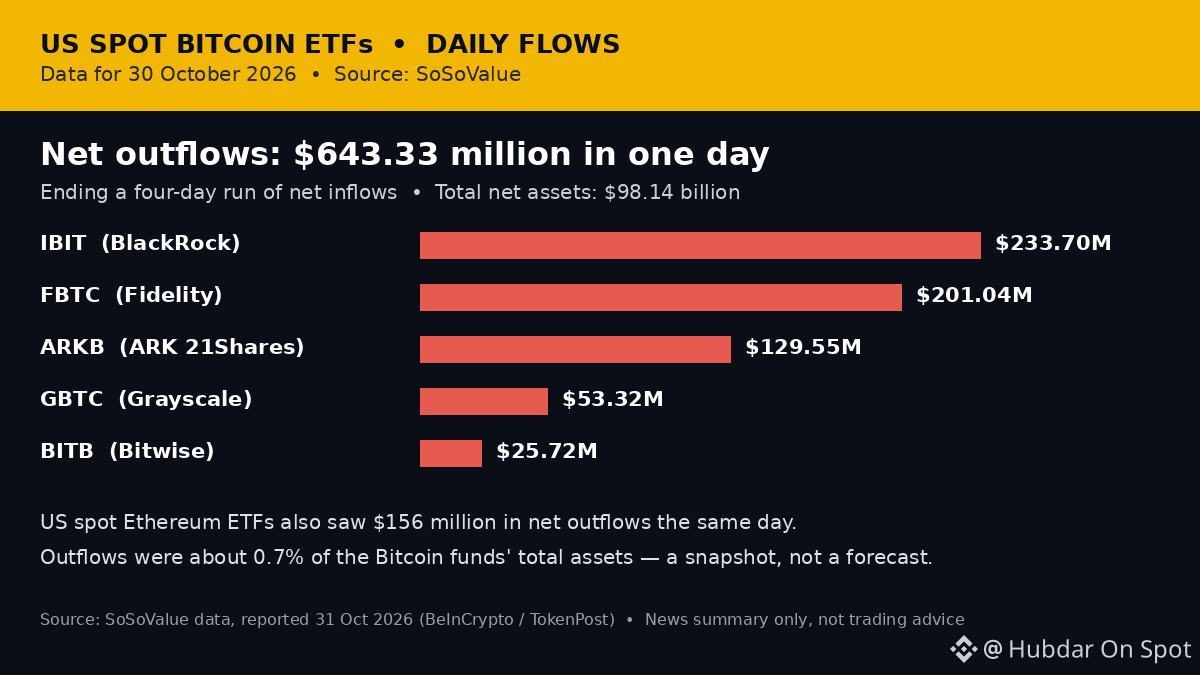
ETF spot Bitcoin AS mencatat arus keluar bersih sebesar $643,33 juta pada 30 Oktober 2026, menurut data SoSoValue yang dilaporkan pada 31 Oktober. Pergerakan ini mengakhiri arus masuk bersih selama empat hari berturut-turut ke ETF tersebut.
iShares Bitcoin Trust (IBIT) milik BlackRock mencatat arus keluar bersih terbesar, yakni $233,70 juta, disusul Wise Origin Bitcoin Fund (FBTC) milik Fidelity sebesar $201,04 juta. ARKB milik ARK 21Shares mencatat $129,55 juta, GBTC milik Grayscale $53,32 juta, dan BITB milik Bitwise $25,72 juta.
Secara keseluruhan, dana-dana tersebut masih memiliki aset bersih senilai $98,14 miliar setelah arus keluar hari itu, sementara arus masuk bersih kumulatif sejak peluncuran mencapai $56,98 miliar. Sebagai perbandingan, arus keluar pada 30 Oktober setara dengan sekitar 0,7% dari total aset dana-dana tersebut.
ETF spot Ethereum AS juga mencatat arus keluar bersih pada hari yang sama, sebesar $156 juta, menandai arus keluar selama lima hari berturut-turut.
Arus keluar tersebut terjadi sehari setelah insiden keamanan besar Binance yang dilaporkan pada 30 Oktober, tetapi data arus dana itu sendiri tidak menunjukkan alasan masing-masing investor menarik dana. Angka arus harian berikutnya, yang akan dirilis pada Senin, 2 November, akan menunjukkan apakah penarikan tersebut hanya berlangsung sehari atau merupakan awal dari tren yang lebih panjang.
Sumber: Data SoSoValue melalui BeInCrypto — https://beincrypto.com/investors-pull-643-million-bitcoin-etfs/
Apakah Anda melihat arus keluar ETF selama satu hari sebagai reaksi jangka pendek atau sinyal pergeseran sentimen investor yang lebih panjang? Bagikan pendapat Anda di bawah! 👇
69
Binance Mengonfirmasi Insiden Hot Wallet Senilai $6,3 Miliar, Pengguna Akan Ditanggung Sepenuhnya
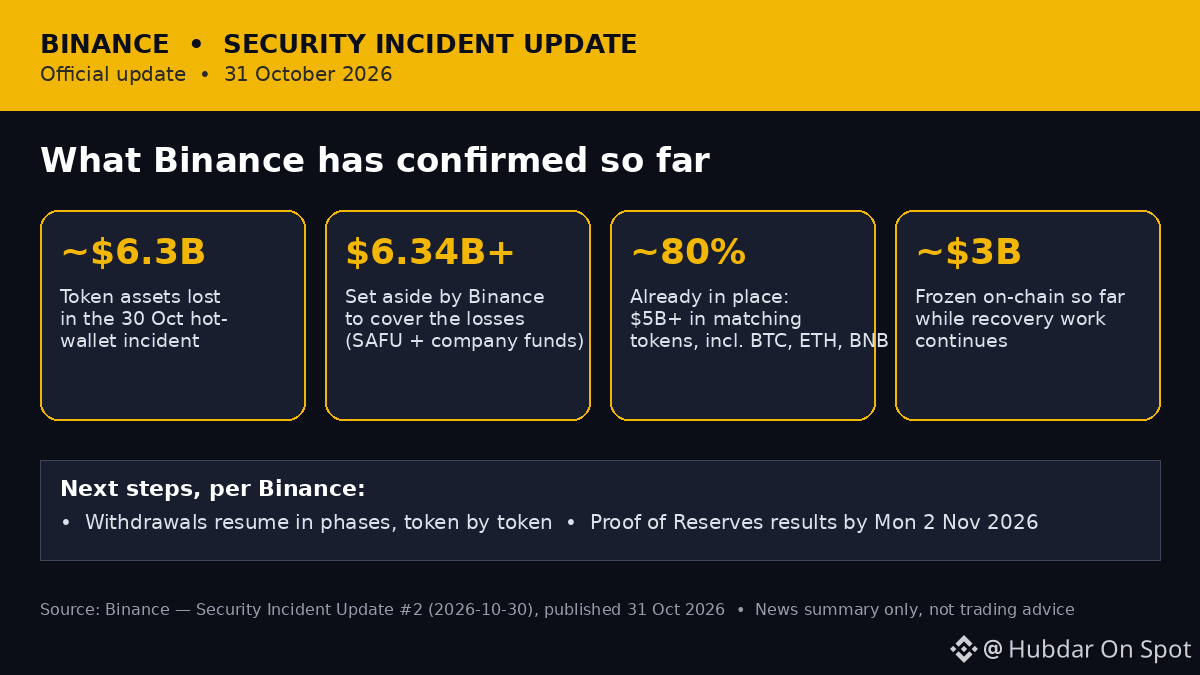
Binance telah mengonfirmasi insiden keamanan serius yang melibatkan penarikan tanpa izin dari hot wallet-nya. Menurut Pembaruan Insiden Keamanan Resmi #2, serangan terjadi sekitar pukul 04.05 (UTC+8) pada 30 Oktober 2026, yang mengakibatkan hilangnya aset token senilai sekitar $6,3 miliar.
Binance menyatakan bahwa kerugian akan ditanggung oleh perusahaan, bukan pengguna, dan akan sepenuhnya ditutup melalui Secure Asset Fund for Users (SAFU) serta dana perusahaan sendiri. Binance telah menyisihkan lebih dari $6,34 miliar, dengan aset token terkait senilai lebih dari $5 miliar yang sudah tersedia — sekitar 80% dari jumlah yang dicuri — termasuk USDC, USDT, BTC, ETH, dan BNB. Sisa token sedang dibeli melalui pasar dan kanal over-the-counter.
Binance juga menyatakan bahwa aset senilai sekitar $3 miliar sejauh ini telah dibekukan secara on-chain. Perusahaan bekerja sama dengan penegak hukum, perusahaan intelijen blockchain, penerbit aset, dan mitra industri untuk melacak serta memulihkan dana tersebut.
Penarikan ditangguhkan sementara untuk pemeriksaan keamanan tambahan, sementara setoran dan layanan lain yang tidak terdampak tetap beroperasi normal. Binance menyatakan bahwa penarikan akan dilanjutkan secara bertahap, token demi token, dengan target sesuai perkiraan waktu yang telah diumumkan sebelumnya, yaitu sekitar 34 jam, bergantung pada selesainya pemeriksaan keamanan.
Terkait transparansi, Binance berencana mengambil snapshot Proof of Reserves pertamanya dalam 12 jam dan memublikasikan hasilnya paling lambat Senin, 2 November 2026. Investigasi masih berlangsung, dan Binance menyatakan bahwa sejauh ini belum menemukan bukti bahwa kunci privat wallet telah disusupi.
Sumber: Pengumuman resmi Binance — https://www.binance.com/en/square/post/382966610455230
Menurut Anda, apa yang sebaiknya diprioritaskan setelah insiden seperti ini — memulihkan penarikan secepat mungkin atau menerbitkan laporan teknis lengkap terlebih dahulu? Bagikan pendapat Anda di bawah! 👇
1
697
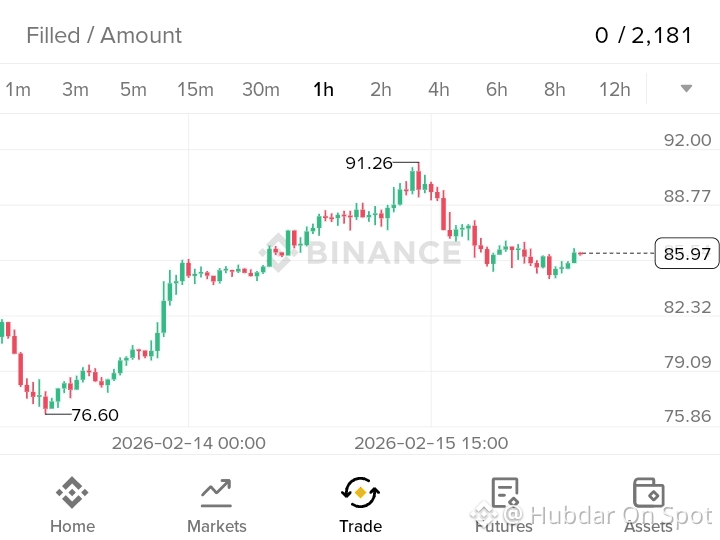
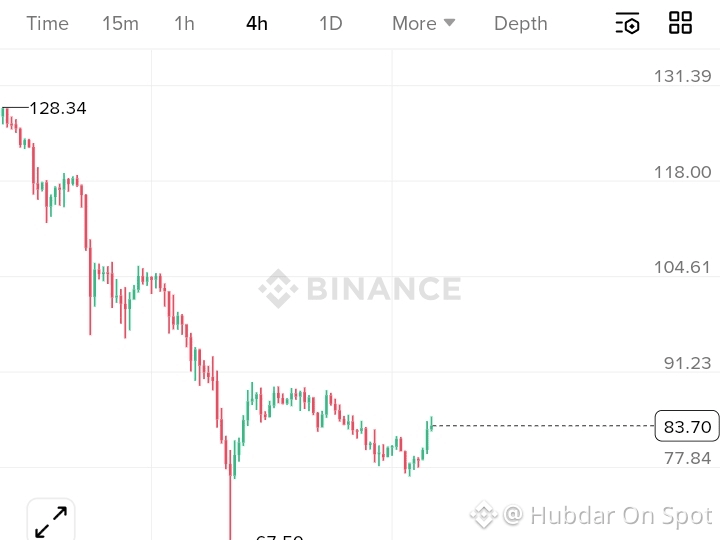
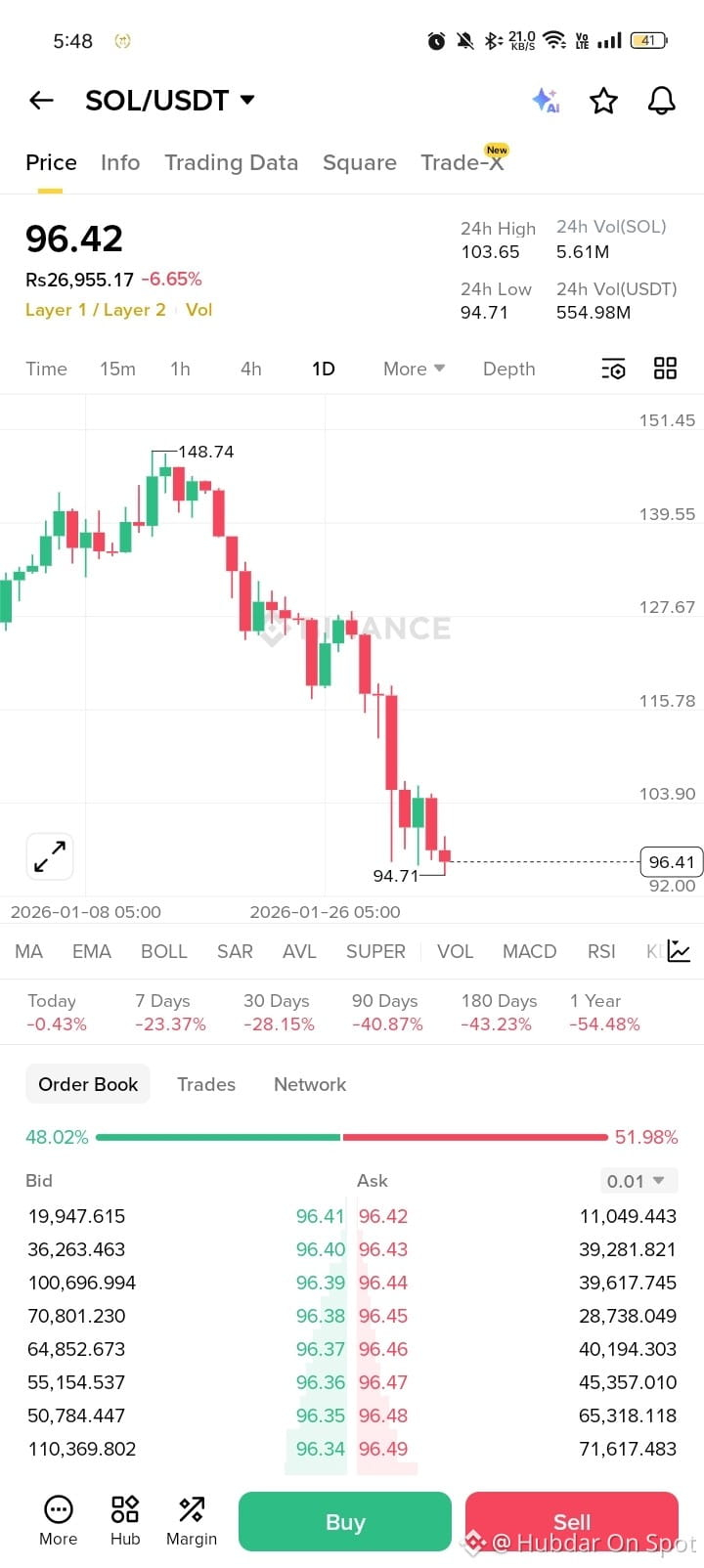
apakah $SOL akan mencapai $100 bulan ini?
Ya atau Tidak saja, Berikan pendapat jujur Anda 🤗
{spot}(SOLUSDT)
apakah $SOL akan mencapai $100 bulan ini?
Ya atau Tidak saja, Berikan pendapat jujur Anda 🤗
Ya atau Tidak saja, Berikan pendapat jujur Anda 🤗
11
·
--
Bullish
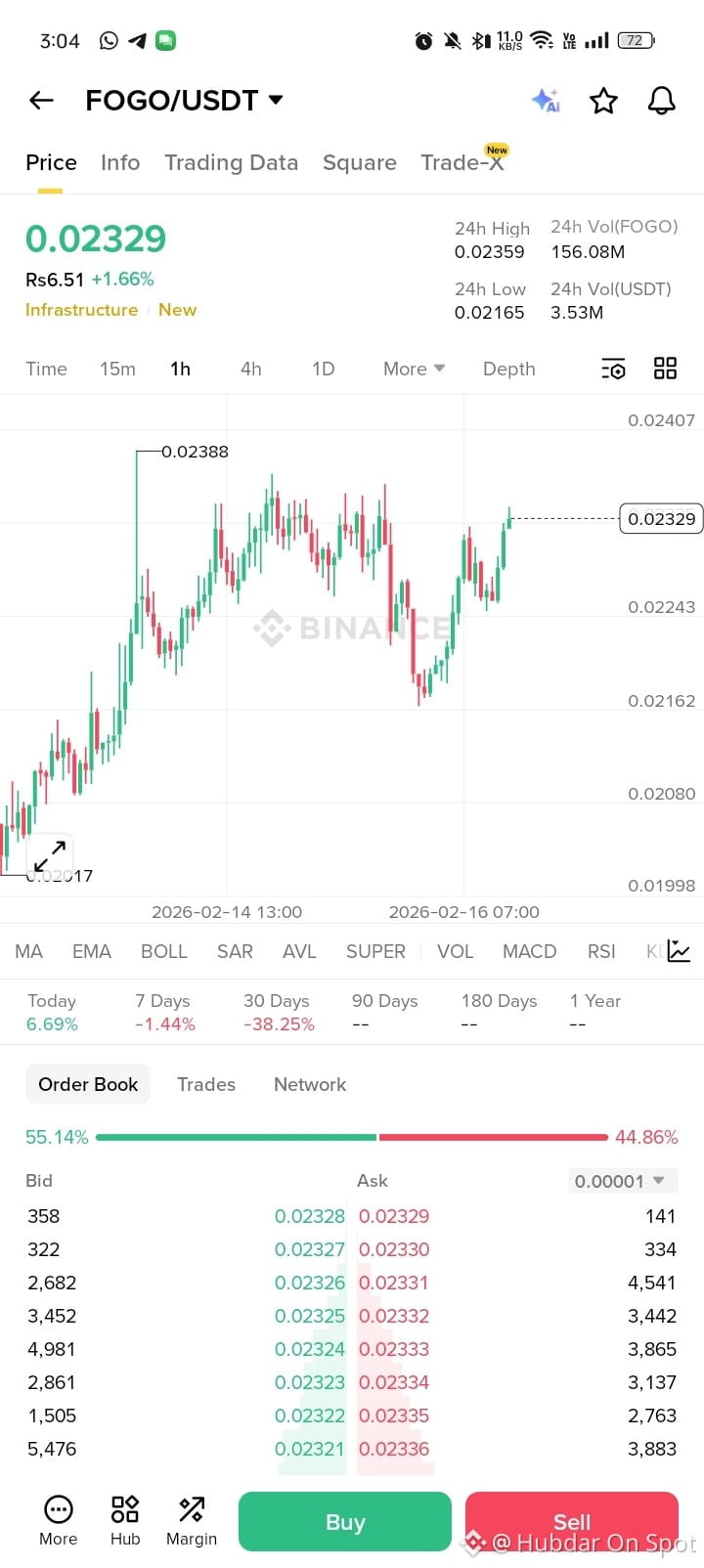
mari kita lihat apakah breakout akan segera datang 🎯
$FOGO akan terbang 🚀
Beritahu kami pendapatmu "Ya" atau "Tidak" hanya
mari kita lihat apakah breakout akan segera datang 🎯
$FOGO akan terbang 🚀
Beritahu kami pendapatmu "Ya" atau "Tidak" hanya
$FOGO akan terbang 🚀
Beritahu kami pendapatmu "Ya" atau "Tidak" hanya
2
1
8
·
--
Bullish
2
107
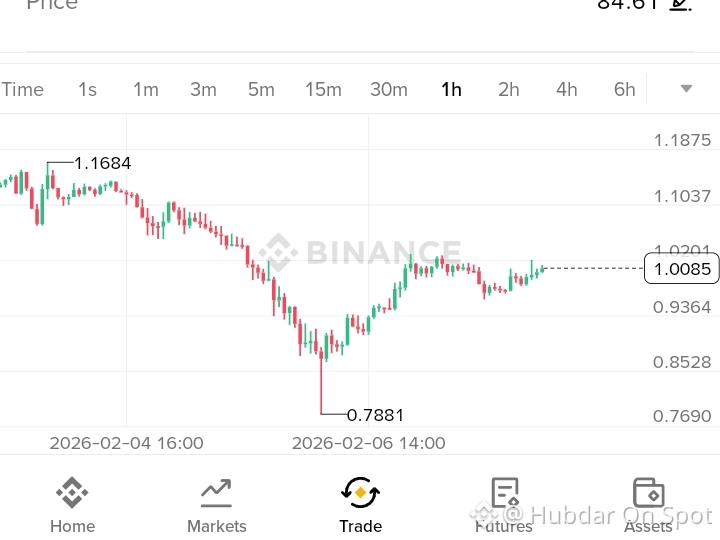
Juga Membeli beberapa $SUI TP 🎯 adalah $1.5
Mari Kita Lihat 🙈 , Ini Segera Bullish.
Komentar Selalu Terbuka untuk Anda Berbagi Pendapat Anda 🤗
{spot}(SUIUSDT)
Juga Membeli beberapa $SUI TP 🎯 adalah $1.5
Mari Kita Lihat 🙈 , Ini Segera Bullish.
Komentar Selalu Terbuka untuk Anda Berbagi Pendapat Anda 🤗
Mari Kita Lihat 🙈 , Ini Segera Bullish.
Komentar Selalu Terbuka untuk Anda Berbagi Pendapat Anda 🤗
1
147
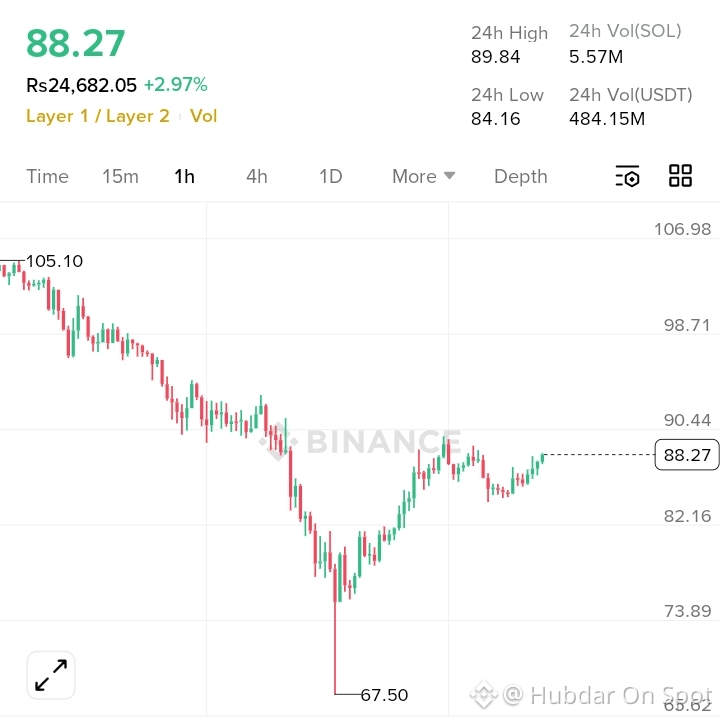
Saya akan menjual $SOL pada 150
mari kita lihat apa yang terjadi, ini bullish 🙄
Bagikan pendapat Anda di komentar.
Saya akan menjual $SOL pada 150
mari kita lihat apa yang terjadi, ini bullish 🙄
Bagikan pendapat Anda di komentar.
mari kita lihat apa yang terjadi, ini bullish 🙄
Bagikan pendapat Anda di komentar.
1
236
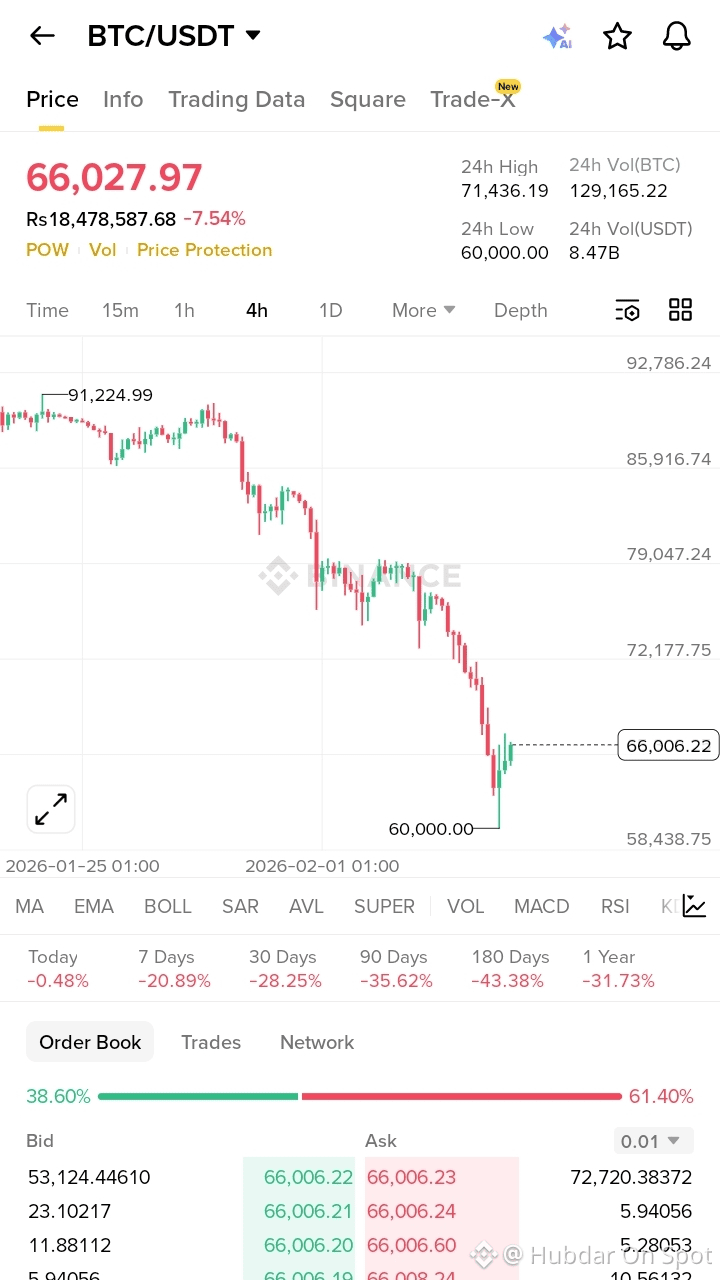
$BTC Bangkit atau Jatuh lagi?
beritahu pendapat Anda di komentar.
{spot}(BTCUSDT)
$BTC Bangkit atau Jatuh lagi?
beritahu pendapat Anda di komentar.
beritahu pendapat Anda di komentar.
35
Membeli beberapa $SOL untuk ditahan
🎯 Target adalah $140
⌛Durasi 30 Hari atau lebih
Satu Berita Baik dan Kita akan mendapatkannya.
dan ini juga bisa jatuh, ada risikonya
tapi para pengambil risiko adalah pembuat uang
Membeli beberapa $SOL untuk ditahan
🎯 Target adalah $140
⌛Durasi 30 Hari atau lebih
Satu Berita Baik dan Kita akan mendapatkannya.
dan ini juga bisa jatuh, ada risikonya
tapi para pengambil risiko adalah pembuat uang
🎯 Target adalah $140
⌛Durasi 30 Hari atau lebih
Satu Berita Baik dan Kita akan mendapatkannya.
dan ini juga bisa jatuh, ada risikonya
tapi para pengambil risiko adalah pembuat uang
224
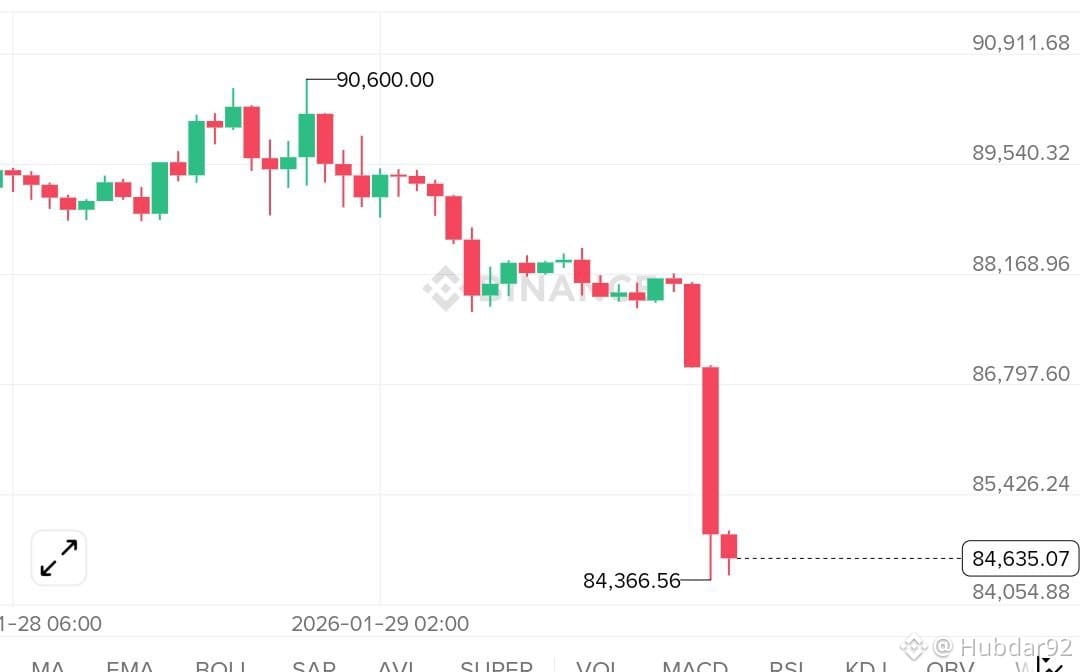
$BTC dibuang karena berita Iran sebelumnya pada tahun 2023, kepanikan melanda pasar.
Uang pintar mulai membeli penurunan lagi dan lagi.
Sebelum pergerakan positif yang sebenarnya, $BTC jatuh satu kali lagi untuk mengeluarkan tangan yang lemah.
Saat ini, masih ada peluang untuk jatuh kecil lainnya, tetapi dibandingkan sebelumnya, peluangnya jauh lebih rendah.
Sentimen pasar sedang membaik, ketakutan memudar, dan pembeli lebih kuat daripada penjual.
Tetap sabar. Kelola risiko. Jangan terlalu berleveraj.
Pergerakan yang sebenarnya biasanya dimulai ketika sebagian besar orang berhenti mengharapkannya.
{spot}(BTCUSDT)
$BTC dibuang karena berita Iran sebelumnya pada tahun 2023, kepanikan melanda pasar.
Uang pintar mulai membeli penurunan lagi dan lagi.
Sebelum pergerakan positif yang sebenarnya, $BTC jatuh satu kali lagi untuk mengeluarkan tangan yang lemah.
Saat ini, masih ada peluang untuk jatuh kecil lainnya, tetapi dibandingkan sebelumnya, peluangnya jauh lebih rendah.
Sentimen pasar sedang membaik, ketakutan memudar, dan pembeli lebih kuat daripada penjual.
Tetap sabar. Kelola risiko. Jangan terlalu berleveraj.
Pergerakan yang sebenarnya biasanya dimulai ketika sebagian besar orang berhenti mengharapkannya.
78
Fakta 👏🏼
Fakta 👏🏼

Sardar Crypto
·
--
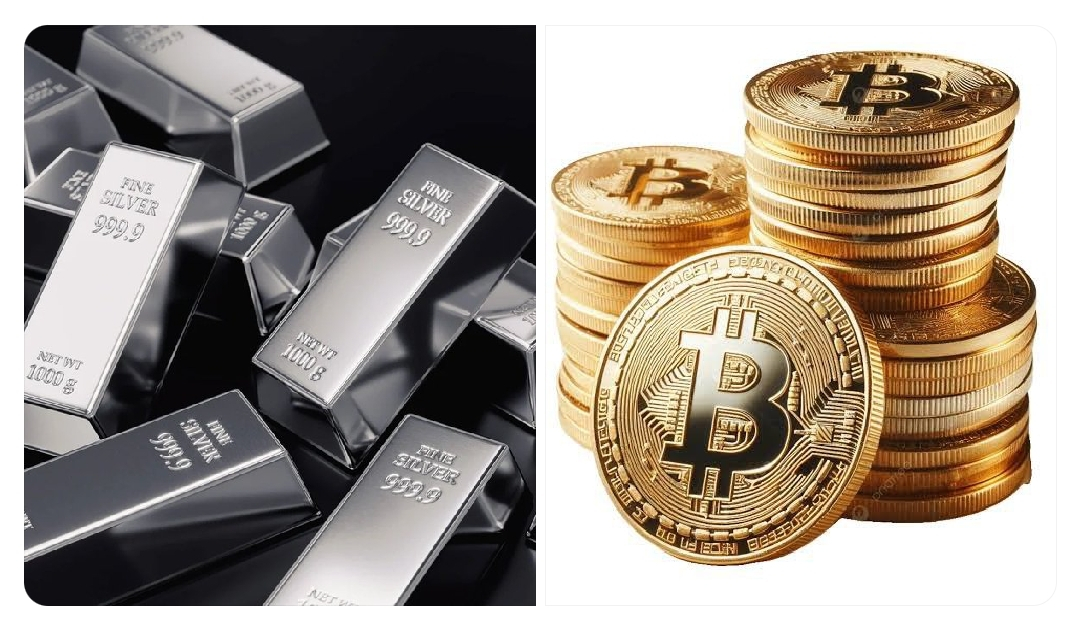
🥈 Ukuran pasar Silver hampir 4× lebih besar daripada Bitcoin
$XAG
$BTC
$XAG
$BTC
4
Masuk untuk menjelajahi konten lainnya
Bergabunglah dengan pengguna kripto global di Binance Square
⚡️ Dapatkan informasi terbaru dan berguna tentang kripto.
💬 Dipercayai oleh bursa kripto terbesar di dunia.
👍 Temukan wawasan nyata dari kreator terverifikasi.
Email/Nomor Ponsel