

F A R R I S
17.7k Posting

F A R R I S
Laporkan
Blokir Pengguna
I trade what I see, not what I feel...
1.0K+ Mengikuti
28.8K+ Pengikut
15.3K+ Disukai
Posting
Semua
Kuotasi
Live
·
--
Bullish
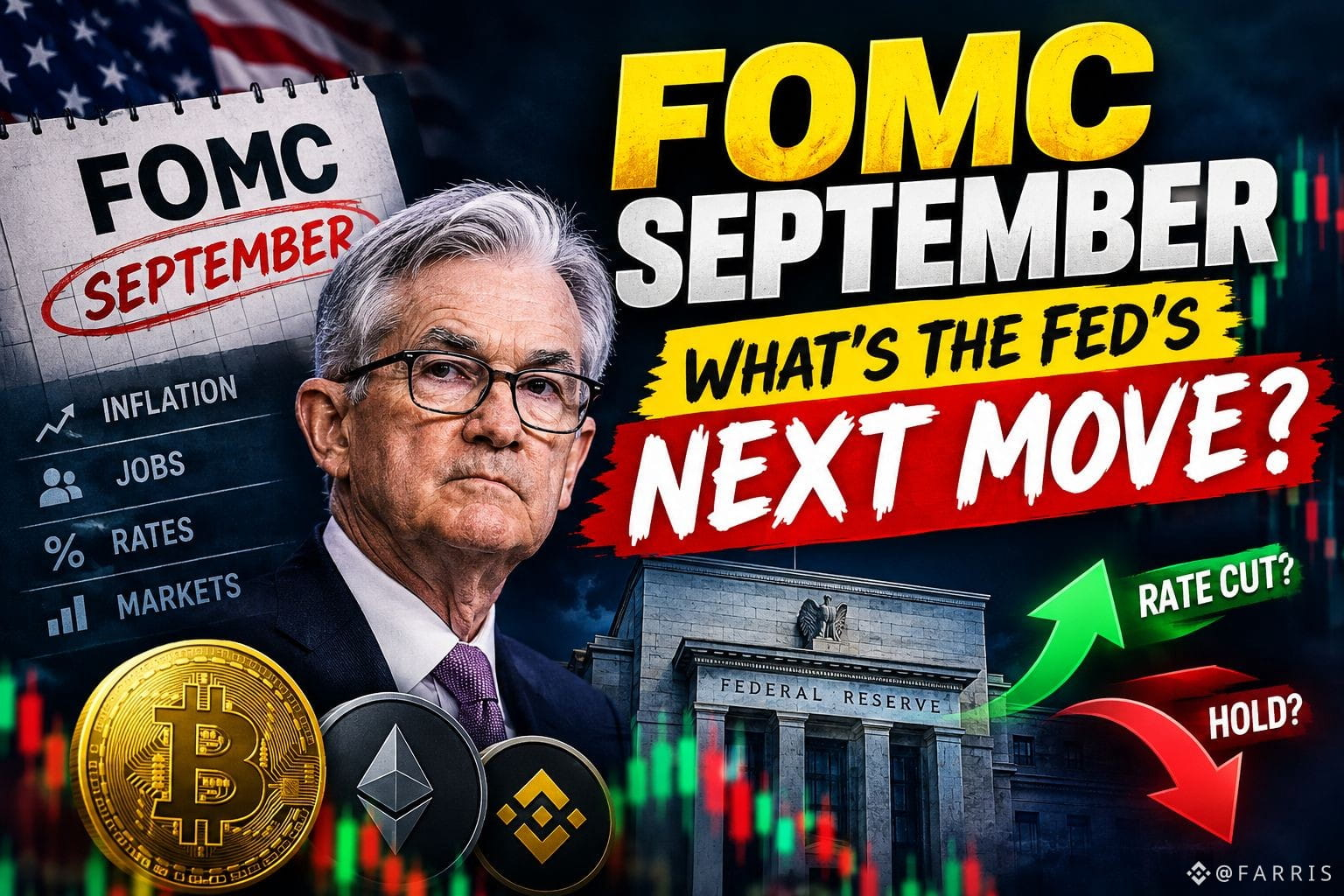
Belakangan ini, pertanyaan terbesar di pasar bukanlah Bitcoin atau altcoin—melainkan The Fed. 👀
FOMC September semakin dekat, dan para trader mengamati setiap sinyal inflasi, pekerjaan, dan ekonomi untuk mencari petunjuk tentang langkah berikutnya.
Pemangkasan suku bunga bisa mendatangkan likuiditas baru dan meningkatkan selera risiko di seluruh kripto. Tapi jika The Fed tetap berhati-hati, pasar bisa tetap volatil dan gelisah.
Bagian menariknya? Pasar sering bergerak sebelum The Fed benar-benar angkat bicara.
Itulah mengapa saya lebih memperhatikan ekspektasi daripada judul berita.
Satu perubahan dalam nada Powell saja bisa menggeser seluruh narasi pasar dalam hitungan menit.
FOMC September bisa menjadi pemicu volatilitas besar lainnya. ⚡
Perhatikan The Fed. Perhatikan likuiditas. 👀
#FedRateWatch
Belakangan ini, pertanyaan terbesar di pasar bukanlah Bitcoin atau altcoin—melainkan The Fed. 👀
FOMC September semakin dekat, dan para trader mengamati setiap sinyal inflasi, pekerjaan, dan ekonomi untuk mencari petunjuk tentang langkah berikutnya.
Pemangkasan suku bunga bisa mendatangkan likuiditas baru dan meningkatkan selera risiko di seluruh kripto. Tapi jika The Fed tetap berhati-hati, pasar bisa tetap volatil dan gelisah.
Bagian menariknya? Pasar sering bergerak sebelum The Fed benar-benar angkat bicara.
Itulah mengapa saya lebih memperhatikan ekspektasi daripada judul berita.
Satu perubahan dalam nada Powell saja bisa menggeser seluruh narasi pasar dalam hitungan menit.
FOMC September bisa menjadi pemicu volatilitas besar lainnya. ⚡
Perhatikan The Fed. Perhatikan likuiditas. 👀
#FedRateWatch
FOMC September semakin dekat, dan para trader mengamati setiap sinyal inflasi, pekerjaan, dan ekonomi untuk mencari petunjuk tentang langkah berikutnya.
Pemangkasan suku bunga bisa mendatangkan likuiditas baru dan meningkatkan selera risiko di seluruh kripto. Tapi jika The Fed tetap berhati-hati, pasar bisa tetap volatil dan gelisah.
Bagian menariknya? Pasar sering bergerak sebelum The Fed benar-benar angkat bicara.
Itulah mengapa saya lebih memperhatikan ekspektasi daripada judul berita.
Satu perubahan dalam nada Powell saja bisa menggeser seluruh narasi pasar dalam hitungan menit.
FOMC September bisa menjadi pemicu volatilitas besar lainnya. ⚡
Perhatikan The Fed. Perhatikan likuiditas. 👀
#FedRateWatch
3
7
425
·
--
⚡ $SNDK
{future}(SNDKUSDT)
semakin menarik! ⚡
Likuidasi short sebesar $10,038K pada $1,748.71 baru saja terjadi di Binance. Itu memberitahuku bahwa para penjual sedang terjepit, jadi aku akan mengamati langkah berikutnya dengan cermat. 👀
📍 Support: $1,700–$1,720
🧱 Resistance: $1,780–$1,820
🎯 Target Berikutnya: $1,850+
🟢 Zona Entry: $1,720–$1,750
🛑 SL: $1,680
🎯 TP1: $1,800
🎯 TP2: $1,850
🎯 TP3: $1,920
💡 Pro Tip: Jangan kejar lonjakan mendadak. Biarkan harga menguji ulang zona entry dan perhatikan volume. Jika resistance tembus dengan kekuatan, tekanan likuidasi short bisa mendorong SNDK menuju target yang lebih tinggi. Jika support gagal, mundur dulu dan lindungi modal.
Selangkah demi selangkah. Biarkan chart yang mengonfirmasi pergerakannya. 🔥
#BankOfAmericaGroupPilotsUSBDCStablecoin #USStrikesTargetsNearHormuzAndJask #DowFallsOver600Points #OilRisesToHighestSinceJuly #RippleLobbiesToAdvanceCLARITYActVote
⚡ $SNDK
semakin menarik! ⚡
Likuidasi short sebesar $10,038K pada $1,748.71 baru saja terjadi di Binance. Itu memberitahuku bahwa para penjual sedang terjepit, jadi aku akan mengamati langkah berikutnya dengan cermat. 👀
📍 Support: $1,700–$1,720
🧱 Resistance: $1,780–$1,820
🎯 Target Berikutnya: $1,850+
🟢 Zona Entry: $1,720–$1,750
🛑 SL: $1,680
🎯 TP1: $1,800
🎯 TP2: $1,850
🎯 TP3: $1,920
💡 Pro Tip: Jangan kejar lonjakan mendadak. Biarkan harga menguji ulang zona entry dan perhatikan volume. Jika resistance tembus dengan kekuatan, tekanan likuidasi short bisa mendorong SNDK menuju target yang lebih tinggi. Jika support gagal, mundur dulu dan lindungi modal.
Selangkah demi selangkah. Biarkan chart yang mengonfirmasi pergerakannya. 🔥
#BankOfAmericaGroupPilotsUSBDCStablecoin #USStrikesTargetsNearHormuzAndJask #DowFallsOver600Points #OilRisesToHighestSinceJuly #RippleLobbiesToAdvanceCLARITYActVote
semakin menarik! ⚡
Likuidasi short sebesar $10,038K pada $1,748.71 baru saja terjadi di Binance. Itu memberitahuku bahwa para penjual sedang terjepit, jadi aku akan mengamati langkah berikutnya dengan cermat. 👀
📍 Support: $1,700–$1,720
🧱 Resistance: $1,780–$1,820
🎯 Target Berikutnya: $1,850+
🟢 Zona Entry: $1,720–$1,750
🛑 SL: $1,680
🎯 TP1: $1,800
🎯 TP2: $1,850
🎯 TP3: $1,920
💡 Pro Tip: Jangan kejar lonjakan mendadak. Biarkan harga menguji ulang zona entry dan perhatikan volume. Jika resistance tembus dengan kekuatan, tekanan likuidasi short bisa mendorong SNDK menuju target yang lebih tinggi. Jika support gagal, mundur dulu dan lindungi modal.
Selangkah demi selangkah. Biarkan chart yang mengonfirmasi pergerakannya. 🔥
#BankOfAmericaGroupPilotsUSBDCStablecoin #USStrikesTargetsNearHormuzAndJask #DowFallsOver600Points #OilRisesToHighestSinceJuly #RippleLobbiesToAdvanceCLARITYActVote
209
·
--
Belakangan ini, $UAI
{future}(UAIUSDT)
mulai menarik perhatian setelah likuidasi short sekitar $5,06K di area $0,759 di Binance. Itu menunjukkan beberapa posisi short terdorong (squeezed), jadi saya memantau langkah berikutnya dengan cermat.
📊 Setup UAI
🟢 Spot: ~$0,759
🧱 Resistance: $0,78–$0,80
🎯 Target Berikutnya: $0,82
🚪 Zona Entry: $0,74–$0,76
🛑 SL: $0,71
🎯 TP1: $0,78
🎯 TP2: $0,82
🎯 TP3: $0,88
💡 Pro Tip: Jangan mengejar candle hijau yang tiba-tiba. Saya lebih ingin melihat harga bertahan di zona entry dan menembus resistance dengan volume yang benar-benar nyata. Jika $0,74 gagal, setup menjadi lebih lemah dan saya akan mundur, bukan memaksa entry.
Ini adalah setup trading, bukan jaminan profit. Utamakan manajemen risiko dulu.
#BankOfAmericaGroupPilotsUSBDCStablecoin #RippleLobbiesToAdvanceCLARITYActVote #OilRisesToHighestSinceJuly #DowFallsOver600Points
Belakangan ini, $UAI
mulai menarik perhatian setelah likuidasi short sekitar $5,06K di area $0,759 di Binance. Itu menunjukkan beberapa posisi short terdorong (squeezed), jadi saya memantau langkah berikutnya dengan cermat.
📊 Setup UAI
🟢 Spot: ~$0,759
🧱 Resistance: $0,78–$0,80
🎯 Target Berikutnya: $0,82
🚪 Zona Entry: $0,74–$0,76
🛑 SL: $0,71
🎯 TP1: $0,78
🎯 TP2: $0,82
🎯 TP3: $0,88
💡 Pro Tip: Jangan mengejar candle hijau yang tiba-tiba. Saya lebih ingin melihat harga bertahan di zona entry dan menembus resistance dengan volume yang benar-benar nyata. Jika $0,74 gagal, setup menjadi lebih lemah dan saya akan mundur, bukan memaksa entry.
Ini adalah setup trading, bukan jaminan profit. Utamakan manajemen risiko dulu.
#BankOfAmericaGroupPilotsUSBDCStablecoin #RippleLobbiesToAdvanceCLARITYActVote #OilRisesToHighestSinceJuly #DowFallsOver600Points
mulai menarik perhatian setelah likuidasi short sekitar $5,06K di area $0,759 di Binance. Itu menunjukkan beberapa posisi short terdorong (squeezed), jadi saya memantau langkah berikutnya dengan cermat.
📊 Setup UAI
🟢 Spot: ~$0,759
🧱 Resistance: $0,78–$0,80
🎯 Target Berikutnya: $0,82
🚪 Zona Entry: $0,74–$0,76
🛑 SL: $0,71
🎯 TP1: $0,78
🎯 TP2: $0,82
🎯 TP3: $0,88
💡 Pro Tip: Jangan mengejar candle hijau yang tiba-tiba. Saya lebih ingin melihat harga bertahan di zona entry dan menembus resistance dengan volume yang benar-benar nyata. Jika $0,74 gagal, setup menjadi lebih lemah dan saya akan mundur, bukan memaksa entry.
Ini adalah setup trading, bukan jaminan profit. Utamakan manajemen risiko dulu.
#BankOfAmericaGroupPilotsUSBDCStablecoin #RippleLobbiesToAdvanceCLARITYActVote #OilRisesToHighestSinceJuly #DowFallsOver600Points
420
·
--
#dusk $DUSK @Dusk_Foundation
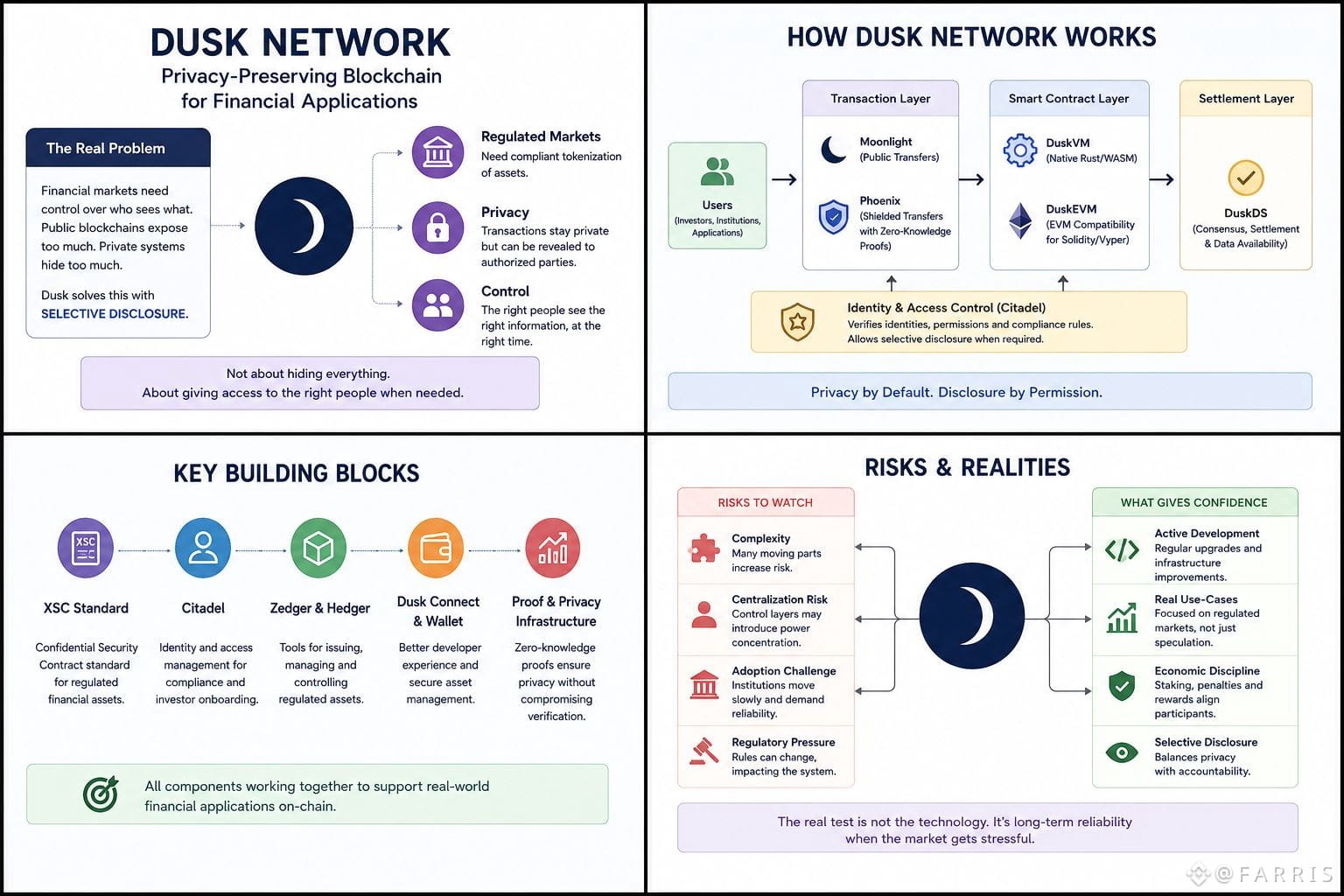
Saya terus kembali ke Dusk karena bagian yang menariknya bukan hanya soal privasi yang dibahas.
Yang menarik justru apa yang mereka lakukan dengan privasi itu.
Jaringan ini semakin dibentuk untuk pasar yang teregulasi, di mana menjaga semuanya tetap publik bisa sama bermasalahnya dengan menyembunyikan semuanya. Dusk membangun seputar selective disclosure, transfer yang bersifat rahasia, settlement deterministik, serta alur kerja finansial yang tetap membutuhkan aturan mengenai siapa yang bisa memegang atau memindahkan suatu aset.
Dan belakangan ini, aktivitas pengembangannya sulit untuk diabaikan.
Peningkatan Boreas baru-baru ini mengubah penanganan transaksi, penetapan harga VM, serta aturan deployment, sekaligus menyingkirkan model transaksi Phoenix yang lebih lama. Sebelumnya, Aegis menghadirkan PLONK V3 dan penguatan konsensus tambahan. Itu membuat saya yakin tim sedang menghabiskan waktu untuk pekerjaan infrastruktur yang tidak nyaman—bukan sekadar menambahkan fitur untuk penampilan.
Lalu ada DuskEVM.
Pengembang Solidity sekarang bisa memiliki jalur EVM sambil melakukan settlement melalui infrastruktur dasar Dusk, sementara DuskVM tetap tersedia untuk aplikasi native Rust/WASM yang membutuhkan akses lebih dalam ke kemampuan privasi dan zero-knowledge.
Bahkan bagian-bagian yang lebih kecil pun menarik perhatian saya. Dusk Connect dan dompet baru ditujukan untuk memperbaiki pengalaman dasar pengembang-ke-dompet, dan pekerjaan rekayasa terbaru telah memperketat validasi bukti, pemeriksaan serialisasi, penanganan Merkle, serta pengujian devnet yang dapat direproduksi.
Itulah jenis kemajuan yang benar-benar saya suka untuk saksikan.
Bukan satu pengumuman besar.
Tapi lapis demi lapis yang membuatnya semakin sulit untuk dipecahkan.
Dan mungkin itu ujian sesungguhnya untuk Dusk sekarang: apakah semua komponen ini pada akhirnya bisa menjadi cukup andal sehingga aktivitas keuangan yang teregulasi benar-benar bisa bergantung padanya saat pasar menjadi kacau?
Karena privasi itu menarik.
Infrastruktur keuangan yang andal jauh lebih sulit.
#BitcoinStrongestWeekSinceMarch2023 #SandboxSANDSuspectedInfiniteMintFlawOnBase #USCanadaTradeTalksCollapseCanadaVowsRetaliation #SandboxSANDSuspectedInfiniteMintFlawOnBase
#dusk $DUSK @Dusk
Saya terus kembali ke Dusk karena bagian yang menariknya bukan hanya soal privasi yang dibahas.
Yang menarik justru apa yang mereka lakukan dengan privasi itu.
Jaringan ini semakin dibentuk untuk pasar yang teregulasi, di mana menjaga semuanya tetap publik bisa sama bermasalahnya dengan menyembunyikan semuanya. Dusk membangun seputar selective disclosure, transfer yang bersifat rahasia, settlement deterministik, serta alur kerja finansial yang tetap membutuhkan aturan mengenai siapa yang bisa memegang atau memindahkan suatu aset.
Dan belakangan ini, aktivitas pengembangannya sulit untuk diabaikan.
Peningkatan Boreas baru-baru ini mengubah penanganan transaksi, penetapan harga VM, serta aturan deployment, sekaligus menyingkirkan model transaksi Phoenix yang lebih lama. Sebelumnya, Aegis menghadirkan PLONK V3 dan penguatan konsensus tambahan. Itu membuat saya yakin tim sedang menghabiskan waktu untuk pekerjaan infrastruktur yang tidak nyaman—bukan sekadar menambahkan fitur untuk penampilan.
Lalu ada DuskEVM.
Pengembang Solidity sekarang bisa memiliki jalur EVM sambil melakukan settlement melalui infrastruktur dasar Dusk, sementara DuskVM tetap tersedia untuk aplikasi native Rust/WASM yang membutuhkan akses lebih dalam ke kemampuan privasi dan zero-knowledge.
Bahkan bagian-bagian yang lebih kecil pun menarik perhatian saya. Dusk Connect dan dompet baru ditujukan untuk memperbaiki pengalaman dasar pengembang-ke-dompet, dan pekerjaan rekayasa terbaru telah memperketat validasi bukti, pemeriksaan serialisasi, penanganan Merkle, serta pengujian devnet yang dapat direproduksi.
Itulah jenis kemajuan yang benar-benar saya suka untuk saksikan.
Bukan satu pengumuman besar.
Tapi lapis demi lapis yang membuatnya semakin sulit untuk dipecahkan.
Dan mungkin itu ujian sesungguhnya untuk Dusk sekarang: apakah semua komponen ini pada akhirnya bisa menjadi cukup andal sehingga aktivitas keuangan yang teregulasi benar-benar bisa bergantung padanya saat pasar menjadi kacau?
Karena privasi itu menarik.
Infrastruktur keuangan yang andal jauh lebih sulit.
#BitcoinStrongestWeekSinceMarch2023 #SandboxSANDSuspectedInfiniteMintFlawOnBase #USCanadaTradeTalksCollapseCanadaVowsRetaliation #SandboxSANDSuspectedInfiniteMintFlawOnBase
Saya terus kembali ke Dusk karena bagian yang menariknya bukan hanya soal privasi yang dibahas.
Yang menarik justru apa yang mereka lakukan dengan privasi itu.
Jaringan ini semakin dibentuk untuk pasar yang teregulasi, di mana menjaga semuanya tetap publik bisa sama bermasalahnya dengan menyembunyikan semuanya. Dusk membangun seputar selective disclosure, transfer yang bersifat rahasia, settlement deterministik, serta alur kerja finansial yang tetap membutuhkan aturan mengenai siapa yang bisa memegang atau memindahkan suatu aset.
Dan belakangan ini, aktivitas pengembangannya sulit untuk diabaikan.
Peningkatan Boreas baru-baru ini mengubah penanganan transaksi, penetapan harga VM, serta aturan deployment, sekaligus menyingkirkan model transaksi Phoenix yang lebih lama. Sebelumnya, Aegis menghadirkan PLONK V3 dan penguatan konsensus tambahan. Itu membuat saya yakin tim sedang menghabiskan waktu untuk pekerjaan infrastruktur yang tidak nyaman—bukan sekadar menambahkan fitur untuk penampilan.
Lalu ada DuskEVM.
Pengembang Solidity sekarang bisa memiliki jalur EVM sambil melakukan settlement melalui infrastruktur dasar Dusk, sementara DuskVM tetap tersedia untuk aplikasi native Rust/WASM yang membutuhkan akses lebih dalam ke kemampuan privasi dan zero-knowledge.
Bahkan bagian-bagian yang lebih kecil pun menarik perhatian saya. Dusk Connect dan dompet baru ditujukan untuk memperbaiki pengalaman dasar pengembang-ke-dompet, dan pekerjaan rekayasa terbaru telah memperketat validasi bukti, pemeriksaan serialisasi, penanganan Merkle, serta pengujian devnet yang dapat direproduksi.
Itulah jenis kemajuan yang benar-benar saya suka untuk saksikan.
Bukan satu pengumuman besar.
Tapi lapis demi lapis yang membuatnya semakin sulit untuk dipecahkan.
Dan mungkin itu ujian sesungguhnya untuk Dusk sekarang: apakah semua komponen ini pada akhirnya bisa menjadi cukup andal sehingga aktivitas keuangan yang teregulasi benar-benar bisa bergantung padanya saat pasar menjadi kacau?
Karena privasi itu menarik.
Infrastruktur keuangan yang andal jauh lebih sulit.
#BitcoinStrongestWeekSinceMarch2023 #SandboxSANDSuspectedInfiniteMintFlawOnBase #USCanadaTradeTalksCollapseCanadaVowsRetaliation #SandboxSANDSuspectedInfiniteMintFlawOnBase
170
·
--
Bullish
Terverifikasi
#dusk $DUSK @Dusk_Foundation
Hal yang aneh tentang Dusk adalah bahwa semakin lama saya melihatnya, semakin kata “privasi” terasa kurang menarik.
Yang menarik perhatian saya justru sesuatu yang lebih tenang.
Pasar biasanya menjadi lebih mudah dipahami ketika lebih banyak informasi terlihat. Anda bisa melihat saldo bergerak, melacak arus, mengetahui siapa yang mengambil risiko, dan bereaksi ketika sesuatu mulai tampak tidak beres.
Namun, pasar keuangan juga memiliki titik ketika terlalu banyak visibilitas menjadi sebuah liabilitas.
Sebuah posisi besar tidak selalu bisa diekspos kepada semua orang. Aset yang teregulasi tidak dapat memperlakukan setiap potongan informasi investor sebagai data publik. Dan saat terjadi volatilitas, menyiarkan setiap langkah dapat mengubah pasar yang sedang Anda coba kelola.
Ketegangan itulah yang membuat Dusk mulai lebih masuk akal bagi saya.
Arsitekturnya memisahkan model transaksi publik dan yang terlindungi (shielded), sementara dokumentasinya menempatkan selective disclosure berdampingan dengan privasi, bukan sekadar memperlakukan privasi sebagai menyembunyikan semuanya.
Dan proyek ini juga diam-diam terus melampaui label “privacy chain”. Ada alat baru untuk dompet dan koneksi pengembang, peningkatan protokol yang berlanjut, serta pekerjaan terbaru seputar infrastruktur aset yang teregulasi.
Itu mengubah pandangan saya.
Pertanyaan yang sebenarnya bukan apakah sebuah blockchain bisa menjaga informasi tetap privat.
Melainkan apakah orang-orang masih bisa berkoordinasi ketika mereka tidak semuanya melihat informasi yang sama.
Sebab ketika pasar mulai tertekan, tidak ada yang peduli bahwa sistem dirancang dengan niat yang baik. Mereka peduli pada apa yang bisa mereka verifikasi, siapa yang bisa memverifikasinya, dan seberapa cepat mereka bisa merasa cukup yakin untuk bertahan.
#QWRX #ZDEX1000
Itulah bagian dari Dusk yang menurut saya layak untuk disimak.#SSV.每日智能策略 #advise
Privasi mungkin bukan produknya.
Privasi mungkin adalah ujian apakah koordinasi finansial masih bekerja ketika transparansi itu sendiri menjadi mahal.
$TRUMP
{spot}(TRUMPUSDT)
$BEAT
{future}(BEATUSDT)
#dusk $DUSK @Dusk
Hal yang aneh tentang Dusk adalah bahwa semakin lama saya melihatnya, semakin kata “privasi” terasa kurang menarik.
Yang menarik perhatian saya justru sesuatu yang lebih tenang.
Pasar biasanya menjadi lebih mudah dipahami ketika lebih banyak informasi terlihat. Anda bisa melihat saldo bergerak, melacak arus, mengetahui siapa yang mengambil risiko, dan bereaksi ketika sesuatu mulai tampak tidak beres.
Namun, pasar keuangan juga memiliki titik ketika terlalu banyak visibilitas menjadi sebuah liabilitas.
Sebuah posisi besar tidak selalu bisa diekspos kepada semua orang. Aset yang teregulasi tidak dapat memperlakukan setiap potongan informasi investor sebagai data publik. Dan saat terjadi volatilitas, menyiarkan setiap langkah dapat mengubah pasar yang sedang Anda coba kelola.
Ketegangan itulah yang membuat Dusk mulai lebih masuk akal bagi saya.
Arsitekturnya memisahkan model transaksi publik dan yang terlindungi (shielded), sementara dokumentasinya menempatkan selective disclosure berdampingan dengan privasi, bukan sekadar memperlakukan privasi sebagai menyembunyikan semuanya.
Dan proyek ini juga diam-diam terus melampaui label “privacy chain”. Ada alat baru untuk dompet dan koneksi pengembang, peningkatan protokol yang berlanjut, serta pekerjaan terbaru seputar infrastruktur aset yang teregulasi.
Itu mengubah pandangan saya.
Pertanyaan yang sebenarnya bukan apakah sebuah blockchain bisa menjaga informasi tetap privat.
Melainkan apakah orang-orang masih bisa berkoordinasi ketika mereka tidak semuanya melihat informasi yang sama.
Sebab ketika pasar mulai tertekan, tidak ada yang peduli bahwa sistem dirancang dengan niat yang baik. Mereka peduli pada apa yang bisa mereka verifikasi, siapa yang bisa memverifikasinya, dan seberapa cepat mereka bisa merasa cukup yakin untuk bertahan.
#QWRX #ZDEX1000
Itulah bagian dari Dusk yang menurut saya layak untuk disimak.#SSV.每日智能策略 #advise
Privasi mungkin bukan produknya.
Privasi mungkin adalah ujian apakah koordinasi finansial masih bekerja ketika transparansi itu sendiri menjadi mahal.
$TRUMP
$BEAT
Hal yang aneh tentang Dusk adalah bahwa semakin lama saya melihatnya, semakin kata “privasi” terasa kurang menarik.
Yang menarik perhatian saya justru sesuatu yang lebih tenang.
Pasar biasanya menjadi lebih mudah dipahami ketika lebih banyak informasi terlihat. Anda bisa melihat saldo bergerak, melacak arus, mengetahui siapa yang mengambil risiko, dan bereaksi ketika sesuatu mulai tampak tidak beres.
Namun, pasar keuangan juga memiliki titik ketika terlalu banyak visibilitas menjadi sebuah liabilitas.
Sebuah posisi besar tidak selalu bisa diekspos kepada semua orang. Aset yang teregulasi tidak dapat memperlakukan setiap potongan informasi investor sebagai data publik. Dan saat terjadi volatilitas, menyiarkan setiap langkah dapat mengubah pasar yang sedang Anda coba kelola.
Ketegangan itulah yang membuat Dusk mulai lebih masuk akal bagi saya.
Arsitekturnya memisahkan model transaksi publik dan yang terlindungi (shielded), sementara dokumentasinya menempatkan selective disclosure berdampingan dengan privasi, bukan sekadar memperlakukan privasi sebagai menyembunyikan semuanya.
Dan proyek ini juga diam-diam terus melampaui label “privacy chain”. Ada alat baru untuk dompet dan koneksi pengembang, peningkatan protokol yang berlanjut, serta pekerjaan terbaru seputar infrastruktur aset yang teregulasi.
Itu mengubah pandangan saya.
Pertanyaan yang sebenarnya bukan apakah sebuah blockchain bisa menjaga informasi tetap privat.
Melainkan apakah orang-orang masih bisa berkoordinasi ketika mereka tidak semuanya melihat informasi yang sama.
Sebab ketika pasar mulai tertekan, tidak ada yang peduli bahwa sistem dirancang dengan niat yang baik. Mereka peduli pada apa yang bisa mereka verifikasi, siapa yang bisa memverifikasinya, dan seberapa cepat mereka bisa merasa cukup yakin untuk bertahan.
#QWRX #ZDEX1000
Itulah bagian dari Dusk yang menurut saya layak untuk disimak.#SSV.每日智能策略 #advise
Privasi mungkin bukan produknya.
Privasi mungkin adalah ujian apakah koordinasi finansial masih bekerja ketika transparansi itu sendiri menjadi mahal.
$TRUMP
$BEAT
😭 ENA
38%
🍭 PROM
25%
🐶 NEIRO
12%
🔮 ZORA
25%
8 Voting • Voting ditutup
8
11
1k
·
--
Bullish
#dusk $DUSK @Dusk_Foundation
Bagian dari Dusk yang terus membuatku kembali
Dulu aku mengaitkan transparansi blockchain dengan kepercayaan.
Semakin banyak informasi yang bisa dilihat semua orang, semakin yakin aku bahwa sebuah sistem melakukan pekerjaannya dengan benar. Tapi dunia keuangan membuat gagasan itu menjadi sedikit lebih rumit.
Bayangkan menempatkan sekuritas nyata, institusi, dan aset yang diatur di atas on-chain. Apakah kamu benar-benar ingin setiap transaksi dan setiap detail terbuka untuk semua orang sepanjang waktu?
Mungkin tidak.
Di situlah Dusk mulai masuk akal bagiku.
Hal yang menarik bagiku adalah gagasan bahwa privasi tidak harus berarti menyembunyikan semuanya. Informasi tertentu bisa tetap terlindungi sementara pihak-pihak yang tepat masih bisa membuktikan atau memverifikasi apa yang perlu mereka ketahui.
Pembedaan itu penting.
Dengan alat seperti zero-knowledge proofs dan confidential transactions, tujuannya tampaknya tidak lagi soal memilih antara blockchain yang sepenuhnya publik atau sepenuhnya privat, melainkan lebih pada menciptakan akses informasi yang terkontrol tanpa mengorbankan kemampuan untuk diverifikasi.
Untuk pasar keuangan, menurutku arah ini jauh lebih realistis.
#SSV.每日智能策略 #Educational_Post✨
Namun, ujian sesungguhnya tidak akan terletak pada seberapa meyakinkan arsitekturnya terlihat di atas kertas.
#bdxn #OOKIUSDT
Yang akan menentukan adalah apa yang terjadi ketika aset-aset nyata, institusi, kebutuhan kepatuhan, dan jumlah besar modal mulai mengalir melaluinya.
Itulah bagian yang akan aku pantau.
$ONG
{spot}(ONGUSDT)
$BTW
{future}(BTWUSDT)
#dusk $DUSK @Dusk
Bagian dari Dusk yang terus membuatku kembali
Dulu aku mengaitkan transparansi blockchain dengan kepercayaan.
Semakin banyak informasi yang bisa dilihat semua orang, semakin yakin aku bahwa sebuah sistem melakukan pekerjaannya dengan benar. Tapi dunia keuangan membuat gagasan itu menjadi sedikit lebih rumit.
Bayangkan menempatkan sekuritas nyata, institusi, dan aset yang diatur di atas on-chain. Apakah kamu benar-benar ingin setiap transaksi dan setiap detail terbuka untuk semua orang sepanjang waktu?
Mungkin tidak.
Di situlah Dusk mulai masuk akal bagiku.
Hal yang menarik bagiku adalah gagasan bahwa privasi tidak harus berarti menyembunyikan semuanya. Informasi tertentu bisa tetap terlindungi sementara pihak-pihak yang tepat masih bisa membuktikan atau memverifikasi apa yang perlu mereka ketahui.
Pembedaan itu penting.
Dengan alat seperti zero-knowledge proofs dan confidential transactions, tujuannya tampaknya tidak lagi soal memilih antara blockchain yang sepenuhnya publik atau sepenuhnya privat, melainkan lebih pada menciptakan akses informasi yang terkontrol tanpa mengorbankan kemampuan untuk diverifikasi.
Untuk pasar keuangan, menurutku arah ini jauh lebih realistis.
#SSV.每日智能策略 #Educational_Post✨
Namun, ujian sesungguhnya tidak akan terletak pada seberapa meyakinkan arsitekturnya terlihat di atas kertas.
#bdxn #OOKIUSDT
Yang akan menentukan adalah apa yang terjadi ketika aset-aset nyata, institusi, kebutuhan kepatuhan, dan jumlah besar modal mulai mengalir melaluinya.
Itulah bagian yang akan aku pantau.
$ONG
$BTW
Bagian dari Dusk yang terus membuatku kembali
Dulu aku mengaitkan transparansi blockchain dengan kepercayaan.
Semakin banyak informasi yang bisa dilihat semua orang, semakin yakin aku bahwa sebuah sistem melakukan pekerjaannya dengan benar. Tapi dunia keuangan membuat gagasan itu menjadi sedikit lebih rumit.
Bayangkan menempatkan sekuritas nyata, institusi, dan aset yang diatur di atas on-chain. Apakah kamu benar-benar ingin setiap transaksi dan setiap detail terbuka untuk semua orang sepanjang waktu?
Mungkin tidak.
Di situlah Dusk mulai masuk akal bagiku.
Hal yang menarik bagiku adalah gagasan bahwa privasi tidak harus berarti menyembunyikan semuanya. Informasi tertentu bisa tetap terlindungi sementara pihak-pihak yang tepat masih bisa membuktikan atau memverifikasi apa yang perlu mereka ketahui.
Pembedaan itu penting.
Dengan alat seperti zero-knowledge proofs dan confidential transactions, tujuannya tampaknya tidak lagi soal memilih antara blockchain yang sepenuhnya publik atau sepenuhnya privat, melainkan lebih pada menciptakan akses informasi yang terkontrol tanpa mengorbankan kemampuan untuk diverifikasi.
Untuk pasar keuangan, menurutku arah ini jauh lebih realistis.
#SSV.每日智能策略 #Educational_Post✨
Namun, ujian sesungguhnya tidak akan terletak pada seberapa meyakinkan arsitekturnya terlihat di atas kertas.
#bdxn #OOKIUSDT
Yang akan menentukan adalah apa yang terjadi ketika aset-aset nyata, institusi, kebutuhan kepatuhan, dan jumlah besar modal mulai mengalir melaluinya.
Itulah bagian yang akan aku pantau.
$ONG
$BTW
Below $0.03
25%
Above $0.1
60%
Between $0.035 and 0.05
15%
20 Voting • Voting ditutup
2
6
2.7k
·
--
Bullish
#dusk $DUSK @Dusk_Foundation
Semakin banyak saya membaca tentang Dusk, semakin menarik pendekatannya.
Ini bukan mencoba membuat semuanya privat semata-mata demi privasi. Desainnya tampak jauh lebih berfokus pada kasus penggunaan keuangan, di mana beberapa informasi perlu tetap dirahasiakan, sementara detail tertentu masih dapat diungkapkan bila diperlukan.
#PowellPower
Standar XSC untuk kontrak pintar rahasia mungkin bagian yang paling menarik bagi saya. Dusk menggabungkannya dengan transaksi yang dilindungi (shielded), bukti tanpa pengetahuan (zero-knowledge proofs), dan pengungkapan selektif—bukan dengan memperlakukan privasi sebagai sakelar sederhana hidup/mati.
#GFT/USDT
Yang paling menonjol bagi saya adalah adanya kompromi: pasar keuangan membutuhkan privasi, tetapi mereka juga membutuhkan aturan, verifikasi, dan penyelesaian yang dapat diprediksi.#SSV.24小时交易策略
Itu membuat Dusk layak untuk dipantau—bukan karena ceritanya, melainkan karena uji sesungguhnya adalah apakah arsitektur ini benar-benar bisa bekerja untuk aktivitas keuangan teregulasi dalam skala besar.#EWY
$HEMI
{spot}(HEMIUSDT)
$RE
{spot}(REUSDT)
#dusk $DUSK @Dusk
Semakin banyak saya membaca tentang Dusk, semakin menarik pendekatannya.
Ini bukan mencoba membuat semuanya privat semata-mata demi privasi. Desainnya tampak jauh lebih berfokus pada kasus penggunaan keuangan, di mana beberapa informasi perlu tetap dirahasiakan, sementara detail tertentu masih dapat diungkapkan bila diperlukan.
#PowellPower
Standar XSC untuk kontrak pintar rahasia mungkin bagian yang paling menarik bagi saya. Dusk menggabungkannya dengan transaksi yang dilindungi (shielded), bukti tanpa pengetahuan (zero-knowledge proofs), dan pengungkapan selektif—bukan dengan memperlakukan privasi sebagai sakelar sederhana hidup/mati.
#GFT/USDT
Yang paling menonjol bagi saya adalah adanya kompromi: pasar keuangan membutuhkan privasi, tetapi mereka juga membutuhkan aturan, verifikasi, dan penyelesaian yang dapat diprediksi.#SSV.24小时交易策略
Itu membuat Dusk layak untuk dipantau—bukan karena ceritanya, melainkan karena uji sesungguhnya adalah apakah arsitektur ini benar-benar bisa bekerja untuk aktivitas keuangan teregulasi dalam skala besar.#EWY
$HEMI
$RE
Semakin banyak saya membaca tentang Dusk, semakin menarik pendekatannya.
Ini bukan mencoba membuat semuanya privat semata-mata demi privasi. Desainnya tampak jauh lebih berfokus pada kasus penggunaan keuangan, di mana beberapa informasi perlu tetap dirahasiakan, sementara detail tertentu masih dapat diungkapkan bila diperlukan.
#PowellPower
Standar XSC untuk kontrak pintar rahasia mungkin bagian yang paling menarik bagi saya. Dusk menggabungkannya dengan transaksi yang dilindungi (shielded), bukti tanpa pengetahuan (zero-knowledge proofs), dan pengungkapan selektif—bukan dengan memperlakukan privasi sebagai sakelar sederhana hidup/mati.
#GFT/USDT
Yang paling menonjol bagi saya adalah adanya kompromi: pasar keuangan membutuhkan privasi, tetapi mereka juga membutuhkan aturan, verifikasi, dan penyelesaian yang dapat diprediksi.#SSV.24小时交易策略
Itu membuat Dusk layak untuk dipantau—bukan karena ceritanya, melainkan karena uji sesungguhnya adalah apakah arsitektur ini benar-benar bisa bekerja untuk aktivitas keuangan teregulasi dalam skala besar.#EWY
$HEMI
$RE
🚀 TUT: 70%
25%
🛰️ GPS: 12%
0%
⭐ STAR: 10%
50%
🤡 The one I buy: 8%
25%
4 Voting • Voting ditutup
13
12
168
·
--
#dusk $DUSK @Dusk_Foundation
Saya berhenti melihat Dusk seperti dulu saya melihat sebagian besar proyek privasi.
#EthereumOpensGlamsterdamEarlyTestnet
Bagian yang menarik bukan narasi privasinya. Yang menarik adalah apa yang terjadi ketika Anda mencoba membangun infrastruktur finansial di mana beberapa informasi sengaja dibuat terlihat, sebagian sengaja disembunyikan, dan pasar tetap harus percaya bahwa semuanya di bawahnya berperilaku dengan benar.
#StrategySellsStockToRepurchasePreferred
Pembedaan itu belakangan ini menjadi lebih menarik bagi saya.
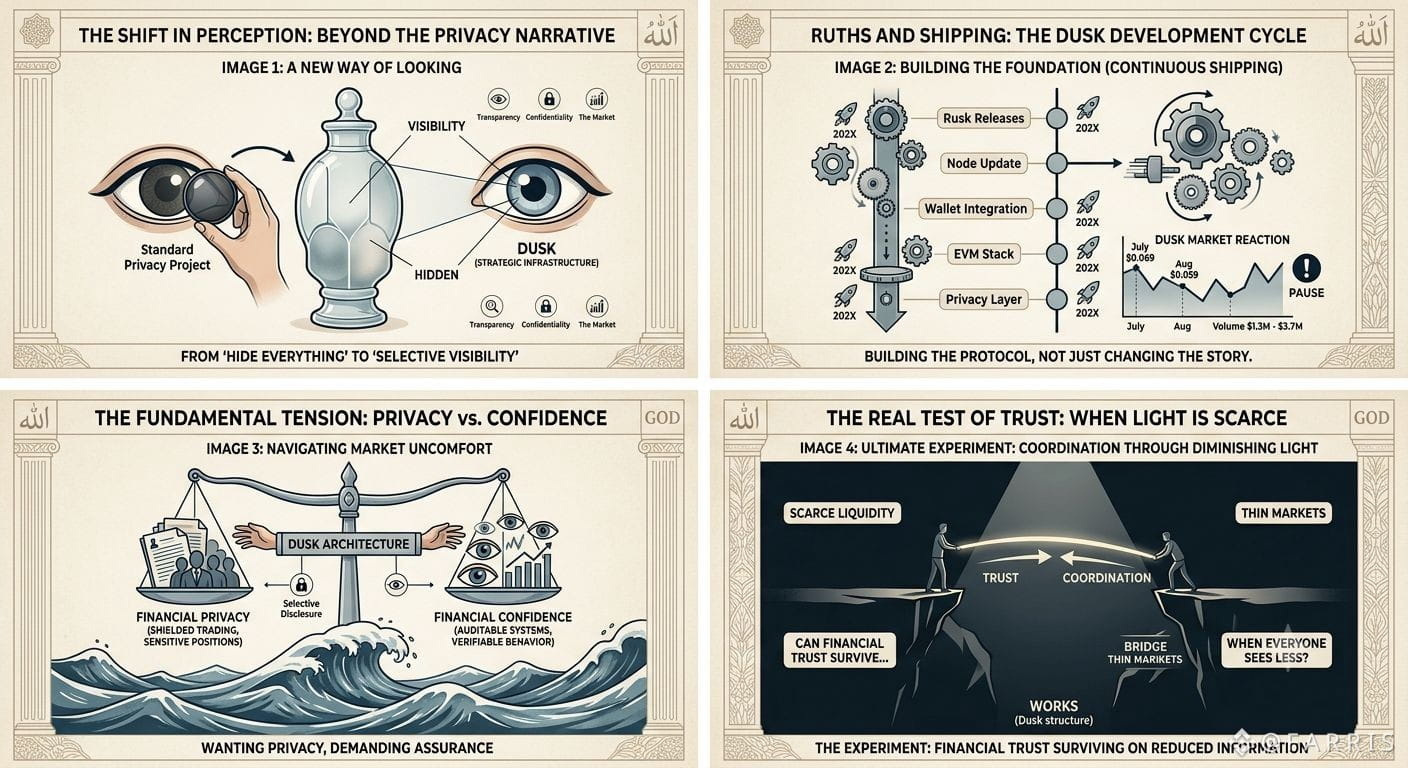
Dusk terus mengirimkan pembaruan di tingkat protokol, bukan sekadar mengubah cerita seputar token. Rusk telah melihat beberapa rilis tahun ini, sementara repositori ekosistem masih terus diperbarui di seluruh node, wallet, EVM, dan tumpukan privasi.
Dan pasar juga tidak terlalu sabar dalam merespons perkembangan itu.
DUSK berada di sekitar $0,069 pada akhir Juli dan lebih dekat ke $0,059 pada awal Agustus, dengan volume perdagangan harian bergerak di kisaran kira-kira $1,3M hingga $3,7M selama periode tersebut.
Itulah bagian yang menurut saya berguna untuk dipantau.
Karena Dusk berusaha memecahkan masalah yang menjadi lebih sulit tepat ketika pasar merasa tidak nyaman: para pelaku finansial menginginkan privasi, tetapi mereka juga menginginkan kepastian. Mereka ingin posisi sensitif disembunyikan tanpa membuat mereka merasa bahwa sistem itu sendiri telah menjadi tidak jelas.
Arsitektur Dusk mencerminkan ketegangan itu secara langsung. Model transaksi publik dan yang terlindungi (shielded) hidup berdampingan, sementara selective disclosure dibangun ke dalam desain yang lebih luas.
#USPressesSouthKoreaToPrioritizeMemoryChips
Dulu saya mengira bagian tersulit adalah membuktikan bahwa eksekusi rahasia benar-benar bekerja.
Sekarang saya pikir ujian yang lebih sulit adalah membuktikan bahwa orang-orang akan terus berkoordinasi dengannya ketika likuiditas menipis dan kepastian menjadi mahal.
Saat itulah infrastruktur berhenti menjadi sekadar sebuah gagasan dan mulai menunjukkan siapa yang benar-benar mempercayainya.
#BTCPerpFundingRateHits20MonthHigh
$BTW
{future}(BTWUSDT)
$VELVET
{future}(VELVETUSDT)
#dusk $DUSK @Dusk
Saya berhenti melihat Dusk seperti dulu saya melihat sebagian besar proyek privasi.
#EthereumOpensGlamsterdamEarlyTestnet
Bagian yang menarik bukan narasi privasinya. Yang menarik adalah apa yang terjadi ketika Anda mencoba membangun infrastruktur finansial di mana beberapa informasi sengaja dibuat terlihat, sebagian sengaja disembunyikan, dan pasar tetap harus percaya bahwa semuanya di bawahnya berperilaku dengan benar.
#StrategySellsStockToRepurchasePreferred
Pembedaan itu belakangan ini menjadi lebih menarik bagi saya.
Dusk terus mengirimkan pembaruan di tingkat protokol, bukan sekadar mengubah cerita seputar token. Rusk telah melihat beberapa rilis tahun ini, sementara repositori ekosistem masih terus diperbarui di seluruh node, wallet, EVM, dan tumpukan privasi.
Dan pasar juga tidak terlalu sabar dalam merespons perkembangan itu.
DUSK berada di sekitar $0,069 pada akhir Juli dan lebih dekat ke $0,059 pada awal Agustus, dengan volume perdagangan harian bergerak di kisaran kira-kira $1,3M hingga $3,7M selama periode tersebut.
Itulah bagian yang menurut saya berguna untuk dipantau.
Karena Dusk berusaha memecahkan masalah yang menjadi lebih sulit tepat ketika pasar merasa tidak nyaman: para pelaku finansial menginginkan privasi, tetapi mereka juga menginginkan kepastian. Mereka ingin posisi sensitif disembunyikan tanpa membuat mereka merasa bahwa sistem itu sendiri telah menjadi tidak jelas.
Arsitektur Dusk mencerminkan ketegangan itu secara langsung. Model transaksi publik dan yang terlindungi (shielded) hidup berdampingan, sementara selective disclosure dibangun ke dalam desain yang lebih luas.
#USPressesSouthKoreaToPrioritizeMemoryChips
Dulu saya mengira bagian tersulit adalah membuktikan bahwa eksekusi rahasia benar-benar bekerja.
Sekarang saya pikir ujian yang lebih sulit adalah membuktikan bahwa orang-orang akan terus berkoordinasi dengannya ketika likuiditas menipis dan kepastian menjadi mahal.
Saat itulah infrastruktur berhenti menjadi sekadar sebuah gagasan dan mulai menunjukkan siapa yang benar-benar mempercayainya.
#BTCPerpFundingRateHits20MonthHigh
$BTW
$VELVET
Saya berhenti melihat Dusk seperti dulu saya melihat sebagian besar proyek privasi.
#EthereumOpensGlamsterdamEarlyTestnet
Bagian yang menarik bukan narasi privasinya. Yang menarik adalah apa yang terjadi ketika Anda mencoba membangun infrastruktur finansial di mana beberapa informasi sengaja dibuat terlihat, sebagian sengaja disembunyikan, dan pasar tetap harus percaya bahwa semuanya di bawahnya berperilaku dengan benar.
#StrategySellsStockToRepurchasePreferred
Pembedaan itu belakangan ini menjadi lebih menarik bagi saya.
Dusk terus mengirimkan pembaruan di tingkat protokol, bukan sekadar mengubah cerita seputar token. Rusk telah melihat beberapa rilis tahun ini, sementara repositori ekosistem masih terus diperbarui di seluruh node, wallet, EVM, dan tumpukan privasi.
Dan pasar juga tidak terlalu sabar dalam merespons perkembangan itu.
DUSK berada di sekitar $0,069 pada akhir Juli dan lebih dekat ke $0,059 pada awal Agustus, dengan volume perdagangan harian bergerak di kisaran kira-kira $1,3M hingga $3,7M selama periode tersebut.
Itulah bagian yang menurut saya berguna untuk dipantau.
Karena Dusk berusaha memecahkan masalah yang menjadi lebih sulit tepat ketika pasar merasa tidak nyaman: para pelaku finansial menginginkan privasi, tetapi mereka juga menginginkan kepastian. Mereka ingin posisi sensitif disembunyikan tanpa membuat mereka merasa bahwa sistem itu sendiri telah menjadi tidak jelas.
Arsitektur Dusk mencerminkan ketegangan itu secara langsung. Model transaksi publik dan yang terlindungi (shielded) hidup berdampingan, sementara selective disclosure dibangun ke dalam desain yang lebih luas.
#USPressesSouthKoreaToPrioritizeMemoryChips
Dulu saya mengira bagian tersulit adalah membuktikan bahwa eksekusi rahasia benar-benar bekerja.
Sekarang saya pikir ujian yang lebih sulit adalah membuktikan bahwa orang-orang akan terus berkoordinasi dengannya ketika likuiditas menipis dan kepastian menjadi mahal.
Saat itulah infrastruktur berhenti menjadi sekadar sebuah gagasan dan mulai menunjukkan siapa yang benar-benar mempercayainya.
#BTCPerpFundingRateHits20MonthHigh
$BTW
$VELVET
13
14
505
·
--
#dusk $DUSK @Dusk_Foundation
Semakin banyak saya membaca tentang Dusk, semakin menarik pula sudut pandang privasinya.
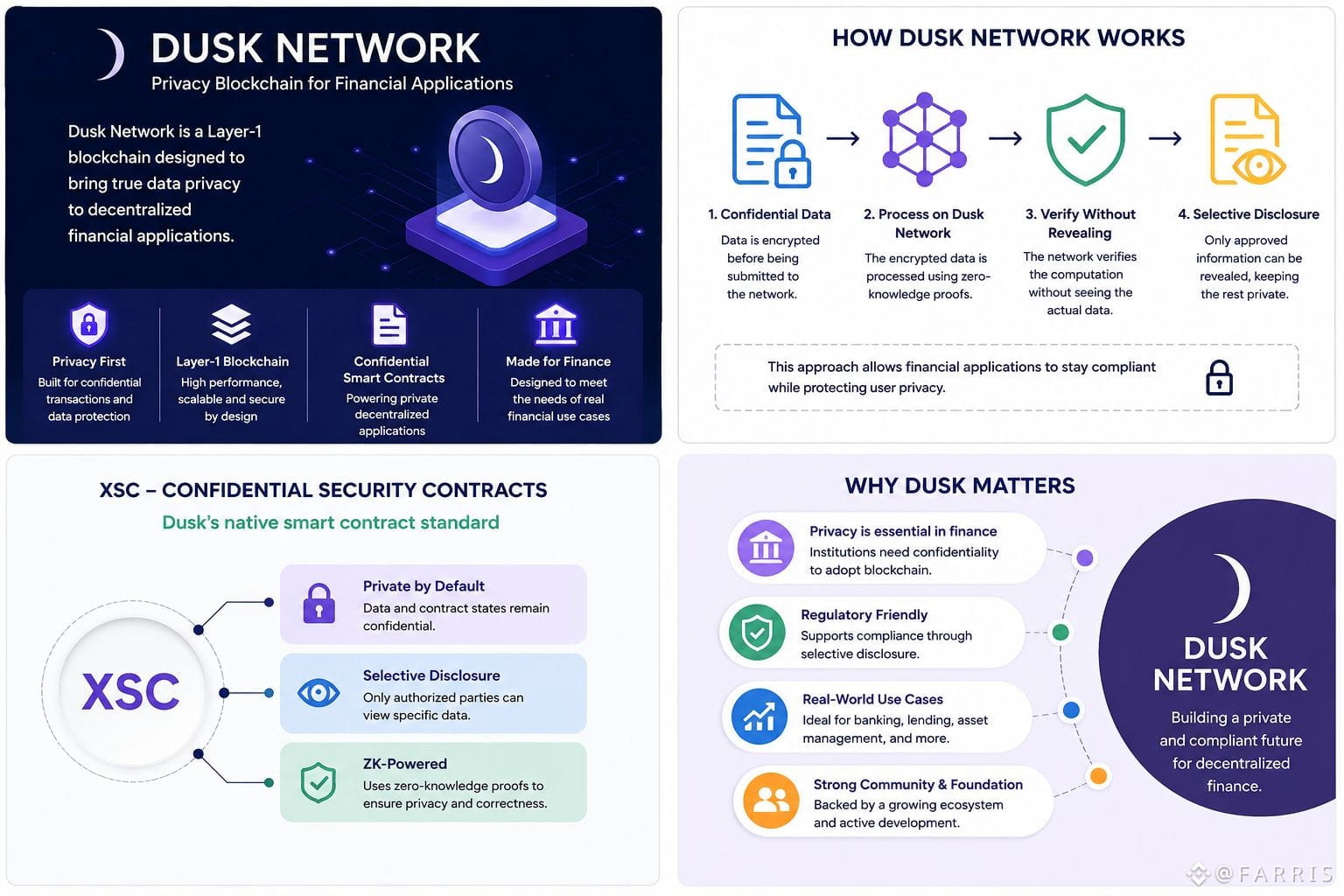
Yang menarik perhatian saya bukan hanya bahwa ini adalah L1 yang berfokus pada privasi, tetapi bagaimana ia mencoba menyeimbangkan kerahasiaan dengan realitas pasar keuangan. Standar XSC-nya dibangun untuk kontrak pintar yang bersifat rahasia, sementara bukti zero-knowledge dan selective disclosure dapat menjaga aktivitas sensitif tetap privat tanpa membuat semuanya menjadi tak terlihat.
Pendapat saya: untuk keuangan yang teregulasi, privasi mungkin bukan fitur yang sifatnya opsional. Pertanyaan yang lebih sulit adalah apakah Dusk bisa membuat privasi itu cukup praktis untuk kebutuhan alur kerja keuangan yang benar-benar nyata. Itulah bagian yang sedang saya pantau.
#StrategySellsStockToRepurchasePreferred #DollarHits3MonthLow #EthereumFoundationLaunchesGlamsterdamTestnet #US30YearYieldHitsHighestSince2007
$ACE
{spot}(ACEUSDT)
$TUT
{spot}(TUTUSDT)
#dusk $DUSK @Dusk
Semakin banyak saya membaca tentang Dusk, semakin menarik pula sudut pandang privasinya.
Yang menarik perhatian saya bukan hanya bahwa ini adalah L1 yang berfokus pada privasi, tetapi bagaimana ia mencoba menyeimbangkan kerahasiaan dengan realitas pasar keuangan. Standar XSC-nya dibangun untuk kontrak pintar yang bersifat rahasia, sementara bukti zero-knowledge dan selective disclosure dapat menjaga aktivitas sensitif tetap privat tanpa membuat semuanya menjadi tak terlihat.
Pendapat saya: untuk keuangan yang teregulasi, privasi mungkin bukan fitur yang sifatnya opsional. Pertanyaan yang lebih sulit adalah apakah Dusk bisa membuat privasi itu cukup praktis untuk kebutuhan alur kerja keuangan yang benar-benar nyata. Itulah bagian yang sedang saya pantau.
#StrategySellsStockToRepurchasePreferred #DollarHits3MonthLow #EthereumFoundationLaunchesGlamsterdamTestnet #US30YearYieldHitsHighestSince2007
$ACE
$TUT
Semakin banyak saya membaca tentang Dusk, semakin menarik pula sudut pandang privasinya.
Yang menarik perhatian saya bukan hanya bahwa ini adalah L1 yang berfokus pada privasi, tetapi bagaimana ia mencoba menyeimbangkan kerahasiaan dengan realitas pasar keuangan. Standar XSC-nya dibangun untuk kontrak pintar yang bersifat rahasia, sementara bukti zero-knowledge dan selective disclosure dapat menjaga aktivitas sensitif tetap privat tanpa membuat semuanya menjadi tak terlihat.
Pendapat saya: untuk keuangan yang teregulasi, privasi mungkin bukan fitur yang sifatnya opsional. Pertanyaan yang lebih sulit adalah apakah Dusk bisa membuat privasi itu cukup praktis untuk kebutuhan alur kerja keuangan yang benar-benar nyata. Itulah bagian yang sedang saya pantau.
#StrategySellsStockToRepurchasePreferred #DollarHits3MonthLow #EthereumFoundationLaunchesGlamsterdamTestnet #US30YearYieldHitsHighestSince2007
$ACE
$TUT
12
12
144
·
--
#dusk $DUSK @Dusk_Foundation
Saya dulu mengira bagian tersulit dari privasi adalah menyembunyikan informasi.
Menonton Dusk dari waktu ke waktu membuat saya mempertanyakannya.
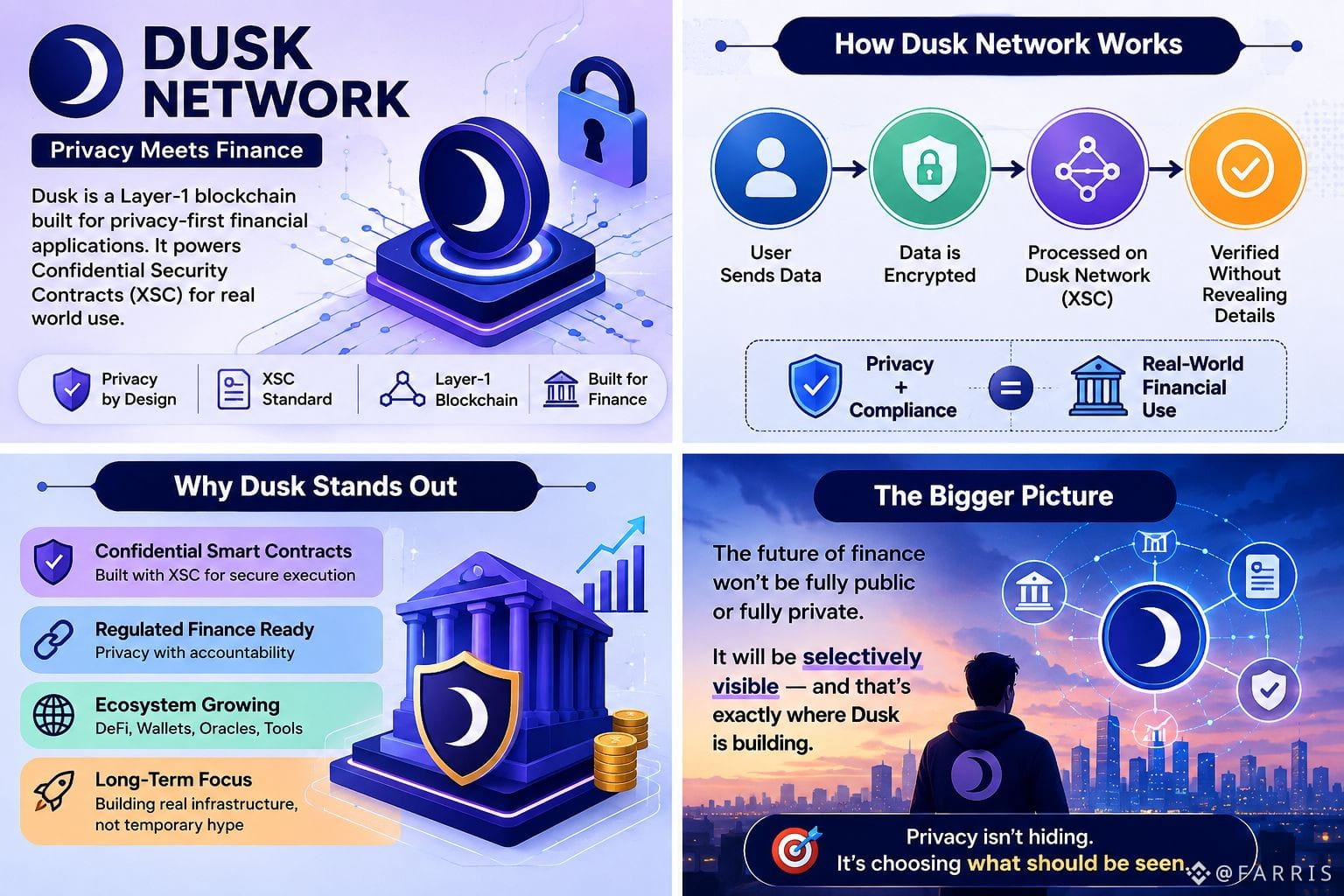
Hal menariknya bukan sekadar bahwa Dusk membangun kontrak pintar yang bersifat rahasia melalui standar XSC-nya. Yang lebih penting adalah arah yang diambil jaringan ini dalam konteks keuangan yang teregulasi, di mana privasi harus hidup berdampingan dengan keterbukaan, penyelesaian transaksi, dan alur kerja institusional yang nyata.
Perbedaan itu penting.
Basis kodenya juga terus bergerak maju, bukan berhenti. Klien Rusk berbasis Rust milik Dusk kini menjadi implementasi aktif, dengan rilis yang berlanjut pada 2026, sementara ekosistem terus berkembang di sekitar berbagai perangkat EVM, wallet, staking, konektivitas Chainlink, dan infrastruktur pasar yang teregulasi.
Namun demikian, pasar masih cenderung memandang DUSK lewat lensa jangka pendek yang sama seperti hal-hal lainnya.
Di situlah pandangan saya berubah.
Saya kurang tertarik pada apakah Dusk bisa menarik perhatian, dan lebih tertarik pada apakah aktivitas keuangan pada akhirnya menuntut sesuatu yang sulit dipenuhi oleh blockchain publik: informasi yang bisa diverifikasi tanpa harus terekspos kepada semua orang.
Jika itu menjadi hambatan nyata, privasi Dusk bukan lagi ceritanya.
Kenyataan yang membuat tidak nyaman adalah bahwa visibilitas yang selektif mungkin lebih penting daripada transparansi penuh ketika uang dalam jumlah besar mulai bergerak di atas rantai.
#SECReviewsSix3xLeveragedCommodityETFs #SP500TopsRecord7800 #COWRises55.77%In24h #BNBChainToActivatePasteurHardFork
#dusk $DUSK @Dusk
Saya dulu mengira bagian tersulit dari privasi adalah menyembunyikan informasi.
Menonton Dusk dari waktu ke waktu membuat saya mempertanyakannya.
Hal menariknya bukan sekadar bahwa Dusk membangun kontrak pintar yang bersifat rahasia melalui standar XSC-nya. Yang lebih penting adalah arah yang diambil jaringan ini dalam konteks keuangan yang teregulasi, di mana privasi harus hidup berdampingan dengan keterbukaan, penyelesaian transaksi, dan alur kerja institusional yang nyata.
Perbedaan itu penting.
Basis kodenya juga terus bergerak maju, bukan berhenti. Klien Rusk berbasis Rust milik Dusk kini menjadi implementasi aktif, dengan rilis yang berlanjut pada 2026, sementara ekosistem terus berkembang di sekitar berbagai perangkat EVM, wallet, staking, konektivitas Chainlink, dan infrastruktur pasar yang teregulasi.
Namun demikian, pasar masih cenderung memandang DUSK lewat lensa jangka pendek yang sama seperti hal-hal lainnya.
Di situlah pandangan saya berubah.
Saya kurang tertarik pada apakah Dusk bisa menarik perhatian, dan lebih tertarik pada apakah aktivitas keuangan pada akhirnya menuntut sesuatu yang sulit dipenuhi oleh blockchain publik: informasi yang bisa diverifikasi tanpa harus terekspos kepada semua orang.
Jika itu menjadi hambatan nyata, privasi Dusk bukan lagi ceritanya.
Kenyataan yang membuat tidak nyaman adalah bahwa visibilitas yang selektif mungkin lebih penting daripada transparansi penuh ketika uang dalam jumlah besar mulai bergerak di atas rantai.
#SECReviewsSix3xLeveragedCommodityETFs #SP500TopsRecord7800 #COWRises55.77%In24h #BNBChainToActivatePasteurHardFork
Saya dulu mengira bagian tersulit dari privasi adalah menyembunyikan informasi.
Menonton Dusk dari waktu ke waktu membuat saya mempertanyakannya.
Hal menariknya bukan sekadar bahwa Dusk membangun kontrak pintar yang bersifat rahasia melalui standar XSC-nya. Yang lebih penting adalah arah yang diambil jaringan ini dalam konteks keuangan yang teregulasi, di mana privasi harus hidup berdampingan dengan keterbukaan, penyelesaian transaksi, dan alur kerja institusional yang nyata.
Perbedaan itu penting.
Basis kodenya juga terus bergerak maju, bukan berhenti. Klien Rusk berbasis Rust milik Dusk kini menjadi implementasi aktif, dengan rilis yang berlanjut pada 2026, sementara ekosistem terus berkembang di sekitar berbagai perangkat EVM, wallet, staking, konektivitas Chainlink, dan infrastruktur pasar yang teregulasi.
Namun demikian, pasar masih cenderung memandang DUSK lewat lensa jangka pendek yang sama seperti hal-hal lainnya.
Di situlah pandangan saya berubah.
Saya kurang tertarik pada apakah Dusk bisa menarik perhatian, dan lebih tertarik pada apakah aktivitas keuangan pada akhirnya menuntut sesuatu yang sulit dipenuhi oleh blockchain publik: informasi yang bisa diverifikasi tanpa harus terekspos kepada semua orang.
Jika itu menjadi hambatan nyata, privasi Dusk bukan lagi ceritanya.
Kenyataan yang membuat tidak nyaman adalah bahwa visibilitas yang selektif mungkin lebih penting daripada transparansi penuh ketika uang dalam jumlah besar mulai bergerak di atas rantai.
#SECReviewsSix3xLeveragedCommodityETFs #SP500TopsRecord7800 #COWRises55.77%In24h #BNBChainToActivatePasteurHardFork
7
10
132
·
--
#dusk $DUSK @Dusk_Foundation
Saya terus kembali ke satu pertanyaan dengan Dusk: apa yang terjadi ketika orang-orang berhenti percaya pada sistem yang mereka gunakan untuk berkoordinasi?
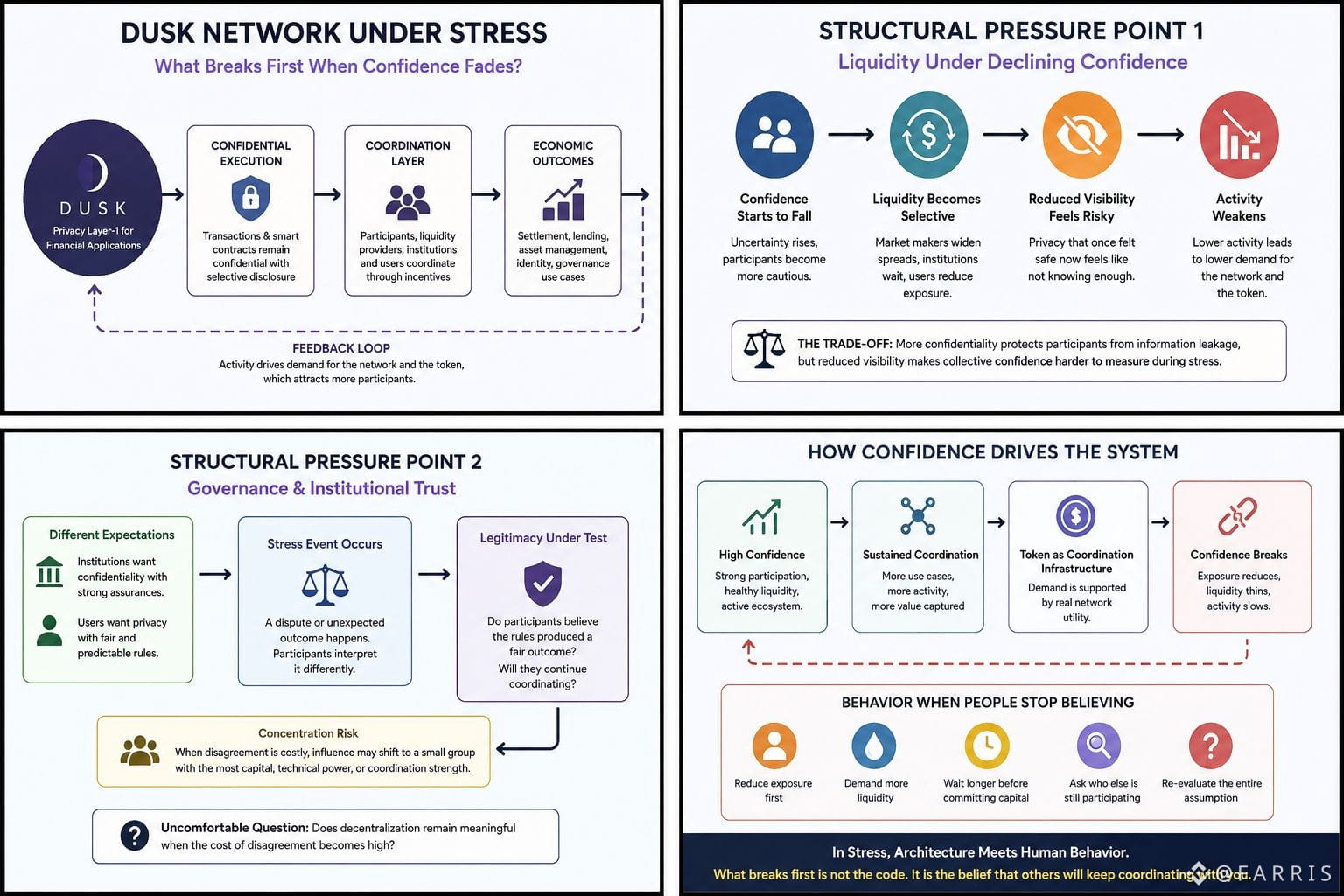
Bagian yang menarik bukanlah arsitektur privasinya sendiri. Melainkan bagaimana privasi itu berperilaku ketika pasar mengalami tekanan. Dusk dirancang untuk aktivitas keuangan yang bersifat rahasia, pengungkapan selektif, dan penyelesaian yang deterministik, yang dapat membuat koordinasi keuangan yang sensitif menjadi lebih praktis tanpa mengekspos setiap posisi atau transaksi secara publik.
Namun, kepercayaan adalah masalah yang berbeda.
Ketika likuiditas nyaman, privasi bisa terasa seperti perlindungan. Ketika likuiditas menghilang, privasi yang sama bisa terasa seperti ketidakpastian. Para peserta mulai bertanya-tanya apa yang tidak bisa mereka lihat, siapa yang masih memiliki keyakinan, dan apakah peserta lain akan tetap aktif ketika kondisi memburuk.
Itu menciptakan trade-off yang bersifat struktural: kerahasiaan yang lebih kuat dapat melindungi peserta pasar dari kebocoran informasi, sementara berkurangnya visibilitas dapat membuat keyakinan kolektif lebih sulit dinilai saat terjadi tekanan.
Ketegangan yang sama juga merambah tata kelola. Sebuah protokol dapat mengeksekusi aturan dengan sempurna dan tetap menghadapi pertanyaan yang lebih mendalam: siapa yang menanggung konsekuensi ketika aturan-aturan tersebut menghasilkan keluaran yang tidak lagi dapat diterima oleh para peserta?
Saya telah melihat modal berputar di antara berbagai narasi cukup lama untuk mengetahui bahwa insentif pada akhirnya akan berbicara lebih keras daripada maksud desain. DUSK penting di sini sebagai infrastruktur koordinasi, tetapi uji nyatanya adalah apakah para pelaku ekonomi terus menemukan nilai dalam berkoordinasi melalui jaringan ketika kepercayaan menjadi mahal.
Di situlah arsitektur berhenti menjadi sesuatu yang teoretis dan mulai bertemu dengan perilaku manusia.
#BerkshireAddsToDeltaAndAlphabetHoldings #PolymarketOddsIranBlockadeEndFallTo23% #DollarFallsToMayLow #TradersCutFedRateHikeBetsBeforeMid2027
#dusk $DUSK @Dusk
Saya terus kembali ke satu pertanyaan dengan Dusk: apa yang terjadi ketika orang-orang berhenti percaya pada sistem yang mereka gunakan untuk berkoordinasi?
Bagian yang menarik bukanlah arsitektur privasinya sendiri. Melainkan bagaimana privasi itu berperilaku ketika pasar mengalami tekanan. Dusk dirancang untuk aktivitas keuangan yang bersifat rahasia, pengungkapan selektif, dan penyelesaian yang deterministik, yang dapat membuat koordinasi keuangan yang sensitif menjadi lebih praktis tanpa mengekspos setiap posisi atau transaksi secara publik.
Namun, kepercayaan adalah masalah yang berbeda.
Ketika likuiditas nyaman, privasi bisa terasa seperti perlindungan. Ketika likuiditas menghilang, privasi yang sama bisa terasa seperti ketidakpastian. Para peserta mulai bertanya-tanya apa yang tidak bisa mereka lihat, siapa yang masih memiliki keyakinan, dan apakah peserta lain akan tetap aktif ketika kondisi memburuk.
Itu menciptakan trade-off yang bersifat struktural: kerahasiaan yang lebih kuat dapat melindungi peserta pasar dari kebocoran informasi, sementara berkurangnya visibilitas dapat membuat keyakinan kolektif lebih sulit dinilai saat terjadi tekanan.
Ketegangan yang sama juga merambah tata kelola. Sebuah protokol dapat mengeksekusi aturan dengan sempurna dan tetap menghadapi pertanyaan yang lebih mendalam: siapa yang menanggung konsekuensi ketika aturan-aturan tersebut menghasilkan keluaran yang tidak lagi dapat diterima oleh para peserta?
Saya telah melihat modal berputar di antara berbagai narasi cukup lama untuk mengetahui bahwa insentif pada akhirnya akan berbicara lebih keras daripada maksud desain. DUSK penting di sini sebagai infrastruktur koordinasi, tetapi uji nyatanya adalah apakah para pelaku ekonomi terus menemukan nilai dalam berkoordinasi melalui jaringan ketika kepercayaan menjadi mahal.
Di situlah arsitektur berhenti menjadi sesuatu yang teoretis dan mulai bertemu dengan perilaku manusia.
#BerkshireAddsToDeltaAndAlphabetHoldings #PolymarketOddsIranBlockadeEndFallTo23% #DollarFallsToMayLow #TradersCutFedRateHikeBetsBeforeMid2027
Saya terus kembali ke satu pertanyaan dengan Dusk: apa yang terjadi ketika orang-orang berhenti percaya pada sistem yang mereka gunakan untuk berkoordinasi?
Bagian yang menarik bukanlah arsitektur privasinya sendiri. Melainkan bagaimana privasi itu berperilaku ketika pasar mengalami tekanan. Dusk dirancang untuk aktivitas keuangan yang bersifat rahasia, pengungkapan selektif, dan penyelesaian yang deterministik, yang dapat membuat koordinasi keuangan yang sensitif menjadi lebih praktis tanpa mengekspos setiap posisi atau transaksi secara publik.
Namun, kepercayaan adalah masalah yang berbeda.
Ketika likuiditas nyaman, privasi bisa terasa seperti perlindungan. Ketika likuiditas menghilang, privasi yang sama bisa terasa seperti ketidakpastian. Para peserta mulai bertanya-tanya apa yang tidak bisa mereka lihat, siapa yang masih memiliki keyakinan, dan apakah peserta lain akan tetap aktif ketika kondisi memburuk.
Itu menciptakan trade-off yang bersifat struktural: kerahasiaan yang lebih kuat dapat melindungi peserta pasar dari kebocoran informasi, sementara berkurangnya visibilitas dapat membuat keyakinan kolektif lebih sulit dinilai saat terjadi tekanan.
Ketegangan yang sama juga merambah tata kelola. Sebuah protokol dapat mengeksekusi aturan dengan sempurna dan tetap menghadapi pertanyaan yang lebih mendalam: siapa yang menanggung konsekuensi ketika aturan-aturan tersebut menghasilkan keluaran yang tidak lagi dapat diterima oleh para peserta?
Saya telah melihat modal berputar di antara berbagai narasi cukup lama untuk mengetahui bahwa insentif pada akhirnya akan berbicara lebih keras daripada maksud desain. DUSK penting di sini sebagai infrastruktur koordinasi, tetapi uji nyatanya adalah apakah para pelaku ekonomi terus menemukan nilai dalam berkoordinasi melalui jaringan ketika kepercayaan menjadi mahal.
Di situlah arsitektur berhenti menjadi sesuatu yang teoretis dan mulai bertemu dengan perilaku manusia.
#BerkshireAddsToDeltaAndAlphabetHoldings #PolymarketOddsIranBlockadeEndFallTo23% #DollarFallsToMayLow #TradersCutFedRateHikeBetsBeforeMid2027
11
11
157
·
--
#dusk $DUSK @Dusk_Foundation
Hal yang aneh tentang Dusk adalah pasar bisa melihatnya selama berbulan-bulan dan tetap tidak menangkap apa yang sebenarnya sedang dibangun.
Saya sudah mengikuti cukup banyak siklus kripto untuk tahu bahwa infrastruktur biasanya dinilai dengan jam yang salah. Harga bergerak dalam hitungan hari. Narasi berputar dalam hitungan minggu. Infrastruktur keuangan yang serius bisa memakan waktu bertahun-tahun sebelum siapa pun peduli apakah sistem yang mendasarinya benar-benar menangani detail yang membosankan itu.
Yang menarik perhatian saya tentang Dusk adalah seberapa banyak pekerjaan terbaru telah bergeser dari sekadar menjelaskan idenya menjadi membuat tumpukan (stack) itu bisa digunakan.
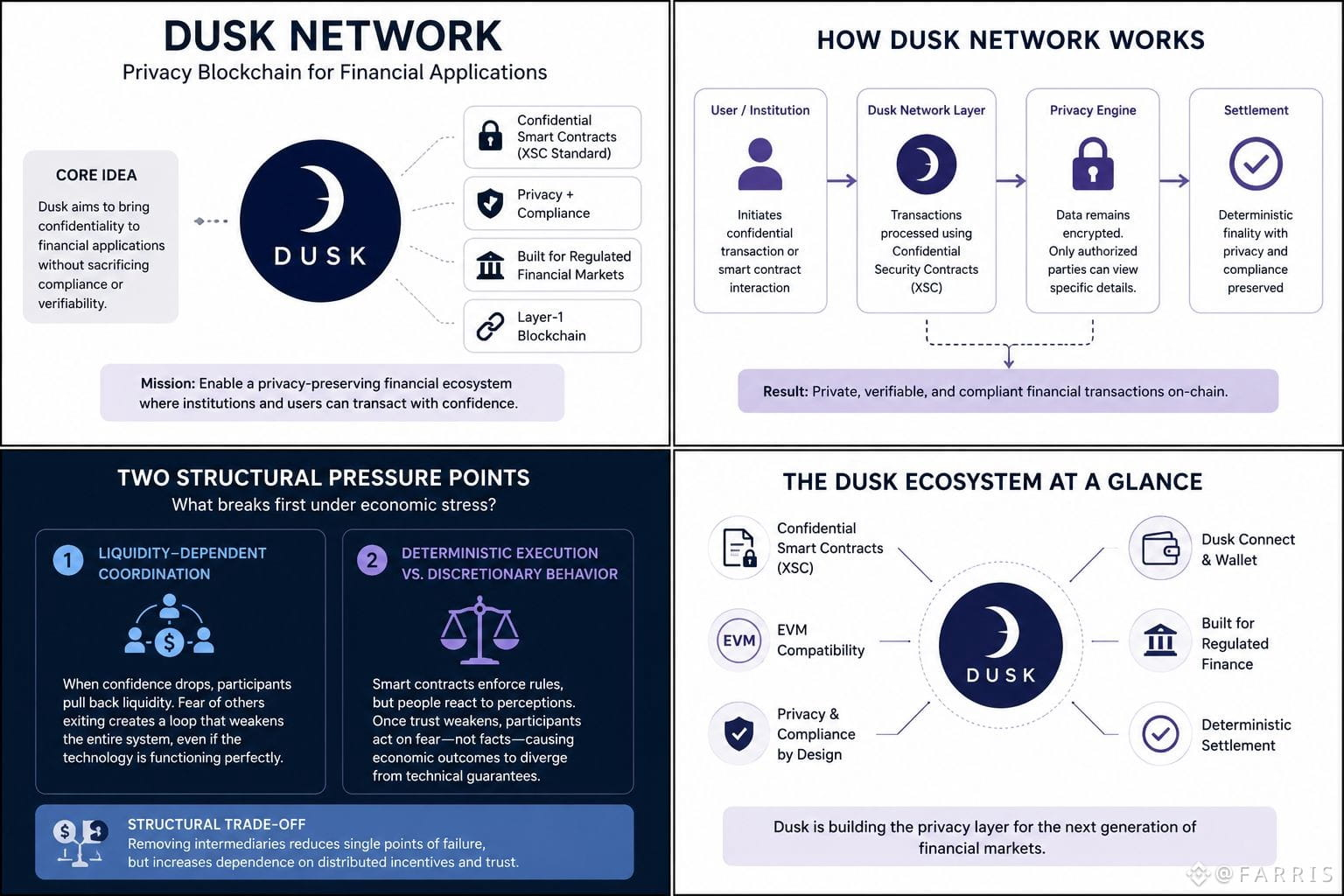
Jaringannya sudah aktif, dengan model transaksi publik dan terlindungi (shielded) yang terpisah, penyelesaian (settlement) yang deterministik, lingkungan smart-contract native, dan jalur EVM. Baru-baru ini, Dusk juga mengerjakan lapisan yang kurang glamor di sekeliling infrastruktur itu: Dusk Connect dan wallet baru yang ditujukan agar dApps lebih mudah untuk diinteraksi.
Hal ini bagi saya lebih penting daripada sekadar pengumuman kemitraan lainnya.
Karena pada akhirnya, pertanyaannya berhenti menjadi “apakah privasi itu menarik?”
Lalu menjadi “apakah orang benar-benar akan menggunakannya ketika uang terlibat?”
Dusk mengambil taruhan yang sangat spesifik: pasar yang teregulasi mungkin membutuhkan privasi tanpa harus mengorbankan verifiabilitas, kontrol akses, dan settlement. Desain XSC-nya dibangun untuk menyeimbangkan ketegangan itu, bukan berpura-pura aset keuangan bisa begitu saja berperilaku seperti token biasa.
Dan di situlah pandangan saya berubah.
Dulu saya mengira bagian tersulit adalah membuktikan bahwa eksekusi rahasia (confidential execution) itu benar-benar bekerja.
Sekarang saya pikir uji yang lebih sulit adalah apakah Dusk bisa membuat kerahasiaan terasa “normal” sampai institusi berhenti memperlakukannya sebagai fitur khusus dan mulai memperlakukannya sebagai infrastruktur.
Masalah seperti itu jauh lebih lambat.
Dan kemungkinan besar yang lebih penting.
#RedditToJoinSP500 #TapestryFallsNearly15%OnEarnings #SP500ClosesAtRecordHigh #DeepSeekLaunchesHarnessCodeAgentBeta
#dusk $DUSK @Dusk
Hal yang aneh tentang Dusk adalah pasar bisa melihatnya selama berbulan-bulan dan tetap tidak menangkap apa yang sebenarnya sedang dibangun.
Saya sudah mengikuti cukup banyak siklus kripto untuk tahu bahwa infrastruktur biasanya dinilai dengan jam yang salah. Harga bergerak dalam hitungan hari. Narasi berputar dalam hitungan minggu. Infrastruktur keuangan yang serius bisa memakan waktu bertahun-tahun sebelum siapa pun peduli apakah sistem yang mendasarinya benar-benar menangani detail yang membosankan itu.
Yang menarik perhatian saya tentang Dusk adalah seberapa banyak pekerjaan terbaru telah bergeser dari sekadar menjelaskan idenya menjadi membuat tumpukan (stack) itu bisa digunakan.
Jaringannya sudah aktif, dengan model transaksi publik dan terlindungi (shielded) yang terpisah, penyelesaian (settlement) yang deterministik, lingkungan smart-contract native, dan jalur EVM. Baru-baru ini, Dusk juga mengerjakan lapisan yang kurang glamor di sekeliling infrastruktur itu: Dusk Connect dan wallet baru yang ditujukan agar dApps lebih mudah untuk diinteraksi.
Hal ini bagi saya lebih penting daripada sekadar pengumuman kemitraan lainnya.
Karena pada akhirnya, pertanyaannya berhenti menjadi “apakah privasi itu menarik?”
Lalu menjadi “apakah orang benar-benar akan menggunakannya ketika uang terlibat?”
Dusk mengambil taruhan yang sangat spesifik: pasar yang teregulasi mungkin membutuhkan privasi tanpa harus mengorbankan verifiabilitas, kontrol akses, dan settlement. Desain XSC-nya dibangun untuk menyeimbangkan ketegangan itu, bukan berpura-pura aset keuangan bisa begitu saja berperilaku seperti token biasa.
Dan di situlah pandangan saya berubah.
Dulu saya mengira bagian tersulit adalah membuktikan bahwa eksekusi rahasia (confidential execution) itu benar-benar bekerja.
Sekarang saya pikir uji yang lebih sulit adalah apakah Dusk bisa membuat kerahasiaan terasa “normal” sampai institusi berhenti memperlakukannya sebagai fitur khusus dan mulai memperlakukannya sebagai infrastruktur.
Masalah seperti itu jauh lebih lambat.
Dan kemungkinan besar yang lebih penting.
#RedditToJoinSP500 #TapestryFallsNearly15%OnEarnings #SP500ClosesAtRecordHigh #DeepSeekLaunchesHarnessCodeAgentBeta
Hal yang aneh tentang Dusk adalah pasar bisa melihatnya selama berbulan-bulan dan tetap tidak menangkap apa yang sebenarnya sedang dibangun.
Saya sudah mengikuti cukup banyak siklus kripto untuk tahu bahwa infrastruktur biasanya dinilai dengan jam yang salah. Harga bergerak dalam hitungan hari. Narasi berputar dalam hitungan minggu. Infrastruktur keuangan yang serius bisa memakan waktu bertahun-tahun sebelum siapa pun peduli apakah sistem yang mendasarinya benar-benar menangani detail yang membosankan itu.
Yang menarik perhatian saya tentang Dusk adalah seberapa banyak pekerjaan terbaru telah bergeser dari sekadar menjelaskan idenya menjadi membuat tumpukan (stack) itu bisa digunakan.
Jaringannya sudah aktif, dengan model transaksi publik dan terlindungi (shielded) yang terpisah, penyelesaian (settlement) yang deterministik, lingkungan smart-contract native, dan jalur EVM. Baru-baru ini, Dusk juga mengerjakan lapisan yang kurang glamor di sekeliling infrastruktur itu: Dusk Connect dan wallet baru yang ditujukan agar dApps lebih mudah untuk diinteraksi.
Hal ini bagi saya lebih penting daripada sekadar pengumuman kemitraan lainnya.
Karena pada akhirnya, pertanyaannya berhenti menjadi “apakah privasi itu menarik?”
Lalu menjadi “apakah orang benar-benar akan menggunakannya ketika uang terlibat?”
Dusk mengambil taruhan yang sangat spesifik: pasar yang teregulasi mungkin membutuhkan privasi tanpa harus mengorbankan verifiabilitas, kontrol akses, dan settlement. Desain XSC-nya dibangun untuk menyeimbangkan ketegangan itu, bukan berpura-pura aset keuangan bisa begitu saja berperilaku seperti token biasa.
Dan di situlah pandangan saya berubah.
Dulu saya mengira bagian tersulit adalah membuktikan bahwa eksekusi rahasia (confidential execution) itu benar-benar bekerja.
Sekarang saya pikir uji yang lebih sulit adalah apakah Dusk bisa membuat kerahasiaan terasa “normal” sampai institusi berhenti memperlakukannya sebagai fitur khusus dan mulai memperlakukannya sebagai infrastruktur.
Masalah seperti itu jauh lebih lambat.
Dan kemungkinan besar yang lebih penting.
#RedditToJoinSP500 #TapestryFallsNearly15%OnEarnings #SP500ClosesAtRecordHigh #DeepSeekLaunchesHarnessCodeAgentBeta
1
124
·
--
Artikel
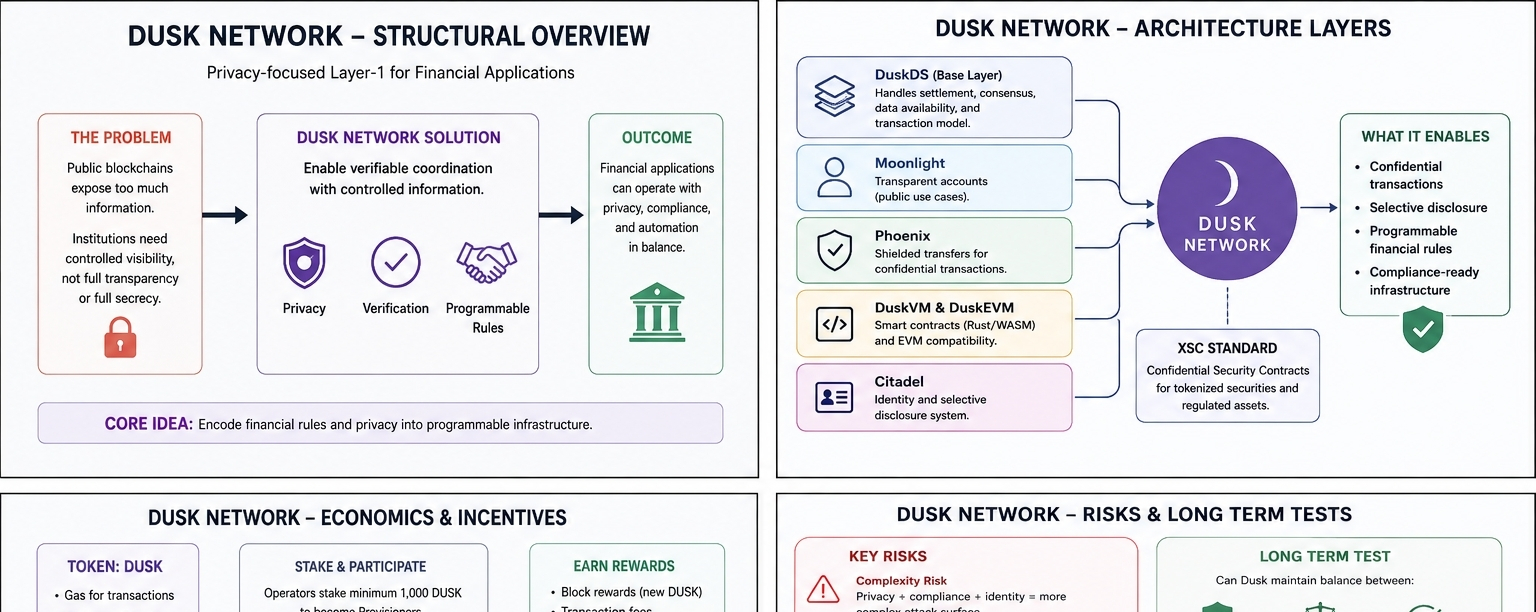
Dusk Network: Masalah Sulit di Balik Infrastruktur Keuangan PribadiDusk Network mudah dijelaskan sebagai Layer-1 yang berfokus pada privasi untuk aplikasi keuangan, tetapi deskripsi itu mengabaikan masalah yang lebih sulit yang sebenarnya sedang dicoba untuk diselesaikan. Masalah yang lebih dalam bukan semata bahwa blockchain mengungkap terlalu banyak informasi. Intinya, pasar keuangan membutuhkan dua hal yang pada awalnya tampak saling bertentangan: koordinasi yang dapat diverifikasi dan informasi yang terkontrol.
Blockchain publik membuat transparansi menjadi default. Ini bekerja dengan sangat baik untuk sistem di mana semua orang diuntungkan dengan melihat status yang sama. Namun, institusi keuangan sering beroperasi dalam kondisi yang berbeda. Seorang manajer portofolio tidak selalu ingin para kompetitor melihat posisi secara real time. Seorang pelaku pasar mungkin perlu membuktikan kelayakan tanpa mengungkap identitas sepenuhnya. Penerbit mungkin perlu menerapkan pembatasan transfer, batas kepemilikan, aturan penyelesaian, dan kontrol regulasi tanpa mempublikasikan setiap detail yang sensitif secara komersial.
Dusk Network: Masalah Sulit di Balik Infrastruktur Keuangan Pribadi
Dusk Network mudah dijelaskan sebagai Layer-1 yang berfokus pada privasi untuk aplikasi keuangan, tetapi deskripsi itu mengabaikan masalah yang lebih sulit yang sebenarnya sedang dicoba untuk diselesaikan. Masalah yang lebih dalam bukan semata bahwa blockchain mengungkap terlalu banyak informasi. Intinya, pasar keuangan membutuhkan dua hal yang pada awalnya tampak saling bertentangan: koordinasi yang dapat diverifikasi dan informasi yang terkontrol.
Blockchain publik membuat transparansi menjadi default. Ini bekerja dengan sangat baik untuk sistem di mana semua orang diuntungkan dengan melihat status yang sama. Namun, institusi keuangan sering beroperasi dalam kondisi yang berbeda. Seorang manajer portofolio tidak selalu ingin para kompetitor melihat posisi secara real time. Seorang pelaku pasar mungkin perlu membuktikan kelayakan tanpa mengungkap identitas sepenuhnya. Penerbit mungkin perlu menerapkan pembatasan transfer, batas kepemilikan, aturan penyelesaian, dan kontrol regulasi tanpa mempublikasikan setiap detail yang sensitif secara komersial.
Blockchain publik membuat transparansi menjadi default. Ini bekerja dengan sangat baik untuk sistem di mana semua orang diuntungkan dengan melihat status yang sama. Namun, institusi keuangan sering beroperasi dalam kondisi yang berbeda. Seorang manajer portofolio tidak selalu ingin para kompetitor melihat posisi secara real time. Seorang pelaku pasar mungkin perlu membuktikan kelayakan tanpa mengungkap identitas sepenuhnya. Penerbit mungkin perlu menerapkan pembatasan transfer, batas kepemilikan, aturan penyelesaian, dan kontrol regulasi tanpa mempublikasikan setiap detail yang sensitif secara komersial.
2
109
·
--
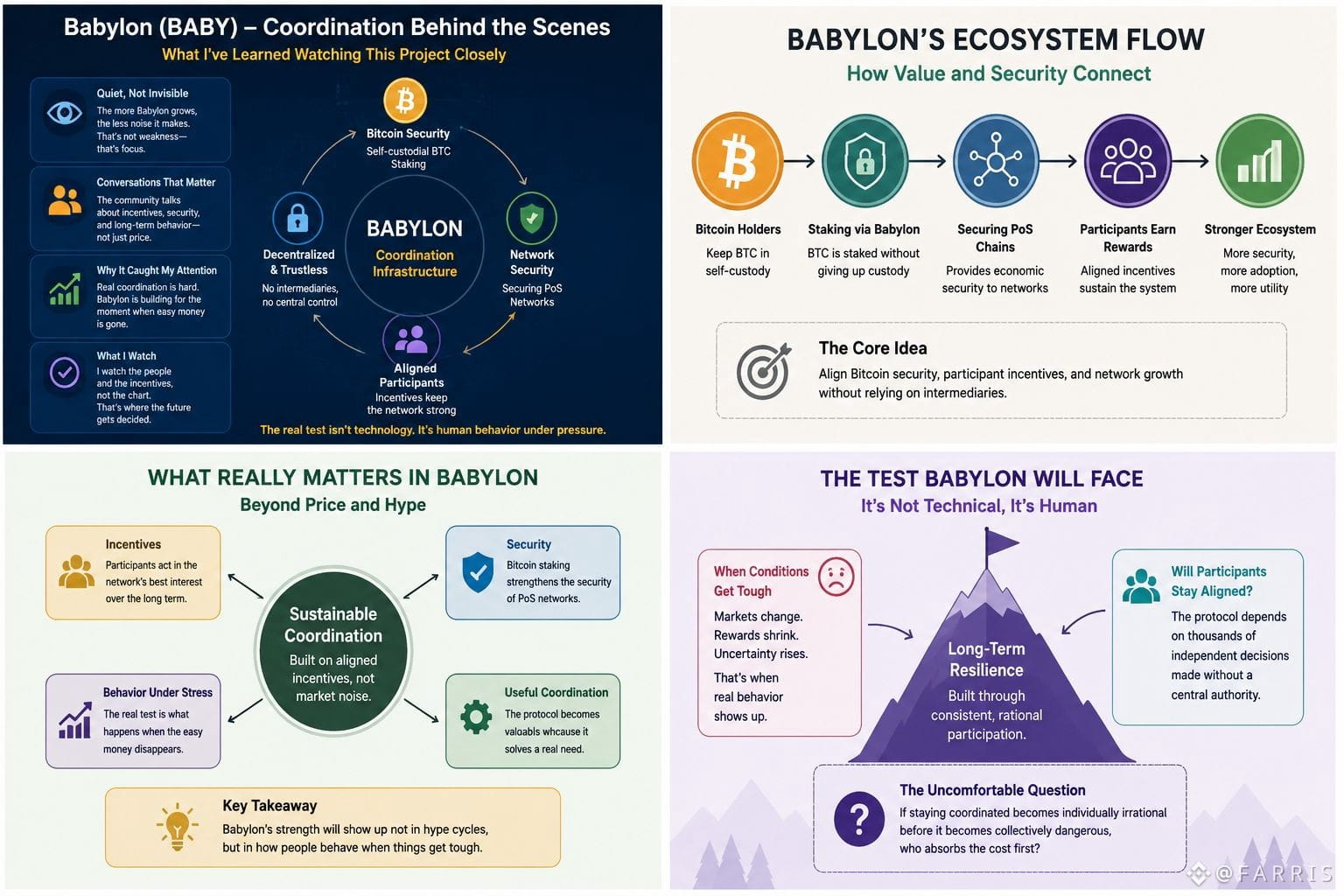
#baby @babylonlabs_io $BABY
Aku hampir mengabaikan Babylon.
Bukan karena kupikir itu ide yang buruk. Hanya saja, ia bukanlah cerita paling riuh di pasar, dan setelah bertahun-tahun di kripto, aku belajar bahwa cerita yang paling keras didengar jarang bertahan seperti itu.
Jadi aku terus mengamati.
Yang menonjol bukanlah harga atau headline. Melainkan jenis percakapan yang terjadi di sekelilingnya. Orang-orang menghabiskan lebih banyak waktu untuk membahas bagaimana insentif bisa tetap utuh di bawah tekanan, ketimbang merayakan langkah jangka pendek. Itu bukan sesuatu yang sering terlihat.
Aku sudah terlalu sering menyaksikan narasi runtuh seketika saat pasar menjadi tidak nyaman. Karena itulah aku memberi lebih banyak perhatian pada apa yang orang lakukan ketika euforia memudar, daripada apa yang mereka katakan saat semuanya hijau.
Babylon membuatku memikirkan satu hal.
Mungkin uji nyata bagi sebuah protokol bukan seberapa cepat ia tumbuh. Tapi apakah orang masih memilih untuk ikut berpartisipasi ketika tidak ada alasan yang mudah untuk bertahan.
Bagian itu tidak bisa ditunjukkan oleh grafik, dan biasanya justru bagian yang paling penting.
#USIranDealOrNoDeal #SpaceXToReportQ2Results #KoreaMarginHikeCutsLeveragedETFTrading #KOSPINikkeiOpenHigherOnChipStocks
#baby @BabylonLabs_io $BABY
Aku hampir mengabaikan Babylon.
Bukan karena kupikir itu ide yang buruk. Hanya saja, ia bukanlah cerita paling riuh di pasar, dan setelah bertahun-tahun di kripto, aku belajar bahwa cerita yang paling keras didengar jarang bertahan seperti itu.
Jadi aku terus mengamati.
Yang menonjol bukanlah harga atau headline. Melainkan jenis percakapan yang terjadi di sekelilingnya. Orang-orang menghabiskan lebih banyak waktu untuk membahas bagaimana insentif bisa tetap utuh di bawah tekanan, ketimbang merayakan langkah jangka pendek. Itu bukan sesuatu yang sering terlihat.
Aku sudah terlalu sering menyaksikan narasi runtuh seketika saat pasar menjadi tidak nyaman. Karena itulah aku memberi lebih banyak perhatian pada apa yang orang lakukan ketika euforia memudar, daripada apa yang mereka katakan saat semuanya hijau.
Babylon membuatku memikirkan satu hal.
Mungkin uji nyata bagi sebuah protokol bukan seberapa cepat ia tumbuh. Tapi apakah orang masih memilih untuk ikut berpartisipasi ketika tidak ada alasan yang mudah untuk bertahan.
Bagian itu tidak bisa ditunjukkan oleh grafik, dan biasanya justru bagian yang paling penting.
#USIranDealOrNoDeal #SpaceXToReportQ2Results #KoreaMarginHikeCutsLeveragedETFTrading #KOSPINikkeiOpenHigherOnChipStocks
Aku hampir mengabaikan Babylon.
Bukan karena kupikir itu ide yang buruk. Hanya saja, ia bukanlah cerita paling riuh di pasar, dan setelah bertahun-tahun di kripto, aku belajar bahwa cerita yang paling keras didengar jarang bertahan seperti itu.
Jadi aku terus mengamati.
Yang menonjol bukanlah harga atau headline. Melainkan jenis percakapan yang terjadi di sekelilingnya. Orang-orang menghabiskan lebih banyak waktu untuk membahas bagaimana insentif bisa tetap utuh di bawah tekanan, ketimbang merayakan langkah jangka pendek. Itu bukan sesuatu yang sering terlihat.
Aku sudah terlalu sering menyaksikan narasi runtuh seketika saat pasar menjadi tidak nyaman. Karena itulah aku memberi lebih banyak perhatian pada apa yang orang lakukan ketika euforia memudar, daripada apa yang mereka katakan saat semuanya hijau.
Babylon membuatku memikirkan satu hal.
Mungkin uji nyata bagi sebuah protokol bukan seberapa cepat ia tumbuh. Tapi apakah orang masih memilih untuk ikut berpartisipasi ketika tidak ada alasan yang mudah untuk bertahan.
Bagian itu tidak bisa ditunjukkan oleh grafik, dan biasanya justru bagian yang paling penting.
#USIranDealOrNoDeal #SpaceXToReportQ2Results #KoreaMarginHikeCutsLeveragedETFTrading #KOSPINikkeiOpenHigherOnChipStocks
5
4
153
·
--
Bullish
#baby $BABY
@babylonlabs_io
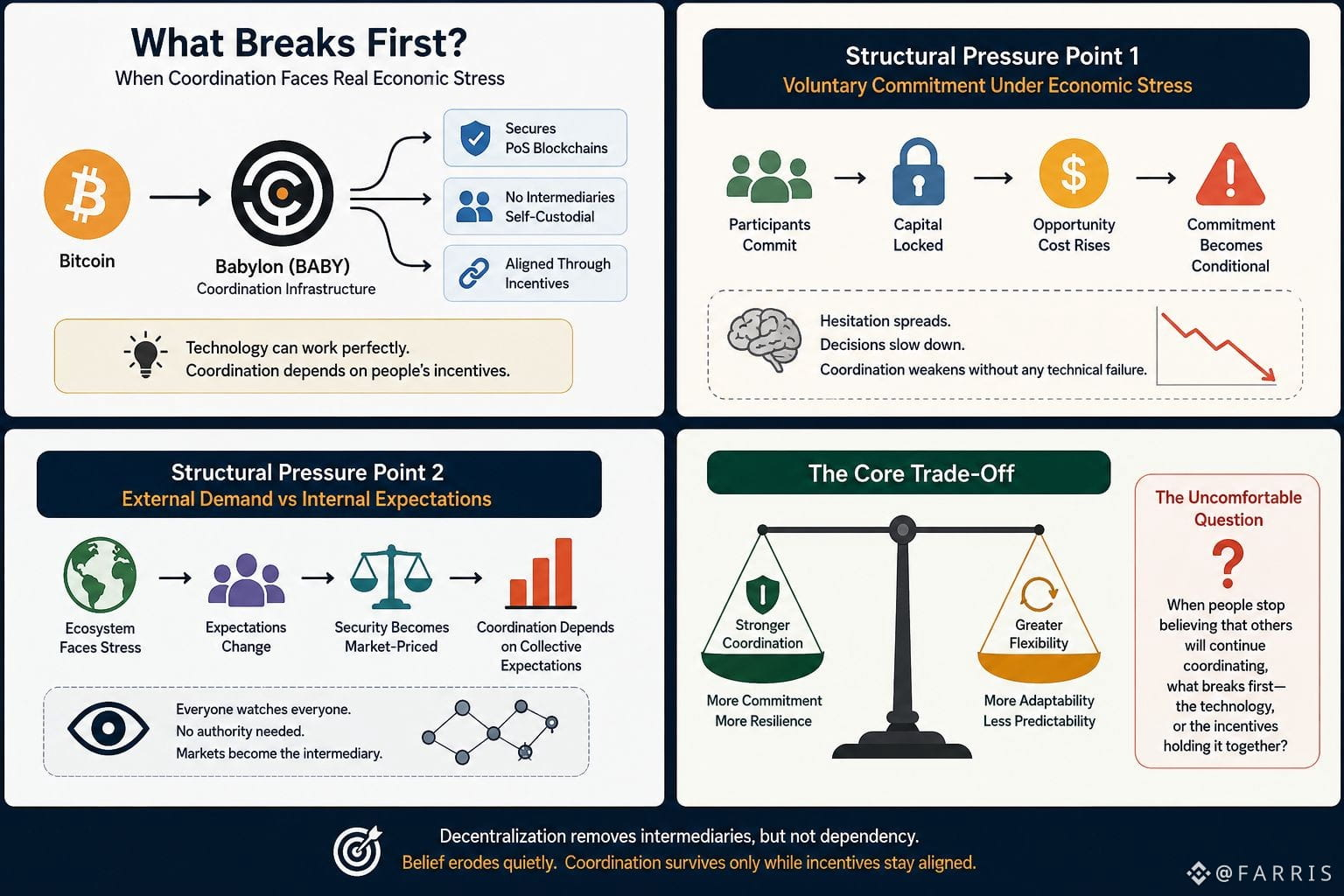
Saya terus kembali ke satu pertanyaan tentang Babilonia.
Kebanyakan orang menilai sistem terdesentralisasi saat pasar sedang tenang. Saya lebih suka melihat apa yang terjadi ketika likuiditas menghilang dan semua orang mulai melindungi kepentingan mereka sendiri.
Di situlah koordinasi benar-benar diuji.
Tantangan sebenarnya bukan apakah teknologi tetap berjalan—melainkan apakah orang-orang tetap berkooperasi ketika insentif berubah. Keamanan bisa tetap utuh sementara komitmen perlahan memudar. Pasar tidak perlu mengalami kegagalan teknis untuk melemahkan sebuah sistem. Kadang yang dibutuhkan hanyalah para peserta menjadi lebih berhati-hati, lebih selektif, dan tidak lagi mau mengorbankan fleksibilitas.
Karena itulah saya melihat $BABY sebagai infrastruktur koordinasi, bukan sekadar token lain. Signifikansi jangka panjangnya bergantung pada apakah ia dapat terus menyelaraskan insentif ketika tekanan ekonomi membuat kelangsungan hidup individu lebih penting daripada kepercayaan kolektif.
Ada juga trade-off yang tidak bisa diabaikan: koordinasi yang lebih kuat biasanya membutuhkan komitmen yang lebih kuat, tetapi komitmen yang lebih kuat mengurangi fleksibilitas saat kondisi tiba-tiba berubah.
Pertanyaan yang tidak bisa saya lepaskan itu sederhana:
Ketika orang-orang berhenti percaya bahwa semua orang lain akan terus berkoordinasi, yang pertama kali rusak itu sebenarnya—teknologinya, atau insentif yang menahannya
Itulah bagian yang patut dipelajari.
#OilCrashes9% #USToCancelIranAttackSubjectToDeal #CardanoRisesNearly10% #CoinkiteMayFaceLegalActionOverColdcardFlaw $BICO
{spot}(BICOUSDT)
#baby $BABY
@BabylonLabs_io
Saya terus kembali ke satu pertanyaan tentang Babilonia.
Kebanyakan orang menilai sistem terdesentralisasi saat pasar sedang tenang. Saya lebih suka melihat apa yang terjadi ketika likuiditas menghilang dan semua orang mulai melindungi kepentingan mereka sendiri.
Di situlah koordinasi benar-benar diuji.
Tantangan sebenarnya bukan apakah teknologi tetap berjalan—melainkan apakah orang-orang tetap berkooperasi ketika insentif berubah. Keamanan bisa tetap utuh sementara komitmen perlahan memudar. Pasar tidak perlu mengalami kegagalan teknis untuk melemahkan sebuah sistem. Kadang yang dibutuhkan hanyalah para peserta menjadi lebih berhati-hati, lebih selektif, dan tidak lagi mau mengorbankan fleksibilitas.
Karena itulah saya melihat $BABY sebagai infrastruktur koordinasi, bukan sekadar token lain. Signifikansi jangka panjangnya bergantung pada apakah ia dapat terus menyelaraskan insentif ketika tekanan ekonomi membuat kelangsungan hidup individu lebih penting daripada kepercayaan kolektif.
Ada juga trade-off yang tidak bisa diabaikan: koordinasi yang lebih kuat biasanya membutuhkan komitmen yang lebih kuat, tetapi komitmen yang lebih kuat mengurangi fleksibilitas saat kondisi tiba-tiba berubah.
Pertanyaan yang tidak bisa saya lepaskan itu sederhana:
Ketika orang-orang berhenti percaya bahwa semua orang lain akan terus berkoordinasi, yang pertama kali rusak itu sebenarnya—teknologinya, atau insentif yang menahannya
Itulah bagian yang patut dipelajari.
#OilCrashes9% #USToCancelIranAttackSubjectToDeal #CardanoRisesNearly10% #CoinkiteMayFaceLegalActionOverColdcardFlaw $BICO
@BabylonLabs_io
Saya terus kembali ke satu pertanyaan tentang Babilonia.
Kebanyakan orang menilai sistem terdesentralisasi saat pasar sedang tenang. Saya lebih suka melihat apa yang terjadi ketika likuiditas menghilang dan semua orang mulai melindungi kepentingan mereka sendiri.
Di situlah koordinasi benar-benar diuji.
Tantangan sebenarnya bukan apakah teknologi tetap berjalan—melainkan apakah orang-orang tetap berkooperasi ketika insentif berubah. Keamanan bisa tetap utuh sementara komitmen perlahan memudar. Pasar tidak perlu mengalami kegagalan teknis untuk melemahkan sebuah sistem. Kadang yang dibutuhkan hanyalah para peserta menjadi lebih berhati-hati, lebih selektif, dan tidak lagi mau mengorbankan fleksibilitas.
Karena itulah saya melihat $BABY sebagai infrastruktur koordinasi, bukan sekadar token lain. Signifikansi jangka panjangnya bergantung pada apakah ia dapat terus menyelaraskan insentif ketika tekanan ekonomi membuat kelangsungan hidup individu lebih penting daripada kepercayaan kolektif.
Ada juga trade-off yang tidak bisa diabaikan: koordinasi yang lebih kuat biasanya membutuhkan komitmen yang lebih kuat, tetapi komitmen yang lebih kuat mengurangi fleksibilitas saat kondisi tiba-tiba berubah.
Pertanyaan yang tidak bisa saya lepaskan itu sederhana:
Ketika orang-orang berhenti percaya bahwa semua orang lain akan terus berkoordinasi, yang pertama kali rusak itu sebenarnya—teknologinya, atau insentif yang menahannya
Itulah bagian yang patut dipelajari.
#OilCrashes9% #USToCancelIranAttackSubjectToDeal #CardanoRisesNearly10% #CoinkiteMayFaceLegalActionOverColdcardFlaw $BICO
5
2
296
·
--
#baby $BABY @babylonlabs_io
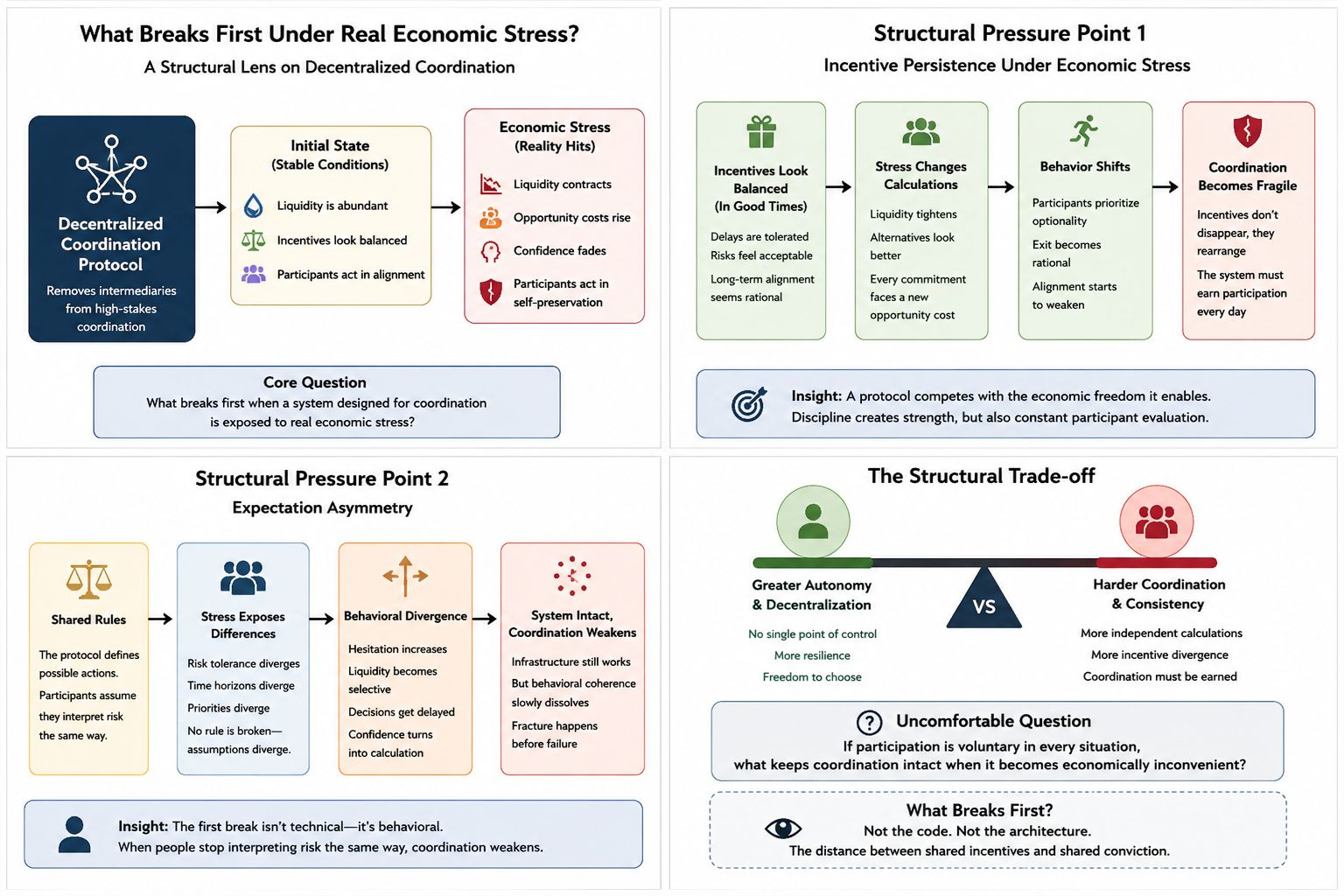
Saya tidak mengejar narasi lagi. Saya mengamati bagaimana narasi itu berperilaku ketika pasar berhenti memberi imbalan pada keyakinan.
Proyek yang benar-benar penting bukan yang paling ramai. Proyek-proyek itulah yang bisa menjaga para peserta tetap selaras ketika likuiditas menipis, insentif bergeser, dan kepercayaan memudar.
Itulah sebabnya saya menghabiskan lebih banyak waktu untuk mempelajari struktur pasar daripada bagan harga. Setiap siklus mengingatkan saya bahwa niat terdengar bagus, tetapi insentif menentukan apa yang sebenarnya dilakukan orang.
Babylon menarik perhatian saya karena mengajukan pertanyaan yang lebih besar daripada sekadar staking atau keamanan. Apa yang terjadi ketika koordinasi terdesentralisasi diuji oleh tekanan ekonomi yang nyata?
Jika sebuah sistem hanya bekerja ketika semua orang setuju, itu tidak tangguh. Ujian sesungguhnya dimulai ketika orang punya alasan untuk tidak sepakat.
Saya hadir untuk mengeksplorasi protokol melalui perilaku, insentif, dan struktur jangka panjang—bukan sensasi, bukan berita utama, dan bukan pergerakan harga jangka pendek.
Pasar berubah. Narasi berganti. Modal berpindah.
Memahami mengapa orang tetap terkoordinasi ketika mereka tidak harus—jauh lebih berharga daripada memprediksi tren berikutnya.
Itulah sudut pandang yang akan terus saya bawa ke setiap proyek yang saya pelajari.
#KOSPIWorstMonthlyDropSince2008 #BitcoinMiningDifficultyFalls14%FromYearHigh #ColdcardFlawDrains594BTC #USToCancelIranAttackSubjectToDeal
#baby $BABY @BabylonLabs_io
Saya tidak mengejar narasi lagi. Saya mengamati bagaimana narasi itu berperilaku ketika pasar berhenti memberi imbalan pada keyakinan.
Proyek yang benar-benar penting bukan yang paling ramai. Proyek-proyek itulah yang bisa menjaga para peserta tetap selaras ketika likuiditas menipis, insentif bergeser, dan kepercayaan memudar.
Itulah sebabnya saya menghabiskan lebih banyak waktu untuk mempelajari struktur pasar daripada bagan harga. Setiap siklus mengingatkan saya bahwa niat terdengar bagus, tetapi insentif menentukan apa yang sebenarnya dilakukan orang.
Babylon menarik perhatian saya karena mengajukan pertanyaan yang lebih besar daripada sekadar staking atau keamanan. Apa yang terjadi ketika koordinasi terdesentralisasi diuji oleh tekanan ekonomi yang nyata?
Jika sebuah sistem hanya bekerja ketika semua orang setuju, itu tidak tangguh. Ujian sesungguhnya dimulai ketika orang punya alasan untuk tidak sepakat.
Saya hadir untuk mengeksplorasi protokol melalui perilaku, insentif, dan struktur jangka panjang—bukan sensasi, bukan berita utama, dan bukan pergerakan harga jangka pendek.
Pasar berubah. Narasi berganti. Modal berpindah.
Memahami mengapa orang tetap terkoordinasi ketika mereka tidak harus—jauh lebih berharga daripada memprediksi tren berikutnya.
Itulah sudut pandang yang akan terus saya bawa ke setiap proyek yang saya pelajari.
#KOSPIWorstMonthlyDropSince2008 #BitcoinMiningDifficultyFalls14%FromYearHigh #ColdcardFlawDrains594BTC #USToCancelIranAttackSubjectToDeal
Saya tidak mengejar narasi lagi. Saya mengamati bagaimana narasi itu berperilaku ketika pasar berhenti memberi imbalan pada keyakinan.
Proyek yang benar-benar penting bukan yang paling ramai. Proyek-proyek itulah yang bisa menjaga para peserta tetap selaras ketika likuiditas menipis, insentif bergeser, dan kepercayaan memudar.
Itulah sebabnya saya menghabiskan lebih banyak waktu untuk mempelajari struktur pasar daripada bagan harga. Setiap siklus mengingatkan saya bahwa niat terdengar bagus, tetapi insentif menentukan apa yang sebenarnya dilakukan orang.
Babylon menarik perhatian saya karena mengajukan pertanyaan yang lebih besar daripada sekadar staking atau keamanan. Apa yang terjadi ketika koordinasi terdesentralisasi diuji oleh tekanan ekonomi yang nyata?
Jika sebuah sistem hanya bekerja ketika semua orang setuju, itu tidak tangguh. Ujian sesungguhnya dimulai ketika orang punya alasan untuk tidak sepakat.
Saya hadir untuk mengeksplorasi protokol melalui perilaku, insentif, dan struktur jangka panjang—bukan sensasi, bukan berita utama, dan bukan pergerakan harga jangka pendek.
Pasar berubah. Narasi berganti. Modal berpindah.
Memahami mengapa orang tetap terkoordinasi ketika mereka tidak harus—jauh lebih berharga daripada memprediksi tren berikutnya.
Itulah sudut pandang yang akan terus saya bawa ke setiap proyek yang saya pelajari.
#KOSPIWorstMonthlyDropSince2008 #BitcoinMiningDifficultyFalls14%FromYearHigh #ColdcardFlawDrains594BTC #USToCancelIranAttackSubjectToDeal
9
10
142
·
--
🎙️ Apa rahasia kekayaan apa yang bisa dibagikan? Mari berdiskusi

Berakhir
03 j 15 m 15 d
11.5k
32
26
·
--
🎙️ Peluang The Fed menaikkan suku bunga pada bulan September melonjak hingga 82%! Suku bunga bebas risiko meningkat tajam, Trump terus bersuara untuk menekan Iran; ke arah mana pasar kripto selanjutnya?
Berakhir
03 j 21 m 10 d
10.9k
31
74
·
--
Bullish
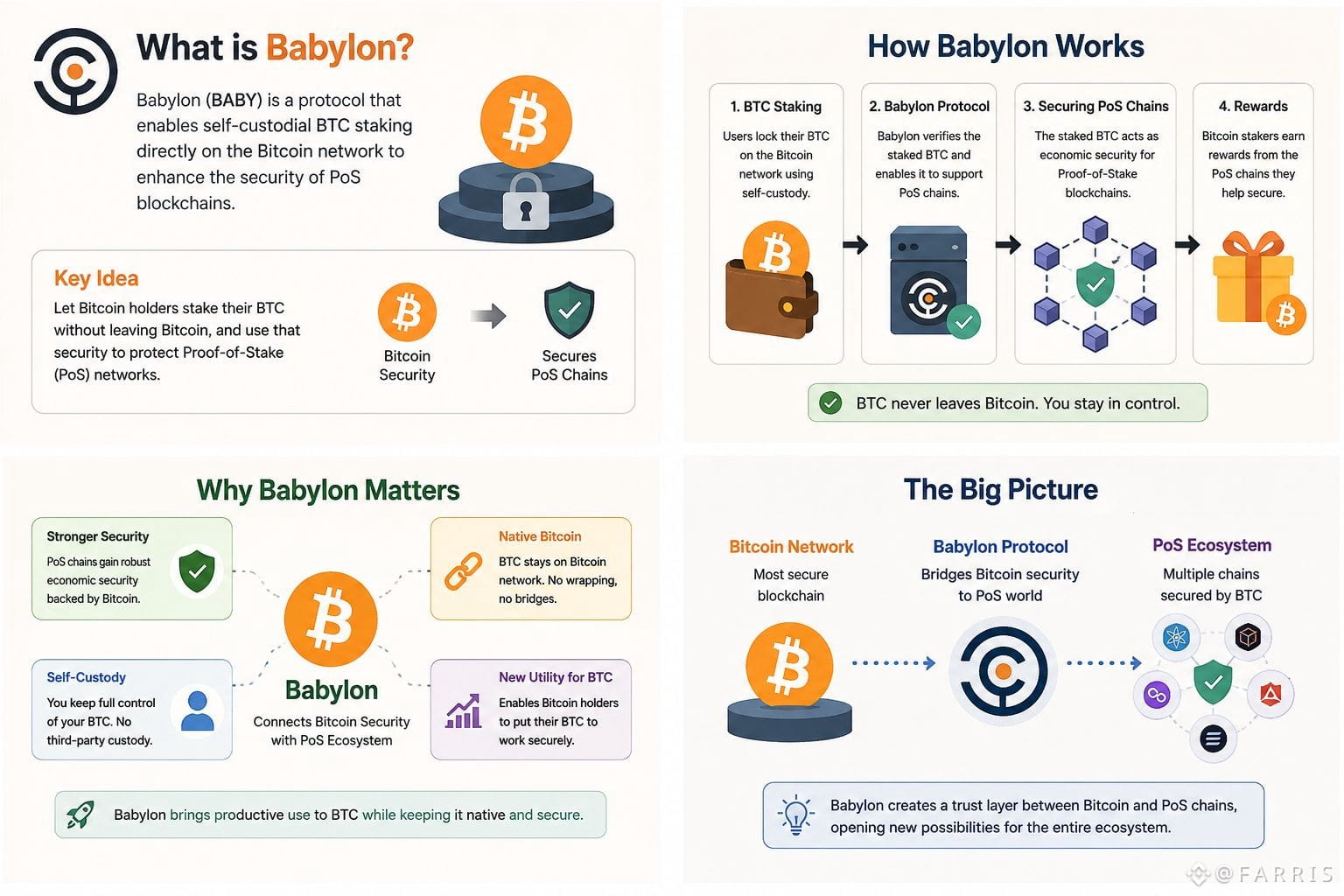
#baby $BABY @babylonlabs_io
Semakin banyak saya membaca tentang Babylon, semakin menarik pendekatan yang mereka ambil. Yang menonjol bagi saya adalah bahwa mereka tidak berusaha memindahkan Bitcoin ke tempat lain hanya untuk menghasilkan imbal hasil. Fokus pada staking BTC secara self-custodial sekaligus membantu memperkuat jaringan PoS terasa seperti pilihan desain yang bijaksana. Menjaga Bitcoin tetap berada di jaringannya sendiri, bukan bergantung pada aset berbungkus, mungkin bagian yang paling membuat saya terkesan. Ini masih awal, tetapi ini termasuk ide yang benar-benar layak untuk diikuti guna melihat bagaimana perkembangannya.
#RussiaPlacesDurovOnInternationalWantedList #BlackRockBringsBUIDLToUniswap #BNBSmartChainToUndergoHardFork #SouthKoreaRestrictsLeveragedETFTrading
$ON
{future}(ONUSDT)
$B3
#baby $BABY @BabylonLabs_io
Semakin banyak saya membaca tentang Babylon, semakin menarik pendekatan yang mereka ambil. Yang menonjol bagi saya adalah bahwa mereka tidak berusaha memindahkan Bitcoin ke tempat lain hanya untuk menghasilkan imbal hasil. Fokus pada staking BTC secara self-custodial sekaligus membantu memperkuat jaringan PoS terasa seperti pilihan desain yang bijaksana. Menjaga Bitcoin tetap berada di jaringannya sendiri, bukan bergantung pada aset berbungkus, mungkin bagian yang paling membuat saya terkesan. Ini masih awal, tetapi ini termasuk ide yang benar-benar layak untuk diikuti guna melihat bagaimana perkembangannya.
#RussiaPlacesDurovOnInternationalWantedList #BlackRockBringsBUIDLToUniswap #BNBSmartChainToUndergoHardFork #SouthKoreaRestrictsLeveragedETFTrading
$ON
$B3
Semakin banyak saya membaca tentang Babylon, semakin menarik pendekatan yang mereka ambil. Yang menonjol bagi saya adalah bahwa mereka tidak berusaha memindahkan Bitcoin ke tempat lain hanya untuk menghasilkan imbal hasil. Fokus pada staking BTC secara self-custodial sekaligus membantu memperkuat jaringan PoS terasa seperti pilihan desain yang bijaksana. Menjaga Bitcoin tetap berada di jaringannya sendiri, bukan bergantung pada aset berbungkus, mungkin bagian yang paling membuat saya terkesan. Ini masih awal, tetapi ini termasuk ide yang benar-benar layak untuk diikuti guna melihat bagaimana perkembangannya.
#RussiaPlacesDurovOnInternationalWantedList #BlackRockBringsBUIDLToUniswap #BNBSmartChainToUndergoHardFork #SouthKoreaRestrictsLeveragedETFTrading
$ON
$B3
11
10
931
Masuk untuk menjelajahi konten lainnya
Bergabunglah dengan pengguna kripto global di Binance Square
⚡️ Dapatkan informasi terbaru dan berguna tentang kripto.
💬 Dipercayai oleh bursa kripto terbesar di dunia.
👍 Temukan wawasan nyata dari kreator terverifikasi.
Email/Nomor Ponsel
Topik Sedang Tren
BitcoinParesGainsAfterRallyTo$86.5K
11,885 penayangan
58 Berdiskusi
🔥 $BTC di Titik Kritis: Duel $86K!
Nurul Hasnat Samir
·Disukai 0 Kali
·153 penayangan
CerebrasSinksNearly20%OnReportNvidiaToPowerOpenAI
22,691 penayangan
284 Berdiskusi
SECProposesCryptoCustodyRules
49,125 penayangan
457 Berdiskusi