
#blockchainengineering
blockchainengineering
582 penayangan
28 Berdiskusi
Populer
Terbaru

·
--
Sebagian Benar
Artikel
Fallacy Tanpa Gesekan: Menganalisis Integrasi Magic Labs@NewtonProtocol
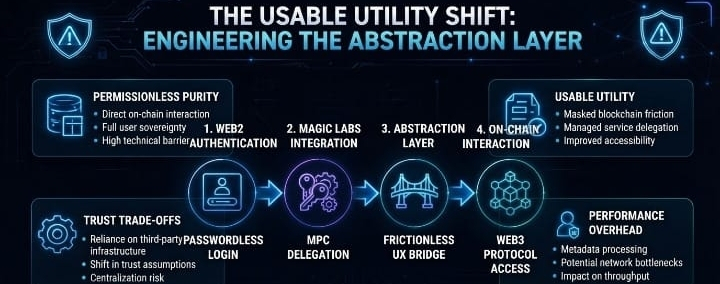
Dalam arsitektur sistem terdesentralisasi, pengalaman pengguna sering kali menjadi eufemisme untuk menyembunyikan kompleksitas manajemen private key. Kemitraan terbaru dengan Magic Labs menjanjikan transisi yang mulus dari autentikasi Web2 ke interaksi Web3, tetapi sebagai para insinyur protokol. Kita harus menilik melampaui lapisan pemasaran menuju kenyataan on chain. Janjinya adalah pengalaman login yang familiar tanpa kata sandi (passwordless). Kenyataannya adalah lapisan abstraksi yang memperkenalkan ketergantungan baru.
Pada inti teknis, integrasi ini beroperasi dengan mendelegasikan manajemen kunci ke layanan terkelola. Meskipun hal ini secara efektif menyelesaikan masalah drop-off onboarding dengan mengalihkan pengguna dari pengelolaan seed phrase, hal itu memaksa adanya kompromi dalam hal kepercayaan. Secara teori, whitepaper menyarankan desentralisasi penuh melalui skema Managed Service Delegated Key Management System (DKMS) tanpa kustodian. Namun pada praktiknya, protokol kini harus memperhitungkan ketersediaan dan integritas infrastruktur Magic Labs. Jika penyedia autentikasi mengalami downtime atau terjadi kompromi keamanan, kenyataan di rantai (on chain) adalah aset pengguna—meskipun secara teknis berada di rantai—menjadi tidak dapat diakses secara fungsional. Kita telah menukar risiko kelalaian pengguna (kehilangan seed phrase) dengan risiko ketergantungan terpusat (kegagalan infrastruktur).
Fallacy Tanpa Gesekan: Menganalisis Integrasi Magic Labs
@NewtonProtocol
Dalam arsitektur sistem terdesentralisasi, pengalaman pengguna sering kali menjadi eufemisme untuk menyembunyikan kompleksitas manajemen private key. Kemitraan terbaru dengan Magic Labs menjanjikan transisi yang mulus dari autentikasi Web2 ke interaksi Web3, tetapi sebagai para insinyur protokol. Kita harus menilik melampaui lapisan pemasaran menuju kenyataan on chain. Janjinya adalah pengalaman login yang familiar tanpa kata sandi (passwordless). Kenyataannya adalah lapisan abstraksi yang memperkenalkan ketergantungan baru.
Pada inti teknis, integrasi ini beroperasi dengan mendelegasikan manajemen kunci ke layanan terkelola. Meskipun hal ini secara efektif menyelesaikan masalah drop-off onboarding dengan mengalihkan pengguna dari pengelolaan seed phrase, hal itu memaksa adanya kompromi dalam hal kepercayaan. Secara teori, whitepaper menyarankan desentralisasi penuh melalui skema Managed Service Delegated Key Management System (DKMS) tanpa kustodian. Namun pada praktiknya, protokol kini harus memperhitungkan ketersediaan dan integritas infrastruktur Magic Labs. Jika penyedia autentikasi mengalami downtime atau terjadi kompromi keamanan, kenyataan di rantai (on chain) adalah aset pengguna—meskipun secara teknis berada di rantai—menjadi tidak dapat diakses secara fungsional. Kita telah menukar risiko kelalaian pengguna (kehilangan seed phrase) dengan risiko ketergantungan terpusat (kegagalan infrastruktur).
Dalam arsitektur sistem terdesentralisasi, pengalaman pengguna sering kali menjadi eufemisme untuk menyembunyikan kompleksitas manajemen private key. Kemitraan terbaru dengan Magic Labs menjanjikan transisi yang mulus dari autentikasi Web2 ke interaksi Web3, tetapi sebagai para insinyur protokol. Kita harus menilik melampaui lapisan pemasaran menuju kenyataan on chain. Janjinya adalah pengalaman login yang familiar tanpa kata sandi (passwordless). Kenyataannya adalah lapisan abstraksi yang memperkenalkan ketergantungan baru.
Pada inti teknis, integrasi ini beroperasi dengan mendelegasikan manajemen kunci ke layanan terkelola. Meskipun hal ini secara efektif menyelesaikan masalah drop-off onboarding dengan mengalihkan pengguna dari pengelolaan seed phrase, hal itu memaksa adanya kompromi dalam hal kepercayaan. Secara teori, whitepaper menyarankan desentralisasi penuh melalui skema Managed Service Delegated Key Management System (DKMS) tanpa kustodian. Namun pada praktiknya, protokol kini harus memperhitungkan ketersediaan dan integritas infrastruktur Magic Labs. Jika penyedia autentikasi mengalami downtime atau terjadi kompromi keamanan, kenyataan di rantai (on chain) adalah aset pengguna—meskipun secara teknis berada di rantai—menjadi tidak dapat diakses secara fungsional. Kita telah menukar risiko kelalaian pengguna (kehilangan seed phrase) dengan risiko ketergantungan terpusat (kegagalan infrastruktur).
4
1
74

Lihat terjemahan
Building, Prototyping, & Testnet Implementation🛠️ From Blueprint to Testnet: Phase 2 of Web3 Engineering!
Prototyping is where theoretical code meets battle-tested execution. Through public and private testnets, developers stress-test smart contracts, simulate high-concurrency transaction loads, and refine gas efficiency before mainnet deployment.
💬 Have you ever tested dApps on a testnet to qualify for ecosystem incentives? Share your experience!
#BinanceSquare #SmartContracts #BlockchainEngineering #Testnet #Web3Building
Smart Contract Engineering, Testnet Architectures, and Stress Testing
1. The Engineering Pipeline of Decentralized Applications
Once the theoretical groundwork and architectural specifications are finalized in Phase 1, a project transitions into Phase 2: engineering, prototyping, and environment testing. In centralized software development, staging environments allow engineers to test code in near-production settings without impacting end-users. In blockchain development, this staging ground is represented by test networks (Testnets)—sandboxed environments that replicate the execution engine, consensus rules, and state machine of a blockchain without using real economic assets.
Developing smart contracts—primarily written in languages like Solidity, Rust, or Move—requires an unprecedented focus on security and resource efficiency. Unlike traditional software where memory allocation is cheap, every instruction executed on a decentralized state machine consumes "gas"—a measure of computational effort. Inefficient code loops, redundant storage calls, and sub-optimal data structures directly translate to higher transaction fees for end-users, rendering protocols uncompetitive in gas-sensitive market environments.
2. Smart Contract Optimization and Vulnerability Prevention
During the active prototyping phase, developers utilize sophisticated integrated development environments (IDEs) and framework suites such as Hardhat, Foundry, and Anchor. Engineering teams focus heavily on gas optimization techniques:
Storage vs. Memory Allocation: In Ethereum-compatible execution environments, writing data to permanent contract storage (SSTORE) is exponentially more expensive than temporary memory execution (MSTORE). Developers optimize contracts by packing storage variables into single 32-byte slots, utilizing immutable and constant variables, and leveraging transient storage where applicable.
Reentrancy Protection: One of the most catastrophic vulnerabilities in smart contract history is the reentrancy attack, wherein an external malicious contract recursively calls back into a target contract before the target updates its internal state balances. Developers mitigate this during prototyping by implementing the Checks-Effects-Interactions pattern and utilizing non-reentrant mutex locks.
3. Testnet Deployments: Alpha, Beta, and Incentive Structure
Deploying a protocol to a public testnet (such as Ethereum's Sepolia or Holesky, or custom dedicated testnets) serves as the primary mechanism for empirical validation. Testnets allow developers to simulate complex multi-user interactions under real network latency conditions.
The testnet phase generally unfolds across three distinct sub-stages:
Private Devnet: Closed internal network deployed locally or across controlled nodes to test basic smart contract deployment, state transitions, and front-end Web3 interface (dApp) integration via libraries like Ethers.js, Viem, or Web3.js.
Incentivized Testnet: A public testnet campaign designed to stress-test network infrastructure by offering future token rewards to node operators, validators, and edge-case users. Participants attempt to break the network by submitting high volumes of concurrent transactions, generating maximum block congestion, and probing for state desynchronization bugs.
Bug Bounty Programs: In parallel with public testnets, protocols partner with security platforms such as Immunefi to launch competitive bug bounties. White-hat hackers are financially incentivized to discover zero-day exploits, logical errors, or reentrancy bugs within the open-source code repository before real capital is placed at risk on the mainnet.
4. Theoretical Conclusion
Phase 2 bridges abstract theory and practical execution. A successful testnet phase provides concrete metrics regarding transaction finality times, peak throughput capability, smart contract gas overhead, and resilience against network spam—ensuring the application layer is structurally prepared for mainnet execution.
Why We Reached This Conclusion
We reached this conclusion because stress-testing is the ultimate filter between viable Web3 projects and failed experiments. On Binance Square, emphasizing the transition from testnet to real-world usage educates the community on assessing technical maturity, helping traders differentiate between marketing hype and genuine engineering execution.
Building, Prototyping, & Testnet Implementation
🛠️ From Blueprint to Testnet: Phase 2 of Web3 Engineering!
Prototyping is where theoretical code meets battle-tested execution. Through public and private testnets, developers stress-test smart contracts, simulate high-concurrency transaction loads, and refine gas efficiency before mainnet deployment.
💬 Have you ever tested dApps on a testnet to qualify for ecosystem incentives? Share your experience!
#BinanceSquare #SmartContracts #BlockchainEngineering #Testnet #Web3Building
Smart Contract Engineering, Testnet Architectures, and Stress Testing
1. The Engineering Pipeline of Decentralized Applications
Once the theoretical groundwork and architectural specifications are finalized in Phase 1, a project transitions into Phase 2: engineering, prototyping, and environment testing. In centralized software development, staging environments allow engineers to test code in near-production settings without impacting end-users. In blockchain development, this staging ground is represented by test networks (Testnets)—sandboxed environments that replicate the execution engine, consensus rules, and state machine of a blockchain without using real economic assets.
Developing smart contracts—primarily written in languages like Solidity, Rust, or Move—requires an unprecedented focus on security and resource efficiency. Unlike traditional software where memory allocation is cheap, every instruction executed on a decentralized state machine consumes "gas"—a measure of computational effort. Inefficient code loops, redundant storage calls, and sub-optimal data structures directly translate to higher transaction fees for end-users, rendering protocols uncompetitive in gas-sensitive market environments.
2. Smart Contract Optimization and Vulnerability Prevention
During the active prototyping phase, developers utilize sophisticated integrated development environments (IDEs) and framework suites such as Hardhat, Foundry, and Anchor. Engineering teams focus heavily on gas optimization techniques:
Storage vs. Memory Allocation: In Ethereum-compatible execution environments, writing data to permanent contract storage (SSTORE) is exponentially more expensive than temporary memory execution (MSTORE). Developers optimize contracts by packing storage variables into single 32-byte slots, utilizing immutable and constant variables, and leveraging transient storage where applicable.
Reentrancy Protection: One of the most catastrophic vulnerabilities in smart contract history is the reentrancy attack, wherein an external malicious contract recursively calls back into a target contract before the target updates its internal state balances. Developers mitigate this during prototyping by implementing the Checks-Effects-Interactions pattern and utilizing non-reentrant mutex locks.
3. Testnet Deployments: Alpha, Beta, and Incentive Structure
Deploying a protocol to a public testnet (such as Ethereum's Sepolia or Holesky, or custom dedicated testnets) serves as the primary mechanism for empirical validation. Testnets allow developers to simulate complex multi-user interactions under real network latency conditions.
The testnet phase generally unfolds across three distinct sub-stages:
Private Devnet: Closed internal network deployed locally or across controlled nodes to test basic smart contract deployment, state transitions, and front-end Web3 interface (dApp) integration via libraries like Ethers.js, Viem, or Web3.js.
Incentivized Testnet: A public testnet campaign designed to stress-test network infrastructure by offering future token rewards to node operators, validators, and edge-case users. Participants attempt to break the network by submitting high volumes of concurrent transactions, generating maximum block congestion, and probing for state desynchronization bugs.
Bug Bounty Programs: In parallel with public testnets, protocols partner with security platforms such as Immunefi to launch competitive bug bounties. White-hat hackers are financially incentivized to discover zero-day exploits, logical errors, or reentrancy bugs within the open-source code repository before real capital is placed at risk on the mainnet.
4. Theoretical Conclusion
Phase 2 bridges abstract theory and practical execution. A successful testnet phase provides concrete metrics regarding transaction finality times, peak throughput capability, smart contract gas overhead, and resilience against network spam—ensuring the application layer is structurally prepared for mainnet execution.
Why We Reached This Conclusion
We reached this conclusion because stress-testing is the ultimate filter between viable Web3 projects and failed experiments. On Binance Square, emphasizing the transition from testnet to real-world usage educates the community on assessing technical maturity, helping traders differentiate between marketing hype and genuine engineering execution.
Prototyping is where theoretical code meets battle-tested execution. Through public and private testnets, developers stress-test smart contracts, simulate high-concurrency transaction loads, and refine gas efficiency before mainnet deployment.
💬 Have you ever tested dApps on a testnet to qualify for ecosystem incentives? Share your experience!
#BinanceSquare #SmartContracts #BlockchainEngineering #Testnet #Web3Building
Smart Contract Engineering, Testnet Architectures, and Stress Testing
1. The Engineering Pipeline of Decentralized Applications
Once the theoretical groundwork and architectural specifications are finalized in Phase 1, a project transitions into Phase 2: engineering, prototyping, and environment testing. In centralized software development, staging environments allow engineers to test code in near-production settings without impacting end-users. In blockchain development, this staging ground is represented by test networks (Testnets)—sandboxed environments that replicate the execution engine, consensus rules, and state machine of a blockchain without using real economic assets.
Developing smart contracts—primarily written in languages like Solidity, Rust, or Move—requires an unprecedented focus on security and resource efficiency. Unlike traditional software where memory allocation is cheap, every instruction executed on a decentralized state machine consumes "gas"—a measure of computational effort. Inefficient code loops, redundant storage calls, and sub-optimal data structures directly translate to higher transaction fees for end-users, rendering protocols uncompetitive in gas-sensitive market environments.
2. Smart Contract Optimization and Vulnerability Prevention
During the active prototyping phase, developers utilize sophisticated integrated development environments (IDEs) and framework suites such as Hardhat, Foundry, and Anchor. Engineering teams focus heavily on gas optimization techniques:
Storage vs. Memory Allocation: In Ethereum-compatible execution environments, writing data to permanent contract storage (SSTORE) is exponentially more expensive than temporary memory execution (MSTORE). Developers optimize contracts by packing storage variables into single 32-byte slots, utilizing immutable and constant variables, and leveraging transient storage where applicable.
Reentrancy Protection: One of the most catastrophic vulnerabilities in smart contract history is the reentrancy attack, wherein an external malicious contract recursively calls back into a target contract before the target updates its internal state balances. Developers mitigate this during prototyping by implementing the Checks-Effects-Interactions pattern and utilizing non-reentrant mutex locks.
3. Testnet Deployments: Alpha, Beta, and Incentive Structure
Deploying a protocol to a public testnet (such as Ethereum's Sepolia or Holesky, or custom dedicated testnets) serves as the primary mechanism for empirical validation. Testnets allow developers to simulate complex multi-user interactions under real network latency conditions.
The testnet phase generally unfolds across three distinct sub-stages:
Private Devnet: Closed internal network deployed locally or across controlled nodes to test basic smart contract deployment, state transitions, and front-end Web3 interface (dApp) integration via libraries like Ethers.js, Viem, or Web3.js.
Incentivized Testnet: A public testnet campaign designed to stress-test network infrastructure by offering future token rewards to node operators, validators, and edge-case users. Participants attempt to break the network by submitting high volumes of concurrent transactions, generating maximum block congestion, and probing for state desynchronization bugs.
Bug Bounty Programs: In parallel with public testnets, protocols partner with security platforms such as Immunefi to launch competitive bug bounties. White-hat hackers are financially incentivized to discover zero-day exploits, logical errors, or reentrancy bugs within the open-source code repository before real capital is placed at risk on the mainnet.
4. Theoretical Conclusion
Phase 2 bridges abstract theory and practical execution. A successful testnet phase provides concrete metrics regarding transaction finality times, peak throughput capability, smart contract gas overhead, and resilience against network spam—ensuring the application layer is structurally prepared for mainnet execution.
Why We Reached This Conclusion
We reached this conclusion because stress-testing is the ultimate filter between viable Web3 projects and failed experiments. On Binance Square, emphasizing the transition from testnet to real-world usage educates the community on assessing technical maturity, helping traders differentiate between marketing hype and genuine engineering execution.
47

·
--
Bullish
dunia crypto yang serba cepat, beberapa proyek memicu banyak perdebatan seperti Pi Network. Dengan lebih dari 60 juta pengguna dan ekosistem berbasis komunitas yang besar, mudah untuk terjebak dalam kebisingan. Tapi sebagai seseorang yang melihat ini melalui lensa rekayasa, saya lebih suka fokus pada kenyataan "Infrastruktur-Dulu" daripada hanya pada hype.
Pi Network saat ini sedang menjalankan transisi berisiko tinggi: berpindah dari model distribusi mobile-mining ke blockchain yang kuat dan berbasis utilitas. Upgrade wajib Protokol v24 yang akan datang (batas waktu 2 Juni) adalah tonggak teknis yang krusial.
Dari sudut pandang rekayasa, pergeseran ini signifikan:
Kematangan Infrastruktur: Pindah ke Protokol v24 melibatkan upgrade sistem kritis (Ubuntu 24, PostgreSQL 16), yang penting untuk stabilitas jaringan dan fungsionalitas kontrak pintar di masa depan.
Utilitas vs. Spekulasi: Proyek ini secara aktif beralih ke "infrastruktur manusia untuk AI" dan verifikasi identitas, berusaha menyelesaikan masalah dunia nyata seperti bukti keberadaan manusia dalam skala besar.
Risiko Eksekusi: Meskipun ukuran komunitas, kelangsungan jangka panjang tergantung pada keberhasilan pengiriman teknis. Apakah ini berkembang menjadi ekosistem yang sepenuhnya terdesentralisasi dengan throughput tinggi atau tetap menjadi eksperimen niche akan tergantung pada bagaimana jaringan menangani transisinya ke mainnet terbuka.
#BlockchainEngineering #Write2Earn #CryptoAnalysis" #Web3Infrastructur #TechTrends
dunia crypto yang serba cepat, beberapa proyek memicu banyak perdebatan seperti Pi Network. Dengan lebih dari 60 juta pengguna dan ekosistem berbasis komunitas yang besar, mudah untuk terjebak dalam kebisingan. Tapi sebagai seseorang yang melihat ini melalui lensa rekayasa, saya lebih suka fokus pada kenyataan "Infrastruktur-Dulu" daripada hanya pada hype.
Pi Network saat ini sedang menjalankan transisi berisiko tinggi: berpindah dari model distribusi mobile-mining ke blockchain yang kuat dan berbasis utilitas. Upgrade wajib Protokol v24 yang akan datang (batas waktu 2 Juni) adalah tonggak teknis yang krusial.
Dari sudut pandang rekayasa, pergeseran ini signifikan:
Kematangan Infrastruktur: Pindah ke Protokol v24 melibatkan upgrade sistem kritis (Ubuntu 24, PostgreSQL 16), yang penting untuk stabilitas jaringan dan fungsionalitas kontrak pintar di masa depan.
Utilitas vs. Spekulasi: Proyek ini secara aktif beralih ke "infrastruktur manusia untuk AI" dan verifikasi identitas, berusaha menyelesaikan masalah dunia nyata seperti bukti keberadaan manusia dalam skala besar.
Risiko Eksekusi: Meskipun ukuran komunitas, kelangsungan jangka panjang tergantung pada keberhasilan pengiriman teknis. Apakah ini berkembang menjadi ekosistem yang sepenuhnya terdesentralisasi dengan throughput tinggi atau tetap menjadi eksperimen niche akan tergantung pada bagaimana jaringan menangani transisinya ke mainnet terbuka.
#BlockchainEngineering #Write2Earn #CryptoAnalysis" #Web3Infrastructur #TechTrends
Pi Network saat ini sedang menjalankan transisi berisiko tinggi: berpindah dari model distribusi mobile-mining ke blockchain yang kuat dan berbasis utilitas. Upgrade wajib Protokol v24 yang akan datang (batas waktu 2 Juni) adalah tonggak teknis yang krusial.
Dari sudut pandang rekayasa, pergeseran ini signifikan:
Kematangan Infrastruktur: Pindah ke Protokol v24 melibatkan upgrade sistem kritis (Ubuntu 24, PostgreSQL 16), yang penting untuk stabilitas jaringan dan fungsionalitas kontrak pintar di masa depan.
Utilitas vs. Spekulasi: Proyek ini secara aktif beralih ke "infrastruktur manusia untuk AI" dan verifikasi identitas, berusaha menyelesaikan masalah dunia nyata seperti bukti keberadaan manusia dalam skala besar.
Risiko Eksekusi: Meskipun ukuran komunitas, kelangsungan jangka panjang tergantung pada keberhasilan pengiriman teknis. Apakah ini berkembang menjadi ekosistem yang sepenuhnya terdesentralisasi dengan throughput tinggi atau tetap menjadi eksperimen niche akan tergantung pada bagaimana jaringan menangani transisinya ke mainnet terbuka.
#BlockchainEngineering #Write2Earn #CryptoAnalysis" #Web3Infrastructur #TechTrends
175

·
--
Bullish
Sebagian Benar
Mengapa kita masih terjebak dalam trade-off "Security vs. Speed"?
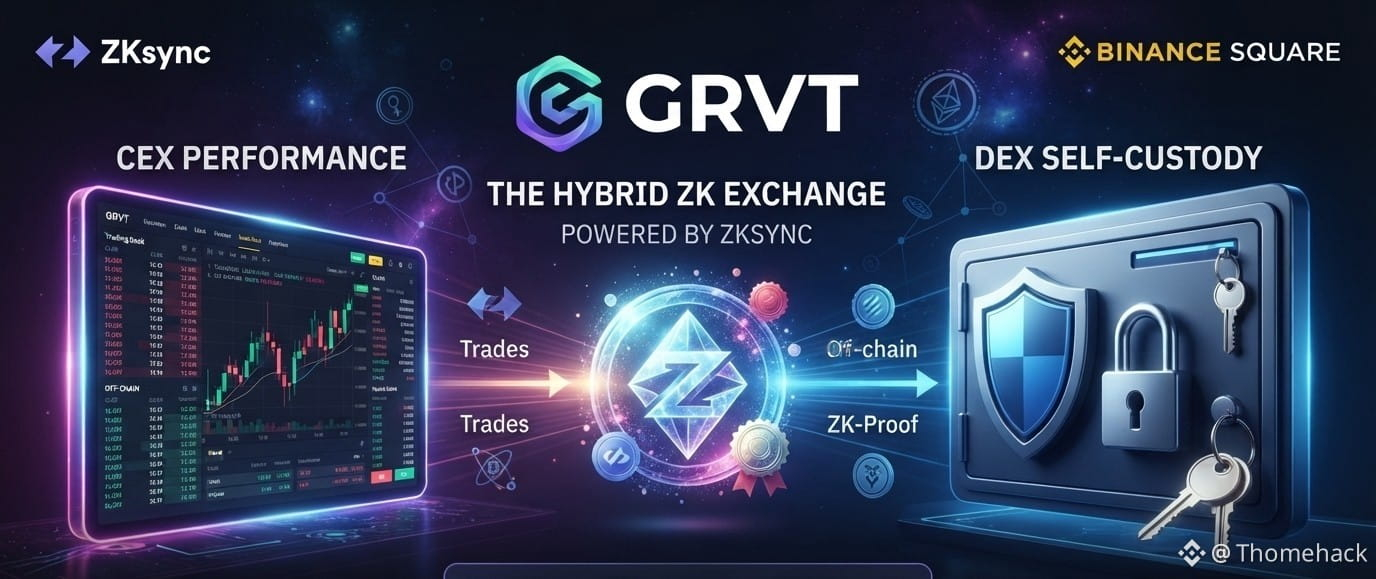
@grvt_io sedang membangun Hyperchain berbasis ZK untuk menyelesaikan hal itu secara tepat:
- Pencocokan di luar rantai (latensi sub-ms)
- Penyelesaian di rantai melalui ZK-Rollups
- Desain non-custodial: Kunci tetap ada pada Anda, aset tetap berada di smart contract.
Peningkatan teknis yang solid dibanding model CEX standar.
Bagaimana pendapat Anda? Apakah perdagangan ZK adalah masa depan, atau apakah overhead dalam pembuatan proof masih menjadi bottleneck? 👇
#GRVT #ZKsync #DeFi #CryptoTrading #BlockchainEngineering
Mengapa kita masih terjebak dalam trade-off "Security vs. Speed"?
@grvt_io sedang membangun Hyperchain berbasis ZK untuk menyelesaikan hal itu secara tepat:
- Pencocokan di luar rantai (latensi sub-ms)
- Penyelesaian di rantai melalui ZK-Rollups
- Desain non-custodial: Kunci tetap ada pada Anda, aset tetap berada di smart contract.
Peningkatan teknis yang solid dibanding model CEX standar.
Bagaimana pendapat Anda? Apakah perdagangan ZK adalah masa depan, atau apakah overhead dalam pembuatan proof masih menjadi bottleneck? 👇
#GRVT #ZKsync #DeFi #CryptoTrading #BlockchainEngineering
@grvt_io sedang membangun Hyperchain berbasis ZK untuk menyelesaikan hal itu secara tepat:
- Pencocokan di luar rantai (latensi sub-ms)
- Penyelesaian di rantai melalui ZK-Rollups
- Desain non-custodial: Kunci tetap ada pada Anda, aset tetap berada di smart contract.
Peningkatan teknis yang solid dibanding model CEX standar.
Bagaimana pendapat Anda? Apakah perdagangan ZK adalah masa depan, atau apakah overhead dalam pembuatan proof masih menjadi bottleneck? 👇
#GRVT #ZKsync #DeFi #CryptoTrading #BlockchainEngineering
2
139

·
--
🛠️ $ADA : Integritas Arsitektur. 🏛️
Cardano selalu mengandalkan "Arsitektur Jaringan" dibandingkan kecepatan acak. Saat ini turun 2.36%, tapi volume pencarian tidak pernah berhenti. Apakah kita menunggu pembaruan protokol baru untuk mengubah rumus?
{spot}(ADAUSDT)
#Cardano #ADA #BlockchainEngineering #altcoins
🛠️ $ADA : Integritas Arsitektur. 🏛️
Cardano selalu mengandalkan "Arsitektur Jaringan" dibandingkan kecepatan acak. Saat ini turun 2.36%, tapi volume pencarian tidak pernah berhenti. Apakah kita menunggu pembaruan protokol baru untuk mengubah rumus?
#Cardano #ADA #BlockchainEngineering #altcoins
Cardano selalu mengandalkan "Arsitektur Jaringan" dibandingkan kecepatan acak. Saat ini turun 2.36%, tapi volume pencarian tidak pernah berhenti. Apakah kita menunggu pembaruan protokol baru untuk mengubah rumus?
#Cardano #ADA #BlockchainEngineering #altcoins
59
Masuk untuk menjelajahi konten lainnya
Bergabunglah dengan pengguna kripto global di Binance Square
⚡️ Dapatkan informasi terbaru dan berguna tentang kripto.
💬 Dipercayai oleh bursa kripto terbesar di dunia.
👍 Temukan wawasan nyata dari kreator terverifikasi.
Email/Nomor Ponsel
Topik Sedang Tren
1
#BitcoinSurpasses$77000
10,010 penayangan
154 Berdiskusi
2
#ParadigmDisclosesZECHolding
34,211 penayangan
736 Berdiskusi
3
#BitcoinETFsShed$450M
19,992 penayangan
180 Berdiskusi
4
#USWeeklyJoblessClaimsFallTo196K
17,590 penayangan
433 Berdiskusi
5
#ArkhamSaysBlackRockBuys$1.5BInETH
3,351 penayangan
46 Berdiskusi
6
#ElSalvadorBTCHoldingsRiseTo7777
43,069 penayangan
749 Berdiskusi
7
#MemeLaunchpads82%OfArcDayOneVolume
47,591 penayangan
931 Berdiskusi
8
#OstiumLoanDisputeHearingSetInNYFederalCourt
38,200 penayangan
673 Berdiskusi
9
#HyperliquidUSDCSupplyOvertakesSolana
17,023 penayangan
328 Berdiskusi
10
#SKPoliceRefer18PolymarketUsersToProsecutors
22,592 penayangan
496 Berdiskusi