
Crypto Roadmap27
120 Publications

Crypto Roadmap27
Signaler
Bloquer l’utilisateur
🚀 Daily Crypto Market Insights | Bitcoin • Ethereum • Solana • AI • RWA | Simple Analysis, No Hype | DYOR 📈
4 Suivis
1 Abonnés
4 J’aime
Publications
Tous
Citations
Voir la traduction
Zcash Just Broke $800 — Is ZEC Becoming Crypto’s Next ETF Breakout?Zcash is suddenly back in the spotlight.
The privacy-focused cryptocurrency has delivered one of the strongest rallies in the market, breaking above $800 and briefly reaching the $850 area—its highest level since 2018.
But the price explosion is only one part of the story.
Behind the move are three major catalysts:
🏦 Grayscale’s push toward a spot ZEC ETF
🔐 Renewed interest in privacy-focused crypto
📊 Billions of dollars in ZEC derivatives activity
So the real question isn't simply:
“Can ZEC keep pumping?”
It's:
Could Zcash become the next crypto asset to benefit from the ETF wave?
🔥 ZEC Has Suddenly Become One of Crypto’s Biggest Movers
ZEC's recent performance has been extraordinary.
The token climbed roughly 22% in Saturday trading, briefly approaching $850, after already experiencing a much larger move earlier in the week.
CoinGecko's latest data shows ZEC up approximately 61% over seven days, dramatically outperforming the broader cryptocurrency market. Its market capitalization has risen to roughly $13 billion, putting Zcash around the top 15 cryptocurrencies by market cap.
That kind of move naturally attracts momentum traders.
But there is something more interesting happening underneath.
🏦 The ETF Story Is Driving Attention
The biggest catalyst behind the current ZEC narrative is Grayscale.
Grayscale has been working to convert its existing Zcash Trust into a U.S.-listed spot ETF.
The company submitted another amendment to the SEC on Friday, bringing the proposed product closer to a spot ETF structure. If eventually approved and launched, it would provide a regulated investment vehicle giving investors direct exposure to ZEC without needing to hold the token themselves.
This is significant because ETFs have completely changed how institutional investors can access major crypto assets.
Bitcoin already demonstrated the potential impact.
Ethereum followed.
Now the market is asking:
Could Zcash be next?
⚠️ But Don't Call It an Approved ETF Yet
This distinction is extremely important.
Grayscale's filing is not the same thing as SEC approval.
The current story is about regulatory filings and progress toward a potential ETF—not a confirmed approval.
That means traders buying ZEC today are partly positioning for a future event that still carries regulatory and execution risk.
And this creates a classic crypto setup:
Huge expectations + limited supply + strong momentum = potentially massive upside
But also:
Huge expectations + leveraged trading = massive downside if the catalyst disappoints.
📊 The Derivatives Market Is Going Crazy
The ZEC rally isn't happening only in spot markets.
CoinGlass data cited by The Block showed approximately $9.54 billion in 24-hour ZEC futures volume, with open interest around $1.76 billion.
That's enormous compared with the size of the underlying asset.
And it tells us something important:
Leverage is playing a major role in the current move.
When futures traders pile into an asset during a breakout, the move can accelerate rapidly.
But the same mechanism works in reverse.
If the price suddenly falls, leveraged longs can be liquidated, creating additional selling pressure.
So the current ZEC rally is powerful—but it is also fragile.
🔐 Why Is the Privacy Narrative Returning?
For years, privacy coins were treated by much of the crypto market as a regulatory headache.
Now the narrative is changing.
Zcash offers a different approach to privacy through zero-knowledge cryptography, allowing users to make shielded transactions while preserving the option for transparent activity.
That creates a potentially interesting use case in a world where:
Blockchain surveillance is increasingOn-chain identity is becoming more importantInstitutions want privacy for certain transactionsUsers increasingly care about financial confidentiality
The market may be starting to realize that privacy doesn't necessarily have to mean “unregulated.”
Instead, the bigger question becomes:
Can privacy technology coexist with institutional finance?
That's where Zcash becomes particularly interesting.
🧩 ZEC's ETF Story Is Different From Bitcoin's
Bitcoin's ETF narrative was relatively straightforward:
Digital gold → institutional investment product.
Zcash has a more complicated story.
The potential thesis is:
Privacy infrastructure → institutional investment product.
That's a much smaller and more specialized market.
But specialization can also create scarcity.
If demand for privacy-focused assets increases while only a handful of major projects can provide that exposure, ZEC could potentially benefit disproportionately.
💰 Another Interesting Development: Potential Institutional Accumulation
The ETF filing story becomes even more interesting because an earlier Grayscale amendment disclosed that a subsidiary of Digital Currency Group was considering acquiring approximately 200,000 ZEC through the trust.
That doesn't mean the purchase is guaranteed.
But the possibility itself adds another institutional angle to the Zcash narrative.
And when you combine:
ETF demand expectations
potential institutional accumulation
strong retail momentum
limited maximum supply
you get a very different market structure from the average altcoin.
📈 Could ZEC Become the Next ETF Winner?
This is the bullish thesis.
Imagine Grayscale eventually receives the necessary regulatory clearance.
A spot ZEC ETF would create another traditional-market gateway into the asset.
That could potentially bring:
🏦 Institutional exposure
💰 New capital flows
📊 Greater liquidity
🌐 More mainstream awareness
And because ZEC is much smaller than Bitcoin or Ethereum, even relatively modest new demand could have a larger percentage impact on the market.
But that's also why investors need to be careful.
Small market = bigger upside potential
but also
Small market = bigger volatility.
⚠️ The Biggest Risk: The Rally May Be Too Fast
ZEC has moved incredibly quickly.
That creates a major risk of profit-taking.
Some traders who bought before the breakout now have enormous unrealized gains.
Eventually, some of them will want to sell.
And because derivatives activity is so large, a relatively small price reversal could trigger a chain reaction.
The market could move from:
FOMO → leverage → liquidation → panic
very quickly.
This is why chasing a vertical candle can be dangerous.
🔴 What Could Break the Bull Case?
There are several things ZEC bulls should watch.
1️⃣ ETF progress stalls
If the regulatory process slows or expectations change, some of the current premium could disappear.
2️⃣ Leverage unwinds
With billions in derivatives volume and large open interest, a sharp correction could accelerate quickly.
3️⃣ Bitcoin reverses
ZEC is outperforming the market, but it is still part of the broader crypto ecosystem.
A major BTC reversal could pull liquidity out of altcoins.
4️⃣ Profit-taking increases
After such a powerful rally, early holders have strong incentives to lock in gains.
5️⃣ Privacy regulation becomes a problem
The same privacy characteristics that make Zcash attractive could also create regulatory challenges in some jurisdictions.
👀 What I'm Watching Next
For me, these are the five most important ZEC indicators:
🏦 1. Grayscale's ETF progress
Any additional SEC filing or regulatory development could immediately affect sentiment.
📊 2. Futures open interest
If price rises while leverage becomes excessive, the risk of a violent correction increases.
💰 3. Spot volume
A healthy breakout should ideally be supported by genuine spot demand rather than derivatives alone.
🔐 4. Privacy adoption
If privacy becomes a bigger theme across crypto, Zcash could benefit from being one of the best-known assets in the sector.
₿ 5. Bitcoin's trend
If the broader crypto market remains risk-on, ZEC's momentum has a better environment to continue.
🚀 The Bigger Question: Is Privacy Back?
This may ultimately be the most interesting part of the entire story.
The ZEC rally could turn out to be more than an isolated coin pump.
It could be an early signal that the market is beginning to rotate into specialized crypto narratives.
We've already seen cycles where capital moves from:
Bitcoin → Ethereum → DeFi → Layer-1s → smaller narratives.
Could the next rotation be:
Privacy + institutional crypto infrastructure?
If so, Zcash is suddenly positioned in an interesting place.
🧠 My Take
I'm not most interested in ZEC simply because it went above $800.
I'm interested in why the market is willing to value it so aggressively right now.
The combination is unusual:
A major ETF catalyst
institutional interest
privacy narrative
massive derivatives activity
strong momentum
That's enough to make ZEC one of the most interesting altcoins to watch right now.
But there's a major difference between:
“ZEC has a strong narrative”
and
“ZEC must keep going higher.”
The first statement is supported by current developments.
The second is speculation.
The next major test will be whether ZEC can maintain elevated demand after the initial ETF excitement and leverage-driven buying cool down.
If it can, this rally could represent something much bigger than a short-term breakout.
If it can't, today's vertical move could eventually become one of the year's most dramatic examples of crypto momentum reversing.
The ETF story provided the spark.
Leverage poured fuel on the fire.
Now the market has to prove there is enough real demand to keep ZEC burning. 🔥
💬 What Do YOU Think?
ZEC just broke above $800 — what's next? 👀
🟢 ETF could send ZEC much higher 🚀
🔵 Privacy narrative is just getting started
🔴 This rally is dangerously overextended
🟡 Need confirmation before getting bullish
👇 Vote and tell me your reason.
#Zcash #ZEC #Crypto #PrivacyCoins #CryptoETF #Grayscale #Bitcoin #Altcoins #CryptoMarket #DeFi #BinanceSquare
Zcash Just Broke $800 — Is ZEC Becoming Crypto’s Next ETF Breakout?
Zcash is suddenly back in the spotlight.
The privacy-focused cryptocurrency has delivered one of the strongest rallies in the market, breaking above $800 and briefly reaching the $850 area—its highest level since 2018.
But the price explosion is only one part of the story.
Behind the move are three major catalysts:
🏦 Grayscale’s push toward a spot ZEC ETF
🔐 Renewed interest in privacy-focused crypto
📊 Billions of dollars in ZEC derivatives activity
So the real question isn't simply:
“Can ZEC keep pumping?”
It's:
Could Zcash become the next crypto asset to benefit from the ETF wave?
🔥 ZEC Has Suddenly Become One of Crypto’s Biggest Movers
ZEC's recent performance has been extraordinary.
The token climbed roughly 22% in Saturday trading, briefly approaching $850, after already experiencing a much larger move earlier in the week.
CoinGecko's latest data shows ZEC up approximately 61% over seven days, dramatically outperforming the broader cryptocurrency market. Its market capitalization has risen to roughly $13 billion, putting Zcash around the top 15 cryptocurrencies by market cap.
That kind of move naturally attracts momentum traders.
But there is something more interesting happening underneath.
🏦 The ETF Story Is Driving Attention
The biggest catalyst behind the current ZEC narrative is Grayscale.
Grayscale has been working to convert its existing Zcash Trust into a U.S.-listed spot ETF.
The company submitted another amendment to the SEC on Friday, bringing the proposed product closer to a spot ETF structure. If eventually approved and launched, it would provide a regulated investment vehicle giving investors direct exposure to ZEC without needing to hold the token themselves.
This is significant because ETFs have completely changed how institutional investors can access major crypto assets.
Bitcoin already demonstrated the potential impact.
Ethereum followed.
Now the market is asking:
Could Zcash be next?
⚠️ But Don't Call It an Approved ETF Yet
This distinction is extremely important.
Grayscale's filing is not the same thing as SEC approval.
The current story is about regulatory filings and progress toward a potential ETF—not a confirmed approval.
That means traders buying ZEC today are partly positioning for a future event that still carries regulatory and execution risk.
And this creates a classic crypto setup:
Huge expectations + limited supply + strong momentum = potentially massive upside
But also:
Huge expectations + leveraged trading = massive downside if the catalyst disappoints.
📊 The Derivatives Market Is Going Crazy
The ZEC rally isn't happening only in spot markets.
CoinGlass data cited by The Block showed approximately $9.54 billion in 24-hour ZEC futures volume, with open interest around $1.76 billion.
That's enormous compared with the size of the underlying asset.
And it tells us something important:
Leverage is playing a major role in the current move.
When futures traders pile into an asset during a breakout, the move can accelerate rapidly.
But the same mechanism works in reverse.
If the price suddenly falls, leveraged longs can be liquidated, creating additional selling pressure.
So the current ZEC rally is powerful—but it is also fragile.
🔐 Why Is the Privacy Narrative Returning?
For years, privacy coins were treated by much of the crypto market as a regulatory headache.
Now the narrative is changing.
Zcash offers a different approach to privacy through zero-knowledge cryptography, allowing users to make shielded transactions while preserving the option for transparent activity.
That creates a potentially interesting use case in a world where:
Blockchain surveillance is increasingOn-chain identity is becoming more importantInstitutions want privacy for certain transactionsUsers increasingly care about financial confidentiality
The market may be starting to realize that privacy doesn't necessarily have to mean “unregulated.”
Instead, the bigger question becomes:
Can privacy technology coexist with institutional finance?
That's where Zcash becomes particularly interesting.
🧩 ZEC's ETF Story Is Different From Bitcoin's
Bitcoin's ETF narrative was relatively straightforward:
Digital gold → institutional investment product.
Zcash has a more complicated story.
The potential thesis is:
Privacy infrastructure → institutional investment product.
That's a much smaller and more specialized market.
But specialization can also create scarcity.
If demand for privacy-focused assets increases while only a handful of major projects can provide that exposure, ZEC could potentially benefit disproportionately.
💰 Another Interesting Development: Potential Institutional Accumulation
The ETF filing story becomes even more interesting because an earlier Grayscale amendment disclosed that a subsidiary of Digital Currency Group was considering acquiring approximately 200,000 ZEC through the trust.
That doesn't mean the purchase is guaranteed.
But the possibility itself adds another institutional angle to the Zcash narrative.
And when you combine:
ETF demand expectations
potential institutional accumulation
strong retail momentum
limited maximum supply
you get a very different market structure from the average altcoin.
📈 Could ZEC Become the Next ETF Winner?
This is the bullish thesis.
Imagine Grayscale eventually receives the necessary regulatory clearance.
A spot ZEC ETF would create another traditional-market gateway into the asset.
That could potentially bring:
🏦 Institutional exposure
💰 New capital flows
📊 Greater liquidity
🌐 More mainstream awareness
And because ZEC is much smaller than Bitcoin or Ethereum, even relatively modest new demand could have a larger percentage impact on the market.
But that's also why investors need to be careful.
Small market = bigger upside potential
but also
Small market = bigger volatility.
⚠️ The Biggest Risk: The Rally May Be Too Fast
ZEC has moved incredibly quickly.
That creates a major risk of profit-taking.
Some traders who bought before the breakout now have enormous unrealized gains.
Eventually, some of them will want to sell.
And because derivatives activity is so large, a relatively small price reversal could trigger a chain reaction.
The market could move from:
FOMO → leverage → liquidation → panic
very quickly.
This is why chasing a vertical candle can be dangerous.
🔴 What Could Break the Bull Case?
There are several things ZEC bulls should watch.
1️⃣ ETF progress stalls
If the regulatory process slows or expectations change, some of the current premium could disappear.
2️⃣ Leverage unwinds
With billions in derivatives volume and large open interest, a sharp correction could accelerate quickly.
3️⃣ Bitcoin reverses
ZEC is outperforming the market, but it is still part of the broader crypto ecosystem.
A major BTC reversal could pull liquidity out of altcoins.
4️⃣ Profit-taking increases
After such a powerful rally, early holders have strong incentives to lock in gains.
5️⃣ Privacy regulation becomes a problem
The same privacy characteristics that make Zcash attractive could also create regulatory challenges in some jurisdictions.
👀 What I'm Watching Next
For me, these are the five most important ZEC indicators:
🏦 1. Grayscale's ETF progress
Any additional SEC filing or regulatory development could immediately affect sentiment.
📊 2. Futures open interest
If price rises while leverage becomes excessive, the risk of a violent correction increases.
💰 3. Spot volume
A healthy breakout should ideally be supported by genuine spot demand rather than derivatives alone.
🔐 4. Privacy adoption
If privacy becomes a bigger theme across crypto, Zcash could benefit from being one of the best-known assets in the sector.
₿ 5. Bitcoin's trend
If the broader crypto market remains risk-on, ZEC's momentum has a better environment to continue.
🚀 The Bigger Question: Is Privacy Back?
This may ultimately be the most interesting part of the entire story.
The ZEC rally could turn out to be more than an isolated coin pump.
It could be an early signal that the market is beginning to rotate into specialized crypto narratives.
We've already seen cycles where capital moves from:
Bitcoin → Ethereum → DeFi → Layer-1s → smaller narratives.
Could the next rotation be:
Privacy + institutional crypto infrastructure?
If so, Zcash is suddenly positioned in an interesting place.
🧠 My Take
I'm not most interested in ZEC simply because it went above $800.
I'm interested in why the market is willing to value it so aggressively right now.
The combination is unusual:
A major ETF catalyst
institutional interest
privacy narrative
massive derivatives activity
strong momentum
That's enough to make ZEC one of the most interesting altcoins to watch right now.
But there's a major difference between:
“ZEC has a strong narrative”
and
“ZEC must keep going higher.”
The first statement is supported by current developments.
The second is speculation.
The next major test will be whether ZEC can maintain elevated demand after the initial ETF excitement and leverage-driven buying cool down.
If it can, this rally could represent something much bigger than a short-term breakout.
If it can't, today's vertical move could eventually become one of the year's most dramatic examples of crypto momentum reversing.
The ETF story provided the spark.
Leverage poured fuel on the fire.
Now the market has to prove there is enough real demand to keep ZEC burning. 🔥
💬 What Do YOU Think?
ZEC just broke above $800 — what's next? 👀
🟢 ETF could send ZEC much higher 🚀
🔵 Privacy narrative is just getting started
🔴 This rally is dangerously overextended
🟡 Need confirmation before getting bullish
👇 Vote and tell me your reason.
#Zcash #ZEC #Crypto #PrivacyCoins #CryptoETF #Grayscale #Bitcoin #Altcoins #CryptoMarket #DeFi #BinanceSquare
The privacy-focused cryptocurrency has delivered one of the strongest rallies in the market, breaking above $800 and briefly reaching the $850 area—its highest level since 2018.
But the price explosion is only one part of the story.
Behind the move are three major catalysts:
🏦 Grayscale’s push toward a spot ZEC ETF
🔐 Renewed interest in privacy-focused crypto
📊 Billions of dollars in ZEC derivatives activity
So the real question isn't simply:
“Can ZEC keep pumping?”
It's:
Could Zcash become the next crypto asset to benefit from the ETF wave?
🔥 ZEC Has Suddenly Become One of Crypto’s Biggest Movers
ZEC's recent performance has been extraordinary.
The token climbed roughly 22% in Saturday trading, briefly approaching $850, after already experiencing a much larger move earlier in the week.
CoinGecko's latest data shows ZEC up approximately 61% over seven days, dramatically outperforming the broader cryptocurrency market. Its market capitalization has risen to roughly $13 billion, putting Zcash around the top 15 cryptocurrencies by market cap.
That kind of move naturally attracts momentum traders.
But there is something more interesting happening underneath.
🏦 The ETF Story Is Driving Attention
The biggest catalyst behind the current ZEC narrative is Grayscale.
Grayscale has been working to convert its existing Zcash Trust into a U.S.-listed spot ETF.
The company submitted another amendment to the SEC on Friday, bringing the proposed product closer to a spot ETF structure. If eventually approved and launched, it would provide a regulated investment vehicle giving investors direct exposure to ZEC without needing to hold the token themselves.
This is significant because ETFs have completely changed how institutional investors can access major crypto assets.
Bitcoin already demonstrated the potential impact.
Ethereum followed.
Now the market is asking:
Could Zcash be next?
⚠️ But Don't Call It an Approved ETF Yet
This distinction is extremely important.
Grayscale's filing is not the same thing as SEC approval.
The current story is about regulatory filings and progress toward a potential ETF—not a confirmed approval.
That means traders buying ZEC today are partly positioning for a future event that still carries regulatory and execution risk.
And this creates a classic crypto setup:
Huge expectations + limited supply + strong momentum = potentially massive upside
But also:
Huge expectations + leveraged trading = massive downside if the catalyst disappoints.
📊 The Derivatives Market Is Going Crazy
The ZEC rally isn't happening only in spot markets.
CoinGlass data cited by The Block showed approximately $9.54 billion in 24-hour ZEC futures volume, with open interest around $1.76 billion.
That's enormous compared with the size of the underlying asset.
And it tells us something important:
Leverage is playing a major role in the current move.
When futures traders pile into an asset during a breakout, the move can accelerate rapidly.
But the same mechanism works in reverse.
If the price suddenly falls, leveraged longs can be liquidated, creating additional selling pressure.
So the current ZEC rally is powerful—but it is also fragile.
🔐 Why Is the Privacy Narrative Returning?
For years, privacy coins were treated by much of the crypto market as a regulatory headache.
Now the narrative is changing.
Zcash offers a different approach to privacy through zero-knowledge cryptography, allowing users to make shielded transactions while preserving the option for transparent activity.
That creates a potentially interesting use case in a world where:
Blockchain surveillance is increasingOn-chain identity is becoming more importantInstitutions want privacy for certain transactionsUsers increasingly care about financial confidentiality
The market may be starting to realize that privacy doesn't necessarily have to mean “unregulated.”
Instead, the bigger question becomes:
Can privacy technology coexist with institutional finance?
That's where Zcash becomes particularly interesting.
🧩 ZEC's ETF Story Is Different From Bitcoin's
Bitcoin's ETF narrative was relatively straightforward:
Digital gold → institutional investment product.
Zcash has a more complicated story.
The potential thesis is:
Privacy infrastructure → institutional investment product.
That's a much smaller and more specialized market.
But specialization can also create scarcity.
If demand for privacy-focused assets increases while only a handful of major projects can provide that exposure, ZEC could potentially benefit disproportionately.
💰 Another Interesting Development: Potential Institutional Accumulation
The ETF filing story becomes even more interesting because an earlier Grayscale amendment disclosed that a subsidiary of Digital Currency Group was considering acquiring approximately 200,000 ZEC through the trust.
That doesn't mean the purchase is guaranteed.
But the possibility itself adds another institutional angle to the Zcash narrative.
And when you combine:
ETF demand expectations
potential institutional accumulation
strong retail momentum
limited maximum supply
you get a very different market structure from the average altcoin.
📈 Could ZEC Become the Next ETF Winner?
This is the bullish thesis.
Imagine Grayscale eventually receives the necessary regulatory clearance.
A spot ZEC ETF would create another traditional-market gateway into the asset.
That could potentially bring:
🏦 Institutional exposure
💰 New capital flows
📊 Greater liquidity
🌐 More mainstream awareness
And because ZEC is much smaller than Bitcoin or Ethereum, even relatively modest new demand could have a larger percentage impact on the market.
But that's also why investors need to be careful.
Small market = bigger upside potential
but also
Small market = bigger volatility.
⚠️ The Biggest Risk: The Rally May Be Too Fast
ZEC has moved incredibly quickly.
That creates a major risk of profit-taking.
Some traders who bought before the breakout now have enormous unrealized gains.
Eventually, some of them will want to sell.
And because derivatives activity is so large, a relatively small price reversal could trigger a chain reaction.
The market could move from:
FOMO → leverage → liquidation → panic
very quickly.
This is why chasing a vertical candle can be dangerous.
🔴 What Could Break the Bull Case?
There are several things ZEC bulls should watch.
1️⃣ ETF progress stalls
If the regulatory process slows or expectations change, some of the current premium could disappear.
2️⃣ Leverage unwinds
With billions in derivatives volume and large open interest, a sharp correction could accelerate quickly.
3️⃣ Bitcoin reverses
ZEC is outperforming the market, but it is still part of the broader crypto ecosystem.
A major BTC reversal could pull liquidity out of altcoins.
4️⃣ Profit-taking increases
After such a powerful rally, early holders have strong incentives to lock in gains.
5️⃣ Privacy regulation becomes a problem
The same privacy characteristics that make Zcash attractive could also create regulatory challenges in some jurisdictions.
👀 What I'm Watching Next
For me, these are the five most important ZEC indicators:
🏦 1. Grayscale's ETF progress
Any additional SEC filing or regulatory development could immediately affect sentiment.
📊 2. Futures open interest
If price rises while leverage becomes excessive, the risk of a violent correction increases.
💰 3. Spot volume
A healthy breakout should ideally be supported by genuine spot demand rather than derivatives alone.
🔐 4. Privacy adoption
If privacy becomes a bigger theme across crypto, Zcash could benefit from being one of the best-known assets in the sector.
₿ 5. Bitcoin's trend
If the broader crypto market remains risk-on, ZEC's momentum has a better environment to continue.
🚀 The Bigger Question: Is Privacy Back?
This may ultimately be the most interesting part of the entire story.
The ZEC rally could turn out to be more than an isolated coin pump.
It could be an early signal that the market is beginning to rotate into specialized crypto narratives.
We've already seen cycles where capital moves from:
Bitcoin → Ethereum → DeFi → Layer-1s → smaller narratives.
Could the next rotation be:
Privacy + institutional crypto infrastructure?
If so, Zcash is suddenly positioned in an interesting place.
🧠 My Take
I'm not most interested in ZEC simply because it went above $800.
I'm interested in why the market is willing to value it so aggressively right now.
The combination is unusual:
A major ETF catalyst
institutional interest
privacy narrative
massive derivatives activity
strong momentum
That's enough to make ZEC one of the most interesting altcoins to watch right now.
But there's a major difference between:
“ZEC has a strong narrative”
and
“ZEC must keep going higher.”
The first statement is supported by current developments.
The second is speculation.
The next major test will be whether ZEC can maintain elevated demand after the initial ETF excitement and leverage-driven buying cool down.
If it can, this rally could represent something much bigger than a short-term breakout.
If it can't, today's vertical move could eventually become one of the year's most dramatic examples of crypto momentum reversing.
The ETF story provided the spark.
Leverage poured fuel on the fire.
Now the market has to prove there is enough real demand to keep ZEC burning. 🔥
💬 What Do YOU Think?
ZEC just broke above $800 — what's next? 👀
🟢 ETF could send ZEC much higher 🚀
🔵 Privacy narrative is just getting started
🔴 This rally is dangerously overextended
🟡 Need confirmation before getting bullish
👇 Vote and tell me your reason.
#Zcash #ZEC #Crypto #PrivacyCoins #CryptoETF #Grayscale #Bitcoin #Altcoins #CryptoMarket #DeFi #BinanceSquare
205
Article
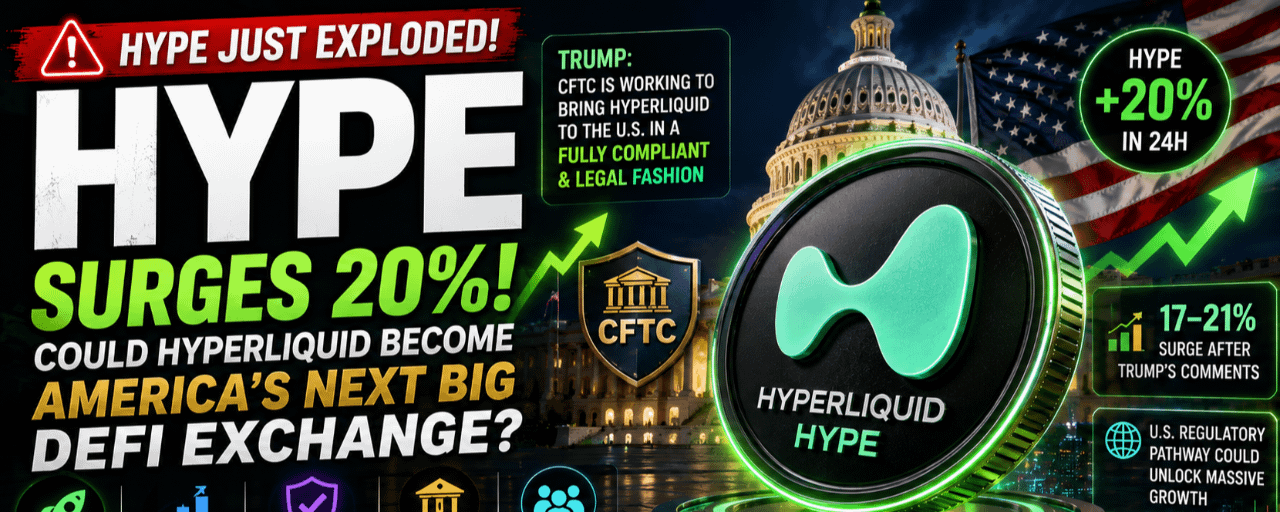
HYPE a explosé de 20 % — Hyperliquid pourrait-il devenir la prochaine grande place de marché DeFi d’Amérique ?Hyperliquid est soudainement au centre de l’un des plus grands dossiers réglementaires de la crypto.
HYPE a fortement bondi après que le président américain Donald Trump a déclaré que le président de la CFTC, Michael Selig, travaille à une voie pour intégrer Hyperliquid aux États-Unis, dans un cadre pleinement conforme et légal.
Le marché a réagi immédiatement.
HYPE a grimpé de plus de 17 % en 24 heures, tandis que d’autres actifs liés à Hyperliquid ont également fortement progressé.
Mais voici la question qui compte vraiment :
La hausse de HYPE n’est-elle qu’une autre pompe crypto — ou Hyperliquid pourrait-il devenir une grande plateforme de dérivés réglementée aux États-Unis ?
HYPE a explosé de 20 % — Hyperliquid pourrait-il devenir la prochaine grande place de marché DeFi d’Amérique ?
Hyperliquid est soudainement au centre de l’un des plus grands dossiers réglementaires de la crypto.
HYPE a fortement bondi après que le président américain Donald Trump a déclaré que le président de la CFTC, Michael Selig, travaille à une voie pour intégrer Hyperliquid aux États-Unis, dans un cadre pleinement conforme et légal.
Le marché a réagi immédiatement.
HYPE a grimpé de plus de 17 % en 24 heures, tandis que d’autres actifs liés à Hyperliquid ont également fortement progressé.
Mais voici la question qui compte vraiment :
La hausse de HYPE n’est-elle qu’une autre pompe crypto — ou Hyperliquid pourrait-il devenir une grande plateforme de dérivés réglementée aux États-Unis ?
HYPE a fortement bondi après que le président américain Donald Trump a déclaré que le président de la CFTC, Michael Selig, travaille à une voie pour intégrer Hyperliquid aux États-Unis, dans un cadre pleinement conforme et légal.
Le marché a réagi immédiatement.
HYPE a grimpé de plus de 17 % en 24 heures, tandis que d’autres actifs liés à Hyperliquid ont également fortement progressé.
Mais voici la question qui compte vraiment :
La hausse de HYPE n’est-elle qu’une autre pompe crypto — ou Hyperliquid pourrait-il devenir une grande plateforme de dérivés réglementée aux États-Unis ?
1
143
Article
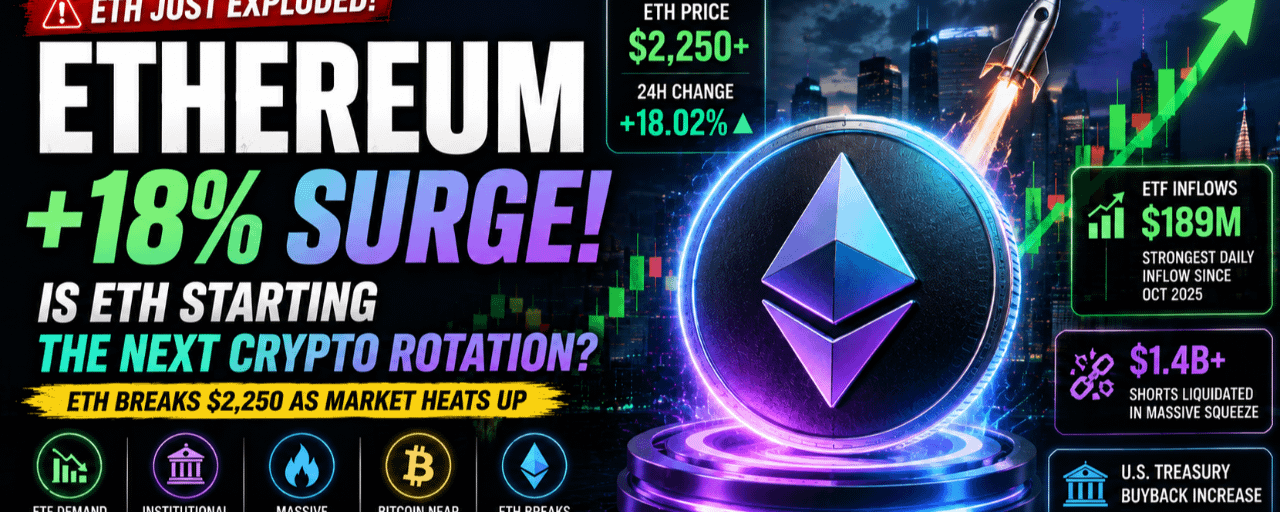
Ethereum a explosé de 18 % — Est-ce que l’ETH lance la prochaine rotation crypto ?L’Ethereum repart à la hausse. Et cette fois, le marché a bien plus à discuter que juste une bougie verte.
L’ETH a bondi d’environ 18 %, franchissant le seuil des 2 000 $ et atteignant environ 2 250 $, alors que l’ensemble du marché crypto entrait dans une puissante reprise. Le Bitcoin a aussi poussé vers les 69 000 $, tandis que près de 1,4 milliard de dollars en positions short crypto étaient effacées.
Mais voici la question :
S’agit-il simplement d’un énorme short squeeze — ou est-ce que l’Ethereum commence enfin une bien plus grande tendance de renversement ?
🔥 L’ETH est soudain devenu le centre d’attention du marché
Ethereum a explosé de 18 % — Est-ce que l’ETH lance la prochaine rotation crypto ?
L’Ethereum repart à la hausse. Et cette fois, le marché a bien plus à discuter que juste une bougie verte.
L’ETH a bondi d’environ 18 %, franchissant le seuil des 2 000 $ et atteignant environ 2 250 $, alors que l’ensemble du marché crypto entrait dans une puissante reprise. Le Bitcoin a aussi poussé vers les 69 000 $, tandis que près de 1,4 milliard de dollars en positions short crypto étaient effacées.
Mais voici la question :
S’agit-il simplement d’un énorme short squeeze — ou est-ce que l’Ethereum commence enfin une bien plus grande tendance de renversement ?
🔥 L’ETH est soudain devenu le centre d’attention du marché
L’ETH a bondi d’environ 18 %, franchissant le seuil des 2 000 $ et atteignant environ 2 250 $, alors que l’ensemble du marché crypto entrait dans une puissante reprise. Le Bitcoin a aussi poussé vers les 69 000 $, tandis que près de 1,4 milliard de dollars en positions short crypto étaient effacées.
Mais voici la question :
S’agit-il simplement d’un énorme short squeeze — ou est-ce que l’Ethereum commence enfin une bien plus grande tendance de renversement ?
🔥 L’ETH est soudain devenu le centre d’attention du marché
86
Article
Voir la traduction
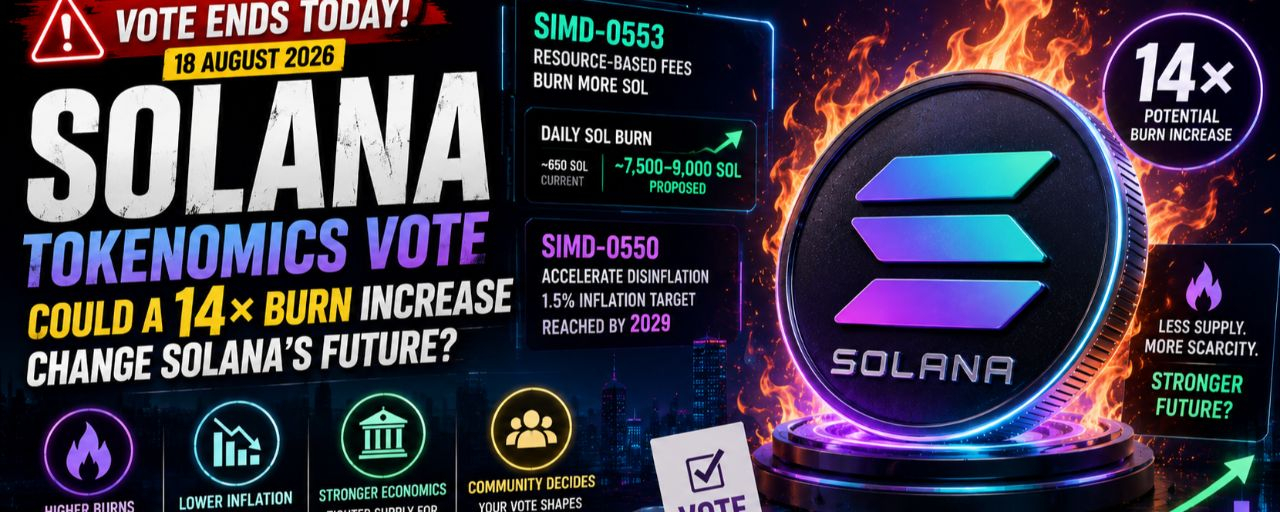
SOL Faces a Major Tokenomics Vote Today — Could a 14× Burn Increase Change Solana Forever?Solana is approaching a potentially important turning point.
Today, August 18, the governance window for proposals aimed at changing SOL's supply economics is closing.
One proposal could dramatically increase the amount of SOL burned through transaction fees, while another would accelerate the network's long-term reduction in new SOL issuance.
At first glance, this sounds extremely bullish.
But there is a catch:
More burns do not automatically mean SOL becomes deflationary overnight.
And that's where the real story begins.
🔥 The 14× Burn Proposal
The main proposal, SIMD-0553, would change how Solana charges for computational resources.
Instead of relying primarily on a flat transaction fee, the proposal would introduce resource-based fees.
The portion tied to resource consumption would be burned, permanently removing SOL from circulation.
Current daily SOL burns are roughly 650 SOL.
Under the proposed system, estimates put potential burns at around 7,500–9,000 SOL per day once the highest fee phase is reached.
That's potentially around a 12–14× increase.
And naturally, the crypto market is asking:
Could this become a major supply shock for SOL?
📉 But Here's What Many Traders Could Miss
Even if Solana reaches a 9,000 SOL daily burn rate, the network would not immediately become deflationary.
Why?
Because Solana currently issues substantially more new SOL than the proposed burn would destroy.
One recent analysis estimates current issuance at around 60,000 SOL per day.
So the simplified picture looks like this:
New SOL entering circulation → ~60K/day
Potential SOL burned → ~9K/day
That still leaves net positive issuance.
Therefore, the proposal is better understood as:
“Reducing the rate of supply expansion”
rather than:
“SOL becomes instantly deflationary.”
That's an important distinction.
⚡ SIMD-0550 Could Change the Other Side of the Equation
The burn proposal isn't the only change being discussed.
SIMD-0550 proposes doubling Solana's annual disinflation rate from 15% to 30%.
According to the proposal's own modelling, this could bring Solana's long-term 1.5% inflation rate forward from roughly H1 2032 to H1 2029.
The modelling estimates approximately 18.9 million fewer SOL issued over six years compared with the existing schedule.
So Solana is effectively attacking supply from two directions:
🔥 SIMD-0553
More SOL gets burned
📉 SIMD-0550
Less new SOL gets created
Together, that's much more significant than either proposal on its own.
🏦 Why Does This Matter for SOL Holders?
Tokenomics matters because long-term asset value isn't determined by demand alone.
Supply matters too.
Imagine two networks with identical demand.
If Network A continually creates large amounts of new tokens while Network B gradually reduces issuance and burns more tokens, their long-term supply dynamics can look very different.
That's the thesis behind these Solana proposals.
The objective isn't necessarily to create an immediate price pump.
It's to make SOL's supply curve tighter over time.
🚨 But There Is a Risk Bulls Shouldn't Ignore
Lower issuance sounds great for token holders.
But staking rewards are partly tied to SOL issuance.
If inflation falls faster, staking yields can also decline.
The SIMD-0550 proposal models nominal staking yields falling faster under the accelerated disinflation schedule.
That creates a trade-off:
Lower inflation = potentially better supply dynamics
but also:
Lower staking rewards = potentially less incentive for some validators/stakers.
The proposal's own modelling estimates that some validators could become unprofitable faster under the accelerated schedule.
So this isn't a free lunch.
⚔️ The Real Battle: Supply vs Demand
Here's the most important point for investors:
Reducing supply does not guarantee higher prices.
If demand remains weak, a lower inflation rate alone may not be enough to create a major rally.
This is why the Solana thesis ultimately depends on both sides:
Supply
🔥 More burns
📉 Lower issuance
💎 Tighter long-term supply
Demand
👥 More users
💰 More economic activity
🏦 Institutional adoption
📊 More fees
🌐 More applications
If supply becomes tighter while demand continues growing, the long-term setup becomes much more interesting.
📈 Could This Become a Catalyst for SOL?
Potentially—but traders should separate short-term reaction from long-term fundamentals.
The market could initially react to the headline:
“SOL burn could increase 14×.”
That sounds extremely bullish.
But sophisticated investors will probably look deeper.
They'll ask:
How much SOL is actually burned?How quickly does the new fee system reach its terminal phase?Does network activity continue growing?How much issuance remains?What happens to staking participation?Does SOL demand increase alongside the supply changes?
Those questions matter more than the headline number.
👀 The Vote Is the Immediate Catalyst
The governance process is what makes today's story particularly interesting.
The vote window is scheduled to close on August 18, 2026.
That means traders are watching for a clear outcome:
🟢 If the proposals advance
The market could interpret it as a major step toward tighter SOL tokenomics.
🔴 If support weakens
Expectations for the supply changes could be pushed back.
🟡 If the outcome is uncertain
SOL could remain driven primarily by Bitcoin, liquidity and broader altcoin sentiment.
And remember:
A governance proposal is not the same thing as an implemented protocol change.
Even if approved, implementation would occur through future network upgrades and phased activation.
🧠 What I'm Watching After the Vote
For me, the most important signals aren't just the headline.
I'd watch these five things:
1️⃣ Final governance outcome
Does the proposal receive enough support?
2️⃣ Actual implementation timeline
When do the proposed fee changes become active?
3️⃣ SOL burn rate
Does the network actually approach the projected levels?
4️⃣ SOL issuance
How quickly does new supply decline?
5️⃣ Network demand
Does Solana continue attracting users, applications and economic activity?
The fifth point may ultimately be the most important.
Because scarcity without demand isn't enough.
🚀 My Take
Solana's tokenomics proposals are interesting because they represent a shift in how the network thinks about SOL's long-term economics.
SIMD-0553 could dramatically increase SOL burns.
SIMD-0550 could accelerate disinflation.
Together, they could make the long-term supply curve meaningfully tighter.
But I wouldn't call this an automatic “SOL price explosion” catalyst.
The proposals still have to translate into something much more important:
More sustainable economic demand for SOL.
If Solana can combine tighter supply with continued network growth, the long-term tokenomics story could become much stronger.
If demand doesn't keep up, however, lower issuance alone may not be enough.
That's why today's vote is important—but what happens to Solana's actual usage afterward could matter even more.
💬 What Do YOU Think?
If Solana's proposals increase burns and accelerate disinflation, what happens to SOL over the next 1–2 years? 👀
🟢 Major bullish catalyst 🚀
🔵 Long-term positive, but slow
🔴 Supply changes won't matter without demand
🟡 Too early to tell
👇 Vote and tell me WHY.
#Solana #SOL #Crypto #SolanaNews #Tokenomics #DeFi #Altcoins #CryptoMarket #Blockchain #BinanceSquare
SOL Faces a Major Tokenomics Vote Today — Could a 14× Burn Increase Change Solana Forever?
Solana is approaching a potentially important turning point.
Today, August 18, the governance window for proposals aimed at changing SOL's supply economics is closing.
One proposal could dramatically increase the amount of SOL burned through transaction fees, while another would accelerate the network's long-term reduction in new SOL issuance.
At first glance, this sounds extremely bullish.
But there is a catch:
More burns do not automatically mean SOL becomes deflationary overnight.
And that's where the real story begins.
🔥 The 14× Burn Proposal
The main proposal, SIMD-0553, would change how Solana charges for computational resources.
Instead of relying primarily on a flat transaction fee, the proposal would introduce resource-based fees.
The portion tied to resource consumption would be burned, permanently removing SOL from circulation.
Current daily SOL burns are roughly 650 SOL.
Under the proposed system, estimates put potential burns at around 7,500–9,000 SOL per day once the highest fee phase is reached.
That's potentially around a 12–14× increase.
And naturally, the crypto market is asking:
Could this become a major supply shock for SOL?
📉 But Here's What Many Traders Could Miss
Even if Solana reaches a 9,000 SOL daily burn rate, the network would not immediately become deflationary.
Why?
Because Solana currently issues substantially more new SOL than the proposed burn would destroy.
One recent analysis estimates current issuance at around 60,000 SOL per day.
So the simplified picture looks like this:
New SOL entering circulation → ~60K/day
Potential SOL burned → ~9K/day
That still leaves net positive issuance.
Therefore, the proposal is better understood as:
“Reducing the rate of supply expansion”
rather than:
“SOL becomes instantly deflationary.”
That's an important distinction.
⚡ SIMD-0550 Could Change the Other Side of the Equation
The burn proposal isn't the only change being discussed.
SIMD-0550 proposes doubling Solana's annual disinflation rate from 15% to 30%.
According to the proposal's own modelling, this could bring Solana's long-term 1.5% inflation rate forward from roughly H1 2032 to H1 2029.
The modelling estimates approximately 18.9 million fewer SOL issued over six years compared with the existing schedule.
So Solana is effectively attacking supply from two directions:
🔥 SIMD-0553
More SOL gets burned
📉 SIMD-0550
Less new SOL gets created
Together, that's much more significant than either proposal on its own.
🏦 Why Does This Matter for SOL Holders?
Tokenomics matters because long-term asset value isn't determined by demand alone.
Supply matters too.
Imagine two networks with identical demand.
If Network A continually creates large amounts of new tokens while Network B gradually reduces issuance and burns more tokens, their long-term supply dynamics can look very different.
That's the thesis behind these Solana proposals.
The objective isn't necessarily to create an immediate price pump.
It's to make SOL's supply curve tighter over time.
🚨 But There Is a Risk Bulls Shouldn't Ignore
Lower issuance sounds great for token holders.
But staking rewards are partly tied to SOL issuance.
If inflation falls faster, staking yields can also decline.
The SIMD-0550 proposal models nominal staking yields falling faster under the accelerated disinflation schedule.
That creates a trade-off:
Lower inflation = potentially better supply dynamics
but also:
Lower staking rewards = potentially less incentive for some validators/stakers.
The proposal's own modelling estimates that some validators could become unprofitable faster under the accelerated schedule.
So this isn't a free lunch.
⚔️ The Real Battle: Supply vs Demand
Here's the most important point for investors:
Reducing supply does not guarantee higher prices.
If demand remains weak, a lower inflation rate alone may not be enough to create a major rally.
This is why the Solana thesis ultimately depends on both sides:
Supply
🔥 More burns
📉 Lower issuance
💎 Tighter long-term supply
Demand
👥 More users
💰 More economic activity
🏦 Institutional adoption
📊 More fees
🌐 More applications
If supply becomes tighter while demand continues growing, the long-term setup becomes much more interesting.
📈 Could This Become a Catalyst for SOL?
Potentially—but traders should separate short-term reaction from long-term fundamentals.
The market could initially react to the headline:
“SOL burn could increase 14×.”
That sounds extremely bullish.
But sophisticated investors will probably look deeper.
They'll ask:
How much SOL is actually burned?How quickly does the new fee system reach its terminal phase?Does network activity continue growing?How much issuance remains?What happens to staking participation?Does SOL demand increase alongside the supply changes?
Those questions matter more than the headline number.
👀 The Vote Is the Immediate Catalyst
The governance process is what makes today's story particularly interesting.
The vote window is scheduled to close on August 18, 2026.
That means traders are watching for a clear outcome:
🟢 If the proposals advance
The market could interpret it as a major step toward tighter SOL tokenomics.
🔴 If support weakens
Expectations for the supply changes could be pushed back.
🟡 If the outcome is uncertain
SOL could remain driven primarily by Bitcoin, liquidity and broader altcoin sentiment.
And remember:
A governance proposal is not the same thing as an implemented protocol change.
Even if approved, implementation would occur through future network upgrades and phased activation.
🧠 What I'm Watching After the Vote
For me, the most important signals aren't just the headline.
I'd watch these five things:
1️⃣ Final governance outcome
Does the proposal receive enough support?
2️⃣ Actual implementation timeline
When do the proposed fee changes become active?
3️⃣ SOL burn rate
Does the network actually approach the projected levels?
4️⃣ SOL issuance
How quickly does new supply decline?
5️⃣ Network demand
Does Solana continue attracting users, applications and economic activity?
The fifth point may ultimately be the most important.
Because scarcity without demand isn't enough.
🚀 My Take
Solana's tokenomics proposals are interesting because they represent a shift in how the network thinks about SOL's long-term economics.
SIMD-0553 could dramatically increase SOL burns.
SIMD-0550 could accelerate disinflation.
Together, they could make the long-term supply curve meaningfully tighter.
But I wouldn't call this an automatic “SOL price explosion” catalyst.
The proposals still have to translate into something much more important:
More sustainable economic demand for SOL.
If Solana can combine tighter supply with continued network growth, the long-term tokenomics story could become much stronger.
If demand doesn't keep up, however, lower issuance alone may not be enough.
That's why today's vote is important—but what happens to Solana's actual usage afterward could matter even more.
💬 What Do YOU Think?
If Solana's proposals increase burns and accelerate disinflation, what happens to SOL over the next 1–2 years? 👀
🟢 Major bullish catalyst 🚀
🔵 Long-term positive, but slow
🔴 Supply changes won't matter without demand
🟡 Too early to tell
👇 Vote and tell me WHY.
#Solana #SOL #Crypto #SolanaNews #Tokenomics #DeFi #Altcoins #CryptoMarket #Blockchain #BinanceSquare
Today, August 18, the governance window for proposals aimed at changing SOL's supply economics is closing.
One proposal could dramatically increase the amount of SOL burned through transaction fees, while another would accelerate the network's long-term reduction in new SOL issuance.
At first glance, this sounds extremely bullish.
But there is a catch:
More burns do not automatically mean SOL becomes deflationary overnight.
And that's where the real story begins.
🔥 The 14× Burn Proposal
The main proposal, SIMD-0553, would change how Solana charges for computational resources.
Instead of relying primarily on a flat transaction fee, the proposal would introduce resource-based fees.
The portion tied to resource consumption would be burned, permanently removing SOL from circulation.
Current daily SOL burns are roughly 650 SOL.
Under the proposed system, estimates put potential burns at around 7,500–9,000 SOL per day once the highest fee phase is reached.
That's potentially around a 12–14× increase.
And naturally, the crypto market is asking:
Could this become a major supply shock for SOL?
📉 But Here's What Many Traders Could Miss
Even if Solana reaches a 9,000 SOL daily burn rate, the network would not immediately become deflationary.
Why?
Because Solana currently issues substantially more new SOL than the proposed burn would destroy.
One recent analysis estimates current issuance at around 60,000 SOL per day.
So the simplified picture looks like this:
New SOL entering circulation → ~60K/day
Potential SOL burned → ~9K/day
That still leaves net positive issuance.
Therefore, the proposal is better understood as:
“Reducing the rate of supply expansion”
rather than:
“SOL becomes instantly deflationary.”
That's an important distinction.
⚡ SIMD-0550 Could Change the Other Side of the Equation
The burn proposal isn't the only change being discussed.
SIMD-0550 proposes doubling Solana's annual disinflation rate from 15% to 30%.
According to the proposal's own modelling, this could bring Solana's long-term 1.5% inflation rate forward from roughly H1 2032 to H1 2029.
The modelling estimates approximately 18.9 million fewer SOL issued over six years compared with the existing schedule.
So Solana is effectively attacking supply from two directions:
🔥 SIMD-0553
More SOL gets burned
📉 SIMD-0550
Less new SOL gets created
Together, that's much more significant than either proposal on its own.
🏦 Why Does This Matter for SOL Holders?
Tokenomics matters because long-term asset value isn't determined by demand alone.
Supply matters too.
Imagine two networks with identical demand.
If Network A continually creates large amounts of new tokens while Network B gradually reduces issuance and burns more tokens, their long-term supply dynamics can look very different.
That's the thesis behind these Solana proposals.
The objective isn't necessarily to create an immediate price pump.
It's to make SOL's supply curve tighter over time.
🚨 But There Is a Risk Bulls Shouldn't Ignore
Lower issuance sounds great for token holders.
But staking rewards are partly tied to SOL issuance.
If inflation falls faster, staking yields can also decline.
The SIMD-0550 proposal models nominal staking yields falling faster under the accelerated disinflation schedule.
That creates a trade-off:
Lower inflation = potentially better supply dynamics
but also:
Lower staking rewards = potentially less incentive for some validators/stakers.
The proposal's own modelling estimates that some validators could become unprofitable faster under the accelerated schedule.
So this isn't a free lunch.
⚔️ The Real Battle: Supply vs Demand
Here's the most important point for investors:
Reducing supply does not guarantee higher prices.
If demand remains weak, a lower inflation rate alone may not be enough to create a major rally.
This is why the Solana thesis ultimately depends on both sides:
Supply
🔥 More burns
📉 Lower issuance
💎 Tighter long-term supply
Demand
👥 More users
💰 More economic activity
🏦 Institutional adoption
📊 More fees
🌐 More applications
If supply becomes tighter while demand continues growing, the long-term setup becomes much more interesting.
📈 Could This Become a Catalyst for SOL?
Potentially—but traders should separate short-term reaction from long-term fundamentals.
The market could initially react to the headline:
“SOL burn could increase 14×.”
That sounds extremely bullish.
But sophisticated investors will probably look deeper.
They'll ask:
How much SOL is actually burned?How quickly does the new fee system reach its terminal phase?Does network activity continue growing?How much issuance remains?What happens to staking participation?Does SOL demand increase alongside the supply changes?
Those questions matter more than the headline number.
👀 The Vote Is the Immediate Catalyst
The governance process is what makes today's story particularly interesting.
The vote window is scheduled to close on August 18, 2026.
That means traders are watching for a clear outcome:
🟢 If the proposals advance
The market could interpret it as a major step toward tighter SOL tokenomics.
🔴 If support weakens
Expectations for the supply changes could be pushed back.
🟡 If the outcome is uncertain
SOL could remain driven primarily by Bitcoin, liquidity and broader altcoin sentiment.
And remember:
A governance proposal is not the same thing as an implemented protocol change.
Even if approved, implementation would occur through future network upgrades and phased activation.
🧠 What I'm Watching After the Vote
For me, the most important signals aren't just the headline.
I'd watch these five things:
1️⃣ Final governance outcome
Does the proposal receive enough support?
2️⃣ Actual implementation timeline
When do the proposed fee changes become active?
3️⃣ SOL burn rate
Does the network actually approach the projected levels?
4️⃣ SOL issuance
How quickly does new supply decline?
5️⃣ Network demand
Does Solana continue attracting users, applications and economic activity?
The fifth point may ultimately be the most important.
Because scarcity without demand isn't enough.
🚀 My Take
Solana's tokenomics proposals are interesting because they represent a shift in how the network thinks about SOL's long-term economics.
SIMD-0553 could dramatically increase SOL burns.
SIMD-0550 could accelerate disinflation.
Together, they could make the long-term supply curve meaningfully tighter.
But I wouldn't call this an automatic “SOL price explosion” catalyst.
The proposals still have to translate into something much more important:
More sustainable economic demand for SOL.
If Solana can combine tighter supply with continued network growth, the long-term tokenomics story could become much stronger.
If demand doesn't keep up, however, lower issuance alone may not be enough.
That's why today's vote is important—but what happens to Solana's actual usage afterward could matter even more.
💬 What Do YOU Think?
If Solana's proposals increase burns and accelerate disinflation, what happens to SOL over the next 1–2 years? 👀
🟢 Major bullish catalyst 🚀
🔵 Long-term positive, but slow
🔴 Supply changes won't matter without demand
🟡 Too early to tell
👇 Vote and tell me WHY.
#Solana #SOL #Crypto #SolanaNews #Tokenomics #DeFi #Altcoins #CryptoMarket #Blockchain #BinanceSquare
54
Voir la traduction
The crypto industry is evolving beyond trading.
Users are accessing broader markets, using stablecoins as financial infrastructure, and increasingly spending crypto in everyday life.
Innovation matters most when it gives people practical, secure, and meaningful access to opportunity.
The crypto industry is evolving beyond trading.
Users are accessing broader markets, using stablecoins as financial infrastructure, and increasingly spending crypto in everyday life.
Innovation matters most when it gives people practical, secure, and meaningful access to opportunity.
Users are accessing broader markets, using stablecoins as financial infrastructure, and increasingly spending crypto in everyday life.
Innovation matters most when it gives people practical, secure, and meaningful access to opportunity.
42
Voir la traduction
🚨 HYPE Is Moving… But the Real Story May Be RWA 👀
Bitcoin is still hovering around the $63K–$64K zone, but Hyperliquid (HYPE) is getting fresh attention this week.
Here's the part I find interesting:
🏦 RWA activity attracted 169K wallets in H1 2026
📊 RWA-related activity accounted for 31.7% of new Hyperliquid users
🔥 HYPE is showing stronger momentum while BTC remains range-bound.
So the question isn't just:
“Can HYPE pump?”
It's:
“Could real-world assets become Hyperliquid's next major growth engine?” 👀
🟢 Yes — RWA could be huge
🔴 Too much competition
🟡 Still too early
What's your take? 👇
#HYPE #Hyperliquid #RWA #Crypto #Altcoins #DeFi #Bitcoin #CryptoMarket #BinanceSquare
🚨 HYPE Is Moving… But the Real Story May Be RWA 👀
Bitcoin is still hovering around the $63K–$64K zone, but Hyperliquid (HYPE) is getting fresh attention this week.
Here's the part I find interesting:
🏦 RWA activity attracted 169K wallets in H1 2026
📊 RWA-related activity accounted for 31.7% of new Hyperliquid users
🔥 HYPE is showing stronger momentum while BTC remains range-bound.
So the question isn't just:
“Can HYPE pump?”
It's:
“Could real-world assets become Hyperliquid's next major growth engine?” 👀
🟢 Yes — RWA could be huge
🔴 Too much competition
🟡 Still too early
What's your take? 👇
#HYPE #Hyperliquid #RWA #Crypto #Altcoins #DeFi #Bitcoin #CryptoMarket #BinanceSquare
Bitcoin is still hovering around the $63K–$64K zone, but Hyperliquid (HYPE) is getting fresh attention this week.
Here's the part I find interesting:
🏦 RWA activity attracted 169K wallets in H1 2026
📊 RWA-related activity accounted for 31.7% of new Hyperliquid users
🔥 HYPE is showing stronger momentum while BTC remains range-bound.
So the question isn't just:
“Can HYPE pump?”
It's:
“Could real-world assets become Hyperliquid's next major growth engine?” 👀
🟢 Yes — RWA could be huge
🔴 Too much competition
🟡 Still too early
What's your take? 👇
#HYPE #Hyperliquid #RWA #Crypto #Altcoins #DeFi #Bitcoin #CryptoMarket #BinanceSquare
131
Article
Voir la traduction
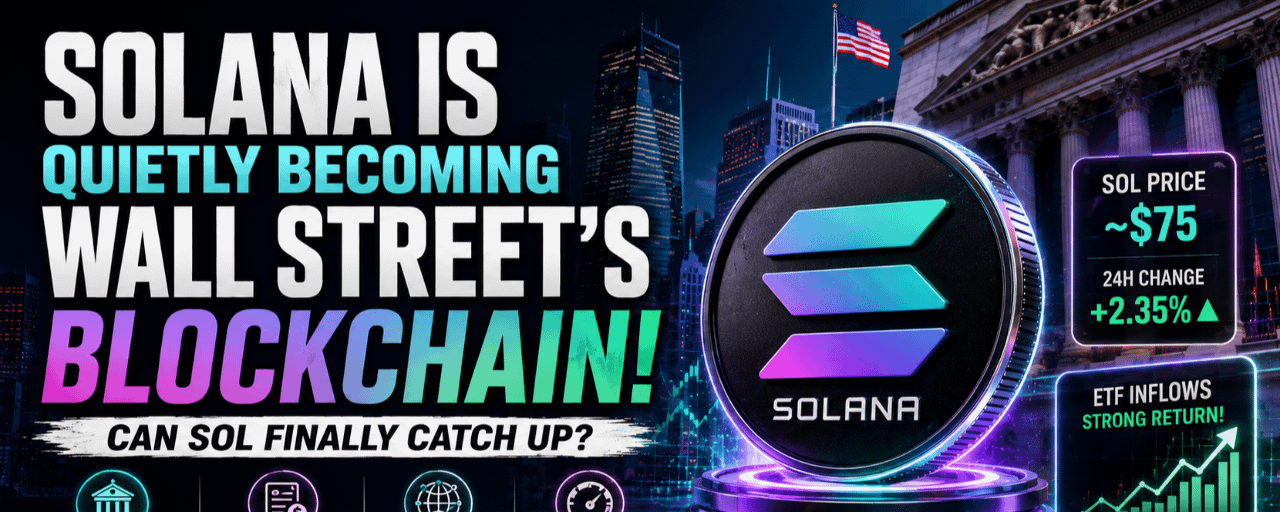
Solana Is Quietly Becoming Wall Street’s Blockchain — Can SOL Finally Catch Up?Solana's price isn't making explosive moves right now.
But underneath the price chart, something much more interesting may be happening.
Institutional money is returning.
Tokenized real-world assets are expanding.
And Solana is continuing to upgrade its infrastructure.
That raises an important question:
Is SOL being overlooked while the network quietly builds one of crypto's strongest institutional narratives?
🏦 ETF Demand Is Coming Back
One of the biggest signals catching traders' attention is the renewed demand for Solana investment products.
Recent data showed Solana spot ETFs recording their strongest single-day inflow since May, with approximately $8.8 million entering on August 10.
Weekly flows have also made Solana stand out among major crypto assets.
Recent market data showed SOL leading weekly crypto ETF inflows during the August 10–15 period, even while the broader market remained relatively quiet.
That's important because price alone doesn't tell the entire story.
If institutional capital is increasing exposure while SOL remains around the mid-$70s, traders have to ask:
Is accumulation happening before the next major move?
💰 But ETF Flows Aren't the Most Interesting Part
The bigger story may actually be tokenization.
Solana is increasingly being used as infrastructure for assets that traditionally live inside financial markets.
And the latest numbers are catching attention.
According to RWA.xyz-linked data, Solana recorded approximately $378 million in net inflows into tokenized U.S. Treasury activity over the latest 30-day period, the largest increase among blockchain networks during that period.
Meanwhile, the broader tokenized Treasury market reached approximately $16.23 billion in distributed value as of August 15.
This changes the Solana narrative.
It's no longer only:
memecoins + DeFi + fast transactions.
The conversation is increasingly becoming:
Treasuries + equities + stablecoins + institutional finance.
🌎 Solana Is Moving Deeper Into Real-World Assets
Solana's own ecosystem reporting has already highlighted strong RWA growth.
In May, Solana reported that its RWA ecosystem had crossed $2.8 billion, while tokenized-equity activity reached a 97% share of cumulative on-chain tokenized-equities spot trading volume at that time.
And the expansion hasn't stopped.
Tokenized stocks and ETFs are increasingly appearing across multiple blockchain networks, with Solana becoming one of the major venues for this activity.
That's potentially a much bigger long-term narrative than another short-lived altcoin pump.
Because if traditional assets increasingly move on-chain, the blockchain providing the infrastructure could become strategically important.
⚡ Another Catalyst: Solana's Agave 4.2 Upgrade
There's another development worth watching this week.
Solana's Agave 4.2 upgrade has a feature-activation window around the week of August 17.
The upgrade is aimed at reducing slot times from roughly 400ms toward 350ms, with a longer-term target around 200ms, while also reducing storage costs.
Why does that matter?
Because institutional adoption doesn't only require liquidity.
It requires infrastructure that can handle increasing demand efficiently.
If Solana can continue improving performance while attracting financial assets, its institutional narrative becomes stronger.
🤔 So Why Isn't SOL Already Exploding?
This is the question bulls need to answer.
SOL is currently around $75, while its previous all-time high was far above today's level.
Yet despite:
ETF inflowsRWA growthTokenized Treasury activityNetwork upgradesStablecoin growth
SOL isn't currently experiencing a massive breakout.
That could mean two things.
🟢 Bullish interpretation
The market hasn't fully priced in Solana's institutional growth yet.
🔴 Bearish interpretation
The positive developments may already be reflected in valuations, while broader crypto liquidity remains weak.
And this is exactly where the debate becomes interesting.
📊 The Biggest Question: Does Network Growth Actually Benefit SOL?
There's an important distinction investors shouldn't ignore.
Solana the network ≠ SOL the token.
A blockchain can attract more assets, users and transactions without the native token necessarily rising immediately.
That's because the market ultimately needs to determine how much of that ecosystem growth translates into sustainable demand for SOL.
This is one of the biggest questions facing the Solana thesis.
Recent analysis has similarly highlighted that strong network activity doesn't automatically translate one-for-one into value flowing to SOL holders.
So the bullish case needs more than impressive adoption statistics.
It needs a stronger connection between:
network growth → economic activity → SOL demand.
🏦 Could Solana Become a Major RWA Settlement Layer?
This may be the most important long-term question.
Imagine a future where:
Treasury bills are tokenized.
Stocks trade on-chain.
Funds settle through blockchain infrastructure.
Stablecoins move billions of dollars globally.
And financial institutions need a fast, scalable network underneath all of it.
If Solana captures even a meaningful portion of that activity, its role in crypto could look very different.
It would no longer be viewed simply as another Layer-1.
It could increasingly be viewed as financial-market infrastructure.
Solana itself describes its network as infrastructure for internet capital markets, payments and crypto applications.
⚠️ But There Are Still Risks
The bullish story isn't guaranteed.
1️⃣ Broader crypto weakness
If Bitcoin and the wider market remain weak, SOL can struggle regardless of fundamentals.
2️⃣ ETF flows can reverse
One strong week doesn't establish a permanent institutional trend.
3️⃣ Competition
Ethereum, BNB Chain and other networks are also competing for tokenized assets.
4️⃣ Valuation
Strong fundamentals don't automatically mean SOL is cheap.
5️⃣ Token-value capture
The biggest question remains how much network growth ultimately benefits SOL itself.
👀 The 5 Things I'm Watching This Week
If I were tracking SOL closely, these would be my main indicators:
1️⃣ ETF flows
Does institutional demand continue?
2️⃣ Tokenized Treasury growth
Can Solana maintain its recent RWA momentum?
3️⃣ Agave 4.2 activation
Does the upgrade deliver the expected infrastructure improvements?
4️⃣ SOL price structure
Can SOL move decisively above its current range?
5️⃣ Bitcoin liquidity
Can the broader market support an altcoin rotation?
These five signals together could tell us much more than simply watching the SOL price.
🚀 Final Take
Solana's most interesting story right now may not be its price.
It's what is happening around the price.
ETF demand has started showing signs of returning.
Tokenized U.S. Treasury activity is accelerating.
The broader RWA ecosystem continues expanding.
And Solana is entering another important infrastructure-upgrade phase.
That creates a fascinating setup.
The network is building.
Institutions are watching.
Tokenized assets are growing.
But SOL still needs to prove that this ecosystem growth can translate into sustained token demand.
That's the real investment debate.
Is Solana quietly building the financial infrastructure of the next crypto cycle — while the market is still focused on the price chart? 👀
💬 What Do YOU Think?
Can Solana become one of the biggest blockchain winners from institutional RWA adoption?
🟢 Yes — SOL is still undervalued 🚀
🔵 Institutional adoption will take time
🔴 Too much is already priced in
🟡 ETH will dominate RWA instead
👇 Vote and tell me your reason.
#Solana #SOL #RWA #Tokenization #CryptoETF #DeFi #Altcoins #Bitcoin #Ethereum #CryptoMarket #BinanceSquare
Solana Is Quietly Becoming Wall Street’s Blockchain — Can SOL Finally Catch Up?
Solana's price isn't making explosive moves right now.
But underneath the price chart, something much more interesting may be happening.
Institutional money is returning.
Tokenized real-world assets are expanding.
And Solana is continuing to upgrade its infrastructure.
That raises an important question:
Is SOL being overlooked while the network quietly builds one of crypto's strongest institutional narratives?
🏦 ETF Demand Is Coming Back
One of the biggest signals catching traders' attention is the renewed demand for Solana investment products.
Recent data showed Solana spot ETFs recording their strongest single-day inflow since May, with approximately $8.8 million entering on August 10.
Weekly flows have also made Solana stand out among major crypto assets.
Recent market data showed SOL leading weekly crypto ETF inflows during the August 10–15 period, even while the broader market remained relatively quiet.
That's important because price alone doesn't tell the entire story.
If institutional capital is increasing exposure while SOL remains around the mid-$70s, traders have to ask:
Is accumulation happening before the next major move?
💰 But ETF Flows Aren't the Most Interesting Part
The bigger story may actually be tokenization.
Solana is increasingly being used as infrastructure for assets that traditionally live inside financial markets.
And the latest numbers are catching attention.
According to RWA.xyz-linked data, Solana recorded approximately $378 million in net inflows into tokenized U.S. Treasury activity over the latest 30-day period, the largest increase among blockchain networks during that period.
Meanwhile, the broader tokenized Treasury market reached approximately $16.23 billion in distributed value as of August 15.
This changes the Solana narrative.
It's no longer only:
memecoins + DeFi + fast transactions.
The conversation is increasingly becoming:
Treasuries + equities + stablecoins + institutional finance.
🌎 Solana Is Moving Deeper Into Real-World Assets
Solana's own ecosystem reporting has already highlighted strong RWA growth.
In May, Solana reported that its RWA ecosystem had crossed $2.8 billion, while tokenized-equity activity reached a 97% share of cumulative on-chain tokenized-equities spot trading volume at that time.
And the expansion hasn't stopped.
Tokenized stocks and ETFs are increasingly appearing across multiple blockchain networks, with Solana becoming one of the major venues for this activity.
That's potentially a much bigger long-term narrative than another short-lived altcoin pump.
Because if traditional assets increasingly move on-chain, the blockchain providing the infrastructure could become strategically important.
⚡ Another Catalyst: Solana's Agave 4.2 Upgrade
There's another development worth watching this week.
Solana's Agave 4.2 upgrade has a feature-activation window around the week of August 17.
The upgrade is aimed at reducing slot times from roughly 400ms toward 350ms, with a longer-term target around 200ms, while also reducing storage costs.
Why does that matter?
Because institutional adoption doesn't only require liquidity.
It requires infrastructure that can handle increasing demand efficiently.
If Solana can continue improving performance while attracting financial assets, its institutional narrative becomes stronger.
🤔 So Why Isn't SOL Already Exploding?
This is the question bulls need to answer.
SOL is currently around $75, while its previous all-time high was far above today's level.
Yet despite:
ETF inflowsRWA growthTokenized Treasury activityNetwork upgradesStablecoin growth
SOL isn't currently experiencing a massive breakout.
That could mean two things.
🟢 Bullish interpretation
The market hasn't fully priced in Solana's institutional growth yet.
🔴 Bearish interpretation
The positive developments may already be reflected in valuations, while broader crypto liquidity remains weak.
And this is exactly where the debate becomes interesting.
📊 The Biggest Question: Does Network Growth Actually Benefit SOL?
There's an important distinction investors shouldn't ignore.
Solana the network ≠ SOL the token.
A blockchain can attract more assets, users and transactions without the native token necessarily rising immediately.
That's because the market ultimately needs to determine how much of that ecosystem growth translates into sustainable demand for SOL.
This is one of the biggest questions facing the Solana thesis.
Recent analysis has similarly highlighted that strong network activity doesn't automatically translate one-for-one into value flowing to SOL holders.
So the bullish case needs more than impressive adoption statistics.
It needs a stronger connection between:
network growth → economic activity → SOL demand.
🏦 Could Solana Become a Major RWA Settlement Layer?
This may be the most important long-term question.
Imagine a future where:
Treasury bills are tokenized.
Stocks trade on-chain.
Funds settle through blockchain infrastructure.
Stablecoins move billions of dollars globally.
And financial institutions need a fast, scalable network underneath all of it.
If Solana captures even a meaningful portion of that activity, its role in crypto could look very different.
It would no longer be viewed simply as another Layer-1.
It could increasingly be viewed as financial-market infrastructure.
Solana itself describes its network as infrastructure for internet capital markets, payments and crypto applications.
⚠️ But There Are Still Risks
The bullish story isn't guaranteed.
1️⃣ Broader crypto weakness
If Bitcoin and the wider market remain weak, SOL can struggle regardless of fundamentals.
2️⃣ ETF flows can reverse
One strong week doesn't establish a permanent institutional trend.
3️⃣ Competition
Ethereum, BNB Chain and other networks are also competing for tokenized assets.
4️⃣ Valuation
Strong fundamentals don't automatically mean SOL is cheap.
5️⃣ Token-value capture
The biggest question remains how much network growth ultimately benefits SOL itself.
👀 The 5 Things I'm Watching This Week
If I were tracking SOL closely, these would be my main indicators:
1️⃣ ETF flows
Does institutional demand continue?
2️⃣ Tokenized Treasury growth
Can Solana maintain its recent RWA momentum?
3️⃣ Agave 4.2 activation
Does the upgrade deliver the expected infrastructure improvements?
4️⃣ SOL price structure
Can SOL move decisively above its current range?
5️⃣ Bitcoin liquidity
Can the broader market support an altcoin rotation?
These five signals together could tell us much more than simply watching the SOL price.
🚀 Final Take
Solana's most interesting story right now may not be its price.
It's what is happening around the price.
ETF demand has started showing signs of returning.
Tokenized U.S. Treasury activity is accelerating.
The broader RWA ecosystem continues expanding.
And Solana is entering another important infrastructure-upgrade phase.
That creates a fascinating setup.
The network is building.
Institutions are watching.
Tokenized assets are growing.
But SOL still needs to prove that this ecosystem growth can translate into sustained token demand.
That's the real investment debate.
Is Solana quietly building the financial infrastructure of the next crypto cycle — while the market is still focused on the price chart? 👀
💬 What Do YOU Think?
Can Solana become one of the biggest blockchain winners from institutional RWA adoption?
🟢 Yes — SOL is still undervalued 🚀
🔵 Institutional adoption will take time
🔴 Too much is already priced in
🟡 ETH will dominate RWA instead
👇 Vote and tell me your reason.
#Solana #SOL #RWA #Tokenization #CryptoETF #DeFi #Altcoins #Bitcoin #Ethereum #CryptoMarket #BinanceSquare
But underneath the price chart, something much more interesting may be happening.
Institutional money is returning.
Tokenized real-world assets are expanding.
And Solana is continuing to upgrade its infrastructure.
That raises an important question:
Is SOL being overlooked while the network quietly builds one of crypto's strongest institutional narratives?
🏦 ETF Demand Is Coming Back
One of the biggest signals catching traders' attention is the renewed demand for Solana investment products.
Recent data showed Solana spot ETFs recording their strongest single-day inflow since May, with approximately $8.8 million entering on August 10.
Weekly flows have also made Solana stand out among major crypto assets.
Recent market data showed SOL leading weekly crypto ETF inflows during the August 10–15 period, even while the broader market remained relatively quiet.
That's important because price alone doesn't tell the entire story.
If institutional capital is increasing exposure while SOL remains around the mid-$70s, traders have to ask:
Is accumulation happening before the next major move?
💰 But ETF Flows Aren't the Most Interesting Part
The bigger story may actually be tokenization.
Solana is increasingly being used as infrastructure for assets that traditionally live inside financial markets.
And the latest numbers are catching attention.
According to RWA.xyz-linked data, Solana recorded approximately $378 million in net inflows into tokenized U.S. Treasury activity over the latest 30-day period, the largest increase among blockchain networks during that period.
Meanwhile, the broader tokenized Treasury market reached approximately $16.23 billion in distributed value as of August 15.
This changes the Solana narrative.
It's no longer only:
memecoins + DeFi + fast transactions.
The conversation is increasingly becoming:
Treasuries + equities + stablecoins + institutional finance.
🌎 Solana Is Moving Deeper Into Real-World Assets
Solana's own ecosystem reporting has already highlighted strong RWA growth.
In May, Solana reported that its RWA ecosystem had crossed $2.8 billion, while tokenized-equity activity reached a 97% share of cumulative on-chain tokenized-equities spot trading volume at that time.
And the expansion hasn't stopped.
Tokenized stocks and ETFs are increasingly appearing across multiple blockchain networks, with Solana becoming one of the major venues for this activity.
That's potentially a much bigger long-term narrative than another short-lived altcoin pump.
Because if traditional assets increasingly move on-chain, the blockchain providing the infrastructure could become strategically important.
⚡ Another Catalyst: Solana's Agave 4.2 Upgrade
There's another development worth watching this week.
Solana's Agave 4.2 upgrade has a feature-activation window around the week of August 17.
The upgrade is aimed at reducing slot times from roughly 400ms toward 350ms, with a longer-term target around 200ms, while also reducing storage costs.
Why does that matter?
Because institutional adoption doesn't only require liquidity.
It requires infrastructure that can handle increasing demand efficiently.
If Solana can continue improving performance while attracting financial assets, its institutional narrative becomes stronger.
🤔 So Why Isn't SOL Already Exploding?
This is the question bulls need to answer.
SOL is currently around $75, while its previous all-time high was far above today's level.
Yet despite:
ETF inflowsRWA growthTokenized Treasury activityNetwork upgradesStablecoin growth
SOL isn't currently experiencing a massive breakout.
That could mean two things.
🟢 Bullish interpretation
The market hasn't fully priced in Solana's institutional growth yet.
🔴 Bearish interpretation
The positive developments may already be reflected in valuations, while broader crypto liquidity remains weak.
And this is exactly where the debate becomes interesting.
📊 The Biggest Question: Does Network Growth Actually Benefit SOL?
There's an important distinction investors shouldn't ignore.
Solana the network ≠ SOL the token.
A blockchain can attract more assets, users and transactions without the native token necessarily rising immediately.
That's because the market ultimately needs to determine how much of that ecosystem growth translates into sustainable demand for SOL.
This is one of the biggest questions facing the Solana thesis.
Recent analysis has similarly highlighted that strong network activity doesn't automatically translate one-for-one into value flowing to SOL holders.
So the bullish case needs more than impressive adoption statistics.
It needs a stronger connection between:
network growth → economic activity → SOL demand.
🏦 Could Solana Become a Major RWA Settlement Layer?
This may be the most important long-term question.
Imagine a future where:
Treasury bills are tokenized.
Stocks trade on-chain.
Funds settle through blockchain infrastructure.
Stablecoins move billions of dollars globally.
And financial institutions need a fast, scalable network underneath all of it.
If Solana captures even a meaningful portion of that activity, its role in crypto could look very different.
It would no longer be viewed simply as another Layer-1.
It could increasingly be viewed as financial-market infrastructure.
Solana itself describes its network as infrastructure for internet capital markets, payments and crypto applications.
⚠️ But There Are Still Risks
The bullish story isn't guaranteed.
1️⃣ Broader crypto weakness
If Bitcoin and the wider market remain weak, SOL can struggle regardless of fundamentals.
2️⃣ ETF flows can reverse
One strong week doesn't establish a permanent institutional trend.
3️⃣ Competition
Ethereum, BNB Chain and other networks are also competing for tokenized assets.
4️⃣ Valuation
Strong fundamentals don't automatically mean SOL is cheap.
5️⃣ Token-value capture
The biggest question remains how much network growth ultimately benefits SOL itself.
👀 The 5 Things I'm Watching This Week
If I were tracking SOL closely, these would be my main indicators:
1️⃣ ETF flows
Does institutional demand continue?
2️⃣ Tokenized Treasury growth
Can Solana maintain its recent RWA momentum?
3️⃣ Agave 4.2 activation
Does the upgrade deliver the expected infrastructure improvements?
4️⃣ SOL price structure
Can SOL move decisively above its current range?
5️⃣ Bitcoin liquidity
Can the broader market support an altcoin rotation?
These five signals together could tell us much more than simply watching the SOL price.
🚀 Final Take
Solana's most interesting story right now may not be its price.
It's what is happening around the price.
ETF demand has started showing signs of returning.
Tokenized U.S. Treasury activity is accelerating.
The broader RWA ecosystem continues expanding.
And Solana is entering another important infrastructure-upgrade phase.
That creates a fascinating setup.
The network is building.
Institutions are watching.
Tokenized assets are growing.
But SOL still needs to prove that this ecosystem growth can translate into sustained token demand.
That's the real investment debate.
Is Solana quietly building the financial infrastructure of the next crypto cycle — while the market is still focused on the price chart? 👀
💬 What Do YOU Think?
Can Solana become one of the biggest blockchain winners from institutional RWA adoption?
🟢 Yes — SOL is still undervalued 🚀
🔵 Institutional adoption will take time
🔴 Too much is already priced in
🟡 ETH will dominate RWA instead
👇 Vote and tell me your reason.
#Solana #SOL #RWA #Tokenization #CryptoETF #DeFi #Altcoins #Bitcoin #Ethereum #CryptoMarket #BinanceSquare
82
Voir la traduction
🚨 Bitcoin Is Quiet… But SOL Is Getting Attention 👀
BTC is still struggling around the $63K zone.
Meanwhile, Solana is standing out as it leads weekly crypto ETF inflows. 🏦🔥
That raises an interesting question:
Could SOL outperform Bitcoin if the next altcoin rotation begins?
🟢 SOL leads the next move 🚀
🔴 BTC still dominates 📈
🟡 Altcoins need more confirmation
🔵 Market stays sideways
What’s your pick? 👇
#Solana #SOL #Bitcoin #BTC #Crypto #Altcoins #CryptoMarket #BinanceSquare
🚨 Bitcoin Is Quiet… But SOL Is Getting Attention 👀
BTC is still struggling around the $63K zone.
Meanwhile, Solana is standing out as it leads weekly crypto ETF inflows. 🏦🔥
That raises an interesting question:
Could SOL outperform Bitcoin if the next altcoin rotation begins?
🟢 SOL leads the next move 🚀
🔴 BTC still dominates 📈
🟡 Altcoins need more confirmation
🔵 Market stays sideways
What’s your pick? 👇
#Solana #SOL #Bitcoin #BTC #Crypto #Altcoins #CryptoMarket #BinanceSquare
BTC is still struggling around the $63K zone.
Meanwhile, Solana is standing out as it leads weekly crypto ETF inflows. 🏦🔥
That raises an interesting question:
Could SOL outperform Bitcoin if the next altcoin rotation begins?
🟢 SOL leads the next move 🚀
🔴 BTC still dominates 📈
🟡 Altcoins need more confirmation
🔵 Market stays sideways
What’s your pick? 👇
#Solana #SOL #Bitcoin #BTC #Crypto #Altcoins #CryptoMarket #BinanceSquare
69
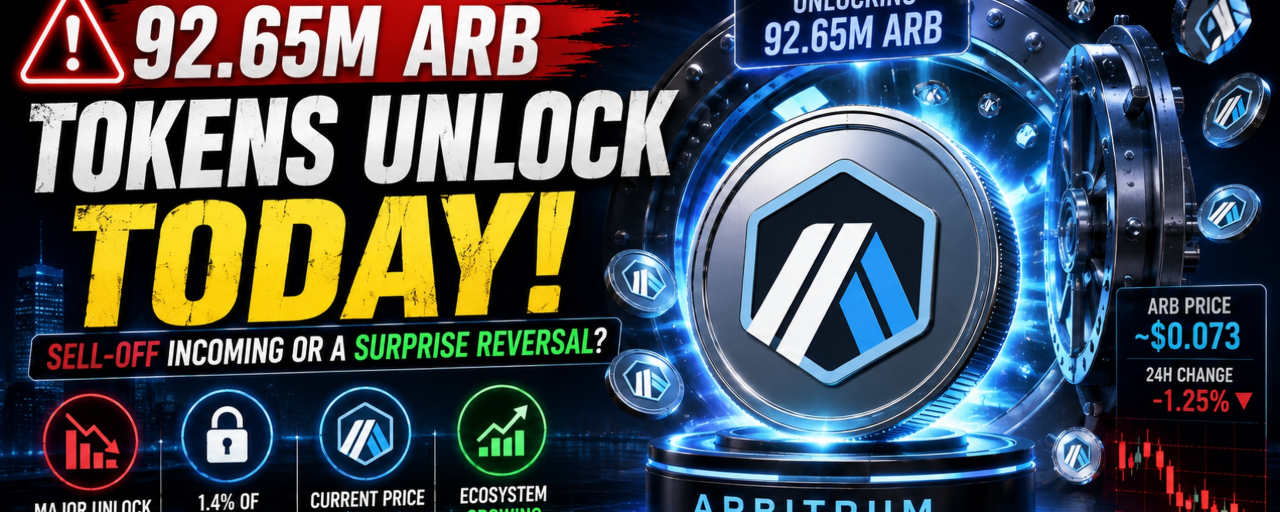
Article
92,65 M d’unités ARB débloquées aujourd’hui — Faut-il s’attendre à une vente massive ou à un retournement enfin proche d’Arbitrum ?Arbitrum fait face à un autre important test de liquidité.
Environ 92,65 millions de jetons ARB seraient signalés pour une libération autour du 16 août, soit environ 7 millions de dollars aux prix actuels. Cela représente quelque 1,4 % de l’offre en circulation, ce qui fait de l’événement d’aujourd’hui l’un des principaux catalyseurs à court terme pour les traders d’ARB.
Mais voici où l’histoire devient intéressante :
L’ARB se négocie déjà près de 0,07 $ — à des niveaux historiquement déprimés.
Ainsi, la question n’est pas simplement de savoir si le déblocage est baissier.
La vraie question est la suivante :
Le marché a-t-il déjà intégré la nouvelle offre ?
92,65 M d’unités ARB débloquées aujourd’hui — Faut-il s’attendre à une vente massive ou à un retournement enfin proche d’Arbitrum ?
Arbitrum fait face à un autre important test de liquidité.
Environ 92,65 millions de jetons ARB seraient signalés pour une libération autour du 16 août, soit environ 7 millions de dollars aux prix actuels. Cela représente quelque 1,4 % de l’offre en circulation, ce qui fait de l’événement d’aujourd’hui l’un des principaux catalyseurs à court terme pour les traders d’ARB.
Mais voici où l’histoire devient intéressante :
L’ARB se négocie déjà près de 0,07 $ — à des niveaux historiquement déprimés.
Ainsi, la question n’est pas simplement de savoir si le déblocage est baissier.
La vraie question est la suivante :
Le marché a-t-il déjà intégré la nouvelle offre ?
Environ 92,65 millions de jetons ARB seraient signalés pour une libération autour du 16 août, soit environ 7 millions de dollars aux prix actuels. Cela représente quelque 1,4 % de l’offre en circulation, ce qui fait de l’événement d’aujourd’hui l’un des principaux catalyseurs à court terme pour les traders d’ARB.
Mais voici où l’histoire devient intéressante :
L’ARB se négocie déjà près de 0,07 $ — à des niveaux historiquement déprimés.
Ainsi, la question n’est pas simplement de savoir si le déblocage est baissier.
La vraie question est la suivante :
Le marché a-t-il déjà intégré la nouvelle offre ?
130
🚨 Bitcoin ne baisse pas à cause de l’inflation… alors qu’est-ce qui freine le BTC ? 👀
Le BTC évolue autour de 63K $, même après des données d’inflation américaines plus faibles.
Désormais, deux éléments retiennent l’attention des traders :
📉 Demande d’ETF plus faible
🏛️ Réunion sur les règles crypto de la SEC annulée
Le marché a obtenu le soulagement macro qu’il attendait — mais le Bitcoin n’arrive toujours pas à construire une dynamique haussière solide.
La réglementation + la faible demande institutionnelle deviennent-elles le vrai problème pour le BTC ?
🟢 Faiblesse temporaire — cassure en approche 🚀
🔴 D’abord davantage de baisse 📉
🟡 Le BTC reste en range
Qu’en pensez-vous ? 👇
#Bitcoin #BTC #Crypto #BitcoinETF #SEC #CryptoMarket #BinanceSquare
🚨 Bitcoin ne baisse pas à cause de l’inflation… alors qu’est-ce qui freine le BTC ? 👀
Le BTC évolue autour de 63K $, même après des données d’inflation américaines plus faibles.
Désormais, deux éléments retiennent l’attention des traders :
📉 Demande d’ETF plus faible
🏛️ Réunion sur les règles crypto de la SEC annulée
Le marché a obtenu le soulagement macro qu’il attendait — mais le Bitcoin n’arrive toujours pas à construire une dynamique haussière solide.
La réglementation + la faible demande institutionnelle deviennent-elles le vrai problème pour le BTC ?
🟢 Faiblesse temporaire — cassure en approche 🚀
🔴 D’abord davantage de baisse 📉
🟡 Le BTC reste en range
Qu’en pensez-vous ? 👇
#Bitcoin #BTC #Crypto #BitcoinETF #SEC #CryptoMarket #BinanceSquare
Le BTC évolue autour de 63K $, même après des données d’inflation américaines plus faibles.
Désormais, deux éléments retiennent l’attention des traders :
📉 Demande d’ETF plus faible
🏛️ Réunion sur les règles crypto de la SEC annulée
Le marché a obtenu le soulagement macro qu’il attendait — mais le Bitcoin n’arrive toujours pas à construire une dynamique haussière solide.
La réglementation + la faible demande institutionnelle deviennent-elles le vrai problème pour le BTC ?
🟢 Faiblesse temporaire — cassure en approche 🚀
🔴 D’abord davantage de baisse 📉
🟡 Le BTC reste en range
Qu’en pensez-vous ? 👇
#Bitcoin #BTC #Crypto #BitcoinETF #SEC #CryptoMarket #BinanceSquare
71
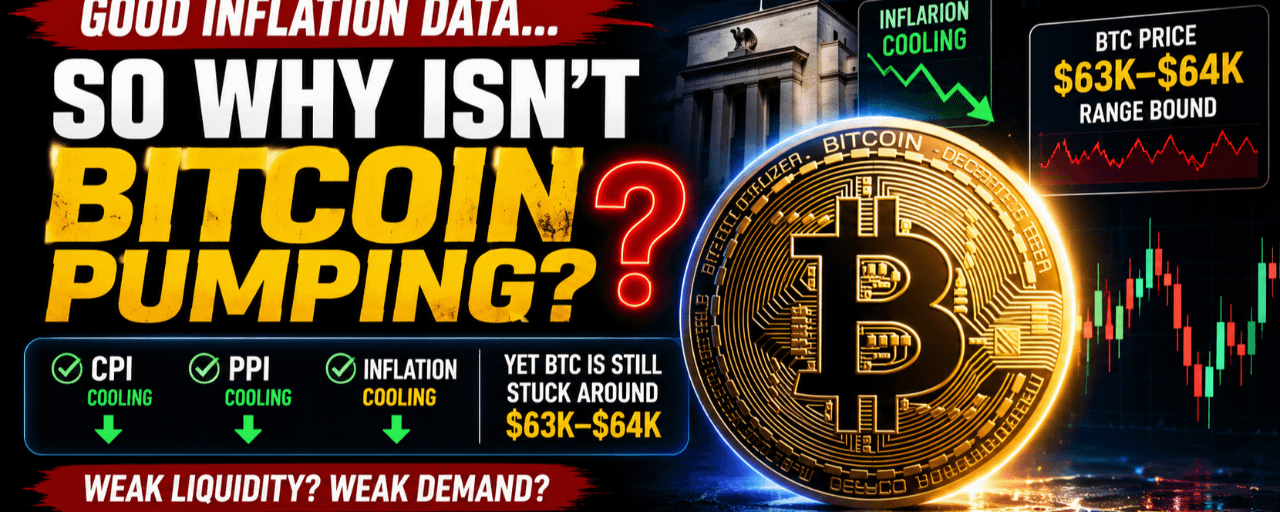
Article
Le bitcoin n’a pas réussi à rebondir malgré de bonnes données sur l’inflation — Les sorties des ETF sont-elles le vrai problème maintenant ?Le bitcoin a bénéficié du catalyseur macro. Le marché a toutefois continué de vendre.
Le bitcoin a démarré cette semaine avec un catalyseur clair.
Les données sur l’inflation ont été relativement encourageantes.
L’indice américain des prix à la consommation (CPI) de juillet est ressorti à 3,4 % en glissement annuel, tandis que les prix à la production sont restés inchangés en juillet au lieu d’augmenter, comme l’avaient anticipé les économistes. Cela aurait dû créer un environnement plus favorable aux actifs à risque.
Mais le bitcoin n’a pas tenu ses promesses : les haussiers attendaient la cassure.
Au lieu de cela, le BTC a glissé vers 62,8 K$, rendant une grande partie du rebond de la semaine dernière.
Et cela soulève une question beaucoup plus importante :
Le bitcoin n’a pas réussi à rebondir malgré de bonnes données sur l’inflation — Les sorties des ETF sont-elles le vrai problème maintenant ?
Le bitcoin a bénéficié du catalyseur macro. Le marché a toutefois continué de vendre.
Le bitcoin a démarré cette semaine avec un catalyseur clair.
Les données sur l’inflation ont été relativement encourageantes.
L’indice américain des prix à la consommation (CPI) de juillet est ressorti à 3,4 % en glissement annuel, tandis que les prix à la production sont restés inchangés en juillet au lieu d’augmenter, comme l’avaient anticipé les économistes. Cela aurait dû créer un environnement plus favorable aux actifs à risque.
Mais le bitcoin n’a pas tenu ses promesses : les haussiers attendaient la cassure.
Au lieu de cela, le BTC a glissé vers 62,8 K$, rendant une grande partie du rebond de la semaine dernière.
Et cela soulève une question beaucoup plus importante :
Le bitcoin a démarré cette semaine avec un catalyseur clair.
Les données sur l’inflation ont été relativement encourageantes.
L’indice américain des prix à la consommation (CPI) de juillet est ressorti à 3,4 % en glissement annuel, tandis que les prix à la production sont restés inchangés en juillet au lieu d’augmenter, comme l’avaient anticipé les économistes. Cela aurait dû créer un environnement plus favorable aux actifs à risque.
Mais le bitcoin n’a pas tenu ses promesses : les haussiers attendaient la cassure.
Au lieu de cela, le BTC a glissé vers 62,8 K$, rendant une grande partie du rebond de la semaine dernière.
Et cela soulève une question beaucoup plus importante :
74
🚨 Les données D’INFLATION SONT BONNES… Alors pourquoi le BTC ne pompe pas ? 👀
IPC ✅
IPP ✅
L’inflation ralentit ✅
Pourtant, le Bitcoin a toujours du mal autour de 63 000 $–64 000 $.
C’est ça, le point intéressant.
Si une bonne nouvelle macro ne fait pas monter le BTC, est-ce que des liquidités et une demande plus faibles deviennent le problème principal ? 📉
Le prochain mouvement pourrait être plus important que le prix actuel.
👇 Qu’en pensez-vous ?
🟢 Une cassure arrive 🚀
🔴 Une autre baisse d’abord
🟡 Encore plus de range
#Bitcoin #BTC #Crypto #CryptoMarket #BitcoinETF #Altcoins #BinanceSquare
🚨 Les données D’INFLATION SONT BONNES… Alors pourquoi le BTC ne pompe pas ? 👀
IPC ✅
IPP ✅
L’inflation ralentit ✅
Pourtant, le Bitcoin a toujours du mal autour de 63 000 $–64 000 $.
C’est ça, le point intéressant.
Si une bonne nouvelle macro ne fait pas monter le BTC, est-ce que des liquidités et une demande plus faibles deviennent le problème principal ? 📉
Le prochain mouvement pourrait être plus important que le prix actuel.
👇 Qu’en pensez-vous ?
🟢 Une cassure arrive 🚀
🔴 Une autre baisse d’abord
🟡 Encore plus de range
#Bitcoin #BTC #Crypto #CryptoMarket #BitcoinETF #Altcoins #BinanceSquare
IPC ✅
IPP ✅
L’inflation ralentit ✅
Pourtant, le Bitcoin a toujours du mal autour de 63 000 $–64 000 $.
C’est ça, le point intéressant.
Si une bonne nouvelle macro ne fait pas monter le BTC, est-ce que des liquidités et une demande plus faibles deviennent le problème principal ? 📉
Le prochain mouvement pourrait être plus important que le prix actuel.
👇 Qu’en pensez-vous ?
🟢 Une cassure arrive 🚀
🔴 Une autre baisse d’abord
🟡 Encore plus de range
#Bitcoin #BTC #Crypto #CryptoMarket #BitcoinETF #Altcoins #BinanceSquare
58
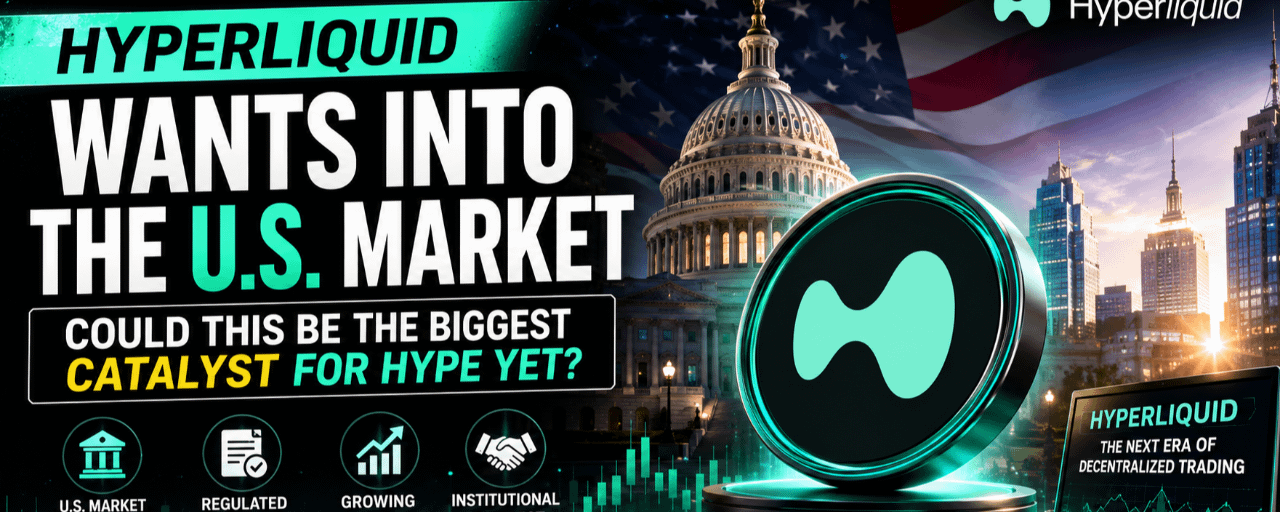
Article
Voir la traduction
Hyperliquid Wants Into the U.S. Market — Could This Be the Biggest Catalyst for HYPE Yet?A New Chapter Could Be Opening for One of Crypto's Fastest-Growing Trading Networks
Hyperliquid started as a crypto-native perpetual-futures platform.
Now it is trying to solve a much bigger problem:
How can a decentralized derivatives platform reach the U.S. market without losing the advantages that made it successful?
Recent reports indicate that Hyperliquid is exploring a regulatory path with U.S. regulators that could allow regulated firms to offer its perpetual futures to American traders.
If that route succeeds, it could dramatically expand Hyperliquid's addressable market.
And that makes HYPE one of the most interesting altcoins to watch right now.
🇺🇸 Why the U.S. Market Matters So Much
The United States represents one of the world's most important financial markets.
But Hyperliquid currently does not offer its perpetual-futures products directly to U.S. users because of regulatory uncertainty.
That means a successful regulatory structure could potentially unlock:
U.S. tradersInstitutional participationGreater liquidityMore derivatives volumeNew financial partnershipsStronger mainstream visibility
The opportunity isn't simply about adding more users.
It's about connecting Hyperliquid's on-chain trading infrastructure with one of the world's largest regulated financial markets.
⚡ Hyperliquid Already Has Something Traditional Exchanges Want
Hyperliquid's biggest advantage is its trading infrastructure.
The platform offers 300+ perpetual and spot markets, operates fully on-chain and runs 24/7.
That gives traders something traditional markets historically haven't offered in the same way:
continuous, transparent, blockchain-based trading.
And the network has already demonstrated significant economic activity.
Hyperliquid has even generated more weekly blockchain fees than major networks such as Ethereum and Solana during some periods, largely because of its perpetual-futures business.
That makes the U.S. expansion story much more interesting.
This isn't a new protocol searching for product-market fit.
It's an established crypto trading platform trying to enter a much larger market.
💰 HYPE's Fundamentals Are Getting Attention
Price isn't the only reason investors are watching HYPE.
Recent Q2 reporting showed Hyperliquid's net income jumping sharply, with one recent analysis putting quarterly profit at approximately $30.95 million, representing roughly 250% growth.
That matters because crypto valuations are increasingly being compared with actual protocol revenue.
Instead of asking only:
"How much can HYPE pump?"
Investors are increasingly asking:
"How much money does the underlying network generate?"
That's a much more serious investment narrative.
📈 HYPE Is Showing Relative Strength
HYPE has also been performing strongly compared with many major crypto assets.
Recent market data places HYPE around $57, with a market capitalization of roughly $12.7 billion and 24-hour trading volume around $300 million.
The token also gained roughly 5% during the August 13 session while Bitcoin and several major cryptocurrencies were relatively subdued.
That relative strength is important.
When capital starts moving into an altcoin while Bitcoin remains range-bound, traders naturally start asking:
Is a new narrative forming?
🏦 But Wall Street Isn't Completely Bullish
This is where the story gets more interesting.
JPMorgan recently warned that Hyperliquid's competitive position could face pressure as regulated U.S. platforms develop similar perpetual-futures products.
The bank also noted that HYPE ETF inflows, which had been strong in May and June, slowed considerably during July and early August.
So there are two forces working against each other.
🟢 Bullish
U.S. expansion + strong revenue + growing adoption
🔴 Bearish
Regulated competitors + slowing ETF momentum
That's exactly why this is a better article than simply calling HYPE "the next big coin."
There is a genuine debate.
⚔️ The Competition Could Become Brutal
Hyperliquid isn't entering an empty market.
Traditional and crypto-native platforms are also looking at regulated derivatives.
The CFTC has already opened a route for registered exchanges to list similar perpetual-style products in the U.S.
That could bring major competitors into the same market.
The challenge for Hyperliquid is therefore:
Can it preserve its liquidity and user experience while operating within a more regulated environment?
If yes, the opportunity could be enormous.
If not, competitors could capture the U.S. market before Hyperliquid establishes itself.
🔥 Why This Could Be a Major Catalyst for HYPE
A successful U.S. expansion could create several potential growth engines.
1️⃣ More trading volume
More users could mean more perpetual-futures activity.
2️⃣ Greater liquidity
Institutional participation could deepen markets.
3️⃣ Stronger brand recognition
U.S. market access could push Hyperliquid further into mainstream crypto discussions.
4️⃣ More protocol revenue
Higher activity could potentially increase the economic value generated by the network.
5️⃣ Stronger HYPE narrative
Investors could begin valuing HYPE increasingly as a revenue-generating crypto asset, rather than simply an altcoin.
⚠️ But There Is One Huge Question
Even if Hyperliquid gets a path into the U.S., regulatory access doesn't automatically guarantee HYPE price appreciation.
The market will still need to see:
Real users.
Real volume.
Real revenue growth.
Real institutional adoption.
And importantly, Hyperliquid will have to prove that it can compete against regulated platforms with much deeper traditional financial connections.
👀 What I'm Watching Next
For HYPE, these are the five signals I'd watch most closely:
🇺🇸 1. U.S. regulatory progress
Does Hyperliquid actually secure a workable route?
📊 2. Perpetual-futures volume
Does trading activity continue growing?
💰 3. Protocol revenue
Can strong Q2 performance continue?
🏦 4. Institutional demand
Do HYPE funds and institutional products start seeing renewed inflows?
⚔️ 5. Competition
How aggressively do regulated U.S. platforms enter the perpetual-futures market?
These indicators will tell us much more than a single HYPE price candle.
🚀 Final Thoughts
Hyperliquid's U.S. expansion could become one of the most important developments in the HYPE story.
The platform already has:
Strong trading activity.
A major perpetual-futures business.
Growing revenue.
Institutional attention.
Now it is trying to solve the biggest remaining challenge:
U.S. market access.
If Hyperliquid successfully combines its on-chain trading model with a compliant U.S. structure, it could potentially move from being a major crypto derivatives platform to becoming a much broader digital financial infrastructure player.
But the road won't be easy.
Regulated competitors are coming.
ETF momentum has cooled.
And regulatory approval is far from guaranteed.
That's what makes HYPE interesting right now.
The next chapter isn't simply about whether HYPE can pump.
It's about whether Hyperliquid can turn its crypto-native advantage into a genuine U.S. financial-market opportunity.
💬 What Do YOU Think?
If Hyperliquid gets a regulated U.S. route, what happens to HYPE? 👀
🟢 Major bullish catalyst 🚀
🔵 Already priced in
🔴 Competition will limit growth
🟡 Too early to tell
👇 Vote and tell me WHY.
#Hyperliquid #HYPE #Crypto #DeFi #Perpetuals #Altcoins #CFTC #CryptoMarket #BinanceSquare
Hyperliquid Wants Into the U.S. Market — Could This Be the Biggest Catalyst for HYPE Yet?
A New Chapter Could Be Opening for One of Crypto's Fastest-Growing Trading Networks
Hyperliquid started as a crypto-native perpetual-futures platform.
Now it is trying to solve a much bigger problem:
How can a decentralized derivatives platform reach the U.S. market without losing the advantages that made it successful?
Recent reports indicate that Hyperliquid is exploring a regulatory path with U.S. regulators that could allow regulated firms to offer its perpetual futures to American traders.
If that route succeeds, it could dramatically expand Hyperliquid's addressable market.
And that makes HYPE one of the most interesting altcoins to watch right now.
🇺🇸 Why the U.S. Market Matters So Much
The United States represents one of the world's most important financial markets.
But Hyperliquid currently does not offer its perpetual-futures products directly to U.S. users because of regulatory uncertainty.
That means a successful regulatory structure could potentially unlock:
U.S. tradersInstitutional participationGreater liquidityMore derivatives volumeNew financial partnershipsStronger mainstream visibility
The opportunity isn't simply about adding more users.
It's about connecting Hyperliquid's on-chain trading infrastructure with one of the world's largest regulated financial markets.
⚡ Hyperliquid Already Has Something Traditional Exchanges Want
Hyperliquid's biggest advantage is its trading infrastructure.
The platform offers 300+ perpetual and spot markets, operates fully on-chain and runs 24/7.
That gives traders something traditional markets historically haven't offered in the same way:
continuous, transparent, blockchain-based trading.
And the network has already demonstrated significant economic activity.
Hyperliquid has even generated more weekly blockchain fees than major networks such as Ethereum and Solana during some periods, largely because of its perpetual-futures business.
That makes the U.S. expansion story much more interesting.
This isn't a new protocol searching for product-market fit.
It's an established crypto trading platform trying to enter a much larger market.
💰 HYPE's Fundamentals Are Getting Attention
Price isn't the only reason investors are watching HYPE.
Recent Q2 reporting showed Hyperliquid's net income jumping sharply, with one recent analysis putting quarterly profit at approximately $30.95 million, representing roughly 250% growth.
That matters because crypto valuations are increasingly being compared with actual protocol revenue.
Instead of asking only:
"How much can HYPE pump?"
Investors are increasingly asking:
"How much money does the underlying network generate?"
That's a much more serious investment narrative.
📈 HYPE Is Showing Relative Strength
HYPE has also been performing strongly compared with many major crypto assets.
Recent market data places HYPE around $57, with a market capitalization of roughly $12.7 billion and 24-hour trading volume around $300 million.
The token also gained roughly 5% during the August 13 session while Bitcoin and several major cryptocurrencies were relatively subdued.
That relative strength is important.
When capital starts moving into an altcoin while Bitcoin remains range-bound, traders naturally start asking:
Is a new narrative forming?
🏦 But Wall Street Isn't Completely Bullish
This is where the story gets more interesting.
JPMorgan recently warned that Hyperliquid's competitive position could face pressure as regulated U.S. platforms develop similar perpetual-futures products.
The bank also noted that HYPE ETF inflows, which had been strong in May and June, slowed considerably during July and early August.
So there are two forces working against each other.
🟢 Bullish
U.S. expansion + strong revenue + growing adoption
🔴 Bearish
Regulated competitors + slowing ETF momentum
That's exactly why this is a better article than simply calling HYPE "the next big coin."
There is a genuine debate.
⚔️ The Competition Could Become Brutal
Hyperliquid isn't entering an empty market.
Traditional and crypto-native platforms are also looking at regulated derivatives.
The CFTC has already opened a route for registered exchanges to list similar perpetual-style products in the U.S.
That could bring major competitors into the same market.
The challenge for Hyperliquid is therefore:
Can it preserve its liquidity and user experience while operating within a more regulated environment?
If yes, the opportunity could be enormous.
If not, competitors could capture the U.S. market before Hyperliquid establishes itself.
🔥 Why This Could Be a Major Catalyst for HYPE
A successful U.S. expansion could create several potential growth engines.
1️⃣ More trading volume
More users could mean more perpetual-futures activity.
2️⃣ Greater liquidity
Institutional participation could deepen markets.
3️⃣ Stronger brand recognition
U.S. market access could push Hyperliquid further into mainstream crypto discussions.
4️⃣ More protocol revenue
Higher activity could potentially increase the economic value generated by the network.
5️⃣ Stronger HYPE narrative
Investors could begin valuing HYPE increasingly as a revenue-generating crypto asset, rather than simply an altcoin.
⚠️ But There Is One Huge Question
Even if Hyperliquid gets a path into the U.S., regulatory access doesn't automatically guarantee HYPE price appreciation.
The market will still need to see:
Real users.
Real volume.
Real revenue growth.
Real institutional adoption.
And importantly, Hyperliquid will have to prove that it can compete against regulated platforms with much deeper traditional financial connections.
👀 What I'm Watching Next
For HYPE, these are the five signals I'd watch most closely:
🇺🇸 1. U.S. regulatory progress
Does Hyperliquid actually secure a workable route?
📊 2. Perpetual-futures volume
Does trading activity continue growing?
💰 3. Protocol revenue
Can strong Q2 performance continue?
🏦 4. Institutional demand
Do HYPE funds and institutional products start seeing renewed inflows?
⚔️ 5. Competition
How aggressively do regulated U.S. platforms enter the perpetual-futures market?
These indicators will tell us much more than a single HYPE price candle.
🚀 Final Thoughts
Hyperliquid's U.S. expansion could become one of the most important developments in the HYPE story.
The platform already has:
Strong trading activity.
A major perpetual-futures business.
Growing revenue.
Institutional attention.
Now it is trying to solve the biggest remaining challenge:
U.S. market access.
If Hyperliquid successfully combines its on-chain trading model with a compliant U.S. structure, it could potentially move from being a major crypto derivatives platform to becoming a much broader digital financial infrastructure player.
But the road won't be easy.
Regulated competitors are coming.
ETF momentum has cooled.
And regulatory approval is far from guaranteed.
That's what makes HYPE interesting right now.
The next chapter isn't simply about whether HYPE can pump.
It's about whether Hyperliquid can turn its crypto-native advantage into a genuine U.S. financial-market opportunity.
💬 What Do YOU Think?
If Hyperliquid gets a regulated U.S. route, what happens to HYPE? 👀
🟢 Major bullish catalyst 🚀
🔵 Already priced in
🔴 Competition will limit growth
🟡 Too early to tell
👇 Vote and tell me WHY.
#Hyperliquid #HYPE #Crypto #DeFi #Perpetuals #Altcoins #CFTC #CryptoMarket #BinanceSquare
Hyperliquid started as a crypto-native perpetual-futures platform.
Now it is trying to solve a much bigger problem:
How can a decentralized derivatives platform reach the U.S. market without losing the advantages that made it successful?
Recent reports indicate that Hyperliquid is exploring a regulatory path with U.S. regulators that could allow regulated firms to offer its perpetual futures to American traders.
If that route succeeds, it could dramatically expand Hyperliquid's addressable market.
And that makes HYPE one of the most interesting altcoins to watch right now.
🇺🇸 Why the U.S. Market Matters So Much
The United States represents one of the world's most important financial markets.
But Hyperliquid currently does not offer its perpetual-futures products directly to U.S. users because of regulatory uncertainty.
That means a successful regulatory structure could potentially unlock:
U.S. tradersInstitutional participationGreater liquidityMore derivatives volumeNew financial partnershipsStronger mainstream visibility
The opportunity isn't simply about adding more users.
It's about connecting Hyperliquid's on-chain trading infrastructure with one of the world's largest regulated financial markets.
⚡ Hyperliquid Already Has Something Traditional Exchanges Want
Hyperliquid's biggest advantage is its trading infrastructure.
The platform offers 300+ perpetual and spot markets, operates fully on-chain and runs 24/7.
That gives traders something traditional markets historically haven't offered in the same way:
continuous, transparent, blockchain-based trading.
And the network has already demonstrated significant economic activity.
Hyperliquid has even generated more weekly blockchain fees than major networks such as Ethereum and Solana during some periods, largely because of its perpetual-futures business.
That makes the U.S. expansion story much more interesting.
This isn't a new protocol searching for product-market fit.
It's an established crypto trading platform trying to enter a much larger market.
💰 HYPE's Fundamentals Are Getting Attention
Price isn't the only reason investors are watching HYPE.
Recent Q2 reporting showed Hyperliquid's net income jumping sharply, with one recent analysis putting quarterly profit at approximately $30.95 million, representing roughly 250% growth.
That matters because crypto valuations are increasingly being compared with actual protocol revenue.
Instead of asking only:
"How much can HYPE pump?"
Investors are increasingly asking:
"How much money does the underlying network generate?"
That's a much more serious investment narrative.
📈 HYPE Is Showing Relative Strength
HYPE has also been performing strongly compared with many major crypto assets.
Recent market data places HYPE around $57, with a market capitalization of roughly $12.7 billion and 24-hour trading volume around $300 million.
The token also gained roughly 5% during the August 13 session while Bitcoin and several major cryptocurrencies were relatively subdued.
That relative strength is important.
When capital starts moving into an altcoin while Bitcoin remains range-bound, traders naturally start asking:
Is a new narrative forming?
🏦 But Wall Street Isn't Completely Bullish
This is where the story gets more interesting.
JPMorgan recently warned that Hyperliquid's competitive position could face pressure as regulated U.S. platforms develop similar perpetual-futures products.
The bank also noted that HYPE ETF inflows, which had been strong in May and June, slowed considerably during July and early August.
So there are two forces working against each other.
🟢 Bullish
U.S. expansion + strong revenue + growing adoption
🔴 Bearish
Regulated competitors + slowing ETF momentum
That's exactly why this is a better article than simply calling HYPE "the next big coin."
There is a genuine debate.
⚔️ The Competition Could Become Brutal
Hyperliquid isn't entering an empty market.
Traditional and crypto-native platforms are also looking at regulated derivatives.
The CFTC has already opened a route for registered exchanges to list similar perpetual-style products in the U.S.
That could bring major competitors into the same market.
The challenge for Hyperliquid is therefore:
Can it preserve its liquidity and user experience while operating within a more regulated environment?
If yes, the opportunity could be enormous.
If not, competitors could capture the U.S. market before Hyperliquid establishes itself.
🔥 Why This Could Be a Major Catalyst for HYPE
A successful U.S. expansion could create several potential growth engines.
1️⃣ More trading volume
More users could mean more perpetual-futures activity.
2️⃣ Greater liquidity
Institutional participation could deepen markets.
3️⃣ Stronger brand recognition
U.S. market access could push Hyperliquid further into mainstream crypto discussions.
4️⃣ More protocol revenue
Higher activity could potentially increase the economic value generated by the network.
5️⃣ Stronger HYPE narrative
Investors could begin valuing HYPE increasingly as a revenue-generating crypto asset, rather than simply an altcoin.
⚠️ But There Is One Huge Question
Even if Hyperliquid gets a path into the U.S., regulatory access doesn't automatically guarantee HYPE price appreciation.
The market will still need to see:
Real users.
Real volume.
Real revenue growth.
Real institutional adoption.
And importantly, Hyperliquid will have to prove that it can compete against regulated platforms with much deeper traditional financial connections.
👀 What I'm Watching Next
For HYPE, these are the five signals I'd watch most closely:
🇺🇸 1. U.S. regulatory progress
Does Hyperliquid actually secure a workable route?
📊 2. Perpetual-futures volume
Does trading activity continue growing?
💰 3. Protocol revenue
Can strong Q2 performance continue?
🏦 4. Institutional demand
Do HYPE funds and institutional products start seeing renewed inflows?
⚔️ 5. Competition
How aggressively do regulated U.S. platforms enter the perpetual-futures market?
These indicators will tell us much more than a single HYPE price candle.
🚀 Final Thoughts
Hyperliquid's U.S. expansion could become one of the most important developments in the HYPE story.
The platform already has:
Strong trading activity.
A major perpetual-futures business.
Growing revenue.
Institutional attention.
Now it is trying to solve the biggest remaining challenge:
U.S. market access.
If Hyperliquid successfully combines its on-chain trading model with a compliant U.S. structure, it could potentially move from being a major crypto derivatives platform to becoming a much broader digital financial infrastructure player.
But the road won't be easy.
Regulated competitors are coming.
ETF momentum has cooled.
And regulatory approval is far from guaranteed.
That's what makes HYPE interesting right now.
The next chapter isn't simply about whether HYPE can pump.
It's about whether Hyperliquid can turn its crypto-native advantage into a genuine U.S. financial-market opportunity.
💬 What Do YOU Think?
If Hyperliquid gets a regulated U.S. route, what happens to HYPE? 👀
🟢 Major bullish catalyst 🚀
🔵 Already priced in
🔴 Competition will limit growth
🟡 Too early to tell
👇 Vote and tell me WHY.
#Hyperliquid #HYPE #Crypto #DeFi #Perpetuals #Altcoins #CFTC #CryptoMarket #BinanceSquare
103
BTC évolue toujours latéralement autour de la zone de 63 000 à 64 000 $.
Mais une narration autour d’une autre crypto se démarque aujourd’hui :
🔥 Hyperliquid (HYPE)
Alors que l’attention se porte sur la percée d’Hyperliquid sur le marché américain des contrats perpétuels, les traders observent si HYPE peut continuer à surperformer tandis que les principales cryptos restent calmes.
HYPE est-elle en train de devenir la crypto altcoin à surveiller pendant que la BTC consolide ? 👀
🟢 Oui — HYPE ne fait que commencer
🔴 Non — c’est la BTC qui mènera le prochain mouvement
👇 Et vous, quel est votre avis ?
#HYPE #Hyperliquid #Crypto #Altcoins #BTC #BinanceSquare
BTC évolue toujours latéralement autour de la zone de 63 000 à 64 000 $.
Mais une narration autour d’une autre crypto se démarque aujourd’hui :
🔥 Hyperliquid (HYPE)
Alors que l’attention se porte sur la percée d’Hyperliquid sur le marché américain des contrats perpétuels, les traders observent si HYPE peut continuer à surperformer tandis que les principales cryptos restent calmes.
HYPE est-elle en train de devenir la crypto altcoin à surveiller pendant que la BTC consolide ? 👀
🟢 Oui — HYPE ne fait que commencer
🔴 Non — c’est la BTC qui mènera le prochain mouvement
👇 Et vous, quel est votre avis ?
#HYPE #Hyperliquid #Crypto #Altcoins #BTC #BinanceSquare
Mais une narration autour d’une autre crypto se démarque aujourd’hui :
🔥 Hyperliquid (HYPE)
Alors que l’attention se porte sur la percée d’Hyperliquid sur le marché américain des contrats perpétuels, les traders observent si HYPE peut continuer à surperformer tandis que les principales cryptos restent calmes.
HYPE est-elle en train de devenir la crypto altcoin à surveiller pendant que la BTC consolide ? 👀
🟢 Oui — HYPE ne fait que commencer
🔴 Non — c’est la BTC qui mènera le prochain mouvement
👇 Et vous, quel est votre avis ?
#HYPE #Hyperliquid #Crypto #Altcoins #BTC #BinanceSquare
109
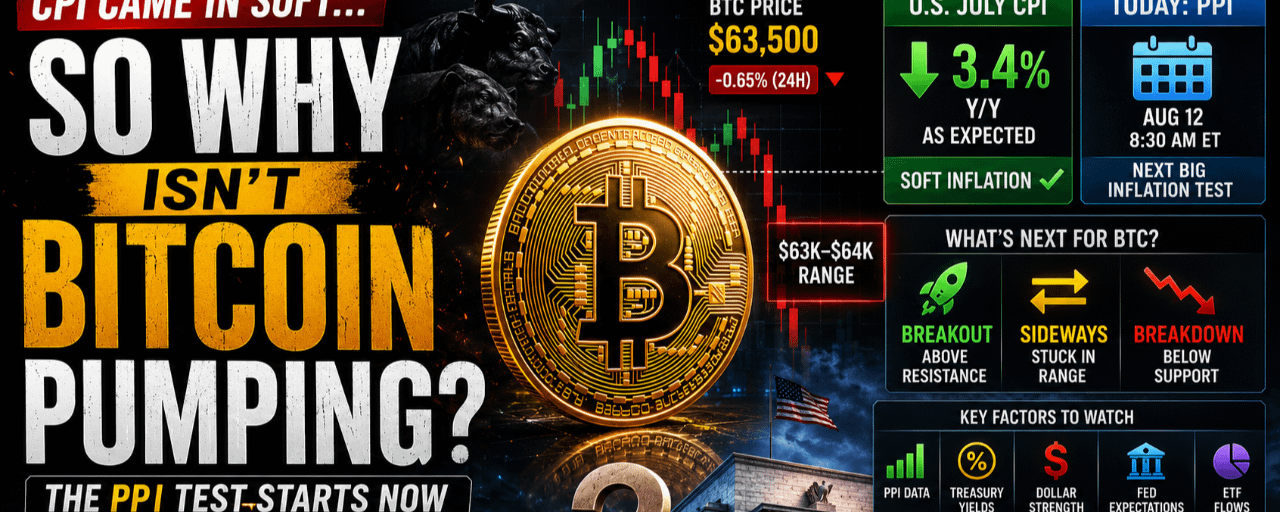
Article
Voir la traduction
CPI Came in Soft — So Why Isn’t Bitcoin Pumping? The PPI Test Starts Now🚨 CPI Came in Soft — So Why Isn’t Bitcoin Pumping?
The inflation report was good. Bitcoin still didn't break out. Here's what the market may be missing.
Bitcoin traders were waiting for the U.S. CPI report to provide the catalyst for the next major move.
The number finally arrived.
July headline CPI came in at 3.4% year over year, broadly in line with expectations.
But instead of a major Bitcoin rally, BTC remains around the $63K–$64K area.
That reaction is telling us something important:
A cooler inflation number alone may no longer be enough to push Bitcoin higher.
🟠 Why Didn't BTC Rally After CPI?
A softer inflation reading normally improves expectations for easier monetary policy.
That can be positive for risk assets.
But Bitcoin's reaction was surprisingly muted.
BTC slipped toward roughly $63.5K after the CPI release, while traders shifted their attention toward the Federal Reserve's next decisions and upcoming economic data.
This suggests the market may already have priced in much of the good inflation news.
In other words:
The CPI surprise wasn't big enough to change the entire rate outlook.
📊 The Market Is Now Looking at PPI
And this is where today's story gets interesting.
The U.S. July Producer Price Index (PPI) is due today.
PPI measures price pressures at the producer level and can provide another indication of where inflationary pressure is heading.
For crypto traders, it creates another macro test:
🟢 Cooler PPI
Could strengthen the argument that inflation is cooling.
That may support lower yields and improve risk appetite.
🔴 Hotter PPI
Could push Treasury yields and rate expectations higher.
That could create another headwind for Bitcoin.
🟡 In-line PPI
Could leave BTC stuck in its current range while traders wait for stronger catalysts.
💥 Bitcoin Is Facing a Bigger Problem Than CPI
The biggest takeaway from yesterday isn't that CPI was bullish or bearish.
It's this:
Bitcoin needs more than one good inflation report to start a sustainable breakout.
Recent market data shows BTC has been stuck around the same area for weeks, with ETF demand helping offset selling pressure.
That creates a battle between two forces:
🟢 Buyers
Institutional ETF demandImproving inflation dataLong-term adoptionStrong Bitcoin dominance
🔴 Sellers
Higher Treasury yieldsFirmer dollarUncertainty around Fed policyResistance above the current range
Until one side wins, Bitcoin could continue moving sideways.
🏦 What About Bitcoin ETFs?
ETF flows remain one of the most important signals to watch.
Recent weeks have shown that institutional demand can provide support even when Bitcoin's price momentum is weak.
But there's an important distinction:
ETF buying can prevent a major breakdown without necessarily creating a breakout.
That's exactly what makes the current market interesting.
Institutions may still be accumulating exposure, while traders wait for a stronger macro catalyst.
👀 Could ETH and Altcoins Move First?
Another interesting signal is that Ethereum has shown periods of relative strength even while Bitcoin remains stuck.
That raises an important possibility:
If BTC eventually stabilizes and macro conditions improve, capital could rotate toward ETH and selected large-cap altcoins.
But if BTC loses support, altcoins could experience much greater downside volatility.
So for now:
BTC direction remains the key signal for the broader market.
📈 The Levels I'm Watching
Instead of predicting an exact Bitcoin price, I'm watching the current range.
🔥 Above the range
A convincing move above resistance with strong volume could indicate that buyers are finally taking control.
⚠️ Inside the range
Continued movement around $63K–$64K would suggest the market is still waiting.
🚨 Below support
A decisive breakdown could shift sentiment from accumulation to risk reduction.
The important part isn't one candle.
It's whether the move is sustained.
🧠 What Today's PPI Could Tell Us
Yesterday's CPI answered one question:
Is consumer inflation getting worse?
Today's PPI can provide another piece of the puzzle:
Are producer-level price pressures also cooling?
If both reports point toward softer inflation, markets may become more confident that monetary conditions could eventually become friendlier.
But if PPI surprises higher, the market may start questioning whether the CPI improvement is enough.
That's why today's report matters.
⚠️ Don't Chase the First Move
One of the biggest mistakes during macro events is buying or selling immediately after the first candle.
Bitcoin can move sharply in both directions before settling.
A better approach is to watch:
PPI → Treasury yields → dollar → BTC reaction → ETF flows
If those signals align, the market's direction becomes much clearer.
🚀 Final Thoughts
Yesterday's CPI gave Bitcoin a favorable inflation headline.
But BTC didn't break out.
That tells us the market is demanding more confirmation.
Now attention moves to PPI, Treasury yields and Federal Reserve expectations.
If inflation continues cooling and yields eventually ease, Bitcoin could get the macro environment it needs for a stronger move.
But if yields remain elevated, BTC may continue struggling to escape its current range.
The next Bitcoin move may therefore depend less on one CPI number and more on the entire inflation + liquidity picture.
CPI didn't give Bitcoin the breakout traders wanted.
Now PPI gets the spotlight. 👀
💬 What Do You Think?
What's more likely for Bitcoin after today's PPI?
🟢 Breakout 🚀
🔴 Breakdown 📉
🟡 More sideways action
🔵 Too early to tell
👇 Vote and explain your view.
#Bitcoin #BTC #PPI #CPI #Crypto #BitcoinETF #Fed #Ethereum #CryptoMarket #BinanceSquare
CPI Came in Soft — So Why Isn’t Bitcoin Pumping? The PPI Test Starts Now
🚨 CPI Came in Soft — So Why Isn’t Bitcoin Pumping?
The inflation report was good. Bitcoin still didn't break out. Here's what the market may be missing.
Bitcoin traders were waiting for the U.S. CPI report to provide the catalyst for the next major move.
The number finally arrived.
July headline CPI came in at 3.4% year over year, broadly in line with expectations.
But instead of a major Bitcoin rally, BTC remains around the $63K–$64K area.
That reaction is telling us something important:
A cooler inflation number alone may no longer be enough to push Bitcoin higher.
🟠 Why Didn't BTC Rally After CPI?
A softer inflation reading normally improves expectations for easier monetary policy.
That can be positive for risk assets.
But Bitcoin's reaction was surprisingly muted.
BTC slipped toward roughly $63.5K after the CPI release, while traders shifted their attention toward the Federal Reserve's next decisions and upcoming economic data.
This suggests the market may already have priced in much of the good inflation news.
In other words:
The CPI surprise wasn't big enough to change the entire rate outlook.
📊 The Market Is Now Looking at PPI
And this is where today's story gets interesting.
The U.S. July Producer Price Index (PPI) is due today.
PPI measures price pressures at the producer level and can provide another indication of where inflationary pressure is heading.
For crypto traders, it creates another macro test:
🟢 Cooler PPI
Could strengthen the argument that inflation is cooling.
That may support lower yields and improve risk appetite.
🔴 Hotter PPI
Could push Treasury yields and rate expectations higher.
That could create another headwind for Bitcoin.
🟡 In-line PPI
Could leave BTC stuck in its current range while traders wait for stronger catalysts.
💥 Bitcoin Is Facing a Bigger Problem Than CPI
The biggest takeaway from yesterday isn't that CPI was bullish or bearish.
It's this:
Bitcoin needs more than one good inflation report to start a sustainable breakout.
Recent market data shows BTC has been stuck around the same area for weeks, with ETF demand helping offset selling pressure.
That creates a battle between two forces:
🟢 Buyers
Institutional ETF demandImproving inflation dataLong-term adoptionStrong Bitcoin dominance
🔴 Sellers
Higher Treasury yieldsFirmer dollarUncertainty around Fed policyResistance above the current range
Until one side wins, Bitcoin could continue moving sideways.
🏦 What About Bitcoin ETFs?
ETF flows remain one of the most important signals to watch.
Recent weeks have shown that institutional demand can provide support even when Bitcoin's price momentum is weak.
But there's an important distinction:
ETF buying can prevent a major breakdown without necessarily creating a breakout.
That's exactly what makes the current market interesting.
Institutions may still be accumulating exposure, while traders wait for a stronger macro catalyst.
👀 Could ETH and Altcoins Move First?
Another interesting signal is that Ethereum has shown periods of relative strength even while Bitcoin remains stuck.
That raises an important possibility:
If BTC eventually stabilizes and macro conditions improve, capital could rotate toward ETH and selected large-cap altcoins.
But if BTC loses support, altcoins could experience much greater downside volatility.
So for now:
BTC direction remains the key signal for the broader market.
📈 The Levels I'm Watching
Instead of predicting an exact Bitcoin price, I'm watching the current range.
🔥 Above the range
A convincing move above resistance with strong volume could indicate that buyers are finally taking control.
⚠️ Inside the range
Continued movement around $63K–$64K would suggest the market is still waiting.
🚨 Below support
A decisive breakdown could shift sentiment from accumulation to risk reduction.
The important part isn't one candle.
It's whether the move is sustained.
🧠 What Today's PPI Could Tell Us
Yesterday's CPI answered one question:
Is consumer inflation getting worse?
Today's PPI can provide another piece of the puzzle:
Are producer-level price pressures also cooling?
If both reports point toward softer inflation, markets may become more confident that monetary conditions could eventually become friendlier.
But if PPI surprises higher, the market may start questioning whether the CPI improvement is enough.
That's why today's report matters.
⚠️ Don't Chase the First Move
One of the biggest mistakes during macro events is buying or selling immediately after the first candle.
Bitcoin can move sharply in both directions before settling.
A better approach is to watch:
PPI → Treasury yields → dollar → BTC reaction → ETF flows
If those signals align, the market's direction becomes much clearer.
🚀 Final Thoughts
Yesterday's CPI gave Bitcoin a favorable inflation headline.
But BTC didn't break out.
That tells us the market is demanding more confirmation.
Now attention moves to PPI, Treasury yields and Federal Reserve expectations.
If inflation continues cooling and yields eventually ease, Bitcoin could get the macro environment it needs for a stronger move.
But if yields remain elevated, BTC may continue struggling to escape its current range.
The next Bitcoin move may therefore depend less on one CPI number and more on the entire inflation + liquidity picture.
CPI didn't give Bitcoin the breakout traders wanted.
Now PPI gets the spotlight. 👀
💬 What Do You Think?
What's more likely for Bitcoin after today's PPI?
🟢 Breakout 🚀
🔴 Breakdown 📉
🟡 More sideways action
🔵 Too early to tell
👇 Vote and explain your view.
#Bitcoin #BTC #PPI #CPI #Crypto #BitcoinETF #Fed #Ethereum #CryptoMarket #BinanceSquare
The inflation report was good. Bitcoin still didn't break out. Here's what the market may be missing.
Bitcoin traders were waiting for the U.S. CPI report to provide the catalyst for the next major move.
The number finally arrived.
July headline CPI came in at 3.4% year over year, broadly in line with expectations.
But instead of a major Bitcoin rally, BTC remains around the $63K–$64K area.
That reaction is telling us something important:
A cooler inflation number alone may no longer be enough to push Bitcoin higher.
🟠 Why Didn't BTC Rally After CPI?
A softer inflation reading normally improves expectations for easier monetary policy.
That can be positive for risk assets.
But Bitcoin's reaction was surprisingly muted.
BTC slipped toward roughly $63.5K after the CPI release, while traders shifted their attention toward the Federal Reserve's next decisions and upcoming economic data.
This suggests the market may already have priced in much of the good inflation news.
In other words:
The CPI surprise wasn't big enough to change the entire rate outlook.
📊 The Market Is Now Looking at PPI
And this is where today's story gets interesting.
The U.S. July Producer Price Index (PPI) is due today.
PPI measures price pressures at the producer level and can provide another indication of where inflationary pressure is heading.
For crypto traders, it creates another macro test:
🟢 Cooler PPI
Could strengthen the argument that inflation is cooling.
That may support lower yields and improve risk appetite.
🔴 Hotter PPI
Could push Treasury yields and rate expectations higher.
That could create another headwind for Bitcoin.
🟡 In-line PPI
Could leave BTC stuck in its current range while traders wait for stronger catalysts.
💥 Bitcoin Is Facing a Bigger Problem Than CPI
The biggest takeaway from yesterday isn't that CPI was bullish or bearish.
It's this:
Bitcoin needs more than one good inflation report to start a sustainable breakout.
Recent market data shows BTC has been stuck around the same area for weeks, with ETF demand helping offset selling pressure.
That creates a battle between two forces:
🟢 Buyers
Institutional ETF demandImproving inflation dataLong-term adoptionStrong Bitcoin dominance
🔴 Sellers
Higher Treasury yieldsFirmer dollarUncertainty around Fed policyResistance above the current range
Until one side wins, Bitcoin could continue moving sideways.
🏦 What About Bitcoin ETFs?
ETF flows remain one of the most important signals to watch.
Recent weeks have shown that institutional demand can provide support even when Bitcoin's price momentum is weak.
But there's an important distinction:
ETF buying can prevent a major breakdown without necessarily creating a breakout.
That's exactly what makes the current market interesting.
Institutions may still be accumulating exposure, while traders wait for a stronger macro catalyst.
👀 Could ETH and Altcoins Move First?
Another interesting signal is that Ethereum has shown periods of relative strength even while Bitcoin remains stuck.
That raises an important possibility:
If BTC eventually stabilizes and macro conditions improve, capital could rotate toward ETH and selected large-cap altcoins.
But if BTC loses support, altcoins could experience much greater downside volatility.
So for now:
BTC direction remains the key signal for the broader market.
📈 The Levels I'm Watching
Instead of predicting an exact Bitcoin price, I'm watching the current range.
🔥 Above the range
A convincing move above resistance with strong volume could indicate that buyers are finally taking control.
⚠️ Inside the range
Continued movement around $63K–$64K would suggest the market is still waiting.
🚨 Below support
A decisive breakdown could shift sentiment from accumulation to risk reduction.
The important part isn't one candle.
It's whether the move is sustained.
🧠 What Today's PPI Could Tell Us
Yesterday's CPI answered one question:
Is consumer inflation getting worse?
Today's PPI can provide another piece of the puzzle:
Are producer-level price pressures also cooling?
If both reports point toward softer inflation, markets may become more confident that monetary conditions could eventually become friendlier.
But if PPI surprises higher, the market may start questioning whether the CPI improvement is enough.
That's why today's report matters.
⚠️ Don't Chase the First Move
One of the biggest mistakes during macro events is buying or selling immediately after the first candle.
Bitcoin can move sharply in both directions before settling.
A better approach is to watch:
PPI → Treasury yields → dollar → BTC reaction → ETF flows
If those signals align, the market's direction becomes much clearer.
🚀 Final Thoughts
Yesterday's CPI gave Bitcoin a favorable inflation headline.
But BTC didn't break out.
That tells us the market is demanding more confirmation.
Now attention moves to PPI, Treasury yields and Federal Reserve expectations.
If inflation continues cooling and yields eventually ease, Bitcoin could get the macro environment it needs for a stronger move.
But if yields remain elevated, BTC may continue struggling to escape its current range.
The next Bitcoin move may therefore depend less on one CPI number and more on the entire inflation + liquidity picture.
CPI didn't give Bitcoin the breakout traders wanted.
Now PPI gets the spotlight. 👀
💬 What Do You Think?
What's more likely for Bitcoin after today's PPI?
🟢 Breakout 🚀
🔴 Breakdown 📉
🟡 More sideways action
🔵 Too early to tell
👇 Vote and explain your view.
#Bitcoin #BTC #PPI #CPI #Crypto #BitcoinETF #Fed #Ethereum #CryptoMarket #BinanceSquare
91
🚨 Bitcoin attend le déclencheur de l’IPC 👀
Le BTC reste bloqué autour de la zone des 63 000 $, tandis que les traders attendent les données américaines sur l’inflation d’aujourd’hui.
Le point intéressant ?
La demande des ETF apporte un soutien, mais l’incertitude macroéconomique rend les acheteurs prudents.
Une surprise sur l’IPC pourrait changer rapidement l’ambiance du marché. ⚡
Le BTC va-t-il enfin sortir de sa fourchette aujourd’hui ?
🟢 Rupture haussière
🔴 Rupture baissière
🟡 Plus d’actions latérales
#Bitcoin #BTC #CPI #CryptoMarket #BitcoinETF #BinanceSquare
🚨 Bitcoin attend le déclencheur de l’IPC 👀
Le BTC reste bloqué autour de la zone des 63 000 $, tandis que les traders attendent les données américaines sur l’inflation d’aujourd’hui.
Le point intéressant ?
La demande des ETF apporte un soutien, mais l’incertitude macroéconomique rend les acheteurs prudents.
Une surprise sur l’IPC pourrait changer rapidement l’ambiance du marché. ⚡
Le BTC va-t-il enfin sortir de sa fourchette aujourd’hui ?
🟢 Rupture haussière
🔴 Rupture baissière
🟡 Plus d’actions latérales
#Bitcoin #BTC #CPI #CryptoMarket #BitcoinETF #BinanceSquare
Le BTC reste bloqué autour de la zone des 63 000 $, tandis que les traders attendent les données américaines sur l’inflation d’aujourd’hui.
Le point intéressant ?
La demande des ETF apporte un soutien, mais l’incertitude macroéconomique rend les acheteurs prudents.
Une surprise sur l’IPC pourrait changer rapidement l’ambiance du marché. ⚡
Le BTC va-t-il enfin sortir de sa fourchette aujourd’hui ?
🟢 Rupture haussière
🔴 Rupture baissière
🟡 Plus d’actions latérales
#Bitcoin #BTC #CPI #CryptoMarket #BitcoinETF #BinanceSquare
64
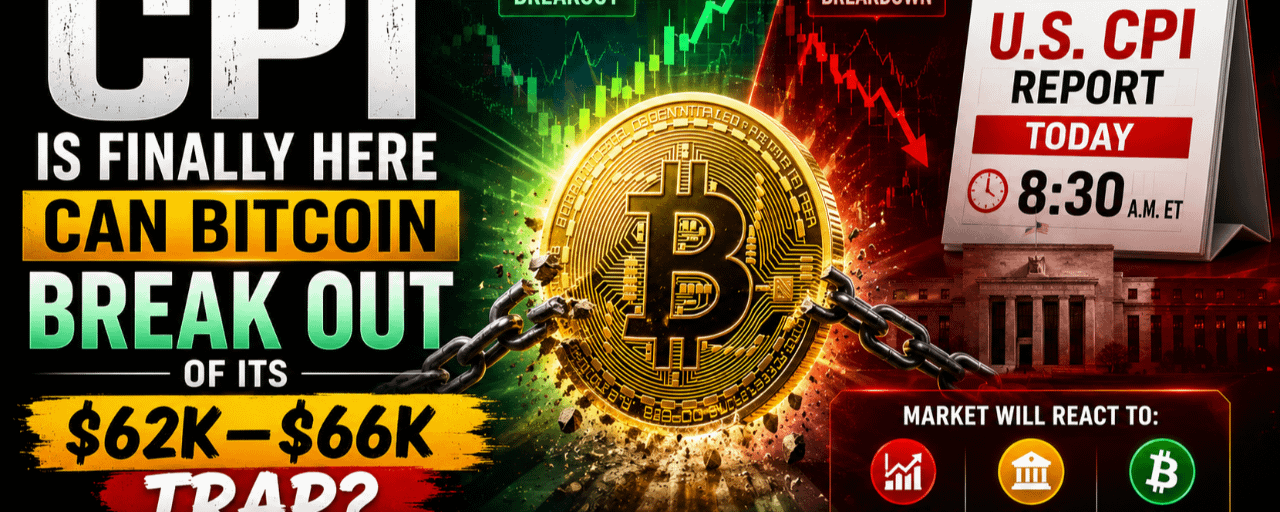
Article
Voir la traduction
CPI Is Finally Here — Can Bitcoin Break Out of Its $62K–$66K Trap?🚨 CPI Is Finally Here — Can Bitcoin Break Out of Its $62K–$66K Trap?
Bitcoin Is Waiting for One of the Biggest Macro Catalysts of the Week
Bitcoin is entering a crucial market session.
BTC is trading around the $63K area, while the broader market is waiting for today's U.S. July CPI report.
The data is scheduled for release at 8:30 a.m. ET on August 12, and economists are expecting headline inflation around 3.4% year over year and core CPI around 2.5%. citeturn0search12turn0news4
That means today's CPI number could become an important catalyst for Bitcoin, Ethereum and the wider crypto market.
🟠 Why CPI Matters for Bitcoin
Crypto traders increasingly watch U.S. inflation data because it can influence expectations for Federal Reserve policy.
If inflation comes in softer than expected, markets could interpret it as more supportive of future monetary easing.
That could potentially improve sentiment toward risk assets such as Bitcoin and other cryptocurrencies.
But if inflation is hotter than expected, traders could become more cautious.
The key isn't simply whether CPI rises or falls.
The real question is whether the actual number beats or misses expectations.
📊 Bitcoin Is Stuck in an Important Range
Bitcoin has been moving inside a relatively narrow range, with the $62K–$66K zone becoming an important area for traders.
Recent market analysis identified roughly $63K as an on-chain demand area, while higher levels around $69K represent a significant holder resistance zone. citeturn0news9
This creates a simple setup:
🚀 Bullish scenario
A softer-than-expected CPI could improve risk appetite.
If buyers return strongly, BTC could attempt to reclaim the upper part of its recent range.
📉 Bearish scenario
A hotter-than-expected CPI could increase pressure on risk assets.
If BTC loses important support, the market could start looking for lower levels.
🟡 Neutral scenario
CPI could come close to expectations, leaving traders waiting for additional economic data before making a major move.
💰 Institutional Demand Is Still an Important Signal
There is another reason today's setup is interesting.
U.S. spot Bitcoin ETFs attracted approximately $853.5 million in net inflows during the week ending August 7, the strongest weekly inflow figure since April according to recent market data. citeturn0search20turn0search25
BlackRock's IBIT accounted for a large portion of those flows.
That suggests institutional demand has not disappeared.
But ETF inflows alone cannot guarantee that Bitcoin will break higher.
Today's CPI reaction will help determine whether that institutional demand continues to translate into stronger price momentum.
🔥 The Biggest Question: Soft CPI or Hot CPI?
The market currently expects July headline CPI to rise around 3.4% year over year, compared with 3.5% in June.
Core CPI is expected around 2.5% annually. citeturn0news4turn0news46
That gives traders three important possibilities.
🟢 CPI Below Expectations
This could strengthen hopes for easier monetary conditions and potentially support BTC.
🔴 CPI Above Expectations
This could increase concerns about persistent inflation and put pressure on risk assets.
🟡 CPI In Line
Bitcoin may initially react sharply and then return to waiting mode as traders assess the details.
🧠 Don't Watch Only the Headline Number
One mistake traders can make is focusing only on the headline CPI.
The core CPI number is also important because it removes food and energy prices and provides another view of underlying inflation.
Markets will also watch the details behind the report.
Housing.
Services.
Transportation.
Energy.
Goods.
A headline number can look positive while individual components create a different picture.
That's why Bitcoin's reaction immediately after the release could be volatile.
📈 What Could Happen to ETH and Altcoins?
Bitcoin won't be the only asset affected.
Ethereum and large-cap altcoins could also react as traders reassess overall risk appetite.
Recent ETF data shows Ethereum also attracted meaningful institutional flows, with about $244.9 million in net inflows during August through August 7. citeturn0search20
If BTC breaks higher and risk appetite expands, capital could potentially rotate into ETH and major altcoins.
But if BTC breaks down after a hot inflation reading, higher-risk altcoins could experience significantly larger volatility.
👀 The 5 Things I'm Watching Today
Instead of reacting emotionally to the first green or red candle, I'm watching:
1️⃣ U.S. headline CPI
Does it beat or miss expectations?
2️⃣ Core CPI
Does underlying inflation remain sticky?
3️⃣ BTC reaction
Does Bitcoin reclaim the upper part of its range or lose support?
4️⃣ ETF flows
Does institutional demand continue?
5️⃣ ETH + altcoin strength
Does the market broaden beyond Bitcoin?
These signals together should provide a clearer picture than the CPI number alone.
⚠️ One Important Warning
A softer CPI does not automatically mean Bitcoin will pump.
Markets can move in unexpected ways because traders may have already priced in a particular outcome.
The same applies to a hotter CPI.
Bitcoin could initially fall and then recover if investors interpret the broader economic picture differently.
That's why today's event should be treated as a volatility catalyst, not a guaranteed direction.
🚀 Final Thoughts
Bitcoin is entering today's session with traders watching the $62K–$66K range, while institutional flows have recently provided a more constructive signal.
Now the market gets its next major test:
U.S. inflation.
The July CPI report is scheduled for today, with expectations around 3.4% headline inflation and 2.5% core inflation. citeturn0news4
A meaningful surprise could push Bitcoin out of its current range.
But whether that move becomes a genuine trend will depend on what happens next.
ETF flows.
Fed expectations.
BTC structure.
And broader risk appetite.
The next big Bitcoin move may be closer than it looks. 👀
💬 What Do You Think?
What will today's U.S. CPI mean for Bitcoin?
🟢 Bullish — BTC breaks higher
🔴 Bearish — BTC breaks lower
🟡 Sideways — no major move
🔵 Too unpredictable
👇 Vote and tell me your reasoning.
#Bitcoin #BTC #CPI #Crypto #BitcoinETF #Ethereum #ETH #CryptoMarket #Fed #BinanceSquare
CPI Is Finally Here — Can Bitcoin Break Out of Its $62K–$66K Trap?
🚨 CPI Is Finally Here — Can Bitcoin Break Out of Its $62K–$66K Trap?
Bitcoin Is Waiting for One of the Biggest Macro Catalysts of the Week
Bitcoin is entering a crucial market session.
BTC is trading around the $63K area, while the broader market is waiting for today's U.S. July CPI report.
The data is scheduled for release at 8:30 a.m. ET on August 12, and economists are expecting headline inflation around 3.4% year over year and core CPI around 2.5%. citeturn0search12turn0news4
That means today's CPI number could become an important catalyst for Bitcoin, Ethereum and the wider crypto market.
🟠 Why CPI Matters for Bitcoin
Crypto traders increasingly watch U.S. inflation data because it can influence expectations for Federal Reserve policy.
If inflation comes in softer than expected, markets could interpret it as more supportive of future monetary easing.
That could potentially improve sentiment toward risk assets such as Bitcoin and other cryptocurrencies.
But if inflation is hotter than expected, traders could become more cautious.
The key isn't simply whether CPI rises or falls.
The real question is whether the actual number beats or misses expectations.
📊 Bitcoin Is Stuck in an Important Range
Bitcoin has been moving inside a relatively narrow range, with the $62K–$66K zone becoming an important area for traders.
Recent market analysis identified roughly $63K as an on-chain demand area, while higher levels around $69K represent a significant holder resistance zone. citeturn0news9
This creates a simple setup:
🚀 Bullish scenario
A softer-than-expected CPI could improve risk appetite.
If buyers return strongly, BTC could attempt to reclaim the upper part of its recent range.
📉 Bearish scenario
A hotter-than-expected CPI could increase pressure on risk assets.
If BTC loses important support, the market could start looking for lower levels.
🟡 Neutral scenario
CPI could come close to expectations, leaving traders waiting for additional economic data before making a major move.
💰 Institutional Demand Is Still an Important Signal
There is another reason today's setup is interesting.
U.S. spot Bitcoin ETFs attracted approximately $853.5 million in net inflows during the week ending August 7, the strongest weekly inflow figure since April according to recent market data. citeturn0search20turn0search25
BlackRock's IBIT accounted for a large portion of those flows.
That suggests institutional demand has not disappeared.
But ETF inflows alone cannot guarantee that Bitcoin will break higher.
Today's CPI reaction will help determine whether that institutional demand continues to translate into stronger price momentum.
🔥 The Biggest Question: Soft CPI or Hot CPI?
The market currently expects July headline CPI to rise around 3.4% year over year, compared with 3.5% in June.
Core CPI is expected around 2.5% annually. citeturn0news4turn0news46
That gives traders three important possibilities.
🟢 CPI Below Expectations
This could strengthen hopes for easier monetary conditions and potentially support BTC.
🔴 CPI Above Expectations
This could increase concerns about persistent inflation and put pressure on risk assets.
🟡 CPI In Line
Bitcoin may initially react sharply and then return to waiting mode as traders assess the details.
🧠 Don't Watch Only the Headline Number
One mistake traders can make is focusing only on the headline CPI.
The core CPI number is also important because it removes food and energy prices and provides another view of underlying inflation.
Markets will also watch the details behind the report.
Housing.
Services.
Transportation.
Energy.
Goods.
A headline number can look positive while individual components create a different picture.
That's why Bitcoin's reaction immediately after the release could be volatile.
📈 What Could Happen to ETH and Altcoins?
Bitcoin won't be the only asset affected.
Ethereum and large-cap altcoins could also react as traders reassess overall risk appetite.
Recent ETF data shows Ethereum also attracted meaningful institutional flows, with about $244.9 million in net inflows during August through August 7. citeturn0search20
If BTC breaks higher and risk appetite expands, capital could potentially rotate into ETH and major altcoins.
But if BTC breaks down after a hot inflation reading, higher-risk altcoins could experience significantly larger volatility.
👀 The 5 Things I'm Watching Today
Instead of reacting emotionally to the first green or red candle, I'm watching:
1️⃣ U.S. headline CPI
Does it beat or miss expectations?
2️⃣ Core CPI
Does underlying inflation remain sticky?
3️⃣ BTC reaction
Does Bitcoin reclaim the upper part of its range or lose support?
4️⃣ ETF flows
Does institutional demand continue?
5️⃣ ETH + altcoin strength
Does the market broaden beyond Bitcoin?
These signals together should provide a clearer picture than the CPI number alone.
⚠️ One Important Warning
A softer CPI does not automatically mean Bitcoin will pump.
Markets can move in unexpected ways because traders may have already priced in a particular outcome.
The same applies to a hotter CPI.
Bitcoin could initially fall and then recover if investors interpret the broader economic picture differently.
That's why today's event should be treated as a volatility catalyst, not a guaranteed direction.
🚀 Final Thoughts
Bitcoin is entering today's session with traders watching the $62K–$66K range, while institutional flows have recently provided a more constructive signal.
Now the market gets its next major test:
U.S. inflation.
The July CPI report is scheduled for today, with expectations around 3.4% headline inflation and 2.5% core inflation. citeturn0news4
A meaningful surprise could push Bitcoin out of its current range.
But whether that move becomes a genuine trend will depend on what happens next.
ETF flows.
Fed expectations.
BTC structure.
And broader risk appetite.
The next big Bitcoin move may be closer than it looks. 👀
💬 What Do You Think?
What will today's U.S. CPI mean for Bitcoin?
🟢 Bullish — BTC breaks higher
🔴 Bearish — BTC breaks lower
🟡 Sideways — no major move
🔵 Too unpredictable
👇 Vote and tell me your reasoning.
#Bitcoin #BTC #CPI #Crypto #BitcoinETF #Ethereum #ETH #CryptoMarket #Fed #BinanceSquare
Bitcoin Is Waiting for One of the Biggest Macro Catalysts of the Week
Bitcoin is entering a crucial market session.
BTC is trading around the $63K area, while the broader market is waiting for today's U.S. July CPI report.
The data is scheduled for release at 8:30 a.m. ET on August 12, and economists are expecting headline inflation around 3.4% year over year and core CPI around 2.5%. citeturn0search12turn0news4
That means today's CPI number could become an important catalyst for Bitcoin, Ethereum and the wider crypto market.
🟠 Why CPI Matters for Bitcoin
Crypto traders increasingly watch U.S. inflation data because it can influence expectations for Federal Reserve policy.
If inflation comes in softer than expected, markets could interpret it as more supportive of future monetary easing.
That could potentially improve sentiment toward risk assets such as Bitcoin and other cryptocurrencies.
But if inflation is hotter than expected, traders could become more cautious.
The key isn't simply whether CPI rises or falls.
The real question is whether the actual number beats or misses expectations.
📊 Bitcoin Is Stuck in an Important Range
Bitcoin has been moving inside a relatively narrow range, with the $62K–$66K zone becoming an important area for traders.
Recent market analysis identified roughly $63K as an on-chain demand area, while higher levels around $69K represent a significant holder resistance zone. citeturn0news9
This creates a simple setup:
🚀 Bullish scenario
A softer-than-expected CPI could improve risk appetite.
If buyers return strongly, BTC could attempt to reclaim the upper part of its recent range.
📉 Bearish scenario
A hotter-than-expected CPI could increase pressure on risk assets.
If BTC loses important support, the market could start looking for lower levels.
🟡 Neutral scenario
CPI could come close to expectations, leaving traders waiting for additional economic data before making a major move.
💰 Institutional Demand Is Still an Important Signal
There is another reason today's setup is interesting.
U.S. spot Bitcoin ETFs attracted approximately $853.5 million in net inflows during the week ending August 7, the strongest weekly inflow figure since April according to recent market data. citeturn0search20turn0search25
BlackRock's IBIT accounted for a large portion of those flows.
That suggests institutional demand has not disappeared.
But ETF inflows alone cannot guarantee that Bitcoin will break higher.
Today's CPI reaction will help determine whether that institutional demand continues to translate into stronger price momentum.
🔥 The Biggest Question: Soft CPI or Hot CPI?
The market currently expects July headline CPI to rise around 3.4% year over year, compared with 3.5% in June.
Core CPI is expected around 2.5% annually. citeturn0news4turn0news46
That gives traders three important possibilities.
🟢 CPI Below Expectations
This could strengthen hopes for easier monetary conditions and potentially support BTC.
🔴 CPI Above Expectations
This could increase concerns about persistent inflation and put pressure on risk assets.
🟡 CPI In Line
Bitcoin may initially react sharply and then return to waiting mode as traders assess the details.
🧠 Don't Watch Only the Headline Number
One mistake traders can make is focusing only on the headline CPI.
The core CPI number is also important because it removes food and energy prices and provides another view of underlying inflation.
Markets will also watch the details behind the report.
Housing.
Services.
Transportation.
Energy.
Goods.
A headline number can look positive while individual components create a different picture.
That's why Bitcoin's reaction immediately after the release could be volatile.
📈 What Could Happen to ETH and Altcoins?
Bitcoin won't be the only asset affected.
Ethereum and large-cap altcoins could also react as traders reassess overall risk appetite.
Recent ETF data shows Ethereum also attracted meaningful institutional flows, with about $244.9 million in net inflows during August through August 7. citeturn0search20
If BTC breaks higher and risk appetite expands, capital could potentially rotate into ETH and major altcoins.
But if BTC breaks down after a hot inflation reading, higher-risk altcoins could experience significantly larger volatility.
👀 The 5 Things I'm Watching Today
Instead of reacting emotionally to the first green or red candle, I'm watching:
1️⃣ U.S. headline CPI
Does it beat or miss expectations?
2️⃣ Core CPI
Does underlying inflation remain sticky?
3️⃣ BTC reaction
Does Bitcoin reclaim the upper part of its range or lose support?
4️⃣ ETF flows
Does institutional demand continue?
5️⃣ ETH + altcoin strength
Does the market broaden beyond Bitcoin?
These signals together should provide a clearer picture than the CPI number alone.
⚠️ One Important Warning
A softer CPI does not automatically mean Bitcoin will pump.
Markets can move in unexpected ways because traders may have already priced in a particular outcome.
The same applies to a hotter CPI.
Bitcoin could initially fall and then recover if investors interpret the broader economic picture differently.
That's why today's event should be treated as a volatility catalyst, not a guaranteed direction.
🚀 Final Thoughts
Bitcoin is entering today's session with traders watching the $62K–$66K range, while institutional flows have recently provided a more constructive signal.
Now the market gets its next major test:
U.S. inflation.
The July CPI report is scheduled for today, with expectations around 3.4% headline inflation and 2.5% core inflation. citeturn0news4
A meaningful surprise could push Bitcoin out of its current range.
But whether that move becomes a genuine trend will depend on what happens next.
ETF flows.
Fed expectations.
BTC structure.
And broader risk appetite.
The next big Bitcoin move may be closer than it looks. 👀
💬 What Do You Think?
What will today's U.S. CPI mean for Bitcoin?
🟢 Bullish — BTC breaks higher
🔴 Bearish — BTC breaks lower
🟡 Sideways — no major move
🔵 Too unpredictable
👇 Vote and tell me your reasoning.
#Bitcoin #BTC #CPI #Crypto #BitcoinETF #Ethereum #ETH #CryptoMarket #Fed #BinanceSquare
79
Voir la traduction
🚨 What happens to Bitcoin after the U.S. CPI? 👀
🟢 BTC pumps 🚀
🔴 BTC dumps 📉
🟡 Sideways / no major move
🔵 Too unpredictable
Caption:
BTC is under pressure near $64K, while traders are waiting for the CPI number. One report could change the market mood quickly. 👀
What’s your call? 👇
#Bitcoin #BTC #CPI #Crypto #CryptoMarket #BinanceSquare
🚨 What happens to Bitcoin after the U.S. CPI? 👀
🟢 BTC pumps 🚀
🔴 BTC dumps 📉
🟡 Sideways / no major move
🔵 Too unpredictable
Caption:
BTC is under pressure near $64K, while traders are waiting for the CPI number. One report could change the market mood quickly. 👀
What’s your call? 👇
#Bitcoin #BTC #CPI #Crypto #CryptoMarket #BinanceSquare
🟢 BTC pumps 🚀
🔴 BTC dumps 📉
🟡 Sideways / no major move
🔵 Too unpredictable
Caption:
BTC is under pressure near $64K, while traders are waiting for the CPI number. One report could change the market mood quickly. 👀
What’s your call? 👇
#Bitcoin #BTC #CPI #Crypto #CryptoMarket #BinanceSquare
54
Voir la traduction
🚨 Crypto Traders Are Waiting for ONE Number 👀
Bitcoin slipped below $64K as traders turned cautious ahead of Wednesday's U.S. CPI report.
Meanwhile, Bitcoin ETFs just saw $144.6M in net outflows after five straight inflow sessions.
Now the big question:
🔥 Will CPI trigger the next BTC breakout — or another sell-off?
I'm watching BTC + ETF flows + inflation closely.
👇 Bullish or bearish after CPI?
#Bitcoin #BTC #CPI #CryptoMarket #BitcoinETF #BinanceSquare
🚨 Crypto Traders Are Waiting for ONE Number 👀
Bitcoin slipped below $64K as traders turned cautious ahead of Wednesday's U.S. CPI report.
Meanwhile, Bitcoin ETFs just saw $144.6M in net outflows after five straight inflow sessions.
Now the big question:
🔥 Will CPI trigger the next BTC breakout — or another sell-off?
I'm watching BTC + ETF flows + inflation closely.
👇 Bullish or bearish after CPI?
#Bitcoin #BTC #CPI #CryptoMarket #BitcoinETF #BinanceSquare
Bitcoin slipped below $64K as traders turned cautious ahead of Wednesday's U.S. CPI report.
Meanwhile, Bitcoin ETFs just saw $144.6M in net outflows after five straight inflow sessions.
Now the big question:
🔥 Will CPI trigger the next BTC breakout — or another sell-off?
I'm watching BTC + ETF flows + inflation closely.
👇 Bullish or bearish after CPI?
#Bitcoin #BTC #CPI #CryptoMarket #BitcoinETF #BinanceSquare
62
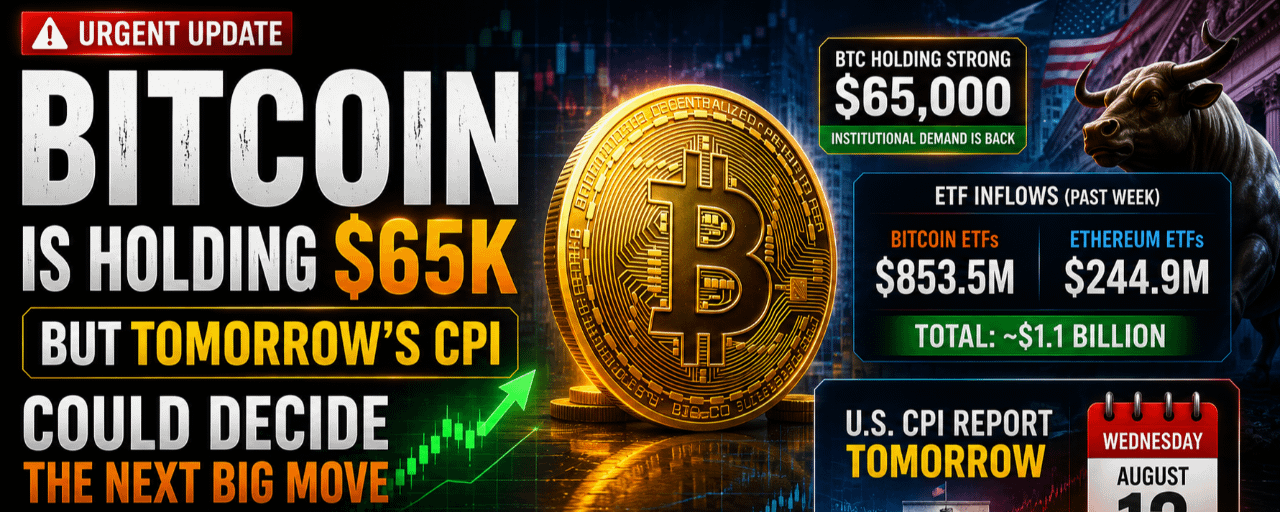
Article
Bitcoin se maintient à 65 000 $ — Mais le CPI de demain pourrait décider de la prochaine grande décisionLe marché des cryptomonnaies entre dans une semaine macro cruciale.
Le Bitcoin se maintient actuellement autour de la barre des 65 000 dollars, tandis que des flux institutionnels récents ont amélioré le sentiment du marché.
Mais les traders ont désormais un autre événement majeur à surveiller :
Le prochain rapport sur l’IPC aux États-Unis.
Cela pourrait devenir l’un des plus importants catalyseurs à court terme pour Bitcoin, Ethereum et l’ensemble du marché crypto.
💰 Le carnet d’ordres institutionnel est de retour
L’une des évolutions les plus intéressantes est le retour de l’argent vers les ETF crypto spot américains.
Les ETF Bitcoin et Ether ont attiré ensemble environ 1,1 milliard de dollars de flux nets entrants au cours de la semaine passée, selon les informations récentes du marché.
Bitcoin se maintient à 65 000 $ — Mais le CPI de demain pourrait décider de la prochaine grande décision
Le marché des cryptomonnaies entre dans une semaine macro cruciale.
Le Bitcoin se maintient actuellement autour de la barre des 65 000 dollars, tandis que des flux institutionnels récents ont amélioré le sentiment du marché.
Mais les traders ont désormais un autre événement majeur à surveiller :
Le prochain rapport sur l’IPC aux États-Unis.
Cela pourrait devenir l’un des plus importants catalyseurs à court terme pour Bitcoin, Ethereum et l’ensemble du marché crypto.
💰 Le carnet d’ordres institutionnel est de retour
L’une des évolutions les plus intéressantes est le retour de l’argent vers les ETF crypto spot américains.
Les ETF Bitcoin et Ether ont attiré ensemble environ 1,1 milliard de dollars de flux nets entrants au cours de la semaine passée, selon les informations récentes du marché.
Le Bitcoin se maintient actuellement autour de la barre des 65 000 dollars, tandis que des flux institutionnels récents ont amélioré le sentiment du marché.
Mais les traders ont désormais un autre événement majeur à surveiller :
Le prochain rapport sur l’IPC aux États-Unis.
Cela pourrait devenir l’un des plus importants catalyseurs à court terme pour Bitcoin, Ethereum et l’ensemble du marché crypto.
💰 Le carnet d’ordres institutionnel est de retour
L’une des évolutions les plus intéressantes est le retour de l’argent vers les ETF crypto spot américains.
Les ETF Bitcoin et Ether ont attiré ensemble environ 1,1 milliard de dollars de flux nets entrants au cours de la semaine passée, selon les informations récentes du marché.
71
Connectez-vous pour découvrir plus de contenu
Rejoignez la communauté mondiale des adeptes de cryptomonnaies sur Binance Square
⚡️ Suviez les dernières informations importantes sur les cryptomonnaies.
💬 Jugé digne de confiance par la plus grande plateforme d’échange de cryptomonnaies au monde.
👍 Découvrez les connaissances que partagent les créateurs vérifiés.
Adresse e-mail/Nº de téléphone