
X A N D E R _ B T C
2.5k Publications
X A N D E R _ B T C
Signaler
Bloquer l’utilisateur
Crypto KOL | Web3 Content Creator | Trader & HODLer | Sharing Market Insights & Alpha
Ouvert au trading
Trade régulièrement
1.4 an(s)
69 Suivis
8.2K+ Abonnés
8.0K+ J’aime
Publications
Portefeuille
Tous
Citations
Direct
PINNED
Article
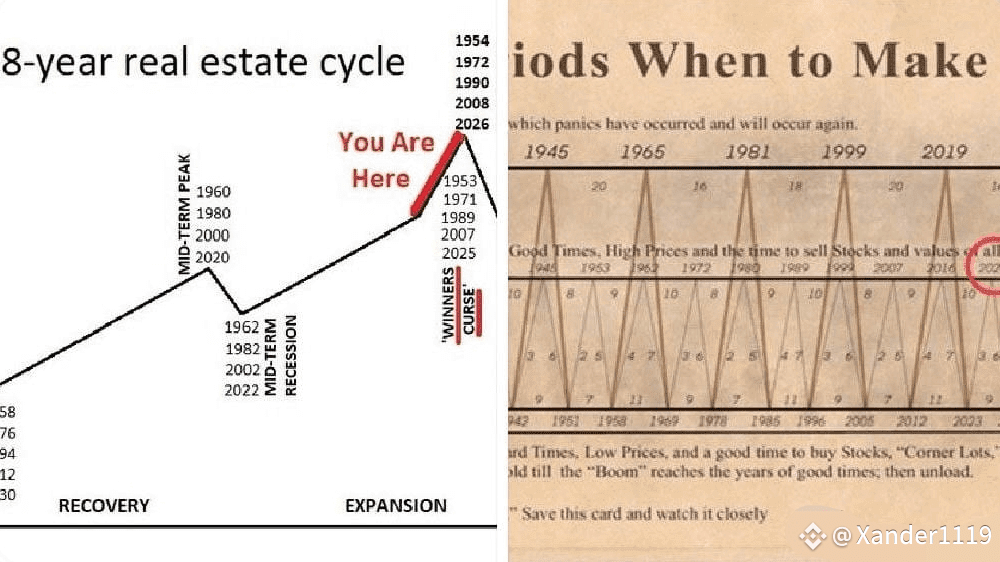
La plus profonde correction du marché de notre époque arrive 🚨🚀📅 2026 n’est pas qu’une autre année — c’est le pic de deux méga cycles économiques.
L'histoire dit que le crash qui suit pourrait être le plus grand des temps modernes.
Voici ce qui arrive & les stratégies que je surveille 🧵👇
1/
Depuis plus de 200 ans, le cycle immobilier de 18 ans a été un moteur horloger des booms et des effondrements.
Chaque cycle se termine par un pic euphorique… suivi d’un crash.
Dernier pic ? 2007.
Prochain pic ? 2026.
📈 Ce cycle n’a jamais manqué.
2/
Il y a aussi le Cycle de Richesse des Agriculteurs de 200 ans, qui suit la productivité, la spéculation et le flux de capital à travers les générations.
La plus profonde correction du marché de notre époque arrive 🚨🚀
📅 2026 n’est pas qu’une autre année — c’est le pic de deux méga cycles économiques.
L'histoire dit que le crash qui suit pourrait être le plus grand des temps modernes.
Voici ce qui arrive & les stratégies que je surveille 🧵👇
1/
Depuis plus de 200 ans, le cycle immobilier de 18 ans a été un moteur horloger des booms et des effondrements.
Chaque cycle se termine par un pic euphorique… suivi d’un crash.
Dernier pic ? 2007.
Prochain pic ? 2026.
📈 Ce cycle n’a jamais manqué.
2/
Il y a aussi le Cycle de Richesse des Agriculteurs de 200 ans, qui suit la productivité, la spéculation et le flux de capital à travers les générations.
L'histoire dit que le crash qui suit pourrait être le plus grand des temps modernes.
Voici ce qui arrive & les stratégies que je surveille 🧵👇
1/
Depuis plus de 200 ans, le cycle immobilier de 18 ans a été un moteur horloger des booms et des effondrements.
Chaque cycle se termine par un pic euphorique… suivi d’un crash.
Dernier pic ? 2007.
Prochain pic ? 2026.
📈 Ce cycle n’a jamais manqué.
2/
Il y a aussi le Cycle de Richesse des Agriculteurs de 200 ans, qui suit la productivité, la spéculation et le flux de capital à travers les générations.
48
23
186
197.4k
·
--
Baissier
$SKR
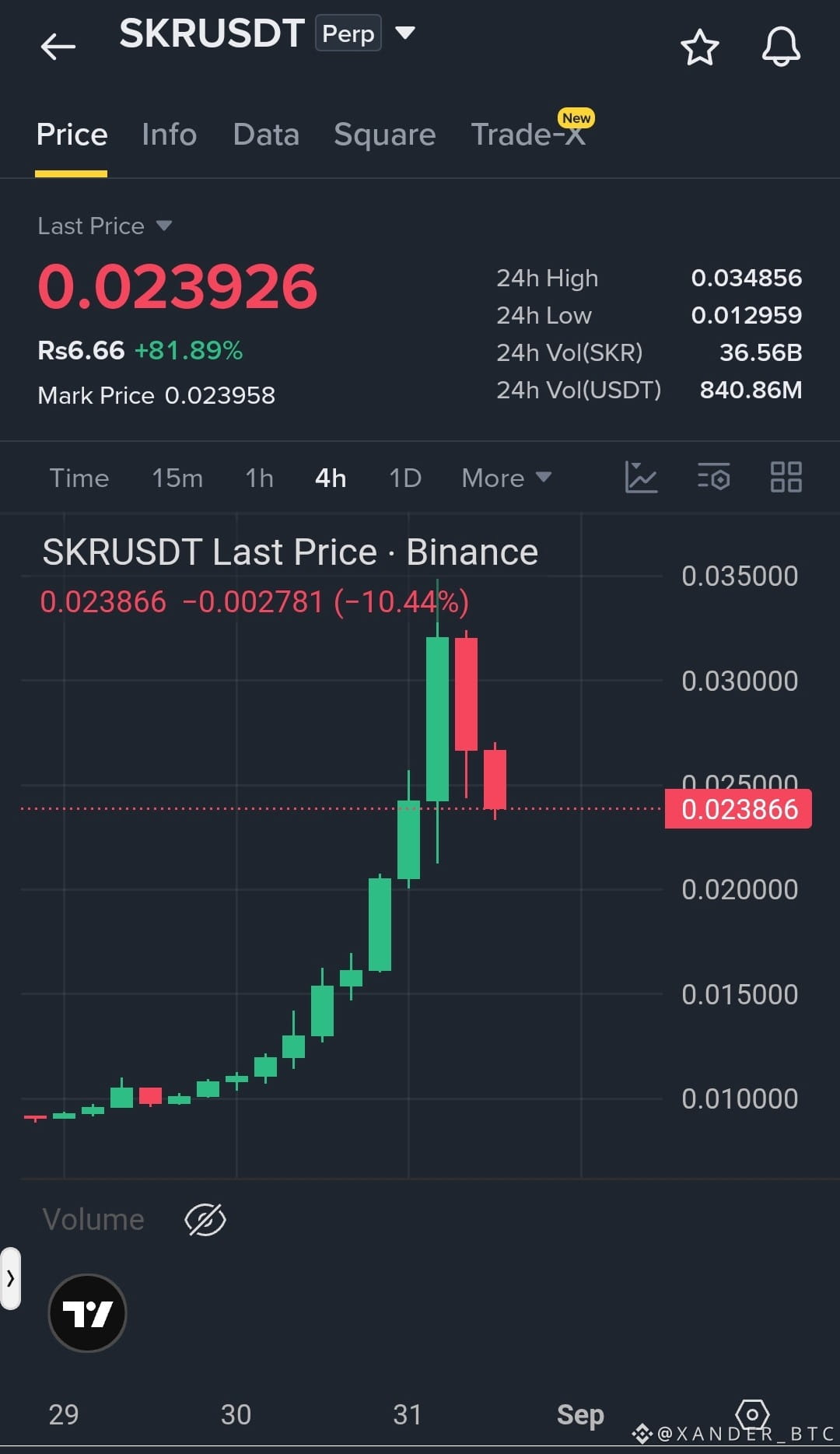
Forte impulsion haussière sur le 4H, avec expansion claire du momentum depuis la base de 0.010. Le prix a désormais entamé un repli contrôlé après avoir touché le plus haut local près de 0.035. La structure reste haussière tant que le support des périodes supérieures tient. L’action actuelle montre une digestion saine plutôt qu’une distribution, les acheteurs défendant toujours la tendance à la hausse.
Le point clé concerne la zone de demande 0.0220–0.0240. Une tenue nette ici maintient le risque de poursuite de la cassure élevé vers les plus hauts précédents.
Zone d’entrée : 0.0225 – 0.0240
TP1 : 0.0275
TP2 : 0.0315
TP3 : 0.0355
Stop-Loss : 0.0208
Le momentum favorise une tendance longue sélective sur confirmation du support. Surveillez le volume et la réaction au niveau de la zone pour la prochaine expansion directionnelle.
$SKR
#SKR #Crypto #Altcoins #Binance #AnalyseTechnique #WriteToEarnUpgrade
$SKR
Forte impulsion haussière sur le 4H, avec expansion claire du momentum depuis la base de 0.010. Le prix a désormais entamé un repli contrôlé après avoir touché le plus haut local près de 0.035. La structure reste haussière tant que le support des périodes supérieures tient. L’action actuelle montre une digestion saine plutôt qu’une distribution, les acheteurs défendant toujours la tendance à la hausse.
Le point clé concerne la zone de demande 0.0220–0.0240. Une tenue nette ici maintient le risque de poursuite de la cassure élevé vers les plus hauts précédents.
Zone d’entrée : 0.0225 – 0.0240
TP1 : 0.0275
TP2 : 0.0315
TP3 : 0.0355
Stop-Loss : 0.0208
Le momentum favorise une tendance longue sélective sur confirmation du support. Surveillez le volume et la réaction au niveau de la zone pour la prochaine expansion directionnelle.
$SKR
#SKR #Crypto #Altcoins #Binance #AnalyseTechnique #WriteToEarnUpgrade
Forte impulsion haussière sur le 4H, avec expansion claire du momentum depuis la base de 0.010. Le prix a désormais entamé un repli contrôlé après avoir touché le plus haut local près de 0.035. La structure reste haussière tant que le support des périodes supérieures tient. L’action actuelle montre une digestion saine plutôt qu’une distribution, les acheteurs défendant toujours la tendance à la hausse.
Le point clé concerne la zone de demande 0.0220–0.0240. Une tenue nette ici maintient le risque de poursuite de la cassure élevé vers les plus hauts précédents.
Zone d’entrée : 0.0225 – 0.0240
TP1 : 0.0275
TP2 : 0.0315
TP3 : 0.0355
Stop-Loss : 0.0208
Le momentum favorise une tendance longue sélective sur confirmation du support. Surveillez le volume et la réaction au niveau de la zone pour la prochaine expansion directionnelle.
$SKR
#SKR #Crypto #Altcoins #Binance #AnalyseTechnique #WriteToEarnUpgrade
151
$FLOCK
{alpha}(84530x5ab3d4c385b400f3abb49e80de2faf6a88a7b691)
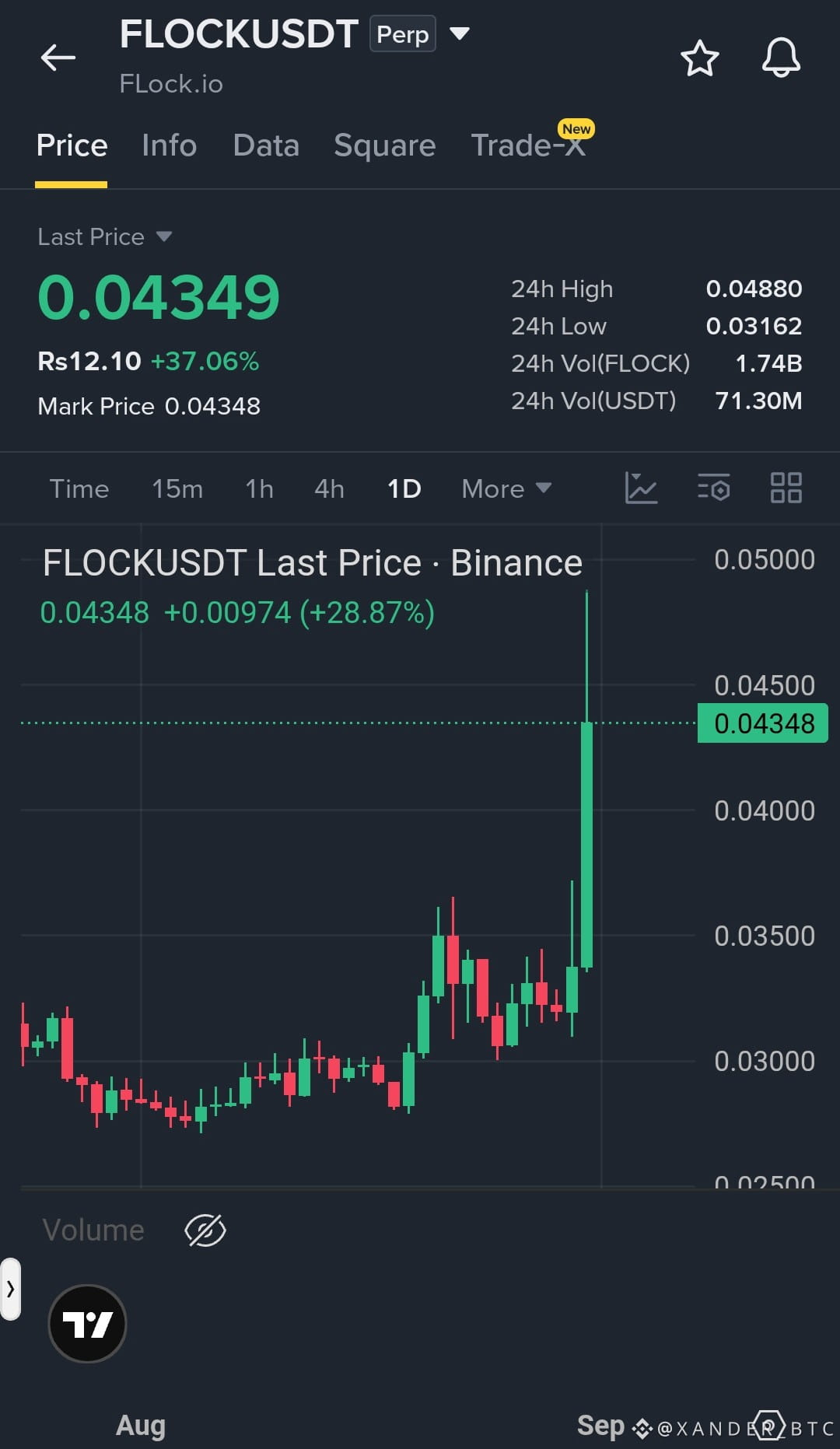
FLOCK a franchi une longue phase de consolidation avec une forte dynamique haussière, poussant vers la zone de résistance à $0.049. Après une expansion brutale, la volatilité reste élevée ; un achat maîtrisé après un retest est donc préférable. Le maintien de $0.040–$0.042 conserve la structure du breakout, tandis qu’un mouvement net au-dessus de $0.049 pourrait ouvrir la prochaine impulsion à la hausse.
Zone d’entrée : $0.0405–$0.0435
TP1 : $0.0488
TP2 : $0.0550
TP3 : $0.0620
Stop-Loss : $0.0375
Support : $0.0400
Résistance : $0.0490
#FLOCK #Crypto #CryptoTrading #Altcoins #Binance #Trading #WriteToEarnUpgrade
$FLOCK
FLOCK a franchi une longue phase de consolidation avec une forte dynamique haussière, poussant vers la zone de résistance à $0.049. Après une expansion brutale, la volatilité reste élevée ; un achat maîtrisé après un retest est donc préférable. Le maintien de $0.040–$0.042 conserve la structure du breakout, tandis qu’un mouvement net au-dessus de $0.049 pourrait ouvrir la prochaine impulsion à la hausse.
Zone d’entrée : $0.0405–$0.0435
TP1 : $0.0488
TP2 : $0.0550
TP3 : $0.0620
Stop-Loss : $0.0375
Support : $0.0400
Résistance : $0.0490
#FLOCK #Crypto #CryptoTrading #Altcoins #Binance #Trading #WriteToEarnUpgrade
FLOCK a franchi une longue phase de consolidation avec une forte dynamique haussière, poussant vers la zone de résistance à $0.049. Après une expansion brutale, la volatilité reste élevée ; un achat maîtrisé après un retest est donc préférable. Le maintien de $0.040–$0.042 conserve la structure du breakout, tandis qu’un mouvement net au-dessus de $0.049 pourrait ouvrir la prochaine impulsion à la hausse.
Zone d’entrée : $0.0405–$0.0435
TP1 : $0.0488
TP2 : $0.0550
TP3 : $0.0620
Stop-Loss : $0.0375
Support : $0.0400
Résistance : $0.0490
#FLOCK #Crypto #CryptoTrading #Altcoins #Binance #Trading #WriteToEarnUpgrade
61
·
--
Haussier
$HEMI
{spot}(HEMIUSDT)
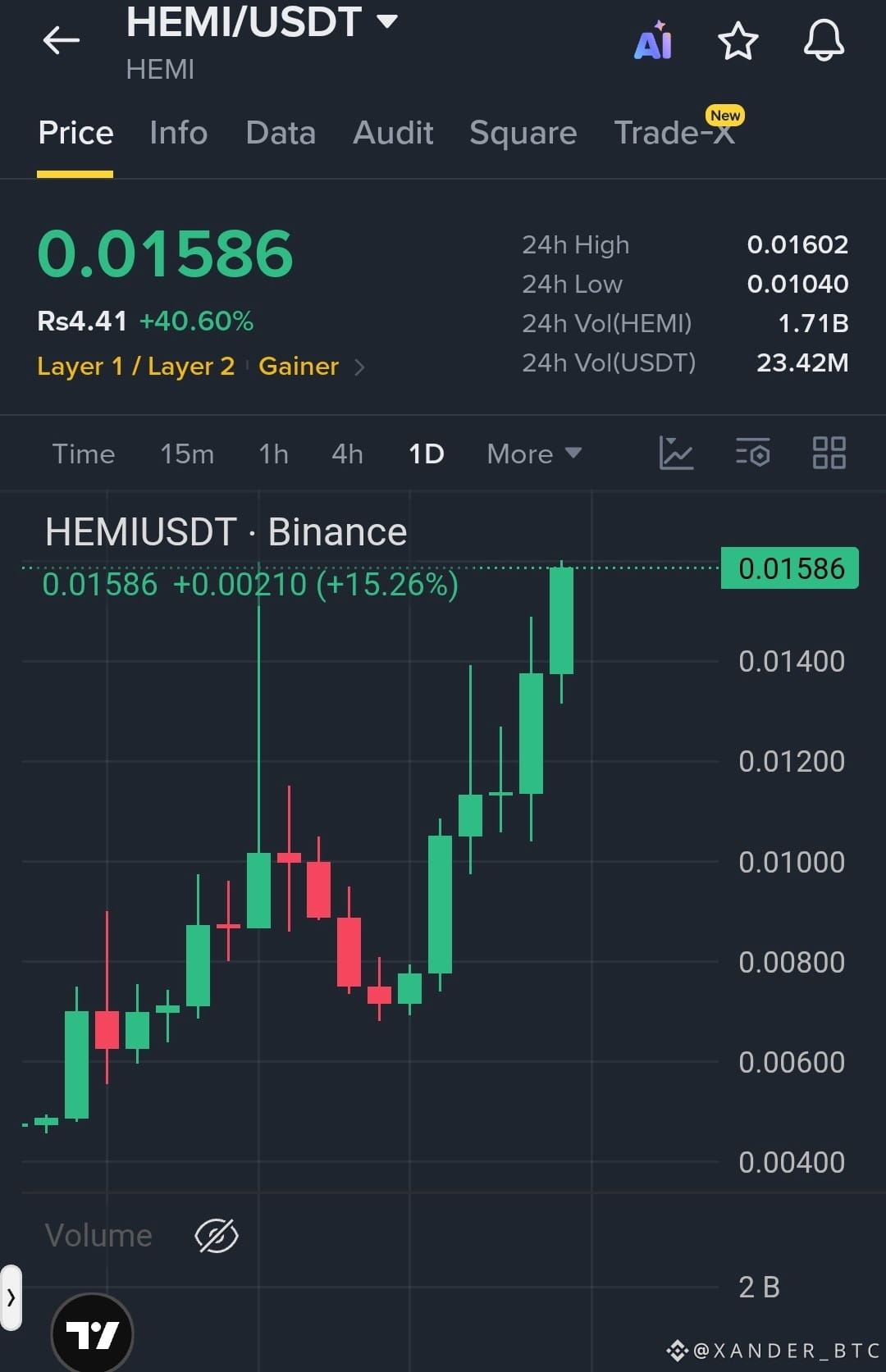
HEMI affiche une forte expansion haussière, le prix poussant depuis la base de 0,010$ vers la zone de résistance à 0,016$. L’élan est agressif après une hausse brutale de 40 %, donc la volatilité et le risque de repli sont élevés. Une retest contrôlé de 0,014–0,015$ pourrait offrir une meilleure entrée, tandis qu’une cassure nette au-dessus de 0,016$ pourrait prolonger la tendance.
Zone d’entrée : 0,0142–0,0152$
Objectif 1 (TP1) : 0,0175$
Objectif 2 (TP2) : 0,0200$
Objectif 3 (TP3) : 0,0230$
Stop-Loss : 0,0128$
Support : 0,0140$
Résistance : 0,0160$
#HEMI #Crypto #CryptoTrading #Altcoins #Binance #Trading #WriteToEarnUpgrade
$HEMI
HEMI affiche une forte expansion haussière, le prix poussant depuis la base de 0,010$ vers la zone de résistance à 0,016$. L’élan est agressif après une hausse brutale de 40 %, donc la volatilité et le risque de repli sont élevés. Une retest contrôlé de 0,014–0,015$ pourrait offrir une meilleure entrée, tandis qu’une cassure nette au-dessus de 0,016$ pourrait prolonger la tendance.
Zone d’entrée : 0,0142–0,0152$
Objectif 1 (TP1) : 0,0175$
Objectif 2 (TP2) : 0,0200$
Objectif 3 (TP3) : 0,0230$
Stop-Loss : 0,0128$
Support : 0,0140$
Résistance : 0,0160$
#HEMI #Crypto #CryptoTrading #Altcoins #Binance #Trading #WriteToEarnUpgrade
HEMI affiche une forte expansion haussière, le prix poussant depuis la base de 0,010$ vers la zone de résistance à 0,016$. L’élan est agressif après une hausse brutale de 40 %, donc la volatilité et le risque de repli sont élevés. Une retest contrôlé de 0,014–0,015$ pourrait offrir une meilleure entrée, tandis qu’une cassure nette au-dessus de 0,016$ pourrait prolonger la tendance.
Zone d’entrée : 0,0142–0,0152$
Objectif 1 (TP1) : 0,0175$
Objectif 2 (TP2) : 0,0200$
Objectif 3 (TP3) : 0,0230$
Stop-Loss : 0,0128$
Support : 0,0140$
Résistance : 0,0160$
#HEMI #Crypto #CryptoTrading #Altcoins #Binance #Trading #WriteToEarnUpgrade
172
$MIRA
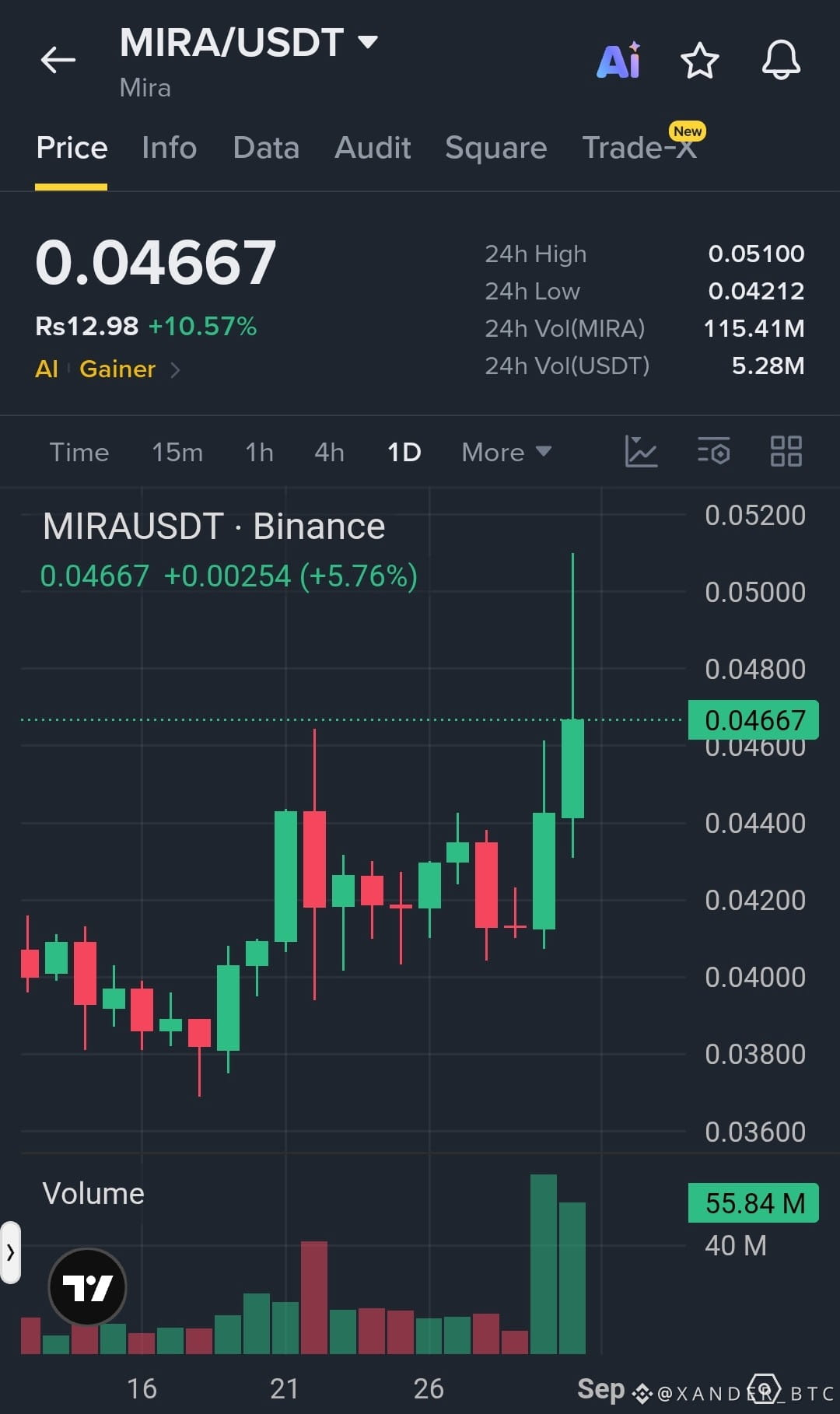
MIRA montre une forte reprise haussière, avec une hausse du volume et des plus bas plus élevés. Le prix se maintient au-dessus de 0,044 $ après avoir franchi la récente zone de consolidation. La résistance de 0,051 $ est le niveau clé de cassure ; une reconquête nette avec du volume pourrait déclencher la prochaine expansion, tandis qu’un rejet pourrait conduire à un retest du support.
Zone d’entrée : 0,0445–0,0470 $
TP1 : 0,0510 $
TP2 : 0,0550 $
TP3 : 0,0600 $
Stop-Loss : 0,0415 $
L’élan reste haussier tant que 0,044 $ tient. Attendez-vous à une volatilité accrue près de 0,051 $ ; les achats maîtrisés sont préférables plutôt que de courir après la cassure.
#MIRA #Crypto #CryptoTrading #Altcoins #Binance #Trading #WriteToEarnUpgrade
$MIRA
MIRA montre une forte reprise haussière, avec une hausse du volume et des plus bas plus élevés. Le prix se maintient au-dessus de 0,044 $ après avoir franchi la récente zone de consolidation. La résistance de 0,051 $ est le niveau clé de cassure ; une reconquête nette avec du volume pourrait déclencher la prochaine expansion, tandis qu’un rejet pourrait conduire à un retest du support.
Zone d’entrée : 0,0445–0,0470 $
TP1 : 0,0510 $
TP2 : 0,0550 $
TP3 : 0,0600 $
Stop-Loss : 0,0415 $
L’élan reste haussier tant que 0,044 $ tient. Attendez-vous à une volatilité accrue près de 0,051 $ ; les achats maîtrisés sont préférables plutôt que de courir après la cassure.
#MIRA #Crypto #CryptoTrading #Altcoins #Binance #Trading #WriteToEarnUpgrade
MIRA montre une forte reprise haussière, avec une hausse du volume et des plus bas plus élevés. Le prix se maintient au-dessus de 0,044 $ après avoir franchi la récente zone de consolidation. La résistance de 0,051 $ est le niveau clé de cassure ; une reconquête nette avec du volume pourrait déclencher la prochaine expansion, tandis qu’un rejet pourrait conduire à un retest du support.
Zone d’entrée : 0,0445–0,0470 $
TP1 : 0,0510 $
TP2 : 0,0550 $
TP3 : 0,0600 $
Stop-Loss : 0,0415 $
L’élan reste haussier tant que 0,044 $ tient. Attendez-vous à une volatilité accrue près de 0,051 $ ; les achats maîtrisés sont préférables plutôt que de courir après la cassure.
#MIRA #Crypto #CryptoTrading #Altcoins #Binance #Trading #WriteToEarnUpgrade
82
·
--
Haussier
$UNI
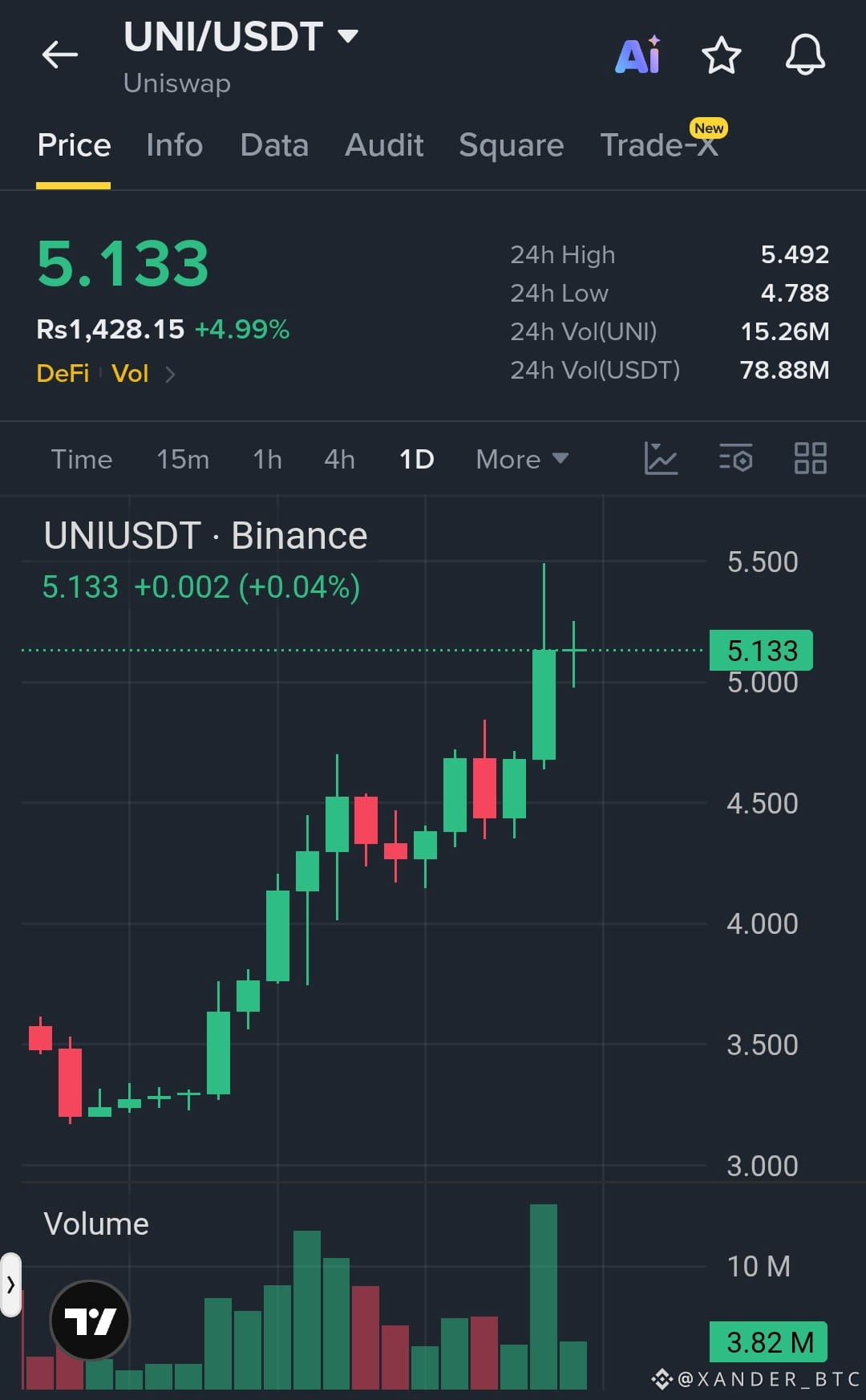
UNI maintient une forte structure haussière, avec des plus hauts et des plus bas plus élevés, soutenus par une hausse du volume. Le prix consolide près de 5,13 $ après avoir testé la résistance à 5,49 $. Une cassure nette au-dessus de 5,50 $ pourrait prolonger le mouvement, tandis que 5,00 $ reste le support clé à court terme.
Zone d’entrée : 5,00–5,15 $
TP1 : 5,50 $
TP2 : 5,80 $
TP3 : 6,20 $
Stop-Loss : 4,75 $
L’élan reste haussier tant que 5,00 $ est maintenu. Surveillez une confirmation par le volume lors de la cassure.
#UNI #Uniswap #Crypto #CryptoTrading #Altcoins #Binance #Trading #WriteToEarnUpgrade
$UNI
UNI maintient une forte structure haussière, avec des plus hauts et des plus bas plus élevés, soutenus par une hausse du volume. Le prix consolide près de 5,13 $ après avoir testé la résistance à 5,49 $. Une cassure nette au-dessus de 5,50 $ pourrait prolonger le mouvement, tandis que 5,00 $ reste le support clé à court terme.
Zone d’entrée : 5,00–5,15 $
TP1 : 5,50 $
TP2 : 5,80 $
TP3 : 6,20 $
Stop-Loss : 4,75 $
L’élan reste haussier tant que 5,00 $ est maintenu. Surveillez une confirmation par le volume lors de la cassure.
#UNI #Uniswap #Crypto #CryptoTrading #Altcoins #Binance #Trading #WriteToEarnUpgrade
UNI maintient une forte structure haussière, avec des plus hauts et des plus bas plus élevés, soutenus par une hausse du volume. Le prix consolide près de 5,13 $ après avoir testé la résistance à 5,49 $. Une cassure nette au-dessus de 5,50 $ pourrait prolonger le mouvement, tandis que 5,00 $ reste le support clé à court terme.
Zone d’entrée : 5,00–5,15 $
TP1 : 5,50 $
TP2 : 5,80 $
TP3 : 6,20 $
Stop-Loss : 4,75 $
L’élan reste haussier tant que 5,00 $ est maintenu. Surveillez une confirmation par le volume lors de la cassure.
#UNI #Uniswap #Crypto #CryptoTrading #Altcoins #Binance #Trading #WriteToEarnUpgrade
74
·
--
Haussier
$牛来
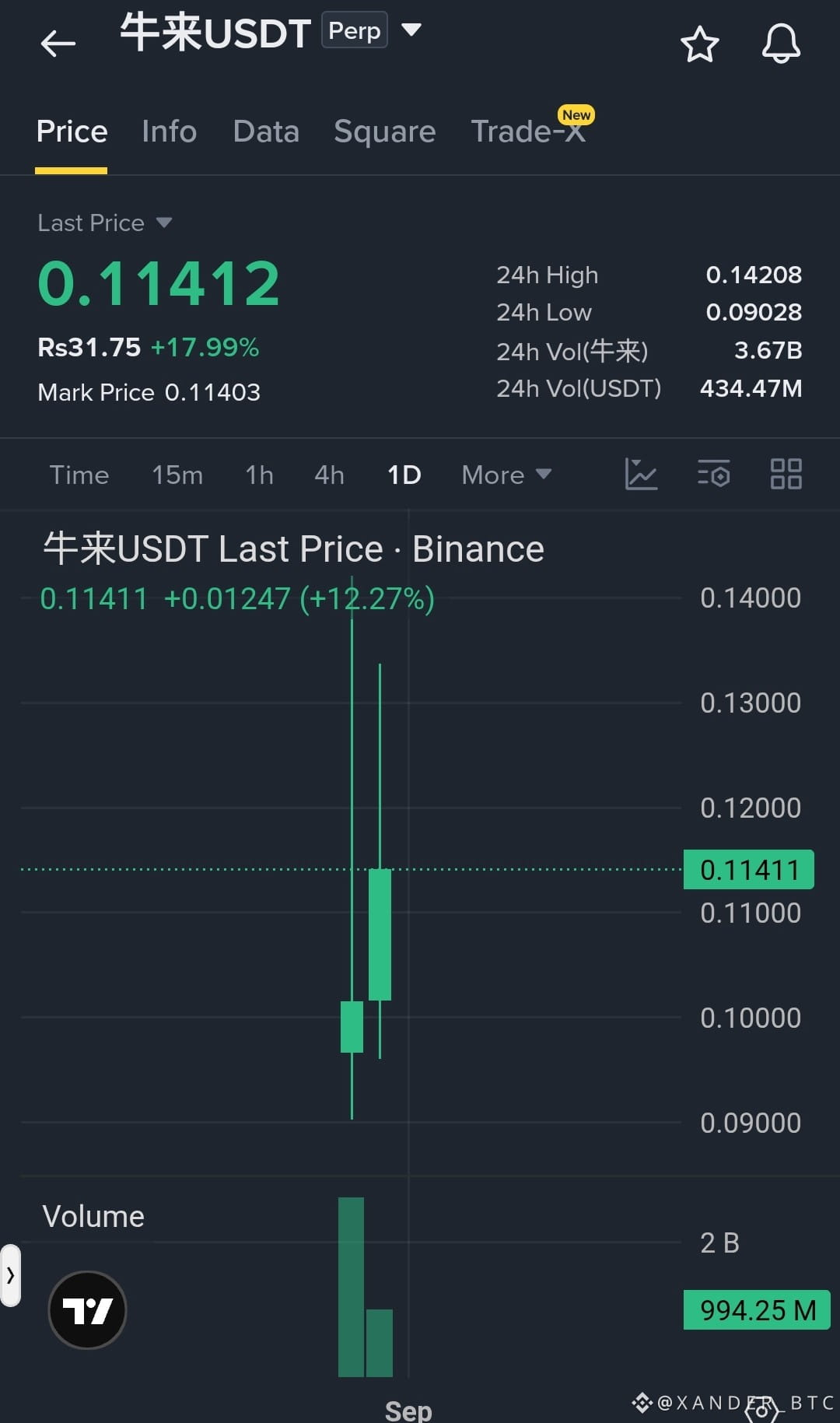
Forte expansion à la hausse avec un volume important : la tendance est devenue haussière. Le prix se maintient au-dessus de 0,11 $ après avoir franchi la base des 0,10 $, mais la volatilité reste élevée. Des achats maîtrisés autour du support pourraient préparer un nouveau breakout vers la résistance récente à 0,142 $.
Zone d’entrée : 0,108–0,114 $
TP1 : 0,125 $
TP2 : 0,135 $
TP3 : 0,142 $
Stop-Loss : 0,098 $
L’élan reste haussier tant que 0,10 $ est maintenu. Une cassure nette au-dessus de 0,142 $ pourrait ouvrir d’autres perspectives à la hausse, tandis qu’un rejet pourrait déclencher un repli vers le support.
#NIULAI #Crypto #CryptoTrading #Binance #Altcoins #Trading #WriteToEarnUpgrade
$NIULAI
$牛来
Forte expansion à la hausse avec un volume important : la tendance est devenue haussière. Le prix se maintient au-dessus de 0,11 $ après avoir franchi la base des 0,10 $, mais la volatilité reste élevée. Des achats maîtrisés autour du support pourraient préparer un nouveau breakout vers la résistance récente à 0,142 $.
Zone d’entrée : 0,108–0,114 $
TP1 : 0,125 $
TP2 : 0,135 $
TP3 : 0,142 $
Stop-Loss : 0,098 $
L’élan reste haussier tant que 0,10 $ est maintenu. Une cassure nette au-dessus de 0,142 $ pourrait ouvrir d’autres perspectives à la hausse, tandis qu’un rejet pourrait déclencher un repli vers le support.
#NIULAI #Crypto #CryptoTrading #Binance #Altcoins #Trading #WriteToEarnUpgrade
$NIULAI
Forte expansion à la hausse avec un volume important : la tendance est devenue haussière. Le prix se maintient au-dessus de 0,11 $ après avoir franchi la base des 0,10 $, mais la volatilité reste élevée. Des achats maîtrisés autour du support pourraient préparer un nouveau breakout vers la résistance récente à 0,142 $.
Zone d’entrée : 0,108–0,114 $
TP1 : 0,125 $
TP2 : 0,135 $
TP3 : 0,142 $
Stop-Loss : 0,098 $
L’élan reste haussier tant que 0,10 $ est maintenu. Une cassure nette au-dessus de 0,142 $ pourrait ouvrir d’autres perspectives à la hausse, tandis qu’un rejet pourrait déclencher un repli vers le support.
#NIULAI #Crypto #CryptoTrading #Binance #Altcoins #Trading #WriteToEarnUpgrade
$NIULAI
154
·
--
Haussier
$BTC
BTC/USDT reste au-dessus de 78K$ après un fort rebond hebdomadaire depuis la base des 63K$–64K$. L'élan demeure constructif, mais le prix teste désormais la zone de résistance des 79,5K$–80K$. Une cassure nette pourrait accélérer le mouvement vers 84K$, tandis qu'un rejet pourrait déclencher un retest du support à 76K$.
Zone d'entrée : 76 600$–79 000$
TP1 : 80 000$
TP2 : 82 000$
TP3 : 84 000$
Stop-Loss : 75 500$
Des achats contrôlés au-dessus de 76K$ maintiennent la structure haussière intacte. Surveillez attentivement le volume pour confirmer la cassure.
#BTC #Bitcoin #Crypto #Trading #BTCUSDT #CryptoTrading #WriteToEarnUpgrade
$BTC
$BTC
BTC/USDT reste au-dessus de 78K$ après un fort rebond hebdomadaire depuis la base des 63K$–64K$. L'élan demeure constructif, mais le prix teste désormais la zone de résistance des 79,5K$–80K$. Une cassure nette pourrait accélérer le mouvement vers 84K$, tandis qu'un rejet pourrait déclencher un retest du support à 76K$.
Zone d'entrée : 76 600$–79 000$
TP1 : 80 000$
TP2 : 82 000$
TP3 : 84 000$
Stop-Loss : 75 500$
Des achats contrôlés au-dessus de 76K$ maintiennent la structure haussière intacte. Surveillez attentivement le volume pour confirmer la cassure.
#BTC #Bitcoin #Crypto #Trading #BTCUSDT #CryptoTrading #WriteToEarnUpgrade
$BTC
BTC/USDT reste au-dessus de 78K$ après un fort rebond hebdomadaire depuis la base des 63K$–64K$. L'élan demeure constructif, mais le prix teste désormais la zone de résistance des 79,5K$–80K$. Une cassure nette pourrait accélérer le mouvement vers 84K$, tandis qu'un rejet pourrait déclencher un retest du support à 76K$.
Zone d'entrée : 76 600$–79 000$
TP1 : 80 000$
TP2 : 82 000$
TP3 : 84 000$
Stop-Loss : 75 500$
Des achats contrôlés au-dessus de 76K$ maintiennent la structure haussière intacte. Surveillez attentivement le volume pour confirmer la cassure.
#BTC #Bitcoin #Crypto #Trading #BTCUSDT #CryptoTrading #WriteToEarnUpgrade
$BTC
83
·
--
Haussier
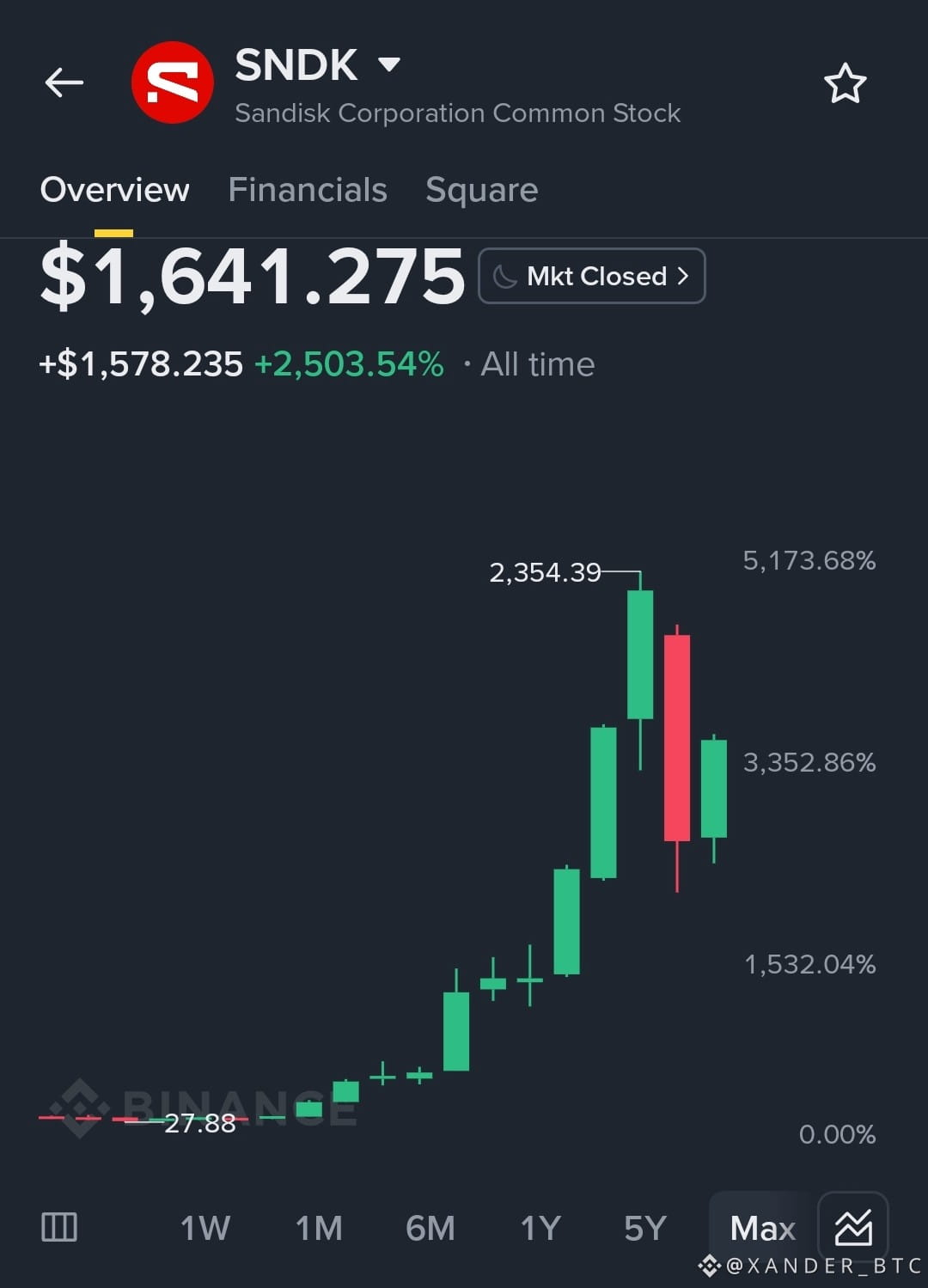
$SNDK.US vient de réaliser un mouvement massif à long terme, grimpant d’environ 27 $ à 1 641 $.
Après avoir atteint 2 354 $, le prix a reculé, mais les acheteurs défendent encore des niveaux plus élevés.
L’élan reste fort, mais la volatilité est extrême.
Surveillez de près la zone de 1 500–1 650 $ pour le prochain mouvement.
#SNDK #Write2Earn #stock s #Trading #Investing
$SNDK.US vient de réaliser un mouvement massif à long terme, grimpant d’environ 27 $ à 1 641 $.
Après avoir atteint 2 354 $, le prix a reculé, mais les acheteurs défendent encore des niveaux plus élevés.
L’élan reste fort, mais la volatilité est extrême.
Surveillez de près la zone de 1 500–1 650 $ pour le prochain mouvement.
#SNDK #Write2Earn #stock s #Trading #Investing
Après avoir atteint 2 354 $, le prix a reculé, mais les acheteurs défendent encore des niveaux plus élevés.
L’élan reste fort, mais la volatilité est extrême.
Surveillez de près la zone de 1 500–1 650 $ pour le prochain mouvement.
#SNDK #Write2Earn #stock s #Trading #Investing
SNDKUS+11,81%
1
783
$BTC Changements que vous.
Bitcoin n’est pas seulement un graphique de prix.
C’est une nouvelle façon de penser l’argent, la propriété, la rareté et la liberté financière.
Il nous pousse à remettre en question les systèmes que nous acceptions autrefois sans réfléchir :
Qui contrôle l’argent ?
Qu’est-ce qui donne de la valeur à l’argent ?
Pourquoi la rareté compte-t-elle ?
Comment protéger notre richesse pour l’avenir ?
Bitcoin a introduit une idée différente : un actif numérique rare construit sur un réseau décentralisé, avec une offre maximale de 21 millions de BTC.
La vraie transformation se produit lorsque vous cessez de regarder Bitcoin uniquement comme quelque chose à acheter et que vous commencez à comprendre pourquoi il existe.
Il enseigne la patience.
Il enseigne la garde de vos propres clés.
Il enseigne la responsabilité financière.
Il vous apprend à penser au-delà des fluctuations de prix à court terme.
Peut-être que Bitcoin ne changera pas le monde du jour au lendemain.
Mais il a déjà changé la façon dont des millions de personnes pensent l’argent.
Bitcoin ne change pas seulement votre portefeuille.
Il peut changer votre perspective.
#Bitcoin #BTC #Blockchain #LibertéFinancière #Décentralisation #Web3 #FutureOfFinance @bitcoin
$BTC Changements que vous.
Bitcoin n’est pas seulement un graphique de prix.
C’est une nouvelle façon de penser l’argent, la propriété, la rareté et la liberté financière.
Il nous pousse à remettre en question les systèmes que nous acceptions autrefois sans réfléchir :
Qui contrôle l’argent ?
Qu’est-ce qui donne de la valeur à l’argent ?
Pourquoi la rareté compte-t-elle ?
Comment protéger notre richesse pour l’avenir ?
Bitcoin a introduit une idée différente : un actif numérique rare construit sur un réseau décentralisé, avec une offre maximale de 21 millions de BTC.
La vraie transformation se produit lorsque vous cessez de regarder Bitcoin uniquement comme quelque chose à acheter et que vous commencez à comprendre pourquoi il existe.
Il enseigne la patience.
Il enseigne la garde de vos propres clés.
Il enseigne la responsabilité financière.
Il vous apprend à penser au-delà des fluctuations de prix à court terme.
Peut-être que Bitcoin ne changera pas le monde du jour au lendemain.
Mais il a déjà changé la façon dont des millions de personnes pensent l’argent.
Bitcoin ne change pas seulement votre portefeuille.
Il peut changer votre perspective.
#Bitcoin #BTC #Blockchain #LibertéFinancière #Décentralisation #Web3 #FutureOfFinance @Bitcoin
Bitcoin n’est pas seulement un graphique de prix.
C’est une nouvelle façon de penser l’argent, la propriété, la rareté et la liberté financière.
Il nous pousse à remettre en question les systèmes que nous acceptions autrefois sans réfléchir :
Qui contrôle l’argent ?
Qu’est-ce qui donne de la valeur à l’argent ?
Pourquoi la rareté compte-t-elle ?
Comment protéger notre richesse pour l’avenir ?
Bitcoin a introduit une idée différente : un actif numérique rare construit sur un réseau décentralisé, avec une offre maximale de 21 millions de BTC.
La vraie transformation se produit lorsque vous cessez de regarder Bitcoin uniquement comme quelque chose à acheter et que vous commencez à comprendre pourquoi il existe.
Il enseigne la patience.
Il enseigne la garde de vos propres clés.
Il enseigne la responsabilité financière.
Il vous apprend à penser au-delà des fluctuations de prix à court terme.
Peut-être que Bitcoin ne changera pas le monde du jour au lendemain.
Mais il a déjà changé la façon dont des millions de personnes pensent l’argent.
Bitcoin ne change pas seulement votre portefeuille.
Il peut changer votre perspective.
#Bitcoin #BTC #Blockchain #LibertéFinancière #Décentralisation #Web3 #FutureOfFinance @Bitcoin

81

Article
Bitcoin vous transforme : passer d’un ancien standard financier à un nouvel état d’esprit économiqueDepuis des décennies, on a appris aux gens à penser l’argent d’une seule manière :
Travailler. Gagner. Épargner. Dépenser. Recommencer.
Mais que se passe-t-il quand c’est l’argent lui-même qui change ?
Que se passe-t-il lorsque les gens commencent à se demander qui le contrôle, quelle quantité peut en être créée, pourquoi son pouvoir d’achat change avec le temps, et si les individus devraient avoir la possibilité de posséder et de transférer de la valeur sans dépendre entièrement des institutions financières traditionnelles ?
C’est là que Bitcoin entre dans la conversation.
L’image ci-dessus saisit une idée puissante : des personnes qui marchent vers The Bitcoin Standard tout en laissant derrière elles un ancien système financier. Le message n’est pas simplement que Bitcoin est un autre actif à acheter.
Bitcoin vous transforme : passer d’un ancien standard financier à un nouvel état d’esprit économique
Depuis des décennies, on a appris aux gens à penser l’argent d’une seule manière :
Travailler. Gagner. Épargner. Dépenser. Recommencer.
Mais que se passe-t-il quand c’est l’argent lui-même qui change ?
Que se passe-t-il lorsque les gens commencent à se demander qui le contrôle, quelle quantité peut en être créée, pourquoi son pouvoir d’achat change avec le temps, et si les individus devraient avoir la possibilité de posséder et de transférer de la valeur sans dépendre entièrement des institutions financières traditionnelles ?
C’est là que Bitcoin entre dans la conversation.
L’image ci-dessus saisit une idée puissante : des personnes qui marchent vers The Bitcoin Standard tout en laissant derrière elles un ancien système financier. Le message n’est pas simplement que Bitcoin est un autre actif à acheter.
Travailler. Gagner. Épargner. Dépenser. Recommencer.
Mais que se passe-t-il quand c’est l’argent lui-même qui change ?
Que se passe-t-il lorsque les gens commencent à se demander qui le contrôle, quelle quantité peut en être créée, pourquoi son pouvoir d’achat change avec le temps, et si les individus devraient avoir la possibilité de posséder et de transférer de la valeur sans dépendre entièrement des institutions financières traditionnelles ?
C’est là que Bitcoin entre dans la conversation.
L’image ci-dessus saisit une idée puissante : des personnes qui marchent vers The Bitcoin Standard tout en laissant derrière elles un ancien système financier. Le message n’est pas simplement que Bitcoin est un autre actif à acheter.
1
85
·
--
Haussier
$AKE Signal de dynamique haussière
Des positions courtes d’une valeur de 2,4247 K$ ont été liquidées à 0,00377 $ sur Binance, indiquant que les traders baissiers ont été forcés de sortir à mesure que la pression acheteuse augmentait. Ce short squeeze suggère que l’élan haussier se construit, et si les acheteurs gardent le contrôle, $AKE pourrait étendre sa reprise à court terme.
Zone d’entrée : 0,00372 $ – 0,00380 $
TP1 : 0,00390 $
TP2 : 0,00405 $
TP3 : 0,00425 $
Stop Loss : 0,00360 $
Une cassure confirmée avec une hausse du volume des échanges pourrait renforcer la tendance haussière, tandis qu’un échec à maintenir le niveau au-dessus de la zone d’entrée pourrait entraîner un léger repli avant le prochain mouvement.
#AKE #Binance #Crypto #Trading #altcoins #Bullish #CreatorRewards #DailyOrbit #WriteToEarnUpgrade
$AKE Signal de dynamique haussière
Des positions courtes d’une valeur de 2,4247 K$ ont été liquidées à 0,00377 $ sur Binance, indiquant que les traders baissiers ont été forcés de sortir à mesure que la pression acheteuse augmentait. Ce short squeeze suggère que l’élan haussier se construit, et si les acheteurs gardent le contrôle, $AKE pourrait étendre sa reprise à court terme.
Zone d’entrée : 0,00372 $ – 0,00380 $
TP1 : 0,00390 $
TP2 : 0,00405 $
TP3 : 0,00425 $
Stop Loss : 0,00360 $
Une cassure confirmée avec une hausse du volume des échanges pourrait renforcer la tendance haussière, tandis qu’un échec à maintenir le niveau au-dessus de la zone d’entrée pourrait entraîner un léger repli avant le prochain mouvement.
#AKE #Binance #Crypto #Trading #altcoins #Bullish #CreatorRewards #DailyOrbit #WriteToEarnUpgrade
Des positions courtes d’une valeur de 2,4247 K$ ont été liquidées à 0,00377 $ sur Binance, indiquant que les traders baissiers ont été forcés de sortir à mesure que la pression acheteuse augmentait. Ce short squeeze suggère que l’élan haussier se construit, et si les acheteurs gardent le contrôle, $AKE pourrait étendre sa reprise à court terme.
Zone d’entrée : 0,00372 $ – 0,00380 $
TP1 : 0,00390 $
TP2 : 0,00405 $
TP3 : 0,00425 $
Stop Loss : 0,00360 $
Une cassure confirmée avec une hausse du volume des échanges pourrait renforcer la tendance haussière, tandis qu’un échec à maintenir le niveau au-dessus de la zone d’entrée pourrait entraîner un léger repli avant le prochain mouvement.
#AKE #Binance #Crypto #Trading #altcoins #Bullish #CreatorRewards #DailyOrbit #WriteToEarnUpgrade
1
279
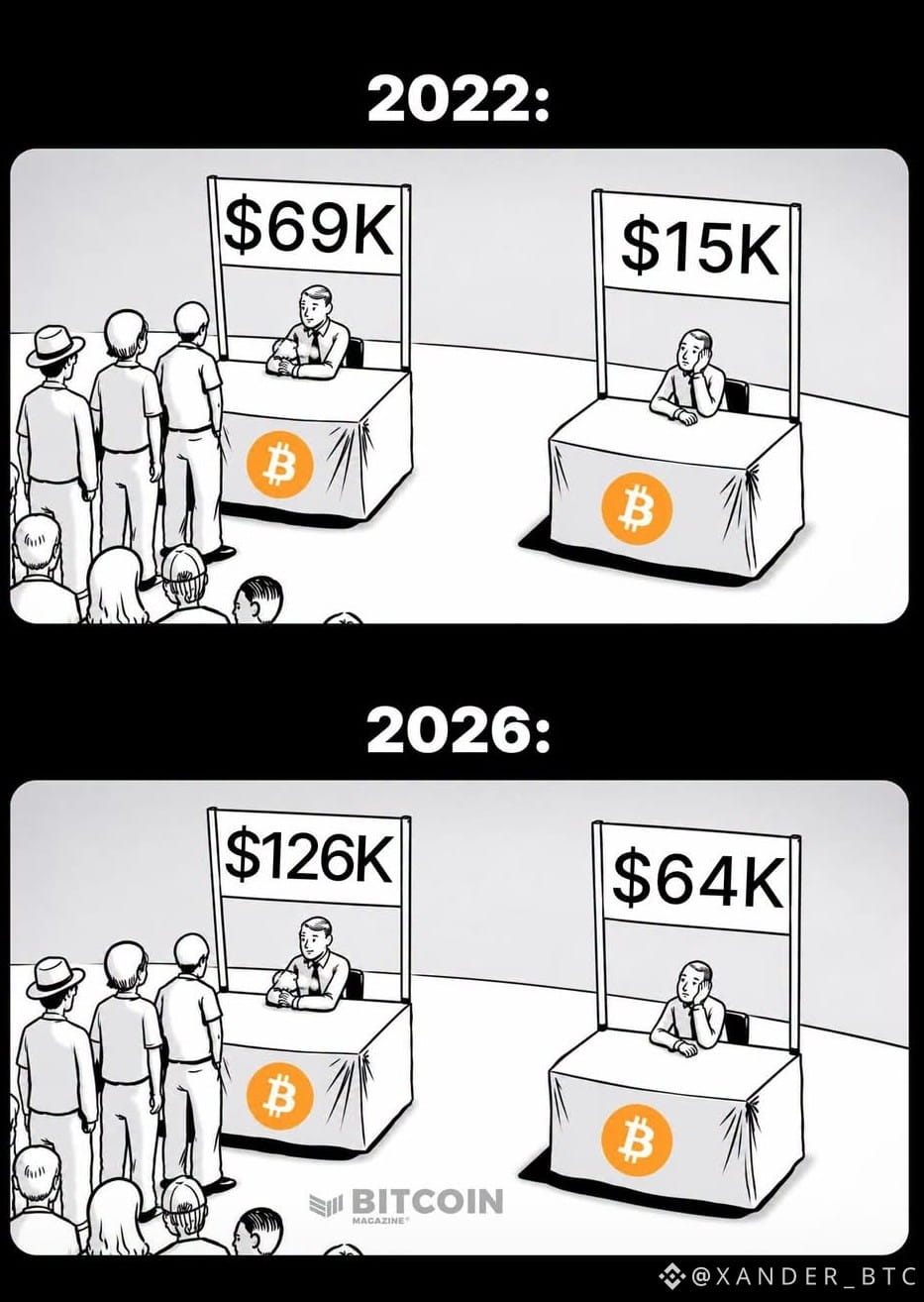
La plus grosse erreur de Bitcoin n’est pas d’acheter haut — c’est de refuser d’acheter bas.
Quand le Bitcoin a atteint 69 000 $, tout le monde voulait entrer.
Quand il a chuté à 15 000 $, la peur a remplacé la conviction.
Maintenant, alors que les prix remontent, les mêmes personnes se précipitent à nouveau.
Les marchés récompensent la patience, pas la panique. Les meilleures opportunités apparaissent souvent quand la confiance disparaît. L’histoire ne se répète pas exactement — mais la psychologie des investisseurs, elle, revient souvent.
Ne laissez pas vos émotions dicter vos décisions. Construisez votre stratégie, restez constant et pensez au-delà du prix d’aujourd’hui.
La foule suit les tendances. Les investisseurs avisés se préparent avant que la tendance ne commence.
#Bitcoin #BTC #Crypto #Investing #MarketCycles #Blockchain #HODL #DigitalAssets #CryptoCommunity #Web3
La plus grosse erreur de Bitcoin n’est pas d’acheter haut — c’est de refuser d’acheter bas.
Quand le Bitcoin a atteint 69 000 $, tout le monde voulait entrer.
Quand il a chuté à 15 000 $, la peur a remplacé la conviction.
Maintenant, alors que les prix remontent, les mêmes personnes se précipitent à nouveau.
Les marchés récompensent la patience, pas la panique. Les meilleures opportunités apparaissent souvent quand la confiance disparaît. L’histoire ne se répète pas exactement — mais la psychologie des investisseurs, elle, revient souvent.
Ne laissez pas vos émotions dicter vos décisions. Construisez votre stratégie, restez constant et pensez au-delà du prix d’aujourd’hui.
La foule suit les tendances. Les investisseurs avisés se préparent avant que la tendance ne commence.
#Bitcoin #BTC #Crypto #Investing #MarketCycles #Blockchain #HODL #DigitalAssets #CryptoCommunity #Web3
Quand le Bitcoin a atteint 69 000 $, tout le monde voulait entrer.
Quand il a chuté à 15 000 $, la peur a remplacé la conviction.
Maintenant, alors que les prix remontent, les mêmes personnes se précipitent à nouveau.
Les marchés récompensent la patience, pas la panique. Les meilleures opportunités apparaissent souvent quand la confiance disparaît. L’histoire ne se répète pas exactement — mais la psychologie des investisseurs, elle, revient souvent.
Ne laissez pas vos émotions dicter vos décisions. Construisez votre stratégie, restez constant et pensez au-delà du prix d’aujourd’hui.
La foule suit les tendances. Les investisseurs avisés se préparent avant que la tendance ne commence.
#Bitcoin #BTC #Crypto #Investing #MarketCycles #Blockchain #HODL #DigitalAssets #CryptoCommunity #Web3
1
96
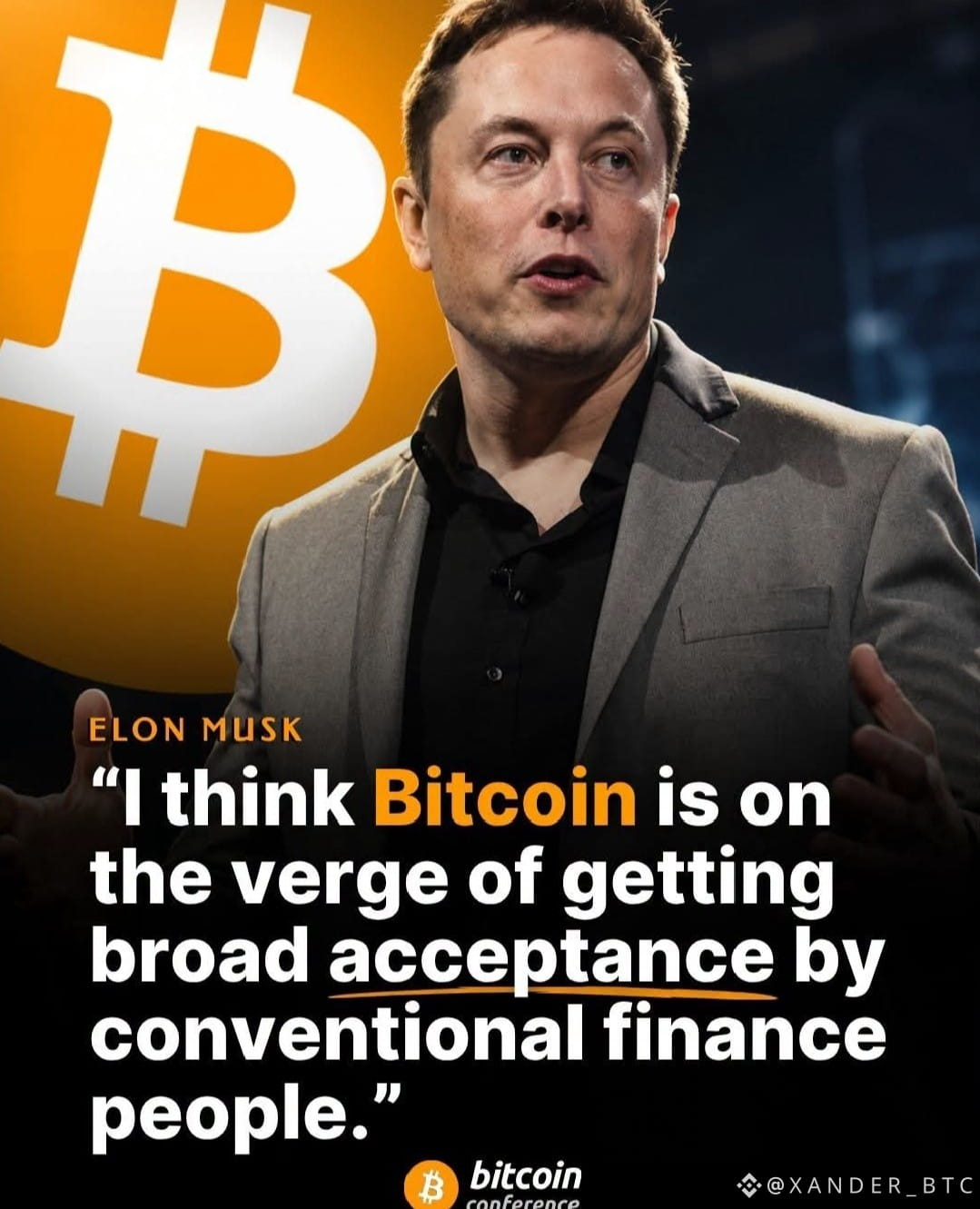
Bitcoin n’est plus ignoré
Pendant des années, on a balayé Bitcoin du revers de la main, comme une expérience spéculative.
Aujourd’hui, le discours a changé.
Des investisseurs institutionnels aux grandes entreprises financières, Bitcoin s’intègre progressivement au système financier mondial. Que vous soyez optimiste ou prudent, une chose devient de plus en plus claire : les actifs numériques ne sont plus en marge.
L’adoption massive ne se fait pas du jour au lendemain : elle se construit pas à pas. À mesure que la sensibilisation progresse et que les infrastructures s’améliorent, Bitcoin continue de renforcer sa position en tant qu’actif reconnu à l’échelle mondiale.
Les plus grandes opportunités se présentent souvent avant que tout le monde ne convienne qu’elles existent.#BTC🔥🔥🔥🔥🔥 #news_update #BTC、
Bitcoin n’est plus ignoré
Pendant des années, on a balayé Bitcoin du revers de la main, comme une expérience spéculative.
Aujourd’hui, le discours a changé.
Des investisseurs institutionnels aux grandes entreprises financières, Bitcoin s’intègre progressivement au système financier mondial. Que vous soyez optimiste ou prudent, une chose devient de plus en plus claire : les actifs numériques ne sont plus en marge.
L’adoption massive ne se fait pas du jour au lendemain : elle se construit pas à pas. À mesure que la sensibilisation progresse et que les infrastructures s’améliorent, Bitcoin continue de renforcer sa position en tant qu’actif reconnu à l’échelle mondiale.
Les plus grandes opportunités se présentent souvent avant que tout le monde ne convienne qu’elles existent.#BTC🔥🔥🔥🔥🔥 #news_update #BTC、
Pendant des années, on a balayé Bitcoin du revers de la main, comme une expérience spéculative.
Aujourd’hui, le discours a changé.
Des investisseurs institutionnels aux grandes entreprises financières, Bitcoin s’intègre progressivement au système financier mondial. Que vous soyez optimiste ou prudent, une chose devient de plus en plus claire : les actifs numériques ne sont plus en marge.
L’adoption massive ne se fait pas du jour au lendemain : elle se construit pas à pas. À mesure que la sensibilisation progresse et que les infrastructures s’améliorent, Bitcoin continue de renforcer sa position en tant qu’actif reconnu à l’échelle mondiale.
Les plus grandes opportunités se présentent souvent avant que tout le monde ne convienne qu’elles existent.#BTC🔥🔥🔥🔥🔥 #news_update #BTC、
117
·
--
Haussier
$ETH Signal de momentum haussier
Une liquidation courte de 4,22 K$ à 1 942,52 $ sur Binance indique que les positions baissières ont été évincées (squeezées) alors que les acheteurs reprenaient le contrôle, renforçant ainsi la dynamique haussière à court terme.
Alors que les vendeurs sont forcés de quitter le marché, l’ETH a désormais le potentiel de défier des niveaux de résistance plus élevés si les volumes d’achat restent solides. Rester au-dessus de la zone de liquidation renforcerait la structure haussière, tandis qu’une cassure décisive pourrait déclencher une nouvelle vague de liquidations courtes et alimenter davantage la hausse.
Zone d’entrée : 1 935 – 1 948 $
TP1 : 1 970 $
TP2 : 2 000 $
TP3 : 2 045 $
Stop Loss : 1 915 $
Restez patient et attendez une confirmation par le volume avant d’entrer. Une forte dynamique au-dessus de la résistance pourrait améliorer significativement la probabilité d’atteindre des objectifs plus élevés.
#ETH #Ethereum #Binance #Crypto #Trading #TechnicalAnalysis #PriceAction #DailyOrbit s #DailyOrbit #WriteToEarnUpgrade
$ETH Signal de momentum haussier
Une liquidation courte de 4,22 K$ à 1 942,52 $ sur Binance indique que les positions baissières ont été évincées (squeezées) alors que les acheteurs reprenaient le contrôle, renforçant ainsi la dynamique haussière à court terme.
Alors que les vendeurs sont forcés de quitter le marché, l’ETH a désormais le potentiel de défier des niveaux de résistance plus élevés si les volumes d’achat restent solides. Rester au-dessus de la zone de liquidation renforcerait la structure haussière, tandis qu’une cassure décisive pourrait déclencher une nouvelle vague de liquidations courtes et alimenter davantage la hausse.
Zone d’entrée : 1 935 – 1 948 $
TP1 : 1 970 $
TP2 : 2 000 $
TP3 : 2 045 $
Stop Loss : 1 915 $
Restez patient et attendez une confirmation par le volume avant d’entrer. Une forte dynamique au-dessus de la résistance pourrait améliorer significativement la probabilité d’atteindre des objectifs plus élevés.
#ETH #Ethereum #Binance #Crypto #Trading #TechnicalAnalysis #PriceAction #DailyOrbit s #DailyOrbit #WriteToEarnUpgrade
Une liquidation courte de 4,22 K$ à 1 942,52 $ sur Binance indique que les positions baissières ont été évincées (squeezées) alors que les acheteurs reprenaient le contrôle, renforçant ainsi la dynamique haussière à court terme.
Alors que les vendeurs sont forcés de quitter le marché, l’ETH a désormais le potentiel de défier des niveaux de résistance plus élevés si les volumes d’achat restent solides. Rester au-dessus de la zone de liquidation renforcerait la structure haussière, tandis qu’une cassure décisive pourrait déclencher une nouvelle vague de liquidations courtes et alimenter davantage la hausse.
Zone d’entrée : 1 935 – 1 948 $
TP1 : 1 970 $
TP2 : 2 000 $
TP3 : 2 045 $
Stop Loss : 1 915 $
Restez patient et attendez une confirmation par le volume avant d’entrer. Une forte dynamique au-dessus de la résistance pourrait améliorer significativement la probabilité d’atteindre des objectifs plus élevés.
#ETH #Ethereum #Binance #Crypto #Trading #TechnicalAnalysis #PriceAction #DailyOrbit s #DailyOrbit #WriteToEarnUpgrade
57
·
--
Haussier
$SOL Signal d’élan haussier
Des positions short d’une valeur de 2,43 k$ ont été liquidées à 78,27 $ sur Binance, signalant que les traders baissiers ont été pressés à la hausse lorsque les acheteurs ont fait monter le prix.
Cette liquidation en short suggère qu’un élan haussier est en train de se construire. Si $SOL se maintient au-dessus d’un support clé avec un volume en hausse, la hausse pourrait s’étendre vers les prochaines zones de résistance. Surveillez une cassure confirmée, car la pression d’achat continue pourrait déclencher d’autres liquidations de shorts.
Zone d’entrée : 77,80 $ – 78,60 $
TP1 : 79,80 $
TP2 : 81,20 $
TP3 : 83,00 $
Stop Loss : 76,90 $
Tradez avec discipline et attendez la confirmation du volume avant de poursuivre le mouvement.
#SOL #Binance #Crypto #Trading #TechnicalAnalysis #PriceAction #CreatorRewards #DailyOrbit #WriteToEarnUpgrade
$SOL Signal d’élan haussier
Des positions short d’une valeur de 2,43 k$ ont été liquidées à 78,27 $ sur Binance, signalant que les traders baissiers ont été pressés à la hausse lorsque les acheteurs ont fait monter le prix.
Cette liquidation en short suggère qu’un élan haussier est en train de se construire. Si $SOL se maintient au-dessus d’un support clé avec un volume en hausse, la hausse pourrait s’étendre vers les prochaines zones de résistance. Surveillez une cassure confirmée, car la pression d’achat continue pourrait déclencher d’autres liquidations de shorts.
Zone d’entrée : 77,80 $ – 78,60 $
TP1 : 79,80 $
TP2 : 81,20 $
TP3 : 83,00 $
Stop Loss : 76,90 $
Tradez avec discipline et attendez la confirmation du volume avant de poursuivre le mouvement.
#SOL #Binance #Crypto #Trading #TechnicalAnalysis #PriceAction #CreatorRewards #DailyOrbit #WriteToEarnUpgrade
Des positions short d’une valeur de 2,43 k$ ont été liquidées à 78,27 $ sur Binance, signalant que les traders baissiers ont été pressés à la hausse lorsque les acheteurs ont fait monter le prix.
Cette liquidation en short suggère qu’un élan haussier est en train de se construire. Si $SOL se maintient au-dessus d’un support clé avec un volume en hausse, la hausse pourrait s’étendre vers les prochaines zones de résistance. Surveillez une cassure confirmée, car la pression d’achat continue pourrait déclencher d’autres liquidations de shorts.
Zone d’entrée : 77,80 $ – 78,60 $
TP1 : 79,80 $
TP2 : 81,20 $
TP3 : 83,00 $
Stop Loss : 76,90 $
Tradez avec discipline et attendez la confirmation du volume avant de poursuivre le mouvement.
#SOL #Binance #Crypto #Trading #TechnicalAnalysis #PriceAction #CreatorRewards #DailyOrbit #WriteToEarnUpgrade
33
·
--
Baissier
$BLESS Signal de pression baissière
Des positions longues d’une valeur de 1,39 K$ ont été liquidées à 0,01146 $ sur Binance, indiquant que les traders haussiers ont été forcés de sortir tandis que les vendeurs resserraient leur emprise sur le marché.
La liquidation reflète un affaiblissement de l’élan acheteur et une hausse de la pression baissière. Si $BLESS ne parvient pas à reprendre des niveaux de résistance clés, le prix pourrait continuer à dériver vers des supports plus bas. Surveillez la confirmation par le volume avant d’envisager toute nouvelle position.
Zone d’entrée : 0,0113 $ – 0,0116 $
TP1 : 0,0110 $
TP2 : 0,0106 $
TP3 : 0,0101 $
Stop Loss : 0,0119 $
Conservez une gestion rigoureuse du risque, car la poursuite des ventes pourrait déclencher des liquidations supplémentaires de positions longues.
#Blessings #Binance #Crypto #Trading #TechnicalAnalysisnalysis #PriceAction #CreatorRewards #DailyOrbit #WriteToEarnUpgrade
$BLESS Signal de pression baissière
Des positions longues d’une valeur de 1,39 K$ ont été liquidées à 0,01146 $ sur Binance, indiquant que les traders haussiers ont été forcés de sortir tandis que les vendeurs resserraient leur emprise sur le marché.
La liquidation reflète un affaiblissement de l’élan acheteur et une hausse de la pression baissière. Si $BLESS ne parvient pas à reprendre des niveaux de résistance clés, le prix pourrait continuer à dériver vers des supports plus bas. Surveillez la confirmation par le volume avant d’envisager toute nouvelle position.
Zone d’entrée : 0,0113 $ – 0,0116 $
TP1 : 0,0110 $
TP2 : 0,0106 $
TP3 : 0,0101 $
Stop Loss : 0,0119 $
Conservez une gestion rigoureuse du risque, car la poursuite des ventes pourrait déclencher des liquidations supplémentaires de positions longues.
#Blessings #Binance #Crypto #Trading #TechnicalAnalysisnalysis #PriceAction #CreatorRewards #DailyOrbit #WriteToEarnUpgrade
Des positions longues d’une valeur de 1,39 K$ ont été liquidées à 0,01146 $ sur Binance, indiquant que les traders haussiers ont été forcés de sortir tandis que les vendeurs resserraient leur emprise sur le marché.
La liquidation reflète un affaiblissement de l’élan acheteur et une hausse de la pression baissière. Si $BLESS ne parvient pas à reprendre des niveaux de résistance clés, le prix pourrait continuer à dériver vers des supports plus bas. Surveillez la confirmation par le volume avant d’envisager toute nouvelle position.
Zone d’entrée : 0,0113 $ – 0,0116 $
TP1 : 0,0110 $
TP2 : 0,0106 $
TP3 : 0,0101 $
Stop Loss : 0,0119 $
Conservez une gestion rigoureuse du risque, car la poursuite des ventes pourrait déclencher des liquidations supplémentaires de positions longues.
#Blessings #Binance #Crypto #Trading #TechnicalAnalysisnalysis #PriceAction #CreatorRewards #DailyOrbit #WriteToEarnUpgrade
89
·
--
Baissier
$RE Signal de pression baissière
Des positions longues d’une valeur de 2,72 K$ ont été liquidées à 0,47743 sur Binance, indiquant que les traders haussiers ont été forcés de quitter le marché tandis que la pression vendeuse s’intensifiait.
La liquidation suggère que les baissiers prennent le contrôle à court terme. Si le prix reste sous une résistance clé, $RE pourrait prolonger sa baisse vers des niveaux de support plus bas. Surveillez le volume de trading et la structure du marché pour confirmation avant d’ouvrir une position.
Zone d’entrée : 0,4740 – 0,4800
TP1 : 0,4680
TP2 : 0,4590
TP3 : 0,4480
Stop Loss : 0,4865
Une gestion rigoureuse du risque est essentielle jusqu’à l’apparition d’un retournement clair ou d’une réaction sur le support.
#RE #Binance #Crypto #Trading #TechnicalAnalysisnalysis #PriceAction #CreatorRewards #DailyOrbit #WriteToEarnUpgrade
$RE Signal de pression baissière
Des positions longues d’une valeur de 2,72 K$ ont été liquidées à 0,47743 sur Binance, indiquant que les traders haussiers ont été forcés de quitter le marché tandis que la pression vendeuse s’intensifiait.
La liquidation suggère que les baissiers prennent le contrôle à court terme. Si le prix reste sous une résistance clé, $RE pourrait prolonger sa baisse vers des niveaux de support plus bas. Surveillez le volume de trading et la structure du marché pour confirmation avant d’ouvrir une position.
Zone d’entrée : 0,4740 – 0,4800
TP1 : 0,4680
TP2 : 0,4590
TP3 : 0,4480
Stop Loss : 0,4865
Une gestion rigoureuse du risque est essentielle jusqu’à l’apparition d’un retournement clair ou d’une réaction sur le support.
#RE #Binance #Crypto #Trading #TechnicalAnalysisnalysis #PriceAction #CreatorRewards #DailyOrbit #WriteToEarnUpgrade
Des positions longues d’une valeur de 2,72 K$ ont été liquidées à 0,47743 sur Binance, indiquant que les traders haussiers ont été forcés de quitter le marché tandis que la pression vendeuse s’intensifiait.
La liquidation suggère que les baissiers prennent le contrôle à court terme. Si le prix reste sous une résistance clé, $RE pourrait prolonger sa baisse vers des niveaux de support plus bas. Surveillez le volume de trading et la structure du marché pour confirmation avant d’ouvrir une position.
Zone d’entrée : 0,4740 – 0,4800
TP1 : 0,4680
TP2 : 0,4590
TP3 : 0,4480
Stop Loss : 0,4865
Une gestion rigoureuse du risque est essentielle jusqu’à l’apparition d’un retournement clair ou d’une réaction sur le support.
#RE #Binance #Crypto #Trading #TechnicalAnalysisnalysis #PriceAction #CreatorRewards #DailyOrbit #WriteToEarnUpgrade
65
·
--
Haussier
$SOXL Signal de Momentum Haussier
Des positions short d’une valeur de 9,56 K$ ont été liquidées à 164,51 $ sur Binance, montrant que les traders baissiers ont été pressés à mesure que les acheteurs reprenaient le contrôle du marché.
Les points de liquidation indiquent un renforcement du sentiment haussier. Si le volume d’achat reste solide, $SOXL pourrait continuer son mouvement à la hausse et tester des niveaux de résistance plus élevés. Une cassure confirmée peut attirer davantage de traders axés sur le momentum et déclencher d’autres liquidations de shorts.
Zone d’entrée : 163,00 $ – 165,50 $
TP1 : 168,20 $
TP2 : 172,00 $
TP3 : 176,50 $
Stop Loss : 160,50 $
Attendez une confirmation du volume avant d’entrer, et gérez le risque avec attention dans des conditions volatiles.
#SOXL #Binance #Crypto #Trading #TechnicalAnalysis #PriceAction #CreatorReward s #DailyOrbit #WriteToEarnUpgrade
$SOXL Signal de Momentum Haussier
Des positions short d’une valeur de 9,56 K$ ont été liquidées à 164,51 $ sur Binance, montrant que les traders baissiers ont été pressés à mesure que les acheteurs reprenaient le contrôle du marché.
Les points de liquidation indiquent un renforcement du sentiment haussier. Si le volume d’achat reste solide, $SOXL pourrait continuer son mouvement à la hausse et tester des niveaux de résistance plus élevés. Une cassure confirmée peut attirer davantage de traders axés sur le momentum et déclencher d’autres liquidations de shorts.
Zone d’entrée : 163,00 $ – 165,50 $
TP1 : 168,20 $
TP2 : 172,00 $
TP3 : 176,50 $
Stop Loss : 160,50 $
Attendez une confirmation du volume avant d’entrer, et gérez le risque avec attention dans des conditions volatiles.
#SOXL #Binance #Crypto #Trading #TechnicalAnalysis #PriceAction #CreatorReward s #DailyOrbit #WriteToEarnUpgrade
Des positions short d’une valeur de 9,56 K$ ont été liquidées à 164,51 $ sur Binance, montrant que les traders baissiers ont été pressés à mesure que les acheteurs reprenaient le contrôle du marché.
Les points de liquidation indiquent un renforcement du sentiment haussier. Si le volume d’achat reste solide, $SOXL pourrait continuer son mouvement à la hausse et tester des niveaux de résistance plus élevés. Une cassure confirmée peut attirer davantage de traders axés sur le momentum et déclencher d’autres liquidations de shorts.
Zone d’entrée : 163,00 $ – 165,50 $
TP1 : 168,20 $
TP2 : 172,00 $
TP3 : 176,50 $
Stop Loss : 160,50 $
Attendez une confirmation du volume avant d’entrer, et gérez le risque avec attention dans des conditions volatiles.
#SOXL #Binance #Crypto #Trading #TechnicalAnalysis #PriceAction #CreatorReward s #DailyOrbit #WriteToEarnUpgrade
67
·
--
Haussier
$LISTA Signal de dynamique haussière
Des positions courtes d’une valeur de 4,43 k$ ont été liquidées à 0,05871 sur Binance, signalant que les traders baissiers ont été forcés de clôturer leurs positions alors que la pression acheteuse prenait de l’élan.
Ce squeeze sur les shorts suggère un renforcement haussier croissant. Si les acheteurs continuent de défendre les niveaux de support clés et que le volume augmente, $LISTA pourrait étendre sa reprise vers les prochains niveaux de résistance. Surveillez une cassure confirmée avant de poursuivre des prix plus élevés.
Zone d’entrée : 0,0582 – 0,0592
TP1 : 0,0605
TP2 : 0,0623
TP3 : 0,0648
Stop Loss : 0,0569
Un fort suivi au-dessus de la résistance pourrait déclencher des liquidations de shorts supplémentaires et alimenter davantage la hausse.
#LISTA #Binance #Crypto #Trading #TechnicalAnalysis #PriceAction #CreatorRewards #DailyOrbit #WriteToEarnUpgrade
$LISTA Signal de dynamique haussière
Des positions courtes d’une valeur de 4,43 k$ ont été liquidées à 0,05871 sur Binance, signalant que les traders baissiers ont été forcés de clôturer leurs positions alors que la pression acheteuse prenait de l’élan.
Ce squeeze sur les shorts suggère un renforcement haussier croissant. Si les acheteurs continuent de défendre les niveaux de support clés et que le volume augmente, $LISTA pourrait étendre sa reprise vers les prochains niveaux de résistance. Surveillez une cassure confirmée avant de poursuivre des prix plus élevés.
Zone d’entrée : 0,0582 – 0,0592
TP1 : 0,0605
TP2 : 0,0623
TP3 : 0,0648
Stop Loss : 0,0569
Un fort suivi au-dessus de la résistance pourrait déclencher des liquidations de shorts supplémentaires et alimenter davantage la hausse.
#LISTA #Binance #Crypto #Trading #TechnicalAnalysis #PriceAction #CreatorRewards #DailyOrbit #WriteToEarnUpgrade
Des positions courtes d’une valeur de 4,43 k$ ont été liquidées à 0,05871 sur Binance, signalant que les traders baissiers ont été forcés de clôturer leurs positions alors que la pression acheteuse prenait de l’élan.
Ce squeeze sur les shorts suggère un renforcement haussier croissant. Si les acheteurs continuent de défendre les niveaux de support clés et que le volume augmente, $LISTA pourrait étendre sa reprise vers les prochains niveaux de résistance. Surveillez une cassure confirmée avant de poursuivre des prix plus élevés.
Zone d’entrée : 0,0582 – 0,0592
TP1 : 0,0605
TP2 : 0,0623
TP3 : 0,0648
Stop Loss : 0,0569
Un fort suivi au-dessus de la résistance pourrait déclencher des liquidations de shorts supplémentaires et alimenter davantage la hausse.
#LISTA #Binance #Crypto #Trading #TechnicalAnalysis #PriceAction #CreatorRewards #DailyOrbit #WriteToEarnUpgrade
80
Connectez-vous pour découvrir plus de contenu
Rejoignez la communauté mondiale des adeptes de cryptomonnaies sur Binance Square
⚡️ Suviez les dernières informations importantes sur les cryptomonnaies.
💬 Jugé digne de confiance par la plus grande plateforme d’échange de cryptomonnaies au monde.
👍 Découvrez les connaissances que partagent les créateurs vérifiés.
Adresse e-mail/Nº de téléphone