

TOXIC BYTE
11.8k Publications

TOXIC BYTE
 Compte Square Vérifié+
Signaler
Bloquer l’utilisateur
Crypto believer | Market survivor | Web3 mind | Bull & Bear both welcome |
Ouvert au trading
Trade régulièrement
1.1 an(s)
178 Suivis
39.0K+ Abonnés
19.3K+ J’aime
Publications
Portefeuille
Tous
Direct
·
--
🎙️ 🎉2026 marché haussier violent, l’appel est lancé, la tendance est sur la chaîne BSC!! Le 1er novembre, Musk célébrera l’anniversaire du chien de Mars Marvin, il faut absolument saisir cette vague de tendance sur la chaîne ! 11
Fin
03 h 41 min 53 sec
13.1k
20
66
·
--
#CPIWatch
Le CPI pourrait être l’un des plus importants catalyseurs de marché aujourd’hui.
Alors que la réunion de la Fed de septembre approche, les données sur l’inflation peuvent influencer le prochain mouvement du Bitcoin, des actions, de l’or, du DXY et des rendements des Treasuries.
Les attentes tournent autour de +0,4 % MoM pour l’IPC global et de +0,2 % MoM pour l’IPC hors volatilité.
Mais je ne me concentre pas uniquement sur le chiffre de l’IPC global.
Le vrai sujet, ce sont l’IPC hors volatilité, le logement (Shelter), les services et l’énergie — en particulier pour savoir si la hausse des prix du pétrole et du gaz commence à alimenter une inflation plus large.
Un rapport plus faible que prévu pourrait faire baisser les anticipations de taux, exercer une pression sur les rendements plus bas et améliorer les conditions de liquidité, créant un environnement plus favorable au BTC et aux actions.
Un chiffre “core” plus chaud pourrait faire l’inverse : rendements plus élevés, DXY plus fort, moins d’attentes d’assouplissement de la Fed et davantage de pression sur l’ensemble des actifs risqués.
Pour moi, le scénario est simple :
Surprise CPI → anticipations Fed → rendements des Treasuries → DXY → liquidité → BTC et actions.
Surveillez la réaction, pas seulement la publication.
Le premier mouvement peut être émotionnel.
Le vrai signal apparaît après que le marché a eu le temps d’absorber les données.
$BTC
#BTC #Inflation #Macro #Markets
#CPIWatch
Le CPI pourrait être l’un des plus importants catalyseurs de marché aujourd’hui.
Alors que la réunion de la Fed de septembre approche, les données sur l’inflation peuvent influencer le prochain mouvement du Bitcoin, des actions, de l’or, du DXY et des rendements des Treasuries.
Les attentes tournent autour de +0,4 % MoM pour l’IPC global et de +0,2 % MoM pour l’IPC hors volatilité.
Mais je ne me concentre pas uniquement sur le chiffre de l’IPC global.
Le vrai sujet, ce sont l’IPC hors volatilité, le logement (Shelter), les services et l’énergie — en particulier pour savoir si la hausse des prix du pétrole et du gaz commence à alimenter une inflation plus large.
Un rapport plus faible que prévu pourrait faire baisser les anticipations de taux, exercer une pression sur les rendements plus bas et améliorer les conditions de liquidité, créant un environnement plus favorable au BTC et aux actions.
Un chiffre “core” plus chaud pourrait faire l’inverse : rendements plus élevés, DXY plus fort, moins d’attentes d’assouplissement de la Fed et davantage de pression sur l’ensemble des actifs risqués.
Pour moi, le scénario est simple :
Surprise CPI → anticipations Fed → rendements des Treasuries → DXY → liquidité → BTC et actions.
Surveillez la réaction, pas seulement la publication.
Le premier mouvement peut être émotionnel.
Le vrai signal apparaît après que le marché a eu le temps d’absorber les données.
$BTC
#BTC #Inflation #Macro #Markets
Le CPI pourrait être l’un des plus importants catalyseurs de marché aujourd’hui.
Alors que la réunion de la Fed de septembre approche, les données sur l’inflation peuvent influencer le prochain mouvement du Bitcoin, des actions, de l’or, du DXY et des rendements des Treasuries.
Les attentes tournent autour de +0,4 % MoM pour l’IPC global et de +0,2 % MoM pour l’IPC hors volatilité.
Mais je ne me concentre pas uniquement sur le chiffre de l’IPC global.
Le vrai sujet, ce sont l’IPC hors volatilité, le logement (Shelter), les services et l’énergie — en particulier pour savoir si la hausse des prix du pétrole et du gaz commence à alimenter une inflation plus large.
Un rapport plus faible que prévu pourrait faire baisser les anticipations de taux, exercer une pression sur les rendements plus bas et améliorer les conditions de liquidité, créant un environnement plus favorable au BTC et aux actions.
Un chiffre “core” plus chaud pourrait faire l’inverse : rendements plus élevés, DXY plus fort, moins d’attentes d’assouplissement de la Fed et davantage de pression sur l’ensemble des actifs risqués.
Pour moi, le scénario est simple :
Surprise CPI → anticipations Fed → rendements des Treasuries → DXY → liquidité → BTC et actions.
Surveillez la réaction, pas seulement la publication.
Le premier mouvement peut être émotionnel.
Le vrai signal apparaît après que le marché a eu le temps d’absorber les données.
$BTC
#BTC #Inflation #Macro #Markets

17
10
262

·
--
🎙️ Maintenir l’équilibre écologique et construire la Place Binance

Fin
04 h 10 min 20 sec
8.5k
34
88
·
--
Haussier
$SOL
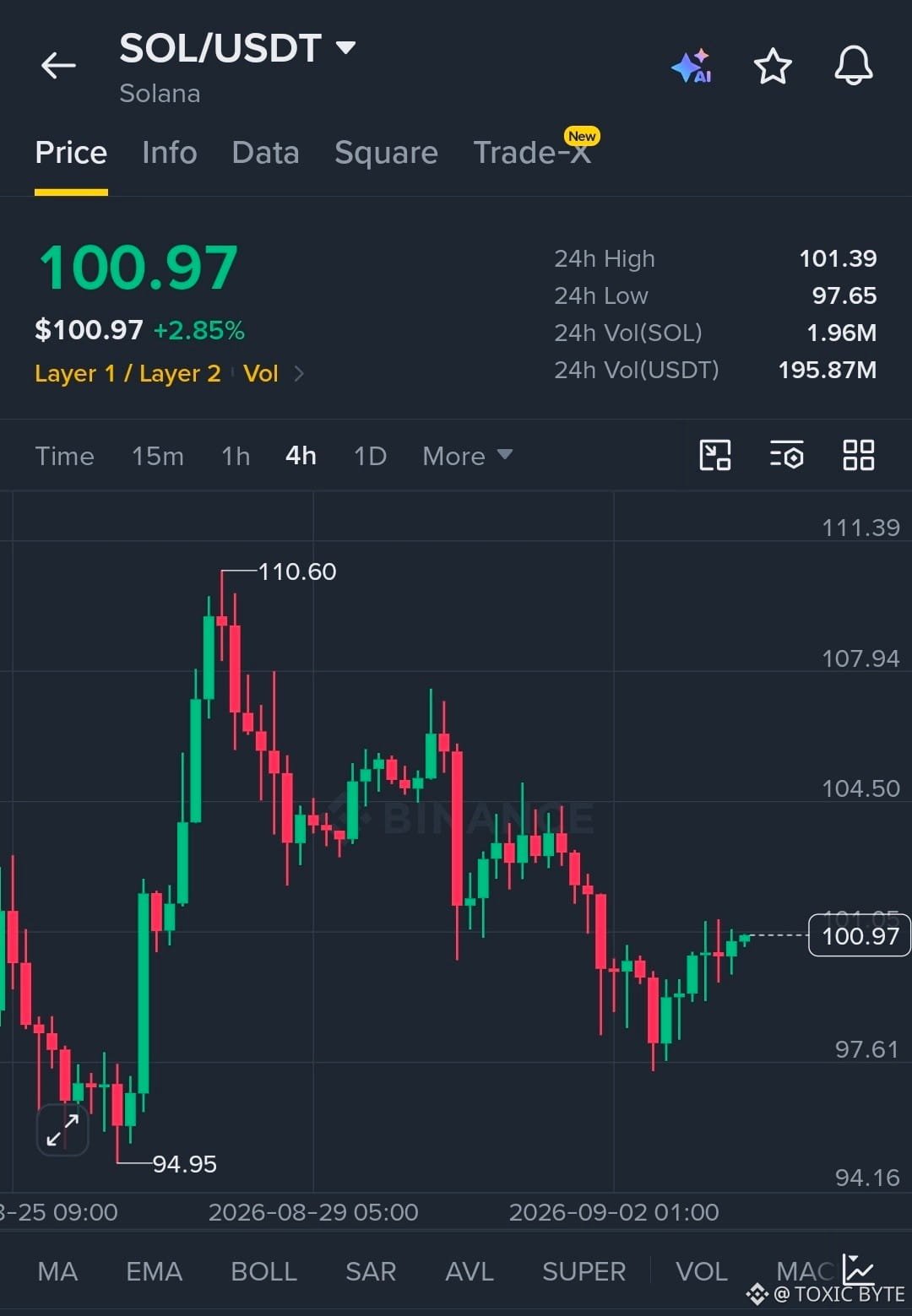
SOL montre une forte reprise depuis 97.65 et teste maintenant la zone de résistance des 101.40. Une cassure nette peut accélérer le mouvement vers 104.50 et au-delà. Les acheteurs ont le momentum, mais 99.00 est le support clé à protéger.
Configuration de trade — LONG
EP: 100.70–101.20
TP1: 102.80
TP2: 104.50
TP3: 107.00
SL: 98.80
Niveau clé: 101.40
Cassure & maintien au-dessus = poursuite haussière.
En dessous de 98.80 = configuration invalidée.
C'est parti.
#CFTCSeeksToDismissCMEMotionInPerpFutures
#US10YearTreasuryYieldHitsHighestSinceNov2023
{spot}(SOLUSDT)
$SOL
SOL montre une forte reprise depuis 97.65 et teste maintenant la zone de résistance des 101.40. Une cassure nette peut accélérer le mouvement vers 104.50 et au-delà. Les acheteurs ont le momentum, mais 99.00 est le support clé à protéger.
Configuration de trade — LONG
EP: 100.70–101.20
TP1: 102.80
TP2: 104.50
TP3: 107.00
SL: 98.80
Niveau clé: 101.40
Cassure & maintien au-dessus = poursuite haussière.
En dessous de 98.80 = configuration invalidée.
C'est parti.
#CFTCSeeksToDismissCMEMotionInPerpFutures
#US10YearTreasuryYieldHitsHighestSinceNov2023
SOL montre une forte reprise depuis 97.65 et teste maintenant la zone de résistance des 101.40. Une cassure nette peut accélérer le mouvement vers 104.50 et au-delà. Les acheteurs ont le momentum, mais 99.00 est le support clé à protéger.
Configuration de trade — LONG
EP: 100.70–101.20
TP1: 102.80
TP2: 104.50
TP3: 107.00
SL: 98.80
Niveau clé: 101.40
Cassure & maintien au-dessus = poursuite haussière.
En dessous de 98.80 = configuration invalidée.
C'est parti.
#CFTCSeeksToDismissCMEMotionInPerpFutures
#US10YearTreasuryYieldHitsHighestSinceNov2023
111
·
--
Haussier
$ETH
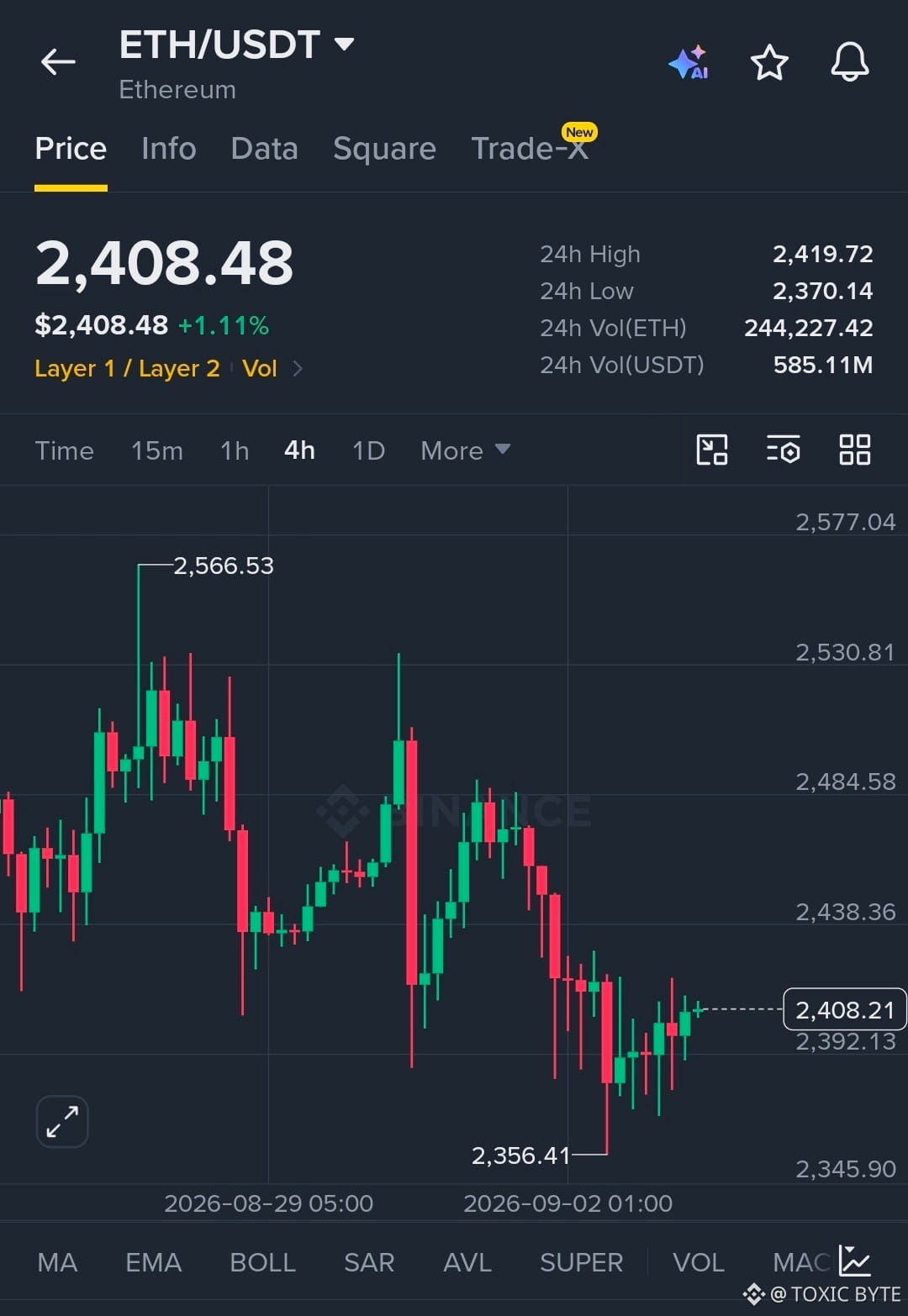
L’ETH se maintient au niveau des 2 400 après avoir rebondi fortement depuis 2 356,41. Les acheteurs tentent de prendre de l’élan, mais 2 438 est la résistance clé à franchir. Une cassure propre au-dessus pourrait ouvrir la voie vers 2 484.
Configuration de trading — LONG
EP : 2 405–2 420
TP1 : 2 438
TP2 : 2 480
TP3 : 2 520
SL : 2 375
Niveau clé : 2 438
Au-dessus = poursuite haussière.
En dessous de 2 375 = configuration invalidée.
On y va.
#SolanaFallsOver3%
#EtherXRPETFInflowStreaksEnd
#PredictionMarketsPutCLARITYAct2026OddsAt15%
#IranStrikesUSBaseInKuwait
#USGainsControlOfVenezuelanOilFields
{spot}(ETHUSDT)
$ETH
L’ETH se maintient au niveau des 2 400 après avoir rebondi fortement depuis 2 356,41. Les acheteurs tentent de prendre de l’élan, mais 2 438 est la résistance clé à franchir. Une cassure propre au-dessus pourrait ouvrir la voie vers 2 484.
Configuration de trading — LONG
EP : 2 405–2 420
TP1 : 2 438
TP2 : 2 480
TP3 : 2 520
SL : 2 375
Niveau clé : 2 438
Au-dessus = poursuite haussière.
En dessous de 2 375 = configuration invalidée.
On y va.
#SolanaFallsOver3%
#EtherXRPETFInflowStreaksEnd
#PredictionMarketsPutCLARITYAct2026OddsAt15%
#IranStrikesUSBaseInKuwait
#USGainsControlOfVenezuelanOilFields
L’ETH se maintient au niveau des 2 400 après avoir rebondi fortement depuis 2 356,41. Les acheteurs tentent de prendre de l’élan, mais 2 438 est la résistance clé à franchir. Une cassure propre au-dessus pourrait ouvrir la voie vers 2 484.
Configuration de trading — LONG
EP : 2 405–2 420
TP1 : 2 438
TP2 : 2 480
TP3 : 2 520
SL : 2 375
Niveau clé : 2 438
Au-dessus = poursuite haussière.
En dessous de 2 375 = configuration invalidée.
On y va.
#SolanaFallsOver3%
#EtherXRPETFInflowStreaksEnd
#PredictionMarketsPutCLARITYAct2026OddsAt15%
#IranStrikesUSBaseInKuwait
#USGainsControlOfVenezuelanOilFields
97
·
--
Haussier
$BTC — WATCH BREAKOUT
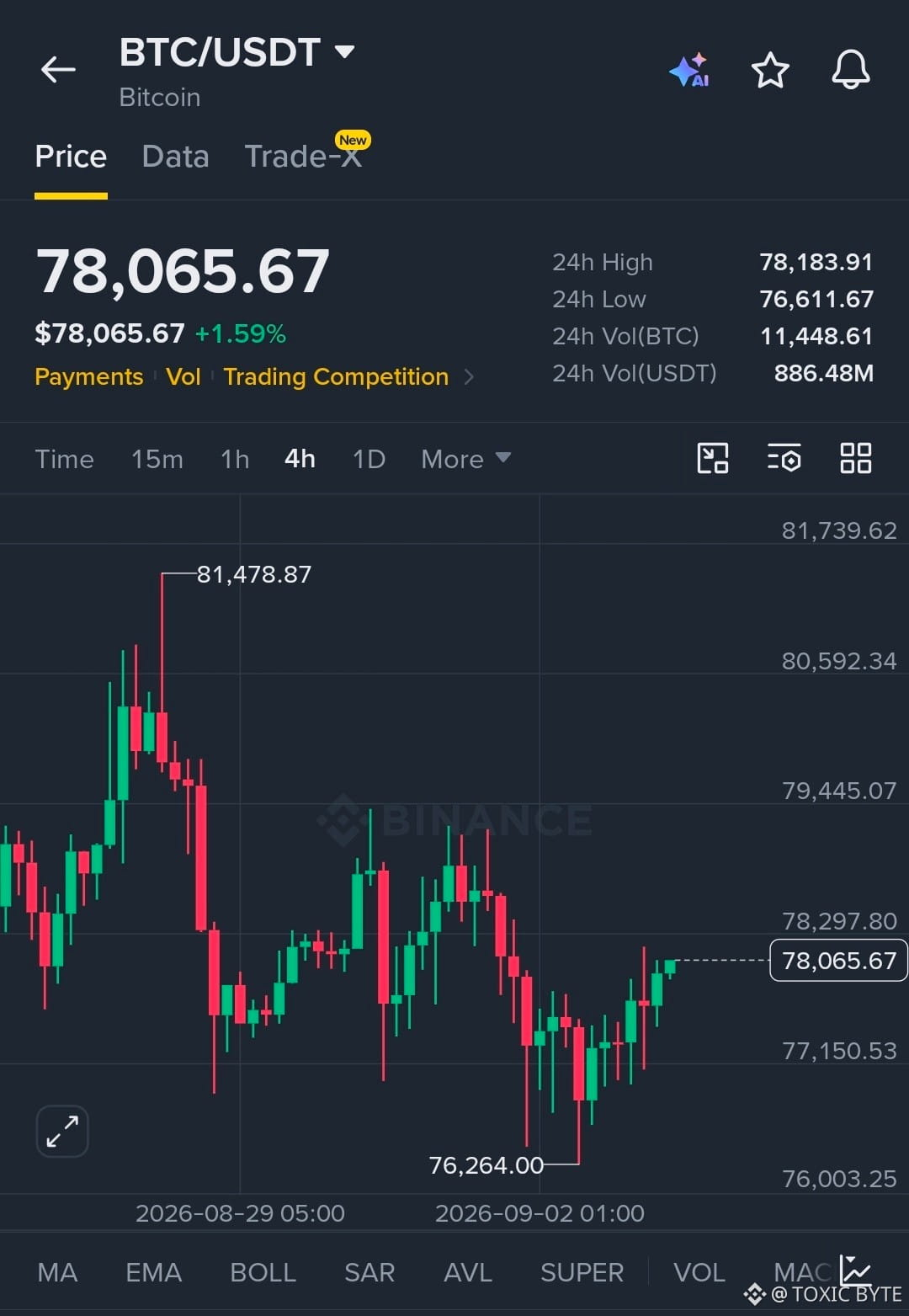
Le BTC se redresse fortement depuis 76 264 $ et se dirige vers la résistance des 78 300 $. Une cassure nette pourrait déclencher le prochain mouvement à la hausse.
Point d’entrée (EP) : 78 050–78 250
Objectif (TP) : 78 800 / 79 400
Stop Loss (SL) : 77 450
On y va. Attendez la confirmation et gérez le risque.
#CFTCSeeksToDismissCMEMotionInPerpFutures
#OilSteadiesAfterThreeDayRally
{spot}(BTCUSDT)
$BTC — WATCH BREAKOUT
Le BTC se redresse fortement depuis 76 264 $ et se dirige vers la résistance des 78 300 $. Une cassure nette pourrait déclencher le prochain mouvement à la hausse.
Point d’entrée (EP) : 78 050–78 250
Objectif (TP) : 78 800 / 79 400
Stop Loss (SL) : 77 450
On y va. Attendez la confirmation et gérez le risque.
#CFTCSeeksToDismissCMEMotionInPerpFutures
#OilSteadiesAfterThreeDayRally
Le BTC se redresse fortement depuis 76 264 $ et se dirige vers la résistance des 78 300 $. Une cassure nette pourrait déclencher le prochain mouvement à la hausse.
Point d’entrée (EP) : 78 050–78 250
Objectif (TP) : 78 800 / 79 400
Stop Loss (SL) : 77 450
On y va. Attendez la confirmation et gérez le risque.
#CFTCSeeksToDismissCMEMotionInPerpFutures
#OilSteadiesAfterThreeDayRally
103
·
--
Haussier
$BNB — CONFIGURATION DE BREAKOUT
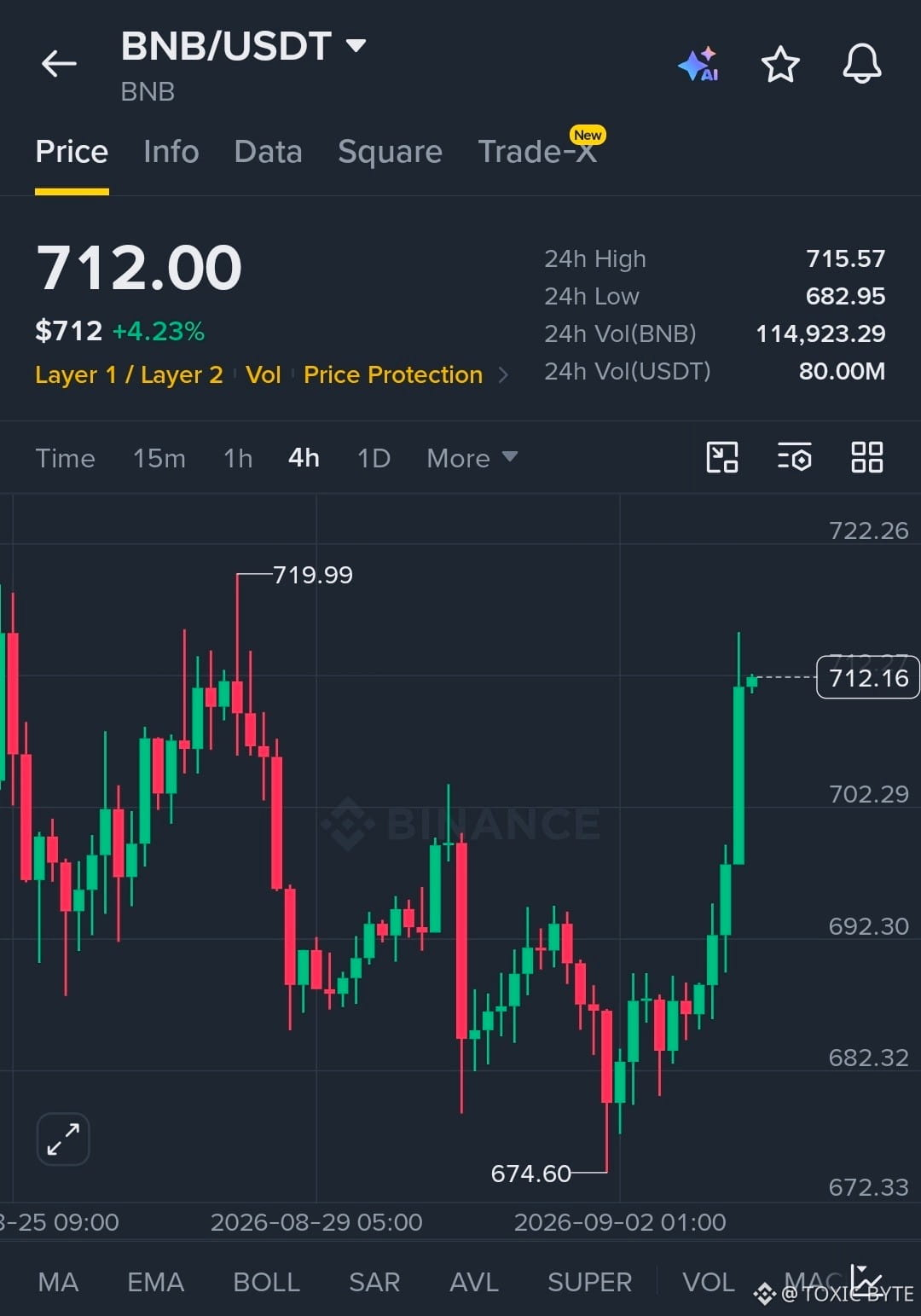
BNB pousse fortement vers la zone de résistance 715–720. Une cassure nette pourrait ouvrir la voie à une hausse.
EP : 712–714
TP : 719.5 / 725
SL : 707
C’est parti. Gardez le risque sous contrôle et attendez la confirmation.
#EtherXRPETFInflowStreaksEnd
#US10YearTreasuryYieldHitsHighestSinceNov2023
{spot}(BNBUSDT)
$BNB — CONFIGURATION DE BREAKOUT
BNB pousse fortement vers la zone de résistance 715–720. Une cassure nette pourrait ouvrir la voie à une hausse.
EP : 712–714
TP : 719.5 / 725
SL : 707
C’est parti. Gardez le risque sous contrôle et attendez la confirmation.
#EtherXRPETFInflowStreaksEnd
#US10YearTreasuryYieldHitsHighestSinceNov2023
BNB pousse fortement vers la zone de résistance 715–720. Une cassure nette pourrait ouvrir la voie à une hausse.
EP : 712–714
TP : 719.5 / 725
SL : 707
C’est parti. Gardez le risque sous contrôle et attendez la confirmation.
#EtherXRPETFInflowStreaksEnd
#US10YearTreasuryYieldHitsHighestSinceNov2023
99
·
--
Haussier
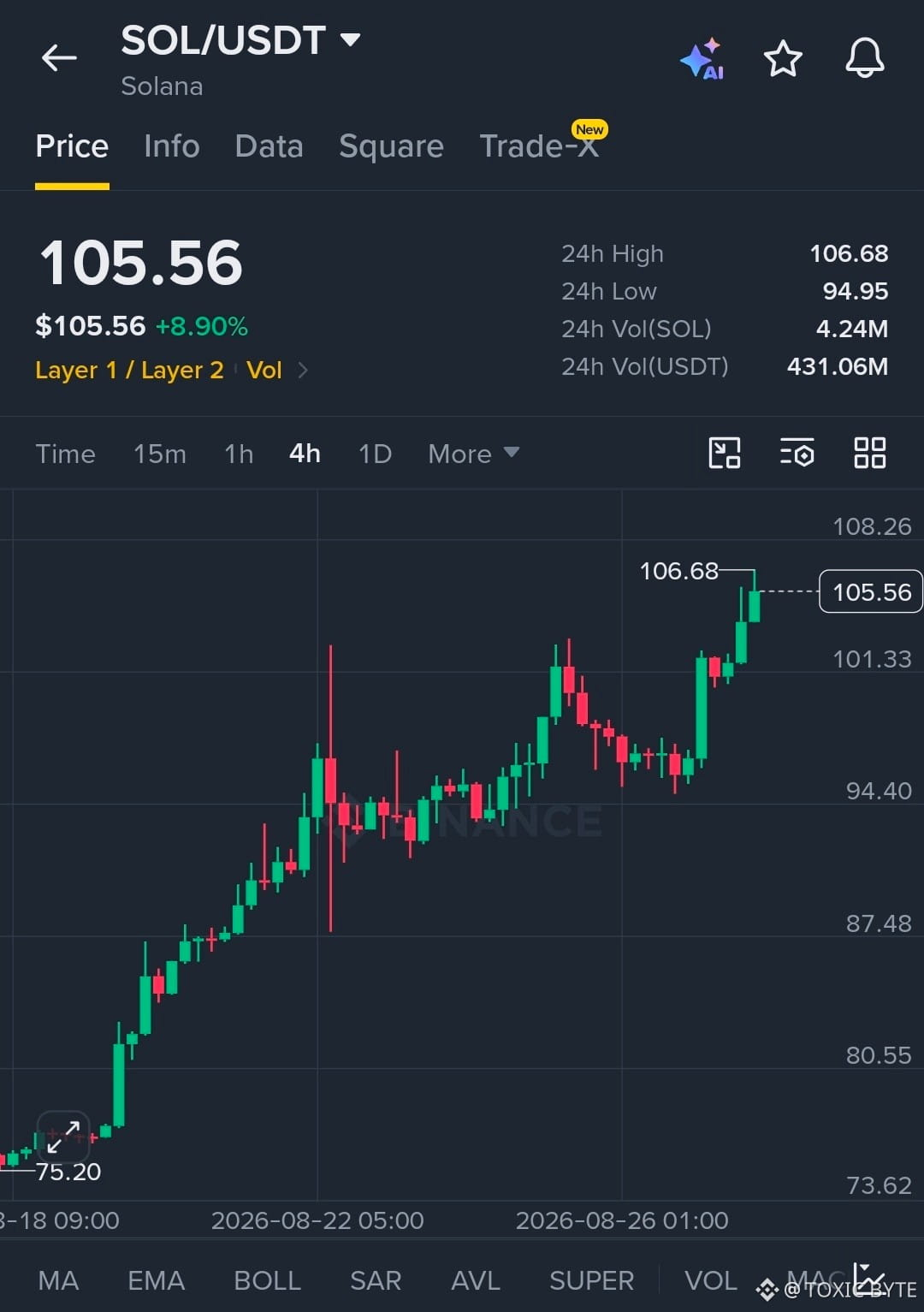
$SOL affiche une forte dynamique sur le graphique 4H, se maintient au-dessus de la zone 101–103 et progresse vers la résistance 106,68. Une cassure nette et un maintien au-dessus de 106,68 pourraient ouvrir la voie au prochain mouvement.
Configuration de trade
EP : 104,80–105,80 TP1 : 108,00 TP2 : 110,00 SL : 102,20
À vos ordres
#NvidiaRises4%OnRevenueBeat
#DollarPostsBiggestGainInNearlyFourWeeks
$SOL affiche une forte dynamique sur le graphique 4H, se maintient au-dessus de la zone 101–103 et progresse vers la résistance 106,68. Une cassure nette et un maintien au-dessus de 106,68 pourraient ouvrir la voie au prochain mouvement.
Configuration de trade
EP : 104,80–105,80 TP1 : 108,00 TP2 : 110,00 SL : 102,20
À vos ordres
#NvidiaRises4%OnRevenueBeat
#DollarPostsBiggestGainInNearlyFourWeeks
Configuration de trade
EP : 104,80–105,80 TP1 : 108,00 TP2 : 110,00 SL : 102,20
À vos ordres
#NvidiaRises4%OnRevenueBeat
#DollarPostsBiggestGainInNearlyFourWeeks
145
·
--
Haussier
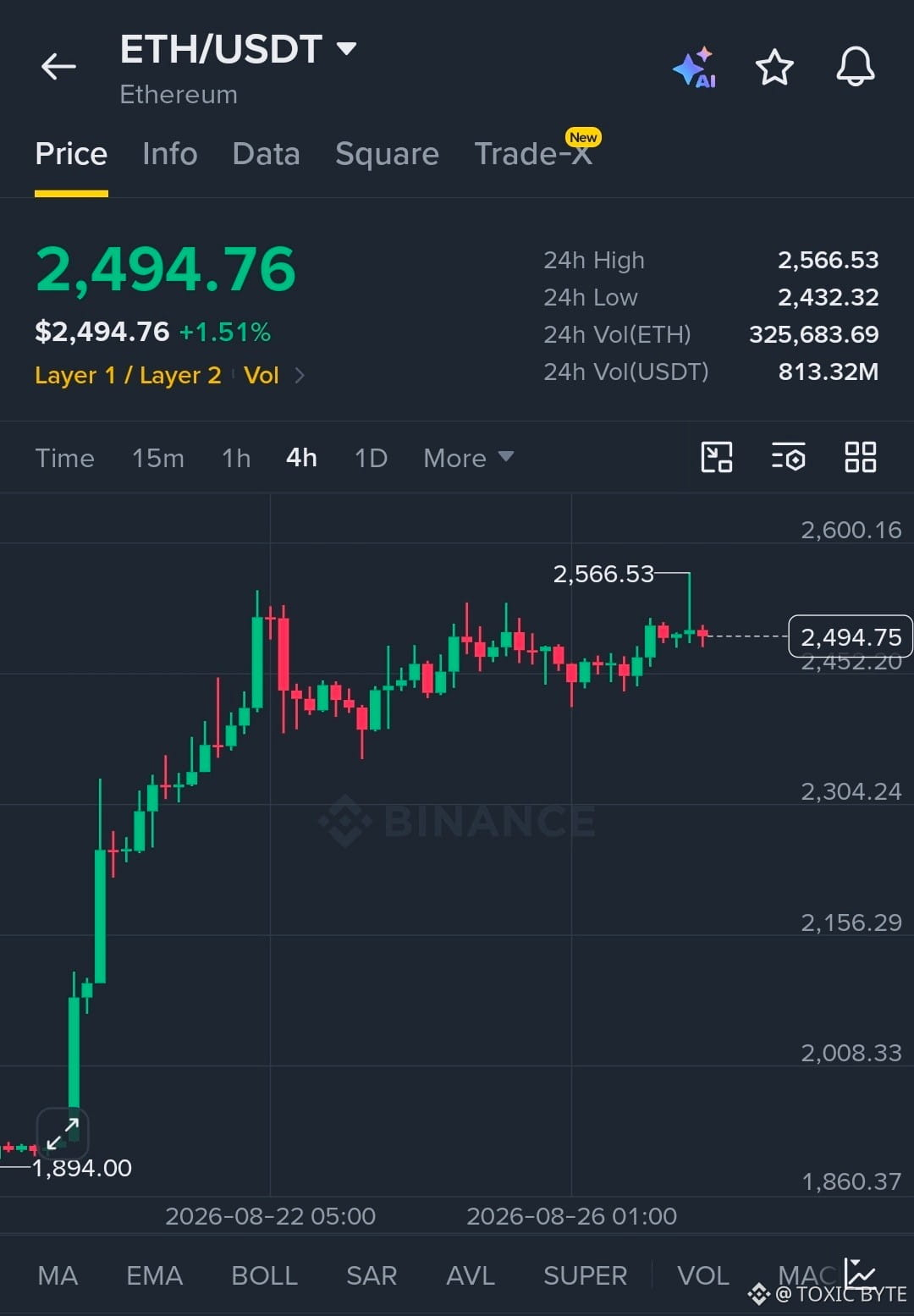
$ETH est en train de tenir autour de 2 495 $ sur le graphique 4H, mais la vraie bataille se situe près de la résistance à 2 566 $.
La structure reste haussière après le mouvement depuis 1 894 $, le prix consolidant au-dessus de la zone des 2 450 $. Une cassure 4H nette au-dessus de 2 566 $ pourrait déclencher la prochaine extension vers 2 650 $ et 2 750 $.
Si 2 450 $ se casse de façon décisive, l’élan peut faiblir et un repli plus profond devient probable.
Le setup est simple : défendre 2 450 $, casser 2 566 $, et l’ETH peut accélérer.
Configuration de trading
EP : 2 470–2 510 $ TP1 : 2 566 $ TP2 : 2 650 $ TP3 : 2 750 $ SL : 2 415 $
Attendez une confirmation au niveau de la résistance plutôt que de poursuivre une cassure.
#BestBuyQ2RevenueTopsEstimatesLiftsOutlook
#ChinaOpposesUSProposed7.5%Tariff
$ETH est en train de tenir autour de 2 495 $ sur le graphique 4H, mais la vraie bataille se situe près de la résistance à 2 566 $.
La structure reste haussière après le mouvement depuis 1 894 $, le prix consolidant au-dessus de la zone des 2 450 $. Une cassure 4H nette au-dessus de 2 566 $ pourrait déclencher la prochaine extension vers 2 650 $ et 2 750 $.
Si 2 450 $ se casse de façon décisive, l’élan peut faiblir et un repli plus profond devient probable.
Le setup est simple : défendre 2 450 $, casser 2 566 $, et l’ETH peut accélérer.
Configuration de trading
EP : 2 470–2 510 $ TP1 : 2 566 $ TP2 : 2 650 $ TP3 : 2 750 $ SL : 2 415 $
Attendez une confirmation au niveau de la résistance plutôt que de poursuivre une cassure.
#BestBuyQ2RevenueTopsEstimatesLiftsOutlook
#ChinaOpposesUSProposed7.5%Tariff
La structure reste haussière après le mouvement depuis 1 894 $, le prix consolidant au-dessus de la zone des 2 450 $. Une cassure 4H nette au-dessus de 2 566 $ pourrait déclencher la prochaine extension vers 2 650 $ et 2 750 $.
Si 2 450 $ se casse de façon décisive, l’élan peut faiblir et un repli plus profond devient probable.
Le setup est simple : défendre 2 450 $, casser 2 566 $, et l’ETH peut accélérer.
Configuration de trading
EP : 2 470–2 510 $ TP1 : 2 566 $ TP2 : 2 650 $ TP3 : 2 750 $ SL : 2 415 $
Attendez une confirmation au niveau de la résistance plutôt que de poursuivre une cassure.
#BestBuyQ2RevenueTopsEstimatesLiftsOutlook
#ChinaOpposesUSProposed7.5%Tariff
98
·
--
Haussier
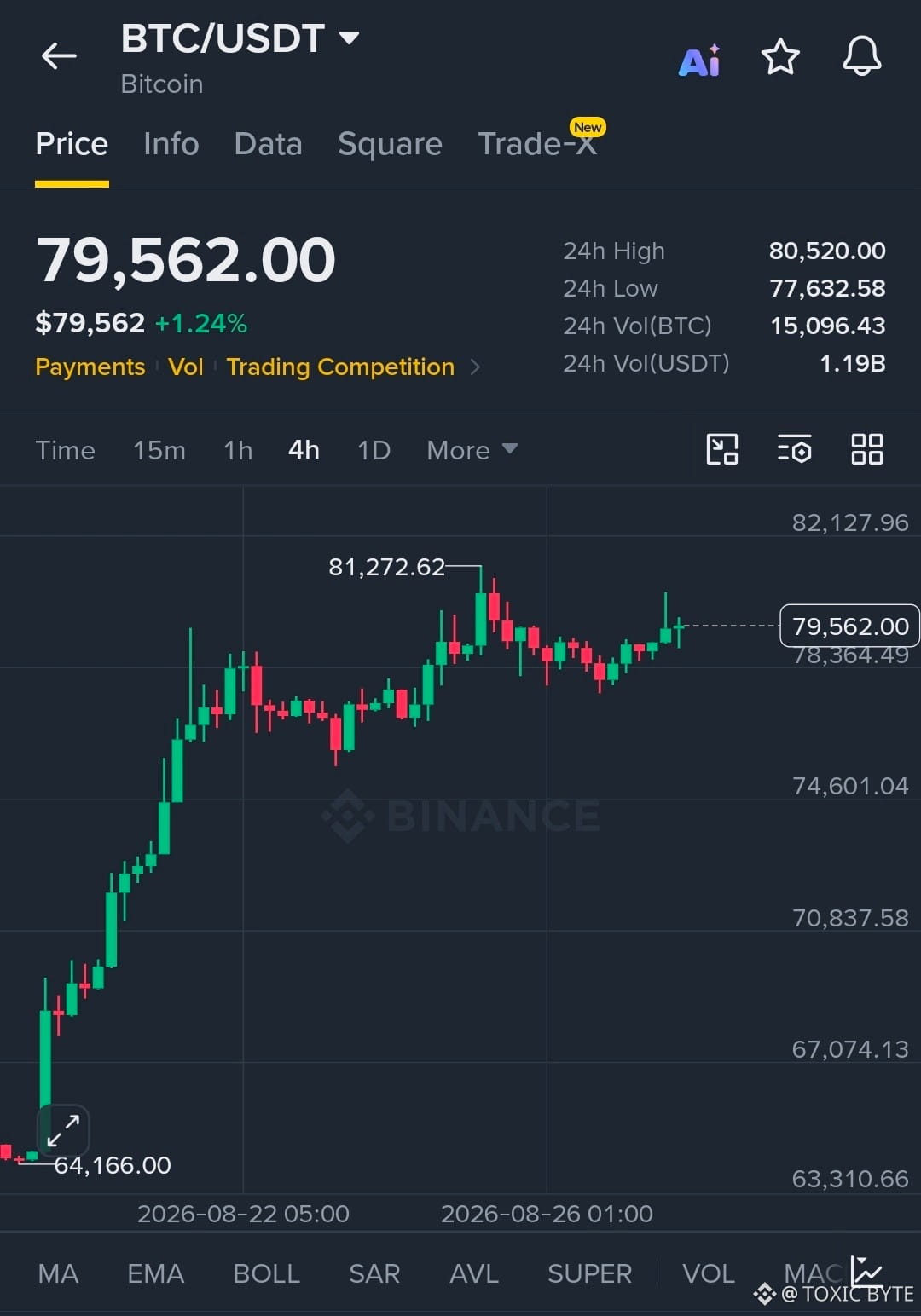
$BTC se maintient solidement autour de 79 562 $ sur le graphique 4H après un mouvement puissant depuis la zone des 64K.
Le prix se consolide au-dessus de la résistance de 78 364 $ tandis que la dynamique reste haussière. Le niveau de cassure clé est à 80 520 $, avec le précédent sommet autour de 81 272 $ jouant le rôle de résistance majeure.
Une cassure 4H propre au-dessus de 80 520 $ pourrait ouvrir la voie vers 81 272+.
Le scénario reste haussier tant que le BTC tient la zone des 78 300 $. Perdre ce niveau, et la structure haussière commence à s’affaiblir.
Le prochain mouvement est simple : reprendre les sommets ou défendre le support.
#DollarPostsBiggestGainInNearlyFourWeeks
#NvidiaRises4%OnRevenueBeat
$BTC se maintient solidement autour de 79 562 $ sur le graphique 4H après un mouvement puissant depuis la zone des 64K.
Le prix se consolide au-dessus de la résistance de 78 364 $ tandis que la dynamique reste haussière. Le niveau de cassure clé est à 80 520 $, avec le précédent sommet autour de 81 272 $ jouant le rôle de résistance majeure.
Une cassure 4H propre au-dessus de 80 520 $ pourrait ouvrir la voie vers 81 272+.
Le scénario reste haussier tant que le BTC tient la zone des 78 300 $. Perdre ce niveau, et la structure haussière commence à s’affaiblir.
Le prochain mouvement est simple : reprendre les sommets ou défendre le support.
#DollarPostsBiggestGainInNearlyFourWeeks
#NvidiaRises4%OnRevenueBeat
Le prix se consolide au-dessus de la résistance de 78 364 $ tandis que la dynamique reste haussière. Le niveau de cassure clé est à 80 520 $, avec le précédent sommet autour de 81 272 $ jouant le rôle de résistance majeure.
Une cassure 4H propre au-dessus de 80 520 $ pourrait ouvrir la voie vers 81 272+.
Le scénario reste haussier tant que le BTC tient la zone des 78 300 $. Perdre ce niveau, et la structure haussière commence à s’affaiblir.
Le prochain mouvement est simple : reprendre les sommets ou défendre le support.
#DollarPostsBiggestGainInNearlyFourWeeks
#NvidiaRises4%OnRevenueBeat
108
·
--
Haussier
$BNB tient bon autour de 708$ après un solide rebond. Les taureaux tentent de pousser vers la résistance à 716$, et une cassure pourrait ouvrir la voie vers 726$.
Configuration de trading EP : 704–709 $ TP1 : 716 $ TP2 : 726 $ SL : 694 $
Bullish au-dessus de 704 $. On y va.
#ChinaOpposesUSProposed7.5%Tariff
#DollarPostsBiggestGainInNearlyFourWeeks
$BNB tient bon autour de 708$ après un solide rebond. Les taureaux tentent de pousser vers la résistance à 716$, et une cassure pourrait ouvrir la voie vers 726$.
Configuration de trading EP : 704–709 $ TP1 : 716 $ TP2 : 726 $ SL : 694 $
Bullish au-dessus de 704 $. On y va.
#ChinaOpposesUSProposed7.5%Tariff
#DollarPostsBiggestGainInNearlyFourWeeks
Configuration de trading EP : 704–709 $ TP1 : 716 $ TP2 : 726 $ SL : 694 $
Bullish au-dessus de 704 $. On y va.
#ChinaOpposesUSProposed7.5%Tariff
#DollarPostsBiggestGainInNearlyFourWeeks
113
·
--
$PORTAL
{spot}(PORTALUSDT)
augmente avec des gains de +15,81 %. Les traders momentum observent de près pendant que le prix approche la prochaine zone de cassure.
EP : 0,01690–0,01720
TP : 0,01850 / 0,02000 / 0,02200
SL : 0,01600
$PORTAL
augmente avec des gains de +15,81 %. Les traders momentum observent de près pendant que le prix approche la prochaine zone de cassure.
EP : 0,01690–0,01720
TP : 0,01850 / 0,02000 / 0,02200
SL : 0,01600
augmente avec des gains de +15,81 %. Les traders momentum observent de près pendant que le prix approche la prochaine zone de cassure.
EP : 0,01690–0,01720
TP : 0,01850 / 0,02000 / 0,02200
SL : 0,01600
128
·
--
Haussier
$LSK
{spot}(LSKUSDT)
est en hausse de +16,34 % et affiche un fort élan haussier. Si les acheteurs défendent la zone actuelle, une nouvelle impulsion à la hausse pourrait suivre.
EP : 0.10050–0.10200
TP : 0.10800 / 0.11500 / 0.12200
SL : 0.09600
$LSK
est en hausse de +16,34 % et affiche un fort élan haussier. Si les acheteurs défendent la zone actuelle, une nouvelle impulsion à la hausse pourrait suivre.
EP : 0.10050–0.10200
TP : 0.10800 / 0.11500 / 0.12200
SL : 0.09600
est en hausse de +16,34 % et affiche un fort élan haussier. Si les acheteurs défendent la zone actuelle, une nouvelle impulsion à la hausse pourrait suivre.
EP : 0.10050–0.10200
TP : 0.10800 / 0.11500 / 0.12200
SL : 0.09600
98
·
--
Haussier
$EDEN
{spot}(EDENUSDT)
gagne +17,67 % et les acheteurs entrent de manière agressive. Surveillez la zone de 0,057 pour la continuation.
EP : 0,05680–0,05750
TP : 0,06100 / 0,06500 / 0,07000
SL : 0,05400
$EDEN
gagne +17,67 % et les acheteurs entrent de manière agressive. Surveillez la zone de 0,057 pour la continuation.
EP : 0,05680–0,05750
TP : 0,06100 / 0,06500 / 0,07000
SL : 0,05400
gagne +17,67 % et les acheteurs entrent de manière agressive. Surveillez la zone de 0,057 pour la continuation.
EP : 0,05680–0,05750
TP : 0,06100 / 0,06500 / 0,07000
SL : 0,05400
104
·
--
Haussier
$BICO
{spot}(BICOUSDT)
pousse fort avec +26,31 % et l’élan s’accélère rapidement. Une poursuite en cas de cassure pourrait envoyer le prix vers les prochaines zones de résistance.
EP : 0,02380–0,02440
TP : 0,02600 / 0,02800 / 0,03050
SL : 0,02260
$BICO
pousse fort avec +26,31 % et l’élan s’accélère rapidement. Une poursuite en cas de cassure pourrait envoyer le prix vers les prochaines zones de résistance.
EP : 0,02380–0,02440
TP : 0,02600 / 0,02800 / 0,03050
SL : 0,02260
pousse fort avec +26,31 % et l’élan s’accélère rapidement. Une poursuite en cas de cassure pourrait envoyer le prix vers les prochaines zones de résistance.
EP : 0,02380–0,02440
TP : 0,02600 / 0,02800 / 0,03050
SL : 0,02260
82
·
--
$ONG
{spot}(ONGUSDT)
affiche une forte dynamique avec +42,96 %. Les taureaux sont clairement actifs, mais évitez de poursuivre la bougie. Un retest pourrait offrir une configuration plus propre.
EP: 0.14700–0.15000
TP: 0.16000 / 0.17000 / 0.18500
SL: 0.14000
$ONG
affiche une forte dynamique avec +42,96 %. Les taureaux sont clairement actifs, mais évitez de poursuivre la bougie. Un retest pourrait offrir une configuration plus propre.
EP: 0.14700–0.15000
TP: 0.16000 / 0.17000 / 0.18500
SL: 0.14000
affiche une forte dynamique avec +42,96 %. Les taureaux sont clairement actifs, mais évitez de poursuivre la bougie. Un retest pourrait offrir une configuration plus propre.
EP: 0.14700–0.15000
TP: 0.16000 / 0.17000 / 0.18500
SL: 0.14000
249
·
--
$BMT
{spot}(BMTUSDT)
explose avec +60,23 % de gains et un élan clairement agressif. Après ce mouvement, surveillez un repli contrôlé avant l’entrée.
EP : 0,02450–0,02500
TP : 0,02750 / 0,03000 / 0,03300
SL : 0,02280
$BMT
explose avec +60,23 % de gains et un élan clairement agressif. Après ce mouvement, surveillez un repli contrôlé avant l’entrée.
EP : 0,02450–0,02500
TP : 0,02750 / 0,03000 / 0,03300
SL : 0,02280
explose avec +60,23 % de gains et un élan clairement agressif. Après ce mouvement, surveillez un repli contrôlé avant l’entrée.
EP : 0,02450–0,02500
TP : 0,02750 / 0,03000 / 0,03300
SL : 0,02280
143
·
--
$ADA
{spot}(ADAUSDT)
est en trading près de 0,2253 $ avec des vendeurs actuellement aux commandes.
Configuration de trade
EP : 0,223–0,226 $
TP : 0,232 / 0,240 $
SL : 0,217 $
Un rachat de 0,23 $ renforcerait la configuration haussière.
$ADA
est en trading près de 0,2253 $ avec des vendeurs actuellement aux commandes.
Configuration de trade
EP : 0,223–0,226 $
TP : 0,232 / 0,240 $
SL : 0,217 $
Un rachat de 0,23 $ renforcerait la configuration haussière.
est en trading près de 0,2253 $ avec des vendeurs actuellement aux commandes.
Configuration de trade
EP : 0,223–0,226 $
TP : 0,232 / 0,240 $
SL : 0,217 $
Un rachat de 0,23 $ renforcerait la configuration haussière.
2
63
·
--
$SUI
{spot}(SUIUSDT)
est en train de consolider autour de 0,8226 après une baisse.
Configuration de trading
Point d’entrée (EP) : 0,815–0,825
Objectif (TP) : 0,850 / 0,880
Stop Loss (SL) : 0,790
Besoin d’une forte reprise au-dessus de 0,83 pour confirmation.
$SUI
est en train de consolider autour de 0,8226 après une baisse.
Configuration de trading
Point d’entrée (EP) : 0,815–0,825
Objectif (TP) : 0,850 / 0,880
Stop Loss (SL) : 0,790
Besoin d’une forte reprise au-dessus de 0,83 pour confirmation.
est en train de consolider autour de 0,8226 après une baisse.
Configuration de trading
Point d’entrée (EP) : 0,815–0,825
Objectif (TP) : 0,850 / 0,880
Stop Loss (SL) : 0,790
Besoin d’une forte reprise au-dessus de 0,83 pour confirmation.
1
91
Connectez-vous pour découvrir plus de contenu
Rejoignez la communauté mondiale des adeptes de cryptomonnaies sur Binance Square
⚡️ Suviez les dernières informations importantes sur les cryptomonnaies.
💬 Jugé digne de confiance par la plus grande plateforme d’échange de cryptomonnaies au monde.
👍 Découvrez les connaissances que partagent les créateurs vérifiés.
Adresse e-mail/Nº de téléphone
Sujets d’actualité
FedMinutesFocusOnOctoberPause
273,961 vues
1,680 mentions
⚡ Une décision de la Fed pourrait faire bouger les marchés
Octobre pourrait être marqué par une nouvelle décision importante de la Fed.
Le dernier compte rendu maintient l’hypothèse d’une pause au centre des débats.
Cela pourrait influencer les actions, les obligations et les cryptomonnaies.
L’appétit pour le risque pourrait évoluer rapidement après la décision.
Le Bitcoin sera-t-il le grand gagnant ? 🚀
$BTC
$SAND
$MET
#fedminutesfocusonoctoberpause
Jacob trade
·0 mentions J’aime
·579 vues
IMFGrantsWaiverForElSalvadorBitcoinBreach
559 vues
45 mentions
BinanceLaunchesBinanceIntelligence
1.2M vues
6,827 mentions