
Terry K
3.5k Publications

Terry K
Signaler
Bloquer l’utilisateur
265 Suivis
2.5K+ Abonnés
8.6K+ J’aime
Publications
Tous
Citations
Direct
·
--
$BTC
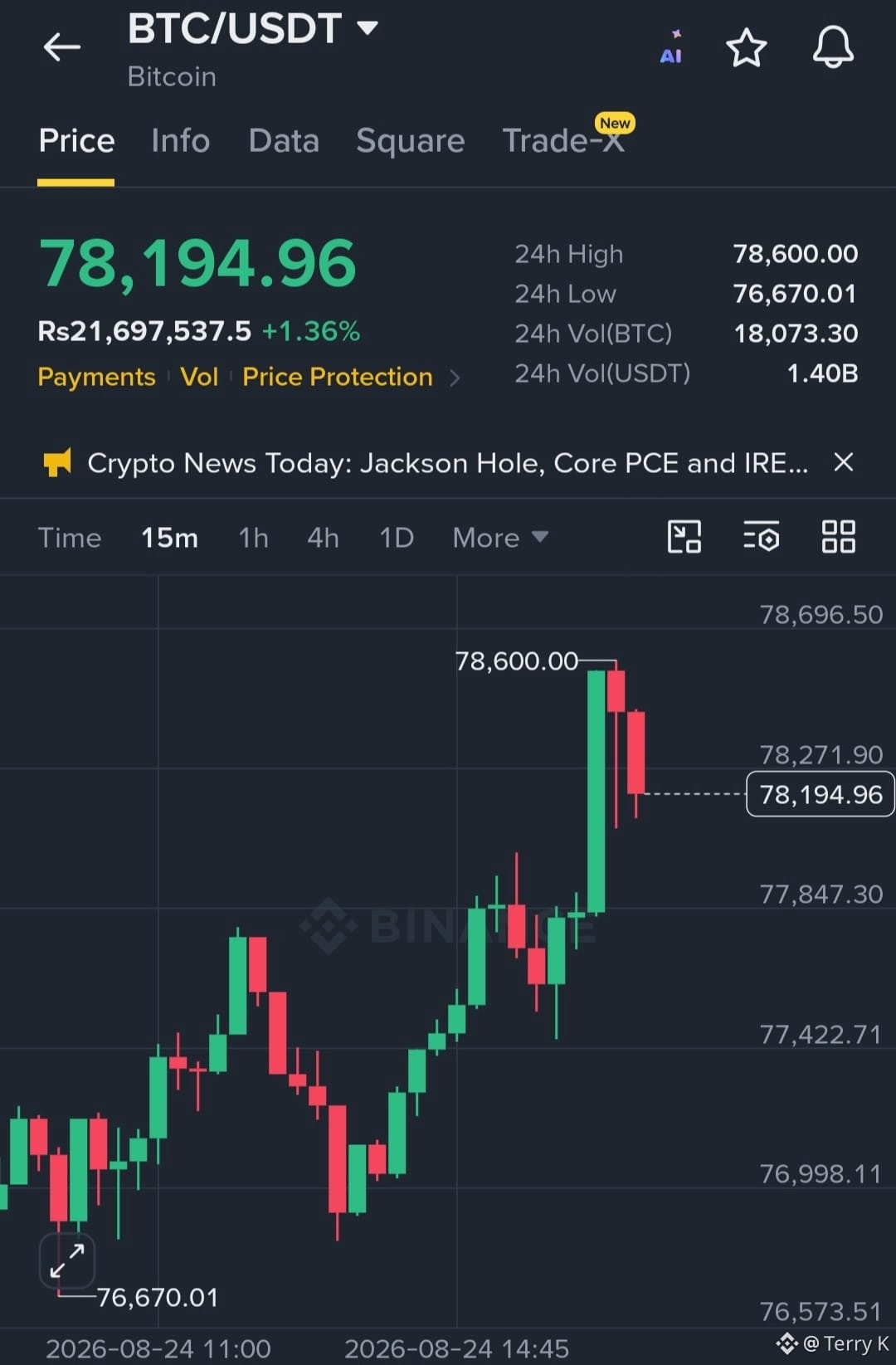
Le Bitcoin vient de passer à 78 600 $ et se calme maintenant autour de 78 195 $ +1,36%
Forte impulsion haussière sur le graphique 15M
Résistance : 78 600 $
Support : 77 850 $ / 77 420 $
Rupture et maintien au-dessus de 78,6 k$ pourraient ouvrir la voie à une autre vague à la hausse.
Le BTC bouge — restez vigilant. 👀
#Bitcoin #Crypto #BTCUSDT #Trading #CryptoTrading
$BTC
Le Bitcoin vient de passer à 78 600 $ et se calme maintenant autour de 78 195 $ +1,36%
Forte impulsion haussière sur le graphique 15M
Résistance : 78 600 $
Support : 77 850 $ / 77 420 $
Rupture et maintien au-dessus de 78,6 k$ pourraient ouvrir la voie à une autre vague à la hausse.
Le BTC bouge — restez vigilant. 👀
#Bitcoin #Crypto #BTCUSDT #Trading #CryptoTrading
Le Bitcoin vient de passer à 78 600 $ et se calme maintenant autour de 78 195 $ +1,36%
Forte impulsion haussière sur le graphique 15M
Résistance : 78 600 $
Support : 77 850 $ / 77 420 $
Rupture et maintien au-dessus de 78,6 k$ pourraient ouvrir la voie à une autre vague à la hausse.
Le BTC bouge — restez vigilant. 👀
#Bitcoin #Crypto #BTCUSDT #Trading #CryptoTrading
64
·
--
$ZEC
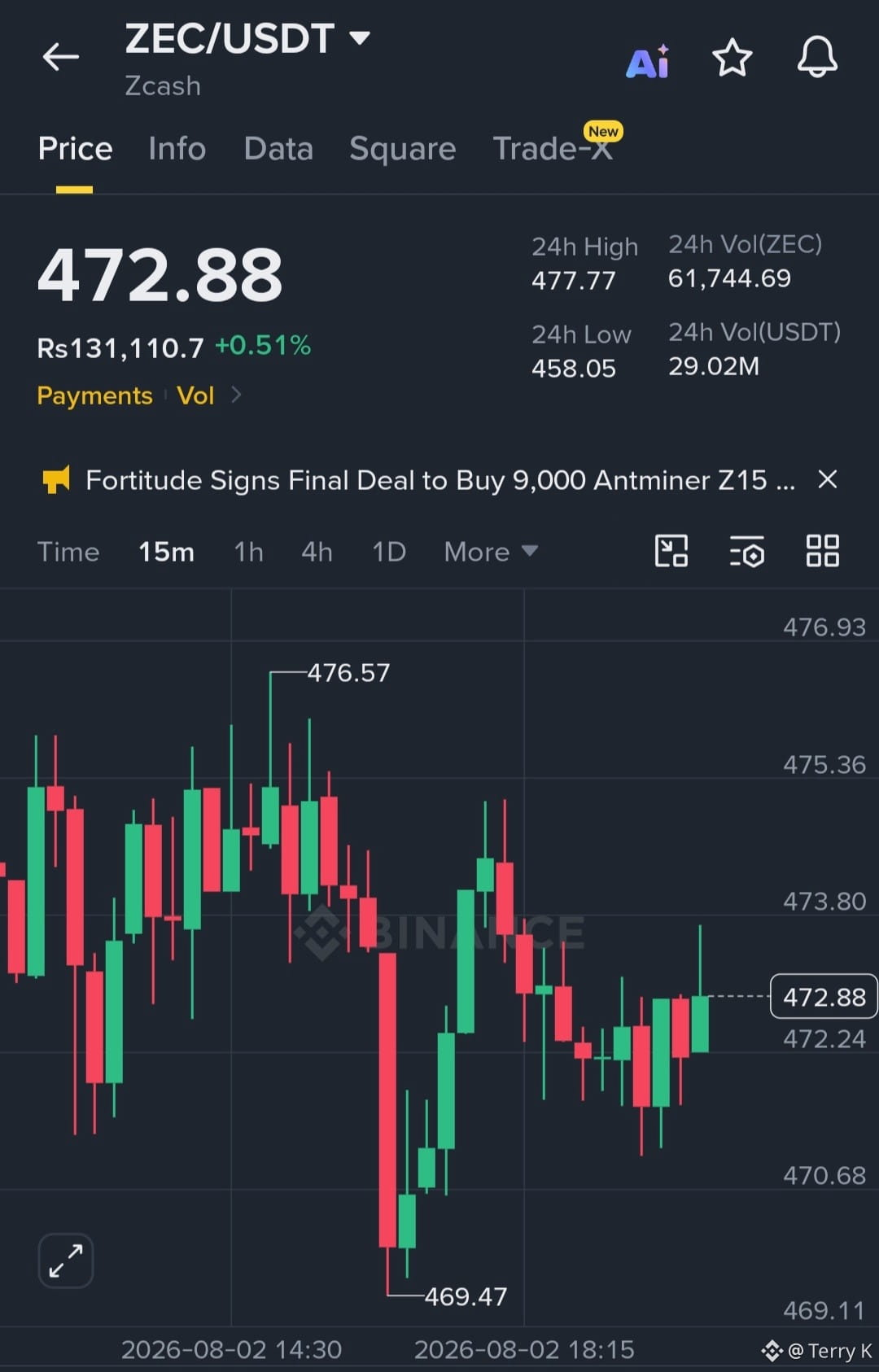
est en train de négocier dans une fourchette de consolidation après un rebond marqué depuis le plus bas de 469,47.
Le redressement montre que les acheteurs défendent les niveaux inférieurs, mais le prix continue de se heurter à une résistance près des récents sommets. Une cassure confirmée
au-dessus de la résistance pourrait attirer un nouvel élan, tandis qu’un échec à maintenir le support actuel peut conduire à un autre balayage de liquidité avant le prochain mouvement.
Niveaux clés • Résistance : 473,80 → 476,57
• Support : 472,20 → 469,47
Le marché se comprime, et l’expansion suit généralement les périodes de faible volatilité.
Attendre une confirmation est souvent plus efficace que d’anticiper la cassure.
Trade la réaction, pas l’anticipation.
#Crypto #Binance #PriceAction #Trading #USDT
$ZEC
est en train de négocier dans une fourchette de consolidation après un rebond marqué depuis le plus bas de 469,47.
Le redressement montre que les acheteurs défendent les niveaux inférieurs, mais le prix continue de se heurter à une résistance près des récents sommets. Une cassure confirmée
au-dessus de la résistance pourrait attirer un nouvel élan, tandis qu’un échec à maintenir le support actuel peut conduire à un autre balayage de liquidité avant le prochain mouvement.
Niveaux clés • Résistance : 473,80 → 476,57
• Support : 472,20 → 469,47
Le marché se comprime, et l’expansion suit généralement les périodes de faible volatilité.
Attendre une confirmation est souvent plus efficace que d’anticiper la cassure.
Trade la réaction, pas l’anticipation.
#Crypto #Binance #PriceAction #Trading #USDT
est en train de négocier dans une fourchette de consolidation après un rebond marqué depuis le plus bas de 469,47.
Le redressement montre que les acheteurs défendent les niveaux inférieurs, mais le prix continue de se heurter à une résistance près des récents sommets. Une cassure confirmée
au-dessus de la résistance pourrait attirer un nouvel élan, tandis qu’un échec à maintenir le support actuel peut conduire à un autre balayage de liquidité avant le prochain mouvement.
Niveaux clés • Résistance : 473,80 → 476,57
• Support : 472,20 → 469,47
Le marché se comprime, et l’expansion suit généralement les périodes de faible volatilité.
Attendre une confirmation est souvent plus efficace que d’anticiper la cassure.
Trade la réaction, pas l’anticipation.
#Crypto #Binance #PriceAction #Trading #USDT
129
·
--
$BNB
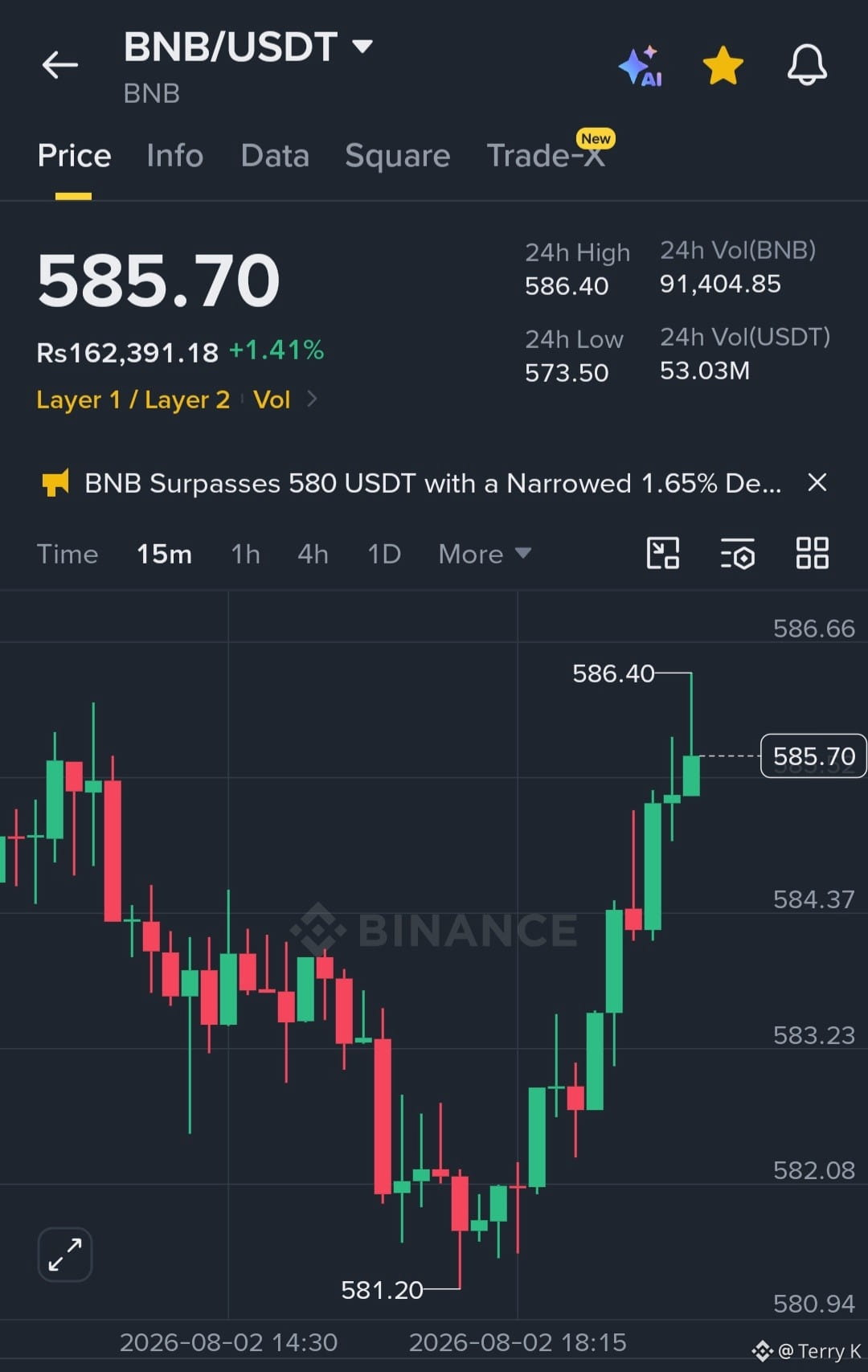
repousse vers le récent plus haut après un fort rebond intraday depuis la zone des 581.20. Les acheteurs ont retrouvé le contrôle à court terme, mais le prix s’approche désormais d’une zone de résistance proche autour de 586.40. Une clôture nette au-dessus de ce niveau pourrait ouvrir la voie vers la prochaine zone de liquidité, tandis qu’un rejet pourrait entraîner un repli sain avant la continuation.
Niveaux à surveiller • Résistance : 586.40 → 590.00
• Support : 583.20 → 581.20
La patience compte ici. Poursuivre des bougies vertes près de la résistance comporte plus de risques que d’attendre une confirmation. Laissez au marché le temps de montrer sa direction avant de vous engager sur une transaction.
#Crypto #Binance #Trading #PriceAction #USDT
$BNB
repousse vers le récent plus haut après un fort rebond intraday depuis la zone des 581.20. Les acheteurs ont retrouvé le contrôle à court terme, mais le prix s’approche désormais d’une zone de résistance proche autour de 586.40. Une clôture nette au-dessus de ce niveau pourrait ouvrir la voie vers la prochaine zone de liquidité, tandis qu’un rejet pourrait entraîner un repli sain avant la continuation.
Niveaux à surveiller • Résistance : 586.40 → 590.00
• Support : 583.20 → 581.20
La patience compte ici. Poursuivre des bougies vertes près de la résistance comporte plus de risques que d’attendre une confirmation. Laissez au marché le temps de montrer sa direction avant de vous engager sur une transaction.
#Crypto #Binance #Trading #PriceAction #USDT
repousse vers le récent plus haut après un fort rebond intraday depuis la zone des 581.20. Les acheteurs ont retrouvé le contrôle à court terme, mais le prix s’approche désormais d’une zone de résistance proche autour de 586.40. Une clôture nette au-dessus de ce niveau pourrait ouvrir la voie vers la prochaine zone de liquidité, tandis qu’un rejet pourrait entraîner un repli sain avant la continuation.
Niveaux à surveiller • Résistance : 586.40 → 590.00
• Support : 583.20 → 581.20
La patience compte ici. Poursuivre des bougies vertes près de la résistance comporte plus de risques que d’attendre une confirmation. Laissez au marché le temps de montrer sa direction avant de vous engager sur une transaction.
#Crypto #Binance #Trading #PriceAction #USDT
79
·
--
$BNB
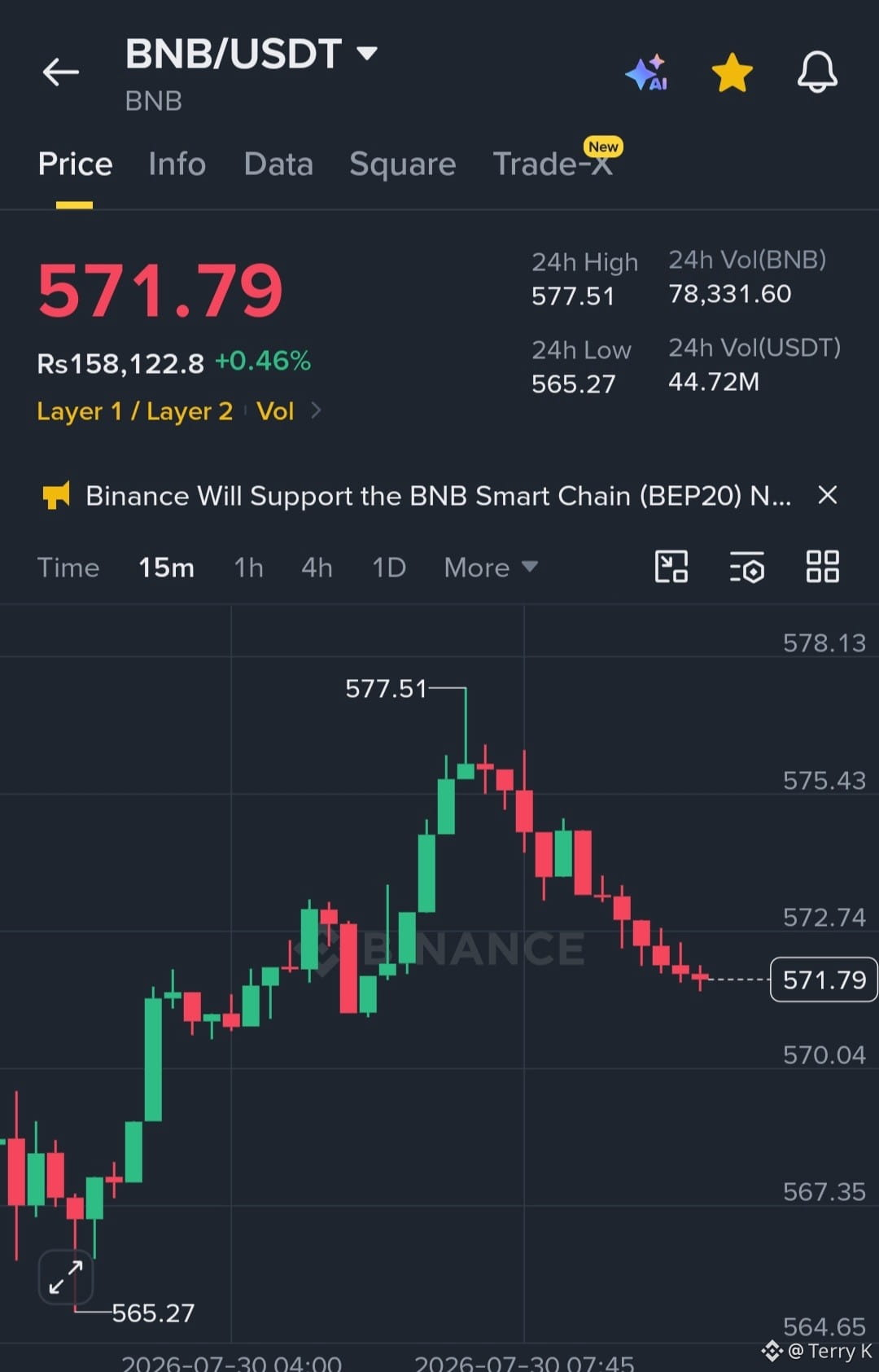
BNB a rebondi depuis la zone de support à 565 $ et a imprimé un sommet local autour de 577,5 $, mais les vendeurs sont intervenus rapidement. Le prix est désormais en repli, avec des plus hauts et des plus bas plus bas, ce qui traduit une dynamique baissière à court terme.
Tant que BNB reste en dessous de 575–577 $, le marché pourrait continuer à retester un support plus bas autour de 570 $. Une cassure nette sous ce niveau pourrait ouvrir la voie à un autre mouvement vers 565 $.
Du côté des haussiers, reprendre 575 $ avec un fort volume serait le premier signe que les acheteurs reprennent le contrôle. D’ici là, la patience est de mise : mieux vaut attendre une confirmation plutôt que de courir après le prix.
Tradez la structure, gérez le risque et laissez le marché venir à vos niveaux.
#BNB #Binance #Crypto #PriceAction #BNBUSDT
$BNB
BNB a rebondi depuis la zone de support à 565 $ et a imprimé un sommet local autour de 577,5 $, mais les vendeurs sont intervenus rapidement. Le prix est désormais en repli, avec des plus hauts et des plus bas plus bas, ce qui traduit une dynamique baissière à court terme.
Tant que BNB reste en dessous de 575–577 $, le marché pourrait continuer à retester un support plus bas autour de 570 $. Une cassure nette sous ce niveau pourrait ouvrir la voie à un autre mouvement vers 565 $.
Du côté des haussiers, reprendre 575 $ avec un fort volume serait le premier signe que les acheteurs reprennent le contrôle. D’ici là, la patience est de mise : mieux vaut attendre une confirmation plutôt que de courir après le prix.
Tradez la structure, gérez le risque et laissez le marché venir à vos niveaux.
#BNB #Binance #Crypto #PriceAction #BNBUSDT
BNB a rebondi depuis la zone de support à 565 $ et a imprimé un sommet local autour de 577,5 $, mais les vendeurs sont intervenus rapidement. Le prix est désormais en repli, avec des plus hauts et des plus bas plus bas, ce qui traduit une dynamique baissière à court terme.
Tant que BNB reste en dessous de 575–577 $, le marché pourrait continuer à retester un support plus bas autour de 570 $. Une cassure nette sous ce niveau pourrait ouvrir la voie à un autre mouvement vers 565 $.
Du côté des haussiers, reprendre 575 $ avec un fort volume serait le premier signe que les acheteurs reprennent le contrôle. D’ici là, la patience est de mise : mieux vaut attendre une confirmation plutôt que de courir après le prix.
Tradez la structure, gérez le risque et laissez le marché venir à vos niveaux.
#BNB #Binance #Crypto #PriceAction #BNBUSDT
50
·
--
$SOL
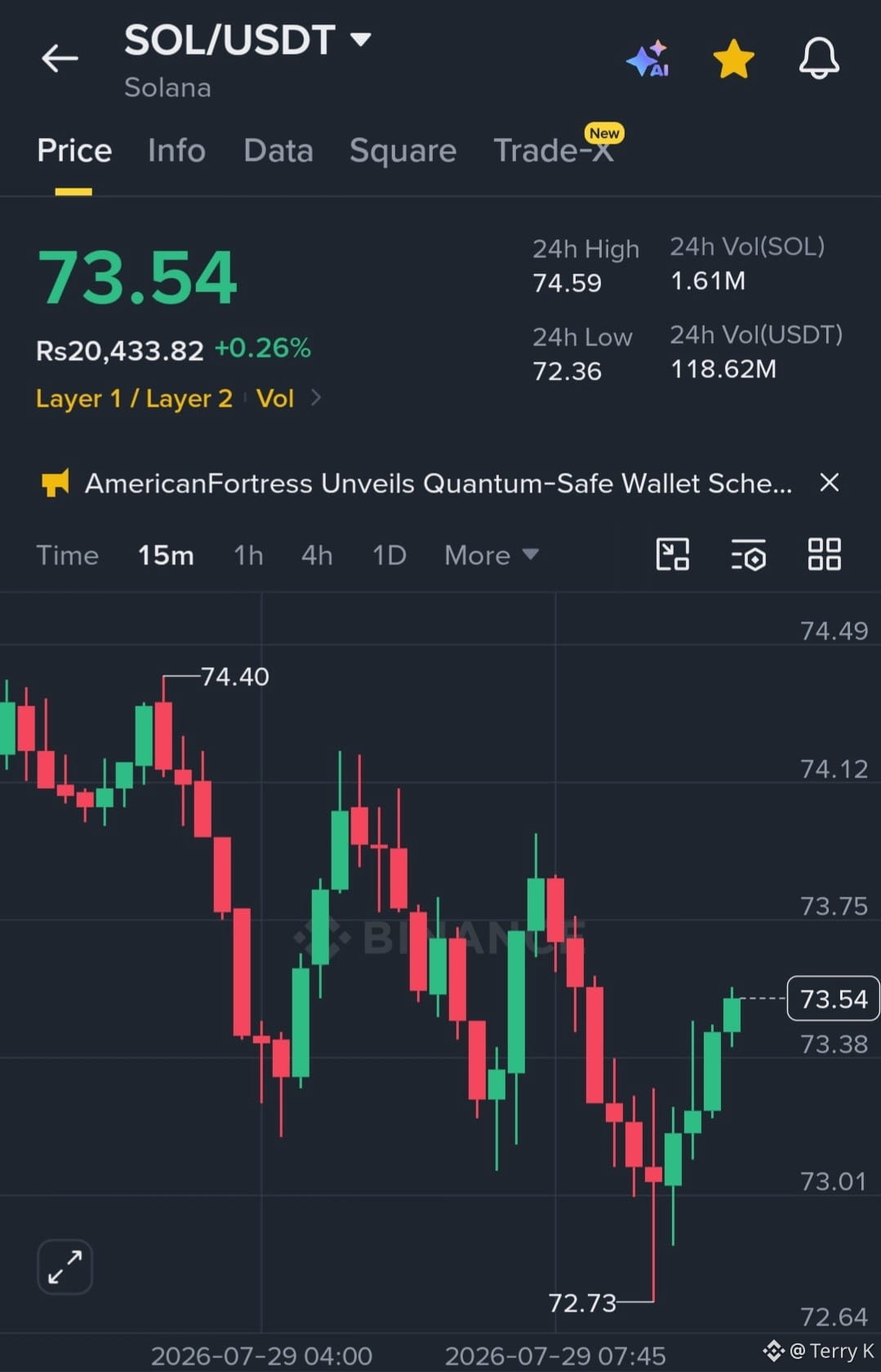
Solana a balayé la liquidité près de 72,73 $ avant d’attirer des acheteurs et de reconquérir la zone des 73,50 $. Le rebond est constructif, mais le prix évolue encore en dessous des résistances clés intraday ; une confirmation est donc nécessaire avant d’annoncer un changement de tendance.
Un mouvement durable au-dessus de 73,70–74,00 $ renforcerait l’élan haussier et augmenterait la probabilité d’un retest du plus haut de la journée. En cas de non-maintien des niveaux actuels, le prix pourrait retoucher à nouveau la zone de support des 73,00 $.
Niveaux clés • Support : 73,00 | 72,73 • Résistance : 73,70 | 74,00
Le marché s’est remis du balayage de liquidité, mais la structure reste neutre tant que la résistance n’est pas reconquise. Faites confirmer le prochain mouvement par le prix plutôt que de l’anticiper.
#Solana #Crypto #Trading #PriceAction #Binance
$SOL
Solana a balayé la liquidité près de 72,73 $ avant d’attirer des acheteurs et de reconquérir la zone des 73,50 $. Le rebond est constructif, mais le prix évolue encore en dessous des résistances clés intraday ; une confirmation est donc nécessaire avant d’annoncer un changement de tendance.
Un mouvement durable au-dessus de 73,70–74,00 $ renforcerait l’élan haussier et augmenterait la probabilité d’un retest du plus haut de la journée. En cas de non-maintien des niveaux actuels, le prix pourrait retoucher à nouveau la zone de support des 73,00 $.
Niveaux clés • Support : 73,00 | 72,73 • Résistance : 73,70 | 74,00
Le marché s’est remis du balayage de liquidité, mais la structure reste neutre tant que la résistance n’est pas reconquise. Faites confirmer le prochain mouvement par le prix plutôt que de l’anticiper.
#Solana #Crypto #Trading #PriceAction #Binance
Solana a balayé la liquidité près de 72,73 $ avant d’attirer des acheteurs et de reconquérir la zone des 73,50 $. Le rebond est constructif, mais le prix évolue encore en dessous des résistances clés intraday ; une confirmation est donc nécessaire avant d’annoncer un changement de tendance.
Un mouvement durable au-dessus de 73,70–74,00 $ renforcerait l’élan haussier et augmenterait la probabilité d’un retest du plus haut de la journée. En cas de non-maintien des niveaux actuels, le prix pourrait retoucher à nouveau la zone de support des 73,00 $.
Niveaux clés • Support : 73,00 | 72,73 • Résistance : 73,70 | 74,00
Le marché s’est remis du balayage de liquidité, mais la structure reste neutre tant que la résistance n’est pas reconquise. Faites confirmer le prochain mouvement par le prix plutôt que de l’anticiper.
#Solana #Crypto #Trading #PriceAction #Binance
82
·
--
$ETH
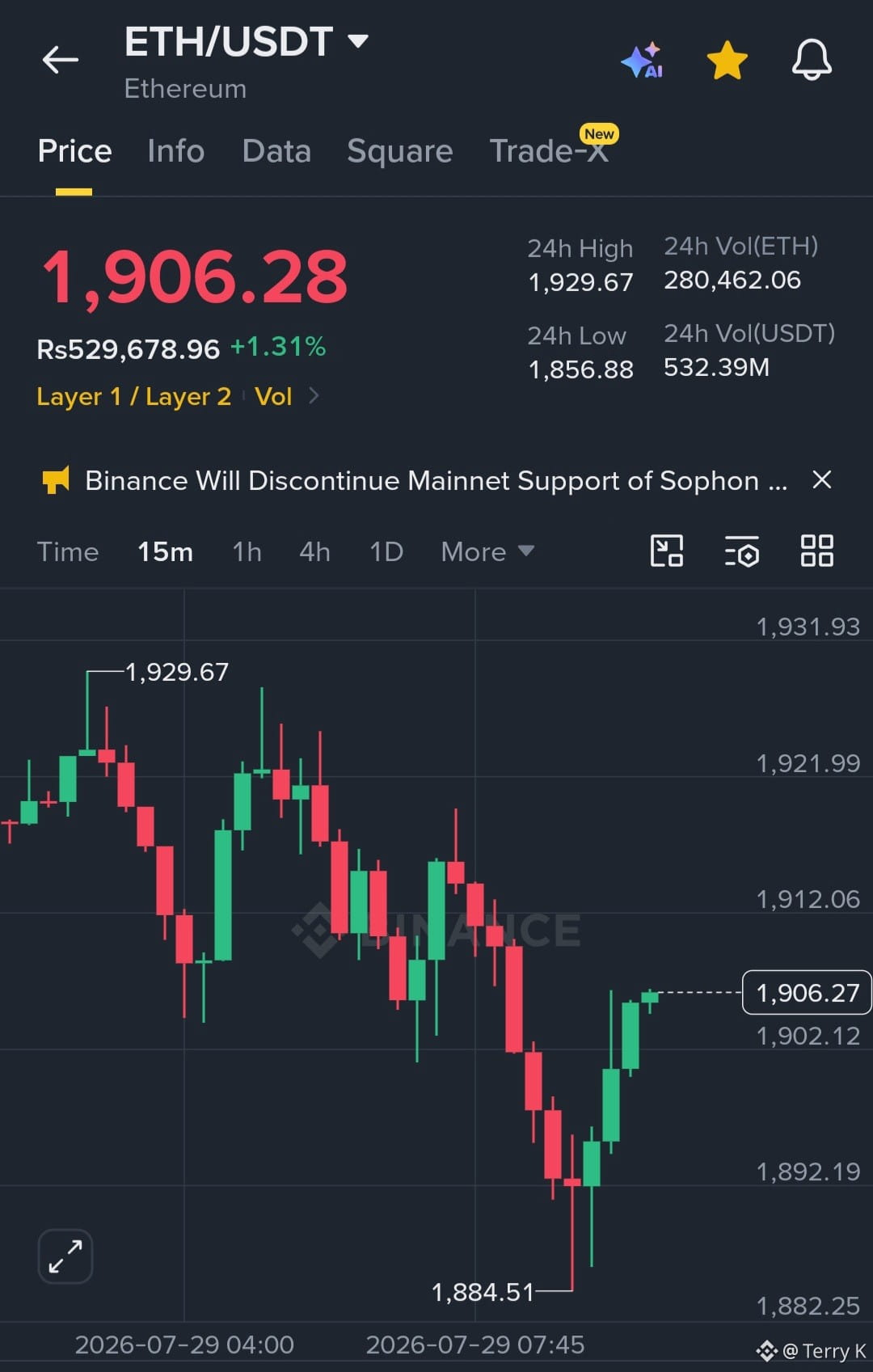
Ethereum a réagi fortement après avoir balayé la liquidité autour de 1 884 $, où des acheteurs sont intervenus et ont repoussé le prix au-dessus de 1 900 $. La reprise est encourageante, mais le prix s’approche maintenant d’une zone de résistance à court terme située près de 1 910–1 915 $.
Une cassure nette et un maintien au-dessus de cette zone pourraient ouvrir la voie à un mouvement vers 1 920+ $. En cas de rejet, attendez-vous à une consolidation ou à un nouveau test de la zone 1 895–1 900 $ avant le prochain mouvement.
Pour l’instant, le marché montre un rebond de soulagement, et non un renversement de tendance confirmé. Faites confirmer au prix la prochaine direction avant de poursuivre l’élan.
Niveaux clés • Support : 1 895 | 1 884 • Résistance : 1 910 | 1 920
La patience bat les prédictions. Laissez le marché révéler ses intentions avant de vous engager dans une position.
#Ethereum #Crypto #Trading #PriceAction #Binance
$ETH
Ethereum a réagi fortement après avoir balayé la liquidité autour de 1 884 $, où des acheteurs sont intervenus et ont repoussé le prix au-dessus de 1 900 $. La reprise est encourageante, mais le prix s’approche maintenant d’une zone de résistance à court terme située près de 1 910–1 915 $.
Une cassure nette et un maintien au-dessus de cette zone pourraient ouvrir la voie à un mouvement vers 1 920+ $. En cas de rejet, attendez-vous à une consolidation ou à un nouveau test de la zone 1 895–1 900 $ avant le prochain mouvement.
Pour l’instant, le marché montre un rebond de soulagement, et non un renversement de tendance confirmé. Faites confirmer au prix la prochaine direction avant de poursuivre l’élan.
Niveaux clés • Support : 1 895 | 1 884 • Résistance : 1 910 | 1 920
La patience bat les prédictions. Laissez le marché révéler ses intentions avant de vous engager dans une position.
#Ethereum #Crypto #Trading #PriceAction #Binance
Ethereum a réagi fortement après avoir balayé la liquidité autour de 1 884 $, où des acheteurs sont intervenus et ont repoussé le prix au-dessus de 1 900 $. La reprise est encourageante, mais le prix s’approche maintenant d’une zone de résistance à court terme située près de 1 910–1 915 $.
Une cassure nette et un maintien au-dessus de cette zone pourraient ouvrir la voie à un mouvement vers 1 920+ $. En cas de rejet, attendez-vous à une consolidation ou à un nouveau test de la zone 1 895–1 900 $ avant le prochain mouvement.
Pour l’instant, le marché montre un rebond de soulagement, et non un renversement de tendance confirmé. Faites confirmer au prix la prochaine direction avant de poursuivre l’élan.
Niveaux clés • Support : 1 895 | 1 884 • Résistance : 1 910 | 1 920
La patience bat les prédictions. Laissez le marché révéler ses intentions avant de vous engager dans une position.
#Ethereum #Crypto #Trading #PriceAction #Binance
88
·
--
$BTC
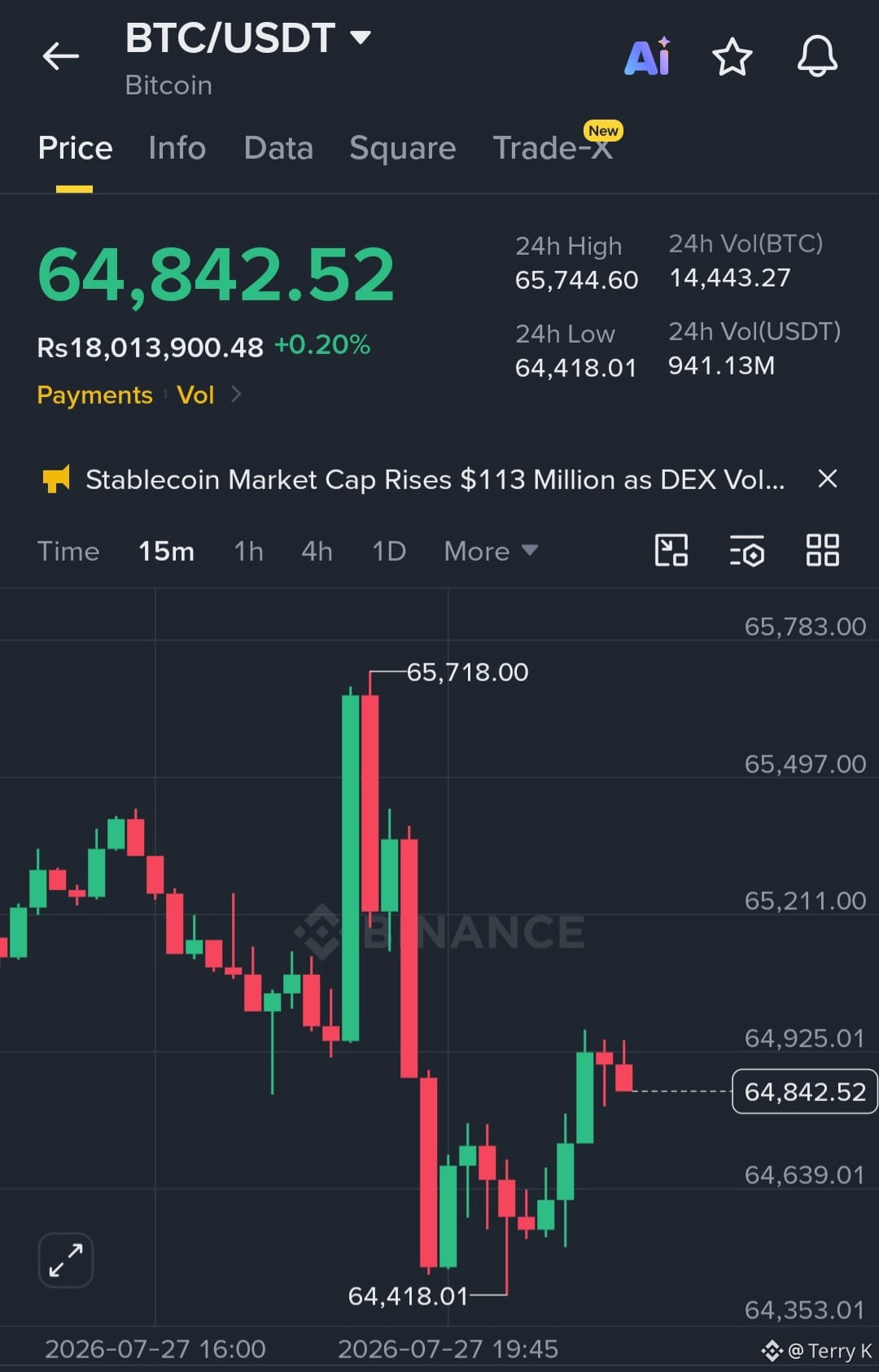
Le Bitcoin tente une reprise après avoir balayé des plus bas locaux, mais le prix évolue encore en dessous d’une résistance clé. Une cassure confirmée est nécessaire avant que l’élan ne repasse en faveur des haussiers.
Patience. Laissez le marché confirmer le prochain mouvement.
#BTC #Bitcoin #Crypto #Trading #PriceAction
$BTC
Le Bitcoin tente une reprise après avoir balayé des plus bas locaux, mais le prix évolue encore en dessous d’une résistance clé. Une cassure confirmée est nécessaire avant que l’élan ne repasse en faveur des haussiers.
Patience. Laissez le marché confirmer le prochain mouvement.
#BTC #Bitcoin #Crypto #Trading #PriceAction
Le Bitcoin tente une reprise après avoir balayé des plus bas locaux, mais le prix évolue encore en dessous d’une résistance clé. Une cassure confirmée est nécessaire avant que l’élan ne repasse en faveur des haussiers.
Patience. Laissez le marché confirmer le prochain mouvement.
#BTC #Bitcoin #Crypto #Trading #PriceAction
84
·
--
$BANK
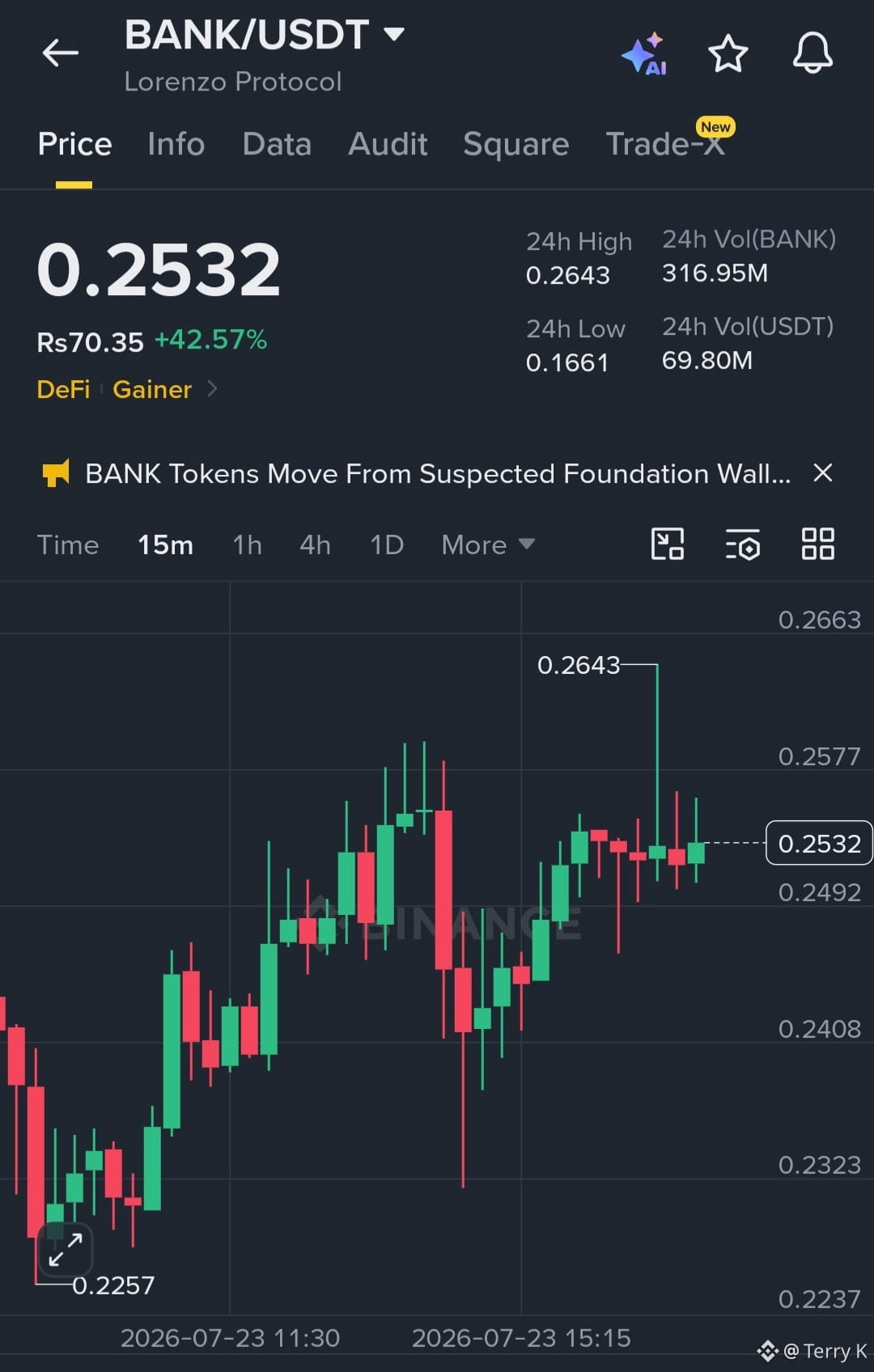
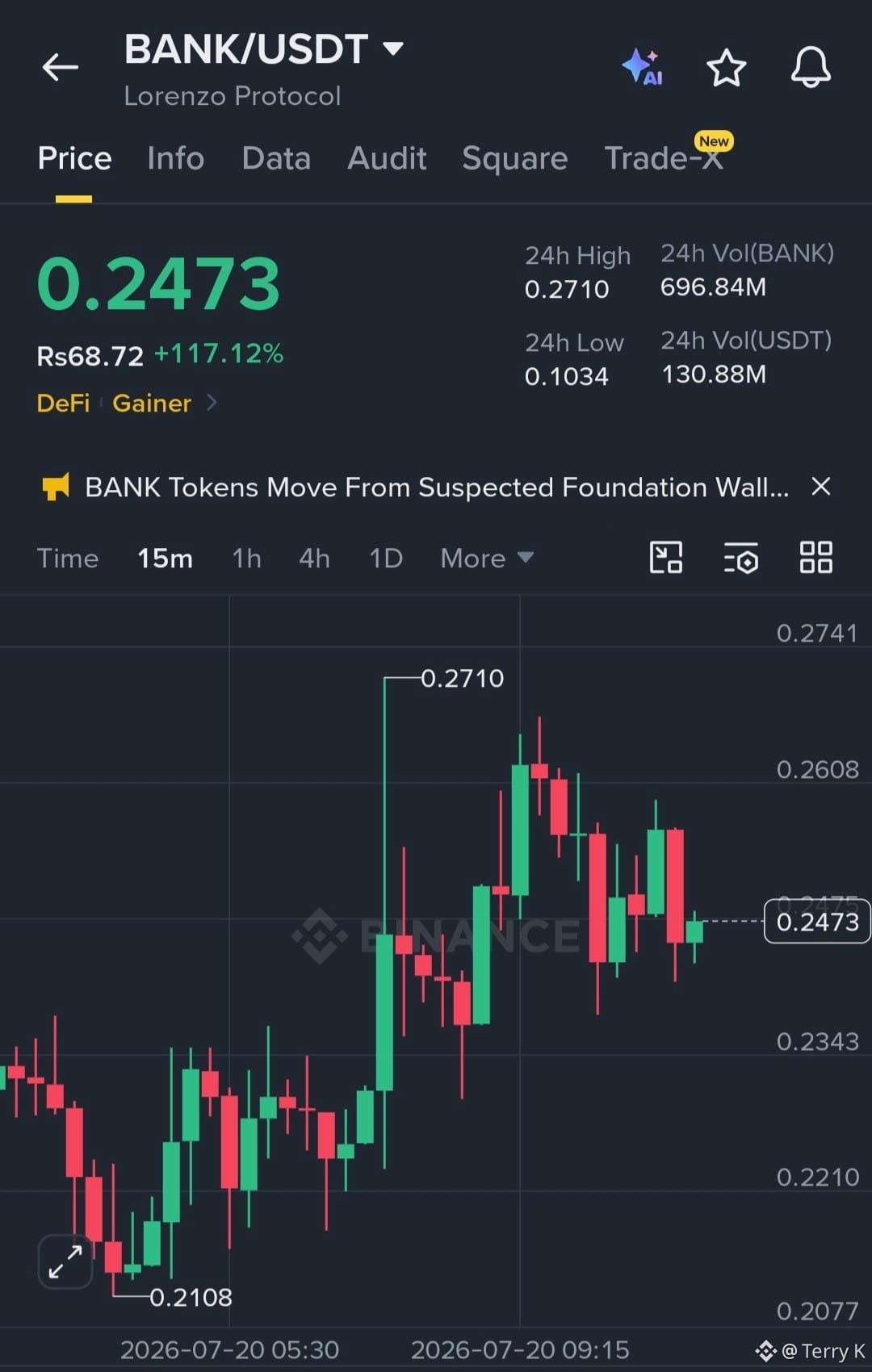
a livré une forte impulsion, gagnant plus de 42% au cours des dernières 24 heures. Après avoir imprimé un sommet local près de 0,2643, le prix n’étend plus agressivement sa hausse. Au lieu de cela, il évolue latéralement autour de 0,253, ce qui suggère que le marché absorbe la pression d’achat récente.
La structure actuelle ressemble à une consolidation saine plutôt qu’à un retournement immédiat. Tant que le prix continue de rester au-dessus de la zone de rupture récente autour de 0,245–0,248, les acheteurs restent aux commandes. Une cassure nette au-dessus de 0,2643 pourrait ouvrir la voie à une nouvelle jambe haussière, tandis que la perte de la zone de support pourrait déclencher un repli plus profond pour rééquilibrer la liquidité.
Pour l’instant, poursuivre des bougies vertes comporte plus de risques que d’attendre. Laissez le marché révéler sa prochaine direction avant de vous engager dans une position.
Niveaux clés • Support : 0,245 – 0,248 • Résistance : 0,2643 • Tendance actuelle : Haussière tant que le support tient
L’évolution des prix récompense la patience. Concentrez-vous sur la structure, gérez le risque et attendez la confirmation au lieu de réagir aux émotions.
@LorenzoProtocol #Crypto #BinanceSquare #PriceAction #Trading #USDT
$BANK
a livré une forte impulsion, gagnant plus de 42% au cours des dernières 24 heures. Après avoir imprimé un sommet local près de 0,2643, le prix n’étend plus agressivement sa hausse. Au lieu de cela, il évolue latéralement autour de 0,253, ce qui suggère que le marché absorbe la pression d’achat récente.
La structure actuelle ressemble à une consolidation saine plutôt qu’à un retournement immédiat. Tant que le prix continue de rester au-dessus de la zone de rupture récente autour de 0,245–0,248, les acheteurs restent aux commandes. Une cassure nette au-dessus de 0,2643 pourrait ouvrir la voie à une nouvelle jambe haussière, tandis que la perte de la zone de support pourrait déclencher un repli plus profond pour rééquilibrer la liquidité.
Pour l’instant, poursuivre des bougies vertes comporte plus de risques que d’attendre. Laissez le marché révéler sa prochaine direction avant de vous engager dans une position.
Niveaux clés • Support : 0,245 – 0,248 • Résistance : 0,2643 • Tendance actuelle : Haussière tant que le support tient
L’évolution des prix récompense la patience. Concentrez-vous sur la structure, gérez le risque et attendez la confirmation au lieu de réagir aux émotions.
@Lorenzo Protocol #Crypto #BinanceSquare #PriceAction #Trading #USDT
a livré une forte impulsion, gagnant plus de 42% au cours des dernières 24 heures. Après avoir imprimé un sommet local près de 0,2643, le prix n’étend plus agressivement sa hausse. Au lieu de cela, il évolue latéralement autour de 0,253, ce qui suggère que le marché absorbe la pression d’achat récente.
La structure actuelle ressemble à une consolidation saine plutôt qu’à un retournement immédiat. Tant que le prix continue de rester au-dessus de la zone de rupture récente autour de 0,245–0,248, les acheteurs restent aux commandes. Une cassure nette au-dessus de 0,2643 pourrait ouvrir la voie à une nouvelle jambe haussière, tandis que la perte de la zone de support pourrait déclencher un repli plus profond pour rééquilibrer la liquidité.
Pour l’instant, poursuivre des bougies vertes comporte plus de risques que d’attendre. Laissez le marché révéler sa prochaine direction avant de vous engager dans une position.
Niveaux clés • Support : 0,245 – 0,248 • Résistance : 0,2643 • Tendance actuelle : Haussière tant que le support tient
L’évolution des prix récompense la patience. Concentrez-vous sur la structure, gérez le risque et attendez la confirmation au lieu de réagir aux émotions.
@Lorenzo Protocol #Crypto #BinanceSquare #PriceAction #Trading #USDT
1
165
·
--
$BANK
BANK a livré une forte impulsion, en établissant un nouvel plus haut local avant d’entrer dans une phase de consolidation saine. Après un rallye explosif, le prix se contracte désormais au lieu de rendre l’ensemble de ses gains—un signe que les acheteurs défendent encore la structure.
L’élément clé à présent est de savoir si cette zone se résout avec un volume renouvelé. Un maintien réussi au-dessus du support récent pourrait ouvrir la porte à une nouvelle impulsion haussière, tandis qu’un échec à conserver la fourchette actuelle pourrait entraîner un refroidissement plus profond avant la reprise de la tendance.
L’élan reste élevé, mais les traders disciplinés savent que la patience compte le plus après un mouvement vertical. Laissez le prix confirmer la direction plutôt que de poursuivre la volatilité.
Gérez le risque, respectez votre plan, et laissez le marché venir à vous.
#BANK #LorenzoProtocol #Crypto #Altcoins #Binance
$BANK
BANK a livré une forte impulsion, en établissant un nouvel plus haut local avant d’entrer dans une phase de consolidation saine. Après un rallye explosif, le prix se contracte désormais au lieu de rendre l’ensemble de ses gains—un signe que les acheteurs défendent encore la structure.
L’élément clé à présent est de savoir si cette zone se résout avec un volume renouvelé. Un maintien réussi au-dessus du support récent pourrait ouvrir la porte à une nouvelle impulsion haussière, tandis qu’un échec à conserver la fourchette actuelle pourrait entraîner un refroidissement plus profond avant la reprise de la tendance.
L’élan reste élevé, mais les traders disciplinés savent que la patience compte le plus après un mouvement vertical. Laissez le prix confirmer la direction plutôt que de poursuivre la volatilité.
Gérez le risque, respectez votre plan, et laissez le marché venir à vous.
#BANK #LorenzoProtocol #Crypto #Altcoins #Binance
BANK a livré une forte impulsion, en établissant un nouvel plus haut local avant d’entrer dans une phase de consolidation saine. Après un rallye explosif, le prix se contracte désormais au lieu de rendre l’ensemble de ses gains—un signe que les acheteurs défendent encore la structure.
L’élément clé à présent est de savoir si cette zone se résout avec un volume renouvelé. Un maintien réussi au-dessus du support récent pourrait ouvrir la porte à une nouvelle impulsion haussière, tandis qu’un échec à conserver la fourchette actuelle pourrait entraîner un refroidissement plus profond avant la reprise de la tendance.
L’élan reste élevé, mais les traders disciplinés savent que la patience compte le plus après un mouvement vertical. Laissez le prix confirmer la direction plutôt que de poursuivre la volatilité.
Gérez le risque, respectez votre plan, et laissez le marché venir à vous.
#BANK #LorenzoProtocol #Crypto #Altcoins #Binance
1
174
·
--
$BTC
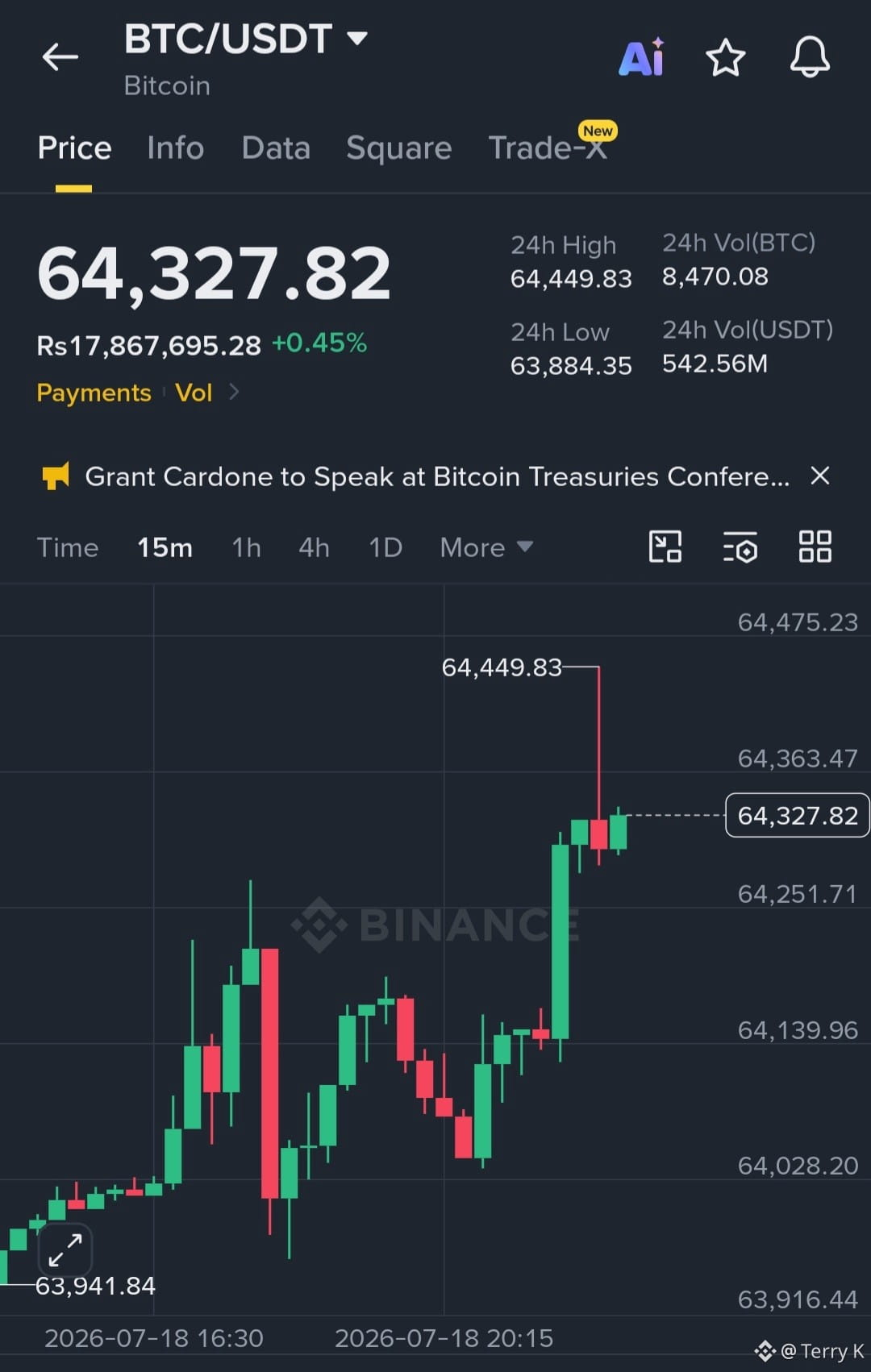
Le Bitcoin continue de maintenir sa structure haussière sur le graphique en 15 minutes après avoir repris le niveau de 64,3 K$. Les acheteurs sont intervenus avec une forte impulsion, poussant le prix du plus bas intraday vers une résistance proche de 64,45 K$.
Pour le moment, le BTC consolide juste sous la résistance plutôt que de montrer un rejet marqué. Cela signale souvent que les acheteurs restent maîtres, mais une confirmation est nécessaire avant d’envisager une nouvelle impulsion à la hausse.
Niveaux clés • Résistance : 64,450 - 64,500 • Support : 64,200 - 64,250 • Support majeur : 64,000
Une cassure nette au-dessus de la résistance pourrait ouvrir la voie à davantage de potentiel haussier. En revanche, si le BTC perd la zone de support des 64,2 K$, un repli à court terme pour tester une liquidité plus faible resterait sain dans le cadre de la tendance actuelle.
Le marché montre de la force, mais poursuivre des bougies vertes comporte un risque inutile. Attendre une confirmation aux niveaux clés est souvent l’approche la plus judicieuse.
La patience paie. Laissez le marché révéler sa prochaine étape avant de vous engager sur une position.
#Crypto #BTCUSDT #PriceAction #Trading #CryptoMarket
$BTC
Le Bitcoin continue de maintenir sa structure haussière sur le graphique en 15 minutes après avoir repris le niveau de 64,3 K$. Les acheteurs sont intervenus avec une forte impulsion, poussant le prix du plus bas intraday vers une résistance proche de 64,45 K$.
Pour le moment, le BTC consolide juste sous la résistance plutôt que de montrer un rejet marqué. Cela signale souvent que les acheteurs restent maîtres, mais une confirmation est nécessaire avant d’envisager une nouvelle impulsion à la hausse.
Niveaux clés • Résistance : 64,450 - 64,500 • Support : 64,200 - 64,250 • Support majeur : 64,000
Une cassure nette au-dessus de la résistance pourrait ouvrir la voie à davantage de potentiel haussier. En revanche, si le BTC perd la zone de support des 64,2 K$, un repli à court terme pour tester une liquidité plus faible resterait sain dans le cadre de la tendance actuelle.
Le marché montre de la force, mais poursuivre des bougies vertes comporte un risque inutile. Attendre une confirmation aux niveaux clés est souvent l’approche la plus judicieuse.
La patience paie. Laissez le marché révéler sa prochaine étape avant de vous engager sur une position.
#Crypto #BTCUSDT #PriceAction #Trading #CryptoMarket
Le Bitcoin continue de maintenir sa structure haussière sur le graphique en 15 minutes après avoir repris le niveau de 64,3 K$. Les acheteurs sont intervenus avec une forte impulsion, poussant le prix du plus bas intraday vers une résistance proche de 64,45 K$.
Pour le moment, le BTC consolide juste sous la résistance plutôt que de montrer un rejet marqué. Cela signale souvent que les acheteurs restent maîtres, mais une confirmation est nécessaire avant d’envisager une nouvelle impulsion à la hausse.
Niveaux clés • Résistance : 64,450 - 64,500 • Support : 64,200 - 64,250 • Support majeur : 64,000
Une cassure nette au-dessus de la résistance pourrait ouvrir la voie à davantage de potentiel haussier. En revanche, si le BTC perd la zone de support des 64,2 K$, un repli à court terme pour tester une liquidité plus faible resterait sain dans le cadre de la tendance actuelle.
Le marché montre de la force, mais poursuivre des bougies vertes comporte un risque inutile. Attendre une confirmation aux niveaux clés est souvent l’approche la plus judicieuse.
La patience paie. Laissez le marché révéler sa prochaine étape avant de vous engager sur une position.
#Crypto #BTCUSDT #PriceAction #Trading #CryptoMarket
1
66
·
--
$ONDO
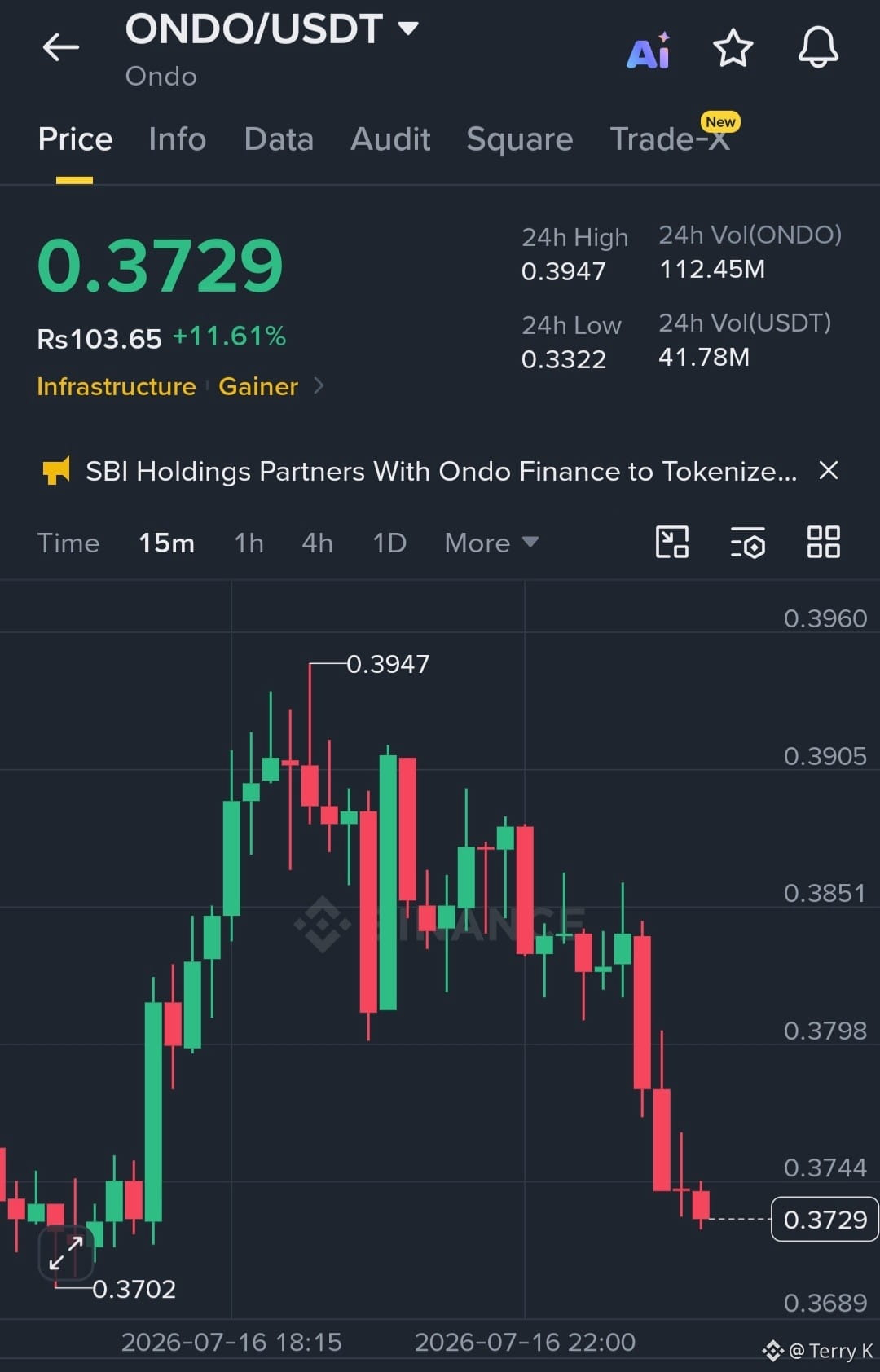
J’ai observé une forte impulsion haussière, poussant le prix vers la zone de 0,395 $ avant de se heurter à une pression de vente importante. Ce rejet a été suivi par un repli régulier, le prix se négociant désormais autour de 0,373 $ sur le graphique en 15 minutes.
La baisse récente suggère que l’élan à court terme s’est affaibli après que la liquidité a été poussée au-dessus des plus hauts locaux. Les vendeurs sont actuellement aux commandes, mais ce mouvement rapproche aussi le prix d’une zone clé où les acheteurs pourraient reprendre le contrôle.
Niveaux clés • Support : 0,370 $ - 0,368 $ • Résistance : 0,380 $ - 0,385 $ • Résistance majeure : 0,395 $
Tant que ONDO reste au-dessus de la zone de support, un rebond de soulagement reste possible. En revanche, perdre 0,370 $ pourrait ouvrir la voie à une correction plus profonde avant la prochaine tentative haussière.
La meilleure approche consiste à rester patient et à attendre une confirmation. Poursuivre des bougies après un fort mouvement entraîne souvent de mauvaises entrées. Laissez le prix montrer sa prochaine direction avant de vous engager sur une opération.
#ONDO #Crypto #Trading #PriceAction #Binance
$ONDO
J’ai observé une forte impulsion haussière, poussant le prix vers la zone de 0,395 $ avant de se heurter à une pression de vente importante. Ce rejet a été suivi par un repli régulier, le prix se négociant désormais autour de 0,373 $ sur le graphique en 15 minutes.
La baisse récente suggère que l’élan à court terme s’est affaibli après que la liquidité a été poussée au-dessus des plus hauts locaux. Les vendeurs sont actuellement aux commandes, mais ce mouvement rapproche aussi le prix d’une zone clé où les acheteurs pourraient reprendre le contrôle.
Niveaux clés • Support : 0,370 $ - 0,368 $ • Résistance : 0,380 $ - 0,385 $ • Résistance majeure : 0,395 $
Tant que ONDO reste au-dessus de la zone de support, un rebond de soulagement reste possible. En revanche, perdre 0,370 $ pourrait ouvrir la voie à une correction plus profonde avant la prochaine tentative haussière.
La meilleure approche consiste à rester patient et à attendre une confirmation. Poursuivre des bougies après un fort mouvement entraîne souvent de mauvaises entrées. Laissez le prix montrer sa prochaine direction avant de vous engager sur une opération.
#ONDO #Crypto #Trading #PriceAction #Binance
J’ai observé une forte impulsion haussière, poussant le prix vers la zone de 0,395 $ avant de se heurter à une pression de vente importante. Ce rejet a été suivi par un repli régulier, le prix se négociant désormais autour de 0,373 $ sur le graphique en 15 minutes.
La baisse récente suggère que l’élan à court terme s’est affaibli après que la liquidité a été poussée au-dessus des plus hauts locaux. Les vendeurs sont actuellement aux commandes, mais ce mouvement rapproche aussi le prix d’une zone clé où les acheteurs pourraient reprendre le contrôle.
Niveaux clés • Support : 0,370 $ - 0,368 $ • Résistance : 0,380 $ - 0,385 $ • Résistance majeure : 0,395 $
Tant que ONDO reste au-dessus de la zone de support, un rebond de soulagement reste possible. En revanche, perdre 0,370 $ pourrait ouvrir la voie à une correction plus profonde avant la prochaine tentative haussière.
La meilleure approche consiste à rester patient et à attendre une confirmation. Poursuivre des bougies après un fort mouvement entraîne souvent de mauvaises entrées. Laissez le prix montrer sa prochaine direction avant de vous engager sur une opération.
#ONDO #Crypto #Trading #PriceAction #Binance
1
141
·
--
$BTC
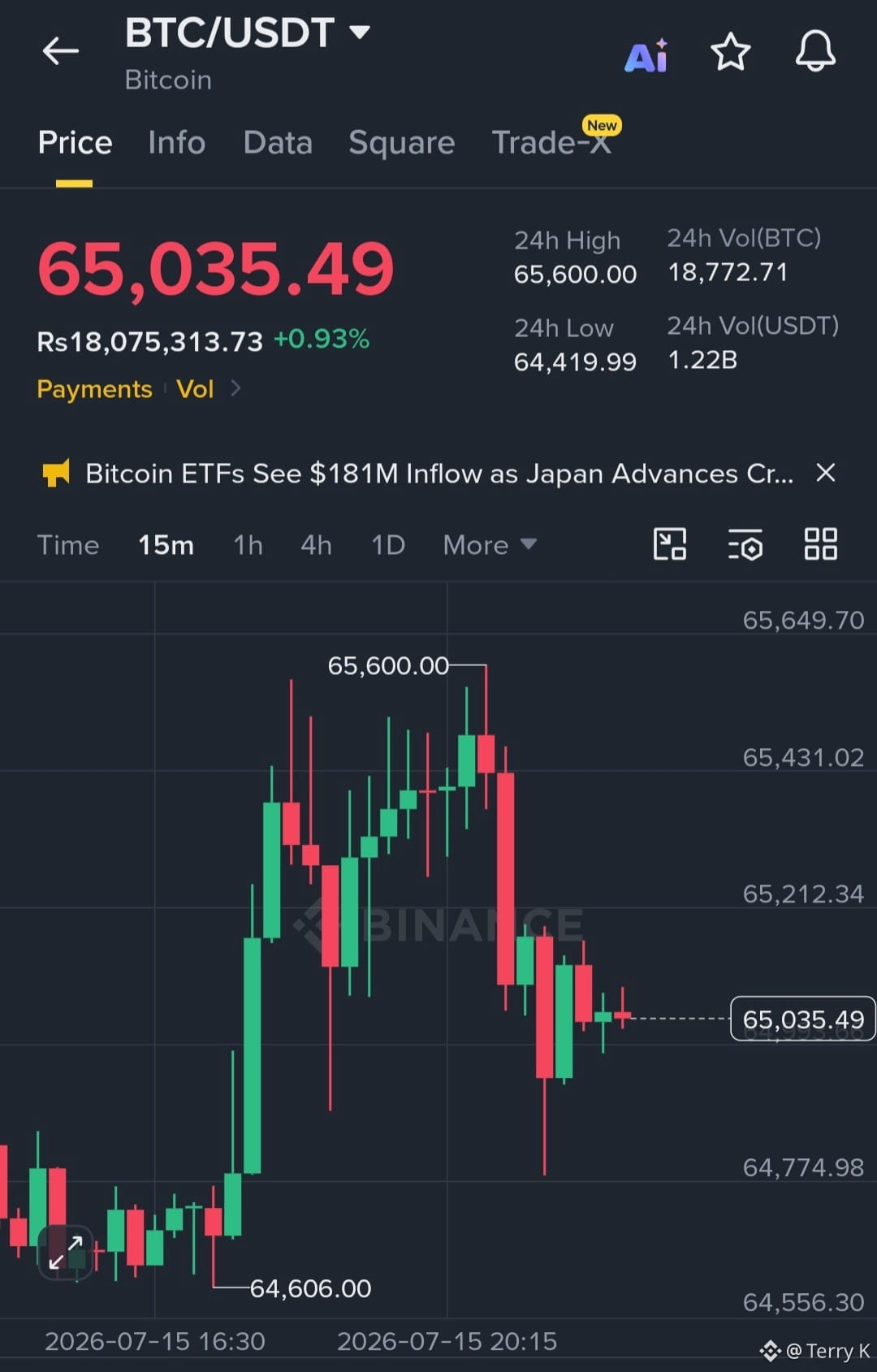
Bitcoin a été repoussé dans la zone de résistance des 65,6 k$, mais des vendeurs sont intervenus avec force, entraînant un rejet net. Le prix évolue désormais autour de 65,0 k$, où les acheteurs tentent de stabiliser le marché.
Le mouvement récent suggère que la liquidité au-dessus des plus hauts a été absorbée, et l’attention se tourne maintenant vers la capacité de BTC à maintenir ce support local. Une tenue durable au-dessus de 65 k$ pourrait ouvrir la voie à une nouvelle tentative de reconquête de 65,4 k$ à 65,6 k$. En cas d’échec du support, un mouvement vers 64,8 k$, voire 64,6 k$, devient plus probable.
Pour l’instant, le marché est en consolidation à court terme après un mouvement volatil. Poursuivre les bougies ici offre peu d’avantage. Attendre une confirmation autour des niveaux clés de support ou de résistance est l’approche la plus disciplinée.
Niveaux clés
Résistance : 65,4 k$ – 65,6 k$
Support : 65,0 k$ – 64,8 k$
Invalidation : mouvement durable en dessous de 64,8 k$
La patience est une position. Laissez le prix confirmer la direction avant de vous engager dans une transaction.
$BTC
Bitcoin a été repoussé dans la zone de résistance des 65,6 k$, mais des vendeurs sont intervenus avec force, entraînant un rejet net. Le prix évolue désormais autour de 65,0 k$, où les acheteurs tentent de stabiliser le marché.
Le mouvement récent suggère que la liquidité au-dessus des plus hauts a été absorbée, et l’attention se tourne maintenant vers la capacité de BTC à maintenir ce support local. Une tenue durable au-dessus de 65 k$ pourrait ouvrir la voie à une nouvelle tentative de reconquête de 65,4 k$ à 65,6 k$. En cas d’échec du support, un mouvement vers 64,8 k$, voire 64,6 k$, devient plus probable.
Pour l’instant, le marché est en consolidation à court terme après un mouvement volatil. Poursuivre les bougies ici offre peu d’avantage. Attendre une confirmation autour des niveaux clés de support ou de résistance est l’approche la plus disciplinée.
Niveaux clés
Résistance : 65,4 k$ – 65,6 k$
Support : 65,0 k$ – 64,8 k$
Invalidation : mouvement durable en dessous de 64,8 k$
La patience est une position. Laissez le prix confirmer la direction avant de vous engager dans une transaction.
Bitcoin a été repoussé dans la zone de résistance des 65,6 k$, mais des vendeurs sont intervenus avec force, entraînant un rejet net. Le prix évolue désormais autour de 65,0 k$, où les acheteurs tentent de stabiliser le marché.
Le mouvement récent suggère que la liquidité au-dessus des plus hauts a été absorbée, et l’attention se tourne maintenant vers la capacité de BTC à maintenir ce support local. Une tenue durable au-dessus de 65 k$ pourrait ouvrir la voie à une nouvelle tentative de reconquête de 65,4 k$ à 65,6 k$. En cas d’échec du support, un mouvement vers 64,8 k$, voire 64,6 k$, devient plus probable.
Pour l’instant, le marché est en consolidation à court terme après un mouvement volatil. Poursuivre les bougies ici offre peu d’avantage. Attendre une confirmation autour des niveaux clés de support ou de résistance est l’approche la plus disciplinée.
Niveaux clés
Résistance : 65,4 k$ – 65,6 k$
Support : 65,0 k$ – 64,8 k$
Invalidation : mouvement durable en dessous de 64,8 k$
La patience est une position. Laissez le prix confirmer la direction avant de vous engager dans une transaction.
1
102
·
--
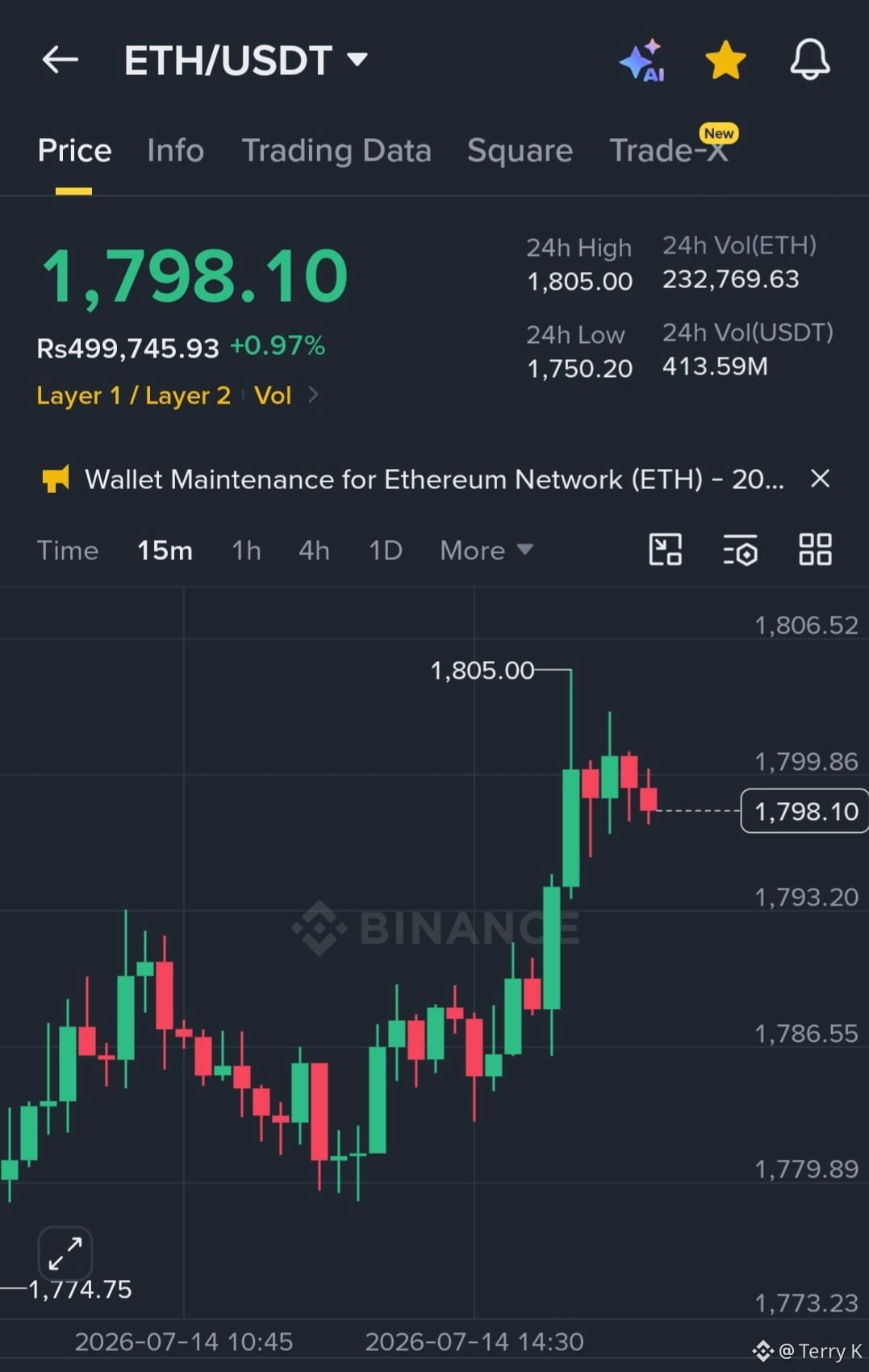
$ETH
fait preuve de solidité après avoir regagné la zone des 1 790 $ et s’être projeté dans la zone de résistance comprise entre 1 800 et 1 805 $. La récente pause sous la résistance ressemble davantage à une consolidation saine qu’à une faiblesse immédiate.
Niveaux clés : • Support : 1 790–1 793 $ • Résistance : 1 805, puis 1 820 $
Tant que le prix reste au-dessus du support, les acheteurs conservent le contrôle. Une cassure nette au-dessus de 1 805 $ pourrait ouvrir la voie à une nouvelle jambe haussière, tandis que la perte de 1 790 $ pourrait déclencher un repli à court terme.
La patience est essentielle : laissez le prix confirmer le prochain mouvement avant d’entrer. Tradez la structure, pas les émotions.
$ETH
fait preuve de solidité après avoir regagné la zone des 1 790 $ et s’être projeté dans la zone de résistance comprise entre 1 800 et 1 805 $. La récente pause sous la résistance ressemble davantage à une consolidation saine qu’à une faiblesse immédiate.
Niveaux clés : • Support : 1 790–1 793 $ • Résistance : 1 805, puis 1 820 $
Tant que le prix reste au-dessus du support, les acheteurs conservent le contrôle. Une cassure nette au-dessus de 1 805 $ pourrait ouvrir la voie à une nouvelle jambe haussière, tandis que la perte de 1 790 $ pourrait déclencher un repli à court terme.
La patience est essentielle : laissez le prix confirmer le prochain mouvement avant d’entrer. Tradez la structure, pas les émotions.
fait preuve de solidité après avoir regagné la zone des 1 790 $ et s’être projeté dans la zone de résistance comprise entre 1 800 et 1 805 $. La récente pause sous la résistance ressemble davantage à une consolidation saine qu’à une faiblesse immédiate.
Niveaux clés : • Support : 1 790–1 793 $ • Résistance : 1 805, puis 1 820 $
Tant que le prix reste au-dessus du support, les acheteurs conservent le contrôle. Une cassure nette au-dessus de 1 805 $ pourrait ouvrir la voie à une nouvelle jambe haussière, tandis que la perte de 1 790 $ pourrait déclencher un repli à court terme.
La patience est essentielle : laissez le prix confirmer le prochain mouvement avant d’entrer. Tradez la structure, pas les émotions.
1
93
·
--
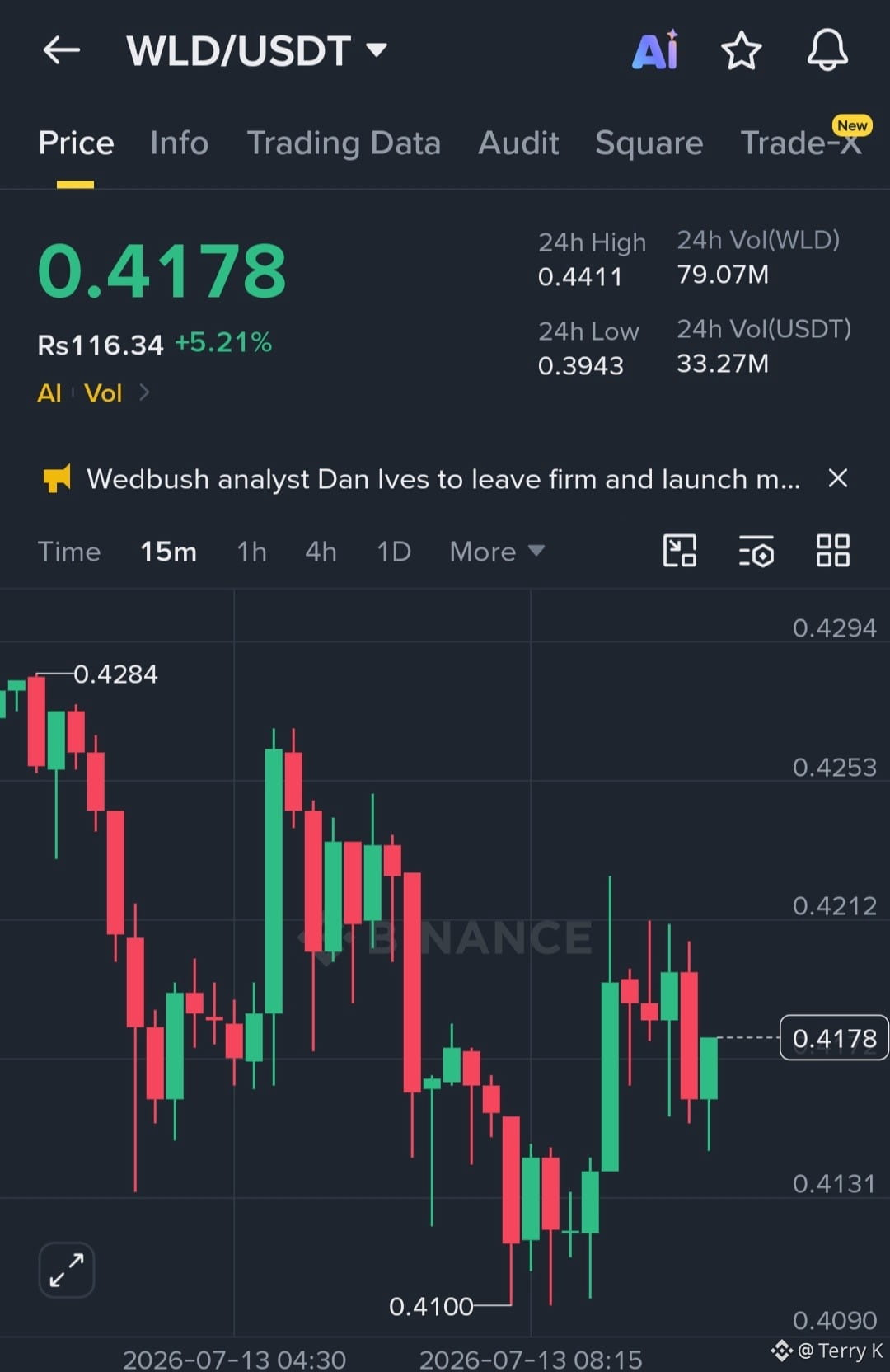
$WLD essaie de récupérer une structure à court terme après avoir rebondi dans la zone des 0.4100. Le prix teste maintenant une résistance proche autour de 0.4200–0.4250.
Niveaux clés : 🔹 Support : 0.4100 🔹 Résistance : 0.4200 → 0.4250
Une cassure nette au-dessus de la résistance pourrait ouvrir la voie à une hausse supplémentaire, tandis qu’un rejet pourrait entraîner un autre retest du support. La patience et la confirmation restent essentielles.
#WLD #USDT #Crypto #Binance
$WLD essaie de récupérer une structure à court terme après avoir rebondi dans la zone des 0.4100. Le prix teste maintenant une résistance proche autour de 0.4200–0.4250.
Niveaux clés : 🔹 Support : 0.4100 🔹 Résistance : 0.4200 → 0.4250
Une cassure nette au-dessus de la résistance pourrait ouvrir la voie à une hausse supplémentaire, tandis qu’un rejet pourrait entraîner un autre retest du support. La patience et la confirmation restent essentielles.
#WLD #USDT #Crypto #Binance
Niveaux clés : 🔹 Support : 0.4100 🔹 Résistance : 0.4200 → 0.4250
Une cassure nette au-dessus de la résistance pourrait ouvrir la voie à une hausse supplémentaire, tandis qu’un rejet pourrait entraîner un autre retest du support. La patience et la confirmation restent essentielles.
#WLD #USDT #Crypto #Binance
1
171
·
--
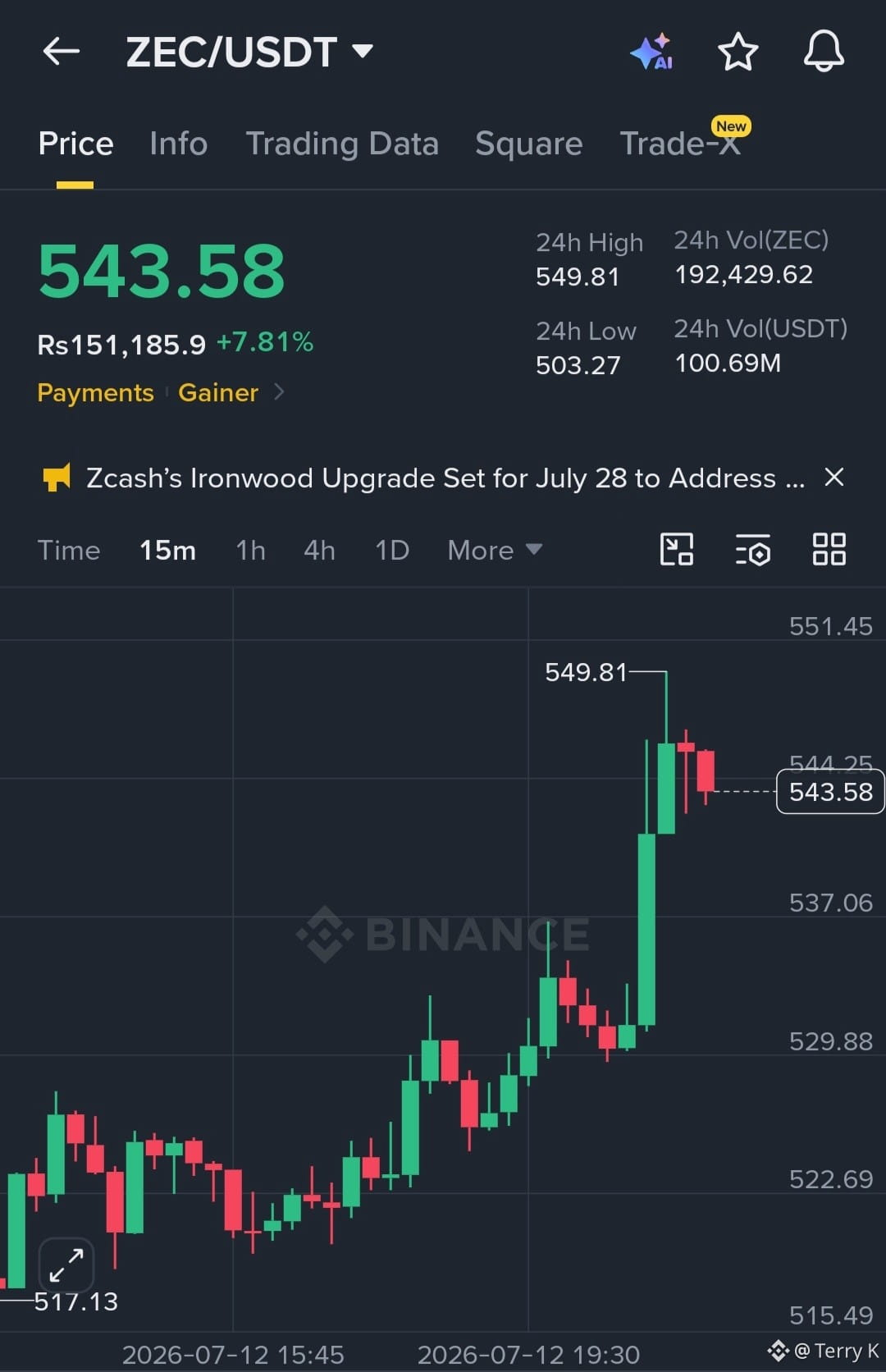
$ZEC
affiche une forte dynamique haussière après avoir rompu sa récente zone de consolidation. Les acheteurs sont intervenus de manière agressive,
en propulsant le prix vers la zone de résistance des 550. Le mouvement est soutenu par une dynamique solide, mais après une impulsion aussi vive, une correction à court terme ou une consolidation latérale serait saine avant la prochaine étape haussière.
Niveaux clés • Support : 537 – 530
• Résistance : 550 – 560
Tant que ZEC reste au-dessus de la zone de cassure, la structure globale demeure haussière. Poursuivre les bougies vertes comporte un risque plus élevé ; attendre une confirmation ou un retest pourrait offrir une configuration risque-rendement plus favorable.
Tradez la structure, pas l’émotion. La patience et une gestion disciplinée du risque surpassent toujours le FOMO.
$ZEC
affiche une forte dynamique haussière après avoir rompu sa récente zone de consolidation. Les acheteurs sont intervenus de manière agressive,
en propulsant le prix vers la zone de résistance des 550. Le mouvement est soutenu par une dynamique solide, mais après une impulsion aussi vive, une correction à court terme ou une consolidation latérale serait saine avant la prochaine étape haussière.
Niveaux clés • Support : 537 – 530
• Résistance : 550 – 560
Tant que ZEC reste au-dessus de la zone de cassure, la structure globale demeure haussière. Poursuivre les bougies vertes comporte un risque plus élevé ; attendre une confirmation ou un retest pourrait offrir une configuration risque-rendement plus favorable.
Tradez la structure, pas l’émotion. La patience et une gestion disciplinée du risque surpassent toujours le FOMO.
affiche une forte dynamique haussière après avoir rompu sa récente zone de consolidation. Les acheteurs sont intervenus de manière agressive,
en propulsant le prix vers la zone de résistance des 550. Le mouvement est soutenu par une dynamique solide, mais après une impulsion aussi vive, une correction à court terme ou une consolidation latérale serait saine avant la prochaine étape haussière.
Niveaux clés • Support : 537 – 530
• Résistance : 550 – 560
Tant que ZEC reste au-dessus de la zone de cassure, la structure globale demeure haussière. Poursuivre les bougies vertes comporte un risque plus élevé ; attendre une confirmation ou un retest pourrait offrir une configuration risque-rendement plus favorable.
Tradez la structure, pas l’émotion. La patience et une gestion disciplinée du risque surpassent toujours le FOMO.
208
·
--
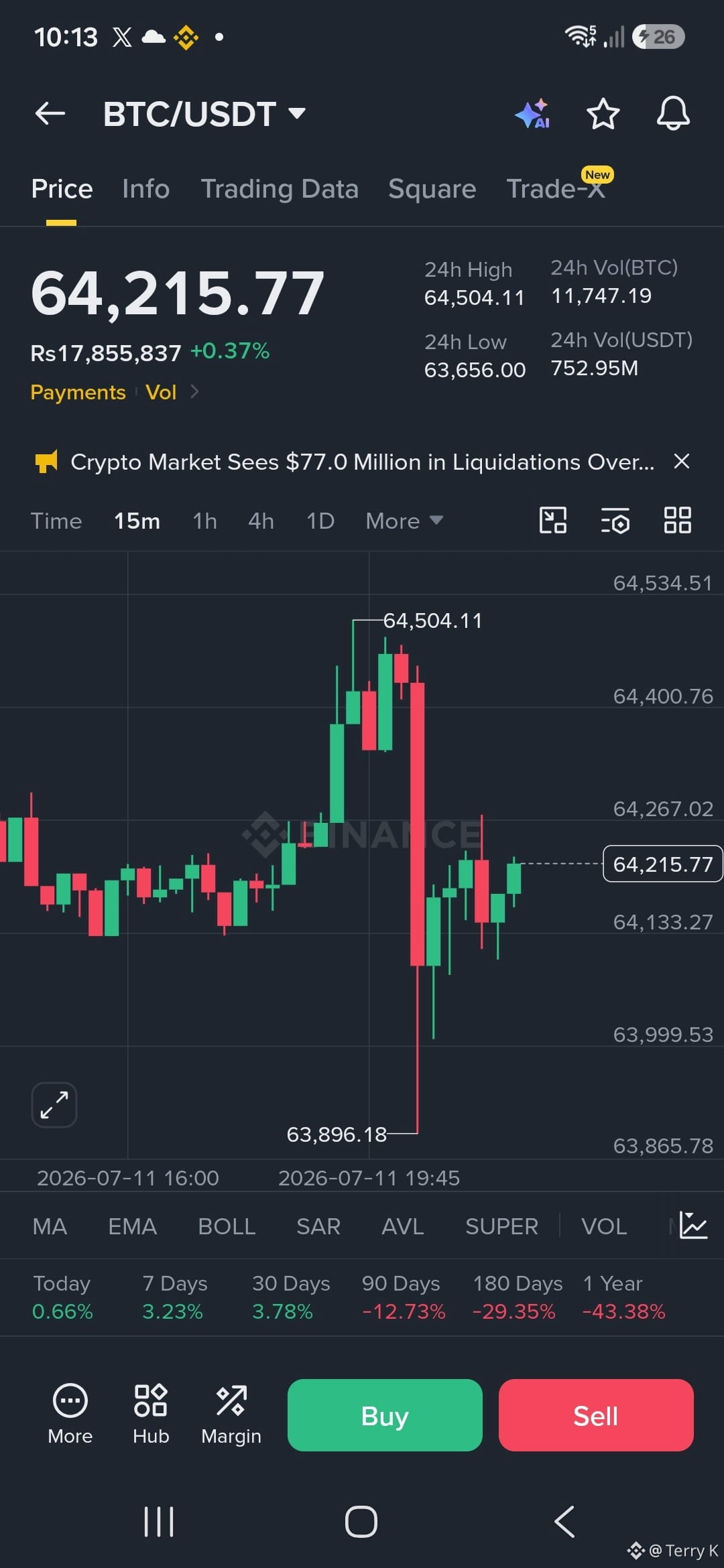
$BTC
liquidité balayée en dessous de 64 000$, déclenchant une forte vague de ventes avant que des acheteurs ne prennent le relais. Le redressement rapide depuis les plus bas suggère que la demande est toujours active, mais le prix reste à l’intérieur d’une fourchette à court terme.
Tant que 63,9K$ reste de la partie, le BTC a la place de retester 64,4K–64,5K$. Une cassure nette au-dessus de cette résistance pourrait ouvrir la voie à un nouvel élan haussier. En revanche, la perte du dernier plus bas entraînerait probablement une nouvelle vague de ventes.
Pour l’instant, cela ressemble davantage à un marché régi par la liquidité que par une tendance confirmée. La patience et une gestion rigoureuse des risques restent essentielles.
$BTC
liquidité balayée en dessous de 64 000$, déclenchant une forte vague de ventes avant que des acheteurs ne prennent le relais. Le redressement rapide depuis les plus bas suggère que la demande est toujours active, mais le prix reste à l’intérieur d’une fourchette à court terme.
Tant que 63,9K$ reste de la partie, le BTC a la place de retester 64,4K–64,5K$. Une cassure nette au-dessus de cette résistance pourrait ouvrir la voie à un nouvel élan haussier. En revanche, la perte du dernier plus bas entraînerait probablement une nouvelle vague de ventes.
Pour l’instant, cela ressemble davantage à un marché régi par la liquidité que par une tendance confirmée. La patience et une gestion rigoureuse des risques restent essentielles.
liquidité balayée en dessous de 64 000$, déclenchant une forte vague de ventes avant que des acheteurs ne prennent le relais. Le redressement rapide depuis les plus bas suggère que la demande est toujours active, mais le prix reste à l’intérieur d’une fourchette à court terme.
Tant que 63,9K$ reste de la partie, le BTC a la place de retester 64,4K–64,5K$. Une cassure nette au-dessus de cette résistance pourrait ouvrir la voie à un nouvel élan haussier. En revanche, la perte du dernier plus bas entraînerait probablement une nouvelle vague de ventes.
Pour l’instant, cela ressemble davantage à un marché régi par la liquidité que par une tendance confirmée. La patience et une gestion rigoureuse des risques restent essentielles.
1
131
·
--
$ETH
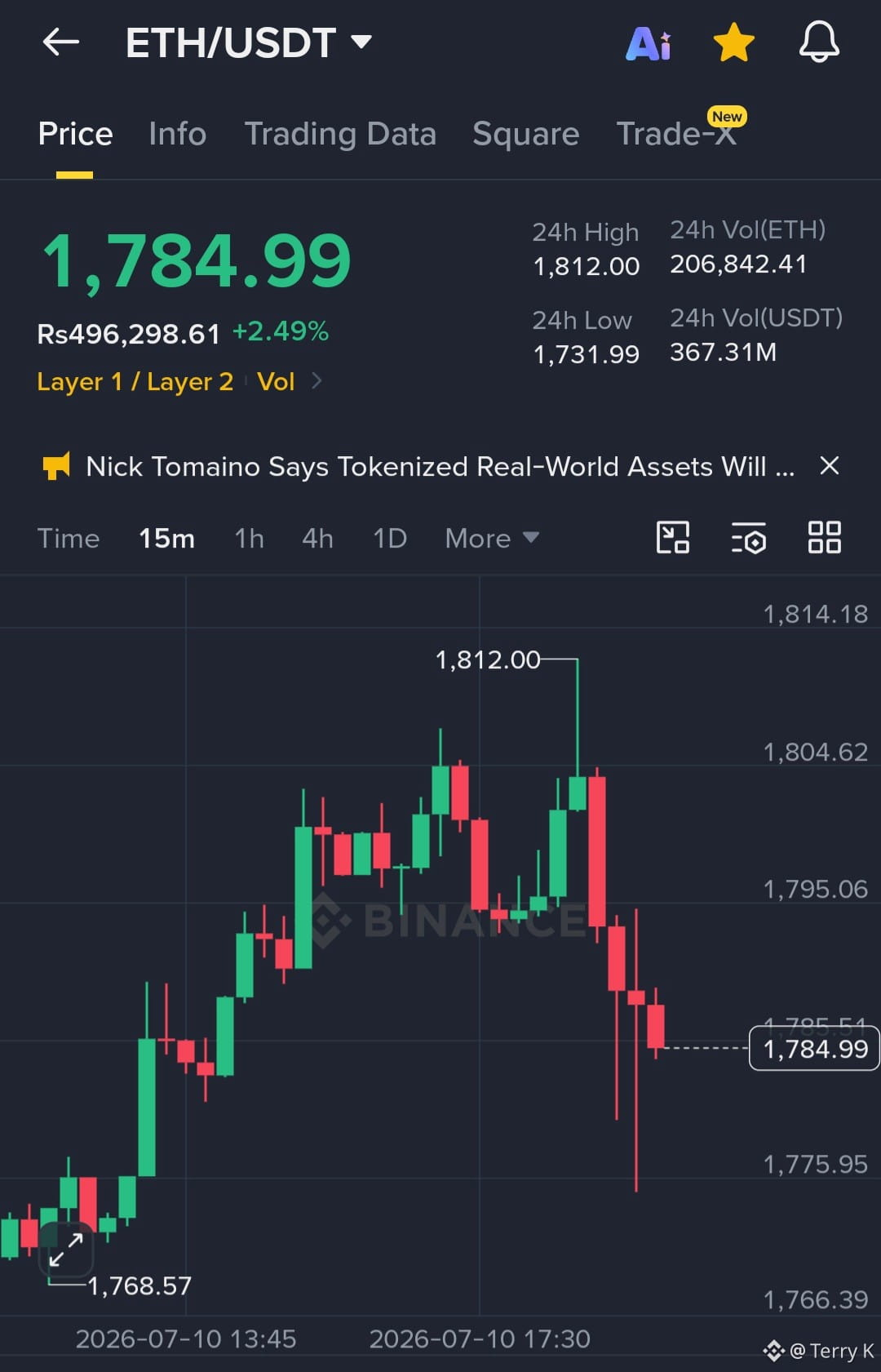
une liquidité « balayée » proche de 1 812 $ a été observée, mais elle n’a pas réussi à rester au-dessus de la résistance, déclenchant un rejet net. Le prix teste désormais la zone de support 1 780–1 785 $.
Tant que cette zone tient, un rebond de soulagement reste possible. Si elle est perdue, une nouvelle baisse pourrait s’ouvrir vers la prochaine poche de liquidité.
La patience paie. Laissez le marché confirmer la direction avant de vous engager sur une position.
$ETH
une liquidité « balayée » proche de 1 812 $ a été observée, mais elle n’a pas réussi à rester au-dessus de la résistance, déclenchant un rejet net. Le prix teste désormais la zone de support 1 780–1 785 $.
Tant que cette zone tient, un rebond de soulagement reste possible. Si elle est perdue, une nouvelle baisse pourrait s’ouvrir vers la prochaine poche de liquidité.
La patience paie. Laissez le marché confirmer la direction avant de vous engager sur une position.
une liquidité « balayée » proche de 1 812 $ a été observée, mais elle n’a pas réussi à rester au-dessus de la résistance, déclenchant un rejet net. Le prix teste désormais la zone de support 1 780–1 785 $.
Tant que cette zone tient, un rebond de soulagement reste possible. Si elle est perdue, une nouvelle baisse pourrait s’ouvrir vers la prochaine poche de liquidité.
La patience paie. Laissez le marché confirmer la direction avant de vous engager sur une position.
202
·
--
$BTC
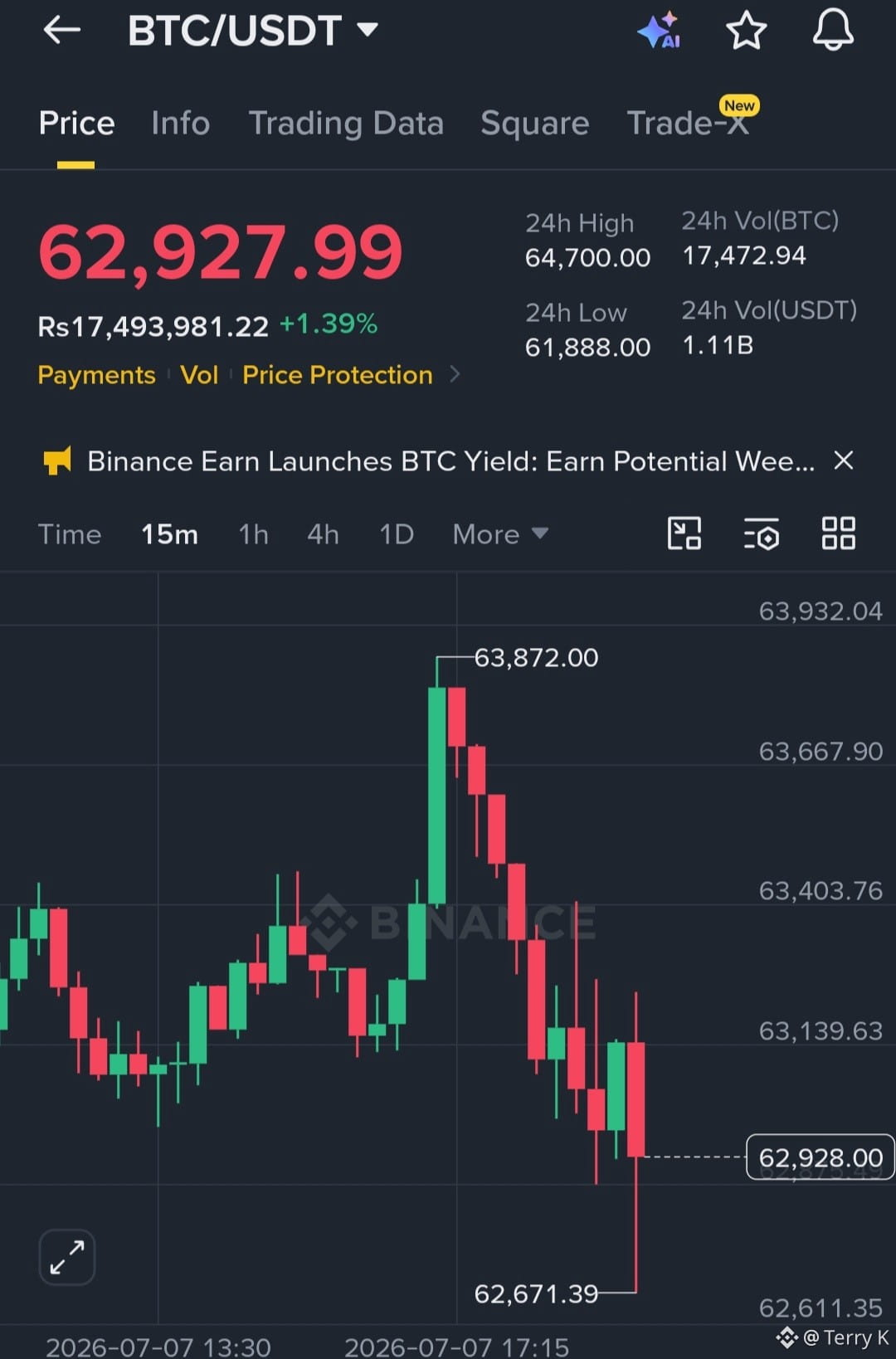
Une tentative de poussée vers 63,9K a été contrée rapidement par des vendeurs, qui ont rejeté le mouvement et ramené le prix sous les plus hauts locaux.
La structure récente montre des plus hauts plus bas et une pression de vente soutenue, ce qui suggère que les acheteurs ont encore besoin d’une confirmation plus solide avant que l’élan ne s’inverse. Tant que le prix reste sous 63,8K–64K, la prudence s’impose.
Niveaux clés : • Résistance : 63,8K–64K • Support : 62,6K–62,7K
Inutile de courir après chaque bougie. Laissez d’abord le marché confirmer la direction — la discipline l’emporte toujours sur l’émotion.
#BTC #Bitcoin #Crypto #PriceAction #BinanceSquare
$BTC
Une tentative de poussée vers 63,9K a été contrée rapidement par des vendeurs, qui ont rejeté le mouvement et ramené le prix sous les plus hauts locaux.
La structure récente montre des plus hauts plus bas et une pression de vente soutenue, ce qui suggère que les acheteurs ont encore besoin d’une confirmation plus solide avant que l’élan ne s’inverse. Tant que le prix reste sous 63,8K–64K, la prudence s’impose.
Niveaux clés : • Résistance : 63,8K–64K • Support : 62,6K–62,7K
Inutile de courir après chaque bougie. Laissez d’abord le marché confirmer la direction — la discipline l’emporte toujours sur l’émotion.
#BTC #Bitcoin #Crypto #PriceAction #BinanceSquare
Une tentative de poussée vers 63,9K a été contrée rapidement par des vendeurs, qui ont rejeté le mouvement et ramené le prix sous les plus hauts locaux.
La structure récente montre des plus hauts plus bas et une pression de vente soutenue, ce qui suggère que les acheteurs ont encore besoin d’une confirmation plus solide avant que l’élan ne s’inverse. Tant que le prix reste sous 63,8K–64K, la prudence s’impose.
Niveaux clés : • Résistance : 63,8K–64K • Support : 62,6K–62,7K
Inutile de courir après chaque bougie. Laissez d’abord le marché confirmer la direction — la discipline l’emporte toujours sur l’émotion.
#BTC #Bitcoin #Crypto #PriceAction #BinanceSquare
77
·
--
$ETH
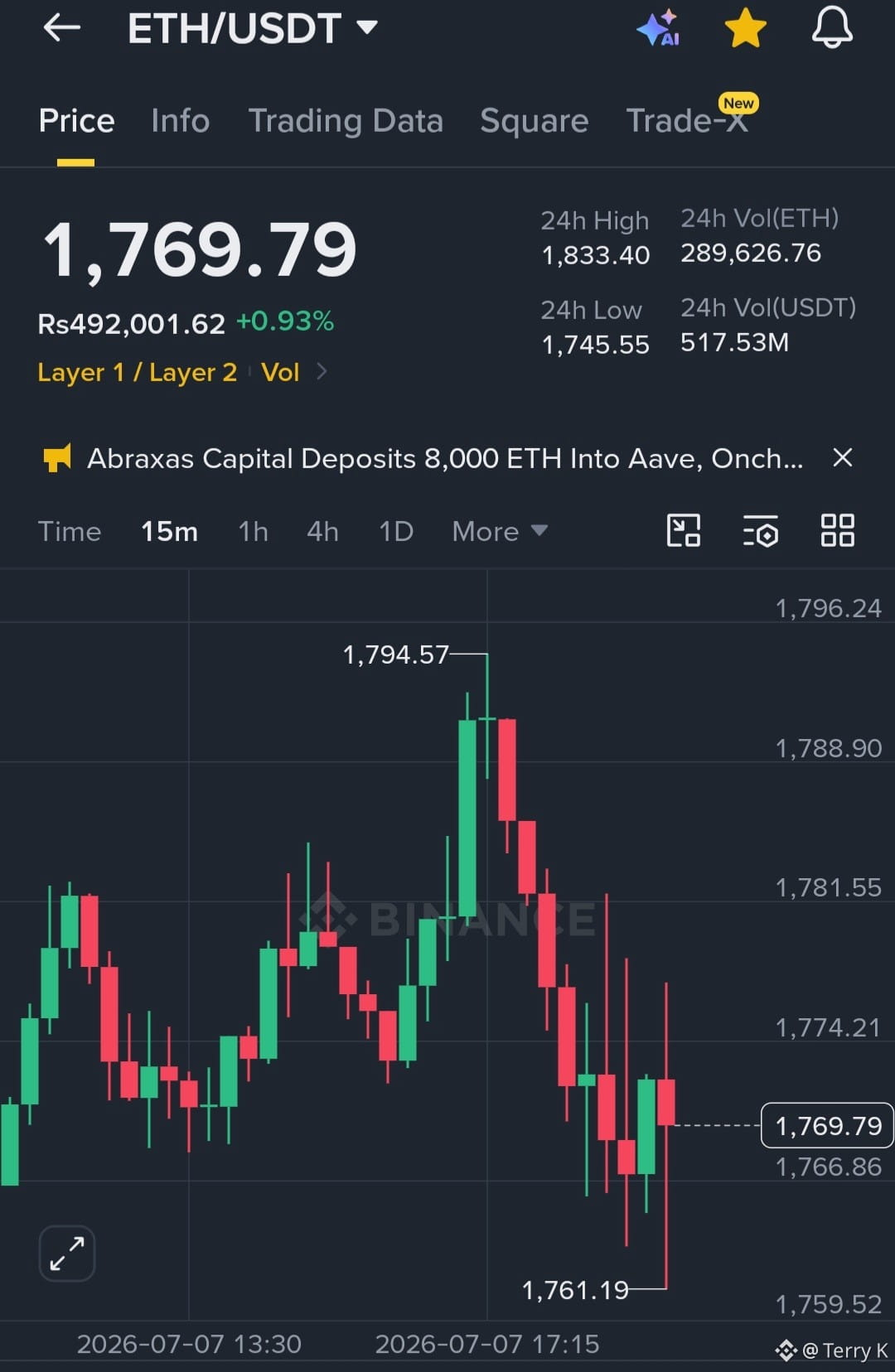
poussée vers la résistance proche de 1 795 $, mais a fait face à une forte pression vendeuse, entraînant un rejet net et un retour vers la zone de support 1 760–1 770 $.
Les bougies récentes suggèrent que les acheteurs défendent cette zone, mais l’élan reste faible. Une reconquête durable au-dessus de 1 780 $ pourrait faire évoluer le sentiment à court terme, tandis que la perte de 1 760 $ pourrait exposer un nouveau balayage de liquidité vers le bas avant tout redressement significatif.
La patience est essentielle ici. Laissez le marché confirmer la direction au lieu de l’anticiper.
#Crypto #Trading #PriceAction #Binance #USDT $ETH
$ETH
poussée vers la résistance proche de 1 795 $, mais a fait face à une forte pression vendeuse, entraînant un rejet net et un retour vers la zone de support 1 760–1 770 $.
Les bougies récentes suggèrent que les acheteurs défendent cette zone, mais l’élan reste faible. Une reconquête durable au-dessus de 1 780 $ pourrait faire évoluer le sentiment à court terme, tandis que la perte de 1 760 $ pourrait exposer un nouveau balayage de liquidité vers le bas avant tout redressement significatif.
La patience est essentielle ici. Laissez le marché confirmer la direction au lieu de l’anticiper.
#Crypto #Trading #PriceAction #Binance #USDT $ETH
poussée vers la résistance proche de 1 795 $, mais a fait face à une forte pression vendeuse, entraînant un rejet net et un retour vers la zone de support 1 760–1 770 $.
Les bougies récentes suggèrent que les acheteurs défendent cette zone, mais l’élan reste faible. Une reconquête durable au-dessus de 1 780 $ pourrait faire évoluer le sentiment à court terme, tandis que la perte de 1 760 $ pourrait exposer un nouveau balayage de liquidité vers le bas avant tout redressement significatif.
La patience est essentielle ici. Laissez le marché confirmer la direction au lieu de l’anticiper.
#Crypto #Trading #PriceAction #Binance #USDT $ETH
97
·
--
$BNB
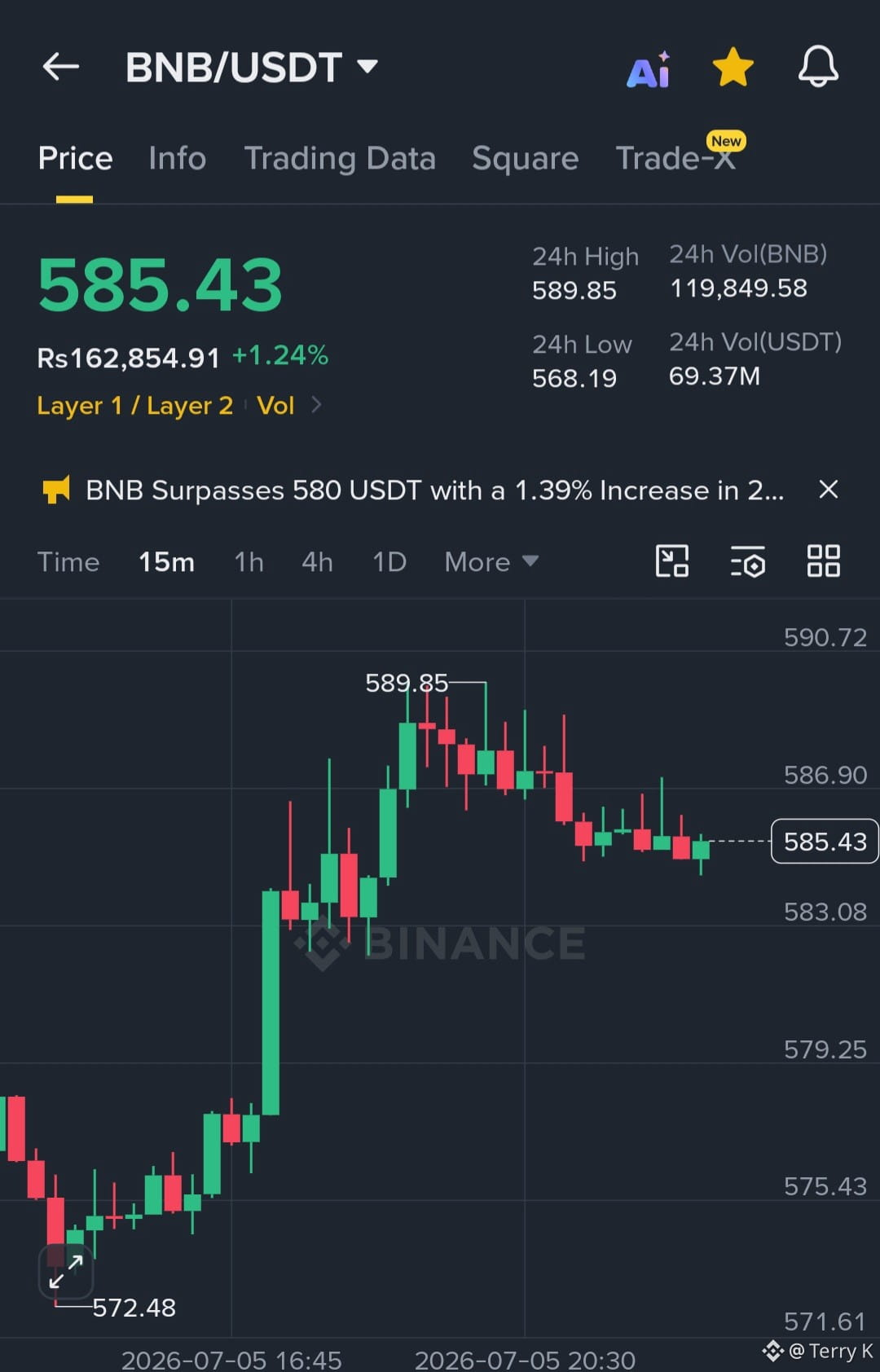
se maintient au-dessus du niveau des 580 $ après une forte cassure.
Le prix est monté jusqu’à 589,85 $ avant de se stabiliser, et il consolide désormais autour de 585 $ sur le graphique 15m. Tant que les acheteurs défendent cette zone, un nouveau test de 590 $+ reste possible.
Niveaux clés : 📍 Support : 583–580 $ 📍 Résistance : 590 $
La patience paie : laissez le marché confirmer le prochain mouvement avant de courir après le prix. #BNB #Binance #Crypto #Trading #PriceAction
$BNB
se maintient au-dessus du niveau des 580 $ après une forte cassure.
Le prix est monté jusqu’à 589,85 $ avant de se stabiliser, et il consolide désormais autour de 585 $ sur le graphique 15m. Tant que les acheteurs défendent cette zone, un nouveau test de 590 $+ reste possible.
Niveaux clés : 📍 Support : 583–580 $ 📍 Résistance : 590 $
La patience paie : laissez le marché confirmer le prochain mouvement avant de courir après le prix. #BNB #Binance #Crypto #Trading #PriceAction
se maintient au-dessus du niveau des 580 $ après une forte cassure.
Le prix est monté jusqu’à 589,85 $ avant de se stabiliser, et il consolide désormais autour de 585 $ sur le graphique 15m. Tant que les acheteurs défendent cette zone, un nouveau test de 590 $+ reste possible.
Niveaux clés : 📍 Support : 583–580 $ 📍 Résistance : 590 $
La patience paie : laissez le marché confirmer le prochain mouvement avant de courir après le prix. #BNB #Binance #Crypto #Trading #PriceAction
81
Connectez-vous pour découvrir plus de contenu
Rejoignez la communauté mondiale des adeptes de cryptomonnaies sur Binance Square
⚡️ Suviez les dernières informations importantes sur les cryptomonnaies.
💬 Jugé digne de confiance par la plus grande plateforme d’échange de cryptomonnaies au monde.
👍 Découvrez les connaissances que partagent les créateurs vérifiés.
Adresse e-mail/Nº de téléphone
Sujets d’actualité
CPIWatch
86.6M vues
501,784 mentions
Partagez et gagnez des récompenses en trafic dans notre campagne de hashtag tendance
✨Sujet : Le CPI déclenchera-t-il une hausse du taux ?
👉Comment participer :
Publiez une courte publication ou un article avec le hashtag #CPIWatch
Créez du contenu à partir des deux angles ci-dessous :
- Les créations d’emplois non agricoles dépassent les attentes et le CPI arrive bientôt : selon vous, la Fed va-t-elle augmenter le taux ou le maintenir ?
- Bullish ou bearish ? Partagez votre avis et mettez en avant vos actions ou votre trading/portefeuille sur l’or grâce à notre widget de partage des transactions.
🚀Période de la campagne :
- 2026-09-11 3:00 - 2026-09-12 9:00 UTC
🎁Récompense :
- Les publications éligibles conformes aux consignes ci-dessus et contenant plus de 100 mots seront examinées et peuvent recevoir un boost aléatoire de trafic de 500 à 3 000 vues. Vous recevrez une notification de la part de votre secrétaire de flux si votre publication est sélectionnée.
- Ayez une chance de voir votre article mis en avant sur Binance Square Officiel
Vous cherchez des idées pour votre publication ? Visitez la page du sujet #CPIWatch ou la Square Guide on How to Post for Better Reach.
Binance Square Official
·472 mentions J’aime
·1.1M vues
BitcoinReboundsAbove$79KAfterCPI
151 vues
34 mentions
BNBTops730USDT
2,835 vues
292 mentions