
RUB3
316 Publications

RUB3
| Real-world value, decentralized vision |
137 Suivis
1.1K+ Abonnés
570 J’aime
Publications
Tous
Citations
Direct
#baby $BABY
L’intégration de Babylon avec Aave v4 montre pourquoi l’avenir du BTCFi ne dépend peut-être pas d’un seul protocole qui contrôlerait tout.
Babylon n’a pas besoin de devenir le prêteur, de créer ses propres pools de liquidité, ni de recréer de zéro un marché du crédit. Son rôle est davantage ciblé et plus fondamental : rendre le Bitcoin natif utilisable en garantie, sans avoir d’abord à le transformer en actif tokenisé.
Grâce aux Trustless Bitcoin Vaults (coffres Bitcoin sans confiance), Babylon gère le cycle de vie des garanties. Le BTC natif est verrouillé sur Bitcoin, le coffre devient actif selon des conditions prédéfinies, et la même structure encadre le remboursement, le rachat et la liquidation.
Aave v4 assume une responsabilité différente.
Une fois le coffre vérifié, un adaptateur permet à Aave de reconnaître cette position active comme garantie. À partir de là, Aave fournit l’environnement de prêt, l’accès à la liquidité et des contrôles de risque au niveau du marché.
Cette séparation est importante :
Babylon rend le Bitcoin natif compréhensible par les marchés de crédit.
Aave transforme cette garantie en capacité d’emprunt utilisable.
C’est cette conception modulaire qui donne au TBV un potentiel d’envergure réel.
Babylon n’a pas à concurrencer les protocoles de prêt établis pour les utilisateurs et la liquidité. Au lieu de cela, il peut devenir la “voie” de garantie native Bitcoin sur laquelle différents marchés peuvent s’interfacer. Aave v4 est le premier grand exemple, mais la même base pourrait aussi soutenir des produits de crédit spécialisés : prêts à taux fixe, financement de trésorerie, et autres.
Pour moi, la partie la plus forte de ce modèle n’est pas seulement que l’on puisse emprunter contre du BTC. C’est le fait que la couche de garantie et le marché du crédit peuvent rester distincts, permettant à chaque protocole de faire ce qu’il fait le mieux.
Il s’agit d’une architecture bien plus solide que celle consistant à forcer l’utilité de Bitcoin, la liquidité et le prêt dans un seul système fermé.
@BabylonLabs_io
Qu’est-ce qui donne au TBV de Babylon le plus grand avantage ?
L’intégration de Babylon avec Aave v4 montre pourquoi l’avenir du BTCFi ne dépend peut-être pas d’un seul protocole qui contrôlerait tout.
Babylon n’a pas besoin de devenir le prêteur, de créer ses propres pools de liquidité, ni de recréer de zéro un marché du crédit. Son rôle est davantage ciblé et plus fondamental : rendre le Bitcoin natif utilisable en garantie, sans avoir d’abord à le transformer en actif tokenisé.
Grâce aux Trustless Bitcoin Vaults (coffres Bitcoin sans confiance), Babylon gère le cycle de vie des garanties. Le BTC natif est verrouillé sur Bitcoin, le coffre devient actif selon des conditions prédéfinies, et la même structure encadre le remboursement, le rachat et la liquidation.
Aave v4 assume une responsabilité différente.
Une fois le coffre vérifié, un adaptateur permet à Aave de reconnaître cette position active comme garantie. À partir de là, Aave fournit l’environnement de prêt, l’accès à la liquidité et des contrôles de risque au niveau du marché.
Cette séparation est importante :
Babylon rend le Bitcoin natif compréhensible par les marchés de crédit.
Aave transforme cette garantie en capacité d’emprunt utilisable.
C’est cette conception modulaire qui donne au TBV un potentiel d’envergure réel.
Babylon n’a pas à concurrencer les protocoles de prêt établis pour les utilisateurs et la liquidité. Au lieu de cela, il peut devenir la “voie” de garantie native Bitcoin sur laquelle différents marchés peuvent s’interfacer. Aave v4 est le premier grand exemple, mais la même base pourrait aussi soutenir des produits de crédit spécialisés : prêts à taux fixe, financement de trésorerie, et autres.
Pour moi, la partie la plus forte de ce modèle n’est pas seulement que l’on puisse emprunter contre du BTC. C’est le fait que la couche de garantie et le marché du crédit peuvent rester distincts, permettant à chaque protocole de faire ce qu’il fait le mieux.
Il s’agit d’une architecture bien plus solide que celle consistant à forcer l’utilité de Bitcoin, la liquidité et le prêt dans un seul système fermé.
@BabylonLabs_io
Qu’est-ce qui donne au TBV de Babylon le plus grand avantage ?
Native BTC collateral
50%
Aave liquidity access
0%
Modular architecture
0%
No wrapped BTC dependency
50%
2 Votes • Vote fermé
#opg $OPG
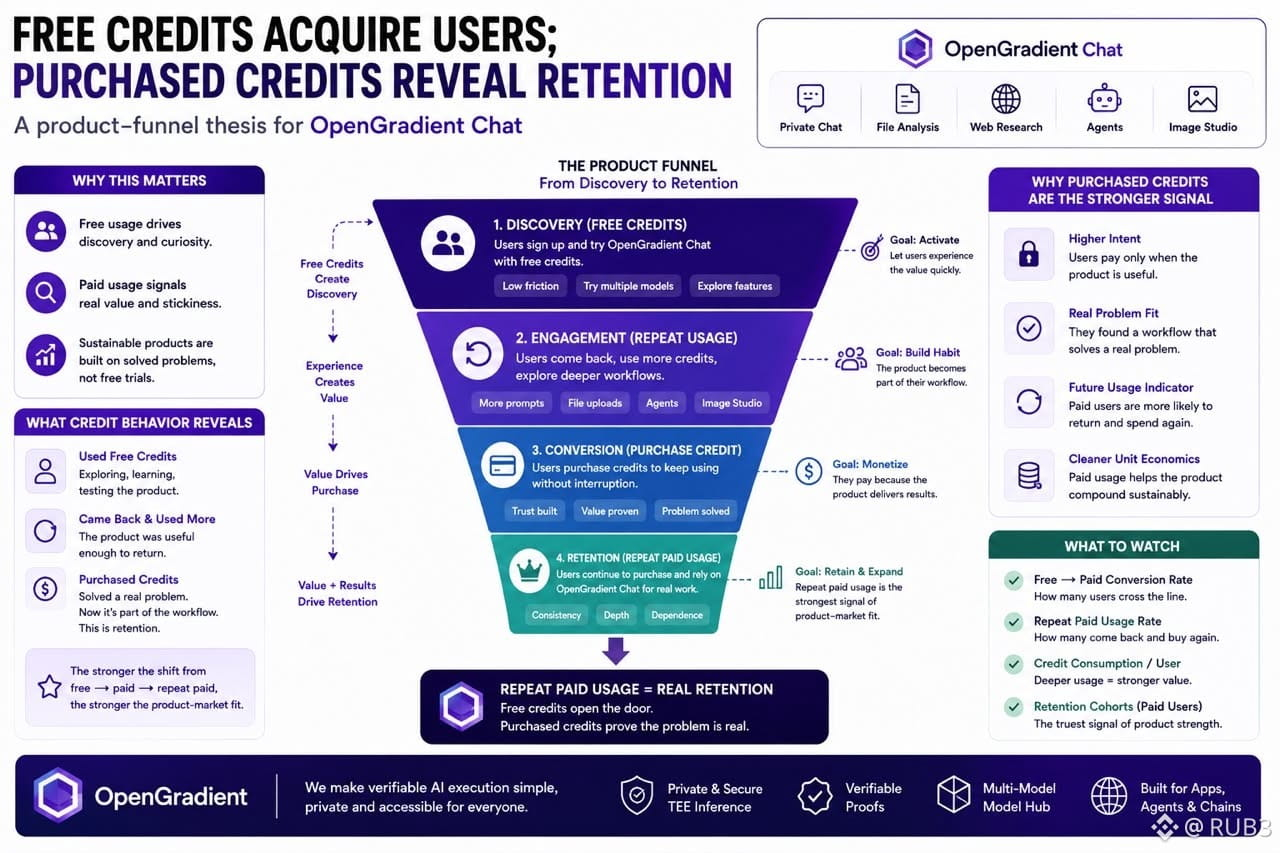
Les crédits gratuits suscitent la curiosité des gens.
Les crédits achetés, c'est là que l'histoire devient plus honnête.
Je pensais à ça en regardant OpenGradient Chat, car l'utilisation gratuite peut donner à n'importe quel produit l'air actif pendant un court moment. Les gens l'essayent, cliquent partout, testent quelques prompts et voient de quoi il s'agit.
C'est la découverte.
Utile, mais pas suffisant.
La question plus intéressante commence après que le solde gratuit s'épuise.
L'utilisateur part-il, ou décide-t-il que le produit a résolu quelque chose de suffisamment réel pour payer la prochaine demande ?
C'est pourquoi les crédits dans chat.opengradient.ai sont plus qu'un simple détail de paiement pour moi. Ils transforment l'utilisation en un signal de produit.
Si quelqu'un achète des crédits pour continuer à utiliser le chat privé, l'analyse de fichiers, la recherche web, le changement de modèle ou l'Image Studio, cela signifie quelque chose de différent d'une visite unique.
Cela signifie que le workflow avait de la valeur au-delà de la campagne.
@OpenGradient permet également d'avoir un entonnoir plus propre, car les utilisateurs peuvent entrer avec peu de friction, comprendre d'abord le produit, et seulement plus tard se convertir en activité payante.
Pour $OPG , je ne regarderais pas seulement les utilisateurs gratuits.
Je surveillerais l'écart entre la curiosité et l'utilisation payante répétée.
Cet écart vous dit si OpenGradient Chat attire juste l'attention ou si les gens commencent à le considérer comme une partie de leur travail réel.
Les crédits gratuits peuvent attirer des utilisateurs.
Les crédits achetés révèlent s'ils ont trouvé une raison de rester.
Les crédits gratuits suscitent la curiosité des gens.
Les crédits achetés, c'est là que l'histoire devient plus honnête.
Je pensais à ça en regardant OpenGradient Chat, car l'utilisation gratuite peut donner à n'importe quel produit l'air actif pendant un court moment. Les gens l'essayent, cliquent partout, testent quelques prompts et voient de quoi il s'agit.
C'est la découverte.
Utile, mais pas suffisant.
La question plus intéressante commence après que le solde gratuit s'épuise.
L'utilisateur part-il, ou décide-t-il que le produit a résolu quelque chose de suffisamment réel pour payer la prochaine demande ?
C'est pourquoi les crédits dans chat.opengradient.ai sont plus qu'un simple détail de paiement pour moi. Ils transforment l'utilisation en un signal de produit.
Si quelqu'un achète des crédits pour continuer à utiliser le chat privé, l'analyse de fichiers, la recherche web, le changement de modèle ou l'Image Studio, cela signifie quelque chose de différent d'une visite unique.
Cela signifie que le workflow avait de la valeur au-delà de la campagne.
@OpenGradient permet également d'avoir un entonnoir plus propre, car les utilisateurs peuvent entrer avec peu de friction, comprendre d'abord le produit, et seulement plus tard se convertir en activité payante.
Pour $OPG , je ne regarderais pas seulement les utilisateurs gratuits.
Je surveillerais l'écart entre la curiosité et l'utilisation payante répétée.
Cet écart vous dit si OpenGradient Chat attire juste l'attention ou si les gens commencent à le considérer comme une partie de leur travail réel.
Les crédits gratuits peuvent attirer des utilisateurs.
Les crédits achetés révèlent s'ils ont trouvé une raison de rester.
#opg $OPG
J’ai failli traiter Image Studio comme un simple fonctionnalité secondaire.
Puis je me suis dit à quelle fréquence le texte ne représente que la moitié du travail.
Un utilisateur peut demander à une IA d’expliquer une idée de campagne, mais tôt ou tard, il lui faut l’affiche.
Un fondateur peut rédiger une histoire produit, mais ensuite il a besoin d’un visuel pour le deck.
Un créateur peut façonner le message, puis il lui faut l’image qui fait s’arrêter le scroll.
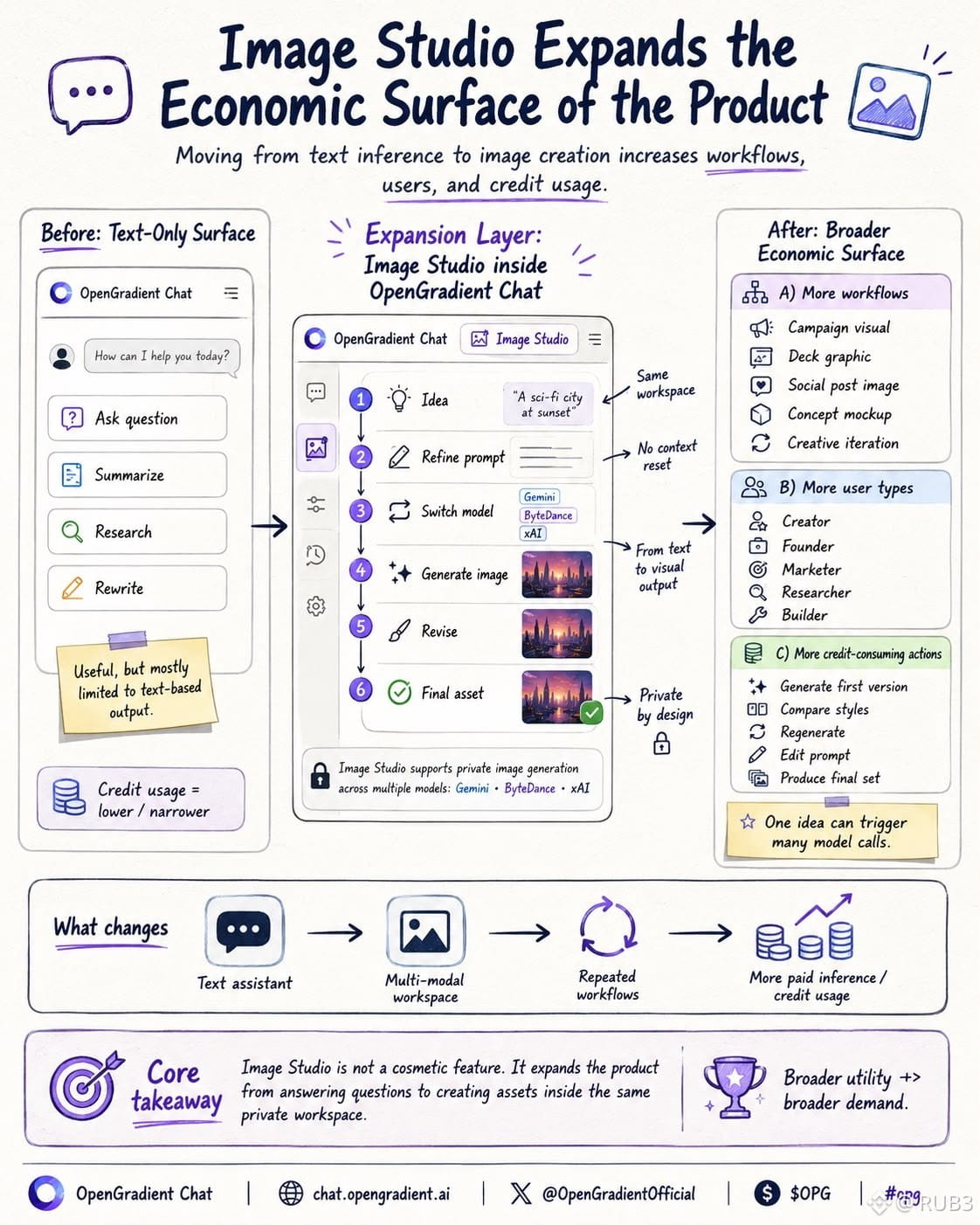
C’est là qu’Image Studio, dans chat.opengradient.ai, devient plus intéressant.
Il étend OpenGradient Chat, qui ne faisait qu’apporter des réponses, vers la production d’assets.
Plus seulement de l’inférence de texte.
Désormais, le même espace de travail privé peut passer de l’idée, au prompt, jusqu’à la génération d’images sur des modèles comme Gemini, ByteDance et xAI. L’utilisateur n’a pas besoin de quitter le produit dès que le travail devient visuel.
Cela modifie la surface économique de @OpenGradient .
Un assistant 100 % texte consomme surtout des crédits lorsque les gens demandent, résument, recherchent ou réécrivent. Dès que la génération d’images entre dans le flux de travail, le même utilisateur peut tester des styles, comparer des sorties, réviser des prompts, régénérer des versions et construire des assets créatifs finaux.
Une seule idée peut donner lieu à de nombreux appels payants au modèle.
Ce n’est pas purement cosmétique.
Ce sont plus de workflows, plus de types d’utilisateurs et plus de raisons de dépenser des crédits dans le produit.
Pour $OPG , je pense que c’est important car une demande utile provient rarement d’un prompt parfait. Elle naît d’essais répétés pendant que l’utilisateur construit quelque chose.
Image Studio rend OpenGradient Chat moins semblable à une boîte à questions et davantage à une surface de production.
La question, maintenant, est simple :
Les utilisateurs vont-ils venir pour le chat privé, mais rester parce que tout le projet peut y être réalisé ?
J’ai failli traiter Image Studio comme un simple fonctionnalité secondaire.
Puis je me suis dit à quelle fréquence le texte ne représente que la moitié du travail.
Un utilisateur peut demander à une IA d’expliquer une idée de campagne, mais tôt ou tard, il lui faut l’affiche.
Un fondateur peut rédiger une histoire produit, mais ensuite il a besoin d’un visuel pour le deck.
Un créateur peut façonner le message, puis il lui faut l’image qui fait s’arrêter le scroll.
C’est là qu’Image Studio, dans chat.opengradient.ai, devient plus intéressant.
Il étend OpenGradient Chat, qui ne faisait qu’apporter des réponses, vers la production d’assets.
Plus seulement de l’inférence de texte.
Désormais, le même espace de travail privé peut passer de l’idée, au prompt, jusqu’à la génération d’images sur des modèles comme Gemini, ByteDance et xAI. L’utilisateur n’a pas besoin de quitter le produit dès que le travail devient visuel.
Cela modifie la surface économique de @OpenGradient .
Un assistant 100 % texte consomme surtout des crédits lorsque les gens demandent, résument, recherchent ou réécrivent. Dès que la génération d’images entre dans le flux de travail, le même utilisateur peut tester des styles, comparer des sorties, réviser des prompts, régénérer des versions et construire des assets créatifs finaux.
Une seule idée peut donner lieu à de nombreux appels payants au modèle.
Ce n’est pas purement cosmétique.
Ce sont plus de workflows, plus de types d’utilisateurs et plus de raisons de dépenser des crédits dans le produit.
Pour $OPG , je pense que c’est important car une demande utile provient rarement d’un prompt parfait. Elle naît d’essais répétés pendant que l’utilisateur construit quelque chose.
Image Studio rend OpenGradient Chat moins semblable à une boîte à questions et davantage à une surface de production.
La question, maintenant, est simple :
Les utilisateurs vont-ils venir pour le chat privé, mais rester parce que tout le projet peut y être réalisé ?
#opg $OPG
Une question étrange m’est venue à l’esprit en lisant au sujet de l’IA vérifiable :
Et si la réponse était réelle, mais que l’invite avait été discrètement modifiée avant que le modèle ne la voie ?
Cela peut sembler anodin jusqu’à ce que vous imaginiez un agent IA approuvant une transaction, vérifiant un document, ou expliquant une décision qui affecte l’argent.
Une réponse d’IA classique m’indique ce qui a été renvoyé.
Elle ne prouve pas toujours quelle question a réellement été traitée.
C’est là que OpenGradient devient plus intéressant qu’un simple produit de chat.
À l’intérieur du chemin d’inférence privé d’OpenGradient, la réponse peut être signée par l’enclave sur trois éléments : le hachage de la requête, le hachage de la sortie, et un horodatage.
Cela signifie que le client ne reçoit pas seulement une réponse.
Il peut vérifier si la réponse est liée à la même invite que celle qui a été envoyée à l’origine, si la sortie a été modifiée, et si la signature provient de l’environnement attesté attendu.
C’est un modèle de confiance très différent.
Au lieu de dire, « Voici le résultat, croyez le serveur », @OpenGradient g donne au système un moyen de dire : « Voici le résultat, et voici une preuve cryptographique de quelle requête l’a produit. »
Je pense que c’est surtout important pour les agents.
Les humains peuvent pardonner une réponse étrange et demander à nouveau. Mais les agents peuvent agir immédiatement. Si l’invite est échangée, l’action peut encore sembler valide de l’extérieur tout en étant fondée sur la mauvaise instruction.
chat.opengradient.ai rend le côté utilisateur simple, mais cette couche de vérification est ce qui rend l’infrastructure sérieuse.
Vous feriez davantage confiance aux agents IA si chaque sortie pouvait prouver quelle invite l’a créée ?
Une question étrange m’est venue à l’esprit en lisant au sujet de l’IA vérifiable :
Et si la réponse était réelle, mais que l’invite avait été discrètement modifiée avant que le modèle ne la voie ?
Cela peut sembler anodin jusqu’à ce que vous imaginiez un agent IA approuvant une transaction, vérifiant un document, ou expliquant une décision qui affecte l’argent.
Une réponse d’IA classique m’indique ce qui a été renvoyé.
Elle ne prouve pas toujours quelle question a réellement été traitée.
C’est là que OpenGradient devient plus intéressant qu’un simple produit de chat.
À l’intérieur du chemin d’inférence privé d’OpenGradient, la réponse peut être signée par l’enclave sur trois éléments : le hachage de la requête, le hachage de la sortie, et un horodatage.
Cela signifie que le client ne reçoit pas seulement une réponse.
Il peut vérifier si la réponse est liée à la même invite que celle qui a été envoyée à l’origine, si la sortie a été modifiée, et si la signature provient de l’environnement attesté attendu.
C’est un modèle de confiance très différent.
Au lieu de dire, « Voici le résultat, croyez le serveur », @OpenGradient g donne au système un moyen de dire : « Voici le résultat, et voici une preuve cryptographique de quelle requête l’a produit. »
Je pense que c’est surtout important pour les agents.
Les humains peuvent pardonner une réponse étrange et demander à nouveau. Mais les agents peuvent agir immédiatement. Si l’invite est échangée, l’action peut encore sembler valide de l’extérieur tout en étant fondée sur la mauvaise instruction.
chat.opengradient.ai rend le côté utilisateur simple, mais cette couche de vérification est ce qui rend l’infrastructure sérieuse.
Vous feriez davantage confiance aux agents IA si chaque sortie pouvait prouver quelle invite l’a créée ?
Yes, hashes matter
100%
No, answer quality is enough
0%
1 Votes • Vote fermé
#opg $OPG
Il y a des questions que je préfère laisser sans réponse plutôt que de les saisir dans une boîte IA « classique ».
Pas parce que le sujet est étrange.
Mais parce que le sujet est trop lié à ma vie.
Un symptôme dont je m’inquiète.
Une erreur fiscale que je ne comprends pas entièrement.
Une situation juridique que je ne suis pas prêt à aborder.
Une décision financière qui me semble embarrassante même avant que quiconque ne juge.
Ce sont précisément des moments où l’IA pourrait m’aider à organiser mes pensées avant de parler à un vrai professionnel.
Mais ce sont aussi les moments où j’hésite le plus.
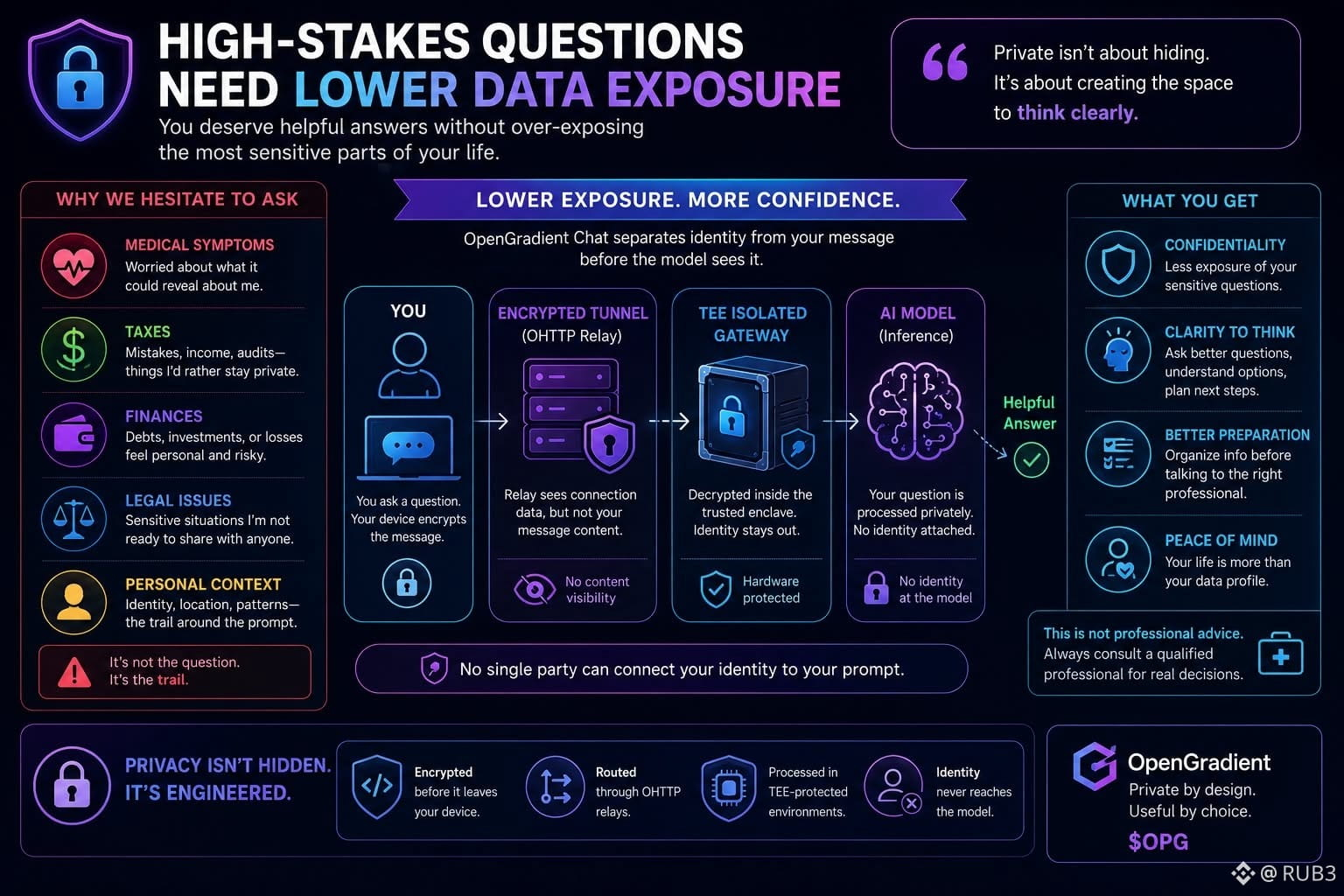
Le problème ne vient pas seulement de l’invite. Il y a tout le « sillage » autour de l’invite : le compte, l’identité, l’appareil, l’historique, le timing, et le schéma de ce que je continue de demander.
C’est pourquoi chat.opengradient.ai m’intéresse.
OpenGradient Chat ne cherche pas à remplacer un médecin, un avocat, un comptable ou un conseiller financier. Je ne le traiterais jamais comme ça.
La valeur est différente.
Cela me donne un espace moins exposé pour préparer de meilleures questions, comprendre quelles informations comptent, et arrêter de paniquer avant de faire le prochain pas réel.
@OpenGradient achemine la demande afin que l’identité et le contenu soient séparés avant que le modèle ne la traite. L’invite est chiffrée, le relais voit des données de connexion sans voir le message, et la passerelle protégée traite la demande sans que mon identité réseau d’origine apparaisse.
Cela change le coût émotionnel de la demande.
Les questions à forts enjeux exigent plus que l’intelligence.
Elles exigent moins d’exposition inutile.
Pour moi, l’IA privée est utile quand elle m’aide à penser clairement sans transformer chaque peur, plan ou erreur en un profil permanent.
Poseriez-vous des questions plus prudentes si le système avait besoin de savoir moins sur la personne qui pose la question ?
Il y a des questions que je préfère laisser sans réponse plutôt que de les saisir dans une boîte IA « classique ».
Pas parce que le sujet est étrange.
Mais parce que le sujet est trop lié à ma vie.
Un symptôme dont je m’inquiète.
Une erreur fiscale que je ne comprends pas entièrement.
Une situation juridique que je ne suis pas prêt à aborder.
Une décision financière qui me semble embarrassante même avant que quiconque ne juge.
Ce sont précisément des moments où l’IA pourrait m’aider à organiser mes pensées avant de parler à un vrai professionnel.
Mais ce sont aussi les moments où j’hésite le plus.
Le problème ne vient pas seulement de l’invite. Il y a tout le « sillage » autour de l’invite : le compte, l’identité, l’appareil, l’historique, le timing, et le schéma de ce que je continue de demander.
C’est pourquoi chat.opengradient.ai m’intéresse.
OpenGradient Chat ne cherche pas à remplacer un médecin, un avocat, un comptable ou un conseiller financier. Je ne le traiterais jamais comme ça.
La valeur est différente.
Cela me donne un espace moins exposé pour préparer de meilleures questions, comprendre quelles informations comptent, et arrêter de paniquer avant de faire le prochain pas réel.
@OpenGradient achemine la demande afin que l’identité et le contenu soient séparés avant que le modèle ne la traite. L’invite est chiffrée, le relais voit des données de connexion sans voir le message, et la passerelle protégée traite la demande sans que mon identité réseau d’origine apparaisse.
Cela change le coût émotionnel de la demande.
Les questions à forts enjeux exigent plus que l’intelligence.
Elles exigent moins d’exposition inutile.
Pour moi, l’IA privée est utile quand elle m’aide à penser clairement sans transformer chaque peur, plan ou erreur en un profil permanent.
Poseriez-vous des questions plus prudentes si le système avait besoin de savoir moins sur la personne qui pose la question ?
#opg $OPG
Je jugeais l’IA vérifiable avec une règle paresseuse :
La preuve la plus forte doit être la meilleure preuve.
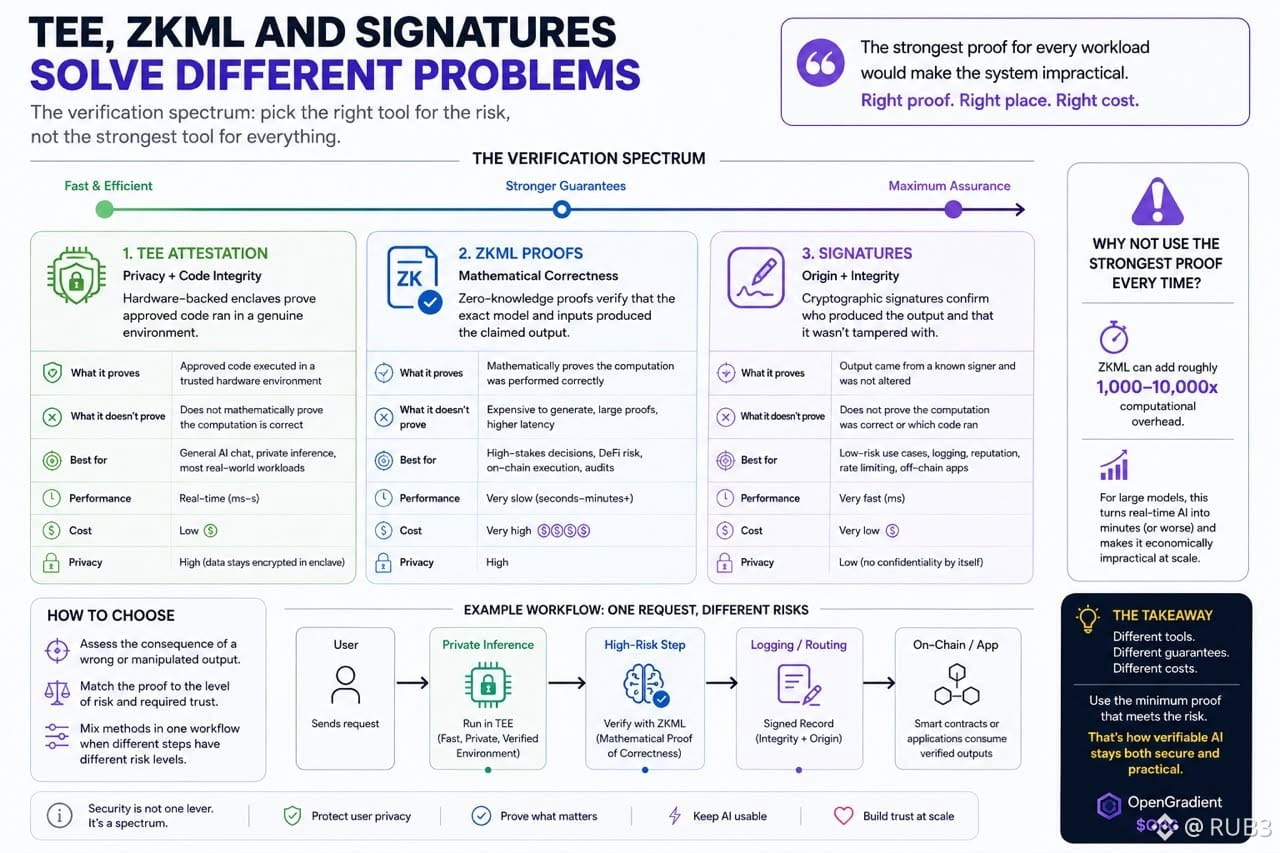
Puis j’ai observé comment @OpenGradient gère différents types de charge, et je me suis rendu compte que cette règle rendrait l’IA presque inutilisable.
Une conversation normale sur chat.opengradient.ai nécessite de la confidentialité, une preuve que le code approuvé a bien traité la requête, et une réponse assez rapide pour donner l’impression de discuter comme sur du chat. Un TEE convient à ce travail, car il fournit une attestation adossée au matériel sans forcer l’utilisateur à attendre une génération de preuve lourde.
ZKML résout un problème plus difficile.
Il peut prouver mathématiquement qu’un modèle donné a produit un résultat donné. Ce niveau de certitude est logique lorsque la sortie d’un ML pourrait déclencher une liquidation, déplacer des fonds ou modifier une décision on-chain.
Mais générer cette preuve peut coûter des milliers de fois plus en calcul.
Mettre ZKML derrière chaque phrase d’un LLM et l’assistant « sécurisé » devient une salle d’attente coûteuse.
Il y a aussi les signatures. Elles peuvent montrer quel nœud a renvoyé une sortie et si elle a été modifiée, mais elles ne prouvent pas que l’exécution elle-même était correcte. Cela peut néanmoins suffire pour des expériences ou des tâches à faible risque.
Ce qui m’a fait « cliquer », c’est que ce ne sont pas des versions plus fortes et plus faibles du même outil.
Ils protègent contre des défaillances différentes.
Le point fort d’OpenGradient est de permettre à la vérification de correspondre à la conséquence de la réponse — même lorsque l’on mélange des méthodes, quand un workflow contient différents niveaux de risque.
La question n’est pas : « Pourquoi n’utilise-t-on pas tout la preuve la plus forte ? »
C’est : « Qu’est-ce qui serait réellement perdu si cette réponse précise était fausse ? »
Pour moi, c’est une base bien plus pratique pour $OPG .
Je jugeais l’IA vérifiable avec une règle paresseuse :
La preuve la plus forte doit être la meilleure preuve.
Puis j’ai observé comment @OpenGradient gère différents types de charge, et je me suis rendu compte que cette règle rendrait l’IA presque inutilisable.
Une conversation normale sur chat.opengradient.ai nécessite de la confidentialité, une preuve que le code approuvé a bien traité la requête, et une réponse assez rapide pour donner l’impression de discuter comme sur du chat. Un TEE convient à ce travail, car il fournit une attestation adossée au matériel sans forcer l’utilisateur à attendre une génération de preuve lourde.
ZKML résout un problème plus difficile.
Il peut prouver mathématiquement qu’un modèle donné a produit un résultat donné. Ce niveau de certitude est logique lorsque la sortie d’un ML pourrait déclencher une liquidation, déplacer des fonds ou modifier une décision on-chain.
Mais générer cette preuve peut coûter des milliers de fois plus en calcul.
Mettre ZKML derrière chaque phrase d’un LLM et l’assistant « sécurisé » devient une salle d’attente coûteuse.
Il y a aussi les signatures. Elles peuvent montrer quel nœud a renvoyé une sortie et si elle a été modifiée, mais elles ne prouvent pas que l’exécution elle-même était correcte. Cela peut néanmoins suffire pour des expériences ou des tâches à faible risque.
Ce qui m’a fait « cliquer », c’est que ce ne sont pas des versions plus fortes et plus faibles du même outil.
Ils protègent contre des défaillances différentes.
Le point fort d’OpenGradient est de permettre à la vérification de correspondre à la conséquence de la réponse — même lorsque l’on mélange des méthodes, quand un workflow contient différents niveaux de risque.
La question n’est pas : « Pourquoi n’utilise-t-on pas tout la preuve la plus forte ? »
C’est : « Qu’est-ce qui serait réellement perdu si cette réponse précise était fausse ? »
Pour moi, c’est une base bien plus pratique pour $OPG .
#opg $OPG
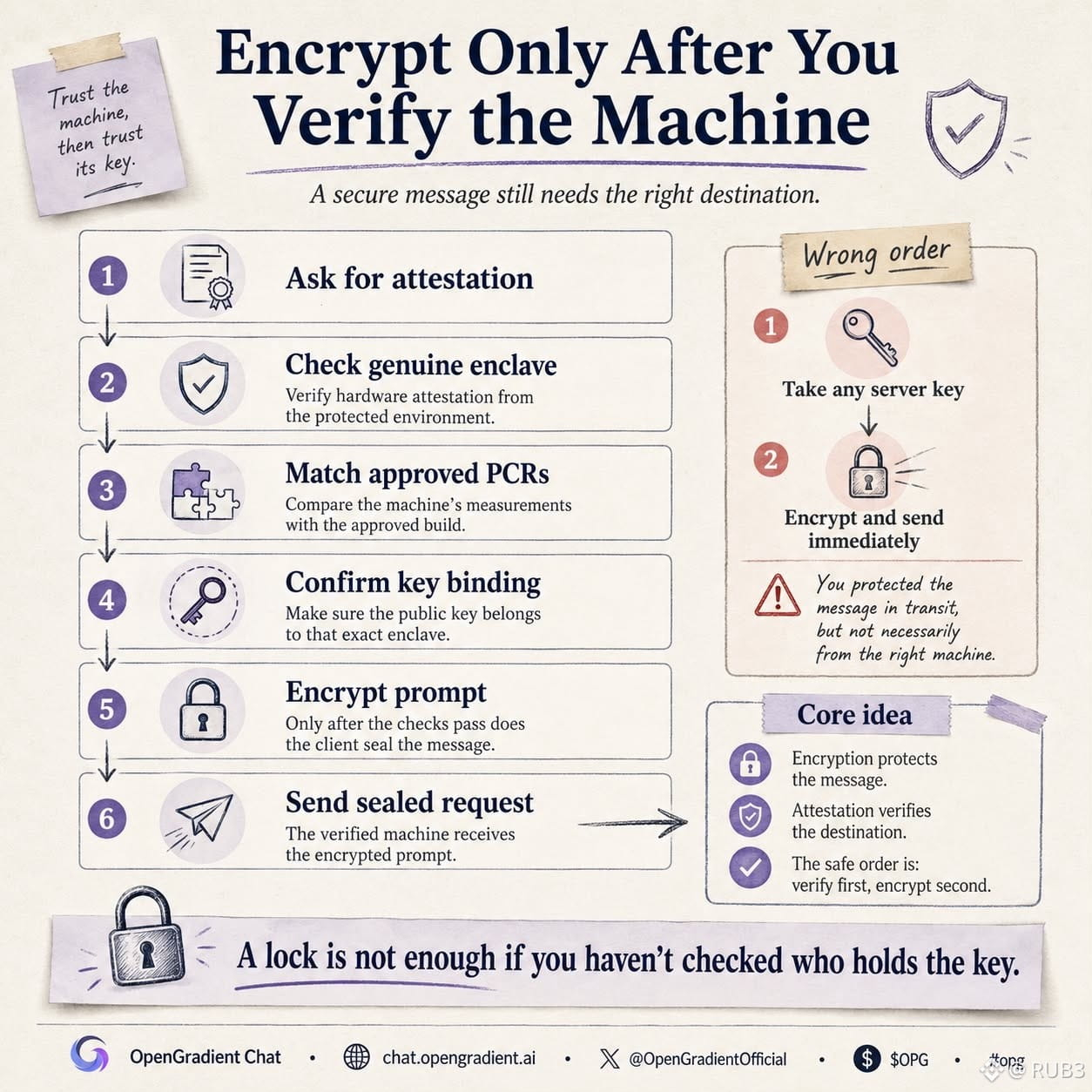
Le chiffrement semblait complet pour moi jusqu'à ce que je pose une question légèrement inconfortable :
Chiffré pour qui ?
Un message peut être parfaitement scellé et pourtant être livré à la mauvaise machine. Si j'accepte n'importe quelle clé publique qu'un serveur me donne, je protège le prompt en transit sans prouver qui peut l'ouvrir.
C'est le détail que j'ai failli négliger dans OpenGradient Chat.
Avant que chat.opengradient.ai ne chiffre une demande privée, le client vérifie d'abord l'enclave.
Il vérifie que l'attestation matérielle provient d'une véritable infrastructure AWS Nitro. Il compare les mesures PCR de la machine avec la version approuvée enregistrée dans le registre TEE d'OpenGradient. Il confirme également que la clé de chiffrement a été créée à l'intérieur de cette enclave exacte plutôt que d'être discrètement substituée à l'extérieur.
Ce n'est qu'après que ces vérifications passent que le prompt est scellé.
L'ordre a changé ma façon de penser à "chiffrement de bout en bout".
Le chiffrement seul dit que les personnes extérieures ne peuvent pas lire le message.
L'attestation pose la question de savoir si le récepteur prévu exécute réellement le logiciel qu'il prétend exécuter.
Cette deuxième question est importante car une connexion sécurisée à un code modifié reste une connexion sécurisée à un code modifié.
@OpenGradient fait en sorte que le client vérifie la destination avant de faire confiance au verrou. Le SDK gère les vérifications difficiles discrètement, mais l'utilisateur bénéficie du résultat : une version non approuvée ne devrait pas recevoir le prompt sensible du tout.
Pour moi, c'est plus fort qu'une autre icône de verrou.
Préféreriez-vous faire confiance au chiffrement tout seul, ou faire vérifier votre appareil par la machine avant d'envoyer quoi que ce soit ?
C'est le genre d'infrastructure cachée qui donne $OPG un véritable contexte produit.
Le chiffrement semblait complet pour moi jusqu'à ce que je pose une question légèrement inconfortable :
Chiffré pour qui ?
Un message peut être parfaitement scellé et pourtant être livré à la mauvaise machine. Si j'accepte n'importe quelle clé publique qu'un serveur me donne, je protège le prompt en transit sans prouver qui peut l'ouvrir.
C'est le détail que j'ai failli négliger dans OpenGradient Chat.
Avant que chat.opengradient.ai ne chiffre une demande privée, le client vérifie d'abord l'enclave.
Il vérifie que l'attestation matérielle provient d'une véritable infrastructure AWS Nitro. Il compare les mesures PCR de la machine avec la version approuvée enregistrée dans le registre TEE d'OpenGradient. Il confirme également que la clé de chiffrement a été créée à l'intérieur de cette enclave exacte plutôt que d'être discrètement substituée à l'extérieur.
Ce n'est qu'après que ces vérifications passent que le prompt est scellé.
L'ordre a changé ma façon de penser à "chiffrement de bout en bout".
Le chiffrement seul dit que les personnes extérieures ne peuvent pas lire le message.
L'attestation pose la question de savoir si le récepteur prévu exécute réellement le logiciel qu'il prétend exécuter.
Cette deuxième question est importante car une connexion sécurisée à un code modifié reste une connexion sécurisée à un code modifié.
@OpenGradient fait en sorte que le client vérifie la destination avant de faire confiance au verrou. Le SDK gère les vérifications difficiles discrètement, mais l'utilisateur bénéficie du résultat : une version non approuvée ne devrait pas recevoir le prompt sensible du tout.
Pour moi, c'est plus fort qu'une autre icône de verrou.
Préféreriez-vous faire confiance au chiffrement tout seul, ou faire vérifier votre appareil par la machine avant d'envoyer quoi que ce soit ?
C'est le genre d'infrastructure cachée qui donne $OPG un véritable contexte produit.
#opg $OPG
Je pensais que l'icône de verrouillage marquait la fin de l'histoire de la vie privée.
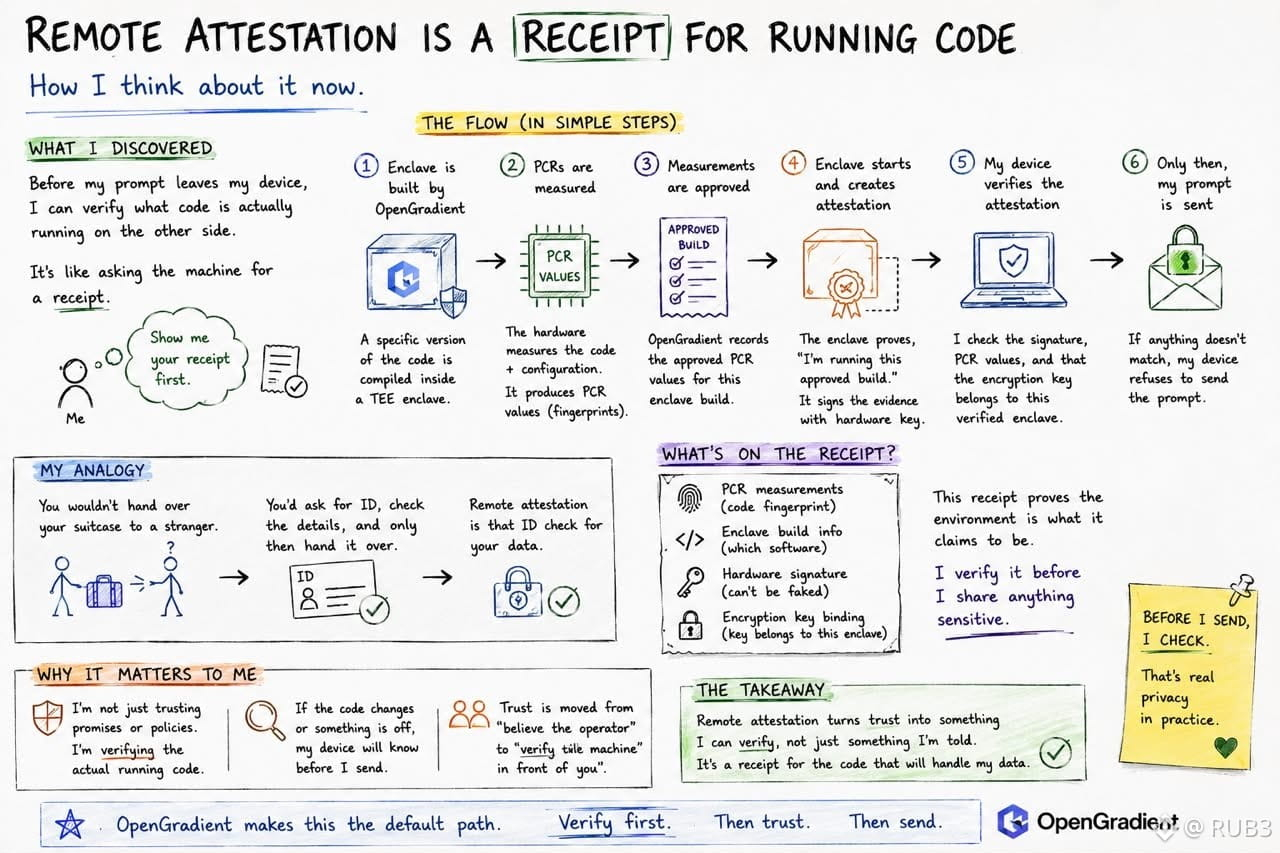
Puis j'ai remarqué quelque chose dans le design d'OpenGradient qui semblait plus important : le système vérifie quel code est exécuté avant que ma demande soit chiffrée et envoyée.
C'est ça que l'attestation à distance signifie enfin pour moi.
Pas un autre badge. Plutôt comme demander à la machine un reçu avant de lui donner quoi que ce soit de sensible.
Lorsqu'un enclave OpenGradient approuvé est construit, son logiciel laisse des empreintes mesurables appelées valeurs PCR. Ces empreintes sont enregistrées comme approuvées. Lorsque l'enclave démarre, elle produit des preuves signées par le matériel montrant quelle version est effectivement en cours d'exécution et quelle clé de chiffrement lui appartient.
Le client vérifie d'abord cette preuve.
Si les mesures ne correspondent pas à la version approuvée, la clé ne doit pas être fiable et la demande ne doit pas être envoyée.
J'aime cet ordre.
La plupart des plateformes me demandent de partager les données d'abord, puis de faire confiance à leur explication de ce qui se passe derrière l'écran. Sur chat.opengradient.ai, la vérification est censée se faire avant que la partie sensible ne quitte mon appareil.
@OpenGradient ne dit pas seulement qu'un environnement protégé existe. Le client peut vérifier que le logiciel attendu est effectivement à l'intérieur.
Cela ne fait pas disparaître tous les risques. Je resterais prudent avec des informations réellement sensibles.
Mais cela change la confiance de “croire l'opérateur” à “vérifier la machine en cours d'exécution.”
Ferez-vous plus confiance à l'IA privée si votre appareil pouvait refuser d'envoyer la demande lorsque le code ne correspondait pas ?
Cela ressemble à une infrastructure significative derrière $OPG .
Je pensais que l'icône de verrouillage marquait la fin de l'histoire de la vie privée.
Puis j'ai remarqué quelque chose dans le design d'OpenGradient qui semblait plus important : le système vérifie quel code est exécuté avant que ma demande soit chiffrée et envoyée.
C'est ça que l'attestation à distance signifie enfin pour moi.
Pas un autre badge. Plutôt comme demander à la machine un reçu avant de lui donner quoi que ce soit de sensible.
Lorsqu'un enclave OpenGradient approuvé est construit, son logiciel laisse des empreintes mesurables appelées valeurs PCR. Ces empreintes sont enregistrées comme approuvées. Lorsque l'enclave démarre, elle produit des preuves signées par le matériel montrant quelle version est effectivement en cours d'exécution et quelle clé de chiffrement lui appartient.
Le client vérifie d'abord cette preuve.
Si les mesures ne correspondent pas à la version approuvée, la clé ne doit pas être fiable et la demande ne doit pas être envoyée.
J'aime cet ordre.
La plupart des plateformes me demandent de partager les données d'abord, puis de faire confiance à leur explication de ce qui se passe derrière l'écran. Sur chat.opengradient.ai, la vérification est censée se faire avant que la partie sensible ne quitte mon appareil.
@OpenGradient ne dit pas seulement qu'un environnement protégé existe. Le client peut vérifier que le logiciel attendu est effectivement à l'intérieur.
Cela ne fait pas disparaître tous les risques. Je resterais prudent avec des informations réellement sensibles.
Mais cela change la confiance de “croire l'opérateur” à “vérifier la machine en cours d'exécution.”
Ferez-vous plus confiance à l'IA privée si votre appareil pouvait refuser d'envoyer la demande lorsque le code ne correspondait pas ?
Cela ressemble à une infrastructure significative derrière $OPG .
#opg $OPG
J’ai cessé de considérer $OPG comme un token pendant un instant et j’ai suivi plutôt une requête d’IA.
Cela a rendu son rôle beaucoup plus clair.
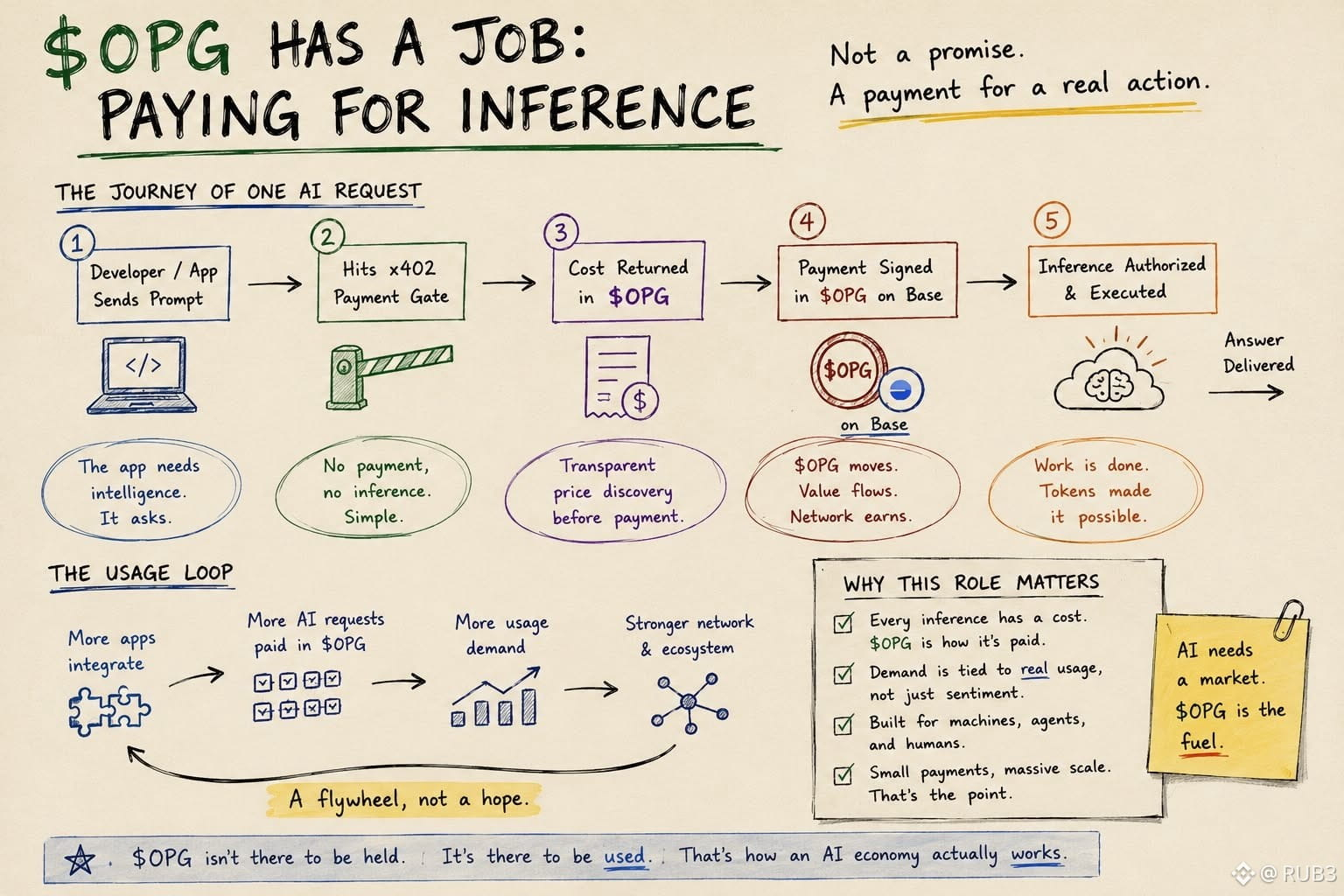
Un développeur envoie une requête via OpenGradient. La demande passe une barrière de paiement x402. Le coût est renvoyé, le paiement est signé dans OPG sur Base, et ce n’est qu’ensuite que l’inférence est autorisée.
Le token n’attend pas tranquillement l’espace d’un vote de gouvernance occasionnel.
Il paie pour un travail.
Cette distinction compte parce que l’usage de l’IA est, par nature, répétitif. Une personne peut poser dix questions. Une application peut effectuer des milliers d’appels à un modèle. Un agent autonome pourrait continuer à acheter de l’inférence chaque fois qu’il a besoin de raisonner, de vérifier quelque chose ou de décider de sa prochaine action.
Chaque requête est petite.
Ensemble, elles forment une économie.
C’est la première fois que la thèse d’OPG m’a semblé concrète. La demande n’a pas besoin de commencer avec quelqu’un qui achète le token parce qu’il croit à un récit. Elle peut commencer avec un logiciel qui a besoin d’une réponse et qui paie pour le calcul nécessaire pour la produire.
L’unité à surveiller ne correspond peut-être pas au nombre de détenteurs.
Il pourrait s’agir du nombre d’inférences payées qui circulent dans @OpenGradient
chat.opengradient.ai donne aux utilisateurs ordinaires un accès au produit, tandis que x402 donne aux applications un moyen de payer pour l’intelligence sans s’arrêter aux abonnements, aux factures ou à une approbation manuelle à chaque fois.
C’est un travail beaucoup plus propre pour un token.
La question plus difficile, maintenant, est de savoir si OpenGradient peut transformer cette boucle de paiement en une utilisation récurrente suffisante pour que la demande fonctionnelle devienne visible à l’échelle du réseau.
J’ai cessé de considérer $OPG comme un token pendant un instant et j’ai suivi plutôt une requête d’IA.
Cela a rendu son rôle beaucoup plus clair.
Un développeur envoie une requête via OpenGradient. La demande passe une barrière de paiement x402. Le coût est renvoyé, le paiement est signé dans OPG sur Base, et ce n’est qu’ensuite que l’inférence est autorisée.
Le token n’attend pas tranquillement l’espace d’un vote de gouvernance occasionnel.
Il paie pour un travail.
Cette distinction compte parce que l’usage de l’IA est, par nature, répétitif. Une personne peut poser dix questions. Une application peut effectuer des milliers d’appels à un modèle. Un agent autonome pourrait continuer à acheter de l’inférence chaque fois qu’il a besoin de raisonner, de vérifier quelque chose ou de décider de sa prochaine action.
Chaque requête est petite.
Ensemble, elles forment une économie.
C’est la première fois que la thèse d’OPG m’a semblé concrète. La demande n’a pas besoin de commencer avec quelqu’un qui achète le token parce qu’il croit à un récit. Elle peut commencer avec un logiciel qui a besoin d’une réponse et qui paie pour le calcul nécessaire pour la produire.
L’unité à surveiller ne correspond peut-être pas au nombre de détenteurs.
Il pourrait s’agir du nombre d’inférences payées qui circulent dans @OpenGradient
chat.opengradient.ai donne aux utilisateurs ordinaires un accès au produit, tandis que x402 donne aux applications un moyen de payer pour l’intelligence sans s’arrêter aux abonnements, aux factures ou à une approbation manuelle à chaque fois.
C’est un travail beaucoup plus propre pour un token.
La question plus difficile, maintenant, est de savoir si OpenGradient peut transformer cette boucle de paiement en une utilisation récurrente suffisante pour que la demande fonctionnelle devienne visible à l’échelle du réseau.
#opg $OPG
J'avais l'habitude de supprimer des conversations sensibles avec l'IA et je me sentais soulagé quand le fil disparaissait.
Récemment, j'ai réalisé que je traitais un écran vide comme une preuve de confidentialité.
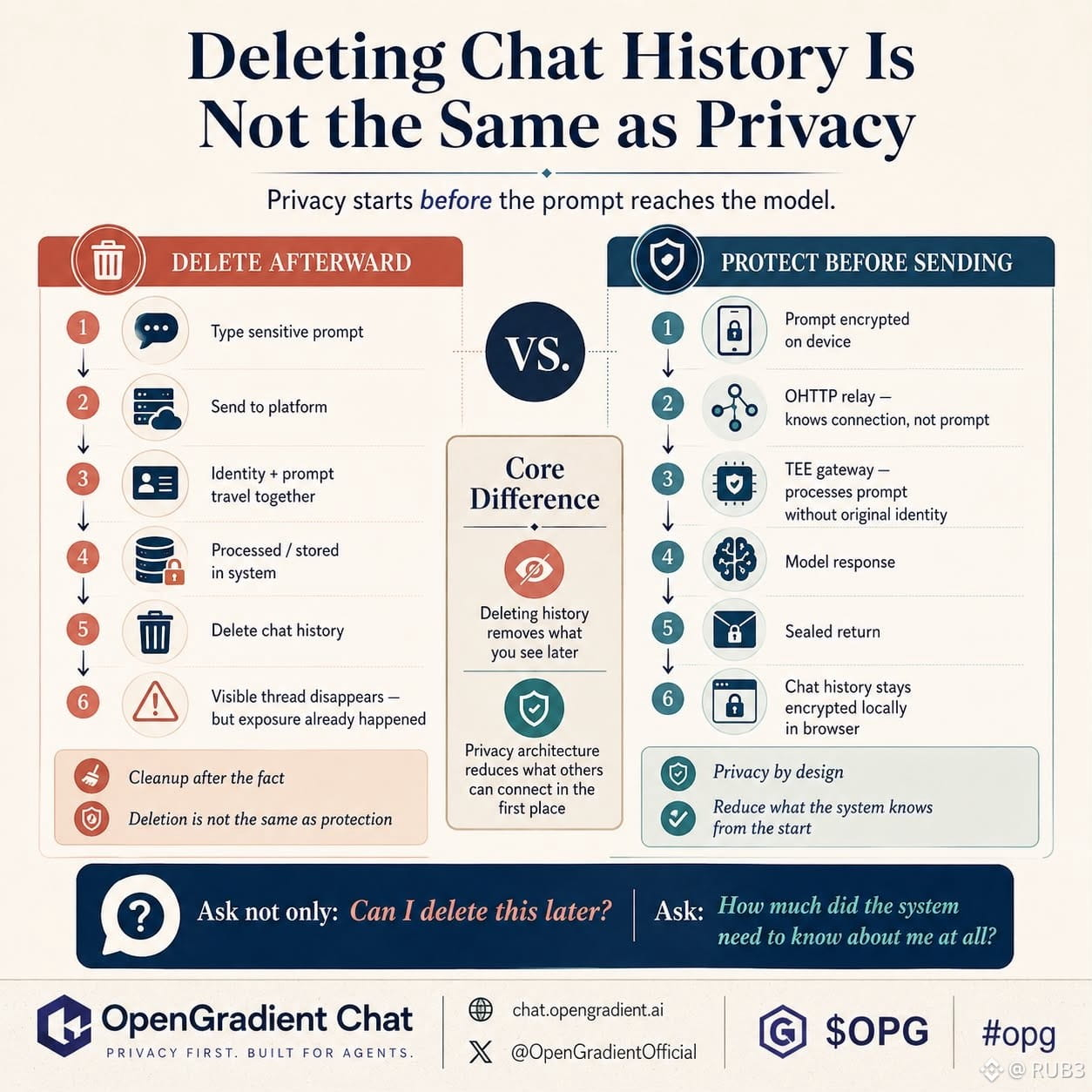
Mais supprimer un chat se fait à la fin.
Le prompt a déjà quitté mon appareil. Il a déjà traversé le système de quelqu'un d'autre, connecté à n'importe quel compte ou information réseau qui l'accompagnait. Retirer la conversation visible plus tard ne change pas la façon dont elle est arrivée là.
C'est pourquoi le design derrière OpenGradient Chat a attiré mon attention.
Sur chat.opengradient.ai, la confidentialité commence avant que je n'appuie sur envoyer.
Le prompt est crypté sur mon appareil. Un relais OHTTP sépare mon identité réseau du message, puis une passerelle TEE protégée gère la demande sans recevoir les deux morceaux ensemble.
Mon historique reste également scellé dans mon navigateur au lieu de devenir une autre archive liée à un compte ailleurs.
Cela a changé la question pour moi.
Je ne demande plus seulement : "Puis-je supprimer cela après ?"
Je demande : "Combien le système devait-il savoir sur moi au départ ?"
Cela ressemble à un test de confidentialité plus honnête.
@OpenGradient protège la conversation pendant qu'elle est en cours de création, et non pas en offrant un bouton de nettoyage après que la partie sensible ait déjà voyagé.
Supprimer l'historique peut enlever ce que je vois.
Une bonne architecture réduit ce que les autres pouvaient connecter dès le début.
Vous sentiriez-vous plus en sécurité parce qu'une conversation peut être supprimée, ou parce que votre identité n'a jamais été attachée au prompt en premier lieu ?
J'avais l'habitude de supprimer des conversations sensibles avec l'IA et je me sentais soulagé quand le fil disparaissait.
Récemment, j'ai réalisé que je traitais un écran vide comme une preuve de confidentialité.
Mais supprimer un chat se fait à la fin.
Le prompt a déjà quitté mon appareil. Il a déjà traversé le système de quelqu'un d'autre, connecté à n'importe quel compte ou information réseau qui l'accompagnait. Retirer la conversation visible plus tard ne change pas la façon dont elle est arrivée là.
C'est pourquoi le design derrière OpenGradient Chat a attiré mon attention.
Sur chat.opengradient.ai, la confidentialité commence avant que je n'appuie sur envoyer.
Le prompt est crypté sur mon appareil. Un relais OHTTP sépare mon identité réseau du message, puis une passerelle TEE protégée gère la demande sans recevoir les deux morceaux ensemble.
Mon historique reste également scellé dans mon navigateur au lieu de devenir une autre archive liée à un compte ailleurs.
Cela a changé la question pour moi.
Je ne demande plus seulement : "Puis-je supprimer cela après ?"
Je demande : "Combien le système devait-il savoir sur moi au départ ?"
Cela ressemble à un test de confidentialité plus honnête.
@OpenGradient protège la conversation pendant qu'elle est en cours de création, et non pas en offrant un bouton de nettoyage après que la partie sensible ait déjà voyagé.
Supprimer l'historique peut enlever ce que je vois.
Une bonne architecture réduit ce que les autres pouvaient connecter dès le début.
Vous sentiriez-vous plus en sécurité parce qu'une conversation peut être supprimée, ou parce que votre identité n'a jamais été attachée au prompt en premier lieu ?
#opg $OPG
J'ai pris du temps pour lire sur les nœuds d'OpenGradient, les attestations et l'architecture d'inférence privée.
Technologie intéressante, mais ensuite j'ai eu une pensée plus simple :
La plupart des gens ne liront jamais tout ça.
Ils ouvriront chat.opengradient.ai parce qu'ils ont besoin d'une réponse, veulent comparer des modèles, rechercher quelque chose ou créer une image. Si le produit fonctionne bien, ils reviendront. Ce n'est que plus tard qu'ils pourraient devenir curieux de ce qui se passe derrière l'écran.
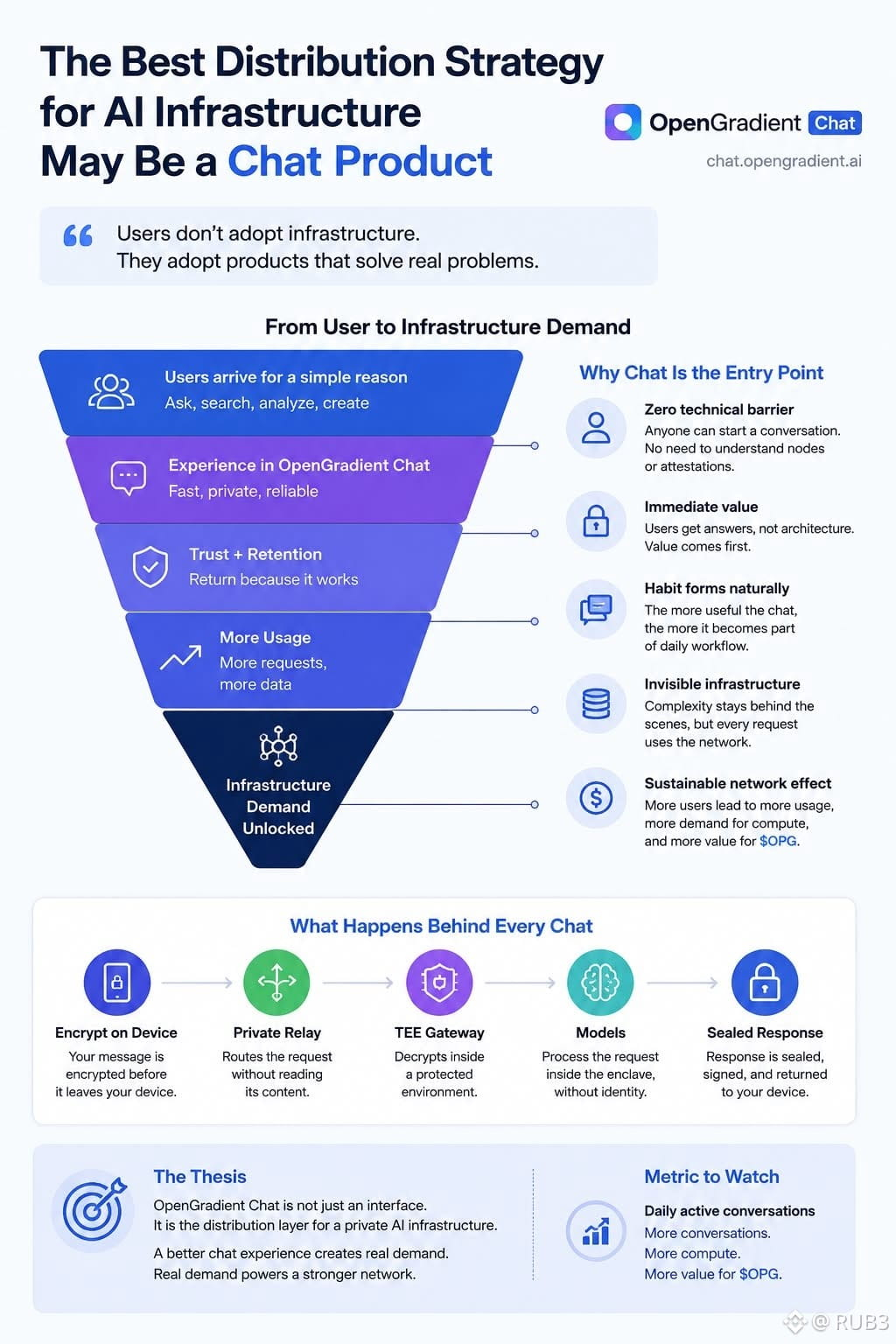
C'est peut-être le véritable avantage de distribution du Chat OpenGradient.
@OpenGradient n'a pas besoin que chaque utilisateur comprenne d'abord l'infrastructure. Le chat offre aux gens un point de départ familier pendant que le système technique gère tranquillement le travail difficile en coulisses.
Je pense que de nombreux projets d'infrastructure se trompent dans cet ordre.
Ils expliquent le réseau, l'architecture et le token avant de donner aux utilisateurs ordinaires une raison de s'y intéresser.
Le Chat OpenGradient inverse cela.
D'abord, l'utilisateur obtient quelque chose d'utile.
Ensuite, des conversations répétées créent une véritable demande pour l'infrastructure qui les alimente.
C'est pourquoi je considère le Chat comme plus qu'une simple interface. Il pourrait devenir l'endroit où les gens découvrent OpenGradient sans jamais chercher une infrastructure d'IA décentralisée.
La métrique que je surveillerais n'est pas combien de personnes lisent la documentation technique.
C'est combien de personnes utilisent le chat, reviennent le lendemain et finissent par décider que le produit est suffisamment utile pour acheter plus de crédits.
C'est là que la véritable demande pour $OPG peut commencer.
J'ai pris du temps pour lire sur les nœuds d'OpenGradient, les attestations et l'architecture d'inférence privée.
Technologie intéressante, mais ensuite j'ai eu une pensée plus simple :
La plupart des gens ne liront jamais tout ça.
Ils ouvriront chat.opengradient.ai parce qu'ils ont besoin d'une réponse, veulent comparer des modèles, rechercher quelque chose ou créer une image. Si le produit fonctionne bien, ils reviendront. Ce n'est que plus tard qu'ils pourraient devenir curieux de ce qui se passe derrière l'écran.
C'est peut-être le véritable avantage de distribution du Chat OpenGradient.
@OpenGradient n'a pas besoin que chaque utilisateur comprenne d'abord l'infrastructure. Le chat offre aux gens un point de départ familier pendant que le système technique gère tranquillement le travail difficile en coulisses.
Je pense que de nombreux projets d'infrastructure se trompent dans cet ordre.
Ils expliquent le réseau, l'architecture et le token avant de donner aux utilisateurs ordinaires une raison de s'y intéresser.
Le Chat OpenGradient inverse cela.
D'abord, l'utilisateur obtient quelque chose d'utile.
Ensuite, des conversations répétées créent une véritable demande pour l'infrastructure qui les alimente.
C'est pourquoi je considère le Chat comme plus qu'une simple interface. Il pourrait devenir l'endroit où les gens découvrent OpenGradient sans jamais chercher une infrastructure d'IA décentralisée.
La métrique que je surveillerais n'est pas combien de personnes lisent la documentation technique.
C'est combien de personnes utilisent le chat, reviennent le lendemain et finissent par décider que le produit est suffisamment utile pour acheter plus de crédits.
C'est là que la véritable demande pour $OPG peut commencer.
#bedrock $BR
Je pensais que la sécurité des protocoles s'arrêtait au contrat. Les audits passent, les réserves correspondent, le minting reste contrôlé & la logique du pont tient.
Puis l'utilisateur signe une transaction illisible et soudain, l'architecture la plus sûre au monde dépend d'une supposition.
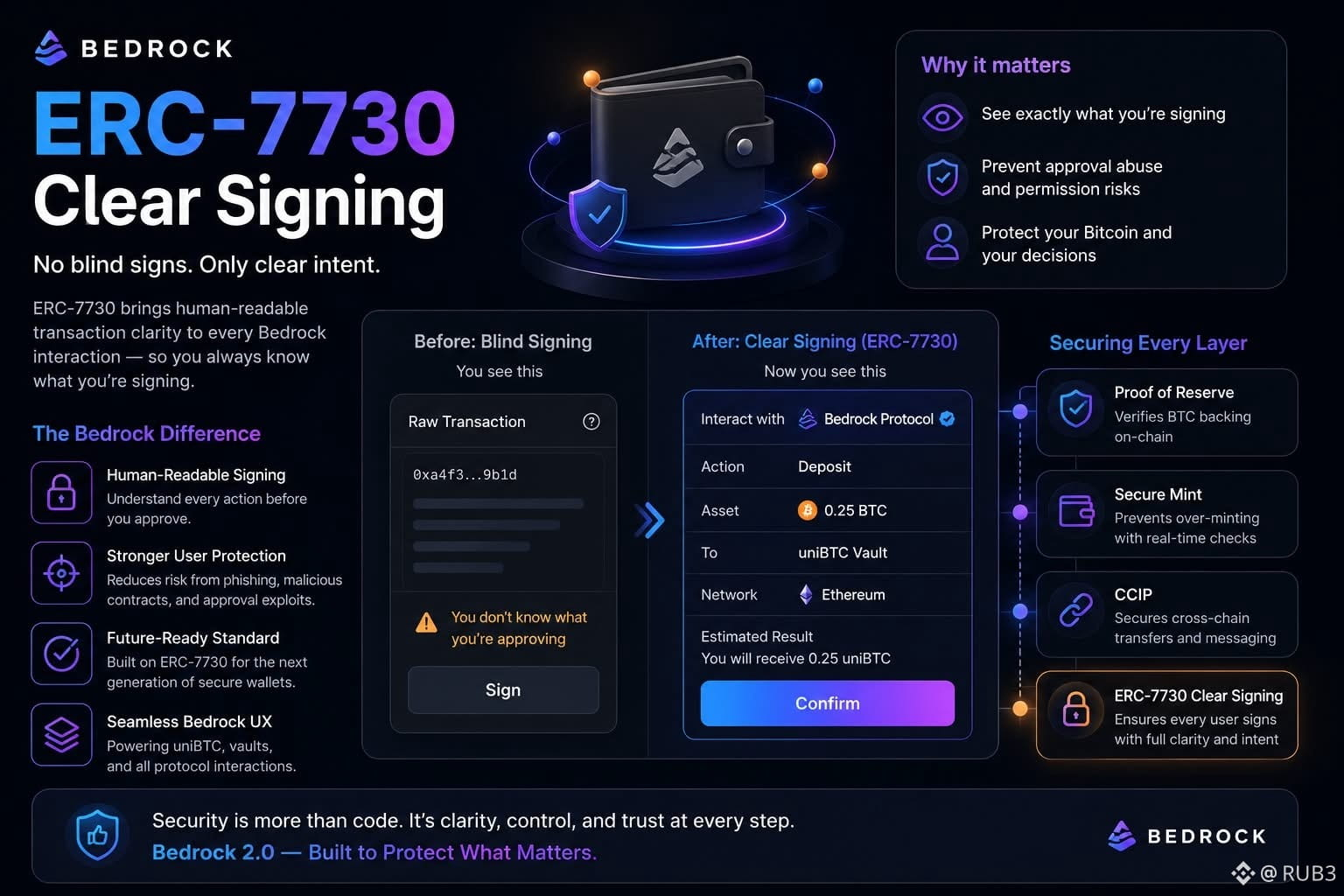
C'est ce qui m'a fait comprendre ERC-7730 à l'intérieur de @Bedrock
il protège une partie complètement différente du système.
Pas la réserve.
Pas le coffre.
Pas le pont.
Le moment du consentement.
Car quand un wallet montre des calldata bruts, l'utilisateur n'approuve pas vraiment une action qu'il comprend.
Il approuve une interprétation.
C'est probablement la transaction Bedrock que je voulais faire.
Cette approbation est probablement limitée.
Ce contrat fait probablement ce que l'interface dit.
Probablement.
Ce mot porte trop de Bitcoin.
ERC-7730 change la surface de signature en donnant aux wallets compatibles des métadonnées structurées pour les appels de contrat Bedrock.
La machine reçoit toujours des calldata.
Mais la personne voit l'intention.
Quelle fonction est appelée.
Quel actif est en mouvement.
Quelle permission est accordée.
À quel protocole appartient l'interaction.
Cela semble petit jusqu'à ce que vous remarquiez où cela se situe dans l'architecture.
Chainlink Proof of Reserve, Secure Mint, CCIP, aucun d'eux ne peut dire à un utilisateur que la transaction devant eux n'est pas la transaction qu'ils pensaient signer.
ERC-7730 comble ce fossé humain.
Peut-être que c'est la manière plus fraîche de lire la pile de sécurité de Bedrock.
Une couche protège l'actif.
Une autre protège l'émission.
Une autre protège le mouvement.
Celle-ci protège la signification.
Car une transaction peut être techniquement valide et pourtant complètement erronée pour la personne qui l'approuve.
Bedrock veut que uniBTC circule à travers plus de coffres, plus de stratégies & plus de chaînes.
Cette expansion crée plus d'interactions contractuelles, pas moins.
Donc une signature claire n'est pas seulement une meilleure UX de wallet.
C'est le point où l'infrastructure de Bedrock devient enfin lisible pour l'auteur humain qui l'autorise.
Pas de confiance aveugle.
Pas de signature blanche.
Le système devrait savoir ce qu'il fait.
L'utilisateur aussi.
Je pensais que la sécurité des protocoles s'arrêtait au contrat. Les audits passent, les réserves correspondent, le minting reste contrôlé & la logique du pont tient.
Puis l'utilisateur signe une transaction illisible et soudain, l'architecture la plus sûre au monde dépend d'une supposition.
C'est ce qui m'a fait comprendre ERC-7730 à l'intérieur de @Bedrock
il protège une partie complètement différente du système.
Pas la réserve.
Pas le coffre.
Pas le pont.
Le moment du consentement.
Car quand un wallet montre des calldata bruts, l'utilisateur n'approuve pas vraiment une action qu'il comprend.
Il approuve une interprétation.
C'est probablement la transaction Bedrock que je voulais faire.
Cette approbation est probablement limitée.
Ce contrat fait probablement ce que l'interface dit.
Probablement.
Ce mot porte trop de Bitcoin.
ERC-7730 change la surface de signature en donnant aux wallets compatibles des métadonnées structurées pour les appels de contrat Bedrock.
La machine reçoit toujours des calldata.
Mais la personne voit l'intention.
Quelle fonction est appelée.
Quel actif est en mouvement.
Quelle permission est accordée.
À quel protocole appartient l'interaction.
Cela semble petit jusqu'à ce que vous remarquiez où cela se situe dans l'architecture.
Chainlink Proof of Reserve, Secure Mint, CCIP, aucun d'eux ne peut dire à un utilisateur que la transaction devant eux n'est pas la transaction qu'ils pensaient signer.
ERC-7730 comble ce fossé humain.
Peut-être que c'est la manière plus fraîche de lire la pile de sécurité de Bedrock.
Une couche protège l'actif.
Une autre protège l'émission.
Une autre protège le mouvement.
Celle-ci protège la signification.
Car une transaction peut être techniquement valide et pourtant complètement erronée pour la personne qui l'approuve.
Bedrock veut que uniBTC circule à travers plus de coffres, plus de stratégies & plus de chaînes.
Cette expansion crée plus d'interactions contractuelles, pas moins.
Donc une signature claire n'est pas seulement une meilleure UX de wallet.
C'est le point où l'infrastructure de Bedrock devient enfin lisible pour l'auteur humain qui l'autorise.
Pas de confiance aveugle.
Pas de signature blanche.
Le système devrait savoir ce qu'il fait.
L'utilisateur aussi.
#bedrock $BR @Bedrock
je pensais que la preuve de réserve signifiait que le système était déjà protégé.
les réserves sont visibles.
les chiffres correspondent.
suffisamment bon. mais il y a un écart qui se cache derrière cette pensée.
savoir que le soutien existe n'est pas la même chose que de forcer le contrat de mint à le respecter.
un tableau de bord peut montrer la vérité et le système peut toujours faire le mauvais mouvement.
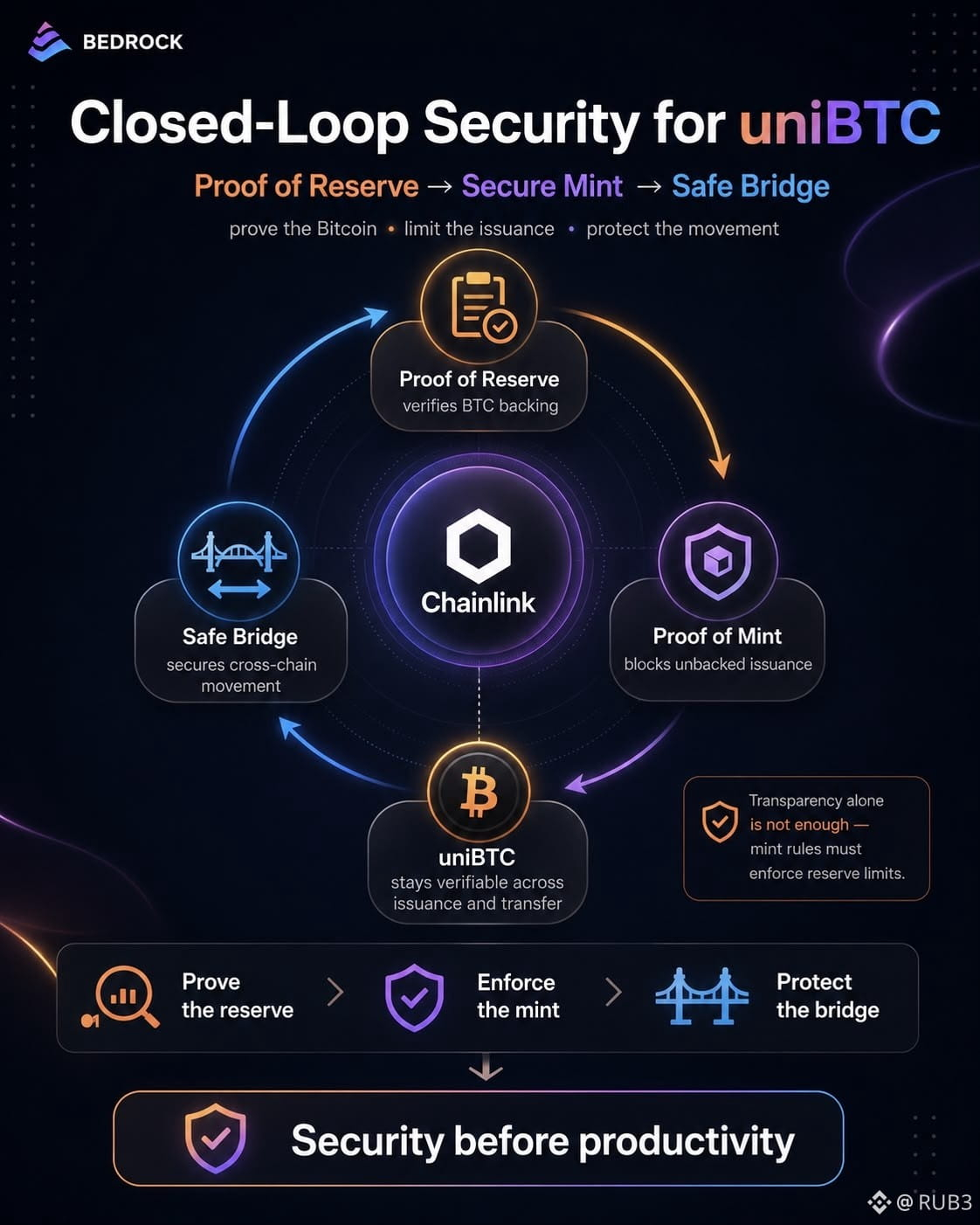
c'est ce qui a fait que la configuration de Chainlink de Bedrock a fait tilt pour moi.
La preuve de réserve surveille le côté BTC.
Secure Mint est à la porte d'émission.
& CCIP transporte la même logique de sécurité dans le mouvement entre les chaînes.
ce ne sont pas trois intégrations aléatoires côte à côte.
elles ferment trois endroits différents où uniBTC pourrait perdre son sens.
premièrement, est-ce que la réserve existe ?
ensuite, le nouveau mint est-il réellement autorisé par cette réserve ?
puis, l'actif peut-il se déplacer sans que le chemin inter-chaînes ne devienne le point le plus faible ?
l'étape du milieu est probablement celle que les gens sautent dans leur tête.
parce que la transparence des réserves semble rassurante.
mais la transparence après un mauvais mint serait un genre de réconfort très tardif.
Secure Mint change cela.
avant que le nouveau uniBTC soit créé, le contrat vérifie si l'offre existante plus le nouveau montant rentre toujours dans la réserve vérifiée.
si ce n'est pas le cas, la transaction ne devient pas un avertissement.
elle devient un rejet.
cette différence semble importante.
un système vous dit que quelque chose a mal tourné.
l'autre refuse de laisser l'état erroné exister.
& pour Bedrock 2.0, cela va plus loin que le marketing de sécurité.
uniBTC est censé devenir l'actif d'entrée pour différents itinéraires de rendement Bitcoin.
si l'actif de base peut être surémis, chaque coffre au-dessus hérite de la même hypothèse défaillante.
le crédit peut être structuré.
les stratégies peuvent être gérées.
BRclaw peut surveiller le risque.
rien de tout cela ne corrige une couche de mint faible en dessous.
alors peut-être que la véritable architecture n'est pas
Preuve de réserve → Secure Mint → CCIP.
peut-être que c'est
prouvez le Bitcoin.
limitez l'émission.
protégez le mouvement.
une boucle fermée avant que uniBTC ne soit demandé à devenir productif ailleurs.
je pensais que la preuve de réserve signifiait que le système était déjà protégé.
les réserves sont visibles.
les chiffres correspondent.
suffisamment bon. mais il y a un écart qui se cache derrière cette pensée.
savoir que le soutien existe n'est pas la même chose que de forcer le contrat de mint à le respecter.
un tableau de bord peut montrer la vérité et le système peut toujours faire le mauvais mouvement.
c'est ce qui a fait que la configuration de Chainlink de Bedrock a fait tilt pour moi.
La preuve de réserve surveille le côté BTC.
Secure Mint est à la porte d'émission.
& CCIP transporte la même logique de sécurité dans le mouvement entre les chaînes.
ce ne sont pas trois intégrations aléatoires côte à côte.
elles ferment trois endroits différents où uniBTC pourrait perdre son sens.
premièrement, est-ce que la réserve existe ?
ensuite, le nouveau mint est-il réellement autorisé par cette réserve ?
puis, l'actif peut-il se déplacer sans que le chemin inter-chaînes ne devienne le point le plus faible ?
l'étape du milieu est probablement celle que les gens sautent dans leur tête.
parce que la transparence des réserves semble rassurante.
mais la transparence après un mauvais mint serait un genre de réconfort très tardif.
Secure Mint change cela.
avant que le nouveau uniBTC soit créé, le contrat vérifie si l'offre existante plus le nouveau montant rentre toujours dans la réserve vérifiée.
si ce n'est pas le cas, la transaction ne devient pas un avertissement.
elle devient un rejet.
cette différence semble importante.
un système vous dit que quelque chose a mal tourné.
l'autre refuse de laisser l'état erroné exister.
& pour Bedrock 2.0, cela va plus loin que le marketing de sécurité.
uniBTC est censé devenir l'actif d'entrée pour différents itinéraires de rendement Bitcoin.
si l'actif de base peut être surémis, chaque coffre au-dessus hérite de la même hypothèse défaillante.
le crédit peut être structuré.
les stratégies peuvent être gérées.
BRclaw peut surveiller le risque.
rien de tout cela ne corrige une couche de mint faible en dessous.
alors peut-être que la véritable architecture n'est pas
Preuve de réserve → Secure Mint → CCIP.
peut-être que c'est
prouvez le Bitcoin.
limitez l'émission.
protégez le mouvement.
une boucle fermée avant que uniBTC ne soit demandé à devenir productif ailleurs.
#bedrock $BR
Avant, je séparais le rendement et la sécurité dans ma tête.
Le rendement, c'était la partie excitante.
La sécurité, c'était juste en arrière-plan.
Mais avec Bedrock, je pense que cette séparation ne fonctionne plus.
Si le capital Bitcoin circule à travers des coffres, des routes uniBTC et des stratégies BTCfi, alors la couche de sécurité n'est pas "supplémentaire."
Elle fait partie du rendement lui-même.
C'est pourquoi le Secure Mint Proof of Reserve de Chainlink me paraît important ici.
Le risque n'est pas seulement un hack au sens habituel.
Le risque plus profond, c'est le déséquilibre.
Plus d'actifs mintés que ce qui est réellement soutenu.
Un coffre qui a l'air sain de l'extérieur alors que la couche de soutien n'est pas propre derrière.
Pour les détenteurs de Bitcoin, ce genre de risque est dangereux car tout peut sembler normal jusqu'à ce que la confiance se rompe.
Donc, je ne vois pas cette mise à jour comme juste une case technique à cocher.
Je la vois comme @Bedrock essayant de s'assurer que le BTC productif ne devienne pas du BTC aveugle.
Avant que le capital ne suive des routes, la couche de base doit prouver que le côté actif est solide.
C'est la partie que j'aime.
Bedrock 2.0 pousse vers un mouvement de capital Bitcoin intelligent, mais cela n'a d'importance que si la logique de minting et de backing reste disciplinée.
Le rendement peut attirer des utilisateurs.
La sécurité les garde.
Et dans BTCfi, la confiance ne se construit pas avec des APY bruyants.
Elle se construit en s'assurant que le moteur ne peut pas promettre silencieusement ce qu'il ne détient pas.
Qu'est-ce qui compte le plus pour la confiance en BTCfi ?
Avant, je séparais le rendement et la sécurité dans ma tête.
Le rendement, c'était la partie excitante.
La sécurité, c'était juste en arrière-plan.
Mais avec Bedrock, je pense que cette séparation ne fonctionne plus.
Si le capital Bitcoin circule à travers des coffres, des routes uniBTC et des stratégies BTCfi, alors la couche de sécurité n'est pas "supplémentaire."
Elle fait partie du rendement lui-même.
C'est pourquoi le Secure Mint Proof of Reserve de Chainlink me paraît important ici.
Le risque n'est pas seulement un hack au sens habituel.
Le risque plus profond, c'est le déséquilibre.
Plus d'actifs mintés que ce qui est réellement soutenu.
Un coffre qui a l'air sain de l'extérieur alors que la couche de soutien n'est pas propre derrière.
Pour les détenteurs de Bitcoin, ce genre de risque est dangereux car tout peut sembler normal jusqu'à ce que la confiance se rompe.
Donc, je ne vois pas cette mise à jour comme juste une case technique à cocher.
Je la vois comme @Bedrock essayant de s'assurer que le BTC productif ne devienne pas du BTC aveugle.
Avant que le capital ne suive des routes, la couche de base doit prouver que le côté actif est solide.
C'est la partie que j'aime.
Bedrock 2.0 pousse vers un mouvement de capital Bitcoin intelligent, mais cela n'a d'importance que si la logique de minting et de backing reste disciplinée.
Le rendement peut attirer des utilisateurs.
La sécurité les garde.
Et dans BTCfi, la confiance ne se construit pas avec des APY bruyants.
Elle se construit en s'assurant que le moteur ne peut pas promettre silencieusement ce qu'il ne détient pas.
Qu'est-ce qui compte le plus pour la confiance en BTCfi ?
Proof of Reserve
100%
Secure minting
0%
Vault backing
0%
Risk controls
0%
2 Votes • Vote fermé
#bedrock $BR
Le rendement de crédit est la partie de BTCfi que je n'aime jamais lire trop vite.
Parce que ça peut sembler propre en surface.
Un coffre-fort montre le rendement.
Le capital est déployé.
La route semble stable.
Mais le crédit n'est jamais juste une question de retour.
C'est une question de qui utilise le capital, ce qui protège le côté prêteur, et si le risque est réellement structuré ou juste caché derrière un joli chiffre.
C'est pourquoi le côté Cap de Bedrock 2.0 me semble important.
Il rend la route de crédit moins comme "BTC va quelque part et gagne."
Il y a un chemin plus clair.
uniBTC garde le capital Bitcoin connecté à Bedrock.
Cap apporte la structure de crédit couvert.
Le capital ne court pas juste après une vague opportunité de prêt. Il se déplace à travers un cadre où la souscription, la logique de garantie, et la demande de crédit comptent.
Cela change ma façon de lire le coffre-fort.
Je ne regarde plus seulement le rendement.
Je regarde si la route a de la discipline.
Parce que le risque de crédit caché a généralement l'air bien jusqu'à ce que le marché soit en stress. @Bedrock
Alors soudainement tout le monde commence à poser les questions qu'ils auraient dû poser avant d'entrer.
Bedrock 2.0 semble plus solide lorsque le crédit est traité de cette manière.
Pas comme une catégorie de rendement brillante.
Comme un chemin structuré pour le capital Bitcoin.
Pour moi, c'est ce qui rend le rendement BTC plus sérieux.
Moins de mystère.
Plus de clarté de route.
Qu'est-ce qui compte le plus dans le crédit BTC?
Le rendement de crédit est la partie de BTCfi que je n'aime jamais lire trop vite.
Parce que ça peut sembler propre en surface.
Un coffre-fort montre le rendement.
Le capital est déployé.
La route semble stable.
Mais le crédit n'est jamais juste une question de retour.
C'est une question de qui utilise le capital, ce qui protège le côté prêteur, et si le risque est réellement structuré ou juste caché derrière un joli chiffre.
C'est pourquoi le côté Cap de Bedrock 2.0 me semble important.
Il rend la route de crédit moins comme "BTC va quelque part et gagne."
Il y a un chemin plus clair.
uniBTC garde le capital Bitcoin connecté à Bedrock.
Cap apporte la structure de crédit couvert.
Le capital ne court pas juste après une vague opportunité de prêt. Il se déplace à travers un cadre où la souscription, la logique de garantie, et la demande de crédit comptent.
Cela change ma façon de lire le coffre-fort.
Je ne regarde plus seulement le rendement.
Je regarde si la route a de la discipline.
Parce que le risque de crédit caché a généralement l'air bien jusqu'à ce que le marché soit en stress. @Bedrock
Alors soudainement tout le monde commence à poser les questions qu'ils auraient dû poser avant d'entrer.
Bedrock 2.0 semble plus solide lorsque le crédit est traité de cette manière.
Pas comme une catégorie de rendement brillante.
Comme un chemin structuré pour le capital Bitcoin.
Pour moi, c'est ce qui rend le rendement BTC plus sérieux.
Moins de mystère.
Plus de clarté de route.
Qu'est-ce qui compte le plus dans le crédit BTC?
Underwriting
0%
Clear route
50%
Real demand
50%
Risk control
0%
2 Votes • Vote fermé
#genius $GENIUS
Je pensais que le trading cross-chain ne signifiait que déplacer des actifs d'un réseau à un autre.
D'abord le pont.
Ensuite le trade.
C'était normal pour moi.
Mais après l'avoir fait assez souvent, ça a commencé à sembler cassé.
@GeniusOfficial
Une idée de trade peut être simple, mais le chemin devient lourd. Je vois une opportunité sur une chaîne, des fonds sont bloqués sur une autre chaîne, la liquidité est meilleure ailleurs, et soudain, je ne trade plus. Je gère le mouvement.
Ce retard change tout.
Au moment où le capital atteint le bon endroit, le prix peut bouger, le chemin peut s'affaiblir, et la configuration peut même ne plus sembler la même.
C'est pourquoi la partie nativement cross-chain de Genius compte pour moi.
Il ne s'agit pas seulement de soutenir plusieurs chaînes.
Il s'agit de rendre le chemin du trade moins divisé.
Solana, Ethereum, Base, Avalanche, Arbitrum, Optimism, BNB, Polygon et Sonic ne devraient pas sembler être des pièces séparées chaque fois qu'un trader veut agir. Pour une exécution sérieuse, le système doit comprendre que l'opportunité n'attend pas de pontage manuel.
C'est là que le Genius Bridge Protocol s'intègre dans l'architecture plus large.
Le terminal voit l'intention.
Le pont gère le mouvement.
Le routage recherche une liquidité utilisable.
Gh0st protège le chemin du portefeuille.
L'exécution essaie de concrétiser le trade sans que l'utilisateur ait à porter chaque étape au niveau de la chaîne seul.
Pour moi, c'est le véritable problème cross-chain que Genius attaque.
Pas juste déplacer des actifs.
Transférer l'intention de manière nette d'une chaîne à une autre avant que le trade ne perde son avantage.
Qu'est-ce qui nuit le plus aux trades cross-chain ?
Je pensais que le trading cross-chain ne signifiait que déplacer des actifs d'un réseau à un autre.
D'abord le pont.
Ensuite le trade.
C'était normal pour moi.
Mais après l'avoir fait assez souvent, ça a commencé à sembler cassé.
@GeniusOfficial
Une idée de trade peut être simple, mais le chemin devient lourd. Je vois une opportunité sur une chaîne, des fonds sont bloqués sur une autre chaîne, la liquidité est meilleure ailleurs, et soudain, je ne trade plus. Je gère le mouvement.
Ce retard change tout.
Au moment où le capital atteint le bon endroit, le prix peut bouger, le chemin peut s'affaiblir, et la configuration peut même ne plus sembler la même.
C'est pourquoi la partie nativement cross-chain de Genius compte pour moi.
Il ne s'agit pas seulement de soutenir plusieurs chaînes.
Il s'agit de rendre le chemin du trade moins divisé.
Solana, Ethereum, Base, Avalanche, Arbitrum, Optimism, BNB, Polygon et Sonic ne devraient pas sembler être des pièces séparées chaque fois qu'un trader veut agir. Pour une exécution sérieuse, le système doit comprendre que l'opportunité n'attend pas de pontage manuel.
C'est là que le Genius Bridge Protocol s'intègre dans l'architecture plus large.
Le terminal voit l'intention.
Le pont gère le mouvement.
Le routage recherche une liquidité utilisable.
Gh0st protège le chemin du portefeuille.
L'exécution essaie de concrétiser le trade sans que l'utilisateur ait à porter chaque étape au niveau de la chaîne seul.
Pour moi, c'est le véritable problème cross-chain que Genius attaque.
Pas juste déplacer des actifs.
Transférer l'intention de manière nette d'une chaîne à une autre avant que le trade ne perde son avantage.
Qu'est-ce qui nuit le plus aux trades cross-chain ?
Bridge delay
0%
Bad routing
0%
Lost quotes
0%
Wallet leaks
100%
2 Votes • Vote fermé
#bedrock $BR
Quand je regarde BTCfi maintenant, je ne demande pas seulement :
"Quel est l'APY ?"
Je pose d'abord une autre question.
Qui gère le chemin de risque ?
Cette question a changé ma façon de voir Bedrock 2.0.
Parce que le rendement n'est que le chiffre de façade. La vraie histoire est ce qui se passe derrière.
Où entre le capital Bitcoin ?
Quel chemin emprunte-t-il ?
Qui gère la stratégie ?
Quel niveau protège la structure ?
Et que se passe-t-il lorsque les conditions du marché cessent d'être amicales ?
C'est ici que @Bedrock me semble plus solide qu'un produit de rendement BTC normal.
uniBTC n'est pas juste garé quelque part pour un simple retour.
Il devient la couche de capital.
Ensuite, Bedrock connecte ce capital à différentes routes comme des stratégies neutres au marché, le crédit, le rendement natif DeFi, et l'exposition RWA.
Mais la partie importante n'est pas seulement le nombre de routes.
C'est la confiance autour de ces routes.
Le capital compte parce que le crédit a besoin de structure.
Selini compte parce que l'exécution a besoin d'expérience.
Symbiotic compte parce que les coffres institutionnels ont besoin de suppositions de sécurité plus solides.
BRclaw compte parce que les utilisateurs doivent comprendre le risque avant que le capital ne bouge.
C'est le tableau complet que j'aime.
Bedrock 2.0 ne demande pas aux utilisateurs de faire confiance à un APY accrocheur.
Il construit un cadre de route + partenaire + risque autour du capital Bitcoin.
Pour moi, c'est à quoi devrait ressembler un BTCfi mature.
Pas juste "gagner plus".
Mais savoir où va votre BTC, qui gère le chemin, et quel système est derrière le rendement.
Que compte le plus avant de faire confiance à un coffre BTCfi ?
Quand je regarde BTCfi maintenant, je ne demande pas seulement :
"Quel est l'APY ?"
Je pose d'abord une autre question.
Qui gère le chemin de risque ?
Cette question a changé ma façon de voir Bedrock 2.0.
Parce que le rendement n'est que le chiffre de façade. La vraie histoire est ce qui se passe derrière.
Où entre le capital Bitcoin ?
Quel chemin emprunte-t-il ?
Qui gère la stratégie ?
Quel niveau protège la structure ?
Et que se passe-t-il lorsque les conditions du marché cessent d'être amicales ?
C'est ici que @Bedrock me semble plus solide qu'un produit de rendement BTC normal.
uniBTC n'est pas juste garé quelque part pour un simple retour.
Il devient la couche de capital.
Ensuite, Bedrock connecte ce capital à différentes routes comme des stratégies neutres au marché, le crédit, le rendement natif DeFi, et l'exposition RWA.
Mais la partie importante n'est pas seulement le nombre de routes.
C'est la confiance autour de ces routes.
Le capital compte parce que le crédit a besoin de structure.
Selini compte parce que l'exécution a besoin d'expérience.
Symbiotic compte parce que les coffres institutionnels ont besoin de suppositions de sécurité plus solides.
BRclaw compte parce que les utilisateurs doivent comprendre le risque avant que le capital ne bouge.
C'est le tableau complet que j'aime.
Bedrock 2.0 ne demande pas aux utilisateurs de faire confiance à un APY accrocheur.
Il construit un cadre de route + partenaire + risque autour du capital Bitcoin.
Pour moi, c'est à quoi devrait ressembler un BTCfi mature.
Pas juste "gagner plus".
Mais savoir où va votre BTC, qui gère le chemin, et quel système est derrière le rendement.
Que compte le plus avant de faire confiance à un coffre BTCfi ?
Risk path
33%
Partners
0%
Security layer
0%
Strategy route
67%
3 Votes • Vote fermé
#genius $GENIUS
J'avais l'habitude de juger les produits de trading par leurs fonctionnalités.
Support spot.
Support des perpétuels.
Vue du portefeuille.
Ordres à cours limité.
Analytique.
Mais après avoir utilisé DeFi suffisamment longtemps, j'ai réalisé que les fonctionnalités seules ne créent pas un terminal sérieux.
La vraie question est de savoir si tous ces éléments fonctionnent ensemble lorsque le trader est sous pression.
C'est pourquoi @GeniusOfficial m'intéresse.
Les marchés spot et perpétuels dans une interface non-custodiale ne sont pas qu'une commodité. Ils comptent parce que les traders professionnels ne pensent pas en onglets isolés. Ils pensent en positions, exposition, timing et mouvement de capital.
Une vue unifiée du portefeuille est importante car des soldes dispersés à travers les chaînes rendent le risque plus difficile à évaluer.
Les ordres avancés comptent car toutes les stratégies ne devraient pas être exécutées comme un échange de marché précipité.
L'analytique en temps réel est cruciale car des informations périmées peuvent rapidement transformer une configuration propre en un désastre.
Et la non-custodie est essentielle car l'idée est d'obtenir une expérience de trading plus solide sans céder le contrôle des actifs.
C'est la direction plus large de Genius pour moi.
Il essaie d'apporter un comportement de trading similaire à celui des CEX dans les marchés on-chain sans copier le modèle de custody.
Ce n'est pas facile.
Parce qu'un CEX contrôle tout à l'intérieur d'un système fermé.
Genius doit créer une sensation similaire tout en naviguant à travers un DeFi ouvert et fragmenté.
Si cela fonctionne, la valeur n'est pas seulement dans le token.
La valeur réside dans le fait de rendre le trading on-chain moins cassé pour les utilisateurs sérieux.
J'avais l'habitude de juger les produits de trading par leurs fonctionnalités.
Support spot.
Support des perpétuels.
Vue du portefeuille.
Ordres à cours limité.
Analytique.
Mais après avoir utilisé DeFi suffisamment longtemps, j'ai réalisé que les fonctionnalités seules ne créent pas un terminal sérieux.
La vraie question est de savoir si tous ces éléments fonctionnent ensemble lorsque le trader est sous pression.
C'est pourquoi @GeniusOfficial m'intéresse.
Les marchés spot et perpétuels dans une interface non-custodiale ne sont pas qu'une commodité. Ils comptent parce que les traders professionnels ne pensent pas en onglets isolés. Ils pensent en positions, exposition, timing et mouvement de capital.
Une vue unifiée du portefeuille est importante car des soldes dispersés à travers les chaînes rendent le risque plus difficile à évaluer.
Les ordres avancés comptent car toutes les stratégies ne devraient pas être exécutées comme un échange de marché précipité.
L'analytique en temps réel est cruciale car des informations périmées peuvent rapidement transformer une configuration propre en un désastre.
Et la non-custodie est essentielle car l'idée est d'obtenir une expérience de trading plus solide sans céder le contrôle des actifs.
C'est la direction plus large de Genius pour moi.
Il essaie d'apporter un comportement de trading similaire à celui des CEX dans les marchés on-chain sans copier le modèle de custody.
Ce n'est pas facile.
Parce qu'un CEX contrôle tout à l'intérieur d'un système fermé.
Genius doit créer une sensation similaire tout en naviguant à travers un DeFi ouvert et fragmenté.
Si cela fonctionne, la valeur n'est pas seulement dans le token.
La valeur réside dans le fait de rendre le trading on-chain moins cassé pour les utilisateurs sérieux.
Bullish ⬆️
50%
Bearish ⬇️
50%
2 Votes • Vote fermé
#genius $GENIUS
J'ai commencé à voir Genius différemment quand j'ai cessé de le considérer comme un produit de trading unique.
Ça ressemble plus à un chemin complet.
Données → Confidentialité → Liquidité → Exécution.
Cet ordre compte.
Parce que chaque trade commence comme des données avant de devenir une transaction.
Quand j'ouvre un terminal et prépare un trade, je crée déjà des signaux. Choix de paire, historique de portefeuille, taille, timing, limite de slippage, préférence de route. Même avant de cliquer, le trade a déjà une forme.
C'est là que la plupart des systèmes DeFi me paraissent faibles.
Ils traitent l'exécution comme l'événement principal, mais ils ignorent combien d'informations s'échappent avant même que l'exécution ne se produise.
C'est pourquoi la carte Genius a du sens.
D'abord, le système doit comprendre les données d'intention sans laisser cela devenir un signal facile.
Ensuite, la confidentialité est importante, pas comme une fonctionnalité aléatoire, mais comme une protection autour du schéma de trading. Gh0st entre ici car le comportement du portefeuille peut révéler plus que ce que les gens pensent. Un portefeuille n'a pas besoin de votre nom pour exposer comment vous tradez.
Ensuite, la liquidité est importante.
Mais pas seulement "plus de liquidité".
Liquidité utilisable.
Liquidité qui peut être routée à travers des endroits fragmentés sans que le trader doive se battre manuellement avec chaque pool, pont et endroit.
Ensuite, l'exécution devient le dernier test.
Si le quote est périmé, la route est faible ou la logique de market-making est trop éloignée du règlement, le trade perd de la valeur à la dernière étape.
C'est pourquoi @GeniusOfficial m'intéresse.
Il ne s'agit pas seulement de construire un terminal où les traders cliquent.
Il essaie de contrôler le mouvement complet d'un trade, de l'intention privée à la liquidité utilisable jusqu'à la finalisation.
Pour moi, c'est la vraie architecture.
Pas un écran.
Un système qui protège le trade avant que le marché ait la chance de le lire.
Quelle couche est la plus importante pour Genius ?
J'ai commencé à voir Genius différemment quand j'ai cessé de le considérer comme un produit de trading unique.
Ça ressemble plus à un chemin complet.
Données → Confidentialité → Liquidité → Exécution.
Cet ordre compte.
Parce que chaque trade commence comme des données avant de devenir une transaction.
Quand j'ouvre un terminal et prépare un trade, je crée déjà des signaux. Choix de paire, historique de portefeuille, taille, timing, limite de slippage, préférence de route. Même avant de cliquer, le trade a déjà une forme.
C'est là que la plupart des systèmes DeFi me paraissent faibles.
Ils traitent l'exécution comme l'événement principal, mais ils ignorent combien d'informations s'échappent avant même que l'exécution ne se produise.
C'est pourquoi la carte Genius a du sens.
D'abord, le système doit comprendre les données d'intention sans laisser cela devenir un signal facile.
Ensuite, la confidentialité est importante, pas comme une fonctionnalité aléatoire, mais comme une protection autour du schéma de trading. Gh0st entre ici car le comportement du portefeuille peut révéler plus que ce que les gens pensent. Un portefeuille n'a pas besoin de votre nom pour exposer comment vous tradez.
Ensuite, la liquidité est importante.
Mais pas seulement "plus de liquidité".
Liquidité utilisable.
Liquidité qui peut être routée à travers des endroits fragmentés sans que le trader doive se battre manuellement avec chaque pool, pont et endroit.
Ensuite, l'exécution devient le dernier test.
Si le quote est périmé, la route est faible ou la logique de market-making est trop éloignée du règlement, le trade perd de la valeur à la dernière étape.
C'est pourquoi @GeniusOfficial m'intéresse.
Il ne s'agit pas seulement de construire un terminal où les traders cliquent.
Il essaie de contrôler le mouvement complet d'un trade, de l'intention privée à la liquidité utilisable jusqu'à la finalisation.
Pour moi, c'est la vraie architecture.
Pas un écran.
Un système qui protège le trade avant que le marché ait la chance de le lire.
Quelle couche est la plus importante pour Genius ?
Data control
0%
Gh0st privacy
67%
Liquidity route
33%
Final execution
0%
3 Votes • Vote fermé
#bedrock $BR
Le vrai FOMO n'est peut-être pas le prix.
C'est peut-être l'ouverture de Bedrock plus tard et de réaliser que le coffre que vous vouliez est déjà plein.
C'est ça que je continue de penser avec Bedrock 2.0.
Parce qu'en crypto, on associe généralement le FOMO avec les bougies.
Vous voyez le prix bouger, vous paniquez, vous entrez trop tard.
Mais l'accès au coffre a une pression différente.
C'est plus calme.
Pas de grande bougie sur le graphique.
Pas de breakout bruyant.
Juste une fenêtre stratégique limitée qui se ferme lentement pendant que tout le monde décide encore.
C'est pourquoi les niveaux de BR me semblent plus sérieux ici.
Si @Bedrock amène uniBTC dans des routes de style institutionnel, alors certains coffres ne peuvent pas se comporter comme des pools sans fin.
Une bonne stratégie a des limites.
Trop de capital peut encombrer le trade.
Trop de dépôts peuvent affaiblir l'avantage.
Une entrée trop tardive peut signifier que la fenêtre propre est partie.
Donc, BR ne concerne pas seulement la détention d'un token pour une récompense.
À l'intérieur de Bedrock 2.0, cela peut faire la différence entre se tenir près du début de la queue du coffre ou regarder la meilleure route se remplir avant que votre BTC n'arrive.
C'est un autre type d'utilité.
Cela relie BR au timing, à l'accès et à la demande réelle de coffre.
Pour moi, c'est ici que le FOMO devient plus analytique.
Pas "le prix va-t-il monter ?"
Mais "aurai-je accès quand le coffre Bedrock le plus puissant s'ouvre ?"
Qu'est-ce qui ferait que l'accès à $BR soit le plus important ?
Le vrai FOMO n'est peut-être pas le prix.
C'est peut-être l'ouverture de Bedrock plus tard et de réaliser que le coffre que vous vouliez est déjà plein.
C'est ça que je continue de penser avec Bedrock 2.0.
Parce qu'en crypto, on associe généralement le FOMO avec les bougies.
Vous voyez le prix bouger, vous paniquez, vous entrez trop tard.
Mais l'accès au coffre a une pression différente.
C'est plus calme.
Pas de grande bougie sur le graphique.
Pas de breakout bruyant.
Juste une fenêtre stratégique limitée qui se ferme lentement pendant que tout le monde décide encore.
C'est pourquoi les niveaux de BR me semblent plus sérieux ici.
Si @Bedrock amène uniBTC dans des routes de style institutionnel, alors certains coffres ne peuvent pas se comporter comme des pools sans fin.
Une bonne stratégie a des limites.
Trop de capital peut encombrer le trade.
Trop de dépôts peuvent affaiblir l'avantage.
Une entrée trop tardive peut signifier que la fenêtre propre est partie.
Donc, BR ne concerne pas seulement la détention d'un token pour une récompense.
À l'intérieur de Bedrock 2.0, cela peut faire la différence entre se tenir près du début de la queue du coffre ou regarder la meilleure route se remplir avant que votre BTC n'arrive.
C'est un autre type d'utilité.
Cela relie BR au timing, à l'accès et à la demande réelle de coffre.
Pour moi, c'est ici que le FOMO devient plus analytique.
Pas "le prix va-t-il monter ?"
Mais "aurai-je accès quand le coffre Bedrock le plus puissant s'ouvre ?"
Qu'est-ce qui ferait que l'accès à $BR soit le plus important ?
Vault fills fast
0%
Early entry
33%
Tier priority
67%
Strategy demand
0%
3 Votes • Vote fermé
Connectez-vous pour découvrir plus de contenu