

sajjad Ahmed 804 trading BNB
4.9k Publications

sajjad Ahmed 804 trading BNB
Signaler
Bloquer l’utilisateur
trading Sajjad Hammad 804bullish Bearish $OPG $BR $OPEN
3 Suivis
28.0K+ Abonnés
9.2K+ J’aime
Publications
Tous
Direct
$EDU poursuit sa hausse, avec un gain de +7,08 %, et entretient ainsi la dynamique. Le cours se situe actuellement autour de 0,05642 $, signe que les acheteurs sont intervenus avec force au cours de la séance. Ce mouvement est intéressant, car EDU rejoint un vaste groupe d’actifs qui enregistrent des gains importants au même moment. Le prochain signal à surveiller sera de voir si le cours peut maintenir sa progression actuelle au lieu de se replier rapidement. Si les acheteurs continuent de défendre des niveaux plus élevés, le mouvement pourrait se transformer en une tendance plus marquée. EDU mérite donc d’être suivi de près, tandis que le marché détermine si la dynamique d’aujourd’hui peut se poursuivre ou commence à s’essouffler.
#BinanceLaunchesBinanceIntelligence #EvernorthXRPTreasuryCompletesSPACMerger
$EDU poursuit sa hausse, avec un gain de +7,08 %, et entretient ainsi la dynamique. Le cours se situe actuellement autour de 0,05642 $, signe que les acheteurs sont intervenus avec force au cours de la séance. Ce mouvement est intéressant, car EDU rejoint un vaste groupe d’actifs qui enregistrent des gains importants au même moment. Le prochain signal à surveiller sera de voir si le cours peut maintenir sa progression actuelle au lieu de se replier rapidement. Si les acheteurs continuent de défendre des niveaux plus élevés, le mouvement pourrait se transformer en une tendance plus marquée. EDU mérite donc d’être suivi de près, tandis que le marché détermine si la dynamique d’aujourd’hui peut se poursuivre ou commence à s’essouffler.
#BinanceLaunchesBinanceIntelligence #EvernorthXRPTreasuryCompletesSPACMerger
#BinanceLaunchesBinanceIntelligence #EvernorthXRPTreasuryCompletesSPACMerger
239
$SPCXB suit la dynamique avec un gain de +7.11 %. S’échangeant autour de 171,76 $, la paire affiche une vigueur presque identique à celle de SPCX. Cette constance suggère que le mouvement est soutenu par l’ensemble du marché associé, plutôt que de résulter d’une hausse isolée des prix. La question est maintenant de savoir si les acheteurs parviendront à maintenir le cours au-dessus de la récente zone de négociation. S’ils réussissent à préserver leurs gains, la dynamique pourrait rester favorable. Toutefois, après une forte progression, les traders doivent aussi s’attendre à une volatilité accrue et à de possibles prises de bénéfices. Pour l’instant, SPCXUSD1 reste fermement dans le groupe des actifs les plus performants présenté dans la capture d’écran.
#BinanceLaunchesBinanceIntelligence #EvernorthXRPTreasuryCompletesSPACMerger
$SPCXB suit la dynamique avec un gain de +7.11 %. S’échangeant autour de 171,76 $, la paire affiche une vigueur presque identique à celle de SPCX. Cette constance suggère que le mouvement est soutenu par l’ensemble du marché associé, plutôt que de résulter d’une hausse isolée des prix. La question est maintenant de savoir si les acheteurs parviendront à maintenir le cours au-dessus de la récente zone de négociation. S’ils réussissent à préserver leurs gains, la dynamique pourrait rester favorable. Toutefois, après une forte progression, les traders doivent aussi s’attendre à une volatilité accrue et à de possibles prises de bénéfices. Pour l’instant, SPCXUSD1 reste fermement dans le groupe des actifs les plus performants présenté dans la capture d’écran.
#BinanceLaunchesBinanceIntelligence #EvernorthXRPTreasuryCompletesSPACMerger
#BinanceLaunchesBinanceIntelligence #EvernorthXRPTreasuryCompletesSPACMerger
1
91
$SPCXB est en hausse de +7,14 %, signe d’un fort intérêt acheteur aujourd’hui. Le prix se situe autour de 171,77 $, ce qui place cet actif parmi les plus performants de cet aperçu du marché. Après un mouvement d’une telle ampleur, la prochaine étape devient plus importante que le gain initial en pourcentage. Les acheteurs doivent prouver qu’ils peuvent défendre des prix plus élevés au lieu de laisser l’ensemble du mouvement s’essouffler. Une période de consolidation près des niveaux actuels pourrait offrir une base plus solide pour une poursuite de la hausse. Toutefois, si la pression vendeuse augmente soudainement, le rallye pourrait rapidement perdre de son élan. SPCX reste un titre intéressant tant que cette dynamique se maintient.
#BinanceLaunchesBinanceIntelligence #EvernorthXRPTreasuryCompletesSPACMerger
$SPCXB est en hausse de +7,14 %, signe d’un fort intérêt acheteur aujourd’hui. Le prix se situe autour de 171,77 $, ce qui place cet actif parmi les plus performants de cet aperçu du marché. Après un mouvement d’une telle ampleur, la prochaine étape devient plus importante que le gain initial en pourcentage. Les acheteurs doivent prouver qu’ils peuvent défendre des prix plus élevés au lieu de laisser l’ensemble du mouvement s’essouffler. Une période de consolidation près des niveaux actuels pourrait offrir une base plus solide pour une poursuite de la hausse. Toutefois, si la pression vendeuse augmente soudainement, le rallye pourrait rapidement perdre de son élan. SPCX reste un titre intéressant tant que cette dynamique se maintient.
#BinanceLaunchesBinanceIntelligence #EvernorthXRPTreasuryCompletesSPACMerger
#BinanceLaunchesBinanceIntelligence #EvernorthXRPTreasuryCompletesSPACMerger
79
$FLUX est en hausse de +7,23 %, ce qui le place parmi les actifs les plus performants de la journée. Le cours actuel se situe autour de 0,08362 $, les acheteurs poussant clairement le marché à la hausse. Le prochain facteur important sera de savoir si la cryptomonnaie peut consolider une base stable autour de son niveau actuel, plutôt que de simplement connaître une hausse soudaine et passagère. Si le cours se maintient et que les achats se poursuivent, la dynamique pourrait rester intéressante. Un rejet suivi d’un retour vers la fourchette précédente raconterait une tout autre histoire. Pour l’instant, FLUX affiche une forte demande à court terme et fait désormais partie des actifs à surveiller tandis que la dynamique du marché évolue.
#BinanceLaunchesBinanceIntelligence #EvernorthXRPTreasuryCompletesSPACMerger
$FLUX est en hausse de +7,23 %, ce qui le place parmi les actifs les plus performants de la journée. Le cours actuel se situe autour de 0,08362 $, les acheteurs poussant clairement le marché à la hausse. Le prochain facteur important sera de savoir si la cryptomonnaie peut consolider une base stable autour de son niveau actuel, plutôt que de simplement connaître une hausse soudaine et passagère. Si le cours se maintient et que les achats se poursuivent, la dynamique pourrait rester intéressante. Un rejet suivi d’un retour vers la fourchette précédente raconterait une tout autre histoire. Pour l’instant, FLUX affiche une forte demande à court terme et fait désormais partie des actifs à surveiller tandis que la dynamique du marché évolue.
#BinanceLaunchesBinanceIntelligence #EvernorthXRPTreasuryCompletesSPACMerger
#BinanceLaunchesBinanceIntelligence #EvernorthXRPTreasuryCompletesSPACMerger
130
$NEAR affiche également une forte dynamique, avec une progression de +7.62%. S’échangeant autour de 5.255 $, il suit de près la vigueur observée sur NEARUSDT. L’essentiel à retenir, c’est que la pression acheteuse ne se limite pas à une seule paire. Le cours reste au-dessus de la zone des 5 $, ce qui maintient une structure constructive à court terme. Le prochain défi consiste à préserver cette vigueur sans rendre immédiatement les gains récents. Si le marché continue de soutenir la zone actuelle, une nouvelle poussée à la hausse devient possible. Toutefois, les traders doivent rester attentifs à la volatilité, car une hausse de plus de 7 % peut rapidement entraîner des prises de bénéfices.
#BinanceLaunchesBinanceIntelligence #EvernorthXRPTreasuryCompletesSPACMerger
$NEAR affiche également une forte dynamique, avec une progression de +7.62%. S’échangeant autour de 5.255 $, il suit de près la vigueur observée sur NEARUSDT. L’essentiel à retenir, c’est que la pression acheteuse ne se limite pas à une seule paire. Le cours reste au-dessus de la zone des 5 $, ce qui maintient une structure constructive à court terme. Le prochain défi consiste à préserver cette vigueur sans rendre immédiatement les gains récents. Si le marché continue de soutenir la zone actuelle, une nouvelle poussée à la hausse devient possible. Toutefois, les traders doivent rester attentifs à la volatilité, car une hausse de plus de 7 % peut rapidement entraîner des prises de bénéfices.
#BinanceLaunchesBinanceIntelligence #EvernorthXRPTreasuryCompletesSPACMerger
#BinanceLaunchesBinanceIntelligence #EvernorthXRPTreasuryCompletesSPACMerger
1
88
$NEAR progresse fortement, avec un gain de +7,68 %. Le prix se situe actuellement autour de 5,259 $, témoignant d’une nette pression acheteuse tout au long de la séance. Ce qui rend ce mouvement intéressant, c’est que NEAR s’échange au-dessus du seuil psychologique des 5 $, qui pourrait désormais devenir un point de référence important. Si les acheteurs continuent de défendre cette zone, la dynamique actuelle pourrait se poursuivre. Mais si le cours repasse sous ce niveau après le rallye, les traders pourraient commencer à douter de la solidité de la cassure. Pour l’instant, NEAR reste l’un des actifs les plus performants et bénéficie d’une participation soutenue des acheteurs.
#BinanceLaunchesBinanceIntelligence #EvernorthXRPTreasuryCompletesSPACMerger
$NEAR progresse fortement, avec un gain de +7,68 %. Le prix se situe actuellement autour de 5,259 $, témoignant d’une nette pression acheteuse tout au long de la séance. Ce qui rend ce mouvement intéressant, c’est que NEAR s’échange au-dessus du seuil psychologique des 5 $, qui pourrait désormais devenir un point de référence important. Si les acheteurs continuent de défendre cette zone, la dynamique actuelle pourrait se poursuivre. Mais si le cours repasse sous ce niveau après le rallye, les traders pourraient commencer à douter de la solidité de la cassure. Pour l’instant, NEAR reste l’un des actifs les plus performants et bénéficie d’une participation soutenue des acheteurs.
#BinanceLaunchesBinanceIntelligence #EvernorthXRPTreasuryCompletesSPACMerger
#BinanceLaunchesBinanceIntelligence #EvernorthXRPTreasuryCompletesSPACMerger
43
Voir la traduction
$LGELECTRONICS is up +7.82%, keeping strong momentum alive. Trading around $171.58, the asset is showing that buyers are willing to chase higher prices during the current session. The key from here is stability. When an asset moves this quickly, the next important signal is often whether price can consolidate without giving back most of the advance. Holding the current zone would keep the bullish structure interesting, while a sharp rejection could indicate short-term exhaustion. The nearly 8% gain puts LG ELECTRONICS firmly among the stronger movers in this snapshot, so its reaction from here could be important.
#BinanceLaunchesBinanceIntelligence #EvernorthXRPTreasuryCompletesSPACMerger
$LGELECTRONICS is up +7.82%, keeping strong momentum alive. Trading around $171.58, the asset is showing that buyers are willing to chase higher prices during the current session. The key from here is stability. When an asset moves this quickly, the next important signal is often whether price can consolidate without giving back most of the advance. Holding the current zone would keep the bullish structure interesting, while a sharp rejection could indicate short-term exhaustion. The nearly 8% gain puts LG ELECTRONICS firmly among the stronger movers in this snapshot, so its reaction from here could be important.
#BinanceLaunchesBinanceIntelligence #EvernorthXRPTreasuryCompletesSPACMerger
#BinanceLaunchesBinanceIntelligence #EvernorthXRPTreasuryCompletesSPACMerger
77
$MUBARAK attire l’attention après une hausse de +7.87 %. Le prix actuel tourne autour de 0.07498 $, signe d’une forte activité acheteuse par rapport à la fourchette précédente. La question intéressante est maintenant de savoir si les acheteurs peuvent continuer à pousser le prix vers les prochains niveaux de résistance psychologique. Une progression régulière ponctuée de consolidations semblerait généralement plus saine qu’une envolée verticale soudaine suivie de ventes immédiates. Si la dynamique actuelle se maintient, MUBARAK pourrait rester sur la liste de surveillance des traders parmi les actifs les plus performants. Pour l’instant, le graphique montre clairement une forte demande, mais le prochain test consistera à déterminer si elle peut rester soutenue après le rallye initial.#BinanceLaunchesBinanceIntelligence #EvernorthXRPTreasuryCompletesSPACMerger
$MUBARAK attire l’attention après une hausse de +7.87 %. Le prix actuel tourne autour de 0.07498 $, signe d’une forte activité acheteuse par rapport à la fourchette précédente. La question intéressante est maintenant de savoir si les acheteurs peuvent continuer à pousser le prix vers les prochains niveaux de résistance psychologique. Une progression régulière ponctuée de consolidations semblerait généralement plus saine qu’une envolée verticale soudaine suivie de ventes immédiates. Si la dynamique actuelle se maintient, MUBARAK pourrait rester sur la liste de surveillance des traders parmi les actifs les plus performants. Pour l’instant, le graphique montre clairement une forte demande, mais le prochain test consistera à déterminer si elle peut rester soutenue après le rallye initial.#BinanceLaunchesBinanceIntelligence #EvernorthXRPTreasuryCompletesSPACMerger
189
Voir la traduction
$ZHIPU is showing impressive strength with an +8.07% gain. The coin is trading around $90.49, continuing the strong upward momentum visible across several assets in the screenshot. After such a move, traders will likely focus less on the percentage gain itself and more on whether price can hold the newly established zone. Sustained buying would suggest that momentum is still healthy, while a sharp rejection could bring some profit-taking. ZHIPU is currently outperforming the broader group shown here, making its price action one worth monitoring. The next move will reveal whether this is continuation strength or simply a short-term momentum burst.
#BinanceLaunchesBinanceIntelligence #EvernorthXRPTreasuryCompletesSPACMerger
$ZHIPU is showing impressive strength with an +8.07% gain. The coin is trading around $90.49, continuing the strong upward momentum visible across several assets in the screenshot. After such a move, traders will likely focus less on the percentage gain itself and more on whether price can hold the newly established zone. Sustained buying would suggest that momentum is still healthy, while a sharp rejection could bring some profit-taking. ZHIPU is currently outperforming the broader group shown here, making its price action one worth monitoring. The next move will reveal whether this is continuation strength or simply a short-term momentum burst.
#BinanceLaunchesBinanceIntelligence #EvernorthXRPTreasuryCompletesSPACMerger
#BinanceLaunchesBinanceIntelligence #EvernorthXRPTreasuryCompletesSPACMerger
301
$FLUID gagne en dynamisme avec une hausse de +9,08 %. Le prix a atteint environ 1,947 $, rapprochant la pièce du seuil psychologique des 2 $. La configuration actuelle est donc particulièrement intéressante. Une cassure confirmée au-dessus des 2 $, suivie d'un maintien à ce niveau, pourrait donner un nouvel élan au mouvement, tandis qu'un rejet autour de ce seuil pourrait déclencher des prises de bénéfices à court terme. La progression de près de 9 % montre que les acheteurs sont actuellement actifs, mais le prochain défi sera de savoir s'ils peuvent maintenir la pression près de la zone de résistance. FLUID figure clairement parmi les valeurs les plus performantes du jour, et le seuil des 2 $ pourrait devenir le prochain niveau clé surveillé par les traders.
#BinanceLaunchesBinanceIntelligence #EvernorthXRPTreasuryCompletesSPACMerger
$FLUID gagne en dynamisme avec une hausse de +9,08 %. Le prix a atteint environ 1,947 $, rapprochant la pièce du seuil psychologique des 2 $. La configuration actuelle est donc particulièrement intéressante. Une cassure confirmée au-dessus des 2 $, suivie d'un maintien à ce niveau, pourrait donner un nouvel élan au mouvement, tandis qu'un rejet autour de ce seuil pourrait déclencher des prises de bénéfices à court terme. La progression de près de 9 % montre que les acheteurs sont actuellement actifs, mais le prochain défi sera de savoir s'ils peuvent maintenir la pression près de la zone de résistance. FLUID figure clairement parmi les valeurs les plus performantes du jour, et le seuil des 2 $ pourrait devenir le prochain niveau clé surveillé par les traders.
#BinanceLaunchesBinanceIntelligence #EvernorthXRPTreasuryCompletesSPACMerger
#BinanceLaunchesBinanceIntelligence #EvernorthXRPTreasuryCompletesSPACMerger
341
Voir la traduction
$TEM is pushing higher with a solid +9.26% gain. Trading around $84.05, the move shows strong demand compared with many other assets in the current market list. The important part now is whether buyers can keep control after this sharp advance. Strong momentum can attract fresh traders, but it can also create quick profit-taking. Holding near the current level would suggest that buyers are comfortable with the higher price, while a sudden rejection could signal that the move needs to cool down. TEM remains one of the strongest names in this snapshot and deserves close attention while momentum stays elevated.#FedOctoberHoldOdds82.3% #EthStakingExitQueueHits2026High
$TEM is pushing higher with a solid +9.26% gain. Trading around $84.05, the move shows strong demand compared with many other assets in the current market list. The important part now is whether buyers can keep control after this sharp advance. Strong momentum can attract fresh traders, but it can also create quick profit-taking. Holding near the current level would suggest that buyers are comfortable with the higher price, while a sudden rejection could signal that the move needs to cool down. TEM remains one of the strongest names in this snapshot and deserves close attention while momentum stays elevated.#FedOctoberHoldOdds82.3% #EthStakingExitQueueHits2026High
138
$CHIP évolue fortement aujourd’hui, avec une hausse de 9,89 %. Le prix se situe autour de 0,05368 $, ce qui montre que les acheteurs sont entrés en force sur le marché au cours de la séance. Après une progression proche de 10 %, le prochain défi ne consiste pas simplement à former une nouvelle bougie verte, mais à prouver que ces nouveaux niveaux de prix plus élevés peuvent se maintenir. Si les acheteurs continuent de défendre la zone actuelle, la dynamique pourrait rester soutenue. En revanche, un rejet rapide pourrait entraîner un repli plus marqué, les premiers traders prenant leurs bénéfices. CHIP a clairement rejoint le groupe des actifs affichant une forte dynamique sur le marché, ce qui rend son prochain mouvement particulièrement intéressant.
#BinanceLaunchesBinanceIntelligence #EthStakingExitQueueHits2026High
$CHIP évolue fortement aujourd’hui, avec une hausse de 9,89 %. Le prix se situe autour de 0,05368 $, ce qui montre que les acheteurs sont entrés en force sur le marché au cours de la séance. Après une progression proche de 10 %, le prochain défi ne consiste pas simplement à former une nouvelle bougie verte, mais à prouver que ces nouveaux niveaux de prix plus élevés peuvent se maintenir. Si les acheteurs continuent de défendre la zone actuelle, la dynamique pourrait rester soutenue. En revanche, un rejet rapide pourrait entraîner un repli plus marqué, les premiers traders prenant leurs bénéfices. CHIP a clairement rejoint le groupe des actifs affichant une forte dynamique sur le marché, ce qui rend son prochain mouvement particulièrement intéressant.
#BinanceLaunchesBinanceIntelligence #EthStakingExitQueueHits2026High
#BinanceLaunchesBinanceIntelligence #EthStakingExitQueueHits2026High
161
·
--
Haussier
$NIGHT attire beaucoup l’attention avec une hausse de +9,93 %. Le cours se situe actuellement autour de 0,04983 $, tout près du seuil psychologique important de 0,05 $. C’est là que pourrait se jouer la prochaine bataille. Une nette percée au-dessus de 0,05 $ suivie d’un maintien à ce niveau pourrait renforcer la tendance haussière, tandis qu’un rejet pourrait entraîner des prises de bénéfices à court terme. La dynamique actuelle est clairement forte, mais l’essentiel sera de voir ce qui se passe après la première tentative de cassure. NIGHT figure déjà parmi les meilleures performances de cet instantané. Les traders surveilleront donc si les acheteurs parviennent à prolonger la hausse.
#DriftHackVictimsBeginClaims #Nikkei225Jumps2.5%ToThreeMonthHigh
$NIGHT attire beaucoup l’attention avec une hausse de +9,93 %. Le cours se situe actuellement autour de 0,04983 $, tout près du seuil psychologique important de 0,05 $. C’est là que pourrait se jouer la prochaine bataille. Une nette percée au-dessus de 0,05 $ suivie d’un maintien à ce niveau pourrait renforcer la tendance haussière, tandis qu’un rejet pourrait entraîner des prises de bénéfices à court terme. La dynamique actuelle est clairement forte, mais l’essentiel sera de voir ce qui se passe après la première tentative de cassure. NIGHT figure déjà parmi les meilleures performances de cet instantané. Les traders surveilleront donc si les acheteurs parviennent à prolonger la hausse.
#DriftHackVictimsBeginClaims #Nikkei225Jumps2.5%ToThreeMonthHigh
#DriftHackVictimsBeginClaims #Nikkei225Jumps2.5%ToThreeMonthHigh
274
·
--
Haussier
$LIT #BinanceLaunchesBinanceIntelligence #EvernorthXRPTreasuryCompletesSPACMerger affiche une forte dynamique, avec une hausse de +10,17 %. S’échangeant autour de 4,0078 $, la cryptomonnaie est repassée au-dessus du seuil psychologique important des 4 $. La zone actuelle est donc intéressante, car se maintenir au-dessus de 4 $ pourrait donner confiance aux acheteurs et favoriser une nouvelle hausse. Toutefois, après une progression aussi rapide, la volatilité peut s’accentuer rapidement. Les traders surveilleront probablement si LIT parvient à faire de la zone des 4 $ un support, plutôt que de simplement l’atteindre avant de repartir à la baisse. Avec ses performances actuelles, LIT figure parmi les actifs les plus dynamiques de la liste, et ses prochaines séances méritent d’être suivies de près.
$LIT #BinanceLaunchesBinanceIntelligence #EvernorthXRPTreasuryCompletesSPACMerger affiche une forte dynamique, avec une hausse de +10,17 %. S’échangeant autour de 4,0078 $, la cryptomonnaie est repassée au-dessus du seuil psychologique important des 4 $. La zone actuelle est donc intéressante, car se maintenir au-dessus de 4 $ pourrait donner confiance aux acheteurs et favoriser une nouvelle hausse. Toutefois, après une progression aussi rapide, la volatilité peut s’accentuer rapidement. Les traders surveilleront probablement si LIT parvient à faire de la zone des 4 $ un support, plutôt que de simplement l’atteindre avant de repartir à la baisse. Avec ses performances actuelles, LIT figure parmi les actifs les plus dynamiques de la liste, et ses prochaines séances méritent d’être suivies de près.
151
#EthStakingExitQueueHits2026High $SENT mène la hausse aujourd’hui avec un gain marqué de +10.25 %. Le prix se situe autour de 0,02549 $, signe d’une nette pression acheteuse à court terme. Ce qui ressort, c’est que SENTUS surpasse plusieurs autres valeurs de la liste, ce qui signifie que les traders suivent activement cette évolution. La question importante est maintenant de savoir si les acheteurs parviendront à maintenir leur élan ou si les prises de bénéfices commenceront après cette forte hausse. Si cette dynamique se poursuit avec des volumes soutenus, le mouvement pourrait attirer encore davantage l’attention. Pour l’instant, SENTUS semble être l’une des valeurs les plus performantes de cet instantané du marché.
#DriftHackVictimsBeginClaims
#EthStakingExitQueueHits2026High $SENT mène la hausse aujourd’hui avec un gain marqué de +10.25 %. Le prix se situe autour de 0,02549 $, signe d’une nette pression acheteuse à court terme. Ce qui ressort, c’est que SENTUS surpasse plusieurs autres valeurs de la liste, ce qui signifie que les traders suivent activement cette évolution. La question importante est maintenant de savoir si les acheteurs parviendront à maintenir leur élan ou si les prises de bénéfices commenceront après cette forte hausse. Si cette dynamique se poursuit avec des volumes soutenus, le mouvement pourrait attirer encore davantage l’attention. Pour l’instant, SENTUS semble être l’une des valeurs les plus performantes de cet instantané du marché.
#DriftHackVictimsBeginClaims
#DriftHackVictimsBeginClaims
221
·
--
Haussier
En regardant le graphique de $COW , le bruit est fort. Gros jour vert, volume en hausse. Le marché traite ça comme un simple autre agrégateur qui poursuit le flux d’ordres.
Mais ça passe à côté de la couche réelle. CoW n’est pas principalement une interface de trading. C’est un moteur de règlement d’intentions. Les utilisateurs signent ce qu’ils veulent ; les solveurs concourent en enchères par lot pour le fournir. Ils traquent les coïncidences de désirs pour que les transactions se fassent de pair à pair, sans pools. Puis il y a l’inventaire privé. Ensuite, toutes les sources publiques. Le gagnant maximise le surplus sur le lot.
Cela change l’exécution et la coordination d’une manière que le volume ne capture jamais. Quand l’équipe a coupé le flux non rentable pour améliorer les marges, le volume a baissé tandis que les frais et les utilisateurs tenaient bon. Le marché l’a interprété comme une faiblesse. En réalité, il s’agissait de resserrer son rôle d’infrastructure. À mesure que davantage de portefeuilles, de protocoles et de flux Bitcoin s’appuient sur cette compétition entre solveurs, la valeur se situe moins dans l’interface et davantage dans la couche invisible qui unifie la liquidité fragmentée.
La plupart associent COW à un lieu. Le pari le plus profond, c’est la trame d’exécution en dessous.
$COW
{spot}(COWUSDT)
$HOME
{spot}(HOMEUSDT)
En regardant le graphique de $COW , le bruit est fort. Gros jour vert, volume en hausse. Le marché traite ça comme un simple autre agrégateur qui poursuit le flux d’ordres.
Mais ça passe à côté de la couche réelle. CoW n’est pas principalement une interface de trading. C’est un moteur de règlement d’intentions. Les utilisateurs signent ce qu’ils veulent ; les solveurs concourent en enchères par lot pour le fournir. Ils traquent les coïncidences de désirs pour que les transactions se fassent de pair à pair, sans pools. Puis il y a l’inventaire privé. Ensuite, toutes les sources publiques. Le gagnant maximise le surplus sur le lot.
Cela change l’exécution et la coordination d’une manière que le volume ne capture jamais. Quand l’équipe a coupé le flux non rentable pour améliorer les marges, le volume a baissé tandis que les frais et les utilisateurs tenaient bon. Le marché l’a interprété comme une faiblesse. En réalité, il s’agissait de resserrer son rôle d’infrastructure. À mesure que davantage de portefeuilles, de protocoles et de flux Bitcoin s’appuient sur cette compétition entre solveurs, la valeur se situe moins dans l’interface et davantage dans la couche invisible qui unifie la liquidité fragmentée.
La plupart associent COW à un lieu. Le pari le plus profond, c’est la trame d’exécution en dessous.
$COW
$HOME
Mais ça passe à côté de la couche réelle. CoW n’est pas principalement une interface de trading. C’est un moteur de règlement d’intentions. Les utilisateurs signent ce qu’ils veulent ; les solveurs concourent en enchères par lot pour le fournir. Ils traquent les coïncidences de désirs pour que les transactions se fassent de pair à pair, sans pools. Puis il y a l’inventaire privé. Ensuite, toutes les sources publiques. Le gagnant maximise le surplus sur le lot.
Cela change l’exécution et la coordination d’une manière que le volume ne capture jamais. Quand l’équipe a coupé le flux non rentable pour améliorer les marges, le volume a baissé tandis que les frais et les utilisateurs tenaient bon. Le marché l’a interprété comme une faiblesse. En réalité, il s’agissait de resserrer son rôle d’infrastructure. À mesure que davantage de portefeuilles, de protocoles et de flux Bitcoin s’appuient sur cette compétition entre solveurs, la valeur se situe moins dans l’interface et davantage dans la couche invisible qui unifie la liquidité fragmentée.
La plupart associent COW à un lieu. Le pari le plus profond, c’est la trame d’exécution en dessous.
$COW
$HOME
That misses the real layer
0%
This changes execution
0%
the interface and more in the
0%
while fees and users held
0%
0 Votes • Vote fermé
3
6
201
·
--
Haussier
La plupart continuent de lire Hyperliquid comme un simple autre perpétuel BICO de volume élevé. Le volume, les open interests, les métriques de surface habituelles. Cela passe à côté du véritable changement.
En concevant un L1 sur mesure, fondé sur un carnet d’ordres entièrement on-chain, il internalise la microstructure du marché. La liquidité ne se disperse plus à travers des ponts ni via des matchers hors chaîne. Elle se renforce là où la profondeur, la qualité d’exécution et l’efficience du capital s’alimentent mutuellement, sans teneurs de marché externes ni incitations payées.
Cela reconfigure la couche de coordination. Le flux professionnel, les builders et les déployeurs de marché permissionless via HIP-3 s’installent sur la même base de liquidité. Les spreads se resserrent pour attirer des tailles réelles, les frais alimentent des rachats directs, et le système fonctionne moins comme une application de trading que comme une infrastructure financière native.
Le marché valorise la bourse. Il sous-évalue l’infrastructure qui rend possible, à grande échelle, une liquidité on-chain durable et une exécution fiable.
Quand la liquidité devient structurelle plutôt que « louée », la forteresse cesse d’être un volume temporaire.
$BICO
{spot}(BICOUSDT)
$LAB
{alpha}(560x7ec43cf65f1663f820427c62a5780b8f2e25593a)
$ESP
{spot}(ESPUSDT)
La plupart continuent de lire Hyperliquid comme un simple autre perpétuel BICO de volume élevé. Le volume, les open interests, les métriques de surface habituelles. Cela passe à côté du véritable changement.
En concevant un L1 sur mesure, fondé sur un carnet d’ordres entièrement on-chain, il internalise la microstructure du marché. La liquidité ne se disperse plus à travers des ponts ni via des matchers hors chaîne. Elle se renforce là où la profondeur, la qualité d’exécution et l’efficience du capital s’alimentent mutuellement, sans teneurs de marché externes ni incitations payées.
Cela reconfigure la couche de coordination. Le flux professionnel, les builders et les déployeurs de marché permissionless via HIP-3 s’installent sur la même base de liquidité. Les spreads se resserrent pour attirer des tailles réelles, les frais alimentent des rachats directs, et le système fonctionne moins comme une application de trading que comme une infrastructure financière native.
Le marché valorise la bourse. Il sous-évalue l’infrastructure qui rend possible, à grande échelle, une liquidité on-chain durable et une exécution fiable.
Quand la liquidité devient structurelle plutôt que « louée », la forteresse cesse d’être un volume temporaire.
$BICO
$LAB
$ESP
En concevant un L1 sur mesure, fondé sur un carnet d’ordres entièrement on-chain, il internalise la microstructure du marché. La liquidité ne se disperse plus à travers des ponts ni via des matchers hors chaîne. Elle se renforce là où la profondeur, la qualité d’exécution et l’efficience du capital s’alimentent mutuellement, sans teneurs de marché externes ni incitations payées.
Cela reconfigure la couche de coordination. Le flux professionnel, les builders et les déployeurs de marché permissionless via HIP-3 s’installent sur la même base de liquidité. Les spreads se resserrent pour attirer des tailles réelles, les frais alimentent des rachats directs, et le système fonctionne moins comme une application de trading que comme une infrastructure financière native.
Le marché valorise la bourse. Il sous-évalue l’infrastructure qui rend possible, à grande échelle, une liquidité on-chain durable et une exécution fiable.
Quand la liquidité devient structurelle plutôt que « louée », la forteresse cesse d’être un volume temporaire.
$BICO
$LAB
$ESP
Token buybacks alone
17%
execution infrastructure
0%
Its role as structural on
33%
Trading volume and open
50%
6 Votes • Vote fermé
5
2k
Article
Ce que le protocole Newton m’a fait penser sur la confianceJ’ai passé du temps à réfléchir à la façon dont, en silence, les fondations de la technologie se révèlent. Les idées les plus retentissantes arrivent presque toujours enveloppées de certitude, accompagnées de prédictions sur des révolutions censées commencer dès qu’un protocole passe en ligne. Ce qui reste avec moi, en revanche, est rarement la promesse. Je reviens sans cesse aux structures qui existent sous la promesse — aux hypothèses que les gens font au sujet de la confiance avant même de s’en rendre compte. En lisant la note de Newton, je me suis surpris à prêter moins attention au langage de l’infrastructure et davantage à la psychologie que l’infrastructure façonne discrètement. Je ne me demandais pas si l’architecture était ambitieuse. Je me demandais quel type de comportement humain elle attend, quel type d’incertitude elle accepte, et si elle comprend que les systèmes finissent par hériter des habitudes émotionnelles des personnes qui en dépendent.
Ce que le protocole Newton m’a fait penser sur la confiance
J’ai passé du temps à réfléchir à la façon dont, en silence, les fondations de la technologie se révèlent. Les idées les plus retentissantes arrivent presque toujours enveloppées de certitude, accompagnées de prédictions sur des révolutions censées commencer dès qu’un protocole passe en ligne. Ce qui reste avec moi, en revanche, est rarement la promesse. Je reviens sans cesse aux structures qui existent sous la promesse — aux hypothèses que les gens font au sujet de la confiance avant même de s’en rendre compte. En lisant la note de Newton, je me suis surpris à prêter moins attention au langage de l’infrastructure et davantage à la psychologie que l’infrastructure façonne discrètement. Je ne me demandais pas si l’architecture était ambitieuse. Je me demandais quel type de comportement humain elle attend, quel type d’incertitude elle accepte, et si elle comprend que les systèmes finissent par hériter des habitudes émotionnelles des personnes qui en dépendent.
2
4
153
·
--
Haussier
Vérifié
Tout le monde se précipite pour rendre la crypto plus rapide. Très peu de personnes se demandent d’abord qui devrait être autorisé à effectuer des transactions.
C’est peut-être là que la prochaine bataille d’infrastructure se jouera.
Au lieu de traiter la conformité comme quelque chose qui se produit hors chaîne, Newton transforme l’autorisation en infrastructure programmable. Les transactions peuvent inclure une preuve cryptographique indiquant que des règles prédéfinies ont été respectées avant exécution, permettant aux systèmes décentralisés d’appliquer des politiques sans dépendre d’un portier central.
Pourquoi est-ce important ? Parce que les actifs réels tokenisés, le capital institutionnel et la finance pilotée par l’IA ne se développeront pas sur la seule vitesse. Ils ont besoin d’une confiance vérifiable qui fonctionne entre les chaînes.
Le marché récompense des indicateurs visibles comme les TPS et la liquidité. L’autorisation est plus difficile à observer, mais elle détermine discrètement qui peut participer, où circule le capital, et sur quels écosystèmes les institutions peuvent construire en toute confiance.
Si cette thèse se confirme, Newton pourrait devenir plus qu’un simple protocole : il pourrait devenir une couche fondamentale de coordination pour une finance on-chain conforme.
Tout le monde se précipite pour rendre la crypto plus rapide. Très peu de personnes se demandent d’abord qui devrait être autorisé à effectuer des transactions.
C’est peut-être là que la prochaine bataille d’infrastructure se jouera.
Au lieu de traiter la conformité comme quelque chose qui se produit hors chaîne, Newton transforme l’autorisation en infrastructure programmable. Les transactions peuvent inclure une preuve cryptographique indiquant que des règles prédéfinies ont été respectées avant exécution, permettant aux systèmes décentralisés d’appliquer des politiques sans dépendre d’un portier central.
Pourquoi est-ce important ? Parce que les actifs réels tokenisés, le capital institutionnel et la finance pilotée par l’IA ne se développeront pas sur la seule vitesse. Ils ont besoin d’une confiance vérifiable qui fonctionne entre les chaînes.
Le marché récompense des indicateurs visibles comme les TPS et la liquidité. L’autorisation est plus difficile à observer, mais elle détermine discrètement qui peut participer, où circule le capital, et sur quels écosystèmes les institutions peuvent construire en toute confiance.
Si cette thèse se confirme, Newton pourrait devenir plus qu’un simple protocole : il pourrait devenir une couche fondamentale de coordination pour une finance on-chain conforme.
C’est peut-être là que la prochaine bataille d’infrastructure se jouera.
Au lieu de traiter la conformité comme quelque chose qui se produit hors chaîne, Newton transforme l’autorisation en infrastructure programmable. Les transactions peuvent inclure une preuve cryptographique indiquant que des règles prédéfinies ont été respectées avant exécution, permettant aux systèmes décentralisés d’appliquer des politiques sans dépendre d’un portier central.
Pourquoi est-ce important ? Parce que les actifs réels tokenisés, le capital institutionnel et la finance pilotée par l’IA ne se développeront pas sur la seule vitesse. Ils ont besoin d’une confiance vérifiable qui fonctionne entre les chaînes.
Le marché récompense des indicateurs visibles comme les TPS et la liquidité. L’autorisation est plus difficile à observer, mais elle détermine discrètement qui peut participer, où circule le capital, et sur quels écosystèmes les institutions peuvent construire en toute confiance.
Si cette thèse se confirme, Newton pourrait devenir plus qu’un simple protocole : il pourrait devenir une couche fondamentale de coordination pour une finance on-chain conforme.
1
3
1.2k
Article
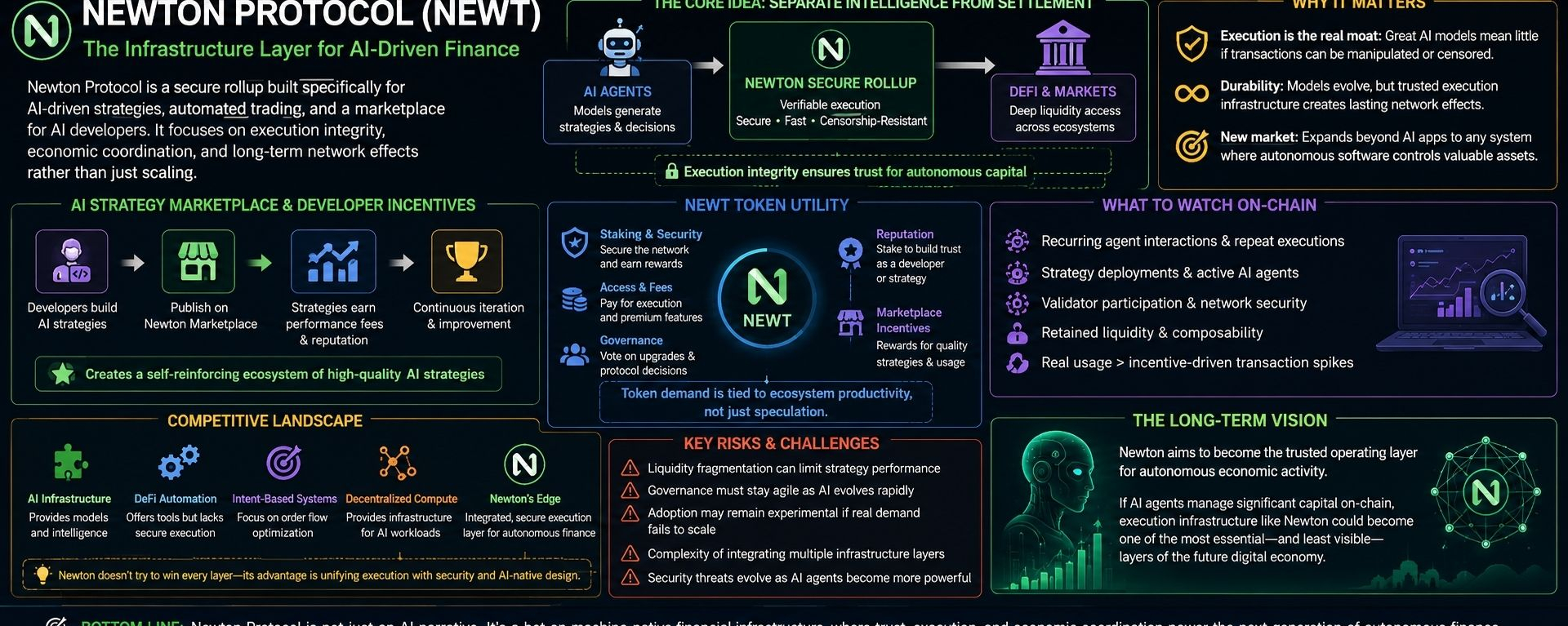
Le protocole Newton pose une question différenteJ’ai passé du temps à réfléchir à la manière dont les conversations autour de l’IA et de la crypto dérivent rapidement vers des résultats visibles tout en ignorant discrètement les systèmes qui déterminent si ces résultats peuvent un jour être dignes de confiance. Je me surprends à porter moins d’attention aux promesses et davantage à ces accords invisibles dissimulés derrière elles. Chaque action automatisée, chaque décision déléguée, chaque morceau de logiciel agissant au nom d’une personne finit par mener à la même question inconfortable : qui contrôle réellement le moment où quelque chose d’irréversible se produit ? Cette question m’est restée bien plus longtemps que n’importe quel titre, et c’est probablement pour cela que je reviens sans cesse au protocole Newton plutôt que de simplement passer à la prochaine histoire.
Le protocole Newton pose une question différente
J’ai passé du temps à réfléchir à la manière dont les conversations autour de l’IA et de la crypto dérivent rapidement vers des résultats visibles tout en ignorant discrètement les systèmes qui déterminent si ces résultats peuvent un jour être dignes de confiance. Je me surprends à porter moins d’attention aux promesses et davantage à ces accords invisibles dissimulés derrière elles. Chaque action automatisée, chaque décision déléguée, chaque morceau de logiciel agissant au nom d’une personne finit par mener à la même question inconfortable : qui contrôle réellement le moment où quelque chose d’irréversible se produit ? Cette question m’est restée bien plus longtemps que n’importe quel titre, et c’est probablement pour cela que je reviens sans cesse au protocole Newton plutôt que de simplement passer à la prochaine histoire.
3
1
180
Connectez-vous pour découvrir plus de contenu
Rejoignez la communauté mondiale des adeptes de cryptomonnaies sur Binance Square
⚡️ Suviez les dernières informations importantes sur les cryptomonnaies.
💬 Jugé digne de confiance par la plus grande plateforme d’échange de cryptomonnaies au monde.
👍 Découvrez les connaissances que partagent les créateurs vérifiés.
Adresse e-mail/Nº de téléphone
Sujets d’actualité
BinanceLaunchesBinanceIntelligence
298,237 vues
2,544 mentions
#BinanceLaunchesBinanceIntelligence Binance Intelligence est là
Explorez l’écosystème crypto avec un contexte plus clair, fondé sur les données. Binance Intelligence rassemble les tendances du marché, l’évolution des actifs, l’activité de l’écosystème et les grands récits afin de vous aider à faire le tri et à mieux comprendre ce qui façonne le Web3.
Que vous suiviez les grands mouvements du marché, découvriez de nouveaux projets ou souhaitiez rester au fait des dernières évolutions de l’écosystème, Binance Intelligence rend la recherche plus accessible et plus facile à parcourir.
Les marchés crypto sont volatils et comportent des risques. Faites toujours vos propres recherches et prenez vos décisions en fonction de vos objectifs et de votre tolérance au risque.
Lancements de Binance #BinanceLaunchesBinanceIntelligence #CryptoResearch
CryptosignalIQ
·1 mentions J’aime
·46 vues
BitcoinTargets2026OpenAt$87570
727 vues
41 mentions
BitcoinRejectedAt$87KThirdTime
900 vues
43 mentions