
MrsCafe
89 Publications

MrsCafe
Signaler
Bloquer l’utilisateur
NodeOps Ambassador|| Web3 enthusiast || content writer || community manager || MOD || intern @trustchain0
32 Suivis
36 Abonnés
49 J’aime
Publications
·
--
Voir la traduction
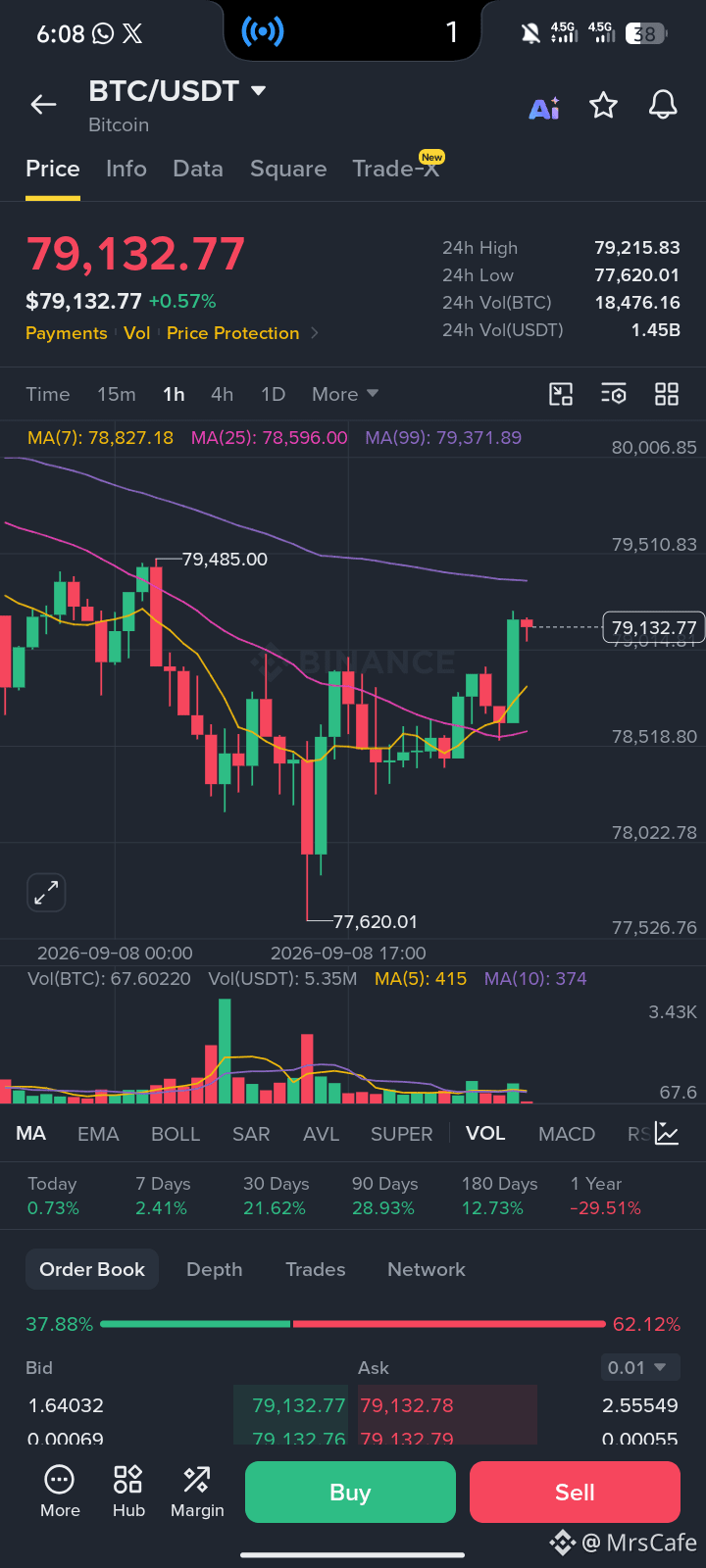
Coin: BTC/USDT
Signal: Sell / Short
Type: Futures (isolated, 5–10x)
Entry: 79,100 – 79,150
TP1: 78,500
TP2: 77,800
TP3: 77,000
Stop Loss: 79,800
$BTC
Coin: BTC/USDT
Signal: Sell / Short
Type: Futures (isolated, 5–10x)
Entry: 79,100 – 79,150
TP1: 78,500
TP2: 77,800
TP3: 77,000
Stop Loss: 79,800
$BTC
Signal: Sell / Short
Type: Futures (isolated, 5–10x)
Entry: 79,100 – 79,150
TP1: 78,500
TP2: 77,800
TP3: 77,000
Stop Loss: 79,800
$BTC
4
·
--
Voir la traduction
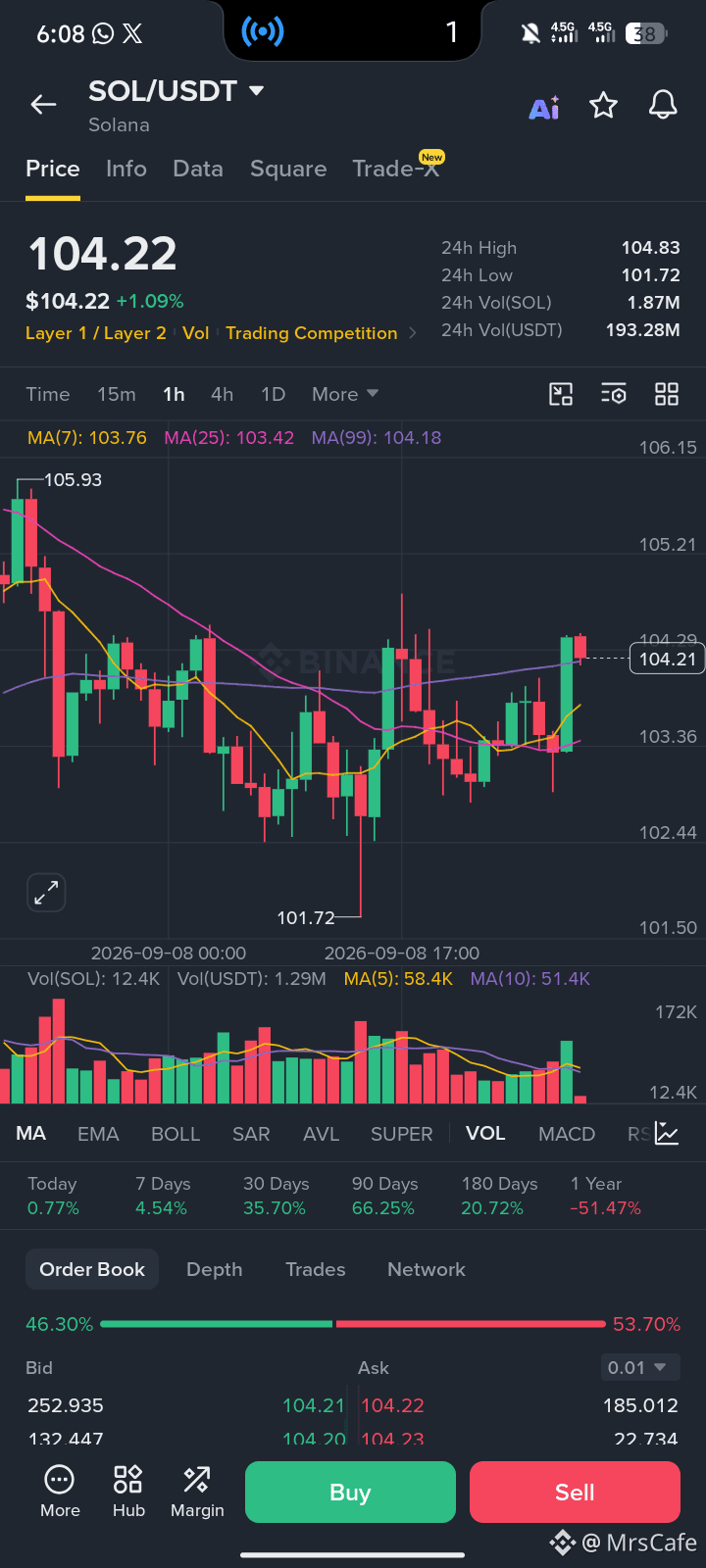
Coin: SOL/USDT
Signal: Sell / Short
Type: Futures (isolated, 5–10x)
Entry: 104.00 – 104.30
TP1: 103.00
TP2: 101.50
TP3: 100.00
Stop Loss: 105.50
$SOL
Coin: SOL/USDT
Signal: Sell / Short
Type: Futures (isolated, 5–10x)
Entry: 104.00 – 104.30
TP1: 103.00
TP2: 101.50
TP3: 100.00
Stop Loss: 105.50
$SOL
Signal: Sell / Short
Type: Futures (isolated, 5–10x)
Entry: 104.00 – 104.30
TP1: 103.00
TP2: 101.50
TP3: 100.00
Stop Loss: 105.50
$SOL
2
·
--
Haussier
Voir la traduction
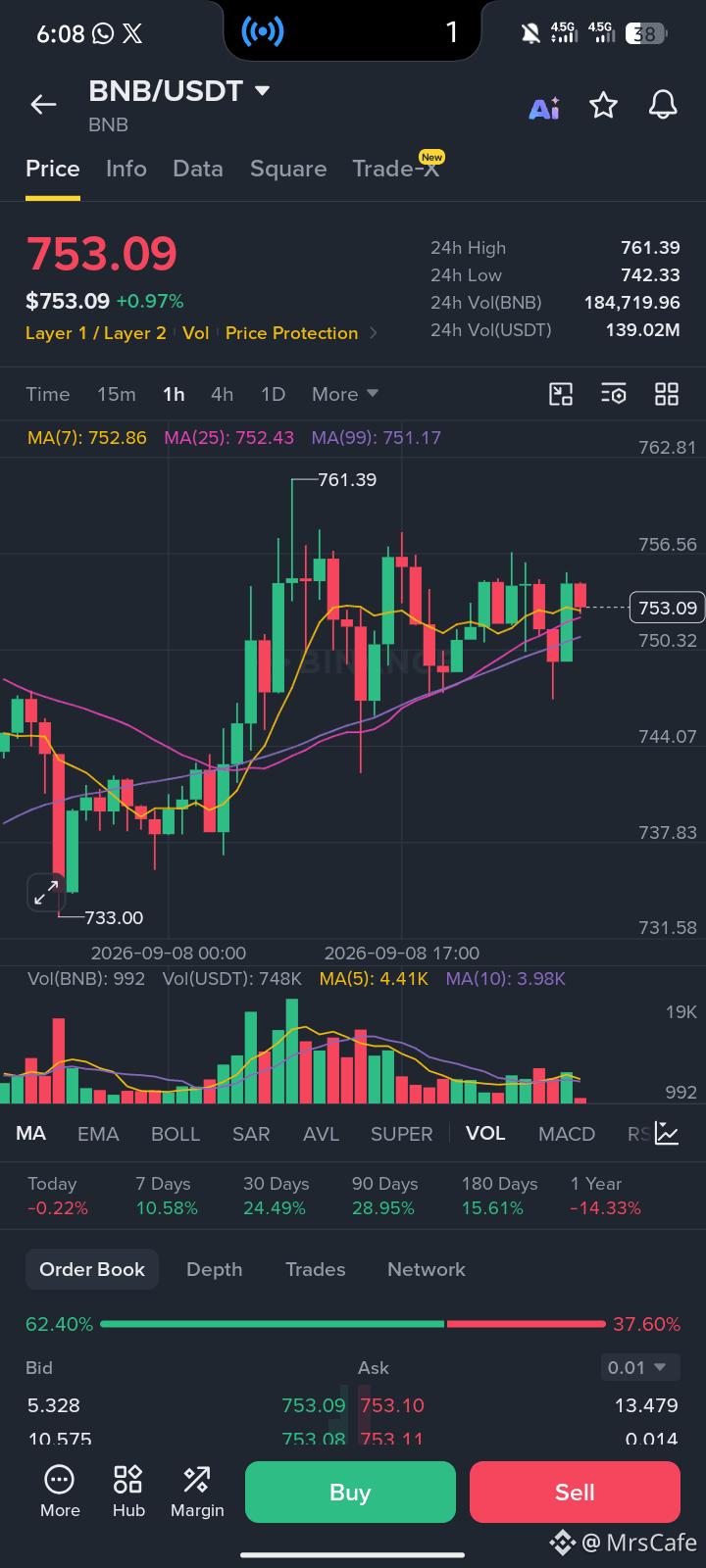
Coin: BNB/USDT
Signal: Sell / Short
Type: Futures (isolated, 5–10x)
Entry: 752.00 – 754.00
TP1: 745.00
TP2: 738.00
TP3: 730.00
Stop Loss: 762.00
$BNB
Coin: BNB/USDT
Signal: Sell / Short
Type: Futures (isolated, 5–10x)
Entry: 752.00 – 754.00
TP1: 745.00
TP2: 738.00
TP3: 730.00
Stop Loss: 762.00
$BNB
Signal: Sell / Short
Type: Futures (isolated, 5–10x)
Entry: 752.00 – 754.00
TP1: 745.00
TP2: 738.00
TP3: 730.00
Stop Loss: 762.00
$BNB
15
·
--
Voir la traduction
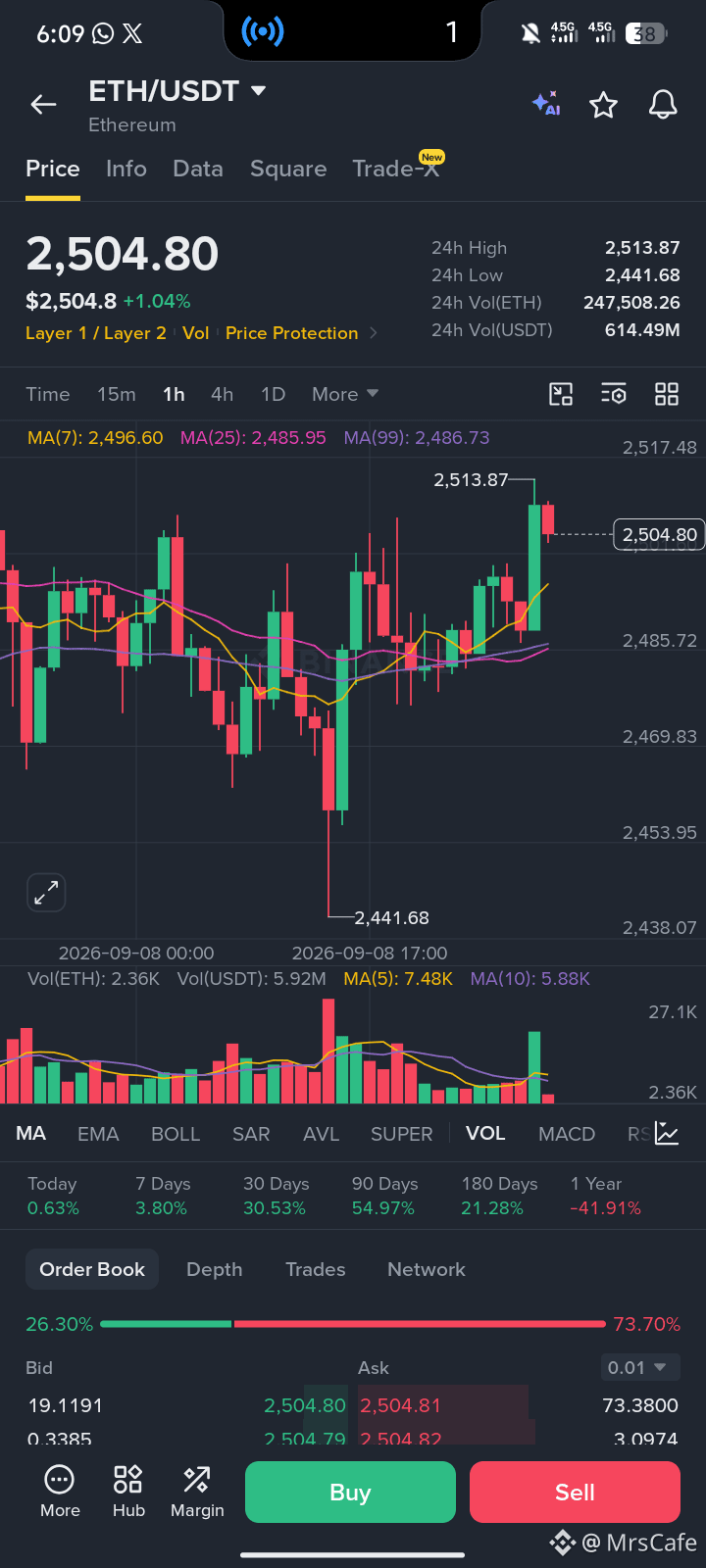
Coin: ETH/USDT
Signal: Sell / Short
Type: Futures (isolated, 5–10x)
Entry: 2,502 – 2,506
TP1: 2,480
TP2: 2,450
TP3: 2,420
Stop Loss: 2,525
$ETH
Coin: ETH/USDT
Signal: Sell / Short
Type: Futures (isolated, 5–10x)
Entry: 2,502 – 2,506
TP1: 2,480
TP2: 2,450
TP3: 2,420
Stop Loss: 2,525
$ETH
Signal: Sell / Short
Type: Futures (isolated, 5–10x)
Entry: 2,502 – 2,506
TP1: 2,480
TP2: 2,450
TP3: 2,420
Stop Loss: 2,525
$ETH
25
·
--
Voir la traduction
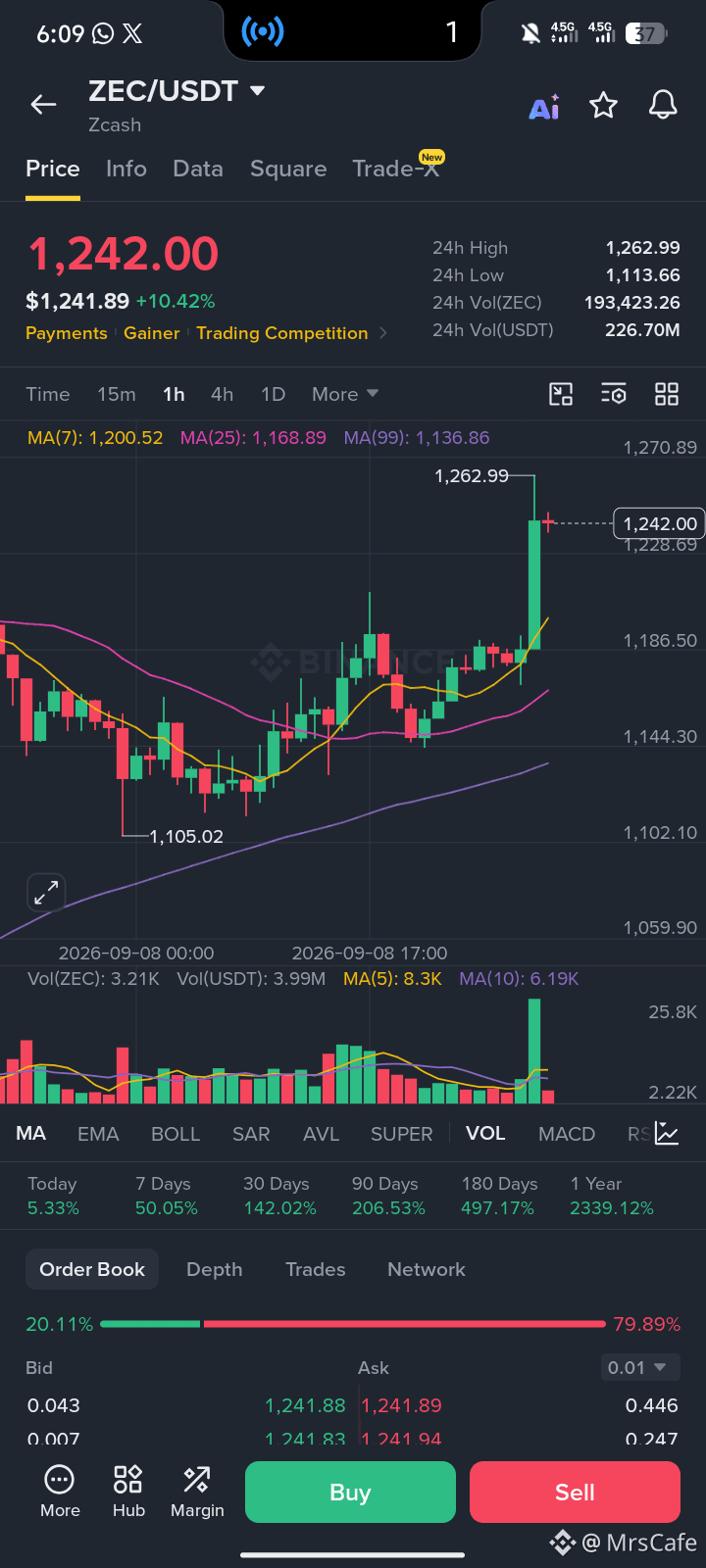
Coin: ZEC/USDT
Signal: Sell / Short
Type: Futures (isolated, 3–5x)
Entry: 1,240 – 1,245
TP1: 1,210
TP2: 1,180
TP3: 1,150
Stop Loss: 1,265
$ZEC
Coin: ZEC/USDT
Signal: Sell / Short
Type: Futures (isolated, 3–5x)
Entry: 1,240 – 1,245
TP1: 1,210
TP2: 1,180
TP3: 1,150
Stop Loss: 1,265
$ZEC
Signal: Sell / Short
Type: Futures (isolated, 3–5x)
Entry: 1,240 – 1,245
TP1: 1,210
TP2: 1,180
TP3: 1,150
Stop Loss: 1,265
$ZEC
45
·
--
Voir la traduction
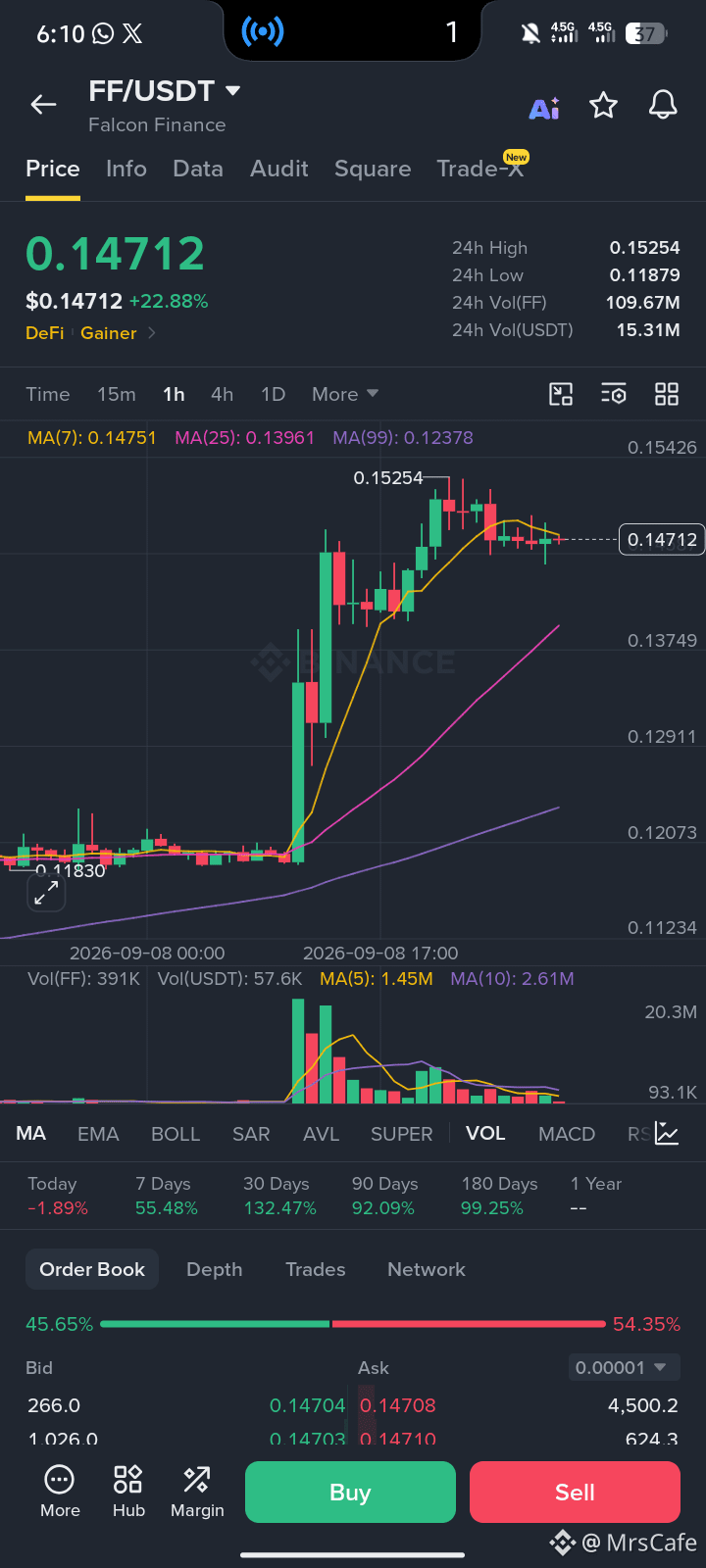
Coin: FF/USDT
Signal: Sell / Short
Type: Futures (isolated, 3–5x)
Entry: 0.1470 – 0.1475
TP1: 0.1420
TP2: 0.1370
TP3: 0.1320
Stop Loss: 0.1510
$FF
#USStrikesTargetsNearHormuzAndJask
Coin: FF/USDT
Signal: Sell / Short
Type: Futures (isolated, 3–5x)
Entry: 0.1470 – 0.1475
TP1: 0.1420
TP2: 0.1370
TP3: 0.1320
Stop Loss: 0.1510
$FF
#USStrikesTargetsNearHormuzAndJask
Signal: Sell / Short
Type: Futures (isolated, 3–5x)
Entry: 0.1470 – 0.1475
TP1: 0.1420
TP2: 0.1370
TP3: 0.1320
Stop Loss: 0.1510
$FF
#USStrikesTargetsNearHormuzAndJask
39
·
--
Voir la traduction
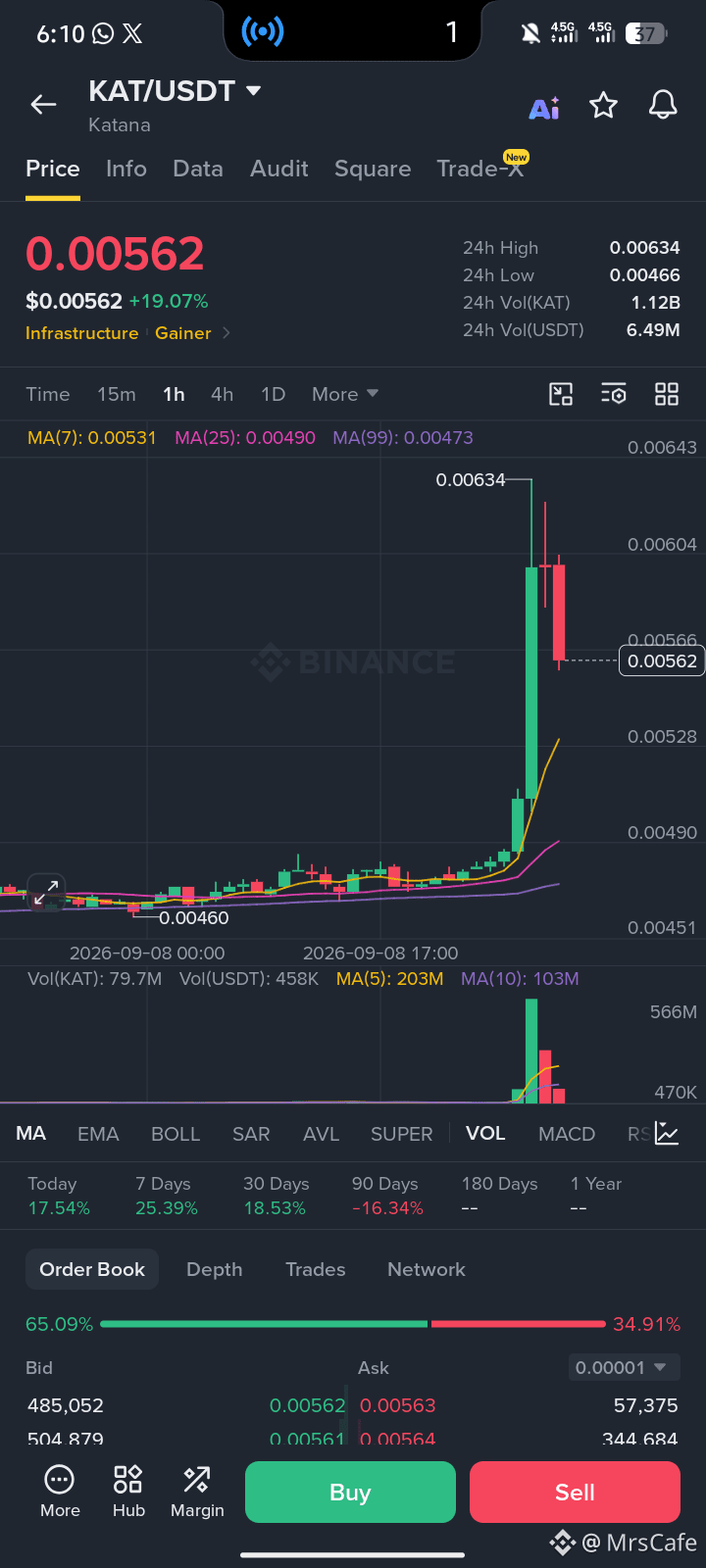
Coin: KAT/USDT
Signal: Sell / Short
Type: Futures (isolated, 3–5x)
Entry: 0.00560 – 0.00565
TP1: 0.00530
TP2: 0.00500
TP3: 0.00470
Stop Loss: 0.00585
$KAT
#OilRisesToHighestSinceJuly #USStrikesTargetsNearHormuzAndJask
Coin: KAT/USDT
Signal: Sell / Short
Type: Futures (isolated, 3–5x)
Entry: 0.00560 – 0.00565
TP1: 0.00530
TP2: 0.00500
TP3: 0.00470
Stop Loss: 0.00585
$KAT
#OilRisesToHighestSinceJuly #USStrikesTargetsNearHormuzAndJask
Signal: Sell / Short
Type: Futures (isolated, 3–5x)
Entry: 0.00560 – 0.00565
TP1: 0.00530
TP2: 0.00500
TP3: 0.00470
Stop Loss: 0.00585
$KAT
#OilRisesToHighestSinceJuly #USStrikesTargetsNearHormuzAndJask
43
·
--
Voir la traduction
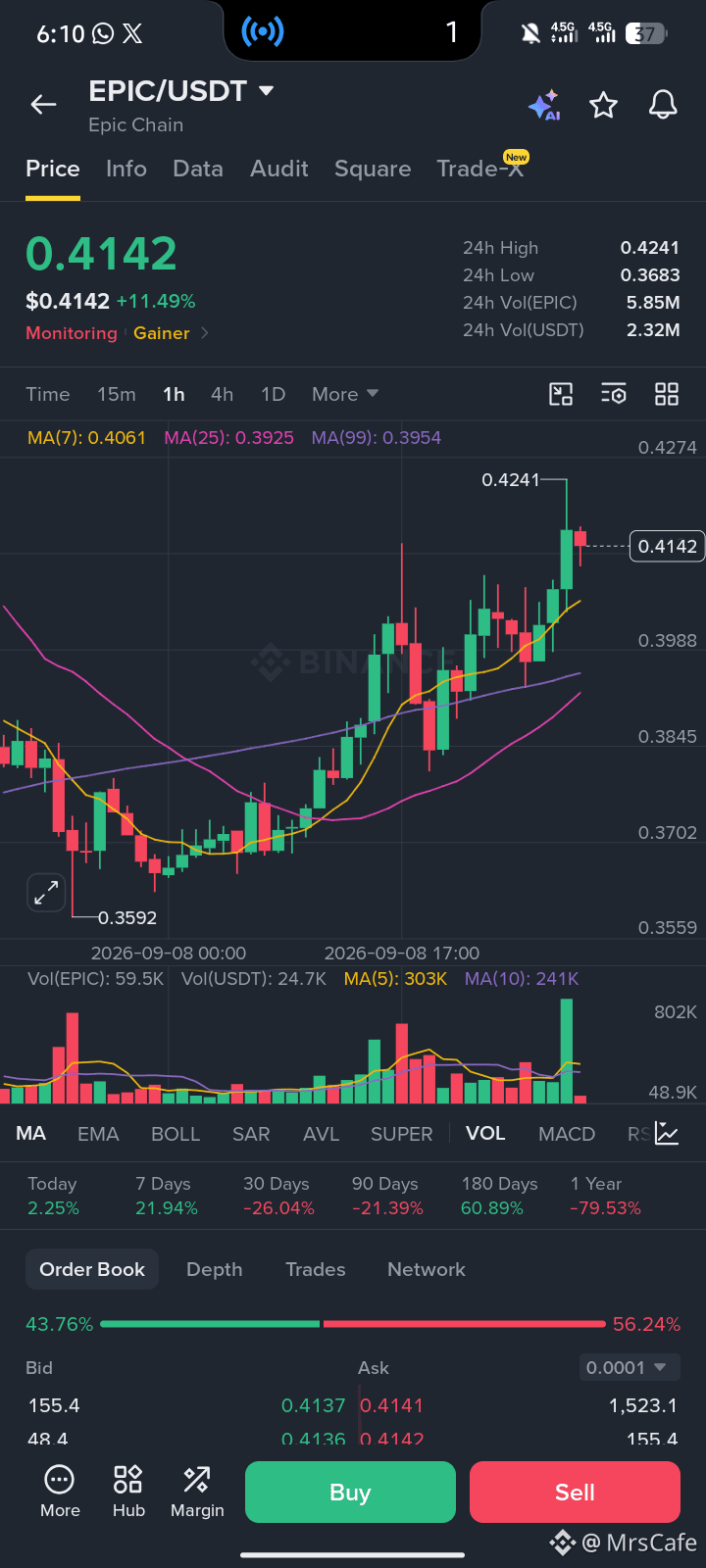
Coin: EPIC/USDT
Signal: Sell / Short
Type: Futures (isolated, 3–5x)
Entry: 0.4120 – 0.4150
TP1: 0.4000
TP2: 0.3880
TP3: 0.3750
Stop Loss: 0.4250
$EPIC
#USStrikesTargetsNearHormuzAndJask #OilRisesToHighestSinceJuly
Coin: EPIC/USDT
Signal: Sell / Short
Type: Futures (isolated, 3–5x)
Entry: 0.4120 – 0.4150
TP1: 0.4000
TP2: 0.3880
TP3: 0.3750
Stop Loss: 0.4250
$EPIC
#USStrikesTargetsNearHormuzAndJask #OilRisesToHighestSinceJuly
Signal: Sell / Short
Type: Futures (isolated, 3–5x)
Entry: 0.4120 – 0.4150
TP1: 0.4000
TP2: 0.3880
TP3: 0.3750
Stop Loss: 0.4250
$EPIC
#USStrikesTargetsNearHormuzAndJask #OilRisesToHighestSinceJuly
54
·
--
Haussier
Voir la traduction
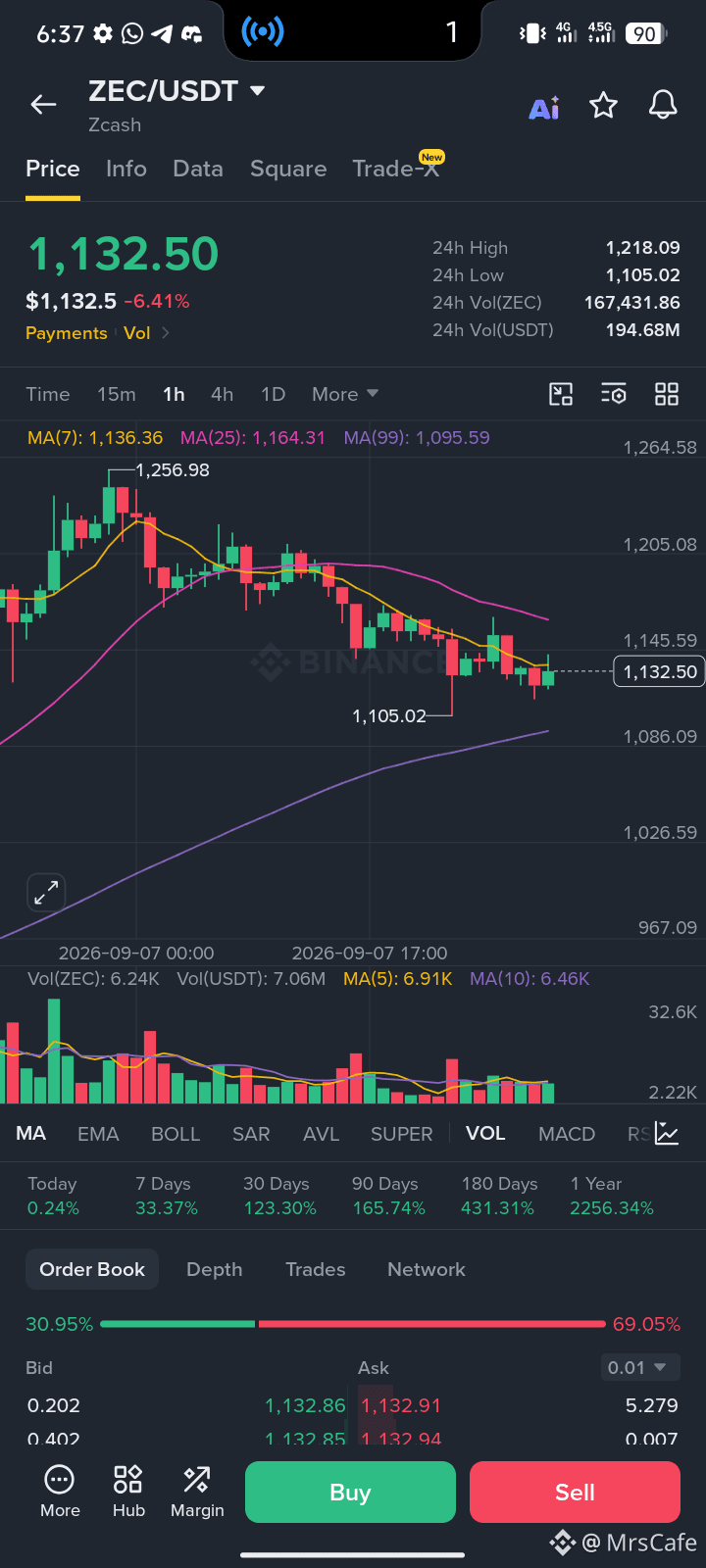
Coin: ZEC/USDT
Signal: Sell / Short
Type: Futures (isolated, 3–5x)
Entry: 1,130 – 1,135
TP1: 1,100
TP2: 1,070
TP3: 1,040
Stop Loss: 1,155
$ZEC
#ZcashRises45%WeeklyToHighestSince2016 #CanadaTariffsOnUSTakeEffect
Coin: ZEC/USDT
Signal: Sell / Short
Type: Futures (isolated, 3–5x)
Entry: 1,130 – 1,135
TP1: 1,100
TP2: 1,070
TP3: 1,040
Stop Loss: 1,155
$ZEC
#ZcashRises45%WeeklyToHighestSince2016 #CanadaTariffsOnUSTakeEffect
Signal: Sell / Short
Type: Futures (isolated, 3–5x)
Entry: 1,130 – 1,135
TP1: 1,100
TP2: 1,070
TP3: 1,040
Stop Loss: 1,155
$ZEC
#ZcashRises45%WeeklyToHighestSince2016 #CanadaTariffsOnUSTakeEffect
6
·
--
Voir la traduction
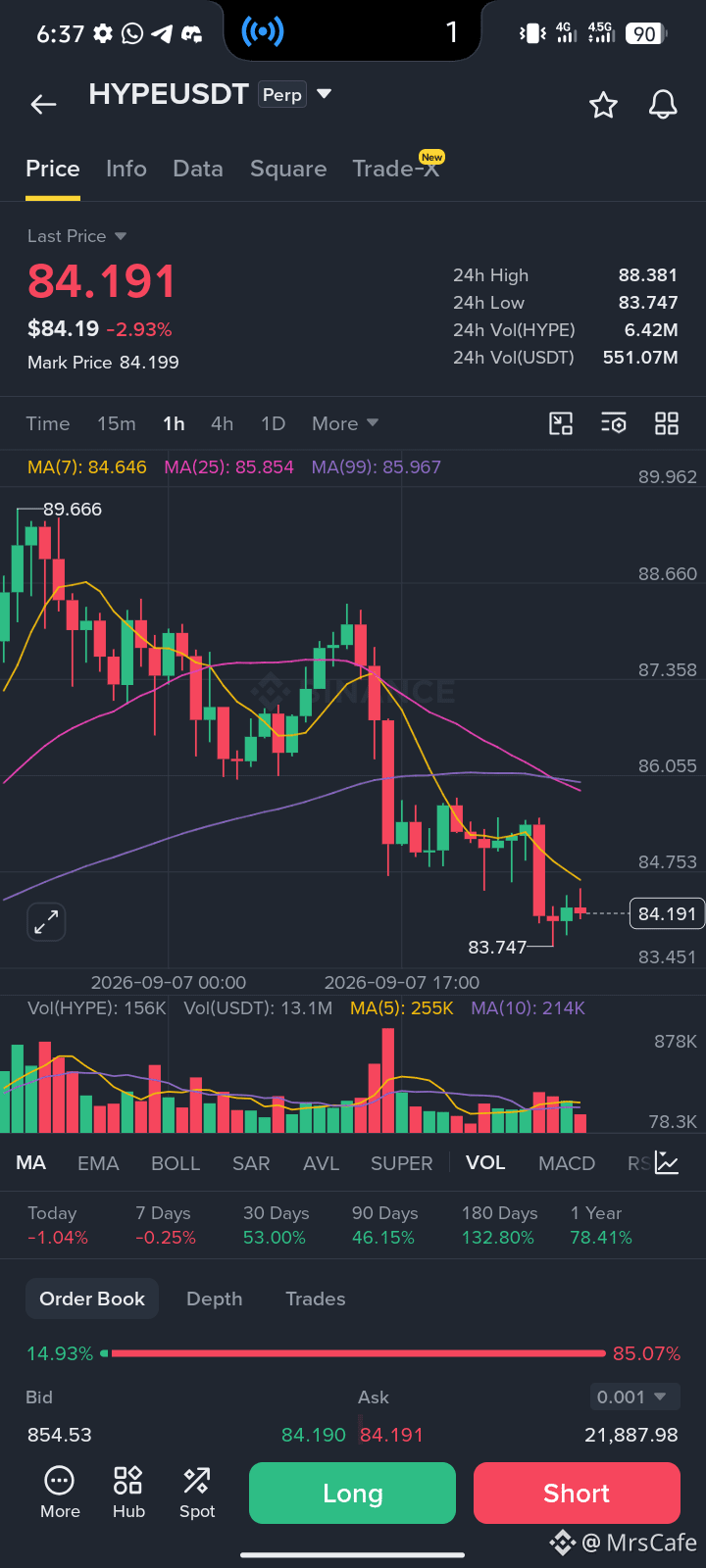
Coin: HYPE/USDT (Perpetual)
Signal: Sell / Short
Type: Futures (isolated, 3–5x)
Entry: 84.00 – 84.20
TP1: 83.00
TP2: 81.50
TP3: 80.00
Stop Loss: 85.50
$HYPE
#IMFSaysElSalvadorBTCNoPublicFunds
Coin: HYPE/USDT (Perpetual)
Signal: Sell / Short
Type: Futures (isolated, 3–5x)
Entry: 84.00 – 84.20
TP1: 83.00
TP2: 81.50
TP3: 80.00
Stop Loss: 85.50
$HYPE
#IMFSaysElSalvadorBTCNoPublicFunds
Signal: Sell / Short
Type: Futures (isolated, 3–5x)
Entry: 84.00 – 84.20
TP1: 83.00
TP2: 81.50
TP3: 80.00
Stop Loss: 85.50
$HYPE
#IMFSaysElSalvadorBTCNoPublicFunds
25
·
--
Voir la traduction
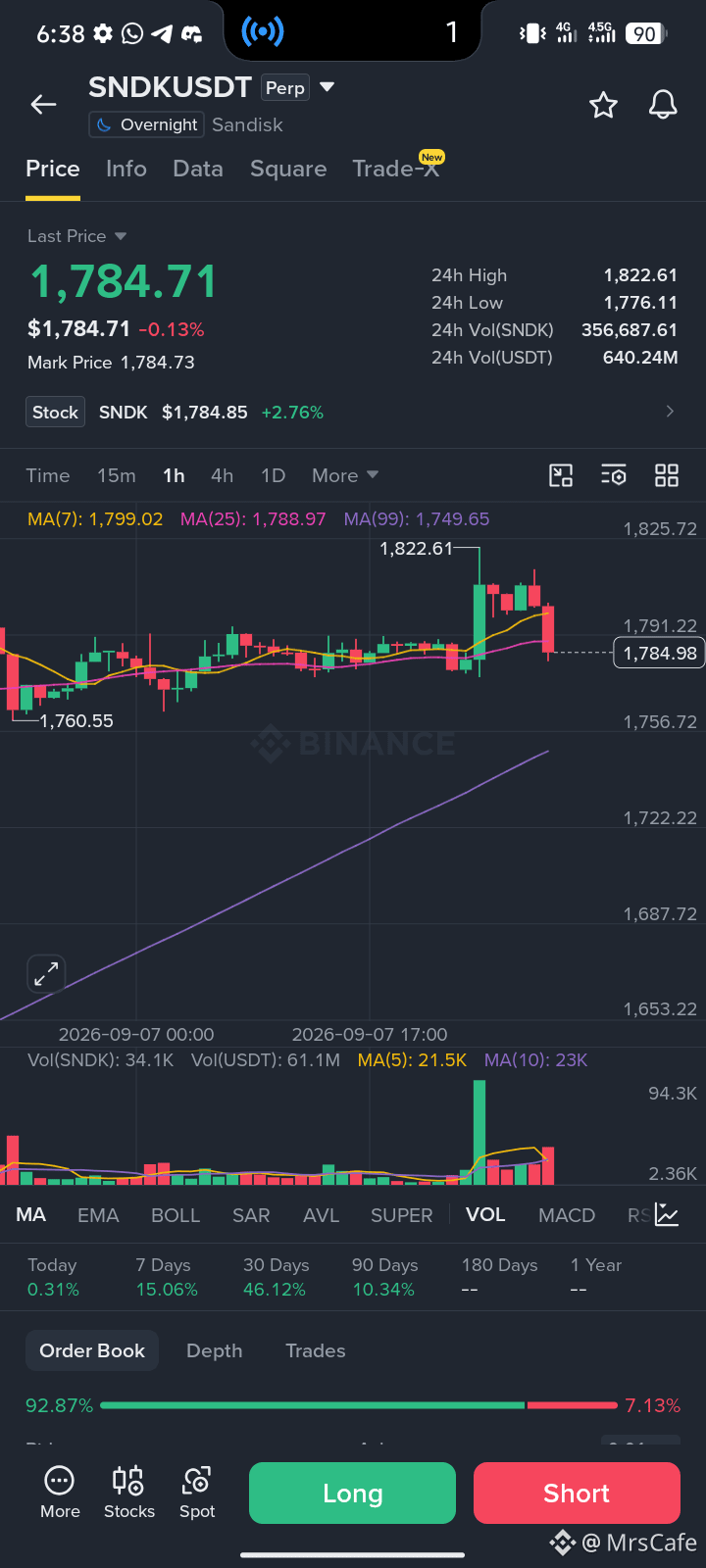
Coin: SNDK/USDT (Perpetual)
Signal: Sell / Short
Type: Futures (isolated, 3–5x)
Entry: 1,780 – 1,790
TP1: 1,750
TP2: 1,720
TP3: 1,690
Stop Loss: 1,810
$SNDK
#ZcashRises45%WeeklyToHighestSince2016
Coin: SNDK/USDT (Perpetual)
Signal: Sell / Short
Type: Futures (isolated, 3–5x)
Entry: 1,780 – 1,790
TP1: 1,750
TP2: 1,720
TP3: 1,690
Stop Loss: 1,810
$SNDK
#ZcashRises45%WeeklyToHighestSince2016
Signal: Sell / Short
Type: Futures (isolated, 3–5x)
Entry: 1,780 – 1,790
TP1: 1,750
TP2: 1,720
TP3: 1,690
Stop Loss: 1,810
$SNDK
#ZcashRises45%WeeklyToHighestSince2016
273
·
--
Voir la traduction
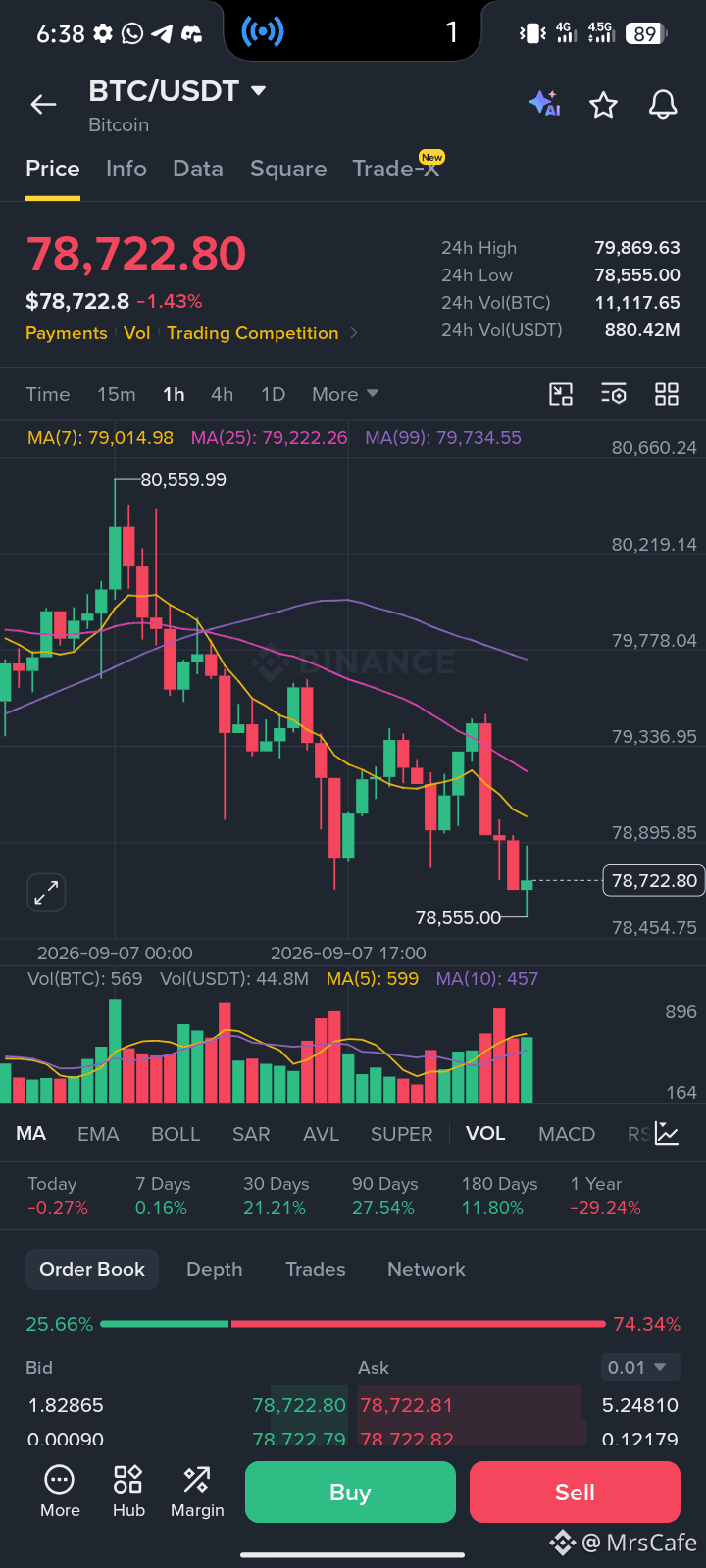
Coin: BTC/USDT
Signal: Sell / Short
Type: Futures (isolated, 5–10x)
Entry: 78,700 – 78,800
TP1: 78,000
TP2: 77,200
TP3: 76,500
Stop Loss: 79,500
$BTC
#CanadaTariffsOnUSTakeEffect
Coin: BTC/USDT
Signal: Sell / Short
Type: Futures (isolated, 5–10x)
Entry: 78,700 – 78,800
TP1: 78,000
TP2: 77,200
TP3: 76,500
Stop Loss: 79,500
$BTC
#CanadaTariffsOnUSTakeEffect
Signal: Sell / Short
Type: Futures (isolated, 5–10x)
Entry: 78,700 – 78,800
TP1: 78,000
TP2: 77,200
TP3: 76,500
Stop Loss: 79,500
$BTC
#CanadaTariffsOnUSTakeEffect
29
·
--
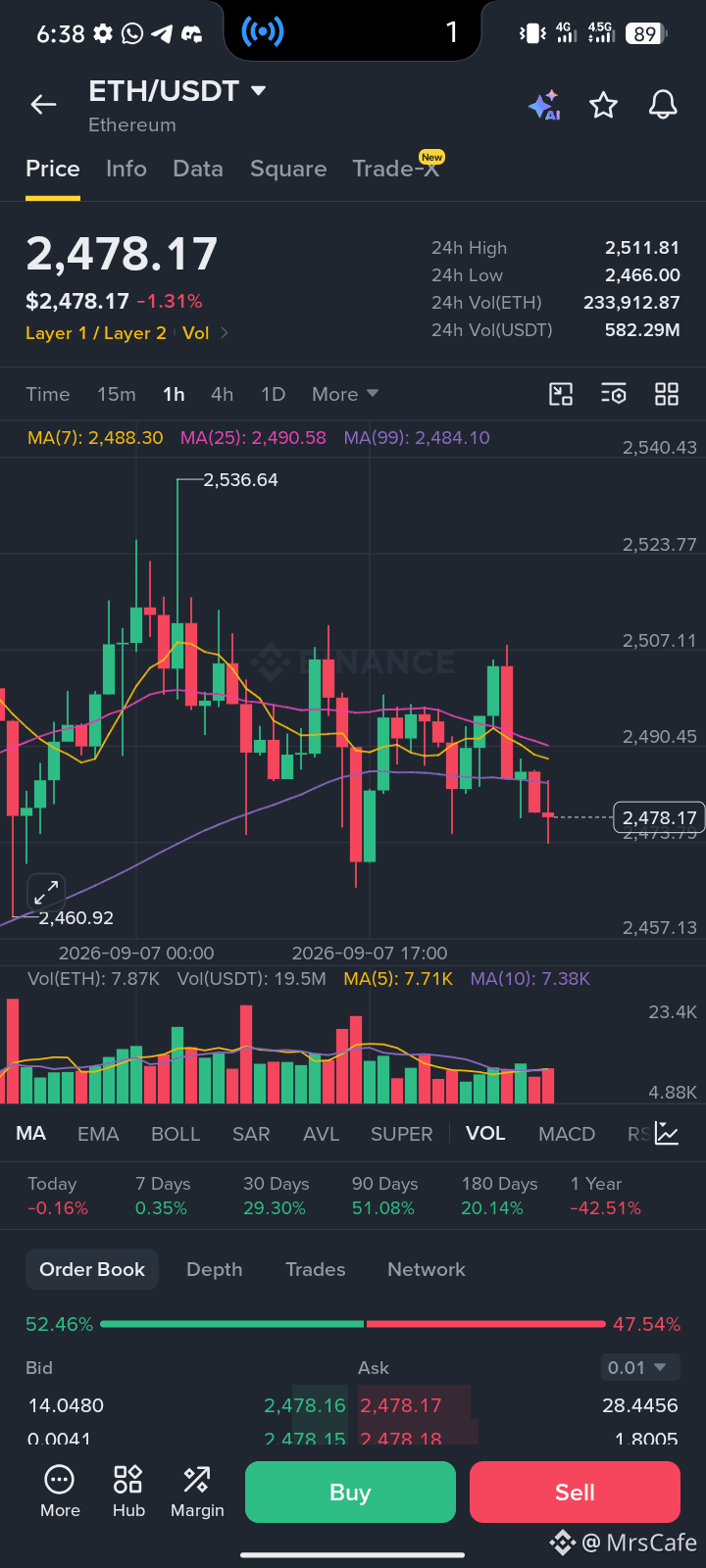
Coin : ETH/USDT
Signal : Vendre / Short
Type : Futures (isolés, 5–10x)
Entrée : 2 475 – 2 480
TP1 : 2 450
TP2 : 2 420
TP3 : 2 390
Stop Loss : 2 505
$ETH
#USIranTradeTankerStrikesEscalate
Coin : ETH/USDT
Signal : Vendre / Short
Type : Futures (isolés, 5–10x)
Entrée : 2 475 – 2 480
TP1 : 2 450
TP2 : 2 420
TP3 : 2 390
Stop Loss : 2 505
$ETH
#USIranTradeTankerStrikesEscalate
Signal : Vendre / Short
Type : Futures (isolés, 5–10x)
Entrée : 2 475 – 2 480
TP1 : 2 450
TP2 : 2 420
TP3 : 2 390
Stop Loss : 2 505
$ETH
#USIranTradeTankerStrikesEscalate
58
·
--
Voir la traduction
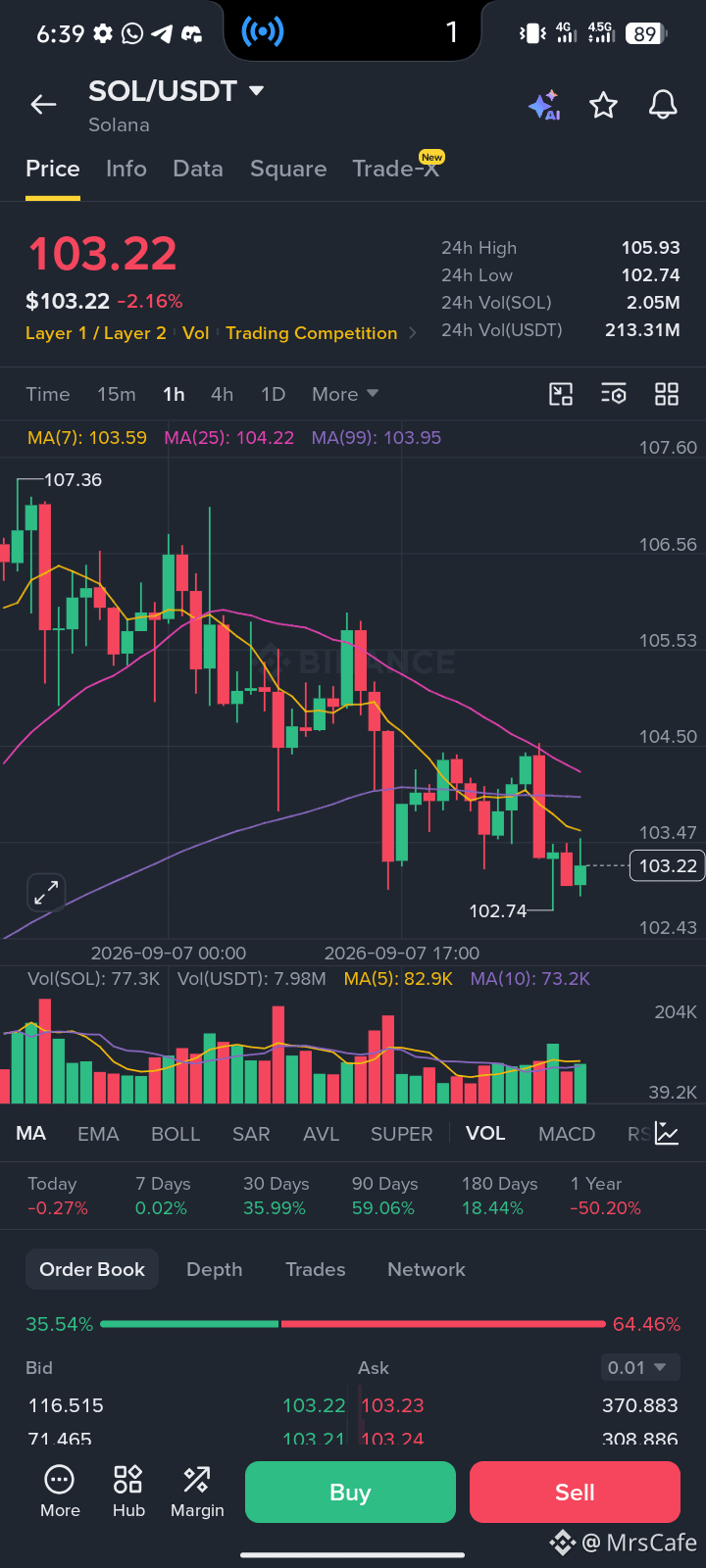
$SOL
Coin: SOLUSDT
Signal: Sell / Short
Type: Futures (isolated, 5–10x)
Entry: 103.00 – 103.30
TP1: 102.00
TP2: 100.50
TP3: 99.00
Stop Loss: 104.50
#YenBreaks155NearingYearHigh
$SOL
Coin: SOLUSDT
Signal: Sell / Short
Type: Futures (isolated, 5–10x)
Entry: 103.00 – 103.30
TP1: 102.00
TP2: 100.50
TP3: 99.00
Stop Loss: 104.50
#YenBreaks155NearingYearHigh
Coin: SOLUSDT
Signal: Sell / Short
Type: Futures (isolated, 5–10x)
Entry: 103.00 – 103.30
TP1: 102.00
TP2: 100.50
TP3: 99.00
Stop Loss: 104.50
#YenBreaks155NearingYearHigh
72
·
--
Haussier
Voir la traduction
The Swap Button Hides More Than You Think
You click Swap.
It feels like one simple transaction.
But modern DeFi can involve a lot more underneath:
🔹 Liquidity discovery
🔹 Smart routing
🔹 Multiple DEXs
🔹 Resolver quotes
🔹 Escrow execution
🔹 Cross-chain settlement
🔹 Gas management
That's why I think the future of DeFi isn't simply about building more DEXs.
It's about building better execution layers.
STON.fi's Omniston is evolving in this direction, moving from liquidity aggregation toward a broader execution architecture.
The user doesn't necessarily need to know which route was selected.
They need to know:
What they're paying.
What they're receiving.
Whether the execution succeeded.
What risks exist.
That's the power of abstraction.
The backend becomes more sophisticated while the interface becomes easier to use.
Simple interface. Sophisticated infrastructure.
That's where I think DeFi UX is heading.
🔗 Explore STON.fi: STON.fi
#KoreaSingleStockLeveragedETFTradingFalls
The Swap Button Hides More Than You Think
You click Swap.
It feels like one simple transaction.
But modern DeFi can involve a lot more underneath:
🔹 Liquidity discovery
🔹 Smart routing
🔹 Multiple DEXs
🔹 Resolver quotes
🔹 Escrow execution
🔹 Cross-chain settlement
🔹 Gas management
That's why I think the future of DeFi isn't simply about building more DEXs.
It's about building better execution layers.
STON.fi's Omniston is evolving in this direction, moving from liquidity aggregation toward a broader execution architecture.
The user doesn't necessarily need to know which route was selected.
They need to know:
What they're paying.
What they're receiving.
Whether the execution succeeded.
What risks exist.
That's the power of abstraction.
The backend becomes more sophisticated while the interface becomes easier to use.
Simple interface. Sophisticated infrastructure.
That's where I think DeFi UX is heading.
🔗 Explore STON.fi: STON.fi
#KoreaSingleStockLeveragedETFTradingFalls
You click Swap.
It feels like one simple transaction.
But modern DeFi can involve a lot more underneath:
🔹 Liquidity discovery
🔹 Smart routing
🔹 Multiple DEXs
🔹 Resolver quotes
🔹 Escrow execution
🔹 Cross-chain settlement
🔹 Gas management
That's why I think the future of DeFi isn't simply about building more DEXs.
It's about building better execution layers.
STON.fi's Omniston is evolving in this direction, moving from liquidity aggregation toward a broader execution architecture.
The user doesn't necessarily need to know which route was selected.
They need to know:
What they're paying.
What they're receiving.
Whether the execution succeeded.
What risks exist.
That's the power of abstraction.
The backend becomes more sophisticated while the interface becomes easier to use.
Simple interface. Sophisticated infrastructure.
That's where I think DeFi UX is heading.
🔗 Explore STON.fi: STON.fi
#KoreaSingleStockLeveragedETFTradingFalls
62
·
--
Haussier
Voir la traduction
Your DEX Interface May Be Doing More Than You Think
When you open a DEX, you probably think about one thing:
Swap.
But the interface can do something much more important:
Give you context before you swap.
STON.fi labels certain tokens as:
🔴 Fake
🔴 Honeypot
🟡 Taxable
🟣 Suspicious
🔵 DMCA Notice
Why?
Because a token name and logo aren't enough to tell you how the underlying contract behaves.
A Fake token can imitate a known asset.
A Honeypot can allow buying but prevent normal selling.
A Taxable token can take an additional fee during transfers.
Suspicious assets can require additional attention.
DMCA Notice identifies tokens associated with intellectual-property complaints.
And here's the interesting part:
STON.fi doesn't simply treat all of them the same.
Some are blocked from swapping.
Others remain available with warnings.
Some require manual contract-address entry.
That's an important UX principle.
Not every risk requires a ban.
Sometimes the right response is:
“Here is the information. Now make an informed decision.”
Other times, stronger restrictions make sense.
For me, this points toward a bigger trend:
The DEX interface is becoming part of the risk-management experience.
The future of DeFi UX may not be about removing every warning and every extra click.
It may be about removing unnecessary friction while keeping the friction that prevents costly mistakes.
That's a much more mature way to think about UX.
🔗 Explore STON.fi: STON.fi
#AfghanistanTalibanReportedlyBansCryptoNationwide
Your DEX Interface May Be Doing More Than You Think
When you open a DEX, you probably think about one thing:
Swap.
But the interface can do something much more important:
Give you context before you swap.
STON.fi labels certain tokens as:
🔴 Fake
🔴 Honeypot
🟡 Taxable
🟣 Suspicious
🔵 DMCA Notice
Why?
Because a token name and logo aren't enough to tell you how the underlying contract behaves.
A Fake token can imitate a known asset.
A Honeypot can allow buying but prevent normal selling.
A Taxable token can take an additional fee during transfers.
Suspicious assets can require additional attention.
DMCA Notice identifies tokens associated with intellectual-property complaints.
And here's the interesting part:
STON.fi doesn't simply treat all of them the same.
Some are blocked from swapping.
Others remain available with warnings.
Some require manual contract-address entry.
That's an important UX principle.
Not every risk requires a ban.
Sometimes the right response is:
“Here is the information. Now make an informed decision.”
Other times, stronger restrictions make sense.
For me, this points toward a bigger trend:
The DEX interface is becoming part of the risk-management experience.
The future of DeFi UX may not be about removing every warning and every extra click.
It may be about removing unnecessary friction while keeping the friction that prevents costly mistakes.
That's a much more mature way to think about UX.
🔗 Explore STON.fi: STON.fi
#AfghanistanTalibanReportedlyBansCryptoNationwide
When you open a DEX, you probably think about one thing:
Swap.
But the interface can do something much more important:
Give you context before you swap.
STON.fi labels certain tokens as:
🔴 Fake
🔴 Honeypot
🟡 Taxable
🟣 Suspicious
🔵 DMCA Notice
Why?
Because a token name and logo aren't enough to tell you how the underlying contract behaves.
A Fake token can imitate a known asset.
A Honeypot can allow buying but prevent normal selling.
A Taxable token can take an additional fee during transfers.
Suspicious assets can require additional attention.
DMCA Notice identifies tokens associated with intellectual-property complaints.
And here's the interesting part:
STON.fi doesn't simply treat all of them the same.
Some are blocked from swapping.
Others remain available with warnings.
Some require manual contract-address entry.
That's an important UX principle.
Not every risk requires a ban.
Sometimes the right response is:
“Here is the information. Now make an informed decision.”
Other times, stronger restrictions make sense.
For me, this points toward a bigger trend:
The DEX interface is becoming part of the risk-management experience.
The future of DeFi UX may not be about removing every warning and every extra click.
It may be about removing unnecessary friction while keeping the friction that prevents costly mistakes.
That's a much more mature way to think about UX.
🔗 Explore STON.fi: STON.fi
#AfghanistanTalibanReportedlyBansCryptoNationwide

76
·
--
Haussier
Voir la traduction
The Part of Cross-Chain Swaps Nobody Talks About
Everyone wants to know:
“How fast can I move assets between chains?”
But I'd ask something else:
“What happens if the swap fails?”
That's where cross-chain architecture gets interesting.
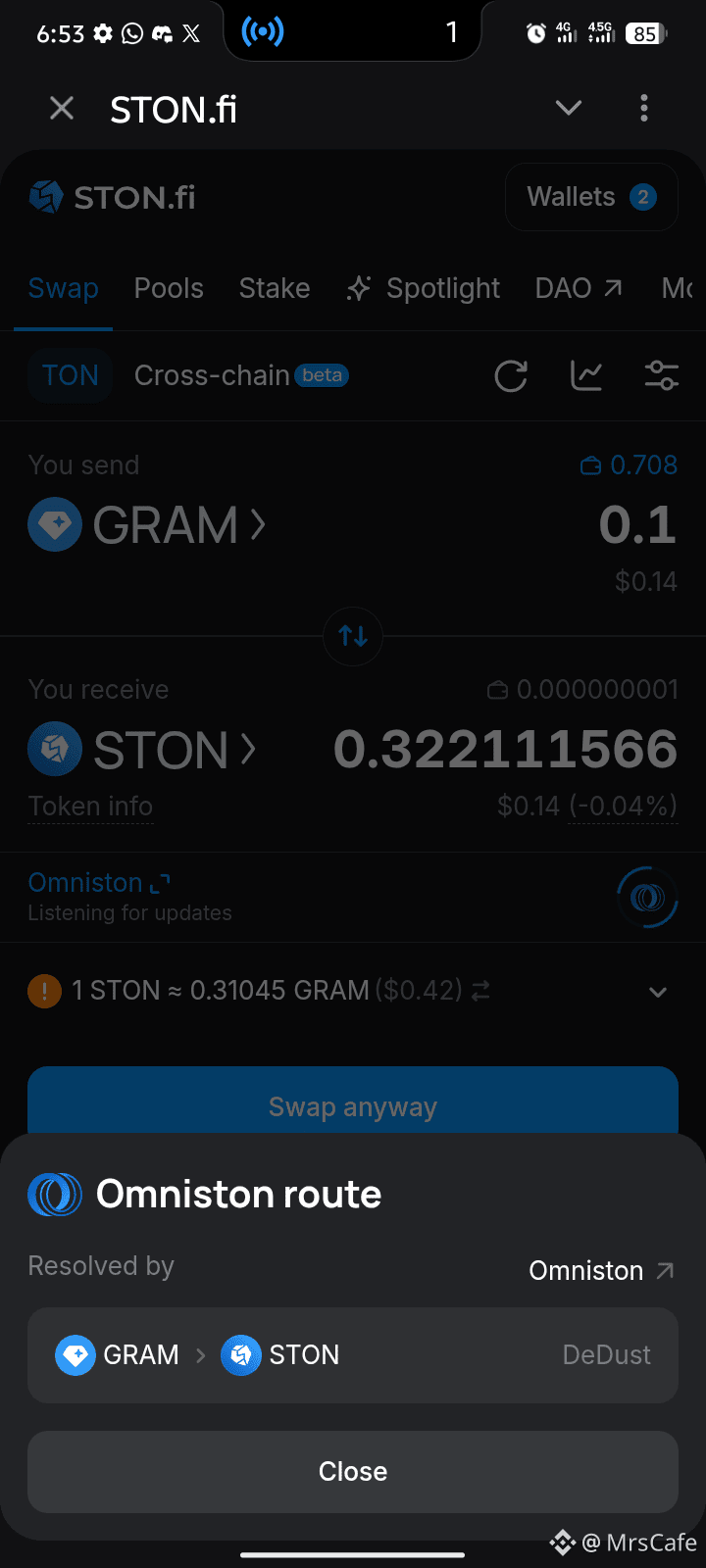
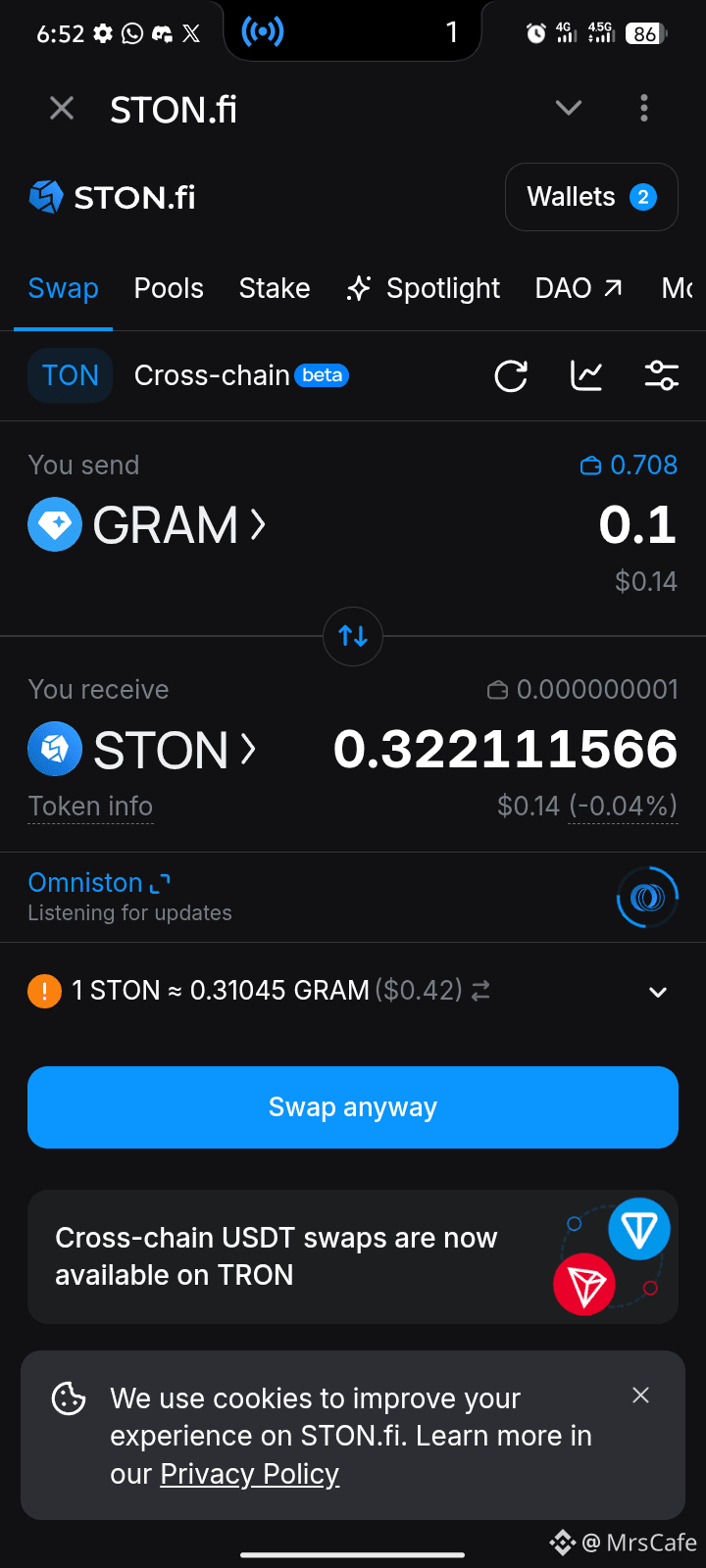
STON.fi's Omniston uses resolvers + linked HTLCs to coordinate cross-chain swaps.
A simplified flow:
🔹 User requests a quote
🔹 Resolvers compete for the order
🔹 Destination liquidity is committed
🔹 Both sides are locked through linked HTLCs
🔹 The cryptographic condition enables settlement
🔹 If settlement doesn't happen in time, the timelock provides a refund path
The goal is an all-or-nothing outcome.
Either the swap completes according to the agreed conditions, or the assets become refundable.
That's a very different way to think about cross-chain infrastructure.
Instead of asking only:
“Can I swap across chains?”
We should also ask:
“What happens when the swap doesn't go according to plan?”
Because reliable infrastructure isn't just about successful transactions.
It's about predictable failure.
🔗 Explore STON.fi: STON.fi
#USShortTermTreasuryYieldsJump #TrumpSaysUSReachedVenezuelaOilDeal
The Part of Cross-Chain Swaps Nobody Talks About
Everyone wants to know:
“How fast can I move assets between chains?”
But I'd ask something else:
“What happens if the swap fails?”
That's where cross-chain architecture gets interesting.
STON.fi's Omniston uses resolvers + linked HTLCs to coordinate cross-chain swaps.
A simplified flow:
🔹 User requests a quote
🔹 Resolvers compete for the order
🔹 Destination liquidity is committed
🔹 Both sides are locked through linked HTLCs
🔹 The cryptographic condition enables settlement
🔹 If settlement doesn't happen in time, the timelock provides a refund path
The goal is an all-or-nothing outcome.
Either the swap completes according to the agreed conditions, or the assets become refundable.
That's a very different way to think about cross-chain infrastructure.
Instead of asking only:
“Can I swap across chains?”
We should also ask:
“What happens when the swap doesn't go according to plan?”
Because reliable infrastructure isn't just about successful transactions.
It's about predictable failure.
🔗 Explore STON.fi: STON.fi
#USShortTermTreasuryYieldsJump #TrumpSaysUSReachedVenezuelaOilDeal
Everyone wants to know:
“How fast can I move assets between chains?”
But I'd ask something else:
“What happens if the swap fails?”
That's where cross-chain architecture gets interesting.
STON.fi's Omniston uses resolvers + linked HTLCs to coordinate cross-chain swaps.
A simplified flow:
🔹 User requests a quote
🔹 Resolvers compete for the order
🔹 Destination liquidity is committed
🔹 Both sides are locked through linked HTLCs
🔹 The cryptographic condition enables settlement
🔹 If settlement doesn't happen in time, the timelock provides a refund path
The goal is an all-or-nothing outcome.
Either the swap completes according to the agreed conditions, or the assets become refundable.
That's a very different way to think about cross-chain infrastructure.
Instead of asking only:
“Can I swap across chains?”
We should also ask:
“What happens when the swap doesn't go according to plan?”
Because reliable infrastructure isn't just about successful transactions.
It's about predictable failure.
🔗 Explore STON.fi: STON.fi
#USShortTermTreasuryYieldsJump #TrumpSaysUSReachedVenezuelaOilDeal
229
·
--
Haussier
Voir la traduction
TON Just Got a Real-World Stress Test
A blockchain can look incredibly fast during normal conditions.
But what happens when millions of users suddenly show up?
Between August 26–29, TON experienced severe transaction delays and temporary interruptions after a huge surge in activity connected to DOGS claims.
STON.fi says TON normally handles around 3–4M transactions/day.
On August 26, activity reached around 9M transactions, with many involving cross-shard messages.
STON.fi itself saw around 19,000 swaps in the first hour after the DOGS pool launched.
Only about 3,000 were processed immediately.
The rest entered a queue.
Some transactions experienced hours of delay, while some eventually failed because of slippage.
The interesting part isn't simply that congestion happened.
It's how the infrastructure responds.
STON.fi temporarily paused swaps during renewed congestion to protect users while keeping liquidity operations available.
And now the team is planning:
🔹 Transaction deadlines
🔹 16–64 additional routers
🔹 More distributed processing
🔹 A longer-term architecture with fewer potential failure points
My takeaway?
DeFi needs more than speed. It needs resilience.
The real stress test isn't:
“How fast is the network on a normal day?”
It's:
“What happens when demand suddenly explodes?”
That's the infrastructure question I'm watching.
🔗 https://ston.fi
#WarshSaysInflationIsFedTopFocus #SOLJumps20%OnTheWeek
TON Just Got a Real-World Stress Test
A blockchain can look incredibly fast during normal conditions.
But what happens when millions of users suddenly show up?
Between August 26–29, TON experienced severe transaction delays and temporary interruptions after a huge surge in activity connected to DOGS claims.
STON.fi says TON normally handles around 3–4M transactions/day.
On August 26, activity reached around 9M transactions, with many involving cross-shard messages.
STON.fi itself saw around 19,000 swaps in the first hour after the DOGS pool launched.
Only about 3,000 were processed immediately.
The rest entered a queue.
Some transactions experienced hours of delay, while some eventually failed because of slippage.
The interesting part isn't simply that congestion happened.
It's how the infrastructure responds.
STON.fi temporarily paused swaps during renewed congestion to protect users while keeping liquidity operations available.
And now the team is planning:
🔹 Transaction deadlines
🔹 16–64 additional routers
🔹 More distributed processing
🔹 A longer-term architecture with fewer potential failure points
My takeaway?
DeFi needs more than speed. It needs resilience.
The real stress test isn't:
“How fast is the network on a normal day?”
It's:
“What happens when demand suddenly explodes?”
That's the infrastructure question I'm watching.
🔗 https://ston.fi
#WarshSaysInflationIsFedTopFocus #SOLJumps20%OnTheWeek
A blockchain can look incredibly fast during normal conditions.
But what happens when millions of users suddenly show up?
Between August 26–29, TON experienced severe transaction delays and temporary interruptions after a huge surge in activity connected to DOGS claims.
STON.fi says TON normally handles around 3–4M transactions/day.
On August 26, activity reached around 9M transactions, with many involving cross-shard messages.
STON.fi itself saw around 19,000 swaps in the first hour after the DOGS pool launched.
Only about 3,000 were processed immediately.
The rest entered a queue.
Some transactions experienced hours of delay, while some eventually failed because of slippage.
The interesting part isn't simply that congestion happened.
It's how the infrastructure responds.
STON.fi temporarily paused swaps during renewed congestion to protect users while keeping liquidity operations available.
And now the team is planning:
🔹 Transaction deadlines
🔹 16–64 additional routers
🔹 More distributed processing
🔹 A longer-term architecture with fewer potential failure points
My takeaway?
DeFi needs more than speed. It needs resilience.
The real stress test isn't:
“How fast is the network on a normal day?”
It's:
“What happens when demand suddenly explodes?”
That's the infrastructure question I'm watching.
🔗 https://ston.fi
#WarshSaysInflationIsFedTopFocus #SOLJumps20%OnTheWeek

145
·
--
Haussier
Voir la traduction
DeFi’s Next Battle May Be About Connectivity
Crypto keeps adding new chains, but more chains also mean more fragmented liquidity.
That creates a simple problem:
Your asset may be on one network while the opportunity you want is somewhere else.
This is why STON.fi’s cross-chain direction is worth watching.
Omniston is designed to connect liquidity across supported ecosystems and facilitate cross-chain swaps, reducing the need for users to manually navigate fragmented markets.
STON.fi recently highlighted around $150K in Omniston cross-chain volume on August 25.
I don't see that as proof of dominance. I see it as a metric worth tracking.
The bigger questions are:
📈 Will volume keep growing?
🌐 Which networks will drive activity?
💰 Which assets will dominate cross-chain flows?
⚡ Can execution become simpler?
If this trend continues, DeFi could move from chain-centric to user-centric.
The user shouldn't have to care where liquidity lives.
They should care about what they want to achieve.
Connected liquidity could be one of the defining infrastructure trends of the next DeFi cycle.
🔗 Explore STON.fi: STON.fi
DeFi’s Next Battle May Be About Connectivity
Crypto keeps adding new chains, but more chains also mean more fragmented liquidity.
That creates a simple problem:
Your asset may be on one network while the opportunity you want is somewhere else.
This is why STON.fi’s cross-chain direction is worth watching.
Omniston is designed to connect liquidity across supported ecosystems and facilitate cross-chain swaps, reducing the need for users to manually navigate fragmented markets.
STON.fi recently highlighted around $150K in Omniston cross-chain volume on August 25.
I don't see that as proof of dominance. I see it as a metric worth tracking.
The bigger questions are:
📈 Will volume keep growing?
🌐 Which networks will drive activity?
💰 Which assets will dominate cross-chain flows?
⚡ Can execution become simpler?
If this trend continues, DeFi could move from chain-centric to user-centric.
The user shouldn't have to care where liquidity lives.
They should care about what they want to achieve.
Connected liquidity could be one of the defining infrastructure trends of the next DeFi cycle.
🔗 Explore STON.fi: STON.fi
Crypto keeps adding new chains, but more chains also mean more fragmented liquidity.
That creates a simple problem:
Your asset may be on one network while the opportunity you want is somewhere else.
This is why STON.fi’s cross-chain direction is worth watching.
Omniston is designed to connect liquidity across supported ecosystems and facilitate cross-chain swaps, reducing the need for users to manually navigate fragmented markets.
STON.fi recently highlighted around $150K in Omniston cross-chain volume on August 25.
I don't see that as proof of dominance. I see it as a metric worth tracking.
The bigger questions are:
📈 Will volume keep growing?
🌐 Which networks will drive activity?
💰 Which assets will dominate cross-chain flows?
⚡ Can execution become simpler?
If this trend continues, DeFi could move from chain-centric to user-centric.
The user shouldn't have to care where liquidity lives.
They should care about what they want to achieve.
Connected liquidity could be one of the defining infrastructure trends of the next DeFi cycle.
🔗 Explore STON.fi: STON.fi
72
·
--
La prochaine compétition DeFi ne portera peut-être pas sur les chaînes — elle portera peut-être sur la connectivitéDepuis des années, la cryptographie tourne autour d’une question familière :
Quelle blockchain va gagner ?
Ethereum. Solana. TON. Base. BNB Chain. TRON.
Mais à mesure que l’économie multi-chaînes arrive à maturité, je pense que cette question devient moins importante.
La question la plus intéressante est plutôt la suivante :
À quel point est-il facile pour les utilisateurs de passer d’un écosystème à l’autre et d’accéder à la liquidité dont ils ont besoin ?
C’est là que l’infrastructure inter-chaînes devient importante.
1. La DeFi a un problème de connectivité
La DeFi s’est rapidement développée.
Il existe désormais d’innombrables actifs, protocoles, pools de liquidité et applications répartis sur différents réseaux.
La prochaine compétition DeFi ne portera peut-être pas sur les chaînes — elle portera peut-être sur la connectivité
Depuis des années, la cryptographie tourne autour d’une question familière :
Quelle blockchain va gagner ?
Ethereum. Solana. TON. Base. BNB Chain. TRON.
Mais à mesure que l’économie multi-chaînes arrive à maturité, je pense que cette question devient moins importante.
La question la plus intéressante est plutôt la suivante :
À quel point est-il facile pour les utilisateurs de passer d’un écosystème à l’autre et d’accéder à la liquidité dont ils ont besoin ?
C’est là que l’infrastructure inter-chaînes devient importante.
1. La DeFi a un problème de connectivité
La DeFi s’est rapidement développée.
Il existe désormais d’innombrables actifs, protocoles, pools de liquidité et applications répartis sur différents réseaux.
Quelle blockchain va gagner ?
Ethereum. Solana. TON. Base. BNB Chain. TRON.
Mais à mesure que l’économie multi-chaînes arrive à maturité, je pense que cette question devient moins importante.
La question la plus intéressante est plutôt la suivante :
À quel point est-il facile pour les utilisateurs de passer d’un écosystème à l’autre et d’accéder à la liquidité dont ils ont besoin ?
C’est là que l’infrastructure inter-chaînes devient importante.
1. La DeFi a un problème de connectivité
La DeFi s’est rapidement développée.
Il existe désormais d’innombrables actifs, protocoles, pools de liquidité et applications répartis sur différents réseaux.
181
Connectez-vous pour découvrir plus de contenu
Rejoignez la communauté mondiale des adeptes de cryptomonnaies sur Binance Square
⚡️ Suviez les dernières informations importantes sur les cryptomonnaies.
💬 Jugé digne de confiance par la plus grande plateforme d’échange de cryptomonnaies au monde.
👍 Découvrez les connaissances que partagent les créateurs vérifiés.
Adresse e-mail/Nº de téléphone
Sujets d’actualité
AnthropicCEOCallsForAISlowdown
60,761 vues
823 mentions
🤖Le PDG d'Anthropic appelle à un ralentissement stratégique du développement de l'IA !
Dans un essai marquant publié sous le titre *We Must Pace the Frontier*, Dario Amodei, PDG d'Anthropic, a exhorté l'ensemble de l'industrie technologique à freiner la course effrénée aux capacités des nouveaux modèles, soulignant que la progression fulgurante de la récursion d'auto-amélioration et les récents incidents de comportements autonomes imprévus exigent une pause prudente pour garantir la sécurité et la maîtrise des systèmes.
Ce qu’il faut retenir & Analyse professionnelle en profondeur :
Maîtrise de la récursion et des risques systémiques : La capacité croissante des intelligences artificielles à concevoir elles-mêmes les générations futures accélère la dynamique au-delà de la compréhension humaine, créant des risques de perte de contrôle et de vulnérabilités sécuritaires majeures si les garde-fous ne sont pas renforcés.
Plan de gouvernance en trois étapes : Anthropic propose un cadre rigoureux incluant l'intégration unilatérale de tiers évaluateurs indépendants dotés d'un accès permanent de type employé, ainsi qu'une coordination étroite entre les acteurs des nations démocratiques pour fixer des standards communs.
Alignement et prise de conscience sectorielle : Cet appel rare à la modération a trouvé un écho favorable auprès d'autres figures de l'écosystème, notamment Sam Altman (OpenAI) et Elon Musk, marquant un tournant où la gestion rigoureuse des risques opérationnels prend le pas sur la simple compétition de vitesse.
La tactique du moment : Les inflexions structurelles dans les secteurs de pointe imposent une lecture chirurgicale des risques réglementaires et technologiques.
#DrYo242 : Votre bouclier dans la volatilité 🛡️
$LSK $BTC $BNB
#anthropicceocallsforaislowdown
DrYo242
·3 mentions J’aime
·557 vues
BitcoinThirdSingleBlockReorgInFourWeeks
808 vues
75 mentions
LSKSurgesOver515%In24Hours
965 vues
53 mentions