
Mire_Sol
4.6k Publications

Mire_Sol
Signaler
Bloquer l’utilisateur
Growing through every season...
Ouvert au trading
Trade régulièrement
10.5 mois
1.0K+ Suivis
17.0K+ Abonnés
3.3K+ J’aime
Publications
Portefeuille
Tous
Citations
Direct
·
--
Le CPI arrive, et cette fois, le marché n’obtiendra peut-être pas la réponse qu’il veut.
Les créations d’emplois hors secteur agricole sont ressorties plus solides que prévu, ce qui a ravivé la pression sur la Fed. La grande question est désormais de savoir si les données sur l’inflation donneront aux décideurs une nouvelle raison de rester fermes — ou, enfin, de leur offrir de l’espace pour faire une pause.
Mon avis ? Je surveille le CPI plus attentivement que le chiffre des créations d’emplois lui-même. Un CPI plus chaud que prévu pourrait déclencher une nouvelle vague de ventes sur l’ensemble des actifs risqués, faire remonter les rendements des obligations du Trésor et peser sur les actions et l’or. En revanche, un CPI plus faible pourrait rapidement inverser la tendance, ramenant les acheteurs et renforçant les attentes pour une Fed plus accommodante.
C’est pourquoi je ne poursuis pas le premier mouvement. Je regarde la réaction après la publication du CPI.
Rupture haussière ou nouveau choc “risk-off” ?
Pour moi, l’essentiel est simple : c’est l’inflation qui dicte le prochain mouvement, et le marché se positionne déjà en conséquence.
À quoi vous attendez-vous — maintien ou hausse de la Fed ?
#CPIWatch
$TFUEL
{spot}(TFUELUSDT)
$RAY
{spot}(RAYUSDT)
$MET
{future}(METUSDT)
Le CPI arrive, et cette fois, le marché n’obtiendra peut-être pas la réponse qu’il veut.
Les créations d’emplois hors secteur agricole sont ressorties plus solides que prévu, ce qui a ravivé la pression sur la Fed. La grande question est désormais de savoir si les données sur l’inflation donneront aux décideurs une nouvelle raison de rester fermes — ou, enfin, de leur offrir de l’espace pour faire une pause.
Mon avis ? Je surveille le CPI plus attentivement que le chiffre des créations d’emplois lui-même. Un CPI plus chaud que prévu pourrait déclencher une nouvelle vague de ventes sur l’ensemble des actifs risqués, faire remonter les rendements des obligations du Trésor et peser sur les actions et l’or. En revanche, un CPI plus faible pourrait rapidement inverser la tendance, ramenant les acheteurs et renforçant les attentes pour une Fed plus accommodante.
C’est pourquoi je ne poursuis pas le premier mouvement. Je regarde la réaction après la publication du CPI.
Rupture haussière ou nouveau choc “risk-off” ?
Pour moi, l’essentiel est simple : c’est l’inflation qui dicte le prochain mouvement, et le marché se positionne déjà en conséquence.
À quoi vous attendez-vous — maintien ou hausse de la Fed ?
#CPIWatch
$TFUEL
$RAY
$MET
Les créations d’emplois hors secteur agricole sont ressorties plus solides que prévu, ce qui a ravivé la pression sur la Fed. La grande question est désormais de savoir si les données sur l’inflation donneront aux décideurs une nouvelle raison de rester fermes — ou, enfin, de leur offrir de l’espace pour faire une pause.
Mon avis ? Je surveille le CPI plus attentivement que le chiffre des créations d’emplois lui-même. Un CPI plus chaud que prévu pourrait déclencher une nouvelle vague de ventes sur l’ensemble des actifs risqués, faire remonter les rendements des obligations du Trésor et peser sur les actions et l’or. En revanche, un CPI plus faible pourrait rapidement inverser la tendance, ramenant les acheteurs et renforçant les attentes pour une Fed plus accommodante.
C’est pourquoi je ne poursuis pas le premier mouvement. Je regarde la réaction après la publication du CPI.
Rupture haussière ou nouveau choc “risk-off” ?
Pour moi, l’essentiel est simple : c’est l’inflation qui dicte le prochain mouvement, et le marché se positionne déjà en conséquence.
À quoi vous attendez-vous — maintien ou hausse de la Fed ?
#CPIWatch
$TFUEL
$RAY
$MET

1
70
·
--
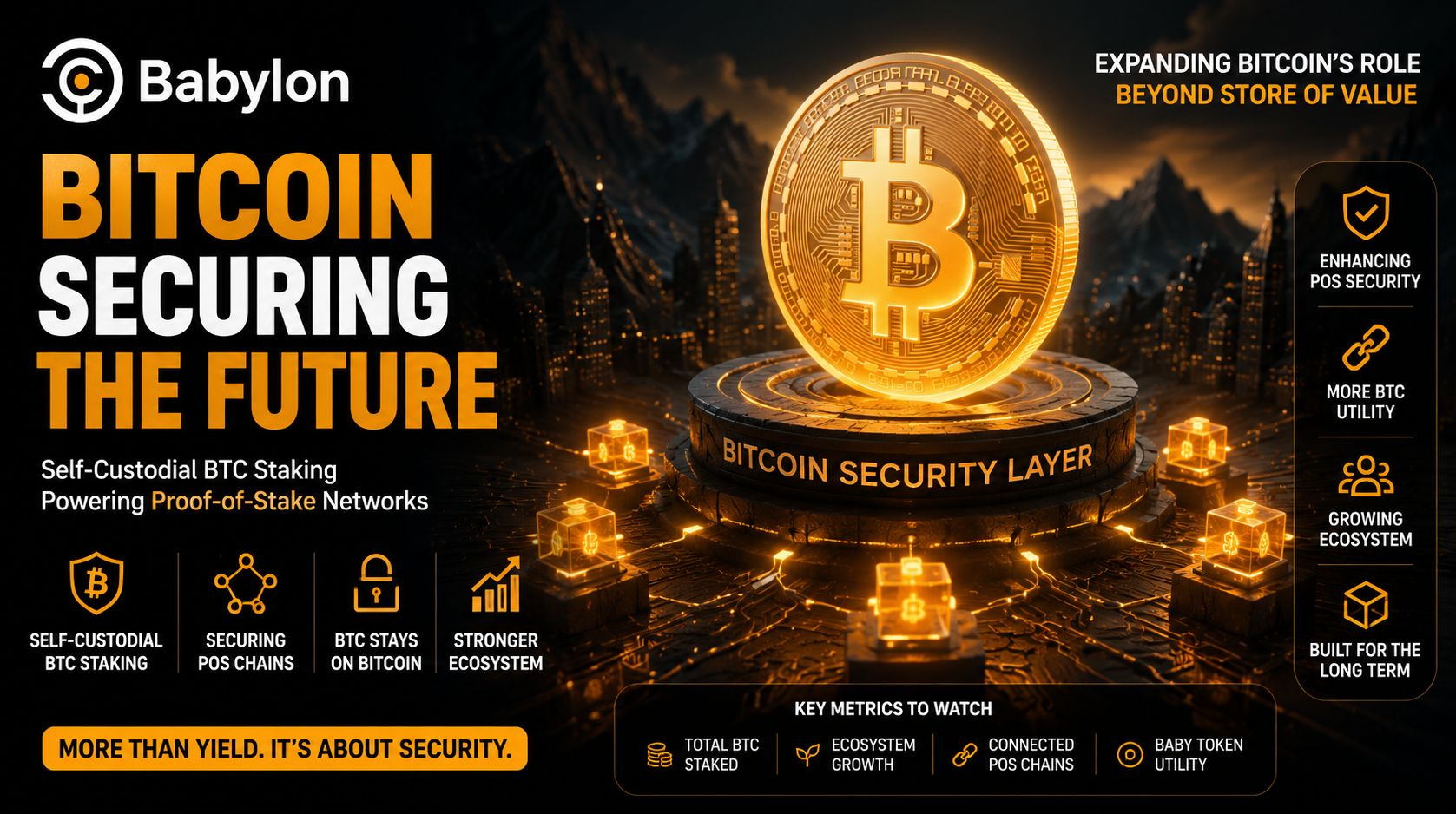
Quand j’ai d’abord observé Babylon, je pensais que ce n’était qu’une autre façon de gagner des récompenses avec Bitcoin. Après avoir passé plus de temps à faire des recherches, j’ai compris que je l’analysais sous le mauvais angle. Ce qui m’a le plus intéressé ne tenait pas au rendement : c’était l’idée d’utiliser la gigantesque valeur économique de Bitcoin pour renforcer les réseaux Proof-of-Stake, sans renoncer à la self-custody. Cela ressemble à une vision bien plus ambitieuse que la simple création d’un autre produit de staking.
Je me suis aussi mis à réfléchir à l’impact à long terme. Bitcoin a toujours été considéré comme une réserve de valeur, mais Babylon essaie de démontrer qu’il peut aussi contribuer à la sécurité de la blockchain tout en restant sur son réseau natif. Si ce modèle est davantage adopté, il pourrait encourager davantage de détenteurs de BTC à participer à la sécurisation d’écosystèmes décentralisés plutôt que de laisser leurs coins totalement inactifs.
Cela dit, je ne pense pas que le succès soit garanti. Le concept est techniquement plus complexe que le staking traditionnel, et beaucoup d’utilisateurs préfèrent encore des solutions simples. L’adoption dépendra probablement de la mesure dans laquelle les développeurs continueront à construire des applications qui tirent parti de la sécurité adossée à Bitcoin, et de la compréhension par les utilisateurs de la valeur de ce modèle.
Je porterai une attention particulière à des indicateurs comme le montant total de BTC mis en staking, la croissance de l’écosystème, le nombre de chaînes PoS connectées, et la façon dont BABY est utilisé au sein du réseau. Ces signaux raconteront une histoire bien plus claire que les fluctuations de prix à court terme. D’après ce que j’ai vu, Babylon ne cherche pas à changer ce qu’est Bitcoin : il cherche à élargir ce que Bitcoin peut soutenir de manière sécurisée à travers l’écosystème blockchain au sens large.
$BABY
{spot}(BABYUSDT)
$LAB
{future}(LABUSDT)
$BTC
{spot}(BTCUSDT)
Quand j’ai d’abord observé Babylon, je pensais que ce n’était qu’une autre façon de gagner des récompenses avec Bitcoin. Après avoir passé plus de temps à faire des recherches, j’ai compris que je l’analysais sous le mauvais angle. Ce qui m’a le plus intéressé ne tenait pas au rendement : c’était l’idée d’utiliser la gigantesque valeur économique de Bitcoin pour renforcer les réseaux Proof-of-Stake, sans renoncer à la self-custody. Cela ressemble à une vision bien plus ambitieuse que la simple création d’un autre produit de staking.
Je me suis aussi mis à réfléchir à l’impact à long terme. Bitcoin a toujours été considéré comme une réserve de valeur, mais Babylon essaie de démontrer qu’il peut aussi contribuer à la sécurité de la blockchain tout en restant sur son réseau natif. Si ce modèle est davantage adopté, il pourrait encourager davantage de détenteurs de BTC à participer à la sécurisation d’écosystèmes décentralisés plutôt que de laisser leurs coins totalement inactifs.
Cela dit, je ne pense pas que le succès soit garanti. Le concept est techniquement plus complexe que le staking traditionnel, et beaucoup d’utilisateurs préfèrent encore des solutions simples. L’adoption dépendra probablement de la mesure dans laquelle les développeurs continueront à construire des applications qui tirent parti de la sécurité adossée à Bitcoin, et de la compréhension par les utilisateurs de la valeur de ce modèle.
Je porterai une attention particulière à des indicateurs comme le montant total de BTC mis en staking, la croissance de l’écosystème, le nombre de chaînes PoS connectées, et la façon dont BABY est utilisé au sein du réseau. Ces signaux raconteront une histoire bien plus claire que les fluctuations de prix à court terme. D’après ce que j’ai vu, Babylon ne cherche pas à changer ce qu’est Bitcoin : il cherche à élargir ce que Bitcoin peut soutenir de manière sécurisée à travers l’écosystème blockchain au sens large.
$BABY
$LAB
$BTC
Je me suis aussi mis à réfléchir à l’impact à long terme. Bitcoin a toujours été considéré comme une réserve de valeur, mais Babylon essaie de démontrer qu’il peut aussi contribuer à la sécurité de la blockchain tout en restant sur son réseau natif. Si ce modèle est davantage adopté, il pourrait encourager davantage de détenteurs de BTC à participer à la sécurisation d’écosystèmes décentralisés plutôt que de laisser leurs coins totalement inactifs.
Cela dit, je ne pense pas que le succès soit garanti. Le concept est techniquement plus complexe que le staking traditionnel, et beaucoup d’utilisateurs préfèrent encore des solutions simples. L’adoption dépendra probablement de la mesure dans laquelle les développeurs continueront à construire des applications qui tirent parti de la sécurité adossée à Bitcoin, et de la compréhension par les utilisateurs de la valeur de ce modèle.
Je porterai une attention particulière à des indicateurs comme le montant total de BTC mis en staking, la croissance de l’écosystème, le nombre de chaînes PoS connectées, et la façon dont BABY est utilisé au sein du réseau. Ces signaux raconteront une histoire bien plus claire que les fluctuations de prix à court terme. D’après ce que j’ai vu, Babylon ne cherche pas à changer ce qu’est Bitcoin : il cherche à élargir ce que Bitcoin peut soutenir de manière sécurisée à travers l’écosystème blockchain au sens large.
$BABY
$LAB
$BTC
4
10
1.1k
·
--
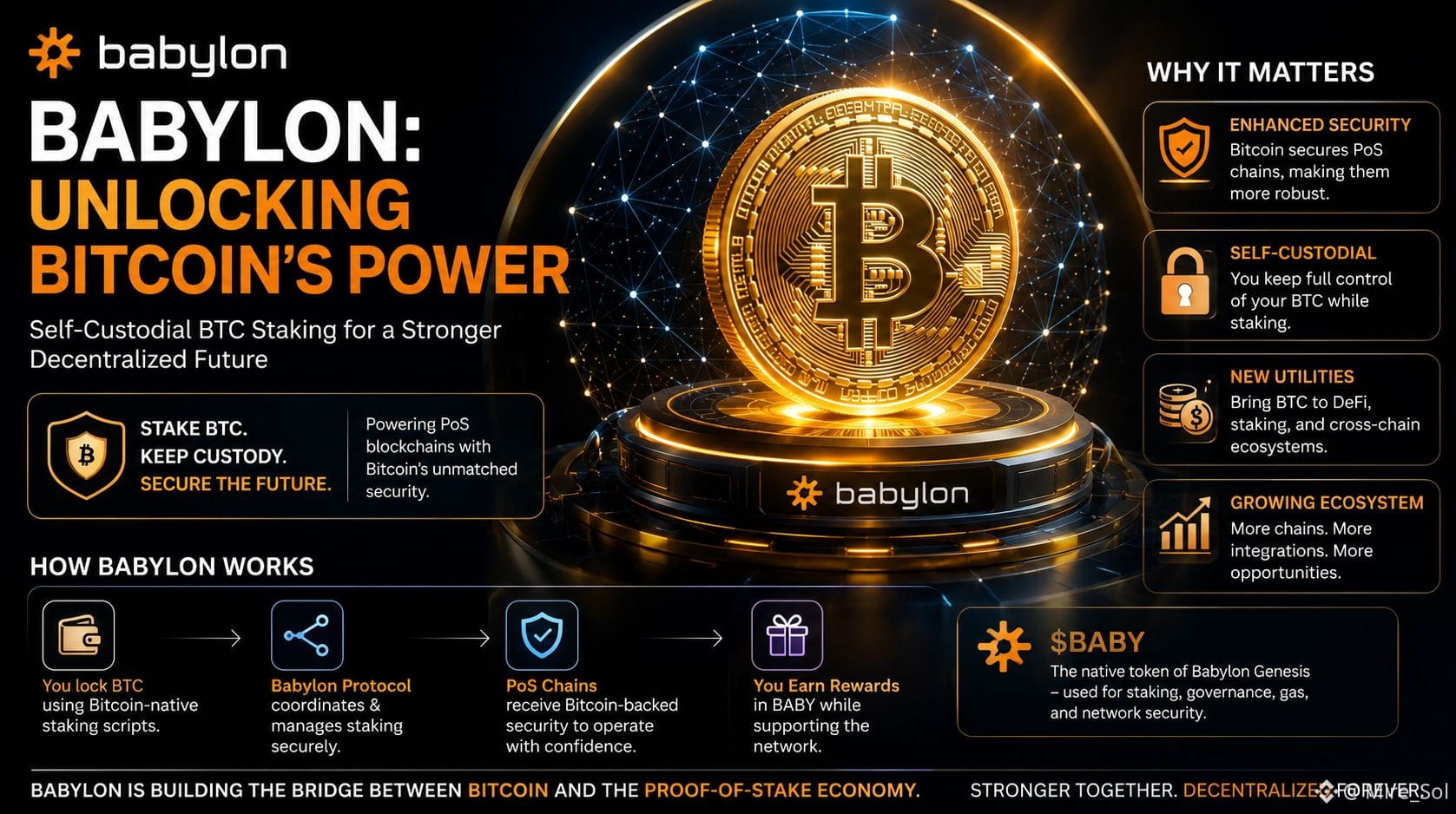
Je n’ai pas vraiment prêté attention à Babylon au début, parce que je pensais que c’était juste un autre projet visant à extorquer un rendement supplémentaire à partir du Bitcoin. Après avoir passé du temps à lire comment cela fonctionne, j’ai compris que l’idée plus vaste ne concerne pas les récompenses : il s’agit de rendre le Bitcoin utile comme source de sécurité, sans demander aux détenteurs d’abandonner la garde de leurs coins.
Cela a changé ma façon de voir le projet. Le Bitcoin a toujours été l’actif crypto le plus important par sa valeur de marché, mais la plupart reste inutilisée. Babylon tente de libérer ce capital dormant tout en conservant le Bitcoin sur son réseau natif. Si ce modèle continue de prouver sa fiabilité, il pourrait redéfinir la manière dont les chaînes de preuve d’enjeu (proof-of-stake) plus récentes envisagent la sécurité économique.
Je me suis aussi surpris à me demander si les détenteurs de Bitcoin veulent réellement de cela. Beaucoup de personnes préfèrent le BTC pour sa simplicité et sa conception conservatrice. Les convaincre de participer au staking, même avec une autogarde, pourrait demander du temps. La confiance dépendra probablement davantage des historiques de sécurité et de la performance transparente que de l’attrait des taux de récompense.
Un autre détail que je continue à suivre, c’est l’écosystème qui se développe autour de Babylon, plutôt que la fonctionnalité de staking seule. Un réseau solide attire généralement des développeurs, des fournisseurs d’infrastructure et des intégrations qui créent une demande durable. Sans cette croissance, même une idée novatrice peut perdre de l’élan.
Pour l’instant, je vois Babylon comme une expérience d’infrastructure intéressante plutôt qu’un succès garanti. Si l’adoption continue de s’élargir et que les développeurs continuent de construire autour, le projet pourrait devenir l’une des façons les plus significatives dont le Bitcoin contribue au-delà du simple fait d’être une réserve de valeur.
@babylonlabs_io #baby $BABY
{future}(BABYUSDT)
$LAB
{alpha}(560x7ec43cf65f1663f820427c62a5780b8f2e25593a)
$ADA
{future}(ADAUSDT)
Je n’ai pas vraiment prêté attention à Babylon au début, parce que je pensais que c’était juste un autre projet visant à extorquer un rendement supplémentaire à partir du Bitcoin. Après avoir passé du temps à lire comment cela fonctionne, j’ai compris que l’idée plus vaste ne concerne pas les récompenses : il s’agit de rendre le Bitcoin utile comme source de sécurité, sans demander aux détenteurs d’abandonner la garde de leurs coins.
Cela a changé ma façon de voir le projet. Le Bitcoin a toujours été l’actif crypto le plus important par sa valeur de marché, mais la plupart reste inutilisée. Babylon tente de libérer ce capital dormant tout en conservant le Bitcoin sur son réseau natif. Si ce modèle continue de prouver sa fiabilité, il pourrait redéfinir la manière dont les chaînes de preuve d’enjeu (proof-of-stake) plus récentes envisagent la sécurité économique.
Je me suis aussi surpris à me demander si les détenteurs de Bitcoin veulent réellement de cela. Beaucoup de personnes préfèrent le BTC pour sa simplicité et sa conception conservatrice. Les convaincre de participer au staking, même avec une autogarde, pourrait demander du temps. La confiance dépendra probablement davantage des historiques de sécurité et de la performance transparente que de l’attrait des taux de récompense.
Un autre détail que je continue à suivre, c’est l’écosystème qui se développe autour de Babylon, plutôt que la fonctionnalité de staking seule. Un réseau solide attire généralement des développeurs, des fournisseurs d’infrastructure et des intégrations qui créent une demande durable. Sans cette croissance, même une idée novatrice peut perdre de l’élan.
Pour l’instant, je vois Babylon comme une expérience d’infrastructure intéressante plutôt qu’un succès garanti. Si l’adoption continue de s’élargir et que les développeurs continuent de construire autour, le projet pourrait devenir l’une des façons les plus significatives dont le Bitcoin contribue au-delà du simple fait d’être une réserve de valeur.
@BabylonLabs_io #baby $BABY
$LAB
$ADA
Cela a changé ma façon de voir le projet. Le Bitcoin a toujours été l’actif crypto le plus important par sa valeur de marché, mais la plupart reste inutilisée. Babylon tente de libérer ce capital dormant tout en conservant le Bitcoin sur son réseau natif. Si ce modèle continue de prouver sa fiabilité, il pourrait redéfinir la manière dont les chaînes de preuve d’enjeu (proof-of-stake) plus récentes envisagent la sécurité économique.
Je me suis aussi surpris à me demander si les détenteurs de Bitcoin veulent réellement de cela. Beaucoup de personnes préfèrent le BTC pour sa simplicité et sa conception conservatrice. Les convaincre de participer au staking, même avec une autogarde, pourrait demander du temps. La confiance dépendra probablement davantage des historiques de sécurité et de la performance transparente que de l’attrait des taux de récompense.
Un autre détail que je continue à suivre, c’est l’écosystème qui se développe autour de Babylon, plutôt que la fonctionnalité de staking seule. Un réseau solide attire généralement des développeurs, des fournisseurs d’infrastructure et des intégrations qui créent une demande durable. Sans cette croissance, même une idée novatrice peut perdre de l’élan.
Pour l’instant, je vois Babylon comme une expérience d’infrastructure intéressante plutôt qu’un succès garanti. Si l’adoption continue de s’élargir et que les développeurs continuent de construire autour, le projet pourrait devenir l’une des façons les plus significatives dont le Bitcoin contribue au-delà du simple fait d’être une réserve de valeur.
@BabylonLabs_io #baby $BABY
$LAB
$ADA
3
2
223
·
--
🎙️ Maintenant, la catégorie 2 est difficile ; y a-t-il plus de chances dans la catégorie 1 ?
Fin
03 h 10 min 56 sec
13.6k
21
24
·
--
🎙️ Discussion sur la tendance du marché des crypto ; réponses aux questions des nouveaux ✅ poursuivre la construction de la communauté 🦅 promouvoir l’idée de liberté de diffusion ! préserver l’équilibre écologique !
Fin
03 h 10 min 52 sec
13k
21
54
·
--
Vérifié
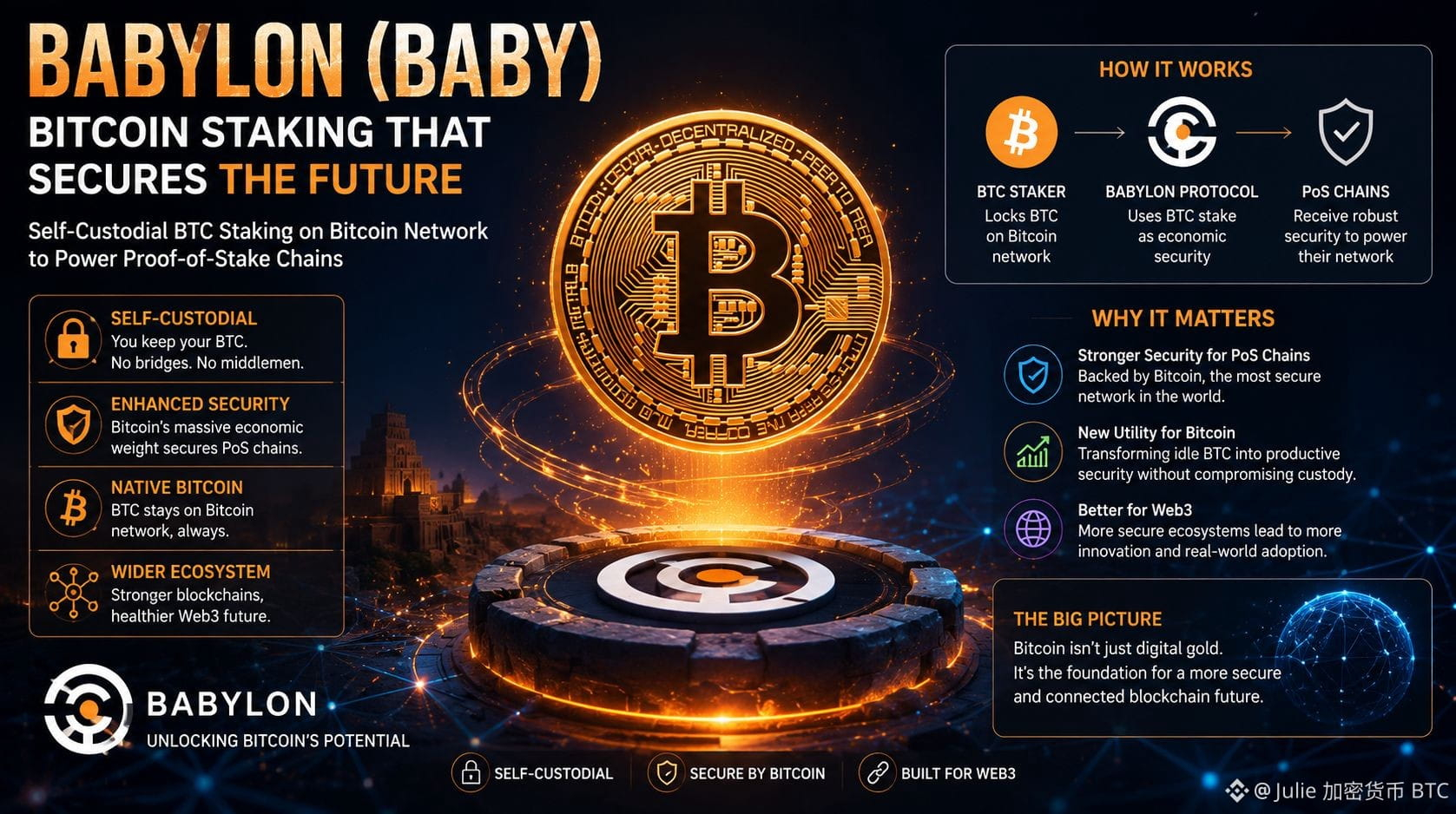
Je n’ai pas commencé à étudier Babylon parce que je cherchais une autre façon de générer du rendement avec le Bitcoin. Ce qui a attiré mon attention, c’est une question différente : est-ce que le Bitcoin peut renforcer d’autres réseaux de blockchain sans renoncer aux qualités qui le rendent précieux avant tout ?
Plus j’ai creusé, plus j’ai réalisé que Babylon cherche à résoudre un problème de confiance plutôt qu’un problème de mise. La plupart des options de gains basées sur le BTC demandent aux utilisateurs de faire un pont entre des actifs, de les verrouiller avec des gestionnaires (custodians), ou de s’appuyer sur des versions enveloppées du Bitcoin. Babylon emprunte une autre voie en permettant le staking de BTC en auto-gestion, en gardant le Bitcoin sur son réseau natif tout en utilisant son poids économique pour aider à sécuriser des chaînes Proof-of-Stake.
J’ai aussi pris le temps de le comparer à des modèles traditionnels de sécurité PoS. De nombreux réseaux dépendent presque entièrement de leur propre jeton natif pour assurer leur sécurité, ce qui peut devenir une faiblesse lors des replis du marché. Si le Bitcoin peut fournir une sécurité supplémentaire sans quitter sa propre chaîne, cela crée une couche de protection intéressante que beaucoup d’écosystèmes n’ont pas actuellement.
Cela ne signifie pas pour autant que le succès est garanti. Babylon doit encore parvenir à une adoption plus large de la part des développeurs, des validateurs et des détenteurs de Bitcoin. L’expérience utilisateur doit rester simple, et les incitations doivent demeurer attrayantes même lorsque les conditions de marché changent.
Pour moi, l’enseignement le plus important n’est pas les récompenses de staking. C’est la possibilité de faire du Bitcoin un actif de sécurité productif tout en préservant l’auto-gestion. Si Babylon prouve que ce modèle peut passer à l’échelle, il pourrait redessiner, discrètement, la façon dont le Bitcoin contribue à l’ensemble de l’écosystème blockchain.
#baby $BABY @babylonlabs_io
{spot}(BABYUSDT)
Je n’ai pas commencé à étudier Babylon parce que je cherchais une autre façon de générer du rendement avec le Bitcoin. Ce qui a attiré mon attention, c’est une question différente : est-ce que le Bitcoin peut renforcer d’autres réseaux de blockchain sans renoncer aux qualités qui le rendent précieux avant tout ?
Plus j’ai creusé, plus j’ai réalisé que Babylon cherche à résoudre un problème de confiance plutôt qu’un problème de mise. La plupart des options de gains basées sur le BTC demandent aux utilisateurs de faire un pont entre des actifs, de les verrouiller avec des gestionnaires (custodians), ou de s’appuyer sur des versions enveloppées du Bitcoin. Babylon emprunte une autre voie en permettant le staking de BTC en auto-gestion, en gardant le Bitcoin sur son réseau natif tout en utilisant son poids économique pour aider à sécuriser des chaînes Proof-of-Stake.
J’ai aussi pris le temps de le comparer à des modèles traditionnels de sécurité PoS. De nombreux réseaux dépendent presque entièrement de leur propre jeton natif pour assurer leur sécurité, ce qui peut devenir une faiblesse lors des replis du marché. Si le Bitcoin peut fournir une sécurité supplémentaire sans quitter sa propre chaîne, cela crée une couche de protection intéressante que beaucoup d’écosystèmes n’ont pas actuellement.
Cela ne signifie pas pour autant que le succès est garanti. Babylon doit encore parvenir à une adoption plus large de la part des développeurs, des validateurs et des détenteurs de Bitcoin. L’expérience utilisateur doit rester simple, et les incitations doivent demeurer attrayantes même lorsque les conditions de marché changent.
Pour moi, l’enseignement le plus important n’est pas les récompenses de staking. C’est la possibilité de faire du Bitcoin un actif de sécurité productif tout en préservant l’auto-gestion. Si Babylon prouve que ce modèle peut passer à l’échelle, il pourrait redessiner, discrètement, la façon dont le Bitcoin contribue à l’ensemble de l’écosystème blockchain.
#baby $BABY @BabylonLabs_io
Plus j’ai creusé, plus j’ai réalisé que Babylon cherche à résoudre un problème de confiance plutôt qu’un problème de mise. La plupart des options de gains basées sur le BTC demandent aux utilisateurs de faire un pont entre des actifs, de les verrouiller avec des gestionnaires (custodians), ou de s’appuyer sur des versions enveloppées du Bitcoin. Babylon emprunte une autre voie en permettant le staking de BTC en auto-gestion, en gardant le Bitcoin sur son réseau natif tout en utilisant son poids économique pour aider à sécuriser des chaînes Proof-of-Stake.
J’ai aussi pris le temps de le comparer à des modèles traditionnels de sécurité PoS. De nombreux réseaux dépendent presque entièrement de leur propre jeton natif pour assurer leur sécurité, ce qui peut devenir une faiblesse lors des replis du marché. Si le Bitcoin peut fournir une sécurité supplémentaire sans quitter sa propre chaîne, cela crée une couche de protection intéressante que beaucoup d’écosystèmes n’ont pas actuellement.
Cela ne signifie pas pour autant que le succès est garanti. Babylon doit encore parvenir à une adoption plus large de la part des développeurs, des validateurs et des détenteurs de Bitcoin. L’expérience utilisateur doit rester simple, et les incitations doivent demeurer attrayantes même lorsque les conditions de marché changent.
Pour moi, l’enseignement le plus important n’est pas les récompenses de staking. C’est la possibilité de faire du Bitcoin un actif de sécurité productif tout en préservant l’auto-gestion. Si Babylon prouve que ce modèle peut passer à l’échelle, il pourrait redessiner, discrètement, la façon dont le Bitcoin contribue à l’ensemble de l’écosystème blockchain.
#baby $BABY @BabylonLabs_io
2
1
286
·
--
Haussier
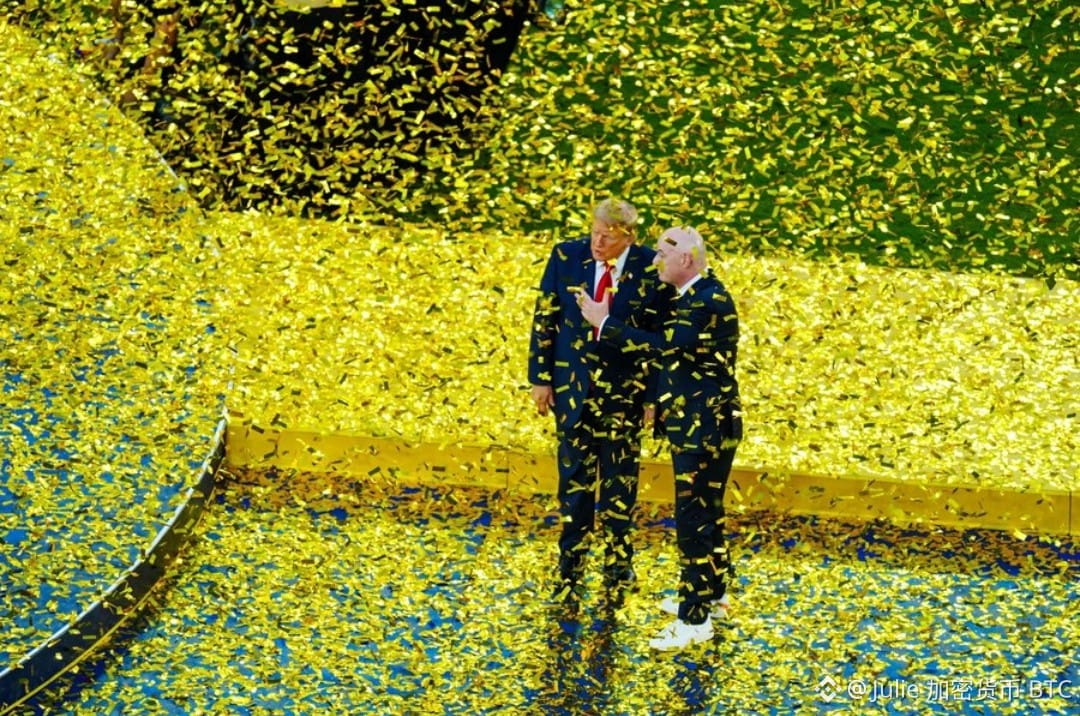
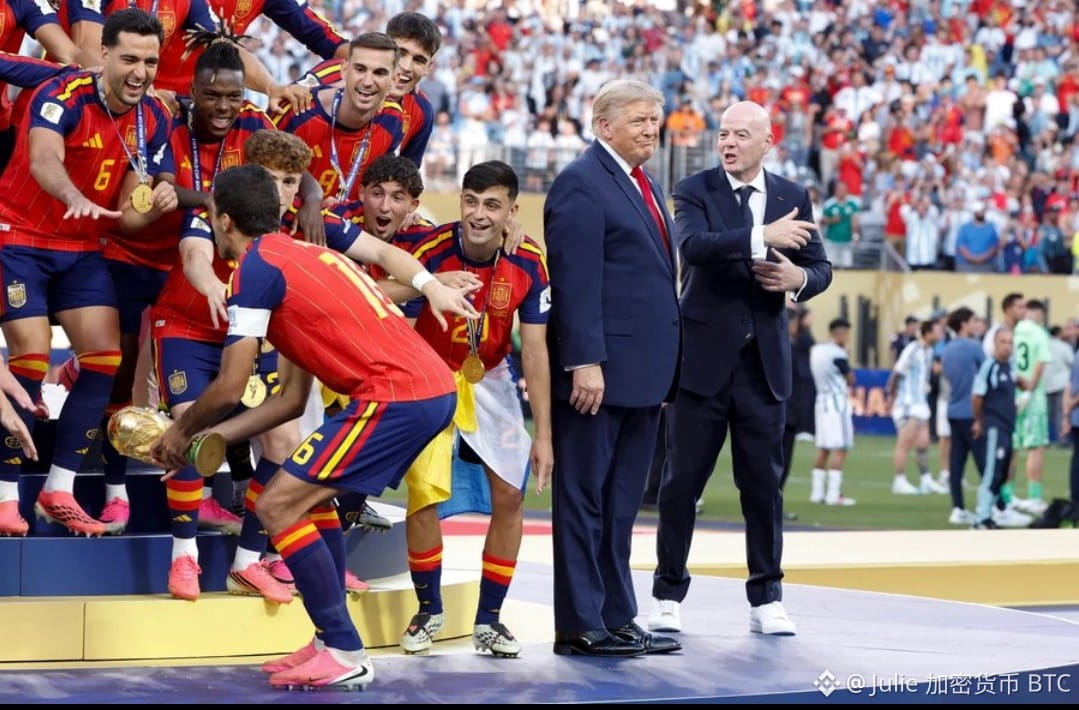
Le « Guardian » salue l’écriture d’une légende brillante au sujet de Trump accaparant les projecteurs à la Coupe du monde
La légende de la photo À GAUCHE :
« Le président de la FIFA, Gianni Infantino, explique soigneusement à Donald Trump qu’il ne fait PAS partie de l’équipe nationale espagnole. »
La photo À DROITE a été prise quelques instants plus tôt, alors que Trump refusait de quitter la scène lors de la célébration de la remise du trophée, comme s’il était d’une manière ou d’une autre responsable de la victoire de l’Espagne. On ne peut pas écrire ce genre de choses.
Source : tinyurl.com/u52ncmsm
$NVDAB
{spot}(NVDABUSDT)
$MSFTB
{spot}(MSFTBUSDT)
$TSMB
{spot}(TSMBUSDT)
#MediatorsPropose10DayIranUSCeasefire #BurnhamToBecomeUKPrimeMinister #KOSPINasdaqCorrelationNearsTwoYearHigh #FootballSeason2026
Le « Guardian » salue l’écriture d’une légende brillante au sujet de Trump accaparant les projecteurs à la Coupe du monde
La légende de la photo À GAUCHE :
« Le président de la FIFA, Gianni Infantino, explique soigneusement à Donald Trump qu’il ne fait PAS partie de l’équipe nationale espagnole. »
La photo À DROITE a été prise quelques instants plus tôt, alors que Trump refusait de quitter la scène lors de la célébration de la remise du trophée, comme s’il était d’une manière ou d’une autre responsable de la victoire de l’Espagne. On ne peut pas écrire ce genre de choses.
Source : tinyurl.com/u52ncmsm
$NVDAB
$MSFTB
$TSMB
#MediatorsPropose10DayIranUSCeasefire #BurnhamToBecomeUKPrimeMinister #KOSPINasdaqCorrelationNearsTwoYearHigh #FootballSeason2026
La légende de la photo À GAUCHE :
« Le président de la FIFA, Gianni Infantino, explique soigneusement à Donald Trump qu’il ne fait PAS partie de l’équipe nationale espagnole. »
La photo À DROITE a été prise quelques instants plus tôt, alors que Trump refusait de quitter la scène lors de la célébration de la remise du trophée, comme s’il était d’une manière ou d’une autre responsable de la victoire de l’Espagne. On ne peut pas écrire ce genre de choses.
Source : tinyurl.com/u52ncmsm
$NVDAB
$MSFTB
$TSMB
#MediatorsPropose10DayIranUSCeasefire #BurnhamToBecomeUKPrimeMinister #KOSPINasdaqCorrelationNearsTwoYearHigh #FootballSeason2026
1
1.3k
·
--
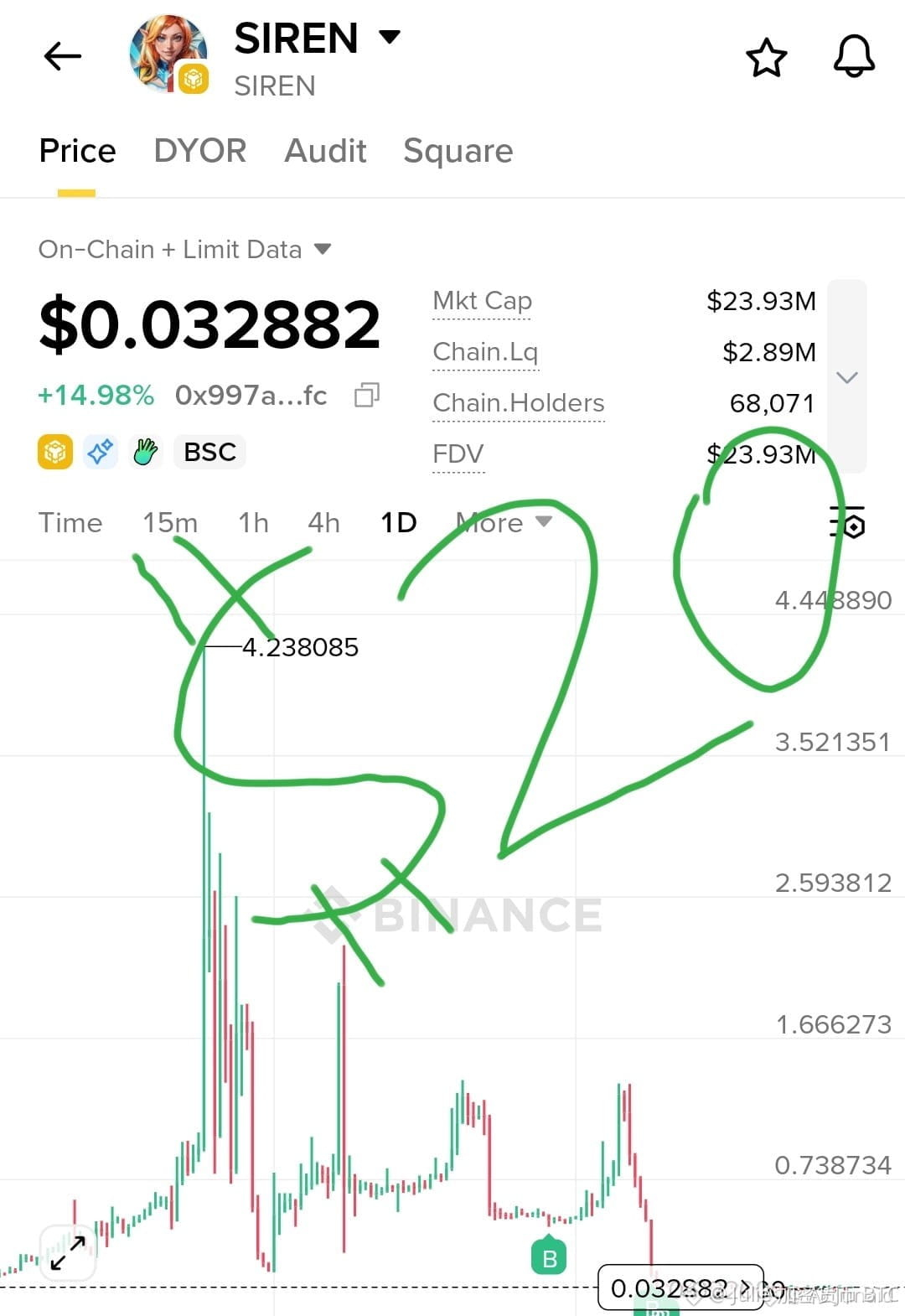
$SIREN ⏳ Temps d’achat ? Imaginez que cela retourne à 4 $ depuis seulement 0,030… $ 🚀
Investir 50 $ et viser un potentiel de retour de 500 $+ 💎
Petit investissement, grande vision. Faites toujours vos recherches (DYOR) et investissez judicieusement. 🔥 $BSP $BANK
$SIREN ⏳ Temps d’achat ? Imaginez que cela retourne à 4 $ depuis seulement 0,030… $ 🚀
Investir 50 $ et viser un potentiel de retour de 500 $+ 💎
Petit investissement, grande vision. Faites toujours vos recherches (DYOR) et investissez judicieusement. 🔥 $BSP $BANK
Investir 50 $ et viser un potentiel de retour de 500 $+ 💎
Petit investissement, grande vision. Faites toujours vos recherches (DYOR) et investissez judicieusement. 🔥 $BSP $BANK
95
·
--
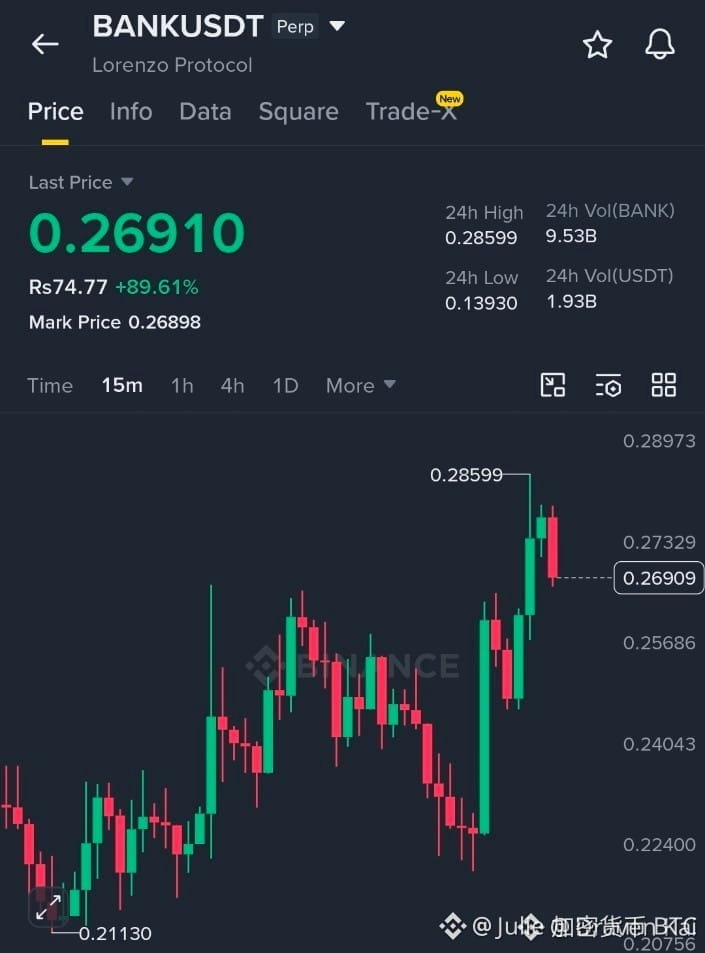
$BANK Mise à jour USDT
$BANK reprend de plus belle après une cassure puissante. Les haussiers ont repris l’élan, mais le prochain mouvement dépend du maintien du support clé
. Restez attentifs à la prochaine poussée : la volatilité est bien vivante et la bataille n’est pas terminée.
Support : 0.2560
Résistance : 0.2860
Objectif : 0.3000
TP : 0.2950–0.3000
Stop Loss : 0.2520
$BANK
$BANK Mise à jour USDT
$BANK reprend de plus belle après une cassure puissante. Les haussiers ont repris l’élan, mais le prochain mouvement dépend du maintien du support clé
. Restez attentifs à la prochaine poussée : la volatilité est bien vivante et la bataille n’est pas terminée.
Support : 0.2560
Résistance : 0.2860
Objectif : 0.3000
TP : 0.2950–0.3000
Stop Loss : 0.2520
$BANK
$BANK reprend de plus belle après une cassure puissante. Les haussiers ont repris l’élan, mais le prochain mouvement dépend du maintien du support clé
. Restez attentifs à la prochaine poussée : la volatilité est bien vivante et la bataille n’est pas terminée.
Support : 0.2560
Résistance : 0.2860
Objectif : 0.3000
TP : 0.2950–0.3000
Stop Loss : 0.2520
$BANK
115
·
--
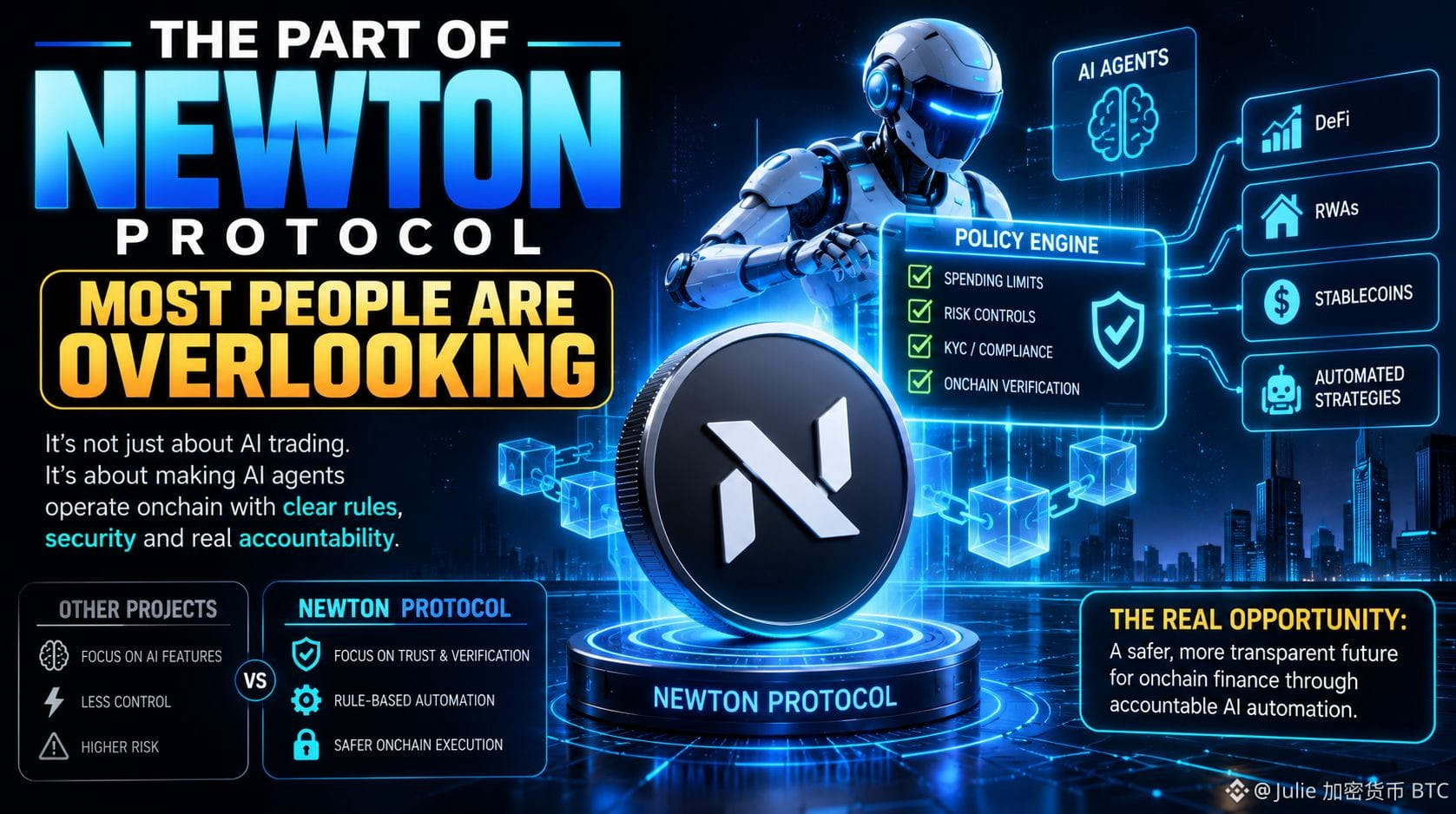
Je ne fais généralement pas beaucoup attention quand un projet de crypto combine l’IA et la blockchain, parce que cette histoire a été répétée tellement de fois. Ce qui m’a poussé à passer plus de temps à chercher sur le protocole Newton, c’est sa focalisation sur le contrôle de la manière dont les agents d’IA interagissent avec des actifs on-chain, plutôt que de simplement chercher à les rendre plus rapides. Ça m’a semblé être un problème plus concret à résoudre.
En regardant plus en profondeur, j’ai compris que le protocole Newton essaie de construire un environnement dans lequel des stratégies automatisées peuvent fonctionner selon des règles claires, plutôt qu’avec des autorisations illimitées. Je pense que cela devient encore plus important à mesure que les agents d’IA commencent à gérer des montants de capital plus importants. L’automatisation est utile, mais sans limites, elle peut aussi créer des risques inutiles.
J’ai continué à comparer Newton à d’autres projets de blockchain axés sur l’IA, et une différence a retenu mon attention. Beaucoup de projets mettent l’accent sur l’intelligence, tandis que Newton semble davantage s’intéresser à la confiance et à la vérification. À mon avis, ce changement compte, parce que les institutions et les investisseurs sérieux se soucient davantage de l’exécution prévisible que des fonctionnalités IA spectaculaires.
Cela ne signifie pas pour autant que la réussite est garantie. Le protocole a encore besoin de développeurs pour construire des applications utiles, et d’utilisateurs pour faire confiance à des systèmes automatisés avec des actifs réels. Ce sont des défis difficiles, et l’adoption dépendra probablement de la capacité de Newton à prouver que son modèle de sécurité fonctionne dans des conditions réelles.
Après avoir pris le temps de rechercher le projet, je pense que la plus grande opportunité n’est pas l’IA elle-même. C’est la création d’une infrastructure dans laquelle l’automatisation peut fonctionner de manière sûre, sans renoncer à la transparence ni au contrôle de l’utilisateur. Si Newton continue à avancer dans cette direction, il pourrait devenir une couche importante pour le futur de la finance on-chain, plutôt qu’un simple autre projet qui suit la dernière narration liée à l’IA.
@NewtonProtocol #newt $NEWT
{future}(NEWTUSDT)
$LAB
$AB
Je ne fais généralement pas beaucoup attention quand un projet de crypto combine l’IA et la blockchain, parce que cette histoire a été répétée tellement de fois. Ce qui m’a poussé à passer plus de temps à chercher sur le protocole Newton, c’est sa focalisation sur le contrôle de la manière dont les agents d’IA interagissent avec des actifs on-chain, plutôt que de simplement chercher à les rendre plus rapides. Ça m’a semblé être un problème plus concret à résoudre.
En regardant plus en profondeur, j’ai compris que le protocole Newton essaie de construire un environnement dans lequel des stratégies automatisées peuvent fonctionner selon des règles claires, plutôt qu’avec des autorisations illimitées. Je pense que cela devient encore plus important à mesure que les agents d’IA commencent à gérer des montants de capital plus importants. L’automatisation est utile, mais sans limites, elle peut aussi créer des risques inutiles.
J’ai continué à comparer Newton à d’autres projets de blockchain axés sur l’IA, et une différence a retenu mon attention. Beaucoup de projets mettent l’accent sur l’intelligence, tandis que Newton semble davantage s’intéresser à la confiance et à la vérification. À mon avis, ce changement compte, parce que les institutions et les investisseurs sérieux se soucient davantage de l’exécution prévisible que des fonctionnalités IA spectaculaires.
Cela ne signifie pas pour autant que la réussite est garantie. Le protocole a encore besoin de développeurs pour construire des applications utiles, et d’utilisateurs pour faire confiance à des systèmes automatisés avec des actifs réels. Ce sont des défis difficiles, et l’adoption dépendra probablement de la capacité de Newton à prouver que son modèle de sécurité fonctionne dans des conditions réelles.
Après avoir pris le temps de rechercher le projet, je pense que la plus grande opportunité n’est pas l’IA elle-même. C’est la création d’une infrastructure dans laquelle l’automatisation peut fonctionner de manière sûre, sans renoncer à la transparence ni au contrôle de l’utilisateur. Si Newton continue à avancer dans cette direction, il pourrait devenir une couche importante pour le futur de la finance on-chain, plutôt qu’un simple autre projet qui suit la dernière narration liée à l’IA.
@NewtonProtocol #newt $NEWT
$LAB
$AB
En regardant plus en profondeur, j’ai compris que le protocole Newton essaie de construire un environnement dans lequel des stratégies automatisées peuvent fonctionner selon des règles claires, plutôt qu’avec des autorisations illimitées. Je pense que cela devient encore plus important à mesure que les agents d’IA commencent à gérer des montants de capital plus importants. L’automatisation est utile, mais sans limites, elle peut aussi créer des risques inutiles.
J’ai continué à comparer Newton à d’autres projets de blockchain axés sur l’IA, et une différence a retenu mon attention. Beaucoup de projets mettent l’accent sur l’intelligence, tandis que Newton semble davantage s’intéresser à la confiance et à la vérification. À mon avis, ce changement compte, parce que les institutions et les investisseurs sérieux se soucient davantage de l’exécution prévisible que des fonctionnalités IA spectaculaires.
Cela ne signifie pas pour autant que la réussite est garantie. Le protocole a encore besoin de développeurs pour construire des applications utiles, et d’utilisateurs pour faire confiance à des systèmes automatisés avec des actifs réels. Ce sont des défis difficiles, et l’adoption dépendra probablement de la capacité de Newton à prouver que son modèle de sécurité fonctionne dans des conditions réelles.
Après avoir pris le temps de rechercher le projet, je pense que la plus grande opportunité n’est pas l’IA elle-même. C’est la création d’une infrastructure dans laquelle l’automatisation peut fonctionner de manière sûre, sans renoncer à la transparence ni au contrôle de l’utilisateur. Si Newton continue à avancer dans cette direction, il pourrait devenir une couche importante pour le futur de la finance on-chain, plutôt qu’un simple autre projet qui suit la dernière narration liée à l’IA.
@NewtonProtocol #newt $NEWT
$LAB
$AB
2
353
·
--
Article
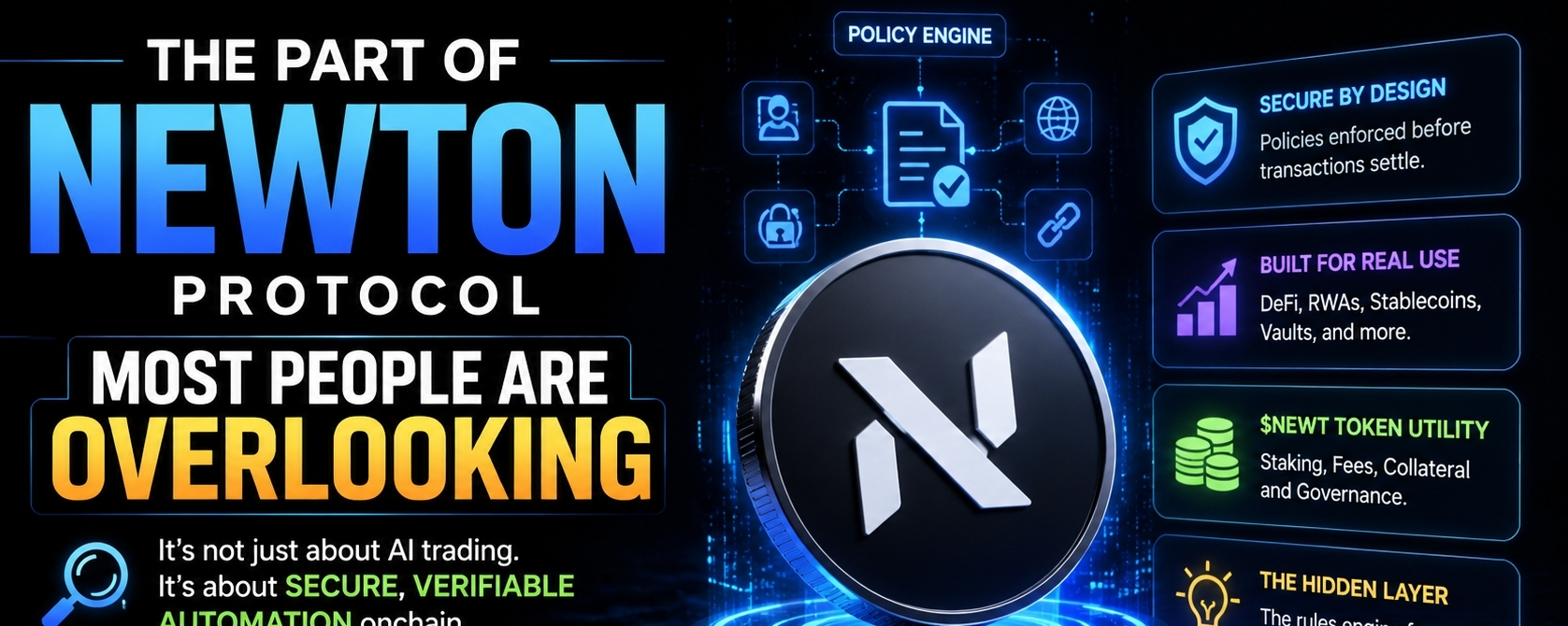
La partie de Newton Protocol que la plupart des gens passent à côtéLa première chose qui a attiré mon attention à propos de Newton Protocol, c’est que je n’ai pas eu l’impression de lire une énième histoire de token d’IA bruyante. J’ai commencé à le lire de la même façon que j’ai l’habitude de le faire avec les nouveaux projets crypto : j’ai mis de côté le battage médiatique et j’ai essayé de comprendre quel problème il cherchait réellement à résoudre. Ce qui a retenu mon attention, c’est que Newton se présente comme une couche d’autorisation onchain, où les politiques sont appliquées avant qu’une transaction ne se règle, plutôt qu’après que l’argent a déjà bougé. Rien que ça m’a amené à ralentir et à aller plus loin.
La partie de Newton Protocol que la plupart des gens passent à côté
La première chose qui a attiré mon attention à propos de Newton Protocol, c’est que je n’ai pas eu l’impression de lire une énième histoire de token d’IA bruyante. J’ai commencé à le lire de la même façon que j’ai l’habitude de le faire avec les nouveaux projets crypto : j’ai mis de côté le battage médiatique et j’ai essayé de comprendre quel problème il cherchait réellement à résoudre. Ce qui a retenu mon attention, c’est que Newton se présente comme une couche d’autorisation onchain, où les politiques sont appliquées avant qu’une transaction ne se règle, plutôt qu’après que l’argent a déjà bougé. Rien que ça m’a amené à ralentir et à aller plus loin.
6
5
261
·
--
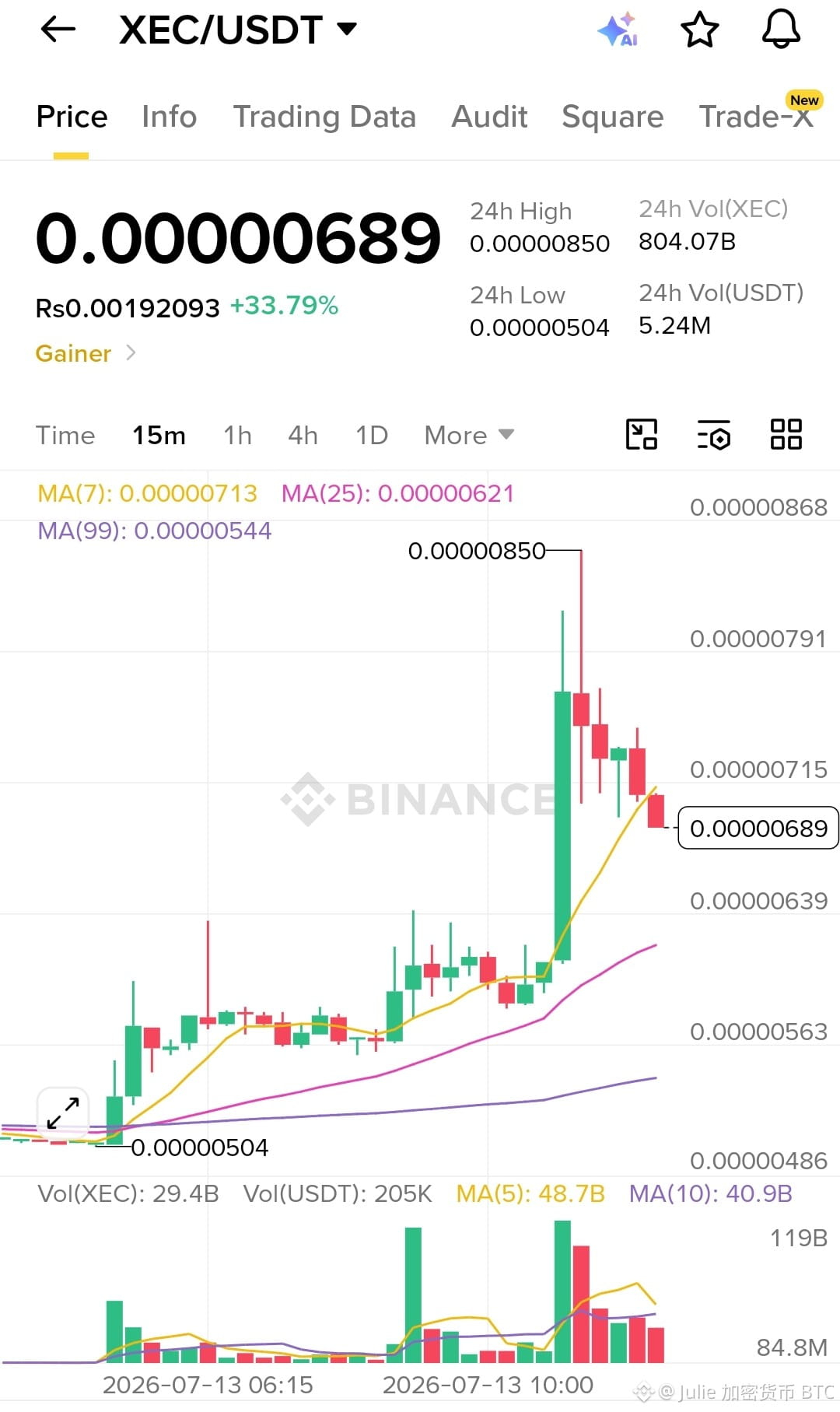
$XEC a affiché une forte impulsion haussière avec un gain quotidien de +33,79 %, atteignant un plus haut de 0,00000850. Le repli actuel vers 0,00000689 ressemble davantage à une prise de profits qu’à un retournement de tendance, tandis que le prix continue de se négocier au-dessus des moyennes mobiles majeures.
Si les haussiers défendent le support de 0,00000670, une nouvelle poussée vers le récent plus haut est possible. Une cassure au-dessus de 0,00000850 pourrait déclencher la prochaine vague.
Configuration du signal
Entrée : 0,00000675 – 0,00000695
TP1 : 0,00000760
TP2 : 0,00000850
TP3 : 0,00000950
Stop Loss : 0,00000625
$XEC a affiché une forte impulsion haussière avec un gain quotidien de +33,79 %, atteignant un plus haut de 0,00000850. Le repli actuel vers 0,00000689 ressemble davantage à une prise de profits qu’à un retournement de tendance, tandis que le prix continue de se négocier au-dessus des moyennes mobiles majeures.
Si les haussiers défendent le support de 0,00000670, une nouvelle poussée vers le récent plus haut est possible. Une cassure au-dessus de 0,00000850 pourrait déclencher la prochaine vague.
Configuration du signal
Entrée : 0,00000675 – 0,00000695
TP1 : 0,00000760
TP2 : 0,00000850
TP3 : 0,00000950
Stop Loss : 0,00000625
Si les haussiers défendent le support de 0,00000670, une nouvelle poussée vers le récent plus haut est possible. Une cassure au-dessus de 0,00000850 pourrait déclencher la prochaine vague.
Configuration du signal
Entrée : 0,00000675 – 0,00000695
TP1 : 0,00000760
TP2 : 0,00000850
TP3 : 0,00000950
Stop Loss : 0,00000625
183
·
--
$DCR /USDT affiche une forte dynamique haussière.
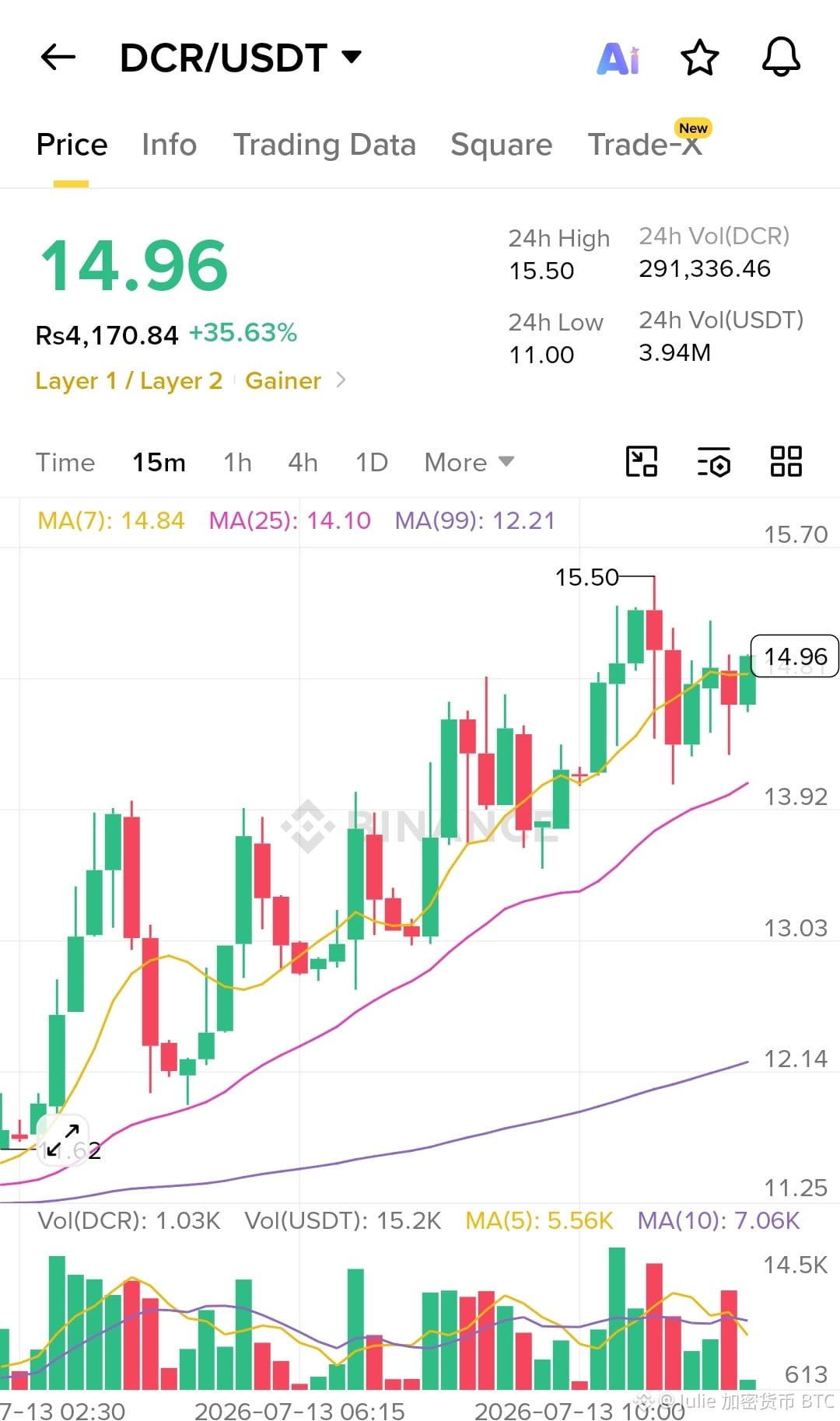
Après avoir franchi la résistance des 14,50 $, DCR a atteint un plus haut à 15,50 $ et se maintient désormais autour de 14,96 $, ce qui est un signe sain après un rallye solide. Les moyennes mobiles restent orientées à la hausse, indiquant que les acheteurs gardent le contrôle.
Tant que le prix reste au-dessus de la zone de support des 14,50–14,60 $, la tendance demeure haussière. Un nouveau breakout réussi au-dessus de 15,50 $ pourrait ouvrir la voie au prochain mouvement vers 16,20 $ et potentiellement 17,00 $.
Surveillez le volume. Un volume d’achat élevé pendant le prochain franchissement augmenterait les chances d’un rallye durable. Appliquez toujours une gestion des risques appropriée et évitez de poursuivre des bougies vertes sans confirmation claire.
Zone d’achat DCR/USDT : 14,60–14,90 $
Objectif 1 : 15,50 $
Objectif 2 : 16,20 $
Objectif 3 : 17,00 $
Stop Loss : sous 14,20 $
$DCR /USDT affiche une forte dynamique haussière.
Après avoir franchi la résistance des 14,50 $, DCR a atteint un plus haut à 15,50 $ et se maintient désormais autour de 14,96 $, ce qui est un signe sain après un rallye solide. Les moyennes mobiles restent orientées à la hausse, indiquant que les acheteurs gardent le contrôle.
Tant que le prix reste au-dessus de la zone de support des 14,50–14,60 $, la tendance demeure haussière. Un nouveau breakout réussi au-dessus de 15,50 $ pourrait ouvrir la voie au prochain mouvement vers 16,20 $ et potentiellement 17,00 $.
Surveillez le volume. Un volume d’achat élevé pendant le prochain franchissement augmenterait les chances d’un rallye durable. Appliquez toujours une gestion des risques appropriée et évitez de poursuivre des bougies vertes sans confirmation claire.
Zone d’achat DCR/USDT : 14,60–14,90 $
Objectif 1 : 15,50 $
Objectif 2 : 16,20 $
Objectif 3 : 17,00 $
Stop Loss : sous 14,20 $
Après avoir franchi la résistance des 14,50 $, DCR a atteint un plus haut à 15,50 $ et se maintient désormais autour de 14,96 $, ce qui est un signe sain après un rallye solide. Les moyennes mobiles restent orientées à la hausse, indiquant que les acheteurs gardent le contrôle.
Tant que le prix reste au-dessus de la zone de support des 14,50–14,60 $, la tendance demeure haussière. Un nouveau breakout réussi au-dessus de 15,50 $ pourrait ouvrir la voie au prochain mouvement vers 16,20 $ et potentiellement 17,00 $.
Surveillez le volume. Un volume d’achat élevé pendant le prochain franchissement augmenterait les chances d’un rallye durable. Appliquez toujours une gestion des risques appropriée et évitez de poursuivre des bougies vertes sans confirmation claire.
Zone d’achat DCR/USDT : 14,60–14,90 $
Objectif 1 : 15,50 $
Objectif 2 : 16,20 $
Objectif 3 : 17,00 $
Stop Loss : sous 14,20 $
156
·
--
Article
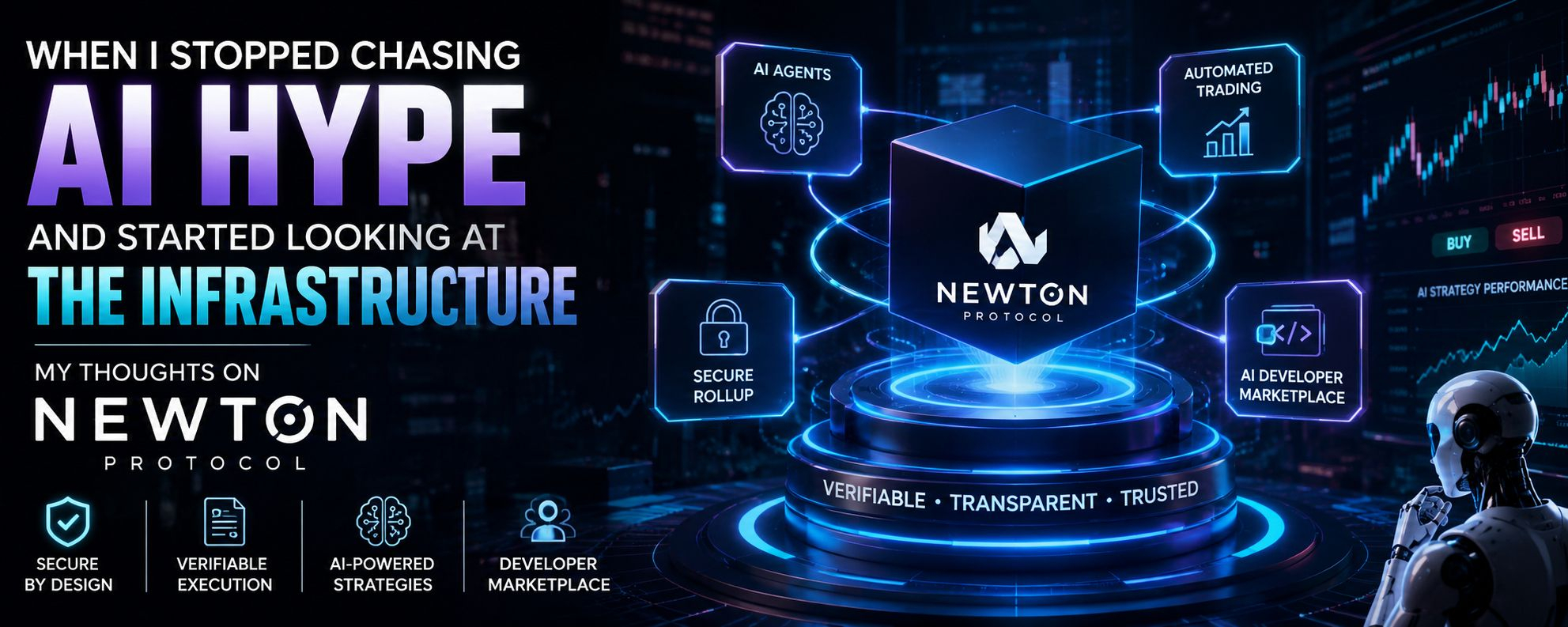
Quand j’ai cessé de regarder l’engouement pour l’IA et que j’ai commencé à regarder l’infrastructure : Mes réflexions sur Newton PLa plupart des projets d’IA ne retiennent pas mon attention très longtemps. J’ai vu assez de cycles crypto pour savoir que de grandes promesses arrivent souvent bien avant de vrais produits. C’est pourquoi j’ai essayé d’ignorer d’abord le protocole Newton. Pourtant, je voyais sans cesse des gens mentionner des agents IA qui gèrent des trades et des stratégies, alors j’ai décidé de passer du temps à comprendre ce qui était réellement construit, plutôt que de lire des titres.
La première chose que j’ai remarquée, c’est que le protocole Newton n’essaie pas de devenir un autre modèle d’IA. Il se concentre sur la couche en dessous. Je me demandais ce qui se passerait quand l’IA commence à faire bouger de vrais actifs on-chain. La vitesse ne suffit pas. Chaque action doit être vérifiée, chaque résultat doit avoir une trace claire, et les utilisateurs doivent être convaincus qu’un système automatisé n’agit pas sans limites. Ce problème semble bien plus important que de créer un autre chatbot.
Quand j’ai cessé de regarder l’engouement pour l’IA et que j’ai commencé à regarder l’infrastructure : Mes réflexions sur Newton P
La plupart des projets d’IA ne retiennent pas mon attention très longtemps. J’ai vu assez de cycles crypto pour savoir que de grandes promesses arrivent souvent bien avant de vrais produits. C’est pourquoi j’ai essayé d’ignorer d’abord le protocole Newton. Pourtant, je voyais sans cesse des gens mentionner des agents IA qui gèrent des trades et des stratégies, alors j’ai décidé de passer du temps à comprendre ce qui était réellement construit, plutôt que de lire des titres.
La première chose que j’ai remarquée, c’est que le protocole Newton n’essaie pas de devenir un autre modèle d’IA. Il se concentre sur la couche en dessous. Je me demandais ce qui se passerait quand l’IA commence à faire bouger de vrais actifs on-chain. La vitesse ne suffit pas. Chaque action doit être vérifiée, chaque résultat doit avoir une trace claire, et les utilisateurs doivent être convaincus qu’un système automatisé n’agit pas sans limites. Ce problème semble bien plus important que de créer un autre chatbot.
La première chose que j’ai remarquée, c’est que le protocole Newton n’essaie pas de devenir un autre modèle d’IA. Il se concentre sur la couche en dessous. Je me demandais ce qui se passerait quand l’IA commence à faire bouger de vrais actifs on-chain. La vitesse ne suffit pas. Chaque action doit être vérifiée, chaque résultat doit avoir une trace claire, et les utilisateurs doivent être convaincus qu’un système automatisé n’agit pas sans limites. Ce problème semble bien plus important que de créer un autre chatbot.
12
10
471
·
--
Article
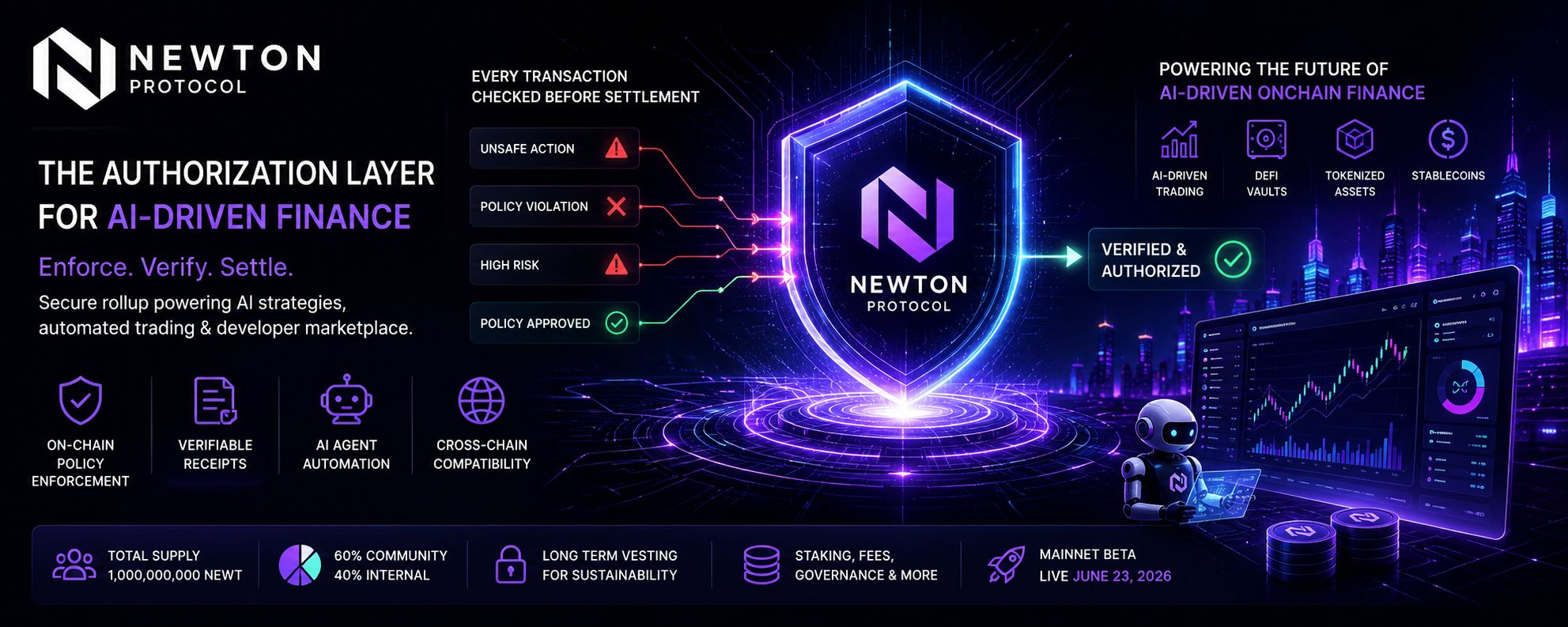
Newton Protocol (NEWT) : Pourquoi je crois que la confiance, et pas l’IA, déterminera l’avenir de la finance on-chain automatiséeJ’ai passé un certain temps à creuser le protocole Newton, car il ne me semblait pas correspondre à une histoire crypto d’IA “classique”. J’ai remarqué que le projet pousse constamment une idée principale : il veut être une couche d’autorisation onchain qui applique une politique programmable avant qu’une transaction ne soit finalisée, et les cas d’usage officiels s’étendent sur des coffres DeFi, des stablecoins, des RWA et de la finance agentique. Cela m’a amené à le voir moins comme « un autre token d’IA » et davantage comme un système de contrôle pour les actions onchain.
Ce qui a attiré mon attention, c’est le timing. L’équipe a indiqué que le bêta du mainnet Newton était déjà en ligne le 23 juin 2026, et qu’il démarrerait avec des coffres DeFi. Je n’ignore pas ce type de détail, car beaucoup de projets parlent d’automatisation de manière abstraite, mais Newton essaie de poser des règles sur le chemin de transactions réelles avant que l’argent ne circule. C’est un problème bien plus difficile, et, à mes yeux, aussi beaucoup plus intéressant.
Newton Protocol (NEWT) : Pourquoi je crois que la confiance, et pas l’IA, déterminera l’avenir de la finance on-chain automatisée
J’ai passé un certain temps à creuser le protocole Newton, car il ne me semblait pas correspondre à une histoire crypto d’IA “classique”. J’ai remarqué que le projet pousse constamment une idée principale : il veut être une couche d’autorisation onchain qui applique une politique programmable avant qu’une transaction ne soit finalisée, et les cas d’usage officiels s’étendent sur des coffres DeFi, des stablecoins, des RWA et de la finance agentique. Cela m’a amené à le voir moins comme « un autre token d’IA » et davantage comme un système de contrôle pour les actions onchain.
Ce qui a attiré mon attention, c’est le timing. L’équipe a indiqué que le bêta du mainnet Newton était déjà en ligne le 23 juin 2026, et qu’il démarrerait avec des coffres DeFi. Je n’ignore pas ce type de détail, car beaucoup de projets parlent d’automatisation de manière abstraite, mais Newton essaie de poser des règles sur le chemin de transactions réelles avant que l’argent ne circule. C’est un problème bien plus difficile, et, à mes yeux, aussi beaucoup plus intéressant.
Ce qui a attiré mon attention, c’est le timing. L’équipe a indiqué que le bêta du mainnet Newton était déjà en ligne le 23 juin 2026, et qu’il démarrerait avec des coffres DeFi. Je n’ignore pas ce type de détail, car beaucoup de projets parlent d’automatisation de manière abstraite, mais Newton essaie de poser des règles sur le chemin de transactions réelles avant que l’argent ne circule. C’est un problème bien plus difficile, et, à mes yeux, aussi beaucoup plus intéressant.
2
4
200
·
--
$NEWT
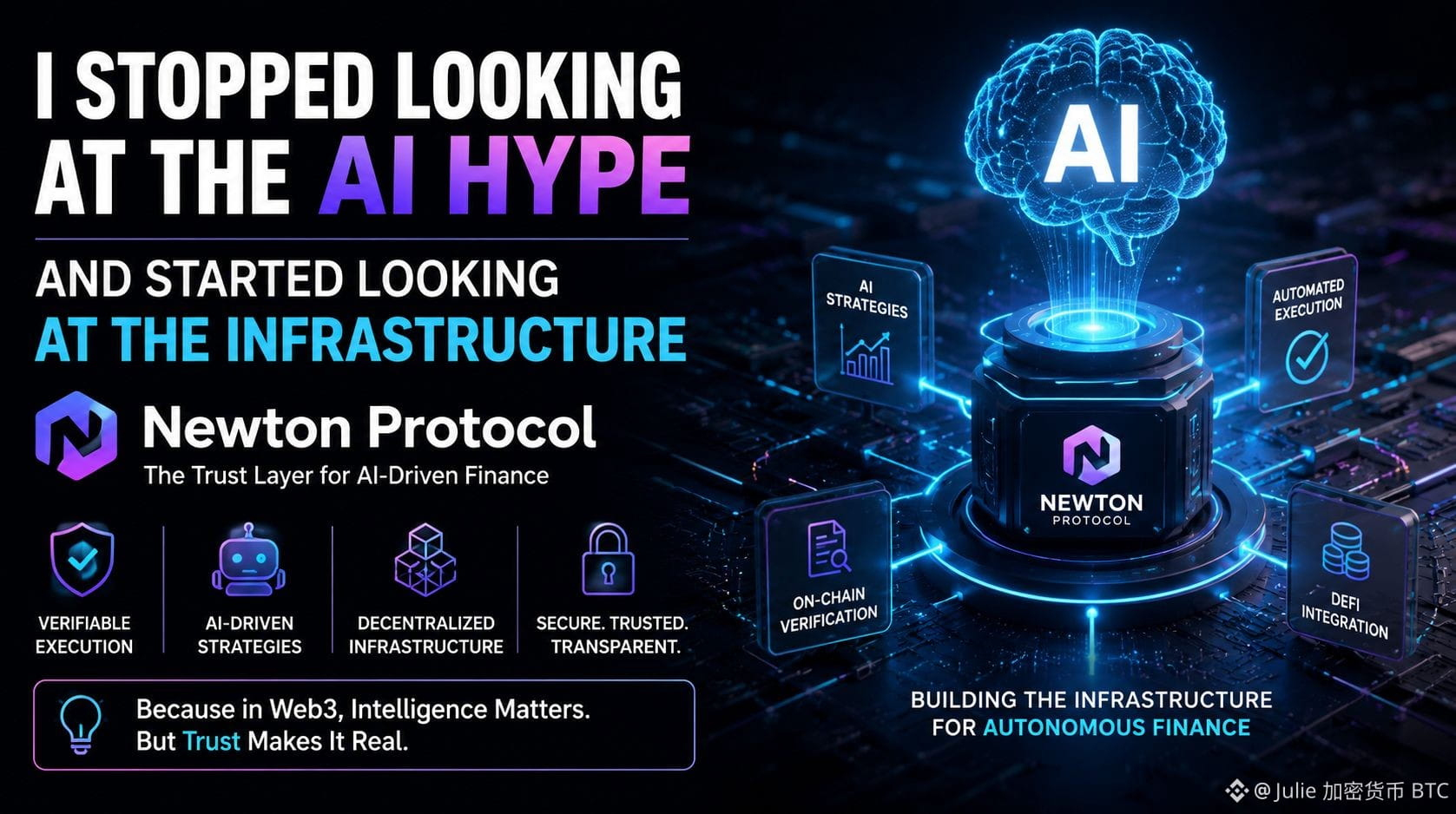
Je jugeais autrefois les projets crypto d’IA à la sophistication du modèle. Après avoir passé du temps à rechercher Newton Protocol, j’ai constaté que je m’intéressais à quelque chose de beaucoup moins discuté : la responsabilisation.
Un agent IA peut analyser des marchés, gérer des actifs ou exécuter des transactions en quelques secondes, mais la vitesse n’est pas le véritable défi. La question la plus importante est de savoir si chaque action peut être vérifiée et à laquelle on peut faire confiance. Si les utilisateurs ne peuvent pas comprendre ou vérifier ce qui s’est passé, alors l’automatisation ne fait que remplacer une couche de confiance par une autre.
C’est ce qui m’a donné l’impression que Newton Protocol se démarquait. Plutôt que de poursuivre l’euphorie liée à l’IA, il semble chercher à créer une infrastructure permettant d’exécuter des actions pilotées par l’IA dans un environnement transparent et sécurisé. Je pense que cette approche a une valeur plus durable que le lancement d’une autre application d’IA sans résoudre d’abord le problème de la confiance.
Je pense aussi que le succès ne dépendra pas uniquement de la technologie. Le réseau a besoin de développeurs qui construisent des outils utiles, d’utilisateurs prêts à s’y fier, et d’une économie de jetons qui génère une demande réelle à mesure que l’activité augmente. Ce sont des objectifs difficiles, mais ce sont aussi les indicateurs les plus importants.
Je ne considère pas Newton Protocol comme un gagnant garanti, car cet espace devient de plus en plus concurrentiel. Ce que je trouve toutefois intéressant, c’est qu’il s’attaque à un défi concret que beaucoup de gens négligent. À mesure que l’IA s’implique davantage dans la finance décentralisée, une exécution digne de confiance pourrait devenir aussi importante que la prise de décision intelligente. C’est pour cette raison que je continuerai à suivre ses avancées plutôt que de me concentrer uniquement sur l’excitation du marché à court terme.
@NewtonProtocol #NEWT $NEWT
{spot}(NEWTUSDT)
$NEWT
Je jugeais autrefois les projets crypto d’IA à la sophistication du modèle. Après avoir passé du temps à rechercher Newton Protocol, j’ai constaté que je m’intéressais à quelque chose de beaucoup moins discuté : la responsabilisation.
Un agent IA peut analyser des marchés, gérer des actifs ou exécuter des transactions en quelques secondes, mais la vitesse n’est pas le véritable défi. La question la plus importante est de savoir si chaque action peut être vérifiée et à laquelle on peut faire confiance. Si les utilisateurs ne peuvent pas comprendre ou vérifier ce qui s’est passé, alors l’automatisation ne fait que remplacer une couche de confiance par une autre.
C’est ce qui m’a donné l’impression que Newton Protocol se démarquait. Plutôt que de poursuivre l’euphorie liée à l’IA, il semble chercher à créer une infrastructure permettant d’exécuter des actions pilotées par l’IA dans un environnement transparent et sécurisé. Je pense que cette approche a une valeur plus durable que le lancement d’une autre application d’IA sans résoudre d’abord le problème de la confiance.
Je pense aussi que le succès ne dépendra pas uniquement de la technologie. Le réseau a besoin de développeurs qui construisent des outils utiles, d’utilisateurs prêts à s’y fier, et d’une économie de jetons qui génère une demande réelle à mesure que l’activité augmente. Ce sont des objectifs difficiles, mais ce sont aussi les indicateurs les plus importants.
Je ne considère pas Newton Protocol comme un gagnant garanti, car cet espace devient de plus en plus concurrentiel. Ce que je trouve toutefois intéressant, c’est qu’il s’attaque à un défi concret que beaucoup de gens négligent. À mesure que l’IA s’implique davantage dans la finance décentralisée, une exécution digne de confiance pourrait devenir aussi importante que la prise de décision intelligente. C’est pour cette raison que je continuerai à suivre ses avancées plutôt que de me concentrer uniquement sur l’excitation du marché à court terme.
@NewtonProtocol #NEWT $NEWT
Je jugeais autrefois les projets crypto d’IA à la sophistication du modèle. Après avoir passé du temps à rechercher Newton Protocol, j’ai constaté que je m’intéressais à quelque chose de beaucoup moins discuté : la responsabilisation.
Un agent IA peut analyser des marchés, gérer des actifs ou exécuter des transactions en quelques secondes, mais la vitesse n’est pas le véritable défi. La question la plus importante est de savoir si chaque action peut être vérifiée et à laquelle on peut faire confiance. Si les utilisateurs ne peuvent pas comprendre ou vérifier ce qui s’est passé, alors l’automatisation ne fait que remplacer une couche de confiance par une autre.
C’est ce qui m’a donné l’impression que Newton Protocol se démarquait. Plutôt que de poursuivre l’euphorie liée à l’IA, il semble chercher à créer une infrastructure permettant d’exécuter des actions pilotées par l’IA dans un environnement transparent et sécurisé. Je pense que cette approche a une valeur plus durable que le lancement d’une autre application d’IA sans résoudre d’abord le problème de la confiance.
Je pense aussi que le succès ne dépendra pas uniquement de la technologie. Le réseau a besoin de développeurs qui construisent des outils utiles, d’utilisateurs prêts à s’y fier, et d’une économie de jetons qui génère une demande réelle à mesure que l’activité augmente. Ce sont des objectifs difficiles, mais ce sont aussi les indicateurs les plus importants.
Je ne considère pas Newton Protocol comme un gagnant garanti, car cet espace devient de plus en plus concurrentiel. Ce que je trouve toutefois intéressant, c’est qu’il s’attaque à un défi concret que beaucoup de gens négligent. À mesure que l’IA s’implique davantage dans la finance décentralisée, une exécution digne de confiance pourrait devenir aussi importante que la prise de décision intelligente. C’est pour cette raison que je continuerai à suivre ses avancées plutôt que de me concentrer uniquement sur l’excitation du marché à court terme.
@NewtonProtocol #NEWT $NEWT
4
7
198
·
--
Article
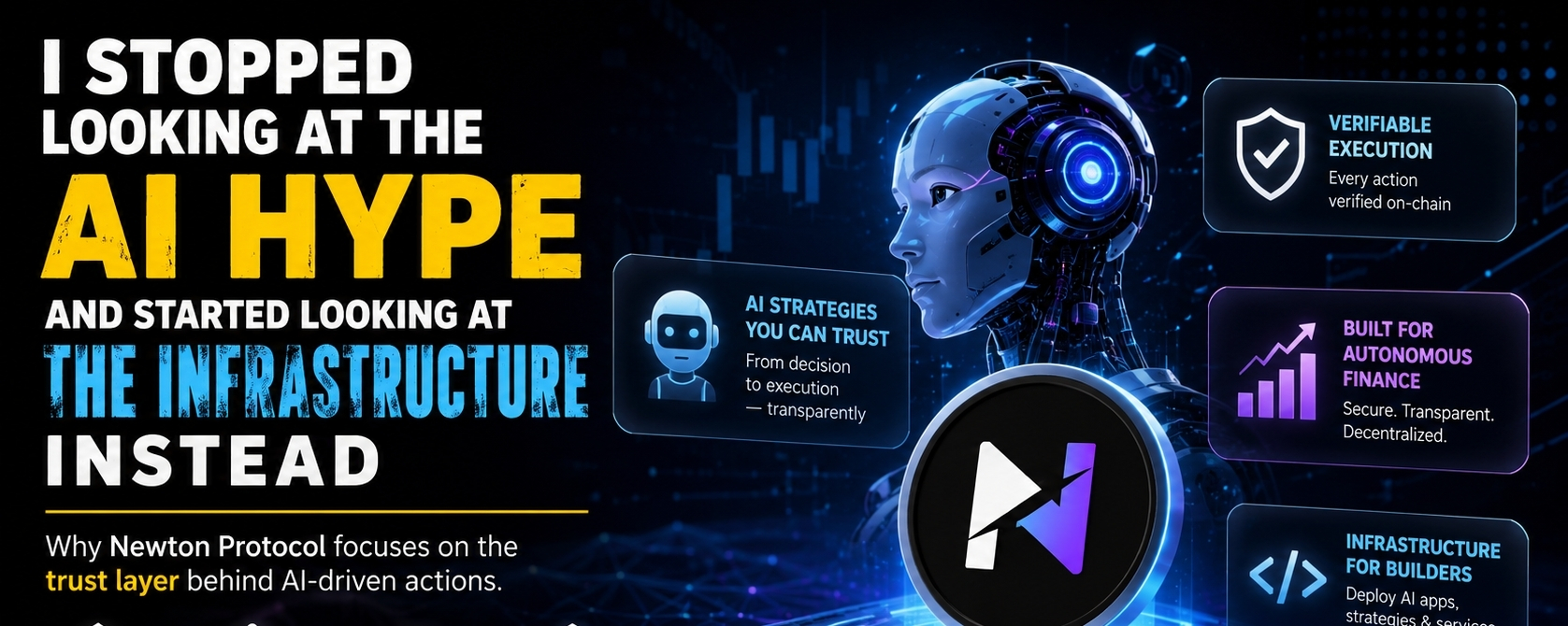
J’ai cessé de regarder l’emballement autour de l’IA pour me concentrer sur l’infrastructure<c-53/>Je n’ai pas commencé à faire des recherches sur Newton Protocol parce que je cherchais un autre token d’IA. Si quelque chose, je suis devenu plus prudent dès qu’un projet combine l’IA et la crypto. J’ai vu trop d’équipes utiliser ces deux mots ensemble sans expliquer comment ils s’articulent réellement.
Ce qui m’a fait passer plus de temps sur Newton Protocol, c’est une question simple que je n’arrivais pas à ignorer. Si l’on s’attend à ce que des agents d’IA prennent des décisions financières, exécutent des transactions, gèrent des actifs et interagissent de façon autonome avec des applications décentralisées, qui s’assure que ces actions peuvent être dignes de confiance ? Plus j’y réfléchissais, plus je me disais que ce problème ne disparaît pas parce que l’IA devient simplement plus intelligente.
J’ai cessé de regarder l’emballement autour de l’IA pour me concentrer sur l’infrastructure
<c-53/>Je n’ai pas commencé à faire des recherches sur Newton Protocol parce que je cherchais un autre token d’IA. Si quelque chose, je suis devenu plus prudent dès qu’un projet combine l’IA et la crypto. J’ai vu trop d’équipes utiliser ces deux mots ensemble sans expliquer comment ils s’articulent réellement.
Ce qui m’a fait passer plus de temps sur Newton Protocol, c’est une question simple que je n’arrivais pas à ignorer. Si l’on s’attend à ce que des agents d’IA prennent des décisions financières, exécutent des transactions, gèrent des actifs et interagissent de façon autonome avec des applications décentralisées, qui s’assure que ces actions peuvent être dignes de confiance ? Plus j’y réfléchissais, plus je me disais que ce problème ne disparaît pas parce que l’IA devient simplement plus intelligente.
Ce qui m’a fait passer plus de temps sur Newton Protocol, c’est une question simple que je n’arrivais pas à ignorer. Si l’on s’attend à ce que des agents d’IA prennent des décisions financières, exécutent des transactions, gèrent des actifs et interagissent de façon autonome avec des applications décentralisées, qui s’assure que ces actions peuvent être dignes de confiance ? Plus j’y réfléchissais, plus je me disais que ce problème ne disparaît pas parce que l’IA devient simplement plus intelligente.
3
2
265
·
--
rejoignez
rejoignez

David hd
·
--
J’ai vu d’innombrables récits naître, dominer des lignes de temps et disparaître silencieusement. À un moment donné, j’ai cessé de courir après l’excitation et j’ai commencé à prêter attention aux questions qui n’ont pas de réponses faciles.
C’est ce qui m’a mené au Newton Protocol.
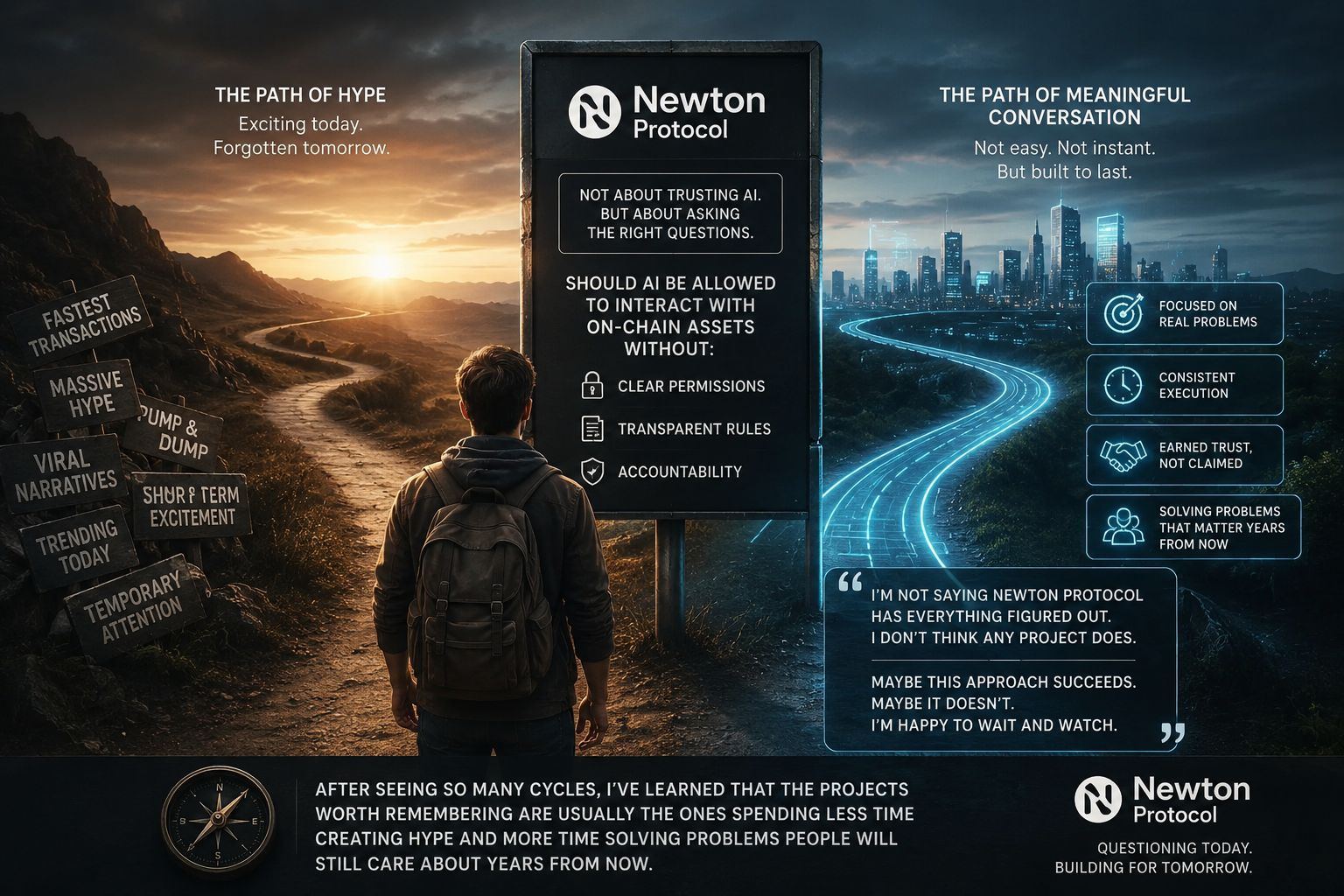
Il ne demande pas aux gens de faire confiance aveuglément à l’IA. Il se demande si l’IA devrait être autorisée à interagir avec des actifs on-chain sans autorisations claires, règles transparentes et responsabilisation. Pour moi, c’est une conversation bien plus significative que le sempiternel débat sur qui arrive à traiter les transactions le plus vite.
Je ne dis pas que le Newton Protocol a tout compris. Je ne pense qu’aucun projet n’a tout compris. En crypto, la confiance ne se gagne pas grâce aux gros titres, aux partenariats ou à des présentations impressionnantes. Elle se gagne grâce à une exécution cohérente dans le temps.
Peut-être que cette approche réussira. Peut-être que non. Je suis heureux d’attendre et d’observer.
Après avoir vu autant de cycles, j’ai appris que les projets qui valent la peine d’être retenus sont généralement ceux qui passent moins de temps à créer du buzz et plus de temps à résoudre des problèmes qui compteront encore des années plus tard.
@NewtonProtocol #Newt $NEWT
C’est ce qui m’a mené au Newton Protocol.
Il ne demande pas aux gens de faire confiance aveuglément à l’IA. Il se demande si l’IA devrait être autorisée à interagir avec des actifs on-chain sans autorisations claires, règles transparentes et responsabilisation. Pour moi, c’est une conversation bien plus significative que le sempiternel débat sur qui arrive à traiter les transactions le plus vite.
Je ne dis pas que le Newton Protocol a tout compris. Je ne pense qu’aucun projet n’a tout compris. En crypto, la confiance ne se gagne pas grâce aux gros titres, aux partenariats ou à des présentations impressionnantes. Elle se gagne grâce à une exécution cohérente dans le temps.
Peut-être que cette approche réussira. Peut-être que non. Je suis heureux d’attendre et d’observer.
Après avoir vu autant de cycles, j’ai appris que les projets qui valent la peine d’être retenus sont généralement ceux qui passent moins de temps à créer du buzz et plus de temps à résoudre des problèmes qui compteront encore des années plus tard.
@NewtonProtocol #Newt $NEWT
1
56
·
--
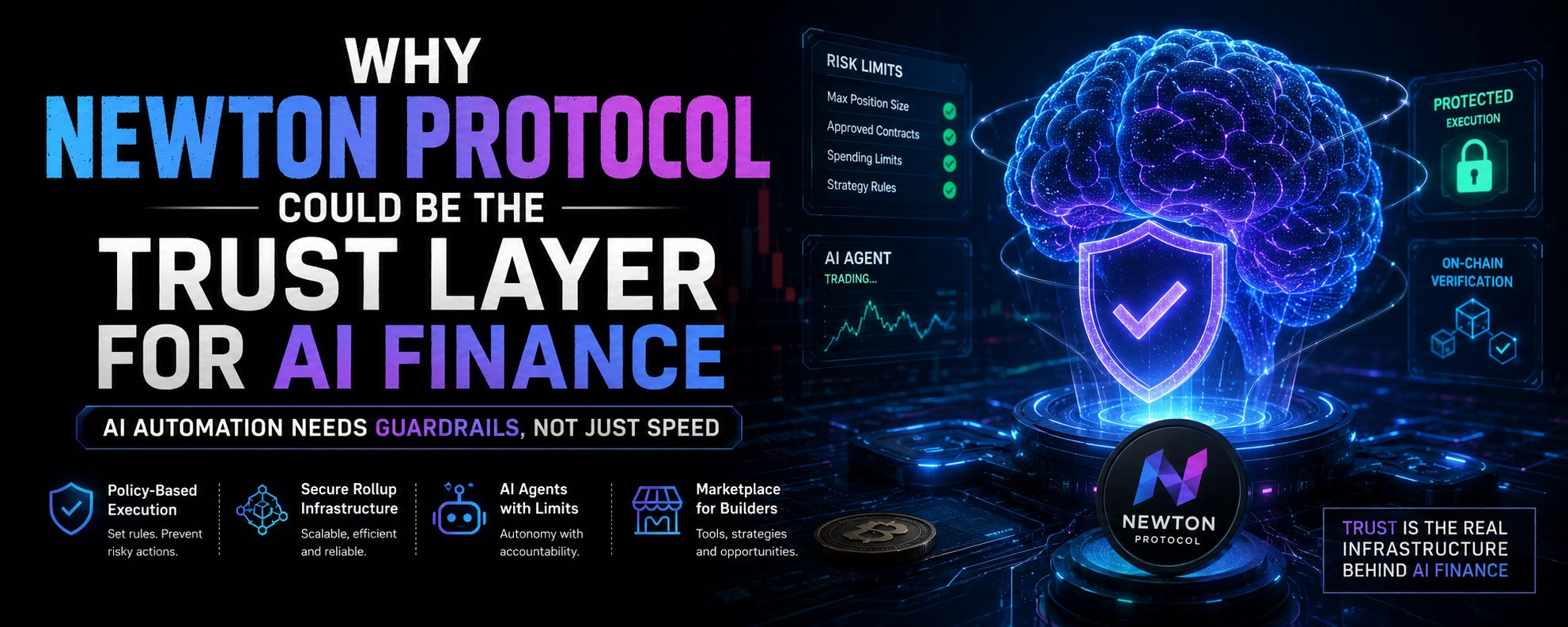
Article
J’ai cessé de m’intéresser au battage autour de l’IA et j’ai commencé à m’intéresser à la confiance — voilà pourquoi Newton Protocol est resté sur mon rad@NewtonProtocol Je n’ai pas commencé à lire sur Newton Protocol parce que je voulais un autre projet de crypto lié à l’IA dans mon portefeuille. J’ai vu trop de projets ajouter « IA » à leur image de marque sans résoudre un vrai problème. J’étais plutôt intéressé par une question : si, à terme, des agents d’IA sont autorisés à déplacer de l’argent on-chain, qui s’assure qu’ils ne commettent pas d’erreurs coûteuses ?
Cette question me ramenait sans cesse à Newton Protocol.
Plus j’y regardais, plus je me rendais compte que le plus grand défi n’est pas de rendre l’IA plus intelligente. Nous avons déjà de puissants modèles d’IA. Le vrai problème, c’est de créer des règles que ces modèles ne peuvent pas facilement ignorer lorsqu’ils gèrent des actifs réels.
J’ai cessé de m’intéresser au battage autour de l’IA et j’ai commencé à m’intéresser à la confiance — voilà pourquoi Newton Protocol est resté sur mon rad
@NewtonProtocol Je n’ai pas commencé à lire sur Newton Protocol parce que je voulais un autre projet de crypto lié à l’IA dans mon portefeuille. J’ai vu trop de projets ajouter « IA » à leur image de marque sans résoudre un vrai problème. J’étais plutôt intéressé par une question : si, à terme, des agents d’IA sont autorisés à déplacer de l’argent on-chain, qui s’assure qu’ils ne commettent pas d’erreurs coûteuses ?
Cette question me ramenait sans cesse à Newton Protocol.
Plus j’y regardais, plus je me rendais compte que le plus grand défi n’est pas de rendre l’IA plus intelligente. Nous avons déjà de puissants modèles d’IA. Le vrai problème, c’est de créer des règles que ces modèles ne peuvent pas facilement ignorer lorsqu’ils gèrent des actifs réels.
Cette question me ramenait sans cesse à Newton Protocol.
Plus j’y regardais, plus je me rendais compte que le plus grand défi n’est pas de rendre l’IA plus intelligente. Nous avons déjà de puissants modèles d’IA. Le vrai problème, c’est de créer des règles que ces modèles ne peuvent pas facilement ignorer lorsqu’ils gèrent des actifs réels.
12
1
14
518
·
--
Baissier
Plus je passe de temps sur la crypto, moins je suis impressionné par les grandes promesses. J’ai vu trop de projets dominer la conversation pendant quelques mois, puis disparaître lentement une fois l’excitation retombée.
C’est probablement pour ça que Newton Protocol est resté dans mon radar. Il ne cherche pas à me convaincre que l’IA est l’avenir simplement parce que tout le monde parle d’IA. La question la plus intéressante, du moins pour moi, est de savoir s’il faut faire confiance à l’IA pour déplacer des actifs sans limites claires et règles vérifiables.
Je ne sais pas si Newton Protocol deviendra une composante majeure de l’écosystème. C’est bien trop tôt pour trancher. Mais je pense que la conversation qu’il suscite est plus importante qu’une autre course à des vitesses plus élevées ou à des titres plus accrocheurs.
Sur ce marché, la confiance est beaucoup plus difficile à construire que la technologie. Les projets qui comprennent cela retiennent généralement mon attention, même s’ils ont encore beaucoup de chemin à parcourir.
$NEWT #Newt @NewtonProtocol
Plus je passe de temps sur la crypto, moins je suis impressionné par les grandes promesses. J’ai vu trop de projets dominer la conversation pendant quelques mois, puis disparaître lentement une fois l’excitation retombée.
C’est probablement pour ça que Newton Protocol est resté dans mon radar. Il ne cherche pas à me convaincre que l’IA est l’avenir simplement parce que tout le monde parle d’IA. La question la plus intéressante, du moins pour moi, est de savoir s’il faut faire confiance à l’IA pour déplacer des actifs sans limites claires et règles vérifiables.
Je ne sais pas si Newton Protocol deviendra une composante majeure de l’écosystème. C’est bien trop tôt pour trancher. Mais je pense que la conversation qu’il suscite est plus importante qu’une autre course à des vitesses plus élevées ou à des titres plus accrocheurs.
Sur ce marché, la confiance est beaucoup plus difficile à construire que la technologie. Les projets qui comprennent cela retiennent généralement mon attention, même s’ils ont encore beaucoup de chemin à parcourir.
$NEWT #Newt @NewtonProtocol
C’est probablement pour ça que Newton Protocol est resté dans mon radar. Il ne cherche pas à me convaincre que l’IA est l’avenir simplement parce que tout le monde parle d’IA. La question la plus intéressante, du moins pour moi, est de savoir s’il faut faire confiance à l’IA pour déplacer des actifs sans limites claires et règles vérifiables.
Je ne sais pas si Newton Protocol deviendra une composante majeure de l’écosystème. C’est bien trop tôt pour trancher. Mais je pense que la conversation qu’il suscite est plus importante qu’une autre course à des vitesses plus élevées ou à des titres plus accrocheurs.
Sur ce marché, la confiance est beaucoup plus difficile à construire que la technologie. Les projets qui comprennent cela retiennent généralement mon attention, même s’ils ont encore beaucoup de chemin à parcourir.
$NEWT #Newt @NewtonProtocol
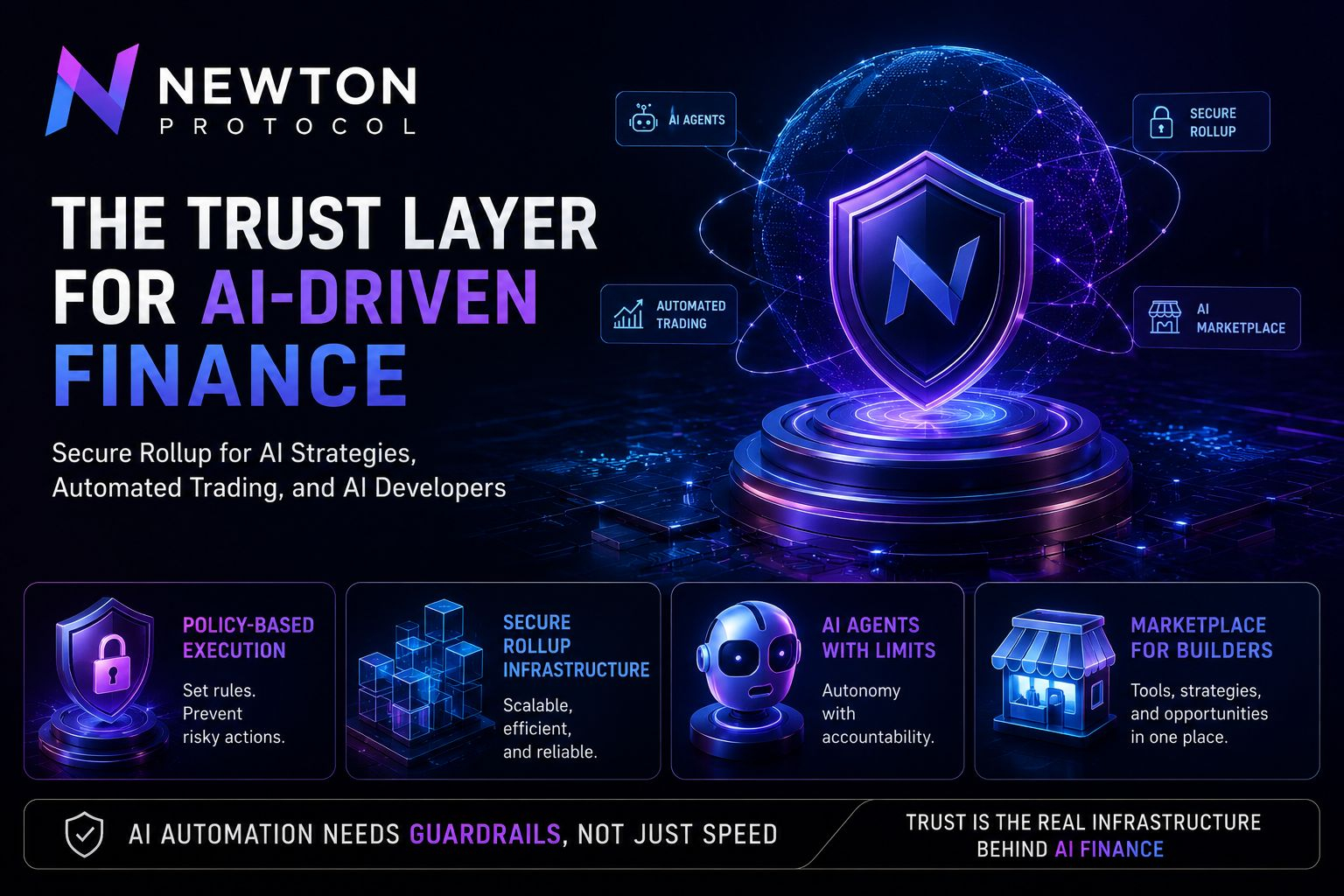
90
2
36
9.8k
Connectez-vous pour découvrir plus de contenu
Rejoignez la communauté mondiale des adeptes de cryptomonnaies sur Binance Square
⚡️ Suviez les dernières informations importantes sur les cryptomonnaies.
💬 Jugé digne de confiance par la plus grande plateforme d’échange de cryptomonnaies au monde.
👍 Découvrez les connaissances que partagent les créateurs vérifiés.
Adresse e-mail/Nº de téléphone
Sujets d’actualité
SECReceivesGrayscaleLitecoinTrustETFFiling
36,870 vues
755 mentions
#secreceivesgrayscalelitecointrustetffiling
💎 L’attention institutionnelle atteint Litecoin
Le dépôt de l’ETF de Grayscale a placé le $LTC dans une conversation plus large. Pour les traders au comptant, des évolutions comme celle-ci sont un rappel d’étudier les actifs solides avant toute entrée.
$LSK
$ETH
$BZ
Alpha H U N T E R
·0 mentions J’aime
·179 vues
ClarityActFacesProceduralVoteSept15
150,457 vues
1,718 mentions
US10YearTreasuryYieldNears5%
51,150 vues
932 mentions