Binance Square
Satoshi Know How
588 Publications

Satoshi Know How

Compte Square Vérifié+
Making crypto easy, one post at a time. News, tips, and blockchain bits from your crypto buddy — Satoshi Know How.
Ouvert au trading
Trade régulièrement
6.7 an(s)
155 Suivis
4.3K+ Abonnés
3.4K+ J’aime
Publications
Portefeuille
·
--
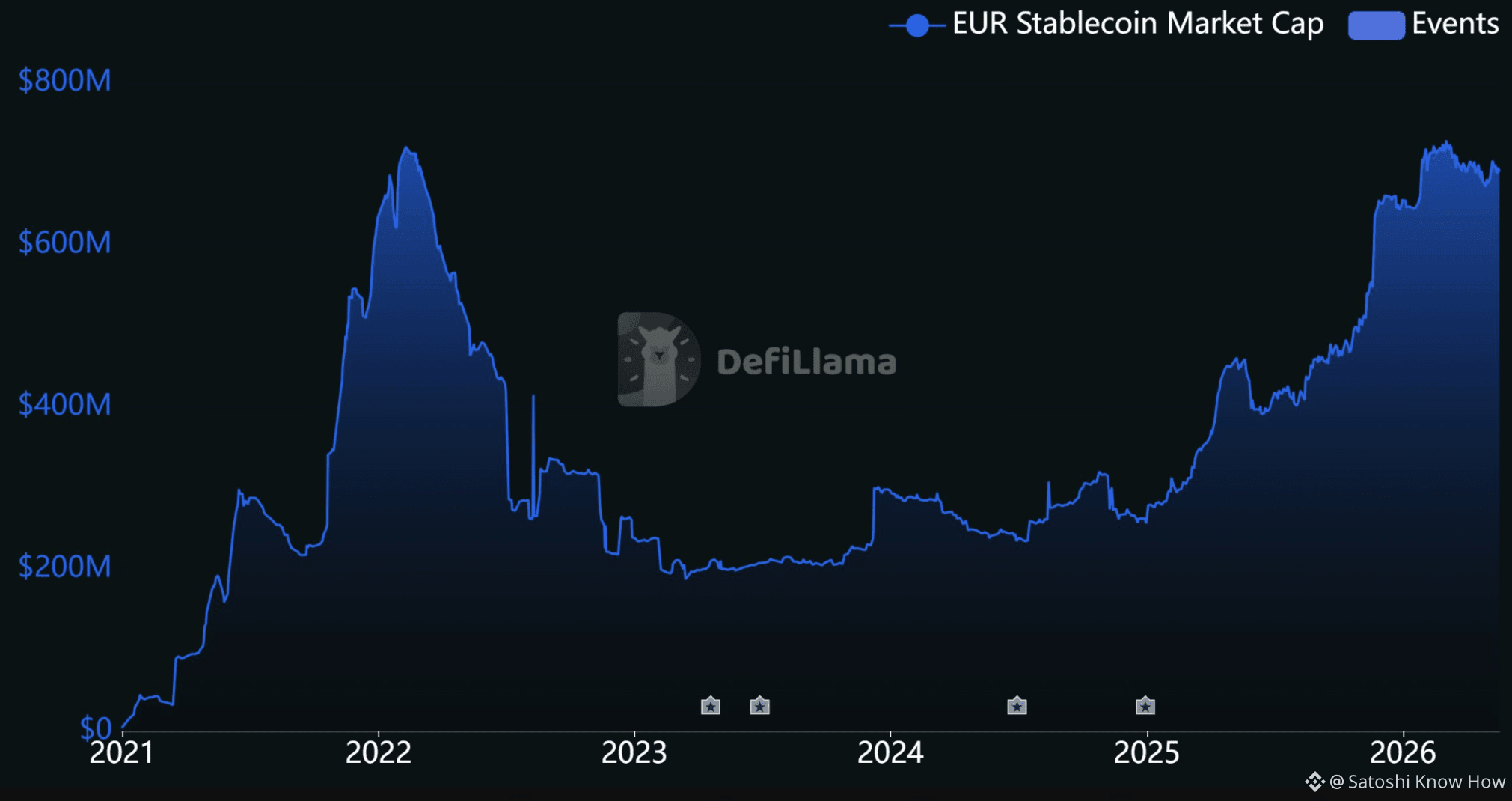
Le marché des stablecoins en Europe prend de l'ampleur. Un an après l'entrée en vigueur des régulations MiCA, les stablecoins adossés à l'euro ont atteint des niveaux de capitalisation de marché records. La clarté réglementaire attire les émetteurs et aide les projets légitimes à s'étendre à travers l'Union Européenne. Bien que les stablecoins adossés au dollar dominent encore le marché mondial, les alternatives libellées en euro croissent beaucoup plus rapidement que ne l'avaient anticipé de nombreux analystes. Les observateurs de l'industrie estiment que MiCA a joué un rôle majeur en créant un cadre clair pour les opérateurs de stablecoins. Si les tendances actuelles se poursuivent, les stablecoins en euro pourraient devenir une part beaucoup plus importante de l'écosystème des actifs numériques au cours des prochaines années.
·
--
Baissier
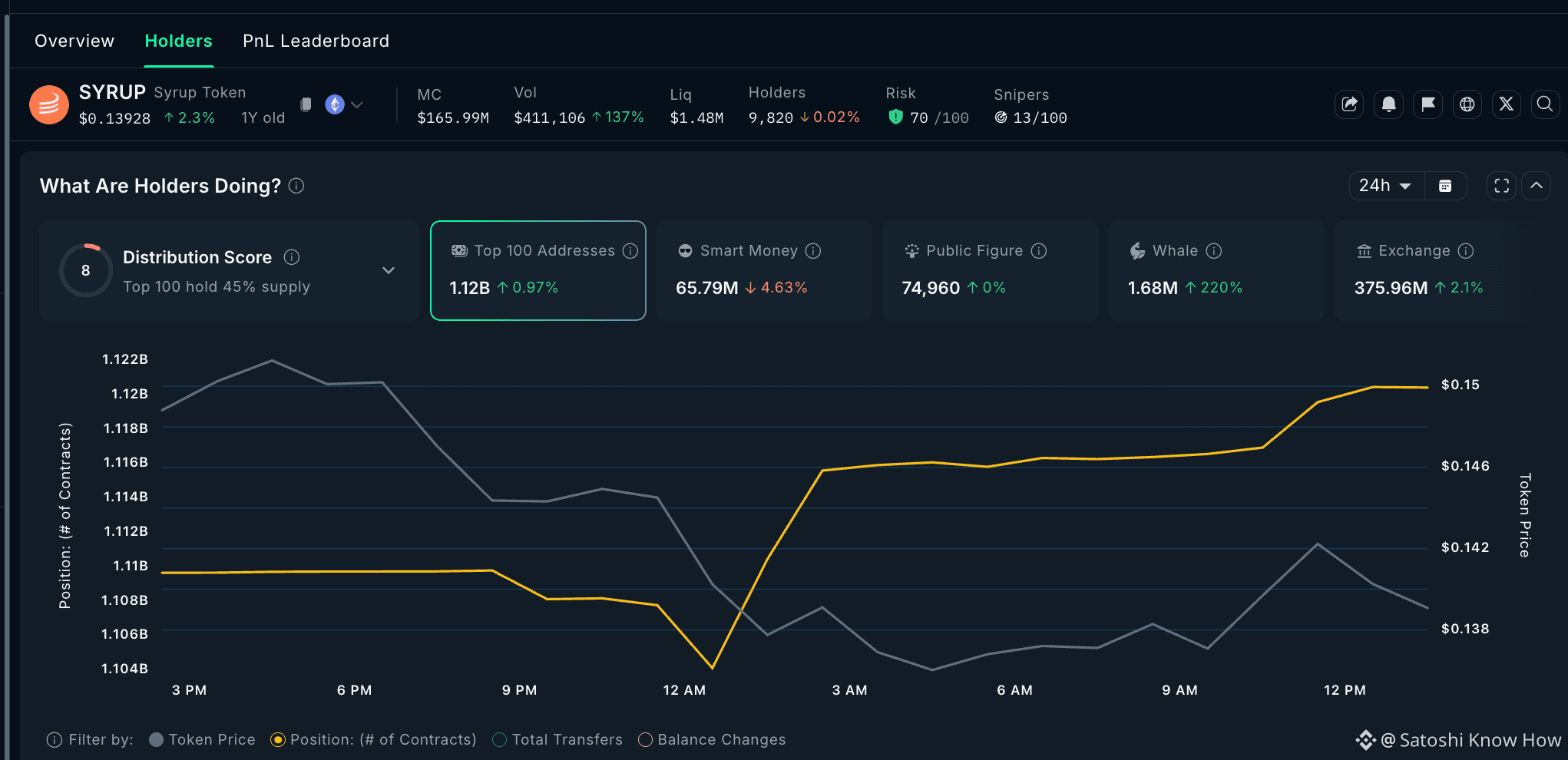
La récente chute du Bitcoin en dessous de 66 000 $ a provoqué plus de 1,8 milliard $ en liquidations, mais les baleines crypto ne réagissent pas de la même manière. Les données on-chain montrent que certains gros investisseurs accumulent des actifs sélectionnés tandis que d'autres réduisent leur exposition et verrouillent leurs profits. Ce comportement partagé met en évidence l'incertitude entourant le marché en ce moment. Historiquement, l'activité des baleines fournit souvent des indices sur les tendances futures, rendant ces mouvements dignes d'être surveillés de près. Alors que les traders de détail se concentrent sur les fluctuations de prix à court terme, les principaux détenteurs semblent se positionner différemment en fonction de leur perspective sur la prochaine phase du cycle de marché.
·
--
Baissier
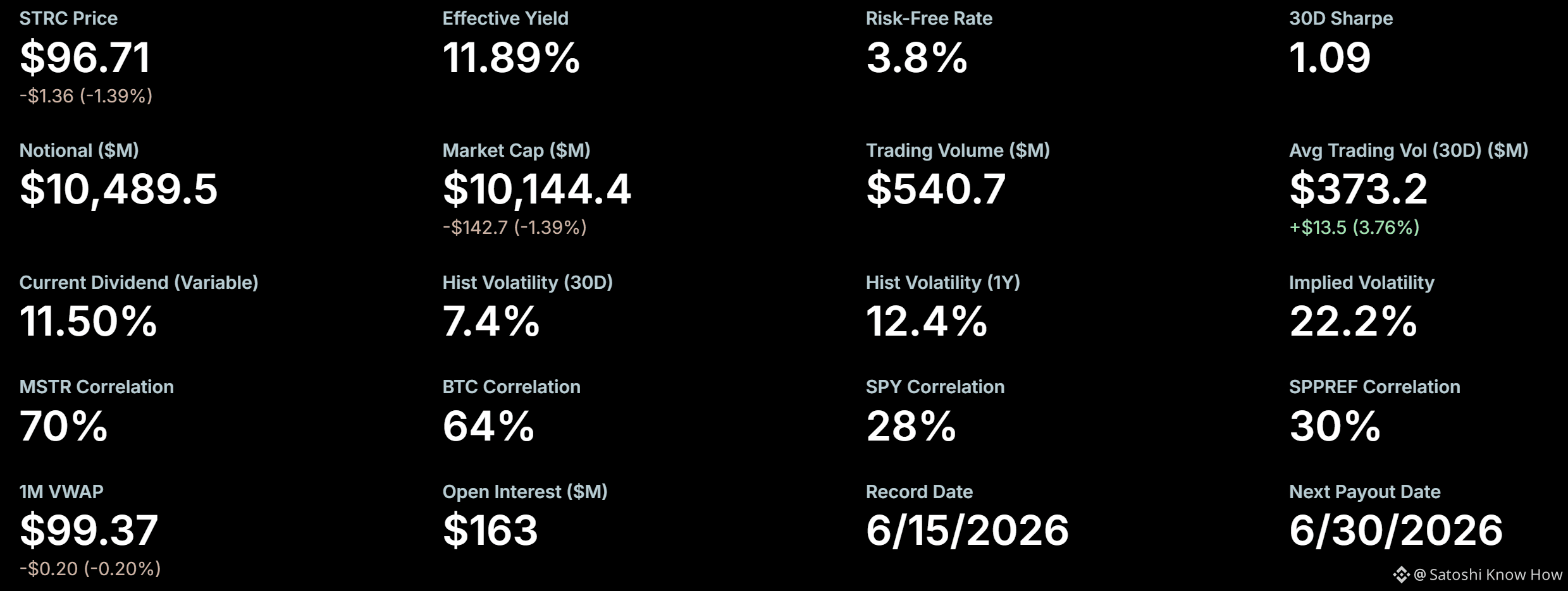
La stratégie, anciennement MicroStrategy, a surpris le marché en shortant du Bitcoin pour la première fois en plus de trois ans. La société a vendu 32 BTC d'une valeur d'environ 2,5 millions de dollars, déclenchant un déclin tant du Bitcoin que des valeurs mobilières liées à Strategy. Bien que ce montant soit minuscule par rapport à ses énormes avoirs de plus de 840 000 BTC, les investisseurs ont perçu ce mouvement comme symbolique. Michael Saylor a construit sa réputation autour d'une approche « jamais vendre », donc même une petite vente a suscité des questions sur la stratégie future. Certains le voient comme une gestion financière prudente, tandis que d'autres craignent que cela puisse affaiblir la confiance dans le Bitcoin.
·
--
Baissier
Est-ce que c'est le plus froid hiver crypto de tous les temps ? L'analyste de Bloomberg, Joe Weisenthal, le pense, en pointant du doigt la chute de 47 % du Bitcoin par rapport à son sommet de 126 000 $ et à un sentiment de marché plus faible. Tout le monde n'est pas d'accord. Beaucoup d'investisseurs crypto soutiennent que des récits similaires de "crypto est mort" apparaissent à chaque grande correction et sont généralement suivis d'un cycle de reprise. Avec le BTC se négociant autour de 67 000 $, le débat s'intensifie à nouveau. Assistons-nous à la fin du cycle actuel, ou simplement à un autre chapitre dans la longue histoire de volatilité du Bitcoin ? La réponse pourrait définir le reste de 2026.
Article
Voir la traduction
Binance Referral CodeLooking for a Binance Referral Code? Register today using the Binance referral code SATOSHIBRO and start with one of the strongest welcome offers currently available on the market. Sign up here: [https://www.binance.com/join?ref=SATOSHIBRO](https://www.binance.com/join?ref=SATOSHIBRO)More details: [Binance official page](https://www.binance.com/en/events/BESTBONUS) New users who register through the promotional link can unlock a 20% lifetime discount on Binance Spot and Futures trading fees, alongside access to the new Affiliate-Boosted Welcome Bonus program worth up to $19,800. Unlike traditional exchange promotions that offer a fixed reward, Binance now uses a task-based system. Users complete specific trading and account milestones to unlock higher reward levels. The first reward tier requires a net deposit of $100 and at least $3,000 in trading volume within seven days. Completing these requirements unlocks a $100 reward. The second tier increases the requirements to a $200 deposit and $10,000 trading volume, rewarding users with $200. More active traders can access larger rewards. Binance offers a $400 reward for users who deposit $500 and generate $30,000 in trading volume. Higher levels include a $1,000 reward for a $2,000 deposit and $500,000 volume, while the largest published tier offers $3,000 after a $5,000 deposit and $5 million trading volume. The promotion is divided into two stages. First, new users complete beginner tasks after registration. After completing KYC verification, they gain access to additional rewards and advanced challenges through the Binance Rewards Hub. For anyone planning to trade crypto regularly, the 20% fee discount alone can generate substantial long-term savings. Combined with welcome rewards worth up to $19,800, the Binance referral code SATOSHIBRO provides one of the most attractive registration offers currently available.

Binance Referral Code

Looking for a Binance Referral Code? Register today using the Binance referral code SATOSHIBRO and start with one of the strongest welcome offers currently available on the market.
Sign up here: https://www.binance.com/join?ref=SATOSHIBROMore details: Binance official page
New users who register through the promotional link can unlock a 20% lifetime discount on Binance Spot and Futures trading fees, alongside access to the new Affiliate-Boosted Welcome Bonus program worth up to $19,800.
Unlike traditional exchange promotions that offer a fixed reward, Binance now uses a task-based system. Users complete specific trading and account milestones to unlock higher reward levels.
The first reward tier requires a net deposit of $100 and at least $3,000 in trading volume within seven days. Completing these requirements unlocks a $100 reward. The second tier increases the requirements to a $200 deposit and $10,000 trading volume, rewarding users with $200.
More active traders can access larger rewards. Binance offers a $400 reward for users who deposit $500 and generate $30,000 in trading volume. Higher levels include a $1,000 reward for a $2,000 deposit and $500,000 volume, while the largest published tier offers $3,000 after a $5,000 deposit and $5 million trading volume.
The promotion is divided into two stages. First, new users complete beginner tasks after registration. After completing KYC verification, they gain access to additional rewards and advanced challenges through the Binance Rewards Hub.
For anyone planning to trade crypto regularly, the 20% fee discount alone can generate substantial long-term savings. Combined with welcome rewards worth up to $19,800, the Binance referral code SATOSHIBRO provides one of the most attractive registration offers currently available.
Partiellement vrai
Article
Où Binance Futures est disponible en 2026 ?Binance est encore l’une des plus grandes bourses de crypto au monde en 2026, mais ses produits Futures ne sont plus disponibles partout. L’accès dépend désormais fortement de votre lieu de résidence, de la façon dont les régulateurs locaux traitent les produits dérivés de crypto et des propres politiques de risque et de conformité de Binance. Remarque : ce guide s’appuie sur des informations publiques disponibles jusqu’à fin 2025 et début 2026. Les règles et politiques de plateforme peuvent changer rapidement, donc vérifiez toujours directement sur Binance avant de trader des Futures. Ce que sont réellement Binance Futures

Où Binance Futures est disponible en 2026 ?

Binance est encore l’une des plus grandes bourses de crypto au monde en 2026, mais ses produits Futures ne sont plus disponibles partout. L’accès dépend désormais fortement de votre lieu de résidence, de la façon dont les régulateurs locaux traitent les produits dérivés de crypto et des propres politiques de risque et de conformité de Binance.
Remarque : ce guide s’appuie sur des informations publiques disponibles jusqu’à fin 2025 et début 2026. Les règles et politiques de plateforme peuvent changer rapidement, donc vérifiez toujours directement sur Binance avant de trader des Futures.
Ce que sont réellement Binance Futures
Article
Voir la traduction
Ripple (XRP) Price Prediction: 2026, 2027, 2030Ripple’s XRP remains one of the most closely watched large-cap cryptocurrencies thanks to its focus on real-world payments, long legal battle with the SEC, and repeated high‑volatility cycles. As regulatory clouds lift and adoption of XRP Ledger–based payment solutions grows, many traders are asking what realistic price targets for 2026, 2027, and 2030 might look like. This guide breaks down XRP’s fundamentals, its price history, and the key catalysts that could drive future valuations, then translates that into bearish, base‑case, and bullish scenarios rather than fixed “guaranteed” targets. Throughout, keep in mind that crypto assets are highly speculative, and even the best models can be wrong by a wide margin. Nothing in this article is financial advice or an investment recommendation; always do your own research and never invest money you cannot afford to lose. Start Trading XRP with a Binance Bonus If you do not yet have a cryptocurrency exchange account and want to trade XRP, you can register on Binance using a [special promotional link](https://www.binance.com/join?ref=SATOSHIBRO) (click the link in this section in your browser). This promotion grants a 20% discount on both spot and futures trading fees, helping active traders reduce their long‑term costs on every XRP order. In addition, new users can unlock up to 600 USD in welcome bonuses on the platform, depending on their trading activity and the current campaign rules (this is a “up to” amount, not a guaranteed payout). Remember that cryptocurrency markets are extremely volatile and involve significant risk, so you should only trade with funds you can afford to lose and always use appropriate risk management. What Is XRP and Why It Matters for Payments XRP is the native digital asset of the XRP Ledger (XRPL), a decentralized, open‑source blockchain designed specifically for fast, low‑cost value transfer. Transactions typically finalize within a few seconds, with fees measured in fractions of a cent, which contrasts sharply with multi‑day settlement times and high wire costs in traditional cross‑border banking. The XRP Ledger uses a unique consensus mechanism rather than energy‑intensive mining, allowing the network to process around 1,500 transactions per second while maintaining low latency and modest resource requirements. Ripple, the company, builds enterprise payment solutions such as Ripple Payments (formerly RippleNet) and On‑Demand Liquidity that can use XRP as a bridge asset to move value between currencies in different jurisdictions. Financial institutions and payment providers can tap XRPL’s payment rails to streamline remittances, B2B transfers, and merchant settlements, with XRP functioning as a liquidity tool rather than just a speculative token. It is important to distinguish between XRP (the token), the XRP Ledger (the underlying network), and Ripple Labs (the company developing payment products on top); they are related but not identical. Long‑term price narratives for XRP often hinge on whether real‑world payment volume and liquidity demand grow on XRPL, not just on trader speculation. XRP Price History and Major Market Cycles XRP launched in the early 2010s as one of the first major alternatives to Bitcoin focused on payments rather than store‑of‑value use cases. It spent several years trading at fractions of a cent before exploding in the 2017–2018 bull market, when speculative mania across altcoins pushed XRP to an all‑time high around the high‑3‑dollar range, followed by a brutal multi‑year drawdown. In December 2020, the U.S. Securities and Exchange Commission (SEC) filed a lawsuit alleging that Ripple’s institutional sales of XRP constituted unregistered securities offerings, triggering one of the steepest sell‑offs in the asset’s history as major U.S. exchanges suspended trading. A 2023 ruling by Judge Analisa Torres found that XRP itself is not a security when traded on public exchanges, although certain institutional sales did violate securities laws, which partially lifted the overhang and led to sharp relief rallies. After multiple rounds of penalties and negotiations, the case ultimately concluded in 2025 with a settlement and a final civil fine in the low‑nine‑figure range, providing long‑awaited regulatory clarity for XRP in the U.S. market. The end of the lawsuit coincided with strong price spikes above the 3‑dollar zone as investors reassessed the asset’s risk profile, although subsequent volatility and corrections showed that XRP remains far from a one‑way bet. Even today, XRP is known for double‑digit weekly moves and still trades below its previous cycle peak, highlighting the risk in relying on any single long‑term price target. Key Factors That Will Shape XRP Price by 2030 Several structural drivers are likely to influence XRP’s trajectory toward 2030. These include regulation, adoption of Ripple‑related payment solutions, broader crypto market cycles, and competition from rival networks. Regulation and the Aftermath of the SEC Case The SEC–Ripple case centered on whether XRP is a security and whether Ripple’s sales complied with U.S. securities law. The 2023 decision made a crucial distinction: secondary‑market trading of XRP on exchanges is not considered a securities offering, while some institutional sales were treated as unregistered offerings and penalized. By 2025, Ripple and the SEC agreed to end their appeals, locking in a settlement with a civil penalty but leaving the core finding—that XRP itself is not a security on public markets—intact. This outcome removed much of the legal uncertainty that had kept some exchanges, liquidity providers, and institutional players on the sidelines. However, XRP’s long‑term regulatory outlook still depends on evolving global crypto frameworks, which could either support or constrain usage, particularly in key markets like the U.S., EU, and major Asian financial centers. Adoption of Ripple’s Technology and XRP Liquidity Use Cases Ripple’s pitch is that XRP and the XRP Ledger can act as a neutral, high‑speed bridge for cross‑border transfers, reducing the need for nostro/vostro accounts and pre‑funded corridors. As more payment providers and financial institutions test and deploy Ripple’s solutions, transaction volumes running through XRPL and related rails can translate into higher demand for XRP liquidity. Use cases include remittances, B2B payments, on‑exchange settlement, stablecoin and CBDC interoperability, and merchant settlements, all of which benefit from XRPL’s low fees and 3–5‑second settlement times. If these real‑world flows grow meaningfully by 2030, they could support a higher structural floor for XRP’s valuation, even if speculative cycles still dominate short‑term price action. Crypto Market Cycles, Bitcoin, and Macro Environment Historically, XRP has moved in sync with broader crypto cycles, often lagging Bitcoin initially and then outperforming during late‑stage altcoin rotations, before suffering deeper drawdowns in bear markets. Future price paths will depend heavily on whether the market experiences one or more strong bull cycles between now and 2030, especially in an environment of changing interest rates and global liquidity conditions. Many optimistic XRP forecasts implicitly assume a combination of renewed risk‑on sentiment, expanding crypto adoption, and accommodative macro conditions, while bearish scenarios assume prolonged tight monetary policy and fading appetite for speculative assets. Because macro shocks can quickly change market narratives, any multi‑year XRP prediction should be treated as a conditional scenario, not a fixed path. Competition from Other Payment and Settlement Networks XRP is not alone in targeting cross‑border payments and institutional settlement; it competes with stablecoins, other high‑throughput blockchains, and evolving bank‑led solutions. If alternative networks capture the majority of international flows, XRP’s upside could be limited even if the broader crypto market grows. Conversely, if XRPL remains a leading platform for institutional remittances, treasury flows, and CBDC interoperability, some of the more aggressive long‑term price scenarios become more plausible. How Analysts and Models Build XRP Price Predictions XRP price predictions for 2026, 2027, and 2030 vary widely because analysts use different methods and assumptions. Technical analysts often rely on support and resistance levels, moving averages, Fibonacci retracements, and cycle analysis to project potential upside or downside based on historical price behavior. Others incorporate fundamentals such as adoption metrics, regulatory milestones (like the SEC settlement), and expected crypto market cycles, combining them with quantitative models that apply annualized growth rates to current prices. Forecast aggregators and exchange tools sometimes produce base‑case paths where XRP grows gradually each year, resulting in modest single‑digit prices by 2030, while more aggressive sites publish ranges extending into the double digits if adoption and bull‑market conditions align. Machine‑learning and sentiment‑driven models add another layer, ingesting trading data, social metrics, and macro variables, but these also struggle with regime changes, black‑swan events, and regulatory shocks. In practice, every model is only as good as its assumptions; investors should treat forecasts as scenario tools, not as promises that XRP will reach a specific number by a specific date. Short‑Term XRP Price Prediction: 2026–2027 XRP Price Prediction for 2026 Heading into 2026, XRP trades in a post‑lawsuit environment where major U.S. legal uncertainties have been largely resolved, but long‑term adoption and macro conditions remain open questions. In recent forecasts, many research pieces and exchange tools cluster 2026 expectations in a broad band from around current levels up to several dollars per token, depending on the underlying assumptions and risk appetite. A bearish 2026 scenario assumes that global regulation tightens, the crypto market remains choppy or enters a deeper bear phase, and Ripple’s payment products gain only incremental traction. In this environment, XRP could struggle to sustain meaningful rallies and spend much of 2026 oscillating around or below recent averages, with occasional spikes quickly sold off. The base‑case 2026 scenario assumes neutral‑to‑constructive macro conditions, steady growth in ODL and payment usage, and at least one solid crypto uptrend. Under these conditions, XRP could trade in a multi‑dollar corridor, revisiting prior local highs and occasionally testing upper ranges mentioned by conservative forecast tools, while still experiencing sharp corrections. A bullish 2026 scenario assumes renewed altcoin mania, strong institutional interest following the final SEC settlement, and visible growth in cross‑border volume on XRPL. Here, XRP could approach or challenge previous cycle highs according to the more optimistic analysts, although reaching and sustaining extreme targets would likely require both powerful market momentum and clear evidence of real‑world usage. XRP Price Prediction for 2027 By 2027, the picture becomes even more scenario‑driven because outcomes will depend on how the 2024–2026 cycles unfold. Many long‑term projections assume that, if XRP performs reasonably well in 2026, 2027 could see slightly higher average prices in base and bullish cases as adoption compounds and regulatory clarity beds in. In a bearish 2027 scenario, earlier gains fade, macro turns risk‑off, or new regulatory headwinds hit specific jurisdictions, leading XRP to trade sideways or trend down from its 2026 highs. The base‑case 2027 scenario envisions XRP establishing a higher floor than in 2025–2026, with alternating periods of consolidation and breakout as new institutional corridors come online and the market digests prior legal events. A bullish 2027 scenario combines sustained crypto market liquidity with visible growth in XRPL‑based payment flows and potentially new integrations with banks, fintechs, and remittance companies. In this case, XRP could push into the upper band of single‑digit or low double‑digit ranges cited by the more aggressive prediction platforms, although the path would almost certainly involve deep pullbacks. Long‑Term XRP Price Prediction: 2030 and Beyond XRP Price Prediction for 2030 2030 forecasts cover the widest spectrum because they project across multiple unknown market cycles. Some conservative models anticipate moderate appreciation from current prices, envisioning XRP in the low‑ to mid‑single‑digit range if adoption grows but competition and macro risks persist. At the same time, more bullish research and prediction sites share scenarios where XRP reaches substantially higher valuations—into the double digits—if Ripple’s technology captures a meaningful share of global cross‑border flows and crypto as an asset class matures. For example, several long‑term forecasts for 2030 cluster around mid‑single‑digit to low double‑digit bands as base‑case outcomes, while a minority of highly optimistic models publish much higher targets based on aggressive assumptions about SWIFT disruption and macro tailwinds. It is crucial to understand that these numbers are not consensus guarantees but rather endpoints for different thought experiments about regulation, adoption, and market behavior. A conservative 2030 scenario assumes XRP grows slower than the broader digital asset market as competitors carve out significant shares of the payment niche; in this view, XRP’s price in 2030 is only modestly above its 2026–2027 averages. The moderate 2030 scenario sees Ripple’s stack widely used for cross‑border settlement, XRP retaining a strong role as a bridge asset, and prices broadly aligning with the mid‑range of current analyst forecasts. An aggressive 2030 scenario layers on even more adoption: major banks, payment processors, and possibly CBDC projects lean on XRPL infrastructure at scale, creating deep on‑chain liquidity and sustained demand for XRP. Under such conditions, XRP could move toward the upper extremes of long‑term bullish predictions, though achieving and maintaining those levels would likely require a combination of repeated bull markets and structural dominance in its niche. Looking Beyond 2030 Some tools and blogs extend XRP forecasts out to 2040 and 2050 by assuming fixed annual growth rates, producing smooth upward curves over decades. While these can be useful to illustrate how compounding works, they are extremely sensitive to small changes in assumptions and do not capture the full range of technological, regulatory, and macroeconomic unknowns. For practical decision‑making, it makes more sense to treat any prediction beyond 2030 as a rough scenario exercise rather than a plan you rely on to size positions or leverage. Risks, Limitations, and Why XRP Forecasts Can Fail XRP’s history shows how quickly narratives can flip: the same asset that delivered spectacular gains during the 2017 mania also suffered some of the worst percentage drawdowns among major coins when the SEC lawsuit hit. This pattern underlines a key point—models built on past cycles can underestimate both downside risk and the duration of bear markets. Key risk categories include new regulatory actions in other jurisdictions, shifting guidance from securities and banking regulators, and potential future lawsuits against market participants using XRP in complex financial products. Technology risks, such as unforeseen vulnerabilities, network outages, or loss of competitive edge to faster or more flexible platforms, also have to be considered. Forecasting models themselves can fail because they extrapolate from limited history, assume stable relationships between variables, or rely too heavily on technical patterns that can break under new regimes. Leverage and derivatives trading amplify both gains and losses; in an asset as volatile as XRP, inappropriate position sizing can lead to rapid liquidation even if long‑term forecasts eventually prove directionally correct. No matter how convincing a prediction looks, there is always a wide range of possible outcomes, and investors should build their own view based on personal risk tolerance, time horizon, and diversification needs. FAQs About XRP Price Predictions Can XRP Reach Its Previous All‑Time High Again? XRP’s prior all‑time high came during the 2017–2018 bubble, when speculative excess across the entire crypto market pushed altcoin valuations to extremes. Reclaiming or surpassing that zone would likely require a combination of strong crypto bull cycles, clear and favorable regulation, and convincing evidence that XRP plays a meaningful role in global payment infrastructure. While some forecasts see this as possible in bullish scenarios, others argue that competition and changing market structure make a repeat less likely, so it should not be treated as an inevitability. Traders should view a return to previous peaks as one of several potential outcomes rather than a baseline assumption. Is XRP a Good Long‑Term Investment? Whether XRP is “good” long‑term depends on your thesis and risk tolerance. On the positive side, XRP benefits from a payment‑focused design, fast and cheap settlement, and increasing clarity in the U.S. after the SEC case concluded, which has encouraged some institutions to re‑engage. In addition, the XRP Ledger has live use cases in remittances and cross‑border transfers, and Ripple continues to sign partnerships with financial and fintech players. On the negative side, XRP remains highly volatile, faces competition from other payment networks and stablecoin‑based solutions, and is still subject to evolving regulations in many jurisdictions. Any long‑term position should be sized with these uncertainties in mind and integrated into a diversified strategy rather than treated as a single all‑in bet. How Accurate Are XRP Price Predictions? In practice, XRP forecasts tend to miss both major tops and major bottoms, just like predictions for other crypto assets. Many models performed poorly around the SEC lawsuit, failing to anticipate the scale of the drawdown and the timing of relief rallies after court rulings and the final settlement. Because models depend on assumptions about regulation, adoption, macro, and investor behavior, they can quickly become obsolete when new information arrives. For this reason, XRP price predictions should be viewed as scenario maps that help you think about risk/reward—not as guarantees of future performance. What Could Make XRP Underperform Other Major Cryptocurrencies? XRP could lag other large‑cap assets if competing networks capture more of the cross‑border payment market or if stablecoins and bank‑run solutions dominate new corridors. Regulatory friction in key regions, even after the U.S. case, could also reduce institutional comfort and slow adoption. Additionally, if Bitcoin and other majors enter a strong cycle driven by narratives unrelated to payments—such as digital gold, DeFi, or Web3—capital could rotate into those themes while XRP’s story remains more niche. Under such conditions, even if XRP’s fundamentals improve gradually, its relative performance versus the broader market might disappoint. Final Thoughts XRP sits at the intersection of traditional finance and crypto, combining a payment‑centric blockchain design with a history of intense legal and market drama. Price predictions for 2026, 2027, and 2030 span everything from modest appreciation to aggressive multi‑cycle bull scenarios, reflecting uncertainty around regulation, adoption, macro conditions, and competition. The most robust way to use XRP forecasts is not to fixate on a single number, but to understand the range of plausible scenarios and the assumptions behind them, then decide whether any of those narratives fit your own risk profile and time horizon. Whatever your view, treat XRP—as with all crypto assets—as a high‑risk investment that requires thorough research, disciplined risk management, and a willingness to accept significant volatility.

Ripple (XRP) Price Prediction: 2026, 2027, 2030

Ripple’s XRP remains one of the most closely watched large-cap cryptocurrencies thanks to its focus on real-world payments, long legal battle with the SEC, and repeated high‑volatility cycles. As regulatory clouds lift and adoption of XRP Ledger–based payment solutions grows, many traders are asking what realistic price targets for 2026, 2027, and 2030 might look like.
This guide breaks down XRP’s fundamentals, its price history, and the key catalysts that could drive future valuations, then translates that into bearish, base‑case, and bullish scenarios rather than fixed “guaranteed” targets. Throughout, keep in mind that crypto assets are highly speculative, and even the best models can be wrong by a wide margin.
Nothing in this article is financial advice or an investment recommendation; always do your own research and never invest money you cannot afford to lose.
Start Trading XRP with a Binance Bonus
If you do not yet have a cryptocurrency exchange account and want to trade XRP, you can register on Binance using a special promotional link (click the link in this section in your browser). This promotion grants a 20% discount on both spot and futures trading fees, helping active traders reduce their long‑term costs on every XRP order. In addition, new users can unlock up to 600 USD in welcome bonuses on the platform, depending on their trading activity and the current campaign rules (this is a “up to” amount, not a guaranteed payout).
Remember that cryptocurrency markets are extremely volatile and involve significant risk, so you should only trade with funds you can afford to lose and always use appropriate risk management.
What Is XRP and Why It Matters for Payments
XRP is the native digital asset of the XRP Ledger (XRPL), a decentralized, open‑source blockchain designed specifically for fast, low‑cost value transfer. Transactions typically finalize within a few seconds, with fees measured in fractions of a cent, which contrasts sharply with multi‑day settlement times and high wire costs in traditional cross‑border banking.
The XRP Ledger uses a unique consensus mechanism rather than energy‑intensive mining, allowing the network to process around 1,500 transactions per second while maintaining low latency and modest resource requirements. Ripple, the company, builds enterprise payment solutions such as Ripple Payments (formerly RippleNet) and On‑Demand Liquidity that can use XRP as a bridge asset to move value between currencies in different jurisdictions. Financial institutions and payment providers can tap XRPL’s payment rails to streamline remittances, B2B transfers, and merchant settlements, with XRP functioning as a liquidity tool rather than just a speculative token.
It is important to distinguish between XRP (the token), the XRP Ledger (the underlying network), and Ripple Labs (the company developing payment products on top); they are related but not identical. Long‑term price narratives for XRP often hinge on whether real‑world payment volume and liquidity demand grow on XRPL, not just on trader speculation.
XRP Price History and Major Market Cycles
XRP launched in the early 2010s as one of the first major alternatives to Bitcoin focused on payments rather than store‑of‑value use cases. It spent several years trading at fractions of a cent before exploding in the 2017–2018 bull market, when speculative mania across altcoins pushed XRP to an all‑time high around the high‑3‑dollar range, followed by a brutal multi‑year drawdown.
In December 2020, the U.S. Securities and Exchange Commission (SEC) filed a lawsuit alleging that Ripple’s institutional sales of XRP constituted unregistered securities offerings, triggering one of the steepest sell‑offs in the asset’s history as major U.S. exchanges suspended trading. A 2023 ruling by Judge Analisa Torres found that XRP itself is not a security when traded on public exchanges, although certain institutional sales did violate securities laws, which partially lifted the overhang and led to sharp relief rallies.
After multiple rounds of penalties and negotiations, the case ultimately concluded in 2025 with a settlement and a final civil fine in the low‑nine‑figure range, providing long‑awaited regulatory clarity for XRP in the U.S. market. The end of the lawsuit coincided with strong price spikes above the 3‑dollar zone as investors reassessed the asset’s risk profile, although subsequent volatility and corrections showed that XRP remains far from a one‑way bet. Even today, XRP is known for double‑digit weekly moves and still trades below its previous cycle peak, highlighting the risk in relying on any single long‑term price target.
Key Factors That Will Shape XRP Price by 2030
Several structural drivers are likely to influence XRP’s trajectory toward 2030. These include regulation, adoption of Ripple‑related payment solutions, broader crypto market cycles, and competition from rival networks.
Regulation and the Aftermath of the SEC Case
The SEC–Ripple case centered on whether XRP is a security and whether Ripple’s sales complied with U.S. securities law. The 2023 decision made a crucial distinction: secondary‑market trading of XRP on exchanges is not considered a securities offering, while some institutional sales were treated as unregistered offerings and penalized.
By 2025, Ripple and the SEC agreed to end their appeals, locking in a settlement with a civil penalty but leaving the core finding—that XRP itself is not a security on public markets—intact. This outcome removed much of the legal uncertainty that had kept some exchanges, liquidity providers, and institutional players on the sidelines. However, XRP’s long‑term regulatory outlook still depends on evolving global crypto frameworks, which could either support or constrain usage, particularly in key markets like the U.S., EU, and major Asian financial centers.
Adoption of Ripple’s Technology and XRP Liquidity Use Cases
Ripple’s pitch is that XRP and the XRP Ledger can act as a neutral, high‑speed bridge for cross‑border transfers, reducing the need for nostro/vostro accounts and pre‑funded corridors. As more payment providers and financial institutions test and deploy Ripple’s solutions, transaction volumes running through XRPL and related rails can translate into higher demand for XRP liquidity.
Use cases include remittances, B2B payments, on‑exchange settlement, stablecoin and CBDC interoperability, and merchant settlements, all of which benefit from XRPL’s low fees and 3–5‑second settlement times. If these real‑world flows grow meaningfully by 2030, they could support a higher structural floor for XRP’s valuation, even if speculative cycles still dominate short‑term price action.
Crypto Market Cycles, Bitcoin, and Macro Environment
Historically, XRP has moved in sync with broader crypto cycles, often lagging Bitcoin initially and then outperforming during late‑stage altcoin rotations, before suffering deeper drawdowns in bear markets. Future price paths will depend heavily on whether the market experiences one or more strong bull cycles between now and 2030, especially in an environment of changing interest rates and global liquidity conditions.
Many optimistic XRP forecasts implicitly assume a combination of renewed risk‑on sentiment, expanding crypto adoption, and accommodative macro conditions, while bearish scenarios assume prolonged tight monetary policy and fading appetite for speculative assets. Because macro shocks can quickly change market narratives, any multi‑year XRP prediction should be treated as a conditional scenario, not a fixed path.
Competition from Other Payment and Settlement Networks
XRP is not alone in targeting cross‑border payments and institutional settlement; it competes with stablecoins, other high‑throughput blockchains, and evolving bank‑led solutions. If alternative networks capture the majority of international flows, XRP’s upside could be limited even if the broader crypto market grows. Conversely, if XRPL remains a leading platform for institutional remittances, treasury flows, and CBDC interoperability, some of the more aggressive long‑term price scenarios become more plausible.
How Analysts and Models Build XRP Price Predictions
XRP price predictions for 2026, 2027, and 2030 vary widely because analysts use different methods and assumptions. Technical analysts often rely on support and resistance levels, moving averages, Fibonacci retracements, and cycle analysis to project potential upside or downside based on historical price behavior.
Others incorporate fundamentals such as adoption metrics, regulatory milestones (like the SEC settlement), and expected crypto market cycles, combining them with quantitative models that apply annualized growth rates to current prices. Forecast aggregators and exchange tools sometimes produce base‑case paths where XRP grows gradually each year, resulting in modest single‑digit prices by 2030, while more aggressive sites publish ranges extending into the double digits if adoption and bull‑market conditions align.
Machine‑learning and sentiment‑driven models add another layer, ingesting trading data, social metrics, and macro variables, but these also struggle with regime changes, black‑swan events, and regulatory shocks. In practice, every model is only as good as its assumptions; investors should treat forecasts as scenario tools, not as promises that XRP will reach a specific number by a specific date.
Short‑Term XRP Price Prediction: 2026–2027
XRP Price Prediction for 2026
Heading into 2026, XRP trades in a post‑lawsuit environment where major U.S. legal uncertainties have been largely resolved, but long‑term adoption and macro conditions remain open questions. In recent forecasts, many research pieces and exchange tools cluster 2026 expectations in a broad band from around current levels up to several dollars per token, depending on the underlying assumptions and risk appetite.
A bearish 2026 scenario assumes that global regulation tightens, the crypto market remains choppy or enters a deeper bear phase, and Ripple’s payment products gain only incremental traction. In this environment, XRP could struggle to sustain meaningful rallies and spend much of 2026 oscillating around or below recent averages, with occasional spikes quickly sold off.
The base‑case 2026 scenario assumes neutral‑to‑constructive macro conditions, steady growth in ODL and payment usage, and at least one solid crypto uptrend. Under these conditions, XRP could trade in a multi‑dollar corridor, revisiting prior local highs and occasionally testing upper ranges mentioned by conservative forecast tools, while still experiencing sharp corrections.
A bullish 2026 scenario assumes renewed altcoin mania, strong institutional interest following the final SEC settlement, and visible growth in cross‑border volume on XRPL. Here, XRP could approach or challenge previous cycle highs according to the more optimistic analysts, although reaching and sustaining extreme targets would likely require both powerful market momentum and clear evidence of real‑world usage.
XRP Price Prediction for 2027
By 2027, the picture becomes even more scenario‑driven because outcomes will depend on how the 2024–2026 cycles unfold. Many long‑term projections assume that, if XRP performs reasonably well in 2026, 2027 could see slightly higher average prices in base and bullish cases as adoption compounds and regulatory clarity beds in.
In a bearish 2027 scenario, earlier gains fade, macro turns risk‑off, or new regulatory headwinds hit specific jurisdictions, leading XRP to trade sideways or trend down from its 2026 highs. The base‑case 2027 scenario envisions XRP establishing a higher floor than in 2025–2026, with alternating periods of consolidation and breakout as new institutional corridors come online and the market digests prior legal events.
A bullish 2027 scenario combines sustained crypto market liquidity with visible growth in XRPL‑based payment flows and potentially new integrations with banks, fintechs, and remittance companies. In this case, XRP could push into the upper band of single‑digit or low double‑digit ranges cited by the more aggressive prediction platforms, although the path would almost certainly involve deep pullbacks.
Long‑Term XRP Price Prediction: 2030 and Beyond
XRP Price Prediction for 2030
2030 forecasts cover the widest spectrum because they project across multiple unknown market cycles. Some conservative models anticipate moderate appreciation from current prices, envisioning XRP in the low‑ to mid‑single‑digit range if adoption grows but competition and macro risks persist. At the same time, more bullish research and prediction sites share scenarios where XRP reaches substantially higher valuations—into the double digits—if Ripple’s technology captures a meaningful share of global cross‑border flows and crypto as an asset class matures.
For example, several long‑term forecasts for 2030 cluster around mid‑single‑digit to low double‑digit bands as base‑case outcomes, while a minority of highly optimistic models publish much higher targets based on aggressive assumptions about SWIFT disruption and macro tailwinds. It is crucial to understand that these numbers are not consensus guarantees but rather endpoints for different thought experiments about regulation, adoption, and market behavior.
A conservative 2030 scenario assumes XRP grows slower than the broader digital asset market as competitors carve out significant shares of the payment niche; in this view, XRP’s price in 2030 is only modestly above its 2026–2027 averages. The moderate 2030 scenario sees Ripple’s stack widely used for cross‑border settlement, XRP retaining a strong role as a bridge asset, and prices broadly aligning with the mid‑range of current analyst forecasts.
An aggressive 2030 scenario layers on even more adoption: major banks, payment processors, and possibly CBDC projects lean on XRPL infrastructure at scale, creating deep on‑chain liquidity and sustained demand for XRP. Under such conditions, XRP could move toward the upper extremes of long‑term bullish predictions, though achieving and maintaining those levels would likely require a combination of repeated bull markets and structural dominance in its niche.
Looking Beyond 2030
Some tools and blogs extend XRP forecasts out to 2040 and 2050 by assuming fixed annual growth rates, producing smooth upward curves over decades. While these can be useful to illustrate how compounding works, they are extremely sensitive to small changes in assumptions and do not capture the full range of technological, regulatory, and macroeconomic unknowns.
For practical decision‑making, it makes more sense to treat any prediction beyond 2030 as a rough scenario exercise rather than a plan you rely on to size positions or leverage.
Risks, Limitations, and Why XRP Forecasts Can Fail
XRP’s history shows how quickly narratives can flip: the same asset that delivered spectacular gains during the 2017 mania also suffered some of the worst percentage drawdowns among major coins when the SEC lawsuit hit. This pattern underlines a key point—models built on past cycles can underestimate both downside risk and the duration of bear markets.
Key risk categories include new regulatory actions in other jurisdictions, shifting guidance from securities and banking regulators, and potential future lawsuits against market participants using XRP in complex financial products. Technology risks, such as unforeseen vulnerabilities, network outages, or loss of competitive edge to faster or more flexible platforms, also have to be considered.
Forecasting models themselves can fail because they extrapolate from limited history, assume stable relationships between variables, or rely too heavily on technical patterns that can break under new regimes. Leverage and derivatives trading amplify both gains and losses; in an asset as volatile as XRP, inappropriate position sizing can lead to rapid liquidation even if long‑term forecasts eventually prove directionally correct.
No matter how convincing a prediction looks, there is always a wide range of possible outcomes, and investors should build their own view based on personal risk tolerance, time horizon, and diversification needs.
FAQs About XRP Price Predictions
Can XRP Reach Its Previous All‑Time High Again?
XRP’s prior all‑time high came during the 2017–2018 bubble, when speculative excess across the entire crypto market pushed altcoin valuations to extremes. Reclaiming or surpassing that zone would likely require a combination of strong crypto bull cycles, clear and favorable regulation, and convincing evidence that XRP plays a meaningful role in global payment infrastructure.
While some forecasts see this as possible in bullish scenarios, others argue that competition and changing market structure make a repeat less likely, so it should not be treated as an inevitability. Traders should view a return to previous peaks as one of several potential outcomes rather than a baseline assumption.
Is XRP a Good Long‑Term Investment?
Whether XRP is “good” long‑term depends on your thesis and risk tolerance. On the positive side, XRP benefits from a payment‑focused design, fast and cheap settlement, and increasing clarity in the U.S. after the SEC case concluded, which has encouraged some institutions to re‑engage. In addition, the XRP Ledger has live use cases in remittances and cross‑border transfers, and Ripple continues to sign partnerships with financial and fintech players.
On the negative side, XRP remains highly volatile, faces competition from other payment networks and stablecoin‑based solutions, and is still subject to evolving regulations in many jurisdictions. Any long‑term position should be sized with these uncertainties in mind and integrated into a diversified strategy rather than treated as a single all‑in bet.
How Accurate Are XRP Price Predictions?
In practice, XRP forecasts tend to miss both major tops and major bottoms, just like predictions for other crypto assets. Many models performed poorly around the SEC lawsuit, failing to anticipate the scale of the drawdown and the timing of relief rallies after court rulings and the final settlement.
Because models depend on assumptions about regulation, adoption, macro, and investor behavior, they can quickly become obsolete when new information arrives. For this reason, XRP price predictions should be viewed as scenario maps that help you think about risk/reward—not as guarantees of future performance.
What Could Make XRP Underperform Other Major Cryptocurrencies?
XRP could lag other large‑cap assets if competing networks capture more of the cross‑border payment market or if stablecoins and bank‑run solutions dominate new corridors. Regulatory friction in key regions, even after the U.S. case, could also reduce institutional comfort and slow adoption.
Additionally, if Bitcoin and other majors enter a strong cycle driven by narratives unrelated to payments—such as digital gold, DeFi, or Web3—capital could rotate into those themes while XRP’s story remains more niche. Under such conditions, even if XRP’s fundamentals improve gradually, its relative performance versus the broader market might disappoint.
Final Thoughts
XRP sits at the intersection of traditional finance and crypto, combining a payment‑centric blockchain design with a history of intense legal and market drama. Price predictions for 2026, 2027, and 2030 span everything from modest appreciation to aggressive multi‑cycle bull scenarios, reflecting uncertainty around regulation, adoption, macro conditions, and competition.
The most robust way to use XRP forecasts is not to fixate on a single number, but to understand the range of plausible scenarios and the assumptions behind them, then decide whether any of those narratives fit your own risk profile and time horizon. Whatever your view, treat XRP—as with all crypto assets—as a high‑risk investment that requires thorough research, disciplined risk management, and a willingness to accept significant volatility.
Article
Voir la traduction
Bitcoin Price Prediction: 2026, 2027, 2030Bitcoin has already gone through several dramatic boom‑and‑bust cycles, creating life‑changing gains for some investors and painful drawdowns for others. Each cycle tends to bring the same question back to the surface: where could Bitcoin realistically trade in the coming years, and what are reasonable price predictions for 2026, 2027 and 2030? In this guide, we will not pretend to know the exact price of Bitcoin in the future. Instead, we will look at how previous cycles played out, what is different this time, and what current models and analysts are forecasting for the coming decade. We will then build realistic bull, base and bear scenarios for 2026, 2027 and 2030, so you can see the full range of possible outcomes rather than a single magical number. Start Investing: Get a Binance Bonus If you do not have an account on a crypto exchange yet, you can register on Binance using a special promotional link. By signing up through this referral link ([click the link](https://www.binance.com/join?ref=SATOSHIBRO)), you receive a 20% discount on both spot and futures trading fees, plus the opportunity to unlock welcome bonuses of up to 600 USD on the platform. [https://www.binance.com/join?ref=SATOSHIBRO](https://www.binance.com/join?ref=SATOSHIBRO) Cryptocurrency trading is highly risky and prices can be extremely volatile. Never invest money you cannot afford to lose, and remember that nothing in this article is financial advice. What Really Drives Bitcoin’s Price? Any serious Bitcoin price prediction for 2026, 2027 or 2030 has to start with the fundamentals that actually move the market. Bitcoin has a hard‑capped supply of 21 million coins and a predefined issuance schedule, which makes it very different from fiat currencies that can be printed at will by central banks. New Bitcoin enters circulation through mining rewards, and these rewards are cut in half approximately every four years in an event known as the halving. This steadily reduces new supply and has historically coincided with major bull cycles as markets adjust to the shock of reduced issuance. On the demand side, early cycles were driven mostly by retail investors and crypto‑native traders. Over time, however, demand increasingly comes from long‑term holders, corporations, ETFs and other institutional players who view Bitcoin as a form of “digital gold” or a hedge against monetary debasement. Macro conditions also play a crucial role. Loose monetary policy, low interest rates and high liquidity usually favor risk assets and can fuel aggressive upside in BTC, while tightening cycles, recessions or crises of confidence can trigger deep corrections. Regulatory news, both positive and negative, frequently acts as a catalyst that accelerates existing trends in either direction. Where Bitcoin Stands in the Current Cycle To understand realistic Bitcoin price predictions for 2026 and 2027, you need to know where we are in the cycle today. After the latest halving and subsequent bull phase, many analysts argue that Bitcoin has transitioned from a purely speculative asset into a macro asset that trades alongside other risk‑on instruments but with its own supply‑driven dynamics. Compared with earlier cycles, the market structure is much more institutional. Spot Bitcoin ETFs, crypto‑friendly brokerage platforms and regulated custody have made it easier for large pools of capital to gain exposure. At the same time, on‑chain data often shows a high proportion of BTC held by long‑term holders who are historically reluctant to sell during short‑term volatility. Different forecasting tools reflect this evolving market. Algorithmic models such as those used by CoinCodex or Changelly typically project moderate growth paths into 2026 and 2027, often with end‑of‑year prices not far above current ranges, while more aggressive cycle‑based and adoption‑based models see the potential for another leg higher if liquidity and adoption remain strong. Short‑Term Bitcoin Price Outlook (Next 12–24 Months) Short‑term Bitcoin predictions are driven less by long‑term scarcity and more by liquidity, leverage and sentiment. Over the next one to two years, several factors could dominate the price action: ETF and institutional flows: Strong inflows into Bitcoin ETFs and institutional products can act as a persistent source of demand, while outflows or reduced interest can dampen price momentum.Interest rates and macro data: If central banks pivot toward lower rates or more accommodative policies, risk assets like BTC often benefit. Conversely, a prolonged tightening cycle or deep recession can weigh on the market.Regulatory headlines: Clear, constructive regulation in major economies can encourage adoption, whereas harsh enforcement actions or bans can trigger risk‑off moves.Market leverage and liquidations: Over‑leveraged markets are prone to sharp squeezes and cascades of liquidations in both directions, causing large but short‑lived price swings. In a bullish short‑term scenario, continued institutional adoption, favorable macro conditions and improving sentiment could allow Bitcoin to hold higher ranges and potentially challenge or exceed previous all‑time highs before 2026 is over. In a base case, BTC might trade sideways in a broad range with multiple attempts to break higher, but also deep pullbacks that shake out late entrants. In a bearish scenario, new regulatory shocks, macro stress or a sharp unwinding of leverage could lead to a more classic post‑cycle drawdown, temporarily pushing prices well below recent highs. Bitcoin Price Prediction for 2026 Looking specifically at 2026, most analysts agree that this year is likely to be a transition period in the cycle. Some see it as a late‑cycle expansion year where Bitcoin could push into new high ranges, while others warn that 2026 might mark the beginning or continuation of a deeper correction after a strong 2025 rally. Several quantitative models and research pieces cluster their 2026 forecasts in relatively moderate ranges compared with the most extreme long‑term targets. For example, some algorithmic forecasts suggest Bitcoin could be trading roughly in the mid‑five‑figure to low‑six‑figure region by the end of 2026, reflecting steady but not parabolic growth from current levels. Other outlooks are significantly more bullish. Research from Axi, summarizing multiple external sources, notes that some forecasts for 2026 span roughly between 100,000 and 230,000 USD per BTC, driven by expectations of deeper integration into traditional finance, clearer regulation and the compounding impact of halvings over time. The same review points out that sentiment‑based models such as the Bitcoin Rainbow Chart even float ranges between 300,000 and 500,000 USD for the mid‑decade period, though these more aggressive numbers are far from consensus. On the more cautious side, some cycle analysts warn that if the current uptrend overshoots too aggressively, 2026 could resemble a bear‑market phase that follows a blow‑off top. In these scenarios, analysts map out paths where Bitcoin experiences a major high perhaps around late 2025, followed by a prolonged correction that sees a significant retracement in 2026 before the market stabilizes again. Putting these views together, a realistic BTC price prediction for 2026 is best framed as a wide scenario band rather than a single number. In a bullish scenario, strong institutional participation, a supportive macro backdrop and continued adoption could justify Bitcoin holding or reaching six‑figure territory. In a base scenario, BTC might spend much of 2026 consolidating below cycle highs, with large swings but no sustained parabolic upside. In a bearish scenario, a return to deeper bear‑market levels is still entirely possible if liquidity dries up or regulatory pressure escalates. Bitcoin Price Prediction for 2027 If 2026 is a transition year, 2027 can be understood as a bridge between the current halving cycle and the next one, which will further reduce new BTC issuance. Different models draw radically different pictures of what this bridge could look like. On one end of the spectrum, some conservative algorithmic forecasts project 2027 to be a year of modest growth compared with 2026, with Bitcoin trading in ranges not dramatically different from the prior year. These models typically extrapolate from historical volatility and long‑term averages, resulting in price paths that slope upward gradually rather than explosively. On the other end, more aggressive cycle‑based and macro‑liquidity‑based views see 2027 as a potential late‑cycle blow‑off or secondary peak. High‑profile market participants have articulated scenarios in which Bitcoin could still be climbing sharply by 2027 if global liquidity remains abundant and if Bitcoin continues to be viewed as a preferred hedge against fiscal and monetary expansion. In some of these narratives, six‑figure and even mid‑six‑figure prices are treated as plausible targets under extremely favorable conditions. There are also analytical frameworks that see 2027 as a recovery and preparation year rather than a peak. For example, some long‑term cycle studies imagine a pattern where a strong top is followed by a bear‑market year, then an accumulation phase, and finally a renewed uptrend leading to a later peak around 2028–2029. In that map, 2027 is less about setting new highs and more about consolidating, rebuilding confidence and preparing for the next major move. Given the diversity of forecasts, a balanced Bitcoin price prediction for 2027 should again focus on scenarios. In a bullish scenario, 2027 could be part of an extended secular uptrend in which institutional adoption, regulatory clarity and ongoing macro tailwinds push prices into new territory. In a base case, BTC might oscillate within a broad band as investors digest previous gains and position for the next halving. In a bearish scenario, 2027 could still represent a period of below‑peak prices if the market is working through the aftermath of excesses from earlier in the cycle. Long‑Term Bitcoin Outlook and 2030 Scenarios Looking out to 2030, the range of Bitcoin price predictions becomes dramatically wider. The further you project into the future, the more assumptions you have to make about adoption, regulation, macroeconomic conditions and technological change. On the conservative side, some long‑term forecasts envision Bitcoin continuing to grow but at a slower pace as the asset matures and market capitalization increases. In these views, Bitcoin gradually becomes a widely accepted store of value and portfolio diversifier, but without achieving extreme penetration as a transactional currency or reserve asset. Under such assumptions, six‑figure prices by 2030 are possible but not necessarily wildly out of line with a steady‑growth scenario. Moderately bullish forecasts see 2030 as the point at which Bitcoin is deeply integrated into the traditional financial system. Here, Bitcoin is not only held by retail investors and specialized funds but also by a significant number of corporations, institutions and possibly even some sovereign entities. Research aggregators highlight that several analyst houses and model builders are comfortable discussing long‑term targets in the mid‑ to high‑six‑figure range for 2030 if institutional adoption and regulatory normalization continue on their current trajectory. The most aggressive long‑term predictions paint a picture of Bitcoin as a truly global, non‑sovereign store of value that competes directly with major fiat currencies and gold. In this scenario, Bitcoin could command a multi‑trillion‑dollar market capitalization, and some prominent investment managers have publicly floated million‑dollar‑plus scenarios for BTC by 2030 under very optimistic assumptions about adoption and capital flows. Ark Invest, for example, has shared research outlining how Bitcoin could reach into seven‑figure territory by 2030 in extreme cases, though this is explicitly framed as a high‑conviction bullish thesis rather than a base‑case expectation. At the model level, you will find a wide variety of tools used to justify these long‑term numbers: Stock‑to‑flow‑inspired approaches that relate price to scarcity and halving cycles.Network‑effect models that attempt to value Bitcoin based on user growth and usage metrics.Macro‑adoption models that compare Bitcoin’s potential share of global wealth, reserves and investment portfolios. All of these approaches depend on assumptions that can change dramatically over time. A realistic way to treat 2030 predictions is to look at them as stress tests: they show what could happen if Bitcoin fully realizes its strongest narratives, partially realizes them, or fails to realize them at all. Key Risks to Any Bitcoin Price Prediction No Bitcoin price prediction for 2026, 2027 or 2030 is complete without a hard look at the risks that could invalidate even the most carefully constructed models. One of the biggest uncertainties is regulation. Constructive regulation that clarifies the rules for exchanges, custodians and investors can accelerate adoption, but unexpected bans, harsh taxation or restrictions on self‑custody in major markets could severely limit demand and damage market confidence. Bitcoin has survived numerous regulatory scares in the past, but future actions could still have significant impact on both price and investor behavior. Technology is another source of risk. While Bitcoin’s base layer is extremely secure and battle‑tested relative to most other blockchains, unforeseen bugs, successful attacks or disruptive competing technologies cannot be ruled out entirely. Improvements in scaling or privacy at the protocol or second‑layer level may strengthen Bitcoin’s long‑term use case, but stagnation or technical missteps could weaken the narrative relative to other digital assets. Macro and liquidity conditions also matter. Many bullish long‑term forecasts implicitly assume a world of expanding debt, persistent inflation or repeated bouts of monetary easing, all of which tend to favor scarce assets. If, instead, the global economy were to experience prolonged deflation, tight liquidity or structural shifts away from speculative assets, demand for Bitcoin might not match the optimistic scenarios. Finally, there is model risk. Several popular valuation tools have historically fit Bitcoin’s price behavior reasonably well, only to diverge during later cycles. Stock‑to‑flow‑type models, rainbow charts and various regression bands can be useful for framing expectations, but they are all based on historical relationships that might not hold as the market matures and more institutional players enter. Over‑reliance on any single model can create a false sense of certainty. How to Use Bitcoin Price Predictions in Your Strategy Given the wide range of Bitcoin price predictions for 2026, 2027 and 2030, the most important question is not “Which number is correct?” but “How should I use these scenarios when managing my own risk?” The first step is to treat every prediction as a scenario, not as a promise. Bullish, base and bearish paths help you understand what could happen under different macro and adoption conditions, but none of them is guaranteed. This mindset makes it easier to plan for both upside and downside without becoming emotionally attached to a single price target. Second, it helps to align horizons. Short‑term traders may focus on technical levels, leverage and local sentiment, while long‑term investors are usually more concerned with adoption curves, regulation and macro trends. Knowing whether you care more about the next six months or the next six years can prevent you from reacting impulsively to volatility that is irrelevant to your real time frame. Risk management remains essential regardless of your view. Even if you believe in the most bullish 2030 scenarios, there is still a non‑trivial chance that Bitcoin underperforms expectations or experiences deep, multi‑year drawdowns. Position sizing, diversification, understanding your personal risk tolerance and avoiding over‑leverage are all more important than any single price prediction. Lastly, remember that the information landscape itself evolves. New data on ETF flows, regulatory decisions, macro trends and on‑chain metrics constantly updates the probabilities of different scenarios. The best use of forecasts is to refine your thinking as conditions change, not to lock in a static target and ignore new information. Final Thoughts on Bitcoin Price Predictions for 2026, 2027 and 2030 Bitcoin price predictions for 2026, 2027 and 2030 span an extraordinary range, from relatively conservative expectations of moderate growth to extremely bullish projections that assume massive global adoption and integration into the core of the financial system. Even among professional analysts and sophisticated models, there is no consensus beyond the recognition that Bitcoin is a highly volatile, path‑dependent asset with significant upside and significant risk. The most practical approach is to use these forecasts as a framework for thinking rather than as a roadmap. By understanding what drives Bitcoin’s price, where we are in the current cycle, and how different macro and regulatory environments could play out, you can build your own informed scenarios and align them with your investment horizon and risk tolerance. No one knows exactly where Bitcoin will trade in 2030, but by approaching the market with humility, curiosity and a clear plan, you put yourself in a much better position than those who simply chase the loudest prediction of the moment.

Bitcoin Price Prediction: 2026, 2027, 2030

Bitcoin has already gone through several dramatic boom‑and‑bust cycles, creating life‑changing gains for some investors and painful drawdowns for others. Each cycle tends to bring the same question back to the surface: where could Bitcoin realistically trade in the coming years, and what are reasonable price predictions for 2026, 2027 and 2030?
In this guide, we will not pretend to know the exact price of Bitcoin in the future. Instead, we will look at how previous cycles played out, what is different this time, and what current models and analysts are forecasting for the coming decade. We will then build realistic bull, base and bear scenarios for 2026, 2027 and 2030, so you can see the full range of possible outcomes rather than a single magical number.
Start Investing: Get a Binance Bonus
If you do not have an account on a crypto exchange yet, you can register on Binance using a special promotional link. By signing up through this referral link (click the link), you receive a 20% discount on both spot and futures trading fees, plus the opportunity to unlock welcome bonuses of up to 600 USD on the platform.
https://www.binance.com/join?ref=SATOSHIBRO
Cryptocurrency trading is highly risky and prices can be extremely volatile. Never invest money you cannot afford to lose, and remember that nothing in this article is financial advice.
What Really Drives Bitcoin’s Price?
Any serious Bitcoin price prediction for 2026, 2027 or 2030 has to start with the fundamentals that actually move the market. Bitcoin has a hard‑capped supply of 21 million coins and a predefined issuance schedule, which makes it very different from fiat currencies that can be printed at will by central banks.
New Bitcoin enters circulation through mining rewards, and these rewards are cut in half approximately every four years in an event known as the halving. This steadily reduces new supply and has historically coincided with major bull cycles as markets adjust to the shock of reduced issuance.
On the demand side, early cycles were driven mostly by retail investors and crypto‑native traders. Over time, however, demand increasingly comes from long‑term holders, corporations, ETFs and other institutional players who view Bitcoin as a form of “digital gold” or a hedge against monetary debasement.
Macro conditions also play a crucial role. Loose monetary policy, low interest rates and high liquidity usually favor risk assets and can fuel aggressive upside in BTC, while tightening cycles, recessions or crises of confidence can trigger deep corrections. Regulatory news, both positive and negative, frequently acts as a catalyst that accelerates existing trends in either direction.
Where Bitcoin Stands in the Current Cycle
To understand realistic Bitcoin price predictions for 2026 and 2027, you need to know where we are in the cycle today. After the latest halving and subsequent bull phase, many analysts argue that Bitcoin has transitioned from a purely speculative asset into a macro asset that trades alongside other risk‑on instruments but with its own supply‑driven dynamics.
Compared with earlier cycles, the market structure is much more institutional. Spot Bitcoin ETFs, crypto‑friendly brokerage platforms and regulated custody have made it easier for large pools of capital to gain exposure. At the same time, on‑chain data often shows a high proportion of BTC held by long‑term holders who are historically reluctant to sell during short‑term volatility.
Different forecasting tools reflect this evolving market. Algorithmic models such as those used by CoinCodex or Changelly typically project moderate growth paths into 2026 and 2027, often with end‑of‑year prices not far above current ranges, while more aggressive cycle‑based and adoption‑based models see the potential for another leg higher if liquidity and adoption remain strong.
Short‑Term Bitcoin Price Outlook (Next 12–24 Months)
Short‑term Bitcoin predictions are driven less by long‑term scarcity and more by liquidity, leverage and sentiment. Over the next one to two years, several factors could dominate the price action:
ETF and institutional flows: Strong inflows into Bitcoin ETFs and institutional products can act as a persistent source of demand, while outflows or reduced interest can dampen price momentum.Interest rates and macro data: If central banks pivot toward lower rates or more accommodative policies, risk assets like BTC often benefit. Conversely, a prolonged tightening cycle or deep recession can weigh on the market.Regulatory headlines: Clear, constructive regulation in major economies can encourage adoption, whereas harsh enforcement actions or bans can trigger risk‑off moves.Market leverage and liquidations: Over‑leveraged markets are prone to sharp squeezes and cascades of liquidations in both directions, causing large but short‑lived price swings.
In a bullish short‑term scenario, continued institutional adoption, favorable macro conditions and improving sentiment could allow Bitcoin to hold higher ranges and potentially challenge or exceed previous all‑time highs before 2026 is over. In a base case, BTC might trade sideways in a broad range with multiple attempts to break higher, but also deep pullbacks that shake out late entrants. In a bearish scenario, new regulatory shocks, macro stress or a sharp unwinding of leverage could lead to a more classic post‑cycle drawdown, temporarily pushing prices well below recent highs.
Bitcoin Price Prediction for 2026
Looking specifically at 2026, most analysts agree that this year is likely to be a transition period in the cycle. Some see it as a late‑cycle expansion year where Bitcoin could push into new high ranges, while others warn that 2026 might mark the beginning or continuation of a deeper correction after a strong 2025 rally.
Several quantitative models and research pieces cluster their 2026 forecasts in relatively moderate ranges compared with the most extreme long‑term targets. For example, some algorithmic forecasts suggest Bitcoin could be trading roughly in the mid‑five‑figure to low‑six‑figure region by the end of 2026, reflecting steady but not parabolic growth from current levels.
Other outlooks are significantly more bullish. Research from Axi, summarizing multiple external sources, notes that some forecasts for 2026 span roughly between 100,000 and 230,000 USD per BTC, driven by expectations of deeper integration into traditional finance, clearer regulation and the compounding impact of halvings over time. The same review points out that sentiment‑based models such as the Bitcoin Rainbow Chart even float ranges between 300,000 and 500,000 USD for the mid‑decade period, though these more aggressive numbers are far from consensus.
On the more cautious side, some cycle analysts warn that if the current uptrend overshoots too aggressively, 2026 could resemble a bear‑market phase that follows a blow‑off top. In these scenarios, analysts map out paths where Bitcoin experiences a major high perhaps around late 2025, followed by a prolonged correction that sees a significant retracement in 2026 before the market stabilizes again.
Putting these views together, a realistic BTC price prediction for 2026 is best framed as a wide scenario band rather than a single number. In a bullish scenario, strong institutional participation, a supportive macro backdrop and continued adoption could justify Bitcoin holding or reaching six‑figure territory. In a base scenario, BTC might spend much of 2026 consolidating below cycle highs, with large swings but no sustained parabolic upside. In a bearish scenario, a return to deeper bear‑market levels is still entirely possible if liquidity dries up or regulatory pressure escalates.
Bitcoin Price Prediction for 2027
If 2026 is a transition year, 2027 can be understood as a bridge between the current halving cycle and the next one, which will further reduce new BTC issuance. Different models draw radically different pictures of what this bridge could look like.
On one end of the spectrum, some conservative algorithmic forecasts project 2027 to be a year of modest growth compared with 2026, with Bitcoin trading in ranges not dramatically different from the prior year. These models typically extrapolate from historical volatility and long‑term averages, resulting in price paths that slope upward gradually rather than explosively.
On the other end, more aggressive cycle‑based and macro‑liquidity‑based views see 2027 as a potential late‑cycle blow‑off or secondary peak. High‑profile market participants have articulated scenarios in which Bitcoin could still be climbing sharply by 2027 if global liquidity remains abundant and if Bitcoin continues to be viewed as a preferred hedge against fiscal and monetary expansion. In some of these narratives, six‑figure and even mid‑six‑figure prices are treated as plausible targets under extremely favorable conditions.
There are also analytical frameworks that see 2027 as a recovery and preparation year rather than a peak. For example, some long‑term cycle studies imagine a pattern where a strong top is followed by a bear‑market year, then an accumulation phase, and finally a renewed uptrend leading to a later peak around 2028–2029. In that map, 2027 is less about setting new highs and more about consolidating, rebuilding confidence and preparing for the next major move.
Given the diversity of forecasts, a balanced Bitcoin price prediction for 2027 should again focus on scenarios. In a bullish scenario, 2027 could be part of an extended secular uptrend in which institutional adoption, regulatory clarity and ongoing macro tailwinds push prices into new territory. In a base case, BTC might oscillate within a broad band as investors digest previous gains and position for the next halving. In a bearish scenario, 2027 could still represent a period of below‑peak prices if the market is working through the aftermath of excesses from earlier in the cycle.
Long‑Term Bitcoin Outlook and 2030 Scenarios
Looking out to 2030, the range of Bitcoin price predictions becomes dramatically wider. The further you project into the future, the more assumptions you have to make about adoption, regulation, macroeconomic conditions and technological change.
On the conservative side, some long‑term forecasts envision Bitcoin continuing to grow but at a slower pace as the asset matures and market capitalization increases. In these views, Bitcoin gradually becomes a widely accepted store of value and portfolio diversifier, but without achieving extreme penetration as a transactional currency or reserve asset. Under such assumptions, six‑figure prices by 2030 are possible but not necessarily wildly out of line with a steady‑growth scenario.
Moderately bullish forecasts see 2030 as the point at which Bitcoin is deeply integrated into the traditional financial system. Here, Bitcoin is not only held by retail investors and specialized funds but also by a significant number of corporations, institutions and possibly even some sovereign entities. Research aggregators highlight that several analyst houses and model builders are comfortable discussing long‑term targets in the mid‑ to high‑six‑figure range for 2030 if institutional adoption and regulatory normalization continue on their current trajectory.
The most aggressive long‑term predictions paint a picture of Bitcoin as a truly global, non‑sovereign store of value that competes directly with major fiat currencies and gold. In this scenario, Bitcoin could command a multi‑trillion‑dollar market capitalization, and some prominent investment managers have publicly floated million‑dollar‑plus scenarios for BTC by 2030 under very optimistic assumptions about adoption and capital flows. Ark Invest, for example, has shared research outlining how Bitcoin could reach into seven‑figure territory by 2030 in extreme cases, though this is explicitly framed as a high‑conviction bullish thesis rather than a base‑case expectation.
At the model level, you will find a wide variety of tools used to justify these long‑term numbers:
Stock‑to‑flow‑inspired approaches that relate price to scarcity and halving cycles.Network‑effect models that attempt to value Bitcoin based on user growth and usage metrics.Macro‑adoption models that compare Bitcoin’s potential share of global wealth, reserves and investment portfolios.
All of these approaches depend on assumptions that can change dramatically over time. A realistic way to treat 2030 predictions is to look at them as stress tests: they show what could happen if Bitcoin fully realizes its strongest narratives, partially realizes them, or fails to realize them at all.
Key Risks to Any Bitcoin Price Prediction
No Bitcoin price prediction for 2026, 2027 or 2030 is complete without a hard look at the risks that could invalidate even the most carefully constructed models.
One of the biggest uncertainties is regulation. Constructive regulation that clarifies the rules for exchanges, custodians and investors can accelerate adoption, but unexpected bans, harsh taxation or restrictions on self‑custody in major markets could severely limit demand and damage market confidence. Bitcoin has survived numerous regulatory scares in the past, but future actions could still have significant impact on both price and investor behavior.
Technology is another source of risk. While Bitcoin’s base layer is extremely secure and battle‑tested relative to most other blockchains, unforeseen bugs, successful attacks or disruptive competing technologies cannot be ruled out entirely. Improvements in scaling or privacy at the protocol or second‑layer level may strengthen Bitcoin’s long‑term use case, but stagnation or technical missteps could weaken the narrative relative to other digital assets.
Macro and liquidity conditions also matter. Many bullish long‑term forecasts implicitly assume a world of expanding debt, persistent inflation or repeated bouts of monetary easing, all of which tend to favor scarce assets. If, instead, the global economy were to experience prolonged deflation, tight liquidity or structural shifts away from speculative assets, demand for Bitcoin might not match the optimistic scenarios.
Finally, there is model risk. Several popular valuation tools have historically fit Bitcoin’s price behavior reasonably well, only to diverge during later cycles. Stock‑to‑flow‑type models, rainbow charts and various regression bands can be useful for framing expectations, but they are all based on historical relationships that might not hold as the market matures and more institutional players enter. Over‑reliance on any single model can create a false sense of certainty.
How to Use Bitcoin Price Predictions in Your Strategy
Given the wide range of Bitcoin price predictions for 2026, 2027 and 2030, the most important question is not “Which number is correct?” but “How should I use these scenarios when managing my own risk?”
The first step is to treat every prediction as a scenario, not as a promise. Bullish, base and bearish paths help you understand what could happen under different macro and adoption conditions, but none of them is guaranteed. This mindset makes it easier to plan for both upside and downside without becoming emotionally attached to a single price target.
Second, it helps to align horizons. Short‑term traders may focus on technical levels, leverage and local sentiment, while long‑term investors are usually more concerned with adoption curves, regulation and macro trends. Knowing whether you care more about the next six months or the next six years can prevent you from reacting impulsively to volatility that is irrelevant to your real time frame.
Risk management remains essential regardless of your view. Even if you believe in the most bullish 2030 scenarios, there is still a non‑trivial chance that Bitcoin underperforms expectations or experiences deep, multi‑year drawdowns. Position sizing, diversification, understanding your personal risk tolerance and avoiding over‑leverage are all more important than any single price prediction.
Lastly, remember that the information landscape itself evolves. New data on ETF flows, regulatory decisions, macro trends and on‑chain metrics constantly updates the probabilities of different scenarios. The best use of forecasts is to refine your thinking as conditions change, not to lock in a static target and ignore new information.
Final Thoughts on Bitcoin Price Predictions for 2026, 2027 and 2030
Bitcoin price predictions for 2026, 2027 and 2030 span an extraordinary range, from relatively conservative expectations of moderate growth to extremely bullish projections that assume massive global adoption and integration into the core of the financial system. Even among professional analysts and sophisticated models, there is no consensus beyond the recognition that Bitcoin is a highly volatile, path‑dependent asset with significant upside and significant risk.
The most practical approach is to use these forecasts as a framework for thinking rather than as a roadmap. By understanding what drives Bitcoin’s price, where we are in the current cycle, and how different macro and regulatory environments could play out, you can build your own informed scenarios and align them with your investment horizon and risk tolerance.
No one knows exactly where Bitcoin will trade in 2030, but by approaching the market with humility, curiosity and a clear plan, you put yourself in a much better position than those who simply chase the loudest prediction of the moment.
Article
Binance Futures en 2026 : guide complet et revueBinance Futures est l’un des endroits les plus populaires au monde pour trader des dérivés crypto avec levier, vous permettant d’aller long ou short sur des dizaines de pièces sans détenir directement l’actif sous-jacent. En même temps, le levier et les dérivés introduisent des risques qui peuvent anéantir votre capital très rapidement si vous ne comprenez pas pleinement comment la plateforme fonctionne. Ce guide vous présente Binance Futures en 2026 étape par étape : ce que c’est, les différents types de contrats, l’effet de levier et la liquidation, les frais et le financement, les modes de marge et de position, les bots et le copy trading, la gestion du risque, les stratégies et les plus grosses erreurs à éviter. Il est conçu pour être plus complet et pratique que la plupart des tutoriels génériques, afin que vous puissiez trader avec une compréhension réaliste à la fois des opportunités et des dangers.

Binance Futures en 2026 : guide complet et revue

Binance Futures est l’un des endroits les plus populaires au monde pour trader des dérivés crypto avec levier, vous permettant d’aller long ou short sur des dizaines de pièces sans détenir directement l’actif sous-jacent. En même temps, le levier et les dérivés introduisent des risques qui peuvent anéantir votre capital très rapidement si vous ne comprenez pas pleinement comment la plateforme fonctionne.
Ce guide vous présente Binance Futures en 2026 étape par étape : ce que c’est, les différents types de contrats, l’effet de levier et la liquidation, les frais et le financement, les modes de marge et de position, les bots et le copy trading, la gestion du risque, les stratégies et les plus grosses erreurs à éviter. Il est conçu pour être plus complet et pratique que la plupart des tutoriels génériques, afin que vous puissiez trader avec une compréhension réaliste à la fois des opportunités et des dangers.
Article
Binance est‑il SÛR et LÉGITIME en 2026 ?Si vous restez assez longtemps dans la crypto, vous finissez par poser la même question que tout le monde : “Binance est‑il vraiment sûr, ou est‑ce que je fais juste confiance à une énorme boîte noire avec mon argent ?” En 2026, Binance reste le plus grand exchange crypto par volume de trading et, d’après les informations, sert bien plus de 250 à 290 millions d’utilisateurs dans le monde, ce qui rend sa posture sécurité systématiquement importante pour l’ensemble du marché. Ci‑dessous, vous trouverez une analyse brutalement honnête, à jour, de la sécurité de Binance : comment elle protège votre compte, ce qui a mal tourné par le passé, comment SAFU fonctionne réellement, ce que l’accord du DOJ a changé, et s’il est une bonne idée de conserver vos pièces là‑bas en 2026.

Binance est‑il SÛR et LÉGITIME en 2026 ?

Si vous restez assez longtemps dans la crypto, vous finissez par poser la même question que tout le monde : “Binance est‑il vraiment sûr, ou est‑ce que je fais juste confiance à une énorme boîte noire avec mon argent ?”
En 2026, Binance reste le plus grand exchange crypto par volume de trading et, d’après les informations, sert bien plus de 250 à 290 millions d’utilisateurs dans le monde, ce qui rend sa posture sécurité systématiquement importante pour l’ensemble du marché.
Ci‑dessous, vous trouverez une analyse brutalement honnête, à jour, de la sécurité de Binance : comment elle protège votre compte, ce qui a mal tourné par le passé, comment SAFU fonctionne réellement, ce que l’accord du DOJ a changé, et s’il est une bonne idée de conserver vos pièces là‑bas en 2026.
L'adoption des cryptos en Europe atteint discrètement un point de basculement. Une nouvelle étude montre que 1 investisseur sur 4 dans les principaux marchés possède déjà des cryptos. L'Espagne mène la danse (~28%), suivie de l'Allemagne, de l'Italie et de la France — tous autour de la fourchette des 20%. Ce qui ressort, ce n'est pas seulement l'adoption, mais l'intention. Plus d'un tiers des investisseurs en cryptos disent qu'ils sont susceptibles de réinvestir dans les cinq prochaines années, même avec la volatilité toujours en jeu. Selon Matthias Voelkel, cela signale quelque chose de plus profond que l'engouement — cela devient une allocation à long terme. Mais il y a encore un fossé. La plupart des investisseurs admettent que les cryptos semblent complexes. Dans certains pays, plus de 70% disent qu'ils ne comprennent pas totalement. En même temps, près de la moitié disent qu'ils investiraient davantage s'ils comprenaient mieux. C'est un énorme déblocage qui attend d'arriver. Et puis il y a la pression sur les banques. Environ 1 investisseur sur 5 s'attend à ce que sa banque offre des cryptos dans les 3 ans… et 35% envisageraient de changer si ce n'est pas le cas. Ce n'est plus une demande de niche. C'est une menace concurrentielle. Les cryptos ne font pas que croître en Europe — elles commencent à remodeler le système financier de l'extérieur vers l'intérieur.
L'adoption des cryptos en Europe atteint discrètement un point de basculement.

Une nouvelle étude montre que 1 investisseur sur 4 dans les principaux marchés possède déjà des cryptos. L'Espagne mène la danse (~28%), suivie de l'Allemagne, de l'Italie et de la France — tous autour de la fourchette des 20%.

Ce qui ressort, ce n'est pas seulement l'adoption, mais l'intention.

Plus d'un tiers des investisseurs en cryptos disent qu'ils sont susceptibles de réinvestir dans les cinq prochaines années, même avec la volatilité toujours en jeu. Selon Matthias Voelkel, cela signale quelque chose de plus profond que l'engouement — cela devient une allocation à long terme.

Mais il y a encore un fossé.

La plupart des investisseurs admettent que les cryptos semblent complexes. Dans certains pays, plus de 70% disent qu'ils ne comprennent pas totalement. En même temps, près de la moitié disent qu'ils investiraient davantage s'ils comprenaient mieux.

C'est un énorme déblocage qui attend d'arriver.

Et puis il y a la pression sur les banques.

Environ 1 investisseur sur 5 s'attend à ce que sa banque offre des cryptos dans les 3 ans… et 35% envisageraient de changer si ce n'est pas le cas.

Ce n'est plus une demande de niche.

C'est une menace concurrentielle.

Les cryptos ne font pas que croître en Europe — elles commencent à remodeler le système financier de l'extérieur vers l'intérieur.
Firefox 150 vient de sortir — et le titre est fou. Mozilla a corrigé 271 vulnérabilités de sécurité d'un coup, la plupart d'entre elles découvertes par le système d'IA d'Anthropic lors d'une évaluation contrôlée. Ce n'est pas une faute de frappe. 271. Selon Bobby Holley, ce genre de volume aurait été impensable il y a même un an. En 2025, trouver un seul bug dans un navigateur renforcé était un gros coup. Maintenant, l'IA fait ressortir des centaines à la fois. C'est dans le cadre du "Projet Glasswing" d'Anthropic, où des partenaires sélectionnés ont un accès limité à des modèles puissants conçus pour tester des systèmes réels sous pression. Et voici le changement : la sécurité supposait auparavant que vous ne pouviez pas éliminer toutes les exploits — seulement les rendre plus difficiles à utiliser. Mais l'IA change cet équilibre rapidement. Ce qui est encore plus intéressant ? Mozilla dit que chaque bug trouvé aurait encore pu être découvert par des chercheurs humains de premier plan. L'IA le fait juste plus rapidement… et à grande échelle. Pourquoi le crypto devrait-il s'en soucier ? Parce que la même surface d'attaque s'applique aux portefeuilles, aux extensions et aux dApps. Vous n'avez pas besoin de casser des clés privées — il suffit de tromper les utilisateurs en leur faisant signer quelque chose de malveillant. De gros acteurs comme Coinbase explorent déjà ces outils. Alors oui… l'IA n'améliore pas seulement la sécurité. Elle accélère les deux côtés du jeu.
Firefox 150 vient de sortir — et le titre est fou. Mozilla a corrigé 271 vulnérabilités de sécurité d'un coup, la plupart d'entre elles découvertes par le système d'IA d'Anthropic lors d'une évaluation contrôlée.

Ce n'est pas une faute de frappe. 271.

Selon Bobby Holley, ce genre de volume aurait été impensable il y a même un an. En 2025, trouver un seul bug dans un navigateur renforcé était un gros coup. Maintenant, l'IA fait ressortir des centaines à la fois.

C'est dans le cadre du "Projet Glasswing" d'Anthropic, où des partenaires sélectionnés ont un accès limité à des modèles puissants conçus pour tester des systèmes réels sous pression.

Et voici le changement : la sécurité supposait auparavant que vous ne pouviez pas éliminer toutes les exploits — seulement les rendre plus difficiles à utiliser. Mais l'IA change cet équilibre rapidement.

Ce qui est encore plus intéressant ? Mozilla dit que chaque bug trouvé aurait encore pu être découvert par des chercheurs humains de premier plan. L'IA le fait juste plus rapidement… et à grande échelle.

Pourquoi le crypto devrait-il s'en soucier ?

Parce que la même surface d'attaque s'applique aux portefeuilles, aux extensions et aux dApps. Vous n'avez pas besoin de casser des clés privées — il suffit de tromper les utilisateurs en leur faisant signer quelque chose de malveillant.

De gros acteurs comme Coinbase explorent déjà ces outils.

Alors oui… l'IA n'améliore pas seulement la sécurité.

Elle accélère les deux côtés du jeu.
MicroStrategy domine tranquillement l'accumulation de Bitcoin en 2026 — et ce n'est même pas proche. À travers ses actions privilégiées STRC, la société a déjà acquis ~77,000 BTC cette année. Pendant ce temps, tous les ETFs spot américains combinés ? Juste ~8,000 BTC. C'est une différence de 10x. Dirigée par Michael Saylor, la stratégie est simple mais puissante : émettre des actions privilégiées à rendement élevé (actuellement ~11.5%), lever des fonds et les convertir directement en Bitcoin — sans diluer les actionnaires ordinaires. Le résultat ? Plus de 815,000 BTC au bilan, dépassant même le BlackRock’s iShares Bitcoin Trust. Ce qui est fascinant, c'est le changement dans la dynamique de la demande. Les ETFs continuent de voir des entrées, mais relativement petites par rapport à ce nouveau canal. STRC transforme efficacement l'appétit du marché du crédit en accumulation agressive de BTC. Cela soulève une question plus grande : Entrons-nous dans une phase où les entreprises — et non les ETFs — deviennent la force dominante derrière la demande de Bitcoin ? À ce rythme, MicroStrategy pourrait franchir le cap du 1 million de BTC d'ici fin 2026. Ce n'est pas juste de l'accumulation. C'est du territoire de choc d'offre.
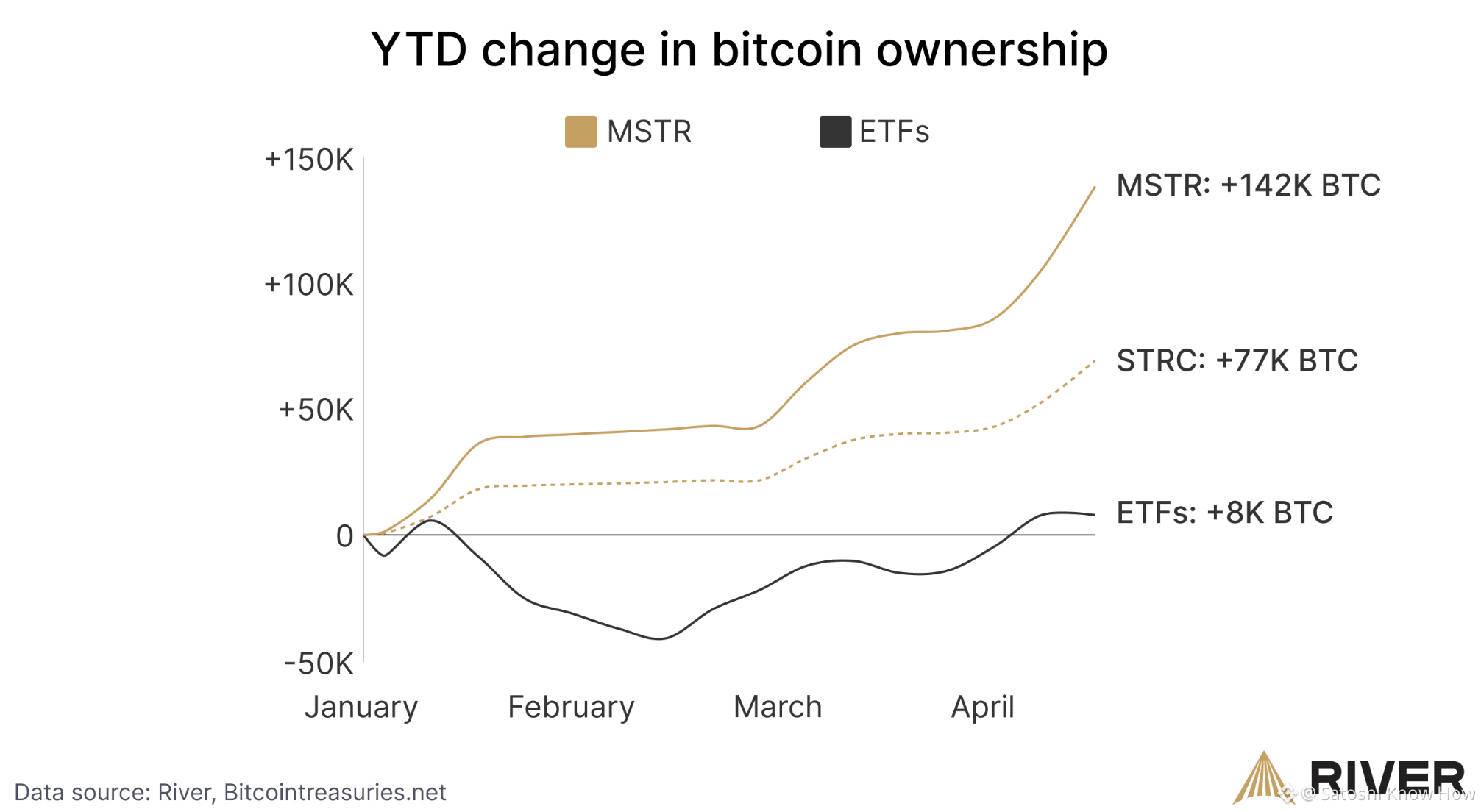
MicroStrategy domine tranquillement l'accumulation de Bitcoin en 2026 — et ce n'est même pas proche.

À travers ses actions privilégiées STRC, la société a déjà acquis ~77,000 BTC cette année. Pendant ce temps, tous les ETFs spot américains combinés ? Juste ~8,000 BTC. C'est une différence de 10x.

Dirigée par Michael Saylor, la stratégie est simple mais puissante : émettre des actions privilégiées à rendement élevé (actuellement ~11.5%), lever des fonds et les convertir directement en Bitcoin — sans diluer les actionnaires ordinaires.

Le résultat ? Plus de 815,000 BTC au bilan, dépassant même le BlackRock’s iShares Bitcoin Trust.

Ce qui est fascinant, c'est le changement dans la dynamique de la demande. Les ETFs continuent de voir des entrées, mais relativement petites par rapport à ce nouveau canal. STRC transforme efficacement l'appétit du marché du crédit en accumulation agressive de BTC.

Cela soulève une question plus grande :

Entrons-nous dans une phase où les entreprises — et non les ETFs — deviennent la force dominante derrière la demande de Bitcoin ?

À ce rythme, MicroStrategy pourrait franchir le cap du 1 million de BTC d'ici fin 2026.

Ce n'est pas juste de l'accumulation. C'est du territoire de choc d'offre.
Article
Bonus Binance Futures (-20% code de parrainage + 600$)Binance vient de débloquer l’une des améliorations les plus importantes pour les traders de futures depuis des années. Pour la première fois, les affiliés peuvent désormais partager leur commission sur les frais de trading futures, donnant aux nouveaux utilisateurs accès à une remise à vie allant jusqu’à 20% — un avantage auparavant limité au trading spot uniquement. Combiné à un pack de récompenses pouvant aller jusqu’à 600$, cela crée un point d’entrée puissant pour toute personne souhaitant trader des dérivés crypto plus efficacement. TL;DR — Réclamez votre remise Futures de 20% + bonus de 600$ Si vous voulez le moyen le plus rapide de commencer :

Bonus Binance Futures (-20% code de parrainage + 600$)

Binance vient de débloquer l’une des améliorations les plus importantes pour les traders de futures depuis des années. Pour la première fois, les affiliés peuvent désormais partager leur commission sur les frais de trading futures, donnant aux nouveaux utilisateurs accès à une remise à vie allant jusqu’à 20% — un avantage auparavant limité au trading spot uniquement. Combiné à un pack de récompenses pouvant aller jusqu’à 600$, cela crée un point d’entrée puissant pour toute personne souhaitant trader des dérivés crypto plus efficacement.
TL;DR — Réclamez votre remise Futures de 20% + bonus de 600$
Si vous voulez le moyen le plus rapide de commencer :
Bitmine vient de réaliser son plus grand mouvement ETH de 2026 — ajoutant 101,627 Ethereum en une seule semaine. Cela porte les avoirs totaux près de 5 millions d'ETH et une position combinée massive de 12,9 milliards de dollars. Pas une petite somme. Pas un timing aléatoire. En même temps, le président Tom Lee appelle à quelque chose de audacieux : l'hiver crypto pourrait déjà être proche de sa fin. Son argument est simple. Les précédents marchés baissiers nécessitaient des crashs boursiers profonds (20 %+). Cette fois-ci ? Les actions ont à peine reculé de ~8 %. Macro différent, cycle différent. Et les données commencent à le soutenir. Les réserves d'échange viennent de chuter à ~14,6 millions d'ETH — le plus bas depuis 2016. Cela signifie moins de pression à la vente. Les ETF spot se réveillent également, attirant plus de 275 millions de dollars la semaine dernière. Pendant ce temps, les adresses d'accumulation dépassent maintenant les portefeuilles de baleines, suggérant un véritable achat, pas juste de l'attente. Pourtant, l'ETH est assis à ~50 % en dessous de son pic de 2025. Donc la question est évidente : S'agit-il d'une accumulation silencieuse avant un grand mouvement… ou juste un autre faux départ ? L'argent intelligent semble déjà choisir un camp.
Bitmine vient de réaliser son plus grand mouvement ETH de 2026 — ajoutant 101,627 Ethereum en une seule semaine. Cela porte les avoirs totaux près de 5 millions d'ETH et une position combinée massive de 12,9 milliards de dollars. Pas une petite somme. Pas un timing aléatoire.

En même temps, le président Tom Lee appelle à quelque chose de audacieux : l'hiver crypto pourrait déjà être proche de sa fin.

Son argument est simple. Les précédents marchés baissiers nécessitaient des crashs boursiers profonds (20 %+). Cette fois-ci ? Les actions ont à peine reculé de ~8 %. Macro différent, cycle différent.

Et les données commencent à le soutenir.

Les réserves d'échange viennent de chuter à ~14,6 millions d'ETH — le plus bas depuis 2016. Cela signifie moins de pression à la vente. Les ETF spot se réveillent également, attirant plus de 275 millions de dollars la semaine dernière. Pendant ce temps, les adresses d'accumulation dépassent maintenant les portefeuilles de baleines, suggérant un véritable achat, pas juste de l'attente.

Pourtant, l'ETH est assis à ~50 % en dessous de son pic de 2025. Donc la question est évidente :

S'agit-il d'une accumulation silencieuse avant un grand mouvement… ou juste un autre faux départ ?

L'argent intelligent semble déjà choisir un camp.
·
--
Haussier
Russell 2000 vient d'atteindre un nouveau record historique — et normalement, cela serait un feu vert pour la saison des altcoins. Les petites capitalisations explosent + la liquidité circule = risque accru, non ? Pas si vite. Pour la première fois depuis juillet 2016, la corrélation entre le Russell 2000 et les altcoins est devenue négative… et elle devient plus forte vers le bas. Cela brise l'un des signaux les plus fiables que les traders ont utilisés pendant des années. En même temps, la macroéconomie paraît indéniablement haussière. Le bilan de la Fed se développe à nouveau, avec d'énormes injections de liquidité frappant le système cette semaine. Historiquement, ce genre d'environnement a alimenté des rallies explosifs des altcoins. Alors, que se passe-t-il ? En ce moment, le marché semble divisé. TradFi se tourne vers le risque, mais les graphiques des altcoins semblent toujours faibles — plus comme un test baissier que comme une rupture. Cela pourrait signifier une des deux choses : soit la saison des altcoins est simplement retardée… soit la structure des flux de capitaux dans la crypto change.
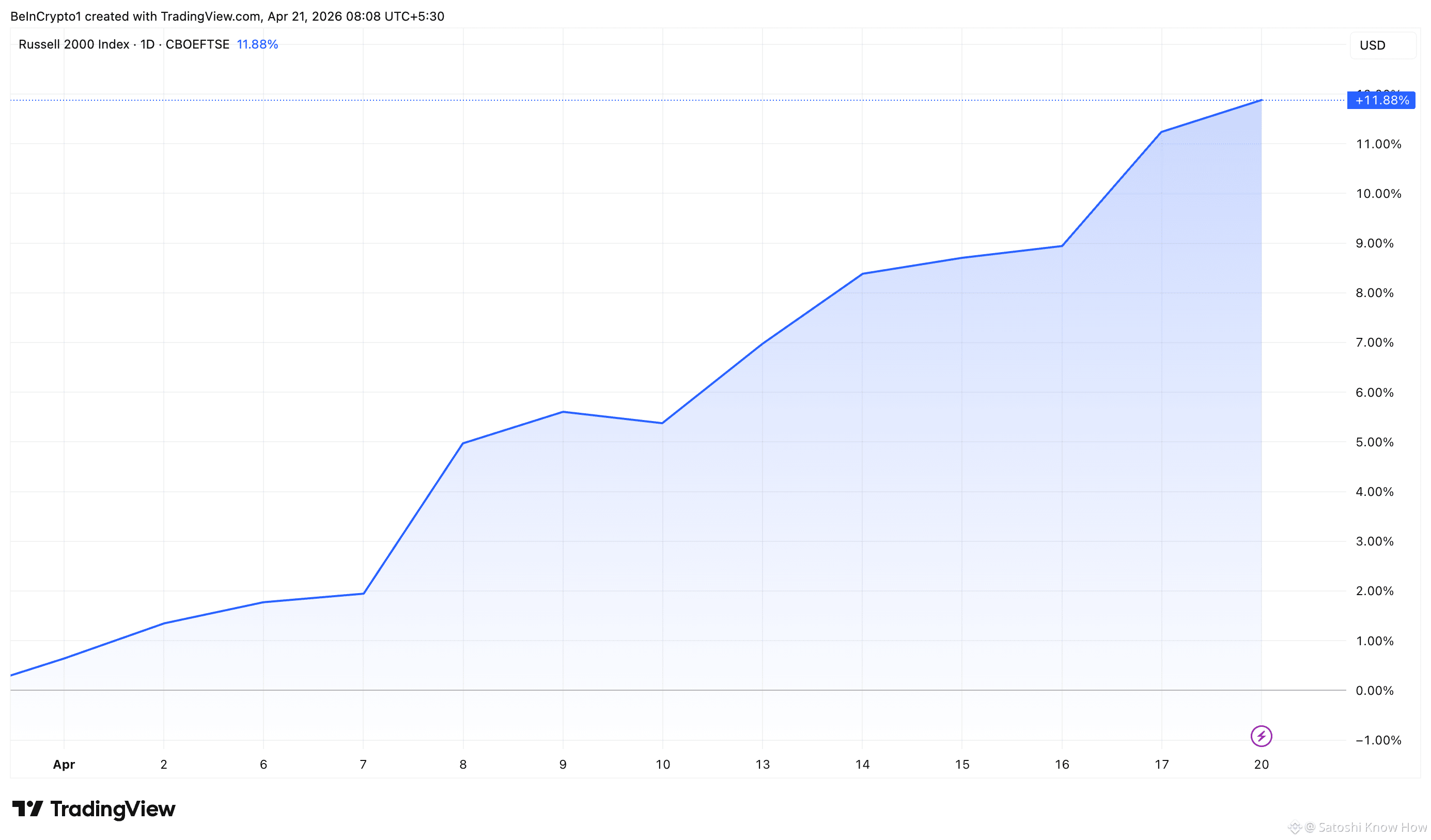
Russell 2000 vient d'atteindre un nouveau record historique — et normalement, cela serait un feu vert pour la saison des altcoins. Les petites capitalisations explosent + la liquidité circule = risque accru, non ? Pas si vite.

Pour la première fois depuis juillet 2016, la corrélation entre le Russell 2000 et les altcoins est devenue négative… et elle devient plus forte vers le bas. Cela brise l'un des signaux les plus fiables que les traders ont utilisés pendant des années.

En même temps, la macroéconomie paraît indéniablement haussière. Le bilan de la Fed se développe à nouveau, avec d'énormes injections de liquidité frappant le système cette semaine. Historiquement, ce genre d'environnement a alimenté des rallies explosifs des altcoins.

Alors, que se passe-t-il ?

En ce moment, le marché semble divisé. TradFi se tourne vers le risque, mais les graphiques des altcoins semblent toujours faibles — plus comme un test baissier que comme une rupture.

Cela pourrait signifier une des deux choses : soit la saison des altcoins est simplement retardée… soit la structure des flux de capitaux dans la crypto change.
Article
Bonus Binance 2026 - Code promotionnel : SATOSHIBROBeaucoup de gens tapent « bonus Binance » sur Google et s’attendent à une réponse simple : est-ce qu’on peut réellement recevoir quelque chose en s’inscrivant ? Oui, mais il faut savoir comment ça fonctionne. Le bonus sur Binance n’est pas automatique et tous les utilisateurs ne l’obtiennent pas. L’utilisation du bon code promotionnel et l’exécution de quelques étapes simples sont essentielles. Dans cet article, je vais vous montrer exactement ce que vous pouvez gagner et comment procéder, étape par étape. TL;DR : Pour recevoir un bonus de 600 $ et une réduction de 20 % sur les frais de transaction, créez un compte avec [promocyjnego linka](https://www.binance.com/join?ref=SATOSHIBRO), ou pendant l’inscription saisissez manuellement le code promotionnel Binance : SATOSHIBRO

Bonus Binance 2026 - Code promotionnel : SATOSHIBRO

Beaucoup de gens tapent « bonus Binance » sur Google et s’attendent à une réponse simple : est-ce qu’on peut réellement recevoir quelque chose en s’inscrivant ? Oui, mais il faut savoir comment ça fonctionne. Le bonus sur Binance n’est pas automatique et tous les utilisateurs ne l’obtiennent pas. L’utilisation du bon code promotionnel et l’exécution de quelques étapes simples sont essentielles. Dans cet article, je vais vous montrer exactement ce que vous pouvez gagner et comment procéder, étape par étape.
TL;DR : Pour recevoir un bonus de 600 $ et une réduction de 20 % sur les frais de transaction, créez un compte avec promocyjnego linka, ou pendant l’inscription saisissez manuellement le code promotionnel Binance : SATOSHIBRO
⏳ Le cycle de halving du Bitcoin atteint le point médian. Environ 105 000 blocs restent avant le prochain halving, prévu en avril 2028. À ce moment-là, les récompenses passent de 3,125 BTC à 1,5625 BTC, réduisant l'émission quotidienne de ~450 BTC à ~225 BTC. Ce calendrier d'offre fixe est essentiel à la rareté du Bitcoin. Plus de 19,7 millions de BTC ont déjà été extraits, avec plus de 98 % attendus d'ici 2030. Historiquement, les halvings ont déclenché de grandes rallyes 12 à 18 mois plus tard, mais chaque cycle a montré des gains plus faibles. Quelle est la différence maintenant ? La demande institutionnelle. Les ETF spot détiennent déjà plus de 1,3 million de BTC, tandis que la stratégie continue d'accumuler plus rapidement que les mineurs ne produisent. Moins d'offre + forte demande = pression croissante. Les deux prochaines années pourraient définir ce cycle. 🚀
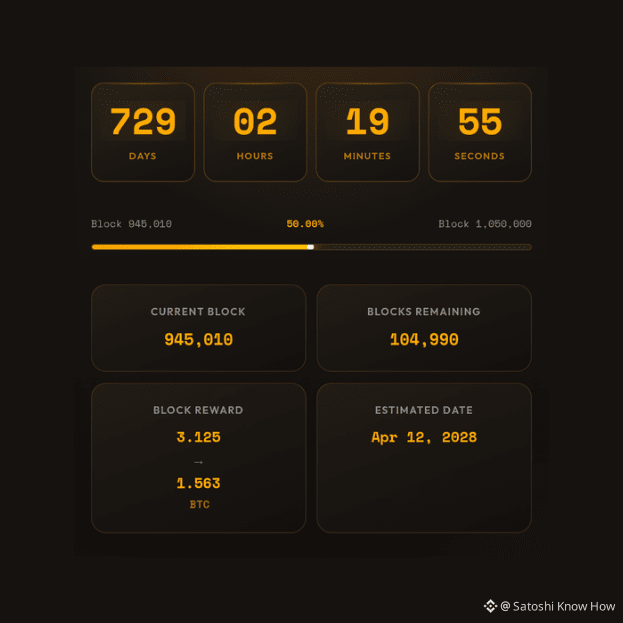
⏳ Le cycle de halving du Bitcoin atteint le point médian.

Environ 105 000 blocs restent avant le prochain halving, prévu en avril 2028. À ce moment-là, les récompenses passent de 3,125 BTC à 1,5625 BTC, réduisant l'émission quotidienne de ~450 BTC à ~225 BTC.

Ce calendrier d'offre fixe est essentiel à la rareté du Bitcoin. Plus de 19,7 millions de BTC ont déjà été extraits, avec plus de 98 % attendus d'ici 2030.

Historiquement, les halvings ont déclenché de grandes rallyes 12 à 18 mois plus tard, mais chaque cycle a montré des gains plus faibles.

Quelle est la différence maintenant ? La demande institutionnelle. Les ETF spot détiennent déjà plus de 1,3 million de BTC, tandis que la stratégie continue d'accumuler plus rapidement que les mineurs ne produisent.

Moins d'offre + forte demande = pression croissante. Les deux prochaines années pourraient définir ce cycle. 🚀
🔥 Ethereum est discrètement en tête du marché, en hausse de 12 % en un mois—dépassant tous les actifs du top 10. Les données en chaîne semblent solides. Le réseau vient d'atteindre un record de 3,62 millions de transactions quotidiennes, avec une croissance constante depuis fin 2025. Ajoutez à cela l'augmentation des utilisateurs et un approvisionnement record en stablecoins, et les fondamentaux s'améliorent clairement. Pourtant, l'ETH se négocie toujours à plus de 50 % en dessous de son ATH. Cet écart entre l'utilisation et le prix attire l'attention. Historiquement, de telles divergences ont tendance à se réduire. Les aspects techniques soutiennent également le scénario haussier. Les analystes signalent un rare croisement hebdomadaire du MACD—les signaux précédents ont conduit à des rallyes de +183 % et +75 %. Certains modèles suggèrent maintenant des cibles potentielles entre ~4,1K $ et 6,6K $. Fortes fondamentaux + indicateurs haussiers = momentum en construction. Maintenant, tout dépend de savoir si les conditions macroéconomiques soutiennent le prochain mouvement. 🚀
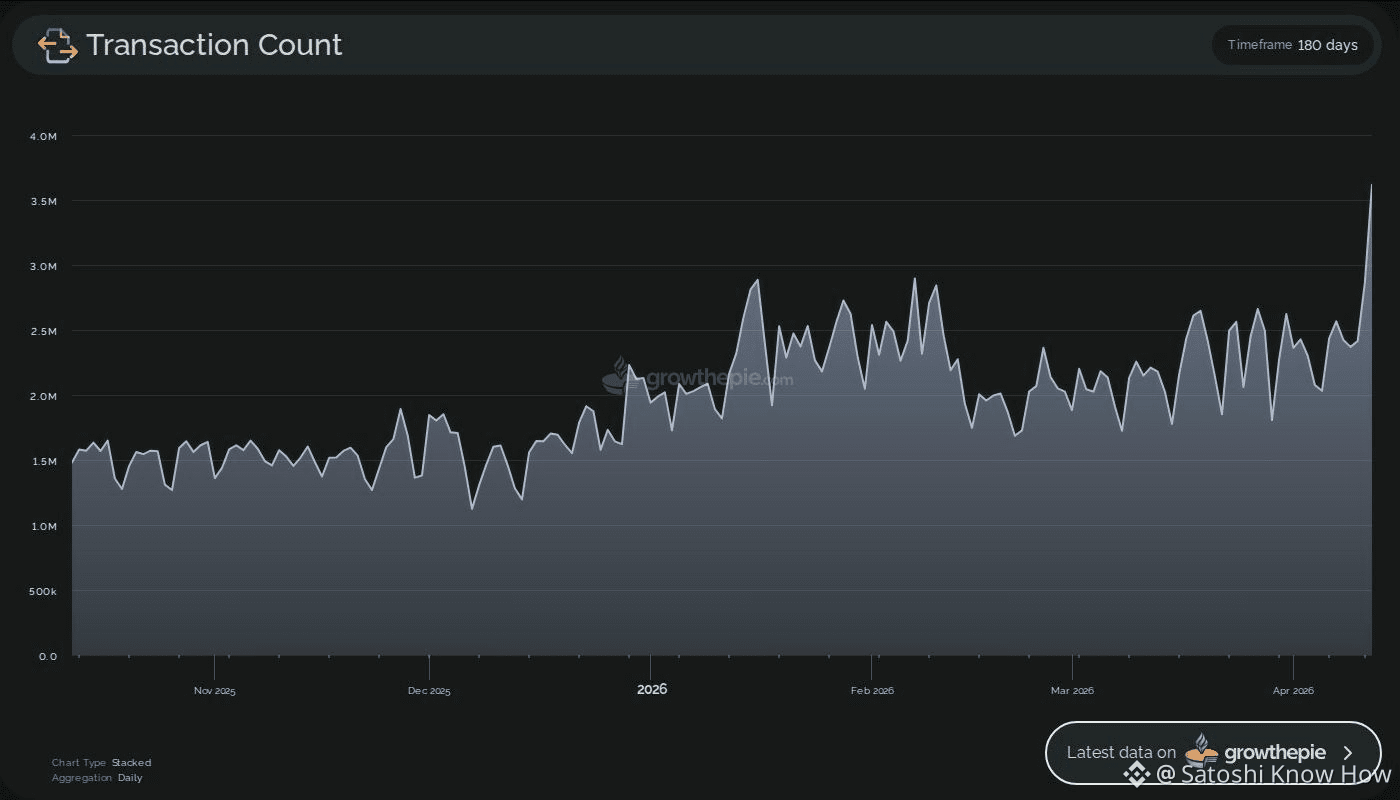
🔥 Ethereum est discrètement en tête du marché, en hausse de 12 % en un mois—dépassant tous les actifs du top 10.

Les données en chaîne semblent solides. Le réseau vient d'atteindre un record de 3,62 millions de transactions quotidiennes, avec une croissance constante depuis fin 2025. Ajoutez à cela l'augmentation des utilisateurs et un approvisionnement record en stablecoins, et les fondamentaux s'améliorent clairement.

Pourtant, l'ETH se négocie toujours à plus de 50 % en dessous de son ATH. Cet écart entre l'utilisation et le prix attire l'attention. Historiquement, de telles divergences ont tendance à se réduire.

Les aspects techniques soutiennent également le scénario haussier. Les analystes signalent un rare croisement hebdomadaire du MACD—les signaux précédents ont conduit à des rallyes de +183 % et +75 %. Certains modèles suggèrent maintenant des cibles potentielles entre ~4,1K $ et 6,6K $.

Fortes fondamentaux + indicateurs haussiers = momentum en construction. Maintenant, tout dépend de savoir si les conditions macroéconomiques soutiennent le prochain mouvement. 🚀
🇺🇸 La Commission des valeurs mobilières et des échanges des États-Unis signale une position plus douce sur les portefeuilles crypto. La SEC a clarifié que les solutions de portefeuille en auto-conservation peuvent éviter l'enregistrement en tant que courtier-négociant—si elles ne dirigent pas les utilisateurs vers des transactions spécifiques ou n'agissent pas comme des intermédiaires. Bien que ce ne soit pas une règle formelle, les conseils apportent une clarté nécessaire dans le domaine. Hester Peirce a soutenu cette démarche mais a appelé à une refonte réglementaire plus large pour mieux refléter les marchés modernes. La communauté crypto considère cela comme l'une des mises à jour les plus importantes à ce jour. Cela fait suite à des conseils antérieurs qui excluaient de nombreux memecoins et stablecoins de la classification des valeurs mobilières. En résumé : l'auto-conservation vient de recevoir un coup de pouce réglementaire—et c'est énorme pour l'adoption des cryptos. 🚀
🇺🇸 La Commission des valeurs mobilières et des échanges des États-Unis signale une position plus douce sur les portefeuilles crypto.

La SEC a clarifié que les solutions de portefeuille en auto-conservation peuvent éviter l'enregistrement en tant que courtier-négociant—si elles ne dirigent pas les utilisateurs vers des transactions spécifiques ou n'agissent pas comme des intermédiaires. Bien que ce ne soit pas une règle formelle, les conseils apportent une clarté nécessaire dans le domaine.

Hester Peirce a soutenu cette démarche mais a appelé à une refonte réglementaire plus large pour mieux refléter les marchés modernes.

La communauté crypto considère cela comme l'une des mises à jour les plus importantes à ce jour. Cela fait suite à des conseils antérieurs qui excluaient de nombreux memecoins et stablecoins de la classification des valeurs mobilières.

En résumé : l'auto-conservation vient de recevoir un coup de pouce réglementaire—et c'est énorme pour l'adoption des cryptos. 🚀
Connectez-vous pour découvrir plus de contenu
Rejoignez la communauté mondiale des adeptes de cryptomonnaies sur Binance Square
⚡️ Suviez les dernières informations importantes sur les cryptomonnaies.
💬 Jugé digne de confiance par la plus grande plateforme d’échange de cryptomonnaies au monde.
👍 Découvrez les connaissances que partagent les créateurs vérifiés.
Adresse e-mail/Nº de téléphone
Plan du site
Préférences de cookies
CGU de la plateforme