

Ruoxi 若曦
1.2k Publications

Ruoxi 若曦
Signaler
Bloquer l’utilisateur
365 Suivis
22.1K+ Abonnés
1.4K+ J’aime
Publications
Tous
Citations
Direct
·
--
Vérifié
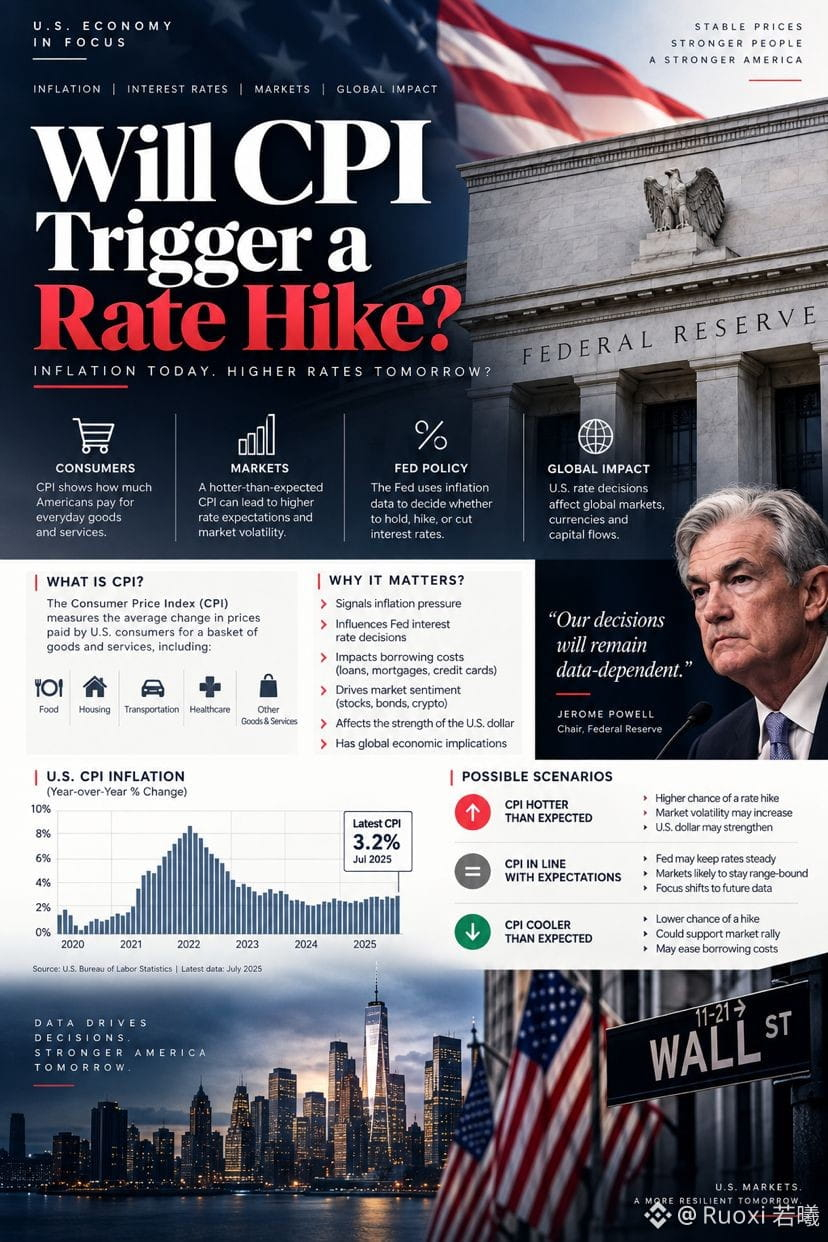
Le CPI va-t-il déclencher une hausse des taux ?
J’ai suivi cette configuration de près, parce que quelque chose me semble un peu différent cette fois.
Les données sur l’emploi sont arrivées plus solides que prévu, et maintenant tout le monde attend le CPI pour donner à la Fed sa prochaine excuse, ou peut-être sa prochaine raison de rester prudente.
Personnellement, je ne suis pas convaincu que la Fed va se précipiter. Un point de données solide ne change pas l’ensemble du tableau, mais une inflation persistante pourrait certainement de nouveau rendre le marché nerveux.
Ce qui m’inquiète le plus, c’est la réaction après le CPI. On pourrait voir les actions être touchées, les rendements grimper et l’or osciller fortement en quelques minutes. Et franchement, le premier mouvement n’est pas toujours celui que je fais confiance.
Pour l’instant, je reste prudent sur les actions et je surveille l’or de près. Je préfère manquer la première bougie que de poursuivre un mouvement qui s’inverse cinq minutes plus tard.
C’est comme ça que je le vois.
Vous vous attendez à une hausse des taux de la Fed ou à un maintien ? Plutôt haussier ou baissier ?
#CPIWatch
Le CPI va-t-il déclencher une hausse des taux ?
J’ai suivi cette configuration de près, parce que quelque chose me semble un peu différent cette fois.
Les données sur l’emploi sont arrivées plus solides que prévu, et maintenant tout le monde attend le CPI pour donner à la Fed sa prochaine excuse, ou peut-être sa prochaine raison de rester prudente.
Personnellement, je ne suis pas convaincu que la Fed va se précipiter. Un point de données solide ne change pas l’ensemble du tableau, mais une inflation persistante pourrait certainement de nouveau rendre le marché nerveux.
Ce qui m’inquiète le plus, c’est la réaction après le CPI. On pourrait voir les actions être touchées, les rendements grimper et l’or osciller fortement en quelques minutes. Et franchement, le premier mouvement n’est pas toujours celui que je fais confiance.
Pour l’instant, je reste prudent sur les actions et je surveille l’or de près. Je préfère manquer la première bougie que de poursuivre un mouvement qui s’inverse cinq minutes plus tard.
C’est comme ça que je le vois.
Vous vous attendez à une hausse des taux de la Fed ou à un maintien ? Plutôt haussier ou baissier ?
#CPIWatch
J’ai suivi cette configuration de près, parce que quelque chose me semble un peu différent cette fois.
Les données sur l’emploi sont arrivées plus solides que prévu, et maintenant tout le monde attend le CPI pour donner à la Fed sa prochaine excuse, ou peut-être sa prochaine raison de rester prudente.
Personnellement, je ne suis pas convaincu que la Fed va se précipiter. Un point de données solide ne change pas l’ensemble du tableau, mais une inflation persistante pourrait certainement de nouveau rendre le marché nerveux.
Ce qui m’inquiète le plus, c’est la réaction après le CPI. On pourrait voir les actions être touchées, les rendements grimper et l’or osciller fortement en quelques minutes. Et franchement, le premier mouvement n’est pas toujours celui que je fais confiance.
Pour l’instant, je reste prudent sur les actions et je surveille l’or de près. Je préfère manquer la première bougie que de poursuivre un mouvement qui s’inverse cinq minutes plus tard.
C’est comme ça que je le vois.
Vous vous attendez à une hausse des taux de la Fed ou à un maintien ? Plutôt haussier ou baissier ?
#CPIWatch
131
·
--
🎙️ J’ai trop pris de positions longues sur le gros gâteau, montez dans le train avec moi
Fin
03 h 04 min 32 sec
5.2k
5
3
·
--
@termmax Je continue de regarder le côté moins glamour de la DeFi, parce que c’est généralement là que j’apprends le plus. TermMax dispose d’un programme de bug bounty qui attribue une vraie valeur à la détection de problèmes sérieux de smart contract avant qu’un attaquant ne les exploite.
Pour un bug critique, la récompense correspond à 10 % des fonds directement touchés, plafonnée à 50 000 $, avec un minimum de 10 000 $. Je pense que c’est une incitation significative pour que les white hats s’expriment tôt.
Ce qui a attiré mon attention, c’est la règle relative aux attaques répétées. Si un contrat peut être mis en pause ou mis à niveau, seule l’attaque initiale peut être prise en compte. S’il ne peut pas être stoppé, les dommages cumulés liés à des exploitations répétées peuvent être considérés. On dirait beaucoup plus la façon dont un exploit réel pourrait se dérouler.
TermMax combine un emprunt et un prêt à taux fixe avec des courbes de tarification AMM personnalisables, donc la sécurité n’est clairement pas un sujet à traiter à la légère. La prime exige aussi une preuve de concept, et les tests sont limités à des forks locaux plutôt qu’au code déployé sur le mainnet ou sur des testnets publics.
Cela dit, une prime de 50 000 $ ne rend pas magiquement un protocole sûr. Des bugs peuvent rester non découverts, et la DeFi comporte aussi de nombreux risques en dehors des smart contracts.
À titre personnel, je vois la prime comme un signal de sécurité, pas comme une garantie.
Un bug bounty solide influencerait-il votre décision d’utiliser TermMax ?
#TermMax
$GALA
{spot}(GALAUSDT)
$BCH
{spot}(BCHUSDT)
@TermMax Je continue de regarder le côté moins glamour de la DeFi, parce que c’est généralement là que j’apprends le plus. TermMax dispose d’un programme de bug bounty qui attribue une vraie valeur à la détection de problèmes sérieux de smart contract avant qu’un attaquant ne les exploite.
Pour un bug critique, la récompense correspond à 10 % des fonds directement touchés, plafonnée à 50 000 $, avec un minimum de 10 000 $. Je pense que c’est une incitation significative pour que les white hats s’expriment tôt.
Ce qui a attiré mon attention, c’est la règle relative aux attaques répétées. Si un contrat peut être mis en pause ou mis à niveau, seule l’attaque initiale peut être prise en compte. S’il ne peut pas être stoppé, les dommages cumulés liés à des exploitations répétées peuvent être considérés. On dirait beaucoup plus la façon dont un exploit réel pourrait se dérouler.
TermMax combine un emprunt et un prêt à taux fixe avec des courbes de tarification AMM personnalisables, donc la sécurité n’est clairement pas un sujet à traiter à la légère. La prime exige aussi une preuve de concept, et les tests sont limités à des forks locaux plutôt qu’au code déployé sur le mainnet ou sur des testnets publics.
Cela dit, une prime de 50 000 $ ne rend pas magiquement un protocole sûr. Des bugs peuvent rester non découverts, et la DeFi comporte aussi de nombreux risques en dehors des smart contracts.
À titre personnel, je vois la prime comme un signal de sécurité, pas comme une garantie.
Un bug bounty solide influencerait-il votre décision d’utiliser TermMax ?
#TermMax
$GALA
$BCH
Pour un bug critique, la récompense correspond à 10 % des fonds directement touchés, plafonnée à 50 000 $, avec un minimum de 10 000 $. Je pense que c’est une incitation significative pour que les white hats s’expriment tôt.
Ce qui a attiré mon attention, c’est la règle relative aux attaques répétées. Si un contrat peut être mis en pause ou mis à niveau, seule l’attaque initiale peut être prise en compte. S’il ne peut pas être stoppé, les dommages cumulés liés à des exploitations répétées peuvent être considérés. On dirait beaucoup plus la façon dont un exploit réel pourrait se dérouler.
TermMax combine un emprunt et un prêt à taux fixe avec des courbes de tarification AMM personnalisables, donc la sécurité n’est clairement pas un sujet à traiter à la légère. La prime exige aussi une preuve de concept, et les tests sont limités à des forks locaux plutôt qu’au code déployé sur le mainnet ou sur des testnets publics.
Cela dit, une prime de 50 000 $ ne rend pas magiquement un protocole sûr. Des bugs peuvent rester non découverts, et la DeFi comporte aussi de nombreux risques en dehors des smart contracts.
À titre personnel, je vois la prime comme un signal de sécurité, pas comme une garantie.
Un bug bounty solide influencerait-il votre décision d’utiliser TermMax ?
#TermMax
$GALA
$BCH
Bounty Hunt 🟠
100%
Treasure Hunt 🟣
0%
4 Votes • Vote fermé
1
1
460
·
--
Partiellement vrai
@termmax Une chose m’a immédiatement frappé(e) quand j’ai lu le détail des XP de TermMax : le multiplicateur n’est pas identique pour chaque position.
Les dépôts en Vault reçoivent 30x XP, les participations FT reçoivent 15x, et les participations GT reçoivent 2x, selon la valeur de l’actif de la dette. Il y a aussi un volet “parrainage” qui représente 10% des XP des utilisateurs référés, en excluant la prime de parrainage elle-même.
Honnêtement, j’aime mieux cette logique qu’une simple campagne du type “faire 100 transactions”.
Cela relie le système d’incitation à différents rôles au sein de TermMax.
Et ces rôles comptent réellement, car TermMax utilise des éléments comme les Fixed-Rate Tokens (Tokens à taux fixe) et les Gearing Tokens (Tokens d’engrenage) pour structurer l’emprunt et le prêt autour de durées fixes.
Cela dit, 30x peut sembler enthousiasmant sur le papier, mais devenir moins impressionnant si trop d’utilisateurs se ruent sur la même stratégie.
C’est le point que je surveillerais.
Penses-tu que des XP basées sur des multiplicateurs créent de meilleurs utilisateurs, ou simplement plus de concurrence pour le même airdrop ?
#TermMax
$ACE
{spot}(ACEUSDT)
$ONG
{spot}(ONGUSDT)
@TermMax Une chose m’a immédiatement frappé(e) quand j’ai lu le détail des XP de TermMax : le multiplicateur n’est pas identique pour chaque position.
Les dépôts en Vault reçoivent 30x XP, les participations FT reçoivent 15x, et les participations GT reçoivent 2x, selon la valeur de l’actif de la dette. Il y a aussi un volet “parrainage” qui représente 10% des XP des utilisateurs référés, en excluant la prime de parrainage elle-même.
Honnêtement, j’aime mieux cette logique qu’une simple campagne du type “faire 100 transactions”.
Cela relie le système d’incitation à différents rôles au sein de TermMax.
Et ces rôles comptent réellement, car TermMax utilise des éléments comme les Fixed-Rate Tokens (Tokens à taux fixe) et les Gearing Tokens (Tokens d’engrenage) pour structurer l’emprunt et le prêt autour de durées fixes.
Cela dit, 30x peut sembler enthousiasmant sur le papier, mais devenir moins impressionnant si trop d’utilisateurs se ruent sur la même stratégie.
C’est le point que je surveillerais.
Penses-tu que des XP basées sur des multiplicateurs créent de meilleurs utilisateurs, ou simplement plus de concurrence pour le même airdrop ?
#TermMax
$ACE
$ONG
Les dépôts en Vault reçoivent 30x XP, les participations FT reçoivent 15x, et les participations GT reçoivent 2x, selon la valeur de l’actif de la dette. Il y a aussi un volet “parrainage” qui représente 10% des XP des utilisateurs référés, en excluant la prime de parrainage elle-même.
Honnêtement, j’aime mieux cette logique qu’une simple campagne du type “faire 100 transactions”.
Cela relie le système d’incitation à différents rôles au sein de TermMax.
Et ces rôles comptent réellement, car TermMax utilise des éléments comme les Fixed-Rate Tokens (Tokens à taux fixe) et les Gearing Tokens (Tokens d’engrenage) pour structurer l’emprunt et le prêt autour de durées fixes.
Cela dit, 30x peut sembler enthousiasmant sur le papier, mais devenir moins impressionnant si trop d’utilisateurs se ruent sur la même stratégie.
C’est le point que je surveillerais.
Penses-tu que des XP basées sur des multiplicateurs créent de meilleurs utilisateurs, ou simplement plus de concurrence pour le même airdrop ?
#TermMax
$ACE
$ONG
Bullish Token Volatility 🟢
73%
Bearish Token Volatility 🔴
27%
11 Votes • Vote fermé
3
868
·
--
@termmax Une chose que je regarde désormais différemment, avec un œil plus critique, ce sont les protocoles DeFi.
Un score DeFiSafety PQR de 93% sur TermMax a attiré mon attention, mais je ne considère pas 93% comme « sûr, c’est bon, on passe à autre chose ». Je le vois plutôt comme une raison d’aller plus loin, honnêtement. Le score couvre le code, la documentation, les tests, la sécurité, les contrôles d’administration et les oracles.
TermMax a obtenu 100% sur Code & Équipe,
94% sur la Sécurité, 97% sur les Contrôles d’administration et 100% sur les Oracles. Les tests sont à 89%, tandis que la documentation est à 70%. Ce dernier chiffre est en fait celui que j’aimerais surtout comprendre davantage.
Je pense que c’est ainsi que les scores de sécurité devraient être utilisés.
Pas comme un feu vert, mais comme un point de départ pour la recherche. TermMax décrit aussi des tests unitaires, du fuzzing, du mutation testing et des tests d’intégration.
Pourtant, le risque lié aux smart contracts ne disparaît jamais complètement en DeFi.
Donc je regarde ces 93% avec intérêt, pas avec une confiance aveugle.Pour un protocole qui gère des prêts, des emprunts et des produits structurés, la sécurité n’est pas une fonctionnalité accessoire — c’est toute la partie.
Un score PQR de 93% changerait-il ta façon de voir un protocole DeFi ?
#TermMax
$CLO
{future}(CLOUSDT)
$ACE
{spot}(ACEUSDT)
@TermMax Une chose que je regarde désormais différemment, avec un œil plus critique, ce sont les protocoles DeFi.
Un score DeFiSafety PQR de 93% sur TermMax a attiré mon attention, mais je ne considère pas 93% comme « sûr, c’est bon, on passe à autre chose ». Je le vois plutôt comme une raison d’aller plus loin, honnêtement. Le score couvre le code, la documentation, les tests, la sécurité, les contrôles d’administration et les oracles.
TermMax a obtenu 100% sur Code & Équipe,
94% sur la Sécurité, 97% sur les Contrôles d’administration et 100% sur les Oracles. Les tests sont à 89%, tandis que la documentation est à 70%. Ce dernier chiffre est en fait celui que j’aimerais surtout comprendre davantage.
Je pense que c’est ainsi que les scores de sécurité devraient être utilisés.
Pas comme un feu vert, mais comme un point de départ pour la recherche. TermMax décrit aussi des tests unitaires, du fuzzing, du mutation testing et des tests d’intégration.
Pourtant, le risque lié aux smart contracts ne disparaît jamais complètement en DeFi.
Donc je regarde ces 93% avec intérêt, pas avec une confiance aveugle.Pour un protocole qui gère des prêts, des emprunts et des produits structurés, la sécurité n’est pas une fonctionnalité accessoire — c’est toute la partie.
Un score PQR de 93% changerait-il ta façon de voir un protocole DeFi ?
#TermMax
$CLO
$ACE
Un score DeFiSafety PQR de 93% sur TermMax a attiré mon attention, mais je ne considère pas 93% comme « sûr, c’est bon, on passe à autre chose ». Je le vois plutôt comme une raison d’aller plus loin, honnêtement. Le score couvre le code, la documentation, les tests, la sécurité, les contrôles d’administration et les oracles.
TermMax a obtenu 100% sur Code & Équipe,
94% sur la Sécurité, 97% sur les Contrôles d’administration et 100% sur les Oracles. Les tests sont à 89%, tandis que la documentation est à 70%. Ce dernier chiffre est en fait celui que j’aimerais surtout comprendre davantage.
Je pense que c’est ainsi que les scores de sécurité devraient être utilisés.
Pas comme un feu vert, mais comme un point de départ pour la recherche. TermMax décrit aussi des tests unitaires, du fuzzing, du mutation testing et des tests d’intégration.
Pourtant, le risque lié aux smart contracts ne disparaît jamais complètement en DeFi.
Donc je regarde ces 93% avec intérêt, pas avec une confiance aveugle.Pour un protocole qui gère des prêts, des emprunts et des produits structurés, la sécurité n’est pas une fonctionnalité accessoire — c’est toute la partie.
Un score PQR de 93% changerait-il ta façon de voir un protocole DeFi ?
#TermMax
$CLO
$ACE
Bullish Volatile 🟢
67%
Bearish Volatile 🔴
33%
3 Votes • Vote fermé
340
·
--
Vérifié
@termmax Je continue de regarder le volet liquidation de la DeFi, parce que c’est là que de nombreuses idées de prêt sont testées en conditions réelles.
Un protocole peut proposer des taux attractifs, mais que se passe-t-il quand le marché bouge soudainement de 30 % ?
TermMax apporte une réponse intéressante : la livraison physique. Dans certaines situations de liquidation, le collatéral peut être livré aux prêteurs au lieu de dépendre uniquement de la vente d’actifs dans un marché trop peu liquide. La conception vise aussi à rendre plus opérationnels des collatéraux comme des actifs à liquidité plus faible et certains RWAs.
Je pense que c’est l’une des parties les moins spectaculaires de TermMax, mais probablement aussi l’une des plus importantes.
Si la liquidité disparaît lors d’un mouvement brusque, se contenter de dire « liquidez-le » ne garantit pas que le prêteur obtienne une récupération équitable.
Mais la livraison physique n’est pas non plus un bouclier magique. Le collatéral lui-même peut encore perdre de la valeur.
Faire davantage confiance à la livraison physique plutôt qu’à une liquidation de marché traditionnelle en cas de volatilité extrême ?
#TermMax
$GPS
{spot}(GPSUSDT)
$TUT
{spot}(TUTUSDT)
@TermMax Je continue de regarder le volet liquidation de la DeFi, parce que c’est là que de nombreuses idées de prêt sont testées en conditions réelles.
Un protocole peut proposer des taux attractifs, mais que se passe-t-il quand le marché bouge soudainement de 30 % ?
TermMax apporte une réponse intéressante : la livraison physique. Dans certaines situations de liquidation, le collatéral peut être livré aux prêteurs au lieu de dépendre uniquement de la vente d’actifs dans un marché trop peu liquide. La conception vise aussi à rendre plus opérationnels des collatéraux comme des actifs à liquidité plus faible et certains RWAs.
Je pense que c’est l’une des parties les moins spectaculaires de TermMax, mais probablement aussi l’une des plus importantes.
Si la liquidité disparaît lors d’un mouvement brusque, se contenter de dire « liquidez-le » ne garantit pas que le prêteur obtienne une récupération équitable.
Mais la livraison physique n’est pas non plus un bouclier magique. Le collatéral lui-même peut encore perdre de la valeur.
Faire davantage confiance à la livraison physique plutôt qu’à une liquidation de marché traditionnelle en cas de volatilité extrême ?
#TermMax
$GPS
$TUT
Un protocole peut proposer des taux attractifs, mais que se passe-t-il quand le marché bouge soudainement de 30 % ?
TermMax apporte une réponse intéressante : la livraison physique. Dans certaines situations de liquidation, le collatéral peut être livré aux prêteurs au lieu de dépendre uniquement de la vente d’actifs dans un marché trop peu liquide. La conception vise aussi à rendre plus opérationnels des collatéraux comme des actifs à liquidité plus faible et certains RWAs.
Je pense que c’est l’une des parties les moins spectaculaires de TermMax, mais probablement aussi l’une des plus importantes.
Si la liquidité disparaît lors d’un mouvement brusque, se contenter de dire « liquidez-le » ne garantit pas que le prêteur obtienne une récupération équitable.
Mais la livraison physique n’est pas non plus un bouclier magique. Le collatéral lui-même peut encore perdre de la valeur.
Faire davantage confiance à la livraison physique plutôt qu’à une liquidation de marché traditionnelle en cas de volatilité extrême ?
#TermMax
$GPS
$TUT
Bullish volatility 🟢
33%
Bearish volatility 🔴
67%
12 Votes • Vote fermé
1.3k
·
--
@Dusk_Foundation Je continue à regarder la conversation sur l’IA + la crypto et j’ai l’impression qu’il manque quelque chose. Tout le monde parle d’agents qui génèrent du code, exécutent des tâches et vont plus vite. Très peu de gens se demandent ce qui se passe lorsque l’agent suit une spécification dépassée, que personne ne s’est souvenu d’avoir été dépassée.
Le Pituitary est la tentative de Dusk de résoudre ce problème plus discret. Il observe la relation entre les spécifications, la documentation, les décisions et le code, au lieu de traiter chaque fichier comme un objet isolé. Il peut rechercher des spécifications, les comparer, repérer des documents périmés et examiner l’impact.
Honnêtement, c’est le type d’outillage IA qui m’intéresse le plus. Pas un autre chatbot qui dit aux développeurs quel code écrire, mais un système qui aide les développeurs à éviter de perdre l’intention originale du projet. Surtout pour l’infrastructure financière, où la confidentialité et la conformité peuvent faire partie intégrante de la logique applicative.
Cela dit, il y a aussi un risque. Trop d’avertissements automatisés pourraient devenir du bruit, et les équipes finiraient par les ignorer. L’outil doit prouver que ses signaux sont utiles.
Mais si l’IA va écrire une plus grande partie de notre code, ne devrait-on pas construire de meilleurs systèmes pour se souvenir des règles que le code est censé respecter ?
#dusk $DUSK
$PORTAL
{spot}(PORTALUSDT)
$DOLO
{spot}(DOLOUSDT)
@Dusk Je continue à regarder la conversation sur l’IA + la crypto et j’ai l’impression qu’il manque quelque chose. Tout le monde parle d’agents qui génèrent du code, exécutent des tâches et vont plus vite. Très peu de gens se demandent ce qui se passe lorsque l’agent suit une spécification dépassée, que personne ne s’est souvenu d’avoir été dépassée.
Le Pituitary est la tentative de Dusk de résoudre ce problème plus discret. Il observe la relation entre les spécifications, la documentation, les décisions et le code, au lieu de traiter chaque fichier comme un objet isolé. Il peut rechercher des spécifications, les comparer, repérer des documents périmés et examiner l’impact.
Honnêtement, c’est le type d’outillage IA qui m’intéresse le plus. Pas un autre chatbot qui dit aux développeurs quel code écrire, mais un système qui aide les développeurs à éviter de perdre l’intention originale du projet. Surtout pour l’infrastructure financière, où la confidentialité et la conformité peuvent faire partie intégrante de la logique applicative.
Cela dit, il y a aussi un risque. Trop d’avertissements automatisés pourraient devenir du bruit, et les équipes finiraient par les ignorer. L’outil doit prouver que ses signaux sont utiles.
Mais si l’IA va écrire une plus grande partie de notre code, ne devrait-on pas construire de meilleurs systèmes pour se souvenir des règles que le code est censé respecter ?
#dusk $DUSK
$PORTAL
$DOLO
Le Pituitary est la tentative de Dusk de résoudre ce problème plus discret. Il observe la relation entre les spécifications, la documentation, les décisions et le code, au lieu de traiter chaque fichier comme un objet isolé. Il peut rechercher des spécifications, les comparer, repérer des documents périmés et examiner l’impact.
Honnêtement, c’est le type d’outillage IA qui m’intéresse le plus. Pas un autre chatbot qui dit aux développeurs quel code écrire, mais un système qui aide les développeurs à éviter de perdre l’intention originale du projet. Surtout pour l’infrastructure financière, où la confidentialité et la conformité peuvent faire partie intégrante de la logique applicative.
Cela dit, il y a aussi un risque. Trop d’avertissements automatisés pourraient devenir du bruit, et les équipes finiraient par les ignorer. L’outil doit prouver que ses signaux sont utiles.
Mais si l’IA va écrire une plus grande partie de notre code, ne devrait-on pas construire de meilleurs systèmes pour se souvenir des règles que le code est censé respecter ?
#dusk $DUSK
$PORTAL
$DOLO
Bullish Time 🟢
100%
Bearish Time 🔴
0%
3 Votes • Vote fermé
297
·
--
Vérifié
@Dusk_Foundation Une chose que j’ai remarquée en lisant la documentation de Dusk, c’est que les contrats intelligents deviennent une partie des mécanismes économiques du réseau, et pas seulement de ses applications.
Le protocole économique de Dusk permet aux contrats intelligents de facturer des frais, de payer le gas et de fonctionner de manière autonome. Cela ressemble à une petite amélioration technique jusqu’au moment où l’on se rend compte de la manière dont les applications financières fonctionnent réellement. Un contrat peut avoir son propre comportement économique au lieu de dépendre de chaque utilisateur pour gérer manuellement chaque étape.
Puis, l’Abstraction de Stake ajoute une couche supplémentaire.
Un contrat peut participer au jalonnement (staking), gérer le retrait (unstaking) et recevoir des récompenses de jalonnement. Ainsi, le contrat ne fait pas qu’exécuter une logique financière : il peut aussi gérer une partie des mécanismes économiques du réseau autour de cette logique. C’est là que, selon moi, les choses deviennent vraiment intéressantes.
Cela pourrait rendre l’infrastructure de staking beaucoup plus composable. Mais la composabilité soulève toujours une autre question : qui contrôle le contrat, et que se passe-t-il si le code contient un bug ?
Dusk peut fournir l’infrastructure, mais le risque au niveau de l’application reste la responsabilité des développeurs et des utilisateurs.
Utiliseriez-vous un contrat intelligent qui mise automatiquement et gère votre DUSK ?
#dusk $DUSK
$COW
{spot}(COWUSDT)
$HEMI
{spot}(HEMIUSDT)
@Dusk Une chose que j’ai remarquée en lisant la documentation de Dusk, c’est que les contrats intelligents deviennent une partie des mécanismes économiques du réseau, et pas seulement de ses applications.
Le protocole économique de Dusk permet aux contrats intelligents de facturer des frais, de payer le gas et de fonctionner de manière autonome. Cela ressemble à une petite amélioration technique jusqu’au moment où l’on se rend compte de la manière dont les applications financières fonctionnent réellement. Un contrat peut avoir son propre comportement économique au lieu de dépendre de chaque utilisateur pour gérer manuellement chaque étape.
Puis, l’Abstraction de Stake ajoute une couche supplémentaire.
Un contrat peut participer au jalonnement (staking), gérer le retrait (unstaking) et recevoir des récompenses de jalonnement. Ainsi, le contrat ne fait pas qu’exécuter une logique financière : il peut aussi gérer une partie des mécanismes économiques du réseau autour de cette logique. C’est là que, selon moi, les choses deviennent vraiment intéressantes.
Cela pourrait rendre l’infrastructure de staking beaucoup plus composable. Mais la composabilité soulève toujours une autre question : qui contrôle le contrat, et que se passe-t-il si le code contient un bug ?
Dusk peut fournir l’infrastructure, mais le risque au niveau de l’application reste la responsabilité des développeurs et des utilisateurs.
Utiliseriez-vous un contrat intelligent qui mise automatiquement et gère votre DUSK ?
#dusk $DUSK
$COW
$HEMI
Le protocole économique de Dusk permet aux contrats intelligents de facturer des frais, de payer le gas et de fonctionner de manière autonome. Cela ressemble à une petite amélioration technique jusqu’au moment où l’on se rend compte de la manière dont les applications financières fonctionnent réellement. Un contrat peut avoir son propre comportement économique au lieu de dépendre de chaque utilisateur pour gérer manuellement chaque étape.
Puis, l’Abstraction de Stake ajoute une couche supplémentaire.
Un contrat peut participer au jalonnement (staking), gérer le retrait (unstaking) et recevoir des récompenses de jalonnement. Ainsi, le contrat ne fait pas qu’exécuter une logique financière : il peut aussi gérer une partie des mécanismes économiques du réseau autour de cette logique. C’est là que, selon moi, les choses deviennent vraiment intéressantes.
Cela pourrait rendre l’infrastructure de staking beaucoup plus composable. Mais la composabilité soulève toujours une autre question : qui contrôle le contrat, et que se passe-t-il si le code contient un bug ?
Dusk peut fournir l’infrastructure, mais le risque au niveau de l’application reste la responsabilité des développeurs et des utilisateurs.
Utiliseriez-vous un contrat intelligent qui mise automatiquement et gère votre DUSK ?
#dusk $DUSK
$COW
$HEMI
Buying Bullish 🟢
80%
Selling Bearish 🔴
20%
5 Votes • Vote fermé
4
1
642
·
--
@Dusk_Foundation Une chose à laquelle je continue de faire attention à Dusk, c’est que l’histoire de l’écosystème semble différente maintenant.
Ce qui a retenu mon attention ne tient pas seulement à l’angle de la confidentialité. C’est la façon dont Dusk construit plusieurs éléments autour de la finance réglementée : de DuskVM et DuskEVM à l’identité, le règlement et les flux liés aux actifs. Cela donne au réseau une impression davantage d’infrastructure que d’un produit unique.
Les documents de Dusk affichent désormais des intégrations avec des noms comme Chainlink, NPEX, Quantoz et Cordial Systems, chacune touchant une partie différente de la finance. Chainlink apporte la messagerie inter-chaînes et les données via CCIP, tandis que NPEX se connecte directement aux activités réglementées d’actifs du monde réel et de titres.
Je pense que c’est là que Dusk devient intéressant. Les institutions financières n’ont généralement pas besoin d’une autre blockchain uniquement parce qu’elle est rapide ou peu coûteuse. Elles ont besoin de la confidentialité, de la conformité, du règlement et de l’interopérabilité qui fonctionnent ensemble, sans forcer le tout dans un système entièrement fermé.
Il reste toutefois une grande question : les intégrations sur le papier ne sont pas la même chose qu’une adoption durable. Dusk doit avoir de vrais utilisateurs, un vrai volume d’actifs et
de vraies applications pour prouver que cet écosystème peut grandir au-delà des partenariats.
Pour autant, d’après ce que j’ai vu, la trajectoire devient plus claire. Il semble que Dusk construise d’abord les rails et laisse ensuite les applications suivre.
Pensez-vous que cette approche centrée sur l’infrastructure peut réellement faire entrer davantage d’actifs réglementés on-chain ?
#dusk $DUSK
$ACE
{spot}(ACEUSDT)
$HEI
{spot}(HEIUSDT)
@Dusk Une chose à laquelle je continue de faire attention à Dusk, c’est que l’histoire de l’écosystème semble différente maintenant.
Ce qui a retenu mon attention ne tient pas seulement à l’angle de la confidentialité. C’est la façon dont Dusk construit plusieurs éléments autour de la finance réglementée : de DuskVM et DuskEVM à l’identité, le règlement et les flux liés aux actifs. Cela donne au réseau une impression davantage d’infrastructure que d’un produit unique.
Les documents de Dusk affichent désormais des intégrations avec des noms comme Chainlink, NPEX, Quantoz et Cordial Systems, chacune touchant une partie différente de la finance. Chainlink apporte la messagerie inter-chaînes et les données via CCIP, tandis que NPEX se connecte directement aux activités réglementées d’actifs du monde réel et de titres.
Je pense que c’est là que Dusk devient intéressant. Les institutions financières n’ont généralement pas besoin d’une autre blockchain uniquement parce qu’elle est rapide ou peu coûteuse. Elles ont besoin de la confidentialité, de la conformité, du règlement et de l’interopérabilité qui fonctionnent ensemble, sans forcer le tout dans un système entièrement fermé.
Il reste toutefois une grande question : les intégrations sur le papier ne sont pas la même chose qu’une adoption durable. Dusk doit avoir de vrais utilisateurs, un vrai volume d’actifs et
de vraies applications pour prouver que cet écosystème peut grandir au-delà des partenariats.
Pour autant, d’après ce que j’ai vu, la trajectoire devient plus claire. Il semble que Dusk construise d’abord les rails et laisse ensuite les applications suivre.
Pensez-vous que cette approche centrée sur l’infrastructure peut réellement faire entrer davantage d’actifs réglementés on-chain ?
#dusk $DUSK
$ACE
$HEI
Ce qui a retenu mon attention ne tient pas seulement à l’angle de la confidentialité. C’est la façon dont Dusk construit plusieurs éléments autour de la finance réglementée : de DuskVM et DuskEVM à l’identité, le règlement et les flux liés aux actifs. Cela donne au réseau une impression davantage d’infrastructure que d’un produit unique.
Les documents de Dusk affichent désormais des intégrations avec des noms comme Chainlink, NPEX, Quantoz et Cordial Systems, chacune touchant une partie différente de la finance. Chainlink apporte la messagerie inter-chaînes et les données via CCIP, tandis que NPEX se connecte directement aux activités réglementées d’actifs du monde réel et de titres.
Je pense que c’est là que Dusk devient intéressant. Les institutions financières n’ont généralement pas besoin d’une autre blockchain uniquement parce qu’elle est rapide ou peu coûteuse. Elles ont besoin de la confidentialité, de la conformité, du règlement et de l’interopérabilité qui fonctionnent ensemble, sans forcer le tout dans un système entièrement fermé.
Il reste toutefois une grande question : les intégrations sur le papier ne sont pas la même chose qu’une adoption durable. Dusk doit avoir de vrais utilisateurs, un vrai volume d’actifs et
de vraies applications pour prouver que cet écosystème peut grandir au-delà des partenariats.
Pour autant, d’après ce que j’ai vu, la trajectoire devient plus claire. Il semble que Dusk construise d’abord les rails et laisse ensuite les applications suivre.
Pensez-vous que cette approche centrée sur l’infrastructure peut réellement faire entrer davantage d’actifs réglementés on-chain ?
#dusk $DUSK
$ACE
$HEI
Buying Time Long 🟢
0%
Selling Time Short 🔴
0%
Hold and Wait 🟠
0%
0 Votes • Vote fermé
1
254
·
--
@Dusk_Foundation Une chose que je continue d’observer chez DUSK et de me demander : est-ce qu’un L1 plus petit peut commencer à gagner en attention pendant que Bitcoin reste le principal étalon du marché ?
Ce qui a attiré mon regard, c’est l’orientation de Dusk. Ce n’est pas une tentative de remplacer Bitcoin. C’est une construction autour de la finance réglementée, de la confidentialité, de la divulgation sélective et du règlement on-chain. C’est un pari très différent.
La partie intéressante, c’est la combinaison de Moonlight et Phoenix. L’un maintient les transactions publiques, tandis que l’autre prend en charge les transferts protégés. Pour moi, cela semble plus pragmatique pour des applications financières où une transparence totale n’est pas toujours utile.
Et DuskEVM offre aux développeurs un chemin familier Solidity/EVM. Je pense que c’est important, car une bonne infrastructure a toujours besoin de créateurs, pas seulement d’un récit solide.
Mais je ne dirais pas que c’est encore un basculement de tendance confirmé. CMC montre DUSK autour de 0,06 $ avec une capitalisation boursière d’environ 30 M$, donc la liquidité et l’adoption restent de vrais risques.
Cela dit, je reste pragmatique : si DUSK tient bon quand Bitcoin ralentit, c’est à ce moment-là que je commencerai à prêter beaucoup plus attention.
Pensez-vous que DUSK montre des signes précoces d’un mouvement différent de celui de Bitcoin ?
#dusk $DUSK
$AKE
{future}(AKEUSDT)
$ACU
{future}(ACUUSDT)
@Dusk Une chose que je continue d’observer chez DUSK et de me demander : est-ce qu’un L1 plus petit peut commencer à gagner en attention pendant que Bitcoin reste le principal étalon du marché ?
Ce qui a attiré mon regard, c’est l’orientation de Dusk. Ce n’est pas une tentative de remplacer Bitcoin. C’est une construction autour de la finance réglementée, de la confidentialité, de la divulgation sélective et du règlement on-chain. C’est un pari très différent.
La partie intéressante, c’est la combinaison de Moonlight et Phoenix. L’un maintient les transactions publiques, tandis que l’autre prend en charge les transferts protégés. Pour moi, cela semble plus pragmatique pour des applications financières où une transparence totale n’est pas toujours utile.
Et DuskEVM offre aux développeurs un chemin familier Solidity/EVM. Je pense que c’est important, car une bonne infrastructure a toujours besoin de créateurs, pas seulement d’un récit solide.
Mais je ne dirais pas que c’est encore un basculement de tendance confirmé. CMC montre DUSK autour de 0,06 $ avec une capitalisation boursière d’environ 30 M$, donc la liquidité et l’adoption restent de vrais risques.
Cela dit, je reste pragmatique : si DUSK tient bon quand Bitcoin ralentit, c’est à ce moment-là que je commencerai à prêter beaucoup plus attention.
Pensez-vous que DUSK montre des signes précoces d’un mouvement différent de celui de Bitcoin ?
#dusk $DUSK
$AKE
$ACU
Ce qui a attiré mon regard, c’est l’orientation de Dusk. Ce n’est pas une tentative de remplacer Bitcoin. C’est une construction autour de la finance réglementée, de la confidentialité, de la divulgation sélective et du règlement on-chain. C’est un pari très différent.
La partie intéressante, c’est la combinaison de Moonlight et Phoenix. L’un maintient les transactions publiques, tandis que l’autre prend en charge les transferts protégés. Pour moi, cela semble plus pragmatique pour des applications financières où une transparence totale n’est pas toujours utile.
Et DuskEVM offre aux développeurs un chemin familier Solidity/EVM. Je pense que c’est important, car une bonne infrastructure a toujours besoin de créateurs, pas seulement d’un récit solide.
Mais je ne dirais pas que c’est encore un basculement de tendance confirmé. CMC montre DUSK autour de 0,06 $ avec une capitalisation boursière d’environ 30 M$, donc la liquidité et l’adoption restent de vrais risques.
Cela dit, je reste pragmatique : si DUSK tient bon quand Bitcoin ralentit, c’est à ce moment-là que je commencerai à prêter beaucoup plus attention.
Pensez-vous que DUSK montre des signes précoces d’un mouvement différent de celui de Bitcoin ?
#dusk $DUSK
$AKE
$ACU
Buying Long 🟢
64%
Selling Short 🔴
36%
11 Votes • Vote fermé
1
1
270
·
--
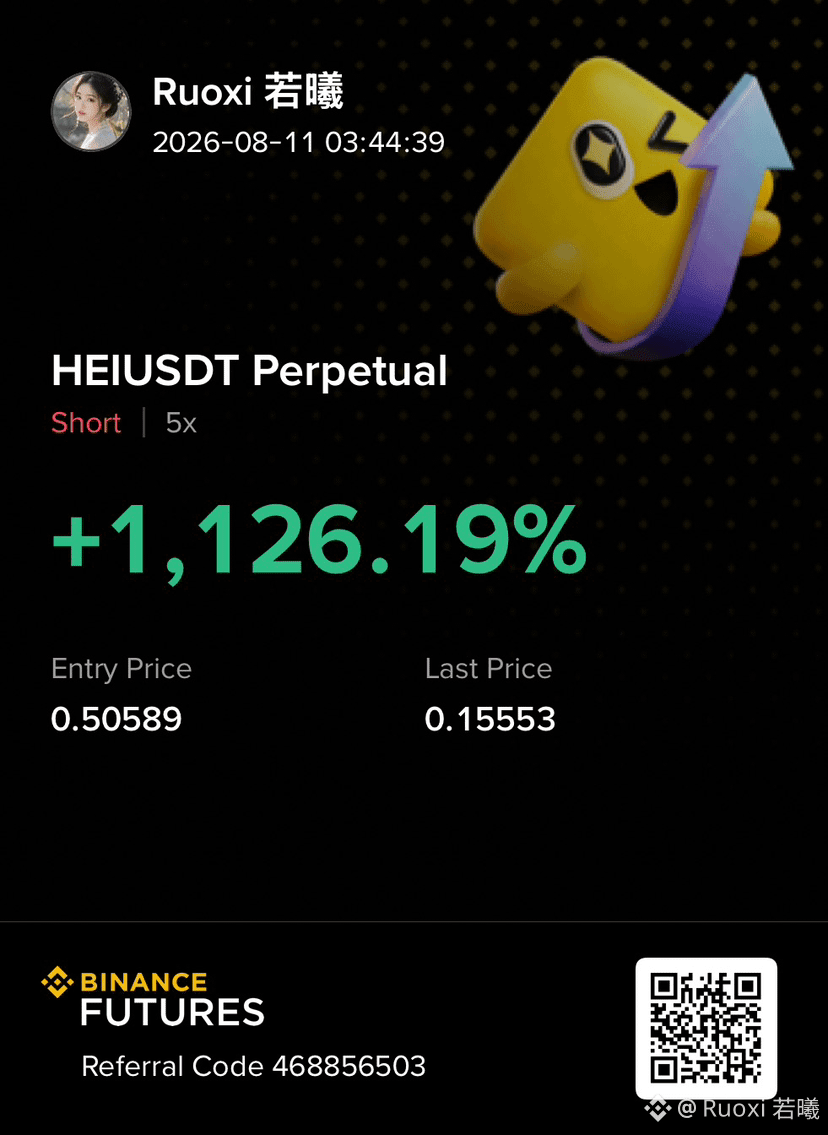
$HEI se porte à merveille 🔥
L’opération avance bien, mais je reste encore simple : pas de poursuite, pas d’excès de confiance.
Ce que j’aime le plus pour l’instant, c’est l’élan. Si $HEI arrive à maintenir cette force et à continuer de construire des niveaux plus hauts avec un volume sain, la configuration pourrait rester intéressante.
Pour moi, la clé c’est la patience. Laisse le graphique confirmer le mouvement au lieu de forcer une entrée.
Bonne opération jusqu’à présent. Voyons comment $HEI gère le prochain mouvement. 👀📈
$HEI se porte à merveille 🔥
L’opération avance bien, mais je reste encore simple : pas de poursuite, pas d’excès de confiance.
Ce que j’aime le plus pour l’instant, c’est l’élan. Si $HEI arrive à maintenir cette force et à continuer de construire des niveaux plus hauts avec un volume sain, la configuration pourrait rester intéressante.
Pour moi, la clé c’est la patience. Laisse le graphique confirmer le mouvement au lieu de forcer une entrée.
Bonne opération jusqu’à présent. Voyons comment $HEI gère le prochain mouvement. 👀📈
L’opération avance bien, mais je reste encore simple : pas de poursuite, pas d’excès de confiance.
Ce que j’aime le plus pour l’instant, c’est l’élan. Si $HEI arrive à maintenir cette force et à continuer de construire des niveaux plus hauts avec un volume sain, la configuration pourrait rester intéressante.
Pour moi, la clé c’est la patience. Laisse le graphique confirmer le mouvement au lieu de forcer une entrée.
Bonne opération jusqu’à présent. Voyons comment $HEI gère le prochain mouvement. 👀📈
301
·
--
@babylonlabs_io Une chose que j’ai remarquée en écoutant l’appel des fondateurs Babylon pour le T4 2025, c’est à quel point la conversation a changé.
Il y a un an, la plupart des gens parlaient de l’staking du Bitcoin. Aujourd’hui, l’équipe se concentre sur le fait de rendre le Bitcoin réellement utilisable dans la DeFi, sans actifs enveloppés, et sans renoncer à la self-custody. Je pense que c’est un changement plus important que beaucoup de gens ne le réalisent.
Ce qui a attiré mon attention, ce sont les Trustless Bitcoin Vaults.
L’idée semble étonnamment simple. Votre BTC reste sous votre contrôle tout en devenant une garantie pour des prêts et d’autres cas d’usage DeFi. Si Babylon parvient à bien livrer cela, cela pourrait supprimer l’une des plus grandes raisons pour lesquelles les détenteurs de Bitcoin ont évité la finance on-chain.
J’ai aussi apprécié que les fondateurs ne prétendent pas que tout était parfait.
Ils ont abordé ouvertement la pression de vente sur BABY, l’amélioration de l’utilité du token, et pourquoi de vrais produits doivent créer de la valeur avant que la tokenomics essaie de la capter. Honnêtement, c’est le chemin le plus difficile, et le succès dépendra de l’adoption plutôt que des annonces.
D’après ce que j’ai vu, Babylon essaie de garder le Bitcoin fidèle à sa philosophie d’origine tout en lui donnant un usage plus pratique.
C’est un objectif ambitieux, mais l’exécution est tout. Si l’expérience utilisateur n’est pas assez simple, même la meilleure technologie peut avoir du mal à prendre.
Pensez-vous que les Trustless Bitcoin Vaults pourraient devenir la fonctionnalité qui amène enfin plus de Bitcoin dans la DeFi ?
#baby $BABY
$HOME
{spot}(HOMEUSDT)
$BLESS
{future}(BLESSUSDT)
@BabylonLabs_io Une chose que j’ai remarquée en écoutant l’appel des fondateurs Babylon pour le T4 2025, c’est à quel point la conversation a changé.
Il y a un an, la plupart des gens parlaient de l’staking du Bitcoin. Aujourd’hui, l’équipe se concentre sur le fait de rendre le Bitcoin réellement utilisable dans la DeFi, sans actifs enveloppés, et sans renoncer à la self-custody. Je pense que c’est un changement plus important que beaucoup de gens ne le réalisent.
Ce qui a attiré mon attention, ce sont les Trustless Bitcoin Vaults.
L’idée semble étonnamment simple. Votre BTC reste sous votre contrôle tout en devenant une garantie pour des prêts et d’autres cas d’usage DeFi. Si Babylon parvient à bien livrer cela, cela pourrait supprimer l’une des plus grandes raisons pour lesquelles les détenteurs de Bitcoin ont évité la finance on-chain.
J’ai aussi apprécié que les fondateurs ne prétendent pas que tout était parfait.
Ils ont abordé ouvertement la pression de vente sur BABY, l’amélioration de l’utilité du token, et pourquoi de vrais produits doivent créer de la valeur avant que la tokenomics essaie de la capter. Honnêtement, c’est le chemin le plus difficile, et le succès dépendra de l’adoption plutôt que des annonces.
D’après ce que j’ai vu, Babylon essaie de garder le Bitcoin fidèle à sa philosophie d’origine tout en lui donnant un usage plus pratique.
C’est un objectif ambitieux, mais l’exécution est tout. Si l’expérience utilisateur n’est pas assez simple, même la meilleure technologie peut avoir du mal à prendre.
Pensez-vous que les Trustless Bitcoin Vaults pourraient devenir la fonctionnalité qui amène enfin plus de Bitcoin dans la DeFi ?
#baby $BABY
$HOME
$BLESS
Il y a un an, la plupart des gens parlaient de l’staking du Bitcoin. Aujourd’hui, l’équipe se concentre sur le fait de rendre le Bitcoin réellement utilisable dans la DeFi, sans actifs enveloppés, et sans renoncer à la self-custody. Je pense que c’est un changement plus important que beaucoup de gens ne le réalisent.
Ce qui a attiré mon attention, ce sont les Trustless Bitcoin Vaults.
L’idée semble étonnamment simple. Votre BTC reste sous votre contrôle tout en devenant une garantie pour des prêts et d’autres cas d’usage DeFi. Si Babylon parvient à bien livrer cela, cela pourrait supprimer l’une des plus grandes raisons pour lesquelles les détenteurs de Bitcoin ont évité la finance on-chain.
J’ai aussi apprécié que les fondateurs ne prétendent pas que tout était parfait.
Ils ont abordé ouvertement la pression de vente sur BABY, l’amélioration de l’utilité du token, et pourquoi de vrais produits doivent créer de la valeur avant que la tokenomics essaie de la capter. Honnêtement, c’est le chemin le plus difficile, et le succès dépendra de l’adoption plutôt que des annonces.
D’après ce que j’ai vu, Babylon essaie de garder le Bitcoin fidèle à sa philosophie d’origine tout en lui donnant un usage plus pratique.
C’est un objectif ambitieux, mais l’exécution est tout. Si l’expérience utilisateur n’est pas assez simple, même la meilleure technologie peut avoir du mal à prendre.
Pensez-vous que les Trustless Bitcoin Vaults pourraient devenir la fonctionnalité qui amène enfin plus de Bitcoin dans la DeFi ?
#baby $BABY
$HOME
$BLESS
Bullish Buying 🟢
100%
Bearish Selling 🔴
0%
1 Votes • Vote fermé
1
147
·
--
@babylonlabs_io Une chose que je continue d’observer avec le Bitcoin, c’est de me demander pourquoi l’utiliser dans DeFi a toujours signifié renoncer à quelque chose.
La lecture des documents de Babylon a un peu changé ma perspective. Avec le Public Testnet, le BTC natif peut être verrouillé dans un Trustless Bitcoin Vault et utilisé comme collatéral via Aave v4. Votre Bitcoin n’est ni enveloppé ni remis à un dépositaire — et, honnêtement, ça ressemble beaucoup plus à l’esprit original de Bitcoin.
Je pense que c’est une étape importante pour le BTCFi. Pourtant, ce n’est encore qu’un testnet, et le processus de peg-in, le temps de confirmation et le comportement en liquidation doivent faire leurs preuves sous une vraie pression de marché avant que je lui fasse pleinement confiance.
Si le Bitcoin peut rester natif tout en libérant de la liquidité, cela pourrait être un changement plus important que ce que la plupart des gens s’attendent.
Est-ce que vous emprunteriez sur du BTC natif, ou préféreriez-vous simplement continuer à le conserver ?
#baby $BABY
$1000SATS
{spot}(1000SATSUSDT)
$IDOL
{future}(IDOLUSDT)
@BabylonLabs_io Une chose que je continue d’observer avec le Bitcoin, c’est de me demander pourquoi l’utiliser dans DeFi a toujours signifié renoncer à quelque chose.
La lecture des documents de Babylon a un peu changé ma perspective. Avec le Public Testnet, le BTC natif peut être verrouillé dans un Trustless Bitcoin Vault et utilisé comme collatéral via Aave v4. Votre Bitcoin n’est ni enveloppé ni remis à un dépositaire — et, honnêtement, ça ressemble beaucoup plus à l’esprit original de Bitcoin.
Je pense que c’est une étape importante pour le BTCFi. Pourtant, ce n’est encore qu’un testnet, et le processus de peg-in, le temps de confirmation et le comportement en liquidation doivent faire leurs preuves sous une vraie pression de marché avant que je lui fasse pleinement confiance.
Si le Bitcoin peut rester natif tout en libérant de la liquidité, cela pourrait être un changement plus important que ce que la plupart des gens s’attendent.
Est-ce que vous emprunteriez sur du BTC natif, ou préféreriez-vous simplement continuer à le conserver ?
#baby $BABY
$1000SATS
$IDOL
La lecture des documents de Babylon a un peu changé ma perspective. Avec le Public Testnet, le BTC natif peut être verrouillé dans un Trustless Bitcoin Vault et utilisé comme collatéral via Aave v4. Votre Bitcoin n’est ni enveloppé ni remis à un dépositaire — et, honnêtement, ça ressemble beaucoup plus à l’esprit original de Bitcoin.
Je pense que c’est une étape importante pour le BTCFi. Pourtant, ce n’est encore qu’un testnet, et le processus de peg-in, le temps de confirmation et le comportement en liquidation doivent faire leurs preuves sous une vraie pression de marché avant que je lui fasse pleinement confiance.
Si le Bitcoin peut rester natif tout en libérant de la liquidité, cela pourrait être un changement plus important que ce que la plupart des gens s’attendent.
Est-ce que vous emprunteriez sur du BTC natif, ou préféreriez-vous simplement continuer à le conserver ?
#baby $BABY
$1000SATS
$IDOL
Bullish Buying 🟢
83%
Bearish Selling 🔴
17%
6 Votes • Vote fermé
1
244
·
--
@babylonlabs_io Une idée revenait sans cesse à l’esprit en comparant la TBV de Babylon avec le BTC enveloppé et les ponts : et si nous avions été en train de résoudre le mauvais problème.
Au lieu de déplacer le Bitcoin partout, et si la meilleure solution était de le laisser là où il bénéficie déjà de la sécurité la plus forte ?
C’est pourquoi la TBV de Babylon m’a particulièrement marqué. Elle ne dépend pas d’un dépositaire centralisé détenant les coins, ni d’une fédération de ponts contrôlant le rachat. Le Bitcoin reste sur sa propre chaîne, tandis que des preuves cryptographiques le relient à une activité basée sur Ethereum.
Je vois toutefois des limites. Le temps d’attente supplémentaire n’est pas idéal, et la technologie est plus récente que les méthodes d’enveloppement traditionnelles, donc l’adoption prendra du temps.
Réflexion : je préfère attendre un peu plus longtemps plutôt que d’introduire une autre couche de garde entre moi et mon BTC.
Si vous deviez choisir aujourd’hui, à qui feriez-vous confiance : un dépositaire, un pont, ou un coffre-fort avec garde minimale ?
#baby $BABY
$AXTIB
{spot}(AXTIBUSDT)
$SNXXB
{spot}(SNXXBUSDT)
@BabylonLabs_io Une idée revenait sans cesse à l’esprit en comparant la TBV de Babylon avec le BTC enveloppé et les ponts : et si nous avions été en train de résoudre le mauvais problème.
Au lieu de déplacer le Bitcoin partout, et si la meilleure solution était de le laisser là où il bénéficie déjà de la sécurité la plus forte ?
C’est pourquoi la TBV de Babylon m’a particulièrement marqué. Elle ne dépend pas d’un dépositaire centralisé détenant les coins, ni d’une fédération de ponts contrôlant le rachat. Le Bitcoin reste sur sa propre chaîne, tandis que des preuves cryptographiques le relient à une activité basée sur Ethereum.
Je vois toutefois des limites. Le temps d’attente supplémentaire n’est pas idéal, et la technologie est plus récente que les méthodes d’enveloppement traditionnelles, donc l’adoption prendra du temps.
Réflexion : je préfère attendre un peu plus longtemps plutôt que d’introduire une autre couche de garde entre moi et mon BTC.
Si vous deviez choisir aujourd’hui, à qui feriez-vous confiance : un dépositaire, un pont, ou un coffre-fort avec garde minimale ?
#baby $BABY
$AXTIB
$SNXXB
Au lieu de déplacer le Bitcoin partout, et si la meilleure solution était de le laisser là où il bénéficie déjà de la sécurité la plus forte ?
C’est pourquoi la TBV de Babylon m’a particulièrement marqué. Elle ne dépend pas d’un dépositaire centralisé détenant les coins, ni d’une fédération de ponts contrôlant le rachat. Le Bitcoin reste sur sa propre chaîne, tandis que des preuves cryptographiques le relient à une activité basée sur Ethereum.
Je vois toutefois des limites. Le temps d’attente supplémentaire n’est pas idéal, et la technologie est plus récente que les méthodes d’enveloppement traditionnelles, donc l’adoption prendra du temps.
Réflexion : je préfère attendre un peu plus longtemps plutôt que d’introduire une autre couche de garde entre moi et mon BTC.
Si vous deviez choisir aujourd’hui, à qui feriez-vous confiance : un dépositaire, un pont, ou un coffre-fort avec garde minimale ?
#baby $BABY
$AXTIB
$SNXXB
Bullish Zone 🟢
100%
Bearish Zone 🔴
0%
2 Votes • Vote fermé
5
1
113
·
--
Vérifié
@babylonlabs_io Je continue de regarder Bitcoin DeFi, et une chose me tracasse sans cesse.
Bitcoin est le plus gros actif de la crypto, pourtant seulement environ 1 % des BTC est utilisé dans la DeFi. Ce n’est pas parce que les gens ne veulent pas de rendement. La plupart des détenteurs ne veulent tout simplement pas confier leurs pièces à un pont, à un dépositaire (custodian) ou à un token wrapped (enveloppé). D’après ce que j’ai constaté, la sécurité passe toujours en premier.
Les coffres Bitcoin sans confiance (Trustless) de Babylon, les TBV, me semblent relever une approche différente. Au lieu de déplacer les BTC hors de Bitcoin, les TBV vous permettent de verrouiller votre BTC natif dans un coffre Taproot autocontrôlé, tout en étant reconnu par des applications Ethereum comme garantie (collatéral). Pas de BTC wrapped. Pas de pont qui conserve vos fonds. La confiance se déplace vers la cryptographie et vers les réseaux Bitcoin/Ethereum plutôt que vers une entreprise.
Je pense que c’est là la vraie innovation. Bitcoin ne cesse pas d’être Bitcoin simplement parce que vous voulez l’emprunter ou l’utiliser en DeFi. Il reste sur sa propre chaîne, tandis que le protocole prouve ce qui s’est passé entre les chaînes grâce à une vérification cryptographique. C’est un changement d’état d’esprit majeur par rapport aux modèles que nous utilisons depuis des années.
Cela dit, c’est encore tôt. Les TBV tournent aujourd’hui sur Bitcoin Signet et sur Ethereum testnet, et la conception est plus complexe que de simples wraps de BTC. Comme pour tout nouveau protocole, l’adoption dans le monde réel, les audits de sécurité et l’intégration des développeurs compteront autant que la technologie elle-même.
Babylon a déjà montré que le staking Bitcoin en self-custody peut fonctionner. Si les TBV tiennent la même philosophie pour une DeFi adossée à Bitcoin, je pense qu’elles pourraient ouvrir un avenir totalement différent pour le BTC.
Feriez-vous confiance à la cryptographie plutôt qu’à un dépositaire (custodian) pour mettre votre Bitcoin au travail dans la DeFi ?
#baby $BABY
$GRVT
{alpha}(560x46f2564e0fa8248d15125e7e54173cfbdef91be7)
$SNXXB
{spot}(SNXXBUSDT)
@BabylonLabs_io Je continue de regarder Bitcoin DeFi, et une chose me tracasse sans cesse.
Bitcoin est le plus gros actif de la crypto, pourtant seulement environ 1 % des BTC est utilisé dans la DeFi. Ce n’est pas parce que les gens ne veulent pas de rendement. La plupart des détenteurs ne veulent tout simplement pas confier leurs pièces à un pont, à un dépositaire (custodian) ou à un token wrapped (enveloppé). D’après ce que j’ai constaté, la sécurité passe toujours en premier.
Les coffres Bitcoin sans confiance (Trustless) de Babylon, les TBV, me semblent relever une approche différente. Au lieu de déplacer les BTC hors de Bitcoin, les TBV vous permettent de verrouiller votre BTC natif dans un coffre Taproot autocontrôlé, tout en étant reconnu par des applications Ethereum comme garantie (collatéral). Pas de BTC wrapped. Pas de pont qui conserve vos fonds. La confiance se déplace vers la cryptographie et vers les réseaux Bitcoin/Ethereum plutôt que vers une entreprise.
Je pense que c’est là la vraie innovation. Bitcoin ne cesse pas d’être Bitcoin simplement parce que vous voulez l’emprunter ou l’utiliser en DeFi. Il reste sur sa propre chaîne, tandis que le protocole prouve ce qui s’est passé entre les chaînes grâce à une vérification cryptographique. C’est un changement d’état d’esprit majeur par rapport aux modèles que nous utilisons depuis des années.
Cela dit, c’est encore tôt. Les TBV tournent aujourd’hui sur Bitcoin Signet et sur Ethereum testnet, et la conception est plus complexe que de simples wraps de BTC. Comme pour tout nouveau protocole, l’adoption dans le monde réel, les audits de sécurité et l’intégration des développeurs compteront autant que la technologie elle-même.
Babylon a déjà montré que le staking Bitcoin en self-custody peut fonctionner. Si les TBV tiennent la même philosophie pour une DeFi adossée à Bitcoin, je pense qu’elles pourraient ouvrir un avenir totalement différent pour le BTC.
Feriez-vous confiance à la cryptographie plutôt qu’à un dépositaire (custodian) pour mettre votre Bitcoin au travail dans la DeFi ?
#baby $BABY
$GRVT
$SNXXB
Bitcoin est le plus gros actif de la crypto, pourtant seulement environ 1 % des BTC est utilisé dans la DeFi. Ce n’est pas parce que les gens ne veulent pas de rendement. La plupart des détenteurs ne veulent tout simplement pas confier leurs pièces à un pont, à un dépositaire (custodian) ou à un token wrapped (enveloppé). D’après ce que j’ai constaté, la sécurité passe toujours en premier.
Les coffres Bitcoin sans confiance (Trustless) de Babylon, les TBV, me semblent relever une approche différente. Au lieu de déplacer les BTC hors de Bitcoin, les TBV vous permettent de verrouiller votre BTC natif dans un coffre Taproot autocontrôlé, tout en étant reconnu par des applications Ethereum comme garantie (collatéral). Pas de BTC wrapped. Pas de pont qui conserve vos fonds. La confiance se déplace vers la cryptographie et vers les réseaux Bitcoin/Ethereum plutôt que vers une entreprise.
Je pense que c’est là la vraie innovation. Bitcoin ne cesse pas d’être Bitcoin simplement parce que vous voulez l’emprunter ou l’utiliser en DeFi. Il reste sur sa propre chaîne, tandis que le protocole prouve ce qui s’est passé entre les chaînes grâce à une vérification cryptographique. C’est un changement d’état d’esprit majeur par rapport aux modèles que nous utilisons depuis des années.
Cela dit, c’est encore tôt. Les TBV tournent aujourd’hui sur Bitcoin Signet et sur Ethereum testnet, et la conception est plus complexe que de simples wraps de BTC. Comme pour tout nouveau protocole, l’adoption dans le monde réel, les audits de sécurité et l’intégration des développeurs compteront autant que la technologie elle-même.
Babylon a déjà montré que le staking Bitcoin en self-custody peut fonctionner. Si les TBV tiennent la même philosophie pour une DeFi adossée à Bitcoin, je pense qu’elles pourraient ouvrir un avenir totalement différent pour le BTC.
Feriez-vous confiance à la cryptographie plutôt qu’à un dépositaire (custodian) pour mettre votre Bitcoin au travail dans la DeFi ?
#baby $BABY
$GRVT
$SNXXB
Bullish Time Zone 🟢
50%
Bearish Time Zone 🔴
0%
Unpredictable Zone 🟠
50%
2 Votes • Vote fermé
2
186
·
--
Vérifié
@babylonlabs_io Une chose que je continue d’observer, ce sont des projets qui cherchent à intégrer Bitcoin dans la DeFi, et, franchement, la plupart d’entre eux finissent par dépendre d’actifs tokenisés (wrapped) ou de quelqu’un détenant les clés. Ça n’a jamais ressemblé à la vraie réponse pour moi.
L’intégration d’Aave v4 par Babylon me paraît différente.
Votre BTC reste verrouillé sur Bitcoin dans un coffre Bitcoin sans confiance (Trustless Bitcoin Vault), tandis qu’Aave v4 reconnaît ce BTC verrouillé comme garantie via un adaptateur dédié. Vous pouvez emprunter des actifs sans faire de pont (bridging) ni envelopper votre Bitcoin, ce qui, selon moi, constitue un changement plutôt significatif. C’est une conception plus épurée que je ne l’aurais imaginé.
Une idée qui me revient sans cesse, c’est que ce n’est pas une question de faire “bouger” Bitcoin. Il s’agit de rendre Bitcoin utile tout en le laissant exactement là où il doit être. D’après ce que j’ai vu dans la documentation, le coffre est créé spécifiquement pour l’application Aave, et un jeton de comptabilité interne (vaultBTC) représente la garantie uniquement au sein du protocole : ce n’est pas un token BTC enveloppé négociable.
Bien sûr, je resterais prudent. L’intégration se déploie via le réseau de test public, l’emprunt comporte toujours un risque de liquidation, et chaque nouveau modèle de prêt a besoin de temps pour faire ses preuves dans des conditions de marché réelles. Même les conceptions solides ne sont pas à l’abri de cas limites inattendus.
Je pense que Babylon tente de résoudre un problème dont de nombreux détenteurs de BTC parlent depuis des années : utiliser Bitcoin dans la DeFi sans renoncer à l’auto-conservation (self-custody).
Emprunteriez-vous contre du BTC natif si jamais il n’avait à quitter le réseau Bitcoin ?
#baby $BABY
$COTI
{spot}(COTIUSDT)
$UAI
{future}(UAIUSDT)
@BabylonLabs_io Une chose que je continue d’observer, ce sont des projets qui cherchent à intégrer Bitcoin dans la DeFi, et, franchement, la plupart d’entre eux finissent par dépendre d’actifs tokenisés (wrapped) ou de quelqu’un détenant les clés. Ça n’a jamais ressemblé à la vraie réponse pour moi.
L’intégration d’Aave v4 par Babylon me paraît différente.
Votre BTC reste verrouillé sur Bitcoin dans un coffre Bitcoin sans confiance (Trustless Bitcoin Vault), tandis qu’Aave v4 reconnaît ce BTC verrouillé comme garantie via un adaptateur dédié. Vous pouvez emprunter des actifs sans faire de pont (bridging) ni envelopper votre Bitcoin, ce qui, selon moi, constitue un changement plutôt significatif. C’est une conception plus épurée que je ne l’aurais imaginé.
Une idée qui me revient sans cesse, c’est que ce n’est pas une question de faire “bouger” Bitcoin. Il s’agit de rendre Bitcoin utile tout en le laissant exactement là où il doit être. D’après ce que j’ai vu dans la documentation, le coffre est créé spécifiquement pour l’application Aave, et un jeton de comptabilité interne (vaultBTC) représente la garantie uniquement au sein du protocole : ce n’est pas un token BTC enveloppé négociable.
Bien sûr, je resterais prudent. L’intégration se déploie via le réseau de test public, l’emprunt comporte toujours un risque de liquidation, et chaque nouveau modèle de prêt a besoin de temps pour faire ses preuves dans des conditions de marché réelles. Même les conceptions solides ne sont pas à l’abri de cas limites inattendus.
Je pense que Babylon tente de résoudre un problème dont de nombreux détenteurs de BTC parlent depuis des années : utiliser Bitcoin dans la DeFi sans renoncer à l’auto-conservation (self-custody).
Emprunteriez-vous contre du BTC natif si jamais il n’avait à quitter le réseau Bitcoin ?
#baby $BABY
$COTI
$UAI
L’intégration d’Aave v4 par Babylon me paraît différente.
Votre BTC reste verrouillé sur Bitcoin dans un coffre Bitcoin sans confiance (Trustless Bitcoin Vault), tandis qu’Aave v4 reconnaît ce BTC verrouillé comme garantie via un adaptateur dédié. Vous pouvez emprunter des actifs sans faire de pont (bridging) ni envelopper votre Bitcoin, ce qui, selon moi, constitue un changement plutôt significatif. C’est une conception plus épurée que je ne l’aurais imaginé.
Une idée qui me revient sans cesse, c’est que ce n’est pas une question de faire “bouger” Bitcoin. Il s’agit de rendre Bitcoin utile tout en le laissant exactement là où il doit être. D’après ce que j’ai vu dans la documentation, le coffre est créé spécifiquement pour l’application Aave, et un jeton de comptabilité interne (vaultBTC) représente la garantie uniquement au sein du protocole : ce n’est pas un token BTC enveloppé négociable.
Bien sûr, je resterais prudent. L’intégration se déploie via le réseau de test public, l’emprunt comporte toujours un risque de liquidation, et chaque nouveau modèle de prêt a besoin de temps pour faire ses preuves dans des conditions de marché réelles. Même les conceptions solides ne sont pas à l’abri de cas limites inattendus.
Je pense que Babylon tente de résoudre un problème dont de nombreux détenteurs de BTC parlent depuis des années : utiliser Bitcoin dans la DeFi sans renoncer à l’auto-conservation (self-custody).
Emprunteriez-vous contre du BTC natif si jamais il n’avait à quitter le réseau Bitcoin ?
#baby $BABY
$COTI
$UAI
Bullish Buying 🟢
33%
Bearish Selling 🔴
67%
6 Votes • Vote fermé
2
612
·
--
@babylonlabs_io Une chose que je regarde différemment au sujet des airdrops ces derniers temps.
Pendant longtemps, je pensais que réclamer un airdrop consistait simplement à connecter un portefeuille et à attendre des tokens. Puis j’ai passé un peu de temps à lire la documentation de Babylon, et une petite étape a attiré mon attention.
Pour recevoir l’airdrop BABY, les utilisateurs éligibles doivent accepter les Conditions de l’airdrop et la Politique de confidentialité, puis prouver leur acceptation en signant un message cryptographique avec leur portefeuille BABY. Ce n’est pas une transaction sur la blockchain ni un paiement de frais de gaz. C’est simplement une signature du portefeuille qui confirme que vous comprenez les règles avant de réclamer.
J’aime bien cette approche, car elle crée une trace claire : chaque participant a accepté les mêmes conditions. Babylon cherche à construire une sécurité adossée à Bitcoin pour les chaînes PoS grâce à un staking BTC en self-custody (non-custodial). Avoir un processus de réclamation transparent me semble donc cohérent avec cette philosophie.
Malgré tout, une idée reste en tête. La plupart des gens cliquent sur « Accepter » sans lire une seule ligne. Si l’éligibilité, les restrictions régionales ou la façon dont les données sont traitées comptent plus tard, cette habitude pourrait facilement devenir un problème. Je pense que prendre deux minutes pour lire les conditions vaut plus le coup que de se précipiter pour réclamer.
Liriez-vous les Conditions & la Politique de confidentialité d’un airdrop avant de signer, ou faites-vous généralement confiance au processus et cliquez-vous sur Accepter ?
#baby $BABY
$ESP $BABYSHARK
{spot}(ESPUSDT)
{alpha}(560x777bf78ad4546b61607a17bf4a1977dbbea98c28)
@BabylonLabs_io Une chose que je regarde différemment au sujet des airdrops ces derniers temps.
Pendant longtemps, je pensais que réclamer un airdrop consistait simplement à connecter un portefeuille et à attendre des tokens. Puis j’ai passé un peu de temps à lire la documentation de Babylon, et une petite étape a attiré mon attention.
Pour recevoir l’airdrop BABY, les utilisateurs éligibles doivent accepter les Conditions de l’airdrop et la Politique de confidentialité, puis prouver leur acceptation en signant un message cryptographique avec leur portefeuille BABY. Ce n’est pas une transaction sur la blockchain ni un paiement de frais de gaz. C’est simplement une signature du portefeuille qui confirme que vous comprenez les règles avant de réclamer.
J’aime bien cette approche, car elle crée une trace claire : chaque participant a accepté les mêmes conditions. Babylon cherche à construire une sécurité adossée à Bitcoin pour les chaînes PoS grâce à un staking BTC en self-custody (non-custodial). Avoir un processus de réclamation transparent me semble donc cohérent avec cette philosophie.
Malgré tout, une idée reste en tête. La plupart des gens cliquent sur « Accepter » sans lire une seule ligne. Si l’éligibilité, les restrictions régionales ou la façon dont les données sont traitées comptent plus tard, cette habitude pourrait facilement devenir un problème. Je pense que prendre deux minutes pour lire les conditions vaut plus le coup que de se précipiter pour réclamer.
Liriez-vous les Conditions & la Politique de confidentialité d’un airdrop avant de signer, ou faites-vous généralement confiance au processus et cliquez-vous sur Accepter ?
#baby $BABY
$ESP $BABYSHARK
Pendant longtemps, je pensais que réclamer un airdrop consistait simplement à connecter un portefeuille et à attendre des tokens. Puis j’ai passé un peu de temps à lire la documentation de Babylon, et une petite étape a attiré mon attention.
Pour recevoir l’airdrop BABY, les utilisateurs éligibles doivent accepter les Conditions de l’airdrop et la Politique de confidentialité, puis prouver leur acceptation en signant un message cryptographique avec leur portefeuille BABY. Ce n’est pas une transaction sur la blockchain ni un paiement de frais de gaz. C’est simplement une signature du portefeuille qui confirme que vous comprenez les règles avant de réclamer.
J’aime bien cette approche, car elle crée une trace claire : chaque participant a accepté les mêmes conditions. Babylon cherche à construire une sécurité adossée à Bitcoin pour les chaînes PoS grâce à un staking BTC en self-custody (non-custodial). Avoir un processus de réclamation transparent me semble donc cohérent avec cette philosophie.
Malgré tout, une idée reste en tête. La plupart des gens cliquent sur « Accepter » sans lire une seule ligne. Si l’éligibilité, les restrictions régionales ou la façon dont les données sont traitées comptent plus tard, cette habitude pourrait facilement devenir un problème. Je pense que prendre deux minutes pour lire les conditions vaut plus le coup que de se précipiter pour réclamer.
Liriez-vous les Conditions & la Politique de confidentialité d’un airdrop avant de signer, ou faites-vous généralement confiance au processus et cliquez-vous sur Accepter ?
#baby $BABY
$ESP $BABYSHARK
Buying long 🟢 💯
50%
Selling Short 🔴 💯
50%
4 Votes • Vote fermé
1
1
223
·
--
🎙️ Le Bitcoin est sur le point de retrouver une direction, Tony revient.
Fin
03 h 05 min 18 sec
8.4k
19
34
·
--
@babylonlabs_io Une chose que j’ai observée : la façon dont les stablecoins trouvent une vraie utilité sur Babylon Genesis, et le Noble USDC me semble plus utile que je ne l’avais prévu.
Avant, je pensais que ce n’était qu’une autre manière de garer des fonds. Après avoir lu la documentation de Babylon, j’ai compris que cela vous aide réellement à vous déplacer dans l’écosystème avec peu de friction. Vous pouvez échanger du Noble USDC sur Tower DEX, le transférer via Eureka vers des chaînes prises en charge comme Arbitrum, et même utiliser d’autres ponts comme Union et Axelar si nécessaire.
Une idée à laquelle je reviens souvent… la liquidité stable compte souvent plus que des fonctionnalités spectaculaires. Une fois que vous avez du Noble USDC sur Babylon Genesis, il devient plus facile d’accéder au staking de BABY ou d’explorer des options de liquid staking comme cBABY, eBABY et milkBABY, tout en restant dans l’écosystème plutôt que de changer de réseau en permanence.
Cela dit, je ne dirais pas que c’est parfait. L’écosystème de Babylon est encore jeune : les applications disponibles et la liquidité augmentent, mais elles n’ont pas encore atteint le niveau des chaînes plus établies. C’est quelque chose que je garde toujours à l’esprit avant de déplacer des montants plus importants.
Je pense que c’est le genre d’infrastructure qui améliore discrètement l’expérience utilisateur. Ce n’est pas la fonctionnalité phare, mais cela rend tout ce qui entoure le DeFi sécurisé par Bitcoin un peu plus connecté.
Si vous aviez aujourd’hui du Noble USDC sur Babylon Genesis, vous échangeriez, transféreriez ou stakeriez d’abord ?
#baby $BABY
$EUL
{spot}(EULUSDT)
$DIA
{spot}(DIAUSDT)
@BabylonLabs_io Une chose que j’ai observée : la façon dont les stablecoins trouvent une vraie utilité sur Babylon Genesis, et le Noble USDC me semble plus utile que je ne l’avais prévu.
Avant, je pensais que ce n’était qu’une autre manière de garer des fonds. Après avoir lu la documentation de Babylon, j’ai compris que cela vous aide réellement à vous déplacer dans l’écosystème avec peu de friction. Vous pouvez échanger du Noble USDC sur Tower DEX, le transférer via Eureka vers des chaînes prises en charge comme Arbitrum, et même utiliser d’autres ponts comme Union et Axelar si nécessaire.
Une idée à laquelle je reviens souvent… la liquidité stable compte souvent plus que des fonctionnalités spectaculaires. Une fois que vous avez du Noble USDC sur Babylon Genesis, il devient plus facile d’accéder au staking de BABY ou d’explorer des options de liquid staking comme cBABY, eBABY et milkBABY, tout en restant dans l’écosystème plutôt que de changer de réseau en permanence.
Cela dit, je ne dirais pas que c’est parfait. L’écosystème de Babylon est encore jeune : les applications disponibles et la liquidité augmentent, mais elles n’ont pas encore atteint le niveau des chaînes plus établies. C’est quelque chose que je garde toujours à l’esprit avant de déplacer des montants plus importants.
Je pense que c’est le genre d’infrastructure qui améliore discrètement l’expérience utilisateur. Ce n’est pas la fonctionnalité phare, mais cela rend tout ce qui entoure le DeFi sécurisé par Bitcoin un peu plus connecté.
Si vous aviez aujourd’hui du Noble USDC sur Babylon Genesis, vous échangeriez, transféreriez ou stakeriez d’abord ?
#baby $BABY
$EUL
$DIA
Avant, je pensais que ce n’était qu’une autre manière de garer des fonds. Après avoir lu la documentation de Babylon, j’ai compris que cela vous aide réellement à vous déplacer dans l’écosystème avec peu de friction. Vous pouvez échanger du Noble USDC sur Tower DEX, le transférer via Eureka vers des chaînes prises en charge comme Arbitrum, et même utiliser d’autres ponts comme Union et Axelar si nécessaire.
Une idée à laquelle je reviens souvent… la liquidité stable compte souvent plus que des fonctionnalités spectaculaires. Une fois que vous avez du Noble USDC sur Babylon Genesis, il devient plus facile d’accéder au staking de BABY ou d’explorer des options de liquid staking comme cBABY, eBABY et milkBABY, tout en restant dans l’écosystème plutôt que de changer de réseau en permanence.
Cela dit, je ne dirais pas que c’est parfait. L’écosystème de Babylon est encore jeune : les applications disponibles et la liquidité augmentent, mais elles n’ont pas encore atteint le niveau des chaînes plus établies. C’est quelque chose que je garde toujours à l’esprit avant de déplacer des montants plus importants.
Je pense que c’est le genre d’infrastructure qui améliore discrètement l’expérience utilisateur. Ce n’est pas la fonctionnalité phare, mais cela rend tout ce qui entoure le DeFi sécurisé par Bitcoin un peu plus connecté.
Si vous aviez aujourd’hui du Noble USDC sur Babylon Genesis, vous échangeriez, transféreriez ou stakeriez d’abord ?
#baby $BABY
$EUL
$DIA
Bullish Time 🟢
67%
Bearish Time 🔴
33%
6 Votes • Vote fermé
1
726
Connectez-vous pour découvrir plus de contenu
Rejoignez la communauté mondiale des adeptes de cryptomonnaies sur Binance Square
⚡️ Suviez les dernières informations importantes sur les cryptomonnaies.
💬 Jugé digne de confiance par la plus grande plateforme d’échange de cryptomonnaies au monde.
👍 Découvrez les connaissances que partagent les créateurs vérifiés.
Adresse e-mail/Nº de téléphone
Sujets d’actualité
SECHaltsCryptoETFReviewsAmidFundingLapse
90,683 vues
860 mentions
🚨 Plus de 90 demandes de fonds négociés en bourse (ETF) liés aux cryptomonnaies ont été temporairement suspendues.
Et ce n’est pas uniquement lié au Bitcoin.
$PEPE $SOL $XRP
En raison d’une interruption du financement aux États-Unis, le processus de révision de la Securities and Exchange Commission (SEC) pour de nouveaux produits d’ETF crypto a, en pratique, ralenti jusqu’à s’arrêter.
Hier, la société Canary a déposé son dossier pour un ETF PEPE.
Aujourd’hui, la chaîne d’ETF plus large est bloquée. 👀
Important :
Ce n’est pas un rejet.
Les fonds déjà existants continuent d’être négociés normalement.
Mais les nouveaux dépôts et examens ne peuvent pas avancer comme d’habitude tant que la SEC ne reprend pas ses opérations normales.
Cela signifie qu’une des plus grandes narrations institutionnelles de l’univers des cryptomonnaies a perdu son calendrier.
Quelle histoire d’ETF pour une monnaie alternative sera la plus touchée par le retard ?
PEPE · SOL · XRP
Merci de suivre
#SECHaltsCryptoETFReviewsAmidFundingLapse
Shamika Metting
·3 mentions J’aime
·933 vues
ZcashETFPostsFirstWeeklyOutflow$93.6M
68,672 vues
216 mentions
GreekPoliceBustCryptoScamRingArrest17
238,611 vues
1,655 mentions