

James Taylor Ava
547 Publications

James Taylor Ava
Signaler
Bloquer l’utilisateur
71 Suivis
755 Abonnés
253 J’aime
Publications
Tous
Citations
Direct
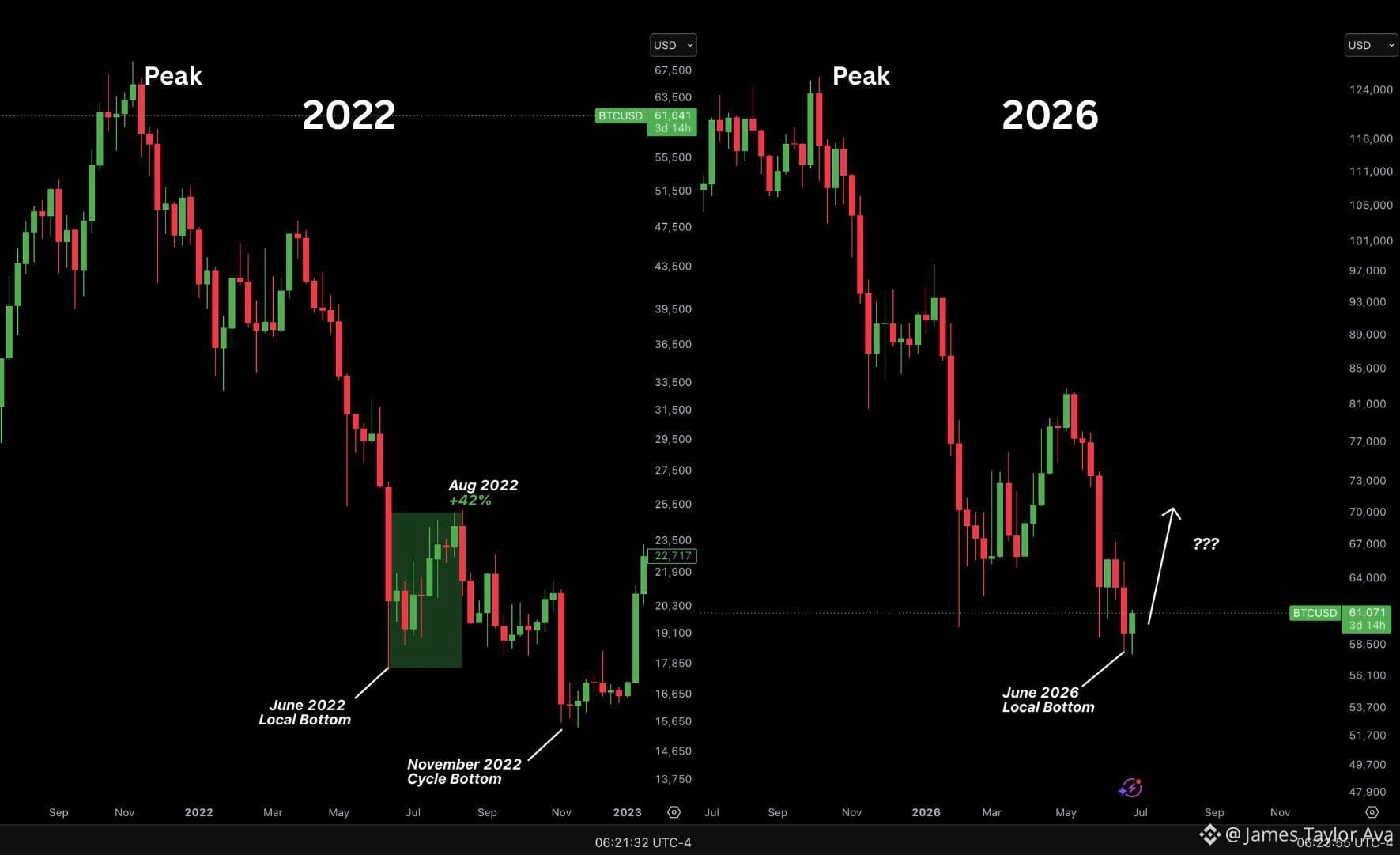
Le Bitcoin est-il sur le point de répéter 2022 ?
À l’époque :
• Juin 2022 : creux local à 17,6 k$
• +42 % de rallye jusqu’en août
• Le creux final du cycle est arrivé plus tard en novembre à 15,5 k$
Aujourd’hui, nous observons une structure très similaire.
Si 57,7 k$ a marqué le creux local de juin, un mouvement de 42 % placerait le BTC autour de 82 k$ d’ici août.
Le Bitcoin pourrait-il d’abord monter encore plus haut… avant d’imprimer un creux final au T4 en phase avec le cycle de 4 ans ?
$BTC #SouthKoreanStocksRise5%
Le Bitcoin est-il sur le point de répéter 2022 ?
À l’époque :
• Juin 2022 : creux local à 17,6 k$
• +42 % de rallye jusqu’en août
• Le creux final du cycle est arrivé plus tard en novembre à 15,5 k$
Aujourd’hui, nous observons une structure très similaire.
Si 57,7 k$ a marqué le creux local de juin, un mouvement de 42 % placerait le BTC autour de 82 k$ d’ici août.
Le Bitcoin pourrait-il d’abord monter encore plus haut… avant d’imprimer un creux final au T4 en phase avec le cycle de 4 ans ?
$BTC #SouthKoreanStocksRise5%
À l’époque :
• Juin 2022 : creux local à 17,6 k$
• +42 % de rallye jusqu’en août
• Le creux final du cycle est arrivé plus tard en novembre à 15,5 k$
Aujourd’hui, nous observons une structure très similaire.
Si 57,7 k$ a marqué le creux local de juin, un mouvement de 42 % placerait le BTC autour de 82 k$ d’ici août.
Le Bitcoin pourrait-il d’abord monter encore plus haut… avant d’imprimer un creux final au T4 en phase avec le cycle de 4 ans ?
$BTC #SouthKoreanStocksRise5%
2
485
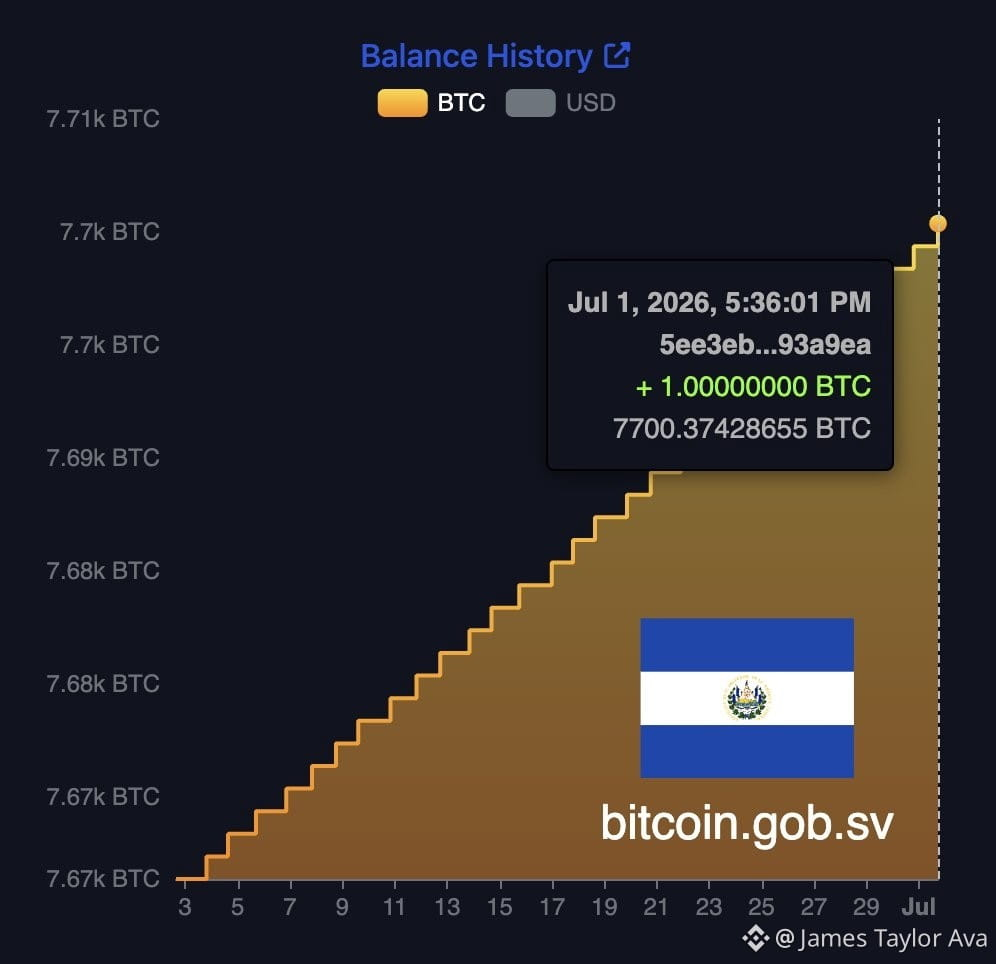
NOUVEAU : El Salvador a acheté un autre BTC pour sa Réserve stratégique en Bitcoin aujourd’hui 🇸🇻
Ils en détiennent désormais 7 700 ! 👏
NOUVEAU : El Salvador a acheté un autre BTC pour sa Réserve stratégique en Bitcoin aujourd’hui 🇸🇻
Ils en détiennent désormais 7 700 ! 👏
Ils en détiennent désormais 7 700 ! 👏
57
Article
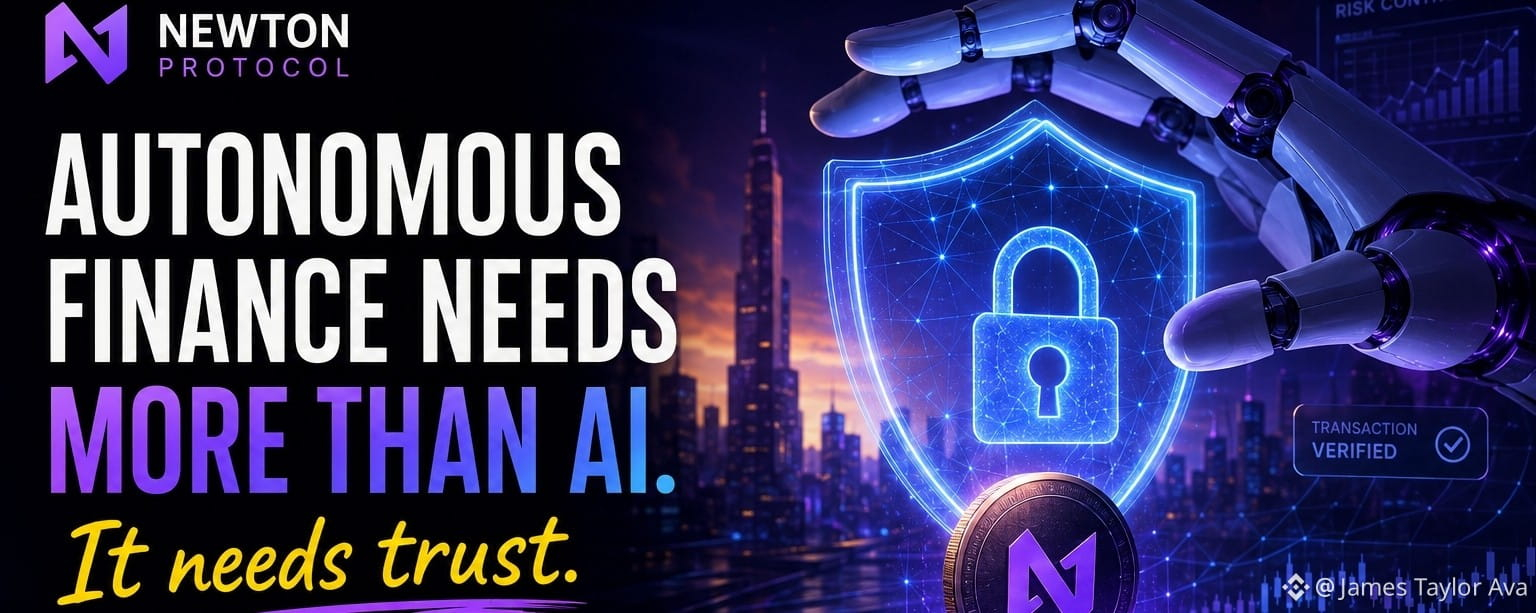
Le plus grand défi de la finance autonome n’est pas l’IA — c’est la confianceLe plus grand défi de la finance autonome ne sera peut-être pas l’IA
Plus je réfléchis à la finance autonome, moins je pense que l’intelligence artificielle est le problème le plus difficile.
L’IA progresse incroyablement vite. Toutes les quelques semaines, il y a un nouveau modèle qui est meilleur pour analyser des données, repérer des schémas ou prendre des décisions complexes. En regardant ces progrès, il est facile de supposer que l’avenir dépend de la construction de systèmes plus intelligents.
Je n’en suis plus si sûr.
La question la plus simple revient sans cesse dans mon esprit.
Le plus grand défi de la finance autonome n’est pas l’IA — c’est la confiance
Le plus grand défi de la finance autonome ne sera peut-être pas l’IA
Plus je réfléchis à la finance autonome, moins je pense que l’intelligence artificielle est le problème le plus difficile.
L’IA progresse incroyablement vite. Toutes les quelques semaines, il y a un nouveau modèle qui est meilleur pour analyser des données, repérer des schémas ou prendre des décisions complexes. En regardant ces progrès, il est facile de supposer que l’avenir dépend de la construction de systèmes plus intelligents.
Je n’en suis plus si sûr.
La question la plus simple revient sans cesse dans mon esprit.
Plus je réfléchis à la finance autonome, moins je pense que l’intelligence artificielle est le problème le plus difficile.
L’IA progresse incroyablement vite. Toutes les quelques semaines, il y a un nouveau modèle qui est meilleur pour analyser des données, repérer des schémas ou prendre des décisions complexes. En regardant ces progrès, il est facile de supposer que l’avenir dépend de la construction de systèmes plus intelligents.
Je n’en suis plus si sûr.
La question la plus simple revient sans cesse dans mon esprit.
2
78
#newt $NEWT
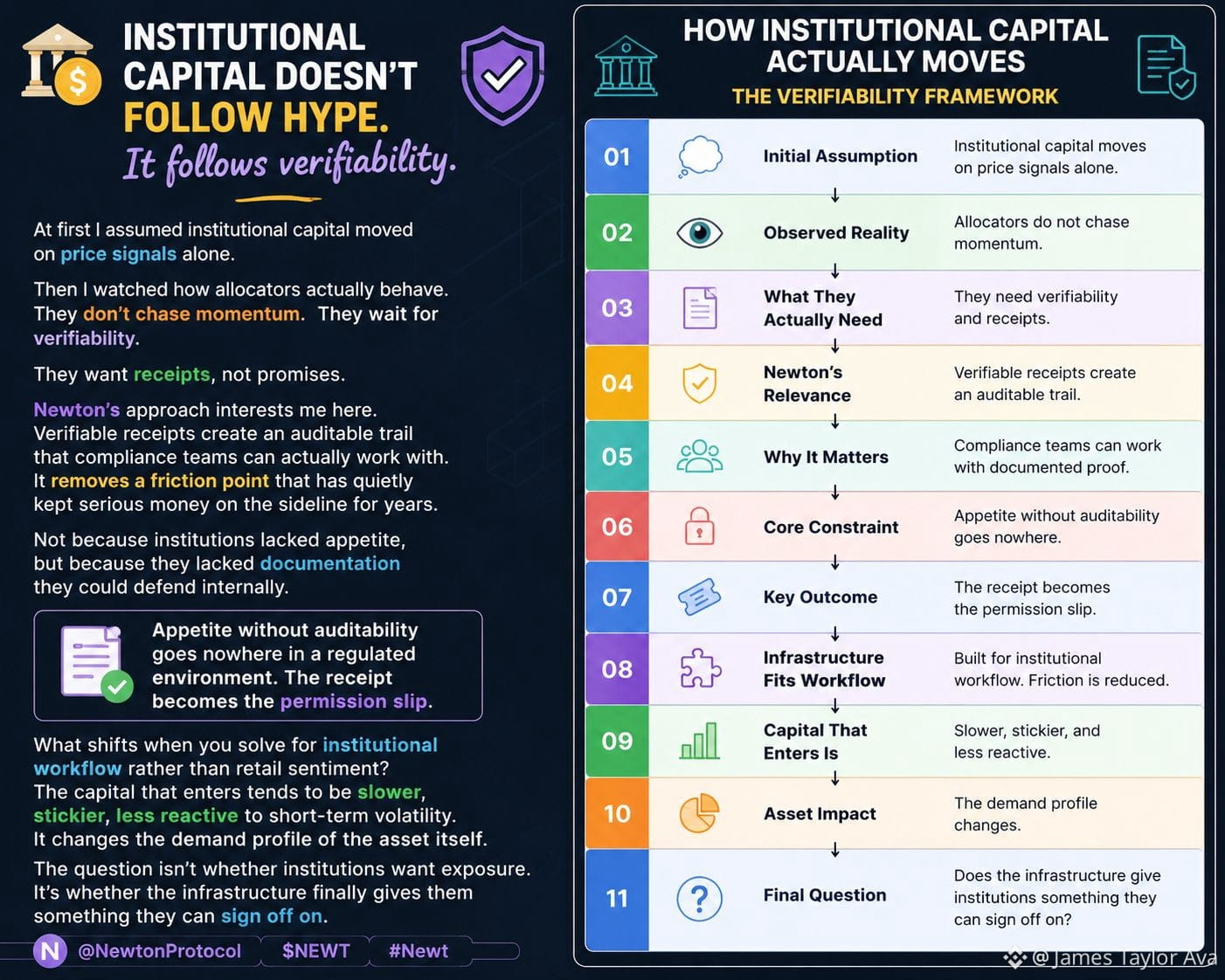
Je pensais autrefois que l'argent institutionnel suivait le prix.
Plus j'observais, plus je réalisais que le prix est généralement la dernière chose qu'ils regardent.
Avant que le capital ne se déplace, quelqu'un doit expliquer le risque, documenter le processus et y donner son accord.
C'est là que Newton a attiré mon attention.
Ce qui m'intéressait n'était pas seulement la technologie. C'était l'idée de reçus vérifiables.
Dans des environnements réglementés, « fais-moi confiance » ne suffit pas.
Les gens ont besoin de preuves qu'ils peuvent défendre en interne.
Peut-être que c'est l'une des plus grandes barrières depuis le début.
Pas un manque d'intérêt.
Un manque d'infrastructure qui rend la participation facile à justifier.
Si ce problème commence enfin à être résolu, la demande institutionnelle pourrait se comporter très différemment de la demande retail.
Moins réactive.
Plus patiente.
Et potentiellement beaucoup plus durable.
Pour moi, c'est une question bien plus intéressante que de savoir si les institutions veulent de la crypto.
La vraie question est de savoir si l'infrastructure leur donne enfin quelque chose qu'ils peuvent approuver en toute confiance.
@NewtonProtocol $NEWT #newt
#newt $NEWT
Je pensais autrefois que l'argent institutionnel suivait le prix.
Plus j'observais, plus je réalisais que le prix est généralement la dernière chose qu'ils regardent.
Avant que le capital ne se déplace, quelqu'un doit expliquer le risque, documenter le processus et y donner son accord.
C'est là que Newton a attiré mon attention.
Ce qui m'intéressait n'était pas seulement la technologie. C'était l'idée de reçus vérifiables.
Dans des environnements réglementés, « fais-moi confiance » ne suffit pas.
Les gens ont besoin de preuves qu'ils peuvent défendre en interne.
Peut-être que c'est l'une des plus grandes barrières depuis le début.
Pas un manque d'intérêt.
Un manque d'infrastructure qui rend la participation facile à justifier.
Si ce problème commence enfin à être résolu, la demande institutionnelle pourrait se comporter très différemment de la demande retail.
Moins réactive.
Plus patiente.
Et potentiellement beaucoup plus durable.
Pour moi, c'est une question bien plus intéressante que de savoir si les institutions veulent de la crypto.
La vraie question est de savoir si l'infrastructure leur donne enfin quelque chose qu'ils peuvent approuver en toute confiance.
@NewtonProtocol $NEWT #newt
Je pensais autrefois que l'argent institutionnel suivait le prix.
Plus j'observais, plus je réalisais que le prix est généralement la dernière chose qu'ils regardent.
Avant que le capital ne se déplace, quelqu'un doit expliquer le risque, documenter le processus et y donner son accord.
C'est là que Newton a attiré mon attention.
Ce qui m'intéressait n'était pas seulement la technologie. C'était l'idée de reçus vérifiables.
Dans des environnements réglementés, « fais-moi confiance » ne suffit pas.
Les gens ont besoin de preuves qu'ils peuvent défendre en interne.
Peut-être que c'est l'une des plus grandes barrières depuis le début.
Pas un manque d'intérêt.
Un manque d'infrastructure qui rend la participation facile à justifier.
Si ce problème commence enfin à être résolu, la demande institutionnelle pourrait se comporter très différemment de la demande retail.
Moins réactive.
Plus patiente.
Et potentiellement beaucoup plus durable.
Pour moi, c'est une question bien plus intéressante que de savoir si les institutions veulent de la crypto.
La vraie question est de savoir si l'infrastructure leur donne enfin quelque chose qu'ils peuvent approuver en toute confiance.
@NewtonProtocol $NEWT #newt
2
88
Article
Le vrai goulot d’étranglement de l’IA en finance n’est pas l’intelligence — c’est l’infrastructureLe vrai défi pour l’IA dans la finance ne serait peut-être pas l’intelligence
Je pensais que la plus grande course en IA consisterait à construire des modèles plus intelligents.
Toutes les quelques semaines, un autre modèle apparaît, capable de traiter davantage de données, de reconnaître les schémas plus rapidement ou de produire de meilleures prédictions que le précédent. Pendant un moment, j’ai cru que c’était là que se déciderait l’avenir de l’IA dans la finance.
Plus j’observais, moins j’étais convaincu.
Ce qui a attiré mon attention n’était plus la qualité des prédictions.
Tout ce qui s’est produit après que ces prédictions aient quitté le modèle.
Le vrai goulot d’étranglement de l’IA en finance n’est pas l’intelligence — c’est l’infrastructure
Le vrai défi pour l’IA dans la finance ne serait peut-être pas l’intelligence
Je pensais que la plus grande course en IA consisterait à construire des modèles plus intelligents.
Toutes les quelques semaines, un autre modèle apparaît, capable de traiter davantage de données, de reconnaître les schémas plus rapidement ou de produire de meilleures prédictions que le précédent. Pendant un moment, j’ai cru que c’était là que se déciderait l’avenir de l’IA dans la finance.
Plus j’observais, moins j’étais convaincu.
Ce qui a attiré mon attention n’était plus la qualité des prédictions.
Tout ce qui s’est produit après que ces prédictions aient quitté le modèle.
Je pensais que la plus grande course en IA consisterait à construire des modèles plus intelligents.
Toutes les quelques semaines, un autre modèle apparaît, capable de traiter davantage de données, de reconnaître les schémas plus rapidement ou de produire de meilleures prédictions que le précédent. Pendant un moment, j’ai cru que c’était là que se déciderait l’avenir de l’IA dans la finance.
Plus j’observais, moins j’étais convaincu.
Ce qui a attiré mon attention n’était plus la qualité des prédictions.
Tout ce qui s’est produit après que ces prédictions aient quitté le modèle.
1
58
#newt $NEWT
J’ai toujours supposé que la confidentialité et la conformité étaient sur des côtés opposés. Plus je creusais Newton, moins j’étais sûr.
Je pense qu’on a regardé la confidentialité d’une mauvaise façon.
Pendant très longtemps, j’ai supposé que la confidentialité et la conformité ne pouvaient jamais coexister.
Si un système protégeait les utilisateurs, les régulateurs devraient lui faire confiance.
Si les régulateurs voulaient une preuve, les utilisateurs perdraient leur confidentialité.
J’avais l’impression qu’il n’y avait pas d’autre option que ce compromis.
Puis j’ai commencé à lire au sujet de Newton.
Ce qui a retenu mon attention n’était pas une autre fonctionnalité de blockchain. C’était l’idée que peut-être le compromis lui-même n’est pas le vrai problème.
Peut-être que nous avons été limités par l’infrastructure que nous utilisons.
Si des règles peuvent être vérifiées sans exposer d’informations sensibles, alors la confidentialité n’a pas à se faire au détriment de la responsabilité.
Cela fait basculer la discussion dans une direction très différente.
Au lieu de choisir entre confidentialité et conformité, l’enjeu devient de concevoir des systèmes capables de les soutenir toutes les deux.
Je continue d’explorer l’idée, mais elle m’a forcément poussé à m’arrêter et à repenser quelque chose que j’avais tenu pour acquis.
#newton $NEWT @NewtonProtocol
#newt $NEWT
J’ai toujours supposé que la confidentialité et la conformité étaient sur des côtés opposés. Plus je creusais Newton, moins j’étais sûr.
Je pense qu’on a regardé la confidentialité d’une mauvaise façon.
Pendant très longtemps, j’ai supposé que la confidentialité et la conformité ne pouvaient jamais coexister.
Si un système protégeait les utilisateurs, les régulateurs devraient lui faire confiance.
Si les régulateurs voulaient une preuve, les utilisateurs perdraient leur confidentialité.
J’avais l’impression qu’il n’y avait pas d’autre option que ce compromis.
Puis j’ai commencé à lire au sujet de Newton.
Ce qui a retenu mon attention n’était pas une autre fonctionnalité de blockchain. C’était l’idée que peut-être le compromis lui-même n’est pas le vrai problème.
Peut-être que nous avons été limités par l’infrastructure que nous utilisons.
Si des règles peuvent être vérifiées sans exposer d’informations sensibles, alors la confidentialité n’a pas à se faire au détriment de la responsabilité.
Cela fait basculer la discussion dans une direction très différente.
Au lieu de choisir entre confidentialité et conformité, l’enjeu devient de concevoir des systèmes capables de les soutenir toutes les deux.
Je continue d’explorer l’idée, mais elle m’a forcément poussé à m’arrêter et à repenser quelque chose que j’avais tenu pour acquis.
#newton $NEWT @NewtonProtocol
J’ai toujours supposé que la confidentialité et la conformité étaient sur des côtés opposés. Plus je creusais Newton, moins j’étais sûr.
Je pense qu’on a regardé la confidentialité d’une mauvaise façon.
Pendant très longtemps, j’ai supposé que la confidentialité et la conformité ne pouvaient jamais coexister.
Si un système protégeait les utilisateurs, les régulateurs devraient lui faire confiance.
Si les régulateurs voulaient une preuve, les utilisateurs perdraient leur confidentialité.
J’avais l’impression qu’il n’y avait pas d’autre option que ce compromis.
Puis j’ai commencé à lire au sujet de Newton.
Ce qui a retenu mon attention n’était pas une autre fonctionnalité de blockchain. C’était l’idée que peut-être le compromis lui-même n’est pas le vrai problème.
Peut-être que nous avons été limités par l’infrastructure que nous utilisons.
Si des règles peuvent être vérifiées sans exposer d’informations sensibles, alors la confidentialité n’a pas à se faire au détriment de la responsabilité.
Cela fait basculer la discussion dans une direction très différente.
Au lieu de choisir entre confidentialité et conformité, l’enjeu devient de concevoir des systèmes capables de les soutenir toutes les deux.
Je continue d’explorer l’idée, mais elle m’a forcément poussé à m’arrêter et à repenser quelque chose que j’avais tenu pour acquis.
#newton $NEWT @NewtonProtocol

76
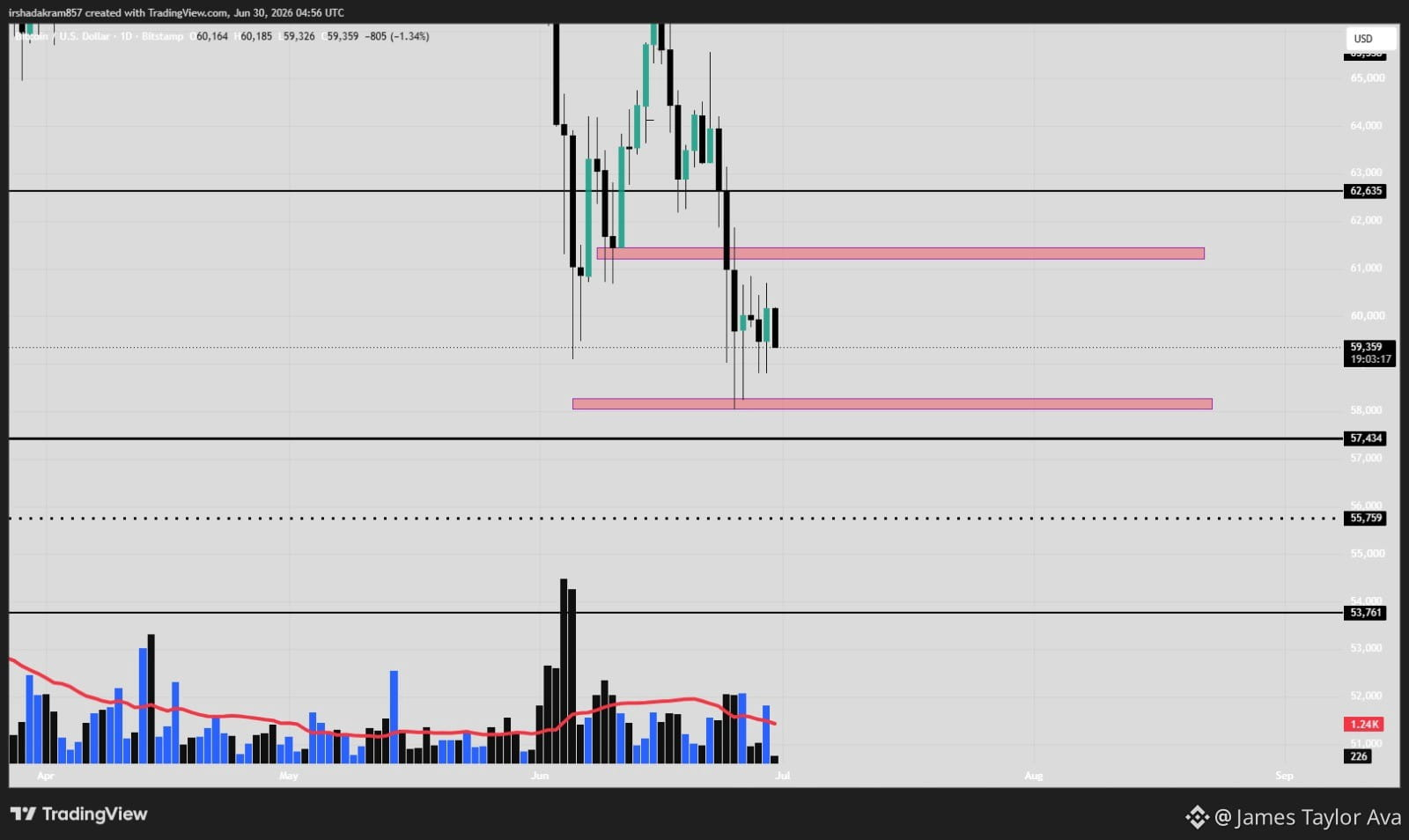
#BTC Mises à jour du marché 📊
Tendance actuelle : Baissière 📉
Zones de support clés 🟢 58,150 $ 🟢 56,000 $
Zones de résistance clés 🔴 61,200 $ 🔴 62,300 $
Le BTC reste sous pression baissière pour le moment. Surveillez la réaction du prix autour de ces niveaux clés avant de passer à l’action.
Restez patient, gérez votre risque et attendez une confirmation plutôt que de courir après la volatilité. 🎯
$BTC #DowHitsRecordClose
#BTC Mises à jour du marché 📊
Tendance actuelle : Baissière 📉
Zones de support clés 🟢 58,150 $ 🟢 56,000 $
Zones de résistance clés 🔴 61,200 $ 🔴 62,300 $
Le BTC reste sous pression baissière pour le moment. Surveillez la réaction du prix autour de ces niveaux clés avant de passer à l’action.
Restez patient, gérez votre risque et attendez une confirmation plutôt que de courir après la volatilité. 🎯
$BTC #DowHitsRecordClose
Tendance actuelle : Baissière 📉
Zones de support clés 🟢 58,150 $ 🟢 56,000 $
Zones de résistance clés 🔴 61,200 $ 🔴 62,300 $
Le BTC reste sous pression baissière pour le moment. Surveillez la réaction du prix autour de ces niveaux clés avant de passer à l’action.
Restez patient, gérez votre risque et attendez une confirmation plutôt que de courir après la volatilité. 🎯
$BTC #DowHitsRecordClose
93
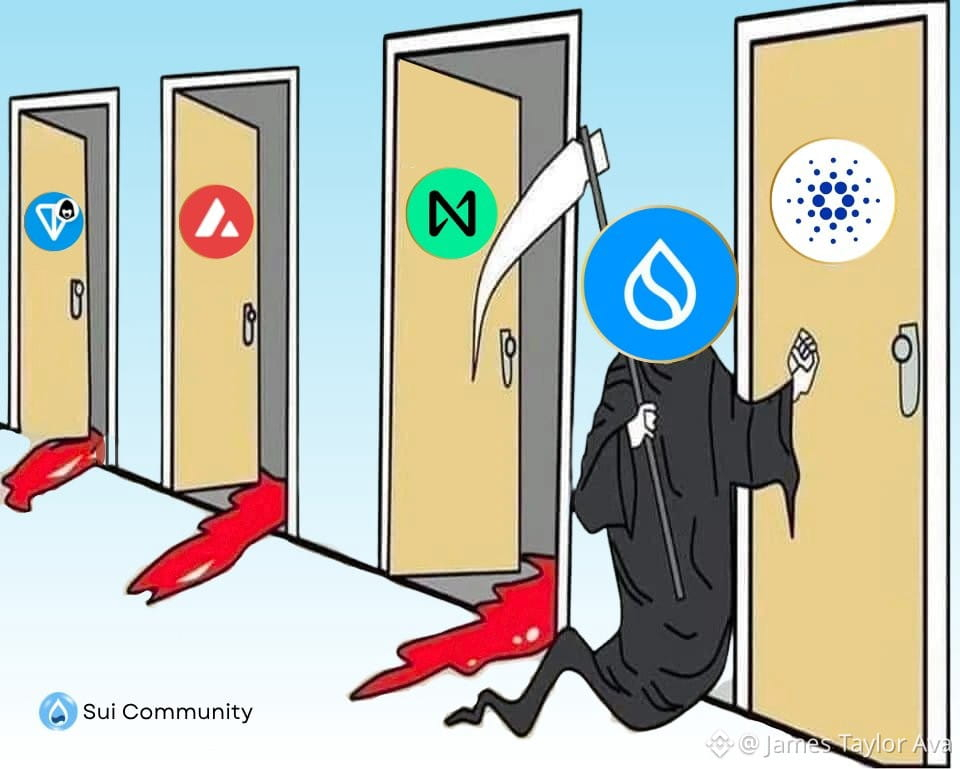
Prêt pour le prochain mois juillet 2026 👀
$SUI mijote quelque chose de vraiment énorme 🚀
$SUI #SaylorHintsStrategyBitcoinBuy
Prêt pour le prochain mois juillet 2026 👀
$SUI mijote quelque chose de vraiment énorme 🚀
$SUI #SaylorHintsStrategyBitcoinBuy
$SUI mijote quelque chose de vraiment énorme 🚀
$SUI #SaylorHintsStrategyBitcoinBuy
67
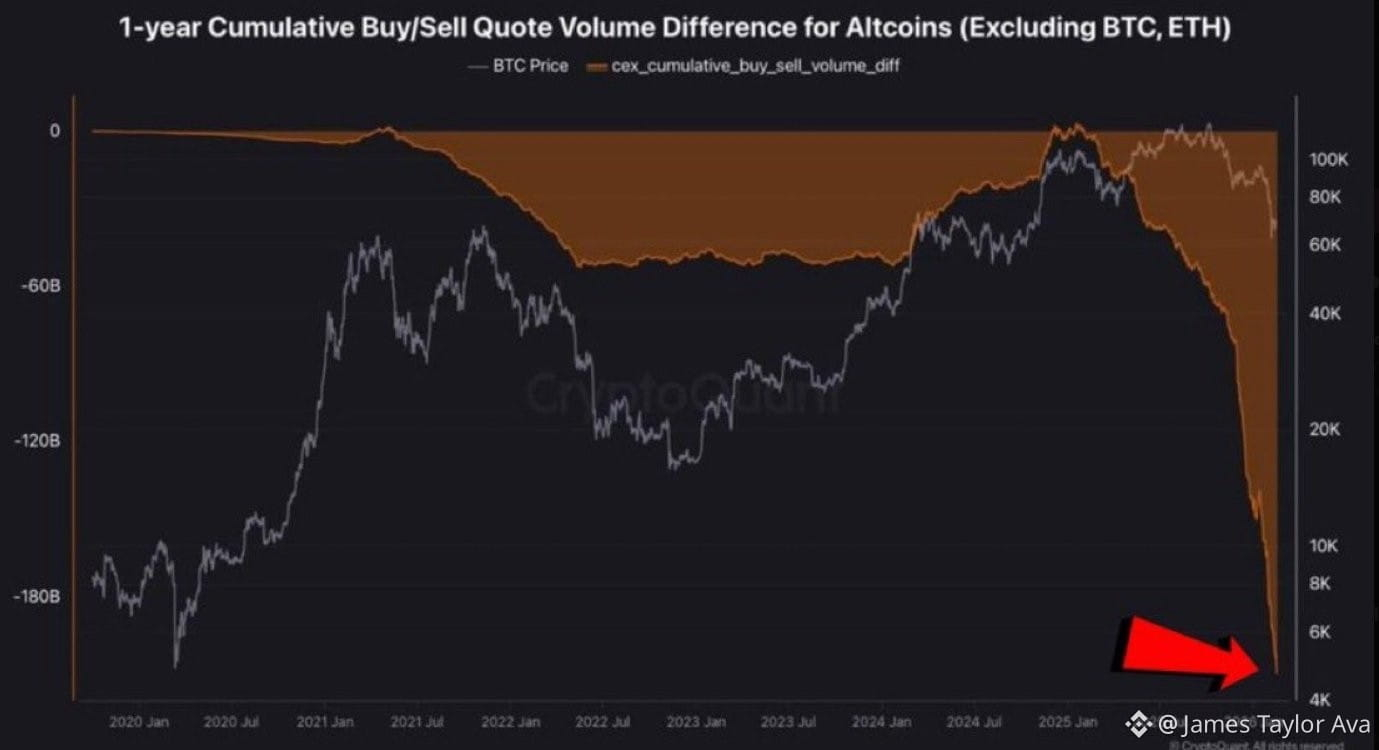
OBSERVATION DES BALEINES : On vous a dit de diversifier, mais on a oublié de préciser que 99 % des altcoins saignent à zéro contre le $BTC.
=> 5 ans de douleur.
=> Zéro année de gains.
=> RIP aux détenteurs d’altcoins.
Regardez les graphiques. Vous n’investissez plus. Vous espérez simplement.
$BTC #IRGCSaysItStruckKuwaitAndBahrain
OBSERVATION DES BALEINES : On vous a dit de diversifier, mais on a oublié de préciser que 99 % des altcoins saignent à zéro contre le $BTC .
=> 5 ans de douleur.
=> Zéro année de gains.
=> RIP aux détenteurs d’altcoins.
Regardez les graphiques. Vous n’investissez plus. Vous espérez simplement.
$BTC #IRGCSaysItStruckKuwaitAndBahrain
=> 5 ans de douleur.
=> Zéro année de gains.
=> RIP aux détenteurs d’altcoins.
Regardez les graphiques. Vous n’investissez plus. Vous espérez simplement.
$BTC #IRGCSaysItStruckKuwaitAndBahrain
99
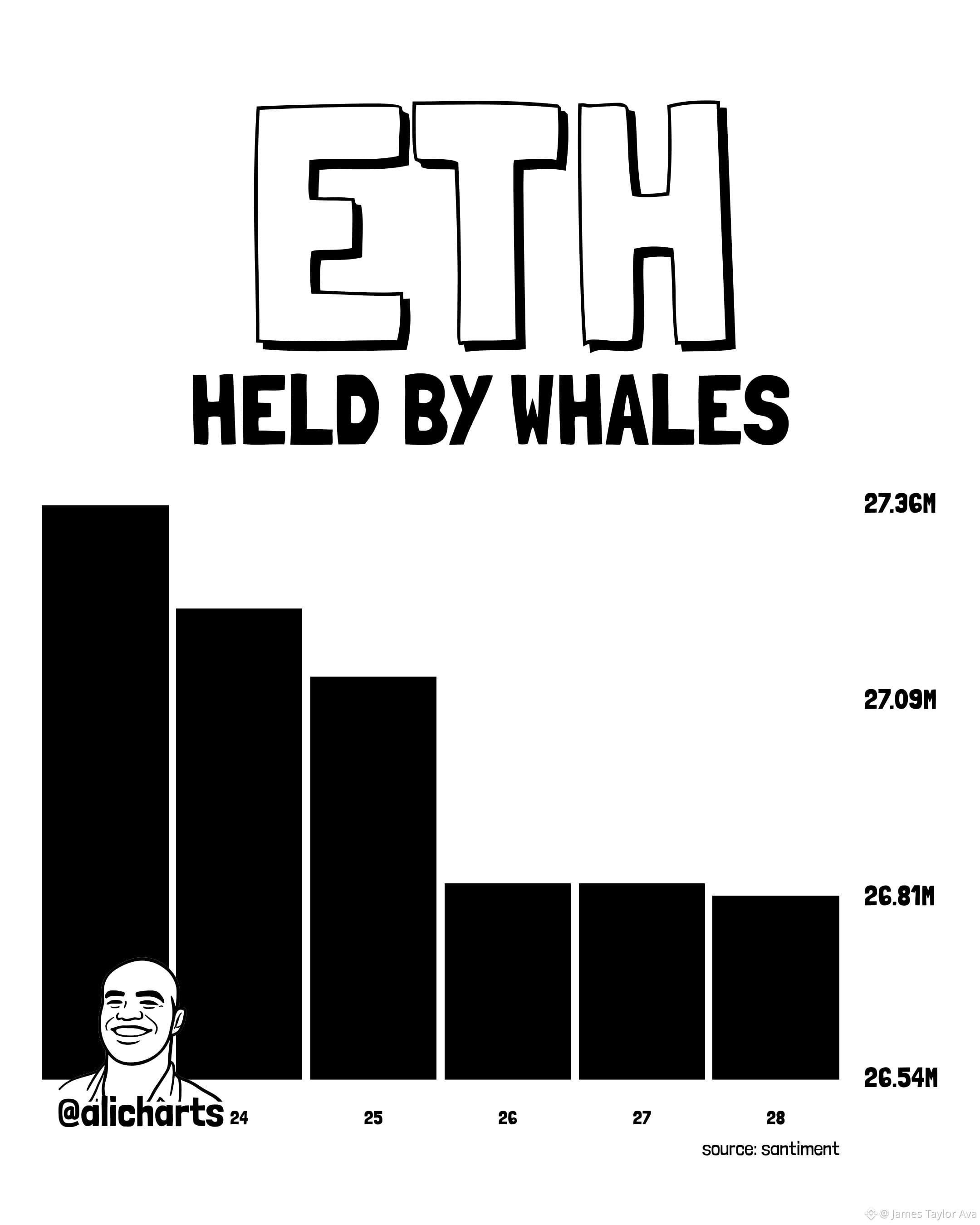
DES BALEINES ETH VENDENT 880 MILLIONS DE DOLLARS EN UNE SEMAINE
Les grands détenteurs ont déchargé environ 550 000 ETH au cours de la semaine passée, injectant 880 millions de dollars d’offre côté vente sur le marché.
Ce volume de vente massif a réussi à faire passer Ethereum sous son support immédiat de 1 633 $.
Le marché teste désormais un support de volume critique à 1 583 $. D’après les données URPD, ne pas tenir la base de 1 583 $ ouvre une voie claire vers des liquidations prolongées.
Si cette tendance de distribution se poursuit la semaine prochaine, les prochains objectifs de demande à fort volume, $ETH sit, se situent bien plus bas à 1 237 $ et 1 089 $.
$ETH #IRGCSaysItStruckKuwaitAndBahrain
DES BALEINES ETH VENDENT 880 MILLIONS DE DOLLARS EN UNE SEMAINE
Les grands détenteurs ont déchargé environ 550 000 ETH au cours de la semaine passée, injectant 880 millions de dollars d’offre côté vente sur le marché.
Ce volume de vente massif a réussi à faire passer Ethereum sous son support immédiat de 1 633 $.
Le marché teste désormais un support de volume critique à 1 583 $. D’après les données URPD, ne pas tenir la base de 1 583 $ ouvre une voie claire vers des liquidations prolongées.
Si cette tendance de distribution se poursuit la semaine prochaine, les prochains objectifs de demande à fort volume, $ETH sit, se situent bien plus bas à 1 237 $ et 1 089 $.
$ETH #IRGCSaysItStruckKuwaitAndBahrain
Les grands détenteurs ont déchargé environ 550 000 ETH au cours de la semaine passée, injectant 880 millions de dollars d’offre côté vente sur le marché.
Ce volume de vente massif a réussi à faire passer Ethereum sous son support immédiat de 1 633 $.
Le marché teste désormais un support de volume critique à 1 583 $. D’après les données URPD, ne pas tenir la base de 1 583 $ ouvre une voie claire vers des liquidations prolongées.
Si cette tendance de distribution se poursuit la semaine prochaine, les prochains objectifs de demande à fort volume, $ETH sit, se situent bien plus bas à 1 237 $ et 1 089 $.
$ETH #IRGCSaysItStruckKuwaitAndBahrain
59
#opg $OPG
Je me souviens encore d’avoir regardé un token d’infrastructure nouvellement coté exploser dans les gros titres à propos de calcul plus rapide.
Pendant quelques jours, la vitesse était le seul sujet.
Puis l’enthousiasme est retombé.Non pas parce que la technologie avait changé.
Les gens ont simplement cessé de s’y intéresser.
Ce constat m’est resté.
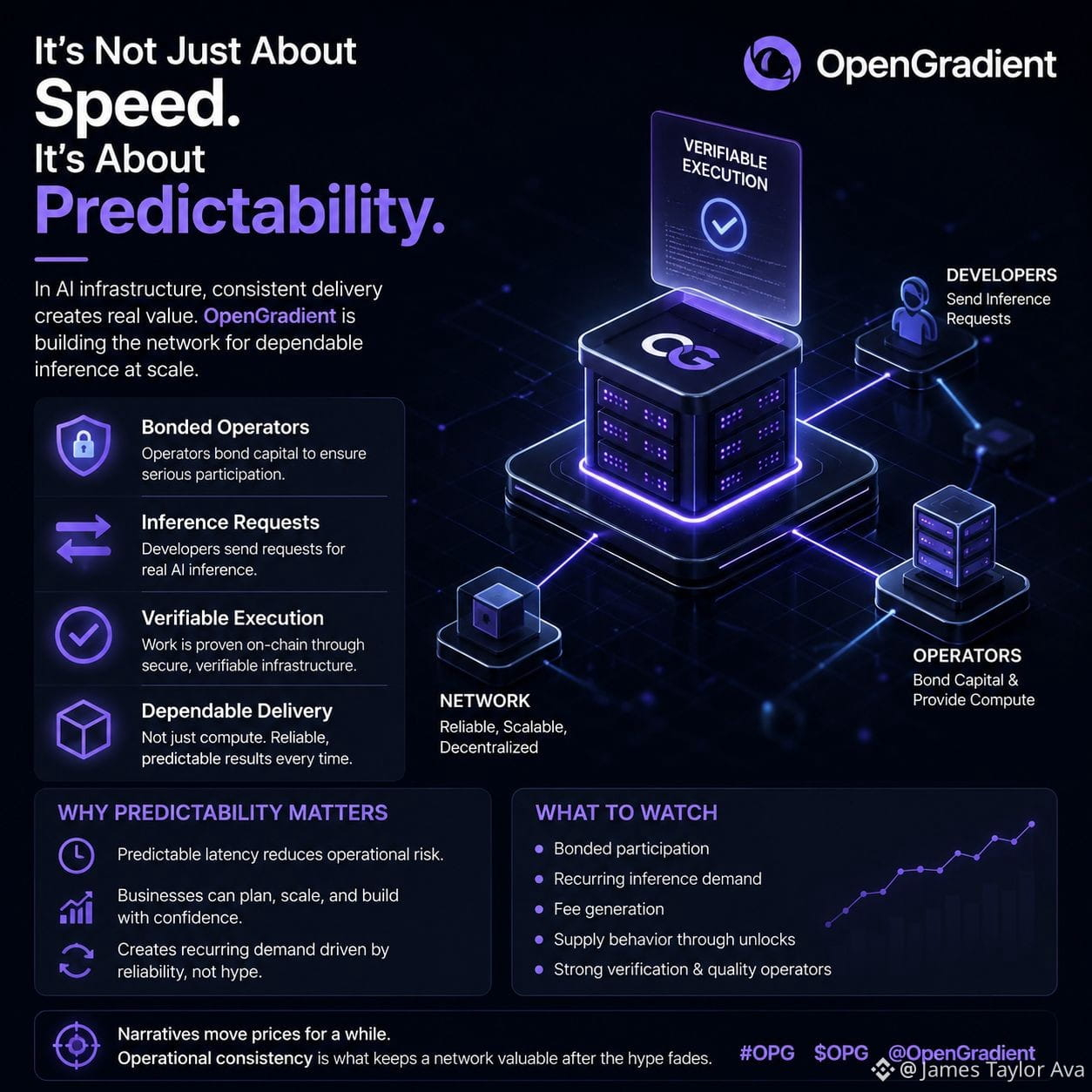
Depuis, je me demande si la vraie prime ne réside pas du tout dans la performance brute.
Peut-être est-ce la prévisibilité.
Quand on construit quelque chose de réel, savoir qu’une tâche se terminera de façon constante peut valoir plus qu’un benchmark qui impressionne parfois.
C’est aussi pour cela qu’OpenGradient a attiré mon attention.
Plus je me penchais dessus, moins cela ressemblait à une histoire de calcul, et plus à une histoire de fiabilité.
Si les opérateurs immobilisent du capital, acceptent des requêtes d’inférence et prouvent l’exécution grâce à une infrastructure vérifiable, le produit n’est plus seulement du calcul.
C’est une livraison fiable.
Et je pense que c’est une différence importante.
Un développeur qui exécute un workflow IA se soucie probablement moins du nœud le plus rapide un bon jour, et davantage de savoir si le réseau se comporte de manière cohérente tous les jours.
Ce type de fiabilité crée une demande récurrente.
Bien sûr, rien de tout cela ne garantit le succès.
L’économie compte toujours.
Les futurs déblocages, la croissance des frais, la qualité des opérateurs et les standards de vérification doivent tous tenir sous la pression.
S’ils n’y parviennent pas, le marché le remarquera tôt ou tard.
C’est pourquoi je passe moins de temps à suivre les gros titres et plus de temps à observer des éléments comme la participation bonifiée, la demande récurrente d’inférence, la génération de frais, et la manière dont l’offre évolue dans le temps.
Les récits peuvent faire bouger les prix.
Mais l’infrastructure finit généralement par gagner sa valeur beaucoup plus lentement.
Et parfois, c’est exactement ce qui la rend intéressante.
$OPG @OpenGradient #IRGCSaysItStruckKuwaitAndBahrain
#OPG
#opg $OPG
Je me souviens encore d’avoir regardé un token d’infrastructure nouvellement coté exploser dans les gros titres à propos de calcul plus rapide.
Pendant quelques jours, la vitesse était le seul sujet.
Puis l’enthousiasme est retombé.Non pas parce que la technologie avait changé.
Les gens ont simplement cessé de s’y intéresser.
Ce constat m’est resté.
Depuis, je me demande si la vraie prime ne réside pas du tout dans la performance brute.
Peut-être est-ce la prévisibilité.
Quand on construit quelque chose de réel, savoir qu’une tâche se terminera de façon constante peut valoir plus qu’un benchmark qui impressionne parfois.
C’est aussi pour cela qu’OpenGradient a attiré mon attention.
Plus je me penchais dessus, moins cela ressemblait à une histoire de calcul, et plus à une histoire de fiabilité.
Si les opérateurs immobilisent du capital, acceptent des requêtes d’inférence et prouvent l’exécution grâce à une infrastructure vérifiable, le produit n’est plus seulement du calcul.
C’est une livraison fiable.
Et je pense que c’est une différence importante.
Un développeur qui exécute un workflow IA se soucie probablement moins du nœud le plus rapide un bon jour, et davantage de savoir si le réseau se comporte de manière cohérente tous les jours.
Ce type de fiabilité crée une demande récurrente.
Bien sûr, rien de tout cela ne garantit le succès.
L’économie compte toujours.
Les futurs déblocages, la croissance des frais, la qualité des opérateurs et les standards de vérification doivent tous tenir sous la pression.
S’ils n’y parviennent pas, le marché le remarquera tôt ou tard.
C’est pourquoi je passe moins de temps à suivre les gros titres et plus de temps à observer des éléments comme la participation bonifiée, la demande récurrente d’inférence, la génération de frais, et la manière dont l’offre évolue dans le temps.
Les récits peuvent faire bouger les prix.
Mais l’infrastructure finit généralement par gagner sa valeur beaucoup plus lentement.
Et parfois, c’est exactement ce qui la rend intéressante.
$OPG @OpenGradient #IRGCSaysItStruckKuwaitAndBahrain
#OPG
Je me souviens encore d’avoir regardé un token d’infrastructure nouvellement coté exploser dans les gros titres à propos de calcul plus rapide.
Pendant quelques jours, la vitesse était le seul sujet.
Puis l’enthousiasme est retombé.Non pas parce que la technologie avait changé.
Les gens ont simplement cessé de s’y intéresser.
Ce constat m’est resté.
Depuis, je me demande si la vraie prime ne réside pas du tout dans la performance brute.
Peut-être est-ce la prévisibilité.
Quand on construit quelque chose de réel, savoir qu’une tâche se terminera de façon constante peut valoir plus qu’un benchmark qui impressionne parfois.
C’est aussi pour cela qu’OpenGradient a attiré mon attention.
Plus je me penchais dessus, moins cela ressemblait à une histoire de calcul, et plus à une histoire de fiabilité.
Si les opérateurs immobilisent du capital, acceptent des requêtes d’inférence et prouvent l’exécution grâce à une infrastructure vérifiable, le produit n’est plus seulement du calcul.
C’est une livraison fiable.
Et je pense que c’est une différence importante.
Un développeur qui exécute un workflow IA se soucie probablement moins du nœud le plus rapide un bon jour, et davantage de savoir si le réseau se comporte de manière cohérente tous les jours.
Ce type de fiabilité crée une demande récurrente.
Bien sûr, rien de tout cela ne garantit le succès.
L’économie compte toujours.
Les futurs déblocages, la croissance des frais, la qualité des opérateurs et les standards de vérification doivent tous tenir sous la pression.
S’ils n’y parviennent pas, le marché le remarquera tôt ou tard.
C’est pourquoi je passe moins de temps à suivre les gros titres et plus de temps à observer des éléments comme la participation bonifiée, la demande récurrente d’inférence, la génération de frais, et la manière dont l’offre évolue dans le temps.
Les récits peuvent faire bouger les prix.
Mais l’infrastructure finit généralement par gagner sa valeur beaucoup plus lentement.
Et parfois, c’est exactement ce qui la rend intéressante.
$OPG @OpenGradient #IRGCSaysItStruckKuwaitAndBahrain
#OPG
17
2
82
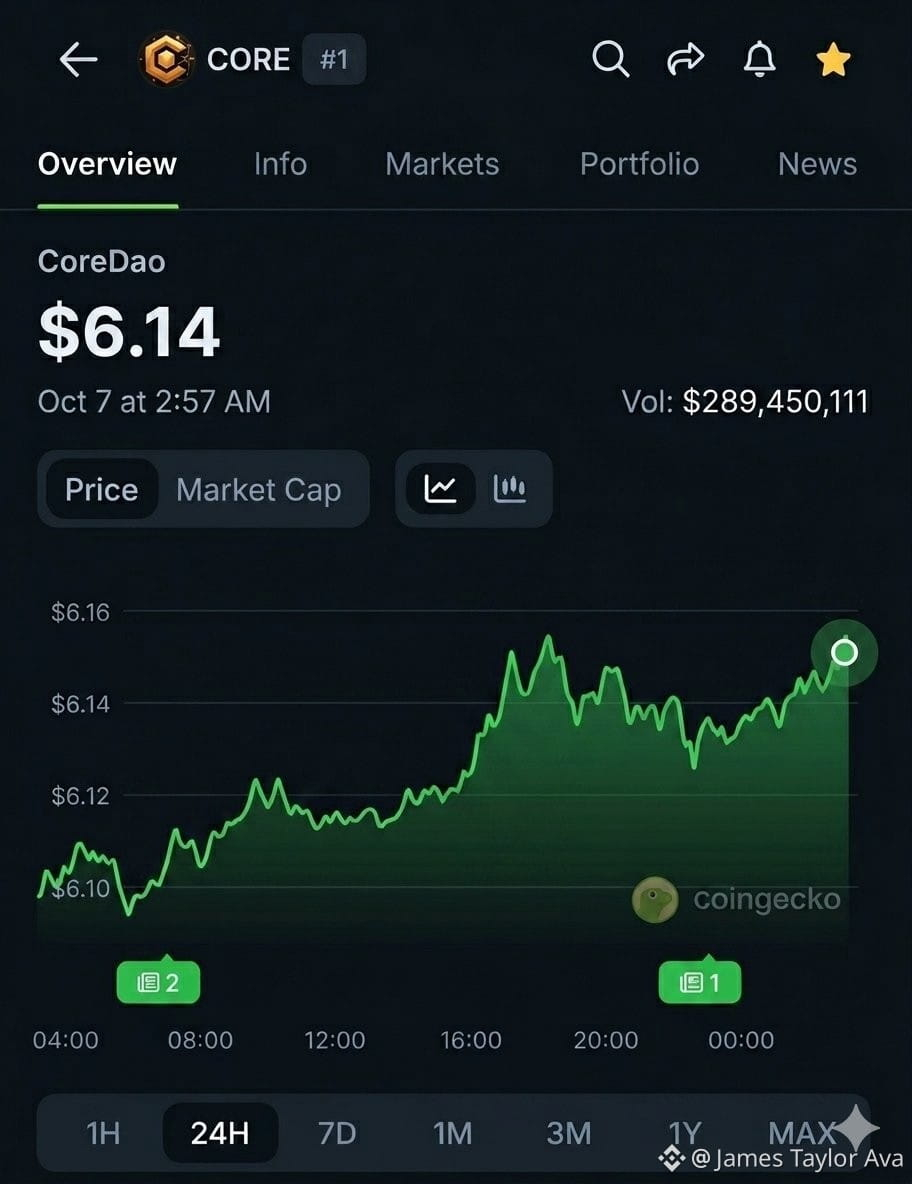
Chaque mot de ceci s’applique à $CORE dès maintenant.
La plupart des gens sont partis. La plupart des gens ont douté.
Mais ceux qui sont restés vont s’apprêter à assister à ce qui se passe quand un véritable écosystème rencontre un marché haussier.
La conviction va bientôt être récompensée.
$CRV #KioxiaADRFallsOver14%
Chaque mot de ceci s’applique à $CORE dès maintenant.
La plupart des gens sont partis. La plupart des gens ont douté.
Mais ceux qui sont restés vont s’apprêter à assister à ce qui se passe quand un véritable écosystème rencontre un marché haussier.
La conviction va bientôt être récompensée.
$CRV #KioxiaADRFallsOver14%
La plupart des gens sont partis. La plupart des gens ont douté.
Mais ceux qui sont restés vont s’apprêter à assister à ce qui se passe quand un véritable écosystème rencontre un marché haussier.
La conviction va bientôt être récompensée.
$CRV #KioxiaADRFallsOver14%
87
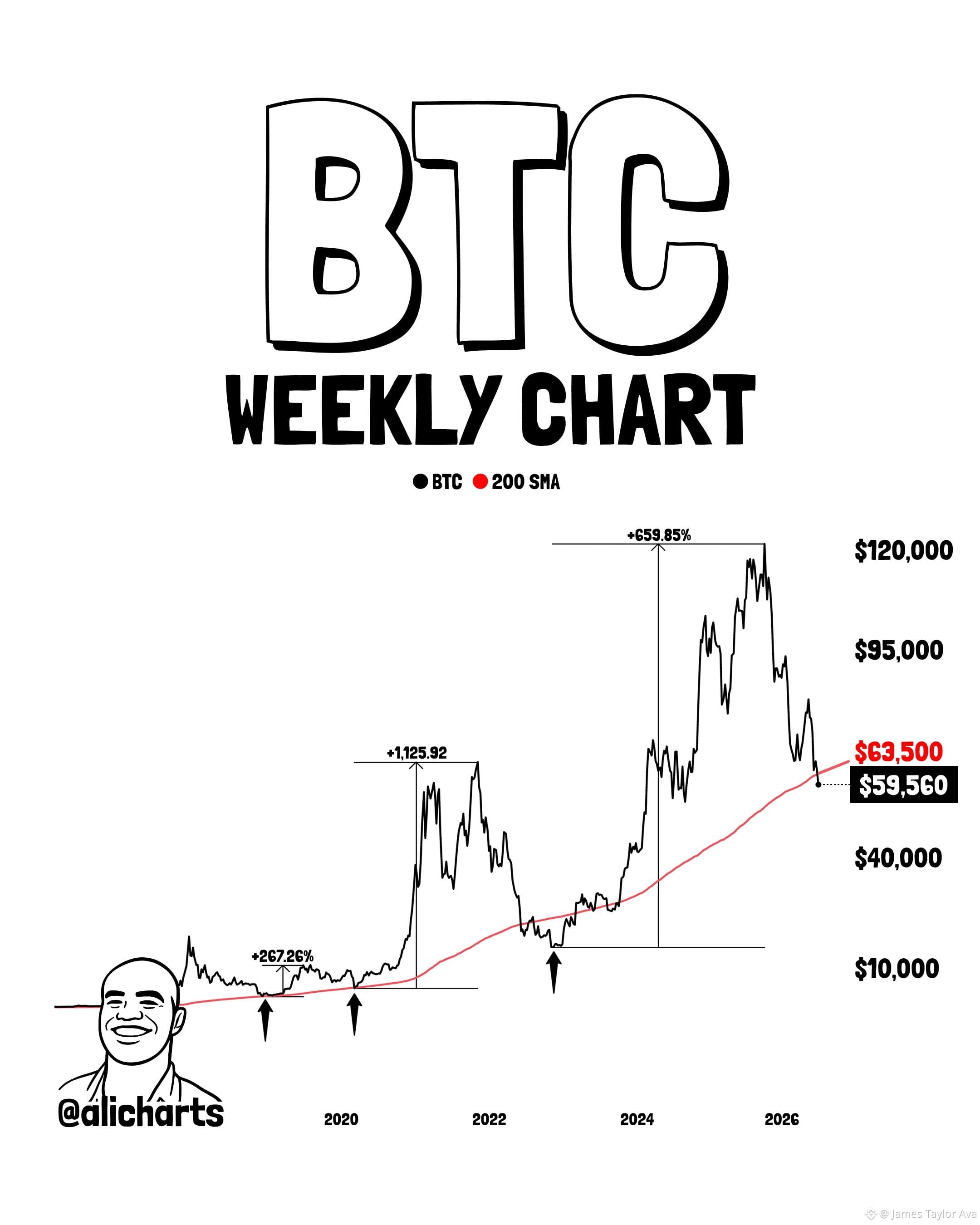
Bitcoin $BTC traite rarement en dessous de sa SMA sur 200 semaines.
Quand c’est le cas, l’histoire montre que ces moments ont systématiquement marqué des opportunités exceptionnelles d’accumulation à long terme.
C’est précisément le moment où vous voulez déployer une stratégie d’achat périodique par sommes fixes (dollar-cost averaging).
$BTC #bitcoin
Bitcoin $BTC traite rarement en dessous de sa SMA sur 200 semaines.
Quand c’est le cas, l’histoire montre que ces moments ont systématiquement marqué des opportunités exceptionnelles d’accumulation à long terme.
C’est précisément le moment où vous voulez déployer une stratégie d’achat périodique par sommes fixes (dollar-cost averaging).
$BTC #bitcoin
Quand c’est le cas, l’histoire montre que ces moments ont systématiquement marqué des opportunités exceptionnelles d’accumulation à long terme.
C’est précisément le moment où vous voulez déployer une stratégie d’achat périodique par sommes fixes (dollar-cost averaging).
$BTC #bitcoin
118
#opg $OPG
Honnêtement, la crypto nous a fait ça à beaucoup d’entre nous.
Après avoir vu le même cycle assez de fois, on finit par ne plus réagir à la voix la plus forte dans la pièce.
Un nouveau récit apparaît, des influenceurs s’y engouffrent, tout le monde se met à parler de la prochaine énorme opportunité, et pendant un moment, on a l’impression que l’avenir est déjà décidé.
Puis l’enthousiasme retombe.
C’est probablement pour ça qu’OpenGradient a attiré mon attention d’une manière plus discrète.
Pas parce que l’on fait les promesses les plus spectaculaires, mais parce que le projet semble se concentrer sur un problème qui existe vraiment. L’IA s’invite dans presque tout, mais la couche de confiance autour d’elle donne encore l’impression d’être incomplète. Qui a exécuté le modèle ? Où l’a-t-on exécuté ? Qu’est-ce qui s’est vraiment passé pendant l’inférence ? Et est-ce que n’importe qui peut vérifier le résultat sans simplement croire sur parole quelqu’un d’autre ?
Ces questions me semblent bien plus importantes qu’un autre titre sur des modèles plus “intelligents”.
À mes yeux, OpenGradient essaie de rendre l’infrastructure IA moins opaque, comme une boîte noire, et plus transparente, comme un système avec des preuves. Héberger le modèle. Exécuter l’inférence. Vérifier ce qui s’est passé. Rien de tout ça ne semble particulièrement excitant, mais l’infrastructure, rarement, l’est.
Dans la crypto, les parties ennuyeuses finissent souvent par durer plus longtemps que les parties spectaculaires.
Cela ne veut pas dire pour autant que le chemin soit facile.
L’adoption peut-elle croître si l’intégration reste difficile ? La vérification peut-elle passer à l’échelle sans ralentir tout le monde ? Les développeurs s’en soucieront-ils avant que la réglementation ou une vraie valeur financière ne les y contraigne ? Et comme pour tout projet crypto, la technologie peut-elle rester en avance sur la spéculation au lieu de finir enterrée sous elle ?
C’est la tension à laquelle je reviens sans cesse.
Le projet pourrait avoir du mal, parce que l’infrastructure est difficile et que l’attention est courte.
Ou il pourrait devenir, tranquillement, l’une de ces pièces dont on finit par ne plus parler, parce qu’elle fonctionne tout simplement.
Et si l’histoire nous a appris quelque chose, c’est que ce sont souvent les infrastructures qui survivent bien après que l’euphorie soit passée.
@OpenGradient #OPG $OPG
#TradebStocks #KioxiaADRFallsOver14%
#opg $OPG
Honnêtement, la crypto nous a fait ça à beaucoup d’entre nous.
Après avoir vu le même cycle assez de fois, on finit par ne plus réagir à la voix la plus forte dans la pièce.
Un nouveau récit apparaît, des influenceurs s’y engouffrent, tout le monde se met à parler de la prochaine énorme opportunité, et pendant un moment, on a l’impression que l’avenir est déjà décidé.
Puis l’enthousiasme retombe.
C’est probablement pour ça qu’OpenGradient a attiré mon attention d’une manière plus discrète.
Pas parce que l’on fait les promesses les plus spectaculaires, mais parce que le projet semble se concentrer sur un problème qui existe vraiment. L’IA s’invite dans presque tout, mais la couche de confiance autour d’elle donne encore l’impression d’être incomplète. Qui a exécuté le modèle ? Où l’a-t-on exécuté ? Qu’est-ce qui s’est vraiment passé pendant l’inférence ? Et est-ce que n’importe qui peut vérifier le résultat sans simplement croire sur parole quelqu’un d’autre ?
Ces questions me semblent bien plus importantes qu’un autre titre sur des modèles plus “intelligents”.
À mes yeux, OpenGradient essaie de rendre l’infrastructure IA moins opaque, comme une boîte noire, et plus transparente, comme un système avec des preuves. Héberger le modèle. Exécuter l’inférence. Vérifier ce qui s’est passé. Rien de tout ça ne semble particulièrement excitant, mais l’infrastructure, rarement, l’est.
Dans la crypto, les parties ennuyeuses finissent souvent par durer plus longtemps que les parties spectaculaires.
Cela ne veut pas dire pour autant que le chemin soit facile.
L’adoption peut-elle croître si l’intégration reste difficile ? La vérification peut-elle passer à l’échelle sans ralentir tout le monde ? Les développeurs s’en soucieront-ils avant que la réglementation ou une vraie valeur financière ne les y contraigne ? Et comme pour tout projet crypto, la technologie peut-elle rester en avance sur la spéculation au lieu de finir enterrée sous elle ?
C’est la tension à laquelle je reviens sans cesse.
Le projet pourrait avoir du mal, parce que l’infrastructure est difficile et que l’attention est courte.
Ou il pourrait devenir, tranquillement, l’une de ces pièces dont on finit par ne plus parler, parce qu’elle fonctionne tout simplement.
Et si l’histoire nous a appris quelque chose, c’est que ce sont souvent les infrastructures qui survivent bien après que l’euphorie soit passée.
@OpenGradient #OPG $OPG
#TradebStocks #KioxiaADRFallsOver14%
Honnêtement, la crypto nous a fait ça à beaucoup d’entre nous.
Après avoir vu le même cycle assez de fois, on finit par ne plus réagir à la voix la plus forte dans la pièce.
Un nouveau récit apparaît, des influenceurs s’y engouffrent, tout le monde se met à parler de la prochaine énorme opportunité, et pendant un moment, on a l’impression que l’avenir est déjà décidé.
Puis l’enthousiasme retombe.
C’est probablement pour ça qu’OpenGradient a attiré mon attention d’une manière plus discrète.
Pas parce que l’on fait les promesses les plus spectaculaires, mais parce que le projet semble se concentrer sur un problème qui existe vraiment. L’IA s’invite dans presque tout, mais la couche de confiance autour d’elle donne encore l’impression d’être incomplète. Qui a exécuté le modèle ? Où l’a-t-on exécuté ? Qu’est-ce qui s’est vraiment passé pendant l’inférence ? Et est-ce que n’importe qui peut vérifier le résultat sans simplement croire sur parole quelqu’un d’autre ?
Ces questions me semblent bien plus importantes qu’un autre titre sur des modèles plus “intelligents”.
À mes yeux, OpenGradient essaie de rendre l’infrastructure IA moins opaque, comme une boîte noire, et plus transparente, comme un système avec des preuves. Héberger le modèle. Exécuter l’inférence. Vérifier ce qui s’est passé. Rien de tout ça ne semble particulièrement excitant, mais l’infrastructure, rarement, l’est.
Dans la crypto, les parties ennuyeuses finissent souvent par durer plus longtemps que les parties spectaculaires.
Cela ne veut pas dire pour autant que le chemin soit facile.
L’adoption peut-elle croître si l’intégration reste difficile ? La vérification peut-elle passer à l’échelle sans ralentir tout le monde ? Les développeurs s’en soucieront-ils avant que la réglementation ou une vraie valeur financière ne les y contraigne ? Et comme pour tout projet crypto, la technologie peut-elle rester en avance sur la spéculation au lieu de finir enterrée sous elle ?
C’est la tension à laquelle je reviens sans cesse.
Le projet pourrait avoir du mal, parce que l’infrastructure est difficile et que l’attention est courte.
Ou il pourrait devenir, tranquillement, l’une de ces pièces dont on finit par ne plus parler, parce qu’elle fonctionne tout simplement.
Et si l’histoire nous a appris quelque chose, c’est que ce sont souvent les infrastructures qui survivent bien après que l’euphorie soit passée.
@OpenGradient #OPG $OPG
#TradebStocks #KioxiaADRFallsOver14%
8
3
173
#opg $OPG
Je connais suffisamment bien la crypto pour savoir que toutes les bonnes histoires ne deviennent pas de bons produits.
La plupart du temps, la présentation est soignée, la vision paraît immense, et tout le monde semble convaincu que c’est l’avenir. Puis, quelques mois plus tard, les gens passent tranquillement au récit suivant.
C’est probablement pour ça qu’OpenGradient a retenu mon attention.
Pas parce que c’est un autre projet d’IA, mais parce que ça semble consacrer plus de temps au problème qu’à la présentation.
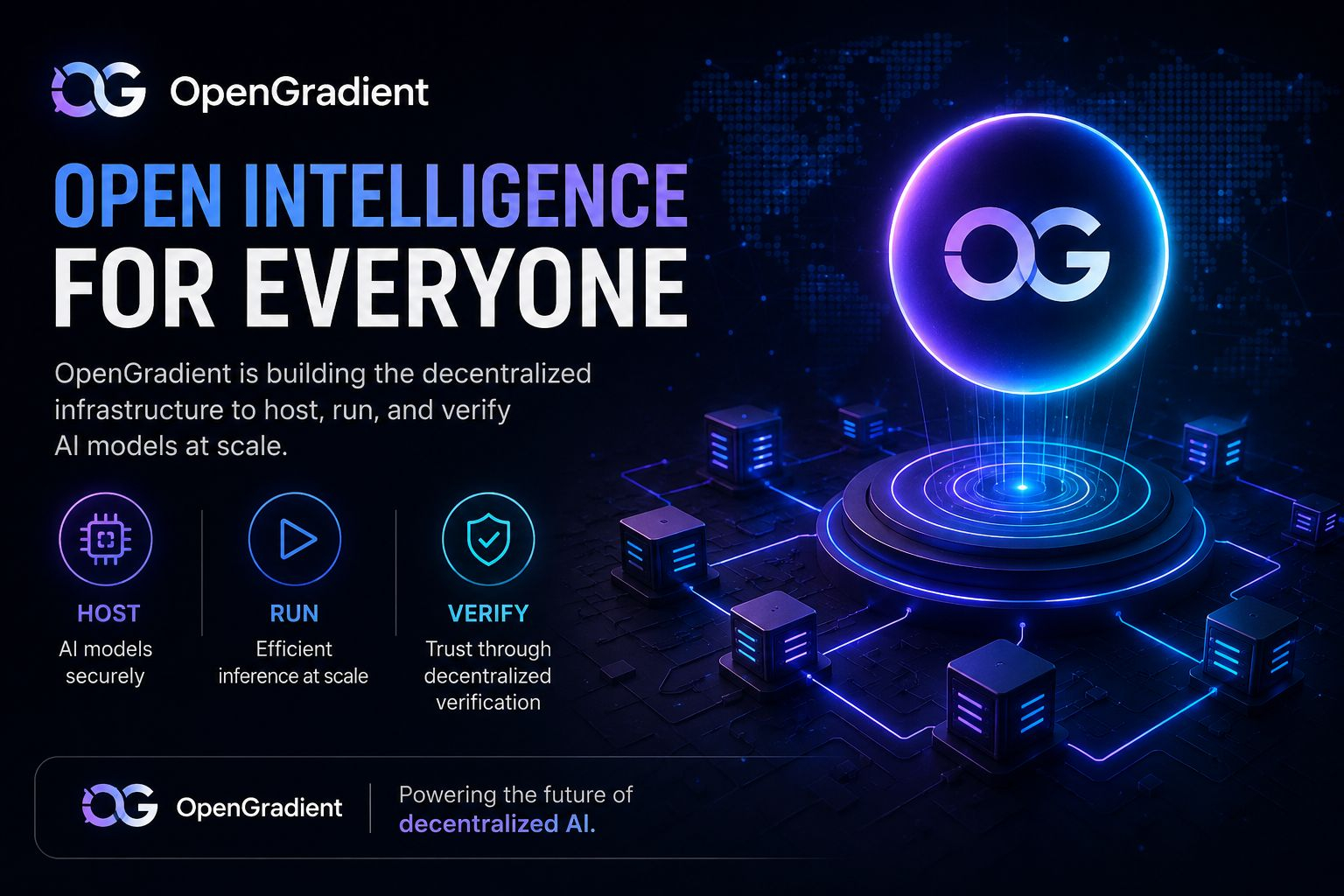
L’idée de construire un réseau capable d’héberger, d’exécuter et de vérifier des modèles d’IA à grande échelle est ambitieuse. Peut-être même plus ambitieuse que ce que la plupart des gens réalisent.
Qu’il y parvienne est une autre question.
Je reste prudent.
J’ai vu assez de projets se heurter aux mêmes obstacles : le coût, la coordination, la confiance, et l’écart entre ce qui paraît élégant en théorie et ce qui résiste vraiment à l’usage dans le monde réel.
Ces problèmes ne disparaissent pas simplement parce que la technologie est impressionnante.
Ce qui me ramène néanmoins, c’est qu’OpenGradient semble davantage axé sur la vérification que sur l’envolée médiatique.
Ça ne garantit pas automatiquement que ce soit une réussite.
Mais ça rend le projet intéressant.
Et dans un marché où tant de projets consacrent plus d’énergie à vendre l’histoire qu’à résoudre le problème, cela suffit à maintenir mon attention.
@OpenGradient #OPG $OPG
#opg $OPG
Je connais suffisamment bien la crypto pour savoir que toutes les bonnes histoires ne deviennent pas de bons produits.
La plupart du temps, la présentation est soignée, la vision paraît immense, et tout le monde semble convaincu que c’est l’avenir. Puis, quelques mois plus tard, les gens passent tranquillement au récit suivant.
C’est probablement pour ça qu’OpenGradient a retenu mon attention.
Pas parce que c’est un autre projet d’IA, mais parce que ça semble consacrer plus de temps au problème qu’à la présentation.
L’idée de construire un réseau capable d’héberger, d’exécuter et de vérifier des modèles d’IA à grande échelle est ambitieuse. Peut-être même plus ambitieuse que ce que la plupart des gens réalisent.
Qu’il y parvienne est une autre question.
Je reste prudent.
J’ai vu assez de projets se heurter aux mêmes obstacles : le coût, la coordination, la confiance, et l’écart entre ce qui paraît élégant en théorie et ce qui résiste vraiment à l’usage dans le monde réel.
Ces problèmes ne disparaissent pas simplement parce que la technologie est impressionnante.
Ce qui me ramène néanmoins, c’est qu’OpenGradient semble davantage axé sur la vérification que sur l’envolée médiatique.
Ça ne garantit pas automatiquement que ce soit une réussite.
Mais ça rend le projet intéressant.
Et dans un marché où tant de projets consacrent plus d’énergie à vendre l’histoire qu’à résoudre le problème, cela suffit à maintenir mon attention.
@OpenGradient #OPG $OPG
Je connais suffisamment bien la crypto pour savoir que toutes les bonnes histoires ne deviennent pas de bons produits.
La plupart du temps, la présentation est soignée, la vision paraît immense, et tout le monde semble convaincu que c’est l’avenir. Puis, quelques mois plus tard, les gens passent tranquillement au récit suivant.
C’est probablement pour ça qu’OpenGradient a retenu mon attention.
Pas parce que c’est un autre projet d’IA, mais parce que ça semble consacrer plus de temps au problème qu’à la présentation.
L’idée de construire un réseau capable d’héberger, d’exécuter et de vérifier des modèles d’IA à grande échelle est ambitieuse. Peut-être même plus ambitieuse que ce que la plupart des gens réalisent.
Qu’il y parvienne est une autre question.
Je reste prudent.
J’ai vu assez de projets se heurter aux mêmes obstacles : le coût, la coordination, la confiance, et l’écart entre ce qui paraît élégant en théorie et ce qui résiste vraiment à l’usage dans le monde réel.
Ces problèmes ne disparaissent pas simplement parce que la technologie est impressionnante.
Ce qui me ramène néanmoins, c’est qu’OpenGradient semble davantage axé sur la vérification que sur l’envolée médiatique.
Ça ne garantit pas automatiquement que ce soit une réussite.
Mais ça rend le projet intéressant.
Et dans un marché où tant de projets consacrent plus d’énergie à vendre l’histoire qu’à résoudre le problème, cela suffit à maintenir mon attention.
@OpenGradient #OPG $OPG
4
123
#opg $OPG
"Je ne considère plus OpenGradient comme une simple autre histoire d’IA. Je le vois plutôt comme un endroit où les développeurs peuvent réellement créer quelque chose de significatif et d’utile."
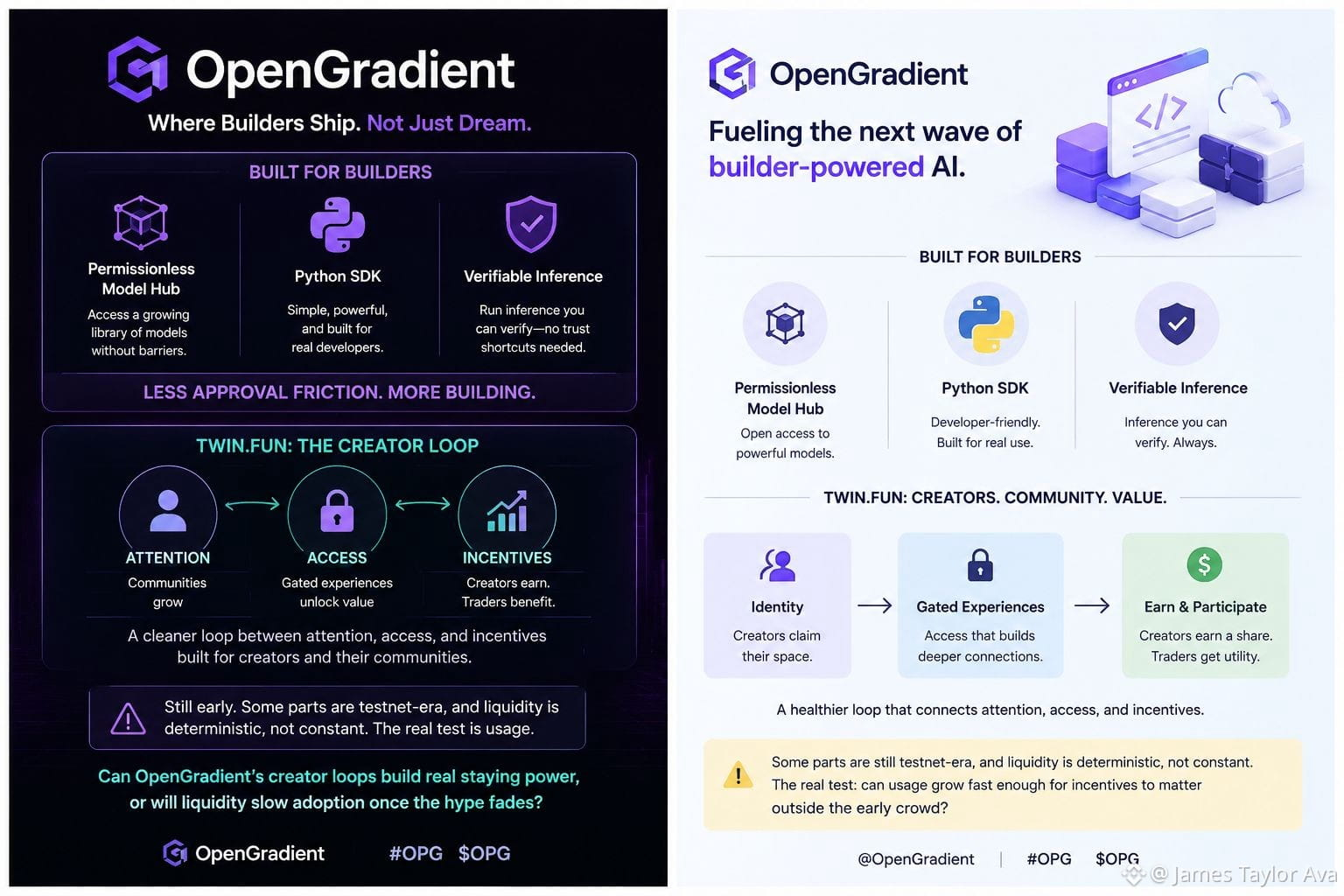
Ce qui se distingue pour moi, c’est que ce n’est pas juste une autre plateforme qui essaie d’héberger des modèles. Les développeurs ont accès à un Model Hub sans permission, à un SDK Python, et à une façon d’exécuter une inférence vérifiable sans devoir passer des semaines à obtenir des autorisations avant même de pouvoir tester une idée simple.
#CircleToPartnerNomuraForInstantFXSettlement
Cela compte plus que ce que les gens pensent.
La plupart des projets ne échouent pas parce que l’idée est faible. Ils échouent parce que la confiance est difficile, que les coûts de configuration sont élevés, et que passer d’une idée à un produit fonctionnel demande plus d’efforts que ce qu’il ne devrait.
Le côté Twin.fun est ce que je trouve le plus intéressant.
Beaucoup de plateformes de créateurs sont douées pour attirer l’attention. Beaucoup moins sont capables de transformer cette attention en quelque chose de durable.
Twin.fun semble expérimenter une approche différente : permettre aux créateurs d’établir une identité, de lancer des expériences réservées, et de participer à l’activité générée autour de leurs communautés.
Pour les traders, le fait de détenir des clés commence à ressembler davantage à une utilité qu’à de la simple spéculation. Du moins en théorie, cela crée une connexion plus claire entre l’attention, l’accès et les incitations.
Cela dit, je ne voudrais pas trop le vendre.
La documentation est assez transparente sur l’état actuel de l’écosystème, et même la structure du marché reconnaît que la liquidité est déterministe plutôt que constante.
Pour moi, c’est là que la vraie question commence.
L’usage peut-il croître suffisamment vite pour que ces boucles de créateurs comptent au-delà des premiers participants ?
Ou bien la liquidité finit-elle par devenir le facteur qui ralentit l’adoption une fois que l’excitation initiale s’estompe ?
Je pense que cette réponse nous dira bien plus que n’importe quel titre.
$OPG #HYPEFalls17%FromRecordHigh
#OPG @OpenGradient
#opg $OPG
"Je ne considère plus OpenGradient comme une simple autre histoire d’IA. Je le vois plutôt comme un endroit où les développeurs peuvent réellement créer quelque chose de significatif et d’utile."
Ce qui se distingue pour moi, c’est que ce n’est pas juste une autre plateforme qui essaie d’héberger des modèles. Les développeurs ont accès à un Model Hub sans permission, à un SDK Python, et à une façon d’exécuter une inférence vérifiable sans devoir passer des semaines à obtenir des autorisations avant même de pouvoir tester une idée simple.
#CircleToPartnerNomuraForInstantFXSettlement
Cela compte plus que ce que les gens pensent.
La plupart des projets ne échouent pas parce que l’idée est faible. Ils échouent parce que la confiance est difficile, que les coûts de configuration sont élevés, et que passer d’une idée à un produit fonctionnel demande plus d’efforts que ce qu’il ne devrait.
Le côté Twin.fun est ce que je trouve le plus intéressant.
Beaucoup de plateformes de créateurs sont douées pour attirer l’attention. Beaucoup moins sont capables de transformer cette attention en quelque chose de durable.
Twin.fun semble expérimenter une approche différente : permettre aux créateurs d’établir une identité, de lancer des expériences réservées, et de participer à l’activité générée autour de leurs communautés.
Pour les traders, le fait de détenir des clés commence à ressembler davantage à une utilité qu’à de la simple spéculation. Du moins en théorie, cela crée une connexion plus claire entre l’attention, l’accès et les incitations.
Cela dit, je ne voudrais pas trop le vendre.
La documentation est assez transparente sur l’état actuel de l’écosystème, et même la structure du marché reconnaît que la liquidité est déterministe plutôt que constante.
Pour moi, c’est là que la vraie question commence.
L’usage peut-il croître suffisamment vite pour que ces boucles de créateurs comptent au-delà des premiers participants ?
Ou bien la liquidité finit-elle par devenir le facteur qui ralentit l’adoption une fois que l’excitation initiale s’estompe ?
Je pense que cette réponse nous dira bien plus que n’importe quel titre.
$OPG #HYPEFalls17%FromRecordHigh
#OPG @OpenGradient
"Je ne considère plus OpenGradient comme une simple autre histoire d’IA. Je le vois plutôt comme un endroit où les développeurs peuvent réellement créer quelque chose de significatif et d’utile."
Ce qui se distingue pour moi, c’est que ce n’est pas juste une autre plateforme qui essaie d’héberger des modèles. Les développeurs ont accès à un Model Hub sans permission, à un SDK Python, et à une façon d’exécuter une inférence vérifiable sans devoir passer des semaines à obtenir des autorisations avant même de pouvoir tester une idée simple.
#CircleToPartnerNomuraForInstantFXSettlement
Cela compte plus que ce que les gens pensent.
La plupart des projets ne échouent pas parce que l’idée est faible. Ils échouent parce que la confiance est difficile, que les coûts de configuration sont élevés, et que passer d’une idée à un produit fonctionnel demande plus d’efforts que ce qu’il ne devrait.
Le côté Twin.fun est ce que je trouve le plus intéressant.
Beaucoup de plateformes de créateurs sont douées pour attirer l’attention. Beaucoup moins sont capables de transformer cette attention en quelque chose de durable.
Twin.fun semble expérimenter une approche différente : permettre aux créateurs d’établir une identité, de lancer des expériences réservées, et de participer à l’activité générée autour de leurs communautés.
Pour les traders, le fait de détenir des clés commence à ressembler davantage à une utilité qu’à de la simple spéculation. Du moins en théorie, cela crée une connexion plus claire entre l’attention, l’accès et les incitations.
Cela dit, je ne voudrais pas trop le vendre.
La documentation est assez transparente sur l’état actuel de l’écosystème, et même la structure du marché reconnaît que la liquidité est déterministe plutôt que constante.
Pour moi, c’est là que la vraie question commence.
L’usage peut-il croître suffisamment vite pour que ces boucles de créateurs comptent au-delà des premiers participants ?
Ou bien la liquidité finit-elle par devenir le facteur qui ralentit l’adoption une fois que l’excitation initiale s’estompe ?
Je pense que cette réponse nous dira bien plus que n’importe quel titre.
$OPG #HYPEFalls17%FromRecordHigh
#OPG @OpenGradient
113
Analyse à court terme du BTC/USDT 📉
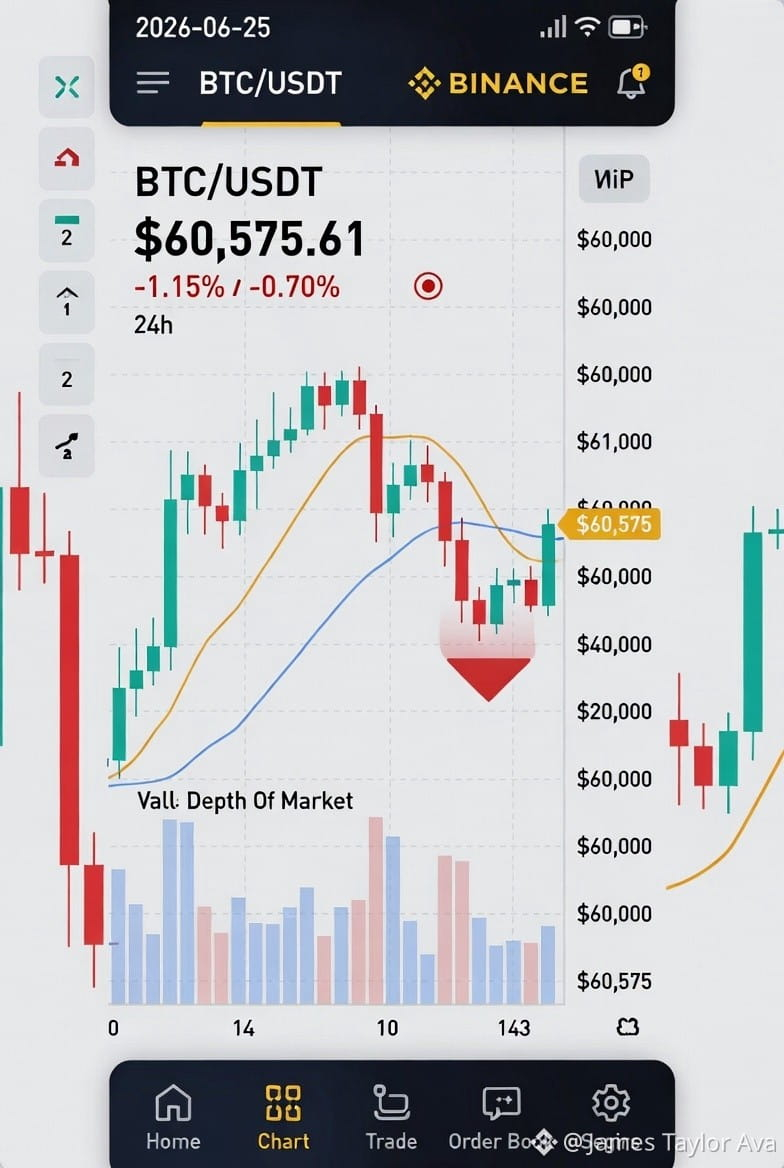
Le Bitcoin subit une forte pression vendeuse après avoir perdu le support autour de la zone 61 000–61 200. Le graphique montre une rupture marquée, avec une augmentation du volume des ventes, ce qui indique que les baissiers contrôlent actuellement le marché.
🔴 Le prix évolue sous la MM60
🔴 Volume de ventes important pendant la baisse
🔴 Le carnet d’ordres favorise fortement les vendeurs (environ 99% de pression à la vente)
🔴 L’élan reste faible malgré le petit rebond
Niveaux clés 👀
Zone de support : 60 450 – 60 550
Cette zone empêche actuellement une baisse plus profonde. Si elle cède, le BTC pourrait faire face à une pression supplémentaire à la baisse.
Zone de résistance : 60 900 – 61 200
Les acheteurs doivent reconquérir cette zone pour réduire l’élan baissier et améliorer le sentiment à court terme.
Structure de marché
La baisse rapide depuis au-dessus de 61 000 suggère des ventes agressives plutôt qu’une prise de profits normale. Bien qu’un petit rebond de récupération ait semblé se former près de 60 450, il reste faible par rapport à la pression vendeuse observée pendant la chute.
À surveiller
🔻 Scénario baissier :
Si le BTC perd le support de 60 450, les vendeurs pourraient viser des niveaux plus bas et prolonger la tendance baissière.
🚀 Scénario haussier :
Si les acheteurs défendent le support et font remonter le prix au-dessus de 61 000, un mouvement de reprise plus fort pourrait se développer.
Tendance actuelle
Court terme : Baissière 📉
Tant que le Bitcoin n’aura pas reconquis la zone 61 000–61 200, les vendeurs restent aux commandes et le risque de baisse demeure élevé. ⚠️
$BTC #USPCEInflationHits4.1%
Analyse à court terme du BTC/USDT 📉
Le Bitcoin subit une forte pression vendeuse après avoir perdu le support autour de la zone 61 000–61 200. Le graphique montre une rupture marquée, avec une augmentation du volume des ventes, ce qui indique que les baissiers contrôlent actuellement le marché.
🔴 Le prix évolue sous la MM60
🔴 Volume de ventes important pendant la baisse
🔴 Le carnet d’ordres favorise fortement les vendeurs (environ 99% de pression à la vente)
🔴 L’élan reste faible malgré le petit rebond
Niveaux clés 👀
Zone de support : 60 450 – 60 550
Cette zone empêche actuellement une baisse plus profonde. Si elle cède, le BTC pourrait faire face à une pression supplémentaire à la baisse.
Zone de résistance : 60 900 – 61 200
Les acheteurs doivent reconquérir cette zone pour réduire l’élan baissier et améliorer le sentiment à court terme.
Structure de marché
La baisse rapide depuis au-dessus de 61 000 suggère des ventes agressives plutôt qu’une prise de profits normale. Bien qu’un petit rebond de récupération ait semblé se former près de 60 450, il reste faible par rapport à la pression vendeuse observée pendant la chute.
À surveiller
🔻 Scénario baissier :
Si le BTC perd le support de 60 450, les vendeurs pourraient viser des niveaux plus bas et prolonger la tendance baissière.
🚀 Scénario haussier :
Si les acheteurs défendent le support et font remonter le prix au-dessus de 61 000, un mouvement de reprise plus fort pourrait se développer.
Tendance actuelle
Court terme : Baissière 📉
Tant que le Bitcoin n’aura pas reconquis la zone 61 000–61 200, les vendeurs restent aux commandes et le risque de baisse demeure élevé. ⚠️
$BTC #USPCEInflationHits4.1%
Le Bitcoin subit une forte pression vendeuse après avoir perdu le support autour de la zone 61 000–61 200. Le graphique montre une rupture marquée, avec une augmentation du volume des ventes, ce qui indique que les baissiers contrôlent actuellement le marché.
🔴 Le prix évolue sous la MM60
🔴 Volume de ventes important pendant la baisse
🔴 Le carnet d’ordres favorise fortement les vendeurs (environ 99% de pression à la vente)
🔴 L’élan reste faible malgré le petit rebond
Niveaux clés 👀
Zone de support : 60 450 – 60 550
Cette zone empêche actuellement une baisse plus profonde. Si elle cède, le BTC pourrait faire face à une pression supplémentaire à la baisse.
Zone de résistance : 60 900 – 61 200
Les acheteurs doivent reconquérir cette zone pour réduire l’élan baissier et améliorer le sentiment à court terme.
Structure de marché
La baisse rapide depuis au-dessus de 61 000 suggère des ventes agressives plutôt qu’une prise de profits normale. Bien qu’un petit rebond de récupération ait semblé se former près de 60 450, il reste faible par rapport à la pression vendeuse observée pendant la chute.
À surveiller
🔻 Scénario baissier :
Si le BTC perd le support de 60 450, les vendeurs pourraient viser des niveaux plus bas et prolonger la tendance baissière.
🚀 Scénario haussier :
Si les acheteurs défendent le support et font remonter le prix au-dessus de 61 000, un mouvement de reprise plus fort pourrait se développer.
Tendance actuelle
Court terme : Baissière 📉
Tant que le Bitcoin n’aura pas reconquis la zone 61 000–61 200, les vendeurs restent aux commandes et le risque de baisse demeure élevé. ⚠️
$BTC #USPCEInflationHits4.1%
83
#opg $OPG #BTCFallsBelow200WeekMA
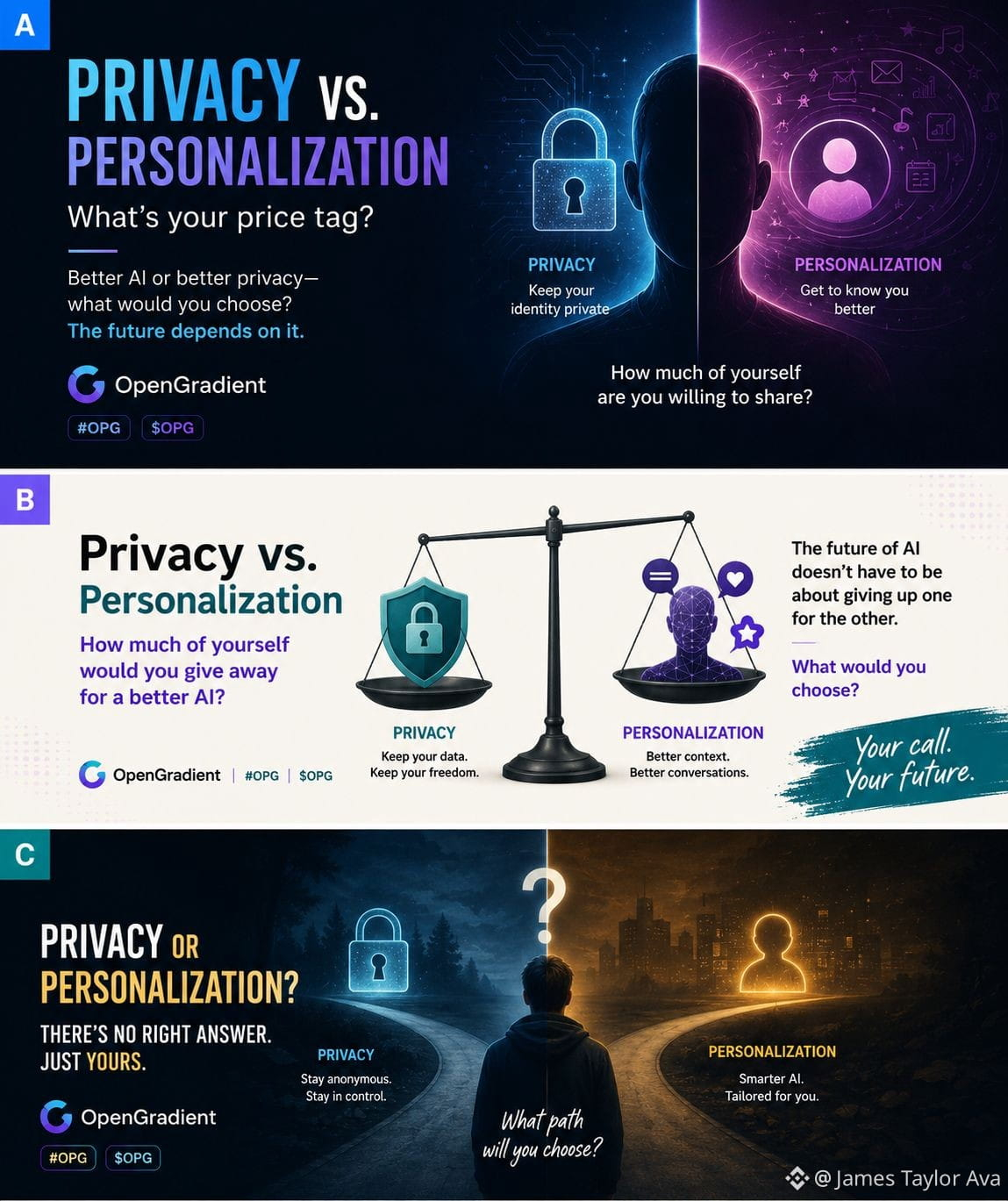
Privé vs. Personnalisation :
Combien de vous-même seriez-vous prêt à céder pour une meilleure IA ?
Pendant longtemps, le compromis semblait tout à fait raisonnable.
Abandonner un peu de vie privée, obtenir un assistant plus intelligent.
Plus une IA apprend vos habitudes, préférences et routines, plus l'expérience devient naturelle. Meilleures suggestions. Meilleur contexte. Meilleures conversations.
On s'est habitués à payer pour la commodité avec des morceaux de nous-mêmes.
Mais dernièrement, j'ai commencé à me demander si nous avons accepté ce compromis un peu trop facilement.
En essayant @OpenGradientChat, quelque chose semblait différent.
Je n'avais pas cette étrange sensation que chaque requête devenait discrètement partie d'un profil quelque part en arrière-plan.
Les conversations semblaient séparées.
Temporaire.
Contenu.
Au lieu de demander aux utilisateurs de faire confiance à ce que leurs données seront gérées de manière responsable, l'architecture semble conçue pour réduire le niveau de confiance nécessaire dès le départ.
Et c'est là que je bloque.
Si une IA ne sait pas vraiment qui vous êtes, peut-elle jamais devenir profondément personnelle ?
Ou les gens finiront-ils par décider que la vie privée vaut plus qu'un assistant qui sait tout sur eux ?
Peut-être que le gagnant de la course à l'IA ne sera pas simplement celui avec le modèle le plus intelligent.
Peut-être sera-t-il celui qui comprend combien de nous-mêmes nous sommes réellement prêts à partager.
👇 Alors, que choisiriez-vous ?
🔒 Vie privée
🤖 Personnalisation
@OpenGradient #OPG $OPG
#BTCFallsBelow200WeekMA
#opg $OPG #BTCFallsBelow200WeekMA
Privé vs. Personnalisation :
Combien de vous-même seriez-vous prêt à céder pour une meilleure IA ?
Pendant longtemps, le compromis semblait tout à fait raisonnable.
Abandonner un peu de vie privée, obtenir un assistant plus intelligent.
Plus une IA apprend vos habitudes, préférences et routines, plus l'expérience devient naturelle. Meilleures suggestions. Meilleur contexte. Meilleures conversations.
On s'est habitués à payer pour la commodité avec des morceaux de nous-mêmes.
Mais dernièrement, j'ai commencé à me demander si nous avons accepté ce compromis un peu trop facilement.
En essayant @OpenGradientChat, quelque chose semblait différent.
Je n'avais pas cette étrange sensation que chaque requête devenait discrètement partie d'un profil quelque part en arrière-plan.
Les conversations semblaient séparées.
Temporaire.
Contenu.
Au lieu de demander aux utilisateurs de faire confiance à ce que leurs données seront gérées de manière responsable, l'architecture semble conçue pour réduire le niveau de confiance nécessaire dès le départ.
Et c'est là que je bloque.
Si une IA ne sait pas vraiment qui vous êtes, peut-elle jamais devenir profondément personnelle ?
Ou les gens finiront-ils par décider que la vie privée vaut plus qu'un assistant qui sait tout sur eux ?
Peut-être que le gagnant de la course à l'IA ne sera pas simplement celui avec le modèle le plus intelligent.
Peut-être sera-t-il celui qui comprend combien de nous-mêmes nous sommes réellement prêts à partager.
👇 Alors, que choisiriez-vous ?
🔒 Vie privée
🤖 Personnalisation
@OpenGradient #OPG $OPG
#BTCFallsBelow200WeekMA
Privé vs. Personnalisation :
Combien de vous-même seriez-vous prêt à céder pour une meilleure IA ?
Pendant longtemps, le compromis semblait tout à fait raisonnable.
Abandonner un peu de vie privée, obtenir un assistant plus intelligent.
Plus une IA apprend vos habitudes, préférences et routines, plus l'expérience devient naturelle. Meilleures suggestions. Meilleur contexte. Meilleures conversations.
On s'est habitués à payer pour la commodité avec des morceaux de nous-mêmes.
Mais dernièrement, j'ai commencé à me demander si nous avons accepté ce compromis un peu trop facilement.
En essayant @OpenGradientChat, quelque chose semblait différent.
Je n'avais pas cette étrange sensation que chaque requête devenait discrètement partie d'un profil quelque part en arrière-plan.
Les conversations semblaient séparées.
Temporaire.
Contenu.
Au lieu de demander aux utilisateurs de faire confiance à ce que leurs données seront gérées de manière responsable, l'architecture semble conçue pour réduire le niveau de confiance nécessaire dès le départ.
Et c'est là que je bloque.
Si une IA ne sait pas vraiment qui vous êtes, peut-elle jamais devenir profondément personnelle ?
Ou les gens finiront-ils par décider que la vie privée vaut plus qu'un assistant qui sait tout sur eux ?
Peut-être que le gagnant de la course à l'IA ne sera pas simplement celui avec le modèle le plus intelligent.
Peut-être sera-t-il celui qui comprend combien de nous-mêmes nous sommes réellement prêts à partager.
👇 Alors, que choisiriez-vous ?
🔒 Vie privée
🤖 Personnalisation
@OpenGradient #OPG $OPG
#BTCFallsBelow200WeekMA
120
#opg $OPG
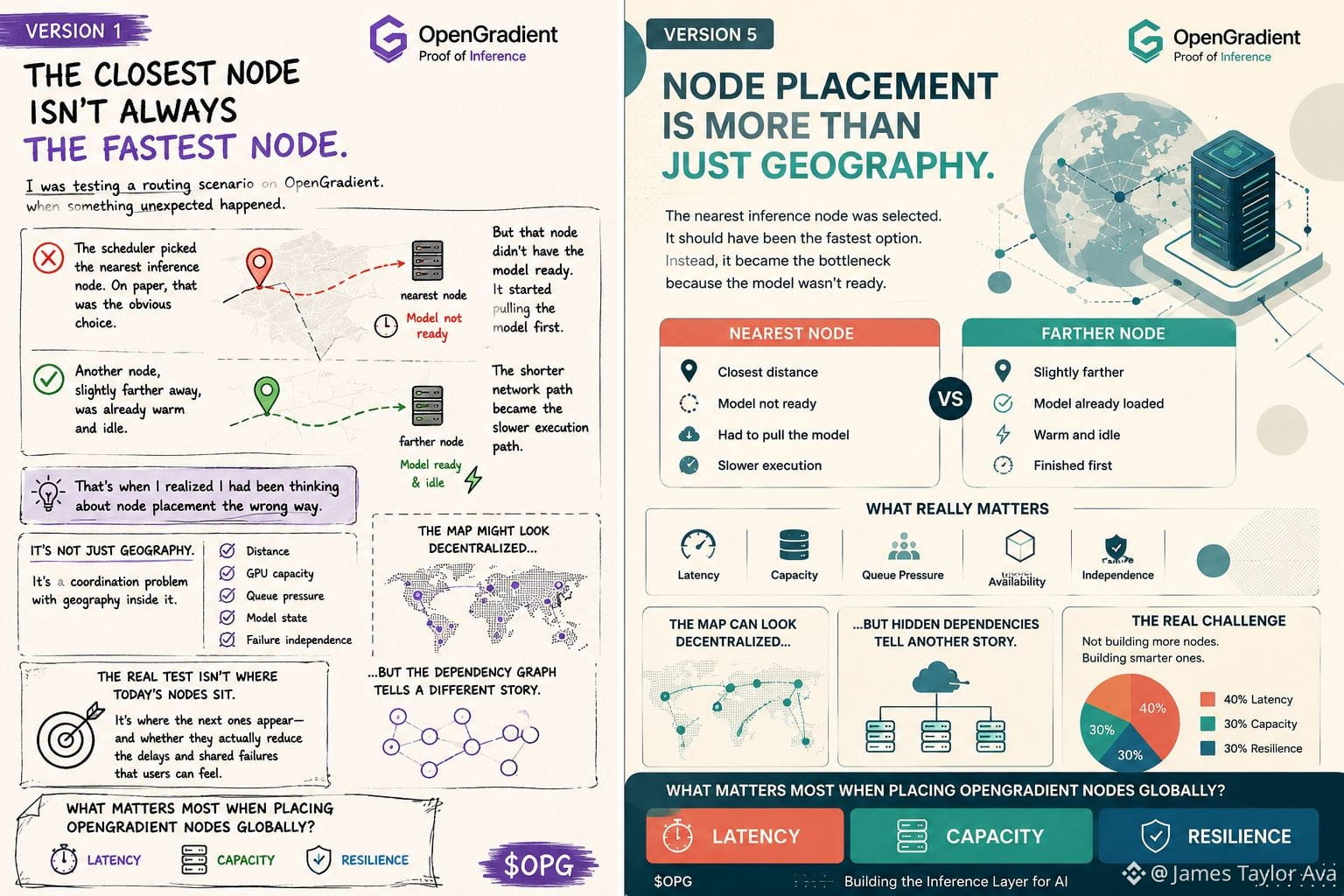
Je pensais que le placement des nœuds était surtout une question de géographie. Après avoir testé OpenGradient, je ne suis plus si sûr. Le nœud d'inférence le plus proche a été sélectionné. Ça aurait dû être l'option la plus rapide.
Le nœud le plus proche s'est finalement avéré être l'option la plus lente. Au début, ça n'avait pas de sens. Le planificateur avait choisi le nœud d'inférence le plus proche, ce qui semblait être la décision évidente. Mais ce nœud n'avait pas le modèle chargé.
Pendant qu'il était occupé à charger le modèle, un autre nœud un peu plus loin était déjà chaud, inactif et prêt à partir. Le chemin le plus court est devenu le chemin le plus lent. C'est là que j'ai réalisé que je pensais au placement des nœuds de manière trop simpliste.
Au lieu de cela, c'est devenu le goulet d'étranglement parce que le modèle n'était pas prêt. Un nœud plus éloigné a fini en premier simplement parce qu'il avait le modèle chargé et disponible. Cela a changé ma façon de voir l'infrastructure AI décentralisée.
La distance compte.
Mais il y a aussi les modèles chauds, la pression des files d'attente, la disponibilité des GPU, et si votre plan de secours survit réellement à la même défaillance. Le réseau peut sembler décentralisé sur une carte tout en cachant des dépendances partagées en dessous.
Peut-être que c'est le véritable défi.
Pas de construire plus de nœuds.
Construire des nœuds plus intelligents
#MicronHitsRecordHigh #NakamotoShiftsToBitcoinFocusedBusiness
$OPG @OpenGradient #OPG
#opg $OPG
Je pensais que le placement des nœuds était surtout une question de géographie. Après avoir testé OpenGradient, je ne suis plus si sûr. Le nœud d'inférence le plus proche a été sélectionné. Ça aurait dû être l'option la plus rapide.
Le nœud le plus proche s'est finalement avéré être l'option la plus lente. Au début, ça n'avait pas de sens. Le planificateur avait choisi le nœud d'inférence le plus proche, ce qui semblait être la décision évidente. Mais ce nœud n'avait pas le modèle chargé.
Pendant qu'il était occupé à charger le modèle, un autre nœud un peu plus loin était déjà chaud, inactif et prêt à partir. Le chemin le plus court est devenu le chemin le plus lent. C'est là que j'ai réalisé que je pensais au placement des nœuds de manière trop simpliste.
Au lieu de cela, c'est devenu le goulet d'étranglement parce que le modèle n'était pas prêt. Un nœud plus éloigné a fini en premier simplement parce qu'il avait le modèle chargé et disponible. Cela a changé ma façon de voir l'infrastructure AI décentralisée.
La distance compte.
Mais il y a aussi les modèles chauds, la pression des files d'attente, la disponibilité des GPU, et si votre plan de secours survit réellement à la même défaillance. Le réseau peut sembler décentralisé sur une carte tout en cachant des dépendances partagées en dessous.
Peut-être que c'est le véritable défi.
Pas de construire plus de nœuds.
Construire des nœuds plus intelligents
#MicronHitsRecordHigh #NakamotoShiftsToBitcoinFocusedBusiness
$OPG @OpenGradient #OPG
Je pensais que le placement des nœuds était surtout une question de géographie. Après avoir testé OpenGradient, je ne suis plus si sûr. Le nœud d'inférence le plus proche a été sélectionné. Ça aurait dû être l'option la plus rapide.
Le nœud le plus proche s'est finalement avéré être l'option la plus lente. Au début, ça n'avait pas de sens. Le planificateur avait choisi le nœud d'inférence le plus proche, ce qui semblait être la décision évidente. Mais ce nœud n'avait pas le modèle chargé.
Pendant qu'il était occupé à charger le modèle, un autre nœud un peu plus loin était déjà chaud, inactif et prêt à partir. Le chemin le plus court est devenu le chemin le plus lent. C'est là que j'ai réalisé que je pensais au placement des nœuds de manière trop simpliste.
Au lieu de cela, c'est devenu le goulet d'étranglement parce que le modèle n'était pas prêt. Un nœud plus éloigné a fini en premier simplement parce qu'il avait le modèle chargé et disponible. Cela a changé ma façon de voir l'infrastructure AI décentralisée.
La distance compte.
Mais il y a aussi les modèles chauds, la pression des files d'attente, la disponibilité des GPU, et si votre plan de secours survit réellement à la même défaillance. Le réseau peut sembler décentralisé sur une carte tout en cachant des dépendances partagées en dessous.
Peut-être que c'est le véritable défi.
Pas de construire plus de nœuds.
Construire des nœuds plus intelligents
#MicronHitsRecordHigh #NakamotoShiftsToBitcoinFocusedBusiness
$OPG @OpenGradient #OPG
2
1
115
#opg $OPG
Une chose me préoccupe ces derniers temps.
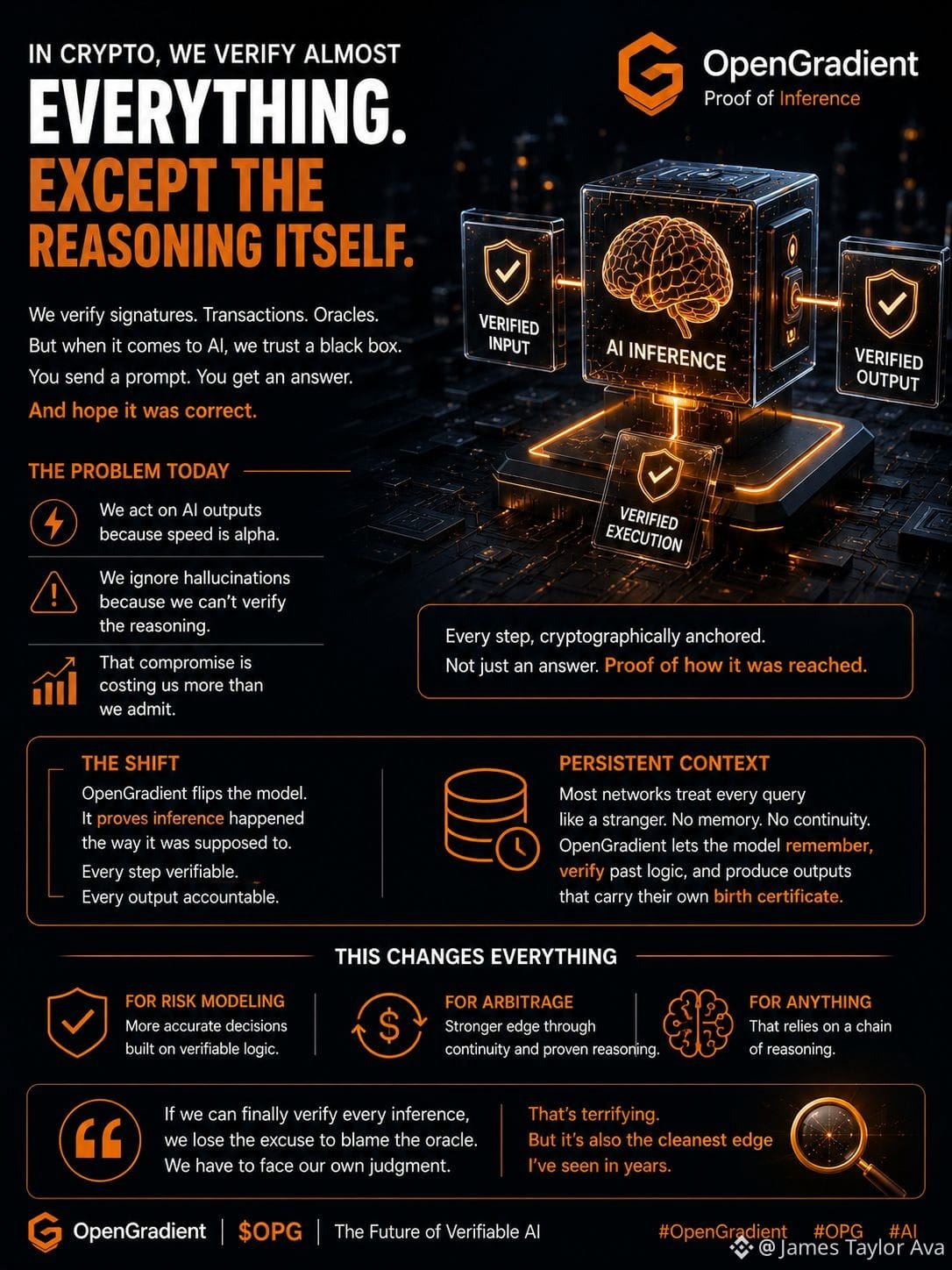
Dans le crypto, nous vérifions presque tout.
Nous vérifions les signatures. Nous vérifions les transactions. Nous vérifions les données des oracles.
Mais quand il s'agit de l'IA, nous vérifions rarement le raisonnement lui-même.
Tu envoies une invite. Tu obtiens une réponse. La plupart du temps, tu fais simplement confiance au fait que le processus derrière a fonctionné comme il le fallait.
Ce n'est pas vraiment de la confiance.
C'est un pari déguisé en efficacité.
J'ai vu à quelle vitesse les gens agissent sur les sorties d'IA quand la rapidité devient un avantage. Un score de sentiment influence un trade. Une recommandation façonne une décision. Une sortie de modèle est traitée comme un fait simplement parce qu'elle semble confiante.
La partie inconfortable, c'est que nous n'avons souvent aucune visibilité sur la façon dont cette conclusion a été atteinte.
C'est ce qui m'a fait prêter attention à OpenGradient.
Non pas parce que c'est un autre projet d'IA, mais parce qu'il essaie de prouver que l'inférence s'est réellement produite comme il se devait. La sortie n'est pas simplement livrée. L'exécution derrière peut être vérifiée.
Et peut-être que c'est plus important que nous ne le réalisons.
Parce que que se passe-t-il lorsque l'IA commence à participer à des décisions impliquant de la valeur réelle ?
À ce moment-là, être "probablement juste" peut ne plus suffire.
Je ne parle pas des prix des tokens ou de dire à quelqu'un quoi acheter.
Je pense juste que nous approchons d'un moment où la capacité à vérifier le raisonnement devient tout aussi importante que le raisonnement lui-même.
Et si cela se produit, nous perdrons l'une de nos excuses préférées.
Nous ne pourrons plus blâmer l'oracle.
Nous devrons remettre en question notre propre jugement.
Honnêtement, c'est terrifiant.
Mais cela pourrait aussi être l'un des avantages les plus précieux que cette industrie a négligés.
$OPG #OPG #SpaceXPremarketFalls4.6%
@OpenGradient
#opg $OPG
Une chose me préoccupe ces derniers temps.
Dans le crypto, nous vérifions presque tout.
Nous vérifions les signatures. Nous vérifions les transactions. Nous vérifions les données des oracles.
Mais quand il s'agit de l'IA, nous vérifions rarement le raisonnement lui-même.
Tu envoies une invite. Tu obtiens une réponse. La plupart du temps, tu fais simplement confiance au fait que le processus derrière a fonctionné comme il le fallait.
Ce n'est pas vraiment de la confiance.
C'est un pari déguisé en efficacité.
J'ai vu à quelle vitesse les gens agissent sur les sorties d'IA quand la rapidité devient un avantage. Un score de sentiment influence un trade. Une recommandation façonne une décision. Une sortie de modèle est traitée comme un fait simplement parce qu'elle semble confiante.
La partie inconfortable, c'est que nous n'avons souvent aucune visibilité sur la façon dont cette conclusion a été atteinte.
C'est ce qui m'a fait prêter attention à OpenGradient.
Non pas parce que c'est un autre projet d'IA, mais parce qu'il essaie de prouver que l'inférence s'est réellement produite comme il se devait. La sortie n'est pas simplement livrée. L'exécution derrière peut être vérifiée.
Et peut-être que c'est plus important que nous ne le réalisons.
Parce que que se passe-t-il lorsque l'IA commence à participer à des décisions impliquant de la valeur réelle ?
À ce moment-là, être "probablement juste" peut ne plus suffire.
Je ne parle pas des prix des tokens ou de dire à quelqu'un quoi acheter.
Je pense juste que nous approchons d'un moment où la capacité à vérifier le raisonnement devient tout aussi importante que le raisonnement lui-même.
Et si cela se produit, nous perdrons l'une de nos excuses préférées.
Nous ne pourrons plus blâmer l'oracle.
Nous devrons remettre en question notre propre jugement.
Honnêtement, c'est terrifiant.
Mais cela pourrait aussi être l'un des avantages les plus précieux que cette industrie a négligés.
$OPG #OPG #SpaceXPremarketFalls4.6%
@OpenGradient
Une chose me préoccupe ces derniers temps.
Dans le crypto, nous vérifions presque tout.
Nous vérifions les signatures. Nous vérifions les transactions. Nous vérifions les données des oracles.
Mais quand il s'agit de l'IA, nous vérifions rarement le raisonnement lui-même.
Tu envoies une invite. Tu obtiens une réponse. La plupart du temps, tu fais simplement confiance au fait que le processus derrière a fonctionné comme il le fallait.
Ce n'est pas vraiment de la confiance.
C'est un pari déguisé en efficacité.
J'ai vu à quelle vitesse les gens agissent sur les sorties d'IA quand la rapidité devient un avantage. Un score de sentiment influence un trade. Une recommandation façonne une décision. Une sortie de modèle est traitée comme un fait simplement parce qu'elle semble confiante.
La partie inconfortable, c'est que nous n'avons souvent aucune visibilité sur la façon dont cette conclusion a été atteinte.
C'est ce qui m'a fait prêter attention à OpenGradient.
Non pas parce que c'est un autre projet d'IA, mais parce qu'il essaie de prouver que l'inférence s'est réellement produite comme il se devait. La sortie n'est pas simplement livrée. L'exécution derrière peut être vérifiée.
Et peut-être que c'est plus important que nous ne le réalisons.
Parce que que se passe-t-il lorsque l'IA commence à participer à des décisions impliquant de la valeur réelle ?
À ce moment-là, être "probablement juste" peut ne plus suffire.
Je ne parle pas des prix des tokens ou de dire à quelqu'un quoi acheter.
Je pense juste que nous approchons d'un moment où la capacité à vérifier le raisonnement devient tout aussi importante que le raisonnement lui-même.
Et si cela se produit, nous perdrons l'une de nos excuses préférées.
Nous ne pourrons plus blâmer l'oracle.
Nous devrons remettre en question notre propre jugement.
Honnêtement, c'est terrifiant.
Mais cela pourrait aussi être l'un des avantages les plus précieux que cette industrie a négligés.
$OPG #OPG #SpaceXPremarketFalls4.6%
@OpenGradient
5
1
105
Connectez-vous pour découvrir plus de contenu
Rejoignez la communauté mondiale des adeptes de cryptomonnaies sur Binance Square
⚡️ Suviez les dernières informations importantes sur les cryptomonnaies.
💬 Jugé digne de confiance par la plus grande plateforme d’échange de cryptomonnaies au monde.
👍 Découvrez les connaissances que partagent les créateurs vérifiés.
Adresse e-mail/Nº de téléphone
Sujets d’actualité
ZcashETFPostsFirstWeeklyOutflow$93.6M
49,200 vues
145 mentions
#ZcashETFPostsFirstWeeklyOutflow$93.6M
Le premier flux sortant hebdomadaire du FNB Zcash de 93,6 millions de dollars signale un affaiblissement de la demande des investisseurs et d’éventuelles prises de profits. Cela pourrait exercer une pression à court terme sur le prix de ZEC et détériorer le sentiment sur l’ensemble des crypto-monnaies axées sur la confidentialité. Les traders devraient surveiller les niveaux de support et les flux de fonds à venir avant de prendre des positions.
Eram Trading Lab
·1 mentions J’aime
·255 vues
GreekPoliceBustCryptoScamRingArrest17
136,374 vues
953 mentions
BitcoinRejectedAt$87K
146,637 vues
201 mentions