

GAS WOLF
9k Publications

GAS WOLF
Signaler
Bloquer l’utilisateur
I’m driven by purpose. I’m building something bigger than a moment..
Ouvert au trading
Trade régulièrement
1.9 an(s)
154 Suivis
22.1K+ Abonnés
18.4K+ J’aime
Publications
Portefeuille
Tous
Citations
Direct
·
--
Haussier
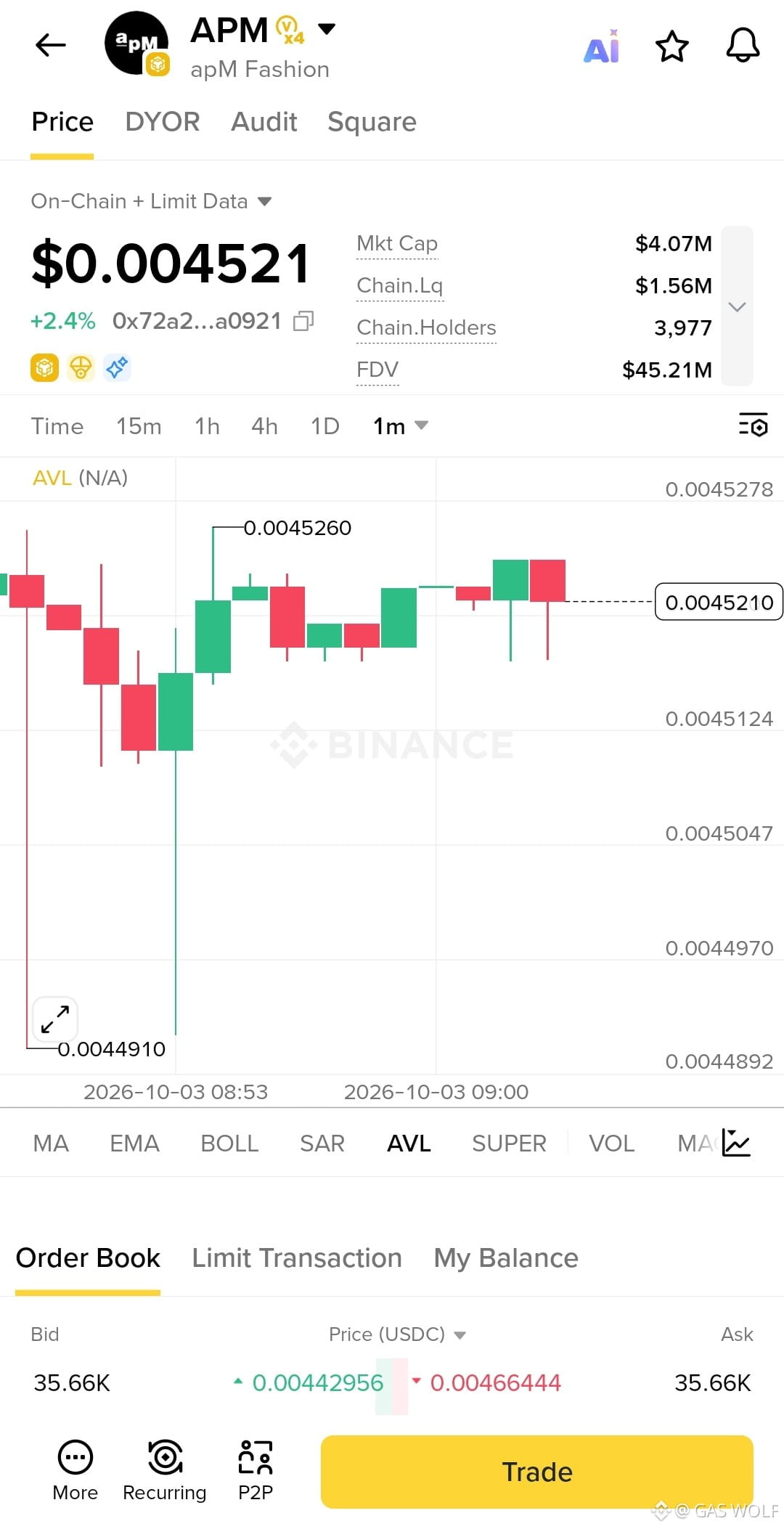
$APM — Configuration de Price Action
L’APM/USDT évolue autour de 0,004521 $, en consolidant juste sous le récent plus haut à 0,004526 $. Cette zone est importante car le prix s’est redressé depuis le plus bas à 0,004491 $ et se retrouve maintenant en pression contre un niveau de résistance proche.
Les acheteurs semblent maintenir la zone 0,00451–0,00452, mais les dernières bougies montrent une hésitation près du plus haut local. Mon objectif est de déterminer si les acheteurs peuvent défendre cette base et établir une cassure propre au-dessus de 0,004526.
Un mouvement durable au-dessus de ce niveau pourrait faire entrer en jeu la prochaine zone haussière. Si le prix perd la zone des 0,00451, la structure haussière à court terme s’affaiblirait et le setup nécessiterait une réévaluation.
Setup de transaction :
Zone d’entrée : 0,004515–0,004525
Take Profit 1 : 0,004560
Take Profit 2 : 0,004600
Stop Loss : 0,004490
L’essentiel sera la confirmation plutôt que de courir après le mouvement. Avec une fourchette serrée et un actif à bas prix, un dimensionnement de position discipliné et une gestion du risque restent primordiaux.
{alpha}(560x72a22faa6a522c81a8f5d508381e18af3da0921e)
$APM — Configuration de Price Action
L’APM/USDT évolue autour de 0,004521 $, en consolidant juste sous le récent plus haut à 0,004526 $. Cette zone est importante car le prix s’est redressé depuis le plus bas à 0,004491 $ et se retrouve maintenant en pression contre un niveau de résistance proche.
Les acheteurs semblent maintenir la zone 0,00451–0,00452, mais les dernières bougies montrent une hésitation près du plus haut local. Mon objectif est de déterminer si les acheteurs peuvent défendre cette base et établir une cassure propre au-dessus de 0,004526.
Un mouvement durable au-dessus de ce niveau pourrait faire entrer en jeu la prochaine zone haussière. Si le prix perd la zone des 0,00451, la structure haussière à court terme s’affaiblirait et le setup nécessiterait une réévaluation.
Setup de transaction :
Zone d’entrée : 0,004515–0,004525
Take Profit 1 : 0,004560
Take Profit 2 : 0,004600
Stop Loss : 0,004490
L’essentiel sera la confirmation plutôt que de courir après le mouvement. Avec une fourchette serrée et un actif à bas prix, un dimensionnement de position discipliné et une gestion du risque restent primordiaux.
L’APM/USDT évolue autour de 0,004521 $, en consolidant juste sous le récent plus haut à 0,004526 $. Cette zone est importante car le prix s’est redressé depuis le plus bas à 0,004491 $ et se retrouve maintenant en pression contre un niveau de résistance proche.
Les acheteurs semblent maintenir la zone 0,00451–0,00452, mais les dernières bougies montrent une hésitation près du plus haut local. Mon objectif est de déterminer si les acheteurs peuvent défendre cette base et établir une cassure propre au-dessus de 0,004526.
Un mouvement durable au-dessus de ce niveau pourrait faire entrer en jeu la prochaine zone haussière. Si le prix perd la zone des 0,00451, la structure haussière à court terme s’affaiblirait et le setup nécessiterait une réévaluation.
Setup de transaction :
Zone d’entrée : 0,004515–0,004525
Take Profit 1 : 0,004560
Take Profit 2 : 0,004600
Stop Loss : 0,004490
L’essentiel sera la confirmation plutôt que de courir après le mouvement. Avec une fourchette serrée et un actif à bas prix, un dimensionnement de position discipliné et une gestion du risque restent primordiaux.
2
352
·
--
Haussier
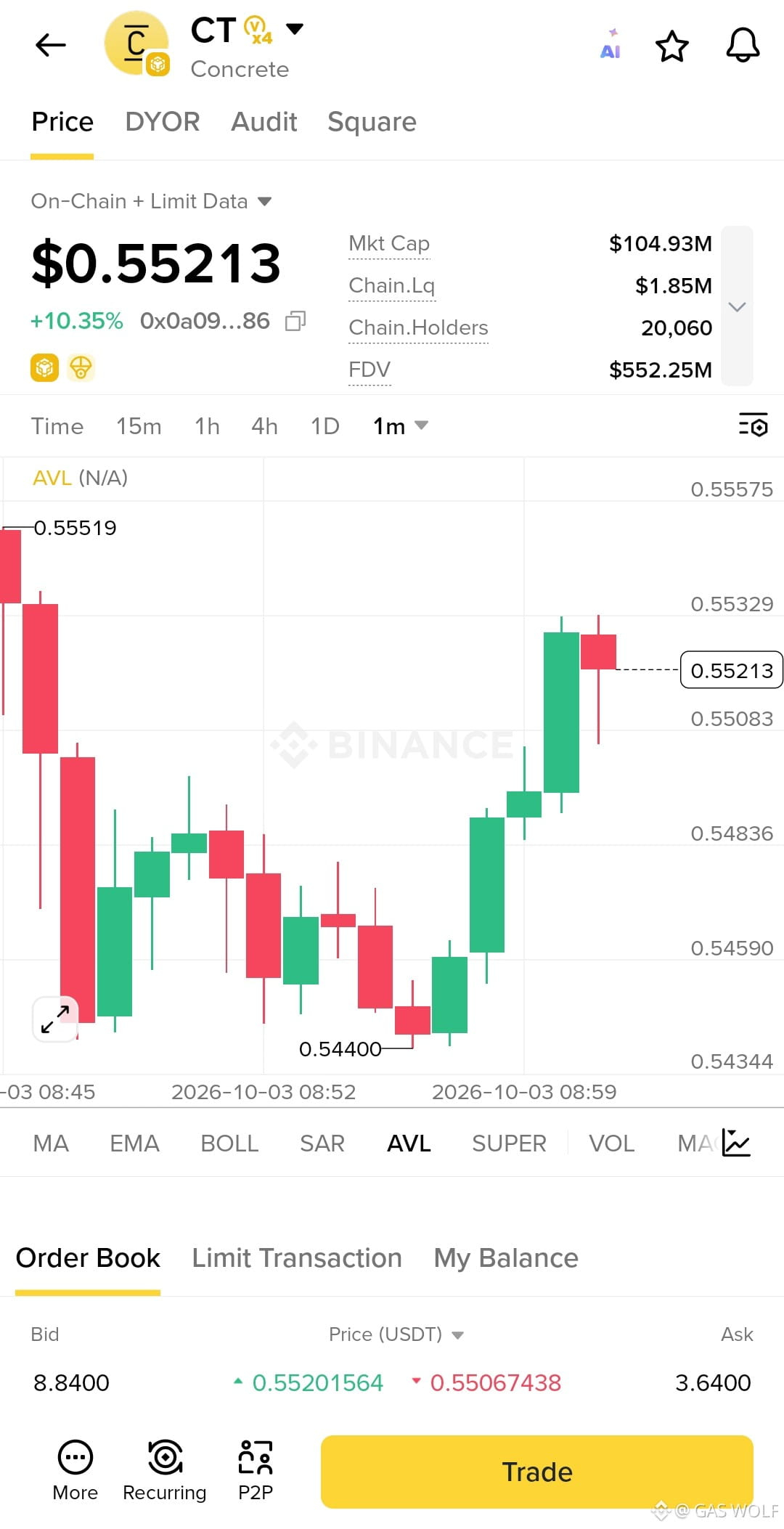
$CTSI — Configuration basée sur l’action des prix
Le CT/USDT s’échange autour de 0,5521 $, en restant proche de la zone 0,5508–0,5520 $ après un fort rebond depuis le plus bas de 0,5440 $. Cette zone est importante car le prix est passé dans une structure de plus bas supérieur à court terme et teste désormais la résistance récente à 0,5533 $.
Les acheteurs contrôlent le dernier mouvement, mais le repli depuis 0,5533 $ montre que les vendeurs restent actifs près de la partie haute de la fourchette. Mon objectif est de savoir si les acheteurs peuvent défendre la zone actuelle et reconquérir cette résistance.
Une cassure nette et une tenue au-dessus de 0,5533 $ pourraient ramener la zone précédente des 0,5552 $ dans le viseur. Si le prix perd la région des 0,5508 $, la configuration haussière devra être réévaluée.
Configuration de transaction :
Zone d’entrée : 0,5510–0,5522 $
Take Profit 1 : 0,5533 $
Take Profit 2 : 0,5552 $
Stop Loss : 0,5498 $
La structure est constructive, mais la confirmation reste essentielle après un mouvement brusque. La patience et une gestion du risque disciplinée comptent davantage que de courir après l’élan.
{alpha}(560x0a092e544da31150b439a1aaa1a3a2214a867f46)
$CTSI — Configuration basée sur l’action des prix
Le CT/USDT s’échange autour de 0,5521 $, en restant proche de la zone 0,5508–0,5520 $ après un fort rebond depuis le plus bas de 0,5440 $. Cette zone est importante car le prix est passé dans une structure de plus bas supérieur à court terme et teste désormais la résistance récente à 0,5533 $.
Les acheteurs contrôlent le dernier mouvement, mais le repli depuis 0,5533 $ montre que les vendeurs restent actifs près de la partie haute de la fourchette. Mon objectif est de savoir si les acheteurs peuvent défendre la zone actuelle et reconquérir cette résistance.
Une cassure nette et une tenue au-dessus de 0,5533 $ pourraient ramener la zone précédente des 0,5552 $ dans le viseur. Si le prix perd la région des 0,5508 $, la configuration haussière devra être réévaluée.
Configuration de transaction :
Zone d’entrée : 0,5510–0,5522 $
Take Profit 1 : 0,5533 $
Take Profit 2 : 0,5552 $
Stop Loss : 0,5498 $
La structure est constructive, mais la confirmation reste essentielle après un mouvement brusque. La patience et une gestion du risque disciplinée comptent davantage que de courir après l’élan.
Le CT/USDT s’échange autour de 0,5521 $, en restant proche de la zone 0,5508–0,5520 $ après un fort rebond depuis le plus bas de 0,5440 $. Cette zone est importante car le prix est passé dans une structure de plus bas supérieur à court terme et teste désormais la résistance récente à 0,5533 $.
Les acheteurs contrôlent le dernier mouvement, mais le repli depuis 0,5533 $ montre que les vendeurs restent actifs près de la partie haute de la fourchette. Mon objectif est de savoir si les acheteurs peuvent défendre la zone actuelle et reconquérir cette résistance.
Une cassure nette et une tenue au-dessus de 0,5533 $ pourraient ramener la zone précédente des 0,5552 $ dans le viseur. Si le prix perd la région des 0,5508 $, la configuration haussière devra être réévaluée.
Configuration de transaction :
Zone d’entrée : 0,5510–0,5522 $
Take Profit 1 : 0,5533 $
Take Profit 2 : 0,5552 $
Stop Loss : 0,5498 $
La structure est constructive, mais la confirmation reste essentielle après un mouvement brusque. La patience et une gestion du risque disciplinée comptent davantage que de courir après l’élan.
526
·
--
Haussier
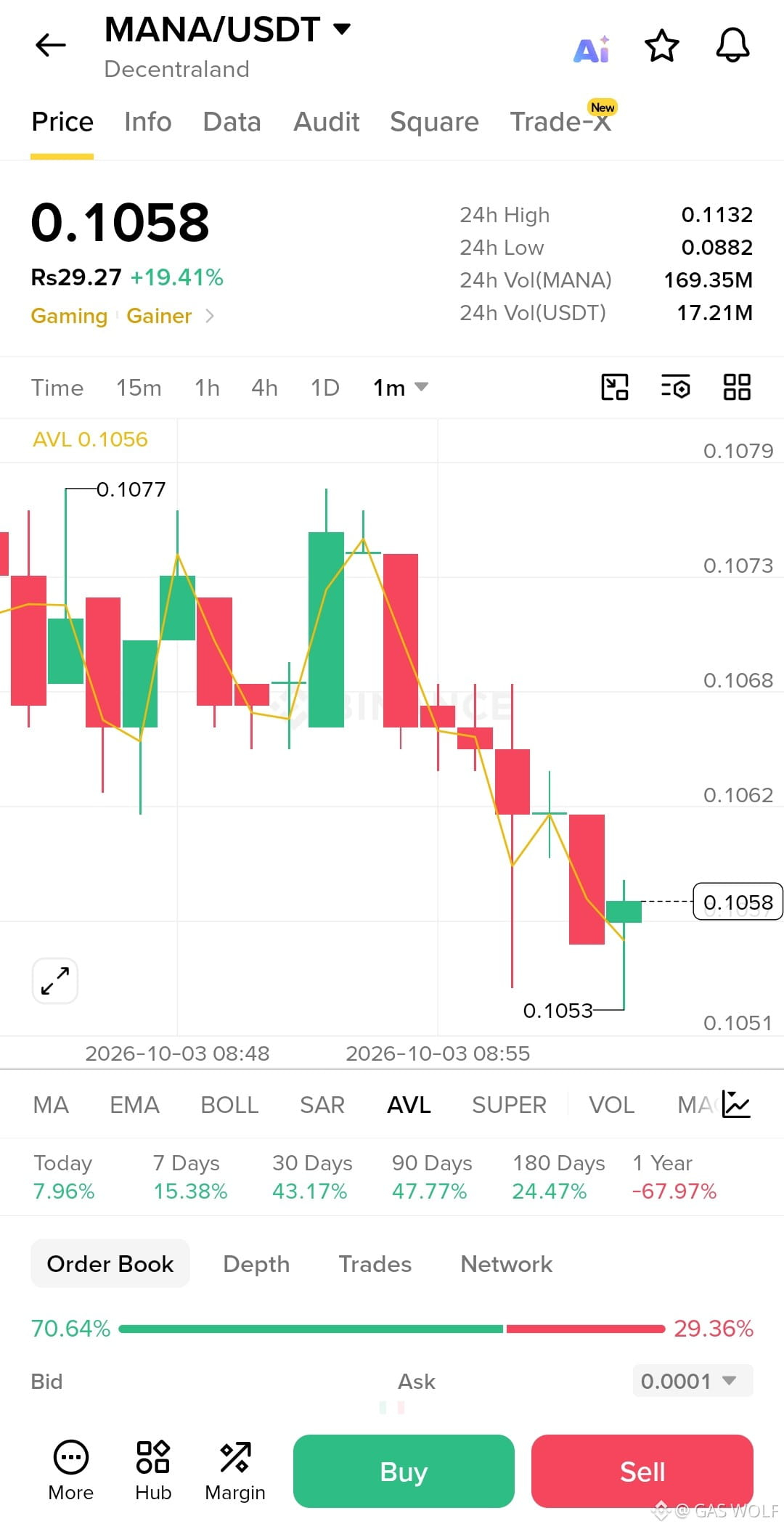
$MANA — Configuration de Price Action
MANA/USDT évolue autour de 0,1058 $, se situant juste au-dessus de la zone de support 0,1053–0,1058 $ après un repli depuis le plus haut local de 0,1077 $. Cette zone compte car les acheteurs tentent de stabiliser le prix après la récente baisse intraday.
La structure à court terme montre une certaine pression vendeuse, mais la présence importante d’ordres acheteurs dans le carnet suggère que les acheteurs restent actifs autour du niveau actuel. Mon attention porte sur leur capacité à défendre 0,1053 $ et à faire remonter le prix vers les niveaux de résistance proches.
Une reprise de 0,1062–0,1068 $ apporterait une confirmation plus solide du regain de momentum, tandis qu’un retour au-dessus de 0,1073 $ pourrait remettre le plus haut récent au centre des préoccupations.
Configuration de trade :
Zone d’entrée : 0,1055–0,1059 $
Take Profit 1 : 0,1068 $
Take Profit 2 : 0,1077 $
Stop Loss : 0,1050 $
Cette zone semble importante pour le prochain mouvement. L’élément clé sera la confirmation plutôt que de poursuivre le mouvement, avec une gestion rigoureuse du risque si la volatilité augmente.
{spot}(MANAUSDT)
$MANA — Configuration de Price Action
MANA/USDT évolue autour de 0,1058 $, se situant juste au-dessus de la zone de support 0,1053–0,1058 $ après un repli depuis le plus haut local de 0,1077 $. Cette zone compte car les acheteurs tentent de stabiliser le prix après la récente baisse intraday.
La structure à court terme montre une certaine pression vendeuse, mais la présence importante d’ordres acheteurs dans le carnet suggère que les acheteurs restent actifs autour du niveau actuel. Mon attention porte sur leur capacité à défendre 0,1053 $ et à faire remonter le prix vers les niveaux de résistance proches.
Une reprise de 0,1062–0,1068 $ apporterait une confirmation plus solide du regain de momentum, tandis qu’un retour au-dessus de 0,1073 $ pourrait remettre le plus haut récent au centre des préoccupations.
Configuration de trade :
Zone d’entrée : 0,1055–0,1059 $
Take Profit 1 : 0,1068 $
Take Profit 2 : 0,1077 $
Stop Loss : 0,1050 $
Cette zone semble importante pour le prochain mouvement. L’élément clé sera la confirmation plutôt que de poursuivre le mouvement, avec une gestion rigoureuse du risque si la volatilité augmente.
MANA/USDT évolue autour de 0,1058 $, se situant juste au-dessus de la zone de support 0,1053–0,1058 $ après un repli depuis le plus haut local de 0,1077 $. Cette zone compte car les acheteurs tentent de stabiliser le prix après la récente baisse intraday.
La structure à court terme montre une certaine pression vendeuse, mais la présence importante d’ordres acheteurs dans le carnet suggère que les acheteurs restent actifs autour du niveau actuel. Mon attention porte sur leur capacité à défendre 0,1053 $ et à faire remonter le prix vers les niveaux de résistance proches.
Une reprise de 0,1062–0,1068 $ apporterait une confirmation plus solide du regain de momentum, tandis qu’un retour au-dessus de 0,1073 $ pourrait remettre le plus haut récent au centre des préoccupations.
Configuration de trade :
Zone d’entrée : 0,1055–0,1059 $
Take Profit 1 : 0,1068 $
Take Profit 2 : 0,1077 $
Stop Loss : 0,1050 $
Cette zone semble importante pour le prochain mouvement. L’élément clé sera la confirmation plutôt que de poursuivre le mouvement, avec une gestion rigoureuse du risque si la volatilité augmente.
142
·
--
Haussier
Voir la traduction
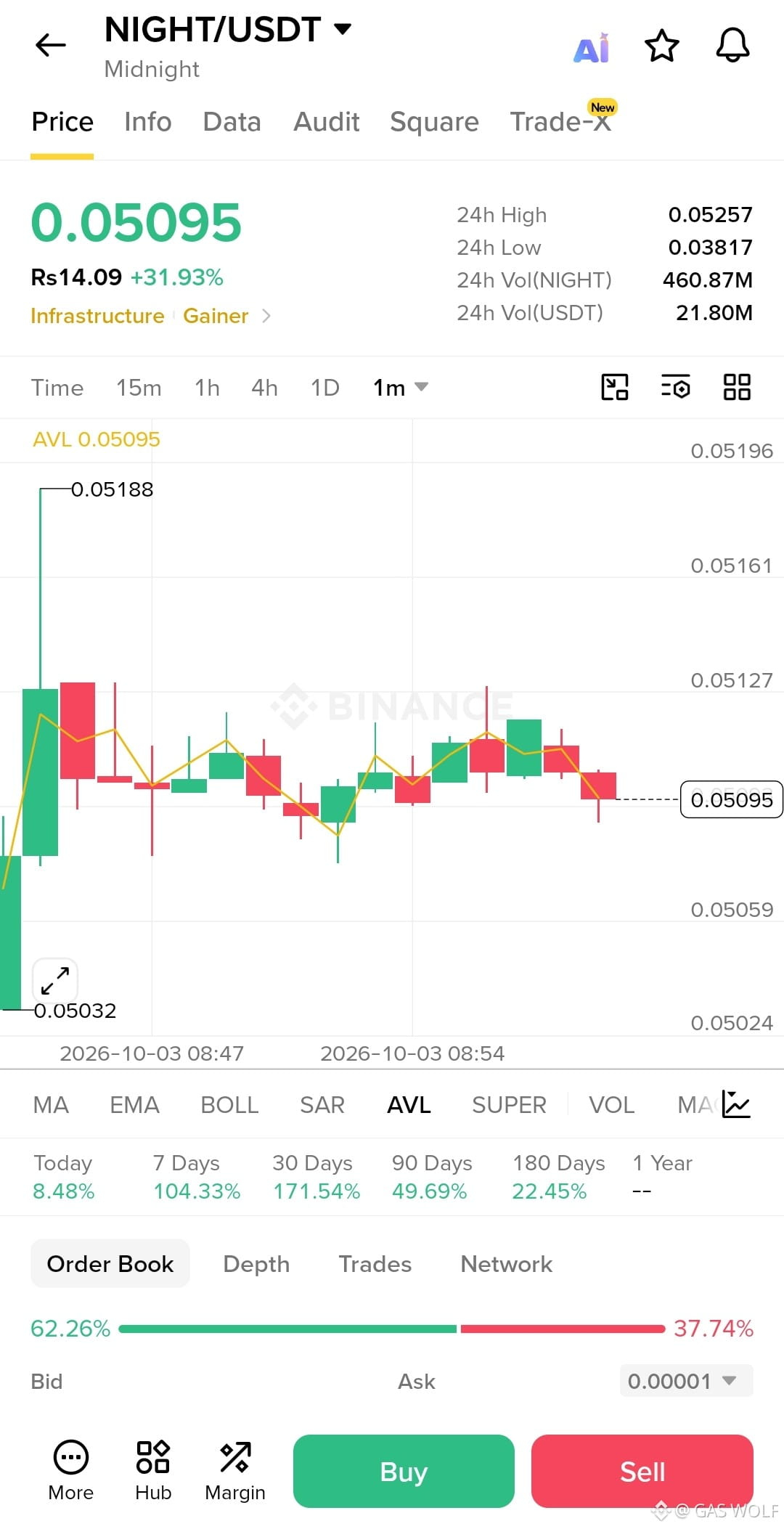
$NIGHT — Price Action Setup
NIGHT/USDT is trading around $0.05095, consolidating after a sharp move higher from the $0.05032 area. This zone is important because price is holding above the recent base while remaining close to the $0.05127 short-term resistance.
Buyers appear to be defending the $0.0508–$0.0510 region, but the latest candles show some hesitation near resistance. My focus is on whether buyers can maintain this support and push price back through $0.05127.
A clean reclaim of $0.05127 could open the way toward the recent $0.05188 high. If support breaks instead, the bullish setup would lose strength and need reassessment.
Trade Setup:
Entry Zone: $0.05080–$0.05100
Take Profit 1: $0.05127
Take Profit 2: $0.05185
Stop Loss: $0.05035
The key will be confirmation rather than chasing the move. After a strong expansion, patience and disciplined risk management are especially important.
{spot}(NIGHTUSDT)
$NIGHT — Price Action Setup
NIGHT/USDT is trading around $0.05095, consolidating after a sharp move higher from the $0.05032 area. This zone is important because price is holding above the recent base while remaining close to the $0.05127 short-term resistance.
Buyers appear to be defending the $0.0508–$0.0510 region, but the latest candles show some hesitation near resistance. My focus is on whether buyers can maintain this support and push price back through $0.05127.
A clean reclaim of $0.05127 could open the way toward the recent $0.05188 high. If support breaks instead, the bullish setup would lose strength and need reassessment.
Trade Setup:
Entry Zone: $0.05080–$0.05100
Take Profit 1: $0.05127
Take Profit 2: $0.05185
Stop Loss: $0.05035
The key will be confirmation rather than chasing the move. After a strong expansion, patience and disciplined risk management are especially important.
NIGHT/USDT is trading around $0.05095, consolidating after a sharp move higher from the $0.05032 area. This zone is important because price is holding above the recent base while remaining close to the $0.05127 short-term resistance.
Buyers appear to be defending the $0.0508–$0.0510 region, but the latest candles show some hesitation near resistance. My focus is on whether buyers can maintain this support and push price back through $0.05127.
A clean reclaim of $0.05127 could open the way toward the recent $0.05188 high. If support breaks instead, the bullish setup would lose strength and need reassessment.
Trade Setup:
Entry Zone: $0.05080–$0.05100
Take Profit 1: $0.05127
Take Profit 2: $0.05185
Stop Loss: $0.05035
The key will be confirmation rather than chasing the move. After a strong expansion, patience and disciplined risk management are especially important.
151
·
--
Haussier
$SAND — Configuration d’action des prix
SAND/USDT évolue autour de 0,0790 $, se situant près de la zone 0,0788–0,0791 $ après un fort mouvement intraday. Cette zone est importante car le prix tente de se stabiliser après être revenu de son plus haut local à 0,08110 $.
Les vendeurs ont poussé le prix à la baisse, mais les acheteurs cherchent encore à défendre la région 0,0785–0,0790 $. Mon attention porte sur la capacité des acheteurs à maintenir cette zone et à reconstruire l’élan vers les récents sommets.
Une reconquête de 0,0800 $ renforcerait la structure haussière à court terme, tandis qu’une cassure nette au-dessus de 0,0811 $ pourrait remettre la prochaine impulsion à la hausse au centre des préoccupations. Si le support échoue, il faudra réévaluer la configuration.
Configuration de trade :
Zone d’entrée : 0,0788–0,0792 $
Take Profit 1 : 0,0800 $
Take Profit 2 : 0,0811 $
Stop Loss : 0,0783 $
L’élément clé sera la confirmation plutôt que de poursuivre le mouvement. La patience, le dimensionnement des positions et une gestion rigoureuse du risque comptent, surtout après une expansion de prix aussi forte.
{spot}(SANDUSDT)
$SAND — Configuration d’action des prix
SAND/USDT évolue autour de 0,0790 $, se situant près de la zone 0,0788–0,0791 $ après un fort mouvement intraday. Cette zone est importante car le prix tente de se stabiliser après être revenu de son plus haut local à 0,08110 $.
Les vendeurs ont poussé le prix à la baisse, mais les acheteurs cherchent encore à défendre la région 0,0785–0,0790 $. Mon attention porte sur la capacité des acheteurs à maintenir cette zone et à reconstruire l’élan vers les récents sommets.
Une reconquête de 0,0800 $ renforcerait la structure haussière à court terme, tandis qu’une cassure nette au-dessus de 0,0811 $ pourrait remettre la prochaine impulsion à la hausse au centre des préoccupations. Si le support échoue, il faudra réévaluer la configuration.
Configuration de trade :
Zone d’entrée : 0,0788–0,0792 $
Take Profit 1 : 0,0800 $
Take Profit 2 : 0,0811 $
Stop Loss : 0,0783 $
L’élément clé sera la confirmation plutôt que de poursuivre le mouvement. La patience, le dimensionnement des positions et une gestion rigoureuse du risque comptent, surtout après une expansion de prix aussi forte.
SAND/USDT évolue autour de 0,0790 $, se situant près de la zone 0,0788–0,0791 $ après un fort mouvement intraday. Cette zone est importante car le prix tente de se stabiliser après être revenu de son plus haut local à 0,08110 $.
Les vendeurs ont poussé le prix à la baisse, mais les acheteurs cherchent encore à défendre la région 0,0785–0,0790 $. Mon attention porte sur la capacité des acheteurs à maintenir cette zone et à reconstruire l’élan vers les récents sommets.
Une reconquête de 0,0800 $ renforcerait la structure haussière à court terme, tandis qu’une cassure nette au-dessus de 0,0811 $ pourrait remettre la prochaine impulsion à la hausse au centre des préoccupations. Si le support échoue, il faudra réévaluer la configuration.
Configuration de trade :
Zone d’entrée : 0,0788–0,0792 $
Take Profit 1 : 0,0800 $
Take Profit 2 : 0,0811 $
Stop Loss : 0,0783 $
L’élément clé sera la confirmation plutôt que de poursuivre le mouvement. La patience, le dimensionnement des positions et une gestion rigoureuse du risque comptent, surtout après une expansion de prix aussi forte.
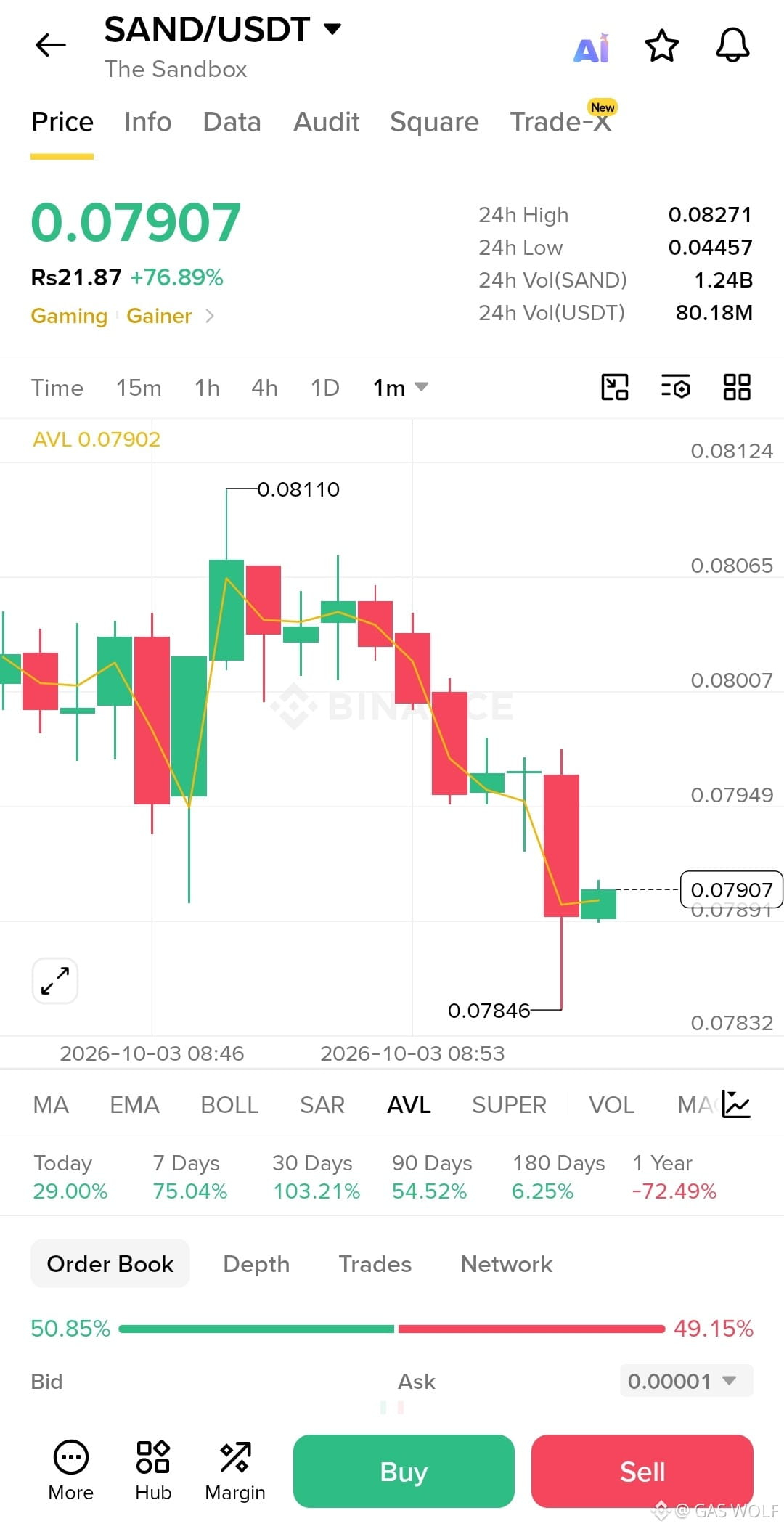
281
·
--
Haussier
$GTC évolue autour de 0,1785 $ après un mouvement marqué depuis le plus bas de 0,17076 $ et un test du plus haut de 0,18400 $. Cette zone est importante car le prix consolide désormais juste sous le récent sommet après une forte progression intraday.
Sur le graphique 1 minute, les acheteurs ont réussi à stabiliser le prix autour de 0,1780–0,1785 $ après le repli. Mon attention porte sur la possibilité que cette zone continue à servir de support à court terme. Une reprise de 0,1810–0,1815 $ renforcerait la structure de l’élan et remettrait le récent plus haut au premier plan.
Si les acheteurs reprennent le contrôle, les objectifs à la hausse pourraient se matérialiser. En revanche, un mouvement durable en dessous de 0,1760 $ affaiblirait la configuration actuelle et indiquerait que le repli s’étend.
Configuration de Trading :
Zone d’entrée : 0,1775–0,1790 $
Take Profit 1 : 0,1815 $
Take Profit 2 : 0,1840 $
Stop Loss : 0,1755 $
Le point clé sera la confirmation plutôt que de poursuivre le mouvement. Après une hausse aussi forte, la patience et une gestion rigoureuse du risque sont essentielles, surtout autour de niveaux volatils.
{spot}(GTCUSDT)
$GTC évolue autour de 0,1785 $ après un mouvement marqué depuis le plus bas de 0,17076 $ et un test du plus haut de 0,18400 $. Cette zone est importante car le prix consolide désormais juste sous le récent sommet après une forte progression intraday.
Sur le graphique 1 minute, les acheteurs ont réussi à stabiliser le prix autour de 0,1780–0,1785 $ après le repli. Mon attention porte sur la possibilité que cette zone continue à servir de support à court terme. Une reprise de 0,1810–0,1815 $ renforcerait la structure de l’élan et remettrait le récent plus haut au premier plan.
Si les acheteurs reprennent le contrôle, les objectifs à la hausse pourraient se matérialiser. En revanche, un mouvement durable en dessous de 0,1760 $ affaiblirait la configuration actuelle et indiquerait que le repli s’étend.
Configuration de Trading :
Zone d’entrée : 0,1775–0,1790 $
Take Profit 1 : 0,1815 $
Take Profit 2 : 0,1840 $
Stop Loss : 0,1755 $
Le point clé sera la confirmation plutôt que de poursuivre le mouvement. Après une hausse aussi forte, la patience et une gestion rigoureuse du risque sont essentielles, surtout autour de niveaux volatils.
Sur le graphique 1 minute, les acheteurs ont réussi à stabiliser le prix autour de 0,1780–0,1785 $ après le repli. Mon attention porte sur la possibilité que cette zone continue à servir de support à court terme. Une reprise de 0,1810–0,1815 $ renforcerait la structure de l’élan et remettrait le récent plus haut au premier plan.
Si les acheteurs reprennent le contrôle, les objectifs à la hausse pourraient se matérialiser. En revanche, un mouvement durable en dessous de 0,1760 $ affaiblirait la configuration actuelle et indiquerait que le repli s’étend.
Configuration de Trading :
Zone d’entrée : 0,1775–0,1790 $
Take Profit 1 : 0,1815 $
Take Profit 2 : 0,1840 $
Stop Loss : 0,1755 $
Le point clé sera la confirmation plutôt que de poursuivre le mouvement. Après une hausse aussi forte, la patience et une gestion rigoureuse du risque sont essentielles, surtout autour de niveaux volatils.
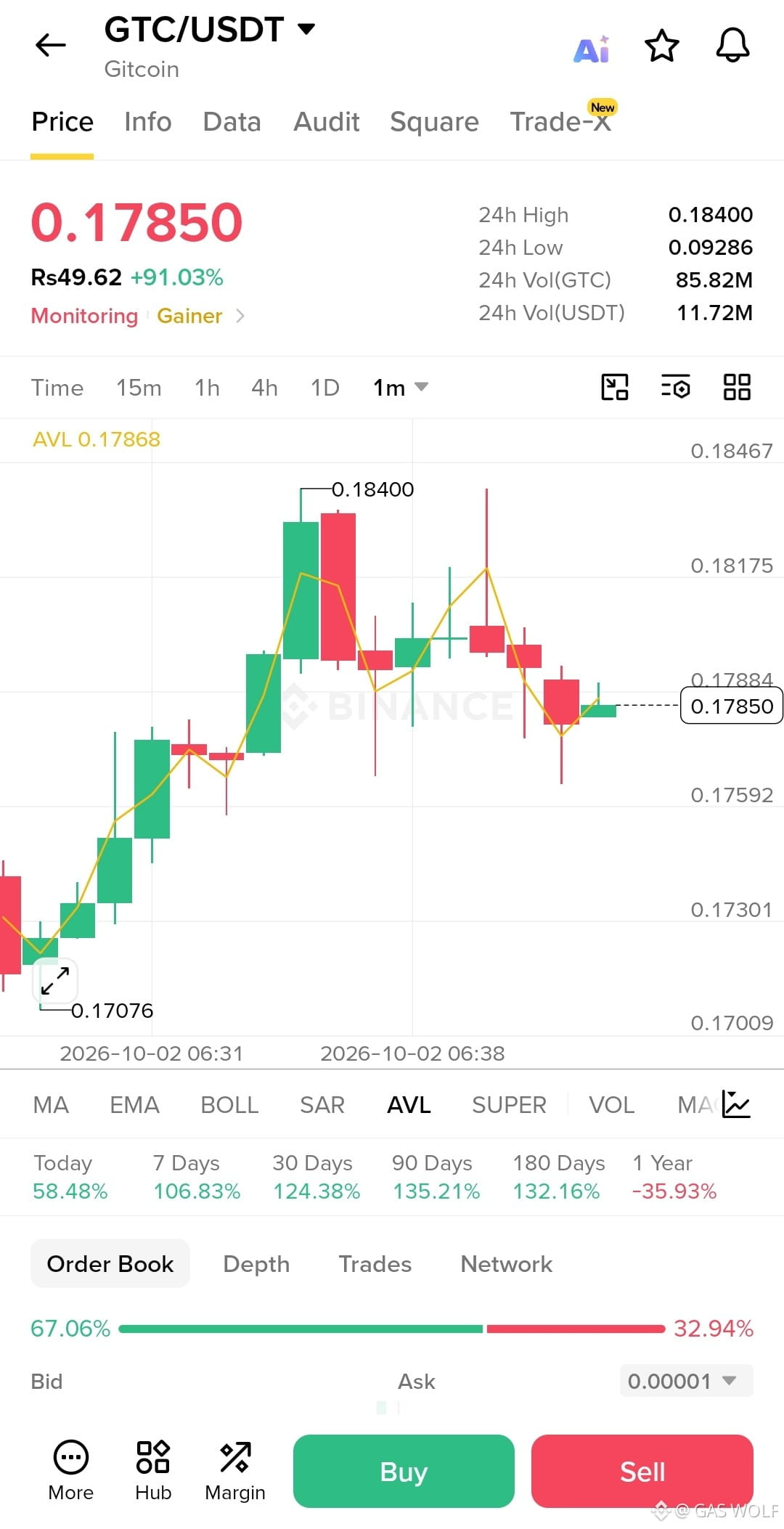
1
266
·
--
Haussier
$MOVR évolue autour de 2,89 $ après s’être replié depuis le plus haut intrajournalier de 2,962 $. Cette zone est importante car le prix teste désormais la région des 2,88–2,90 $ après un fort mouvement haussier.
Le graphique en 1 minute montre une pression vendeuse à court terme après un rejet près de 2,96 $, mais les acheteurs tiennent toujours la structure de cassure récente au-dessus de la zone des 2,88 $. Mon attention se porte sur la capacité des acheteurs à défendre cette zone et à stabiliser le prix avant une nouvelle tentative à la hausse.
Un retour au-dessus de 2,91 $ pourrait renforcer la configuration, tandis qu’un mouvement clair de retour au-dessus de 2,94 $ fournirait une confirmation plus solide vers le récent plus haut. Si 2,88 $ échoue, la structure haussière devra être réévaluée.
Configuration de trading :
Zone d’entrée : 2,885–2,905 $
Take Profit 1 : 2,940 $
Take Profit 2 : 2,960 $
Stop Loss : 2,850 $
L’élément clé sera la confirmation plutôt que la poursuite du mouvement. Avec une volatilité élevée, la patience et une gestion disciplinée du risque sont particulièrement importantes.
{spot}(MOVRUSDT)
$MOVR évolue autour de 2,89 $ après s’être replié depuis le plus haut intrajournalier de 2,962 $. Cette zone est importante car le prix teste désormais la région des 2,88–2,90 $ après un fort mouvement haussier.
Le graphique en 1 minute montre une pression vendeuse à court terme après un rejet près de 2,96 $, mais les acheteurs tiennent toujours la structure de cassure récente au-dessus de la zone des 2,88 $. Mon attention se porte sur la capacité des acheteurs à défendre cette zone et à stabiliser le prix avant une nouvelle tentative à la hausse.
Un retour au-dessus de 2,91 $ pourrait renforcer la configuration, tandis qu’un mouvement clair de retour au-dessus de 2,94 $ fournirait une confirmation plus solide vers le récent plus haut. Si 2,88 $ échoue, la structure haussière devra être réévaluée.
Configuration de trading :
Zone d’entrée : 2,885–2,905 $
Take Profit 1 : 2,940 $
Take Profit 2 : 2,960 $
Stop Loss : 2,850 $
L’élément clé sera la confirmation plutôt que la poursuite du mouvement. Avec une volatilité élevée, la patience et une gestion disciplinée du risque sont particulièrement importantes.
Le graphique en 1 minute montre une pression vendeuse à court terme après un rejet près de 2,96 $, mais les acheteurs tiennent toujours la structure de cassure récente au-dessus de la zone des 2,88 $. Mon attention se porte sur la capacité des acheteurs à défendre cette zone et à stabiliser le prix avant une nouvelle tentative à la hausse.
Un retour au-dessus de 2,91 $ pourrait renforcer la configuration, tandis qu’un mouvement clair de retour au-dessus de 2,94 $ fournirait une confirmation plus solide vers le récent plus haut. Si 2,88 $ échoue, la structure haussière devra être réévaluée.
Configuration de trading :
Zone d’entrée : 2,885–2,905 $
Take Profit 1 : 2,940 $
Take Profit 2 : 2,960 $
Stop Loss : 2,850 $
L’élément clé sera la confirmation plutôt que la poursuite du mouvement. Avec une volatilité élevée, la patience et une gestion disciplinée du risque sont particulièrement importantes.
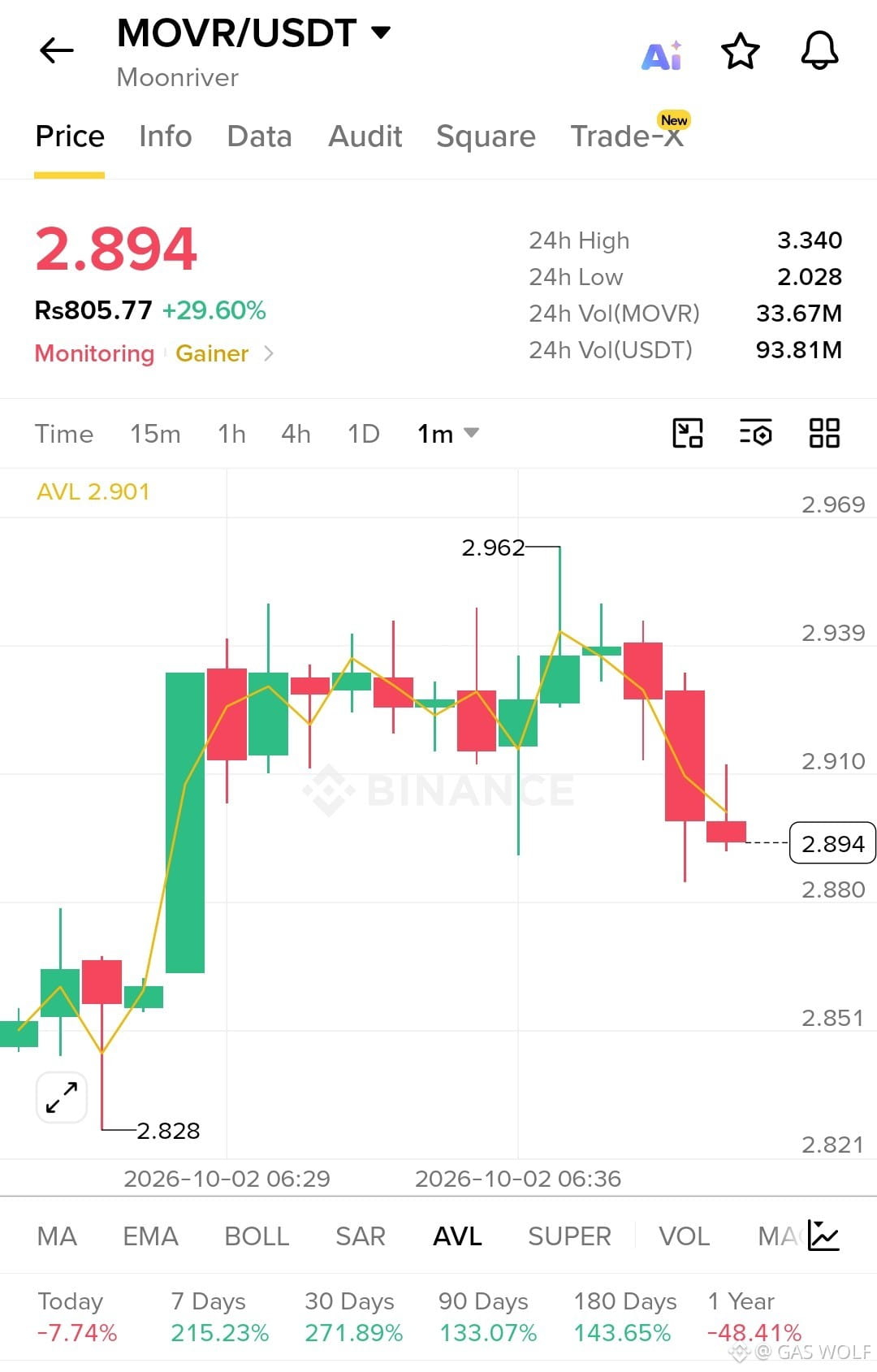
54
·
--
Haussier
$APM évolue autour de 0,00440 $ après avoir progressé depuis la zone de 0,00437 $. Cette zone est importante car le prix teste le récent plus haut intraday autour de 0,004404 $, plaçant le marché à un point de rupture potentiel.
Sur le graphique 1 minute, les acheteurs gardent le contrôle après une période de consolidation serrée, avec la dernière bougie qui pousse nettement vers le haut de la fourchette. Mon attention porte sur la capacité des acheteurs à rester au-dessus de la zone de 0,00439 $ et à maintenir la pression près de 0,004404.
Une cassure nette et un maintien au-dessus de 0,004404 $ pourraient ouvrir la voie vers les prochains niveaux à la hausse. Si le prix est rejeté et retombe sous 0,00439 $, la configuration de rupture perdrait de l’élan.
Configuration de trade :
Zone d’entrée : 0,004390–0,004402 $
Take Profit 1 : 0,004430 $
Take Profit 2 : 0,004460 $
Stop Loss : 0,004370 $
Le point clé sera la confirmation plutôt que de poursuivre le mouvement. La dynamique à court terme peut changer rapidement, donc la patience et une gestion rigoureuse du risque restent essentielles.
{alpha}(560x72a22faa6a522c81a8f5d508381e18af3da0921e)
$APM évolue autour de 0,00440 $ après avoir progressé depuis la zone de 0,00437 $. Cette zone est importante car le prix teste le récent plus haut intraday autour de 0,004404 $, plaçant le marché à un point de rupture potentiel.
Sur le graphique 1 minute, les acheteurs gardent le contrôle après une période de consolidation serrée, avec la dernière bougie qui pousse nettement vers le haut de la fourchette. Mon attention porte sur la capacité des acheteurs à rester au-dessus de la zone de 0,00439 $ et à maintenir la pression près de 0,004404.
Une cassure nette et un maintien au-dessus de 0,004404 $ pourraient ouvrir la voie vers les prochains niveaux à la hausse. Si le prix est rejeté et retombe sous 0,00439 $, la configuration de rupture perdrait de l’élan.
Configuration de trade :
Zone d’entrée : 0,004390–0,004402 $
Take Profit 1 : 0,004430 $
Take Profit 2 : 0,004460 $
Stop Loss : 0,004370 $
Le point clé sera la confirmation plutôt que de poursuivre le mouvement. La dynamique à court terme peut changer rapidement, donc la patience et une gestion rigoureuse du risque restent essentielles.
Sur le graphique 1 minute, les acheteurs gardent le contrôle après une période de consolidation serrée, avec la dernière bougie qui pousse nettement vers le haut de la fourchette. Mon attention porte sur la capacité des acheteurs à rester au-dessus de la zone de 0,00439 $ et à maintenir la pression près de 0,004404.
Une cassure nette et un maintien au-dessus de 0,004404 $ pourraient ouvrir la voie vers les prochains niveaux à la hausse. Si le prix est rejeté et retombe sous 0,00439 $, la configuration de rupture perdrait de l’élan.
Configuration de trade :
Zone d’entrée : 0,004390–0,004402 $
Take Profit 1 : 0,004430 $
Take Profit 2 : 0,004460 $
Stop Loss : 0,004370 $
Le point clé sera la confirmation plutôt que de poursuivre le mouvement. La dynamique à court terme peut changer rapidement, donc la patience et une gestion rigoureuse du risque restent essentielles.
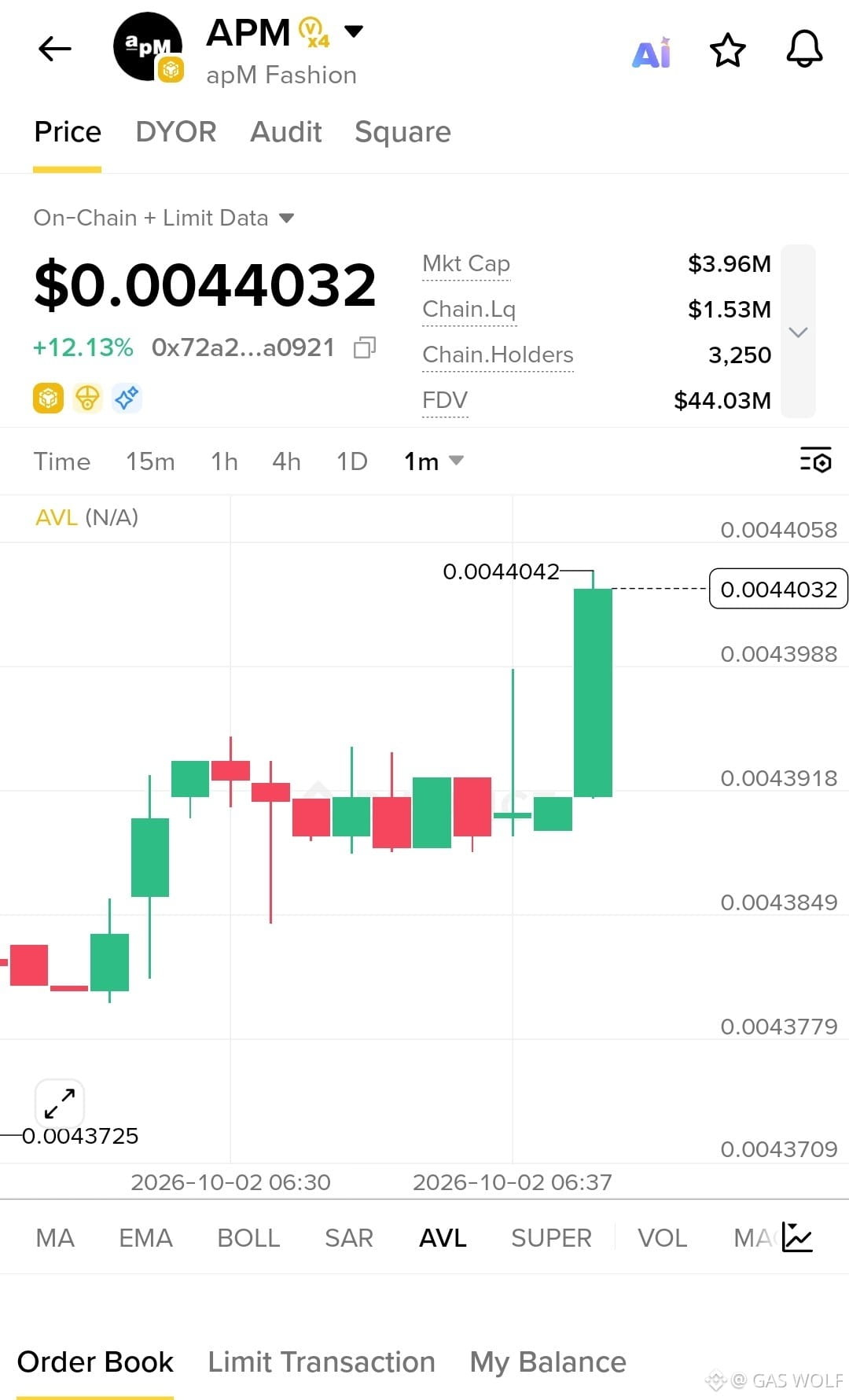
1
593
·
--
Haussier
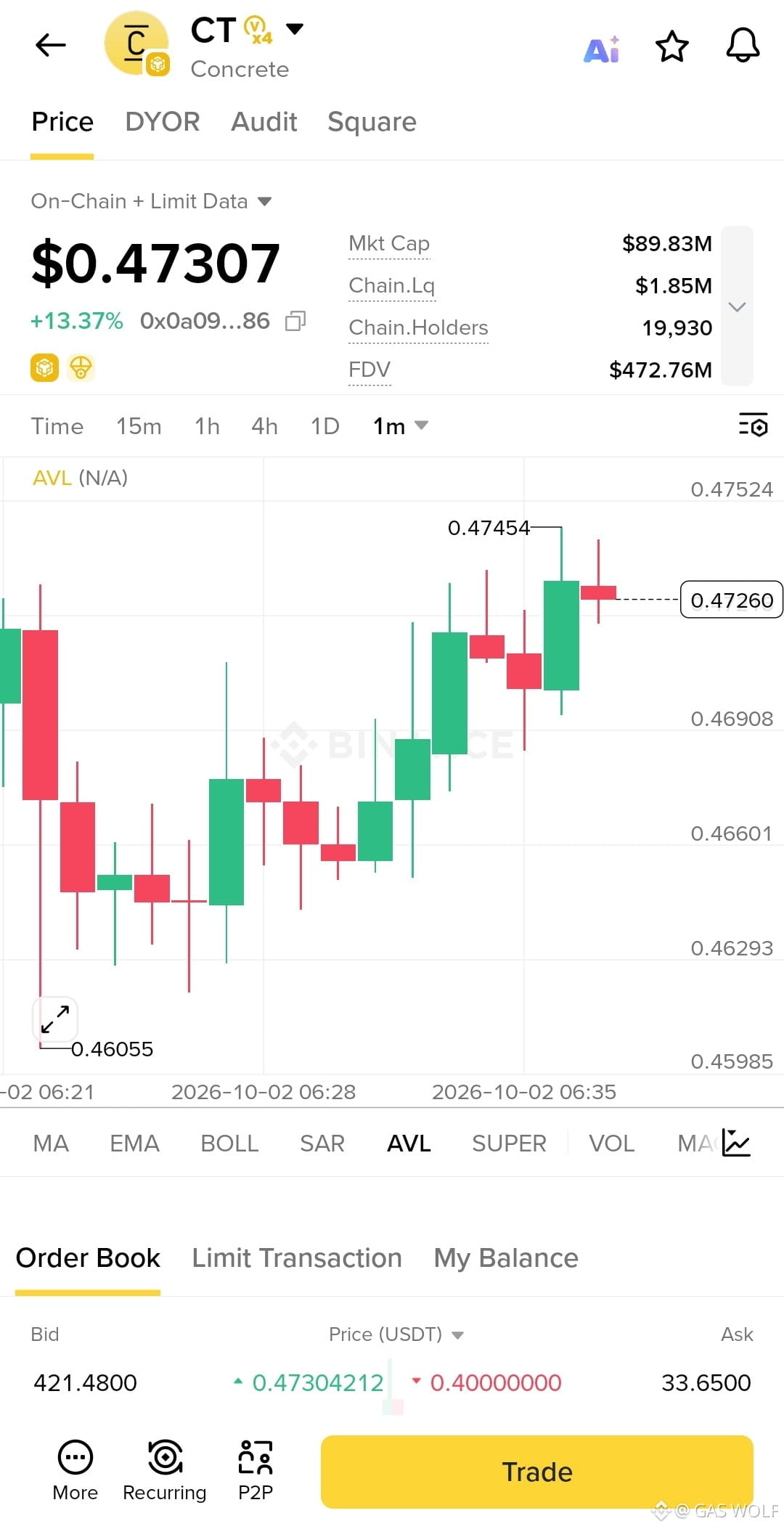
$CT évolue autour de la zone 0,472–0,473 $ après avoir fortement rebondi depuis le plus bas de 0,46055 $. Cette zone est importante car le prix tient désormais près du récent plus haut à 0,47454 $, où des vendeurs pourraient intervenir.
Sur le graphique 1 minute, les acheteurs ont poussé à la hausse avec une série de plus bas plus élevés, tandis que le prix continue de rester au-dessus de la zone de 0,469 $. Mon attention porte sur la capacité des acheteurs à défendre la zone actuelle et à tenter à nouveau le plus haut récent.
Une cassure nette et un maintien au-dessus de 0,4745 $ pourraient apporter une confirmation pour une poursuite à la hausse. Si l’élan continue, les prochains objectifs pourraient entrer en jeu. En revanche, la perte de la zone à 0,469 $ affaiblirait la structure haussière à court terme.
Configuration de la transaction :
Zone d’entrée : 0,4700–0,4720 $
Prise de profit 1 : 0,4745 $
Prise de profit 2 : 0,4780 $
Stop Loss : 0,4660 $
L’élément clé sera la confirmation plutôt que de poursuivre le mouvement. La patience, un risque maîtrisé et l’évitement des entrées émotionnelles comptent lorsque l’on trade la dynamique à court terme.
{alpha}(560x0a092e544da31150b439a1aaa1a3a2214a867f46)
$CT évolue autour de la zone 0,472–0,473 $ après avoir fortement rebondi depuis le plus bas de 0,46055 $. Cette zone est importante car le prix tient désormais près du récent plus haut à 0,47454 $, où des vendeurs pourraient intervenir.
Sur le graphique 1 minute, les acheteurs ont poussé à la hausse avec une série de plus bas plus élevés, tandis que le prix continue de rester au-dessus de la zone de 0,469 $. Mon attention porte sur la capacité des acheteurs à défendre la zone actuelle et à tenter à nouveau le plus haut récent.
Une cassure nette et un maintien au-dessus de 0,4745 $ pourraient apporter une confirmation pour une poursuite à la hausse. Si l’élan continue, les prochains objectifs pourraient entrer en jeu. En revanche, la perte de la zone à 0,469 $ affaiblirait la structure haussière à court terme.
Configuration de la transaction :
Zone d’entrée : 0,4700–0,4720 $
Prise de profit 1 : 0,4745 $
Prise de profit 2 : 0,4780 $
Stop Loss : 0,4660 $
L’élément clé sera la confirmation plutôt que de poursuivre le mouvement. La patience, un risque maîtrisé et l’évitement des entrées émotionnelles comptent lorsque l’on trade la dynamique à court terme.
Sur le graphique 1 minute, les acheteurs ont poussé à la hausse avec une série de plus bas plus élevés, tandis que le prix continue de rester au-dessus de la zone de 0,469 $. Mon attention porte sur la capacité des acheteurs à défendre la zone actuelle et à tenter à nouveau le plus haut récent.
Une cassure nette et un maintien au-dessus de 0,4745 $ pourraient apporter une confirmation pour une poursuite à la hausse. Si l’élan continue, les prochains objectifs pourraient entrer en jeu. En revanche, la perte de la zone à 0,469 $ affaiblirait la structure haussière à court terme.
Configuration de la transaction :
Zone d’entrée : 0,4700–0,4720 $
Prise de profit 1 : 0,4745 $
Prise de profit 2 : 0,4780 $
Stop Loss : 0,4660 $
L’élément clé sera la confirmation plutôt que de poursuivre le mouvement. La patience, un risque maîtrisé et l’évitement des entrées émotionnelles comptent lorsque l’on trade la dynamique à court terme.
1
617
·
--
Haussier
J’observe $MOVR depuis la reprise de 2,00 $, et, au premier regard, le graphique paraît assez simple : un élan solide, des niveaux haussiers qui s’élargissent, et un prix qui se maintient au-dessus d’une zone psychologiquement importante.
Le chiffre qui a retenu mon attention est 2,00 $.
Le fait de le reprendre compte, parce que le marché traite désormais ce niveau différemment. Au lieu de le rejeter en dessous, le prix utilise cette zone comme base potentielle, avec la configuration actuelle centrée autour de 2,05–2,20 $.
Mais ensuite, j’ai regardé le mouvement sous un autre angle.
Une cassure sur le graphique, c’est une chose. Une demande durable, c’en est une autre.
La configuration nous donne actuellement une feuille de route claire :
Zone d’entrée : 2,05–2,20 $
EP : 2,15 $
TP1 : 2,45 $
TP2 : 2,70 $
TP3 : 3,00 $
SL : 1,90 $
La partie intéressante, c’est que 2,45 devient le vrai test.
Si MOVR atteint ce niveau et qu’il est simplement rejeté, la cassure pourrait finir par être davantage portée par l’élan que par un support structurel. Mais si le prix parvient à reprendre 2,45 $, à le tenir, et à continuer d’attirer une vraie demande spot, alors le mouvement commence à paraître beaucoup plus convaincant.
C’est là que le graphique et le comportement réel du marché doivent être en accord.
Puis ça a fait tilt : je m’intéresse moins au fait que MOVR puisse imprimer une autre bougie verte, et plus au fait que les acheteurs défendent réellement les niveaux qu’ils viennent juste de reprendre.
Pour l’instant, 2,00 $ est la ligne que je surveille en dessous, et 2,45 $ est la confirmation au-dessus.
La vraie question : est-ce le début d’une demande durable, ou juste une cassure très convaincante avant que la liquidité ne s’évanouisse ?
Confirmation plutôt que poursuite. La gestion du risque reste essentielle.
{spot}(MOVRUSDT)
$CT
{alpha}(560x0a092e544da31150b439a1aaa1a3a2214a867f46)
$GLMR
{spot}(GLMRUSDT)
J’observe $MOVR depuis la reprise de 2,00 $, et, au premier regard, le graphique paraît assez simple : un élan solide, des niveaux haussiers qui s’élargissent, et un prix qui se maintient au-dessus d’une zone psychologiquement importante.
Le chiffre qui a retenu mon attention est 2,00 $.
Le fait de le reprendre compte, parce que le marché traite désormais ce niveau différemment. Au lieu de le rejeter en dessous, le prix utilise cette zone comme base potentielle, avec la configuration actuelle centrée autour de 2,05–2,20 $.
Mais ensuite, j’ai regardé le mouvement sous un autre angle.
Une cassure sur le graphique, c’est une chose. Une demande durable, c’en est une autre.
La configuration nous donne actuellement une feuille de route claire :
Zone d’entrée : 2,05–2,20 $
EP : 2,15 $
TP1 : 2,45 $
TP2 : 2,70 $
TP3 : 3,00 $
SL : 1,90 $
La partie intéressante, c’est que 2,45 devient le vrai test.
Si MOVR atteint ce niveau et qu’il est simplement rejeté, la cassure pourrait finir par être davantage portée par l’élan que par un support structurel. Mais si le prix parvient à reprendre 2,45 $, à le tenir, et à continuer d’attirer une vraie demande spot, alors le mouvement commence à paraître beaucoup plus convaincant.
C’est là que le graphique et le comportement réel du marché doivent être en accord.
Puis ça a fait tilt : je m’intéresse moins au fait que MOVR puisse imprimer une autre bougie verte, et plus au fait que les acheteurs défendent réellement les niveaux qu’ils viennent juste de reprendre.
Pour l’instant, 2,00 $ est la ligne que je surveille en dessous, et 2,45 $ est la confirmation au-dessus.
La vraie question : est-ce le début d’une demande durable, ou juste une cassure très convaincante avant que la liquidité ne s’évanouisse ?
Confirmation plutôt que poursuite. La gestion du risque reste essentielle.
$CT
$GLMR
Le chiffre qui a retenu mon attention est 2,00 $.
Le fait de le reprendre compte, parce que le marché traite désormais ce niveau différemment. Au lieu de le rejeter en dessous, le prix utilise cette zone comme base potentielle, avec la configuration actuelle centrée autour de 2,05–2,20 $.
Mais ensuite, j’ai regardé le mouvement sous un autre angle.
Une cassure sur le graphique, c’est une chose. Une demande durable, c’en est une autre.
La configuration nous donne actuellement une feuille de route claire :
Zone d’entrée : 2,05–2,20 $
EP : 2,15 $
TP1 : 2,45 $
TP2 : 2,70 $
TP3 : 3,00 $
SL : 1,90 $
La partie intéressante, c’est que 2,45 devient le vrai test.
Si MOVR atteint ce niveau et qu’il est simplement rejeté, la cassure pourrait finir par être davantage portée par l’élan que par un support structurel. Mais si le prix parvient à reprendre 2,45 $, à le tenir, et à continuer d’attirer une vraie demande spot, alors le mouvement commence à paraître beaucoup plus convaincant.
C’est là que le graphique et le comportement réel du marché doivent être en accord.
Puis ça a fait tilt : je m’intéresse moins au fait que MOVR puisse imprimer une autre bougie verte, et plus au fait que les acheteurs défendent réellement les niveaux qu’ils viennent juste de reprendre.
Pour l’instant, 2,00 $ est la ligne que je surveille en dessous, et 2,45 $ est la confirmation au-dessus.
La vraie question : est-ce le début d’une demande durable, ou juste une cassure très convaincante avant que la liquidité ne s’évanouisse ?
Confirmation plutôt que poursuite. La gestion du risque reste essentielle.
$CT
$GLMR
A) $2.50-$2.70
18%
B) $2.70-$3.00
18%
C) $3.00
43%
Pullback before another leg up
21%
33 Votes • Vote fermé
1
1
1.6k
·
--
Haussier
📊 $NMR — Configuration d’action des prix
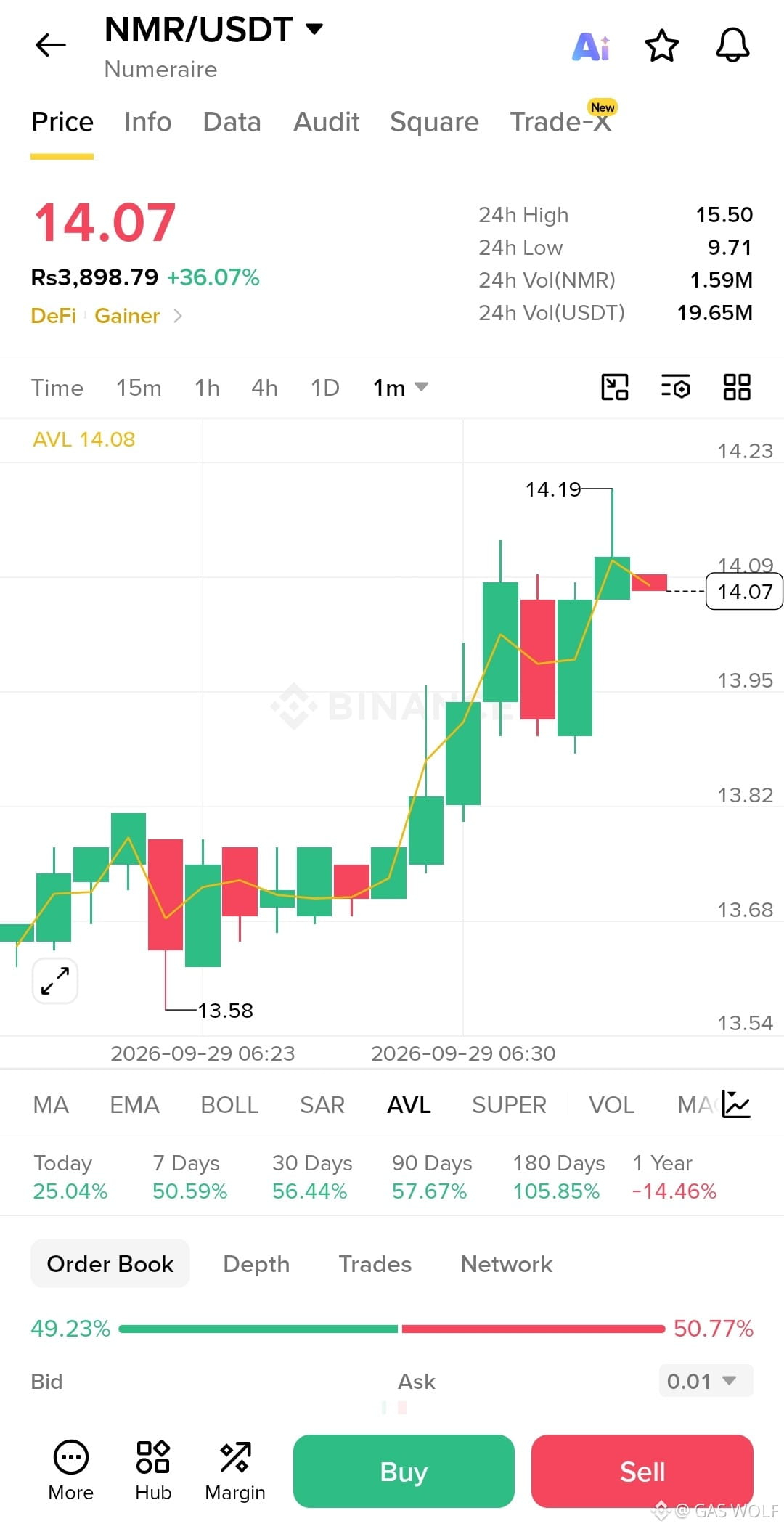
NMR/USDT évolue autour de 14,07 $, en hausse d’environ 36 % sur 24 h, après s’être fortement redressé depuis le plus bas intraday à 13,58 $. Cette zone est importante car le prix s’est hissé vers la résistance locale à 14,19 $ après une série marquée de plus hauts et de plus bas plus élevés.
Sur le graphique 1 minute, les acheteurs restent actifs : le prix se maintient au-dessus de la zone des 14,00 $ après avoir franchi la précédente fourchette de 13,82–13,95 $. Toutefois, la dernière bougie montre un certain rejet près de 14,19 $, donc une confirmation est essentielle avant d’envisager une nouvelle impulsion à la hausse.
Mon attention porte sur la capacité des acheteurs à défendre 13,98–14,05 $ et à reprendre 14,19 $ avec une suite. Une cassure confirmée pourrait ramener 14,35 $ puis 14,60 $ dans le champ de vision. Si 13,95 $ se brise de manière décisive, la structure haussière à court terme actuelle pourrait s’affaiblir.
Configuration de la transaction :
Zone d’entrée : 14,00–14,10 $
Take Profit 1 : 14,35 $
Take Profit 2 : 14,60 $
Stop Loss : 13,85 $
L’élément clé sera la confirmation plutôt que de courir après le mouvement. NMR étant déjà fortement en hausse et évoluant près du plus haut intraday, la patience, le dimensionnement de la position et une gestion du risque disciplinée comptent.
{spot}(NMRUSDT)
#UKFCAWinsCourtOrderToRecover851400Pounds #ChainlinkLaunchesCCIP2WithEnterpriseVerification #QNTFallsOver40%FromMorningHigh #USDTAdds845900HoldersInPast7Days #KospiFalls2.7%SamsungSKHynixDropOver5%
📊 $NMR — Configuration d’action des prix
NMR/USDT évolue autour de 14,07 $, en hausse d’environ 36 % sur 24 h, après s’être fortement redressé depuis le plus bas intraday à 13,58 $. Cette zone est importante car le prix s’est hissé vers la résistance locale à 14,19 $ après une série marquée de plus hauts et de plus bas plus élevés.
Sur le graphique 1 minute, les acheteurs restent actifs : le prix se maintient au-dessus de la zone des 14,00 $ après avoir franchi la précédente fourchette de 13,82–13,95 $. Toutefois, la dernière bougie montre un certain rejet près de 14,19 $, donc une confirmation est essentielle avant d’envisager une nouvelle impulsion à la hausse.
Mon attention porte sur la capacité des acheteurs à défendre 13,98–14,05 $ et à reprendre 14,19 $ avec une suite. Une cassure confirmée pourrait ramener 14,35 $ puis 14,60 $ dans le champ de vision. Si 13,95 $ se brise de manière décisive, la structure haussière à court terme actuelle pourrait s’affaiblir.
Configuration de la transaction :
Zone d’entrée : 14,00–14,10 $
Take Profit 1 : 14,35 $
Take Profit 2 : 14,60 $
Stop Loss : 13,85 $
L’élément clé sera la confirmation plutôt que de courir après le mouvement. NMR étant déjà fortement en hausse et évoluant près du plus haut intraday, la patience, le dimensionnement de la position et une gestion du risque disciplinée comptent.
#UKFCAWinsCourtOrderToRecover851400Pounds #ChainlinkLaunchesCCIP2WithEnterpriseVerification #QNTFallsOver40%FromMorningHigh #USDTAdds845900HoldersInPast7Days #KospiFalls2.7%SamsungSKHynixDropOver5%
NMR/USDT évolue autour de 14,07 $, en hausse d’environ 36 % sur 24 h, après s’être fortement redressé depuis le plus bas intraday à 13,58 $. Cette zone est importante car le prix s’est hissé vers la résistance locale à 14,19 $ après une série marquée de plus hauts et de plus bas plus élevés.
Sur le graphique 1 minute, les acheteurs restent actifs : le prix se maintient au-dessus de la zone des 14,00 $ après avoir franchi la précédente fourchette de 13,82–13,95 $. Toutefois, la dernière bougie montre un certain rejet près de 14,19 $, donc une confirmation est essentielle avant d’envisager une nouvelle impulsion à la hausse.
Mon attention porte sur la capacité des acheteurs à défendre 13,98–14,05 $ et à reprendre 14,19 $ avec une suite. Une cassure confirmée pourrait ramener 14,35 $ puis 14,60 $ dans le champ de vision. Si 13,95 $ se brise de manière décisive, la structure haussière à court terme actuelle pourrait s’affaiblir.
Configuration de la transaction :
Zone d’entrée : 14,00–14,10 $
Take Profit 1 : 14,35 $
Take Profit 2 : 14,60 $
Stop Loss : 13,85 $
L’élément clé sera la confirmation plutôt que de courir après le mouvement. NMR étant déjà fortement en hausse et évoluant près du plus haut intraday, la patience, le dimensionnement de la position et une gestion du risque disciplinée comptent.
#UKFCAWinsCourtOrderToRecover851400Pounds #ChainlinkLaunchesCCIP2WithEnterpriseVerification #QNTFallsOver40%FromMorningHigh #USDTAdds845900HoldersInPast7Days #KospiFalls2.7%SamsungSKHynixDropOver5%
199
·
--
Haussier
📊 $AKE — Configuration de Price Action
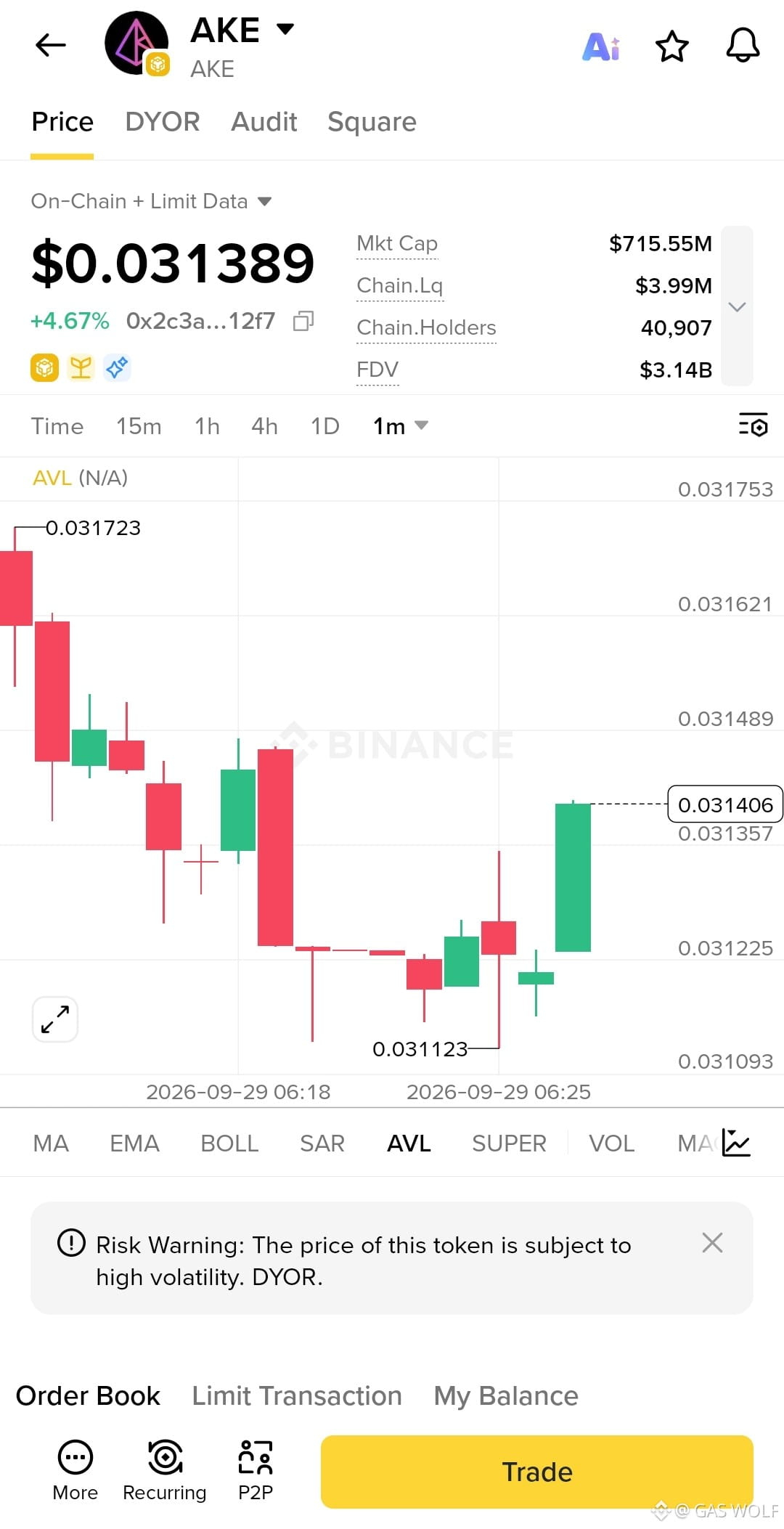
AKE évolue autour de 0,031389 $, en hausse d’environ 4,67 %, après avoir rebondi depuis le plus bas à 0,031123 $. Cette zone est importante car le prix a fortement rebondi depuis le plus bas de séance et teste désormais la zone de résistance 0,03140–0,03150.
Sur le graphique en 1 minute, les acheteurs sont revenus avec une bougie de reprise solide, mais la structure court terme plus large est encore en cours de récupération après la baisse précédente. La question clé est de savoir si les acheteurs peuvent transformer la résistance récente en support plutôt que de voir un nouveau rejet.
Mon objectif est de vérifier si les acheteurs peuvent défendre 0,03125–0,03135 et reconquérir 0,03150 avec une poursuite du mouvement. Une cassure confirmée pourrait amener 0,03175, puis 0,03200. Si 0,03112 est franchi de manière décisive, la configuration actuelle de reprise s’affaiblirait.
Configuration de trade :
Zone d’entrée : 0,03125–0,03140
Take Profit 1 : 0,03175
Take Profit 2 : 0,03200
Stop Loss : 0,03110
L’essentiel sera la confirmation plutôt que de poursuivre le mouvement. Avec AKE affichant une volatilité élevée et le graphique lui-même signalant un risque élevé, la patience, la taille de position et la gestion rigoureuse du risque sont déterminantes.
{future}(AKEUSDT)
#UKFCAWinsCourtOrderToRecover851400Pounds #ChainlinkLaunchesCCIP2WithEnterpriseVerification #QNTFallsOver40%FromMorningHigh #QNTFallsOver40%FromMorningHigh #KospiFalls2.7%SamsungSKHynixDropOver5%
📊 $AKE — Configuration de Price Action
AKE évolue autour de 0,031389 $, en hausse d’environ 4,67 %, après avoir rebondi depuis le plus bas à 0,031123 $. Cette zone est importante car le prix a fortement rebondi depuis le plus bas de séance et teste désormais la zone de résistance 0,03140–0,03150.
Sur le graphique en 1 minute, les acheteurs sont revenus avec une bougie de reprise solide, mais la structure court terme plus large est encore en cours de récupération après la baisse précédente. La question clé est de savoir si les acheteurs peuvent transformer la résistance récente en support plutôt que de voir un nouveau rejet.
Mon objectif est de vérifier si les acheteurs peuvent défendre 0,03125–0,03135 et reconquérir 0,03150 avec une poursuite du mouvement. Une cassure confirmée pourrait amener 0,03175, puis 0,03200. Si 0,03112 est franchi de manière décisive, la configuration actuelle de reprise s’affaiblirait.
Configuration de trade :
Zone d’entrée : 0,03125–0,03140
Take Profit 1 : 0,03175
Take Profit 2 : 0,03200
Stop Loss : 0,03110
L’essentiel sera la confirmation plutôt que de poursuivre le mouvement. Avec AKE affichant une volatilité élevée et le graphique lui-même signalant un risque élevé, la patience, la taille de position et la gestion rigoureuse du risque sont déterminantes.
#UKFCAWinsCourtOrderToRecover851400Pounds #ChainlinkLaunchesCCIP2WithEnterpriseVerification #QNTFallsOver40%FromMorningHigh #QNTFallsOver40%FromMorningHigh #KospiFalls2.7%SamsungSKHynixDropOver5%
AKE évolue autour de 0,031389 $, en hausse d’environ 4,67 %, après avoir rebondi depuis le plus bas à 0,031123 $. Cette zone est importante car le prix a fortement rebondi depuis le plus bas de séance et teste désormais la zone de résistance 0,03140–0,03150.
Sur le graphique en 1 minute, les acheteurs sont revenus avec une bougie de reprise solide, mais la structure court terme plus large est encore en cours de récupération après la baisse précédente. La question clé est de savoir si les acheteurs peuvent transformer la résistance récente en support plutôt que de voir un nouveau rejet.
Mon objectif est de vérifier si les acheteurs peuvent défendre 0,03125–0,03135 et reconquérir 0,03150 avec une poursuite du mouvement. Une cassure confirmée pourrait amener 0,03175, puis 0,03200. Si 0,03112 est franchi de manière décisive, la configuration actuelle de reprise s’affaiblirait.
Configuration de trade :
Zone d’entrée : 0,03125–0,03140
Take Profit 1 : 0,03175
Take Profit 2 : 0,03200
Stop Loss : 0,03110
L’essentiel sera la confirmation plutôt que de poursuivre le mouvement. Avec AKE affichant une volatilité élevée et le graphique lui-même signalant un risque élevé, la patience, la taille de position et la gestion rigoureuse du risque sont déterminantes.
#UKFCAWinsCourtOrderToRecover851400Pounds #ChainlinkLaunchesCCIP2WithEnterpriseVerification #QNTFallsOver40%FromMorningHigh #QNTFallsOver40%FromMorningHigh #KospiFalls2.7%SamsungSKHynixDropOver5%
378
·
--
Haussier
📊 $CASHCAT — Configuration d’action sur le prix
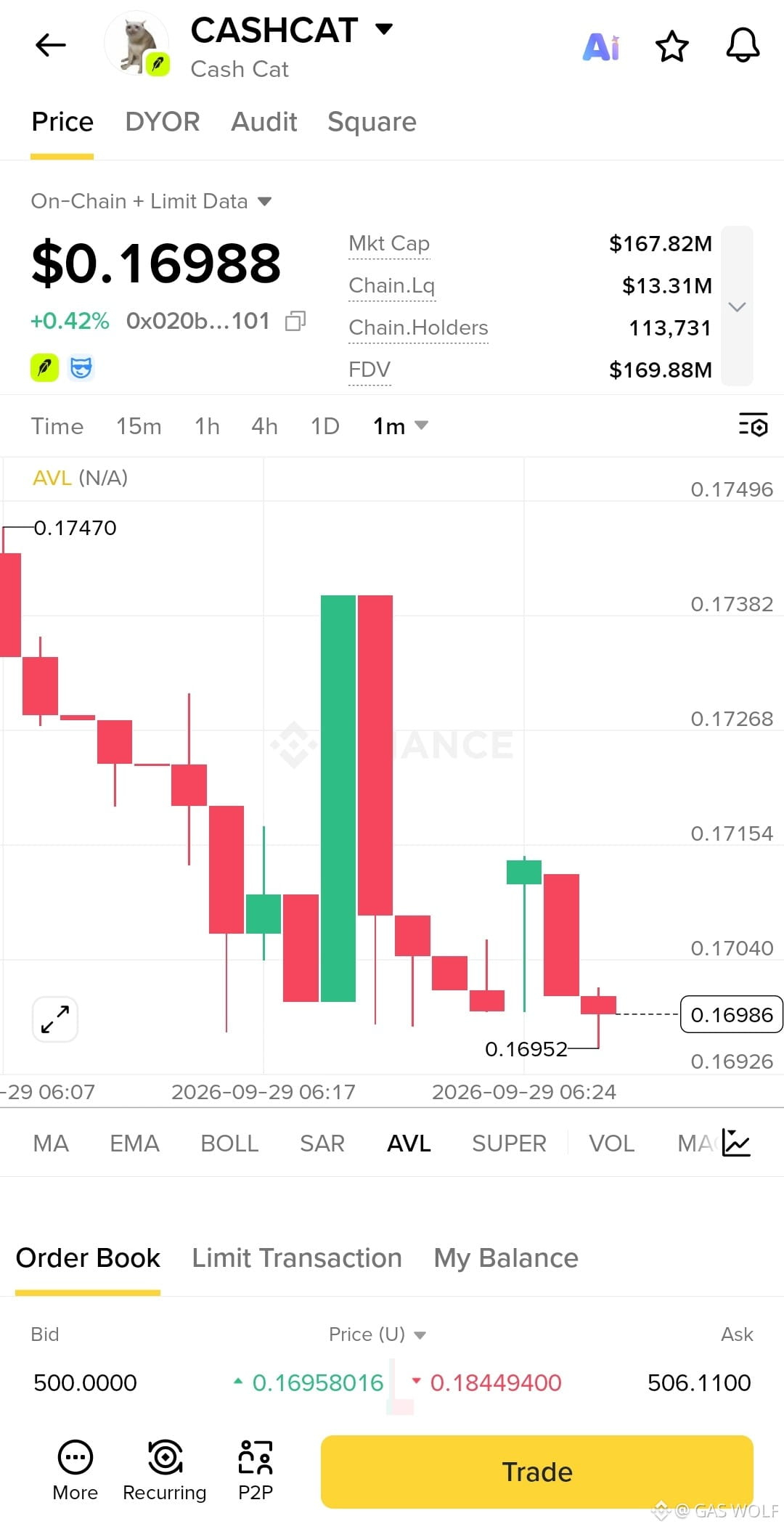
CASHCAT évolue autour de 0,16988 $, se maintenant juste au-dessus du récent plus bas de 0,16952 $ après ne pas avoir réussi à soutenir le rebond vers 0,17382 $. Cette zone est importante car le prix se situe près de l’extrémité basse de la fourchette actuelle en 1 minute.
Sur le graphique 1 minute, les vendeurs restent actifs : les dernières bougies reviennent vers 0,16950 $ après un rejet marqué depuis la zone de 0,1738 $. Les acheteurs doivent défendre ce support et reprendre 0,17040–0,17100 $ pour montrer que la structure à court terme commence à se rétablir.
Je me concentre sur la capacité des acheteurs à défendre 0,16950–0,16970 $ et à repousser le prix au-dessus de 0,17100 $ avec suite. Un rétablissement confirmé pourrait ramener 0,17270 $ puis 0,17380 $ dans le viseur. Si 0,16950 se casse nettement, la configuration de reprise actuelle serait invalidée.
Configuration de transaction :
Zone d’entrée : 0,16960–0,17000 $
Take Profit 1 : 0,17270 $
Take Profit 2 : 0,17380 $
Stop Loss : 0,16890 $
L’élément clé sera la confirmation plutôt que de courir après le mouvement. Comme CASHCAT se négocie près de nouveaux plus bas intraday et affiche une volatilité marquée, la patience, le sizing de position et la gestion du risque disciplinée comptent.
{alpha}(46630x020bfc650a365f8bb26819deaabf3e21291018b4)
#UKFCAWinsCourtOrderToRecover851400Pounds #ChainlinkLaunchesCCIP2WithEnterpriseVerification #QNTFallsOver40%FromMorningHigh #USDTAdds845900HoldersInPast7Days #KospiFalls2.7%SamsungSKHynixDropOver5%
📊 $CASHCAT — Configuration d’action sur le prix
CASHCAT évolue autour de 0,16988 $, se maintenant juste au-dessus du récent plus bas de 0,16952 $ après ne pas avoir réussi à soutenir le rebond vers 0,17382 $. Cette zone est importante car le prix se situe près de l’extrémité basse de la fourchette actuelle en 1 minute.
Sur le graphique 1 minute, les vendeurs restent actifs : les dernières bougies reviennent vers 0,16950 $ après un rejet marqué depuis la zone de 0,1738 $. Les acheteurs doivent défendre ce support et reprendre 0,17040–0,17100 $ pour montrer que la structure à court terme commence à se rétablir.
Je me concentre sur la capacité des acheteurs à défendre 0,16950–0,16970 $ et à repousser le prix au-dessus de 0,17100 $ avec suite. Un rétablissement confirmé pourrait ramener 0,17270 $ puis 0,17380 $ dans le viseur. Si 0,16950 se casse nettement, la configuration de reprise actuelle serait invalidée.
Configuration de transaction :
Zone d’entrée : 0,16960–0,17000 $
Take Profit 1 : 0,17270 $
Take Profit 2 : 0,17380 $
Stop Loss : 0,16890 $
L’élément clé sera la confirmation plutôt que de courir après le mouvement. Comme CASHCAT se négocie près de nouveaux plus bas intraday et affiche une volatilité marquée, la patience, le sizing de position et la gestion du risque disciplinée comptent.
#UKFCAWinsCourtOrderToRecover851400Pounds #ChainlinkLaunchesCCIP2WithEnterpriseVerification #QNTFallsOver40%FromMorningHigh #USDTAdds845900HoldersInPast7Days #KospiFalls2.7%SamsungSKHynixDropOver5%
CASHCAT évolue autour de 0,16988 $, se maintenant juste au-dessus du récent plus bas de 0,16952 $ après ne pas avoir réussi à soutenir le rebond vers 0,17382 $. Cette zone est importante car le prix se situe près de l’extrémité basse de la fourchette actuelle en 1 minute.
Sur le graphique 1 minute, les vendeurs restent actifs : les dernières bougies reviennent vers 0,16950 $ après un rejet marqué depuis la zone de 0,1738 $. Les acheteurs doivent défendre ce support et reprendre 0,17040–0,17100 $ pour montrer que la structure à court terme commence à se rétablir.
Je me concentre sur la capacité des acheteurs à défendre 0,16950–0,16970 $ et à repousser le prix au-dessus de 0,17100 $ avec suite. Un rétablissement confirmé pourrait ramener 0,17270 $ puis 0,17380 $ dans le viseur. Si 0,16950 se casse nettement, la configuration de reprise actuelle serait invalidée.
Configuration de transaction :
Zone d’entrée : 0,16960–0,17000 $
Take Profit 1 : 0,17270 $
Take Profit 2 : 0,17380 $
Stop Loss : 0,16890 $
L’élément clé sera la confirmation plutôt que de courir après le mouvement. Comme CASHCAT se négocie près de nouveaux plus bas intraday et affiche une volatilité marquée, la patience, le sizing de position et la gestion du risque disciplinée comptent.
#UKFCAWinsCourtOrderToRecover851400Pounds #ChainlinkLaunchesCCIP2WithEnterpriseVerification #QNTFallsOver40%FromMorningHigh #USDTAdds845900HoldersInPast7Days #KospiFalls2.7%SamsungSKHynixDropOver5%
188
·
--
Haussier
📊 $KII
{alpha}(560xeec6574eabba52bac3f0277f2cd5ac7e67197886)
# — Configuration de l’analyse de l’action des prix
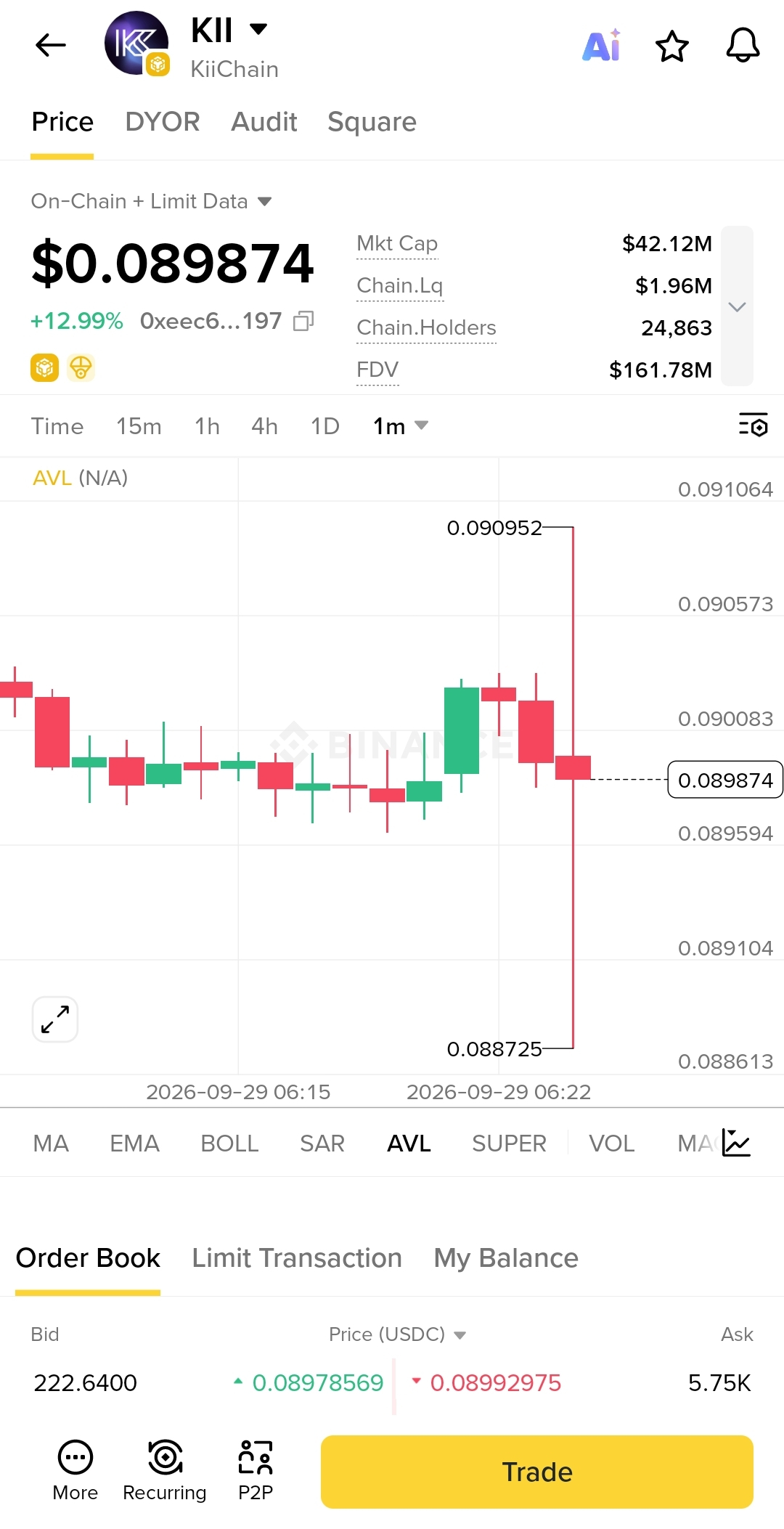
KII évolue autour de 0,08987 $, en hausse d’environ 13 %, après un mouvement volatil entre le plus bas de 0,08873 $ et le plus haut de 0,09095 $. Cette zone est importante car le prix consolide désormais près de 0,09000 $ après avoir testé les deux côtés de la fourchette récente.
Sur le graphique en 1 minute, le prix a brièvement franchi 0,09057 $ avant un rejet brutal, tandis que la longue mèche inférieure vers 0,08873 $ montre que les acheteurs sont aussi intervenus de façon agressive à des niveaux plus bas. Le bras de fer immédiat se situe autour de 0,08960–0,09000 $.
Mon objectif est de savoir si les acheteurs peuvent défendre 0,08960–0,08980 $ et reprendre 0,09010–0,09020 $ avec une continuité. Une reprise confirmée pourrait remettre 0,09095, puis 0,09150, au centre des préoccupations. Si 0,08960 se brise de manière décisive, le plus bas récent autour de 0,08873 $ pourrait revenir dans la partie.
Configuration de la transaction :
Zone d’entrée : 0,08965–0,08990 $
Take Profit 1 : 0,09095 $
Take Profit 2 : 0,09150 $
Stop Loss : 0,08910 $
L’élément clé sera la confirmation plutôt que de courir après le mouvement. Avec KII montrant une i#ChainlinkLaunchesCCIP2WithEnterpriseVerification #UKFCAWinsCourtOrderToRecover851400Pounds #QNTFallsOver40%FromMorningHigh #USDTAdds845900HoldersInPast7Days #KospiFalls2.7%SamsungSKHynixDropOver5% ntraminute volatilité, la patience, le dimensionnement des positions et une gestion du risque disciplinée comptent.
📊 $KII
# — Configuration de l’analyse de l’action des prix
KII évolue autour de 0,08987 $, en hausse d’environ 13 %, après un mouvement volatil entre le plus bas de 0,08873 $ et le plus haut de 0,09095 $. Cette zone est importante car le prix consolide désormais près de 0,09000 $ après avoir testé les deux côtés de la fourchette récente.
Sur le graphique en 1 minute, le prix a brièvement franchi 0,09057 $ avant un rejet brutal, tandis que la longue mèche inférieure vers 0,08873 $ montre que les acheteurs sont aussi intervenus de façon agressive à des niveaux plus bas. Le bras de fer immédiat se situe autour de 0,08960–0,09000 $.
Mon objectif est de savoir si les acheteurs peuvent défendre 0,08960–0,08980 $ et reprendre 0,09010–0,09020 $ avec une continuité. Une reprise confirmée pourrait remettre 0,09095, puis 0,09150, au centre des préoccupations. Si 0,08960 se brise de manière décisive, le plus bas récent autour de 0,08873 $ pourrait revenir dans la partie.
Configuration de la transaction :
Zone d’entrée : 0,08965–0,08990 $
Take Profit 1 : 0,09095 $
Take Profit 2 : 0,09150 $
Stop Loss : 0,08910 $
L’élément clé sera la confirmation plutôt que de courir après le mouvement. Avec KII montrant une i#ChainlinkLaunchesCCIP2WithEnterpriseVerification #UKFCAWinsCourtOrderToRecover851400Pounds #QNTFallsOver40%FromMorningHigh #USDTAdds845900HoldersInPast7Days #KospiFalls2.7%SamsungSKHynixDropOver5% ntraminute volatilité, la patience, le dimensionnement des positions et une gestion du risque disciplinée comptent.
# — Configuration de l’analyse de l’action des prix
KII évolue autour de 0,08987 $, en hausse d’environ 13 %, après un mouvement volatil entre le plus bas de 0,08873 $ et le plus haut de 0,09095 $. Cette zone est importante car le prix consolide désormais près de 0,09000 $ après avoir testé les deux côtés de la fourchette récente.
Sur le graphique en 1 minute, le prix a brièvement franchi 0,09057 $ avant un rejet brutal, tandis que la longue mèche inférieure vers 0,08873 $ montre que les acheteurs sont aussi intervenus de façon agressive à des niveaux plus bas. Le bras de fer immédiat se situe autour de 0,08960–0,09000 $.
Mon objectif est de savoir si les acheteurs peuvent défendre 0,08960–0,08980 $ et reprendre 0,09010–0,09020 $ avec une continuité. Une reprise confirmée pourrait remettre 0,09095, puis 0,09150, au centre des préoccupations. Si 0,08960 se brise de manière décisive, le plus bas récent autour de 0,08873 $ pourrait revenir dans la partie.
Configuration de la transaction :
Zone d’entrée : 0,08965–0,08990 $
Take Profit 1 : 0,09095 $
Take Profit 2 : 0,09150 $
Stop Loss : 0,08910 $
L’élément clé sera la confirmation plutôt que de courir après le mouvement. Avec KII montrant une i#ChainlinkLaunchesCCIP2WithEnterpriseVerification #UKFCAWinsCourtOrderToRecover851400Pounds #QNTFallsOver40%FromMorningHigh #USDTAdds845900HoldersInPast7Days #KospiFalls2.7%SamsungSKHynixDropOver5% ntraminute volatilité, la patience, le dimensionnement des positions et une gestion du risque disciplinée comptent.
292
·
--
Haussier
📊 $XDP — Configuration de l’action des prix
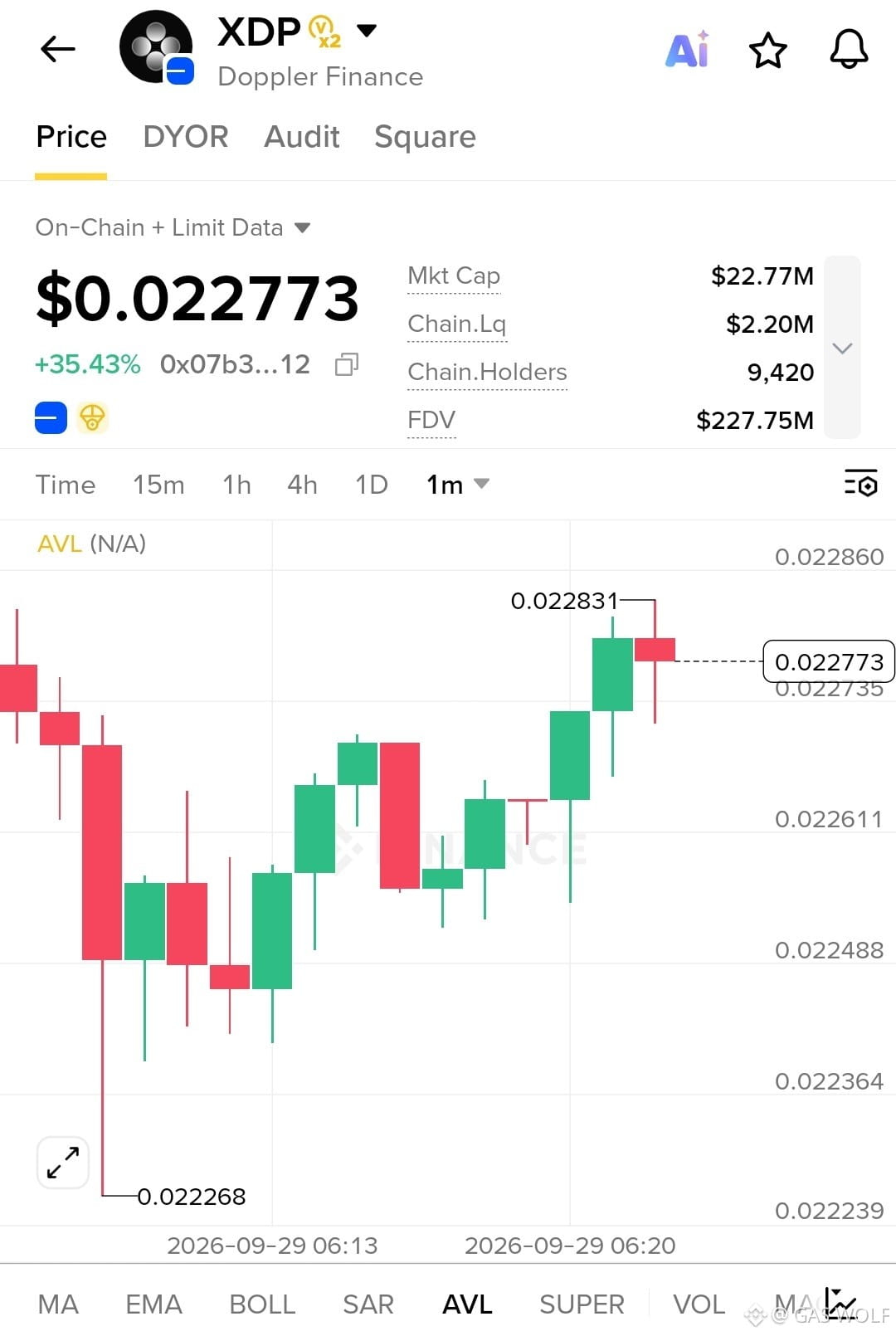
XDP évolue autour de 0,02277 $, en hausse d’environ 35 %, après avoir rebondi depuis le plus bas à 0,022268 $ et s’être propulsé dans la zone de résistance à 0,022831 $. Cette zone est importante car le prix teste désormais le récent plus haut local après un fort redressement intraday.
Sur le graphique 1 minute, les acheteurs ont pris le contrôle à court terme, avec une séquence de plus bas plus élevés et de plus hauts plus élevés qui se dessine à partir du plus bas de la séance. Toutefois, la dernière bougie montre un certain rejet près de 0,02283 $, donc une confirmation est nécessaire avant de supposer un autre breakout.
Mon attention porte sur la capacité des acheteurs à défendre 0,02270–0,02275 $ et à reprendre 0,02283 $ avec un mouvement de suivi. Une cassure nette pourrait ramener 0,02300 et 0,02320 $ dans le viseur. Si le prix perd 0,02260 $, la structure haussière à court terme pourrait s’affaiblir.
Configuration de la transaction :
Zone d’entrée : 0,02265–0,02275 $
Take Profit 1 : 0,02300 $
Take Profit 2 : 0,02320 $
Stop Loss : 0,02245 $
L’élément clé sera la confirmation plutôt que de poursuivre le mouvement. Après une hausse brutale de 35 % et avec XDP évoluant près des plus hauts locaux, la patience, la taille de position et la gestion rigoureuse du risque comptent.
{alpha}(84530x07b3d902783c3c12b077508c3b5c00113d1291d0)
#UKFCAWinsCourtOrderToRecover851400Pounds #ChainlinkLaunchesCCIP2WithEnterpriseVerification #QNTFallsOver40%FromMorningHigh #USDTAdds845900HoldersInPast7Days #KospiFalls2.7%SamsungSKHynixDropOver5%
📊 $XDP — Configuration de l’action des prix
XDP évolue autour de 0,02277 $, en hausse d’environ 35 %, après avoir rebondi depuis le plus bas à 0,022268 $ et s’être propulsé dans la zone de résistance à 0,022831 $. Cette zone est importante car le prix teste désormais le récent plus haut local après un fort redressement intraday.
Sur le graphique 1 minute, les acheteurs ont pris le contrôle à court terme, avec une séquence de plus bas plus élevés et de plus hauts plus élevés qui se dessine à partir du plus bas de la séance. Toutefois, la dernière bougie montre un certain rejet près de 0,02283 $, donc une confirmation est nécessaire avant de supposer un autre breakout.
Mon attention porte sur la capacité des acheteurs à défendre 0,02270–0,02275 $ et à reprendre 0,02283 $ avec un mouvement de suivi. Une cassure nette pourrait ramener 0,02300 et 0,02320 $ dans le viseur. Si le prix perd 0,02260 $, la structure haussière à court terme pourrait s’affaiblir.
Configuration de la transaction :
Zone d’entrée : 0,02265–0,02275 $
Take Profit 1 : 0,02300 $
Take Profit 2 : 0,02320 $
Stop Loss : 0,02245 $
L’élément clé sera la confirmation plutôt que de poursuivre le mouvement. Après une hausse brutale de 35 % et avec XDP évoluant près des plus hauts locaux, la patience, la taille de position et la gestion rigoureuse du risque comptent.
#UKFCAWinsCourtOrderToRecover851400Pounds #ChainlinkLaunchesCCIP2WithEnterpriseVerification #QNTFallsOver40%FromMorningHigh #USDTAdds845900HoldersInPast7Days #KospiFalls2.7%SamsungSKHynixDropOver5%
XDP évolue autour de 0,02277 $, en hausse d’environ 35 %, après avoir rebondi depuis le plus bas à 0,022268 $ et s’être propulsé dans la zone de résistance à 0,022831 $. Cette zone est importante car le prix teste désormais le récent plus haut local après un fort redressement intraday.
Sur le graphique 1 minute, les acheteurs ont pris le contrôle à court terme, avec une séquence de plus bas plus élevés et de plus hauts plus élevés qui se dessine à partir du plus bas de la séance. Toutefois, la dernière bougie montre un certain rejet près de 0,02283 $, donc une confirmation est nécessaire avant de supposer un autre breakout.
Mon attention porte sur la capacité des acheteurs à défendre 0,02270–0,02275 $ et à reprendre 0,02283 $ avec un mouvement de suivi. Une cassure nette pourrait ramener 0,02300 et 0,02320 $ dans le viseur. Si le prix perd 0,02260 $, la structure haussière à court terme pourrait s’affaiblir.
Configuration de la transaction :
Zone d’entrée : 0,02265–0,02275 $
Take Profit 1 : 0,02300 $
Take Profit 2 : 0,02320 $
Stop Loss : 0,02245 $
L’élément clé sera la confirmation plutôt que de poursuivre le mouvement. Après une hausse brutale de 35 % et avec XDP évoluant près des plus hauts locaux, la patience, la taille de position et la gestion rigoureuse du risque comptent.
#UKFCAWinsCourtOrderToRecover851400Pounds #ChainlinkLaunchesCCIP2WithEnterpriseVerification #QNTFallsOver40%FromMorningHigh #USDTAdds845900HoldersInPast7Days #KospiFalls2.7%SamsungSKHynixDropOver5%
1
587
·
--
Haussier
Je me suis réveillé avec un tableau des contrats à terme qui semblait presque trop vert pour être ignoré.
Le PTB montait d’environ +96 %, la ZETA autour de +72 %, tandis que $SAGA, $NEAR, $BTW et $NIL effectuaient aussi des mouvements agressifs.
À première vue, on pourrait croire à un retour généralisé de la demande sur le marché.
Puis j’ai regardé les choses autrement.
Un mouvement sur les contrats à terme m’indique que les traders sont prêts à payer plus pour obtenir une exposition. Cela ne me dit pas automatiquement que des acheteurs au comptant, l’activité du protocole ou une demande organique soutiennent réellement le mouvement en dessous.
Cette distinction compte.
Un token peut grimper de 70–100 % simplement parce que le positionnement change plus vite que les fondamentaux. L’effet de levier, la liquidité faible et le rachat de positions courtes peuvent produire un graphique très convaincant avant même que l’activité sous-jacente n’ait réellement changé.
C’est le point que je ne veux pas confondre.
Le signal intéressant ici n’est pas seulement que ces noms “pompent”. Il s’agit de savoir si le mouvement tient une fois que le positionnement initial disparaît.
Alors ça m’a sauté aux yeux : le vrai test n’est pas la taille de la bougie verte — c’est ce qui se passe après la bougie.
Si le prix se maintient tandis que le volume se normalise, la demande au comptant reste active et les utilisateurs continuent d’interagir avec les protocoles sous-jacents : le mouvement devient bien plus intéressant.
Si l’activité s’essouffle alors que le prix dépend d’un positionnement futures de plus en plus agressif, le pourcentage mis en avant commence à paraître moins informatif.
Donc je ne poursuis pas le premier mouvement.
Je regarde ce qui se passe ensuite : est-ce que la vraie activité suit le prix, ou est-ce que le prix part devant les fondamentaux ?
C’est la métrique qui m’intéresse maintenant.
#XRPExchangeReservesHitSevenYearLow #BuffettStepsDownAsBerkshireChairman #BOJRaisesRatesTo31YearHigh #SaylorHintsStrategyBitcoinBuy #CanaryFilesSecondAmendmentForStakedSEIETF
$PTB
{alpha}(560x95c9b514566fbd224dc2037f5914eb8ab91c9201)
$ZETA
{alpha}(10xf091867ec603a6628ed83d274e835539d82e9cc8)
$SAGA
{future}(SAGAUSDT)
Je me suis réveillé avec un tableau des contrats à terme qui semblait presque trop vert pour être ignoré.
Le PTB montait d’environ +96 %, la ZETA autour de +72 %, tandis que $SAGA , $NEAR, $BTW et $NIL effectuaient aussi des mouvements agressifs.
À première vue, on pourrait croire à un retour généralisé de la demande sur le marché.
Puis j’ai regardé les choses autrement.
Un mouvement sur les contrats à terme m’indique que les traders sont prêts à payer plus pour obtenir une exposition. Cela ne me dit pas automatiquement que des acheteurs au comptant, l’activité du protocole ou une demande organique soutiennent réellement le mouvement en dessous.
Cette distinction compte.
Un token peut grimper de 70–100 % simplement parce que le positionnement change plus vite que les fondamentaux. L’effet de levier, la liquidité faible et le rachat de positions courtes peuvent produire un graphique très convaincant avant même que l’activité sous-jacente n’ait réellement changé.
C’est le point que je ne veux pas confondre.
Le signal intéressant ici n’est pas seulement que ces noms “pompent”. Il s’agit de savoir si le mouvement tient une fois que le positionnement initial disparaît.
Alors ça m’a sauté aux yeux : le vrai test n’est pas la taille de la bougie verte — c’est ce qui se passe après la bougie.
Si le prix se maintient tandis que le volume se normalise, la demande au comptant reste active et les utilisateurs continuent d’interagir avec les protocoles sous-jacents : le mouvement devient bien plus intéressant.
Si l’activité s’essouffle alors que le prix dépend d’un positionnement futures de plus en plus agressif, le pourcentage mis en avant commence à paraître moins informatif.
Donc je ne poursuis pas le premier mouvement.
Je regarde ce qui se passe ensuite : est-ce que la vraie activité suit le prix, ou est-ce que le prix part devant les fondamentaux ?
C’est la métrique qui m’intéresse maintenant.
#XRPExchangeReservesHitSevenYearLow #BuffettStepsDownAsBerkshireChairman #BOJRaisesRatesTo31YearHigh #SaylorHintsStrategyBitcoinBuy #CanaryFilesSecondAmendmentForStakedSEIETF
$PTB
$ZETA
$SAGA
Le PTB montait d’environ +96 %, la ZETA autour de +72 %, tandis que $SAGA , $NEAR, $BTW et $NIL effectuaient aussi des mouvements agressifs.
À première vue, on pourrait croire à un retour généralisé de la demande sur le marché.
Puis j’ai regardé les choses autrement.
Un mouvement sur les contrats à terme m’indique que les traders sont prêts à payer plus pour obtenir une exposition. Cela ne me dit pas automatiquement que des acheteurs au comptant, l’activité du protocole ou une demande organique soutiennent réellement le mouvement en dessous.
Cette distinction compte.
Un token peut grimper de 70–100 % simplement parce que le positionnement change plus vite que les fondamentaux. L’effet de levier, la liquidité faible et le rachat de positions courtes peuvent produire un graphique très convaincant avant même que l’activité sous-jacente n’ait réellement changé.
C’est le point que je ne veux pas confondre.
Le signal intéressant ici n’est pas seulement que ces noms “pompent”. Il s’agit de savoir si le mouvement tient une fois que le positionnement initial disparaît.
Alors ça m’a sauté aux yeux : le vrai test n’est pas la taille de la bougie verte — c’est ce qui se passe après la bougie.
Si le prix se maintient tandis que le volume se normalise, la demande au comptant reste active et les utilisateurs continuent d’interagir avec les protocoles sous-jacents : le mouvement devient bien plus intéressant.
Si l’activité s’essouffle alors que le prix dépend d’un positionnement futures de plus en plus agressif, le pourcentage mis en avant commence à paraître moins informatif.
Donc je ne poursuis pas le premier mouvement.
Je regarde ce qui se passe ensuite : est-ce que la vraie activité suit le prix, ou est-ce que le prix part devant les fondamentaux ?
C’est la métrique qui m’intéresse maintenant.
#XRPExchangeReservesHitSevenYearLow #BuffettStepsDownAsBerkshireChairman #BOJRaisesRatesTo31YearHigh #SaylorHintsStrategyBitcoinBuy #CanaryFilesSecondAmendmentForStakedSEIETF
$PTB
$ZETA
$SAGA
PTB💕
59%
ZETA💯
23%
NEAR💪
0%
SAGA👍
18%
34 Votes • Vote fermé
2
2.1k
·
--
Haussier
$ETH évolue autour de 2 450 $ et le prix tente de se redresser après avoir chuté vers la zone de support des 2 437 $. Cette zone semble importante pour le prochain mouvement, car les acheteurs ont réagi depuis le récent plus bas et cherchent à construire un élan à court terme.
La structure globale sur 15 minutes reste sous pression, mais les dernières bougies montrent que les acheteurs défendent la zone de rebond. Pour que le scénario haussier se développe, l’ETH doit rester au-dessus de la zone 2 440–2 450 $ et reconquérir une résistance proche avec un élan solide.
Si les acheteurs parviennent à garder le contrôle, les objectifs à la hausse pourraient se déclencher. Un retour sous le plus bas récent à 2 437 $ affaiblirait la configuration.
Configuration de transaction :
Zone d’entrée : 2 445–2 452 $
Take Profit 1 : 2 465 $
Take Profit 2 : 2 480 $
Stop Loss : 2 432 $
L’élément clé sera la confirmation plutôt que de courir après le mouvement. Gardez le risque maîtrisé et attendez que la réaction du prix valide la configuration avant d’entrer.
{spot}(ETHUSDT)
$ETH évolue autour de 2 450 $ et le prix tente de se redresser après avoir chuté vers la zone de support des 2 437 $. Cette zone semble importante pour le prochain mouvement, car les acheteurs ont réagi depuis le récent plus bas et cherchent à construire un élan à court terme.
La structure globale sur 15 minutes reste sous pression, mais les dernières bougies montrent que les acheteurs défendent la zone de rebond. Pour que le scénario haussier se développe, l’ETH doit rester au-dessus de la zone 2 440–2 450 $ et reconquérir une résistance proche avec un élan solide.
Si les acheteurs parviennent à garder le contrôle, les objectifs à la hausse pourraient se déclencher. Un retour sous le plus bas récent à 2 437 $ affaiblirait la configuration.
Configuration de transaction :
Zone d’entrée : 2 445–2 452 $
Take Profit 1 : 2 465 $
Take Profit 2 : 2 480 $
Stop Loss : 2 432 $
L’élément clé sera la confirmation plutôt que de courir après le mouvement. Gardez le risque maîtrisé et attendez que la réaction du prix valide la configuration avant d’entrer.
La structure globale sur 15 minutes reste sous pression, mais les dernières bougies montrent que les acheteurs défendent la zone de rebond. Pour que le scénario haussier se développe, l’ETH doit rester au-dessus de la zone 2 440–2 450 $ et reconquérir une résistance proche avec un élan solide.
Si les acheteurs parviennent à garder le contrôle, les objectifs à la hausse pourraient se déclencher. Un retour sous le plus bas récent à 2 437 $ affaiblirait la configuration.
Configuration de transaction :
Zone d’entrée : 2 445–2 452 $
Take Profit 1 : 2 465 $
Take Profit 2 : 2 480 $
Stop Loss : 2 432 $
L’élément clé sera la confirmation plutôt que de courir après le mouvement. Gardez le risque maîtrisé et attendez que la réaction du prix valide la configuration avant d’entrer.
2
690
·
--
Haussier
$BTC Configuration de transaction
Le BTC se négocie actuellement autour de la zone de 76 450 $, après avoir rebondi depuis le support récent de 76 265 $. Cette zone est importante car les acheteurs sont intervenus après la forte baisse intraday, tandis que la zone 76 500–76 600 $ constitue la première résistance à proximité à reconquérir.
L’action des prix montre une reprise à court terme sur le graphique en 15 minutes, mais les acheteurs doivent encore prouver qu’ils peuvent maintenir le prix au-dessus de la zone actuelle et franchir la résistance proche. Mon objectif est de déterminer si les acheteurs peuvent continuer à défendre la zone de rebond récente.
Si l’élan se poursuit et que le BTC franchit nettement la résistance locale, des objectifs à la hausse pourraient entrer en jeu. En revanche, perdre le dernier plus bas du swing affaiblirait la configuration.
Configuration de transaction :
Zone d’entrée : 76 400–76 500 $
Take Profit 1 : 76 650 $
Take Profit 2 : 76 850 $
Stop Loss : 76 200 $
L’élément clé sera la confirmation plutôt que de courir après le mouvement. La patience autour de l’entrée et une gestion disciplinée du risque comptent davantage que de forcer une transaction.
{spot}(BTCUSDT)
$BTC Configuration de transaction
Le BTC se négocie actuellement autour de la zone de 76 450 $, après avoir rebondi depuis le support récent de 76 265 $. Cette zone est importante car les acheteurs sont intervenus après la forte baisse intraday, tandis que la zone 76 500–76 600 $ constitue la première résistance à proximité à reconquérir.
L’action des prix montre une reprise à court terme sur le graphique en 15 minutes, mais les acheteurs doivent encore prouver qu’ils peuvent maintenir le prix au-dessus de la zone actuelle et franchir la résistance proche. Mon objectif est de déterminer si les acheteurs peuvent continuer à défendre la zone de rebond récente.
Si l’élan se poursuit et que le BTC franchit nettement la résistance locale, des objectifs à la hausse pourraient entrer en jeu. En revanche, perdre le dernier plus bas du swing affaiblirait la configuration.
Configuration de transaction :
Zone d’entrée : 76 400–76 500 $
Take Profit 1 : 76 650 $
Take Profit 2 : 76 850 $
Stop Loss : 76 200 $
L’élément clé sera la confirmation plutôt que de courir après le mouvement. La patience autour de l’entrée et une gestion disciplinée du risque comptent davantage que de forcer une transaction.
Le BTC se négocie actuellement autour de la zone de 76 450 $, après avoir rebondi depuis le support récent de 76 265 $. Cette zone est importante car les acheteurs sont intervenus après la forte baisse intraday, tandis que la zone 76 500–76 600 $ constitue la première résistance à proximité à reconquérir.
L’action des prix montre une reprise à court terme sur le graphique en 15 minutes, mais les acheteurs doivent encore prouver qu’ils peuvent maintenir le prix au-dessus de la zone actuelle et franchir la résistance proche. Mon objectif est de déterminer si les acheteurs peuvent continuer à défendre la zone de rebond récente.
Si l’élan se poursuit et que le BTC franchit nettement la résistance locale, des objectifs à la hausse pourraient entrer en jeu. En revanche, perdre le dernier plus bas du swing affaiblirait la configuration.
Configuration de transaction :
Zone d’entrée : 76 400–76 500 $
Take Profit 1 : 76 650 $
Take Profit 2 : 76 850 $
Stop Loss : 76 200 $
L’élément clé sera la confirmation plutôt que de courir après le mouvement. La patience autour de l’entrée et une gestion disciplinée du risque comptent davantage que de forcer une transaction.
1
59
·
--
Haussier
J’ai passé plus de temps aujourd’hui à analyser la configuration de la Fed, et la première chose qui a retenu mon attention, c’est à quel point une grande partie du risque lié à la une est déjà intégrée dans le prix.
Le marché est fortement positionné autour d’une hausse de 25 points de base, qui ferait passer la fourchette cible de 3,50–3,75 % à 3,75–4,00 %. Le point intéressant, c’est que le taux effectif des fed funds était encore autour de 3,63 % à l’approche de la réunion.
À première vue, la configuration paraît simple : hausse = pression sur les actifs à risque, orientation plus souple = soulagement.
Mais ensuite, ça m’a frappé.
La décision de taux elle-même n’est peut-être plus la vraie information. Si le marché a déjà passé des jours à intégrer une hausse, la variable la plus importante devient ce qui se passe après que le chiffre est annoncé.
Cela signifie observer le dot plot, la répartition des votes et les indications de la présidente, plutôt que de considérer « 25 points de base » comme l’événement dans son intégralité. Les informations actuelles vont aussi dans ce sens : les attentes se sont concentrées sur une hausse, tandis que les économistes divergent sur le résultat réel de septembre.
Pour la crypto, cela crée une contradiction intéressante.
Un titre qui sonne baissier pourrait produire peu de baisse si le positionnement est déjà très encombré autour de ce scénario. À l’inverse, une attente techniquement inchangée peut encore frapper fort si la trajectoire à venir devient plus restrictive.
Donc je ne cherche pas à prédire la première bougie.
Je surveille la réaction du marché aux indications de la trajectoire de taux, en particulier la question de savoir si le BTC et les principaux actifs DeFi peuvent absorber un message hawkish sans perdre des niveaux clés.
Cette réaction devrait nous apprendre davantage que les 25 points de base eux-mêmes.
La vraie question : **la crypto intègre-t-elle réellement la hausse, ou intègre-t-elle plutôt la trajectoire après la hausse ?**
$DGAI
{alpha}(560x10d4183389e99233db3cc981c43443ebd28ebd5e)
$SYN
{future}(SYNUSDT)
$BTC
{future}(BTCUSDT)
J’ai passé plus de temps aujourd’hui à analyser la configuration de la Fed, et la première chose qui a retenu mon attention, c’est à quel point une grande partie du risque lié à la une est déjà intégrée dans le prix.
Le marché est fortement positionné autour d’une hausse de 25 points de base, qui ferait passer la fourchette cible de 3,50–3,75 % à 3,75–4,00 %. Le point intéressant, c’est que le taux effectif des fed funds était encore autour de 3,63 % à l’approche de la réunion.
À première vue, la configuration paraît simple : hausse = pression sur les actifs à risque, orientation plus souple = soulagement.
Mais ensuite, ça m’a frappé.
La décision de taux elle-même n’est peut-être plus la vraie information. Si le marché a déjà passé des jours à intégrer une hausse, la variable la plus importante devient ce qui se passe après que le chiffre est annoncé.
Cela signifie observer le dot plot, la répartition des votes et les indications de la présidente, plutôt que de considérer « 25 points de base » comme l’événement dans son intégralité. Les informations actuelles vont aussi dans ce sens : les attentes se sont concentrées sur une hausse, tandis que les économistes divergent sur le résultat réel de septembre.
Pour la crypto, cela crée une contradiction intéressante.
Un titre qui sonne baissier pourrait produire peu de baisse si le positionnement est déjà très encombré autour de ce scénario. À l’inverse, une attente techniquement inchangée peut encore frapper fort si la trajectoire à venir devient plus restrictive.
Donc je ne cherche pas à prédire la première bougie.
Je surveille la réaction du marché aux indications de la trajectoire de taux, en particulier la question de savoir si le BTC et les principaux actifs DeFi peuvent absorber un message hawkish sans perdre des niveaux clés.
Cette réaction devrait nous apprendre davantage que les 25 points de base eux-mêmes.
La vraie question : **la crypto intègre-t-elle réellement la hausse, ou intègre-t-elle plutôt la trajectoire après la hausse ?**
$DGAI
$SYN
$BTC
Le marché est fortement positionné autour d’une hausse de 25 points de base, qui ferait passer la fourchette cible de 3,50–3,75 % à 3,75–4,00 %. Le point intéressant, c’est que le taux effectif des fed funds était encore autour de 3,63 % à l’approche de la réunion.
À première vue, la configuration paraît simple : hausse = pression sur les actifs à risque, orientation plus souple = soulagement.
Mais ensuite, ça m’a frappé.
La décision de taux elle-même n’est peut-être plus la vraie information. Si le marché a déjà passé des jours à intégrer une hausse, la variable la plus importante devient ce qui se passe après que le chiffre est annoncé.
Cela signifie observer le dot plot, la répartition des votes et les indications de la présidente, plutôt que de considérer « 25 points de base » comme l’événement dans son intégralité. Les informations actuelles vont aussi dans ce sens : les attentes se sont concentrées sur une hausse, tandis que les économistes divergent sur le résultat réel de septembre.
Pour la crypto, cela crée une contradiction intéressante.
Un titre qui sonne baissier pourrait produire peu de baisse si le positionnement est déjà très encombré autour de ce scénario. À l’inverse, une attente techniquement inchangée peut encore frapper fort si la trajectoire à venir devient plus restrictive.
Donc je ne cherche pas à prédire la première bougie.
Je surveille la réaction du marché aux indications de la trajectoire de taux, en particulier la question de savoir si le BTC et les principaux actifs DeFi peuvent absorber un message hawkish sans perdre des niveaux clés.
Cette réaction devrait nous apprendre davantage que les 25 points de base eux-mêmes.
La vraie question : **la crypto intègre-t-elle réellement la hausse, ou intègre-t-elle plutôt la trajectoire après la hausse ?**
$DGAI
$SYN
$BTC
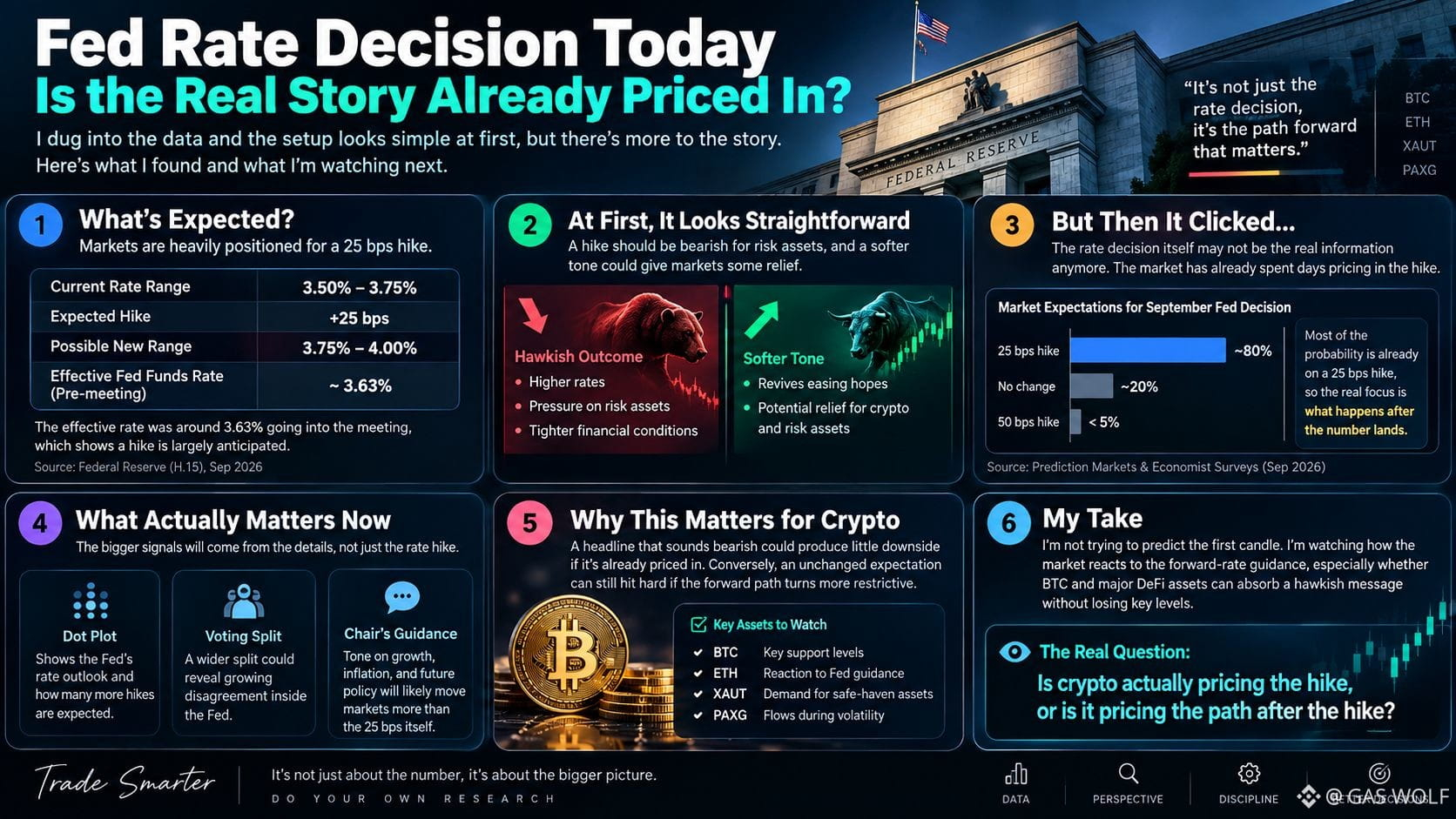
374
·
--
Haussier
La journée de l’IPC apporte toujours un type de tension différent au marché.
Pendant des heures, tout peut sembler calme, puis un seul chiffre d’inflation change l’ensemble du débat en quelques minutes.
Ce qui rend la chose intéressante, c’est que le marché ne surveille pas seulement si l’inflation monte ou baisse. La question plus importante est de savoir si le résultat arrive au-dessus ou en dessous des attentes.
Un IPC plus “doux” pourrait donner aux marchés davantage de confiance que l’inflation ralentit. Un chiffre plus “chaud” pourrait faire l’inverse et raviver les inquiétudes quant au maintien des taux d’intérêt à un niveau plus élevé plus longtemps.
C’est pourquoi je ne m’emballe pas trop pour chaque petit mouvement avant la publication.
J’ai vu le marché devenir bruyant avant des données économiques majeures. Les traders se positionnent tôt, les prix bougent dans un sens puis dans l’autre, et chacun essaie de deviner ce qui va se passer ensuite.
Puis le chiffre réel arrive.
La première réaction peut être rapide et confuse, mais le mouvement le plus important est souvent ce qui se produit après que le marché a eu le temps de comprendre les données.
Pour moi, c’est l’un de ces moments où observer attentivement a plus de sens que de forcer une prédiction.
Les chiffres raconteront une histoire.
La réaction du marché en racontera une autre.
#CPIWatch #CPI #NFP #FedWatch
$NES
{alpha}(560x097acf27503753e77bca940277806156c5925b81)
$TFUEL
{spot}(TFUELUSDT)
$LAB
{alpha}(560x7ec43cf65f1663f820427c62a5780b8f2e25593a)
La journée de l’IPC apporte toujours un type de tension différent au marché.
Pendant des heures, tout peut sembler calme, puis un seul chiffre d’inflation change l’ensemble du débat en quelques minutes.
Ce qui rend la chose intéressante, c’est que le marché ne surveille pas seulement si l’inflation monte ou baisse. La question plus importante est de savoir si le résultat arrive au-dessus ou en dessous des attentes.
Un IPC plus “doux” pourrait donner aux marchés davantage de confiance que l’inflation ralentit. Un chiffre plus “chaud” pourrait faire l’inverse et raviver les inquiétudes quant au maintien des taux d’intérêt à un niveau plus élevé plus longtemps.
C’est pourquoi je ne m’emballe pas trop pour chaque petit mouvement avant la publication.
J’ai vu le marché devenir bruyant avant des données économiques majeures. Les traders se positionnent tôt, les prix bougent dans un sens puis dans l’autre, et chacun essaie de deviner ce qui va se passer ensuite.
Puis le chiffre réel arrive.
La première réaction peut être rapide et confuse, mais le mouvement le plus important est souvent ce qui se produit après que le marché a eu le temps de comprendre les données.
Pour moi, c’est l’un de ces moments où observer attentivement a plus de sens que de forcer une prédiction.
Les chiffres raconteront une histoire.
La réaction du marché en racontera une autre.
#CPIWatch #CPI #NFP #FedWatch
$NES
$TFUEL
$LAB
Pendant des heures, tout peut sembler calme, puis un seul chiffre d’inflation change l’ensemble du débat en quelques minutes.
Ce qui rend la chose intéressante, c’est que le marché ne surveille pas seulement si l’inflation monte ou baisse. La question plus importante est de savoir si le résultat arrive au-dessus ou en dessous des attentes.
Un IPC plus “doux” pourrait donner aux marchés davantage de confiance que l’inflation ralentit. Un chiffre plus “chaud” pourrait faire l’inverse et raviver les inquiétudes quant au maintien des taux d’intérêt à un niveau plus élevé plus longtemps.
C’est pourquoi je ne m’emballe pas trop pour chaque petit mouvement avant la publication.
J’ai vu le marché devenir bruyant avant des données économiques majeures. Les traders se positionnent tôt, les prix bougent dans un sens puis dans l’autre, et chacun essaie de deviner ce qui va se passer ensuite.
Puis le chiffre réel arrive.
La première réaction peut être rapide et confuse, mais le mouvement le plus important est souvent ce qui se produit après que le marché a eu le temps de comprendre les données.
Pour moi, c’est l’un de ces moments où observer attentivement a plus de sens que de forcer une prédiction.
Les chiffres raconteront une histoire.
La réaction du marché en racontera une autre.
#CPIWatch #CPI #NFP #FedWatch
$NES
$TFUEL
$LAB

1
2
389
Connectez-vous pour découvrir plus de contenu
Rejoignez la communauté mondiale des adeptes de cryptomonnaies sur Binance Square
⚡️ Suviez les dernières informations importantes sur les cryptomonnaies.
💬 Jugé digne de confiance par la plus grande plateforme d’échange de cryptomonnaies au monde.
👍 Découvrez les connaissances que partagent les créateurs vérifiés.
Adresse e-mail/Nº de téléphone
Sujets d’actualité
SECHaltsCryptoETFReviewsAmidFundingLapse
5,652 vues
135 mentions
#sechaltscryptoetfreviewsamidfundinglapse
La SEC suspend temporairement l’examen de nouveaux ETF crypto au milieu d’un manque de financement.
Ce n’est pas un rejet — il s’agit simplement d’un gel temporaire pendant que le problème de financement se poursuit.
Les demandeurs d’ETF crypto pourraient devoir attendre un peu plus longtemps.
#Write2Earn
$ETH
The Ledger Mind
·1 mentions J’aime
·8.1k vues
ZcashETFPostsFirstWeeklyOutflow$93.6M
56,122 vues
173 mentions
GreekPoliceBustCryptoScamRingArrest17
167,360 vues
1,167 mentions