
Elara Brooks
136 Publications

Elara Brooks
Signaler
Bloquer l’utilisateur
53 Suivis
251 Abonnés
341 J’aime
Publications
Tous
Citations
·
--
Voir la traduction
DuskEVM could eventually make the developer side of the ecosystem easier to measure.
Solidity and Hardhat support means developers can work with tools they're already familiar with.
Now I'd watch three things:
Deployments.
Active applications.
Repeat users.
If those numbers grow together, the infrastructure thesis becomes more interesting.
If they don't, developer accessibility alone won't be enough.
#dusk $DUSK @Dusk_Foundation
DuskEVM could eventually make the developer side of the ecosystem easier to measure.
Solidity and Hardhat support means developers can work with tools they're already familiar with.
Now I'd watch three things:
Deployments.
Active applications.
Repeat users.
If those numbers grow together, the infrastructure thesis becomes more interesting.
If they don't, developer accessibility alone won't be enough.
#dusk $DUSK @Dusk
Solidity and Hardhat support means developers can work with tools they're already familiar with.
Now I'd watch three things:
Deployments.
Active applications.
Repeat users.
If those numbers grow together, the infrastructure thesis becomes more interesting.
If they don't, developer accessibility alone won't be enough.
#dusk $DUSK @Dusk
1
82
·
--
Voir la traduction
Dusk has an ambitious infrastructure thesis around privacy and regulated financial markets.
DuskEVM adds another practical piece by making Solidity and Hardhat development more accessible.
But infrastructure is only the beginning.
The harder question is whether developers build useful applications and whether users actually interact with them.
That's where I think the next meaningful signal will come from.
Not another narrative.
Not another prediction.
Actual network behavior.
#dusk $DUSK @Dusk_Foundation
Dusk has an ambitious infrastructure thesis around privacy and regulated financial markets.
DuskEVM adds another practical piece by making Solidity and Hardhat development more accessible.
But infrastructure is only the beginning.
The harder question is whether developers build useful applications and whether users actually interact with them.
That's where I think the next meaningful signal will come from.
Not another narrative.
Not another prediction.
Actual network behavior.
#dusk $DUSK @Dusk
DuskEVM adds another practical piece by making Solidity and Hardhat development more accessible.
But infrastructure is only the beginning.
The harder question is whether developers build useful applications and whether users actually interact with them.
That's where I think the next meaningful signal will come from.
Not another narrative.
Not another prediction.
Actual network behavior.
#dusk $DUSK @Dusk
1
65
·
--
Voir la traduction
The Dusk thesis isn't simply “put everything onchain.”
It's closer to:
How do you bring financial assets onchain while preserving the requirements that regulated markets already have?
That's a harder problem.
Privacy, compliance, settlement and interoperability all become important.
The recent DuskEVM release adds developer accessibility to that equation.
I think the next major signal will come from actual applications and network behavior rather than another narrative cycle.
#dusk $DUSK @Dusk_Foundation
The Dusk thesis isn't simply “put everything onchain.”
It's closer to:
How do you bring financial assets onchain while preserving the requirements that regulated markets already have?
That's a harder problem.
Privacy, compliance, settlement and interoperability all become important.
The recent DuskEVM release adds developer accessibility to that equation.
I think the next major signal will come from actual applications and network behavior rather than another narrative cycle.
#dusk $DUSK @Dusk
It's closer to:
How do you bring financial assets onchain while preserving the requirements that regulated markets already have?
That's a harder problem.
Privacy, compliance, settlement and interoperability all become important.
The recent DuskEVM release adds developer accessibility to that equation.
I think the next major signal will come from actual applications and network behavior rather than another narrative cycle.
#dusk $DUSK @Dusk
1
72
·
--
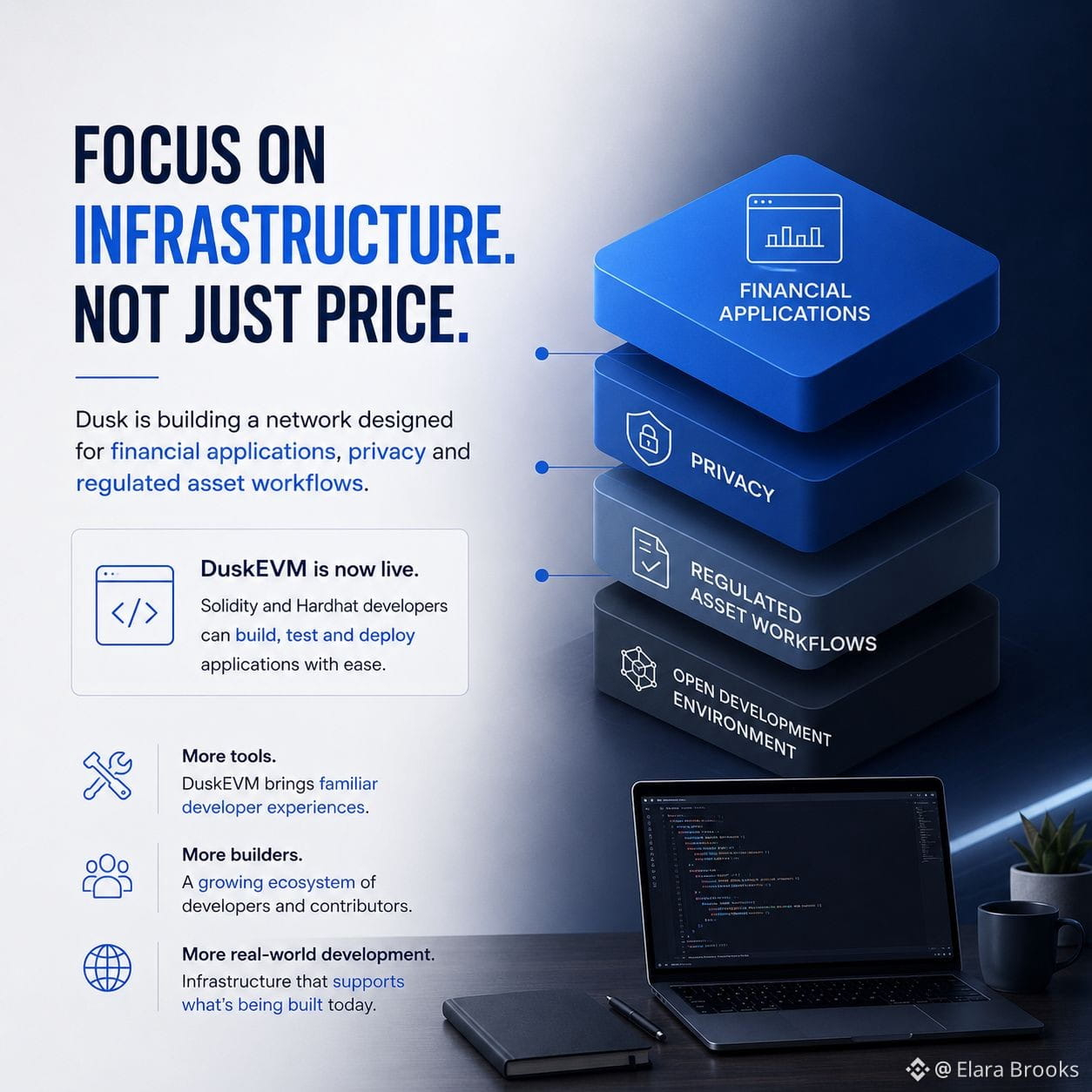
Il est facile de discuter de DUSK à travers des graphiques de prix.
Je m’intéresse davantage aux infrastructures en cours de construction en dessous.
Dusk travaille sur un réseau conçu pour les applications financières, la confidentialité et les flux d’actifs réglementés.
La récente sortie de DuskEVM ajoute une couche pratique supplémentaire en permettant aux développeurs Solidity et Hardhat de tester des applications.
Cela crée une phase de développement plus mesurable.
Plutôt que de se demander ce que DUSK pourrait devenir, je préférerais regarder ce que les développeurs déploient réellement
#dusk $DUSK @Dusk_Foundation
Il est facile de discuter de DUSK à travers des graphiques de prix.
Je m’intéresse davantage aux infrastructures en cours de construction en dessous.
Dusk travaille sur un réseau conçu pour les applications financières, la confidentialité et les flux d’actifs réglementés.
La récente sortie de DuskEVM ajoute une couche pratique supplémentaire en permettant aux développeurs Solidity et Hardhat de tester des applications.
Cela crée une phase de développement plus mesurable.
Plutôt que de se demander ce que DUSK pourrait devenir, je préférerais regarder ce que les développeurs déploient réellement
#dusk $DUSK @Dusk
Je m’intéresse davantage aux infrastructures en cours de construction en dessous.
Dusk travaille sur un réseau conçu pour les applications financières, la confidentialité et les flux d’actifs réglementés.
La récente sortie de DuskEVM ajoute une couche pratique supplémentaire en permettant aux développeurs Solidity et Hardhat de tester des applications.
Cela crée une phase de développement plus mesurable.
Plutôt que de se demander ce que DUSK pourrait devenir, je préférerais regarder ce que les développeurs déploient réellement
#dusk $DUSK @Dusk
1
73
·
--
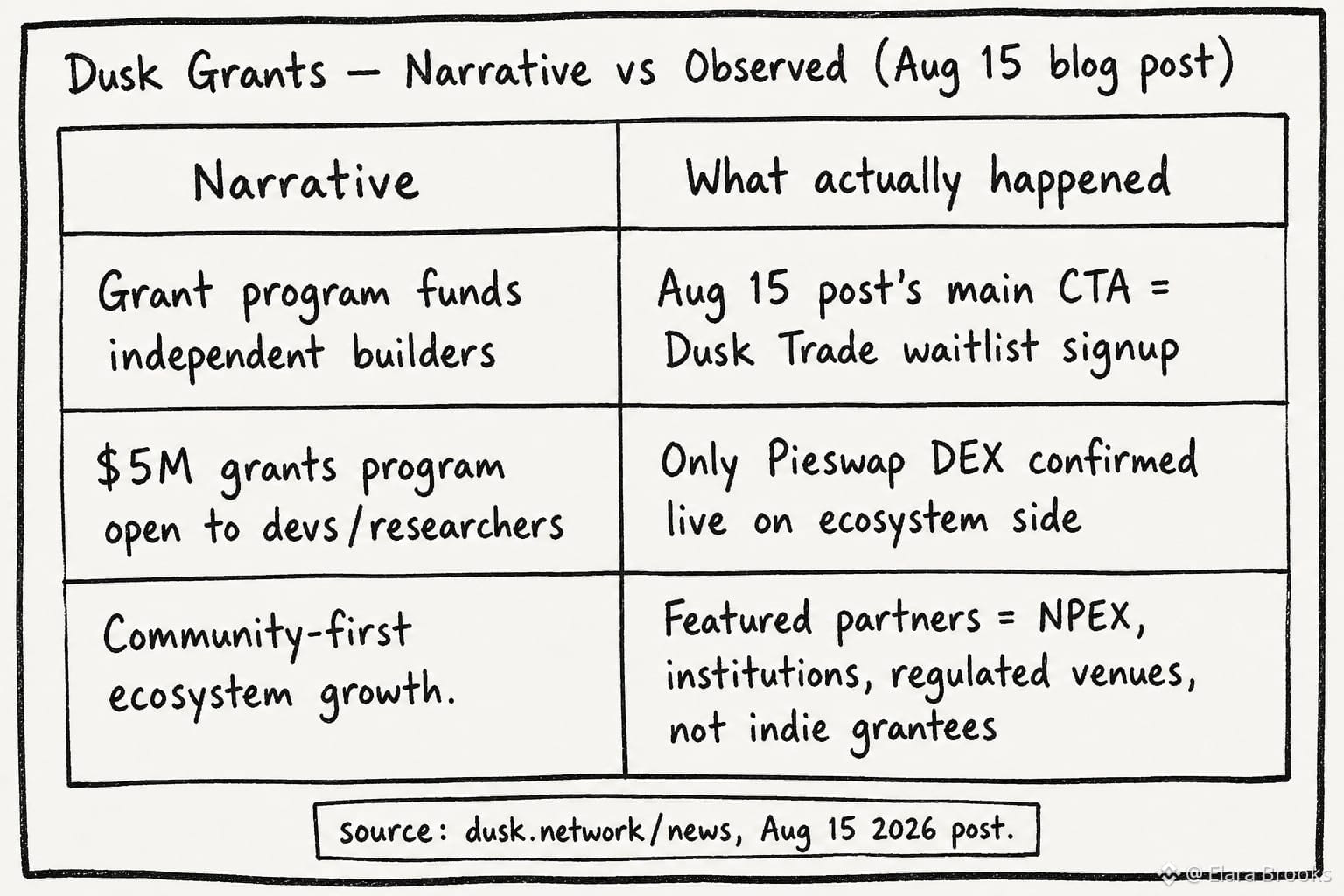
Morceau de tokenisation SME sur leur blog cette semaine (15 août) et je m’y suis attardé plus longtemps que prévu pendant la tâche #Dusk CreatorPad… quelque chose n’y semblait pas convenir au début.
Le texte dans son ensemble décrit l’émission, l’onboarding des investisseurs, le règlement — six étapes, un seul registre de propriété partagée. Bonne mise en contexte. Mais en faisant défiler jusqu’en bas, la demande réelle est : « rejoindre la liste d’attente de Dusk Trade ». Pas une demande de subvention. Pas une doc pour les builders. Une liste d’attente, pour les institutions et des flux proches de NPEX.
Pendant ce temps, la partie tournée vers la communauté — les $DUSK grants/dev fund, en pratique — reste encore plus légère que ce que laisse entendre la roadmap. Un seul dApp est vraiment en ligne côté écosystème, tandis que le message de tokenisation continue de s’étendre vers les banques et les plateformes réglementées.
Hmm. Sur le plan commercial, c’est logique — les institutions passent d’abord, l’infrastructure de conformité a besoin de clients ancrés avant d’avoir besoin d’outils pour les hobbyistes. Cela dit, c’est un bon rappel de bien distinguer « le programme de subventions existe » de « le programme de subventions distribue activement, en ce moment, à des builders indépendants ».
@Dusk_Foundation Quelqu’un a-t-il vraiment reçu une réponse de subvention pour ce cycle, ou est-ce que c’est encore surtout des demandes entrantes en cours d’examen ?
#dusk $DUSK @Dusk_Foundation
Morceau de tokenisation SME sur leur blog cette semaine (15 août) et je m’y suis attardé plus longtemps que prévu pendant la tâche #Dusk CreatorPad… quelque chose n’y semblait pas convenir au début.
Le texte dans son ensemble décrit l’émission, l’onboarding des investisseurs, le règlement — six étapes, un seul registre de propriété partagée. Bonne mise en contexte. Mais en faisant défiler jusqu’en bas, la demande réelle est : « rejoindre la liste d’attente de Dusk Trade ». Pas une demande de subvention. Pas une doc pour les builders. Une liste d’attente, pour les institutions et des flux proches de NPEX.
Pendant ce temps, la partie tournée vers la communauté — les $DUSK grants/dev fund, en pratique — reste encore plus légère que ce que laisse entendre la roadmap. Un seul dApp est vraiment en ligne côté écosystème, tandis que le message de tokenisation continue de s’étendre vers les banques et les plateformes réglementées.
Hmm. Sur le plan commercial, c’est logique — les institutions passent d’abord, l’infrastructure de conformité a besoin de clients ancrés avant d’avoir besoin d’outils pour les hobbyistes. Cela dit, c’est un bon rappel de bien distinguer « le programme de subventions existe » de « le programme de subventions distribue activement, en ce moment, à des builders indépendants ».
@Dusk Quelqu’un a-t-il vraiment reçu une réponse de subvention pour ce cycle, ou est-ce que c’est encore surtout des demandes entrantes en cours d’examen ?
#dusk $DUSK @Dusk
Le texte dans son ensemble décrit l’émission, l’onboarding des investisseurs, le règlement — six étapes, un seul registre de propriété partagée. Bonne mise en contexte. Mais en faisant défiler jusqu’en bas, la demande réelle est : « rejoindre la liste d’attente de Dusk Trade ». Pas une demande de subvention. Pas une doc pour les builders. Une liste d’attente, pour les institutions et des flux proches de NPEX.
Pendant ce temps, la partie tournée vers la communauté — les $DUSK grants/dev fund, en pratique — reste encore plus légère que ce que laisse entendre la roadmap. Un seul dApp est vraiment en ligne côté écosystème, tandis que le message de tokenisation continue de s’étendre vers les banques et les plateformes réglementées.
Hmm. Sur le plan commercial, c’est logique — les institutions passent d’abord, l’infrastructure de conformité a besoin de clients ancrés avant d’avoir besoin d’outils pour les hobbyistes. Cela dit, c’est un bon rappel de bien distinguer « le programme de subventions existe » de « le programme de subventions distribue activement, en ce moment, à des builders indépendants ».
@Dusk Quelqu’un a-t-il vraiment reçu une réponse de subvention pour ce cycle, ou est-ce que c’est encore surtout des demandes entrantes en cours d’examen ?
#dusk $DUSK @Dusk
2
63
·
--
Dusk a récemment mis en avant l’infrastructure de tokenisation pour les PME et les marchés privés.
L’idée est intéressante car les actifs des marchés privés ont historiquement été difficiles d’accès et de transfert efficacement.
Les porter onchain pourrait transformer certaines étapes de ce processus.
Mais la tokenisation elle-même n’est pas la ligne d’arrivée.
L’infrastructure doit prendre en charge le flux de travail financier autour de ces actifs.
C’est là que la priorité de Dusk en matière de confidentialité, de conformité et de règlement prend tout son sens.
Le concept est solide.
La vraie question est de savoir à quelle vitesse l’adoption pratique se développe.
#dusk $DUSK @Dusk_Foundation
Dusk a récemment mis en avant l’infrastructure de tokenisation pour les PME et les marchés privés.
L’idée est intéressante car les actifs des marchés privés ont historiquement été difficiles d’accès et de transfert efficacement.
Les porter onchain pourrait transformer certaines étapes de ce processus.
Mais la tokenisation elle-même n’est pas la ligne d’arrivée.
L’infrastructure doit prendre en charge le flux de travail financier autour de ces actifs.
C’est là que la priorité de Dusk en matière de confidentialité, de conformité et de règlement prend tout son sens.
Le concept est solide.
La vraie question est de savoir à quelle vitesse l’adoption pratique se développe.
#dusk $DUSK @Dusk
L’idée est intéressante car les actifs des marchés privés ont historiquement été difficiles d’accès et de transfert efficacement.
Les porter onchain pourrait transformer certaines étapes de ce processus.
Mais la tokenisation elle-même n’est pas la ligne d’arrivée.
L’infrastructure doit prendre en charge le flux de travail financier autour de ces actifs.
C’est là que la priorité de Dusk en matière de confidentialité, de conformité et de règlement prend tout son sens.
Le concept est solide.
La vraie question est de savoir à quelle vitesse l’adoption pratique se développe.
#dusk $DUSK @Dusk
2
4
79
·
--
Dusk a connu de nombreux développements d’infrastructure intéressants.
Mais les réseaux de crypto finissent tous par faire face au même test :
Les gens les utilisent-ils réellement ?
DuskEVM offre désormais aux développeurs Solidity et Hardhat une manière plus familière d’expérimenter le réseau.
Cela crée une opportunité utile pour mesurer la suite.
L’intérêt des développeurs est un signal.
Les déploiements répétés et l’activité durable sont des signaux plus forts.
Pour moi, la prochaine phase de Dusk consiste moins à expliquer la technologie qu’à observer ce qui est construit.
#dusk $DUSK @Dusk_Foundation
Dusk a connu de nombreux développements d’infrastructure intéressants.
Mais les réseaux de crypto finissent tous par faire face au même test :
Les gens les utilisent-ils réellement ?
DuskEVM offre désormais aux développeurs Solidity et Hardhat une manière plus familière d’expérimenter le réseau.
Cela crée une opportunité utile pour mesurer la suite.
L’intérêt des développeurs est un signal.
Les déploiements répétés et l’activité durable sont des signaux plus forts.
Pour moi, la prochaine phase de Dusk consiste moins à expliquer la technologie qu’à observer ce qui est construit.
#dusk $DUSK @Dusk
Mais les réseaux de crypto finissent tous par faire face au même test :
Les gens les utilisent-ils réellement ?
DuskEVM offre désormais aux développeurs Solidity et Hardhat une manière plus familière d’expérimenter le réseau.
Cela crée une opportunité utile pour mesurer la suite.
L’intérêt des développeurs est un signal.
Les déploiements répétés et l’activité durable sont des signaux plus forts.
Pour moi, la prochaine phase de Dusk consiste moins à expliquer la technologie qu’à observer ce qui est construit.
#dusk $DUSK @Dusk
2
68
·
--
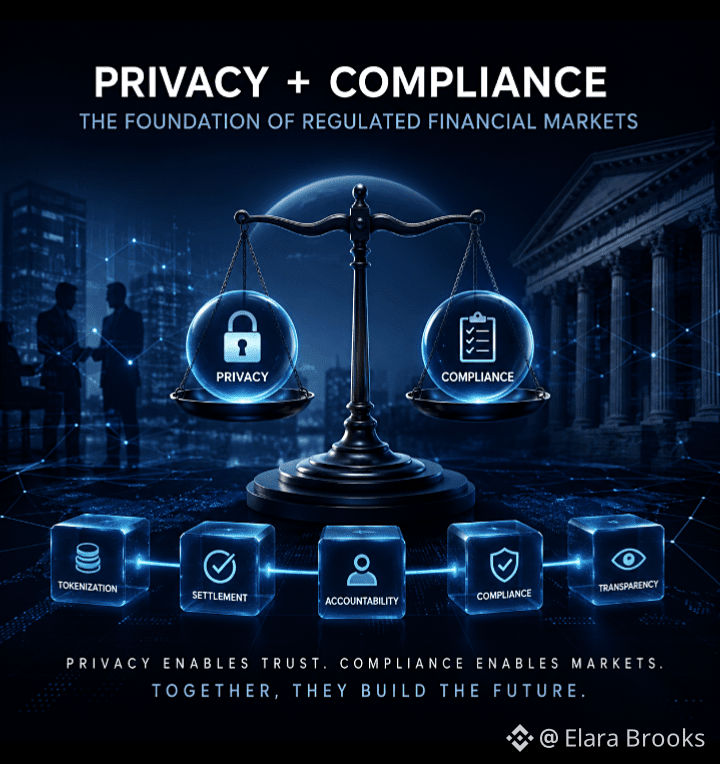
Quand les gens parlent de Dusk, la confidentialité est généralement le premier sujet.
Mais je pense que la question la plus importante est celle de la façon dont la confidentialité s’intègre à l’infrastructure financière réglementée.
Les marchés n’ont pas seulement besoin de transactions confidentielles.
Ils ont aussi besoin de responsabilité, de conformité et de règlement prévisible.
C’est un problème de conception beaucoup plus complexe.
Le positionnement de Dusk autour des marchés financiers tokenisés rend cette combinaison particulièrement intéressante.
Je continue d’observer dans quelle mesure une activité réelle se développe éventuellement autour de la thèse.
#dusk $DUSK @Dusk_Foundation
Quand les gens parlent de Dusk, la confidentialité est généralement le premier sujet.
Mais je pense que la question la plus importante est celle de la façon dont la confidentialité s’intègre à l’infrastructure financière réglementée.
Les marchés n’ont pas seulement besoin de transactions confidentielles.
Ils ont aussi besoin de responsabilité, de conformité et de règlement prévisible.
C’est un problème de conception beaucoup plus complexe.
Le positionnement de Dusk autour des marchés financiers tokenisés rend cette combinaison particulièrement intéressante.
Je continue d’observer dans quelle mesure une activité réelle se développe éventuellement autour de la thèse.
#dusk $DUSK @Dusk
Mais je pense que la question la plus importante est celle de la façon dont la confidentialité s’intègre à l’infrastructure financière réglementée.
Les marchés n’ont pas seulement besoin de transactions confidentielles.
Ils ont aussi besoin de responsabilité, de conformité et de règlement prévisible.
C’est un problème de conception beaucoup plus complexe.
Le positionnement de Dusk autour des marchés financiers tokenisés rend cette combinaison particulièrement intéressante.
Je continue d’observer dans quelle mesure une activité réelle se développe éventuellement autour de la thèse.
#dusk $DUSK @Dusk
1
2
61
·
--
L’une des avancées nocturnes les plus pratiques récemment a été la prise en charge de DuskEVM pour Solidity et Hardhat.
Pour les développeurs qui travaillent déjà dans l’écosystème Ethereum, des outils familiers peuvent réduire une grande partie des frictions.
Cela ne crée pas automatiquement une adoption.
Mais cela rend les expérimentations plus simples.
Je préfère voir ce qui se passe ensuite : des contrats déployés, des applications testées et des développeurs qui reviennent après l’expérience initiale.
La technologie devient plus facile d’accès.
À présent, il faut qu’elle soit utilisée.
#dusk $DUSK @Dusk_Foundation
L’une des avancées nocturnes les plus pratiques récemment a été la prise en charge de DuskEVM pour Solidity et Hardhat.
Pour les développeurs qui travaillent déjà dans l’écosystème Ethereum, des outils familiers peuvent réduire une grande partie des frictions.
Cela ne crée pas automatiquement une adoption.
Mais cela rend les expérimentations plus simples.
Je préfère voir ce qui se passe ensuite : des contrats déployés, des applications testées et des développeurs qui reviennent après l’expérience initiale.
La technologie devient plus facile d’accès.
À présent, il faut qu’elle soit utilisée.
#dusk $DUSK @Dusk
Pour les développeurs qui travaillent déjà dans l’écosystème Ethereum, des outils familiers peuvent réduire une grande partie des frictions.
Cela ne crée pas automatiquement une adoption.
Mais cela rend les expérimentations plus simples.
Je préfère voir ce qui se passe ensuite : des contrats déployés, des applications testées et des développeurs qui reviennent après l’expérience initiale.
La technologie devient plus facile d’accès.
À présent, il faut qu’elle soit utilisée.
#dusk $DUSK @Dusk
2
84
·
--
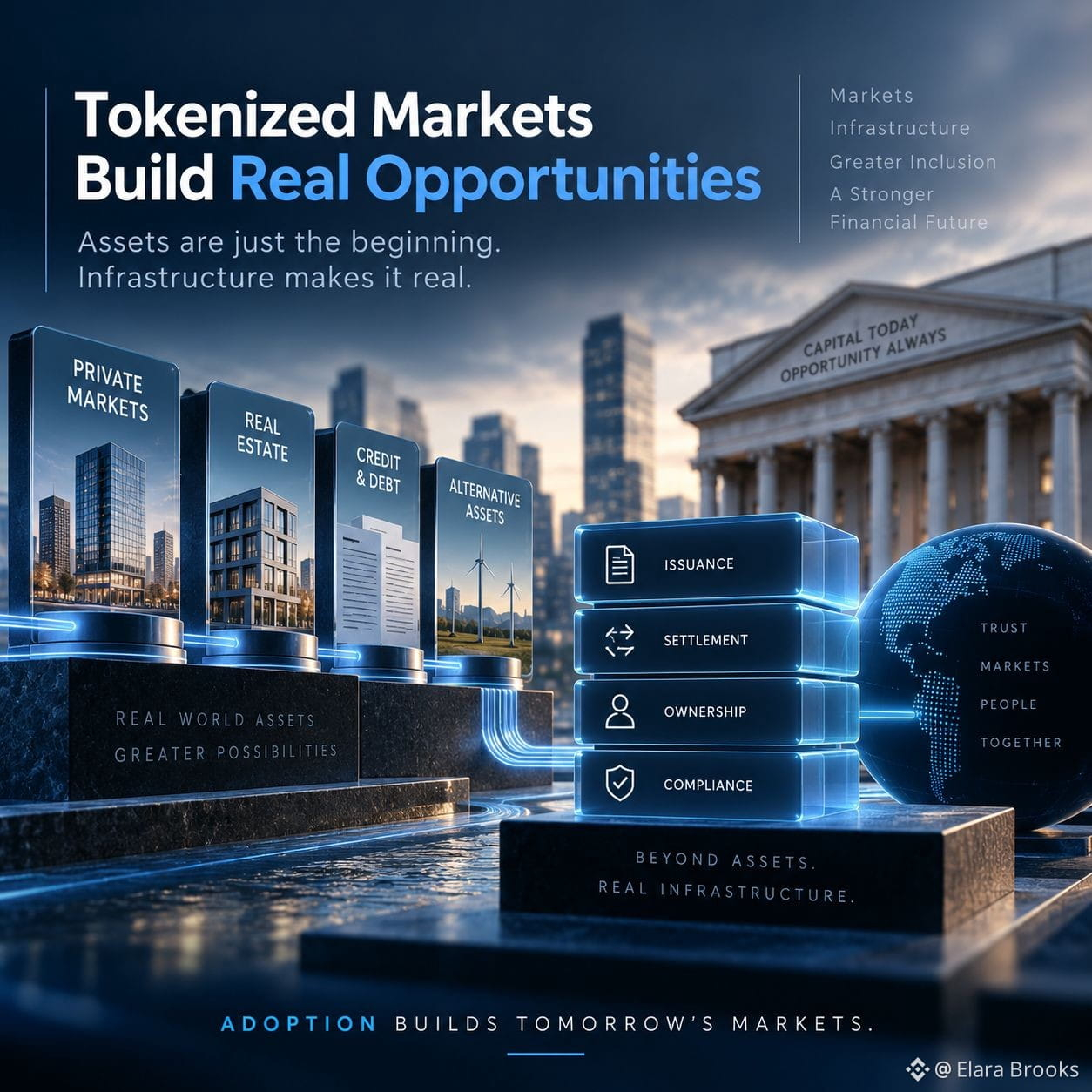
Dusk se positionne de plus en plus autour des marchés financiers tokenisés, en particulier les flux de travail des marchés privés.
Cette distinction compte.
La tokenisation ne consiste pas seulement à créer une représentation numérique d’un actif. Les institutions financières doivent aussi disposer de processus liés à l’émission, au règlement, à la propriété et à la conformité.
Dusk tente de répondre à cette couche d’infrastructure plus large.
À mon avis, l’indicateur intéressant ne sera pas le nombre d’actifs qui peuvent, en théorie, être tokenisés.
Il s’agira de savoir si de vrais émetteurs et acteurs financiers utilisent effectivement l’infrastructure.
#dusk $DUSK @Dusk_Foundation
Dusk se positionne de plus en plus autour des marchés financiers tokenisés, en particulier les flux de travail des marchés privés.
Cette distinction compte.
La tokenisation ne consiste pas seulement à créer une représentation numérique d’un actif. Les institutions financières doivent aussi disposer de processus liés à l’émission, au règlement, à la propriété et à la conformité.
Dusk tente de répondre à cette couche d’infrastructure plus large.
À mon avis, l’indicateur intéressant ne sera pas le nombre d’actifs qui peuvent, en théorie, être tokenisés.
Il s’agira de savoir si de vrais émetteurs et acteurs financiers utilisent effectivement l’infrastructure.
#dusk $DUSK @Dusk
Cette distinction compte.
La tokenisation ne consiste pas seulement à créer une représentation numérique d’un actif. Les institutions financières doivent aussi disposer de processus liés à l’émission, au règlement, à la propriété et à la conformité.
Dusk tente de répondre à cette couche d’infrastructure plus large.
À mon avis, l’indicateur intéressant ne sera pas le nombre d’actifs qui peuvent, en théorie, être tokenisés.
Il s’agira de savoir si de vrais émetteurs et acteurs financiers utilisent effectivement l’infrastructure.
#dusk $DUSK @Dusk
1
2
78
·
--
Haussier
DuskEVM a été lancé le 10 août, offrant aux développeurs la possibilité de déployer et tester des applications en utilisant Solidity et Hardhat.
Je pense que c’est plus important qu’il n’y paraît au premier abord.
L’infrastructure devient plus facile à évaluer lorsque les développeurs peuvent utiliser des outils qu’ils comprennent déjà. La prochaine chose à surveiller n’est pas une nouvelle annonce, mais plutôt si les développeurs déploient réellement des contrats, testent des applications et génèrent une activité réseau durable.
Pour Dusk, cela pourrait marquer une importante transition du développement de l’infrastructure vers un usage d’écosystème mesurable
#dusk $DUSK @Dusk_Foundation
DuskEVM a été lancé le 10 août, offrant aux développeurs la possibilité de déployer et tester des applications en utilisant Solidity et Hardhat.
Je pense que c’est plus important qu’il n’y paraît au premier abord.
L’infrastructure devient plus facile à évaluer lorsque les développeurs peuvent utiliser des outils qu’ils comprennent déjà. La prochaine chose à surveiller n’est pas une nouvelle annonce, mais plutôt si les développeurs déploient réellement des contrats, testent des applications et génèrent une activité réseau durable.
Pour Dusk, cela pourrait marquer une importante transition du développement de l’infrastructure vers un usage d’écosystème mesurable
#dusk $DUSK @Dusk
Je pense que c’est plus important qu’il n’y paraît au premier abord.
L’infrastructure devient plus facile à évaluer lorsque les développeurs peuvent utiliser des outils qu’ils comprennent déjà. La prochaine chose à surveiller n’est pas une nouvelle annonce, mais plutôt si les développeurs déploient réellement des contrats, testent des applications et génèrent une activité réseau durable.
Pour Dusk, cela pourrait marquer une importante transition du développement de l’infrastructure vers un usage d’écosystème mesurable
#dusk $DUSK @Dusk
2
68
·
--
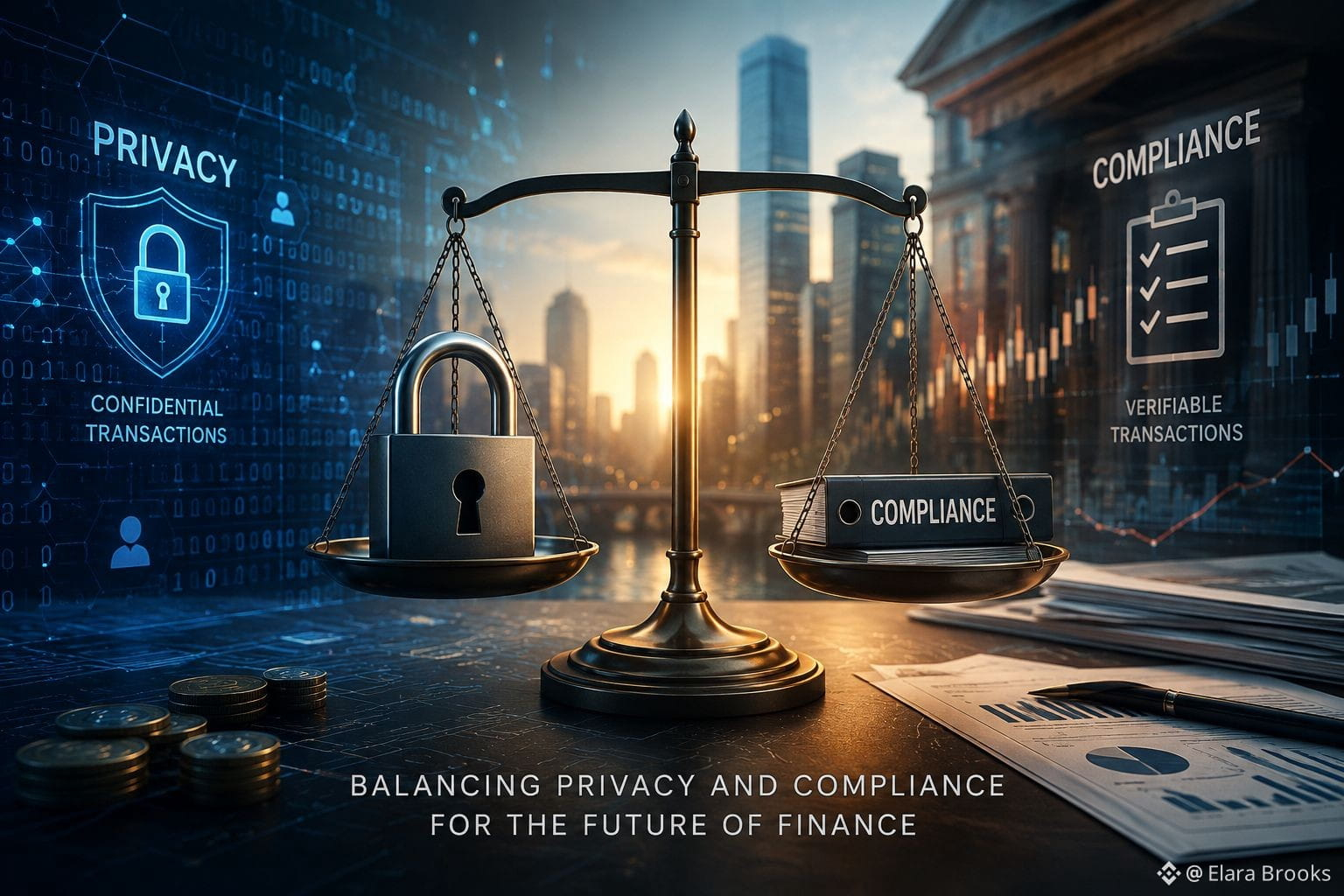
La transparence de la blockchain est puissante, mais les marchés financiers ont aussi besoin de confidentialité.
C’est là que <a>$DUSK </a> devient intéressant. Au lieu d’opposer confidentialité et conformité, <a>$DUSK </a> construit une infrastructure conçue pour apporter les deux à la finance onchain.
L’avenir de l’infrastructure financière de blockchain en aura peut-être besoin.
#dusk $DUSK @Dusk_Foundation
La transparence de la blockchain est puissante, mais les marchés financiers ont aussi besoin de confidentialité.
C’est là que <a>$DUSK </a> devient intéressant. Au lieu d’opposer confidentialité et conformité, <a>$DUSK </a> construit une infrastructure conçue pour apporter les deux à la finance onchain.
L’avenir de l’infrastructure financière de blockchain en aura peut-être besoin.
#dusk $DUSK @Dusk
C’est là que <a>$DUSK </a> devient intéressant. Au lieu d’opposer confidentialité et conformité, <a>$DUSK </a> construit une infrastructure conçue pour apporter les deux à la finance onchain.
L’avenir de l’infrastructure financière de blockchain en aura peut-être besoin.
#dusk $DUSK @Dusk
2
65
·
--
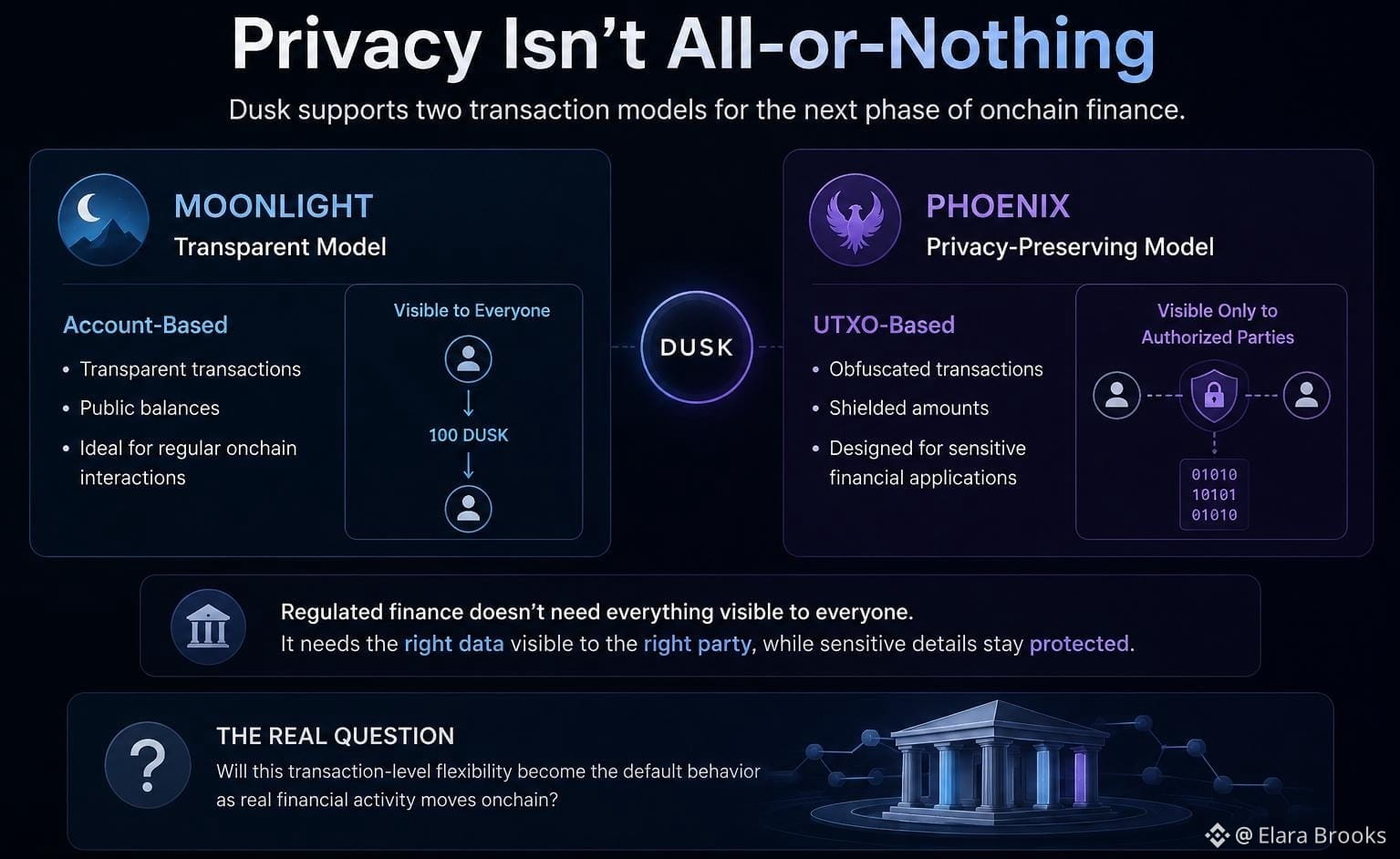
Qu’est-ce qui m’a fait faire une pause en fouillant Dusk, c’est à quel point l’idée de « finance privée » paraît différente une fois qu’on examine le modèle de transaction réel.
Je consultais @Dusk_Foundation et $DUSK pendant la tâche CreatorPad, et la partie intéressante, c’est que Dusk n’oblige pas chaque transaction à s’inscrire dans le même modèle de confidentialité. Son protocole prend en charge à la fois Moonlight, le modèle transparent basé sur des comptes, et Phoenix, le modèle basé sur les UTXO, qui peut gérer des transactions obfusquées. Ce détail figure dans le livre blanc actuel de Dusk, et il change la façon dont je considère #Dusk.
Pour les applications financières, cette flexibilité compte davantage pour moi que le récit de la confidentialité lui-même. Un actif réglementé n’a probablement pas besoin que chaque interaction soit cachée à tout le monde. Il lui faut les bonnes informations visibles par la bonne partie, tandis que les détails sensibles restent protégés. La conception de Dusk semble justement reposer sur cette distinction, plutôt que de traiter la confidentialité comme un simple interrupteur tout-ou-rien.
Au départ, je pensais que la partie la plus intéressante serait l’aspect de tokenisation. Après avoir creusé plus loin, j’en suis moins sûr. La grande question maintenant est de savoir si cette flexibilité au niveau des transactions devient réellement le comportement par défaut à mesure que l’activité financière passe sur la chaîne…
#dusk $DUSK @Dusk_Foundation
Qu’est-ce qui m’a fait faire une pause en fouillant Dusk, c’est à quel point l’idée de « finance privée » paraît différente une fois qu’on examine le modèle de transaction réel.
Je consultais @Dusk et $DUSK pendant la tâche CreatorPad, et la partie intéressante, c’est que Dusk n’oblige pas chaque transaction à s’inscrire dans le même modèle de confidentialité. Son protocole prend en charge à la fois Moonlight, le modèle transparent basé sur des comptes, et Phoenix, le modèle basé sur les UTXO, qui peut gérer des transactions obfusquées. Ce détail figure dans le livre blanc actuel de Dusk, et il change la façon dont je considère #Dusk.
Pour les applications financières, cette flexibilité compte davantage pour moi que le récit de la confidentialité lui-même. Un actif réglementé n’a probablement pas besoin que chaque interaction soit cachée à tout le monde. Il lui faut les bonnes informations visibles par la bonne partie, tandis que les détails sensibles restent protégés. La conception de Dusk semble justement reposer sur cette distinction, plutôt que de traiter la confidentialité comme un simple interrupteur tout-ou-rien.
Au départ, je pensais que la partie la plus intéressante serait l’aspect de tokenisation. Après avoir creusé plus loin, j’en suis moins sûr. La grande question maintenant est de savoir si cette flexibilité au niveau des transactions devient réellement le comportement par défaut à mesure que l’activité financière passe sur la chaîne…
#dusk $DUSK @Dusk
Je consultais @Dusk et $DUSK pendant la tâche CreatorPad, et la partie intéressante, c’est que Dusk n’oblige pas chaque transaction à s’inscrire dans le même modèle de confidentialité. Son protocole prend en charge à la fois Moonlight, le modèle transparent basé sur des comptes, et Phoenix, le modèle basé sur les UTXO, qui peut gérer des transactions obfusquées. Ce détail figure dans le livre blanc actuel de Dusk, et il change la façon dont je considère #Dusk.
Pour les applications financières, cette flexibilité compte davantage pour moi que le récit de la confidentialité lui-même. Un actif réglementé n’a probablement pas besoin que chaque interaction soit cachée à tout le monde. Il lui faut les bonnes informations visibles par la bonne partie, tandis que les détails sensibles restent protégés. La conception de Dusk semble justement reposer sur cette distinction, plutôt que de traiter la confidentialité comme un simple interrupteur tout-ou-rien.
Au départ, je pensais que la partie la plus intéressante serait l’aspect de tokenisation. Après avoir creusé plus loin, j’en suis moins sûr. La grande question maintenant est de savoir si cette flexibilité au niveau des transactions devient réellement le comportement par défaut à mesure que l’activité financière passe sur la chaîne…
#dusk $DUSK @Dusk
2
61
·
--
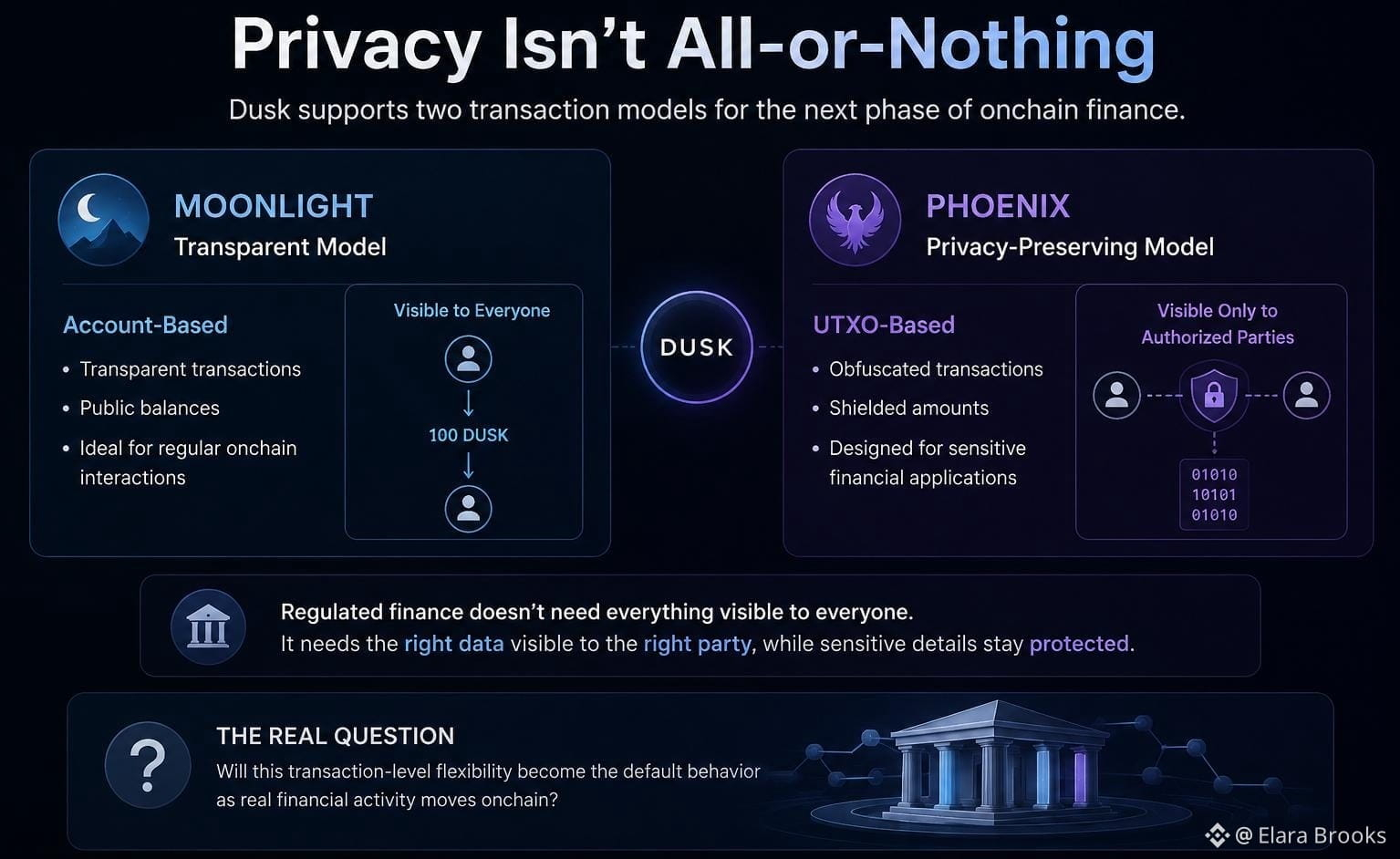
Ce qui m’a fait faire une pause en fouillant Dusk, c’est à quel point l’idée de « finance privée » semble différente une fois qu’on examine le modèle de transaction réel.
Je vérifiais @Dusk_Foundation et $DUSK pendant la tâche CreatorPad, et le point intéressant, c’est que Dusk n’oblige pas chaque transaction à suivre le même modèle de confidentialité. Son protocole prend en charge à la fois Moonlight, le modèle transparent basé sur les comptes, et Phoenix, le modèle UTXO capable de gérer des transactions dissimulées. Ce détail figure dans le livre blanc actuel de Dusk, et il change la façon dont je regarde #Dusk.
Pour les applications financières, cette souplesse compte davantage pour moi que le récit autour de la confidentialité. Un actif réglementé n’a probablement pas besoin que chaque interaction soit cachée à tout le monde. Il lui faut les bonnes informations visibles par la bonne partie, tandis que les détails sensibles restent protégés. La conception de Dusk semble construite autour de cette distinction plutôt que de considérer la confidentialité comme un interrupteur tout-ou-rien.
Au départ, je pensais que la partie la plus intéressante serait l’angle de la tokenisation. Après avoir creusé davantage, je suis moins sûr. La grande question maintenant est de savoir si cette flexibilité au niveau des transactions devient réellement le comportement par défaut à mesure que l’activité financière réelle se poursuit onchain…
Ce qui m’a fait faire une pause en fouillant Dusk, c’est à quel point l’idée de « finance privée » semble différente une fois qu’on examine le modèle de transaction réel.
Je vérifiais @Dusk et $DUSK pendant la tâche CreatorPad, et le point intéressant, c’est que Dusk n’oblige pas chaque transaction à suivre le même modèle de confidentialité. Son protocole prend en charge à la fois Moonlight, le modèle transparent basé sur les comptes, et Phoenix, le modèle UTXO capable de gérer des transactions dissimulées. Ce détail figure dans le livre blanc actuel de Dusk, et il change la façon dont je regarde #Dusk.
Pour les applications financières, cette souplesse compte davantage pour moi que le récit autour de la confidentialité. Un actif réglementé n’a probablement pas besoin que chaque interaction soit cachée à tout le monde. Il lui faut les bonnes informations visibles par la bonne partie, tandis que les détails sensibles restent protégés. La conception de Dusk semble construite autour de cette distinction plutôt que de considérer la confidentialité comme un interrupteur tout-ou-rien.
Au départ, je pensais que la partie la plus intéressante serait l’angle de la tokenisation. Après avoir creusé davantage, je suis moins sûr. La grande question maintenant est de savoir si cette flexibilité au niveau des transactions devient réellement le comportement par défaut à mesure que l’activité financière réelle se poursuit onchain…
Je vérifiais @Dusk et $DUSK pendant la tâche CreatorPad, et le point intéressant, c’est que Dusk n’oblige pas chaque transaction à suivre le même modèle de confidentialité. Son protocole prend en charge à la fois Moonlight, le modèle transparent basé sur les comptes, et Phoenix, le modèle UTXO capable de gérer des transactions dissimulées. Ce détail figure dans le livre blanc actuel de Dusk, et il change la façon dont je regarde #Dusk.
Pour les applications financières, cette souplesse compte davantage pour moi que le récit autour de la confidentialité. Un actif réglementé n’a probablement pas besoin que chaque interaction soit cachée à tout le monde. Il lui faut les bonnes informations visibles par la bonne partie, tandis que les détails sensibles restent protégés. La conception de Dusk semble construite autour de cette distinction plutôt que de considérer la confidentialité comme un interrupteur tout-ou-rien.
Au départ, je pensais que la partie la plus intéressante serait l’angle de la tokenisation. Après avoir creusé davantage, je suis moins sûr. La grande question maintenant est de savoir si cette flexibilité au niveau des transactions devient réellement le comportement par défaut à mesure que l’activité financière réelle se poursuit onchain…
1
2
86
·
--
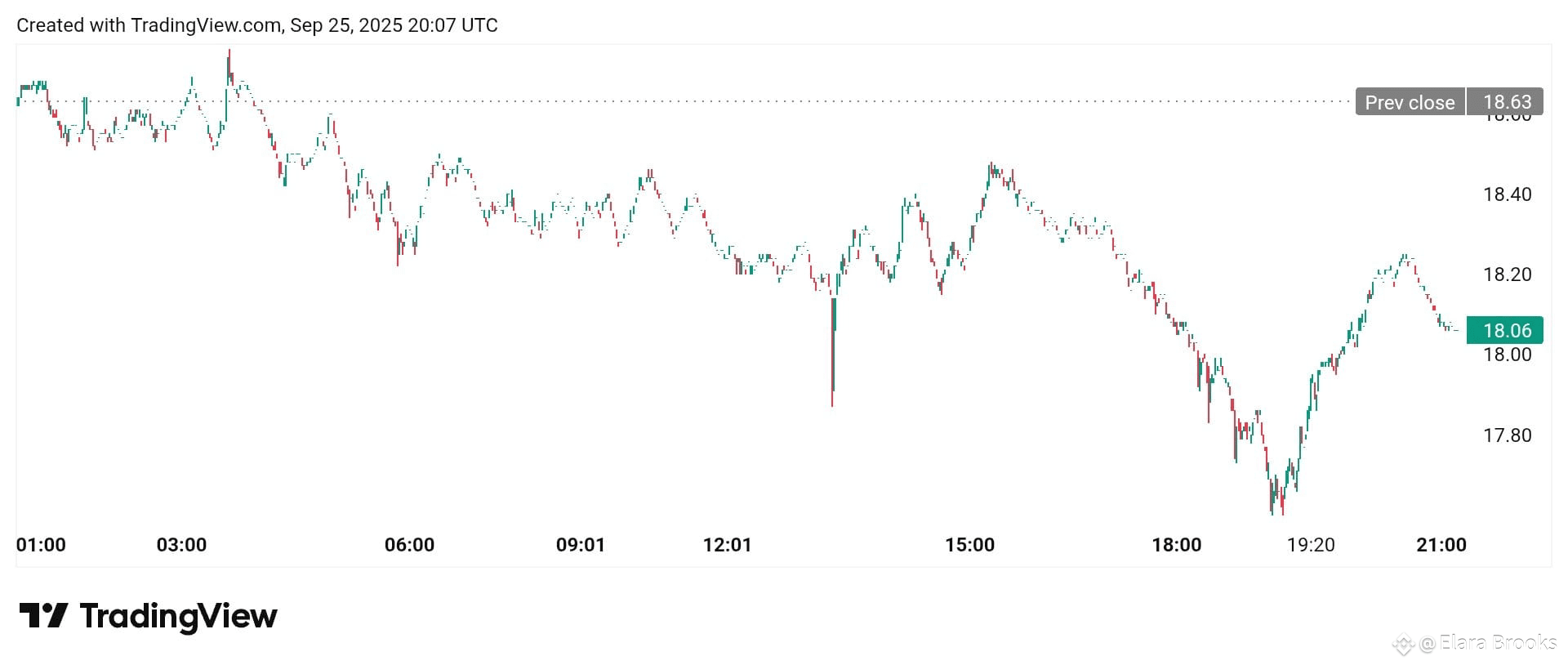
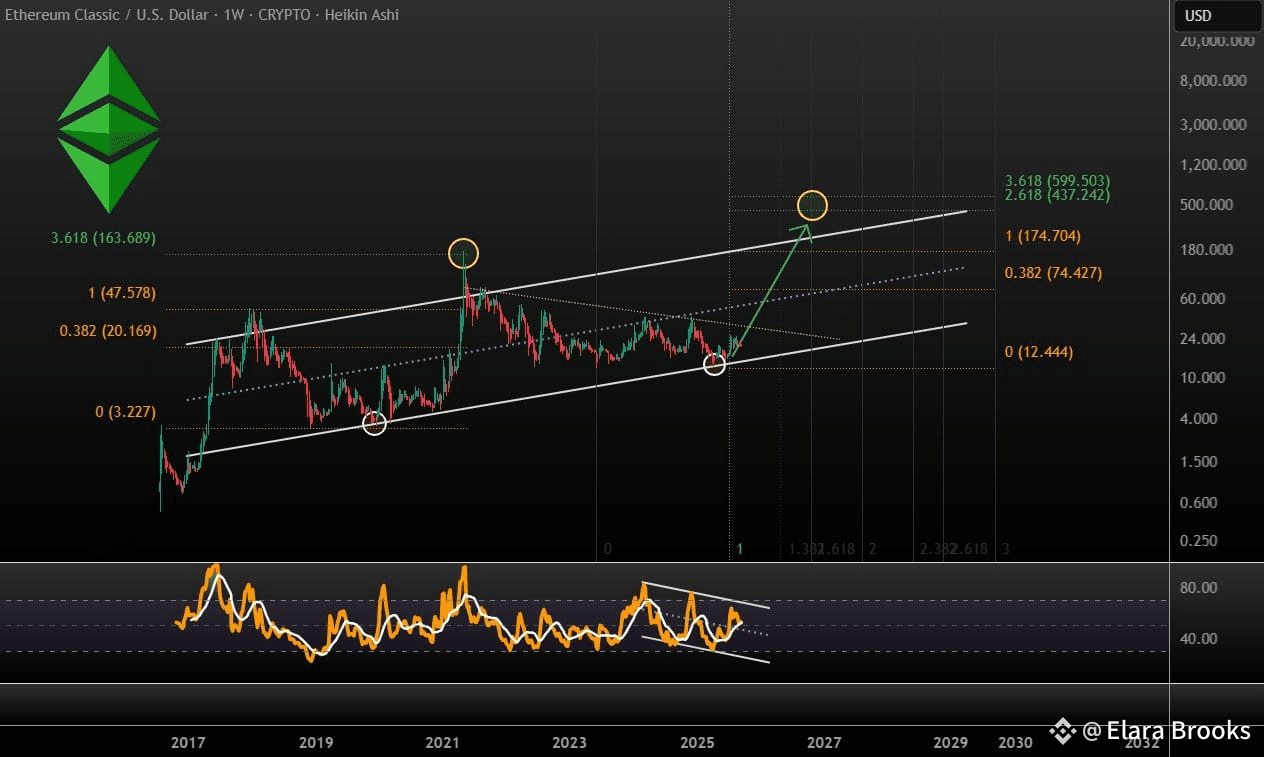
$ETC est toujours l'un des actifs PoW les plus sous-évalués.
Avec l'immutabilité, l'offre fixe et la résilience prouvée, il est bien placé pour la rotation du capital au-delà de $BTC & $ETH .
La consolidation actuelle laisse entrevoir une construction de force, souvent une préparation pour des mouvements brusques
#Write2Earn
$ETC est toujours l'un des actifs PoW les plus sous-évalués.
Avec l'immutabilité, l'offre fixe et la résilience prouvée, il est bien placé pour la rotation du capital au-delà de $BTC & $ETH .
La consolidation actuelle laisse entrevoir une construction de force, souvent une préparation pour des mouvements brusques
#Write2Earn
Avec l'immutabilité, l'offre fixe et la résilience prouvée, il est bien placé pour la rotation du capital au-delà de $BTC & $ETH .
La consolidation actuelle laisse entrevoir une construction de force, souvent une préparation pour des mouvements brusques
#Write2Earn
2
79
·
--
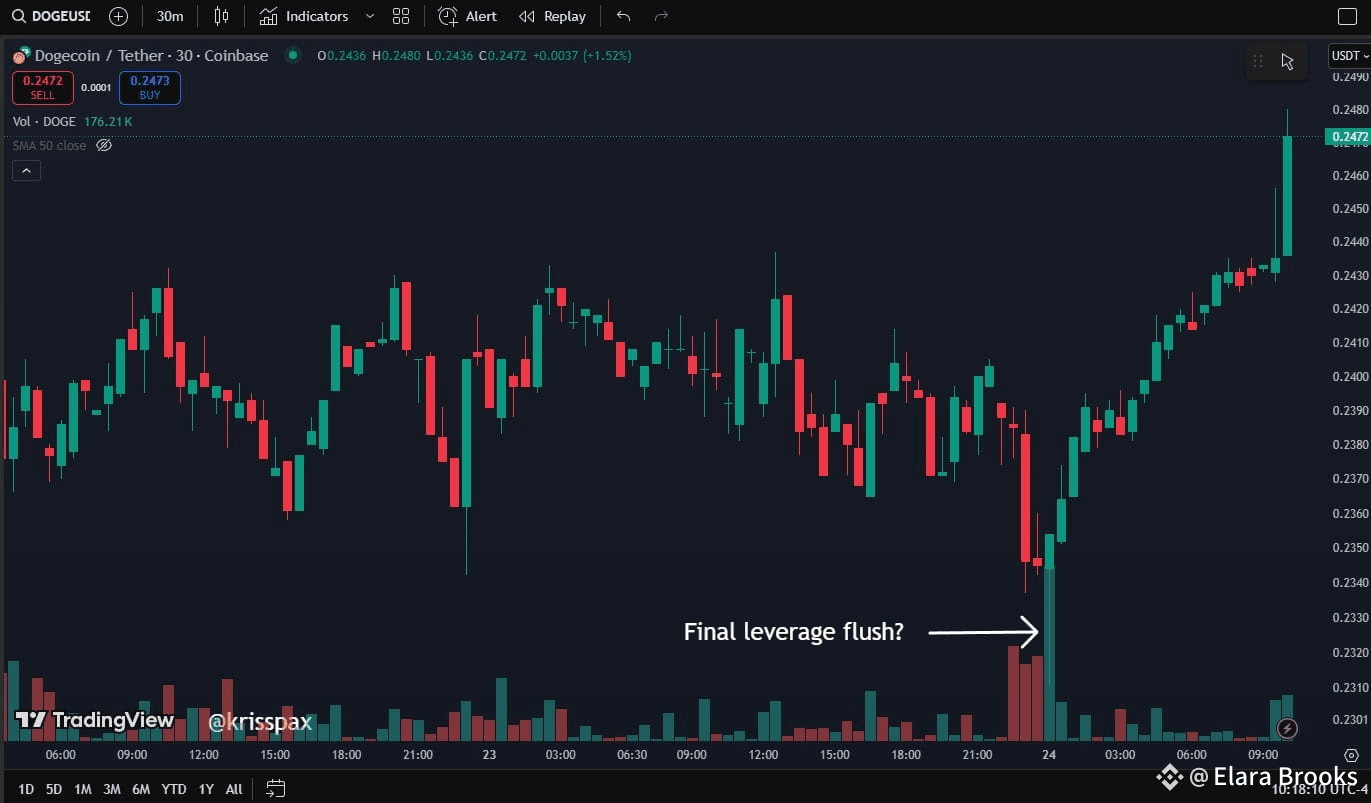
DOGE essaie de s'échapper !
Le mouvement de ce matin était-il le dernier balayage de liquidation avant la course ?
$DOGE #Write2Earn
DOGE essaie de s'échapper !
Le mouvement de ce matin était-il le dernier balayage de liquidation avant la course ?
$DOGE #Write2Earn
Le mouvement de ce matin était-il le dernier balayage de liquidation avant la course ?
$DOGE #Write2Earn
3
100
·
--
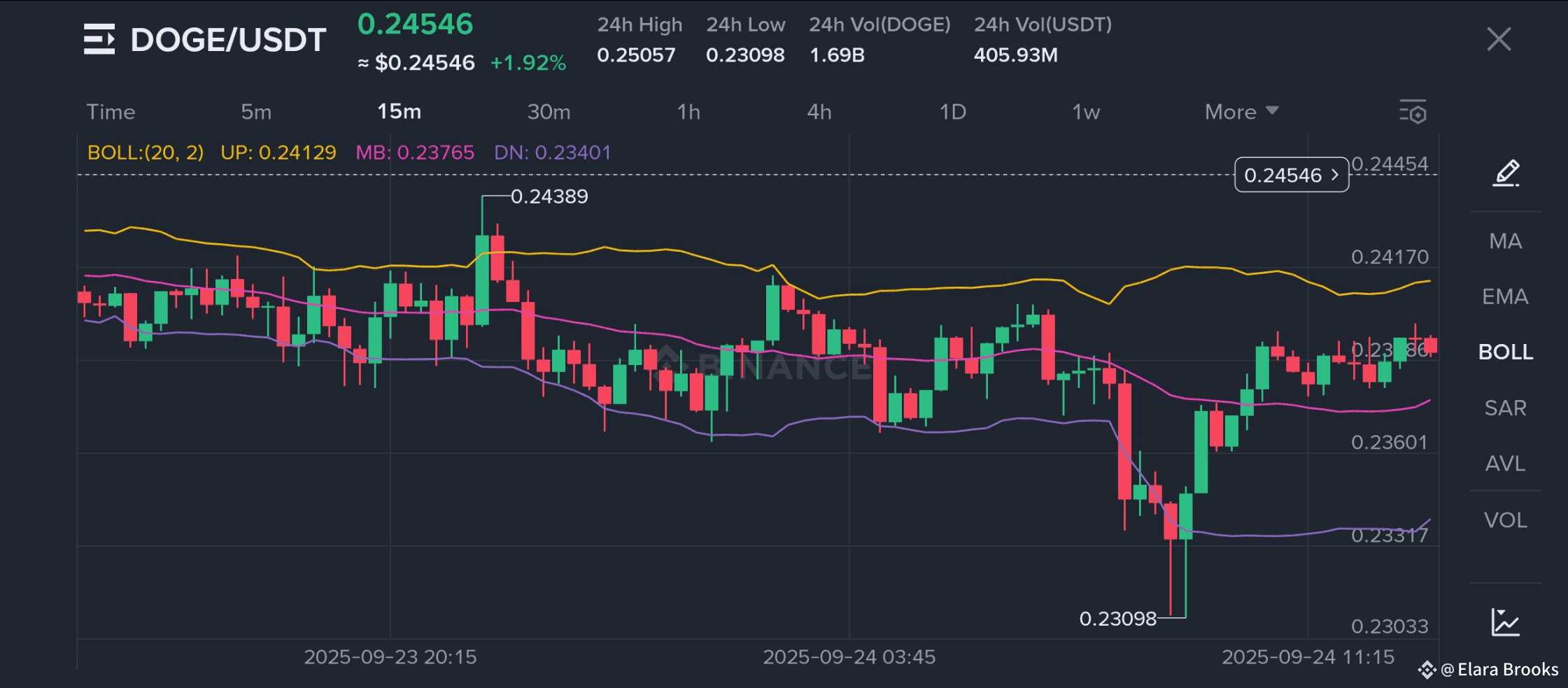
$DOGE vient de rebondir fortement à partir du support et se maintient bien au-dessus de la bande médiane de Bollinger 👀
La prochaine étape semble être la bande supérieure 🔥
#Write2Earn
$DOGE vient de rebondir fortement à partir du support et se maintient bien au-dessus de la bande médiane de Bollinger 👀
La prochaine étape semble être la bande supérieure 🔥
#Write2Earn
La prochaine étape semble être la bande supérieure 🔥
#Write2Earn
108
Connectez-vous pour découvrir plus de contenu
Rejoignez la communauté mondiale des adeptes de cryptomonnaies sur Binance Square
⚡️ Suviez les dernières informations importantes sur les cryptomonnaies.
💬 Jugé digne de confiance par la plus grande plateforme d’échange de cryptomonnaies au monde.
👍 Découvrez les connaissances que partagent les créateurs vérifiés.
Adresse e-mail/Nº de téléphone
Sujets d’actualité
FedRateWatch
831,466 vues
3,933 mentions
Partagez et gagnez une récompense de trafic dans notre campagne de hashtag tendance
✨Sujet : FOMC de septembre — Quelle sera la prochaine décision de la Fed ?
👉Comment participer :
Publiez une courte publication ou un article avec le hashtag #FedRateWatch
Créez du contenu à partir des angles ci-dessous :
- L’inflation cœur de l’IPC d’août a augmenté de 0,3% d’un mois sur l’autre, et les chances d’une hausse de 25 points de base cette semaine sont désormais proches de 90%. Anticipez-vous une hausse des taux cette semaine ? Est-ce un cas isolé, ou le début d’un cycle de hausses plus long ?
- Si la hausse a lieu, comment cela se répercute-t-il sur le BTC, les valeurs technologiques et l’or ? Plutôt haussier ou baissier ?
- Comment comptez-vous trader ensuite ? Partagez votre trading/positions BTC, actions ou or avec notre widget de partage de trades.
⏰Période de la campagne :
- 2026-09-15 11:00 - 2026-09-17 3:00 UTC
🎁Récompense :
- Les publications éligibles qui respectent les consignes ci-dessus et contiennent plus de 100 mots seront examinées et pourraient recevoir un boost aléatoire de trafic de 500 à 3 000 vues. Vous recevrez une notification de votre secrétaire de flux si votre publication est sélectionnée.
- Ayez une chance de faire apparaître votre article sur Binance Square Official
Vous manque-t-il des idées pour votre publication ? Visitez la page du sujet #FedRateWatch ou le Square Guide on How to Post for Better Reach.
Binance Square Official
·493 mentions J’aime
·1.1M vues
BitcoinFalls4%
2,473 vues
152 mentions
SKHynixInTalksToMakeMemoryChipsInUS
166 vues
20 mentions