

BTC S
5.7k Publications

BTC S
Signaler
Bloquer l’utilisateur
446 Suivis
8.3K+ Abonnés
3.4K+ J’aime
Publications
Tous
Citations
Direct
·
--
Haussier
FOMC septembre : quelle sera la prochaine décision de la Fed ?
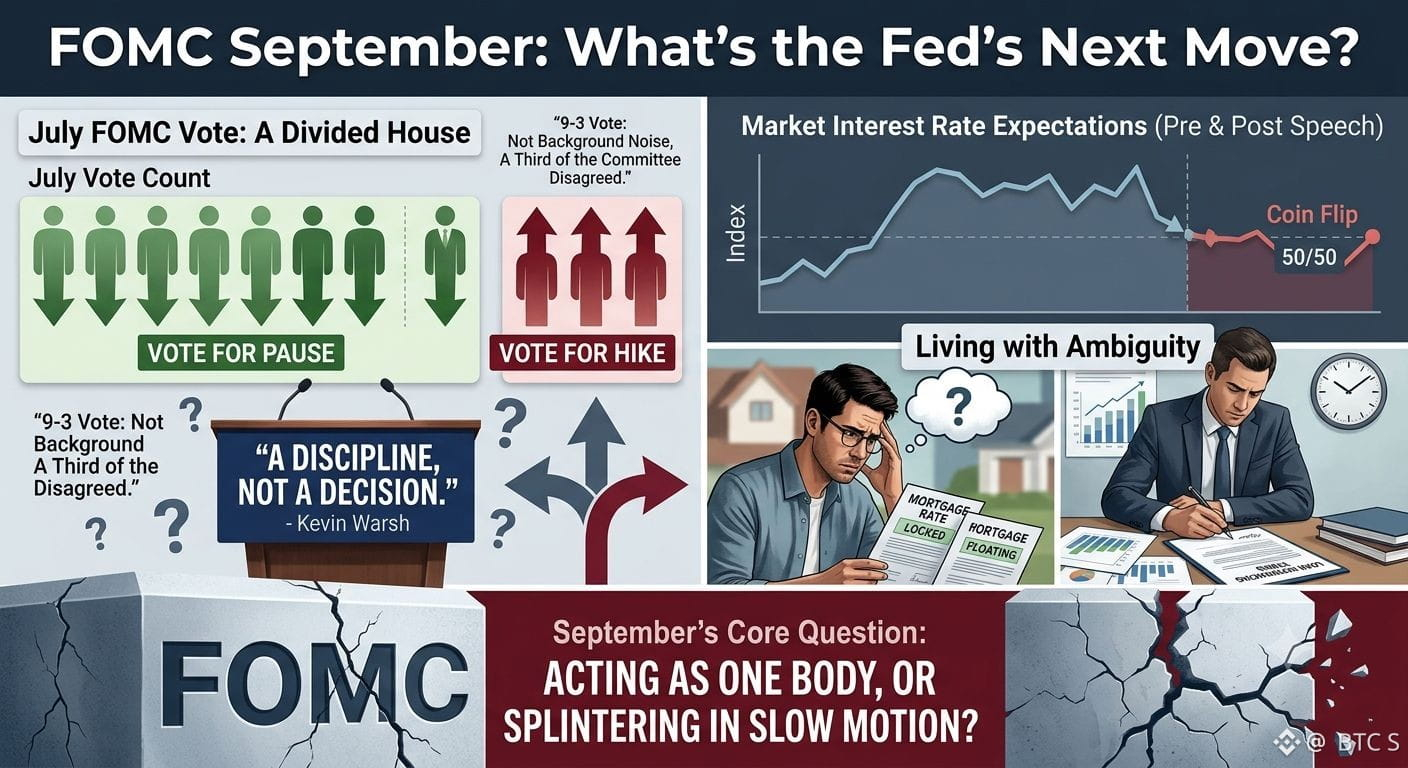
Honnêtement, je reviens sans cesse à la même chose. On parle de « la décision de la Fed » comme si c’était un esprit unique qui tranchait, mais le vote de juillet a été de 9 contre 3. Trois personnes voulaient déjà relever les taux avant même que Warsh ne monte sur l’estrade à Jackson Hole. Ce n’est pas un simple bruit de fond — c’est un tiers du comité, officiellement, qui n’est pas d’accord.
Puis Warsh prononce ce discours où il dit que la Fed s’engage pour « une discipline, pas une décision ». J’ai retourné cette formule à plusieurs reprises et je ne sais vraiment pas si c’est une vraie philosophie ou juste une manière d’éviter la responsabilité au cas où les choses déraperaient. Mais il y a quand même eu un effet concret : le marché est passé d’une attente majoritairement favorable à un maintien à une situation quasi pile ou face sur une hausse, en l’espace de quelques jours. Ce n’est pas la Fed en train d’apaiser les marchés. C’est la Fed qui laisse les marchés avec une question ouverte et leur permet de débattre de la réponse.
Et ceux qui doivent réellement vivre avec cette ambiguïté ne sont pas des traders qui regardent les courbes de points juste pour le plaisir. C’est quelqu’un qui fixe un taux hypothécaire cette semaine, une entreprise qui décide s’il faut étaler un prêt avant mercredi. Ils ne reçoivent pas « une discipline ». Ils reçoivent un chiffre, brut, et doivent agir avec.
Donc je ne pense pas que septembre se résume vraiment à savoir si c’est 25 points de base de plus, ou rien. C’est une question de savoir si ce comité agit toujours comme un seul bloc, ou si nous assistons à sa fragmentation en accéléré.
$ZEC
{spot}(ZECUSDT)
$BTC
{spot}(BTCUSDT)
$LSK
{spot}(LSKUSDT)
FOMC septembre : quelle sera la prochaine décision de la Fed ?
Honnêtement, je reviens sans cesse à la même chose. On parle de « la décision de la Fed » comme si c’était un esprit unique qui tranchait, mais le vote de juillet a été de 9 contre 3. Trois personnes voulaient déjà relever les taux avant même que Warsh ne monte sur l’estrade à Jackson Hole. Ce n’est pas un simple bruit de fond — c’est un tiers du comité, officiellement, qui n’est pas d’accord.
Puis Warsh prononce ce discours où il dit que la Fed s’engage pour « une discipline, pas une décision ». J’ai retourné cette formule à plusieurs reprises et je ne sais vraiment pas si c’est une vraie philosophie ou juste une manière d’éviter la responsabilité au cas où les choses déraperaient. Mais il y a quand même eu un effet concret : le marché est passé d’une attente majoritairement favorable à un maintien à une situation quasi pile ou face sur une hausse, en l’espace de quelques jours. Ce n’est pas la Fed en train d’apaiser les marchés. C’est la Fed qui laisse les marchés avec une question ouverte et leur permet de débattre de la réponse.
Et ceux qui doivent réellement vivre avec cette ambiguïté ne sont pas des traders qui regardent les courbes de points juste pour le plaisir. C’est quelqu’un qui fixe un taux hypothécaire cette semaine, une entreprise qui décide s’il faut étaler un prêt avant mercredi. Ils ne reçoivent pas « une discipline ». Ils reçoivent un chiffre, brut, et doivent agir avec.
Donc je ne pense pas que septembre se résume vraiment à savoir si c’est 25 points de base de plus, ou rien. C’est une question de savoir si ce comité agit toujours comme un seul bloc, ou si nous assistons à sa fragmentation en accéléré.
$ZEC
$BTC
$LSK
Honnêtement, je reviens sans cesse à la même chose. On parle de « la décision de la Fed » comme si c’était un esprit unique qui tranchait, mais le vote de juillet a été de 9 contre 3. Trois personnes voulaient déjà relever les taux avant même que Warsh ne monte sur l’estrade à Jackson Hole. Ce n’est pas un simple bruit de fond — c’est un tiers du comité, officiellement, qui n’est pas d’accord.
Puis Warsh prononce ce discours où il dit que la Fed s’engage pour « une discipline, pas une décision ». J’ai retourné cette formule à plusieurs reprises et je ne sais vraiment pas si c’est une vraie philosophie ou juste une manière d’éviter la responsabilité au cas où les choses déraperaient. Mais il y a quand même eu un effet concret : le marché est passé d’une attente majoritairement favorable à un maintien à une situation quasi pile ou face sur une hausse, en l’espace de quelques jours. Ce n’est pas la Fed en train d’apaiser les marchés. C’est la Fed qui laisse les marchés avec une question ouverte et leur permet de débattre de la réponse.
Et ceux qui doivent réellement vivre avec cette ambiguïté ne sont pas des traders qui regardent les courbes de points juste pour le plaisir. C’est quelqu’un qui fixe un taux hypothécaire cette semaine, une entreprise qui décide s’il faut étaler un prêt avant mercredi. Ils ne reçoivent pas « une discipline ». Ils reçoivent un chiffre, brut, et doivent agir avec.
Donc je ne pense pas que septembre se résume vraiment à savoir si c’est 25 points de base de plus, ou rien. C’est une question de savoir si ce comité agit toujours comme un seul bloc, ou si nous assistons à sa fragmentation en accéléré.
$ZEC
$BTC
$LSK
380
·
--
Haussier
Vérifié
Je reviens toujours à la même source d’agacement chaque semaine d’inflation CPI : tout le monde traite un seul chiffre mensuel comme s’il devait régler quelque chose, alors qu’en réalité il n’a jamais été conçu pour faire ce travail. Il y a du bruit saisonnier, des effets d’échantillonnage bizarres, une ou deux catégories qui font presque tout le travail — cette fois, c’étaient les services, une fois qu’on a retiré l’énergie et le logement. Mais la Fed a une réunion au calendrier, que les données soient propres ou non, donc pendant environ deux jours, le marché… décide simplement de croire que le chiffre veut dire plus qu’il ne le fait probablement.
Alors, que s’est-il passé : l’inflation CPI sous-jacente est ressortie à 0,3 % sur le mois, soit une décimale plus chaude que prévu, et presque immédiatement les paris sur une hausse des taux ont bondi pour atteindre quelque chose comme 85 %. Je ne pense pas que ce soit vraiment surprenant si vous aviez suivi — les contrats à terme étaient déjà proches de 73 % après le chiffre du PPI deux jours plus tôt. Ça n’a changé l’avis de personne. Ça a juste donné aux gens l’autorisation de dire à voix haute ce qu’ils soupçonnaient déjà.
J’hésite toutefois à paraître trop sûr de tout ça. Les responsables de la Fed eux-mêmes disaient que l’appel avait l’air « finement équilibré » en amont, et, honnêtement, leur réaction à n’importe quel chiffre isolé ces derniers temps ressemble plus à de l’improvisation qu’à une décision fondée sur des règles. Une hausse d’un quart de point la semaine prochaine ne me surprendrait pas. Une pause non plus — s’il y a assez de désaccord dans la salle, c’est aussi plausible.
Franchement, les gens qui ont vraiment besoin de s’en soucier sont ceux qui ont une dette à taux variable ou une table obligataire qui doit réévaluer le risque cette semaine. Le reste de ceux qui regardent ça comme un grand révélateur lisent probablement plus loin que ce que ça mérite.
#CPIWatch
À quelle vitesse, d’après vous, le financement sur les perp bascule si le chiffre d’aujourd’hui sort chaud ?
$MET
{spot}(METUSDT)
$BTC
{spot}(BTCUSDT)
$牛来
{spot}(牛来USDT)
Je reviens toujours à la même source d’agacement chaque semaine d’inflation CPI : tout le monde traite un seul chiffre mensuel comme s’il devait régler quelque chose, alors qu’en réalité il n’a jamais été conçu pour faire ce travail. Il y a du bruit saisonnier, des effets d’échantillonnage bizarres, une ou deux catégories qui font presque tout le travail — cette fois, c’étaient les services, une fois qu’on a retiré l’énergie et le logement. Mais la Fed a une réunion au calendrier, que les données soient propres ou non, donc pendant environ deux jours, le marché… décide simplement de croire que le chiffre veut dire plus qu’il ne le fait probablement.
Alors, que s’est-il passé : l’inflation CPI sous-jacente est ressortie à 0,3 % sur le mois, soit une décimale plus chaude que prévu, et presque immédiatement les paris sur une hausse des taux ont bondi pour atteindre quelque chose comme 85 %. Je ne pense pas que ce soit vraiment surprenant si vous aviez suivi — les contrats à terme étaient déjà proches de 73 % après le chiffre du PPI deux jours plus tôt. Ça n’a changé l’avis de personne. Ça a juste donné aux gens l’autorisation de dire à voix haute ce qu’ils soupçonnaient déjà.
J’hésite toutefois à paraître trop sûr de tout ça. Les responsables de la Fed eux-mêmes disaient que l’appel avait l’air « finement équilibré » en amont, et, honnêtement, leur réaction à n’importe quel chiffre isolé ces derniers temps ressemble plus à de l’improvisation qu’à une décision fondée sur des règles. Une hausse d’un quart de point la semaine prochaine ne me surprendrait pas. Une pause non plus — s’il y a assez de désaccord dans la salle, c’est aussi plausible.
Franchement, les gens qui ont vraiment besoin de s’en soucier sont ceux qui ont une dette à taux variable ou une table obligataire qui doit réévaluer le risque cette semaine. Le reste de ceux qui regardent ça comme un grand révélateur lisent probablement plus loin que ce que ça mérite.
#CPIWatch
À quelle vitesse, d’après vous, le financement sur les perp bascule si le chiffre d’aujourd’hui sort chaud ?
$MET
$BTC
$牛来
Alors, que s’est-il passé : l’inflation CPI sous-jacente est ressortie à 0,3 % sur le mois, soit une décimale plus chaude que prévu, et presque immédiatement les paris sur une hausse des taux ont bondi pour atteindre quelque chose comme 85 %. Je ne pense pas que ce soit vraiment surprenant si vous aviez suivi — les contrats à terme étaient déjà proches de 73 % après le chiffre du PPI deux jours plus tôt. Ça n’a changé l’avis de personne. Ça a juste donné aux gens l’autorisation de dire à voix haute ce qu’ils soupçonnaient déjà.
J’hésite toutefois à paraître trop sûr de tout ça. Les responsables de la Fed eux-mêmes disaient que l’appel avait l’air « finement équilibré » en amont, et, honnêtement, leur réaction à n’importe quel chiffre isolé ces derniers temps ressemble plus à de l’improvisation qu’à une décision fondée sur des règles. Une hausse d’un quart de point la semaine prochaine ne me surprendrait pas. Une pause non plus — s’il y a assez de désaccord dans la salle, c’est aussi plausible.
Franchement, les gens qui ont vraiment besoin de s’en soucier sont ceux qui ont une dette à taux variable ou une table obligataire qui doit réévaluer le risque cette semaine. Le reste de ceux qui regardent ça comme un grand révélateur lisent probablement plus loin que ce que ça mérite.
#CPIWatch
À quelle vitesse, d’après vous, le financement sur les perp bascule si le chiffre d’aujourd’hui sort chaud ?
$MET
$BTC
$牛来

6
1
6
1.6k
·
--
Haussier
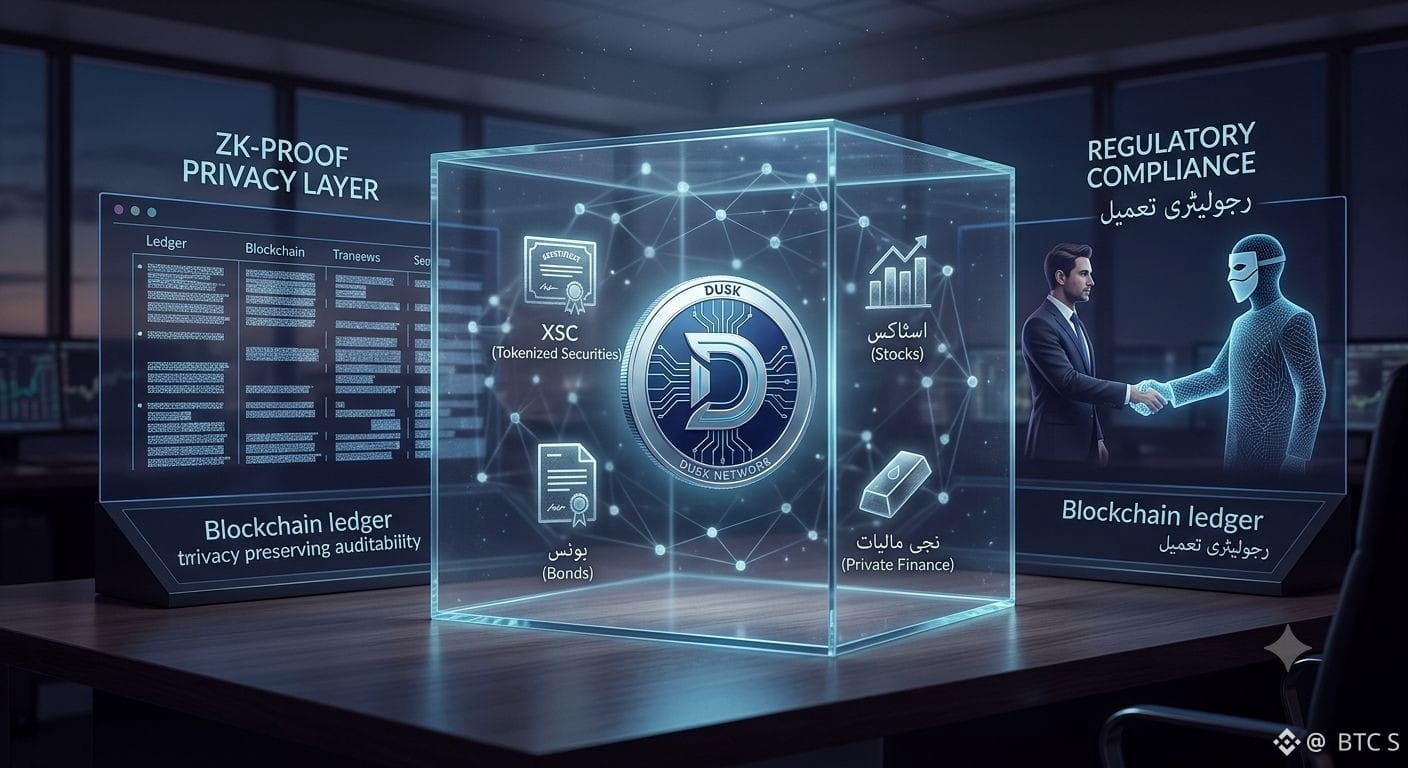
Je reviens sans cesse à un problème assez fondamental : sur la plupart des blockchains, tout le monde voit tout. Si un desk de trading déplace une position, ou si une entreprise transfère des fonds de trésorerie, c’est… visible. Pour les concurrents, pour toute personne suffisamment curieuse pour regarder. Et quand on le formule ainsi, il devient évident pourquoi les sommes sérieuses restent en retrait : personne ne veut trader avec ses cartes posées à découvert sur la table.
Les solutions que j’ai vues ne règlent pas vraiment le problème : elles le déplacent simplement. Les mixeurs sont traités comme un signal d’alarme dès que la conformité les repère. Les rollups à preuve à divulgation nulle (zero-knowledge) rendent surtout l’exécution plus rapide, mais ils ne dissimulent pas qui traite avec qui. Au final, on obtient une confidentialité qui donne l’impression d’être ajoutée après coup, posée sur un système qui n’a jamais été conçu pour être privé — et ensuite, les régulateurs ne peuvent pas distinguer quelqu’un qui protège une position normale de quelqu’un qui cache quelque chose qu’il ne devrait pas.
Ce que Dusk semble faire différemment, c’est d’essayer d’intégrer la confidentialité directement à la couche de base, au lieu de la superposer. Et de le faire d’une manière qui reste vérifiable quand c’est nécessaire. La norme XSC vise un problème assez précis : des titres tokenisés qui doivent passer des contrôles réglementaires sans exposer publiquement chaque contrepartie. C’est un objectif plus étroit que « une crypto privée pour tout le monde », mais je pense que c’est justement un avantage.
Si ça fonctionne, ce n’est probablement même pas une question technique. Il s’agit de savoir si les institutions réglementées sont prêtes à faire confiance à des rails inconnus avec de l’argent réel. C’est lent. Et cela peut être stoppé pour des raisons qui n’ont rien à voir avec le code.
#dusk @Dusk_Foundation
$DUSK
{spot}(DUSKUSDT)
$BTR
{future}(BTRUSDT)
$FOREST
{alpha}(560x11cf6bf6d87cb0eb9c294fd6cbfec91ee3a1a7d0)
Je reviens sans cesse à un problème assez fondamental : sur la plupart des blockchains, tout le monde voit tout. Si un desk de trading déplace une position, ou si une entreprise transfère des fonds de trésorerie, c’est… visible. Pour les concurrents, pour toute personne suffisamment curieuse pour regarder. Et quand on le formule ainsi, il devient évident pourquoi les sommes sérieuses restent en retrait : personne ne veut trader avec ses cartes posées à découvert sur la table.
Les solutions que j’ai vues ne règlent pas vraiment le problème : elles le déplacent simplement. Les mixeurs sont traités comme un signal d’alarme dès que la conformité les repère. Les rollups à preuve à divulgation nulle (zero-knowledge) rendent surtout l’exécution plus rapide, mais ils ne dissimulent pas qui traite avec qui. Au final, on obtient une confidentialité qui donne l’impression d’être ajoutée après coup, posée sur un système qui n’a jamais été conçu pour être privé — et ensuite, les régulateurs ne peuvent pas distinguer quelqu’un qui protège une position normale de quelqu’un qui cache quelque chose qu’il ne devrait pas.
Ce que Dusk semble faire différemment, c’est d’essayer d’intégrer la confidentialité directement à la couche de base, au lieu de la superposer. Et de le faire d’une manière qui reste vérifiable quand c’est nécessaire. La norme XSC vise un problème assez précis : des titres tokenisés qui doivent passer des contrôles réglementaires sans exposer publiquement chaque contrepartie. C’est un objectif plus étroit que « une crypto privée pour tout le monde », mais je pense que c’est justement un avantage.
Si ça fonctionne, ce n’est probablement même pas une question technique. Il s’agit de savoir si les institutions réglementées sont prêtes à faire confiance à des rails inconnus avec de l’argent réel. C’est lent. Et cela peut être stoppé pour des raisons qui n’ont rien à voir avec le code.
#dusk @Dusk
$DUSK
$BTR
$FOREST
Les solutions que j’ai vues ne règlent pas vraiment le problème : elles le déplacent simplement. Les mixeurs sont traités comme un signal d’alarme dès que la conformité les repère. Les rollups à preuve à divulgation nulle (zero-knowledge) rendent surtout l’exécution plus rapide, mais ils ne dissimulent pas qui traite avec qui. Au final, on obtient une confidentialité qui donne l’impression d’être ajoutée après coup, posée sur un système qui n’a jamais été conçu pour être privé — et ensuite, les régulateurs ne peuvent pas distinguer quelqu’un qui protège une position normale de quelqu’un qui cache quelque chose qu’il ne devrait pas.
Ce que Dusk semble faire différemment, c’est d’essayer d’intégrer la confidentialité directement à la couche de base, au lieu de la superposer. Et de le faire d’une manière qui reste vérifiable quand c’est nécessaire. La norme XSC vise un problème assez précis : des titres tokenisés qui doivent passer des contrôles réglementaires sans exposer publiquement chaque contrepartie. C’est un objectif plus étroit que « une crypto privée pour tout le monde », mais je pense que c’est justement un avantage.
Si ça fonctionne, ce n’est probablement même pas une question technique. Il s’agit de savoir si les institutions réglementées sont prêtes à faire confiance à des rails inconnus avec de l’argent réel. C’est lent. Et cela peut être stoppé pour des raisons qui n’ont rien à voir avec le code.
#dusk @Dusk
$DUSK
$BTR
$FOREST
294
·
--
Haussier
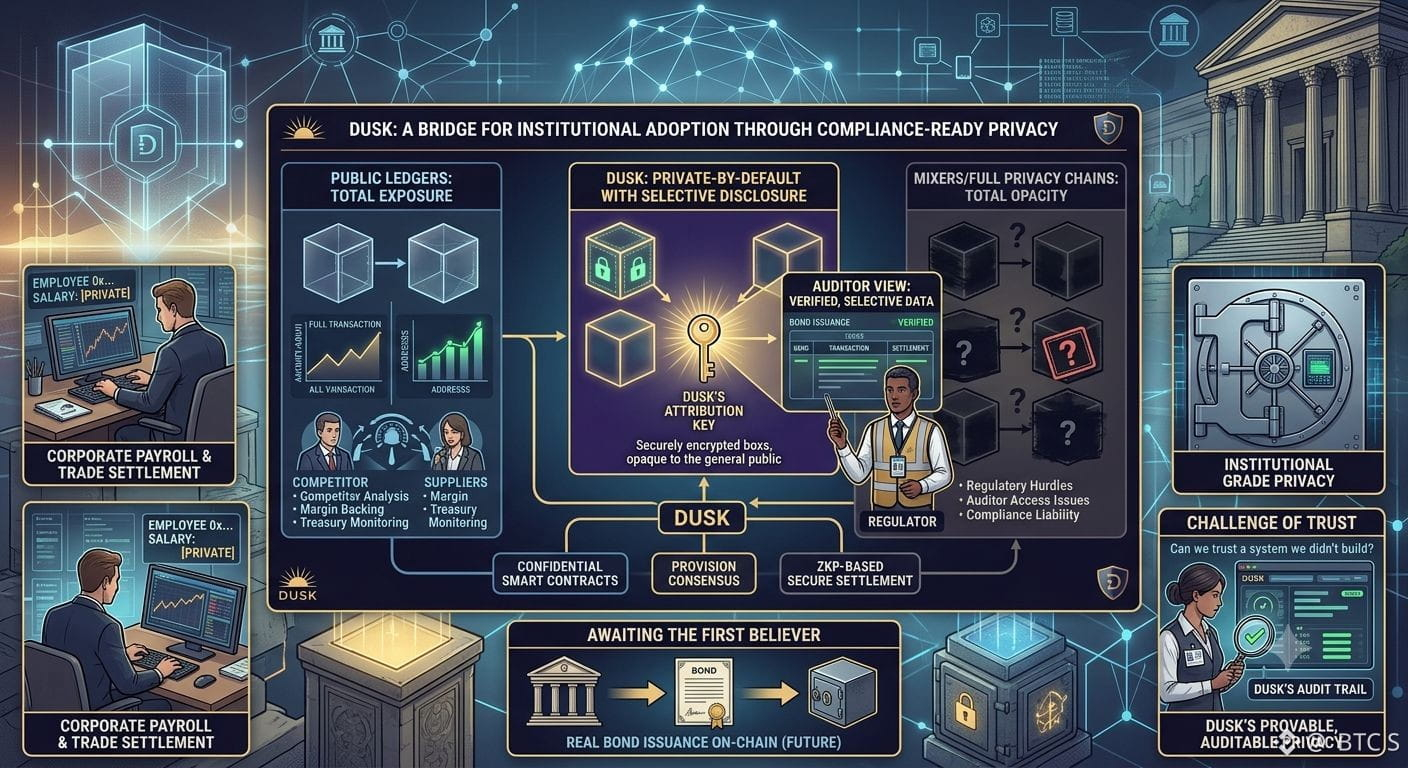
Honnêtement, ce qui m’agace avec les blockchains publiques, c’est à quel point elles sont naïves. Tout est là, pour toujours : chaque portefeuille, chaque transfert, chaque fois que tu as déplacé de l’argent, et combien. Ça va si tu es un trader anonyme qui retourne des tokens à 2 h du matin. Mais pas si tu es une entreprise qui fait de la paie, ou un fonds qui règle une transaction, ou une banque qui déplace quasiment n’importe quoi, parce que désormais, ton grand livre raconte aussi… votre affaire à tout le monde. Les fournisseurs peuvent recalculer vos marges. Les concurrents peuvent regarder votre trésorerie comme si c’était un flux en direct. Ce n’est pas un cas limite dont les gens s’inquiètent : c’est juste ce qui se passe quand « la transparence » est toute la conception.
Alors naturellement, les gens cherchent des outils de confidentialité, et la plupart d’entre eux finissent par casser autre chose. Les mixers te donnent l’air de cacher quelque chose même quand tu n’as rien à cacher : maintenant tu as l’air d’un blanchisseur d’argent simplement parce que tu utilises une confidentialité financière de base. Et les chaînes totalement privées partent trop loin dans l’autre sens : elles cachent les choses à la seule personne qui est censée les voir, l’auditeur, le régulateur. Du coup, tu es coincé entre l’exposition totale et l’opacité totale, et aucun des deux n’est vraiment utilisable si tu es une entreprise réglementée.
Ce que Dusk vise, c’est ce milieu pénible : une confidentialité par défaut, mais avec une sorte de clé permettant à la bonne personne de voir la bonne chose quand elle en a besoin. C’est une belle idée sur le papier. Mais je ne pense pas que le plus dur ait jamais été la cryptographie. Le plus dur, c’est d’obtenir qu’un responsable conformité dans une banque fasse réellement confiance à un système de divulgation qu’il n’a pas construit, qu’il ne peut pas auditer entièrement lui-même, et qu’il n’a jamais vu échouer (ou réussir) dans le monde réel.
Je n’ai pas encore été convaincu. Un petit ensemble de validateurs, un cas d’usage qui ne compte vraiment que si des institutions arrivent, et des institutions qui avancent lentement, volontairement. J’aimerais voir une vraie émission d’obligations ou un véritable règlement de titres, exécuté concrètement sur la plateforme, et qui y reste, avant d’appeler ça autre chose qu’une bonne idée en attente de son premier croyant.
#dusk @Dusk_Foundation
$DUSK
{spot}(DUSKUSDT)
$DEBIT
{alpha}(560x66661c7229901f568f16bd1551b3ba826f83ce49)
$BTR
{future}(BTRUSDT)
Honnêtement, ce qui m’agace avec les blockchains publiques, c’est à quel point elles sont naïves. Tout est là, pour toujours : chaque portefeuille, chaque transfert, chaque fois que tu as déplacé de l’argent, et combien. Ça va si tu es un trader anonyme qui retourne des tokens à 2 h du matin. Mais pas si tu es une entreprise qui fait de la paie, ou un fonds qui règle une transaction, ou une banque qui déplace quasiment n’importe quoi, parce que désormais, ton grand livre raconte aussi… votre affaire à tout le monde. Les fournisseurs peuvent recalculer vos marges. Les concurrents peuvent regarder votre trésorerie comme si c’était un flux en direct. Ce n’est pas un cas limite dont les gens s’inquiètent : c’est juste ce qui se passe quand « la transparence » est toute la conception.
Alors naturellement, les gens cherchent des outils de confidentialité, et la plupart d’entre eux finissent par casser autre chose. Les mixers te donnent l’air de cacher quelque chose même quand tu n’as rien à cacher : maintenant tu as l’air d’un blanchisseur d’argent simplement parce que tu utilises une confidentialité financière de base. Et les chaînes totalement privées partent trop loin dans l’autre sens : elles cachent les choses à la seule personne qui est censée les voir, l’auditeur, le régulateur. Du coup, tu es coincé entre l’exposition totale et l’opacité totale, et aucun des deux n’est vraiment utilisable si tu es une entreprise réglementée.
Ce que Dusk vise, c’est ce milieu pénible : une confidentialité par défaut, mais avec une sorte de clé permettant à la bonne personne de voir la bonne chose quand elle en a besoin. C’est une belle idée sur le papier. Mais je ne pense pas que le plus dur ait jamais été la cryptographie. Le plus dur, c’est d’obtenir qu’un responsable conformité dans une banque fasse réellement confiance à un système de divulgation qu’il n’a pas construit, qu’il ne peut pas auditer entièrement lui-même, et qu’il n’a jamais vu échouer (ou réussir) dans le monde réel.
Je n’ai pas encore été convaincu. Un petit ensemble de validateurs, un cas d’usage qui ne compte vraiment que si des institutions arrivent, et des institutions qui avancent lentement, volontairement. J’aimerais voir une vraie émission d’obligations ou un véritable règlement de titres, exécuté concrètement sur la plateforme, et qui y reste, avant d’appeler ça autre chose qu’une bonne idée en attente de son premier croyant.
#dusk @Dusk
$DUSK
$DEBIT
$BTR
Alors naturellement, les gens cherchent des outils de confidentialité, et la plupart d’entre eux finissent par casser autre chose. Les mixers te donnent l’air de cacher quelque chose même quand tu n’as rien à cacher : maintenant tu as l’air d’un blanchisseur d’argent simplement parce que tu utilises une confidentialité financière de base. Et les chaînes totalement privées partent trop loin dans l’autre sens : elles cachent les choses à la seule personne qui est censée les voir, l’auditeur, le régulateur. Du coup, tu es coincé entre l’exposition totale et l’opacité totale, et aucun des deux n’est vraiment utilisable si tu es une entreprise réglementée.
Ce que Dusk vise, c’est ce milieu pénible : une confidentialité par défaut, mais avec une sorte de clé permettant à la bonne personne de voir la bonne chose quand elle en a besoin. C’est une belle idée sur le papier. Mais je ne pense pas que le plus dur ait jamais été la cryptographie. Le plus dur, c’est d’obtenir qu’un responsable conformité dans une banque fasse réellement confiance à un système de divulgation qu’il n’a pas construit, qu’il ne peut pas auditer entièrement lui-même, et qu’il n’a jamais vu échouer (ou réussir) dans le monde réel.
Je n’ai pas encore été convaincu. Un petit ensemble de validateurs, un cas d’usage qui ne compte vraiment que si des institutions arrivent, et des institutions qui avancent lentement, volontairement. J’aimerais voir une vraie émission d’obligations ou un véritable règlement de titres, exécuté concrètement sur la plateforme, et qui y reste, avant d’appeler ça autre chose qu’une bonne idée en attente de son premier croyant.
#dusk @Dusk
$DUSK
$DEBIT
$BTR
2
3
410
·
--
Haussier
Honnêtement, ce qui me fait réfléchir à propos des titres tokenisés est assez banal — ce n’est pas une grande question philosophique, c’est simplement : pourquoi le fait de mettre un titre sur une blockchain semble-t-il toujours vouloir dire que tout le monde peut le voir ? Si vous avez passé un peu de temps près des marchés financiers, vous savez que c’est l’inverse. Une cap table n’est pas publique. Un trade visible en cours d’exécution peut faire bouger le prix contre vous avant même que vous n’ayez terminé. Les chaînes publiques résolvent la question de la confiance en montrant à tout le monde tout, et le droit des valeurs mobilières résout la confiance en contrôlant précisément qui a le droit de voir quoi. Ces deux idées ne s’accordent pas naturellement, et la plupart des projets ne s’en préoccupent pas vraiment — ils choisissent simplement un camp et font comme si l’autre n’avait jamais été un problème.
Ce qui est intéressant avec Dusk, c’est qu’au moins, il essaie de s’asseoir dans ce milieu inconfortable. XSC masque les conditions et les identités, mais est censé vous permettre de prouver qu’une chose est vraie devant un auditeur ou un régulateur, sans pour autant ouvrir l’ensemble au reste de tout le monde. Je trouve que c’est un point de départ plus honnête que la plupart des argumentaires de “chaîne de confidentialité”, parce que ce n’est pas la confidentialité comme idéologie — c’est une confidentialité façonnée autour de la personne à qui l’information est réellement due, légalement.
Mais je vais dire la partie que je n’arrive pas à dépasser : je ne sais pas si une preuve à connaissance nulle tient réellement la route comme un document sous subpoena le ferait, dans un litige réel, devant un régulateur réel. Ça, aucun livre blanc ne peut y répondre à votre place. Et en dessous, il y a les choses moins excitantes — une liquidité faible, une petite capitalisation boursière, des institutions qui avancent au rythme de leur équipe juridique, pas de leur équipe d’ingénierie.
Donc, mon avis honnête est le suivant : c’est une tentative sérieuse de s’attaquer à un problème qui mérite d’être résolu. La question de savoir si cela ira quelque part dépendra probablement du fait qu’un responsable conformité, quelque part, décide que c’est suffisamment bon pour donner son feu vert — pas de la cryptographie, aussi astucieuse soit-elle.
#dusk $DUSK @Dusk_Foundation
{spot}(DUSKUSDT)
$TAC
{future}(TACUSDT)
$PENGUIN
{alpha}(CT_5018Jx8AAHj86wbQgUTjGuj6GTTL5Ps3cqxKRTvpaJApump)
Honnêtement, ce qui me fait réfléchir à propos des titres tokenisés est assez banal — ce n’est pas une grande question philosophique, c’est simplement : pourquoi le fait de mettre un titre sur une blockchain semble-t-il toujours vouloir dire que tout le monde peut le voir ? Si vous avez passé un peu de temps près des marchés financiers, vous savez que c’est l’inverse. Une cap table n’est pas publique. Un trade visible en cours d’exécution peut faire bouger le prix contre vous avant même que vous n’ayez terminé. Les chaînes publiques résolvent la question de la confiance en montrant à tout le monde tout, et le droit des valeurs mobilières résout la confiance en contrôlant précisément qui a le droit de voir quoi. Ces deux idées ne s’accordent pas naturellement, et la plupart des projets ne s’en préoccupent pas vraiment — ils choisissent simplement un camp et font comme si l’autre n’avait jamais été un problème.
Ce qui est intéressant avec Dusk, c’est qu’au moins, il essaie de s’asseoir dans ce milieu inconfortable. XSC masque les conditions et les identités, mais est censé vous permettre de prouver qu’une chose est vraie devant un auditeur ou un régulateur, sans pour autant ouvrir l’ensemble au reste de tout le monde. Je trouve que c’est un point de départ plus honnête que la plupart des argumentaires de “chaîne de confidentialité”, parce que ce n’est pas la confidentialité comme idéologie — c’est une confidentialité façonnée autour de la personne à qui l’information est réellement due, légalement.
Mais je vais dire la partie que je n’arrive pas à dépasser : je ne sais pas si une preuve à connaissance nulle tient réellement la route comme un document sous subpoena le ferait, dans un litige réel, devant un régulateur réel. Ça, aucun livre blanc ne peut y répondre à votre place. Et en dessous, il y a les choses moins excitantes — une liquidité faible, une petite capitalisation boursière, des institutions qui avancent au rythme de leur équipe juridique, pas de leur équipe d’ingénierie.
Donc, mon avis honnête est le suivant : c’est une tentative sérieuse de s’attaquer à un problème qui mérite d’être résolu. La question de savoir si cela ira quelque part dépendra probablement du fait qu’un responsable conformité, quelque part, décide que c’est suffisamment bon pour donner son feu vert — pas de la cryptographie, aussi astucieuse soit-elle.
#dusk $DUSK @Dusk
$TAC
$PENGUIN
Ce qui est intéressant avec Dusk, c’est qu’au moins, il essaie de s’asseoir dans ce milieu inconfortable. XSC masque les conditions et les identités, mais est censé vous permettre de prouver qu’une chose est vraie devant un auditeur ou un régulateur, sans pour autant ouvrir l’ensemble au reste de tout le monde. Je trouve que c’est un point de départ plus honnête que la plupart des argumentaires de “chaîne de confidentialité”, parce que ce n’est pas la confidentialité comme idéologie — c’est une confidentialité façonnée autour de la personne à qui l’information est réellement due, légalement.
Mais je vais dire la partie que je n’arrive pas à dépasser : je ne sais pas si une preuve à connaissance nulle tient réellement la route comme un document sous subpoena le ferait, dans un litige réel, devant un régulateur réel. Ça, aucun livre blanc ne peut y répondre à votre place. Et en dessous, il y a les choses moins excitantes — une liquidité faible, une petite capitalisation boursière, des institutions qui avancent au rythme de leur équipe juridique, pas de leur équipe d’ingénierie.
Donc, mon avis honnête est le suivant : c’est une tentative sérieuse de s’attaquer à un problème qui mérite d’être résolu. La question de savoir si cela ira quelque part dépendra probablement du fait qu’un responsable conformité, quelque part, décide que c’est suffisamment bon pour donner son feu vert — pas de la cryptographie, aussi astucieuse soit-elle.
#dusk $DUSK @Dusk
$TAC
$PENGUIN

3
6
357
·
--
Haussier
Honnêtement, ce qui me déstabilise à chaque fois que quelqu’un dit « blockchain de confidentialité », c’est que ces deux mots sont en quelque sorte en guerre l’un contre l’autre. Le principe même d’une blockchain, c’est que n’importe qui peut la consulter sans demander la permission. La confidentialité signifie l’inverse — personne n’a le droit de consulter quoi que ce soit. Du coup, la plupart des projets choisissent discrètement leur camp. Soit c’est totalement « blindé », ce qui est très bien jusqu’au moment où un auditeur ou un régulateur doit réellement vérifier quelque chose et qu’il n’y a rien à lui montrer. Soit c’est « privé » uniquement de nom, et en dessous c’est juste une chaîne transparente classique avec un meilleur branding. Dans les deux cas, ça ne tient pas quand de l’argent réel et des institutions réelles entrent en jeu.
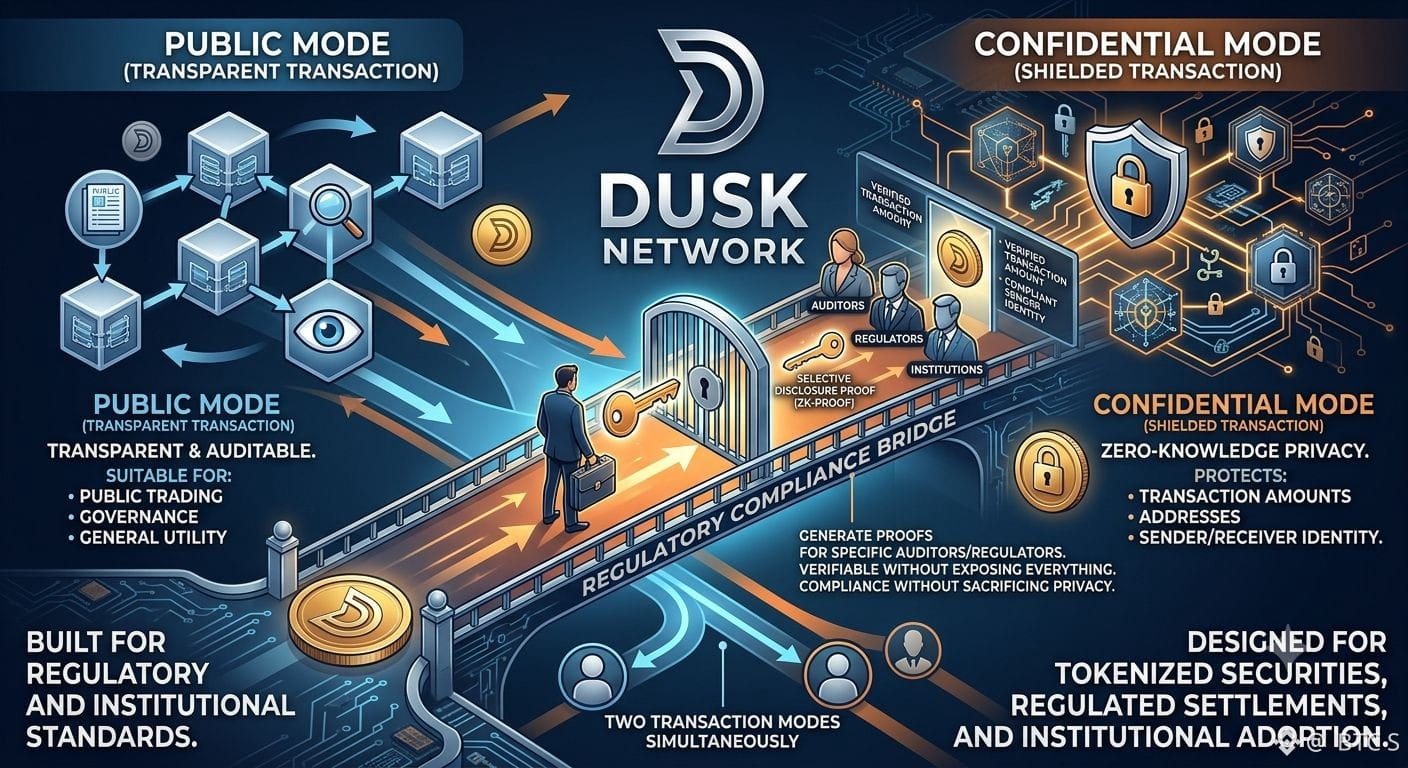
C’est le cadre dans lequel je situerais Dusk. Ce qui a vraiment attiré mon attention, ce n’est pas le discours sur la confidentialité — tout le monde le dit — c’est l’idée de pouvoir masquer une transaction tout en générant une preuve pour la personne précise qui est censée la voir. Un auditeur, un régulateur, peu importe. C’est une promesse beaucoup plus petite, moins spectaculaire dans sa formulation, que « anonymat total », mais honnêtement, c’est probablement la seule version de la confidentialité qui a une chance réelle dans des domaines comme les titres tokenisés ou les règlements réglementés, là où « faites-nous confiance » ne passe pas.
J’ai aussi remarqué qu’ils font tourner deux modes de transaction distincts au lieu d’imposer un seul réglage de confidentialité à tout le monde. Ça donne l’impression que quelqu’un s’est vraiment posé avec différents cas d’usage plutôt que de construire autour d’un slogan. Même si, plus de modes, ça veut aussi dire plus d’endroits où quelque chose peut silencieusement mal tourner.
Je ne m’y engagerais pas tant que tout ça n’aura pas fait l’objet d’un audit réel, avec de l’argent institutionnel réel en jeu. Le risque à surveiller, c’est l’évidence — une confidentialité « confidentielle » qui finit par cacher des choses à la seule partie contre laquelle elle était censée protéger.
#dusk @Dusk_Foundation
$TUT
{spot}(TUTUSDT)
$DUSK
{spot}(DUSKUSDT)
$RE
{spot}(REUSDT)
Honnêtement, ce qui me déstabilise à chaque fois que quelqu’un dit « blockchain de confidentialité », c’est que ces deux mots sont en quelque sorte en guerre l’un contre l’autre. Le principe même d’une blockchain, c’est que n’importe qui peut la consulter sans demander la permission. La confidentialité signifie l’inverse — personne n’a le droit de consulter quoi que ce soit. Du coup, la plupart des projets choisissent discrètement leur camp. Soit c’est totalement « blindé », ce qui est très bien jusqu’au moment où un auditeur ou un régulateur doit réellement vérifier quelque chose et qu’il n’y a rien à lui montrer. Soit c’est « privé » uniquement de nom, et en dessous c’est juste une chaîne transparente classique avec un meilleur branding. Dans les deux cas, ça ne tient pas quand de l’argent réel et des institutions réelles entrent en jeu.
C’est le cadre dans lequel je situerais Dusk. Ce qui a vraiment attiré mon attention, ce n’est pas le discours sur la confidentialité — tout le monde le dit — c’est l’idée de pouvoir masquer une transaction tout en générant une preuve pour la personne précise qui est censée la voir. Un auditeur, un régulateur, peu importe. C’est une promesse beaucoup plus petite, moins spectaculaire dans sa formulation, que « anonymat total », mais honnêtement, c’est probablement la seule version de la confidentialité qui a une chance réelle dans des domaines comme les titres tokenisés ou les règlements réglementés, là où « faites-nous confiance » ne passe pas.
J’ai aussi remarqué qu’ils font tourner deux modes de transaction distincts au lieu d’imposer un seul réglage de confidentialité à tout le monde. Ça donne l’impression que quelqu’un s’est vraiment posé avec différents cas d’usage plutôt que de construire autour d’un slogan. Même si, plus de modes, ça veut aussi dire plus d’endroits où quelque chose peut silencieusement mal tourner.
Je ne m’y engagerais pas tant que tout ça n’aura pas fait l’objet d’un audit réel, avec de l’argent institutionnel réel en jeu. Le risque à surveiller, c’est l’évidence — une confidentialité « confidentielle » qui finit par cacher des choses à la seule partie contre laquelle elle était censée protéger.
#dusk @Dusk
$TUT
$DUSK
$RE
C’est le cadre dans lequel je situerais Dusk. Ce qui a vraiment attiré mon attention, ce n’est pas le discours sur la confidentialité — tout le monde le dit — c’est l’idée de pouvoir masquer une transaction tout en générant une preuve pour la personne précise qui est censée la voir. Un auditeur, un régulateur, peu importe. C’est une promesse beaucoup plus petite, moins spectaculaire dans sa formulation, que « anonymat total », mais honnêtement, c’est probablement la seule version de la confidentialité qui a une chance réelle dans des domaines comme les titres tokenisés ou les règlements réglementés, là où « faites-nous confiance » ne passe pas.
J’ai aussi remarqué qu’ils font tourner deux modes de transaction distincts au lieu d’imposer un seul réglage de confidentialité à tout le monde. Ça donne l’impression que quelqu’un s’est vraiment posé avec différents cas d’usage plutôt que de construire autour d’un slogan. Même si, plus de modes, ça veut aussi dire plus d’endroits où quelque chose peut silencieusement mal tourner.
Je ne m’y engagerais pas tant que tout ça n’aura pas fait l’objet d’un audit réel, avec de l’argent institutionnel réel en jeu. Le risque à surveiller, c’est l’évidence — une confidentialité « confidentielle » qui finit par cacher des choses à la seule partie contre laquelle elle était censée protéger.
#dusk @Dusk
$TUT
$DUSK
$RE
5
4
299
·
--
Haussier
D’accord, voilà le truc qui m’a vraiment fait réfléchir à tout ça, pas les histoires du livre blanc en premier.
Imaginons que vous travaillez dans un gestionnaire d’actifs de taille moyenne et que quelqu’un propose de déplacer le règlement des obligations sur chaîne. Votre première question n’est pas « c’est assez décentralisé » — c’est « est-ce que mes concurrents peuvent voir ma position ». Votre deuxième question, cinq minutes plus tard, c’est « est-ce que mon régulateur peut le voir quand il le demandera ». Ces deux besoins tirent dans des directions opposées, et honnêtement, la plupart des projets crypto n’en choisissent qu’un et font comme si l’autre n’avait pas d’importance. Les projets de privacy coin ignorent la conformité. Les chaînes conformes renoncent à la confidentialité et appellent ça « la transparence » comme si c’était une fonctionnalité.
Le pitch de Dusk — des smart contracts confidentiels, ce truc XSC — vise au moins la vraie tension au lieu de l’éviter. Vous ne cachez pas pour toujours : vous cachez par défaut et vous révélez à la demande. C’est plus proche de la manière dont un audit réel fonctionne. Personne dans une banque ne veut une anonymité totale ; ils veulent contrôler qui voit quoi, et quand.
Je n’adhère pas pour autant. Les preuves à divulgation nulle de connaissance semblent solides sur le papier, mais la première fois qu’un avocat d’un régulateur demande « et si la preuve elle-même est fausse, qui est responsable ? », ça se complique très vite — c’est une question juridique, pas une question de mathématiques. Et un ensemble de validateurs plus petit qui gère de l’argent institutionnel est déjà un vrai risque en soi, peu importe la qualité de la crypto en dessous.
Si ça va quelque part, ce ne sera pas bruyant. Ce sera un flux de règlement en coulisses, personne n’en tweete. Honnêtement, c’est la seule version de « succès » qui ait du sens ici.
#dusk @Dusk_Foundation
$TUT
{future}(TUTUSDT)
$DUSK
{future}(DUSKUSDT)
$BABYSHARK
{alpha}(560x777bf78ad4546b61607a17bf4a1977dbbea98c28)
D’accord, voilà le truc qui m’a vraiment fait réfléchir à tout ça, pas les histoires du livre blanc en premier.
Imaginons que vous travaillez dans un gestionnaire d’actifs de taille moyenne et que quelqu’un propose de déplacer le règlement des obligations sur chaîne. Votre première question n’est pas « c’est assez décentralisé » — c’est « est-ce que mes concurrents peuvent voir ma position ». Votre deuxième question, cinq minutes plus tard, c’est « est-ce que mon régulateur peut le voir quand il le demandera ». Ces deux besoins tirent dans des directions opposées, et honnêtement, la plupart des projets crypto n’en choisissent qu’un et font comme si l’autre n’avait pas d’importance. Les projets de privacy coin ignorent la conformité. Les chaînes conformes renoncent à la confidentialité et appellent ça « la transparence » comme si c’était une fonctionnalité.
Le pitch de Dusk — des smart contracts confidentiels, ce truc XSC — vise au moins la vraie tension au lieu de l’éviter. Vous ne cachez pas pour toujours : vous cachez par défaut et vous révélez à la demande. C’est plus proche de la manière dont un audit réel fonctionne. Personne dans une banque ne veut une anonymité totale ; ils veulent contrôler qui voit quoi, et quand.
Je n’adhère pas pour autant. Les preuves à divulgation nulle de connaissance semblent solides sur le papier, mais la première fois qu’un avocat d’un régulateur demande « et si la preuve elle-même est fausse, qui est responsable ? », ça se complique très vite — c’est une question juridique, pas une question de mathématiques. Et un ensemble de validateurs plus petit qui gère de l’argent institutionnel est déjà un vrai risque en soi, peu importe la qualité de la crypto en dessous.
Si ça va quelque part, ce ne sera pas bruyant. Ce sera un flux de règlement en coulisses, personne n’en tweete. Honnêtement, c’est la seule version de « succès » qui ait du sens ici.
#dusk @Dusk
$TUT
$DUSK
$BABYSHARK
Imaginons que vous travaillez dans un gestionnaire d’actifs de taille moyenne et que quelqu’un propose de déplacer le règlement des obligations sur chaîne. Votre première question n’est pas « c’est assez décentralisé » — c’est « est-ce que mes concurrents peuvent voir ma position ». Votre deuxième question, cinq minutes plus tard, c’est « est-ce que mon régulateur peut le voir quand il le demandera ». Ces deux besoins tirent dans des directions opposées, et honnêtement, la plupart des projets crypto n’en choisissent qu’un et font comme si l’autre n’avait pas d’importance. Les projets de privacy coin ignorent la conformité. Les chaînes conformes renoncent à la confidentialité et appellent ça « la transparence » comme si c’était une fonctionnalité.
Le pitch de Dusk — des smart contracts confidentiels, ce truc XSC — vise au moins la vraie tension au lieu de l’éviter. Vous ne cachez pas pour toujours : vous cachez par défaut et vous révélez à la demande. C’est plus proche de la manière dont un audit réel fonctionne. Personne dans une banque ne veut une anonymité totale ; ils veulent contrôler qui voit quoi, et quand.
Je n’adhère pas pour autant. Les preuves à divulgation nulle de connaissance semblent solides sur le papier, mais la première fois qu’un avocat d’un régulateur demande « et si la preuve elle-même est fausse, qui est responsable ? », ça se complique très vite — c’est une question juridique, pas une question de mathématiques. Et un ensemble de validateurs plus petit qui gère de l’argent institutionnel est déjà un vrai risque en soi, peu importe la qualité de la crypto en dessous.
Si ça va quelque part, ce ne sera pas bruyant. Ce sera un flux de règlement en coulisses, personne n’en tweete. Honnêtement, c’est la seule version de « succès » qui ait du sens ici.
#dusk @Dusk
$TUT
$DUSK
$BABYSHARK
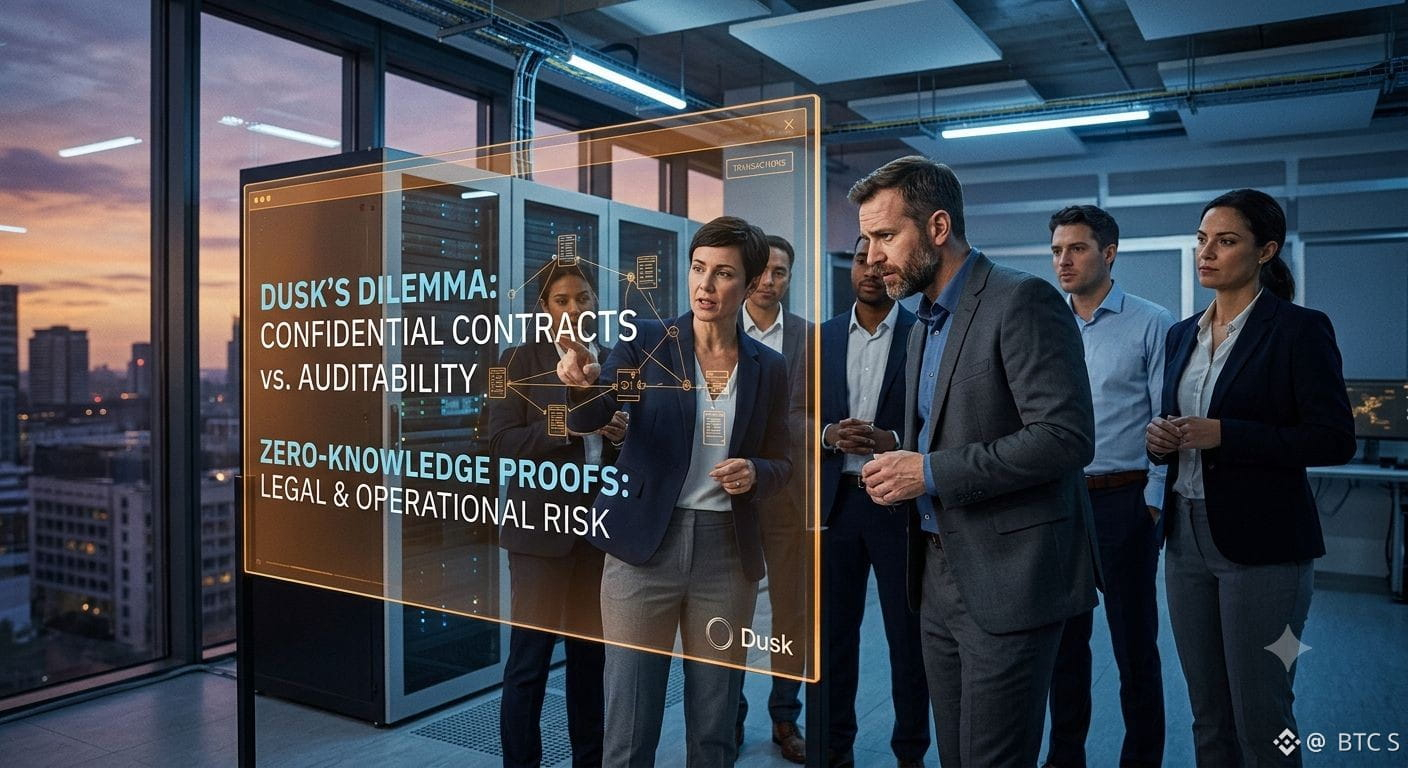
3
3
520
·
--
Haussier
D’accord, voici le point qui m’a réellement fait réfléchir là-dessus. Tout le monde cesse de dire que les banques et les institutions « veulent la confidentialité on-chain », et, à un certain niveau abstrait, oui, c’est le cas. Mais quand on s’assoit vraiment et qu’on regarde ce que cela signifie dans la pratique, ça s’écroule assez vite. Une salle de trading ne veut pas se cacher aux régulateurs — c’est une excellente manière de se retrouver dans une réunion très inconfortable. Ce qu’ils veulent, c’est se cacher les uns aux autres. Les concurrents. Les contreparties. Le reste du marché. Et, séparément, encore pouvoir prouver à un auditeur que rien de louche ne s’est produit. Ce sont deux demandes différentes, et la plupart des projets de « blockchain privée » ne résolvent vraiment que la première — celle, d’ailleurs, que presque personne n’est autorisé à vouloir sans condition.
C’est ce qui m’a fait faire une pause avec Dusk. Pas le discours sur la confidentialité en lui-même, tout le monde a ce discours. Ce qui est intéressant, c’est qu’ils n’ont pas fait semblant que la confidentialité était un simple réglage qu’on active. Il y a Moonlight pour les choses qui doivent être au grand jour, Phoenix pour celles qui ne doivent pas l’être. Le fait de les séparer comme ça ressemble moins à une décision marketing qu’à quelqu’un qui admet que le problème est plus compliqué que ce que les livres blancs laissent généralement entendre.
Ce qui me met mal à l’aise, c’est le volet consensus — la sélection, les comités, les modes de repli, un mode d’urgence. Tout cela paraît raisonnable sur le papier. Mais j’ai déjà vu des systèmes comme celui-ci, et ils ne cassent pas là où on regarde. Ils cassent en silence, des mois plus tard, dans des conditions que personne n’avait testées.
Alors, pour qui c’est vraiment ? Honnêtement, pas pour nous. Probablement des institutions prêtes à avancer lentement pour une clarté juridique plutôt que vite pour le buzz. Le fait que ça fonctionne dépend moins de la cryptographie que de savoir si, oui ou non, les gens qui écrivent les règles traitent « confidentiel » et « caché » comme des choses différentes.#dusk @Dusk_Foundation
$DUSK
{spot}(DUSKUSDT)
$BTC
{spot}(BTCUSDT)
$LAB
{future}(LABUSDT)
D’accord, voici le point qui m’a réellement fait réfléchir là-dessus. Tout le monde cesse de dire que les banques et les institutions « veulent la confidentialité on-chain », et, à un certain niveau abstrait, oui, c’est le cas. Mais quand on s’assoit vraiment et qu’on regarde ce que cela signifie dans la pratique, ça s’écroule assez vite. Une salle de trading ne veut pas se cacher aux régulateurs — c’est une excellente manière de se retrouver dans une réunion très inconfortable. Ce qu’ils veulent, c’est se cacher les uns aux autres. Les concurrents. Les contreparties. Le reste du marché. Et, séparément, encore pouvoir prouver à un auditeur que rien de louche ne s’est produit. Ce sont deux demandes différentes, et la plupart des projets de « blockchain privée » ne résolvent vraiment que la première — celle, d’ailleurs, que presque personne n’est autorisé à vouloir sans condition.
C’est ce qui m’a fait faire une pause avec Dusk. Pas le discours sur la confidentialité en lui-même, tout le monde a ce discours. Ce qui est intéressant, c’est qu’ils n’ont pas fait semblant que la confidentialité était un simple réglage qu’on active. Il y a Moonlight pour les choses qui doivent être au grand jour, Phoenix pour celles qui ne doivent pas l’être. Le fait de les séparer comme ça ressemble moins à une décision marketing qu’à quelqu’un qui admet que le problème est plus compliqué que ce que les livres blancs laissent généralement entendre.
Ce qui me met mal à l’aise, c’est le volet consensus — la sélection, les comités, les modes de repli, un mode d’urgence. Tout cela paraît raisonnable sur le papier. Mais j’ai déjà vu des systèmes comme celui-ci, et ils ne cassent pas là où on regarde. Ils cassent en silence, des mois plus tard, dans des conditions que personne n’avait testées.
Alors, pour qui c’est vraiment ? Honnêtement, pas pour nous. Probablement des institutions prêtes à avancer lentement pour une clarté juridique plutôt que vite pour le buzz. Le fait que ça fonctionne dépend moins de la cryptographie que de savoir si, oui ou non, les gens qui écrivent les règles traitent « confidentiel » et « caché » comme des choses différentes.#dusk @Dusk
$DUSK
$BTC
$LAB
C’est ce qui m’a fait faire une pause avec Dusk. Pas le discours sur la confidentialité en lui-même, tout le monde a ce discours. Ce qui est intéressant, c’est qu’ils n’ont pas fait semblant que la confidentialité était un simple réglage qu’on active. Il y a Moonlight pour les choses qui doivent être au grand jour, Phoenix pour celles qui ne doivent pas l’être. Le fait de les séparer comme ça ressemble moins à une décision marketing qu’à quelqu’un qui admet que le problème est plus compliqué que ce que les livres blancs laissent généralement entendre.
Ce qui me met mal à l’aise, c’est le volet consensus — la sélection, les comités, les modes de repli, un mode d’urgence. Tout cela paraît raisonnable sur le papier. Mais j’ai déjà vu des systèmes comme celui-ci, et ils ne cassent pas là où on regarde. Ils cassent en silence, des mois plus tard, dans des conditions que personne n’avait testées.
Alors, pour qui c’est vraiment ? Honnêtement, pas pour nous. Probablement des institutions prêtes à avancer lentement pour une clarté juridique plutôt que vite pour le buzz. Le fait que ça fonctionne dépend moins de la cryptographie que de savoir si, oui ou non, les gens qui écrivent les règles traitent « confidentiel » et « caché » comme des choses différentes.#dusk @Dusk
$DUSK
$BTC
$LAB

4
1
486
·
--
Haussier
Je n’arrête pas de penser à un problème simple et agaçant : si vous faites partie de ces gens qui gèrent une entreprise sérieuse, vous ne pouvez pas simplement mettre vos mouvements d’argent sur une blockchain publique. Tout le monde le verrait — des concurrents, des clients, des inconnus. Du coup, soit les gens évitent complètement ce genre de chaînes, soit ils se tournent vers des versions « privées » que personne ne peut réellement vérifier de l’extérieur, ce qui ne fait que déplacer le problème de confiance ailleurs au lieu de le résoudre. Ni l’une ni l’autre option n’est vraiment satisfaisante, et je pense que c’est pour ça qu’une grande partie des discours sur la « blockchain d’entreprise » a semblé creuse pendant des années.
Dusk Network est l’un des projets qui tente justement de s’installer dans cette gêne plutôt que de choisir un camp. L’idée, si je la comprends bien, est d’avoir des contrats qui restent confidentiels mais qui peuvent quand même prouver qu’ils respectent les règles — sans tout ouvrir à la vue du public. C’est un objectif raisonnable. Je ne pense juste pas que ce soit facile. Les preuves à divulgation nulle de connaissance ne sont ni bon marché, ni simples à mettre correctement en place, et la formule « privé mais conforme, prouvablement » est exactement le genre d’affirmation qui a l’air formidable jusqu’au moment où un régulateur ou un auditeur commence à la questionner.
Donc je ne vais pas prétendre savoir comment tout cela va se dérouler. Si ça finit par compter, ce ne sera probablement pas spectaculaire — une institution l’utilisera discrètement parce que ça résout un vrai mal de tête de règlement, de façon moins chère ou plus sûre que ce qu’elle avait avant. Et si ça échoue, ce sera probablement pour des raisons ordinaires : pas assez d’utilisations réelles, pas assez de liquidité, ou une histoire de conformité qui se fissure dès la première fois que quelqu’un la teste sérieusement.
#dusk @Dusk_Foundation
$DUSK
{future}(DUSKUSDT)
$ONG
{future}(ONGUSDT)
$PEOPLE
{future}(PEOPLEUSDT)
Je n’arrête pas de penser à un problème simple et agaçant : si vous faites partie de ces gens qui gèrent une entreprise sérieuse, vous ne pouvez pas simplement mettre vos mouvements d’argent sur une blockchain publique. Tout le monde le verrait — des concurrents, des clients, des inconnus. Du coup, soit les gens évitent complètement ce genre de chaînes, soit ils se tournent vers des versions « privées » que personne ne peut réellement vérifier de l’extérieur, ce qui ne fait que déplacer le problème de confiance ailleurs au lieu de le résoudre. Ni l’une ni l’autre option n’est vraiment satisfaisante, et je pense que c’est pour ça qu’une grande partie des discours sur la « blockchain d’entreprise » a semblé creuse pendant des années.
Dusk Network est l’un des projets qui tente justement de s’installer dans cette gêne plutôt que de choisir un camp. L’idée, si je la comprends bien, est d’avoir des contrats qui restent confidentiels mais qui peuvent quand même prouver qu’ils respectent les règles — sans tout ouvrir à la vue du public. C’est un objectif raisonnable. Je ne pense juste pas que ce soit facile. Les preuves à divulgation nulle de connaissance ne sont ni bon marché, ni simples à mettre correctement en place, et la formule « privé mais conforme, prouvablement » est exactement le genre d’affirmation qui a l’air formidable jusqu’au moment où un régulateur ou un auditeur commence à la questionner.
Donc je ne vais pas prétendre savoir comment tout cela va se dérouler. Si ça finit par compter, ce ne sera probablement pas spectaculaire — une institution l’utilisera discrètement parce que ça résout un vrai mal de tête de règlement, de façon moins chère ou plus sûre que ce qu’elle avait avant. Et si ça échoue, ce sera probablement pour des raisons ordinaires : pas assez d’utilisations réelles, pas assez de liquidité, ou une histoire de conformité qui se fissure dès la première fois que quelqu’un la teste sérieusement.
#dusk @Dusk
$DUSK
$ONG
$PEOPLE
Dusk Network est l’un des projets qui tente justement de s’installer dans cette gêne plutôt que de choisir un camp. L’idée, si je la comprends bien, est d’avoir des contrats qui restent confidentiels mais qui peuvent quand même prouver qu’ils respectent les règles — sans tout ouvrir à la vue du public. C’est un objectif raisonnable. Je ne pense juste pas que ce soit facile. Les preuves à divulgation nulle de connaissance ne sont ni bon marché, ni simples à mettre correctement en place, et la formule « privé mais conforme, prouvablement » est exactement le genre d’affirmation qui a l’air formidable jusqu’au moment où un régulateur ou un auditeur commence à la questionner.
Donc je ne vais pas prétendre savoir comment tout cela va se dérouler. Si ça finit par compter, ce ne sera probablement pas spectaculaire — une institution l’utilisera discrètement parce que ça résout un vrai mal de tête de règlement, de façon moins chère ou plus sûre que ce qu’elle avait avant. Et si ça échoue, ce sera probablement pour des raisons ordinaires : pas assez d’utilisations réelles, pas assez de liquidité, ou une histoire de conformité qui se fissure dès la première fois que quelqu’un la teste sérieusement.
#dusk @Dusk
$DUSK
$ONG
$PEOPLE
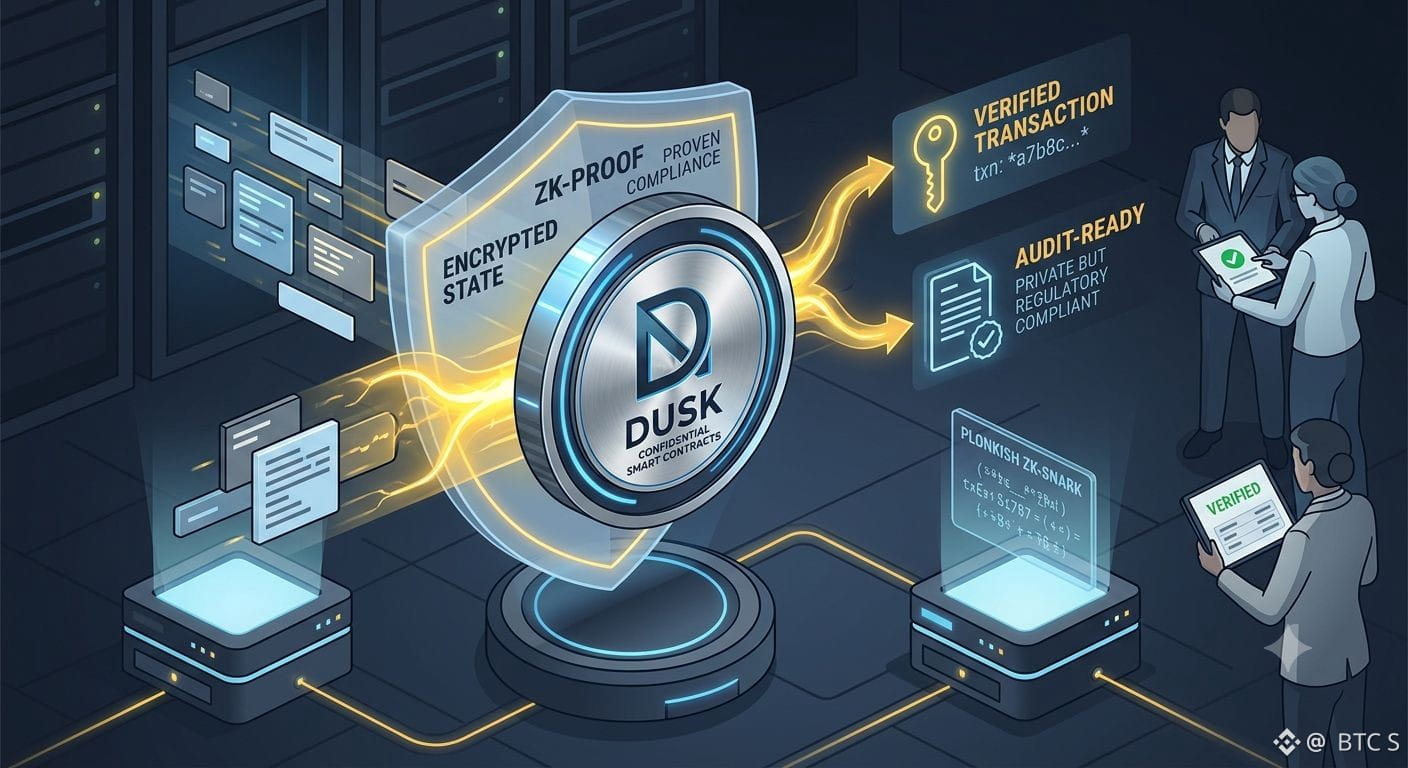
4
4
180
·
--
Haussier
Honnêtement, ce qui me fait penser à tout ça n’a rien à voir avec la technologie — c’est une question beaucoup plus simple : pourquoi « privé » et « conforme » ne semblent-ils jamais aller ensemble dans la crypto ? On se dirait qu’à force, quelqu’un aurait fini par le résoudre, mais à chaque fois que je regarde de près, les projets choisissent leur camp. Soit tout est au grand jour, ce qui devient un problème dès que l’argent réel entre en jeu — personne ne veut qu’un concurrent observe le déroulement de ses transactions en direct — soit tout est caché, ce qui paraît séduisant jusqu’au moment où l’on se rappelle que les régulateurs existent et ne risquent pas de disparaître.
Alors, quand j’entends « smart contracts confidentiels », ma première réaction n’est pas l’enthousiasme : c’est plutôt une curiosité fatiguée. D’accord, mais confidentiel comment ? Il y a une version qui veut simplement dire « caché à tout le monde », et il y a une version qui veut dire « caché au public, mais tout de même prouvable pour quiconque a légalement besoin de le voir ». Une seule de ces versions est réellement exploitable par une institution. L’autre n’est qu’une version plus flatteuse du même vieux problème.
Je ne sais pas si Dusk a raison sur ce point. Je n’en suis vraiment pas sûr. Les systèmes à preuve de connaissance nulle restent encore un peu compliqués dans la pratique, et ce type d’infrastructure ne se « vend » pas avec un bon discours — il se prouve des années plus tard, quand un règlement banal fonctionne… et que rien n’explose.
Mon estimation la plus honnête, c’est que si ça décolle, ça ne fera pas de bruit. Ce sera un émetteur de taille moyenne qui teste discrètement, équipe de conformité incluse, et tout le monde observe pour voir si ça tient sous pression. C’est le vrai test. Pas le livre blanc.
#dusk @Dusk_Foundation
$DUSK
{spot}(DUSKUSDT)
$RE
{spot}(REUSDT)
$BB
{spot}(BBUSDT)
Honnêtement, ce qui me fait penser à tout ça n’a rien à voir avec la technologie — c’est une question beaucoup plus simple : pourquoi « privé » et « conforme » ne semblent-ils jamais aller ensemble dans la crypto ? On se dirait qu’à force, quelqu’un aurait fini par le résoudre, mais à chaque fois que je regarde de près, les projets choisissent leur camp. Soit tout est au grand jour, ce qui devient un problème dès que l’argent réel entre en jeu — personne ne veut qu’un concurrent observe le déroulement de ses transactions en direct — soit tout est caché, ce qui paraît séduisant jusqu’au moment où l’on se rappelle que les régulateurs existent et ne risquent pas de disparaître.
Alors, quand j’entends « smart contracts confidentiels », ma première réaction n’est pas l’enthousiasme : c’est plutôt une curiosité fatiguée. D’accord, mais confidentiel comment ? Il y a une version qui veut simplement dire « caché à tout le monde », et il y a une version qui veut dire « caché au public, mais tout de même prouvable pour quiconque a légalement besoin de le voir ». Une seule de ces versions est réellement exploitable par une institution. L’autre n’est qu’une version plus flatteuse du même vieux problème.
Je ne sais pas si Dusk a raison sur ce point. Je n’en suis vraiment pas sûr. Les systèmes à preuve de connaissance nulle restent encore un peu compliqués dans la pratique, et ce type d’infrastructure ne se « vend » pas avec un bon discours — il se prouve des années plus tard, quand un règlement banal fonctionne… et que rien n’explose.
Mon estimation la plus honnête, c’est que si ça décolle, ça ne fera pas de bruit. Ce sera un émetteur de taille moyenne qui teste discrètement, équipe de conformité incluse, et tout le monde observe pour voir si ça tient sous pression. C’est le vrai test. Pas le livre blanc.
#dusk @Dusk
$DUSK
$RE
$BB
Alors, quand j’entends « smart contracts confidentiels », ma première réaction n’est pas l’enthousiasme : c’est plutôt une curiosité fatiguée. D’accord, mais confidentiel comment ? Il y a une version qui veut simplement dire « caché à tout le monde », et il y a une version qui veut dire « caché au public, mais tout de même prouvable pour quiconque a légalement besoin de le voir ». Une seule de ces versions est réellement exploitable par une institution. L’autre n’est qu’une version plus flatteuse du même vieux problème.
Je ne sais pas si Dusk a raison sur ce point. Je n’en suis vraiment pas sûr. Les systèmes à preuve de connaissance nulle restent encore un peu compliqués dans la pratique, et ce type d’infrastructure ne se « vend » pas avec un bon discours — il se prouve des années plus tard, quand un règlement banal fonctionne… et que rien n’explose.
Mon estimation la plus honnête, c’est que si ça décolle, ça ne fera pas de bruit. Ce sera un émetteur de taille moyenne qui teste discrètement, équipe de conformité incluse, et tout le monde observe pour voir si ça tient sous pression. C’est le vrai test. Pas le livre blanc.
#dusk @Dusk
$DUSK
$RE
$BB
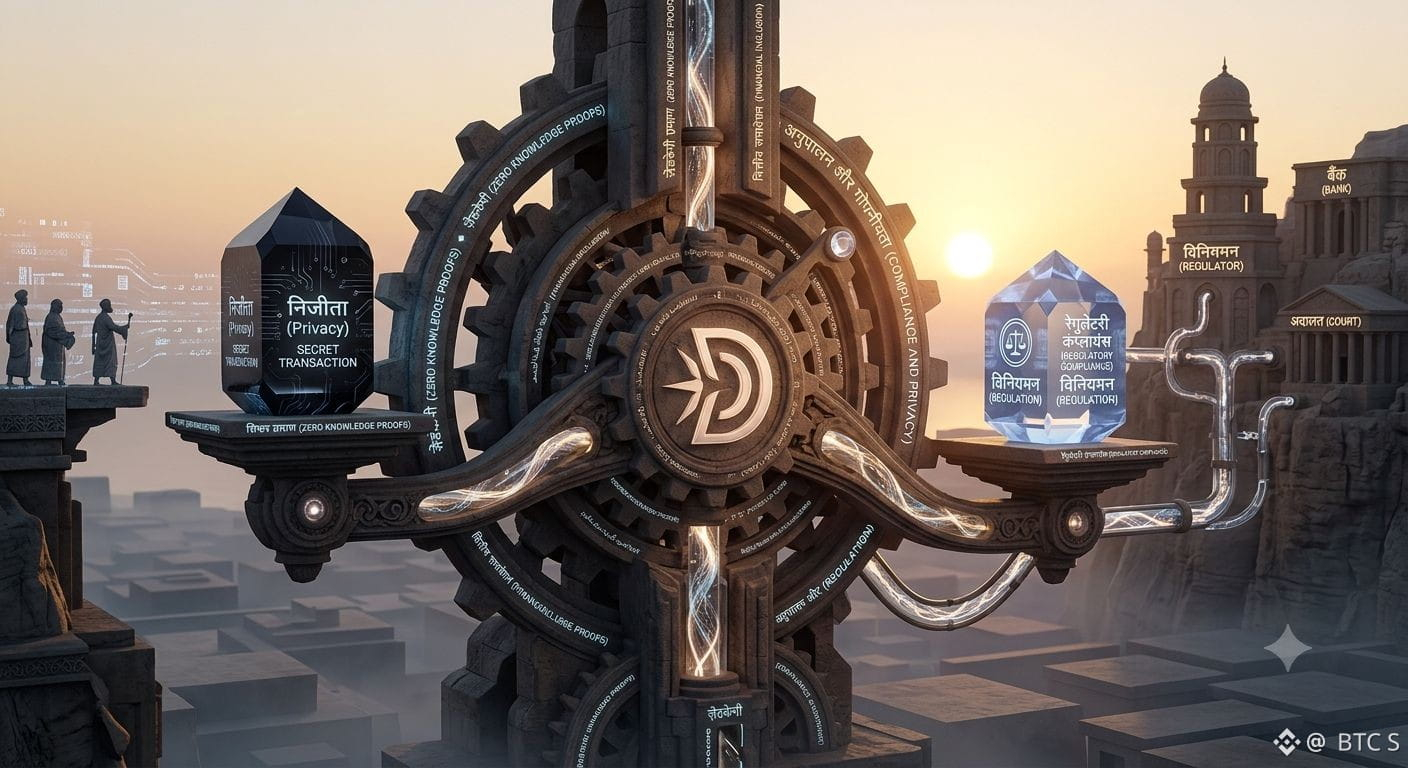
1
1
196
·
--
Haussier
D’accord, je reviens toujours à cette histoire de Dusk Network. Et la question qui m’obsède vraiment n’est pas « est-ce que la technologie est impressionnante ». C’est plus simple. Imaginons qu’une banque veuille déplacer une obligation sur la chaîne. Son responsable conformité doit pouvoir voir la transaction. Son concurrent, absolument pas. Le grand public ? Non plus. Et la plupart des blockchains n’ont tout simplement pas de réglage pour ça : soit vous criez tout votre bilan sur Internet, soit vous passez en mode totalement obscur et, du coup, même les personnes légalement en droit de jeter un œil ne peuvent pas l’obtenir. Ce n’est pas comme ça que la finance a réellement fonctionné. Il y a toujours eu un grand livre que quelqu’un pouvait faire saisir par subpoena, mais jamais un grand livre que n’importe qui pouvait faire défiler.
Donc quand Dusk parle de contrats confidentiels — cette norme XSC — ce qui m’intéresse n’est pas le fait de cacher. La dissimulation, c’est la moitié facile, honnêtement. La vraie question, c’est de savoir si la moitié « révéler quand c’est requis » tient la route en dehors d’une démo. Est-ce qu’un auditeur peut obtenir ce dont il a besoin sans que tout se transforme en « faites-moi confiance, c’est le protocole » ? Ce n’est plus vraiment une question crypto, c’est plutôt une question de nerfs juridiques, et je n’ai vu personne vraiment la soumettre à un test de résistance.
Si je dois deviner qui s’y intéressera en premier, ce ne sont pas des gens ordinaires qui échangent des jetons. C’est plutôt quelqu’un qui émet un actif réglementé et qui veut de la discrétion vis-à-vis des rivaux, mais pas vis-à-vis des régulateurs. Et si ça survit, ça dépend probablement de choses peu glamour — la récupération des clés, à quoi ressemble réellement une piste d’audit à 2 h du matin quand quelque chose a mal tourné. C’est généralement là que ces systèmes finissent discrètement par se fissurer.
#dusk @Dusk_Foundation
$DUSK
{spot}(DUSKUSDT)
$LAB
{future}(LABUSDT)
$ESP
{spot}(ESPUSDT)
D’accord, je reviens toujours à cette histoire de Dusk Network. Et la question qui m’obsède vraiment n’est pas « est-ce que la technologie est impressionnante ». C’est plus simple. Imaginons qu’une banque veuille déplacer une obligation sur la chaîne. Son responsable conformité doit pouvoir voir la transaction. Son concurrent, absolument pas. Le grand public ? Non plus. Et la plupart des blockchains n’ont tout simplement pas de réglage pour ça : soit vous criez tout votre bilan sur Internet, soit vous passez en mode totalement obscur et, du coup, même les personnes légalement en droit de jeter un œil ne peuvent pas l’obtenir. Ce n’est pas comme ça que la finance a réellement fonctionné. Il y a toujours eu un grand livre que quelqu’un pouvait faire saisir par subpoena, mais jamais un grand livre que n’importe qui pouvait faire défiler.
Donc quand Dusk parle de contrats confidentiels — cette norme XSC — ce qui m’intéresse n’est pas le fait de cacher. La dissimulation, c’est la moitié facile, honnêtement. La vraie question, c’est de savoir si la moitié « révéler quand c’est requis » tient la route en dehors d’une démo. Est-ce qu’un auditeur peut obtenir ce dont il a besoin sans que tout se transforme en « faites-moi confiance, c’est le protocole » ? Ce n’est plus vraiment une question crypto, c’est plutôt une question de nerfs juridiques, et je n’ai vu personne vraiment la soumettre à un test de résistance.
Si je dois deviner qui s’y intéressera en premier, ce ne sont pas des gens ordinaires qui échangent des jetons. C’est plutôt quelqu’un qui émet un actif réglementé et qui veut de la discrétion vis-à-vis des rivaux, mais pas vis-à-vis des régulateurs. Et si ça survit, ça dépend probablement de choses peu glamour — la récupération des clés, à quoi ressemble réellement une piste d’audit à 2 h du matin quand quelque chose a mal tourné. C’est généralement là que ces systèmes finissent discrètement par se fissurer.
#dusk @Dusk
$DUSK
$LAB
$ESP
Donc quand Dusk parle de contrats confidentiels — cette norme XSC — ce qui m’intéresse n’est pas le fait de cacher. La dissimulation, c’est la moitié facile, honnêtement. La vraie question, c’est de savoir si la moitié « révéler quand c’est requis » tient la route en dehors d’une démo. Est-ce qu’un auditeur peut obtenir ce dont il a besoin sans que tout se transforme en « faites-moi confiance, c’est le protocole » ? Ce n’est plus vraiment une question crypto, c’est plutôt une question de nerfs juridiques, et je n’ai vu personne vraiment la soumettre à un test de résistance.
Si je dois deviner qui s’y intéressera en premier, ce ne sont pas des gens ordinaires qui échangent des jetons. C’est plutôt quelqu’un qui émet un actif réglementé et qui veut de la discrétion vis-à-vis des rivaux, mais pas vis-à-vis des régulateurs. Et si ça survit, ça dépend probablement de choses peu glamour — la récupération des clés, à quoi ressemble réellement une piste d’audit à 2 h du matin quand quelque chose a mal tourné. C’est généralement là que ces systèmes finissent discrètement par se fissurer.
#dusk @Dusk
$DUSK
$LAB
$ESP
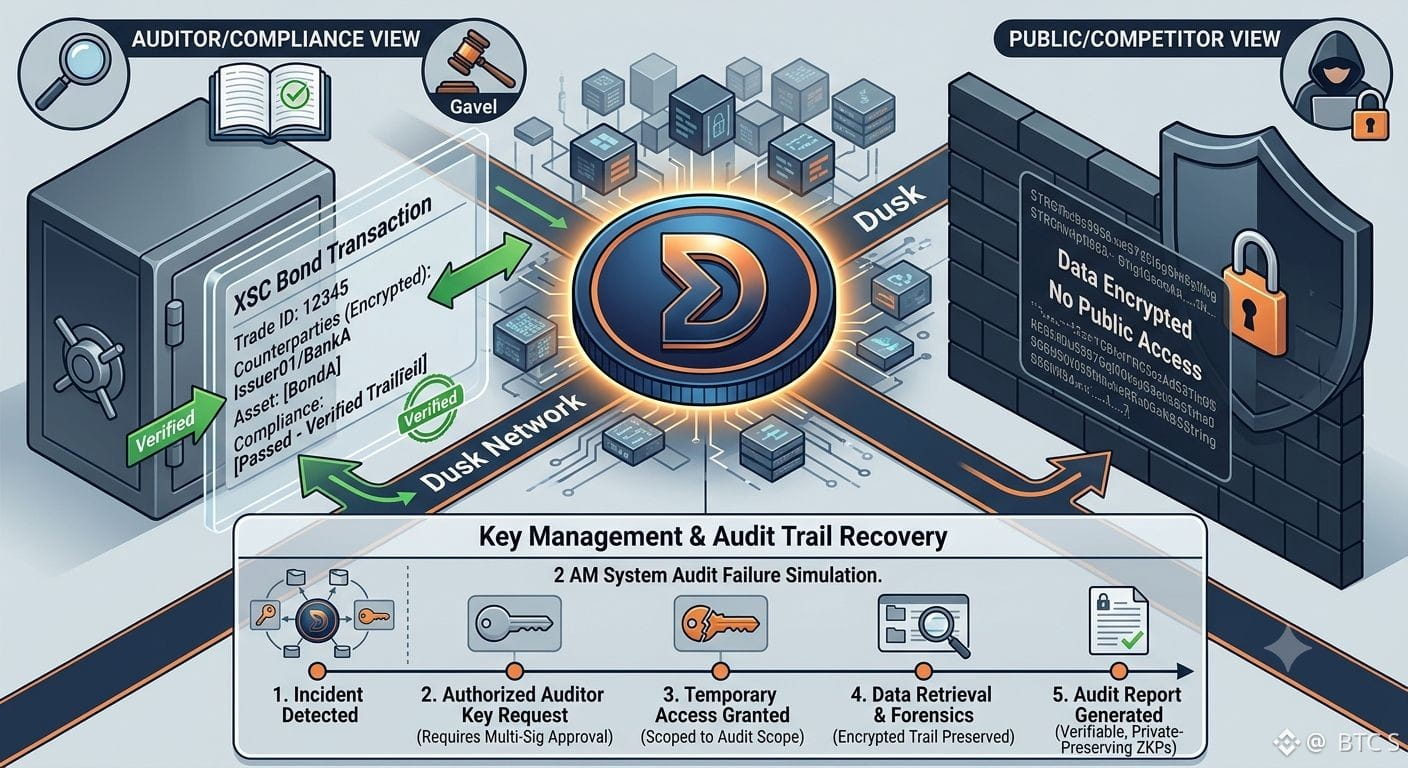
1
1
269
·
--
Haussier
J’ai suffisamment assisté à ce genre de conversations pour connaître exactement le moment où les gens décrochent. Tu expliques une nouvelle chaîne, tout le monde hoche la tête, puis quelqu’un — en général la personne qui gère l’argent au quotidien — demande : « d’accord, mais qui d’autre peut voir ça ? » Et la réponse honnête, c’est : tout le monde. Chaque portefeuille, chaque solde, chaque mouvement, visibles publiquement pour toujours. C’est là que les hochements de tête s’arrêtent. Pas parce qu’ils sont anti-crypto. Mais parce qu’ils ont assez fait ce métier pour savoir qu’on ne gère pas une entreprise en laissant ses livres ouverts à ses concurrents.
Et regardez, les solutions qui existent déjà pour ça donnent toujours l’impression d’avoir été bricolées. Des mixeurs qui font que l’équipe de conformité d’une transaction fait des allergies. Des monnaies de confidentialité qu’on écarte discrètement dès qu’un régulateur lève un sourcil. Des side-chains où, techniquement, tu évites un problème de confiance en en créant un plus petit, plus étrange. Rien de tout ça ne ressemble vraiment à quelque chose sur quoi on construirait une émission d’obligations.
Donc la proposition de Dusk vise au moins la bonne question. N’ajoutez pas la confidentialité après coup — intégrez-la au contrat dès le départ. C’est censé être le rôle de XSC : permettre à une transaction de prouver qu’elle est propre sans montrer à qui que ce soit ce qu’elle contient réellement.
Je ne sais vraiment pas si ça tient la route quand du volume réel arrive. Les systèmes de preuve deviennent vite coûteux, et obtenir qu’un régulateur soit à l’aise avec « fais-moi confiance à la preuve » plutôt qu’« montre-moi le grand livre », c’est un problème lent et humain, pas un problème technique.
Si ça fonctionne pour quelqu’un, ce sera pour les acteurs ennuyeux et réglementés qui ont besoin de confidentialité et de conformité en même temps — pas pour des traders en quête de sensations. Petit public. Peut-être le bon.
#dusk @Dusk_Foundation
$DUSK
{spot}(DUSKUSDT)
$RED
{spot}(REDUSDT)
$EDEN
{spot}(EDENUSDT)
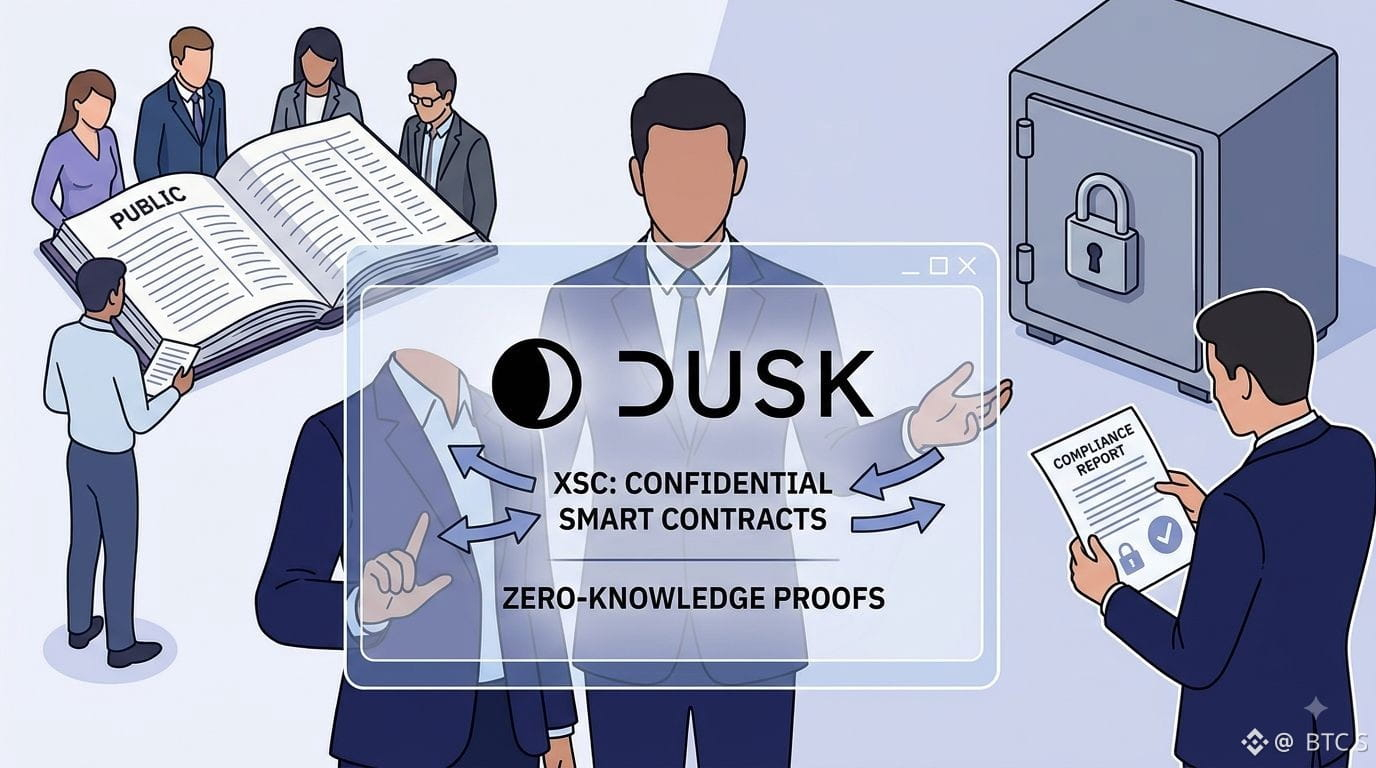
J’ai suffisamment assisté à ce genre de conversations pour connaître exactement le moment où les gens décrochent. Tu expliques une nouvelle chaîne, tout le monde hoche la tête, puis quelqu’un — en général la personne qui gère l’argent au quotidien — demande : « d’accord, mais qui d’autre peut voir ça ? » Et la réponse honnête, c’est : tout le monde. Chaque portefeuille, chaque solde, chaque mouvement, visibles publiquement pour toujours. C’est là que les hochements de tête s’arrêtent. Pas parce qu’ils sont anti-crypto. Mais parce qu’ils ont assez fait ce métier pour savoir qu’on ne gère pas une entreprise en laissant ses livres ouverts à ses concurrents.
Et regardez, les solutions qui existent déjà pour ça donnent toujours l’impression d’avoir été bricolées. Des mixeurs qui font que l’équipe de conformité d’une transaction fait des allergies. Des monnaies de confidentialité qu’on écarte discrètement dès qu’un régulateur lève un sourcil. Des side-chains où, techniquement, tu évites un problème de confiance en en créant un plus petit, plus étrange. Rien de tout ça ne ressemble vraiment à quelque chose sur quoi on construirait une émission d’obligations.
Donc la proposition de Dusk vise au moins la bonne question. N’ajoutez pas la confidentialité après coup — intégrez-la au contrat dès le départ. C’est censé être le rôle de XSC : permettre à une transaction de prouver qu’elle est propre sans montrer à qui que ce soit ce qu’elle contient réellement.
Je ne sais vraiment pas si ça tient la route quand du volume réel arrive. Les systèmes de preuve deviennent vite coûteux, et obtenir qu’un régulateur soit à l’aise avec « fais-moi confiance à la preuve » plutôt qu’« montre-moi le grand livre », c’est un problème lent et humain, pas un problème technique.
Si ça fonctionne pour quelqu’un, ce sera pour les acteurs ennuyeux et réglementés qui ont besoin de confidentialité et de conformité en même temps — pas pour des traders en quête de sensations. Petit public. Peut-être le bon.
#dusk @Dusk
$DUSK
$RED
$EDEN
Et regardez, les solutions qui existent déjà pour ça donnent toujours l’impression d’avoir été bricolées. Des mixeurs qui font que l’équipe de conformité d’une transaction fait des allergies. Des monnaies de confidentialité qu’on écarte discrètement dès qu’un régulateur lève un sourcil. Des side-chains où, techniquement, tu évites un problème de confiance en en créant un plus petit, plus étrange. Rien de tout ça ne ressemble vraiment à quelque chose sur quoi on construirait une émission d’obligations.
Donc la proposition de Dusk vise au moins la bonne question. N’ajoutez pas la confidentialité après coup — intégrez-la au contrat dès le départ. C’est censé être le rôle de XSC : permettre à une transaction de prouver qu’elle est propre sans montrer à qui que ce soit ce qu’elle contient réellement.
Je ne sais vraiment pas si ça tient la route quand du volume réel arrive. Les systèmes de preuve deviennent vite coûteux, et obtenir qu’un régulateur soit à l’aise avec « fais-moi confiance à la preuve » plutôt qu’« montre-moi le grand livre », c’est un problème lent et humain, pas un problème technique.
Si ça fonctionne pour quelqu’un, ce sera pour les acteurs ennuyeux et réglementés qui ont besoin de confidentialité et de conformité en même temps — pas pour des traders en quête de sensations. Petit public. Peut-être le bon.
#dusk @Dusk
$DUSK
$RED
$EDEN
2
2
263
·
--
Haussier
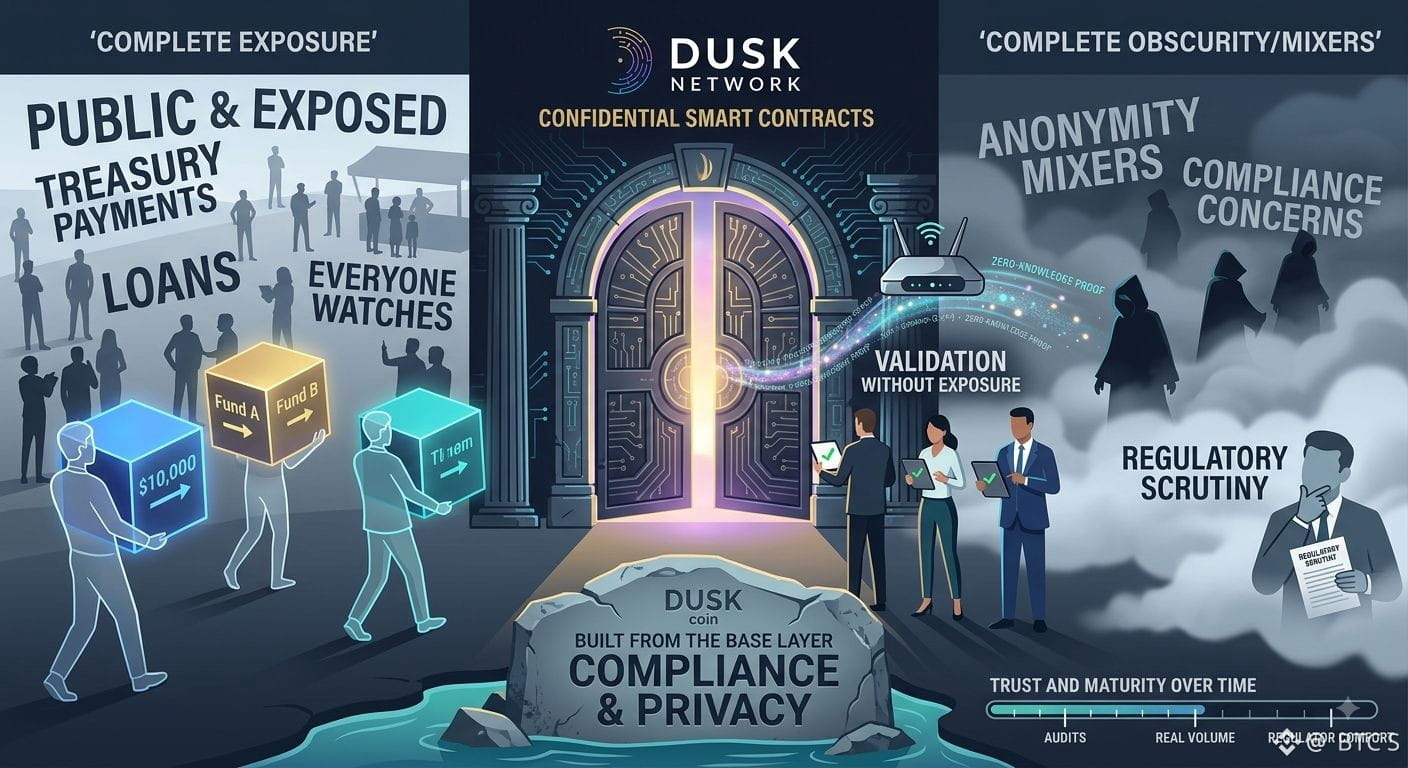
Dites que vous déplacez de l’argent réel sur une blockchain publique — un paiement de trésorerie, un prêt, un règlement entre deux fonds. Tout le monde peut le voir. Non seulement le montant, mais aussi qui, quand, à quelle fréquence, et l’ensemble de sa forme dans le temps. C’est la partie qui n’est jamais vraiment dite à voix haute. Ce n’est pas que la crypto manque de fonctionnalités de confidentialité, exactement. C’est que la confidentialité on-chain tend à être tout ou rien. Vous êtes soit complètement exposé, soit vous utilisez quelque chose comme un mixeur, et le second fait taire n’importe quel responsable de la conformité et l’incite à commencer à taper des notes. Aucun des deux n’est vraiment utilisable quand vous déplacez du capital réel.
Ce que Dusk vise, autant que je puisse le dire, c’est le juste milieu — des smart contracts confidentiels où une transaction prouve qu’elle est valide sans montrer à tout le monde ce qu’elle contient, mais où la bonne partie pourrait quand même le vérifier plus tard si nécessaire. C’est la bonne chose à vouloir. Personne n’a encore réussi à le faire proprement. Et le construire à la couche de base au lieu de l’ajouter après coup est un chemin plus difficile et plus lent — des ensembles de validateurs plus petits au début, une liquidité plus faible, une longue période où rien ne semble vraiment prouvé. Les régulateurs ne vont pas simplement faire confiance à la cryptographie parce qu’elle est élégante. Ils doivent la voir tenir la route, pendant des années, avant que quiconque manipule de l’argent réel ne se sente à l’aise.
Donc je ne m’exciterais pas à propos de celui-ci. Je garderais juste un œil à moitié dessus — est-ce que ça tourne toujours, est-ce que ça fait toujours l’objet d’audits, est-ce que quelqu’un avec de vrais volumes le touche réellement. Si oui, c’est probablement parce que quelqu’un en avait tellement besoin qu’il fallait patienter. Sinon, c’est parce que ce genre de confiance est lent à s’installer, et la plupart des choses n’arrivent pas aussi loin.
#dusk $DUSK @Dusk_Foundation
{spot}(DUSKUSDT)
Dites que vous déplacez de l’argent réel sur une blockchain publique — un paiement de trésorerie, un prêt, un règlement entre deux fonds. Tout le monde peut le voir. Non seulement le montant, mais aussi qui, quand, à quelle fréquence, et l’ensemble de sa forme dans le temps. C’est la partie qui n’est jamais vraiment dite à voix haute. Ce n’est pas que la crypto manque de fonctionnalités de confidentialité, exactement. C’est que la confidentialité on-chain tend à être tout ou rien. Vous êtes soit complètement exposé, soit vous utilisez quelque chose comme un mixeur, et le second fait taire n’importe quel responsable de la conformité et l’incite à commencer à taper des notes. Aucun des deux n’est vraiment utilisable quand vous déplacez du capital réel.
Ce que Dusk vise, autant que je puisse le dire, c’est le juste milieu — des smart contracts confidentiels où une transaction prouve qu’elle est valide sans montrer à tout le monde ce qu’elle contient, mais où la bonne partie pourrait quand même le vérifier plus tard si nécessaire. C’est la bonne chose à vouloir. Personne n’a encore réussi à le faire proprement. Et le construire à la couche de base au lieu de l’ajouter après coup est un chemin plus difficile et plus lent — des ensembles de validateurs plus petits au début, une liquidité plus faible, une longue période où rien ne semble vraiment prouvé. Les régulateurs ne vont pas simplement faire confiance à la cryptographie parce qu’elle est élégante. Ils doivent la voir tenir la route, pendant des années, avant que quiconque manipule de l’argent réel ne se sente à l’aise.
Donc je ne m’exciterais pas à propos de celui-ci. Je garderais juste un œil à moitié dessus — est-ce que ça tourne toujours, est-ce que ça fait toujours l’objet d’audits, est-ce que quelqu’un avec de vrais volumes le touche réellement. Si oui, c’est probablement parce que quelqu’un en avait tellement besoin qu’il fallait patienter. Sinon, c’est parce que ce genre de confiance est lent à s’installer, et la plupart des choses n’arrivent pas aussi loin.
#dusk $DUSK @Dusk
Ce que Dusk vise, autant que je puisse le dire, c’est le juste milieu — des smart contracts confidentiels où une transaction prouve qu’elle est valide sans montrer à tout le monde ce qu’elle contient, mais où la bonne partie pourrait quand même le vérifier plus tard si nécessaire. C’est la bonne chose à vouloir. Personne n’a encore réussi à le faire proprement. Et le construire à la couche de base au lieu de l’ajouter après coup est un chemin plus difficile et plus lent — des ensembles de validateurs plus petits au début, une liquidité plus faible, une longue période où rien ne semble vraiment prouvé. Les régulateurs ne vont pas simplement faire confiance à la cryptographie parce qu’elle est élégante. Ils doivent la voir tenir la route, pendant des années, avant que quiconque manipule de l’argent réel ne se sente à l’aise.
Donc je ne m’exciterais pas à propos de celui-ci. Je garderais juste un œil à moitié dessus — est-ce que ça tourne toujours, est-ce que ça fait toujours l’objet d’audits, est-ce que quelqu’un avec de vrais volumes le touche réellement. Si oui, c’est probablement parce que quelqu’un en avait tellement besoin qu’il fallait patienter. Sinon, c’est parce que ce genre de confiance est lent à s’installer, et la plupart des choses n’arrivent pas aussi loin.
#dusk $DUSK @Dusk
18
6
137
·
--
Haussier
Les banques ne règlent pas une obligation en chaîne car, dès que la transaction touche le registre public, toutes les tailles de position, tous les contreparties et tous les schémas de flux deviennent visibles pour quiconque. Ce n’est pas un simple choix en matière de confidentialité : c’est une exigence légale directe dans presque tous les cadres réglementaires des valeurs mobilières. Les régulateurs doivent pouvoir auditer, pas naviguer à l’aveugle. Alors les institutions se contentent de geler le processus. Pas parce qu’elles sont hostiles à la blockchain, mais parce que la configuration par défaut de la blockchain, « tout est transparent », constitue en réalité l’obstacle majeur de la conformité.
La plupart des chaînes de confidentialité tentent de contourner cela en cachant tout. Les régulateurs le signalent immédiatement : on ne peut pas auditer si l’on est aveugle.
Les contrats XSC de Dusk essaient quelque chose de différent. Confidentiels par défaut, mais vérifiables de manière sélective quand un régulateur ou un auditeur a réellement besoin de vérifier un élément. Cette idée de divulgation sélective est le vrai défi d’ingénierie à l’heure actuelle. Les preuves à divulgation nulle de connaissance qui s’intègrent réellement à des traces d’audit conformes aux exigences du droit des valeurs mobilières sont encore assez récentes, donc une « confidentialité conforme » est beaucoup plus étroite que la simple « confidentialité ». L’adoption va avancer très lentement jusqu’à ce que les régulateurs décident si la divulgation sélective constitue bien une preuve d’audit adéquate.
Toute chaîne qui prétend fournir à la fois la finalité du règlement et la divulgation réglementaire en même temps se bat fondamentalement contre les lois de la physique. Ces deux objectifs s’opposent, et chaque projet finit par en privilégier un en vendant l’autre. Dusk fait partie des rares à ne pas faire semblant que le compromis n’existe pas. Ce niveau de franchise est rafraîchissant.
Ce sont uniquement les acteurs réellement concernés, les émetteurs réglementés qui lancent des obligations tokenisées en pilote, qui vont l’utiliser. Les traders de détail n’y toucheront pas : ils veulent de la liquidité et une découverte des prix, pas une mise en scène de la confidentialité. Cela ne fonctionne que si les preuves sont rapides, peu coûteuses et s’intègrent directement dans les systèmes de conformité existants… et si les régulateurs acceptent que la divulgation sélective soit suffisante pour l’audit. D’ici là, ce n’est encore qu’une idée de type « on devrait essayer quand on pourra », pas une réalité de type « on doit l’utiliser ».
#dusk $DUSK @Dusk_Foundation
{spot}(DUSKUSDT)
Les banques ne règlent pas une obligation en chaîne car, dès que la transaction touche le registre public, toutes les tailles de position, tous les contreparties et tous les schémas de flux deviennent visibles pour quiconque. Ce n’est pas un simple choix en matière de confidentialité : c’est une exigence légale directe dans presque tous les cadres réglementaires des valeurs mobilières. Les régulateurs doivent pouvoir auditer, pas naviguer à l’aveugle. Alors les institutions se contentent de geler le processus. Pas parce qu’elles sont hostiles à la blockchain, mais parce que la configuration par défaut de la blockchain, « tout est transparent », constitue en réalité l’obstacle majeur de la conformité.
La plupart des chaînes de confidentialité tentent de contourner cela en cachant tout. Les régulateurs le signalent immédiatement : on ne peut pas auditer si l’on est aveugle.
Les contrats XSC de Dusk essaient quelque chose de différent. Confidentiels par défaut, mais vérifiables de manière sélective quand un régulateur ou un auditeur a réellement besoin de vérifier un élément. Cette idée de divulgation sélective est le vrai défi d’ingénierie à l’heure actuelle. Les preuves à divulgation nulle de connaissance qui s’intègrent réellement à des traces d’audit conformes aux exigences du droit des valeurs mobilières sont encore assez récentes, donc une « confidentialité conforme » est beaucoup plus étroite que la simple « confidentialité ». L’adoption va avancer très lentement jusqu’à ce que les régulateurs décident si la divulgation sélective constitue bien une preuve d’audit adéquate.
Toute chaîne qui prétend fournir à la fois la finalité du règlement et la divulgation réglementaire en même temps se bat fondamentalement contre les lois de la physique. Ces deux objectifs s’opposent, et chaque projet finit par en privilégier un en vendant l’autre. Dusk fait partie des rares à ne pas faire semblant que le compromis n’existe pas. Ce niveau de franchise est rafraîchissant.
Ce sont uniquement les acteurs réellement concernés, les émetteurs réglementés qui lancent des obligations tokenisées en pilote, qui vont l’utiliser. Les traders de détail n’y toucheront pas : ils veulent de la liquidité et une découverte des prix, pas une mise en scène de la confidentialité. Cela ne fonctionne que si les preuves sont rapides, peu coûteuses et s’intègrent directement dans les systèmes de conformité existants… et si les régulateurs acceptent que la divulgation sélective soit suffisante pour l’audit. D’ici là, ce n’est encore qu’une idée de type « on devrait essayer quand on pourra », pas une réalité de type « on doit l’utiliser ».
#dusk $DUSK @Dusk
La plupart des chaînes de confidentialité tentent de contourner cela en cachant tout. Les régulateurs le signalent immédiatement : on ne peut pas auditer si l’on est aveugle.
Les contrats XSC de Dusk essaient quelque chose de différent. Confidentiels par défaut, mais vérifiables de manière sélective quand un régulateur ou un auditeur a réellement besoin de vérifier un élément. Cette idée de divulgation sélective est le vrai défi d’ingénierie à l’heure actuelle. Les preuves à divulgation nulle de connaissance qui s’intègrent réellement à des traces d’audit conformes aux exigences du droit des valeurs mobilières sont encore assez récentes, donc une « confidentialité conforme » est beaucoup plus étroite que la simple « confidentialité ». L’adoption va avancer très lentement jusqu’à ce que les régulateurs décident si la divulgation sélective constitue bien une preuve d’audit adéquate.
Toute chaîne qui prétend fournir à la fois la finalité du règlement et la divulgation réglementaire en même temps se bat fondamentalement contre les lois de la physique. Ces deux objectifs s’opposent, et chaque projet finit par en privilégier un en vendant l’autre. Dusk fait partie des rares à ne pas faire semblant que le compromis n’existe pas. Ce niveau de franchise est rafraîchissant.
Ce sont uniquement les acteurs réellement concernés, les émetteurs réglementés qui lancent des obligations tokenisées en pilote, qui vont l’utiliser. Les traders de détail n’y toucheront pas : ils veulent de la liquidité et une découverte des prix, pas une mise en scène de la confidentialité. Cela ne fonctionne que si les preuves sont rapides, peu coûteuses et s’intègrent directement dans les systèmes de conformité existants… et si les régulateurs acceptent que la divulgation sélective soit suffisante pour l’audit. D’ici là, ce n’est encore qu’une idée de type « on devrait essayer quand on pourra », pas une réalité de type « on doit l’utiliser ».
#dusk $DUSK @Dusk
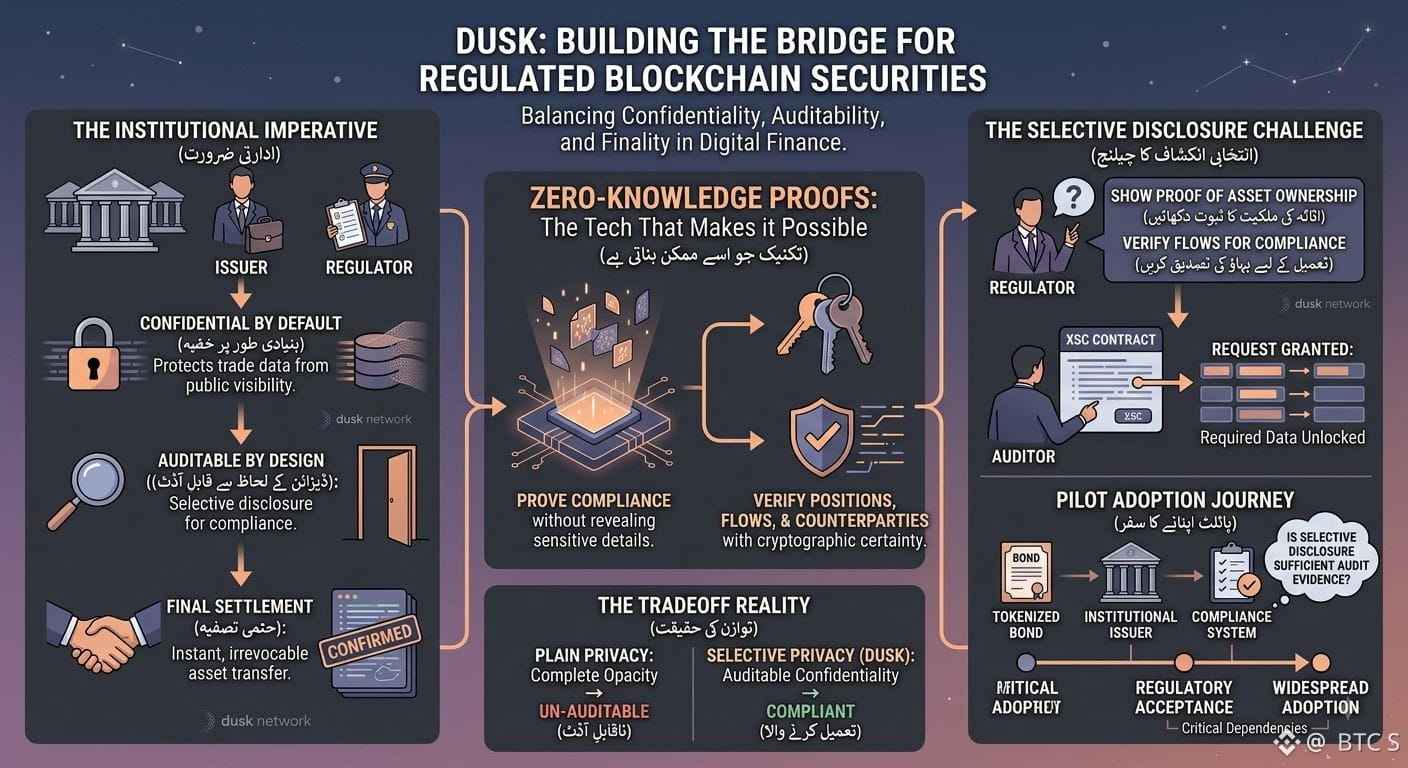
28
12
154
·
--
Haussier
Voici une question que je n’arrive pas à secouer : pourquoi l’argent institutionnel sérieux n’a-t-il pas encore touché la plupart des « blockchains de confidentialité » ? Ce n’est pas un manque d’intérêt. Les banques et les gestionnaires d’actifs adoreraient déplacer des opérations on-chain — règlement moins coûteux, moins d’intermédiaires. Mais ils ne peuvent pas publier leurs positions de trading pour que tout le monde les voie, et les régulateurs ne valideront pas quelque chose qu’ils ne peuvent pas examiner lorsqu’ils en ont besoin. Du coup, on se retrouve à devoir réunir deux éléments qui semblent s’opposer : garder la confidentialité, mais tout en rendant la chose prouvable à la demande. La plupart des projets n’en choisissent qu’un seul. Les chaînes totalement transparentes laissent tout fuiter. Les chaînes entièrement privées ne donnent rien aux régulateurs à quoi se raccrocher, ce qui les rend inenvisageables pour tout ce qui est réglementé.
C’est précisément le manque que Dusk semble chercher à combler — des contrats confidentiels qui peuvent tout de même produire une preuve pour la bonne partie, sans diffuser les détails à tout le monde. Sur le papier, c’est la bonne forme de solution. En pratique, j’aimerais savoir si un régulateur ou un auditeur accepterait réellement une preuve à divulgation nulle (zero-knowledge proof) comme preuve suffisante, parce que cette confiance ne vient pas d’une cryptographie astucieuse : elle naît d’années pendant lesquelles des institutions testent la technologie et ne se font pas avoir.
Je doute que ce soit destiné aux utilisateurs du quotidien — c’est un pari lent et étroit, visant des émetteurs qui ont besoin à la fois de confidentialité et d’auditabilité, et qui attendaient parce que rien d’autre n’offrait ces deux choses honnêtement. Ça fonctionne si, avec le temps, les régulateurs en viennent vraiment à faire confiance aux preuves. Ça échoue discrètement s’ils ne le font pas, et la technologie reste là, correcte, mais inutilisée.
#dusk $DUSK @Dusk_Foundation
Voici une question que je n’arrive pas à secouer : pourquoi l’argent institutionnel sérieux n’a-t-il pas encore touché la plupart des « blockchains de confidentialité » ? Ce n’est pas un manque d’intérêt. Les banques et les gestionnaires d’actifs adoreraient déplacer des opérations on-chain — règlement moins coûteux, moins d’intermédiaires. Mais ils ne peuvent pas publier leurs positions de trading pour que tout le monde les voie, et les régulateurs ne valideront pas quelque chose qu’ils ne peuvent pas examiner lorsqu’ils en ont besoin. Du coup, on se retrouve à devoir réunir deux éléments qui semblent s’opposer : garder la confidentialité, mais tout en rendant la chose prouvable à la demande. La plupart des projets n’en choisissent qu’un seul. Les chaînes totalement transparentes laissent tout fuiter. Les chaînes entièrement privées ne donnent rien aux régulateurs à quoi se raccrocher, ce qui les rend inenvisageables pour tout ce qui est réglementé.
C’est précisément le manque que Dusk semble chercher à combler — des contrats confidentiels qui peuvent tout de même produire une preuve pour la bonne partie, sans diffuser les détails à tout le monde. Sur le papier, c’est la bonne forme de solution. En pratique, j’aimerais savoir si un régulateur ou un auditeur accepterait réellement une preuve à divulgation nulle (zero-knowledge proof) comme preuve suffisante, parce que cette confiance ne vient pas d’une cryptographie astucieuse : elle naît d’années pendant lesquelles des institutions testent la technologie et ne se font pas avoir.
Je doute que ce soit destiné aux utilisateurs du quotidien — c’est un pari lent et étroit, visant des émetteurs qui ont besoin à la fois de confidentialité et d’auditabilité, et qui attendaient parce que rien d’autre n’offrait ces deux choses honnêtement. Ça fonctionne si, avec le temps, les régulateurs en viennent vraiment à faire confiance aux preuves. Ça échoue discrètement s’ils ne le font pas, et la technologie reste là, correcte, mais inutilisée.
#dusk $DUSK @Dusk
C’est précisément le manque que Dusk semble chercher à combler — des contrats confidentiels qui peuvent tout de même produire une preuve pour la bonne partie, sans diffuser les détails à tout le monde. Sur le papier, c’est la bonne forme de solution. En pratique, j’aimerais savoir si un régulateur ou un auditeur accepterait réellement une preuve à divulgation nulle (zero-knowledge proof) comme preuve suffisante, parce que cette confiance ne vient pas d’une cryptographie astucieuse : elle naît d’années pendant lesquelles des institutions testent la technologie et ne se font pas avoir.
Je doute que ce soit destiné aux utilisateurs du quotidien — c’est un pari lent et étroit, visant des émetteurs qui ont besoin à la fois de confidentialité et d’auditabilité, et qui attendaient parce que rien d’autre n’offrait ces deux choses honnêtement. Ça fonctionne si, avec le temps, les régulateurs en viennent vraiment à faire confiance aux preuves. Ça échoue discrètement s’ils ne le font pas, et la technologie reste là, correcte, mais inutilisée.
#dusk $DUSK @Dusk
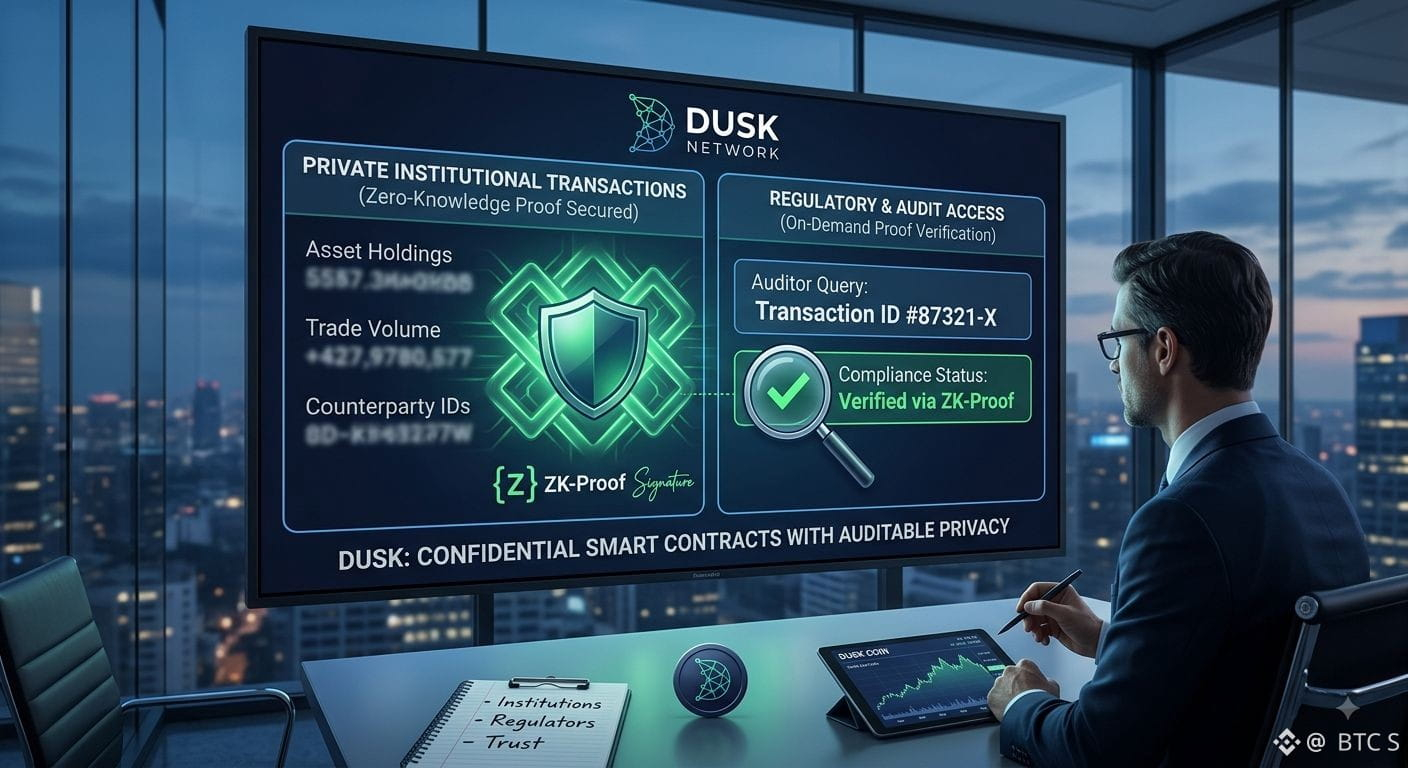
19
7
162
·
--
Haussier
Honnêtement, ce qui m’agace dans la plupart des discours sur la confidentialité en crypto, c’est qu’ils passent à côté du vrai problème. Les gens sautent directement sur les « preuves à connaissance nulle » comme si c’était auto-explicatif, alors que la vraie question est beaucoup plus simple : pourquoi une entreprise ne pourrait-elle pas émettre des actions sur une blockchain sans que le monde entier surveille qui a acheté quoi ?
Parce que c’est exactement la situation actuelle. Mettre une sécurité sur une chaîne publique, c’est essentiellement publier votre tableau de capitalisation (cap table). Chaque transaction, chaque rééquilibrage est visible par les concurrents en temps réel. Aucune institution sérieuse n’y souscrit. Pas parce qu’elle cacherait quelque chose de louche — simplement parce que la finance n’a jamais fonctionné comme ça. Même les marchés publics ne vous montrent pas en temps réel les intentions du carnet d’ordres.
L’ère des « privacy coins » a tenté d’y remédier, mais elle a surtout rendu les régulateurs nerveux, parce que « on ne peut rien voir » n’est pas de la conformité : c’est simplement de l’opacité, avec un marketing plus efficace.
Ce que Dusk essaie de faire ressemble davantage à une admission que ces deux extrêmes sont faux. Garder la transaction privée, mais la structurer de façon à permettre à la bonne personne — un auditeur, un régulateur — de la vérifier quand elle en a réellement besoin, sans l’exposer à tout le monde. C’est un défi vraiment difficile à réussir, et je dis ça en tant que quelqu’un qui a vu beaucoup de « présentations de confidentialité conforme » se révéler n’être que du marketing déguisé en architecture.
Je ne sais pas encore si cela tient face à un examen juridique réel, ni si des institutions feront confiance à une chaîne aussi petite pour quoi que ce soit de sérieux. Mais le problème qu’elle contourne est réel, et presque personne d’autre n’essaie même de le résoudre correctement.
#dusk $DUSK @Dusk_Foundation
Honnêtement, ce qui m’agace dans la plupart des discours sur la confidentialité en crypto, c’est qu’ils passent à côté du vrai problème. Les gens sautent directement sur les « preuves à connaissance nulle » comme si c’était auto-explicatif, alors que la vraie question est beaucoup plus simple : pourquoi une entreprise ne pourrait-elle pas émettre des actions sur une blockchain sans que le monde entier surveille qui a acheté quoi ?
Parce que c’est exactement la situation actuelle. Mettre une sécurité sur une chaîne publique, c’est essentiellement publier votre tableau de capitalisation (cap table). Chaque transaction, chaque rééquilibrage est visible par les concurrents en temps réel. Aucune institution sérieuse n’y souscrit. Pas parce qu’elle cacherait quelque chose de louche — simplement parce que la finance n’a jamais fonctionné comme ça. Même les marchés publics ne vous montrent pas en temps réel les intentions du carnet d’ordres.
L’ère des « privacy coins » a tenté d’y remédier, mais elle a surtout rendu les régulateurs nerveux, parce que « on ne peut rien voir » n’est pas de la conformité : c’est simplement de l’opacité, avec un marketing plus efficace.
Ce que Dusk essaie de faire ressemble davantage à une admission que ces deux extrêmes sont faux. Garder la transaction privée, mais la structurer de façon à permettre à la bonne personne — un auditeur, un régulateur — de la vérifier quand elle en a réellement besoin, sans l’exposer à tout le monde. C’est un défi vraiment difficile à réussir, et je dis ça en tant que quelqu’un qui a vu beaucoup de « présentations de confidentialité conforme » se révéler n’être que du marketing déguisé en architecture.
Je ne sais pas encore si cela tient face à un examen juridique réel, ni si des institutions feront confiance à une chaîne aussi petite pour quoi que ce soit de sérieux. Mais le problème qu’elle contourne est réel, et presque personne d’autre n’essaie même de le résoudre correctement.
#dusk $DUSK @Dusk
Parce que c’est exactement la situation actuelle. Mettre une sécurité sur une chaîne publique, c’est essentiellement publier votre tableau de capitalisation (cap table). Chaque transaction, chaque rééquilibrage est visible par les concurrents en temps réel. Aucune institution sérieuse n’y souscrit. Pas parce qu’elle cacherait quelque chose de louche — simplement parce que la finance n’a jamais fonctionné comme ça. Même les marchés publics ne vous montrent pas en temps réel les intentions du carnet d’ordres.
L’ère des « privacy coins » a tenté d’y remédier, mais elle a surtout rendu les régulateurs nerveux, parce que « on ne peut rien voir » n’est pas de la conformité : c’est simplement de l’opacité, avec un marketing plus efficace.
Ce que Dusk essaie de faire ressemble davantage à une admission que ces deux extrêmes sont faux. Garder la transaction privée, mais la structurer de façon à permettre à la bonne personne — un auditeur, un régulateur — de la vérifier quand elle en a réellement besoin, sans l’exposer à tout le monde. C’est un défi vraiment difficile à réussir, et je dis ça en tant que quelqu’un qui a vu beaucoup de « présentations de confidentialité conforme » se révéler n’être que du marketing déguisé en architecture.
Je ne sais pas encore si cela tient face à un examen juridique réel, ni si des institutions feront confiance à une chaîne aussi petite pour quoi que ce soit de sérieux. Mais le problème qu’elle contourne est réel, et presque personne d’autre n’essaie même de le résoudre correctement.
#dusk $DUSK @Dusk
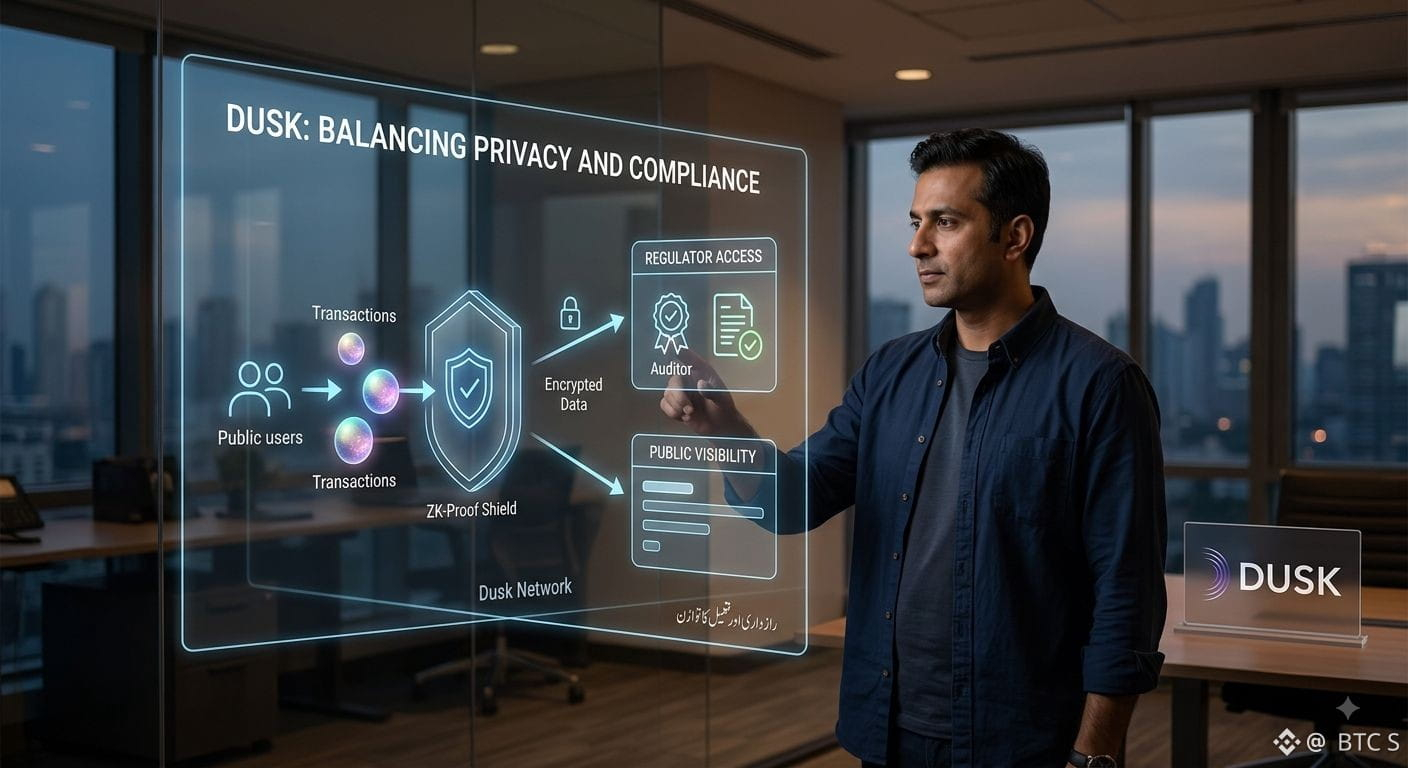
3
1
2
101
·
--
Haussier
#dusk $DUSK @Dusk_Foundation
Voici un schéma que vous finirez par remarquer si vous observez les choses assez longtemps : presque chaque institution sérieuse qui s’intéresse à la blockchain finit, en silence, par en construire une version privée. Une chaîne de consortium ici, un registre autorisé là. Personne ne fait de grande annonce — ça continue juste de se produire, et il y a une raison.
Les blockchains publiques montrent tout par défaut. La confidentialité est ajoutée ensuite, comme un cas particulier, généralement parce qu’un client a refusé de donner son accord sans cela. Mais c’est à l’envers. En finance, ne pas montrer sa main n’est pas un “plus” sympathique : c’est essentiellement comme le système fonctionne. Les tailles des transactions, les contreparties, les soldes : tout cela n’est censé être visible ni par qui que ce soit, sauf par les personnes impliquées, et en plus, par ceux qui ont réellement un statut légal pour regarder. Et les régulateurs ne veulent pas non plus d’un flux public, contrairement à ce que beaucoup imaginent. Ils veulent pouvoir consulter quand il y a une raison — pas une fenêtre permanente sur les affaires de tout le monde, tout le temps.
Ajouter la confidentialité après coup vous laisse essentiellement deux options, toutes deux mauvaises : des mixers douteux que personne ne fait vraiment confiance, ou une transparence totale que personne n’a réellement demandée. Aucune des deux ne survit longtemps quand il s’agit d’argent réel.
C’est pourquoi les contrats confidentiels de Dusk Network valent le détour. L’idée est d’inverser le défaut : la confidentialité est l’état “par repos”, et la divulgation est quelque chose qu’on accorde, pas quelque chose qui fuit puis doit être “blanchi” après coup. C’est beaucoup plus proche de la façon dont la conformité fonctionne réellement : sélective, autorisée, et vérifiable sur demande plutôt que diffusée à toute la planète d’un seul coup.
Reste à savoir si cela tient vraiment la route. Les coûts, la latence, la question de savoir si les régulateurs feront un jour confiance à des mathématiques qu’ils ne peuvent pas auditer personnellement — tout cela reste encore, honnêtement, très incertain. Si cette approche prend, ce sera parce que des institutions règlent les choses discrètement en arrière-plan, pas parce que quelqu’un court après un titre. Et ça s’éteint dès lors que le fait de la faire fonctionner coûte plus cher que l’exposition qu’elle est censée empêcher.
{spot}(DUSKUSDT)
#dusk $DUSK @Dusk
Voici un schéma que vous finirez par remarquer si vous observez les choses assez longtemps : presque chaque institution sérieuse qui s’intéresse à la blockchain finit, en silence, par en construire une version privée. Une chaîne de consortium ici, un registre autorisé là. Personne ne fait de grande annonce — ça continue juste de se produire, et il y a une raison.
Les blockchains publiques montrent tout par défaut. La confidentialité est ajoutée ensuite, comme un cas particulier, généralement parce qu’un client a refusé de donner son accord sans cela. Mais c’est à l’envers. En finance, ne pas montrer sa main n’est pas un “plus” sympathique : c’est essentiellement comme le système fonctionne. Les tailles des transactions, les contreparties, les soldes : tout cela n’est censé être visible ni par qui que ce soit, sauf par les personnes impliquées, et en plus, par ceux qui ont réellement un statut légal pour regarder. Et les régulateurs ne veulent pas non plus d’un flux public, contrairement à ce que beaucoup imaginent. Ils veulent pouvoir consulter quand il y a une raison — pas une fenêtre permanente sur les affaires de tout le monde, tout le temps.
Ajouter la confidentialité après coup vous laisse essentiellement deux options, toutes deux mauvaises : des mixers douteux que personne ne fait vraiment confiance, ou une transparence totale que personne n’a réellement demandée. Aucune des deux ne survit longtemps quand il s’agit d’argent réel.
C’est pourquoi les contrats confidentiels de Dusk Network valent le détour. L’idée est d’inverser le défaut : la confidentialité est l’état “par repos”, et la divulgation est quelque chose qu’on accorde, pas quelque chose qui fuit puis doit être “blanchi” après coup. C’est beaucoup plus proche de la façon dont la conformité fonctionne réellement : sélective, autorisée, et vérifiable sur demande plutôt que diffusée à toute la planète d’un seul coup.
Reste à savoir si cela tient vraiment la route. Les coûts, la latence, la question de savoir si les régulateurs feront un jour confiance à des mathématiques qu’ils ne peuvent pas auditer personnellement — tout cela reste encore, honnêtement, très incertain. Si cette approche prend, ce sera parce que des institutions règlent les choses discrètement en arrière-plan, pas parce que quelqu’un court après un titre. Et ça s’éteint dès lors que le fait de la faire fonctionner coûte plus cher que l’exposition qu’elle est censée empêcher.
Voici un schéma que vous finirez par remarquer si vous observez les choses assez longtemps : presque chaque institution sérieuse qui s’intéresse à la blockchain finit, en silence, par en construire une version privée. Une chaîne de consortium ici, un registre autorisé là. Personne ne fait de grande annonce — ça continue juste de se produire, et il y a une raison.
Les blockchains publiques montrent tout par défaut. La confidentialité est ajoutée ensuite, comme un cas particulier, généralement parce qu’un client a refusé de donner son accord sans cela. Mais c’est à l’envers. En finance, ne pas montrer sa main n’est pas un “plus” sympathique : c’est essentiellement comme le système fonctionne. Les tailles des transactions, les contreparties, les soldes : tout cela n’est censé être visible ni par qui que ce soit, sauf par les personnes impliquées, et en plus, par ceux qui ont réellement un statut légal pour regarder. Et les régulateurs ne veulent pas non plus d’un flux public, contrairement à ce que beaucoup imaginent. Ils veulent pouvoir consulter quand il y a une raison — pas une fenêtre permanente sur les affaires de tout le monde, tout le temps.
Ajouter la confidentialité après coup vous laisse essentiellement deux options, toutes deux mauvaises : des mixers douteux que personne ne fait vraiment confiance, ou une transparence totale que personne n’a réellement demandée. Aucune des deux ne survit longtemps quand il s’agit d’argent réel.
C’est pourquoi les contrats confidentiels de Dusk Network valent le détour. L’idée est d’inverser le défaut : la confidentialité est l’état “par repos”, et la divulgation est quelque chose qu’on accorde, pas quelque chose qui fuit puis doit être “blanchi” après coup. C’est beaucoup plus proche de la façon dont la conformité fonctionne réellement : sélective, autorisée, et vérifiable sur demande plutôt que diffusée à toute la planète d’un seul coup.
Reste à savoir si cela tient vraiment la route. Les coûts, la latence, la question de savoir si les régulateurs feront un jour confiance à des mathématiques qu’ils ne peuvent pas auditer personnellement — tout cela reste encore, honnêtement, très incertain. Si cette approche prend, ce sera parce que des institutions règlent les choses discrètement en arrière-plan, pas parce que quelqu’un court après un titre. Et ça s’éteint dès lors que le fait de la faire fonctionner coûte plus cher que l’exposition qu’elle est censée empêcher.
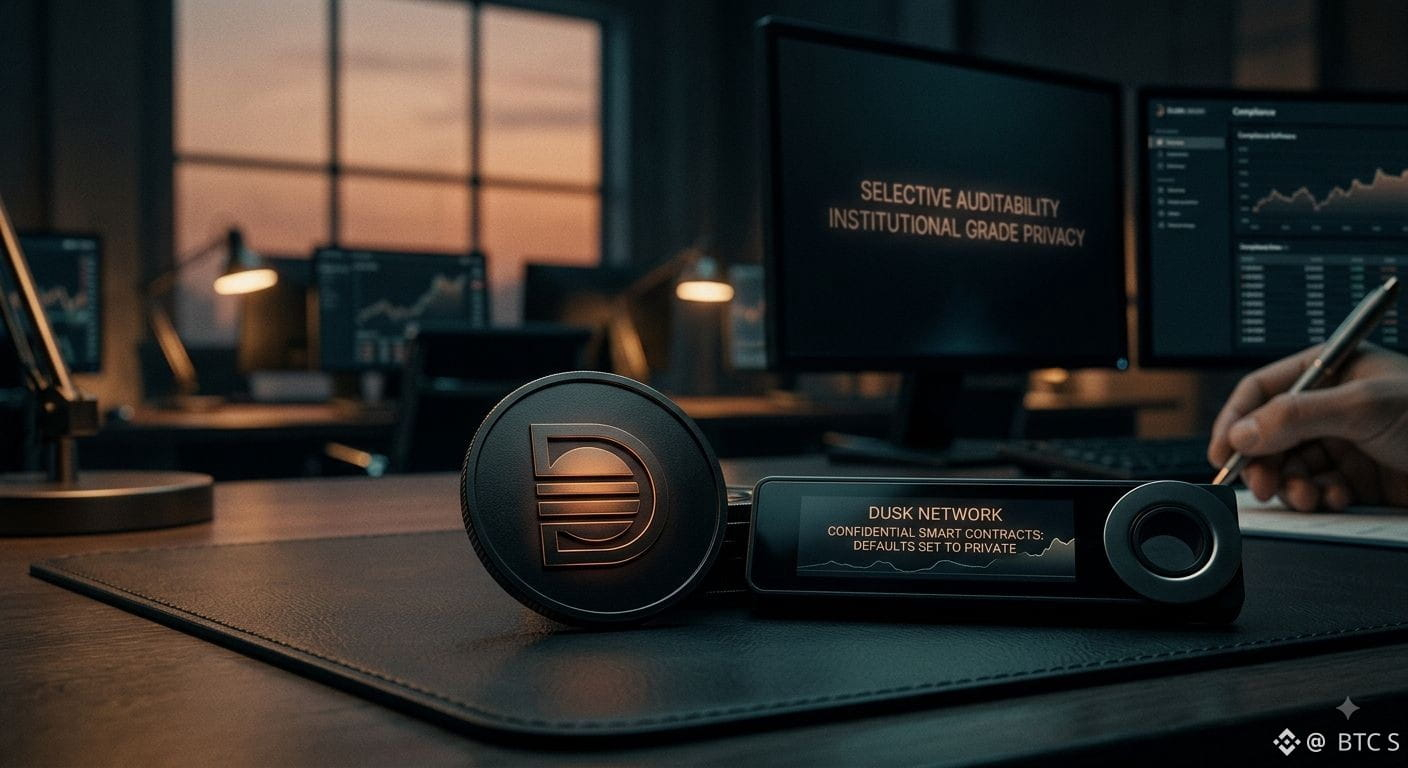
10
10
104
·
--
Haussier
#baby $BABY @babylonlabs_io
J’essayais de l’expliquer à quelqu’un la semaine dernière et je me suis constamment retrouvé bloqué sur la même phrase : « Le Bitcoin ne bouge pas réellement. » Il m’a regardé comme si ce n’était pas possible que ce soit toute l’histoire. Et honnêtement, ce n’est pas le cas — mais la suite est plus intéressante que la partie qui sonne impressionnante.
À chaque fois que le Bitcoin apparaît dans la DeFi, quelque chose doit céder. Le plus souvent, c’est la garde (la custody). Vous enveloppez la pièce, ou vous la confiez à un pont, et ce que vous récupérez, c’est un reçu — une promesse selon laquelle, quelque part, quelqu’un a encore votre BTC. Cette promesse s’est brisée assez souvent pour que « faites confiance au pont » ne soit plus une demande raisonnable depuis un moment.
Babylon tente quelque chose de moins flatteur en termes de formulation, mais peut-être plus honnête : au lieu de déplacer la pièce, il fait en sorte qu’Ethereum aille vérifier. Le BTC reste verrouillé sur Bitcoin, selon les propres règles de Bitcoin, et ce qui est vérifié ailleurs, ce sont des preuves — un UTXO, un timelock, des éléments sur lesquels Bitcoin lui-même peut garantir. Personne ne détient vos pièces en otage. Personne n’a besoin de le faire.
Le problème, c’est la patience. Bitcoin ne déclare pas les choses finales immédiatement — des réorganisations (reorgs) restent possibles pendant un certain temps après l’arrivée d’un bloc — donc tout système qui lit Bitcoin honnêtement doit composer avec une certaine incertitude avant de considérer ce BTC comme verrouillé et en sécurité. Ce n’est pas un angle rugueux à lisser. C’est simplement ce qui se passe quand on remplace une partie de confiance par une période d’attente.
Ce qui indique sans doute aussi à qui cela s’adresse réellement. Pas à la personne qui veut que son Bitcoin fonctionne dans un pool DeFi d’ici le déjeuner. Plutôt au fonds ou au validateur prêt à laisser le capital immobile pendant un moment, si le fait de rester immobile est ce qui rend cela « réel ». La question de savoir si c’est un échange équitable reste ouverte — je pense que cela dépend moins de la technologie que de la quantité de patience qui reste au marché.
#baby $BABY @BabylonLabs_io
J’essayais de l’expliquer à quelqu’un la semaine dernière et je me suis constamment retrouvé bloqué sur la même phrase : « Le Bitcoin ne bouge pas réellement. » Il m’a regardé comme si ce n’était pas possible que ce soit toute l’histoire. Et honnêtement, ce n’est pas le cas — mais la suite est plus intéressante que la partie qui sonne impressionnante.
À chaque fois que le Bitcoin apparaît dans la DeFi, quelque chose doit céder. Le plus souvent, c’est la garde (la custody). Vous enveloppez la pièce, ou vous la confiez à un pont, et ce que vous récupérez, c’est un reçu — une promesse selon laquelle, quelque part, quelqu’un a encore votre BTC. Cette promesse s’est brisée assez souvent pour que « faites confiance au pont » ne soit plus une demande raisonnable depuis un moment.
Babylon tente quelque chose de moins flatteur en termes de formulation, mais peut-être plus honnête : au lieu de déplacer la pièce, il fait en sorte qu’Ethereum aille vérifier. Le BTC reste verrouillé sur Bitcoin, selon les propres règles de Bitcoin, et ce qui est vérifié ailleurs, ce sont des preuves — un UTXO, un timelock, des éléments sur lesquels Bitcoin lui-même peut garantir. Personne ne détient vos pièces en otage. Personne n’a besoin de le faire.
Le problème, c’est la patience. Bitcoin ne déclare pas les choses finales immédiatement — des réorganisations (reorgs) restent possibles pendant un certain temps après l’arrivée d’un bloc — donc tout système qui lit Bitcoin honnêtement doit composer avec une certaine incertitude avant de considérer ce BTC comme verrouillé et en sécurité. Ce n’est pas un angle rugueux à lisser. C’est simplement ce qui se passe quand on remplace une partie de confiance par une période d’attente.
Ce qui indique sans doute aussi à qui cela s’adresse réellement. Pas à la personne qui veut que son Bitcoin fonctionne dans un pool DeFi d’ici le déjeuner. Plutôt au fonds ou au validateur prêt à laisser le capital immobile pendant un moment, si le fait de rester immobile est ce qui rend cela « réel ». La question de savoir si c’est un échange équitable reste ouverte — je pense que cela dépend moins de la technologie que de la quantité de patience qui reste au marché.
J’essayais de l’expliquer à quelqu’un la semaine dernière et je me suis constamment retrouvé bloqué sur la même phrase : « Le Bitcoin ne bouge pas réellement. » Il m’a regardé comme si ce n’était pas possible que ce soit toute l’histoire. Et honnêtement, ce n’est pas le cas — mais la suite est plus intéressante que la partie qui sonne impressionnante.
À chaque fois que le Bitcoin apparaît dans la DeFi, quelque chose doit céder. Le plus souvent, c’est la garde (la custody). Vous enveloppez la pièce, ou vous la confiez à un pont, et ce que vous récupérez, c’est un reçu — une promesse selon laquelle, quelque part, quelqu’un a encore votre BTC. Cette promesse s’est brisée assez souvent pour que « faites confiance au pont » ne soit plus une demande raisonnable depuis un moment.
Babylon tente quelque chose de moins flatteur en termes de formulation, mais peut-être plus honnête : au lieu de déplacer la pièce, il fait en sorte qu’Ethereum aille vérifier. Le BTC reste verrouillé sur Bitcoin, selon les propres règles de Bitcoin, et ce qui est vérifié ailleurs, ce sont des preuves — un UTXO, un timelock, des éléments sur lesquels Bitcoin lui-même peut garantir. Personne ne détient vos pièces en otage. Personne n’a besoin de le faire.
Le problème, c’est la patience. Bitcoin ne déclare pas les choses finales immédiatement — des réorganisations (reorgs) restent possibles pendant un certain temps après l’arrivée d’un bloc — donc tout système qui lit Bitcoin honnêtement doit composer avec une certaine incertitude avant de considérer ce BTC comme verrouillé et en sécurité. Ce n’est pas un angle rugueux à lisser. C’est simplement ce qui se passe quand on remplace une partie de confiance par une période d’attente.
Ce qui indique sans doute aussi à qui cela s’adresse réellement. Pas à la personne qui veut que son Bitcoin fonctionne dans un pool DeFi d’ici le déjeuner. Plutôt au fonds ou au validateur prêt à laisser le capital immobile pendant un moment, si le fait de rester immobile est ce qui rend cela « réel ». La question de savoir si c’est un échange équitable reste ouverte — je pense que cela dépend moins de la technologie que de la quantité de patience qui reste au marché.
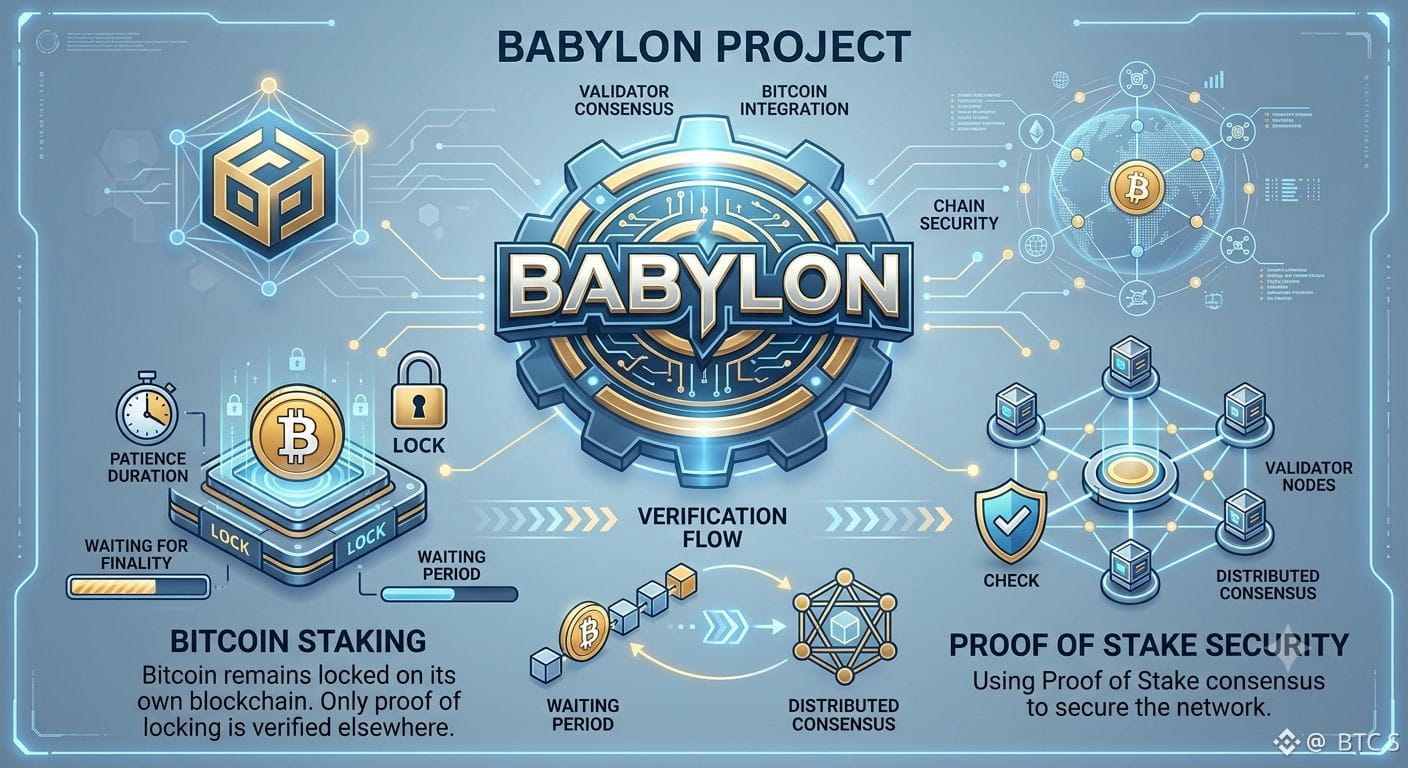
18
8
131
·
--
Haussier
#baby $BABY @babylonlabs_io
Quelqu’un, sur Discord, a déjà demandé — vraiment sincèrement — : « Est-ce que quelque chose de grave s’est passé ? Pourquoi ça baisse ? » Et la réponse n’avait rien de dramatique. Pas de piratage, pas de scandale. Juste un déverrouillage planifié qui fait exactement ce que le contrat avait toujours prévu. Personne n’a rompu une promesse. Et personne n’avait non plus lu le calendrier de très près.
C’est la partie de la tokenomics qui n’entre jamais dans le pitch. Le graphique d’allocation, c’est la diapo amusante : l’équipe ici, les investisseurs là, la communauté a sa part. Mais ce graphique, c’est une photo prise le jour un. Il ne dit pas quand ces personnes sont réellement libres de vendre. Et ce détail peu glamour — le calendrier d’acquisition que personne ne screenshot — finit par compter beaucoup plus un an plus tard que le camembert.
Je n’ai rien contre l’idée de base de Babylon. Le bitcoin y reste, en grande partie, inactif, et le fait de le remettre à la sécurité d’autres chaînes sans l’arracher à ses propres règles est une chose réellement utile à construire. Sur ce point, ça paraît solide. Ce qui m’inquiète davantage, c’est quelque chose de plus banal : est-ce que les tokens de l’équipe et des investisseurs s’écoulent progressivement, ou bien est-ce qu’ils retombent en quelques gros paquets qui dépassent la demande réelle qui existe à ce moment-là.
Il n’y a pas de solution simple, honnêtement. Verrouiller trop de choses empêche le token de faire son travail — la gouvernance se bloque, les incitations semblent trop légères. Libérer trop vite, et vous obtenez une volatilité qui fait passer un protocole orienté sécurité pour quelque chose qui ne l’est pas.
Donc ce que je surveillerais, en réalité, c’est quelque chose de très ennuyeux : le rythme des déverrouillages suit-il la vraie mise en jeu (staking) de BTC, ou s’agit-il simplement de dates inscrites sur un tableur ? J’ai vu lequel des deux finit généralement par gagner.
#baby $BABY @BabylonLabs_io
Quelqu’un, sur Discord, a déjà demandé — vraiment sincèrement — : « Est-ce que quelque chose de grave s’est passé ? Pourquoi ça baisse ? » Et la réponse n’avait rien de dramatique. Pas de piratage, pas de scandale. Juste un déverrouillage planifié qui fait exactement ce que le contrat avait toujours prévu. Personne n’a rompu une promesse. Et personne n’avait non plus lu le calendrier de très près.
C’est la partie de la tokenomics qui n’entre jamais dans le pitch. Le graphique d’allocation, c’est la diapo amusante : l’équipe ici, les investisseurs là, la communauté a sa part. Mais ce graphique, c’est une photo prise le jour un. Il ne dit pas quand ces personnes sont réellement libres de vendre. Et ce détail peu glamour — le calendrier d’acquisition que personne ne screenshot — finit par compter beaucoup plus un an plus tard que le camembert.
Je n’ai rien contre l’idée de base de Babylon. Le bitcoin y reste, en grande partie, inactif, et le fait de le remettre à la sécurité d’autres chaînes sans l’arracher à ses propres règles est une chose réellement utile à construire. Sur ce point, ça paraît solide. Ce qui m’inquiète davantage, c’est quelque chose de plus banal : est-ce que les tokens de l’équipe et des investisseurs s’écoulent progressivement, ou bien est-ce qu’ils retombent en quelques gros paquets qui dépassent la demande réelle qui existe à ce moment-là.
Il n’y a pas de solution simple, honnêtement. Verrouiller trop de choses empêche le token de faire son travail — la gouvernance se bloque, les incitations semblent trop légères. Libérer trop vite, et vous obtenez une volatilité qui fait passer un protocole orienté sécurité pour quelque chose qui ne l’est pas.
Donc ce que je surveillerais, en réalité, c’est quelque chose de très ennuyeux : le rythme des déverrouillages suit-il la vraie mise en jeu (staking) de BTC, ou s’agit-il simplement de dates inscrites sur un tableur ? J’ai vu lequel des deux finit généralement par gagner.
Quelqu’un, sur Discord, a déjà demandé — vraiment sincèrement — : « Est-ce que quelque chose de grave s’est passé ? Pourquoi ça baisse ? » Et la réponse n’avait rien de dramatique. Pas de piratage, pas de scandale. Juste un déverrouillage planifié qui fait exactement ce que le contrat avait toujours prévu. Personne n’a rompu une promesse. Et personne n’avait non plus lu le calendrier de très près.
C’est la partie de la tokenomics qui n’entre jamais dans le pitch. Le graphique d’allocation, c’est la diapo amusante : l’équipe ici, les investisseurs là, la communauté a sa part. Mais ce graphique, c’est une photo prise le jour un. Il ne dit pas quand ces personnes sont réellement libres de vendre. Et ce détail peu glamour — le calendrier d’acquisition que personne ne screenshot — finit par compter beaucoup plus un an plus tard que le camembert.
Je n’ai rien contre l’idée de base de Babylon. Le bitcoin y reste, en grande partie, inactif, et le fait de le remettre à la sécurité d’autres chaînes sans l’arracher à ses propres règles est une chose réellement utile à construire. Sur ce point, ça paraît solide. Ce qui m’inquiète davantage, c’est quelque chose de plus banal : est-ce que les tokens de l’équipe et des investisseurs s’écoulent progressivement, ou bien est-ce qu’ils retombent en quelques gros paquets qui dépassent la demande réelle qui existe à ce moment-là.
Il n’y a pas de solution simple, honnêtement. Verrouiller trop de choses empêche le token de faire son travail — la gouvernance se bloque, les incitations semblent trop légères. Libérer trop vite, et vous obtenez une volatilité qui fait passer un protocole orienté sécurité pour quelque chose qui ne l’est pas.
Donc ce que je surveillerais, en réalité, c’est quelque chose de très ennuyeux : le rythme des déverrouillages suit-il la vraie mise en jeu (staking) de BTC, ou s’agit-il simplement de dates inscrites sur un tableur ? J’ai vu lequel des deux finit généralement par gagner.
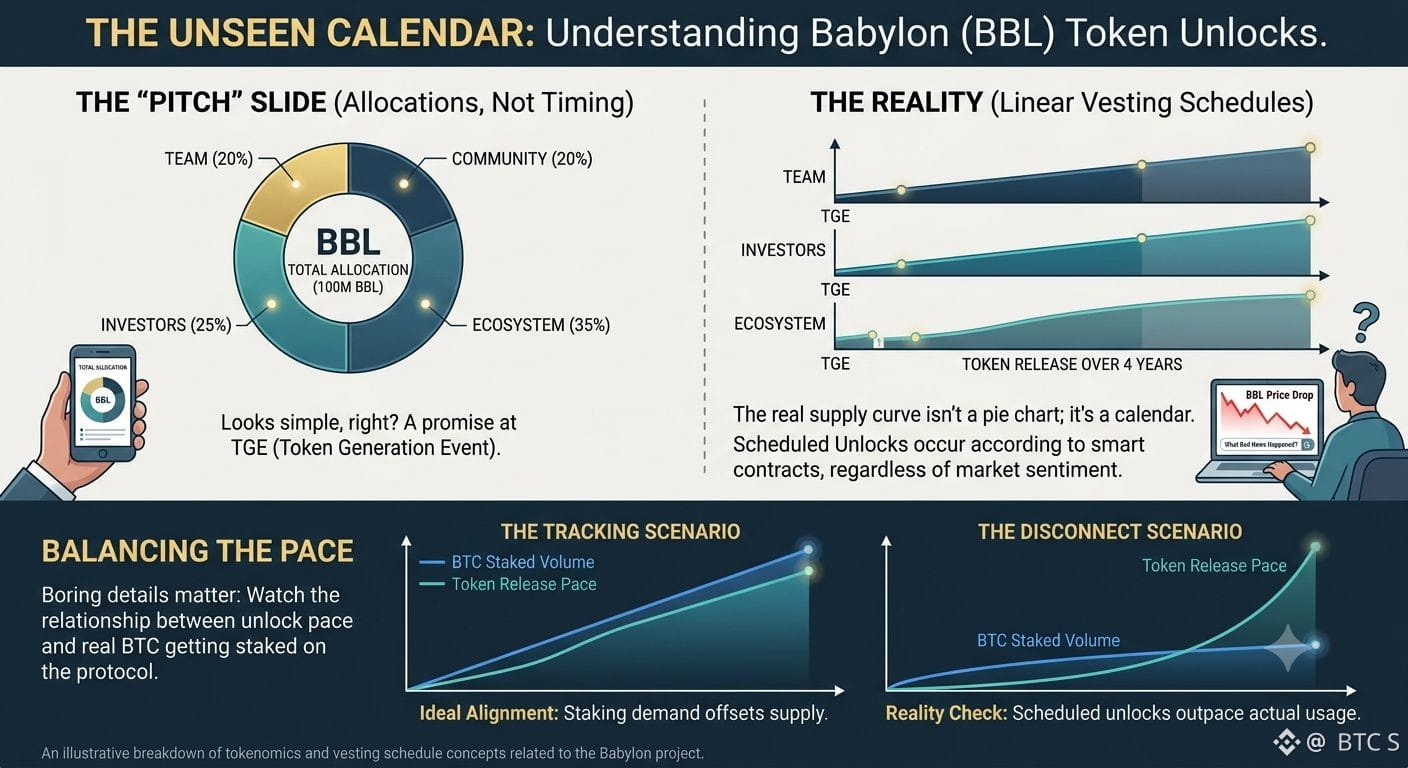
10
6
99
·
--
Haussier
#baby $BABY @babylonlabs_io
Ce qui me fait vraiment réfléchir là-dessus, ce n’est pas le mécanisme : c’est le moment où quelqu’un fixe son portefeuille en se disant : « J’ai fait le truc, pourquoi ce n’est pas encore terminé. » Cet écart entre l’action et la confirmation. On l’a tous ressenti : attendre qu’un virement se libère, rafraîchir une page de suivi. Mais avec Bitcoin, c’est pire, parce qu’il n’y a pas de numéro de service client à appeler, pas d’humain à qui on peut simplement demander : « Ouais, c’est bon, faites-moi confiance. »
La version honnête de ce qui se passe est un peu moins glamour : votre transaction de désengagement est là, et le système observe en quelque sorte la chaîne se construire au-dessus, bloc après bloc, avant d’être prêt à dire : « D’accord, c’est assez réel maintenant. » Combien de blocs faut-il ? Ça dépend. Le marché des frais est en ébullition, les blocs sont pleins, tout le monde essaie aussi de dénouer ses positions en même temps : soudain, votre « désengagement rapide » n’a plus rien de rapide. Et c’est en supposant qu’il ne se passe rien.
Je ne pense pas que ce soit vraiment un défaut technique, plutôt un problème de communication. Les produits construits au-dessus de Bitcoin héritent de sa cadence, qu’ils l’admettent ou non. Babylon semble, au moins, intégrer la période de désengagement dans l’architecture plutôt que d’essayer de la masquer avec une belle barre de progression qui laisse croire à un contrôle qu’elle n’a pas.
Est-ce que ça inspire confiance ou que ça met juste à l’épreuve la patience — honnêtement, ça dépend de qui mise et dans quel but. Quelqu’un qui immobilise du BTC sur le long terme ne se soucie peut-être pas de quelques heures en plus. Quelqu’un qui doit bouger vite pendant une variation du marché risque d’apprendre à le ressentir.
$LABX.ETF
$BTC
#baby $BABY @BabylonLabs_io
Ce qui me fait vraiment réfléchir là-dessus, ce n’est pas le mécanisme : c’est le moment où quelqu’un fixe son portefeuille en se disant : « J’ai fait le truc, pourquoi ce n’est pas encore terminé. » Cet écart entre l’action et la confirmation. On l’a tous ressenti : attendre qu’un virement se libère, rafraîchir une page de suivi. Mais avec Bitcoin, c’est pire, parce qu’il n’y a pas de numéro de service client à appeler, pas d’humain à qui on peut simplement demander : « Ouais, c’est bon, faites-moi confiance. »
La version honnête de ce qui se passe est un peu moins glamour : votre transaction de désengagement est là, et le système observe en quelque sorte la chaîne se construire au-dessus, bloc après bloc, avant d’être prêt à dire : « D’accord, c’est assez réel maintenant. » Combien de blocs faut-il ? Ça dépend. Le marché des frais est en ébullition, les blocs sont pleins, tout le monde essaie aussi de dénouer ses positions en même temps : soudain, votre « désengagement rapide » n’a plus rien de rapide. Et c’est en supposant qu’il ne se passe rien.
Je ne pense pas que ce soit vraiment un défaut technique, plutôt un problème de communication. Les produits construits au-dessus de Bitcoin héritent de sa cadence, qu’ils l’admettent ou non. Babylon semble, au moins, intégrer la période de désengagement dans l’architecture plutôt que d’essayer de la masquer avec une belle barre de progression qui laisse croire à un contrôle qu’elle n’a pas.
Est-ce que ça inspire confiance ou que ça met juste à l’épreuve la patience — honnêtement, ça dépend de qui mise et dans quel but. Quelqu’un qui immobilise du BTC sur le long terme ne se soucie peut-être pas de quelques heures en plus. Quelqu’un qui doit bouger vite pendant une variation du marché risque d’apprendre à le ressentir.
$LABX.ETF
$BTC
Ce qui me fait vraiment réfléchir là-dessus, ce n’est pas le mécanisme : c’est le moment où quelqu’un fixe son portefeuille en se disant : « J’ai fait le truc, pourquoi ce n’est pas encore terminé. » Cet écart entre l’action et la confirmation. On l’a tous ressenti : attendre qu’un virement se libère, rafraîchir une page de suivi. Mais avec Bitcoin, c’est pire, parce qu’il n’y a pas de numéro de service client à appeler, pas d’humain à qui on peut simplement demander : « Ouais, c’est bon, faites-moi confiance. »
La version honnête de ce qui se passe est un peu moins glamour : votre transaction de désengagement est là, et le système observe en quelque sorte la chaîne se construire au-dessus, bloc après bloc, avant d’être prêt à dire : « D’accord, c’est assez réel maintenant. » Combien de blocs faut-il ? Ça dépend. Le marché des frais est en ébullition, les blocs sont pleins, tout le monde essaie aussi de dénouer ses positions en même temps : soudain, votre « désengagement rapide » n’a plus rien de rapide. Et c’est en supposant qu’il ne se passe rien.
Je ne pense pas que ce soit vraiment un défaut technique, plutôt un problème de communication. Les produits construits au-dessus de Bitcoin héritent de sa cadence, qu’ils l’admettent ou non. Babylon semble, au moins, intégrer la période de désengagement dans l’architecture plutôt que d’essayer de la masquer avec une belle barre de progression qui laisse croire à un contrôle qu’elle n’a pas.
Est-ce que ça inspire confiance ou que ça met juste à l’épreuve la patience — honnêtement, ça dépend de qui mise et dans quel but. Quelqu’un qui immobilise du BTC sur le long terme ne se soucie peut-être pas de quelques heures en plus. Quelqu’un qui doit bouger vite pendant une variation du marché risque d’apprendre à le ressentir.
$LABX.ETF
$BTC
4
4
126
Connectez-vous pour découvrir plus de contenu
Rejoignez la communauté mondiale des adeptes de cryptomonnaies sur Binance Square
⚡️ Suviez les dernières informations importantes sur les cryptomonnaies.
💬 Jugé digne de confiance par la plus grande plateforme d’échange de cryptomonnaies au monde.
👍 Découvrez les connaissances que partagent les créateurs vérifiés.
Adresse e-mail/Nº de téléphone
Sujets d’actualité
BitcoinParesGainsAfterRallyTo$86.5K
3,501 vues
49 mentions
🔥 $BTC au bord du gouffre : affrontement à 86K !
Nurul Hasnat Samir
·0 mentions J’aime
·97 vues
CerebrasSinksNearly20%OnReportNvidiaToPowerOpenAI
11,879 vues
202 mentions
SECProposesCryptoCustodyRules
35,272 vues
359 mentions