
C Y R O N
5.5k Publications

C Y R O N
Signaler
Bloquer l’utilisateur
Binance KOL & Web3 Mentor

Détenteur pour XPL
Trade régulièrement
4.8 an(s)
291 Suivis
18.3K+ Abonnés
18.0K+ J’aime
Publications
Tous
Citations
Vidéos
Direct
·
--
Haussier
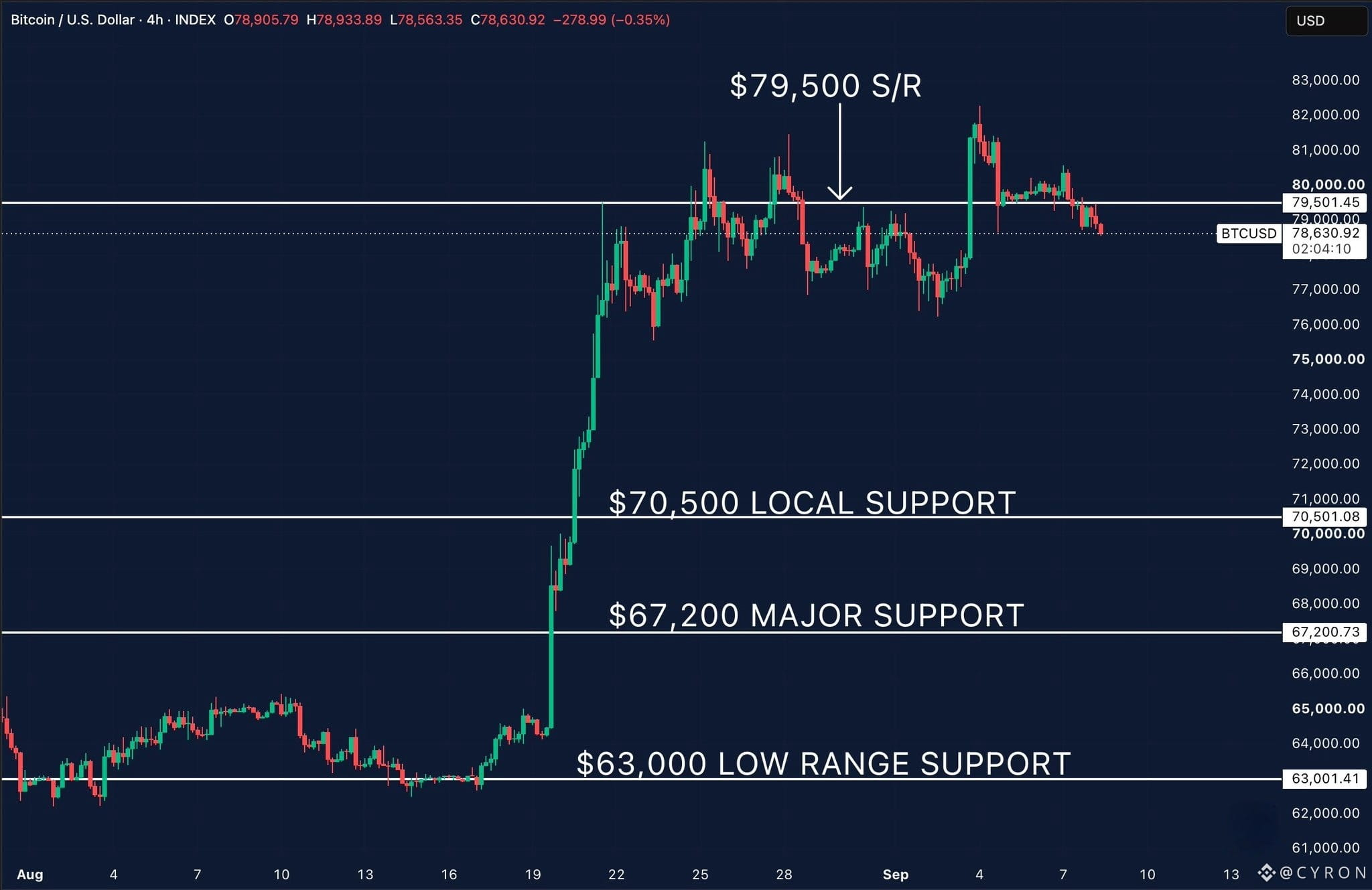
Le Bitcoin est à un niveau clé.
Le seuil des 79 500 $ est passé de support à résistance après que $BTC ait échoué à rester au-dessus.
Si nous reprenons 79,5K $ et que nous tenons, je chercherais un mouvement de retour vers 81K+.
Si nous perdons 78K $, je m’attends à ce que la liquidité en dessous soit d’abord absorbée.
Niveaux simples à surveiller.
Reprise de 79,5K $ = haussier.
Perte de 78K $ = baissier.
En attendant, je patiente...
{spot}(BTCUSDT)
#SaudiHaltsSouthernEnergySitesAfterAttacks
#YenBreaks155NearingYearHigh
#USIranTradeTankerStrikesEscalate
Le Bitcoin est à un niveau clé.
Le seuil des 79 500 $ est passé de support à résistance après que $BTC ait échoué à rester au-dessus.
Si nous reprenons 79,5K $ et que nous tenons, je chercherais un mouvement de retour vers 81K+.
Si nous perdons 78K $, je m’attends à ce que la liquidité en dessous soit d’abord absorbée.
Niveaux simples à surveiller.
Reprise de 79,5K $ = haussier.
Perte de 78K $ = baissier.
En attendant, je patiente...
#SaudiHaltsSouthernEnergySitesAfterAttacks
#YenBreaks155NearingYearHigh
#USIranTradeTankerStrikesEscalate
Le seuil des 79 500 $ est passé de support à résistance après que $BTC ait échoué à rester au-dessus.
Si nous reprenons 79,5K $ et que nous tenons, je chercherais un mouvement de retour vers 81K+.
Si nous perdons 78K $, je m’attends à ce que la liquidité en dessous soit d’abord absorbée.
Niveaux simples à surveiller.
Reprise de 79,5K $ = haussier.
Perte de 78K $ = baissier.
En attendant, je patiente...
#SaudiHaltsSouthernEnergySitesAfterAttacks
#YenBreaks155NearingYearHigh
#USIranTradeTankerStrikesEscalate
114
·
--
Haussier
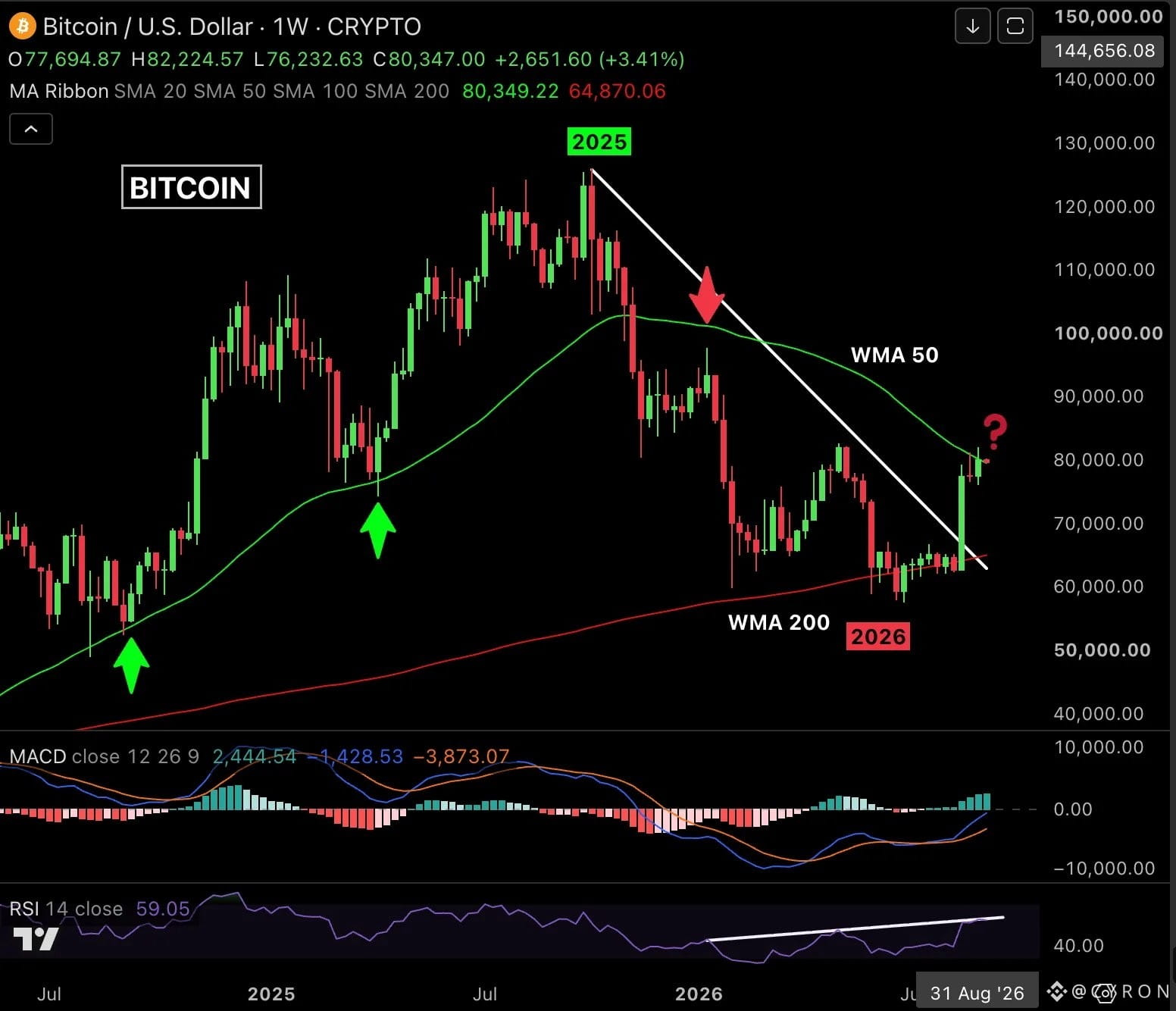
ANALYSE HEBDOMADAIRE DU BITCOIN
Le Bitcoin a clôturé la semaine juste autour de la Moyenne Mobile Hebdomadaire (MA 50) près de 80 349 $.
C’est un test majeur pour $BTC , pas encore une cassure confirmée.
Voici ce que je surveille ensuite 🧵
{spot}(BTCUSDT)
#USIranTradeTankerStrikesEscalate
#IMFSaysElSalvadorBTCNoPublicFunds
#IranSaysItHit3USShips3Tankers
ANALYSE HEBDOMADAIRE DU BITCOIN
Le Bitcoin a clôturé la semaine juste autour de la Moyenne Mobile Hebdomadaire (MA 50) près de 80 349 $.
C’est un test majeur pour $BTC , pas encore une cassure confirmée.
Voici ce que je surveille ensuite 🧵
#USIranTradeTankerStrikesEscalate
#IMFSaysElSalvadorBTCNoPublicFunds
#IranSaysItHit3USShips3Tankers
Le Bitcoin a clôturé la semaine juste autour de la Moyenne Mobile Hebdomadaire (MA 50) près de 80 349 $.
C’est un test majeur pour $BTC , pas encore une cassure confirmée.
Voici ce que je surveille ensuite 🧵
#USIranTradeTankerStrikesEscalate
#IMFSaysElSalvadorBTCNoPublicFunds
#IranSaysItHit3USShips3Tankers
206
·
--
Haussier
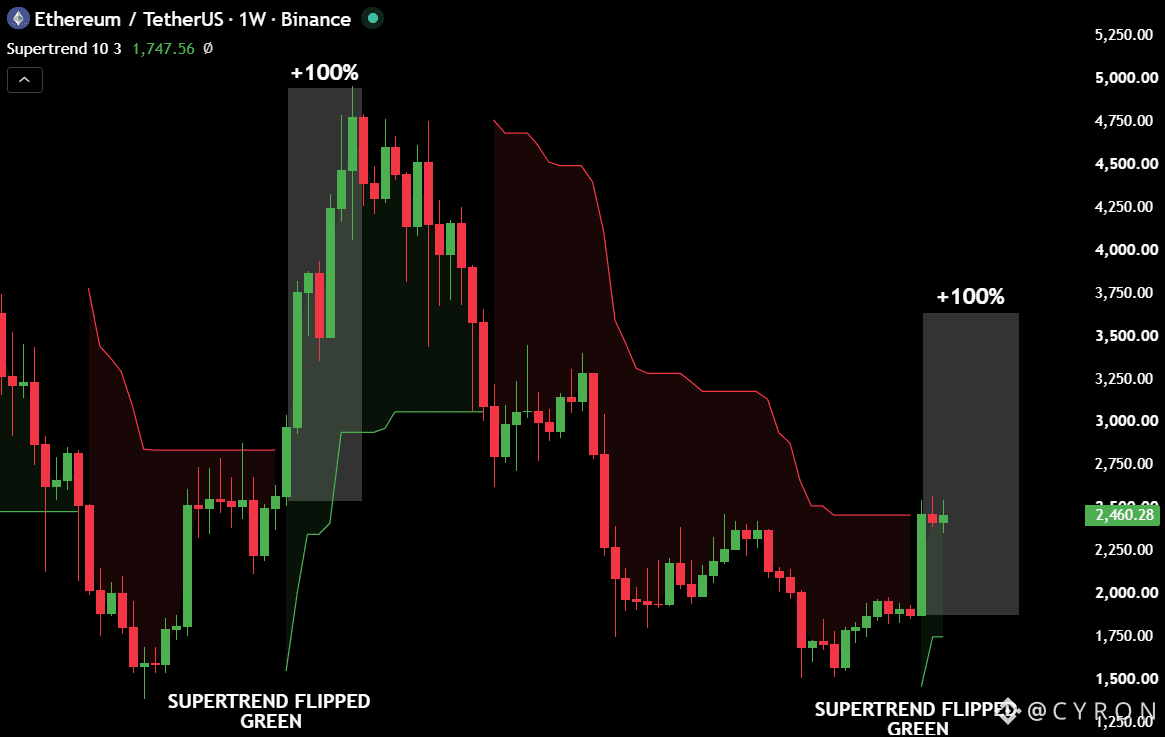
$ETH Le Supertrend hebdomadaire est passé au vert. 🟢
La dernière fois que cela s’est produit, ETH a bondi de plus de 100 % en seulement 6 semaines.
Si l’histoire se répète, un mouvement similaire pourrait porter ETH autour de 3 600 $ d’ici octobre.
Un seul signal ne garantit pas le même résultat.
Mais cela vaut définitivement la peine d’être surveillé. 👀
{spot}(ETHUSDT)
#ZECHitsANewAllTimeHigh
#BitcoinETFsBiggestDailyInflowSinceJanuary
#USAugustJobGrowthNearlyTriplesForecast
$ETH Le Supertrend hebdomadaire est passé au vert. 🟢
La dernière fois que cela s’est produit, ETH a bondi de plus de 100 % en seulement 6 semaines.
Si l’histoire se répète, un mouvement similaire pourrait porter ETH autour de 3 600 $ d’ici octobre.
Un seul signal ne garantit pas le même résultat.
Mais cela vaut définitivement la peine d’être surveillé. 👀
#ZECHitsANewAllTimeHigh
#BitcoinETFsBiggestDailyInflowSinceJanuary
#USAugustJobGrowthNearlyTriplesForecast
La dernière fois que cela s’est produit, ETH a bondi de plus de 100 % en seulement 6 semaines.
Si l’histoire se répète, un mouvement similaire pourrait porter ETH autour de 3 600 $ d’ici octobre.
Un seul signal ne garantit pas le même résultat.
Mais cela vaut définitivement la peine d’être surveillé. 👀
#ZECHitsANewAllTimeHigh
#BitcoinETFsBiggestDailyInflowSinceJanuary
#USAugustJobGrowthNearlyTriplesForecast
160
·
--
Haussier
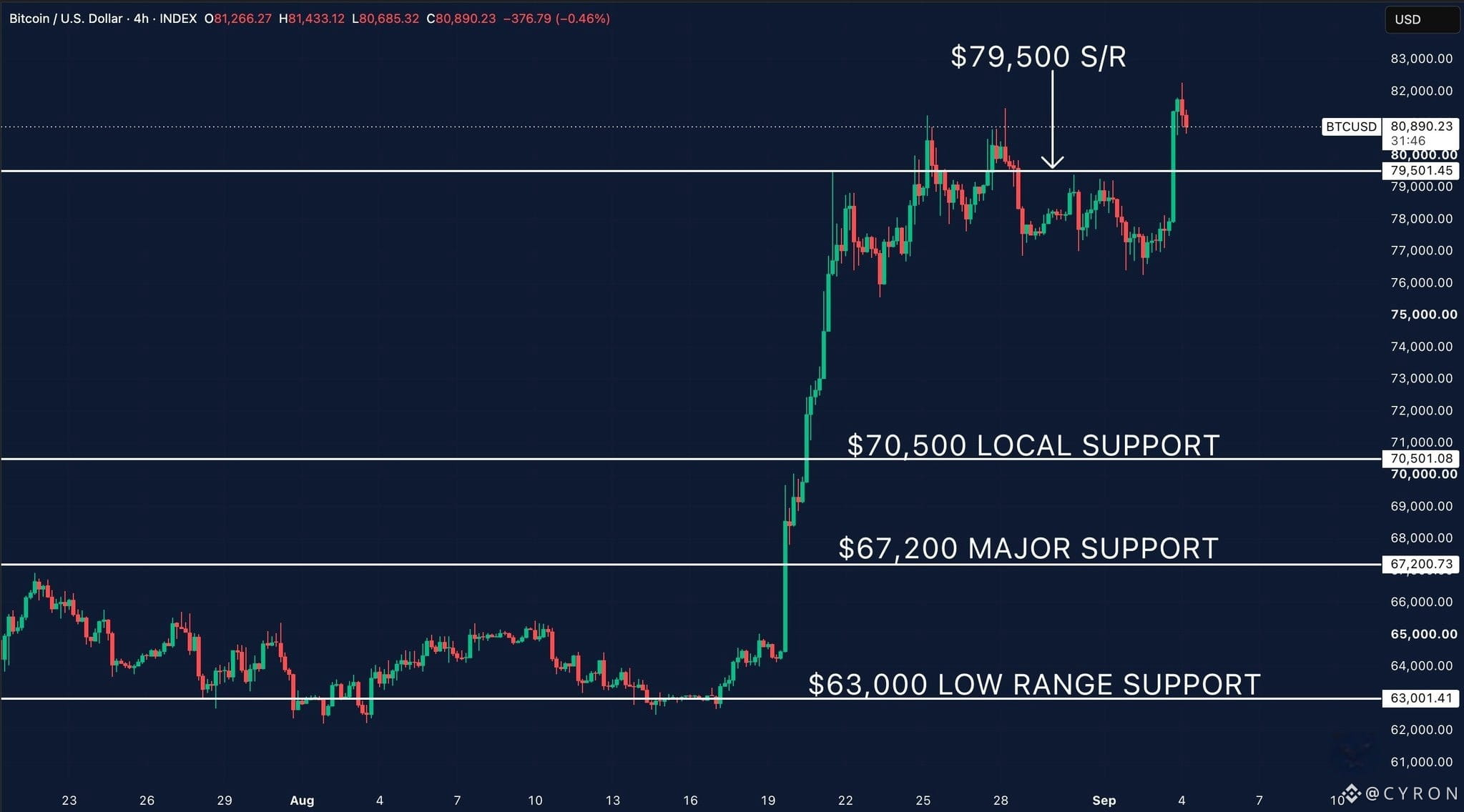
BITCOIN VIENT DE TRANSFORMER 79 500 $ EN SUPPORT 🚨
Bitcoin a franchi la résistance de 79 500 $ que je surveillais et a poussé au-dessus de 80 K.
Le $BTC s’échange désormais autour de 80,9 K après avoir brièvement dépassé 82 K.
Le niveau clé est désormais simple : 79,5 K.
Si Bitcoin reste au-dessus, je surveille le prochain objectif : 82 K.
Perdre 79,5 K, et ce breakout commence à paraître beaucoup moins convaincant.
Pour l’instant, la structure s’est nettement améliorée.
{spot}(BTCUSDT)
#USWeeklyInitialJoblessClaimsRiseTo206000
#HousePressesSenateOnCLARITYAct
BITCOIN VIENT DE TRANSFORMER 79 500 $ EN SUPPORT 🚨
Bitcoin a franchi la résistance de 79 500 $ que je surveillais et a poussé au-dessus de 80 K.
Le $BTC s’échange désormais autour de 80,9 K après avoir brièvement dépassé 82 K.
Le niveau clé est désormais simple : 79,5 K.
Si Bitcoin reste au-dessus, je surveille le prochain objectif : 82 K.
Perdre 79,5 K, et ce breakout commence à paraître beaucoup moins convaincant.
Pour l’instant, la structure s’est nettement améliorée.
#USWeeklyInitialJoblessClaimsRiseTo206000
#HousePressesSenateOnCLARITYAct
Bitcoin a franchi la résistance de 79 500 $ que je surveillais et a poussé au-dessus de 80 K.
Le $BTC s’échange désormais autour de 80,9 K après avoir brièvement dépassé 82 K.
Le niveau clé est désormais simple : 79,5 K.
Si Bitcoin reste au-dessus, je surveille le prochain objectif : 82 K.
Perdre 79,5 K, et ce breakout commence à paraître beaucoup moins convaincant.
Pour l’instant, la structure s’est nettement améliorée.
#USWeeklyInitialJoblessClaimsRiseTo206000
#HousePressesSenateOnCLARITYAct
1
1
141
·
--
Haussier
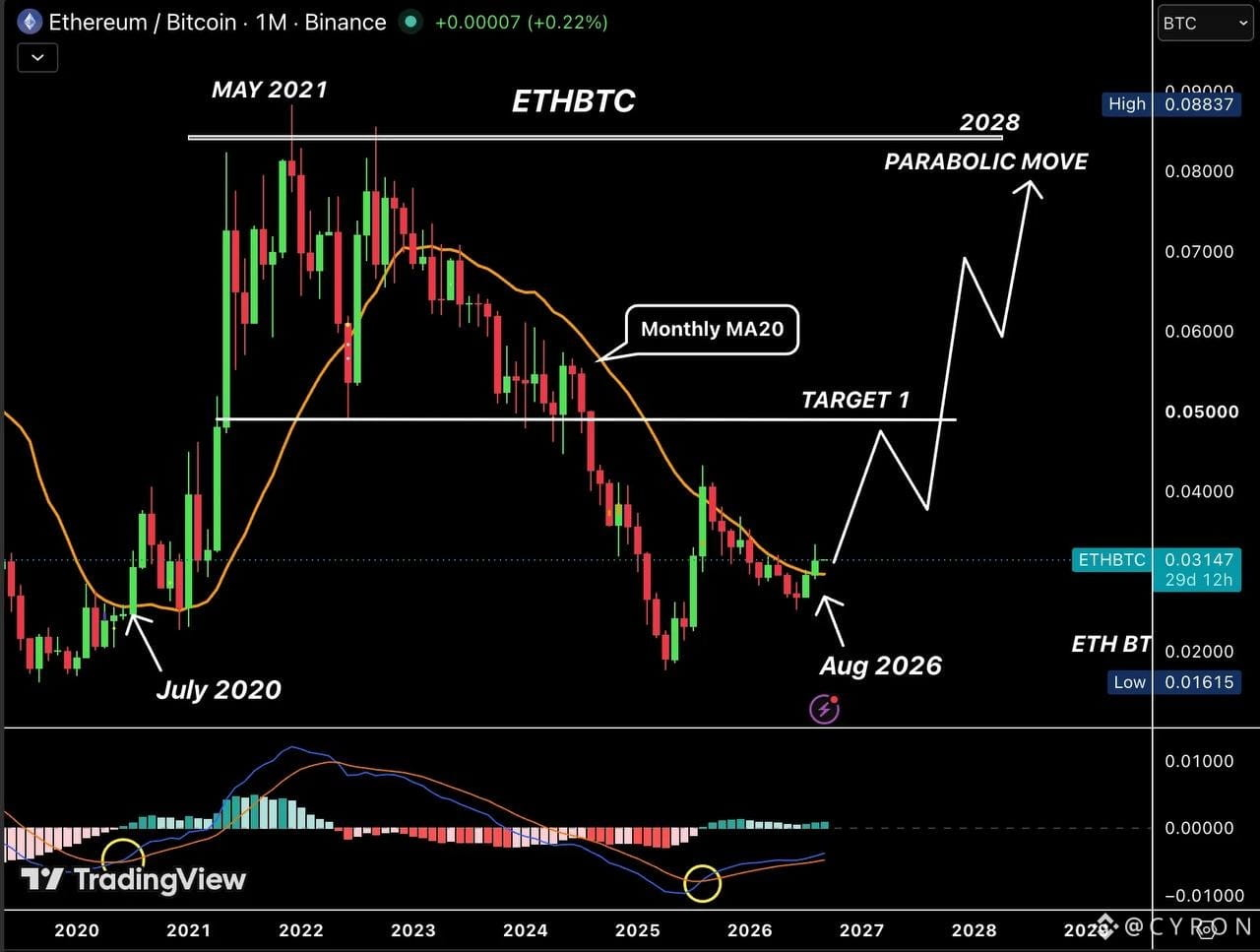
Le graphique mensuel ETH/BTC commence à devenir intéressant.
Le prix a clôturé au-dessus de la moyenne mobile sur 20 périodes (MA 20).
La dernière reprise nette de ce niveau remonte à juillet 2020.
Que s’est-il passé ensuite ?
ETH/BTC : 0.0315 → 0.088
ETH : 225 $ → 4 372 $
En août 2025, le prix a également touché cette moyenne, mais n’a pas réussi à la maintenir et est finalement retombé vers les plus bas.
C’est la différence clé maintenant.
ETH/BTC doit rester au-dessus de la MA 20.
Le MACD remonte aussi depuis une zone similaire à celle qui a précédé la cassure de 2020.
Si la tenue fonctionne :
Premier objectif → 0.050
Objectif étendu → 0.088
En attendant, l’ISM est ressorti à 54,6 contre 55,2 attendu, montrant que la croissance tient toujours, mais ralentit.
Si les conditions macro continuent de s’orienter vers une politique monétaire plus accommodante, l’ETH pourrait avoir plus d’espace pour surperformer.
Cette configuration vaut vraiment le coup d’être surveillée. 👀
{spot}(BTCUSDT)
{spot}(ETHUSDT)
#BitcoinETFBuyersReturn
#FedHikeOddsRiseTo68%
#G20StatementCitesDigitalAssets
Le graphique mensuel ETH/BTC commence à devenir intéressant.
Le prix a clôturé au-dessus de la moyenne mobile sur 20 périodes (MA 20).
La dernière reprise nette de ce niveau remonte à juillet 2020.
Que s’est-il passé ensuite ?
ETH/BTC : 0.0315 → 0.088
ETH : 225 $ → 4 372 $
En août 2025, le prix a également touché cette moyenne, mais n’a pas réussi à la maintenir et est finalement retombé vers les plus bas.
C’est la différence clé maintenant.
ETH/BTC doit rester au-dessus de la MA 20.
Le MACD remonte aussi depuis une zone similaire à celle qui a précédé la cassure de 2020.
Si la tenue fonctionne :
Premier objectif → 0.050
Objectif étendu → 0.088
En attendant, l’ISM est ressorti à 54,6 contre 55,2 attendu, montrant que la croissance tient toujours, mais ralentit.
Si les conditions macro continuent de s’orienter vers une politique monétaire plus accommodante, l’ETH pourrait avoir plus d’espace pour surperformer.
Cette configuration vaut vraiment le coup d’être surveillée. 👀
#BitcoinETFBuyersReturn
#FedHikeOddsRiseTo68%
#G20StatementCitesDigitalAssets
Le prix a clôturé au-dessus de la moyenne mobile sur 20 périodes (MA 20).
La dernière reprise nette de ce niveau remonte à juillet 2020.
Que s’est-il passé ensuite ?
ETH/BTC : 0.0315 → 0.088
ETH : 225 $ → 4 372 $
En août 2025, le prix a également touché cette moyenne, mais n’a pas réussi à la maintenir et est finalement retombé vers les plus bas.
C’est la différence clé maintenant.
ETH/BTC doit rester au-dessus de la MA 20.
Le MACD remonte aussi depuis une zone similaire à celle qui a précédé la cassure de 2020.
Si la tenue fonctionne :
Premier objectif → 0.050
Objectif étendu → 0.088
En attendant, l’ISM est ressorti à 54,6 contre 55,2 attendu, montrant que la croissance tient toujours, mais ralentit.
Si les conditions macro continuent de s’orienter vers une politique monétaire plus accommodante, l’ETH pourrait avoir plus d’espace pour surperformer.
Cette configuration vaut vraiment le coup d’être surveillée. 👀
#BitcoinETFBuyersReturn
#FedHikeOddsRiseTo68%
#G20StatementCitesDigitalAssets
1
108
·
--
Haussier
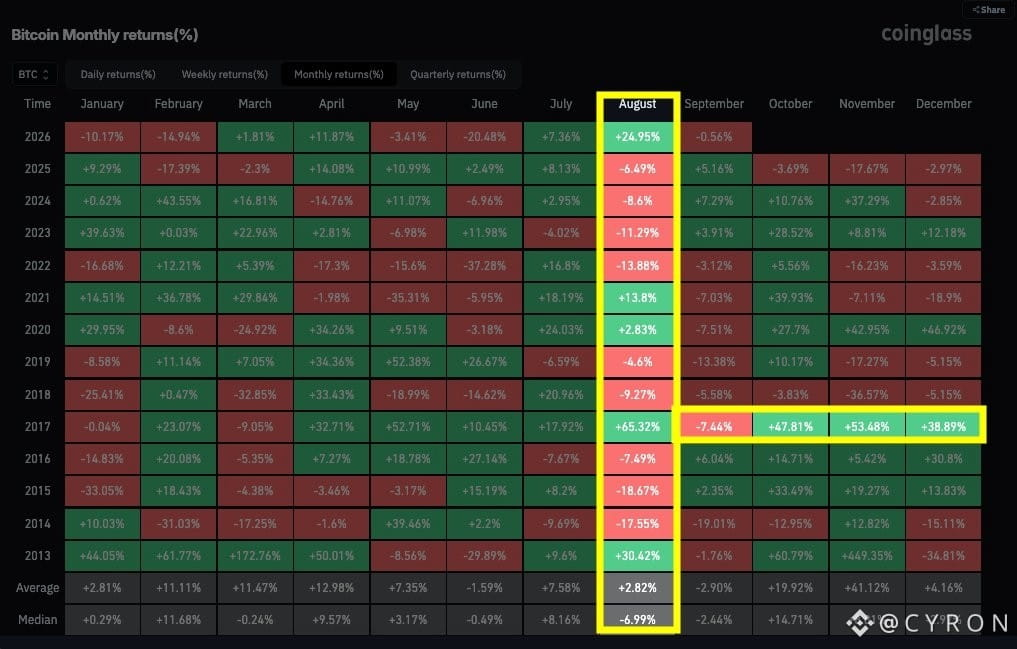
Le Bitcoin vient de connaître son MEILLEUR mois d’août depuis 2017.
Août 2026 : +24,95%
Août 2017 : +65,32%
Mais voilà ce qui s’est passé après août 2017 :
Octobre : +47,81%
Novembre : +53,48%
Décembre : +38,89%
L’histoire ne doit pas forcément se répéter.
Mais quand vous voyez une configuration comme celle-ci, c’est difficile de ne pas faire attention. 👀
{spot}(BTCUSDT)
#ARBRises30%OnRobinhoodChainRevenue
#Japan10YYieldHits3%FirstSince1996
#WTIOilRisesAsOpenInterestShrinks
Le Bitcoin vient de connaître son MEILLEUR mois d’août depuis 2017.
Août 2026 : +24,95%
Août 2017 : +65,32%
Mais voilà ce qui s’est passé après août 2017 :
Octobre : +47,81%
Novembre : +53,48%
Décembre : +38,89%
L’histoire ne doit pas forcément se répéter.
Mais quand vous voyez une configuration comme celle-ci, c’est difficile de ne pas faire attention. 👀
#ARBRises30%OnRobinhoodChainRevenue
#Japan10YYieldHits3%FirstSince1996
#WTIOilRisesAsOpenInterestShrinks
Août 2026 : +24,95%
Août 2017 : +65,32%
Mais voilà ce qui s’est passé après août 2017 :
Octobre : +47,81%
Novembre : +53,48%
Décembre : +38,89%
L’histoire ne doit pas forcément se répéter.
Mais quand vous voyez une configuration comme celle-ci, c’est difficile de ne pas faire attention. 👀
#ARBRises30%OnRobinhoodChainRevenue
#Japan10YYieldHits3%FirstSince1996
#WTIOilRisesAsOpenInterestShrinks
183
·
--
Baissier
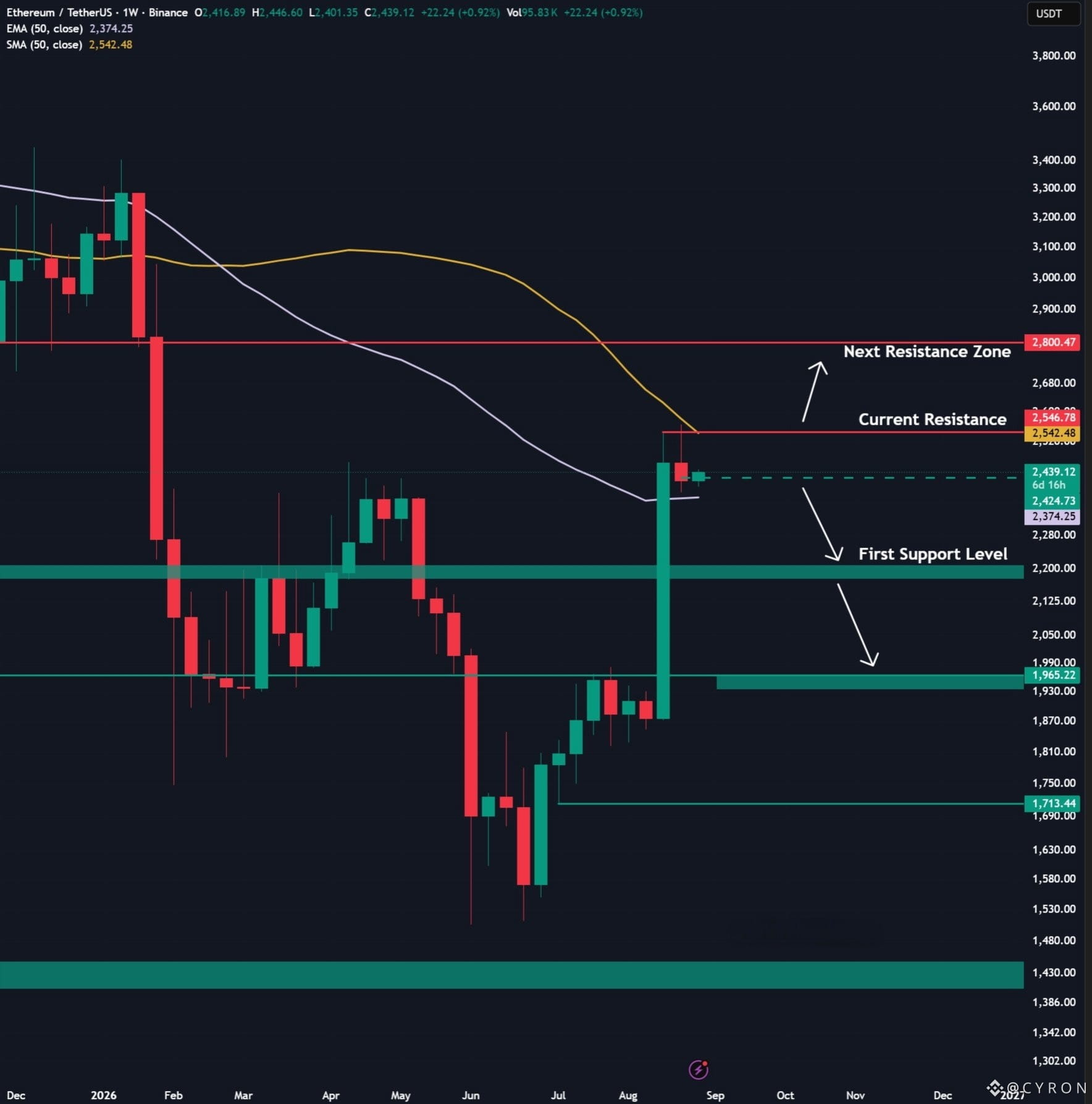
$ETH a tenté de repasser au-dessus du niveau de 2 550 $ mais a encore échoué.
Pour l’instant, je pense que la plupart du potentiel de hausse à court terme d’Ethereum est déjà intégré.
Attendez-vous à davantage d’hésitations à ces niveaux, avec la possibilité d’une petite capitulation supplémentaire avant un véritable retournement.
Faites preuve de patience ici.
{spot}(ETHUSDT)
#SKHynixStudiesJapanMemoryChipVenture
#KospiDrops3.6%AsSamsungSKHynixWeaken
#UKReleasesFirstCryptoGainsTaxStats
$ETH a tenté de repasser au-dessus du niveau de 2 550 $ mais a encore échoué.
Pour l’instant, je pense que la plupart du potentiel de hausse à court terme d’Ethereum est déjà intégré.
Attendez-vous à davantage d’hésitations à ces niveaux, avec la possibilité d’une petite capitulation supplémentaire avant un véritable retournement.
Faites preuve de patience ici.
#SKHynixStudiesJapanMemoryChipVenture
#KospiDrops3.6%AsSamsungSKHynixWeaken
#UKReleasesFirstCryptoGainsTaxStats
Pour l’instant, je pense que la plupart du potentiel de hausse à court terme d’Ethereum est déjà intégré.
Attendez-vous à davantage d’hésitations à ces niveaux, avec la possibilité d’une petite capitulation supplémentaire avant un véritable retournement.
Faites preuve de patience ici.
#SKHynixStudiesJapanMemoryChipVenture
#KospiDrops3.6%AsSamsungSKHynixWeaken
#UKReleasesFirstCryptoGainsTaxStats
143
·
--
Haussier
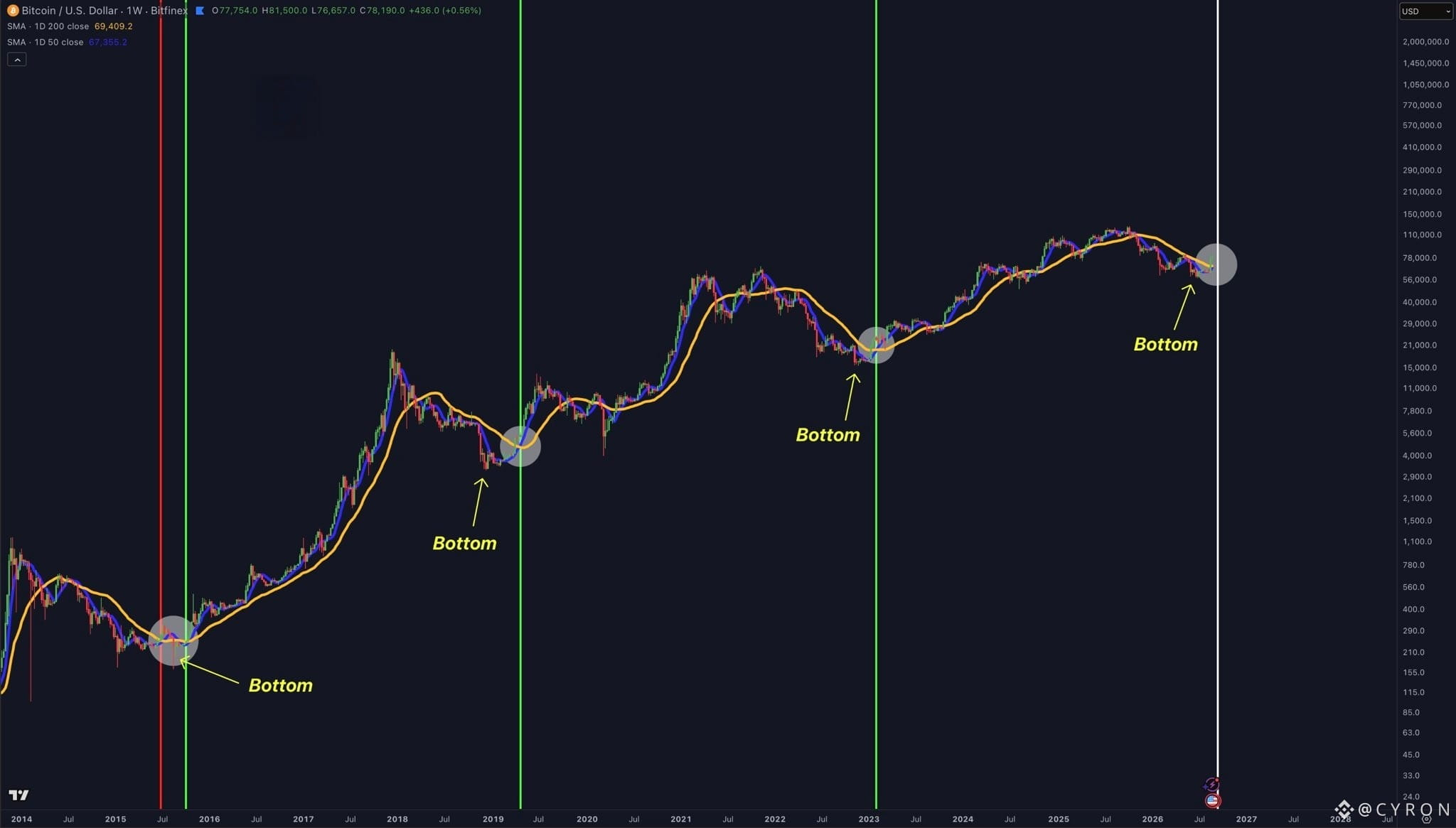
CROISEMENT DORÉ DU BITCOIN EN VUE.
Si $BTC peut tenir ici ou continuer plus haut jusqu’en septembre, la Golden Cross quotidienne confirmera officiellement.
Elle s’est affichée 4 fois à la fin des marchés baissiers.
3 fois, elle a donné la bonne direction.
Le Bitcoin prépare-t-il un autre grand retournement de tendance ? 🚀
{spot}(BTCUSDT)
#KoreaSingleStockLeveragedETFTradingFalls
#VietnamPilotsCryptoAssetMarket
#GoldFalls3.24%ThisWeek
CROISEMENT DORÉ DU BITCOIN EN VUE.
Si $BTC peut tenir ici ou continuer plus haut jusqu’en septembre, la Golden Cross quotidienne confirmera officiellement.
Elle s’est affichée 4 fois à la fin des marchés baissiers.
3 fois, elle a donné la bonne direction.
Le Bitcoin prépare-t-il un autre grand retournement de tendance ? 🚀
#KoreaSingleStockLeveragedETFTradingFalls
#VietnamPilotsCryptoAssetMarket
#GoldFalls3.24%ThisWeek
Si $BTC peut tenir ici ou continuer plus haut jusqu’en septembre, la Golden Cross quotidienne confirmera officiellement.
Elle s’est affichée 4 fois à la fin des marchés baissiers.
3 fois, elle a donné la bonne direction.
Le Bitcoin prépare-t-il un autre grand retournement de tendance ? 🚀
#KoreaSingleStockLeveragedETFTradingFalls
#VietnamPilotsCryptoAssetMarket
#GoldFalls3.24%ThisWeek
116
·
--
Haussier
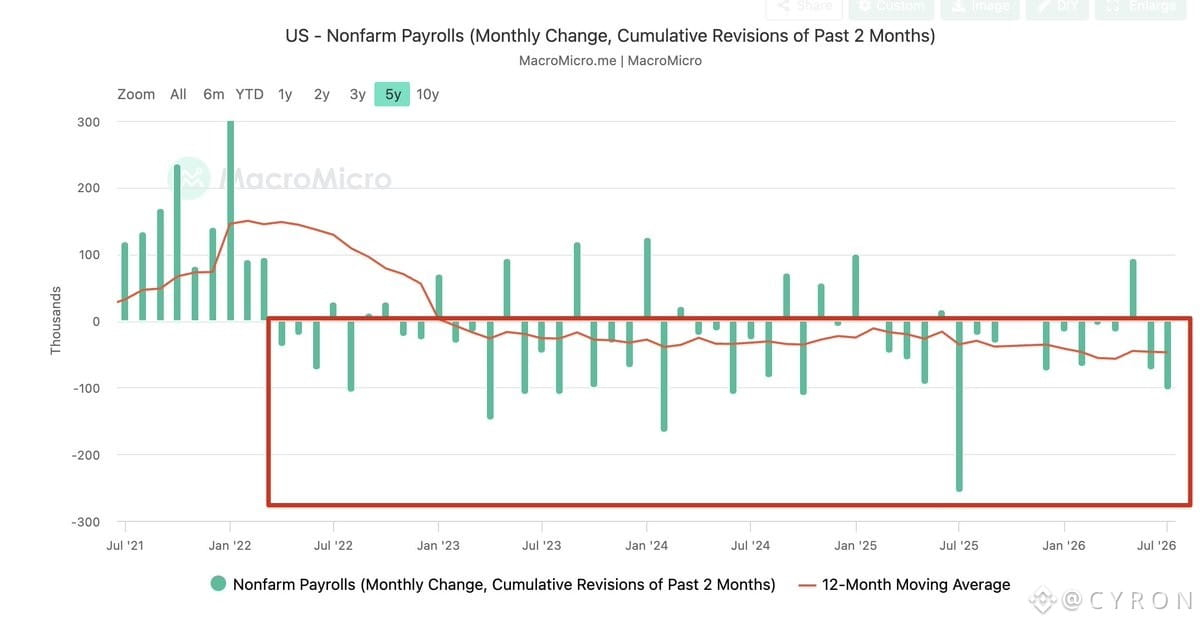
Voici la tendance observée au cours des dernières années.
Les données relatives à l’emploi hors secteur agricole (Non-Farm Payrolls) font toujours l’objet de révisions, car le chiffre initial ne constitue qu’une estimation précoce.
Les chiffres révisés peuvent donner une image très différente.
Depuis 2022, nous avons constaté un schéma clair : des révisions le plus souvent à la baisse.
Par exemple, un rapport indiquant +50K emplois pourrait ensuite être révisé à +25K.
Cela signifierait que le marché du travail était plus faible que ce qui avait été initialement rapporté.
Aujourd’hui, la révision annuelle NFP pour 2025 s’élève à -911K emplois, soulignant à quel point ces ajustements peuvent être importants.
Ainsi, si les données NFP du jour ressortent solides, le marché pourrait avoir moins de raisons de penser que la Fed réduira ses taux.
Cela pourrait exercer une pression sur les actifs à risque tels que $BTC
{spot}(BTCUSDT)
#SOLJumps20%OnTheWeek
#CaliforniaBillWouldBarOfficialMemeCoins
#TRONMainnetActivatesTVMPragueOsaka
Voici la tendance observée au cours des dernières années.
Les données relatives à l’emploi hors secteur agricole (Non-Farm Payrolls) font toujours l’objet de révisions, car le chiffre initial ne constitue qu’une estimation précoce.
Les chiffres révisés peuvent donner une image très différente.
Depuis 2022, nous avons constaté un schéma clair : des révisions le plus souvent à la baisse.
Par exemple, un rapport indiquant +50K emplois pourrait ensuite être révisé à +25K.
Cela signifierait que le marché du travail était plus faible que ce qui avait été initialement rapporté.
Aujourd’hui, la révision annuelle NFP pour 2025 s’élève à -911K emplois, soulignant à quel point ces ajustements peuvent être importants.
Ainsi, si les données NFP du jour ressortent solides, le marché pourrait avoir moins de raisons de penser que la Fed réduira ses taux.
Cela pourrait exercer une pression sur les actifs à risque tels que $BTC
#SOLJumps20%OnTheWeek
#CaliforniaBillWouldBarOfficialMemeCoins
#TRONMainnetActivatesTVMPragueOsaka
Les données relatives à l’emploi hors secteur agricole (Non-Farm Payrolls) font toujours l’objet de révisions, car le chiffre initial ne constitue qu’une estimation précoce.
Les chiffres révisés peuvent donner une image très différente.
Depuis 2022, nous avons constaté un schéma clair : des révisions le plus souvent à la baisse.
Par exemple, un rapport indiquant +50K emplois pourrait ensuite être révisé à +25K.
Cela signifierait que le marché du travail était plus faible que ce qui avait été initialement rapporté.
Aujourd’hui, la révision annuelle NFP pour 2025 s’élève à -911K emplois, soulignant à quel point ces ajustements peuvent être importants.
Ainsi, si les données NFP du jour ressortent solides, le marché pourrait avoir moins de raisons de penser que la Fed réduira ses taux.
Cela pourrait exercer une pression sur les actifs à risque tels que $BTC
#SOLJumps20%OnTheWeek
#CaliforniaBillWouldBarOfficialMemeCoins
#TRONMainnetActivatesTVMPragueOsaka
114
·
--
Haussier
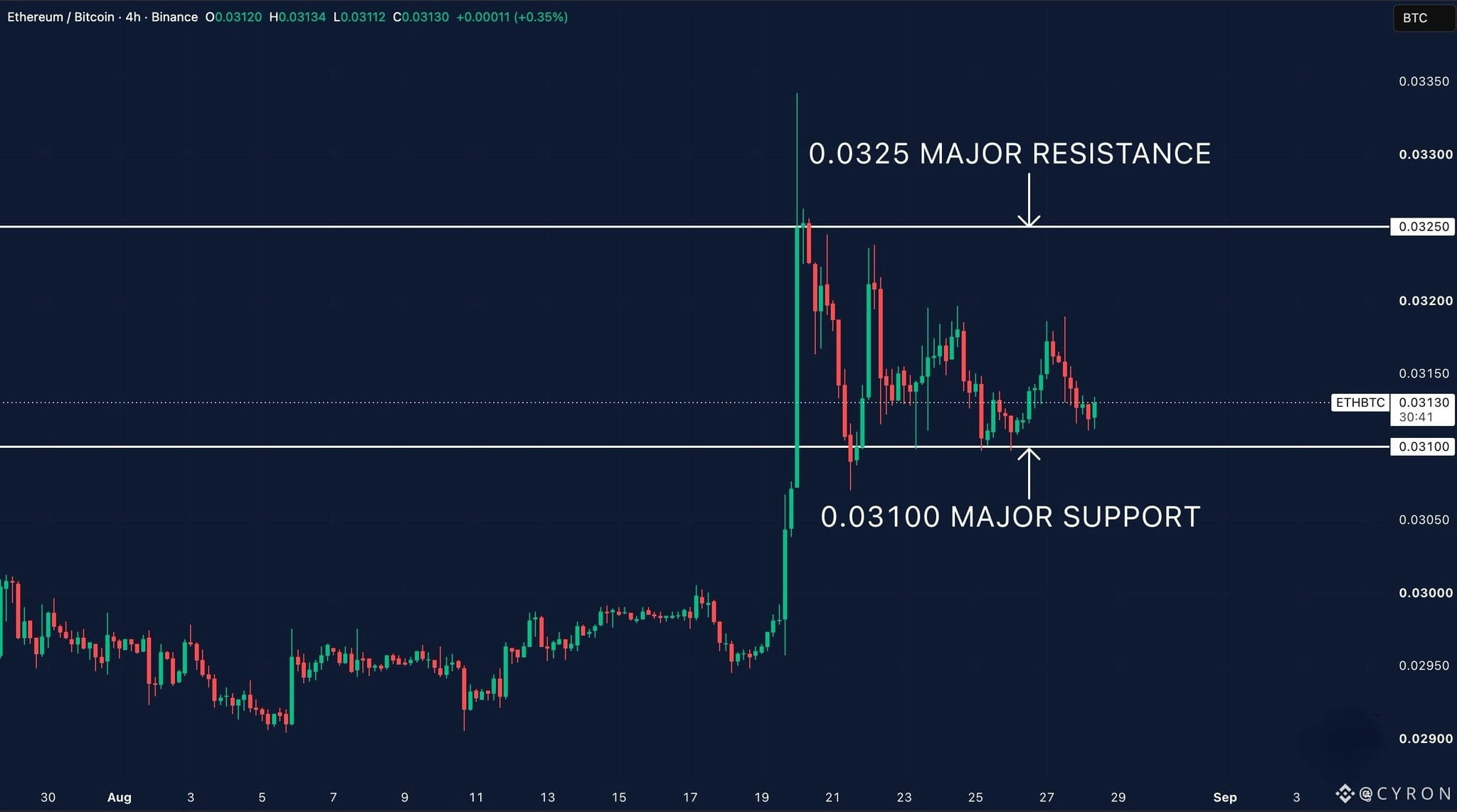
ETH/BTC maintient un niveau qui pourrait compter pour le prochain mouvement.
Le support à 0.03100 a été testé à plusieurs reprises, et pour l’instant, les acheteurs le défendent.
Tenez au-dessus d’ici → 0.03250 est la prochaine étape.
Cassez proprement 0.03250 → ETH pourrait commencer à afficher une performance relative plus forte face à BTC.
Perdez 0.03100 → la configuration change.
Pour le moment, ETH/BTC tient toujours son breakout.
Faites preuve de patience avant de poursuivre.
{spot}(ETHUSDT)
{spot}(BTCUSDT)
#GoldRisesAbout14%InAugust
#KospiFallsAsAITradingEuphoriaCools
#TaiwanTAIEXRetakes46500OnChipRally
ETH/BTC maintient un niveau qui pourrait compter pour le prochain mouvement.
Le support à 0.03100 a été testé à plusieurs reprises, et pour l’instant, les acheteurs le défendent.
Tenez au-dessus d’ici → 0.03250 est la prochaine étape.
Cassez proprement 0.03250 → ETH pourrait commencer à afficher une performance relative plus forte face à BTC.
Perdez 0.03100 → la configuration change.
Pour le moment, ETH/BTC tient toujours son breakout.
Faites preuve de patience avant de poursuivre.
#GoldRisesAbout14%InAugust
#KospiFallsAsAITradingEuphoriaCools
#TaiwanTAIEXRetakes46500OnChipRally
Le support à 0.03100 a été testé à plusieurs reprises, et pour l’instant, les acheteurs le défendent.
Tenez au-dessus d’ici → 0.03250 est la prochaine étape.
Cassez proprement 0.03250 → ETH pourrait commencer à afficher une performance relative plus forte face à BTC.
Perdez 0.03100 → la configuration change.
Pour le moment, ETH/BTC tient toujours son breakout.
Faites preuve de patience avant de poursuivre.
#GoldRisesAbout14%InAugust
#KospiFallsAsAITradingEuphoriaCools
#TaiwanTAIEXRetakes46500OnChipRally
120
·
--
Baissier
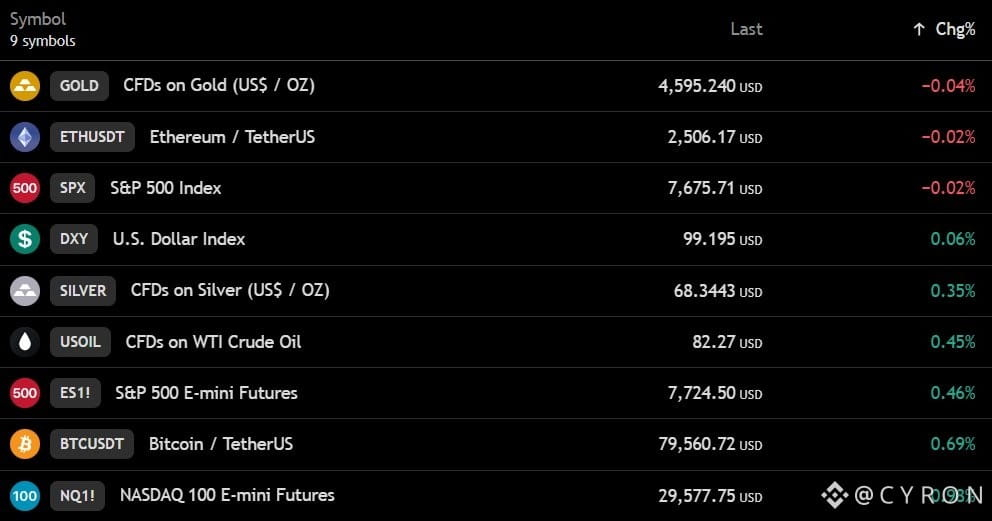
$BTC est passé sous 80 000 $.
Pendant ce temps, les contrats à terme sur les actions américaines évoluent à la hausse, tandis que le pétrole et le DXY montent également.
Mise à jour avant ouverture :
▫️ Futures Nasdaq : +0,98 % 🟠
▫️ Futures S&P 500 : +0,46 % 🟠
Le Bitcoin montre une certaine faiblesse malgré un début positif pour les marchés plus larges.
{spot}(BTCUSDT)
#KospiClosesAtRecordHigh
#ChinaOpposesUSProposed7.5%Tariff
#BankOfKoreaHikesRatesTo3%
$BTC est passé sous 80 000 $.
Pendant ce temps, les contrats à terme sur les actions américaines évoluent à la hausse, tandis que le pétrole et le DXY montent également.
Mise à jour avant ouverture :
▫️ Futures Nasdaq : +0,98 % 🟠
▫️ Futures S&P 500 : +0,46 % 🟠
Le Bitcoin montre une certaine faiblesse malgré un début positif pour les marchés plus larges.
#KospiClosesAtRecordHigh
#ChinaOpposesUSProposed7.5%Tariff
#BankOfKoreaHikesRatesTo3%
Pendant ce temps, les contrats à terme sur les actions américaines évoluent à la hausse, tandis que le pétrole et le DXY montent également.
Mise à jour avant ouverture :
▫️ Futures Nasdaq : +0,98 % 🟠
▫️ Futures S&P 500 : +0,46 % 🟠
Le Bitcoin montre une certaine faiblesse malgré un début positif pour les marchés plus larges.
#KospiClosesAtRecordHigh
#ChinaOpposesUSProposed7.5%Tariff
#BankOfKoreaHikesRatesTo3%
2
323
·
--
Haussier
J’ai fait la tâche CreatorPad sur @Dusk_Foundation cette semaine, et ce qui m’est resté n’était même pas dans le brief de la tâche : le pont $DUSK est désormais en pause depuis plus de dix jours, et personne chez Dusk ne semble pressé de le rouvrir. #dusk
Contexte rapide pour ceux qui l’auraient manqué : le 16 août, l’équipe a signalé une activité inhabituelle sur un portefeuille utilisé pour les opérations du pont, a recyclé les adresses concernées, puis a déployé une liste de destinataires bloqués via le Web Wallet après qu’une partie du flux a touché Binance. Le mainnet DuskDS lui-même n’a jamais cessé de produire des blocs. C’est la partie à laquelle je n’ai cessé de revenir.
J’avais supposé qu’un L1 axé sur la confidentialité concentrait son risque en un seul endroit, la couche de base. Voir la chaîne tourner proprement pendant que le pont restait gelé m’a fait comprendre clairement que ce n’est pas ainsi que les limites de confiance se séparent réellement ici. Le pont représente à lui seul une responsabilité, soumis à son propre calendrier, indépendamment de la santé du consensus.
Les utilisateurs de Binance étaient probablement protégés en premier, ne serait-ce que parce que la liste de blocage existait avant que les retraits puissent être routés via. Tout le monde attend encore « temporairement ».
Je ne sais pas quel est le seuil réel avant que « temporaire » ne commence à vouloir dire autre chose.
{spot}(DUSKUSDT)
{spot}(BMTUSDT)
{spot}(EDENUSDT)
Qu’est-ce qui compte le plus ici ?
J’ai fait la tâche CreatorPad sur @Dusk cette semaine, et ce qui m’est resté n’était même pas dans le brief de la tâche : le pont $DUSK est désormais en pause depuis plus de dix jours, et personne chez Dusk ne semble pressé de le rouvrir. #dusk
Contexte rapide pour ceux qui l’auraient manqué : le 16 août, l’équipe a signalé une activité inhabituelle sur un portefeuille utilisé pour les opérations du pont, a recyclé les adresses concernées, puis a déployé une liste de destinataires bloqués via le Web Wallet après qu’une partie du flux a touché Binance. Le mainnet DuskDS lui-même n’a jamais cessé de produire des blocs. C’est la partie à laquelle je n’ai cessé de revenir.
J’avais supposé qu’un L1 axé sur la confidentialité concentrait son risque en un seul endroit, la couche de base. Voir la chaîne tourner proprement pendant que le pont restait gelé m’a fait comprendre clairement que ce n’est pas ainsi que les limites de confiance se séparent réellement ici. Le pont représente à lui seul une responsabilité, soumis à son propre calendrier, indépendamment de la santé du consensus.
Les utilisateurs de Binance étaient probablement protégés en premier, ne serait-ce que parce que la liste de blocage existait avant que les retraits puissent être routés via. Tout le monde attend encore « temporairement ».
Je ne sais pas quel est le seuil réel avant que « temporaire » ne commence à vouloir dire autre chose.
Qu’est-ce qui compte le plus ici ?
Contexte rapide pour ceux qui l’auraient manqué : le 16 août, l’équipe a signalé une activité inhabituelle sur un portefeuille utilisé pour les opérations du pont, a recyclé les adresses concernées, puis a déployé une liste de destinataires bloqués via le Web Wallet après qu’une partie du flux a touché Binance. Le mainnet DuskDS lui-même n’a jamais cessé de produire des blocs. C’est la partie à laquelle je n’ai cessé de revenir.
J’avais supposé qu’un L1 axé sur la confidentialité concentrait son risque en un seul endroit, la couche de base. Voir la chaîne tourner proprement pendant que le pont restait gelé m’a fait comprendre clairement que ce n’est pas ainsi que les limites de confiance se séparent réellement ici. Le pont représente à lui seul une responsabilité, soumis à son propre calendrier, indépendamment de la santé du consensus.
Les utilisateurs de Binance étaient probablement protégés en premier, ne serait-ce que parce que la liste de blocage existait avant que les retraits puissent être routés via. Tout le monde attend encore « temporairement ».
Je ne sais pas quel est le seuil réel avant que « temporaire » ne commence à vouloir dire autre chose.
Qu’est-ce qui compte le plus ici ?
🟢 Mainnet's clean uptime
100%
🔴 Bridge still closed
0%
⚖️ Both equally
0%
🤷 Too early to say
0%
1 Votes • Vote fermé
1
1
186
·
--
Haussier
J’ai effectué un petit transfert via le Web Wallet de Dusk plus tôt cette semaine, tout en finalisant une tâche sur CreatorPad, et j’ai été stoppé en plein milieu par un avertissement de liste de blocage que je ne m’attendais pas à voir. Rien de dramatique : juste un signal rouge avant que la transaction ne soit soumise. Pour une chaîne conçue autour du modèle de confidentialité à divulgation sélective de $DUSK , #dusk , @Dusk_Foundation , ça m’a semblé être une chose étrange à rencontrer.
En fait, cet avertissement remonte à la liste de blocage des destinataires que l’équipe a livrée au Web Wallet après l’incident de la mi-août impliquant un wallet opérationnel de pont compromis. Il filtre les transferts sortants contre des adresses signalées avant même que vous puissiez les envoyer.
J’avais supposé qu’une approche axée sur la confidentialité signifiait moins de contrôles, pas plus. Le voir se déclencher lors d’une tentative réelle a un peu changé mon avis. Le mécanisme ne fonctionne que si quelqu’un maintient et met à jour cette liste en quasi temps réel, ce qui implique qu’il existe une couche éditoriale qui reste discrètement en dessous du discours « confidentiel par défaut ».
Je ne dis pas que c’est mal, juste que je le remarque. La divulgation sélective et le filtrage d’adresses ne sont pas la même chose, mais elles vivent désormais dans le même wallet. Je suis encore en train de voir à quel point je suis à l’aise avec ça, et qui décide exactement de ce qui sera ajouté à la liste à l’avenir.
{spot}(DUSKUSDT)
{spot}(ONGUSDT)
{spot}(JASMYUSDT)
Quelle partie de tout ça vous a le plus marqué ? 👀
J’ai effectué un petit transfert via le Web Wallet de Dusk plus tôt cette semaine, tout en finalisant une tâche sur CreatorPad, et j’ai été stoppé en plein milieu par un avertissement de liste de blocage que je ne m’attendais pas à voir. Rien de dramatique : juste un signal rouge avant que la transaction ne soit soumise. Pour une chaîne conçue autour du modèle de confidentialité à divulgation sélective de $DUSK , #dusk , @Dusk , ça m’a semblé être une chose étrange à rencontrer.
En fait, cet avertissement remonte à la liste de blocage des destinataires que l’équipe a livrée au Web Wallet après l’incident de la mi-août impliquant un wallet opérationnel de pont compromis. Il filtre les transferts sortants contre des adresses signalées avant même que vous puissiez les envoyer.
J’avais supposé qu’une approche axée sur la confidentialité signifiait moins de contrôles, pas plus. Le voir se déclencher lors d’une tentative réelle a un peu changé mon avis. Le mécanisme ne fonctionne que si quelqu’un maintient et met à jour cette liste en quasi temps réel, ce qui implique qu’il existe une couche éditoriale qui reste discrètement en dessous du discours « confidentiel par défaut ».
Je ne dis pas que c’est mal, juste que je le remarque. La divulgation sélective et le filtrage d’adresses ne sont pas la même chose, mais elles vivent désormais dans le même wallet. Je suis encore en train de voir à quel point je suis à l’aise avec ça, et qui décide exactement de ce qui sera ajouté à la liste à l’avenir.
Quelle partie de tout ça vous a le plus marqué ? 👀
En fait, cet avertissement remonte à la liste de blocage des destinataires que l’équipe a livrée au Web Wallet après l’incident de la mi-août impliquant un wallet opérationnel de pont compromis. Il filtre les transferts sortants contre des adresses signalées avant même que vous puissiez les envoyer.
J’avais supposé qu’une approche axée sur la confidentialité signifiait moins de contrôles, pas plus. Le voir se déclencher lors d’une tentative réelle a un peu changé mon avis. Le mécanisme ne fonctionne que si quelqu’un maintient et met à jour cette liste en quasi temps réel, ce qui implique qu’il existe une couche éditoriale qui reste discrètement en dessous du discours « confidentiel par défaut ».
Je ne dis pas que c’est mal, juste que je le remarque. La divulgation sélective et le filtrage d’adresses ne sont pas la même chose, mais elles vivent désormais dans le même wallet. Je suis encore en train de voir à quel point je suis à l’aise avec ça, et qui décide exactement de ce qui sera ajouté à la liste à l’avenir.
Quelle partie de tout ça vous a le plus marqué ? 👀
🚫 The blocklist itself
50%
🔑 Who maintains the list
50%
⚖️ Privacy vs. gatekeeping
0%
💭 Something else
0%
2 Votes • Vote fermé
1
1
193
·
--
Haussier
J’ai de nouveau vérifié cette semaine la page d’état du pont Dusk, et elle affiche toujours « en pause », comme depuis l’incident du 16 août, lorsque l’équipe a signalé une activité suspecte sur un portefeuille utilisé pour les opérations du pont. C’est le détail qui m’est resté en tête pendant que je finalisais cette tâche sur CreatorPad pour @Dusk_Foundation , $DUSK , #dusk : neuf jours de plus plus tard, les adresses sont recyclées, la liste de blocage est active, mais le pont lui-même n’est toujours pas revenu en ligne.
La version officielle était claire : pas de problème au niveau du protocole. DuskDS a continué à produire des blocs normalement, aucun fonds utilisateur n’a été affecté. Et techniquement, c’est vrai. Mais je suis parti du principe que « pas un bug de protocole » signifiait « correctif rapide ». Ce ne fut pas le cas. L’infrastructure opérationnelle, gérée par une équipe, même sur une chaîne conçue autour d’un règlement déterministe et d’une confidentialité au niveau de l’audit, suit encore des délais humains dès que quelque chose touche un flux centralisé.
Ce qui m’a davantage marqué que l’incident lui-même, c’est l’écart entre la manière dont la communication rassure avec assurance et la durée réelle de la remédiation. Ces deux éléments ne sont pas forcément en contradiction, mais, côte à côte, ils ne se lisent pas de la même façon.
Je ne sais pas encore s’il s’agit simplement d’un processus méthodique ou de quelque chose de plus structurel dans la façon dont les ponts sont traités après un incident. Je surveille pour voir quand il rouvrira effectivement.
{spot}(DUSKUSDT)
{spot}(ZROUSDT)
{spot}(ENAUSDT)
Qu’est-ce qui ressort le plus pour vous ? 🤔
J’ai de nouveau vérifié cette semaine la page d’état du pont Dusk, et elle affiche toujours « en pause », comme depuis l’incident du 16 août, lorsque l’équipe a signalé une activité suspecte sur un portefeuille utilisé pour les opérations du pont. C’est le détail qui m’est resté en tête pendant que je finalisais cette tâche sur CreatorPad pour @Dusk , $DUSK , #dusk : neuf jours de plus plus tard, les adresses sont recyclées, la liste de blocage est active, mais le pont lui-même n’est toujours pas revenu en ligne.
La version officielle était claire : pas de problème au niveau du protocole. DuskDS a continué à produire des blocs normalement, aucun fonds utilisateur n’a été affecté. Et techniquement, c’est vrai. Mais je suis parti du principe que « pas un bug de protocole » signifiait « correctif rapide ». Ce ne fut pas le cas. L’infrastructure opérationnelle, gérée par une équipe, même sur une chaîne conçue autour d’un règlement déterministe et d’une confidentialité au niveau de l’audit, suit encore des délais humains dès que quelque chose touche un flux centralisé.
Ce qui m’a davantage marqué que l’incident lui-même, c’est l’écart entre la manière dont la communication rassure avec assurance et la durée réelle de la remédiation. Ces deux éléments ne sont pas forcément en contradiction, mais, côte à côte, ils ne se lisent pas de la même façon.
Je ne sais pas encore s’il s’agit simplement d’un processus méthodique ou de quelque chose de plus structurel dans la façon dont les ponts sont traités après un incident. Je surveille pour voir quand il rouvrira effectivement.
Qu’est-ce qui ressort le plus pour vous ? 🤔
La version officielle était claire : pas de problème au niveau du protocole. DuskDS a continué à produire des blocs normalement, aucun fonds utilisateur n’a été affecté. Et techniquement, c’est vrai. Mais je suis parti du principe que « pas un bug de protocole » signifiait « correctif rapide ». Ce ne fut pas le cas. L’infrastructure opérationnelle, gérée par une équipe, même sur une chaîne conçue autour d’un règlement déterministe et d’une confidentialité au niveau de l’audit, suit encore des délais humains dès que quelque chose touche un flux centralisé.
Ce qui m’a davantage marqué que l’incident lui-même, c’est l’écart entre la manière dont la communication rassure avec assurance et la durée réelle de la remédiation. Ces deux éléments ne sont pas forcément en contradiction, mais, côte à côte, ils ne se lisent pas de la même façon.
Je ne sais pas encore s’il s’agit simplement d’un processus méthodique ou de quelque chose de plus structurel dans la façon dont les ponts sont traités après un incident. Je surveille pour voir quand il rouvrira effectivement.
Qu’est-ce qui ressort le plus pour vous ? 🤔
🛠️ The framing
50%
⏳ The timeline
0%
🔐 Wallet risk
0%
🤷 Just normal caution
50%
2 Votes • Vote fermé
4
6
305
·
--
Haussier
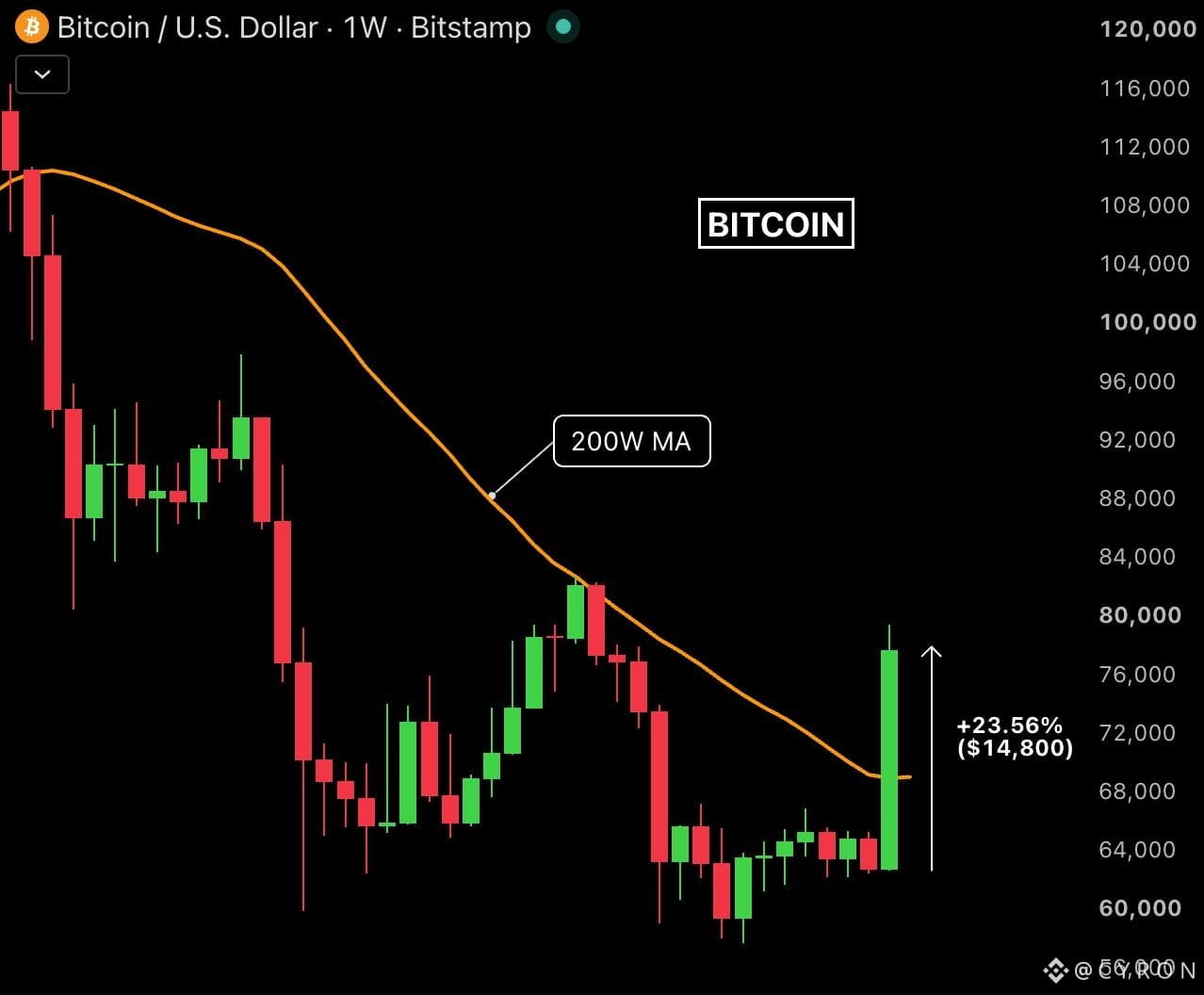
🚨 INFO IMPORTANTE:
Le Bitcoin vient d’imprimer sa plus grosse bougie hebdomadaire depuis mars 2023.
$BTC a gagné 23,56 %, ajoutant environ 14 800 $ en une seule semaine.
C’est un mouvement massif pour le Bitcoin sur une période aussi courte.
L’élan est de retour. 🚀
{spot}(BTCUSDT)
#BitcoinStrongestWeekSinceMarch2023
#CanadaUSTradeTalksCollapse
🚨 INFO IMPORTANTE:
Le Bitcoin vient d’imprimer sa plus grosse bougie hebdomadaire depuis mars 2023.
$BTC a gagné 23,56 %, ajoutant environ 14 800 $ en une seule semaine.
C’est un mouvement massif pour le Bitcoin sur une période aussi courte.
L’élan est de retour. 🚀
#BitcoinStrongestWeekSinceMarch2023
#CanadaUSTradeTalksCollapse
Le Bitcoin vient d’imprimer sa plus grosse bougie hebdomadaire depuis mars 2023.
$BTC a gagné 23,56 %, ajoutant environ 14 800 $ en une seule semaine.
C’est un mouvement massif pour le Bitcoin sur une période aussi courte.
L’élan est de retour. 🚀
#BitcoinStrongestWeekSinceMarch2023
#CanadaUSTradeTalksCollapse
2
119
·
--
Haussier
En lisant le brief de CreatorPad sur $DUSK , je me suis retrouvé bloqué sur une ligne dans l’avis d’incident du propre pont de Dusk : l’équipe a désactivé puis recyclé un ensemble d’adresses après avoir signalé une activité inhabituelle sur un portefeuille géré par l’équipe utilisé pour les opérations de pont, puis a mis entièrement en pause les services de pont pendant qu’ils s’en occupaient. #dusk
C’est le passage qui m’a accroché. Pas l’incident lui-même, mais la forme de la réponse. @Dusk_Foundation consacre l’essentiel de sa communication à la confidentialité côté utilisateur, la divulgation sélective, les rails de conformité, tout ce qui est conçu pour la personne qui détient le portefeuille. Ce n’était pas ça. C’était une clé opérationnelle interne qui a vu un comportement compromis être signalé autour d’elle, et la correction a été brutale : mettre tout en pause, reconstruire l’ensemble d’adresses, et expédier une liste noire des destinataires pour intercepter tout ce qui tenterait de passer via le portefeuille web.
J’avais supposé que la formulation « infrastructure régulée » signifiait aussi que le volet opérationnel était durci, peut-être plus que pour la plupart des L1, compte tenu de la promesse institutionnelle. En fait, le mode de défaillance n’était pas une exploitation de contrat intelligent ni un vote de gouvernance qui a déraillé : c’était un portefeuille géré, un problème beaucoup plus banal et beaucoup plus universel.
Je ne sais toujours pas si c’est rassurant ou l’inverse.
{spot}(DUSKUSDT)
{spot}(SPKUSDT)
{spot}(MORPHOUSDT)
Qu’est-ce qui a le plus retenu mon attention dans la réponse de Dusk concernant le pont ?
En lisant le brief de CreatorPad sur $DUSK , je me suis retrouvé bloqué sur une ligne dans l’avis d’incident du propre pont de Dusk : l’équipe a désactivé puis recyclé un ensemble d’adresses après avoir signalé une activité inhabituelle sur un portefeuille géré par l’équipe utilisé pour les opérations de pont, puis a mis entièrement en pause les services de pont pendant qu’ils s’en occupaient. #dusk
C’est le passage qui m’a accroché. Pas l’incident lui-même, mais la forme de la réponse. @Dusk consacre l’essentiel de sa communication à la confidentialité côté utilisateur, la divulgation sélective, les rails de conformité, tout ce qui est conçu pour la personne qui détient le portefeuille. Ce n’était pas ça. C’était une clé opérationnelle interne qui a vu un comportement compromis être signalé autour d’elle, et la correction a été brutale : mettre tout en pause, reconstruire l’ensemble d’adresses, et expédier une liste noire des destinataires pour intercepter tout ce qui tenterait de passer via le portefeuille web.
J’avais supposé que la formulation « infrastructure régulée » signifiait aussi que le volet opérationnel était durci, peut-être plus que pour la plupart des L1, compte tenu de la promesse institutionnelle. En fait, le mode de défaillance n’était pas une exploitation de contrat intelligent ni un vote de gouvernance qui a déraillé : c’était un portefeuille géré, un problème beaucoup plus banal et beaucoup plus universel.
Je ne sais toujours pas si c’est rassurant ou l’inverse.
Qu’est-ce qui a le plus retenu mon attention dans la réponse de Dusk concernant le pont ?
C’est le passage qui m’a accroché. Pas l’incident lui-même, mais la forme de la réponse. @Dusk consacre l’essentiel de sa communication à la confidentialité côté utilisateur, la divulgation sélective, les rails de conformité, tout ce qui est conçu pour la personne qui détient le portefeuille. Ce n’était pas ça. C’était une clé opérationnelle interne qui a vu un comportement compromis être signalé autour d’elle, et la correction a été brutale : mettre tout en pause, reconstruire l’ensemble d’adresses, et expédier une liste noire des destinataires pour intercepter tout ce qui tenterait de passer via le portefeuille web.
J’avais supposé que la formulation « infrastructure régulée » signifiait aussi que le volet opérationnel était durci, peut-être plus que pour la plupart des L1, compte tenu de la promesse institutionnelle. En fait, le mode de défaillance n’était pas une exploitation de contrat intelligent ni un vote de gouvernance qui a déraillé : c’était un portefeuille géré, un problème beaucoup plus banal et beaucoup plus universel.
Je ne sais toujours pas si c’est rassurant ou l’inverse.
Qu’est-ce qui a le plus retenu mon attention dans la réponse de Dusk concernant le pont ?
🛑 Full pause
60%
🔑 Team wallet risk
40%
🧊 "No impact" claim
0%
🤷 Not surprised
0%
5 Votes • Vote fermé
2
4
960
·
--
Haussier
J’ai passé la semaine à creuser l’infrastructure de pont de Dusk pour ce tour de CreatorPad, et ce qui m’a arrêté n’était pas une fonctionnalité : c’était l’avis d’incident du 16 août. L’équipe a repéré une activité suspecte sur un portefeuille qu’elle contrôlait pour les opérations du pont, et a dû désactiver puis recycler un lot d’adresses sur-le-champ. $DUSK , #dusk , @Dusk_Foundation , je suis entré en m’attendant à écrire au sujet de l’élan du réseau test de DuskEVM. Je suis sorti en pensant à tout autre chose.
Voilà ce qui m’a marqué : le pont lui-même n’a pas cassé. La couche zk, le consensus, rien de tout ça n’a été touché. Ce qui a cédé, c’est un portefeuille géré par l’équipe, ce type de composant opérationnel dont chaque pont dépend discrètement, et que personne n’a vraiment tendance à auditer publiquement. Dusk a réagi vite, a mis en pause les services, et s’est coordonné avec Binance une fois que la partie du flux y a été mise au jour. Une réponse raisonnable. Mais cela a mis en évidence l’écart entre « la sécurité au niveau du protocole » et « les humains qui font tourner la couche d’infrastructure » — deux choses que je traitais jusque-là comme une seule.
J’avais supposé que le risque lié aux ponts résidait surtout dans le code du contrat. En fait, la surface plus “souple”, celle qui est opérationnelle, supporte tout autant la charge. Je ne suis toujours pas sûr comment on l’audite.
{spot}(TRUMPUSDT)
{spot}(STXUSDT)
{spot}(POLUSDT)
Quel est le vrai risque pour les ponts ?
J’ai passé la semaine à creuser l’infrastructure de pont de Dusk pour ce tour de CreatorPad, et ce qui m’a arrêté n’était pas une fonctionnalité : c’était l’avis d’incident du 16 août. L’équipe a repéré une activité suspecte sur un portefeuille qu’elle contrôlait pour les opérations du pont, et a dû désactiver puis recycler un lot d’adresses sur-le-champ. $DUSK , #dusk , @Dusk , je suis entré en m’attendant à écrire au sujet de l’élan du réseau test de DuskEVM. Je suis sorti en pensant à tout autre chose.
Voilà ce qui m’a marqué : le pont lui-même n’a pas cassé. La couche zk, le consensus, rien de tout ça n’a été touché. Ce qui a cédé, c’est un portefeuille géré par l’équipe, ce type de composant opérationnel dont chaque pont dépend discrètement, et que personne n’a vraiment tendance à auditer publiquement. Dusk a réagi vite, a mis en pause les services, et s’est coordonné avec Binance une fois que la partie du flux y a été mise au jour. Une réponse raisonnable. Mais cela a mis en évidence l’écart entre « la sécurité au niveau du protocole » et « les humains qui font tourner la couche d’infrastructure » — deux choses que je traitais jusque-là comme une seule.
J’avais supposé que le risque lié aux ponts résidait surtout dans le code du contrat. En fait, la surface plus “souple”, celle qui est opérationnelle, supporte tout autant la charge. Je ne suis toujours pas sûr comment on l’audite.
Quel est le vrai risque pour les ponts ?
Voilà ce qui m’a marqué : le pont lui-même n’a pas cassé. La couche zk, le consensus, rien de tout ça n’a été touché. Ce qui a cédé, c’est un portefeuille géré par l’équipe, ce type de composant opérationnel dont chaque pont dépend discrètement, et que personne n’a vraiment tendance à auditer publiquement. Dusk a réagi vite, a mis en pause les services, et s’est coordonné avec Binance une fois que la partie du flux y a été mise au jour. Une réponse raisonnable. Mais cela a mis en évidence l’écart entre « la sécurité au niveau du protocole » et « les humains qui font tourner la couche d’infrastructure » — deux choses que je traitais jusque-là comme une seule.
J’avais supposé que le risque lié aux ponts résidait surtout dans le code du contrat. En fait, la surface plus “souple”, celle qui est opérationnelle, supporte tout autant la charge. Je ne suis toujours pas sûr comment on l’audite.
Quel est le vrai risque pour les ponts ?
🔐 Contract code
0%
👤 Team wallets
50%
🌉 Message relay
0%
🧩 Upgrade keys
50%
2 Votes • Vote fermé
2
3
521
·
--
Haussier
J’ai effectué un rapide contrôle RPC sur le testnet de DuskEVM avant de déployer quoi que ce soit, juste pour vérifier que j’étais bien sur le bon réseau. Petite étape, mais elle a ancré la tâche CreatorPad dans quelque chose de réel plutôt que dans des captures d’écran de documentation. J’ai transféré un lot de $DUSK de DuskDS vers la wallet de déploiement, puis j’ai déployé un contrat Solidity basique via Hardhat. #dusk @Dusk_Foundation
Ce qui m’a vraiment stoppé, ce n’est pas le succès du déploiement, c’est le détail des frais après coup. J’avais supposé que « EVM préservant la confidentialité » signifiait que la confidentialité était intégrée à chaque transaction par défaut. En fait, non. Les frais d’exécution et les frais de disponibilité des données pour renvoyer le lot vers DuskDS étaient tous deux entièrement visibles, dans un style standard façon OP-Stack. Rien n’est protégé, sauf si vous passez délibérément par Hedger.
C’est une hypothèse raisonnable à faire, mais je me suis trompé. La communication de Dusk insiste beaucoup sur la confidentialité, ce qui donne facilement l’impression que la couche EVM hérite de cette confidentialité par défaut, plutôt que d’avoir besoin de l’activer séparément.
Sur le plan architectural, c’est logique : le règlement et les outils de confidentialité restent découplés de l’exécution généraliste. Cela dit, je me demande combien de développeurs qui construisent ici en ce moment utilisent réellement Hedger, plutôt que de se contenter d’envoyer des contrats EVM standard et d’en rester là. C’est mon propre constat issu de tests, pas un conseil financier : inutile d’aller plus loin si vous évaluez l’écosystème.
{spot}(DUSKUSDT)
{spot}(PROMUSDT)
{spot}(NEIROUSDT)
Quelle partie du développement sur DuskEVM voudriez-vous essayer en premier ? 👇
J’ai effectué un rapide contrôle RPC sur le testnet de DuskEVM avant de déployer quoi que ce soit, juste pour vérifier que j’étais bien sur le bon réseau. Petite étape, mais elle a ancré la tâche CreatorPad dans quelque chose de réel plutôt que dans des captures d’écran de documentation. J’ai transféré un lot de $DUSK de DuskDS vers la wallet de déploiement, puis j’ai déployé un contrat Solidity basique via Hardhat. #dusk @Dusk
Ce qui m’a vraiment stoppé, ce n’est pas le succès du déploiement, c’est le détail des frais après coup. J’avais supposé que « EVM préservant la confidentialité » signifiait que la confidentialité était intégrée à chaque transaction par défaut. En fait, non. Les frais d’exécution et les frais de disponibilité des données pour renvoyer le lot vers DuskDS étaient tous deux entièrement visibles, dans un style standard façon OP-Stack. Rien n’est protégé, sauf si vous passez délibérément par Hedger.
C’est une hypothèse raisonnable à faire, mais je me suis trompé. La communication de Dusk insiste beaucoup sur la confidentialité, ce qui donne facilement l’impression que la couche EVM hérite de cette confidentialité par défaut, plutôt que d’avoir besoin de l’activer séparément.
Sur le plan architectural, c’est logique : le règlement et les outils de confidentialité restent découplés de l’exécution généraliste. Cela dit, je me demande combien de développeurs qui construisent ici en ce moment utilisent réellement Hedger, plutôt que de se contenter d’envoyer des contrats EVM standard et d’en rester là. C’est mon propre constat issu de tests, pas un conseil financier : inutile d’aller plus loin si vous évaluez l’écosystème.
Quelle partie du développement sur DuskEVM voudriez-vous essayer en premier ? 👇
Ce qui m’a vraiment stoppé, ce n’est pas le succès du déploiement, c’est le détail des frais après coup. J’avais supposé que « EVM préservant la confidentialité » signifiait que la confidentialité était intégrée à chaque transaction par défaut. En fait, non. Les frais d’exécution et les frais de disponibilité des données pour renvoyer le lot vers DuskDS étaient tous deux entièrement visibles, dans un style standard façon OP-Stack. Rien n’est protégé, sauf si vous passez délibérément par Hedger.
C’est une hypothèse raisonnable à faire, mais je me suis trompé. La communication de Dusk insiste beaucoup sur la confidentialité, ce qui donne facilement l’impression que la couche EVM hérite de cette confidentialité par défaut, plutôt que d’avoir besoin de l’activer séparément.
Sur le plan architectural, c’est logique : le règlement et les outils de confidentialité restent découplés de l’exécution généraliste. Cela dit, je me demande combien de développeurs qui construisent ici en ce moment utilisent réellement Hedger, plutôt que de se contenter d’envoyer des contrats EVM standard et d’en rester là. C’est mon propre constat issu de tests, pas un conseil financier : inutile d’aller plus loin si vous évaluez l’écosystème.
Quelle partie du développement sur DuskEVM voudriez-vous essayer en premier ? 👇
🔧 Standard Solidity contract
0%
🕶️ Hedger private execution
0%
🌉 Just the bridge
0%
🤔 Still deciding
0%
0 Votes • Vote fermé
8
5
181
·
--
Haussier
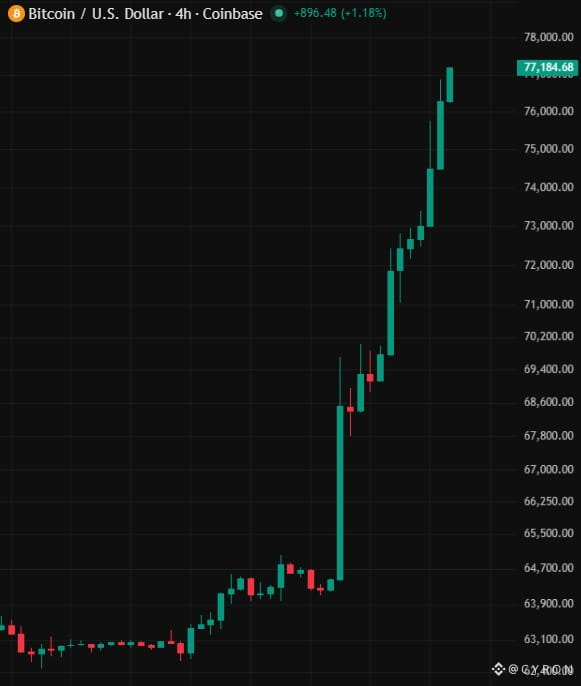
Absolument HISTORIQUE.
Le Bitcoin progresse 140 fois plus vite que le marché boursier en ce moment.
$BTC a bondi de plus de 20% en moins de cinq jours, passant d’environ 63 000 $ à plus de 77 000 $.
À titre de comparaison, le S&P 500 a historiquement généré environ 10% de rendement par an.
Le Bitcoin vient de délivrer ce type de performance en moins de cinq jours.
Près de 3 mois de pertes effacés en seulement 5 jours.
Et c’est désormais la plus forte hausse hebdomadaire du Bitcoin depuis février 2024.
C’est incroyable. 🚀
{spot}(BTCUSDT)
#USJoblessClaimsFallTo206000
#TrumpPressesCongressToPassClarityAct
Absolument HISTORIQUE.
Le Bitcoin progresse 140 fois plus vite que le marché boursier en ce moment.
$BTC a bondi de plus de 20% en moins de cinq jours, passant d’environ 63 000 $ à plus de 77 000 $.
À titre de comparaison, le S&P 500 a historiquement généré environ 10% de rendement par an.
Le Bitcoin vient de délivrer ce type de performance en moins de cinq jours.
Près de 3 mois de pertes effacés en seulement 5 jours.
Et c’est désormais la plus forte hausse hebdomadaire du Bitcoin depuis février 2024.
C’est incroyable. 🚀
#USJoblessClaimsFallTo206000
#TrumpPressesCongressToPassClarityAct
Le Bitcoin progresse 140 fois plus vite que le marché boursier en ce moment.
$BTC a bondi de plus de 20% en moins de cinq jours, passant d’environ 63 000 $ à plus de 77 000 $.
À titre de comparaison, le S&P 500 a historiquement généré environ 10% de rendement par an.
Le Bitcoin vient de délivrer ce type de performance en moins de cinq jours.
Près de 3 mois de pertes effacés en seulement 5 jours.
Et c’est désormais la plus forte hausse hebdomadaire du Bitcoin depuis février 2024.
C’est incroyable. 🚀
#USJoblessClaimsFallTo206000
#TrumpPressesCongressToPassClarityAct
2
234
·
--
Haussier
J’ai ponté cette semaine quelques DUSK du testnet vers DuskEVM, juste pour déployer un contrat basique via Hardhat, principalement pour voir à quel point « EVM-équivalent » se rapproche réellement dans la pratique. @Dusk_Foundation , $DUSK , #dusk le déploiement lui-même s’est déroulé sans incident, l’ID de chaîne était correct (745), le contrat a bien été validé, et l’adresse contenait du bytecode. Rien de dramatique.
Ce qui m’a arrêté, c’est après coup : essayer d’observer la transaction rester en mempool avant la confirmation, comme on le ferait naturellement sur n’importe quelle chaîne EVM. Il n’y en a pas. DuskEVM fonctionne pour l’instant en mode « sequencer-only », sans mempool publique à scruter. J’avais supposé que « EVM-équivalent » signifiait que toute la surface se comporte identiquement, y compris les parties auxquelles les gens ne pensent qu’une fois qu’elles ont disparu.
C’est un détail, mais cela remet en perspective ce que signifie ici « compatible ». Les outils correspondent, Solidity et Hardhat fonctionnent comme prévu, mais le modèle d’exécution sous-jacent fait un autre ensemble de compromis, probablement au service des garanties de confidentialité et de règlement que le projet met sans cesse en avant.
Je ne suis toujours pas sûr de l’impact sur l’exposition au MEV ou l’ordonnancement des transactions dès que le trafic du mainnet apparaîtra. Ça vaut le coup d’y réfléchir plus avant de tirer des conclusions.
{spot}(DUSKUSDT)
{spot}(ONGUSDT)
{spot}(PEOPLEUSDT)
Qu’est-ce qui compte le plus pour vous sur une chaîne compatible EVM ?
J’ai ponté cette semaine quelques DUSK du testnet vers DuskEVM, juste pour déployer un contrat basique via Hardhat, principalement pour voir à quel point « EVM-équivalent » se rapproche réellement dans la pratique. @Dusk , $DUSK , #dusk le déploiement lui-même s’est déroulé sans incident, l’ID de chaîne était correct (745), le contrat a bien été validé, et l’adresse contenait du bytecode. Rien de dramatique.
Ce qui m’a arrêté, c’est après coup : essayer d’observer la transaction rester en mempool avant la confirmation, comme on le ferait naturellement sur n’importe quelle chaîne EVM. Il n’y en a pas. DuskEVM fonctionne pour l’instant en mode « sequencer-only », sans mempool publique à scruter. J’avais supposé que « EVM-équivalent » signifiait que toute la surface se comporte identiquement, y compris les parties auxquelles les gens ne pensent qu’une fois qu’elles ont disparu.
C’est un détail, mais cela remet en perspective ce que signifie ici « compatible ». Les outils correspondent, Solidity et Hardhat fonctionnent comme prévu, mais le modèle d’exécution sous-jacent fait un autre ensemble de compromis, probablement au service des garanties de confidentialité et de règlement que le projet met sans cesse en avant.
Je ne suis toujours pas sûr de l’impact sur l’exposition au MEV ou l’ordonnancement des transactions dès que le trafic du mainnet apparaîtra. Ça vaut le coup d’y réfléchir plus avant de tirer des conclusions.
Qu’est-ce qui compte le plus pour vous sur une chaîne compatible EVM ?
Ce qui m’a arrêté, c’est après coup : essayer d’observer la transaction rester en mempool avant la confirmation, comme on le ferait naturellement sur n’importe quelle chaîne EVM. Il n’y en a pas. DuskEVM fonctionne pour l’instant en mode « sequencer-only », sans mempool publique à scruter. J’avais supposé que « EVM-équivalent » signifiait que toute la surface se comporte identiquement, y compris les parties auxquelles les gens ne pensent qu’une fois qu’elles ont disparu.
C’est un détail, mais cela remet en perspective ce que signifie ici « compatible ». Les outils correspondent, Solidity et Hardhat fonctionnent comme prévu, mais le modèle d’exécution sous-jacent fait un autre ensemble de compromis, probablement au service des garanties de confidentialité et de règlement que le projet met sans cesse en avant.
Je ne suis toujours pas sûr de l’impact sur l’exposition au MEV ou l’ordonnancement des transactions dès que le trafic du mainnet apparaîtra. Ça vaut le coup d’y réfléchir plus avant de tirer des conclusions.
Qu’est-ce qui compte le plus pour vous sur une chaîne compatible EVM ?
🔍 Mempool visibility
100%
🛡️ Privacy over transparency
0%
⚡ Speed and low gas
0%
🤷 Never thought about it
0%
1 Votes • Vote fermé
8
6
191
Connectez-vous pour découvrir plus de contenu
Rejoignez la communauté mondiale des adeptes de cryptomonnaies sur Binance Square
⚡️ Suviez les dernières informations importantes sur les cryptomonnaies.
💬 Jugé digne de confiance par la plus grande plateforme d’échange de cryptomonnaies au monde.
👍 Découvrez les connaissances que partagent les créateurs vérifiés.
Adresse e-mail/Nº de téléphone
Sujets d’actualité
SECReceivesGrayscaleLitecoinTrustETFFiling
18,909 vues
394 mentions
💎 L’attention institutionnelle atteint Litecoin
Le dépôt de l’ETF de Grayscale a placé le $LTC dans une conversation plus large. Pour les traders au comptant, des évolutions comme celle-ci sont un rappel d’étudier les actifs solides avant toute entrée.
#secreceivesgrayscalelitecointrustetffiling
CryptoMahibaloch
·1 mentions J’aime
·967 vues
ClarityActFacesProceduralVoteSept15
120,346 vues
1,387 mentions
US10YearTreasuryYieldNears5%
41,227 vues
709 mentions