
D E E N A
4.3k Publications

D E E N A
Signaler
Bloquer l’utilisateur
Crypto Lover
Ouvert au trading
Trade régulièrement
1.1 an(s)
222 Suivis
17.1K+ Abonnés
4.2K+ J’aime
Publications
Portefeuille
Tous
Citations
Direct
·
--
🚨 CONCOURS DE POMPES !
$G USDT : +73,82 % à 0,007337
$ONE : +72,85 % à 0,0018028
🔥 Seulement 0,97 % les sépare !
Qui prendra la tête ensuite ?
{spot}(ONEUSDT)
{spot}(GUSDT)
#BOJHikesRatesTo31YearHigh
#InjectiveLaunchesINJOnSolana
#SECGrantsInnovationExemptionForTokenizedStocks
#XRPGains3%AsRippleAddsMPPSupport
#XRPGains3%AsRippleAddsMPPSupport
🚨 CONCOURS DE POMPES !
$G USDT : +73,82 % à 0,007337
$ONE : +72,85 % à 0,0018028
🔥 Seulement 0,97 % les sépare !
Qui prendra la tête ensuite ?
#BOJHikesRatesTo31YearHigh
#InjectiveLaunchesINJOnSolana
#SECGrantsInnovationExemptionForTokenizedStocks
#XRPGains3%AsRippleAddsMPPSupport
#XRPGains3%AsRippleAddsMPPSupport
$G USDT : +73,82 % à 0,007337
$ONE : +72,85 % à 0,0018028
🔥 Seulement 0,97 % les sépare !
Qui prendra la tête ensuite ?
#BOJHikesRatesTo31YearHigh
#InjectiveLaunchesINJOnSolana
#SECGrantsInnovationExemptionForTokenizedStocks
#XRPGains3%AsRippleAddsMPPSupport
#XRPGains3%AsRippleAddsMPPSupport
$GUSDT — +73.82%
$ONE — +72.85%
🟢 $GUSDT
🔵 $ONE
20 heure(s) restante(s)
1.8k
·
--
Babylon (BABY) : le pari sur le staking du BTC que personne n’a vraiment totalement intégré
Je suis Babylon depuis que la narrative du staking du BTC s’est mise à chauffer, et c’est l’une des tensions les plus intéressantes que j’ai vues dans la crypto en ce moment. Le protocole lui-même est vraiment impressionnant : on mise du Bitcoin natif directement, sans wrapping, sans pont, sans custodians, et il a attiré plus de 5 Md$ de BTC misé à son apogée — plus d’un tiers de toute l’offre de BTC “wrapped”, sans aucun wrapping du tout. C’est une vraie demande de rendement non-custodial.
Mais le token a raconté une histoire complètement différente. BABY a atteint un plus haut historique près de 0,17 $ en avril 2025 et s’échange aujourd’hui autour de 0,012–0,015 $, soit une baisse d’environ 92 %. La capitalisation boursière se situe autour de 50–55 M$ alors que des milliards de tokens sont encore bloqués. Les déblocages des premiers investisseurs ont commencé en mai 2026, avec des tranches mensuelles jusqu’en 2029. Cela implique une pression de dilution durable, quelle que soit la solidité des fondamentaux du protocole.
Donc je surveille de près deux choses : si la croissance du TVL et les intégrations comme Aave V4 continuent de dépasser le calendrier des déblocages, et si le marché finit un jour par intégrer l’écart entre la solidité du protocole et l’offre de tokens. Pas un conseil financier, juste ce que je vois dans les données.
#BrentCrudeFallsAbout6%
#OilDropsAbout6%
#USStorageStocksExtendLosses
#KRXHaltsKOSPIAfterChipSelloff
#SKHynixSlumps11%OnAIChipSelloff
$COTI
{spot}(COTIUSDT)
$SNXX
{future}(SNXXUSDT)
$DIA
{spot}(DIAUSDT)
Babylon (BABY) : le pari sur le staking du BTC que personne n’a vraiment totalement intégré
Je suis Babylon depuis que la narrative du staking du BTC s’est mise à chauffer, et c’est l’une des tensions les plus intéressantes que j’ai vues dans la crypto en ce moment. Le protocole lui-même est vraiment impressionnant : on mise du Bitcoin natif directement, sans wrapping, sans pont, sans custodians, et il a attiré plus de 5 Md$ de BTC misé à son apogée — plus d’un tiers de toute l’offre de BTC “wrapped”, sans aucun wrapping du tout. C’est une vraie demande de rendement non-custodial.
Mais le token a raconté une histoire complètement différente. BABY a atteint un plus haut historique près de 0,17 $ en avril 2025 et s’échange aujourd’hui autour de 0,012–0,015 $, soit une baisse d’environ 92 %. La capitalisation boursière se situe autour de 50–55 M$ alors que des milliards de tokens sont encore bloqués. Les déblocages des premiers investisseurs ont commencé en mai 2026, avec des tranches mensuelles jusqu’en 2029. Cela implique une pression de dilution durable, quelle que soit la solidité des fondamentaux du protocole.
Donc je surveille de près deux choses : si la croissance du TVL et les intégrations comme Aave V4 continuent de dépasser le calendrier des déblocages, et si le marché finit un jour par intégrer l’écart entre la solidité du protocole et l’offre de tokens. Pas un conseil financier, juste ce que je vois dans les données.
#BrentCrudeFallsAbout6%
#OilDropsAbout6%
#USStorageStocksExtendLosses
#KRXHaltsKOSPIAfterChipSelloff
#SKHynixSlumps11%OnAIChipSelloff
$COTI
$SNXX
$DIA
Je suis Babylon depuis que la narrative du staking du BTC s’est mise à chauffer, et c’est l’une des tensions les plus intéressantes que j’ai vues dans la crypto en ce moment. Le protocole lui-même est vraiment impressionnant : on mise du Bitcoin natif directement, sans wrapping, sans pont, sans custodians, et il a attiré plus de 5 Md$ de BTC misé à son apogée — plus d’un tiers de toute l’offre de BTC “wrapped”, sans aucun wrapping du tout. C’est une vraie demande de rendement non-custodial.
Mais le token a raconté une histoire complètement différente. BABY a atteint un plus haut historique près de 0,17 $ en avril 2025 et s’échange aujourd’hui autour de 0,012–0,015 $, soit une baisse d’environ 92 %. La capitalisation boursière se situe autour de 50–55 M$ alors que des milliards de tokens sont encore bloqués. Les déblocages des premiers investisseurs ont commencé en mai 2026, avec des tranches mensuelles jusqu’en 2029. Cela implique une pression de dilution durable, quelle que soit la solidité des fondamentaux du protocole.
Donc je surveille de près deux choses : si la croissance du TVL et les intégrations comme Aave V4 continuent de dépasser le calendrier des déblocages, et si le marché finit un jour par intégrer l’écart entre la solidité du protocole et l’offre de tokens. Pas un conseil financier, juste ce que je vois dans les données.
#BrentCrudeFallsAbout6%
#OilDropsAbout6%
#USStorageStocksExtendLosses
#KRXHaltsKOSPIAfterChipSelloff
#SKHynixSlumps11%OnAIChipSelloff
$COTI
$SNXX
$DIA
₿ Native BTC Staking
0%
📉 92% Token Drawdown
0%
🔓 Ongoing Unlock Pressure
0%
⚖️ Protocol vs Token Gap
0%
0 Votes • Vote fermé
486
·
--
🚀 $ON is se réchauffe !
$ON /USDT Perp (Orochi Network) est en hausse de +29,65 % sur 24 h, s’échange à 0,19198 $
📊 Plus haut sur 24 h : 0,23712 $
📉 Plus bas sur 24 h : 0,14064 $
💰 Volume sur 24 h : 1,26B ON (236,58 M$)
Forte remontée de 0,14064 $ à un sommet de 0,23712 $, suivie d’un repli — la volatilité est très élevée sur ce coup 🔥
De gros mouvements signifient de grandes opportunités : tradez intelligemment et gérez votre risque.
On y va — tradez maintenant $ON
{future}(ONUSDT)
🚀 $ON is se réchauffe !
$ON /USDT Perp (Orochi Network) est en hausse de +29,65 % sur 24 h, s’échange à 0,19198 $
📊 Plus haut sur 24 h : 0,23712 $
📉 Plus bas sur 24 h : 0,14064 $
💰 Volume sur 24 h : 1,26B ON (236,58 M$)
Forte remontée de 0,14064 $ à un sommet de 0,23712 $, suivie d’un repli — la volatilité est très élevée sur ce coup 🔥
De gros mouvements signifient de grandes opportunités : tradez intelligemment et gérez votre risque.
On y va — tradez maintenant $ON
$ON /USDT Perp (Orochi Network) est en hausse de +29,65 % sur 24 h, s’échange à 0,19198 $
📊 Plus haut sur 24 h : 0,23712 $
📉 Plus bas sur 24 h : 0,14064 $
💰 Volume sur 24 h : 1,26B ON (236,58 M$)
Forte remontée de 0,14064 $ à un sommet de 0,23712 $, suivie d’un repli — la volatilité est très élevée sur ce coup 🔥
De gros mouvements signifient de grandes opportunités : tradez intelligemment et gérez votre risque.
On y va — tradez maintenant $ON
BULLISH 💚
60%
BEARISH ♥️
40%
5 Votes • Vote fermé
165
·
--
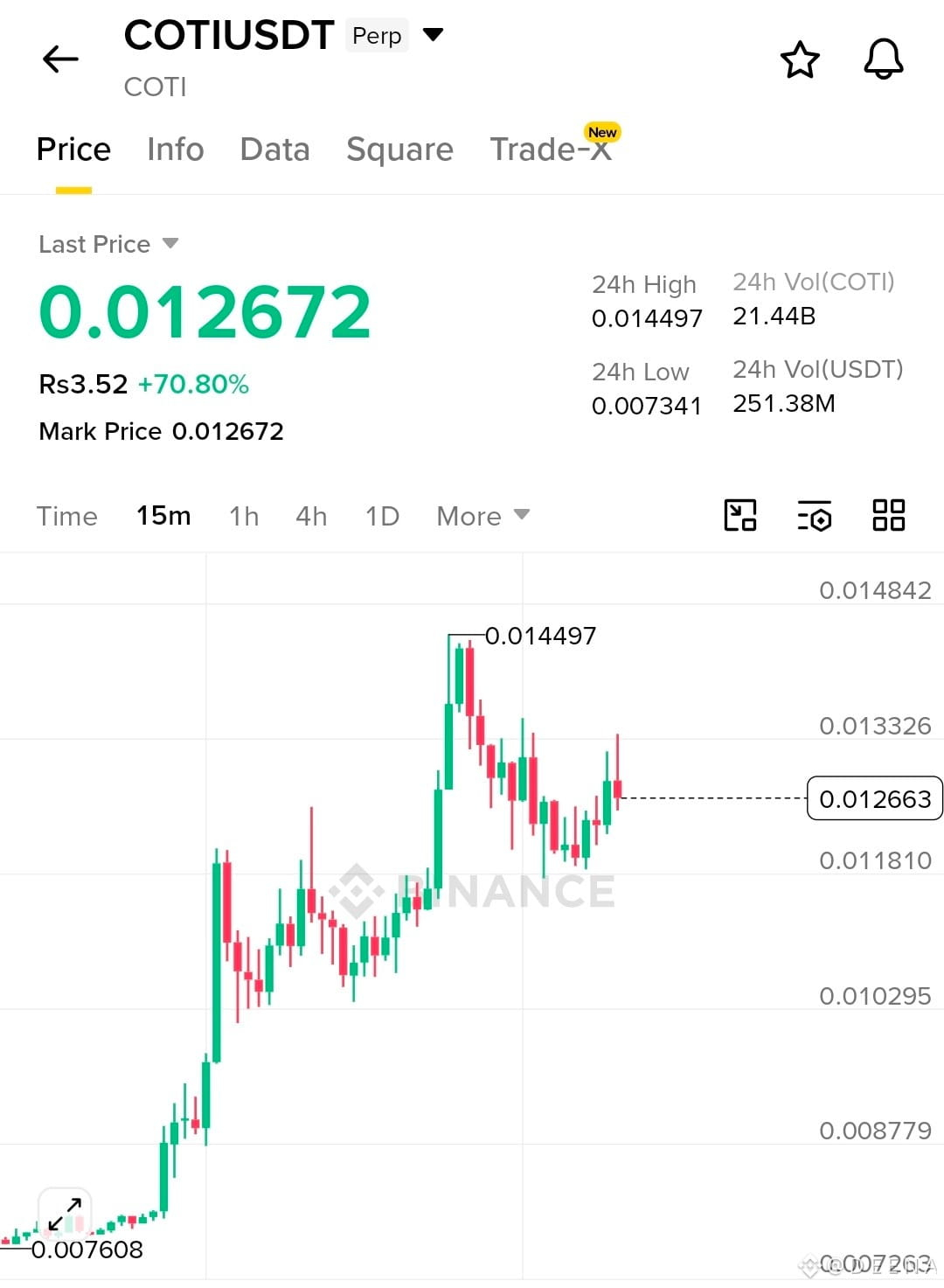
🚀 $COTI EST EN FEU en ce moment !
$COTI /USDT Perp est en hausse de +70,80 % sur 24 h, se négociant à 0,012672 $
📊 Plus haut sur 24 h : 0,014497 $
📉 Plus bas sur 24 h : 0,007341 $
💰 Volume sur 24 h : 21,44 Md COTI (251,38 M $)
De 0,007608 à un plus haut de 0,014497 — c’est presque un doublement sur une seule journée. L’élan est clairement du côté des haussiers en ce moment 🔥
Une volatilité aussi élevée signifie une grande opportunité — et un grand risque. Tradez toujours avec une gestion des risques adaptée.
Allons-y — trade maintenant $COTI
{spot}(COTIUSDT)
🚀 $COTI EST EN FEU en ce moment !
$COTI /USDT Perp est en hausse de +70,80 % sur 24 h, se négociant à 0,012672 $
📊 Plus haut sur 24 h : 0,014497 $
📉 Plus bas sur 24 h : 0,007341 $
💰 Volume sur 24 h : 21,44 Md COTI (251,38 M $)
De 0,007608 à un plus haut de 0,014497 — c’est presque un doublement sur une seule journée. L’élan est clairement du côté des haussiers en ce moment 🔥
Une volatilité aussi élevée signifie une grande opportunité — et un grand risque. Tradez toujours avec une gestion des risques adaptée.
Allons-y — trade maintenant $COTI
$COTI /USDT Perp est en hausse de +70,80 % sur 24 h, se négociant à 0,012672 $
📊 Plus haut sur 24 h : 0,014497 $
📉 Plus bas sur 24 h : 0,007341 $
💰 Volume sur 24 h : 21,44 Md COTI (251,38 M $)
De 0,007608 à un plus haut de 0,014497 — c’est presque un doublement sur une seule journée. L’élan est clairement du côté des haussiers en ce moment 🔥
Une volatilité aussi élevée signifie une grande opportunité — et un grand risque. Tradez toujours avec une gestion des risques adaptée.
Allons-y — trade maintenant $COTI
127
·
--
Haussier
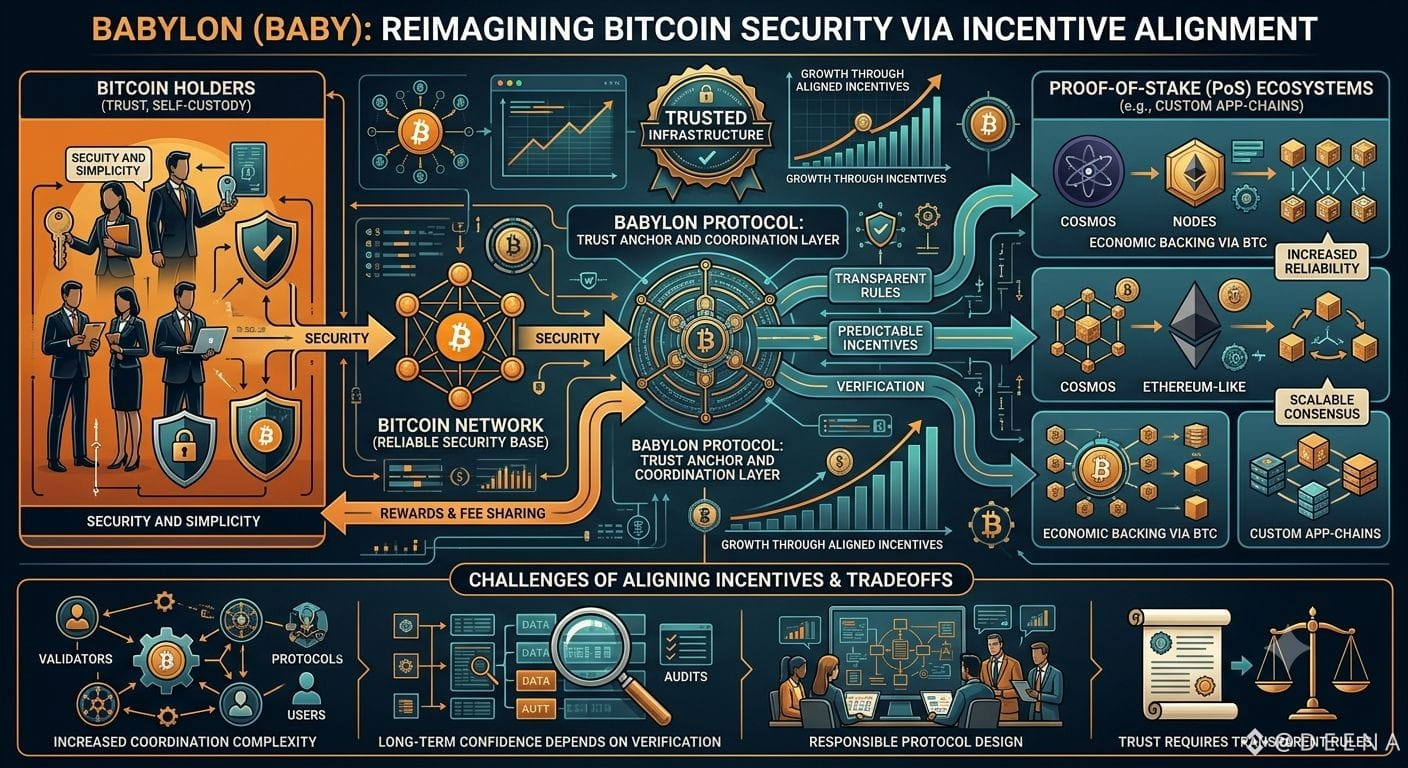
Une chose qui ressort à mes yeux à propos de Babylon ($BABY ), c’est que ce n’est pas vraiment une tentative de changer Bitcoin lui-même. Au lieu de cela, Babylon explore comment la sécurité existante de Bitcoin peut soutenir des écosystèmes Proof-of-Stake tout en permettant aux détenteurs de BTC de rester maîtres de leurs actifs. Cela ressemble à une conversation différente de l’angle habituel, centré sur les récompenses de staking ou l’efficacité du capital.
Ce qui rend Babylon intéressant, c’est le défi d’aligner les incitations entre des participants très différents. Les détenteurs de Bitcoin veulent de la sécurité et de la simplicité, tandis que les réseaux PoS ont besoin d’un soutien économique fiable. Réunir ces intérêts demande plus qu’une technologie solide. Cela dépend de règles transparentes, d’incitations prévisibles et d’un système que les gens continuent à juger digne de confiance bien après que l’enthousiasme initial se soit dissipé.
Je pense aussi qu’il existe un compromis important dont on parle trop peu. À mesure que Bitcoin devient partie prenante de la sécurisation d’autres réseaux, la coordination entre les utilisateurs, les validateurs et les protocoles devient naturellement plus complexe. La self-custody résout un problème, mais la confiance à long terme dépend encore de la vérification, d’incitations claires et d’une conception de protocole responsable.
C’est pourquoi je continue à observer Babylon comme un projet d’infrastructure plutôt que comme un récit de marché. S’il peut maintenir la confiance tout en élargissant le rôle de Bitcoin au-delà de sa propre chaîne, il pourrait montrer que des infrastructures blockchain durables se construisent grâce à l’alignement des incitations, et pas seulement par l’innovation technique. La vraie question est de savoir si ces incitations resteront solides à mesure que l’écosystème grandit.
#baby @babylonlabs_io $BABY
Une chose qui ressort à mes yeux à propos de Babylon ($BABY ), c’est que ce n’est pas vraiment une tentative de changer Bitcoin lui-même. Au lieu de cela, Babylon explore comment la sécurité existante de Bitcoin peut soutenir des écosystèmes Proof-of-Stake tout en permettant aux détenteurs de BTC de rester maîtres de leurs actifs. Cela ressemble à une conversation différente de l’angle habituel, centré sur les récompenses de staking ou l’efficacité du capital.
Ce qui rend Babylon intéressant, c’est le défi d’aligner les incitations entre des participants très différents. Les détenteurs de Bitcoin veulent de la sécurité et de la simplicité, tandis que les réseaux PoS ont besoin d’un soutien économique fiable. Réunir ces intérêts demande plus qu’une technologie solide. Cela dépend de règles transparentes, d’incitations prévisibles et d’un système que les gens continuent à juger digne de confiance bien après que l’enthousiasme initial se soit dissipé.
Je pense aussi qu’il existe un compromis important dont on parle trop peu. À mesure que Bitcoin devient partie prenante de la sécurisation d’autres réseaux, la coordination entre les utilisateurs, les validateurs et les protocoles devient naturellement plus complexe. La self-custody résout un problème, mais la confiance à long terme dépend encore de la vérification, d’incitations claires et d’une conception de protocole responsable.
C’est pourquoi je continue à observer Babylon comme un projet d’infrastructure plutôt que comme un récit de marché. S’il peut maintenir la confiance tout en élargissant le rôle de Bitcoin au-delà de sa propre chaîne, il pourrait montrer que des infrastructures blockchain durables se construisent grâce à l’alignement des incitations, et pas seulement par l’innovation technique. La vraie question est de savoir si ces incitations resteront solides à mesure que l’écosystème grandit.
#baby @BabylonLabs_io $BABY
Ce qui rend Babylon intéressant, c’est le défi d’aligner les incitations entre des participants très différents. Les détenteurs de Bitcoin veulent de la sécurité et de la simplicité, tandis que les réseaux PoS ont besoin d’un soutien économique fiable. Réunir ces intérêts demande plus qu’une technologie solide. Cela dépend de règles transparentes, d’incitations prévisibles et d’un système que les gens continuent à juger digne de confiance bien après que l’enthousiasme initial se soit dissipé.
Je pense aussi qu’il existe un compromis important dont on parle trop peu. À mesure que Bitcoin devient partie prenante de la sécurisation d’autres réseaux, la coordination entre les utilisateurs, les validateurs et les protocoles devient naturellement plus complexe. La self-custody résout un problème, mais la confiance à long terme dépend encore de la vérification, d’incitations claires et d’une conception de protocole responsable.
C’est pourquoi je continue à observer Babylon comme un projet d’infrastructure plutôt que comme un récit de marché. S’il peut maintenir la confiance tout en élargissant le rôle de Bitcoin au-delà de sa propre chaîne, il pourrait montrer que des infrastructures blockchain durables se construisent grâce à l’alignement des incitations, et pas seulement par l’innovation technique. La vraie question est de savoir si ces incitations resteront solides à mesure que l’écosystème grandit.
#baby @BabylonLabs_io $BABY
3
2
115
·
--
Haussier
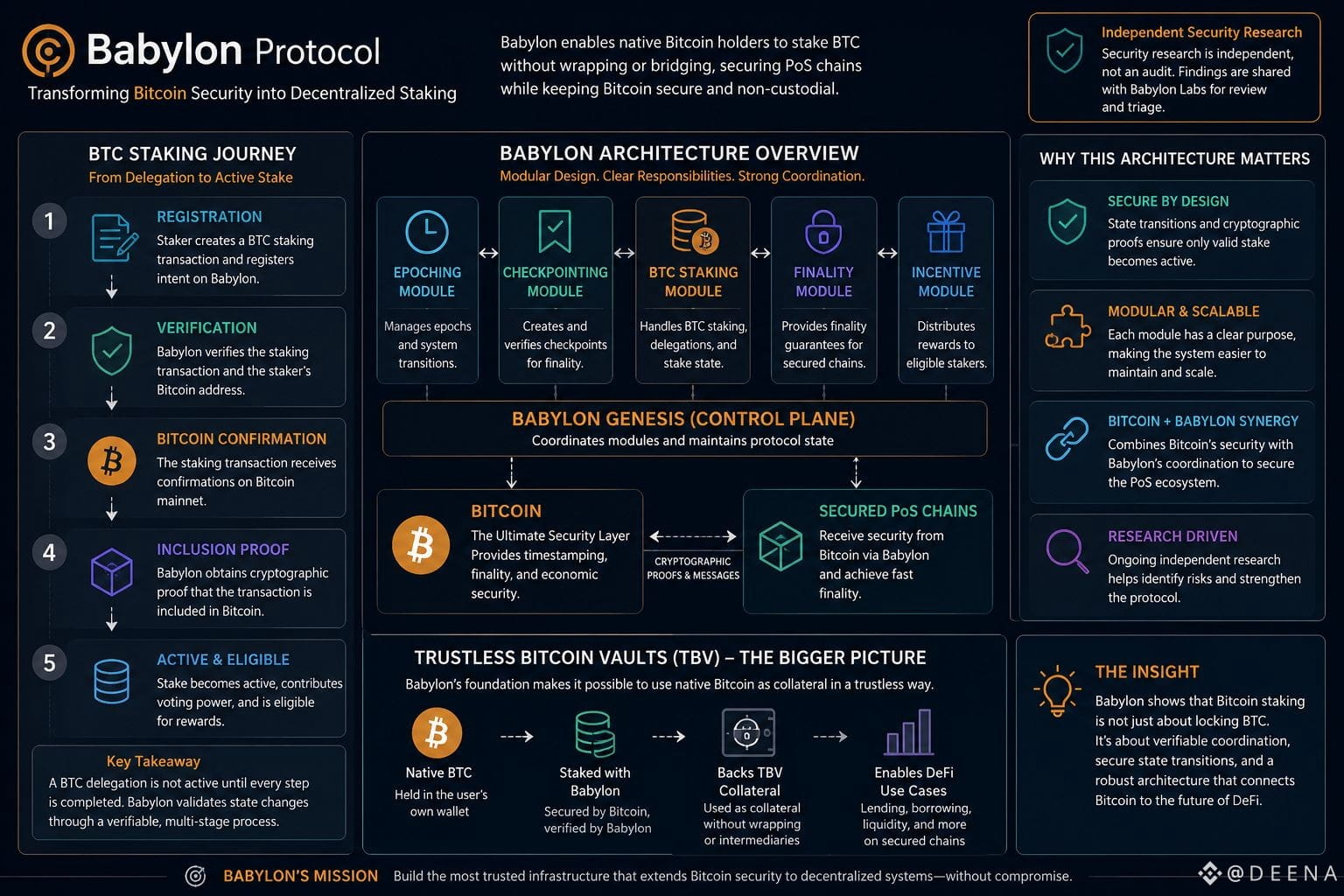
En creusant dans Babylon, j’ai réalisé que je pensais au staking de Bitcoin d’une manière beaucoup plus simple que ne le fait réellement le protocole. Ce qui m’a marqué n’était pas un indicateur phare ni une affirmation audacieuse : c’était la façon dont Babylon traite chaque événement de staking comme une suite de changements d’état vérifiés, au lieu de supposer que tout est déjà complet dès qu’une transaction est créée.
Ce qui a attiré mon attention, c’est le parcours d’une délégation BTC avant qu’elle ne devienne active. Elle passe par l’enregistrement, la vérification, les confirmations Bitcoin, puis une preuve d’inclusion avant de pouvoir contribuer à la puissance de vote ou obtenir des récompenses. Cela peut sembler être un détail technique, mais je pense que c’est l’une des parties les plus importantes de la conception, car cela montre l’importance que Babylon accorde à la vérification plutôt qu’aux hypothèses.
L’idée qui est restée avec moi, c’est que Babylon ne construit pas seulement une manière de staker du Bitcoin. Elle construit la couche de coordination qui rend le staking de Bitcoin fiable entre différents composants du protocole. En observant l’architecture, j’ai mieux compris pourquoi des modules comme l’Epoching, le Checkpointing, le BTC Staking et la Finality sont séparés plutôt que regroupés.
Les discussions crypto se concentrent souvent sur le potentiel à venir, mais je trouve que l’histoire la plus intéressante, c’est ce qu’un protocole prouve déjà aujourd’hui. Alors que Babylon continue d’évoluer, la participation vérifiée deviendra-t-elle la métrique la plus importante, plutôt que la seule question de la quantité de BTC déposée ?
#baby @babylonlabs_io $BABY
En creusant dans Babylon, j’ai réalisé que je pensais au staking de Bitcoin d’une manière beaucoup plus simple que ne le fait réellement le protocole. Ce qui m’a marqué n’était pas un indicateur phare ni une affirmation audacieuse : c’était la façon dont Babylon traite chaque événement de staking comme une suite de changements d’état vérifiés, au lieu de supposer que tout est déjà complet dès qu’une transaction est créée.
Ce qui a attiré mon attention, c’est le parcours d’une délégation BTC avant qu’elle ne devienne active. Elle passe par l’enregistrement, la vérification, les confirmations Bitcoin, puis une preuve d’inclusion avant de pouvoir contribuer à la puissance de vote ou obtenir des récompenses. Cela peut sembler être un détail technique, mais je pense que c’est l’une des parties les plus importantes de la conception, car cela montre l’importance que Babylon accorde à la vérification plutôt qu’aux hypothèses.
L’idée qui est restée avec moi, c’est que Babylon ne construit pas seulement une manière de staker du Bitcoin. Elle construit la couche de coordination qui rend le staking de Bitcoin fiable entre différents composants du protocole. En observant l’architecture, j’ai mieux compris pourquoi des modules comme l’Epoching, le Checkpointing, le BTC Staking et la Finality sont séparés plutôt que regroupés.
Les discussions crypto se concentrent souvent sur le potentiel à venir, mais je trouve que l’histoire la plus intéressante, c’est ce qu’un protocole prouve déjà aujourd’hui. Alors que Babylon continue d’évoluer, la participation vérifiée deviendra-t-elle la métrique la plus importante, plutôt que la seule question de la quantité de BTC déposée ?
#baby @BabylonLabs_io $BABY
Ce qui a attiré mon attention, c’est le parcours d’une délégation BTC avant qu’elle ne devienne active. Elle passe par l’enregistrement, la vérification, les confirmations Bitcoin, puis une preuve d’inclusion avant de pouvoir contribuer à la puissance de vote ou obtenir des récompenses. Cela peut sembler être un détail technique, mais je pense que c’est l’une des parties les plus importantes de la conception, car cela montre l’importance que Babylon accorde à la vérification plutôt qu’aux hypothèses.
L’idée qui est restée avec moi, c’est que Babylon ne construit pas seulement une manière de staker du Bitcoin. Elle construit la couche de coordination qui rend le staking de Bitcoin fiable entre différents composants du protocole. En observant l’architecture, j’ai mieux compris pourquoi des modules comme l’Epoching, le Checkpointing, le BTC Staking et la Finality sont séparés plutôt que regroupés.
Les discussions crypto se concentrent souvent sur le potentiel à venir, mais je trouve que l’histoire la plus intéressante, c’est ce qu’un protocole prouve déjà aujourd’hui. Alors que Babylon continue d’évoluer, la participation vérifiée deviendra-t-elle la métrique la plus importante, plutôt que la seule question de la quantité de BTC déposée ?
#baby @BabylonLabs_io $BABY
2
2
111
·
--
Baissier
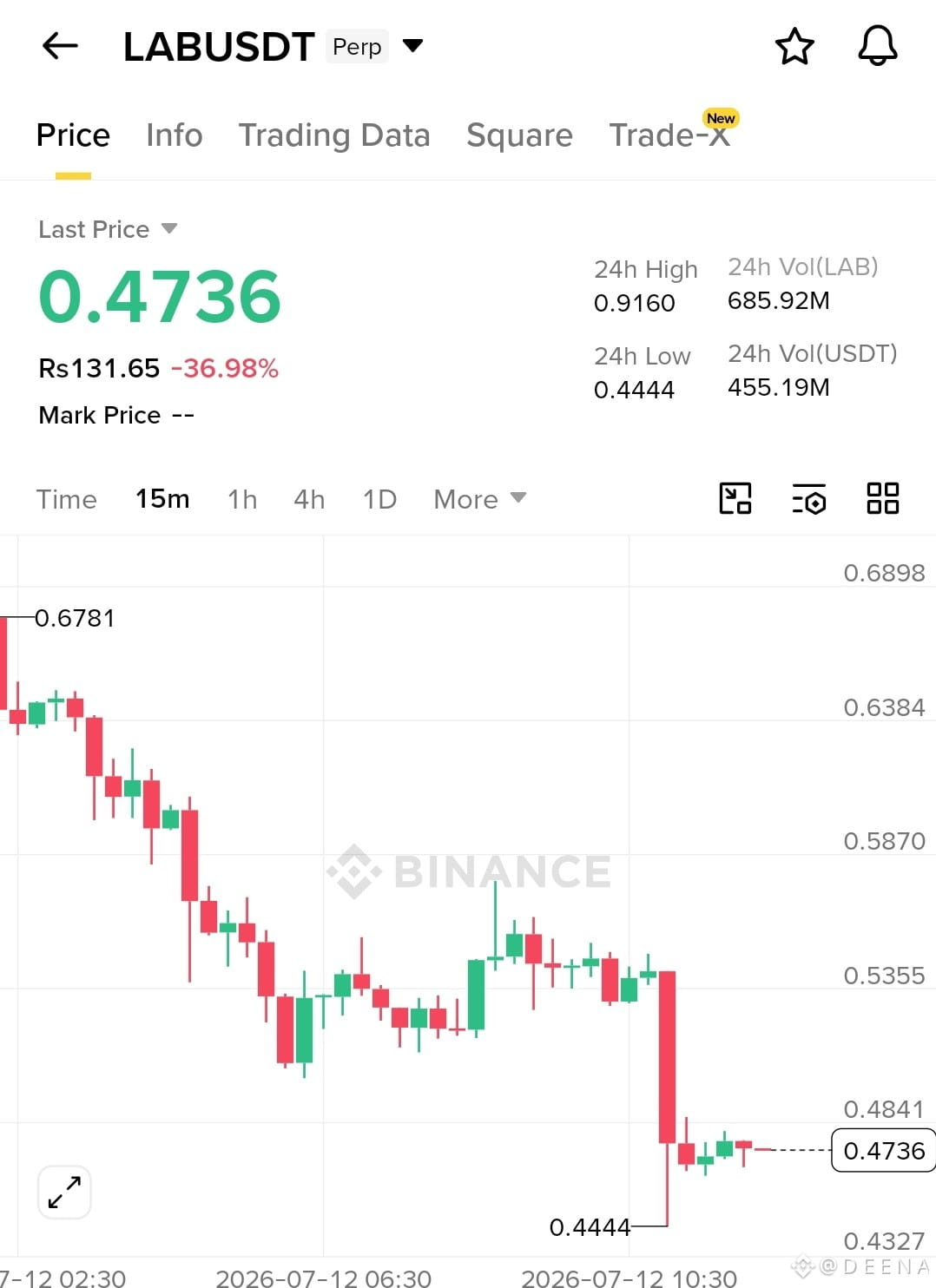
🚨 $LAB est sous pression ! Prix actuel : 0,4736 $ après une baisse de -36,98 % au cours des dernières 24 h.
📉 Plus haut sur 24 h : 0,9160 $ 📍 Plus bas sur 24 h : 0,4444 $ 💰 Volume massif : 685,92M $LAB | 455,19M $USDT
La volatilité est là, et c’est là que naissent les vraies opportunités. Restez discipliné, gérez votre risque et surveillez le support clé autour de 0,4444 $.
À nous ! Tradez maintenant $LAB 🚀📈
{future}(LABUSDT)
#BitcoinPlansECashHardFork
#SpaceXAnthropicOpenAIIPOsMayTopVCExitsSince2000
#MorganStanleyAdds1000BTC
#GOPSeeksSenateVoteOnCLARITYActWeekOfJuly20
#BPISeeksToInterveneInNoahDoeCase
🚨 $LAB est sous pression ! Prix actuel : 0,4736 $ après une baisse de -36,98 % au cours des dernières 24 h.
📉 Plus haut sur 24 h : 0,9160 $ 📍 Plus bas sur 24 h : 0,4444 $ 💰 Volume massif : 685,92M $LAB | 455,19M $USDT
La volatilité est là, et c’est là que naissent les vraies opportunités. Restez discipliné, gérez votre risque et surveillez le support clé autour de 0,4444 $.
À nous ! Tradez maintenant $LAB 🚀📈
#BitcoinPlansECashHardFork
#SpaceXAnthropicOpenAIIPOsMayTopVCExitsSince2000
#MorganStanleyAdds1000BTC
#GOPSeeksSenateVoteOnCLARITYActWeekOfJuly20
#BPISeeksToInterveneInNoahDoeCase
📉 Plus haut sur 24 h : 0,9160 $ 📍 Plus bas sur 24 h : 0,4444 $ 💰 Volume massif : 685,92M $LAB | 455,19M $USDT
La volatilité est là, et c’est là que naissent les vraies opportunités. Restez discipliné, gérez votre risque et surveillez le support clé autour de 0,4444 $.
À nous ! Tradez maintenant $LAB 🚀📈
#BitcoinPlansECashHardFork
#SpaceXAnthropicOpenAIIPOsMayTopVCExitsSince2000
#MorganStanleyAdds1000BTC
#GOPSeeksSenateVoteOnCLARITYActWeekOfJuly20
#BPISeeksToInterveneInNoahDoeCase
1
213
·
--
Légende de trading palpitante :
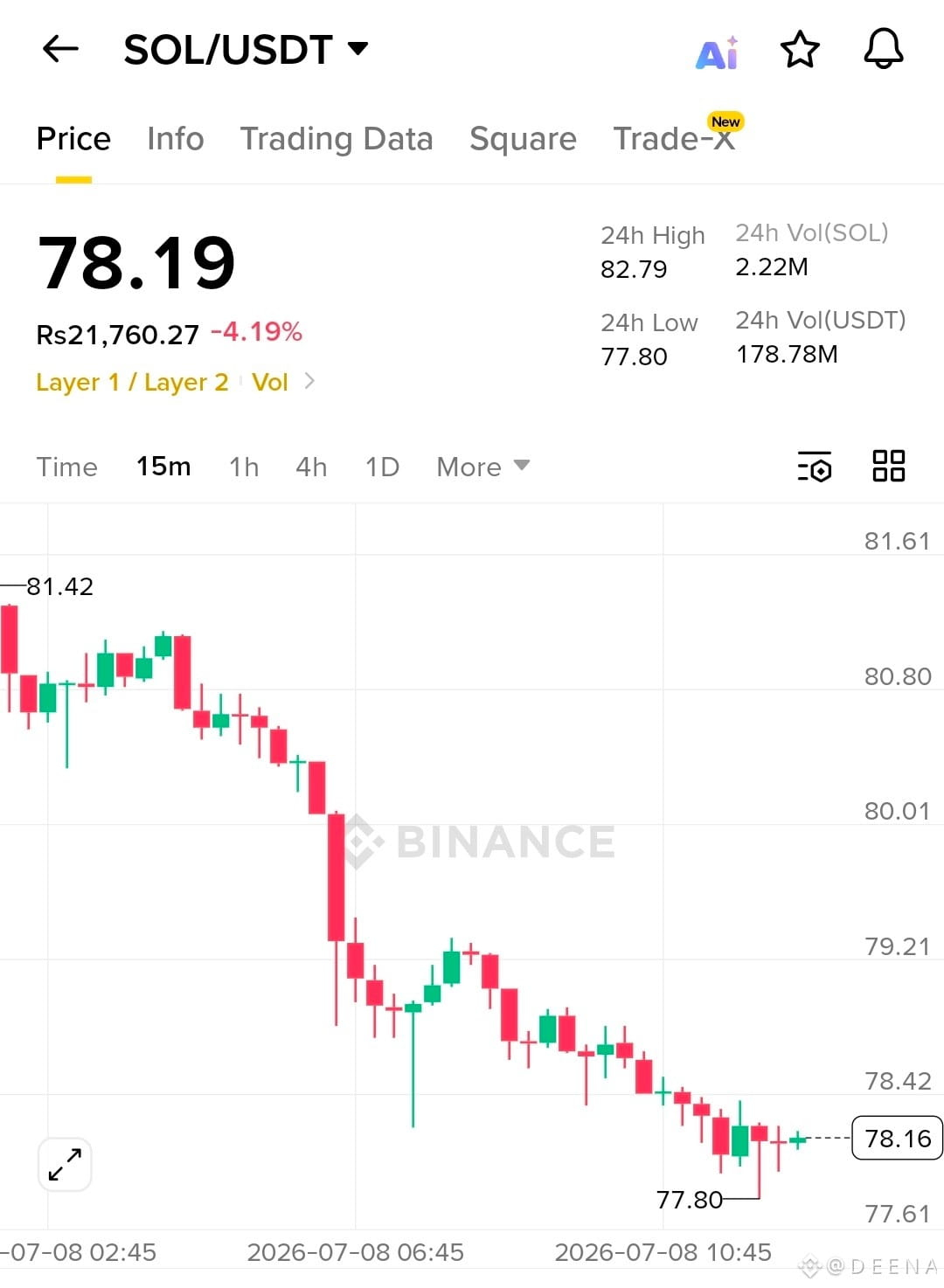
⚡ Mise à jour SOL/USDT ⚡
🔻 Les ours restent aux commandes.
📉 Prix : 78,19 $
🎯 Support clé : 77,80 $
🚀 Un rebond depuis le support pourrait déclencher un redressement à court terme.
❌ Si 77,80 $ casse, attendez-vous à une nouvelle baisse.
Trade intelligemment, gérez votre risque et ne JAMAIS FOMO. 💯
#SOL #Solana #Crypto #Binance #Trading #PriceAction #CryptoTrading #TechnicalAnalysis #BullOrBear
Légende de trading palpitante :
⚡ Mise à jour SOL/USDT ⚡
🔻 Les ours restent aux commandes.
📉 Prix : 78,19 $
🎯 Support clé : 77,80 $
🚀 Un rebond depuis le support pourrait déclencher un redressement à court terme.
❌ Si 77,80 $ casse, attendez-vous à une nouvelle baisse.
Trade intelligemment, gérez votre risque et ne JAMAIS FOMO. 💯
#SOL #Solana #Crypto #Binance #Trading #PriceAction #CryptoTrading #TechnicalAnalysis #BullOrBear
⚡ Mise à jour SOL/USDT ⚡
🔻 Les ours restent aux commandes.
📉 Prix : 78,19 $
🎯 Support clé : 77,80 $
🚀 Un rebond depuis le support pourrait déclencher un redressement à court terme.
❌ Si 77,80 $ casse, attendez-vous à une nouvelle baisse.
Trade intelligemment, gérez votre risque et ne JAMAIS FOMO. 💯
#SOL #Solana #Crypto #Binance #Trading #PriceAction #CryptoTrading #TechnicalAnalysis #BullOrBear
1
110
·
--
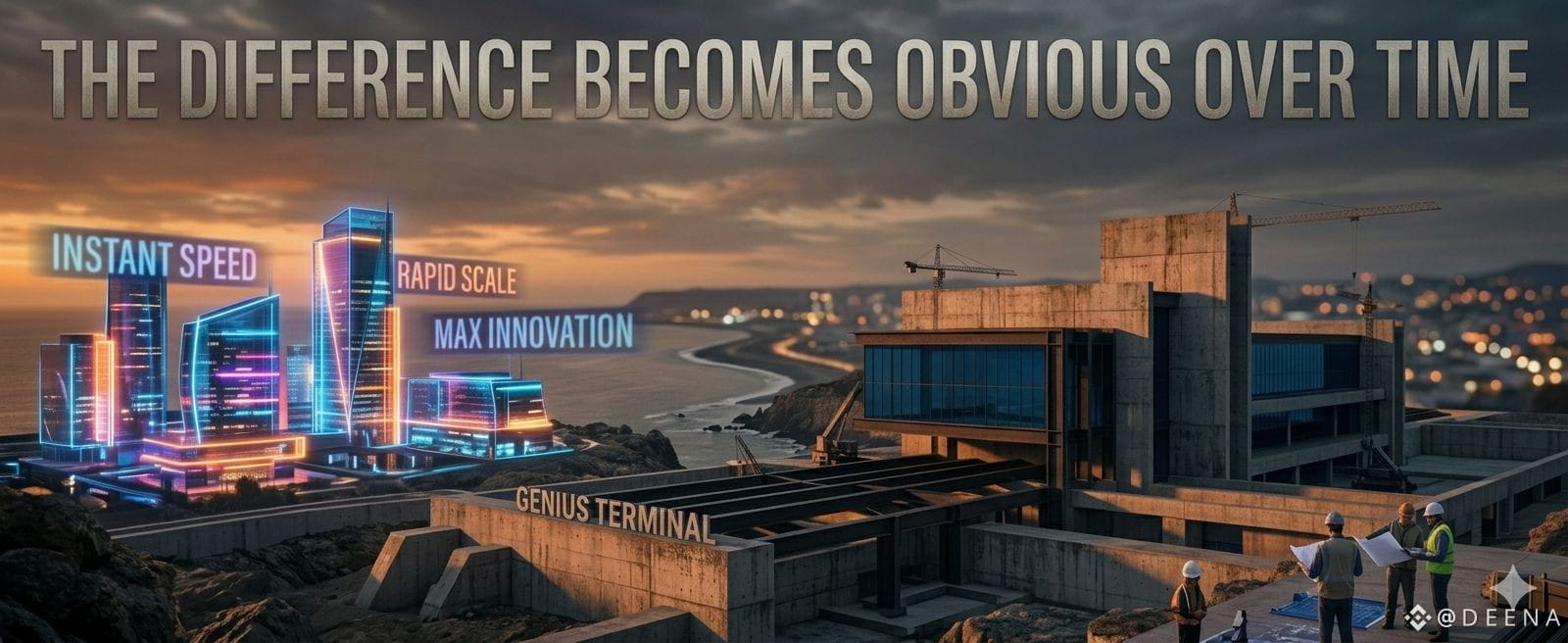
La différence devient évidente avec le temps
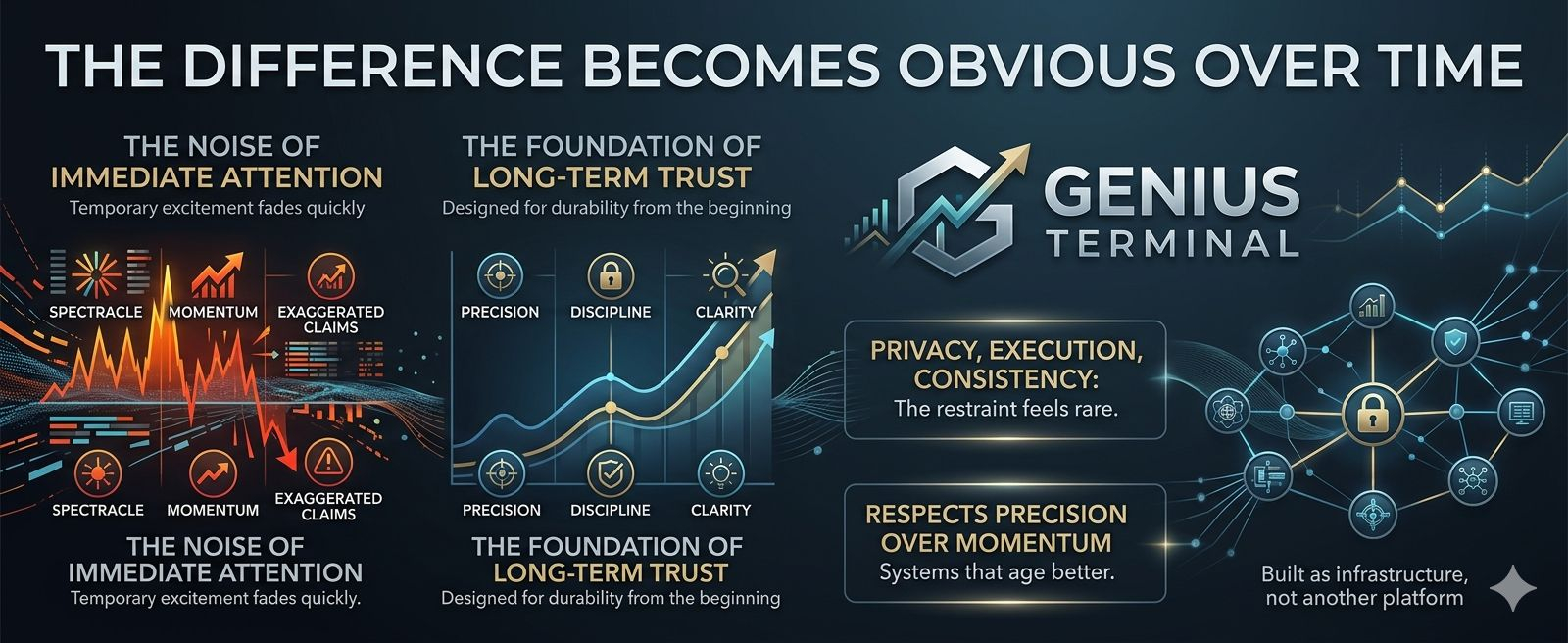
J'ai vu d'innombrables produits promettre rapidité, échelle et innovation, mais très peu laissent l'impression d'avoir été construits avec une réelle pérennité à l'esprit.
Genius Terminal m'a immédiatement semblé différent.
Non pas parce qu'il essaie de dominer l'attention, mais en raison de la façon dont toute l'expérience est contrôlée et intentionnelle. Tout semble structuré avec clarté. Pas de complexité inutile. Pas de positionnement exagéré. Juste une forte compréhension de ce à quoi devrait ressembler une infrastructure à long terme lorsque la discipline guide le processus.
Ce qui se démarque le plus, c'est l'équilibre entre la vie privée, l'exécution et la cohérence. Dans un espace encombré de bruit, ce genre de retenue semble rare. Le produit ne compte pas sur un spectacle constant pour prouver sa pertinence. Sa direction parle déjà à travers la qualité de la fondation en cours de construction.
Je respecte les projets qui comprennent la valeur de la précision plutôt que de l'élan. Les systèmes construits de cette manière vieillissent généralement mieux car ils sont conçus pour la durabilité dès le départ, et non pour une excitation temporaire.
Plus j'observe Genius Terminal, plus il semble moins être une autre plateforme et plus comme une infrastructure se positionnant discrètement pour une importance à long terme.
Certains produits exigent immédiatement de l'attention.
Les plus forts gagnent la confiance avec le temps.
#genius @GeniusOfficial $GENIUS
{spot}(GENIUSUSDT)
$STRAX
$GUN
La différence devient évidente avec le temps
J'ai vu d'innombrables produits promettre rapidité, échelle et innovation, mais très peu laissent l'impression d'avoir été construits avec une réelle pérennité à l'esprit.
Genius Terminal m'a immédiatement semblé différent.
Non pas parce qu'il essaie de dominer l'attention, mais en raison de la façon dont toute l'expérience est contrôlée et intentionnelle. Tout semble structuré avec clarté. Pas de complexité inutile. Pas de positionnement exagéré. Juste une forte compréhension de ce à quoi devrait ressembler une infrastructure à long terme lorsque la discipline guide le processus.
Ce qui se démarque le plus, c'est l'équilibre entre la vie privée, l'exécution et la cohérence. Dans un espace encombré de bruit, ce genre de retenue semble rare. Le produit ne compte pas sur un spectacle constant pour prouver sa pertinence. Sa direction parle déjà à travers la qualité de la fondation en cours de construction.
Je respecte les projets qui comprennent la valeur de la précision plutôt que de l'élan. Les systèmes construits de cette manière vieillissent généralement mieux car ils sont conçus pour la durabilité dès le départ, et non pour une excitation temporaire.
Plus j'observe Genius Terminal, plus il semble moins être une autre plateforme et plus comme une infrastructure se positionnant discrètement pour une importance à long terme.
Certains produits exigent immédiatement de l'attention.
Les plus forts gagnent la confiance avec le temps.
#genius @GeniusOfficial $GENIUS
$STRAX
$GUN
J'ai vu d'innombrables produits promettre rapidité, échelle et innovation, mais très peu laissent l'impression d'avoir été construits avec une réelle pérennité à l'esprit.
Genius Terminal m'a immédiatement semblé différent.
Non pas parce qu'il essaie de dominer l'attention, mais en raison de la façon dont toute l'expérience est contrôlée et intentionnelle. Tout semble structuré avec clarté. Pas de complexité inutile. Pas de positionnement exagéré. Juste une forte compréhension de ce à quoi devrait ressembler une infrastructure à long terme lorsque la discipline guide le processus.
Ce qui se démarque le plus, c'est l'équilibre entre la vie privée, l'exécution et la cohérence. Dans un espace encombré de bruit, ce genre de retenue semble rare. Le produit ne compte pas sur un spectacle constant pour prouver sa pertinence. Sa direction parle déjà à travers la qualité de la fondation en cours de construction.
Je respecte les projets qui comprennent la valeur de la précision plutôt que de l'élan. Les systèmes construits de cette manière vieillissent généralement mieux car ils sont conçus pour la durabilité dès le départ, et non pour une excitation temporaire.
Plus j'observe Genius Terminal, plus il semble moins être une autre plateforme et plus comme une infrastructure se positionnant discrètement pour une importance à long terme.
Certains produits exigent immédiatement de l'attention.
Les plus forts gagnent la confiance avec le temps.
#genius @GeniusOfficial $GENIUS
$STRAX
$GUN
1
2
109
·
--
Je pensais que Genius n'était qu'un autre terminal de trading. Puis j'ai regardé de plus près.
Quand je suis tombé sur Genius, je l'ai mis dans la même catégorie que d'innombrables autres produits crypto.
Un terminal de trading.
Un endroit pour regarder des velas, exécuter des trades, gérer des positions, et passer à autre chose.
Mais plus je passais de temps à regarder ce que Genius est réellement en train de construire, plus je réalisais que cette description manquait le point.
Ce qui m'a frappé, ce n'était pas l'expérience de trading elle-même.
C'était tout ce qui l'entoure.
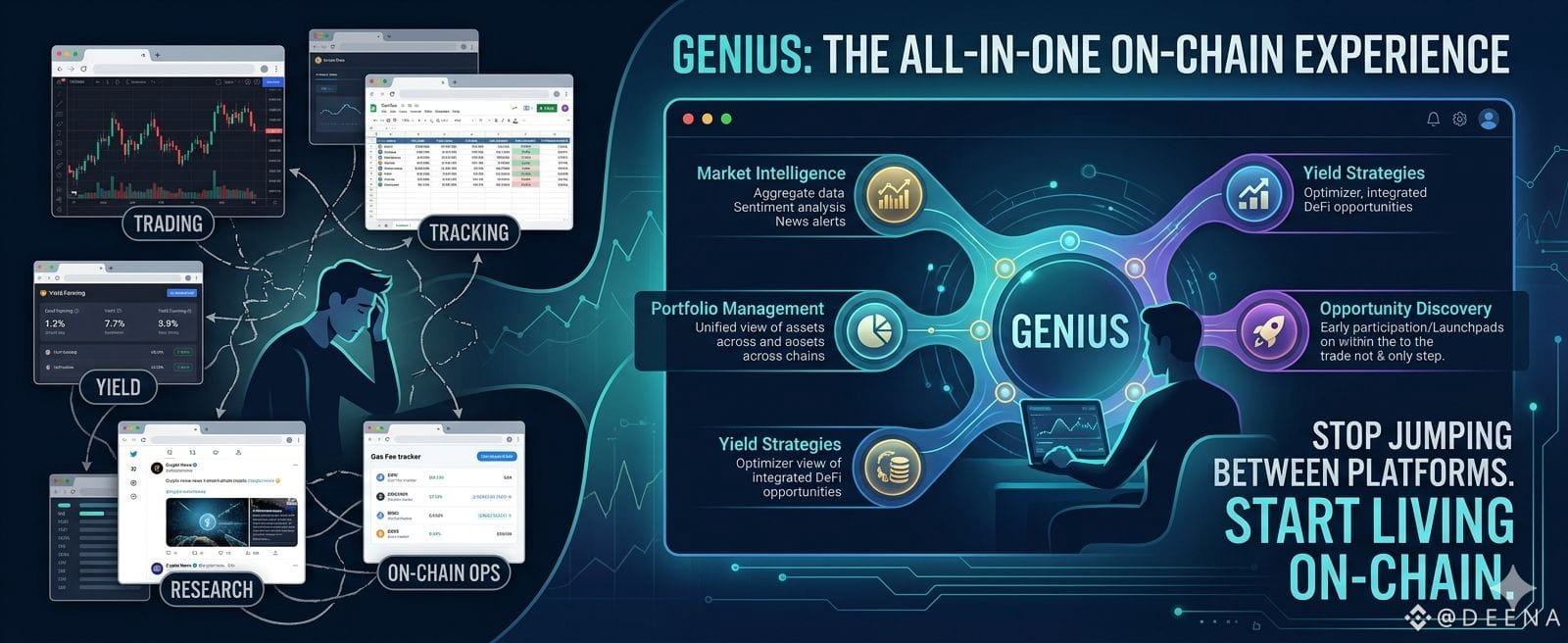
J'ai réalisé que la plupart de mon temps en crypto n'est pas passé à appuyer sur le bouton d'achat ou de vente. C'est passé à chercher des opportunités, suivre des portefeuilles, surveiller les marchés, rechercher de nouvelles narrations, explorer des stratégies de rendement, et essayer de rester en avance sur le changement constant.
Le trade est souvent la dernière étape.
Le vrai défi est de gérer tout ce qui y mène.
C'est pourquoi je pense que Genius aborde un problème beaucoup plus grand.
Au lieu de traiter le trading, la gestion de portefeuille, la découverte de marché, les opportunités de rendement, et la participation précoce comme des expériences séparées, je vois une plateforme qui tente de les rassembler sous un même toit.
Pour moi, c'est bien plus intéressant que d'ajouter une autre fonctionnalité de trading.
La crypto ne souffre pas d'un manque d'outils.
Elle souffre de fragmentation.
Je me retrouve constamment à sauter entre les plateformes juste pour maintenir le contexte.
Ce que je vois dans Genius, c'est une tentative de réduire cette friction.
Et si ça réussit, les gens pourraient finalement cesser de le considérer comme un terminal de trading à part entière.
Ils pourraient commencer à le voir comme l'endroit où vit toute leur expérience on-chain.
$STG
$PORTAL
#genius @GeniusOfficial $GENIUS
{spot}(GENIUSUSDT)
Je pensais que Genius n'était qu'un autre terminal de trading. Puis j'ai regardé de plus près.
Quand je suis tombé sur Genius, je l'ai mis dans la même catégorie que d'innombrables autres produits crypto.
Un terminal de trading.
Un endroit pour regarder des velas, exécuter des trades, gérer des positions, et passer à autre chose.
Mais plus je passais de temps à regarder ce que Genius est réellement en train de construire, plus je réalisais que cette description manquait le point.
Ce qui m'a frappé, ce n'était pas l'expérience de trading elle-même.
C'était tout ce qui l'entoure.
J'ai réalisé que la plupart de mon temps en crypto n'est pas passé à appuyer sur le bouton d'achat ou de vente. C'est passé à chercher des opportunités, suivre des portefeuilles, surveiller les marchés, rechercher de nouvelles narrations, explorer des stratégies de rendement, et essayer de rester en avance sur le changement constant.
Le trade est souvent la dernière étape.
Le vrai défi est de gérer tout ce qui y mène.
C'est pourquoi je pense que Genius aborde un problème beaucoup plus grand.
Au lieu de traiter le trading, la gestion de portefeuille, la découverte de marché, les opportunités de rendement, et la participation précoce comme des expériences séparées, je vois une plateforme qui tente de les rassembler sous un même toit.
Pour moi, c'est bien plus intéressant que d'ajouter une autre fonctionnalité de trading.
La crypto ne souffre pas d'un manque d'outils.
Elle souffre de fragmentation.
Je me retrouve constamment à sauter entre les plateformes juste pour maintenir le contexte.
Ce que je vois dans Genius, c'est une tentative de réduire cette friction.
Et si ça réussit, les gens pourraient finalement cesser de le considérer comme un terminal de trading à part entière.
Ils pourraient commencer à le voir comme l'endroit où vit toute leur expérience on-chain.
$STG
$PORTAL
#genius @GeniusOfficial $GENIUS
Quand je suis tombé sur Genius, je l'ai mis dans la même catégorie que d'innombrables autres produits crypto.
Un terminal de trading.
Un endroit pour regarder des velas, exécuter des trades, gérer des positions, et passer à autre chose.
Mais plus je passais de temps à regarder ce que Genius est réellement en train de construire, plus je réalisais que cette description manquait le point.
Ce qui m'a frappé, ce n'était pas l'expérience de trading elle-même.
C'était tout ce qui l'entoure.
J'ai réalisé que la plupart de mon temps en crypto n'est pas passé à appuyer sur le bouton d'achat ou de vente. C'est passé à chercher des opportunités, suivre des portefeuilles, surveiller les marchés, rechercher de nouvelles narrations, explorer des stratégies de rendement, et essayer de rester en avance sur le changement constant.
Le trade est souvent la dernière étape.
Le vrai défi est de gérer tout ce qui y mène.
C'est pourquoi je pense que Genius aborde un problème beaucoup plus grand.
Au lieu de traiter le trading, la gestion de portefeuille, la découverte de marché, les opportunités de rendement, et la participation précoce comme des expériences séparées, je vois une plateforme qui tente de les rassembler sous un même toit.
Pour moi, c'est bien plus intéressant que d'ajouter une autre fonctionnalité de trading.
La crypto ne souffre pas d'un manque d'outils.
Elle souffre de fragmentation.
Je me retrouve constamment à sauter entre les plateformes juste pour maintenir le contexte.
Ce que je vois dans Genius, c'est une tentative de réduire cette friction.
Et si ça réussit, les gens pourraient finalement cesser de le considérer comme un terminal de trading à part entière.
Ils pourraient commencer à le voir comme l'endroit où vit toute leur expérience on-chain.
$STG
$PORTAL
#genius @GeniusOfficial $GENIUS
1
206
·
--
Je pense qu'OpenLedger parie sur la partie de l'IA que la plupart des modèles veulent oublier
Je pensais que la course à l'IA se terminerait avec l'intelligence elle-même. Un meilleur raisonnement, des sorties plus rapides, des systèmes multimodaux plus propres, des benchmarks plus solides. Mais dernièrement, j'ai l'impression que toute cette compétition manque de quelque chose de plus profond en dessous.
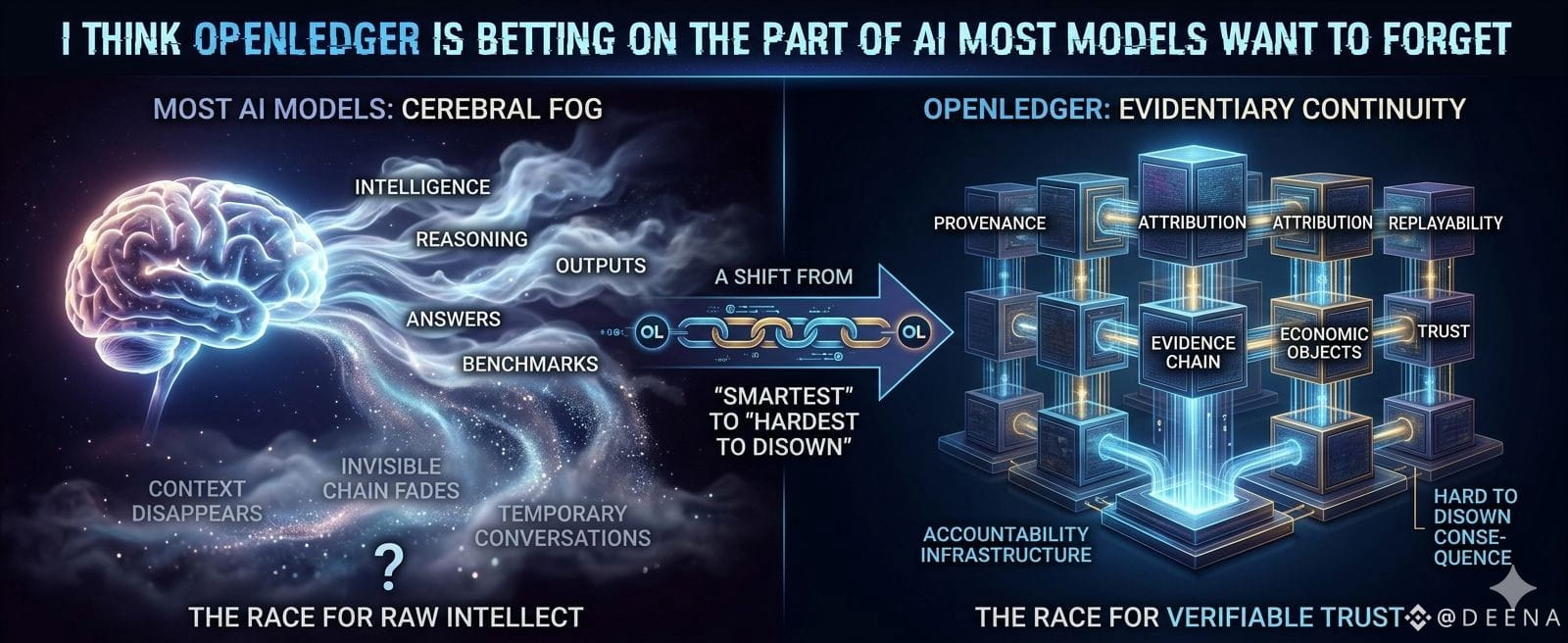
La plupart des modèles d'IA aujourd'hui sont incroyablement bons pour produire des réponses, mais très mauvais pour préserver la chaîne invisible qui a produit la réponse en premier lieu. La sortie survit. Le contexte disparaît.
Et je pense que cela devient un problème sérieux une fois que les sorties de l'IA cessent de se comporter comme des conversations temporaires et commencent à agir comme des objets économiques se déplaçant entre les systèmes.
Les moteurs de recherche les classent. Les systèmes de recommandation les amplifient. Les économies de créateurs les absorbent. D'autres modèles s'entraînent à nouveau sur eux. Les marchés réagissent à eux. Les institutions commencent lentement à leur faire confiance.
Mais presque personne ne se demande ce qui a disparu avant que la réponse ne se stabilise.
C'est pourquoi OpenLedger m'intéresse. Pas parce qu'elle essaie de rendre l'IA "plus intelligente", mais parce qu'elle semble se concentrer sur la préservation de la responsabilité après la génération. Provenance. Attribution. Rejouabilité. Continuité des preuves.
Plus j'y pense, plus j'ai l'impression que l'intelligence pourrait se commodifier plus rapidement que l'infrastructure de responsabilité.
Et peut-être que la compétition future en IA ne sera pas :
"Quel modèle semble le plus intelligent ?"
Peut-être que cela devient :
"Quel modèle est le plus difficile à renier une fois que la conséquence arrive ?"
#openledger @Openledger $OPEN
{spot}(OPENUSDT)
$HEI
$ID
Je pense qu'OpenLedger parie sur la partie de l'IA que la plupart des modèles veulent oublier
Je pensais que la course à l'IA se terminerait avec l'intelligence elle-même. Un meilleur raisonnement, des sorties plus rapides, des systèmes multimodaux plus propres, des benchmarks plus solides. Mais dernièrement, j'ai l'impression que toute cette compétition manque de quelque chose de plus profond en dessous.
La plupart des modèles d'IA aujourd'hui sont incroyablement bons pour produire des réponses, mais très mauvais pour préserver la chaîne invisible qui a produit la réponse en premier lieu. La sortie survit. Le contexte disparaît.
Et je pense que cela devient un problème sérieux une fois que les sorties de l'IA cessent de se comporter comme des conversations temporaires et commencent à agir comme des objets économiques se déplaçant entre les systèmes.
Les moteurs de recherche les classent. Les systèmes de recommandation les amplifient. Les économies de créateurs les absorbent. D'autres modèles s'entraînent à nouveau sur eux. Les marchés réagissent à eux. Les institutions commencent lentement à leur faire confiance.
Mais presque personne ne se demande ce qui a disparu avant que la réponse ne se stabilise.
C'est pourquoi OpenLedger m'intéresse. Pas parce qu'elle essaie de rendre l'IA "plus intelligente", mais parce qu'elle semble se concentrer sur la préservation de la responsabilité après la génération. Provenance. Attribution. Rejouabilité. Continuité des preuves.
Plus j'y pense, plus j'ai l'impression que l'intelligence pourrait se commodifier plus rapidement que l'infrastructure de responsabilité.
Et peut-être que la compétition future en IA ne sera pas :
"Quel modèle semble le plus intelligent ?"
Peut-être que cela devient :
"Quel modèle est le plus difficile à renier une fois que la conséquence arrive ?"
#openledger @OpenLedger $OPEN
$HEI
$ID
Je pensais que la course à l'IA se terminerait avec l'intelligence elle-même. Un meilleur raisonnement, des sorties plus rapides, des systèmes multimodaux plus propres, des benchmarks plus solides. Mais dernièrement, j'ai l'impression que toute cette compétition manque de quelque chose de plus profond en dessous.
La plupart des modèles d'IA aujourd'hui sont incroyablement bons pour produire des réponses, mais très mauvais pour préserver la chaîne invisible qui a produit la réponse en premier lieu. La sortie survit. Le contexte disparaît.
Et je pense que cela devient un problème sérieux une fois que les sorties de l'IA cessent de se comporter comme des conversations temporaires et commencent à agir comme des objets économiques se déplaçant entre les systèmes.
Les moteurs de recherche les classent. Les systèmes de recommandation les amplifient. Les économies de créateurs les absorbent. D'autres modèles s'entraînent à nouveau sur eux. Les marchés réagissent à eux. Les institutions commencent lentement à leur faire confiance.
Mais presque personne ne se demande ce qui a disparu avant que la réponse ne se stabilise.
C'est pourquoi OpenLedger m'intéresse. Pas parce qu'elle essaie de rendre l'IA "plus intelligente", mais parce qu'elle semble se concentrer sur la préservation de la responsabilité après la génération. Provenance. Attribution. Rejouabilité. Continuité des preuves.
Plus j'y pense, plus j'ai l'impression que l'intelligence pourrait se commodifier plus rapidement que l'infrastructure de responsabilité.
Et peut-être que la compétition future en IA ne sera pas :
"Quel modèle semble le plus intelligent ?"
Peut-être que cela devient :
"Quel modèle est le plus difficile à renier une fois que la conséquence arrive ?"
#openledger @OpenLedger $OPEN
$HEI
$ID
1
180
·
--
Article
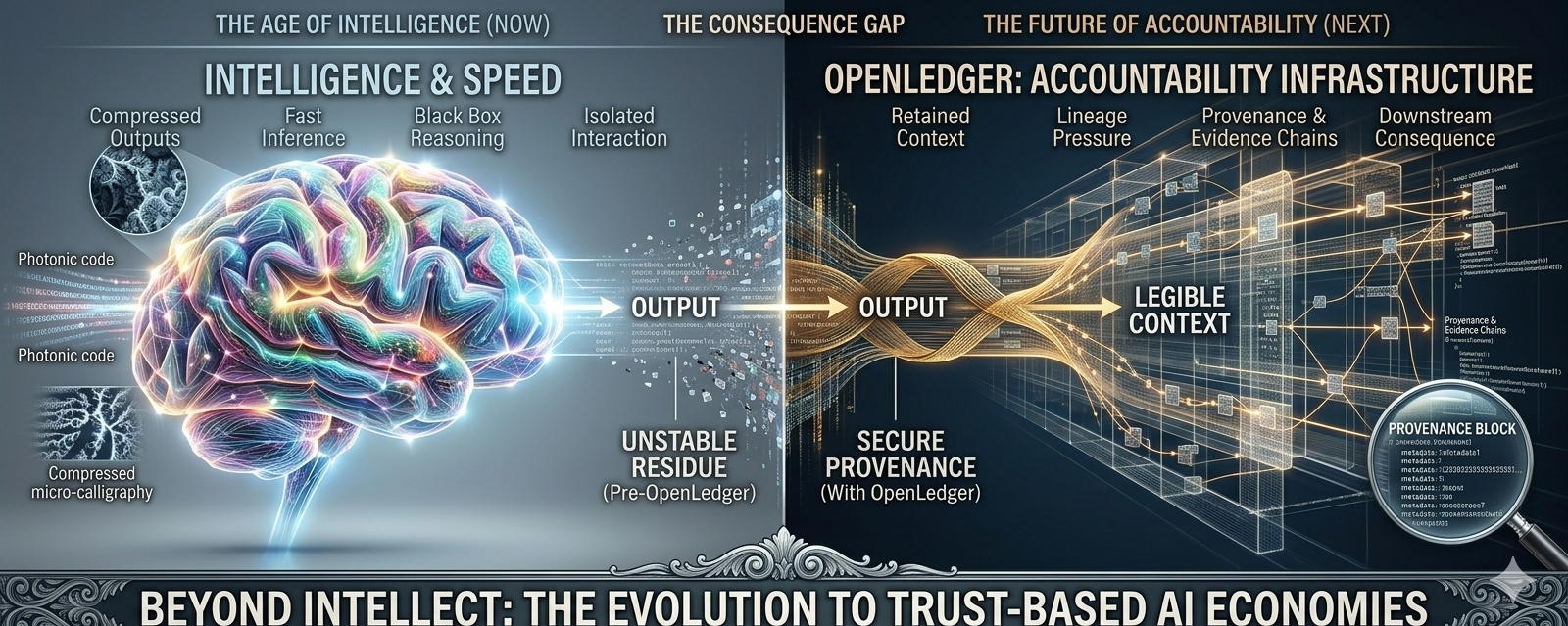
OpenLedger et l'avenir de la responsabilité de l'IAPendant longtemps, j'ai vraiment cru que la course à l'IA se résumerait finalement à une seule chose : l'intelligence. Le modèle qui raisonne le mieux gagnerait. Le modèle avec des outputs plus aigus, des conversations plus claires, une inférence plus rapide, un comportement multimodal plus fort, et des chiffres de benchmark plus élevés dominerait naturellement le marché. Cette hypothèse semblait évidente car presque chaque conversation autour de l'IA tourne encore autour de la capacité elle-même. Qui est plus intelligent. Qui est plus rapide. Quel modèle sonne plus humain. Quel système peut résoudre des tâches plus difficiles avec moins d'erreurs. Mais plus je regarde des projets comme OpenLedger, plus toute cette approche commence à me sembler incomplète. Pas complètement fausse. Juste manquant quelque chose de plus profond sous la surface.
OpenLedger et l'avenir de la responsabilité de l'IA
Pendant longtemps, j'ai vraiment cru que la course à l'IA se résumerait finalement à une seule chose : l'intelligence. Le modèle qui raisonne le mieux gagnerait. Le modèle avec des outputs plus aigus, des conversations plus claires, une inférence plus rapide, un comportement multimodal plus fort, et des chiffres de benchmark plus élevés dominerait naturellement le marché. Cette hypothèse semblait évidente car presque chaque conversation autour de l'IA tourne encore autour de la capacité elle-même. Qui est plus intelligent. Qui est plus rapide. Quel modèle sonne plus humain. Quel système peut résoudre des tâches plus difficiles avec moins d'erreurs. Mais plus je regarde des projets comme OpenLedger, plus toute cette approche commence à me sembler incomplète. Pas complètement fausse. Juste manquant quelque chose de plus profond sous la surface.
284
·
--
La différence devient évidente avec le temps
J'ai vu d'innombrables produits promettre rapidité, échelle et innovation, mais très peu laissent l'impression d'avoir été construits avec une véritable pérennité en tête.
Genius Terminal m'a immédiatement paru différent.
Non pas parce qu'il essaie de dominer l'attention, mais en raison de la manière dont toute l'expérience est contrôlée et intentionnelle. Tout apparaît structuré avec clarté. Pas de complexité inutile. Pas de positionnement exagéré. Juste une forte compréhension de ce à quoi devrait ressembler une infrastructure à long terme lorsque la discipline guide le processus.
Ce qui ressort le plus, c'est l'équilibre entre la confidentialité, l'exécution et la cohérence. Dans un espace encombré de bruit, ce genre de retenue semble rare. Le produit ne s'appuie pas sur un spectacle constant pour prouver sa pertinence. Sa direction parle déjà à travers la qualité des fondations en cours de construction.
Je respecte les projets qui comprennent la valeur de la précision par rapport à l'élan. Les systèmes construits de cette manière vieillissent généralement mieux car ils sont conçus pour la durabilité dès le départ, pas pour une excitation temporaire.
Plus j'observe Genius Terminal, plus il me semble moins être une autre plateforme et plus une infrastructure se positionnant discrètement pour une signification à long terme.
Certains produits exigent immédiatement de l'attention.
Les plus solides gagnent la confiance avec le temps.
#genius @GeniusOfficial $GENIUS
{spot}(GENIUSUSDT)
$HEI
$ID
La différence devient évidente avec le temps
J'ai vu d'innombrables produits promettre rapidité, échelle et innovation, mais très peu laissent l'impression d'avoir été construits avec une véritable pérennité en tête.
Genius Terminal m'a immédiatement paru différent.
Non pas parce qu'il essaie de dominer l'attention, mais en raison de la manière dont toute l'expérience est contrôlée et intentionnelle. Tout apparaît structuré avec clarté. Pas de complexité inutile. Pas de positionnement exagéré. Juste une forte compréhension de ce à quoi devrait ressembler une infrastructure à long terme lorsque la discipline guide le processus.
Ce qui ressort le plus, c'est l'équilibre entre la confidentialité, l'exécution et la cohérence. Dans un espace encombré de bruit, ce genre de retenue semble rare. Le produit ne s'appuie pas sur un spectacle constant pour prouver sa pertinence. Sa direction parle déjà à travers la qualité des fondations en cours de construction.
Je respecte les projets qui comprennent la valeur de la précision par rapport à l'élan. Les systèmes construits de cette manière vieillissent généralement mieux car ils sont conçus pour la durabilité dès le départ, pas pour une excitation temporaire.
Plus j'observe Genius Terminal, plus il me semble moins être une autre plateforme et plus une infrastructure se positionnant discrètement pour une signification à long terme.
Certains produits exigent immédiatement de l'attention.
Les plus solides gagnent la confiance avec le temps.
#genius @GeniusOfficial $GENIUS
$HEI
$ID
J'ai vu d'innombrables produits promettre rapidité, échelle et innovation, mais très peu laissent l'impression d'avoir été construits avec une véritable pérennité en tête.
Genius Terminal m'a immédiatement paru différent.
Non pas parce qu'il essaie de dominer l'attention, mais en raison de la manière dont toute l'expérience est contrôlée et intentionnelle. Tout apparaît structuré avec clarté. Pas de complexité inutile. Pas de positionnement exagéré. Juste une forte compréhension de ce à quoi devrait ressembler une infrastructure à long terme lorsque la discipline guide le processus.
Ce qui ressort le plus, c'est l'équilibre entre la confidentialité, l'exécution et la cohérence. Dans un espace encombré de bruit, ce genre de retenue semble rare. Le produit ne s'appuie pas sur un spectacle constant pour prouver sa pertinence. Sa direction parle déjà à travers la qualité des fondations en cours de construction.
Je respecte les projets qui comprennent la valeur de la précision par rapport à l'élan. Les systèmes construits de cette manière vieillissent généralement mieux car ils sont conçus pour la durabilité dès le départ, pas pour une excitation temporaire.
Plus j'observe Genius Terminal, plus il me semble moins être une autre plateforme et plus une infrastructure se positionnant discrètement pour une signification à long terme.
Certains produits exigent immédiatement de l'attention.
Les plus solides gagnent la confiance avec le temps.
#genius @GeniusOfficial $GENIUS
$HEI
$ID
240
·
--
Infrastructure Silencieuse
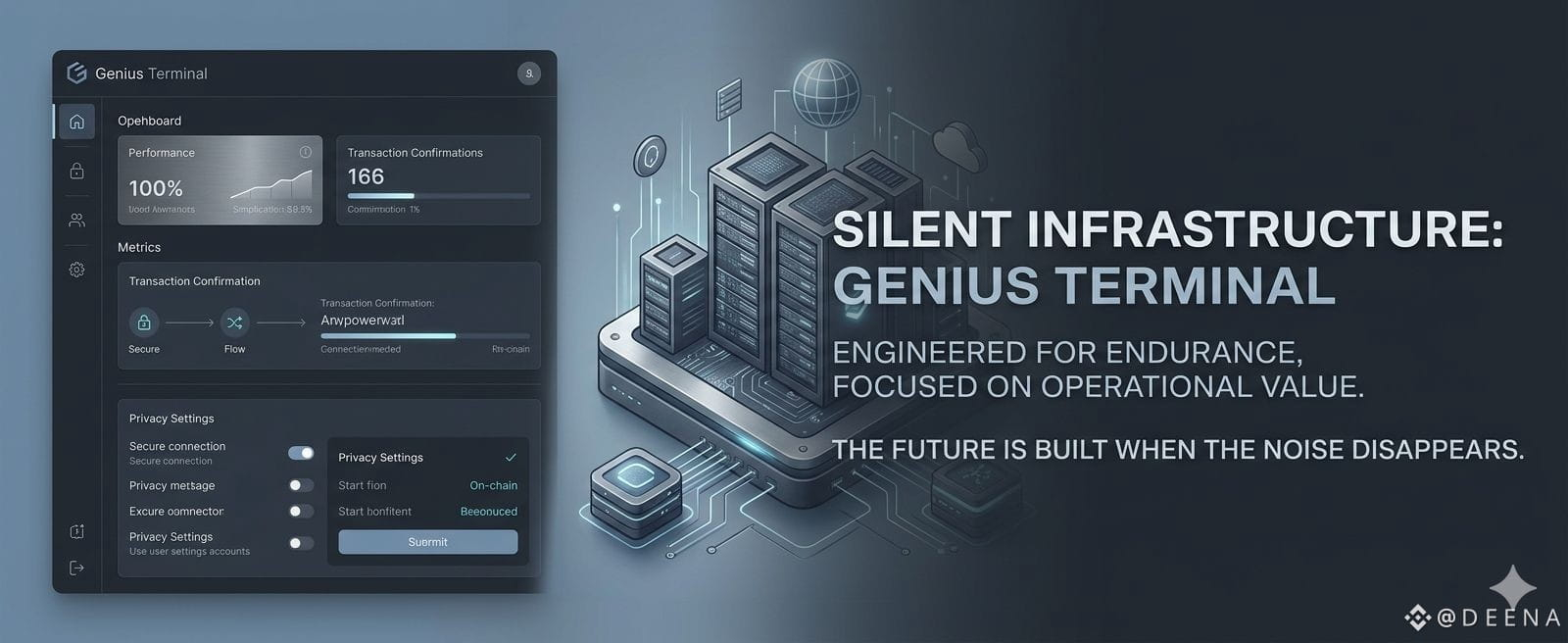
J'ai passé assez de temps autour des produits on-chain pour reconnaître la différence entre les plateformes conçues pour attirer l'attention et celles conçues pour la durabilité.
Genius Terminal m'a immédiatement donné cette seconde impression.
La première chose que j'ai remarquée, c'est la retenue. Pas de complexité inutile. Pas de bruit agressif. Pas d'effort pour forcer l'élan par le spectacle. Tout semble intentionnel, de la structure au flux d'exécution. Ça dégage une confiance qui vient généralement d'équipes plus concentrées sur la performance que sur la visibilité.
Ce qui m'a le plus frappé, c'est la manière dont la confidentialité semble intégrée dans l'expérience plutôt qu'ajoutée comme une couche narrative afterward. Ça change complètement l'atmosphère. Le terminal semble contrôlé, concentré, et conçu pour les personnes qui privilégient la précision à la réaction.
Je respecte également à quel point toute la direction semble claire. Dans un espace où de nombreux produits se battent pour une pertinence à court terme, Genius Terminal semble positionné pour une valeur opérationnelle à long terme. L'architecture suggère de la discipline. L'interface suggère de la clarté. La présence globale suggère de la maturité.
Je crois que la prochaine génération d'infrastructure on-chain ne sera pas définie par qui parle le plus fort.
Elle sera définie par qui construit des systèmes capables de rester essentiels lorsque le bruit disparaît.
Genius Terminal semble déjà aligné avec cet avenir.
$ALLO
$NIGHT
#genius @GeniusOfficial $GENIUS
{spot}(GENIUSUSDT)
Infrastructure Silencieuse
J'ai passé assez de temps autour des produits on-chain pour reconnaître la différence entre les plateformes conçues pour attirer l'attention et celles conçues pour la durabilité.
Genius Terminal m'a immédiatement donné cette seconde impression.
La première chose que j'ai remarquée, c'est la retenue. Pas de complexité inutile. Pas de bruit agressif. Pas d'effort pour forcer l'élan par le spectacle. Tout semble intentionnel, de la structure au flux d'exécution. Ça dégage une confiance qui vient généralement d'équipes plus concentrées sur la performance que sur la visibilité.
Ce qui m'a le plus frappé, c'est la manière dont la confidentialité semble intégrée dans l'expérience plutôt qu'ajoutée comme une couche narrative afterward. Ça change complètement l'atmosphère. Le terminal semble contrôlé, concentré, et conçu pour les personnes qui privilégient la précision à la réaction.
Je respecte également à quel point toute la direction semble claire. Dans un espace où de nombreux produits se battent pour une pertinence à court terme, Genius Terminal semble positionné pour une valeur opérationnelle à long terme. L'architecture suggère de la discipline. L'interface suggère de la clarté. La présence globale suggère de la maturité.
Je crois que la prochaine génération d'infrastructure on-chain ne sera pas définie par qui parle le plus fort.
Elle sera définie par qui construit des systèmes capables de rester essentiels lorsque le bruit disparaît.
Genius Terminal semble déjà aligné avec cet avenir.
$ALLO
$NIGHT
#genius @GeniusOfficial $GENIUS
J'ai passé assez de temps autour des produits on-chain pour reconnaître la différence entre les plateformes conçues pour attirer l'attention et celles conçues pour la durabilité.
Genius Terminal m'a immédiatement donné cette seconde impression.
La première chose que j'ai remarquée, c'est la retenue. Pas de complexité inutile. Pas de bruit agressif. Pas d'effort pour forcer l'élan par le spectacle. Tout semble intentionnel, de la structure au flux d'exécution. Ça dégage une confiance qui vient généralement d'équipes plus concentrées sur la performance que sur la visibilité.
Ce qui m'a le plus frappé, c'est la manière dont la confidentialité semble intégrée dans l'expérience plutôt qu'ajoutée comme une couche narrative afterward. Ça change complètement l'atmosphère. Le terminal semble contrôlé, concentré, et conçu pour les personnes qui privilégient la précision à la réaction.
Je respecte également à quel point toute la direction semble claire. Dans un espace où de nombreux produits se battent pour une pertinence à court terme, Genius Terminal semble positionné pour une valeur opérationnelle à long terme. L'architecture suggère de la discipline. L'interface suggère de la clarté. La présence globale suggère de la maturité.
Je crois que la prochaine génération d'infrastructure on-chain ne sera pas définie par qui parle le plus fort.
Elle sera définie par qui construit des systèmes capables de rester essentiels lorsque le bruit disparaît.
Genius Terminal semble déjà aligné avec cet avenir.
$ALLO
$NIGHT
#genius @GeniusOfficial $GENIUS
1
199
·
--
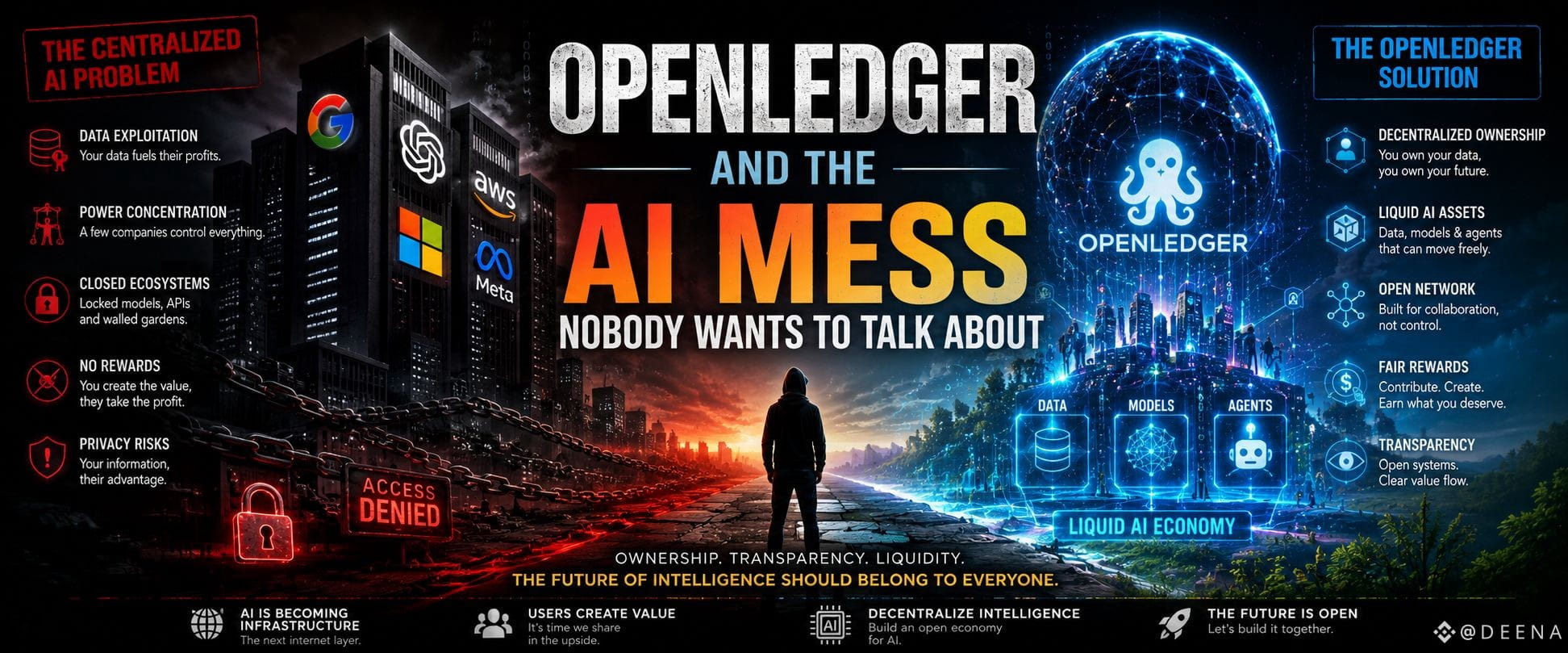
Je pensais autrefois que la plupart des projets d'IA n'étaient que du bruit recyclé avec un branding coûteux. Les mêmes promesses. Les mêmes mots à la mode. Le même récit sur le "futur de l'intelligence" répété jusqu'à ce que personne ne le remette en question. Mais plus je m'intéressais à OpenLedger, plus je réalisais que la véritable histoire n'est pas l'IA elle-même — c'est la propriété.
En ce moment, quelques grandes entreprises contrôlent presque tout. Modèles. Données. Infrastructure. Distribution. Pendant ce temps, les utilisateurs normaux alimentent ces systèmes chaque jour gratuitement sans se rendre compte de la valeur qu'ils créent. C'est ce qui me semble dysfonctionnel.
Ce qui a attiré mon attention sur OpenLedger, c'est qu'il pointe en fait vers le problème d'infrastructure au lieu de cultiver l'engagement avec des récits vides sur l'IA. L'idée que les données, les modèles et les agents IA devraient circuler dans une économie ouverte au lieu de rester piégés à l'intérieur des murs d'entreprise a beaucoup plus de sens que les gens ne le réalisent.
Et honnêtement, je pense que la plupart des gens sous-estiment encore l'ampleur de ce changement.
L'IA n'est plus seulement un logiciel.
Elle se transforme en infrastructure économique.
La véritable bataille ne sera pas de savoir qui construit le chatbot le plus intelligent.
Elle sera de savoir qui possède les rails sous l'intelligence elle-même.
#openledger @Openledger $OPEN
{spot}(OPENUSDT)
$XLM
$ALLO
Je pensais autrefois que la plupart des projets d'IA n'étaient que du bruit recyclé avec un branding coûteux. Les mêmes promesses. Les mêmes mots à la mode. Le même récit sur le "futur de l'intelligence" répété jusqu'à ce que personne ne le remette en question. Mais plus je m'intéressais à OpenLedger, plus je réalisais que la véritable histoire n'est pas l'IA elle-même — c'est la propriété.
En ce moment, quelques grandes entreprises contrôlent presque tout. Modèles. Données. Infrastructure. Distribution. Pendant ce temps, les utilisateurs normaux alimentent ces systèmes chaque jour gratuitement sans se rendre compte de la valeur qu'ils créent. C'est ce qui me semble dysfonctionnel.
Ce qui a attiré mon attention sur OpenLedger, c'est qu'il pointe en fait vers le problème d'infrastructure au lieu de cultiver l'engagement avec des récits vides sur l'IA. L'idée que les données, les modèles et les agents IA devraient circuler dans une économie ouverte au lieu de rester piégés à l'intérieur des murs d'entreprise a beaucoup plus de sens que les gens ne le réalisent.
Et honnêtement, je pense que la plupart des gens sous-estiment encore l'ampleur de ce changement.
L'IA n'est plus seulement un logiciel.
Elle se transforme en infrastructure économique.
La véritable bataille ne sera pas de savoir qui construit le chatbot le plus intelligent.
Elle sera de savoir qui possède les rails sous l'intelligence elle-même.
#openledger @OpenLedger $OPEN
$XLM
$ALLO
En ce moment, quelques grandes entreprises contrôlent presque tout. Modèles. Données. Infrastructure. Distribution. Pendant ce temps, les utilisateurs normaux alimentent ces systèmes chaque jour gratuitement sans se rendre compte de la valeur qu'ils créent. C'est ce qui me semble dysfonctionnel.
Ce qui a attiré mon attention sur OpenLedger, c'est qu'il pointe en fait vers le problème d'infrastructure au lieu de cultiver l'engagement avec des récits vides sur l'IA. L'idée que les données, les modèles et les agents IA devraient circuler dans une économie ouverte au lieu de rester piégés à l'intérieur des murs d'entreprise a beaucoup plus de sens que les gens ne le réalisent.
Et honnêtement, je pense que la plupart des gens sous-estiment encore l'ampleur de ce changement.
L'IA n'est plus seulement un logiciel.
Elle se transforme en infrastructure économique.
La véritable bataille ne sera pas de savoir qui construit le chatbot le plus intelligent.
Elle sera de savoir qui possède les rails sous l'intelligence elle-même.
#openledger @OpenLedger $OPEN
$XLM
$ALLO
1
2
160
·
--
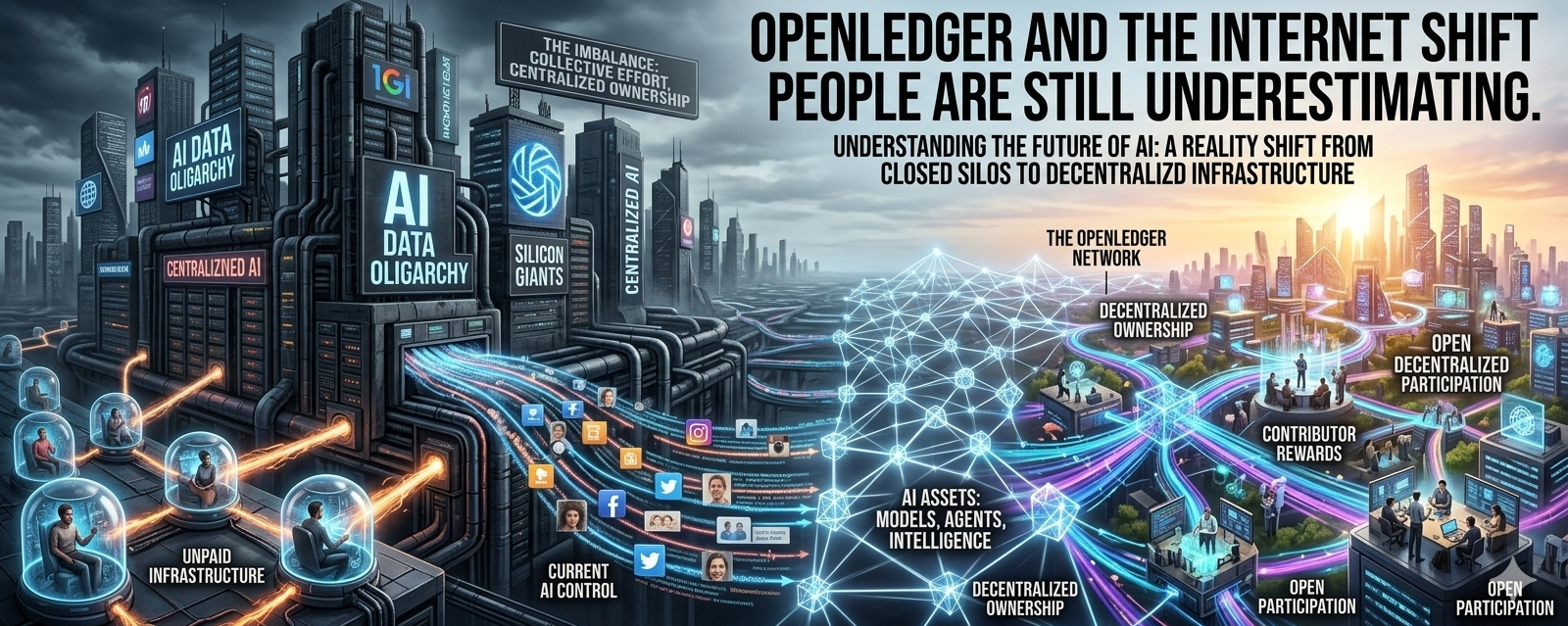
Article
OPENLEDGER ET LE CHANGEMENT D'INTERNET QUE LES GENS SOUS-ESTIMENT TOUJOURSLa plupart des projets d'IA en ce moment semblent vides dès que tu regardes au-delà du marketing. Les mêmes promesses recyclées partout. Les mêmes fils dramatiques sur "changer l'avenir." Les mêmes sites web polissés remplis de mots que personne ne dit même dans la vraie vie. Chaque projet prétend soudainement construire la prochaine génération d'intelligence, mais quand tu regardes de plus près, la plupart d'entre eux ne font que reconditionner les mêmes systèmes centralisés avec une étiquette crypto collée dessus. C'est pourquoi tant de gens ont cessé de s'en soucier. L'excitation a disparu parce que l'espace est inondé de bruit. Trop de fondateurs essayant de fabriquer du buzz. Trop de tokens prétendant être de la technologie. Trop de gens qui poursuivent des tendances sans même comprendre quel problème ils sont censés résoudre.
OPENLEDGER ET LE CHANGEMENT D'INTERNET QUE LES GENS SOUS-ESTIMENT TOUJOURS
La plupart des projets d'IA en ce moment semblent vides dès que tu regardes au-delà du marketing. Les mêmes promesses recyclées partout. Les mêmes fils dramatiques sur "changer l'avenir." Les mêmes sites web polissés remplis de mots que personne ne dit même dans la vraie vie. Chaque projet prétend soudainement construire la prochaine génération d'intelligence, mais quand tu regardes de plus près, la plupart d'entre eux ne font que reconditionner les mêmes systèmes centralisés avec une étiquette crypto collée dessus. C'est pourquoi tant de gens ont cessé de s'en soucier. L'excitation a disparu parce que l'espace est inondé de bruit. Trop de fondateurs essayant de fabriquer du buzz. Trop de tokens prétendant être de la technologie. Trop de gens qui poursuivent des tendances sans même comprendre quel problème ils sont censés résoudre.
1
2
134
·
--
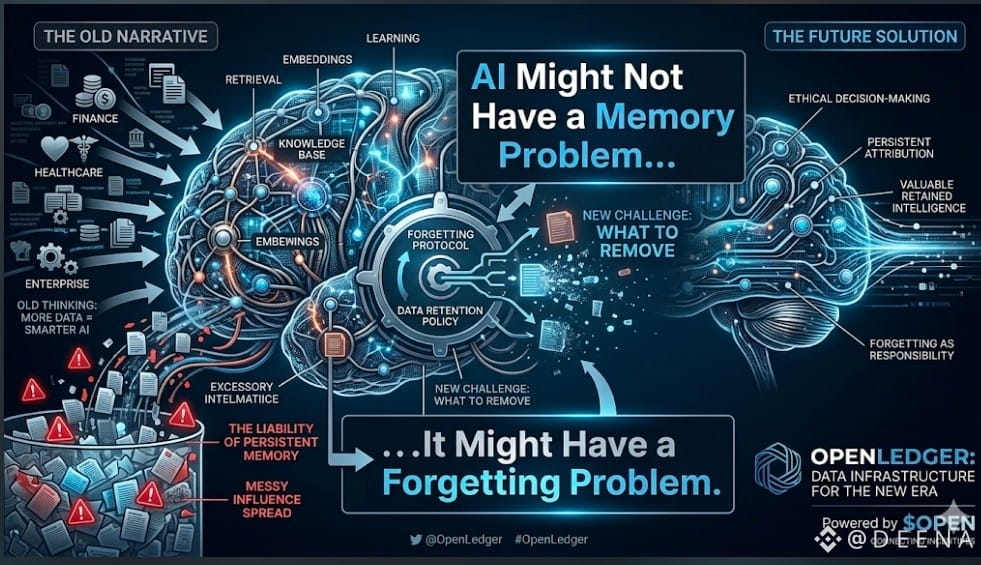
L'IA n'a peut-être pas de problème de mémoire… Elle a peut-être un problème d'oubli
J'ai commencé à penser à l'IA d'une manière très différente ces derniers temps. Pendant des années, toute l'industrie a traité la mémoire comme un avantage illimité. Plus un système pouvait collecter, stocker et apprendre de données, plus il devenait intelligent. Mais plus l'IA s'enfonce dans la finance, la santé, les opérations d'entreprise et la prise de décision réelle, plus je ressens que le véritable défi est en train de changer discrètement.
Je ne pense pas que l'avenir appartienne aux systèmes qui se souviennent de tout pour toujours.
Je pense qu'il pourrait appartenir aux systèmes qui comprennent ce qui ne devrait plus être retenu.
C'est pourquoi OpenLedger a attiré mon attention.
La plupart des gens le décrivent comme une infrastructure de données IA où les contributeurs fournissent des informations, les modèles s'améliorent, et $OPEN connecte les incitations. Mais je pense qu'il y a une couche plus profonde qui se forme sous cette narration. Une fois que l'information entre dans les systèmes IA, il devient extrêmement difficile d'enlever son influence. Les données se propagent à travers l'entraînement, les embeddings, les systèmes de récupération et les modèles comportementaux de manière beaucoup plus désordonnée que les gens ne le réalisent.
Et une fois que l'IA commence à toucher des flux de travail sensibles, la mémoire elle-même devient une responsabilité.
Cela change complètement les règles économiques.
Si l'attribution devient persistante et précieuse, alors l'intelligence retenue cesse d'être une infrastructure gratuite. Tout à coup, oublier devient tout aussi important que d'apprendre.
Et honnêtement, je ne pense pas que le marché ait encore pleinement intégré cela.
#OpenLedger @Openledger $OPEN
{spot}(OPENUSDT)
L'IA n'a peut-être pas de problème de mémoire… Elle a peut-être un problème d'oubli
J'ai commencé à penser à l'IA d'une manière très différente ces derniers temps. Pendant des années, toute l'industrie a traité la mémoire comme un avantage illimité. Plus un système pouvait collecter, stocker et apprendre de données, plus il devenait intelligent. Mais plus l'IA s'enfonce dans la finance, la santé, les opérations d'entreprise et la prise de décision réelle, plus je ressens que le véritable défi est en train de changer discrètement.
Je ne pense pas que l'avenir appartienne aux systèmes qui se souviennent de tout pour toujours.
Je pense qu'il pourrait appartenir aux systèmes qui comprennent ce qui ne devrait plus être retenu.
C'est pourquoi OpenLedger a attiré mon attention.
La plupart des gens le décrivent comme une infrastructure de données IA où les contributeurs fournissent des informations, les modèles s'améliorent, et $OPEN connecte les incitations. Mais je pense qu'il y a une couche plus profonde qui se forme sous cette narration. Une fois que l'information entre dans les systèmes IA, il devient extrêmement difficile d'enlever son influence. Les données se propagent à travers l'entraînement, les embeddings, les systèmes de récupération et les modèles comportementaux de manière beaucoup plus désordonnée que les gens ne le réalisent.
Et une fois que l'IA commence à toucher des flux de travail sensibles, la mémoire elle-même devient une responsabilité.
Cela change complètement les règles économiques.
Si l'attribution devient persistante et précieuse, alors l'intelligence retenue cesse d'être une infrastructure gratuite. Tout à coup, oublier devient tout aussi important que d'apprendre.
Et honnêtement, je ne pense pas que le marché ait encore pleinement intégré cela.
#OpenLedger @OpenLedger $OPEN
J'ai commencé à penser à l'IA d'une manière très différente ces derniers temps. Pendant des années, toute l'industrie a traité la mémoire comme un avantage illimité. Plus un système pouvait collecter, stocker et apprendre de données, plus il devenait intelligent. Mais plus l'IA s'enfonce dans la finance, la santé, les opérations d'entreprise et la prise de décision réelle, plus je ressens que le véritable défi est en train de changer discrètement.
Je ne pense pas que l'avenir appartienne aux systèmes qui se souviennent de tout pour toujours.
Je pense qu'il pourrait appartenir aux systèmes qui comprennent ce qui ne devrait plus être retenu.
C'est pourquoi OpenLedger a attiré mon attention.
La plupart des gens le décrivent comme une infrastructure de données IA où les contributeurs fournissent des informations, les modèles s'améliorent, et $OPEN connecte les incitations. Mais je pense qu'il y a une couche plus profonde qui se forme sous cette narration. Une fois que l'information entre dans les systèmes IA, il devient extrêmement difficile d'enlever son influence. Les données se propagent à travers l'entraînement, les embeddings, les systèmes de récupération et les modèles comportementaux de manière beaucoup plus désordonnée que les gens ne le réalisent.
Et une fois que l'IA commence à toucher des flux de travail sensibles, la mémoire elle-même devient une responsabilité.
Cela change complètement les règles économiques.
Si l'attribution devient persistante et précieuse, alors l'intelligence retenue cesse d'être une infrastructure gratuite. Tout à coup, oublier devient tout aussi important que d'apprendre.
Et honnêtement, je ne pense pas que le marché ait encore pleinement intégré cela.
#OpenLedger @OpenLedger $OPEN
97
·
--
Article
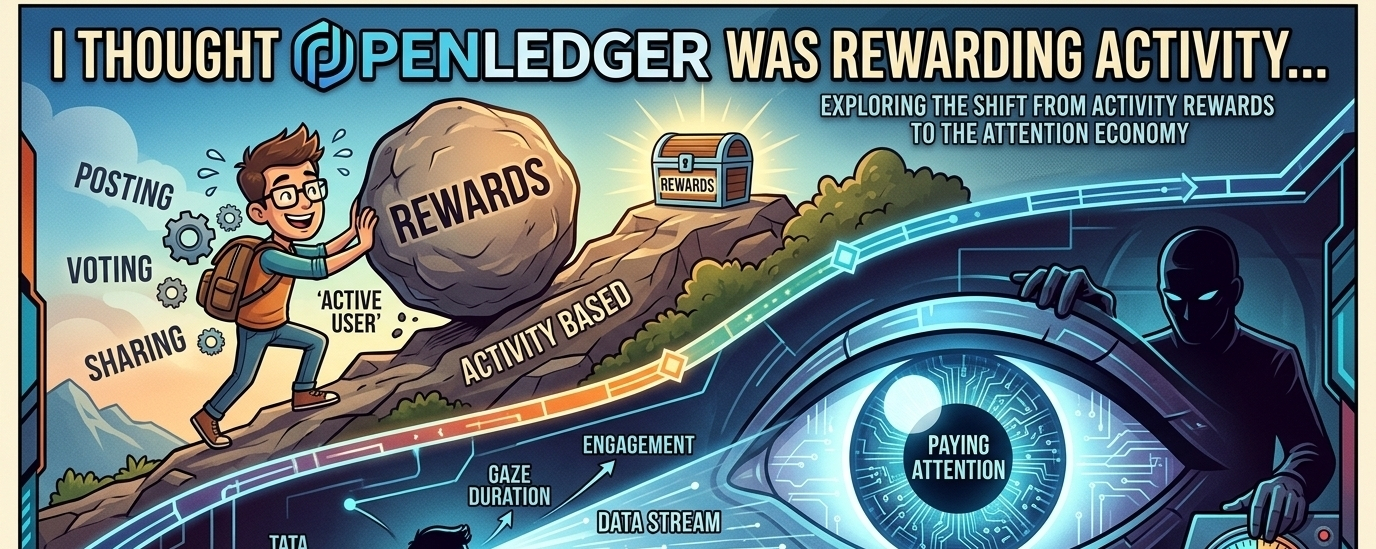
Je pensais qu'OpenLedger récompensait l'activité... Jusqu'à ce que je réalise qu'il faisait attention à autre chose.
Quand j'ai commencé à utiliser OpenLedger, je pensais comprendre le système assez rapidement.
Ça ressemblait à beaucoup d'autres écosystèmes que j'ai vus auparavant. Reste actif, complète des tâches, engage-toi régulièrement, reviens demain, répète. La structure était suffisamment familière pour que je ne m'y attarde pas trop au début. Honnêtement, je pensais que l'idée était simple : plus tu es visible, plus tu crées de la valeur à l'intérieur du réseau.
Et pendant un certain temps, cette croyance avait du sens pour moi.
Parce que les systèmes en ligne nous entraînent généralement à penser que l'activité équivaut à l'importance. Si tu postes plus, interagis plus et restes constamment présent, le système finira par te remarquer. C'est comme ça que la plupart des plateformes fonctionnent maintenant, donc naturellement, j'ai apporté le même état d'esprit dans OpenLedger aussi.
Quand j'ai commencé à utiliser OpenLedger, je pensais comprendre le système assez rapidement.
Ça ressemblait à beaucoup d'autres écosystèmes que j'ai vus auparavant. Reste actif, complète des tâches, engage-toi régulièrement, reviens demain, répète. La structure était suffisamment familière pour que je ne m'y attarde pas trop au début. Honnêtement, je pensais que l'idée était simple : plus tu es visible, plus tu crées de la valeur à l'intérieur du réseau.
Et pendant un certain temps, cette croyance avait du sens pour moi.
Parce que les systèmes en ligne nous entraînent généralement à penser que l'activité équivaut à l'importance. Si tu postes plus, interagis plus et restes constamment présent, le système finira par te remarquer. C'est comme ça que la plupart des plateformes fonctionnent maintenant, donc naturellement, j'ai apporté le même état d'esprit dans OpenLedger aussi.
Je pensais qu'OpenLedger récompensait l'activité... Jusqu'à ce que je réalise qu'il faisait attention à autre chose.
Quand j'ai commencé à utiliser OpenLedger, je pensais comprendre le système assez rapidement.
Ça ressemblait à beaucoup d'autres écosystèmes que j'ai vus auparavant. Reste actif, complète des tâches, engage-toi régulièrement, reviens demain, répète. La structure était suffisamment familière pour que je ne m'y attarde pas trop au début. Honnêtement, je pensais que l'idée était simple : plus tu es visible, plus tu crées de la valeur à l'intérieur du réseau.
Et pendant un certain temps, cette croyance avait du sens pour moi.
Parce que les systèmes en ligne nous entraînent généralement à penser que l'activité équivaut à l'importance. Si tu postes plus, interagis plus et restes constamment présent, le système finira par te remarquer. C'est comme ça que la plupart des plateformes fonctionnent maintenant, donc naturellement, j'ai apporté le même état d'esprit dans OpenLedger aussi.
100
·
--
Pourquoi je pense que Genius Terminal change discrètement la façon dont le trading on-chain se ressent
Je pensais auparavant que la plupart des terminaux on-chain étaient essentiellement la même chose avec des interfaces différentes, un branding différent, et des promesses d'exécution légèrement plus rapides. Mais plus je passais de temps à observer comment les traders se déplacent réellement sur les marchés, plus je réalisais que le véritable écart n'est pas seulement la vitesse. Il s'agit de la confidentialité, de la simplicité, et du sentiment de contrôle pendant que tout autour de vous évolue dans le chaos. C'est là que Genius Terminal a commencé à se démarquer pour moi.
Ce qui a attiré mon attention, c'est l'idée d'être le premier terminal on-chain privé et final. Dans le crypto, les gens parlent constamment de transparence, mais très peu parlent du coût d'exposer chaque mouvement avant l'exécution. Le marché observe tout. Les portefeuilles sont traqués. Les stratégies deviennent des modèles publics. Avec le temps, cela change le comportement des traders eux-mêmes. Je pense que Genius Terminal comprend cette friction cachée mieux que la plupart des plateformes.
Ce qui rend cela intéressant n'est pas le battage médiatique ou le marketing tape-à-l'œil. C'est la direction. Le terminal semble construit autour d'un focus sur l'exécution plutôt que sur le bruit. Un flux plus propre. Moins de distractions. Plus de contrôle sur la façon dont les utilisateurs interagissent avec la liquidité et l'information on-chain.
Je pense que la prochaine phase de l'infrastructure crypto appartiendra à des produits qui réduisent la friction discrètement pendant que les utilisateurs à peine remarquent que cela se produit. Genius Terminal semble être l'un de ces systèmes.
#genius @GeniusOfficial $GENIUS
{spot}(GENIUSUSDT)
Pourquoi je pense que Genius Terminal change discrètement la façon dont le trading on-chain se ressent
Je pensais auparavant que la plupart des terminaux on-chain étaient essentiellement la même chose avec des interfaces différentes, un branding différent, et des promesses d'exécution légèrement plus rapides. Mais plus je passais de temps à observer comment les traders se déplacent réellement sur les marchés, plus je réalisais que le véritable écart n'est pas seulement la vitesse. Il s'agit de la confidentialité, de la simplicité, et du sentiment de contrôle pendant que tout autour de vous évolue dans le chaos. C'est là que Genius Terminal a commencé à se démarquer pour moi.
Ce qui a attiré mon attention, c'est l'idée d'être le premier terminal on-chain privé et final. Dans le crypto, les gens parlent constamment de transparence, mais très peu parlent du coût d'exposer chaque mouvement avant l'exécution. Le marché observe tout. Les portefeuilles sont traqués. Les stratégies deviennent des modèles publics. Avec le temps, cela change le comportement des traders eux-mêmes. Je pense que Genius Terminal comprend cette friction cachée mieux que la plupart des plateformes.
Ce qui rend cela intéressant n'est pas le battage médiatique ou le marketing tape-à-l'œil. C'est la direction. Le terminal semble construit autour d'un focus sur l'exécution plutôt que sur le bruit. Un flux plus propre. Moins de distractions. Plus de contrôle sur la façon dont les utilisateurs interagissent avec la liquidité et l'information on-chain.
Je pense que la prochaine phase de l'infrastructure crypto appartiendra à des produits qui réduisent la friction discrètement pendant que les utilisateurs à peine remarquent que cela se produit. Genius Terminal semble être l'un de ces systèmes.
#genius @GeniusOfficial $GENIUS
Je pensais auparavant que la plupart des terminaux on-chain étaient essentiellement la même chose avec des interfaces différentes, un branding différent, et des promesses d'exécution légèrement plus rapides. Mais plus je passais de temps à observer comment les traders se déplacent réellement sur les marchés, plus je réalisais que le véritable écart n'est pas seulement la vitesse. Il s'agit de la confidentialité, de la simplicité, et du sentiment de contrôle pendant que tout autour de vous évolue dans le chaos. C'est là que Genius Terminal a commencé à se démarquer pour moi.
Ce qui a attiré mon attention, c'est l'idée d'être le premier terminal on-chain privé et final. Dans le crypto, les gens parlent constamment de transparence, mais très peu parlent du coût d'exposer chaque mouvement avant l'exécution. Le marché observe tout. Les portefeuilles sont traqués. Les stratégies deviennent des modèles publics. Avec le temps, cela change le comportement des traders eux-mêmes. Je pense que Genius Terminal comprend cette friction cachée mieux que la plupart des plateformes.
Ce qui rend cela intéressant n'est pas le battage médiatique ou le marketing tape-à-l'œil. C'est la direction. Le terminal semble construit autour d'un focus sur l'exécution plutôt que sur le bruit. Un flux plus propre. Moins de distractions. Plus de contrôle sur la façon dont les utilisateurs interagissent avec la liquidité et l'information on-chain.
Je pense que la prochaine phase de l'infrastructure crypto appartiendra à des produits qui réduisent la friction discrètement pendant que les utilisateurs à peine remarquent que cela se produit. Genius Terminal semble être l'un de ces systèmes.
#genius @GeniusOfficial $GENIUS
90
·
--
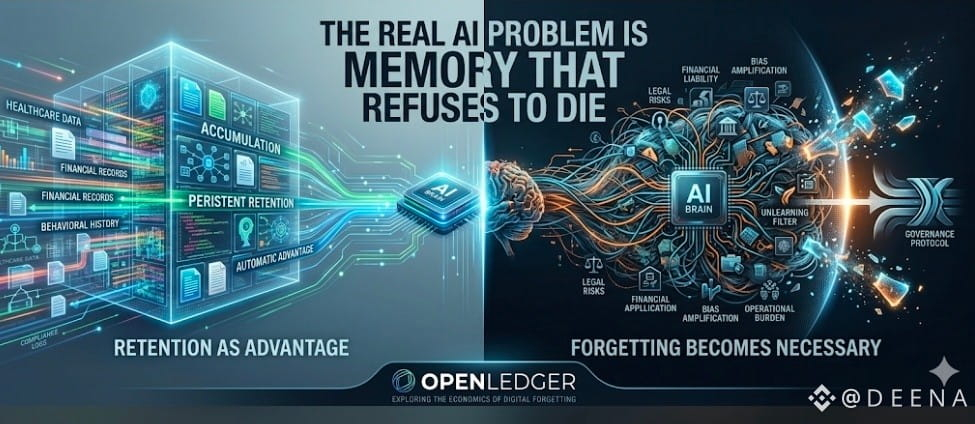
Le vrai problème de l'IA n'est peut-être pas l'intelligence... mais une mémoire qui refuse de mourir
Je reviens sans cesse à une pensée inconfortable sur l'IA.
Le vrai problème n'est peut-être pas l'intelligence du tout. Cela pourrait être la mémoire.
Pendant des années, l'industrie technologique a traité la rétention comme un avantage automatique. Stocker plus de données. Suivre plus de comportements. Préserver plus d'histoires. L'hypothèse était simple : plus de mémoire crée de meilleurs systèmes.
Mais plus l'IA s'immisce dans la santé, la finance, la conformité, les opérations client et la prise de décision, plus il devient difficile d'ignorer l'inconvénient de cette logique.
Parce que l'IA n'oublie pas vraiment.
Une fois que l'information entre dans un pipeline d'entraînement, une couche de récupération ou un système comportemental, elle se propage à travers le modèle de manières difficiles à isoler par la suite. Supprimer un fichier est facile. Éliminer l'influence de l'information de l'intelligence elle-même est beaucoup plus difficile.
Ce changement est en partie pourquoi OpenLedger a commencé à me sembler plus intéressant.
Au début, je le voyais comme un autre récit d'infrastructure d'IA axé sur l'attribution et la coordination des données. Mais la couche plus profonde pourrait être tout autre chose.
Une fois que l'attribution devient persistante et économiquement significative, la mémoire cesse d'être une infrastructure gratuite. Elle devient une responsabilité, un actif, et finalement un problème de gouvernance tout à la fois.
Et au moment où la mémoire porte un poids légal, financier et opérationnel, l'oubli cesse d'apparaître comme inefficace.
Il commence à paraître nécessaire.
#openledger @Openledger $OPEN
{spot}(OPENUSDT)
Le vrai problème de l'IA n'est peut-être pas l'intelligence... mais une mémoire qui refuse de mourir
Je reviens sans cesse à une pensée inconfortable sur l'IA.
Le vrai problème n'est peut-être pas l'intelligence du tout. Cela pourrait être la mémoire.
Pendant des années, l'industrie technologique a traité la rétention comme un avantage automatique. Stocker plus de données. Suivre plus de comportements. Préserver plus d'histoires. L'hypothèse était simple : plus de mémoire crée de meilleurs systèmes.
Mais plus l'IA s'immisce dans la santé, la finance, la conformité, les opérations client et la prise de décision, plus il devient difficile d'ignorer l'inconvénient de cette logique.
Parce que l'IA n'oublie pas vraiment.
Une fois que l'information entre dans un pipeline d'entraînement, une couche de récupération ou un système comportemental, elle se propage à travers le modèle de manières difficiles à isoler par la suite. Supprimer un fichier est facile. Éliminer l'influence de l'information de l'intelligence elle-même est beaucoup plus difficile.
Ce changement est en partie pourquoi OpenLedger a commencé à me sembler plus intéressant.
Au début, je le voyais comme un autre récit d'infrastructure d'IA axé sur l'attribution et la coordination des données. Mais la couche plus profonde pourrait être tout autre chose.
Une fois que l'attribution devient persistante et économiquement significative, la mémoire cesse d'être une infrastructure gratuite. Elle devient une responsabilité, un actif, et finalement un problème de gouvernance tout à la fois.
Et au moment où la mémoire porte un poids légal, financier et opérationnel, l'oubli cesse d'apparaître comme inefficace.
Il commence à paraître nécessaire.
#openledger @OpenLedger $OPEN
Je reviens sans cesse à une pensée inconfortable sur l'IA.
Le vrai problème n'est peut-être pas l'intelligence du tout. Cela pourrait être la mémoire.
Pendant des années, l'industrie technologique a traité la rétention comme un avantage automatique. Stocker plus de données. Suivre plus de comportements. Préserver plus d'histoires. L'hypothèse était simple : plus de mémoire crée de meilleurs systèmes.
Mais plus l'IA s'immisce dans la santé, la finance, la conformité, les opérations client et la prise de décision, plus il devient difficile d'ignorer l'inconvénient de cette logique.
Parce que l'IA n'oublie pas vraiment.
Une fois que l'information entre dans un pipeline d'entraînement, une couche de récupération ou un système comportemental, elle se propage à travers le modèle de manières difficiles à isoler par la suite. Supprimer un fichier est facile. Éliminer l'influence de l'information de l'intelligence elle-même est beaucoup plus difficile.
Ce changement est en partie pourquoi OpenLedger a commencé à me sembler plus intéressant.
Au début, je le voyais comme un autre récit d'infrastructure d'IA axé sur l'attribution et la coordination des données. Mais la couche plus profonde pourrait être tout autre chose.
Une fois que l'attribution devient persistante et économiquement significative, la mémoire cesse d'être une infrastructure gratuite. Elle devient une responsabilité, un actif, et finalement un problème de gouvernance tout à la fois.
Et au moment où la mémoire porte un poids légal, financier et opérationnel, l'oubli cesse d'apparaître comme inefficace.
Il commence à paraître nécessaire.
#openledger @OpenLedger $OPEN
90
Connectez-vous pour découvrir plus de contenu
Rejoignez la communauté mondiale des adeptes de cryptomonnaies sur Binance Square
⚡️ Suviez les dernières informations importantes sur les cryptomonnaies.
💬 Jugé digne de confiance par la plus grande plateforme d’échange de cryptomonnaies au monde.
👍 Découvrez les connaissances que partagent les créateurs vérifiés.
Adresse e-mail/Nº de téléphone
Sujets d’actualité
HYPEJumpsOver11%
5,358 vues
279 mentions
🚨 L’ENGOUEMENT A INVERTI LE MARCHÉ
$HYPE +11% en 7 jours
Alors que $XRP et $ETH saignaient...
HYPE est entré dans le TOP 10 et a éjecté Cardano.
Pourquoi ?
-> 1,3B$+ d’Open Interest
-> Des entrées de FNB (ETF) qui surpassent celles de BTC & ETH
-> Une énorme combustion de l’offre en cours
Ce n’est pas juste une pompe. C’est une domination.
Tu regardes ou TU ES DANS ? 👇
#HYPE #Hyperliquid #Crypto #BinanceSquare#hypejumpsover11%
True News
·3 mentions J’aime
·1.7k vues
ZcashDevelopersTargetNU7MainnetActivationNov5
0 vues
2 mentions
BitcoinSpotETFsNetInflow$159M
1,707 vues
73 mentions