
Mariko_09
526 Publications
Mariko_09
Signaler
Bloquer l’utilisateur
crypto master trade lover
222 Suivis
3.0K+ Abonnés
141 J’aime
Publications
Tous
Citations
Direct
·
--
Baissier
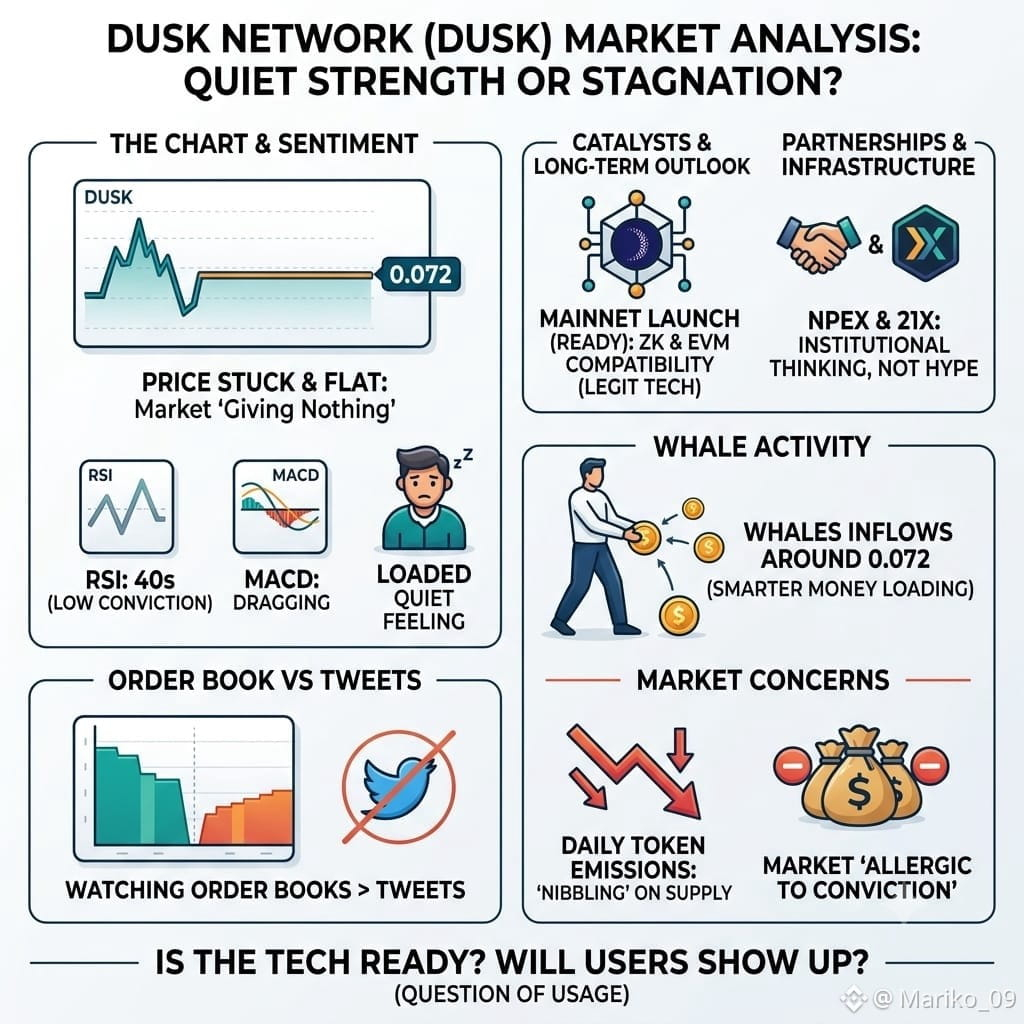
Je fixe le graphique de DUSK et honnêtement, ça ne donne rien. Plat. Bloqué. Mais le calme semble chargé.
Ce lancement sur le mainnet avec compatibilité ZK et EVM ? Sérieux. Et les histoires de NPEX et de 21X me font penser que quelqu’un pense à long terme—pas juste à entretenir du battage. Mais le marché agit comme s’il était allergique à la conviction : RSI coincé dans les 40, MACD qui traîne, et ces émissions quotidiennes qui grignotent tranquillement en arrière-plan.
En revanche, des baleines s’en mêlent. J’ai vu des entrées plutôt correctes autour de 0.072, ce qui me fait penser que l’argent le plus “intelligent” se charge pendant que tout le monde fixe son écran ennuyé. Ça peut ne rien vouloir dire. Ça peut vouloir dire énormément.
Je n’ai pas d’opinion tranchée. Juste en train d’observer les carnets d’ordres plus que les tweets ces derniers temps. La techno est prête. La vraie question, c’est de savoir si quelqu’un passe pour s’en servir.
@Dusk_Foundation #dusk $DUSK
{future}(DUSKUSDT)
Je fixe le graphique de DUSK et honnêtement, ça ne donne rien. Plat. Bloqué. Mais le calme semble chargé.
Ce lancement sur le mainnet avec compatibilité ZK et EVM ? Sérieux. Et les histoires de NPEX et de 21X me font penser que quelqu’un pense à long terme—pas juste à entretenir du battage. Mais le marché agit comme s’il était allergique à la conviction : RSI coincé dans les 40, MACD qui traîne, et ces émissions quotidiennes qui grignotent tranquillement en arrière-plan.
En revanche, des baleines s’en mêlent. J’ai vu des entrées plutôt correctes autour de 0.072, ce qui me fait penser que l’argent le plus “intelligent” se charge pendant que tout le monde fixe son écran ennuyé. Ça peut ne rien vouloir dire. Ça peut vouloir dire énormément.
Je n’ai pas d’opinion tranchée. Juste en train d’observer les carnets d’ordres plus que les tweets ces derniers temps. La techno est prête. La vraie question, c’est de savoir si quelqu’un passe pour s’en servir.
@Dusk #dusk $DUSK
Ce lancement sur le mainnet avec compatibilité ZK et EVM ? Sérieux. Et les histoires de NPEX et de 21X me font penser que quelqu’un pense à long terme—pas juste à entretenir du battage. Mais le marché agit comme s’il était allergique à la conviction : RSI coincé dans les 40, MACD qui traîne, et ces émissions quotidiennes qui grignotent tranquillement en arrière-plan.
En revanche, des baleines s’en mêlent. J’ai vu des entrées plutôt correctes autour de 0.072, ce qui me fait penser que l’argent le plus “intelligent” se charge pendant que tout le monde fixe son écran ennuyé. Ça peut ne rien vouloir dire. Ça peut vouloir dire énormément.
Je n’ai pas d’opinion tranchée. Juste en train d’observer les carnets d’ordres plus que les tweets ces derniers temps. La techno est prête. La vraie question, c’est de savoir si quelqu’un passe pour s’en servir.
@Dusk #dusk $DUSK
77
·
--
Baissier
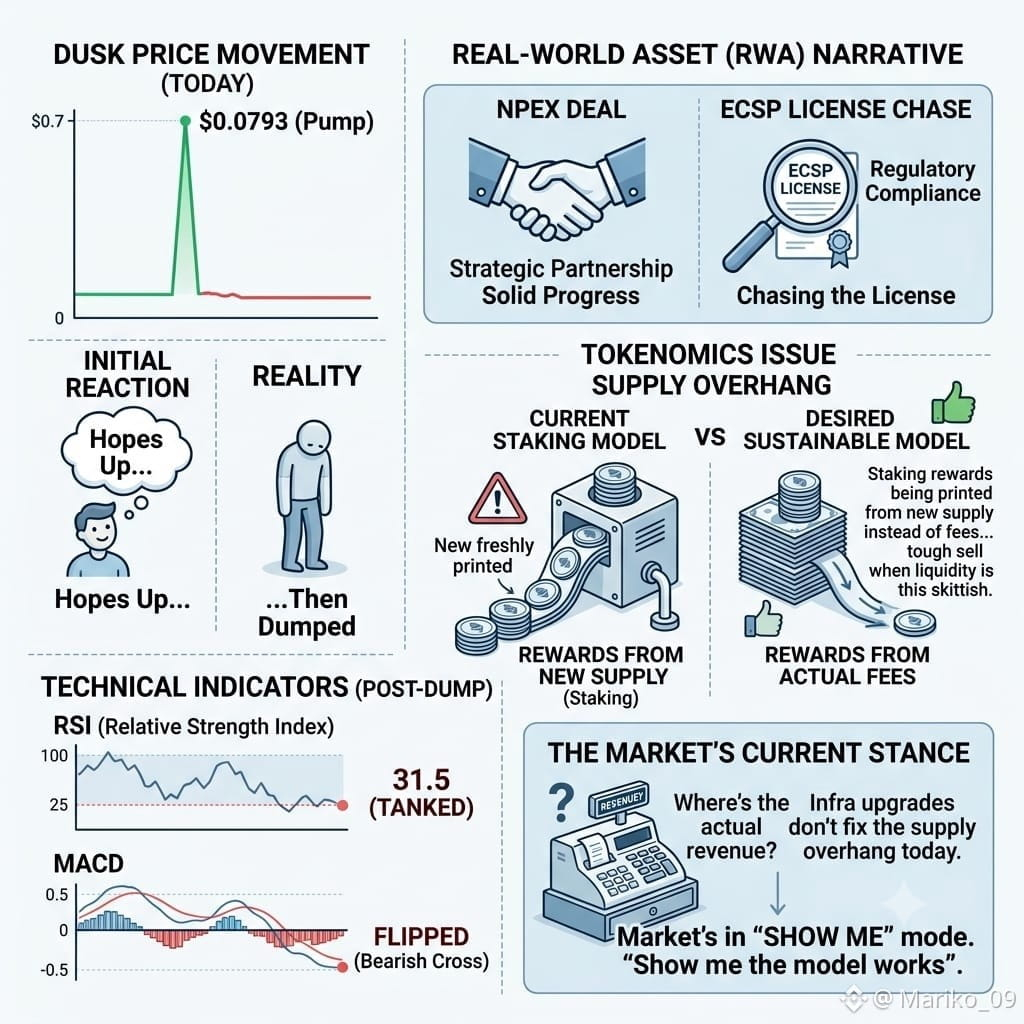
Honnêtement, voir DUSK grimper à 0,0793 $ ce matin a ravivé mes espoirs pour une deuxième fois. Puis ça a juste rechuté d’un coup. Le récit RWA est solide : l’accord NPEX et la poursuite du permis ECSP donnent vraiment l’impression d’un progrès concret, pas seulement d’un battage. Mais le marché a vite compris le sujet des tokenomics. Des récompenses de staking générées via une nouvelle offre plutôt que par des frais ? Difficile de convaincre quand la liquidité est aussi nerveuse. Le RSI est tombé à 31,5, le MACD a viré, et tout le monde se pose soudain la même question : où sont les revenus réels ? Les mises à niveau de l’infrastructure sont cool sur le long terme, bien sûr, mais elles ne règlent pas le problème de l’offre excédentaire aujourd’hui. On dirait que chaque pompe prépare juste la prochaine baisse tant qu’ils n’auront pas prouvé que le modèle fonctionne. Je ne dis pas que ça n’y arrivera pas, mais pour l’instant, le marché est en mode « montrez-moi ».
@Dusk_Foundation #dusk $DUSK
{future}(DUSKUSDT)
Honnêtement, voir DUSK grimper à 0,0793 $ ce matin a ravivé mes espoirs pour une deuxième fois. Puis ça a juste rechuté d’un coup. Le récit RWA est solide : l’accord NPEX et la poursuite du permis ECSP donnent vraiment l’impression d’un progrès concret, pas seulement d’un battage. Mais le marché a vite compris le sujet des tokenomics. Des récompenses de staking générées via une nouvelle offre plutôt que par des frais ? Difficile de convaincre quand la liquidité est aussi nerveuse. Le RSI est tombé à 31,5, le MACD a viré, et tout le monde se pose soudain la même question : où sont les revenus réels ? Les mises à niveau de l’infrastructure sont cool sur le long terme, bien sûr, mais elles ne règlent pas le problème de l’offre excédentaire aujourd’hui. On dirait que chaque pompe prépare juste la prochaine baisse tant qu’ils n’auront pas prouvé que le modèle fonctionne. Je ne dis pas que ça n’y arrivera pas, mais pour l’instant, le marché est en mode « montrez-moi ».
@Dusk #dusk $DUSK
@Dusk #dusk $DUSK
1
1
76
·
--
bon article
bon article

King_Monarch
·
--
Baissier#dusk $DUSK @Dusk Dusk, les réglementations de l’UE et l’avenir de la confidentialité dans la cryptographie
Sur le chemin du retour ce soir, en regardant le pouls de la ville au rythme habituel, je me suis surpris à ressasser quelque chose qui restait dans mon esprit. Le contraste entre cette vie publique animée et les pensées privées que nous portons tous m’a semblé étrangement correspondre à la direction que prend la confidentialité des cryptos.
En arrivant à mon bureau, je n’ai pas pu m’empêcher d’établir la comparaison : la feuille de route de Dusk face au durcissement des réglementations européennes sur les mixers et les portefeuilles anonymes.
Voilà ce qui m’a frappé : pendant que tout le monde panique en disant que les régulateurs « détruisent la confidentialité, on devrait peut-être y voir autrement ».
Le cadre MiCA de l’Europe met en pratique fin à l’ère des projets qui promettent une anonymité totale. Et oui, les gens écrivent déjà l’éloge funèbre de Dusk à cause de ça. Mais je pense qu’ils passent à côté de l’idée fondamentale.
Dusk n’est pas conçu pour l’évasion fiscale. Il est conçu pour quelque chose de bien plus intéressant.
Leur protocole Citadel fait quelque chose de vraiment malin : il donne aux régulateurs exactement ce dont ils ont besoin (la preuve que les contrôles ont été effectués, des portefeuilles en règle) tout en gardant les secrets commerciaux entièrement protégés vis-à-vis des concurrents et des pirates sur le registre public.
C’est comme construire des bureaux blindés au sein du système, plutôt que d’essayer d’exister en dehors.
Pendant que les autres se battent contre le système, Dusk semble dire : « D’accord, et si on travaillait avec lui, au lieu de contre lui ? » Ils ont compris que la confidentialité de demain n’est pas l’anarchie : c’est un cadre de conformité réglementée, avec de solides protections intégrées.
Mais je reviens sans cesse à la même question :
La communauté crypto est-elle prête à ça ?
Pour beaucoup, la crypto représente une liberté absolue. Sans surveillance. Sans autorisation. Toute l’éthique du « sois ton propre banquier ».
Si Dusk mise tout sur l’approbation réglementaire, vont-ils perdre les investisseurs particuliers qui créent le battage initial et la liquidité ? Ceux qui sont venus pour la rébellion, pas pour la réglementation ?
Je suis réellement partagé.
D’un côté, une confidentialité hybride sous surveillance paraît inévitable si l’on veut une adoption grand public. De l’autre, perdre cet avantage sans compromis, c’est peut-être perdre ce qui
Sur le chemin du retour ce soir, en regardant le pouls de la ville au rythme habituel, je me suis surpris à ressasser quelque chose qui restait dans mon esprit. Le contraste entre cette vie publique animée et les pensées privées que nous portons tous m’a semblé étrangement correspondre à la direction que prend la confidentialité des cryptos.
En arrivant à mon bureau, je n’ai pas pu m’empêcher d’établir la comparaison : la feuille de route de Dusk face au durcissement des réglementations européennes sur les mixers et les portefeuilles anonymes.
Voilà ce qui m’a frappé : pendant que tout le monde panique en disant que les régulateurs « détruisent la confidentialité, on devrait peut-être y voir autrement ».
Le cadre MiCA de l’Europe met en pratique fin à l’ère des projets qui promettent une anonymité totale. Et oui, les gens écrivent déjà l’éloge funèbre de Dusk à cause de ça. Mais je pense qu’ils passent à côté de l’idée fondamentale.
Dusk n’est pas conçu pour l’évasion fiscale. Il est conçu pour quelque chose de bien plus intéressant.
Leur protocole Citadel fait quelque chose de vraiment malin : il donne aux régulateurs exactement ce dont ils ont besoin (la preuve que les contrôles ont été effectués, des portefeuilles en règle) tout en gardant les secrets commerciaux entièrement protégés vis-à-vis des concurrents et des pirates sur le registre public.
C’est comme construire des bureaux blindés au sein du système, plutôt que d’essayer d’exister en dehors.
Pendant que les autres se battent contre le système, Dusk semble dire : « D’accord, et si on travaillait avec lui, au lieu de contre lui ? » Ils ont compris que la confidentialité de demain n’est pas l’anarchie : c’est un cadre de conformité réglementée, avec de solides protections intégrées.
Mais je reviens sans cesse à la même question :
La communauté crypto est-elle prête à ça ?
Pour beaucoup, la crypto représente une liberté absolue. Sans surveillance. Sans autorisation. Toute l’éthique du « sois ton propre banquier ».
Si Dusk mise tout sur l’approbation réglementaire, vont-ils perdre les investisseurs particuliers qui créent le battage initial et la liquidité ? Ceux qui sont venus pour la rébellion, pas pour la réglementation ?
Je suis réellement partagé.
D’un côté, une confidentialité hybride sous surveillance paraît inévitable si l’on veut une adoption grand public. De l’autre, perdre cet avantage sans compromis, c’est peut-être perdre ce qui
11
·
--
Haussier
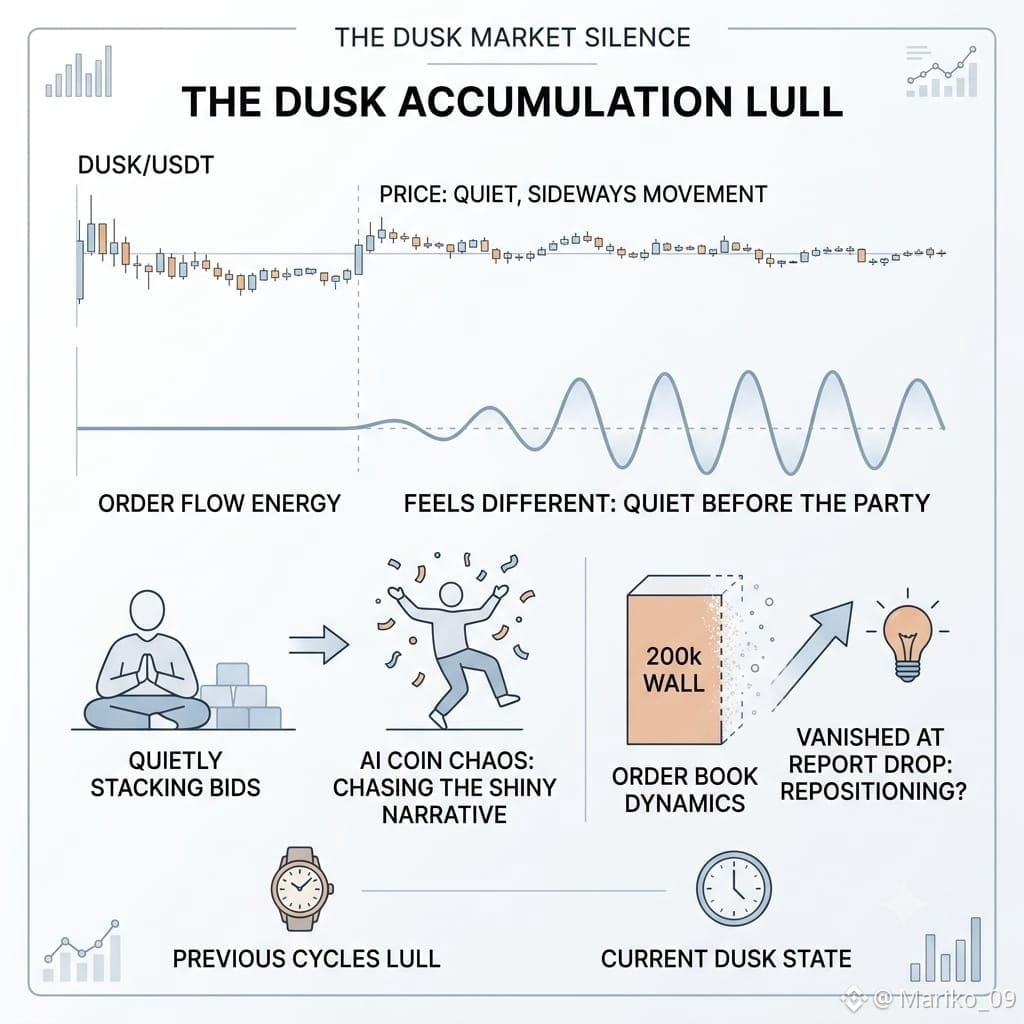
J’ai ouvert ce rapport QR pour DUSK sans m’attendre à grand-chose, honnêtement. Le prix n’a rien fait pour crier quoi que ce soit, mais il y a un quelque chose dans le flux des ordres aujourd’hui qui fait… bizarre. Pas dans un sens « la lune arrive bientôt », plutôt comme ce calme avant une fête, quand tu ne sais pas si quelqu’un va vraiment venir. Je passe sans arrêt du graphique DUSK au chaos des pièces d’IA, et c’est dingue à quel point tout le monde court après le prochain récit brillant, alors que celui-ci reste là, tranquille, à empiler des ordres d’achat. J’ai vu un mur étrange de 200k USDT disparaître juste au moment où le rapport a été publié—peut-être rien, peut-être quelqu’un qui se repositionne. Quoi qu’il en soit, mon instinct dit de faire attention : pas à cause de l’analyse technique ou du buzz, mais parce que le silence autour de tout ça devient inconfortable. Ça me rappelle ce creux avant que MATIC ne se réveille au cycle précédent. Pas encore en train d’acheter, juste en train d’observer, plus attentivement que d’habitude. Quelqu’un d’autre ressent ce décalage d’énergie bizarre, ou je suis juste trop caféiné et je lis trop dans les fantômes ?
@Dusk_Foundation #dusk $DUSK
{future}(DUSKUSDT)
J’ai ouvert ce rapport QR pour DUSK sans m’attendre à grand-chose, honnêtement. Le prix n’a rien fait pour crier quoi que ce soit, mais il y a un quelque chose dans le flux des ordres aujourd’hui qui fait… bizarre. Pas dans un sens « la lune arrive bientôt », plutôt comme ce calme avant une fête, quand tu ne sais pas si quelqu’un va vraiment venir. Je passe sans arrêt du graphique DUSK au chaos des pièces d’IA, et c’est dingue à quel point tout le monde court après le prochain récit brillant, alors que celui-ci reste là, tranquille, à empiler des ordres d’achat. J’ai vu un mur étrange de 200k USDT disparaître juste au moment où le rapport a été publié—peut-être rien, peut-être quelqu’un qui se repositionne. Quoi qu’il en soit, mon instinct dit de faire attention : pas à cause de l’analyse technique ou du buzz, mais parce que le silence autour de tout ça devient inconfortable. Ça me rappelle ce creux avant que MATIC ne se réveille au cycle précédent. Pas encore en train d’acheter, juste en train d’observer, plus attentivement que d’habitude. Quelqu’un d’autre ressent ce décalage d’énergie bizarre, ou je suis juste trop caféiné et je lis trop dans les fantômes ?
@Dusk #dusk $DUSK
@Dusk #dusk $DUSK
81
·
--
Baissier
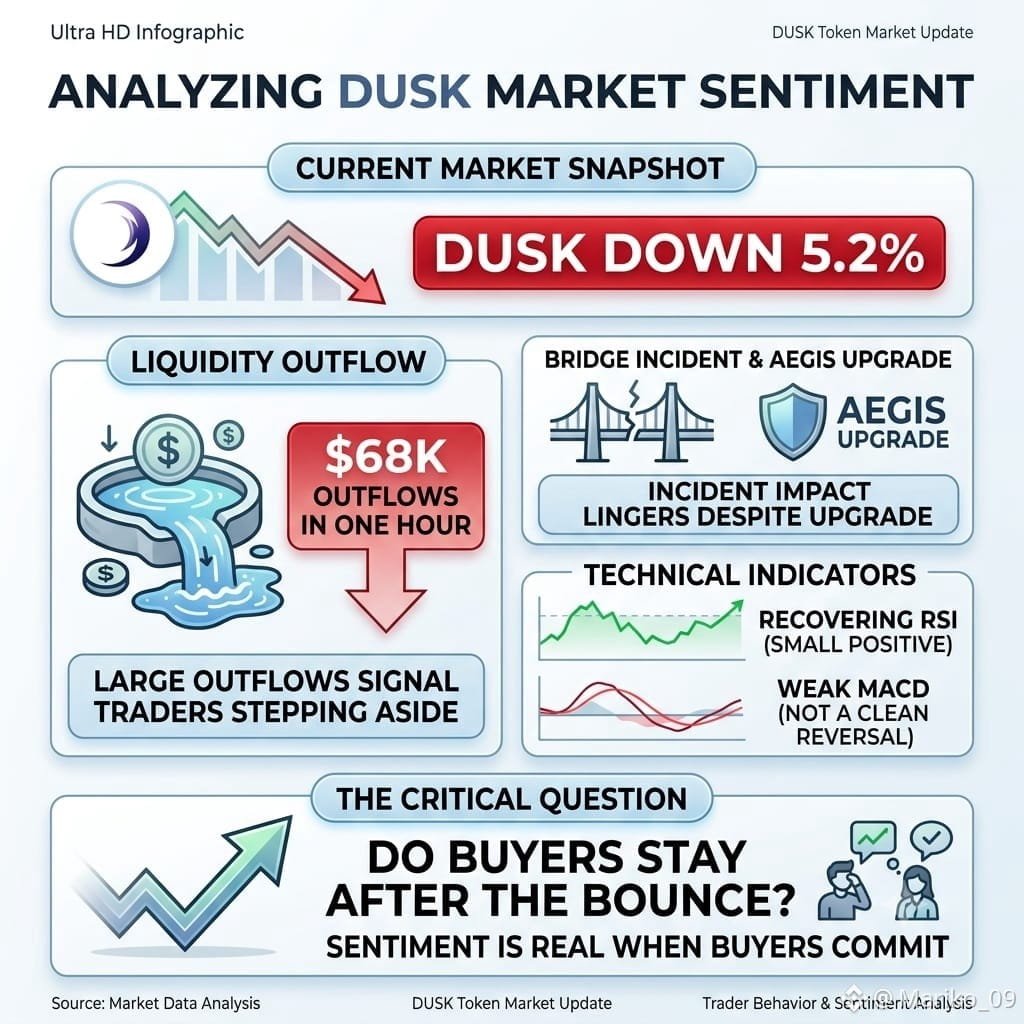
Le fait que DUSK soit en baisse de 5,2 % ne me surprend pas autant que la liquidité qui quitte le marché. Le fait de voir des sorties atteindre environ 68 000 $ en une heure raconte clairement l’histoire : certains traders préfèrent s’écarter plutôt que d’attendre un redressement du sentiment.
L’incident du pont semble toujours planer sur le graphique, même après la mise à niveau d’AEGIS. Le RSI qui remonte est un petit point positif, mais le MACD reste faible, donc je ne suis pas convaincu qu’il s’agisse encore d’une inversion nette.
Pour moi, le plus intéressant n’est pas de savoir si DUSK peut rebondir. C’est de savoir si les acheteurs restent réellement présents au moment du rebond. C’est là que le sentiment commence vraiment à se manifester.
@Dusk_Foundation #dusk $DUSK
{future}(DUSKUSDT)
Le fait que DUSK soit en baisse de 5,2 % ne me surprend pas autant que la liquidité qui quitte le marché. Le fait de voir des sorties atteindre environ 68 000 $ en une heure raconte clairement l’histoire : certains traders préfèrent s’écarter plutôt que d’attendre un redressement du sentiment.
L’incident du pont semble toujours planer sur le graphique, même après la mise à niveau d’AEGIS. Le RSI qui remonte est un petit point positif, mais le MACD reste faible, donc je ne suis pas convaincu qu’il s’agisse encore d’une inversion nette.
Pour moi, le plus intéressant n’est pas de savoir si DUSK peut rebondir. C’est de savoir si les acheteurs restent réellement présents au moment du rebond. C’est là que le sentiment commence vraiment à se manifester.
@Dusk #dusk $DUSK
L’incident du pont semble toujours planer sur le graphique, même après la mise à niveau d’AEGIS. Le RSI qui remonte est un petit point positif, mais le MACD reste faible, donc je ne suis pas convaincu qu’il s’agisse encore d’une inversion nette.
Pour moi, le plus intéressant n’est pas de savoir si DUSK peut rebondir. C’est de savoir si les acheteurs restent réellement présents au moment du rebond. C’est là que le sentiment commence vraiment à se manifester.
@Dusk #dusk $DUSK
97
·
--
Baissier
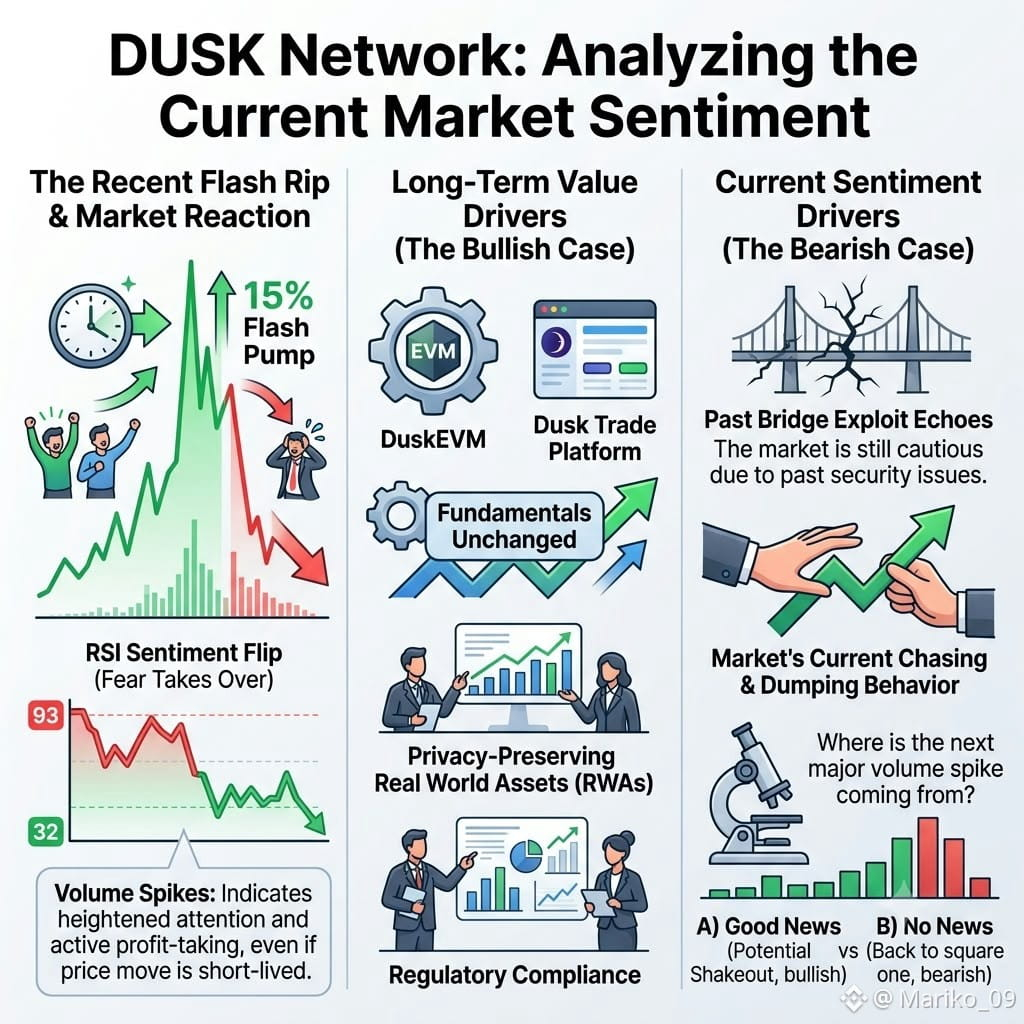
Je vais être honnête—j’ai regardé cette bougie DUSK se déchirer et ma première pensée a été : « enfin, le récit RWA se réveille. » Quinze pour cent en un flash, puis disparu aussi vite. Classique. Le volume a toutefois raconté la vraie histoire—les gens font attention, mais ils ont aussi peur. L’exploit du pont d’il y a des mois résonne encore dans chaque creux. Et voir le RSI chuter de 93 à 32, c’était comme assister à un retournement du sentiment en temps réel, pas parce que les fondamentaux ont changé, mais parce que les prises de profits ont senti du sang et ont couru. Les trucs de DuskEVM et la plateforme Trade sont de bonnes raisons de s’y intéresser sur le long terme, mais pour l’instant, le marché ne fait que courir après la tendance et vendre. Ce que je surveille vraiment, c’est d’où vient le prochain pic de volume—si ça arrive avec de bonnes nouvelles, peut-être que ce n’est qu’un assainissement. Si ça arrive sur rien, on repart de zéro. Dans tous les cas, l’intérêt institutionnel pour les RWA préservant la confidentialité ne disparaît nulle part. Il faut juste survivre au bruit.
@Dusk_Foundation #dusk $DUSK
{future}(DUSKUSDT)
Je vais être honnête—j’ai regardé cette bougie DUSK se déchirer et ma première pensée a été : « enfin, le récit RWA se réveille. » Quinze pour cent en un flash, puis disparu aussi vite. Classique. Le volume a toutefois raconté la vraie histoire—les gens font attention, mais ils ont aussi peur. L’exploit du pont d’il y a des mois résonne encore dans chaque creux. Et voir le RSI chuter de 93 à 32, c’était comme assister à un retournement du sentiment en temps réel, pas parce que les fondamentaux ont changé, mais parce que les prises de profits ont senti du sang et ont couru. Les trucs de DuskEVM et la plateforme Trade sont de bonnes raisons de s’y intéresser sur le long terme, mais pour l’instant, le marché ne fait que courir après la tendance et vendre. Ce que je surveille vraiment, c’est d’où vient le prochain pic de volume—si ça arrive avec de bonnes nouvelles, peut-être que ce n’est qu’un assainissement. Si ça arrive sur rien, on repart de zéro. Dans tous les cas, l’intérêt institutionnel pour les RWA préservant la confidentialité ne disparaît nulle part. Il faut juste survivre au bruit.
@Dusk #dusk $DUSK
@Dusk #dusk $DUSK
1
99
·
--
Haussier
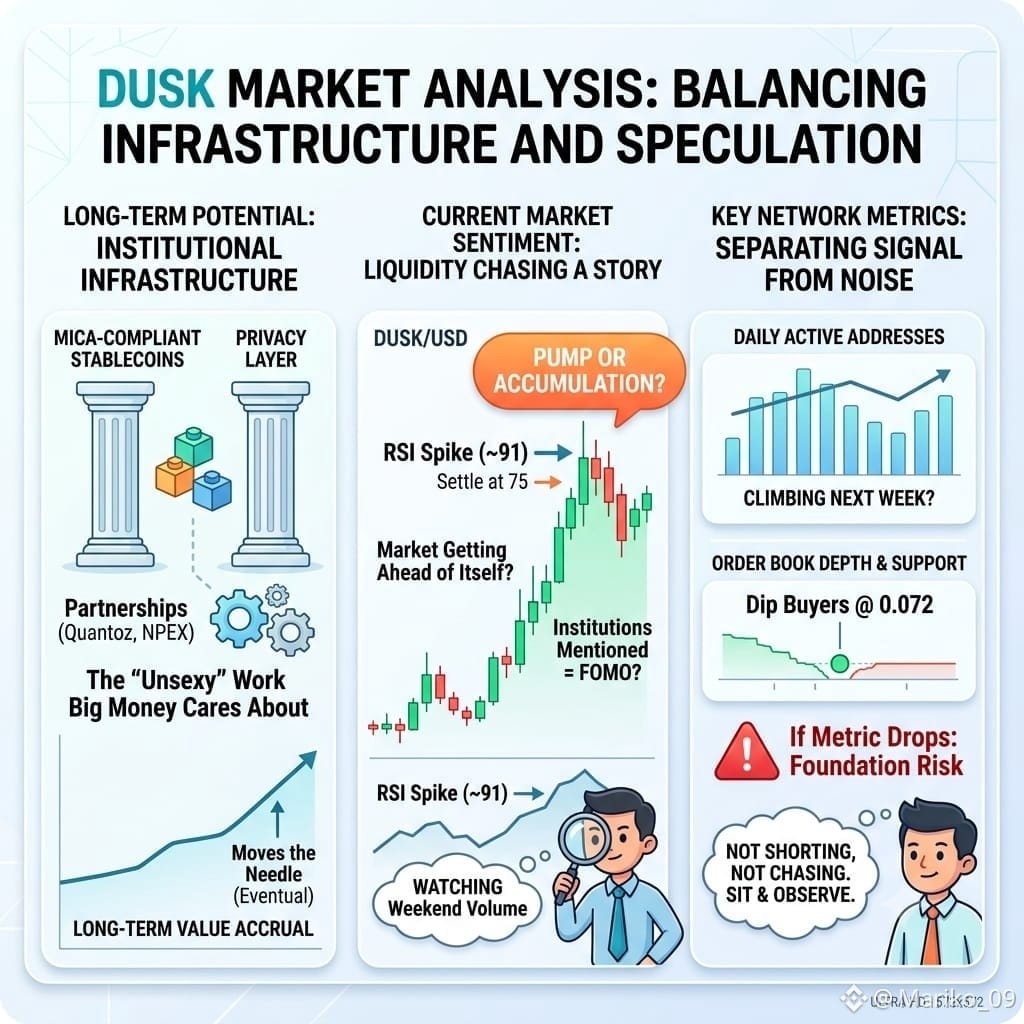
Regarder ce matin le carnet d’ordres de DUSK est plutôt fascinant, honnêtement. Les histoires de Quantoz et de NPEX, c’est exactement le genre de mécanique ennuyeuse mais nécessaire, celle qui fait réellement bouger les choses sur le long terme—des stablecoins conformes à la MiCA sur une couche de confidentialité ? C’est le travail peu glamour que la grosse finance finit par apprécier. Mais le graphique intègre déjà bien plus que ce qui s’est réellement passé jusque-là. Le pic du RSI à presque 91 avant de retomber à 75 me dit que la liquidité court après une histoire, pas qu’il y a accumulation organique. J’ai déjà vu ce scénario se reproduire trop de fois. Les acheteurs de la baisse tournent autour de 0.072, mais si les adresses actives quotidiennes ne commencent pas à grimper au cours de la semaine prochaine, tout ce mouvement commencera à ressembler à un pump sans fondation réelle. La technique est vraiment intéressante, je ne dis pas le contraire, mais le marché a tendance à partir en avance dès qu’on mentionne les institutions. Je ne le short pas, mais je n’y poursuis pas non plus. Je vais juste rester en retrait, observer comment le volume du week-end le traite, et essayer de distinguer le vrai signal de tout ce bruit.
@Dusk_Foundation #dusk $DUSK
{future}(DUSKUSDT)
Regarder ce matin le carnet d’ordres de DUSK est plutôt fascinant, honnêtement. Les histoires de Quantoz et de NPEX, c’est exactement le genre de mécanique ennuyeuse mais nécessaire, celle qui fait réellement bouger les choses sur le long terme—des stablecoins conformes à la MiCA sur une couche de confidentialité ? C’est le travail peu glamour que la grosse finance finit par apprécier. Mais le graphique intègre déjà bien plus que ce qui s’est réellement passé jusque-là. Le pic du RSI à presque 91 avant de retomber à 75 me dit que la liquidité court après une histoire, pas qu’il y a accumulation organique. J’ai déjà vu ce scénario se reproduire trop de fois. Les acheteurs de la baisse tournent autour de 0.072, mais si les adresses actives quotidiennes ne commencent pas à grimper au cours de la semaine prochaine, tout ce mouvement commencera à ressembler à un pump sans fondation réelle. La technique est vraiment intéressante, je ne dis pas le contraire, mais le marché a tendance à partir en avance dès qu’on mentionne les institutions. Je ne le short pas, mais je n’y poursuis pas non plus. Je vais juste rester en retrait, observer comment le volume du week-end le traite, et essayer de distinguer le vrai signal de tout ce bruit.
@Dusk #dusk $DUSK
@Dusk #dusk $DUSK
1
94
·
--
Haussier
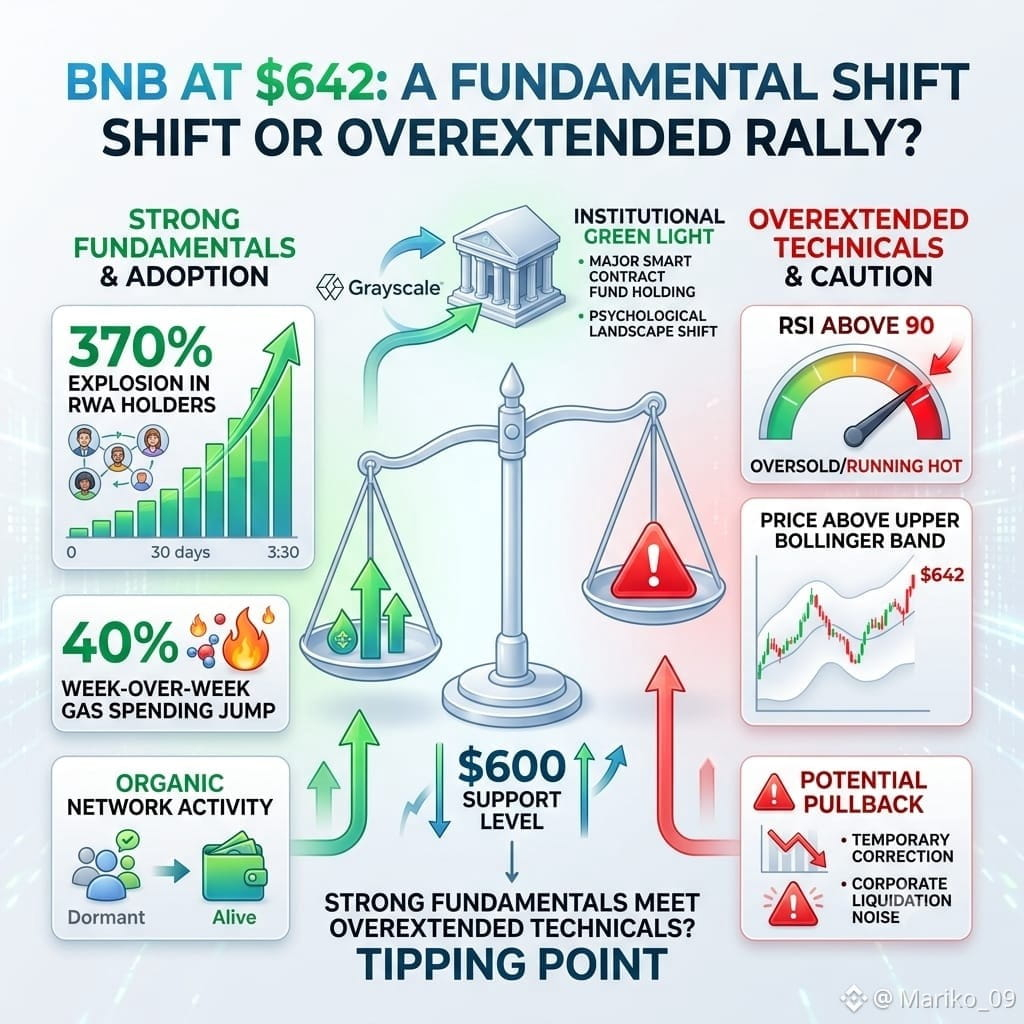
J’ai regardé BNB grimper jusqu’à 642 $ et, honnêtement, quelque chose dans ce mouvement me paraît différent du pump-and-chase habituel. Ce n’est pas seulement la hausse de 6,6 % qui me fait réfléchir : c’est ce qui se passe en dessous. L’explosion de 370 % chez les détenteurs de RWA sur le mois écoulé est folle. Ce ne sont pas des bots ni des portefeuilles vides : ce sont de vrais participants qui utilisent le réseau, et on le voit dans la hausse des dépenses en gas, qui bondissent de 40 % semaine après semaine. Des portefeuilles qui étaient inactifs se réveillent soudainement, et ce type d’activité organique a tendance à durer plus longtemps que le simple engouement.
Les nouvelles de Grayscale ont clairement donné aux institutions le feu vert qu’elles attendaient. Quand un acteur majeur fait de BNB son plus important Smart Contract Fund en termes d’encours, cela change toute la dynamique psychologique. D’autres fonds commencent à y faire attention, les évaluations des risques sont révisées, et d’un coup, l’argent resté sur le banc trouve une raison de bouger. Mais là, je dois avouer que je me fais un peu de souci. Le RSI est au-dessus de 90 et le prix est très au-dessus de la bande de Bollinger supérieure. J’ai déjà vu ce film, et il se termine généralement par au moins un repli temporaire. L’élan est réel, mais on dirait qu’on chauffe trop.
Il y a bien un peu de bruit autour d’une liquidation corporate qui ajouterait une pression vendeuse, mais ça paraît mineur par rapport à l’ensemble du tableau. Ce qui m’intéresse vraiment, c’est de savoir si on a atteint ce point de bascule où de solides fondamentaux rencontrent des indicateurs techniques trop étirés. Le récit est solide, les indicateurs d’adoption sont impressionnants, mais les marchés ont la manière de nous rappeler que rien ne se déplace en ligne droite. Je surveille la tenue du niveau des 600 $ si on assiste à une purge. Dans tous les cas, ça ressemble à un de ces moments où l’histoire sous-jacente compte plus que le mouvement de prix immédiat.
@Dusk_Foundation #dusk $DUSK
{future}(DUSKUSDT)
J’ai regardé BNB grimper jusqu’à 642 $ et, honnêtement, quelque chose dans ce mouvement me paraît différent du pump-and-chase habituel. Ce n’est pas seulement la hausse de 6,6 % qui me fait réfléchir : c’est ce qui se passe en dessous. L’explosion de 370 % chez les détenteurs de RWA sur le mois écoulé est folle. Ce ne sont pas des bots ni des portefeuilles vides : ce sont de vrais participants qui utilisent le réseau, et on le voit dans la hausse des dépenses en gas, qui bondissent de 40 % semaine après semaine. Des portefeuilles qui étaient inactifs se réveillent soudainement, et ce type d’activité organique a tendance à durer plus longtemps que le simple engouement.
Les nouvelles de Grayscale ont clairement donné aux institutions le feu vert qu’elles attendaient. Quand un acteur majeur fait de BNB son plus important Smart Contract Fund en termes d’encours, cela change toute la dynamique psychologique. D’autres fonds commencent à y faire attention, les évaluations des risques sont révisées, et d’un coup, l’argent resté sur le banc trouve une raison de bouger. Mais là, je dois avouer que je me fais un peu de souci. Le RSI est au-dessus de 90 et le prix est très au-dessus de la bande de Bollinger supérieure. J’ai déjà vu ce film, et il se termine généralement par au moins un repli temporaire. L’élan est réel, mais on dirait qu’on chauffe trop.
Il y a bien un peu de bruit autour d’une liquidation corporate qui ajouterait une pression vendeuse, mais ça paraît mineur par rapport à l’ensemble du tableau. Ce qui m’intéresse vraiment, c’est de savoir si on a atteint ce point de bascule où de solides fondamentaux rencontrent des indicateurs techniques trop étirés. Le récit est solide, les indicateurs d’adoption sont impressionnants, mais les marchés ont la manière de nous rappeler que rien ne se déplace en ligne droite. Je surveille la tenue du niveau des 600 $ si on assiste à une purge. Dans tous les cas, ça ressemble à un de ces moments où l’histoire sous-jacente compte plus que le mouvement de prix immédiat.
@Dusk #dusk $DUSK
Les nouvelles de Grayscale ont clairement donné aux institutions le feu vert qu’elles attendaient. Quand un acteur majeur fait de BNB son plus important Smart Contract Fund en termes d’encours, cela change toute la dynamique psychologique. D’autres fonds commencent à y faire attention, les évaluations des risques sont révisées, et d’un coup, l’argent resté sur le banc trouve une raison de bouger. Mais là, je dois avouer que je me fais un peu de souci. Le RSI est au-dessus de 90 et le prix est très au-dessus de la bande de Bollinger supérieure. J’ai déjà vu ce film, et il se termine généralement par au moins un repli temporaire. L’élan est réel, mais on dirait qu’on chauffe trop.
Il y a bien un peu de bruit autour d’une liquidation corporate qui ajouterait une pression vendeuse, mais ça paraît mineur par rapport à l’ensemble du tableau. Ce qui m’intéresse vraiment, c’est de savoir si on a atteint ce point de bascule où de solides fondamentaux rencontrent des indicateurs techniques trop étirés. Le récit est solide, les indicateurs d’adoption sont impressionnants, mais les marchés ont la manière de nous rappeler que rien ne se déplace en ligne droite. Je surveille la tenue du niveau des 600 $ si on assiste à une purge. Dans tous les cas, ça ressemble à un de ces moments où l’histoire sous-jacente compte plus que le mouvement de prix immédiat.
@Dusk #dusk $DUSK
85
·
--
Baissier
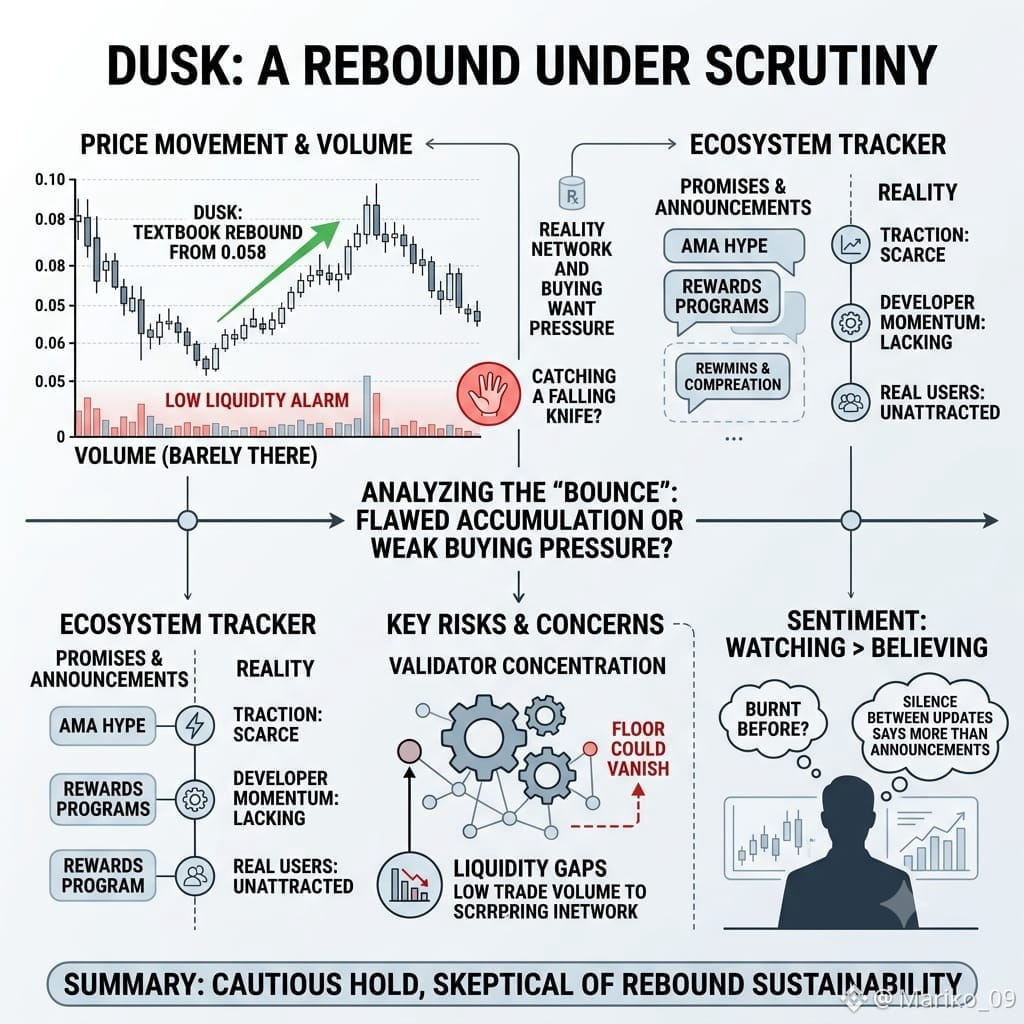
Je fixe DUSK toute la matinée, pas parce que je suis collé aux graphiques, mais parce que quelque chose dans ce rebond ne me paraît pas juste. Le recul depuis 0,058 semblait presque textbook, mais le volume est à peine là — j’ai l’impression que ce sont plutôt quelques traders qui attrapent une lame qui tombe que de vraies accumulations. Et oui, NPEX et Citadel sont des raisons valables de s’y intéresser, mais je continue à me poser la question : où est la liquidité ? Où est l’élan des développeurs ? À chaque fois que je fais défiler les mises à jour de l’écosystème, je vois des promesses mais pas grand-chose d’une traction réelle. Cette concentration de validateurs m’inquiète plus que n’importe quelle bougie rouge : un seul gros mouvement et ce plancher pourrait disparaître. Peut-être que je suis trop prudent, mais je me suis déjà fait avoir par des projets qui avaient l’air excellents sur le papier mais qui n’arrivaient pas à attirer de vrais utilisateurs. Le buzz des AMA et les programmes de récompenses, c’est bien, mais ce n’est pas suffisant pour me sentir en sécurité. Je tiens toujours un petit sac, mais honnêtement ? Je regarde plus que je n’y crois. Le silence entre les mises à jour en dit plus que les annonces elles-mêmes.
@Dusk_Foundation #dusk $DUSK
{future}(DUSKUSDT)
Je fixe DUSK toute la matinée, pas parce que je suis collé aux graphiques, mais parce que quelque chose dans ce rebond ne me paraît pas juste. Le recul depuis 0,058 semblait presque textbook, mais le volume est à peine là — j’ai l’impression que ce sont plutôt quelques traders qui attrapent une lame qui tombe que de vraies accumulations. Et oui, NPEX et Citadel sont des raisons valables de s’y intéresser, mais je continue à me poser la question : où est la liquidité ? Où est l’élan des développeurs ? À chaque fois que je fais défiler les mises à jour de l’écosystème, je vois des promesses mais pas grand-chose d’une traction réelle. Cette concentration de validateurs m’inquiète plus que n’importe quelle bougie rouge : un seul gros mouvement et ce plancher pourrait disparaître. Peut-être que je suis trop prudent, mais je me suis déjà fait avoir par des projets qui avaient l’air excellents sur le papier mais qui n’arrivaient pas à attirer de vrais utilisateurs. Le buzz des AMA et les programmes de récompenses, c’est bien, mais ce n’est pas suffisant pour me sentir en sécurité. Je tiens toujours un petit sac, mais honnêtement ? Je regarde plus que je n’y crois. Le silence entre les mises à jour en dit plus que les annonces elles-mêmes.
@Dusk #dusk $DUSK
@Dusk #dusk $DUSK
75
·
--
Baissier
Je me suis réveillé, j’ai vérifié DUSK, j’ai fait tout le rituel café et graphique. De retour en bas. Je ne vais pas prétendre que ça fait du bien, mais ce n’est pas non plus ce nœud dans le ventre. Tu sais quand une baisse ressemble à de la panique plutôt qu’à du simple bruit ? Celle-ci, c’est du bruit.
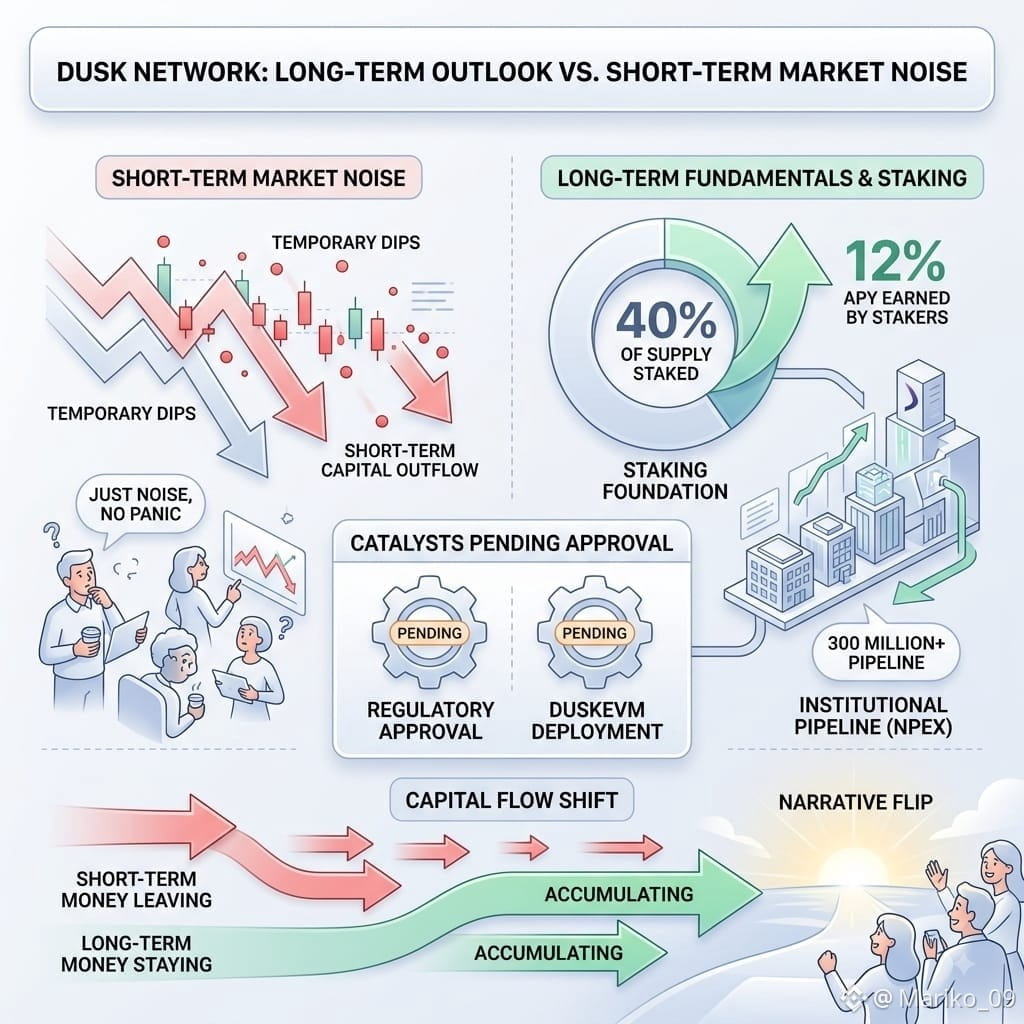
Ce qui me garde plutôt calme, c’est ce chiffre de mise—quarante pour cent de l’offre qui reste là, à gagner douze pour cent. Ces gens ne transpirent pas pour un mouvement de trois pour cent. Ils sont là pour le long jeu institutionnel, ce truc NPEX avec le pipeline de trois cents millions. C’est du concret.
Mais mon gars, l’approbation réglementaire ne peut pas arriver assez vite. Tout dépend d’elle, et on est juste coincés à attendre. Le DuskEVM est toujours en attente aussi. La tech de la confidentialité passe toujours par cette phase d’adolescence un peu gênante.
Les sorties ont fortement augmenté ce matin, puis se sont vite calmées. L’argent à court terme qui sort, l’argent à long terme qui reste. Je fais juste de l’observation, j’attends que le récit se retourne. C’est à ce moment-là que ça devient intéressant.
@Dusk_Foundation #dusk $DUSK
{future}(DUSKUSDT)
Je me suis réveillé, j’ai vérifié DUSK, j’ai fait tout le rituel café et graphique. De retour en bas. Je ne vais pas prétendre que ça fait du bien, mais ce n’est pas non plus ce nœud dans le ventre. Tu sais quand une baisse ressemble à de la panique plutôt qu’à du simple bruit ? Celle-ci, c’est du bruit.
Ce qui me garde plutôt calme, c’est ce chiffre de mise—quarante pour cent de l’offre qui reste là, à gagner douze pour cent. Ces gens ne transpirent pas pour un mouvement de trois pour cent. Ils sont là pour le long jeu institutionnel, ce truc NPEX avec le pipeline de trois cents millions. C’est du concret.
Mais mon gars, l’approbation réglementaire ne peut pas arriver assez vite. Tout dépend d’elle, et on est juste coincés à attendre. Le DuskEVM est toujours en attente aussi. La tech de la confidentialité passe toujours par cette phase d’adolescence un peu gênante.
Les sorties ont fortement augmenté ce matin, puis se sont vite calmées. L’argent à court terme qui sort, l’argent à long terme qui reste. Je fais juste de l’observation, j’attends que le récit se retourne. C’est à ce moment-là que ça devient intéressant.
@Dusk #dusk $DUSK
Ce qui me garde plutôt calme, c’est ce chiffre de mise—quarante pour cent de l’offre qui reste là, à gagner douze pour cent. Ces gens ne transpirent pas pour un mouvement de trois pour cent. Ils sont là pour le long jeu institutionnel, ce truc NPEX avec le pipeline de trois cents millions. C’est du concret.
Mais mon gars, l’approbation réglementaire ne peut pas arriver assez vite. Tout dépend d’elle, et on est juste coincés à attendre. Le DuskEVM est toujours en attente aussi. La tech de la confidentialité passe toujours par cette phase d’adolescence un peu gênante.
Les sorties ont fortement augmenté ce matin, puis se sont vite calmées. L’argent à court terme qui sort, l’argent à long terme qui reste. Je fais juste de l’observation, j’attends que le récit se retourne. C’est à ce moment-là que ça devient intéressant.
@Dusk #dusk $DUSK
1
1
89
·
--
Haussier
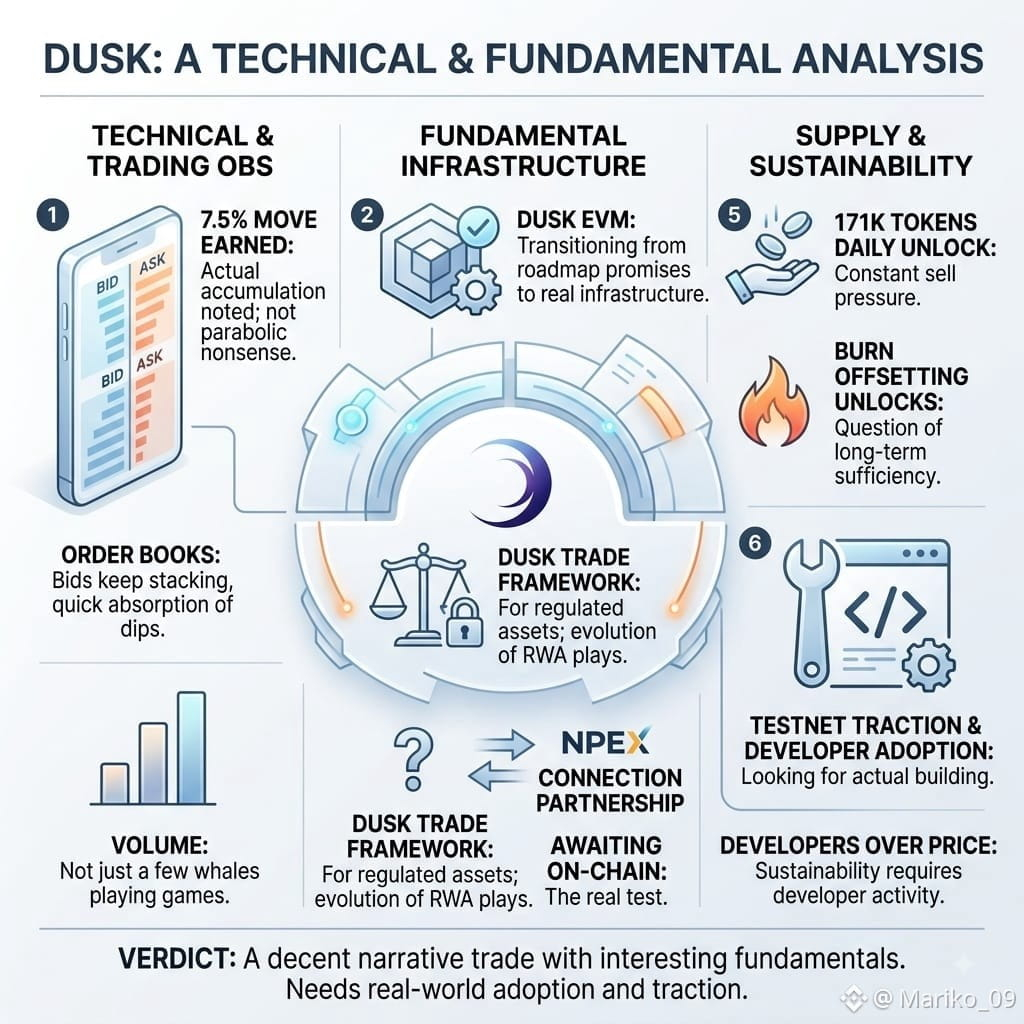
Je regardais les carnets d’ordres sur DUSK plus tôt et honnêtement, le mouvement de +7,5 % m’a semblé mérité. Pas cette sorte de nonsense parabolique qu’on voit parfois, mais une accumulation réelle. Les ordres d’achat continuaient de s’empiler, et chaque repli était absorbé assez rapidement. Ce qui a attiré mon attention, c’est le volume derrière — ce n’était pas juste quelques baleines qui jouent.
Les éléments de DuskEVM commencent enfin à ressembler à une infrastructure concrète plutôt qu’à de simples promesses de feuille de route. Ce cadre « Dusk Trade » pour les actifs réglementés ? Il me fait réfléchir à la façon dont ces opérations liées aux RWA pourraient évoluer. Mais voilà : je reviens sans cesse au lien avec NPEX. L’accord existe, bien sûr, mais j’attends encore de voir un volume significatif réellement transféré on-chain. C’est le vrai test.
Ce déblocage quotidien d’environ 171K tokens me trotte dans la tête. Pas un dealbreaker, loin de là, mais c’est bien là, en ajoutant une couche de pression vendeuse constante. La combustion (burn) aide à compenser une partie de ça, même si je me demande si c’est suffisant sur le long terme.
En vérité, je suis plus curieux de ce que les développeurs construisent que par le mouvement du prix, pour l’instant. Montrez-moi une vraie traction sur le testnet, et ensuite on pourra parler de la durabilité. D’ici là, c’est une opportunité de trading basée sur une narration correcte, avec quelques fondamentaux intéressants. La structure est là. Maintenant, il faut juste voir si quelqu’un se présente vraiment.
@Dusk_Foundation #dusk $DUSK
{future}(DUSKUSDT)
Je regardais les carnets d’ordres sur DUSK plus tôt et honnêtement, le mouvement de +7,5 % m’a semblé mérité. Pas cette sorte de nonsense parabolique qu’on voit parfois, mais une accumulation réelle. Les ordres d’achat continuaient de s’empiler, et chaque repli était absorbé assez rapidement. Ce qui a attiré mon attention, c’est le volume derrière — ce n’était pas juste quelques baleines qui jouent.
Les éléments de DuskEVM commencent enfin à ressembler à une infrastructure concrète plutôt qu’à de simples promesses de feuille de route. Ce cadre « Dusk Trade » pour les actifs réglementés ? Il me fait réfléchir à la façon dont ces opérations liées aux RWA pourraient évoluer. Mais voilà : je reviens sans cesse au lien avec NPEX. L’accord existe, bien sûr, mais j’attends encore de voir un volume significatif réellement transféré on-chain. C’est le vrai test.
Ce déblocage quotidien d’environ 171K tokens me trotte dans la tête. Pas un dealbreaker, loin de là, mais c’est bien là, en ajoutant une couche de pression vendeuse constante. La combustion (burn) aide à compenser une partie de ça, même si je me demande si c’est suffisant sur le long terme.
En vérité, je suis plus curieux de ce que les développeurs construisent que par le mouvement du prix, pour l’instant. Montrez-moi une vraie traction sur le testnet, et ensuite on pourra parler de la durabilité. D’ici là, c’est une opportunité de trading basée sur une narration correcte, avec quelques fondamentaux intéressants. La structure est là. Maintenant, il faut juste voir si quelqu’un se présente vraiment.
@Dusk #dusk $DUSK
Les éléments de DuskEVM commencent enfin à ressembler à une infrastructure concrète plutôt qu’à de simples promesses de feuille de route. Ce cadre « Dusk Trade » pour les actifs réglementés ? Il me fait réfléchir à la façon dont ces opérations liées aux RWA pourraient évoluer. Mais voilà : je reviens sans cesse au lien avec NPEX. L’accord existe, bien sûr, mais j’attends encore de voir un volume significatif réellement transféré on-chain. C’est le vrai test.
Ce déblocage quotidien d’environ 171K tokens me trotte dans la tête. Pas un dealbreaker, loin de là, mais c’est bien là, en ajoutant une couche de pression vendeuse constante. La combustion (burn) aide à compenser une partie de ça, même si je me demande si c’est suffisant sur le long terme.
En vérité, je suis plus curieux de ce que les développeurs construisent que par le mouvement du prix, pour l’instant. Montrez-moi une vraie traction sur le testnet, et ensuite on pourra parler de la durabilité. D’ici là, c’est une opportunité de trading basée sur une narration correcte, avec quelques fondamentaux intéressants. La structure est là. Maintenant, il faut juste voir si quelqu’un se présente vraiment.
@Dusk #dusk $DUSK
78
·
--
Haussier
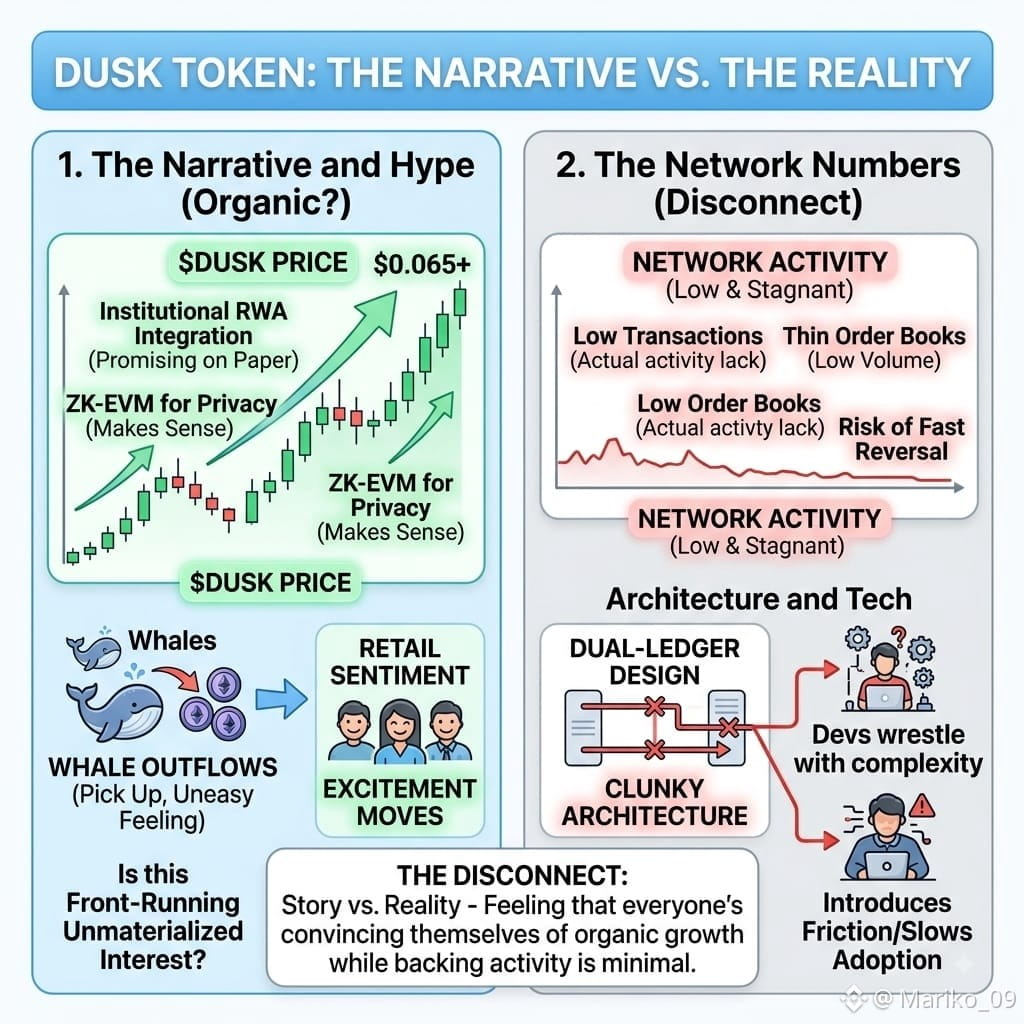
Je regarde le graphique DUSK grimper jusqu’à 0,065 $ et franchement, on dirait que tout le monde essaie de se convaincre que c’est « organique ». Le récit RWA fait vraiment le gros du travail en ce moment, et oui, cette histoire d’intégration institutionnelle semble prometteuse sur le papier. Mais quand je creuse les chiffres réels du réseau, il ne se passe tout simplement pas grand-chose en dessous.
Ce qui m’agace, c’est le décalage entre l’histoire et la réalité. Les améliorations technologiques sont bien là — les éléments EVM propulsés par ZK ont du sens pour la confidentialité — mais cette conception à double registre donne encore une impression de maladresse. J’ai été impliqué dans assez de projets pour savoir que l’architecture ajoute de la friction, et que cela ralentit tout. Les développeurs ne veulent pas devoir lutter contre la complexité juste pour construire.
Ce sont surtout les mouvements des baleines qui attirent mon attention. Voir ces sorties augmenter pendant que le retail s’enthousiasme pour l’élan narratif… ça me met mal à l’aise. Des carnets d’ordres minces et un faible volume signifient que cela pourrait s’inverser rapidement si le sentiment change. Je me demande sans cesse si on se contente d’anticiper l’intérêt institutionnel, qui n’a pas encore vraiment eu le temps de se matérialiser. Honnêtement, je me sentirais mieux s’il y avait plus d’activité réelle qui étaye ce prix, plutôt que de la simple espérance et une bonne histoire.
@Dusk_Foundation #dusk $DUSK
{future}(DUSKUSDT)
Je regarde le graphique DUSK grimper jusqu’à 0,065 $ et franchement, on dirait que tout le monde essaie de se convaincre que c’est « organique ». Le récit RWA fait vraiment le gros du travail en ce moment, et oui, cette histoire d’intégration institutionnelle semble prometteuse sur le papier. Mais quand je creuse les chiffres réels du réseau, il ne se passe tout simplement pas grand-chose en dessous.
Ce qui m’agace, c’est le décalage entre l’histoire et la réalité. Les améliorations technologiques sont bien là — les éléments EVM propulsés par ZK ont du sens pour la confidentialité — mais cette conception à double registre donne encore une impression de maladresse. J’ai été impliqué dans assez de projets pour savoir que l’architecture ajoute de la friction, et que cela ralentit tout. Les développeurs ne veulent pas devoir lutter contre la complexité juste pour construire.
Ce sont surtout les mouvements des baleines qui attirent mon attention. Voir ces sorties augmenter pendant que le retail s’enthousiasme pour l’élan narratif… ça me met mal à l’aise. Des carnets d’ordres minces et un faible volume signifient que cela pourrait s’inverser rapidement si le sentiment change. Je me demande sans cesse si on se contente d’anticiper l’intérêt institutionnel, qui n’a pas encore vraiment eu le temps de se matérialiser. Honnêtement, je me sentirais mieux s’il y avait plus d’activité réelle qui étaye ce prix, plutôt que de la simple espérance et une bonne histoire.
@Dusk #dusk $DUSK
Ce qui m’agace, c’est le décalage entre l’histoire et la réalité. Les améliorations technologiques sont bien là — les éléments EVM propulsés par ZK ont du sens pour la confidentialité — mais cette conception à double registre donne encore une impression de maladresse. J’ai été impliqué dans assez de projets pour savoir que l’architecture ajoute de la friction, et que cela ralentit tout. Les développeurs ne veulent pas devoir lutter contre la complexité juste pour construire.
Ce sont surtout les mouvements des baleines qui attirent mon attention. Voir ces sorties augmenter pendant que le retail s’enthousiasme pour l’élan narratif… ça me met mal à l’aise. Des carnets d’ordres minces et un faible volume signifient que cela pourrait s’inverser rapidement si le sentiment change. Je me demande sans cesse si on se contente d’anticiper l’intérêt institutionnel, qui n’a pas encore vraiment eu le temps de se matérialiser. Honnêtement, je me sentirais mieux s’il y avait plus d’activité réelle qui étaye ce prix, plutôt que de la simple espérance et une bonne histoire.
@Dusk #dusk $DUSK
107
·
--
Haussier
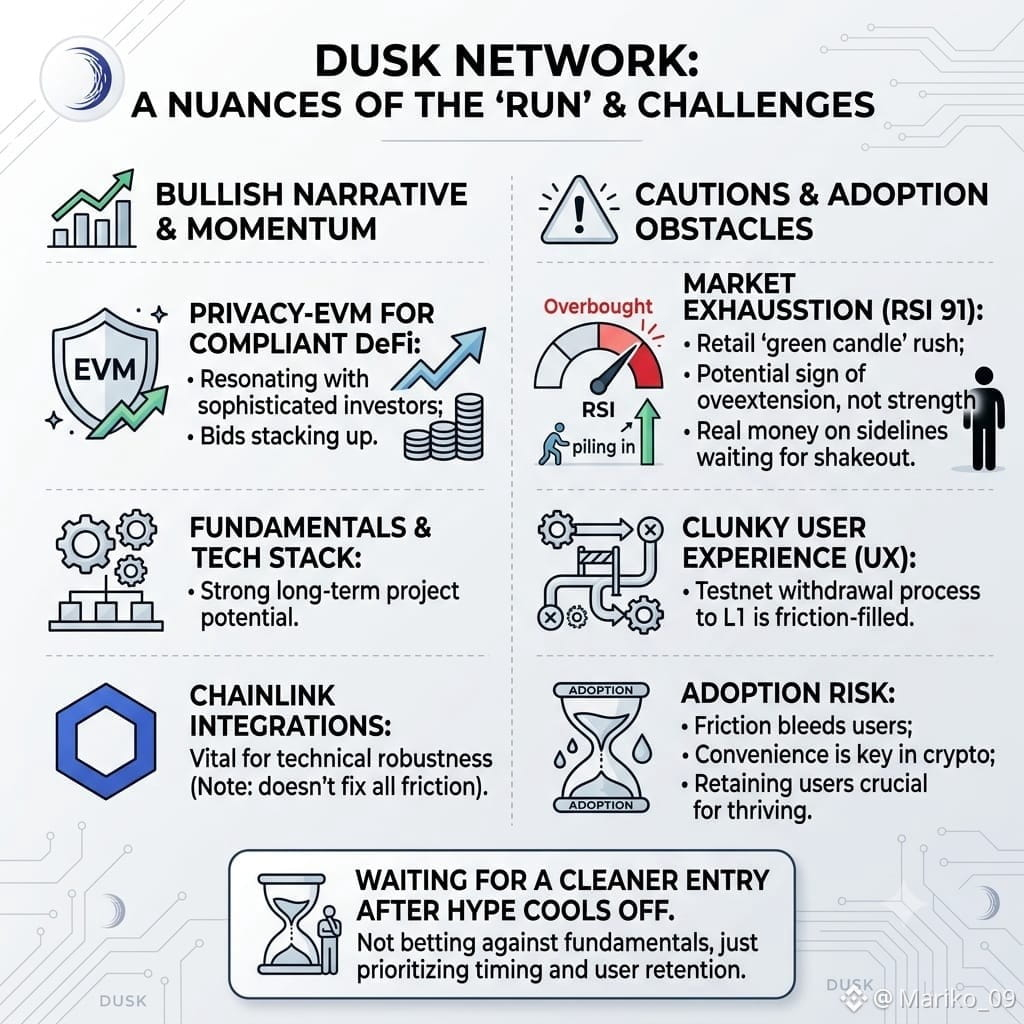
J’observe DUSK toute la semaine et quelque chose dans cette séquence de hausse semble différent. Le récit « privacy-EVM » est enfin en train de faire tilt auprès de personnes qui comprennent vraiment à quoi pourrait ressembler une DeFi conforme, et on le voit dans la façon dont les offres s’empilent. Mais voilà le hic : le RSI qui a touché 91 n’était pas un signe de force, c’était un signe d’épuisement. Les investisseurs particuliers affluent parce que les bougies vertes sont jolies, mais l’argent « sérieux » est probablement en retrait, en attente du repli inévitable.
Ce qui continue à me travailler, ce n’est pourtant pas le mouvement des prix : c’est l’expérience utilisateur. Le processus de retrait depuis le testnet vers le L1 est vraiment peu fluide, et dans un secteur où la commodité règne, cela va faire fuir l’adoption. Les intégrations Chainlink sont excellentes pour la pile technique, mais elles ne réduisent pas les frictions. Si l’équipe ne s’en occupe pas rapidement, nous pourrions voir un projet vraiment intéressant avoir du mal à conserver les utilisateurs mêmes dont il a besoin pour prospérer. Je ne parie pas contre les fondamentaux : je fais simplement attendre une entrée plus propre, le temps que l’euphorie retombe un peu.
@Dusk_Foundation #dusk $DUSK
{future}(DUSKUSDT)
J’observe DUSK toute la semaine et quelque chose dans cette séquence de hausse semble différent. Le récit « privacy-EVM » est enfin en train de faire tilt auprès de personnes qui comprennent vraiment à quoi pourrait ressembler une DeFi conforme, et on le voit dans la façon dont les offres s’empilent. Mais voilà le hic : le RSI qui a touché 91 n’était pas un signe de force, c’était un signe d’épuisement. Les investisseurs particuliers affluent parce que les bougies vertes sont jolies, mais l’argent « sérieux » est probablement en retrait, en attente du repli inévitable.
Ce qui continue à me travailler, ce n’est pourtant pas le mouvement des prix : c’est l’expérience utilisateur. Le processus de retrait depuis le testnet vers le L1 est vraiment peu fluide, et dans un secteur où la commodité règne, cela va faire fuir l’adoption. Les intégrations Chainlink sont excellentes pour la pile technique, mais elles ne réduisent pas les frictions. Si l’équipe ne s’en occupe pas rapidement, nous pourrions voir un projet vraiment intéressant avoir du mal à conserver les utilisateurs mêmes dont il a besoin pour prospérer. Je ne parie pas contre les fondamentaux : je fais simplement attendre une entrée plus propre, le temps que l’euphorie retombe un peu.
@Dusk #dusk $DUSK
Ce qui continue à me travailler, ce n’est pourtant pas le mouvement des prix : c’est l’expérience utilisateur. Le processus de retrait depuis le testnet vers le L1 est vraiment peu fluide, et dans un secteur où la commodité règne, cela va faire fuir l’adoption. Les intégrations Chainlink sont excellentes pour la pile technique, mais elles ne réduisent pas les frictions. Si l’équipe ne s’en occupe pas rapidement, nous pourrions voir un projet vraiment intéressant avoir du mal à conserver les utilisateurs mêmes dont il a besoin pour prospérer. Je ne parie pas contre les fondamentaux : je fais simplement attendre une entrée plus propre, le temps que l’euphorie retombe un peu.
@Dusk #dusk $DUSK
76
·
--
Baissier
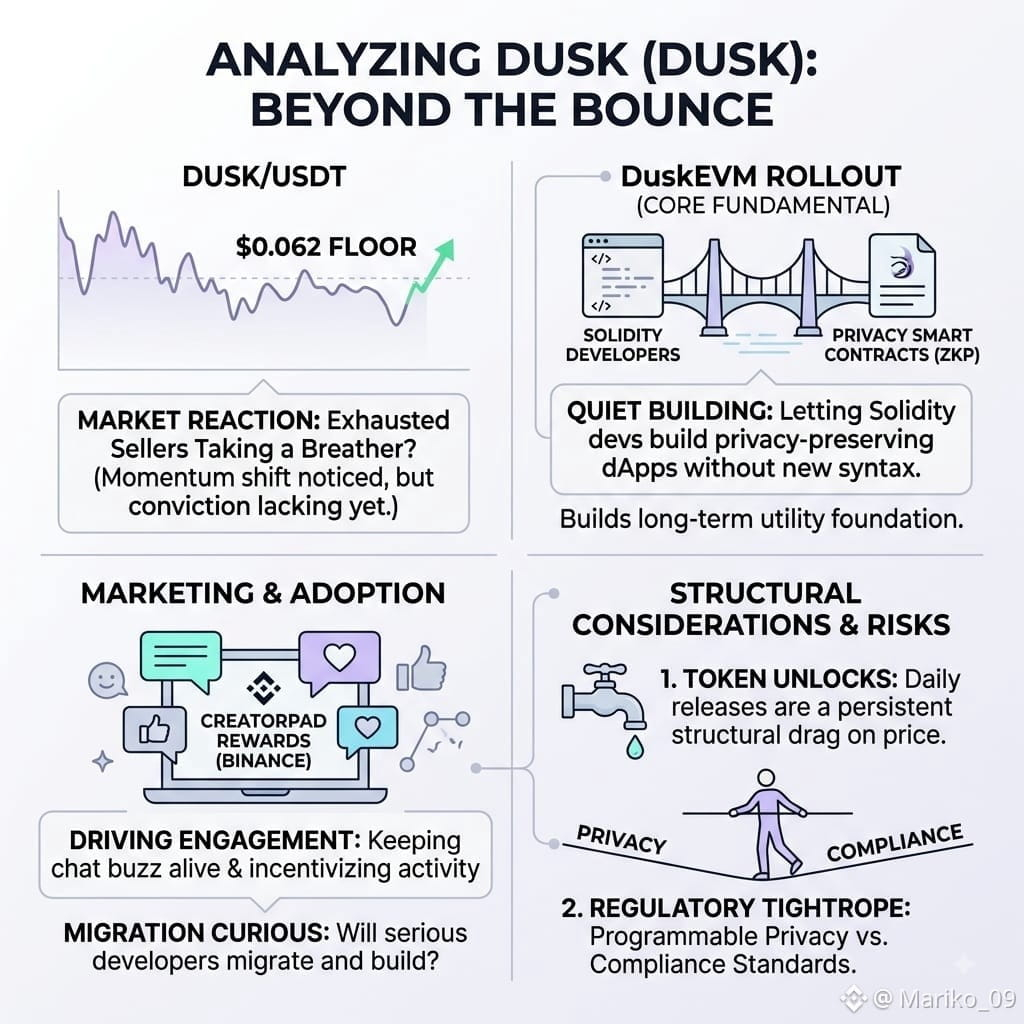
J’ai bien vu ce rebond sur le plancher de 0,062$, et franchement, ça ressemble davantage à des vendeurs épuisés qui prennent une pause qu’à une vague massive de conviction fraîche pour l’instant. Cela dit, le changement de momentum était assez net pour attirer l’attention. Le déploiement de DuskEVM, c’est vraiment le cœur du sujet : enfin, il permet à la communauté Solidity d’expérimenter la confidentialité sans avoir à apprendre une syntaxe totalement nouvelle. Ce sont justement ce type de travaux fondamentaux, plutôt discrets, qui construisent une base—même s’ils ne déclenchent pas de pompe immédiate. Le fait que Binance ajoute des récompenses CreatorPad, c’est clairement une manœuvre pour garder les salons vivants, mais je suis surtout curieux de savoir si des développeurs sérieux vont réellement migrer. Les déblocages quotidiens de tokens constituent une contrainte structurelle en douceur, et tout le récit de la confidentialité programmable marche toujours sur un fil, avec la conformité, ce qui rend le profil de risque intéressant. Pour l’instant, je reste là, campé à regarder l’activité on-chain. La vraie utilité prend toujours beaucoup de temps à se prouver, mais les briques de départ sont enfin là.
@Dusk_Foundation #dusk $DUSK
{future}(DUSKUSDT)
J’ai bien vu ce rebond sur le plancher de 0,062$, et franchement, ça ressemble davantage à des vendeurs épuisés qui prennent une pause qu’à une vague massive de conviction fraîche pour l’instant. Cela dit, le changement de momentum était assez net pour attirer l’attention. Le déploiement de DuskEVM, c’est vraiment le cœur du sujet : enfin, il permet à la communauté Solidity d’expérimenter la confidentialité sans avoir à apprendre une syntaxe totalement nouvelle. Ce sont justement ce type de travaux fondamentaux, plutôt discrets, qui construisent une base—même s’ils ne déclenchent pas de pompe immédiate. Le fait que Binance ajoute des récompenses CreatorPad, c’est clairement une manœuvre pour garder les salons vivants, mais je suis surtout curieux de savoir si des développeurs sérieux vont réellement migrer. Les déblocages quotidiens de tokens constituent une contrainte structurelle en douceur, et tout le récit de la confidentialité programmable marche toujours sur un fil, avec la conformité, ce qui rend le profil de risque intéressant. Pour l’instant, je reste là, campé à regarder l’activité on-chain. La vraie utilité prend toujours beaucoup de temps à se prouver, mais les briques de départ sont enfin là.
@Dusk #dusk $DUSK
@Dusk #dusk $DUSK
69

·
--
Article
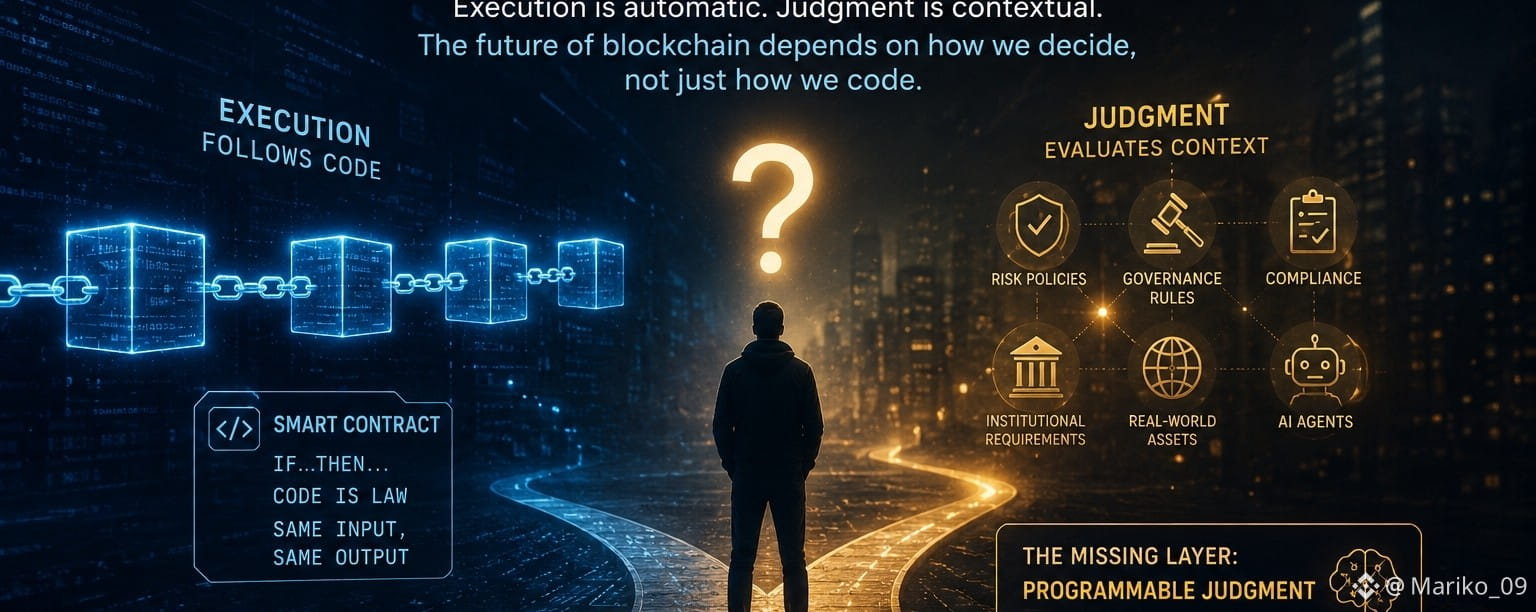
Au-delà du code : la pièce manquante de la blockchainPlus je lis à propos du protocole Newton, plus je me surprends à penser à quelque chose que je n’avais jamais vraiment remis en question auparavant. On dit souvent que la blockchain repose sur la confiance, parce que les contrats intelligents s’exécutent exactement comme ils sont écrits. C’est vrai — mais je ne pense pas que l’exécution soit toute l’histoire, aujourd’hui.
Ce qui ne cesse de me revenir à l’esprit, c’est une question beaucoup plus simple : le fait qu’une chose puisse arriver en chaîne (on-chain) signifie-t-il toujours qu’elle doit arriver ?
Cette question semble étonnamment importante.
La blockchain a accompli un travail incroyable en rendant l’exécution prévisible. Chaque nœud suit les mêmes règles, chaque transaction est traitée de la même façon, et personne n’a à dépendre d’une autorité centrale pour s’assurer que les accords sont respectés. Cette constance fait partie des principales raisons pour lesquelles cette technologie a autant progressé.
Au-delà du code : la pièce manquante de la blockchain
Plus je lis à propos du protocole Newton, plus je me surprends à penser à quelque chose que je n’avais jamais vraiment remis en question auparavant. On dit souvent que la blockchain repose sur la confiance, parce que les contrats intelligents s’exécutent exactement comme ils sont écrits. C’est vrai — mais je ne pense pas que l’exécution soit toute l’histoire, aujourd’hui.
Ce qui ne cesse de me revenir à l’esprit, c’est une question beaucoup plus simple : le fait qu’une chose puisse arriver en chaîne (on-chain) signifie-t-il toujours qu’elle doit arriver ?
Cette question semble étonnamment importante.
La blockchain a accompli un travail incroyable en rendant l’exécution prévisible. Chaque nœud suit les mêmes règles, chaque transaction est traitée de la même façon, et personne n’a à dépendre d’une autorité centrale pour s’assurer que les accords sont respectés. Cette constance fait partie des principales raisons pour lesquelles cette technologie a autant progressé.
Ce qui ne cesse de me revenir à l’esprit, c’est une question beaucoup plus simple : le fait qu’une chose puisse arriver en chaîne (on-chain) signifie-t-il toujours qu’elle doit arriver ?
Cette question semble étonnamment importante.
La blockchain a accompli un travail incroyable en rendant l’exécution prévisible. Chaque nœud suit les mêmes règles, chaque transaction est traitée de la même façon, et personne n’a à dépendre d’une autorité centrale pour s’assurer que les accords sont respectés. Cette constance fait partie des principales raisons pour lesquelles cette technologie a autant progressé.
2
1
71
·
--
@NewtonProtocol Tout le monde parle de la manière dont l’IA deviendra de plus en plus intelligente dans la cryptomonnaie, mais je pense que le débat le plus important concerne le contrôle.
Après avoir passé des années à observer différents cycles de marché, j’ai compris que la technologie ne “casse” généralement pas parce qu’elle manque d’intelligence. Elle se brise quand des systèmes sont confiés à davantage d’autorité qu’ils n’ont été conçus pour gérer. Chaque faille majeure renforce la même leçon : l’automatisation seule ne suffit pas. La vraie confiance naît de limites claires, de règles transparentes et d’autorisations qu’il est impossible d’abuser facilement.
C’est pourquoi le protocole Newton est resté dans mon radar. Ce qui m’intéresse ne tient pas seulement à sa vision d’une automatisation alimentée par l’IA, mais aussi à la façon dont il aborde des autorisations sécurisées et programmables pour les agents d’IA qui interagissent avec des actifs, des applications et des transactions on-chain. Dans un espace où les incitations changent rapidement, avoir des frontières définies est tout aussi important qu’avoir des algorithmes plus performants.
À mesure que l’IA prendra une place croissante dans la finance décentralisée, je ne pense pas que la réussite dépendra de l’agent capable d’exécuter le plus de tâches. Elle dépendra plutôt de savoir si ces agents sont limités à faire uniquement ce qu’ils ont été explicitement autorisés à faire.
La cryptomonnaie a toujours récompensé une conception solide des incitations plus que de bonnes intentions. L’intelligence peut ouvrir de nouvelles possibilités, mais sans une couche d’autorisations fiable, elle ne crée pas automatiquement la confiance. Avec le temps, les projets qui durent sont généralement ceux qui privilégient la sécurité et la résilience plutôt que de courir après l’excitation à court terme.
C’est pourquoi je continuerai à suivre le protocole Newton. Le vrai test n’est pas le discours : c’est de savoir si son approche axée sur les autorisations résiste quand de vrais utilisateurs, de vrais capitaux et de véritables incitations de marché la mettent sous pression.
#newt $NEWT
@NewtonProtocol Tout le monde parle de la manière dont l’IA deviendra de plus en plus intelligente dans la cryptomonnaie, mais je pense que le débat le plus important concerne le contrôle.
Après avoir passé des années à observer différents cycles de marché, j’ai compris que la technologie ne “casse” généralement pas parce qu’elle manque d’intelligence. Elle se brise quand des systèmes sont confiés à davantage d’autorité qu’ils n’ont été conçus pour gérer. Chaque faille majeure renforce la même leçon : l’automatisation seule ne suffit pas. La vraie confiance naît de limites claires, de règles transparentes et d’autorisations qu’il est impossible d’abuser facilement.
C’est pourquoi le protocole Newton est resté dans mon radar. Ce qui m’intéresse ne tient pas seulement à sa vision d’une automatisation alimentée par l’IA, mais aussi à la façon dont il aborde des autorisations sécurisées et programmables pour les agents d’IA qui interagissent avec des actifs, des applications et des transactions on-chain. Dans un espace où les incitations changent rapidement, avoir des frontières définies est tout aussi important qu’avoir des algorithmes plus performants.
À mesure que l’IA prendra une place croissante dans la finance décentralisée, je ne pense pas que la réussite dépendra de l’agent capable d’exécuter le plus de tâches. Elle dépendra plutôt de savoir si ces agents sont limités à faire uniquement ce qu’ils ont été explicitement autorisés à faire.
La cryptomonnaie a toujours récompensé une conception solide des incitations plus que de bonnes intentions. L’intelligence peut ouvrir de nouvelles possibilités, mais sans une couche d’autorisations fiable, elle ne crée pas automatiquement la confiance. Avec le temps, les projets qui durent sont généralement ceux qui privilégient la sécurité et la résilience plutôt que de courir après l’excitation à court terme.
C’est pourquoi je continuerai à suivre le protocole Newton. Le vrai test n’est pas le discours : c’est de savoir si son approche axée sur les autorisations résiste quand de vrais utilisateurs, de vrais capitaux et de véritables incitations de marché la mettent sous pression.
#newt $NEWT
Après avoir passé des années à observer différents cycles de marché, j’ai compris que la technologie ne “casse” généralement pas parce qu’elle manque d’intelligence. Elle se brise quand des systèmes sont confiés à davantage d’autorité qu’ils n’ont été conçus pour gérer. Chaque faille majeure renforce la même leçon : l’automatisation seule ne suffit pas. La vraie confiance naît de limites claires, de règles transparentes et d’autorisations qu’il est impossible d’abuser facilement.
C’est pourquoi le protocole Newton est resté dans mon radar. Ce qui m’intéresse ne tient pas seulement à sa vision d’une automatisation alimentée par l’IA, mais aussi à la façon dont il aborde des autorisations sécurisées et programmables pour les agents d’IA qui interagissent avec des actifs, des applications et des transactions on-chain. Dans un espace où les incitations changent rapidement, avoir des frontières définies est tout aussi important qu’avoir des algorithmes plus performants.
À mesure que l’IA prendra une place croissante dans la finance décentralisée, je ne pense pas que la réussite dépendra de l’agent capable d’exécuter le plus de tâches. Elle dépendra plutôt de savoir si ces agents sont limités à faire uniquement ce qu’ils ont été explicitement autorisés à faire.
La cryptomonnaie a toujours récompensé une conception solide des incitations plus que de bonnes intentions. L’intelligence peut ouvrir de nouvelles possibilités, mais sans une couche d’autorisations fiable, elle ne crée pas automatiquement la confiance. Avec le temps, les projets qui durent sont généralement ceux qui privilégient la sécurité et la résilience plutôt que de courir après l’excitation à court terme.
C’est pourquoi je continuerai à suivre le protocole Newton. Le vrai test n’est pas le discours : c’est de savoir si son approche axée sur les autorisations résiste quand de vrais utilisateurs, de vrais capitaux et de véritables incitations de marché la mettent sous pression.
#newt $NEWT
72
·
--
Réflexions sur $NEWT : Parfois, le marché raconte une histoire différente de celle de la technologieJ’ai beaucoup réfléchi à $NEWT a au cours de cette semaine, et une idée revient sans cesse. La technologie et le marché racontent, semble-t-il, deux histoires différentes.
Quand j’ai commencé à lire sur Newton, ce qui a surtout retenu mon attention, c’était l’infrastructure. Une exécution d’IA sécurisée, des environnements de confiance, l’application des politiques et l’automatisation semblaient être le genre de fondation dont l’IA aura éventuellement besoin. Il est facile de comprendre pourquoi les gens s’enthousiasment pour cette vision : elle résout des problèmes qui pourraient devenir beaucoup plus importants au cours des prochaines années.
Réflexions sur $NEWT : Parfois, le marché raconte une histoire différente de celle de la technologie
J’ai beaucoup réfléchi à $NEWT a au cours de cette semaine, et une idée revient sans cesse. La technologie et le marché racontent, semble-t-il, deux histoires différentes.
Quand j’ai commencé à lire sur Newton, ce qui a surtout retenu mon attention, c’était l’infrastructure. Une exécution d’IA sécurisée, des environnements de confiance, l’application des politiques et l’automatisation semblaient être le genre de fondation dont l’IA aura éventuellement besoin. Il est facile de comprendre pourquoi les gens s’enthousiasment pour cette vision : elle résout des problèmes qui pourraient devenir beaucoup plus importants au cours des prochaines années.
Quand j’ai commencé à lire sur Newton, ce qui a surtout retenu mon attention, c’était l’infrastructure. Une exécution d’IA sécurisée, des environnements de confiance, l’application des politiques et l’automatisation semblaient être le genre de fondation dont l’IA aura éventuellement besoin. Il est facile de comprendre pourquoi les gens s’enthousiasment pour cette vision : elle résout des problèmes qui pourraient devenir beaucoup plus importants au cours des prochaines années.
2
1
76
·
--
En pensant à $NEWT cette semaine, une chose semble plus importante que le récit du livre blanc : Binance qui l’a discrètement ajouté au programme de prêt VIP à peu près au même moment où il planait juste à 9,5 % au-dessus de son plus bas historique du 26 juin, à 0,04512 $. Ça ressemble à ce genre de mise en place qui façonne réellement l’action des prix en ce moment.
L’infrastructure elle-même pourrait être réelle. Je ne doute pas des TEEs, des politiques Rego, ni de la couche de conformité décrite dans la documentation. Mais le marché ne réagit pas autant à la théorie qu’à la mécanique de l’offre, aux déblocages, à la plomberie des échanges et aux inscriptions dans le programme de prêt. C’est là que le volume provient, et c’est ce qui attire les gros titres cette semaine.
L’histoire des “agents qui font un travail réel” me paraît encore plus promise que prouvée. Peut-être que c’est normal pour un token d’infrastructure avant que l’adoption ne se manifeste vraiment. L’ingénierie financière d’abord, l’utilité ensuite, si elle arrive un jour. Ou peut-être que l’écart entre “la conformité sous forme de code” et “voici la mise à jour de la paire de trading” est, pour l’instant, toute l’histoire.
Quelqu’un a-t-il réellement une transaction de production en direct montrant un contrôle de politique en action, ou est-ce qu’on observe surtout le token ?
#newt $NEWT @NewtonProtocol
En pensant à $NEWT cette semaine, une chose semble plus importante que le récit du livre blanc : Binance qui l’a discrètement ajouté au programme de prêt VIP à peu près au même moment où il planait juste à 9,5 % au-dessus de son plus bas historique du 26 juin, à 0,04512 $. Ça ressemble à ce genre de mise en place qui façonne réellement l’action des prix en ce moment.
L’infrastructure elle-même pourrait être réelle. Je ne doute pas des TEEs, des politiques Rego, ni de la couche de conformité décrite dans la documentation. Mais le marché ne réagit pas autant à la théorie qu’à la mécanique de l’offre, aux déblocages, à la plomberie des échanges et aux inscriptions dans le programme de prêt. C’est là que le volume provient, et c’est ce qui attire les gros titres cette semaine.
L’histoire des “agents qui font un travail réel” me paraît encore plus promise que prouvée. Peut-être que c’est normal pour un token d’infrastructure avant que l’adoption ne se manifeste vraiment. L’ingénierie financière d’abord, l’utilité ensuite, si elle arrive un jour. Ou peut-être que l’écart entre “la conformité sous forme de code” et “voici la mise à jour de la paire de trading” est, pour l’instant, toute l’histoire.
Quelqu’un a-t-il réellement une transaction de production en direct montrant un contrôle de politique en action, ou est-ce qu’on observe surtout le token ?
#newt $NEWT @NewtonProtocol
L’infrastructure elle-même pourrait être réelle. Je ne doute pas des TEEs, des politiques Rego, ni de la couche de conformité décrite dans la documentation. Mais le marché ne réagit pas autant à la théorie qu’à la mécanique de l’offre, aux déblocages, à la plomberie des échanges et aux inscriptions dans le programme de prêt. C’est là que le volume provient, et c’est ce qui attire les gros titres cette semaine.
L’histoire des “agents qui font un travail réel” me paraît encore plus promise que prouvée. Peut-être que c’est normal pour un token d’infrastructure avant que l’adoption ne se manifeste vraiment. L’ingénierie financière d’abord, l’utilité ensuite, si elle arrive un jour. Ou peut-être que l’écart entre “la conformité sous forme de code” et “voici la mise à jour de la paire de trading” est, pour l’instant, toute l’histoire.
Quelqu’un a-t-il réellement une transaction de production en direct montrant un contrôle de politique en action, ou est-ce qu’on observe surtout le token ?
#newt $NEWT @NewtonProtocol
4
1
76
·
--
Je ne poursuis plus chaque “pump” — je fais davantage attention à ce qui est construit en coulisses.
C’est pourquoi l’intégration Human Passport avec @NewtonProtocol a vraiment attiré mon attention.
Pour moi, ce n’est pas vraiment une question d’identité numérique. Il s’agit de rendre la crypto plus équitable pour les utilisateurs réels. Quiconque a déjà participé à un airdrop sait à quel point c’est frustrant de devoir rivaliser avec des milliers de portefeuilles Sybil et des fermes de bots.
Ce que j’aime, c’est que Newton n’impose pas un seul modèle d’identité à tout le monde. Les développeurs peuvent combiner Stamps, Model API Score pour l’analyse comportementale, et Proof of Clean Hands avec une confidentialité préservée par preuves à divulgation nulle (zero-knowledge), en fonction de ce que leur application a réellement besoin.
La couche de politique programmable est une autre raison pour laquelle je la surveille. Au lieu de réécrire des smart contracts chaque fois que les exigences changent, les créateurs peuvent ajuster plus facilement les règles de vérification. Ça ressemble à une solution pragmatique, surtout à mesure que les agents IA deviennent plus actifs dans DeFi.
Je ne dis pas que c’est parfait. Aucun système de sécurité ne l’est. Mais si cela rend le bot farming à grande échelle plus difficile et donne aux développeurs des outils de confiance plus flexibles, alors c’est déjà un pas significatif dans la bonne direction.
Désormais, je m’intéresse moins au battage médiatique et davantage à savoir si les projets adoptent réellement cette technologie. S’ils le font, Newton pourrait finir par devenir l’un de ces éléments d’infrastructure qui alimentent discrètement la prochaine génération de crypto.
@NewtonProtocol #Newt $NEWT
Je ne poursuis plus chaque “pump” — je fais davantage attention à ce qui est construit en coulisses.
C’est pourquoi l’intégration Human Passport avec @NewtonProtocol a vraiment attiré mon attention.
Pour moi, ce n’est pas vraiment une question d’identité numérique. Il s’agit de rendre la crypto plus équitable pour les utilisateurs réels. Quiconque a déjà participé à un airdrop sait à quel point c’est frustrant de devoir rivaliser avec des milliers de portefeuilles Sybil et des fermes de bots.
Ce que j’aime, c’est que Newton n’impose pas un seul modèle d’identité à tout le monde. Les développeurs peuvent combiner Stamps, Model API Score pour l’analyse comportementale, et Proof of Clean Hands avec une confidentialité préservée par preuves à divulgation nulle (zero-knowledge), en fonction de ce que leur application a réellement besoin.
La couche de politique programmable est une autre raison pour laquelle je la surveille. Au lieu de réécrire des smart contracts chaque fois que les exigences changent, les créateurs peuvent ajuster plus facilement les règles de vérification. Ça ressemble à une solution pragmatique, surtout à mesure que les agents IA deviennent plus actifs dans DeFi.
Je ne dis pas que c’est parfait. Aucun système de sécurité ne l’est. Mais si cela rend le bot farming à grande échelle plus difficile et donne aux développeurs des outils de confiance plus flexibles, alors c’est déjà un pas significatif dans la bonne direction.
Désormais, je m’intéresse moins au battage médiatique et davantage à savoir si les projets adoptent réellement cette technologie. S’ils le font, Newton pourrait finir par devenir l’un de ces éléments d’infrastructure qui alimentent discrètement la prochaine génération de crypto.
@NewtonProtocol #Newt $NEWT
C’est pourquoi l’intégration Human Passport avec @NewtonProtocol a vraiment attiré mon attention.
Pour moi, ce n’est pas vraiment une question d’identité numérique. Il s’agit de rendre la crypto plus équitable pour les utilisateurs réels. Quiconque a déjà participé à un airdrop sait à quel point c’est frustrant de devoir rivaliser avec des milliers de portefeuilles Sybil et des fermes de bots.
Ce que j’aime, c’est que Newton n’impose pas un seul modèle d’identité à tout le monde. Les développeurs peuvent combiner Stamps, Model API Score pour l’analyse comportementale, et Proof of Clean Hands avec une confidentialité préservée par preuves à divulgation nulle (zero-knowledge), en fonction de ce que leur application a réellement besoin.
La couche de politique programmable est une autre raison pour laquelle je la surveille. Au lieu de réécrire des smart contracts chaque fois que les exigences changent, les créateurs peuvent ajuster plus facilement les règles de vérification. Ça ressemble à une solution pragmatique, surtout à mesure que les agents IA deviennent plus actifs dans DeFi.
Je ne dis pas que c’est parfait. Aucun système de sécurité ne l’est. Mais si cela rend le bot farming à grande échelle plus difficile et donne aux développeurs des outils de confiance plus flexibles, alors c’est déjà un pas significatif dans la bonne direction.
Désormais, je m’intéresse moins au battage médiatique et davantage à savoir si les projets adoptent réellement cette technologie. S’ils le font, Newton pourrait finir par devenir l’un de ces éléments d’infrastructure qui alimentent discrètement la prochaine génération de crypto.
@NewtonProtocol #Newt $NEWT
84
Connectez-vous pour découvrir plus de contenu
Rejoignez la communauté mondiale des adeptes de cryptomonnaies sur Binance Square
⚡️ Suviez les dernières informations importantes sur les cryptomonnaies.
💬 Jugé digne de confiance par la plus grande plateforme d’échange de cryptomonnaies au monde.
👍 Découvrez les connaissances que partagent les créateurs vérifiés.
Adresse e-mail/Nº de téléphone