

Wendy 1
244 Publications

Wendy 1
Signaler
Bloquer l’utilisateur
🇻🇳 Verified Binance Square & CoinmarketCap | Research | Insight | Onchain | DM for Collab & Promo @wendyr9
0 Suivis
0 Abonnés
0 J’aime
Publications
·
--
Voir la traduction
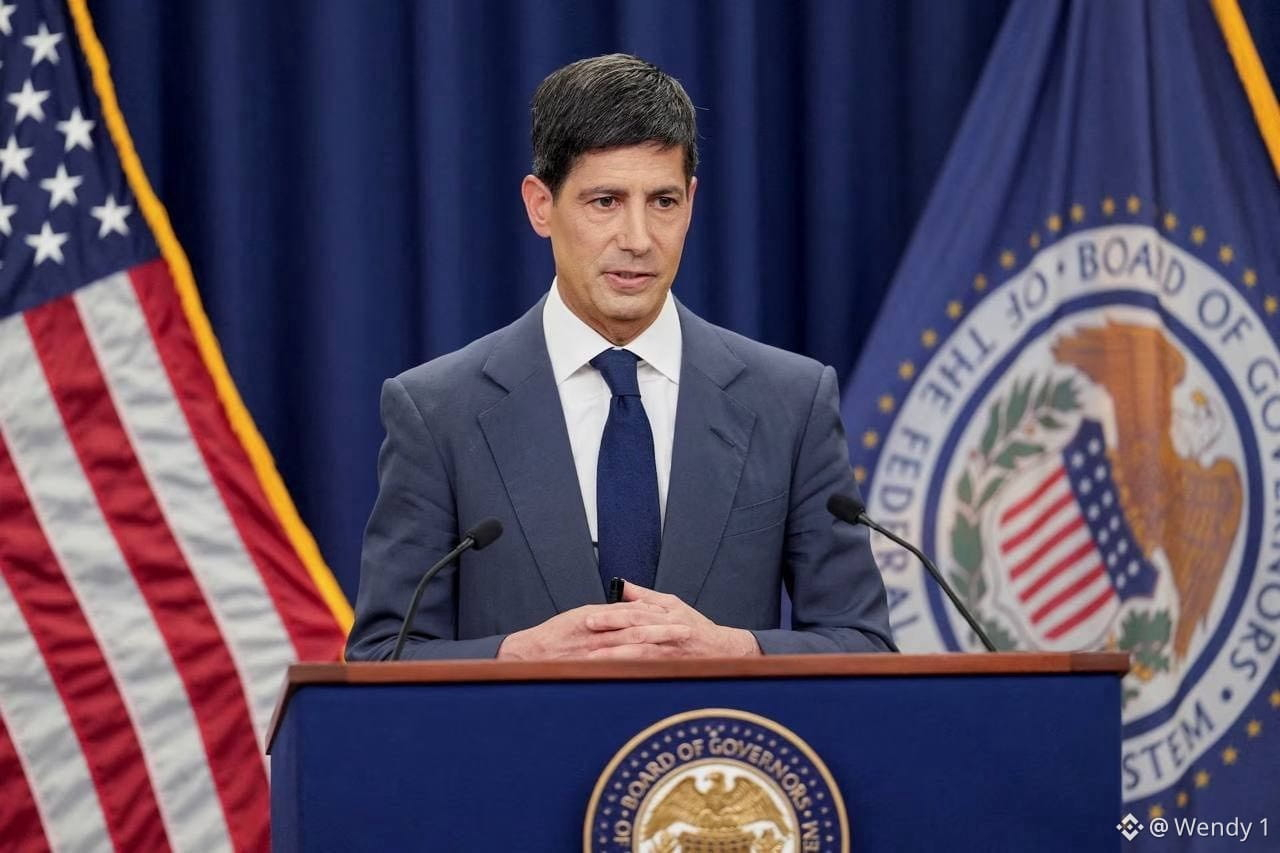
🚨 BREAKING: U.S. JOB GROWTH JUST COLLAPSED!
Non-Farm Payrolls: 29K vs 90K expected
The U.S. economy added far fewer jobs than expected in September.
The labor market is cooling fast.
$BTC
🚨 BREAKING: U.S. JOB GROWTH JUST COLLAPSED!
Non-Farm Payrolls: 29K vs 90K expected
The U.S. economy added far fewer jobs than expected in September.
The labor market is cooling fast.
$BTC
Non-Farm Payrolls: 29K vs 90K expected
The U.S. economy added far fewer jobs than expected in September.
The labor market is cooling fast.
$BTC
55
·
--
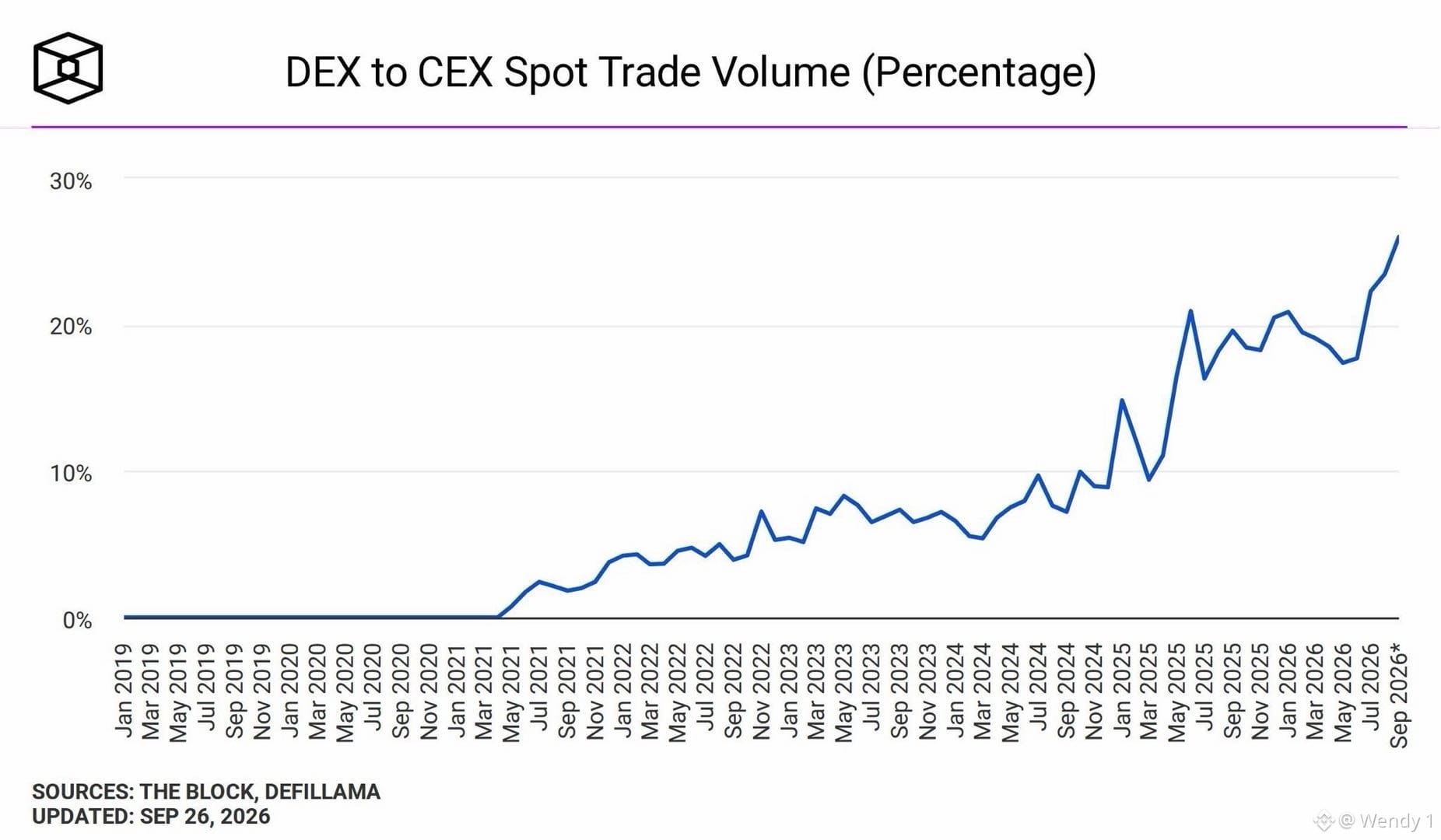
Les DEX prennent une part de marché sérieuse aux CEX ! 📈
🔹 Le volume spot des DEX représente désormais ~26% du volume spot des CEX
🔹 En hausse par rapport à ~10% à la fin 2024
🔹 En hausse par rapport à quelques pourcents seulement il y a quelques années
Le trading on-chain n’est plus une niche !
Il devient une partie essentielle de la structure du marché crypto. 👏
Les DEX prennent une part de marché sérieuse aux CEX ! 📈
🔹 Le volume spot des DEX représente désormais ~26% du volume spot des CEX
🔹 En hausse par rapport à ~10% à la fin 2024
🔹 En hausse par rapport à quelques pourcents seulement il y a quelques années
Le trading on-chain n’est plus une niche !
Il devient une partie essentielle de la structure du marché crypto. 👏
🔹 Le volume spot des DEX représente désormais ~26% du volume spot des CEX
🔹 En hausse par rapport à ~10% à la fin 2024
🔹 En hausse par rapport à quelques pourcents seulement il y a quelques années
Le trading on-chain n’est plus une niche !
Il devient une partie essentielle de la structure du marché crypto. 👏
61
·
--
🚨 AVERTISSEMENT :
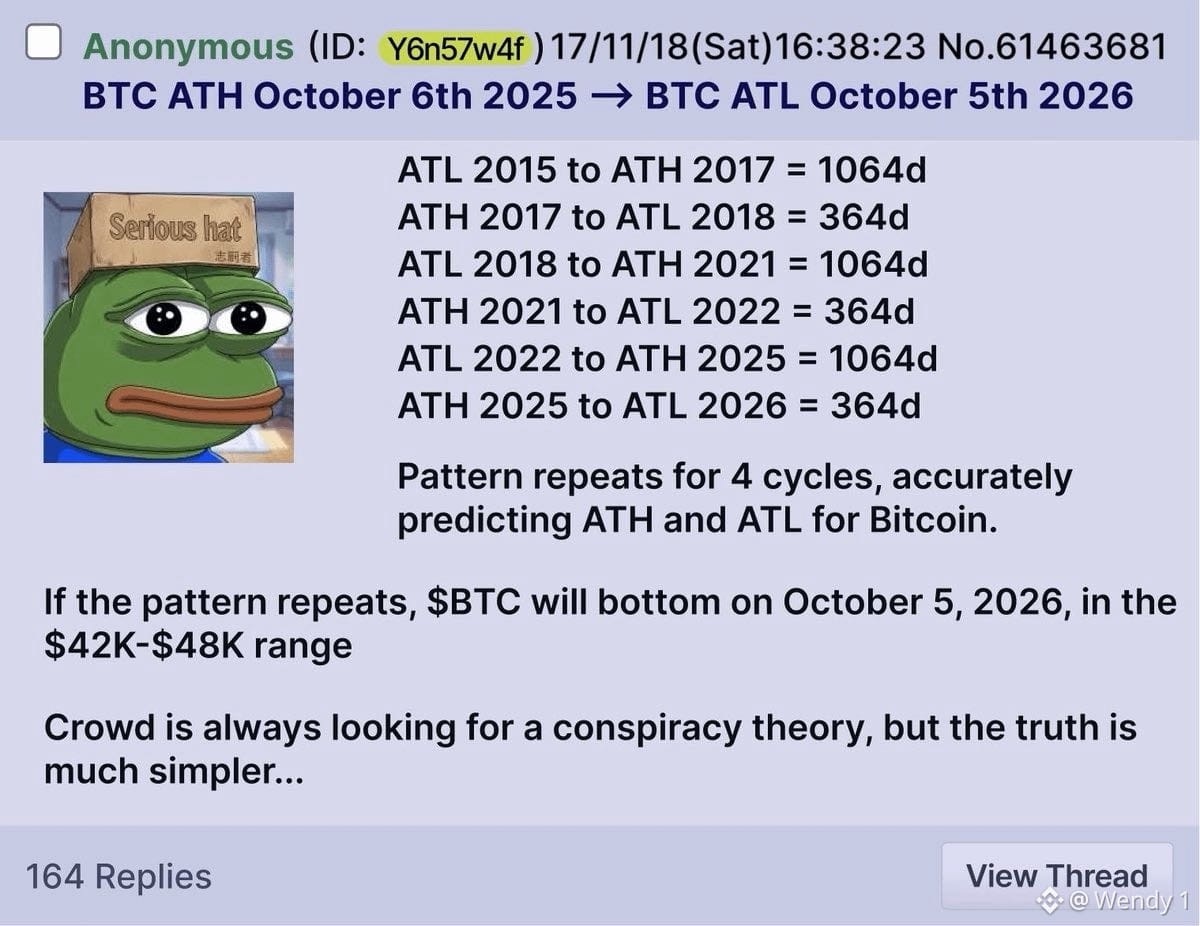
Un anonyme de 4chan qui a parfaitement identifié tous les creux de $BTC depuis 2015 vient de refaire surface
Son analyse : un dernier “secouage” avant l’impression du vrai plus bas
Fenêtre : ~10 jours
Voici pourquoi le timing n’est pas délirant 👇
Les creux de cycle se produisent 12 à 13 mois après le sommet (ATH), comme sur des roulettes :
- Sommet 2013 → creux janvier 2015
- Sommet 2017 → creux décembre 2018
- Sommet 2021 → creux novembre 2022
Le ATH de ce cycle : 126K le 6 octobre 2025
+12 mois = oct.-nov. 2026. Exactement dans sa fenêtre
Et la dernière étape n’est jamais douce
Décembre 2018 et la purge FTX en novembre 2022 se sont toutes deux terminées par une mèche de capitulation violente qui a balayé les investisseurs longs tardifs
En ce moment, le prix se situe dans la zone des 80K
Rebond brutal depuis le creux de juin vers ~61,5K, mais encore ~33 % en dessous de l’ATH
Rebond de soulagement ou calme avant la dernière purge ?
Si le schéma se répète, le “rug” se fera au moment exact où CT repasse haussier
Êtes-vous prêt(e) pour ça ? 👇
🚨 AVERTISSEMENT :
Un anonyme de 4chan qui a parfaitement identifié tous les creux de $BTC depuis 2015 vient de refaire surface
Son analyse : un dernier “secouage” avant l’impression du vrai plus bas
Fenêtre : ~10 jours
Voici pourquoi le timing n’est pas délirant 👇
Les creux de cycle se produisent 12 à 13 mois après le sommet (ATH), comme sur des roulettes :
- Sommet 2013 → creux janvier 2015
- Sommet 2017 → creux décembre 2018
- Sommet 2021 → creux novembre 2022
Le ATH de ce cycle : 126K le 6 octobre 2025
+12 mois = oct.-nov. 2026. Exactement dans sa fenêtre
Et la dernière étape n’est jamais douce
Décembre 2018 et la purge FTX en novembre 2022 se sont toutes deux terminées par une mèche de capitulation violente qui a balayé les investisseurs longs tardifs
En ce moment, le prix se situe dans la zone des 80K
Rebond brutal depuis le creux de juin vers ~61,5K, mais encore ~33 % en dessous de l’ATH
Rebond de soulagement ou calme avant la dernière purge ?
Si le schéma se répète, le “rug” se fera au moment exact où CT repasse haussier
Êtes-vous prêt(e) pour ça ? 👇
Un anonyme de 4chan qui a parfaitement identifié tous les creux de $BTC depuis 2015 vient de refaire surface
Son analyse : un dernier “secouage” avant l’impression du vrai plus bas
Fenêtre : ~10 jours
Voici pourquoi le timing n’est pas délirant 👇
Les creux de cycle se produisent 12 à 13 mois après le sommet (ATH), comme sur des roulettes :
- Sommet 2013 → creux janvier 2015
- Sommet 2017 → creux décembre 2018
- Sommet 2021 → creux novembre 2022
Le ATH de ce cycle : 126K le 6 octobre 2025
+12 mois = oct.-nov. 2026. Exactement dans sa fenêtre
Et la dernière étape n’est jamais douce
Décembre 2018 et la purge FTX en novembre 2022 se sont toutes deux terminées par une mèche de capitulation violente qui a balayé les investisseurs longs tardifs
En ce moment, le prix se situe dans la zone des 80K
Rebond brutal depuis le creux de juin vers ~61,5K, mais encore ~33 % en dessous de l’ATH
Rebond de soulagement ou calme avant la dernière purge ?
Si le schéma se répète, le “rug” se fera au moment exact où CT repasse haussier
Êtes-vous prêt(e) pour ça ? 👇
56
·
--
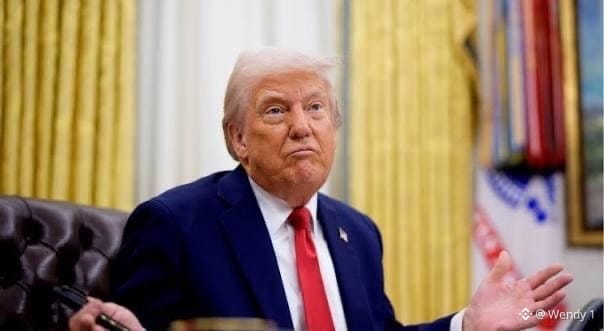
🚨 LA FABRICATION AMÉRICAINE CONTINUE DE S’EXPANDER.
Le PMI manufacturier de l’ISM s’est établi à 54,5, marquant le 9e mois consécutif au-dessus de 50.
Mais les tensions inflationnistes s’intensifient à nouveau, avec une hausse des Prix Payés à 77,9.
L’économie reste solide, mais l’inflation ne disparaît pas.
Cela rend le prochain mouvement de la Fed beaucoup plus difficile.
🚨 LA FABRICATION AMÉRICAINE CONTINUE DE S’EXPANDER.
Le PMI manufacturier de l’ISM s’est établi à 54,5, marquant le 9e mois consécutif au-dessus de 50.
Mais les tensions inflationnistes s’intensifient à nouveau, avec une hausse des Prix Payés à 77,9.
L’économie reste solide, mais l’inflation ne disparaît pas.
Cela rend le prochain mouvement de la Fed beaucoup plus difficile.
Le PMI manufacturier de l’ISM s’est établi à 54,5, marquant le 9e mois consécutif au-dessus de 50.
Mais les tensions inflationnistes s’intensifient à nouveau, avec une hausse des Prix Payés à 77,9.
L’économie reste solide, mais l’inflation ne disparaît pas.
Cela rend le prochain mouvement de la Fed beaucoup plus difficile.
68
·
--
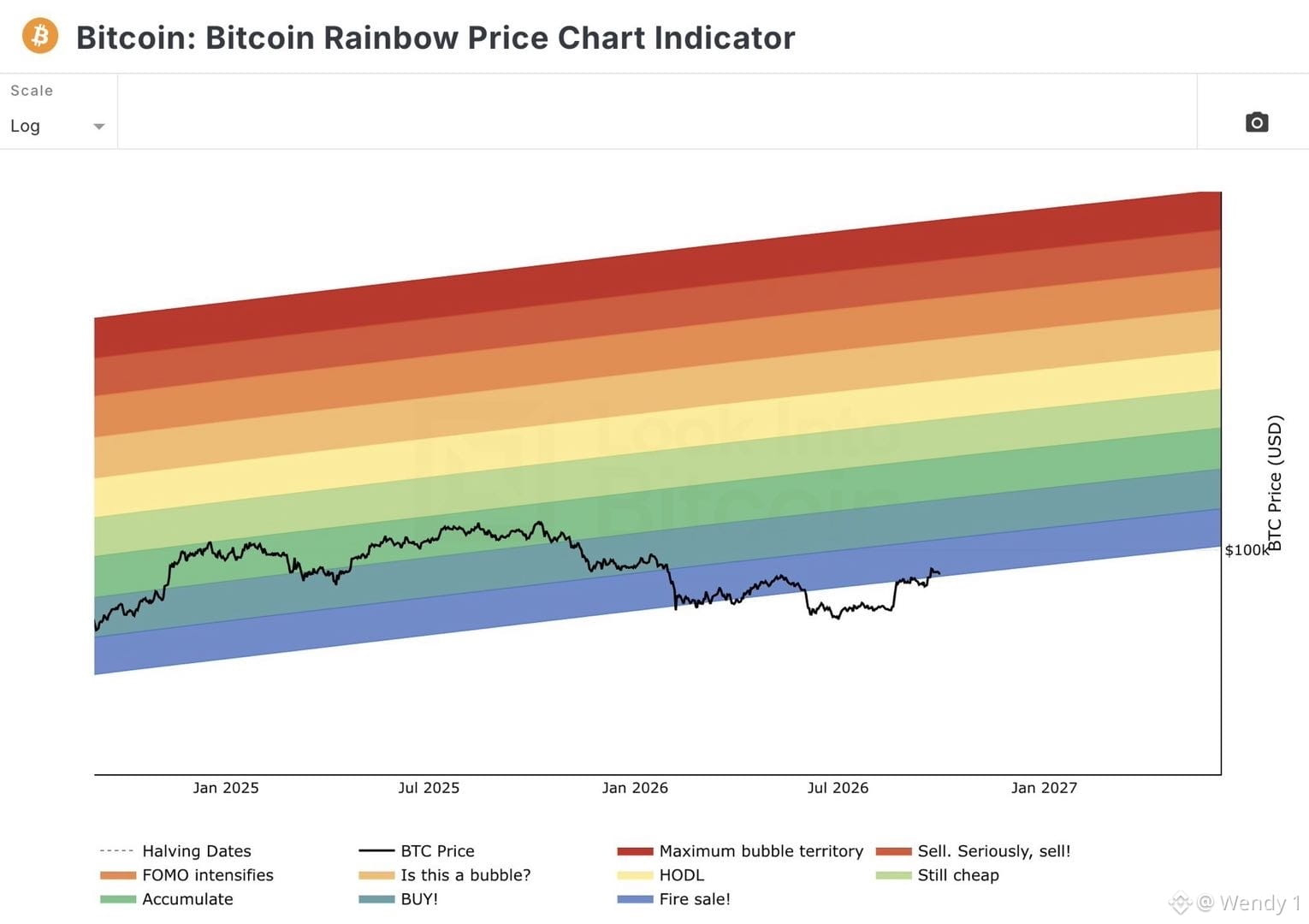
LE BITCOIN EST EN HAUSSE DE 47 % — MAIS LE GRAPHIQUE DE L’ARC-EN-CIEL DIT TOUJOURS « VENTE DE PANIQUE »
Le Bitcoin a rebondi de plus de 47 % par rapport à ses plus bas de juin, mais le graphique de l’arc-en-ciel indique toujours que le BTC se situe près de sa fourchette de valorisation la plus basse.
La zone actuelle du graphique est :
VENTE DE PANIQUE !
Juste au-dessus : ACHETER → ACCUMULER → ENCORE PAS CHER → HOLD (GARDER) → EST-CE UNE BULLE ? → L’ANGOISSE DE RATER L’AFFARE (FOMO) S’INTENSIFIE… puis, au final, les zones de bulle à plus haut risque.
Ainsi, malgré le rebond, le graphique de l’arc-en-ciel n’a pas encore fait passer le BTC dans ses bandes historiquement plus « chaudes ».
Et cela pose la question parfaite pour la crypto :
Si « VENTE DE PANIQUE ! » n’est pas assez baissier…
qu’est-ce qui vient ensuite ? 👀
#Bitcoin #BTC
LE BITCOIN EST EN HAUSSE DE 47 % — MAIS LE GRAPHIQUE DE L’ARC-EN-CIEL DIT TOUJOURS « VENTE DE PANIQUE »
Le Bitcoin a rebondi de plus de 47 % par rapport à ses plus bas de juin, mais le graphique de l’arc-en-ciel indique toujours que le BTC se situe près de sa fourchette de valorisation la plus basse.
La zone actuelle du graphique est :
VENTE DE PANIQUE !
Juste au-dessus : ACHETER → ACCUMULER → ENCORE PAS CHER → HOLD (GARDER) → EST-CE UNE BULLE ? → L’ANGOISSE DE RATER L’AFFARE (FOMO) S’INTENSIFIE… puis, au final, les zones de bulle à plus haut risque.
Ainsi, malgré le rebond, le graphique de l’arc-en-ciel n’a pas encore fait passer le BTC dans ses bandes historiquement plus « chaudes ».
Et cela pose la question parfaite pour la crypto :
Si « VENTE DE PANIQUE ! » n’est pas assez baissier…
qu’est-ce qui vient ensuite ? 👀
#Bitcoin #BTC
Le Bitcoin a rebondi de plus de 47 % par rapport à ses plus bas de juin, mais le graphique de l’arc-en-ciel indique toujours que le BTC se situe près de sa fourchette de valorisation la plus basse.
La zone actuelle du graphique est :
VENTE DE PANIQUE !
Juste au-dessus : ACHETER → ACCUMULER → ENCORE PAS CHER → HOLD (GARDER) → EST-CE UNE BULLE ? → L’ANGOISSE DE RATER L’AFFARE (FOMO) S’INTENSIFIE… puis, au final, les zones de bulle à plus haut risque.
Ainsi, malgré le rebond, le graphique de l’arc-en-ciel n’a pas encore fait passer le BTC dans ses bandes historiquement plus « chaudes ».
Et cela pose la question parfaite pour la crypto :
Si « VENTE DE PANIQUE ! » n’est pas assez baissier…
qu’est-ce qui vient ensuite ? 👀
#Bitcoin #BTC
60
·
--
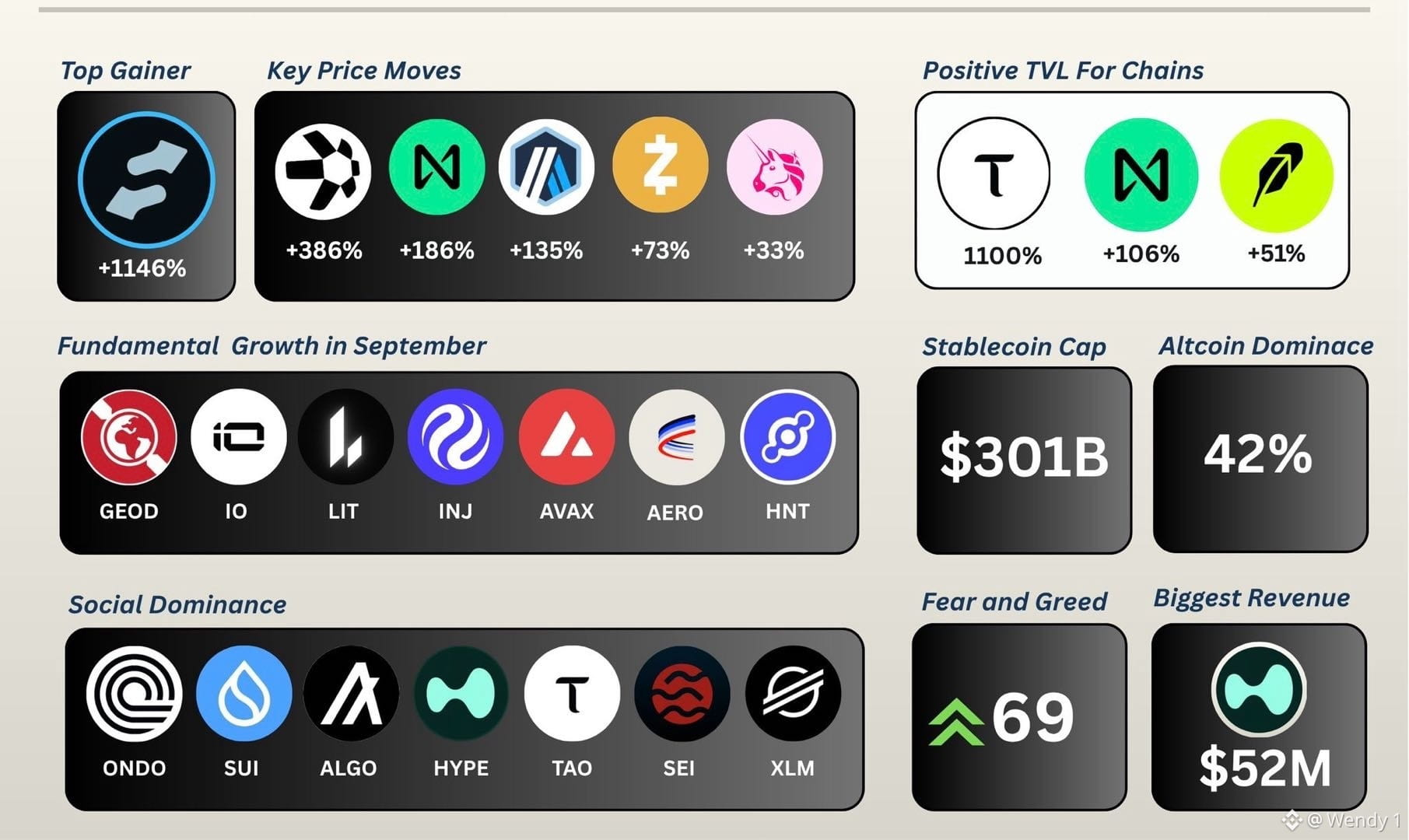
SEPTEMBRE N’ÉTAIT QUE LA BANDE-ANNONCE — LES ALTCOINS ARRIVENT EN OCTOBRE AVEC DE L’ELAN
Septembre a réservé des mouvements spectaculaires sur le marché des altcoins.
Meilleur gain :
$STONK +1 146%
Évolutions clés des prix :
$QNT +386%
$NEAR +186%
$ARB +135%
$ZEC +73%
UNI +33%
Mais le prix n’était pas la seule histoire.
Catalyseurs fondamentaux :
GEOD a lancé GEO-PULSE
IO a atteint 15B de tokens d’inférence par jour sur OpenRouter
LIT a vu le premier ETP de staking Lighter de Bitwise être listé sur Xetra
ENJ a activé sa mise à niveau Meridian
AVAX a réduit le déblocage des fonds de 14 jours à 48 heures
AERO a verrouillé le lancement de Dromos pour le 21 octobre
HNT a ajouté un système de santé de 23 hôpitaux, avec un mouvement de 145 TB/semaine
Aperçu du marché :
Capitalisation des stablecoins : 301B$
Domination des altcoins : 42%
Peur & cupidité : 69
Pendant ce temps, l’infrastructure institutionnelle n’a cessé de s’étendre sur Quant, Zcash, NEAR, Robinhood Chain, Arc de Circle et les actifs tokenisés.
Septembre a aussi apporté de grands catalyseurs et revers — de la hausse de la Fed et du vote sur le CLARITY Act jusqu’au hack de Bitget et au ralentissement marqué de l’activité post-lancement d’Arc.
Octobre arrive. Quel altcoin suivez-vous de plus près ? 👀
#Altcoins #Crypto
SEPTEMBRE N’ÉTAIT QUE LA BANDE-ANNONCE — LES ALTCOINS ARRIVENT EN OCTOBRE AVEC DE L’ELAN
Septembre a réservé des mouvements spectaculaires sur le marché des altcoins.
Meilleur gain :
$STONK +1 146%
Évolutions clés des prix :
$QNT +386%
$NEAR +186%
$ARB +135%
$ZEC +73%
UNI +33%
Mais le prix n’était pas la seule histoire.
Catalyseurs fondamentaux :
GEOD a lancé GEO-PULSE
IO a atteint 15B de tokens d’inférence par jour sur OpenRouter
LIT a vu le premier ETP de staking Lighter de Bitwise être listé sur Xetra
ENJ a activé sa mise à niveau Meridian
AVAX a réduit le déblocage des fonds de 14 jours à 48 heures
AERO a verrouillé le lancement de Dromos pour le 21 octobre
HNT a ajouté un système de santé de 23 hôpitaux, avec un mouvement de 145 TB/semaine
Aperçu du marché :
Capitalisation des stablecoins : 301B$
Domination des altcoins : 42%
Peur & cupidité : 69
Pendant ce temps, l’infrastructure institutionnelle n’a cessé de s’étendre sur Quant, Zcash, NEAR, Robinhood Chain, Arc de Circle et les actifs tokenisés.
Septembre a aussi apporté de grands catalyseurs et revers — de la hausse de la Fed et du vote sur le CLARITY Act jusqu’au hack de Bitget et au ralentissement marqué de l’activité post-lancement d’Arc.
Octobre arrive. Quel altcoin suivez-vous de plus près ? 👀
#Altcoins #Crypto
Septembre a réservé des mouvements spectaculaires sur le marché des altcoins.
Meilleur gain :
$STONK +1 146%
Évolutions clés des prix :
$QNT +386%
$NEAR +186%
$ARB +135%
$ZEC +73%
UNI +33%
Mais le prix n’était pas la seule histoire.
Catalyseurs fondamentaux :
GEOD a lancé GEO-PULSE
IO a atteint 15B de tokens d’inférence par jour sur OpenRouter
LIT a vu le premier ETP de staking Lighter de Bitwise être listé sur Xetra
ENJ a activé sa mise à niveau Meridian
AVAX a réduit le déblocage des fonds de 14 jours à 48 heures
AERO a verrouillé le lancement de Dromos pour le 21 octobre
HNT a ajouté un système de santé de 23 hôpitaux, avec un mouvement de 145 TB/semaine
Aperçu du marché :
Capitalisation des stablecoins : 301B$
Domination des altcoins : 42%
Peur & cupidité : 69
Pendant ce temps, l’infrastructure institutionnelle n’a cessé de s’étendre sur Quant, Zcash, NEAR, Robinhood Chain, Arc de Circle et les actifs tokenisés.
Septembre a aussi apporté de grands catalyseurs et revers — de la hausse de la Fed et du vote sur le CLARITY Act jusqu’au hack de Bitget et au ralentissement marqué de l’activité post-lancement d’Arc.
Octobre arrive. Quel altcoin suivez-vous de plus près ? 👀
#Altcoins #Crypto
163
·
--
Voir la traduction
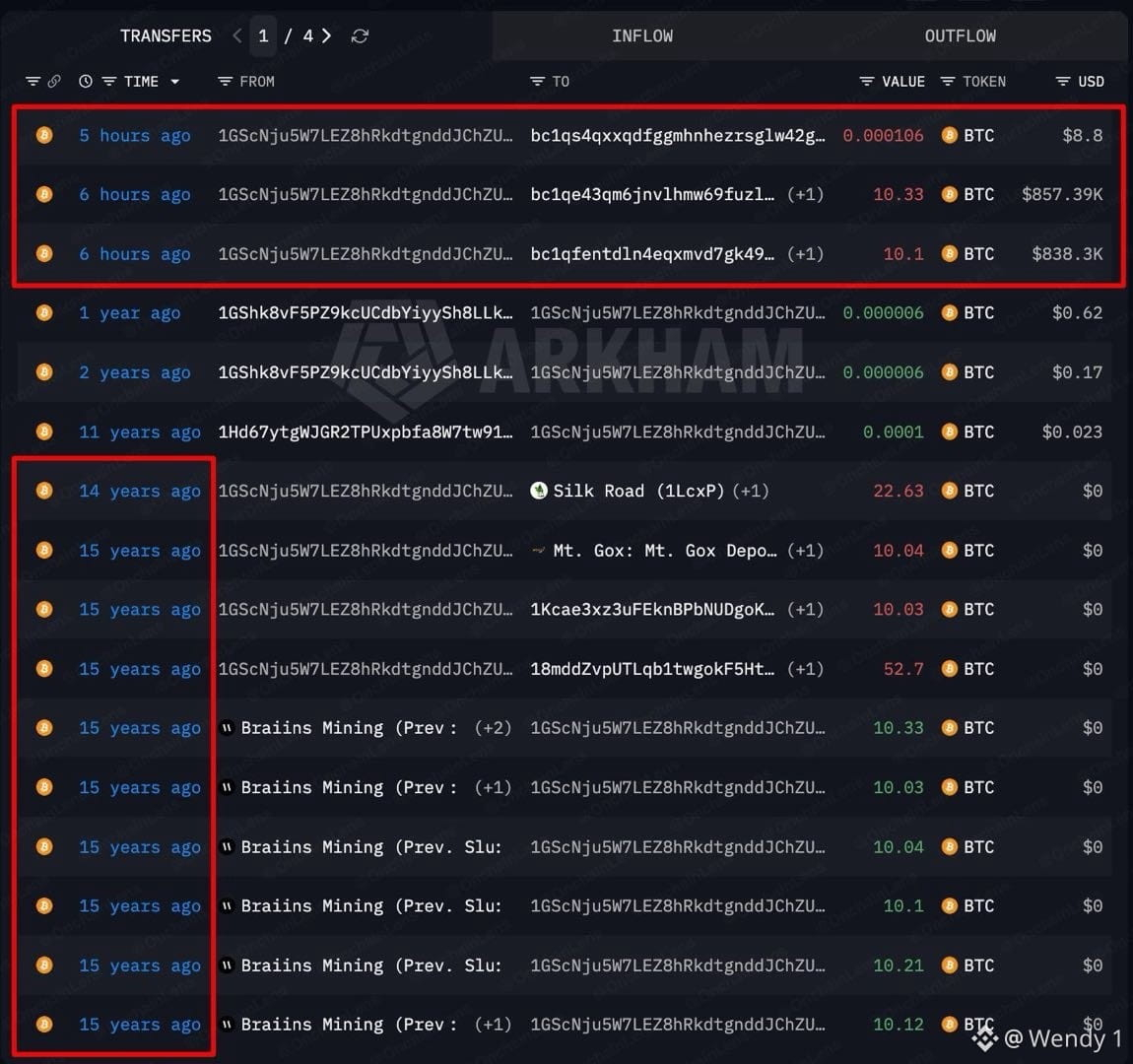
A 15-YEAR-OLD BITCOIN WALLET JUST MOVED $1.7M IN BTC
A Bitcoin holder who bought near $3–$4 per BTC has finally moved a major chunk of their stash.
The wallet transferred 20.43 BTC worth roughly $1.7M after holding for around 15 years.
Estimated entry value: ~$70 Estimated profit: ~$1.72M Estimated return: more than 2 million percent
The wallet’s history stretches back to Bitcoin’s early days, with historical interactions linked to Mt. Gox and Silk Road.
Now, after more than a decade of holding, the coins are moving again.
A transfer doesn’t automatically mean the holder sold. But when a wallet this old starts moving millions in BTC, it gets attention.
Was this a long-term holder finally taking profit, or simply moving coins to a new wallet?
Track the address: https://arkm.com/explorer/address/1GScNju5W7LEZ8hRkdtgnddJChZU4AiLHe
#Bitcoin #BTC $BTC
A 15-YEAR-OLD BITCOIN WALLET JUST MOVED $1.7M IN BTC
A Bitcoin holder who bought near $3–$4 per BTC has finally moved a major chunk of their stash.
The wallet transferred 20.43 BTC worth roughly $1.7M after holding for around 15 years.
Estimated entry value: ~$70 Estimated profit: ~$1.72M Estimated return: more than 2 million percent
The wallet’s history stretches back to Bitcoin’s early days, with historical interactions linked to Mt. Gox and Silk Road.
Now, after more than a decade of holding, the coins are moving again.
A transfer doesn’t automatically mean the holder sold. But when a wallet this old starts moving millions in BTC, it gets attention.
Was this a long-term holder finally taking profit, or simply moving coins to a new wallet?
Track the address: https://arkm.com/explorer/address/1GScNju5W7LEZ8hRkdtgnddJChZU4AiLHe
#Bitcoin #BTC $BTC
A Bitcoin holder who bought near $3–$4 per BTC has finally moved a major chunk of their stash.
The wallet transferred 20.43 BTC worth roughly $1.7M after holding for around 15 years.
Estimated entry value: ~$70 Estimated profit: ~$1.72M Estimated return: more than 2 million percent
The wallet’s history stretches back to Bitcoin’s early days, with historical interactions linked to Mt. Gox and Silk Road.
Now, after more than a decade of holding, the coins are moving again.
A transfer doesn’t automatically mean the holder sold. But when a wallet this old starts moving millions in BTC, it gets attention.
Was this a long-term holder finally taking profit, or simply moving coins to a new wallet?
Track the address: https://arkm.com/explorer/address/1GScNju5W7LEZ8hRkdtgnddJChZU4AiLHe
#Bitcoin #BTC $BTC
11
·
--
Voir la traduction
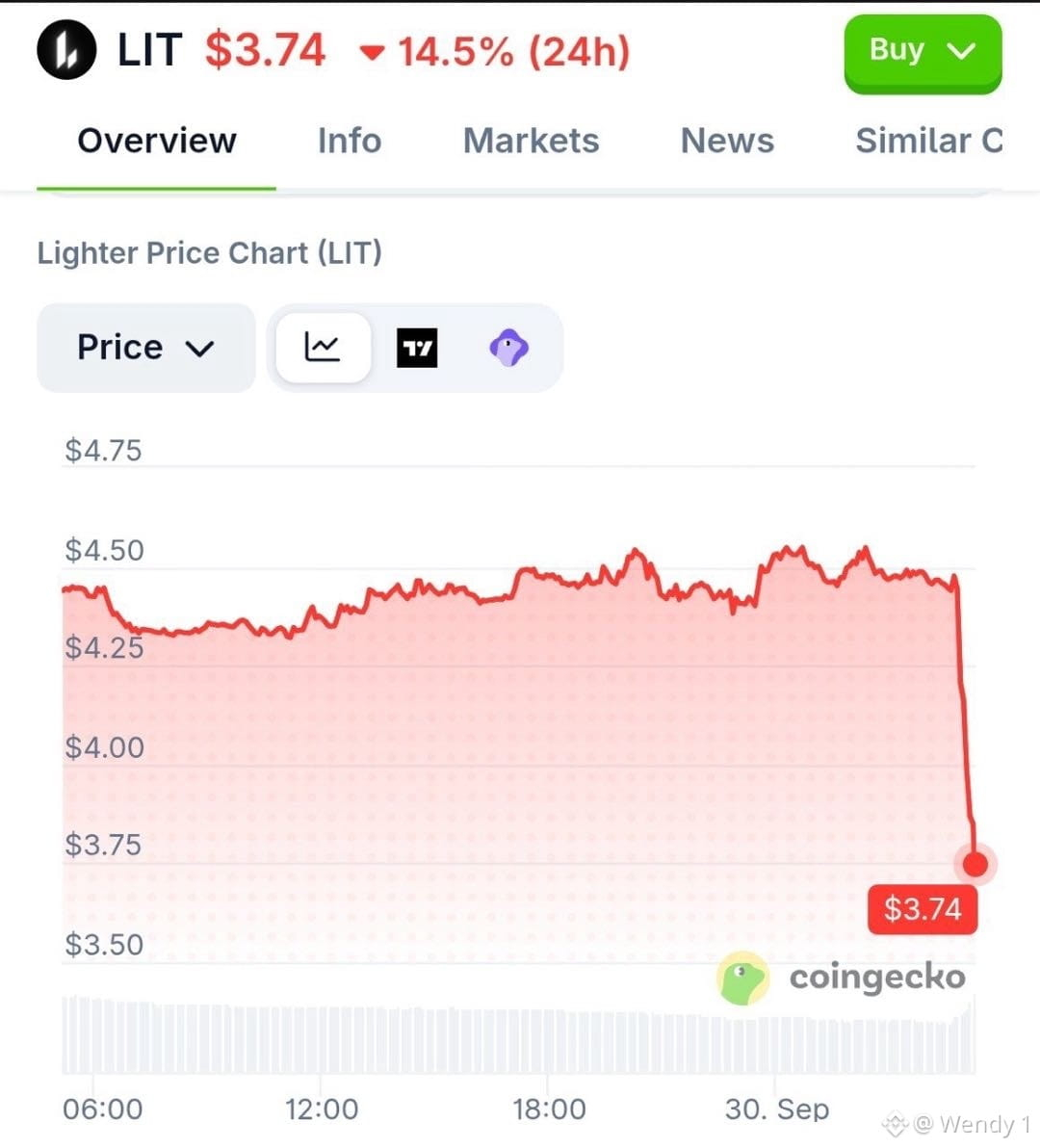
$LIT DROPS 14.5% AS TRADERS WATCH ROBINHOOD’S PERPS EXPANSION
$LIT just took a sharp hit.
The chart shows the token at $3.74, down 14.5% over 24 hours, after trading around $4.40–$4.50 before the sudden drop.
The move comes as Robinhood integrates Bitstamp to bring perpetual futures to U.S. users—but the timing alone doesn’t prove the rollout caused LIT’s sell-off.
The key question now is whether this is a short-lived flush or the start of a deeper move.
A sharp price drop can trigger liquidations when leveraged positions get forced out, potentially adding more selling pressure. But the chart alone doesn’t confirm the size of any liquidation cascade.
Are you buying this dip, or waiting for $LIT to stabilize?
#LIT #CryptoNews
$LIT DROPS 14.5% AS TRADERS WATCH ROBINHOOD’S PERPS EXPANSION
$LIT just took a sharp hit.
The chart shows the token at $3.74, down 14.5% over 24 hours, after trading around $4.40–$4.50 before the sudden drop.
The move comes as Robinhood integrates Bitstamp to bring perpetual futures to U.S. users—but the timing alone doesn’t prove the rollout caused LIT’s sell-off.
The key question now is whether this is a short-lived flush or the start of a deeper move.
A sharp price drop can trigger liquidations when leveraged positions get forced out, potentially adding more selling pressure. But the chart alone doesn’t confirm the size of any liquidation cascade.
Are you buying this dip, or waiting for $LIT to stabilize?
#LIT #CryptoNews
$LIT just took a sharp hit.
The chart shows the token at $3.74, down 14.5% over 24 hours, after trading around $4.40–$4.50 before the sudden drop.
The move comes as Robinhood integrates Bitstamp to bring perpetual futures to U.S. users—but the timing alone doesn’t prove the rollout caused LIT’s sell-off.
The key question now is whether this is a short-lived flush or the start of a deeper move.
A sharp price drop can trigger liquidations when leveraged positions get forced out, potentially adding more selling pressure. But the chart alone doesn’t confirm the size of any liquidation cascade.
Are you buying this dip, or waiting for $LIT to stabilize?
#LIT #CryptoNews
5
·
--
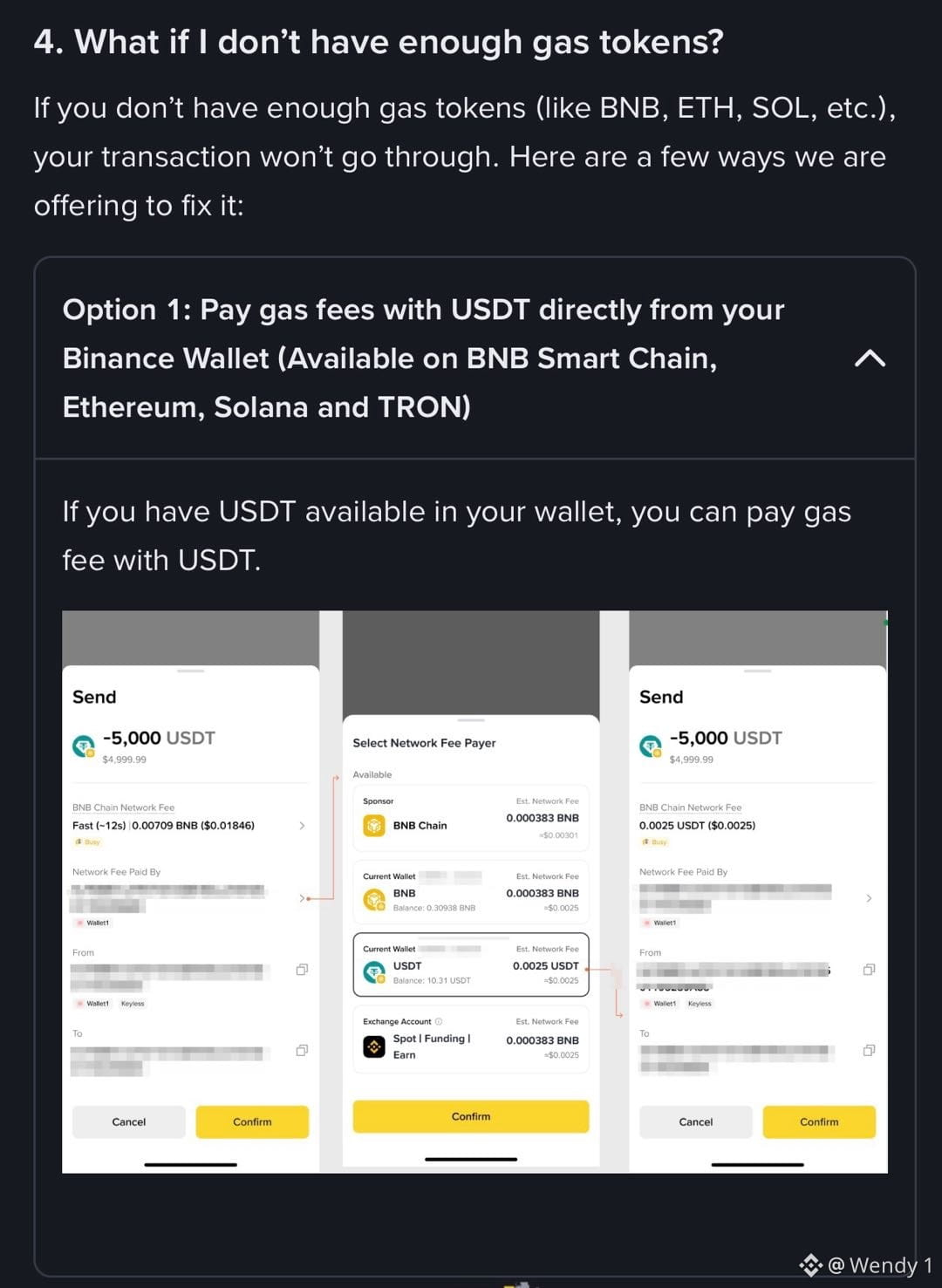
BINANCE WALLET PERMET AUX UTILISATEURS DE PAYER DES FRAIS DE GAS EN USDT SUR 4 RÉSEAUX
Pas de BNB, ETH, SOL ou TRX dans votre portefeuille ? Binance Wallet rend les transferts on-chain plus faciles.
Les utilisateurs peuvent désormais payer les frais de réseau directement en USDT sur :
* BNB Smart Chain
* Ethereum
* Solana
* TRON
Au lieu de devoir détenir le token de gas natif de chaque réseau pour effectuer une transaction, les utilisateurs éligibles peuvent sélectionner l’USDT comme payeur des frais réseau.
Cela supprime l’un des principaux points de friction pour les nouveaux utilisateurs on-chain : disposer du bon token de gas avant d’envoyer des actifs.
Binance indique que la prise en charge de réseaux supplémentaires sera ajoutée ultérieurement.
La fonctionnalité est disponible via le flux de transaction de Binance Wallet, où les utilisateurs peuvent choisir l’USDT comme option de paiement des frais lorsqu’elle est prise en charge.
Payer le gas en USDT vous ferait-il utiliser plus souvent les transferts on-chain ? 👀
#BinanceWallet #USDT
BINANCE WALLET PERMET AUX UTILISATEURS DE PAYER DES FRAIS DE GAS EN USDT SUR 4 RÉSEAUX
Pas de BNB, ETH, SOL ou TRX dans votre portefeuille ? Binance Wallet rend les transferts on-chain plus faciles.
Les utilisateurs peuvent désormais payer les frais de réseau directement en USDT sur :
* BNB Smart Chain
* Ethereum
* Solana
* TRON
Au lieu de devoir détenir le token de gas natif de chaque réseau pour effectuer une transaction, les utilisateurs éligibles peuvent sélectionner l’USDT comme payeur des frais réseau.
Cela supprime l’un des principaux points de friction pour les nouveaux utilisateurs on-chain : disposer du bon token de gas avant d’envoyer des actifs.
Binance indique que la prise en charge de réseaux supplémentaires sera ajoutée ultérieurement.
La fonctionnalité est disponible via le flux de transaction de Binance Wallet, où les utilisateurs peuvent choisir l’USDT comme option de paiement des frais lorsqu’elle est prise en charge.
Payer le gas en USDT vous ferait-il utiliser plus souvent les transferts on-chain ? 👀
#BinanceWallet #USDT
Pas de BNB, ETH, SOL ou TRX dans votre portefeuille ? Binance Wallet rend les transferts on-chain plus faciles.
Les utilisateurs peuvent désormais payer les frais de réseau directement en USDT sur :
* BNB Smart Chain
* Ethereum
* Solana
* TRON
Au lieu de devoir détenir le token de gas natif de chaque réseau pour effectuer une transaction, les utilisateurs éligibles peuvent sélectionner l’USDT comme payeur des frais réseau.
Cela supprime l’un des principaux points de friction pour les nouveaux utilisateurs on-chain : disposer du bon token de gas avant d’envoyer des actifs.
Binance indique que la prise en charge de réseaux supplémentaires sera ajoutée ultérieurement.
La fonctionnalité est disponible via le flux de transaction de Binance Wallet, où les utilisateurs peuvent choisir l’USDT comme option de paiement des frais lorsqu’elle est prise en charge.
Payer le gas en USDT vous ferait-il utiliser plus souvent les transferts on-chain ? 👀
#BinanceWallet #USDT
69
·
--
Voir la traduction
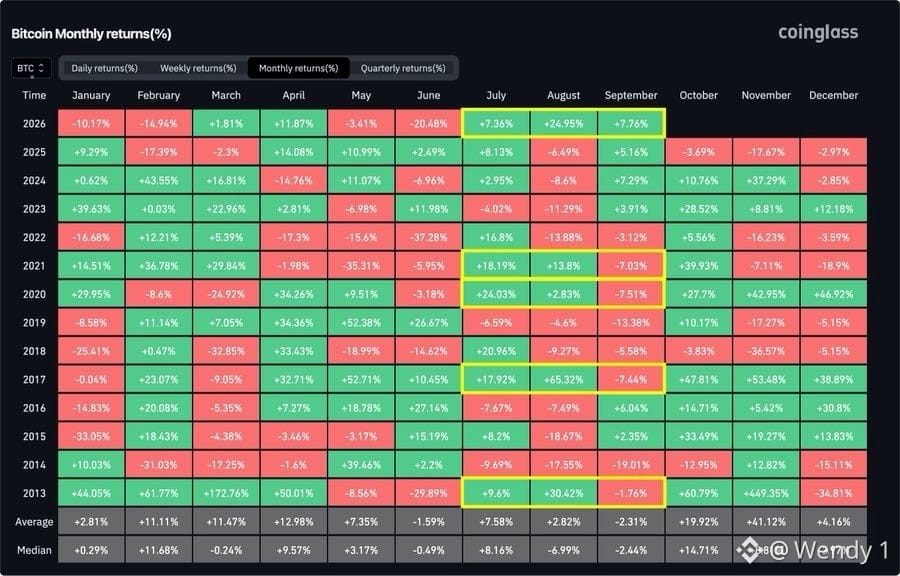
BITCOIN IS ON TRACK FOR ITS FIRST 3-MONTH GREEN STREAK SINCE 2012
$BTC closed July and August in the green — and September is currently positive too.
According to the chart, monthly returns stand at:
July: +7.36% August: +24.95% September: +7.76% so far
But there’s a historical twist: this would not be the first time in Bitcoin’s history. BTC also posted three consecutive monthly gains in 2012, when it was still trading at a fraction of today’s price.
If September holds green through month-end, 2026 would mark the first such streak in 14 years.
One more green monthly close — and Bitcoin’s recent recovery adds a rare historical milestone.
Do you think BTC can keep the streak alive into October? 👀
#Bitcoin #BTC
BITCOIN IS ON TRACK FOR ITS FIRST 3-MONTH GREEN STREAK SINCE 2012
$BTC closed July and August in the green — and September is currently positive too.
According to the chart, monthly returns stand at:
July: +7.36% August: +24.95% September: +7.76% so far
But there’s a historical twist: this would not be the first time in Bitcoin’s history. BTC also posted three consecutive monthly gains in 2012, when it was still trading at a fraction of today’s price.
If September holds green through month-end, 2026 would mark the first such streak in 14 years.
One more green monthly close — and Bitcoin’s recent recovery adds a rare historical milestone.
Do you think BTC can keep the streak alive into October? 👀
#Bitcoin #BTC
$BTC closed July and August in the green — and September is currently positive too.
According to the chart, monthly returns stand at:
July: +7.36% August: +24.95% September: +7.76% so far
But there’s a historical twist: this would not be the first time in Bitcoin’s history. BTC also posted three consecutive monthly gains in 2012, when it was still trading at a fraction of today’s price.
If September holds green through month-end, 2026 would mark the first such streak in 14 years.
One more green monthly close — and Bitcoin’s recent recovery adds a rare historical milestone.
Do you think BTC can keep the streak alive into October? 👀
#Bitcoin #BTC
63
·
--
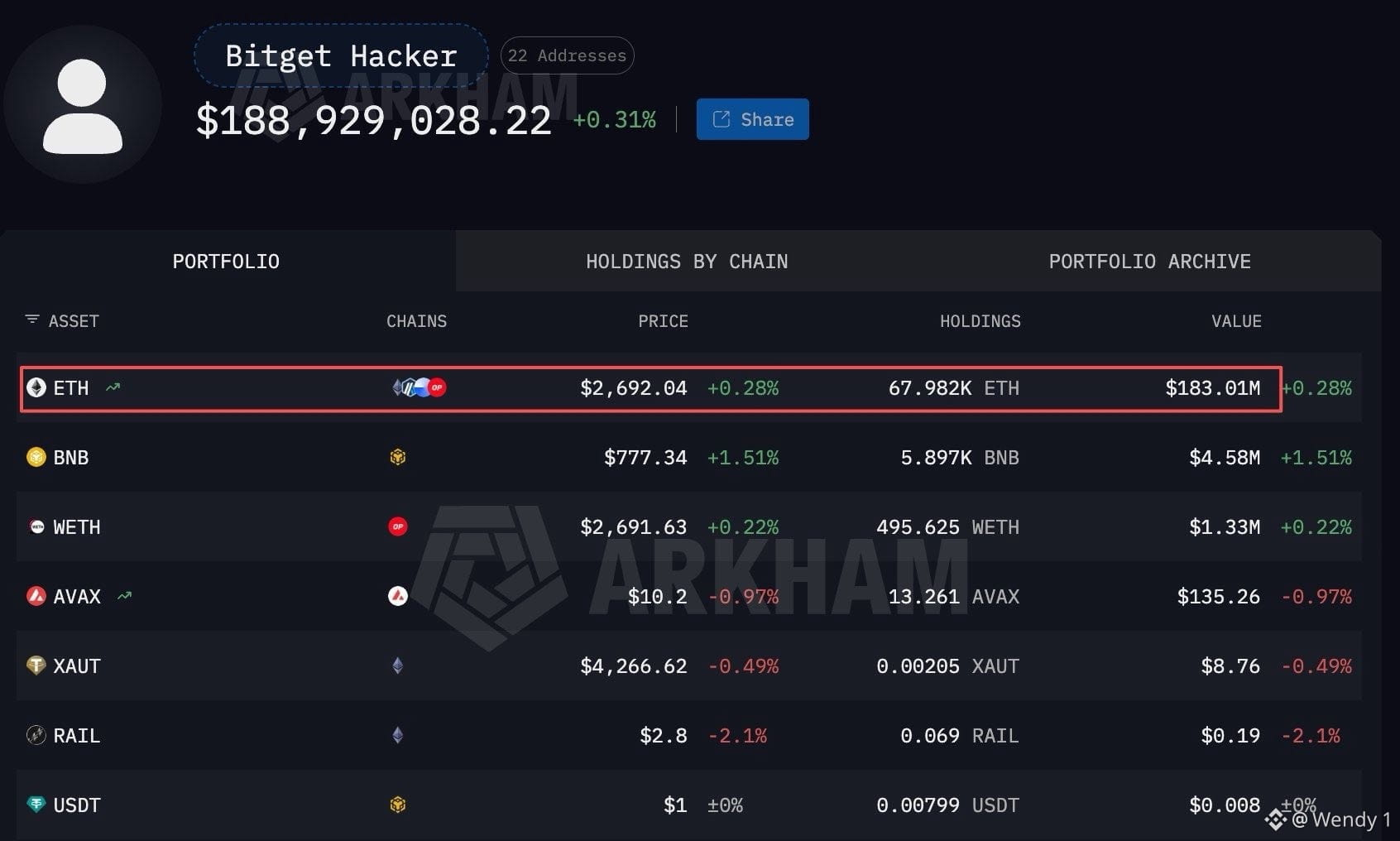
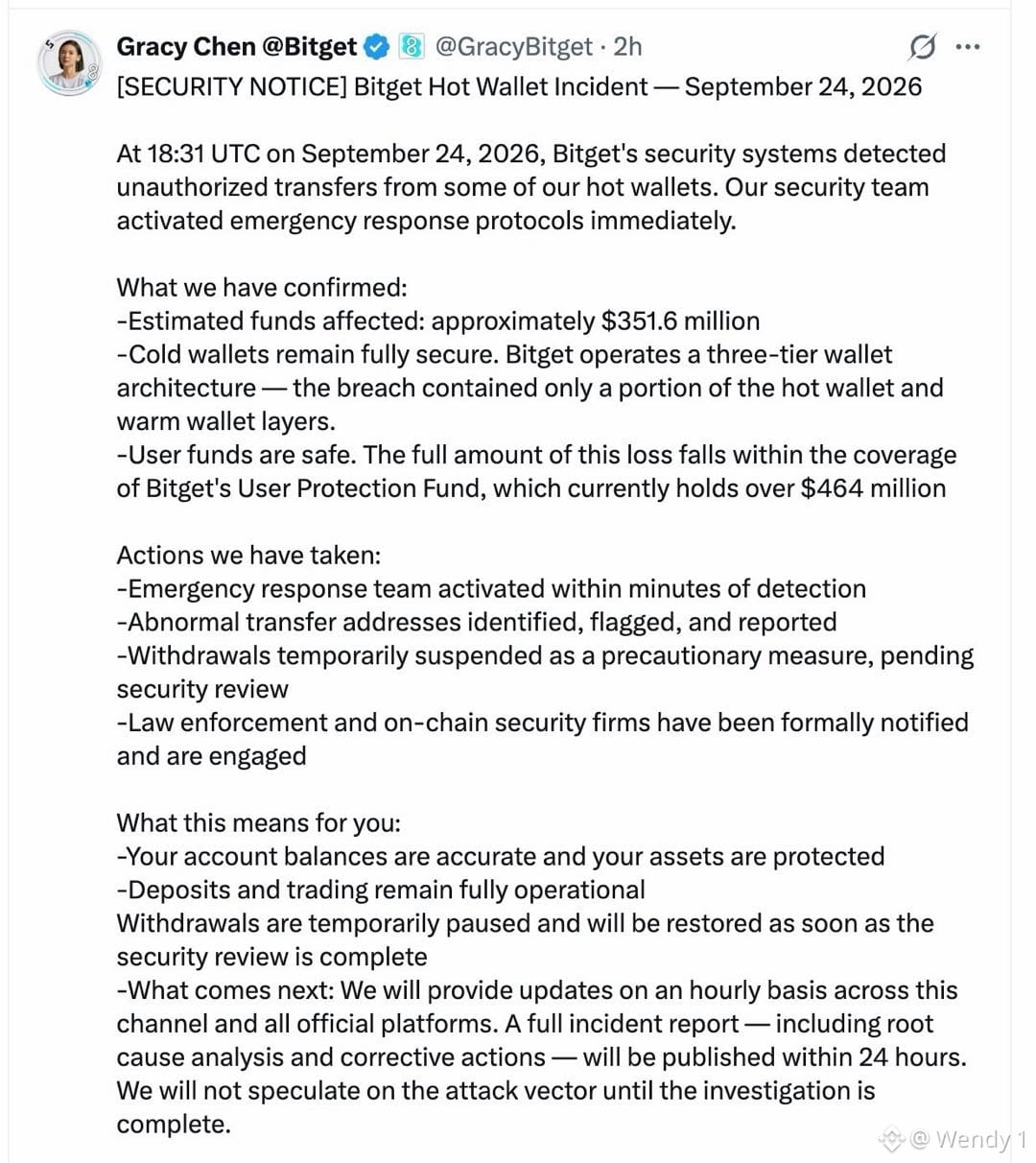
BITGET CONFIRME UNE FAILLE DE SÉCURITÉ DE 351,6 M$ — 67 982 ETH MAINTENANT DANS LE PORTEFEUILLE DU PIRATE
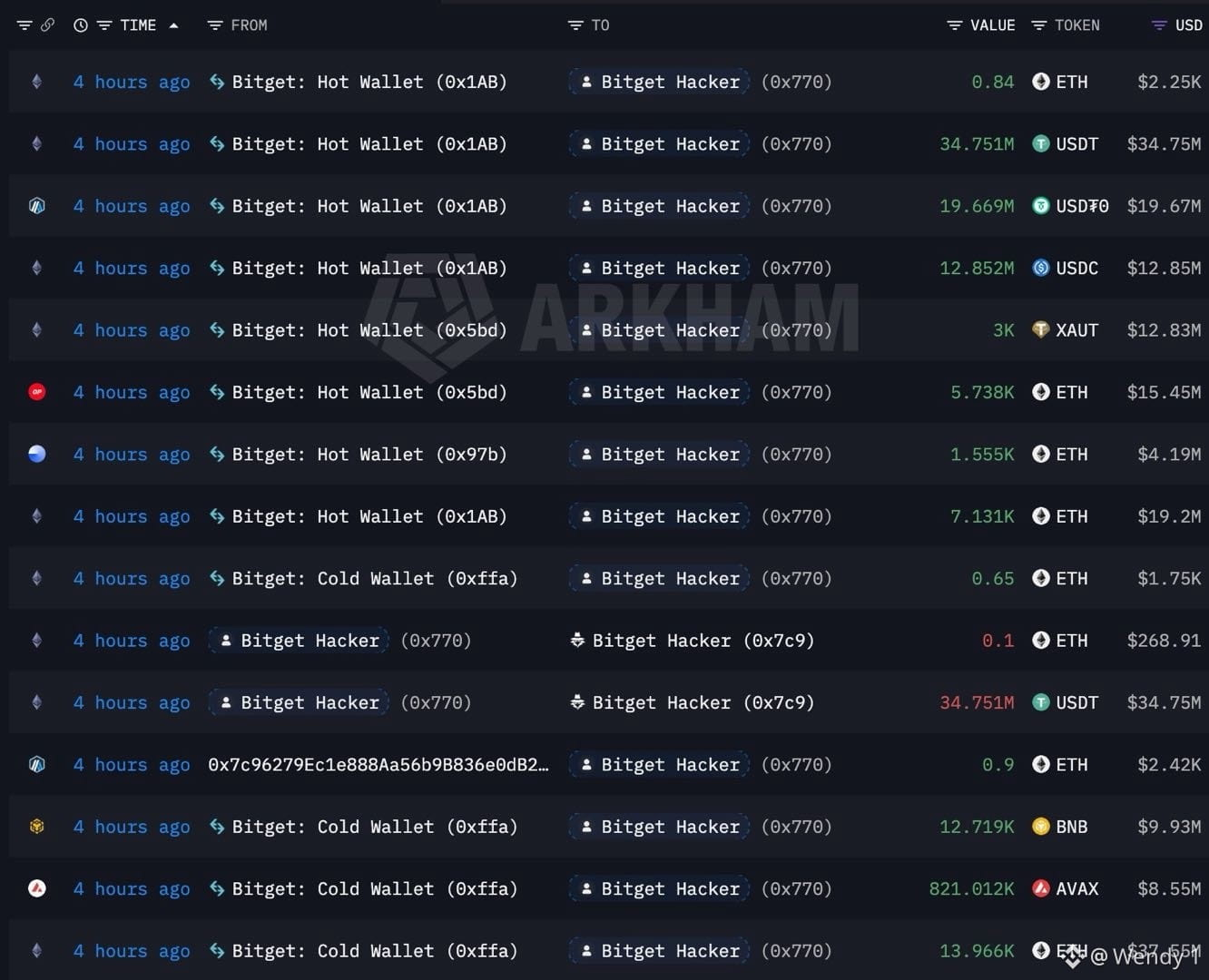
Bitget a confirmé des transferts non autorisés provenant d’une partie de son infrastructure de portefeuille hot et warm le 24 septembre, l’échange estimant 351,6 millions de dollars de fonds concernés.
Le suivi en chaîne montre que l’attaquant a consolidé une large partie des actifs de la chaîne EVM en ETH.
67 982 ETH ≈ 183 M$
Les actifs dérobés incluaient ETH, USDT, USDC, AVAX, BNB et d’autres jetons avant d’être échangés sur différents réseaux EVM.
Bitget affirme que ses portefeuilles cold restent sécurisés, tandis que les dépôts et le trading sont toujours opérationnels. Les retraits ont été temporairement suspendus pendant l’examen de sécurité.
L’échange indique également que son User Protection Fund (fonds de protection des utilisateurs) détient plus de 464 M$ et est suffisant pour couvrir la perte estimée, tandis qu’un rapport complet de l’incident avec la cause racine et les mesures correctives est attendu dans les 24 heures.
Le vecteur d’attaque n’a pas encore été divulgué.
Comment pensez-vous que l’attaquant va déplacer les 67 982 ETH ensuite ? 👀
#Bitget #Ethereum
BITGET CONFIRME UNE FAILLE DE SÉCURITÉ DE 351,6 M$ — 67 982 ETH MAINTENANT DANS LE PORTEFEUILLE DU PIRATE
Bitget a confirmé des transferts non autorisés provenant d’une partie de son infrastructure de portefeuille hot et warm le 24 septembre, l’échange estimant 351,6 millions de dollars de fonds concernés.
Le suivi en chaîne montre que l’attaquant a consolidé une large partie des actifs de la chaîne EVM en ETH.
67 982 ETH ≈ 183 M$
Les actifs dérobés incluaient ETH, USDT, USDC, AVAX, BNB et d’autres jetons avant d’être échangés sur différents réseaux EVM.
Bitget affirme que ses portefeuilles cold restent sécurisés, tandis que les dépôts et le trading sont toujours opérationnels. Les retraits ont été temporairement suspendus pendant l’examen de sécurité.
L’échange indique également que son User Protection Fund (fonds de protection des utilisateurs) détient plus de 464 M$ et est suffisant pour couvrir la perte estimée, tandis qu’un rapport complet de l’incident avec la cause racine et les mesures correctives est attendu dans les 24 heures.
Le vecteur d’attaque n’a pas encore été divulgué.
Comment pensez-vous que l’attaquant va déplacer les 67 982 ETH ensuite ? 👀
#Bitget #Ethereum
Bitget a confirmé des transferts non autorisés provenant d’une partie de son infrastructure de portefeuille hot et warm le 24 septembre, l’échange estimant 351,6 millions de dollars de fonds concernés.
Le suivi en chaîne montre que l’attaquant a consolidé une large partie des actifs de la chaîne EVM en ETH.
67 982 ETH ≈ 183 M$
Les actifs dérobés incluaient ETH, USDT, USDC, AVAX, BNB et d’autres jetons avant d’être échangés sur différents réseaux EVM.
Bitget affirme que ses portefeuilles cold restent sécurisés, tandis que les dépôts et le trading sont toujours opérationnels. Les retraits ont été temporairement suspendus pendant l’examen de sécurité.
L’échange indique également que son User Protection Fund (fonds de protection des utilisateurs) détient plus de 464 M$ et est suffisant pour couvrir la perte estimée, tandis qu’un rapport complet de l’incident avec la cause racine et les mesures correctives est attendu dans les 24 heures.
Le vecteur d’attaque n’a pas encore été divulgué.
Comment pensez-vous que l’attaquant va déplacer les 67 982 ETH ensuite ? 👀
#Bitget #Ethereum
63
·
--
BINANCE VA LISTER HYPERLIQUID AVEC UN SEED TAG AUJOURD’HUI
Binance apporte Hyperliquid ( $HYPE ) au trading au comptant (Spot), en ouvrant trois nouveaux marchés à 11 h 00 UTC le 24 septembre.
Nouvelles paires :
$HYPE /USDT
$HYPE /USDC
$HYPE /TRY
Les dépôts ouvrent une heure avant le début des échanges, tandis que les retraits sont prévus pour s’ouvrir le 25 septembre à 11 h 00 UTC.
Le détail important : HYPE sera lancé avec le Seed Tag de Binance.
Cela signifie que Binance considère qu’il s’agit d’un actif relativement récent, avec une volatilité et un risque supérieurs à la normale. Les utilisateurs qui négocient des actifs Seed Tag sur Binance Spot ou sur Marge doivent passer le quiz de sensibilisation au risque correspondant tous les 90 jours et accepter les Conditions d’utilisation.
Hyperliquid se décrit comme une blockchain hautes performances, conçue autour d’un système financier ouvert entièrement on-chain.
Les ordres Algo Spot seront également disponibles dès le lancement, tandis que les Trading Bots et le Spot Copy Trading sont attendus dans les 24 heures.
Frais d’inscription : 0 BNB.
Le listing Spot de $HYPE sur Binance va-t-il changer le paysage du trading pour Hyperliquid ? 👀
#HYPE #Binance
BINANCE VA LISTER HYPERLIQUID AVEC UN SEED TAG AUJOURD’HUI
Binance apporte Hyperliquid ( $HYPE ) au trading au comptant (Spot), en ouvrant trois nouveaux marchés à 11 h 00 UTC le 24 septembre.
Nouvelles paires :
$HYPE /USDT
$HYPE /USDC
$HYPE /TRY
Les dépôts ouvrent une heure avant le début des échanges, tandis que les retraits sont prévus pour s’ouvrir le 25 septembre à 11 h 00 UTC.
Le détail important : HYPE sera lancé avec le Seed Tag de Binance.
Cela signifie que Binance considère qu’il s’agit d’un actif relativement récent, avec une volatilité et un risque supérieurs à la normale. Les utilisateurs qui négocient des actifs Seed Tag sur Binance Spot ou sur Marge doivent passer le quiz de sensibilisation au risque correspondant tous les 90 jours et accepter les Conditions d’utilisation.
Hyperliquid se décrit comme une blockchain hautes performances, conçue autour d’un système financier ouvert entièrement on-chain.
Les ordres Algo Spot seront également disponibles dès le lancement, tandis que les Trading Bots et le Spot Copy Trading sont attendus dans les 24 heures.
Frais d’inscription : 0 BNB.
Le listing Spot de $HYPE sur Binance va-t-il changer le paysage du trading pour Hyperliquid ? 👀
#HYPE #Binance
Binance apporte Hyperliquid ( $HYPE ) au trading au comptant (Spot), en ouvrant trois nouveaux marchés à 11 h 00 UTC le 24 septembre.
Nouvelles paires :
$HYPE /USDT
$HYPE /USDC
$HYPE /TRY
Les dépôts ouvrent une heure avant le début des échanges, tandis que les retraits sont prévus pour s’ouvrir le 25 septembre à 11 h 00 UTC.
Le détail important : HYPE sera lancé avec le Seed Tag de Binance.
Cela signifie que Binance considère qu’il s’agit d’un actif relativement récent, avec une volatilité et un risque supérieurs à la normale. Les utilisateurs qui négocient des actifs Seed Tag sur Binance Spot ou sur Marge doivent passer le quiz de sensibilisation au risque correspondant tous les 90 jours et accepter les Conditions d’utilisation.
Hyperliquid se décrit comme une blockchain hautes performances, conçue autour d’un système financier ouvert entièrement on-chain.
Les ordres Algo Spot seront également disponibles dès le lancement, tandis que les Trading Bots et le Spot Copy Trading sont attendus dans les 24 heures.
Frais d’inscription : 0 BNB.
Le listing Spot de $HYPE sur Binance va-t-il changer le paysage du trading pour Hyperliquid ? 👀
#HYPE #Binance
56
·
--
Voir la traduction
BINANCE IS TURNING THE FUNDING ACCOUNT INTO A STOCKS ACCOUNT
Binance is restructuring its account system, and the Funding Account will gradually become the Stocks Account.
Starting September 29, 2026, Binance will stop supporting on-chain deposits to Funding Accounts. Crypto assets currently held there will be migrated to Spot Accounts.
Key timeline:
• Sep 29, 2026: Crypto deposits to Funding Account stop
• Sep 29 onward: One-Click Migration becomes available
• Jan 2027: Funding Account is renamed Stocks Account
• Jan 2027 onward: Remaining crypto assets are automatically migrated to Spot in batches
The new Stocks Account will be used for stock and stock-options settlement, supporting six assets: USD, $USDC , $USDT , $USD1 , $U and $BNB .
Binance says the migration won’t affect total asset value or fund safety, and users don’t need to take action if they prefer automatic migration.
Other services are changing too, including Pay, Convert, P2P, Alpha 2.0 and API integrations.
Have you already moved your crypto out of the Funding Account? 👇
#Binance #Crypto
BINANCE IS TURNING THE FUNDING ACCOUNT INTO A STOCKS ACCOUNT
Binance is restructuring its account system, and the Funding Account will gradually become the Stocks Account.
Starting September 29, 2026, Binance will stop supporting on-chain deposits to Funding Accounts. Crypto assets currently held there will be migrated to Spot Accounts.
Key timeline:
• Sep 29, 2026: Crypto deposits to Funding Account stop
• Sep 29 onward: One-Click Migration becomes available
• Jan 2027: Funding Account is renamed Stocks Account
• Jan 2027 onward: Remaining crypto assets are automatically migrated to Spot in batches
The new Stocks Account will be used for stock and stock-options settlement, supporting six assets: USD, $USDC , $USDT , $USD1 , $U and $BNB .
Binance says the migration won’t affect total asset value or fund safety, and users don’t need to take action if they prefer automatic migration.
Other services are changing too, including Pay, Convert, P2P, Alpha 2.0 and API integrations.
Have you already moved your crypto out of the Funding Account? 👇
#Binance #Crypto
Binance is restructuring its account system, and the Funding Account will gradually become the Stocks Account.
Starting September 29, 2026, Binance will stop supporting on-chain deposits to Funding Accounts. Crypto assets currently held there will be migrated to Spot Accounts.
Key timeline:
• Sep 29, 2026: Crypto deposits to Funding Account stop
• Sep 29 onward: One-Click Migration becomes available
• Jan 2027: Funding Account is renamed Stocks Account
• Jan 2027 onward: Remaining crypto assets are automatically migrated to Spot in batches
The new Stocks Account will be used for stock and stock-options settlement, supporting six assets: USD, $USDC , $USDT , $USD1 , $U and $BNB .
Binance says the migration won’t affect total asset value or fund safety, and users don’t need to take action if they prefer automatic migration.
Other services are changing too, including Pay, Convert, P2P, Alpha 2.0 and API integrations.
Have you already moved your crypto out of the Funding Account? 👇
#Binance #Crypto
71
·
--
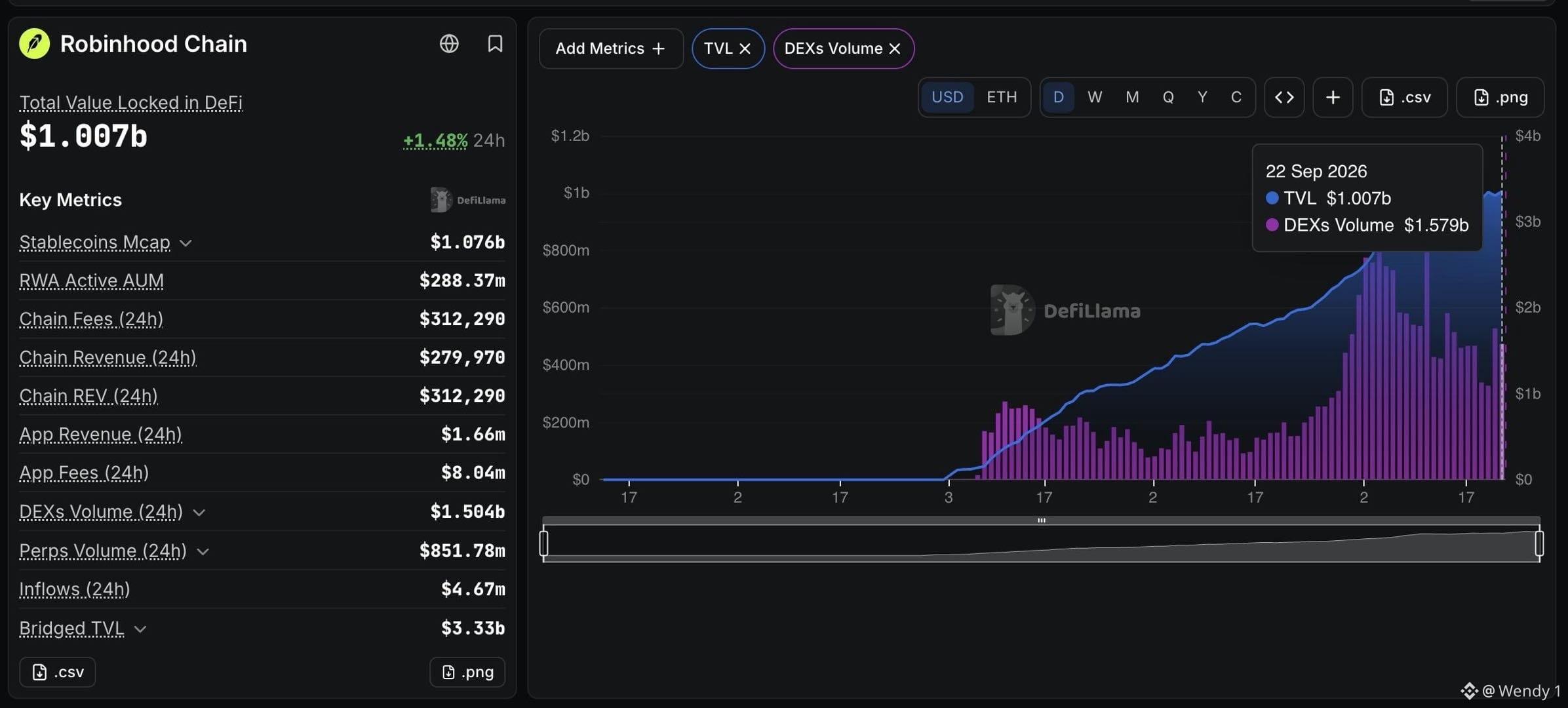
LA CHAÎNE ROBINHOOD VIENT DE FRANCHIR 1 Md$ DE TVL. LE VOLUME DÉX EST ENCORE PLUS IMPORTANT
La chaîne Robinhood a officiellement dépassé 1 Md$ de TVL en DeFi, d’après les dernières données de DeFiLlama présentées dans l’aperçu.
Les chiffres deviennent de plus en plus intéressants :
💰 TVL : 1,007 Md$
🔥 Volume DEX (24 h) : 1,504 Md$
⚡ Volume des perps (24 h) : 851,78 M$
💵 Market cap des stablecoins : 1,076 Md$
🌉 TVL transféré (bridged) : 3,33 Md$
🏦 RWA AUM actif : 288,37 M$
💸 Frais d’application (24 h) : 8,04 M$
Le chiffre le plus marquant est l’activité DEX.
1,504 Md$ de volume DEX sur 24 h représente environ 1,5x le TVL total de la chaîne.
Cela place l’activité de trading de la chaîne Robinhood clairement sous les projecteurs, d’autant plus qu’environ 852 M$ de volume sur les perps ont été enregistrés sur la même période de 24 heures.
Le prochain indicateur à surveiller est de savoir si cette activité peut se traduire par une hausse durable du TVL et du nombre d’utilisateurs.
Vous tradez sur la chaîne Robinhood ? 👇
#RobinhoodChain #DeFi
LA CHAÎNE ROBINHOOD VIENT DE FRANCHIR 1 Md$ DE TVL. LE VOLUME DÉX EST ENCORE PLUS IMPORTANT
La chaîne Robinhood a officiellement dépassé 1 Md$ de TVL en DeFi, d’après les dernières données de DeFiLlama présentées dans l’aperçu.
Les chiffres deviennent de plus en plus intéressants :
💰 TVL : 1,007 Md$
🔥 Volume DEX (24 h) : 1,504 Md$
⚡ Volume des perps (24 h) : 851,78 M$
💵 Market cap des stablecoins : 1,076 Md$
🌉 TVL transféré (bridged) : 3,33 Md$
🏦 RWA AUM actif : 288,37 M$
💸 Frais d’application (24 h) : 8,04 M$
Le chiffre le plus marquant est l’activité DEX.
1,504 Md$ de volume DEX sur 24 h représente environ 1,5x le TVL total de la chaîne.
Cela place l’activité de trading de la chaîne Robinhood clairement sous les projecteurs, d’autant plus qu’environ 852 M$ de volume sur les perps ont été enregistrés sur la même période de 24 heures.
Le prochain indicateur à surveiller est de savoir si cette activité peut se traduire par une hausse durable du TVL et du nombre d’utilisateurs.
Vous tradez sur la chaîne Robinhood ? 👇
#RobinhoodChain #DeFi
La chaîne Robinhood a officiellement dépassé 1 Md$ de TVL en DeFi, d’après les dernières données de DeFiLlama présentées dans l’aperçu.
Les chiffres deviennent de plus en plus intéressants :
💰 TVL : 1,007 Md$
🔥 Volume DEX (24 h) : 1,504 Md$
⚡ Volume des perps (24 h) : 851,78 M$
💵 Market cap des stablecoins : 1,076 Md$
🌉 TVL transféré (bridged) : 3,33 Md$
🏦 RWA AUM actif : 288,37 M$
💸 Frais d’application (24 h) : 8,04 M$
Le chiffre le plus marquant est l’activité DEX.
1,504 Md$ de volume DEX sur 24 h représente environ 1,5x le TVL total de la chaîne.
Cela place l’activité de trading de la chaîne Robinhood clairement sous les projecteurs, d’autant plus qu’environ 852 M$ de volume sur les perps ont été enregistrés sur la même période de 24 heures.
Le prochain indicateur à surveiller est de savoir si cette activité peut se traduire par une hausse durable du TVL et du nombre d’utilisateurs.
Vous tradez sur la chaîne Robinhood ? 👇
#RobinhoodChain #DeFi
26
·
--
Voir la traduction
BINANCE JUST INVESTED $100M IN CIRCLE. USDC IS AT THE CENTER
Binance is taking a direct stake in Circle, the company behind $USDC .
Circle announced that Binance invested $100M to acquire a stake in the company, deepening the relationship between one of crypto’s largest exchanges and the issuer of one of the biggest dollar-backed stablecoins.
The timing is notable.
Binance has been expanding $USDC across its ecosystem, including recently opening USDC deposits on Circle’s Arc network.
Under the reported arrangement, Binance will continue promoting $USDC across its products, while Circle will pay Binance fees tied to the amount of $USDC held through Binance’s infrastructure.
In other words, this isn’t just an equity investment. It links Binance’s distribution power with Circle’s stablecoin infrastructure.
What do you think this $100M investment means for the future of $USDC ? 👇
#Binance #USDC
BINANCE JUST INVESTED $100M IN CIRCLE. USDC IS AT THE CENTER
Binance is taking a direct stake in Circle, the company behind $USDC .
Circle announced that Binance invested $100M to acquire a stake in the company, deepening the relationship between one of crypto’s largest exchanges and the issuer of one of the biggest dollar-backed stablecoins.
The timing is notable.
Binance has been expanding $USDC across its ecosystem, including recently opening USDC deposits on Circle’s Arc network.
Under the reported arrangement, Binance will continue promoting $USDC across its products, while Circle will pay Binance fees tied to the amount of $USDC held through Binance’s infrastructure.
In other words, this isn’t just an equity investment. It links Binance’s distribution power with Circle’s stablecoin infrastructure.
What do you think this $100M investment means for the future of $USDC ? 👇
#Binance #USDC
Binance is taking a direct stake in Circle, the company behind $USDC .
Circle announced that Binance invested $100M to acquire a stake in the company, deepening the relationship between one of crypto’s largest exchanges and the issuer of one of the biggest dollar-backed stablecoins.
The timing is notable.
Binance has been expanding $USDC across its ecosystem, including recently opening USDC deposits on Circle’s Arc network.
Under the reported arrangement, Binance will continue promoting $USDC across its products, while Circle will pay Binance fees tied to the amount of $USDC held through Binance’s infrastructure.
In other words, this isn’t just an equity investment. It links Binance’s distribution power with Circle’s stablecoin infrastructure.
What do you think this $100M investment means for the future of $USDC ? 👇
#Binance #USDC
25
·
--
BINANCE SUPPRIMERA 7 PAIRES SUR MARGE LE 25 SEPTEMBRE
Binance Margin retirera de la cote les paires suivantes à 06:00 UTC le 25 septembre 2026.
Marge croisée :
• NOM/USDC
• 1MBABYDOGE/USDC
• SSV/USDC
• BANANA/USDC
• OPN/USDC
• MANTA/USDC
• STO/USDC
Marge isolée :
• NOM/USDC
• 1MBABYDOGE/USDC
• OPN/USDC
• MANTA/USDC
• STO/USDC
L’intersection est importante : NOM, 1MBABYDOGE, OPN, MANTA et STO sont retirés à la fois de la marge croisée et de la marge isolée.
Si vous utilisez l’une de ces paires pour des positions sur marge, vérifiez vos positions et vos ordres avant la date limite de 06:00 UTC.
Utilisez-vous actuellement l’une de ces paires sur marge ? 👇
#Binance #MarginTrading
BINANCE SUPPRIMERA 7 PAIRES SUR MARGE LE 25 SEPTEMBRE
Binance Margin retirera de la cote les paires suivantes à 06:00 UTC le 25 septembre 2026.
Marge croisée :
• NOM/USDC
• 1MBABYDOGE/USDC
• SSV/USDC
• BANANA/USDC
• OPN/USDC
• MANTA/USDC
• STO/USDC
Marge isolée :
• NOM/USDC
• 1MBABYDOGE/USDC
• OPN/USDC
• MANTA/USDC
• STO/USDC
L’intersection est importante : NOM, 1MBABYDOGE, OPN, MANTA et STO sont retirés à la fois de la marge croisée et de la marge isolée.
Si vous utilisez l’une de ces paires pour des positions sur marge, vérifiez vos positions et vos ordres avant la date limite de 06:00 UTC.
Utilisez-vous actuellement l’une de ces paires sur marge ? 👇
#Binance #MarginTrading
Binance Margin retirera de la cote les paires suivantes à 06:00 UTC le 25 septembre 2026.
Marge croisée :
• NOM/USDC
• 1MBABYDOGE/USDC
• SSV/USDC
• BANANA/USDC
• OPN/USDC
• MANTA/USDC
• STO/USDC
Marge isolée :
• NOM/USDC
• 1MBABYDOGE/USDC
• OPN/USDC
• MANTA/USDC
• STO/USDC
L’intersection est importante : NOM, 1MBABYDOGE, OPN, MANTA et STO sont retirés à la fois de la marge croisée et de la marge isolée.
Si vous utilisez l’une de ces paires pour des positions sur marge, vérifiez vos positions et vos ordres avant la date limite de 06:00 UTC.
Utilisez-vous actuellement l’une de ces paires sur marge ? 👇
#Binance #MarginTrading
34
·
--
Voir la traduction
BINANCE WILL REMOVE 7 SPOT TRADING PAIRS ON SEPTEMBER 25
Binance is removing seven USDC spot trading pairs following its latest review.
Trading will cease at 03:00 UTC on September 25, 2026.
The affected pairs are:
• AIXBT/USDC
• DOLO/USDC
• ENJ/USDC
• HUMA/USDC
• SXT/USDC
• TNSR/USDC
• TURTLE/USDC
Binance says the decision is based on its most recent review.
If you’re trading any of these pairs, the 03:00 UTC deadline is the key time to keep in mind.
Are any of these pairs on your watchlist? 👇
#Binance #Crypto
BINANCE WILL REMOVE 7 SPOT TRADING PAIRS ON SEPTEMBER 25
Binance is removing seven USDC spot trading pairs following its latest review.
Trading will cease at 03:00 UTC on September 25, 2026.
The affected pairs are:
• AIXBT/USDC
• DOLO/USDC
• ENJ/USDC
• HUMA/USDC
• SXT/USDC
• TNSR/USDC
• TURTLE/USDC
Binance says the decision is based on its most recent review.
If you’re trading any of these pairs, the 03:00 UTC deadline is the key time to keep in mind.
Are any of these pairs on your watchlist? 👇
#Binance #Crypto
Binance is removing seven USDC spot trading pairs following its latest review.
Trading will cease at 03:00 UTC on September 25, 2026.
The affected pairs are:
• AIXBT/USDC
• DOLO/USDC
• ENJ/USDC
• HUMA/USDC
• SXT/USDC
• TNSR/USDC
• TURTLE/USDC
Binance says the decision is based on its most recent review.
If you’re trading any of these pairs, the 03:00 UTC deadline is the key time to keep in mind.
Are any of these pairs on your watchlist? 👇
#Binance #Crypto
68
·
--
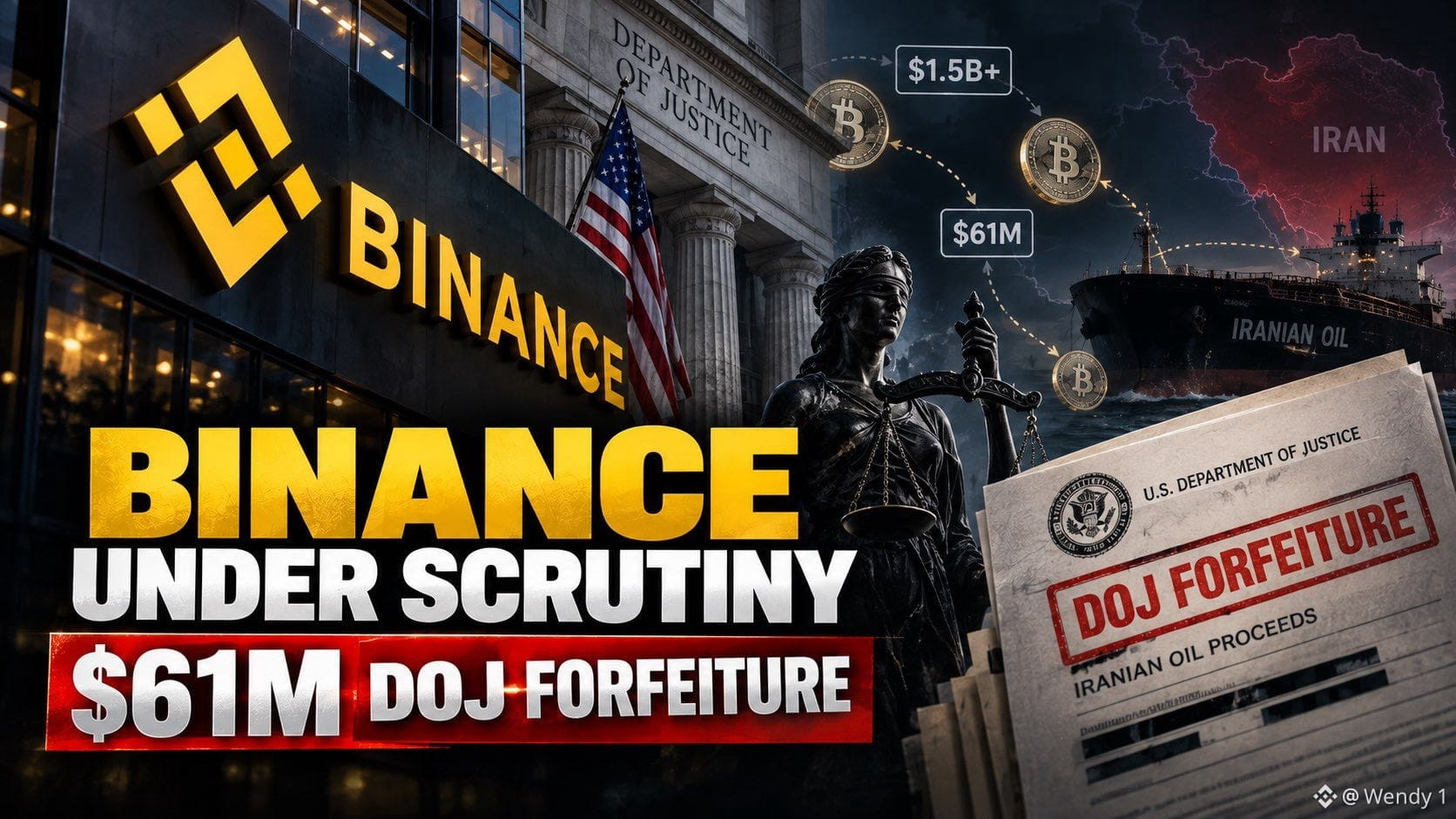
BINANCE EST À NOUVEAU SOUS LA LOUPE DES ÉTATS-UNIS CONCERNANT DES FLUX D’HUILE IRANIENNE PRÉSUMÉS
Le Département américain de la Justice vise 61 millions de dollars en crypto que les procureurs affirment provenir de ventes d’huile du marché noir iranien et avoir transité par des comptes Binance.
D’après la plainte du DOJ, deux entités chinoises, Blessed Trust et Hexa Whale, ont utilisé des comptes de trading sur Binance dans le cadre d’un stratagème impliquant des produits et des revenus issus du pétrole brut iranien et de produits pétroliers.
Les procureurs allèguent qu’un réseau plus vaste a transféré plus de 1,5 milliard de dollars issus de revenus pétroliers iraniens via des adresses crypto, avec une partie des fonds finalement liée à l’Iran et à ses mandataires. La procédure en cours est une affaire de confiscation civile, ce qui signifie que les allégations n’ont pas encore été établies par un jugement final.
Binance a contesté les informations publiées précédemment sur l’affaire, affirmant avoir mené une enquête proactive, avoir supprimé les deux entités, et n’avoir eu aucune transaction directe avec des entités basées en Iran.
Cette situation intervient après le plaidoyer de culpabilité de Binance en 2023 concernant des violations américaines de la lutte contre le blanchiment d’argent et des sanctions, suivi d’un règlement d’environ 4,3 milliards de dollars.
Cela pourrait-il devenir un autre grand test de conformité pour Binance ? Dites-le en commentaire. 👇
#Binance #CryptoRegulation $BNB
BINANCE EST À NOUVEAU SOUS LA LOUPE DES ÉTATS-UNIS CONCERNANT DES FLUX D’HUILE IRANIENNE PRÉSUMÉS
Le Département américain de la Justice vise 61 millions de dollars en crypto que les procureurs affirment provenir de ventes d’huile du marché noir iranien et avoir transité par des comptes Binance.
D’après la plainte du DOJ, deux entités chinoises, Blessed Trust et Hexa Whale, ont utilisé des comptes de trading sur Binance dans le cadre d’un stratagème impliquant des produits et des revenus issus du pétrole brut iranien et de produits pétroliers.
Les procureurs allèguent qu’un réseau plus vaste a transféré plus de 1,5 milliard de dollars issus de revenus pétroliers iraniens via des adresses crypto, avec une partie des fonds finalement liée à l’Iran et à ses mandataires. La procédure en cours est une affaire de confiscation civile, ce qui signifie que les allégations n’ont pas encore été établies par un jugement final.
Binance a contesté les informations publiées précédemment sur l’affaire, affirmant avoir mené une enquête proactive, avoir supprimé les deux entités, et n’avoir eu aucune transaction directe avec des entités basées en Iran.
Cette situation intervient après le plaidoyer de culpabilité de Binance en 2023 concernant des violations américaines de la lutte contre le blanchiment d’argent et des sanctions, suivi d’un règlement d’environ 4,3 milliards de dollars.
Cela pourrait-il devenir un autre grand test de conformité pour Binance ? Dites-le en commentaire. 👇
#Binance #CryptoRegulation $BNB
Le Département américain de la Justice vise 61 millions de dollars en crypto que les procureurs affirment provenir de ventes d’huile du marché noir iranien et avoir transité par des comptes Binance.
D’après la plainte du DOJ, deux entités chinoises, Blessed Trust et Hexa Whale, ont utilisé des comptes de trading sur Binance dans le cadre d’un stratagème impliquant des produits et des revenus issus du pétrole brut iranien et de produits pétroliers.
Les procureurs allèguent qu’un réseau plus vaste a transféré plus de 1,5 milliard de dollars issus de revenus pétroliers iraniens via des adresses crypto, avec une partie des fonds finalement liée à l’Iran et à ses mandataires. La procédure en cours est une affaire de confiscation civile, ce qui signifie que les allégations n’ont pas encore été établies par un jugement final.
Binance a contesté les informations publiées précédemment sur l’affaire, affirmant avoir mené une enquête proactive, avoir supprimé les deux entités, et n’avoir eu aucune transaction directe avec des entités basées en Iran.
Cette situation intervient après le plaidoyer de culpabilité de Binance en 2023 concernant des violations américaines de la lutte contre le blanchiment d’argent et des sanctions, suivi d’un règlement d’environ 4,3 milliards de dollars.
Cela pourrait-il devenir un autre grand test de conformité pour Binance ? Dites-le en commentaire. 👇
#Binance #CryptoRegulation $BNB
·
--
BINANCE WALLET LANCE SA PREMIÈRE CAMPAGNE DE PRÉ-ACCÈS AVEC 15,5 $POLY
La première campagne de Pré-Accès de Binance Wallet est désormais en ligne, offrant aux utilisateurs l’accès à $pPOLY, un jeton émis par Paimon Finance et hébergé via PancakeSwap.
Voici les chiffres clés :
💰 Prix du jeton : $15,5
💰 Offre totale : $4,8M
⛓️ Réseau : BNB Smart Chain
⏰ Campagne : 21 sept., 09:00 UTC → 24 sept., 09:00 UTC
Votre quota d’abonnement est principalement déterminé par les Alpha Points et votre niveau d’activité bStocks on-chain. Les niveaux supérieurs débloquent des quotas plus élevés, tandis qu’aucun Alpha Point n’est déduit.
Pour participer, utilisez un Binance Keyless Wallet, sélectionnez $U ou $USDC, puis déposez via BNB Chain. Le dépôt minimum est de $100 par transaction, et chaque utilisateur ne peut choisir qu’un seul jeton.
$ pPOLY claims, les remboursements de fonds et le trading démarrent tous le 24 sept. à 09:00 UTC.
Un détail important : $pPOLY offre une exposition tokenisée, et non une participation directe ni des droits d’introduction en bourse garantis.
Participeriez-vous à la première campagne de Pré-Accès de Binance Wallet ? 👇
#BinanceWallet #PreAccess
BINANCE WALLET LANCE SA PREMIÈRE CAMPAGNE DE PRÉ-ACCÈS AVEC 15,5 $POLY
La première campagne de Pré-Accès de Binance Wallet est désormais en ligne, offrant aux utilisateurs l’accès à $pPOLY, un jeton émis par Paimon Finance et hébergé via PancakeSwap.
Voici les chiffres clés :
💰 Prix du jeton : $15,5
💰 Offre totale : $4,8M
⛓️ Réseau : BNB Smart Chain
⏰ Campagne : 21 sept., 09:00 UTC → 24 sept., 09:00 UTC
Votre quota d’abonnement est principalement déterminé par les Alpha Points et votre niveau d’activité bStocks on-chain. Les niveaux supérieurs débloquent des quotas plus élevés, tandis qu’aucun Alpha Point n’est déduit.
Pour participer, utilisez un Binance Keyless Wallet, sélectionnez $U ou $USDC, puis déposez via BNB Chain. Le dépôt minimum est de $100 par transaction, et chaque utilisateur ne peut choisir qu’un seul jeton.
$ pPOLY claims, les remboursements de fonds et le trading démarrent tous le 24 sept. à 09:00 UTC.
Un détail important : $pPOLY offre une exposition tokenisée, et non une participation directe ni des droits d’introduction en bourse garantis.
Participeriez-vous à la première campagne de Pré-Accès de Binance Wallet ? 👇
#BinanceWallet #PreAccess
La première campagne de Pré-Accès de Binance Wallet est désormais en ligne, offrant aux utilisateurs l’accès à $pPOLY, un jeton émis par Paimon Finance et hébergé via PancakeSwap.
Voici les chiffres clés :
💰 Prix du jeton : $15,5
💰 Offre totale : $4,8M
⛓️ Réseau : BNB Smart Chain
⏰ Campagne : 21 sept., 09:00 UTC → 24 sept., 09:00 UTC
Votre quota d’abonnement est principalement déterminé par les Alpha Points et votre niveau d’activité bStocks on-chain. Les niveaux supérieurs débloquent des quotas plus élevés, tandis qu’aucun Alpha Point n’est déduit.
Pour participer, utilisez un Binance Keyless Wallet, sélectionnez $U ou $USDC, puis déposez via BNB Chain. Le dépôt minimum est de $100 par transaction, et chaque utilisateur ne peut choisir qu’un seul jeton.
$ pPOLY claims, les remboursements de fonds et le trading démarrent tous le 24 sept. à 09:00 UTC.
Un détail important : $pPOLY offre une exposition tokenisée, et non une participation directe ni des droits d’introduction en bourse garantis.
Participeriez-vous à la première campagne de Pré-Accès de Binance Wallet ? 👇
#BinanceWallet #PreAccess
53
·
--
LE WALLET BINANCE VIENT D’AJOUTER POLYMARKET/USD1 PERPS AVEC UN LEVIER X3
Le Wallet Binance a lancé la paire perpétuelle POLYMARKET/USD1, offrant aux utilisateurs une nouvelle façon de trader les variations de prix liées à Polymarket, avec jusqu’à 3x de levier.
Il y a une autre fonctionnalité intéressante ici.
Avec le mode Multi-Actifs, les actions tokenisées éligibles du Wallet Binance peuvent être utilisées comme garantie jusqu’à 90% de leur valeur marchande.
Donc la configuration est simple :
Conserver des bStocks → Les utiliser comme marge → Trader les perps POLYMARKET/USD1
Les futures perpétuels sont actuellement disponibles uniquement pour les comptes Keyless du Wallet Binance.
Pour y accéder : Application Binance → Wallet Binance → Marchés → Perps → POLYMARKET/USD1
Le levier peut amplifier à la fois les gains et les pertes, donc le risque de liquidation et la taille des positions comptent.
Utiliseriez-vous des bStocks comme garantie pour trader les perps POLYMARKET ? 👇
https://web3.binance.com/en/perpetuals/POLYMARKETUSD1
#BinanceWallet #Polymarket
LE WALLET BINANCE VIENT D’AJOUTER POLYMARKET/USD1 PERPS AVEC UN LEVIER X3
Le Wallet Binance a lancé la paire perpétuelle POLYMARKET/USD1, offrant aux utilisateurs une nouvelle façon de trader les variations de prix liées à Polymarket, avec jusqu’à 3x de levier.
Il y a une autre fonctionnalité intéressante ici.
Avec le mode Multi-Actifs, les actions tokenisées éligibles du Wallet Binance peuvent être utilisées comme garantie jusqu’à 90% de leur valeur marchande.
Donc la configuration est simple :
Conserver des bStocks → Les utiliser comme marge → Trader les perps POLYMARKET/USD1
Les futures perpétuels sont actuellement disponibles uniquement pour les comptes Keyless du Wallet Binance.
Pour y accéder : Application Binance → Wallet Binance → Marchés → Perps → POLYMARKET/USD1
Le levier peut amplifier à la fois les gains et les pertes, donc le risque de liquidation et la taille des positions comptent.
Utiliseriez-vous des bStocks comme garantie pour trader les perps POLYMARKET ? 👇
https://web3.binance.com/en/perpetuals/POLYMARKETUSD1
#BinanceWallet #Polymarket
Le Wallet Binance a lancé la paire perpétuelle POLYMARKET/USD1, offrant aux utilisateurs une nouvelle façon de trader les variations de prix liées à Polymarket, avec jusqu’à 3x de levier.
Il y a une autre fonctionnalité intéressante ici.
Avec le mode Multi-Actifs, les actions tokenisées éligibles du Wallet Binance peuvent être utilisées comme garantie jusqu’à 90% de leur valeur marchande.
Donc la configuration est simple :
Conserver des bStocks → Les utiliser comme marge → Trader les perps POLYMARKET/USD1
Les futures perpétuels sont actuellement disponibles uniquement pour les comptes Keyless du Wallet Binance.
Pour y accéder : Application Binance → Wallet Binance → Marchés → Perps → POLYMARKET/USD1
Le levier peut amplifier à la fois les gains et les pertes, donc le risque de liquidation et la taille des positions comptent.
Utiliseriez-vous des bStocks comme garantie pour trader les perps POLYMARKET ? 👇
https://web3.binance.com/en/perpetuals/POLYMARKETUSD1
#BinanceWallet #Polymarket
67
Connectez-vous pour découvrir plus de contenu
Rejoignez la communauté mondiale des adeptes de cryptomonnaies sur Binance Square
⚡️ Suviez les dernières informations importantes sur les cryptomonnaies.
💬 Jugé digne de confiance par la plus grande plateforme d’échange de cryptomonnaies au monde.
👍 Découvrez les connaissances que partagent les créateurs vérifiés.
Adresse e-mail/Nº de téléphone
Sujets d’actualité
BinanceLaunchesBinanceIntelligence
27,379 vues
349 mentions
🚨 BINANCE VIENT D’INTÉGRER L’IA DIRECTEMENT À SA PLATEFORME D’ÉCHANGE — ET CELA POURRAIT CHANGER LA FAÇON DONT LES PARTICULIERS TRADENT.
Binance a officiellement lancé Binance Intelligence, une nouvelle couche d’IA intégrée à l’écosystème Binance. Elle regroupe trois produits :
Binance AI pour les utilisateurs du quotidien,
Binance AI Pro pour les processus de trading automatisés,
et Agent OS pour les développeurs qui créent des agents financiers.
La partie qui devrait intéresser les traders ?
Binance AI peut fournir des synthèses du marché, des alertes intelligentes, des récapitulatifs de profits et pertes (PnL) ainsi que des informations personnalisées, tandis que AI Pro est conçu pour transformer une idée de trading formulée en langage courant en une stratégie visuelle.
Cela signifie que la prochaine phase de la concurrence entre plateformes d’échange ne se jouera peut-être pas sur :
les frais les plus bas contre la liquidité la plus importante.
Mais plutôt sur :
qui offre aux traders la meilleure couche d’exécution basée sur l’IA.
Si Binance Intelligence entraîne réellement une activité accrue des utilisateurs, davantage de stratégies automatisées et une fréquence de trading plus élevée, surveillez $BNB en premier.
Adoption de l’IA ↑
→ engagement sur Binance ↑
→ activité de trading ↑
→ le récit autour de l’écosystème se renforce.
Le catalyseur que je surveillerais maintenant :
déploiement mondial + lancement d’AI Pro + adoption mesurable par les utilisateurs.
Parce qu’une fois que l’IA ne se contente plus de vous dire ce qui se passe sur le marché…
…et commence à vous aider à élaborer vos propres transactions ?
C’est là que cela prend une tout autre ampleur qu’un simple chatbot. 👀
#binancelaunchesbinanceintelligence #EvernorthXRPTreasuryCompletesSPACMerger #ADAGains10%Above$0.27 #ETHUp70%InQ3ButLiquidityFalls #EthStakingExitQueueHits2026High
KimHotbae
·20 mentions J’aime
·24.4k vues
EvernorthXRPTreasuryCompletesSPACMerger
25,246 vues
249 mentions
ADAGains10%Above$0.27
29,735 vues
202 mentions