

Kaan Kaya 1
390 Publications

Kaan Kaya 1
Signaler
Bloquer l’utilisateur
Web3 strategist | On-chain analyst Building new projects, sharing smart money insights 📊 Open to collaborations with teams creating real value.
0 Suivis
1 Abonnés
17 J’aime
Publications
·
--
Voir la traduction
Private Ethereum Payments Are Back After Three Years zk.mоney is back. Aztec shut the original privacy app down in 2023. Now it has relaunched it on the Aztec Network, giving $ETH users a way to make payments where the sender, receiver and amount can be hidden from public view. Deposits coming in from Ethereum are still visible, but activity inside the private environment isn't exposed in the same way. I find the timing pretty notable. For years, most Ethereum scaling conversations were basically about making transactions cheaper and faster. Now privacy is creeping back into the conversation as an actual product feature rather than a niche crypto philosophy. And there’s a weird UX question here: blockchains taught everyone that transparency was a feature. But if crypto ever handles everyday salaries, subscriptions or business payments, do we really want every transaction sitting in public forever? $ETH doesn't need to become private by default for that question to matter, it just needs enough users to start asking for a private option. #ETHBlockchain #ETHFoundation
Private Ethereum Payments Are Back After Three Years zk.mоney is back. Aztec shut the original privacy app down in 2023. Now it has relaunched it on the Aztec Network, giving $ETH users a way to make payments where the sender, receiver and amount can be hidden from public view. Deposits coming in from Ethereum are still visible, but activity inside the private environment isn't exposed in the same way. I find the timing pretty notable. For years, most Ethereum scaling conversations were basically about making transactions cheaper and faster. Now privacy is creeping back into the conversation as an actual product feature rather than a niche crypto philosophy. And there’s a weird UX question here: blockchains taught everyone that transparency was a feature. But if crypto ever handles everyday salaries, subscriptions or business payments, do we really want every transaction sitting in public forever? $ETH doesn't need to become private by default for that question to matter, it just needs enough users to start asking for a private option. #ETHBlockchain #ETHFoundation

63
·
--
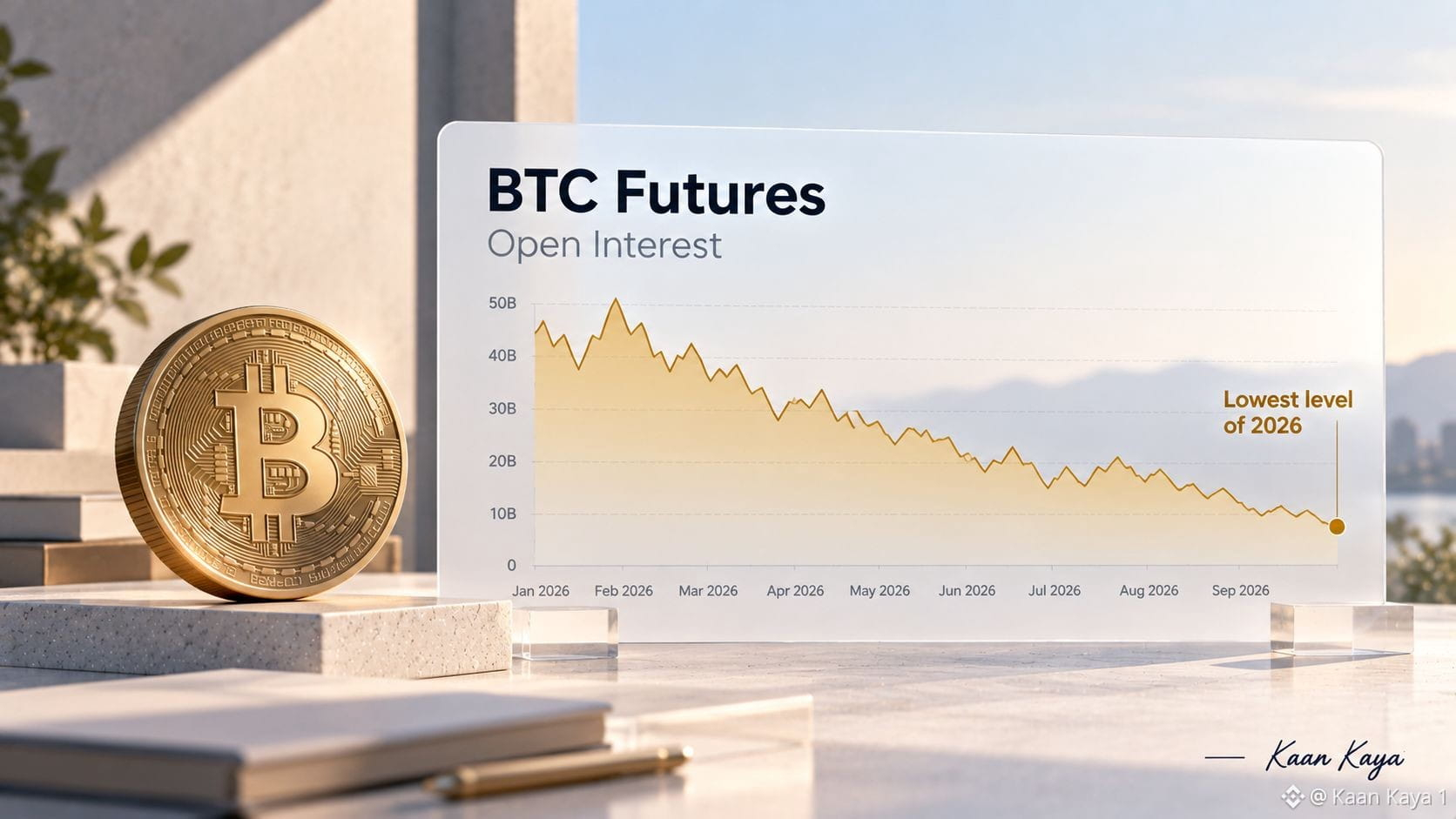
Le levier sur Bitcoin vient de chuter à son plus bas niveau de 2026 Voici une statistique qui paraît un peu étrange à côté de Bitcoin qui évolue autour de 84 000 $ : le $BTC futures open interest (intérêt ouvert) est tombé à son plus bas niveau de l’année. Le marché s’est fortement redressé au cours du mois écoulé, mais les traders n’ont pas répondu en réinjectant du levier. C’est assez différent du scénario que l’on observe souvent après un mouvement rapide. Une hausse des prix associée à une augmentation rapide de l’intérêt ouvert indique généralement que davantage de positions surendettées rejoignent la transaction. Cette fois, une grande partie de cet excès de levier a en fait été purgée, tandis que BTC a conservé l’essentiel de ses gains récents. Il y a aussi un autre contraste en dessous. Les mesures de volatilité implicite sur 30 jours de Bitcoin et d’Ether restent proches des plus bas de 2026, ce qui signifie que les traders d’options ne valorisent pas non plus de mouvements particulièrement spectaculaires. Ainsi, $BTC se situe autour de 84 000 $, le levier a été évacué, et la volatilité attendue reste anormalement calme. La structure du marché est bien plus propre que ce que vous vous attendriez après le type de course que Bitcoin vient de faire. #BTC Price Analysis# #Bitcoin Price Prediction: What is Bitcoins next move?#
Le levier sur Bitcoin vient de chuter à son plus bas niveau de 2026 Voici une statistique qui paraît un peu étrange à côté de Bitcoin qui évolue autour de 84 000 $ : le $BTC futures open interest (intérêt ouvert) est tombé à son plus bas niveau de l’année. Le marché s’est fortement redressé au cours du mois écoulé, mais les traders n’ont pas répondu en réinjectant du levier. C’est assez différent du scénario que l’on observe souvent après un mouvement rapide. Une hausse des prix associée à une augmentation rapide de l’intérêt ouvert indique généralement que davantage de positions surendettées rejoignent la transaction. Cette fois, une grande partie de cet excès de levier a en fait été purgée, tandis que BTC a conservé l’essentiel de ses gains récents. Il y a aussi un autre contraste en dessous. Les mesures de volatilité implicite sur 30 jours de Bitcoin et d’Ether restent proches des plus bas de 2026, ce qui signifie que les traders d’options ne valorisent pas non plus de mouvements particulièrement spectaculaires. Ainsi, $BTC se situe autour de 84 000 $, le levier a été évacué, et la volatilité attendue reste anormalement calme. La structure du marché est bien plus propre que ce que vous vous attendriez après le type de course que Bitcoin vient de faire. #BTC Price Analysis# #Bitcoin Price Prediction: What is Bitcoins next move?#
75
·
--
Voir la traduction
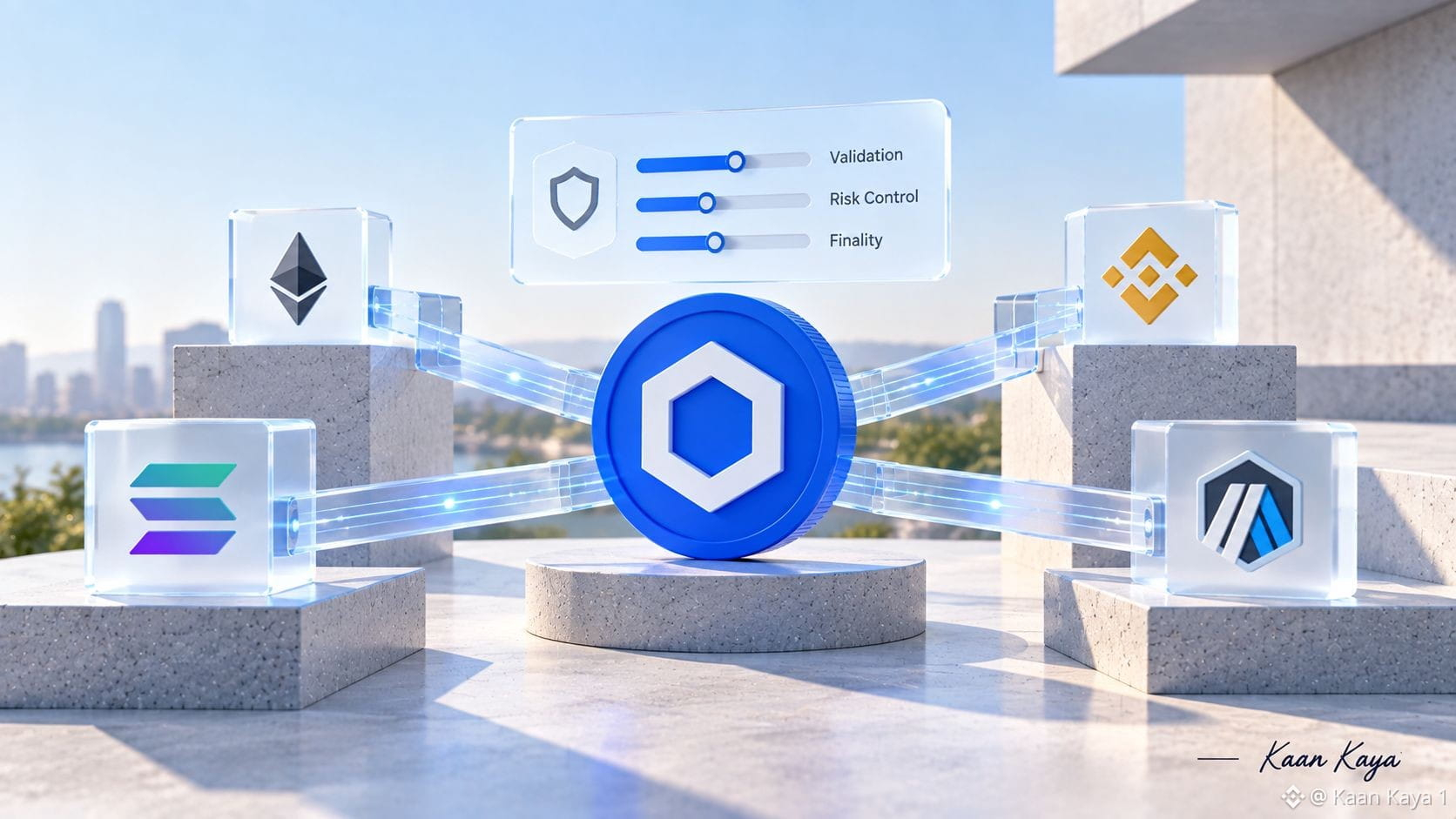
Chainlink Is Letting Apps Choose Their Own Security Model Chainlink just released a new version of CCIP, its cross-chain infrastructure, and one change stood out to me: applications can now customize more of the security around how assets and messages move between blockchains. That sounds fairly technical, but it addresses an awkward part of interoperability. Two apps can use the same bridge infrastructure while having completely different amounts of money at risk, different failure scenarios and very different ideas about what counts as acceptable security. With the new architecture, developers can add independent verification mechanisms alongside Chainlink's existing setup rather than relying on exactly the same configuration for every use case. For $LINK , this is a useful reminder that the cross-chain race isn't only about connecting the largest number of networks anymore. As more serious value moves between chains, how those connections fail, and who gets to design the safeguards, becomes part of the product itself. #Macro Insights# #Altcoin Season#
Chainlink Is Letting Apps Choose Their Own Security Model Chainlink just released a new version of CCIP, its cross-chain infrastructure, and one change stood out to me: applications can now customize more of the security around how assets and messages move between blockchains. That sounds fairly technical, but it addresses an awkward part of interoperability. Two apps can use the same bridge infrastructure while having completely different amounts of money at risk, different failure scenarios and very different ideas about what counts as acceptable security. With the new architecture, developers can add independent verification mechanisms alongside Chainlink's existing setup rather than relying on exactly the same configuration for every use case. For $LINK , this is a useful reminder that the cross-chain race isn't only about connecting the largest number of networks anymore. As more serious value moves between chains, how those connections fail, and who gets to design the safeguards, becomes part of the product itself. #Macro Insights# #Altcoin Season#
27
·
--
Voir la traduction
You Can Get Paid in Crypto Without an Exchange Account I don’t know if this story will be useful to you. But at least stay for the photo at the end – it’s worth it 😏 My friend builds custom parts for drift cars and ships them to customers abroad. He had barely used crypto before, so when one client offered to pay in $USDT , he messaged me. Until then, his crypto knowledge basically ended at knowing $BTC existed. Exchanges, wallets, addresses – it felt like a lot to figure out for one transaction. So instead of turning one payment into a full crypto onboarding session, we used a WB Check. The client created it, sent over the link, and my friend could receive the $USDT using my wallet address without having to register on WhiteBIT himself https://bit.ly/4iJkoEE He normally waited a few days for payments from abroad. With this one, it took minutes. That was supposed to be a one-off workaround. Then another client paid the same way. And at some point it stopped being a workaround and just became one of the ways he gets paid internationally. And now the important part. Look at what people are paying him for 👇 Disclaimer: This is not financial or investment advice. DYOR before making any decisions. Use at your own risk. #BTC Price Analysis# #Bitcoin Price Prediction: What is Bitcoins next move?#
You Can Get Paid in Crypto Without an Exchange Account I don’t know if this story will be useful to you. But at least stay for the photo at the end – it’s worth it 😏 My friend builds custom parts for drift cars and ships them to customers abroad. He had barely used crypto before, so when one client offered to pay in $USDT , he messaged me. Until then, his crypto knowledge basically ended at knowing $BTC existed. Exchanges, wallets, addresses – it felt like a lot to figure out for one transaction. So instead of turning one payment into a full crypto onboarding session, we used a WB Check. The client created it, sent over the link, and my friend could receive the $USDT using my wallet address without having to register on WhiteBIT himself https://bit.ly/4iJkoEE He normally waited a few days for payments from abroad. With this one, it took minutes. That was supposed to be a one-off workaround. Then another client paid the same way. And at some point it stopped being a workaround and just became one of the ways he gets paid internationally. And now the important part. Look at what people are paying him for 👇 Disclaimer: This is not financial or investment advice. DYOR before making any decisions. Use at your own risk. #BTC Price Analysis# #Bitcoin Price Prediction: What is Bitcoins next move?#

·
--
Voir la traduction
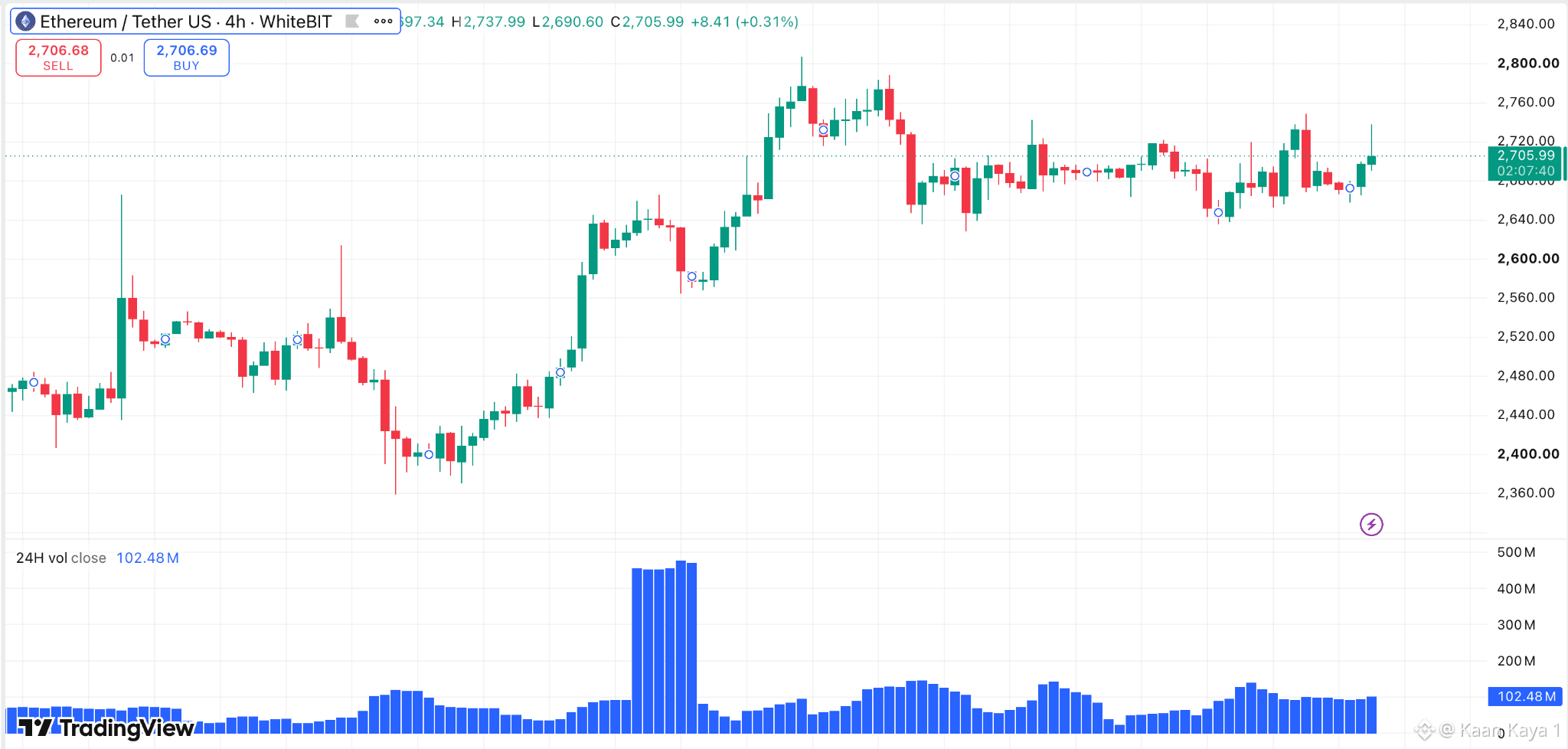
$ETH Is Back Near $2,700, And I’m Leaving It Alone But Just For Now $ETH has come a decent way from $2,400. It nearly reached $2,800, pulled back, and now it’s spending a lot of time around $2,700. I’d like to see another leg higher, but these last few moves haven’t given me much reason to rush. The dips toward $2,640 have found buyers, while pushes into the $2,720-$2,740 area keep running into selling. There’s enough movement to keep you checking your phone, then you realise the price is pretty much where you left it 😅 I’ve been browsing a few WhiteBIT TradFi pairs on TradingView between $ETH checks too. My watchlist used to be almost entirely crypto, so it’s been interesting having some traditional market setups in the mix. For ETH, I’m happy to wait for a clearer move out of this range. Preferably one that’s still there when I check again a few hours later. #ETHBlockchain #ETHFoundation
$ETH Is Back Near $2,700, And I’m Leaving It Alone But Just For Now $ETH has come a decent way from $2,400. It nearly reached $2,800, pulled back, and now it’s spending a lot of time around $2,700. I’d like to see another leg higher, but these last few moves haven’t given me much reason to rush. The dips toward $2,640 have found buyers, while pushes into the $2,720-$2,740 area keep running into selling. There’s enough movement to keep you checking your phone, then you realise the price is pretty much where you left it 😅 I’ve been browsing a few WhiteBIT TradFi pairs on TradingView between $ETH checks too. My watchlist used to be almost entirely crypto, so it’s been interesting having some traditional market setups in the mix. For ETH, I’m happy to wait for a clearer move out of this range. Preferably one that’s still there when I check again a few hours later. #ETHBlockchain #ETHFoundation
44
·
--
Voir la traduction
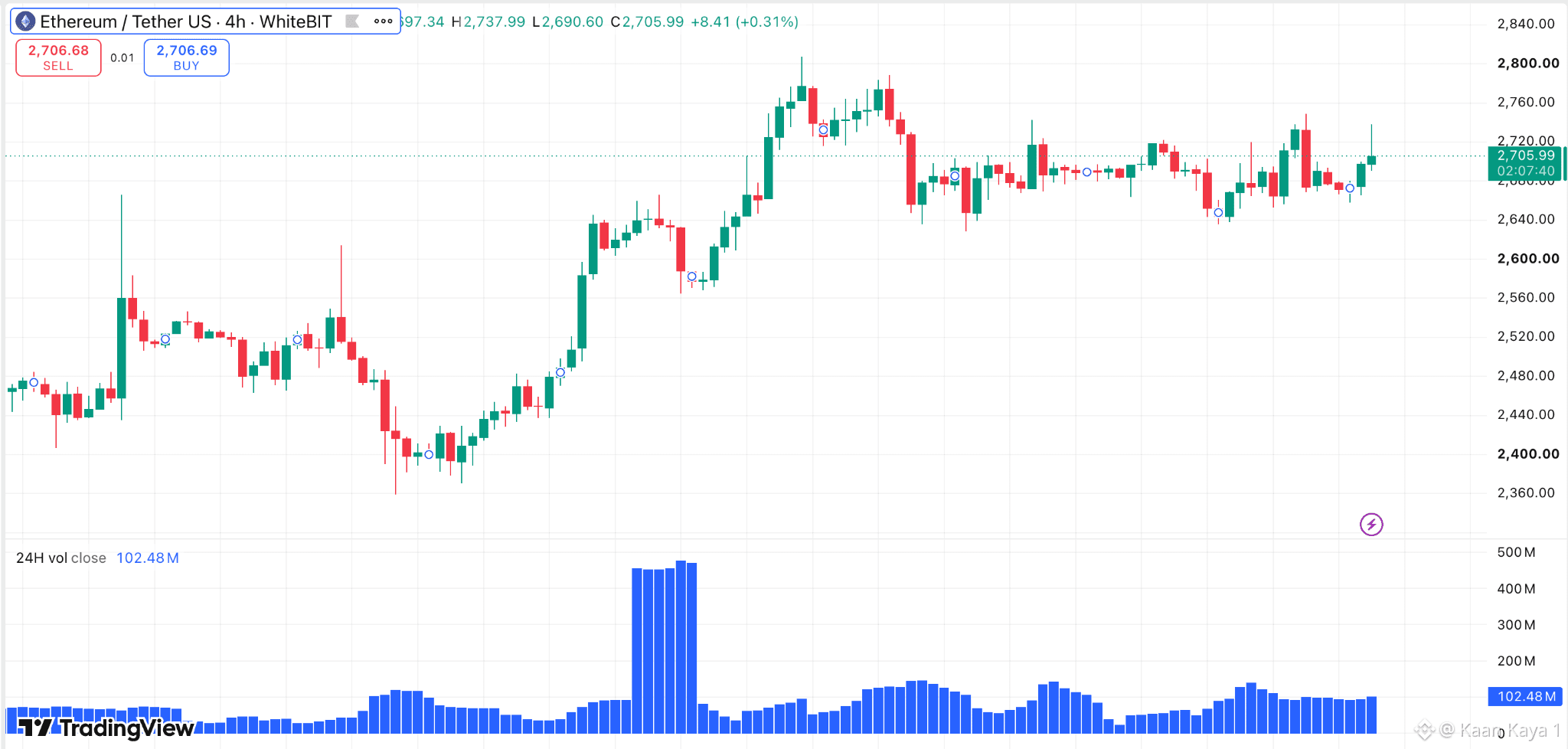
$ETH Is Back Near $2,700, And I’m Leaving It Alone For Now $ETH has come a decent way from $2,400. It nearly reached $2,800, pulled back, and now it’s spending a lot of time around $2,700. I’d like to see another leg higher, but these last few moves haven’t given me much reason to rush. The dips toward $2,640 have found buyers, while pushes into the $2,720-$2,740 area keep running into selling. There’s enough movement to keep you checking your phone, then you realise the price is pretty much where you left it 😅 I’ve been browsing a few WhiteBIT TradFi pairs on TradingView between ETH checks too. My watchlist used to be almost entirely crypto, so it’s been interesting having some traditional market setups in the mix. For ETH, I’m happy to wait for a clearer move out of this range. Preferably one that’s still there when I check again a few hours later. #ETHBlockchain #ETHFoundation
$ETH Is Back Near $2,700, And I’m Leaving It Alone For Now $ETH has come a decent way from $2,400. It nearly reached $2,800, pulled back, and now it’s spending a lot of time around $2,700. I’d like to see another leg higher, but these last few moves haven’t given me much reason to rush. The dips toward $2,640 have found buyers, while pushes into the $2,720-$2,740 area keep running into selling. There’s enough movement to keep you checking your phone, then you realise the price is pretty much where you left it 😅 I’ve been browsing a few WhiteBIT TradFi pairs on TradingView between ETH checks too. My watchlist used to be almost entirely crypto, so it’s been interesting having some traditional market setups in the mix. For ETH, I’m happy to wait for a clearer move out of this range. Preferably one that’s still there when I check again a few hours later. #ETHBlockchain #ETHFoundation
56
·
--
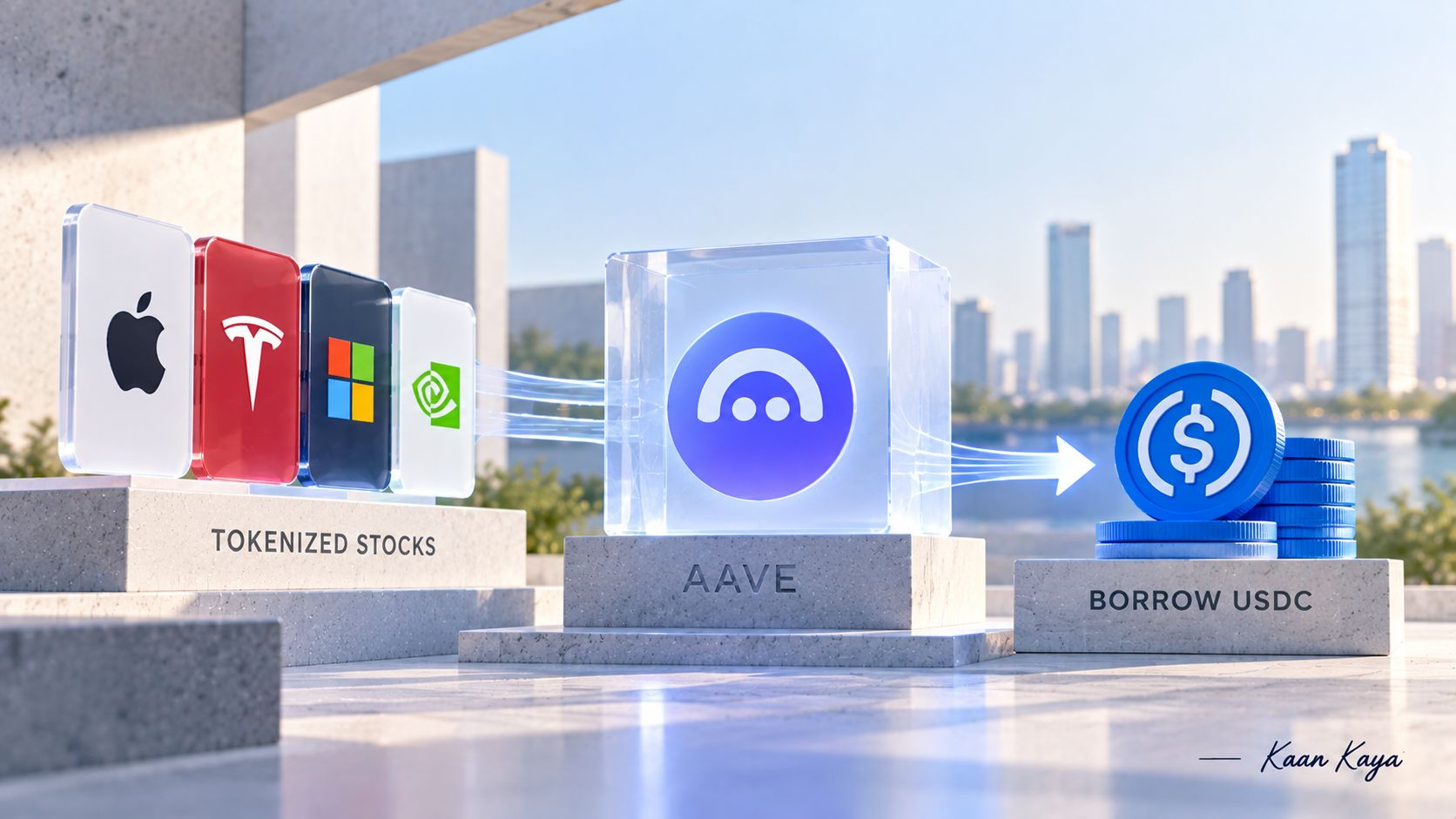
Les actions tokenisées viennent de devenir une garantie DeFi Aave V4 sur Base a ajouté les actions tokenisées de Coinbase comme collatéral. Concrètement, les utilisateurs peuvent emprunter du USDC contre des versions onchain d’actions, plutôt que de les vendre au préalable. L’intégration initiale couvre les actifs émis via l’infrastructure de tokenisation d’actions de Coinbase. Cela crée un mélange qui pourrait sembler assez étrange dans un compte-titres traditionnel : détenir des actions tokenisées, les déposer dans un protocole de prêt, puis utiliser la position pour accéder à de la liquidité en dollars onchain. Pour $AAVE , l’histoire ne se résume pas simplement à l’ajout d’un nouveau type de collatéral. Le prêt DeFi a débuté en grande partie avec des actifs natifs du crypto comme l’ETH et les stablecoins. À mesure que les titres tokenisés passent onchain, les protocoles de prêt pourraient disposer d’un tout nouveau pool de collatéral avec lequel travailler. Bien sûr, cela s’accompagne de nouveaux risques. Une action tokenisée dépend toujours de son émetteur, de la structure du marché et du titre sous-jacent ; la placer dans un protocole DeFi n’enlève aucune de ces couches. Mais la frontière entre les « actifs DeFi » et les « actifs traditionnels » devient de plus en plus difficile à tracer. #Macro Insights# #Altcoin Season#
Les actions tokenisées viennent de devenir une garantie DeFi Aave V4 sur Base a ajouté les actions tokenisées de Coinbase comme collatéral. Concrètement, les utilisateurs peuvent emprunter du USDC contre des versions onchain d’actions, plutôt que de les vendre au préalable. L’intégration initiale couvre les actifs émis via l’infrastructure de tokenisation d’actions de Coinbase. Cela crée un mélange qui pourrait sembler assez étrange dans un compte-titres traditionnel : détenir des actions tokenisées, les déposer dans un protocole de prêt, puis utiliser la position pour accéder à de la liquidité en dollars onchain. Pour $AAVE , l’histoire ne se résume pas simplement à l’ajout d’un nouveau type de collatéral. Le prêt DeFi a débuté en grande partie avec des actifs natifs du crypto comme l’ETH et les stablecoins. À mesure que les titres tokenisés passent onchain, les protocoles de prêt pourraient disposer d’un tout nouveau pool de collatéral avec lequel travailler. Bien sûr, cela s’accompagne de nouveaux risques. Une action tokenisée dépend toujours de son émetteur, de la structure du marché et du titre sous-jacent ; la placer dans un protocole DeFi n’enlève aucune de ces couches. Mais la frontière entre les « actifs DeFi » et les « actifs traditionnels » devient de plus en plus difficile à tracer. #Macro Insights# #Altcoin Season#
64
·
--
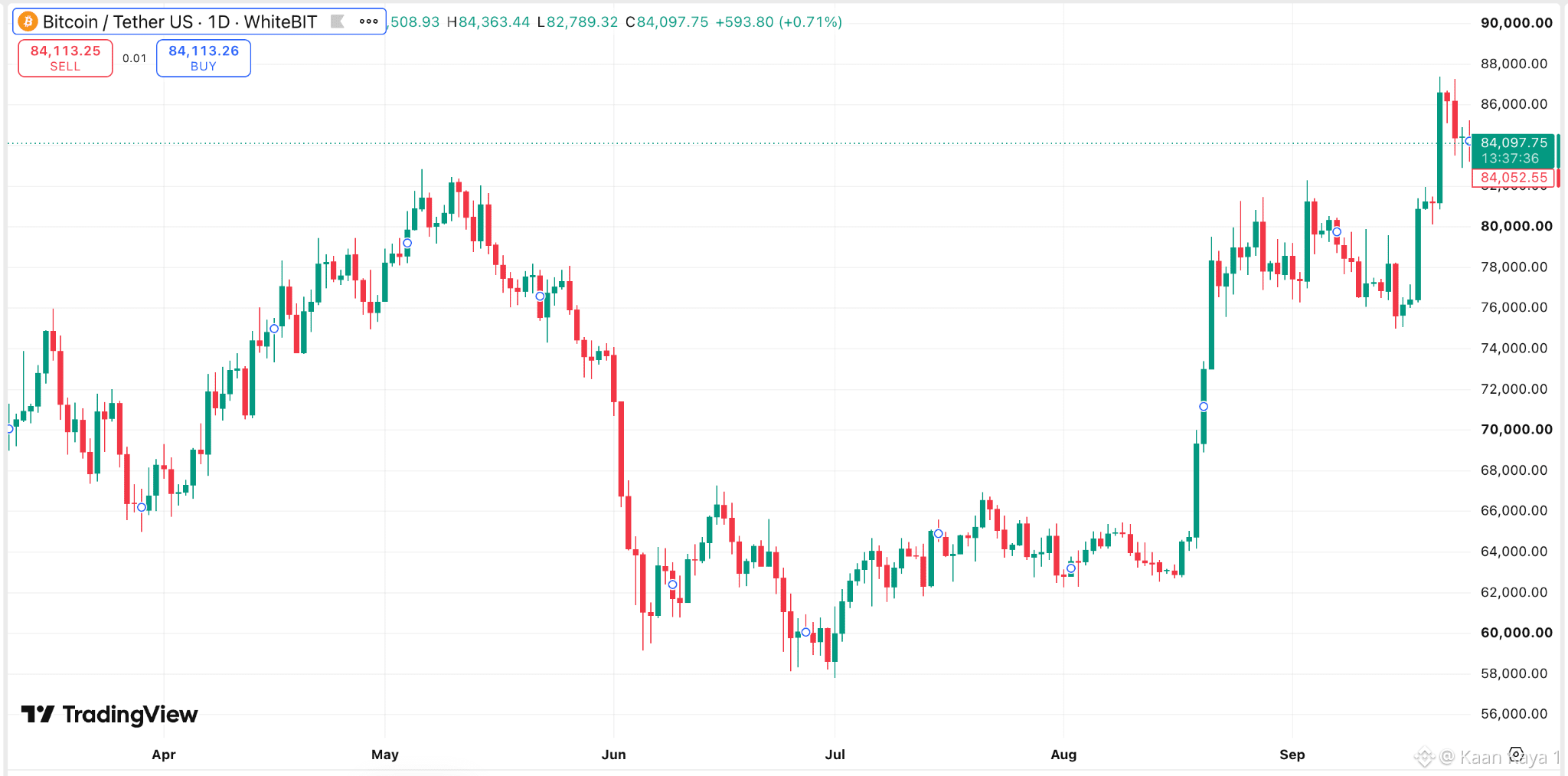
$BTC a reculé depuis 87K. Les prochaines bougies quotidiennes comptent davantage. $BTC a évolué d’environ 76K à presque 87K en un laps de temps plutôt court. On est autour de 84K maintenant, et l’ambiance a déjà changé : on est passé de « jusqu’où ça peut monter ? » à « est-ce que c’était tout le mouvement ? ». La crypto ne laisse vraiment pas beaucoup de temps à quelqu’un pour profiter d’un rally 😅 Le repli en lui-même ne semble pas si inhabituel après un tel bond. Je surveille si les acheteurs continuent de revenir autour de 84K au cours des prochains jours. Rester ici rendrait le mouvement au-dessus de l’ancienne fourchette de trading plus convaincant ; repasser dans les bas 80K le rendrait beaucoup plus compliqué. J’ai aussi gardé un œil sur quelques configurations de marchés traditionnels sur TradingView pendant que le BTC se stabilise. WhiteBIT TradFi y est disponible maintenant, donc je peux les vérifier en parallèle avec la crypto sans devoir passer d’une douzaine d’onglets à l’autre. Je me demande si l’appétit pour le risque paraît aussi fort en dehors de la crypto que ce que suggère ce récent mouvement du BTC. Pour l’instant, je ne lirais pas trop de choses dans un seul jour rouge. Les prochaines bougies quotidiennes devraient nous en dire plus sur le fait que les acheteurs prennent une pause ou commencent à perdre de l’intérêt. #BTC Price Analysis# #Bitcoin Price Prediction: What is Bitcoins next move?#
$BTC a reculé depuis 87K. Les prochaines bougies quotidiennes comptent davantage. $BTC a évolué d’environ 76K à presque 87K en un laps de temps plutôt court. On est autour de 84K maintenant, et l’ambiance a déjà changé : on est passé de « jusqu’où ça peut monter ? » à « est-ce que c’était tout le mouvement ? ». La crypto ne laisse vraiment pas beaucoup de temps à quelqu’un pour profiter d’un rally 😅 Le repli en lui-même ne semble pas si inhabituel après un tel bond. Je surveille si les acheteurs continuent de revenir autour de 84K au cours des prochains jours. Rester ici rendrait le mouvement au-dessus de l’ancienne fourchette de trading plus convaincant ; repasser dans les bas 80K le rendrait beaucoup plus compliqué. J’ai aussi gardé un œil sur quelques configurations de marchés traditionnels sur TradingView pendant que le BTC se stabilise. WhiteBIT TradFi y est disponible maintenant, donc je peux les vérifier en parallèle avec la crypto sans devoir passer d’une douzaine d’onglets à l’autre. Je me demande si l’appétit pour le risque paraît aussi fort en dehors de la crypto que ce que suggère ce récent mouvement du BTC. Pour l’instant, je ne lirais pas trop de choses dans un seul jour rouge. Les prochaines bougies quotidiennes devraient nous en dire plus sur le fait que les acheteurs prennent une pause ou commencent à perdre de l’intérêt. #BTC Price Analysis# #Bitcoin Price Prediction: What is Bitcoins next move?#
55
·
--
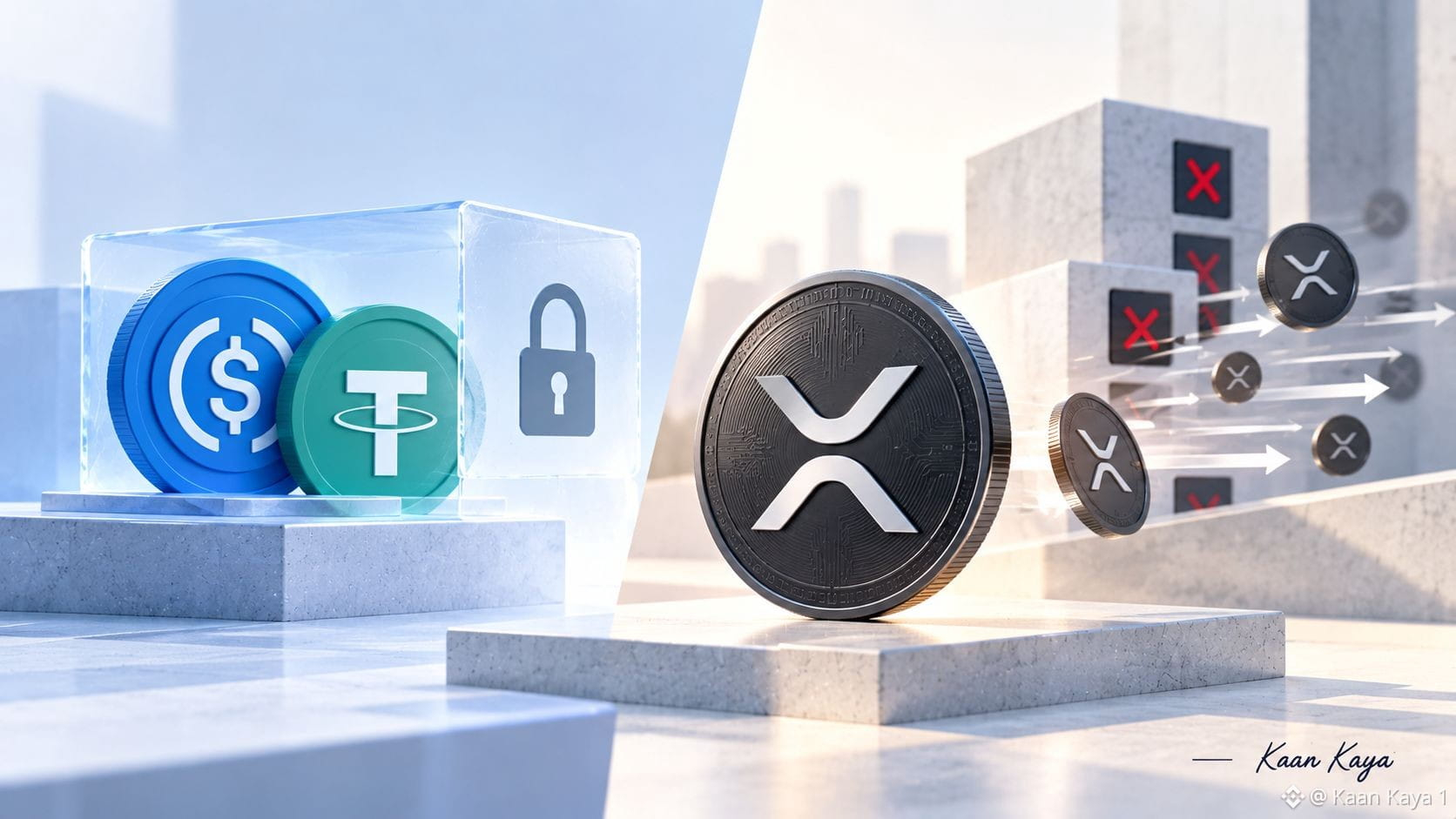
$XRP Nous venons de recevoir une leçon plutôt claire sur ce que signifie vraiment « Freezeable » Après la récente brèche de Bitget, l’attaquant a déplacé environ 83 millions de dollars de $XRP depuis plusieurs portefeuilles de détention. Environ 75 millions de dollars restaient dans les comptes d’origine au moment du signalement, mais il y a un détail important : Ripple ne peut pas simplement geler du XRP natif détenu dans un portefeuille contrôlé par l’attaquant. C’est très différent de la façon dont fonctionnent les stablecoins contrôlés par l’émetteur. Circle et Tether ont pu geler environ 320 000 $ de stablecoins liés, car ces jetons incluent des mécanismes permettant de mettre des adresses sur liste noire. Le $XRP natif ne fonctionne pas comme ça ; les échanges peuvent restreindre les comptes qui reçoivent des fonds volés, mais le réseau ne donne pas à Ripple un interrupteur intégré pour empêcher l’attaquant de déplacer les pièces. Je pense que cette distinction est souvent fortement brouillée quand les gens parlent d’actifs « centralisés » versus « décentralisés ». La question la plus utile est généralement beaucoup plus étroite : qui a réellement l’autorité pour empêcher un transfert une fois que l’actif est dans un portefeuille ? Dans ce cas, la réponse dépend largement de l’actif lui-même. C’est une différence bien plus concrète que les étiquettes sur lesquelles les gens débattent habituellement. #Macro Insights# #Altcoin Season#
$XRP Nous venons de recevoir une leçon plutôt claire sur ce que signifie vraiment « Freezeable » Après la récente brèche de Bitget, l’attaquant a déplacé environ 83 millions de dollars de $XRP depuis plusieurs portefeuilles de détention. Environ 75 millions de dollars restaient dans les comptes d’origine au moment du signalement, mais il y a un détail important : Ripple ne peut pas simplement geler du XRP natif détenu dans un portefeuille contrôlé par l’attaquant. C’est très différent de la façon dont fonctionnent les stablecoins contrôlés par l’émetteur. Circle et Tether ont pu geler environ 320 000 $ de stablecoins liés, car ces jetons incluent des mécanismes permettant de mettre des adresses sur liste noire. Le $XRP natif ne fonctionne pas comme ça ; les échanges peuvent restreindre les comptes qui reçoivent des fonds volés, mais le réseau ne donne pas à Ripple un interrupteur intégré pour empêcher l’attaquant de déplacer les pièces. Je pense que cette distinction est souvent fortement brouillée quand les gens parlent d’actifs « centralisés » versus « décentralisés ». La question la plus utile est généralement beaucoup plus étroite : qui a réellement l’autorité pour empêcher un transfert une fois que l’actif est dans un portefeuille ? Dans ce cas, la réponse dépend largement de l’actif lui-même. C’est une différence bien plus concrète que les étiquettes sur lesquelles les gens débattent habituellement. #Macro Insights# #Altcoin Season#
69
·
--
La confidentialité de Bitcoin n’a peut-être pas besoin d’une mise à niveau de Bitcoin. Une nouvelle proposition explore quelque chose qui peut sembler légèrement contre-intuitif : offrir aux utilisateurs de $BTC des transactions privées de type Zcash, sans modifier du tout les règles de consensus de Bitcoin. Des chercheurs de Cornell et de plusieurs autres institutions ont publié Shielded CSV, une conception permettant aux utilisateurs de verrouiller des BTC dans des contrats puis d’effectuer des transactions en toute confidentialité via un système distinct et « blindé ». Le réseau Bitcoin assurerait toujours le règlement, mais il n’aurait pas besoin de comprendre toute l’activité privée qui se déroule au-dessus. C’est une distinction importante, car modifier Bitcoin lui-même est notoirement difficile. Les améliorations de la confidentialité ont fait l’objet de débats pendant des années, mais tout ce qui touche au consensus doit franchir un seuil très élevé auprès des développeurs, des mineurs, des opérateurs de nœuds et des utilisateurs. Shielded CSV emprunte une autre voie : laisser la couche de base telle quelle et construire la fonctionnalité additionnelle autour. La question reste de savoir si cette conception particulière connaîtra une adoption significative. Mais l’idée plus générale mérite d’être suivie. La lenteur de la couche de base de Bitcoin ne signifie pas forcément que tout ce qui est construit autour de $BTC doive évoluer au même rythme. #Analyse du prix du BTC# #Prédiction du prix du Bitcoin : quelle sera la prochaine étape de Bitcoins ?#
La confidentialité de Bitcoin n’a peut-être pas besoin d’une mise à niveau de Bitcoin. Une nouvelle proposition explore quelque chose qui peut sembler légèrement contre-intuitif : offrir aux utilisateurs de $BTC des transactions privées de type Zcash, sans modifier du tout les règles de consensus de Bitcoin. Des chercheurs de Cornell et de plusieurs autres institutions ont publié Shielded CSV, une conception permettant aux utilisateurs de verrouiller des BTC dans des contrats puis d’effectuer des transactions en toute confidentialité via un système distinct et « blindé ». Le réseau Bitcoin assurerait toujours le règlement, mais il n’aurait pas besoin de comprendre toute l’activité privée qui se déroule au-dessus. C’est une distinction importante, car modifier Bitcoin lui-même est notoirement difficile. Les améliorations de la confidentialité ont fait l’objet de débats pendant des années, mais tout ce qui touche au consensus doit franchir un seuil très élevé auprès des développeurs, des mineurs, des opérateurs de nœuds et des utilisateurs. Shielded CSV emprunte une autre voie : laisser la couche de base telle quelle et construire la fonctionnalité additionnelle autour. La question reste de savoir si cette conception particulière connaîtra une adoption significative. Mais l’idée plus générale mérite d’être suivie. La lenteur de la couche de base de Bitcoin ne signifie pas forcément que tout ce qui est construit autour de $BTC doive évoluer au même rythme. #Analyse du prix du BTC# #Prédiction du prix du Bitcoin : quelle sera la prochaine étape de Bitcoins ?#

69
·
--
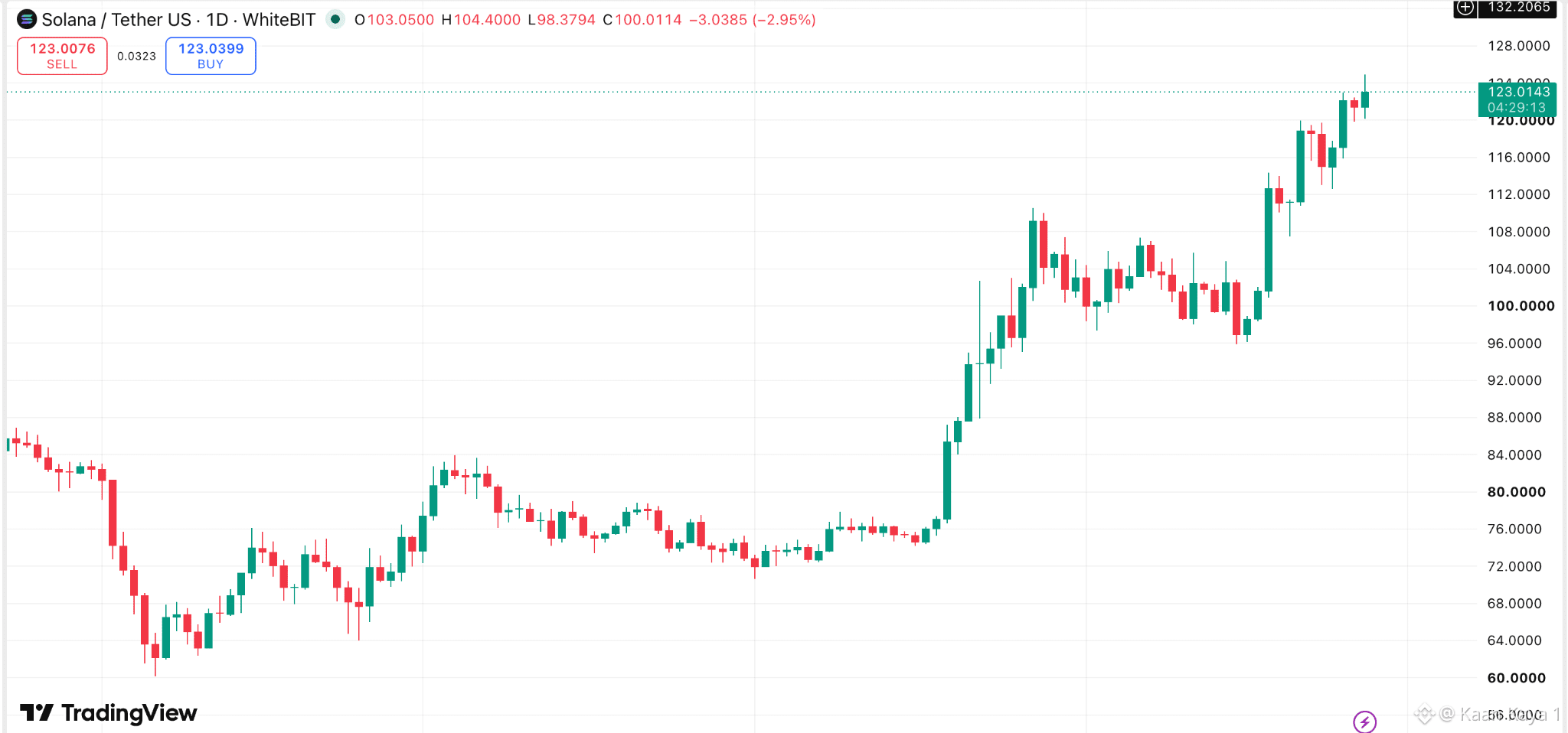
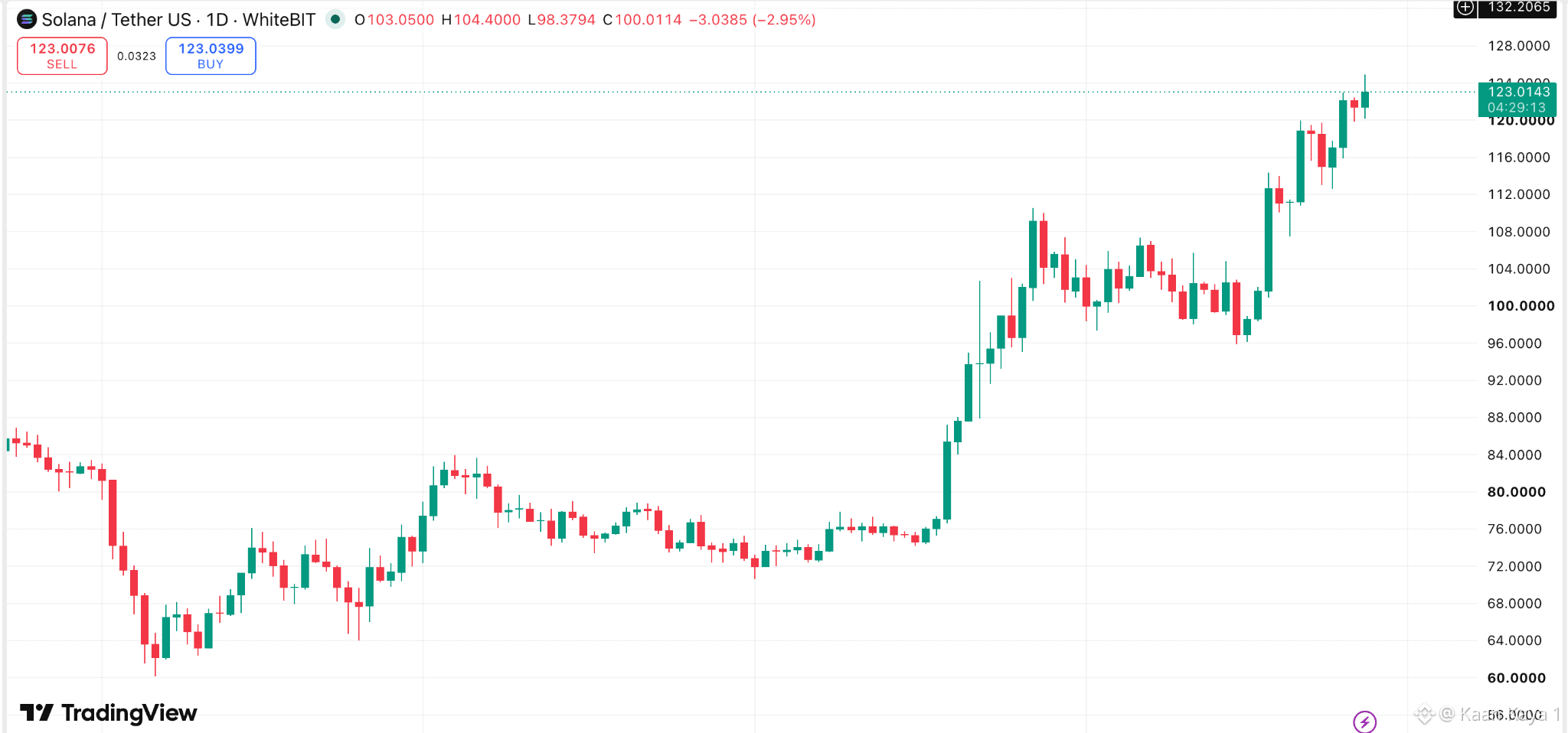
$SOL Est de retour au-dessus de 120, mais le graphique n’est pas toute l’histoire Ce graphique de $SOL a évolué assez rapidement. Après avoir passé une grande partie de la période précédente autour de $70–$80, Solana est passé au-dessus de $100 et s’échange désormais autour de $123, avec la dernière impulsion après une consolidation relativement courte autour de la zone des $100. On observe aussi une demande nouvelle qui apparaît en dehors du graphique spot. Les ETF spot américains sur Solana ont enregistré 86,7 millions de dollars de flux nets entrants vendredi, leur plus forte hausse sur une seule journée depuis leur lancement. Les flux hebdomadaires ont atteint 188,2 millions, tandis que l’actif combiné est monté à un niveau record de 1,5 milliard. Cela rend le mouvement récent un peu plus intéressant que le prix à lui seul. $SOL a franchi la hausse, tandis qu’un nouveau pool de capitaux construit simultanément une exposition via des produits réglementés. Le graphique intègre déjà pas mal d’optimisme, ceci dit. Après un mouvement aussi rapide, je me soucierais moins de savoir si $SOL peut imprimer une autre bougie verte, et davantage de savoir si les acheteurs continuent d’être présents lorsque le premier véritable repli arrive. Je garde d’ailleurs cette configuration à côté de quelques graphiques TradFi sur TradingView depuis quelque temps. Les paires TradFi de WhiteBIT sont aussi disponibles là-bas maintenant, donc $BTC et le reste de mes graphiques peuvent enfin vivre dans un seul onglet au lieu de mon zoo de navigateurs habituel 😅 #Macro Insights# #Altcoin Season#
$SOL Est de retour au-dessus de 120, mais le graphique n’est pas toute l’histoire Ce graphique de $SOL a évolué assez rapidement. Après avoir passé une grande partie de la période précédente autour de $70–$80, Solana est passé au-dessus de $100 et s’échange désormais autour de $123, avec la dernière impulsion après une consolidation relativement courte autour de la zone des $100. On observe aussi une demande nouvelle qui apparaît en dehors du graphique spot. Les ETF spot américains sur Solana ont enregistré 86,7 millions de dollars de flux nets entrants vendredi, leur plus forte hausse sur une seule journée depuis leur lancement. Les flux hebdomadaires ont atteint 188,2 millions, tandis que l’actif combiné est monté à un niveau record de 1,5 milliard. Cela rend le mouvement récent un peu plus intéressant que le prix à lui seul. $SOL a franchi la hausse, tandis qu’un nouveau pool de capitaux construit simultanément une exposition via des produits réglementés. Le graphique intègre déjà pas mal d’optimisme, ceci dit. Après un mouvement aussi rapide, je me soucierais moins de savoir si $SOL peut imprimer une autre bougie verte, et davantage de savoir si les acheteurs continuent d’être présents lorsque le premier véritable repli arrive. Je garde d’ailleurs cette configuration à côté de quelques graphiques TradFi sur TradingView depuis quelque temps. Les paires TradFi de WhiteBIT sont aussi disponibles là-bas maintenant, donc $BTC et le reste de mes graphiques peuvent enfin vivre dans un seul onglet au lieu de mon zoo de navigateurs habituel 😅 #Macro Insights# #Altcoin Season#
87
·
--
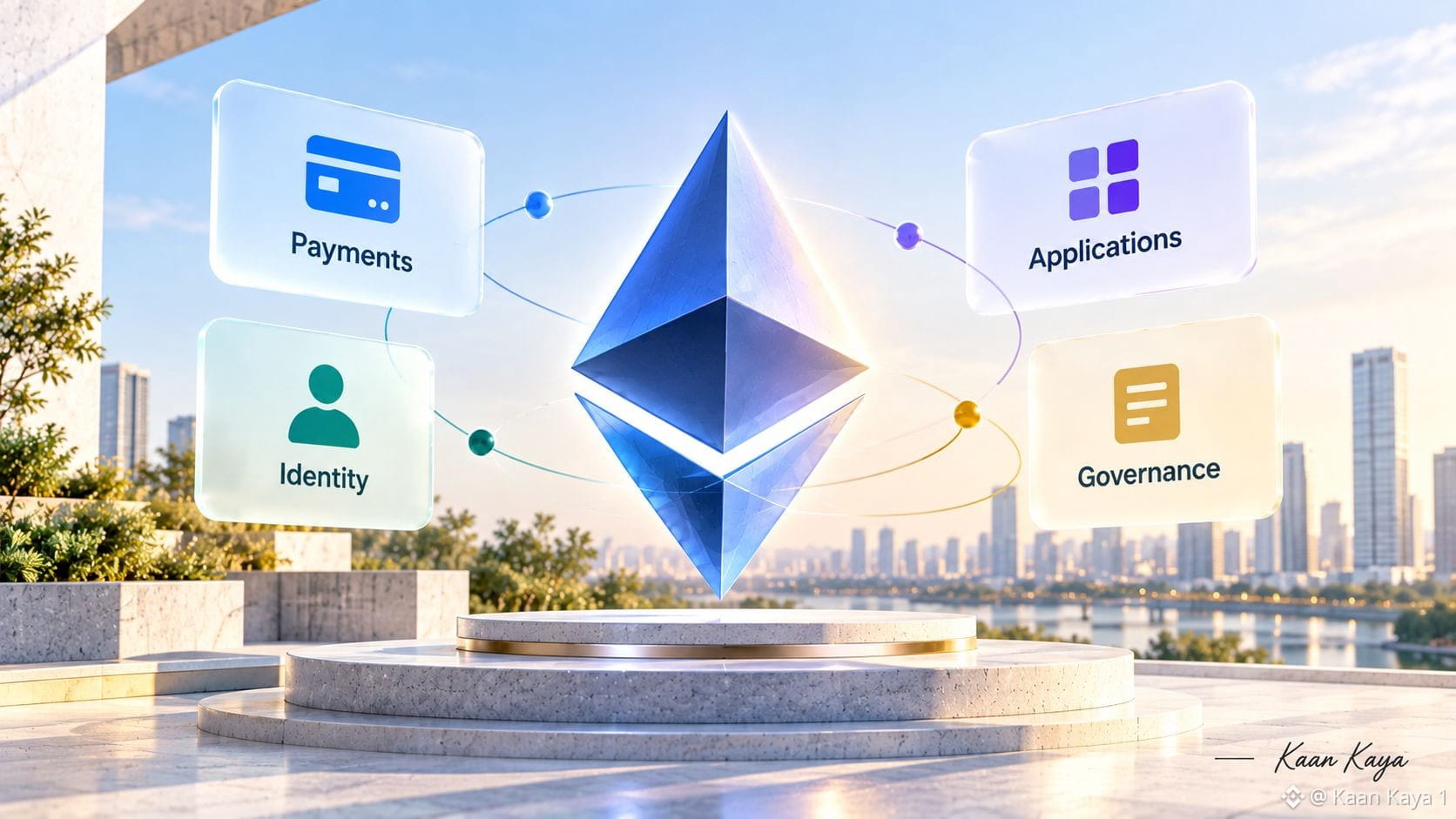
La prochaine mise à niveau d’Ethereum pourrait être plus importante qu’un autre “boost” de vitesse Vitalik Buterin a présenté cette fin de semaine une direction plutôt ambitieuse pour $ETH : d’ici 2030, Ethereum devrait fonctionner moins comme une seule blockchain et davantage comme une pile plus large de protocoles capable de prendre en charge les paiements, l’identité, la gouvernance et les applications, sans forcer tout à passer par la même couche. Une partie a particulièrement attiré mon attention : la feuille de route sépare de plus en plus ce qu’Ethereum doit faire lui-même de ce qui peut se produire autour de lui. Au lieu de rendre la chaîne de base responsable de chaque interaction utilisateur, l’idée est de garder Ethereum focalisé sur la sécurité et le règlement, tandis que d’autres couches gèrent davantage l’activité réelle. Cela ressemble à une approche architecturale, mais cela modifie aussi la façon dont je vois $ETH comme un actif. Si Ethereum réussit, une part croissante de son écosystème pourrait devenir presque invisible pour l’utilisateur moyen. Les gens pourraient interagir avec des portefeuilles, des applications et des systèmes de paiement sans trop réfléchir à la chaîne qui règle en dessous. La crypto a passé des années à se concurrencer pour savoir quelle blockchain les utilisateurs remarqueraient le plus. Ethereum semble de plus en plus vouloir devenir celle que les utilisateurs n’ont même pas besoin de remarquer. #ETHBlockchain #ETHFoundation
La prochaine mise à niveau d’Ethereum pourrait être plus importante qu’un autre “boost” de vitesse Vitalik Buterin a présenté cette fin de semaine une direction plutôt ambitieuse pour $ETH : d’ici 2030, Ethereum devrait fonctionner moins comme une seule blockchain et davantage comme une pile plus large de protocoles capable de prendre en charge les paiements, l’identité, la gouvernance et les applications, sans forcer tout à passer par la même couche. Une partie a particulièrement attiré mon attention : la feuille de route sépare de plus en plus ce qu’Ethereum doit faire lui-même de ce qui peut se produire autour de lui. Au lieu de rendre la chaîne de base responsable de chaque interaction utilisateur, l’idée est de garder Ethereum focalisé sur la sécurité et le règlement, tandis que d’autres couches gèrent davantage l’activité réelle. Cela ressemble à une approche architecturale, mais cela modifie aussi la façon dont je vois $ETH comme un actif. Si Ethereum réussit, une part croissante de son écosystème pourrait devenir presque invisible pour l’utilisateur moyen. Les gens pourraient interagir avec des portefeuilles, des applications et des systèmes de paiement sans trop réfléchir à la chaîne qui règle en dessous. La crypto a passé des années à se concurrencer pour savoir quelle blockchain les utilisateurs remarqueraient le plus. Ethereum semble de plus en plus vouloir devenir celle que les utilisateurs n’ont même pas besoin de remarquer. #ETHBlockchain #ETHFoundation
67
·
--
$SOL Est De Retour Au-Dessus De 120, Mais Le Graphique N’est Pas Toute L’histoire Ce graphique $SOL a changé assez rapidement. Après avoir passé une grande partie de la période précédente autour de 70–80 $, Solana a percé les 100 $ et se négocie désormais autour de 123 $, le dernier mouvement ayant eu lieu après une consolidation relativement courte autour de la zone des 100 $. Il y a aussi une demande nouvelle qui apparaît en dehors du graphique spot. Les ETF spot Solana aux États-Unis ont enregistré 86,7 millions de dollars d’entrées nettes le vendredi, leur plus forte journée depuis leur lancement. Les entrées hebdomadaires ont atteint 188,2 millions de dollars, tandis que les actifs combinés grimpaient jusqu’à un record de 1,5 milliard de dollars. Cela rend le récent mouvement un peu plus intéressant que le prix seul. $SOL a franchi la hausse tandis qu’un nouveau bassin de capitaux construit simultanément une exposition via des produits réglementés. Le graphique intègre déjà pas mal d’optimisme, toutefois. Après un mouvement aussi rapide, je serais moins attentif à la question de savoir si $SOL peut afficher une nouvelle bougie verte et davantage à celle de savoir si les acheteurs continuent de se présenter lors de la première vraie correction. #Macro Insights# #Altcoin Season#
$SOL Est De Retour Au-Dessus De 120, Mais Le Graphique N’est Pas Toute L’histoire Ce graphique $SOL a changé assez rapidement. Après avoir passé une grande partie de la période précédente autour de 70–80 $, Solana a percé les 100 $ et se négocie désormais autour de 123 $, le dernier mouvement ayant eu lieu après une consolidation relativement courte autour de la zone des 100 $. Il y a aussi une demande nouvelle qui apparaît en dehors du graphique spot. Les ETF spot Solana aux États-Unis ont enregistré 86,7 millions de dollars d’entrées nettes le vendredi, leur plus forte journée depuis leur lancement. Les entrées hebdomadaires ont atteint 188,2 millions de dollars, tandis que les actifs combinés grimpaient jusqu’à un record de 1,5 milliard de dollars. Cela rend le récent mouvement un peu plus intéressant que le prix seul. $SOL a franchi la hausse tandis qu’un nouveau bassin de capitaux construit simultanément une exposition via des produits réglementés. Le graphique intègre déjà pas mal d’optimisme, toutefois. Après un mouvement aussi rapide, je serais moins attentif à la question de savoir si $SOL peut afficher une nouvelle bougie verte et davantage à celle de savoir si les acheteurs continuent de se présenter lors de la première vraie correction. #Macro Insights# #Altcoin Season#
74
·
--
Transformer « Just Add Yield » en un appel API Pendant un moment, chaque fois qu’un client demandait à l’un des ingénieurs back-end d’un prestataire de wallet crypto de « juste ajouter du rendement » au portefeuille, son estomac se serrait un peu. Dans sa tête, cette demande se transformait toujours en six mois de travail : construire une table de prêt, ou pire, redessiner toute la pile de custody pour que les actifs puissent réellement être déplacés afin de générer des revenus. C’est la partie que les personnes hors des opérations ne comprennent jamais tout à fait. Ajouter une fonctionnalité comme le rendement signifiait autrefois de réarchitecturer la façon dont les fonds étaient détenus, et pas simplement de greffer quelque chose sur l’interface utilisateur. Pour une seule fonctionnalité, c’est un projet très largement disproportionné. Ce qui pourrait réellement changer la donne, c’est si l’intégration n’avait pas à toucher au custody du tout, en restant entièrement au niveau de l’API. Une option intéressante à examiner est l’« Yield-as-a-Service » de WhiteBIT, où son travail d’ingénierie pourrait se réduire à la configuration du compte, l’authentification et la réconciliation. 🔧 https://institutional.whitebit.com/yield-as-a-service?utm_source=coinmarketcap&utm_medium=yaaaaskaaan&utm_campaign=post En gros, le custody ne devrait pas bouger : les utilisateurs pourraient allouer du $BTC et d’autres soldes à des formules Fixed ou Flexible sans quitter l’application, et personne n’aurait à reconstruire la plomberie en dessous. Ce qu’il n’avait pas prévu, c’est à quel point un déploiement comme celui-ci peut sembler « sans enjeu ». Déployé en incrément plutôt qu’en réécriture de plateforme, il pouvait être testé sur une portion des utilisateurs et désactivé si les chiffres ne semblaient pas corrects, sans risque structurel pesant sur la décision. Il se surprend encore à attendre « le mais voilà la subtilité à six mois », et jusqu’à présent, il n’en a pas trouvé. Avertissement : ceci ne constitue pas un conseil financier ni un conseil en investissement. Faites vos propres recherches avant de prendre toute décision. Utilisez ces informations à vos propres risques. #Analyse du prix BTC# #Prédiction du prix Bitcoin : quelle sera la prochaine étape de Bitcoins ?#
Transformer « Just Add Yield » en un appel API Pendant un moment, chaque fois qu’un client demandait à l’un des ingénieurs back-end d’un prestataire de wallet crypto de « juste ajouter du rendement » au portefeuille, son estomac se serrait un peu. Dans sa tête, cette demande se transformait toujours en six mois de travail : construire une table de prêt, ou pire, redessiner toute la pile de custody pour que les actifs puissent réellement être déplacés afin de générer des revenus. C’est la partie que les personnes hors des opérations ne comprennent jamais tout à fait. Ajouter une fonctionnalité comme le rendement signifiait autrefois de réarchitecturer la façon dont les fonds étaient détenus, et pas simplement de greffer quelque chose sur l’interface utilisateur. Pour une seule fonctionnalité, c’est un projet très largement disproportionné. Ce qui pourrait réellement changer la donne, c’est si l’intégration n’avait pas à toucher au custody du tout, en restant entièrement au niveau de l’API. Une option intéressante à examiner est l’« Yield-as-a-Service » de WhiteBIT, où son travail d’ingénierie pourrait se réduire à la configuration du compte, l’authentification et la réconciliation. 🔧 https://institutional.whitebit.com/yield-as-a-service?utm_source=coinmarketcap&utm_medium=yaaaaskaaan&utm_campaign=post En gros, le custody ne devrait pas bouger : les utilisateurs pourraient allouer du $BTC et d’autres soldes à des formules Fixed ou Flexible sans quitter l’application, et personne n’aurait à reconstruire la plomberie en dessous. Ce qu’il n’avait pas prévu, c’est à quel point un déploiement comme celui-ci peut sembler « sans enjeu ». Déployé en incrément plutôt qu’en réécriture de plateforme, il pouvait être testé sur une portion des utilisateurs et désactivé si les chiffres ne semblaient pas corrects, sans risque structurel pesant sur la décision. Il se surprend encore à attendre « le mais voilà la subtilité à six mois », et jusqu’à présent, il n’en a pas trouvé. Avertissement : ceci ne constitue pas un conseil financier ni un conseil en investissement. Faites vos propres recherches avant de prendre toute décision. Utilisez ces informations à vos propres risques. #Analyse du prix BTC# #Prédiction du prix Bitcoin : quelle sera la prochaine étape de Bitcoins ?#

3
·
--
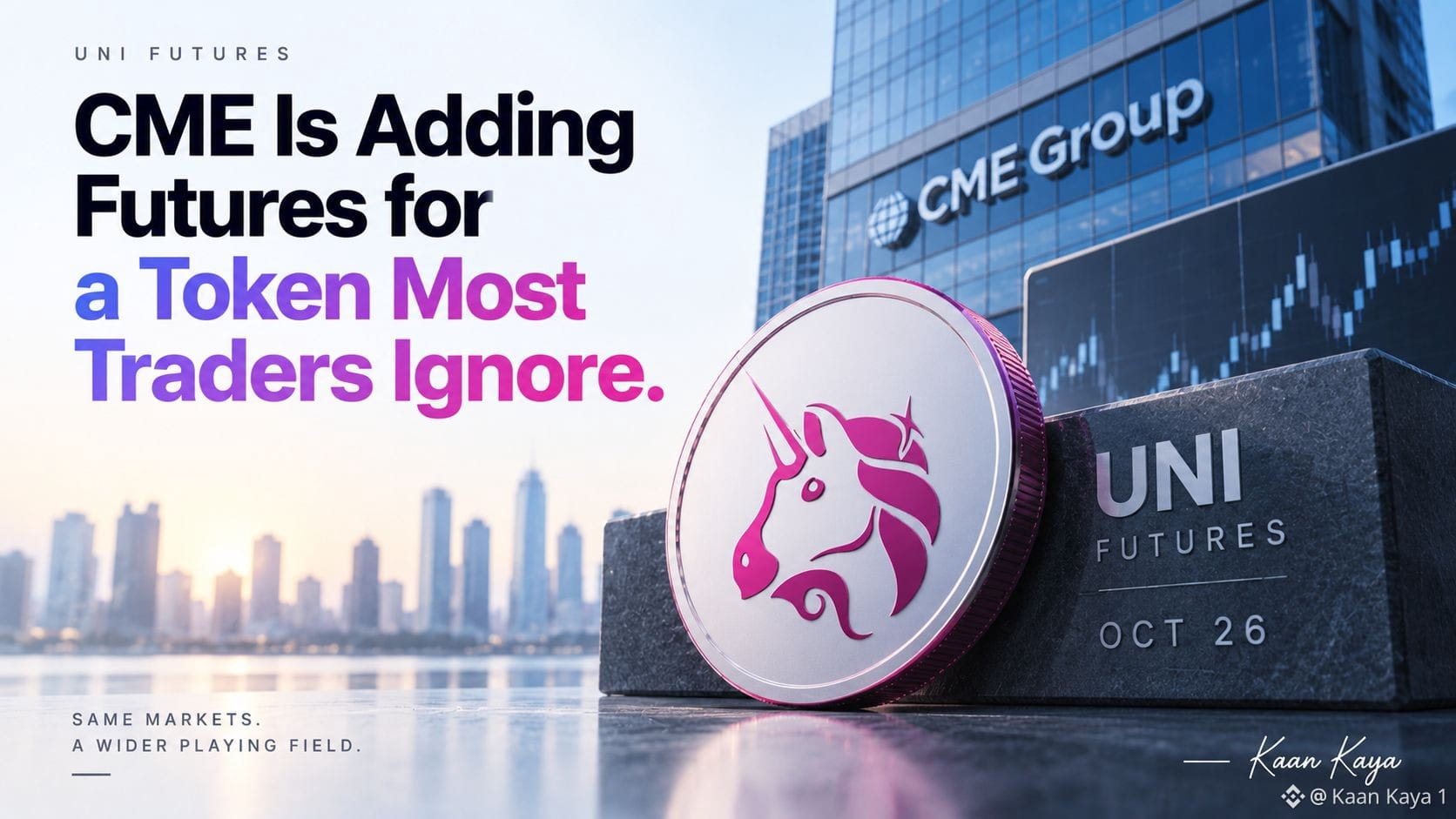
La CME ajoute des contrats à terme sur un token que la plupart des traders ignorent Le 26 octobre, CME Group ajoute des contrats à terme sur le $UNI, en plus de nouveaux contrats à terme sur le Bitcoin Cash. Cela place le token d’Uniswap sur la même plateforme de dérivés réglementée qui propose déjà des contrats à terme liés au BTC, à l’ETH, au SOL et au XRP. Le point intéressant n’est pas de savoir si les traders deviennent soudainement haussiers sur le UNI. Un contrat de la CME offre aux institutions une autre façon de se couvrir contre leur exposition, d’arbitrer la base et de prendre des positions sans avoir à gérer directement le token. Cela signifie aussi que le $UNI est arrivé à un stade où une grande place boursière traditionnelle de dérivés estime qu’il existe une demande suffisante pour créer un marché autour de celui-ci. Et il s’agit d’une étape légèrement différente de celle représentée par un autre record de volume sur les DEX. Uniswap a mis des années à devenir une infrastructure essentielle pour le trading crypto, tandis que les gens continuaient de débattre de savoir si ce succès profite réellement aux détenteurs de $UNI. Désormais, le token lui-même devient un produit dérivé de type « TradFi ». Je me demande si le marché des futures servira principalement les bureaux crypto existants, ou s’il attirera un tout autre groupe de traders vers le UNI. #Macro Insights# #Altcoin Season#
La CME ajoute des contrats à terme sur un token que la plupart des traders ignorent Le 26 octobre, CME Group ajoute des contrats à terme sur le $UNI, en plus de nouveaux contrats à terme sur le Bitcoin Cash. Cela place le token d’Uniswap sur la même plateforme de dérivés réglementée qui propose déjà des contrats à terme liés au BTC, à l’ETH, au SOL et au XRP. Le point intéressant n’est pas de savoir si les traders deviennent soudainement haussiers sur le UNI. Un contrat de la CME offre aux institutions une autre façon de se couvrir contre leur exposition, d’arbitrer la base et de prendre des positions sans avoir à gérer directement le token. Cela signifie aussi que le $UNI est arrivé à un stade où une grande place boursière traditionnelle de dérivés estime qu’il existe une demande suffisante pour créer un marché autour de celui-ci. Et il s’agit d’une étape légèrement différente de celle représentée par un autre record de volume sur les DEX. Uniswap a mis des années à devenir une infrastructure essentielle pour le trading crypto, tandis que les gens continuaient de débattre de savoir si ce succès profite réellement aux détenteurs de $UNI. Désormais, le token lui-même devient un produit dérivé de type « TradFi ». Je me demande si le marché des futures servira principalement les bureaux crypto existants, ou s’il attirera un tout autre groupe de traders vers le UNI. #Macro Insights# #Altcoin Season#
75
·
--
Nous avons effectué des tests de charge sur l’application. Personne n’a fait de test de charge sur le portefeuille 😅 $BTC montait, la campagne fonctionnait et nous avons attiré 5 fois notre trafic habituel en une seule matinée. L’application n’a même pas bronché : tous les tableaux de bord que nous surveillons sont restés au vert. Les retraits racontaient une autre histoire… Le portefeuille chaud a été à court de liquidités plus vite que nous n’avons pu l’alimenter, et la file de signature est passée du mode parallèle au mode “file unique” dès que ça s’est tendu. Heureusement, aucun fonds n’a été perdu : juste beaucoup de gens qui regardaient un spinner le seul jour où nous avions payé pour attirer leur attention. J’ai rédigé un article plus long sur ce que cela a réellement mis en évidence : faire évoluer une application et faire évoluer la garde (custody) sont deux problèmes d’ingénierie différents, et la plupart des revues de capacité n’en testent qu’un seul. J’ai examiné comment Openfort, WhiteBIT et Fireblocks gèrent différemment, sous charge, la trésorerie (hot-wallet float) et le débit de signature, et pourquoi aucun d’eux ne rend un portefeuille immunisé contre le risque de s’assécher—ils ne font que changer qui s’en rend compte en premier. 👉 Lisez l’article complet : https://medium.com/@kkayaann456/why-an-app-can-survive-a-growth-spike-and-a-wallet-still-cant-03f91b15b37b?postPublishedType=initial #Analyse du prix BTC# #Prédiction du prix Bitcoin : quelle sera la prochaine étape de Bitcoins ?#
Nous avons effectué des tests de charge sur l’application. Personne n’a fait de test de charge sur le portefeuille 😅 $BTC montait, la campagne fonctionnait et nous avons attiré 5 fois notre trafic habituel en une seule matinée. L’application n’a même pas bronché : tous les tableaux de bord que nous surveillons sont restés au vert. Les retraits racontaient une autre histoire… Le portefeuille chaud a été à court de liquidités plus vite que nous n’avons pu l’alimenter, et la file de signature est passée du mode parallèle au mode “file unique” dès que ça s’est tendu. Heureusement, aucun fonds n’a été perdu : juste beaucoup de gens qui regardaient un spinner le seul jour où nous avions payé pour attirer leur attention. J’ai rédigé un article plus long sur ce que cela a réellement mis en évidence : faire évoluer une application et faire évoluer la garde (custody) sont deux problèmes d’ingénierie différents, et la plupart des revues de capacité n’en testent qu’un seul. J’ai examiné comment Openfort, WhiteBIT et Fireblocks gèrent différemment, sous charge, la trésorerie (hot-wallet float) et le débit de signature, et pourquoi aucun d’eux ne rend un portefeuille immunisé contre le risque de s’assécher—ils ne font que changer qui s’en rend compte en premier. 👉 Lisez l’article complet : https://medium.com/@kkayaann456/why-an-app-can-survive-a-growth-spike-and-a-wallet-still-cant-03f91b15b37b?postPublishedType=initial #Analyse du prix BTC# #Prédiction du prix Bitcoin : quelle sera la prochaine étape de Bitcoins ?#

37
·
--
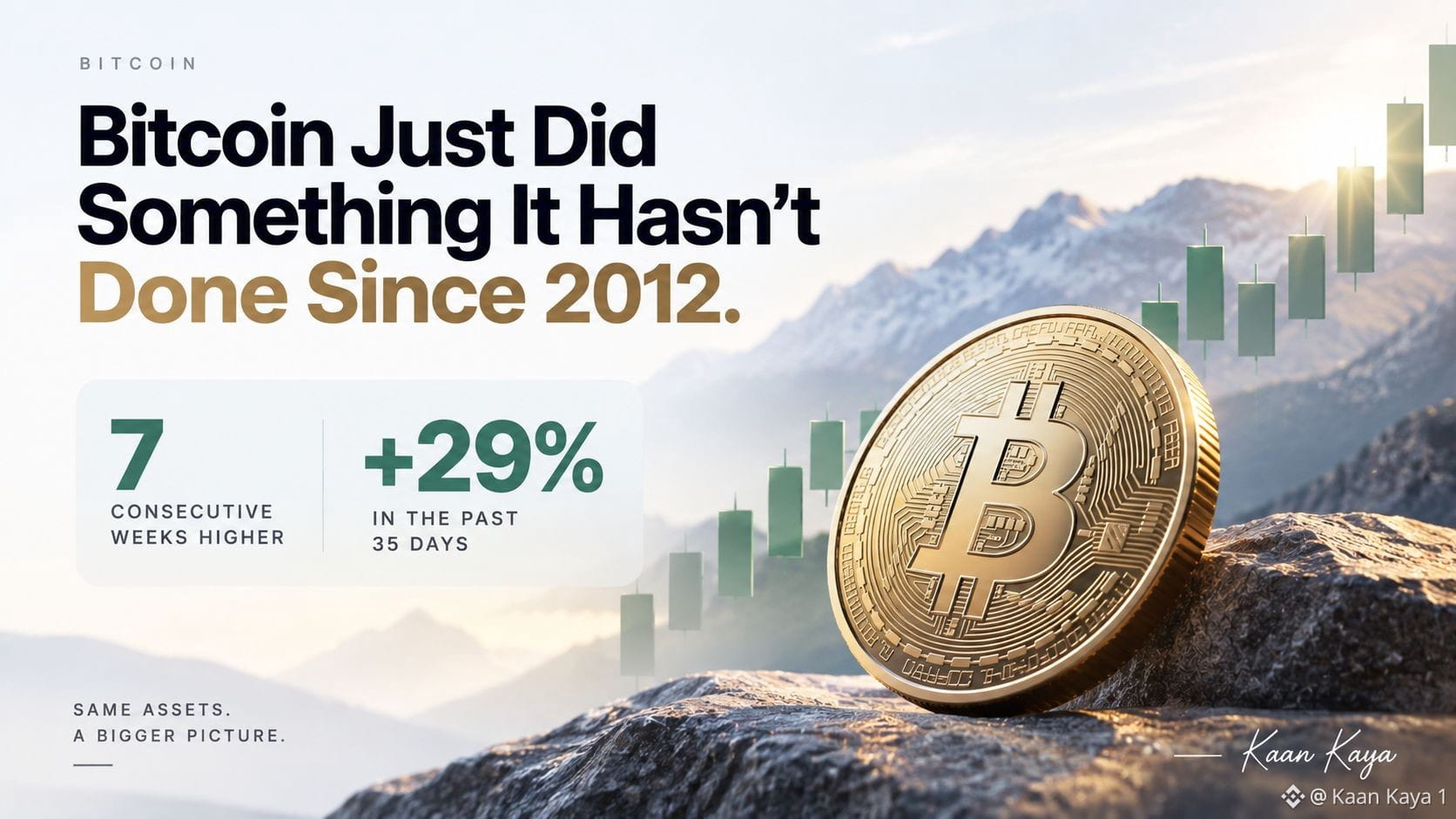
Bitcoin vient de faire quelque chose qu’il n’avait pas fait depuis 2012 $BTC a désormais clôturé en hausse pour sept semaines consécutives, une série que Bitcoin n’avait plus réussi à obtenir depuis 2012. Le dernier mouvement l’a ramené près de 87 000 $, avec un BTC en hausse d’environ 29 % sur les 35 derniers jours. Sept semaines vertes semblent franchement haussières, mais les mécanismes sous-jacents au mouvement deviennent plus complexes. La poussée de lundi au-dessus de 85 000 $ a forcé la sortie du marché de centaines de millions de dollars de positions baissières, et les traders ont ensuite ajouté plus de 2 milliards de dollars sur des positions futures, portant l’intérêt ouvert au-delà de 31 milliards. Ainsi, une partie de la hausse provient de la demande au comptant, une partie correspond au rachat des positions short, et désormais un nouveau levier suit la hausse des prix. Ce ne sont pas des sources de pression acheteuse interchangeables. Après sept semaines où les traders ont été récompensés pour avoir acheté les replis, ce premier véritable repli devrait nous en dire beaucoup sur la quantité de la nouvelle demande qui est disposée à rester. #BTC Price Analysis# #Bitcoin Price Prediction: What is Bitcoins next move?#
Bitcoin vient de faire quelque chose qu’il n’avait pas fait depuis 2012 $BTC a désormais clôturé en hausse pour sept semaines consécutives, une série que Bitcoin n’avait plus réussi à obtenir depuis 2012. Le dernier mouvement l’a ramené près de 87 000 $, avec un BTC en hausse d’environ 29 % sur les 35 derniers jours. Sept semaines vertes semblent franchement haussières, mais les mécanismes sous-jacents au mouvement deviennent plus complexes. La poussée de lundi au-dessus de 85 000 $ a forcé la sortie du marché de centaines de millions de dollars de positions baissières, et les traders ont ensuite ajouté plus de 2 milliards de dollars sur des positions futures, portant l’intérêt ouvert au-delà de 31 milliards. Ainsi, une partie de la hausse provient de la demande au comptant, une partie correspond au rachat des positions short, et désormais un nouveau levier suit la hausse des prix. Ce ne sont pas des sources de pression acheteuse interchangeables. Après sept semaines où les traders ont été récompensés pour avoir acheté les replis, ce premier véritable repli devrait nous en dire beaucoup sur la quantité de la nouvelle demande qui est disposée à rester. #BTC Price Analysis# #Bitcoin Price Prediction: What is Bitcoins next move?#
60
·
--
Solana veut transformer 12,8 secondes en 150 millisecondes Solana a commencé à tester Alpenglow, une mise à niveau conçue pour réduire la finalité des transactions, d’environ 12,8 secondes à quelque 150 millisecondes. C’est un écart énorme pour $SOL : non seulement traiter les transactions plus rapidement, mais parvenir à un accord sur le fait qu’une transaction est effectivement irréversible bien plus tôt. Je pense que la finalité est souvent négligée parce que le TPS est beaucoup plus simple à mettre en avant. Mais pour un trader, un prestataire de paiement ou une application financière, « le réseau a traité ma transaction » et « je peux considérer cette transaction comme réglée de manière fiable » ne sont pas tout à fait la même chose. À 150 millisecondes, le règlement blockchain commence à entrer dans une catégorie d’expérience utilisateur totalement différente. Le délai devient si court qu’un utilisateur normal ne le percevrait probablement même pas. Bien sûr, un environnement de test n’est pas la production, et les performances dans des conditions réseau réelles sont ce qui compte vraiment. Mais si Solana peut s’approcher, de manière fiable, de cet objectif, la métrique de vitesse plus intéressante de $SOL pourrait cesser d’être uniquement les transactions par seconde. #Macro Insights# #Altcoin Season#
Solana veut transformer 12,8 secondes en 150 millisecondes Solana a commencé à tester Alpenglow, une mise à niveau conçue pour réduire la finalité des transactions, d’environ 12,8 secondes à quelque 150 millisecondes. C’est un écart énorme pour $SOL : non seulement traiter les transactions plus rapidement, mais parvenir à un accord sur le fait qu’une transaction est effectivement irréversible bien plus tôt. Je pense que la finalité est souvent négligée parce que le TPS est beaucoup plus simple à mettre en avant. Mais pour un trader, un prestataire de paiement ou une application financière, « le réseau a traité ma transaction » et « je peux considérer cette transaction comme réglée de manière fiable » ne sont pas tout à fait la même chose. À 150 millisecondes, le règlement blockchain commence à entrer dans une catégorie d’expérience utilisateur totalement différente. Le délai devient si court qu’un utilisateur normal ne le percevrait probablement même pas. Bien sûr, un environnement de test n’est pas la production, et les performances dans des conditions réseau réelles sont ce qui compte vraiment. Mais si Solana peut s’approcher, de manière fiable, de cet objectif, la métrique de vitesse plus intéressante de $SOL pourrait cesser d’être uniquement les transactions par seconde. #Macro Insights# #Altcoin Season#

41
·
--
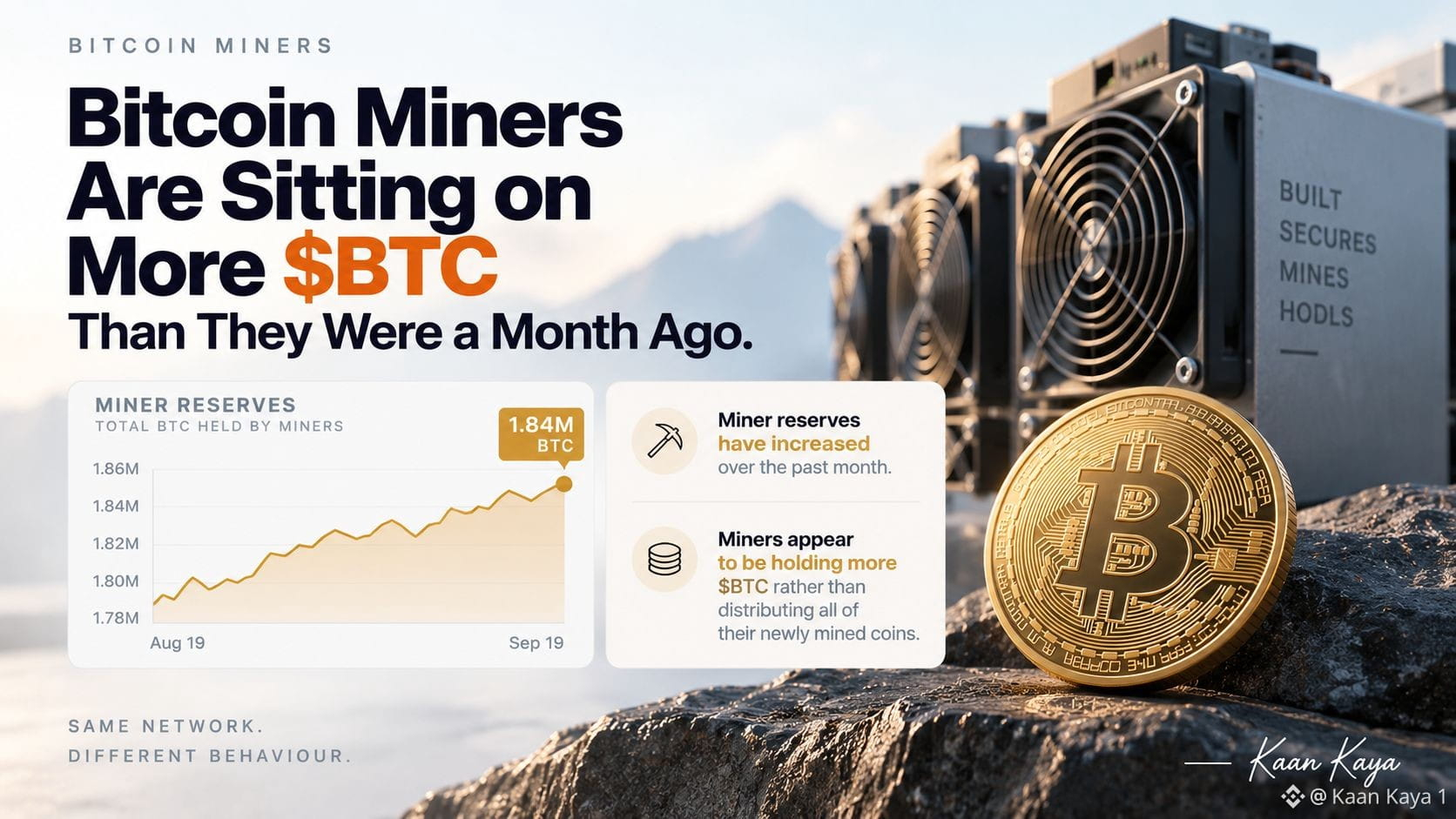
Les mineurs de Bitcoin détiennent plus de $BTC que le mois dernier 👀 Une chose que j’observe récemment, c’est de savoir si les mineurs profitent de prix du Bitcoin plus élevés pour vendre. Jusqu’à présent, l’image est plus mitigée que ce à quoi je m’attendais. D’après des données récentes en chaîne, les réserves des mineurs de Bitcoin ont augmenté au cours du mois passé, ce qui signifie que, collectivement, ils semblent conserver plus de $BTC plutôt que de distribuer l’ensemble de leurs nouvelles pièces nouvellement minées. Dans le même temps, l’économie de l’exploitation reste difficile, avec le hashprice encore bien en dessous de certains niveaux que les mineurs avaient connus lors de cycles précédents. Cette combinaison est intéressante, car les mineurs ont des dépenses inévitables. L’électricité, l’équipement et l’infrastructure doivent toujours être payés, qu’ils pensent que le Bitcoin est sous-évalué ou non. Donc, quand les réserves des mineurs augmentent, je ne l’interpréterais pas automatiquement comme un signal haussier. Certaines entreprises ont d’autres sources de financement, certaines couvrent la production, et les grands mineurs cotés fonctionnent très différemment des opérateurs plus petits. Mais cela rend la pression de vente des mineurs digne d’être surveillée. La minage crée de nouveaux BTC chaque jour. La question la plus intéressante est celle de la rapidité avec laquelle les mineurs décident de les remettre sur le marché. #Analyse du prix du BTC# #Prédiction du prix du Bitcoin : quelle sera la prochaine étape des Bitcoins?#
Les mineurs de Bitcoin détiennent plus de $BTC que le mois dernier 👀 Une chose que j’observe récemment, c’est de savoir si les mineurs profitent de prix du Bitcoin plus élevés pour vendre. Jusqu’à présent, l’image est plus mitigée que ce à quoi je m’attendais. D’après des données récentes en chaîne, les réserves des mineurs de Bitcoin ont augmenté au cours du mois passé, ce qui signifie que, collectivement, ils semblent conserver plus de $BTC plutôt que de distribuer l’ensemble de leurs nouvelles pièces nouvellement minées. Dans le même temps, l’économie de l’exploitation reste difficile, avec le hashprice encore bien en dessous de certains niveaux que les mineurs avaient connus lors de cycles précédents. Cette combinaison est intéressante, car les mineurs ont des dépenses inévitables. L’électricité, l’équipement et l’infrastructure doivent toujours être payés, qu’ils pensent que le Bitcoin est sous-évalué ou non. Donc, quand les réserves des mineurs augmentent, je ne l’interpréterais pas automatiquement comme un signal haussier. Certaines entreprises ont d’autres sources de financement, certaines couvrent la production, et les grands mineurs cotés fonctionnent très différemment des opérateurs plus petits. Mais cela rend la pression de vente des mineurs digne d’être surveillée. La minage crée de nouveaux BTC chaque jour. La question la plus intéressante est celle de la rapidité avec laquelle les mineurs décident de les remettre sur le marché. #Analyse du prix du BTC# #Prédiction du prix du Bitcoin : quelle sera la prochaine étape des Bitcoins?#
44
·
--
La commission qu’elle coupe toujours vient juste de commencer à payer un loyer Une analyste financière que je connais passe chaque trimestre à fixer de près une seule ligne sur le P&L d’un desk de trading : le volume de market making, la plupart en paires $BTC, classé sous les frais. Pendant des années, ce chiffre a évolué dans un sens : un coût pour minimiser. La logique était simple : chaque unité de volume générée par le desk via le placement de cotations entraîne des frais, donc l’activité était évaluée comme des frais généraux, réduite au maximum quand c’était possible, justifiée quand elle ne l’était pas. Ce qui fait évoluer cette vision dans l’ensemble du secteur, c’est le revenu de rabais (rebates) pour les ordres qui ajoutent de la liquidité plutôt que d’en retirer. Une ligne de rabais à côté de la ligne de frais signifie que le market making s’apparente à un coût partiellement autofinancé plutôt qu’à un coût pur. Une option qu’elle pourrait envisager est le programme de Market Making de WhiteBIT, affichant des rabais maker jusqu’à -0,012 %. 🧮 Ce qui compte plus que le taux, c’est le système de paliers : rester dans la grille MM dépend d’un pourcentage du volume, pas d’un objectif fixe. Ainsi, un mois plus lent ne coûterait pas au desk un rabais déjà gagné. Une API flexible est aussi incluse. https://institutional.whitebit.com/market-making-program?utm_source=coinmarketcap&utm_medium=mmpkkaan&utm_campaign=post L’autre option pourrait être l’offre de Kraken pour les market makers et les HFT, en annonçant des frais maker aussi bas que -0,02 % sur des paires spot éligibles avec une exécution inférieure à la milliseconde, et oui, ce chiffre serait difficile à ignorer. https://www.kraken.com/ca/institutions/market-makers?utm_source=coinmarketcap&utm_medium=mmpkkaan&utm_campaign=post Dans tous les cas, le rabais serait obtenu en portant un inventaire et en encaissant la sélection adverse en tant que maker. Même risque, mais quelle ligne un conseil surveille change ce qu’il juge rentable de faire. ⚖️ Avertissement : Ceci ne constitue pas un conseil financier ou d’investissement. Faites vos propres recherches avant de prendre la moindre décision. À vos propres risques. #Analyse du Prix BTC# #Prédiction du Prix du Bitcoin : Quel est le prochain mouvement des Bitcoins ?#
La commission qu’elle coupe toujours vient juste de commencer à payer un loyer Une analyste financière que je connais passe chaque trimestre à fixer de près une seule ligne sur le P&L d’un desk de trading : le volume de market making, la plupart en paires $BTC, classé sous les frais. Pendant des années, ce chiffre a évolué dans un sens : un coût pour minimiser. La logique était simple : chaque unité de volume générée par le desk via le placement de cotations entraîne des frais, donc l’activité était évaluée comme des frais généraux, réduite au maximum quand c’était possible, justifiée quand elle ne l’était pas. Ce qui fait évoluer cette vision dans l’ensemble du secteur, c’est le revenu de rabais (rebates) pour les ordres qui ajoutent de la liquidité plutôt que d’en retirer. Une ligne de rabais à côté de la ligne de frais signifie que le market making s’apparente à un coût partiellement autofinancé plutôt qu’à un coût pur. Une option qu’elle pourrait envisager est le programme de Market Making de WhiteBIT, affichant des rabais maker jusqu’à -0,012 %. 🧮 Ce qui compte plus que le taux, c’est le système de paliers : rester dans la grille MM dépend d’un pourcentage du volume, pas d’un objectif fixe. Ainsi, un mois plus lent ne coûterait pas au desk un rabais déjà gagné. Une API flexible est aussi incluse. https://institutional.whitebit.com/market-making-program?utm_source=coinmarketcap&utm_medium=mmpkkaan&utm_campaign=post L’autre option pourrait être l’offre de Kraken pour les market makers et les HFT, en annonçant des frais maker aussi bas que -0,02 % sur des paires spot éligibles avec une exécution inférieure à la milliseconde, et oui, ce chiffre serait difficile à ignorer. https://www.kraken.com/ca/institutions/market-makers?utm_source=coinmarketcap&utm_medium=mmpkkaan&utm_campaign=post Dans tous les cas, le rabais serait obtenu en portant un inventaire et en encaissant la sélection adverse en tant que maker. Même risque, mais quelle ligne un conseil surveille change ce qu’il juge rentable de faire. ⚖️ Avertissement : Ceci ne constitue pas un conseil financier ou d’investissement. Faites vos propres recherches avant de prendre la moindre décision. À vos propres risques. #Analyse du Prix BTC# #Prédiction du Prix du Bitcoin : Quel est le prochain mouvement des Bitcoins ?#

2
Connectez-vous pour découvrir plus de contenu
Rejoignez la communauté mondiale des adeptes de cryptomonnaies sur Binance Square
⚡️ Suviez les dernières informations importantes sur les cryptomonnaies.
💬 Jugé digne de confiance par la plus grande plateforme d’échange de cryptomonnaies au monde.
👍 Découvrez les connaissances que partagent les créateurs vérifiés.
Adresse e-mail/Nº de téléphone
Sujets d’actualité
EtherGains70.9%InQ3
58,789 vues
701 mentions
L’un des meilleurs troisièmes trimestres de l’histoire 💰
Septembre s’est terminé hier soir, et avec lui, le trimestre. Pour le trimestre, le BTC est en hausse de 42 % — le deuxième meilleur T3 jamais enregistré. L’ETH a connu un T3 record dans l’ensemble, en hausse de 70 %.
En regardant le graphique, tout semble encore positif : nous maintenons le support, mais nous le testons de plus en plus souvent. De plus, l’élan des ETF s’affaiblit — les entrées diminuent progressivement, et hier a vu des sorties pour la première fois depuis longtemps.
Oui, historiquement, octobre a été un bon mois pour la crypto — ce n’est pas pour rien qu’on l’appelle « Uptober ». Mais c’est aussi l’un des mois les plus volatils. L’an dernier, par exemple, nous avons réussi à atteindre un nouveau plus haut historique (ATH) et à subir un krach éclair.
🚀 Transactions à haute précision.
$BTC
$ETH
$SOL
#EtherGains70.9%InQ3 #DollarIndexHitsHighestSinceMay2025 #CFTCSubmitsTwoEventContractRulesToWhiteHouse #MicronBeatsEarningsLiftsGuidance
Knowledge is Power
·0 mentions J’aime
·138 vues
TreasuryLetsStatesFileStablecoinCertificationsEarly
2,338 vues
30 mentions
US10YearYieldNears5.3%
88,496 vues
845 mentions