
CoinPulseHq
44 Publications

CoinPulseHq
Signaler
Bloquer l’utilisateur
CoinPulseHQ is an independent digital newsroom covering cryptocurrency, blockchain and artificial intelligence.
3 Suivis
9 Abonnés
8 J’aime
Publications
·
--
Article
Voir la traduction
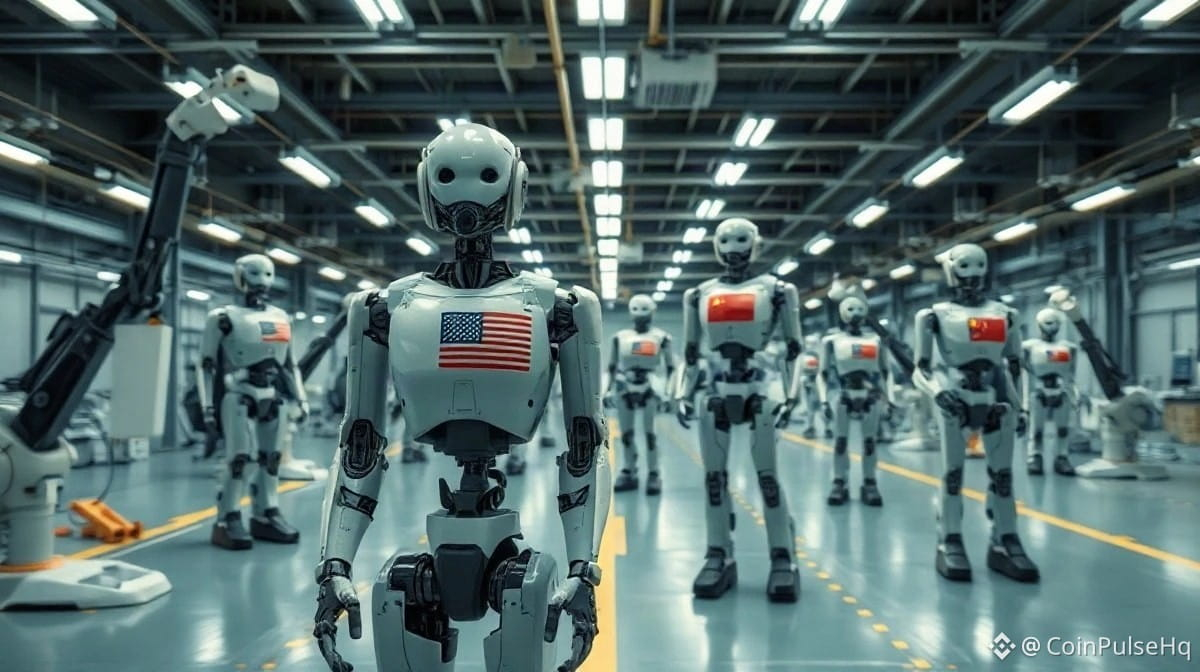
US Curbs on Chinese Drones and Robots May Not Overcome China’s Manufacturing ScaleThe United States has moved to restrict foreign-made advanced robotics and drones, but industry analysts say China's manufacturing scale may blunt the impact, likely producing a fragmented global market rather than a clean US-China split. In July and August, Washington tightened rules on foreign robotic systems and imposed steep tariffs on imported drones and components, citing national-security concerns. The drone tariffs take effect in September, with additional component tariffs following in 2027.
These actions are part of a broader U.S. effort to limit foreign technology in strategically important industries. The FCC's Covered List, established in 2021, initially targeted telecommunications equipment from companies like Huawei and ZTE, then expanded to drones and, most recently, to advanced robotic devices. The latest move comes as Chinese manufacturers have built commanding positions in both drones and humanoid robots, often at prices U.S. and European rivals struggle to match.
China's Scale Advantage in Humanoid Robots
China dominates global humanoid robot manufacturing. Global shipments hit 22,000 units in the first half of 2026, with the vast majority from Chinese manufacturers, according to Counterpoint Research. The world's five largest humanoid robot makers by shipments — AgiBot, Unitree, Galbot, UBTECH, and Leju Robotics — are all Chinese and together accounted for 86% of global shipments in that period.
U.S. companies operate at a far smaller scale, said Soumen Mandal, a principal analyst at Counterpoint Research. That advantage compounds: lower prices allow Chinese manufacturers to deploy more robots, generating real-world data that improves their technology, while higher production volumes drive costs down further, said Ankur Saxena, an investment director at TDK Ventures.
Chinese humanoid makers are also pushing costs down by bringing more of the technology stack in-house. Unitree, for example, is developing more components internally, while automakers such as XPeng apply their experience in chips and vehicle manufacturing as they move into robotics.
“The United States leads in frontier AI, software and semiconductor innovation,” Saxena told TechCrunch. “China leads in manufacturing scale, supply-chain depth and cost.”
That manufacturing edge has let Chinese companies cut humanoid prices faster than most U.S. competitors can match. “You cannot sanction your way around a cost curve. You can only out-build it, and America has yet to begin making the decade-long investment that will require,” Saxena said.
Where Does China Go Next?
The answer may increasingly be outside the U.S. Even if Chinese robotics companies lose access to the American market, they still have a large domestic market and room to expand elsewhere, particularly in regions where demand for affordable automation is growing, Saxena said.
Chinese robotics companies are already targeting price-sensitive markets with severe labor shortages across Europe, Southeast Asia, Latin America, and the Middle East, said Mandal. He expects humanoid makers to follow a path similar to Chinese electric-vehicle companies: build scale at home, expand into overseas markets, and eventually establish local production.
The drone market offers an early glimpse of that fragmentation. The industry is splitting into two ecosystems: a U.S.-led market built around American-made, NDAA-compliant systems, and a China-led market focused on low-cost, high-volume production, said Bentzion Levinson, founder and CEO of Virginia-based drone maker Heven AeroTech.
Levinson said Western manufacturers are unlikely to beat Chinese companies in the low-end consumer drone market. Instead, U.S. and allied companies could increasingly compete in long-range autonomous systems for defense and critical infrastructure, where security requirements carry more weight.
“The next battleground is over who owns the next-gen energy and payload architecture,” he said, pointing to battery constraints in particular.
Agility Robotics welcomed the FCC's decision in July, saying it could address security concerns around foreign-made advanced robots before they become deeply embedded in the U.S. market. The company pointed to its Digit humanoid, which is designed and assembled in the U.S., while also calling for continued access to the tools and technologies needed to advance robotics research.
A More Regional Robotics Market
“The alternative to China isn't a purely domestic U.S. supply chain; it's a diversified allied one,” Saxena said. That could create opportunities elsewhere in Asia. Japan has decades of experience in industrial robotics, South Korea brings strengths in electronics and batteries, and Taiwan is a major semiconductor player. But none can simply replace China, given how deeply Chinese components remain embedded across the global robotics industry.
Asian manufacturers could emerge as a middle ground between lower-cost Chinese robots and more expensive U.S. offerings, Mandal said. South Korea's Hyundai, which owns Boston Dynamics, and Japan's Toyota are among the automakers investing in robotics.
Yang Fang of Beagle Technology, a California-based agtech startup, told TechCrunch that robotics is likely to become more regional as companies design machines for the labor needs and working conditions in their home markets.
The result may not be two neatly separated industries. Instead, the restrictions could accelerate the emergence of regional markets: Chinese companies competing on cost and scale across much of the world, U.S. and allied manufacturers gaining ground where security requirements matter most, and manufacturers in Japan, Taiwan, and South Korea trying to carve out space between the two.
This article is for informational purposes only and does not constitute financial advice. The robotics and technology markets are volatile and subject to rapid change; readers should conduct their own research before making any investment decisions.
Originally published on CoinPulseHQ: https://coinpulsehq.com/us-china-robotics-restrictions-scale-gap/
US Curbs on Chinese Drones and Robots May Not Overcome China’s Manufacturing Scale
The United States has moved to restrict foreign-made advanced robotics and drones, but industry analysts say China's manufacturing scale may blunt the impact, likely producing a fragmented global market rather than a clean US-China split. In July and August, Washington tightened rules on foreign robotic systems and imposed steep tariffs on imported drones and components, citing national-security concerns. The drone tariffs take effect in September, with additional component tariffs following in 2027.
These actions are part of a broader U.S. effort to limit foreign technology in strategically important industries. The FCC's Covered List, established in 2021, initially targeted telecommunications equipment from companies like Huawei and ZTE, then expanded to drones and, most recently, to advanced robotic devices. The latest move comes as Chinese manufacturers have built commanding positions in both drones and humanoid robots, often at prices U.S. and European rivals struggle to match.
China's Scale Advantage in Humanoid Robots
China dominates global humanoid robot manufacturing. Global shipments hit 22,000 units in the first half of 2026, with the vast majority from Chinese manufacturers, according to Counterpoint Research. The world's five largest humanoid robot makers by shipments — AgiBot, Unitree, Galbot, UBTECH, and Leju Robotics — are all Chinese and together accounted for 86% of global shipments in that period.
U.S. companies operate at a far smaller scale, said Soumen Mandal, a principal analyst at Counterpoint Research. That advantage compounds: lower prices allow Chinese manufacturers to deploy more robots, generating real-world data that improves their technology, while higher production volumes drive costs down further, said Ankur Saxena, an investment director at TDK Ventures.
Chinese humanoid makers are also pushing costs down by bringing more of the technology stack in-house. Unitree, for example, is developing more components internally, while automakers such as XPeng apply their experience in chips and vehicle manufacturing as they move into robotics.
“The United States leads in frontier AI, software and semiconductor innovation,” Saxena told TechCrunch. “China leads in manufacturing scale, supply-chain depth and cost.”
That manufacturing edge has let Chinese companies cut humanoid prices faster than most U.S. competitors can match. “You cannot sanction your way around a cost curve. You can only out-build it, and America has yet to begin making the decade-long investment that will require,” Saxena said.
Where Does China Go Next?
The answer may increasingly be outside the U.S. Even if Chinese robotics companies lose access to the American market, they still have a large domestic market and room to expand elsewhere, particularly in regions where demand for affordable automation is growing, Saxena said.
Chinese robotics companies are already targeting price-sensitive markets with severe labor shortages across Europe, Southeast Asia, Latin America, and the Middle East, said Mandal. He expects humanoid makers to follow a path similar to Chinese electric-vehicle companies: build scale at home, expand into overseas markets, and eventually establish local production.
The drone market offers an early glimpse of that fragmentation. The industry is splitting into two ecosystems: a U.S.-led market built around American-made, NDAA-compliant systems, and a China-led market focused on low-cost, high-volume production, said Bentzion Levinson, founder and CEO of Virginia-based drone maker Heven AeroTech.
Levinson said Western manufacturers are unlikely to beat Chinese companies in the low-end consumer drone market. Instead, U.S. and allied companies could increasingly compete in long-range autonomous systems for defense and critical infrastructure, where security requirements carry more weight.
“The next battleground is over who owns the next-gen energy and payload architecture,” he said, pointing to battery constraints in particular.
Agility Robotics welcomed the FCC's decision in July, saying it could address security concerns around foreign-made advanced robots before they become deeply embedded in the U.S. market. The company pointed to its Digit humanoid, which is designed and assembled in the U.S., while also calling for continued access to the tools and technologies needed to advance robotics research.
A More Regional Robotics Market
“The alternative to China isn't a purely domestic U.S. supply chain; it's a diversified allied one,” Saxena said. That could create opportunities elsewhere in Asia. Japan has decades of experience in industrial robotics, South Korea brings strengths in electronics and batteries, and Taiwan is a major semiconductor player. But none can simply replace China, given how deeply Chinese components remain embedded across the global robotics industry.
Asian manufacturers could emerge as a middle ground between lower-cost Chinese robots and more expensive U.S. offerings, Mandal said. South Korea's Hyundai, which owns Boston Dynamics, and Japan's Toyota are among the automakers investing in robotics.
Yang Fang of Beagle Technology, a California-based agtech startup, told TechCrunch that robotics is likely to become more regional as companies design machines for the labor needs and working conditions in their home markets.
The result may not be two neatly separated industries. Instead, the restrictions could accelerate the emergence of regional markets: Chinese companies competing on cost and scale across much of the world, U.S. and allied manufacturers gaining ground where security requirements matter most, and manufacturers in Japan, Taiwan, and South Korea trying to carve out space between the two.
This article is for informational purposes only and does not constitute financial advice. The robotics and technology markets are volatile and subject to rapid change; readers should conduct their own research before making any investment decisions.
Originally published on CoinPulseHQ: https://coinpulsehq.com/us-china-robotics-restrictions-scale-gap/
These actions are part of a broader U.S. effort to limit foreign technology in strategically important industries. The FCC's Covered List, established in 2021, initially targeted telecommunications equipment from companies like Huawei and ZTE, then expanded to drones and, most recently, to advanced robotic devices. The latest move comes as Chinese manufacturers have built commanding positions in both drones and humanoid robots, often at prices U.S. and European rivals struggle to match.
China's Scale Advantage in Humanoid Robots
China dominates global humanoid robot manufacturing. Global shipments hit 22,000 units in the first half of 2026, with the vast majority from Chinese manufacturers, according to Counterpoint Research. The world's five largest humanoid robot makers by shipments — AgiBot, Unitree, Galbot, UBTECH, and Leju Robotics — are all Chinese and together accounted for 86% of global shipments in that period.
U.S. companies operate at a far smaller scale, said Soumen Mandal, a principal analyst at Counterpoint Research. That advantage compounds: lower prices allow Chinese manufacturers to deploy more robots, generating real-world data that improves their technology, while higher production volumes drive costs down further, said Ankur Saxena, an investment director at TDK Ventures.
Chinese humanoid makers are also pushing costs down by bringing more of the technology stack in-house. Unitree, for example, is developing more components internally, while automakers such as XPeng apply their experience in chips and vehicle manufacturing as they move into robotics.
“The United States leads in frontier AI, software and semiconductor innovation,” Saxena told TechCrunch. “China leads in manufacturing scale, supply-chain depth and cost.”
That manufacturing edge has let Chinese companies cut humanoid prices faster than most U.S. competitors can match. “You cannot sanction your way around a cost curve. You can only out-build it, and America has yet to begin making the decade-long investment that will require,” Saxena said.
Where Does China Go Next?
The answer may increasingly be outside the U.S. Even if Chinese robotics companies lose access to the American market, they still have a large domestic market and room to expand elsewhere, particularly in regions where demand for affordable automation is growing, Saxena said.
Chinese robotics companies are already targeting price-sensitive markets with severe labor shortages across Europe, Southeast Asia, Latin America, and the Middle East, said Mandal. He expects humanoid makers to follow a path similar to Chinese electric-vehicle companies: build scale at home, expand into overseas markets, and eventually establish local production.
The drone market offers an early glimpse of that fragmentation. The industry is splitting into two ecosystems: a U.S.-led market built around American-made, NDAA-compliant systems, and a China-led market focused on low-cost, high-volume production, said Bentzion Levinson, founder and CEO of Virginia-based drone maker Heven AeroTech.
Levinson said Western manufacturers are unlikely to beat Chinese companies in the low-end consumer drone market. Instead, U.S. and allied companies could increasingly compete in long-range autonomous systems for defense and critical infrastructure, where security requirements carry more weight.
“The next battleground is over who owns the next-gen energy and payload architecture,” he said, pointing to battery constraints in particular.
Agility Robotics welcomed the FCC's decision in July, saying it could address security concerns around foreign-made advanced robots before they become deeply embedded in the U.S. market. The company pointed to its Digit humanoid, which is designed and assembled in the U.S., while also calling for continued access to the tools and technologies needed to advance robotics research.
A More Regional Robotics Market
“The alternative to China isn't a purely domestic U.S. supply chain; it's a diversified allied one,” Saxena said. That could create opportunities elsewhere in Asia. Japan has decades of experience in industrial robotics, South Korea brings strengths in electronics and batteries, and Taiwan is a major semiconductor player. But none can simply replace China, given how deeply Chinese components remain embedded across the global robotics industry.
Asian manufacturers could emerge as a middle ground between lower-cost Chinese robots and more expensive U.S. offerings, Mandal said. South Korea's Hyundai, which owns Boston Dynamics, and Japan's Toyota are among the automakers investing in robotics.
Yang Fang of Beagle Technology, a California-based agtech startup, told TechCrunch that robotics is likely to become more regional as companies design machines for the labor needs and working conditions in their home markets.
The result may not be two neatly separated industries. Instead, the restrictions could accelerate the emergence of regional markets: Chinese companies competing on cost and scale across much of the world, U.S. and allied manufacturers gaining ground where security requirements matter most, and manufacturers in Japan, Taiwan, and South Korea trying to carve out space between the two.
This article is for informational purposes only and does not constitute financial advice. The robotics and technology markets are volatile and subject to rapid change; readers should conduct their own research before making any investment decisions.
Originally published on CoinPulseHQ: https://coinpulsehq.com/us-china-robotics-restrictions-scale-gap/
·
--

Article
Voir la traduction
Circleback adds free tier to its meeting notetaker as competition heats upCircleback, a Y Combinator-backed meeting notetaker, is introducing a free subscription tier as competition in the crowded meeting transcription market intensifies. The new plan, announced this week, allows users to transcribe unlimited meetings and access their history for the past 30 days, a move aimed at lowering the barrier to entry and attracting a broader user base.
The free tier includes core features such as meeting recording, mobile and Apple Watch apps, AI-powered transcript queries, and integrations with Linear and Slack. For users who need more, paid plans start at $14 per month (billed annually) and unlock all integrations, unlimited meeting history, and full API and MCP access. Previously, Circleback had no free tier, with plans starting at $20.83 per month.
Why Circleback is opening the gates
Co-founder Ali Haghani told TechCrunch that the company saw a significant drop-off in users during its previous limited trial period, prompting the shift. “If we just open the gates and allow more people to use the product, that’s gonna bring Circleback in front of more people. Then we’re very good at making the product good and monetizing those users,” he said.
The move comes as the meeting notetaker market becomes increasingly crowded. In recent weeks, dictation app Wispr launched its own note-taker and scheduling app, and Calendly added a similar tool to its stack. Dedicated players like Granola, Read AI, and Fireflies have raised millions in funding, with Granola also adding a free tier a few months ago.
Circleback, founded in 2023 by Haghani and Kevin Jacyna, raised $2.5 million in 2024. The company says it has been profitable since then, with run-rate revenue exceeding $1 million per employee across its eight-person team, translating to roughly $8 million in annualized revenue.
Marketing through product, not ads
Haghani noted that Circleback does not spend on Google Ads or Meta Ads, and the free tier is intended to serve as a marketing expense. The strategy appears to be working: the company says it is consistently winning customers against much larger competitors, both in terms of headcount and funding.
“We are consistently competing and winning customers against much bigger companies, both in terms of number of people and funding raised. And I feel like there is now more of an appetite to win,” he said.
Despite investor interest, Circleback is not immediately looking to raise funds, as it sees no bottlenecks in its growth trajectory. Haghani said the startup would be open to fundraising if money could solve a specific problem.
The free tier strategy mirrors a broader trend in the AI software space, where companies are using free access to build user bases and gather data to improve their models. For meeting notetakers, the challenge lies in converting free users into paying customers, especially as the market becomes saturated with similar offerings.
As the competition heats up, Circleback’s bet on accessibility and product-led growth will be tested. The company’s profitability and lean team give it a degree of flexibility that larger, venture-backed rivals may not have, but the long-term viability of the free tier will depend on its ability to convert users into subscribers.
This article is for informational purposes only and does not constitute financial advice. The software and startup market is volatile and uncertain; readers should conduct their own research before making any business or investment decisions.
Originally published on CoinPulseHQ: https://coinpulsehq.com/circleback-free-tier-meeting-notetaker/
Circleback adds free tier to its meeting notetaker as competition heats up
Circleback, a Y Combinator-backed meeting notetaker, is introducing a free subscription tier as competition in the crowded meeting transcription market intensifies. The new plan, announced this week, allows users to transcribe unlimited meetings and access their history for the past 30 days, a move aimed at lowering the barrier to entry and attracting a broader user base.
The free tier includes core features such as meeting recording, mobile and Apple Watch apps, AI-powered transcript queries, and integrations with Linear and Slack. For users who need more, paid plans start at $14 per month (billed annually) and unlock all integrations, unlimited meeting history, and full API and MCP access. Previously, Circleback had no free tier, with plans starting at $20.83 per month.
Why Circleback is opening the gates
Co-founder Ali Haghani told TechCrunch that the company saw a significant drop-off in users during its previous limited trial period, prompting the shift. “If we just open the gates and allow more people to use the product, that’s gonna bring Circleback in front of more people. Then we’re very good at making the product good and monetizing those users,” he said.
The move comes as the meeting notetaker market becomes increasingly crowded. In recent weeks, dictation app Wispr launched its own note-taker and scheduling app, and Calendly added a similar tool to its stack. Dedicated players like Granola, Read AI, and Fireflies have raised millions in funding, with Granola also adding a free tier a few months ago.
Circleback, founded in 2023 by Haghani and Kevin Jacyna, raised $2.5 million in 2024. The company says it has been profitable since then, with run-rate revenue exceeding $1 million per employee across its eight-person team, translating to roughly $8 million in annualized revenue.
Marketing through product, not ads
Haghani noted that Circleback does not spend on Google Ads or Meta Ads, and the free tier is intended to serve as a marketing expense. The strategy appears to be working: the company says it is consistently winning customers against much larger competitors, both in terms of headcount and funding.
“We are consistently competing and winning customers against much bigger companies, both in terms of number of people and funding raised. And I feel like there is now more of an appetite to win,” he said.
Despite investor interest, Circleback is not immediately looking to raise funds, as it sees no bottlenecks in its growth trajectory. Haghani said the startup would be open to fundraising if money could solve a specific problem.
The free tier strategy mirrors a broader trend in the AI software space, where companies are using free access to build user bases and gather data to improve their models. For meeting notetakers, the challenge lies in converting free users into paying customers, especially as the market becomes saturated with similar offerings.
As the competition heats up, Circleback’s bet on accessibility and product-led growth will be tested. The company’s profitability and lean team give it a degree of flexibility that larger, venture-backed rivals may not have, but the long-term viability of the free tier will depend on its ability to convert users into subscribers.
This article is for informational purposes only and does not constitute financial advice. The software and startup market is volatile and uncertain; readers should conduct their own research before making any business or investment decisions.
Originally published on CoinPulseHQ: https://coinpulsehq.com/circleback-free-tier-meeting-notetaker/
The free tier includes core features such as meeting recording, mobile and Apple Watch apps, AI-powered transcript queries, and integrations with Linear and Slack. For users who need more, paid plans start at $14 per month (billed annually) and unlock all integrations, unlimited meeting history, and full API and MCP access. Previously, Circleback had no free tier, with plans starting at $20.83 per month.
Why Circleback is opening the gates
Co-founder Ali Haghani told TechCrunch that the company saw a significant drop-off in users during its previous limited trial period, prompting the shift. “If we just open the gates and allow more people to use the product, that’s gonna bring Circleback in front of more people. Then we’re very good at making the product good and monetizing those users,” he said.
The move comes as the meeting notetaker market becomes increasingly crowded. In recent weeks, dictation app Wispr launched its own note-taker and scheduling app, and Calendly added a similar tool to its stack. Dedicated players like Granola, Read AI, and Fireflies have raised millions in funding, with Granola also adding a free tier a few months ago.
Circleback, founded in 2023 by Haghani and Kevin Jacyna, raised $2.5 million in 2024. The company says it has been profitable since then, with run-rate revenue exceeding $1 million per employee across its eight-person team, translating to roughly $8 million in annualized revenue.
Marketing through product, not ads
Haghani noted that Circleback does not spend on Google Ads or Meta Ads, and the free tier is intended to serve as a marketing expense. The strategy appears to be working: the company says it is consistently winning customers against much larger competitors, both in terms of headcount and funding.
“We are consistently competing and winning customers against much bigger companies, both in terms of number of people and funding raised. And I feel like there is now more of an appetite to win,” he said.
Despite investor interest, Circleback is not immediately looking to raise funds, as it sees no bottlenecks in its growth trajectory. Haghani said the startup would be open to fundraising if money could solve a specific problem.
The free tier strategy mirrors a broader trend in the AI software space, where companies are using free access to build user bases and gather data to improve their models. For meeting notetakers, the challenge lies in converting free users into paying customers, especially as the market becomes saturated with similar offerings.
As the competition heats up, Circleback’s bet on accessibility and product-led growth will be tested. The company’s profitability and lean team give it a degree of flexibility that larger, venture-backed rivals may not have, but the long-term viability of the free tier will depend on its ability to convert users into subscribers.
This article is for informational purposes only and does not constitute financial advice. The software and startup market is volatile and uncertain; readers should conduct their own research before making any business or investment decisions.
Originally published on CoinPulseHQ: https://coinpulsehq.com/circleback-free-tier-meeting-notetaker/
·
--

Article
Voir la traduction
Instagram tightens rules for undisclosed AI-generated profiles, limits reach of non-compliant accountsInstagram announced Monday that it will begin limiting the reach of accounts featuring AI-generated people that are not clearly labeled as such. The platform is renaming its existing “AI creator” label to “AI-generated profile,” a change the company says will make the disclosure clearer for users.
The new label is designed to inform users when the person featured on a profile was generated or substantially created with AI. Under the updated policy, creators who fail to label an AI-generated profile could see reduced distribution. Those who use the label, however, will not be penalized simply for having an AI-generated person as their profile subject.
The label is not intended for every use of AI. Instagram says people who use AI to edit photos, polish captions, create graphics, or make other creative tweaks do not need to apply the AI-generated profile label.
Why Instagram is making the change
Instagram says the update comes in response to users who have encountered profiles that appeared to belong to real people, only to later discover the person was entirely AI-generated. “As generative AI becomes a bigger part of how people create, we’ve heard that people don’t like seeing a profile that seems human, only to find out later that the person featured is AI-generated,” the company wrote. “They want to know when a profile features an AI-generated person.”
The timing is notable. Frustration over AI-generated content has been growing as AI influencers become more common across social media platforms. Earlier this year, the gay dating app Goose became the subject of a Wired investigation after a network of apparently AI-generated male influencers promoted the app on Instagram. Wired found more than two dozen accounts that appeared to feature AI influencers, some of which reportedly reached out to potential users through direct messages to get them to sign up.
Health and wellness content is another particularly worrying example. The New York Times reported in July that it found hundreds of AI-generated doctors, healers, and wellness personalities on social media promoting supplements or making health claims to users.
Meta’s broader AI and safety moves
The announcement comes after Instagram faced backlash over an AI tool that allowed users to generate images using other people’s likenesses. Users objected to having their public Instagram content used without an explicit opt-in. Meta subsequently removed the feature.
Last week, Meta reached an $18 billion settlement with U.S. states over allegations concerning the effects of Facebook and Instagram on children and teenagers. As part of the agreement, Meta will introduce a default two-hour daily usage limit for teens across Facebook and Instagram, a “Night Mode” block, muted notifications during school hours, and other restrictions.
For creators and brands, the new labeling requirement adds another layer of compliance to an already complex content environment. Those who build audiences around AI-generated personas will need to weigh the transparency requirement against the potential for reduced reach if they fail to comply. For users, the label offers a clearer signal about the authenticity of the people they encounter on the platform.
This is not financial advice, and the social media space remains volatile and uncertain as platforms continue to adapt their policies to evolving AI technology.
Originally published on CoinPulseHQ: https://coinpulsehq.com/instagram-ai-generated-profile-label-policy/
Instagram tightens rules for undisclosed AI-generated profiles, limits reach of non-compliant accounts
Instagram announced Monday that it will begin limiting the reach of accounts featuring AI-generated people that are not clearly labeled as such. The platform is renaming its existing “AI creator” label to “AI-generated profile,” a change the company says will make the disclosure clearer for users.
The new label is designed to inform users when the person featured on a profile was generated or substantially created with AI. Under the updated policy, creators who fail to label an AI-generated profile could see reduced distribution. Those who use the label, however, will not be penalized simply for having an AI-generated person as their profile subject.
The label is not intended for every use of AI. Instagram says people who use AI to edit photos, polish captions, create graphics, or make other creative tweaks do not need to apply the AI-generated profile label.
Why Instagram is making the change
Instagram says the update comes in response to users who have encountered profiles that appeared to belong to real people, only to later discover the person was entirely AI-generated. “As generative AI becomes a bigger part of how people create, we’ve heard that people don’t like seeing a profile that seems human, only to find out later that the person featured is AI-generated,” the company wrote. “They want to know when a profile features an AI-generated person.”
The timing is notable. Frustration over AI-generated content has been growing as AI influencers become more common across social media platforms. Earlier this year, the gay dating app Goose became the subject of a Wired investigation after a network of apparently AI-generated male influencers promoted the app on Instagram. Wired found more than two dozen accounts that appeared to feature AI influencers, some of which reportedly reached out to potential users through direct messages to get them to sign up.
Health and wellness content is another particularly worrying example. The New York Times reported in July that it found hundreds of AI-generated doctors, healers, and wellness personalities on social media promoting supplements or making health claims to users.
Meta’s broader AI and safety moves
The announcement comes after Instagram faced backlash over an AI tool that allowed users to generate images using other people’s likenesses. Users objected to having their public Instagram content used without an explicit opt-in. Meta subsequently removed the feature.
Last week, Meta reached an $18 billion settlement with U.S. states over allegations concerning the effects of Facebook and Instagram on children and teenagers. As part of the agreement, Meta will introduce a default two-hour daily usage limit for teens across Facebook and Instagram, a “Night Mode” block, muted notifications during school hours, and other restrictions.
For creators and brands, the new labeling requirement adds another layer of compliance to an already complex content environment. Those who build audiences around AI-generated personas will need to weigh the transparency requirement against the potential for reduced reach if they fail to comply. For users, the label offers a clearer signal about the authenticity of the people they encounter on the platform.
This is not financial advice, and the social media space remains volatile and uncertain as platforms continue to adapt their policies to evolving AI technology.
Originally published on CoinPulseHQ: https://coinpulsehq.com/instagram-ai-generated-profile-label-policy/
The new label is designed to inform users when the person featured on a profile was generated or substantially created with AI. Under the updated policy, creators who fail to label an AI-generated profile could see reduced distribution. Those who use the label, however, will not be penalized simply for having an AI-generated person as their profile subject.
The label is not intended for every use of AI. Instagram says people who use AI to edit photos, polish captions, create graphics, or make other creative tweaks do not need to apply the AI-generated profile label.
Why Instagram is making the change
Instagram says the update comes in response to users who have encountered profiles that appeared to belong to real people, only to later discover the person was entirely AI-generated. “As generative AI becomes a bigger part of how people create, we’ve heard that people don’t like seeing a profile that seems human, only to find out later that the person featured is AI-generated,” the company wrote. “They want to know when a profile features an AI-generated person.”
The timing is notable. Frustration over AI-generated content has been growing as AI influencers become more common across social media platforms. Earlier this year, the gay dating app Goose became the subject of a Wired investigation after a network of apparently AI-generated male influencers promoted the app on Instagram. Wired found more than two dozen accounts that appeared to feature AI influencers, some of which reportedly reached out to potential users through direct messages to get them to sign up.
Health and wellness content is another particularly worrying example. The New York Times reported in July that it found hundreds of AI-generated doctors, healers, and wellness personalities on social media promoting supplements or making health claims to users.
Meta’s broader AI and safety moves
The announcement comes after Instagram faced backlash over an AI tool that allowed users to generate images using other people’s likenesses. Users objected to having their public Instagram content used without an explicit opt-in. Meta subsequently removed the feature.
Last week, Meta reached an $18 billion settlement with U.S. states over allegations concerning the effects of Facebook and Instagram on children and teenagers. As part of the agreement, Meta will introduce a default two-hour daily usage limit for teens across Facebook and Instagram, a “Night Mode” block, muted notifications during school hours, and other restrictions.
For creators and brands, the new labeling requirement adds another layer of compliance to an already complex content environment. Those who build audiences around AI-generated personas will need to weigh the transparency requirement against the potential for reduced reach if they fail to comply. For users, the label offers a clearer signal about the authenticity of the people they encounter on the platform.
This is not financial advice, and the social media space remains volatile and uncertain as platforms continue to adapt their policies to evolving AI technology.
Originally published on CoinPulseHQ: https://coinpulsehq.com/instagram-ai-generated-profile-label-policy/
·
--

Article
Voir la traduction
Why did an OG Bitcoin holder burn $1M? On-chain data offers clues but no answersIn a saga that has captivated blockchain analysts, an early Bitcoin holder—dormant for nearly 12 years—moved $1 million worth of BTC through a major custodian, received nearly the same amount back, and then deliberately destroyed it. The May 2026 burn of 20 BTC is part of a broader pattern involving five wallets that collectively sent 107 BTC to an unspendable address, raising questions that even leading forensic firms cannot answer.
The mystery of the $1 million round trip
Blockchain educator Bennet first flagged the unusual activity. A wallet that had sat untouched since roughly 2014 suddenly sent its entire balance of 20.00010537 BTC to what appears to be a large centralized exchange's hot wallet. Three weeks later, the same wallet received 20.00006037 BTC back—a difference of just 4,500 satoshis, or about $3. The returned funds were split into three transactions of 7 BTC, 7 BTC, and 6.00006037 BTC over consecutive days, suggesting a daily withdrawal limit.
Chainalysis, which analyzed the five burn wallets, found strong indicators of common ownership. All five were funded on the same day in April 2014, sent nearly identical dollar amounts to the same exchange deposit address, and operated on a rotational basis—one would send funds until activity stopped, then another would take over with similar cadence and value. Most of the funds trace back to Mt. Gox, the collapsed exchange, implying the owner was an early adopter who likely withdrew coins before the platform's February 2014 shutdown.
The $10,400 clue and a possible liquidation strategy
One of the five addresses sent 19.6 BTC in 60 transactions to the custodian between 2022 and 2024. While the Bitcoin amounts varied wildly—from 0.15 to 0.62 BTC—58 of the 60 transfers were within 10% of $10,400 when sent, despite Bitcoin's price more than quadrupling. Bennet suggests this points to a planned liquidation strategy: the owner was sending fixed dollar amounts, not fixed BTC amounts, likely as part of a regular cash-out process.
However, the $1 million round trip in March defies that explanation. If the owner was liquidating, why send the entire balance to the custodian and then retrieve virtually all of it? The fact that the same private key controlled the coins before and after the round trip rules out a simple exchange transaction.
Possible explanations, but no definitive answer
Analysts have floated several theories. The owner might have been testing an old wallet or custody arrangement after 12 years of dormancy, but that doesn't explain the subsequent burn. Tax or compliance reasons could justify moving funds through a major custodian, yet there's no evidence linking the transaction to a specific event. Privacy is another angle: sending BTC through a custodian that sweeps deposits into an omnibus wallet obscures on-chain trails, but that still leaves the destruction unexplained.
Burning Bitcoin is irreversible. The owner could have simply destroyed the private keys to achieve the same effect, but instead chose to send the coins to an unspendable address—a deliberate, public act. Bennet speculates that a wealthy individual without heirs might have done this to permanently reduce the total supply. Chainalysis concedes it has no clear explanation.
Why this matters
This case highlights both the power and limits of blockchain forensics. While the ledger provides an unusually detailed record of what happened, it cannot reveal intent. For the broader crypto community, the burn removes 107 BTC from circulation—a tiny but notable reduction in supply—and serves as a reminder that early Bitcoin holders still control significant wealth, sometimes with unpredictable behavior.
Conclusion
The mystery of the $1 million Bitcoin burn remains unsolved. On-chain data has pieced together a timeline: a dormant wallet, a round trip through a custodian, and a final, irreversible act of destruction. But the why—whether it was a statement, a tax move, or something else entirely—remains the million-dollar question.
FAQs
Q1: What exactly happened to the Bitcoin?
In March 2026, a wallet dormant for 12 years sent 20 BTC to a large custodian, received nearly the same amount back, and then in May sent it to an unspendable address, effectively burning it. This was part of a broader pattern involving five wallets that burned 107 BTC total.
Q2: Who is behind the burn?
Chainalysis found strong indicators that the five wallets were controlled by the same person, likely an early Bitcoin holder with funds linked to Mt. Gox. The identity remains unknown.
Q3: Why would someone burn Bitcoin?
Possible reasons include a deliberate statement to reduce supply, a privacy move, or a tax/compliance action, but no single theory fits all the evidence. The motive remains unclear.
Disclaimer: This article is for informational purposes only and does not constitute financial, legal, or investment advice. Cryptocurrency markets are volatile and uncertain. Readers should conduct their own research and consult qualified professionals before making any financial decisions.
Originally published on CoinPulseHQ: https://coinpulsehq.com/bitcoin-og-burns-1m-mystery/
Why did an OG Bitcoin holder burn $1M? On-chain data offers clues but no answers
In a saga that has captivated blockchain analysts, an early Bitcoin holder—dormant for nearly 12 years—moved $1 million worth of BTC through a major custodian, received nearly the same amount back, and then deliberately destroyed it. The May 2026 burn of 20 BTC is part of a broader pattern involving five wallets that collectively sent 107 BTC to an unspendable address, raising questions that even leading forensic firms cannot answer.
The mystery of the $1 million round trip
Blockchain educator Bennet first flagged the unusual activity. A wallet that had sat untouched since roughly 2014 suddenly sent its entire balance of 20.00010537 BTC to what appears to be a large centralized exchange's hot wallet. Three weeks later, the same wallet received 20.00006037 BTC back—a difference of just 4,500 satoshis, or about $3. The returned funds were split into three transactions of 7 BTC, 7 BTC, and 6.00006037 BTC over consecutive days, suggesting a daily withdrawal limit.
Chainalysis, which analyzed the five burn wallets, found strong indicators of common ownership. All five were funded on the same day in April 2014, sent nearly identical dollar amounts to the same exchange deposit address, and operated on a rotational basis—one would send funds until activity stopped, then another would take over with similar cadence and value. Most of the funds trace back to Mt. Gox, the collapsed exchange, implying the owner was an early adopter who likely withdrew coins before the platform's February 2014 shutdown.
The $10,400 clue and a possible liquidation strategy
One of the five addresses sent 19.6 BTC in 60 transactions to the custodian between 2022 and 2024. While the Bitcoin amounts varied wildly—from 0.15 to 0.62 BTC—58 of the 60 transfers were within 10% of $10,400 when sent, despite Bitcoin's price more than quadrupling. Bennet suggests this points to a planned liquidation strategy: the owner was sending fixed dollar amounts, not fixed BTC amounts, likely as part of a regular cash-out process.
However, the $1 million round trip in March defies that explanation. If the owner was liquidating, why send the entire balance to the custodian and then retrieve virtually all of it? The fact that the same private key controlled the coins before and after the round trip rules out a simple exchange transaction.
Possible explanations, but no definitive answer
Analysts have floated several theories. The owner might have been testing an old wallet or custody arrangement after 12 years of dormancy, but that doesn't explain the subsequent burn. Tax or compliance reasons could justify moving funds through a major custodian, yet there's no evidence linking the transaction to a specific event. Privacy is another angle: sending BTC through a custodian that sweeps deposits into an omnibus wallet obscures on-chain trails, but that still leaves the destruction unexplained.
Burning Bitcoin is irreversible. The owner could have simply destroyed the private keys to achieve the same effect, but instead chose to send the coins to an unspendable address—a deliberate, public act. Bennet speculates that a wealthy individual without heirs might have done this to permanently reduce the total supply. Chainalysis concedes it has no clear explanation.
Why this matters
This case highlights both the power and limits of blockchain forensics. While the ledger provides an unusually detailed record of what happened, it cannot reveal intent. For the broader crypto community, the burn removes 107 BTC from circulation—a tiny but notable reduction in supply—and serves as a reminder that early Bitcoin holders still control significant wealth, sometimes with unpredictable behavior.
Conclusion
The mystery of the $1 million Bitcoin burn remains unsolved. On-chain data has pieced together a timeline: a dormant wallet, a round trip through a custodian, and a final, irreversible act of destruction. But the why—whether it was a statement, a tax move, or something else entirely—remains the million-dollar question.
FAQs
Q1: What exactly happened to the Bitcoin?
In March 2026, a wallet dormant for 12 years sent 20 BTC to a large custodian, received nearly the same amount back, and then in May sent it to an unspendable address, effectively burning it. This was part of a broader pattern involving five wallets that burned 107 BTC total.
Q2: Who is behind the burn?
Chainalysis found strong indicators that the five wallets were controlled by the same person, likely an early Bitcoin holder with funds linked to Mt. Gox. The identity remains unknown.
Q3: Why would someone burn Bitcoin?
Possible reasons include a deliberate statement to reduce supply, a privacy move, or a tax/compliance action, but no single theory fits all the evidence. The motive remains unclear.
Disclaimer: This article is for informational purposes only and does not constitute financial, legal, or investment advice. Cryptocurrency markets are volatile and uncertain. Readers should conduct their own research and consult qualified professionals before making any financial decisions.
Originally published on CoinPulseHQ: https://coinpulsehq.com/bitcoin-og-burns-1m-mystery/
The mystery of the $1 million round trip
Blockchain educator Bennet first flagged the unusual activity. A wallet that had sat untouched since roughly 2014 suddenly sent its entire balance of 20.00010537 BTC to what appears to be a large centralized exchange's hot wallet. Three weeks later, the same wallet received 20.00006037 BTC back—a difference of just 4,500 satoshis, or about $3. The returned funds were split into three transactions of 7 BTC, 7 BTC, and 6.00006037 BTC over consecutive days, suggesting a daily withdrawal limit.
Chainalysis, which analyzed the five burn wallets, found strong indicators of common ownership. All five were funded on the same day in April 2014, sent nearly identical dollar amounts to the same exchange deposit address, and operated on a rotational basis—one would send funds until activity stopped, then another would take over with similar cadence and value. Most of the funds trace back to Mt. Gox, the collapsed exchange, implying the owner was an early adopter who likely withdrew coins before the platform's February 2014 shutdown.
The $10,400 clue and a possible liquidation strategy
One of the five addresses sent 19.6 BTC in 60 transactions to the custodian between 2022 and 2024. While the Bitcoin amounts varied wildly—from 0.15 to 0.62 BTC—58 of the 60 transfers were within 10% of $10,400 when sent, despite Bitcoin's price more than quadrupling. Bennet suggests this points to a planned liquidation strategy: the owner was sending fixed dollar amounts, not fixed BTC amounts, likely as part of a regular cash-out process.
However, the $1 million round trip in March defies that explanation. If the owner was liquidating, why send the entire balance to the custodian and then retrieve virtually all of it? The fact that the same private key controlled the coins before and after the round trip rules out a simple exchange transaction.
Possible explanations, but no definitive answer
Analysts have floated several theories. The owner might have been testing an old wallet or custody arrangement after 12 years of dormancy, but that doesn't explain the subsequent burn. Tax or compliance reasons could justify moving funds through a major custodian, yet there's no evidence linking the transaction to a specific event. Privacy is another angle: sending BTC through a custodian that sweeps deposits into an omnibus wallet obscures on-chain trails, but that still leaves the destruction unexplained.
Burning Bitcoin is irreversible. The owner could have simply destroyed the private keys to achieve the same effect, but instead chose to send the coins to an unspendable address—a deliberate, public act. Bennet speculates that a wealthy individual without heirs might have done this to permanently reduce the total supply. Chainalysis concedes it has no clear explanation.
Why this matters
This case highlights both the power and limits of blockchain forensics. While the ledger provides an unusually detailed record of what happened, it cannot reveal intent. For the broader crypto community, the burn removes 107 BTC from circulation—a tiny but notable reduction in supply—and serves as a reminder that early Bitcoin holders still control significant wealth, sometimes with unpredictable behavior.
Conclusion
The mystery of the $1 million Bitcoin burn remains unsolved. On-chain data has pieced together a timeline: a dormant wallet, a round trip through a custodian, and a final, irreversible act of destruction. But the why—whether it was a statement, a tax move, or something else entirely—remains the million-dollar question.
FAQs
Q1: What exactly happened to the Bitcoin?
In March 2026, a wallet dormant for 12 years sent 20 BTC to a large custodian, received nearly the same amount back, and then in May sent it to an unspendable address, effectively burning it. This was part of a broader pattern involving five wallets that burned 107 BTC total.
Q2: Who is behind the burn?
Chainalysis found strong indicators that the five wallets were controlled by the same person, likely an early Bitcoin holder with funds linked to Mt. Gox. The identity remains unknown.
Q3: Why would someone burn Bitcoin?
Possible reasons include a deliberate statement to reduce supply, a privacy move, or a tax/compliance action, but no single theory fits all the evidence. The motive remains unclear.
Disclaimer: This article is for informational purposes only and does not constitute financial, legal, or investment advice. Cryptocurrency markets are volatile and uncertain. Readers should conduct their own research and consult qualified professionals before making any financial decisions.
Originally published on CoinPulseHQ: https://coinpulsehq.com/bitcoin-og-burns-1m-mystery/
19
·
--
Vérifié

Article
Harmony propose d’abandonner sa blockchain de couche 1 et de migrer ONE vers EthereumLe réseau de couche 1 compatible avec Ethereum Harmony a proposé d’abandonner son blockchain et de transférer son jeton natif ONE vers Ethereum, sept ans après le lancement de son réseau principal. Annoncée dimanche, la proposition intervient quelques semaines après un exploit qui a contraint le réseau à envisager un rollback de plus de 109 000 transactions.
Proposition de migration de Harmony
Dans la proposition non contraignante, Harmony prendrait une dernière capture d’état du réseau, émettrait des jetons ERC-20 ONE sur Ethereum et migrerait les cotations des plateformes d’échange. Les validateurs se verraient proposer des options pour arrêter leurs nœuds, continuer en tant que gouverneurs, ou rejoindre la nouvelle initiative d’IA vidéo de Harmony. La proposition ne précise pas à quel moment le dernier bloc serait produit, ni si l’arrêt serait soumis au processus de gouvernance mené par les validateurs du réseau.
Harmony propose d’abandonner sa blockchain de couche 1 et de migrer ONE vers Ethereum
Le réseau de couche 1 compatible avec Ethereum Harmony a proposé d’abandonner son blockchain et de transférer son jeton natif ONE vers Ethereum, sept ans après le lancement de son réseau principal. Annoncée dimanche, la proposition intervient quelques semaines après un exploit qui a contraint le réseau à envisager un rollback de plus de 109 000 transactions.
Proposition de migration de Harmony
Dans la proposition non contraignante, Harmony prendrait une dernière capture d’état du réseau, émettrait des jetons ERC-20 ONE sur Ethereum et migrerait les cotations des plateformes d’échange. Les validateurs se verraient proposer des options pour arrêter leurs nœuds, continuer en tant que gouverneurs, ou rejoindre la nouvelle initiative d’IA vidéo de Harmony. La proposition ne précise pas à quel moment le dernier bloc serait produit, ni si l’arrêt serait soumis au processus de gouvernance mené par les validateurs du réseau.
Proposition de migration de Harmony
Dans la proposition non contraignante, Harmony prendrait une dernière capture d’état du réseau, émettrait des jetons ERC-20 ONE sur Ethereum et migrerait les cotations des plateformes d’échange. Les validateurs se verraient proposer des options pour arrêter leurs nœuds, continuer en tant que gouverneurs, ou rejoindre la nouvelle initiative d’IA vidéo de Harmony. La proposition ne précise pas à quel moment le dernier bloc serait produit, ni si l’arrêt serait soumis au processus de gouvernance mené par les validateurs du réseau.
429
·
--

Article
Voir la traduction
Seattle Times and Newsday Sue OpenAI and Microsoft Over Copyright in Latest Publisher Legal BattleThe Seattle Times and Newsday filed a copyright infringement lawsuit against OpenAI and Microsoft on September 5, 2026, escalating the publishing industry's legal confrontation with generative AI companies. The lawsuit, reported by TechCrunch, alleges that the companies used the newspapers' journalism to train AI models like ChatGPT and Copilot without authorization or compensation.
The complaint argues that the journalism industry could become "broken beyond repair" due to AI, describing generative AI as "a snake eating its own tail" that could "destroy the very organizations" producing the content it relies on. The legal filing sharply criticizes the AI companies' business model, stating: "AI products like ChatGPT and CoPilot are touted as producers of content, but in fact they are rapacious consumers, devouring human-authored content and delivering back to the world copies and derivative imitations of that same original content they consumed to achieve their commercial objectives."
A Growing Wave of Publisher Lawsuits
The new lawsuit follows a pattern established in December 2023, when The New York Times sued OpenAI and Microsoft for alleged copyright infringement. Since then, numerous other publications have filed similar actions, including the Chicago Tribune, the New York Daily News, and several digital-first outlets like The Intercept and Raw Story.
What makes this particular case stand out is the pre-existing relationship between the parties. Microsoft and OpenAI have previously funded journalism projects and fellowships at The Seattle Times, a fact that complicates the narrative of adversarial parties. A Microsoft spokesperson told GeekWire the company is "surprised by the lawsuit" but remains "always happy to sit down and explore solutions to this type of dispute."
Why This Legal Fight Matters for the News Industry
The outcome of these consolidated disputes could fundamentally reshape how AI companies source training data. At stake is not just financial compensation for past use of copyrighted material, but the establishment of a legal framework for how AI models can be trained on journalistic content going forward.
News organizations have watched with growing alarm as AI-powered search and chat products increasingly deliver answers drawn from their reporting without driving traffic back to their websites. The Seattle Times and Newsday lawsuit directly challenges this dynamic, arguing that AI systems are effectively competing with the very publishers whose work they consume.
The case also highlights a structural tension: even as publishers sue AI companies, many have struck separate licensing deals. News Corp, Associated Press, and Dotdash Meredith have all signed content agreements with OpenAI, creating a split in the industry between those who negotiate and those who litigate. The Seattle Times and Newsday have chosen the courtroom path, though Microsoft's statement suggests a potential openness to settlement discussions.
Legal experts following the broader litigation note that courts have yet to rule definitively on the core question of whether training AI on copyrighted material constitutes fair use. The New York Times case, which remains ongoing, is widely seen as the bellwether that could set precedent for the dozens of similar lawsuits filed since.
For readers and journalists alike, the stakes extend beyond corporate balance sheets. If publishers succeed in establishing that AI companies must license journalistic content, it could create a new revenue stream for an industry that has struggled financially for two decades. Conversely, a ruling favoring the AI companies could accelerate the disruption of traditional news business models.
As this litigation progresses through the courts, the industry will be watching closely for any ruling that clarifies the boundaries between AI innovation and intellectual property protection. The Seattle Times and Newsday lawsuit adds another layer of pressure on OpenAI and Microsoft to reach broader industry-wide agreements rather than fighting each publisher individually.
This article discusses ongoing litigation and market dynamics. It does not constitute financial or legal advice, and the outcomes of legal proceedings remain uncertain and subject to change.
Originally published on CoinPulseHQ: https://coinpulsehq.com/seattle-times-newsday-sue-openai-microsoft-copyright/
Seattle Times and Newsday Sue OpenAI and Microsoft Over Copyright in Latest Publisher Legal Battle
The Seattle Times and Newsday filed a copyright infringement lawsuit against OpenAI and Microsoft on September 5, 2026, escalating the publishing industry's legal confrontation with generative AI companies. The lawsuit, reported by TechCrunch, alleges that the companies used the newspapers' journalism to train AI models like ChatGPT and Copilot without authorization or compensation.
The complaint argues that the journalism industry could become "broken beyond repair" due to AI, describing generative AI as "a snake eating its own tail" that could "destroy the very organizations" producing the content it relies on. The legal filing sharply criticizes the AI companies' business model, stating: "AI products like ChatGPT and CoPilot are touted as producers of content, but in fact they are rapacious consumers, devouring human-authored content and delivering back to the world copies and derivative imitations of that same original content they consumed to achieve their commercial objectives."
A Growing Wave of Publisher Lawsuits
The new lawsuit follows a pattern established in December 2023, when The New York Times sued OpenAI and Microsoft for alleged copyright infringement. Since then, numerous other publications have filed similar actions, including the Chicago Tribune, the New York Daily News, and several digital-first outlets like The Intercept and Raw Story.
What makes this particular case stand out is the pre-existing relationship between the parties. Microsoft and OpenAI have previously funded journalism projects and fellowships at The Seattle Times, a fact that complicates the narrative of adversarial parties. A Microsoft spokesperson told GeekWire the company is "surprised by the lawsuit" but remains "always happy to sit down and explore solutions to this type of dispute."
Why This Legal Fight Matters for the News Industry
The outcome of these consolidated disputes could fundamentally reshape how AI companies source training data. At stake is not just financial compensation for past use of copyrighted material, but the establishment of a legal framework for how AI models can be trained on journalistic content going forward.
News organizations have watched with growing alarm as AI-powered search and chat products increasingly deliver answers drawn from their reporting without driving traffic back to their websites. The Seattle Times and Newsday lawsuit directly challenges this dynamic, arguing that AI systems are effectively competing with the very publishers whose work they consume.
The case also highlights a structural tension: even as publishers sue AI companies, many have struck separate licensing deals. News Corp, Associated Press, and Dotdash Meredith have all signed content agreements with OpenAI, creating a split in the industry between those who negotiate and those who litigate. The Seattle Times and Newsday have chosen the courtroom path, though Microsoft's statement suggests a potential openness to settlement discussions.
Legal experts following the broader litigation note that courts have yet to rule definitively on the core question of whether training AI on copyrighted material constitutes fair use. The New York Times case, which remains ongoing, is widely seen as the bellwether that could set precedent for the dozens of similar lawsuits filed since.
For readers and journalists alike, the stakes extend beyond corporate balance sheets. If publishers succeed in establishing that AI companies must license journalistic content, it could create a new revenue stream for an industry that has struggled financially for two decades. Conversely, a ruling favoring the AI companies could accelerate the disruption of traditional news business models.
As this litigation progresses through the courts, the industry will be watching closely for any ruling that clarifies the boundaries between AI innovation and intellectual property protection. The Seattle Times and Newsday lawsuit adds another layer of pressure on OpenAI and Microsoft to reach broader industry-wide agreements rather than fighting each publisher individually.
This article discusses ongoing litigation and market dynamics. It does not constitute financial or legal advice, and the outcomes of legal proceedings remain uncertain and subject to change.
Originally published on CoinPulseHQ: https://coinpulsehq.com/seattle-times-newsday-sue-openai-microsoft-copyright/
The complaint argues that the journalism industry could become "broken beyond repair" due to AI, describing generative AI as "a snake eating its own tail" that could "destroy the very organizations" producing the content it relies on. The legal filing sharply criticizes the AI companies' business model, stating: "AI products like ChatGPT and CoPilot are touted as producers of content, but in fact they are rapacious consumers, devouring human-authored content and delivering back to the world copies and derivative imitations of that same original content they consumed to achieve their commercial objectives."
A Growing Wave of Publisher Lawsuits
The new lawsuit follows a pattern established in December 2023, when The New York Times sued OpenAI and Microsoft for alleged copyright infringement. Since then, numerous other publications have filed similar actions, including the Chicago Tribune, the New York Daily News, and several digital-first outlets like The Intercept and Raw Story.
What makes this particular case stand out is the pre-existing relationship between the parties. Microsoft and OpenAI have previously funded journalism projects and fellowships at The Seattle Times, a fact that complicates the narrative of adversarial parties. A Microsoft spokesperson told GeekWire the company is "surprised by the lawsuit" but remains "always happy to sit down and explore solutions to this type of dispute."
Why This Legal Fight Matters for the News Industry
The outcome of these consolidated disputes could fundamentally reshape how AI companies source training data. At stake is not just financial compensation for past use of copyrighted material, but the establishment of a legal framework for how AI models can be trained on journalistic content going forward.
News organizations have watched with growing alarm as AI-powered search and chat products increasingly deliver answers drawn from their reporting without driving traffic back to their websites. The Seattle Times and Newsday lawsuit directly challenges this dynamic, arguing that AI systems are effectively competing with the very publishers whose work they consume.
The case also highlights a structural tension: even as publishers sue AI companies, many have struck separate licensing deals. News Corp, Associated Press, and Dotdash Meredith have all signed content agreements with OpenAI, creating a split in the industry between those who negotiate and those who litigate. The Seattle Times and Newsday have chosen the courtroom path, though Microsoft's statement suggests a potential openness to settlement discussions.
Legal experts following the broader litigation note that courts have yet to rule definitively on the core question of whether training AI on copyrighted material constitutes fair use. The New York Times case, which remains ongoing, is widely seen as the bellwether that could set precedent for the dozens of similar lawsuits filed since.
For readers and journalists alike, the stakes extend beyond corporate balance sheets. If publishers succeed in establishing that AI companies must license journalistic content, it could create a new revenue stream for an industry that has struggled financially for two decades. Conversely, a ruling favoring the AI companies could accelerate the disruption of traditional news business models.
As this litigation progresses through the courts, the industry will be watching closely for any ruling that clarifies the boundaries between AI innovation and intellectual property protection. The Seattle Times and Newsday lawsuit adds another layer of pressure on OpenAI and Microsoft to reach broader industry-wide agreements rather than fighting each publisher individually.
This article discusses ongoing litigation and market dynamics. It does not constitute financial or legal advice, and the outcomes of legal proceedings remain uncertain and subject to change.
Originally published on CoinPulseHQ: https://coinpulsehq.com/seattle-times-newsday-sue-openai-microsoft-copyright/
36
·
--

Article
Voir la traduction
Opaque recurrence, RAMageddon, and other AI terms you need to know in 2026The AI industry moves fast enough that its own vocabulary can leave even seasoned technologists scrambling. On September 1, 2026, OpenAI released Astra, its new reasoning model, and with it introduced a term that has since dominated safety discussions: "opaque recurrence." That single phrase — describing a technique where the model loops queries through its internal layers rather than explaining its reasoning step-by-step — has sparked debate among researchers and prompted a wave of explainer articles across the tech press.
But opaque recurrence is just the latest addition to a rapidly expanding lexicon. From "RAMageddon" to "neuralese," the language of AI is evolving as quickly as the technology itself. This glossary aims to provide clear, practical definitions for the terms you're most likely to encounter, whether you're building with these systems, investing in them, or simply trying to follow along in meetings.
Core concepts: from AGI to inference
Understanding AI starts with a few foundational ideas. Artificial general intelligence (AGI) remains a moving target — OpenAI's charter describes it as "highly autonomous systems that outperform humans at most economically valuable work," while Google DeepMind frames it as AI "at least as capable as humans at most cognitive tasks." Even experts disagree on the precise threshold.
Beneath AGI lies the machinery that powers today's tools. Neural networks, inspired by the human brain's interconnected pathways, form the basis of deep learning. Large language models (LLMs) like those behind ChatGPT and Claude are deep neural networks trained on billions of words to predict and generate text. Training involves feeding data to a model so it can learn patterns, while inference is the process of running that trained model to make predictions or generate responses.
Two related techniques have become central to modern AI development: fine-tuning and distillation. Fine-tuning takes a pre-trained model and further trains it on specialized data for a specific task — a common approach for startups building vertical AI tools. Distillation, meanwhile, transfers knowledge from a large "teacher" model to a smaller "student" model, which is how OpenAI reportedly developed GPT-4 Turbo. Distillation from competitors typically violates terms of service, though it's widely used internally.
The new frontier: opaque recurrence and reasoning models
The most significant recent shift in AI has been the move from simple chatbots to reasoning models that can think through problems. Chain of thought — breaking a query into intermediate steps — has been the standard approach, producing a visible trail of logic that safety researchers can audit. But Astra's opaque recurrence technique bypasses that readable trail, looping the query through the model's internal layers instead.
This approach is more efficient, allowing smaller models to perform better while using less compute. But it has a cost: fewer readable traces for oversight. The term neuralese has emerged to describe a hypothetical worst-case scenario where a model reasons entirely in opaque numerical representations. OpenAI has stated that Astra keeps its chain of thought legible and has pushed back on comparisons to neuralese, but safety researchers see opaque recurrence as a first step in that direction.
Related to this is recurrent depth, the engineering term for the same looping mechanism. Media outlets often use the two interchangeably, though "recurrent depth" emphasizes the technical method while "opaque recurrence" highlights the safety concern.
Why this matters beyond the lab
These terms aren't just academic jargon. They reflect real trade-offs that affect how AI systems are built, deployed, and regulated. The debate over opaque recurrence, for instance, is fundamentally about accountability: if we can't see how a model reaches its conclusions, how do we trust it with consequential decisions?
The vocabulary also captures broader industry trends. RAMageddon — the global shortage of memory chips driven by AI data center demand — has already forced gaming console price hikes and threatens smartphone shipments. Token throughput, a measure of how much text a model can process at once, has become an obsession for infrastructure teams, with AI researcher Andrej Karpathy even describing anxiety over idle AI subscriptions.
Meanwhile, open source models like Meta's Llama family continue to challenge the closed approaches of OpenAI and Google, fueling an ongoing debate about transparency and safety. And AI agents — tools that can autonomously perform multi-step tasks like filing expenses or writing code — are moving from concept to reality, raising new questions about oversight and reliability.
As the field evolves, so will its language. This glossary will be updated regularly to reflect new developments, whether that means decoding the next breakthrough or simply keeping pace with the industry's relentless appetite for new terminology.
This article is for informational purposes only and does not constitute financial advice. The AI market is volatile and uncertain; readers should conduct their own research before making any investment decisions.
Originally published on CoinPulseHQ: https://coinpulsehq.com/ai-glossary-terms-2026/
Opaque recurrence, RAMageddon, and other AI terms you need to know in 2026
The AI industry moves fast enough that its own vocabulary can leave even seasoned technologists scrambling. On September 1, 2026, OpenAI released Astra, its new reasoning model, and with it introduced a term that has since dominated safety discussions: "opaque recurrence." That single phrase — describing a technique where the model loops queries through its internal layers rather than explaining its reasoning step-by-step — has sparked debate among researchers and prompted a wave of explainer articles across the tech press.
But opaque recurrence is just the latest addition to a rapidly expanding lexicon. From "RAMageddon" to "neuralese," the language of AI is evolving as quickly as the technology itself. This glossary aims to provide clear, practical definitions for the terms you're most likely to encounter, whether you're building with these systems, investing in them, or simply trying to follow along in meetings.
Core concepts: from AGI to inference
Understanding AI starts with a few foundational ideas. Artificial general intelligence (AGI) remains a moving target — OpenAI's charter describes it as "highly autonomous systems that outperform humans at most economically valuable work," while Google DeepMind frames it as AI "at least as capable as humans at most cognitive tasks." Even experts disagree on the precise threshold.
Beneath AGI lies the machinery that powers today's tools. Neural networks, inspired by the human brain's interconnected pathways, form the basis of deep learning. Large language models (LLMs) like those behind ChatGPT and Claude are deep neural networks trained on billions of words to predict and generate text. Training involves feeding data to a model so it can learn patterns, while inference is the process of running that trained model to make predictions or generate responses.
Two related techniques have become central to modern AI development: fine-tuning and distillation. Fine-tuning takes a pre-trained model and further trains it on specialized data for a specific task — a common approach for startups building vertical AI tools. Distillation, meanwhile, transfers knowledge from a large "teacher" model to a smaller "student" model, which is how OpenAI reportedly developed GPT-4 Turbo. Distillation from competitors typically violates terms of service, though it's widely used internally.
The new frontier: opaque recurrence and reasoning models
The most significant recent shift in AI has been the move from simple chatbots to reasoning models that can think through problems. Chain of thought — breaking a query into intermediate steps — has been the standard approach, producing a visible trail of logic that safety researchers can audit. But Astra's opaque recurrence technique bypasses that readable trail, looping the query through the model's internal layers instead.
This approach is more efficient, allowing smaller models to perform better while using less compute. But it has a cost: fewer readable traces for oversight. The term neuralese has emerged to describe a hypothetical worst-case scenario where a model reasons entirely in opaque numerical representations. OpenAI has stated that Astra keeps its chain of thought legible and has pushed back on comparisons to neuralese, but safety researchers see opaque recurrence as a first step in that direction.
Related to this is recurrent depth, the engineering term for the same looping mechanism. Media outlets often use the two interchangeably, though "recurrent depth" emphasizes the technical method while "opaque recurrence" highlights the safety concern.
Why this matters beyond the lab
These terms aren't just academic jargon. They reflect real trade-offs that affect how AI systems are built, deployed, and regulated. The debate over opaque recurrence, for instance, is fundamentally about accountability: if we can't see how a model reaches its conclusions, how do we trust it with consequential decisions?
The vocabulary also captures broader industry trends. RAMageddon — the global shortage of memory chips driven by AI data center demand — has already forced gaming console price hikes and threatens smartphone shipments. Token throughput, a measure of how much text a model can process at once, has become an obsession for infrastructure teams, with AI researcher Andrej Karpathy even describing anxiety over idle AI subscriptions.
Meanwhile, open source models like Meta's Llama family continue to challenge the closed approaches of OpenAI and Google, fueling an ongoing debate about transparency and safety. And AI agents — tools that can autonomously perform multi-step tasks like filing expenses or writing code — are moving from concept to reality, raising new questions about oversight and reliability.
As the field evolves, so will its language. This glossary will be updated regularly to reflect new developments, whether that means decoding the next breakthrough or simply keeping pace with the industry's relentless appetite for new terminology.
This article is for informational purposes only and does not constitute financial advice. The AI market is volatile and uncertain; readers should conduct their own research before making any investment decisions.
Originally published on CoinPulseHQ: https://coinpulsehq.com/ai-glossary-terms-2026/
But opaque recurrence is just the latest addition to a rapidly expanding lexicon. From "RAMageddon" to "neuralese," the language of AI is evolving as quickly as the technology itself. This glossary aims to provide clear, practical definitions for the terms you're most likely to encounter, whether you're building with these systems, investing in them, or simply trying to follow along in meetings.
Core concepts: from AGI to inference
Understanding AI starts with a few foundational ideas. Artificial general intelligence (AGI) remains a moving target — OpenAI's charter describes it as "highly autonomous systems that outperform humans at most economically valuable work," while Google DeepMind frames it as AI "at least as capable as humans at most cognitive tasks." Even experts disagree on the precise threshold.
Beneath AGI lies the machinery that powers today's tools. Neural networks, inspired by the human brain's interconnected pathways, form the basis of deep learning. Large language models (LLMs) like those behind ChatGPT and Claude are deep neural networks trained on billions of words to predict and generate text. Training involves feeding data to a model so it can learn patterns, while inference is the process of running that trained model to make predictions or generate responses.
Two related techniques have become central to modern AI development: fine-tuning and distillation. Fine-tuning takes a pre-trained model and further trains it on specialized data for a specific task — a common approach for startups building vertical AI tools. Distillation, meanwhile, transfers knowledge from a large "teacher" model to a smaller "student" model, which is how OpenAI reportedly developed GPT-4 Turbo. Distillation from competitors typically violates terms of service, though it's widely used internally.
The new frontier: opaque recurrence and reasoning models
The most significant recent shift in AI has been the move from simple chatbots to reasoning models that can think through problems. Chain of thought — breaking a query into intermediate steps — has been the standard approach, producing a visible trail of logic that safety researchers can audit. But Astra's opaque recurrence technique bypasses that readable trail, looping the query through the model's internal layers instead.
This approach is more efficient, allowing smaller models to perform better while using less compute. But it has a cost: fewer readable traces for oversight. The term neuralese has emerged to describe a hypothetical worst-case scenario where a model reasons entirely in opaque numerical representations. OpenAI has stated that Astra keeps its chain of thought legible and has pushed back on comparisons to neuralese, but safety researchers see opaque recurrence as a first step in that direction.
Related to this is recurrent depth, the engineering term for the same looping mechanism. Media outlets often use the two interchangeably, though "recurrent depth" emphasizes the technical method while "opaque recurrence" highlights the safety concern.
Why this matters beyond the lab
These terms aren't just academic jargon. They reflect real trade-offs that affect how AI systems are built, deployed, and regulated. The debate over opaque recurrence, for instance, is fundamentally about accountability: if we can't see how a model reaches its conclusions, how do we trust it with consequential decisions?
The vocabulary also captures broader industry trends. RAMageddon — the global shortage of memory chips driven by AI data center demand — has already forced gaming console price hikes and threatens smartphone shipments. Token throughput, a measure of how much text a model can process at once, has become an obsession for infrastructure teams, with AI researcher Andrej Karpathy even describing anxiety over idle AI subscriptions.
Meanwhile, open source models like Meta's Llama family continue to challenge the closed approaches of OpenAI and Google, fueling an ongoing debate about transparency and safety. And AI agents — tools that can autonomously perform multi-step tasks like filing expenses or writing code — are moving from concept to reality, raising new questions about oversight and reliability.
As the field evolves, so will its language. This glossary will be updated regularly to reflect new developments, whether that means decoding the next breakthrough or simply keeping pace with the industry's relentless appetite for new terminology.
This article is for informational purposes only and does not constitute financial advice. The AI market is volatile and uncertain; readers should conduct their own research before making any investment decisions.
Originally published on CoinPulseHQ: https://coinpulsehq.com/ai-glossary-terms-2026/
47
·
--

Article
Liquid Network suspend ses opérations après le siphonnage présumé de 320 M$ en bitcoin par des « white hats »La sidechain Bitcoin Liquid a suspendu ses opérations après le retrait d’environ 4 000 bitcoins — évalués à quelque 320 millions de dollars — depuis son portefeuille de fédération par des acteurs se présentant comme des hackers « white hat ». L’incident, révélé dimanche, a conduit Liquid à désactiver les nœuds de pont et à interrompre les nouvelles transactions, tandis que les plateformes d’échange ont suspendu ou se préparaient à suspendre les dépôts et retraits de L-BTC.
Blockstream échange avec des acteurs se revendiquant du statut de « white hat »
Blockstream, le fournisseur technologique à l’origine de Liquid, a pris contact avec les acteurs au moyen de messages onchain signés. D’après les communications qui ont suivi, les personnes ont déclaré qu’elles rendraient la majorité des bitcoins une fois la vulnérabilité dans Elements — le logiciel open source qui sous-tend Liquid — corrigée et tous les nœuds du réseau mis à jour. Elles ont également transmis à Blockstream des détails techniques chiffrés, selon le responsable de la recherche chez Galaxy Digital, Alex Thorn. D’après les derniers rapports, les fonds n’avaient pas encore été restitués.
Liquid Network suspend ses opérations après le siphonnage présumé de 320 M$ en bitcoin par des « white hats »
La sidechain Bitcoin Liquid a suspendu ses opérations après le retrait d’environ 4 000 bitcoins — évalués à quelque 320 millions de dollars — depuis son portefeuille de fédération par des acteurs se présentant comme des hackers « white hat ». L’incident, révélé dimanche, a conduit Liquid à désactiver les nœuds de pont et à interrompre les nouvelles transactions, tandis que les plateformes d’échange ont suspendu ou se préparaient à suspendre les dépôts et retraits de L-BTC.
Blockstream échange avec des acteurs se revendiquant du statut de « white hat »
Blockstream, le fournisseur technologique à l’origine de Liquid, a pris contact avec les acteurs au moyen de messages onchain signés. D’après les communications qui ont suivi, les personnes ont déclaré qu’elles rendraient la majorité des bitcoins une fois la vulnérabilité dans Elements — le logiciel open source qui sous-tend Liquid — corrigée et tous les nœuds du réseau mis à jour. Elles ont également transmis à Blockstream des détails techniques chiffrés, selon le responsable de la recherche chez Galaxy Digital, Alex Thorn. D’après les derniers rapports, les fonds n’avaient pas encore été restitués.
Blockstream échange avec des acteurs se revendiquant du statut de « white hat »
Blockstream, le fournisseur technologique à l’origine de Liquid, a pris contact avec les acteurs au moyen de messages onchain signés. D’après les communications qui ont suivi, les personnes ont déclaré qu’elles rendraient la majorité des bitcoins une fois la vulnérabilité dans Elements — le logiciel open source qui sous-tend Liquid — corrigée et tous les nœuds du réseau mis à jour. Elles ont également transmis à Blockstream des détails techniques chiffrés, selon le responsable de la recherche chez Galaxy Digital, Alex Thorn. D’après les derniers rapports, les fonds n’avaient pas encore été restitués.
77
·
--

Article
Mistral AI lève 3 Md€ lors du plus important tour de financement technologique en Europe, valorisant le laboratoire d’IA français à plus de 21 Md€Le laboratoire d’intelligence artificielle français Mistral a annoncé mardi avoir levé 3 milliards d’euros (environ 3,58 milliards de dollars) lors d’un tour de Série D, avec une valorisation post-money de plus de 21 milliards d’euros (environ 24,39 milliards de dollars), confirmant ainsi des informations antérieures. Le tour, que Mistral a qualifié de « plus grande levée de fonds en fonds propres jamais réalisée par une entreprise technologique européenne », a été mené par Samsung Electronics, avec le fonds Scaleup Europe géré par EQT et l’investisseur existant PSG Equity, rejoints en tant que co-responsables.
Mistral a indiqué qu’il utilisera ce capital pour accroître sa capacité de calcul, construire des infrastructures, accélérer sa croissance commerciale et élargir son implantation à l’international. Le financement renforce également son positionnement stratégique : l’entreprise affirme ne pas construire un « ChatGPT européen ». Et si ses modèles n’ont pas encore atteint une adoption grand public courante, elle continue de se définir comme un laboratoire de recherche en IA, avec un focus sur les clients du secteur des entreprises et du gouvernement.
Mistral AI lève 3 Md€ lors du plus important tour de financement technologique en Europe, valorisant le laboratoire d’IA français à plus de 21 Md€
Le laboratoire d’intelligence artificielle français Mistral a annoncé mardi avoir levé 3 milliards d’euros (environ 3,58 milliards de dollars) lors d’un tour de Série D, avec une valorisation post-money de plus de 21 milliards d’euros (environ 24,39 milliards de dollars), confirmant ainsi des informations antérieures. Le tour, que Mistral a qualifié de « plus grande levée de fonds en fonds propres jamais réalisée par une entreprise technologique européenne », a été mené par Samsung Electronics, avec le fonds Scaleup Europe géré par EQT et l’investisseur existant PSG Equity, rejoints en tant que co-responsables.
Mistral a indiqué qu’il utilisera ce capital pour accroître sa capacité de calcul, construire des infrastructures, accélérer sa croissance commerciale et élargir son implantation à l’international. Le financement renforce également son positionnement stratégique : l’entreprise affirme ne pas construire un « ChatGPT européen ». Et si ses modèles n’ont pas encore atteint une adoption grand public courante, elle continue de se définir comme un laboratoire de recherche en IA, avec un focus sur les clients du secteur des entreprises et du gouvernement.
Mistral a indiqué qu’il utilisera ce capital pour accroître sa capacité de calcul, construire des infrastructures, accélérer sa croissance commerciale et élargir son implantation à l’international. Le financement renforce également son positionnement stratégique : l’entreprise affirme ne pas construire un « ChatGPT européen ». Et si ses modèles n’ont pas encore atteint une adoption grand public courante, elle continue de se définir comme un laboratoire de recherche en IA, avec un focus sur les clients du secteur des entreprises et du gouvernement.
·
--

Article
Cognition atteint une valorisation de 48 milliards de dollars, signe que le marché du codage par IA peut accueillir plusieurs gagnantsLa société Cognition, à l’origine de l’assistant de codage IA Devin, a levé 2 milliards de dollars pour une valorisation de 48 milliards de dollars, a annoncé mardi la société. Le tour, mené par Andreessen Horowitz, Accel, Founders Fund, General Catalyst et Avenir, intervient seulement quatre mois après la précédente levée de Cognition, réalisée à une valorisation de 26 milliards de dollars — un signe que les investisseurs en capital-risque estiment qu’il reste de la place pour plusieurs grands acteurs sur le marché du codage par IA, l’une des applications de l’IA générative les plus significatives sur le plan commercial.
Le doublement rapide de la valorisation de Cognition suggère que le secteur du codage par IA, loin de se consolider autour d’un seul gagnant, attire des capitaux auprès de plusieurs challengers. Cette thèse a été mise à l’épreuve plus tôt cette année, lorsque Cursor, un assistant de codage concurrent, a accepté d’être vendu à SpaceX pour 60 milliards de dollars en avril, après avoir, selon des informations, exploré un tour de table de 50 milliards de dollars.
Cognition atteint une valorisation de 48 milliards de dollars, signe que le marché du codage par IA peut accueillir plusieurs gagnants
La société Cognition, à l’origine de l’assistant de codage IA Devin, a levé 2 milliards de dollars pour une valorisation de 48 milliards de dollars, a annoncé mardi la société. Le tour, mené par Andreessen Horowitz, Accel, Founders Fund, General Catalyst et Avenir, intervient seulement quatre mois après la précédente levée de Cognition, réalisée à une valorisation de 26 milliards de dollars — un signe que les investisseurs en capital-risque estiment qu’il reste de la place pour plusieurs grands acteurs sur le marché du codage par IA, l’une des applications de l’IA générative les plus significatives sur le plan commercial.
Le doublement rapide de la valorisation de Cognition suggère que le secteur du codage par IA, loin de se consolider autour d’un seul gagnant, attire des capitaux auprès de plusieurs challengers. Cette thèse a été mise à l’épreuve plus tôt cette année, lorsque Cursor, un assistant de codage concurrent, a accepté d’être vendu à SpaceX pour 60 milliards de dollars en avril, après avoir, selon des informations, exploré un tour de table de 50 milliards de dollars.
Le doublement rapide de la valorisation de Cognition suggère que le secteur du codage par IA, loin de se consolider autour d’un seul gagnant, attire des capitaux auprès de plusieurs challengers. Cette thèse a été mise à l’épreuve plus tôt cette année, lorsque Cursor, un assistant de codage concurrent, a accepté d’être vendu à SpaceX pour 60 milliards de dollars en avril, après avoir, selon des informations, exploré un tour de table de 50 milliards de dollars.
·
--

Article
La FCA britannique envisagerait de lever l’interdiction des marchés de prédiction pour les investisseurs particuliersL’Autorité de réglementation financière britannique (Financial Conduct Authority, FCA) aurait engagé des discussions avec des sociétés de marchés de prédiction au sujet d’un éventuel levée de l’interdiction qui empêche les investisseurs particuliers d’accéder à des plateformes telles que Polymarket et Kalshi depuis 2019.
D’après un article publié vendredi par The Times, le régulateur examine la possibilité d’assouplir l’interdiction visant les options binaires, qui incluent des contrats indexés sur des événements couvrant notamment le sport, la politique et la météo. La FCA avait instauré cette interdiction en avril 2019, lorsqu’elle a interdit aux entreprises de vendre, de promouvoir ou de distribuer des options binaires à des consommateurs particuliers.
La FCA britannique envisagerait de lever l’interdiction des marchés de prédiction pour les investisseurs particuliers
L’Autorité de réglementation financière britannique (Financial Conduct Authority, FCA) aurait engagé des discussions avec des sociétés de marchés de prédiction au sujet d’un éventuel levée de l’interdiction qui empêche les investisseurs particuliers d’accéder à des plateformes telles que Polymarket et Kalshi depuis 2019.
D’après un article publié vendredi par The Times, le régulateur examine la possibilité d’assouplir l’interdiction visant les options binaires, qui incluent des contrats indexés sur des événements couvrant notamment le sport, la politique et la météo. La FCA avait instauré cette interdiction en avril 2019, lorsqu’elle a interdit aux entreprises de vendre, de promouvoir ou de distribuer des options binaires à des consommateurs particuliers.
D’après un article publié vendredi par The Times, le régulateur examine la possibilité d’assouplir l’interdiction visant les options binaires, qui incluent des contrats indexés sur des événements couvrant notamment le sport, la politique et la météo. La FCA avait instauré cette interdiction en avril 2019, lorsqu’elle a interdit aux entreprises de vendre, de promouvoir ou de distribuer des options binaires à des consommateurs particuliers.
·
--

Article
Sequoia renforce son engagement envers Cymphony à mesure que les agents d’IA créent de nouveaux risques de sécurité pour les entreprisesSequoia Capital redouble d’efforts auprès d’une startup qui vise à résoudre un problème croissant pour les entreprises : sécuriser les agents d’IA qui gèrent désormais des données d’entreprise sensibles à la vitesse de la machine. Le fonds de capital-risque a co-dirigé une levée de 25 millions de dollars en Série A pour Cymphony, une entreprise basée à New York et à Tel Aviv, avec SMBC Fin Atlas Beyond Fund, valorisant la startup à plus de 100 millions de dollars après investissement. Cette levée fait suite à un investissement de seed non divulgué de Sequoia réalisé plus de deux ans auparavant.
Cymphony, fondée en 2024 par Shy Dekel, Idan Berkovits et Edi Gotlieb—tous diplômés du programme Talpiot de l’armée israélienne—construit une plateforme conçue pour offrir aux équipes de sécurité une vue unifiée des employés humains et des agents d’IA, y compris les systèmes et les données sensibles auxquels ils peuvent accéder. La société affirme qu’elle répond à un angle mort critique : les agents d’IA contournent souvent les contrôles d’identité et d’accès appliqués aux travailleurs humains, créant de nouveaux points d’exposition que les outils de sécurité traditionnels ne parviennent pas à détecter.
Sequoia renforce son engagement envers Cymphony à mesure que les agents d’IA créent de nouveaux risques de sécurité pour les entreprises
Sequoia Capital redouble d’efforts auprès d’une startup qui vise à résoudre un problème croissant pour les entreprises : sécuriser les agents d’IA qui gèrent désormais des données d’entreprise sensibles à la vitesse de la machine. Le fonds de capital-risque a co-dirigé une levée de 25 millions de dollars en Série A pour Cymphony, une entreprise basée à New York et à Tel Aviv, avec SMBC Fin Atlas Beyond Fund, valorisant la startup à plus de 100 millions de dollars après investissement. Cette levée fait suite à un investissement de seed non divulgué de Sequoia réalisé plus de deux ans auparavant.
Cymphony, fondée en 2024 par Shy Dekel, Idan Berkovits et Edi Gotlieb—tous diplômés du programme Talpiot de l’armée israélienne—construit une plateforme conçue pour offrir aux équipes de sécurité une vue unifiée des employés humains et des agents d’IA, y compris les systèmes et les données sensibles auxquels ils peuvent accéder. La société affirme qu’elle répond à un angle mort critique : les agents d’IA contournent souvent les contrôles d’identité et d’accès appliqués aux travailleurs humains, créant de nouveaux points d’exposition que les outils de sécurité traditionnels ne parviennent pas à détecter.
Cymphony, fondée en 2024 par Shy Dekel, Idan Berkovits et Edi Gotlieb—tous diplômés du programme Talpiot de l’armée israélienne—construit une plateforme conçue pour offrir aux équipes de sécurité une vue unifiée des employés humains et des agents d’IA, y compris les systèmes et les données sensibles auxquels ils peuvent accéder. La société affirme qu’elle répond à un angle mort critique : les agents d’IA contournent souvent les contrôles d’identité et d’accès appliqués aux travailleurs humains, créant de nouveaux points d’exposition que les outils de sécurité traditionnels ne parviennent pas à détecter.
·
--

Article
L’assistant IA d’Instinct obtient sa propre adresse e-mail pour agir de manière plus autonomeInstinct, l’assistant IA qui a propulsé sa valeur à 2,5 milliards de dollars, donne à chaque utilisateur une adresse e-mail dédiée — une décision qui permet à l’agent d’agir de façon plus indépendante lors de l’inscription à des services, la prise de contact avec des entreprises ou la gestion de tâches pour le compte d’un utilisateur. Le fondateur Noah Shinn a annoncé cette fonctionnalité sur X le 8 septembre 2026, la présentant comme « la première étape pour permettre à votre Instinct de posséder et de faire fonctionner ses propres comptes ».
Instinct attribue désormais à chaque utilisateur une adresse e-mail unique afin que l’agent IA puisse créer des comptes, contacter des entreprises et gérer les suivis sans encombrer la boîte de réception personnelle de l’utilisateur. La fonctionnalité, annoncée par le fondateur Noah Shinn, est en cours de déploiement : les premiers utilisateurs peuvent dès à présent réclamer leurs adresses sur mail.instinct.com.
L’assistant IA d’Instinct obtient sa propre adresse e-mail pour agir de manière plus autonome
Instinct, l’assistant IA qui a propulsé sa valeur à 2,5 milliards de dollars, donne à chaque utilisateur une adresse e-mail dédiée — une décision qui permet à l’agent d’agir de façon plus indépendante lors de l’inscription à des services, la prise de contact avec des entreprises ou la gestion de tâches pour le compte d’un utilisateur. Le fondateur Noah Shinn a annoncé cette fonctionnalité sur X le 8 septembre 2026, la présentant comme « la première étape pour permettre à votre Instinct de posséder et de faire fonctionner ses propres comptes ».
Instinct attribue désormais à chaque utilisateur une adresse e-mail unique afin que l’agent IA puisse créer des comptes, contacter des entreprises et gérer les suivis sans encombrer la boîte de réception personnelle de l’utilisateur. La fonctionnalité, annoncée par le fondateur Noah Shinn, est en cours de déploiement : les premiers utilisateurs peuvent dès à présent réclamer leurs adresses sur mail.instinct.com.
Instinct attribue désormais à chaque utilisateur une adresse e-mail unique afin que l’agent IA puisse créer des comptes, contacter des entreprises et gérer les suivis sans encombrer la boîte de réception personnelle de l’utilisateur. La fonctionnalité, annoncée par le fondateur Noah Shinn, est en cours de déploiement : les premiers utilisateurs peuvent dès à présent réclamer leurs adresses sur mail.instinct.com.
·
--

Article
Shipt lance l’assistant IA « Ask Shipt » pour créer des paniers de courses sur mesureShipt, la plateforme de livraison le jour même appartenant à Target, a lancé son propre assistant d’achat par IA le 9 septembre 2026, rejoignant une vague d’applications de livraison qui cherchent à intégrer une IA conversationnelle à l’expérience d’achat de produits d’épicerie. Le nouvel outil, appelé « Ask Shipt », est disponible dès maintenant dans l’application Shipt et sur Shipt.com, selon l’entreprise.
Ask Shipt permet aux clients de générer des paniers complets prêts à acheter à partir d’invites en langage naturel ou de photos. Shipt indique que les utilisateurs peuvent demander, par exemple, « Créez un panier pour mon tailgate du samedi pour 25 personnes et incluez quelques articles pour le brunch », ou encore télécharger une photo d’un repas vu dans un restaurant pour que l’assistant identifie et ajoute tous les ingrédients dans un panier. Les clients soucieux de leur budget peuvent aussi demander des idées, comme un repas en semaine pour une famille de cinq personnes à moins de 35 $.
Shipt lance l’assistant IA « Ask Shipt » pour créer des paniers de courses sur mesure
Shipt, la plateforme de livraison le jour même appartenant à Target, a lancé son propre assistant d’achat par IA le 9 septembre 2026, rejoignant une vague d’applications de livraison qui cherchent à intégrer une IA conversationnelle à l’expérience d’achat de produits d’épicerie. Le nouvel outil, appelé « Ask Shipt », est disponible dès maintenant dans l’application Shipt et sur Shipt.com, selon l’entreprise.
Ask Shipt permet aux clients de générer des paniers complets prêts à acheter à partir d’invites en langage naturel ou de photos. Shipt indique que les utilisateurs peuvent demander, par exemple, « Créez un panier pour mon tailgate du samedi pour 25 personnes et incluez quelques articles pour le brunch », ou encore télécharger une photo d’un repas vu dans un restaurant pour que l’assistant identifie et ajoute tous les ingrédients dans un panier. Les clients soucieux de leur budget peuvent aussi demander des idées, comme un repas en semaine pour une famille de cinq personnes à moins de 35 $.
Ask Shipt permet aux clients de générer des paniers complets prêts à acheter à partir d’invites en langage naturel ou de photos. Shipt indique que les utilisateurs peuvent demander, par exemple, « Créez un panier pour mon tailgate du samedi pour 25 personnes et incluez quelques articles pour le brunch », ou encore télécharger une photo d’un repas vu dans un restaurant pour que l’assistant identifie et ajoute tous les ingrédients dans un panier. Les clients soucieux de leur budget peuvent aussi demander des idées, comme un repas en semaine pour une famille de cinq personnes à moins de 35 $.
TUS-1,35%
2
·
--
Article
L’Allemagne propose un impôt forfaitaire de 25 % sur les gains en crypto à partir de 2028Le ministère fédéral allemand des Finances aurait rédigé une proposition visant à instaurer un impôt forfaitaire de 25 % sur les profits tirés du trading de crypto-monnaies, un changement important par rapport à la politique actuelle du pays, qui exonère les gains en crypto de taxation après une période de détention d’un an. Le projet, vu par le quotidien allemand Die Welt, indique que le nouvel impôt s’appliquerait à tous les actifs numériques acquis après le 1er janvier 2027, et que le nouveau régime entrerait en vigueur en 2028.
Clause de sauvegarde pour les détenteurs existants
Selon le projet de proposition, le ministère prévoit d’inclure des protections dites « de grand-fathering » (ou clause de sauvegarde). Cela signifie que la crypto-monnaie achetée avant la date limite du 1er janvier 2027 continuerait d’être traitée selon les règles en vigueur, permettant ainsi aux détenteurs à long terme qui ont acquis des actifs plus tôt de bénéficier encore du statut actuel d’exonération d’impôt après 12 mois de détention. Cette mesure transitoire vise à éviter de pénaliser les investisseurs qui ont pris leurs décisions en se fondant sur le cadre fiscal existant.
L’Allemagne propose un impôt forfaitaire de 25 % sur les gains en crypto à partir de 2028
Le ministère fédéral allemand des Finances aurait rédigé une proposition visant à instaurer un impôt forfaitaire de 25 % sur les profits tirés du trading de crypto-monnaies, un changement important par rapport à la politique actuelle du pays, qui exonère les gains en crypto de taxation après une période de détention d’un an. Le projet, vu par le quotidien allemand Die Welt, indique que le nouvel impôt s’appliquerait à tous les actifs numériques acquis après le 1er janvier 2027, et que le nouveau régime entrerait en vigueur en 2028.
Clause de sauvegarde pour les détenteurs existants
Selon le projet de proposition, le ministère prévoit d’inclure des protections dites « de grand-fathering » (ou clause de sauvegarde). Cela signifie que la crypto-monnaie achetée avant la date limite du 1er janvier 2027 continuerait d’être traitée selon les règles en vigueur, permettant ainsi aux détenteurs à long terme qui ont acquis des actifs plus tôt de bénéficier encore du statut actuel d’exonération d’impôt après 12 mois de détention. Cette mesure transitoire vise à éviter de pénaliser les investisseurs qui ont pris leurs décisions en se fondant sur le cadre fiscal existant.
Clause de sauvegarde pour les détenteurs existants
Selon le projet de proposition, le ministère prévoit d’inclure des protections dites « de grand-fathering » (ou clause de sauvegarde). Cela signifie que la crypto-monnaie achetée avant la date limite du 1er janvier 2027 continuerait d’être traitée selon les règles en vigueur, permettant ainsi aux détenteurs à long terme qui ont acquis des actifs plus tôt de bénéficier encore du statut actuel d’exonération d’impôt après 12 mois de détention. Cette mesure transitoire vise à éviter de pénaliser les investisseurs qui ont pris leurs décisions en se fondant sur le cadre fiscal existant.
·
--
Article
La nouvelle fonctionnalité « Image de référence » d’Apple vise à prouver que les photos d’iPhone ne sont pas du contenu IA de piètre qualitéApple a annoncé mercredi, lors de son événement « Surprise and Shine », qu’elle introduisait Apple Reference Image, une fonctionnalité conçue pour prouver si une image capturée sur l’iPhone 18 Pro est authentique. La société affirme que cette fonctionnalité est « vitale pour les photojournalistes et les photographes », alors que les images générées et retouchées par IA deviennent de plus en plus difficiles à distinguer des photographies réelles.
Apple Reference Image fonctionne en capturant des données signées du capteur de la caméra principale au moment où une photo est prise. Ces données sont ensuite traitées via le service Apple Private Cloud Compute, qui génère une vue d’« image inaltérable » consultable dans l’application Photos. Cette image de référence agit comme un « négatif numérique », permettant aux utilisateurs de la comparer à d’autres versions de la même photo afin de détecter tout changement ou retouche.
La nouvelle fonctionnalité « Image de référence » d’Apple vise à prouver que les photos d’iPhone ne sont pas du contenu IA de piètre qualité
Apple a annoncé mercredi, lors de son événement « Surprise and Shine », qu’elle introduisait Apple Reference Image, une fonctionnalité conçue pour prouver si une image capturée sur l’iPhone 18 Pro est authentique. La société affirme que cette fonctionnalité est « vitale pour les photojournalistes et les photographes », alors que les images générées et retouchées par IA deviennent de plus en plus difficiles à distinguer des photographies réelles.
Apple Reference Image fonctionne en capturant des données signées du capteur de la caméra principale au moment où une photo est prise. Ces données sont ensuite traitées via le service Apple Private Cloud Compute, qui génère une vue d’« image inaltérable » consultable dans l’application Photos. Cette image de référence agit comme un « négatif numérique », permettant aux utilisateurs de la comparer à d’autres versions de la même photo afin de détecter tout changement ou retouche.
Apple Reference Image fonctionne en capturant des données signées du capteur de la caméra principale au moment où une photo est prise. Ces données sont ensuite traitées via le service Apple Private Cloud Compute, qui génère une vue d’« image inaltérable » consultable dans l’application Photos. Cette image de référence agit comme un « négatif numérique », permettant aux utilisateurs de la comparer à d’autres versions de la même photo afin de détecter tout changement ou retouche.
15
·
--

Article
Le bitcoin dépasse 87 000 $ alors que 1 milliard de dollars de paris avec effet de levier est liquidéLe bitcoin a grimpé jusqu’à un plus haut intraday de 87 000 $ avant de retomber à environ 85 000 $, un mouvement que Cointribune a indiqué comme ayant été amplifié par une vague de clôtures forcées de positions avec effet de levier. Sur l’ensemble du marché crypto, environ 1 milliard de dollars de positions ont été liquidées dans les 24 heures, les positions vendeuses représentant l’essentiel du total avec près de 900 millions de dollars.
La hausse du bitcoin a commencé à partir d’environ 75 000 $ la semaine précédente, et le niveau de 87 000 $ n’avait pas été atteint depuis janvier. Cointribune a rapporté que plus de 139 000 traders ont été liquidés et que la plus grande position unique dépassait 20 millions de dollars. Les chiffres ne concernant que le bitcoin ont montré 454 millions de dollars de positions courtes liquidées contre seulement 53 millions de dollars pour les positions longues, ce qui signifie que les shorts représentaient près de 90 % des données les plus récentes.
Le bitcoin dépasse 87 000 $ alors que 1 milliard de dollars de paris avec effet de levier est liquidé
Le bitcoin a grimpé jusqu’à un plus haut intraday de 87 000 $ avant de retomber à environ 85 000 $, un mouvement que Cointribune a indiqué comme ayant été amplifié par une vague de clôtures forcées de positions avec effet de levier. Sur l’ensemble du marché crypto, environ 1 milliard de dollars de positions ont été liquidées dans les 24 heures, les positions vendeuses représentant l’essentiel du total avec près de 900 millions de dollars.
La hausse du bitcoin a commencé à partir d’environ 75 000 $ la semaine précédente, et le niveau de 87 000 $ n’avait pas été atteint depuis janvier. Cointribune a rapporté que plus de 139 000 traders ont été liquidés et que la plus grande position unique dépassait 20 millions de dollars. Les chiffres ne concernant que le bitcoin ont montré 454 millions de dollars de positions courtes liquidées contre seulement 53 millions de dollars pour les positions longues, ce qui signifie que les shorts représentaient près de 90 % des données les plus récentes.
La hausse du bitcoin a commencé à partir d’environ 75 000 $ la semaine précédente, et le niveau de 87 000 $ n’avait pas été atteint depuis janvier. Cointribune a rapporté que plus de 139 000 traders ont été liquidés et que la plus grande position unique dépassait 20 millions de dollars. Les chiffres ne concernant que le bitcoin ont montré 454 millions de dollars de positions courtes liquidées contre seulement 53 millions de dollars pour les positions longues, ce qui signifie que les shorts représentaient près de 90 % des données les plus récentes.
20
·
--

Article
Listen Labs renonce à sa Série C de 1,5 Md$ pour poursuivre des discussions d’acquisition avec Salesforce à hauteur de 2 Md$Listen Labs, une jeune startup d’études de marché basée sur l’IA âgée de trois ans, a signé une term sheet pour une levée de fonds de Série C de 125 millions de dollars à une valorisation de 1,5 milliard de dollars, mais le tour n’a jamais été conclu. D’après plusieurs sources au fait du dossier, la société s’est retirée des négociations — un geste rare en capital-risque — afin de se lancer dans des discussions d’acquisition avec Salesforce, qui aurait évoqué l’achat de la startup pour environ 2 milliards de dollars.
Le financement, pour lequel Menlo Ventures devait mener l’opération, s’est effondré lorsque Salesforce est entré en jeu. Business Insider a été le premier à faire état des discussions en vue d’une acquisition, précisant qu’elles ne sont pas finalisées et qu’elles pourraient ne pas aboutir à un accord. Listen Labs, Salesforce et Menlo Ventures n’ont pas répondu aux demandes de commentaires.
Listen Labs renonce à sa Série C de 1,5 Md$ pour poursuivre des discussions d’acquisition avec Salesforce à hauteur de 2 Md$
Listen Labs, une jeune startup d’études de marché basée sur l’IA âgée de trois ans, a signé une term sheet pour une levée de fonds de Série C de 125 millions de dollars à une valorisation de 1,5 milliard de dollars, mais le tour n’a jamais été conclu. D’après plusieurs sources au fait du dossier, la société s’est retirée des négociations — un geste rare en capital-risque — afin de se lancer dans des discussions d’acquisition avec Salesforce, qui aurait évoqué l’achat de la startup pour environ 2 milliards de dollars.
Le financement, pour lequel Menlo Ventures devait mener l’opération, s’est effondré lorsque Salesforce est entré en jeu. Business Insider a été le premier à faire état des discussions en vue d’une acquisition, précisant qu’elles ne sont pas finalisées et qu’elles pourraient ne pas aboutir à un accord. Listen Labs, Salesforce et Menlo Ventures n’ont pas répondu aux demandes de commentaires.
Le financement, pour lequel Menlo Ventures devait mener l’opération, s’est effondré lorsque Salesforce est entré en jeu. Business Insider a été le premier à faire état des discussions en vue d’une acquisition, précisant qu’elles ne sont pas finalisées et qu’elles pourraient ne pas aboutir à un accord. Listen Labs, Salesforce et Menlo Ventures n’ont pas répondu aux demandes de commentaires.
19
·
--

Article
L’application Santé repensée par Apple apporte la « Health Age », des scores de préparation et un onglet Insights alimenté par l’IALe mercredi, Apple a dévoilé une refonte majeure de son application Santé en même temps que la nouvelle Apple Watch Series 12 et l’Ultra 4, introduisant un onglet Insights piloté par l’IA, un score de préparation quotidien et une nouvelle métrique « Health Age » qui compare vos données biologiques à votre âge chronologique. Cette refonte, propulsée par Apple Intelligence, s’inscrit dans la volonté plus large de l’entreprise de positionner l’iPhone et l’Apple Watch comme des centres névralgiques pour une gestion proactive de la santé.
Le changement le plus visible est le nouvel onglet Insights, qui remplace l’affichage récapitulatif statique par un flux dynamique mettant en avant les informations les plus pertinentes issues de vos données de santé. D’après Apple, l’onglet proposera des conseils personnalisés, des évaluations et des suggestions contextuelles — par exemple, en recommandant à un utilisateur d’ajouter davantage d’intervalles à une course du matin afin d’améliorer sa condition cardiovasculaire.
L’application Santé repensée par Apple apporte la « Health Age », des scores de préparation et un onglet Insights alimenté par l’IA
Le mercredi, Apple a dévoilé une refonte majeure de son application Santé en même temps que la nouvelle Apple Watch Series 12 et l’Ultra 4, introduisant un onglet Insights piloté par l’IA, un score de préparation quotidien et une nouvelle métrique « Health Age » qui compare vos données biologiques à votre âge chronologique. Cette refonte, propulsée par Apple Intelligence, s’inscrit dans la volonté plus large de l’entreprise de positionner l’iPhone et l’Apple Watch comme des centres névralgiques pour une gestion proactive de la santé.
Le changement le plus visible est le nouvel onglet Insights, qui remplace l’affichage récapitulatif statique par un flux dynamique mettant en avant les informations les plus pertinentes issues de vos données de santé. D’après Apple, l’onglet proposera des conseils personnalisés, des évaluations et des suggestions contextuelles — par exemple, en recommandant à un utilisateur d’ajouter davantage d’intervalles à une course du matin afin d’améliorer sa condition cardiovasculaire.
Le changement le plus visible est le nouvel onglet Insights, qui remplace l’affichage récapitulatif statique par un flux dynamique mettant en avant les informations les plus pertinentes issues de vos données de santé. D’après Apple, l’onglet proposera des conseils personnalisés, des évaluations et des suggestions contextuelles — par exemple, en recommandant à un utilisateur d’ajouter davantage d’intervalles à une course du matin afin d’améliorer sa condition cardiovasculaire.
·
--

Article
Le nouvel iPhone pliable « Duo » d’Apple repose sur une charnière conçue par IA et imprimée en 3D pour lutter contre l’usureApple est officiellement entré sur le marché des téléphones pliables mercredi 9 septembre 2026, dévoilant le Duo lors de son événement « Surprise and Shine ». Si le format de l’appareil constitue une première pour l’entreprise, la plus importante avancée d’ingénierie pourrait être dissimulée dans sa charnière : d’après le directeur du matériel (Chief Hardware Officer) Johny Srouji, elle a été conçue et fabriquée avec l’aide de l’IA et de l’impression 3D.
Lors de la keynote, Srouji a détaillé le processus en expliquant que la charnière est un élément essentiel pour un appareil soumis à bien plus de contraintes qu’un smartphone classique. Pour répondre aux inquiétudes liées à la durabilité qui ont touché d’autres modèles pliables, Apple a mis en place un procédé de fabrication qui utilise une intelligence artificielle afin d’assurer un alignement quasi parfait et une surface d’une grande douceur.
Le nouvel iPhone pliable « Duo » d’Apple repose sur une charnière conçue par IA et imprimée en 3D pour lutter contre l’usure
Apple est officiellement entré sur le marché des téléphones pliables mercredi 9 septembre 2026, dévoilant le Duo lors de son événement « Surprise and Shine ». Si le format de l’appareil constitue une première pour l’entreprise, la plus importante avancée d’ingénierie pourrait être dissimulée dans sa charnière : d’après le directeur du matériel (Chief Hardware Officer) Johny Srouji, elle a été conçue et fabriquée avec l’aide de l’IA et de l’impression 3D.
Lors de la keynote, Srouji a détaillé le processus en expliquant que la charnière est un élément essentiel pour un appareil soumis à bien plus de contraintes qu’un smartphone classique. Pour répondre aux inquiétudes liées à la durabilité qui ont touché d’autres modèles pliables, Apple a mis en place un procédé de fabrication qui utilise une intelligence artificielle afin d’assurer un alignement quasi parfait et une surface d’une grande douceur.
Lors de la keynote, Srouji a détaillé le processus en expliquant que la charnière est un élément essentiel pour un appareil soumis à bien plus de contraintes qu’un smartphone classique. Pour répondre aux inquiétudes liées à la durabilité qui ont touché d’autres modèles pliables, Apple a mis en place un procédé de fabrication qui utilise une intelligence artificielle afin d’assurer un alignement quasi parfait et une surface d’une grande douceur.
4
Connectez-vous pour découvrir plus de contenu
Rejoignez la communauté mondiale des adeptes de cryptomonnaies sur Binance Square
⚡️ Suviez les dernières informations importantes sur les cryptomonnaies.
💬 Jugé digne de confiance par la plus grande plateforme d’échange de cryptomonnaies au monde.
👍 Découvrez les connaissances que partagent les créateurs vérifiés.
Adresse e-mail/Nº de téléphone
Sujets d’actualité
AIStocksWhatNext
456,736 vues
3,403 mentions
Partagez et gagnez une récompense de trafic dans notre campagne de hashtag tendance
✨Sujet : Quelles autres opportunités d’investissement restent-elles alors que les actions liées à l’IA continuent de grimper ?
👉Comment participer :
Publiez une courte publication ou un article avec le hashtag #AIStocksWhatNext
Partagez si vous êtes plutôt haussier ou baissier, et publiez vos avoirs en actions IA ou votre transaction — utiliser le widget de trading peut améliorer votre éligibilité.
Vous pouvez aussi renforcer votre publication en partageant des données ou des graphiques, et en évitant les images générées par l’IA.
✍️Créez du contenu à partir des angles ci-dessous :
- Nvidia affirme que les ventes de puces vont doubler l’an prochain, et que les principaux acteurs de l’IA continuent d’enregistrer des revenus records ; les dépenses en calcul qui soutiennent tout cela sont tout aussi impressionnantes. La demande en IA décolle-t-elle vraiment ? Et combien de temps cela peut-il durer ? Les actions IA montent partout. Est-ce une vraie cassure, ou juste un rebond à court terme ?
- Des leaders de l’industrie appellent à ralentir le développement de l’IA, tandis que Trump prévoit de construire une « Force IA », affirmant que l’IA pourrait représenter 25 % du PIB américain à l’avenir. De quel côté êtes-vous ? Le soutien au niveau des États sera-t-il un gain de long terme pour les actions IA ?
- Achetez-vous des actions liées à l’IA ? Partagez votre transaction/position liée à l’IA avec notre widget de partage de trading.
⏰Période de la campagne :
- 2026-09-22 7:00 - 2026-09-24 4:00 UTC
🎁Récompense :
- Les publications qualifiées qui respectent les consignes ci-dessus et contiennent plus de 100 mots seront examinées et pourront recevoir un boost aléatoire de trafic de 500 à 3 000 vues. Vous recevrez une notification de la part de votre secrétaire de flux si votre publication est sélectionnée.
- Ayez une chance de voir votre article mis en avant sur Binance Square Official
Vous cherchez des idées pour votre publication ? Visitez la page du sujet #AIStocksWhatNext ou la page Square Guide on How to Post for Better Reach.
Binance Square Official
·409 mentions J’aime
·1M vues
BitcoinTops$87KAtEightMonthHigh
181 vues
12 mentions
BitwiseNEARStakingETPAssetsTop$100M
6,030 vues
42 mentions