
Bitcoinworld
69k Publications

Bitcoinworld
 Compte Square Vérifié+
Signaler
Bloquer l’utilisateur
BitcoinWorld is a leading media publication bringing the latest happenings in the Blockchain and Crypto Space.

#BinanceTurns7

Excellence Award (Market Buzz)

Creator of the Year
2 Suivis
100.6K+ Abonnés
287.3K+ J’aime
4 Badges
Publications
Tous
Vidéos
Direct
·
--
Article
Neuf mois, sept candidats, zéro licences : le jeu de l’attente de la cryptographie au VietnamBitcoinWorld
Neuf mois, sept candidats, zéro licences : le jeu de l’attente de la cryptographie au Vietnam
À retenir
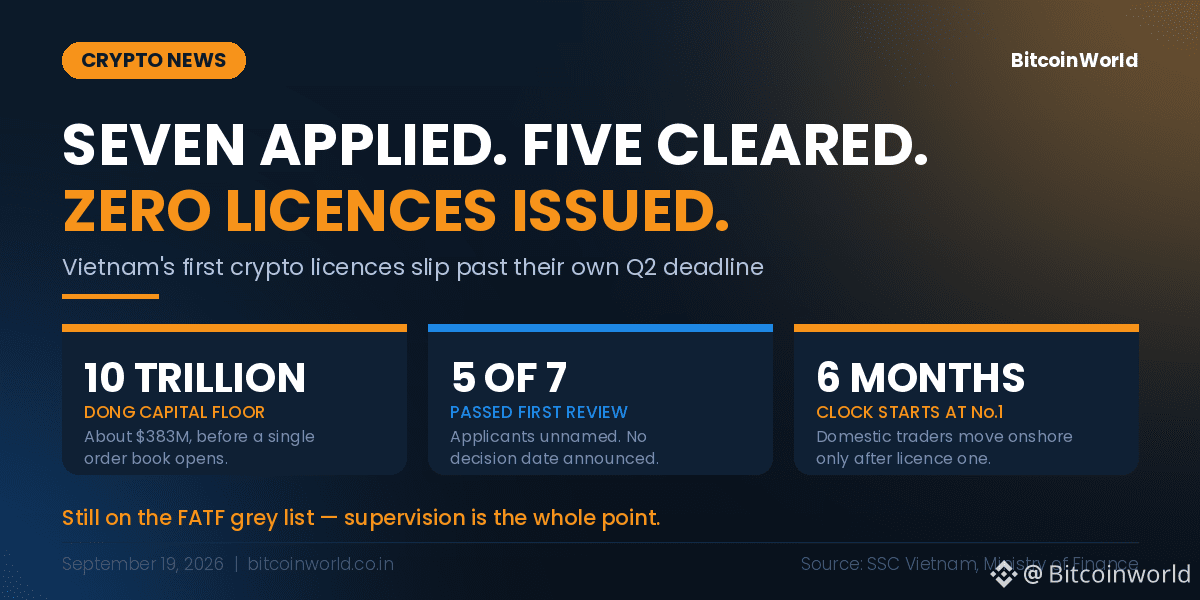
Hanoï affirme que les premières licences crypto arriveront en 2026. Son propre délai pour le T2 est passé et a expiré.
Sept entreprises ont fait acte de candidature. Cinq ont été retenues au premier tour. Personne n’a été approuvé.
Le règlement copie le modèle du GAFI et de la supervision européenne, pour une raison qui n’a rien à voir avec l’apparence.
Le jour où la première licence est signée, une horloge de six mois se met à retirer les traders vietnamiens des plateformes étrangères.
Le vice-ministre des Finances, Nguyen Duc Chi, était à Vienne le 15 septembre. Il était assis en face de Mariana Kühnel, qui dirige l’Autorité autrichienne des marchés financiers. Il a amené le président de la Commission nationale des valeurs mobilières, l’ambassadeur et des responsables de haut niveau de la Bourse du Vietnam et de la société de compensation. C’est une délégation conséquente pour une réunion présentée comme un échange de vues.
Neuf mois, sept candidats, zéro licences : le jeu de l’attente de la cryptographie au Vietnam
BitcoinWorld
Neuf mois, sept candidats, zéro licences : le jeu de l’attente de la cryptographie au Vietnam
À retenir
Hanoï affirme que les premières licences crypto arriveront en 2026. Son propre délai pour le T2 est passé et a expiré.
Sept entreprises ont fait acte de candidature. Cinq ont été retenues au premier tour. Personne n’a été approuvé.
Le règlement copie le modèle du GAFI et de la supervision européenne, pour une raison qui n’a rien à voir avec l’apparence.
Le jour où la première licence est signée, une horloge de six mois se met à retirer les traders vietnamiens des plateformes étrangères.
Le vice-ministre des Finances, Nguyen Duc Chi, était à Vienne le 15 septembre. Il était assis en face de Mariana Kühnel, qui dirige l’Autorité autrichienne des marchés financiers. Il a amené le président de la Commission nationale des valeurs mobilières, l’ambassadeur et des responsables de haut niveau de la Bourse du Vietnam et de la société de compensation. C’est une délégation conséquente pour une réunion présentée comme un échange de vues.
Neuf mois, sept candidats, zéro licences : le jeu de l’attente de la cryptographie au Vietnam
À retenir
Hanoï affirme que les premières licences crypto arriveront en 2026. Son propre délai pour le T2 est passé et a expiré.
Sept entreprises ont fait acte de candidature. Cinq ont été retenues au premier tour. Personne n’a été approuvé.
Le règlement copie le modèle du GAFI et de la supervision européenne, pour une raison qui n’a rien à voir avec l’apparence.
Le jour où la première licence est signée, une horloge de six mois se met à retirer les traders vietnamiens des plateformes étrangères.
Le vice-ministre des Finances, Nguyen Duc Chi, était à Vienne le 15 septembre. Il était assis en face de Mariana Kühnel, qui dirige l’Autorité autrichienne des marchés financiers. Il a amené le président de la Commission nationale des valeurs mobilières, l’ambassadeur et des responsables de haut niveau de la Bourse du Vietnam et de la société de compensation. C’est une délégation conséquente pour une réunion présentée comme un échange de vues.
1
72
·
--
Article
ARTPRICE NEWS : UN LIVRE MONDIAL DEVIENT UN MIROIR POUR L’INTELLIGENCE ARTIFICIELLEBitcoinWorld
ARTPRICE NEWS : UN LIVRE MONDIAL DEVIENT UN MIROIR POUR L’INTELLIGENCE ARTIFICIELLE
OpenAI/Astra, Perplexity, DeepSeek, Google Gemini et xAI/Grok se voient confronter au même travail : une expérience de méta-lecture transforme la critique littéraire en laboratoire comparatif pour l’intelligence artificielle.
PARIS, 18 sept. 2026 /PRNewswire/ — Et si, pour comprendre les intelligences artificielles, on leur donnait exactement le même livre à lire ?
C’est l’expérience désormais menée en parallèle de « Dialogue entre un penseur et une IA ».
ARTPRICE NEWS : UN LIVRE MONDIAL DEVIENT UN MIROIR POUR L’INTELLIGENCE ARTIFICIELLE
BitcoinWorld
ARTPRICE NEWS : UN LIVRE MONDIAL DEVIENT UN MIROIR POUR L’INTELLIGENCE ARTIFICIELLE
OpenAI/Astra, Perplexity, DeepSeek, Google Gemini et xAI/Grok se voient confronter au même travail : une expérience de méta-lecture transforme la critique littéraire en laboratoire comparatif pour l’intelligence artificielle.
PARIS, 18 sept. 2026 /PRNewswire/ — Et si, pour comprendre les intelligences artificielles, on leur donnait exactement le même livre à lire ?
C’est l’expérience désormais menée en parallèle de « Dialogue entre un penseur et une IA ».
ARTPRICE NEWS : UN LIVRE MONDIAL DEVIENT UN MIROIR POUR L’INTELLIGENCE ARTIFICIELLE
OpenAI/Astra, Perplexity, DeepSeek, Google Gemini et xAI/Grok se voient confronter au même travail : une expérience de méta-lecture transforme la critique littéraire en laboratoire comparatif pour l’intelligence artificielle.
PARIS, 18 sept. 2026 /PRNewswire/ — Et si, pour comprendre les intelligences artificielles, on leur donnait exactement le même livre à lire ?
C’est l’expérience désormais menée en parallèle de « Dialogue entre un penseur et une IA ».
162
·
--
Article
Les récompenses du moteur BC Engine de BC.GAME dépassent 8,6 millions de dollars alors que la croissance de l’écosystème s’accélèreBitcoinWorld
Les récompenses du moteur BC Engine de BC.GAME dépassent 8,6 millions de dollars alors que la croissance de l’écosystème s’accélère
Les récompenses cumulées du moteur BC Engine ont augmenté de plus de quatre fois depuis la fin du mois de mai, tandis que le rythme quotidien moyen d’accumulation des récompenses a progressé d’environ 46 % par rapport à la période précédente.
CITY DE BELIZE, Belize, 18 septembre 2026 /PRNewswire/ — Le moteur BC Engine de BC.GAME a franchi une nouvelle étape majeure, les récompenses cumulées gagnées par les détenteurs éligibles de $BC dépassant 8,6 millions de BCD, soit l’équivalent de plus de 8,6 millions de dollars US.
Les récompenses du moteur BC Engine de BC.GAME dépassent 8,6 millions de dollars alors que la croissance de l’écosystème s’accélère
BitcoinWorld
Les récompenses du moteur BC Engine de BC.GAME dépassent 8,6 millions de dollars alors que la croissance de l’écosystème s’accélère
Les récompenses cumulées du moteur BC Engine ont augmenté de plus de quatre fois depuis la fin du mois de mai, tandis que le rythme quotidien moyen d’accumulation des récompenses a progressé d’environ 46 % par rapport à la période précédente.
CITY DE BELIZE, Belize, 18 septembre 2026 /PRNewswire/ — Le moteur BC Engine de BC.GAME a franchi une nouvelle étape majeure, les récompenses cumulées gagnées par les détenteurs éligibles de $BC dépassant 8,6 millions de BCD, soit l’équivalent de plus de 8,6 millions de dollars US.
Les récompenses du moteur BC Engine de BC.GAME dépassent 8,6 millions de dollars alors que la croissance de l’écosystème s’accélère
Les récompenses cumulées du moteur BC Engine ont augmenté de plus de quatre fois depuis la fin du mois de mai, tandis que le rythme quotidien moyen d’accumulation des récompenses a progressé d’environ 46 % par rapport à la période précédente.
CITY DE BELIZE, Belize, 18 septembre 2026 /PRNewswire/ — Le moteur BC Engine de BC.GAME a franchi une nouvelle étape majeure, les récompenses cumulées gagnées par les détenteurs éligibles de $BC dépassant 8,6 millions de BCD, soit l’équivalent de plus de 8,6 millions de dollars US.
2
358
·
--
Article
Une IA a déchiffré un code nazi. Crypto Twitter a paniqué pour rien.BitcoinWorld
Une IA a déchiffré un code nazi. Crypto Twitter a paniqué pour rien.
Points clés
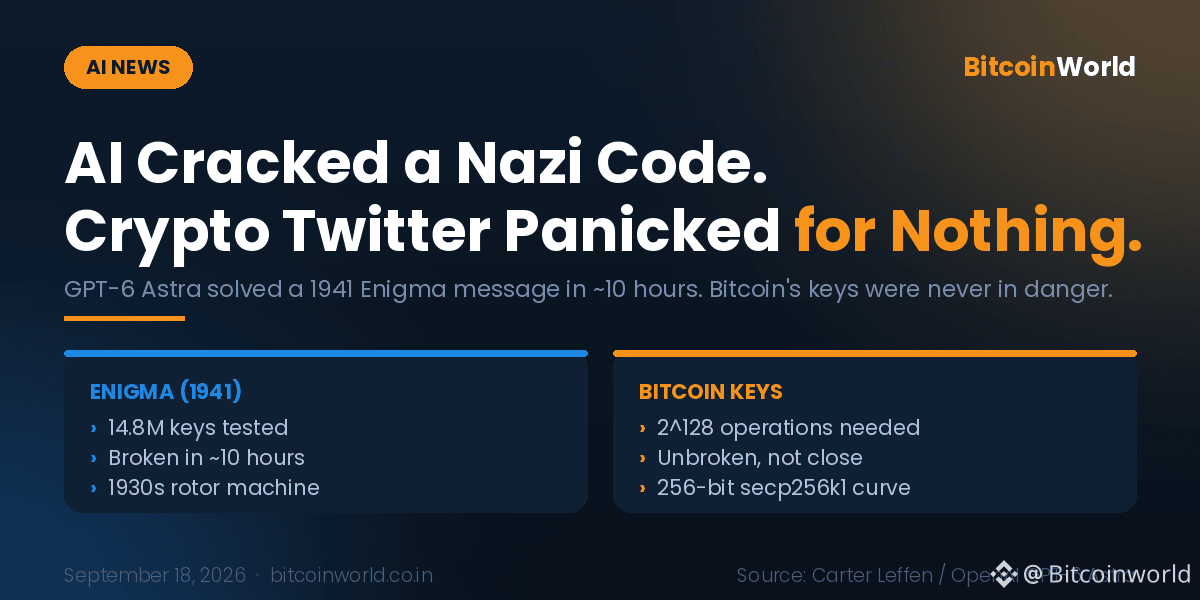
Une IA vient de casser un message de l’Enigma allemand datant de 1941, que personne n’avait résolu depuis 83 ans.
Il a fallu environ dix heures. Un gars qui n’est pas cryptographe a fait tout le travail.
Votre Bitcoin est en sécurité. L’Enigma et le chiffrement du Bitcoin ne relèvent pas du même univers.
La partie effrayante n’est pas le déchiffrement. C’est que l’IA peut désormais effectuer des tâches de recherche complètes toute seule.
Le 10 juillet 1941, un soldat allemand a envoyé un court message radio. Quatre-vingt-deux caractères. Il voulait savoir quelle route prendre, a dit qu’il se trouvait dans une ville appelée Rosenow, et a demandé une réponse rapide.
Une IA a déchiffré un code nazi. Crypto Twitter a paniqué pour rien.
BitcoinWorld
Une IA a déchiffré un code nazi. Crypto Twitter a paniqué pour rien.
Points clés
Une IA vient de casser un message de l’Enigma allemand datant de 1941, que personne n’avait résolu depuis 83 ans.
Il a fallu environ dix heures. Un gars qui n’est pas cryptographe a fait tout le travail.
Votre Bitcoin est en sécurité. L’Enigma et le chiffrement du Bitcoin ne relèvent pas du même univers.
La partie effrayante n’est pas le déchiffrement. C’est que l’IA peut désormais effectuer des tâches de recherche complètes toute seule.
Le 10 juillet 1941, un soldat allemand a envoyé un court message radio. Quatre-vingt-deux caractères. Il voulait savoir quelle route prendre, a dit qu’il se trouvait dans une ville appelée Rosenow, et a demandé une réponse rapide.
Une IA a déchiffré un code nazi. Crypto Twitter a paniqué pour rien.
Points clés
Une IA vient de casser un message de l’Enigma allemand datant de 1941, que personne n’avait résolu depuis 83 ans.
Il a fallu environ dix heures. Un gars qui n’est pas cryptographe a fait tout le travail.
Votre Bitcoin est en sécurité. L’Enigma et le chiffrement du Bitcoin ne relèvent pas du même univers.
La partie effrayante n’est pas le déchiffrement. C’est que l’IA peut désormais effectuer des tâches de recherche complètes toute seule.
Le 10 juillet 1941, un soldat allemand a envoyé un court message radio. Quatre-vingt-deux caractères. Il voulait savoir quelle route prendre, a dit qu’il se trouvait dans une ville appelée Rosenow, et a demandé une réponse rapide.
272
·
--
Vérifié
Article
Un entretien avec Animoca BrandsBitcoinWorld
Un entretien avec Animoca Brands
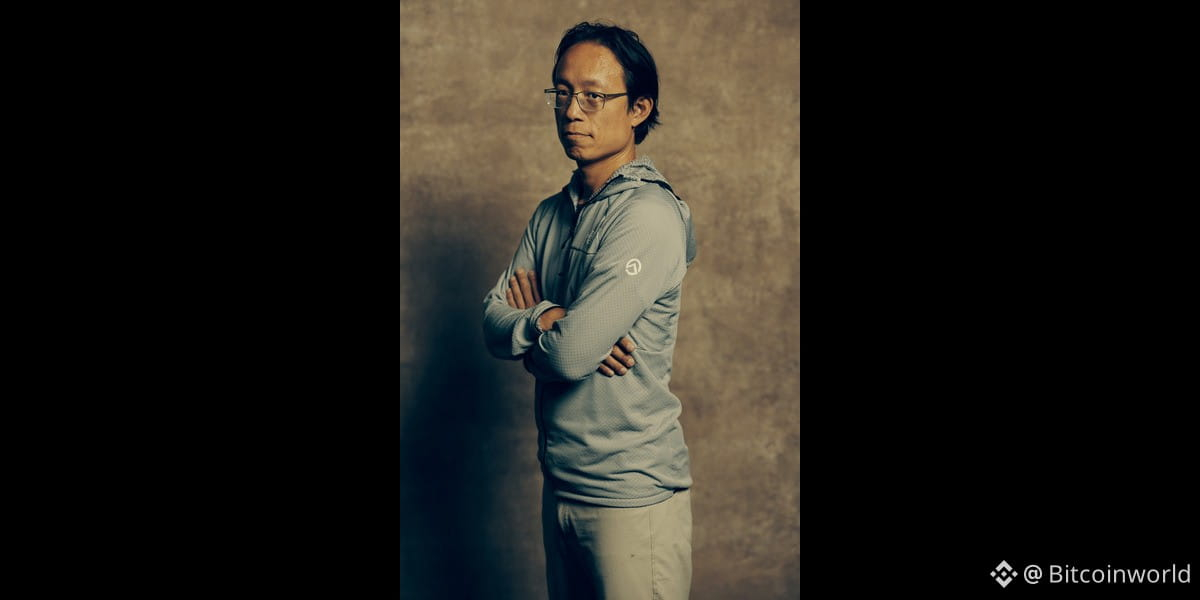
Yat Siu, président exécutif et cofondateur d’Animoca Brands, à propos des droits de propriété numériques, des stablecoins réglementés, des prêts étudiants en chaîne (on-chain) et de la raison pour laquelle le web agentique changera la manière dont les gens ordinaires utilisent la crypto.
Par Bitcoin World | 14 septembre 2026 | Entretien exclusif
Yat Siu, président exécutif et cofondateur, Animoca Brands
Peu d’entreprises ont façonné le paysage Web3 aussi largement qu’Animoca Brands. De The Sandbox et Open Campus à une coentreprise sous licence de stablecoins à Hong Kong, et, plus récemment, à une plateforme d’agents IA appelée Minds, le groupe a fait un pari constant : les gens devraient posséder leurs actifs numériques, leurs identités et leurs données plutôt que de les louer aux plateformes.
Un entretien avec Animoca Brands
BitcoinWorld
Un entretien avec Animoca Brands
Yat Siu, président exécutif et cofondateur d’Animoca Brands, à propos des droits de propriété numériques, des stablecoins réglementés, des prêts étudiants en chaîne (on-chain) et de la raison pour laquelle le web agentique changera la manière dont les gens ordinaires utilisent la crypto.
Par Bitcoin World | 14 septembre 2026 | Entretien exclusif
Yat Siu, président exécutif et cofondateur, Animoca Brands
Peu d’entreprises ont façonné le paysage Web3 aussi largement qu’Animoca Brands. De The Sandbox et Open Campus à une coentreprise sous licence de stablecoins à Hong Kong, et, plus récemment, à une plateforme d’agents IA appelée Minds, le groupe a fait un pari constant : les gens devraient posséder leurs actifs numériques, leurs identités et leurs données plutôt que de les louer aux plateformes.
Un entretien avec Animoca Brands
Yat Siu, président exécutif et cofondateur d’Animoca Brands, à propos des droits de propriété numériques, des stablecoins réglementés, des prêts étudiants en chaîne (on-chain) et de la raison pour laquelle le web agentique changera la manière dont les gens ordinaires utilisent la crypto.
Par Bitcoin World | 14 septembre 2026 | Entretien exclusif
Yat Siu, président exécutif et cofondateur, Animoca Brands
Peu d’entreprises ont façonné le paysage Web3 aussi largement qu’Animoca Brands. De The Sandbox et Open Campus à une coentreprise sous licence de stablecoins à Hong Kong, et, plus récemment, à une plateforme d’agents IA appelée Minds, le groupe a fait un pari constant : les gens devraient posséder leurs actifs numériques, leurs identités et leurs données plutôt que de les louer aux plateformes.
649
·
--

Article
AML RightSource reconnu avec le prix CobraSight pour son expertise en matière de conformité aux actifs numériquesBitcoinWorld
AML RightSource reconnu avec le prix CobraSight pour son expertise en matière de conformité aux actifs numériques
La reconnaissance sectorielle met en avant l’expertise d’AML RightSource pour aider les organisations à naviguer dans l’évolution des réglementations en matière de crypto et d’actifs numériques
HIGHLAND HILLS, Ohio, 17 sept. 2026 /PRNewswire/ — AML RightSource, fournisseur mondial de solutions expertes en matière de services gérés de conformité à la lutte contre la criminalité financière et de solutions de conseil, a été reconnu par CobraSight avec le prix 2026 Crypto & Digital Assets Growth Partner Award dans la catégorie Licensing & Compliance. Cette distinction récompense les entreprises qui font preuve d’une expertise approfondie, d’une spécialisation et d’une expérience solides pour accompagner les organisations opérant au sein de l’écosystème des actifs numériques.
AML RightSource reconnu avec le prix CobraSight pour son expertise en matière de conformité aux actifs numériques
BitcoinWorld
AML RightSource reconnu avec le prix CobraSight pour son expertise en matière de conformité aux actifs numériques
La reconnaissance sectorielle met en avant l’expertise d’AML RightSource pour aider les organisations à naviguer dans l’évolution des réglementations en matière de crypto et d’actifs numériques
HIGHLAND HILLS, Ohio, 17 sept. 2026 /PRNewswire/ — AML RightSource, fournisseur mondial de solutions expertes en matière de services gérés de conformité à la lutte contre la criminalité financière et de solutions de conseil, a été reconnu par CobraSight avec le prix 2026 Crypto & Digital Assets Growth Partner Award dans la catégorie Licensing & Compliance. Cette distinction récompense les entreprises qui font preuve d’une expertise approfondie, d’une spécialisation et d’une expérience solides pour accompagner les organisations opérant au sein de l’écosystème des actifs numériques.
AML RightSource reconnu avec le prix CobraSight pour son expertise en matière de conformité aux actifs numériques
La reconnaissance sectorielle met en avant l’expertise d’AML RightSource pour aider les organisations à naviguer dans l’évolution des réglementations en matière de crypto et d’actifs numériques
HIGHLAND HILLS, Ohio, 17 sept. 2026 /PRNewswire/ — AML RightSource, fournisseur mondial de solutions expertes en matière de services gérés de conformité à la lutte contre la criminalité financière et de solutions de conseil, a été reconnu par CobraSight avec le prix 2026 Crypto & Digital Assets Growth Partner Award dans la catégorie Licensing & Compliance. Cette distinction récompense les entreprises qui font preuve d’une expertise approfondie, d’une spécialisation et d’une expérience solides pour accompagner les organisations opérant au sein de l’écosystème des actifs numériques.
190
·
--

Article
Prosper relie des données de performances onchain vérifiables à des actifs crypto évalués de manière indépendanteBitcoinWorld
Prosper relie des données de performances onchain vérifiables à des actifs crypto évalués de manière indépendante
Les marchés crypto ont toujours prospéré grâce au récit et à la spéculation. Les prix montent souvent en flèche sous l’effet d’un engouement de la communauté ou du sentiment sur les réseaux sociaux, plutôt que sur la base de résultats économiques mesurables. Un nouveau lancement sur le réseau Pharos tente de changer complètement cette dynamique.
Le 17 septembre, Prosper a officiellement dévoilé son cadre Performance Markets. La nouvelle structure introduit un concept que l’entreprise appelle MemeRWA. Il relie directement des stratégies d’investissement onchain vérifiables indépendamment aux mécanismes de marché natifs de la crypto. Plus important encore, il le fait sans tokeniser réellement la propriété des actifs sous-jacents.
Prosper relie des données de performances onchain vérifiables à des actifs crypto évalués de manière indépendante
BitcoinWorld
Prosper relie des données de performances onchain vérifiables à des actifs crypto évalués de manière indépendante
Les marchés crypto ont toujours prospéré grâce au récit et à la spéculation. Les prix montent souvent en flèche sous l’effet d’un engouement de la communauté ou du sentiment sur les réseaux sociaux, plutôt que sur la base de résultats économiques mesurables. Un nouveau lancement sur le réseau Pharos tente de changer complètement cette dynamique.
Le 17 septembre, Prosper a officiellement dévoilé son cadre Performance Markets. La nouvelle structure introduit un concept que l’entreprise appelle MemeRWA. Il relie directement des stratégies d’investissement onchain vérifiables indépendamment aux mécanismes de marché natifs de la crypto. Plus important encore, il le fait sans tokeniser réellement la propriété des actifs sous-jacents.
Prosper relie des données de performances onchain vérifiables à des actifs crypto évalués de manière indépendante
Les marchés crypto ont toujours prospéré grâce au récit et à la spéculation. Les prix montent souvent en flèche sous l’effet d’un engouement de la communauté ou du sentiment sur les réseaux sociaux, plutôt que sur la base de résultats économiques mesurables. Un nouveau lancement sur le réseau Pharos tente de changer complètement cette dynamique.
Le 17 septembre, Prosper a officiellement dévoilé son cadre Performance Markets. La nouvelle structure introduit un concept que l’entreprise appelle MemeRWA. Il relie directement des stratégies d’investissement onchain vérifiables indépendamment aux mécanismes de marché natifs de la crypto. Plus important encore, il le fait sans tokeniser réellement la propriété des actifs sous-jacents.
172
·
--
Article
Le grand “code” de règles de la crypto vient d’être rejeté – voici ce qui s’est réellement passéBitcoinWorld
Le grand “code” de règles de la crypto vient d’être rejeté – voici ce qui s’est réellement passé
À retenir en bref
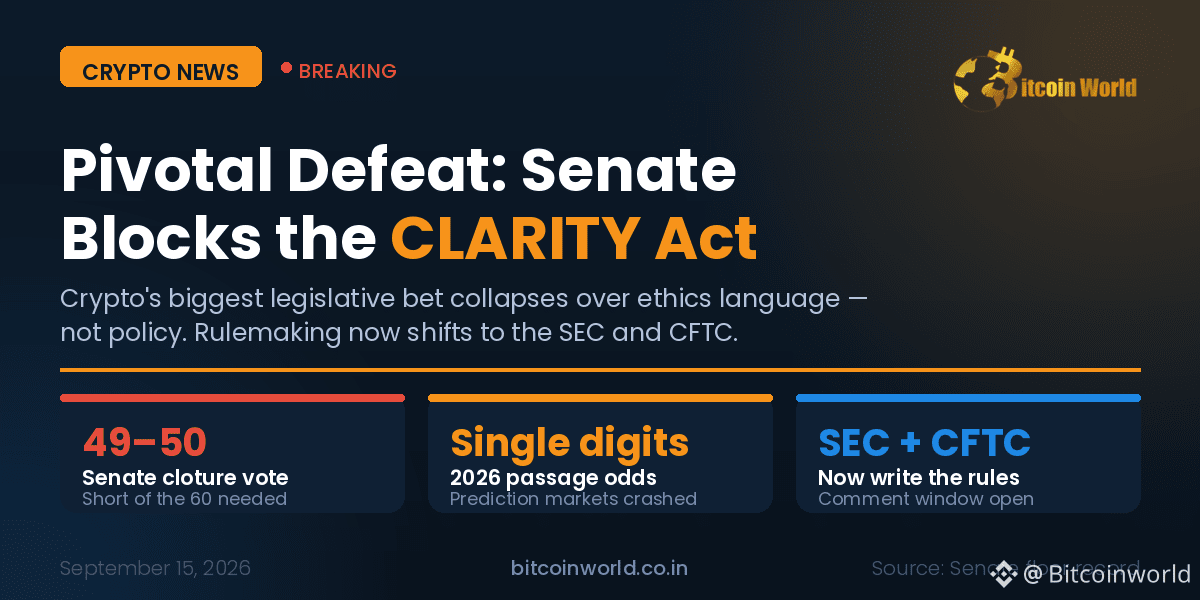
Le 15 septembre 2026, le Sénat a refusé de faire avancer la loi CLARITY. Le vote a été de 49 voix contre 50 – loin, très loin des 60 nécessaires.
Elle n’a pas été rejetée à cause de la question de la crypto. Elle a été perdue à la suite d’un désaccord concernant Trump et le fait que sa famille gagne de l’argent grâce à la crypto.
Pour cette année, le projet de loi est pratiquement terminé. Les sites de paris n’y donnent désormais qu’une chance à un chiffre.
Avec des règles bloquées au Congrès, la SEC et la CFTC vont commencer à écrire les leurs.
Le grand “code” de règles de la crypto vient d’être rejeté – voici ce qui s’est réellement passé
BitcoinWorld
Le grand “code” de règles de la crypto vient d’être rejeté – voici ce qui s’est réellement passé
À retenir en bref
Le 15 septembre 2026, le Sénat a refusé de faire avancer la loi CLARITY. Le vote a été de 49 voix contre 50 – loin, très loin des 60 nécessaires.
Elle n’a pas été rejetée à cause de la question de la crypto. Elle a été perdue à la suite d’un désaccord concernant Trump et le fait que sa famille gagne de l’argent grâce à la crypto.
Pour cette année, le projet de loi est pratiquement terminé. Les sites de paris n’y donnent désormais qu’une chance à un chiffre.
Avec des règles bloquées au Congrès, la SEC et la CFTC vont commencer à écrire les leurs.
Le grand “code” de règles de la crypto vient d’être rejeté – voici ce qui s’est réellement passé
À retenir en bref
Le 15 septembre 2026, le Sénat a refusé de faire avancer la loi CLARITY. Le vote a été de 49 voix contre 50 – loin, très loin des 60 nécessaires.
Elle n’a pas été rejetée à cause de la question de la crypto. Elle a été perdue à la suite d’un désaccord concernant Trump et le fait que sa famille gagne de l’argent grâce à la crypto.
Pour cette année, le projet de loi est pratiquement terminé. Les sites de paris n’y donnent désormais qu’une chance à un chiffre.
Avec des règles bloquées au Congrès, la SEC et la CFTC vont commencer à écrire les leurs.
1
334
·
--

Article
1 semaine avant le SPiCE Central Asia 2026 : développements clés du marché et dirigeants du gaming à l’honneurBitcoinWorld
1 semaine avant le SPiCE Central Asia 2026 : développements clés du marché et dirigeants du gaming à l’honneur
La semaine prochaine, la 3e édition annuelle du SPiCE Central Asia 2026 revient à l’hôtel The Biltmore Hotel Tbilisi, en Géorgie, les 24 et 25 septembre, réunissant des opérateurs de premier plan, des fournisseurs de technologie et des experts du secteur du jeu issus de l’ensemble de l’Asie centrale et du Caucase. Des spécialistes en IA, marketing et conformité, aux côtés de représentants seniors du secteur, partageront des enseignements concrets tirés de leur expérience dans la région.
Avec la réglementation, la conformité, les paiements, la localisation et l’entrée sur le marché parmi les principales préoccupations des entreprises, les échanges sur ces deux jours porteront sur les réalités pratiques de l’exploitation dans des marchés divers. Les très attendus SPiCE Central Asia Awards 2026 auront également lieu le soir du 24 septembre, afin de récompenser des professionnels et des organisations d’exception dans l’industrie du jeu de la région.
1 semaine avant le SPiCE Central Asia 2026 : développements clés du marché et dirigeants du gaming à l’honneur
BitcoinWorld
1 semaine avant le SPiCE Central Asia 2026 : développements clés du marché et dirigeants du gaming à l’honneur
La semaine prochaine, la 3e édition annuelle du SPiCE Central Asia 2026 revient à l’hôtel The Biltmore Hotel Tbilisi, en Géorgie, les 24 et 25 septembre, réunissant des opérateurs de premier plan, des fournisseurs de technologie et des experts du secteur du jeu issus de l’ensemble de l’Asie centrale et du Caucase. Des spécialistes en IA, marketing et conformité, aux côtés de représentants seniors du secteur, partageront des enseignements concrets tirés de leur expérience dans la région.
Avec la réglementation, la conformité, les paiements, la localisation et l’entrée sur le marché parmi les principales préoccupations des entreprises, les échanges sur ces deux jours porteront sur les réalités pratiques de l’exploitation dans des marchés divers. Les très attendus SPiCE Central Asia Awards 2026 auront également lieu le soir du 24 septembre, afin de récompenser des professionnels et des organisations d’exception dans l’industrie du jeu de la région.
1 semaine avant le SPiCE Central Asia 2026 : développements clés du marché et dirigeants du gaming à l’honneur
La semaine prochaine, la 3e édition annuelle du SPiCE Central Asia 2026 revient à l’hôtel The Biltmore Hotel Tbilisi, en Géorgie, les 24 et 25 septembre, réunissant des opérateurs de premier plan, des fournisseurs de technologie et des experts du secteur du jeu issus de l’ensemble de l’Asie centrale et du Caucase. Des spécialistes en IA, marketing et conformité, aux côtés de représentants seniors du secteur, partageront des enseignements concrets tirés de leur expérience dans la région.
Avec la réglementation, la conformité, les paiements, la localisation et l’entrée sur le marché parmi les principales préoccupations des entreprises, les échanges sur ces deux jours porteront sur les réalités pratiques de l’exploitation dans des marchés divers. Les très attendus SPiCE Central Asia Awards 2026 auront également lieu le soir du 24 septembre, afin de récompenser des professionnels et des organisations d’exception dans l’industrie du jeu de la région.
152
·
--

Article
BiG Africa Summit 2027 revient au Botswana pour sa 13e éditionBitcoinWorld
BiG Africa Summit 2027 revient au Botswana pour sa 13e édition
Le sommet BiG Africa 2027 reviendra à Gaborone, au Botswana, du 1er au 4 février 2027 pour sa 13e édition annuelle, accueillant des régulateurs, des opérateurs et des personnalités de haut niveau du secteur des paris et du iGaming à travers toute l’Afrique, à l’hôtel casino et centre de conventions The Grand Palm Resort. BiG Africa Summit 2027 revient au Botswana pour sa 13e édition
Depuis son lancement en 2014, le BiG Africa Summit s’est développé pour devenir un lieu de rencontre établi pour l’industrie du jeu du continent. Cet événement de quatre jours met en relation les principales parties prenantes pour des échanges ciblés, une meilleure compréhension du marché et la mise en œuvre d’actions supplémentaires.
BiG Africa Summit 2027 revient au Botswana pour sa 13e édition
BitcoinWorld
BiG Africa Summit 2027 revient au Botswana pour sa 13e édition
Le sommet BiG Africa 2027 reviendra à Gaborone, au Botswana, du 1er au 4 février 2027 pour sa 13e édition annuelle, accueillant des régulateurs, des opérateurs et des personnalités de haut niveau du secteur des paris et du iGaming à travers toute l’Afrique, à l’hôtel casino et centre de conventions The Grand Palm Resort. BiG Africa Summit 2027 revient au Botswana pour sa 13e édition
Depuis son lancement en 2014, le BiG Africa Summit s’est développé pour devenir un lieu de rencontre établi pour l’industrie du jeu du continent. Cet événement de quatre jours met en relation les principales parties prenantes pour des échanges ciblés, une meilleure compréhension du marché et la mise en œuvre d’actions supplémentaires.
BiG Africa Summit 2027 revient au Botswana pour sa 13e édition
Le sommet BiG Africa 2027 reviendra à Gaborone, au Botswana, du 1er au 4 février 2027 pour sa 13e édition annuelle, accueillant des régulateurs, des opérateurs et des personnalités de haut niveau du secteur des paris et du iGaming à travers toute l’Afrique, à l’hôtel casino et centre de conventions The Grand Palm Resort. BiG Africa Summit 2027 revient au Botswana pour sa 13e édition
Depuis son lancement en 2014, le BiG Africa Summit s’est développé pour devenir un lieu de rencontre établi pour l’industrie du jeu du continent. Cet événement de quatre jours met en relation les principales parties prenantes pour des échanges ciblés, une meilleure compréhension du marché et la mise en œuvre d’actions supplémentaires.
250
·
--
Article
Bybit reconnu par l’Agence nationale de police coréenne pour sa contribution à la réponse à la cybercriminalité et à la coopération en matière de séc...BitcoinWorld
Bybit reconnu par l’Agence nationale de police coréenne pour sa contribution à la réponse à la cybercriminalité et à la coopération en matière de sécurité
La reconnaissance à l’ISCR 2026 met en évidence la collaboration continue de Bybit avec les services répressifs et les régulateurs afin de retracer des fonds illicites, de partager des informations et de renforcer la réponse mondiale à la cybercriminalité liée aux cryptomonnaies
DUBAÏ, Émirats arabes unis, 16 sept. 2026 /PRNewswire/ — Bybit, la deuxième plus grande bourse de cryptomonnaies au monde en volume de transactions, a été reconnue par l’Agence nationale de police coréenne (KNPA) pour sa contribution aux enquêtes sur la cybercriminalité et à la coopération internationale. Lors du 27e Symposium international sur la réponse à la cybercriminalité (ISCR 2026), organisé à Séoul du 27 au 28 août, la KNPA a remis à Bybit un certificat de reconnaissance en raison de sa contribution au renforcement de la coopération entre les deux organisations, en particulier dans le cadre de l’enquête sur la cybercriminalité. Le certificat a été remis sur scène par Yoo Jae-seong, commissaire général par intérim de l’Agence nationale de police coréenne, et reçu au nom de Bybit par Coco Heng, responsable de l’application de la loi chez Bybit.
Bybit reconnu par l’Agence nationale de police coréenne pour sa contribution à la réponse à la cybercriminalité et à la coopération en matière de séc...
BitcoinWorld
Bybit reconnu par l’Agence nationale de police coréenne pour sa contribution à la réponse à la cybercriminalité et à la coopération en matière de sécurité
La reconnaissance à l’ISCR 2026 met en évidence la collaboration continue de Bybit avec les services répressifs et les régulateurs afin de retracer des fonds illicites, de partager des informations et de renforcer la réponse mondiale à la cybercriminalité liée aux cryptomonnaies
DUBAÏ, Émirats arabes unis, 16 sept. 2026 /PRNewswire/ — Bybit, la deuxième plus grande bourse de cryptomonnaies au monde en volume de transactions, a été reconnue par l’Agence nationale de police coréenne (KNPA) pour sa contribution aux enquêtes sur la cybercriminalité et à la coopération internationale. Lors du 27e Symposium international sur la réponse à la cybercriminalité (ISCR 2026), organisé à Séoul du 27 au 28 août, la KNPA a remis à Bybit un certificat de reconnaissance en raison de sa contribution au renforcement de la coopération entre les deux organisations, en particulier dans le cadre de l’enquête sur la cybercriminalité. Le certificat a été remis sur scène par Yoo Jae-seong, commissaire général par intérim de l’Agence nationale de police coréenne, et reçu au nom de Bybit par Coco Heng, responsable de l’application de la loi chez Bybit.
Bybit reconnu par l’Agence nationale de police coréenne pour sa contribution à la réponse à la cybercriminalité et à la coopération en matière de sécurité
La reconnaissance à l’ISCR 2026 met en évidence la collaboration continue de Bybit avec les services répressifs et les régulateurs afin de retracer des fonds illicites, de partager des informations et de renforcer la réponse mondiale à la cybercriminalité liée aux cryptomonnaies
DUBAÏ, Émirats arabes unis, 16 sept. 2026 /PRNewswire/ — Bybit, la deuxième plus grande bourse de cryptomonnaies au monde en volume de transactions, a été reconnue par l’Agence nationale de police coréenne (KNPA) pour sa contribution aux enquêtes sur la cybercriminalité et à la coopération internationale. Lors du 27e Symposium international sur la réponse à la cybercriminalité (ISCR 2026), organisé à Séoul du 27 au 28 août, la KNPA a remis à Bybit un certificat de reconnaissance en raison de sa contribution au renforcement de la coopération entre les deux organisations, en particulier dans le cadre de l’enquête sur la cybercriminalité. Le certificat a été remis sur scène par Yoo Jae-seong, commissaire général par intérim de l’Agence nationale de police coréenne, et reçu au nom de Bybit par Coco Heng, responsable de l’application de la loi chez Bybit.
256
·
--
Article
Binance veut devenir votre banque privée dès maintenant – et elle s’en prend aux millionnairesBitcoinWorld
Binance veut devenir votre banque privée dès maintenant – et elle s’en prend aux millionnaires
À retenir
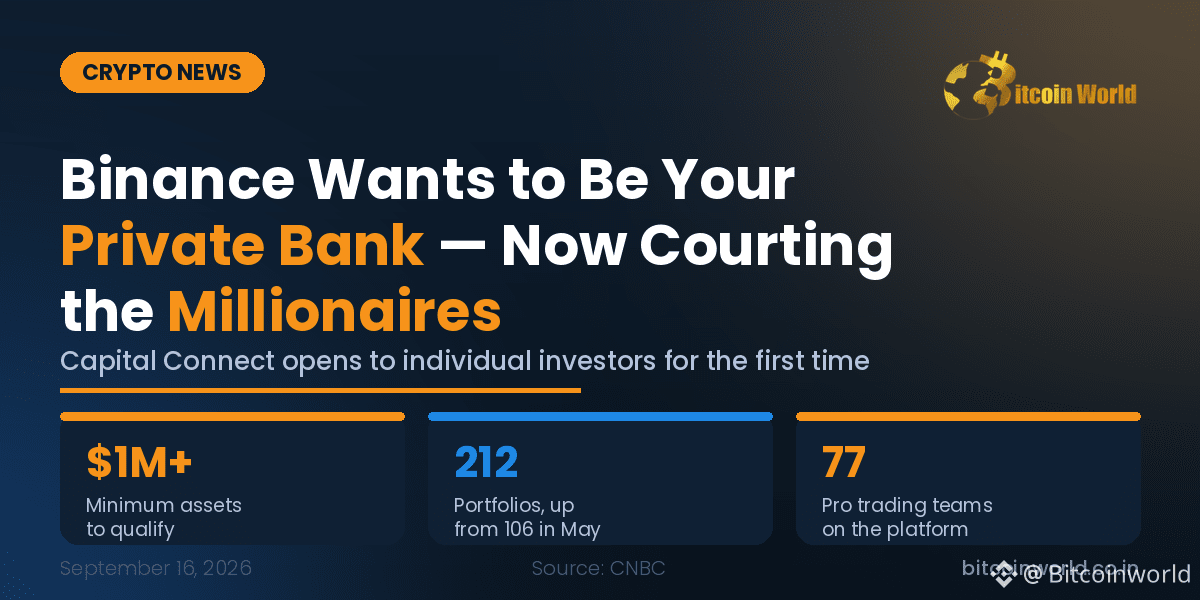
Binance ouvre pour la première fois Capital Connect aux investisseurs particuliers – une plateforme qui était auparavant réservée aux institutions.
Pour y accéder, il faut au moins 1 million de dollars d’actifs (ou le statut VIP 3 sur la plateforme d’échange).
Une fois à l’intérieur, vous pouvez acheter via des stratégies de trading professionnelles et placer votre argent dans celles que vous aimez, un peu comme choisir un gestionnaire de fonds.
Le vrai titre : la plus grande plateforme d’échange de crypto s’en prend désormais aux clients fortunés que les banques privées ont toujours considérés comme les leurs.
Binance veut devenir votre banque privée dès maintenant – et elle s’en prend aux millionnaires
BitcoinWorld
Binance veut devenir votre banque privée dès maintenant – et elle s’en prend aux millionnaires
À retenir
Binance ouvre pour la première fois Capital Connect aux investisseurs particuliers – une plateforme qui était auparavant réservée aux institutions.
Pour y accéder, il faut au moins 1 million de dollars d’actifs (ou le statut VIP 3 sur la plateforme d’échange).
Une fois à l’intérieur, vous pouvez acheter via des stratégies de trading professionnelles et placer votre argent dans celles que vous aimez, un peu comme choisir un gestionnaire de fonds.
Le vrai titre : la plus grande plateforme d’échange de crypto s’en prend désormais aux clients fortunés que les banques privées ont toujours considérés comme les leurs.
Binance veut devenir votre banque privée dès maintenant – et elle s’en prend aux millionnaires
À retenir
Binance ouvre pour la première fois Capital Connect aux investisseurs particuliers – une plateforme qui était auparavant réservée aux institutions.
Pour y accéder, il faut au moins 1 million de dollars d’actifs (ou le statut VIP 3 sur la plateforme d’échange).
Une fois à l’intérieur, vous pouvez acheter via des stratégies de trading professionnelles et placer votre argent dans celles que vous aimez, un peu comme choisir un gestionnaire de fonds.
Le vrai titre : la plus grande plateforme d’échange de crypto s’en prend désormais aux clients fortunés que les banques privées ont toujours considérés comme les leurs.
194
·
--
Article
KuCoin se lance sur Arc lors du lancement du réseau principal (mainnet), élargissant l’accès à la finance onchainBitcoinWorld
KuCoin se lance sur Arc lors du lancement du réseau principal (mainnet), élargissant l’accès à la finance onchain
PROVIDENCIALES, Îles Turques-et-Caïques, 16 sept. 2026 /PRNewswire/ — KuCoin, une plateforme mondiale de crypto-monnaie de premier plan fondée sur la confiance, a annoncé aujourd’hui qu’elle est en ligne sur Arc en tant que partenaire de lancement de son réseau principal (mainnet), permettant aux utilisateurs éligibles de déplacer directement les USDC entre KuCoin et Arc dès le premier jour.
À mesure que l’activité financière réelle s’oriente vers la chaîne (onchain), les bourses sont de plus en plus importantes pour relier des marchés établis à des réseaux financiers émergents. En soutenant Arc au lancement, KuCoin élargit les options réseau disponibles pour les USDC et offre un point d’accès pratique à un écosystème construit autour des paiements, de la gestion de trésorerie, des actifs tokenisés et de la finance programmable.
KuCoin se lance sur Arc lors du lancement du réseau principal (mainnet), élargissant l’accès à la finance onchain
BitcoinWorld
KuCoin se lance sur Arc lors du lancement du réseau principal (mainnet), élargissant l’accès à la finance onchain
PROVIDENCIALES, Îles Turques-et-Caïques, 16 sept. 2026 /PRNewswire/ — KuCoin, une plateforme mondiale de crypto-monnaie de premier plan fondée sur la confiance, a annoncé aujourd’hui qu’elle est en ligne sur Arc en tant que partenaire de lancement de son réseau principal (mainnet), permettant aux utilisateurs éligibles de déplacer directement les USDC entre KuCoin et Arc dès le premier jour.
À mesure que l’activité financière réelle s’oriente vers la chaîne (onchain), les bourses sont de plus en plus importantes pour relier des marchés établis à des réseaux financiers émergents. En soutenant Arc au lancement, KuCoin élargit les options réseau disponibles pour les USDC et offre un point d’accès pratique à un écosystème construit autour des paiements, de la gestion de trésorerie, des actifs tokenisés et de la finance programmable.
KuCoin se lance sur Arc lors du lancement du réseau principal (mainnet), élargissant l’accès à la finance onchain
PROVIDENCIALES, Îles Turques-et-Caïques, 16 sept. 2026 /PRNewswire/ — KuCoin, une plateforme mondiale de crypto-monnaie de premier plan fondée sur la confiance, a annoncé aujourd’hui qu’elle est en ligne sur Arc en tant que partenaire de lancement de son réseau principal (mainnet), permettant aux utilisateurs éligibles de déplacer directement les USDC entre KuCoin et Arc dès le premier jour.
À mesure que l’activité financière réelle s’oriente vers la chaîne (onchain), les bourses sont de plus en plus importantes pour relier des marchés établis à des réseaux financiers émergents. En soutenant Arc au lancement, KuCoin élargit les options réseau disponibles pour les USDC et offre un point d’accès pratique à un écosystème construit autour des paiements, de la gestion de trésorerie, des actifs tokenisés et de la finance programmable.
2
1
175
·
--
Article
CoinDCX s’associe à Tether Gold pour apporter l’or tokenisé XAUT aux investisseurs indiens ; Lance un SIP ...BitcoinWorld
CoinDCX s’associe à Tether Gold pour apporter l’or tokenisé XAUT aux investisseurs indiens ; Lance un SIP à partir de 100 INR
Bangalore, Karnataka, Inde
CoinDCX, l’échange de cryptomonnaies le plus important d’Inde, a annoncé aujourd’hui une collaboration stratégique avec Tether Gold (XAUT), le plus grand produit d’or tokenisé au monde par capitalisation boursière, afin de rendre l’or tokenisé plus accessible aux investisseurs indiens. Dans le cadre de la collaboration, XAUT est désormais disponible pour la négociation sur CoinDCX, avec le lancement de XAUT SIP, permettant aux utilisateurs de commencer à investir dans de l’or tokenisé avec aussi peu que 100 INR.
CoinDCX s’associe à Tether Gold pour apporter l’or tokenisé XAUT aux investisseurs indiens ; Lance un SIP ...
BitcoinWorld
CoinDCX s’associe à Tether Gold pour apporter l’or tokenisé XAUT aux investisseurs indiens ; Lance un SIP à partir de 100 INR
Bangalore, Karnataka, Inde
CoinDCX, l’échange de cryptomonnaies le plus important d’Inde, a annoncé aujourd’hui une collaboration stratégique avec Tether Gold (XAUT), le plus grand produit d’or tokenisé au monde par capitalisation boursière, afin de rendre l’or tokenisé plus accessible aux investisseurs indiens. Dans le cadre de la collaboration, XAUT est désormais disponible pour la négociation sur CoinDCX, avec le lancement de XAUT SIP, permettant aux utilisateurs de commencer à investir dans de l’or tokenisé avec aussi peu que 100 INR.
CoinDCX s’associe à Tether Gold pour apporter l’or tokenisé XAUT aux investisseurs indiens ; Lance un SIP à partir de 100 INR
Bangalore, Karnataka, Inde
CoinDCX, l’échange de cryptomonnaies le plus important d’Inde, a annoncé aujourd’hui une collaboration stratégique avec Tether Gold (XAUT), le plus grand produit d’or tokenisé au monde par capitalisation boursière, afin de rendre l’or tokenisé plus accessible aux investisseurs indiens. Dans le cadre de la collaboration, XAUT est désormais disponible pour la négociation sur CoinDCX, avec le lancement de XAUT SIP, permettant aux utilisateurs de commencer à investir dans de l’or tokenisé avec aussi peu que 100 INR.
209
·
--
Article
ViaBTC s’associe à Mempool pour étendre l’accès aux services d’accélération des transactions BTCBitcoinWorld
ViaBTC s’associe à Mempool pour étendre l’accès aux services d’accélération des transactions BTC
HONG KONG, 16 septembre 2026 /PRNewswire/ — ViaBTC, l’un des principaux pools miniers mondiaux multi-cryptomonnaies, a annoncé aujourd’hui un partenariat avec Mempool afin d’étendre l’accès aux services d’accélération des transactions Bitcoin. Dans le cadre de ce partenariat, ViaBTC utilisera l’infrastructure de son pool minier Bitcoin ainsi que son expertise en matière de construction de blocs et de traitement des transactions pour accélérer les transactions éligibles, aidant ainsi davantage d’utilisateurs à faire confirmer plus rapidement leurs transactions Bitcoin.
ViaBTC s’associe à Mempool pour étendre l’accès aux services d’accélération des transactions BTC
BitcoinWorld
ViaBTC s’associe à Mempool pour étendre l’accès aux services d’accélération des transactions BTC
HONG KONG, 16 septembre 2026 /PRNewswire/ — ViaBTC, l’un des principaux pools miniers mondiaux multi-cryptomonnaies, a annoncé aujourd’hui un partenariat avec Mempool afin d’étendre l’accès aux services d’accélération des transactions Bitcoin. Dans le cadre de ce partenariat, ViaBTC utilisera l’infrastructure de son pool minier Bitcoin ainsi que son expertise en matière de construction de blocs et de traitement des transactions pour accélérer les transactions éligibles, aidant ainsi davantage d’utilisateurs à faire confirmer plus rapidement leurs transactions Bitcoin.
ViaBTC s’associe à Mempool pour étendre l’accès aux services d’accélération des transactions BTC
HONG KONG, 16 septembre 2026 /PRNewswire/ — ViaBTC, l’un des principaux pools miniers mondiaux multi-cryptomonnaies, a annoncé aujourd’hui un partenariat avec Mempool afin d’étendre l’accès aux services d’accélération des transactions Bitcoin. Dans le cadre de ce partenariat, ViaBTC utilisera l’infrastructure de son pool minier Bitcoin ainsi que son expertise en matière de construction de blocs et de traitement des transactions pour accélérer les transactions éligibles, aidant ainsi davantage d’utilisateurs à faire confirmer plus rapidement leurs transactions Bitcoin.
177
·
--
Article
ARTPRICE NEWS : LA 18E BIENNALE DE LA CRÉATION CONTEMPORAINE DE LYON EST DESORMAIS OUVERTEBitcoinWorld
ARTPRICE NEWS : LA 18E BIENNALE DE LA CRÉATION CONTEMPORAINE DE LYON EST DESORMAIS OUVERTE
Passer d’un rêve à l’autre — Passer d’un rêve à l’autre
19 septembre – 13 décembre 202611 lieux • 120 artistes • près de 400 œuvres
PARIS, 15 septembre 2026 /PRNewswire/ — À partir du samedi 19 septembre, la 18e Biennale de la création contemporaine de Lyon ouvre ses portes au public. Jusqu’au 13 décembre 2026, Passer d’un rêve à l’autre invite chacun à vivre une Biennale généreuse se déployant à travers 11 lieux à Lyon et dans son agglomération, réunissant 120 artistes et près de 400 œuvres.
ARTPRICE NEWS : LA 18E BIENNALE DE LA CRÉATION CONTEMPORAINE DE LYON EST DESORMAIS OUVERTE
BitcoinWorld
ARTPRICE NEWS : LA 18E BIENNALE DE LA CRÉATION CONTEMPORAINE DE LYON EST DESORMAIS OUVERTE
Passer d’un rêve à l’autre — Passer d’un rêve à l’autre
19 septembre – 13 décembre 202611 lieux • 120 artistes • près de 400 œuvres
PARIS, 15 septembre 2026 /PRNewswire/ — À partir du samedi 19 septembre, la 18e Biennale de la création contemporaine de Lyon ouvre ses portes au public. Jusqu’au 13 décembre 2026, Passer d’un rêve à l’autre invite chacun à vivre une Biennale généreuse se déployant à travers 11 lieux à Lyon et dans son agglomération, réunissant 120 artistes et près de 400 œuvres.
ARTPRICE NEWS : LA 18E BIENNALE DE LA CRÉATION CONTEMPORAINE DE LYON EST DESORMAIS OUVERTE
Passer d’un rêve à l’autre — Passer d’un rêve à l’autre
19 septembre – 13 décembre 202611 lieux • 120 artistes • près de 400 œuvres
PARIS, 15 septembre 2026 /PRNewswire/ — À partir du samedi 19 septembre, la 18e Biennale de la création contemporaine de Lyon ouvre ses portes au public. Jusqu’au 13 décembre 2026, Passer d’un rêve à l’autre invite chacun à vivre une Biennale généreuse se déployant à travers 11 lieux à Lyon et dans son agglomération, réunissant 120 artistes et près de 400 œuvres.
205
·
--
Article
Le portefeuille Gnosis Safe perd 7,7 millions de dollars et les pirates n’ont jamais eu besoin de le contournerBitcoinWorld
Le portefeuille Gnosis Safe perd 7,7 millions de dollars et les pirates n’ont jamais eu besoin de le contourner
À retenir
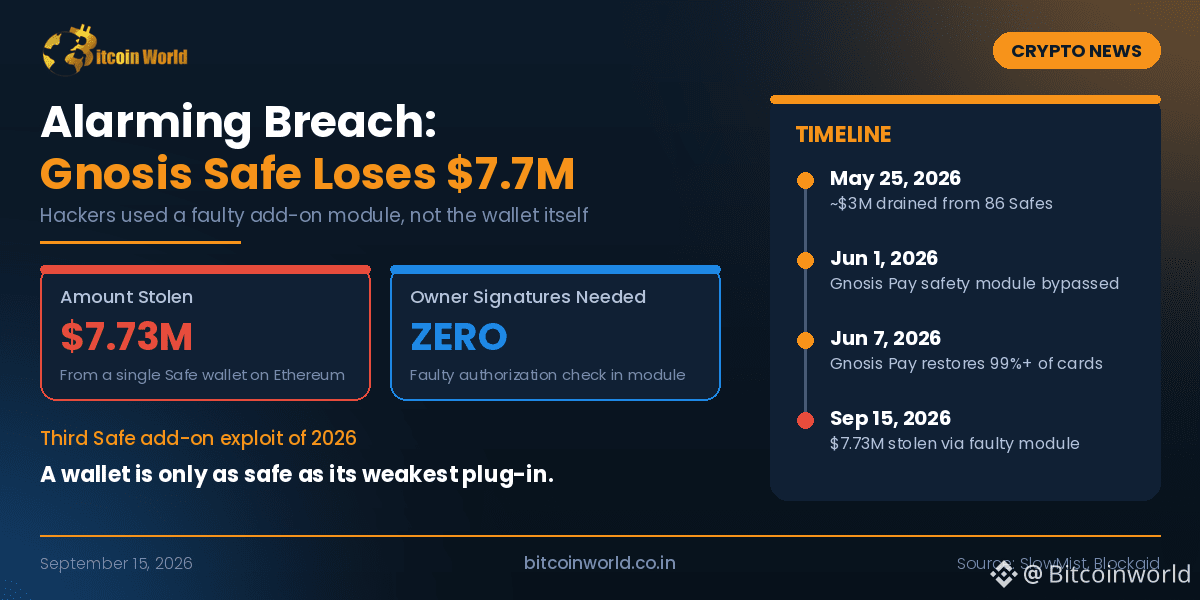
Des pirates ont dérobé environ 7,73 millions de dollars sur un portefeuille Gnosis Safe le 15 septembre 2026.
Ils n’ont pas cassé le portefeuille lui-même. Ils sont entrés via un outil complémentaire qui y était connecté.
L’argent volé a été transféré via un pool de trading que les pirates avaient mis en place, ce qui a rendu la traçabilité plus difficile.
C’est la troisième fois cette année que des modules d’extension de Safe Wallet ont été utilisés pour voler des fonds.
D’abord, qu’est-ce qu’un Gnosis Safe ?
Considérez un Gnosis Safe comme un coffre bancaire qui nécessite plusieurs clés pour être ouvert. Les entreprises, les fonds crypto et les investisseurs fortunés l’utilisent, car une seule personne ne peut pas déplacer l’argent à elle seule. C’est pourquoi il a la réputation d’être l’un des endroits les plus sûrs pour conserver des cryptomonnaies.
Le portefeuille Gnosis Safe perd 7,7 millions de dollars et les pirates n’ont jamais eu besoin de le contourner
BitcoinWorld
Le portefeuille Gnosis Safe perd 7,7 millions de dollars et les pirates n’ont jamais eu besoin de le contourner
À retenir
Des pirates ont dérobé environ 7,73 millions de dollars sur un portefeuille Gnosis Safe le 15 septembre 2026.
Ils n’ont pas cassé le portefeuille lui-même. Ils sont entrés via un outil complémentaire qui y était connecté.
L’argent volé a été transféré via un pool de trading que les pirates avaient mis en place, ce qui a rendu la traçabilité plus difficile.
C’est la troisième fois cette année que des modules d’extension de Safe Wallet ont été utilisés pour voler des fonds.
D’abord, qu’est-ce qu’un Gnosis Safe ?
Considérez un Gnosis Safe comme un coffre bancaire qui nécessite plusieurs clés pour être ouvert. Les entreprises, les fonds crypto et les investisseurs fortunés l’utilisent, car une seule personne ne peut pas déplacer l’argent à elle seule. C’est pourquoi il a la réputation d’être l’un des endroits les plus sûrs pour conserver des cryptomonnaies.
Le portefeuille Gnosis Safe perd 7,7 millions de dollars et les pirates n’ont jamais eu besoin de le contourner
À retenir
Des pirates ont dérobé environ 7,73 millions de dollars sur un portefeuille Gnosis Safe le 15 septembre 2026.
Ils n’ont pas cassé le portefeuille lui-même. Ils sont entrés via un outil complémentaire qui y était connecté.
L’argent volé a été transféré via un pool de trading que les pirates avaient mis en place, ce qui a rendu la traçabilité plus difficile.
C’est la troisième fois cette année que des modules d’extension de Safe Wallet ont été utilisés pour voler des fonds.
D’abord, qu’est-ce qu’un Gnosis Safe ?
Considérez un Gnosis Safe comme un coffre bancaire qui nécessite plusieurs clés pour être ouvert. Les entreprises, les fonds crypto et les investisseurs fortunés l’utilisent, car une seule personne ne peut pas déplacer l’argent à elle seule. C’est pourquoi il a la réputation d’être l’un des endroits les plus sûrs pour conserver des cryptomonnaies.
201
·
--
Article
Le projet de loi sur la taxe crypto de Washington vise le problème de la commission d’essence à 2 $, et repousse les combats les plus difficilesBitcoinWorld
Le projet de loi sur la taxe crypto de Washington vise le problème de la commission d’essence à 2 $, et repousse les combats les plus difficiles
Points clés
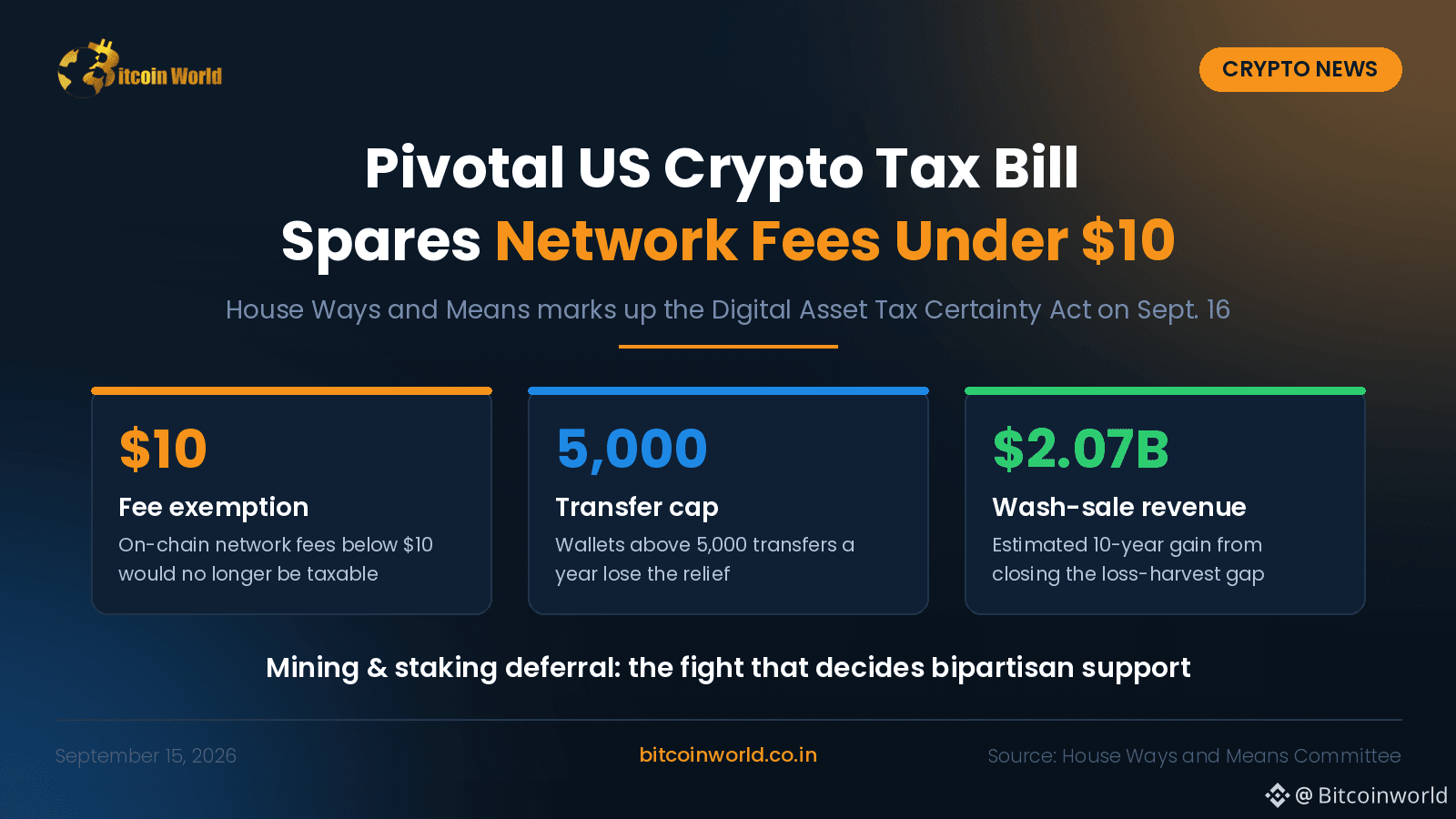
La commission des finances de la Chambre a publié le H.R. 10357, la loi de 114 pages sur la certitude fiscale des actifs numériques, et le soumettra au vote le 16 septembre.
Les frais de réseau blockchain inférieurs à 10 $ ne constitueraient plus un fait générateur imposable, mais les portefeuilles comptant plus de 5 000 transferts l’année précédente ne bénéficieraient pas de cette exemption.
Combler le manque à gagner lié à la vente fictive crypto augmenterait les recettes, tandis que le report de l’impôt sur les récompenses de minage et de staking les réduirait. Le report est la disposition la plus susceptible d’être supprimée.
Le projet de loi sur la taxe crypto de Washington vise le problème de la commission d’essence à 2 $, et repousse les combats les plus difficiles
BitcoinWorld
Le projet de loi sur la taxe crypto de Washington vise le problème de la commission d’essence à 2 $, et repousse les combats les plus difficiles
Points clés
La commission des finances de la Chambre a publié le H.R. 10357, la loi de 114 pages sur la certitude fiscale des actifs numériques, et le soumettra au vote le 16 septembre.
Les frais de réseau blockchain inférieurs à 10 $ ne constitueraient plus un fait générateur imposable, mais les portefeuilles comptant plus de 5 000 transferts l’année précédente ne bénéficieraient pas de cette exemption.
Combler le manque à gagner lié à la vente fictive crypto augmenterait les recettes, tandis que le report de l’impôt sur les récompenses de minage et de staking les réduirait. Le report est la disposition la plus susceptible d’être supprimée.
Le projet de loi sur la taxe crypto de Washington vise le problème de la commission d’essence à 2 $, et repousse les combats les plus difficiles
Points clés
La commission des finances de la Chambre a publié le H.R. 10357, la loi de 114 pages sur la certitude fiscale des actifs numériques, et le soumettra au vote le 16 septembre.
Les frais de réseau blockchain inférieurs à 10 $ ne constitueraient plus un fait générateur imposable, mais les portefeuilles comptant plus de 5 000 transferts l’année précédente ne bénéficieraient pas de cette exemption.
Combler le manque à gagner lié à la vente fictive crypto augmenterait les recettes, tandis que le report de l’impôt sur les récompenses de minage et de staking les réduirait. Le report est la disposition la plus susceptible d’être supprimée.
242
·
--
Article
RedotPay ferme ses portes en Corée du Sud alors que l’horloge de la taxe crypto se met en marcheBitcoinWorld
RedotPay ferme ses portes en Corée du Sud alors que l’horloge de la taxe crypto se met en marche
Points clés à retenir
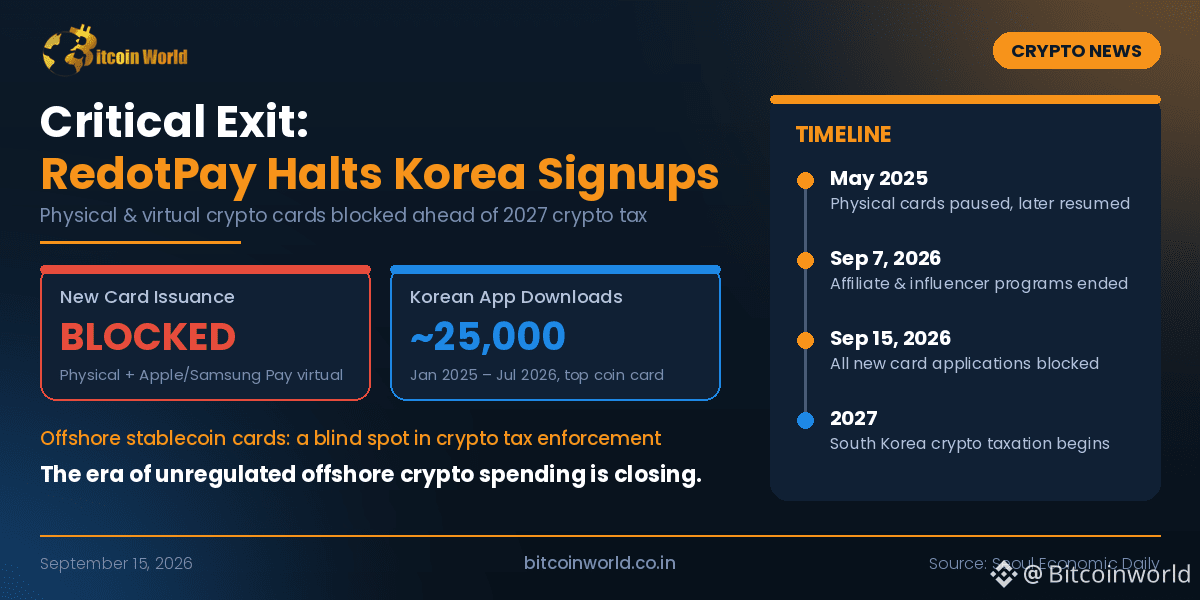
RedotPay a cessé d’émettre des cartes crypto physiques et virtuelles pour les nouveaux utilisateurs en Corée du Sud.
La société a mis fin à son programme d’affiliation et de parrainage d’influenceurs coréens le 7 septembre, quelques jours avant la divulgation du bloc.
Il s’agit du deuxième repli coréen de la plateforme. Le premier, en mai 2025, ne concernait que les cartes physiques.
Cette décision intervient quelques mois seulement avant le début du régime de taxation des cryptomonnaies en Corée du Sud, alors que les cartes en stablecoins offshore ont été signalées comme une zone aveugle pour l’application des taxes.
RedotPay ferme ses portes en Corée du Sud alors que l’horloge de la taxe crypto se met en marche
BitcoinWorld
RedotPay ferme ses portes en Corée du Sud alors que l’horloge de la taxe crypto se met en marche
Points clés à retenir
RedotPay a cessé d’émettre des cartes crypto physiques et virtuelles pour les nouveaux utilisateurs en Corée du Sud.
La société a mis fin à son programme d’affiliation et de parrainage d’influenceurs coréens le 7 septembre, quelques jours avant la divulgation du bloc.
Il s’agit du deuxième repli coréen de la plateforme. Le premier, en mai 2025, ne concernait que les cartes physiques.
Cette décision intervient quelques mois seulement avant le début du régime de taxation des cryptomonnaies en Corée du Sud, alors que les cartes en stablecoins offshore ont été signalées comme une zone aveugle pour l’application des taxes.
RedotPay ferme ses portes en Corée du Sud alors que l’horloge de la taxe crypto se met en marche
Points clés à retenir
RedotPay a cessé d’émettre des cartes crypto physiques et virtuelles pour les nouveaux utilisateurs en Corée du Sud.
La société a mis fin à son programme d’affiliation et de parrainage d’influenceurs coréens le 7 septembre, quelques jours avant la divulgation du bloc.
Il s’agit du deuxième repli coréen de la plateforme. Le premier, en mai 2025, ne concernait que les cartes physiques.
Cette décision intervient quelques mois seulement avant le début du régime de taxation des cryptomonnaies en Corée du Sud, alors que les cartes en stablecoins offshore ont été signalées comme une zone aveugle pour l’application des taxes.
1
197
·
--

Article
Déclaration de Delhi du BRICS 2026 : J’ai lu les 120 paragraphes pour que vous n’ayez pas à le faireBitcoinWorld
Déclaration de Delhi du BRICS 2026 : j’ai lu les 120 paragraphes pour que vous n’ayez pas à le faire
Points clés
Les dirigeants ont signé la Déclaration de New Delhi le 12 septembre 2026, l’Inde assurant la présidence.
L’Inde a passé des mois à promouvoir un lien de type CBDC. Le mot « CBDC » n’apparaît pas dans le texte final.
Le paragraphe 42 suit les flux illégaux d’actifs virtuels et les escroqueries répétées.
Le paragraphe 95 signale l’informatique quantique pour le secteur financier, alors que personne n’en parle encore.
Tout le monde me demande ce qu’est la Déclaration de Delhi, alors la voici, simplement. C’est la déclaration conjointe sur laquelle les chefs d’État des BRICS se sont mis d’accord à Bharat Mandapam, sur le thème « Construire pour la résilience, l’innovation, la coopération et la durabilité ». Elle est longue, aride, et elle fixe la position du bloc pour les douze prochains mois. C’est pourquoi je l’ai lue correctement plutôt que de réagir aux titres.
Déclaration de Delhi du BRICS 2026 : J’ai lu les 120 paragraphes pour que vous n’ayez pas à le faire
BitcoinWorld
Déclaration de Delhi du BRICS 2026 : j’ai lu les 120 paragraphes pour que vous n’ayez pas à le faire
Points clés
Les dirigeants ont signé la Déclaration de New Delhi le 12 septembre 2026, l’Inde assurant la présidence.
L’Inde a passé des mois à promouvoir un lien de type CBDC. Le mot « CBDC » n’apparaît pas dans le texte final.
Le paragraphe 42 suit les flux illégaux d’actifs virtuels et les escroqueries répétées.
Le paragraphe 95 signale l’informatique quantique pour le secteur financier, alors que personne n’en parle encore.
Tout le monde me demande ce qu’est la Déclaration de Delhi, alors la voici, simplement. C’est la déclaration conjointe sur laquelle les chefs d’État des BRICS se sont mis d’accord à Bharat Mandapam, sur le thème « Construire pour la résilience, l’innovation, la coopération et la durabilité ». Elle est longue, aride, et elle fixe la position du bloc pour les douze prochains mois. C’est pourquoi je l’ai lue correctement plutôt que de réagir aux titres.
Déclaration de Delhi du BRICS 2026 : j’ai lu les 120 paragraphes pour que vous n’ayez pas à le faire
Points clés
Les dirigeants ont signé la Déclaration de New Delhi le 12 septembre 2026, l’Inde assurant la présidence.
L’Inde a passé des mois à promouvoir un lien de type CBDC. Le mot « CBDC » n’apparaît pas dans le texte final.
Le paragraphe 42 suit les flux illégaux d’actifs virtuels et les escroqueries répétées.
Le paragraphe 95 signale l’informatique quantique pour le secteur financier, alors que personne n’en parle encore.
Tout le monde me demande ce qu’est la Déclaration de Delhi, alors la voici, simplement. C’est la déclaration conjointe sur laquelle les chefs d’État des BRICS se sont mis d’accord à Bharat Mandapam, sur le thème « Construire pour la résilience, l’innovation, la coopération et la durabilité ». Elle est longue, aride, et elle fixe la position du bloc pour les douze prochains mois. C’est pourquoi je l’ai lue correctement plutôt que de réagir aux titres.
1
510
Connectez-vous pour découvrir plus de contenu
Rejoignez la communauté mondiale des adeptes de cryptomonnaies sur Binance Square
⚡️ Suviez les dernières informations importantes sur les cryptomonnaies.
💬 Jugé digne de confiance par la plus grande plateforme d’échange de cryptomonnaies au monde.
👍 Découvrez les connaissances que partagent les créateurs vérifiés.
Adresse e-mail/Nº de téléphone
Sujets d’actualité
BOJRaisesRatesTo31YearHigh
210 vues
53 mentions
🚨Hausse étrange des taux de la BOJ...
#bojraisesratesto31yearhigh
Le Japon vient de relever ses taux au plus haut en 31 ans. Le yen, lui, s’est encore affaibli.
Ça semble contradictoire — jusqu’à ce que vous regardiez le carry trade.
La BOJ a relevé son taux directeur de 25 pdb à 1,25 %, le plus haut niveau depuis 1995, lors d’un vote de 7 contre 2. C’était aussi le deuxième relèvement en seulement trois mois.
Pourtant, USD/JPY a bondi jusqu’à 158,05 après la décision.
Pourquoi ?
Les marchés se sont concentrés sur les deux responsables de la BOJ qui ont voté contre et ont estimé que les indications étaient moins « hawkish » que prévu.
Cela compte bien au-delà du Japon.
Le yen fait partie des principales devises de financement pour le carry trade — emprunter à bon marché en yens, puis investir ailleurs dans des actifs offrant des rendements plus élevés.
Donc la vraie chaîne est :
resserrement de la BOJ → le financement en yen devient plus coûteux
mais :
le yen s’affaiblit → les positions de carry ne sont pas automatiquement forcées à la sortie
Et la réaction du Bitcoin rend l’ensemble encore plus intéressant.
Le BTC a rebondi fortement après la décision de la BOJ, atteignant environ 81 000 $ selon Reuters.
Donc le signal d’aujourd’hui n’est pas simplement :
« Hausse des taux de la BOJ = BTC baissier. »
La question plus importante est de savoir si le resserrement du Japon finira par produire une appréciation soutenue du yen, suffisamment forte pour forcer un plus grand dénouement du carry trade.
Pour l’instant, le taux a bougé.
Le yen, lui, n’a pas suivi.
C’est le point à surveiller.
$BTC $XRP
#BoJ #BTCBreaks80K #BTC #JPY
Stink meaner
·0 mentions J’aime
·28 vues
HKCompletesFirstHKDStablecoinUseCase
18,129 vues
493 mentions
VietnamPlansFirstCryptoLicensesIn2026
12,838 vues
324 mentions